Ordinary and universal, the act of writing changes the brain. From dashing off a heated text message to composing an op-ed, writing allows you to, at once, name your pain and create distance from it. Writing can shift your mental state from overwhelm and despair to grounded clarity — a shift that reflects resilience.
Psychology, the media, and the wellness industry shape public perceptions of resilience: Social scientists study it, journalists celebrate it, and wellness brands sell it.
They all tell a similar story: Resilience is an individual quality that people can strengthen with effort.
The American Psychological Association defines resilience as an ongoing process of personal growth through life’s challenges. News headlines routinely praise individuals who refuse to give up or find silver linings in times of hardship. The wellness industry promotes relentless self-improvement as the path to resilience.
In my work as a professor of writing studies, I research how people use writing to navigate trauma and practice resilience. I have witnessed thousands of students turn to the written word to work through emotions and find a sense of belonging. Their writing habits suggest that writing fosters resilience. Insights from psychology and neuroscience can help explain how.
Writing rewires the brain
In the 1980s, psychologist James Pennebaker developed a therapeutic technique called expressive writing to help patients process trauma and psychological challenges. With this technique, continuously journaling about something painful helps create mental distance from the experience and eases its cognitive load.
In other words, externalizing emotional distress through writing fosters safety. Expressive writing turns pain into a metaphorical book on a shelf, ready to be reopened with intention. It signals the brain, “You don’t need to carry this anymore.”
Translating emotions and thoughts into words on paper is a complex mental task. It involves retrieving memories and planning what to do with them, engaging brain areas associated with memory and decision-making. It also involves putting those memories into language, activating the brain’s visual and motor systems.
Writing things down supports memory consolidation — the brain’s conversion of short-term memories into long-term ones.
The process of integration makes it possible for people to reframe painful experiences and manage their emotions. In essence, writing can help free the mind to be in the here and now.
Taking action through writing
The state of presence that writing can elicit is not just an abstract feeling; it reflects complex activity in the nervous system.
Brain imaging studies show that putting feelings into words helps regulate emotions.
Labeling emotions — whether through expletives and emojis or carefully chosen words — has multiple benefits. It calms the amygdala, a cluster of neurons that detects threat and triggers the fear response: fight, flight, freeze, or fawn. It also engages the prefrontal cortex, a part of the brain that supports goal-setting and problem-solving.
In other words, the simple act of naming your emotions can help you shift from reaction to response. Instead of identifying with your feelings and mistaking them for facts, writing can help you simply become aware of what’s arising and prepare for deliberate action.
Even mundane writing tasks like making a to-do list stimulate parts of the brain involved in reasoning and decision-making, helping you regain focus.
Making meaning through writing
Choosing to write is also choosing to make meaning. Studies suggest that having a sense of agency is both a prerequisite for, and an outcome of, writing.
Researchers have long documented how writing is a cognitive activity — one that people use to communicate, yes, but also to understand the human experience.
As many in the field of writing studies recognize, writing is a form of thinking — a practice that people never stop learning.
With that, writing has the potential to continually reshape the mind. Writing not only expresses but actively creates identity.
Writing also regulates your psychological state. And the words you write are themselves proof of regulation — the evidence of resilience.
Popular coverage of human resilience often presents it as extraordinary endurance. News coverage of natural disasters implies that the more severe the trauma, the greater the personal growth. Pop psychology often equates resilience with unwavering optimism. Such representations can obscure ordinary forms of adaptation.
Strategies people already use to cope with everyday life — from rage-texting to drafting a resignation letter — signify transformation.
Building resilience through writing
These research-backed tips can help you develop a writing practice conducive to resilience:
1. Write by hand whenever possible. In contrast to typing or tapping on a device, handwriting requires greater cognitive coordination. It slows your thinking, allowing you to process information, form connections and make meaning.
2. Write daily. Start small and make it regular. Even jotting brief notes about your day — what happened, what you’re feeling, what you’re planning or intending — can help you get thoughts out of your head and ease rumination.
3. Write before reacting. When strong feelings surge, write them down first. Keep a notebook within reach and make it a habit to write it before you say it. Doing so can support reflective thinking, helping you act with purpose and clarity.
4. Write a letter you never send. Don’t just write down your feelings — address them to the person or situation that’s troubling you. Even writing a letter to yourself can provide a safe space for release without the pressure of someone else’s reaction.
5. Treat writing as a process. Any time you draft something and ask for feedback on it, you practice stepping back to consider alternative perspectives. Applying that feedback through revision can strengthen self-awareness and build confidence.
Resilience may be as ordinary as the journal entries people scribble, the emails they exchange, the task lists they create — even the essays students pound out for professors.
The act of writing is adaptation in progress.
This article was written by Emily Rónay Johnston from the University of California, and was originally published on The Conversation.
Header Image by Brandon. on Unsplash

With families across the United States stretched financially following history’s longest federal government shutdown and subsequent pause in SNAP benefits, Thanksgiving is a heavier lift this year.
In fact, research shows that the average Thanksgiving meal is approximately 10% more expensive this year, with many Americans planning to cut back on festivities.
Fortunately, people like Rebecca Chobat are stepping in to help.
Chobat is the face of Dollar Tree Dinners, a social media channel dedicated to helping people make nutritious and tasty meals using ingredients only sourced from stores like Dollar Tree and Dollar General.
She has spent years getting creative on a tight budget and sharing recipes and resources for her audience of millions to frugally feed themselves and others.
Earlier this year, her “meal in a bag” inventions were emulated by countless supporters looking to donate to people affected by SNAP cuts. Following Chobat’s printable recipe cards, people include canned foods, seasonings, and other ingredients in a large plastic bag, bundling everything together to make it easy for a family in need to eat.
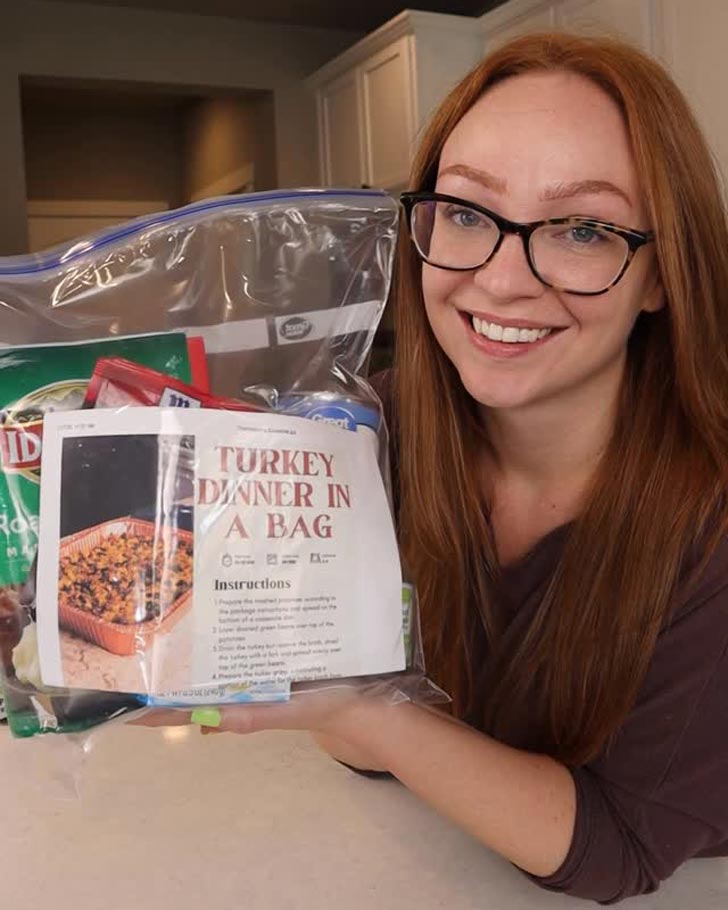
Unsurprisingly, Chobat has upped the ante for Thanksgiving, creating what she calls “Thanksgiving in a Box.” In a video detailing her invention, she shares that she will be donating meals to a local organization that supports families and individuals with disabilities.
“Each one [is] packed with care, comfort, and everything needed for a warm holiday meal,” she wrote in a caption.
But what does the box entail?
“I really wanted to make sure each family had everything they needed for a full holiday meal,” Chobat said in her video.
“Every box includes the ingredients for green bean casserole, corn casserole, sweet potato casserole, mashed potatoes and gravy, cranberry sauce, stuffing, biscuits, pumpkin spice muffins, and apple pie.”
She also included turkey seasoning, a turkey roasting bag, and a gift card so people would be able to go to the store and pick out a turkey or main dish of their choice.
“I also included some fun extras like hot cocoa mix and sweet tea mix because those little touches make the meal feel special.”
@dollartreedinners Thanksgiving in a Box Project After two weeks of planning, shopping, and testing recipes, I finally finished packing up all the Thanksgiving meal kits I’m donating to a local organization that supports families and individuals with disabilities. I put together 12 full dinner boxes, 8 smaller casserole kits, and 8 single-serve meals. Each one packed with care, comfort, and everything needed for a warm holiday meal. I’m so grateful I had the ability and support to make this happen, and I hope these boxes bring a little extra joy to the people receiving them. Wishing everyone a season filled with kindness, gratitude, and giving. #thanksgivinginabox #giveback #holidaygiving #thanksgiving2025 #communitylove #spreadkindness #actsOfKindness #donations #holidayseason #grateful #payitforward ♬ original sound - Dollar Tree Dinners
Chobat is also seen in the video adding themed holiday napkins to each kit, in addition to a simple menu that shows what is inside each box.
She also printed out recipe cards so recipients could have a guide for any dish they needed help making.
“My goal was that even someone who has never cooked a Thanksgiving dinner before could open this box and feel confident in pulling this whole meal together,” Chobat said.
On her own, Chobat donated 12 full dinner boxes, eight smaller casserole kits, and eight single-serve holiday meals for people in her community.
The smaller casserole kits included all the ingredients needed to make Chobat’s “best of Thanksgiving” casserole recipe, which allows folks to enjoy a nearly complete Thanksgiving dinner in a single, simpler dish.
While it’s unclear how much each kit costs, history shows Chobat will likely have copy-cats using her idea to give back to their community, too. Even less than a day after she posted her video, followers in the comments jumped in to share how they were making “Thanksgiving in a Box” their own.
“We ‘copied’ you yesterday and did this for four families,” one commenter wrote, with a photo of their children packing the boxes.
Another shared that Chobat will inspire other “copy-cat creators” to do similar acts of kindness this holiday season.
“If anyone wants to ever copy my ideas, honestly I love that it’s this one,” Chobat replied. “No gatekeeping in this house.”
In fact, in her video, she said it’s this ripple effect that inspires her to give back and get creative on a budget.
“Putitng this all together definitely reminds me how powerful small acts of care can be. I am thankful that I had the time, the resources, and the support to take on a project like this,” Chobat said.
“It may be a modest gesture in the grand scheme of things, but if it brings even a little bit of warmth, ease, or joy to the people who receive these meals, then that is more than enough for me.”
You may also like: Nashville cafe serves 1,000 free holiday meals ninth Thanksgiving in a row
Header image by Ana Maltez/Unsplash
In 2019, Ostbelgien, a town in Belgium with about 80,000 residents, took a gamble on a new approach to governing: The city’s parliament voted to establish a permanent Citizens’ Council and Assembly, giving randomly-selected citizens the power to make decisions.
They called it, aptly, the Ostbelgien Model.
“Its main objectives are providing citizens not only a permanent voice in the process of decision making but also a systematic monitoring system to ensure they are heard,” the International Observatory on Participatory Democracy writes.
“Ultimately, the project seeks to increase accountability and reinvigorate the agenda-setting power of common citizens.”

Now, about six years into the experiment, which was created with the express purpose of increasing trust in government, participants say it’s working.
Once a year, about 1,500 letters are sent to randomly chosen residents in Ostbelgien. Recipients indicate their interest or deny the opportunity. Of those who express interest, about 30 are chosen to become members of the citizens’ assembly.
From there, the newly formed assembly meets once a week for about two months, with each participant receiving a stipend of 155 euros (or $133) per day. They are assigned a topic of concern and have in-depth discussions about how the government should proceed, with an appointed moderator present to help move things along.
Their recommendations to the parliament are not binding, but lawmakers are required to consider them.
“If we want citizens to have more confidence in politicians, we, as politicians, have to give more confidence to the citizens,” Oliver Paasch, the minister-president of Ostbelgien, told The New York Times.
Many of the recommendations presented by the assembly have been more than just considered.

Over the years, the assembly has helped ease eligibility requirements for low-income housing, introduced funding to encourage young people to pursue jobs in nursing to combat shortages in the field, and enacted a ban on cell phones in middle and high schools.
While the power of the citizens’ assembly is limited to areas like education, housing, and social services (divisive topics like immigration remain confined to the federal government in Brussels), it puts power back in the hands of citizens — a core function of a working democracy.
Ostbelgien is small, likely the smallest region in the European Union with its own legislative powers, meaning this model could be harder to replicate on a larger scale.
But it has inspired further participatory democracy measures in other countries.
Paris is now home to a citizens’ assembly inspired by the Ostbelgien Model. Including 100 Parisians, the assembly was institutionalized in 2021, allowing members to weigh in on the city’s annual budget, deciding what issues should be addressed by a citizens’ jury, and evaluating existing policy in the city.
The first cohort introduced a citizen bill on homelessness, which expands emergency housing, extends social services to people under the age of 25, and provides further recommendations for policy to help combat housing insecurity.
“The politicians were very impressed by the capacity of the citizens,” Elian Belon, the General Secretary of the Paris Citizens’ Assembly, told DemocracyNext.
“It’s important for the administration to be able to observe from the corner of their eyes the work being done by citizens, because they question, ‘Can citizens really do better than them on a subject that they have worked on for many years?’”

Groups organizing around participatory democracy aim to close growing divides, restore trust in government as a whole, and actually get stuff done.
Ostbelgien — and even a city as large as Paris — is proof it can work.
“As trust between citizens and government is faltering, these new institutions embody the potential of democratic renewal,” Claudia Chwalisz, one of the architects of the Ostbelgien Model, writes.
“We need more citizens to demand this change as well, to imagine and fight for another kind of democratic future. If they do, another democratic system is possible.”
You may also like: This study put 200 voters together for days on end. They changed each other's minds
Header image courtesy of Burgerdialog in Ostbelgien
When José Zambrano, Jennifer Rodriguez, and their 7-year-old son Lian fled Ecuador, they sought asylum in New York City with hope for a brighter, safer future.
There, with a hotel roof over their heads and money trickling in from day gigs, Zambrano and Rodriguez could finally breathe easy enough to talk about getting married.
That’s when Rodriguez went to Little Shop of Kindness — a nonprofit that collects donated clothes for migrant families — to find a wedding dress.
She had no idea she would walk away with a wedding plan.
As she scanned through the racks, Rodriguez struck up a conversation with shop volunteer Val Coleman, saying that she planned to get married at City Hall.
“I told them that I was a licensed officiant and that I would be willing to do it for free,” Coleman told Documented, a media outlet that tells the stories of immigrants.
She also suggested they swap out City Hall for Carl Schurz Park, a beautiful tree-lined park in Manhattan.
In the last year, Coleman has officiated four weddings for migrant families — with more to come.
She works with a translator to get the paperwork filled out, and tries to personalize the ceremony in small ways.
“I always ask what they love about each other and ask to write down their own vows,” Coleman told Documented.
After ceremonies in Carl Schurz Park, Ilze Thielmann — founder of the Little Shop of Kindness — fills the boutique with flower arrangements, twinkling lights, and slices of cake to transform it into a reception space.
“We are helping them in a wide variety of ways,” Thielmann said. “Not just feeding and clothing them, [we’re] giving them dignity and respect and kindness and warmth — a soft place to land.”
UPDATE: A version of this article originally appeared in the 2025 Relationships Edition of the Goodnewspaper. As of November 26, 2025, Little Shop of Kindness had closed its physical location.
A statement on their website reads: “The Little Shop of Kindness has closed its (physical) doors. While the shop is no longer in business, Team TLC NYC will continue and strengthen its work supporting migrants and asylum seekers through legal triage tables, pro se legal clinics, and know-your-rights sessions.
If you are a migrant or asylum seeker in need of clothes and supplies, the following organizations can help:
- Cathedral Community Cares,1047 Amsterdam Avenue at 112th Street, Tuesdays and Thursdays 10am - noon
- St. Paul and St. Andrew Church, 86th Street and West End Avenue, Mondays 9 am - 11 am
- Xavier Mission, 46 West 16th Street, 9am - 11am (men's clothes on the 2nd and 4th Sunday of the month, women's and children's clothes on the 3rd Sunday of each month
Thank you for your support in this time of transition.”
Header image via Luis Quintero / Pexels
Dentists and orthodontists have been trying to distract their patients from the uncomfortable and often painful work of dental care for years, especially for longer appointments.
Since the early 2000s, goggle-like headsets and noise-canceling headphones have given patients the ability to zone out as they watch a movie and ignore the whirs and scrapes of dental care tools.
Now, researchers at Paperplane Therapeutics, a Montréal-based startup, have raised $1.5 million CAD ($1.06 million USD) in seed funding to develop virtual reality games for patients.
The pre-loaded games are designed to keep children distracted by friendly virtual monsters, while the company’s “Headstill” system keeps patients’ heads stable while they play — a key component when dealing with dental tools or needles.

Paperplane is already working with 30 dental clinics and 20 hospitals, including the Mayo Clinic, Cedars-Sinai, and SickKids, with plans to expand across North America and Europe.
“As an emergency physician, I have seen firsthand the lack of options available for managing pain and anxiety,” Paperplane co-founder and CEO Dr. Jean-Simon Fortin said in a statement.
“Today, I’m proud to see our VR technology filling that gap, providing healthcare professionals with a more effective way to support their patients.”
“Paperplane is redefining how we approach pain and anxiety management in healthcare,” said Michael Goodman of Glen Ventures, which helped fund the project. “Their VR solutions not only enhance patient comfort but also contribute to more efficient clinical workflows. We are proud to support a company that is raising the standard of patient care while pushing the boundaries of medical innovation.”
Header image via Paperplane Therapeutics
A recent study shared by the Mayo Clinic proves that friendship isn’t just enriching — it’s crucial to living a longer, healthier life.
“Researchers monitored the health of nearly 7,000 Californians for more than 17 years,” reported the Mayo Clinic. “They found that those lacking social connections were approximately 2 to 3 times more likely to die at a younger age than were their counterparts with more social connections.”
This new research comes on the heels of 38 studies shared by the American Psychological Association, which collectively found overwhelming evidence that high-quality friendships can significantly improve a person’s well-being.
“In the face of life’s challenges, having a close friend to turn to seems to be a buffer or protective factor against some of the negative outcomes we might otherwise see,” Catherine Bagwell — a professor of psychology at Davidson College — told the APA.
And friendship doesn’t just ward off mental illness, like anxiety or depression.
People who experience prolonged social isolation face a greater risk of heart attacks, stroke, and premature death, with researchers estimating that loneliness increases the risk of early death by as much as 26%.
As more studies emerge on the benefits of friendship, Dartmouth College professor Thalia Wheatley emphasized the importance of friendship in a world that caters primarily to romantic couples.
“Friendship is something we really need to understand,” Wheatley explained. “There’s been this preoccupation with romantic relationships, but many of our close relationships are with friends.”
How To Support A Friend During A Hard Time
- Good: Read “The Art of Showing Up” by Rachel Wilkerson Miller, a book on navigating adult friendships, taking action when your loved ones are in crisis, and practicing self-care so you can show up for others.
- Better: Organize a “meal train” to drop off deliveries and home-cooked meals. No matter what somebody is going through — job loss, illness, grief, strife — everybody needs to eat. Visit mealtrain.com to get started.
- Best: Try Just Checking In, an app that sets regular reminders to check in with your friends and share your own mental health status — without the pressure of lengthy calls or texts. Download at justcheckingin.co.
A version of this article originally appeared in the 2025 Relationships Edition of the Goodnewspaper.
You may also like: How a chance meeting on vacation helped an 81-year-old widow rediscover joy
Header image via RDNE Stock project / Pexels
As neighbors in Deesa, India, Suresh Kothari and AG Shakir spent the first 13 years of their lives inseparable from each other.
But in 1947, the British Empire retreated in the aftermath of World War II, resulting in the partition of India. In the chaos and violence of the partition, 1 million people were killed and 14 million more were displaced, including Shakir’s family.
Kothari returned home from school one day to find Shakir gone. After scouring their community for any news of his friend, he found and memorized Shakir’s new address in Rawalpindi, Pakistan.
As the years passed, their letters failed to reach each other as tensions rose between their two countries.
It wasn’t until 1982 that the two found each other again in New York, marking their first reunion in 35 years. Kothari recounted the story to his granddaughter Megan, saying, "So much time had passed, but it was like no time had passed at all.”
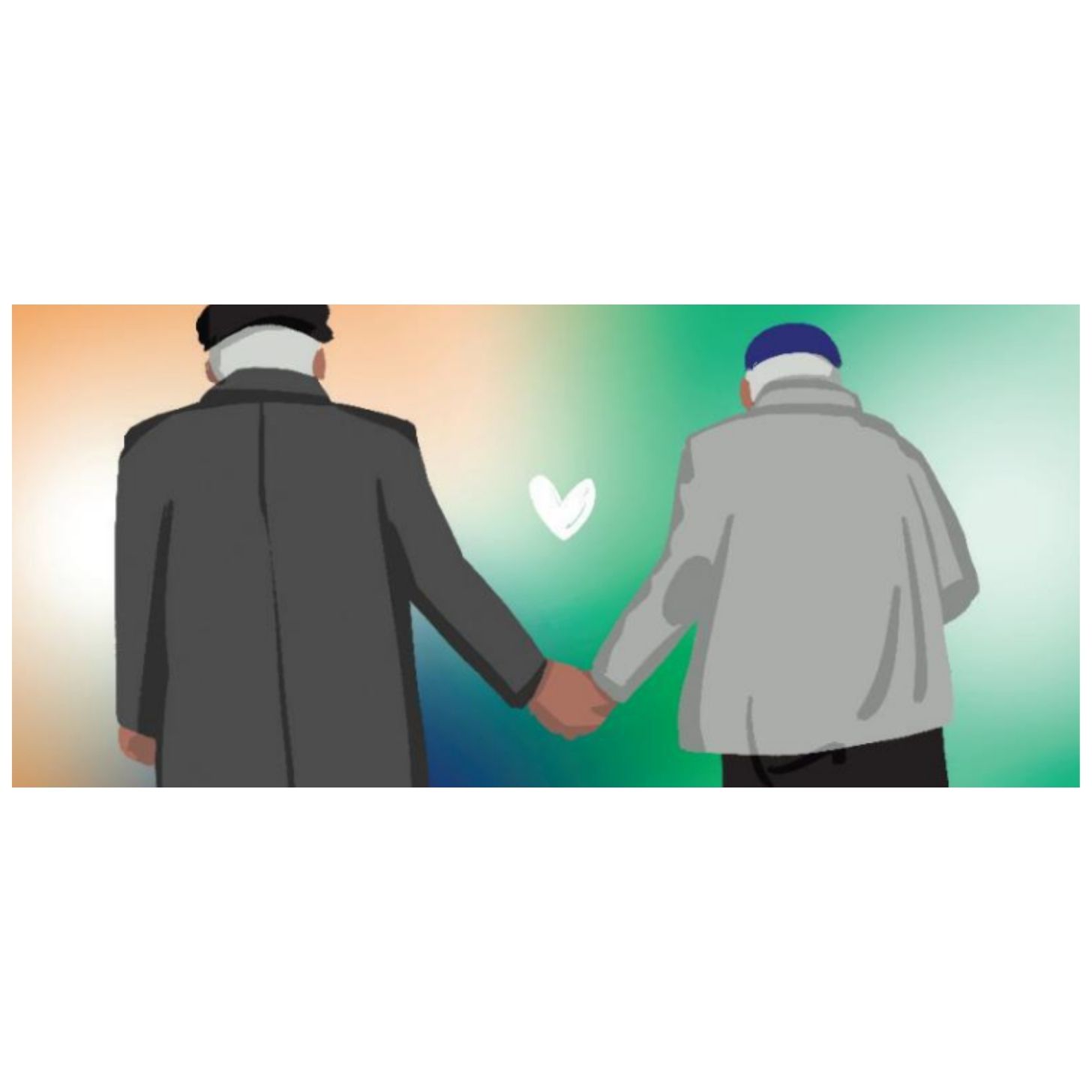
Kept apart by the partition, the cost of traveling, and the throes of the pandemic, the two continued to spend the majority of their lives apart, only to reunite again in 2024, as Kothari celebrated his 90th birthday with his 89-year-old best friend at his side.
“The love and respect they still held for each other, despite the geographical and political barriers that had separated them, is profound,” Megan wrote. “It serves as a powerful reminder that the power of human connection can not be extinguished by any government or border.”
A version of this article originally appeared in the 2025 Relationships Edition of the Goodnewspaper.
You may also like: How a chance meeting on vacation helped an 81-year-old widow rediscover joy
In 2024, Maine business owner Reade Brower was forced to sell off a majority of the newspapers that he owned. He then tried to salvage four weeklies by combining them into one paper: The Midcoast Villager.
At a time when print media is on the decline — due to outlets jumping ship en masse to solely digital content — the staff of the newly minted Midcoast Villager recognize the vulnerability of their position.
“I’m quite glad that I still have a newspaper to work for,” columnist Glenn Billington told CBS News.
To subsidize their paper, which has a weekly circulation, the team decided to do something unexpected: Open their own cafe in the heart of their community.
“From the business standpoint, it achieves a sustainability,” Brower said of the Villager Cafe, which opened in April.
“The accountability issues and local sports and all that stuff is important to a lot of people,” he continued. “I don’t think that’s enough to sell and keep newspapers alive right now. I think it has to revolve around community. And what better way to serve community than to invite people here for food and to mix all this stuff together?”
At the Villager Cafe, customers can buy delicious blueberry pancakes, huevos rancheros, soups, sandwiches, and more — with revenue going towards the Midcoast Villager.
“It’s good, classic diner food, but a little bit elevated, which is I think kind of like our paper,” said deputy editor Alex Seitz-Wald, who can be found at the cafe every Friday morning, mingling with dedicated readers.
“Having a place where people can vent, or can say something, and have it be heard, I think is really valuable,” he said.
It’s also valuable in a literal sense. According to CBS News, their profits have shot up 40% since they opened their doors in April.
Midcoast Villager publisher Aaron Britt said that the staff had long dreamed of bringing their readers together in a shared physical space.
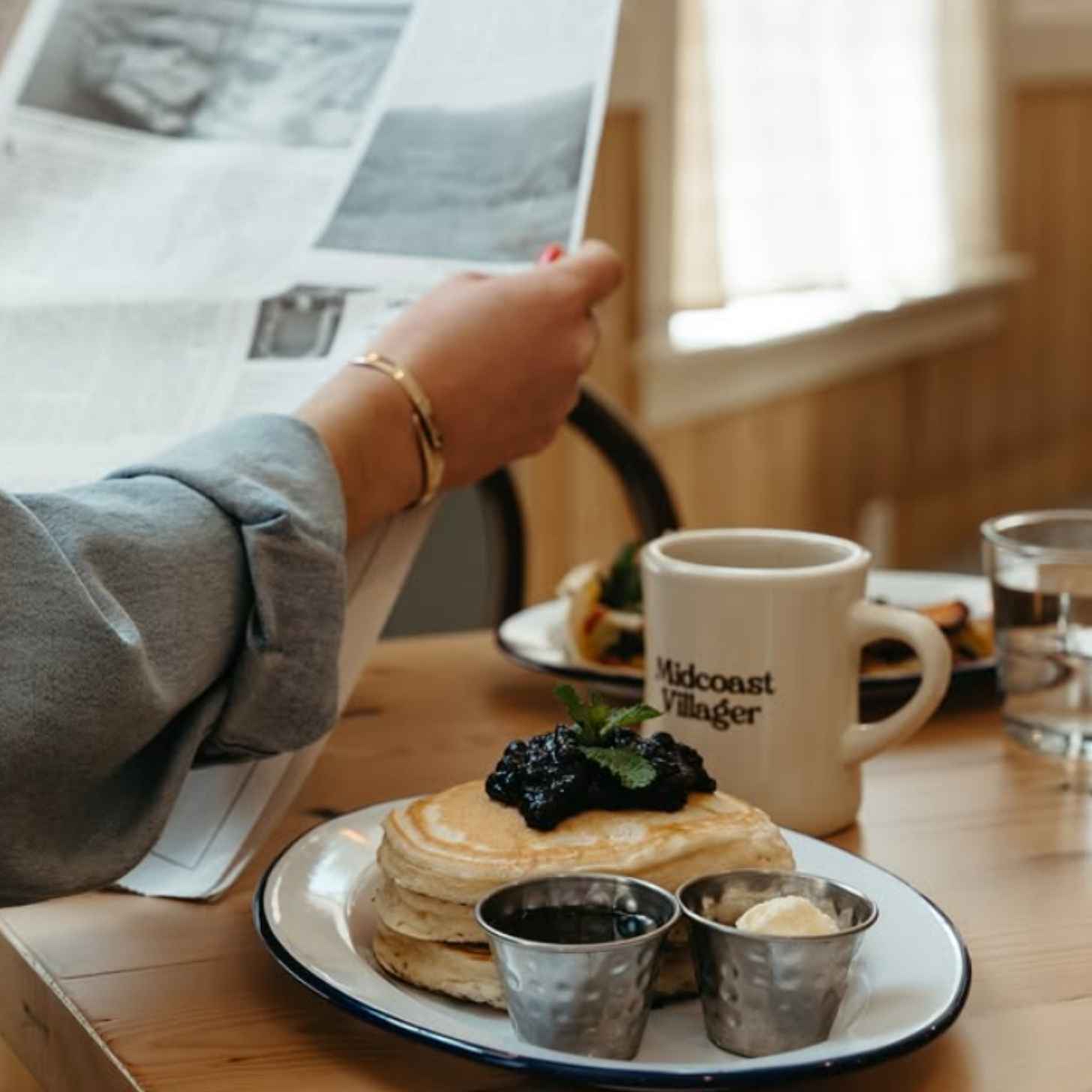
“We’ve always imagined the Villager as a vehicle for creating deeper community engagement,” Britt wrote in a welcome letter. “If we’re doing our jobs, you have the information you need to vote your conscience, you know what’s going on Friday night, you see your neighbor’s kid’s sports feats in print, and you meet someone doing something you didn’t even know you were interested in.”
Now locals have a place where they could talk to their neighbors — and the reporters themselves — about the latest community news over hot plates and cups of brew.
There’s a Friday morning news discussion group called “fresh brewed news,” a Midcoast Villager reading club, and “editor office hours” where cafegoers can request news stories they’d like to see in the future.
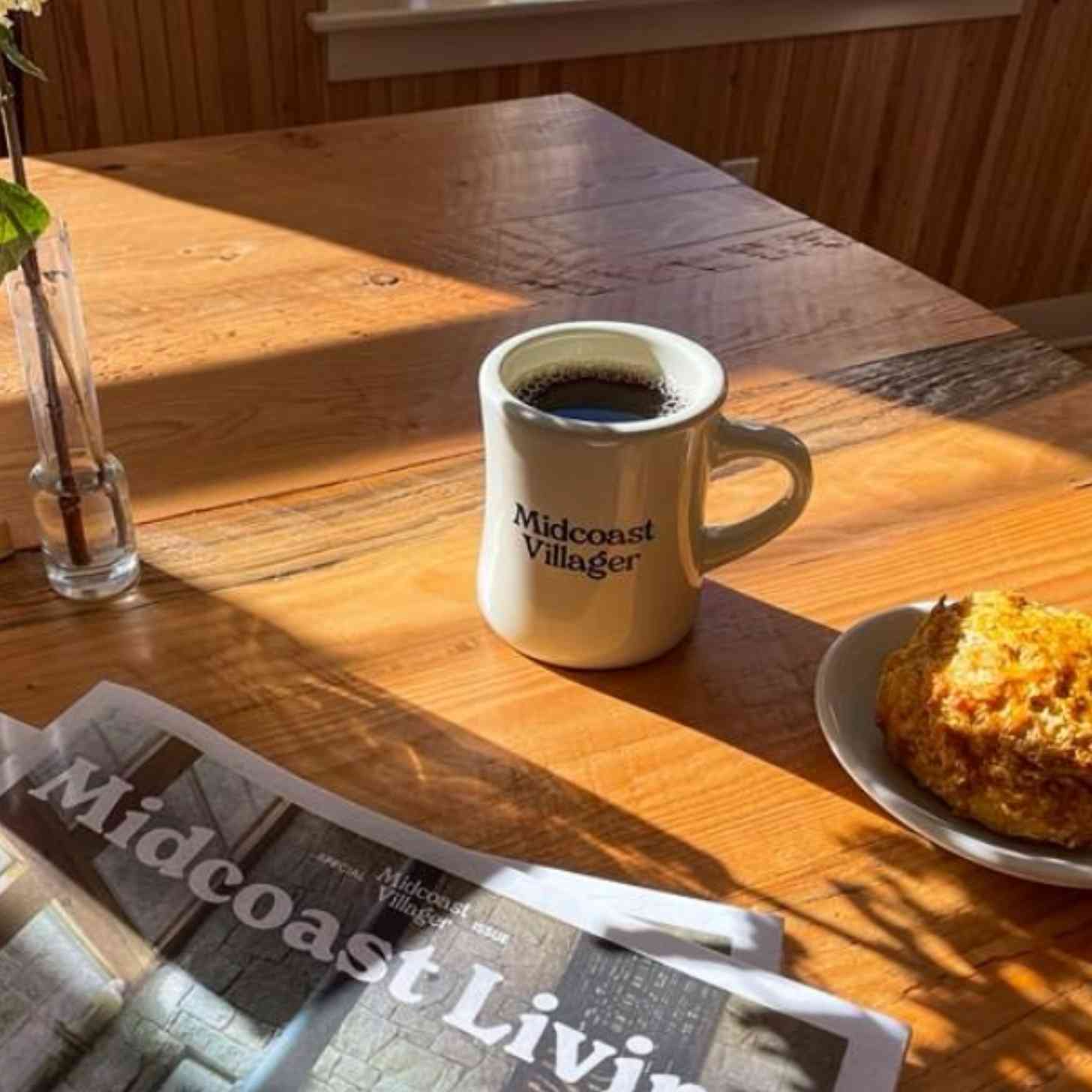
“The cafe is also a place for the Midcoast community to host its own events,” Britt said. “The whole point is to get people together, to share ideas and experience the joys of living in community.”
“Everyone’s welcome at the Villager Cafe,” he added, “so invite an old friend, talk to a stranger, maybe put down your phone, pick up the paper, and dig into our community.”
Villager Cafe is located at 25 Mechanic St, Camden, ME 04843.
Did you know that Good Good Good has a print counterpart too? You can get our monthly newspaper by inbox, mailbox, or both here!
You may also like: This coffee shop’s free breakfast program sparked outrage online. Their response? 'Everybody deserves a latte'
Header image via The Midcoast Villager / The Villager Cafe
Despite bans and limitations in 21 states, conversion therapy still has its foothold in religious communities throughout the U.S.
A 2023 report published by the Public Library of Science stated that the practice is associated with “severe psychological distress, depression, substance abuse, and attempted suicide” — even years later.
When Ryan Josiah, an ex-Mormon, first started attending the Utah Pride Parade, he wanted to find a way to mitigate that “super harmful practice.”
So he adopted a new persona, “Sparkly Gay Jesus,” and began raising money for Conversion Therapy Survivor Network.
At the time of this writing, Josiah had surpassed his fundraising goal for Utah Pride 2025 — a full two months before the parade.
“You have to understand just why gay Jesus is so popular at Pride,” he explained in a TikTok video.
“It all has to do with religious trauma. For some reason, being told that you, just by virtue of being you, are inherently broken … evil even, and that the only guy who can save you from yourself lived a couple 1,000 years ago is hurtful. It’s especially true for the LGBTQ+ community.”
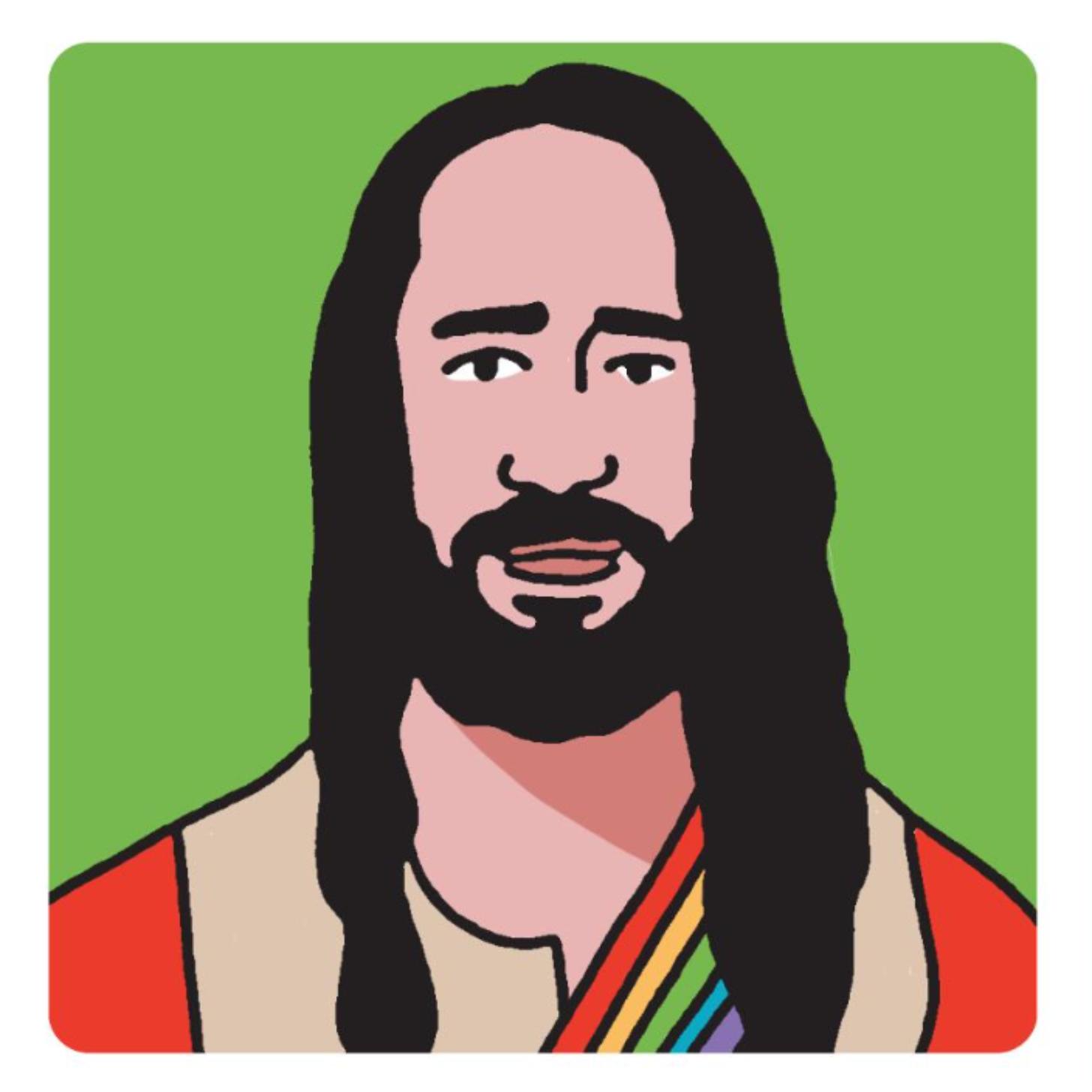
In 2024 Josiah traded in his $20 “Amazon costume” for a custom-made, sequined robe and rainbow sash. Josiah said that over one thousand people took photos with him — with many breaking down into tears as he embraced them.
“Jesus was always supposed to represent love, right?” Josiah said. “Isn’t that what Jesus is all about? So to have Jesus show up at this festival, that’s all about celebrating love, celebrating loving them even, that’s healing somehow.”
In a recent video, Josiah poked fun at the criticism he’s received for his online moniker (in a lip-sync to a popular scene from the television show “Community.”)
In the cadence of one of his trolls, Josiah said: “I can excuse electroshock therapy, but I draw the line at you dressing up as Jesus.”
Josiah replied with an outraged cry of, “You can excuse electroshock therapy!?”
@ryanjosiah Just over here healing religious trauma. I know I needed it! #OgdenPride #youareloved #youareworthy #religioustrauma #jesussaidloveEVERYONE ♬ original sound - RyanJosiah🆘🇺🇸
A version of this article originally appeared in the 2025 Pride Edition of the Goodnewspaper.
Header image via FRANK MERIÑO / Pexels
Every day the Good Good Good team collects the best good news in the world and shares it with our community. Here are the highlights for this week!
If you want to get good news in your inbox every day, join the Goodnewsletter — the free daily newsletter designed to leave you feeling hopeful.
The Best Positive News We’re Celebrating This Week —
A Latino-owned grocery chain in Charlotte offers free delivery to people afraid of leaving home due to ICE raids
Compare Foods has nine stores in the Charlotte, North Carolina area — growth that blossomed due to changing demographics in the area, with 45% growth in the state’s Latino population between 2010 and 2022.
It prides itself on offering international and Latin American products, often acting as the premier option for immigrant families in the U.S. South.
That consideration led to its latest initiative to support its customers: Providing free grocery delivery across Charlotte amid a new string of Immigration and Customs Enforcement operations in the area. The agency has made 250 arrests, and thousands of students have been reported absent from school.
Why is this good news? People deserve to have enough food to eat, and to go to the store without fear that they’ll be taken from their families. With that safety threatened in Charlotte, Compare Foods is stepping up to help people meet their basic needs.
You may also like: This church in Charlotte is training parishioners to protect immigrants during ICE crackdown: 'Loving your neighbors is holy'
No, everything isn’t on fire. Here are 4 practical ways to calm your climate anxiety
→ Read more
A guerrilla gardener installed a temporary wetland in the LA River
Less a river and more a concrete expanse collecting tires and trash thrown from car windows, the Los Angeles River isn’t exactly a thriving ecosystem.
Until Doug Rosenberg stepped in. After seeing plants blooming around an overturned shopping cart, with “a great blue heron perched on the cart, hunting in this little spot,” he dreamt up his next project: a pop-up wetland in the middle of the LA River.
He pushed large rocks to trap sediment and water to support plants and animals. And over the course of 10 weeks, it created a 10-by-20-foot green island in the middle of the 100-foot-wide channel. It illustrates just how much good can be done in a low-tech, small-scale way.
17,000 acres of ancestral land were returned to a California tribe, the largest in the region’s history
California just returned 17,000 acres of ancestral land to the Tule River Indian Tribe in what Governor Gavin Newsom called “the largest ancestral land return in the history of the region and a major step in addressing historical wrongs against California Native American tribes.”
Now, a number of conservation projects will begin, including the reintroduction of Tule elk, which has already begun.
Newsom said that “the historical wrongs committed by the state against the Native people of this land echo through the natural worlds of California ecosystems that lost their first and best stewards.”
Why is this good news? Beyond the lands being wrongfully taken from the Native tribe, returning them to stewards who care about their protection, restoration, and long-term conservation is critical.
Scientists discover funky-nosed ‘Pinocchio chameleon’ is actually three species — and there’s a fun way to tell them apart
Charlotte volunteers deliver hundreds of free grocery boxes to immigrant families fearing ICE raids
In response to ICE raids, the Charlotte, North Carolina community has been rallying to take care of its immigrant neighbors.
OurBridge For Kids, a local nonprofit that provides afterschool programming and support for refugee and immigrant families, paused its daily operations after federal agents were seen on-site.
With students and families encouraged to stay safe at home, it shifted to help in other ways, hosting a food drive and a volunteer-run grocery delivery service. Within days, it raised thousands of dollars and delivered 263 food boxes — and was moving to a bigger space to serve even more people.
Hundreds of anti-ICE protesters brought their local Home Depot to a halt by buying and returning 17-cent ice scrapers
This weekend, Californians across Monrovia and Burbank formed long lines outside of their local Home Depots to participate in a unique protest: buying and immediately returning 17-cent ice scrapers, disrupting sales and leading to a chaos of mass returns at registers.
Organized by the National Day Laborer Organizing Network, the protest was in response to increased ICE presence at Home Depot stores, calling on the retailer’s management to keep federal officers off their property.
Why is this good news? As customers, it can feel near impossible to move the needle in getting massive corporations to change, but peaceful, creative, nonviolent protests like these speak volumes in getting people in power to listen and act.
To restore trust in government, this Belgian town created a lottery that elects 30 random citizens to power
A private chef uses restaurant food scraps to make gourmet meals for local food banks
Once a week, Maddy Goldberg posts up in the kitchen of the York Fort Food Bank in Toronto, Canada, where she makes gourmet meals with whatever she can find.
She started by using up whatever free and accessible ingredients were already available at the food pantry — then her friends in the culinary community began offering ingredients that would otherwise go to waste.
Thanks to those contributions, she’s made homemade hummus, curry cauliflower, a potato frittata with confit garlic, spinach fried rice, and other gourmet meals that people often don’t see in the distribution line at the food bank.
‘Dollar Tree Dinners’ creator invents and donates ‘Thanksgiving in a Box’ kits for families in need
Rebecca Chobat is the face of Dollar Tree Dinners, a social media channel dedicated to helping people make nutritious and tasty meals using ingredients from stores like Dollar Tree and Dollar General.
Building on her “meal in a bag” inventions for people affected by SNAP cuts, Chobat created “Thanksgiving in a Box” kits, which include printed recipe cards and all the ingredients for traditional Thanksgiving dishes like green bean casserole, mashed potatoes and gravy, and more.
Chobat herself donated 12 full dinner boxes, eight casserole kits, and eight single-serve holiday meals to people in her community — and her comments were filled with others “copying” her idea.
Why is this good news? Families across the United States are stretched financially, making Thanksgiving a heavier lift this year. Research shows that the average Thanksgiving meal is approximately 10% more expensive this year, and many Americans plan to cut back on festivities.
No, you can’t donate Thanksgiving leftovers — but there are other ways to keep that turkey and corn from ending up at the bottom of a trash can
→ Read more
Giant holiday ‘giving machines’ are in over 100 cities around the world — they’ve already raised $50 million
Even in times of uncertainty, the holidays are a season of giving. And Light the World Giving Machines, giant vending machine-style kiosks found in 126 cities across 21 countries and on six continents, are making giving back easy.
Users can pick a specific dollar amount or item to contribute to a specific charity, like spending $35 to give a solar lamp to a refugee family.
Since the project’s inception, nearly $50 million has been donated by people across the globe. In 2024 alone, 2 million meals were donated to feed people in need, 125,000 refugees received emergency food boxes, and much more.
Why is this good news? While most of us make our holiday wish lists this year, there are people around the world who need their basic needs met. These giving kiosks make donating easy and engaging, helping people make giving back part of their holiday, too.
This crafty Black-owned business is making the holidays more inclusive
More good news of the week —
County leaders in Charlotte passed a resolution affirming protections and support for its immigrant community. While more of a symbolic measure since local officials are limited in intervening in federal operations, the resolution calls for transparency regarding any operation in Mecklenburg County, which has been lacking since the ICE operation was announced.
Denver announced plans to transform its downtown area into the country’s largest “play” zone. The first major downtown plan since 2007, its goals are to improve public safety, affordability, downtown governance structures, fill local businesses and office spaces, and connections between downtown and the rest of the city.
Researchers announced groundbreaking results from a breast cancer vaccine trial that began over two decades ago. A small group of women with advanced breast cancer participated in a trial where they received a vaccine, and all are alive today, with robust, long-lasting immune cells that recognize their cancer.
Colombia announced a ban on all new oil and mining projects in its Amazon biome. It also called on other Amazonian nations to adopt similar protections, highlighting that Colombia controls just 7% of the Amazon biome.
Plastic wet wipes will be banned in England starting in Spring 2027. Flushed wet wipes cause severe environmental damage by creating fatbergs, which block sewer systems and clog up rivers and seas. The government passed a measure to ban them four years ago, and just set a date when it will come into force.
South Korea announced it would close 40 of its remaining coal plants by 2040. Part of a larger plan to phase out coal, South Korea also pledged not to build any new coal plants, and said it would consult the public on future plans for the remaining 21 coal plants.
Child care workers are building a network of resistance against ICE. Child care workers, a substantial portion of whom are immigrants, are setting up detailed protection plans with the families in their care in case parents or the workers themselves are detained, leaving the children behind.
Apple’s new MagSafe iPhone grip was “designed with accessibility in mind from the ground up.” Apple partnered with artist and designer Bailey Hikawa on the limited edition grip, which was designed with “direct input from individuals with disabilities affecting muscle strength, dexterity, and hand control.”
Portland’s mayor set an “unrealistic goal” for shelter beds — he’s now on track to hit it. (May require login) One of Mayor Keith Wilson’s primary campaign promises was to set up 1,500 new shelter beds by December 1, and with 890 already in place, and hundreds more are coming in the next eight days, and the effort could help end unsheltered homelessness.
Congresswoman Alexandria Ocasio-Cortez donated 1,600 Thanksgiving turkeys to hungry families in the Bronx. Ocasio-Cortez hosts a turkey distribution annually, feeding families and workers in need around the holiday. Last year, her team gave away over 1,000 turkeys, which was double that of the year before.
A groundbreaking study found a way to "reboot" the eye and restore impaired vision. Researchers at the Massachusetts Institute of Technology found that temporarily anesthetising the retina could reverse the vision system to an early state, curing a condition known as amblyopia or “lazy eye.”
Roblox is blocking children from chatting with adult strangers as part of an expansion of its safety measures. Mandatory age checks will be introduced for accounts using chat features, starting in December for Australia, New Zealand, and the Netherlands, then the rest of the globe from January.
U.S. Congresswoman Alexandria Ocasio-Cortez donated 1,600 Thanksgiving turkeys to hungry families in the Bronx. Ocasio-Cortez hosts a turkey distribution annually, feeding families and workers in need around the holiday. Last year, her team gave away over 1,000 turkeys, which was double that of the year before.
An award-winning chef is celebrating Native American cuisine in his new cookbook. James Beard-winning chef Sean Sherman’s cookbook “Turtle Island” pushes readers to view food systems through an Indigenous lens.
After SNAP benefits were cut off, livestreamers came together to ensure homeless families were fed this Thanksgiving. From November 1 through November 27, the Grateful Streams campaign aimed to raise $15,000 to support Union Station Homeless Services as they serve individuals experiencing homelessness this holiday season.
For the ninth year in a row, a Nashville cafe served 1,000 free Thanksgiving meals. Kathy Leslie, owner of Shugga Hi Bakery & Cafe, told the local news, “So listen, this is the truth: people are hurting. … So we just need to do the best that we can to be kind, loving, and generous to somebody.”
A first-of-its-kind “turkey tracker” outlines the environmental impact of your Thanksgiving feast, with tips to reduce emissions. In the U.S., 46 million turkeys are consumed on Thanksgiving alone, with the average turkey weighing over 30 pounds and shipped over 1,500 miles.
Animal sanctuaries are letting people adopt a turkey for Thanksgiving instead of eating them. This alternative version of Thanksgiving lets families “adopt” turkeys and donate money to their lifelong care and receive photos, certificates, and sometimes even one-on-one visits with the birds in return.
Two chefs left prestigious culinary jobs to cook at nursing homes and “make this industry better.” Wanting to “break the stereotype that aged care food is just a lump of food on a plate,” the chefs meet a variety of dietary needs and provide a continental breakfast, a hearty lunch, a generous dinner selection, and desserts.
To restore trust in government, a Belgian town opened a lottery that elects 30 random citizens to power. And it’s working, with the assembly helping introduce positive changes related to housing, education, and mental health — it even inspired a similar system in Paris.
At the world’s first “disabled dog park,” wheelchair-using pups get their “driver’s license.” The 7-acre park includes a race track and skate rink for dogs in wheelchairs — where dogs can also pass their “learner driver’s test” after being outfitted with their wheelchairs — a cafe, and fixtures like stables and small houses for shy friends to hide out.
A new tropical forest fund will pay countries, locals, and Native tribes to protect their trees. The fund was seeded with $5.5 billion at COP30 by Brazil, the conference host country, Norway, and the Netherlands, with guarantees for investors that will send its profits to countries with documented forest preservation.
Scientists discovered 13 new species of “stubble mushrooms” that are key to conservation efforts. They said every fungus signals “undiscovered biodiversity” and acts as an indication of a healthy environment, especially as they stumbled upon them growing on dead trees.
An “exceptionally rare” pink grasshopper, believed to be caused by a genetic mutation, was spotted in New Zealand. There are thought to be just 250-1,000 of the nationally endangered adult robust grasshoppers left, the department said, with the species at risk from habitat loss, climate warming, and predators.
London’s murder rate dropped to the lowest levels since monthly tracking began 22 years ago. Homicides in the first nine months of 2025 were down 58% compared to the same time period in 2023, when tracking first began.
Beloved drag queen, performer, and environmentalist Pattie Gonia has long used her platforms to advocate for the planet — as well as diversity, equity, and inclusion in the outdoor industry.
But now, her heels are taking her to new heights.
In a video announcement, Pattie — whose off-stage name is Wyn Wiley — shared that she will be backpacking 100 miles in full drag with a goal of raising $1 million for a variety of causes.
She is starting at a spot about 100 miles north of San Francisco and plans to spend a week backpacking along the coast until she reaches the heart of the Bay Area.

“[I’ll be] getting in drag every single day, setting up camp every single night, crossing the Golden Gate Bridge, and into my final show of the year; that is, if I can make it in time,” she said in the video.
Pattie will end her journey celebrating with fans and friends at a drag show on December 6 at San Francisco’s The Warfield.
The environmentalist began hosting “drag shows for the planet” a couple of years ago, touring the country to promote sustainability and social justice, all through comedic and heartfelt performance.
She has also made headlines for her support of LGBTQ+ national park rangers, even going so far as to help raise a giant trans pride flag in Yosemite earlier this year.
And now, she is excited to kick her activism up another notch.
“I will do anything to support these incredible nonprofits that do so much work to diversify the outdoors,” Pattie added in her announcement.
The eight organizations her backpacking trip will support include:
- Brave Trails
- Queer Outdoor Expedition
- The Children’s Home Project
- Eastern Sierra Conservation Corps
- Vámonos Outside
- YMCA Camp Kitaki
- The Outdoorist Oath
- Intersectional Environmentalist Film Project
Every day of her journey, Pattie will update followers on social media. As of the publication of this article, she is on Mile 26 of 100 and has raised over $236,000 on the way to her $1 million goal.
A GoFundMe where supporters can donate also shares that donors will be rewarded with a set of Pattie Gonia stickers as a thank you for their contribution.
And if that isn’t enough, Pattie offers another benefit.
@pattiegonia my name is pattie gonia and i’m backpacking 100 miles in drag to try to raise $1,000,000 for 8 outdoor nonprofits. here goes nothing.
♬ original sound - pattiegonia
“Follow along to watch my drag slowly decompose in front of your eyes,” Pattie joked in her announcement. “And to help us raise $1 million for outdoor nonprofits that absolutely deserve it.”
It seems like most supporters don’t need much convincing, however.
“Thank you for being such an icon of inspiration and hope,” one person commented on the GoFundMe fundraiser.
“You are a deeply thoughtful badass,” another added. “Thank you for who you are and how you choose to show up in the world!!”
As of this writing, no other videos have been shared by Pattie yet, but already a quarter of the way through her journey, we’re on the lookout for more updates on her TikTok and Instagram accounts.
You may also like: Drag queen and environmentalist Pattie Gonia honored in inaugural 'National Geographic 33' list
Engineering duo Marta Bernardino and Sebastião Mendonça are two 19-year-old college students who were inspired to create a solution after wildfires led to repeated deforestation near their homes in Lisbon, Portugal.
Wildfires have consistently affected Portugal, with the latest reports showing that 1.2 million acres of forest have been burned between 1980 and 2023 — about 54% of the country’s territory.

With these fires often taking place in rugged terrain difficult for forestry workers to access, replanting the trees seemed like a hopeless endeavor.
That is, until Trovador stepped in.
Trovador is the name of Bernardino and Mendonça’s robot, a six-legged creation enabled with artificial intelligence to navigate steep and dangerous terrain and plant trees across Portugal.
It’s named after D. Dinis, King of Portugal, also known as The Troubadour King, or “Trovador” in Portuguese. Dinis was instrumental in the planting of Leiria’s Forest, one of the greenest spaces in the country.
But those green spaces are now hard to reach.
“From my research, around 60% of the Portuguese green areas are in cliffs and mountains, making reforestation initiatives too risky to perform,” Bernardino said in a 2024 video. “So I decided to make a difference.”
“The inspiration was no longer a feeling of loss, but a clear-eyed recognition of a flawed system,” she told Smithsonian Magazine this year. “We saw that existing solutions — from volunteer planting to drone seed-dropping — were failing to meet the scale and complexity of the problem.”

In contrast to drone-based aerial seeding — which uses thousands of seeds with lower precision, which can waste natural resources — the targeted approach of the Trovador invention makes success more of a guarantee.
Bernardino and Mendonça began prototyping Trovador in 2023 using recycled parts and costing a total of €15. It was able to plant saplings 28% faster than humans, with a 90% survival rate and no post-planting care required.
It’s something Bernardino said is vital to not just the ecosystem but to Portugal’s people.
“Since the early 2000s, Portugal has lost over half of its forest cover, triggering erosion, water loss, and biodiversity collapse,” Bernardino told Smithsonian Magazine.
“This crisis hits rural communities hardest: places like Fundão and Alentejo, where forests provide food, water, income, and cultural identity. As ecosystems vanish, so do livelihoods.”
The duo has begun scaling up, becoming finalists of National Geographic’s Slingshot Challenge (with an accompanying $10,000 grant) in 2024, and now building out a more streamlined prototype.
They also received Europe’s top award for Robotics for Sustainability — the youngest to ever do so.
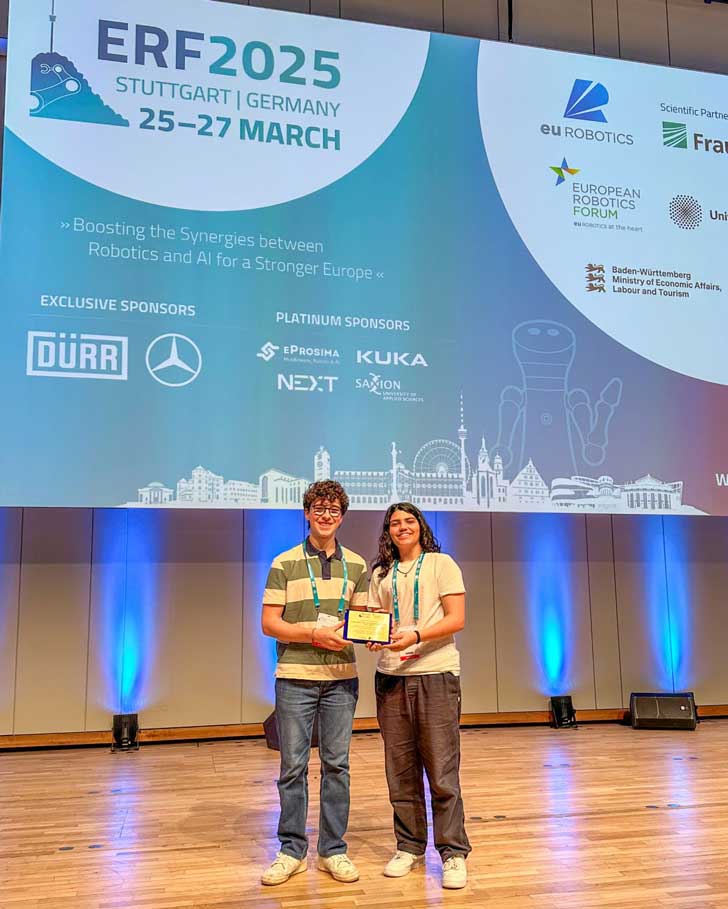
This recognition is leading them to refine their final product, one capable of climbing 45-degree slopes while detecting and avoiding boulders or other obstacles in its way.
Trovador can carry and plant up to 200 saplings per hour and has a light robotic movement, barely leaving an indent on the ground. The robot is also enabled with sensors that analyze soil health, ensuring healthy conditions before a sapling is even dropped in the ground.
It also uploads real-time GPS coordinates of each plant, as well as data like soil humidity and its own battery life, to a cloud, where the team can monitor conditions remotely.
“Trees are vital,” Bernardino wrote in a blog post announcing the original prototype. “They give us oxygen, store carbon, stabilize the soil and give home to the world’s wildlife. For the health of our planet and its inhabitants, their preservation and protection should be a priority for all of us.”
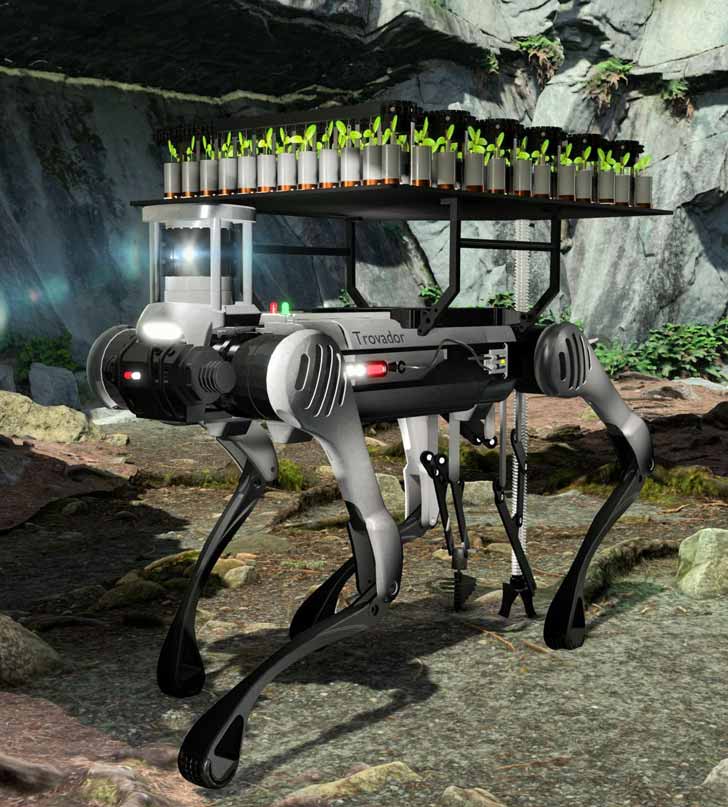
But to fully bring Trovador to market, cost concerns must be addressed.
To make implementation more feasible, Bernardino and Mendonça plan to market the robot as a service instead of an individual product for sale.
“Clients [like] municipalities, insurers, forestry firms, or NGOs can open our app, outline a polygon, choose native species, and receive a quote,” Bernardino told Smithsonian Magazine.
“Pricing is expected to be a big step up from the current methods, up to six times cheaper than manual crews and four times more cost‑effective than drones once seed wastage is factored in.”
As the inventors finalize field tests and make adjustments to the technology, their goal is to deploy it for large-scale restoration projects in 2026.
And it all started right in Bernardino’s backyard.
“I’m from Portugal, and I love my home,” she wrote in 2023.
“It is really concerning watching forests go from alive green to grey in seconds, and watching them go from grey to brown so slowly. I built this robot as an urge to replant my country and a dream to die seeing all Portuguese green landscapes again.”
You may also like: Student invents self-sanitizing door handle for hospitals, receives award from prime minister
Header images courtesy of Trovador
From 2018 to 2020, no one in Dorset, England saw hide nor hair (or rather, fin nor snout) of a single spiny seahorse off the sandy beaches of Studland Bay.
But in 2020, the COVID-19 pandemic offered a silver lining. Without the constant influx of tourists and boats, the endangered seahorses re-emerged.
In fact, when the Seahorse Trust — the world’s leading charity for seahorse conservation — conducted a survey dive that summer, they found 16 spiny seahorses.
“We have seen so many seahorses because the food chain has recovered, giving seahorses plenty of food to eat, and crucially, somewhere to hide,” Neil Garrick-Maidment, the founder of the Seahorse Trust, told The Independent in June 2020.
At the time, it was the highest number of native seahorses found in a single dive in Studland Bay since 2008. After a series of subsequent dives, The Seahorse Trust concluded that there were 46 seahorses living on the site, in total, before the lockdown eased.
But conservationists were wary of it lasting.
“The seahorses need protection to stop them being disturbed again as Covid restrictions are lifted and to stop them vanishing from this legally protected site,” Garrick-Maidment said.
“We have a unique opportunity to help nature and to restore the balance of our planet,” he said. “We must grab this with both hands, for the seagrass, for the sea, for humanity, and crucially for these incredible seahorses.”

In the years since, it’s been rare to see a spiny seahorse. As the people returned to Studland Bay, the six-inch creatures shied away.
On behalf of their finned friends, The Seahorse Trust teamed up with the Studland Bay Marine Partnership to install eco-moorings, which cost about £100,000 a year (or $132,101 USD) to maintain.
Instead of using heavy metal anchors, which scour the bottom, eco-moorings are an environmentally friendly alternative that float above the seabed — protecting fragile seagrass and the seahorses that live among them.
And it worked.
In June 2025, a new dive survey found 17 spiny seahorses, a post-pandemic high.

“It is fantastic news that we found so many,” Garrick-Maidment told the BBC.
“Half were males, and most of them were pregnant, so it shows the eco-moorings are working.”
Garrick-Maidment is hopeful that this latest dive is a promise of better things to come.
“There is still a long way to go in protecting this amazing site, and the seahorses on it, but we are going in the right direction.”
You may also like: Bandicoot 'baby boom' gives conservationists hope for endangered species after 150-year absence
Header image The Seahorse Trust
When you picture Santa Claus, a white, bearded, overweight and jolly man who dashes around delivering gifts to children during the Christmas season probably comes to mind. Yet, not everyone who dons the red suit fits this stereotype.
That’s what Bethany Cockburn, Borbala Csillag and I learned when we teamed up to study professional Santas. For our study, we looked into how these professional Santas were able to “be” Santa, even if they didn’t fully fit the image.
As we explained in a forthcoming article in the Academy of Management Journal, many who do this work don’t see it as just a job — it’s a calling.
For some professional Santas, it’s especially important that they look and feel like Santa to experience that sense of purpose in their work.
We surveyed 849 professional Santas who live across the U.S. and interviewed 53 of them, collecting data between 2018 and 2021. We identified three types of professional Santas: prototypical (64%), semi-prototypical (23%), and non-prototypical (13%).
Prototypical Santas look the part. They are white and overweight, have real beards, and express confidence that they are the right fit.
Semi-prototypical Santas looked the part, too, but felt like they weren’t quite suitable for a range of reasons. They might be introverted or use a fake beard.
Non-prototypical Santas had characteristics at odds with the stereotype. They might be nonwhite, female, or gay, or have a physical disability.
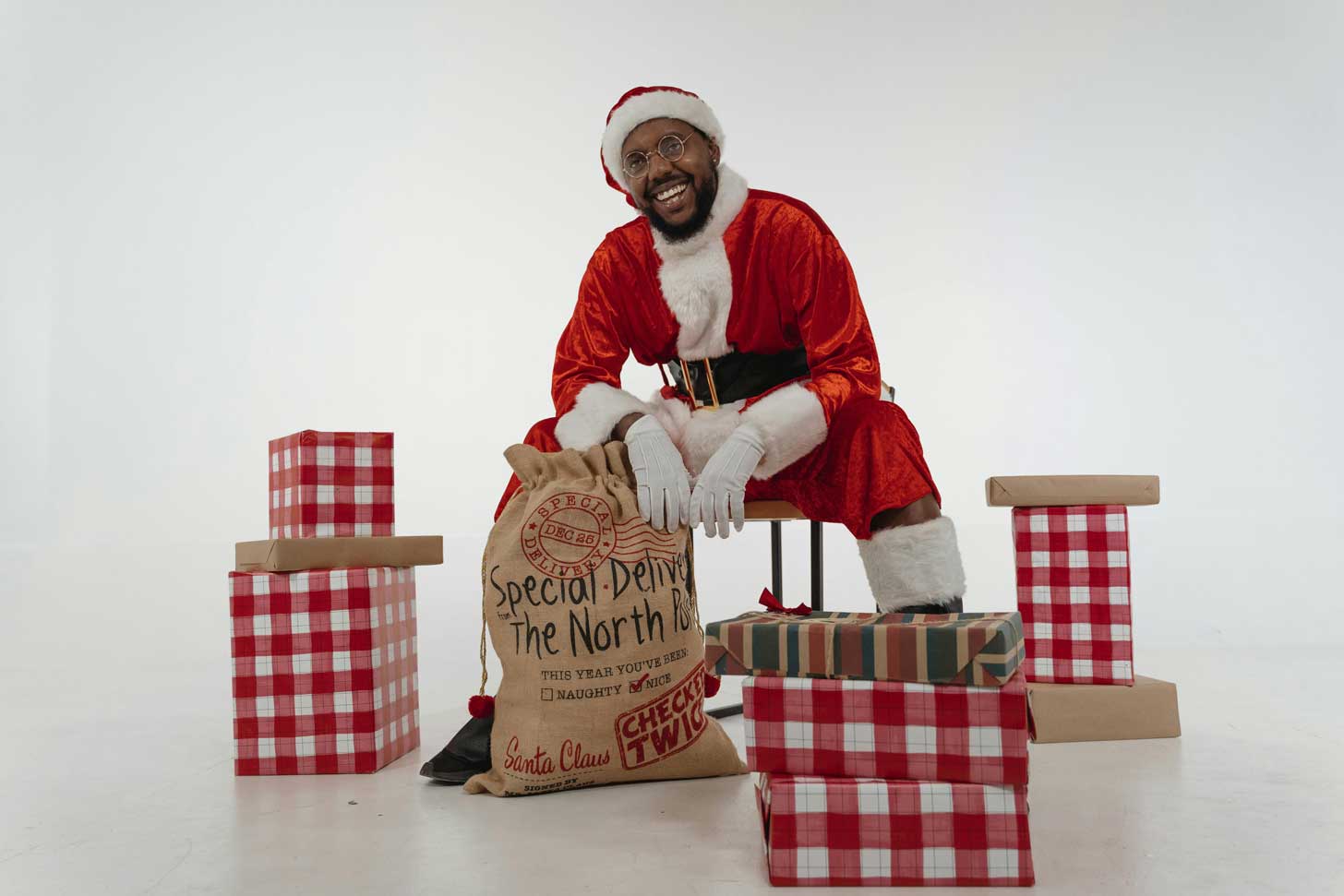
Whereas prototypical Santas could easily slide into the Santa role, the process was more complex for the others.
Semi-prototypical Santas did things like come up with stories they’d tell themselves or share with children to explain away their fake beards. Non-prototypical Santas had values aligned with the Santa image, such as being peaceful, loving, and kind. But they still made a big effort to look like what people expect when they visit a Santa.
“Should it be a difference if you’re a Jewish Santa Claus or a Catholic Santa Claus?” asked an atheist professional Santa we called “Santa Aquila.” “No. You’re Santa Claus. What do you do? You’re not even supposed to preach anything.”
Another Santa whom we called “Santa Lynx” hid that she was female in part by flattening her chest.

Why it matters
While anyone can take a turn being their neighborhood potluck’s Santa, the one you meet at the mall probably attended some combination of Santa schools, webinars, and training.
For instance, the Charles W. Howard Santa Claus School was founded in 1937 and conducts an annual Santa training each year. National networks also exist, such as the Fraternal Order of Real Bearded Santas, which says it has 1,000 members, and the IBRBS — formerly known as the International Brotherhood of Real Bearded Santas — offering meetups and professional support.
There are also local organizations, such as the Lone Star Santas network in Texas.
Although most professional Santas are paid for their work, many do this voluntarily.
It’s not uncommon for there to be some sort of expectation around who should have a particular occupation. Pilots tend to be male, most schoolteachers are female, and salespeople are often seen as extroverted.
But that doesn’t mean that women can’t be pilots, men can’t be teachers, or that introverts can’t work in sales.
What’s next
I’m now looking at how broader institutional environments, current events and social movements can shape how people experience their callings and find meaning at work.
The Research Brief is a short take on interesting academic work.
This article was written by Christina Hymer from the University of Tennessee, and was originally published on The Conversation.
Header Image by __ drz __ on Unsplash

I was hired at the University of Colorado Boulder in 1995 as a language professor. I relocated from Hawaii, where I had learned the Hawaiian language.
When I arrived in Colorado, I decided I needed to learn about the Indigenous language of the Boulder and Denver area, Arapaho. The Arapaho people had occupied the area for many years until they were forced to leave in the 1860s.
I first visited the Northern Arapaho people on the Wind River Reservation in Wyoming in 1999. At that time, there were hundreds of speakers of the Arapaho language.
Today, there are less than 100, and all are over the age of 70.
The Arapaho people in Wyoming and Colorado believe their language can still survive, and so do I. That’s why I am working to combine decades of language documentation with new technological approaches in order to help revive the language.
Loss of Native languages
Many Native American languages currently have few Native speakers, and the speakers are typically the oldest members of the community. The languages of the Wichita and Kansa people, for example, are among many that are no longer spoken at all.
Native American languages have been in decline in the face of Euro-American pressure for centuries.
On the Great Plains, this decline accelerated after World War II when Native soldiers came home after seeing prosperity off the reservation.
Arapaho elders tell me that bilingual parents decided to speak only English to their children to improve their chances of success in life. They were certain the tribal languages would come “later.”
But “later” didn’t happen.
Boarding schools had already been suppressing the language, and now economic improvements brought cars, radios, and televisions to Wind River, further promoting the use of English. Without language exposure in the home, children were not able to acquire good speaking abilities.
Today, however, tribal communities around the country increasingly want to maintain or reacquire their languages. Efforts to do this have been going on for several decades, with some successes, such as the Mohawk language of New York and Canada, Cherokee in Oklahoma and North Carolina, and the Blackfoot language of northern Montana.
In most places, however, numbers of Native speakers continue to decline, while learning among younger speakers progresses slowly.
Uses of data for curriculum
My early work focused on documenting the Arapaho language. Past linguists working with Native languages typically focused on traditional storytelling, as well as audio-recorded data.
But my interest in anthropology led me to focus on conversation and everyday interaction. I also recorded on video to capture social settings, gestures, and sign language. And to better understand the role of the language in daily use, I worked to become a good speaker myself.
I have compiled my documentation into a database that contains over 100,000 sentences of natural Arapaho speech. All of this has been transcribed, translated into English, and accompanied by detailed linguistic analysis.
The database is further supported by an online learning site and an online dictionary of around 25,000 entries. They are among the largest such resources for an Indigenous language, though resources do exist for other languages, such as Yurok.
From documentation to curriculum
In response to the Arapaho people’s goal of language revitalization, my own work has shifted from documentation to assisting teachers, students and curriculum developers. The database turns out to have great value in this area.
Adult learners can watch the videos along with the Arapaho transcriptions, English translations, or both, and review the detailed grammatical analysis.
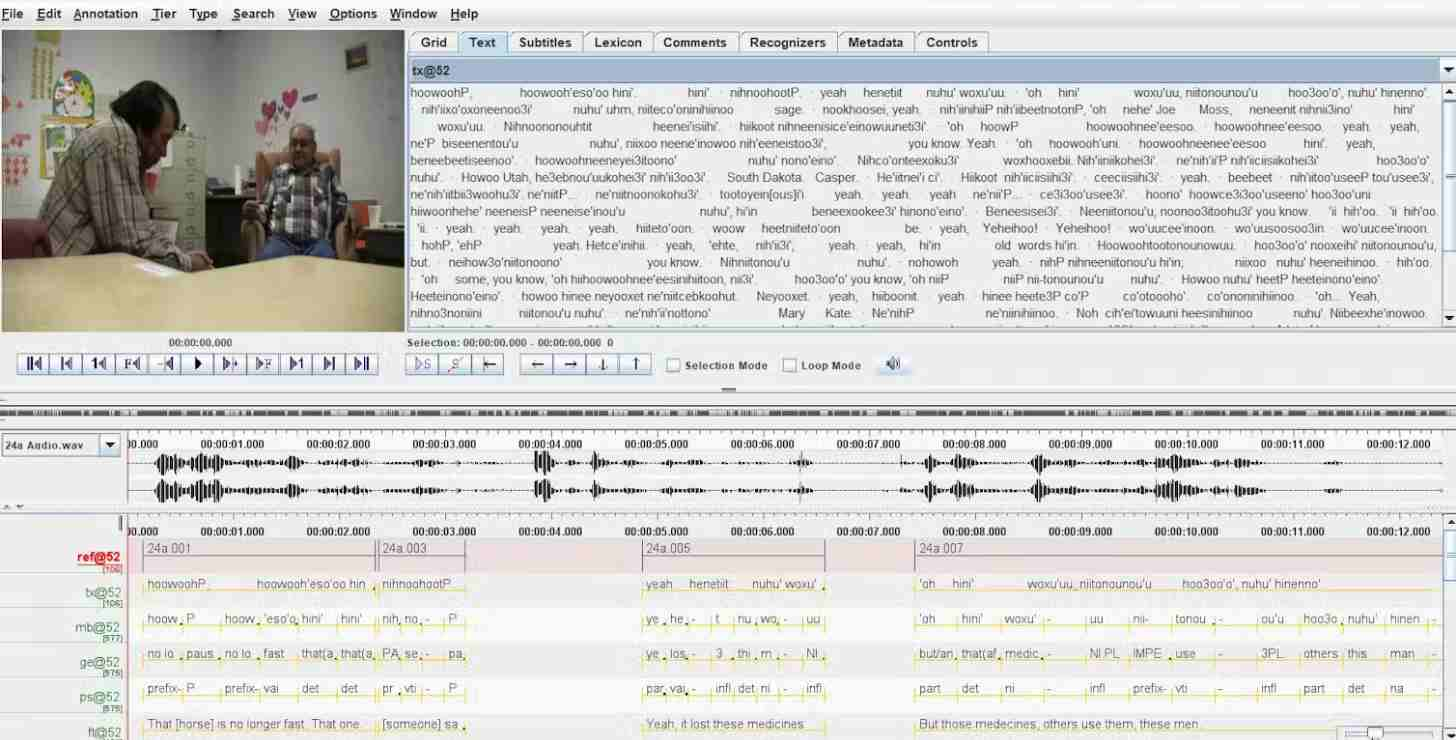
However, it is quite difficult for young learners to immediately benefit from listening to natural discourse. That’s why carefully graded curricula are crucial. Unlike for commonly taught languages such as French or Spanish, materials for most Native American languages are just being developed.
Arapaho can be challenging to learn because its structure is quite different from English. Many small chunks of meaning are combined to produce long, complex words.
For example, an English speaker can start with “happy” and produce “un-happi-ness.” Arapaho speakers typically add three, four or even five prefixes, and multiple suffixes, as well. A speaker can say the word “niibeetwonwoteekoohunoo” — which has six separate meaningful chunks. This translates to English, “I want to go and drive to town.”
There is little value in memorizing such complex words, just as English learners don’t memorize entire sentences. Instead, Arapaho learners need to understand the separate parts and how they combine.
Previous efforts have succeeded in teaching children to speak basic Arapaho. The challenge now is to keep improving their Arapaho language abilities, using a graded curriculum that continues through all school levels.
The database can identify and label the individual chunks of words and assign meanings to each chunk. A beginner’s dictionary of 1,300 entries has been created by calculating the overall frequency of base words in the 100,000 sentences, and then selecting only the most common ones.
The list has been broken down further to produce target vocabulary for each grade level. Smaller chunks of prefixes and suffixes are also measured, and sequential grammar-learning goals can be produced based on frequency and complexity.
A draft Arapaho learning sequence has been created, with 44 stages. It is now possible for the first time to produce a full, progressive language curriculum for Arapaho. The next step is to develop more curricular materials and train teachers to use them.
The sequence of 44 stages is now being introduced at Wyoming Indian Elementary School, the first school on the Wind River Reservation to pioneer dual-language classrooms.
Limitations of technology
Technology is not a magic bullet, however. Only Native people can save their languages, by choosing to learn and speak them.
Because artificial intelligence works using large language models, it needs billions of words of discourse to be trained effectively in a language.
No Indigenous language has nearly that amount of data, so the capacity of AI to address Native language endangerment is limited. Moreover, many Indigenous communities are wary of AI due to concerns over data sovereignty and cultural property rights.
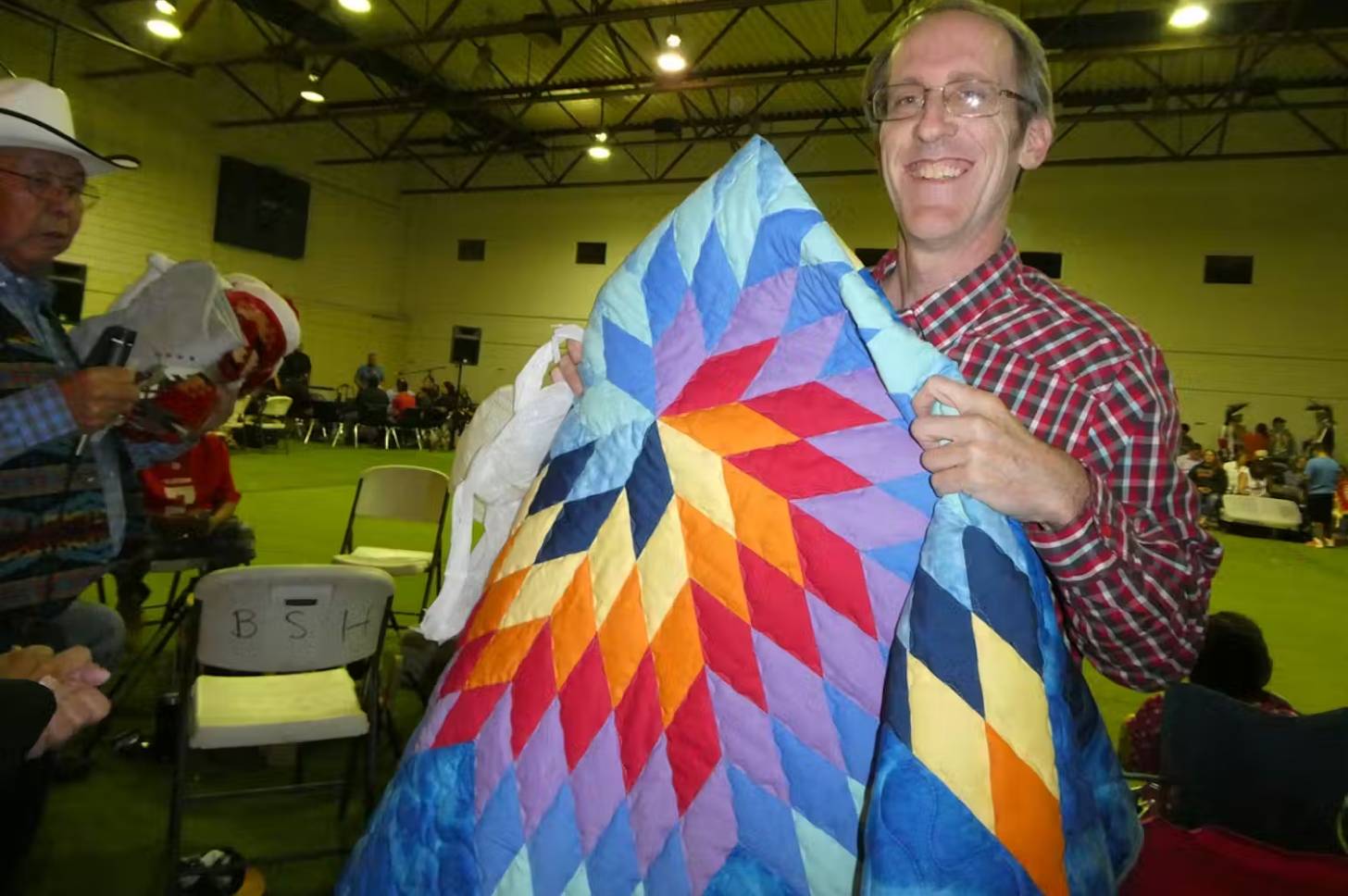
My own old-fashioned experience as a learner and teacher has proved crucial. I can see where difficulties lie for learners, and how to fine-tune computational measurements and predictions.
I’ve learned that success in helping revitalize Native languages depends on researchers building long-term relationships with Native peoples and, ideally, speaking Native languages. Only then can new technologies be applied most productively.
This article was written by Andrew Cowell from the University of Colorado Boulder, and was originally published on The Conversation.
Header Image by The New York Public Library on Unsplash

Tina Hutcherson has been a school bus driver for the Putnam City School District in Oklahoma for over a decade. And at 63, she’s been a knitter and crocheter for over 50 years.
A mom of four of her own children, Hutcherson said she has knitted or crocheted since she was about 12. For a recent birthday, her daughter gifted her a new knitting machine, and it has made it even easier for her to churn out cozy items like hats and scarves.
So easy, in fact, she realized she could keep all of her students warm this winter.
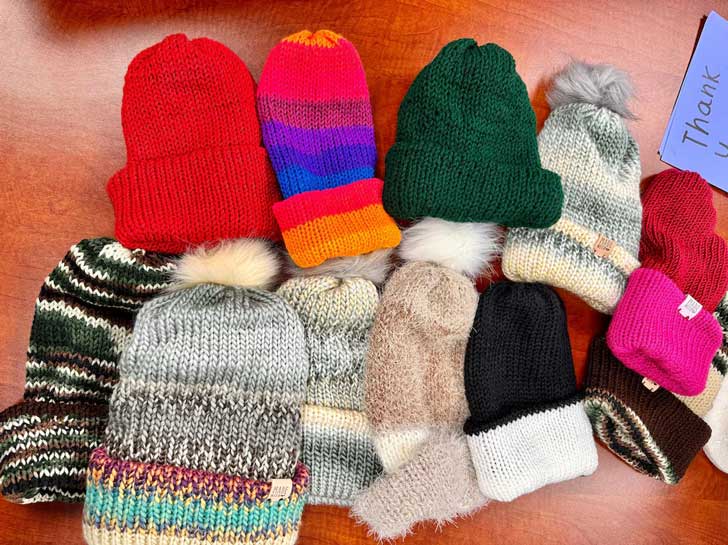
With her new machine, she told KOCO News 5, it takes about 30 minutes to make a winter hat.

“I said, oh Lord, I’m gonna make every one of them babies on the bus a hat,” she said.
“I just don’t want nobody to be without, especially when they're riding with me.”
In total, Hutcherson drives around 100 students to school every day, from elementary to high school age. So far, she has knit and distributed 25 hats to elementary schoolers, who then returned with hand-written thank-you notes for their beloved bus driver.
Plus, she lets the students pick what colors they want — and she also makes the hats reversible.
She has no intention to slow down.
“I got enough yarn to make any hats I wanna make, and colors,” Hutcherson said. “I’ve been stocking up since I was 12. So if these kids need a hat, coat, I like making ponchos for them, I don’t care, they're gonna get it.”
According to Nonprofit Quarterly, an estimated two out of every five children in the United States are clothing-insecure. This means they don’t have access to adequate, appropriate, or affordable clothing. For some, this means they might go without cold-weather coats and accessories, or wear clothes that simply don’t fit.
Hutcherson’s goal is to keep her students warm in the winter, yes, but most importantly, to keep them feeling cared for.
“I just hope they take away that somebody loves 'em, and that’s all,” she said.
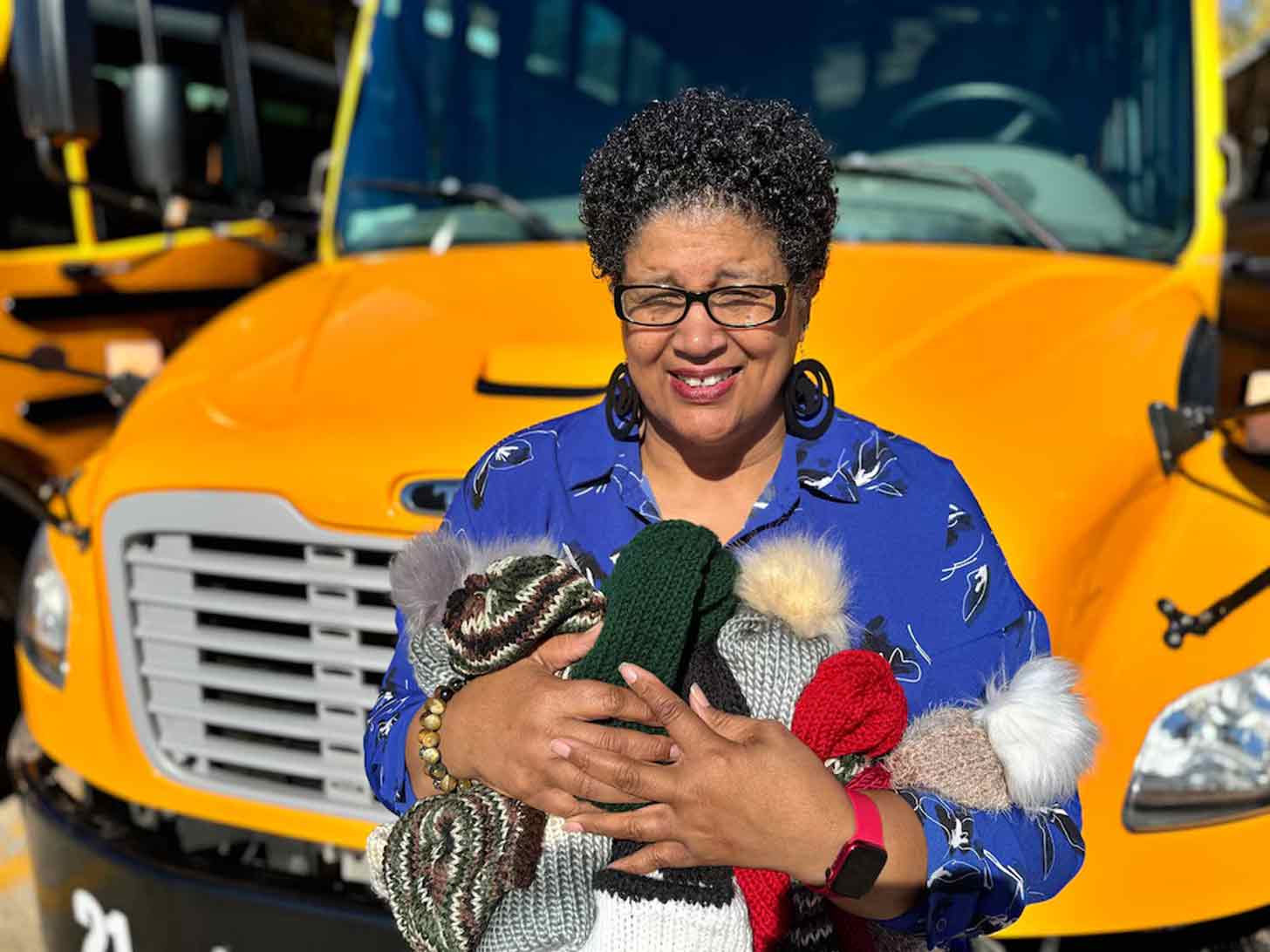
“And if they don’t have any love at home, they gonna get on this bus in the morning … they always know they can always talk to me about anything. I want them to be safe.”
Hutcherson has been posting her creations to Facebook, including some other hats she’s made for coworkers and community members. But the project for her “bus babies” seems to be one she’s especially proud of.
“I’m so happy with my knitting machine for helping me with this project for my good babies on my morning route. I’m hoping they will use them and keep their heads warm for winter,” she wrote in a post.
“I’m praying for all the [families] that are having hard times these days,” she added in another post. “Love is in the air.”
You may also like: For premature babies, hand-knit clothes may be all that fits them. One woman has made and donated thousands
Header image courtesy of Putnam City Schools
Earlier this year, President Donald Trump signed a bill that cut about $1.1 billion from the Corporation for Public Broadcasting, which finances public media institutions NPR and PBS.
While NPR and PBS stand as titans in the public media space, more than 1,500 local public radio and television stations around the country that rely on federal funding to report the news and share vital information to local communities were devastated by these cuts.
In response, donations surged, but still fell short of closing the budget gap that keeps these stations fully operational.
For anyone who has watched and loved “Sesame Street,” listened to “Life Kit” on NPR, or streamed a Tiny Desk Concert — among countless other programming — funding public media is essential.
This holiday season, instead of buying another random gift from a big box store, consider this: A list of gifts that support the NPR and PBS programming our country relies on.
The best gifts that fund PBS and NPR
National Public Radio Script T-shirt

This gorgeous script font T-shirt is simple and straight to the point in support of NPR. Available in both black and green, it makes a great gift for any active listener (though there are other shirts they might love, too).
Every purchase from the NPR online store supports NPR programming.
Shop: NPR
Lingua Franca x PBS Sweaters

More of an investment piece, these delicately embroidered sweaters from Lingua Franca will make any Public Broadcasting Service superfan fall in love.
Get a vintage logo style, or opt for a “PBS kid” or “I Heart PBS” version, all available in adult and kids sizes.
According to Lingua Franca, 20% of every purchase from this collection “goes directly to keeping this vital public service free, accessible, and independent.”
Shop: Lingua Franca
‘Public Radio Rocks’ T-shirt

This union-made tee from Raygun really puts some oomph behind the importance of public media.
The bold and playful design comes in cream or light blue options and is part of a much larger collection of apparel, stickers, and other accessories that support public media.
Sales from this collection support Raygun’s partner organizations, which include NPR member stations in the Midwest.
Shop: Raygun
Sesame Street Books

Before you shop kids’ books from Amazon or another large retailer, consider buying them directly from the source: Sesame Street!
With over 35 titles featuring beloved characters like Elmo, Cookie Monster, Rosita, Big Bird, and more, you can stock up your kiddos’ library — all while supporting Sesame Workshop, the nonprofit organization behind Sesame Street and its ongoing educational programming.
Shop: Sesame Street Official Store
‘Feral for the Free Press’ Tote Bag

This tote bag, featuring a darling possum, gets right to the point: We’ll go hog-wild without a free press.
Made with 100% cotton, it may just be the best accessory to virtue-signal (with genuine love and care) at the farmer’s market.
Every purchase from the NPR online store supports NPR programming.
Shop: NPR
Official Arthur ‘Protect Public Media’ T-shirt

Nothing communicates the collective rage surrounding the defunding of public media quite like Arthur Reed’s clenched fist. This T-shirt from the official “Arthur” shop, hosted by PBS Kids, acts as both a meme and a donation.
(There’s also another great shirt featuring a close-up of Arthur’s face that was a close runner-up for this guide.)
“Arthur” is produced by the PBS affiliate GBH in Boston, so all proceeds from this shirt will go to support the Massachusetts station.
Shop: Official Arthur Store
A subscription or donation to your local NPR affiliate

Of course, at the end of the day, nothing defends public media better than a direct donation to one’s local affiliate.
You can definitely funnel your money towards NPR as a whole, but if you’re looking for a specific member station, you can find them online by inputting your or your gift recipient’s zip code.
Setting up a subscription or a recurring donation keeps programming afloat, helps journalists stay employed, and ensures people right in your community have access to free and uncensored information.
A subscription or donation to your local PBS affiliate

Similarly, you can donate to PBS or any local public broadcasting station! Subscriptions give you or your gift recipient access to live programming, a vast library of shows and documentaries, kids’ TV, and award-winning reporting.
Find a local station online by searching your zip code.
You may also like: 38 Gifts That Give Back to National Parks & Public Lands
Header images courtesy of NPR, Lingua Franca and Raygun
In 2023, former United States Surgeon General Dr. Vivek Murthy sounded the alarm about a public health crisis plaguing the country: Social isolation. And thus was coined the “loneliness epidemic.”
“Given the significant health consequences of loneliness and isolation, we must prioritize building social connection the same way we have prioritized other critical public health issues such as tobacco, obesity, and substance use disorders,” he said in a statement in 2023. “Together, we can build a country that’s healthier, more resilient, less lonely, and more connected.”
His number one recommendation, to “strengthen social infrastructure,” can be supported by evolving legislation to fund parks, libraries, and other community spaces.
And as we end 2025, isolation is even further exacerbated by societal division.
According to the American Psychological Association, more than half of Americans reported that they felt isolated, left out, or lacked companionship.
But as the wheels of government continue to turn slowly, people across the country have mobilized more quickly to respond to isolation.
Here are just a few examples — and ideas — of how we might defeat loneliness, together.
Cry N Vibe Club
Through her beloved TikTok series “Crying in D.C.,” Kiara McGowan offers insights into the best public places to cry in the city.
It all started when she lost her job and found herself in tears all over the city. And it all converged when she hosted a “Cry N Vibe” in-person event at her local library, which she now runs regularly.
Attendees are given a space to introduce themselves, talk about emotions, and have permission to let it all out in a safe community with one another.
There is also quite a bit of levity, including branded tissue packs and bingo games to award the biggest crier of them all, as well as playlists that may or may not induce tears.
@cryingindc Save the date for #ValentearsDay! The second Cry n’ Vibe will be held once again at the Southwest DC Library 🥲 Register today plz don’t break my heart 💔 #cryingindc #dccryingscene #crynvibe ♬ original sound - Crying in D.C.
“It’s been interesting to know that the worst thing that’s ever happened to my life, like, built this, and helped a lot of other people,” McGowan told The Washington Post. “It also made me realize that I’m not alone, you know what I mean?”
What you can do: When the big feelings surge, instead of crying alone or wallowing in the shower (though you can certainly start there), call up a friend and ask if you can let loose. Chances are, they’ll have something to cry about, too. Bonus points if you meet up to watch a tear-jerker movie, wipe your tears on a park bench together, or invite more folks to your (well-deserved) pity party.
Cuddle Therapy
Science has backed this universal truth: Human touch can improve our mental well-being. For folks who live alone or may not have access to hugs, snuggles, or affectionate pets, cuddle “therapy” provides an alternative.
Professional cuddlers create a safe space to offer non-sexual physical touch, from hugs, to hand-holding, and everything in between.
Some practitioners start with cuddling stuffed animals, or may even invite animal therapy helpers to support clients, but ultimately, professional cuddlers provide trauma-informed, completely consensual touch that aims to provide comfort and human connection.
“I think most people are afraid of vulnerability," cuddle therapist Crystal Cavitt told Pittsburgh City Paper. “I think cuddling is really, honestly the foundation to start to love oneself, and then start to move into being able to love another.”
What you can do: Aside from enlisting a professional cuddler, try to invite (consensual!) human touch into your daily life. Even if it’s out of your comfort zone, offer friends a hug, explore platonic hand-holding, or even try something more active like partner yoga or contact sports. If you want to start smaller, there’s no shame in investing in a snuggly plushie or a weighted blanket to give yourself a hug, too.
Porchfest
Since 2013, neighbors in Buffalo, New York’s Elmwood Village have hosted Porchfest, an arts and music festival that takes place on a rotating stage of various front yards and porches throughout the neighborhood. But it’s not just the live music that draws crowds.
A study of nearly 1,000 front yards in the neighborhood found that the livelier and more open the front yard, the more content and connected the resident feels.
This means accessories like garden gnomes, Little Free Libraries, or even enticing landscaping or yard signs made these residents more likely to strike up a conversation with their neighbors, and in turn, cultivate a “sense of place,” according to NPR.
“The Elmwood Village Association is passionate about maintaining the quality of life in our neighborhood,” a website for the community states.
“From organizing annual clean-up events to planting thousands of flowers… installing holiday light poles, wreaths, and lighted snowflakes… we are committed to the beautification of Elmwood and making it a better place to live.”
What you can do: Strike up a conversation with your neighbor. From front porches and garages to communal laundry rooms and elevators, allow space to interact organically with the people who share proximity with you. If you’re feeling extra brave, start a new community project, like urban gardening, holiday caroling, trash pick-ups, or an open mic night.
You may also like: How to prioritize your mental health when you are living through yet another historical event
A version of this article was originally published in The 2025 Mental Health Edition of the Goodnewspaper.
Header image by Karola G/Pexels
The Good Life is an Oakland, California-based nonprofit that offers healthy aging activities for older adults, especially those in marginalized communities.
However, it originated as a clinical research study on dementia and diabetes prevention by the U.C. Davis Alzheimer’s Disease Research Center.
Recent studies at the center conclude that healthy lifestyle changes — like cooking and eating nutritious foods, or mitigating social isolation — could slow or stop the onset of both dementia and diabetes.
“We now have a really strong body of evidence… that what’s good for your heart is also what’s good for your brain. Those things you would do for your cardiovascular health is also good for [preventing] Alzheimer’s Disease,” Dr. David Johnson of The Good Life and U.C. Davis told ABC 30 News.

Today, the organization gathers 40 to 55 cooks every week around a Zoom session in their respective kitchens. Several members of the class are Black women who live with diabetes.
The class instructor and executive director of The Good Life, Shanette Merrick said she set out to transform the way Black elders perceive food, selecting seasonal recipes and spotlighting foods that promote optimal brain functioning and overall health.
“They’re learning how to really look at their plates and say, ‘That heals my pancreas, this is good for my heart, this is good for my skin — everything on this plate is healing my body,’” Merrick told Civil Eats. “That’s super powerful.”
As a way to combat both health and food access disparities among the older Black community, The Good Life also provides free food pickups for participants to get the ingredients they need for class.
It is here where they connect most, chatting with grocery bags in hand and forming life-saving intergenerational relationships.
“Our kitchens should be our pharmacies; our kitchens should be our spaces of healing,” Merrick told Civil Eats. “We don’t pass down the diabetes gene; we pass down recipes and eating habits.”

And according to Dr. Johnson, making these changes together makes them a lot easier to manage.
“The important part of The Good Life is that you’re not alone. We’ve built it so that it’s an online community,” he told ABC 30 News.
“Not only are health coaches there to interact with you, person-to-person in a live format … you’re also there with a group of people who are a lot like you. The social support aspect of it, doing it together as a band of older adults, helps support positive lifestyle change.”
You may also like: New study: Dungeons & Dragons provides real benefits to people with disabilities and the elderly
A version of this article was originally published in The 2025 Food Edition of the Goodnewspaper.
Header image courtesy of The Good Life
Cafeteria workers and school food professionals are often among a school’s unsung heroes, putting in long hours to prepare nutritious lunches, and even working over the summer to make sure their students are well-fed.
But one professional in Beaverton, Oregon, went the extra mile to help 6-year-old Julian Worsham.
Julian has achondroplasia, the most common form of dwarfism.
“I’m a little person,” Julian told WHAS11 News. “My bones grow slower.”
Among Julian’s accommodations in school was a lunch cart to help him navigate the lunch room. However, it had been quickly assembled with duct tape and milk crates.
Endelia Mottram, who has served lunch in the Beaverton School District for 18 years, knew he deserved something better. So she talked to her husband, James, a custom metal builder.
“I thought we could do so much more for him, you know,” James told WHAS11. “I wanted to make something cool that he would be happy to push around and be proud of.”

He and his colleagues assembled a sleek, metal cart, complete with handlebar grips and customized features to help Julian carry his lunch and move through the school cafeteria.
Plus, they added some personalized license plates, flame decals, and a matching stool to help Julian peer over the lunch counter.
“He’s independent now,” Endelia said. “Before, a staff member [would] have to be there to help him.”
Julian now feels cool and confident, and his parents were overcome with gratitude.

“I got this cart for lunch, and my favorite part was that it had my license plates, and it had flames on it,” Julian said in a video for Beaverton School District.
“There’s just wonderful people in this world that, you know, they have their eyes open,” his mom, Heather Worsham added, to WHAS11.
“They’re seeing needs that need to be met, and they’re meeting them. I hope that other kids can get their needs met, too, through this.”
You may also like: School bus driver knits hats for every student on her route: 'I hope they know somebody loves them'
A version of this article was originally published in The 2025 Food Edition of the Goodnewspaper.
Header image courtesy of Beaverton School District