Architect Kamal Sagar, owner of Total Environment, typically designs single-family and apartment homes in India.
But as a frequent visitor to the United States, he decided to build his first project there in Frisco, Texas.

It’s a neighborhood called Tapestry, filled with 121 homes that are “completely custom-designed, furnished homes.” The other thing that stands out about them? They all come with a grass-topped roof.
With a starting price of $1.6 million, these homes are not affordable to the average buyer — but they are designed to be sustainable, and to “blur the boundaries between indoors and outdoors.”
“This is your opportunity to live in harmony with nature while enjoying a high-end lifestyle and creating a balance between sustainability and livability,” a statement from Tapestry shares.

The homes come in two sizes: 4,394 square feet and 5,472 square feet. Every room in every home opens out onto a garden, even at the upper level, thanks in part to the green roofs.
The green roofs also eliminate the need for traditional HVAC. The homes are built with geothermal heating and cooling systems, and the grassy roofs help keep the homes cooler in summer and warmer in winter. The grassy roofs also help reduce rainwater runoff and improve overall air quality.
Plus, they fit in well.

The neighborhood is built on a parcel of land that is lush with trees and features bodies of water, which, until Sagar came along, made development companies wary of building in the area.
But Sagar wanted to make something for people who would be eager to connect with nature from the comfort of their homes.

“This property is really beautiful,” Sagar told Dallas Morning News in 2023.
“These water bodies, they attract a lot of wildlife. There’s actually a set of birds that migrate I think from Canada, they stop here at this place, and then they continue from here.”

The green roofs feature native Texas Blackland Prairie grasses and make up for the green cover that existed in place of the homes before they were built.
“These roofs encourage and sustain the existing habitat and support bio-diversity,” Total Environment shared.

In addition to the green roofs, large glass-sliding doors and skylights are placed thoughtfully through open-concept spaces. When customizing a home, residents can also pick from natural materials that are integrated into the architecture of the space.
“It just gives you a very positive feeling and hopefully inspires you,” Sagar said of the homes.

The homes sit atop approximately 20 acres of open space, allowing for walkability along the Rowlett Creek, over 600 mature native trees, parks, and more. The property also includes a gym, swimming pool, clubhouse, and children’s play area.

“These natural features allow our homes to embrace nature just the way we always design them to, providing a sense of warmth, privacy and openness in an increasingly stressful world,” Total Environment shares on its website.
“We create custom interiors to suit each family's unique lifestyle and functional needs. Our homes have a host of innovative features that are smart and modern, yet inspiring and inviting.”
You may also like: Boston is the first US city to plant green roofs on bus stops: 'Would amount to 17 acres of green space'
Header image courtesy of Total Environment
Forests around the world have fallen victim to fire and drought, and the lush laurel trees of the Canary Islands are no exception.
“In recent years, the Canaries have undergone a severe process of desertification and we’ve lost a lot of forest through agriculture,” environmentalist Gustavo Viera told The Guardian.
“And then in 2007 and 2009, as a result of climate change, there were major fires in forested areas that are normally wet.”
As the technical director of Life Nieblas, a publicly funded water collection project, Viera and his team have been at the forefront of “cloud-milking” — a zero-energy technique that uses a netting of metal pins to collect condensation from low-hanging fog.
“We needed to solve the problem of the fragility of the netting while minimizing the environmental impact,” Viera said.

“We developed a system that imitates pine needles, which are very good for capturing water while also letting the air pass through, and it’s a system that can easily be replicated in other locations and that’s also easy to transport to where it’s needed.”
After fog passes through the metal fronds and water droplets fall into containers below, Life Nieblas workers use the water to irrigate vulnerable new saplings as they rebuild the forest.
“The Canaries are the perfect laboratory to develop these techniques,” said Vicenç Carabassa, the project’s head scientist.
“But there are other areas where the conditions are optimal and where there is a tradition of water capture from fog, such as Chile and Morocco.”
“We’re living with drought throughout the Mediterranean and also in the Canaries,” Carabassa added. “And now, every drop of water counts.”
You may also like: 5 'foods of the future' that could help save the planet
A version of this article originally appeared in the 2025 Environment Edition of the Goodnewspaper.
Header image via Oleksandra Zelena / Pexels
Scientists believe that an aquatic single-celled organism known as UTEX 3222 — cheekily nicknamed “Chonkus” — could be our newest ally in cleaning up carbon emissions.
The fast-growing cyanobacterium, which guzzles down light and carbon dioxide using specialized compartments, was first identified by microbiologist Braden Tierney on an underwater expedition off the coast of Sicily.
After taking samples of seawater from the mouths of volcanic vents, Tierney and his team got help from the scientific nonprofit Align to Innovate to identify their deep ocean treasures.
“There’s more and more excitement about isolating new organisms,” Tierney told Grist.

Upon closer examination, Chonkus immediately set itself apart from other algae-like organisms.
“When you grow a culture of bacteria, it looks like broth and the bacteria are very dilute in the culture. But we found that Chonkus would settle into this stuff that is much more dense, like a green peanut butter,” said co-researcher Max Schubert, adding that its consistency lends to greater efficiency.
As Tierney and Schubert continue exploring Chonkus’ future role in carbon capture systems, they estimate that less than 0.01% of microbes on the planet have been studied.
“There’s no question we’ll keep finding really, really interesting biology in these vents,” Tierney said. “They don’t represent the true arsenal of microbes that we could potentially work with to achieve humanity’s goals.”
You may also like: 'Cloud-milking' is keeping forests alive in areas devastated by drought
Header image via Raw Pixel (CC0 1.0)
The world’s largest vacuum sits atop a dormant volcano in Hellisheiði, Iceland. As a carbon dioxide capture and storage facility — dubbed “Mammoth” — the vacuum sucks in air and strips out the carbon, sequestering it underground and locking it permanently in stone.
According to Climeworks, Mammoth’s manufacturer, the facility has the capacity to pull 36,000 tons of carbon from the air annually. That’s the equivalent of taking 7,800 gas-powered cars off the road for a year.
Although it’s not the first facility of its kind, Mammoth is ten times bigger than its Climeworks predecessor, Orca, which was installed in 2021.
It’s also more efficient in reducing carbon dioxide losses at each stage of purification.

“What we did at Mammoth relative to Orca is that we cut down the number of steps and, specifically, some really high energy and some really high complexity steps, which now helps us ensure that more of the carbon that we capture actually goes into the earth,” Climeworks COO Douglas Chan said in a press release.
Despite its behemoth size, Climeworks co-founder Jan Wurzbacher said Mammoth is just one small piece in Climeworks’ larger plan to scale up to 1 million tons of carbon removal a year by 2030 and 1 billion tons by 2050.
“While it is a big step for us, and looks really like a big plant, compared to a million tons per year scale, this is still relatively small,” Wurzbacher said. “We have by far not tapped into all the potential of scaling.”
You may also like: A deep-sea discovery called 'Chonkus' could be our best bet against carbon emissions
A version of the article originally appeared in the 2025 Environment Edition of the Goodnewspaper.
Header image via Climeworks
In 1978, Eligio Peña, an immigrant from the Dominican Republic, opened his first family-owned grocery store in Queens, New York: Compare Foods.
The chain grew quickly, expanding to neighboring boroughs in New York, and by the early 2000s, it was operating in Connecticut, Rhode Island, Massachusetts, and North Carolina.
Compare Stores now has nine stores in the Charlotte, North Carolina area — growth that blossomed due to changing demographics in the area, with 45% growth in the state’s Latino population between 2010 and 2022.
Compare Foods prides itself on offering international and Latin American products, often acting as the premier option for immigrant families in the U.S. South.
“We can respond to changing demographics much more quickly than our competitors because we’re not being dictated from the corporate office down,” Omar Jorge Peña, the CEO of Aurora Grocery Group’s Compare Foods business in North Carolina, told The Guardian.
“When the store owner or manager realizes that the demographics in the store neighborhood have changed from Ecuadorian to Honduran, they can make the decision to update the merchandising and product selection in that store to match those changes. It’s part of the beauty of our system that we can adapt quickly to what’s happening around us.”

This nimble approach and consideration of shoppers has led Compare Foods to a new initiative to support customers: Providing free grocery delivery across Charlotte amid a new string of Immigration and Customs Enforcement operations in the area.
Last weekend, ICE began deploying to Charlotte in droves, now touting over 250 arrests in the area over the past few days. An estimated 56,000 students have been absent from schools in the area since the crackdown began, and thousands have also walked out of school in protest of the raids.
At the same time, Compare Foods announced that customers who don’t feel comfortable leaving the house to shop in person can use the code NOFEE2025 for free delivery or pickup on online grocery orders through the end of the year.
In a social media video, recorded entirely in Spanish, the company shared the news.
“Our goal is that you can receive your products with peace of mind, from the comfort of your home, with the same freshness and quality as always,” Compare Foods wrote in the caption of the video.
“We continue to work for you, reinforcing our commitment to the community that has trusted us for so many years. We’re here for you, with respect, empathy, and genuine care.”
Customers who do still want to visit the store can utilize an Uber rides program on qualifying purchases, according to the grocery chain.
“It has always been a city that has welcomed immigrants and foreigners,” CEO Peña told Hola News Charlotte of Charlotte, North Carolina.
His interview has been translated into English.

“Since I arrived here in 2009, that warmth and affection for immigrants has been something that has defined this city. And this is the first time I’ve truly felt fear.”
But by providing this resource to the community, he said, for anyone who is worried — “not because of documentation issues, but because they feel uncomfortable with the situation on the streets” — Compare Foods hopes to alleviate at least some of that worry.
“At this crucial and very worrying time, we want to encourage you to stay strong,” he told Hola News Charlotte, adding that it is “crucial” for community members to know and exercise their constitutional rights.
“We must not let them scare or intimidate us into giving up our rights,” he said. “We are Latinos. We stand with Latinos. It’s in our hearts, and we will always be a home away from home for the entire community.”
You may also like: This church in Charlotte is training parishioners to protect immigrants during ICE crackdown: 'Loving your neighbors is holy'
Header image courtesy of Compare Foods
A 13-year study has led to the discovery of 13 new species of mushrooms in the province of Alberta, Canada.
The lengthy study was led by lichen scientist Diane Haughland — a lecturer in the Faculty of Agricultural, Life & Environmental Sciences at the University of Alberta.
“Alberta is home to 13 new species that have not been found anywhere else on the planet, including a few in our own urban backyard,” Haughland said in a university interview with journalist Bev Betkowski.
“And while we tend to be blinkered and think our cities and parklands are not very interesting, they harbor exciting diversity that we don't necessarily understand or appreciate yet. It makes me wonder about the unique conditions that are allowing these species to live here.”
The 13 new species of calicioids were named “stubble fungi” due to their scruffy “beard-like” whiskers. Their discovery brings the total number of stubble fungi found in Alberta to 73.
The miniature, pin-like mushrooms were found across a wide swath of land, from river valleys and southern farmlands to wetlands and foothills forests.
Haughland says every fungus signals “undiscovered biodiversity” and acts as an indication of a healthy environment, especially as they stumbled upon them growing on dead trees.
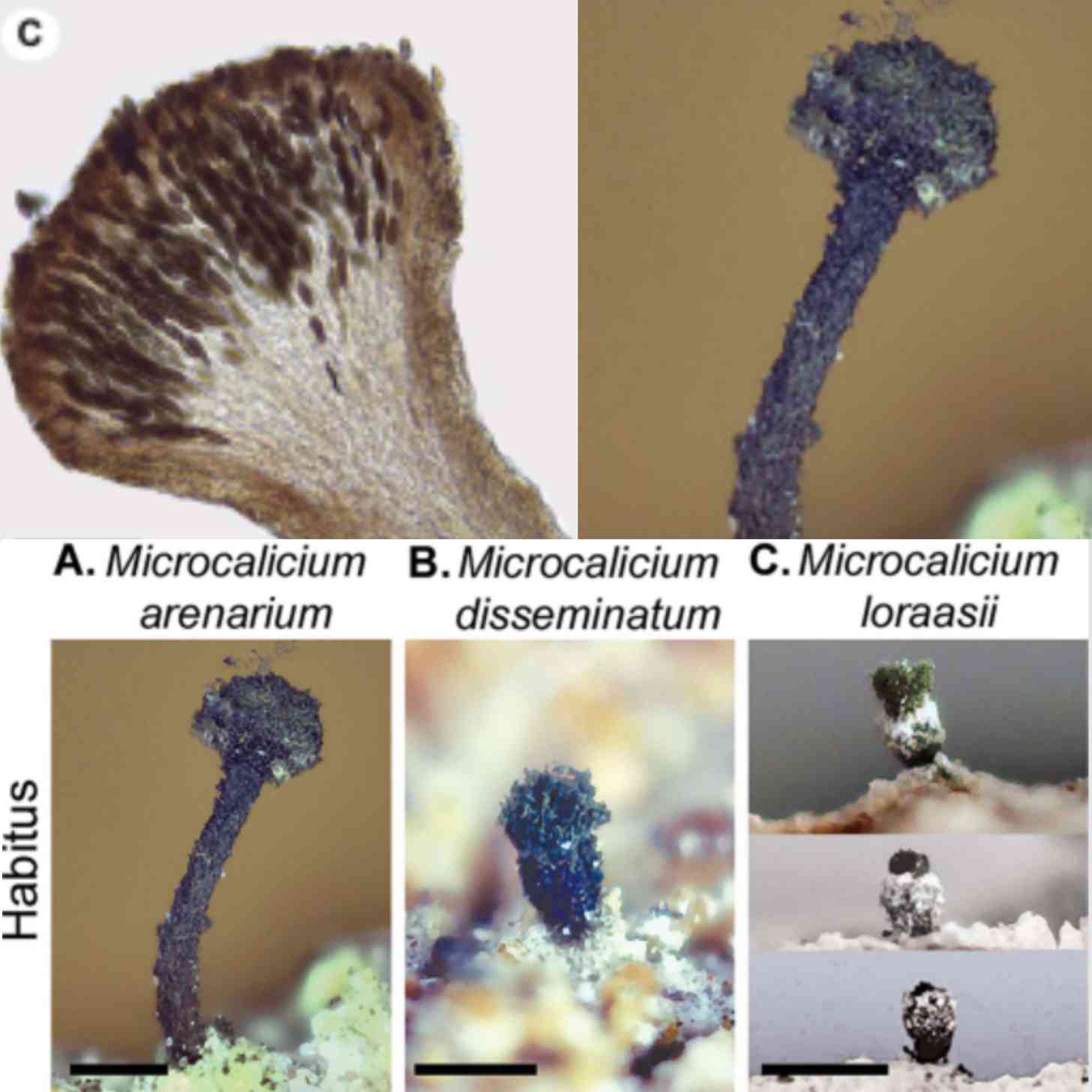
“Functionally, many calicioids tend to occur in environments like old forests that have a lot of value from a conservation perspective,” she explained. “If we know that the fungi are more abundant in those habitats, that suggests these areas should be a priority for conservation.”
The 13 new species join a burgeoning number of stubble fungi across North America, including four in Canada, one in western North America, and one in the Yukon and Northwest Territories.
“Knowing what species exist and where they live is the first step toward effective environmental monitoring and conservation,” Haughland said.
“This resource is going to be helpful here, and around the world, for people to better understand both the existing and new species of stubble fungi.”
Haughland said that their team’s extensive research, which was published in the scientific journal “The Bryologist” in late September, is crucial to future conservation efforts.

“While it's neat to think about those 13 new species as unique to Alberta, that also makes them vulnerable,” Haughland said. “I hope this resource will help other scientists look for these species in their own backyards.”
And, at the end of the day, Haughland said that these unique new mushrooms are a simple reminder that scientific discoveries are just plain fun.
“As scientists, we just love these things,” Haughland said. “Many are colorful, and they are often found in interesting places that are fun to explore. There is a treasure hunt aspect—you need to learn how and where to look for them, and the reward feels like finding a mini pot of gold sometimes.”
“Maybe they also appeal to the same side of humanity that enjoys miniature cars or dollhouse furniture,” she noted. “They're just darned cute!”
You may also like: Scientists discover new black, glossy snake species. They named it after Steve Irwin
Header image: Robert Pattinson at the 2012 Comic-Con in San Diego. Image via Gage Skidmore / Wikimedia Commons (CC BY-SA 3.0) and insert image via Diane L. Haughland et al
Last weekend, Immigration and Customs Enforcement was deployed to Charlotte, North Carolina in an effort to ramp up operations at the behest of the Trump administration.
With over 250 arrests in the area over the past few days, and tens of thousands of students absent from school, the community has rallied to take care of its immigrant neighbors.
OurBridge For Kids, a local nonprofit that provides afterschool programming and support for refugee and immigrant families, paused its daily operations after ICE and border patrol agents were seen on-site.
But, with students and families encouraged to stay safe at home, the nonprofit quickly mobilized to help in other ways, hosting a food drive and volunteer-run grocery delivery service for families afraid to leave home.
“Charlotte shows up for their immigrant community!” OurBridge shared in a social media post just two days after they announced the pause in programming.
“With the help of over 40 volunteers and 150+ donors, we have been able to roll full steam ahead in supporting our immigrant families.”
A video shows clips of individuals packaging boxes of food, moving supplies from drop-off locations to delivery vehicles, and more.
The group shared that their biggest need was monetary donations so that they could get fresh groceries like produce and fulfill the requests of families, in addition to non-perishable items like canned goods and pantry staples.
In the video, OurBridge shared that they had already received $7,000 in financial support.
On November 20, the group shared that they were able to deliver a total of 263 boxes of groceries to families and that they would be moving to a larger space to process donations and larger needs.
“The response has been incredible,” OurBridge said.
The organization seems to be eager to support families in crisis as long as they need to, but this isn’t the first time they’ve stepped up. Founded in 2014 to “create opportunities for newly arrived families,” the nonprofit has always supported immigrant and refugee communities. They even offer their “wraparound services” in 13 languages.

“ourBRIDGE was founded by immigrants, for immigrants. We believe migration is a human right, and everyone has the right to build the life they want for themselves,” the nonprofit posted on social media earlier this week.
In addition to food delivery, the organization has also provided home-based resources and mental health support to families directly impacted by ICE operations.
“News of Border Patrol being in Charlotte has left many in our community afraid and uncertain about the safety of their families and loved ones. We want to remind all of our Charlotte neighbors that you belong here. This city is our home,” OurBridge continued.
“As always, we believe that no child should have to worry about being separated from their family.”
Those interested in supporting OurBridge can donate or sign up for updates via the organization’s website.
You may also like: Latino-owned grocery chain offers free delivery to people afraid of leaving home due to ICE raids
Header image courtesy of Krampus Production/Pexels
Calumma gallus is a small chameleon from eastern Madagascar that scientists still don’t fully understand.
But thanks to a new study led by German herpetologist Frank Glaw, scientists have a new grasp on the color-changing creatures.
In the study, which was published in "Salamandra: The German Journal of Herpetology" on October 30, Glaw and his colleagues revealed that two subtypes of chameleons in the Calumma gallus species complex, long mistaken for each other, belong to categories entirely unto themselves.
By sequencing old museum specimens, they discovered that one chameleon — C. nasutum — actually belongs within the C. gallus species complex, even though it doesn’t have the long nose-like structure usually seen in the group.
The populations that were once labeled C. nasutum are now described as a new species, Calumma hofreiteri, Hofreiter’s chameleon.
The researchers also described a new northern species, Calumma pinocchio, which is genetically quite different and has a long but smoother-edged nose appendage.
Pinocchio chameleons boast long, slender nose appendages similar to their namesake — the famed fairy tale character created by Italian author Carlo Collodi in 1883.
“The elongated and pointed rostral appendage of this chameleon is reminiscent of Pinocchio’s long nose, which grows when he lies, although in C. pinocchio the appendage may well be an honest signal of communication reflecting male fitness,” Glaw and his peers observed cheekily.
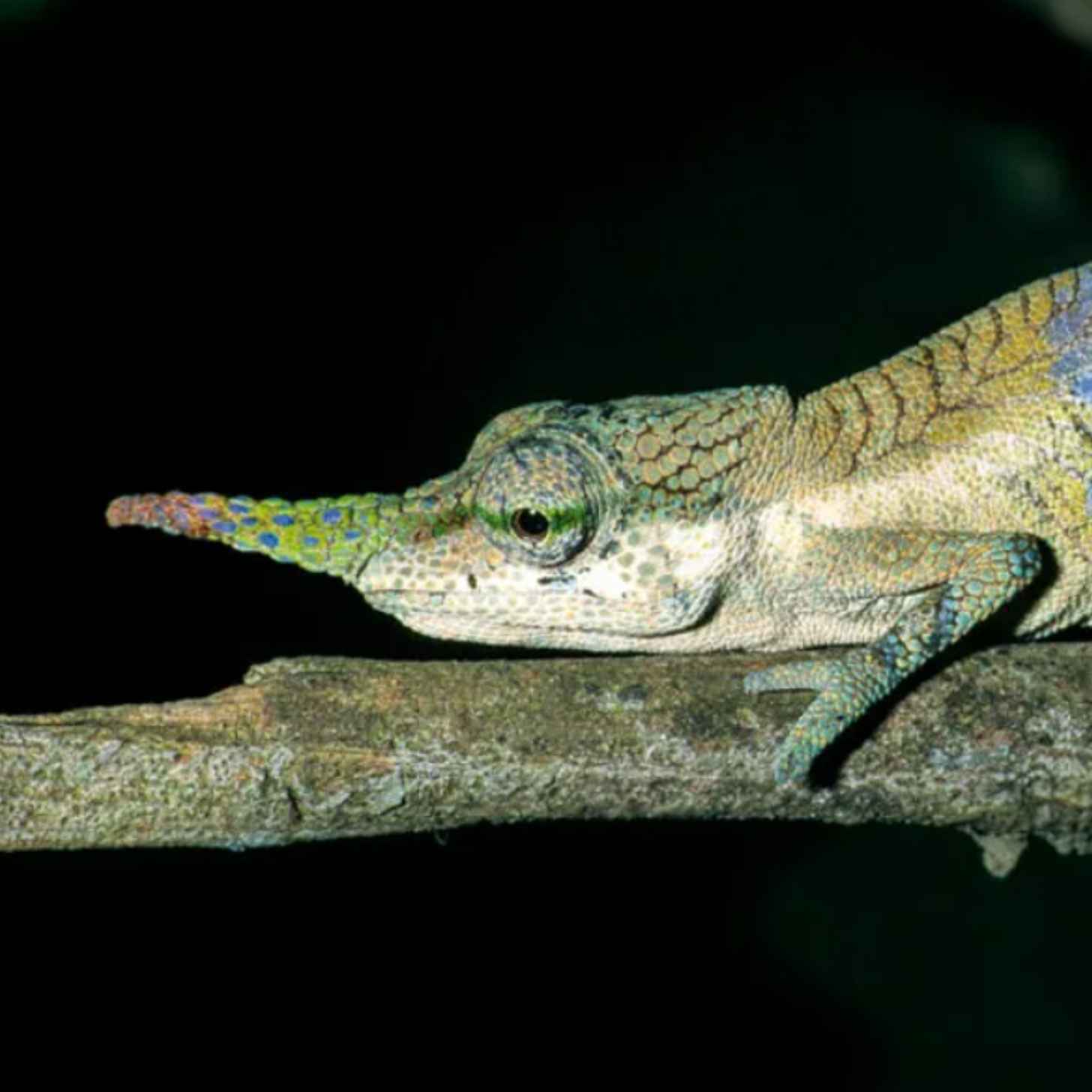
When it comes to telling the three distinct species apart, it’s all in the nose.
Chameleons of the general Calumma gallus have serrated rostral appendages branching off from their nose, almost like small thorns, whereas the Pinocchio chameleon’s appendage is long and smooth, and the Hofreiter’s chameleon’s appendage has a rounded end.
“The genetic analyses are conclusive: the nose chameleons have virtually fooled previous research,” Glaw, a curator at the Bavarian State Collections of Natural History, said in a statement.
“Our study also revealed that the nasal appendages can change quickly in terms of length, shape, and color. Their evolution is possibly driven by the respective preferences of females in mate selection.”
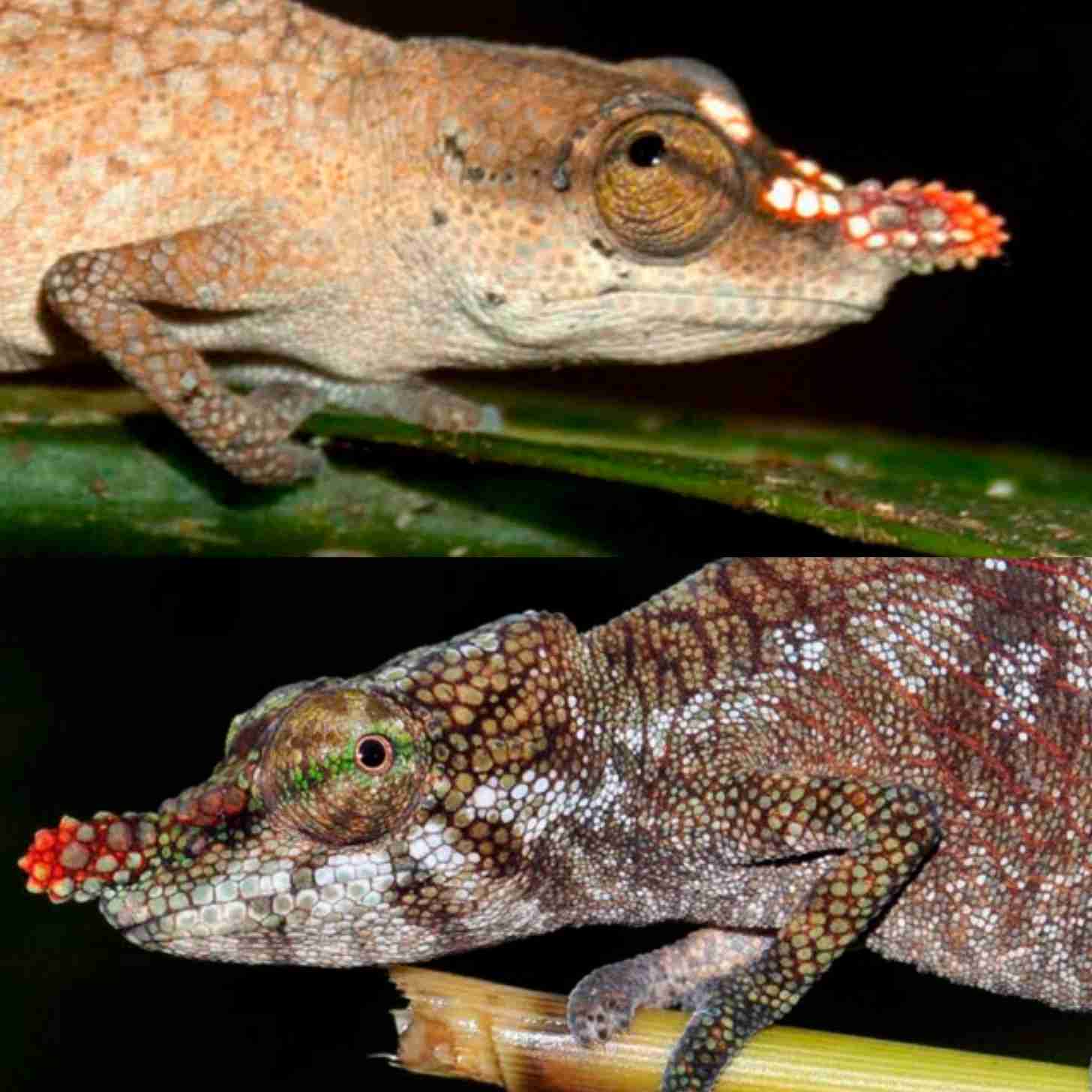
When it comes to protecting these newly named chameleons, Glaw and his team said they simply needed more data.
“Proposing a Red List status for the species discussed herein is hindered by several remaining uncertainties about their distribution and status,” Glaw wrote, in reference to the International Union for Conservation of Nature’s Red List of Threatened Species.
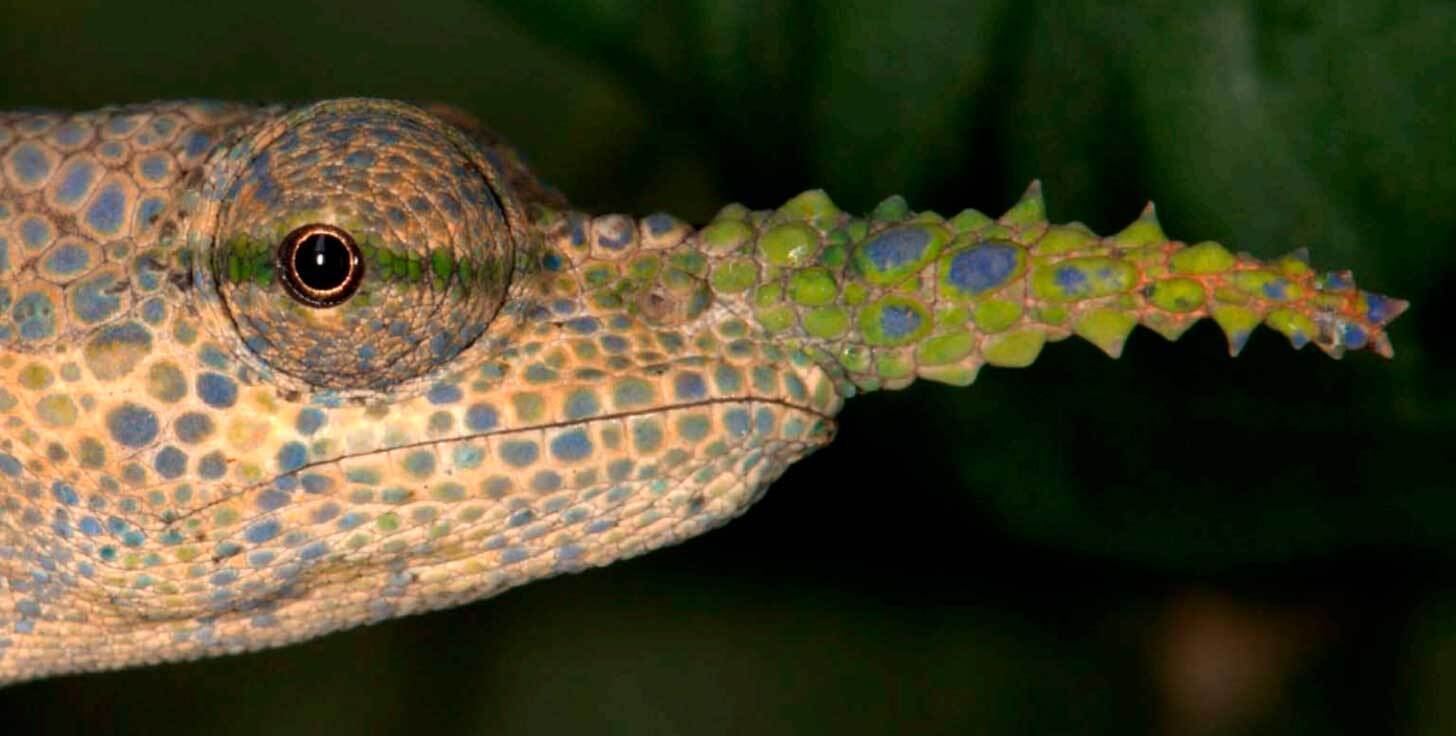
To their best estimation, the Hofreiter’s chameleon may have a fairly wide range, but most of the five known locations are small forest patches that are threatened by deforestation. Based on its limited distribution and ongoing habitat loss, it may qualify as Vulnerable.
As for the Pinocchio chameleon, they surmised that they prefer forest edges — but still need real forest to survive.
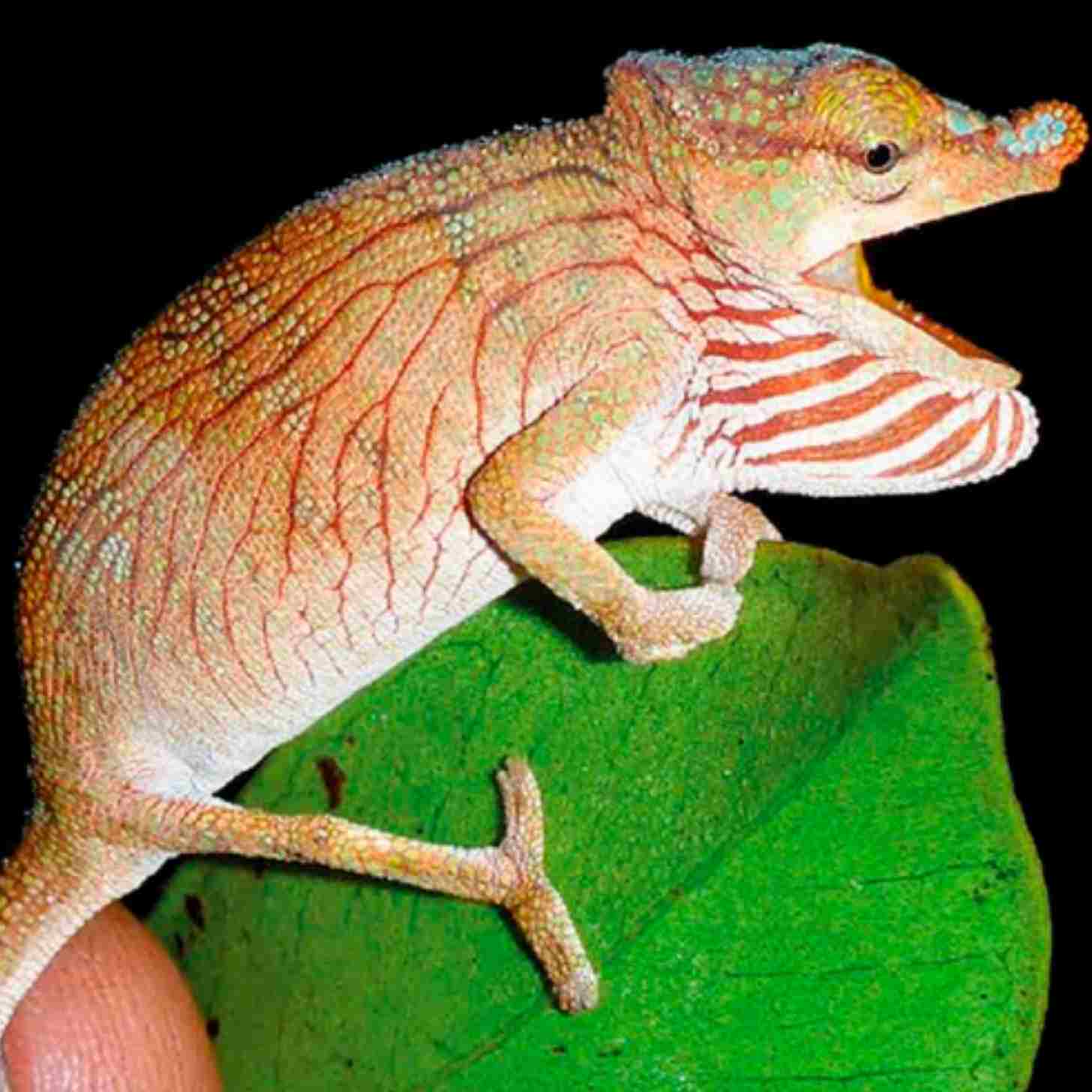
“In Northern Central East of Madagascar,” the researchers wrote, “rainforests at lower elevations are highly fragmented and the remaining fragments are under constant pressure from slash-and-burn agriculture.”
Therefore, they explained, the Pinocchio chameleon may require Endangered status.
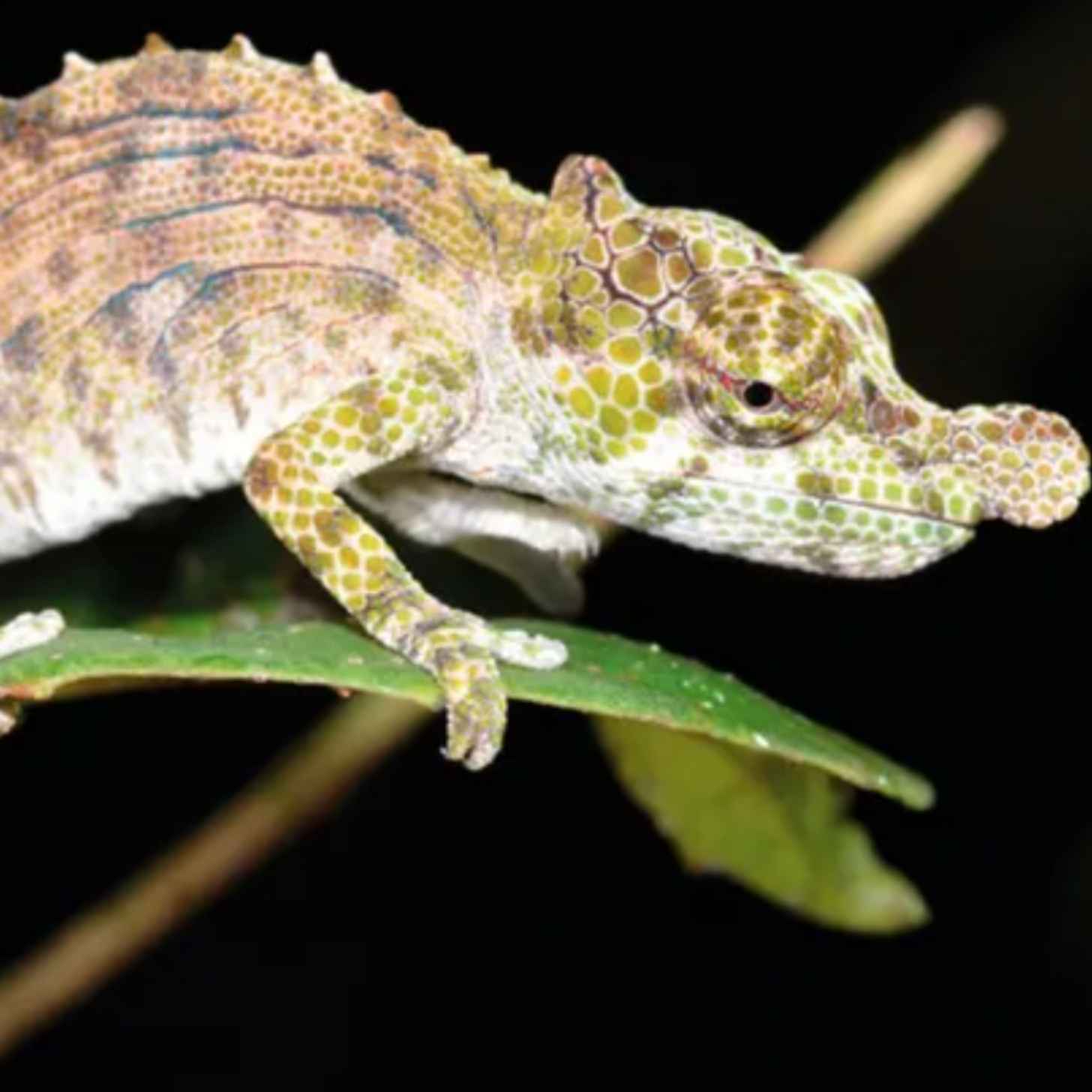
Overall, the researchers found that the nose structures in these chameleons evolved quickly and that further fieldwork is required to reveal just how many species are out there — and how they’re all related.
They also said it requires a visit to the past, in learning from ancient chameleon samples.
In fact, a chameleon collected way back in 1836 was pivotal to Glaw’s research.
“The study shows the great potential of the new museomics methods to correctly identify historically collected specimens, especially in species complexes,” said study co-author Miguel Vences from the Technical University of Braunschweig.
You may also like: These new species of 'stubble mushrooms' sport 'beard-like' whiskers. Scientists say they're key to conservation efforts
Header image via Frank Glaw (ZSM/SNSB) (CC BY-SA 4.0)
Every day the Good Good Good team collects the best good news in the world and shares it with our community. Here are the highlights for this week!
If you want to get good news in your inbox every day, join the Goodnewsletter — the free daily newsletter designed to leave you feeling hopeful.
The Best Positive News We’re Celebrating This Week —
Scientists unveiled a new, effective anti-malaria drug to help fight rising drug resistance
Drugmaker Novartis and the nonprofit Medicines for Malaria Venture unveiled a new antimalarial drug that’s as effective as existing treatments — but could help address rising resistance to those treatments.
Called GanLum, the drug was more than 97% effective at treating malaria in the final-stage trial results. While existing treatments work against malaria, there has been growing resistance to one of the key drugs used.
This new treatment option is the first major advancement in treating malaria in decades, and it works differently from previous antimalarial drugs.
Why is this good news? Malaria still kills more than 600,000 people annually, most of them children under five years old in sub-Saharan Africa. If drug resistance were to continue rising without a new treatment option, it would leave health care providers globally without another option.
→ Read more
What if every teen graduated with $1K and an investment portfolio? These states are making that a reality
→ Read more
Rapid expansion of renewable energy has put the world way ahead of the curve to triple capacity by 2030
At COP28 in 2023, over 130 governments pledged to triple the world’s existing renewable energy capacity to 11 terawatts by 2030 — since then, deployment has skyrocketed.
To achieve a tripling, renewables additions needed to increase by 21% every year, but additions have actually averaged 29% annually from 2023 to 2025.
As a result, the world is already way ahead of the curve to achieve triple capacity — additions would only need to rise by 12% annually to still achieve it.
→ Read more
A city in New Mexico just became the first to tie minimum wage to rental costs
The Santa Fe City Council voted to raise its minimum wage from $15 an hour to $17.50 in 2027, which is good news in and of itself — but how it will determine future increases is even better.
The new ordinance will calculate minimum wage based not on the Consumer Price Index alone, but on the cost of housing, too. That makes Santa Fe the first city to account for housing costs in calculating its minimum wage.
While the mayor-elect said the raise may still not be enough to account for “the increasingly high cost of living,” it was a step in the right direction and “essential to supporting our workforce, promoting stability, and upholding our commitment to a thriving and sustainable Santa Fe.”
Why is this good news? Wages aren’t keeping up with the rising cost of living, and housing costs are a major driver of those rising costs. It’s important that it’s considered in setting adequate wages for workers. Santa Fe is making sure that it is, now and into the future.
This car-free neighborhood could be the future of walkable cities in America
→ Read more
Thousands of national park workers are still without jobs. So people are ‘adopting’ a park ranger this holiday season
Even before the longest government shutdown in U.S. history, national parks and rangers were strained as a result of federal budget cuts. Sandra Ramos, known as @nationalparkpatchlady on Instagram, wanted to help.
She launched a grassroots “Adopt-A-Ranger” program to connect donors with rangers in need of support during the holiday season.
Her hope was to get around 50 followers to participate in the project, but within just a few days, over 500 people had signed up to support park rangers.
In response to protesters, Brazil created 10 new Indigenous territories during COP30
COP30 host country Brazil announced the creation of 10 new Indigenous territories, which means the areas — one of which is in part of the Amazon — will have legal protections under Brazilian law.
Though not always enforced, it’s an important step for the country’s Indigenous communities, who are sometimes attacked when they try to defend their land from cattle ranchers or groups trying to cut down trees for agriculture.
Brazil also recognized 11 Indigenous territories last year.
Why is this good news? Beyond a deep cultural and spiritual connection to their lands, as one Indigenous activist put it, “Indigenous peoples today protect 82% of the world’s biodiversity,” so if you protect these lands, “you guarantee this area will be protected.” And protecting biodiversity is critical to addressing the climate crisis, the central purpose behind the COP events.
→ Read more
You may also like: Meet 3 Indigenous women who are leading the way in fighting climate change
To reduce vandalism, these communities installed vertical ‘living walls’ that double as pollinator gardens, clean the air, and more
→ Read more
An expensive gas bill inspired a developer to build an all-electric affordable housing project that keeps bills low
In 1999, developer AJ Patton’s mother got a $400 gas bill in the mail. Making just $10 an hour, she couldn’t pay it, and “we got our gas shut off and for a year straight had to boil water to take a bath.”
Patton didn’t want others to experience that, so he now builds affordable housing that helps lower electricity costs. His latest project, Humboldt Park Passive Living in Chicago, is all-electric and being built to passive house design standards.
Featuring thick walls and high performance windows to minimize heating and cooling, rooftop solar, and a fast EV charging station, it’s also the largest passive housing development in the city’s history. Additionally, 48 units will be reserved for low-income residents.
Three years after its ‘radical ownership’ restructuring, Patagonia has given another $180 million to nature
Three years ago, Patagonia founder Yvon Chouinard made an unprecedented move. Instead of selling the multibillion-dollar retailer or taking it public, they created a new trust and nonprofit that would use the company’s profits to fight climate change and protect nature.
It hasn’t changed the day-to-day operations of the company, but the change has amplified its environmental work. While it pioneered the “Earth tax” in the 1980s, giving 1% of all profits to environmental charities, about $10 to $15 million a year.
Since the company restructured in late 2022, Patagonia has far surpassed that, giving $180 million to the Holdfast Collective, the group of five nonprofit trusts that the company created to fund environmental work.
Why is this good news? While so many companies aim for more (and more) profits at any cost, Patagonia’s successful restructuring proves it’s possible to do things differently, with people and the planet as a top concern.
→ Read more
This Latina mom invented a whole new way for her autistic child to make tamales. It inspired a full-blown business
→ Read more
Washington’s “Souperman” leads a 6,000-person Facebook group in giving away free, homemade soup to anyone in need
In the winter of 2023, Chris Hyde of Olympia, Washington had recently retired, felt isolated at home, and the dark Pacific Northwest days left him feeling “borderline depressed.”
He started cooking soup, and had an epiphany: he’d make it for his neighbors, too. He started a nonprofit, Souper Sunday, and in a now 5,900-person Facebook group, members post when they have a meal available — and people in need respond to coordinate pickup.
Hyde himself makes about 25 to 35 portions of soup every day, five days a week. It’s grown so much that there are 11 total Souper Sunday Facebook groups in cities across Washington, California, and Montana.
→ Read more
In a major crackdown, the UK just outlawed reselling event tickets for a profit
Impacting fans across the world, “ticket touting” — or reselling tickets for a profit — has become increasingly sophisticated in recent years, as professionals buy large volumes of live event tickets, from concerts to sports, before relisting them on resale platforms at highly inflated prices.
The U.K. government just announced a major crackdown on the practice: making it illegal for anyone to resell a ticket for anything more than its original cost.
The announcement comes a week after major artists like Coldplay and Dua Lipa called on the government to make good on its pledge to stop “pernicious” touts.
Why is this good news? The government estimates that resale tickets will be £37 cheaper on average and save fans £112 million per year — a huge win for fans and artists alike who just want to see their favorite performers, teams, and more for the intended price.
All 121 houses in this neighborhood include a grass roof: ‘Every single room has access to a garden’
A church in Charlotte hosted an ‘ICE defense’ training to protect migrants in the community
Since 2017, Charlotte nonprofit Siembra NC has been working to prepare community members through “ICE defense” trainings.
The group just hosted a “Safe to Work, Safe to School” training with Dilworth United Methodist Church to train volunteers to help immigrants get to work and school, while fighting against constitutional violations carried out by ICE.
Over 1,000 people registered to attend the training, which helped them understand how to keep a safe distance from agents and how not to incite violence or act in ways that are illegal.
→ Read more
More good news of the week —
Giant holiday “giving machines” are in over 100 cities around the world, and they’ve already raised $50 million. The kiosks make donating easy and engaging, allowing users to pick a specific dollar amount or item to contribute to a specific charity, like spending $35 to give a solar lamp to a refugee family.
A 20-year-old Kenyan student turned a local fundraiser into a nonprofit serving 600,000 meals a day to kids in school. Nutritionist and food scientist Wawira Njiru is directly tackling a huge hunger issue in Africa, where she says less than 20% of school kids receive daily meals across the continent.
An app that saves surplus food launched discounted grocery bags with Whole Foods to combat food insecurity. Too Good To Go worked with the grocer to roll out seven new categories of bags as millions of U.S. consumers have been struggling with rising grocery prices and inflation.
In a clinical trial, a tiny drug-releasing implant wiped out bladder cancer in 82% of patients. Traditionally, bladder cancer patients “have had very limited treatment options,” and the new therapy is “the most effective one reported to date for the most common form of bladder cancer.”
A large-scale MIT study found several targets for a new tuberculosis vaccine. Using these antigens, researchers plan to develop vaccine candidates that they hope would stimulate a strong immune response against the world’s deadliest disease.
The Weeknd donated $350,000 to help support hurricane relief efforts in Jamaica. The donation will benefit the World Food Programme, for which The Weeknd is an ambassador, as it helps 200,000 Jamaicans who were impacted by the Category 5 storm.
An art festival at Zion National Park raised $100,000 to support the park’s recovery following the government shutdown. The Plein Air Art Invitational is held each year around early November as fall color touches the leaves and the park begins to empty after a summer season that draws as many as half a million visitors a month.
A new vending machine dispenses free prescription drugs to people experiencing homelessness. Clients simply meet with a provider at the health clinic, get a prescription for what they need, then use that prescription to easily access their medication from the vending machine.
An Atlanta nonprofit for rental assistance reopened its grant program for the third year to help families stay in their homes. Typically, FreeRent offers one month or more of covered rent, but this grant program goes the extra mile by providing a year’s worth of rent payments.
A grassroots soccer club in England is helping improve access to the game for deaf children. (May require login) HS Sports made minor adjustments to its communication so that two young players could play alongside their hearing teammates — and it wants other clubs to follow their lead.
A vibrant community fridge in New York City gives free fruits and veggies to hundreds of people every week. The fridge rescues fresh produce from local supermarkets and partners with local businesses to stock fresh-pressed juices and pre-portioned meals when possible.
A report found that renewables could increase developing countries’ GDP by around 10% in 25 years. Already, between 2017 and 2022, renewable investments in the 100 largest developing countries (excluding China) contributed a combined $1.2 trillion to GDP growth — equivalent to 2-5% of GDP for most of these nations.
Scientists are developing alternatives to lifelong drugs for autoimmune diseases. They’re trying a revolutionary new approach to treat rheumatoid arthritis, multiple sclerosis, lupus and other devastating autoimmune diseases by reprogramming patients’ immune systems.
A doctor in Sudan won a $1 million prize for his “extraordinary courage and steadfast dedication to providing care for those trapped in conflict.” The country’s civil war broke out in 2023, and the United Nations has described tit as the most devastating humanitarian crisis in the world, with over 150,000 people killed and more than 12 million displaced.
A new directory of over 125 tree-planting nonprofits is making it easier to contribute to reforestation around the world. For donors and funders who want to support reforestation efforts, it can be hard to identify which organizations to trust with their money and even more difficult to determine which are effective.
A ‘swimming cap’ is transforming treatment for babies with brain injuries. Researchers are trialing a new technique that could speed up diagnosis and care for children with conditions such as cerebral palsy, epilepsy, and learning difficulties.
Scientists discovered a new, rare black wolf snake in a biodiversity hotspot and named it after Steve Irwin. The species was found in a moist, evergreen forest on Great Nicobar Island and since the scientists believe it’s limited to this region — at risk from human threats and habitat loss — they recommend the species be classified as Endangered by the IUCN.
With deaths from heat-related causes rising globally, philanthropies donated $300 million to climate health research. The money, announced this week at the COP30 climate negotiations in Brazil, is aimed at developing data and figuring out the best investments for tackling rising risks from extreme heat, air pollution, and infectious disease.
A town in Michigan stopped a massive data center from being built on public land. The company behind the project said it was no longer pursuing it, it was grateful for the community’s engagement, and “it is important to work together as a community when making decisions about the future, even when there is disagreement.”
A new report shows Australia is on track to become the first country in the world to eliminate cervical cancer by 2035. In addition to survival rates improving, in 2021, the national cervical cancer rate decreased to 6.3 per 100,000, compared to 6.6 per 100,000 in 2020. For the first time since records began in 1982, there were no cervical cancer cases diagnosed in women under 25 in 2021.
A startup’s plant-inspired technology keeps hundreds of millions of plastic particles out of the ocean. Tiny fragments of microplastics — from clothes, car tires, packaging, and other sources — slip through most water filters, but not at a water treatment plant on the coast in Atlantic City, New Jersey.
Birds in France are showing signs of recovery after a bee-killing pesticide was banned. Four years after the European Union banned neonicotinoid use in fields, researchers observed that France’s population of insect-eating birds had increased by 2%-3%.
This weekend, as President Donald Trump met with New York City Mayor-Elect Zohran Mamdani, and Georgia Rep. Marjorie Taylor Greene announced her resignation, New York Congresswoman Alexandria Ocasio-Cortez was not in Washington.
Rather, she was back home in her New York district, distributing turkeys.
Ocasio-Cortez hosts a turkey distribution annually, feeding families and workers in need around the Thanksgiving holiday.
Last year, her team gave away over 1,000 turkeys, which was double that of the year before. This year, they reported that 1,600 turkeys were given away.

“Thanks to your grassroots support, we have been able to distribute 1,600 turkeys to families in the Bronx ahead of the Thanksgiving holiday,” the congresswoman’s campaign shared on Instagram.
“We must come together in community in these moments to care for one another and remember, we are the bridge to the society we want to become.”
Most of the donations were funded by supporter dollars, which Ocasio-Cortez has also used to host backpack drives and other community events as a form of campaigning.
“We have been able to provide over 1,600 turkeys in the Bronx, and then all of your support and fundraising has raised an additional $20,000 above our raise goal, which we are giving 100% to local food pantries to help feed families this Thanksgiving,” Ocasio-Cortez said in a vlog-style video.
She took viewers along as she and her team of volunteers moved throughout the Bronx and Queens to get turkeys to people in need — including halal turkeys in the Throgs Neck neighborhood, too.

“In addition to donations — check this out,” she said in the video. “We’ve got so many volunteers here that are making this work. This is incredible.”
A long line of cars set off to different parts of the borough, after loading up with palettes of turkeys and other donated food, as Ocasio-Cortez said, “to make sure these are distributed far and wide.”
At one stop at First Baptist Church in Queens, Ocasio-Cortez spoke with community leader Rev. Patrick Henry Young.
“It’s exciting to have our wonderful congresswoman, who has done tremendous work in our community,” he said. “We’re feeding thousands of families — not just on this day, but we feed every Saturday.”
The reverend invited any community member to join in church celebrations and future food distributions, too, while finally thanking Ocasio-Cortez for her work.
@aoc Hello, everyone! We're doing turkey distributions in Throgs Neck and East Elmhurst today, and I'm taking you with me to show you how we show up for our community.
♬ original sound - Alexandria Ocasio-Cortez
While the congresswoman’s name and campaign are attached to these offerings, it’s clear they are a community-wide effort.
Community organizations Grow NYC, Corona Mutual Aid, Street Vendor Project, and more, were out alongside Team AOC over the weekend.
“With your help,” Ocasio-Cortez addressed constituents, “we can keep it going.”
You may also like: Latino-owned grocery chain offers free delivery to people afraid of leaving home due to ICE raids
Header image courtesy of Team AOC
On November 22, the Saturday before Thanksgiving, Nashville bakery owner Kathy Leslie was cooking up hot holiday meals for over 700 families.
It’s a tradition that Leslie’s Shugga Hi Bakery & Cafe has been carrying on for nine years.
“So listen, this is the truth: people are hurting,” Leslie told News Channel 5 Nashville. “They’re hurting financially, they don’t have food, they’re hurting mentally.”
“So we just need to do the best that we can to be kind, loving, and generous to somebody,” Leslie emphasized. “That’s called Shugga, baby!”
Shugga Hi’s annual Thanksgiving cook-out began in 2017, when Leslie started the Harvest Meal giveaway with her sister Sandra E. Austin, who passed away in 2021.
Every year since, Leslie has organized the tradition under Sandra’s name, in memory of her generosity.
With the help of Prince’s Hot Chicken and the Housing Fund, Shugga Hi Bakery employees — and local volunteers — estimated that they served around 1,000 free meals at the Saturday event, which doubled as a community-wide block party.
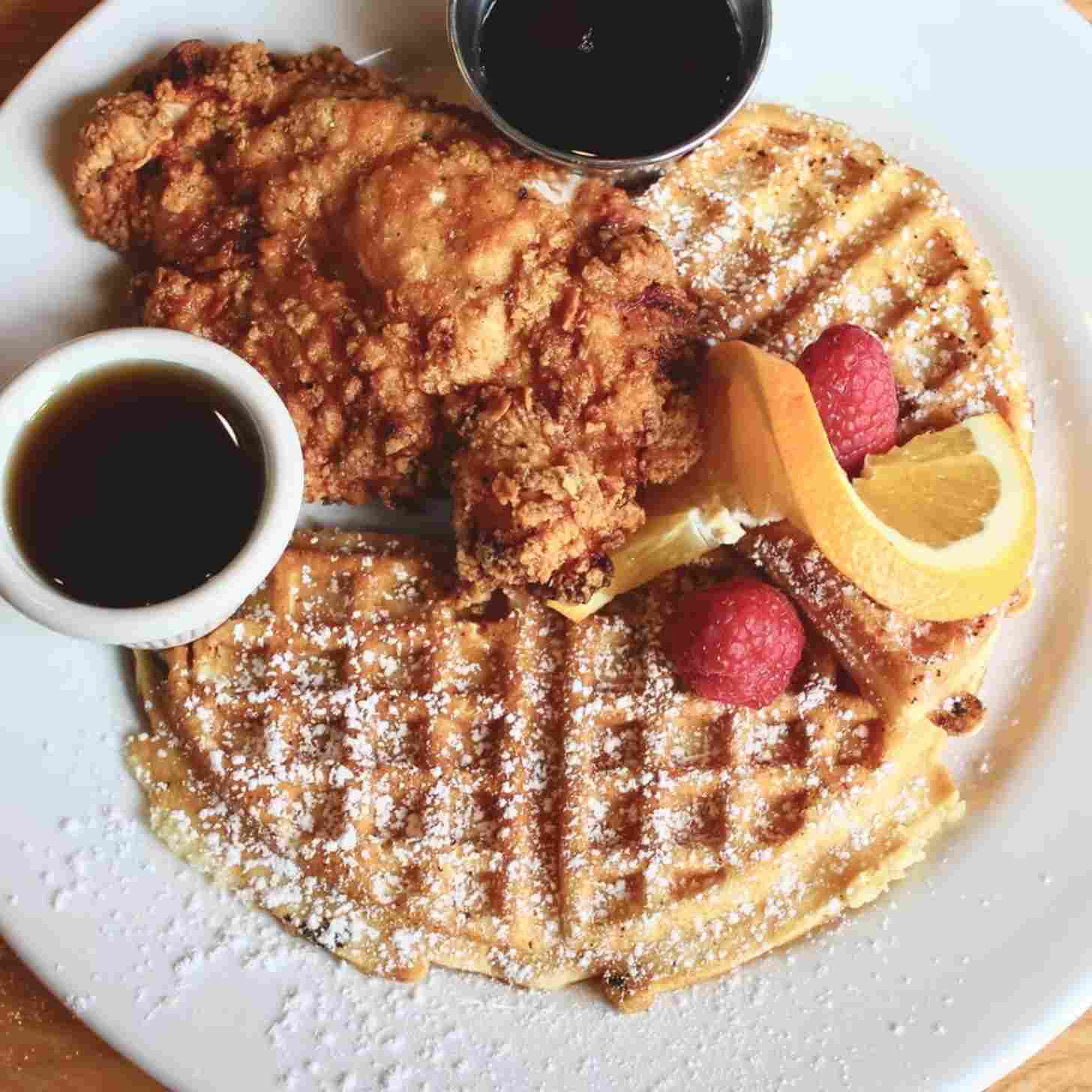
“Everybody seems happy, everybody’s having fun,” one Nashville local said, as her neighbors danced and sang in the streets.
“The food is amazing,” said Jakayla, a young girl who attended the event, adding that the event was “life-saving for people that need food.”
“That’s what we’re doing,” added one volunteer. “We’re loving on them, showing them that they care and showing them that they’re part of a great community.”
After the event wrapped on Saturday, Shugga Hi’s Facebook page was flooded with well-wishes from local Tennesseans.

One comment read: “Yesterday was absolutely amazing, and kudos to you all for always being such a blessing to the community! Keep up the good work!”
“Such a blessing to the people in Nashville,” said another.
“Thank you for all you do and give back to the community,” one local said. “You are truly for REAL.”
Shugga Hi Bakery & Cafe is located at 1000 Dickerson Pike, Nashville, TN 37207.
You may also like: AOC donates 1,600 Thanksgiving turkeys to hungry families in the Bronx
Header image via Shugga Hi Bakery & Cafe
Maddy Goldberg is a private chef who has extensive experience in the fine dining industry. But these days, you’ll catch her on social media sharing some newly-perfected recipes or sharing a vlog from an afternoon at the food bank.
“POV: cooking lunch for 100 people using the random food I find at the food bank,” many of her videos are titled.
Once a week, Goldberg posts up in the kitchen of the York Fort Food Bank in Toronto, Canada, where she makes gourmet meals with whatever she can find.

“I don’t care who I’m cooking for, it’s the same,” Goldberg told CBC News. “I’m going to be producing the same food. Obviously I’m just using different ingredients, and the inspiration is maybe a little different at a food bank, but technique-wise, [it’s] the exact same.”
Goldberg cooks for clients of the food bank, as well as staff and other volunteers. She often has about two hours to make 100 meals.
While Goldberg began by using up whatever free and accessible ingredients were already available at the food pantry — often things like potatoes and eggs — friends in the culinary community realized they had things to contribute, too.
“I’ve gotten a lot of responses from … chefs around the city who are either doing a pop-up or find themselves with an excess of food,” she told CBC News, “good quality ingredients that they just can’t fathom throwing out.”
So, she’s been collecting ingredients that would otherwise go to waste, and creating hot gourmet meals that people often don’t see in the distribution line at the food bank.
Her creations include a fall-inspired fattoush salad with acorn squash, crispy pita, marinated soy eggs, and roast chicken with ingredients donated by a friend after a pop-up. She’s made homemade hummus, curry cauliflower, poached eggs, and toast for one meal, and a potato frittata with confit garlic paired with spinach fried rice and cucumber salad for another.
Another standout is a colorful vegetable and pasta salad with produce donated from a nearby community garden.
“Every single cucumber I’m chopping right now is imperfect, but I’m going to turn it into something delicious and visually appealing,” she told CBC. “I think that’s hopefully going to be the new realm of fine dining; food’s not perfect but see how amazing I can make it taste.”
And according to her diners, she makes it taste amazing.
“Oh my god, it’s great,” the food bank’s operations manager, Umut Yenmis, told CBC News. “A couple of weeks back, she made some hummus; it was better than my father’s.”
“It’s incredible to be able to give something to our clients that’s so high-end,” Julie Legion, the food bank’s executive director, added. “We want to provide an overall healthy, culturally-appropriate diet.”
And for Goldberg, it’s all in good fun.
“[I] love getting donations from other chefs in the city and giving their food new life,” she wrote in a recent social media caption.
“This brings me so much joy,” she added in another, “and it’s so fun to share it with you all.”
You may also like: 'Souper Sunday:' This 6,000-person Facebook group gives away free, homemade soup to anyone in need
Header image by Trường Trung Cấp Kinh Tế Du Lịch Thành Phố Hồ Chí Minh CET on Unsplash
This weekend, Californians across Monrovia and Burbank formed long lines outside of their local Home Depots — not to shop for the holidays, but to participate in a unique protest.
Led by the National Day Laborer Organizing Network, the protest involved customers buying and immediately returning 17-cent ice scrapers, a move that disrupted sales and led to a chaos of mass returns at registers.
It was a move meant to boycott the home improvement chain in response to Immigration and Customs Enforcement’s increased presence at their stores.
Hundreds of people participated in the “ice scraper” boycott, which also involved picketing in parking lots with chants of “ICE, ICE, out of Home Depot!”
“The message is clear: Scrape ICE off your properties!” NDLON shared in an Instagram post. “This is a necessary escalation. Home Depot has ignored the harm for too long. We will not. ICE is escalating violence — so we’re escalating action.”
But protests weren’t just limited to the Golden State. Protestors also gathered outside of Home Depots in Charlotte, North Carolina — a city that has seen a surge of ICE raids in recent days.

“This isn’t just commerce, this is community survival,” Zamara Saldivar, an organizer for the Carolina Migrant Network, addressed the crowd at a Charlotte-based protest this weekend.
“Right now, the community is under threat. Since Saturday, we’ve received calls of increased enforcement outside of Home Depots across the city.”
This follows repeated calls for boycotts against Home Depot as ICE raids continue in Chicago and Charlotte.
On November 18, an X user alleged that Home Depot cooperated with ICE and “allowed them to work out of their parking lots.”
The company replied: “This is untrue – we aren't coordinating with ICE. We aren't involved in ICE activities, and we aren't notified when they are going to happen.”
However, Saldivar said that non-action is worthy of criticism in and of itself, and called on Home Depot management across the nation to keep immigration officers off their property.
“Home Depot has the responsibility and the opportunity to stand with the community,” she urged. “As a major gathering point, they are not neutral. Their stores are part of daily reality for immigrant workers and families. We need them to be partners in protecting the people who rely on these basics.”
“And we know one thing for certain,” Saldivar said, “silence from any of us allows harm to grow.”
You may also like: This church in Charlotte is training parishioners to protect immigrants during ICE crackdown: 'Loving your neighbors is holy'
Header image via Flickr / Mike Mozart (CC BY 2.0)
Social isolation kills. It increases your risk of death by 30% — roughly the same as smoking cigarettes and much worse than factors such as obesity and sedentary living.
Americans are living through what researchers call a friendship recession, spending less time with friends than at any point in recent history.
In 2023, the U.S. Surgeon General declared loneliness an epidemic. Deaths from factors like suicide, addiction and alcoholism, referred to as deaths of despair, continue climbing.
While doctors routinely check patients’ blood pressure and ask about exercise habits, they rarely assess social health.
Public health guidelines urge Americans to eat their vegetables, exercise for 150 minutes weekly, sleep seven to nine hours nightly, and drink less than one or two alcoholic beverages per day. But few public health bodies have addressed social connection — until now.
As scholars who focus on public policy and social determinants of health and well-being, we are part of an international team of more than 100 experts who undertook the first systematic effort to develop evidence-based guidelines for social connection.
These guidelines, which are now publicly available, aim to do more than offer advice. Elements of them are already being embedded into policies in the Netherlands and the U.K.
Our hope is that the guidelines can elevate the importance of social connection to the same level as basic public health practices such as exercising, not smoking and relying on a designated driver when you go out drinking with friends.
The value of guidelines
Research has shown for decades that social connection is crucial for good health. The World Health Organization’s constitution, adopted in 1946, defines health as “complete physical, mental, and social well-being.”
Codifying different dimensions of health into evidence-based guidelines matters because guidelines allow people to put recommendations into action. Nutrition labels help people understand what they’re eating. Exercise recommendations help people know how much movement protects their health. Blood pressure cutoffs tell both patients and clinicians when it’s time to intervene.
Guidelines also shape systems in ways people feel every day. Exercise guidelines, for example, helped motivate cities to invest in walkable streets and bike lanes, workplaces to design wellness programs, and schools to include physical activity in curricula.
Social health guidelines can play a similar role.
Standardized metrics for social well-being can help health care providers identify when someone is socially isolated, enable employers to design workplaces that foster connection, and give schools and cities clearer targets for building socially supportive environments.
They also lay the groundwork for “social prescriptions” — structured ways to connect people with community programs or group activities — which some health care systems are already beginning to test.
The science of connection
Beginning in the summer of 2023, our team spent more than two years developing a set of international guidelines for social health by drawing on more than 40 plain-language evidence summaries, numerous case studies, conversations with marginalized communities, and extensive consultation with global experts.
What we found highlights several foundational principles of social well-being.
First, there are no universal rules for social health.
There is no magic number of friends or ideal number of weekly social hours. Social needs vary widely. Both introverts and extroverts need connection, but they meet that need differently. A new parent’s social world is completely unlike a retiree’s. And quality trumps quantity: One meaningful conversation can be more nourishing than a dozen quick exchanges.
Second, technology is not the villain it’s often made out to be. Passive scrolling can harm well-being, but active, intentional use can strengthen bonds — whether through video calls with distant family, group chats that sustain friendships, or apps that help neighbors organize local meetups.
The key is using technology to facilitate real connection rather than replace it.
Third, relationships are shaped as much by systems as by individuals. Social health isn’t just about personal effort. It emerges from local environments that make connection possible.
Research shows that investments in social infrastructure — the places and spaces where we connect, such as libraries, parks, and cafes — measurably improve well-being. And communities that have denser concentrations of such spaces have better health outcomes after disasters.
Finally, diverse networks matter. Strong social health includes both close relationships and “weak ties” — acquaintances, neighbors, local business staff, and others you see in passing.
These lighter-touch interactions offer meaningful benefits: the barista who remembers your order, a colleague you exchange a few words with, a fellow dog walker along your route.
Studies show that weak ties provide novel information, unexpected opportunities and a broader sense of belonging that close friends alone can’t provide. A mix of ties — deep and shallow — forms the basis of a socially healthy life.
From research to reality
Forward-thinking institutions are already experimenting with principles that underpin our guidelines.
Some workplaces now assess social health when making decisions about policies such as remote work or office layout, recognizing that communication norms, and physical design shape how employees connect.
Schools are teaching emotional intelligence and friendship skills as core curriculum, not extras.
Cities are investing in social infrastructure — community centers, shared public spaces, and plazas — that naturally bring people together.
On a personal level, the guidelines suggest a few simple shifts:
- Prioritize face-to-face time. Even short, in-person interactions boost mood, reduce stress, and build trust.
- Use technology actively, not passively. Reach out to someone, schedule a video call, or use apps to create opportunities for connection — not just to scroll.
- Treat solitude as restoration, not failure. Healthy social lives include both meaningful interaction and the downtime needed to recharge.
- Build routines that create natural interaction. Walk the same route daily, become a regular at neighborhood spots, or join recurring community activities to create predictable opportunities for connection.
- And most importantly, take initiative. In a culture that treats socializing as a luxury, prioritizing connection is quietly radical.
This article by Daniel P. Aldrich from Northeastern University and Kiffer George Card from Simon Fraser University was originally published by The Conversation.

When victims of sexual assault visit medical centers or police stations after being attacked, their clothes are often confiscated for DNA evidence, leaving already vulnerable people with nothing but a hospital gown and shoes.
In California, the Grateful Garment Project exists to restore a level of comfort and dignity in the immediate aftermath of these traumatic events.
The nonprofit has a closet full of donated clothing, toiletries, snacks, and other essentials that it gives to clients in their time of need.
Chanel Miller, author of the book “Know My Name,” and a survivor of campus assault, benefited from the resources of GGP after she was attacked at Stanford University.
She said she still has the sweatshirt she was given as a reminder that “there is good in the world.”
“Even in your darkest, worst moments, there are people who are looking out for you,” she told San José Spotlight.
The person behind GGP is Lisa Blanchard, who initially created the program as an undergraduate project in 2010.
Now, she works with 115 partner agencies, including hospitals, shelters, law enforcement, and other community organizations, serving an estimated 35-45 victims statewide every single day.
Between 2023 and 2024 alone, GGP donated more than 39,000 items to 34,000 survivors.
In addition to situations like Miller’s, the GGP also provides clothing for victims testifying in court, and comfort items like stuffed animals, coloring books, and pillows and blankets to children who are victims of human trafficking.
“It was like the universe was knocking at my door,” Blanchard told San José Spotlight. “I knew beyond the class project I was going to continue to do this because the work is so important.”
The work is important beyond the immediate assistance. For a program coordinator on staff, Dakini Perkins, it’s healing for her, too. As a victim of child sexual abuse, she takes great care in every little package.
“When I’m working with the volunteers … and we’re packing a box to send out to an agency,” she told San José Spotlight, “I say, ‘Rub a little love in it when you’re folding those clothes. They’re going to feel it.’”
The tags on each item reflect this sentiment, reading: “To: you,” and “From: Somebody who cares.”
And it’s clear: They do.
“We believe everyone who experiences sexual violence deserves comfort and dignity during their journey toward healing,” a video for the nonprofit shares.
“While the recipients of your generosity may never know your name, your impact on their lives is immeasurable, and they will be eternally grateful to have had some comfort during this crisis.”
Those interested in supporting the Grateful Garment Project can donate online or through the organization’s wishlist.
You may also like: Nonprofit collects and distributes life-saving winter clothes to homeless LGBTQ+ youth
A version of this article was originally published in The 2025 Fashion Edition of the Goodnewspaper.
Header image by Ron Lach/Pexels
Facing burnout from his time as a fine dining chef, David Martin’s parents suggested he pivot to working in the kitchen of a nursing home.
To this, he replied, “'Why would I want to go to aged care? That's where people retire. My skills will go to waste,'" per an interview with Business Insider.
But now, as the executive chef manager at St. Vincent’s Care, a nursing home facility in Melbourne, Australia, he is eating his words.
Teaming up with another chef with a similar background, Harry Shen, the pair have a vision to elevate the standard of food in these facilities.

“We want to break the stereotype that aged care food is just a lump of food on a plate,” Shen said.
The chefs provide a continental breakfast, a hearty lunch with an entree, starch, and two vegetables, a generous dinner selection, and of course, tasty (and not too sugary) sweets.
Their meals come in a variety of options to meet the needs of the residents, who may face a myriad of health conditions.

This style of dining is then replicated across St Vincent’s Care’s 10 properties, each with its own production kitchen staffed by between three and 30 kitchen professionals, collectively producing 20,000 meals a day.
“I have a team who have come from some of the best restaurants in the country,” Martin told Bidfood.
“There used to be a stigma around working in aged care, as if it were for chefs who were bored and just wanted to clock in and out. We’ve proven that it can be a pathway for industry professionals to be as creative and passionate as they have ever been.”
It’s been fulfilling for a whole team of chefs, Martin included.
“The biggest difference for me as a chef is that working in aged care you create a rapport with the residents — you work with them day in, day out and you get to understand their tastes, preferences and nutritional needs,” he told the Food Service Rep blog.
“Whereas in a restaurant you might see your regular customers once a month and some customers only once a year — you certainly don’t have daily interaction.”
In 2024, Martin in Shen also participated in an international culinary competition — International Salon Culinaire. The duo took home silver medals, and most importantly, raised awareness about the need for high-quality meals in aging populations.
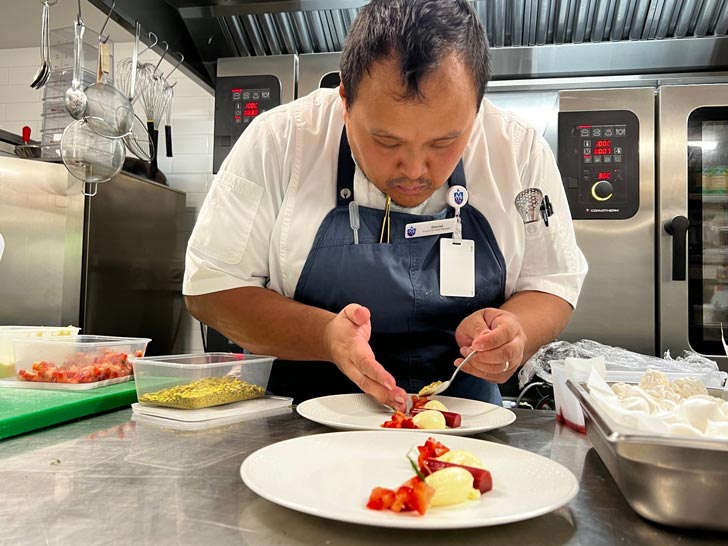
There are budget and hiring constraints for this model to be adapted around the world, but in the meantime, Martin and Shen are already mentoring chefs in the region to follow in their footsteps.
Martin said, “We want to make this industry better for now and into the future for our parents and grandparents to be respected in.”
You may also like: Private chef uses restaurant scraps to make hundreds of gourmet meals for food banks
A version of this article was originally published in The 2025 Food Edition of the Goodnewspaper.
Header image courtesy of David Martin/LinkedIn
As many of us mature in the years following the COVID-19 lockdown, venture further down the rabbit hole of social media, or simply stick to our safe, insulated bubbles, it has become abundantly clear: It’s really hard to make friends as an adult.
We find ourselves entangled in the angst of showing up “right,” or adhering to some niche dinner party theme from Instagram, focusing our energy on meeting an elusive ideal instead of simply being ourselves and tending to the relationships we truly care about.
Fortunately, things like gathering, communicating, and caring are forms of labor — and areas of study — that brilliant minds have dedicated their lives and careers to mastering.
And they have plenty of resources, tools, and even conversation starters to make it all a little less daunting — especially around tough holiday gatherings. Here are some of our favorites.
By the way, some of the links in this article (like books!) are affiliate links, which means if you make a purchase after clicking a link, we may earn a commission at no extra cost to you. Thank you!
Read
“The Art of Gathering: How We Meet and Why It Matters” by Priya Parker
This book helps us understand why we gather. In analyzing things like effective business meetings to fun backyard barbecues, the book is part guide-part inquiry to help us all better come together for good.
“Modern Friendship: How to Nurture Our Most Valued Connections” by Anna Goldfarb
“Modern Friendship” blends years of reporting as the New York Times’ “friendship correspondent,” social research, and practical tools to help us craft caring, curious, and supportive friendships — especially in the modern age.
“How to Know a Person: The Art of Seeing Others Deeply and Being Deeply Seen” by David Brooks
This book has one goal: To help us be more understanding and considerate of each other. With psychological and neuroscientific insights, Brooks provides evidence-based advice for deeper connections.
Listen
“Conversations with the Hostess” hosted by Amy Long
This podcast is the best party-planning companion you could have. Every week, Long — a wife, mom, Naval Officer, and party planner — joins professional event planners to help us all deepen relationships and celebrate all of life’s moments.
“The Mel Robbins Podcast” hosted by Mel Robbins
In this pod, Robbins dives into big topics with foremost experts, covering things like dating, family dynamics, and all kinds of interpersonal conflict, so you can live a life you love, surrounded by people who love you.
“Conversations with People Who Hate Me” hosted by Dylan Marron
This audacious podcast confronts our culture of anonymous online vitriol with connection and compassion. Whether speaking with someone who left Marron a negative comment, or moderating a call between two strangers who clashed online, the result is always a new relationship, fostered with care.
Converse
We’re Not Really Strangers
Amazon | We’re Not Really Strangers
We’re Not Really Strangers is a conversation card deck created by a photojournalist who was inspired by the conversations and questions she’d encounter in the field as a photographer.
The original card set includes 150 questions and wild cards, arranged into three levels to guide a conversation with a stranger. A pad and two pencils are also included!
In Our Feelings
The “In Our Feelings” conversation card deck includes 45 question cards, with eight “Group Feel” cards for conversations of two to eight people. Cards offer refreshing conversation starters, from deep ideas to playful ice-breakers.
Curious Cards
The “Curious Cards” from Actually Curious are based on studies of trust-building and emotional intelligence, providing 52 cards (and four levels) of discussion topics.
With insights from psychologists, journalists, crisis negotiators, and game developers, the deck promises profound conversations about background, personal values, mental health, and beliefs on important issues.
You may also like: How to fight loneliness, according to the scientists who wrote the health guidelines on social connection
A version of this article was originally published in The 2025 Relationships Edition of the Goodnewspaper.
Header image by Nani Williams on Unsplash
For the last 12 years, volunteers have ventured out in freezing temperatures to Finland’s Lake Saimaa every winter. It is here that the Saimaa ringed seal — one of the world’s most endangered seal species — is trying to survive.
For most of history, the blistering cold winters drove snow into meters-high snow banks along Lake Saimaa’s shoreline, where the seals carved cozy dens to shelter from the elements and raise their pups.
But in recent decades, with increasing temperatures caused by climate change, snow drifts have failed to form in sufficient numbers.
“The seal gives birth in a lair it digs into a snowbank,” World Wildlife Fund officer Joonas Fritze explained in a video for WWF Finland.
“If there aren’t any snow banks, the pups are born on open ice and don’t have any protection against predators, cold, and human disturbance. Up to half of the pups could die.”

So, teams of scientists and human volunteers have constructed what nature is no longer providing: artificial snow drifts, formed with handheld snowplows, for the secluded seals.
Alongside bans on fishing with gill nets, and policies against hunting and industrial pollution, it’s working.
The seal population has rebounded to about 400, compared to lows of 100 seals in the 1980s.
About 320 of those seals — half of the population born since 2014 — were born inside these human-constructed shelters, according to MIT Technology Review.
With evolving designs and methods led by researchers at the University of Eastern Finland, as well as the country’s parks agency and the support of organizations like WWF, this interspecies “co-design” offers great help for the seals.
But experts know it’s only the beginning.
“It’s great that we can help an endangered species like this,” Fritze continued, “but at the same time, we need a long-term plan, which includes taking quick action on climate change.”
You may also like: AI is listening to the wolves of Yellowstone National Park. Experts say it could help the population rebound
A version of this article was originally published in The 2024 Animals Edition of the Goodnewspaper.
Header image by Juha Taskinen/WWF
This story was originally published by Grist. Sign up for Grist’s weekly newsletter here.
I’m eating Dawn the Yorkshire pig, and she’s quite tasty. But don’t worry. She’s doing perfectly fine, traipsing around a sanctuary in upstate New York. (Word is that she appreciates belly rubs and sunshine.)
I’m in San Francisco, at an Italian joint just south of Golden Gate Park, enjoying meatballs and bacon not made of meat in the traditional sense but of plants mixed with “cultivated” pork fat.
Dawn, you see, donated a small sample of fat, which a company called Mission Barns got to proliferate in devices called bioreactors by providing nutrients like carbohydrates, amino acids, and vitamins — essentially replicating the conditions in her body. Because so much of the flavor of pork and other meats comes from the animal’s fat, Mission Barns can create products like sausages and salami with plants but make them taste darn near like sausages and salami.
I’ve been struggling to describe the experience, because cultivated meat short-circuits my brain — my mouth thinks I’m eating a real pork meatball, but my brain knows that it’s fundamentally different and that Dawn (that’s her pictured above) didn’t have to die for it.
This is the best I’ve come up with: It’s Diet Meat. Just as Diet Coke is an approximation of the real thing, so too are cultivated meatballs. They simply taste a bit less meaty, at least to my tongue. Which is understandable, as the only animal product in this food is the bioreactor-grown fat.

Cultivated pork is the newest entrant in the effort to rethink meat. For years, plant-based offerings have been mimicking burgers, chicken, and fish with ever-more convincing blends of proteins and fats.
Mission Barns is one of a handful of startups taking the next step: growing real animal fat outside the animal, then marrying it with plants to create hybrids that look, cook, and taste more like what consumers have always eaten, easing the environmental and ethical costs of industrial livestock. The company says it’s starting with pork because it’s a large market and products like bacon are fat-rich, but its technology is “cell-agnostic,” meaning it could create beef and chicken, too.
Honestly, Mission Barns’ creations taste great, in part because they’re “unstructured,” in the parlance of the industry. A pork loin is a complicated tangle of fat, muscle cells, and connective tissues that is very difficult — and expensive — to replicate, but a meatball, salami, or sausage incorporates other ingredients.
That allows Mission Barns to experiment with what plant to use as a base, to which they add spices to accentuate the flavors. It’s a technology that they can iterate, basically, crafting ever-better meats by toying with ingredients in different ratios.
So the bacon I ate, for instance, had a nice applewood smoke to it. The meatballs had the springiness you’d expect. During a later visit to Mission Barns’ headquarters across town, I got to try two prototypes of its salami as well — both were spiced like you’d expect but less elastic, so they chewed a bit more easily than what you’d find on a charcuterie board. (The sensation of food in the mouth is known in the industry as “mouthfeel,” and nailing it is essential to the success of alt meats.) The salami slices even left grease stains on the paper they were served on — Dawn’s own little mark on the world.
I was one of the first people to purchase a cultivated pork product. While Mission Barns has so far only sold its products at that Italian restaurant and, for a limited time, at a grocery store in Berkeley — $13.99 for a pack of eight meatballs, similar to higher-end products from organic and regenerative farms — it is fixing to scale up production and sell the technology to other companies to produce more cultivated foods. (It is assessing how big the bioreactors will have to be to reach price parity with traditional meat products.)
The idea is to provide an alternative to animal agriculture, which uses a whole lot of land, water, and energy to raise creatures and ship their flesh around the world. Livestock are responsible for between 10 and 20% of humanity’s greenhouse gas emissions — depending on who’s estimating it — and that’s to say nothing of the cruelty involved in keeping pigs and chickens and cows in unsavory, occasionally inhumane, conditions.
Getting animal cells to grow outside of an animal, though, ain’t easy. For one, if cells don’t have anything to attach to, they die. So Mission Barns’ cultivator uses a spongelike structure, full of nooks and crannies that provides lots of surface area for the cells to grow.
“We have our media, which is just the nutrient solution that we give to these cells,” said Saam Shahrokhi, chief technology officer at Mission Barns. “We’re essentially recapitulating all of the environmental cues that make cells inside the body grow fat, [but] outside the body.”
While Dawn’s fat is that of a Yorkshire pig, Shahrokhi said they could easily produce fat from other breeds like the Mangalitsa, known as the Kobe beef of pork. (In June, the company won approval from the U.S. Department of Agriculture to bring its cultivated fat to market.)

Fat in hand, Mission Barns can mix it with plant proteins. If you’re familiar with Impossible Foods, it uses soy to replicate the feel and look of ground beef and adds soy leghemoglobin, which is similar to the heme that gives meat its meaty flavor. Depending on the flavor and texture it’s trying to copy, Mission Barns uses pea protein for the meatballs and sausages, wheat for the bacon, and fava beans for the salami.
“The plant-based meat industry has done pretty well with texture,” said Bianca Le, head of special projects at Mission Barns. “I think what they’re really missing is flavor and juiciness, which obviously is where the fat comes in.”
But the fat is just the beginning. Mission Barns’ offerings not only have to taste good, but also can’t have an off-putting smell when they’re coming out of the package and when they’re cooking. The designers have to dial in the pH, which could degrade the proteins if not balanced. How the products behave on the stove or in the oven has to be familiar, too.
“If someone has to relearn how to cook a piece of bacon or a meatball, then it’s never going to work,” said Zach Tyndall, the product development and culinary manager at Mission Barns.
When I pick up that piece of salami, it has to feel like the real thing, in more ways than one. Indeed, it’s greasy in the hand and has that tang of cured meat. It’s even been through a dry-aging process to reduce its moisture.
“We treat this like we would a conventional piece of salami,” Tyndall said.
Cultivated meat companies may also go more unconventional.
“I also love the idea of taking their pork fat and putting it in a beef burger — what would happen if you did that?” said Barb Stuckey, chief new product strategy officer at Mattson, a food developer that has worked with many cultivated meat companies. “Mixing species, it’s not something we typically do. But with this technology, we can.”
Of course, in this new frontier of food, the big question is: Who exactly is this for? Would a vegetarian or vegan eat cultured pork fat if it’s divorced from the cruelty of factory farming? Would meat-eaters be willing to give up the real thing for a facsimile? Mission Barns’ market research, Le said, found that its early adopters are actually flexitarians — people who eat mostly plant-based but partake in the occasional animal product. But Le adds that their first limited sale to the public in Berkeley included some people who called themselves vegetarians and vegans.

There’s also the matter of quantifying how much of an environmental improvement cultivated fat might offer over industrial pork production. If scaled up, one benefit of cultivated food might be that companies can produce the stuff in more places — that is, instead of sprawling pig farms and slaughterhouses being relegated to rural areas, bioreactors could be run in cities, cutting down on the costs and emissions associated with shipping.
Still, those factories would need energy to grow fat cells, though they could be run on renewable electricity.
“We modeled our process at the large commercial scale, and then compared it to U.S. bacon production,” Le said. (The company would not offer specific details, saying it is in the process of patenting its technique.) “And we found that with renewable energy, we do significantly better in terms of greenhouse gas emissions.”
Whether or not consumers bite, though, remains to be seen. The market for meat alternatives in the U.S. has majorly softened of late: Beyond Meat, which makes plant-based products like burgers and sausages, has seen revenues drop significantly, in part because of consumers’ turn away from processed foods.
But by licensing its technology elsewhere, Mission Barns’ strategy is to break into new markets beyond the U.S. The challenges of cultivated meat go beyond the engineering once you get to the messaging and branding — telegraphing to consumers that they’re buying something that may in fact be partially meat.
“When you buy chicken, you get 100% chicken,” Stuckey said. “I think a lot of people go into cultivated meat thinking what’s going to come onto the market is 100% cultivated chicken, and it’s not going to be that. It’s going to be something else.”
Regardless of the trajectory of cultivated fat products, Dawn will continue mingling with llamas, soaking up the sunshine, and getting belly rubs in upstate New York — even as she makes plants taste more like pork.
Header Image by Mission Barns
This story was originally published by The 19th and was republished with permission.
The mother was just arriving to pick up her girls at their elementary school in Chicago when someone with a bullhorn at the nearby shopping center let everyone know: ICE is here.
The white van screeched to a halt right next to where she was parked, and three Immigration and Customs Enforcement agents piled out. They said something in English that she couldn’t decipher, then arrested her on the spot. Her family later said they never asked about her documentation.
She was only able to get one phone call out before she was taken away. “The girls,” was all she said to her sister. Her daughters, a third grader and a fourth grader, were still waiting for her inside the school.
Luckily, the girls’ child care provider had prepared for this very moment.
Sandra had been taking care of the girls since they were babies, and now watched them after school. She’d been encouraging the family to get American passports for the kids and signed documents detailing their wishes should the mother be detained.
When Sandra got the call that day in September, she headed straight to the school to pick up the girls.
Since President Donald Trump won a second term, Sandra has been prepping the 10 families at her home-based day care, including some who lack permanent legal status, for the possibility that they may be detained. (The 19th is only using Sandra’s first name and not naming the mother to protect their identities.)
She’s worked with families to get temporary guardianship papers sorted and put a plan in place in case they were detained, and their kids were left behind. She even had a psychologist come and speak to the families about the events that had been unfolding across the country to help the children understand that there are certain situations their parents can’t control, and give them the opportunity to talk through their fears that, one day, mamá and papá might not be there to pick them up.
And for two elementary school kids, that day did come. Sandra met them outside the school.
“When they saw me, they knew something wasn’t right,” Sandra said in Spanish. “Are we never going to see our mom again?” they asked.
For all her planning, she was speechless.
“One prepares for these things, but still doesn’t have the words on what to say,” Sandra said.
After that day, Sandra worked with the mother’s sister to get the girls situated to fly to Texas, where their mother, who had full custody of them, was being detained, and then eventually to Mexico. She hasn’t heard from them in over a month. The girls were born in the United States and know nothing of Mexico.
“I think about them in a strange country,” Sandra said. “‘Who is going to care for them like I do?’ Now with this situation I get sad because I think they are the ones who are going to suffer.”
In this year of immigration raids, child care providers have stepped up to keep families unified amid incredible uncertainty. Some are agreeing to be temporary guardians for kids should something happen to their parents.
The workers themselves are also under threat — 1 in 5 child care workers are immigrant women, most of them Latinas, who are also having to prepare in case they are detained, particularly while children are in their care. Already, child care workers across the country have been detained and deported.
“The immigration and the child care movements, they are one in the same now,” said Anali Alegria, the director of federal advocacy and media relations at the Child Care for Every Family Network, a national child care advocacy group.
“Child care is not just something that keeps the economy going, while it does. It’s also really integral to people’s community and family lives. And so when you’re destabilizing it, you’re also destabilizing something much more fundamental and very tender to that child and that family’s life.”
A loose network of resistance has emerged, with detailed protection plans, ICE lookout patrols, and Signal or Whatsapp chats. Home-based providers like Sandra have been especially involved in that effort because their work often means their lives are even more intertwined with the families they care for.
“All the families we have in our program, I consider them family. We arrive in this country and we don’t have family, and when we get support, advice or the simple act of caring for kids, as child care providers we are essential in many of these families — even more in these times,” said Sandra, who has been caring for children in the United States for 25 years.
All the families she cares for are Latinx, 70% without permanent legal status.
According to advocacy groups, child care providers are increasingly being asked to look after kids in case they are detained, typically because they are the only trusted person the family knows with U.S. citizenship or legal permanent residence. Parents are asking child care workers to be emergency contacts, short-term guardians and, in some cases, even long-term guardians.
“We heard this under the first Trump administration, and we’re hearing it much more now. It’s not so much a matter of if, but when, right now, and it used to be the other way around,” said Wendy Cervantes, the director of immigration and immigrant families at the Center for Law and Social Policy, an anti-poverty nonprofit.
“It adds just additional stress and trauma because they deeply care about these kids. Many of them have kids of their own and obviously have modest incomes, so as much as they want to say, ‘yes’, they can’t in some cases.”
The question was posed to Claudia Pellecer a couple weeks ago. A home-based child care provider in Chicago for 17 years, Pellecer cares for numerous Latinx families, at least one of whom doesn’t have permanent legal status.
In October, one of those moms was due to appear before ICE for a regular check-in as part of her ongoing asylum case. But she knew that many have been detained at those appointments this year.
The mother asked Pellecer to be her 1-year-old son’s legal guardian should she be taken away.
“I couldn’t say no because I am human, I am a mother,” Pellecer said.
They got to work getting the baby a passport and filling out the necessary guardianship paperwork. Pellecer kept the originals and copies. The mother closed her bank account, cleaned out her apartment and prepped two bags, one for her and one for the baby. If the mother was deported, Pellecer would fly with him to meet her in Ecuador, they agreed.
The day of the appointment, she dropped the baby off with Pellecer and set the final plan. Her appointment was at 1 p.m. “If at 6 p.m. you haven’t heard from me, that means I was detained,” she told Pellecer, who cried and wished her luck.
At the appointment, the judge asked her three sets of questions:
“Why are you here?”
“Are you working? Do you have a family?”
“Do you have proof of what happened to you in your country?”
The judge agreed to let her stay and told her to continue working. The mother won’t have a court date again until 2027.
“We learned our lesson,” Pellecer said. “We had to prepare for the worst and hope for the best.”

But their relief was short-lived. Recent events in Chicago have sent child care workers and families into panic, as the people who have tried to keep families together are now being targeted.
Resistance networks have sprung up rapidly in Chicago in recent weeks after a child care worker was followed to Spanish immersion day care Rayito de Sol on the city’s North Side and arrested in front of children and other teachers. The arrest was caught on camera and has sparked demonstrations across the city.
Erin Horetski, whose son, Harrison, was cared for by the worker who was arrested at Rayito de Sol in early November, said parents there had been worried ICE might one day target them because the center specifically hired Spanish-speaking staff.
The morning of the arrest, parents were texting each other once they heard ICE was in the shopping center where the day care is located.
Her husband was just arriving to drop off their boys as ICE was leaving. The first thing out of his mouth when he called her: “They took Miss Diana.”
Agents entered the school without a warrant to arrest infant class teacher Diana Patricia Santillana Galeano, an immigrant from Colombia. DHS said part of the reason for her arrest was because she helped bring her two teenage children across the southern U.S. border this year.
“Facilitating human smuggling is a crime,” DHS said.
Santillana Galeano fled Colombia fearing for her safety in 2023, filed for asylum, and was given a work permit through November 2029, according to court documents. She has no known criminal record. After her arrest, a federal judge ruled that her detention without access to a bond hearing was illegal, and she was released November 12.
Horetski said the incident, the first known ICE arrest inside a day care, has spurred the community to action. A GoFundMe account set up by Horetski to support Santillana Galeano, has raised more than $150,000.
Horetski said what’s been lost in the story of what happened at Rayito is the humanity of the person at the center of it, someone she said was “like a second mother” to her son.
“At the end of the day, she was a person and a friend and a mother and provider to our kids — I think we need to remember that,” Horetski said.
Now, the parents are the ones coming together to put in place a safety plan for the teachers, most of whom have continued to come to the school and care for their children.
They are working on establishing a safe passage patrol, setting up parents with whistles at the front of the school to stand guard during arrival and dismissal time to ensure teachers can come and go to their cars or to public transit safely. Parents are also establishing escorts for teachers who may need a ride to work or someone to accompany them on the bus or the train. A meal train set up by the parents is helping to send food to the teachers through Thanksgiving, and two local restaurants have pitched in with discounts. Some of the parents are also lawyers who are considering setting up a legal clinic to ensure workers know their rights, Horetski said.
Figuring out how to come together to support teachers and the children who now have questions about safety is something that “continues to circle in all of our minds and brains,” Horeski said.
“It’s hard to not have the answers or know how to best move forward. We’re in such uncharted territory that you’re like, ‘Where do you go from here?’ So we’re kind of paving that because this is the first time that something like this has happened.”
Prep is top of mind now for organizers including at the Service Employees International Union, where Sandra and Pellecer are members, who are convening emergency child care worker trainings to set up procedures, such as posted signs that say ICE cannot enter without a warrant, showing them what the warrants must include to be binding, helping them set a designated person to speak to ICE should they enter, and talking to their families to offer support.
Cervantes has been doing this work since Trump’s first term, when it was clear immigration was going to be a key focus for the president. This year has been different, though. Child care centers were previously protected under a “sensitive locations” directive that advised ICE to not conduct enforcement in places like schools and day cares.
But Trump removed that protection on his first day in office this year, signaling a more aggressive approach to ICE enforcement was coming.
Cervantes and her team are currently in the midst of a research project about child care workers across the country, conversations that are also illuminating for them just how dire the situation has become for providers.
“We are asking providers to make protocols for what is basically a man-made disaster,” she said. “They shouldn’t have to worry about protecting children and staff from the government.”
Header Image by Gabe Pierce on Unsplash