As growing hostility and anti-transgender legislation sweep across the United States, many trans people are seeking to relocate to other states and cities, or abroad.
In areas that may see an influx of trans refugees, communities are doing their part to make newcomers feel safe and welcome.
In North Dakota, South Dakota, and Iowa, the Transcend Fund helps cover transportation costs for LGBTQ+ youth to receive out-of-state healthcare or tuition.
The North Texas Transportation Network offers emergency relocation grants to families with trans kids.
Project Open Arms operates in the Pacific Northwest as a growing directory of vetted resources of gender-affirming care, affordable housing, job opportunities, and peer support for trans refugees.
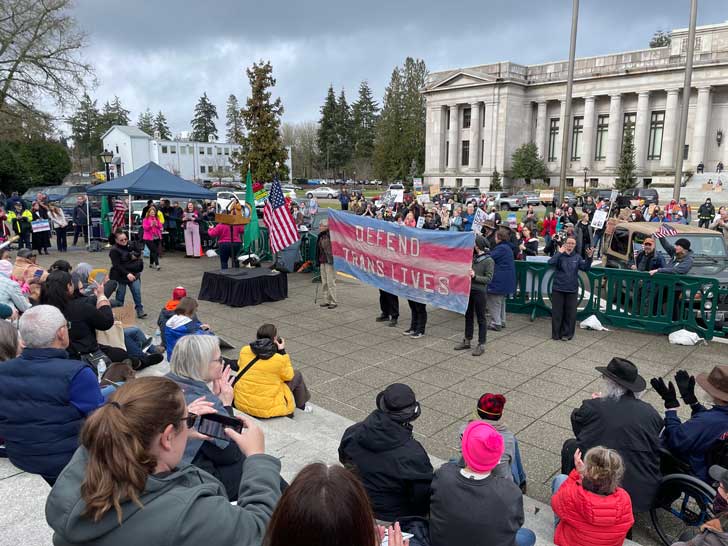
And in Colorado, the mutual aid nonprofit Trans Continental Pipeline offers social support in decision-making, moving, employment, and community building to trans people eager to relocate to the state, which has a reputation for being a “sanctuary state” for trans people.
The organization is in its infancy but is already building a temporary housing program that gives newcomers a month to find work and get on their feet, as well as a “welcome wagon” of volunteers who can connect people to their respective social spheres.
“We had one particularly heartwarming case where somebody from Oklahoma came out with their mom and just hung out with us for a bit,” TCP’s executive director, Keira Richards, told Colorado Public Media in November 2024.
“We met up with them through our peer network and went to a concert and just tried to show them around Denver and answer all their questions.”
But the cases — which Richards said range from 11-year-old youth to 70-year-old elders — aren’t always so simple.
“I'd say the particularly heart-wrenching cases are when we get in contact with the parents. I have lost count of the voicemails I've gotten from parents in Texas, Florida, Alabama saying, “I am terrified for my child,” Richards said.
By giving individuals and families the information they need to relocate and build a supportive community, TCP hopes to set them up for success — even if the circumstances around their move are less than ideal.
“I wish … that this wasn’t life or death, but for a lot of people, it is,” Richards added in an interview with 9News Denver. “So, yes, I really and truly hope that this is going to save lives.”
Even with these efforts, there are still countless challenges associated with relocation.
For people seeking help in either their new residence or a place where they cannot leave, there is InReach, a trans-led tech nonprofit building the world’s first open-source, verified LGBTQ+ resource platform.
With a simple zip code, the platform helps people find trusted care, mutual aid funds, name-change support, legal resources, and more — no matter where they live.
It markets the services that overwhelmed nonprofits can’t, gives people in crisis resources that are harder to find, and reduces at least one barrier to a full, safe life.
“Imagine a world where every trans and queer person has instant, unrestricted access to the affirming resources they need to thrive,” InReach shares on its website. “That’s the world we’re building, one step at a time.”
You may also like: This farmer rescues 'gay sheep' and sells their wool to support LGBTQ+ charities
A version of this article was originally published in The 2025 Pride Edition of the Goodnewspaper.
Based on the most recent estimates from the International Labour Organization, approximately 27.6 million people are victims of human trafficking worldwide at any given time.
In Ghana, forced labor and sexual exploitation are devastatingly common.
But the Max Steinbeck Women’s Empowerment Center, run by nonprofits Many Hopes and Challenging Heights, gives young women a new opportunity to thrive.

Founded in 2021, the center is home to 54 girls — along with their 12 children — rescued from trafficking, who enroll in a two-year course to participate in a beauty school, fashion program, or university prep track.
“Most of these girls come from situations of extreme poverty. Learning a trade gives them a skill where they can earn a stable income after graduation,” Madeline Pahr, the creative director at Many Hopes, told Good Good Good.

“Most girls graduate and become the highest earners in their families, and are the first to break cycles of generational poverty.”
The curriculum at the school goes beyond hair and nails. Students learn how to run a business, the school helps them set up their first bank account, and donors provide them with microloans to start their own brick-and-mortar shops.
Since many of the students also come in as young mothers, “there is a high probability that those children will become the most educated in their families because their mom learned a trade,” Pahr said.

"When I got here I was alone. I thought my life was over. I was 13 and a mum. I don't even know how to be a mum. My mum was never around. I had no future,” one student, whose name has been withheld for privacy, shared.
“But coming here I am not alone. We are raising our babies together. We are building futures together.”
@madelinepahr The best and most wholesome minute you will spend today @Many Hopes #ghana #lakevolta #womenempowerment #womensupportingwomen #supportgirls #braids #humanity #hopecore #fypシ #beauty #beautyhacks #girlssupportgirls #dopamine #ghanatiktok🇬🇭 ♬ It's A Lovely Day Today - Ella Fitzgerald
You may also like: This women's shelter in Uganda is made of 18,000 recycled plastic bottles and gives jobs to women in need
A version of this article was originally published in The 2025 Education Edition of the Goodnewspaper.
Header image by Madeline Pahr/Many Hopes
The traditional approach to college is inaccessible to billions across the globe, whether due to prohibitive costs or even physical safety.
So, Shai Reshef founded University of the People, the first nonprofit, tuition-free, accredited online university dedicated to broadening access to higher education worldwide.
Based in California, the online platform reaches 150,000 students in 200 countries and territories. About 20,000 students are in the U.S.
“We are the best alternative,” Reshef told PBS News, “because there's no other alternative.”
The university offers accredited certificates, associate and bachelor’s degree programs in business administration, computer science, and health science, and master’s degree programs in business administration, information technology, and education.
There is no tuition involved in obtaining a degree, but a variety of fees are required that add up to about $5,000 for a bachelor’s degree.
But that price point is still vastly more accessible than other options today, Reshef said, adding that students have up to 10 years to complete their degree after enrolling.

University of the People relies on philanthropic funding and volunteers.
Many of the professors and deans associated with the online institution volunteer their time outside of their traditional jobs in academia, driven by a goal to make college more accessible and affordable.
Donors like the Coca-Cola Foundation and the Bill & Melinda Gates Foundation have made the worldwide initiative a success.
And for students, like 23-year-old Maliha, who was studying civil engineering at the University of Kabul in Afghanistan when the Taliban came to power, University of the People was her only opportunity as a young woman to safely continue her education.
With 4,000 other young women, Maliha began taking online courses with University of the People in secret.
“On those dark days that I was at home and couldn’t do anything for my future,” she told PBS, “University of the People was like a light in my darkest days.”
You may also like: What if every teen graduated with $1K and an investment portfolio? These states are making that a reality
A version of this article was originally published in The 2025 Education Edition of the Goodnewspaper.
Header image by Adeniji Abdullahi A on Unsplash
A fight with your partner about the same bad habit. A tiff with a roommate over something as simple as a single dirty dish. An all-out brawl with a sibling over some decades-long family dynamic. Another election season in a political system that pits groups of people against each other in a seemingly endless loop.
Conflict — as awful as it may feel — is intrinsic to any relationship.
It’s so universal, Drs. John and Julie Gottman have spent over 40 years studying it.
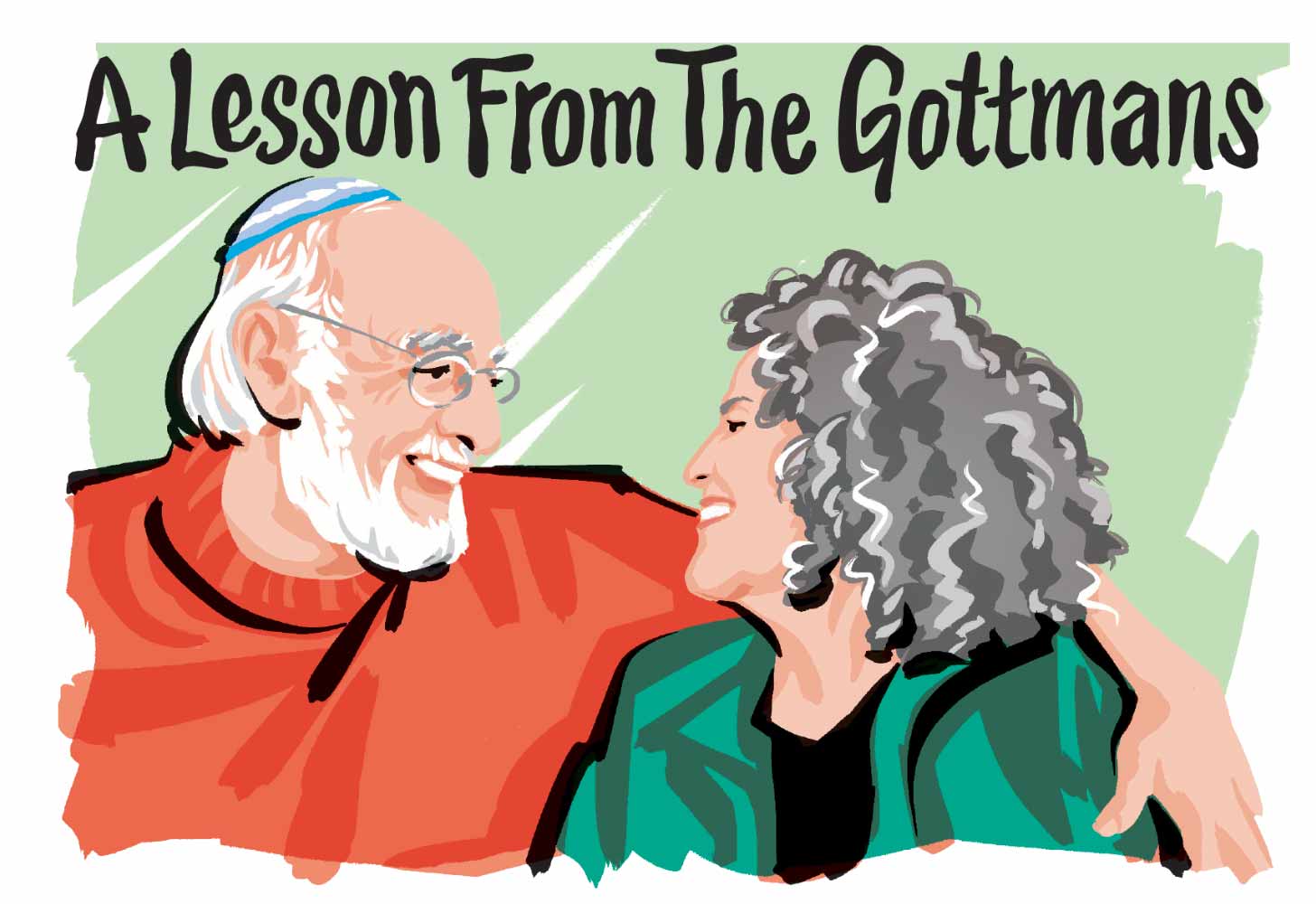
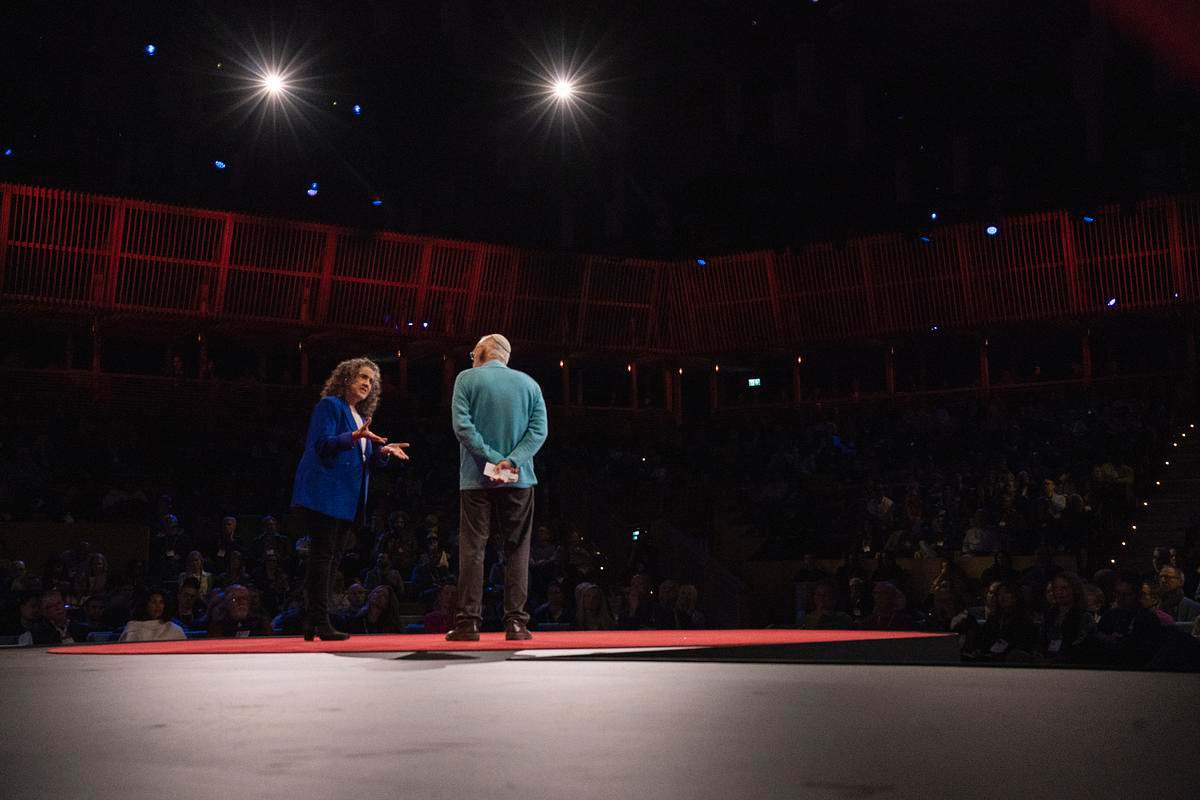
Their life’s work includes some of the world’s foremost research on long-lasting relationships at the University of Washington’s “Love Lab,” and has led to dozens of books, a handful of TED Talks, and the training of countless clinicians around the world.
Their company, The Gottman Institute, creates educational materials and resources for couples, families, organizations, and licensed therapists.
As Julie told Good Good Good, in the decades they have spent doing this work they have observed time and time again: “Conflict can really lead to greater understanding between people.”
The trick is approaching conflict with a goal to understand; not to conquer.
“Speak in such a way that you don't sabotage yourself getting listened to,” Julie said. “That means avoiding criticism, contempt, defensiveness, totally shutting down, or stonewalling.”
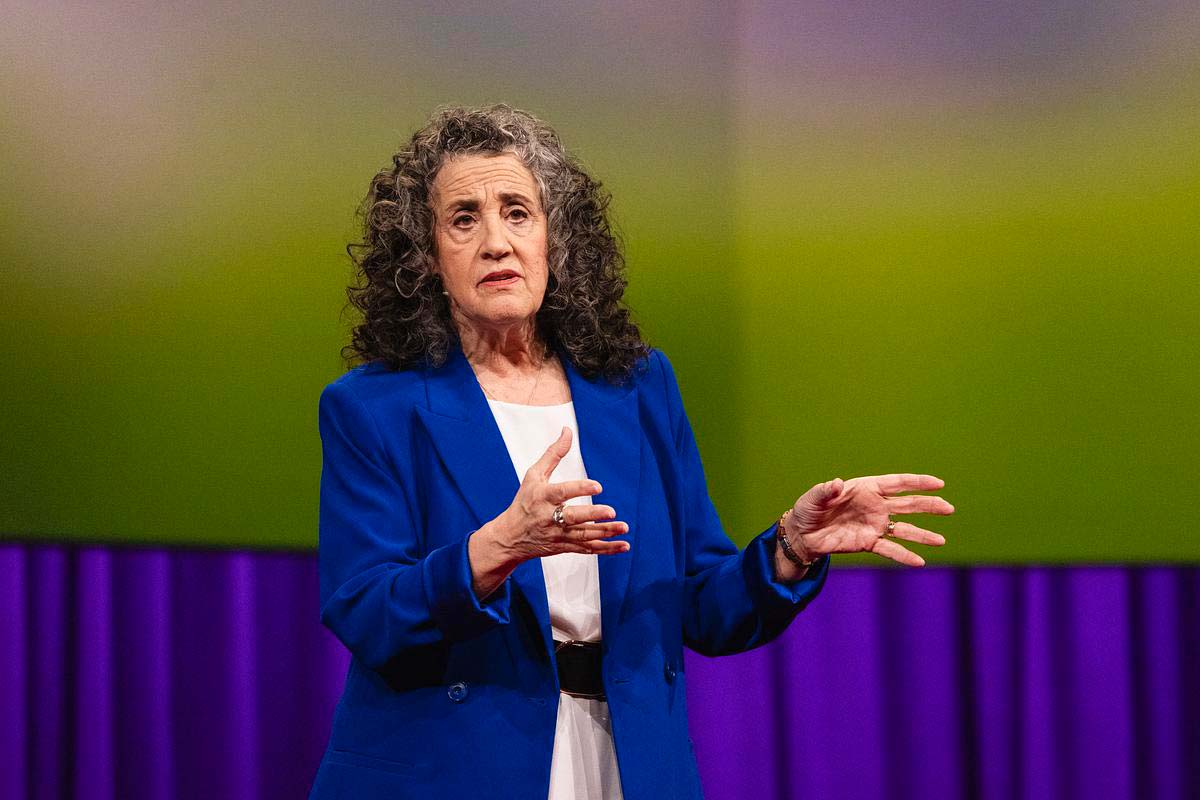
These behaviors are what the Gottmans call The Four Horsemen, and identifying them, they believe, is key to changing course. But avoiding the apocalyptic mechanisms isn’t the only thing that makes conflict manageable.
“Also, what's super important is listening, of course, and many of us, when we are trying to listen, there's a voice inside of us that is formulating a rebuttal rather than really listening to the content of what the other person is saying,” Julie said. “Which is a mistake.”
The best way to listen, they say, is to ask questions that deepen your understanding of the other person you are communicating with — with no other agenda.
“The understanding really has to precede any resolution,” Julie said.
The Gottmans have studied all kinds of people — couples especially — and believe their findings can be translated to almost any instance where people relate to one another.
In the midst of further political divides in the U.S. — and all the crises of the moment — most calls to action require us to build a better future together. But we can’t do that if we don’t first come to terms with the fact that conflict will inevitably crop up — with people who share our values, let alone with people who seem most misguided to us.
Ultimately, “building coalitions” and “bridging divides” is just a fancy way to say “we need to get better at conflict resolution and problem-solving.”
And that means starting at square one: confronting our past traumas.
“You have to process past emotional injuries that happen during bad conflicts. That's where the discomfort is often coming from,” Julie explained. “There are leftovers that haven't been digested yet and haven't really been integrated into your understanding of each other.”
The reason old emotional wounds need to be healed, John added, is that if left unaddressed, these wounds can erode trust in current and future relationships.
“When there’s not trust,” he said, “it’s very hard to really believe that a resolution will hold.”
To build trust, people need to understand each other. And in a climate where others’ viewpoints or opinions might seem totally opposed or unrecognizable compared to our own, that’s a big ask. But Julie broke it down, step-by-step.
- Each person talks about what they felt during an argument or conflict. Just name the feelings; do not explain why.
- Each person presents their own narrative of what they believe happened, while the other takes notes to summarize what they learned. The key is to eliminate criticism and just describe one’s own internal world, such as: “I imagined you were thinking x,” or “I fantasized you felt y.”
- Each person then gives the other a summary of what they heard the other say.
- Discuss old emotional wounds that may have been triggered.
“You take a look at your feelings and see if any of those feel familiar,” Julie said. “How old are they anyway? When did they start?” - Each person takes responsibility for their part in the conflict, adding what they specifically want to be accountable for, and how they can avoid this same disagreement in the future.
When this process happens, wounds heal instead of continuing to hurt.
“The festering wound fades away,” Juile said, “and people feel better and feel a little more hope and have a little more faith that, okay, the other person did make some sense in their narrative, and maybe I don't know everything, and we can carry on.”
A step-by-step plan can feel a bit sterile in our messy, human relationships, but during those discussion points in the Gottmans’ conflict-resolution approach, getting curious and asking big questions is key.
“You're asking about ethics, beliefs, values that underlie somebody's position on an issue,” Julie said. “You're asking, is there some history to how the person formulated this position? What are their feelings about it?”
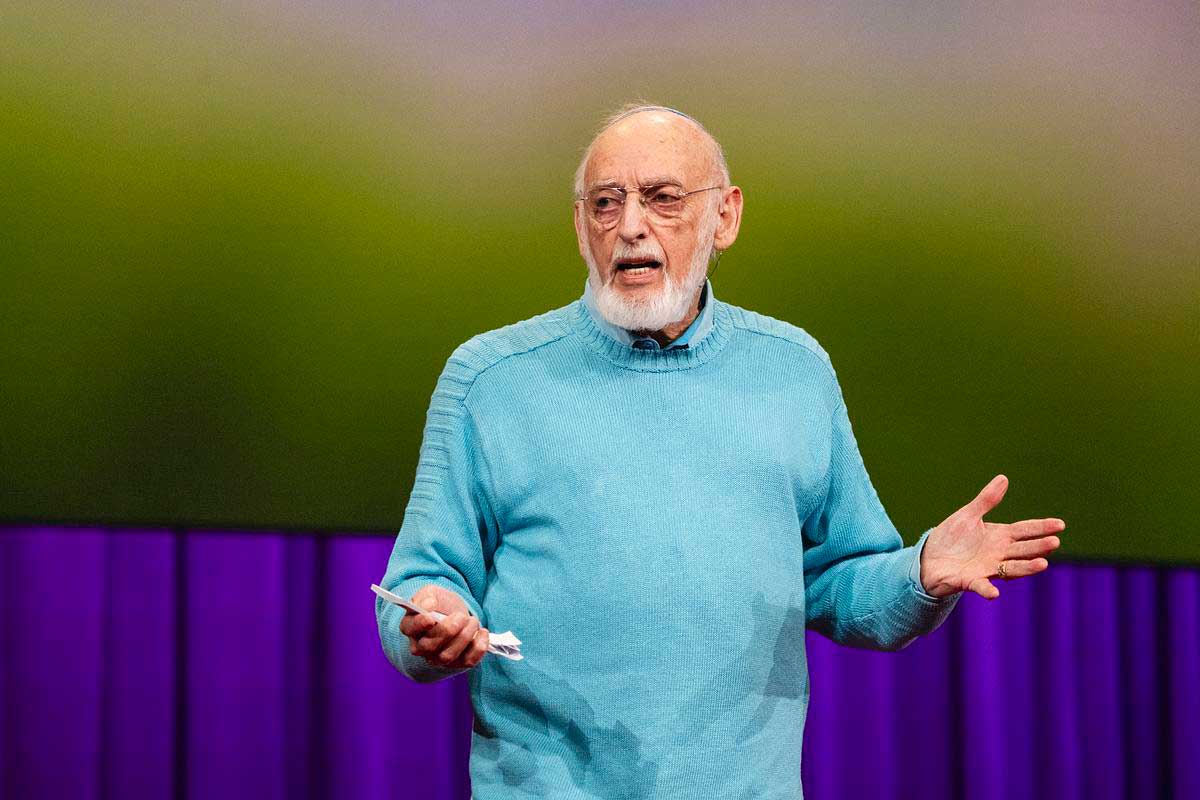
John added: “What's their ideal dream?”
Especially in communities aimed at creating solutions to the world’s biggest injustices, that ability to create a shared vision is especially prominent.
John explained that dreams are often “hidden agendas” that rarely get brought to the surface and are instead shrouded by practicalities and details.
But a shared dream, like a cleaner playground in the neighborhood, or a desire for more public artwork, for instance, can bring people together and establish core relationship pillars.
“If you move from the relationship level to a community level, and people aren't invested in the community, there's not that commitment to the community, and they haven't maintained a level of trust in one another, the techniques don't really work that well,” John said.
“The community has to have a light that burns bright as a prerequisite, just like a love relationship.”
In other words: To effectively build community, you need to give a damn.
“People talk about what their dream is, but don’t stop there,” Julie said.
“Somebody needs to be asking, what would it mean to you if this dream was fulfilled, if this actually came to pass? How would that change your life? Go deeper and deeper in terms of really understanding where somebody is coming from. Trust is based on knowing. You can’t trust without knowing. And the way you know them is exploring with open-ended questions.”

And, as much as it might hurt our pride, if we want to form a united front, we need to be in community with people we don’t always agree with.
“We have to want to understand. You’ve got to look and try to appreciate their human experience,” Julie said. “One of the hardest things to do is to step into somebody else’s shoes, but it’s also one of the most important things we can do, to, in a nutshell, solve the world’s problems.”
Being solution-oriented, while standing in our convictions, is a highway toward tension and disagreement. But instead of conflict being a threat to our beliefs, the Gottmans say it can lead to a transcendent bond of shared responsibility.
After all, resolving conflict doesn’t require us to impose binaries of “right” or “wrong,” “win” or “lose.”
Julie said the goal is to simply get to a place where you can earnestly say, “I can understand why you might feel that way.”
“That doesn’t mean [you’re in] agreement,” she added. “It doesn’t mean the other person saw it the same way. It just means you stepped into their shoes.”
You may also like: How to prioritize your mental health when you are living through yet another historical event
A version of this article was originally published in The 2025 Relationships Edition of the Goodnewspaper.
Header image by Gilberto Tadday / TED
For people experiencing homelessness, illness and disability are especially prevalent.
According to the Centers for Disease Control and Prevention, unhoused individuals are at increased risk for both infection and non-infectious diseases, such as viral hepatitis, HIV, tuberculosis, COVID-19, and more. Chronic conditions like mental illness, substance use disorder, diabetes, and heart and lung disease are also more likely among the homeless population.
But when basic needs like safe shelter and healthcare are inaccessible, it can be increasingly difficult for an already vulnerable community to find and receive treatment for these conditions.
In Colorado, the Colorado Coalition for the Homeless has a number of community health centers and interventions specifically designed to meet the needs of homeless individuals. And a new program might streamline that support even more.
“The Colorado Coalition for the Homeless 48th Street Health Center now has a new way for clients to access commonly-prescribed medications, just steps away from their shelter,” a social media video for the nonprofit shared.

It’s called a PickPoint Remote Dispensing Machine, and it’s essentially a vending machine for prescription medications.
“This innovative system provides quick access to medications, such as inhalers, lidocaine, laxatives, nicotine patches, and anti-inflammatories,” the video continued.
Clients simply meet with a provider at the health clinic and get a prescription for what they need. Then, they are able to use that prescription to access their medication from the vending machine.
“For those who may be moving from place to place, this quick access helps ensure they receive the care and medication they need, without delay,” the organization shared.
Everything is central to one location, so someone doesn’t have to visit a separate pharmacy or provider to get the support they need.
While it’s unclear if the medication in the machine is provided for free, the health center is reportedly funded through the Federal CARES Act, as well as Denver’s Department of Housing Stability, to address homelessness and housing.
“The Colorado Coalition for the Homeless maintains all operating costs, but pays zero rent or utilities for the facility. The City of Denver paid for all recent upgrades to the property,” an informational document from the nonprofit shared.
The PickPoint machine has also been installed thanks to support from the McKesson Corporation and Colorado Access, which provides Medicaid and CHIP benefits to residents.
Although the machine was just installed and shared with the community, representatives of the organization appear to be optimistic that it will improve outcomes for the shelter’s clients.
And it’s a welcome innovation for anyone in need of medical care, social media followers say.
“I have a home and still struggle to manage picking up my meds with my job hours. [I] can’t imagine all the other barriers,” a TikTok commenter wrote. “This is such an incredible idea and will change many lives.”
You may also like: NYC's first 'free food vending machine' offers eggs, meat, and fresh produce to people in need
Header images courtesy of PickPoint
Even in times of uncertainty, the holidays are a season of giving. According to the Chronicle of Philanthropy, even though some donation amounts might decline, most Americans still intend to make holiday donations this year.
One way this can be done is through a Light the World Giving Machine, giant vending machine-style kiosks, which can be found in 126 cities across 21 countries and on six continents.
First debuted in 2017, the Giving Machine is a project of the Church of Jesus Christ of Latter-day Saints and is inspired by a core teaching to “love one another.”

The kiosks make donating easy and engaging, allowing users to pick a specific dollar amount or item to contribute to a specific charity.
For instance, you could spend $35 and give a solar lamp to a refugee family, or provide malnutrition treatment to refugee children with a gift of $85, both supported by the UN Refugee Agency.
“Instead of purchasing candy or snacks from a vending machine, people buy goods and services to support those in need. It’s a machine that enables a person to give — rather than receive,” a press release from the Church said.
“Items vary by city, but a typical machine includes food, clean water, clothing, shelter, healthcare, education support, hygiene kits, bedding, job and career training, and even livestock such as chickens, goats, pigs, and beehives.”

When donations are transferred to each nonprofit organization, the Church also provides an itemized list of what was purchased, to make sure that every donor’s gift is delivered as intended. Organizations then have 12 months to fulfill the “orders.”
The Church of Jesus Christ of Latter-day Saints covers all operating costs, ensuring that 100% of each donation goes directly to the participating nonprofits, according to the press release. The Church reportedly does not receive any financial benefit from this initiative.
Nonprofits can use up to 10% of their Giving Machine donations for overhead costs, but most choose to use much less or none, according to the Church.

Since the project’s inception, nearly $50 million has been donated by people across the globe through the kiosks. Each user receives a card that represents their donation once it is processed at the Giving Machine.
In 2024, 2 million meals were donated to feed people in need, 500,000 children were provided with polio and measles vaccines, 125,000 refugees received emergency food boxes, and more.
In 2025, more than 4,000 items will be available to donate worldwide from over 500 local nonprofit organizations. Twelve global participants are also included in this year’s festivities.
They include: the American Red Cross, CARE, Church World Service, Days for Girls International, Lifting Hands International, Mentors International, Right to Play, Special Olympics, Splash, USA for UNHCR, UNICEF, and Water for Good.

“These cards in the machine might just look like cards, but they’re giving back girls dignity and health and opportunity,” Tiffany Larson, CEO of Days for Girls International, said. The organization alleviates period poverty for women.
The impact is tangible for the people supported by the Giving Machine’s nonprofit partners, but it also instills a love of giving in the hearts of families every holiday season.
“My wife and I want our kids to experience the joy of giving,” one father told the Church after visiting a Giving Machine.
“Watching them choose a chicken, a book, or a baby blanket for someone else was a powerful lesson for them to learn. I’m so proud of my kids for sacrificing what little they have and loving it.”
Giving Machines are beginning to pop up around the world and will be on display in various locations during November and December of this year.
“It’s so fun to think about how what begins as a three-to-five-minute experience in front of one of these machines turned into a lifetime change for a family or even just one young woman,” the Church’s Young Women General President Emily Belle Freeman said in a statement.
“That’s such an amazing and remarkable thing for all of us to be able to participate in.”

Where to find a Light the World Giving Machine this year:
- Adelaide, Australia
- Albuquerque, New Mexico
- Anchorage, Alaska
- Arlington, Texas
- Auckland, New Zealand
- Austin, Texas
- Bacolod, Philippines
- Bakersfield, California
- Bangkok, Thailand
- Barcelona, Spain
- Bentonville, Arkansas
- Birmingham, United Kingdom
- Bloomington, Indiana
- Boise, Idaho
- Boston, Massachusetts
- Brisbane, Australia
- Buenos Aires, Argentina
- Caldwell, Idaho
- Calgary, Alberta
- Canberra, Australia
- Cebu City, Philippines
- Charlotte, North Carolina
- Chicago, Illinois
- Christchurch, New Zealand
- Cincinnati, Ohio
- Cleveland, Ohio
- Columbus, Ohio
- Davao, Philippines
- Denver, Colorado
- Iowa City, Iowa
- Detroit, Michigan
- El Paso, Texas
- Elko, Nevada
- Eugene, Oregon
- Fairbanks, Alaska
- Fresno, California
- Gila Valley, Arizona
- Gilbert, Arizona
- Grand Rapids, Michigan
- Grapevine, Texas
- Guadalajara, Mexico
- Guatemala City, Guatemala
- Hamilton, New Zealand
- Harrisburg, Pennsylvania
- Henderson, Nevada
- Hilo, Hawaii
- Hobart, Australia
- Hong Kong, China
- Honolulu, Hawaii
- Houston, Texas
- Huntington Beach, California
- Huntsville, Alabama
- Idaho Falls, Idaho
- Indianapolis, Indiana
- Kansas City, Missouri
- Kennewick, Washington
- Kona, Hawaii
- Lahaina, Hawaii
- Laie, Hawaii
- Lethbridge, Alberta
- Logan, Utah
- London, United Kingdom
- Los Angeles, California
- Manila, Philippines
- McAllen, Texas
- McKinney, Texas
- Melbourne, Australia
- Meridian
- Modesto, California
- Montreal, Quebec
- Nairobi, Kenya
- Nashville, Tennessee
- New York City, New York
- Ogden, Utah
- Oklahoma City, Oklahoma
- Omaha, Nebraska
- Orem, Utah
- Orlando, Florida
- Panama City, Panama
- Perth, Australia
- Pittsburgh, Pennsylvania
- Pocatello, Idaho
- Portland, Maine
- Portland, Oregon
- Prescott, Arizona
- Queen Creek, Arizona
- Querétaro, Mexico
- Quetzaltenango, Guatemala
- Reno, Nevada
- Rexburg, Idaho
- Riverside, California
- Rome, Italy
- Sacramento, California
- Salt Lake City, Utah
- San Antonio, Texas
- San Clemente, California
- San Diego, California
- San Luis Potosi, Mexico
- San Salvador, El Salvador
- Santiago, Chile
- São Paulo, Brazil
- Scottsdale, Arizona
- Seattle, Washington
- Show Low, Arizona
- Snowflake, Arizona
- Spokane, Washington
- St. George, Utah
- St. Louis, Missouri
- Sugar Land, Texas
- Summerlin, Nevada
- Sydney, Australia
- Tacoma, Washington
- Tampa, Florida
- Tegucigalpa, Honduras
- The Woodlands, Texas
- Tokyo, Japan
- Torreón, Mexico
- Tucson, Arizona
- Tulsa, Oklahoma
- Vancouver, British Columbia
- Victoria, British Columbia
- Vienna, Austria
- Waco, Texas
- Washington, D.C.
- Wellington, New Zealand
You may also like: NYC's first 'free food vending machine' offers eggs, meat, and fresh produce to people in need
Header image courtesy of Giving Machine Denver
Every day the Good Good Good team collects the best good news in the world and shares it with our community. Here are the highlights for this week!
If you want to get good news in your inbox every day, join the Goodnewsletter — the free daily newsletter designed to leave you feeling hopeful.
The Best Positive News We’re Celebrating This Week —
Australia has so much solar power that it wants to give it to people for free
The Australian government is working on a program that would share solar benefits with everyone on the grid, providing electricity completely for free in the middle of the day during peak hours.
While coal is still the country’s second-largest export, and it was formerly a coal-heavy country, solar and wind have rapidly taken over the electricity grid in Australia.
That’s cut into its electricity-related climate emissions, resulted in cleaner air, and helped contribute to the fight against the climate crisis, which is already causing record high temperatures and wildfires in the country.
Why is this good news? The pros just keep stacking up when it comes to solar power and clean energy sources. It’s so abundant and cheap, an entire country says it can give it away for free.
→ Read more
You may also like: Solar is now 41% cheaper than fossil fuels, new UN report finds: ‘The sun is rising on a clean energy age’
This Pittsburgh dad did a $150 grocery run to feed his neighbors during SNAP cuts. What happened next left his whole body 'shaking'
→ Read more
An entrepreneur started a company that provides period products paid for by ads, not women, to fight period poverty
Remy Tucker has calculated the cost of having a period over the course of a lifetime — and it’s $10,000. That’s why she founded On The House, a startup that seeks to end period poverty and get feminine hygiene products to those who need them most.
Through its period product vending machines, On The House uses ad revenue from bathroom posters to dispense free period products.
Today, there are five machines in public and commercial bathrooms across Brisbane, Australia, but Tucker has ambitious plans to scale up nationally — and then bring her idea to countries around the world.
A pilot program is helping reduce Colorado’s above-average veteran suicide rate
More than 369,000 veterans live in Colorado, and in 2022 — the most recent data available — 178 of them died by suicide, significantly higher than the national veteran suicide rate and the overall rate for both the state and the country.
To combat those devastating numbers, in 2021 Colorado passed legislation investing $1.6 million in a pilot program called Next Chapter, which pairs veterans with mentors so they have a constant support system, and “know who to call” when they’re struggling. It’s also staffed entirely by veterans, helping clients feel seen and understood.
Initially setting out to connect with 700 veterans, the program has already served over 1,200. A June 2025 report found that more than 80% of participants reported a drop in their thoughts of self-harm and suicide, and of those who had reported prior suicide attempts, the majority had decreased those attempts.
Why is this good news? The VA provides mental health care and resources at eight locations across the state, but the wait time for a new patient seeking services at three Colorado Springs-area clinics in September this year was a minimum of 32 days. Next Chapter gives those same people care within nine days — a potentially life-saving difference.
→ Read more
I’m a veteran. Here’s what to say instead of thanking me for my service.
‘Forrest Gump’ actor Gary Sinise donated $1 million to build a ‘creative lab’ for veterans to heal through art
Founded by Marine Corps veteran and Purple Heart recipient Richard Casper, CreatiVets is a nonprofit helping veterans with service-related trauma heal through creative expression.
It’s latest project: transforming a long-abandoned Nashville church into a “creative lab” for veterans to pursue songwriting, sculpting, scriptwriting, and other art forms.
And “Forrest Gump” actor Gary Sinise donated $1 million toward purchasing that building, further expanding on his longtime commitment to supporting veterans.
Why is this good news? The veteran suicide rate is 20 suicides per day, with 14 of them not seeking support from the VA, and veterans account for 20% of all suicides in the country.
Creative expression has been proven effective at reducing both PTS symptoms and the severity of depression that often accompanies it — this new center will be “a place to go when the PTSD hits.”
Republican governor addresses SNAP cuts, directs people to 900+ resources: ‘How do we help the most vulnerable in our state?’
Stronger democracies tend to have lower levels of corruption
Even when it feels tough or you don’t like your options, it’s important to exercise your right to vote. New data shows another reason why it’s so important: it reduces corruption.
While levels of democracy and corruption are difficult to measure, experts agree on certain standards and metrics that indicate how democratic a country is — free and fair elections, equal voting rights, fundamental freedoms — and how frequent corruption is — fairly enforced laws, bribery, etc.
When looking at the data, research on the causal link suggests that democratic systems can help both expose and reduce corruption. And the opposite may also be true: corruption can weaken democracies.
A critically endangered black rhino calf was born in the wild in Kenya
In the spring, rangers first suspected a new eastern black rhino calf may have been born after seeing what appeared to be baby tracks behind a mother’s tracks — and their suspicions were confirmed.
Camera traps caught a glimpse of the mother and baby in a remote mountain range in southeastern Kenya. It’s the mother’s first calf, and researchers believe it’s about six months old. It brings the total number in the region to nine.
So far, rangers have observed that the calf is healthy and “acting like you would think a cute little baby rhino would,” though they cautioned that young rhino calves are still “very vulnerable” to natural and human-caused dangers.
Why is this good news? Eastern black rhinos are critically endangered, and this particular birth happened in a tiny subgroup, the Chyulu population, which is of “critical value” to rhino conservation because of its genetic independence — bringing it back could strengthen the entire black rhino gene pool.
AI is helping doctors repurpose old drugs for new cures: ‘The solution is in your neighborhood pharmacy’
→ Read more
An analysis found that China’s emissions have been flat or falling for the past 18 months
China is the world’s largest polluter, but a new analysis found that it may have hit hits target for peak carbon dioxide emissions well ahead of schedule. Its emissions have been flat or falling for 18 months.
Rapid deployment of solar and wind power generation led the country’s energy sector emissions to remain flat, even while demand for electricity increased.
In the first nine months of 2025, China added 240 gigawatts of solar capacity and 61 gigawatts of wind capacity — putting it on track for yet another record year. Last year alone, it installed 333 gigawatts of solar power, which was more than the rest of the world combined.
Five Native tribes are coming together to protect a 624k-acre cultural landscape in California
Filled with towering rocks, hidden canyons, and its namesake lizard, Chuckwalla National Monument in California is one of the country’s newest protected public lands. It also holds sacred significance for the area’s Native tribes.
Five of those tribes have now established an intertribal commission to co-manage the 624,000-acre landscape, a historic step toward the tribes’ long-term goal of full sovereignty over the lands.
While it holds no veto power, the commitment is still significant. The tribes each passed resolutions to recognize their roles on the commission, and will now work to appoint members and write bylaws.
Why is this good news? Establishing a land use commission would not traditionally be cause for celebration, but in light of the U.S. government’s historic interactions with Native peoples, this is a significant, high-profile platform to advocate for the land. Especially as the Trump administration has hinted at a potential reversal of the monument’s designation.
→ Read more (may require login)
5 ‘foods of the future’ that could help save the planet
→ Read more
Over 1 million balcony solar panel systems have been installed across Germany
Germany has been quietly bringing the benefits of renewable energy to renters across the country — over one million small solar panel systems now hang from apartment balconies and terraces across the country.
The milestone represents a major shift in how Germans generate their own electricity, especially among renters. The plug-and-play solar systems, called “Balkonkraftwerke” in German, can be installed without an electrician and plug into a regular wall outlet.
While the systems are limited to between 600 and 800 watts, but it’s enough to run your refrigerator, charge laptops, power LED lights, and run other small appliances throughout the year.
More good news of the week —
Nevada became the first U.S. state to constitutionally protect same-sex marriage. Last week, nearly two-thirds of Nevada voters said the state’s constitution should be amended to remove a provision stating marriage is only between a man and a woman, so if the U.S. Supreme Court ever reverses its decision on gay marriage, the state will still protect marriages.
Food reviewer and TikTok creator Keith Lee is using his platform to help feed families this holiday season. Lee, who shared that he’d relied on SNAP before, asked brands to help feed families instead of sending him promotional packages, and hundreds took him up on it.
Stranger Things star Joe Keery, also known by his musician stage name Djo, is donating $1 per tour ticket to LGBTQ+ youth. Keery is donating the money in support of The Ally Coalition, which partners with musicians and music fans to fight against discrimination faced by LGBTQ+ youth.
A nurse in Uganda climbs a 1,000-foot ladder to bring life-saving medical care to people in need. (Video) The ladder is too steep for pregnant people, children, and the sick to climb, so nurse Agnes Nambozo brings care to them, with her most essential mission being vaccinating children against polio, measles, tetanus, and pneumonia as the country pushes to reduce childhood mortality.
New research found that growing large shade trees could entirely offset cocoa-related emissions in West Africa. Cocoa is one of the most emissions-intensive crops to grow, and simply growing shade trees, like banana and palm trees, would store enough carbon to offset those emissions and have no impact on production.
The Missing in America Project has provided thousands of dignified burials for “unclaimed” veterans. The project combs through lists of unclaimed remains at funeral homes and morgues, and then spends years verifying the veteran status of those they suspect might have served in the military. When a veteran is found, volunteers begin the search for family.
Together with a nonprofit, a retired veteran is building free ramps for his senior and disabled neighbors. Before Pete Adler enlisted in the Army, he majored in architecture. Now, after spending 25 years in equipment maintenance and supply, and another 17 years as a civilian employee, Adler is back to his architectural roots — for a good cause.
A woman- and veteran-run business is turning shipping containers into bespoke homes for homeless veterans. Mākhers Studio creates custom units, veteran housing, classrooms, and modular health clinics out of shipping containers acquired from localized supply chains, ultimately recycling about four tons of steel and producing an estimated 50% less landfill waste in installation.
Women veterans are receiving more benefits and care from the VA than ever before. Progress is attributed to legislative measures and ongoing initiatives such as the PACT Act and the new Women's Health Research Collaborative.
The Green Bay Packers gave a $250k grant to help build the state’s first housing project for homeless veterans. The Green Bay Packers Give Back outreach program had an impact of over $13 million in 2023, and so far this year, the team is making strides in supporting a special cause: Homelessness among veterans.
A nonprofit provides professional clothes to veterans so they can re-enter the workforce with confidence. While federal law requires government agencies to establish employment assistance centers, veterans are still left behind when it comes to acquiring new job skills, building confidence, and starting a new life mission.
A nonprofit connects military members with volunteers to care for their pets while they’re on deployment. Dogs on Deployment also provides financial assistance for military pet owners, promotes responsible, life-long pet ownership, and keeps beloved animals out of shelters while their owners are away.
Combat diving veterans are using their skills to protect and restore ocean health. Faced with needing a new mission, Force Blue connects the specialized skills of these veterans with the world of coral reef conservation for the betterment of both.
Scientists created a breakthrough test that could detect endometriosis biomarkers in period blood. Current methods of diagnosing endometriosis often require invasive blood tests, laboratory analyses, imaging studies, and extensive patient history collection, which can delay endometriosis diagnosis by up to 12 years.
A nonprofit is preventing $11 billion in unopened medicine from going to waste every year by redirecting it to people in need. Sirum is a nonprofit social enterprise that takes unopened, unexpired prescription medication and redistributes it to low-income communities across the country.
Denmark passed a law that will ban kids under 15 years old from social media platforms. It’s among the most sweeping steps yet by a European Union government to limit use of social media among teens and younger children, which has drawn concerns surrounding mental health.
Boston’s century-old steam heat system is being transformed into a first-of-its-kind clean “district energy” system. The new system will be capable of delivering warmth during the frigid New England winters, without releasing damaging carbon emissions — it’s already installed an electric boiler, and is now working on installing a heat pump.
Albania passed a new, stronger gender equality law to eliminate gender-based discrimination. The new law identifies measures to eliminate gender discrimination in critical areas such as labor, health and social protection, the media, agriculture and rural development, while recognizing and valuing unpaid care.
A New York tour group is helping disabled hikers get on the trail with free-to-use off-road wheelchairs. While an increasing number of green spaces are investing in improving accessibility, hiking in nature poses natural challenges because “the wood doesn’t care about ADA compliance.”
Massachusetts has rewilded 500 acres of retired cranberry bogs into wetlands. The state hopes to restore 1,000 acres in the next decade “into thriving wetlands that will provide habitat to important species, flood control in time of storms, and access for all to beautiful natural areas.”
In an overhaul of curriculum, students in England will be taught financial literacy, how to fake news, and more. Starting in September 2028, the curriculum will be adjusted to equip students with the skills needed to navigate the modern world, with primary-age children learning the fundamentals of money, how to spot fake news and be educated about climate change.
For the first time, Maryland’s school board reversed a local, county-level book ban. The Harford County school board had banned a young adult graphic novel called “Flamer” last summer, which sparked backlash among the community, with some arguing the removal defied the state’s Freedom to Read Act.
An experimental treatment saved the lives of eight young people with the most common childhood cancer. The “living drug,” made up of cells small enough to fit on a spoon saved the lives of patients under the age of 24 who were suffering from the aggressive B-cell acute lymphoblastic leukemia and had been declared terminal after multiple relapses and the failure of all conventional treatments.
A historic military facility in the Bronx is becoming a giant mixed-use facility with affordable housing, an event center, and more. The first phase will create a “state-of-the-art venue space … and more than 25,000 square feet of dedicated community space,” and the second phase will add roughly 500 units of permanently affordable rental housing.
A flagship report says the renewable energy supply boom will officially end the fossil fuel era. The International Energy Agency’s flagship report says the rise in low-carbon electricity will make the clean energy transition ‘inevitable’, despite President Trump’s calls to carry on drilling.
New FDA-approved daily eye drops will help adults with age-related vision issues. The eye drop is said to help combat presbyopia, otherwise known as age-related blurry vision, and with just one drop in each eye, a person’s vision will improve for up to 10 hours, so they won't have to wear reading glasses.
Restaurants in New Jersey are recycling discarded oyster and clam shells to rebuild coastal reefs. Instead of ending up in landfills, oyster and clam shells are collected from restaurants and then used to create and enhance oyster reefs in coastal waterways, which help provide habitats for marine life and improve water quality.
A project protecting the Brazilian rainforest with drones and AI won an Earthshot Prize. Brazil is home to some of the planet’s largest areas of tropical forest, but they are under intense pressure. The Atlantic Forest, on the country’s eastern coast, once covered 350 million acres, but today only 12% of it remains.
- The Global Reforestation Organization Directory provides standardized information on more than 125 major tree-planting organizations, making it easier for donors to compare groups and find the ones that match their priorities.
- Researchers from the University of California Santa Cruz evaluated groups across four categories: permanence, ecological, social and financial, each backed by scientific literature on best practices.
- Much of the evaluation relies on the organization’s self-reporting through surveys or website statements and, while researchers acknowledge this limitation, they say it still provides a valuable framework and a starting point for donors.
- The directory doesn’t rank organizations but rather shows what organizations publicly share about following scientific best practices, avoiding common mistakes and monitoring their results.
Planting trees is something most people can get behind, and tens of thousands of reforestation projects now operate worldwide. However, for donors and funders who want to support these efforts, it can be hard to identify which organizations to trust with their money and even more difficult to determine which are effective.
“I would give talks, and people would ask, ‘Who should I donate my money to?'” Karen Holl, a professor at the University of California, Santa Cruz (UCSC) and reforestation expert, told Mongabay. “There was really no standardized way to answer that question.”
So how can a tree investor decide what organizations to support? What questions should ensure money goes toward the best outcomes for biodiversity, climate and people?

To help answer those questions, Holl and UCSC postdoctoral researcher Spencer Schubert spent more than a year evaluating “intermediary organizations,” the major groups that channel funding and resources to local tree-planting projects around the world.
Between October 2024 and June 2025, the team contacted more than 125 organizations. Seventy completed detailed surveys, while researchers performed systematic reviews of websites and public reports for the rest.
Mongabay has now launched this research as the Global Reforestation Organization Directory.
The directory was developed in collaboration with Mongabay, and the research was funded by the Center for Coastal Climate Resilience and the MacArthur Foundation Chair at the University of California Santa Cruz.

What this directory does (and doesn’t) do
The Global Reforestation Organization Directory provides standardized information about the public commitments and transparency of more than 125 major tree-planting organizations, making it easier for donors to compare groups and find the ones that match their priorities.
The directory doesn’t rank organizations or judge individual projects — it also does not recommend projects. Instead, it shows what organizations publicly share about following scientific best practices, avoiding common mistakes and monitoring their results.
“It’s not a rank ordering of groups,” Holl said. “It’s also not a rigorous third-party verification of projects. We did not go into the field and check projects.”
What it does provide is standardized information for comparison.
“We’re setting the norm of what the standards are,” Holl said. “Before this, nobody had the information to compare organizations.”

It’s important to note that this directory focuses on intermediary organizations that fund multiple initiatives, which differs from Mongabay’s existing Reforestation app database that documents individual tree-planting projects.
Since a single reforestation project can involve many different organizations working together, and projects from the same organization can look very different depending on where they are, it’s important for donors to have information about both the organizations and the individual projects.
Much of the project evaluation relies on the organization’s self-reporting through surveys or website statements. The researchers acknowledge this limitation but argue it still provides value.
“Many people use Charity Navigator, which is also based partially on self-reported data,” Holl said. “Our site is a place to start. Right now, nobody has any information.”
The researchers did verify some things, such as whether organizations’ monitoring protocols and financial reports actually exist online and the availability of public tree survival data. They also reviewed certification standards when relevant (such as Verra, Plan Vivo and The Global Biodiversity Standard).
Many organizations are collecting data, “but then there isn’t a follow-through on the public reporting side,” Schubert said. “There’s a disconnect.”
The absence of information on an organization’s website doesn’t necessarily mean the organization has neglected those criteria. Some excellent programs may lack the staff or resources to maintain public dashboards.
However, transparency signals that an organization understands the complexities involved in reforestation and has the capacity to organize, monitor, and report results.

As an investor, picking the right organization matters. Not all tree-planting efforts pack the same punch. And while increasing tree cover has many potential benefits, it can also have negative consequences, such as destroying diverse grasslands, introducing invasive species, and displacing deforestation into remnant forests.
Projects also have the potential to benefit or harm the communities they involve.
With this in mind, the researchers created an evaluation that assigns points across four categories: permanence, ecological, social, and financial, each backed by scientific literature on best practices.
The four tenets: Permanence, ecological, social, and financial
The first category, permanence, examines whether trees are surviving and tree cover is increasing over time. The category investigates whether organizations have standards in place for picking effective projects and if these projects actually address the causes of deforestation. Permanence also involves land tenure, as well as making sure organizations have strong maintenance and monitoring plans.
“We’ve graduated from asking, ‘How many trees did they plant?’ to ‘Has tree cover increased over time?'” Schubert said.
The second category, ecological, asks whether projects are planting the right trees in the right places. The category evaluates tree species selection (Are they native? Are they useful to communities?) and seed sources to ensure genetic diversity. It also asks whether organizations are monitoring changes in biodiversity, such as an increase in wildlife.
The third category, social, asks whether local people are benefiting from the project. This category assesses local community involvement throughout project phases. It looks at safeguards against displacing communities, support for landholders, and monitoring of benefits to local people, including gender demographics.

Finally, the fourth category, finances, looks at where the money is going. This category examines transparency around funding sources, disclosure of how much money goes to tree-planting organizations versus administrative costs, and whether there is long-term maintenance funding.
These four categories come from earlier research by Holl and Pedro Brancalion from the University of São Paulo, Brazil. They found that successful tree-planting projects share common features: secure land rights, genuine community involvement, plans for long-term care, and clear monitoring.
Their studies also showed that many organizations claim to follow best practices but don’t share enough details about their actual results. This gap between claims and transparency shaped how the directory evaluates organizations.
How to use the directory
The directory allows users to find organizations that align with their priorities.
For example, someone focused on carbon capture might prioritize organizations with strong public data on tree survival rates.
A donor concerned about community benefits might sort for organizations that score highly in the social category and search for organizations that require local involvement and track beneficiary demographics.
Someone interested in biodiversity conservation might look for organizations that plant only native species and monitor biodiversity indicators.
Each organization is displayed with a radial bar chart consisting of four concentric circles. The completeness of each circle indicates the score in each category: permanence, ecological, social, and financial. For example, an organization that scored 100% in ecological would have a complete circle for that category.

But the researchers caution against discounting organizations based solely on the scored criteria. Not all organizations work the same way. Some work in remote areas where certain social criteria don’t apply, while others tailor standards to local conditions rather than impose rigid requirements. These flexible approaches can sometimes be more effective than one-size-fits-all policies.
Real-world examples from Mongabay’s reporting
Mongabay has reported on more than 30 of these organizations’ on-the-ground projects. These articles are linked to organizational pages in the directory, providing journalistic context about how the projects funded by these groups actually operate.
For example, Mongabay’s coverage of the Mulanje Mountain Conservation Trust in Malawi, funded by the intermediary organization WeForest, reveals the extreme dedication required for native species restoration, with workers hiking for hours to carry seedlings up the “Island in the Sky” to save the endangered Mulanje cedar (Widdringtonia whytei).
An article about search engine Ecosia shows how the company has evolved beyond simply funding tree planting to partnering with satellite monitoring startups to verify their carbon claims.
Reporting on forest garden projects in the Sahel illustrates both the promise of ancient agroforestry techniques and the challenges of scaling them across water-scarce regions.
Detailed Mongabay reporting adds depth beyond basic scores and data, helping donors understand not just what organizations say they do, but how their on-the ground work actually happens in real places with real challenges.

Moving forward with transparency
“Any organization can put up a website or make a video of their farmer saying, ‘This is wonderful,'” Holl said. “But what we were really pushing for is transparency of data. … If you’re going to say you’re doing this, then you need to show that you actually are.”
To organizations, Holl’s message is direct.
“What are your goals? And if those are your goals, what are measurable objectives, and how are you measuring them? You need to be clear about what you’re trying to achieve and honest about how well projects are meeting their targets.”
Organizations claiming to restore biodiversity should measure biodiversity, she said. Those focused on community livelihoods should track whether locals are benefitting from the projects.
By evaluating these organizations, “our goal was not to be punitive,” Holl said, “but to try to incentivize groups to follow best practices.”
Holl sees evidence that change is already underway. Organizations are improving their monitoring commitments compared with earlier research. But “actually monitoring and also making those data public,” she said, “those are the next steps.”
For now, the directory offers something previously unavailable: a systematic way to compare how major reforestation organizations approach the complex challenge of growing trees that survive, benefit communities, and support biodiversity for the long term.
Current funding for the project only supports directory updates through December 2025. The team is seeking additional resources to maintain the platform in the long term as organizations update their practices and new tree planters enter the field.
This article was originally published by Mongabay.
Header Image by Tree Aid
What would it take to make car-free living possible across the United States? The question has critical implications for the climate: Transportation is the nation’s top source of emissions, and everyday vehicles are the largest contributor within this category.
Today, cars are an inescapable fact of life in most of the country. Almost 70% of U.S. workers drove alone to work in 2022, compared to 2.9% who biked or walked and 3.1% who took public transportation.
This reality doesn’t necessarily reflect Americans’ preferences, however. Many people in the U.S. want to live in walkable areas, but only a small fraction of the nation’s developed land fits this description.
Around 90% of all housing in the nation’s largest metro areas is located in car-centric suburbs. The low supply of real estate in walkable neighborhoods drives prices upward, making it unaffordable for most people.
Ryan Johnson has spent years thinking about solutions for these problems. Inspired by travels to European cities, he cofounded Culdesac, a real estate developer dedicated to building walkable places, in 2018.
In 2023, the company opened the first phase of Culdesac Tempe, a 17-acre development that offers a variety of transportation options — but no resident parking.
Yale Climate Connections spoke with Johnson about Culdesac Tempe and the future of American cities.
Interview edited and condensed.
Yale Climate Connections: Developing walkable neighborhoods in the U.S. is very difficult. What made you feel confident in taking on this challenge?
Ryan Johnson: I’ve been in real estate for 23 years now. I got started in college. I turned down MIT to go to University of Arizona on a scholarship that’s a full ride, plus cash on top. I used the scholarship money to get into real estate and built a portfolio of rentals, learned how to buy, renovate, etc. I saw so much opportunity to do housing better and bring innovation into real estate.
In my 20s, I went to 60 countries and lived in a handful, and that gave me so much inspiration. But I also worked in transportation, with trains, and helicopters, and buses, including for the New York City subway, and that showed me so much about the direction that transportation is going.
And then I was part of the founding team at Opendoor [an online brokerage company], which I think has some of the best data and customer interactions in real estate. That’s where I saw that areas built before cars do well and heard from so many customers that they want to live in walkable neighborhoods — and we’re just not building enough of those. That was what gave me the conviction to do Culdesac.

Yale Climate Connections: What are the primary obstacles that you’ve encountered in building a walkable neighborhood with Culdesac?
Johnson: The biggest reason there aren’t more walkable neighborhoods in the U.S. is that they’ve basically been banned. They’re more or less illegal because of zoning and other reasons, and we’ve mandated building lots of parking, which means things are spread out. So people feel they need a car, and then we mistake that as people wanting a car, when really they just didn’t have an alternative.
So there’s a bit of a chicken and egg. If you’re in a sprawling area, it’s hard to just build a walkable neighborhood. When you’re doing something different, there are so many questions: from cities, from investors, from partners. And the real estate industry doesn’t change very quickly; it’s very slow-moving.
We started the company in San Francisco in 2018. We looked all over the country for places that had the right conditions for development. We found that in Tempe, with this wonderful parcel that’s 17 acres, right on the light rail.
We worked to understand the different questions that stakeholders had and put together a plan that everyone could get behind. And Tempe passed a landmark piece of legislation that was the city’s first agreement with a developer to build without parking in a multifamily context.
Today, the development is thriving. It’s doing well. Neighbors love it; the city loves it. And it’s become a reference project for understanding how to build walkable neighborhoods in the U.S. in the 2020s.

Yale Climate Connections: Can you say more about why you chose Tempe and how that decision came about? What did that search process look like?
Johnson: One of the challenges in this business is there’s not just one person that can say yes, but there’s lots of folks that can effectively say no. You don’t just talk to the mayor; there are lots of different stakeholders. You need to talk to different community groups. You need to talk to the fire department, the sanitation department, etc., to understand what people care about and how their system works.
That’s why it was really important to go to a place and understand the different stakeholders, and to go to a place that welcomes growth. Some places are looking for reasons to say no to a project.
Now that we’ve shown the way, it’s easier. So many cities and developers have visited Culdesac Tempe to see what they can learn. And the No. 1 thing that we get is, “When can we build one of these in my area?”

Yale Climate Connections: What about project financing? How did you structure things so that you were able to get the funds to build a novel concept?
Johnson: It’s true that when you’re doing something new, you get a bit of a new-concept penalty. There are more questions; it’s harder to get it funded. But that’s shifting.
This company is about how innovations in transportation are changing real estate. And we’re in, like, the second inning of the biggest change to transportation of our lifetime, and therefore the biggest change to cities.
We used to build great walkable neighborhoods, going back to Native Americans who have been in Arizona for thousands of years. And over time, transportation has evolved through innovations like Roman roads, streetcars in New York City, and then the highway system for cars.
But now we’re entering a new era, which is that instead of having a private car that’s parked 95% of the time, people are starting to use a portfolio of transportation options.
I think this is where our perspective is a bit unique within the wider urbanist world. A lot of the urbanist world was initially very skeptical of rideshare such as Lyft, AV [autonomous vehicle] ride-hail such as Waymo, maybe because ride-hail competes with trains. But what it does is let us move to this portfolio approach to transportation. And the portfolio has a very healthy place for trains, because that’s what’s best for high capacity, but it’s also about walking. It’s about using Lyft and Waymo.
[Editor’s note: Culdesac has partnerships with several of the brands mentioned in this interview, including Lyft and Lectric Bikes, and has worked with Waymo on joint marketing efforts.]
It’s about electric bikes, electric scooters. Collectively, that portfolio lets people choose the right mode for a given trip, and that’s when people will shift away from private cars. That’s what we’re betting on.
Early on, we got laughed out of the room. People said, “You’re not going to get permission [to build this way].” “The demand is not going to be there.” And, “What are you talking about, that there are going to be Waymos everywhere and most people won’t have cars?”
Now we’ve got permission, the demand’s there, and it’s fairly widely appreciated that AV ride-hail really is going to change things. Part of the reason we chose Tempe is it’s right in the middle of Waymo’s first market. Today, you have investors that were skeptics saying things like, “My daughter sends my grandkids to school in a Waymo and thinks Waymo is the best thing that ever happened because she doesn’t have to be a chauffeur anymore.”

And that’s just one of the trends that are changing. So we’re moving from a new-concept penalty and getting closer to neutral now. And eventually it’s going to be a new-concept premium. Investors and banks are going to wake up to the fact that funding projects with structured parking (i.e., multistory parking garages) is a mistake.
A huge portion of development costs is going towards building parking, and I think we’re close to a reckoning where people will realize how much of a mistake that was.
And the flip side to real estate being a slow-moving world is when things change, it’s a very powerful change.

Yale Climate Connections: And you’re starting to see signs of this change, or at least less of a negative reaction from banks?
Johnson: I think we’re getting closer to neutral. If you’re on an investment committee at a bank, just because you think things are going in a certain direction doesn’t mean you also go there now. But a lot of folks we’ve spoken with say they’re thinking more about structured parking and that we’re going to see that show up more in actual investment decisions.
It’s also going to show up in the returns of projects where developers do a project with structured parking, and when they go to sell it, buyers are less excited about their project because something that a lot of money was spent on is not as much of an asset — and it’s ugly. People are going to start to appreciate design and beauty more.
Yale Climate Connections: On the AV issue, I’m one of those traditional urbanists you mentioned who’s skeptical of them. I live in New York, where it’s easy to get around by walking and taking the subway. From that perspective, to the extent I think about AVs at all, they seem like a distraction. But you obviously see things very differently. Why do you see AV ride-hail as critical to reducing car dependency in the U.S.?
Johnson: Yeah, this also gets into my inspiration for Culdesac. So I’ve been 15 years without a car. The first time was when I moved to New York to work for the MTA [the Metropolitan Transportation Authority].
I had worked on urban issues in other places before this and just cared so much about improving cities, but it’s really challenging. There’s a lot of inertia, and it’s really hard for cities to modernize. For example, there are cities that have been running their subway systems with no drivers for decades, but New York still has two crew members in almost every subway train. Just that one thing costs the city millions of dollars per year.
One of the big benefits of AV ride-hail is cost. Private vehicles are parked 95% of the time, and they have a lot of costs, a lot of which are fixed: the price of the car, the price of maintenance. Then Lyft came along, and people use it, like, when they go out drinking or go somewhere with expensive parking. But that didn’t get rid of their fixed costs from having a car, so oftentimes they don’t save money by using Lyft.
You only save money when you go cold turkey and no longer have a car.
The Tempe development was designed to make the most of all those different modes of transportation. We have a Waymo station here. We work with electric bike companies, electric scooter companies. We’re right on the light rail. We built a crosswalk to the development, and we also have lots of retail on-site.

Yale Climate Connections: Going back to the things traditional urbanists like me love, is the light rail popular with residents? Do they use it?
Johnson: Yeah, we have lots of data from resident surveys, and the No. 1 used method of transportation by far is the light rail. But they use the full portfolio.
We work closely with all these different transportation modes. We worked closely with Valley Metro [Phoenix’s public transportation agency] to get a free unlimited light rail pass for all our residents, and now any multifamily development can offer that; before it was only employers.
And we have a street, Lectric Avenue, named after one of our partners, Lectric, which is the No. 1 e-bike company in the country. They’re also based here in Phoenix. People would not have expected the first car-free neighborhood to be in Phoenix; they also wouldn’t expect the No. 1 e-bike company to be here.
But sometimes it’s these places with more extreme designs that lead to innovations.
Yale Climate Connections: You mentioned that people ask how they can get similar projects in their communities. There does seem to be a real trend of car-free or car-lite developments popping up across the country, although it’s obviously still very far from the norm. What do you see as the main challenges and opportunities in making this kind of thing available to more people who want it?
Johnson: Well, the biggest lesson from Culdesac Tempe is that it’s possible to build walkable neighborhoods in the U.S. in the 2020s, and they’ll do well. The demand is there, and the tail winds of the transportation trends are moving in a very good way.
All the normal challenges and development are still there when you’re building walkable neighborhoods. It doesn’t give you some magical cost reduction: Wood is still wood, labor costs are still labor costs, interest rates and tariffs still affect us. So it’s hard to be a developer of any type, but this development pattern is the future.
This article was originally published by Yale Climate Connections.
Header Image by Culdesac
It’s a tough time for national park rangers.
Earlier this year, heavy-handed budget cuts gutted the National Park Service and U.S. Forest Service. In February, the USFS announced it would be firing around 3,400 recent hires, and the NPS would terminate about 1,000 employees under President Donald Trump’s push to cut federal spending, according to Reuters.
Since then, more cuts have been made, budgets threatened, and during the longest federal government shutdown in U.S. history, many employees were furloughed without pay, while park sites took a hit in the form of damaged property, visitor safety issues, and reduced maintenance.
Although furloughed workers are returning to the parks, many public land advocates say national parks — and the people who steward them — face a “nightmare.”

“For 43 days, many national parks were left open, vulnerable, and unprotected,” said Kristen Brengel, senior vice president of government affairs for the National Parks Conservation Association. “The National Park Service, already pushed to its breaking point after losing 25% of permanent staff, is left to pick up the pieces.”
The shutdown also presents potential long-term impacts from the loss of income from those 43 days, which could lead to delays in construction projects, more interruptions to visitor services, and the threat of even more layoffs.
NPR reported that some experts estimate the NPS lost about $40 million in revenue during the government shutdown.
“Even before the shutdown, national parks were already feeling the strain, forced to cancel ranger programs, close visitor centers, and halt essential maintenance and research,” said Brengel. “Secretary Burgum’s plans for mass staff terminations would only deepen the crisis, threatening the ability of parks to operate safely and effectively.”
For those who have been terminated from their ranger jobs — or those looking down the barrel of uncertainty — there are, fortunately, people who want to help.
One such person is Sandra Ramos, known as @nationalparkpatchlady on Instagram.
By day, Ramos is the Texas coastal program manager for the NPCA, but by night, she has created her own way to support national park rangers impacted by layoffs and budget cuts.
A week ago, she launched a grassroots “Adopt-A-Ranger” program.
“We are starting the holiday season off by adopting park rangers and other public lands current and furloughed staff and sending them care kits for Thanksgiving and the winter holidays,” Ramos wrote on Instagram.
Supporters can sign up to adopt a ranger, and rangers and federal public lands employees can sign up to be adopted in a separate form, while Ramos and friends take care of the matching part.
“Adopt-A-Ranger is an idea of community and mutual aid,” Ramos shared in a recent episode of “Rangers of the Lost Park,” a podcast hosted by two former park rangers and activists.
“I don’t personally have the capacity to give back, so I’m like, ‘maybe I can match folks up in the general public who want to help and support but may not know what to do.’”
Her hope was to ideally get around 50 followers to participate in the project, but within just a few days, over 500 people had signed up to support park rangers.
The support packages “don’t need to be elaborate,” instructions from Ramos share. Organizers recommend sending things like “shelf-table food stuffs, small tokens of appreciation, and a warm letter.”
Some volunteers signed up to send a Thanksgiving package or winter care kits in December — others signed up for both. And the desire to give back was so large that some people didn’t even get matched with a ranger in need.

Although the forms are still open to adopt a ranger, it appears the deadline to sign up has passed, based on Ramos’s Instagram feed. Fortunately, everyone who expressed a need will receive a care kit.
“We had a spectacular turnout for folks wanting to adopt rangers, and in some cases for Thanksgiving, we didn’t have a ranger to assign that met some particular criteria, or they signed up for only a winter box,” Ramos said in an Instagram update.
“What we can assure you is every ranger or public lands person that raised their hand is being adopted.”
While the “Adopt-A-Ranger” program does not make up for the systemic defunding of the park system, nor does it give people their jobs back, it does build a network of support in a time of need.
“Things are rough all around,” Ramos wrote on a later Instagram post, “but the generosity and abundance of spirit we are seeing on this project is so, so good.”
You may also like: From trash pickup to ranger food banks, volunteers step up for national parks amid government shutdown
Header image courtesy of NPS Photo
Walk through any city in the United States, and you’ll find concrete walls and chain-link fences with privacy slats covered in spray-painted graffiti. Sometimes these quirks are a communal display of public art and creativity, but other times they’re just plain vulgar and disrespectful.
What if those walls could be transformed, instead, into a bountiful, bursting pollinator garden?
Company Habitat Horticulture developed the Meadowall for this very reason.

“Just down the street from Habitat Horticulture’s headquarters, a newly built fence along the greenway bike path was quickly covered in graffiti,” a statement from the company shared.
“Rather than let the wall become a lasting eyesore, we saw an opportunity to showcase the potential of Meadowall, our pre-seeded panel system designed to turn blank vertical surfaces into biodiverse meadows.”

The green wall system includes individual panels that are seeded with native wildflowers and grasses. It was easily installed atop the chain-link fence near the company’s Berkeley, California headquarters.
“As it grows, it transforms an ordinary walkway into a vertical meadow,” the brand shared in a social media video. “A vital connection to nature for people and pollinators alike.”
In total, Habitat Horticulture covered 1,500 square feet of fence with the Meadowall panels and saw a transformation within just weeks.
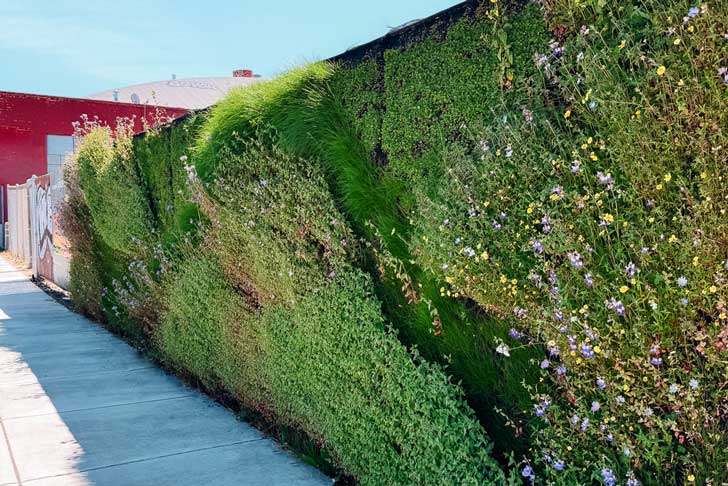
“The surface transformed into a living tapestry of seasonal color and texture — providing habitat for pollinators, filtering the air, and softening urban noise,” the company wrote on its website.
“What was once a target for graffiti is now a vibrant, dynamic landscape that engages passersby and demonstrates how even the most utilitarian surfaces can become ecological assets.”
Habitat Horticulture doesn’t just use the Meadowall for its own purposes, but installs these green walls in locations around the world.
While many clients install the Meadowalls in interior spaces, like office buildings or apartment lobbies, outdoor projects like those on college campuses, and on the exterior of an urban building in San Francisco’s Tenderloin neighborhood bring a green oasis to often plant-free spaces.
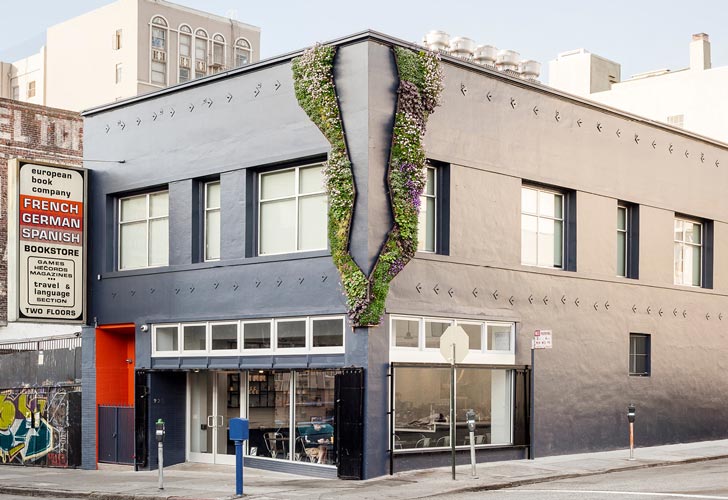
“Straddling the corner of the building, the wall appears almost like a sentient being, contrasting the angular architecture with lush, soft plantings,” a description for the Tenderloin design stated.
“As both an artistic statement and a tool for urban revitalization, the installation helps enliven the neighborhood while showing how thoughtful design and greenery can transform even the densest city spaces.”
The innovative approach isn’t just intended to beautify unsightly spaces. Cost-effective and requiring minimal maintenance, the Meadowall uses seeds instead of fully rooted plants, which costs roughly 30% less for installation.
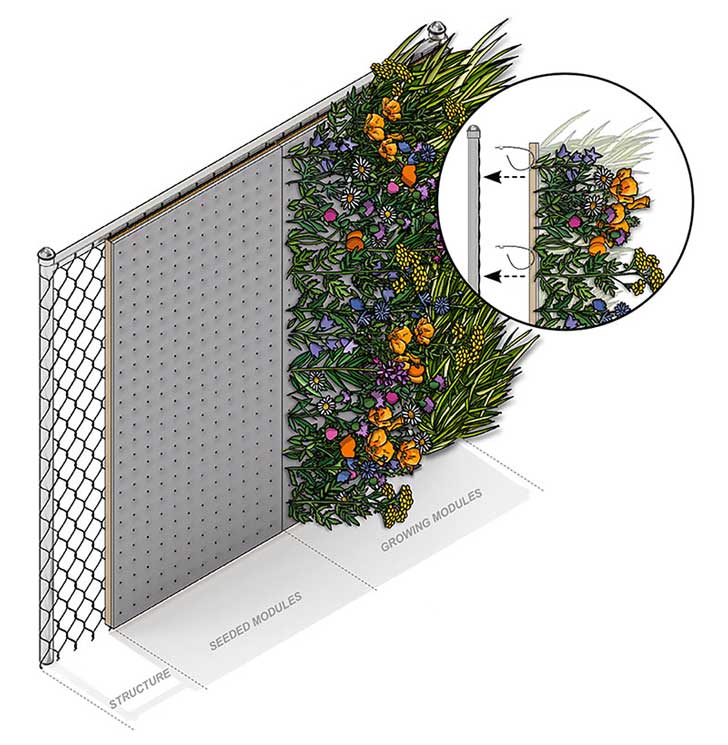
It also provides habitats for local bees, birds, butterflies, and other pollinators, all while reducing sound from traffic and other noise pollution by an average of 15 decibels.
Lastly, the green walls trap particulate matter on the leaves of plants, which captures construction dust and filters out chemicals from car exhaust.
“Easy to install and maintain, Meadowall offers a sustainable, visually stunning way to enhance urban spaces, communicate environmental commitment, and deter graffiti,” Habitat Horticulture describes of the wall.
“Experience the beauty of nature with Meadowall, where every wall can become a blooming meadow.”
@habitat_horticulture A fence today. A meadow tomorrow. Meadowall™ brings nature back into the city. 🌿 #localplants #meadowall #verticalgarden #pollinators #pollinatorgarden ♬ original sound - Habitat Horticulture
You may also like: Boston is the first US city to plant green roofs on bus stops: 'Would amount to 17 acres of green space'
Header image courtesy of Habitat Horticulture
An estimated 1.4 million New Yorkers are food insecure, according to the latest data from nonprofit City Harvest.
And in East Harlem, which has a majority Hispanic and Black population, an estimated 22.4% of residents face food insecurity.
While large-scale efforts to confront gaps in access to healthy food persist throughout the city — including food bank operations and potentially city-subsidized grocery stores — mutual aid and community-led food distribution are vital to ensure everyone has enough to eat.
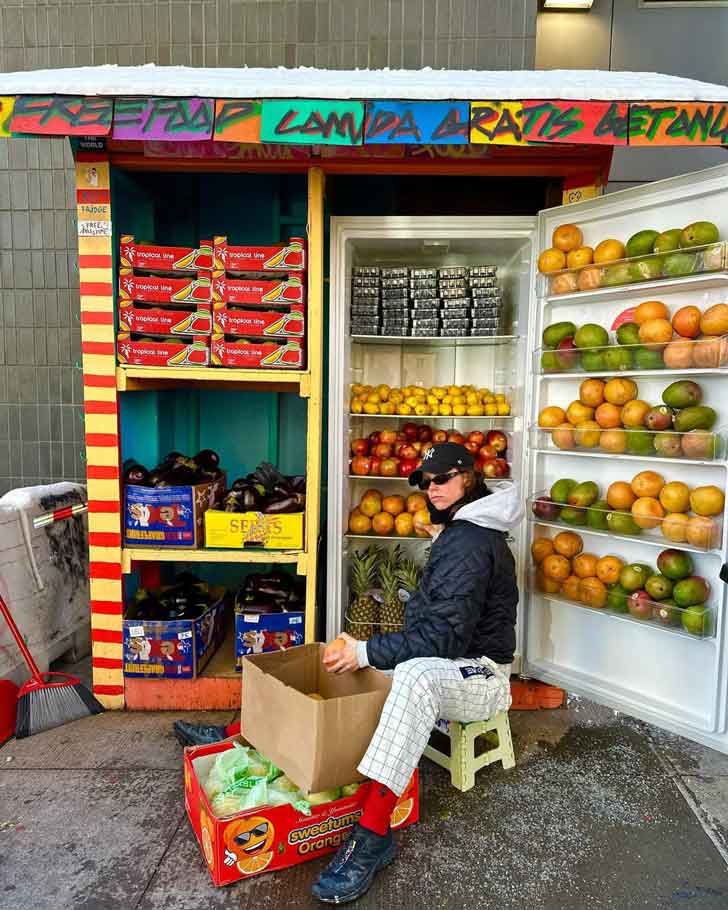
It’s something the 155th Street Fridge has been doing for nearly six years. Local Stéphanie Tonnoir founded the project in 2020 and has since hosted weekly distributions every Saturday on 155th Street and 8th Avenue in Harlem.
The fridge is located at the Boys and Girls Club and is run by volunteer neighbors and teens from the neighboring Polo Ground Projects. One favorite volunteer is Juanita, a scrappy and joyful woman often seen wearing a pair of headphones over her beanie and directing traffic at the fridge.
“We do this each and every Saturday; I want y’all to come out and enjoy,” Juanita said in a TikTok this summer. “We have plenty of food to give … we all family out here.”

The fridge rescues fresh produce from local supermarkets, including organic items, and also partners with local businesses to stock fresh-pressed juices and pre-portioned meals when possible.
“All of this was headed for the trash — not because it wasn’t fresh, but because supermarkets overproduce,” Juanita shared on an Instagram Story recently, over a photo of a lush basket of fruits and vegetables.
“Meanwhile, so many of our Harlem neighbors need healthy, affordable food. That gap is why we started our community fridge six years ago: to rescue what’s still good and share it with love.”

Every weekend, regular volunteers help distribute the food, while a line of New Yorkers forms promptly at 11 a.m. From there, it’s an assembly line of helpers until the fridge is empty.
“What are we doing here?” one young boy said to another in a TikTok posted by the group.
“Giving food to people that need it,” he replied.
“Why?” the other boy asked.
His friend looked at him incredulously: “‘Cause why not?”
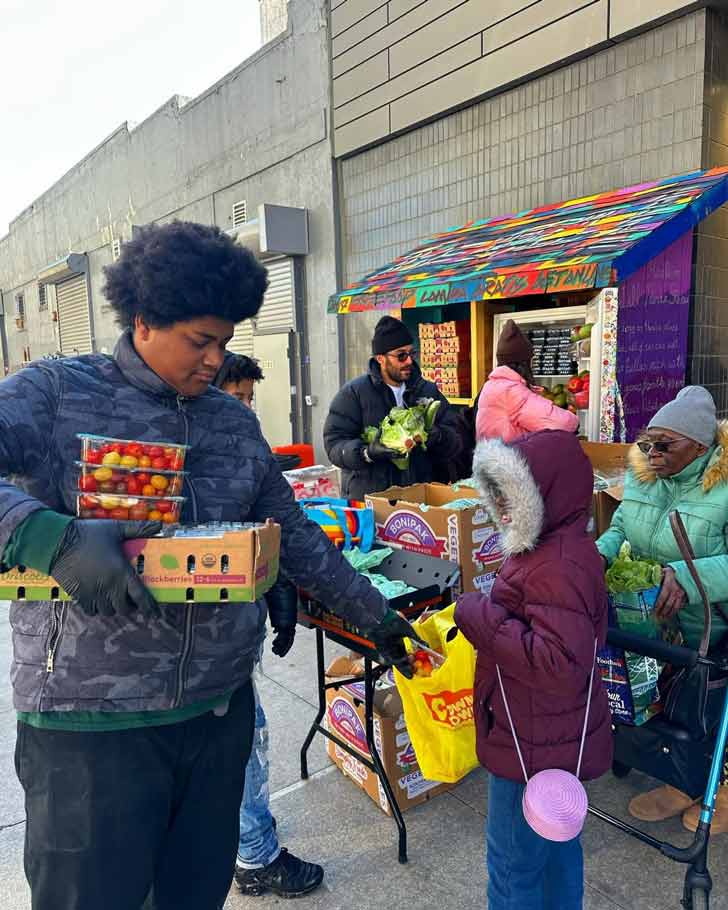
As long as they have the inventory, every person in line gets an entire grocery bag or box filled to the brim with offerings.
While the group does not post too many updates on its social media pages, it has become a reliable staple for the Harlem community, with community members showing up, both as volunteers and recipients, week to week.
“The 155th Street Fridge has grown to become one of the largest and most reliable food pantries in the area,” the Instagram page NYC Locals shared. “They have never unplugged the fridge since they started and remain committed to their mission.”
@the155streetfridge #juanita #blacktiktok #harlem #blackqueen #mother #tiktokfood #foodlover #community #foodlover #trendingnow #tiktokviral #fridgeorganization #mutualaid #vibes ♬ original sound - the155streetfridge
Those who want to support the mission of the community fridge can donate via CashApp or Venmo.
“We want to say thank you from the bottom of our hearts for all the love and support,” the group shared in an Instagram post last year. “We won't stop. Harlem is lit.”
You may also like: NYC's first 'free food vending machine' offers eggs, meat, and fresh produce to people in need
Header image courtesy of 155th Street Fridge/Instagram
Catherine Contreras’s most precious childhood memories include making tamales with her family.
As a self-proclaimed “autism mom” navigating the COVID-19 pandemic, she tried to bring those special moments to life with her own five children.

“When we were in lockdown, we were having virtual tamaladas with my family. My kids were very little, and they really wanted to do it,” Contreras told San Antonio Magazine.
“I thought we could take some Play-Dough and get a husk and let them play that way.”
It was a revelation.
Alongside her mother, Marie Bauml, a retired school teacher, the duo founded Fresh Masa, a business that sells sensory-friendly toy kits that give kids a hands-on experience with their culture.

“It just made sense to combine my mother’s expertise and passion for pretend-play and sensory, and my desire to create products for kids. A way to connect the next generation with our rich history,” Contreras told Fierce earlier this year.
Each play kit contains Play-Doh and small tools to create a themed activity, like Tiny Tamalada, Teeny Taco, and My Favorite Panadería.

With the colorful dough and easy-to-manage wooden accessories, little ones can spread and shape “masa” to make tamales, tortillas, and pan dulce.
“What began as a simple way to support my daughter’s sensory needs quickly turned into a full-blown love letter to our cultura,” Contreras writes on the business’ website.
The business is still small, selling most of its products on an independent website, as well as popping up in local toy stores and marketplaces in San Antonio.
“Everything we’ve done has been self-funded,” Contreras told Fierce. “That means we have to hustle a little harder, pop-up more often, and push every day to be noticed in a big way.”

Between supporting her family, helping neurodivergent children play with ease, and sharing her culture with others, Contreras has sculpted something beautiful.
“As an autism mom, we do so much that involves sensory things, like Play-Doh,” she told San Antonio Magazine. “I thought, ‘Let’s bring this to everybody.’”
You may also like: LEGO stores just completely changed the way they support autistic shoppers
A version of this article was originally published in The 2025 Food Edition of the Goodnewspaper.
Header images courtesy of Fresh Masa
Over 15 years ago, Cassie Carney founded Broken Biscuits, a charity in the United Kingdom that supports disabled dogs, the ones often left behind at the shelter.
She, along with a crew of volunteers, homes at least a dozen paraplegic dogs at any given time, but also loans wheelchairs to owners of disabled dogs that might not otherwise be able to afford specialty equipment.
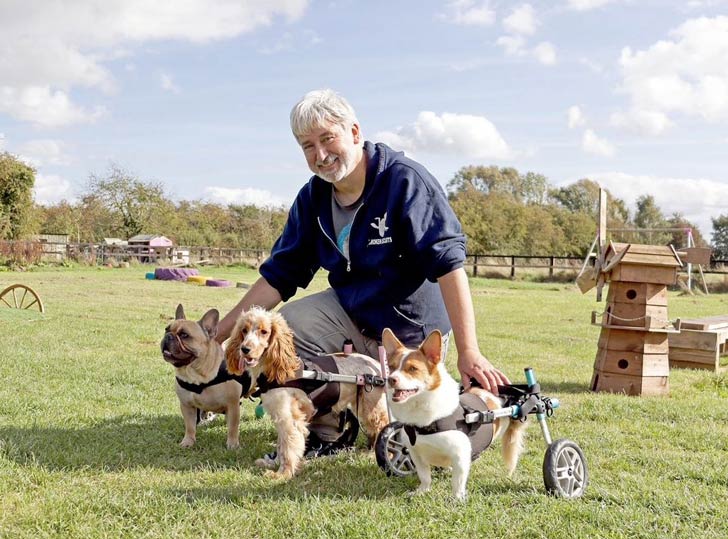
Broken Biscuits also provides education and guidance to people caring for dogs with disabilities.
With all the good work the organization has accomplished in nearly two decades, Carney wanted to step things up and give disabled dogs and the people who love them a place to gather.
So, with the help of generous donors, friends, and volunteers, they built what is believed to be the world’s first dog park specifically for disabled pups.
The 7-acre park includes a race track and skate rink for dogs in wheelchairs — where dogs can also pass their “learner driver’s test” after being outfitted with their wheelchairs — a cafe, and fixtures like stables and small houses for shy friends to hide out.

There are also live cameras on 24/7 so owners and volunteers can monitor the pups to make sure they are playing safely.
Hand-made wooden signs decorate the intersections of the park, and Carney’s family and friends have been responsible for the painting, digging, fencing, and upcycling that made the park into the safe haven it is today.
“Tri-paws, blind, deaf, paraplegics, IVDD warriors, congenital birth deformities, amputees, and more: different is great,” the organization shared in a social media post.
“Let’s celebrate it loud and proud.”
You may also like: Shelter gets 'mutt-ernity suite' makeover for their most vulnerable rescues: pregnant stray dogs
A version of this article was originally published in The 2025 Dogs Edition of the Goodnewspaper.
Header images courtesy of Broken Biscuits
In total, approximately 43 million Americans owe $1.77 trillion in student loan debt, 42% more than they did just a decade earlier.
With inconsistencies at the federal level causing uncertainty and confusion, many loans continue to accrue interest, highly educated workers face mounting financial challenges, young college graduates become even more disillusioned about higher education, and college still doesn’t get any cheaper.
The one in four U.S. adults with student loan debt, as measured by the Pew Research Center, are still highly privileged — they are the ones who are able to attend costly colleges and universities in the first place.
But even still, Pew reports that 35% of young college graduates with student loan debt say their education wasn’t worth the cost.
While some advocate for broad student loan forgiveness or sweeping reforms to reduce the cost of higher education, in the meantime, others are doing what they can to alleviate the burden more immediately.
Here are three examples of how nonprofits and policymakers are part of the fight to reimagine the cost of higher education.
Pay-It-Forward Loans
Launched by the nonprofit Social Finance, students at the University of Hawai’i Mānoa’s College of Engineering now have a new option to pay for their undergraduate degrees.
The Hawai’i Renewable Learning Fund is a $2.5 million “revolving loan fund” that provides zero-interest loans to low-income college students to cover their remaining education costs after grants and scholarships.
After graduation, if a student borrower earns above $50,000 a year, they pay back their loan through fixed monthly repayments for up to five years. If borrowers earn less than that minimum salary, they can apply for an income-based deferment and have a $0 monthly obligation.
And even better: All repayment dollars are recycled right back into the fund to support future students through a “fixed supply” of financial aid.
More of Social Finance’s pay-it-forward loan programs have already started or will launch soon in states like Colorado, Massachusetts, New Jersey, New York, and Florida, with each program focused on a field of study with high demand and short talent supply, like health care, cybersecurity, or climate.
“Workers are struggling to find education and employment opportunities that lead to in-demand jobs, and businesses don’t have the skilled talent they require,” Social Finance shares on its website.
“We need effective, sustainable innovations to finance training that will help people land good jobs and find economic mobility.”
Filling High-Demand Jobs With Financial Aid
Similar statewide approaches are also solving a two-fold problem: In Louisiana, the MJ Foster Promise Program is a state fund that pays for eligible students to enroll in specific higher education programs that target high-need industries in the state’s workforce.
The program was named after former Gov. Mike Foster, who is considered “the father of the modern community college system.”
In 2021, the state legislature unanimously approved the establishment of the fund, which provides up to $3,200 per year to students enrolled in community college programs that will give them the credentials to work in industries like construction, healthcare, information technology, manufacturing, and transportation and logistics.
With this approach, Louisiana increases enrollment in programs that ultimately have the greatest impact on the state’s economy.
In 2025, state lawmakers voted to increase funding to the Promise Program, based on a wide pool of interest from students.
“This program is No. 1 in helping adults get a job that can sustain a family and make generational changes,” Louisiana Community and Technical College President Monty Sullivan said in an interview with USA Today Network in June 2025. “It’s transformational.”
Volunteering For Debt Relief
For years, people involved in the Peace Corps or AmeriCorps have been eligible for some debt relief awards while fulfilling their service. The Shared Harvest Foundation modeled its student loan debt relief program similarly
The nonprofit’s Shared Harvest Fund is a student loan debt relief program that pairs people with “purpose-driven projects and nonprofits,” rewarding volunteer service with $150-500 per month toward student debt relief.
The organization was founded by three doctors who wanted to pay down their loans while using their specialized skills to make a difference.
Many of the volunteers who use the platform are frontline care workers and other skilled professionals who support short-term projects, especially during emergencies.
Volunteers earn reward points, and when a project is completed, the points are converted into stipends and paid out directly to the volunteer’s student loan lender.
“We believe in something deeply radical and deeply human,” the nonprofit’s website states.
“We’re people who’ve done the hard work in healthcare, caregiving, teaching, organizing, healing, but have been buried under student loans, burnout, and bureaucracy. We're not here to play the old games. We're here to build a new system of worth, where your service is honored, tracked, and rewarded.”
You may also like: Virtual 'University Of The People' provides a free college education to anyone in the world
A version of this article was originally published in The 2025 Education Edition of the Goodnewspaper.
Header image by Bunly Hort on Unsplash
When Asheville, North Carolina’s queer bar and event space DayTrip was devastated by Hurricane Helene, the owners, and husbands, Brandon and Davie Davis had only been in business for about a month.
The space that had already become a joyful sanctuary — full of fundraisers, burlesque shows, and even dog adoptions — soon became the site of disaster.
But almost as quickly as it all fell apart, supporters mobilized and raised over $190,000 through a GoFundMe fundraiser to help the couple rebuild.
“Thousands and thousands of queer people from all over the world have been donating,” Brandon told NBC News, “and I don't have words to explain how grateful I am.”
Although DayTrip is just one of countless LGBTQ+ owned businesses, its comeback story represents the significance of queer spaces in every corner of the globe.
“I think building a queer economy and really investing our dollars into people that are going to fight for us is really important,” Charlie Sprinkman, the founder of Everywhere Is Queer told Good Good Good.

“If there's four restaurants on the block and one is queer-owned, and suddenly they get this massive rush of people and they become a super successful restaurant, the other three are going to be like, ‘Whoa, what did you do to become this successful restaurant?’ And it’s like, well, ‘I opened up my space. I was a safe space for so many people.’”
Everywhere Is Queer is a worldwide app and directory of over 20,000 queer-owned businesses that Sprinkman made after leaving their rural Wisconsin town, traveling around the country, and realizing it was hard to know where exactly to find safe and affirming spaces.
But now, Sprinkman’s surrounded by them.
“I've had thousands of people message me on Instagram from all over the world in areas where it's illegal to be out,” they said.
“They have said, ‘Thank you for visibly showing us the representation of queer people. You're helping me keep going, knowing that I can move somewhere where there's this many queer-owned businesses.’”
And those queer-owned businesses need both financial and social support.
While Everywhere Is Queer helps people find those places, Cat Perez and Marianna Di Regolo are helping build them.
The married couple created what is often referred to as the “LinkedIn for the LGBTQ+ community” — Famm Connect.
“Most professional spaces weren’t built with LGBTQ+ people in mind,” the pair told Good Good Good.
“It’s not just about being ‘included’ as an afterthought. It’s really about belonging somewhere built for us by us from the start.”

Their app, which is an invite-only professional social network, is a place where thousands of LGBTQ+ community members can build relationships, hire one another, amplify their businesses, find funding opportunities, or just talk about the challenges they face and receive peer support in a professional landscape.
Rollbacks in diversity, equity, and inclusion programs across large corporations and government spaces — as well as potentially harmful content moderation policies on traditional social media platforms — Perez and De Regolo said, make this kind of online hub even more important.
“When you open the app, you don’t just see professionals — you see queer therapists, gender-affirming doulas, trans software engineers, non-binary designers, and Black queer financial coaches,” they said.
“That visibility matters. And it changes the game for who gets hired, trusted, funded, and referred.”
In addition to the invite-only policy, the app has a strict code of conduct, terms of service, and privacy policy that explicitly center LGBTQ+ safety, the founders said.
They also reportedly do not share data with any third parties.
“Beyond safety, it’s about celebration. Famm Connect is a space for values-aligned people in the LGBTQ+ community to come together in support of one another through kindness, respect, collaboration, and care,” Perez and De Regolo added.
“It’s about creating a space where people feel grounded, excited, and energized, not drained. Famm Connect is designed to be a breath of fresh air in a digital landscape that often feels overwhelming, extractive, or performative.”
Sprinkman shares that desire for a “breath of fresh air.” Their whole business stemmed from an experience volunteering with Brave Trails, a nonprofit that provides queer youth leadership opportunities in the outdoors.
“The whole reason Everywhere Is Queer became a thing is because of the feeling that I had when I was around solely queer people and how free I felt, how seen I felt,” Sprinkman said.
“I wanted to build that to a global scale — allowing our community to feel that way on a day-to-day basis, not just at these extremely special places. Queer community allows so many people to feel alive, feel seen, feel heard. And that is what every human being deserves.”
You may also like: For trans people looking to relocate to sanctuary states, these groups are a lifeline
A version of this article was originally published in The 2025 Pride Edition of the Goodnewspaper.
For many of us, anxiety and depression stemming from the climate crisis have become nearly ubiquitous with the plight of modern life.
We deliver quippy one-liners about the world being on fire, share memes about how “cooked” we are amid these perilous “end times,” and perhaps most disturbingly, feel completely incapable of doing anything about it.
But while this prevailing theme is unsettling, it also echoes a silver lining: We aren’t alone in these feelings.
“For us, mental health isn’t just about individuals,” Jhonatan Yuditya Pratama, an Indigenous ambassador from Borneo said last year at a conference for Connecting Climate Minds, a global research project that seeks to understand the links between climate change and mental health.
“It’s about the collective well-being of our communities and the land itself,” Pratama added. “When nature suffers, so do we.”
Science backs up these long-held beliefs.
The threat of climate change isn’t the only thing that impacts mental health; climate change itself does, too.
Extreme heat is associated with violence, an increase in self-harm, and general negativity. Wildfires and other extreme weather events can lead to PTSD. Chronic stress looms large for farmers and anyone whose livelihoods are tied to the environment. Water scarcity and air pollution can keep people from school and work, leading to isolation and hopelessness.
So, what’s a mere individual to do?
In the words of Dr. Ayana Elizabeth Johnson: Anything.
Johnson is a self-proclaimed “climate shrink,” marine biologist, and author of “What If We Get It Right? Visions of Climate Futures.”
Her book posits that the binary thinking behind the goal of solving or stopping climate change is part of what hinders people from believing that anything can be done. In other words, seeing climate change as simply “fixable” or “unfixable,” keeps people stuck. Hopeless.
“Part of the problem is that we’ve been told that we have to stop or solve climate change,” Johnson said in an interview with Outside Magazine. “And those verbs are clearly delusional because we can’t solve it and we can’t stop it. But we can make things much better than they otherwise would have been if we didn’t try.”
“What If We Get It Right?” also explores the vast array of solutions we already have at our disposal to keep things from getting even more dire — if only we choose to use them.
“I don’t really know what to say about the anxiety that most people are feeling except to say this: You will feel a hell of a lot better if you’re doing something about it,” Johnson said.
Experts often offer sweeping advice to the general public, encouraging people to take in both the good and the bad news about climate (congrats, you're doing that right now!), connecting with real-life communities, talking about your feelings, and taking action to help alleviate the stress of climate anxiety.
Here are some real-life examples of how people all over heed this advice — to inspire you to find your thing, too.
Learn. Then Feel.
According to research from The Lancet, 84% of 16- to 25-year-olds globally currently experience climate anxiety. College campuses are a place where anxiety is alchemizing into action in real-time.
At the University of California, a new course — Climate Resilience: Transforming Climate Distress to Action — teaches students to shift their mindsets with science-backed support.
Pupils hear lectures from climate leaders and work through a series of exercises to better manage their stress and anxiety. It’s been so successful that it will be offered at 10 U.C. campuses in the coming months.
“There's an arc or a process for leading people out of these kind of dark inner worlds, where they feel alone and separate, toward a more illuminated view of reality,” Elissa Epel, a stress researcher at UC San Francisco and co-director of the course, told NPR.
“I have had to find my own path through climate despair and have — rather than reading the headlines, which are only one side of reality, I have found such strength and inspiration from global climate leaders who are showing us changes that are not in the news.”
The class strategically includes finding inspiration in things that are already making a difference, training practices in empathy and compassion, sharing joy and grief with peers, and bringing it all together in a more stabilized vision for oneself — and one’s future.
“It's so easy as an individual to feel deflated, to get burnt out,” Epel added. “But realizing that on a daily basis, we need to work on bolstering our own emotion regulation, so that we can see the world outwardly and connect to other people and feel the inherent interconnection we have to nature, to the planet, to the human and more-than-human world.”
Putting The Feelings Into Words
Rachel Malena-Chan and her friends needed an outlet to work through their own climate anxieties after realizing their feelings were far too big to distill into a social media post or one-liner.
So they created a project — Eco-Anxious Stories — to make it easier to express their climate anxiety and connect with others who feel the same way.
From “Follow the Feeling” worksheets and community zine projects, to blog posts and videos shared by people turning their own climate emotions into action, Eco-Anxious Stories gives these feelings a place to live outside the brain.
“Our work is about creating engaging opportunities to explore our messy relationships to social and ecological justice issues — including the climate crisis. We share stories and ideas that help us process our experience of being alive at this moment, this time of uncertainty and possibility,” Malena-Chan writes on her website.
Eco-Anxious Stories has a library of resources to help people create their own narratives, consume and connect to others, and explore companion works to favorite books or podcast episodes about the full spectrum of eco-emotions.
“We believe in welcoming all our feelings to the table, including feelings like anxiety, fear, and hopelessness. These feelings are normal, but they are not the end of the story,” Malena-Chan adds.
“We help people follow their feelings and dig deeper into the love and connection that drives lasting change.”
Connecting With Others Over Complicated Feelings
Good Grief Network is an organization of climate-focused peer support circles that takes inspiration from 12-step programs.
“So many of us don’t have partners or friends or family members or community members that we can talk to,” founder LaUra Schmidt told Inside Climate News, “and so we keep this all bottled up inside, and then we start to feel like we’re crazy.”
What started a decade ago in a small university group in Utah now has a global reach, with participants logging into meetings from Canada, Ireland, the Netherlands, Germany, and across the U.S.
The group sessions are based on the idea that it is easier to work through the emotional response to the climate crisis when you have people to support you.
One participant, who worked for the EPA for 20 years and asked to keep her identity private, said it was through Good Grief Network that she realized that the people who didn’t shy away from the emotional impact of climate change were the ones taking the most drastic action to fight it.
“I think just from a practical perspective for us to be able to save ourselves, we have to face it … and we’re not facing it because it’s difficult emotionally and it’s difficult psychologically,” she told Inside Climate News.
“We have to figure out how to come together as human beings in this time — and live.”
Embrace Uncertainty
A similar approach has come to pass with the help of eco-champlains, who lead group healing circles — both with and without spiritual or religious ties.
Consisting of breathing exercises, guided conversations, and even colorful “climate feelings” wheels, these group sessions adapt the tenets of disaster, spiritual, and hospital chaplains to help people move through unimaginable feelings.
"They are asking how do we deal with regret, with complicity, with lament, with saying goodbye to species," Rev. Alison Cornish told NPR of her colleagues. "They are creating rituals that honor all of those."
Eco-chaplains connect with diverse groups; some who are retired, others who are just beginning careers in climate policy and science.
Julia DaSilva, a 25-year-old climate activist in Canada, has focused on fossil fuel divestment during her college years. After feeling like her efforts were “never enough,” she turned to an eco-chaplain.
Climate activism, the chaplain told DaSilva, is an act of faith itself. Now the mere belief in a better future is what keeps DaSilva afloat.
“We don't have any good reason to think that things are going to get better and yet we do it,” she told NPR.
“The world was a source of anxiety for me and that is always what I expected it to be. But now it has become something more.”
Her realization is similar to one Johnson’s book brings to the forefront: We don’t actually know what the future will look like — and we get to play a role in what we want it to be.
“There is a wide range of possible futures,” Johnson writes. “Peril and possibility coexist.”
Amid uncertainty, fear, and the other millions of intricate and inexplicable feelings that seem to rise with the sea levels, we still know what is true, Johnson explains.
“A few things feel clear about this world we must build together: There can be enough for each of us. There can be a home for each of us. There can be a role for each of us. The imperative is transformation, and the goal is to thrive,” she writes in the prologue of her book.
“Even if that’s all we know for sure, it’s enough to get started.”
5 Tools To Cope With Climate Feelings:
- Take an Active Hope training, which features a seven-part video course that helps participants face their concerns about the world in a way that promotes positive change
- Join an in-person or virtual Climate Cafe to connect with others who care deeply about the planet and are seeking support
- Read the book “Generation Dread: Finding Purpose in an Age of Climate Anxiety” by Britt Wray to connect with — not kill — your climate emotions
- Find a “climate-aware” therapist that specializes in the intersections of mental health and climate change
- Fill out Ayana Elizabeth Johnson’s Climate Action Venn Diagram to find your unique path forward in taking climate action
You may also like: People are having funerals for the world's melting glaciers. Could it mobilize further climate action?
A version of this article was originally published in The 2025 Environment Edition of the Goodnewspaper.
Header image by Markus Spiske
The late “Crocodile Hunter” Steve Irwin has been an inspiration to countless animal lovers over the years. And researchers R.S. Naveen, S.R. Chandramouli, and Zeeshan A. Mirza are no exception.
The trio just published a study about a newly discovered snake species they found on the Nicobar Archipelago, a biodiversity hotspot in the Bay of Bengal near mainland India.

The new species is a black, glossy snake that resides in an area UNESCO has categorized as a biosphere reserve, due to its vast diversity of species.
Categorized as a nonvenomous wolf snake — now classified as Lycodon irwini — the reptile can grow up to 3.3 feet long and is likely native to the Nicobar Archipelago.
“New species continue to be discovered, exemplified by Lycodon irwini, highlighting the ongoing progress in taxonomy and the incomplete understanding of herpetofaunal diversity and distribution in the region,” the study’s authors wrote in their study, which was published in “Evolutionary Systematics.”

The species was found in a moist, evergreen forest on Great Nicobar Island and likely eats other reptiles, amphibians, and small mammals. Since the scientists believe the species is limited to this region — at risk from human threats and habitat loss — they recommend the species be classified as Endangered by the IUCN.
It’s a fitting discovery for a group of researchers inspired by the conservation work of Steve Irwin. The beloved animal whisperer was a cultural icon in the 1990s and early 2000s due to his show, “The Crocodile Hunter,” in which he showcased his lifelong love of reptiles and other animals.
His parents were the founders of the Queensland Reptile and Fauna Park in Australia, which was later renamed the Australia Zoo. In 1991, Irwin took over management of the zoo with his wife and fellow naturalist, Terri. After his tragic death in 2006, Terri and their children, Bindi and Robert, have carried on his legacy of loving and protecting wildlife.
“His passion and dedication to wildlife education and conservation have inspired naturalists and conservationists worldwide, including the authors of the paper,” the researchers wrote in their study.

The newly-discovered snake, L. irwini is not the first species to be named after Irwin — and likely won’t be the last.
Australia is home to at least three species named after the icon, including a turtle, a koala blood parasite, and a small snail.
You may also like: New species of half male, half female spider discovered. Scientists named it after a genderfluid 'One Piece' character
Header images courtesy of Australia Zoo and Girish Choure
In the winter of 2023, Chris Hyde of Olympia, Washington, said he felt “borderline depressed.” He had recently retired, felt isolated at home, and the dark Pacific Northwest days didn’t help.
So, he started cooking soup.
“I really had what felt like an epiphany to me,” he told KOMO News last year. “It was this kind of full-body tingling feeling with the idea … it was almost otherworldly.”
The idea?
“Giving soup away for free to your community is going to really do something,” he said.
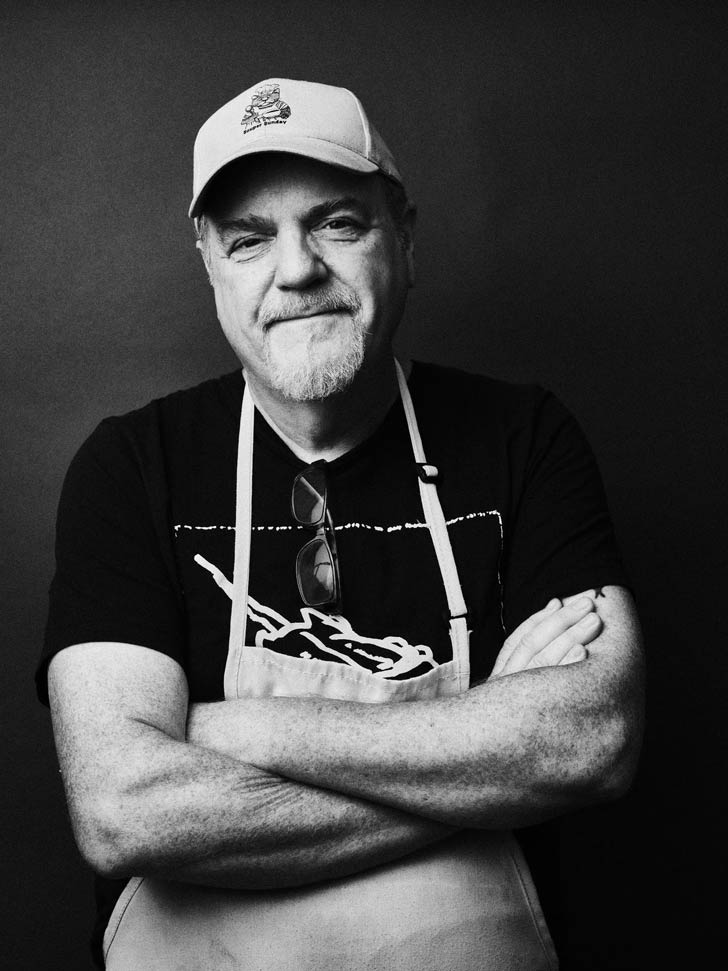
So, he started a nonprofit: Souper Sunday.
It works like this: Members of a Souper Sunday Facebook group (currently consisting of 5,900 people) post that a meal is available and what the request window is. People respond to the post with their request, essentially calling dibs on a serving of soup.
Once a recipient is confirmed, they coordinate with the soup maker to pick up their meal.
Hyde himself makes about 25 to 35 portions of soup every day, five days a week, and other community members also contribute to the group. It’s grown so much that there are 11 total Souper Sunday Facebook groups in cities across Washington, California, and Montana.
They all run on their own volunteer power, but the mission is the same.
“We believe in ‘the sacred circle of giving and receiving’, in which accepting a meal is as important as making a meal. We could not do this if no one showed up,” Hyde writes in the description of the original group.
“And the acceptance of a meal encourages one to be involved and to contribute ingredients and time thus benefiting other community members and it goes full circle. Neighbor helping neighbor.”
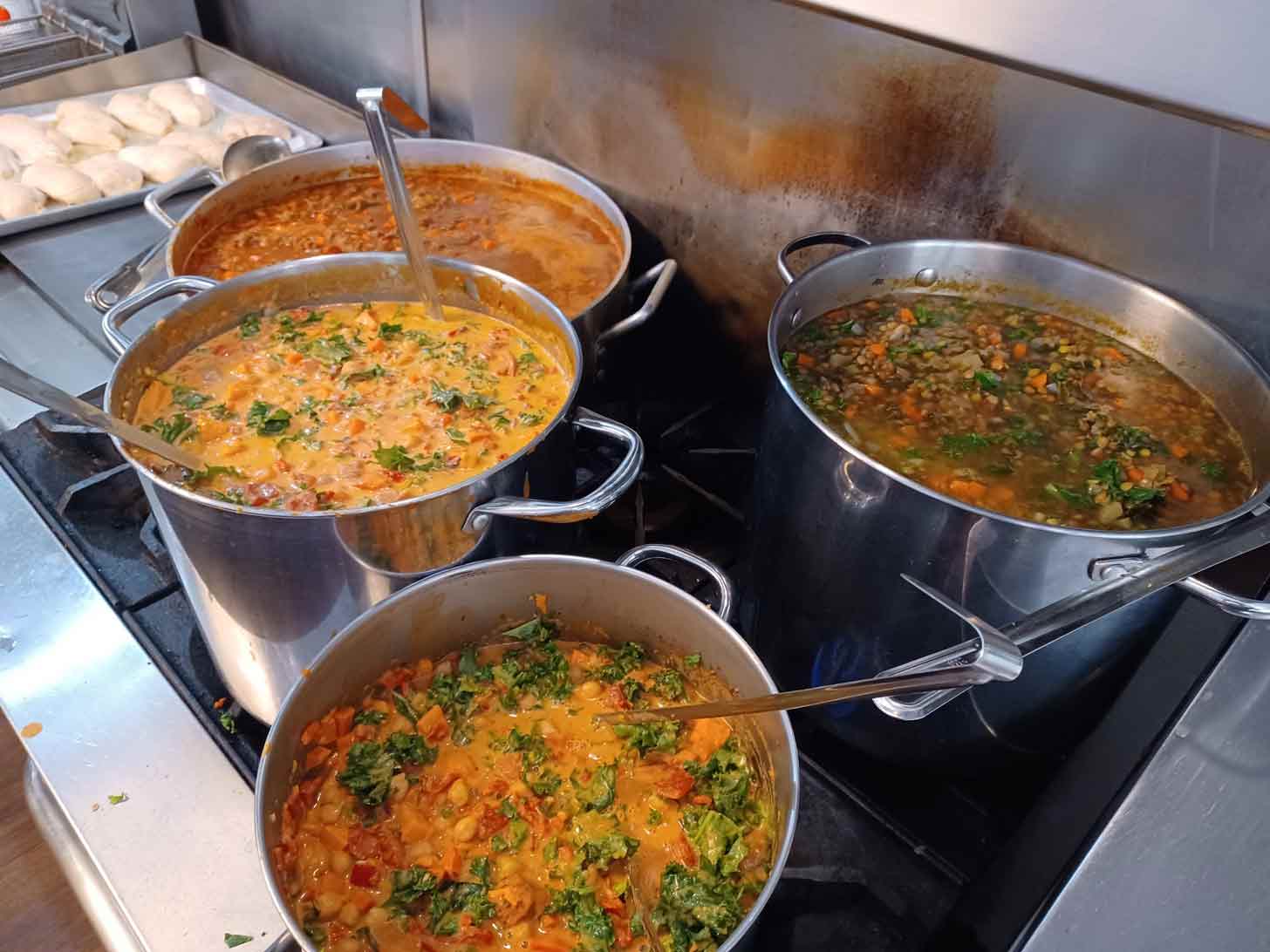
One of the core principles of Souper Sunday is that free meals are available to anyone for any reason. They don’t have to meet certain criteria, and no questions are asked.
“There are countless situations where community members can benefit from a free meal,” Hyde writes. “Consider a single parent who is exhausted after a long day, or a neighbor recovering from sickness or injury, artists and musicians trying to improve the creative efficacy of our community, students trying to better themselves, hard workers who make too much to qualify for SNAP benefits but whose bills don't leave any money for food.”
That last point has even inspired Hyde to start another nonprofit: The Food Source Foundation, which distributes food and groceries to people who often make too much to qualify for government assistance like SNAP benefits, but still struggle to afford groceries.
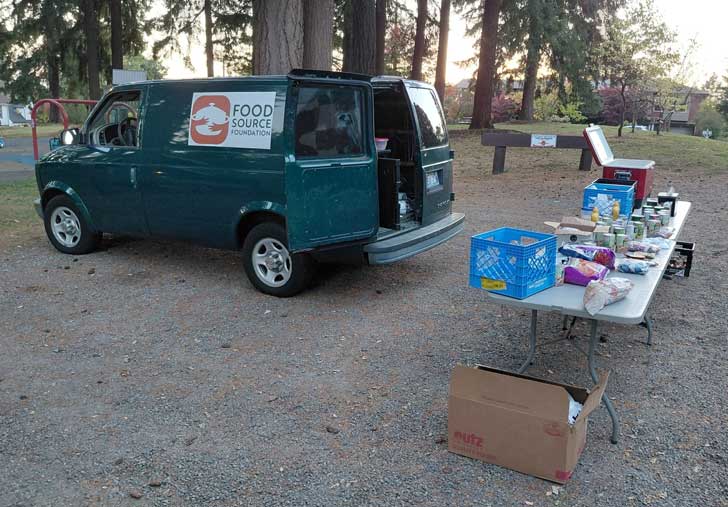
According to Thurston Talk, 44% of food-insecure households in Thurston County, where Hyde lives, don’t meet the income level to receive SNAP support, but they still can’t afford their regular grocery bill.
And with precarious funding following the federal government shutdown, hungry bellies are becoming even more common.
“As the group developed, I began to see a need above and beyond soup,” Hyde wrote on The Food Source Foundation’s website.
“I began distributing free groceries to food-insecure neighbors. I was surprised at how many of the people coming to me for food support were fully employed. They have been priced out of their basic needs by high rent, a car payment, insurance, and basic bills. A large number of hard-working community members literally had no money left for food after the most basic bills [were] paid.”
So, his new (and second) nonprofit works to fill gaps in local food distribution in Olympia and surrounding areas.
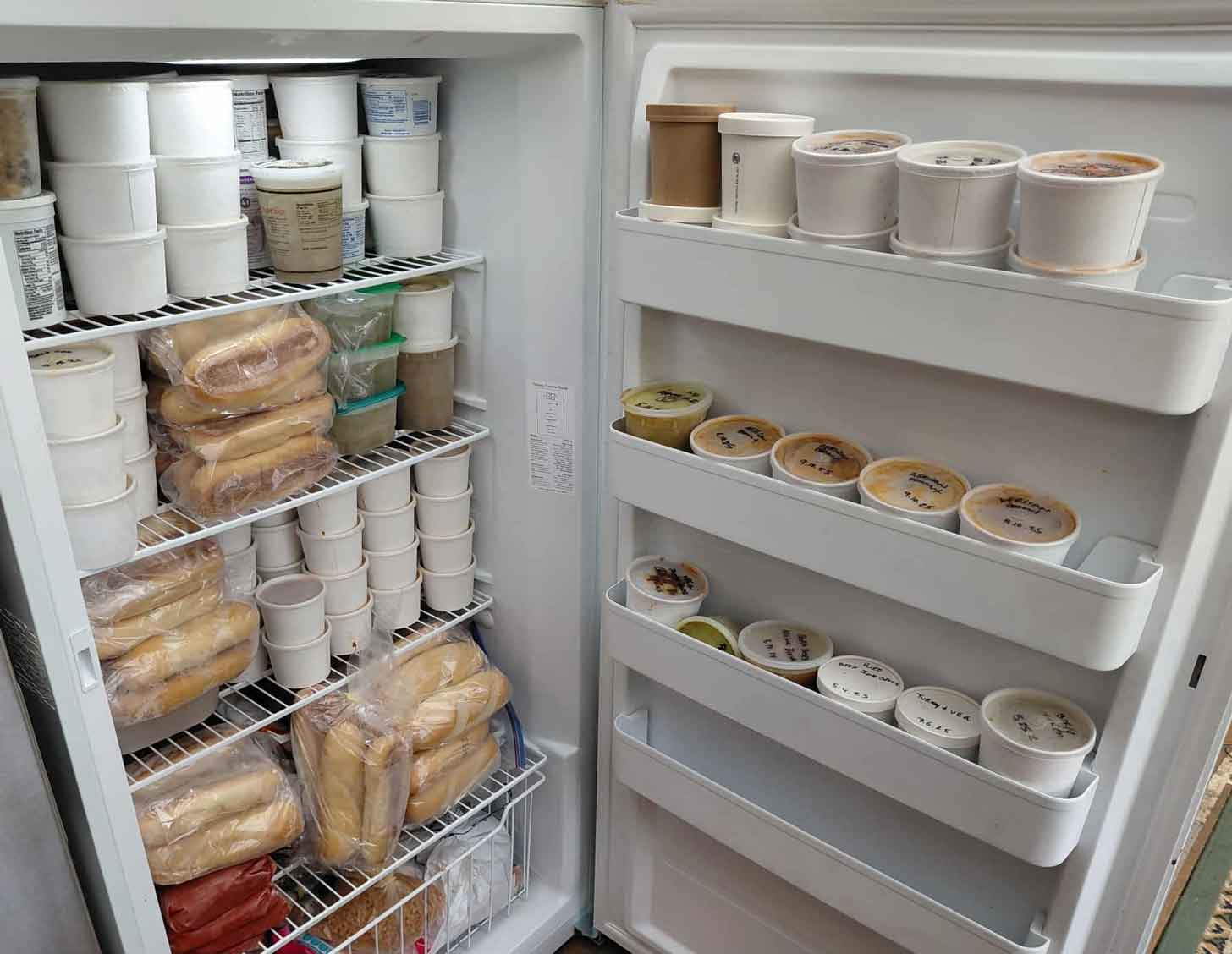
“At The Food Source Foundation, we believe that access to nourishing food is a basic human right — not a privilege,” Hyde shared. “Our mission is to ensure that everyone — regardless of income, housing status, or employment — has equitable access to healthy, wholesome food.”
Actually, there is one caveat.
“As long as you’re, you know, a fairly nice person,” Hyde said in a recent social media post, you’re welcome to the free food.
In fact, Souper Sunday — and all that has followed it — stems from an intrinsic belief that no matter who you are or what your values are, you deserve a warm, nutritious meal.
“The act of making and sharing food is a time-tested way to connect people,” Hyde writes. “It transcends the powers that work to divide us.”
Those interested in supporting Souper Sunday or The Food Source Foundation can donate online or look into starting a group of their own.
You may also like: This vibrant community fridge gives free fruits and veggies to hundreds of New Yorkers every week
Header image by Nathan Dumlao/Unsplash
As the Trump administration rolls out another heavy-handed Immigration and Customs Enforcement crackdown in a United States city, residents of Charlotte, North Carolina are not going down without a fight.
Over the weekend, ICE began deploying to Charlotte in droves, now touting over 250 arrests in the area over the past few days. An estimated 56,000 students have been absent from schools in the area since the crackdown began, and thousands have also walked out of school in protest of the raids.
Meanwhile, adults have also been posting up outside of schools, churches, and other community spaces to help alert vulnerable community members to ICE’s presence, as well as to document, and potentially even intervene in, ICE operations.
Local nonprofit Siembra NC has been working to prepare Charlotte residents for this very moment.
The Latine-led organization, which was founded in 2017 in response to the first Trump administration’s “war on immigrants,” has been working to prepare local business owners and community members through “ICE defense” trainings. They also work to empower Latine individuals to get involved in social justice and political organizing and support immigrant workers in North Carolina.
On Wednesday, amidst ICE’s increased presence in the area, the group hosted a “Safe to Work, Safe to School” training with Dilworth United Methodist Church.

The goal was to train volunteers to help immigrants safely get to school and work, while fighting against constitutional violations carried out by ICE.
“We’re going to report active operations that are happening in our city, alert people nearby and offer reminders of our rights,” Rev. Joel Simpson, a pastor in the area leading the training, told the crowd, showing them how to whistle — a tactic that has been employed by many on the frontlines of ICE activity across the country.
“We’re going to document and record unlawful practices, and we’re going to deter violence by getting as many people as possible to join quickly as an organized presence,” he continued, as reported by CNN.
According to Siembra NC organizers, over 1,000 people had registered to attend the church training, though some had to be turned away because there wasn’t enough room.
Co-director of Siembra NC Nikki Marín Baena said it’s an encouraging sign.
“The number of people turning out, volunteering, and speaking out helps us know that North Carolinians do want safety and security,” she said in a statement.
“Safety is created by community members looking out for each other and standing up for each other, not by masked federal agents who are here to create chaos and bring fear.”
Siembra NC and local supporters like churches and other activist groups have been coordinating volunteer shifts, instructing individuals to visit specific locations in the area where they will drive around and alert people with their whistles if and when they spot ICE activity.
The training helps them understand how to keep a safe distance from agents and how not to incite violence or act in ways that are illegal.
Organizers say the training is full of “best practices” learned from similar communities in Chicago, Los Angeles, and Washington, D.C.
“They’re coming out on weeknights and they’re saying, ‘This is how we need to be spending our time,’ and ‘We want to be on the streets and in our communities, making sure people are cared for,’” Rev. Simpson told CNN.
“People are telling me as they go through this training like, ‘I’m feeling empowered,’” he said. “‘I feel like I can do something and there’s a way to channel my love and my anger and my fear into something that supports other people.’”
And the leaders of this movement are happy to welcome them in.
Before the training, they stood outside the church, handing out whistles and holding up signs that say: “Loving your neighbors is holy.”
Those in attendance seem to agree.
Maria Klein told CNN she attended the training for “our children who should be able to go to school safely, for our parents who should be able to go to work for the American dream.”
“This was an opportunity to really do something practical and to have an immediate impact.”
Locals interested in getting involved in these efforts can find future training events online or donate to Siembra NC.
You may also like: Amid ICE raids, Chicago cyclists buy out tamale carts and distribute food to people in need: 'Go home and be safe'
Header image courtesy of Anguskirk (CC BY-NC-ND 2.0)