For much of the 20th century, teaching was a stable, middle-class job in the United States. Now it’s becoming a lot harder to survive on a teacher’s salary: Wages have been stagnant for decades, according to a study from the Economic Policy Institute, and teachers earn 5% less than they did a decade ago when adjusting for inflation.
That’s one reason why there’s a widespread teacher shortage, with tens of thousands of positions going unfilled.
At the same time, according to a 2022 report from the Annenberg Institute at Brown University, there are more than 160,000 under-qualified teachers in the classroom, meaning they don’t meet full certification or credentialing standards.
This issue has become particularly acute as housing costs have risen sharply across the country over the past decade.
Why become a teacher if it means you’ll struggle to put a roof over your head?
In response, many states and cities, from California to Cincinnati, are exploring ways to attract and retain teachers by developing education workforce housing — affordable housing built specifically for public school teachers and staff to make it easier for them to live near where they work.
In doing so, they seek to address aspects of both the teacher shortage and housing crisis.
Fertile land for housing
As professors of architecture and education and as directors of an urban teaching program at Miami University in Ohio, we work to make it easier for students to pursue teaching careers — and that includes addressing affordable housing issues in communities where they work.
A key element of this work involves collaborating with local education agencies to either build, subsidize or find housing for teachers.
Local education agencies are tasked with the administrative functions of a school district, and they often own large tracts of land.
This land can be used to build new school buildings or community health clinics. But it can also be used to build housing — a particularly attractive option in cities where land can be scarce and expensive.
California has been at the forefront of these efforts. The state’s school districts own more than 75,000 acres of potentially developable land.
Meanwhile, more than one-third of the state’s public school employees are rent-burdened, meaning they spend more than 30% of their income on housing costs.
California’s Teacher Housing Act of 2016 set up a framework for local education agencies to build and develop housing on their land. Since then, education workforce housing complexes have been developed across the state, ranging from San Francisco’s Shirley Chisolm Village to 705 Serramonte in Daly City, California.
The nuts and bolts of education workforce housing vary.
It can be financed by traditional sources, such as private philanthropy and government funds. But it can also be funded through financial tools such as certificates of participation, which allow outside investors to provide funding up front and later receive a return on their investment through rental income.
In some cases, teachers are offered reduced rents for just a few years as they start their careers. In others, they’re given the opportunity to purchase their home.
Third-party management companies often oversee the projects, since local education agencies usually aren’t interested in property management. This also reduces the potential for any direct disputes between employer and employee.
Many programs require only that residents be employees of the school district when they enter the program, meaning that if someone leaves their job, they will not be displaced.
In April 2025, UCLA’s CITYLab and the Center for Cities and Schools published a study highlighting some of the benefits and challenges of nine educator workforce housing projects built in California.
The complexes ranged in size, from 18 to 141 dwelling units, with heights that ranged from two to six stories.
The researchers found that tenants were largely satisfied with their living situations: They paid rents at far below market rate, and they praised the apartment design. They also highlighted their shorter commutes.
From tiny homes to factory conversions
Since 2020, educator housing has been proposed or developed in Arkansas, Colorado, Florida, Nevada, and South Carolina.
In Fort Stockton, a small, rural town in West Texas, the school district bought a motel in 2022 and converted it into teacher housing. In Arizona, the Chino Valley Unified School District built tiny homes for its teachers in 2023, renting them at $550 per month.
In Baltimore, more than 775 teachers have recently been housed thanks to initiatives such as the Union Mill project, an 86,000-square-foot historic building converted into teacher apartments that range in price from $700 to $1200 per month.
Teacher housing does more than give educators an affordable place to live. It can forge lasting relationships.
A recent assessment of teacher housing in Los Angeles found that the community spaces and programs offered on site strengthened bonds among the residents, leading to friendships and working relationships that lasted for years.
Building community inside and outside the classroom
Here in Cincinnati, our own graduates now working in schools also benefit from affordable housing options.
Through a partnership between Miami University and St. Francis Seraph, early career teachers from our TEACh and Urban Cohort programs have access to affordable housing.
In 2024, the Archdiocese of Cincinnati converted an old church property in Cincinnati’s Over-the-Rhine neighborhood into teacher apartments, which recent graduates can rent at a reduced rate. Most young teachers otherwise wouldn’t be able to afford living in this area.

“I wouldn’t be able to spend my beginning years as an educator in the community without access to affordable housing,” Nicholas Detzel, a graduate teacher now living in the converted space, told us in an interview.
“Living in the community has been an amazing experience and helps you know your students on a completely different level,” he added. “It has also helped me relate to students about knowing what is going on in our community.”
Teachers like Detzel who live in Over-the-Rhine can walk or take public transportation to the local schools where they work.
Perhaps more importantly, they can better understand the world of their students. They can learn the streets that students avoid, the parks and community spaces that become popular after-school hangouts, and what community organizations offer summer programming.
Ultimately, teachers grounded in the life of the community can build relationships outside of the walls of school that contribute to more trust in the classroom.
Providing affordable housing for teachers and staff also helps retention rates, particularly as many younger teachers leave the profession due to low pay and burnout.
Teacher housing programs are still in their infancy. There are roughly 3.2 million public school teachers nationwide, and there are probably fewer than 100 of these developments completed or in progress.
Yet more and more districts are expressing interest, because they help alleviate two major concerns affecting so many American communities: affordable housing and a quality education.
While the need for affordable housing spans both lower- and middle-class families, teachers or not, forging alliances between schools and affordable housing providers can serve as one path forward – and possibly serve as a model for other trades and professions.
This article was written by Jeff Kruth and Tammy Schwartz from Miami University, and was originally published by The Conversation.
Header image courtesy of Ava Jung/Pexels

Glaciers around the world are melting so quickly that the scale of the loss is difficult to comprehend. Death, on the other hand, is a universal experience, familiar across all cultures.
To bridge that gap, anthropologists Dominic Boyer and Cymene Howe of Rice University are drawing parallels between human death rituals and the disappearance of glaciers, offering people a more tangible way to understand what’s being lost.
They’ve held funerals for glaciers, built a temporary glacier graveyard with headstones carved from ice, and launched the Global Glacier Casualty List — an online archive of stories and images documenting disappearing ice from the Alps to the Andes.
Yale Climate Connections spoke with the project’s creators about why memorializing glaciers matters and how these stories can inspire action.
This interview has been edited.
Yale Climate Connections: Why is it important to look at each glacier as having its own personality and to recognize each one individually when it’s gone?
Dominic Boyer: The world loses 273 billion tons of glacial ice each year. That’s a staggering figure, a lot of zeros, right?
And at the same time, it’s really hard for anyone to understand what 273 billion tons of ice really means. It’s so abstract, it becomes kind of experientially alienating for people to even try to imagine that.
But glaciers have a lot of animate features: They have been named because they move, make sounds, and have distinctive smells. And human communities both depend upon glaciers and are also vulnerable to glaciers in times of climate change — they live downstream from them, use their water, or could be threatened by a destabilizing flood.
And so, one of the things we’ve tried to do is to bring the destabilization and loss of the world’s glaciers down to more of a human scale, down to a level where people are more able to emotionally connect to this phenomenon.
Because we think if people emotionally connect to it, they’re more likely to be motivated to make changes — or to pressure policymakers to make changes — that are necessary to help slow down the loss of the world’s glaciers.
YCC: What inspired you to hold a funeral for a glacier?
Boyer: People understand a funeral; they understand what it means to lose someone. And death rituals are about as close to a human universal as you can get culturally — almost every society that we know of has had some kind of a death ritual — so it’s a way that humans come together as communities to mark the passage of time and to recommit to living together communally after the loss of a loved one.
Cymene Howe: We hosted the first funeral for a glacier in Iceland back in 2019, and that was for Okjökull or Ok Glacier, which was a little glacier, but a named glacier that had died in Iceland to little fanfare, and the world had essentially shrugged.
We felt that Okjökull, even though it was a small glacier, deserved more recognition, and so we created a memorial for Okjökull on top of Ok Mountain, along with some collaborators from Iceland, and hosted this first funeral for a glacier.
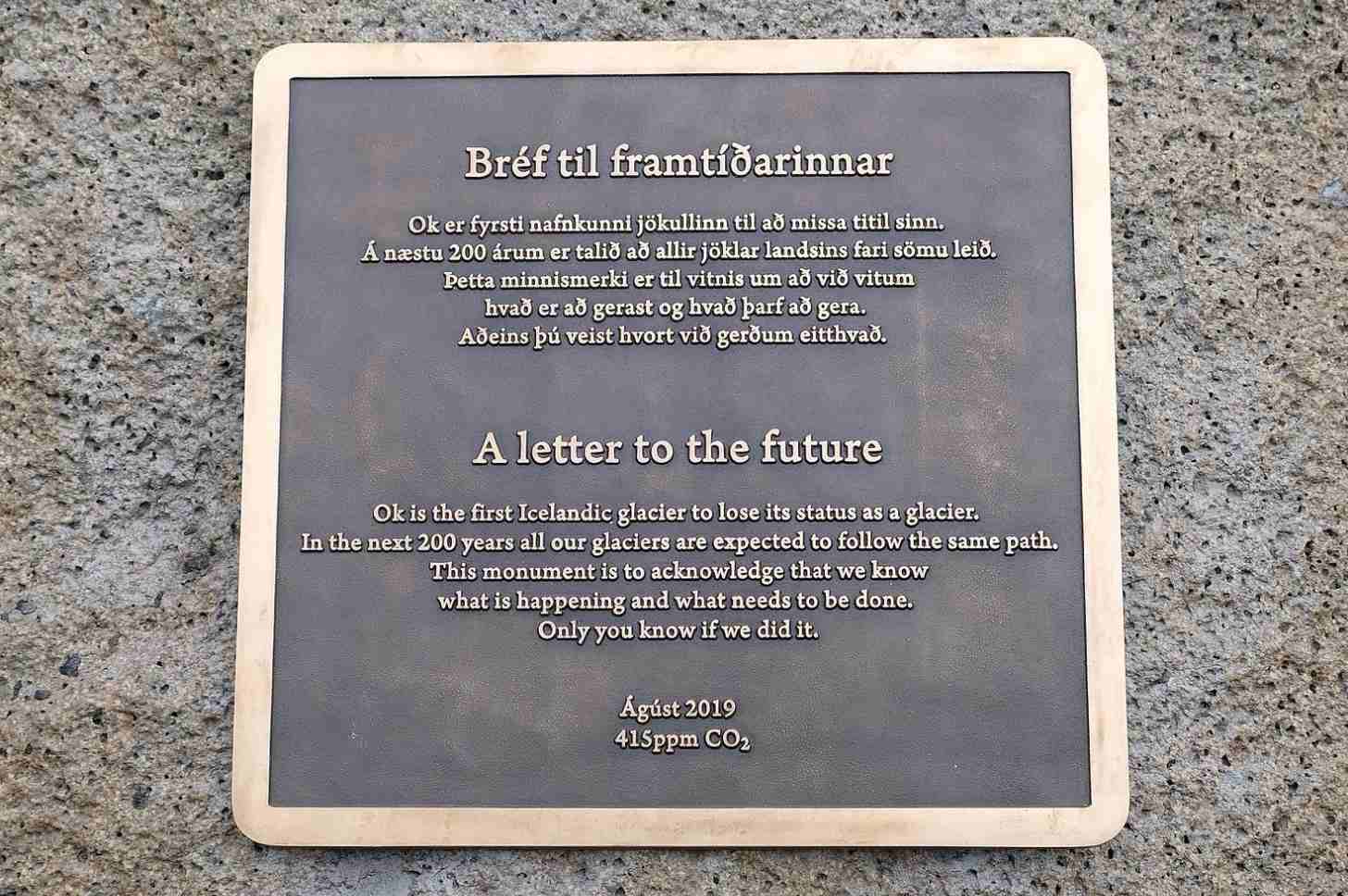
But we wanted to expand the global understanding that glaciers almost everywhere on Earth — and almost every glacier on Earth — is in fact dying or critically endangered because of the climate crisis, so we held the glacier graveyard in the summer of 2024.
We worked with an Icelandic ice carver to create individual headstones that were all created from ice. And then we created this graveyard with 15 glaciers that have either died or are in danger of dying very soon out on the peninsula near Reykjavik.
We [had] representatives of the glaciers of Kilimanjaro from the African continent, of Sarenne, which is a glacier that died recently in the French Alps, glaciers of Colombia, Venezuela, Mexico. And we [held a ceremony with] eulogies for each of these glaciers, and an Icelandic funeral choir.
We hoped that this would create a symbolic way of recognizing the loss of glaciers and their importance in the world to us all.
YCC: Why did you create the Global Glacier Casualty List?
Howe: We’re gathering the stories and the reflections from people who live near glaciers, work with glaciers, or are really directly affected by glaciers and their transformation in these times of climate crisis. So for them, glaciers are not abstract bodies of ice, but they are sources of water, sources of folk tales and history and origin stories — sometimes going back to the beginning of human settlements in these regions.
Several stories are from Indigenous communities who value these glaciers in ways that are different from the way people focused on the Western, or scientific, side might. And with an online platform, we’re able to more effectively network and collaborate with people all over the world and share this resource globally.
The other advantage of this interactive website for the Global Glacier Casualty List is that you can scroll over the globe, zoom in, and fly down to certain glaciers. If you want to go look at the glaciers of the Alps, Andes, Africa, the Himalayas, you can track over to those places and actually see what it’s like to be on the ground next to the place where that glacier was — or where it’s currently disappearing.
So you can get this ... what we’ll call a street view, of that mountainous region, and you can see the rivers moving, and the grassy areas, and the rock slides, and all of the different dimensions that are available from the satellite imaging.
And so there’s a really robust diversity of stories here, a set of images, and then of course the ability to be able to literally move around the globe and see in a very visual way how glaciers have been everywhere and they are everywhere melting away.
YCC: Are there any stories that stood out to you in putting this all together?
Boyer: The Swiss have been extraordinarily good at using the loss of glaciers to push towards meaningful reforms in terms of climate policy, and the [group behind the Swiss] Glacier Initiative staged a funeral for the Pizol Glacier, complete with people in traditional Swiss funeral garb and alphorns.
The Glacier Initiative was one of the catalysts for the signing of a Swiss climate law a few years ago that set binding targets for the government to follow to decarbonize their economy. And so Pizol died a hero, a sacrifice towards this greater effort to save some of Switzerland’s glaciers through concerted effort in Switzerland.
And of course, Switzerland cannot do this on its own; it has to be a global movement, but the fact that this glacier directly contributed something towards a better climate policy in Switzerland, I think, is a great story.
Howe: The Pico Humboldt Glacier was the last of Venezuela’s five mountain glaciers to die and to disappear, and there’s a really enchanting story that goes along with Venezuela’s glaciers: Back in the beginning of time, when the first people arrived in the part of the country that’s now called Venezuela, they settled near the base of these mountains, and a princess saw these astounding, huge white eagles flying across the sky. And she chased them across the horizon until they finally landed on the tops of the highest mountain peaks of the mountain range. And those five white eagles landed on the mountain peaks, and they folded their giant white wings, and there they froze into place and became the glaciers that topped the mountain ranges of Venezuela.
And now, the [Venezuelan] people remember the story, but the glaciers are gone, and the eagles are gone, and all that remains is the tale of this princess in her quest to find the magical eagles and to see those glaciers set in place. So in one sense, it is a sad story of loss, but in another sense, it is a powerful story of remembering how things began, how things can end, how human beings are there to witness, and to understand, and to feel those changes, those transformations, and those losses.
There is an opportunity for us to preserve many of the glaciers that still reside on Earth, and so the story of Venezuela — a country that’s lost all its glaciers — does not need to be the story of every country on Earth. There is an opportunity for us to collectively work together to preserve the world’s glaciers.
And that’s precisely why the United Nations has declared 2025 the International Year of Glaciers’ Preservation. We know that if we are able to keep to the Paris Accords — or very close to them — we can preserve much more of the glacial mass than we are currently on track to do.
We’re currently on track to destroy about 75% of all of the glaciers on Earth, which, of course, is catastrophic in terms of sea level rise, freshwater availability, agricultural resources for communities that live near these glaciers, and in the transformation of the world’s weather and climate systems.
So there is much that we can save, and there is much reason to save these glaciers that have inhabited our planet for so many millennia. And seeing these stories is a reminder to all of us that we have a responsibility — and also a way to move forward — to do that.
YCC: How has the process of putting together all of these different stories affected you personally?
Boyer: This project is about bringing the loss of the world’s glaciers down to a level where humans can comprehend it better, and, hopefully, act more effectively and rapidly to reverse this trajectory. So you go through a full emotional spectrum in working on these stories.
On the one hand, you’re very happy to be able to bring new stories to light — there’s something that’s quite invigorating and even joyous about telling stories.
When we did the funeral for Okjökull, it didn’t feel like a dour, despondent event; it felt more like an Irish wake, because funerals aren’t really for the dead people — they’re for the living, and it’s a chance for the living to gather together and to connect and to commit to keep living together.
There’s a full range — in any human experience — of emotional possibilities, from sadness to joy, and that’s also true in the time of climate change. If we don’t open ourselves to the possibility of a future with joy in it, it’s much harder to get people to take these matters seriously.
Howe: Doing this work and learning from glaciologists and from people who live near and with glaciers has been a true and extraordinary treat and special time in my life.
But we have been working on this topic for several years now, and it can be quite disheartening to see the failure to move forward on the policies, the actions, and the decarbonization that we need. When I let it sink in, it can be really heartbreaking.
That said, the joy is there too, to keep on doing the work, and I wake up every morning hoping to make a little tiny difference however I can. It always feels really incremental and like it’s never enough, but if all of us put in time and effort, then eventually at one point — in one moment — it will be enough to make a difference.
This article was originally published by Yale Climate Connections. Sign up for YCC's weekly newsletter.
Header Image by Josh Okun
In 2016, Arizona grandmother Wanda Dench sent out Thanksgiving invitations to her six grandchildren when she accidentally texted the wrong number — sending a ping to 16-year-old Jamal Hinton in the middle of class.
Hinton quickly realized the text was a mistake, but it didn’t stop him from jokingly asking if he could swing by for a plate.
“Of course you can,” Dench responded. “That’s what grandmas do…feed everyone!”
In the decade since, the two once-strangers have grown closer than ever. When Dench’s husband Lonnie passed away in 2020 from COVID-19, Hinton stepped up to support her.
“It’s not really a friendship. We’re more a family now,” Hinton told CNN. “It means the world. We talk about anything. We go through everything together.”
In 2024, Thanksgiving looked a little different, but their tradition still prevailed. Hinton called her on FaceTime so that he and Dench could still eat together — despite being physically apart.
“I just recently finished up with chemotherapy, so I’m not 100% yet,” said Dench, who was recently diagnosed with breast cancer.
“I was looking so forward to meeting his family and having turkey with everybody but we have to accept things the way they are, and I’m sure next year is going to be so much better.”
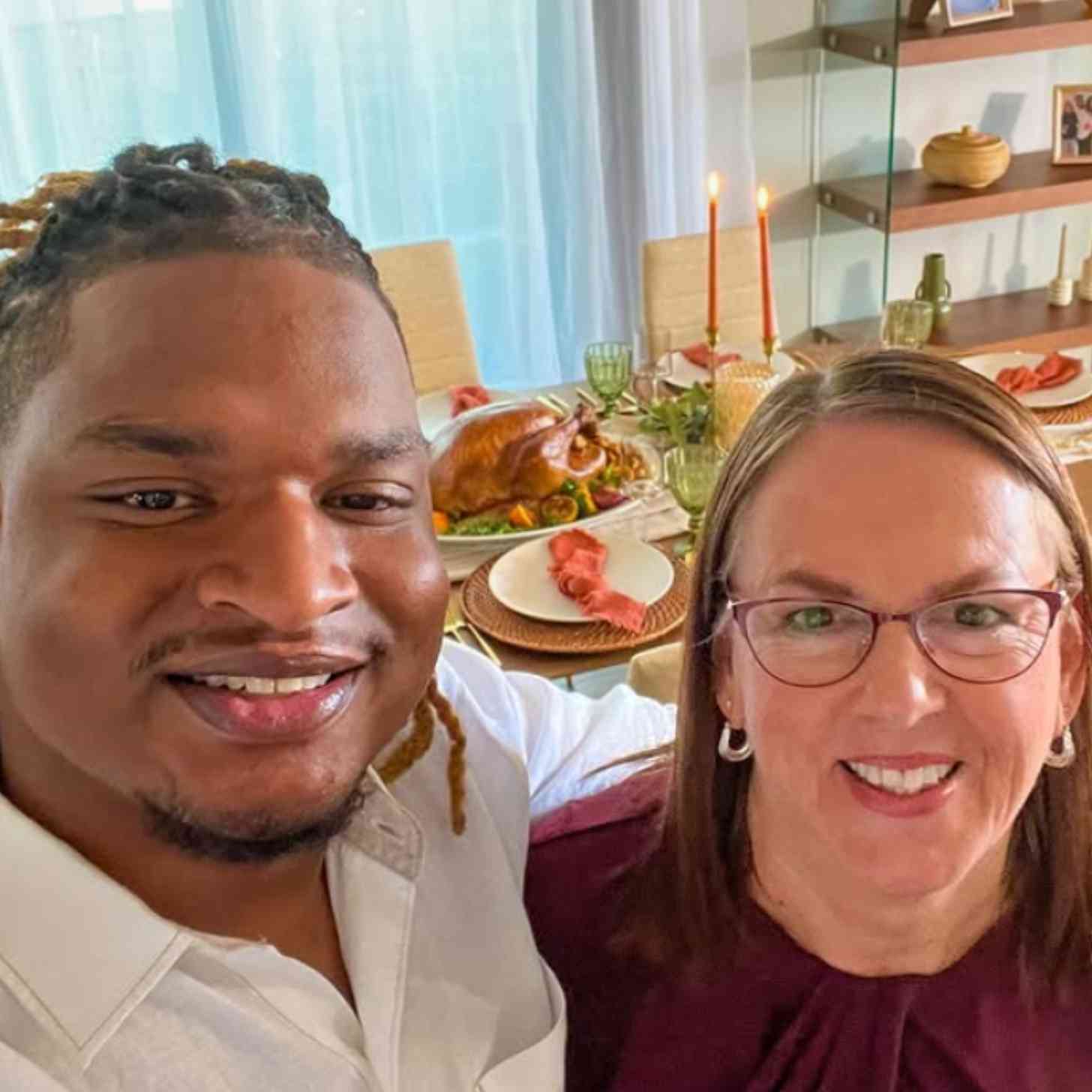
Hinton said he’ll always be grateful for texting Dench back.
“I always felt like any and everyone could bring any type of joy into your life, and I’m glad that I actually reached out to Wanda when I did,” he said. “Even though I was joking, it turned out to be something amazing.”
And this year — as they mark their 10th Thanksgiving together — Hinton and Dench are partnering with Green Giant to share their favorite holiday recipes, including the “Best Ever Green Bean Casserole.”
“Wanda and I are thrilled to celebrate our 10th Thanksgiving together, and partnering with Green Giant makes it even more special,” Hinton said in a press release. “Green Giant has been part of so many holiday traditions, and we’re excited to make new memories with their vegetables at our table.”
“I am so grateful we’re able to continue to get together. I can’t believe it’s been 10 years since that mistaken text,” said Wanda Dench. “For us, the holidays are all about connections and making memories. Sharing our 10th year – alongside Green Giant’s 100th anniversary – makes this year feel especially meaningful.”
Here is the full recipe for Hinton and Dench’s “best ever” green bean casserole
Lists of ingredients:
- 2 tablespoons unsalted butter
- 8 ounces sliced cremini mushrooms
- 2 garlic cloves, minced
- 4 ounces cream cheese, cubed
- ½ cup whole milk
- ½ cup chicken broth
- ½ teaspoon dried thyme
- ½ teaspoon salt
- ¼ teaspoon pepper
- 2 cans (15 ounces each) Green Giant Cut Green Beans, drained
- 1 cup crispy french-fried onions

Recipe:
Serving Size: 6 | Prep Time: 10 minutes | Cook Time: 21 minutes
- Preheat oven to 375˚F—heat butter over medium in a large pan. Add mushrooms and sauté 5 minutes. Add garlic and cook 1 minute longer.
- Stir in cream cheese, milk, chicken broth, thyme, salt and pepper. Continue to cook, stirring constantly, until cream cheese is melted and sauce is bubbling, about 3 minutes.
- Turn off heat. Stir in green beans to coat.
- Pour into a 2-quart casserole dish and top with fried onions. Bake for 10-12 minutes, until onions are golden brown.
You may also like: As SNAP benefits get cut off, livestreamers come together to ensure homeless families are fed this Thanksgiving
A version of this article originally appeared in the 2025 Relationships Edition of the Goodnewspaper
Header image via Jamal Hinton/Twitter
When North Carolina’s Kate Barr ran for state senate last year, she lost. That was the plan all along.
She knew that her district had been gerrymandered to the point where she wouldn’t even have a chance at being elected. Her goal was to spotlight the injustice and the threat it poses to free and fair elections.
“In a gerrymandered state like North Carolina, it means representatives are choosing their voters instead of voters choosing their representatives,” she said during her campaign.
“If I’m going to lose, we might as well have a little fun, raise a little hell, and shine a light on the impacts of gerrymandering along the way.”
Gerrymandering, defined by Merriam-Webster, is the practice of dividing or arranging a territorial unit into election districts in a way that gives one political party an unfair advantage in elections.
According to the Brennan Center for Justice, gerrymandering has been used to undermine democracy for centuries. Both major parties in the United States do it. That said, in recent years, the Republican Party has been known for its redistricting tactics, and in 2022, North Carolina’s State Supreme Court even ruled that the state constitution allows partisan gerrymandering.

And the pressure is only rising. Gerrymandering determines control of the U.S. House of Representatives and 13 state legislatures.
And with redistricting dramas in states like Texas, Ohio, and California under the Trump administration, Barr’s fight isn’t just one faced by North Carolinians anymore.
So, she’s back — donning another graphic T-shirt that says “loser.”
“I’m putting together a team to run for elections in hopelessly gerrymandered districts in North Carolina,” Barr said in a recent social media announcement video.
“We’re all going to lose. Every single one of us.”
The coalition she’s building has a name: the Can’t Win Victory Fund. And the people she’s recruiting? Well, they’re called “can’t-idates.”
“Our candidates run to raise awareness about our stupid f—ing rigged maps,” she said, uncensored, in the video.
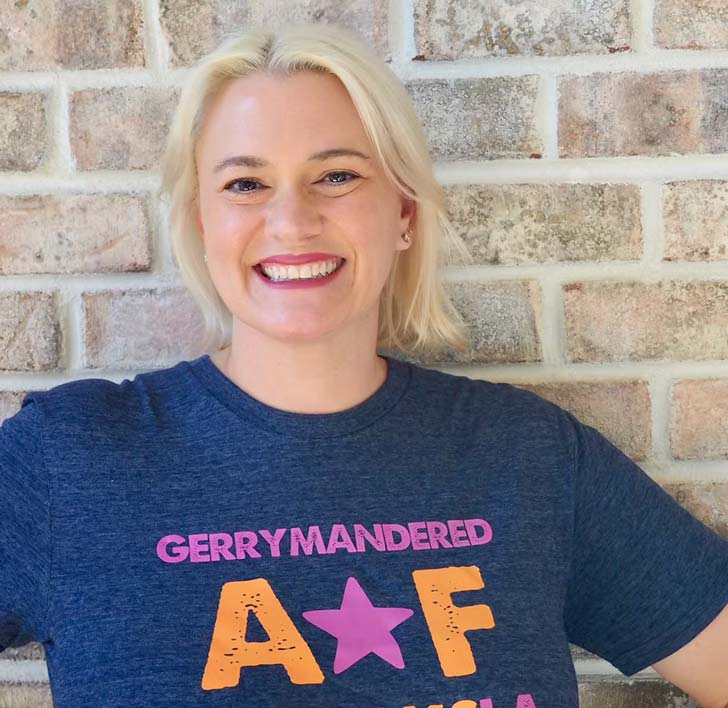
The goal is also to improve voter turnout by engaging with communities and pointing out power imbalances, all while organizing for a path to fairer maps.
“Cant-idates have instant credibility with voters,” the Can’t Win Victory Fund’s website explained. “Because Cant-idates aren't trying to win, folks assume they aren't lying to gain votes (because they aren’t). That means Cant-idates can carry messages about democracy in a way that no one else can.”
Their belief is that can’t-idates may lose every battle, but they are a path to “winning the war.”
“Losing isn’t just an outcome — it’s a strategy,” the fund’s website states. “And it’s one that can change the game.”
The team behind the project is all women.
Alongside Barr is marketing strategist Tara Larson Arbitter; former chief of staff to North Carolina’s First Lady, Ilina Ewen; another election loser and now chair of the Iredell County Democratic Party, Beth Kendall; and accomplished fundraising strategist Cailtin Barnes.

Their work right now? Recruiting people to run and “lose spectacularly.”
“We want fighters from Wilmington to Asheville, from Gen-Z to boomers,” Barr said. “We want real people who live the real consequences of the choices these elected leaders make.”
“You don’t have to want to work in government,” Arbitter added in the video. “In fact, it’s better if you don’t.”
“‘Cause you’re not gonna,” Kendall chimed in.
The people the Can’t Win Victory Fund is recruiting can be anyone from any political background, but ideally, they all have one thing in common.
“You just need to love democracy so much that you’re willing to get your ass kicked for it,” Barr said.
“An electoral ass-kicking, to be clear,” Barnes added.
“You’ve got nothing to lose,” Kendall said, “because you’ve already lost.”
People interested in joining the Can’t Win Victory Fund can express their interest in running (and losing) on the group’s website.
And in the meantime, the crew of organizers is just getting started in their fight to protect local and federal elections across the country.
“I’m a Karen for democracy who believes we deserve competitive elections that hold our leaders accountable,” Barr said in another social media video. “And I’m not alone.”
You may also like: After the loss of 2024, these progressive candidates are making politics fun again: 'We can win anywhere'
Header image courtesy of the Can't Win Victory Fund
In many ways, the Enoch Pratt Free Library of Baltimore, Maryland mirrors countless public libraries across the country.
Inside its Southeast Anchor branch, floor-to-ceiling glass windows meet brownstone brick, allowing natural sunlight to filter in, illuminating shelves upon shelves of books, kids coloring atop alphabet rugs, and readers milling about the stacks.
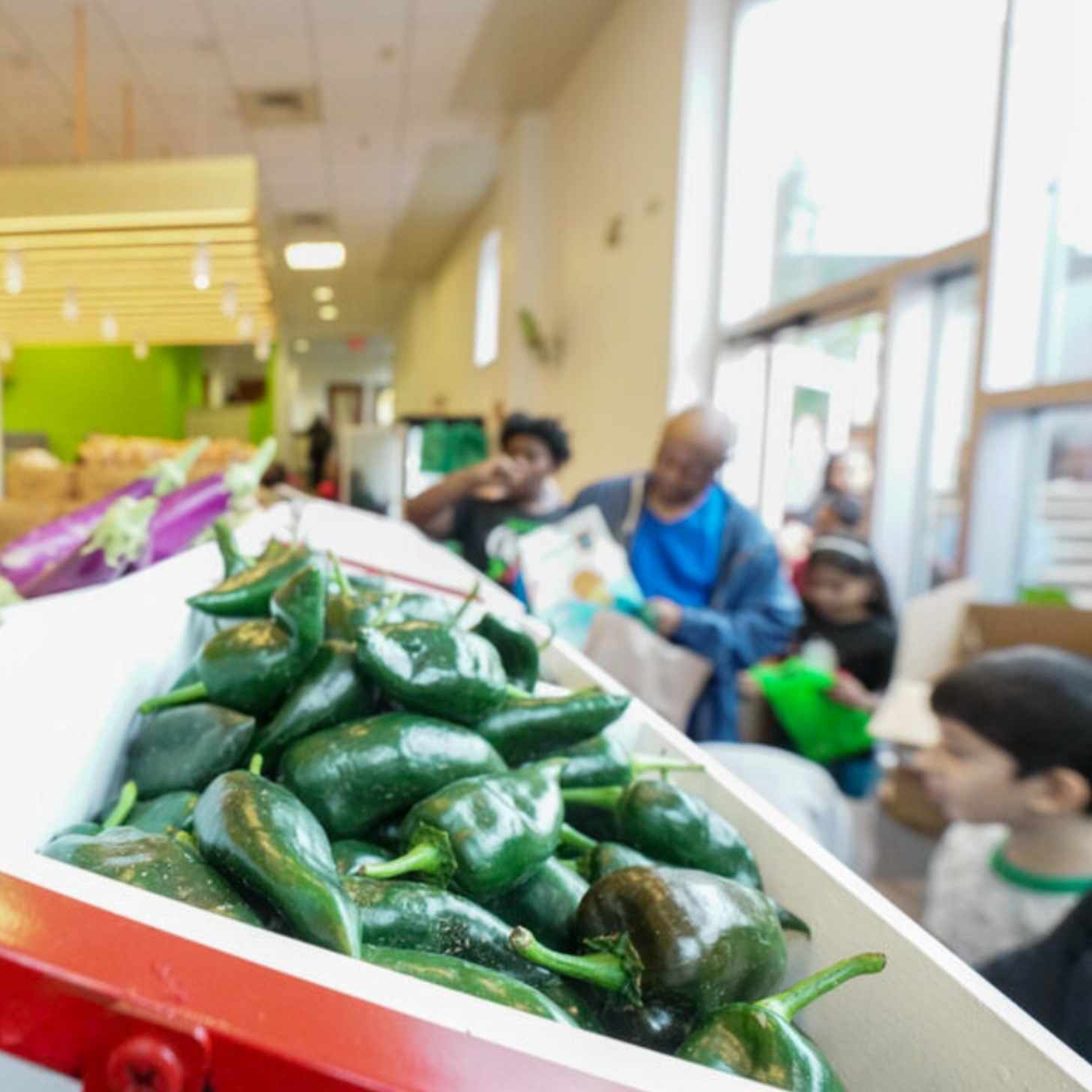
But tucked inside its first floor is something unique: The Pratt Free Market. It’s one of the country’s first 100% free and full-service grocery stores operated within a public library.
Every Wednesday from 11 a.m. - 2 p.m. and Fridays from 2 p.m. - 5 p.m., customers are welcome to grab whatever they can fit in a library-supplied bag — entirely for free.
The market, which is 90% volunteer-run, is stocked like any other grocery store, with fresh produce, dry goods, paper goods, feminine hygiene products, baby essentials, and household items.
M'Balu “Lu” Bangura, the chief of equity and fair practices at Enoch Pratt Free Library, said the vision is simple: “Everyone eats.”
“No income requirements, no ID needed — judgement-free, just come as you are and fill a bag with groceries at NO COST,” Bangura wrote in an Instagram post. “This market is for the City. ALL ARE WELCOME!”
“Across the nation, one in every eight people face hunger, and libraries are increasingly on the front lines assisting in this struggle,” Darcell Graham, the interim CEO of the Enoch Pratt Free Library, said when the market first opened.
“We hope the Pratt Free Market will serve as a hub for food and nutrition-based programming for our community.”
The Pratt Free Market is supported by the Maryland Food Bank and acts as a distribution partner for the hunger relief nonprofit.
“Too many people in Baltimore and across Maryland are struggling with food insecurity," Carmen Del Guercio, the president and CEO of the Maryland Food Bank, said.
“We are excited that this new partnership with the Enoch Pratt Free Library will increase access to fresh produce and other needed products for our neighbors.”
With SNAP recipients currently left in limbo during the government shutdown, community-facing organizations like the Pratt Free Market are needed more than ever. To date, the grocery store has served over 15,000 families.
Grassroots efforts like the Bmore Community Fridge Network are also proving vital. Since it launched in February, the women-founded organization has installed 17 fridges throughout the city — plus 11 food pantries and three pet pantries.
“We do everything without money,” co-founder Liz Miller, a Baltimore County Public Schools art teacher, told Baltimore Magazine. She said that they’ve avoided bureaucratic red tape by simply participating in mutual aid efforts and depending on the kindness of strangers.
“We had a guy, he lost his house, and he was like, ‘I have a full-size freezer and a full-size fridge, and it’s full of food, and we gotta be out in three days,” she said. “So anybody who wants to come by, DM me.’”
After volunteers came together to pick up and distribute the food, the same helpers found him a truck and a storage unit to keep him from losing his belongings.
“People were coming through for him,” Miller said. “And at the same time, he’s busy coming through for others.”
Julie Kichline, another co-founder of Bmore Community Fridge Network, said that Miller’s anecdote is standard practice for their community-focused efforts such as theirs.
She said: “Sometimes we help, sometimes we need help, and sometimes it’s both.”
You may also like: In less than 24 hours, this Chicago suburb launched a community-wide food drive to help neighbors losing SNAP
Header image via Kampus Production
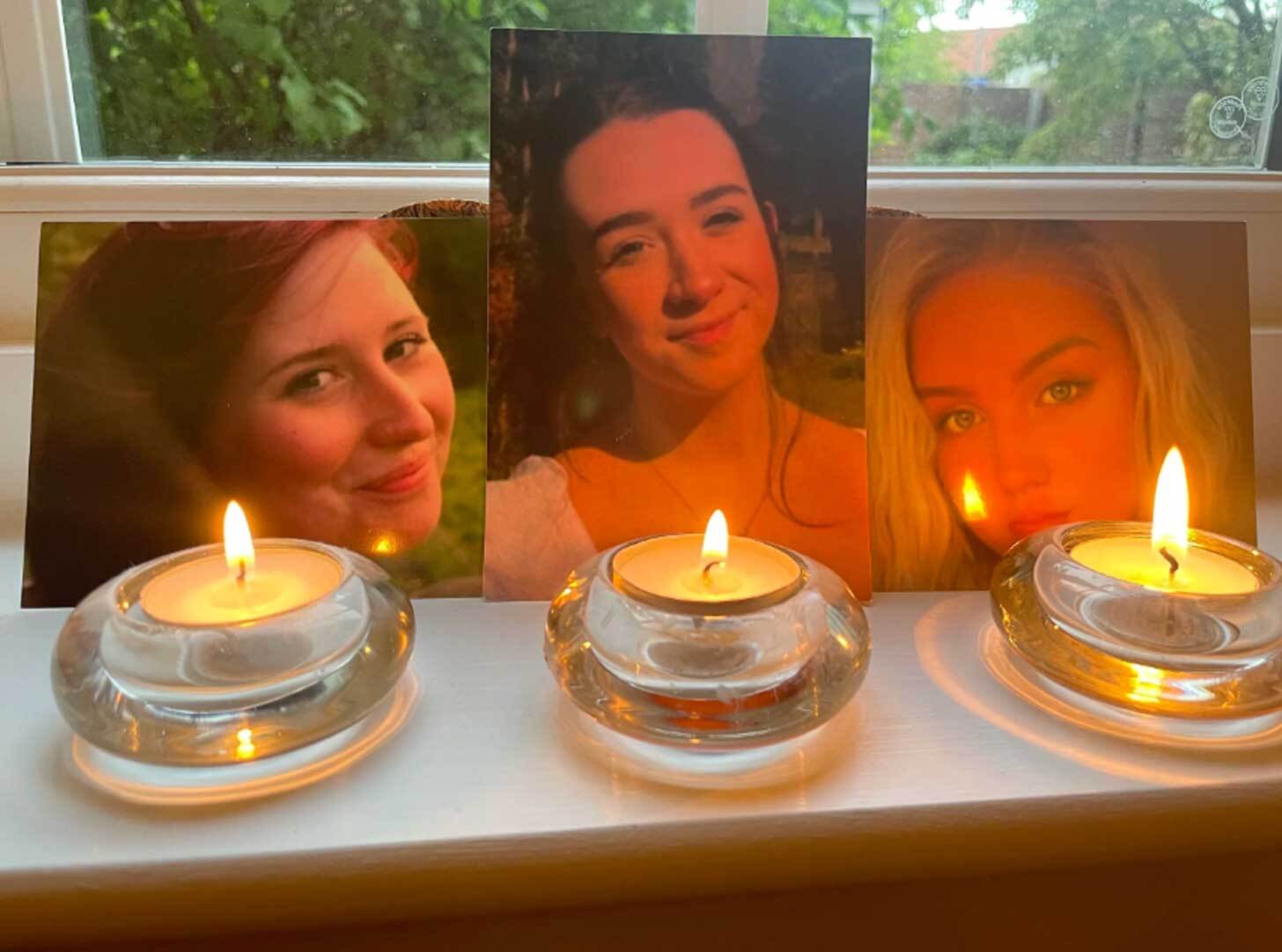
Since 2021, Tim Owen, Mike Palmer, and Andy Airey have walked more than 1,500 miles together. They met through tragic circumstances, after losing their daughters — Emily, Beth, and Sophie — to suicide.
It was their surviving children who initially brought the three men together, through a suicide awareness course run by Papyrus, a suicide prevention charity based in the United Kingdom.
After Papyrus helped their families heal, the three dads wanted to find a way to give back. Palmer suggested a 15-day charity walk that would connect their three households and help other families navigating similar situations.
On the first walk, which tallied a total of 300 miles, they shared stories about their daughters — carrying pictures of Sophie, Beth, and Emily on their backpacks — as they raised money for Papyrus.
During their first walk, calls to the Papyrus helpline rose 20%.
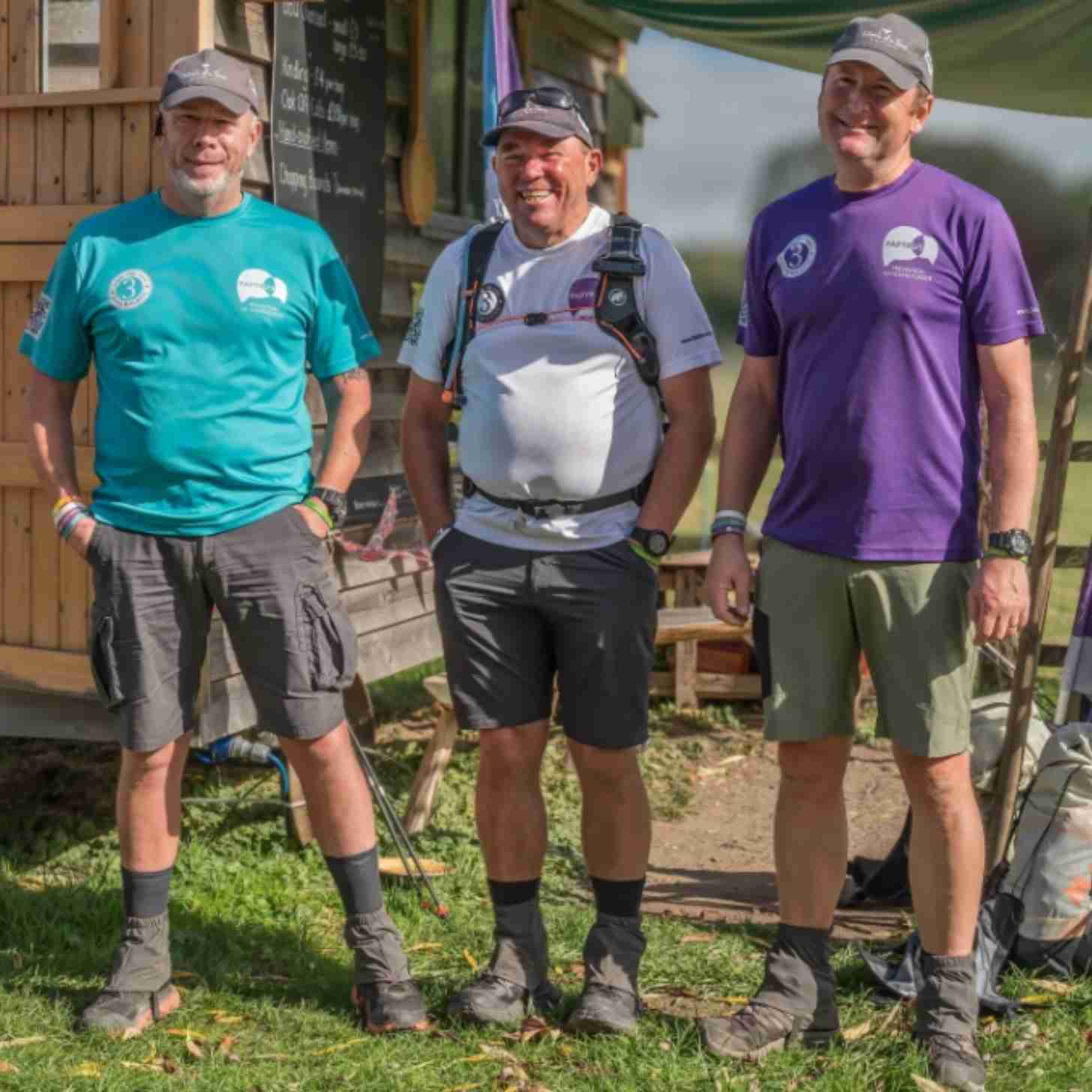
“Mums are the emotional managers in the family, but because we’ve been open about what’s happened, dads started to phone up [too],” Airey told the Daily Mail. “I was really proud.”
In the years since, the dads have made annual treks across the UK, upping the ante every year. In April 2024, they walked 500 miles from Scotland to Norwich. This July, they walked the entirety of the Ynys Môn/Anglesey Coastal Path — another 130 miles.
To date, they have raised over £1.5 million for Papyrus ($1,957,057 in USD). Thanks to their efforts, the charity has since opened 13 more centers and begun operating a 24-hour helpline.
As they’ve helped others, the dads have helped each other too. Before they became friends, they struggled with suicidal thoughts. Now they know they can always lean on each other — no questions asked.
“We made a pact that if we were feeling bad, we’d call,” Owen agreed, “no matter what time of day.”
You may also like: After a mistaken text, this unlikely duo is celebrating their 10th Thanksgiving together
A version of this article originally appeared in the 2025 Relationships Edition of the Goodnewspaper.
Header image via 3 Dads Walking
When Trudy Veenstar’s husband Auke passed away in April 2023, she didn’t just lose a life partner, she lost her travel buddy. It wasn’t until nearly a year later, Veenstar booked her first solo trip: a two-and-a-half-week trip to Kenya.
“As much as I missed including my husband in the planning, I am a traveler and I have always had it in me; I was so ready to get back out traveling,” Veenstar told the British news outlet SWNS.
But Veenstar wasn’t alone for long. Mere hours into her safari trip, Veenstar walked up to a table of strangers and struck up a conversation with 44-year-old Melisa Boddie.
“I was eating breakfast and a woman asked if I minded her sitting with us for breakfast,” Boddie said. “That is when we learned that her husband died a year prior and this was her first trip without him.”
“Trudy is a lovely woman,” Boddie added. “She is so funny and so lovely.”
The feeling was mutual.
“I never expected to leave with such a close group of friends, never expected to form such a bond with them,” said Veenstar.
To this day, the women have monthly FaceTime calls to stay in touch. Travel is always at the center of conversation, but as a globe-trotter, Veenstar finds it difficult to find places she hasn’t traveled to yet.
“We are all wanting to plan another trip together, we are going to the Galapagos Islands but Trudy has been before so she isn’t coming,” Boddie laughed.
You may also like: These three grieving dads have walked more than 1,500 miles together — and they aren’t stopping anytime soon
Header image via Caleb Oquendo / Pexels
As the government shutdown enters its 38th day, the Supplemental Nutrition Assistance Program has paid the price, with benefits disrupted for an estimated 42 million Americans. Two judges have ordered the Trump administration to tap emergency reserves to continue the program — orders which the administration has since appealed.
As government assistance hangs in the balance, people across the country are stepping up to help their neighbors.
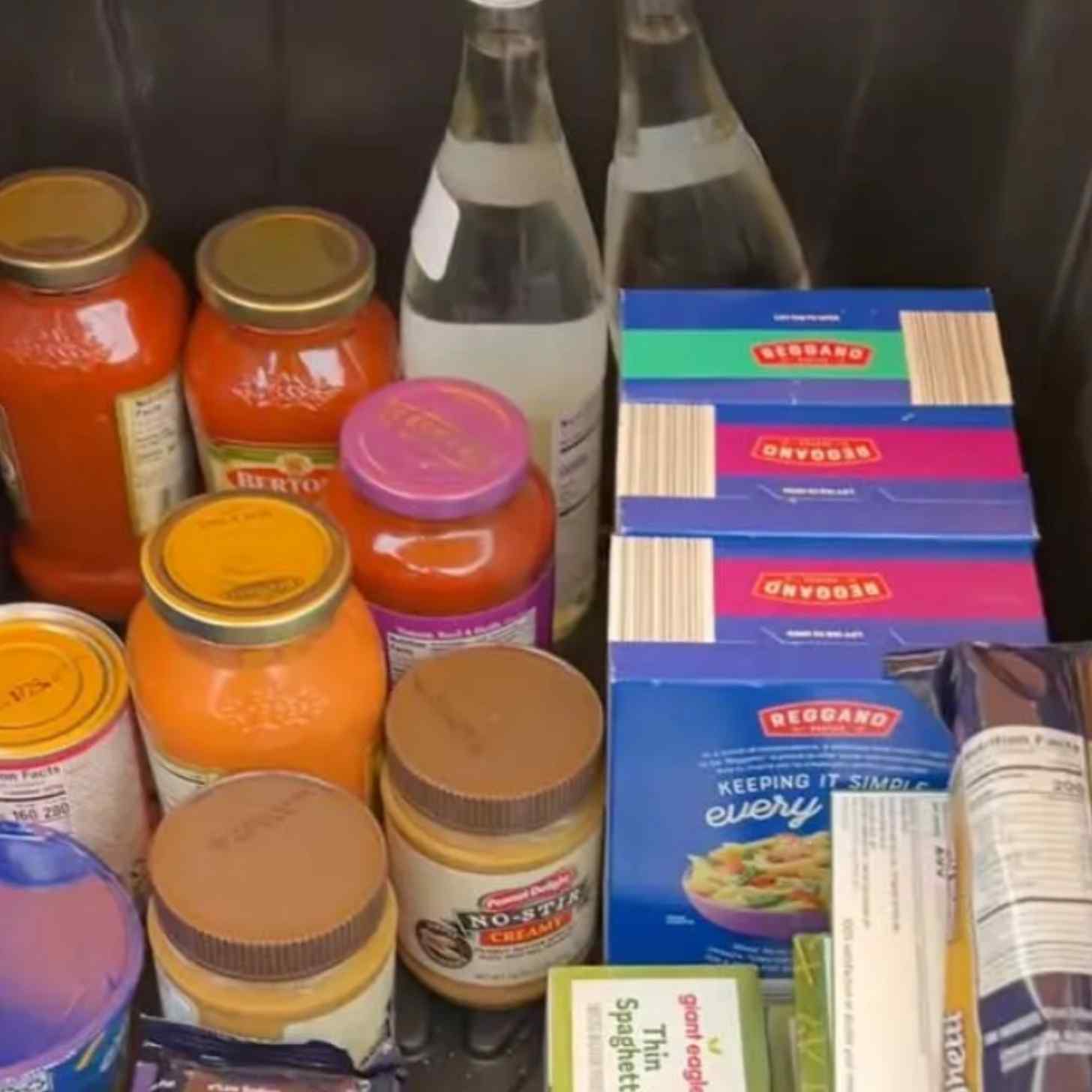
People like Pittsburgh father AJ Owen. On Sunday, October 26, he took his boys — ages 7 and 9 — to the grocery store to buy $150 worth of groceries.
Then they set up an impromptu food drive for their neighbors in their front yard.
“I try to keep my kids updated on what’s happening in the world, but they’re helpers. They’ve always been helpers,” Owen told People Magazine. “I told them about SNAP potentially going away, and they said, ‘How can we help people?’ And this was the answer.”
At first, Owen’s youngest son worried that nobody would show up.
“And I said, ‘Buddy, if we help one person, then this was all worth it,’” Owen said.
Then their food drive went viral on TikTok. Overnight, Owen saw a huge swell of support from people across the country, with hundreds asking how they could chip in.
But the biggest shock came when he went to check his mailbox on November 1 and pulled out an envelope filled with thousands of dollars in cash.
The cash, which was donated anonymously, bore a simple message: “May God prosper and bless your food pantry.”
“I took the envelope in; it felt thick. I thought maybe there’s some gift cards in there,” Owen said. “I opened it up and just — hundred-dollar bills, a stack of hundred-dollar bills. I truly didn’t know how to react. I froze. I started shaking and I started crying.”
The video of Owen’s tearful reaction has since been viewed 18.2 million times, with people flooding the comments section with praise.
“Humanity is showing up,” one viewer wrote. “This gives me hope.”
“I remember when Mr Rogers told me to look for the helpers,” wrote another.
@ajpgh412 We’re going to help so many people 😭 #snap #foodpantry #foodbank #trump #pittsburgh ♬ original sound - ajpgh412
Many also wrote in to say that the Owen family’s food pantry inspired them to take action in their own communities.
“This reminded me there’s a food pantry really close to me I haven’t helped stock in a bit,” a viewer said. “Gonna fix that now.”
“I delivered about 10 bags of groceries that myself and my friend pulled together today to a food pantry nearby,” another person wrote. “The place was fully packed. This is my America.”
Owen has continued to share updates on TikTok as his family’s food pantry has expanded. One day, Pittsburgh Steelers defensive end Yahya Black stopped by to drop off supplies — an added shock for the Owens, who are huge Steelers fans.
“Look at this!” Owen said, grinning as he filmed the massive pile of grocery bags in his yard. “This is going to last so long. And I’m so grateful they showed up.”
Currently, the Owen family plans to hold their front yard food drive for the foreseeable future.
“People deserve food, people deserve to be fed,” he said. “As long as there’s a need in our community, we will keep this out.”
“Making a food pantry is no different than me inviting you over to my house for dinner,” Owen added. “Come grab a meal. Come grab a drink. Come grab what you need. I’m happy to have you.”
You may also like: One of the country's first '100% free full-service' grocery stores operates inside a Baltimore library: 'No income requirements, no ID needed'
Header images via AJ Owen / TikTok
Remy Tucker has calculated the cost of having a period over the course of a lifetime — and it’s $10,000.
That’s why she founded On The House, a startup that seeks to end period poverty and get feminine hygiene products into the hands of those who need them most.
“It’s a hidden and silent crisis that needs to be loud,” Tucker told Weekend Edition. “Our inaugural launch partner, Afterpay, recently commissioned research to uncover more about the realities of period poverty in Australia. The statistics are shocking. More than three in five women have been forced to use makeshift pads due to a lack of access, with almost 64 percent of women using toilet paper, followed by tissues, and in some extreme cases, even socks.”
Tucker said period poverty has a greater impact on daily life than some people might expect.
“Almost half of women [reported] feeling anxious (47 percent) or embarrassed (43 percent), and nearly three in five (58 percent) noted that they’ve missed key life events,” Tucker said.
“Not having access to period products means missed work, school, and job interviews,” she emphasized. “No access equals inequality.”
Her solution? Use ad revenue from bathroom posters to dispense free period products.
“I thought, what if you could make period products free, like how Facebook is free — paid for by ads?” she told Startmate. “It hit me like a bolt of lightning.”
When her lightbulb moment hit, Tucker did not have any advertising experience. But she had trained as a midwife and encountered many new mothers and refugees who had to choose between baby formula and a box of tampons — and she wanted to help.
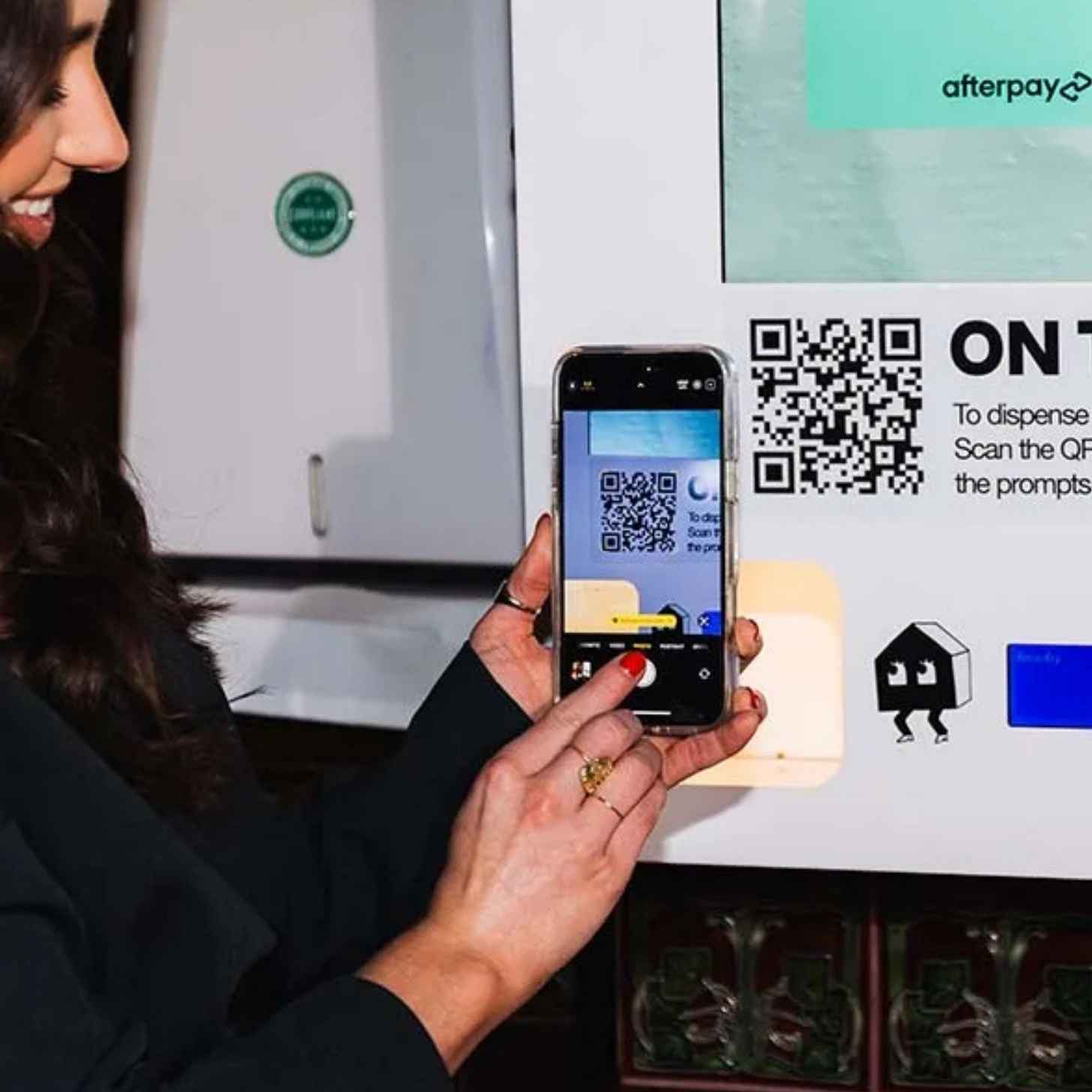
“People are sick of being interrupted by ads,” Tucker reasoned, “but no one’s annoyed when an ad gives them something they need.”
Tucker said that brand-supporting advertising is a no-brainer.
“It really is a model that has been used for years, just in different ways – something that’s free because there are ads on it, like Facebook, Instagram, and Spotify,” Tucker told Weekend Edition.
“We’ve taken that same model and turned it into tangible products with a real-world impact – ending period poverty. On The House has the vision and the practical solution to a critical issue and brands like Afterpay are providing the support to help bring that vision to life and scale it.”
The vending machines, which operate behind digital ad screens. By scanning a QR code, patrons can receive a small box of 3 pads, with a cap of 4 boxes per month.
Today, On The House has five machines in public and commercial bathrooms across Brisbane, but Tucker has ambitious plans to scale up nationally — and then bring her idea to countries around the world.
“By 2035, I want to have over 20,000 dispensers globally,” she said. “I want to have started the world’s first female-founded out-of-home advertising company that single-handedly ended a real-world issue.”
You may also like: NYC's first 'free food vending machine' offers eggs, meat, and fresh produce to people in need
Header image via On The House
Every day the Good Good Good team collects the best good news in the world and shares it with our community. Here are the highlights for this week!
If you want to get good news in your inbox every day, join the Goodnewsletter — the free daily newsletter designed to leave you feeling hopeful.
The Best Positive News We’re Celebrating This Week —
Global deforestation declined for the third decade in a row
While an estimated 489 million hectares — equivalent to about 750 million soccer fields — of forest have been lost globally through deforestation since 1990, the rate of loss has slowed every decade, too.
From 2015-2025, the deforestation rate was estimated to be 10.9 million hectares annually, down from 13.6 million hectares per year from 2000-2015, and 17.6 million hectares per year from 1990-2000.
Additionally, more than 90% of the world’s forests are regenerating naturally. The total area of these types of forests decreased between 1990 and 2025, but the rate of loss was cut in half over the same time period.
What’s the nuance? The rate of forest expansion also slowed, from 9.88 million hectares per year from 2000-2015, to 6.78 million hectares per year from 2015-2025. It’s certainly better than no reforestation — but we still have a lot of making up to do.
Hopeful people live better lives, a 14-year study of 25,000 participants finds
An analysis of 150 U.S. cities found one of the largest drops in gun violence ever
A new analysis of 150 U.S. cities found that, for more than three-quarters of cities with the most shootings, gun violence has been declining significantly. For more than half of those cities, the rate of decrease is even larger than last year, which set records for the lowest gun homicides.
The trend holds across “red” and “blue” cities and states and includes cities where shootings are typically the highest, like Baltimore, and where they’re lowest, like Austin, Texas.
Despite rhetoric about cities being “war-ravaged” and in need of National Guard presence, what’s actually true is that 80% of U.S. residents who live in cities will lose far fewer of their neighbors to gun violence this year.
In less than 24 hours, a Chicago suburb launched a community-wide food drive to help neighbors losing SNAP
By November 1, a sworn statement from the U.S. Department of Agriculture said that $4.65 billion from the Supplemental Nutrition Assistance Program’s contingency fund would “be obligated to cover 50% of eligible households’ current allotments” for November. But it could be weeks until the benefits actually reach people.
Within 24 hours of that official statement, more than 100 volunteers in Evanston, Illinois came together to drop off supplies for local food banks, like the Chicago Hope Food Pantry.
The emergency food drive brought in supplies by the thousands to help keep food on the table for people who would only be seeing a partial payment that month.
Even better: Although food assistance has been the biggest draw for food-insecure households, organizers also handed out know-your-rights cards and whistles in response to the increased presence of Immigration and Customs Enforcement throughout the city.
A Portland coffee shop’s free SNAP breakfast program sparked outrage online. Their response? ‘Everybody deserves a latte’
Connecticut and Maine are teaming up to fast-track renewables, helping more projects qualify for expiring federal incentives
Maine and Connecticut are collaborating to build renewable energy projects faster, as states with ambitious emissions reduction goals rush to take advantage of expiring federal tax credits. It could lead to a model for others to follow, too.
The two states are both working to get all their power from clean energy sources by 2040, and have been quickly looking for new ways to get projects underway.
Connecticut put out a request for proposals for solar and onshore wind projects in September, which included a provision to allow other states to participate. Maine took them up on it with the hope that by pooling demand and sharing information, both would have more efficient and viable projects at lower prices for residents.
Why is this good news? States have eight more months to take advantage of federal tax incentives on renewable energy projects included in the Inflation Reduction Act, which spurred massive investment in clean energy. The Trump administration is phasing those incentives out — states working together could help more projects meet the deadline.
→ Read more
Tired of AI slop? Here are 5 ways artificial intelligence is actually being used for good
A Miami man has cleared over 35,000 pounds of trash from the city’s mangroves
At least once a week, you can find Andrew Otazo in the thick of Miami’s mangroves. To date, he’s hauled more than 17 tons of trash out, mostly from the islands around Biscayne Bay.
He’s aiming to clean up as much as he can, but also to convince his neighbors to demand their elected officials take action to curb plastic pollution and improve outdated waste systems that result in street trash ending up in these critical ecosystems.
He says if it’s only up to him, “we’re doomed,” but if his work can help other people see the problem, “and they agree we need to work toward a solution, that’s the idea.”
→ Read more (Gifted link)
To fight gerrymandering, a new political coalition is backing candidates that are guaranteed to lose
When North Carolina’s Kate Barr ran for state senate last year, she lost — and that was the plan all along.
Barr knew her district had been gerrymandered to the point where she wouldn’t even have a chance at being elected, so she wanted to spotlight the injustice and the threat it poses to free and fair elections.
And now, she wants to expand the effort. Barr launched a new political coalition called the Can’t Win Victory Fund to recruit candidates who are guaranteed to lose. Not only will the coalition organize for a path to fairer maps, but it aims to improve voter turnout and bring awareness to power imbalances.
Why is this good news? Gerrymandering has been used to undermine democracy for centuries. Both major parties in the United States do it, and in 2022, North Carolina’s State Supreme Court even ruled that the state constitution allows partisan gerrymandering.
The Can’t Win Victory Fund gives the people a platform to fight back.
ALS made it impossible for this woman to walk her dog. Engineers invented a custom, adaptive leash just for her
→ Read more
A San Diego man invented a solar-powered backpack that turns into a bed and a generator for homeless people
Zac Clark created the Makeshift Traveler backpack after hearing feedback from unhoused people who “had phones but couldn’t charge them,” and had their belongings constantly “stolen or damaged.”
Beyond being a source of power, the hard-shell backpack also includes a tent, hygiene kit, lockbox, flashlight, sleeping bag, socks, and other essentials.
Since it launched in October 2022, more than 1,200 Makeshift Traveler backpacks have been distributed at no cost to people experiencing homelessness in 25 cities throughout California.
The High Seas Treaty won one of five 2025 Earthshot Prizes for its work to revive and protect the world’s oceans
The winners of the 2025 Earthshot Prizes were just announced, and the High Seas Treaty was one of them. It’s a historic recognition of an almost two-decade global effort to protect half of the planet that lies beyond national jurisdiction.
In September, the High Seas Treaty reached the 60-ratification threshold needed, triggering it to enter into force in January 2026 — a huge and historic milestone for ocean protection as it’s the world’s first treaty to protect marine biodiversity in international waters.
A total of 75 countries have now ratified it, indicating their consent to adhere to the new international law.
Why is this good news? The £1 million Earthshot Prize comes at a critical time, since once the treaty is in force, governments and civil society must then work together to turn commitments into action.
You may also like: World’s first ‘upcycled skyscraper’ could be blueprint for a ‘waste-free future.’ It’s a finalist for the Earthshot Prize
From tiny homes to factory renovations, cities build subsidized housing for teachers
Ms. Rachel wore an upcycled dress embroidered with artwork by Gazan children to the Glamour Women of the Year Awards
Ahead of this week’s Glamour Women of the Year Awards, Ms. Rachel, an honoree, asked kids from Gaza to make artwork that told their stories. She then had their drawings embroidered onto an upcycled dress to wear to the event, part of her continued advocacy for children in Gaza and around the world.
On the red carpet, she shared that the kids all knew about the dress and were “so excited.” And in her acceptance speech, Ms. Rachel touched each drawing as she said the name of the child who drew it.
On Instagram, she tagged each of the children’s accounts who made artwork for the dress, and said that she’d personally made a donation to each of them.
→ Read more
More good news of the week —
Scientists are building cyborg cockroaches to create the world’s smallest search and rescue workers. “We see a future where after an urban disaster like an earthquake or a bombing, where humans can’t safely access the disaster site, being able to send in a bunch of cyborg beetles to navigate the disaster zone quickly and efficiently.”
Students of color benefit from meditation in schools, so Atlanta is investing in mindfulness programs across its public schools. Social-emotional learning, including meditation, yoga, and mindfulness breaks, is becoming more commonplace in schools across the country, and reports have found these initiatives are even more beneficial among under-resourced communities.
Billionaire MacKenzie Scott donated $60 million to counter cuts to federal emergency assistance and diversity programs. (Gifted link) She made the donation to the Center for Disaster Philanthropy, a nonprofit group that helps improve disaster resilience and recovery in struggling communities that otherwise lack the resources to rebuild.
Germany is giving more than $1 billion for Holocaust survivors’ home care around the world in 2026. The compensation was negotiated with Germany’s finance ministry and is the largest budget for frail and vulnerable Holocaust survivor home care in the organization’s history.
Backed by the Gates Foundation, a U.S. company is using virtual reality to show people the life-saving power of vaccines. “In a world where people are increasingly skeptical of science, showing the human impact of vaccines is vital. When you see the faces of families in the Congo who walk for hours just to reach a clinic, you understand what’s at stake.”
A pay-what-you-can cafe and food truck in Raleigh, North Carolina is preparing to support its community in the face of SNAP cuts. Since they opened in January 2018, A Place At The Table has served 100,000 cups of coffee and 255,000 meals to people in need — thanks to the help of over 2,000 volunteers annually.
New York City’s first “free food vending machine” offers eggs, meat, and fresh produce to people in need. The nonprofit behind it said, “After over 15,500 lbs of free food distributed to more than 1,100 families in NYC, we’re hoping this new model for distribution can provide folks with good food easily and when they need or want it.”
A new national law in South Korea will turn large parking lots into solar power farms. Starting this month, parking lots in South Korea with more than 80 spaces will be required to install solar canopies and carports, and the law applies to both new and existing parking lots.
Ahead of hosting COP30, Brazil announced that deforestation in the country hit an 11-year low. President Luiz Inacio Lula da Silva has pledged to end all deforestation in the country by 2030. Since the beginning of his term in 2023, Amazon destruction has been cut by half.
Selena Gomez raised $600,000 for mental health charities through her annual Rare Impact Fund benefit. The $600,000 raised on site via commitments from the night’s guests makes up just one big step in the Rare Impact Fund’s mission to generate $100 million for global mental health resources and education programs.
Finland “rewilded” some of its preschools, and it’s had incredible health benefits for children. The experiment was part of a growing body of research linking two layers of biodiversity, going deeper into existing knowledge that access to outdoor space is important for children and their development.
A police chief in Colorado is pushing back against ICE following an altercation with a protester. (Gifted link) The state’s law enforcement office is investigating an incident where an immigration agent appears to put a protester into what the chief saw as a chokehold and then threw her down an embankment.
Inspired by spiders, biologists are creating artificial webs to capture airborne DNA and monitor biodiversity. With the global crisis of diminishing biological diversity challenging scientists’ ability to monitor changes in ecosystems, this new technique aims to capture airborne DNA on a commercial scale to capture signals of land-based biodiversity.
A couple in Salt Lake City builds and distributes beds to their neighbors in need. Together with a team of volunteers, Laura Potts and Andrew Heaton opened a local chapter of Sleep in Heavenly Peace, whose goal is to ensure no child sleeps on the floor.
Canada introduced a new gravity battery that could power tall buildings using an elevator-style energy storage system. The system harnesses the energy generated by solar panels and wind turbines to lift a heavy mass within a shaft during the charging phase. This stored potential energy is then released to rotate an electric generator during discharge.
Jimmy Kimmel is hosting a food donation center to help those affected by the cuts to SNAP benefits. Kimmel encouraged locals to donate food to the “Jimmy Kimmel Live Big Beautiful Food Bank,” and those who are not local were encouraged to “consider supporting your local food banks.”
A new project in Milwaukee broke ground on 40 tiny homes for homeless U.S. military veterans. The project aims to overcome barriers found in traditional shelters by allowing for privacy, property, and pets and will include on-site services and resources to address underlying causes of homelessness, such as mental health challenges or substance addiction.
One of the country’s first “100% free full-service” grocery stores operates inside a Baltimore library. With “no income requirements and no ID needed,” two days a week, customers are welcome to grab whatever they can fit in a library-supplied bag from the Pratt Free Market, which is 90% volunteer-run and stocked like any other grocery store.
Residents of a village in England crafted thousands of poppies to create a giant Remembrance Day installation at their local church. Volunteers in Wool knit and crocheted more than 5,000 individual poppies by hand, which were then attached to an 18m-long cargo net which now hangs from the 13.2m-tall church bell tower to honor armed forces members who died in the line of duty.
A tech startup makes a free app for SNAP recipients, and now, it’s giving them $50 cash, too. About 5 million people use Propel’s app to check their SNAP balances, and get coupons and discounts on groceries, and is prioritizing distributing the cash payments to recipients with children or little to no income to help them keep food on the table.
Researchers created a gel that can restore tooth enamel and could prevent cavities. Achieving something previously thought to be impossible, the innovative gel forms a layer over teeth and then recruits calcium and phosphate ions from saliva to build new enamel.
Volunteers are reading and giving books to children who live in “book deserts” to foster literacy. The LiTEArary Society, an international group started in West Virginia, works to get new picture books to preschool children to develop a love of reading.
Pope Leo XIV met with abuse survivors and activists in a “historic and hope-filled step toward greater cooperation.” Six members of the ECA Global (Ending Clergy Abuse) board of directors met with the pope, representing its members from more than 30 countries on six continents, including activists and survivors of sexual abuse by representatives of the Catholic Church.
Countries in Africa’s “meningitis belt” have started rolling out a new vaccine to turn the tide on its regular epidemics. The five-in-one vaccine targets the varieties of Neisseria meningitidis bacteria that are responsible for almost all epidemic meningitis in sub-Saharan Africa, which kill tens of thousands of people every few years.
Meta’s AI glasses could bring more independence for the blind community. While Meta originally designed them for other purposes, the blind community has been able to connect their glasses to the “Be My Eyes” app, use the optical character recognition to recognize and read text aloud, and more.
In winter 2024, a bride-to-be in San Jose, California called off her wedding two weeks before the big day after facing irreconcilable differences with her fiancé.
As guests were informed and the wedding plans dissolved, she learned that $15,000 worth of event deposits were nonrefundable.
With only days to spare, the bride and her family anonymously donated the venue and catering services to a local nonprofit, Parents Helping Parents, so that they could host an annual charity event for community members with disabilities.
Maria Daane, the executive director of Parents Helping Parents, praised the gesture as “generous and thoughtful.”
“I was incredibly touched that a bride, facing an extremely stressful and difficult situation, was willing to look past her own pain and consider how to use the significant financial deposit for the wedding to bring joy to others,” Daane told Fox News Digital.

After working out the details with the bride’s family, the nonprofit scrambled to send out invitations — unsure how many would come.
But on the night of the “Ball for All,” all 100 seats in the candlelit ballroom were filled, as music and laughter rose to the rafters.
“I imagine weddings are canceled now and then,” Daane said, “but never have I heard of one turned into a community party for those with disabilities and their families… It reinforces that any of us, regardless of our circumstances, can do something beautiful for others.”
Header image via Masood Aslami / Pexels
On November 10, Republican Governor J. Kevin Stitt of Oklahoma sat down with Democratic Governor Matt Meyer of Delaware at the TEDNext conference in Atlanta, Georgia.
As the longest government shutdown in United States history entered its 41st day, and seemingly approached its end, the two politicians talked about paving a path forward for bipartisan cooperation.
“We need to find a way, as Americans, to sit on stage together, to break bread with each other, to understand that we can’t just channel all of our energies into knocking each other down,” Meyer said.
Stitt agreed.
“There’s people watching this, probably people in this room who hate me just because I’m a Republican,” he said. “There’s people watching this who hate Matt just because he’s a Democrat.”
He went on to add: “We can debate policy and we can still like each other, and we can have a difference of opinion on how to lead things. It’s so refreshing.”
Although the two diverged on a number of issues, including reproductive healthcare and immigration reform, but have a shared passion for public education.
“The thing is I know that he cares about Delaware citizens, I know he cares passionately about education, about giving people in Delaware a better life,” Stitt said. “Just like I do in Oklahoma.”
Notably, Stitt has been one of the few Republicans to criticize the Trump administration when it came to ordering the National Guard to mobilize in Chicago.
“Oklahomans would lose their mind if Pritzker in Illinois sent troops down to Oklahoma during the Biden administration,” Stitt told The New York Times in early October.
In the TED Talk, Governor Stitt also acknowledged the severity of the shutdown and the impact it had on critical federal programs like the Supplemental Nutrition Assistance Program, which has been disrupted for nearly 42 million Americans.
As the Trump administration has contested court orders regarding SNAP support, millions of recipients across the country have received partial payments — or none at all.

“I think it’s very topical right now with the government shutdown, and SNAP benefits are really affecting all of our states,” Stitt said. “I know governors, we’ve been on the phone, we’ve talked, ‘How are you doing?’ ‘How are we going to meet the needs of the most vulnerable in our state?’”
That’s when Stitt brought up “Be a Neighbor,” a platform he created on the Oklahoma Human Services website that connects Oklahomans in need to over 900 non-profits, faith-based groups, tribes, and community organizations.
“Because I don’t believe you can pass a law in Washington, D.C. or Oklhaoma City that can fix some of these social issues,” Stitt said. “It takes neighbors walking with neighbors. It takes churches and nonprofits.”
“And so, our Be a Neighbor concept is, if you have a need, you can go to this website we’ve set up, and it connects all of the nonprofits, the church communities, the state resources,” Stitt said. “That’s something I’m really proud of.”
Since 2019, Be a Neighbor has been a lifesaving resource for people like Joseph Randall, a senior in Oklahoma City who found himself struggling after his wife passed away.
“I just reached that point, and I needed help, but I didn't know where to go,” Randall told news outlet KOKH.
After returning to his neighborhood church for the first time in years, Randall learned about Be a Neighbor. And through that network, Randall met Ashley Goldsbury, the director of dignified income at The Good OKC.
“I was able to use Be a Neighbor to find out about helping get his car fixed, to be able to get food stamps, Medicaid, and then assisted living as well,” Goldsbury said.
In a matter of months, the widower went from facing homelessness to having reliable housing, transportation, and income again — all thanks to a variety of organizations in the Be a Neighbor network.
They even gave him a Christmas tree as he navigated the first holiday season without his wife.
“That was nice, they decorated that for me,” Randall said, “So it has opened doors. It's just you got to keep your eyes open.”
Goldsbury said that the Be a Neighbor network has been servicing Oklahomans in need for years.
“It’s really easy to navigate, you can just go on there, there’s a Find Now button, you can choose your county, and then you can choose the specific resources that you’re looking for,” Goldsbury said.
Mandi Mays, Be a Neighbor’s community recruitment coordinator, explained that the network is all about serving people with dignity.
“Reaching out for help is hard, so this gives them the opportunity to take that into their own hands and actually look for the things that they need,” Mays told KOKH.
You may also like: In less than 24 hours, this Chicago suburb launched a community-wide food drive to help neighbors losing SNAP
Header image via J. Kevin Stitt / Instagram
Good Good Good has been covering TED's annual conference and spinoff events — like TED Women, TED Next, and TED Countdown — as press since 2023. Our journalists watch TED Talks live and interview speakers after they get off stage, giving Good Good Good the opportunity to share stories like this before TED Talks are released online.
When David Fajgenbaum was in medical school, he was diagnosed with an incurable illness called Castleman disease. He was 25 years old when doctors told him “there’s nothing we can do,” and a priest read him his last rites.
The disease causes one’s immune system to attack and shut down vital organs for an unknown cause and has no approved treatments or cure.
“In a last-ditch effort to save me, my doctors gave me a combination of seven chemotherapies that weren't meant for my disease,” Fajgenbaum explained in a TED Talk earlier this year.
Miraculously, the chemotherapies worked and he returned to medical school. When he relapsed later, he didn’t accept another death sentence.
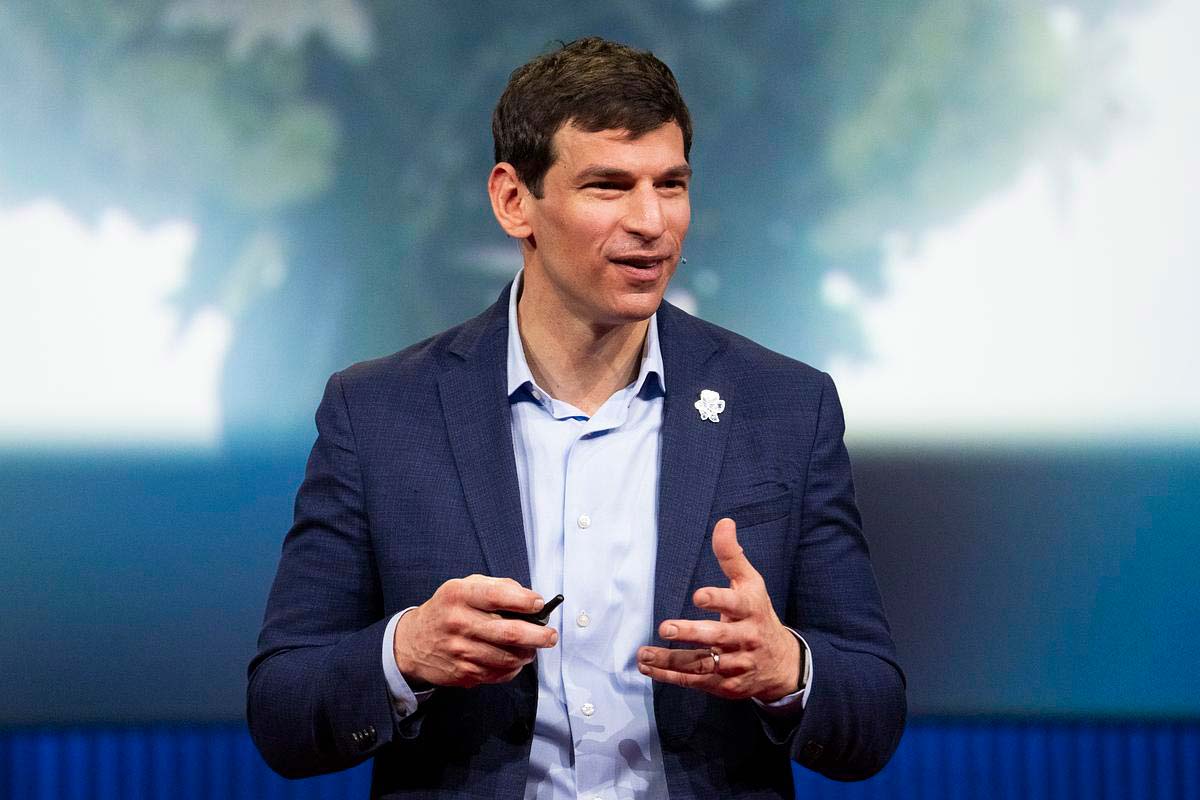
“Maybe there’s another drug, made for another disease that could also be repurposed for me,” he said.
There was. Now 11 years in remission, Fajgenbaum has dedicated his life to repurposing existing drugs to treat conditions that have otherwise been deemed untreatable, incurable.
He founded Every Cure, a nonprofit that uses artificial intelligence to find new uses for generic and off-label drugs, democratizing safe and effective treatments, especially for people suffering from untreatable diseases.
“The vision for Every Cure is that every FDA-approved drug is used for every disease that it can possibly treat,” he told Good Good Good at TEDNext in Atlanta, Georgia. “Not just the one or two that a drug company finds most profitable.”
It’s a bold effort.

“Of the world’s approximately 18,500 recognized diseases, only about 4,000 have FDA-approved treatments. More than 300 million people globally suffer from diseases without treatment, while many, many more struggle with undertreated diseases where existing cures are expensive, burdensome or inaccessible,” a write-up from TED’s Audacious Project, which connects donors to fund Every Cure's development, said.
Every Cure is the beneficiary of a $60 million funding commitment through TED's Audacious Project.
“Developing new drugs is an extremely costly process, requiring between $1-2 billion and 10-15 years to bring to fruition, and facing a 90% failure rate.”
Instead, Every Cure uses AI to quantify the likelihood of every one of the 4,000 FDA-approved drugs to treat every one of the 18,500 diseases.
That adds up to about 75 million possibilities — all given a score for Every Cure scientists to review.
“[AI] allows our medical team to just look at the things at the top of the list,” Fajgenbaum explained to Good Good Good. “Us humans couldn’t really come up with 75 million calculations, but we also really wouldn’t know where to start if we didn’t have a starting place. The AI scores give us a starting place.”
Once its AI model identifies top contenders for repurposing, Every Cure generates the evidence they need through clinical trials and lab studies, eventually changing clinical practice guidelines, which is what doctors consult for treatment recommendations.

In some cases, the Audacious Project said, the group will pursue official FDA label-change, or they’ll use off-label prescribing, which is already how about 30% of most drugs are prescribed.
Many diseases also share common mechanisms in the body, and most drugs bind to over 30 proteins, meaning that there are real chances for drugs to be repurposed with success.
“Though diseases like leprosy and myeloma may appear very different, they can actually share the same underlying problems or mechanisms in the body, and can therefore be treated with the same drug,” Fajgenbaum said in his TED Talk.
“And amazingly, doctors can prescribe any FDA-approved drug for any disease where they believe the benefit outweighs the risk.”
But up until now, drug repurposing or off-label prescriptions have “relied on serendipity” or focused on specific diseases.
“Every Cure works to flip this process and look for shared connections between all 18,500 existing diseases and all 4,000 approved drugs simultaneously,” the Audacious Project said.
“Shared connections aren’t always obvious, but advanced AI allows Every Cure to maximize the chance of finding effective drugs, searching the forest for low-hanging fruit instead of one tree at a time.”

Fajgenbaum said the organization has been taking baby steps, working through an independent nonprofit model, considering that drug companies lack the financial incentive to study generic or off-patent use of medications for new treatments.
Over the last 15 years, Every Cure has helped advance 28 repurposed drug programs, 14 of which were directly led by Fajgenbaum. These include the use of lidocaine for breast cancer; folinic acid for deficiencies associated with speech and other neurodevelopmental delays; beta blockers for neurodegenerative diseases; and more.
“There’s hundreds of unmatched treatments and there’s millions of patients who can benefit from them,” Fajgenbaum told Good Good Good.
“We’re taking it one program at a time. We’re up to nine [proven] programs right now for drug repurposing opportunities, and we’re just going to keep … trying to make as much impact as possible.”
Every Cure will unlock generic repurposed treatments for an estimated 15-25 diseases by 2030.
And it all comes back down to the last shred of optimism Fajgenbaum had in what he believed to be his final breaths.
“Even when the world thinks there’s no more hope,” Fajgenbaum said in an on-stage discussion at TEDNext, “there might be a solution as close as your neighborhood pharmacy.”
You may also like: 5 ways artificial intelligence is actually being used for good
Photo courtesy of the Audacious Project
Good Good Good has been covering TED's annual conference and spinoff events — like TED Women, TED Next, and TED Countdown — as press since 2023. Our journalists watch TED Talks live and interview speakers after they get off stage, giving Good Good Good the opportunity to share stories like this before TED Talks are released online.
The average TED Talk usually includes a well-coiffed expert, a compelling slideshow, and perhaps a few chuckles from a rapt audience.
But at TEDNext in Atlanta, Georgia this week, Jason Boyd — better known by his producer alias Poo Bear — got a little experimental.
The R&B and pop hit producer, who is behind titles like Bieber's “Yummy,” and “What Do You Mean?” joined Elise Hu, host of the TED Talks Daily podcast, for a conversation about songwriting in the age of artificial intelligence.

Boyd made some points about the need for human artistry to evolve alongside technological advancements, while still maintaining the soul of people-generated creativity.
But, ultimately, he found it more compelling to show instead of tell.
What followed a sit-down conversation-style TED Talk was a demonstration in which Boyd was joined by a guitar accompanist to battle an AI songwriting platform called Suno, which tells users to “make any song you can imagine.”
“I’m going to battle the digital version of myself,” Boyd said.

The producer would make a hook and a post-hook to a pop song and then prompt Suno to make a “Poo Bear hook” of its own.
“We’ll see which moves you the most,” he told the audience. “And if it beats me, that’s fine. I’m OK with it.”
Much like an improv show, he asked members of the audience to call out suggested themes for what he’d write about. He landed on the concept of “starting over.”
Soon, a hit song seemed to unfold in front of TEDNext attendees’ eyes.
Over a simple acoustic chord progression, Boyd began layering a melody, crooning some “oh no”s and “mm”s, followed by the hook: “Are we starting over? Should we be starting over?”
He re-recorded it a couple of times, as the guitar backing played on a loop, and his assistant captured his lyrics with ease.
“This is really how it happens in the recording studio, guys,” he told the crowd, followed by directions to “punch up” or take another stab at a phrase in the tune.
He continued into the song.
“I don’t wanna be let down / you don’t wanna be let down,” he sang, coming up with lyrics on the spot. “Should we take the time and turn this back around?”
Just five minutes into the exercise, he was crafting a post-hook, with some “ooh” and “yeah” chants characteristic of a Bieber hit. His soulful singing voice seemed to surface without any effort at all, but also carried the rasp and imperfection of live performance. In a word, it felt human.
He admitted his vulnerability, too, even to cheers and claps from the audience.
“This is real time, this is tough, guys. Suno’s in there warming up, doing push-ups in there right now,” he joked about the AI platform, which would soon follow him.

Once he felt confident in his contribution, about seven minutes into the experiment, he and his collaborator prompted Suno to give listeners a Poo Bear hook about “starting over.”
“This was way quicker than what I just did,” Boyd quipped after the computer said it had generated a response under 30 seconds.
Soon, a new voice echoed through the room, eerily similar to Boyd’s.
It played a slower, sadder rendition of the same “should we be starting over?” lyric, but quickly followed up with some creative liberties: “Chasing what we lost in the clover.”
Audience members hooted, some looked around, surprised by how much they liked what they heard.

“The cracks are wide but the heart’s still sober,” the AI version of the song sang. “Should we try? / When the echoes don’t lie? / Should we be starting over?”
Soon, the impressed hoots dissipated into giggles.
“That was the digital version of me,” Boyd said. “It didn’t really make a lot of sense, but it’s okay.”
Then he asked to “play back the Poo Bear Human Soul Experience.”
The audience listened closely, and when he said, “I’ll let you guys decide,” everyone shouted in unison: “Poo Bear!” followed by claps, cheers, and a standing ovation.
TEDNext attendee Tracy Egbas was in the crowd. As a podcast producer, she is familiar with the work it takes to captivate a listening audience.
“I was truly shocked at the quality of the AI version. There were even cracks in the voice of the AI version that seemed to simulate emotion. I didn’t expect anything near the level that it delivered,” Egbas told Good Good Good.
But — there was still something about Boyd’s version that stood out to her.
“In terms of lyrical expression and the actual meaning of the song, it felt a little all over the place,” she said of the AI version, “which is where the really real Jason dominated. He understood what he was singing and why.”

What Boyd illustrated in his demonstration, and what it seems other human creatives took away from it, is that AI has a place in creative endeavors, but manufactured perfection can never replace human vulnerability.
“I hope this proves that we are still always going to need humans,” Boyd said at the end of his experiment. “We should be able to adapt. We have to adapt. Let’s not count [AI] out. But let’s incorporate human soul forever.”
Editor’s Note: TED Talks and conversations from TEDNext will be released at a later date and will be embedded in this story when they become available to the public.
You may also like: Lucasfilm on AI: ‘We need to use these tools thoughtfully and with the full permission of the talent’
Header image: Ryan Lash / TED
Good Good Good has been covering TED's annual conference and spinoff events — like TED Women, TED Next, and TED Countdown — as press since 2023. Our journalists watch TED Talks live and interview speakers after they get off stage, giving Good Good Good the opportunity to share stories like this before TED Talks are released online.
East of Amsterdam in the city of Almere, a living experiment is taking place in the Dutch suburb of Oosterwold.
The hidden gem is the Netherlands’ newest city, and its 5,000 inhabitants enjoy the fruits of living in a green, self-sufficient community. They can build their homes however they like, with one stipulation: half of their land must be devoted to growing food.
“This rule … is very unique thinking in the world, and makes it also an outstanding area in many ways,” Jan Eelco Jansma, a Dutch researcher who campaigned for urban agriculture in Oosterwold’s design, told The Guardian.
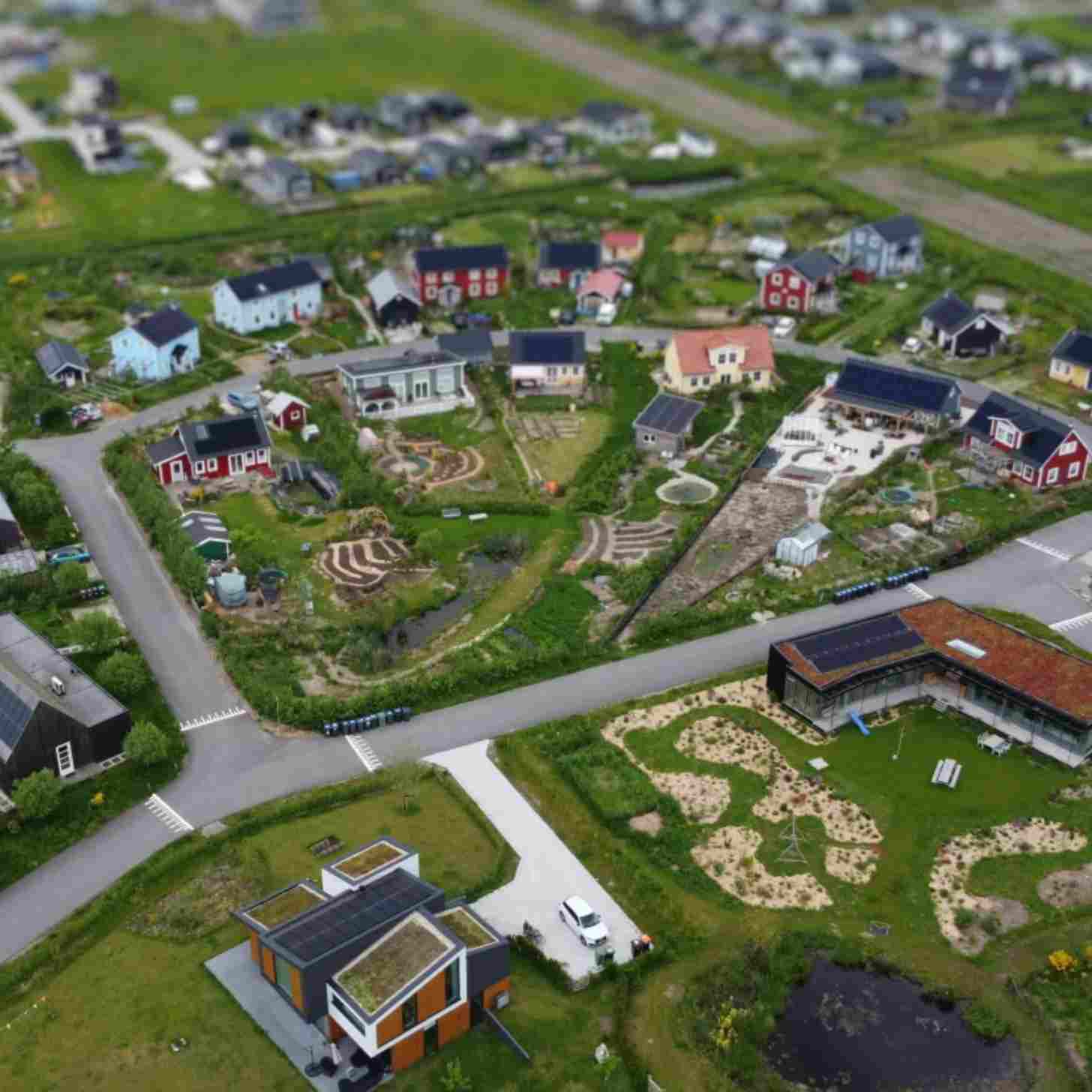
Oosterwold resident Marco de Kat has an 800-square-meter plot teeming with apples, pears, peppers, basil, beets, and cauliflower, but he says no two houses in the community are the same. Everyone has a different take on the 50% rule, from greenhouses and pastures to entire apple orchards.
“Nobody is doing it in the same way,” de Kat said.
Another resident, Jalil Bekkour, said his life changed dramatically when he moved to Oosterwold. He joined the community without a single drop of gardening knowledge, and within three years, he opened Atelier Feddan — a restaurant that was “farm to table” in the truest sense of the phrase.
Although Oosterwold is unique in and of itself, Bekkour hopes that people around the world become inspired to grow produce in their own backyards.
“The first thing I tell people is to start small,” Bekkour said. “Start with the things you love to eat.”
You may also like: In Australia, these bathroom ads double as vending machines for free period pads
A version of this article originally appeared in the 2025 Food Edition of the Goodnewspaper.
Header image via Tara Schepers and Yolanda Sikking/Almere municipality
At TEDNext in Atlanta, Georgia earlier this week, healthcare expert Kiah Williams acknowledged that the American healthcare system is “a behemoth.”
But she doesn’t think it’s doomed.
“I have never met anyone who works in care who doesn't want to help people,” Williams told Good Good Good. “What's happened is we've created this system that is not set up to do it. And so you have people fighting upstream to do that.”
Williams is the co-founder of Sirum, a nonprofit social enterprise that takes unopened, unexpired prescription medication and redistributes it to low-income communities across the country.
Every year, $11 billion in salvageable prescriptions are flushed or trashed — but Sirum has been hard at work to chip away at those numbers.
With funding support through TED’s Audacious Project, Sirum has grown considerably. Williams said it’s the difference between saving $30 million worth of medication to a whopping $300 million.
It’s a notable feat, especially when drug laws dramatically differ from state to state.

“The thing that's the challenge actually becomes our secret sauce,” Williams said. “There are about 40 states that have drug donation laws on their books, and they vary. They vary in who can donate, what they can donate, and where they can donate.”
“Those are the big challenges that just exist because every state implemented the policy a little bit differently,” she added. “And part of the secret sauce for Sirum, and what we do, is we help organizations and individuals know what they can donate. We basically take care of that for them.”
For Williams, Sirum’s expansion has been in direct response to people across the country reaching out and advocating for their towns.
“It's a combination of looking at where we can be the most helpful, where our community is asking us to come in,” Williams explained. “Oftentimes, when we are working in a new community in a new state, it's because someone has asked us to come there. Someone has said, ‘We have a need. Can you help?’ We like to know that there is an established need that exists.”
Williams is proud of Sirum’s real-world impact. She recalled the story of a mother of two living in Atlanta, Georgia.

“She had high blood pressure, and knew it, and had actually called nine or 10 different pharmacies to see if she could get a good price on the medication she needed. She actually described it as having a part-time job, trying to go out and find these medications,” Williams said.
“It was just really hard for her to find medications that were affordable,” she continued. “She was getting all different pricing. And so then she started working with us in our mail order pharmacy — our home delivery pharmacy Good Pill — and was able to get her medications for $2 for a month's supply.”
As Sirum looks to the future, they hope to continue expanding throughout the country, saving pills — and lives — in the process.
For Williams, that also means fighting for greater price transparency across the board.
“There's still not transparent information that exists for consumers and for families,” Williams said. “And we don't accept that.”
“You can go online and find out what the gas prices are. You can look at different prices for food. For all these basic necessities, generally speaking, the prices are pretty transparent and out there. Why are we not doing the same for something as vital as medication?”
You may also like: Governor addresses SNAP cuts, directs people to 900+ resources: 'How do we help the most vulnerable in our state?'
Header image via Sirum
Good Good Good has been covering TED's annual conference and spinoff events — like TED Women, TED Next, and TED Countdown — as press since 2023. Our journalists watch TED Talks live and interview speakers after they get off stage, giving Good Good Good the opportunity to share stories like this before TED Talks are released online.
Massachusetts is home to 13,000 acres of cranberry bogs, making it the second-largest cranberry-producing region in the U.S. and the third-largest in the world. The bright, red berries are the state’s moneymaker, contributing over $1.7 billion to the state's economy annually.
But a good chunk of that acreage is taken up by defunct cranberry bogs that have been rotated out of cultivation.
Fortunately, a new program by the state’s Division of Ecological Restoration is on a mission to convert them back into natural wetlands.
In November 2024, the DER funneled $6 million in grants to the restoration plan. According to the U.S. Fish & Wildlife Service, more than 500 acres of retired cranberry bogs have already been converted into wetlands — with hopes of restoring 1,000 acres in the next decade.
“These projects will transform degraded former cranberry bogs into thriving wetlands that will provide habitat to important species, flood control in time of storms, and access for all to beautiful natural areas,” Governor Maura Healey said in a statement.
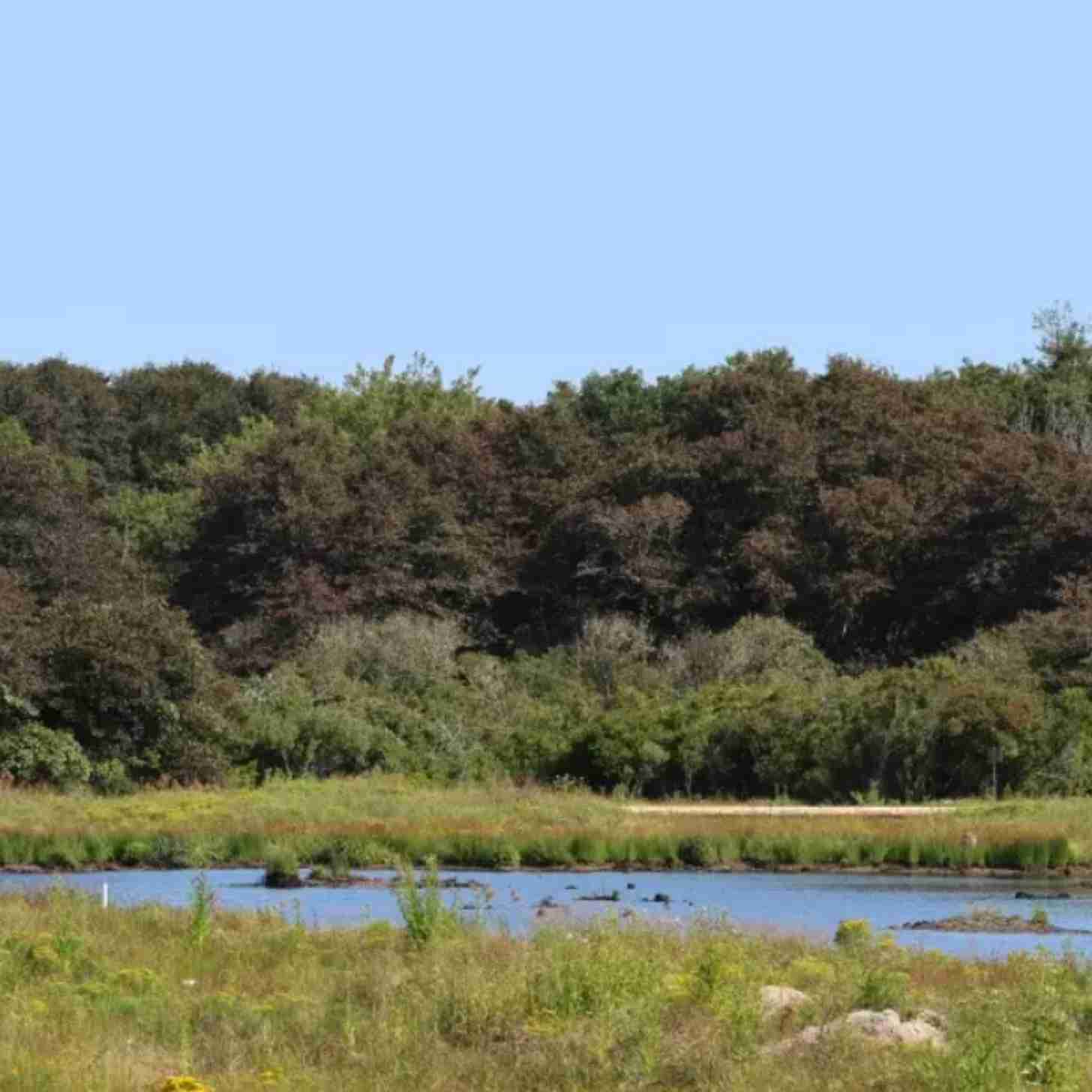
By improving salt marsh migration and removing barriers to fish passage, the habitat restoration project aims to benefit local wildlife and safeguard the coastline from rising sea levels.
There’s another huge environmental benefit, too: wetlands capture large quantities of carbon dioxide in their soil.
“We are excited to support projects that not only restore ecosystems but also prepare us for the impacts of climate change,” said Rebecca Tepper, secretary of the state’s Office of Energy and Environmental Affairs. “
These initiatives will enhance our ability to store and sequester carbon with nature and help us meet our net zero goals.”
You may also like: In this small town in Amsterdam, every resident devotes 50% of the land to growing food
Header image via Bryan Clark (CC BY-NC-SA 2.0)
From deforestation in the name of agriculture, to water pollution caused by pesticides and waste, food systems have a direct impact on our environment — and worsening climate conditions in turn lead to mass crop death and drought, decimating those very food systems we depend on.
Fortunately, regenerative agriculture, sustainable farming practices, and eco-friendly approaches are changing the way we farm, fish, and feast. From grain that’s been cultivated since 5000 BC to newly engineered “climate blend” bread, these five foods may have different histories, but they all have a part to play in future food menus.
Pawpaw
America’s largest native fruit is the pawpaw: a sweet, tangy treat with creamy, yellowish-green “meat” that can be scooped out with a spoon. In addition to being a low-impact crop that requires little intervention to grow, pawpaws are resilient against drought and flooding and naturally resistant to pests and diseases — no pesticides or fertilizers required.
Pawpaw trees also boost biodiversity by providing habitat and food for various insects, birds, and other wildlife — including the native zebra swallowtail butterfly, which relies exclusively on pawpaw leaves and nectar.
Now that smaller farmers are turning to sustainable agriculture, pawpaw orchards are cropping up in greater numbers, enrichening soil and restoring watersheds as they grow.
“Many of us are kind of bitten with the pawpaw bug,” Kirk Pomper, research lead of Kentucky State University’s pawpaw research program, told AG Daily. “It just has a lot of potential.”
Crickets
Scientists estimate that there are several quintillion (or a million trillion) crickets on the planet. And as world hunger mounts and researchers look for protein alternatives, the hopping, chirping insect has become an increasingly popular topic of discussion.
Crickets are already a traditional food source in many countries, including China, Thailand, Japan, and Mexico, and have proven to be invaluable historically when food was scarce.
And to those unfamiliar with the “taste” of cricket, it is best surmised as an earthy, nutty, mushroomy flavor. But its nutritional benefits — protein, zinc, potassium, iron, and vitamin B12 — give it added validity as a food poised for global adoption.
“There are many communities that know how to prepare insects in ways that make them most tasty,” Ishka Bless, an Australian researcher, told SBS News. “We have to acknowledge it and learn from that traditional knowledge but also understand how they may be incorporated using modern food technology methods.”
Lionfish
When he’s not feeding the hungry through his nonprofit, World Central Kitchen, chef José Andrés has been passionately spreading a message: Eat lionfish.
The invasive species, affixed with venomous spines, decimates native fish species and threatens coral reefs throughout the Atlantic Ocean, Caribbean Sea, and Gulf of Mexico. Producing 30,000 to 40,000 eggs every few days, the lionfish population continues to rise at an unprecedented rate.

Since 2018, Andrés has been serving up fried lionfish at several of his restaurants. Following his lead, an increasing number of chefs added the striped fish to their menus.
“Having lionfish on the menu is a very big message,” Andrés told the Daily Meal, adding that the environmentally-conscious meal goes very well with tartar sauce.
Fonio
“I’ve recently become fascinated by an ancient family of grains called millets,” Bill Gates wrote on X, formerly known as Twitter, in April 2024. He went on to note that although the food was new to him, it’s been well-known for generations in West Africa.
In fact, it’s even older than the wheel.
Fonio, which is part of the millet family, is an ancient grain that has survived five thousand years for a reason. It’s a drought-tolerant crop that not only grows well in poor-quality soil, but rejuvenates the ground as it grows. As climate change threatens food security globally, the nutrient-dense grain could play a crucial role in creating more resilient food systems while also combating malnutrition.
Although it is not currently available on a commercial scale, a new processing facility in Senegal is helping local farmers improve its viability as a “superfood” of the future.
“Climate Blend” Bread
For several years, scientists at the Washington State University Breadlab have been hard at work planting, harvesting, and baking a new “climate blend” bread to combat the challenges posed by climate change and excessive drought.
By combining ancient, drought-resistant grains like wheat and sorghum, and using regenerative farming practices, BreadLab aims to create a more resilient and equitable food system. And the sustainable bread not only supports climate-friendly agriculture — it makes great sourdough.
“I mean this in the best possible way,” Breadlab manager Janine Sanguine told NPR, “but it tastes like it’s made with white flour.”
You may also like: In this small town in Amsterdam, every resident devotes 50% of the land to growing food
Header image via Washington State University Breadlab
In Clarke County School District in Athens, Georgia, every high school senior has an investment portfolio.
It’s a stark contrast to the state of financial literacy in the United States, where one in five teens lacks personal finance skills, according to the National Endowment for Financial Education.
Gifted Savings — a nonprofit that gives high school seniors $1,000 in an investment portfolio, coupled with weekly lessons on the essentials of saving and investing — wants to change that.
They have a few pilot programs running across the country in California and Ohio, but their biggest rollout is in Athens.

“We’re making Athens the very first city in America where every senior has a chance to graduate as an investor,” Gifted Savings executive director Josh Landay told Good Good Good.
All 800 seniors in the school district were invited to participate in the program this year, and 90% of eligible students are now enrolled and consistently using the Gifted Savings program.
Why high school seniors? According to Landay, it’s at the essential crux of both financial and personal opportunity.
“It's that point where you're starting to think about, ‘who do I want to be? And what do I want my plans to be 10, 20, 30 years down the road?’ And if you're a student who has not had the chance to learn about investing — and let’s face it, almost none of us have that chance — you’re going to see money as an obstacle to doing these things,” Landay explained at TEDNext 2025 in Atlanta, Georgia.
“So … let's give them real investment assets along with real-world hands-on education. And that’s the spark to get them thinking about future opportunities that might not have otherwise been on their radar.”
Additionally, starting investment accounts and personal finance endeavors early is crucial to see major gains.
“If you don’t find out about investing until your mid to late 20s or 30s, you’re also missing out on that key period of compound growth,” Landay added.
So, these young people are given real money that has real consequences — and real benefits.
And in Athens, specifically, this real money can also be a conduit to end generational wealth inequality.
“There is a large Black community, and a large Hispanic and Latino community, as well,” Landay explained about Athens. “And the thing that everybody told me about Athens before I went down there for the first time, which was then reiterated by community partners, government officials, school folks, too, was Athens has — in their words — one of the highest rates of intergenerational poverty in the country.”

Landay believes the next generation can change those facts if they are given the tools to do it. The Gifted Savings program also aims to destigmatize conversations about money that would have otherwise remained taboo across the community.
“The other piece is that every student gets the same portfolio in the school. It’s a community thing. So, students are telling us that they're looking at the app and then they’re talking about it in the hallways and in the cafeteria,” he said.
“We think that by giving students the opportunity to have those conversations, we’re also helping to bring the community together, talk about money in ways that they tell us they’ve never talked about before.”
Gifted Savings is focused on students, but it’s keeping the families of those students in mind, too. Landay said the organization sends home quarterly newsletters and allows lessons to be accessed by any family members in the Gifted Savings app, so “moms, dads, aunties, uncles, and grandparents” can watch them, too.
“Another thing that we realized has been an obstacle is that families don’t talk about money. Whether you come from resources, in which case it's not okay to talk about money, or if money is an issue because you feel like you don't have enough of it, then you don't talk about money because it's a source of stress,” he explained.
“So how are we building conversations within the home as well as within the school?”
It seems to be something top of mind to the 12th graders, too.
“I will save money to start off my future right,” one student from Athens said anonymously. “That way I can have money to give back to my family.”
In these schools, money is also one tool in a broader approach to building opportunity on the ground floor. Gifted Savings has a partnership with TED-Ed, the education arm of TED.
Logan Smalley, founder and executive director of TED-Ed, said his organization's role is to help students gain confidence and skills to generate and build on their big ideas. Gifted Savings helps them learn how to bring those ideas to life.

“We see [Gifted Savings] as an incredible intervention to help students gain something that's pretty critical in the pursuit of developing an idea: Resources and the knowledge to grow those resources over time,” Smalley told Good Good Good.
In Athens, students already work with TED-Ed to learn how to share their ideas and stories. Then, Gifted Savings infuses them with resources to actually execute those ideas, which may even be shared in TED Talks of their own.
“Our hope is that, at the end of the year, when students give their TED Talks at an event, some number of them will be that much more ambitious and audacious,” Smalley said.
Although the program has not yet concluded in Athens, initial findings from other schools indicate it seems to be working.
“What those students told us from our baseline survey to our year-end survey was that it fundamentally shifted the way they think about money. They used to think of it as something to spend; now they try to think about how to save it first,” Landay said, about findings from a South Los Angeles program.
“We also saw double-digit increases in how they think creatively to generate new opportunities for themselves. We also saw that their confidence in their knowledge of investing significantly increased, and also how they view their influence over the direction of their lives.”
In Athens, students are three months into the program, and according to Landay, starting Level 2 of the curriculum. It’s built into the school day and takes place during an advisement period, a homeroom-style environment which helps students with career and college readiness.
And with engagement numbers hovering around a 76% weekly completion rate, Gifted Savings is ready to grow even more.
Next year, Landay said, the organization plans to implement across 12-15 schools nationwide. Applications are open for any interested participants, and now, Gifted Savings is working on finding a diversity of clients and communities, serving urban and rural schools in every region in the U.S.
Landay said the program’s operating expenses are completely covered, and now the goal is to match donors with schools to help fund these very real accounts.
“Every cent that a donor gives goes straight into the kids,” he said. “Because we think that every single high school student in the country should have this.”
You may also like: These schools are trying a new 'pay-it-forward' student loan plan: 'No interest, no fees'
Header image courtesy of Alexander Mills/Unsplash
It’s no secret that homosexual behavior is natural in the animal kingdom.
Bonin flying foxes, a type of bat, curl up in same-sex clusters to keep warm during mating season.
Male zebra finches form lifelong monogamous relationships with each other, which include courtship dances and sex.
And as it turns out, roughly 10% of all male sheep exhibit homosexual tendencies, too.
On a farm, however, rams who don’t mate with female sheep are considered useless and often end up in slaughterhouses. For shepherd Michael Stücke, this fact became a calling.
On his farm in Germany, Stücke has created a sanctuary for gay sheep, saving them from near-certain death and helping LGBTQ+ humans in the process.
In partnership with creative agency Serviceplan, Stücke rescues the sheep and sources their wool in a sustainable and labor-intensive process to create yarn for a line of products called Rainbow Wool.
All products, including hats, shoelaces, and patches are available for purchase online, with all proceeds going to Berlin-based LSVD+, Germany’s largest queer rights organization, which funds LGBTQ+ equality projects worldwide, especially in “queer-hostile countries.”
In 62 countries around the world, homosexuality is still punishable by death.
By intertwining the story of the gay rams with those of LGBTQ+ people, Andy Wyeth, the creative director at Serviceplan, says this project has become a “literal fashion statement.”

“It’s about uniting a community of talented people and using creativity to make the world a little better,” he said.
In addition to products, supporters of the project can purchase a “sponsorsheep” and ceremonially adopt a gay sheep to help grow Stücke’s beloved flock.
“At Rainbow Wool Farm,” the organization’s website shares, “you'll meet the fluffiest Pride ambassadors in the world.”
You may also like: Pride attendees invited to play catch with supportive dads: 'You're doing great kiddo'
A version of this article was originally published in The 2025 Pride Edition of the Goodnewspaper.
Header image courtesy of Serviceplan