As a middle schooler, Sam Nadol picked up a life-changing hobby: Sifting through broken computers at his local recycling center and bringing them back to life.
By the time he was 12, he had refurbished eight computers. They each sold within hours of listing them on Craigslist.
When the Westchester, New York teen transitioned to high school, he learned about a $600 grant program for student projects. That’s when he launched Reboot PC, a school project that would later evolve into a full-fledged nonprofit.
The first person to approach Nadol about Reboot PC was Roger Battacharia, a volunteer with Ossining Padres Hispanos, an organization that provides education opportunities in the Hispanic community.
Through Battacharia, Nadol made his first official donation of a dozen computers.
Since then, he has gotten refurbished computers into the hands of people who need them most, including schoolchildren in Haiti.
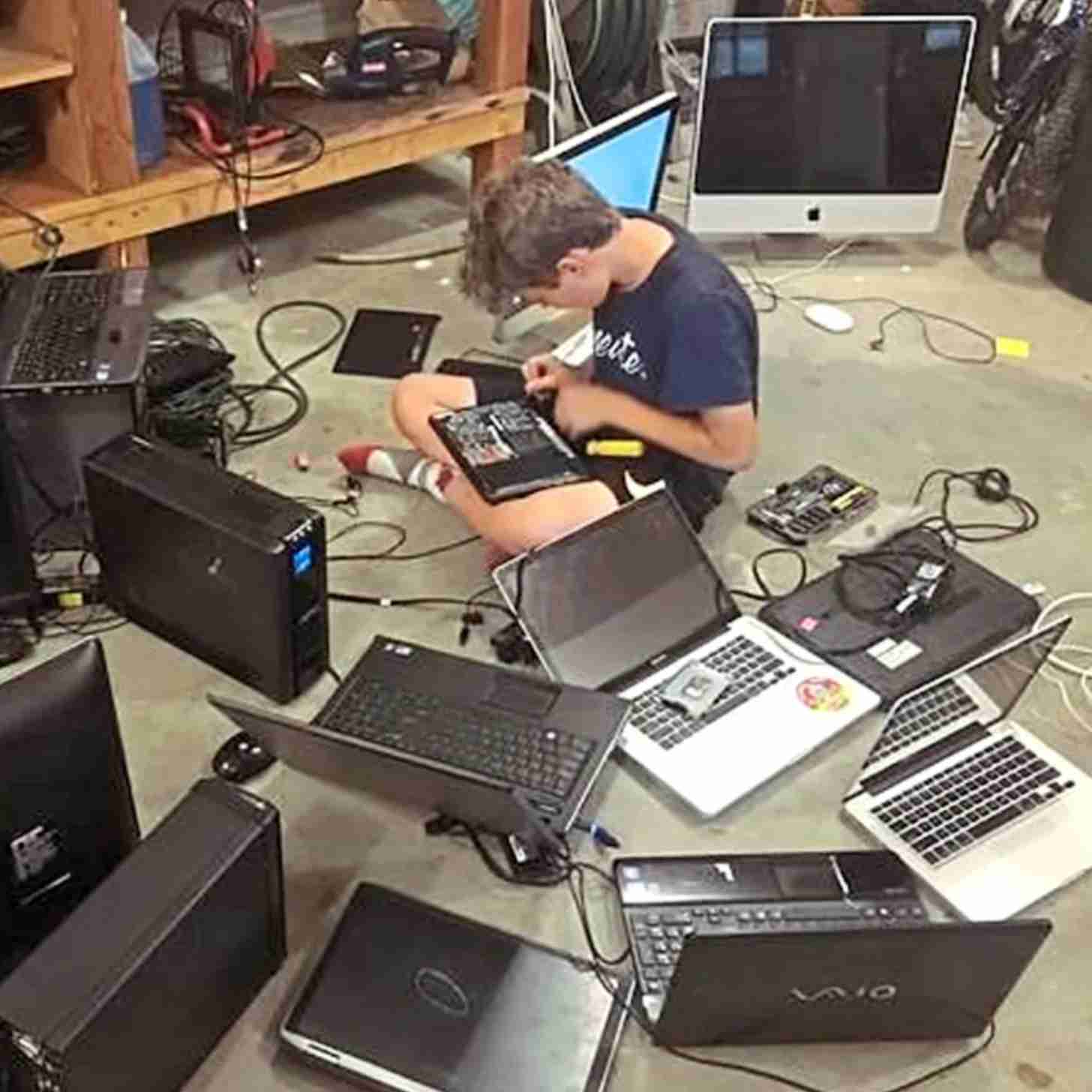
“Sam brings computers where they’re desperately needed,” Battacharia praised. “That would have been another several thousand pounds of electronics in a landfill.”
In August 2024, Nadol started his freshman year at Purdue University, where he’s on track to study computer engineering.
That same fall, he donated his 500th computer — this time to a group of Ukrainian refugees based in Brooklyn, New York.
“I get thank-you letters from recipients saying my computer helped them get a job or keep in touch with family,” Nadol said. “Being able to make an impact in people’s lives is the most rewarding part of what I do.”
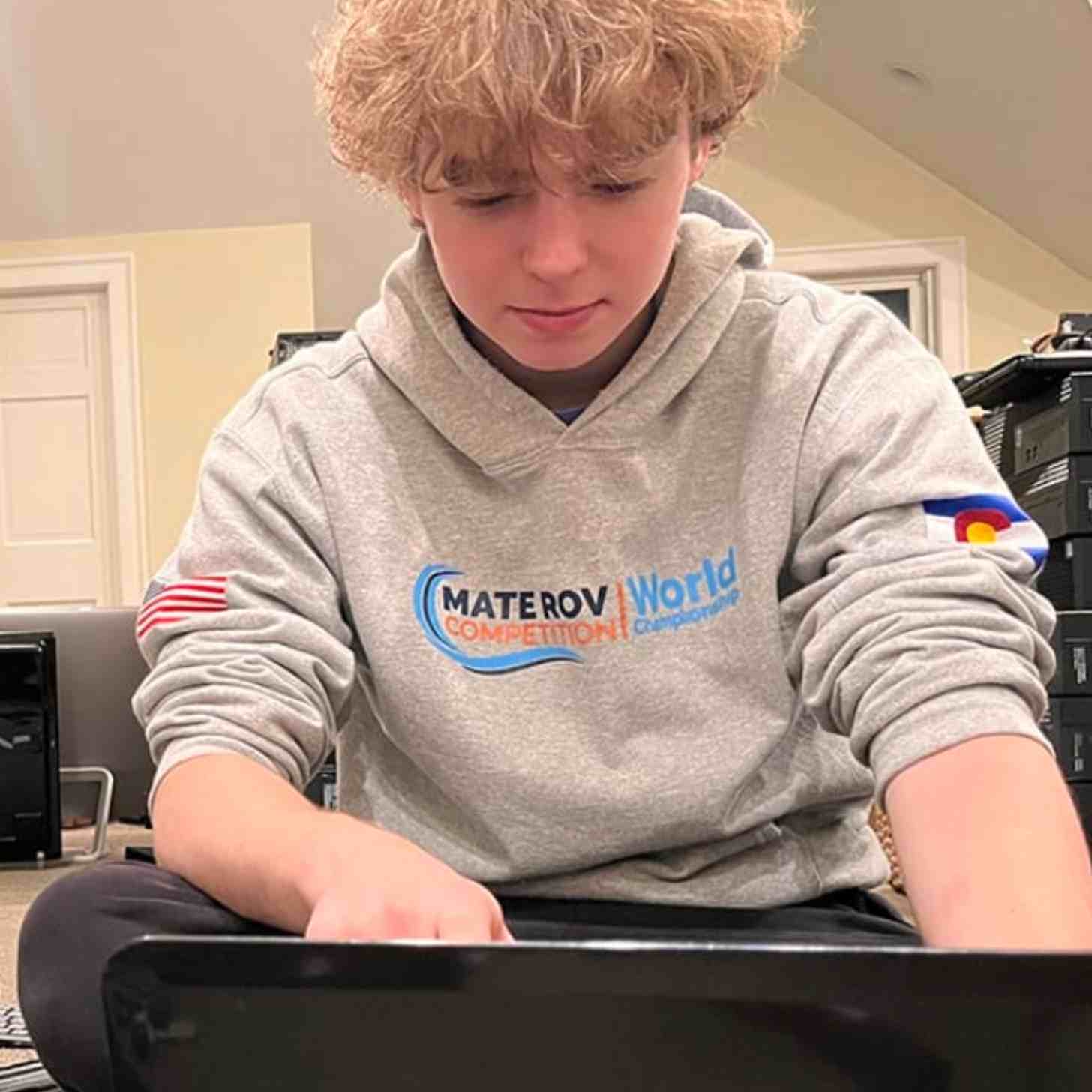
A version of this article was originally published in The 2025 Technology Edition of the Goodnewspaper.
Header image by Roboflow Universe
Imagine being buried under building rubble and seeing a three-inch beetle squeeze through the cracks to pinpoint your location — and even deliver life-saving medication.
Lachlan Fitzgerald, a research assistant at the University of Queensland, paints a vivid picture of this scenario as he submerges a giant burrowing cockroach in an ice bath and attaches a tiny circuit board to its back.
“We see a future where after an urban disaster like an earthquake or a bombing, where humans can’t safely access the disaster site, being able to send in a bunch of cyborg beetles to navigate the disaster zone quickly and efficiently,” he told CNN.
In the biorobotics lab, Fitzgerald and his team have been fine-tuning new biohybrid technology that issues electrical pulses to their subjects’ antennae to direct their movements.

“Insects are so adaptable compared to an artificial robotic system, which has to perform so much computation to be able to deal with all these different scenarios that might get thrown at it in the real world,” Fitzgerald explained.
The Australian researchers join an ever-broadening discipline of biohybrid research, one that includes bionic jellyfish and microrobots controlled by king oyster mushrooms.
Fitzgerald acknowledged that animal welfare is a valid concern as the field evolves, but maintained that he and his fellow roboticists don’t cause undue stress to their subjects.
His giant cyborg cockroaches have the same life expectancies as backpackless beetles.
“I don’t think they mind, per se,” Fitzgerald said. “I think the potential for this technology to save lives in an urban disaster … really outweighs any kind of hesitancy you might have towards the field.”
A version of this article was originally published in The 2025 Technology Edition of the Goodnewspaper.
Header image via The University of Queensland
“We are in some pretty gall darn uncertain times,” Nick Maestas, owner of New Mexican eatery Muchachos in Lincoln, Nebraska, wrote on Instagram this week.
He is specifically referring to the now-29-day federal government shutdown — and the impending cuts to the Supplemental Nutrition Assistance Program, which provides food aid to 42 million Americans every month.
Amid the shutdown, the Trump administration said it cannot use emergency contingency funds to continue covering SNAP benefits, NPR reported earlier this week, meaning about 1 in 8 U.S. residents will not receive their benefits beginning November 1.
But Muchacho’s is one of countless small businesses across the country opening its doors to people in need.

“With SNAP benefits being cut, people not being paid to work, we’ve got a lot of people who need some help,” Maestas continued. “So, that’s just what we are going to do.”
The restaurant, which also has a food truck, is launching two initiatives to make sure Nebraskans are fed.
The first is what Maestas is calling the “Muchachos Lil Pantry.” He shared that a spot in the restaurant, which is usually reserved for branded merchandise, will now be a makeshift food pantry. Customers who donate to the shelf will be treated to a free street taco.
“Our merch shelf will now be used for filling up with bread, canned goods, non-perishable items, no questions asked,” Maestas said. “Take what you need.”

A second offering from Muchachos is a free quesadilla — or “SNAPadilla” to anyone who needs one.
“You need a hot quesadilla, we got you,” Maestas continued. “Just order the SNAPADILLA with pork or chicken and we got you, it comes with a soda. One per person. No payment needed. No judgment. Just happy and full bellies.”
The initiatives, which were shared on both Facebook and Instagram, elicited immediate support and gratitude from members of the community.
“I'm one of the ones hurt by this with work slowing down for November and now no [food] stamps … I'm freaking out about how I'm gonna eat,” one Facebook commenter wrote.
“This warms my heart, and I will definitely be visiting and remembering what you guys have done when things get better again … Thank you for such generosity.”
Another person asked if there was a way to financially support Muchachos as they provide resources to people in need.
“We have a gift card we are adding money to,” Maestas replied. “We literally just had the idea and posted without thinking it would get this kind of traction. So working on logistics of some stuff.”
In the meantime, Maestas and his team are already prepared to serve whoever needs a meal.
“These start immediately,” Maestas said in his announcement. “So come on out, do some good, fill your tum tums, and let’s get through all this together!”

And he had one last note, amid ongoing political discourse about the government shutdown.
“Don’t y’all dare bring politics into this,” Maestas wrote.
“We are here to feed. Ensure peeps have a hot meal. To share our love and queso with you all.”
You may also like: A Portland coffee shop offered free breakfast to SNAP recipients. Supporters responded by raising $185K
Header image by Roman Odinstov/Pexels
Self-help and lifestyle podcasters may have already led you to believe that maintaining hope is a key component of living a more fulfilled life.
“Hope is a muscle,” Krista Tippett, host of “On Being,” has said, “a practice, a choice that actually propels new realities into being.”
As it turns out, she isn’t far off.
A new study by Brookings Institution economists Carol Graham and Redzo Mujcic analyzes 25,000 randomly selected individuals over a period of 14 years. It’s the first large-scale, longitudinal study of its kind to look at hope’s role in human well-being.
“Emotions are central to the study of human well-being, yet mainstream economists have only begun to think about the importance of these factors in economic, social, and health behaviors,” the researchers wrote in a statement about the new study.
“Hope is likely the most important positive emotion and socio-emotional trait directly relevant to long-term outcomes but is the least studied dimension of well-being.”
Their new research, recently published in “Health Economics,” aims to bridge that gap.
Using a large and nationally representative data set from Australia called the HILDA panel, they explored the links between hope and long-term outcomes in life arenas, including economics, health, and social life.
And what they found is major.
“Those with high levels of hope had higher levels of well-being, education, earning and employment outcomes, perceived and objective health indicators, and are much less likely to be lonely than those with low levels of hope,” the researchers shared.
“We also find a persistence of hope within persons, which in turn likely helps drive outcome driven behavior over many years.”
Essentially, hope is not just a belief that things will get better, which the researchers call optimism. But rather, hope is the determination to make them better, indicating that hope requires agency and determination.
“Hope is associated with higher resilience, ability to adapt, and internal locus of control,” the researchers continued.
“Hope also serves as a psychological buffer during bad times: Respondents with high levels of hope were less likely to be affected by negative life events and shocks and adapted more quickly and completely after those events. People with hope also had a higher internal locus of control.”
Hope does have a genetic component and is shaped by environmental factors out of someone’s control, like familial and community support, education, and opportunity. This means it is likely easier for people with access to more opportunities and resources to develop agency and hope earlier in life.
But the good news? Socio-emotional traits and skills can be developed throughout life, the researchers said. The ability to be hopeful is malleable and shifts and changes throughout one’s life.
This research can be used, Graham and Mujcic pose, to confront concerns around cultural despair and populations that lack hope.
“The absence of hope in some population cohorts is also worthy of concern, as those without hope are likely to live lives that are shorter, sicker, and less prosperous,” the researchers shared.
“In the most extreme outcomes — such as the crisis of deaths of despair in the United States (premature mortality due to suicide, drug overdoses, and alcohol-related diseases) — the loss of hope pre-dated the mortality trends and could have served as a warning sign.”
Knowing that hope has positive impacts on things like economic prosperity, professional opportunities, health outcomes, and more — all critical to quality of life and longevity — the researchers believe this research will be foundational in improving lives everywhere.
They conclude: “We believe that better understanding the drivers of hope and its consequences can ultimately inform the ability of both individuals and of public policy to improve people’s lives.”
You may also like: In surprising new study, researchers find hope — not happiness — is key to a meaningful life
Header image by Max Andrey/Pexels
“I hate my phone.”
That’s how comedian Eddy Burback began a 46-minute YouTube video that would go on to accrue more than 4.3 million views.
“I am constantly using my phone to see things that I don’t want to see,” Burback, 28, continued. “Like a lot of people my age, my smartphone has attached itself to nearly every aspect of my daily life, and it’s really starting to make me feel like it’s having a negative effect on me.”
So he got rid of it.
For 30 days, Burback kept his iPhone and Apple Watch in a locked safe. He invested in a corded landline with an answering machine, wrote down bus routes with a pen and paper, exclusively used a computer during work hours, and swapped out Instagram doomscrolling for paperback books.
Burback’s experience wasn’t seamless by any means — or easily replicable. His answering machine was filled with loving messages from friends and family, but it was also constantly ringing from spam calls. He missed the inherent safety that smartphones afforded, especially when commuting at night. And it was impossible for people to reach him on the go — a luxury he wouldn’t be able to manage if he were a parent or caretaker.
Still, despite a few hiccups, he said the experiment did wonders for his mental health.
“I’m not exposing a problem that was hidden in the shadows,” Burback admitted as his video drew to a close. “We all know it. We feel it everyday.”
Burback speaks to a growing trend of “digital detoxing,” a movement that has inspired people of all ages to delete social media apps, set screentime limits, and even trade their smartphones in for “dumb phones.”
That’s what Vox journalist Swati Sharma did in May, when she ditched her iPhone for a pink $90 HMD Barbie flip phone.
“My life felt more full because of the burst of spontaneity encouraging deeper connections with my friends and family,” Sharma reported after her month-long detox. “My attention span also no longer seemed like it’s the size of a small pea.”
Sharma then quoted a study from the CDC, which found that symptoms of anxiety or depression were higher among teens who spent four hours or more on their phones each day.
“While I didn’t start this experiment out of concern for my mental health, it did help me feel more socially connected,” Sharma noted.
That hunger for social connection lies at the heart of the Offline Club, a concept dreamed up by three friends — Jordy van Bennekom, Valentijn Klok, and Ilya Kneppelhout — in 2021 after a week living as luddites in the Dutch countryside.
Today, Offline Club’s presence can be found all over the world, in phone-free pop-ups across London, Barcelona, and beyond. In September, the Offline Club did a 24-take over at a cafe in Jumeirah, Dubai.
“We are always connected with each other virtually but not in real-time,” Silvia Farina, one of 70 attendees, told the Khaleej Times. She said that events like these “bring back that balance we aspire [to] between our digital and non-digital lives.”
In the last four years, Offline Club co-founder Kneppelhout has seen the club grow in real time, from their first event in Amsterdam to a whopping 27 meet-ups all over the world in a single month.
He enjoys seeing people come together to swap their phones for novels, easels, and knitting needles as they strike up conversations with other club members who, on any other occasion, would be dismissed as passing strangers.
“I think the primary reason is that the world is screaming for more authentic and meaningful connection with other people, but also with oneself,” Kneppelhout told Ankha Azzura Magazine.
“And next to that, I think people are becoming more aware that their phones are really negatively impacting their lives, and that they’re spending more time on their phones and behind screens than they want to — but they don’t know how to get away from them.”
“I think the Offline Club is giving them the opportunity to go back to the old days. But in ‘modern jackets,’” Kneppelhout noted. “As we say in Dutch.”
5 Small Ways To Reduce Screen Time Without Going Off The Grid
- Start simple: Instead of locking your phone in a safe, you can gradually reduce screen time in 10 to 15 minute stretches a day to make the transition smoother and more sustainable.
- Turn off notifications: A 2024 study from Reviews.org found that Americans check their phones 205 times a day. You can tamp down on overchecking by silencing unnecessary alerts.
- Create screen-free zones: Designate certain places, or times, in your home where you intentionally go without your phone so that you can stay present. A good place to start is the dinner table.
- Set limits with news consumption: Make a plan to seek out news — from a source you trust — once a day to avoid being caught in a doomscrolling spiral of endless breaking news.
- Swap it out for something better: Americans spend an average of 5 hours and 16 minutes per day on their phone, according to Harmony Healthcare IT. Make an effort to swap out at least one hour of that screen time for a hobby you love (and likely miss).
A version of this article originally appeared in the 2025 Technology Edition of the Goodnewspaper.
Header image via Eddy Burback / YouTube
A new study out of King’s College London is giving people more of a reason than ever to plan a museum date.
Researchers from the university’s Institute of Psychiatry, Psychology & Neuroscience worked with the Art Fund and Psychiatry Research Trust to study the physiological responses of individuals while they viewed masterpieces by world-renowned artists.
Half of the participants, which included 50 volunteers, aged 18 to 40, viewed pieces by Manet, Van Gogh, and Gauguin in The Courtauld Gallery in London. The control group, on the other hand, looked at reproductions of the same artworks in a non-gallery environment.
All of the participants’ heart rate variability and skin temperatures were measured with sensors throughout the 20-minute art-viewing sessions, and saliva samples were also taken before and after viewing.

What the researchers found proves long-held anecdotal beliefs about the power of art.
“Our unique and original study provides compelling evidence that viewing art in a gallery is ‘good for you’ and helps to further our understanding of its fundamental benefits,” Dr. Tony Woods, the study’s senior author, said.
“In essence, art doesn’t just move us emotionally — it calms the body too.”
More specifically, cortisol levels — a key stress hormone in the human body — fell by an average of 22% in the gallery group, compared to just 8% in the control group.
The participants viewing original art in the gallery also had more dynamic heart activity, which signals that art engages the body both through arousal and stress regulation.

Another key finding was that pro-inflammatory proteins IL-6 and TNF-alpha also dropped by 30% and 28% respectively for those viewing art in galleries, with no observable changes for the control group.
“Stress hormones and inflammatory markers like cortisol, IL-6 and TNF-alpha are linked to a wide range of health problems, from heart disease and diabetes to anxiety and depression,” Woods explained.
“The fact that viewing original art lowered these markers suggests that cultural experiences may play a real role in protecting both mind and body.”
The study also found that art engages the immune system, the nervous system, and the endocrine system, which is responsible for releasing hormones — making a gallery visit a near full-body workout.
“From a scientific perspective, the most exciting outtake is that art had a positive impact on three different body systems — the immune, endocrine and autonomic systems — at the same time,” Woods said.
“This is a unique finding and something we were genuinely surprised to see.”

Other previous studies have linked regular gallery visits to long-term wellbeing, the Art Fund shared in a press release, but this study is the first to “capture real-time physiological benefits,” which demonstrates an immediate positive impact.
“This study proves for the first time what we've long felt at Art Fund — that art really is good for you. What’s particularly exciting is that the findings show these benefits are universal — they can be experienced by anyone,” Jenny Waldman, the director of Art Fund, said.
“We want to encourage everyone to make time to visit their local museum or gallery … experience these powerful effects for themselves, and discover just how good art can make you feel.”
You may also like: 75% of people more likely to visit nature if ordered by a doctor, finds new 'park prescribing' study
Header image © Jim Winslet for The Courtauld Gallery
Thirty previously unknown deep-sea species — including a carnivorous “death-ball” sponge — have been confirmed in the depths of one of the most remote regions on the planet, thanks to new research from The Nippon Foundation–Nekton Ocean Census and its collaborators.
These discoveries, published on October 29, stem from two 2025 research cruises conducted with the Schmidt Ocean Institute and were verified during the Southern Ocean Species Discovery Workshop, hosted by Universidad de Magallanes in Punta Arenas, Chile, in August.
The leading discovery of the predatory “death-ball” sponge was particularly exciting to marine scientists.
Unlike most sponges that feed passively by filtering water, this species uses minuscule hooks across its spherical body to ensnare its prey.
“Advanced tools — from precise seafloor mapping to high-definition ROV imagery — allow us to explore and gather data from places never seen before by humans,” said Dr. Jyotika Virmani, the executive director of the Schmidt Ocean Institute.

“The goal we share with Ocean Census to accelerate discoveries has resulted in the first confirmed sighting of a juvenile colossal squid and new species, and exemplifies what becomes possible when technology, ship time, and a global science network work as one.”
The Southern Ocean expeditions uncovered dozens of new species, including new types of black corals, armored and iridescent scale worms, new sea stars, and new crustaceans such as isopods and amphipods — some of which may constitute a new amphipod family currently under review.
The expeditions also led to the discovery of a new type of sea pen (a pink deep-sea animal that resembles a feather quill), rare gastropods and bivalves specially adapted to volcanic and hydrothermal environments.

They also found zombie worms — extremely rare deep-sea worms with no mouth or gut that use symbiotic bacteria to break down fats inside the bones of large vertebrates, like deceased whales.
Dr. Michelle Taylor, the head of science at The Nippon Foundation-Nekton Ocean Census, said the Southern Ocean remains “profoundly under-sampled.”
“To date, we have only assessed under 30% of the samples collected from this expedition, so confirming 30 new species already shows how much biodiversity is still undocumented,” said Taylor, who also teaches as a senior lecturer at the University of Essex.
“By coupling expeditions with species discovery workshops, we compress what often takes more than a decade into a faster pathway while maintaining scientific rigour by having world experts involved.”

During the Southern Ocean Species Discovery Workshop, an international team of taxonomists expedited species verification by sorting, imaging, and comparing specimens on site, using targeted DNA barcoding when required.
This ocean-to-lab workflow allows scientists to fast-track new species descriptions and add them to the taxonomic record — a process that historically takes an average of 13.5 years to complete.
Taylor, who is one of the world’s leading experts on deep-sea corals, emphasized the importance of Ocean Census.
“This is exactly why the Ocean Census exists — accelerating the discovery of ocean life and making it openly available,” she said.

“Each confirmed species is a building block for conservation, biodiversity studies, and untold future scientific endeavors.”
Through its accelerated species discovery model, the Ocean Census generates open, high-quality biodiversity data that support taxonomy, conservation planning, and ongoing research at a time when the ecosystem is rapidly adjusting to rising sea levels and rising global temperatures.
All validated records meeting the Ocean Census ‘Discovered’ criteria will be archived in the open-access Ocean Census Biodiversity Data Platform.
You may also like: Scientists discover new creature with 'orange and black' coloring, agree conservation plan 'is urgently needed'
Header image via The Nippon Foundation-Nekton Ocean Census/Schmidt Ocean Institute
According to the Centers for Disease Control, about 7.7% of U.S. adults have an independent living disability with difficulty managing errands and key daily tasks on their own.
Simultaneously, these individuals face crises of staffing shortages and rising costs associated with care and services.
In Ohio, nonprofit Living Arrangements for the Developmentally Disabled has worked for over 50 years to offer education and training to provide a higher level of independence for adults with developmental disabilities.
Now, in the 21st century, the organization has turned to smart home technology to help support its clients even further.

In 2021, LADD launched a pilot to integrate smart home technologies such as virtual remote support touchscreens, wearables, automation for lights, temperature, and even medication dispensers, smart appliances like dishwashers, stoves, and garbage cans, and more.
The technology is designed to anticipate challenges and provide accommodations and safety plans to mitigate issues before they arise.

These supports intervene only when they are needed instead of being required 24/7, which is similar to how in-home service providers often operate.
As part of the pilot, the organization created the Heidt Smart Living Home for a small group of residents to move in and test the efficacy of its offerings.
“I don’t know the words to say it, I’m just … I’m finally home,” said Matt Chaffin, one of the first residents of the smart home.

“We have thought for so long what it would take for us to provide Drew a situation like this and the cost, the right supports, the right environment,” said Steve Jones, the father of another resident, Drew.
“We didn’t imagine that that was going to happen for so long or if it could happen at all.”
LADD is also working with Xavier University’s Department of Occupational Therapy to research technology’s impact on independence and affordability within this community.

Since the pilot launched in 2021, researchers have documented a 65% reduction in staff time and an increase in independence for the residents.
While LADD was likely the first organization in the country to implement a program like this, others are following in its footsteps.
In Long Island, New York, the nonprofit Family Residences and Essential Enterprises, or FREE, opened its first communal smart house for autistic and disabled adults.
“Without the enhancement of adaptive technology, it doesn’t permit them to live their fullest life,” FREE’s CEO and Co-President Dr. Christopher Long, told CBS News. “We want to maximize people’s independence.”
A version of this article was originally published in The 2025 Technology Edition of the Goodnewspaper.
You may also like: At a new 'Habitat for Humanity factory,' high school students earn credit building tiny homes for neighbors in need
Header image courtesy of LADD
Since they opened in January 2018, A Place At The Table has served 100,000 cups of coffee and 255,000 meals to people in need — thanks to the help of over 2,000 volunteers annually.
As the first pay-what-you-can cafe and food truck in Raleigh, North Carolina, A Place At The Table has become a pillar in the southeastern city.
It was a nonprofit that founder and executive director Maggie Kane created after joining grassroots efforts to reduce homelessness in her hometown.
“One in seven people are food insecure in Raleigh,” Kane said in a TED Talk. “That’s one in seven people in your row. Think about it that way. One in five children are hungry.”
“That is not okay,” she emphasized. “Knowing these numbers and getting to know so many incredible people experiencing poverty, I knew I needed to do something about it.”
Kane said that their “pay-what-you-can” model brings dignity to and choice to people living on the margins of poverty.
“The best part is you wouldn’t even know we are a nonprofit,” reads a mission statement on the nonprofit’s website.
“To the average consumer, we operate as one of the millions of restaurants you eat at every day. Until a volunteer behind the counter asks, ‘your suggested price is … would you like to pay that price, pay less or volunteer for your meal?’”
In addition to providing people in the community with donated meals, the cafe also regularly employs people experiencing homelessness. After they volunteer for a shift, workers eat for free, all while they build a resume and learn transferable skills for future jobs.
Earlier this week, when the United States Department of Agriculture announced that recipients of the Supplemental Nutrition Assistance Program would lose their benefits on November 1, the nonprofit reaffirmed its commitment to the people who relied on it the most.
“This cafe has always been a place for people,” A Place At The Table posted to social media on October 30. “A place for respite, connection, a welcoming smile, and a good meal.
“Now, perhaps more than ever,” they continued, “our role in this community is essential.”

“As federal assistance like SNAP shrinks, the urgent need for food security remains the same. We know that so many of our neighbors are bracing to feel the impact.”
“While we, like many organizations, aren’t prepared to fill the massive gap this leaves, we want you to know this: We are here. We’re here to offer a warm meal, good conversation, and a space to take a load off when the rest of the world feels heavy.”
“As we all prepare for this increased need, we hope you’ll come and support us by joining us for a meal or paying it forward. By supporting the cafe, you help us continue to show up for everyone who walks through our doors.”
The nonprofit ended the message by extending support to any mutual aid organizations and nonprofits that needed help in the coming days.
“We also want to lift up the incredible work happening around the city,” they wrote. “If you are an organization in need of donations, volunteers, or support to address food insecurity, please get in touch so we can share your needs and help connect you with our community.”

A Place At The Table is located at 300 W Hargett St #50, Raleigh, North Carolina, 27601.
Prospective volunteers can visit their website. A Place At The Table is also accepting online donations to continue their mission of “providing community and good food for all, regardless of means.”
UPDATE: On October 31, two federal judges ruled almost simultaneously that President Donald Trump’s administration must keep funding SNAP, using emergency reserve funds during the government shutdown. At the time of the announcement, the judges allowed the administration discretion to decide whether to finance the program partially or fully in November, with long-term continuance unclear.
You may also like: Furloughed federal workers eat for free at Bon Jovi's 'pay it forward' restaurant
Header image via A Place At The Table
Every day the Good Good Good team collects the best good news in the world and shares it with our community. Here are the highlights for this week!
If you want to get good news in your inbox every day, join the Goodnewsletter — the free daily newsletter designed to leave you feeling hopeful.
The Best Positive News We’re Celebrating This Week —
A Texas church painted a rainbow on its front steps in protest of a state order to remove painted crosswalks
Oak Lawn United Methodist Church in Dallas painted its front steps in rainbow colors in response to a statewide order requiring cities to remove rainbow crosswalks from public streets.
The church decided to act following a rally in the Oak Lawn neighborhood, where residents were encouraged to display rainbows on private property as a form of peaceful protest. It wanted to let people know it was a place people “can come and find sanctuary.”
Why is this good news? While the LGBTQ+ community needs more support than rainbow-painted crosswalks, they are an important signal of representation and visibility, and that a community is welcoming and inclusive. Arguably, these church steps will be an even more powerful, visible welcome sign to passersby.
New study: Dungeons & Dragons is good for your brain — especially if you have a mental illness
After a catastrophic flood, a small Massachusetts town united to help a 99-year-old WWII veteran who lost everything
When a devastating flood destroyed the home that 99-year-old WWII veteran Leo Valente and his daughter Cheryl had shared for nearly 60 years, and insurance and the VA failed them, they turned to their community for help.
Cheryl explained their situation to a local news station, and neighbors rushed to the comments in a Facebook post to not only share their condolences, but to offer help in the form of monetary donations, furniture, and more.
At the time of publication, a GoFundMe in Leo’s name had raised $15,875 in six days, just short of their $18,000 goal, which will go towards temporary hotel fees and, later, a new apartment.
A new study shows that extinction rates have slowed across many plant and animal groups
Leading research that suggests the planet is currently experiencing another mass extinction is based on extrapolating extinctions from the past 500 years — but a new study found that extinctions in plants, arthropods, and land vertebrates actually peaked about 100 years ago and have declined since.
Their study found that past extinctions were mostly caused by invasive species on islands, whereas the most significant threat now is habitat destruction. Because of these differences, claims of a current mass extinction may be based on shaky assumptions.
According to their research, extinctions were most frequent among mollusks and vertebrates, but relatively rare among plants and arthropods. Most of them were species confined to isolated islands.
What’s the nuance? The researchers stressed that while it’s important to have this information to ensure accuracy in future protections, human activity is still a significant, urgent threat to many species: “Biodiversity loss is a huge problem right now, and I think we have not yet seen the kinds of effects that it might have.”
This viral Instagram fundraiser just raised $600K to feed 6 million people in need: ‘Hope still has helpers. That’s you.’
Sales of internal combustion engine cars in China peaked in 2017, and in the world in 2018
Electric cars have rapidly increased in popularity in China over the past several years. In 2020, one in 18 new cars sold was electric — in 2024, it was one in two.
But the real shift happened back in 2017, when sales of internal combustion engine cars — which run mostly on petrol or diesel fuel — peaked. Just one year later, combustion engine car sales peaked globally.
This shift is vital to decarbonizing transportation, and means that oil demand is expected to peak even earlier than the International Energy Agency initially predicted.
A conservation group is saving sea turtles off the coast of Nigeria, and rewarding fishermen who help them
The Greenfingers Wildlife Conservation Initiative in Lagos, Nigeria has saved and returned dozens of sea turtles back into the ocean in recent years, while educating the public about the importance of protecting them.
To fishermen in the area, “they are just food,” Greenfingers’ founder said, and there is a general lack of awareness about wildlife in the country, which is home to 23 critically endangered species.
Part of their success in saving turtles has come from working directly with fishermen, rewarding them with fishing gear if they alert conservationists to sea turtles caught in their nets, or if they come across a nest on shore.
Why is this good news? Sea turtles play a critical role in the marine ecosystem, and they are endangered around Lagos. While there are no official population figures, conservationists have reported an alarming decline in the number of sea turtle nests. Rescue and education efforts like these help protect those who do exist and help boost population growth.
You may also like: Florida’s leatherback sea turtles rebound to record high, following devastating hurricane season
Phoenix dumpling shop offers free SNAP lunches: ‘As a small business, this will hurt us, but we have to step up’
Amid ICE raids, Chicago cyclists buy out tamale carts and distribute food to people in need: ‘Go home and be safe’
As Immigration and Customs Enforcement continues its targeted crackdown in Chicago, at least three street vendors have been detained by agents, in addition to thousands of others with no proof of criminal history.
So, for the past month, cyclists with Cycling x Solidarity have been doing their part to support migrant workers who own and operate food stalls in the city.
This past weekend alone, more than 30 cyclists bought out six vendors on Saturday and three on Sunday. Their purchases resulted in a total of 250 burritos, gift bags, and drinks being distributed to others in need throughout the city.
French lawmakers approved legislation to define all nonconsensual sex as rape
For years, advocates have been pushing lawmakers in France to change the country’s definition of rape and sexual assault to outlaw nonconsensual acts.
Now, lawmakers have acted, approving a new law that states “any non-consensual act … constitutes sexual assault.” That consent must be “free and informed, specific, prior and revocable” and, perhaps most importantly, it cannot be inferred from “silence or lack of reaction.”
The demand for change found renewed urgency following last year’s trial of Gisèle Pelicot’s rapists, in which all 50 men and her husband were found guilty.
Why is this good news? Prior to the change, French law defined sexual assault, including rape, as acts performed through “violence, coercion, threat, or surprise,” which lawyers used to argue that the definition did not explicitly require seeking consent. This new law makes it abundantly clear what is required and will protect victims.
As SNAP benefits get cut off, livestreamers come together to ensure homeless families are fed this Thanksgiving
A pastor in Georgia declined $1 million in church donations and urged congregants to give to SNAP recipients instead
As the leader of New Birth Missionary Baptist Church, Pastor Jamal Harrison Bryant leads weekly sermons on social justice and mutual aid. The church also gives away groceries to about 1,500 people every other Sunday, but Bryant expects the demand to increase as SNAP benefits dwindle.
Last Sunday was supposed to be a major fundraising day for the church, with an estimated $1 million in donations expected to be raised. Instead, Pastor Bryant put the event on hold, encouraging congregants to instead donate to people in immediate need or bring canned foods to the church for distribution.
He said, “The congregation is supposed to be sensitive to the needs of the community.”
Hundreds of homes across the country are competing to put on the best Halloween displays — they’ve raised nearly $1 million for St. Jude
Jeff Robertson admits he went “a little overboard” when decorating his house for Halloween in October 2020. His display was on the local news, and people traveled from all over the city to see it — and his family decided to use the attention for good.
So, Robertson started Skeletons for St. Jude — a campaign that encourages families across the United States to decorate their homes and raise awareness for children’s cancer research.
In the last five years, the cause has grown steadily from 400 homes in 2021 to 681 in 2024. This year, more than 1,000 were expected to participate, and the initiative has raised $977,792 since the fundraiser began in 2020.
Why is this good news? Participating in holidays like Halloween is even more fun when it’s a way to give back to others. Whether helping families access food or raising money for childhood cancer research, the things we already love, like going all-out for Halloween, can also be a force for good.
To help families losing SNAP benefits, people are handing out more than just candy this Halloween
More good news of the week —
Thanks to a coalition of anonymous donors, Muir Woods National Monument will reopen to the public for one week. The national park site is closed as a result of the government shutdown, but through Oct. 31, visitors won’t have to pay the monument’s $15 per person entrance fee — just for parking.
A new device helps people with hearing impairment still get restful sleep at night. When people take their hearing aids out before bed, anxiety can creep in about things they may not hear without them, leading to lower-quality sleep.
A “hopeful and imaginative” social housing project won this year’s prize for the UK’s best new building. The 57-unit building won the prize for setting an “ambitious standard for social housing among older people” and for acknowledging “two crises, an acute housing shortage and a growing loneliness epidemic among older people.”
An LA-based company created a solar device that can pull 1.5 liters of clean, drinkable water out of thin air every day. The device, called Spout, is made from recycled materials and does not require you to replace filters or anything that would add to your waste, and the company is working on new iterations that could store solar power so that the device can be used at night.
Extinct in the wild, an incredibly rare Spix’s macaw chick hatched at a European zoo, giving new hope for the species. The Spix’s macaw is a brilliantly blue parrot once native to the dry tropical forests of northeastern Brazil, but now only exists in captivity. It’s perhaps best known as the inspiration for the 2011 animated movie Rio.
A coffee shop in Portland is serving free SNAP breakfast “until everyone’s benefits are reinstated, or we go broke doing it.” And the coffee shop isn’t the only one helping — within 24 hours of its announcement, hundreds of people were already asking how they could help offset the cost, so they set up a fundraiser where people could make donations.
A year after an orphaned baby walrus was found traumatized on a remote Alaskan beach, she’s doing better than ever. When “Little Miss Walrus” arrived at the Alaska SeaLife Center in July 2024, she was barely more than one week old, and after months of rehabilitation, turned into a bubbly, curious walrus who developed a love for backflipping into the pool.
The largest African American quilt collection is now on display, preserving and rewriting history at a California museum. With 100 quilts from a 3,000-quilt donation on display, the exhibition explores how African American quiltmaking traditions migrated from the South to the West during the mid-20th century, carried by women whose textiles were both sources of warmth and acts of self-expression.
With a lack of community resilience centers, neighbors in Houston are creating solar-powered “hub homes.” A pilot program is creating emergency safe havens inside neighbors’ homes to prepare for extreme weather and power outages in response to decades of disinvestment and neglect.
Scientists repurposed plastic waste and coffee grounds into a carbon capture material. The technology is designed to achieve two major environmental goals: capture carbon dioxide from industrial emissions and manage growing amounts of waste by turning two common waste materials into a powerful CO2 absorbent.
The state of Minnesota announced it was giving $4 million in emergency funding to food banks across the state. More than 440,000 Minnesotans rely on SNAP, 38% are children, and 18% are seniors, so food shelves in the state are bracing for increased need — though the state’s governor said the funding is only “a bridge” to what’s really needed.
Pending good news: Colorado is hoping to do the same.
DoorDash announced it would deliver 1 million free meals through food banks and waive fees for thousands of grocery orders. The company is also donating food and essentials from its DashMart stores to local food banks in communities most impacted by the funding freeze, saying, “We know this is a stopgap, not a solution. But doing nothing simply isn’t an option.”
Private donors gave more than $125 million to keep foreign aid programs running after the Trump administration’s cuts. Project Resource Optimization identified 80 foreign aid projects to solicit help from private donors, and all of them are now funded, with more than $110 million mobilized in charitable grants and $15 million in other emergency funds.
Early voting turnout for New York City’s mayoral election is already five times higher than the 2021 general election. Data showed 164,190 voters cast ballots on the first weekend of early voting, more than doubling the first two days of early voting in June’s primary election, when 66,631 voters cast ballots.
Scientists developed a new RNA tool that will help improve cancer and infectious disease research and treatment. Their findings could help everything from accelerating disease research and enabling more precise diagnostics to guiding the development of more effective medical treatments for diseases such as cancer and antibiotic-resistant infections.
The Virgin Islands made history by allowing trans and intersex people to change their gender marker. The governor’s executive order is the first official recognition of trans people in the U.S. territory, and “ensures that our government recognizes and respects the lived realities of all our residents.”
A Denver woman is personally organizing grocery deliveries for her neighbors who may be impacted by SNAP cuts. Leslie Comstock lives in a mostly low-income apartment complex in downtown Denver, and of the 33 families who live there, she estimates about 90% rely on SNAP benefits.
A new copyright law will protect artists in Australia from AI data mining. The Albanese government officially ruled out a controversial exemption that would have allowed tech companies free rein to mine creative work to train AI models, a decision that was immediately praised as a "critical step in the right direction" by the creative sector.
The Maldives is now the first country to eliminate mother-to-child transmission of three deadly diseases. The “triple elimination” of HIV, syphilis, and hepatitis B is an unprecedented global benchmark, and the WHO recognition is a significant milestone in global public health efforts to end preventable infections among newborns.
Two seal pups rescued off the coast of Washington state were just released back into the ocean after rehabilitation. The Guadalupe fur seal pups, named after the unique Italian pasta shapes Campanelli and Orecchiette, were found severely emaciated and underweight, and received months of rehabilitation before release.
A beloved Mexican eatery in Nebraska is offering free “SNAPadillas” and setting up a makeshift food pantry. In the face of SNAP benefits ending on November 1, Muchacho’s is one of countless small businesses across the country opening its doors to people in need by offering a free meal.
Billie Eilish is donating $11.5 million from her world tour to causes supporting food equity, climate justice, and more. In her acceptance speech at the WSJ Innovator Awards, Eilish also challenged the ultra-rich to make impactful donations, too, saying, “No hate, but … give your money away.”
Illinois became the 13th U.S. state to pass a ‘Clean Slate’ law to automatically seal eligible arrest and conviction records. Opening doors to opportunity for 1.74 million people in the state, it’s part of a growing effort to ensure that outdated records don’t stand in the way of employment, housing, and stability for people “who have earned a second chance after being held accountable for a mistake.”
Learn more: Clean Slate Initiative aims to automatically clear records for 14 million
A nonprofit removed 300K landmines in Sri Lanka, allowing 280K people to return to their homes. Leftover from its civil war, the mines and unexploded bombs were cleared across an area 33% larger than the island of Manhattan, and their removal happened over the course of 16 years, allowing 120 square kilometers of land to be safe and usable again.
A Colorado nonprofit that saves food from being thrown away is now feeding hundreds of families ahead of SNAP benefits pause. We Don’t Waste recovers 100% of its food from grocery stores, restaurants, and other companies that would have otherwise thrown the products away.
Whether you’re walking around your neighborhood tonight, headed out with friends, or handing out candy at home, here’s some spooky-good good news to celebrate on Halloween!
🎃 The “little orange box” tradition has helped trick-or-treaters raise nearly $200 million over the last 75 years.
👻 Creating more opportunities for people to find their next furry family member, shelter pets are posing in donated Halloween costumes to dazzle potential adopters.
💀 After his brother died on Halloween, a haunted house owner almost quit — now he’s “scaring with a care” to benefit the USPS’s Operation Santa program.
🥧 Waste from pumpkins on Halloween creates a massive methane problem, but chefs and farmers are teaching people how to cook, compost, or donate their pumpkins to feed animals.
🩵 The Teal Pumpkin Project helps homes around the world make Halloween more inclusive for trick-or-treaters with food allergies.
🧛🏻 For the past nine years, a man in Texas has thrifted all year long to make and donate free Halloween costumes to help families facing increasing costume costs.
For as long as many of us have encountered vending machines on college campuses, waiting rooms, and workplace lounges, they have been a reliable place to get a chocolate bar and a bottle of soda.
But between hygiene items, pregnancy tests, and even Narcan, vending machines have quickly become a tool to get essentials in the hands of people who otherwise would not have access to them.
In the Bronx, New York, nonprofit Change Food For Good, is getting even more creative with these vending machines. The group just installed its first free food vending machine at Kips Bay Boys & Girls Club.
According to a social media post, the machine will be stocked once to twice monthly with free, quality grocery items, including eggs, fruit, vegetables, and more. Many of the items are sourced from local vendors or cooperatives, as well.

“All you need to do is walk up to the machine, select your item, let it vend, and remove it from the chute,” the organization shared in a caption.
“After over 15,500 lbs of free food distributed to more than 1,100 families in NYC, we’re hoping this new model for distribution can provide folks with good food easily and when they need or want it.”
There is also a QR code available for people to leave requests for food they might want to see in the machine, but the organization also noted that some items — like milk, plantains, or juices — were difficult to accommodate and actually fit in the machine.
Still, plenty of delicious selections were added to the machine, and organizers said they will “do their best” to “accommodate any orders.”
Items will also be labeled with dates, so people can keep food safety in mind. Some items are also taped manually to keep them from opening during the vending process. Even items like garlic are included, but vacuum-sealed, to keep the other neighboring goods from taking on a garlicky odor.
“A lot of thought and research went into this process to make sure we can do this right,” the organization's founder, Samia Lemfadli, said in the social media video.
The items also vend slowly, taking about 15 seconds to fully reach the user, so that eggs can land gently in a carrier, and, as Lemfadli shared, to hopefully deter people from taking more than they need.
But outside of the mechanics of the machine, there are no limitations to anyone wanting to access what’s inside. In fact, organizers are encouraging other people in the community to take their idea for themselves.
“With rising grocery prices affecting everyone, we truly hope that this machine can help families that need it, but also,” the group shared, “that changemakers, community organizations, and activists can take this model for free food distribution and run with it — to place free food vending machines in schools, hospitals, anywhere that they think it will be best served.”
Organizers acknowledged that no solution to an unjust food system is perfect, and that they’re still trying to figure out the kinks to ensure there is always enough available to vending machine visitors. Regardless, they hope this will alleviate some challenges for people most in need.
“One of the main goals of the Good Food For All program is to ensure that individuals, even if they’re struggling, still have their dignity and agency preserved through food choices,” Lemfadli said in a follow-up video.
“Say, a single parent [is] able to walk up, get what they need — no muss, no fuss, no stigma, no means-testing.”
Those interested in visiting the vending machine can find it at Kips Bay Boys & Girls Club at 625 Castle Hill Avenue in the Bronx, New York.
Anyone interested in donating to the effort can do so online.
You may also like: San Diego vending machines aim to curb 'tranq' overdoses in homeless shelters
Header image by Kenny Eliason/Unsplash
On November 1, Supplemental Nutrition Assistance Program benefits abruptly froze.
Although two federal judges ruled almost simultaneously that President Donald Trump’s administration must use emergency reserve funds to keep SNAP going during the government shutdown, it is unclear exactly when redistribution will occur — and how long it will last.
In the meantime, an estimated 42 million Americans no longer have access to monthly funds for groceries.
As the SNAP cuts loomed on October 26, Heretic Coffee in Portland, Oregon decided to step up.
“If your SNAP benefits are running out, then breakfast is on us,” the coffee shop posted to Threads.
“NO ONE should have to worry about their next meal. Portland fam, we know it’s not much, but we’ll do our best to keep you fed. Starting November 1st, each day 8 a.m. - 2 p.m.”
Since that announcement, Heretic Coffee’s efforts have gone viral, raising over $310,000 from more than 11,000 donors.
“Norway. Australia. Ireland. New Zealand. Egypt … and that’s just the emails I’ve been able to get to,” Josh, the owner of Heretic Coffee, posted to Instagram on October 30. “All around the country, there are coffee shops, restaurants, and cafes offering SNAP breakfasts, SNAP lunches, and SNAP dinners.”
“We’ve said it on every post — when the system fails us, it’s up to us to [take] care of each other,” he added. “And the world (yes, literally, the world) has done just that.”
Amidst the massive outpouring of support, the coffee shop has been subject to criticism from skeptics in the comments section who believe customers might “abuse” the free breakfast policy to get free food.

In response, Josh hopped online on November 2 to address the critics.
“I want to tell you a couple of the stories that came out today because they're beautiful and I want you to know about them,” he said in an Instagram story. “The first story I want to share, I believe, is going to refute this comment that I've seen time and time again — which is people are just going to abuse this.”
Josh addressed two claims in his video. First, that people would come in “all the time” to get free meals, even if they had the money. And secondly, people who have never been on SNAP were going to lie for free food.
“You are wrong,” Josh said. “And I want to prove you wrong. Today, I specifically watched for that, mainly because I knew I would want to prove you wrong.”
“People would come in and they would order a breakfast burrito, and then our barista would say, ‘You have a coffee of your choice.’ Then they would ask, ‘What's the menu for it? What can we order?’” Josh recounted. “Number one, that would make me mad that they didn't think that they were worthy enough of [ordering] off of the main menu.”
Josh emphasized that there should not be a “specialized menu” of basic options for people receiving free food.
“Our barista would say, ‘It's a coffee of your choice. You can have anything you want off our coffee menu,’” he said. “And what I saw today was — over and over and over again — the people who were receiving the SNAP breakfast were getting emotional over that.”
“That tells me that the majority of them feel like they are lesser than everyone else,” he explained. “And that created some sort of fire in me today.”
Josh went on to say that when one customer received a free oat lavender matcha, they broke down in tears over it.
“I’m assuming [it’s because] they haven’t ordered an oat lavender matcha in ‘the normal way’ in a long time,” he noted.
Josh then shared his second story, which involved a customer ordering a single latte and an extra cup.
“[We come to] find out, they ordered the extra cup because this person poured half of her latte into another cup for her partner,” Josh said. “So they were sharing one latte. We fixed it. We gave them a second latte so they don't have to share.”
When Josh asked why they hadn’t ordered two, the couple responded that it was “too much generosity.”
“Number one, if you're saying people are going to abuse the system, no, they're not,” Josh said. “Number two, everybody is worthy of their own latte.”
The coffee shop is no stranger to skepticism. Within the first 24 hours of announcing their free breakfast policy, a Threads user said, “Sorry, but you will be bankrupt in a week.”
“We responded with ‘Much rather go bankrupt feeding our people than selling coffee while other families starve’ and we stand by that comment,” Josh told Good Good Good. “However, the way our Portland community has already showed up, I am more than confident we can power through.”
“We hope it reminds people that community doesn’t have to be complicated; that a cup of coffee and a breakfast burrito can be a small act of resistance against a system that leaves people hungry,” he added.
“If even one person feels seen, cared for, or less alone because of this, then it’s worth every ounce of effort.”
You may also like: Raleigh restaurant braces for SNAP cuts as it supports neighbors experiencing homelessness: 'More essential than ever'
Header image via Thirdman / Pexels
As the government shutdown entered its second month, funding for the Supplemental Nutrition Assistance Program abruptly ended for an estimated 42 million Americans.
On October 31, two federal judges ordered the Trump administration to tap emergency reserve funds to keep SNAP operating during the government shutdown.
By November 1, a sworn statement from the U.S. Department of Agriculture said that $4.65 billion from the Supplemental Nutrition Assistance Program’s contingency fund would “be obligated to cover 50% of eligible households’ current allotments” for November.
Despite the USDA issuing official guidance on partial payments, agency official Patrick Penn said that recipients in some states might not receive their November benefits for several weeks — or even months.
Which means millions of low-income households across the country risk going hungry in the meantime.
It was a disruption that spurred a neighborhood to action this weekend in Evanston, Illinois. Within 24 hours of SNAP benefits being cut in half, more than 100 volunteers came together to drop off supplies for local food banks, like the Chicago Hope Food Pantry.
“Without SNAP, we’re talking about a massive food insecurity crisis that is beyond anything we’ve ever seen before,” organizer Valerie Kahan told WGN9 news station.
“We believe that we need to get ahead of this. Even if SNAP comes back and Trump obeys the order, it will probably take close to a month for it to regulate and for money to hit people’s accounts,” Kahan said on Sunday.
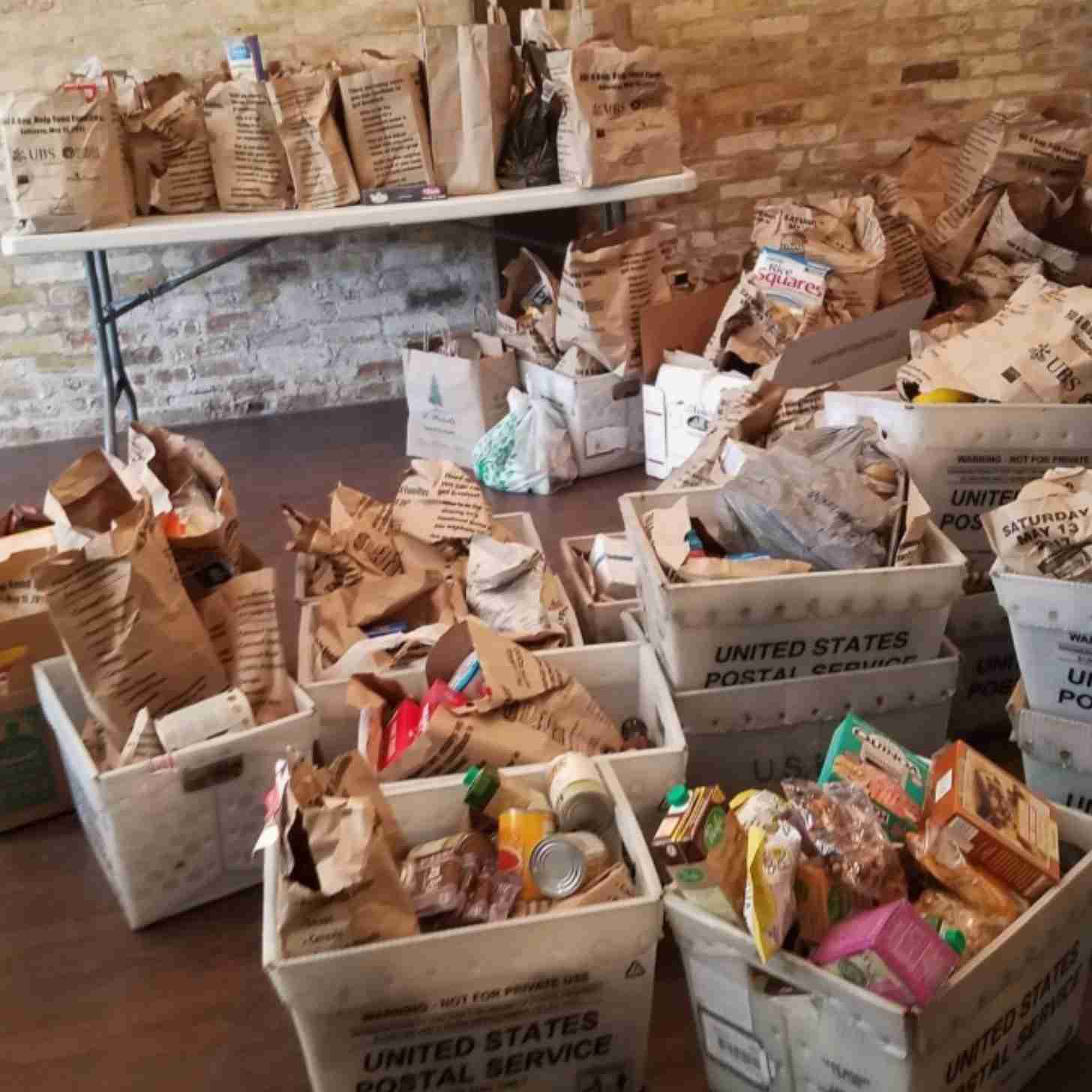
One donor, Caitlin Sellers, said that she immediately headed to the grocery store when she caught wind of the food drive.
“I was just grabbing things off the shelves; a lot of people were. Bread, milk, eggs, anything a family needs to make Thanksgiving dinner or lunches for their kids,” Sellers said.
“It’s a small little thing but if everybody does it, we’ll be in much better shape. We all need to be looking out for each other.”
“It actually feels like we’re contributing and not just sitting on the sidelines watching, so it’s fantastic,” another donor, David Heldt added.
Although food assistance has been the biggest draw for food-insecure households, organizers also handed out know-your-rights cards and whistles in response to the increased presence of Immigration and Customs Enforcement throughout the city.
“Whether it’s your neighbor being abducted or your neighbor that doesn’t have access to food, it’s still going to impact your community, but people showing up here keeps us safe,” one organizer, Mariah Fouche, told the Chicago Sun-Times. “There’s mutual aid events like this going every weekend going forward.”
“There’s no reason anyone should be bored right now,” Fouche emphasized. “We need to stand up and do what we can for each other because no one is coming to save us.”
Kahan said that the emergency food drive brought in supplies by the thousands.
“This is beyond anyone’s wildest imagination in the best possible way,” Kahan said. “It’s overwhelmingly amazing, and we just want to make sure we get food to people who need it the most.”
“Coming together is the solution always, and after having our community completely traumatized, this is extremely healing work to be doing,” she continued. “And we’re not only healing ourselves, but feeding our community.”
You may also like: This coffee shop’s free breakfast program sparked outrage online. Their response? 'Everybody deserves a latte'
Header image via Chicago Food Hope Pantry
In May, This American Life — a weekly public radio program and podcast — correspondent Chana Joff-Walt checked in with Yousef Hammash, a humanitarian aid worker from Gaza who fled to Egypt in 2024 with his wife, mother, and children. His four sisters and their extended families hoped to join them soon after.
Then the blockades tightened. Since that time, almost no one has been able to leave Gaza. Now Hammash clings to his last refuge of communication: the family’s WhatsApp group chat.
“Sometimes it's jokes,” Hammash said. “Sometimes they're crying. It depends. [They send] voice, text, photos, everything.”
Joff-Walt observed that leaving Gaza made Hammash “the newest member of a well-established club.”
“There are about 5 million Palestinians living inside the West Bank in Gaza,” Joff-Walt reported. “And the rest, about 9 million Palestinians, live all over the world — people who are trying to maintain family and connections across countries and time zones and bad cell connections.”
In modern warfare, crisis, and strife, WhatsApp has increasingly served as a bastion of hope — not just for refugees like Hammash’s family, but for healthcare workers, aid workers, and all boots-on-the-ground personnel.
In disaster zones, downed cellular towers render mobile phones useless, but the messaging app uses internet service to enable texts and calls between users. Plus, its compression algorithm reduces the size of files and data, allowing the app to function in areas with poor connectivity.
“I wouldn’t be exaggerating if I said that WhatsApp can be life-saving,” Juliette Touma, director of communications for the United Nations Relief and Works Agency, told Rest of World.
When a 7.8 magnitude earthquake struck Turkey and Syria in 2023, over 20,000 people were killed, making it the deadliest natural disaster in the last decade.
In the immediate aftermath, The White Helmets volunteer Fidaa Maksour said that WhatsApp was the group’s only means of communication in northern Syria. Without it, he wouldn’t have been able to field calls from the “many people under the rubble” and dispatch ambulances.
Without WhatsApp, Maksour said, it would be “very, very difficult” to do his job.
“We’ve talked to a variety of humanitarian NGOs,” said Christina LoNigro, WhatsApp’s director of global communications. “A lot of the things that we are concerned with is how they can use our app to get their information out most effectively … How do they get information out to affected populations in a place where they already are? How do you message where they are? And a lot of times, they are on WhatsApp.”
At large, internet-based messaging has proven vital in times of crisis. When Skype shuttered in May, tech journalist Chris Stokel-Walker mourned the loss, saying that it had been “a lifeline” that helped him call home from Ukraine during a Russian invasion.
“I’m able to call home, explain what happened, and keep them from panicking when I don’t step off the plane back in the U.K. as expected,” Stokel-Walker wrote for Fast Company.
“Our lives, and our families, are increasingly scattered to the four winds,” he continued. “And in the two decades since its 2003 founding, Skype has helped those families stay connected. It’s also helped a good number of people whose jobs involve international interactions do so at a manageable cost.”
Around the same time that Skype shuttered, the Signal app soared in popularity. When Shergo Ali, a humanitarian aid worker from Qamishli, Syria, arrived in Ukraine to start a new role with the German NGO Welthungerhilfe — World Hunger Relief — his peers told him to download the encrypted messaging service immediately.
“I’d never used Signal before,” Ali told Rest of World. “We’ve had staff who arrived new after me, and they didn’t have Signal. We asked them to download it.”
In addition to coordinating travel and aid, Ali explained that Welthungerhilfe uses Signal to relay crucial safety information, like how to respond to air raid alarms and airstrikes.
However, Signal and WhatsApp come with strings attached. Although they both use end-to-end encryption, Signal's security is only as strong as the user's device security — as seen with recent data breaches within the Department of Defense — and Meta, a company with a history of data privacy concerns, collects metadata from WhatsApp users.
Still, when cities go dark, WhatsApp, Signal, and previously, Skype, have served as technological life rafts that keep aid workers afloat and families in touch.
In January, Hammash received a voice message from his sister Aseel, who is 10 years his junior.
“I forgot to say, Happy New Year,” she said. “I hope that next year — no, no, this year — yes, this year, we [will] see you all. I hope you'll be looking forward to seeing us. And we'll be looking forward to seeing you.”
A version of this article originally appeared in the 2025 Technology Edition of the Goodnewspaper.
Header image via Towfiqu barbhuiya
Zac Clark was a freshman at the University of San Francisco when the COVID-19 pandemic hit. He moved out of his dorm and into the Tenderloin, a low-income neighborhood in the Bay Area.
From his apartment window, he first began observing people living in homeless encampments, and later, talking to them.
“I began starting conversations with the very people who lived outside of my building,” he told New Atlas.
He had plans to launch some sort of transitional housing program, but when he heard the lived experiences of the unhoused people in his community, a different seed was planted.
That’s when the Makeshift Traveler backpack was born.

“I … started the Makeshift Traveler program based on feedback I had received from people I spoke with who kept saying they had phones but couldn't charge them, and their belongings were constantly being stolen or damaged,” Clark told New Atlas.
The Makeshift Traveler is a hard-shell backpack made of recycled water bottles with a 4-watt solar panel installed on top. This connects to an internal 10,000-mAh rechargeable power bank inside of the backpack.
A full charge requires about four to six hours of direct sunlight, or one to two days in a typical outdoor setting. Then, there’s enough power for two to three smartphone battery charges.

But it doesn’t just act as a source of power. The backpack also includes a nylon pillow that can be puffed out by stuffing a T-shirt inside.
A tent, sleeping bag, rain poncho, radio, flashlight, hygiene kit, socks, and water bottle are also packed inside. A lockbox and ID card are included, along with a brochure with information about 15 local services supporting unhoused community members.
“The Makeshift Traveler was designed to be the last backpack someone experiencing unsheltered homelessness will ever need,” Clark told New Atlas.

Since Clark first launched the backpack in October 2022, more than 1,200 have been distributed at no cost to people experiencing homelessness in 25 cities throughout California. His nonprofit, The HomeMore Project, is able to give the backpacks away for free thanks to generous partners and donors.
The HomeMore Project, also has plans to give away 2,000 more with partners in other states.

“As we continue delivering Makeshift Travelers throughout California, we remain grateful to every funder, faith-based group, outreach worker, and service provider who makes this work possible,” Clark wrote in a blog post for The HomeMore Project.
“Together, we’re not only handing out backpacks, we’re building relationships, restoring dignity, and showing up for people who are too often overlooked.”
The backpack is currently in its third iteration, but a fourth is launching soon, which Clark said will be improved with new features requested by homeless clients over the years.

“I didn’t know this was happening,” Steve Colunga, a man who sleeps in a park, told the San Bernardino Sun. He reportedly had a drawstring backpack in need of replacing and was excited about the sleeping bag and other materials in the Makeshift Traveler.
“This is a really cool resource,” he added.
People in need of a backpack can apply for one online. And for those looking to support the project, donations are accepted online — both to fund more backpacks and a future transitional housing program under Clark’s nonprofit.

“To me, there’s nothing more important than ending homelessness … it doesn’t take a lot for someone to get their basic needs,” Clark told the Sun.
“These are to provide these needs — and a way for us to meet and build trust with people, to have them open up and share their stories. Because they are people, not problems to solve.”
You may also like: 12-year-old named 'girl of the year' for designing solar-powered sleeping bags for her homeless neighbors
Header image courtesy of The HomeMore Project
Three years ago, Brooke Eby — now 36 years old — was diagnosed with Amyotrophic lateral sclerosis, or Lou Gehrig’s Disease. The condition affects motor neurons and the spinal cord, and as it progresses, weakens and atrophies the muscles.
Eby was originally told she had two to five years to live.
The disease has indeed progressed, and she now navigates the world in a wheelchair — and although she comedically and authentically shares her experiences on TikTok, often with a smile on her face — there is one activity in particular she misses doing independently: Walking her dog, Dray.
She adopted her little furry friend when she was 26, and they’ve been partners in crime ever since, especially through her diagnosis.

“We’ve learned to adapt but lately with this big chair, it’s just been impossible to walk him by myself,” she said in a video for Chewy.
Every year, the pet care brand launches its Chewy Claus campaign, where pets and their people can send a virtual letter to Chewy’s version of Santa. Some lucky recipients will have their dreams of toys and bones fulfilled, but every wish contributes to something bigger.
For every letter submitted between now and December 24, Chewy Claus will deliver 5 meals (up to 16 million total meals) to a pet in need through Greater Good Charities.
But the brand also wanted to make Eby’s wish come true this holiday season.

“As her condition has progressed, Brooke can no longer walk her senior rescue dog, Dray. Although Brooke has tried several adaptive leashes, they often tangle in her wheelchair and aren’t designed for Dray’s small size,” Chewy shared in a press release.
“These insufficient leashes have deprived Brooke of one of her favorite activities — taking a walk with her best friend — and the sense of independence it brings. So, when Dray shared his wish, Chewy Claus listened and created a custom solution that allows the pair to recapture that special time side by side.”
Working with engineers at Bold Lead Designs, Chewy made the pair a totally custom adaptive leash to attach to Eby’s wheelchair.
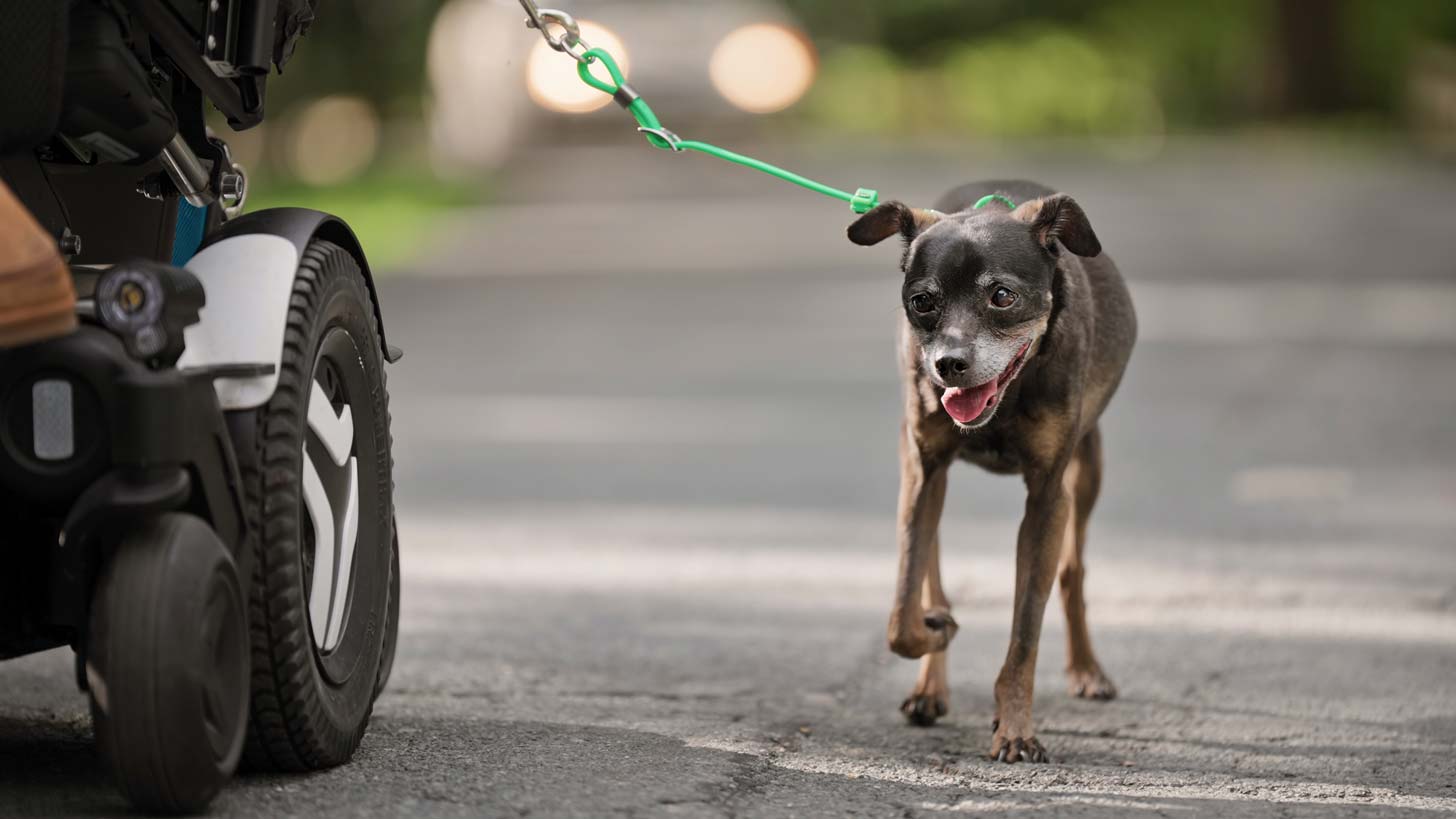
“Hands-free control is really important for people that have disabilities because it gives them a sense of independence,” Katrina Boldry, leash design expert and owner of Bold Lead Designs, told Chewy.
“We made what I call a fastener-free collar, so all you have to do is clip [the leash] onto the chair, slip [the collar] over his head, and off she goes.”
The custom design was a success, and Dray was smiling alongside his mom with pride.
“He caught on so well,” Eby said of Dray’s new leash. “He doesn’t seem to notice a difference.”

“Dray is seeing me be less and less active, and it’s just showing him that I’m still there, still the same leash holder I’ve always been,” Eby added.
“This is one less time I have to ask someone to help me do something I used to do by myself multiple times a day in my normal life.”
In addition to providing Eby and Dray with a custom leash, Chewy Claus is donating $10,000 to Team Gleason, an ALS advocacy organization that helps people live fully alongside the challenges of the disease.
“Chewy Claus celebrates life with pets — from the everyday to the extraordinary. We are especially excited to inspire joy, love, and connection this holiday season,” Orlena Yeung, chief brand officer at Chewy, said in a statement.
“Brooke and Dray’s story is a touching reminder of how pets transform our lives, and Chewy is profoundly grateful to provide support throughout the highs and lows of pet parenting.”
Anyone interested in submitting their holiday wish to Chewy Claus can do so online, now until December 24. Pet parents also have the option to defer receiving a gift and redirect five more meals to shelter pets all season long.
You may also like: Doggy-paddling for good: Conservation dogs save elusive, endangered platypuses via paddleboard
Header image courtesy of Chewy
Yellowstone National Park is the country’s first national park, established in 1872. At the time, wild gray wolves roamed the land, and fossil records show the species’ presence in the region dating back thousands of years.
According to Jeff Reed, a biolinguistics expert, when wolves howl to one another, it essentially means: “Here I am; where are you?” They speak to signal their territory.
Yellowstone’s early park managers lacked an understanding of ecosystems, viewing these wolves only as destructive predators in the early 20th century.
Overzealous hunting practices meant that, by the 1940s, wolf packs were nearly extinct in the Yellowstone area, as well as the lower 48 states of the U.S.

Although wolf populations began to rebound around the 1990s thanks to reintroduction programs, conservation efforts, and responsible hunting practices, it hasn’t been an easy road.
Fears about the impacts on livestock farming, hunting, and rural communities continue to keep reintroduction plans from being fully realized.
But Reed and his colleagues think local officials just don’t have the right data.
Reed is the founder of The Cry Wolf Project, a bioacoustics and artificial intelligence project that helps biologists, conservationists, and governments learn more about wolf populations.
The project has collected the largest repository of wild wolf vocalizations in the world, and they do it by using camouflaged, battery-operated autonomous recording units to capture the sound recordings of wolves in the wild.

From there, visual diagrams called spectrograms are created with the data, and AI looks for patterns that help experts map where wolves are, how many of them are present, and what they might be saying to one another.
“Every six kilometers, there are recorders running 24/7,” Reed told Good Good Good. “We know that wolves from one pack can count or estimate the amount of wolves howling in a rival pack without seeing them. So, we’re trying to see if we can count wolves just from audio recordings and improve census estimates of wildlife.”
Independent of the federal government, funding for Reed’s work is housed under Yellowstone Forever, the park’s nonprofit arm. While some programming has been disrupted by recent funding cuts, he refuses to let it be destroyed.
Wolves are a managed species in some states, but face removal from the federal Endangered Species Act, making it especially important to know more about these packs to maintain their population, he said.
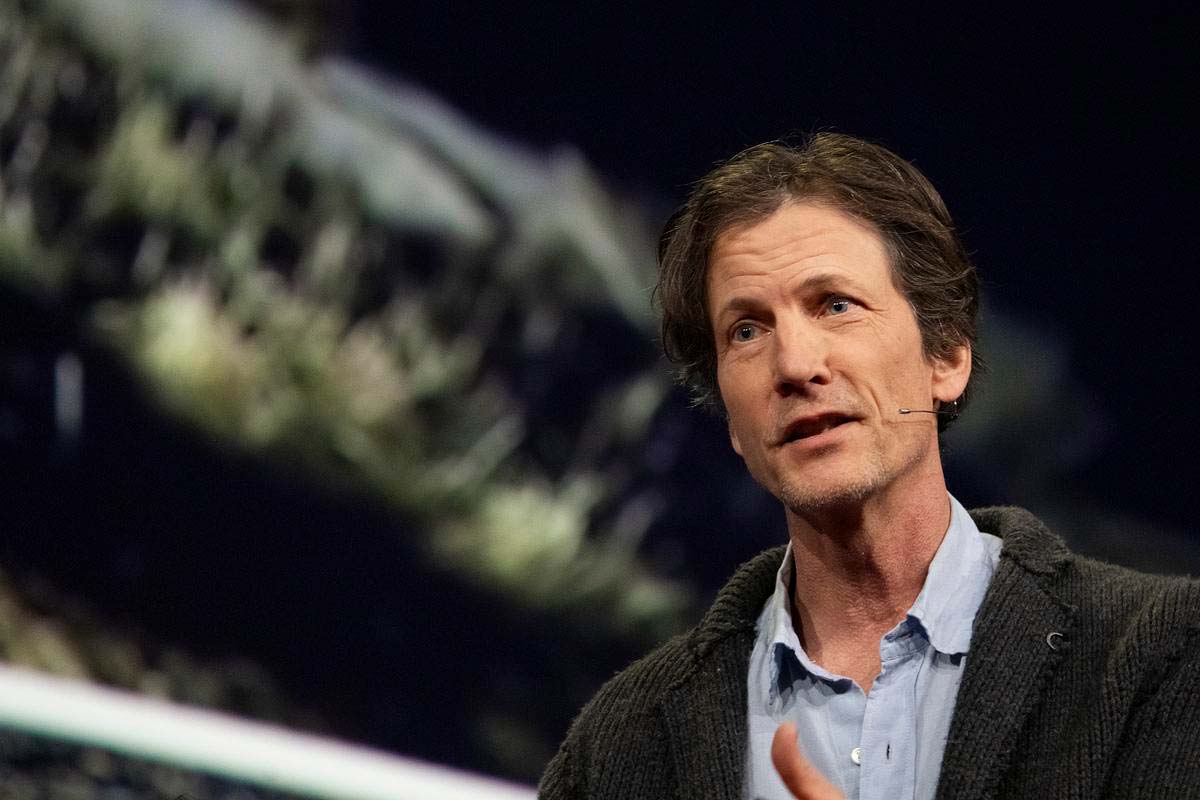
While some camera traps can help count wolves within a couple dozen yards, ARUs can listen up to six miles away. Reed said this offers a low-cost and effective way to count wolf pack numbers and make wildlife management decisions based on the most accurate data available.
The project’s other efforts could help farmers and livestock communities.
Currently, farmers can keep wolves from their property using Radio-Activated Guard boxes, which emit bright flashing lights and play loud music.
But Reed says, “If you’re going to think like a wolf, why don’t you talk like a wolf?”
The idea is to capture wolf recordings and use them with the RAG boxes, which he said would serve as “a better deterrent than AC/DC.”
As the technology and research evolve with The Cry Wolf Project, Reed said he can also see the ARUs being a great resource for law enforcement to tackle illegal wildlife trade or illegal logging in other protected areas.
Beyond that, another motivator is sheer curiosity. While Reed still can’t exactly translate “Wolfish,” as he called it in a recent TED Talk, he and his team can tell the difference between howls, woas, whines, whimpers, teeth clicks, and more.
They have found that wolves make chorus calls to one another, often led by an alpha female. They also have a social bonding call — one they make when playing that essentially means “I love you.”

“Nothing symbolizes a wolf, and translates what it is, as a social animal, more than its howl,” Dr. Dan Stahler, senior wolf biologist at Yellowstone, told the Yellowstonian last year.
“I’ve known few people who aren’t genuinely moved whenever they hear a pack howling. It’s a sound you never forget — one that’s been present in the memory of our species for a long time.”
Humans face an unprecedented challenge in protecting wildness as a whole, but folks like Reed and Stahler believe we’re the best-equipped species for the job.
“Every creation story, written by almost every culture, talks about humans and animals at one time talking with one another,” he said.
“Why is that such a common theme? Is it because they had Google translate? No, it’s because they lived more like animals. Humans are really good at sound and meaning. And all we’ve got to do is pay attention.”
You may also like: Federal budget cuts are impacting national parks. Here are 5 ways you can help
A version of this article was originally published in The 2025 National Parks Edition of the Goodnewspaper.
Header image by NPS/Jim Peaco
Amid reports of chatbot-induced psychosis, (alleged) climate crimes committed in the name of technological advancement, and an influx of students using artificial intelligence to cheat in school, it can be hard to see the silver lining of AI development.
Certainly, regulations are necessary to forge a safe and equitable path forward with this new technology, but it’s also worth noting that AI can and is used in ways that really do help people and the planet.
Here are five such cases.
Protecting Indigenous languages
Of the 4,000 Indigenous languages worldwide, one dies every two weeks with its last speaker.
Michael Running Wolf, the founder of Indigenous in AI, says that within the next five to 10 years, most Native American languages in the United States will be gone for good.

He has dedicated his career to preventing that tragic loss, leading the First Languages AI Reality project, an institute of the Mila-Quebec Artificial Intelligence Institute.
Along with other researchers, he is building speech recognition models for over 200 endangered Indigenous languages in North America.
“Traditionally, AI assumes that data is proprietary, and that can be harmful for Indigenous communities,” Running Wolf told NBC News.
“We want to demonstrate that we can succeed in our mission of reclaiming Indigenous languages ethically with ethical AI protocols.”
Supporting doctor-led diagnoses
Nearly every day, a new report comes out surmising AI’s ability to diagnose — or maybe even cure — the diseases that plague humanity.
This shows great promise, but for doctors who spoke to the Harvard Gazette, the best current use case for AI is as a well-trained assistant.
Harvard doctors say AI’s support in note-taking and summarization, often called “ambient documentation,” could provide tremendous support to physicians facing burnout and provide patients with better face-to-face support.

AI models can listen in on visits, record everything said and done, and generate an organized clinical note in real time. It can also suggest diagnoses and courses of treatment, which doctors would review for accuracy.
While a recent randomized clinical trial, published in JAMA, found that the use of a large-language model did not significantly enhance diagnostic reasoning performance compared with conventional approaches, models trained in diagnosing can still support doctors.
“The best way a doctor could use it now is for a second opinion, to second-guess themselves when they have a tricky case,” Adam Rodman, assistant professor at Harvard Medical School and co-author of the trial, said.
“How could I be wrong? What am I missing? What other questions should I ask? Those are the ways, we know from psychological literature, that complement how humans think.”
Predicting weather like never before
In February 2025, the European Centre for Medium-Range Weather Forecasts adopted its Artificial Intelligence Forecasting System into operations for 35 member and cooperating states in Europe.
It runs alongside traditional physics-based forecasting systems, though it outperforms those traditional models by up to 20%. The AIFS also offers weather forecasting at an increased speed using approximately 1,000 times less energy.
The AIFS is fed data from 60 million quality-controlled observations from satellites and Earth-based stations, and then assesses how the initial conditions will influence the weather for the coming days.

It also creates a collection of 50 different forecasts with slight variations to provide a full range of possible scenarios.
“This milestone will transform weather science and predictions. It showcases our dedication to delivering a machine learning forecasting model that pushes the boundaries of efficiency and accuracy, and it underscores our commitment to harnessing the power of machine learning for the weather forecasting community,” ECMWF’s director-general, Florence Rabier, said in a statement.
“35 nations are working together to advance weather science to improve global predictions. This is to help national meteorological agencies in their work to contribute to a safe and thriving society.”
Restoring historic art without damaging it
Restoring historic paintings has long been a costly and detailed task done by hand. It has also brought up ethical concerns, as directly retouching a piece of art might detract from a painter’s original vision.
Some institutions have started restoring artwork virtually and presenting it next to an untouched, physical version. But curators and restorationists say this lacks the same glory as the real piece, too.
MIT engineering graduate student Alex Kachkine used AI to find a solution somewhere in the middle.

His new approach can achieve a faithful restoration in just hours by using AI to create a digital version of what the freshly painted artwork would have looked like.
Kachkine’s software assembles a map of the retouches and their exact colors, and then the map is printed on two layers of thin, transparent polymer film.
This film is attached to the painting with a conventional varnish and aligns the retouches so that the rest of the original artwork remains visible.
“[It] is a restoration process that saves a lot of time and money, while also being reversible, which some people feel is really important to preserving the underlying character of a piece,” Kachkine told Nature.
“This approach grants greatly increased foresight and flexibility to conservators, enabling the restoration of countless damaged paintings deemed unworthy of high conservation budgets.”
Providing learning resources to children in rural areas
UNESCO, an agency of the United Nations dedicated to expanding world peace through education, science, and the arts, has long worked with governments and education systems to provide children the support they need to thrive.
In Malawi, Zambia, and Zimbabwe, the organization has recently worked with teachers and local Ministries of Education to develop chatbots that act as a “study buddy” for learners to interact with on WhatsApp before an exam.

In conjunction with a teacher planning application, the AI models are trained using teacher guides, educational pedagogical theory, and national curriculum documents so that all lesson plans and study chatbots are informed by a country’s educational aims.
The results have been adopted by over 3,000 users since 2024.
“These [technologies] extend to hard-to-reach youth often left behind from life-saving information,” Don Tererai, a UNESCO health and education digital specialist, said, “including young people living with disabilities, in conflict or humanitarian crisis settings, and living with HIV, among others.”
You may also like: AI is listening to the wolves of Yellowstone National Park. Experts say it could help the population rebound
A version of this article was originally published in The 2025 Technology Edition of the Goodnewspaper.
The mission of Boston-based nonprofit Bikes Not Bombs? “Using the bicycle as a vehicle for social change.”
What started as a group of passionate cyclists in 1984 providing aid bicycles to people in the Global South now has a double-sided mission: Bolstering international aid while building economic resilience among marginalized youth in Boston.
The Bikes Not Bombs shop is full of teen mechanics in a 10-week program learning how to care for and operate a used bike, which they get to keep upon graduating.
Then, they have the opportunity to work in the shop — about 200 young people repair and refurbish thousands of bikes every year.
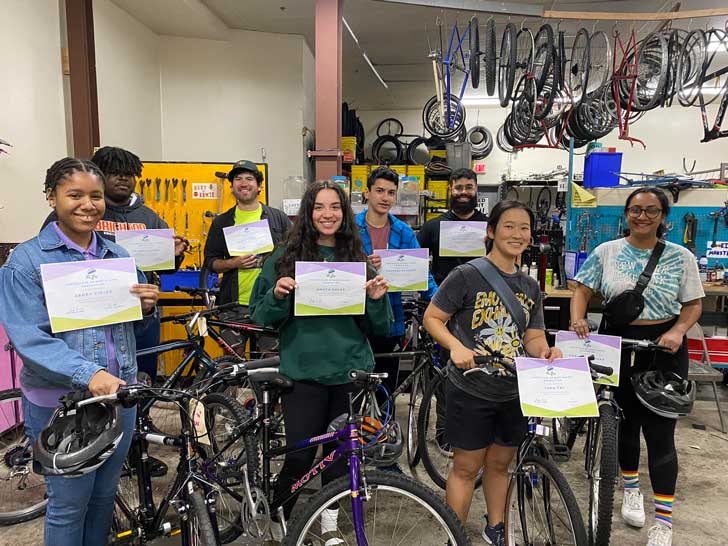
Over the last four decades, the organization estimates it has shipped over 80,000 bikes to developing countries, in addition to secondhand bikes sold to local cyclists directly out of the shop.
The group has also opened up self-supporting bike shops in places like Nicaragua, Haiti, the Dominican Republic, and El Salvador, training local technicians to build resilience and sustainability themselves.
The goal, in the U.S. and abroad, is to provide people a means of transportation without reliance on fossil fuels (which are a large contributing factor to global conflict, thus the “not bombs” part of the organization’s mission).
“Our roots are in shipping bikes across the world,” Sara Gonzalez, the organization’s donation coordinator, told The Dorchester Reporter.
“As we’ve evolved, some of our members say the ‘not bombs’ aspect has given way to become a tool of cultivating opportunities. Bikes can be a tool of prosperity in developing areas.”
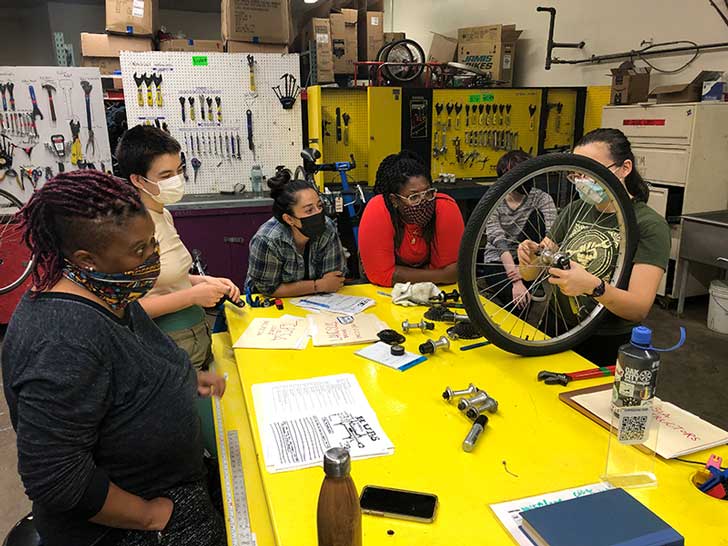
Back home, Bikes Not Bombs hosts communal rides, safety seminars, fundraisers, and an annual three-day Youth Bike Summit for young mechanics, activists, and cyclists interested in making a difference.
“It’s like my second home,” added Antonio Venus Reeves, who first brought a bike to the shop for repair 10 years ago, and now works there as an associate.
“I’m always learning something new every day.”
A version of this article was originally published in The 2025 Sports Edition of the Goodnewspaper.
You may also like: Amid ICE raids, Chicago cyclists buy out tamale carts and distribute food to people in need: 'Go home and be safe'
Header image courtesy of Bikes Not Bombs
The term “unprecedented times” was cemented into our brains in March 2020, but for the past four (now, nearly five) years, it seems the times have remained pretty unprecedented.
Ongoing public health crises. Mounting disasters caused by climate change. Global conflict broadcasted directly from our phones. Political unrest and uncertainty at home and abroad.
Throughout the long, winding road of history, many of these things are adversities humanity has faced before.
But still, we face uniquely modern challenges, and the uniquely modern awareness of the impact it all has on our mental health.
“The COVID-19 pandemic, political unrest, natural disasters, and other humanitarian emergencies all share a common thread: They are largely beyond our control, yet they profoundly affect our lives,” Pamela Londoño Salazar, a clinical psychologist who serves as a global mental health advisor with humanitarian nonprofit Project HOPE, told Good Good Good.
She noted that people — both directly and indirectly involved in crises — are largely resilient but still face long-lasting psychological effects that may develop into clinical mental health conditions like PTSD, anxiety, or depression.
For people who are in the heart of a crisis, having immediate access to support is especially important.
For instance, a recent study out of the University of New South Wales found that refugees who have found security — likely through visas, employment, income, and housing — had more positive mental health outcomes.
“It makes a lot of sense that, if people who've been through very difficult experiences are going to overcome those and thrive, we need to create conditions where their basic needs for safety are met,” said researcher Angela Nickerson.
Mental health care is also a basic necessity, and deploying psychological interventions early on in a crisis is essential.
For instance, Madigan Traversi was just 12 years old when the Tubbs Fire destroyed her home in Sonoma Country, California, and she was able to access timely care.
Now 18, she helped co-write a bill in Congress that would formally recognize the impacts of climate change on youth mental health.
“With climate change right now you see so many children who are dealing with depression and extreme anxiety about the future,” Traversi told ABC News.
“I think it's really important … for adults to offer mental health and education to kids, rather than just assuming they're going to be fine.”
Londoño Salazar said that, while we all have a role to play in normalizing conversations about mental health, governments and policymakers also have a responsibility to ensure systemic access to resources and care.
“This involves creating laws and policies that protect and promote mental health for everyone, with a focus on at-risk groups like healthcare workers, refugees, migrants, and survivors of violence,” Londoño Salazar explained, citing expanded access to mental health services and integrating mental health into primary care as examples of helpful policy implementations.
But what about just getting through day-to-day? What about the universal strife of living in our current reality? Well, just like all of these emergencies have a through-line, so too, does our shared ability to navigate them.
“During stressful times when you can’t change the circumstances around you, one of the best ways to cope is by focusing on what you can control: your thoughts, feelings and behaviors,” Londoño Salazar said.
“It’s not about avoiding stress entirely but learning how to respond in ways that protect and nurture your well-being.”
Here are a few evidence-based practices she recommends:
Commit to self-care
Beyond cozy bubble baths, protecting our mental health means meeting our material needs.
As trite as it sounds, feeding ourselves, moving our bodies, and taking small intentional actions can truly provide stability and control.
Stay connected to people, not social media
During times of distress, connecting to our most important relationships helps us process and cope together.
These real-life bonds are a great place to redirect our energy, especially when doom-scrolling gets the best of us.
Protecting our peace requires setting boundaries with screen-time and triggering news content, so we can stay informed without depleting our energy and mental resources.
Live in the present
Embracing mindfulness practices like deep breathing, meditation, or progressive muscle relaxation to help our nervous systems manage distress.
Much of our anxiety stems from excessive worry about the future, so bringing our stress responses back to the present can go a long way.
Practice gratitude
Londoño Salazar said it can be hard to focus on what’s going right in difficult moments, but the mental health benefits of a gratitude practice cannot be overstated.
Enjoying a sunset, a yummy meal, or a kind gesture from a friend can be a life-saver.
“Slowing down and appreciating what’s good in your life requires intentional effort, especially in a fast-paced, often chaotic world,” Londoño Salazar said.
“But it can foster resilience and hope even in the face of ongoing challenges.”
A version of this article was originally published in The 2025 Mental Health Edition of the Goodnewspaper.
You may also like: Hopeful people live better lives, a 14-year study of 25,000 participants finds
Header image by Andrea Piacquadio/Pexels