As electrification infrastructure expands across Europe, Austria encountered a problem: the general public is not fond of how the new pylons — which resemble traditional power lines — look.
So, the Austrian Power Giants were born.
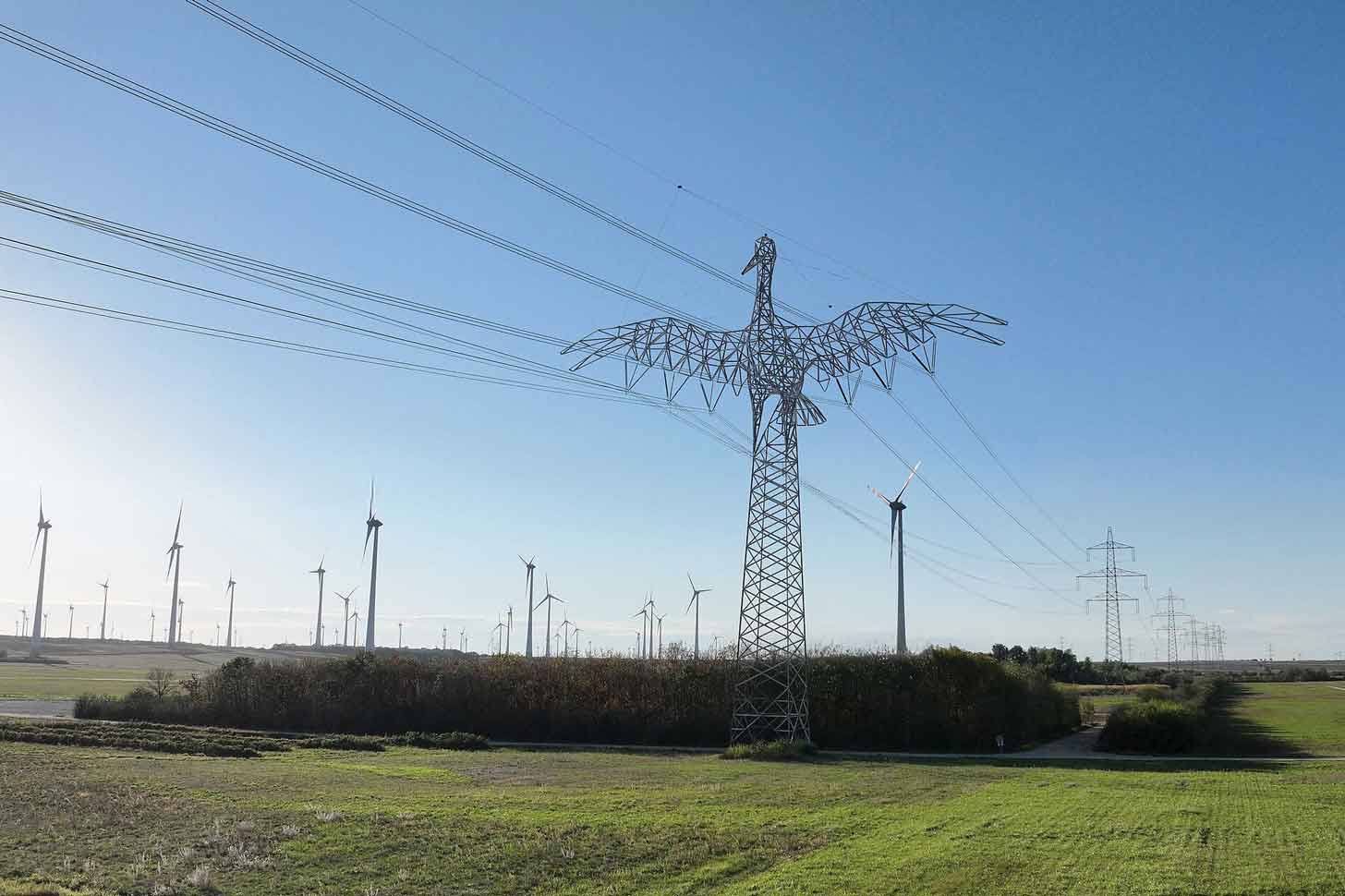
A concept devised by Austrian Power Grid, GP designpartners, and BauCon, these power line towers are shaped into giant animal sculptures representing nine states across the country.
There’s the stork, which represents Burgenland for its annual stork migration. And the stag, an animal symbol representing the wooded foothills of the Alps in Lower Austria.

These are the first two prototypes — which have already been developed and pre-tested for structural stability and high-voltage performance. But the plan is to install them across nine federal states: Burgenland, Carinthia, Lower Austria, Upper Austria, Salzburg, Styria, Tyrol, Vorarlberg, and Vienna.

“This nature-inspired design is ultimately intended to become a symbol for nature-friendly infrastructure projects, strengthen the economic and tourism location in the regions, and ultimately lead to increased acceptance of grid expansion projects by the general public,” a statement from Austrian Power Grid said.
This year, the design concepts won a Red Dot Design Award for Electrification and Decarbonization, and miniature models of the Austrian Power Giants are set to be on display for public viewing at the Red Dot Museum in Singapore through October 2026.

And in the meantime, stakeholders will continue testing the feasibility of implementing these awe-inspiring animals.
“The real test will be public reception once these go live. Opposition to grid infrastructure is fierce, especially in rural and scenic areas where people (understandably) don’t want their views dominated by industrial metal,” a review from Yanko Design shared.
“Austrian Power Grid is betting that regional pride and visual interest can shift that calculus. If a community sees a pylon as a landmark rather than an eyesore, the theory goes, acceptance follows.”

You may also like: Decommissioned wind turbine redesigned as eco-friendly tiny home, scalable to build '2,000 houses a year'
Header image courtesy of GP designpartners
The Atlanta Beltline is a 22-mile multi-use trail and transit corridor in the heart of Georgia’s state capital, where city dwellers can enjoy natural trails and public spaces throughout the stretch of land.
But now, the area is working to solve one of the city’s largest issues: A lack of affordable housing.

According to 11 Alive News, the Atlanta Metro Area has lost over 200,000 affordable housing units between 2018 and 2023, leaving the city thousands of units short for low-income renters in need of a place to live.
City officials say the Beltline is part of a larger effort to build more than 5,000 affordable homes by 2030. The group is already 69% of the way to that goal, and a new development is adding to the momentum.

Recently, the city opened its first adaptive reuse development along the Beltline: The Ralph David House.

Once a motel in the Reynoldstown neighborhood — built in the 1960s — the space was transformed into 56 modern studio apartments for individuals or families who were previously unhoused.

“Once an aging 1960s era [motel] is now a driving community for our city’s most vulnerable residents that need it the most,” Atlanta Mayor Andre Dickens said at the grand opening.
“These two-story buildings have been fully renovated on the inside and reimagined. We delivered affordable housing faster and more efficiently, proving that creative solutions can drive real results.”
The apartments will be reserved for those earning 30% of the area median income or less, and those who were recently homeless.

Rents and utility costs combined will be capped at 30% of each tenant’s income, and the development has a social worker’s office on-site.
To develop the site, Atlanta Beltline invested $500,000 in renovating the existing structure. The project also received funding from the Atlanta Affordable Housing Fund and City of Atlanta HOME funds.
Partners for HOME’s HomeFirst program also provided funding, Housing Choice Vouchers from Atlanta Housing, and supportive services for all the individuals housed in the new development.

Additionally, the development is named after civil rights icon Ralph David Abernathy, an ordained Baptist minister who was a close friend and mentor of Martin Luther King Jr.
The commitment to social justice and equality in Abernathy’s work provides a throughline for the housing project today, one that will benefit a majority of low-income BIPOC individuals.
“This is the first time the Atlanta Beltline has invested in this kind of project,” the Beltline’s president and CEO, Clyde Higgs, said in a statement.
“We saw this as a catalytic opportunity to continue guiding equitable, inclusive, and sustainable development in Atlanta, which has many historically disinvested neighborhoods.”
You may also like: 'Eyesore' motel transforms into colorful apartments for homeless SoCal families
Header image courtesy of Terminus Design Group
Dungeons & Dragons, a table-top roleplaying game beloved by many since 1974 — and made especially popular by things like “Stranger Things” and “Critical Role” in recent years — may be more than just a hobby.
In fact, according to Florida International University’s Emily Messina, it’s “serious leisure.”
“Serious leisure” refers to an activity that demands skill, commitment, and personal fulfillment, Messina defined. With the intricate world-building, score-keeping, and character development required of D&D, she said, it’s a blueprint for serious leisure.

Messina, who is an associate professor and program director at FIU’s Rehabilitation and Recreational Therapy Program, studies how games promote identity-building and connection in all kinds of demographics.
Her latest research, published in “Leisure Studies,” suggests that D&D promotes identity-building and connection, especially for adults who otherwise don’t have an outlet for this kind of social exploration.
The game provides players with “the sense of a safe space and a place to create their own identity,” Messina said in a statement.
“Players were comfortable being themselves by engaging in the game pursuit,” she added, “but at the same time were building personas in line with, or in contrast to, their normal personality. They described it as a way to take charge, or lead an effort in ways that their normal personality would allow for, but they wouldn’t be inclined to do.”
Because of the fantasy element of the game, which invites players to craft their own character — complete with skills, traits, and proficiencies — Messina believes players feel more comfortable without real-world consequences.
“That’s not something you see in other games,” she said. “It’s something they’ve been developing over months or years.”
Along with an outlet for personal expression, the game also provides structure to people who may lack organization in other parts of their lives.
For people managing a mental illness, for instance, who may not be able to have a full-time job, Messina’s research found that the game provided structure to their days.

“The idea of being able to use leisure to structure your time and gain some wins lets you see a positive return on what you’re dedicating your time to, and building on that and seeing your skill sets grow,” Messina said.
“That’s going to turn into self-determination. You’re going to be more motivated to build on your own skill sets and have a sense of autonomy.”
Similarly, the game could be used for young children as a reward structure, or in older demographic groups, like retirees, who rely on a sense of purpose and daily rhythm.
“Post retirement is one of the most dangerous points in an adult’s life,” Messina said. “They lose that sense of structure and possibly their social connection.”
Building structure through leisure activities after retirement has been shown to help older adults maintain their physical, social, and cognitive fitness. It also improves their attention span and decreases depression — something Messina believes can be replicable across demographics.
“The idea of structure and reward with desired pursuit can work for all ages,” Messina said.

And perhaps most relatable to all, serious leisure activities like D&D provide social and emotional benefits by encouraging continued connection with the same group of people over time.
D&D groups often play long-winded games, meeting weekly or more to convene for sessions, and building lasting relationships inside and out of the roleplay setting.
And as people age into adulthood, these connections are vital in maintaining a social life that was previously built for us in childhood.
“As we’re growing older and no longer playing sports, what does that place for leisure activity look like for adults?” Messina asked.
“For example,” Messina added, “for thespians who no longer have plays to take part in after high school and suddenly find themselves working for an HR department, how would they express themselves? Where does that identity go? Dungeons and Dragons would be a good outlet for that.”
When pre-ordained activities like Little League or dance class are less accessible in adulthood, individuals often lose those structured opportunities for teamwork and creative expression. D&D reminds players that there is no age limit on play.
“Leisure allows you to build yourself in positive ways that no other activity does, especially for people who are trying to figure out those next steps in life,” Messina said.
“Leisure is not for the privileged few. The data shows we all need it to give us those wins we really need from time to time when life isn’t giving us wins in other ways.”
You may also like: Remember FarmVille? In the newest version, you can plant trees and save endangered species as you play
Header image by Timothy Dykes on Unsplash
As a World War II veteran, 99-year-old Leo Valente has seen his fair share of strife.
But when a devastating flood destroyed the home that Leo and his daughter Cheryl had shared for nearly 60 years, they knew they needed to turn to their community for help.
In an interview with Boston 25 News, Cheryl — a retired teacher from Stoneham, Massachusetts — relayed how quickly their lives changed on October 14.
“Water was just pouring and pouring and pouring, and I said ‘Oh my God,’ it was like a river pouring down, and then all of a sudden it started going down the walls, and then it went into the other room, and then it went into the kitchen,” Cheryl said, adding that the second floor appeared to collapse all at once after pipes burst upstairs.
The flood destroyed almost all of their belongings, including vital documents like their birth certificates and Social Security cards.
In the midst of the chaos, Cheryl managed to rush inside and grab a few of her father’s medals, as well as a framed photo of a young Leo in uniform.
“But they’re kind of destroyed a little bit from the water,” Cheryl said sadly. “It’s completely condemned, it’s a total loss.”
On Facebook, Cheryl and Leo’s neighbors provided context to concerned locals.
“Sadly, their home insurance is giving them the run around,” one neighbor explained. “They are saying it is not a covered benefit. The VA did not offer any resources either.”
“It’s such a shame,” they added. “He’s such a sweet man. He worked at Marshall’s in Stoneham for several years up through his eighties.”

Others rushed to the comments to offer their sympathies and whatever help they could extend.
One person wrote: “I will check the website to donate, but we also have furniture and household items I can donate!”
“[I’m] happy to help you and your dad, whatever way I can, including getting help and support from our townspeople,” another neighbor said.
At the time of publication, a GoFundMe in Leo’s name had raised $15,875 in six days, just short of their $18,000 goal. Cheryl said that the funds will go towards temporary hotel fees and, later, a new apartment.
Cheryl told Boston 25 News that her dad’s positive spirit “gives her hope that everything will be alright.”
And it helped that her Stoneham neighbors had their backs.
“He sacrificed so much while in active duty,” one local wrote. “If he has all these medals, then he’s saved multiple lives without hesitation! This father/daughter duo should not have to worry about a place to stay while they figure out what comes next!”
“This man is a hero,” they emphasized. “He should be treated as such.”
You may also like: You can raise money for homeless veterans by sleeping under the stars at Stonehenge
Header image via DOD Photo by Navy Chief Petty Officer Carlos M. Vazquez II (CC BY 2.0)
When “Little Miss Walrus” arrived at the Alaska SeaLife Center in July 2024, she was barely more than one week old. After being stranded on a remote beach in Alaska, the young calf was severely dehydrated and emaciated, with scratches and puncture wounds across her small body.
Experts estimated that she had either been abandoned when her herd had left the area or somehow taken by humans to an inland area before attempting to escape.
Either way, when the Utqiagvik community spotted her and alerted the United States Fish and Wildlife Service, she had been close to death.
Upon arriving at the Alaska SeaLife Center, walrus experts from across the country flew in to help. The Indianapolis Zoo, Point Defiance Zoo & Aquarium, and SeaWorld Orlando all sent veterinarians to Alaska to assist with the calf's care.
After months of rehabilitation and around-the-clock care, Little Miss Walrus became an entirely new animal.
With a clean bill of health — and healed scars — the center gave her an official name, Ukiaq, which translates to “autumn” in the language of the Iñupiaq people of northern Alaska, where she was first found.

“We are thrilled by the progress this walrus calf has made since her admission to the Alaska SeaLife Center Wildlife Response Program,” Dr. Wei Ying Wong, the President and CEO of the Alaska SeaLife Center, said in a statement.
“As just the eleventh orphaned Pacific walrus calf to come through our doors since our opening 25 years ago, we recognize how incredibly special she is,” she continued. “Success stories like Ukiaq is what inspires us, the only organization authorized to rehabilitate live-stranded marine mammals in the state of Alaska.”
Although it has been over a year since her rescue, Ukiaq — who is often called “Uki” for short — has once again been propelled into the spotlight with the latest PBS Newshour episode: “Walrus: Life on Thin Ice.”
The news team was there on-site when Uki was one month into her rehabilitation. They saw firsthand how she went from a shaking leaf of trauma into a bubbly, curious walrus who developed a love for backflipping into the pool.
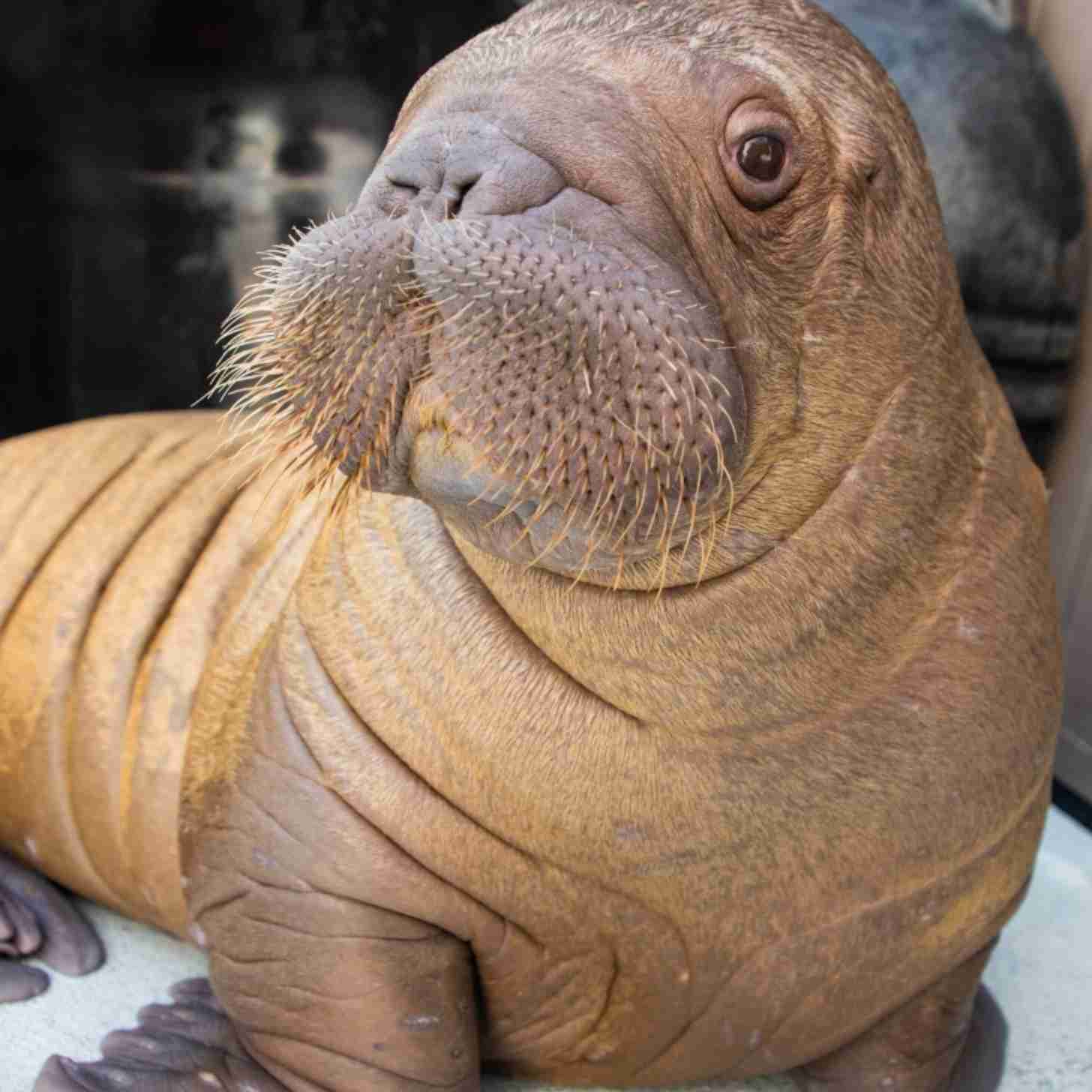
Unfortunately, because she has been bottle-fed and hand-raised since near infancy, Uki cannot be rewilded.
But she’s not alone.
Today, she lives in SeaWorld Orlando among some of the staff who first saved her life. Over a year after she was orphaned, she has a herd of her own among other rescued walruses, including Garfield, Kora, and her surrogate mother Kaboodle.
“[Her] story of survival is a testament to the importance of partnerships and rapid response in wildlife rescue,” said Dr. Claire Erlacher-Reid, a senior veterinarian at SeaWorld Orlando, who flew to Alaska last July.
“And we are committed to providing her with the highest level of care as she continues her journey here at SeaWorld Orlando.”
You may also like: One of the world's most endangered whales was trending towards extinction. But a new study has scientists 'cautiously optimistic'
Header image via Alaska SeaLife Center
Every day the Good Good Good team collects the best good news in the world and shares it with our community. Here are the highlights for this week!
If you want to get good news in your inbox every day, join the Goodnewsletter — the free daily newsletter designed to leave you feeling hopeful.
The Best Positive News We’re Celebrating This Week —
Billionaire philanthropist MacKenzie Scott reduced her stake in Amazon by 42% — while donating millions to DEI causes
In just the past year, billionaire philanthropist MacKenzie Scott cut her stake in Amazon from 139.1 shares to just 81.1 shares — a 42% reduction that equates to roughly $12.6 billion.
In 2020, Scott signed the Giving Pledge — a promise by the world’s wealthiest philanthropists to give the majority of their wealth to charitable causes — and her donations have, so far, outpaced many ofer peers.
In recent months alone, she’s supported DEI causes, including $42 million to expand college access for low-income and largely non-white students, $70 million to HBCU scholarships, and $50 million to scholarships for Native students.
Even more good: In the past five years, Scott has given over $19 billion in no-strings-attached, unrestricted gifts to more than 2,000 nonprofits. She’s done this all relatively quietly, and even breaking her own giving records. The fact that these gifts are unrestricted means the recipients can use them most strategically.
This new at-home appliance turns your plastic bags into compact, recyclable blocks — and later, park benches
An entrepreneur in England is turning discarded plastic fishing nets into 3D printing filament
Frustrated by the piles of discarded plastic fishing nets he’d seen in the harbor near his home in Cornwall that were destined for the landfill — or worse, harming marine life — Ian Falconer was determined to find a better solution.
And he found one: shredding and cleaning the nets, melting the plastic down, and converting it into filament for 3D printing. He also built a “micro-factory” to turn the filament into practical items, like eyeglasses and razor blade handles.
Since launching his company, OrCA, he’s raised more than £1m from small investors in over 40 countries to patent new machinery that can process even more nylon fishing nets with less than 3% of the carbon impact of producing new material.
A nurse and scientist created a wearable patch to detect heat strain in outdoor workers
A scientist at Emory University collaborated with the Georgia Institute of Technology to develop a biopatch for outdoor workers to wear in order to better track and protect their health.
Roxana Chicas’ “comfortable and unobtrusive” patch uses sensors to monitor many vital signs at once, like skin temperature, hydration, heart rate, and blood oxygen levels, with AI detecting early warning signs of overheating.
After migrating from El Salvador to the U.S. at for years old, Chicas was trained as a nurse, and eventually developed the device after hearing about the work her family and friends did in construction and lanscaping, often helping translate medical information for them.
Why is this good news? Everyone deserves a safe, healthy working environment. People who labor outdoors, especially in the sun and heat, are exposed to health variables that require specific attention and monitoring, and this device helps enable medical interventions before they reach emergency-level.
16 years after its original release, FarmVille is back. And it’s saving endangered species in real life
A nonprofit is rescuing dogs from flooding in a remote Alaskan village
While officials work to evacuate over 1,000 people from remote villages on the coast of the Bering Sea in Alaska, where remnants of Typhoon Halong sent devastating flooding, volunteers are working to rescut their pets, too.
Pets weren’t allowed on the military evacuation flights, so people were forced to flee without them. Bethel Friends of Canines learned that 50 to 100 dogs may be left behind, so it organized a charter plane to rescue them. People donated more than $22,000 to support their efforts.
The nonprofit has already successfully reconnected some pets with their owners, but plans to continue caring for them and reconnecting as many others as they can.
→ Read more
Bon Jovi’s ‘pay it forward kitchen’ is serving free meals to furloughed federal employees amid the government shutdown
Bon Jovi’s JBJ Soul Kitchen has always operated on a “pay it forward” model, but two of its locations and one in-library pop-up in New Jersey are now also offering free three-course meals to government employees impacted by the shutdown.
This isn’t the first time the Bongiovis have opened the doors of the kitchen to federal workers in need. During the government shutdown during Donald Trump’s first presidency in 2019, JBJ Soul Kitchen offered the same resources.
Why is this good news? An estimated 1.4 million federal workers are entering a third week either furloughed or working without pay, with about 48,000 in New Jersey alone — about half of whom are serving in the U.S. military.
Those workers may not know how long they’ll be without pay, but they do know a neighborhood restaurant will welcome them with a free meal.
This 3D-printed bridge absorbs 142% more CO2 than conventional concrete — and it’s inspired by human bones
About 60,000 children have avoided developing peanut allergies thanks to a landmark 2015 guidance
In 2015, a landmark study proved that feeding peanut products to young babies could prevent the development of life-threatening allergies.
A decade after new guidance was issued based on those findings, recommending introducing the allergen in infants as young as 4 months old, new research has found it’s prevented about 60,000 children from developing peanut allergies.
The rate of peanut allergies in children ages 0 to 3 fell by more than 27% after guidance for high-risk kids was first issued in 2015, and by more than 40% after the recommendations were expanded in 2017.
The Savannah Bananas partnered with the Negro League Museum to bring back the legendary Indianapolis Clowns
The Savannah Bananas’ Banana Ball Championship League features six teams playing 60 games apiece in 2026. One of those teams is the Negro Leagues’ Indianapolis Clowns, “the greatest barnstorming baseball team for over 50 years.”
The Clowns have been called “the Harlem Globetrotters of baseball,” and their approach to playing baseball is what originally inspired Bananas’ founder and owner Jesse Cole.
Cole said partnering “to bring the Clowns to millions of fans all over the country and preserve their legacy is a dream come true,” and Negro Leagues president Bob Kendrick said it was a “tremendous opportunity to not only entertain, but educate fans about the rich history of the Negro Leagues.”
Good history: Before he became Major League Baseball’s home run king, Hank Aaron got his professional start with the Clowns. He only played there for a few months before he was picked up by the then-Milwaukee Braves, but he always credits the Clowns for giving him the platform to showcase his incredible talent.
After 4-day workweek success, this company is letting employees work whenever and wherever they want
Most people around the world are optimistic that life will improve
Despite data showing that most people believe the world is getting worse, most people are much more optimistic that their own lives will improve.
When asked to rate their lives on a scale from 0 (the worst possible) to 10 (the best) as they are now and where they think they’ll be in five years, most people said their life would be better — and that trend held across a wide range of countries.
In general, humans are a lot more hopeful about our own situations improving than we are about the world.
P.S. Setting the record straight ... even though people perceive the world to be getting worse, the opposite is true in ways you might not expect!
A new study has scientists ‘cautiously optimistic’ about the survival of one of the world’s most endangered whales
North Atlantic right whales were expected to go extinct within our lifetime, but a new report found the population estimate for the critically endangered species was 384 in 2024, an eight-whale increase from the previous year.
The New England Aquarium confirmed that the rare species has shown “slow growth” in the last four years overall.
Although they gained protection from whaling in the 1930s, the North Atlantic right whale remains at risk of vessel strikes and entanglements with fishing gear.
Why is this good news? While this uptick might seem small, it’s actually a considerable milestone for right whales, which have been headed towards extinction. The increase, combined with no detected mortalities and fewer detected injuries, has scientists “cautiously optimistic” about their future.
Austria is turning its boring power lines into giant metal animals — and it’s not just for looks
Analysts predict the next few years will see a renewable energy boom in the U.S.
The federal government may be ending or making it more challenging to secure renewable energy project subsidies — but it’s led companies to race to start and finish wind, solar, and battery projects faster than they perhaps originally planned.
The pipeline for new projects has grown so significantly, analysts are predicting that the U.S. will add record or near-record amounts of renewable energy and batteries through 2027, with one raising its forecast by over 10%.
The nuance: While the U.S. is expected to see an initial boom in renewable energy in the next few years, the efforts to end renewable energy subsidies will mean that fewer wind and solar farms will be developed than would have been if they’d remained in place, “unless something changes.”
→ Read more (Gifted link)
More good news of the week —
A vintage otter t-shirt worn by Taylor Swift raised over $2 million for the Monterey Bay Aquarium. The aquarium teamed up with the original designers of the 1990s-era artwork to reissue it alongside a fundraiser benefiting its Sea Otter Program and other ocean conservation work.
The Boy Scouts debuted two new merit badges in AI and cybersecurity, teaching scouts critical tech skills. The badges introduce Scouts to the fundamentals of AI and automation through hands-on activities and real-world examples in daily life and school that examine ethical concerns like bias and privacy.
Scientists completed the first successful human transplant of a kidney enzymatically converted from blood type A to universal type O. Traditional methods for overcoming blood type incompatibility in transplants require days of antibody removal and intensive immunosuppression for the recipient, while this approach could allow for faster procedures with fewer complications.
The U.K. government approved the country’s largest solar farm, covering around 3,000 acres. When complete, the Tillbridge Solar project will be able to power about 300,000 homes, and marks the 17th nationally-significant clean energy project approved by the government since July 2024.
A U.S. developer is building housing for 2,000 Ukrainians who are mostly displaced from occupied territories. Hansen Village is the creation of Dell Loy Hansen, a Utah real estate developer who has spent over $140 million building and repairing homes across Ukraine since 2
Reducing entanglement by 63%, solar-powered, light-up fishing nets help protect sea turtles. In partnership with local fishers, Arizona State University’s School of Ocean Futures works with a team of researchers dedicated to making fishing gear less harmful to sea turtles, sharks, and other threatened species.
Lightweight and functional, a new wetsuit design provides protection from shark bites. In 2024, there were 71 shark bites globally, with seven fatalities, and while bite numbers have remained stable or decreased in some regions, the overall number of shark bites has increased over the last four decades.
A major study found that water flouridation has dramatically lowered rates of tooth decay in Queensland, Australia. They found 38.8% of children aged five to 10 years had some decay in their baby teeth, down from 49.5% of children studied in 2010-12 when water flouridation was being rolled out across Queensland.
Snoop Dogg released a new song in partnership with GLAAD to support LGBTQ+ youth. The track, titled “Love is Love”, is a collaboration with former The Voice contestant Jeremy Beloate and was featured in the latest episode of Snoop’s animated children’s YouTube series, Doggyland.
Oregon became the first U.S. state to be named an “accessibility verified” travel destination. The designation was a partnership between Travel Oregon and Wheel the World, a travel platform for people with disabilities, which was founded in 2018 by a wheelchair user to identify and promote accessible places to explore.
A North Carolina startup found a way to create lab-grown leather from cow cells; it could change the fashion industry. Cultivated Biomaterials has prototyped small goods like jewelry and wallets, made out of leather grown from the skin cells of a cow named Angel, who is very much alive, grazing at an animal sanctuary in upstate New York.
The U.K. government has committed to creating 400,000 new jobs in clean energy by 2030. Plumbers, electricians, and welders are among 31 priority occupations that are “particularly in demand” with employment in renewable, wind, solar, and nuclear expected to double to 860,000 in five years.
Three Iowa high schoolers founded a book club dedicated to reading some of the country’s most frequently banned books. They started it after learning that thousands of books with sexual content were being pulled from classrooms to comply with a new state law, which was eventually blocked and temporarily paused — but their book club persisted.
A national study found public Montessori programs strengthen early learning outcomes at sharply lower costs. The first national randomized trial of public Montessori preschool students showed stronger long-term outcomes by kindergarten, including elevated reading, memory, and executive function as compared to non-Montessori preschoolers.
A new California law strengthens statewide fire safety standards for grid battery installations. The new law comes in response to a fire that hit the coastal California town of Moss Landing, which had an older type of design, which became the most destructive battery fire in U.S. history.
Seychelles President-elect said he will halt construction on a tourist development on environmentally sensitive land. A resort is under construction on Assumption Island, which is the gateway to the Aldabra atoll, which has one of the most pristine and fragile ecosystems in the world and is home to 400 species found nowhere else on the planet.
Billionaire philanthropists in Houston are donating 95% of their $11 billion fortune to local charities. Nancy and Rich Kinder want to help the city that made them who they are, prioritizing projects like education, arts, and parks, including an $18.5 million expansion of Emancipation Park in Houston’s Third Ward that’s already underway.
Scientists discovered that a “dual feeding” strategy is helping Mediterranean coral thrive in rising sea temperatures. When the Mediterranean’s sea temperatures climb past 29°C, the expels algae from its host cells, losing its brown-orange color, a bleaching event that would be fatal for other corals, but this one survives long enough to regain algae in its host cells during the cooler autumn waters.
Chappell Roan launched her new Midwest Princess Project for trans and LGBTQ+ youth, and it’s already raised $400K. Organizations have already benefitted from the fund, including the Ali Forney Center and The LGBT Center in New York; Trans Wellness Center and TransLatin@ Coalition in Los Angeles; and The GLO Center and The Center Project in Missouri.
A 1960s-era motel in Atlanta was transformed into a colorful affordable housing named after a civil rights icon. A 22-mile trail and transit corridor in the heart of the capital, the Atlanta Beltline is part of a larger effort to build more than 5,000 affordable homes by 2030 and chip away at the thousands of units the city has lost.
A new statue of a postpartum woman was unveiled outside London’s St. Mary’s Hospital as an “homage to motherhood.” The statue was commissioned by Frida founder Chelsea Hirschhorn and brought to life by British digital sculptor Rayvenn Shaleigha D’Clark, and its location outside the Lindo Wing of the hospital is significant and symbolic.
Researchers created a robotic fish that collects plastic pollution and feeds on it, digesting plastic particles and turning them into energy. The more plastic the “robo-fish” eats, the more energy it has to keep swimming, making it one of the world’s first self-sustaining robots built for the environment.
A geophysicist created a program that brings science education to people who are incarcerated. Pioneered in the U.K., the seven-week Think Like a Scientist program is now in Canada, and it’s been life-changing for those who have experienced it, inspiring some to pursue higher education upon release.
In early April, the Trump administration ended millions of dollars in funding to the United Nations World Food Program.
According to the Associated Press, the funding cuts were aimed at emergency programs that provide food and lifesaving assistance to millions of people worldwide — including in Afghanistan, Syria, Yemen, and 11 other poverty-stricken or war-torn countries.
After the announcement, the World Food Program said the decision could amount “to a death sentence for millions of people facing extreme hunger and starvation.”
Not long after, Rachel Griffin Accurso — better known worldwide as beloved children’s educator “Ms. Rachel” — heeded the call.
On April 22, Accurso and her husband, Aron, announced that they would be donating $1 million to the World Food Program USA.
“This gift will help WFP provide 2 million lifesaving meals to those who need it most,” the agency shared on Instagram. “We are beyond grateful for their support — it will truly save and change lives.”
“Thank you, thank you, thank you for all you do in support of our mission for a zero hunger world.
Six months after her generous donation, Accurso has been named a Glamour Woman of the Year. When asked about her legacy, she said that legacy wasn’t “important.”
“I just want to serve God and others every day in every way I can, and speak up for children and help children who are in unimaginable situations every day to the best of my ability, every moment,” Accurso told Glamour.
“It’s been painful, but I always think about what people in Gaza are going through,” she went on to say. “And I also think about what kind of pain I would feel if I knew that I didn’t say anything and could have helped.”
In the past year, Accurso has consistently called for an end to the humanitarian crisis unfolding in Gaza — despite the criticism she’s drawn online.

“I didn’t know just how dehumanized Palestinians are before I started doing this work,” she said. “I did have a Palestinian mom say on a Zoom really early, ‘Thank you for seeing our children as human,’ and I just couldn’t believe she had to thank me for that.”
“It’s just how everyone should see every child in this world,” she continued. “I don’t know how we can value one child’s life over another child’s life in this world. They’re all equal and we just need to treat them all like the precious, beautiful gift they are.”
In the past year, the “Songs for Littles” singer has raised over $1,050,000 for various aid efforts benefiting children in Sudan, Gaza, and Ukraine.
“I see all children as precious and equal,” Accurso said in an interview with Democracy Now! “My deep care for children doesn't stop at any border.”
Accurso said that her inspiration stems from her early love for “Mister Rogers’ Neighborhood.”
“I grew up loving Mister Rogers, and I used to go up to the TV and try and block the trolley from leaving because I didn't want the show to end,” Accurso said. “He just meant so much to me as a kid.
“He had such deep care for children, and he took media so seriously — that it should really serve children, and that it's a big responsibility,” she added. “I think about that responsibility all the time.”
Accurso regularly makes headlines for her generosity and kindness of spirit.
In the spring, she added her voice to a helpline in an interactive children’s exhibit designed to comfort people on their “roughest day.”
Last September, she talked about her experience with pregnancy loss and “rainbow babies” to comfort other grieving parents.
She’s also fought hard for inclusion in parenting circles, doubling down on her support for same-sex couples after a Pride Month post received backlash.
“Happy Pride to all of our wonderful families and friends,” Accurso said in a TikTok video. “This month and every month, I celebrate you! I’m so glad you’re here, I’m so glad you’re exactly who you are.”
“To those who are going to comment [that] they can’t watch the show anymore because of this support, no worries and much love your way, God bless,” Accurso added. “I am not chasing fame or views, I’m standing strong in love.”
You may also like: Reading Rainbow’ host 'Mychal the Librarian' guest stars in 'Ms. Rachel' episode
Header image via Glamour
A recent announcement from the United States Department of Agriculture has confirmed that the 42 million Americans who rely on the Supplemental Nutrition Assistance Program will go without their benefits beginning November 1, due to the federal government shutdown.
SNAP is a nationwide program that provides monthly financial assistance to low-income families so that they can access healthy food. Of the millions who rely on this social safety net, many are families, working individuals, or people with disabilities who require help to get by. In 2023, approximately 39% of all SNAP participants were children.
So, parents, community members, and anyone who expects trick-or-treaters this Halloween have a few tricks up their sleeves.
“With SNAP benefits being cut for the month of November, I’m worried about the kids eating, and more specifically, the kids from my neighborhood,” a TikTok creator named Gary shared in a new video.
This isn’t his first rodeo. The dad with over 700,000 followers on TikTok posts annual Halloween hauls, where he shares foods — in addition to candy — that he hands out to the children in his neighborhood. Last year, he had a tub of Pop-Tarts, saltine crackers, microwavable macaroni, and more.
He’s at it again this year — with even more reason to offer up more than just treats.
In his video, he fills a tub with a bedding of standard-issue assorted candy, and then begins layering in other selections.
“Our most popular item from last year is back: Saltine crackers,” he shared. “Y’all laugh at me every year, and the crackers are always the first to go.”
He then added in some other staples, like Chef Boyardee ravioli cups, macaroni and cheese cups, instant oatmeal cups, instant mashed potato cups, individually packaged cereal, juice pouches, and more.

“You gotta think beyond the candy,” he said. “When these kids wake up, they can’t eat all of that candy for breakfast.”
While Gary has been a longtime champion of alternative Halloween goodies, plenty of other caring adults are stepping up to the plate this holiday season.
Another creator, Kelcie Martin, made a video about how she planned to get flats of ramen to add to her repertoire, especially because they often cost less than bags of candy.
“With the possible loss of food stamps and SNAP … this is a great way for kids to get food without feeling embarrassed,” Martin said. “If they want to stock up, I’m not gonna say anything.”
Her idea is not the only one. Countless videos and lists of shelf-stable foods are circulating across the internet, including suggestions to buy granola bars, pre-packaged pretzels and crackers, packaged pastries, and more shelf-stable, kid-friendly foods that young people can enjoy well beyond their trick-or-treating excursions.
@insidemyspectrum It’s time we be a villager to the kids in need! Halloween is perfect timing. #foodstamps #snapbenefits #halloweencandy #halloweenramen ♬ original sound - Kelcie | Advocate and Author
Another mom, Christina Stabile, made a video saying she was inspired by Martin’s ramen idea. She showed how she plans to pack ramen and other snacks in her child’s Halloween goody bags for school celebrations.
“I’m not doing trick-or-treaters, or a trunk-or-treat, but my son does go to public school, and a ton of those kiddos are at risk,” she said.
Sabile also said putting the goody bags together offered up an important conversation with her own child, when he asked why they were handing out ramen this year.
She told him, “The government decided to take away funds, money, from families that usually use it for their food bill every month … It’s going to hurt a lot of the kids in your class.”
She added that their offering was “a little something that we could do.”
“It doesn’t change everything, but it’s something we can do. It shows them that we care about them, it builds community, and I want my son to know that instead of just complaining … we can do something.”
She called it “trick-or-trEAT,” with an emphasis on “eat.”
While these are just three examples of people sharing their plans, countless others included comments about their own Halloween-related food efforts to feed children who might not otherwise have access to the food they need every day.
And even if SNAP benefits are reinstated, as Gary knows, Halloween is always an opportunity for young people to subtly and joyfully get a little extra support from their neighbors.
“I encourage y’all to change up the way you do y’all’s Halloween baskets this year,” Gary concluded in his video. “You never know when there’s a hungry kid. They could be right next door to you.”
You may also like: SNAP benefits stop Nov. 1. This Portland coffee shop is serving free SNAP breakfast 'until everyone’s benefits are reinstated, or we go broke doing it'
Header image by Charles Parker/Pexels
As the government shutdown enters its 26th day, America’s most vulnerable households are bearing the cost.
According to the U.S. Department of Agriculture, 42 million Americans will lose their Supplemental Nutrition Assistance Program benefits on November 1.
Soon after the USDA posted that “the well had run dry,” Portland’s nonprofit coffee shop, Heretic Coffee, shared its own announcement.
“If your SNAP benefits are running out, then breakfast is on us,” the coffee shop wrote on October 26 in a now viral social media post.
“NO ONE should have to worry about their next meal. Portland fam, we know it’s not much, but we’ll do our best to keep you fed. Starting November 1st, each day 8 a.m. - 2 p.m.”
Heretic Coffee has been serving Portland for a little over two years.
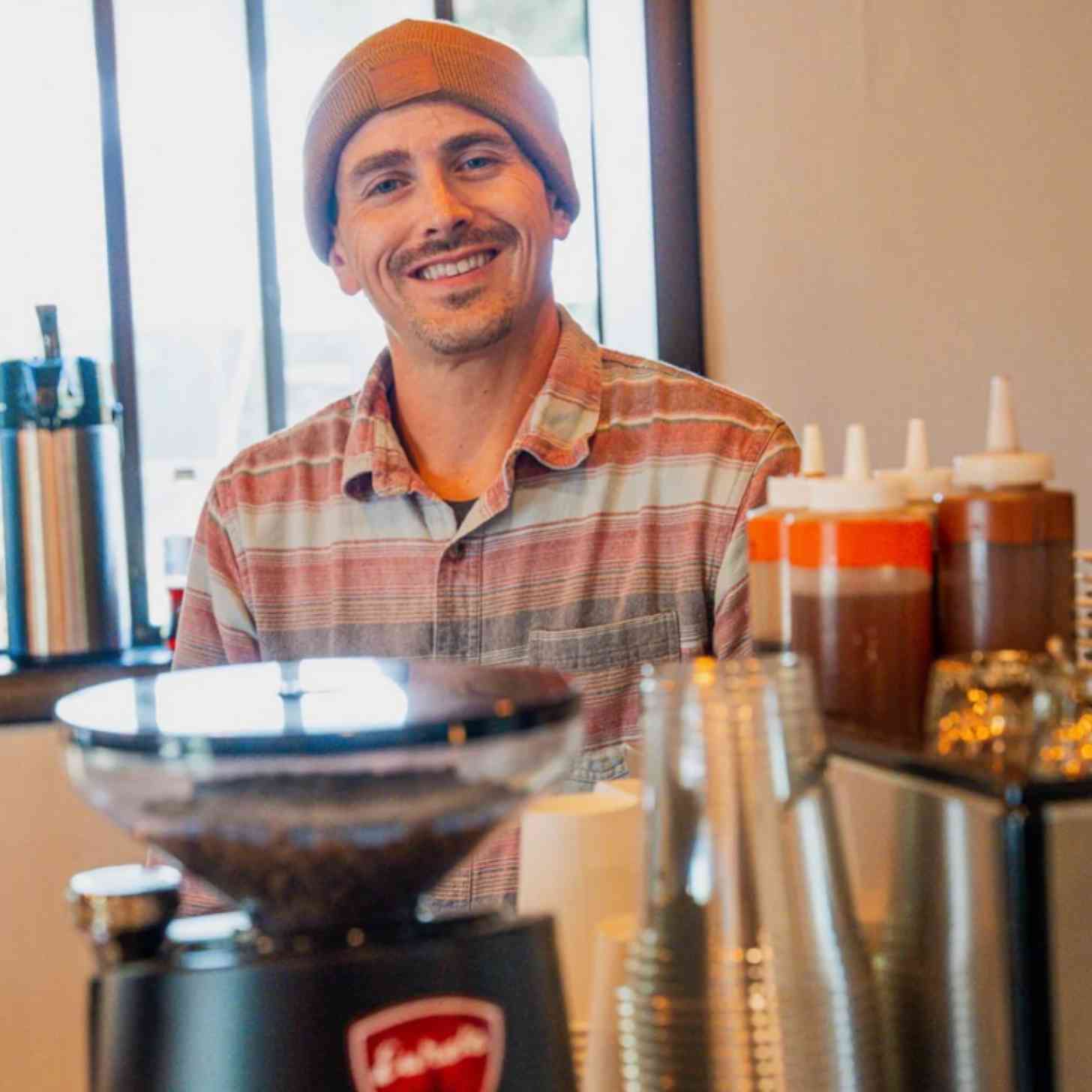
“As a business that sells coffee and food, it didn’t feel right to just sit and watch people go hungry,” Josh, the owner of Heretic Coffee, told Good Good Good via email. “Regardless of government systems like SNAP succeeding or failing, I still believe it's up to the community itself to look after one another.”
He added that their mission is instilled in the name of the business itself.
“The word heretic literally means ‘to disrupt the established institution of something,’” he emphasized, “so instead of waiting for someone else to fix it, we decided to feed people ourselves.”
When asked if Heretic Coffee was partnering with other shops or suppliers to pull off their mission, Josh said the endeavor is “mostly grassroots” at the moment.
“We've done things like this before, but never with this type of attention,” Josh said. “We're actively getting things in place with local vendors and working with volunteers to cook, serve, and donate.”
“We’re also in ongoing conversations with local nonprofits to scale this sustainably if the need continues indefinitely,” he added.
After Heretic Coffee made its announcement, one Threads user replied: “Sorry, but you will be bankrupt in a week.”
“We responded with ‘Much rather go bankrupt feeding our people than selling coffee while other families starve’ and we stand by that comment,” Josh told Good Good Good. “However, the way our Portland community has already showed up, I am more than confident we can power through.”
Despite a small degree of skepticism, the comments below the announcement were overwhelmingly supportive.
“This is the heart and soul of America,” one Threads user replied. “Thank you for caring about others less fortunate.”
“I've seen such kindness and goodness from individuals and businesses here in Portland,” another wrote. “I'm one of the hundreds of thousands of Oregonians not getting my SNAP next month. Anything and everything helps.”
Within 24 hours of the announcement, hundreds of people were already asking how they could help offset the cost.
“The typical cost of a breakfast burrito and coffee is around $15,” Josh said. “If you’re local, come grab a coffee and ask to pay for someone's ‘SNAP breakfast.’ If you're interested in donating your time more than your money, we're also a volunteer-run coffee shop, and we're always looking for new volunteers.”
Locals looking to volunteer for a shift at Heretic Coffee can visit this Google Form.
For people hoping to support the cause from outside of Portland, Heretic Coffee also has a donation link available online.
“We hope it reminds people that community doesn’t have to be complicated; that a cup of coffee and a breakfast burrito can be a small act of resistance against a system that leaves people hungry,” Josh said of the cause.
“If even one person feels seen, cared for, or less alone because of this, then it’s worth every ounce of effort.”
And as peaceful protests continue outside of Portland’s Immigration and Customs Enforcement facilities — spurring charged rhetoric and false claims from the White House — Josh said it’s more important than ever to show people what the city actually represents.
“There’s been a lot of conversation about Portland in the news lately, that we’re some kind of rioting, looting, burning-down city,” he said.
“But this act is just one small glimpse of the REAL Portland. We’re a big city with a small-town heart. When people are pushed to the margins, we'll be the first to respond. That’s what it means to be a Portlander.”
You may also like: To help families losing SNAP benefits, people are handing out more than just candy this Halloween
Header image via Thirdman / Pexels
The United States Department of Agriculture has confirmed in a new announcement that the 42 million Americans who rely on the Supplemental Nutrition Assistance Program will go without their benefits beginning November 1.
The cancellation of benefits is reportedly due to the federal government shutdown.
SNAP is a nationwide program that provides monthly financial assistance to low-income families so that they can access healthy food.
Millions will be impacted by the loss of their benefits, as will the economy at large, as grocery stores lose revenue from SNAP programming and already overwhelmed food banks work to support a larger influx of clients.
Fortunately, those with the means to help are helping.
Sharon McMahon, an Instagram creator, author, and educator, often dubbed “America’s Government Teacher,” spends most of her time online speaking about current events to her over a million followers.
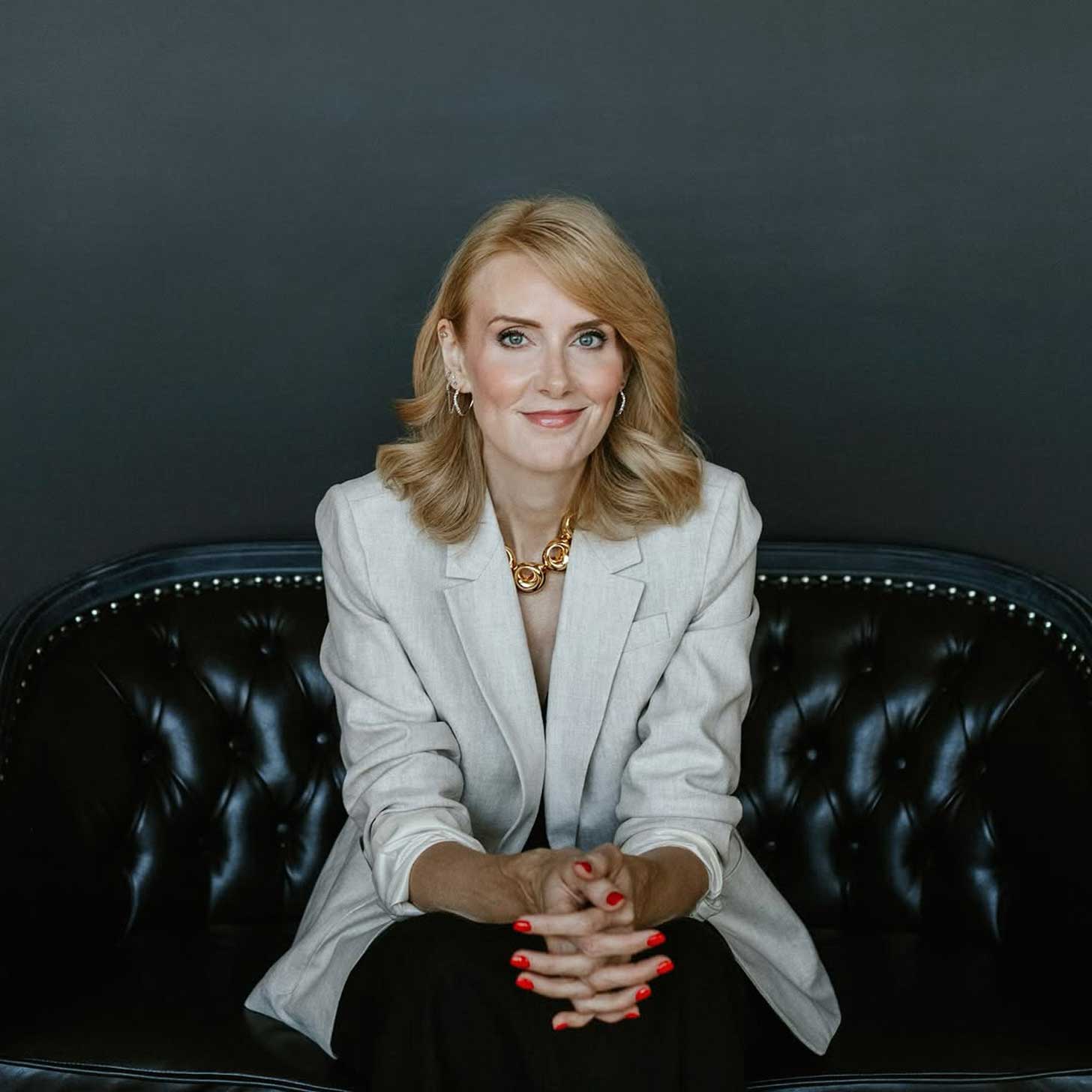
But over the years, she and her online community (called “Governerds”) have found a sweet spot for fundraising.
In addition to clearing millions of dollars in medical debt and providing millions of dollars in grant funding to teachers, the group raised a total of $646,541 for Feeding America and other food banks across the country.
“Over the weekend, this community raised $646,541 for food banks across the country,” McMahon wrote in an Instagram post. “That is more than six million meals. Sill million acts of quiet mercy. Six million children who won’t go to bed hungry.”
The fundraiser was conducted like many of McMahon’s often are: People sending a couple of dollars to her Venmo and PayPal accounts, with McMahon amplifying the efforts on her platform.
Originally, the goal was to raise $100,000 to provide one million meals. But then, the community rallied.
McMahon also brought in some matching donors this time around, securing more than $240,000 in matching funds, on top of the hundreds of thousands raised by her community.
The effort was small but mighty, with no savvy fundraising campaign or large-scale nonprofit marketing team — just McMahon, her followers, and a desire to help.
“No politicians did that,” she added in her post. “There are no viral videos. No figure claimed ‘I alone can fix it’ or rode in on a white horse.”
The funds, it seems, will go to Feeding America.
McMahon also noted in her Instagram Stories that the matching funds would support Second Harvest Heartland in the Twin Cities, as well as some food banks and organizations in Houston, Texas, Logan, Utah, Provo, Utah, Philadelphia, Pennsylvania, North Texas, and Fort Worth, Texas.
Commenters commended the effort and celebrated the collective generosity on display.
“Thank you for leading the charge with this and giving us a constructive way to [feel] helpful rather than hopeless,” one person wrote.
“I love how I jumped in after a handful of [Instagram Story] slides last night and by the end, it was, like, fulfilled entirely,” another person wrote. “Way to show up, Governerds. Also, I know WE did that, but Sharon, YOU did that with your community. I love it here.”
McMahon concluded her post announcing the total donation by reminding people to bookmark the news for the next time they need a boost.
“For the next time you feel like nothing you do matters. For the day you feel all hope is lost,” she wrote in the caption.
“Hope still has helpers. That’s you.”
You may also like: A Woman’s Posthumous Medical Debt Fundraiser Went Viral — Surpassing Humble Goal and Raising Over $1M
Header images courtesy of Sharon McMahon/Instagram
Earlier this week, the United States Department of Agriculture announced that the 42 million Americans who rely on the Supplemental Nutrition Assistance Program will go without their benefits beginning November 1, as a result of the federal government shutdown.
SNAP is a nationwide program that provides monthly financial assistance to low-income families so that they can access healthy food, providing about 1 in 8 U.S. residents an average of $187 a month in food aid.
The approximately $8 billion set aside by the federal government to cover SNAP every month lapsed when Congress did not approve an annual appropriations budget on October 1, leading to the now 27-day government shutdown.
According to NPR, the Trump administration has said it cannot use emergency contingency funds to continue covering SNAP benefits, and now, 26 states are suing the USDA for suspending the program.
In the meantime, small business owners are rising to the challenge.
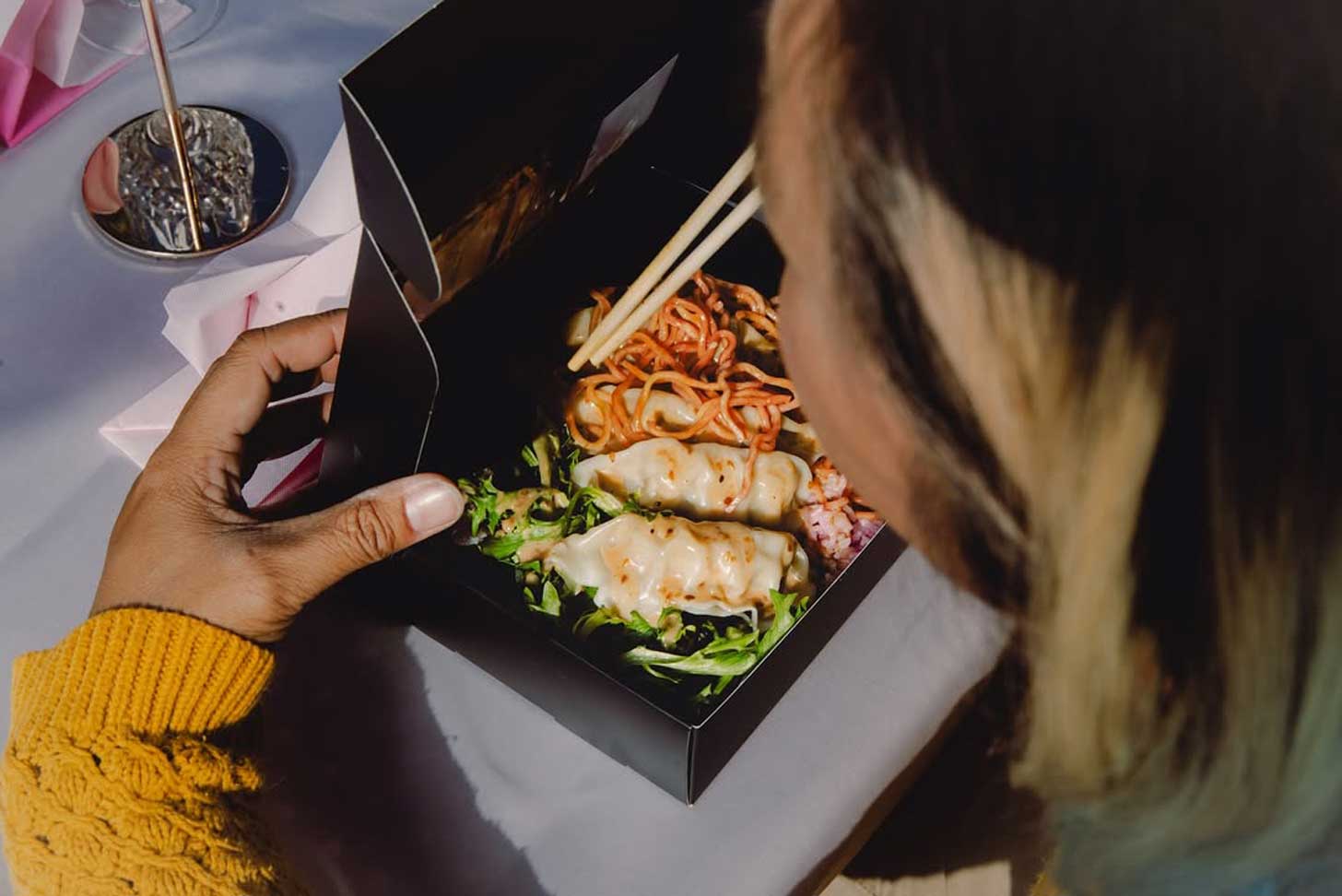
In Phoenix, Arizona, Lovebite Dumplings, a trendy shop owned by Gen-Zer Angel Gould, announced it would offer free meals to anyone with an EBT or SNAP card the first week of November.
“SNAP benefits are being paused in November due to a federal funding lapse, leaving millions of families without access to food support,” the shop posted on Instagram.
“No one should go hungry because of politics.”
To get a free meal, community members can visit the location on Roosevelt Row in Phoenix between 11 a.m. and 4 p.m., November 1-8. Lovebite makes build-your-own bento boxes, with options for dumplings, noodles, rice, vegetables, and sauces, undoubtedly a filling, warm meal for people in need.

But of course, this comes at a cost for the business — one Gould seems to be willing to stomach.
“We want to make it clear,” Lovebite continued on social media, “We are a small business, and this will hurt us. But we believe now is the time to step up for our community.”
This isn’t the first time Lovebite has given back to the community.
“We actually always give food to anyone that comes in and can’t pay for it, but we don’t usually advertise it,” Gould told Good Good Good in a direct message. “It’s just for the local unhoused community.”
But, she said, right now is different.
“Watching the news and seeing how many people are going to be affected by this, we were like, we have to let people know we are a safe space [where] they can get fed,” Gould said, “and just take the financial hit.”
The restaurant is also encouraging people who can to “pay it forward” when they pay at the register, or to simply come in and get themselves a meal, to help keep the shop afloat and make this act of generosity possible.
“Come by, show your community and neighbors that you care,” LoveBite shared in its post.
Based on the influx of comments on the social media post, the community is prepared to do just that.
“This is why I love spending my dollars here,” one person commented on Instagram, accompanied by a bevy of heart emojis. “See you guys this week!”
Others suggested adding a virtual donation so people could support the efforts if they don’t live nearby, as well.

“I’m so shocked, genuinely,” Gould said about the response to the free meals.
“I thought we would get our usual community helpers. I had no idea it would resonate with this many people. I’m working on an option to have people pay from afar because we have had so many people reach out. It didn’t even occur to us that this would be an option!”
She also hopes it inspires other small businesses to do what they can to help.
“It’s so easy to see the dark in the world, especially right now, but what started as something we were getting ready to take a financial hit from now has people across the country trying to help,” Gould said.
“I’ve never felt more inspired by people and hopeful for our future. I think that it is genuinely worth it to step up for your community every time.”
You may also like: To help families losing SNAP benefits, people are handing out more than just candy this Halloween
Header photo courtesy of Lovebite Dumplings/Instagram
According to the U.S. Department of Agriculture, 42 million Americans will lose their Supplemental Nutrition Assistance Program benefits on November 1.
Once this reality was made clear, Portland coffee shop Heretic Coffee announced it would feed vulnerable members of the community in response.
“If your SNAP benefits are running out, then breakfast is on us,” the coffee shop wrote on October 26 in a now viral social media post.
“NO ONE should have to worry about their next meal. Portland fam, we know it’s not much, but we’ll do our best to keep you fed. Starting November 1st, each day 8 a.m. - 2 p.m.”

After Heretic Coffee made its announcement, one Threads user replied: “Sorry, but you will be bankrupt in a week.”
“We responded with ‘Much rather go bankrupt feeding our people than selling coffee while other families starve’ and we stand by that comment,” the shop’s owner, Josh, told Good Good Good.
While Josh was prepared to take a financial hit, he wasn’t prepared for what came next.
“As of Tuesday at 10 a.m., you’ve donated $72,159.66 to keep our people fed,” Josh posted on Instagram.
“Over two thousand of you have given toward this cause.”
Less than an hour later, that total reached $75,000.
“We’ve said it before, and we’ll say it again: when the system fails us, it’s on everyday people to take care of each other,” Josh wrote. “This, right here, is the proof.”
On Wednesday, he updated followers again. Supporters had donated $184,553.19 in just a few days.
"Mister Rogers once said, 'always look for the helpers,' He was talking about you all," Josh wrote in the caption.
"Donations have poured in from Australia, Ireland, Egypt, and beyond," he continued. "There is no exaggeration in saying that the entire world is keeping Portland fed. Thank you."
And then once again, on Thursday, Josh was back with another update: Heretic had raised $280,503.69 since he first announced the free breakfast initiative.
When the effort was launched, Josh told Good Good Good it was a mostly grassroots, in-house project, but added that the shop was actively looking to work with local vendors and volunteers to cook, serve, and donate to ensure community members can eat.
“As a business that sells coffee and food, it didn’t feel right to just sit and watch people go hungry,” he said on Monday.
With the support of people near and far, however, the future looks bright for Heretic Coffee and its surrounding community.
"If you are hungry, come eat," Josh concluded in his latest update. "The world has you."
Locals looking to volunteer for a shift at Heretic Coffee can visit this Google Form.
For people hoping to support the cause from outside of Portland, Heretic Coffee also has a donation link available online.
You may also like: SNAP benefits stop Nov. 1. This Phoenix dumpling shop will feed people free lunch: 'This will hurt us, but we have to step up'
Header image by Ketut Subiyanto via Pexels
Meat and dairy farming accounts for around 14.5% of global greenhouse gas emissions, according to the United Nations Food and Agricultural Organization.
But when United States farmers have been operating these businesses for generations, or make all of their income through animal agriculture, it can be intimidating to even consider the time, money, and energy it could take to transition to crop farming.
So, The Transfarmation Project is there to help.
The organization helps farmers transition from industrial animal agriculture operations to raising crops through robust conversion plans and crop guides, connections to business owners looking to buy products from “transfarmed” farms, as well as grants and cohorts to help ease the financial burden of transitioning.
“By creating models of alternative economic opportunities, building solidarity with other movements, and shifting societal narratives to change culture, we will realize a just and sustainable food system,” the organization shares on its website.

The project funds and guides U.S. farmers, no matter their motivations: Economic, environmental, or animal welfare.
After making initial contact, someone from the Transfarmation team assesses a farm’s existing infrastructure. Then, they create a transition plan, which can include a myriad of resources like grants, toolkits, and more.
For those who have made the switch, the help is invaluable.
The first success story of the organization is that of the Halley family, a Texas-based chicken farm that saw mounting health and financial troubles in poultry.
They faced a sizable debt after shutting down their chicken coops, but with the help of Transfarmation, they became a fully-scaled hemp farm — and animal rescue facility.

“We were so happy to have support from an organization dedicated to helping us transition,” Bo Halley said in a blog post for the nonprofit. “We decided that we would grow hemp and go from killing animals to growing something, from destroying things to creating things.”
His sister, Devvie Deany, joined the team when they transitioned their business model. They now run a nonprofit called Let Love Live, which rescues and rehabilitates about a thousand animals — from dogs to donkeys — every year.
The whole process not only improved outcomes for the family farm, but it rekindled a real love for agriculture — one they hope others like them will find, too.

“I think fear holds us back from change … If we just kick that fear to the side and be open to learning something new, and with the help of other farmers who’ve been through this before them, I would hope that other farmers would be open to change and open to growth and know that they’re not alone,” Deany said.
“There are others who have felt that way before them, and we can all get through this together.”
A version of this article was originally published in The 2025 Food Edition of the Goodnewspaper.
You may also like: 800-pound butter sculpture from state fair recycled into electricity: 'Enough to power 600 homes for a year'
Header images courtesy of Transfarmation Project and Let Love Live
Most cyclists bike around their cities as a form of transit or exercise, but members of the Chicago, Illinois collective Cycling x Solidarity take their bike love to a whole new level.
As Immigration and Customs Enforcement continues its targeted crackdown in Chicago, at least three street vendors have been detained by agents, in addition to thousands of others with no proof of criminal history.
So, cyclists are doing their part to support migrant workers who own and operate food stalls in the city.

Over the weekend, Cycling x Solidarity joined the Street Vendors Association of Chicago to lead a Street Vendor Bike Tour. Their goal was to buy out a day’s worth of food from each food cart they visited.
“For the past month or so, ICE has been terrorizing our neighborhoods, [so] we’ve been riding out in the mornings and buying out street vendors — buying everything they have so they can go home and be safe with their families,” one cyclist told journalist Priscilla Ferreyra.
In addition to financially supporting the vendors who have seen lower sales in recent weeks due to ICE’s presence in the area, it also encourages them to go home and be with their families, safe in the privacy of their own homes.
“It’s been really tough on them,” Maria Orozco, development manager and outreach coordinator with the Street Vendors Association of Chicago, told Block Club Chicago.
“And then the people that have the opportunity to go out and sell or just risk it, they’re not getting as much sales as they used to. So it’s something very traumatizing for people to see. … It’s very unexpected. I think COVID wasn’t even this bad.”
According to an Instagram post by the community, over the past weekend, more than 30 cyclists bought out six vendors on Saturday, and three on Sunday. Their purchases resulted in a total of 250 burritos, gift bags, and drinks being distributed to others in need throughout the city.
And that was just in one weekend. A few days prior, nine cyclists did the same thing with five street vendors in Little Village, gathering tamales, elote, and chicharrones in one fell swoop.

“Cash from you, straight to them, and then food distributed right back into the community,” a social media post from the group reads. “ICE might terrorize our communities, but they can’t destroy our spirit.”
This has been going on for about a month, when the group began collecting funds from community members to buy out vendors in Pilsen, Hermosa, and Little Village, areas vulnerable to ICE crackdowns. They get out early in the mornings so vendors can pack up early to avoid ICE agents.
“Despite the fear in the community, it never fails to move us when vendors are surprised to hear we want to buy everything they have,” Cycling x Solidarity shared on Instagram.
“We want every vendor to be able to go home to their families at the end of the day after feeding our city.”
The cyclists share stories on their Instagram pages regularly, each more heartwarming than the last.
“It’s not about everyone showing up every day. It’s about every day, somebody showing up,” one post reads. “This morning, three cyclists braved the rain to buy out two vendors. One vendor had their young child waiting in the car and started immediately packing up after we bought everything she had. I hope they enjoyed the rest of the day somewhere warm and comfy.”
@priscilla.ferreyra Some street vendors in Little Village got to go home early today after a group of local cyclists showed up to buy all their food! This as a way to support the street vendors in the community that have seen a drop in customers due to the fear many feel in the community amid immigration crack down. #immigration #lavillita #streetvendors @NBC Chicago ♬ original sound - Priscilla.Ferreyra
In addition to the acts of generosity, the cyclists try to spend time talking with street vendors, learning their stories, and enjoying a delicious bite of their own.
“We’re providing an opportunity to support vendors and hearing their stories, to make this so it’s not just transactional,” Cycling x Solidarity organizer Rick Rosales told Block Club Chicago.
The group is always looking for more folks to join in, including translators, who can help build even more connections with the city’s street vendors.
“To me, it embodies what it means to be an American,” Rosales said. “My fondest memories are [street vendors] handing these warm tamales for a reasonable price and being able to support them and their hustle. I think a lot of Chicagoans have a similar feeling toward them. They cherish the vendors in their neighborhood.”
You may also like: TikToker pays migrant day laborers to join him at a waterpark for the day — and his followers gave them $20K more
Header images courtesy of Cycling x Solidarity/Instagram
Climate change is an omnipresent threat for us all, but its impact disproportionately affects non-white populations.
Inequalities stem from generations of racial injustice and colonization of Indigenous lands, contributing to ongoing marginalization and risk in BIPOC populations.
Climate justice is a movement that seeks to rectify those inequities, with the goals of reducing unequal harms of climate change, producing equitable benefits from climate solutions, and including affected communities in the decision-making process.
Unfortunately, most people who are concerned about climate change remain unfamiliar with climate justice goals. But there is hope in turning the tide.
In a study by the Yale Program on Climate Change Communication, published in early 2025 in the journal Environmental Science & Policy, only about one-third of Americans had heard about climate justice.
But after reading a description of climate justice goals, many more Americans said they support climate justice (53%) than oppose it (19%).

The study also found that people who are aware of the injustices of climate change are more likely to support a political candidate who advocates for both climate justice and climate justice policy.
They also showed more willingness to join a climate justice campaign.
So, how do activists help climate justice gain more support? The researchers suggest that communications should incorporate climate justice more explicitly.
Those communications should also describe the specific and disproportionate harms of climate change, as well as the practical benefits of climate justice initiatives.
“Our study suggests a need to build public awareness of the term ‘climate justice,’” the researchers wrote.
“We find that many Americans who would support climate justice do not know what it is. … The untapped climate audience may simply be unaware of climate justice rather than unconcerned about it.”
A version of this article was originally published in The 2025 Environment Edition of the Goodnewspaper.
You may also like: Boston is the first US city to plant green roofs on bus stops: 'Would amount to 17 acres of green space'
Header image by Carra Sykes for Good Good Good
Social-emotional learning, including meditation, yoga, and mindfulness breaks are becoming more commonplace in schools across the country.
Reports have found these initiatives are even more beneficial among communities that have fewer resources than others, including those with more students of color.
This is especially evidenced in Atlanta, where GreenLight Fund Atlanta helps Georgia school systems pay for mindfulness programs.
They are created by Inner Explorer, an audio platform that guides students and teachers through five-to-10-minute sessions of breathing, meditation, and reflection.
It’s used by Atlanta Public Schools and over 100 districts in the U.S.

The goal is to ensure that at least some form of mental health care is accessible to students of color, as Black youth have the fastest-growing suicide rate among racial groups according to the CDC. Between 2007 and 2020, the suicide rate among Black youth increased by 144%.
And according to Joli Cooper, GreenLight Fund Atlanta’s executive director, “there are not enough psychologists of color” available.
While meditation breaks do not eliminate the need for more in-depth care, they do help.
Teachers and administrators at Roberta T. Smith Elementary School in Atlanta told the Associated Press they notice a difference in their students since incorporating mindfulness into their daily learning. And the students notice, too.
“I love myself how I am,” Aniyah Woods, a 9-year-old, told AP. “But Inner Explorer just helps me feel more like myself.”
A version of this article was originally published in The 2025 Mental Health Edition of the Goodnewspaper.
You may also like: To combat the youth mental health crisis, this school district lets students text a therapist for free
Header image by Yan Krukau/Pexels
Philadelphia Blind Hockey was founded in 2022 after students from the Overbrook School of the Blind partnered with the Philadelphia Flyers to give hockey a try.
The initiative was so successful that Kelsey McGuire, a teacher at the school, was asked by USA Hockey to start a regional blind team.

Now, she’s the group’s executive director.
Philadelphia Blind Hockey holds free weekly sessions for youth ages 4-17, teaching basic skating and hockey skills. Their work is possible thanks to fundraisers like the annual Blind Awareness Showcase, which raised $11,000 in 2024.

The event encourages skaters and hockey enthusiasts to wear low-vision simulators and blindfolds while they play, raising awareness about blindness and visual impairments.
“We like to allow those who are sighted to be put under low vision simulation so they understand what it’s like for our players to play hockey,” McGuire told The Reporter.
In 2024, over 100 participants joined the showcase, including members of local high school hockey teams, Philadelphia Blind Hockey coaches, and Philadelphia Flyers staff and alumni.

Their support made it possible for Philadelphia Blind Hockey to launch an adult team and give youth players the opportunity to play in their first competitive games.
The 2025 event took place on October 3, but it’s unclear how much this year’s showcase raised.
“I believe that no matter what your disability is, you should have the opportunity to participate in something,” McGuire added. “Blind hockey has shown that sport in general can be easily adapted.”
A version of this article was originally published in The 2025 Sports Edition of the Goodnewspaper.
You may also like: Blind skateboarder creates 'world-first' adaptive skatepark: 'I've never had a place where I can skate with full confidence'
Header image by Carra Sykes for Good Good Good
As more and more people see their dogs as quintessential members of the family, their care is incorporated into a dog owner’s “cost of living.” But in the United States, everyday people face a cost-of-living crisis.
Therefore, so do their pets.
Along with rent and grocery costs, the price of pet care has risen dramatically in recent years. A Bank of America Institute report found that since 2019, prices of services like veterinary care and grooming have gone up 42%, with the cost of goods like food and treats surging 22%.
These barriers are leading to an influx of people surrendering their pets to shelters.
“The main reason for pet surrender is, ‘I can’t afford it.’ Vet care is expensive, food is expensive, I mean, just human cost of living is expensive,” Risa Weinstock, the CEO of Animal Care Centers of New York City, told NBC News in July 2025.
While shelters call on people to adopt, they also understand that there are barriers associated with pet care, and they don’t want to create a cyclical problem where animals continue to return to shelters. Fostering has become a way to bridge the gap in the interim.

Isabel Klee, famously known under her Instagram and TikTok moniker @simonsits, has been fostering dogs for years — 25 of them — alongside her permanent pup, Simon.
“You can’t have animal welfare without human welfare,” Klee said in a recent podcast episode of “The Dogs Were Good Again.”
“There are so many rescue people who say things like ‘I hate people; that’s why I work with dogs,’ and I do understand,” she went on.
“In the rescue world, you see the worst of the worst, but you also just see a lot of people who have no other options … I think people are inherently good, and I think it’s important to give them the benefit of the doubt. I’ve had so many fosters that were owner-surrenders, and so many people say … ‘I would never abandon my dog.’ Like, you should feel glad that you’ve never had to.”

For some people, surrendering their pet simply isn’t an option — they would rather give up everything else first. It’s something Dr. Kwane Stewart has seen firsthand in the last decade as he has built his nonprofit Project Street Vet.
A veterinarian for nearly 30 years, Stewart spent the majority of his early career as a shelter vet during the recession. At a shelter with high intake and high euthanasia rates in California’s Central Valley, he was facing immense burnout and compassion fatigue.
One night, as he was leaving work, he came across a homeless man and his dog outside of a 7-Eleven. The dog was clearly suffering from a flea condition.

Stewart introduced himself and offered to help the dog for free. When he saw the same dog about a week later, she was transformed.
“The man was just so grateful and started to cry, saying ‘Thank you for not ignoring me, for stepping over and offering to help,’” Stewart recalled to Good Good Good.
It was a turning point. At first, it was just Stewart and his backpack with basic medical supplies and medications, treating dogs on the streets of Skid Row in Los Angeles. Eventually, he officially created Project Street Vet, which now has chapters across the country where volunteer vets help treat the pets of homeless folks in need.
Stewart said free vet clinics are certainly helpful, but walking the streets is where he meets most of his clientele.

Most dogs just need essential care for skin issues, allergies, and basic wellness, like flea and tick medications, heartworm prevention, and regular vaccines. Any other major procedures are referred out to partner providers.
For as much good as he’s done over the years, it wasn’t always easy for Stewart to have this approach.
“You come out of vet school taught to really understand that when you acquire a pet, you're taking on full responsibility for that pet. You should be in a position to give care to that pet, and it’s not just love and companionship, but medical care, resources, food. But I think when you get in this game long enough, you realize, that doesn't always play,” he said.
“There are people who fall on hard times and rely on their pets in ways that maybe the rest of us take for granted. It's a lifeline for some people. We, as an industry, have to step up, find ways to be creative, and help out.”
After spending so much time with unhoused clients, he has learned to remove shame and judgment from any aspect of his work. In fact, the organization’s mantra is “No judgment, just help.”

“[Our clients] are by far better than the average pet parent, me included, when it comes to loyalty to their pets and companionship,” Stewart said.
“When I hear these stories in the streets about people sacrificing their meal for the day to feed their pet, or when their golden ticket is finally pulled and they get housing offered, but they refuse if it does not accept their dog … you can’t criticize that. They get it right in a way that most of us do not.”
The care Stewart and his team give to these animals isn’t just out of the kindness of their hearts; it is also a strategy to help vulnerable people find a way out of their circumstances.
“I've seen it play out time and time again, where the absence of their dog leads them to fall back into their addiction, or they lose hope to continue. Some have fallen to suicide when they've lost their pet,” he said.

He told the story of a woman who invited him into her tent after he heard a dog whining inside. He treated the dog with some basic care and vaccines, and as he did, she told him that just a few weeks prior, she had decided to take her own life.
“By her own admission, she said, ‘I’ve been an addict for 10 years. I cannot kick it. I’ve lost the support of friends and family, and I don’t really have anyone in my life but [my dog],’” Stewart recalled.
“She got a pocket full of pills and a bottle of liquor, and she said she was holding the pills, and right before she took them, she looked over at her dog curled up in bed, and had one thought: ‘If I take my life tonight, who’s going to feed you in the morning?’”
The thought alone stopped her in her tracks, and the next day she went back to rehab.
Stewart saw the woman again about six months later, and for the first time in a decade, she was still sober, now applying for jobs and housing.
Her dog’s health and safety were a gateway to her own.

Stewart’s work is urgent and meets people directly where they are, but he admits it can be a band-aid to much larger, systemic inequalities. In Southern California, he said, policies are changing to make homeless shelters more accommodating to dog owners.
Also in Los Angeles, he said, the shelter system is adopting a measure whereby if someone is attempting to surrender their dog to a shelter for medical reasons, they are first given a line of credit to receive care at a participating veterinarian.
“Dropping your dog off at the shelter, it’s almost like a jail system for people,” Stewart explained. “The shelter incurs more costs when they take in the dog, versus just allowing the person some credit or some money to treat the dog and stay with them.”
On a federal level, Colorado representative Jason Crow has introduced a bill to Congress called the Providing for Unhoused People and Pets Act of 2025 (PUPP Act), which would provide funding for homeless shelters to retrofit their facilities to better accommodate pets, so that people don’t have to choose between having a roof over their head and staying with their pet.
Regardless of the progress, Stewart said, high costs remain prohibitive for all dog parents, even those who are not facing homelessness, and the data backs that up.
Earlier this year, a survey conducted by PetSmart Charities and Gallup found that 52% of pet owners in the United States have skipped or declined necessary veterinary care for their pets — despite 97% of them considering pets their family.
By eliminating barriers to basic costs, Stewart said, it can create a culture shift in a veterinary world that has quickly shifted to be more corporate, and curb a financial crisis for some people before it becomes an even bigger one.

He is currently working on creating a string of veterinary clinics specifically offering lower-cost, essential care, instead of “gold-standard” clinics that offer patients more than they need to turn a profit.
“They’re bottlenecking everything when a pet comes in and they try to cover everything at once, instead of just treating the ear infection or whatever they came in with,” Stewart said.
“That’s not serving people. My clinics aim to address that problem: Giving essential care in the moment at a cost that most people could probably afford.”
While Stewart attempts to change things from the streets and the exam rooms, other animal advocates hope that dog lovers of all kinds will stand up for a future that serves people and pets alike.
Klee, the 25-time dog foster mom, used the New York City mayoral primary in June 2025 to encourage viewers to engage in elections and call for legislative solutions to the problems that land people in these tough situations in the first place.
“The animal welfare crisis is happening because of a human welfare crisis. I know it can feel hopeless, especially in this political climate, but I think it’s in this hopelessness that we can push for change. This city is … turning into a place where only wealthy people can survive. It’s even turning into a place where only wealthy people can own pets,” Klee said in a social media video.
“I’m calling on you to pay attention and to give a shit.”
A version of this article was originally published in The 2025 Dogs Edition of the Goodnewspaper.
Header image by Carra Sykes for Good Good Good
Pastor Jamal Harrison Bryant of Atlanta, Georgia is no stranger to activism.
As the leader of New Birth Missionary Baptist Church, he leads weekly sermons on social justice and mutual aid — and he’s also one of the most prominent voices behind a boycott of Target, following the corporation’s slashing of diversity, equity, and inclusion programs.
On Instagram, where he has nearly one million followers, he has been vocal in his opposition to the Trump administration. And this week, as the United States Department of Agriculture announced that 42 million Americans will lose their Supplemental Nutrition Assistance Program benefits on November 1, was no exception.
SNAP is a nationwide program that provides monthly financial assistance to low-income families so that they can access healthy food, providing about 1 in 8 U.S. residents an average of $187 a month in food aid.
The approximately $8 billion set aside by the federal government to cover SNAP every month lapsed when Congress did not approve an annual appropriations budget on October 1, leading to the now 28-day government shutdown.

“History will record that President Trump is the very first American commander-in-chief to starve his own citizens,” Pastor Bryant shared in an Instagram video.
While he had strong words denouncing the cutting of SNAP benefits, he offered more than just platitudes, providing resources for people in the Atlanta community who may be in need, and even going so far as to turn down donations to the church.
In fact, last Sunday was supposed to be a major fundraising day for the church, with an estimated $1 million in donations expected to be raised. Instead, Pastor Bryant put the event on hold, encouraging congregants to instead donate to people in immediate need or bring canned foods to the church for distribution.
“The congregation is supposed to be sensitive to the needs of the community,” Pastor Bryant told 11 Alive News. “Knowing that people are literally just trying to keep their head above water … we’re opening up our arms and opening up our hearts at the same time.”
The church already gives away groceries to about 1,500 people every other Sunday, but he expects the demand to increase as SNAP benefits dwindle.
“Normally, we bless 1,500 families in our community with groceries twice a month,” he said in an Instagram Live. “I think that number is getting ready to double.”
According to 11 Alive News, the church anticipates it will serve 2,000 people — both furloughed workers and those without their SNAP funds — in the coming weekend.
“Ladies and gentlemen, we’ve got to walk together as a family. At our church, we are committed to feeding our community, our congregation, and this city,” Pastor Bryant said on Instagram.

He went on to share resources that anyone in the country can access if they are in need of food assistance, including a hotline to find food banks (1-800-5HUNGRY) and findhelp.org, a website that offers localized assistance for housing, food, employment, and more.
He also shared that he will soon be hosting a Zoom training for pastors all across the country on how to “turn your church into a food bank,” mobilizing them with the resources they need to distribute food to people in need.
“In this hour, the church has got to do more than shout,” Pastor Bryant said in an Instagram Live.
“The church has got to be able to serve.”
You may also like: Church to demolish existing worship space, creating 110 units of affordable housing
Header image courtesy of Jamal H. Bryant
On November 1, 42 million recipients of the Supplemental Nutrition Assistance Program will abruptly lose their benefits.
As the government assistance comes to an end, communities across the country are banding together to protect their neighbors.
In Portland, Oregon Heretic Coffee is offering “free SNAP breakfast” to anyone who asks — and they’ve raised over $184,000 in donations to keep that program running.
Over in Phoenix, Arizona the dumpling shop Lovebite is serving free lunch to anyone with an EBT or SNAP card for the first week of November.
And this weekend in Atlanta, the New Birth Missionary Baptist Church is set to serve food to 2,000 people, including both furloughed workers and those losing their SNAP benefits.
Mutual aid programs like these are coming at a critical time, especially with the holiday season on the horizon.
And on the same day that SNAP benefits stop, the Union Station Homeless Services is joining with streaming platform Bigo Live to kick off a month-long initiative that ensures families in need won’t go hungry this Thanksgiving.
From November 1 through November 27, the Grateful Streams campaign is set to raise $15,000 to support Union Station Homeless Services as they serve individuals experiencing homelessness this holiday season.
“At Bigo Live, we believe livestreaming is more than just a connection. It’s revolutionary to how communities can support each other. We’re honored to kick off this initiative and bring people together in support of a good cause,” Lynette Yang, vice president of Bigo Live, said in a press release.
“Grateful Streams will empower our creators and global audience with a shared mission of spreading gratitude, giving back, and making the holidays brighter for those who need it most.”
Viewers can support the campaign by watching livestreams by creators like Carlos (@carlos.manuelx), Rex (@bikeliferex), BeautDee and The Bunch Family (@Beautiishername1), and participating in an in-platform Thanksgiving-themed “gifting system.”
Each digital gift translates to a real Thanksgiving meal provided by Union Station Homeless Services.
One of the participating creators, Moses Cox, said that livestreaming was all about connection.
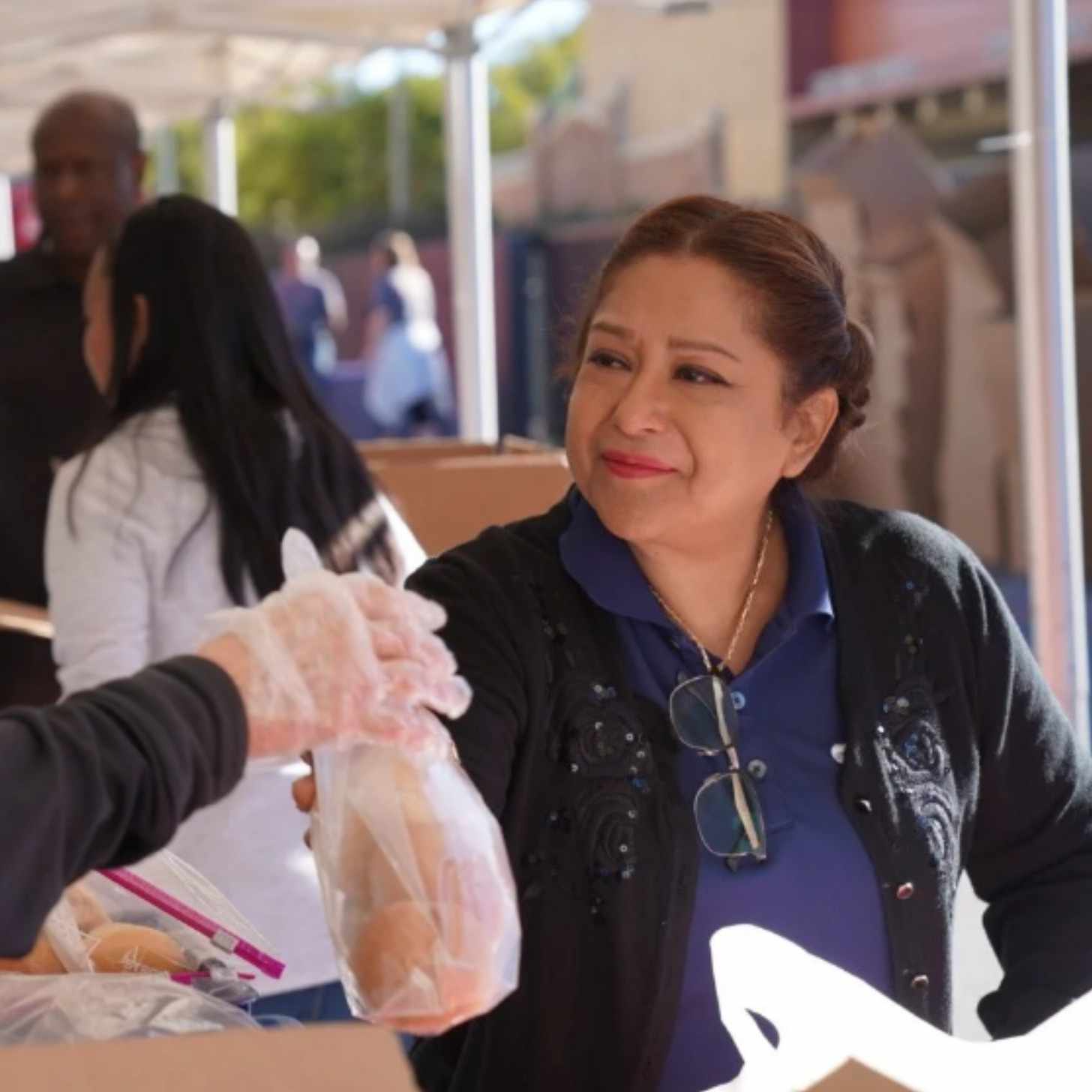
“This campaign is a chance to show how that connection can spark generosity and real change,” said Cox (also known as @slowwmoee).
For over 50 years, Union Station Homeless Services has been the largest social services provider in the San Gabriel Valley.
In addition to feeding the community, the nonprofit also provides mental health services, substance abuse counseling, transitional housing, and permanent supportive housing. Their mission is built on the belief that housing is a human right.
“Every meal donated through Grateful Streams directly impacts individuals and families working toward stability and independence,” said Katie Hill, CEO of Union Station Homeless Services.
Every November, Union Station Homeless Services hosts a Dinner in the Park celebration, which serves hot meals to thousands of community members in need.
This year, they hope to carve up 750 turkeys.
“The cost of food prices alone has created a tremendous strain for many across the country, especially those who are reliant on SNAP benefits that have been threatened or discontinued,” Hill said.
“With the rollback of these essential benefits, we are anticipating a 300% increase in food pantry boxes. Last year, we served over 6,000 Thanksgiving meals — that number may double this year.”
Hill went on to say that the loss of SNAP support isn’t something that just affects individual households.
“It increases food insecurity for entire neighborhoods and communities,” Hill urged. “We need everyone’s help to make sure that no plate is left empty this Thanksgiving.”
You may also like: Sharon McMahon and her community of 'Governerds' just raised $600k for food banks on Instagram
Header image via Union Station Homeless Services