As parents seek to decrease digital distractions from their kids’ lives, and researchers suggest that smartphones are not safe for children under 13, a new middle ground must emerge: How do we use technology to foster healthy growth and independence in young people without all the downsides of smartphones?
Tech company Karri has an idea.
A startup based in the United Kingdom, Karri has created a “smartphone” for kids. Except it isn’t much of a smartphone at all.

Designed for kids aged five to 13, Karri’s Messenger is inspired by the “simplicity of a walkie-talkie,” and gives kids the capability to chat with loved ones, minus the distractions of a touchscreen device.
Karri’s founder, Pete Clifford, conceptualized the device in 2020 when he was struggling to figure out how to manage smartphone culture with his then-seven-year-old son.
“I knew he wanted to walk to school by himself or go meet his friends a few streets away but I was also nervous about not knowing where exactly he would be and not being able to get in touch,” Clifford told Dezeen.
“After some research and not finding a child-friendly, screen-free solution that was working reliably everywhere I came up with the idea of starting Karri.”

The first Karri device was released in May 2024, and the company’s newest iteration, designed in partnership with the firm Pentagram, will reach mass markets in 2026.
It works very simply: The device is operated by a SIM card and allows kids to send voice memos to parents or guardians, who can listen and respond via a complementary Karri app on their own smartphones.
The Karri Messenger does not have its own phone number and only works with a paired mobile app on a parent or loved one’s phone. That means strangers can’t contact kids through the device, and parents can see the location of their child, as well as the device’s battery level and network status from their end only.
Parents can also set up safe areas or “geo fences” for their children and will be notified if they move outside of these boundaries.

“As KARRI prepares for shipping the new device later this year, the company is proud to be at the forefront of an entirely new category in out-of-home, voice-driven child communication,” a press release from the company states.
“This device is more than just a piece of technology, it represents a commitment to promoting healthy childhood development while maintaining essential family connectivity.”
For kids, using the Messenger is easy. The minimalist design includes a simple dot matrix display, a speaker, and a “slide to talk” button in the center. All they have to do is slide down to listen to a new message, or slide up and hold to record a reply.

Pentagram was tasked with market research to understand the best ways to fit the needs of young people and their parents today.
“One of the key insights from the research was the need to develop a simple interface for kids to record, listen to and send messages as intuitively as possible,” the agency said.
“The result is the 'slide to talk' button, a single tactile interface for four actions: record, listen, send or delete, inspired by the simplicity of the push to talk button on a traditional walkie talkie, or the slide-to-talk on smartphone communication apps.”
The Messenger’s LED matrix panel also displays basic information like contact names or user instructions, and it’s able to host multiple chat channels, so all the aunts and uncles can get in on the action. Additionally, the device contains a flashlight and buttons for volume control and channel selection.

The newest iteration of the device is also smaller than its original and can be outfitted with a silicone case and lanyard for easy carrying. It’s also reportedly waterproof.
And it comes at a moment of “digital detoxing” among people of all ages. But parents and educators are specifically looking for alternatives in a world increasingly more likely to go phone-free.
“The Smartphone Free Childhood movement, gaining traction across the U.K. and internationally, highlights growing concerns about the impact of unfiltered internet access on young minds,” a press release from Karri explained.
“Over 140,000 parents representing 13,500 schools have committed to delaying smartphone use until at least age 14, signaling clear demand for safe and effective solutions like KARRI.”

In the United States, school districts that have implemented phone bans are seeing increased rates of library checkouts, indicating a readiness among students to ditch the phones for physical media.
The walkie-talkie nostalgia of the Karri Messenger could be the “dumb phone” consumers are looking for.
Karri’s second-generation Messenger is currently listed online at £90, or $121 U.S. dollars, and is slated to ship this Christmas. Pre-orders come at a reduced price of £50 (or $67).
Membership plans start as low as £1.79 ($2.40) a month for U.K.-only use on a 2-year contract, though pricier options are available for worldwide use and other features.
The device comes in four color ways: Fairytale (lilac purple), Rocket Pop (cobalt blue), Ocean Bounce (teal green), and Dark Phantom (dark grey).
You may also like: To combat the youth mental health crisis, this school district lets students text a therapist for free
Header image courtesy of Pentagram/Karri
Growing up in Hillview, Kentucky, Cole, Cam, and Cayden Bullock all shared a love for the holidays. They trace it back to their grandmother, Karen Douglas, who decorated their family home — first purchased in the 1960s — every holiday season.
“There have been decorations at that house for 30 years,” Cam Bullock told The Pioneer News. “I took over by myself in the last 10 years. It got hard-wired into my brain and I started doing it.”
Every year, the crowds drawn to the Bullocks’ holiday displays grew bigger.
Seeing an opportunity to do some good, the Bullocks began asking their neighbors to bring canned goods for Dare to Care, a local food bank based in Louisville, Kentucky.
Then, an unexpected tragedy struck. On October 31, 2024, Cole Bullock was killed in a homicide.
“My brother, he had just turned 18. He wasn’t even 18 for a month,” Cayden Bullock, 21, told WLKY last December. “The previous year, we lost our dad, and then Cole the year after, so it made the wound in our hearts bigger.”
That December marked the Bullocks’ first Christmas without their youngest brother.

Even still, Cam and Cayden put up their Christmas decorations, complete with a 10-foot replica of Bumble the Abominable Snowmonster — a fixture that Cole had jokingly pressured Cam to buy months earlier.
“It’s not the biggest display as it normally is, but it’s something for Cole,” Cayden said.
This year, as Halloween approached, Cam was reluctant to do anything festive.
Then the city of Hillview reached out to him to collaborate on a community event which would benefit Operation Santa — a United States Postal Service program that delivers Christmas presents to children in need.
“Hillview actually offers quite a bit of community events, but nothing for Halloween,” Cam told WAVE 3 News. “I was always so good with the Halloween [decorations] that I thought, ‘Why not? Let’s do a haunted house.’”
That’s how Cam concocted Scareview Haunt: a volunteer-run haunted house that’s earned a reputation so terrifying that it’s drawn thousands of horror fans across the state.
“On average, we have 15 to 20 actors every night, so every scene has at least one actor,” Cam said. “There’s over 150 animatronics inside, so it’s very immersive.”
In a wink to the program they’re sponsoring, Scarview Haunt leads guests on a multi-themed 20-minute walkthrough to “Killer Kringle,” a blood-soaked Santa Claus wielding a chainsaw.

And for young children — and locals that are less enthusiastic about the gorier side of Halloween — Scarview Haunt has a one-hour window where guests can walk through the house while the lights are on and the scare actors are away.
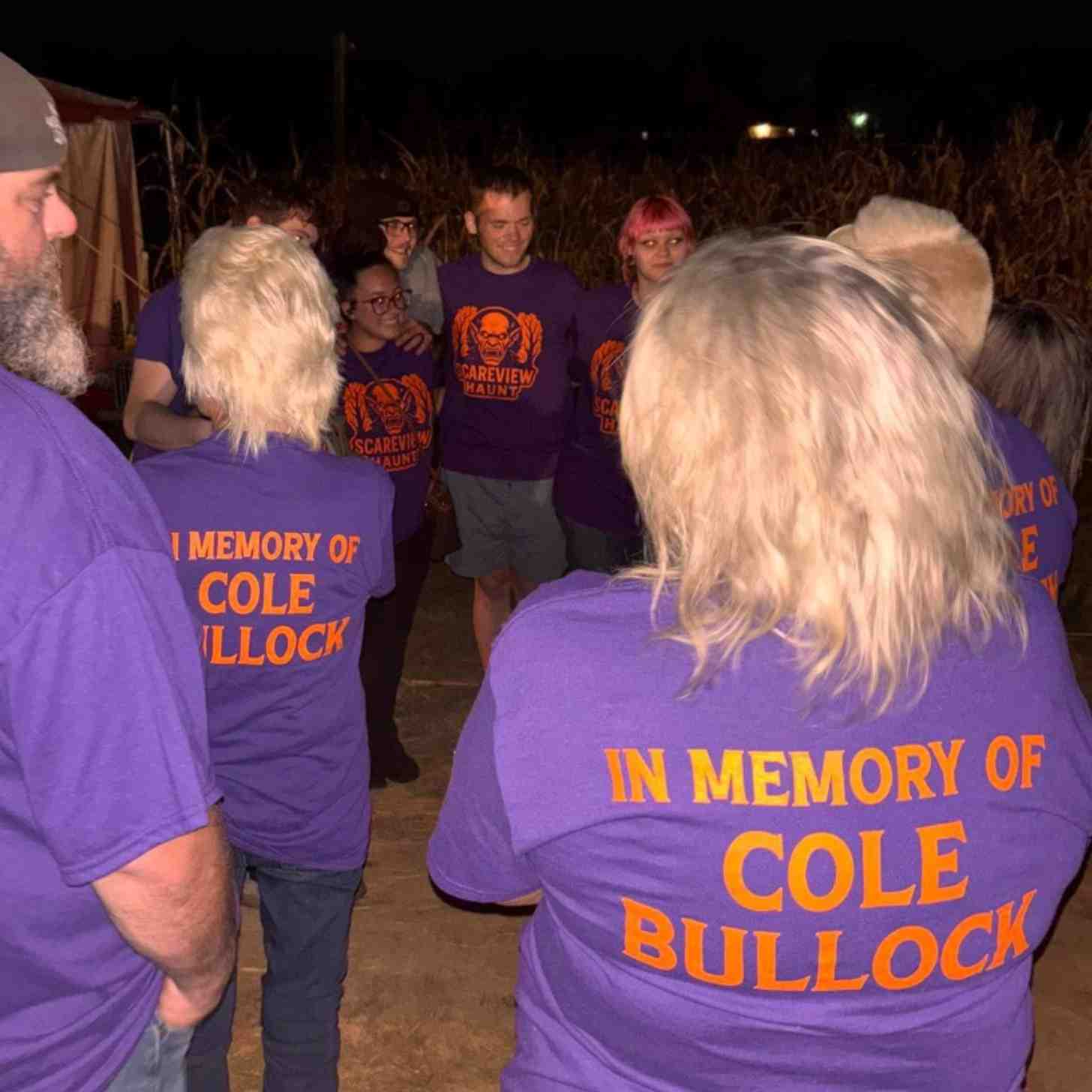
This month will be Cam and Cayden’s first Halloween without their brother, but his presence is felt nevertheless. Every weekend this October, Hillview locals have been seen sporting a sea of Scareview Haunt T-shirts, all with “In Memory of Cole Bullock” emblazoned on the back.
According to Cam and Cayden, all T-shirt sales and concessions sold at the haunted house will go towards covering the cost of Cole’s headstone and a memorial bench.
“I was gonna quit Halloween,” Cam said. “But got the opportunity to do this, and my love and passion for it all came back.”
You may also like: This 'little orange box' has helped trick-or-treaters raise nearly $200M over the last 75 years
Header image via Kenny Eliason
Hurricane Idalia blew a flamboyance, or flock, of 300-400 flamingos that was likely migrating between the Yucatan Peninsula and Cuba off course in August 2023 and unceremoniously deposited the birds across a wide swath of the eastern United States, from Florida’s Gulf Coast all the way up to Wisconsin and east to Pennsylvania.

I’m an estuarine scientist. That means I study ecosystems where fresh water flows into the ocean. I’ve spent 35 years with Audubon Florida studying the ecology of American flamingos and other wading birds in Florida Bay, Everglades National Park.
So naturally, I was thrilled and intrigued by the sudden arrival of these flamingos.
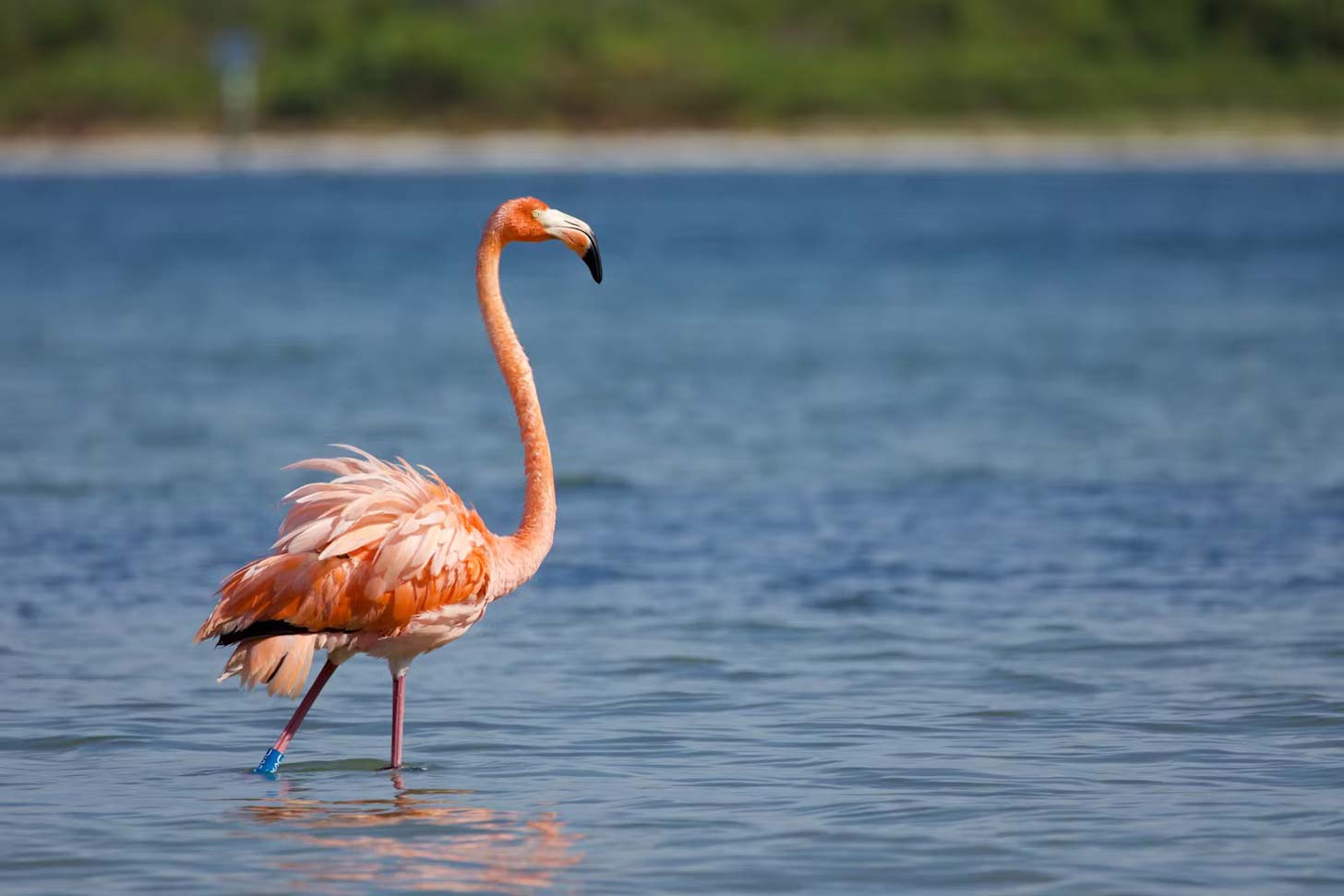
One of the birds was rescued in the Tampa area after nearly drowning in the Gulf of Mexico. His rescuers named him Peaches.
A colleague and I were able to place a GPS tracking device and a bright blue band around his spindly leg, with the code “US02” engraved in white letters.

We were hoping to track his movements and see whether he ended up settling in Florida. Unfortunately, a few days after Peaches was released back into the wilds of Tampa Bay, the tracking device failed.
His last reported sighting was on a beach near Marco Island on Oct. 5, 2023.
Then, in June 2025, I received an email from colleagues at the Rio Lagartos Biosphere Reserve in Yucatan, Mexico, who had photographed Peaches, blue band still in place, nesting in the reserve.
Peaches’ story is the latest piece in the historical puzzle of flamingos in Florida.
Though the native population disappeared more than 100 years ago, recent events lead me to believe that flamingos may be coming back to the Sunshine State, and that their return has been facilitated by the concerted effort to restore the Everglades and coastal ecosystems.
Decimation of a population
In 1956, ornithologist and founder of the National Audubon’s Everglades Science Center Robert Porter Allen wrote “The Flamingos: Their Life History and Survival,” which is still considered a seminal document on the history of flamingos in Florida.
In his book, Allen cites several historical and scientific manuscripts from the 1800s that indicate flamboyances of hundreds to thousands were seen in the Everglades, Florida Bay, and the Florida Keys.
Allen documents the demise of flamingos in the late 1800s, in Florida and throughout their Caribbean and Bahamian range. Like all wading birds in Florida, they fell victim to the women’s fashion trend of adorning hats with bird feathers. Wading bird feathers were literally worth their weight in gold.
Led by the National Association of Audubon Societies’ vocal opposition, the grassroots environmental movement that followed brought about laws prohibiting the hunting and sale of bird feathers. But enforcement of those laws in sparsely populated Florida was difficult, and on two occasions, deputized Audubon wardens were murdered protecting wading bird nesting colonies.
Fortunately, within a few years, societal pressure turned the tide against the practice of wearing feathers. The passage of the Migratory Bird Treaty Act in 1918 officially ended the feather trade.
Given legal protection, most species managed to reestablish huge nesting populations in the Everglades by the 1930s-1940s, presumably migrating from remote populations in Central America and the Caribbean.
Flamingos, however, did not.
A long road to recovery
In 1956, 40 years after hunting had ended, Allen estimated flamingo populations were only about 25% of what they had been in the previous century, with numbers plummeting from 168,000 to 43,000 breeding adults. They nested in significant numbers at only four locations, compared to 29 historically.
Flamingos’ unique breeding behaviors and their longevity — they can live up to 50 years in the wild — may account for their struggle to bounce back.
Other Florida wading birds can nest multiple times a year at different locations, laying three to five eggs at a time.
Flamingos, on the other hand, nest only once a year, generally returning to the same location year after year, and lay only one egg. Furthermore, they prefer forming huge nesting colonies, with thousands of nests, in part due to their elaborate group courtship rituals.
Reason to hope
As a result of their rarity from the 1950s to 1980s, scientists — including myself — believed that any flamingos sighted intermittently around Florida were not wild birds but rather escapees from captive populations.
The largest flock observed in the state between 1930 and 1976 was 14 birds spotted in Biscayne Bay in 1934, on the day after Hialeah Race Track in Miami imported a group of about 30 flamingos. The track’s owners had failed to pinion the birds, and they simply flew away upon release.
But my opinion began to change in 2002, when a flamingo that was banded as a chick at Rio Lagartos was photographed in Florida Bay.
In 2012, a second bird from Rio Lagartos was photographed.
By that time, I had observed flamingos in Florida Bay on several occasions, including larger flamboyances of 24 and 64 individuals. Although I still thought the majority of these flocks were escapees, the banded birds provided some evidence that at least a few wild flamingos were starting to spend time in Florida.
Then in 2015, my colleagues put a tracking device on a flamingo they had captured at the Key West Naval Air Station.
Conchy, as we called him, was given the blue band US01 and released in Florida Bay in December 2015.
He lived in Florida Bay for two years, and the fact that he stayed for that long was proof to me that it was possible for flamingos to make a more permanent home in Florida.
In 2018, several colleagues and I published a paper laying out both evidence from historical accounts and also previously overlooked evidence from museums that flamingos were native to Florida.
We also presented new data from researchers and citizen science portals that strongly indicated that wild flamingo numbers were increasing in Florida. This suggested that the population might finally be recovering.
Call it a comeback
Fast-forward to today, and it appears that this slow comeback may finally have legs. Six months after Hurricane Idalia, my colleagues at Audubon Florida and I conducted a weeklong online survey of flamingo sightings in Florida.
We received more than 50 reputable observations. After sorting through these observations to remove duplicates, we concluded that at least 100 flamingos were left in the state.
Then in July 2025, a flock of 125 individuals was photographed in Florida Bay. Based on our observations, my colleagues and I believe that the flamingos that arrived with Idalia may be reestablishing a home in Florida.
Progress toward restoration
The question is, why now? The 24 flamingos I saw in 1992 and the 64 I saw in 2004 didn’t take up permanent residence in the state. So what’s changed?
To me, the answer is clear: Efforts to restore the Everglades and Florida’s coastal ecosystems are beginning to show progress.
When I arrived in the Keys in 1989, Florida Bay was undergoing an ecological collapse. A 1993 interagency report by the federal government found that a hundred years of draining, diking, and rerouting the flows of the Everglades to create urban and agricultural lands had raised the salt content of the water, making it uninhabitable for many estuarine animals.
The report noted that the bay’s famous seagrass beds were undergoing a massive die-off, accompanied by algal blooms that depleted oxygen levels, thereby killing fish in large numbers.
Mangrove trees were dying on its myriad islands, and birds that for decades had nested in them had disappeared.
These events kick-started Everglades restoration efforts, and in 2000 the U.S. Congress passed the Comprehensive Everglades Restoration Plan with nearly unanimous bipartisan support. With a cost in the tens of billions of dollars, it was to be the largest and most expensive ecological restoration project the world has ever seen.
Today, the bay’s health is vastly improved from the condition I observe in the 1980s. Water flow has gotten better, and the salinity is back to appropriate levels to support wildlife.
In 2018 and 2021, more than 100,000 pairs of wading birds such as white ibis, wood storks and roseate spoonbills nested in the Everglades. These numbers hadn’t been seen since the 1940s. In the 1980s and 1990s, 20,000 nesting pairs was thought to be a banner year.
While the Everglades and Florida Bay are still a long way from full restoration, I believe that the return of flamingos such as Conchy and Peaches is evidence that these efforts are on the right track.
This article was written by Jerome Lorenz from Florida International University, and was originally published by The Conversation.
Header image by Shane Francis on Unsplash

Despite how natural friendship can feel, people rarely stop to analyze it. How do you know when someone will make a good friend? When is it time to move on from a friendship? Oftentimes, people rely on gut intuitions to answer these kinds of questions.
In psychology research, there’s no universally accepted definition of a friend.
Traditionally, when psychologists have analyzed friendship, it’s often been through the lens of exchange. How much did that friend do for me? How much did I do for them? The idea is that friendships are transactional, where friends stick around only as long as they are getting at least as much as they are giving in the friendship.
But this focus doesn’t capture what feels like the essence of friendship for many people. We and our colleagues think another model for relationships — what we call risk-pooling — better matches what many people experience.
In this kind of friendship, no one is keeping track of who did what for whom.
Our research over the past decade suggests that this kind of friendship was essential for our ancient ancestors to survive the challenges they encountered.
And we feel it’s essential for surviving the challenges of life today, whether navigating personal struggles or dealing with natural disasters.
A focus on what friends give you
The traditional social exchange theory of friendship views relationships as transactions where people keep a tally of costs and benefits.
Building on this framework, researchers have suggested that you approach each friendship with a running list of pluses and minuses to decide whether to maintain the bond. You keep friendships that provide more benefits than costs, and you end those that don’t.
The theory holds that this balancing act comes into play when making decisions about what kinds of friendships to pursue and how to treat your friends. It’s even made its way into pop psychology self-help spaces.
We contend that the biggest issue with social exchange theory is that it misses the nuances of real-life relationships.
Frankly, the theory’s wrong: People often don’t use this cost-to-benefit ratio in their friendships.
Less accounting, more supporting
Anybody who has seen a friend through tough times — or been the one who was supported — can tell you that keeping track of what a friend does for you isn’t what friendships are about. Friendships are more about companionship, enjoyment, and bonding. Sometimes, friendship is about helping just because your friend is in need and you care about their well-being.
Social exchange theory would suggest that you’d be better off dropping someone who is going through cancer treatment or a death in the family because they’re not providing as many benefits to you as they could.
But real-life experiences with these situations suggest the opposite: These are the times when many people are most likely to support their friends.
Our research is consistent with this intuition about the shortcomings of social exchange theory. When we surveyed people about what they want in a friend, they didn’t place a high value on having a friend who is conscientious about paying back any debts — something highly valued from a social exchange perspective.
People considered other traits — such as loyalty, reliability, respectfulness, and being there in times of need — to be much more important.
These qualities that relate to emotional commitment were seen as necessities, while paying back was seen as a luxury that mattered only once the emotional commitment was met.
Having friends who will help you when you’re struggling, work with you in the friendship, and provide emotional support all ranked higher in importance than having a friend who pays you back. While they might not always be able to provide tangible benefits, friends can show they care in many other ways.
Of course, friendship isn’t always positive. Some friends can take advantage by asking too much or neglecting responsibilities they could handle themselves. In those cases, it can be useful to step back and weigh the costs and benefits.
Friendship is more than the sum of its parts
But how do friendships actually help people survive? That is one question that we investigated as part of The Human Generosity Project, a cross-disciplinary research collaboration.
The risk-pooling, rather than exchange pattern of friendship, is something that we found across societies, from “kere kere” in Fiji to “tomor marang” among the Ik in Uganda. People help their friends in times of need without expecting to be paid back.
The Maasai, an Indigenous group in Kenya and Tanzania who rely on cattle herds to make their living, cultivate friends who help them when they are in need, with no expectation about paying each other back.
People ask for help from these special friends, called osotua partners, only when they are in genuine need, and they give if they are asked and able.
These partnerships are not about everyday favors — rather, they are about surviving unpredictable, life-altering risks. Osotua relationships are built over a lifetime, passed down across generations, and often marked with sacred rituals.
When we modeled how these osotua relationships function over time, we found they help people survive when their environments are volatile and when they ask those most likely to be able to help.
These relationships lead to higher rates of survival for both partners compared to those built on keeping track of debts.
These friends act as social insurance systems for each other, helping each other when needs arise because of unpredictable and uncontrollable events.
And we see this in the United States, just as we do in smaller-scale, more remote societies. In one study, we focused on ranchers in southern Arizona and New Mexico embedded in a network of what they call “neighboring.”
They don’t expect to be paid back when they help their neighbors with unpredictable challenges such as an accident, injury, or illness. We also found this same pattern in an online study of U.S.-based participants.
In contrast, people such as the ranchers we studied are more likely to expect to be paid back for help when needs arise because of more predictable challenges such as branding cattle or paying bills.
Catastrophic insurance, not tit for tat
What all this research suggests is that friendship is less about the exchange of favors and more about being there for each other when unforeseeable disaster strikes. Friendship seems more like an insurance plan designed to kick in when you need it most rather than a system of balanced exchange.
What lets these partnerships endure is not only generosity, but also restraint and responsibility: Maasai expect their osotua partners to take care of themselves when they can and to ask only when help is truly needed.
That balance of care, respect, and self-management offers a useful model.
In a world of growing uncertainty, cultivating risk-pooling friendships and striving to be a good partner yourself may help you build resilience.
Our ancestors survived with the help of this kind of relationship; our future may depend on them, too.
This article was written by Jessica D. Ayers from Boise State University and Athena Aktipis from Arizona State University, and was originally published by The Conversation.
Header Image by Hannah Busing on Unsplash

During a government shutdown, national park sites face major operational challenges, with a majority of staff furloughed, services interrupted, and visitors left with fewer (or lower quality) amenities. These closures also impact nearby communities and local economies, even if guests continue visiting national park attractions.
“A government shutdown is never a good thing for national parks,” Lincoln Larson, an associate professor of parks, recreation, and tourism management at North Carolina State University, said.
“Some parks are forced to close due to staffing constraints. Those that remain open often operate at limited capacity, closing visitor centers, campgrounds, and other unique amenities that enhance the visitor experience. If you visit a national park during a shutdown, don’t expect the same type of trip.”
In the current government shutdown — which has been in place since October 1 — visitors are still eager to go to their beloved national parks and public lands. While any park ranger will tell you they love to see the parks packed with action, the impact of these mid-shutdown visits could cause serious harm to the sites people hold so dearly.
Rangers are also worried about seeing a repeat of vandalism and other damaging activities that took place in parks during the last government shutdown in 2018.
In Yosemite, reports already show that visitors are partaking in illegal — and dangerous — activities.
“This is exactly what we warned about,” Emily Thompson, executive director of the Coalition to Protect America’s National Parks, said in a statement issued following the reports of how visitors were behaving in Yosemite.
“This shutdown is making an already bad situation at national parks and public lands far worse. And the longer this goes, the worse it is going to get. The situation is dangerous and reckless for our parks, public lands, and the visitors who love them.”
These concerns are added to staffing cuts already made by the Trump administration earlier this year.
While it doesn’t make up for the lack of vital park staff, volunteers in sites across the country are stepping up to help where they can. Here are three examples of community members turning out to protect their national parks.
Volunteers step in to lead tours at Oklahoma City National Memorial

The Oklahoma City National Memorial is a designated National Park Service site honoring the 168 lives lost in the 1995 Oklahoma City bombing.
Amid the government shutdown, tours typically led by park rangers were unable to go on as scheduled — until volunteers stepped in.
People who were directly affected by the bombing have stepped in as temporary tour guides, NPR reported, with family members and even survivors walking visitors through the exhibit.
“It’s a story … that we really want to put in front of everyone each and every day,” said Susan Winchester, a volunteer who lost her sister, Margaret Clark, in the bombing.
“As a volunteer, I’m more than happy to be here and be outside on a beautiful, sunny Oklahoma day giving a tour. This is perfect.”
Visitors told NPR that they found the tour to be even more compelling, since it was led by someone who had a direct connection to the memorial. A museum next to the National Memorial also remains open, since it is run by a partner nonprofit that isn’t funded by the government.
Winchester seems to take no issue with shouldering the responsibility for the time being.
“If we have the opportunity to … make a difference … be positive, do something for the good and the good of all, I mean, that's what it's about,” she told NPR.
Local food bank expands to support Grand Canyon National Park rangers

Nonprofit partners have long existed to serve national parks and their surrounding areas, but the shutdown has made it even more necessary for this work to reach people in need.
For furloughed national park employees, the Flagstaff Family Food Center is stocking up a small food pantry inside Grand Canyon National Park.
The Flagstaff pantry itself is nearly 80 miles away, but for now, a single staff member coordinates the pantry inside of Grand Canyon Village, set up in the park’s former jailhouse.
It existed in the spot prior to the shutdown — designated specifically for unpaid government employees and volunteers supporting the park — but now it’s seeing even more action.
“I’ll have all this filled up by tonight, but I’ve got diapers and feminine hygiene products,” Heather Lapre, from the food pantry, told Arizona Public Radio on the first day of the shutdown, as she moved milk crates around the small building.
“I have limits on things that are limited, and I like to always keep my produce and bread as unlimited as possible.”
Lapre has lived at Grand Canyon Village for 16 years and volunteered at the pantry during the government shutdown in Trump’s first term. She’s been a full-time employee of the food center for 11 months.
She knows what to expect, and she’s ready to serve.
“It was exhilarating to see people help each other,” Lapre told Arizona Public Radio, “and it was a tremendous amount of work, too.”
Volunteers coordinate trash pickups in Rocky Mountain National Park

Just beside the border of Rocky Mountain National Park in Estes Park, Colorado, the YMCA of the Rockies has been leading group hikes to collect trash and replace garbage bags in the popular national park.
In addition to giving locals and visitors a way to continue exploring the park amid the shutdown — leaders traverse with volunteers across a 4-mile terrain — they get to do a little good, too.
“We wanted to be good neighbors,” Jason Nelson, marketing and communications director for YMCA of the Rockies, told 9News Denver. “We were able to collect a giant bag’s worth [of trash]. Our plan is to kind of keep it going for as long as the shutdown goes on.”
The organizers say they will switch up their locations for every hike to help make sure various areas of the park are covered by their efforts.
At a recent cleanup, some volunteers were students on fall break with their friends, but leaders at YMCA of the Rockies are constantly present, wanting to keep their community safe and clean for anyone to enjoy.
“There's lots of people coming into the park, experiencing the park maybe for the 50th time, maybe for the first time,” Nelson said, “and we want them to experience the wonder and beauty that I know … I experienced the first time I stepped foot into Rocky Mountain National Park.”
Header image by NPS Photo / Colton Johnston
The newest collection released by luxury fashion house Oscar de la Renta is for the most spoiled dogs among us — and those that are still in need of a home.
Launched in collaboration with Isabel Klee, the social media-acclaimed face of Simon Sits, a platform sharing sweet behind-the-scenes stories of foster dogs, Oscar de la Renta is now selling statement bows that are both runway- and walk-ready.

Each bow — which comes in a variety of bold color swatches and florals — retails at $200 and is available in small, medium, and large sizes.
The price tag may seem steep, but 100% of all profits will go to Muddy Paws Rescue, Klee’s favorite shelter and animal rescue organization in New York City.

Muddy Paws operates a network of over 2,000 foster homes that save more than 1,000 animals’ lives every year, including 9,000 dogs since its founding in 2016.
“This is a true pinch me, New York moment,” Klee wrote about the drop on Instagram. “I am forever grateful.”

Oscar de la Renta said the capsule collection was released to coincide with Adopt A Dog Month, and the photo shoot for the items features former foster dogs in their Sunday Best.
In fact, it was one of Klee’s former fosters who inspired the whole thing. Itsy, a 2-year-old pit bull mix, was in Klee’s care when she was invited to be a guest on The TODAY Show.

The creator posted online asking her followers what she should wear, and the Oscar de la Renta team invited her to a private, dog-friendly shopping experience at one of their showrooms.
“It all started a few months ago how most of these things happen: During a fashion emergency,” Klee joked in an Instagram Reel. “It turns out the entire Oscar team is rescue-dog-obsessed.”
During Klee’s fashion spree, the team debuted some couture dog bows especially for Itsy.

“There were so many comments from people saying that they would love their own bow for their dogs to wear, so that’s exactly what they did,” Klee said in a subsequent Reel.
And now, they are available for any other dog deserving of a little style (so, all of them).
Klee reiterated that 100% of the proceeds of these bows would be donated to Muddy Paws Rescue.

“That means every single dollar will go back to animals,” she said.
It’s unclear how much the brand expects to raise, but at a luxury price tag, these bows are sure to make a major difference for animals in need.
“By shopping this special collection, you join Oscar de la Renta’s commitment to celebrating the joy of canine companionship while supporting the work of an organization making a proud difference,” a press release from the design house said.

And in an Instagram comment, Muddy Paws Rescue itself expressed its gratitude for the collection: “Rescue has never looked so beautiful.”
The Oscar de la Renta x Simon Sits collaboration is now available.
You may also like: Owner of 'shutdown foster dog' Tiki launches T-shirt fundraiser for the rescue that saved him
Header image by Brett Warren / Oscar de la Renta
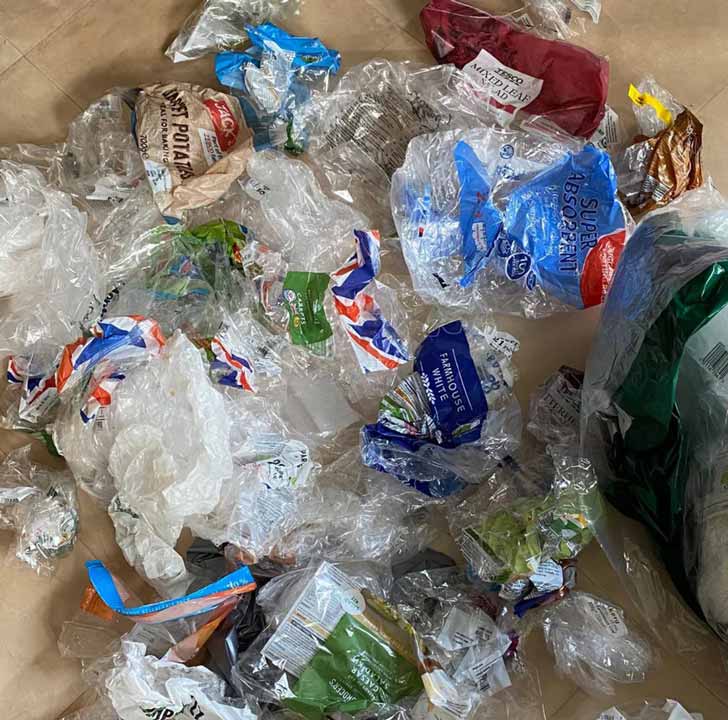
Even the most eco-friendly among us struggle with recycling soft plastics. You know — the grocery bags, Ziplocs, bubble wraps, food wrappers, and cling wrap that you don’t want to toss but are notoriously difficult to recycle.
And there’s a reason these materials are so ubiquitous. They’re lightweight, flexible, and cheap to produce. This makes them a go-to material for packaging our everyday items.
But they remain hard to recycle in traditional systems, slipping through sorting processes, clogging machinery, and simply being rejected by most recycling facilities.
This challenge motivated Texas engineer Ivan Arbouzov to create Clear Drop, a startup dedicated to transforming household waste.
And they’ve just rolled out a breakthrough product: the Soft Plastic Compactor. It looks like a simple stainless steel trash can, but it takes only soft plastics, compacting them into easy-to-recycle blocks.
Here’s how it works: At home, you fill the SPC with everyday soft plastics, like grocery bags, wrappers, or mailers.
Once the bin is full, the device uses heat and pressure to compress everything into “a clean, dense block about the size of a shoebox,” Arbouzov explained to Good Good Good.
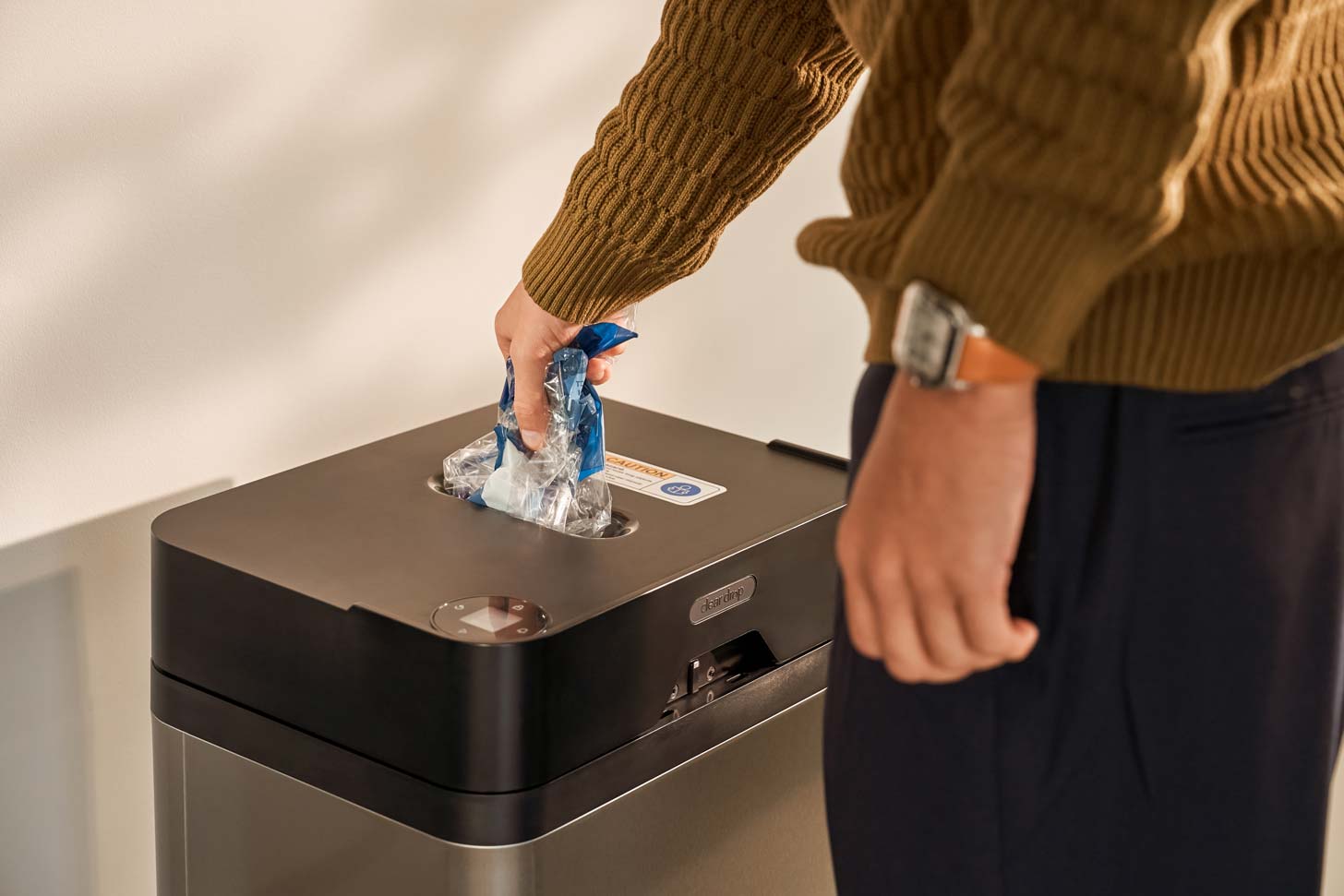
“The plastic is compacted and then slightly heated, using its own packaging properties to bind it into a dense block that won’t fall apart.”
Each block has a prepaid shipping label, so you just send it in the mail, and it goes directly to a verified recycling partner, like Frankfort Plastics, Inc. in Indiana.
Here, the materials are shredded and turned into reusable raw materials and are used to make things like park benches, decking, and waste containers.
“Nothing is landfilled or incinerated, not only for environmental reasons, but because there’s real economic value in these compacted materials,” Arbouzov said. “And importantly, the entire cycle stays within the U.S.”
Arbouzov told Good Good Good the idea behind the device is “pre-recycling,” or the process of preparing recyclables to actually be received and processed accurately and effectively.
“It’s the missing link between household waste and industry that makes sure what’s collected truly gets processed instead of ending up in landfills,” he said.
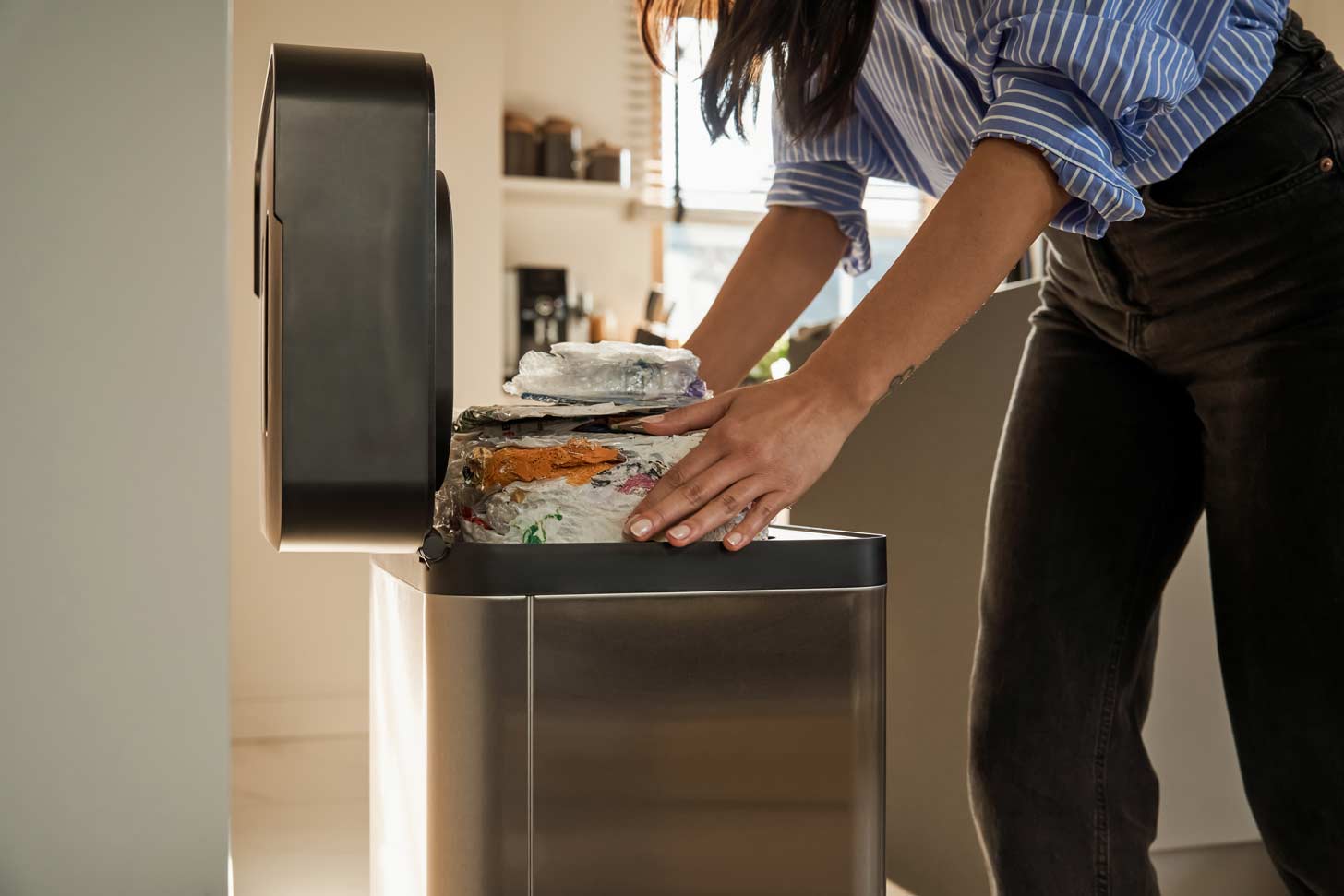
“The current U.S. recycling system isn’t built to handle soft, flexible plastics — they often jam sorting machines and slow down processing. By compacting them into dense blocks, Clear Drop’s SPC turns this tricky waste into something easier for recycling facilities to manage,” David Nix, a Clear Drop recycling expert and professor at the University of Pittsburgh, added in a statement.
Clear Drop’s team of engineers also thought about the collection of soft plastics, noting that it’s hard to collect, store, and transport them throughout their end-of-life cycle.
“They’re simply too light, fluffy, and varied in shape. At every stage, they can easily be lost or blown away by the wind. Transporting them is also an economic challenge — without holding the material together, its density is simply too low,” Arbouzov explained. “We realized that the film must be compacted.”
The SPC does just that, and as Nix added, the device also reduces the amount of “air” being shipped, which means “fewer trips, lower emissions, and more efficient recycling by promoting a circular economy.”
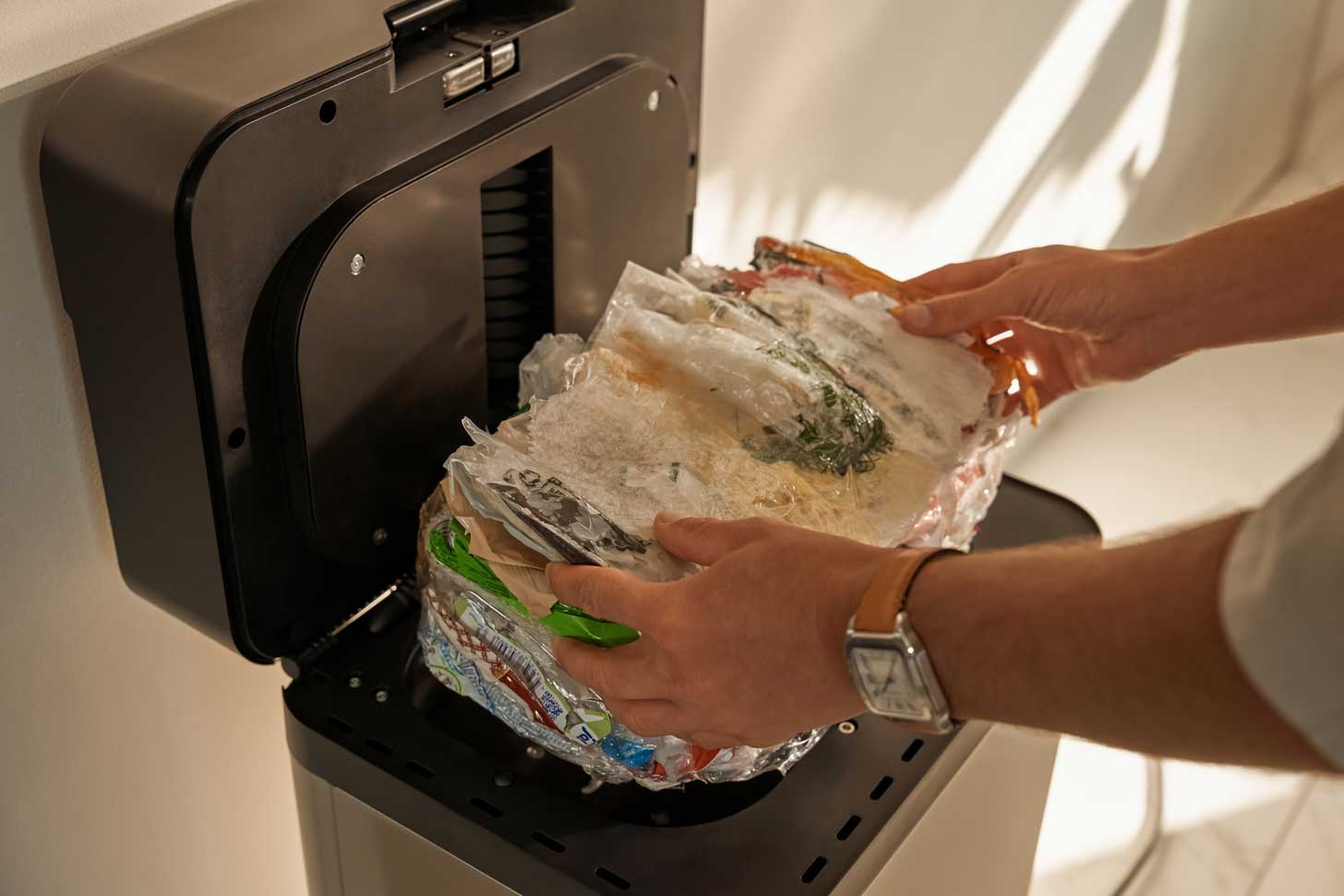
Arbouzov said the SPC is the first product of its kind, adding that if just 1% of U.S. households adopted the new device, nearly 300,000 tons of soft plastic — or about 7.2 billion grocery bags — would be kept from landfills, oceans, and our food chain.
“Beyond numbers, pre-recycling changes how people think about waste,” he said.
“It turns recycling from something distant and confusing into a daily act of awareness and a reminder that every wrapper, bag, and mailer can have a second life if we take the first step.”
Using the SPC at home is “simply convenient,” he added.
While some dedicated people might already collect soft plastics to recycle at specialty facilities in a bag or eco-brick, a press release for Clear Drop claims the SPC compresses waste about 10 times more efficiently than collecting soft plastics in a bag, and can store roughly a month’s worth of waste at a given time.
Another perk is the scale and traceability, Arbouzov said.
“Each block made with Clear Drop is sent to verified recycling partners, where it’s turned back into raw material,” he said. “Not stored, but returned to the production cycle.”

The device itself also runs quietly and efficiently, boasting a 3.3 kWh per cycle rate, equivalent to roughly $0.52 in monthly electricity costs for an average household.
The SPC requires a one-time investment of $200 and then a monthly $50 subscription fee. The $50 monthly plan includes installment payments for the device, recycling pickup, and a full two-year warranty.
Customers will receive three prepaid mailers every quarter — enough to recycle about one block per month — and can schedule pickups anytime.
While it might be a bit of a hefty price tag for some, Arbouzov believes the cost of plastic pollution is already apparent.
“Soft plastic is like sand through fingers,” Arbouzov said. “The only way to catch it is to stop pretending it’s someone else’s job.”
Check out the SCP in action below:
You may also like: This new 'bamboo bioplastic' that outperforms traditional plastic breaks down in just 50 days
Header image courtesy of Clear Drop
Jeff Robertson is the first to admit that he went “a little overboard” when it came to decorating his house for Halloween in October 2020.
His extravagant display — which included an entire skeleton army — attracted the attention of a local news station in Holly Springs, North Carolina. Suddenly, people were driving in from across the street to see Robertson’s yard in person.
“That night we had a family huddle and said, ‘This is kind of cool that we’re on the news, but you know, let’s kind of take the spotlight off of us,” Robertson told St. Jude Inspire. “Like, how can we use this for good?’”
“We all agreed that we should start a fundraiser for St. Jude Children’s Research Hospital.”

That’s how Robertson started Skeletons for St. Jude — a campaign that encourages families across the United States to decorate their homes and raise awareness for children’s cancer research.
Robertson said the cause is “truly a team effort.”
“Mark Kozik contacted me out of the blue in 2022 and offered to help build, design and manage a website for our nationwide effort at no cost to me or anyone else,” Robertson said. “Without Mark, we wouldn’t be able to do what we are doing on this scale.”

Through the website, Robertson offers resources for families to get started, including a QR code for donations and a press release for households to share with local media outlets. Every household that signs up is added as an attraction on Fright Maps.
In the last five years, the cause has grown steadily from 400 homes in 2021 to 681 in 2024.
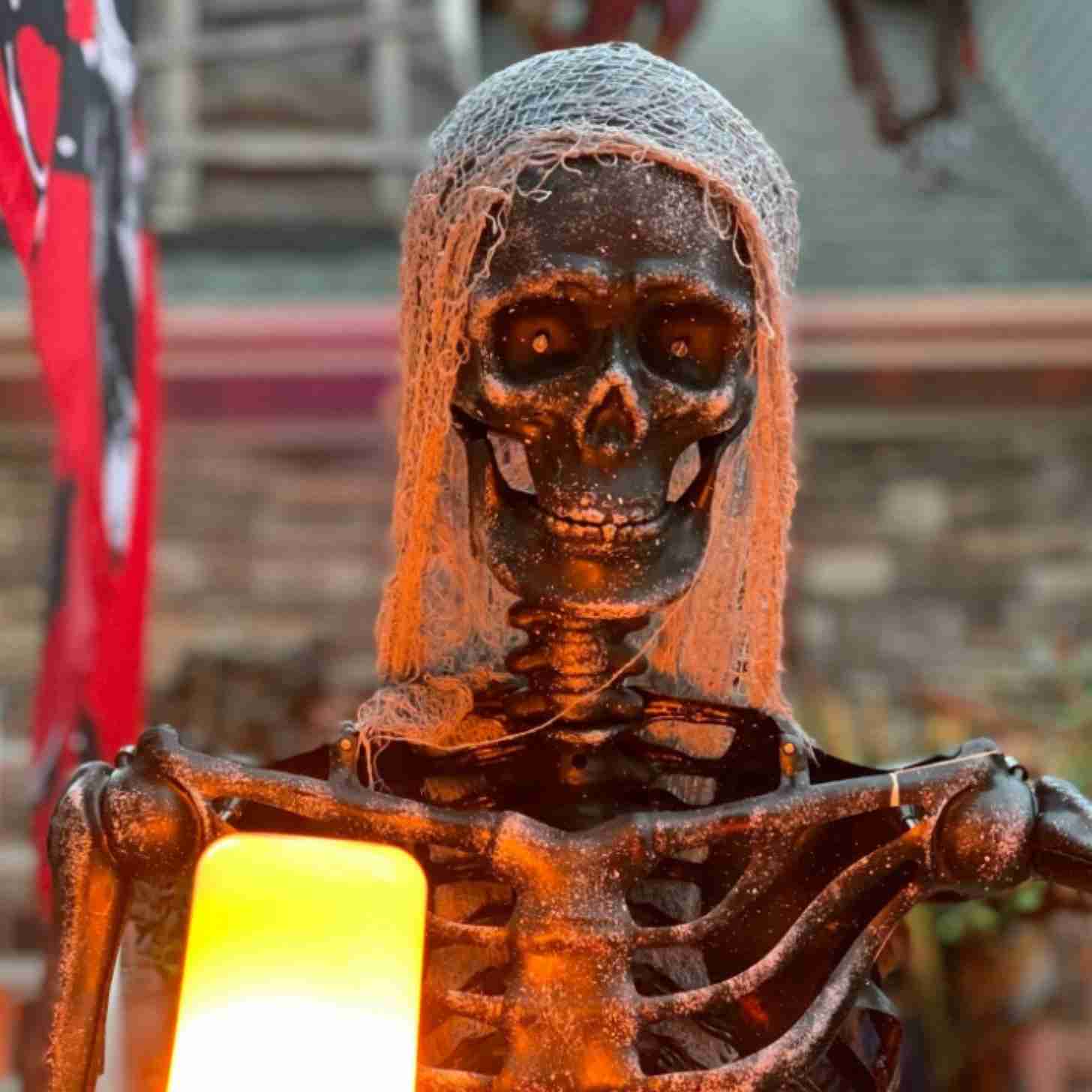
According to the Houston Chronicle, Robertson stated that roughly 600 homes are involved this year, and he expects that number to increase to 1,000 by October 31.
“It shows me that there’s a lot of good in this country,” Robertson told the Houston Chronicle. “And what I really enjoy about this time of the year is — social media gets a bad name a lot of times, especially with politics and whatnot, but what happens in September and October of every year is that I have this cross section of the nation that’s part of our team.”

Kate and Nick Block of Houston, Texas, joined the cause three Halloweens ago. Every year, they try to outdo themselves in an effort to bring in more foot traffic.
“Last year, for the first time ever, I actually ran out of candy,” Kate Block said, as she showed off her latest collection of skeletons, tombstones, and caskets.
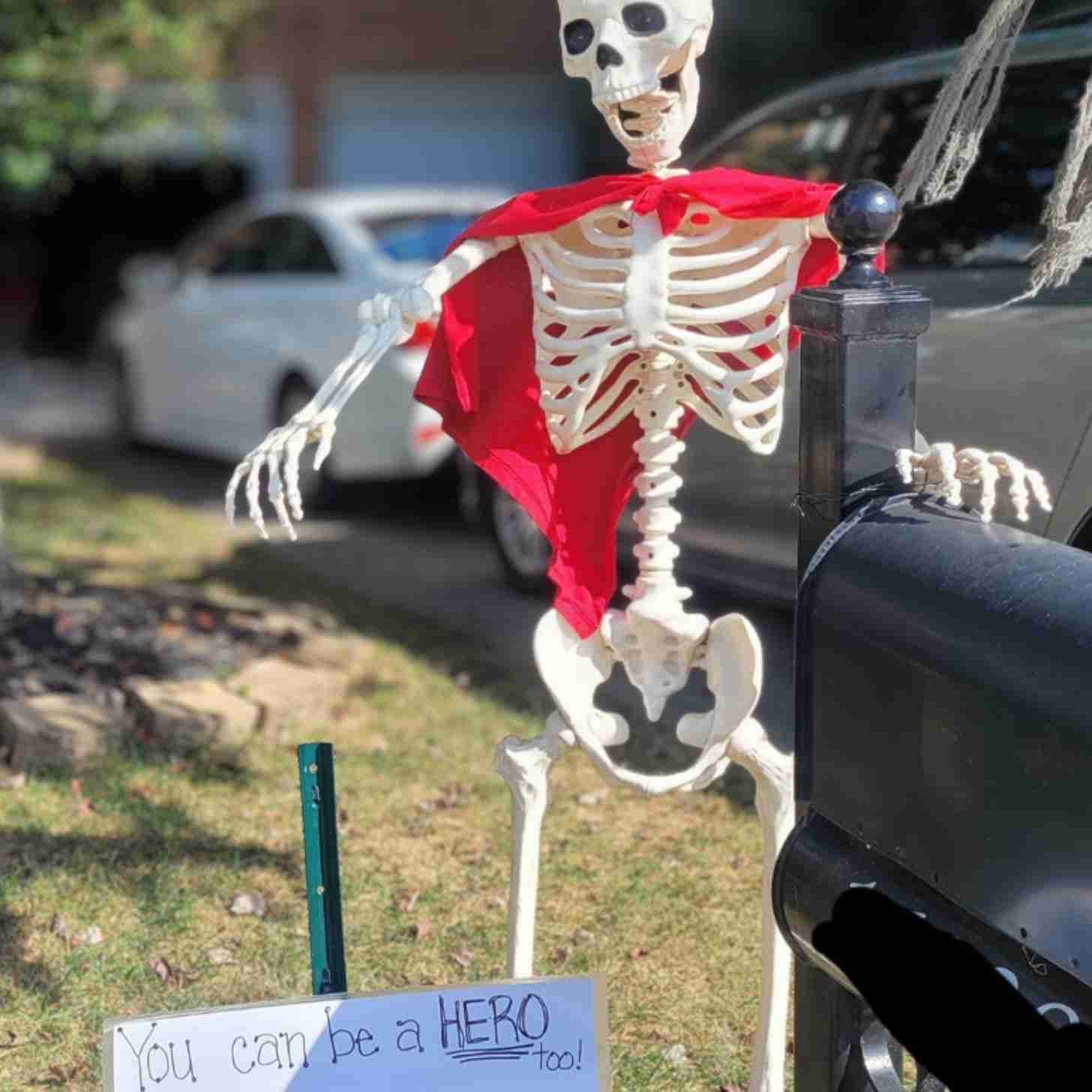
Massachusetts resident Terrence Leahy hopes to “outdo” herself this year, too. In 2024, she raised $500 for St. Jude — and she wants to go bigger this Halloween.
“We have a lot of neighbors that look forward to it,” Leahy told WWLP. “So it’s nice to bring a smile once in a while.”

The nationwide effort — which has grown to over 1,000 families in the last five years — has raised $977,792 since the fundraiser began in 2020.
Robertson said that 2025 is the year he hopes to “break the $1 million mark.”

“What started out as me having fun with a bunch of skeletons on Halloween unexpectedly turned into something much more meaningful,” Robertson said. “I am so proud of what our team has accomplished.”
To join Jeff and hundreds of others in the cause, visit the Skeletons for St. Jude website.

You may also like: After his brother died on Halloween, a haunted house owner almost quit the biz. Now he's 'scaring with a care' for charity
Header image via Skeletons for St. Jude
With sea turtles at risk of extinction — and entanglement in fishing gear a primary threat, along with climate change and habitat loss — conservation efforts have been put in place to reduce their risk of entanglement.
In areas like coastal North Carolina, where the Endangered Species Act has severely restricted commercial fishing, local fishermen took a major hit.
“It shut down the gillnetting here and there was a lot of people dependent on that,” a fourth-generation commercial fisherman, Eddie Willis, told Arizona State University.
“It put a lot of people out of work. A lot of people.”

This, then, led to a larger culture of distrust between those trying to protect biodiversity and fishing communities.
But researchers at Arizona State University’s Senko Lab are working to build back that trust.
Jesse Senko, an assistant professor in the university’s School of Ocean Futures, works with a team of researchers dedicated to making fishing gear less harmful to sea turtles, sharks, and other threatened species. They do this in partnership with local fishers.
“From the very beginning, we ask: How can we actually improve the way their fishing goes?,” Senko told ASU News. “It’s not just about saving sea turtles. It’s about how we can improve their fishing operations and preserve their livelihoods.”

They recently had their lightbulb moment — literally.
While studying in Mexico’s Sea of Cortez, local fishermen Juan Pablo Cuevas Amador and Felipe Cuevas Amador suggested they try illuminating the fishing nets.
It turns out, they were onto something.

Senko, his research team, and the Amador brothers have recently published research indicating that illuminating nets with green LED lights could reduce the entanglement of turtles and other off-target species by 63%.
Not only this, but the light-up features help fishers save time retrieving and disentangling nets, without compromising their harvest.
“The results were pretty exciting,” Senko said. “It’s a win-win in the sense that you’re getting a light that lasts significantly longer, and it also seems to reduce bycatch just as effectively as lights that require replaceable batteries.”

Senko Lab researchers use LED lights that run on solar power. At first, they were battery-operated, but the solar energy helped reduce waste and worked more reliably with less labor.
As they continue their experiments, now off the Carolina coast, every day, graduate students on the research team sit on a kayak, attaching the lights along each net in their area of study.
The next day, they remove the lights. They do this to compare the numbers of animals caught in nets on days with or without illumination.
And, they free any marine life entangled overnight.

They’re also using the opportunity to capture sea turtle behavior on a set of underwater cameras and data recorders.
“We have no clue what is going on,” Senko said. “Is the light simply illuminating the hazard? Is the light making the net less attractive? Video recordings will provide all sorts of new information on behaviors.”
Although their work was just published in the journal “Conservation Letters,” the researchers still have a lot of work to do. Senko said he is trying to optimize the design, making the gear inexpensive to manufacture and affordable for small-boat fleets.

He estimates that the nets will be available to purchase within two to three years. And research on their effectiveness could encourage conservation organizations or government agencies to provide grants and subsidies to fishers angling to buy them.
And from the looks of it, fishing communities are taking the bait.
The Amador brothers in Mexico were thrilled with the results.

“They took us into account and gave us the freedom to give our opinions and make modifications,” said Juan Pablo Cuevas Amador.
Senko said fisher-led ideas are “where the real magic happens; that's the meaningful innovation.”
“Because their ideas went into it, they're more likely to want to use it and to share that information with their friends and their community and with neighboring communities,” he said.
After the experiments were completed, the brothers even asked Senko if they could keep the lighted nets.

“When I heard that, I knew we were onto something,” Senko said. “And they've been fishing with these lights ever since. As far as we know, they are the only fishers on the planet fishing with solar-powered lighted nets.”
Soon, he hopes it’ll be more.
“A 63% reduction in sea turtle bycatch is a magnificent starting point. However, there's no reason why that can't be improved, right?” Senko said. “My goal is: How do we get that 63% reduction to a 95% reduction?”
You may also like: They used to be wildlife poachers. Now, they make a living protecting critically endangered sea turtles
Header images by Samantha Chow/Arizona State University
Every day the Good Good Good team collects the best good news in the world and shares it with our community. Here are the highlights for this week!
If you want to get good news in your inbox every day, join the Goodnewsletter — the free daily newsletter designed to leave you feeling hopeful.
The Best Positive News We’re Celebrating This Week —
The world’s first ‘upcycled skyscraper’ is a finalist for the coveted Earthshot Prize
When the owners of Sydney, Australia’s AMP Centre wanted to replace the original 1970s structure with a bigger, better, and more energy-efficient building — they also wanted to do it without demolishing the old building.
The “new” building now stands 676 feet tall and retains 95% of the original building’s core as well as 65% of the original building’s structure, including beams and columns. The process saved more than 12,000 tonnes of embodied carbon, the equivalent of 35,000 flights between Sydney and Melbourne.
It was completed in 2022, but was just named one of 15 finalists for Prince William’s fifth annual Earthshot Prize, a coveted competition that celebrates big ideas aimed at tackling climate change.
Why is this good news? While companies may resort to demolition as a “cheaper” option when constructing new buildings, they’re not considering its steep environmental costs. This project “proves that retrofitting buildings that have stood for decades offers a commercially viable and scalable solution to decarbonizing the built environment.”
Jane Fonda and 500 other Hollywood stars are reviving the Committee for the First Amendment. What does that mean?
Good news to celebrate on Indigenous Peoples Day
The first to call these lands home, Indigenous people in America continue to make the country a better, thriving place. Here are just some of their stories to celebrate today:
Through “DeTours,” Hawaii’s Indigenous communities are working to educate settlers and tourists alike on Hawaii and its colonial past and present, and creatively raising awareness about decolonization.
An Indigenous-designed mural is the largest in the world and doubles as a giant solar power generator, reducing 150 tons of CO2 emissions annually.
A South Dakota Y.M.C.A. branch worked with an Indigenous tribe to develop a tiny home project to help address the reservation’s housing shortage. (Gifted link)
An Indigenous, mother-daughter-led nonprofit organization in Los Angeles is addressing challenges that Indigenous communities confront daily with translation services, connecting migrants to translators for border documentation, and more.
Indigenous farmers are reclaiming time-honored agricultural techniques to achieve food sovereignty, or the right to healthy and culturally appropriate meals produced locally using sustainable methods and agricultural practices.
After a decade of work, an Indigenous tribe revived its local beaver population to fight wildfires in California’s southern Sierra Nevada mountains.
Indigenous tribes collaborated with the Montana Department of Transportation to design and build one of the largest networks of wildlife highway crossings in the U.S., reducing animal collisions by 71%.
Last year, the Smithsonian and NOAA rolled out a first-of-its-kind ocean conservation plan in the country, which will prioritize Indigenous knowledge.
→ More good news stories about Indigenous communities
Once endangered due to hunting, green turtles have bounced back thanks to global conservation efforts
In what scientists are calling a major conservation victory, new data shows that green turtle populations, one of the largest species of sea turtles, are bouncing back from the brink of extinction.
The success is thanks to decades of conservation efforts, involving things like protecting eggs, releasing hatchlings on beaches, and reducing accidental capture in fishing nets.
Green turtles were once hunted extensively for turtle soup, its eggs, and decorative shells, and their numbers plummeted, leaving it listed as endangered since the 1980s. They’re one of seven living species of sea turtles, two of which are critically endangered.
Why is this good news? Researchers have long been worried about an extinction crisis, so this is important progress to celebrate, especially as the turtles are threatened by non-human causes like climate change, too. We know that conservation projects are extremely effective — and this is further proof.
Not to mention that protecting and preserving nature and biodiversity saves humanity, too.
→ Read more
Florida’s leatherback sea turtles rebound to record high, following devastating hurricane season
Clean energy jobs grew 3x faster than the rest of the U.S. workforce in 2024, now employing 3.5 million Americans
More than 520,000 jobs were added by the clean energy and clean vehicle sectors over the last five years in the U.S., an increase of 17%, which far exceeds employment gains in fossil fuels, gas, and diesel motor vehicles, and the overall U.S. economy, according to a new report.
More than 3.5 million people in the U.S. now hold jobs related to clean energy, more than are employed as nurses, cashiers, servers, or elementary school teachers.
Experts said clean energy “was one of the hottest and most promising job sectors in the country at the end of 2024,” but warn that continued progress is at risk do to recent changes to U.S. energy policy under the Trump administration.
Through a first-of-its-kind program, North Carolina eliminated $6.5 billion in medical debt for 2.5 million residents
Last year, North Carolina’s state government announced a first-of-its-kind medical debt relief program. Now, the state says it’s eliminated $6.5 billion in debt for over 2.5 million people, nearly one-quarter of its residents.
With an average of $2,600 in debt erased, the impact will be “life-changing” for families.
In the announcement, Governor Josh Stein said, “No one chooses to have a heart attack or get diagnosed with a chronic condition — you just have to deal with it. Today’s announcement will free people from the financial stress so that they can focus on getting healthy.”
Why is this good news? According to Undue Medical Debt (previously RIP Medical Debt), over 100 million people in the U.S. struggle under the weight of medical debt, together owing at least $220 billion in past-due medical expenses. Nobody should crushed by medical debt for an unexpected health event, and North Carolina is seeing that millions of its residents aren’t.
LEGO donates MRI scanner toys to children in hospitals. New research finds they really reduce anxiety
A retired “Tech Fairy” refurbishes old laptops and gives them away for free to people who need them
Craig Clark is from Sarasota, Florida, but he’s also known as the “Tech Fairy.” After retiring from managing a chain of convenience stores, Craig Clark became a computer technician.
His “business” model is a bit unconventional, though: People donate their old computers to Clark, and he fixes them up to pass it along to someone new — completely free.
He’s helped hundreds of people — convenience store workers, fast food workers, college students, servers — who cannot afford a laptop on their own.
California authorized a historic pay increase for inmate firefighters, ensuring they make at least minimum wage
Individuals who are incarcerated in California have been putting their lives in danger to help fight wildfires in the fire-prone state, earning credit toward their sentences and making between $5 and $10 per day.
Now, they’ll make at least $7.25 per hour under a new law that clears the way for inmates serving part of their sentence fighting wildfires, which was just signed by the governor. That wage will also be revisited annually.
More than 1,100 inmate firefighters helped battle the Eaton and Palisades fires in the Los Angeles area earlier this year.
Why is this good news? People deserve to be fairly and adequately compensated for their labor, whether they’re incarcerated or not. Advocates for this change have long said that the contributions and risks incarcerated firefighters take on to help protect communities have not been adequately represented in their compensation.
This cozy game replaces doom-scrolling with ocean exploring, and every creature you spot trains underwater robots in real time
Global investment in renewable energy set a new record this year, even as the U.S. pulls spending
In the first six months of the year, the world invested a total $386 billion in renewable energy projects from small rooftop solar installations to huge offshore wind farms — 10% more than the first half of 2024.
That progress is happening despite the U.S. investing 12% less in the same time period. It was made up largely in the European Union, which invested 27% more in the first half of the year, largely from offshore wind developers shifting from U.S. projects to those in Europe’s North Sea. In the U.K., investment tripled.
Worldwide, offshore wind saw more financial support in the first six months of 2025 than all of last year. Small-scale solar is gaining ground, particularly in China, where investment doubled.
A new, large coral reef containing important species and fossil traces was discovered in the Mediterranean
Using a remotely operated submarine, scientists made a significant and rare discovery in the Gulf of Naples: a vast, white coral reef that contains important species and fossil species.
Discovered at a depth of 500 meters, it was “exceptional” for the region, with never-before observed “bioconstructions of this kind, and of such magnitude,” which are also rarely seen elsewhere in the Mediterranean.
The discovery will help scientists learn more about the role of deep coral habitats, both for conservation and restoration efforts regionally and globally.
Why is this good news? This encouraging news comes alongside the news that scientists believe the planet has reached its first catastrophic climate tipping point: widespread coral die-offs. Coral reefs hold some of the planet’s most robust marine ecosystems, sustaining millions of species of marine life.
The more we can learn about and protect the ones that are still alive and thriving, the better.
Volunteers step up for national parks amid government shutdown: ‘We wanted to be good neighbors’
After his brother died on Halloween, a haunted house owner almost quit — now he’s ‘scaring with a care’
Growing up in Hillview, Kentucky, Cole, Cam, and Cayden Bullock all shared a love for the holidays. Inherited from their grandmother, Cam continued the tradition of decorating their home with massive displays that drew bigger crowds every year.
When Cole was unexpectedly killed in a homicide last year on October 31, Cam was reluctant to continue the festivities. That was until the city reached out to collaborate on a community event that would benefit the USPS’s Operation Santa program.
Cole agreed and concocted Scareview Haunt: a volunteer-run haunted house that’s earned a reputation so terrifying that it’s drawn thousands of horror fans across the state.
More good news of the week —
Great Britain has run on 100% clean power for a record 87 hours in 2025 so far. This is up from just 2.5 hours in 2021 and 64.5 hours in all of 2024, ahead of the government’s clean-power target for 2030, which aims for 95% of the electricity generated in the country in 2030 to come from low-carbon sources.
Backed by Bill Gates, a food startup has raised $33 million to reinvent butter without cows. Savor’s lab-created butter is closer to cow butter than any vegan option on the market, and the company wants to create another option for farmers, chefs, food manufacturers, and customers to help alleviate the agriculture industry’s strain on the environment.
Nabarun Dasgupta was awarded the MacArthur “genius” award for his groundbreaking research on overdose. The fellowship comes with a monetary award of $800,000, and the MacArthur Foundation also noted his work outside the lab, helping develop "harm reduction" programs aimed at reducing drug deaths.
A group of women in Mexico is buying ancient Aztec farms to save a vanishing ecosystem. The women are sustainably cultivating the farms, called chinampas, to preserve the critical ecosystem they hold, which is increasingly threatened by urban development, mass tourism, and water pollution.
A new sunlight-powered film can kill 99.995% of bacteria to provide safe, clean drinking water. The simple, affordable, robust solution to the global safe drinking water crisis was designed particularly for resource-limited and disaster-affected regions.
The Philippines launched a coral larvae cryobank to freeze and store coral for future reef restoration efforts. Bringing together research institutions from the Philippines, Taiwan, Indonesia, Malaysia, and Thailand, the effort seeks to establish the first regional network of coral cryobanks in the Coral Triangle, the global epicenter of marine biodiversity.
Ultrasound technology is being used as a non-invasive, surgery-free advanced cancer treatment. The high-frequency ultrasound pulses create tiny “microbubbles” that expand and then collapse in microseconds, breaking apart the tumour tissue as they do. The patient's immune system is then able to clean up the remains.
Dogs and drones are helping safely and humanely protect the world’s last 74 southern resident killer whales. The orcas live between Washington state and Vancouver Island, and the use of scent-detecting dogs allows humans to give the whales plenty of space to “not stress them out,” while still gathering important data to protect them.
New England’s last coal-fired power plant shut down three years ahead of schedule. Merrimack Station in New Hampshire had only been operating for a few weeks a year, so it no longer made economic sense to keep it open. Now, the owner wants to turn the site into a clean energy complex, including solar panels and battery storage systems.
Researchers are studying how bandages made from living fungi could be the future of wound healing. Fungi are best known for returning dead, organic matter to the Earth, but materials scientists are exploring whether they could someday help our bodies repair, in the form of special hydrogels.
Norway donated profits from its World Cup qualifying match against Israel to Doctors Without Borders in Gaza. The federation’s president said it could not “remain indifferent to the humanitarian suffering and disproportionate attacks” against civilians in Gaza, and wanted to support efforts to provide the urgent medical care people needed.
The founder of The Home Depot donated $50 million to historically Black colleges in Atlanta to support nearly 10,000 students. Billionaire Arthur Blank has committed to giving at least half his wealth away by signing the Giving Pledge, and his family foundation has donated more than $1.5 billion to date.
Nearly every U.S. news organization declined to sign a new Pentagon media policy that “threatens core journalistic protections.” The policy said reporters could have their press passes revoked if they published information that had not been authorized for release by the Pentagon, even if the information is unclassified.
Scientists created a new “superwood” that’s ten times stronger than steel and up to six times lighter. It’s stronger and lighter because the natural porous structure of the wood has been collapsed and toughened, which also makes it impervious to fungi and insects, and it’s received the highest rating in standard fire resistance tests.
An overlooked technology for nearly 50 years, the first liquid air energy storage facility is set to power up in 2026. It's hoping to compete with grid-scale lithium batteries and hydro to store clean power, and reduce the need to fall back on fossil fuels.
Three years after its trial launch, Ireland is making its basic income for artists program permanent. The program, which gives 2,000 selected artists $1,500 per month, began in 2022 to support the arts sector following the pandemic, when artists suffered disproportionate losses due to the cancellation of live events.
Inspired by a walkie-talkie, a new ‘screen-free smartphone’ lets kids communicate safely. As parents seek to decrease digital distractions, and researchers suggest that smartphones are not safe for children under 13, the technology aims to foster healthy growth and independence in young people without all the downsides of smartphones.
An off-grid gold mine in Australia is proving these kinds of facilities can run on 100% wind and solar power. Bellevue Gold regularly operates on more than 90% renewables over 24-hour periods, and on some days, the diesel and gas plants have been completely switched off, with wind and solar — backed by batteries — covering 100% of demand.
After its native population disappeared 100 years ago, flamingoes are nesting in Florida again thanks to habitat restoration efforts. A 1993 federal report found that a hundred years of draining, diking, and rerouting the flows of the Everglades to create urban and agricultural lands made the area uninhabitable for many estuarine animals, but restoration efforts are now showing progress.
Students in Denver are learning about how drought-resistant landscaping can fight urban heat. The lesson is part of a hands-on program, organized by the nonprofit Neighborhood Resilience Corps, that pairs students with professionals who show them jobs that will be increasingly important as the climate gets more extreme.
In 2009, Facebook statuses still asked “What's on your mind?” users still “poked” each other, and seemingly everyone was playing FarmVille.
In the game, users could raise livestock, harvest crops, and plant trees on a customizable farm. The farming simulator was so popular that it boasted 83.76 million active users at its height in March 2010.
FarmVille has had several revivals through the years, with FarmVille 2 in 2012 and FarmVille 3 in 2021.
In the game’s latest update, FarmVille creators Zynga Inc. partnered with the Public Benefit Corporation Dots.eco for an in-game campaign that allows users to protect endangered species and plant trees in vulnerable areas.
“For a limited time, players will have the opportunity to purchase an in-game bundle that grants them one of a limited number of ‘dots’ — trackable and authentic certificates that verify they have contributed to environmental conservation causes,” Zynga Inc. shared in a press release.
Although the game itself is free to download, the bundles are available for in-game purchase.
“Bundles, which also include in-game gems and coins in addition to the ‘dot’ certificate, can be purchased through FarmVille 3’s main menu upon opening the app,” the press release continues.

“While there is a limited quantity of bundles to be purchased, there is no cap to the number of bundles and ‘dots’ a player can buy. There are numerous bundles available and each serves to protect real-world wildlife habitats.”
According to their website, Dots.eco has transformed billions of “casual actions” into real-world impacts in 45 countries, benefitting over 40 vetted environmental organizations leading ocean clean-ups, coral reef restorations, sea turtle rescues, rewilding efforts, and more.
“For every interaction, we add a positive environmental reaction,” reads a mission statement on Dots.eco’s landing page. “Your TripAdvisor reviews plant trees. Your event attendance protects the planet.”
Since launching in 2022, Dots.eco has planted 1,595,604 trees, cleaned 793,156 pounds of ocean-bound plastic, protected 1,024 acres of wildlife habitat, and saved 869,733 sea turtles.
“We are proud to partner with Dots.eco, a trusted organization aimed at maintaining and bettering our natural world,” said Kishore Kichili, the senior vice president of games at Zynga.
“FarmVille is a series that has always celebrated nature, so for our players to have a chance to make a real-world impact through the game is a very exciting opportunity.”
One in-game campaign currently goes towards rewilding grizzly bears in Montana’s Cabinet-Yaak Grizzly Bear Recovery Area by supporting Vital Ground’s efforts to plant 3,000 trees on fragile land.

Dots.eco founder and CEO Nadav Gross said that the collaboration allows the latest version of the farming simulator to generate a “measurable real-world impact.”
“FarmVille 3’s decision to add Dots.eco’s environmental incentives to its bundles is particularly powerful, creating a double incentive for players: to directly support nature while deepening their enjoyment of the game they love,” Gross noted.
He added that it’s “the perfect match between entertainment and environmental action.”
FarmVille 3 is currently available to download on Android and iOS devices.
You may also like: This cozy game replaces doom-scrolling with ocean exploring. Every creature you spot trains underwater robots in real time
Header image via Zynga Inc. and Roboflow Universe (CC BY 4.0)
With concrete accounting for about 8% of global carbon emissions, architecture and construction industries have been hard at work trying to find a material similarly affordable, versatile, strong, and available to build new structures.
A research team at the University of Pennsylvania may have cracked the case.
While they haven’t entirely eliminated concrete from their work, they’ve designed a bridge called Diamanti that is modularly 3D printed using a concrete mixture containing “diatomaceous earth,” a naturally porous material made from fossilized algae.

Most conventional concrete does absorb some carbon dioxide (about 30% of its emissions over its entire life cycle, according to reporting from CNN), but Diamanti’s concrete mixture absorbs 142% more than traditional concrete mixes.
By switching out some cement for other materials, this can help reduce the normal concrete footprint of carbon. But the design is another key element to making a more sustainable structure.
The first prototype by the researchers — led by Masoud Akbarzadeh, an associate professor of architecture and director of the Polyhedral Structures Laboratory — was a pedestrian bridge.

It used 60% less material than a typical bridge while retaining its mechanical strength.
The researchers based their design around porous bones. That’s right; the human skeleton provided the insight for this architectural marvel.
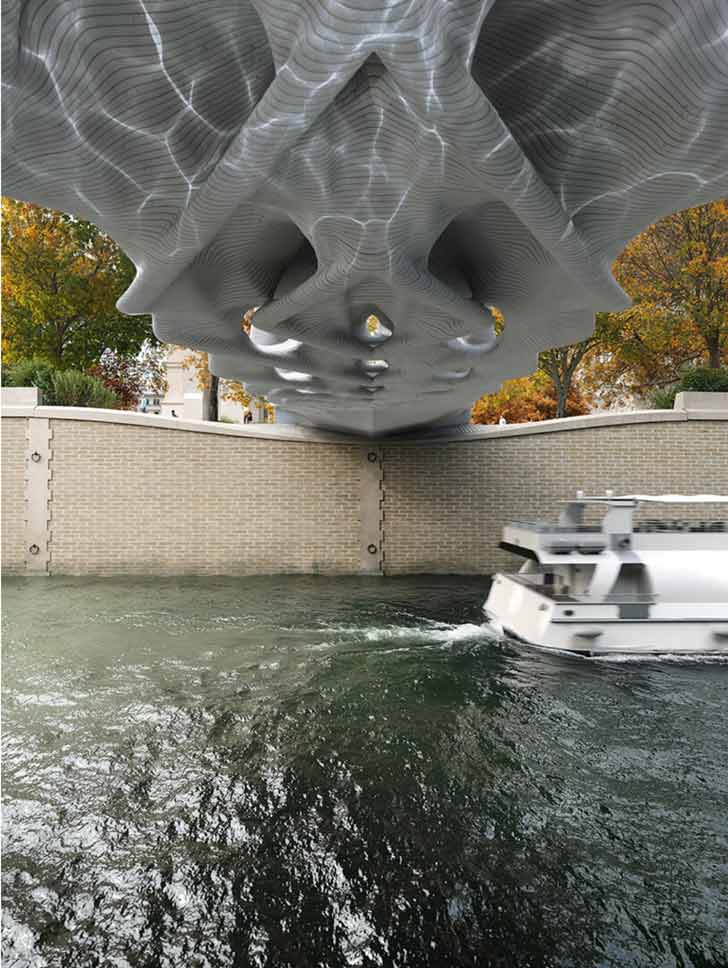
“Through millions of years of evolution, nature has learned that you don’t need material everywhere,” Akbarzadeh explained to CNN. “If you take a cross section of a bone, you realize that bone is quite porous, but there are certain patterns within which the load (or weight) is transferred.”
The designers mimicked the structures in certain bones to increase the surface area of the bridge, which also increased the special 3D printed material mixture’s ability to absorb carbon by an additional 30%.

“The surface area, together with this material property, maximizes the reaction with carbon at the microscopic level,” Akbarzadeh said. “That contributes a lot to both [carbon dioxide] reduction and absorption.”
The bridge is 3D printed in blocks using a robotic arm and then connected with a tensile cable. No adhesives or grout are used in the connections, making the bridge entirely demountable and recyclable.

This approach, according to Akbarzadeh, reduces construction time, materials, and energy use by 25% compared to typical construction techniques. The Diamanti’s structural system also reduces the need for steel by 80%.
Akbarzadeh’s team first built a 5-meter-long prototype, and later a 10-meter version, to test for feasibility and load-bearing capacity.
“It exceeded all our expectations,” Akbarzadeh said.
The prototype is currently on display at the European Cultural Center in Venice for the Venice 2025 Architecture Biennial, where the team originally hoped to build the real-life bridge.

However, the city changed its regulations around new large-scale structures, so the researchers had to go back to the drawing board.
Armed with some digital renderings of the bridge over the River Seine in Paris, France, they have now secured approval to construct the first Diamanti bridge in France, although exact locations are still being determined.

The researchers are excited to use this first location as a case study for real-world applications of their design and materials, and they continue to research concrete alternatives for other types of structures, including flooring systems.
“The moment we stopped thinking about concrete as static and started seeing it as dynamic,” Akbarzadeh told Archinect News, “we opened up a whole new world of possibilities.”
You may also like: World's first 'upcycled skyscraper' could be blueprint for a 'waste-free future.' It's a finalist for the Earthshot Prize
Header image courtesy of Fortes Vision/Massive Form
Losing a loved one — human, canine, feline, or otherwise — comes with a well of complicated grief, often experienced in isolation.
But every year, on Día de los Muertos, or Day of the Dead, people construct ornate ofrendas, an altar of “offerings,” to honor, celebrate, and fondly remember their loved ones who have passed away.
The tradition originated in Mexico and has roots in both Catholic and Indigenous Aztec traditions, but as the holiday has grown in awareness, people of all cultures celebrate with reverence.

In fact, this year marks the fifth year that the Los Angeles Zoo has partnered with L.A.’s Plaza de la Raza Cultural Center for the Arts & Education to bring a Beloved Pets Ofrenda to members of the public.
At the zoo, guests will find an ofrenda filled with countless photos of pets long gone.
During staffed hours, guests are invited to print pet photos on-site, bring a photo of their own, or draw a rendition of their pet using art supplies. Then, they can adorn their own frames and display their animal companion, next to jars of dog biscuits, tins of cat food, cultural figurines, marigolds, and more.

Staff is only there to help on weekends, but the altar is open during all public zoo hours during the week, so people can contribute or pay their respects at any time.
“Pets form a very important part of a family, and an ofrenda full of pet pictures is a wonderful way to celebrate their lives,” the L.A. Zoo shared in an Instagram post.
“The Beloved Pets Ofrenda is a special way to celebrate both Hispanic heritage as well as honor the connection between humans and animals and express empathy for all living things.”

The now five-year-long communal tradition began when Coral Barreiro, the manager of community programs at the zoo, lost her Yorkie in 2019. She set up an ofrenda for the dog in her office and invited her coworkers to contribute.
“It was so well-received that we had to make it bigger, adjust it, and make room for all the contributions,” she told Kinship last year.
From there, they onboarded Plaza de la Raza, who Barreiro called “the experts in creating ofrendas,” and the tradition has blossomed over the years. In years past, the zoo has seen over 1,000 photos contributed — and they aren’t limited to cats and dogs.
Barreiro told LAist that she has seen photos of a fig beetle, “so many fish,” and pets of all kinds.
“It has been one of the most successful community programs that we have run at the LA Zoo,” Barriero told Kinship. “Empathy for wildlife is what we want to nurture at the zoo, and I truly believe that empathy for living things begins at home with our furry, scaly, or feathery family members.”
Not only does the project invite a deeper connection to animals, but it instills a sense of cultural appreciation for Hispanic community members, especially during a time in which it is greatly needed.

“No matter your background, grief surrounding the loss of a pet is a universal feeling,” Barreiro added.
“With Los Angeles having the largest population of Mexicans living outside of Mexico, [the ofrendas are] important not only because of representation, but also because seeing other Angelenos participate, no matter their background, gives a feeling of appreciation and acceptance.”
Día de los Muertos is celebrated on November 1 and 2. L.A. locals can participate in or view the ofrenda through the close of zoo hours on November 2 this year.
You may also like: Oscar de la Renta's newest collab is just for dogs — and every cent goes to pets in need
Header image courtesy of the Los Angeles Zoo
What happens now?
That may well be the question being asked by “No Kings” protesters, who marched, rallied, and danced all over the nation on Saturday, Oct. 18, 2025.
Pro-democracy groups had aimed to encourage large numbers of Americans to demonstrate that “together we are choosing democracy.” They were successful, with crowds turning out for demonstrations in thousands of cities and towns from Anchorage to Miami.
And while multiple GOP leaders had attacked the planned demonstrations, describing them as “hate America” rallies, political science scholars and national security experts agree that the current U.S. administration’s actions are indeed placing the world’s oldest continuous constitutional republic in jeopardy.
Once a democracy starts to erode, it can be difficult to reverse the trend. Only 42% of democracies affected by autocratization — a transformation in governance that erodes democratic safeguards — since 1994 have rebounded after a democratic breakdown, according to Swedish research institute V-Dem.
Often termed “democratic backsliding,” such periods involve government-led changes to rules and norms to weaken individual freedoms and undermine or eliminate checks on power exercised by independent institutions, both governmental and non-governmental.
Democracies that have suffered setbacks vary widely, from Hungary to Brazil. As a longterm practitioner of democracy-building overseas, I know that none of these countries rival the United States’ constitutional traditions, federalist system, economic wealth, military discipline, and vibrant independent media, academia and nonprofit organizations.
Even so, practices used globally to fight democratic backsliding or topple autocracies can be instructive.
In a nutshell: Nonviolent resistance is based on noncooperation with autocratic actions. It has proven more effective in toppling autocracies than violent, armed struggle.
But it requires more than street demonstrations.
Tactics used by pro-democracy movements
So, what does it take for democracies to bounce back from periods of autocratic rule?
Broad-scale, coordinated mobilization of a sufficient percentage of the population against autocratic takeover and for a renewed democratic future is necessary for success.
That momentum can be challenging to generate. Would-be autocrats create environments of fear and powerlessness, using intimidation, overwhelming force or political and legal attacks, and other coercive tactics to force acquiescence and chill democratic pushback.
Autocrats can’t succeed alone. They rely on what scholars call “pillars of support” — a range of government institutions, security forces, business, and other sectors in society to obey their will and even bolster their power grabs.
However, everyone in society has power to erode autocratic support in various ways. While individual efforts are important, collective action increases impact and mitigates the risks of reprisals for standing up to individuals or organizations.
Here are some of the tactics used by those movements across the world:
1. Refuse unlawful, corrupt demands
When enough individuals in critical roles and institutions — the military, civil servants, corporate leaders, state government, and judges — refuse to implement autocratic orders, it can slow or even stop an autocratic takeover.
In South Korea, parts of the civil service, legislature, and military declined to support President Yoon Suk Yeol’s imposition of martial law in 2024, foiling his autocratic move.
2. Visibly bolster the rule of law
Where would-be autocrats disregard legal restraints and install their supporters in the highest courts, individual challenges to overreach, even if successful, can be insufficient.
In Poland, legal challenges in courts combined with public education by the judiciary, lawyers’ associations' initiatives, and street protests like the “March of a Thousand Robes” in 2020 to signal widespread repudiation of the autocratic government’s attacks on the rule of law.
3. Unite in opposition
This year’s Nobel Peace Prize winner, Maria Corina Machado from Venezuela, is an example of how political parties and leaders who cooperate across differences can offer an alternative vision.
Novel candidates can undermine the ability of autocrats to sow division and demonize major opponents. However, coalitions can be difficult to form and sustain to win.
Based on experiences overseas, historian Anne Applebaum, author of “Autocracy Inc.,” has called for a pro-democracy coalition in the U.S. that could unite independents, Libertarians, the Green Party, dissident Republicans, and the Democratic Party.
4. Harness economic power
Everyday consumers can pressure wealthy elites and corporations that acquiesce to, or prop up, would-be autocrats through boycotts and other methods, like the “Tesla Takedown” in the U.S. that preceded a drop in Tesla share value and owner Elon Musk’s departure from his government role.
General strikes, led by labor unions and professional associations, as in Sudan or Myanmar, can be particularly effective.
5. Preempt electoral manipulation
Voting autocrats out of office remains the best way to restore democracy, demonstrated recently by the u-turn in Brazil, where a pro-democracy candidate defeated the hard-right incumbent.
But this requires strategic action to keep elections truly free and fair well in advance of election day.
6. Organize your community
As in campaigns in India starting in 2020 and Chile in 2019, participating in community or private conversation forums, local town halls or councils, and nonpartisan student, veterans, farmers, women’s, and religious groups provides the space to share concerns, exchange ideas, and create avenues to take action.
Often starting with trusted networks, local initiatives can tap into broader statewide or national efforts to defend democracy.
7. Shape the story
Driving public opinion and communicating effectively is critical to pro-democracy efforts.
Serbian students created one of the largest protest movements in decades starting in 2024 using creative resistance — artistic expression, such as visual mediums, satire, and social media — to expose an autocrat’s weaknesses, reduce fear and hopelessness, and build collective symbolism and resilience.
8. Build bridges and democratic alternatives
Bringing together people across ideological and other divides can increase understanding and counter political polarization, particularly when religious leaders are involved.
Even in autocratic countries like Turkey or during wartime as in Ukraine, deepening democratic practices at state and local levels, like citizen assemblies and the use of technologies that improve the quality of public decision-making, can demonstrate ways to govern differently.
Parallel institutions, such as schools and tax systems operating outside the formal repressive system, like during Slobodan Milosevic’s decade-long crackdown in Kosovo, have sustained non-cooperation and shaped a future vision.
9. Document abuses, protect people, reinforce truth
With today’s technologies, every citizen can record repressive incidents, track corruption, and archive historical evidence, such as preserving proof of slavery at danger of being removed in public museums in the U.S., or collecting documentation of human rights violations in Syria.
This can also entail bearing witness, including by accompanying those most targeted with abusive government tactics. These techniques can bolster the survival of independent and evidence-based media, science, and collective memory.
10. Mitigate risk, learn, and innovate
The success rate of nonviolent civil resistance is declining while repressive tactics by autocrats are evolving.
Democracy defenders are forced to rapidly adjust, consistently train, prepare for diverse scenarios, try new techniques, and strategically support each other.
International solidarity from global institutions, like European Union support for democrats in Belarus or Georgia, or online movements, like the Milk Tea Alliance across Southeast Asia, can bolster efforts.
Democracy’s future?
The end of American democracy is not a foregone conclusion, despite the unprecedented rate of its decline. It will depend, in part, on the choices made by every American.
With autocracies outnumbering democracies for the first time in 20 years, and only 12% of the world’s population now living in a liberal democracy, the future of the global democratic experiment may well depend on the people of the United States.
This article was written by Shelley Inglis from Rutgers University, and was originally published on The Conversation.
Header Image by Alex Radelich on Unsplash

Did you know that making one cotton t-shirt uses around 2,700 liters of water, around the amount that a person drinks in three years? Fast fashion may offer cheap, on-trend clothes, but it also generates an annual 12kg of textile waste per person in Europe, only 1% of which is recycled to make new garments.
The fast fashion industry produces too much, too fast, too cheap — but there are ways to slow it down. In recent years, the European Union and European countries have begun to propose and implement taxes and legislation that do just this.
EU: no more tax breaks for fast fashion
Up until 2021, millions of packages from platforms such as Shein and Temu — all those valued at under €22 — arrived in Europe without paying VAT, or value-added tax. This gave them an unfair advantage over local businesses, but since 2021, all non-EU imports have been subject to VAT.
The European Commission wants to go further, and has proposed a processing fee of €2 for each shipment to the E.U. It also wants to eliminate the current €150 import tariff exemption, so that even small orders will pay customs duties.
These measures would prevent non-E.U. sellers from artificially splitting orders and would strengthen control over products that are often manufactured under unsustainable conditions or with poor labor practices.
The impact could be huge; in 2024, 91% of all e-commerce shipments valued at less than €150 came from China.
In 2024, Brussels approved Directive (EU) 2024/825 to combat greenwashing. From 2026 onwards, brands will not be able to present themselves as “carbon neutral” or “eco-friendly” without verifiable evidence, nor will they be able to hide information about the durability or repairability of garments.
France: tax per fast-fashion garment
France is the first European country to approve a tax on fast fashion. In June 2025, the French Senate gave the green light to a law introducing a progressive penalty system per garment.
Ultra-fast fashion brands will have to pay an extra €5 per item, which will make things like cheap T-shirts, dresses, and trousers particularly expensive. The figure will gradually increase to €10 in 2030, doubling the tax in just five years.
The tax will depend on the environmental impact and practices of each company and will not exceed 50% of the sales price, excluding VAT.
With this measure, the French government is sending a clear message: Extremely cheap garments, designed to last barely a season, must pay for the damage they cause.
At the same time, brands that manufacture more durable, recyclable clothing with a smaller environmental footprint are rewarded. This model is inspired by the environmental taxes already applied to fuels and single-use plastics.
UK: a penny per garment
In 2019, a British Parliament committee recommended a one-penny tax on every garment sold to fund textile collection and recycling.
Although the government did not implement the measure, the proposal sparked a debate on the policy approach of Extended Producer Responsibility, whereby brands pay according to the waste they generate.
The lower the quality of their products, the higher the cost; the more durable and recyclable they are, the less they have to pay.
Sweden, Netherlands, France: repairing instead of replacing
Other countries have chosen to incentivize repairs. In Sweden, VAT on clothing and footwear repairs has been reduced from 25% to 12%, while in the Netherlands, a reduced rate of 9% applies to services such as sewing repairs, replacing zips, and adjusting sizes.
In France, from 2025 onward, a reduced rate of 5.5% will apply to textile and footwear repairs, along with a “repair voucher” that discounts part of the cost for consumers who have their clothes repaired in certified workshops.
These measures have one clear objective: making it cheaper to replace a broken zip than it is to buy a whole new garment.
Spain: advanced regulations, lagging taxation
In Spain, Law 7/2022 stipulates that, from 2025 onwards, textile brands must finance collection and recycling systems, and provide information on the durability and repairability of their products.
This is a step forward, as it forces companies to bear costs that, up to now, have been covered by local authorities and taxpayers.
However, taxation remains a major challenge. Taxes or tax incentives such as those in France, Sweden, and the Netherlands have not yet been adopted, leaving Spain lagging behind in this area.
Do these measures work?
The effects of tax mechanisms are already being felt. The elimination of exemptions has leveled the playing field and forced large international platforms to modify their pricing and logistics strategies.
Reduced VAT on repairs is revitalizing local workshops, benefiting small businesses, and gradually changing consumer habits.
New taxes, such as those in France, will make disposable clothing more expensive, forcing big brands to improve their design, traceability, and materials.
Together, taxation and regulations seek to change the logic of the textile industry. Cheap, disposable items should cease to be the most attractive option, and repairing, reusing, or buying quality clothing should become the norm.
If these measures are consolidated, the European textile industry could become one of the most advanced in terms of sustainability, positioning Europe as a global leader in the fight against fast fashion.
This article was written by Albert Navarro García from Universitat de Girona, and was originally published on The Conversation.
Header image by Fernand De Canne on Unsplash

As an estimated 1.4 million federal workers enter a third week either furloughed or working without pay, private nonprofits continue to show up in support of those impacted by the government shutdown.
Even rock stars like Jon Bon Jovi are doing their part.
The Jon Bon Jovi Soul Foundation — which was founded by John and Dorothea Bongiovi in 2006 — currently has five community kitchens throughout New Jersey.

Each location encourages customers to pay a suggested donation of $12 for a meal, or “pay it forward” for others in need. People who cannot afford to pay can also volunteer to work at the cafe.
But in addition to this everyday philanthropic effort, two restaurant locations (and one in-library pop-up) across New Jersey are offering free three-course meals to any furloughed government employee for the foreseeable future.
“If you’ve been affected by the government shutdown, JBJ Soul Kitchen is here as a resource. You’re welcome to enjoy a three-course, chef-prepared meal in a welcoming space,” the restaurant shared on social media earlier this week.
“Our doors are always open to the community. If you’re in need, please come by, we’re here to support you.”

All that is required, according to social media, is a valid government ID. Free meals are available during business hours at the kitchen’s Red Bank, Toms River, and Ocean County Library locations.
“As part of our mission, we’re dedicated to supporting our community,” another social media post shared. “While you enjoy a delicious meal, you can also learn about additional resources and support available to you.”
This isn’t the first time the Bongiovis have opened the doors of the kitchen to federal workers in need. During the government shutdown during Donald Trump’s first presidency in 2019, JBJ Soul Kitchen offered the same resources.

This year, it is estimated that around 48,000 federal employees in New Jersey alone — about half of whom are serving in the U.S. military — face the prospect of working without pay or being furloughed.
The last government shutdown lasted 35 days, and it’s unclear how long federal employees should prepare to be without pay now.
But in the face of uncertainty, JBJ Soul Kitchen remains a constant.
Since its founding, the organization has celebrated serving over 200,000 meals to people in need, confronted skeptics about their work, and created a loyal community of supporters who happily “pay it forward” when they dine at the Bongiovi’s establishments.

“When we first opened, people did not understand our unique ‘Pay It Forward’ model,” Dorothea Bongiovi, wife of John Bongiovi, said earlier this year.
“We are not a soup kitchen. We are not a pay-what-you-want restaurant. We are a unique ‘Pay It Forward’ model where those who are unable to pay volunteer their time. Those who can pay, pay for their meal and donate to pay it forward. Everyone has the same amazing meal.”
John Bongiovi added: “This model has now been proven time and time again for well over a decade.”

Their supporters seem to be on the same page.
“If you can, stop in, buy a lovely meal in a cool place, and pay forward by paying for a second meal to cover someone in need,” one person commented on the Soul Kitchen’s Instagram post announcing the offer for furloughed employees.
Another added, with clapping emojis and hearts: “This is how you do it.”
You may also like: Jon Bon Jovi's 'pay it forward' cafe gets huge wave of support after mayor tries to shut it down
Header images courtesy of JBJ Soul Kitchen and Jon Bon Jovi/Facebook
As extreme weather events driven by climate change force people to evacuate more and more — and even permanently lose their homes — experts across industries are working to find solutions to safe housing and shelter amid uncertainty.
Swedish architecture firm Ulf Mejergren Architects, or UMA, has answered a call to envision a type of home that could see us into the future.
For an exhibition at the Swedish Center for Architecture and Design, they unveiled Lift House — a red, storybook cottage that sits on a scissor lift you might otherwise recognize in a warehouse or construction site.

“Lift House is a mobile refuge — a small house mounted on a scissor lift that can be raised when needed,” the architects wrote in a statement about the project.
“In an era of increasing downpours, record rainfall, and sudden weather shifts, the work explores what it means to live in a state of constant emergency. What do we choose to take with us? How do we live when the ground beneath us can no longer be trusted?”

While the home is not exactly livable yet, its intent at the exhibition was to invite further conversation around architecture’s ability to adapt to the changing environment.
The concept home was made with research from Linköping University in mind. Here, researchers outline three primary stages for managing risk in an uncertain environment: protection, adaptation, and retreat.
“Lift House embodies a fourth approach — temporary retreat — a gesture of flexibility when the ground fails, a home that can rise, move, and offer security in motion,” UMA designers explained.

The architects constructed the lift from a repurposed scissor lift the design center had on hand, another layer to the project’s sustainable thread, pointing to reuse and resource efficiency as a key component in future-proof design.
From there, they delicately calculated and adjusted the weight of the home to maintain balance and stability, since the lift only had a capacity of 227 kilograms, or about 500 pounds.

While the Lift House is a functional prototype, it would likely be very difficult to replicate the design for unpredictable and varying human living.
But instead of having people move into the structure, the designers want it to prompt others to think outside of the box.

“Building a more resilient society demands major investment, but also the courage and willingness to think differently,” a statement from the Swedish Center for Architecture and Design said about the project.
“Municipalities, property owners, landlords, and homeowners alike may need to invest in swift, smart, and long-term solutions. What happens if we fail to act?”
You may also like: Two years since Maui fires, 900 Hawaii residents move into historic tiny home village: 'Second largest in the nation'
Header image by Oskar Omne
The four-day workweek is on the rise, as companies attempt to bend to the demands of modern workers, and even a handful of countries experiment with increased productivity and improved quality of life.
There’s one company in particular that has found the shortened workweek to be a resounding success: Lumen SEO, a United Kingdom-based search engine optimization company founded by young entrepreneur Aled Nelmes in 2020.

After about two years of trialing a four-day work week — 32 hours spread across Monday through Thursday, with no cut in pay — Nelmes said the effort boosted output, staff retention, and mental health.
So, he decided to double down.
“We’re abandoning the four-day work week,” Nelmes posted on LinkedIn about six months ago. “For three months we’re trialing a new way of working at Lumen SEO, where team members are to work 32 hours every week — but at any time and from anywhere.”
He clarified to add that “any time” meant that employees could work any time of the day, any time of the week. And “any place,” could be at home, in the office, or around the globe.
The 29-year-old founder and CEO wanted to make working at Lumen SEO even more enticing to existing employees and any new staff. But more than that, he had some key reasons for the pivot, including considerations for menstrual health, hormonal cycles, childcare, and weather.
“We're a female-dominant workforce, and there are periods during a woman's cycle where energy and the immune system are higher and lower, flexibility allows for women to lean into and maintain high performance around their cycle,” Nelmes wrote.
For men, on the other hand, he added, “men’s [hormonal] cycle is daily, with many men — including myself — being highest performing and focusing best early in the morning before 9 a.m.”
With the new scheduling approach, people would ideally be able to work better within their optimal hours.

As for childcare, Nelmes said that with a growing team and the opportunity for higher salaries, senior hires are more likely to join the staff.
“I want Lumen SEO to be an attractive place to work for parents,” he said, adding in parentheses, “Mums and Dads.”
And finally, he shared, weather can be unpredictable, and even when it’s not inclement outside, he wants people to be able to take advantage of the changing seasons.
“I want Lumen SEO staff to be able to take the afternoon off in the sun without the guilt or heavy admin process of booking leave,” he said.
His announcement went viral on LinkedIn, with nearly 1,000 comments and over 18,000 reactions. That was six months ago.
So, what was the result of this original three-month trial?
As of this week, it seems to still be in action, with Nelmes jumping on LinkedIn to share that he’ll be hiring for a new position with the 32-hour week included, and a new profile in the Financial Times outlining Lumen SEO’s scheduling success.
Aside from a couple of overlapping hours per week, people get to pick their hours for themselves. A software platform delegates tasks to staff each Monday and a messaging tool lets everyone know who is available or not.
Nelmes said that meetings are typically scheduled far in advance, so that is often not a concern for the flexible system.
“I would argue that, because staff members have more time outside of focused, regimented, structured work, they tend to come into the office with more ideas,” he told the Financial Times.
With the evidence of Lumen SEO, combined with data backing the improved health, well-being, and job satisfaction of employees, as well as increased productivity and less strain on the environment, Nelmes hopes to be at the forefront of a work revolution.
“There is clearly a huge amount of demand for change,” Nelmes shared on LinkedIn. “Many people are sick of the same restrictive work schedules that were adopted decades ago during the industrial age that simply aren't necessary anymore.”
“Put simply?” he added. “Work should be a life enhancer, not a life degrader.”
You may also like: Boston is transforming abandoned office space into affordable homes for 1,000+ residents
Header image courtesy of Resume Genius on Unsplash
In 2024, a team of expert entomologists — Monsoon Jyoti Gogoi, Rajkamal Goswami, Seena Narayanan Karimbumkara, and Agur Litinalso — explored the picturesque hills and misty mountains of Arunachal Pradesh, which is nestled at the foothills of India’s Eastern Himalayas.
Over the course of seven days, the team hiked through the underexplored region in search of butterflies.
In total, the scientists found 90 different species of butterflies. As they laid out their findings, they soon realized that six of them had never been recorded in that region of India before.

“The documentation of six previously unrecorded species within a short one-month survey underscores the striking lack of Lepidopteran surveys and conservation attention in the Indian Eastern Himalayas,” the researchers noted in the latest issue of “Entomon,” a scientific journal that specializes in entomology.
“The Brahmaputra River appears to play a critical biogeographic role, facilitating faunal continuity between southeastern Tibet and eastern Arunachal Pradesh.”
The new additions include Litin Onyx (Horaga takanamii), Tibetan Junglequeen (Stichophthalma neumogeni renqingduojiei), Narrow-banded Royal (Dacalana vui), Tibetan Duke (Euthalia zhaxidunzhui), Tibetan Sergeant (Athyma yui), and Mountain Columbine (Stiboges elodinia).

The Litin Onyx was named in honor of the Litin clan of the Adi community, a major indigenous tribe whose name translates to “hill people.”
For centuries, the Litin clan has protected the forest through traditional conservation practices, which are tied to their religious beliefs that trees and animals are sacred.

Amazingly, the scientists caught a glimpse of one Litin Onyx butterfly laying eggs on its host plant, Symplocos, an ecological phenomenon that is very rare to witness.
Another notable butterfly sighting was the Tibetan Junglequeen, which had only been found in Metok, Tibet, until now.

And it wasn’t just spotted in a fleeting moment — the golden-brown butterfly species was seen quite frequently throughout the expedition.
“[It] was found to be relatively common in Simong Forest, with an average of 20 individuals encountered daily,” the researchers noted.
Monsoon Jyoti Gogoi, the lead author of the study, currently works as a consultant for Ashoka Trust for Research in Ecology and the Environment’s Siang Valley Biodiversity Conservation Program.
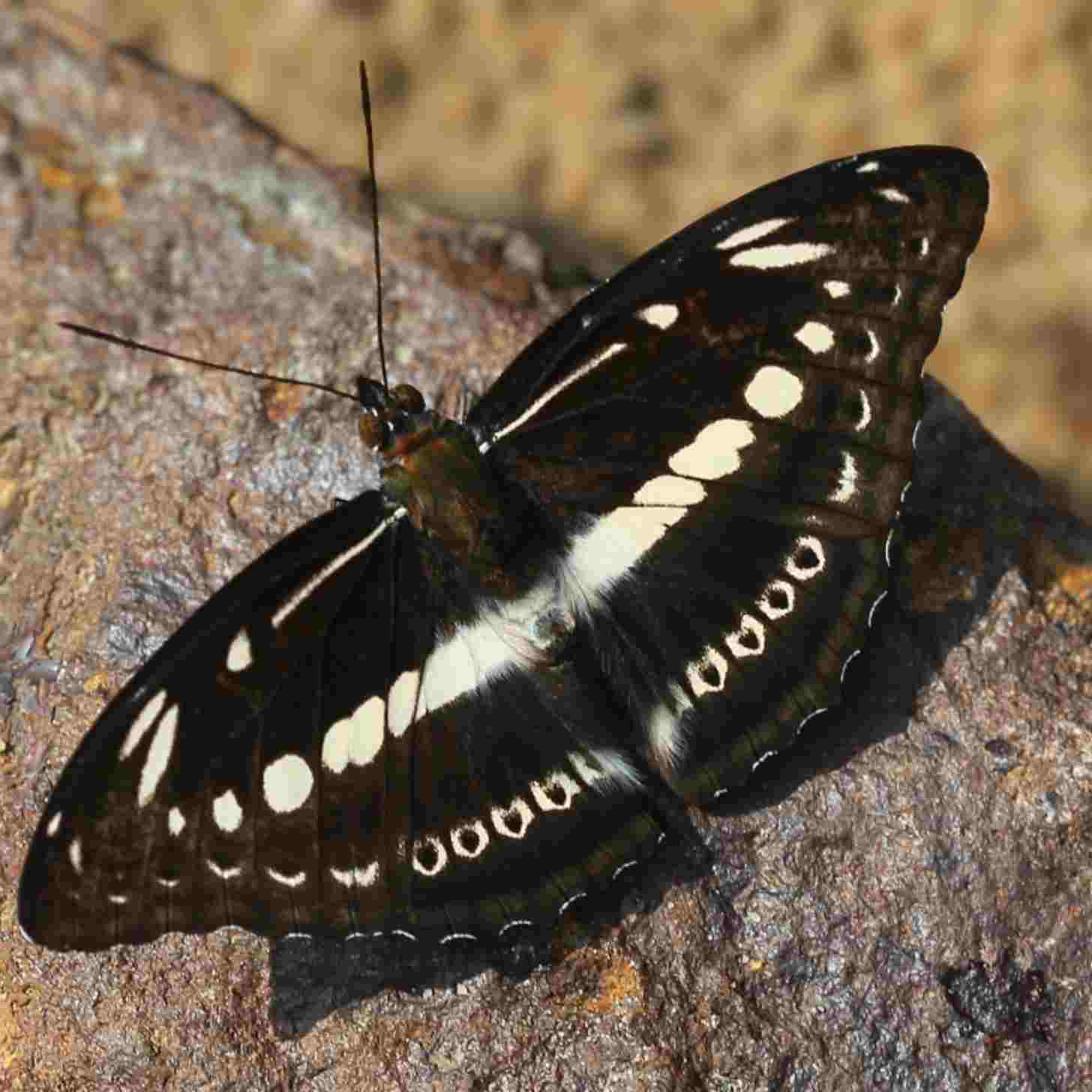
But even at a young age, Gogoi was driven by his passion for butterflies.
As a teenager, Gogoi spent five years recording and photographing over 500 butterfly species in Upper Assam, just south of Arunachal Pradesh — many of which were rare or undocumented.

In 2010, he was honored with the Sanctuary Nature Foundation’s Young Naturalist Award for his work on World Wildlife Fund-India’s elephant corridor monitoring project and Jeypore-Dehling Reserved Forest’s butterfly diversity survey.
“Once a species becomes extinct or a forest is lost, it will not come back,” Gogoi said. “Now is when we must work to protect all things small and wonderful.”
You may also like: New butterfly species wows scientists: 'This discovery reveals a lineage shaped by 40,000 years of evolutionary solitude'
Header image via Vyacheslav Argenberg / Wikimedia Commons (CC BY 4.0)
One of the world’s most endangered whales finally has a glimmer of good news on the horizon.
Ahead of their annual meeting at the New Bedford Whaling Museum in New Bedford, Massachusetts, the North Atlantic Right Whale Consortium released an exciting report: the population estimate for the right whale was 384 in 2024, an eight-whale increase from the previous year.
Additionally, the New England Aquarium said that the rare whale species has shown “slow growth” in the last four years overall.
Although it may appear like a small improvement, it is a considerable milestone for a gentle giant that has been careening towards extinction.
Senior scientist Heather Pettis, who leads the right whale research program at the aquarium, acknowledged the progress that she’s seen.
In a statement, she said that it’s always a great feeling when she can “share positive news about this critically endangered species.”
“The slight increase in the population estimate, coupled with no detected mortalities and fewer detected injuries than in the last several years, leaves us cautiously optimistic about the future of North Atlantic right whales,” Pettis said.
But she also emphasized that they have a lot of work ahead of them.
“With small population increases year to year, we still need strong protective measures for continued growth,” she advised. “We don’t want to take our foot off the gas when it comes to management and conservation efforts.”
Although they gained protection from whaling in the 1930s, the North Atlantic right whale remains at risk when it comes to vessel strikes and entanglements with fishing gear.
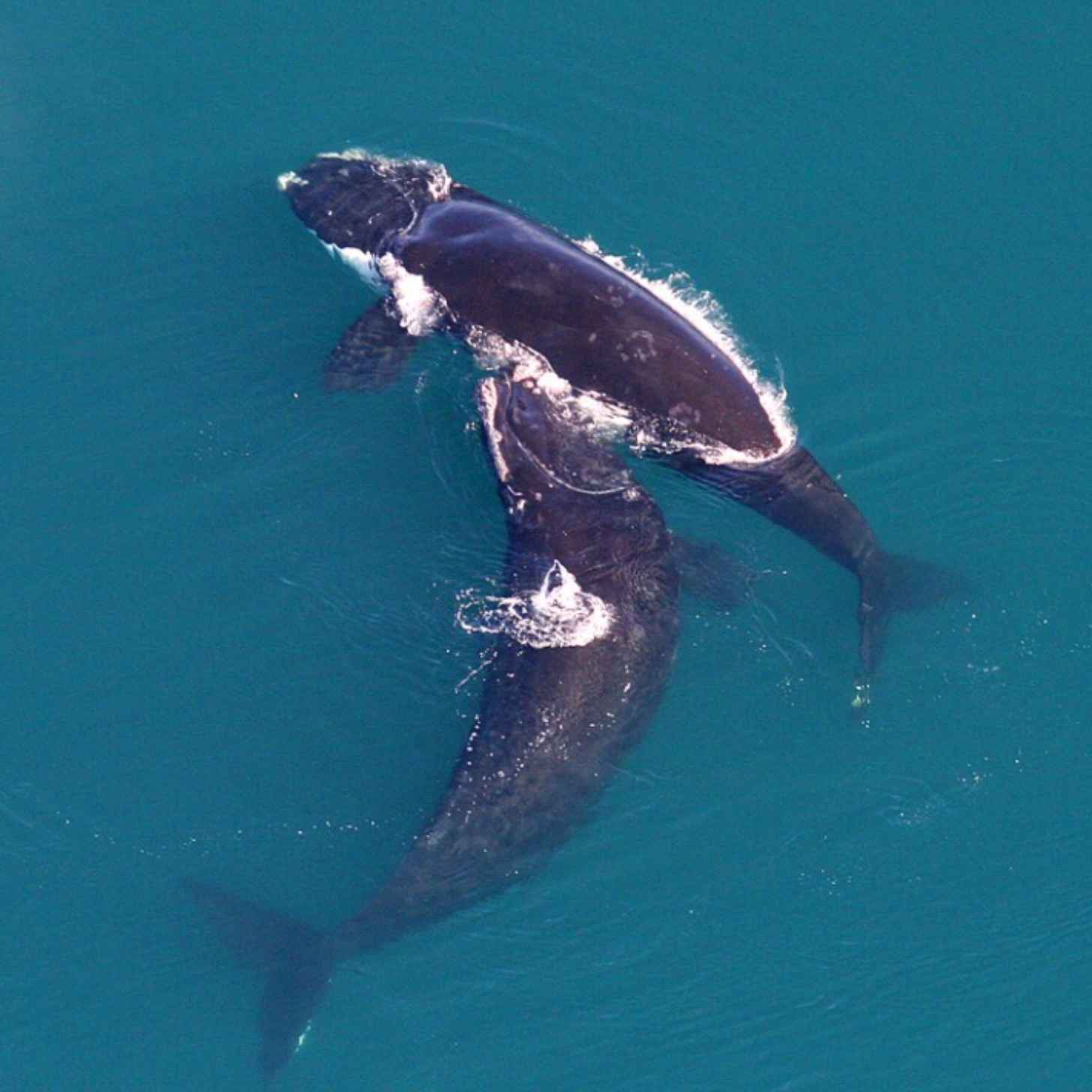
In December 2024, an unnamed right whale known as Catalog #5110 was found entangled far offshore and later seen in April in Cape Cod Bay, still carrying fishing gear.
Despite efforts from multiple organizations, only a small amount of gear was removed, and the whale broke away with rope still entangled in its mouth.
“The case of Catalog #5110 is a sad reminder of not only the persistent challenges to the survival and recovery of this species but also the prolonged suffering these individual whales endure,” said Pettis.
“The effort that went into trying to assist this animal was tremendous, and yet it remains carrying a life-threatening entanglement,” she continued. “The ultimate goal is to prevent these entanglements from happening in the first place.”
Philip Hamilton, a senior scientist in the Aquarium’s Anderson Cabot Center, addressed how difficult it can be to stop entanglements before they occur.
“Detecting entanglements is challenging as it requires two things to align: people to be looking and whales to be present in those times and locations where they’re looking,” Hamilton said.
“That’s why it is so important to have continued collaboration with state, federal, and private entities to ensure right whales are monitored throughout their range in the U.S. and Canada.”
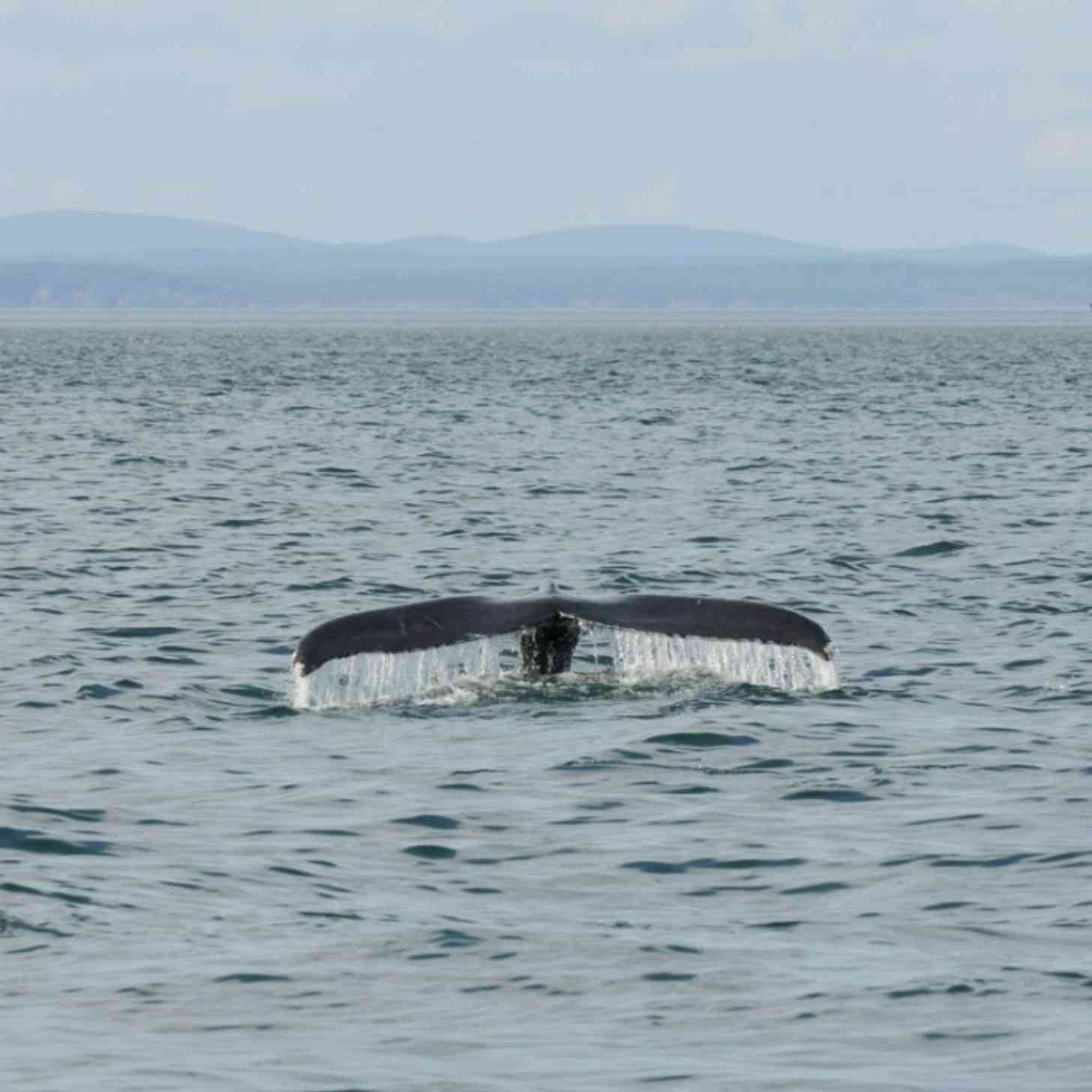
Amidst the good news of a slight population increase, the 2025 calving season fell short of researchers’ expectations with only 11 calves.
Notably, two mother-calf pairs were first spotted in unusual locations: “Accordion” off New York in February and “Monarch” in Cape Cod Bay in April.
Hamilton also pointed out that four of the calves were born to first-time mothers, to the aquarium’s delight.
“In recent years, right whales have been delaying giving birth to their first calf until they are older. It is encouraging to see four of these older females join the reproductive pool this year,” Hamilton said. “The future of the species rests on their broad backs.”
More than 450 people — including conservationists, marine biologists, fishing experts, and government figures — are currently attending the Consortium’s annual meeting, which wraps on October 23.
Following the conference, the Consortium will prepare a comprehensive annual report detailing the status of the species, ongoing survey, management, and research efforts, and providing recommendations for future action.
The report is expected to be released in early 2026.
“The road to recovery for this population is long,” Pettis said, “and we look forward to continued collaborations with our partners to ensure the ocean is safer for right whales.”
You may also like: Conservation efforts helped humpback whales rebound from near-extinction
Header image via Wikimedia Commons / National Marine Sanctuaries