The nonprofit Girls Who Code was founded in 2011 with the intention to close the gender gap in technology jobs.
Through in-person courses, clubs, summer camps, college opportunities, and more, the nonprofit has served approximately 760,000 young women and nonbinary students in middle and high school — with 50% of them from historically under-represented groups.
Of that number, 218,000 are now college or career-aged alumni, continuing to reshape the future of technology.
And now, the organization says it's on track to close the gender gap in new entry-level tech jobs by 2030.
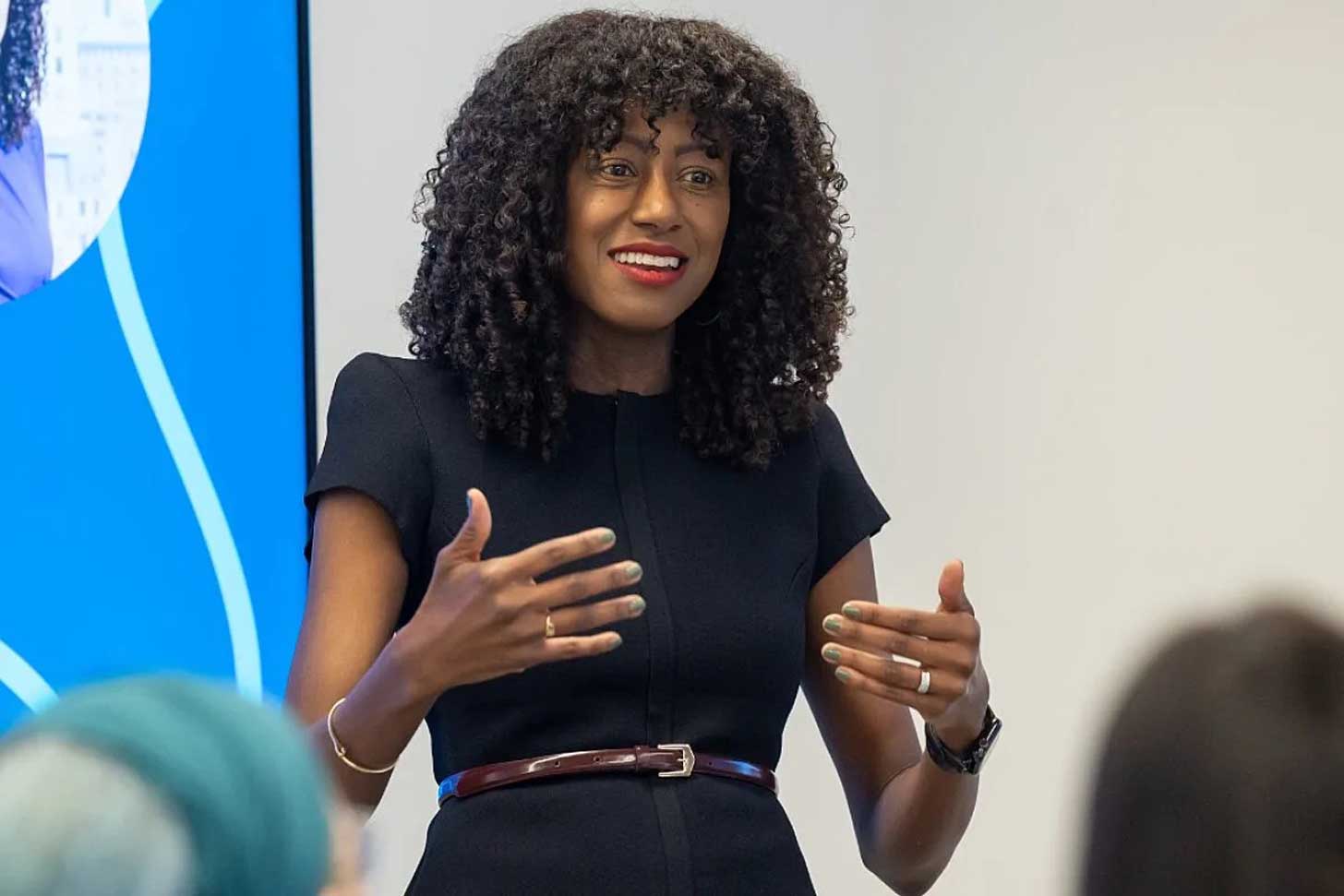
“At Girls Who Code, not only do we immediately connect with our girls through direct programming, teaching them to code,” Dr. Tarika Barrett, CEO of Girls Who Code, said in an interview with the podcast CXOTalk, “but it's also moving hearts and minds and changing the image of what a computer scientist looks like and does.”
Through its latest “Five by Five” initiative, Girls Who Code will expand its programming for younger students, extend summer high school immersion programs to be year-long, build regional chapters with alumni leaders, and help support technical projects of college students.
The aim is to reach 5 million girls, young women, and nonbinary individuals over the next five years.
“This is a pivotal moment for both the tech industry and Girls Who Code. As the skills required to thrive in tech evolve, we are more determined than ever to meet the needs of the next generation, helping them not just thrive, but lead,” Barrett said in a statement.
“Five by Five isn’t just about hitting a number. It’s about laying the groundwork for a new kind of workforce — one that embraces change, thrives on innovation, and leads the charge into the future.”
You may also like: Scientists study 'breast-cancer-detecting bra' in space: '10 years of tumor growth can occur in 10 days'
A version of this article was originally published in The 2025 Technology Edition of the Goodnewspaper.
Header image courtesy of Girls Who Code
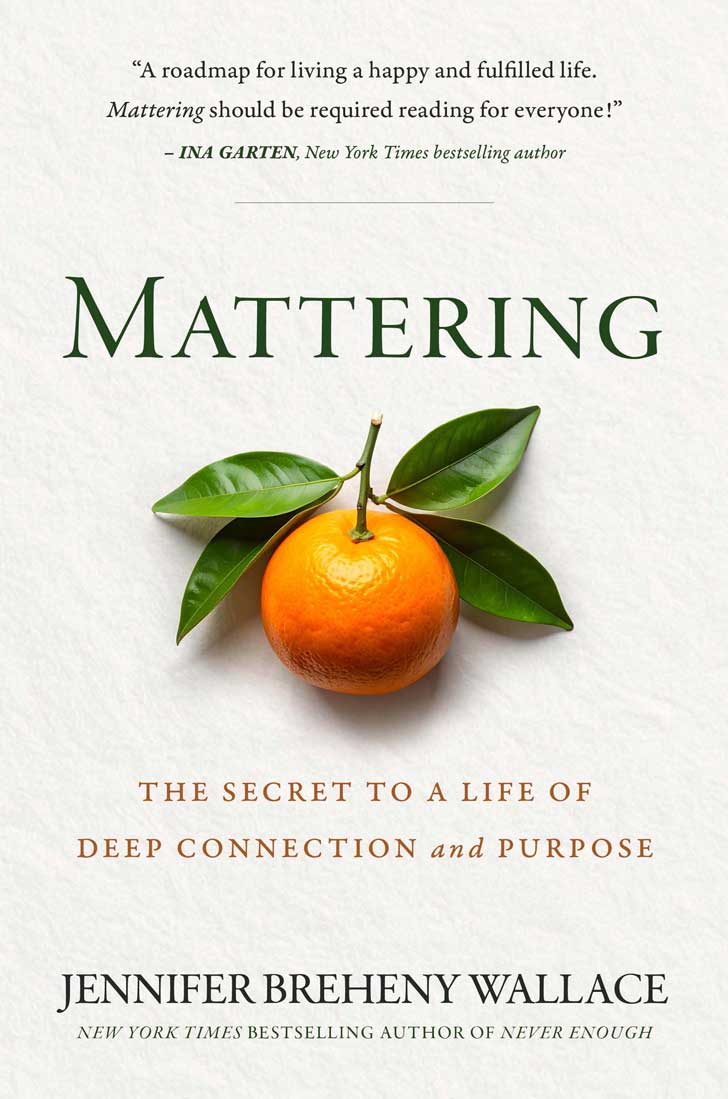
Jennifer Breheny Wallace is an award-winning journalist and author of the forthcoming book “Mattering: The Secret to a Life of Deep Connection and Purpose.”
She has spent her professional career researching the argument that having a sense of value, purpose, and community is nearly as innate as our need for food, water, and shelter.
“Mattering is the deep human need we all have to feel valued by the people around us and to know that we have value to give back. It’s about believing that who we are and what we do makes a difference in the lives of others,” she told Good Good Good in a recent interview.
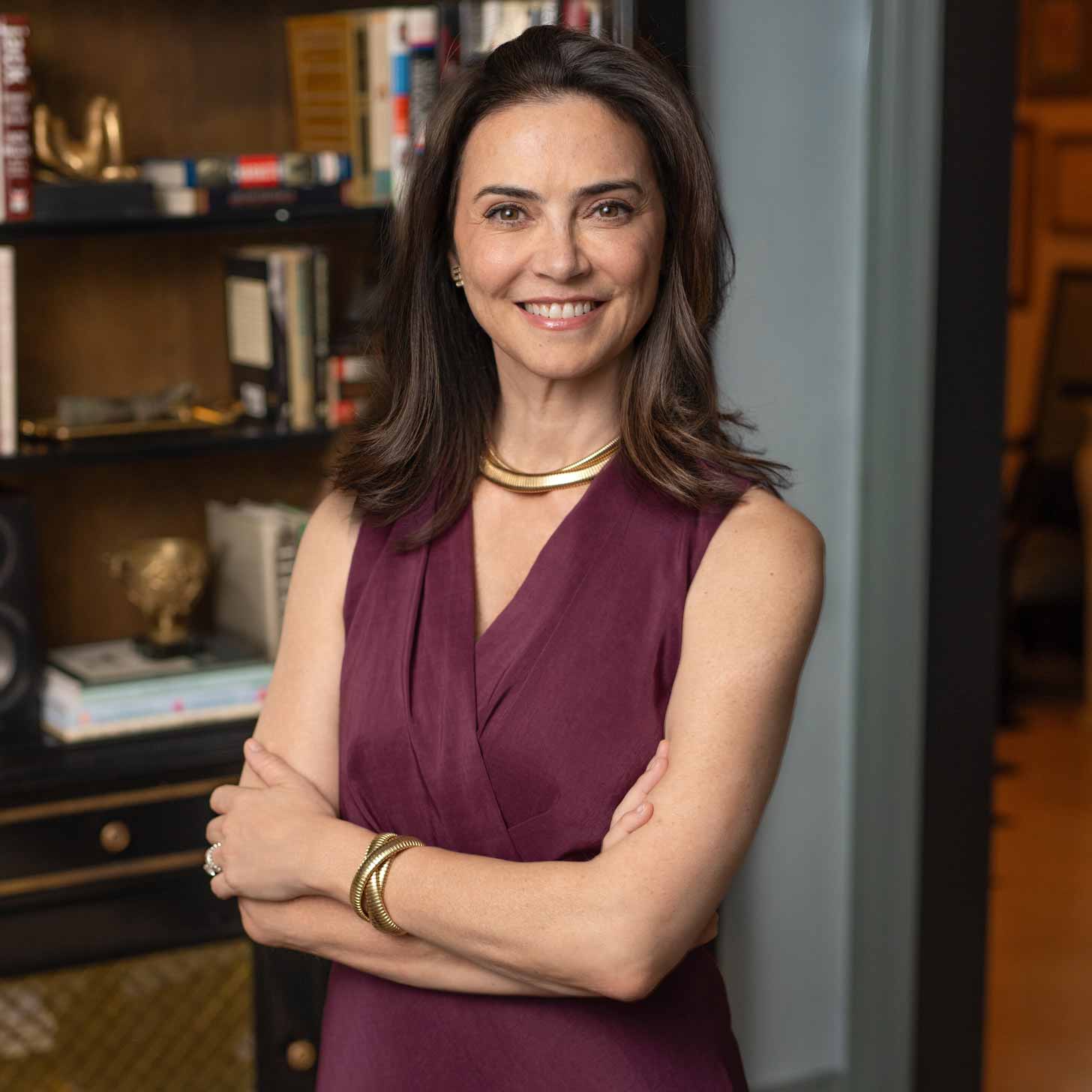
She went on to add that after our basic survival needs are met, the need to matter is the next motivator for human behavior.
“Our earliest ancestors survived by being essential to their group,” Wallace explained. “In other words, to be valued and needed was to be protected, while being ignored or excluded meant certain death and an inability to pass our genes on.”
Those instincts still shape our actions today, she said.
“When we feel we matter, we are more generous, resilient, and connected. We engage in positive ways in our families, our workplaces, and our communities,” Wallace said. “But when that sense of mattering erodes, we suffer.”
“We often withdraw and become anxious and depressed. Some of us might turn to substances to numb the pain. Others might look for extreme ways to be seen in desperate attempts to prove they still matter. We can see the fallout everywhere today in the loneliness epidemic, in rising rates of burnout and anxiety, and even political polarization.”
Wallace sees humanity at a “mattering” juncture, as we compete with artificial intelligence, sociopolitical upheaval, climate change, and all manner of uncertainties in our day-to-day lives and relationships.
But, she posits, that feeling of personal and communal value — “mattering” — can be cultivated intentionally, and can truly make a difference.
“We know from research that mattering reduces anxiety and depression, and it increases empathy and civic engagement. When we feel valued, we naturally want to add value. It’s the emotional fuel that keeps humanity going and the invisible thread that ties our well-being to one another’s,” she said.
“And we need that now more than ever.”
In her book, which will hit shelves in January 2026, Wallace offers readers a blueprint for how to prioritize a sense of mattering in ourselves and our relationships.
It starts with recognizing each other, and later, learning to comfortably rely on each other.
In other words, we need to become helpers — and be open to receiving help, too.
“For so long, we’ve been taught that to be independent and self-reliant is to be strong and that asking for help is a sign of weakness or neediness,” Wallace said.
“But the truth is, asking for help is one of the most generous things we can do for another person. It gives someone else the gift of the chance to feel useful, trusted, and needed. When we reach out, we’re extending an invitation and saying, ‘You matter to me.’”
Even starting small by asking a colleague for their perspective, turning to a friend for advice, or asking a neighbor to borrow a ladder, she said, goes against the grain of “a culture that prizes hyper-independence.”
Plus, knowing how to be the most effective helper in itself gives us purpose and meaning.
Offering “the three Ts,” or time, talent, and treasure, to meet a genuine need, helps us build healthy reliance within our communities.
Once people engage in reliance, Wallace added, they begin to experience importance, or the feeling that they matter because they are prioritized. Here, they can create space for themselves and others, instead of just “squeezing them in.”
From there, she said, people reach “ego extension,” or an understanding that when one person matters, we all matter.
“Their wins feel like our wins, their pain like our pain. This kind of emotional investment creates healthy interdependence that makes life meaningful,” Wallace described.
And lastly, in “the journey of mattering,” Wallace said, is attunement, or the feeling of being deeply understood and meaningfully responded to. Essentially, it means that we give others the same attention we long for.
In a 2025 TED Talk, Wallace outlined some examples of where “mattering” was implemented on a systemic level.
There’s the fire chief, who, dissatisfied after never receiving closure from the people he helped, implemented a system to track the outcomes of rescues so his team knew their efforts had saved someone’s life or eased someone’s suffering.
Then there’s the Dutch supermarket chain Jumbo, which set aside slow checkout lanes for cashiers to take extra time to chat, especially with elderly customers. It’s now in place at 200 locations.
“The lesson for us? We don't need to build new spaces to unlock each other's mattering,” Wallace concluded. “We just need to be more intentional about the spaces we already have.”
A world where mattering matters is well within reach, Wallace believes.
“[My vision is] a world where people feel seen and significant not because of their résumés or social status, but because of who they are deep inside and their unique gifts to share,” she said.
Ultimately, as evidenced by Wallace’s examples, it’s up to us to take small, intentional steps wherever we already find ourselves.

“At home, you can remind the people closest to you why they matter so much to you. At work, connect people to the human impact of what they do by showing them how their effort ripples outward to a colleague, a customer, a community,” Wallace said.
“And in our neighborhoods, it’s slowing down enough to appreciate the neighbor who is always the first to come over with a pot of warm soup when there is a family emergency or the bus driver whose positive energy spills over to passengers.”
“Mattering is a daily practice of helping others feel both valued and valuable. If each of us took that responsibility seriously, even just within our own circles, we could shift our culture,” she added.
In her own life, Wallace has been practicing an exercise where she imagines everyone she meets wearing an invisible sign that reads: “Tell me, do I matter?”
“We can answer that silent question with care through generous listening, recognizing someone’s contributions, or responding to rudeness — often veiled anti-mattering — with compassion instead of judgment,” she said.
And it all boomerangs back to us.
“Every time we reinforce someone else’s value, we reinforce our own. We are reminded that we, too, are needed, valued, and capable of making a difference,” Wallace reaffirms.
“In reminding others that they matter, we confirm just how much we matter, too.”
You may also like: From crying clubs to cuddle therapy, here's how people are combatting loneliness across the U.S.
A version of this article was originally published in The 2025 Helpers Edition of the Goodnewspaper.
Header image by Carra Sykes for Good Good Good
Earlier this week, ahead of the 20th annual UNICEF Gala, presidential inaugural poet Amanda Gorman was announced as the organization’s newest ambassador.
Her post comes after years of support for UNICEF USA, including a recent visit to the organization’s humanitarian warehouse, where she packed supply boxes for children living in conflict.
As a new ambassador, Gorman will use her platform as an advocate for children’s rights, focusing on education, gender equality, and emergencies.
“Working with UNICEF has shown me that when we choose to uplift children, we are choosing to uplift our shared future,” Gorman said in a statement.
“It is an honor to become a UNICEF Ambassador and to stand with an organization that turns possibility into action every single day, especially for children living through crisis. I couldn't be prouder to work alongside UNICEF and continue to support their mission to provide essential aid to children worldwide.”
The Gala celebrated UNICEF’s efforts across the globe, featuring performances from Leon Bridges and a Questlove DJ set at the after-party.

But Gorman was also a centerpiece of the event, celebrating her new title with the organization and performing a new poem written for this milestone.
It is titled “With This Bright Voice,” and a portion of the piece can be read and viewed below:
“With this bright voice
we speak audacious and audible;
Our purpose,
not just ethical, but eternal.
For while every child is rightfully unique,
The right to childhood
is universal.
We must care for
every child, everywhere,
No matter their race, religion,
or gender.
In this, we never
back down;
we never surrender,
Because every child deserves a chance,
And this world
deserves a change.
With this bright voice
we speak,
audacious and audible;
What yesterday we might have called obstacles,
Today are opportunities that make us unstoppable.
We respond in every
strife and struggle,
Because every child is phenomenal,
And to every child
we are responsible.
This is not just purpose.
Now, more than ever,
It is possible.”
In addition to the compelling performances, an audience of nearly 450 people also participated in a paddle-raise fundraiser, purchasing lifesaving items for UNICEF’s clients, including high-performance tents, vaccinations, early childhood development kits, and girls' empowerment packs.
Timed with its Giving Tuesday efforts — which raised a collective $7.4 million — the organization continued to lean into its theme, “It Is Possible,” inviting people from all walks of life to contribute to its efforts of children’s empowerment.

“What we want people to remember and to really know is that it still is possible to make a difference,” UNICEF USA CEO and President Michael J. Nyenhuis said in a statement.
“Despite the crises, despite the headwinds that are going on all over the place, we make a real difference every day. We’ve got the data to show it. We’ve got the results of our programs to show it. It is possible to make a difference for children.”
To support UNICEF’s efforts, donors can contribute online.
You may also like: A pharmacy in the UK is trying an alternative form of mental health care, by way of 'capsules' of poetry
Header image by Noam Galai/Getty Images for UNICEF USA
This morning, Libro.fm — an audiobook platform that supports independent bookstores chosen by its listeners — announced its second-ever Bookseller Choice Awards.
These awards highlight the best audiobooks of the year and are selected by booksellers at over 4,000 independent bookstores from around the globe.
This year, their feedback culminated in high praise for John Green and his 2025 nonfiction book, “Everything Is Tuberculosis: The History and Persistence of Our Deadliest Infection.”
The booksellers named it Libro.fm’s Audiobook of the Year.
While these awards come directly from booksellers and aren’t necessarily indicative of sales, “Everything Is Tuberculosis” was also the No. 1 best-selling audiobook on Libro.fm in 2025, topping a list of 10 titles announced last month.
“Libro.fm shares profits with independent bookshops, and booksellers play an integral role in our curation,” a statement from the company said. “Instead of being algorithm driven, the recommendations across the website and app come from them.”
In fact, accompanying Green’s work on the Libro.fm website are direct quotes from booksellers.
“John Green writes a deeply touching set of narratives that blend personal stories with insightful critiques of a disease that continues to thrive off of poverty and injustice,” Kerry of Black Rock Books shared.
“This book does a beautiful job of showing how the world’s most infectious disease not only has shaped our history but how our current choices continue to shape the future of tuberculosis. A quick, yet deeply moving read.”
Indeed, Green’s audiobook — narrated by the author and clocking in at just over five and a half hours — weaves narratives through various eras in history, up to our present day.

As a whole, it aims to be a resource that “humanizes and gives hope” to the “ongoing struggle” to address tuberculosis, as a description of the book reads.
This struggle is one Green knows increasingly well, having worked alongside TB advocates and experts from Doctors Without Borders and Stop TB Partnership, and even speaking before the United Nations on the subject.
He has also personally donated over $1 million to the cause, all while consistently raising awareness about the prevalence of TB internationally.
That passion for global health is on display in the book, and while Green already has a large and engaged audience following years of successful fiction-writing and entrepreneurship, the timing of his latest nonfiction release also contextualizes its success.
Cuts to USAID and The Global Fund under the Trump administration earlier this year threaten essential TB prevention, diagnosis, and treatment services in countries especially affected by the disease.
During the press tour for “Everything Is Tuberculosis” in March of this year, Green argued that cuts to foreign aid “are making global health outcomes worse.”
“The United States has long been the most generous supporter of the fight against tuberculosis and a key ally in every country that's fighting the disease … without USAID money, thousands of people are losing access to their treatment,” Green said in an interview on “Amanpour and Company” earlier this year.
He added that treatment interruptions lead to more drug-resistant tuberculosis, which is “bad news” for individuals, as well as “social orders,” since drug resistance could eventually lead to a form of TB that no longer responds to the existing tools developed to fight the disease.
“It is devastating to watch this unfold,” Green added. “I never imagined I would be publishing this book in a time where it's so timely.”
This timeliness, other booksellers shared, is part of why they recommend it as a title.
“John Green’s ability to pack hundreds of years of history into roughly five and a half hours is a masterclass in research and writing. His signature style and voice shine through while telling stories of real people, past and present, suffering from the disease,” Brigid of Friendly Alien Books said.
“It’s like listening to your favorite YouTuber’s new podcast on an extremely timely and timeless topic.”

Other audiobooks from the 2025 Libro.fm Bookseller Choice Awards include:
- Audiobook of the Year Runner-Up: “One Day, Everyone Will Have Always Been Against This” by Omar El Akkad
- Best Under-the-Radar Audiobook: “The Lilac People” by Milo Todd
- Best Under-the-Radar Audiobook Runner-Up: “Eat the Ones You Love” by Sarah Marie Griffin
- Better on Audio: “The River Has Roots” by Amal El-Mohtar
- Better on Audio Runner-Up: “The Favorites” by Layne Fargo
- Young Readers: “They Bloom at Night” by Trang Thanh Tran
- Young Readers Runner-Up: “The Library of Unruly Treasures” by Jeanne Birdsall
You may also like: John Green, Jodi Picoult, Angie Thomas join publishers in lawsuit fighting Florida book bans
Header images courtesy of John Green/Crash Course Books
Since 2008, the Global Peace Index has consistently named Iceland the safest place to live on the planet.
“Iceland is the most peaceful country in the world by a considerable margin, with the gap in peacefulness between the first two countries on the 2025 GPI being the same size as the gap between the second and 10th ranked countries,” the report states.
The index defines peace by three domains: safety and security, ongoing conflict, and militarisation. In fact, the Global Peace Index recorded a 2% improvement in Iceland’s “overall peacefulness” compared to 2024, due to its recent drop in military expenditure.
Iceland was joined at the top of the index by Ireland, Austria, New Zealand, and Switzerland.
But the United States was far behind, ranking 128th under Kenya and above Ecuador.
Why the U.S. is ranked so low
Experts said that there are a number of reasons why the U.S. ranks so poorly in peacefulness.
In 2024, the U.S. allocated substantial funds towards nuclear modernization and missile defense. And although North Korea has the highest military spending per capita, the United States is the country that spends the most annually on its military, followed by China, which spends less than half as much.
The country’s score is also impacted by its involvement in external conflicts, with the U.S., Russia, Iran, and France among the countries with the highest scores.
It’s also due in part to its role as a major nuclear power.
“[Overall] efforts towards nuclear disarmament have stagnated,” the report stated.
“The major nuclear powers, primarily the United States and Russia, who possess the vast majority of warheads, have seen little progress in stockpile reduction. Indeed, in the past three years, every state with nuclear capabilities has either maintained or increased its arsenal.”
Even the U.S.’s relationships with neighboring countries have become strained in the last year, largely due to its ongoing trade war with Canada and Mexico.
Lastly, the U.S. had an unimpressive score in “societal safety and security,” with the country ranked 80th, between Sri Lanka and Zambia.
“The assertion is that low crime rates, minimal terrorist activity and violent demonstrations, harmonious relations with neighboring countries, a stable political scene and a small proportion of the population being internally displaced or made refugees can be equated with peacefulness,” the report argued.
What the U.S. can learn from Iceland
When comparing the U.S. and Iceland, it should be noted that they differ widely in size and population. The U.S. population is 342 million, while Iceland's population is just under 400,000.
But even though Iceland is roughly the size of the state of Ohio, it appears that leading U.S. agencies could stand to learn from the Nordic island country.
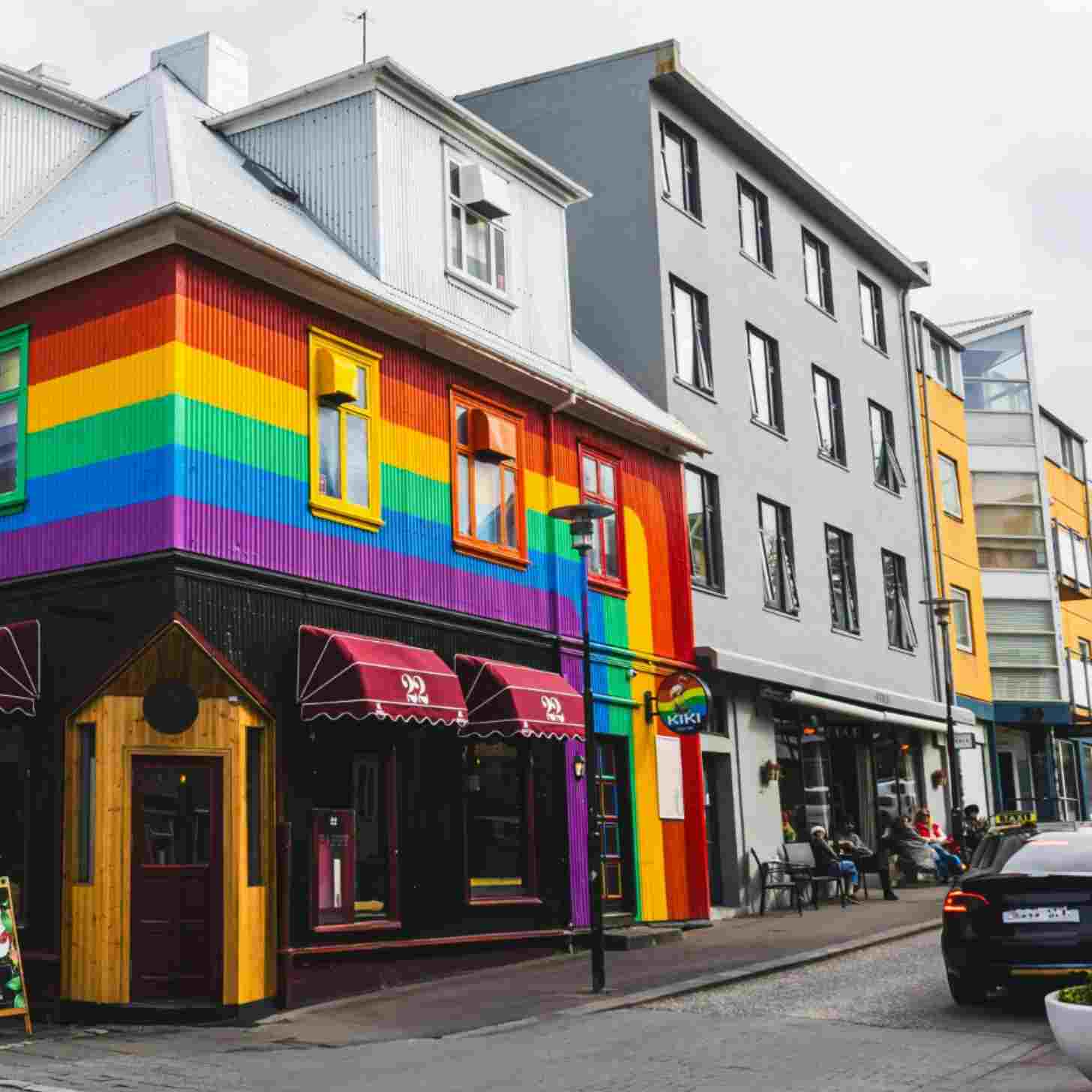
"While harsh weather conditions, especially in winter, may not always create a sense of safety, community does," Inga Rós Antoníusdóttir, an Icelandic native, told the BBC.
"You can walk alone at night mostly without worry; you will see babies sleeping peacefully in prams outside cafes and shops while their parents enjoy a meal or [are] running errands; and the local police don't carry guns."
Tensions between civilians and police officers have been on the rise in the U.S. in the past decade, with Mapping Police Violence estimating that 1,159 people have been killed by police violence in 2025, so far.
But in Iceland, no one has been killed in a police shooting since 2013, and homicide rates are low, despite a high rate of gun ownership.
“The system here works,” Gunnar Rúnar Sveinbjörnsson, a spokesman for Reykjavik's police department, told NBC News.
"It's just madness," he added, in reference to gun violence in the U.S. "We just cannot understand why this isn't stopped and why something isn't being done."
In addition to its extremely low crime rates, Iceland is unique among NATO members for having no standing army.
But that’s not to say it hasn’t been a hot-button topic, especially over the past year.
Bjarni Mar Magnusson — a professor of international law at Iceland’s Bifrost University — recently cited a bevy of reasons for investing in the country’s military power, including “Russia’s invasion of Ukraine, pressure within NATO to increase defence spending and its consequent impact on Europe, as well as President Trump’s [threats to annex] Greenland.”
However, Kristrun Frostadottir, the Icelandic prime minister, begged to differ.
“I don’t think we will see an Icelandic army in my lifetime,” Frostadottir said in early November.
The 2025 Global Peace Index was led by:
- Professor Kevin P. Clements, the director for the National Centre for Peace and Conflict Studies
- Dr. Sabina Alkire, the director of Oxford Poverty & Human Development Initiative
- Dr. Ian Anthony, a research analyst for the Swedish Defence Research Agency
- Dr. Manuela Mesa, the director for the Centre for Education and Peace Research
- Dr. Ekaterina Stepanova, the head of the peace and conflict studies unit at the Institute of the World Economy and International Relations
You may also like: Helsinki just went a full year without traffic fatalities — here's their secret
Header image via Pavel Danilyuk / Pexels
Amanda Timpkins is a self-proclaimed “accidental historian.” Since 2022, the television executive-turned-storyteller has spotlighted obscure and unsung LGBTQ+ figures on TikTok in her popular “YesterQueers” series.
It is not lost on her that recent measures to silence queer and trans voices, ban and burn books, and delete whole webpages of public history en masse speak to a new age of sweeping censorship.
“Aside from being inherently undemocratic, censorship is dangerous because it limits information and stifles discussion, which leads to idea entrenchment, polarization, stagnation,” Timpkins told Good Good Good.
“The free flow of information and exchange of ideas is crucial not only to having a vibrant society but also to human progress overall. And on the individual level, censorship makes people lonelier and more isolated. Seeing themselves in the stories we tell helps people feel connected, like they have a place in our shared community.”
Despite ongoing efforts to rewrite and erase those stories, new pages are still being written.
From Chappell Roan’s single “The Giver,” marking the first explicitly gay song to top the country charts, to Alex Consani becoming the first out trans woman to win Model of the Year, LGBTQ+ individuals are claiming space — and making more room for everyone.
Political victories echoed this momentum in the fall, as queer and trans candidates swept elections across the U.S.
Sarah McBride became the first openly transgender person elected to the U.S. Congress. RaShaun Kemp of Georgia and Amaad Rivera-Wagner of Wisconsin became the first openly gay Black men elected to their respective state legislatures. And Emily Randall made history as the first openly gay person to represent Washington at the federal level.
"We did more than win this election: we made history," Representative Emily Randall said in a post-election press conference. "Together, we shattered three glass ceilings. When I take office in January, I will become the first congresswoman and first person of color to hold this seat, the first openly LGBTQ person to represent Washington state in Congress, and the first ever queer Latina member of Congress."
Cultural milestones unfolded abroad, too: Madrid debuted its first queer and trans soccer team, Ukraine premiered its first LGBTQ+ film festival in Kyiv, and the 2024 Paris Olympics saw a record number of openly gay athletes competing.
And in a stunning show of recognition, Nemo Mettler became the first nonbinary musician to win Eurovision. Their victory sparked national conversations about nonbinary rights across Switzerland — a country where, on paper, people like Nemo “don’t exist.”

Together, these moments form a chorus of change, reminding the world that queer and trans voices aren’t just present — they demand to be heard.
And nowhere is that sentiment more prescient than with attorney Chase Strangio.
On December 4, 2024, Strangio made history as the first transgender person to make oral arguments before the U.S. Supreme Court in “United States v. Skrmetti.”
Strangio, who works with the American Civil Liberties Union (ACLU) and is the co-director of its LGBT & HIV Project, represented Tennessee families who challenged a state ban on gender-affirming medical treatments for transgender minors, including hormone therapy and puberty blockers.
Strangio's argument emphasized both the constitutional violations of the ban and the personal significance of the case, given that his own access to gender-affirming care was instrumental in his legal career.
“It is not lost on me that I will be standing there at the lectern at the Supreme Court in part because I was able to have access to the medical care that is the very subject of the case that we’re litigating,” Strangio told CNN in December.
Strangio also added that there’s inherent power that comes from waging verbal battles in the courthouse against people who live in denial of trans rights.
“I’m deposing ‘experts’ whose entire theory of transness is that it makes people miserable,” he said, "but they have to be confronted with me.”
Despite facing transphobic attacks right and left online, Strangio remains committed to advocating for equality, not just for himself, but for the families and larger communities he represents.
“I think about all of the arguments that have been held in the Supreme Court over just the basic dignity of people,” he said, holding civil rights attorneys like Ruth Bader Ginsburg and Thurgood Marshall in high regard. “That is part of our history — this is part of that history.”

“The resistance is partly just continuing to expand the opportunities for people to step inside these buildings, to have their voices be a part of the conversations and to have them be speakers and not just spoken about.”
Even as the LGBTQ+ community continues to make groundbreaking strides in visibility, politics, and culture, every inch of progress seems to have been undercut by deliberate efforts to erase events — and whole identities — from the past and present.
In early March, just weeks after the National Park Service removed any reference to transgender people from the Stonewall National Monument website, whole pages dedicated to iconic activists Marsha P. Johnson and Sylvia Rivera disappeared in quick succession.
It wasn’t an isolated event. At the behest of the Trump administration, huge swaths of LGBTQ+ history were scrubbed from government agency websites, with archival imagery like the “Enola Gay” — a World War II Superfortress bomber … yes, an airplane — catching stray bullets in the crossfire.
Even so, removing the letters “T” and “Q” from “LGBTQ” acronyms and carelessly using “Ctrl+F” to comb through historical documents cannot eradicate queer people and the history they forged.
“I really see this as a symbolic attack,” Michael Bronski, author of the book “A Queer History of the United States,” told NPR in March. “The impulse behind it is to symbolically eradicate all of this progress: all of the government recognitions, gay rights, the presence of gay pride, flags on government buildings.”
“Since you can't get rid of transpeople or gay people, or bisexual people, or queer people, you can try to get rid of documentation about us,” he said. “That means you're trying to rewrite history.”
Fortunately, queer history exists offline in a wealth of books, records, art exhibits, and monuments. And the people who painstakingly preserve those artifacts recognize that these spaces — museums, bookshops, and cinema halls — now serve as treasure troves in a time of sweeping censorship.
In September, the city of San Francisco purchased a permanent home for the GLBT Historical Society Museum and Archives, preserving a century of LGBTQ+ history.
After shuttling its collection between temporary locations for decades, the museum finally had a dedicated space for its priceless collection, which includes back issues of “OUT/LOOK: National Lesbian & Gay Quarterly,” portraits of Americans with HIV and AIDS, and remnants of the original rainbow Pride flag first flown in 1978.
“This is an incredibly proud moment for me as someone who was born and raised here to be able to support the stewardship of this incredible collection,” Roberto Ordeñana, the executive director of the GLBT Historical Society, told KQED.
“It’s vital for San Francisco to continue being that beacon of hope for the entire world to really understand both the struggles and the resilience of our community.”
Timpkins knows firsthand how “vital” these resources are. In her research, the “Yesterqueers” historian predominantly relies on JSTOR, which hosts over 12 million journal articles, books, images, and primary sources from a collection of libraries, institutions, independent scholars, and public testimonies.
“As an independent scholar who is not attached to an institution, I rely heavily on public libraries and archives, many of which are supported in whole or in part by federal programs,” Timpkins told Good Good Good. “The folks at the Internet Archive are doing extraordinary and important work in preserving what the administration is trying to destroy.”
Since 1996, the Internet Archive has used its digital library, the Wayback Machine, to archive nearly three decades of web history. Mark Graham, director of the Wayback Machine, told NPR that its servers have recovered nearly 73,000 expunged web pages since Trump's second inauguration began.
“We're just doing our job, trying to be the best library that we can be, trying to help preserve the cultural heritage of our time — to make this material accessible, useful to people now and into the future,” Graham said.
In addition to mentions of gender identity and sexual orientation, Graham said that the Wayback Machine has been working hard to preserve data on racial diversity, climate change, and reproductive health.
“On a personal level, this has been a bit of a sprint,” he said. “I've been working seven days a week for the last many weeks. I've been finding myself, quite literally since the inauguration, waking up earlier with a sense of purpose and energy.”
Whenever people question the importance of preserving history or begin to lose steam in the fight, Timpkins harkens back to a quote by trailblazing LGBTQ+ rights activist David Mixner.
“[He said: ‘I really believe if we come out of nothing, if we don’t know our history, then it’s impossible to build a future,’” Timpkins told Good Good Good.
“History is vital to humanity,” she emphasized. “Since we developed language, we have been sharing stories about our past and using them to inform our present and build our future.”
While the future may be uncertain, Timpkins — and others like her — offer a vision informed by the colorful, bold, and unapologetic stories of the past.
A version of this article originally appeared in the 2025 Pride Edition of the Goodnewspaper.
Header image via Ted Eytan / Wikimedia Commons (CC BY-SA 2.0)
In 2013, park ranger Dale Osborne noticed that the plains of Watermead Country Park North in Leicestershire, England were constantly flooding.
As torrential rain poured down, the floodplains failed to drain properly — and local harvest mice lost their nests.
"I was picking mice up swimming around in the water and putting them on dry land because some had been washed out of their homes,” Osborne told the BBC.
To help the harvest mice survive, Osborne and his colleague employed a conservation tactic that had been slowly circulating in Britain for years: rehoming rodents in used tennis balls.
The team cut small openings in the rubber-core balls and propped them up on raised stakes throughout the park.
"They will lay their young in there and they are so small you could probably get 10 in a tennis ball,” Osborne said.
The new nests also granted them safety from prowling predators and birds of prey — giving the local population a boost in numbers despite the constant floods.
That summer, Osborne and his colleagues received 550 tennis balls from the public to help rehome the rodents.

A decade later, the initiative is still going strong — now with support from the iconic Wimbledon Championships. The tennis tournament cycles through over 50,000 tennis balls every year, many of them donated to the cause.
Diverting tennis balls from landfills — and rehoming mice in the process — is just one small way that Wimbledon has helped the environment.
As it aims for net-zero emissions by 2030, the tournament is working to generate as little waste as possible, increase recycled content, and reuse materials.
“What I try to demonstrate in a holistic way is that there is something that every single one of us can do to be part of the solution to help the environment,” Hattie Park, the sustainability manager at Wimbledon’s famous All England Club venue, told ABC News.
“Ultimately, we want to build a community of environment-positive champions and get everyone involved.”
@thatgoodnewsgirl Wimbledon tennis balls have been repurposed as tiny mouse houses for harvest mice in the UK. 🐭 This is just one of the many causes that used Wimbledon balls have been donated to over the years. ❤️ Harvest mice are an important part of the ecosystem and have faced habitat loss in some areas, so the tennis ball homes give them a place to nest and help keep their populations stable. 🎾 📸 Wimbledon / David Tipling / Miles Herbert / David Gray #mouse #mice #harvestmice #harvestmouse #tennis #wimbledon ♬ original sound - That Good News Girl
A version of this article originally appeared in the 2025 Sports Edition of the Goodnewspaper.
Header image via Vladsinger (CC BY-SA 3.0)
Every year, Americans buy somewhere between 35 million and 50 million Christmas trees, and many more pull an artificial tree out of storage for the season. In all, about three-quarters of U.S. households typically have some kind of Christmas tree, surveys show.
People often ask which is more sustainable — a real tree or an artificial one? It’s a big debate, and the answer depends on who you ask and which factors you consider.
A more useful question is: How do I find the most sustainable tree of the kind I want to get?
I’m a forestry professor who works on issues of sustainability. There are advantages and disadvantages to both cut trees and artificial trees. Here are some tips to consider for each.
If you’re buying a live Christmas tree
When Christmas trees are alive and growing, they pull carbon dioxide from the air and use it as the building blocks of their wood. That keeps the greenhouse gas out of the atmosphere, where too much carbon dioxide contributes to global warming.
This process stops once the tree is harvested. And at some point, the cut tree begins to decompose and releases that carbon again.
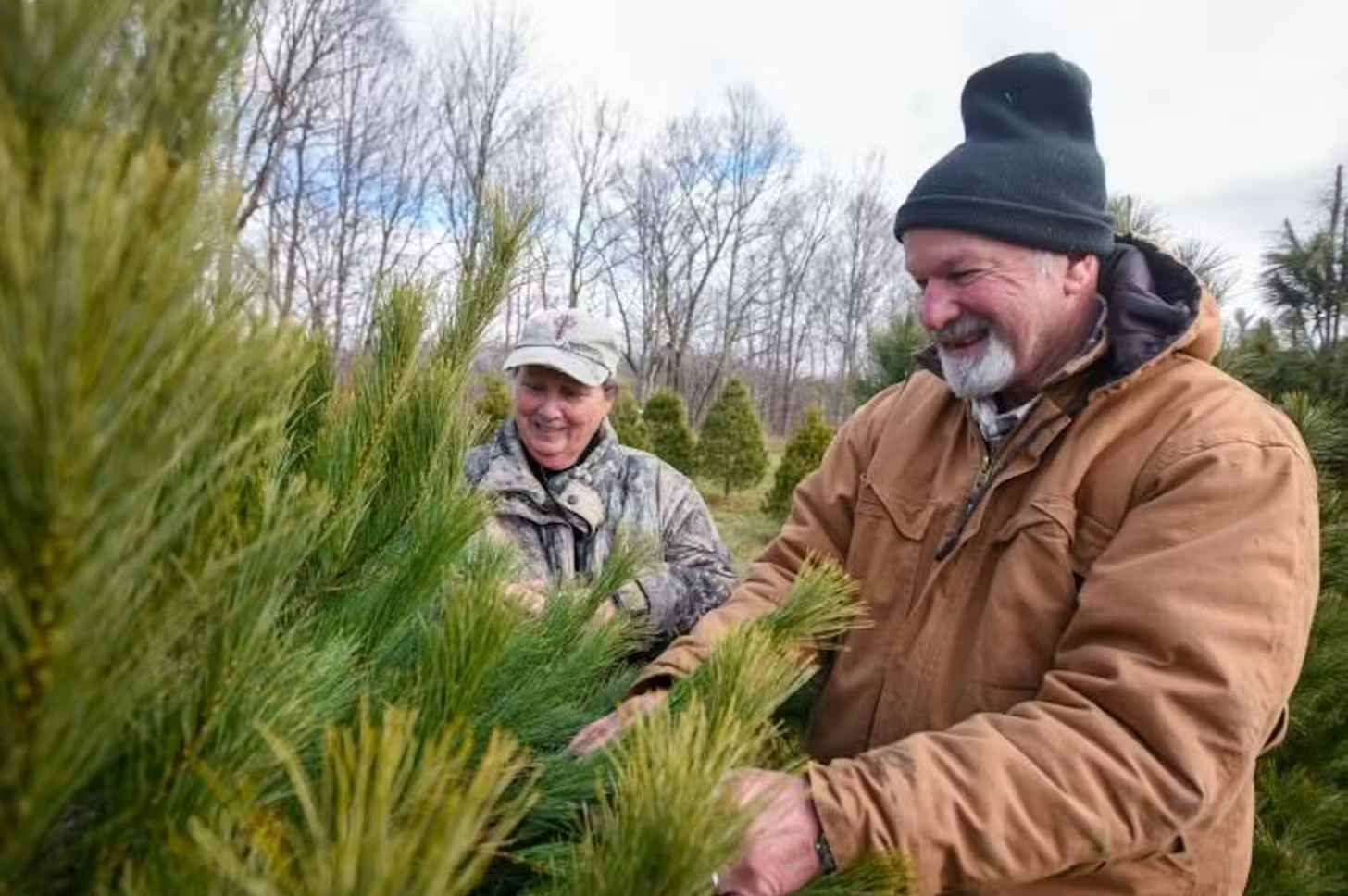
On the positive side, the tree’s root systems will continue to store carbon for some time, and new trees are typically planted to continue the cycle.
So, how do you find the most sustainable live tree?
Think about the tree’s origin
If you live in Mississippi, like I do, buying a noble fir (Abies procera) means your tree probably came from the Pacific Northwest. That’s a long drive, and transportation is a major source of greenhouse gas emissions.
However, in a truck with several hundred trees, each individual tree’s transportation emissions are pretty minor.

The most common Christmas tree varies by region: Douglas-fir is also common throughout the Mountain West. Scotch pine and balsam fir are regularly grown in the Great Lakes states. Fraser fir is also popular there, but dominant in North Carolina. Leyland cypress and Virginia pine are common in the Southeast.
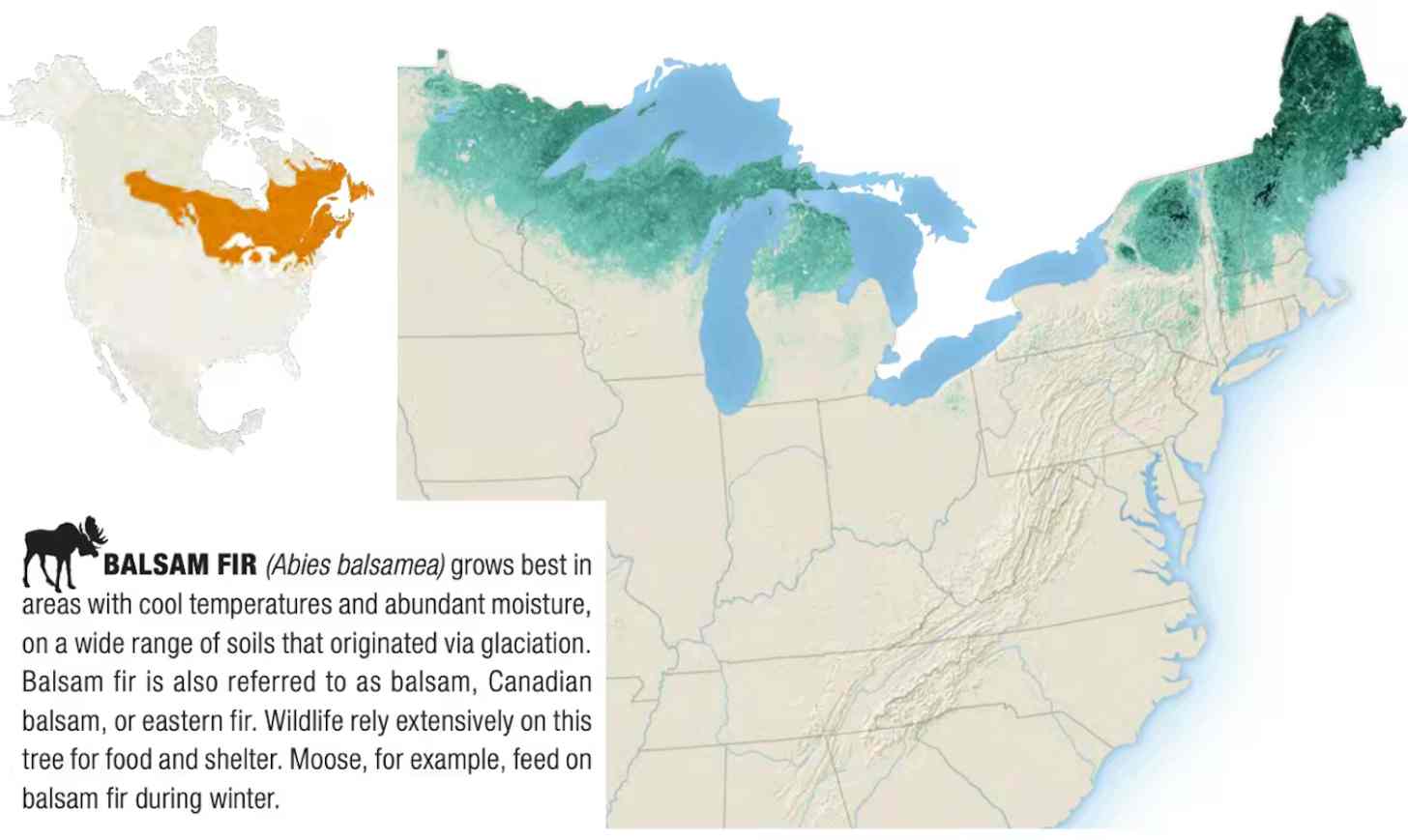
There are many other wonderful species grown locally. Of course, the lowest-impact cut tree is the one you cut from your own yard.
Also, look for local nurseries that protect their soils from erosion and minimize harm to surface and groundwater from runoff that can include fertilizers or pesticides.
Disposing of your live tree
What you do with your tree after the holidays also matters.
Recycling is far better than leaving the wood to decompose in a landfill. Because of the nature of most landfills, anaerobic conditions will ultimately exist, and decomposition will result in the release of methane gas, which is many times more potent than carbon dioxide at warming the atmosphere.
Look for a community or retailer that offers to chip the tree or shred it to create mulch or for use in animal stalls. This keeps it out of landfills and serves a purpose.
Composting is another option. Trees can be used as an erosion barrier for sand or soil or as fish habitat in lakes. They can even be donated whole to zoos, where the trees provide entertainment for animals while eventually decaying outside of a landfill, or they can be tossed into a bio-burner to provide heating for buildings. Some people even feed trees to goats.
Alternatively, consider cutting the tree into smaller pieces and letting it rot in the open, placing it in an out-of-the-way place in your yard. It will provide a temporary home for many insects, birds and wildlife.
Artificial trees have different pros and cons
Artificial trees also have advantages – they can last for years and require almost no maintenance. However, they are mostly a petroleum-based product, and when you throw one out, it can take hundreds of years to decompose.
If you plan to buy an artificial Christmas tree — maybe you have allergies like I do, or you’re concerned about cost — here are some suggestions to reduce your carbon footprint.
Reuse, reuse, reuse
The No. 1 way to reduce emissions with an artificial tree is to reuse it for years. Reuse avoids the carbon impact of producing, packaging, and shipping a new one.
The break-even point — when your artificial tree’s emissions match the emissions of buying a live tree each year — varies from as little as four years to as many as 20 years, depending on the factors considered.
Many artificial trees are built to last 30 years or more. My family has had one for 25 years. To lengthen its life span, take care when putting it up and storing it. If the tree gets damaged, see if you can find replacement parts rather than replacing the entire tree.

Pay attention to the source
About 80% of artificial Christmas trees are manufactured in China. Shipping is pretty efficient, but the tree still needs to get to and from the ports. You can also look for one manufactured nearby instead.
Some manufacturers are making trees out of recycled materials, at least in part, which helps reduce the tree’s carbon footprint. Shorter artificial trees, or designs with less foliage, also use less plastic.
The type of plastic used also affects the amount of petroleum used. Some research has suggested that plastic foliage made from polyethylene plastic molds may have a lower impact than traditional foliage made out of polyvinyl chloride, or PVC.
Give the fake tree a second life
If you no longer like your artificial tree — maybe it’s too big for a new home — try reselling the tree or donating it to a charity, thrift store, or nursing home so that others can continue to use it.
You can also get creative and repurpose the old tree limbs into decorative wreaths, garlands, or toy trees for a hobby train set.
Lighting also matters
With any holiday tree, be judicious about turning off lights when no one is around and at night. Consider using fewer lights. LED lights are more energy efficient than incandescent lights.

In the grand scheme of the holidays, with people traveling and buying and returning gifts through the mail, the carbon footprint of your Christmas tree is a lesser concern. A round-trip flight from Los Angeles to Boston can produce more than 30 times the lifetime emissions of a typical artificial Christmas tree.
Still, it’s fairly easy to make more sustainable choices and reduce your carbon footprint when you can.
This article was written by Curtis VanderSchaaf from Mississippi State University, and was originally published on The Conversation.
Header Image by Sergej Karpow on Pexels

American democracy is straining under countless pressures, many of them rooted in structural problems that go back to the nation’s founding.
Chief among them is the “pick one” plurality voting system — also called winner-take-all — used to elect nearly all of the 520,000 government officials in the United States.
In this system, voters select one candidate, and the candidate who receives the highest number of votes wins.
Plurality voting is notorious for producing winners without majority support in races that have more than two candidates. It can also create spoilers, or losing candidates whose presence in a race alters the outcome, as Ralph Nader’s did in the 2000 presidential election.
And it can result in vote-splitting, where similar candidates divide support, paving the way for a less popular winner. This happened in the 2016 Republican primaries when Marco Rubio, Ted Cruz and John Kasich split the anti-Donald Trump vote.
Plurality can also encourage dishonest voting. That happens when voters are pressured to abandon their favorite candidate for one they like less but think can win. In the 2024 elections, for example, voters whose preference for president was Jill Stein, the Green Party nominee, might have instead cast their vote for Democrat Kamala Harris.
An increasingly well-known alternative to plurality voting is ranked choice voting. It’s used statewide in Maine and Alaska and in dozens of municipalities, including New York City.
Better performance
Whereas plurality voting allows voters to select only one candidate, ranked choice lets them rank candidates. If a candidate secures a majority of first-place rankings, they are the winner, just like they would be under plurality.
But the two systems diverge when there is no majority winner. Plurality simply chooses the candidates with the most first-place votes, while ranked choice voting eliminates the person with the fewest first-place votes and transfers their votes to the next candidate on each ballot. The process is repeated until there is a majority winner.
Ranked choice voting makes use of more information from the voters than plurality, but does it avoid some of the problems plurality suffers from?
We are a team of mathematicians who recently concluded a study aimed at answering this and related questions. We analyzed some 2,000 ranked choice elections from the U.S., Australia, and Scotland. We supplemented those real-world results with 60 million simulated elections.
The results were clear: Ranked choice voting performed much better across all the measures we tested, including spoiler, vote-splitting, strength of candidates and strategic voting.
Empowering voters
Plurality voting produced a spoiler up to 15 times more often than ranked choice voting. And it was 50% more likely to elect an extreme candidate. Plurality, furthermore, was highly susceptible to vote-splitting, while ranked choice voting was nearly impervious to it.
Ranked choice voting picked strong candidates up to 18 times more frequently than plurality voting, where by “strong” we mean candidates who received many first-place votes and also had broad support, even among their noncore supporters.
This method also rarely elects a weak or fringe candidate and typically elects a candidate near the electorate’s ideological center.
Ranked choice voting is also more resistant to various forms of strategic behavior, such as bullet voting, where voters choose only one candidate despite the ability to rank more, and burying, where voters disingenuously rank an alternative candidate lower in the hopes of defeating them.
Our research also studied the ways in which election systems can influence behavior. In a plurality election, voters are afraid that their ballot could be “wasted” on a candidate who doesn’t have a shot at winning, or that they might contribute to a spoiler.
Our study shows that ranked choice voting largely avoids these pitfalls, empowering voters to express their true preferences rather than being strategic.
We found that candidates in ranked choice voting elections do best when they adopt the policies the greatest number of people support, meeting the voters where they are.
In Alaska’s 2022 special U.S. House election, for example, Democrat Mary Peltola positioned herself firmly within Alaska’s center-left base — while still embracing some positions considered conservative outside of Alaska. She won by garnering enough second-place votes from supporters of Republican Nick Begich.
And in the New York mayoral primary in June 2025, Zohran Mamdani won by creating a coalition with another progressive candidate, Brad Lander, and occupying a progressive space representing a range of voters.
The Alaska and New York examples highlight some differences with plurality voting, which often favors appealing to a narrow base without the necessity of reaching out beyond it.
Mending a broken system
A mathematically interesting feature of Alaska’s 2022 special U.S. House election is that Begich beat both Peltola and Republican Sarah Palin in head-to-head contests — meaning that more people ranked Begich above Peltola than the other way around — but lost the ranked choice voting election to Peltola.
Critics seize on such cases as reasons to avoid ranked choice voting. But our work shows that these are statistical outliers, occurring fewer than 1% of the time.
Overall, our research shows that ranked choice voting elects candidates with broader support and greater democratic legitimacy than plurality. It therefore seems sensible that voting reform advocates continue to pursue this method as an alternative to plurality voting.
At a time when Americans are losing faith in democracy, voters cannot afford systems that hand victory to unrepresentative candidates and force them to play tactical games.
The math is in, and the evidence is overwhelming: Plurality voting is broken. Ranked choice voting will not solve every democratic ailment, but it is a good step toward mending them.
This article was written by Ismar Volić and Andy Schultz from Wellesley College, David McCune from William Jewel College, and was originally published on The Conversation.
Header Image by visuals on Unsplash

For years, philosophers and psychologists have debated whether empathy helps or hinders the ways people decide how to help others.
Critics of empathy argue that it makes people care too narrowly — focusing on individual stories rather than the broader needs of society — while careful reasoning enables more impartial, evidence-based choices.
Our new research, forthcoming in the academic journal PNAS Nexus, a flagship peer-reviewed journal of the National Academy of Sciences, suggests this “heart versus head” argument is too simple.
Empathy and reasoning aren’t rivals — they work together. Each one on its own predicts more generous, far-reaching acts of assistance. And when they operate side by side, people tend to help in the fairest ways — not favoring some over others — and in ways that touch the most lives.
We studied two groups that regularly help others at personal cost. One consisted of living organ donors who gave kidneys to strangers. The other included “effective altruists,” who use evidence and logic to direct substantial portions of their income or careers toward causes that save the most lives per dollar, such as fighting extreme poverty or preventable illness.
All participants completed survey measures of empathy — essentially, how much they care about and are moved by others’ suffering. They also completed survey measures of reasoning. These assess how often people slow down, reflect, and think through things before deciding what to do.
We also examined how these abilities related to a range of altruistic judgments and behaviors, from hypothetical choices — such as deciding whether to help a close friend or a distant stranger — to real-world donations.
On average, organ donors scored higher on empathy, and effective altruists scored higher on reflective reasoning — slowing down and thinking things through. But across all participants, both traits were linked to broader, more outward-looking helping.
People with either an elevated heart or head, and especially those with both compared with average adults, tended to support distant others and focus on helping as many people as possible.
Even among organ donors, whose empathic ability is far above average adults’, empathy did not make them biased toward those who were close or familiar. When we measured their altruistic judgments and real-world donations, they were just as likely as average adults, and sometimes even more likely, to favor causes that saved the greatest number of lives.
These patterns challenge the assumption that empathy can narrow moral concern. In practice, we found, empathy can broaden it.
Why it matters
Many of today’s most urgent problems — poverty, climate change, global health — depend on motivating people to care about strangers and to use limited resources effectively.
Appeals to empathy alone may inspire giving, but not necessarily the most effective giving. Appeals to reason alone can leave people unmoved, as often facts and numbers don’t stir anyone to care.
Our findings suggest that the most powerful approach may be to pair empathy’s motivation with reasoning’s direction.
Empathy provides the emotional spark — a reminder that others’ suffering matters. Reasoning helps steer that motivation toward where help will have the greatest impact. Together, they encourage helping that is both compassionate and consequential.
What’s next
Future research needs to determine how empathy and reasoning can be strengthened in everyday decision-making. Could emotional stories paired with clear evidence about what works best help people choose actions that do the most good?
We also don’t yet know whether people who focus their giving beyond the boundaries of their immediate social circles, like effective altruists, pay any social cost for doing so — perhaps by inadvertently signaling less investment in close others. Promisingly, early evidence from organ donors shows that those who help strangers often maintain strong, stable relationships with their closest friends and family members.
Perhaps most importantly, researchers need to rethink how altruism is understood. Psychology lacks a clear framework for explaining how empathy and reasoning work together, for whom they work best, and the situations where they come apart.
Developing that kind of model would reshape how we think about helping — when helping expands, when it stalls, and why.
While such core questions remain, the present findings offer reason for optimism.
The Research Brief is a short take on interesting academic work.
This article was written by Kyle Fiore Law and Stylianos Syropoulos from Arizona State Universty, Brendan Bo O'Connor from University at Albany, State University of New York, and was originally published on The Conversation.
Header Image by Vitaly Gariev on Unsplash

The 2026 Winter Olympic Games — taking place in Milan, Italy and surrounding areas — are right around the corner.
Spectators now have a glimpse into where athletes will be staying when they’re not competing. According to the International Olympic Committee, there will be six Olympic Villages across Northern Italy, in Milan, Livigno, Bormio, Predazzo, Anterselva, and Cortina.
“Each location is designed to make the most of existing or temporary structures, minimizing new construction and adapting to local needs,” a statement from the IOC explained, “while ensuring athletes can enjoy the full Olympic experience.”
Two village locations have stood out as uniquely sustainable options.

First is the main Olympic Village, which will sit in the heart of Milan and be home to Olympians and Paralympians. Once an abandoned railway yard, the space has been transformed into six residential blocks that will accommodate about 1,500 residents.
Aside from the urban restoration, it will also go on to have another life after the Games when it’s converted into a student housing development, which will provide 1,700 beds — including subsidized options — to locals.
The future student housing will offer 30% of the apartments at subsidized rates, at an average of about €430/month, which is roughly 25% below market pricing.
According to designboom, the development has already been pre-qualified by the Italian Ministry of Universities for public funding, which could potentially lead to reduced rents for up to 12 years.

“Olympic Villages have always reflected their time — from wooden huts in 1924 to lasting community neighbourhoods today. Each edition tells a story about the context and ambitions of its hosts,” Marie Sallios, the director for sustainability at the IOC, said.
“Milano Cortina 2026 continues this evolution, showing that housing athletes is about more than logistics — it’s about creating lasting value for local people.”
The Milan village will also include rooftop solar panels, rainwater reuse systems, heat pumps, and use low-carbon construction materials, further prioritizing sustainability in its development.

The Village Plaza, a pedestrian square in the center of the new buildings, will also eventually become a permanent, public space for markets and other communal activities.
Another standout living arrangement for the 2026 Games is a temporary village in Cortina, just at the foot of the Dolomites. Consisting of about 377 compact, prefabricated wooden units, the village is being likened to a “trailer park.”
The area will host women’s alpine skiing, curling, bobsled, luge, and skeleton competitions, and athletes will be able to rest up in the modular complex, where each unit is “about the size of a small apartment,” according to the IOC.
Made to be temporary, the Cortina village is called a “pop-up Alpine town” by the IOC, where Olympians and Paralympians can enjoy the quiet, peaceful surroundings, while having access to dining halls and recreation spaces.
After the Games, the mobile home village will be removed so the area can be restored as an open, natural space.
“It’s located in a very quiet area of Cortina, where you have the opportunity to hear the sound of the mountains, isolate yourself if you wish, concentrate if you desire, or go out for a pleasant workout,” Fabio Saldini, the Italian government commissioner overseeing infrastructure for the games, told the Associated Press.
“The beauty of a Village like this lies in the fact that everything will be removed afterward. Nothing is permanent; the environment will not return to its previous state but will be improved. This is a temporary village, but of high design.”

According to the IOC, athletes will have access to modern climate control and “ergonomic furnishings” inside each unit, as well as an individual bathroom and shower. A gym, game room, offices, relaxation areas, and a laundromat will be nearly a mile-long walk away in a communal building, per AP.
The mobile home village did require the cutting down of some local trees, but Paride Casagrande, the construction manager of the development, told AP many of the trees were already dead and that the facility will be building new plants and trees that will remain long after the Games.
The mobile homes will also be removed but not scrapped; They will be reused at camping sites around Italy, with some already planned for a hockey club in neighboring Brunico.
In addition to unique approaches to housing, many events for the Games will take place in existing structures. The IOC reports that the 2026 Winter Olympics will use 85% existing infrastructure to reduce construction.
“By anchoring events in existing venues, the Olympic Games reduce the need for new construction, leverage local expertise and help communities deliver projects that meet real needs,” Sallios said, “accelerating investment in transport and energy upgrades to new housing and community facilities.”
You may also like: After Wimbledon, these tennis balls have a second life as homes for mice
Header image © Milano Cortina 2026
When it comes to picking a major in college, plenty might opt for fine arts, business administration, or even engineering. But for a group of students at the State University of New York’s Stony Brook Waste Data and Analysis Center, it’s all trash, all the time.
In fact, students, professors, and graduate researchers from Stony Brook University have been digging through New Yorkers’ trash since 2024 as part of a five-year, $4 million study to improve recycling rates in New York.
“It looks gross, but we love it. This is what we do,” Stony Brook University graduate student Maeen Akter told CBS News last year.
“We would like to know exactly what’s in garbage, and the only way you can do that is either by theorizing it or getting your elbows into the pile,” Dr. David Tonjes, who researches solid waste management at Stony Brook, added.
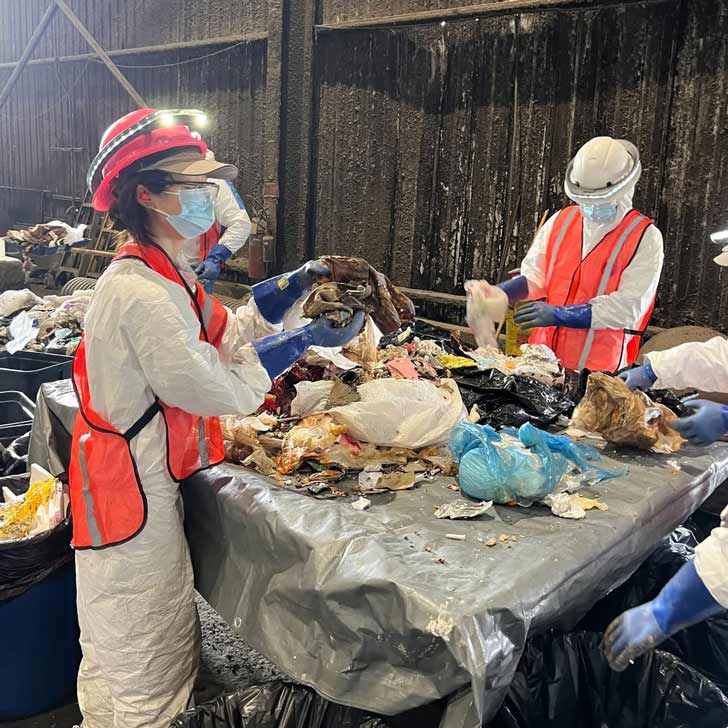
The research team sorts at about 20 locations across the state every year, recently spending a week in Rodman, New York at the Development Authority of the North Country’s Solid Waste Facility.
“We do 13 samples — approximately 3,000 pounds of municipal solid waste. And it’s categorized into 69 different categories,” DANC recycling coordinator John Phelps told 7 News.
“It just gives us an insight into what’s in our local waste stream.”
The group takes in samples, sorts them, bags them up, and weighs them, all culminating in a greater understanding of what most people get wrong about recycling.
In Long Island, the researchers found that roughly a third of glass, metal, and plastic from households should not have made it to the solid waste facility. They were throwing away items that should have been recycled.
Ultimately, the researchers determined that Long Islanders were only recycling about 30-60% of what they could and should be.
“If we did better, if we recycled everything, we would triple our recycling,” Tonjes told CBS News.
The results of this years-long study will be used to shape policy and teach members of the public how to best manage their waste. Stony Brook University is also in the process of innovating new solutions to make sure recyclables don’t end up in waste streams.
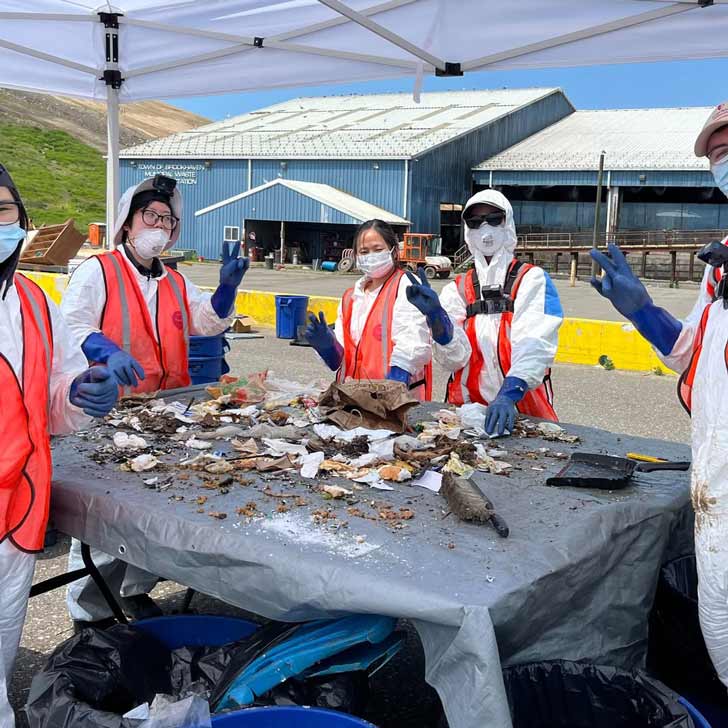
A new artificial intelligence-powered project in the university’s civil engineering department aims to combine video footage and AI tech to automate the analysis of waste materials.
“We’re not just building tools in isolation, we’re collecting data at multiple stages of the sorting process, engaging with recycling workers to understand the pain points, and using those insights to help them work faster, safer, and with greater insight,” Ruwen Qin, associate professor in the Department of Civil Engineering, said in a statement.
In addition to the research already taking place at waste facilities, teams are collecting high-resolution video data to inform future solutions.
“We’re not just studying the problem,” Qin added. “We’re building tools that can make a measurable difference.”
And for the students who are out in the field getting their hands dirty? It’s all worth it.
“We love garbage,” graduate student Hailey Lee told CBS News. “And we want [the] world to be a better world, so we are very proud of what we are doing right now.”
You may also like: Portland pays homeless residents to clean up trash: 'This gives people purpose'
According to the latest Gallup poll on LGBTQ+ identification, 9.3% of American adults identify as lesbian, gay, bisexual, transgender, or something other than heterosexual — signaling that respondents feel safer and more comfortable claiming an LGBTQ+ identity than they have in past years.
The survey, which was based on 14,000 interviews conducted across 2024, revealed that LGBTQ+ identification is up one percentage point from 2023.
In the 12 years that Gallup has been tracking sexual orientation, LGBTQ+ identification has nearly tripled.
Rates among young people have also increased, with 23.1% of Gen Z and 14.2% of Millennials identifying as LGBTQ+.
This is in distinct contrast to older generations, with LGBTQ+ adults making up 5.1% of Generation X, 3% of Baby Boomers, and less than 2% of the Silent Generation.
It is imperative to note that an estimated 700,000 people have died of HIV/AIDS in the United States since the epidemic began in 1981, which helps explain the lower rates in older generations.
Gay and bisexual men make up over half of all AIDS-related deaths, although death rates have decreased in recent years thanks to improved treatments.
The New York Times journalist Charles M. Blow, 54, said his own “coming out” story was linked to the gratitude he feels towards “queer elders” who helped carve the path for others.
“When you are not living an honest, open, true life, you are taking advantage of a privilege granted to you by older gay, lesbian, queer people who have sacrificed tremendously so that you could come into this place,” Blow told GLAAD. “And they did so very often at great costs.”
A version of this article originally appeared in the 2025 Pride Edition of the Goodnewspaper.
Header image via Pavel Danilyuk / Pexels
When it comes to golf courses, people are more likely to think of environmental waste — not solutions.
For example, in California, the average 18-hole golf course guzzles up 90 million gallons of water per year — the equivalent of 136 Olympic-sized swimming pools.
But for the past 12 years, the Waste Management Phoenix Open golf tournament in Arizona has earned the UL Solutions zero-waste stamp of approval.
The tournament — which is sponsored by Waste Management, a national environmental services company — has developed innovative ways to divert 100% of waste from landfills through recycling, composting, and energy conversion.
Lee Spivak, who leads WM’s advisory services team, said that the event is a guinea pig when it comes to testing out new environmentally friendly measures, like installing composting bins throughout the course and making turf and scaffolding out of recycled materials.
“It’s very much our lab,” Spivak told the Associated Press. “We’ll try an idea, try an approach to a customer. Then we’ll scale it up here and take it to other customers.”
When it comes to water conservation — the sport’s biggest offender — WM recycles greywater from the kitchens and hospitality bars by the venue’s famous 16th hole, where thousands gather in stadium-style seating.
Since creating a reliable model for zero-waste operations at the Phoenix Open, WM has partnered with Major League Baseball to help sports venues reduce their carbon footprint and divert waste, with projects in the works at 15 ballparks.
“When they start to care, the ripple effect of the influence doesn’t really end,” Spivak said. “It just keeps getting bigger and bigger. That’s the pride I feel in this tournament.”
A version of this article originally appeared in the 2025 Sports Edition of the Goodnewspaper.
Header image via Tyler Hendy / Pexels
Between long lines at security checkpoints, coats and mittens stuffing already-cramped seats, and stressful weather delays, traveling for the holidays is often an arduous journey.
So, Delta Airlines is rewarding the people who go out of their way to make it a little easier.
This holiday season, Delta will be celebrating 100 years of service, and in accordance with the big milestone, will also be recognizing 100,000 acts of kindness among Delta employees and customers.
The initiative is called Centennial Cheer.

Here’s how it works: Now through January 5, Delta employees will distribute Holiday Medallion cards to customers who demonstrate acts of kindness on their journey. Maybe it’s letting someone off ahead of you on the plane so they can make a connecting flight, helping a stranger with their luggage, or sharing a snack with a new friend.
“While holiday travel brings its own share of pressure, Delta is shifting the spotlight to the simple acts of humanity that make our journeys memorable,” a press release from the airline stated.
The Holiday Medallion cards are not connected to a person’s loyalty status or flight activity, but rather are reserved for “customers who truly embody the holiday spirit.”
“Gifting Holiday Medallion cards to reward acts of kindness creates a positive loop of gratitude between our customers and employees,” said Erik Snell, Delta’s chief customer experience officer.
“Whether it’s helping a seatmate with their bag, sharing a phone charger, or simply thanking a reservations specialist, those gestures create the kind of connection that makes travel feel special. That’s what Centennial Cheer is all about, recognizing and celebrating the kindness we see every day.”

But what do those Medallion cards get you? According to Delta, they can be redeemed for a “surprise gift” on the Delta Shop. Prizes include merchandise celebrating the airline’s 100-year anniversary, as well as a limited amount of “Centennial Gift Sets,” which feature commemorative trading cards and a $500 Delta gift card.
In addition to the customer-powered side of this initiative, those part of Delta’s “Medallion Members” rewards program are also able to give employees a holiday-edition certificate to commemorate a job well done. About 40,000 certificates will be awarded to recognize employees who go the extra mile, the airline stated.

“Delta people take pride in creating moments of care, and this season they’re excited to recognize that same spirit in others,” Snell said.
“As our 100th year comes to a close, we’re celebrating the kindness and connection that have defined Delta from the very beginning.”
You may also like: 52 rescued sea turtles flown down to Florida for the holidays
Header image courtesy of Delta Airlines
Beloved drag queen, performer, and environmentalist Pattie Gonia has just raised $1 million in less than a week, all while backpacking 100 miles in full drag.
In picture-perfect makeup and a large red-haired wig, she approached her final destination earlier today.
In a video announcement shared earlier this week, Pattie — whose off-stage name is Wyn Wiley — launched the initiative, starting about 100 miles north of San Francisco, where she backpacked along the coast until she reached the heart of the Bay Area for her final drag show of the year.
“[I’ll be] getting in drag every single day, setting up camp every single night, crossing the Golden Gate Bridge, and into my final show of the year; that is, if I can make it in time,” she said in the video.
Pattie will end her journey celebrating with fans and friends at a drag show on December 6 at San Francisco’s The Warfield.
And she’ll be showing up right on time.

This morning, as her GoFundMe passed its $1 million threshold, she shared an update from the trail, at Mile 92.
“You all have raised $1 million,” she said joyously. “This is it. This is my final stretch to backpack 100 miles in drag. I can see my finish line — the Golden Gate Bridge — out there in the distance for the first time.”
A caption on the video shared that over 31,000 donors contributed to the campaign, with the average donation size coming in at $30.
Eight organizations, specifically dedicated to “diversifying the outdoors,” as Pattie described, will be the recipients of this funding. They include:
- Brave Trails
- Queer Outdoor Expedition
- The Children’s Home Project
- Eastern Sierra Conservation Corps
- Vámonos Outside
- YMCA Camp Kitaki
- The Outdoorist Oath
- Intersectional Environmentalist Film Project
@pattiegonia this is it. the final stretch to backpack 100 miles in drag to raise $1M for outdoor nonprofits.
♬ original sound - pattiegonia
A little over halfway through her journey, the drag queen posted a video directly aimed at President Donald Trump.
“Hi Trump. Pattie Gonia here,” she said smiling. “While you’re over there trying to take away grants for organizations doing DEI and climate work in the outdoors, I’m out here backpacking 100 miles in drag, trying to raise $1 million for them.”
“And I’m doing it with my d—ck tucked.”
Pattie began hosting “drag shows for the planet” a couple of years ago, touring the country to promote sustainability and social justice through comedic and heartfelt performances.
She has also made headlines for her support of LGBTQ+ national park rangers, even going so far as to help raise a giant trans pride flag in Yosemite earlier this year.
And it seems like she won’t be slowing down any time soon — after a shower and a good night’s sleep, of course.
“All week, people have been saying that I am inspiring. Honestly, b—ch, you should be inspired. This sh—t is insane,” Pattie said in a video update the other day.
“However, you are all inspiring me just as much … Let’s keep on going.”
You may also like: How people are preserving LGBTQ+ history — despite the Trump administration’s efforts to erase it
Header images courtesy of Pattie Gonia/Instagram
Every day the Good Good Good team collects the best good news in the world and shares it with our community. Here are the highlights for this week!
If you want to get good news in your inbox every day, join the Goodnewsletter — the free daily newsletter designed to leave you feeling hopeful.
The Best Positive News We’re Celebrating This Week —
In a landmark move, 185 countries adopted stronger protections for 70+ species of sharks and rays
Conservationists have worked for “20 to 30 years” to protect “keystone predators in marine ecosystems” like sharks and rays — and at a convention on international trade, they got them.
The new agreement ensures stronger international protections for over 70 species of sharks and rays — like whale sharks, manta rays, devil rays, and more — that are widely hunted for commercial products like makeup and culinary delicacies.
Whale sharks, which are classified as endangered, in particular have seen their populations decline by 50% over the past 75 years, despite being even more valuable for tourism.
Why is this good news? More than 37% of shark and ray species around the world are threatened with extinction — including many that were just added to the list of protections.
→ Read more (Gifted link)
This pig makes delicious bacon. And she didn’t have to die for it to get to your plate
A Louisiana prison held its first-ever ‘father-daughter dance,’ reuniting inmates with their daughters
For some of those incarcerated at the Louisiana State Penitentiary, they hadn’t seen their daughters in months or years. That is, until the prison held its first “Father Daughter Dance” this month.
The prison isn’t the first to hold this kind of event — one in Washington, D.C. was featured in a documentary called “Daughters” last year — and says it could become a tradition. It also hosts the country’s last remaining prison rodeo.
Officials at the prison hope the dance would bring hope in a place where it can often be elusive — and to rebuild relationships, heal wounds, and be seen as a “dad” first and foremost.
Drag queen Pattie Gonia is hiking 100 miles in full drag to raise $1M for eight nonprofits
Beloved drag queen, performer, and environmentalist Pattie Gonia has long used her platforms to advocate both for the planet and for diversity, equity, and inclusion in the outdoor industry.
Now, her heels are taking her even further: she will be backpacking 100 miles in full drag with a goal of raising $1 million in support of eight nonprofits focused on diversity, equity, and inclusion in the outdoors.
So far, Pattie is on mile 26 of 100 and has raised over $236,000.
Why is this good news? Whether because of finances, transportation, or discrimination, outdoor spaces and recreation have long been inaccessible and exclusionary. The organizations Pattie is supporting are working to break down those barriers and make nature accessible to everyone — as it should be.
Virtual reality is taking the pain out of dentist visits for kids
After a city in Iowa made its buses free, ridership jumped, traffic cleared, and the air was cleaner
In August 2023, Iowa City, Iowa made its bus fares completely free in an effort to lower car emissions and encourage people to take public transit. It was so popular, the city council just voted to extend it another.
The program has been successful on a number of fronts: ridership has surpassed prepandemic levels by 18%, bus drivers report less congested streets to navigate, and people drove 1.8 million fewer miles on the city’s streets.
To its initial goal: emissions dropped by 778 metric tons of carbon dioxide a year, the equivalent of taking 167 vehicles off the road entirely.
Why is this good news? When you make public transit affordable (ahem, free!) and accessible — people want to, and will use it. Less traffic is safer for cars that are on the road, pedestrians, bicyclists, and more, and cleaner air is just better for everyone.
→ Read more (Gifted link)
You may also like: Study shows London’s ‘clean air zone’ helps more kids walk and bike to school
For these diverse professional Santas, spreading kindness is a calling
Volunteers and retirees are helping maintain national forests abandoned by the U.S. government
Since the start of the year, the U.S. Forest Service has lost nearly 6,000 staffers as a result of firings, resignations, and retirements encouraged by the Trump administration — and its left already vulnerable national forests even more at risk.
Volunteers are stepping up to help — and so are retirees. Bill Lee and Del Nelson now spend two mornings a week driving around “their forest” looking for damage to fix. There’s plenty of it, so they prioritize the things that would be life-threatening for a visitor.
Lee struggles knowing it might lead people to believe the forests are doing just fine with less staff — they’re most certainly not — but knows that saving a life is worth it.
→ Read more (Gifted link)
One of Pope Francis’ ‘popemobiles’ was transformed into a mobile clinic for children in Gaza
A vehicle used by the late Pope Francis during a visit to Bethlehem in 2014 has officially been converted into a mobile health clinic that will soon provide health care to children in Gaza.
Francis stood on an open platform at the back of the vehicle while travelling through Bethlehem, which has now been enclosed and transformed into a treatment area.
Francis blessed the initiative before he passed away in April. And the Cardinal who asked him about it said the vehicle now “stands as a testimony that the world has not forgotten the children of Gaza.”
Why is this good news? When it’s able to enter Gaza, this mobile clinic will provide essential medical care, which is still desperately needed considering that at least 67 children have been killed in “conflict-related incidents” since the ceasefire went into effect.
2025’s audiobook of the year is John Green’s ‘Everything is Tuberculosis,’ chosen by 4,000 independent bookstores
→ Read more
An Indiana woman runs a 24-hour day care center to keep children on their working parents’ schedule
As Amanda Yochum says, “The business of making cars runs 24/7, and so do our day care centers.” Parents who work in factories at night need to sleep during the day — and they need their children to, too.
Yochum runs the 24-hour Bright Horizons day care centers in Kentucky and Indiana, where Toyota’s manufacturing plants are some of the largest employers.
The kids engage in the same play and learning activities that kids would during the day, and the unique approach provides “crucial” support for working parents.
Solar panels saved an Arkansas school district so much money, teachers got a $15k raise
Batesville School District in rural Arkansas had a $250,000 annual budget deficit. Then, it discovered it could save at least $2.4 million over a span of 20 years with clean-energy alternatives like solar.
It transformed an unused field into a solar energy farm and covered the front of its high school in 1,500 panels. It turned that annual deficit into a $1.8 million surplus, and the savings gave every teacher in the district up to a $15,000 pay raise.
The district went from paying the lowest teacher salaries out of the county’s five districts to having resumes flowing and “at least 20 school districts” just in their area emulating their model.
Why is this good news? This case study shows the power of clean energy to not just help the planet, but to help people, too. These sources are so affordable and abundant (and recyclability is improving, too!) — they won’t just help school districts pay less on their energy bills, they’ll help the average person save, too.
→ Read more
Iceland was just named the safest place to live in 2025. The US ranked 128. Here’s what they do differently
→ Read more
New data shows the hole in the ozone layer shrank to its smallest size since 2019
The ozone layer — the protective shield that keeps harmful UV rays from reaching us — was damaged for decades by human-made pollution. But after the world agreed in 1987 to phase out the worst chemicals, it’s been steadily healing.
New data just revealed that the hole in the ozone layer is not only the smallest it’s been since 2019, but it was also the shortest-lived, closing quicker than usual in November.
“This progress should be celebrated as a timely reminder of what can be achieved when the international community works together to address global environmental challenges,” one scientist said.
More good news of the week —
Following Olivia Dean’s criticism of the ticketing giant, Ticketmaster capped resale prices and refunded fans. In an announcement, Ticketmaster said it supports the Grammy-nominated singer’s “desire to keep live music accessible and ensure fans have the best access to affordable tickets.”
Every year, volunteers in Finland build artificial snow drifts for endangered seal pups, and it’s helping the population rebound. Their efforts have helped the Saimaa seal population rebound to about 400, compared to lows of 100 seals in the 1980s.
Two university professors in Colorado invented a new shoe for people with foot disabilities. The pair developed the solution after hearing from individuals with cerebral palsy or who have had a stroke about their difficulties with outdoor recreation.
A community closet provides clothes to survivors of sexual assault who are in crisis. When victims of sexual assault visit medical centers or police stations after being attacked, their clothes are often confiscated for DNA evidence, leaving already vulnerable people with nothing but a hospital gown and shoes — the Grateful Garment Projects restores some comfort and dignity.
To help other survivors of religious trauma, an ex-Mormon rebranded himself as ‘Sparkly Gay Jesus.’ When Ryan Josiah first started attending the Utah Pride Parade, he adopted his new persona to mitigate the “super harmful practice” of conversion therapy and raise money for the Conversion Therapy Survivor Network.
MacKenzie Scott’s college roommate loaned her $1,000, and now she’s investing in her accessible student loan startup. Jeannie Tarkenton loaned Scott the money when she was facing dropping out of Princeton, and now Scott invested in her company, Funding U, which offers last-gap, merit-based loans to low-income students without co-signers to help “create opportunity for those that don’t have it.”
The FDA approved a new type of glasses that can slow nearsightedness in kids and reduce more serious problems later on. Studies conducted around the world have shown rising rates of myopia, or nearsightedness, which researchers have associated with increased time indoors looking at screens, books, and other objects held close to the eyes.
A new study found that a reserve in Mozambique houses the largest documented breeding population of a rare falcon. Scientists estimate the Niassa Special Reserve hosts 68–76 breeding pairs of Taita falcons, likely the world’s biggest population of the rare raptor, given that other population centers have around 10.
The planting of what will become the U.K.’s first new national forest in more than 30 years is now underway. The 30-hectare Pucklechurch Wood will be part of the new Western Forest, with more than 22,000 native trees planted between now and March, and another 22,000 next winter.
College students invent tree-planting “spider robot” to replenish local forests destroyed by wildfires. The pair were inspired to create a solution after wildfires led to repeated deforestation near their homes in Lisbon, Portugal, with the latest reports showing that 1.2 million acres of forest have been burned between 1980 and 2023 — about 54% of the country’s territory.
Germany will officially classify date rape drugs as weapons in prosecutions. The drugs are being use more consistently to commit crimes, and last year, police recorded a record high of almost 266,000 domestic violence victims, a 3.8% increase over the previous year.
A nonprofit that uses service dogs to curb veteran suicides just celebrated its 300th pairing. The dogs train for the specific needs of the person they’re working with, but are all taught to disrupt panic attacks and help veterans feel safer in stressful situations.
The South Sierra Miwuk Nation reclaimed nearly 900 acres bordering Yosemite National Park. A major milestone for Indigenous cultural and land restoration in California, the transfer happened 175 years after the tribe was expelled from the land and could lead to better management and control of wildfires in and around the areas.
James Cameron confirmed no generative AI was used to make “Avatar.” While he said he was “not negative about generative AI” more generally, but stressed that only real, human actors brought the movie’s characters to life, saying, “We honor and celebrate actors. We don’t replace actors.”
Climate protesters brought one of the world’s biggest coal export ports to a standstill. Climate activist group Rising Tide, which claimed responsibility for the latest protest, said hundreds of activists paddled kayaks into the harbour's shipping lane.
Free cooking classes are fighting diabetes and dementia in Black communities. As Black elders face major health disparities, The Good Life’s healthy living classes are giving them the tools they need to live longer and more fulfilling lives.
Construction on the U.K.’s “largest” floating solar farm was approved. The 46,500-panel installation will be capable of producing enough energy to power 14,000 homes a year, which will be used to power the area’s advanced manufacturing sector, including a submarine-maker.
A New York City boutique offers free clothing to immigrants — and now it offers free weddings, too. Little Shop of Kindness collects donated clothes for migrant families, and after hearing visitors discuss the costs associated with weddings — even at city hall — it started offering those, too.
After launching the largest return plan in the world, Romania hit an incredible 94% recycling rate. Retailers that sell products in recyclable containers are given a tax credit to install return infrastructure like reverse vending machines, and customers are charged a deposit that’s reimbursed when they return the recyclable item.
New tweaks to state laws could mean many Americans will be able to benefit from small, simple plug-in solar panels. Smaller balcony solar systems are already widespread in countries like Germany, and advocates for the law change hope the technology will quickly go mainstream in the U.S., too.
On Black Friday, a gunman opened fire in San Jose’s Westfield Valley Fair mall at about 5:40 p.m. Three victims were located and taken to a nearby hospital with injuries that were not considered life-threatening.
A suspect has been taken into custody, but the trauma and chaos of the shooting had ripple effects on the community.
Amid the event, shoppers at the mall fled the scene and ran into a neighboring subdivision, where Martin Garcia saw two teenage girls in his Ring doorbell camera, seeking safety.
“Just for a second I thought maybe it was a prank,” Martin Garcia told CBS Bay Area. “Or, maybe I was being pranked because they all ran to the back of the house. And I looked and there were more people. And I realized there's something bad going on. I got to let them in the house.”
After Martin Garcia welcomed the two girls in, a mass of people came running behind them, also asking for shelter.
Ring camera footage shows Martin Garcia calling to them: “Come inside! Come inside my house.”
Martin and his wife, Irene Garcia, said they estimated about 50 people ended up staying in their home until it was safe.

“People just kept coming in,” Irene Garcia told Inside Edition. “They were just so scared. It was almost like a movie.”
One such person was Orieyonna Johnson, a shopper who was visiting from San Francisco.
“We landed in the street of our wonderful new friends, the angels, the Garcia family,” Johnson told CBS Bay Area. “And that was a breathtaking moment — the love and the comfort that we felt when Mr. Garcia opened his arms like an angel.”
Johnson added to Inside Edition that the people running for safety weren’t sure if the gunman was behind them and that they were just trying to go in the direction where there were the least amount of people.
“We were in live, active fear,” she said. “... and somehow we ended up right in the trajectory of the wonderful Garcias.”
Irene Garcia was out running errands when Martin was met with the stream of guests. He called his wife and told her to expect a full house when she got home.
“That evening, all these ambulances were passing and sirens. And I looked at my boys and I said, ‘I bet you something happened at the mall,’” Irene told San Jose Inside. “I’ve always been in denial that this can happen in our neighborhood, but obviously with what you see on the news, it can happen.”
In addition to offering a safe place for people to catch their breath and escape immediate danger, the family ordered pizza for their surprise guests, put K-pop tunes on their TV, and took selfies with people who were now their new friends.
Since many of the visitors had left the mall on foot and couldn’t return to their cars, the Garcia home also became a pick-up location for loved ones to come retrieve the shoppers.
“They asked permission to basically leave and meet [relatives] in the street,” Martin told San Jose Inside. “We kind of felt more like parents — looking out and making sure that there’s somebody out there. People asked us to walk them to the door.”

After a life-changing evening, the family said they are actively planning a reunion and have exchanged contact information with many of the people who came to their home.
“I don't know if there was any other choice when you have two young girls coming to your door in fear,” Irene told Inside Edition.
“You just have to help. We just did what we thought was the right thing to do: Open the door.”
You may also like: Survivors of sexual assault are often left with only a hospital gown. This community closet clothes them in dignity
Header image courtesy of Westfield Valley Fair
People around the world want to donate to nonprofits or causes they care about, especially during the holidays. But it can be hard to give back as generously as one might want to when finances are tight.
Fortunately, Tab for a Cause, a free web browser extension, allows people to raise money for charity simply by opening a new tab on their computer.
Today, Tab for a Cause announced that its “for a Cause” browser tools have generated more than $2 million for nonprofits.
“The milestone reflects a simple goal: lowering the barrier to charitable giving so more people can participate,” a statement from the organization said.

Tab for a Cause is owned by Gladly, a company that makes digital tools that help anyone support nonprofits through everyday online activity. Its products include Tab for a Cause, as well as Search for a Cause, Shop for a Cause, and more.
With Tab for a Cause, ad revenue is turned into support for global health, climate, education, disaster relief, animal welfare, and poverty alleviation organizations.
The browser extension is available for free on Google Chrome (and Chrome-based browsers like Brave and Epic), as well as Safari and Microsoft Edge, and can be installed “in two clicks” on desktop.
Once installed, every time a new browser tab is opened, users will see the ‘new tab page,’ which is customizable and includes a background picture and the ability to add bookmarks, a notes tool, a to-do list, and a search bar.
This landing page also features a few banner ads. On a traditional website, when users view (or click on) an ad, the publisher of the website gets paid by the advertiser. Tab for a Cause simply donates that ad revenue to charity.
Some nonprofit partners that benefit from Tab for a Cause include Action Against Hunger, The Humane League, Conservation International, Room to Read, GiveDirectly, Water.org, and more.
According to Tab for a Cause, this $2 million milestone represents the following:
- 20,000 pounds of ocean plastic removed through Ocean Cleanup Project
- 100,000 trees planted with Eden Reforestation Project
- 8,000 acres of land preserved with Conservation International
- 150,000 essential vaccines given through Save the Children
- 450,000 emergency nutrition packets distributed through Action Against Hunger
- 18,000 people empowered with clean water thanks to Water.org
A full breakdown of the distribution of funds is available to view online.
“We built Tab for a Cause so that anyone, regardless of their available income or time, can contribute to important causes,” said Alex Groth, Co-Founder and CEO of Gladly.
“Crossing the $2 million raised mark shows how those small actions add up, and can represent a powerful force for good in the world.”
Those interested in downloading the free browser extension can do so online and be a part of the next milestone fundraising goal.
“Online platforms generate enormous value from people’s time and attention, often without users having any say in where that value goes. Gladly’s tools give users a small measure of agency within that system: They allow people to direct a portion of the ad and affiliate revenue they generate every day toward causes they care about,” a statement from Gladly shared.
“By integrating charitable giving into browsing and shopping, Tab for a Cause offers a way for users to reclaim a bit of that value and put it to work for good.”
You may also like: Giant holiday 'giving machines' are popping up in cities around the world. They've already generated $50M in donations
Header image by Karola G via Pexels
The ocean is noisier than one might think.
By rapidly vibrating their internal air sacs, rubbing teeth and fin spines together — and, yes, even farting — fish emit a surprising variety of low-frequency grunts, boops, clicks, hums, and bubbling burps.
And now scientists are finally learning how to decode them.
With the help of Aalto University and the Cornell Lab of Ornithology’s K. Lisa Yang Center for Conservation Bioacoustics, scientists at FishEye Collaborative have developed a new tool that combines underwater sound recording and 360-degree video to match sounds to the fish emitting them with pinpoint precision.
“Spatial Audio lets you hear the direction from which sounds arrive at the camera,” said Marc Dantzker, FishEye Collaborative’s executive director, after his research was published in “Methods in Ecology and Evolution.”
“When we visualize that sound and lay the picture on top of the 360° image, the result is a video that can reveal which sound came from which fish,” Dantzker explained.
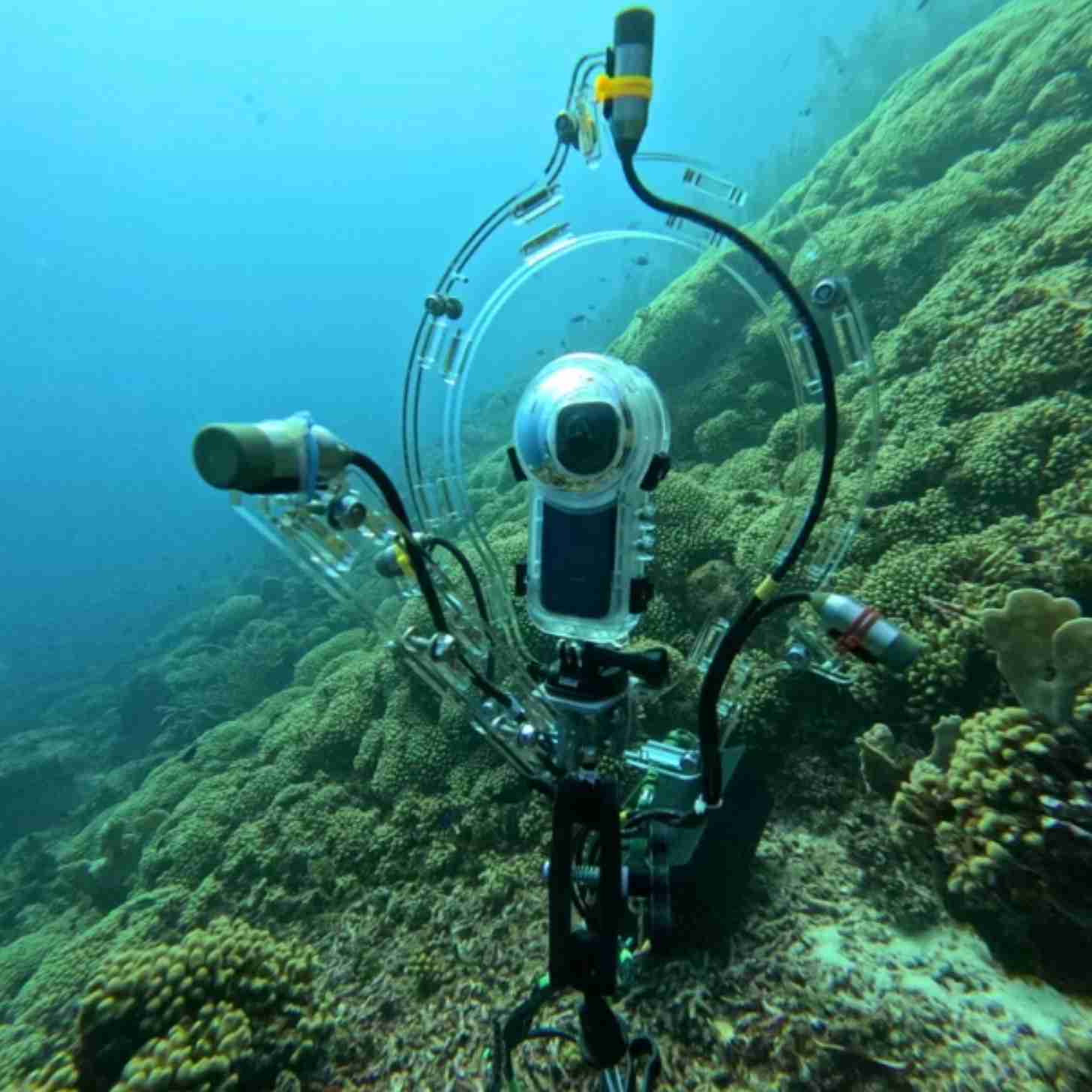
However, the idea of creating an underwater library of fish sounds, filtered by species, is a daunting task — even with the nonprofit’s burgeoning technology.
“When it comes to identifying sounds, the same biodiversity we aim to protect is also our greatest challenge,” Marc Dantzker said.
“The diversity of fish sounds on a coral reef rivals that of birds in a rainforest. In the Caribbean alone, we estimate that over 700 fish species produce sounds.”
According to Cornell, the new technology works similarly to smartphone apps like the Cornell Lab of Ornithology’s Merlin Bird ID, which uses the world’s largest database of birds to identify species by song and sound.
“We are a long way from being able to build ‘Merlin’ for the oceans, but the sounds are useful for scientists and conservationists right away,” said Aaron Rice, a principal ecologist at the Cornell Lab who also served as a senior author of the study.
Still, it’s a start.
“By discovering the identity of these hidden voices, acoustics will become a powerful indicator of reef health and resilience — and a strategy to monitor wider and deeper,” said study co-author Matt Duggan.
Unlike other underwater tools, which often require divers and research teams to help facilitate their use, the researchers also said it had added value as technology that can be left underwater for prolonged amounts of time.
It also means discovering species behaviors that are entirely new to science. So far, the nonprofit has accurately detected 46 species of fish through their passive acoustic monitoring technology — and half of them were not known to emit sound at all.
“The fact that our recording system is put out in nature and can record for long periods of time means that we’re able to capture species’ behaviors and sounds that have never before been witnessed,” Rice said.
In 2026, the FishEye Collaborative hopes to expand beyond the Caribbean to reefs in Hawaii and Indonesia.
“By identifying which species make which sounds,” Dantzker said, “we’re making it possible to decode reef soundscapes, transforming acoustic monitoring into a powerful tool for ocean conservation.”
To see — and hear — the colorful variety of fish that have been catalogued so far, visit the FishEye Collaborative Fish Sound Library.
You may also like: New species discovered this Halloween: carnivorous 'death-ball' sponge and rare 'zombie worms' spotted among 30 new species
Header image via Vitya_Maly (CC BY-NC 4.0)