No matter where you fall on your everyday use of generative artificial intelligence tools like ChatGPT — love it, hate it, scared of it, or a full-on early adopter — you’ve likely been subjected to a common refrain when it comes to AI: We’re cooked.
It’s hard not to feel that way.
The data centers that power AI are widening an ever-growing digital divide between the “haves” and “have-nots,” according to reporting from The New York Times, with the majority of OpenAI (the company that owns ChatGPT) data centers built primarily in the wealthier Northern Hemisphere.
At the same time, those data centers threaten the very livability of these areas.
For instance, Elon Musk’s latest xAI development in Memphis, Tennessee is allegedly being built with none of the turbines needed for pollution controls, as Politico reports. This means a predominantly Black community that already leads the state in emergency room visits for asthma could face further risks of disability and death.
The Massachusetts Institute of Technology just released a first-of-its-kind study showing that ChatGPT users may already be losing their ability to think critically, with the technology withholding the natural growth that comes from generating one’s own ideas.
And with rapid technological development — pushed by Silicon Valley’s richest and most powerful — comes a greater risk of irresponsible AI.
In the allure of wealth, power, and industry dominance, the race for AI development has led to headlines from publications like Scientific American asking: “Could AI Really Kill Off Humans?” (Spoiler alert: “It turns out it is very hard — though not completely out of the realm of possibility — for AI to kill us all,” the journal concludes.)
Considering all of this, in addition to AI’s impact on job losses, creative expression, and the complicated umbrella of human rights, things look and sound bleak.

But Kate Brennan — a lawyer and the associate director of the AI Now Institute, an independent think tank founded in 2017 to provide expert analysis and policy guidance to rethink the trajectory of AI — believes there is a key element missing in the discourse.
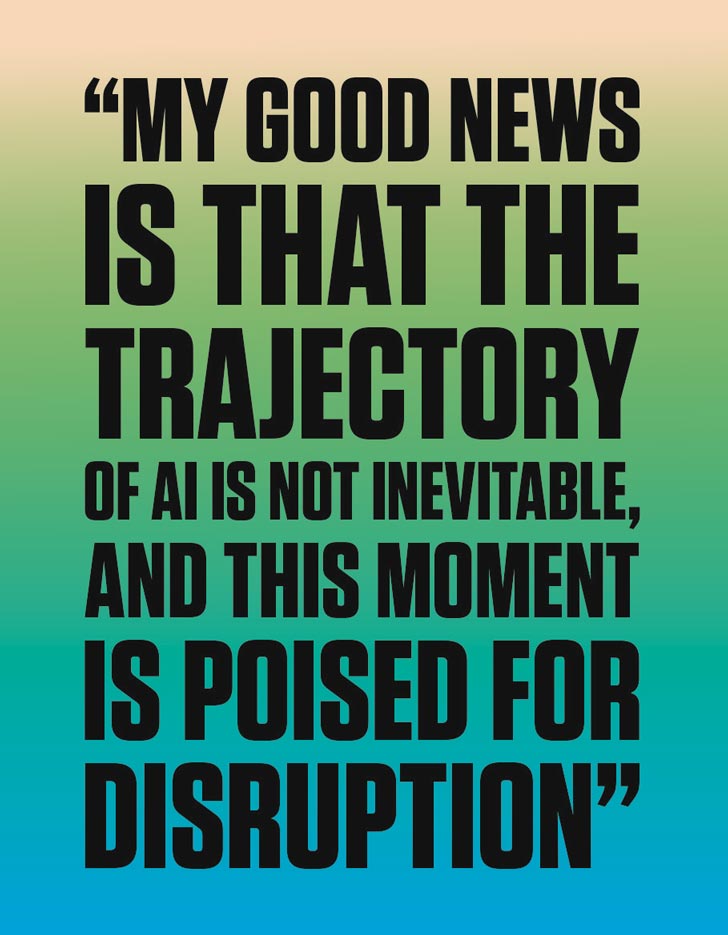
“My good news is that the current trajectory of AI is not inevitable, and this moment is poised for disruption,” she told Good Good Good.
“We’re given this endless slew of AI in the headlines telling us that it’s going to enter our lives, take our jobs, and also solve all our problems,” she said. “What AI firms do is position us to feel like we’re on the receiving end, or that it’s something passive, that we’re just observers in this march towards a technology that is going to happen to us. That can certainly leave you feeling disempowered."
Even as tech companies petition for expanded contracts from the federal government, the public reels about ethical concerns about surveillance and data collection, and the geopolitical landscape seems increasingly primed for earth-shattering cybersecurity attacks, Brennan has hope.
She says that although AI may seem mind-bogglingly advanced and new-fangled, many fights have come before and are intertwined with this current technological revolution.
“Instead of accepting this vision offered to us by big tech companies, we can reassert a public agency over the vision of AI's future,” she said.
“We can tap into the existing groundwork of organizing happening right now. We can demystify what AI firms are saying, and we can bring the receipts. The future set by them is not the future set by us.”
In addition to creating new regulations for the emerging world of AI technology, the safeguards needed to keep AI — and the companies that offer it — from going off the rails already exist, like labor union organizing, copyright law, anti-trust law, and climate regulations, she said.
She offers up a handful of examples.
“Amazon Employees for Climate Justice are doing an incredible job of pushing back on Amazon’s climate impact,” she said. “National Nurses United, which is the largest union of registered nurses in the United States, is incredible at raising the alarm for how and where automation is impacting their clinical decision-making and patient safety.”
Brennan said the Hollywood writers and actors strikes of 2023 also paint a picture of how union organizing can make a difference with the implementation of AI. Many of these strikes pushed back against the use of AI in film and television production, and the workers won.
This success also led to the passage of legislation in California that protects against certain unauthorized digital replicas of a person, requires that AI developers watermark AI-generated images, and offers protection against sexually explicit digital content.
Brennan has also seen wins across climate activism groups, especially as they relate to the pausing, slowing down, or stopping of data center construction.
“AI firms want you to believe that AI is this magical thing, this abstract thing that happens in the cloud, but actually it is deeply material, and it is happening on the front lines of many of our communities, next to many Black and brown communities, low income communities,” Brennan said.
But moratoriums on data center development are working.
“It’s working in the Netherlands, in Chile. Their community-led activism led to a pause on data center construction,” Brennan said.
“Citizens Action Coalition in Indiana also highlights how data center expansion is harming ordinary rate payers and the energy grid. A number of data center projects have stopped because of their advocacy. And Memphis Community Against Pollution has pushed back against the health and environmental effects, especially in historically Black neighborhoods.”
For everyday people, whose work requires the adoption of AI, or who have indeed benefited from asking ChatGPT a math question, there is still a role to play, and it doesn’t mean users must entirely refrain from using AI tools.
“Rather than spending time engaging in a debate about whether any individual technology, like ChatGPT, is good, the question we should be asking instead is, ‘Is OpenAI’s [the company that owns ChatGPT] unaccountable willpower good for society?’” Brennan said.
“When we look at the power that these firms hold over our lives, we can target the sources of that power. I think the environmental justice movement does an amazing job at this. When people say you shouldn’t use plastic straws or we should recycle, yes, those are important, but sometimes they make it feel like it’s an individual calculation instead of what we know is the systemic mass polluting and industrialization of our world. And I think that holds here.”
Most of all, Brennan’s call to action is that people reject the narrative that an unguarded AI future is the only one.
Other advocates, like Tristan Harris of the Center for Humane Technology, argue a similar path forward.
“Your role isn't to be responsible for solving all of this. Your role is to be one part of humanity’s collective immune system — to break others out of the trance of fatalism and inevitability, and advocate for another narrow path,” Harris said in his 2025 TED Talk.
Harris outlined a number of ways to protect humanity from the current “chaotic risks” that come from the AI frontier: Whistleblower protections, preventing ubiquitous surveillance, product liability standards, shared agreements on what is “too far” in tech development, and more.
He concluded that in this window, framed by restraint and “technological maturity,” humanity can embrace the incredible progress made possible by AI, without allowing that technology to cause the dystopian “Black Mirror” plot lines so many of us fear.
“We can choose to stop being seduced by the ‘possible’ and bravely confront the reality of the ‘probable,’ Harris said. “And we can work to change the probable path if we don’t like where it takes us.”
Harris and Brennan are not the only ones doing this work.
Stanford’s office of Human-Centered Artificial Intelligence is led by Fei-Fei Li, who is commonly called the “Godmother of AI.” Her team researches AI technologies that “enhance human productivity and quality of life,” while offering educational and policy recommendations that prioritize ethical development and governance.
There’s also the Ada Lovelace Institute, a United Kingdom-based research institute named after the world’s first computer programmer. It works to ensure “data and AI work for people and society,” by advising on how AI can be justly and equitably distributed across Europe.
The nonprofit Responsible AI Institute also works in this area, offering a global certification to AI systems and practitioners that are dedicated to improving the social and economic well-being of society.
Whether it’s through law and policy, tech development, business regulation, or human rights, the fight to create a safe and stable AI future is happening.
There is an entire global community of experts whose express purpose is to help humans — and the technology we create — be a force for good.
“We have been in this fight before,” Brennan said. “We don’t want to go into doomerism or unearned celebration, two ends of a pole that will not serve us. Right in the middle is a clear-eyed assertion that the public — we — should get to decide what happens to our society.”
You may also like: 4 ways states are putting guardrails around artificial intelligence, despite a lack of federal regulation
A version of this article was originally published in The 2025 Technology Edition of the Goodnewspaper.
Header image by Kevin Ku via Pexels
A lot of parents are worried about the well-being of children across the United States. It’s not unfounded: Nearly three-quarters of students are not proficient in basic skills, and many struggle with the fundamentals of math and reading, this year’s annual KIDS COUNT survey found.
Approximately one in five U.S. youth between the ages of 3 and 17 has been diagnosed with a mental health condition or behavioral disorder, according to the CDC.
And smartphones are cause for mounting concerns, as parents, children, and researchers explore the relationship between screen time and decreased academic performance, wellness, and social skills.
But one mom, Lenore Skenazy, thinks that kids need a bit more room to breathe.
In 2008, Skenazy wrote a New York Sun column about letting her 9-year-old ride the subway alone. It turned into a book called “Free Range Kids,” and later, she worked with other parents-turned-activists to found a nonprofit called Let Grow, which advocates for increased childhood independence.
Let Grow offers tools for parents, school leaders, and even policymakers to adapt new norms around childhood independence.
In nine states, a Reasonable Childhood Independence Law has been passed, thanks to the organization’s advocacy. In schools, Let Grow’s approach looks like a simple assignment added to the curriculum.

“The Let Grow Experience is when teachers give kids a homework assignment that just says: ‘Go home and do something new on your own, with your parents’ permission, but without your parents,’” Skenazy told Good Good Good at the TED 2025 conference in April of this year.
“The reason we do that is because once parents see how incredibly wonderful it is that their kid went and walked the dog, or went to the store, or made scrambled eggs, they realize how great it is to let go.”
She said the anxiety surrounding younger generations belongs to both the child and parent, and building a community around it creates a new norm for parents, while also empowering children to build skills and experiences for themselves.
“When we take those experiences out of our kids’ lives by always being with them to help them and high-five them … they get anxious because they don’t see how much they can do, how much they can handle, on their own,” Skenazy said in her TED Talk. “And we get anxious because we don’t see it either.”
But, as she posits, the solution is the same for both children and their parents: Let kids do something on their own.
The Let Grow Experience, while organized by adults, really is just a permission slip to play and explore freely, something that Let Grow also emphasizes through its afterschool programming: Play Club.
The premise is simple: Instead of sending kids home to a screen, they stay after school for an hour or so, with access to safe, all-ages, open play.
“The kids have to sign a little contract that says, ‘I won't physically hurt anyone deliberately, and I won't leave without telling anyone.’ And then the parents have to sign a little contract that says, ‘I realize my child will not be happy every minute at the after-school Play Club,’” Skenazy explained. “And that’s it.”
She calls it a “wildlife sanctuary for childhood.”
Over a thousand schools across the country have implemented these approaches. Overlook Middle School in Ashburnham, Massachusetts is one of them. Principal Kristina Bogosh began Play Club after seeing an increase in student mental health and behavioral issues over the last decade.
The club offers kids indoor or outdoor play items like hula hoops, traffic cones, chalk, or cardboard boxes, free for them to use in countless open-ended ways.
If there is conflict, the kids hash it out together in a “Conflict Corner,” and faculty members serve more like a lifeguard, stepping in only if things are too serious for the kids to handle on their own, or if an EpiPen or first aid kit needs to be deployed.
“It’s very liberating to see them solve their own problems,” Bogosh told The Gardner News, a local newspaper.
For Skenazy, this is the blueprint: allowing kids to build an identity, interests, and relationships beyond the “marching orders” they are so used to waiting for, beyond a fear of conflict or tension.
“I think we see kids as people, but we see their time as something to be optimized. And when they're dithering, or daydreaming, or arguing, or trying to come up with something to do, that strikes us as wasted time,” she said.
“What we don't realize is that kids are born to optimize, but they optimize through play and through interaction, through curiosity and through trying. With a little more interpersonal everyday friction, I think you can deal with a little more in real life, too.”
You may also like: After schools banned phones, students checked out more library books: 'We're reclaiming attention'
A version of this article was originally published in The 2025 Education Edition of the Goodnewspaper.
Header image by Etienne Girardet on Unsplash
In the Amazon’s Putumayo basin of Colombia, a new species of fish was discovered swimming among submerged roots in a shallow forest stream.
That fish, which is roughly the size of the average pinky nail at just 0.8 inches long, is the Priocharax rex. And it’s now one of ten known species of Priocharax.
Despite its small size, it’s actually the largest known species of the genus (just like the etymology of the Tyrannosaurus rex, the “rex” here means “king.”)
Similar to other Procharax fish, the P. rex retains larval features, even after it matures. This results in a reduced number of fin rays and an internal skeleton that is less fully developed.
But this fish was remarkable to scientists for several reasons.
Firstly, seven species of Priocharax (except for the Priocharax pygmaeus and Priocharax ariel) are limited only to Brazil. This discovery extends the genus’s known range northwest into Colombia and enriches knowledge of the country’s marine biodiversity.
Secondly, the P. rex boasted a strange new feature, in the form of a seemingly innocuous flap of skin.

The curtain-like skin wing hangs loosely between its pelvic fins — and it's an organ never seen before in any other species of Priocharax, or any similar fish.
“I had never seen such [a] structure in any other fish!” said George Mendes Taliaferro-Mattox, a fish biologist at the Federal University of São Carlos in Brazil and lead author of the study — which was published in Zootaxa. “It is almost like a chastity belt, which is present in both males and females.”
When it comes to its function, Taliaferro-Mattox said it’s “too soon to speculate on its function.”
“The main importance of this structure so far is the fact that it is unique to this species, as far as I know,” he said.
Although it requires further study, Taliaferro-Mattox and his colleagues do have a few ideas regarding the organ’s potential use. They suggested that it may be able to help it remain stable in a strong current, house extra nerve endings, or be used in a courtship display for potential mates.
Overall, the new research shows that even tiny, miniaturized fish, which often have simplified or reduced anatomy, can evolve brand-new structures — like the strange skin flap.
You may also like: New creature with 'visible internal organs' discovered by scientists. It looks straight out of a Studio Ghibli movie
Header image via Flickr / Dallas Krentzel (CC BY 2.0)
For years, Marcus Jones and Akunna Olumba noticed a stunning lack of art galleries and shows in their city of Detroit, Michigan. Especially when it came to ones that specifically showcased Black artists.
"I’ve always felt the want to support our people,” Jones told The Michigan Chronicle. “As a Black business owner, I knew that I needed to create a safe place for people that look like myself. And so, the goal and the intention for building this restaurant was to provide a safe place for our people to go that wasn’t dark and didn’t feel like a club or look like a dive bar or any of that.
So from the moment they opened Detroit Pizza Bar in 2022, they knew early on that they wanted the walls of their restaurant to double as a gallery space for artists in their community, like Conrad Egyir (@conrad_egyir), Olivia Indigo (@oliviaindigo) and Joshua Thaddeus Rainer (@jaw_shwa).
“But something that really resembled downtown was right here in the neighborhood,” Jones continued. “And so, with that mindset, I also wanted to carry that same momentum to the neighborhoods and be able to open my doors to both visual artists and performing artists.”
And that meant transforming the space to fit the new need.
“I wanted the space to feel like a gallery,” Jones said. “So the lights upstairs are designed specifically to have downlights so that we could hang artwork and photos. I painted the walls light and bright so that it could feel more like a gallery space when you came in up to the second floor.”
The paintings — many of which are available for sale — come and go. But as their business grew, so did their reputation as an unconventional art gallery.
And soon there was no separation between “first” and “second” floors. The entire building became a work of art, in and of itself.
Michigan Chronicle reporter Cody Yarbrough said that, more and more, Black-owned restaurants are becoming synonymous with Black art.
Local muralist Bakpak Durden has four paintings splashed across Yum Village, an Afro-Caribbean eatery.
Inside See You Tomorrow, a “soul-warming” breakfast spot, guests are greeted by Cameron Jenkins’ blazing phoenix, brought to life through vivid paints.
When Julian Hill — the owner of See You Tomorrow — first saw the finished phoenix, he was visibly moved.
“That phoenix symbolizes the struggles and the rise of Detroit, our entrepreneurs and our people,” Hill told the Detroit Free Press. “The mural 100% gave us that belief when we were trying to open — it transformed the entire place. It represents growth, positivity and transformation.”
You may also like: To save their small town newspaper, they opened a cafe. Now their profits are up 40%
A version of this article originally appeared in the 2024 Art Edition of the Goodnewspaper.
Header images: “Face” by Olivia Indigo / “Joseph's lullaby” by Conrad Egyir / “Becoming Israel” by Joshua Thaddeus Rainer
The season of gifting is in full swing – a time when people scour the internet and shops of all kinds for items that appropriately symbolize their relationships with their loved ones.
Gift givers hope that their gift will appropriately communicate their feelings and bring the recipient joy. But that’s not always the reality. Gifts can be tricky and rife with hidden hazards. Relationships can even be ruined when the mismatch between the giver’s intention and the recipient’s perceptions of it is too vast.
The circumstances of the people involved also shape a gift’s meaning and the way it might be interpreted.
My research partner, Nathalie Rita, and I have been seeking to better understand gifting in one of life’s most dicey, distressing circumstances: cancer.
As sociologists, we use techniques such as in-depth interviews to study the experiences, feelings, and motivations of specific groups of people. I focus on restaurant workers and my colleague on migrants and minorities.
But in 2021, we were both diagnosed with cancer in our early 30s — breast cancer for me and endometrial cancer for her. This encouraged us to explore the experiences of other young women dealing with cancer.
By 2023, we had interviewed 50 millennial women diagnosed with cancer about a plethora of social and emotional topics related to their illness. Our own bouts with cancer revealed curious patterns in the gifts we very gratefully received from family and friends. So, we included a few questions about gifts in our research.
We expected some eccentric anecdotes similar to our own experiences. But our research, which isn’t yet published, revealed just how much of a mismatch there is between what people wanted and what they received — often driven by the marketing of specific gifts or care packages for cancer patients.
What loved ones give
One of our first questions was, what exactly do women diagnosed with cancer receive from their loved ones? Their answers ran the gamut. Our interviewees reported hundreds of gifts, from stuffed possums, to child care help, to Vitamix blenders. Friends and family were very eager to shower them in goods.
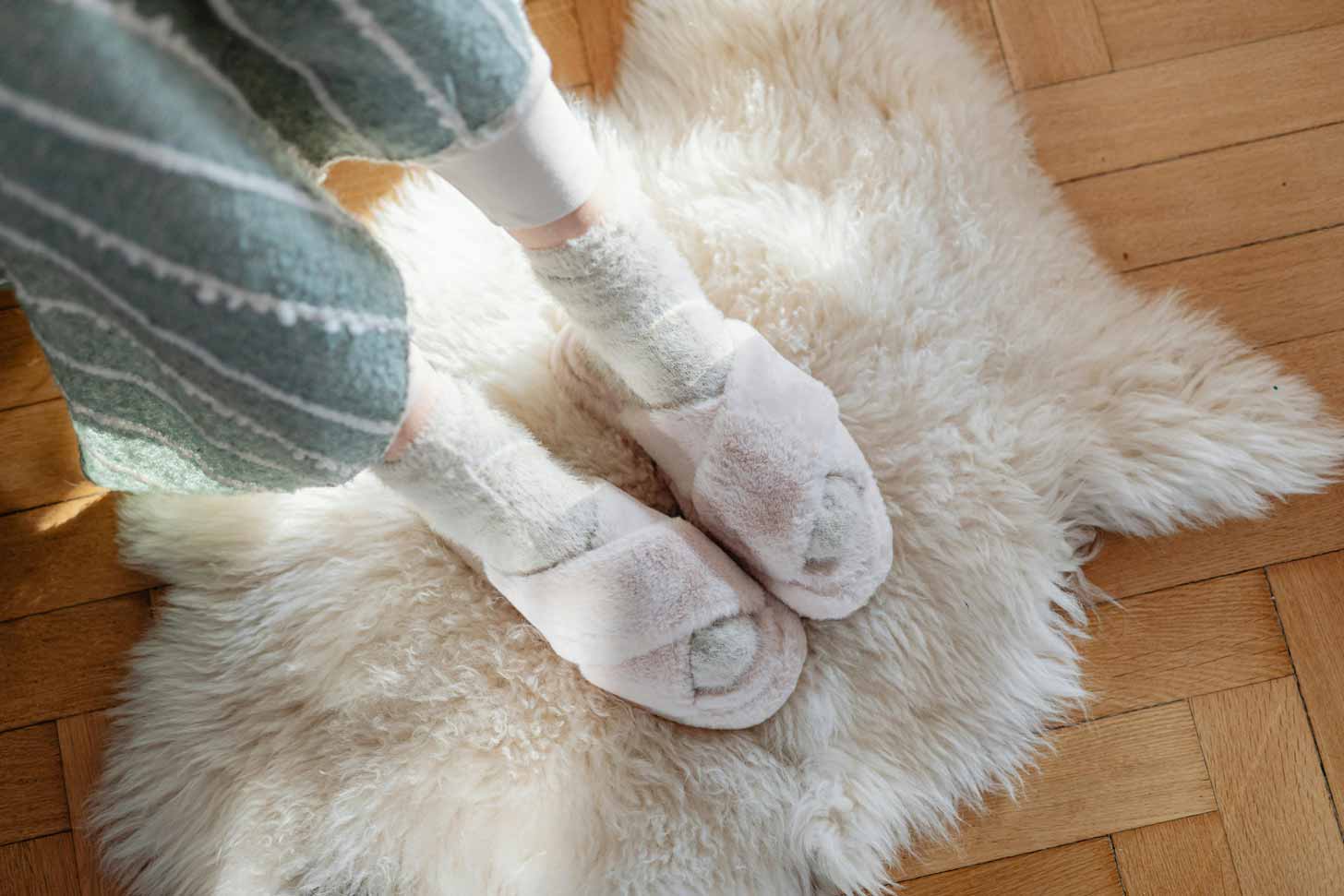
But from these hundreds of items and acts, 10 popped up over and over again. In order of frequency, they were:
- Fuzzy socks.
- Food and drinks, particularly herbal teas, groceries, gourmet goodies, and Meal Trains.
- Money, GoFundMe donations, and gift cards.
- Blankets.
- Fancy, spa-style self-care items.
- Written thoughts and prayers.
- Flowers and plants.
- Mugs, tumblers, and bottles.
- Adult coloring books.
- Books.
The women we spoke with largely understood and appreciated the intentions behind these items in the context of their illness: books to distract, flowers to beautify. They viewed the gifts as material proof that their loved ones wanted to deliver comfort and support in a time of discomfort and helplessness.
But the frequency of certain items perplexed us. Why socks and coloring books instead of, say, Rollerblades and bongs?
The long shadow of online commerce and gift guides
We traced these gifting trends to two sources: premade cancer care packages and online gift guides.
Numerous women reported receiving some of the items from our top 10 list in premade care packages sourced from Etsy, Amazon, or cancer-specific companies such as Rock the Treatment and The Balm Box.
They noted that the contents of these packages felt predictable: spa-style self-care goods such as aromatherapy oils, lip balms, and soy candles; herbal teas; a mug with a slogan or ribbon; and hard candies or throat lozenges.
Some received more opulent care packages, similar to Rock the Treatment’s large chemo care package for women, which adds adult coloring books, protein-rich snacks, a beanie, and fuzzy socks. These additions mirror our interviewees’ top 10 received gifts even more closely.
Online gift guides published by magazines, news sites, and stores may be influencing gifters’ behaviors, too. A Google search for “gift guide” yields countless lists for niche demographics — chicken lovers, mathematicians, even people who are always cold. Online viewership of these lists is prolific. For example, New York Magazine’s product recommendation site, The Strategist, received 10.7 million monthly views in 2021.
The top seven Google-ranked gift guides for cancer patients also contain suggestions that align almost perfectly with what our interviewees reported, with the addition of clothing and jewelry emblazoned with inspirational declarations such as “I’m stronger than cancer!”
These overlaps reflect the broader phenomena of the commodification and commercialization of cancer. As businesses seek to extract economic value out of all aspects of daily life, cancer has become a lucrative business opportunity and patients a source of profit.
Our research suggests that these market forces warp how gift givers perceive people with cancer and their desires. In turning cancer into something profitable, the ugly parts of illness are also glossed over to make cancer palatable to the market. Businesses then sell would-be gifters the idea that cancer can be assuaged by purchasing and giving a bejeweled, teal-ribboned Stanley tumbler.
Additionally, while premade care packages ease the labor of decision-making for gifters, they run a greater risk of disappointing recipients. These generic boxes, we found, can communicate a degree of thoughtlessness at a time when our study participants were aching for thoughtfulness.
What to actually gift
So, what do women going through cancer treatment actually want to receive? Our interviewees recommended:
- Money in the form of cash or useful gift cards, such as for DoorDash, grocery stores, and Petco.
- Meals and groceries, particularly if the recipient is a parent with mouths to feed.
- Help with errands and tasks such as babysitting, transportation, cleaning, and lawn care.
- Cards and personal messages of love, which serve as check-ins and gestures of care and support.
- Practical self-care items such as thick lotions, face masks, and soft soaps that don’t irritate skin.
Pragmatic. Simple. Even a little mundane.
There is some overlap between these recommendations and the frequently received gifts mentioned earlier. But notably, almost none of the women we interviewed expressed a desire for the nonessential items usually stocked in commercial care packages or those associated with profiting from cancer.
Instead, the gifts they felt touched them more deeply were ones that addressed ways in which they felt the disease incapacitated their abilities as a worker, woman, mother, or caregiver.
Our interviewees spoke of financial strain from medical bills, fatigue preventing them from mothering in ways they used to, and mounting burdens that made it almost impossible to be present for partners or spouses. A monstera plant in a whimsical vase offered little reprieve from these pressures. However, a chat while folding laundry or a Pyrex of enchiladas did.
Perhaps most importantly, such offerings made them feel cared for and seen — their unvarnished circumstances recognized.
So, if a friend with cancer — or any other serious illness, for that matter — is on your list this holiday season, consider hanging those fuzzy socks back on the rack.
Instead, mull over their daily stresses, and choose an item — or a task — that provides a bit of relief.
This article was written by Ellen T. Meiser from the University of Hawaii at Hilo, and was originally published on The Conversation.
Header Image by Katerina Holmes on Pexels

Obituaries preserve what families most want remembered about the people they cherish most. Across time, they also reveal the values each era chose to honor.
In a study published in the journal Proceedings of the National Academy of Sciences, we analyzed 38 million obituaries of Americans published from 1998 to 2024. We identified the values families most often highlight, and how those values shift across generations, regions, and major historical events.
Specifically, working with psychologists Liane Young and Thomas Mazzuchi, we examined the language used on Legacy.com, an online platform where families often post obituaries and share memories of loved ones.
During their lifetime, most people tend to be guided by a small set of broad values like caring for others, honoring tradition, keeping loved ones safe, and seeking personal growth. To understand how these values showed up in remembrance, we used text-analysis tools built on curated lists of everyday words people use when talking about those themes.
By analyzing the words that appeared again and again in memorials, we could see which values communities chose to emphasize when looking back on the lives of their loved ones, and how those patterns changed over time. Because the dataset included 38 million obituaries, the analysis ran on a supercomputer.
Across nearly 30 years of obituaries, words related to the value “tradition” appeared most often — many tributes described religious participation and enduring customs.
Words related to the value “benevolence” — caring for the welfare of others — were also consistently prominent. In fact, tradition and benevolence formed the dominant value profile across the dataset: They appeared in more than 70% of the obituaries.
By contrast, words related to values like “achievement” and “power” appeared far less often.
Historical events did leave a mark. After the attacks of Sept. 11, 2001, the language families used to remember loved ones shifted compared with the period just before the attacks — and those shifts persisted for at least a year. Words related to the value “security” — including terms like “surviving,” “health” and “order” — showed up less often.
At the same time, families used more language related to values like “benevolence” and “tradition.” Terms like “caring,” “loyal,” and “service” showed up more often. These changes were especially strong in New York, where the attacks had the most direct impact.
COVID-19, however, produced the most dramatic shifts. Beginning in March 2020, benevolence-related language — including terms like “love,” “sympathy,” and “family” — declined sharply, and hasn’t been the same since. Tradition-related language — terms like “service,” “faith” and “heritage” — initially declined as well, then rose above baseline levels during later stages of the pandemic.
These changes show that collective disruptions impact the moral vocabulary families use when commemorating loved ones. They shift what it means to have lived a good life.
We also saw differences that reflect stereotypes about gender and age. Obituaries for men contained more language linked to achievement, conformity, and power. Meanwhile, obituaries for women contained more language associated with benevolence and enjoying life’s pleasures.
Older adults were often remembered more for valuing tradition. Younger adults, on the other hand, were often remembered more for valuing the welfare of all people and nature, and for being motivated to think and act independently.
Value patterns in men’s obituaries shifted more across the lifespan than those in women’s. In other words, the values highlighted in younger and older men’s obituaries differed more from each other, while women’s value profiles stayed relatively consistent across age.
Why it matters
The most visited parts of print newspapers and online memorial sites, obituaries offer a window into what societies value at different points in time.
This study contributes to the broader scientific understanding of legacy. People often hold strong preferences about how they want to be remembered, but far less is known about how they actually are remembered, in part because large-scale evidence about real memorials is rare. Our analysis of millions of obituaries helps fill that gap.
What’s next
Obituaries allow researchers to trace cultural values across time, geography, and social groups. Future work can examine differences across race and occupation, as well as across regions. It could also look to earlier periods using historical obituary archives, such as those preserved in older newspapers and local records.
Another direction is to examine whether highlighting how often kindness shows up in obituaries could inspire people to be more caring in daily life.
Understanding what endures in memory helps clarify what people consider meaningful; those values shape how they choose to live.
The Research Brief is a short take on interesting academic work.
This article was written by Stylianos Syropoulos and Kyle Fiore Law from Arizona State University, David Markowitz from Michigan State University, and was originally published on The Conversation.
Header Image by Aleksandar Velickovic on Unsplash

Ocmulgee Mounds, a site in central Georgia with 12,000 years of Indigenous history, may be on the verge of becoming the newest U.S. national park. This is the flagship designation of the National Park Service system, which includes many types of properties, in addition to formally designated national parks.
Although this redesignation may not include much change for the site itself, it could mean quite a lot to visitors, supporters, and locals alike.
The 3,000-acre park protects land and features important to the Mississippian culture, which built the mounds there starting roughly 3,000 years ago, and the Muscogee (Creek) Nation, for which the site is an ancestral homeland.
The site includes seven enormous ceremonial and burial mounds made of earth, the largest of which is 55 feet (15 meters) tall and covers about 2 acres, as well as a museum containing millions of cultural artifacts, including pottery, stone tools, jewelry, and bells.
The National Park Service has managed the site since the 1930s, first as a national monument and since 2019, as a national historical park. There are no legal or practical differences in protection between these redesignations, though the branding and marketing of the site may change.
As a geographer who studies parks and the naming of places, I have seen that when a National Park Service unit is redesignated as a national park, as a pending bill in Congress currently proposes for Ocmulgee Mounds, it does not typically change the funding available to run the site.
That’s especially true at a time when National Park Service funding and personnel are being cut. However, a park redesignation does serve political purposes and affects how visitors perceive that park.
There are 433 properties in the US National Park System
Just 63 of these units are formally designated as national parks. The rest have other designations, such as "national historic battlefield," "national monument," or "national scenic trail."

How parks are designated
The National Park Service manages 433 units with 19 different designations, such as “national battlefields,” “national lakeshores,” and “national scenic trails.” Only 63 of these units carry the formal title or designation of “national park.”
All but one of these categories can be bestowed only by Congress. National monuments, however, can be created by the president directly, under the provisions of the Antiquities Act of 1906.
For example, the Antiquities Act allowed President Barack Obama to designate 1.3 million acres in Utah as Bears Ears National Monument in a December 2016 proclamation. That same act allowed President Donald Trump to shrink the protected area to 200,000 acres in 2017 — and President Joe Biden to re-expand it to 1.3 million acres in 2021.
Other examples of redesignation
In rare cases, a community, group or other organization proposes adding an area that is not currently managed by the National Park Service to the system, but this takes a lot of time and is different from the more common process of changing the formal designation of a property already within the system.
For instance, Indiana Dunes National Lakeshore became Indiana Dunes National Park in 2019. That same year, White Sands National Monument in New Mexico became White Sands National Park. And in 2020, New River Gorge National River in West Virginia became New River Gorge National Park and Preserve.
Why redesignations make a difference
My analysis of the contentious redesignation of the Jefferson National Expansion Memorial in St. Louis to Gateway Arch National Park in 2018 found that it was not done to offer additional protection to this site of national importance. Rather, the move was meant to take advantage of the public significance of the “national park” label and thereby attract more tourists and tourism revenue to the local economy.
The effort to make it a national park was part of a local campaign to renovate the underground visitor center, revitalize the park grounds, and increase tourism. But the law that formalized the change included no additional funding, resources, or protections for the Gateway Arch.
Changing the designation contradicted the park service’s own declaration that the term “national park” should be used for an area that “contains a variety of resources and encompasses large land or water areas to help provide adequate protection of the resources.”
During congressional hearings, the deputy director of the National Park Service, Robert Vogel, recommended the site not be labeled a national park but rather a national monument, because the site “is too small and limited in the range of resources the site protects and interprets to be called a national park.”
Gateway Arch National Park is now the smallest-area park in the U.S., at less than 200 acres, and is home to a large steel arch, an open lawn area, a museum, and a single historic building — a courthouse where one of the Dred Scott trials was heard, along with other civil rights cases.
It does not have the wildlife viewing, spectacular geologic features, outdoor recreation opportunities, and sense of wilderness that the public has come to expect from national parks.
The park’s website admits “it is unusual for a national park to have no natural plant life” and describes the park as adjacent to the “concrete jungle of downtown St. Louis.”
What actually would change for Ocmulgee Mounds?
The redesignation effort for Ocmulgee Mounds has two primary aspects. First, it would declare the area a national park.
Second, it would add additional land to this protected area, designating that portion as a national preserve.
The distinction matters: Public hunting, including traditional Indigenous hunting, is not allowed in national parks, but it is allowed in national preserves. And while national parks are managed by the National Park Service under the Department of the Interior, national preserves can be managed in collaborative partnership with other groups, including local Indigenous people with cultural ties to the land.
The changes for Ocmulgee Mounds are supported by members of both political parties in both houses of Congress. And the redesignation does not appear to have triggered opposition from local communities, who in other places have objected for several reasons, including fear of increased tourism and desire to preserve any long-standing uses of the land that would be banned if it were to become a national park.
There are redesignation efforts underway seeking to make national parks in other locations as well, including the Delaware Water Gap National Recreation Area in New Jersey and Pennsylvania, Chiricahua National Monument in Arizona, Buffalo National River in Arkansas, and Apostle Islands National Lakeshore in Wisconsin.
The only real changes in these places, though, would be in marketing — the signs, brochures, and merchandise sold in gift shops. But these changes would have an important effect: The tagline of “new national park” markets well and is believed to help attract more visitors to the site. But it won’t actually protect these landscapes any better than they already are under the stewardship of the National Park Service.
This article was written by Seth T. Kannarr from University of Tennessee, and was originally published on The Conversation.
Header Image by Skhamse1 via Wikimedia Commons

For most adults, nothing will ever beat fresh vegetables from a local farmer’s market, cooked and seasoned to perfection. But for kids, getting them to choke down a carrot or broccoli can feel like an impossible feat.
This, in addition to a myriad of other reasons, is why Ali Ubeyitogullari, an assistant professor of food engineering at the University of Arkansas, has dedicated his research to 3D-printed food.
“We work at the intersection of food engineering and human health to improve people's diets,” Ubeyitogullari told the university in a press release.
His team at the university’s Food Science and Biological and Agricultural Engineering departments has been studying how to best usher in the next era of food science.

In his lab, Ubeyitogullari has been printing cookie doughs and flours, but he has also been experimenting with food waste — which makes up 30-40% of the food supply in the United States.
“Say you have an imperfect carrot — it forks at one end or is too long to sell in a bundle or it just looks funny,” the university’s press release explains. “Most shoppers avoid buying imperfect produce. There may be other products that can claim these misfit veggies, such as soups, purees or dog foods, but there may not be.”
3D printing provides another solution.
According to Ubeyitogullari, imperfect foods like carrots or broccoli can be freeze dried, pulped into a slurry, or dehydrated. These processes make it possible to convert them into a “bioink” that gets squirted through a 3D printer’s nozzle, usually along with some liquid to help it flow.
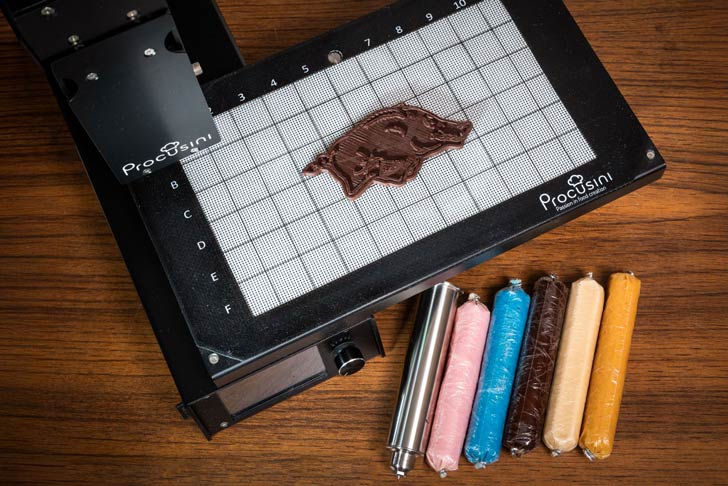
From there, the bioink can be easily printed into “entertaining forms” and fun shapes that kids would be eager to eat.
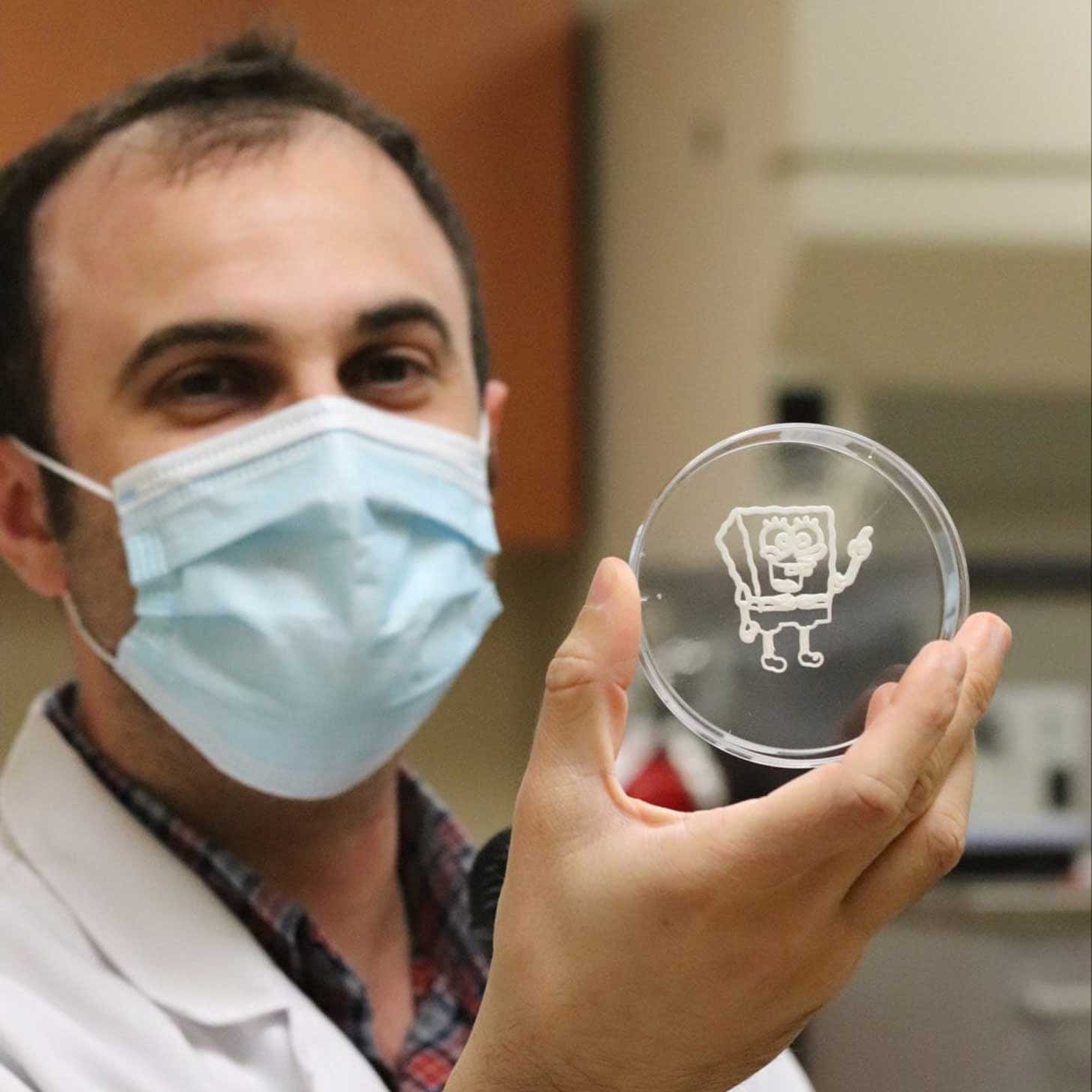
Ubeyitogullari has turned broccoli and carrot bioink into Spongebob SquarePants, as well as chocolate ink into the university's Razorback mascot.
In addition to making mealtime fun, there are more serious elements to this work.
Considering that over 17% of people across the United States live in food deserts, meaning they don’t have access to nutritious food at affordable prices, getting nutritious food in the hands of people who need it is vital.
The 3D printing process could be customized to address specific dietary needs, customizing food to make it more nutritious for someone suffering from malnutrition, for instance. The food science lab is researching how to improve the bioavailability of “bioactive compounds” in food.
These are naturally occurring chemicals in things like fruit, nuts, seeds, and vegetables that contribute to health by reducing risks of diabetes, cancer, or cardiovascular disorders. The trouble is that some of those bioactive compounds disintegrate too quickly in the body to have a maximum effect.
So, the idea is to inject stronger compounds into 3D-printed foods.
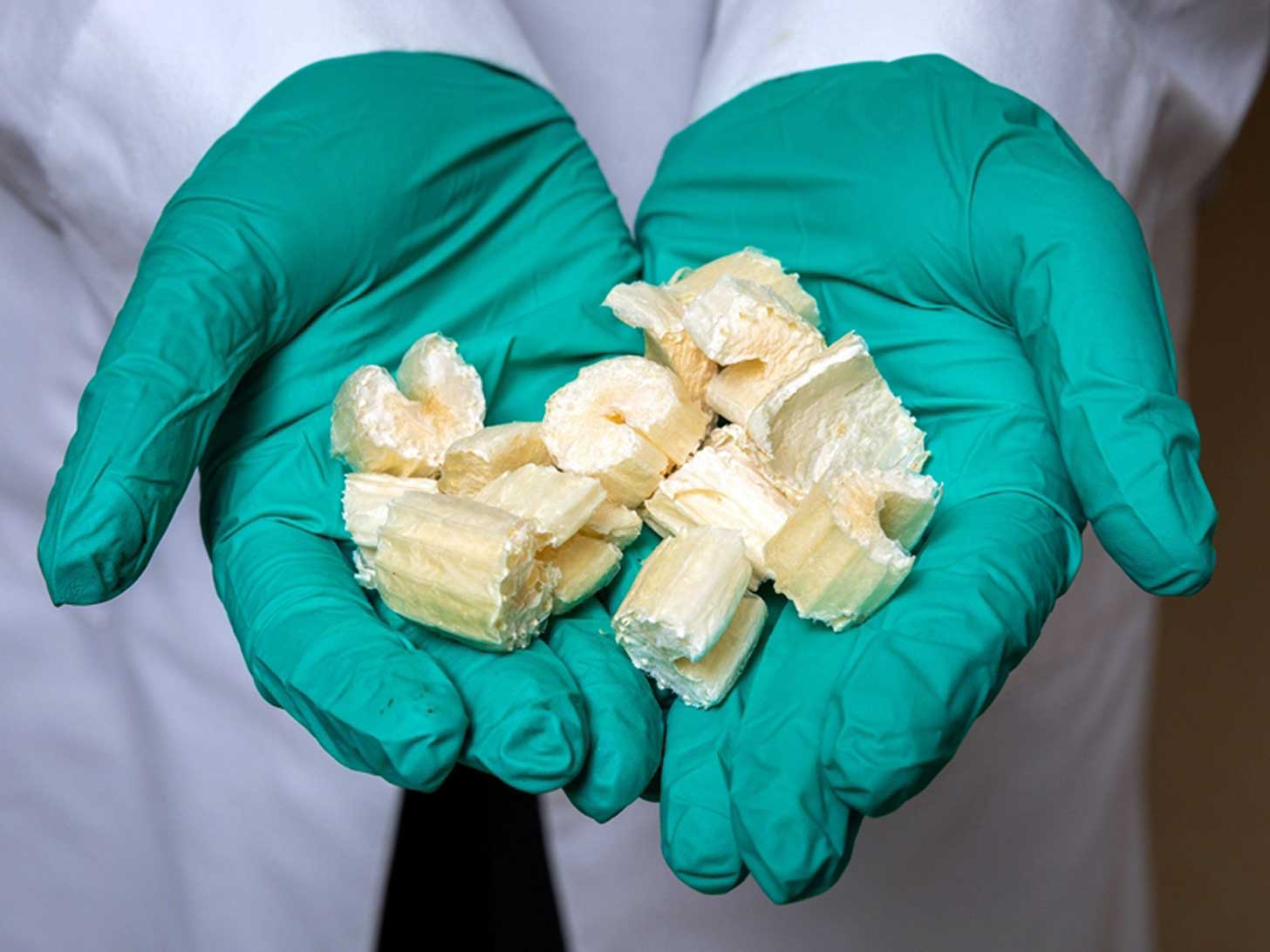
Ubeyitogullari’s team uses food ingredients found in everyday kitchens, like starch, to form a gel with a porous structure that is conducive to being loaded with bioactive compounds in a process called encapsulation.
“When you do that encapsulation, you reduce the size of the compound, but also you physically protect it from the environment,” Ubeyitogullari explained.
“You can combine that with 3D printing to be able to precisely control where those bioactive compounds are going in the food matrix.”
This concept can also be replicated easily, since 3D printing infrastructure already exists. Ubeyitogullari believes it would be relatively easy to port 3D printing assemblies to environmental disaster sites, humanitarian aid stations, or even aboard space stations.
Another use for this technology could be helping people with dysphagia, a medical condition that makes swallowing difficult for about 300,000-700,000 Americans every year. Older adults are most susceptible to the condition, who are often restricted to soft foods.
Instead of pureeing bland foods for people with this condition, 3D printing could help foods retain an original look and shape, but with consistencies that are easier to swallow. Making food more enjoyable for these individuals, Ubeyitogullari said, could also help reduce unintentional weight loss.
All in all, 3D printed food might not seem exactly appetizing, or could be perceived as the most “ultra-processed” food on earth. But Ubeyitogullari believes in its potential.
“It is a very valid discussion from a consumer perception standpoint. But there have been similar examples in the past, and I think with maybe more knowledge and examples we will overcome that,” he said, of the initial discomfort some may have with 3D-printed food.
“The same thing happened with the microwave. People thought the microwave was making Frankenstein food, radioactive, this and that. But now every home has a microwave. I think people will see that a 3D printer is just another kitchen tool to process food.”
You may also like: South Korea recycles 98% of its food waste. Here's how they do it
Header images courtesy of Jakub Żerdzicki via Unsplash and Ali Ubeyitogullari
Toads can lay between 2,000 and 20,000 eggs in a season. But only one in 50 will typically survive the leap from egg to tadpole to "frog-hood."
“They lay those eggs, and they develop into teeny, tiny tadpoles, of which only a fraction ever make it out of the pond,” Dr. Mark D. Scherz, the curator of herpetology at the Natural History Museum of Denmark, told CNN.
On November 6, Scherz and his colleagues published a new study in the journal Vertebrate Zoology.
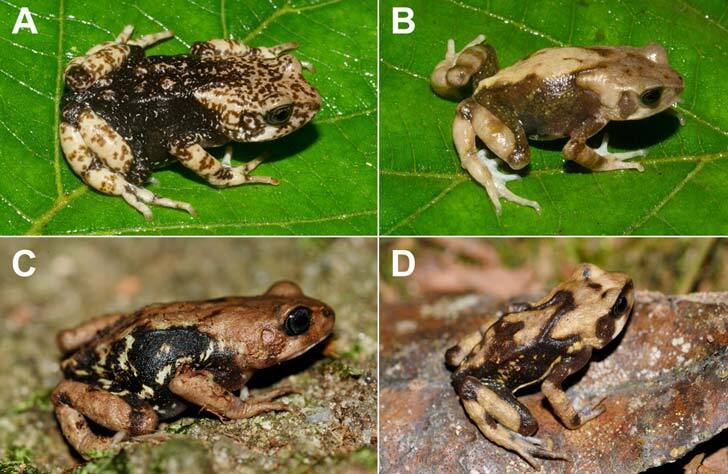
The research, which analyzed 257 specimens across five museum collections in Europe, discovered three new species of Nectophrynoides hiding in plain sight.
Since it was first discovered in Tanzania in 1926, the distinct, robust toads — which come in a variety of colors from white, yellow, gray, brown, red, and black — had all been mistaken for one species: Nectophrynoides viviparus.
Like others in the genus, the three new species (N. luhomeroensis, N. uhehe, and N. saliensis) have an unusual lifecycle.
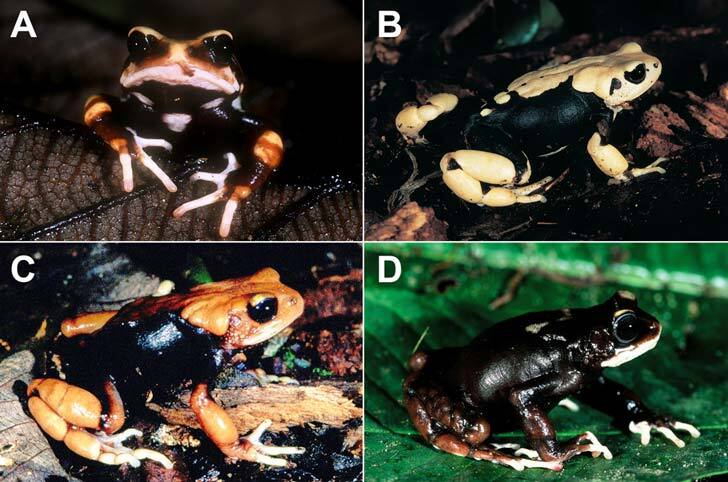
Instead of laying eggs in ponds, the females fertilize their eggs internally and give birth to live “toadlets” — a process which skips the tadpole phase altogether.
The toad broods are much smaller than their egg clutch counterparts — around 40 or 60 toadlets instead of numbers in the thousands.
“The maximum we’ve ever recorded was, I believe, over 160 fully developed toadlets inside one individual,” Scherz said.
Still, the herpetologist estimates that those toadlets have a higher chance of surviving to adulthood.
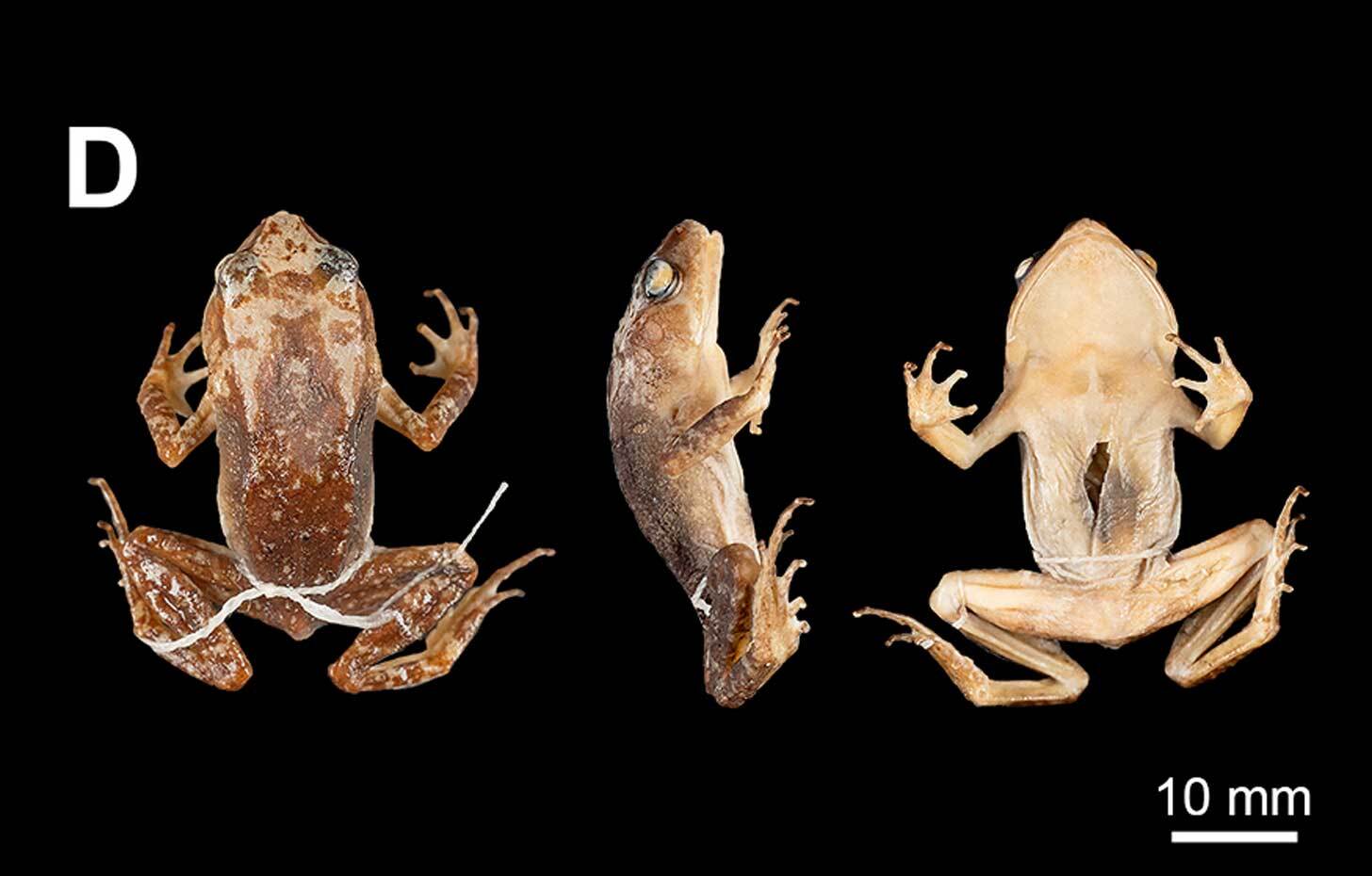
When studying the museum specimens, some were more than 100 years old. Remarkably, several female toads still contained “large yolky eggs” and partially developed embryos that confirmed evidence of live toadlet births.
“There’s no question that this is now correctly assigned,” Scherz said. “It’s really a game changer.”
In their conclusion, the researchers invited further study of the many Nectophrynoides species at large, and how their most vulnerable populations have been affected by climate change and deforestation.
“Further surveys are needed to fully understand the distribution, ecology, and possible population trends in these areas to inform future conservation strategies,” the authors wrote.
Conservation ecologist Dr. Diego José Santana, who works as a curator of amphibians at Chicago’s Field Museum of Natural History, said that this latest research was revelatory to his field.
“Describing these new species that give birth to live young is fascinating and helps us understand the evolutionary flexibility of amphibians, one of the most diverse and ecologically sensitive groups of vertebrates,” Santana told CNN.
“[This work] underscores the importance of continued investment in taxonomy and natural history collections,” he continued. “Working at the Field Museum, which holds specimens from all over the world, I’m constantly reminded that many new species are still waiting to be recognized.”
You may also like: Nature survey in tropical paradise leads to new species of 'diamond-eyed' toad
Header image via Judy Klimek (CC BY-SA 3.0)
When Jackson Farmer was in kindergarten at Red Cross Elementary School in Glasgow, Kentucky, one of his teachers noticed that he would often come to school wearing a rubber hand.
Farmer was born without a right hand, and the rubber device didn’t give him any functionality, but it did provide the appearance of having a hand.
That teacher, Scott Johnson, is a science, technology, engineering, art, and mathematics educator at the school, working in a lab environment for every student, whether they’re in kindergarten, all the way up to sixth grade.
As he followed Farmer’s educational journey over the years, they grew a special bond.
“The first year we met, he was a kindergartener and he cracked a joke at me, ‘Hey, do you need a you need an extra hand?’” Johnson told WDRB News.
“And all of a sudden, he pulled off his silicone hand and started to hand it to me and I was like, ‘Oh, buddy.’ Like, he got me hooked, line, and sinker.”
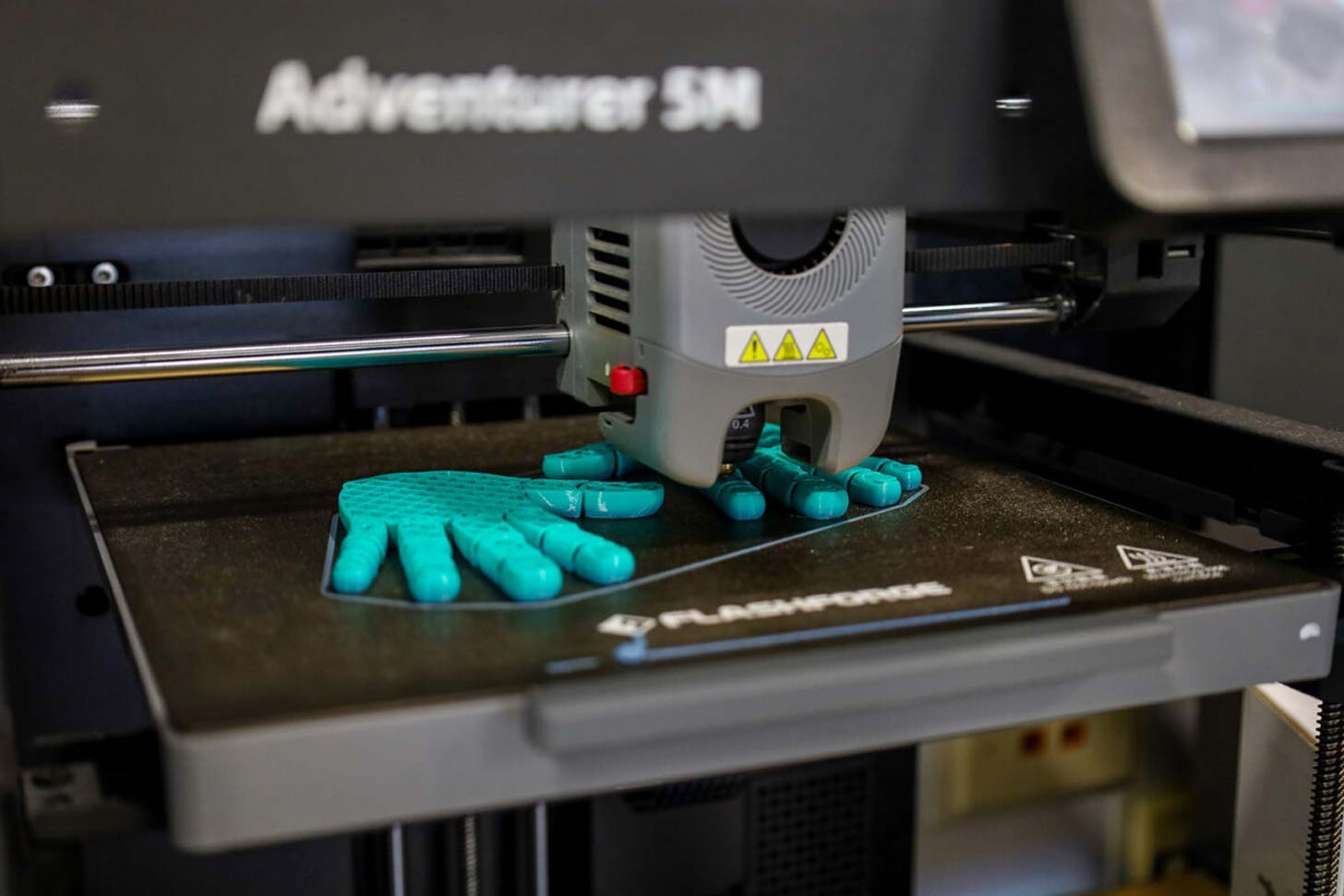
Part of Johnson’s STEAM curriculum includes 3D printing with students, and last year, he had the idea to start figuring out how to create a working prosthetic hand for Farmer in the school’s lab.
“I just started getting more curious and wondering if there was something that we could make here in the lab that he could actually use in his real life,” Johnson told WDRB News.
Whenever he had a free moment, he would work on developing the design, especially with the help of E-Nable, an online community of volunteers who use 3D printers to make free or low-cost prosthetics for children and adults with limb differences.
For about a year, he went through trial-and-error to create the right thing, even consulting with an engineer from Denmark to perfect the design files.
And he managed to keep it a secret the whole time.
“For the longest time, I didn’t tell anyone other than my wife what I was working on,” Johnson told Kentucky Teacher, a blog from the state’s education department.
“What if I found out I was trying to do something far beyond my skill set? I didn’t want to falsely get anyone’s hopes up.”
Eventually, he created a prototype and showed it to the Farmers, who — very excitedly — gave him permission to proceed with the final product.
That final iteration took 25 hours to print, with all of the parts needed for a full hand made right in the school’s STEAM lab. Once everything was accounted for, it took about four hours to assemble the hand. Instead of using batteries or electronic power, the 3D-printed prosthetic is a simple machine that moves by the power of Jackson’s wrist.
“I never wanted him to feel like he had something heavy on his wrist; I want him to be able to play, so it’s pretty lightweight,” Johnson told Kentucky Teacher.

The fingers are attached to the hand with fishing lines, and a fulcrum lever helps them move. When Farmer flexes his wrist down, the fingers close. When he relaxes his arm, the hand opens up.
“It felt great. It felt like it was just right,” Farmer, who is now in fourth grade, said. “[My favorite thing is] trying to write [with the hand] … I’m not that good, but I try.”
The prosthetic was also printed out of a biomaterial — corn plastic — and features rubber fingertips on the outside and foam on the inside, so the device would be more comfortable on Farmer’s skin.
The total cost of the materials was between $20 and $30.
“It just makes me feel like, ‘yay, I get to do stuff on my own,’” Farmer told WDRB News.
It’s a newfound freedom that will help him continue through school with ease. And it’s been a game-changer for Johnson, too, who was named the 2025 Kentucky Teacher of the Year.
Although he was the brains behind Farmer’s new hand, it still provides a unique learning experience for the student.

If the prosthetic needs a repair, or if Farmer grows out of it, new pieces can be printed right in the school lab. (Farmer has reportedly already gone through three palms while playing rough at recess, and he also helped Johnson reprint a thumb for his prosthetic.)
“In the end, Jackson will be able to do all this work without me,” Johnson told WDRB News.
Farmer will have the printing files to reprint the hand on his own as he grows up and out of Red Cross Elementary School.
And Johnson will continue doing what he does best.
“All of my students, all of their backgrounds and their different ability levels, can create in our space,” the teacher said when he was named Teacher of the Year.
“We don’t treat our content as a subject or a means to a grade, but rather as information for life. This is especially crucial as we try to dissolve the barriers between our school and the real world.”
You may also like: Meal time was extra challenging for this disabled first grader, so a lunch lady made him a custom 'cafeteria cart'
Header image by Fiona Morgan/Kentucky Department of Education
A 2024 study published in the Journal of Positive Psychology found that the way people engage with art is related to their sense of meaning in life.
Spurred from a desire to better quantify the value of art beyond aesthetic pleasure, researchers were curious to investigate art’s cognitive contributions, as well.
“I am broadly interested in studying meaning in life,” said the study’s author, Joshua A. Wilt, a senior research associate at Case Western Reserve University, in a statement.
“I’m also interested in how involvement with art may result in deeper existential and spiritual understandings. It seemed that the logic underlying the overarching hypothesis of this project was a merging of those interests: If art can lead to increased understanding, perhaps specific experiences with art would relate to higher levels of meaning in life.”
To test this hypothesis, Wilt and his team conducted two studies.
The first included 300 participants equally split into three samples: undergraduate students with some art experience, students interested in art, and individuals affiliated with art schools and art organizations.
Participants took an online study that measured their levels of interest in art and also included a “Multidimensional Existential Meaning Scale” to measure their overall sense of meaning in life.
The survey assessed knowledge about art, as well as things like the importance of religious beliefs in a person’s daily life, which could influence the primary relationships being studied.
The second study recruited a larger and more diverse sample of over 1,800 participants, with a wide range of art experience. These participants took the same survey.
Researchers found that a deep connection to art — especially for those with ties to the art industry — correlated highly with their sense of meaning in life.
This suggests that art expertise results in an even more significant sense of meaning and purpose.
“I was surprised that awe emerged as a much stronger predictor of meaning in the sample of artists with high levels of formal training as compared to the other samples in Study 1,” Wilt told PsyPost.
Wilt said he hopes to continue to study other variables, but “ultimately,” he said, “I think that this is a starting point for understanding how involvement with art may contribute to more meaningful lives, which could be practically significant, and maybe particularly so in clinical and counseling settings.”
You may also like: Writing — even just making a to-do list — rewires the brain, studies show
A version of this article was originally published in The 2024 Art Edition of the Goodnewspaper.
Header image by Antoni Shkraba Studio/Pexels
In 2014, Michelle Poler moved to New York City for graduate school and found herself more anxious than ever.
Instead of trying to gain control of every situation in her life, she decided to surrender to the fear and let it lead her. So she started a blog and project called 100 Days Without Fear.
For 100 days, she confronted her biggest fears head-on.
They ranged from small ventures like reading negative comments on her blog or going camping, to big adrenaline surges like skydiving or giving a TEDx Talk.
That Talk — which started as one of her most looming anxieties — led her to a creative, successful career in public speaking.
“From that day on I decided to dedicate my life to encourage as many people as possible to start living a more fulfilled lifestyle by speaking at schools, organizations and companies all over the world,” Poler writes on her website.
In the decade since, the fear-confronting social movement she started has reached over 70 million people across the globe, and she has released a book (aptly named “Hello Fears”) to empower people to step outside of their comfort zones to truly thrive.
“I’m telling you, after facing 100 fears, not even one time the actual challenge was worse than what I had in my head before,” Poler said in her 2015 TEDx Talk.
“I don’t believe in absolute fearlessness, but I do believe that we can negotiate with our fears as a way to pursue our dreams and open ourselves to new experiences that we never even considered.”
You may also like: The secret to confronting political division and anxiety? Feeling like we actually matter
A version of this article was originally published in The 2024 Courage Edition of the Goodnewspaper.
Header image courtesy of Michelle Poler/Hello Fears
According to the United Nations Environment Programme, approximately 60% of all materials used by the fashion industry are made from plastic. Those polyester stretchy pants you love so much?
They can take up to 200 years to naturally decompose — the same as a plastic straw.
But science is embracing new technologies to make our clothes from materials that are biodegradable and less taxing on the environment from start to finish.
One such example is Keel Labs.
The startup was founded by Aleks Gosiewski and Tessa Callaghan while they were studying at the Fashion Institute of Technology.

The two bonded over their shared frustration with textile waste and began the search for a substance that met their criteria: It had to be able to be turned into a fiber, be an abundant and naturally occurring resource, and have existing supply chains.
Eventually, they turned to the ocean, and that’s where they found their match in kelp.
“Seaweed is one of the most regenerative organisms on our planet and absorbs carbon dioxide in the ocean, similar to trees on land,” Keel Labs explains on its website.
“We combine this with our proprietary formulation to create Kelsun, a bio-based fiber that can be used across non-wovens and traditional textiles industries.”

Kelsun is an all-natural, biodegradable material that is turned into yarns and non-woven textiles like felt. It is naturally flame-resistant and does not contain or create microplastics.
Keel Labs has begun working with brands like Stella McCartney and Outerknown and have released other items like T-shirts and vests, all made from the Kelsun material.
“We need to get creative and innovative with alternatives, moving beyond the limited materials that the industry has been working with traditionally,” McCartney said at COP28.
“If we can work collaboratively with these goals, we can actually begin doing business in a way that regenerates our planet instead of only taking from it.”
You may also like: Woman transforms clothing waste into building materials to solve 'global south housing crisis'
A version of this article was originally published in The 2025 Fashion Edition of the Goodnewspaper.
Header image courtesy of Chris Stenger on Unsplash and Keel Labs
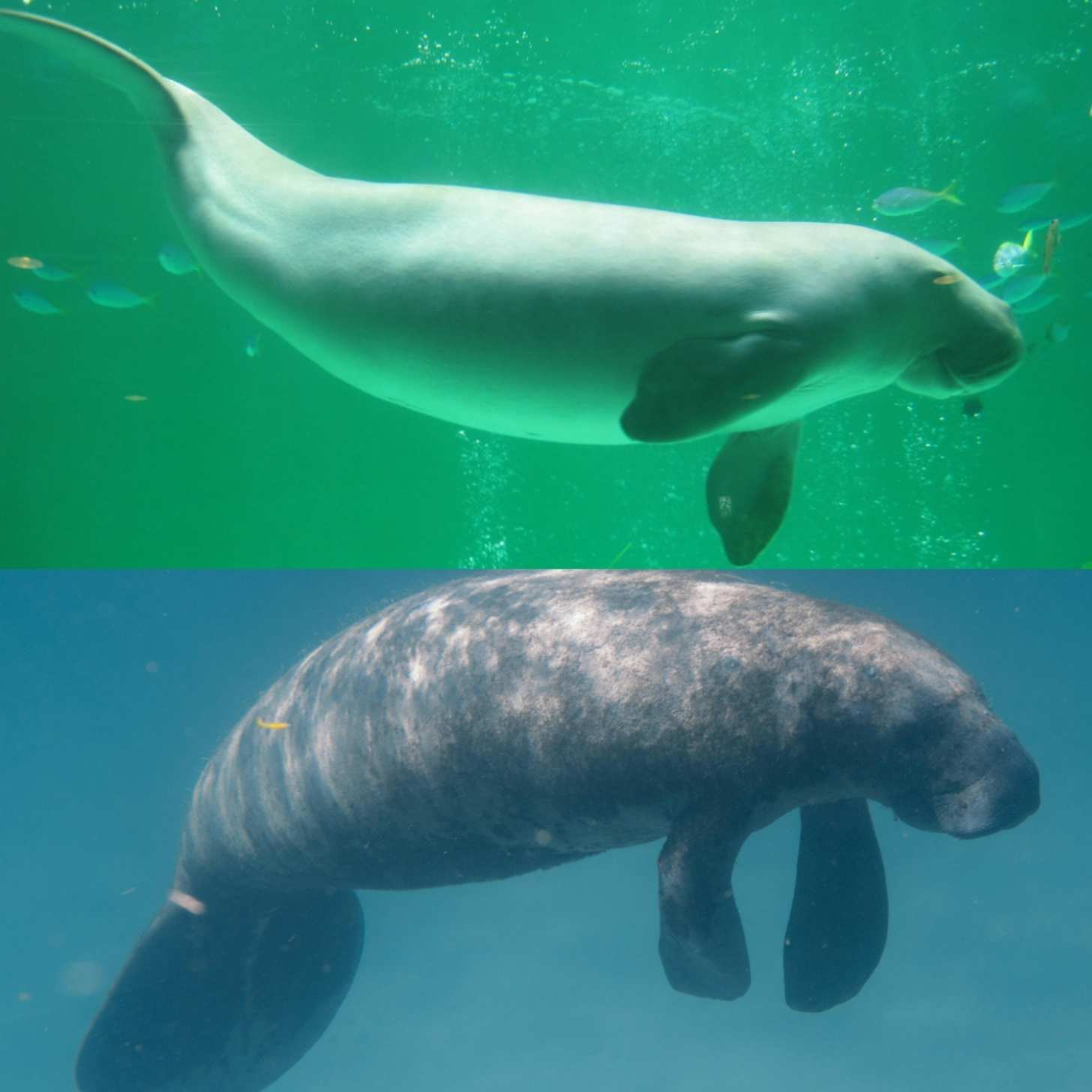
As gentle giants who both graze in the tranquil coastal shade of seagrass meadows, manatees and dugongs share the cheeky nickname: “sea cows.”
Dugongs and manatees, who are close relatives, both share a downturned snout, sensitive bristles, and a large, torpedo-shaped body.
The one key difference between the two is their tails. The dugong's tail flukes and flippers look more akin to a dolphin’s, while a manatee’s tail is rounded like a paddle.
Still, despite that physical likeness, manatees and dugongs are more closely related to elephants, aardvarks, and rodent-like hyraxes than they are to other ocean animals.
And now a new study is further illuminating the ancestry of the dugongs, thanks to a treasure trove of fossils uncovered in southwestern Qatar.
The research was co-authored by Nicholas Pyenson, the curator of fossil marine mammals at the National Museum of Natural History.
“We discovered a distant relative of dugongs in rocks less than 10 miles away from a bay with seagrass meadows that make up their prime habitat today,” said Pyenson, whose research was published in PeerJ on December 10.
“This part of the world has been prime sea cow habitat for the past 21 million years — it’s just that the sea cow role has been occupied by different species over time.”
By eating roughly 10% of their body weight in seagrass each day, manatees and dugongs help maintain the health of sea grass beds — which in turn capture carbon and house vulnerable marine life.
They also help the environment by pooping in these underwater habitats, a natural fertilizer that recycles nutrients back into the ocean.
“We know today that many marine mammals can have a disproportionate impact on ocean ecosystems. [But] we don’t know how long that’s been going on,” Pyenson told Smithsonian magazine.
“So, this is one of the first times, I think, we can point and say, ‘Gosh, this has probably been going on for tens of millions of years.’”
As a co-author of the new paper, Ferhan Sakal said that the fate of the ancient manatee’s relatives are “preserved in the region’s rocks.”
“The area was called ‘dugong cemetery’ among the members of our authority,” said Sakal, who works as head of excavation and site management at Qatar Museums. “But at the time, we had no idea just how rich and vast the bonebed actually was.”
Sakal said that by studying the past, archaeologists and marine biologists can better predict — and prevent — climate-related problems of the future.
They can also better understand the important role that vulnerable populations of dugongs and manatees still play today.
“If we can learn from past records how the seagrass communities survived climate stress or other major disturbances like sea-level changes and salinity shifts, we might set goals for a better future of the Arabian Gulf,” said Sakal.
You may also like: After a hurricane left countless manatees stranded, rescue crews jumped in to save the 'gentle giants'
Header image via David Hinkel
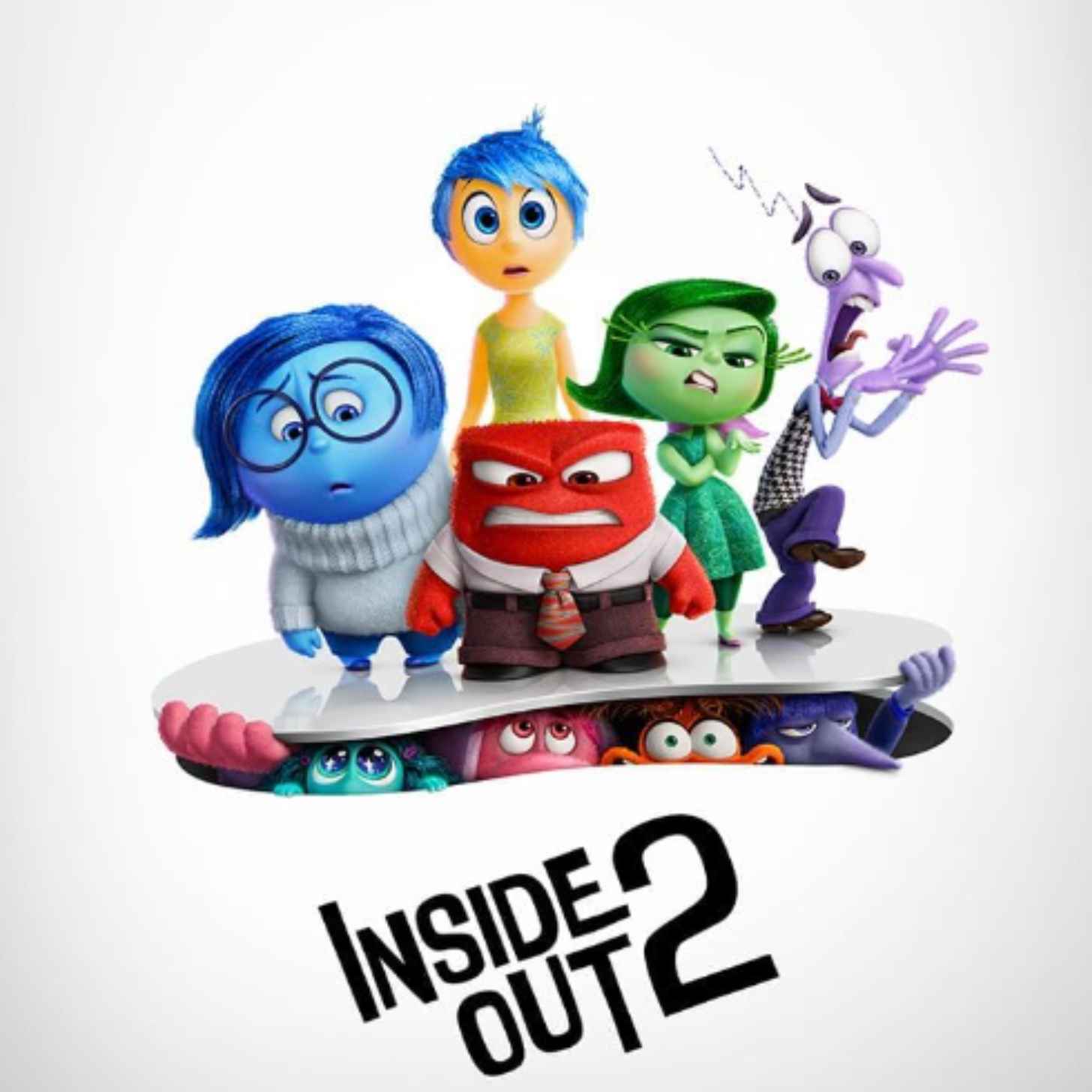
Regardless of age, there’s no denying the relatability of characters like Sadness, Disgust, or Anxiety in Pixar’s “Inside Out” movies.
In fact, beyond the vivid animation, heart-string-tugging score, and sing-songy dialogue delivered by Amy Poehler, the films have become a communication tool for therapists and educators.
“As therapeutic practice, it has become a go-to,” David A. Langer, president of the American Board of Clinical Child and Adolescent Psychology, told the New York Times earlier this year. “The art of ‘Inside Out’ is explicitly helping us understand our internal worlds.”
Snagging lines from the movie, using the characters’ emotive finger puppets to communicate with children, or placing figurines of the characters in front of a counselor to show which feeling is behind the “control panel,” the colorful cast of emotions makes the abstract concrete.
According to the New York Times, the movies’ creators didn’t go into the creative process trying to prove a point about mental health, but rather, thought it’d be fun to explore the personification of these feelings — almost like Snow White’s seven Dwarfs.
But as they began to write the script, bring these five big feelings to life, and — later — expand their world with a sequel, the impact became clear.
Meg LeFauve, one of the film’s writers, said she met a psychiatrist at the Academy Awards after being nominated for the first iteration of “Inside Out,” who told her the movie had made her job “so much easier.”
“It got me very choked up,” LeFauve told the New York Times. “Who needs an Academy Award? Honestly, to create something in the world that can be used for children in a moment of trauma is amazing.”
Willough Jenkins, M.D., who is a consultation-liaison psychiatrist at Rady Children’s Hospital in San Diego, said that the two movies have been wholeheartedly embraced by her team.
“One of the biggest messages the movie gave that I really appreciate is that there are no bad emotions,” Jenkins told Psychiatry Online. “Showing that it’s OK to express all your emotions … and that all your emotions have a role is very, very helpful for children and teenagers to see.”
A version of this article originally appeared in the 2024 Art Edition of the Goodnewspaper.
Header image via Pixar / Disney
A group of climate activists, led by tree-planting search engine Ecosia, has launched a campaign pressuring the Nobel Committee to recognize a Climate and Planetary Health Nobel Prize.
“When Alfred Nobel created the prizes, he wrote that they must serve the greatest benefit to humankind,” Ecosia CEO Christian Kroll said in a video statement. “Today, this means protecting the planet we all depend on.”
Currently, the Nobel Prize covers six categories: Physics, Chemistry, Peace, Literature, Economics, and Physiology or Medicine. Every year, winners, or laureates, receive a €1 million endowment, along with a medal or diploma honoring their achievements.
Kroll said Ecosia is prepared to cover the first endowment of €1 million (about $1.17 million USD) and would be “open to extending its support over time,” while also encouraging other institutions to support the prize for long-term financing.

“I recently went to the notary here in Berlin to commit an initial €1 million toward a new Nobel Prize, the Climate Nobel Prize,” Kroll said. “We've contacted the Nobel Foundation to explore making it real.”
An Instagram post shared by Ecosia added, “The funds are ready to go … if the Nobel Committee agrees.”
The Royal Swedish Academy of Science is responsible for selecting the Nobel Prize winners in physics, chemistry, and economics every year, and it is this group that is being urged to create a first-ever award in Climate and Planetary Health.
How does a Nobel Prize actually help climate efforts? Kroll said it’s similar to the introduction of the economics award in 1969, which “reflected the priorities of that era.”
A climate prize, he suggests, would do the same.
“A Climate Nobel Prize would give climate leaders and innovators the same recognition as other Nobel laureates,” Kroll said. “[It’s] an acknowledgement that inspires courage, creates urgency, and drives momentum for solutions. It would not just be a symbol, but could truly shift how the world values climate action.”
Ecosia shared that if the Nobel Foundation were to adopt a climate prize, Ecosia would have no influence over nominations or laureates, but it does seem to want to play a role in building out criteria for the prize.
“We propose three initial categories of recognition and remain open to refining these in close dialogue with the Nobel Foundation and relevant institutions,” a web page shared.
Those three proposed categories, according to Ecosia, are as follows:
- Pragmatic Governance: For implementing smart, effective policies that accelerate proven solutions and provide long-term stability.
- Scaling Prosperity & Markets: For scaling innovations and business models that create sustainable prosperity at unprecedented speed.
- Building Common Ground: For uniting diverse perspectives to create shared, practical solutions and empower communities.
In addition to the very real €1 million offer and a preliminary outline for the prize, Ecosia has created a symbolic gesture as well.
“At every Nobel ceremony, each laureate takes their place on an iconic blue chair. This year, we handcrafted one more, a chair that is still empty, waiting to honor the people who protect life on Earth,” Kroll said.

On its website, Ecosia emphasized the need for a “seat at the table,” calling a recognition of climate work “the missing prize of the 21st century.”
This effort is not just backed by Kroll and his climate-friendly search engine. A number of climate activists have pledged their backing as part of the campaign.
“An award for climate and planetary health would encourage people worldwide to build solutions, improve policy, and mobilize communities to take action,” climate activist Luisa Neubauer said. “It is long overdue for the Nobel tradition to finally recognize the greatest crisis of our time.”
“For me, one thing is clear: Transformation needs hope, encouragement, and role models,” Dr. Claudia Kemfert, an energy economist, added.
“A Nobel Prize for climate and planetary health would be exactly that — a global signal that climate protection secures the future and deserves the highest recognition.”
You may also like: When USAID cuts hit Jane Goodall's reforestation efforts, this search engine stepped in to save the day (and the trees)
Header image by Osama Shukir Muhammed Amin (CC BY-SA 4.0)
During and following the COVID-19 pandemic, chronic absenteeism in schools across the United States emerged as a serious challenge for schools and students.
Defined as students missing 10% or more of school, chronic absenteeism has risen nationwide. In the 2022-2023 school year, 20 states reported that more than 30% of their students missed at least three weeks of school.
While a multitude of factors contribute to why a student may not be able to make it to school, being absent too often can contribute to reduced academic outcomes, as well as making it difficult for students to engage with their learning goals, peers, and supportive adults.
Some solutions to improving school attendance include ensuring students have reliable and affordable transportation, knowing when it’s safe for kids to attend school after being sick, and sending text messages to parents when kids miss school.
Another solution has been found in peer-support efforts, which one school in Denver, Colorado, has found especially effective.
KIPP Sunshine Peak Academy, a fifth- through eighth-grade school in Denver, implemented an “Off the Wall Attendance Incentive” program in November 2024. In the last year, the school saw its chronic absenteeism rate plummet from 50% to 23.7%, approaching its target of under 20%.
“The root cause of the learning gap is called the opportunity gap. And so, what that means is students need to have the opportunity to learn,” Alana Raybon, the school’s principal, told Denver 9 News. “If they're not here, then they can't learn.”
The new program includes a multi-pronged approach to getting kids in class.
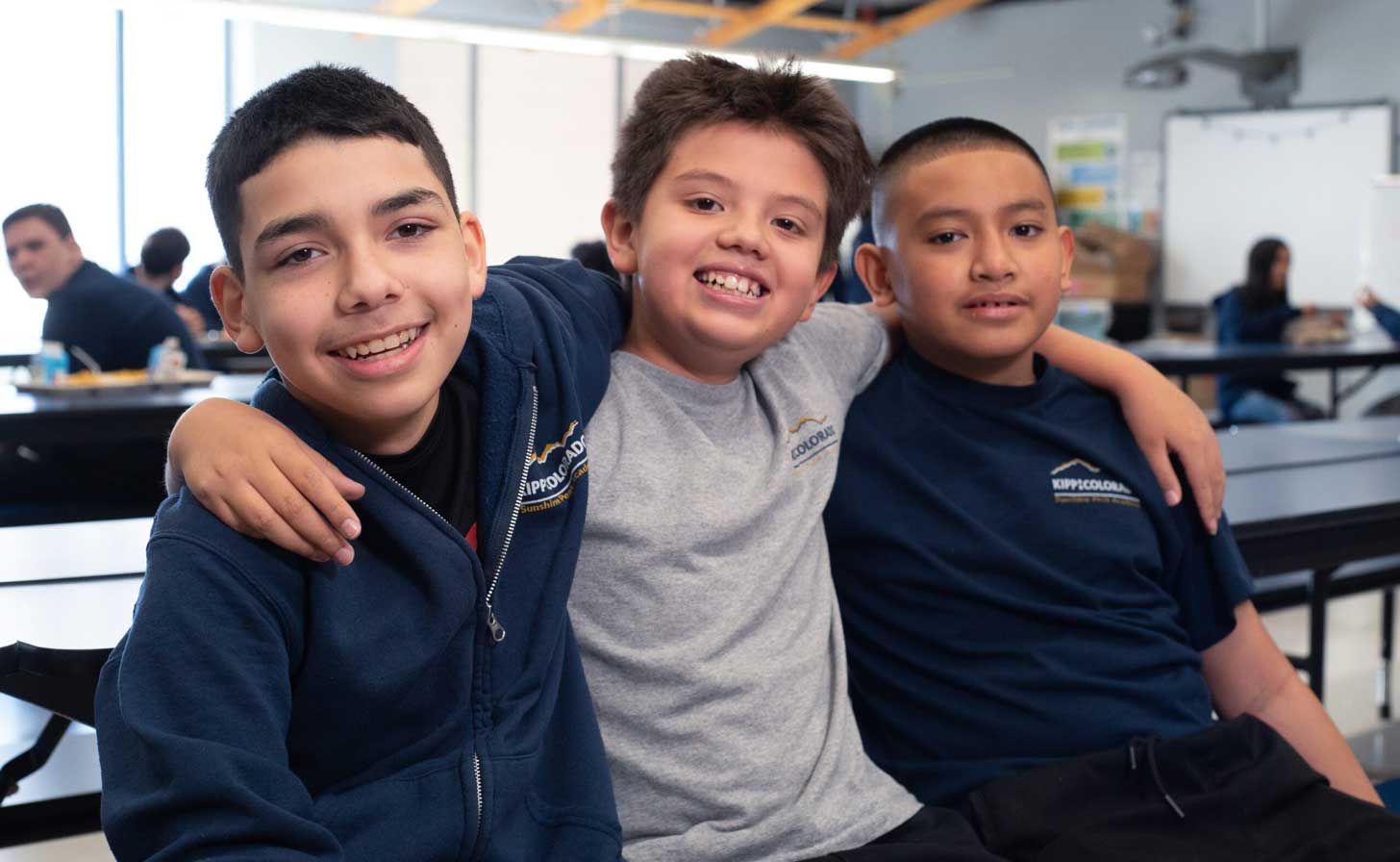
First, students were paired with an “accountability buddy” to encourage each other to attend school. Students also created custom attendance plans with staff, which include a myriad of incentives they can earn when they meet their goals.
Incentives include T-shirts, special drinks and snacks, activities like having more social time at recess, catered lunches, and even the opportunity to “pie” a teacher at the end of the semester.
Students operate in a “stick to six” model, which encourages them to miss six days or fewer per semester. They track their attendance progress and take those trackers home to their families, too.
“At KIPP Colorado, we believe showing up matters, and we’re making it fun, rewarding, and worth celebrating,” a recent video from the school shares. “Off The Wall Attendance celebrates and rewards students for their commitment. Our students took ownership of their attendance like never before.”
In the video, students are seen gathering for an assembly in which they get to throw a generously whipped cream-topped pie in the face of one of their teachers.
That teacher, later filmed wearing a poncho covered in frosting, exclaimed, “Yay for attendance!”
The prizes are fun and definitely incentivize participation, but the peer-to-peer approach is what gets them to the finish line.
“My attendance was really bad last year, so this helped me with my attendance going up,” eighth grader K’layia Grays told Denver 9 News. “It’s helping my grades; therefore, I will be able to go to high school, and I will be able to become what I want to be.”
Her accountability buddy is Julianna Torres, who also struggled with attendance before having a friend and a morning routine.
“We call in the morning and get ready on the phone together,” Grays said. “And then she walks to my house, and then we walk to school together.”
The school, which has about 300 students, now averages above 92% daily attendance. Before implementing the program, that rate was about 85%.
Angelica Ramirez, the school’s dean of operations, said the peer-to-peer method was more effective than adult intervention alone.
“It was very nice to have a peer who is in the same classrooms, the same setting, the same environment, to tell you, ‘Hey, I want you here to be in class with me,’” she told Denver 9 News.
“This program isn’t just about prizes. It’s about building strong habits, accountability, and a culture where attendance equals success,” Paige Mathieson, the school’s assistant principal of operations, added in the video.
“We are committed to ensuring that every student has the support they need to show up and thrive.”
You may also like: The secret to getting kids off their phones? A homework assignment that sends them into the real world
Header image courtesy of KIPP Colorado Schools
Jonathan Taylor is a musician based in Dallas, Texas. For years, he struggled with suicidal ideation and was slowly running out of reasons to stay. But his trajectory suddenly shifted when he walked into Club Dada in Deep Ellum, Dallas and saw people handing out guitars for free.
“I wasn't expecting this at all,” Taylor told WFAA Dallas. “This is, like, going to be one of the best days of my life right here.”
That was the day Taylor met Amplified Minds, a nonprofit that offers counseling and treatment for depression and addiction in the Dallas area.
Their official slogan is “Life Fast. Die Old.”
The nonprofit was born out of tragedy, after drummer Anthony Delabano lost both of his bandmates (Frankie and Adam) to suicide in early 2011. The nonprofit started under the name “Foundation 45,” as a nod to their band, Spector 45.
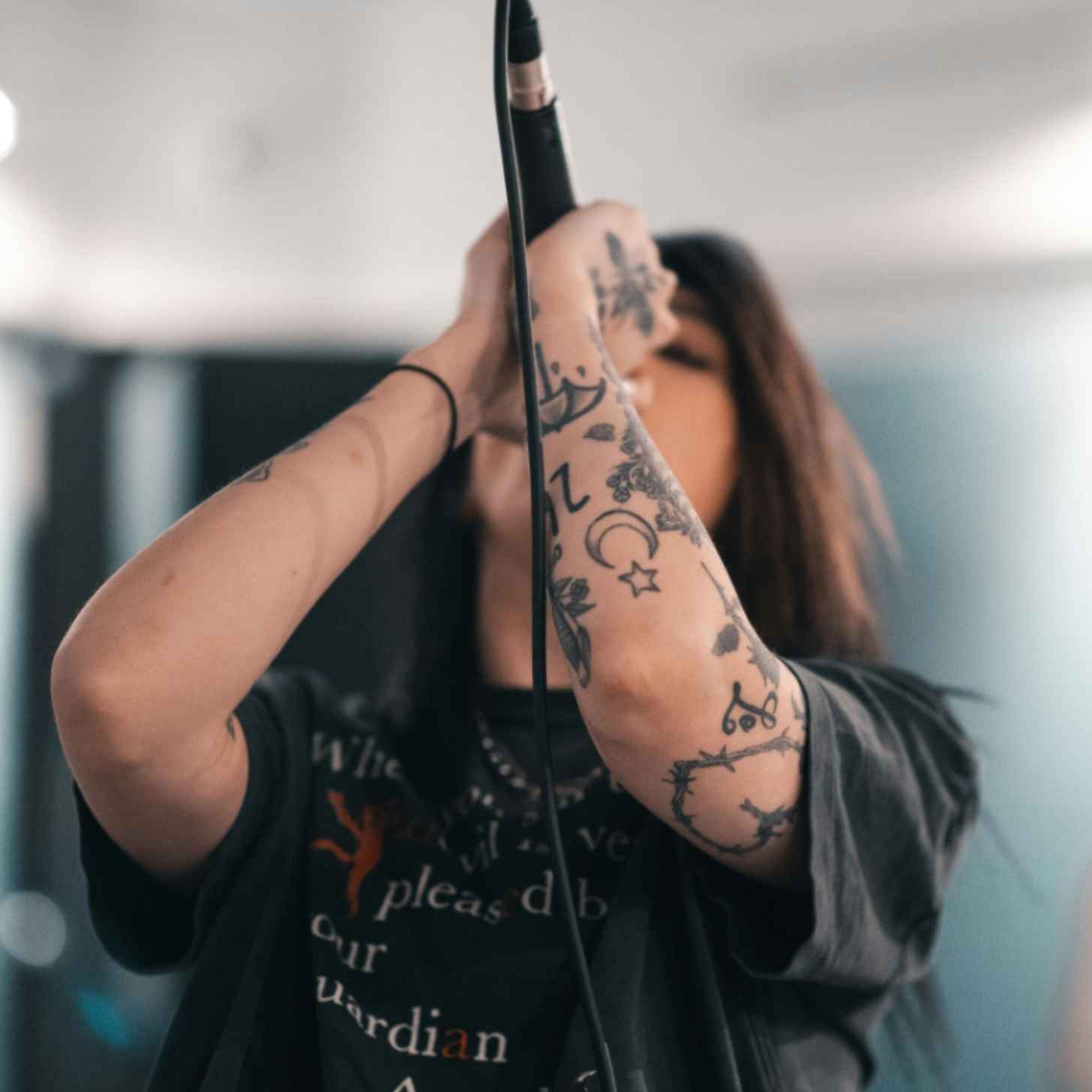
Over a decade later, his bandmates live on in a local mural that Frankie’s father painted. They also live on in the work that Delabano does daily in the Dallas community.
Taylor met Delabano on Art of the Guitar day, an Amplified Minds fundraiser where artists hand out free instruments and gather to paint, sculpt, and play.
To date, Delabano counts 4,000 people who have attended events, shared their stories, and thanked the nonprofit for keeping them going.
“Now, looking back, it's 4,000 people, and it's hard for me not to cry,” Delabano said. “All the people that would have been impacted — 4,000 families — they're OK now.”
A version of this article originally appeared in the 2024 Art Edition of the Goodnewspaper.
Header image via Rulo Mora / Pexels
In 2023, the Biden administration began tearing down the border wall between the U.S. and Mexico to start construction on a taller one.
Although Biden campaigned against the border wall in 2020, the President released a press statement in October 2023 that he was required by law to continue certain wall construction because Congress had already appropriated money for it in 2019.
However, as the original walls were destroyed, locals protested, knowing that the wall was more than just slabs of concrete and steel — it was home to community bulletins, missing person posters, and hundreds of colorful murals.
Over the last 25 years, photographer Maria Theresa Fernandez has seen the wall’s evolution firsthand.
“Since I started, I had this feeling that this object, this wall, was alive,” Fernandez told KPBS. “I saw, during all this time, that it was changing.”
Soon, activists like Fernandez gained the attention of the Museum of Us, an anthropology museum based in San Diego. In March 2024, the museum worked out a deal with the Customs and Border Protection to attain 20 sections of the wall before they were torn down.
Now the murals await a second life as a public art installation. But as the museum deliberates its future, they also want to acknowledge its past.

In fact, the border between San Diego and Tijuana doesn’t just separate two nations. It separates three: the United States, Mexico, and the homeland of the Kumeyaay people.
“We originally inhabited the area from down around Ensenada up to Capistrano,” said Brandon Linton, member of the Kumeyaay Nation. “The U.S.-Mexico border, from its conception, split our homeland virtually in half.”
By salvaging the border wall murals, Linton hopes that the museum will also take the opportunity to shed light on the region’s forgotten history.
“I think this project is a great way to bring attention to that,” Linton said.
Although the art is not currently available to the public, it is in safe hands.
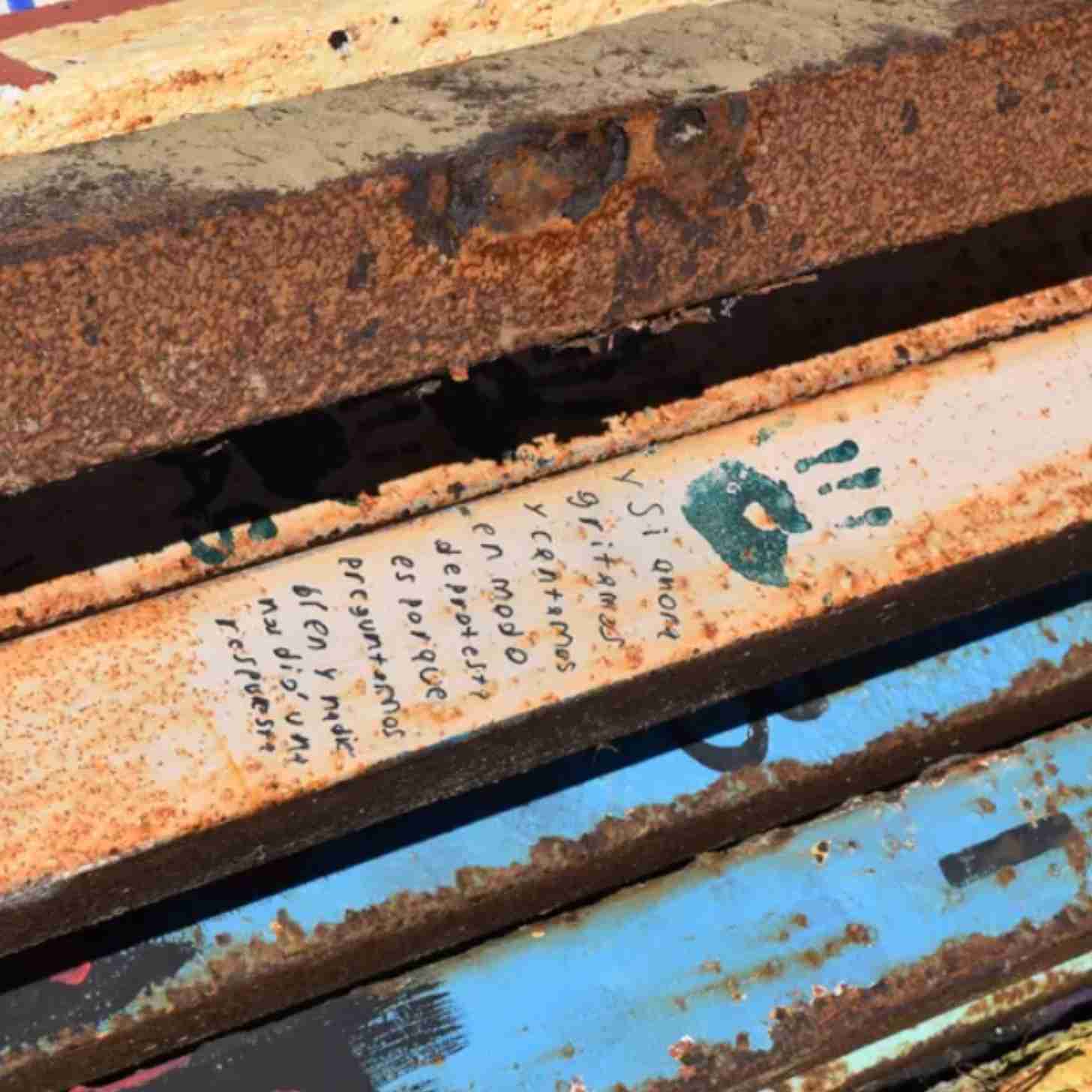
As of 2025, the Museum of Us has released this statement on its status: “During the spring of 2024, the project entered a year-long community engagement phase. This process is driven by a Community Advisory Council, which includes community members, activists, and artists from both sides of the border.”
“The council will make several key decisions about the redistribution of these cultural resources back into our larger region,” the Museum of Us stated. “More information about the Border Wall Preservation Project will be announced as decisions are made by the Community Advisory Council.”
A version of this article originally appeared in the 2024 Art Edition of the Goodnewspaper.
Header image via The Museum of Us
Imagine floating towers teeming with lush greenery that look out over clean waterways overflowing with wildlife. As you glance down, you realize pedestrians outnumber cars — which fly on renewable energy — and people mill about in community gardens and meeting spaces as plants and solar panels alike drink in sunlight.
Welcome to the dream world of a “solarpunk” city.
Solarpunk is derived from cyberpunk, a genre of speculative fiction that was coined by author Bruce Bethke in 1983 with the release of his sci-fi short story of the same name, which follows a group of young rebel hackers.
From there, cyberpunk spawned a slew of futuristic aesthetics, ideals, and stories. But solarpunk — a term which first sprang up online in 2008 — goes a step further than cyberpunk, and its fantastical subgenre steampunk, by encapsulating not just a style or genre, but an entire social movement.
Jay Springett is the co-administrator of solarpunks.net, a website that curates articles, stories, and artwork that are representative of the movement. Spend a minute scrolling on the site and common themes will emerge: rewilding efforts, gardening methods, rainwater harvesting, visible mending practices, and so much more.
“I have always considered solarpunk to be focused on the practical as opposed to the wishful thinking,” Springett told Built In, a Chicago software company. “And it’s a discussion that’s becoming more and more prominent.”
Visually speaking, solarpunk is packaged in bright, eco-friendly optimism, but beneath the surface, it emphasizes practical, actionable steps toward sustainability and self-sufficiency.
Although “greener” designs are synonymous with the aesthetic, it’s not a style without substance. When architects and interior designers lean into eco-aesthetics while ignoring sustainability and affordability, they fail to capture what solarpunk is at its core.
For instance, a corporate office wallpapered with living plants, or a skyscraper lined with garden balconies, are not inherently solarpunk on their own. Especially when those aesthetic choices outprice employees and building residents.
“If your rendering of the future has no people in it,” Springett said, “it’s not solarpunk.”
Human relationships are at the center of the movement. Unlike its sister genres, solarpunk doesn’t worship or, alternatively, demonize technology — it instead asks how we can utilize tech to improve humanity.
Springett said it’s all about the “possibilities of changing power relations through changing technology.”
In fact, one of the principles of solarpunk relies on decentralizing social media and creating community-centered networks that could survive even the worst natural disasters.
But solarpunk doesn’t steep itself in “climate doom” and nihilism. The entire movement is based on the idea that people are resilient — and the world can be a brighter place — if we build it together.
The artwork and fiction inspired by the solarpunk movement are rooted in a distant future. But Springett said the real movement is happening right now, as people reach out to each other in search of practical solutions for the problems of today.
“The real thing for me within the communities is the dialogue that happens in the comments, on Discord or in Slacks, between authors and fans and other people,” he said.
Community appears to be a common thread of the movement, and Adam Flynn would agree. In 2014, the San Francisco-based artist “wrote the book” on solarpunk — literally.
In “Solarpunk: Notes toward a manifesto,” Flynn said: “Our futurism is not nihilistic like cyberpunk and it avoids steampunk’s potentially quasi-reactionary tendencies: it is about ingenuity, generativity, independence, and community.”
“Solarpunk,” Flynn concluded, “is a future with a human face and dirt behind its ears.”
A version of this article originally appeared in the 2024 Art Edition of the Goodnewspaper.
Header image via Allweather Roof (CC BY-NC 4.0)