Abebech Gobena led an incredible life: after escaping from a forced marriage as a child bride, Gobena went on to become a huge icon in Africa. In Ethiopia, she took her experiences and built an orphanage, schools, a hospital for women and children, vocational training centers and wells, and more.
Ms. Gobena is frequently referred to as the “Mother Teresa of Africa.”
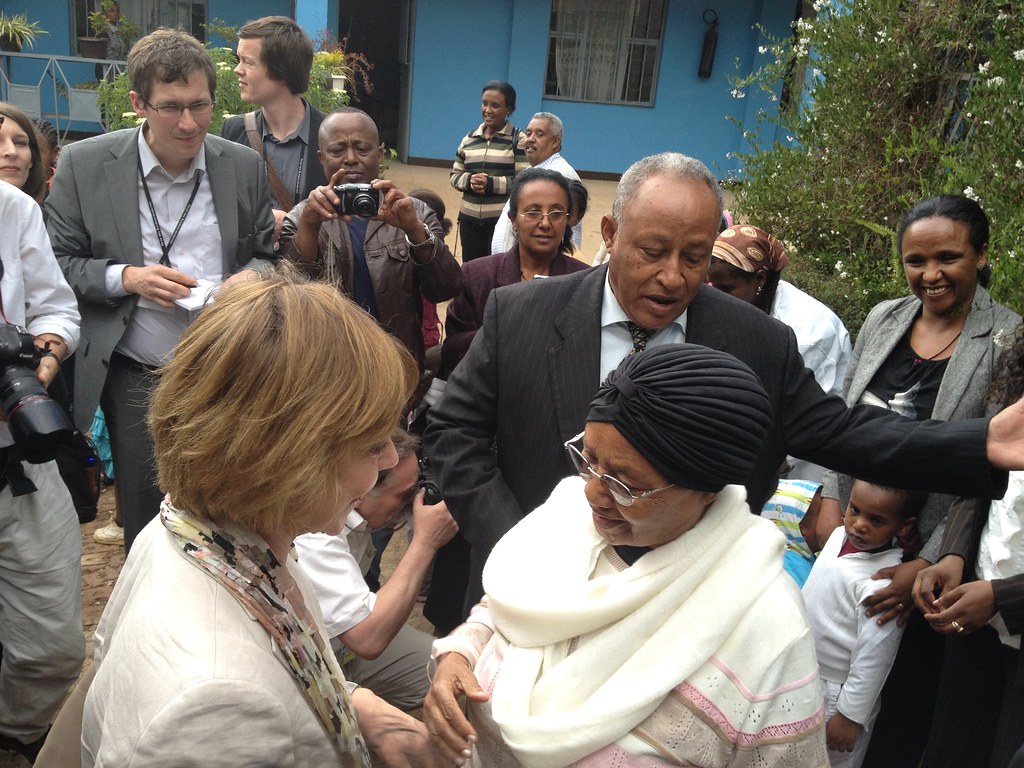
Ms. Gobena died of complications from COVID-19 on July 4th in the capital city of Addis Ababa; she was 85-years-old. She dedicated the majority of her life to serving others and her impact is well-documented. According to an account of her life, Ms. Gobena has taken in at least 21 orphans throughout her travels across Africa.
“One of the men dying by the side of the road said to me, ‘This is my child. She is dying. I am dying. Please save my child,’” Abebech Gobena recalled. She did save the child, and thousands more from starvation in Ethiopia. https://t.co/V8yKVeLmJl
— NYT Health (@NYTHealth) August 5, 2021
She also built a nonprofit organization that, according to the Washington Post, served thousands of children, provided shelter, sustenance, and schooling. They also offered skill training (like sewing and plumbing), dispensed grants, repaired homes, built latrines, and provided HIV/AIDS prevention and medical care.
“Abebech Gobena was one of the most selfless and pure-hearted people I ever met,” Tedros Adhanom Ghebreyesus, the director general of the World Health Organization and a former Ethiopian minister of health, said in a statement according to the Washington Post.
“She helped many children not only to survive, but succeed in life. Starting with two orphans she brought home during the famine in the 1980s, she grew a large family, even at times to the detriment of her own.”
After a lifetime of making the world a better place, Ms. Gobena’s legacy will live on through her humanitarian work and endless compassion for others.
On a single night in January 2018, more than 37,000 veterans were experiencing homelessness, making up about 9 percent of all homeless adults, according to the National Alliance to End Homelessness (NAEH).
While homelessness isn’t the reality for most veterans, any veteran experiencing homelessness is one too many, and veteran homelessness has posed a significant challenge to city leaders in the United States. But noteworthy progress has been made in housing veterans across the country.
Through the Department of Veterans Affairs’ Supportive Services for Veteran Families (SSVF) program, many veterans have connected with rapid re-housing, a bridge from homelessness to permanent housing in which housing is offered quickly, with temporary financial support and case management, and without conditions such as employment, income, absence of a criminal record, or sobriety.
In 2015 alone, the SSVF program helped nearly 100,000 veterans and about 35,000 children remain in their homes or quickly exit homelessness, according to NAEH.
Through the Department of Housing and Urban Development’s Veterans Affairs Supportive Housing program, many veterans have also been able to find permanent supportive housing. Since 2008, more than 114,000 homeless veterans have been served through the program, according to NAEH.
Certain communities are seeing veteran homelessness become a thing of the past entirely. The entire states of Connecticut, Delaware, Minnesota, and Virginia have effectively ended homelessness among veterans.
And in February 2019, officials from Abilene, Texas announced they had ended veteran homelessness in their community, too, making it the ninth city in the country to reach that goal through a national initiative called Built for Zero.
The program works with a data-forward approach that helps officials track people experiencing homelessness through a visual dashboard.
“It basically just forced us to continuously look to change improvements to our system and how to use real-time data to improve our performance,” said John Meier, the program manager for supportive services for veteran families for the West Central Texas Regional Foundation, to Fast Company.
“We’ve always had lots of data sitting around but haven’t had it in one place and [haven’t been] utilizing it to our advantage.”
By working with the data, the city of Abilene shrunk the average time to house a veteran from 40 days to 26.
Many cities and organizations point to a lack of resources to combat veteran homelessness, but the case in many communities is the right resources exist and can be mobilized with a strategic approach.
This story originally ran in The Veterans Edition of the Goodnewspaper in July 2019.
The Goodnewspaper is our monthly print newspaper filled with good news.
You can join thousands of subscribers who get access to more exclusive stories like these, our private community space, a free inspiring poster, and so much more.
Doing good is quite literally at our fingertips.
Here at Good Good Good, we know that sometimes the littlest efforts add up to effect big change. These iPhone, Android, browser, and desktop apps offer simple, quick, and convenient ways to help people, causes, and society in your everyday life.
Use these apps to make goodness a little more accessible for you, for others, and for the planet.
Learn more about these creative and impactful apps and get started downloading your favorites today.
The best applications you can download for environmental and social good:
1. Be My Eyes

Be My Eyes is a free app that connects people who are blind or experience low-vision with sighted volunteers for visual assistance through a live video call.
Sighted volunteers lend their eyes to solve tasks big and small — such as checking expiry dates, distinguishing colors, reading instructions, or even navigating new surroundings — to help blind and low-vision people lead more independent lives.
The app is available in more than 150 countries and more than 180 languages.
Download Be My Eyes on the App Store or Google Play
2. Too Good To Go
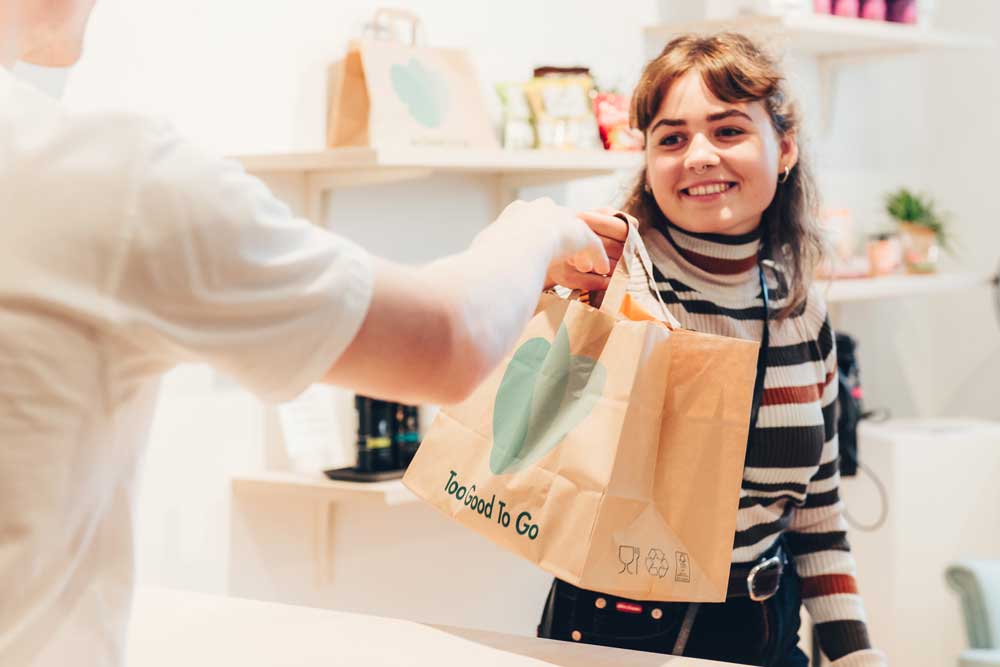
Each year, a third of all food produced in the world goes to waste. Food waste, when it ends up in a landfill, rots and produces methane, which is even more potent than carbon dioxide. Food waste is responsible for 8% of all greenhouse gas emissions.
Too Good To Go is on a mission to change this. Grocery stores, restaurants, bakeries, and cafes can let the app know when they're going to have leftover food. And hungry users can use the app to schedule pickups of a "Surprise Bag" of food at a significantly discounted price.
The grocery store, restaurant, bakery, or cafe will pack up a delicious meal of the fresh food they have left, and together the eater and business will have prevented that food from going to waste.
It's a great way to save money on eating out, support local, and save the planet.
Too Good To Go isn't available in every city right now, but they're committed to growing. The app is currently available in the U.S. in Portland, Seattle, Boston, Philadelphia, Washington, D.C., San Francisco, and New York City. Too Good To Go is also available in 15 international markets including France, the United Kingdom, Denmark, Spain, Germany, and the Netherlands
We reviewed Too Good To Go and walked through how to sustainably score great meals at a great price.
Download Too Good To Go on the App Store or Google Play
3. Tab for a Cause
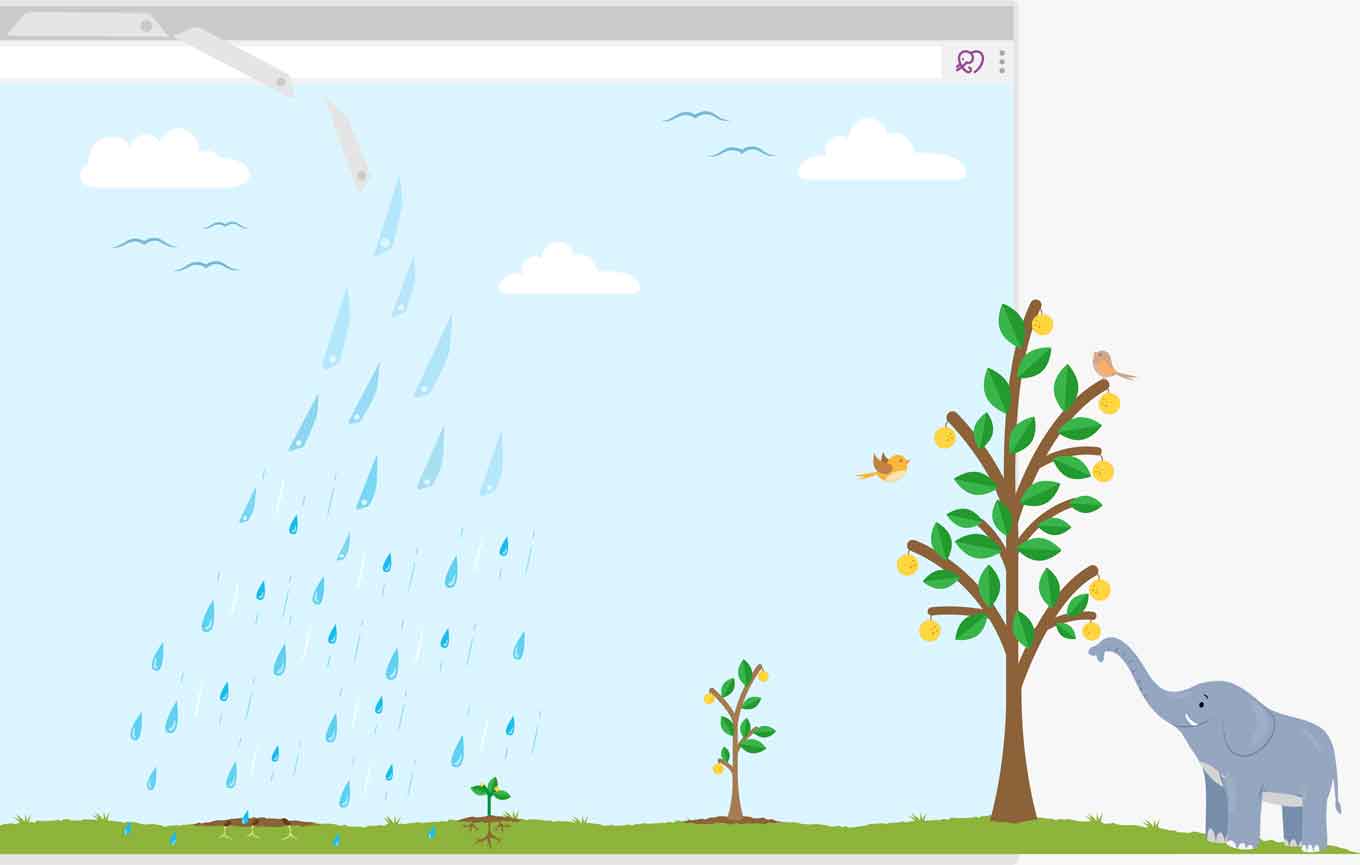
If you've ever wanted to donate to nonprofits without spending a dime of your own money, this app is for you.
Tab for a Cause is a free browser extension that allows you to raise money for charity every time you open a new browser tab. The app will transform your "new tab" page to include beautiful photos, a notes app, a to-do list — and — will display three (fairly non-obstructive) banner ads. Every time a banner ad is displayed, Tab for a Cause collects money from the advertiser, and the money goes to charity.
You can choose from a diverse range of dozen nonprofits to donate your funds to, including The Bail Project, Action Against Hunger, Save the Children, Water.org, and Human Rights Watch.
Users have already raised more than $1.3 million for charity. (Learn more about why Tab for a Cause is legit)
Install Tab for a Cause for Google Chrome, Safari, or Microsoft Edge in two clicks
4. Pretzly

Pretzly is a new, 1-on-1 audio meetup app. Inspired by recent events, including the Black Lives Matter movement and the Stop Asian Hate movement, its mission is to create a kinder, more united world through the joy of friendship and the tiny habit of connecting with those outside your everyday circle. With 1 daily curated intro and an on-the-go meetup format, Pretzly is designed as the easiest way to meet new people outside of a romantic or professional context.
Start your new routine to break routine and trade curiosity for possibility — in friendship, opportunity, and togetherness in the world.
Download Pretzly on the App Store
5. OLIO
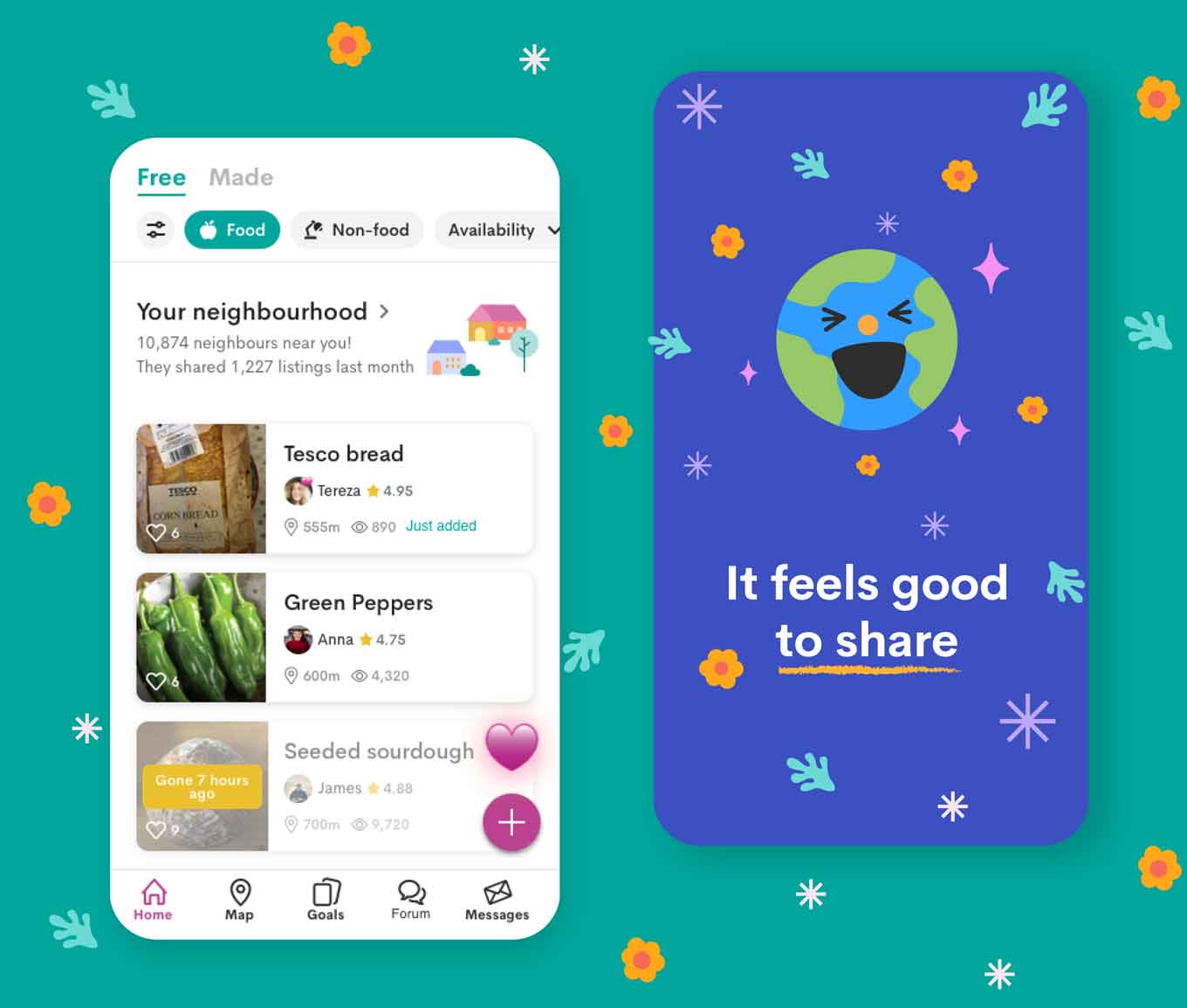
More than one-third of food is thrown away. And in developed countries, more than half of food waste occurs in the home. You have the power to change that.
OLIO is a free app that connects neighbors with each other and with local shops so surplus food and other items can be shared, not thrown away. To add a listing, simply snap a photo and upload a description and pick-up details. Getting food through the app is free.
Download OLIO on the App Store or Google Play
6. GiveTide
GiveTide is a free mobile fundraising app for donors and nonprofits. Users can connect their daily debit or credit card and opt-in to round up their spare change and donate that money to any charity in the U.S.
For example, if a movie costs you $11.89, the app would take the 11 cents to round it up to $12, and you give the 11 cents to a cause you care about. You can team up with friends and family to multiply your donations and share your fundraising goals through email, text, and social media.
Download GiveTide on the App Store
7. Aloe Bud
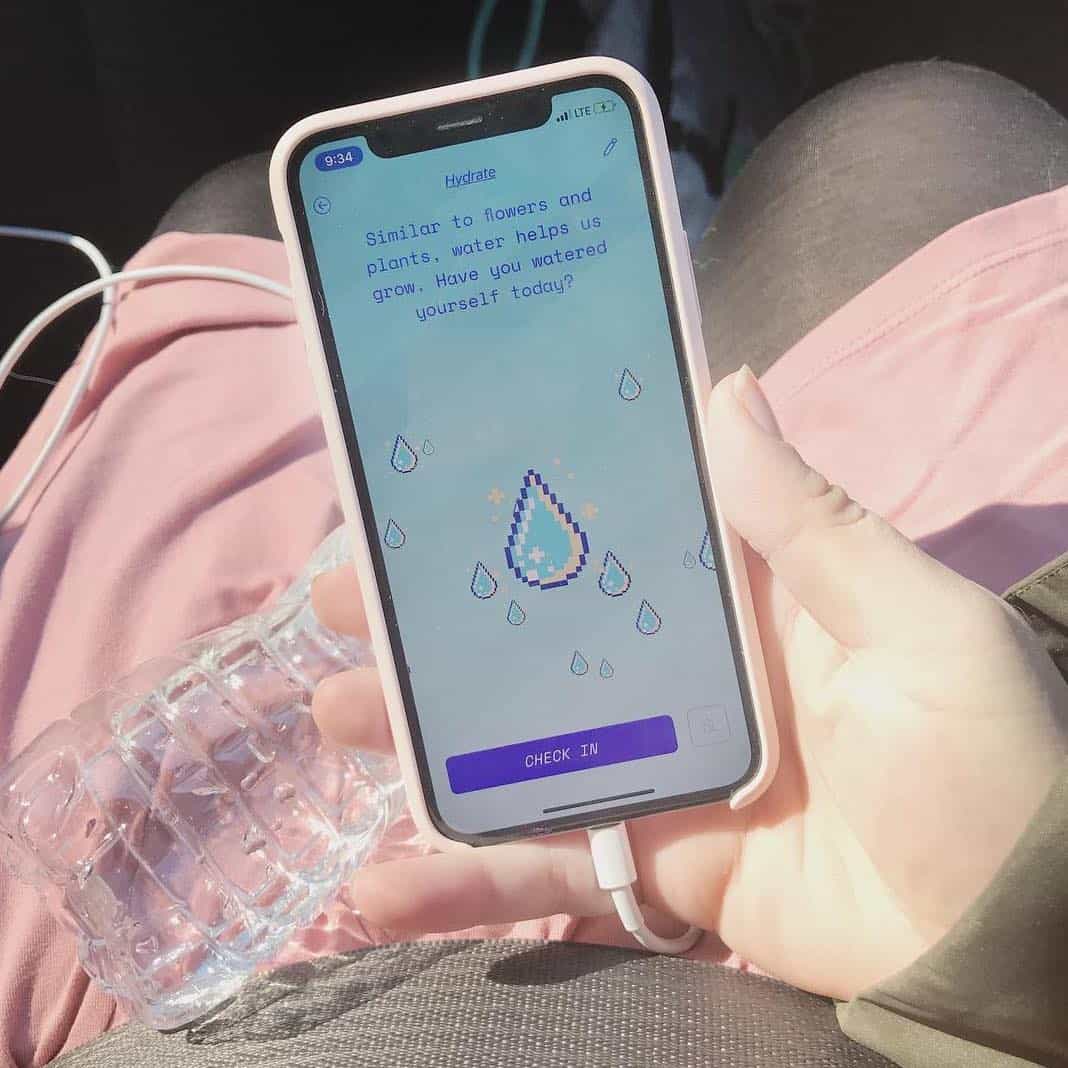
Aloe Bud is the all-in-one “self-care pocket companion” app. It gently brings awareness to self-care activities, using encouraging push notifications, rather than guilt or shame.
The app provides daily check-ins and reflections — from staying hydrated to maintaining connections to reflecting on interactions to taking screen breaks. It's beloved by the ADHD community.
The free mental health app brings awareness to physical, mental, and emotional needs throughout the day using unobtrusive push notifications.
Download Aloe Bud on the App Store
8. ACLU Mobile Justice

The ACLU Mobile Justice app is the activism app that allows users to record and report interactions with law enforcement and provides tips and guidelines for interacting with officers.
Footage and reports submitted through the app are automatically sent to the user’s local ACLU affiliate, where it is reviewed.
Users also have the option to broadcast their location when they begin to record, alerting nearby app users that a police encounter is being recorded nearby. The app is currently available for 18 U.S. states.
Download ACLU Mobile Justice on the App Store
9. Think Dirty

Think Dirty is a product-comparison app for personal care, skincare, and household products. After a quick barcode scan or search, the app shows you how the products rank on three potential health impacts: carcinogenicity, developmental and reproductive toxicity, and allergenicity and immunotoxicity. If a product is “dirty,” the app recommends a similar, safer “clean” product.
Download Think Dirty on the App Store or Google Play
10. Charity Miles

Charity Miles allows users to walk, bike, or run for a cause. Users simply download the free app, pick a charity, and get moving. There are more than 40 charities available, so you can pick one you feel most passionate about.
For every mile you move, you help earn money for the charity from the app’s corporate sponsorship pool, or you could be sponsored by friends and family.
Download Charity Miles on the App Store or Google Play
11. Good On You

Good On You is a free app providing trusted ethical ratings on clothing brands so users can shop with a conscience.
You can find out how your favorite brands are rated on how they treat people, the planet, and animals. Then discover new ethical brands that do better, and make a difference when you shop — by reducing waste and pollution, empowering garment workers, and protecting animals.
Download Good On You on the App Store or Google Play
12. Libby

Libby allows users to borrow ebooks and audiobooks from their local library for free. You can sign in using your library card and download for offline reading (or stream to save space). And if you prefer reading on your Kindle, Libby can send your library books there, too.
Downloading books through Libby allows you to learn on the go, reduce waste, support your local library, avoid giving money to Amazon, and save your money.
You can also check out our other recommendations for Audible alternatives for audiobooks.
Download Good On You on the App Store or Google Play
13. Samaritan
A new app exists to help Seattle city-goers give directly to people in need. The app, called Samaritan, works by giving app users a look into the story of a person without a home.
App users receive a notification when passing an unsheltered person who carries a small Bluetooth beacon. The notification allows the user to learn about the person and then give to the person’s unmet needs cashlessly and directly.
Recipients can redeem a person’s giving at the app’s partner merchants and nonprofits to receive goods such as clothing, fresh produce, or a haircut.
To keep the beacon active, holders meet with a counselor to gauge progress and set goals. They can even develop spending plans and access new opportunities including job training, addiction recovery, and employment.
The app allows users to connect effectively and compassionately with the people we pass daily. With the combination of financial resources and relational support, incredible shifts can happen to people who live without homes.
Download Samaritan on the App Store or Google Play
14. Squirrel News
If you're passionate about making a difference, you probably also love reading about and celebrating other people making a difference. Squirrel News is here to help! Their app offers a curated collection of constructive news stories so you never have to doomscroll through news again.
Squirrel News keeps things simple by exploring the best good news websites from around the internet, and picking out the most helpful and hopeful articles for you to read.
We also tested out every single good news app, and offered our recommended favorites.
Download Squirrel News on the App Store, Google Play, or the web version
15. Ecosia
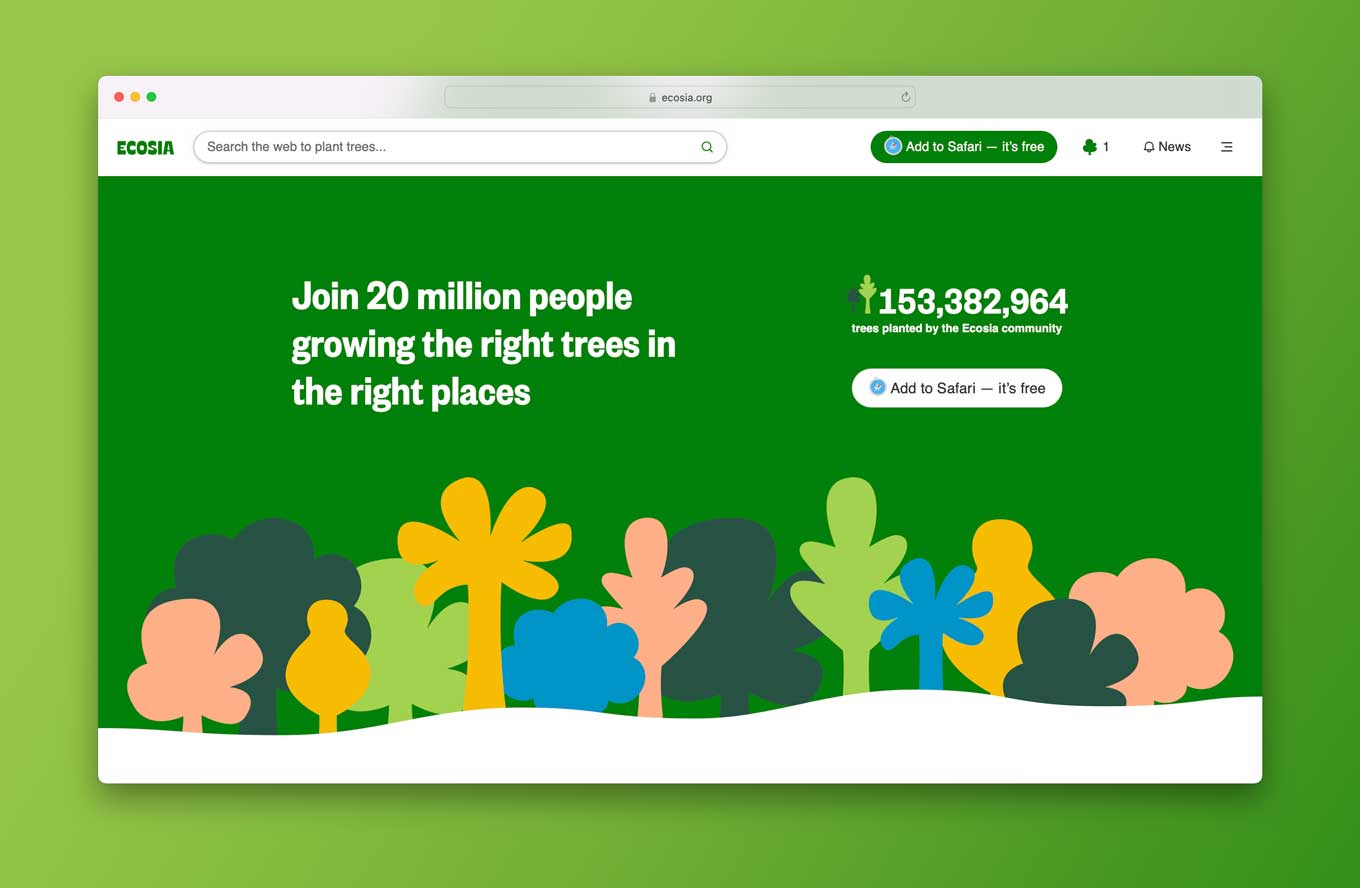
Ecosia is a search engine that plants trees very time you search the internet. Similar to Tab for a Cause, this app takes something you already do and uses it for good.
Though it's still not as big as Google — it's making gains and making a difference.
You can read our article about how Ecosia plants trees, why they're legit, and more.
Download Ecosia on the App Store or Google Play — and install it on your web browser

Have more recommendations for apps that can help people change the world?
In addition to the apps included here, we want to continue to grow this list. Tweet us at @goodgoodgood or email us at hello@goodgoodgood.co.
All of the recommendations in this story are independently selected by the Good Good Good team. Some of the links may be affiliate links — which means that when you click them, we may earn a commission — which supports our ability to continue sharing good news. Thank you!
WASHINGTON, Feb 1 (Thomson Reuters Foundation) - As U.S. President Joe Biden vows to tackle the country's housing affordability crisis, one group is trying to convince cities they can end homelessness outright armed with one thing: better data.
For homeless service providers across the United States, late January means the "point-in-time" count, in which volunteers spend a single night combing streets, parks and forests for people sleeping rough, or living in cars or tents.
The federally mandated count offers a key snapshot of the unhoused population, but the data has long been criticized by some homelessness advocates.
"It's crazy," said Jake Maguire, co-director of the anti-homelessness program Built for Zero at the national nonprofit Community Solutions. "We're told it's scientific, but it produces a very uncertain number."
Local officials send their findings to the federal government and get back aggregated statistics 11 months later, he told the Thomson Reuters Foundation.
"It's data for someone else - it doesn't give us any insight to improve our system. We don't know who these people are and what they need."
Now the pandemic has complicated the annual count, and many local officials are calling it off for this year due to public health concerns.
As of Jan. 21, nearly 60% of point-in-time counts had requested exemptions or waivers, according to figures from the U.S. Department of Housing and Urban Development (HUD).
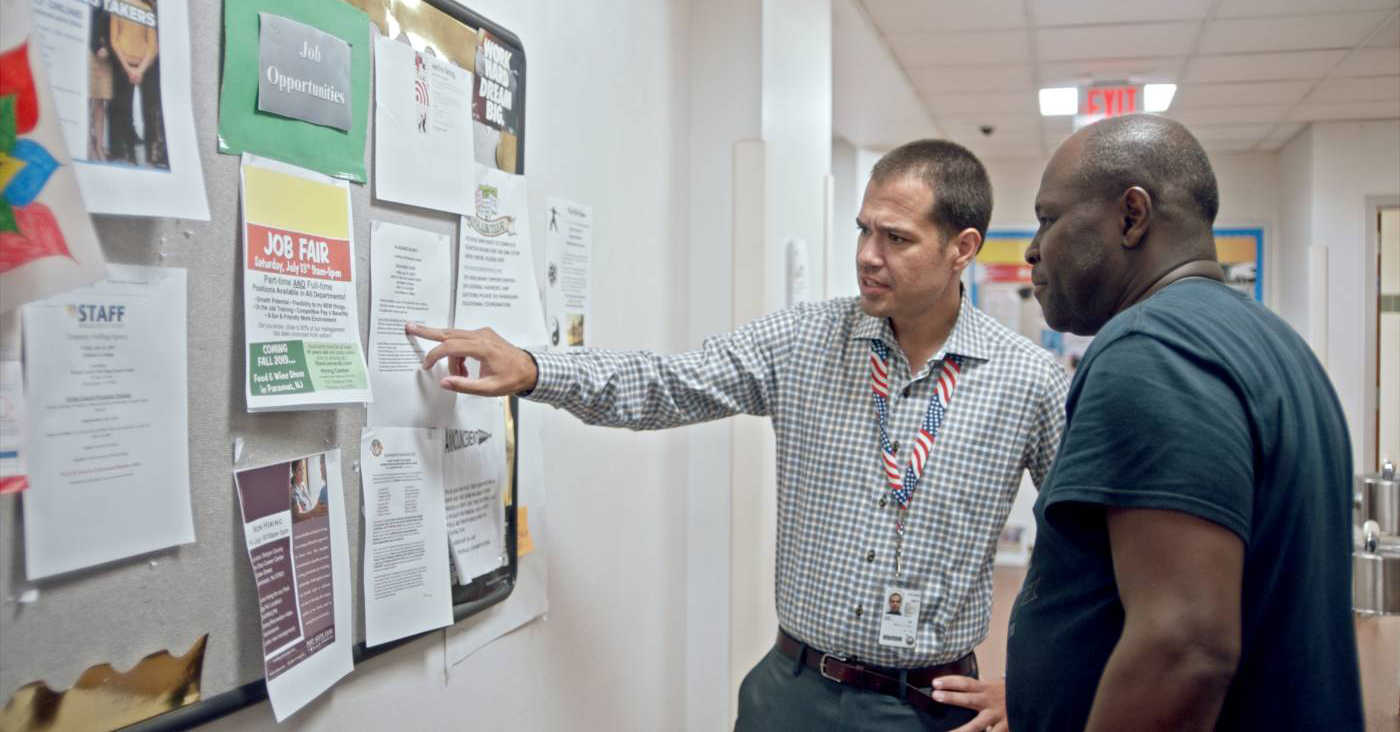
AJ Luna, left, director of veteran services in Bergen County, New Jersey, speaks with a client in July 2019. Handout photograph by Courageous Studios.
Instead, the agency is allowing communities more flexibility in how they determine this estimate. And for some, Built for Zero thinks it has an answer: using the constantly updated homelessness data it has been helping cities produce since 2015.
Unlike the once-a-year federal tally, Built for Zero cities create a comprehensive list of people experiencing homelessness, including information on their situation and needs, that is updated at least monthly, Maguire and other organizers said.
Local groups and agencies involved in homelessness response not only have access to this "by-name" list but regularly come together to address each individual case and any obstacles standing in the way of getting them housed.
"We cannot expect to drive meaningful reductions in a ... dynamic problem like homelessness without comprehensive, real-time, person-specific data," said Built for Zero co-director Beth Sandor.
She called HUD's decision on this year's count a major step and urged the department to make the change permanent and provide funding "so every community can collect real-time, quality data."
HUD did not respond to requests for broader comment.
'Adding a Year of Homelessness'
Built for Zero's name comes from its aim to bring homelessness down to what supporters call functional zero, "where homelessness is rare overall, and brief when it occurs," according to the project website.
Fourteen communities working with the program have reached this point for either homeless veterans or chronic homelessness - when someone has been homeless repeatedly or for at least a year - and more than 80 jurisdictions are currently participating.
Maguire recalls a Los Angeles workshop early on in the project, where the group brought together local officials and others to map the process for a homeless person to get housing.
The teams figured it took an average of 389 days and 44 steps for one person to get through the process, Maguire noted.
"So, you're adding a year of homelessness to someone's experience," he said.
They realized that constantly updating the data and looking at individual cases can help dramatically cut down this wait, sometimes to 30 days or less.
That was a major help for Marvin Minor Jr. of Lynchburg, Virginia, who was homeless from July 2019 to December last year, eventually living in his car until a respiratory illness forced him into hospital for weeks.
He was referred to homeless outreach specialists and placed into a process that had been created with Built for Zero, which led to getting Minor, 41, quickly into housing.
Within a week, he had been placed in a motel, and shortly thereafter he moved into his own apartment.
"By having a (home) of my own, now I'm able to wash and bathe, cook, have fresh food and clean clothing. I just became a grandfather a few months ago, and now it's a place where my granddaughter can come," Minor said by phone.
Inflow and Outflow
Last year, Lynchburg achieved "functional zero" for veteran homelessness - from about 20 homeless vets in 2019 - and the federal government has acknowledged Built for Zero's efforts nationally.
Randal Noller, spokesman for the U.S. Department of Veterans Affairs, highlighted in an email the initiative's use of real-time data to analyze the "inflow" of those entering homelessness.
That issue has been key for Lynchburg, which is now shifting its focus to ending chronic homelessness.
"The change is that no one gets forgotten - there's an accounting that has to happen for every single (person)," said Sarah Quarantotto, executive director of Miriam's House, a nonprofit that leads the Lynchburg effort.
Rosten Callarman, coalition coordinator for the West Texas Homeless Network, has been working with Built for Zero in Abilene, Texas, one of five communities that the program considers to have ended chronic homelessness.
He said the project represents a shift in attitude for homelessness service providers.
Usually, he explained, "the talk is not about progress, but about maintaining the system as it is. It's very pessimistic, a sense that homelessness is not something that can be fixed."
Dynamic Problem
Some anti-homelessness advocates worry that Built for Zero's strategy potentially glosses over critical gaps in efforts to eradicate the problem.
"This idea of functional zero is not actually ending homelessness," said Megan Hustings, deputy director of the Washington, D.C.-based National Coalition for the Homeless.
Hustings acknowledged that the program has built a system that can identify people who need housing and quickly get them resources.
But, she worried that by saying they have ended homelessness in an area, the community can assume the issue has been addressed.
That does little to tackle the root causes of homelessness, she said, primarily the major shortfall of affordable housing nationwide.
For Katie Hong, director of special initiatives at the Raikes Foundation, where she has focused on youth homelessness, understanding the inflow and outflow of homelessness can help response as a whole.
The sector has long focused on crisis response, with no incentive for other systems – hospitals and prisons, for example – to take responsibility for those moving into homelessness, she said.
With COVID and the eventual end of eviction moratoriums, "everyone is now bracing for the inflow," Hong said by phone.
"I don't think we've gotten smart enough as a community to understand that this is a dynamic problem. If we don't talk about that, it makes it seem like we're not making progress."
Originally published on February 1st, 2021. Reporting by Carey L. Biron @clbtea, Editing by Jumana Farouky and Zoe Tabary. This story was published with permission from the Thomson Reuters Foundation, the charitable arm of Thomson Reuters, that covers the lives of people around the world who struggle to live freely or fairly. Visit news.trust.org
On a warm November afternoon, Kristen Randall, a red-haired woman in a blue button-down shirt, knocked at the door of a rundown apartment in Tucson’s east midtown. After three rounds of patient knocking, a woman named Angie Bevins opened the door.
Randall identified herself as a Pima County constable, a court-mandated officer tasked with enforcing evictions. A sudden tension washed over Bevins, who stood behind a metal screen door that was frayed at the edges. She had been dreading the day she would be forced out of her apartment. She said her landlord had warned her that this would happen.
In a subdued voice, Bevins told Randall that she had written to the landlord, citing the Centers for Disease Control and Prevention’s eviction moratorium order, a temporary halt in evictions “to prevent the further spread of COVID-19.” Man Tran, Bevins’ landlord, filed in court to have Bevins evicted despite the CDC order, justifying it because Bevins is a subletter. Contacted by High Country News, Tran did not comment about the letter, but noted that Bevins was not on the lease.
Bevins, however, showed Randall the letter she’d written.
That was enough for Randall, who considered Bevins a resident as outlined by CDC guidelines. “I’m going to delay the eviction,” Randall told her, explaining that Bevins would have until Dec. 31. Randall gently urged her to look for other housing — just in case — and gave her the names of local agencies that could help. Bevins’ relief was stark and immediate. “Thank you so much,” she said.
Later, Randall told me, “The threat of the constable was being wielded as a weapon against (tenants).” Her voice hardened. “I don’t like being used as a threat.”
During Randall's first two months on the job, just a year and a half ago, she did as she was trained to do: showing up at people’s doors and flashing her badge, with a locksmith in tow to shut people out of their homes. Renters were given just two weeks to make an appointment to collect their belongings. Like other constables, Randall was armed, with tactical gear and body armor. “You wouldn't be able to tell the difference between (us) and a (Tucson Police) officer,” she said. She put people out on the street during those two months, and had problems sleeping at night. When she was still in her teens, she went without housing herself at one point.
“The threat of the constable was being wielded as a weapon against (tenants). I don’t like being used as a threat.”
Randall worked as a hydrologist for the U.S. Geological Survey for several years before becoming constable, an elected position in Pima County. She learned that 90% of tenants in eviction proceedings do not even show up in court. Randall wanted to find out why, and so she started doing “courtesy stops,” just as she did with Bevins, on her own time, wearing casual clothing, putting aside her badge and gun and tactical uniform for what was, essentially, social work.
According to Randall, numerous residents expressed shock, telling her they had never been notified. In many Western states, including California, Utah and Nevada, tenants must be notified prior to eviction. As Randall did more of her rogue courtesy stops, the rate of evictions tumbled — replaced by a new model of tenant advocacy, something she dubbed the “minute-entry program.” Soon another constable in a different precinct — Bennett Bernal, a former city council member’s aide — followed Randall’s lead, as did Joe Ferguson, an Arizona Daily Star journalist-turned-constable. Together, their three precincts, out of Pima County’s 10, accounted for most of the county’s eviction cases. But they were determined to change that.
Beginning in early March 2020, well before Arizona Gov. Doug Ducey, R, issued an executive order halting evictions, Randall, Bernal and Ferguson unilaterally stopped doing them. Little was known about COVID-19 beyond its contagiousness, and it was clearly spreading faster among people who were unable to shelter in place. Under Randall, Bernal and Ferguson, the Pima County Constables’ Office had broken ranks with every other constables’ office in the state. Their reasoning was simple: “We know that there’s a health crisis, we don’t have the right PPE, and we don’t have direction from either the Legislature or governor, or our own health department on how to do an eviction,” Ferguson said. “So, we’re not going to do any whatsoever.”
This approach angered some. “We’ve had some pushback from landlords and their attorneys who feel like we are taking sides in the eviction process,” Ferguson said. “The reality is that we were giving people information — we were doing it on our own time — and all we were doing was telling them resources they had available about shelter and rental assistance agencies.”
Some constables dislike the extra work involved. Michael Stevenson, a retired police officer who was elected in 2016, says a lot of extra data must be collected before he can decide whether to implement the new approach in his precinct. He’s concerned about the potential cost of extra services, such as the courtesy visits conducted by Randall and her colleagues.
But Randall and her colleagues achieved their goal: Their visits resulted in fewer evictions and saved their precincts money. And in October, they worked with the Pima County supervisor to create a new permanent position in the constables’ office: a behavioral health specialist, who would make courtesy stops and work with tenants facing eviction. Randall and her colleagues had previously put in countless hours of extra work, going door-to-door, speaking to vulnerable tenants on their own time. “I want to make sure that everybody in the county has access to the same information,” Randall said. “This is a way of balancing that out.”
Recently, Ferguson called the program a “movement,” saying that “in most cases, the approach that we’ve been taking has been really important, and I think can be replicated elsewhere … in Arizona, and across the country.”
This story is part of the SoJo Exchange from the Solutions Journalism Network, a nonprofit organization dedicated to rigorous reporting about responses to social problems. It was originally published by High Country News on January 1st, 2021.
The mineral rich Indian state of Chhattisgarh is moving away from mining, and giving fair prices for forest produce and creating more jobs.
— Chhattisgarh state aims at 'green' switch from mining
— Forest goods program guarantees fair price for villagers
— Tribal women dominate gathering of fruits, nuts, and seeds
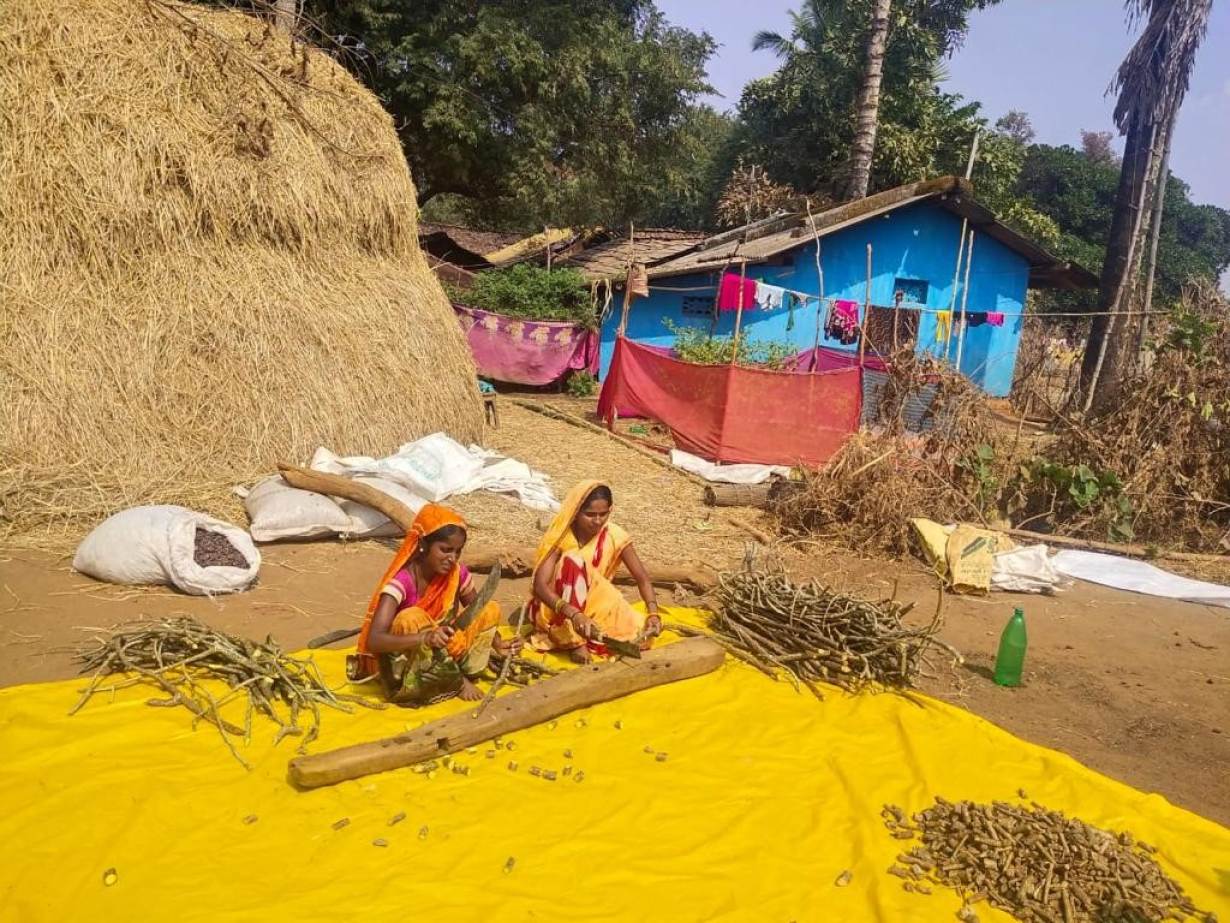
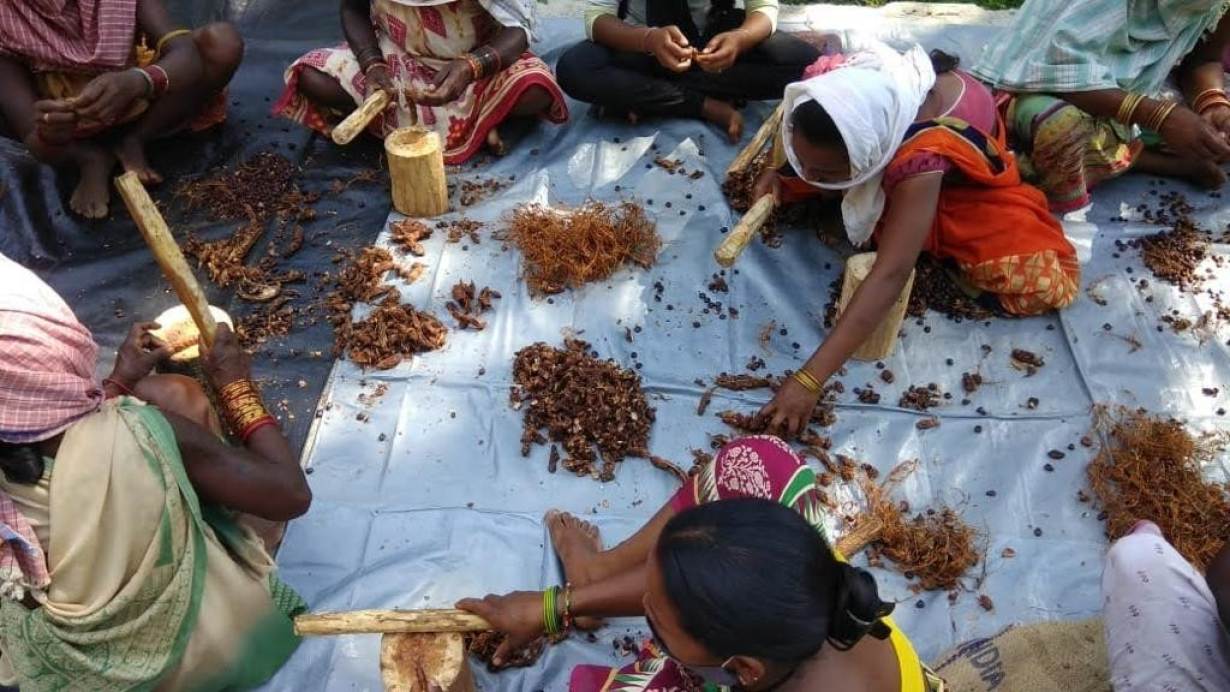
In the forests of Bastar in eastern India, indigenous women have been busy plucking the tan-colored fruits of the tamarind tree - a tangy staple of Indian cooking that earned them rare profits this year thanks to a bumper harvest.
For decades, mining has eaten into the forests of mineral-rich Chhattisgarh. But as the state moves away from opening coal mines, authorities have introduced measures to boost output of forest goods - from tamarind to cashew nuts and medicinal seeds.
"The setting of a minimum price has meant that middlemen and traders have to pay a fair price. Family incomes have gone up," said Sushma Netam, who oversees implementation of the state program aimed at promoting "tribal entrepreneurship".
Netam said production had soared since the state launched its "just transition" plan, a green economy strategy set up to cushion the impact of the shift away from coal.
"We have more than 200 village groups in the region now, 49 haat (local market) groups and 10 processing centers," she said.
While India pushes to expand coal mining to meet its energy needs, Chhattisgarh Chief Minister Bhupesh Baghel announced the state would move away from opening new coal mines in 2019 to help reduce emissions and protect forests.
Chhattisgarh has India's second-largest coal reserves and significant deposits of iron ore, limestone and bauxite, but it remains one of the nation's poorest states, with more than 40% of its population living below the poverty line.
Under the "Van Dhan" plan, the state raised the procurement price of 52 forest products in 2019 and bought 73% of all produce gathered in the state last year.
"Mining has been key to the economy and continues under strict norms. But our priority is now the forest," Manoj Kumar Pingua, state principal secretary for forests and industries, told the Thomson Reuters Foundation.
"We are willing to forgo millions of rupees generated from mining to protect and improve the livelihoods of forest gatherers. In mining a few make money, but in the green economy, the profit goes directly into the hands of the people."
'So Much Better'
Chhattisgarh, which has 44% of its territory covered by forest, is now looking to build an organized industry around non-timber forest products, which it says would benefit about 1.7 million families working as gatherers.
The deforestation of land for mining has greatly impacted the livelihoods of indigenous communities, who earn up to 40% of their income from forest goods.
Revathi Bagel, 21, works at a recently revived cashew plant in Bakawand village where she and other local women prepare the nuts for dispatch to markets across the country. Previously, she traveled hundreds of miles to work as a seasonal laborer.
"I walk to work and get paid 8,000 Indian rupees ($108) a month. It's so much better than going to (the western state of) Gujarat to repay an advance and toil on someone else's fields," she said by phone, as piles of cashews were unloaded.
Forest produce is traditionally gathered primarily by women, who sell it at village markets and use the income to buy essentials, but a vast network of middlemen has limited the benefits for forest communities.
A lack of storage facilities and processing units in remote villages also limits their profits, said Anushka Rose, research coordinator at the Center for Labor Research and Action, a charity promoting informal workers' rights.
"If you look at mahua, people gather and sell it in May to local traders because they can't store it," she said, referring to the flowers of the Madhuca longifolia tree, which have numerous medicinal uses and are brewed to make a festive spirit.
"Two months later they buy it back at a higher price to use in their festivities. If the Van Dhan scheme is strictly monitored, this situation will change."
'Delays in Payments'
But despite such optimism about the program's potential, patchy implementation and banking issues have limited its impact so far, said Rajim Ketwas, coordinator of the Dalit Adivasi Manch, a collective working on indigenous rights.
"Delays in payments or digital transfers are still a hurdle. The families want cash-in-hand and waiting to be paid for hard work will not be acceptable," she said.
Deep in the forest in the state's Baloda Bazar district, village resident Kaushalya Chauhan said by phone her community's payment for chironjee seeds - used medicinally - had been delayed.
Pingua acknowledged such glitches and said state authorities were working with the banking industry to ensure women in local markets could access digital payments.
Netam, the forest officer, said her greatest accomplishment so far had been to ensure the 3,741 tonnes of tamarind collected in Bastar over the last eight months were de-seeded and processed in record time.
It was the district's biggest-ever tamarind harvest.
"It just made me so happy that the work got done and the women got paid," she said.
($1 = 74.1490 Indian rupees)
Originally published on August 9th, 2021. Reporting by Anuradha Nagaraj @AnuraNagaraj; Editing by Megan Rowling and Helen Popper. This story was published with permission from the Thomson Reuters Foundation, the charitable arm of Thomson Reuters, that covers the lives of people around the world who struggle to live freely or fairly. Visit news.trust.org
North India is home to something called a “high desert.” It’s a mountain region, with the Himalayas cutting through it, and waterfall is scarce.
In fact, the area gets an average of just 50 millimeters of rainfall per year.
Most people who live there depend on Himalayan glaciers to melt so that they can collect fresh water.
As global temperatures rise, this method of collecting water has grown increasingly unreliable, since the glaciers melt too quickly for the water to pool so people can collect it.

But that’s all starting to change thanks to an engineer named Sonam Wangchuk, who is trying to turn his home into a thriving oasis. And, thanks to some innovative tinkering with the environment, he’s succeeding.
Instead of people spending a long, difficult journey to travel up to the glaciers to get fresh water, Wangchuk is bringing the glaciers to them.
Wangchuk created what’s he’s calling an “ice stupa” — basically an artificial glacier. The way it works is complicated but, essentially, pipes are laid high in the mountains that transport the melting water from the glaciers closer to where people can get to it.
Then, thanks to the special design of the pipes, that water freezes overnight, allowing people to collect it slowly as it melts again during the daytime.
These “glaciers” are huge — some 60-feet tall — and they take on sort a cone shape, which is the best way for them last into the spring and even summer months.

Their shape resembles “stupas”, Buddhist religious sites used for meditation and prayer. Since stupas are common in the region, Wangchuk feels that his invention is a natural fit for his people.
“Because it resembles something we have in our tradition, it is made more close to the population, to their hearts,” he told The Guardian.
The ice stupas may have a shape that makes it an organic addition to the geography of Wangchuck’s people, but they’re far from the only ones who are interested in them.
In 2016, Europe got its first ice stupa, this one situated in the Swiss Alps.
And according to National Geographic, Wangchuck is also working on one for India, where freezing a local glacier could help curb flooding issues.
But Wangchuk’s heart remains with his own people. “We in the mountains are minorities, not just ethnically but climatewise,” he told National Geographic.
“Things that work in New York or New Delhi do not work in the mountains. We have to find our own solutions for our problems.”
Wangchuk’s first two ice stupas were paid for through crowdsourcing back in 2013, but they were so successful that he got a grant from Rolex that will allow him to build twenty more and help pay to educate locals about ways they can use their environment to address issues facing their community.
A version of this story originally ran in Issue 02 of the Goodnewspaper in October 2017. The Goodnewspaper is our monthly print newspaper filled with good news.
You can join thousands of subscribers who get access to more exclusive stories like these, our private community space, a free inspiring poster, and so much more. Become a subscriber today.
Ilwad Elman is no stranger to change. She left Somalia in 1992 as a young child with her mother and two sisters to seek refuge from the conflict that had begun in the country the year before, leaving behind her father, activist Elman Ali Ahmed, who is known as the Somali Father of Peace even today.
It was the last time they saw him. Tragically, he was assassinated in 1996.
The still-ongoing civil war in Somalia grew out of resistance to the military dictatorship run by Mohamed Siad Barre beginning in the 1980s. By 1991, the Somali Armed Forces had recruited various armed rebel groups and overthrew the Barre government.
Just a year later Ilwad and her family fled war-stricken Somalia and lived for a few years in a refugee camp called Tango in Kenya — now called Dadaab, the largest refugee camp in the world — before seeking asylum in Canada, where Ilwad grew up and stayed until 2010.
Almost 20 years after leaving Somalia, Ilwad returned to her home country and is now responsible for designing and overseeing the peace and human rights programs at the nonprofit her parents founded in 1990, called Elman Peace.
She runs the organization with her mother, Fartuun Adan, and together they work to promote peace, cultivate leadership, and empower marginalized groups, furthering the mission and legacy her father left behind.

The Daughter of Peace
Ilwad is connected to a legacy of peacemaking. When her father was a child, he was neglected by his family and worked by polishing shoes on the streets of the Somali capital, Mogadishu.
He later became the recipient of social support services provided for years following Italian colonization and had the opportunity to study in Italy. He went on to receive his Master’s degree in Germany and became an electrical engineer before returning to Somalia and setting up businesses in the 1980s.
Ilwad says her father’s difficult upbringing inspired him to return to Somalia to give back and promote an enabling, positive environment for children in the difficult position he once experienced.
“Most of [the businesses he created] were electrical shops and mechanic shops, and he was hiring only young people that were orphaned on the streets,” Ilwad said, in an interview on Sounds Good. “He was teaching them the skills, getting them off the street.”
Elman’s entire workforce was made of youth who had an upbringing similar to his own. He wanted them to have a new status in society and enjoy opportunities he benefited from after receiving an education. And he hoped that by teaching them valuable trade skills, these children would have access to other options besides joining the war.
When the civil war broke out, Elman shifted to helping not just youth who were abandoned or battling drug addictions as he had focused on before, but also those who were being co-opted into clan-based militias and giving them an alternative to escape a life of violence. This is around the time he coined the phrase that’s now central to his legacy: “Drop the gun; pick up the pen.”
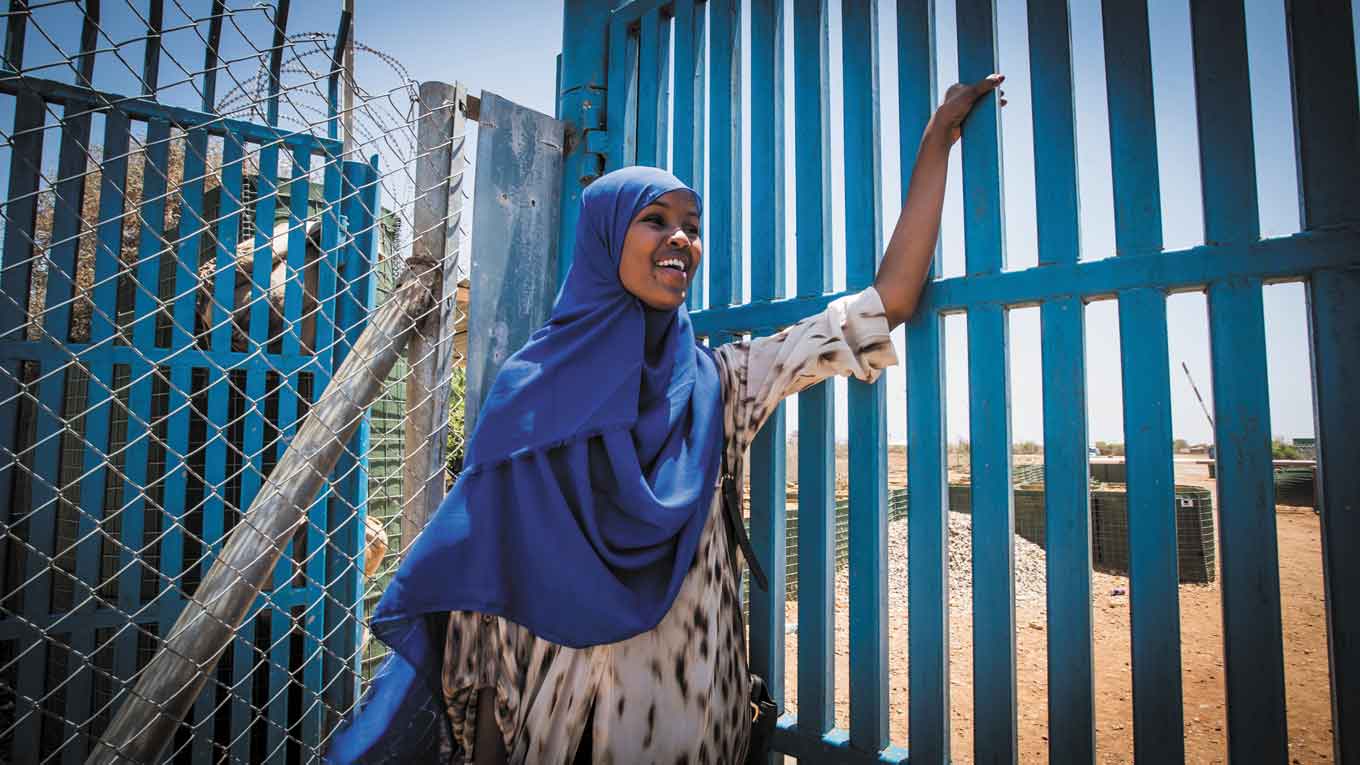
“He was so successful in doing this that he was demobilizing young men and even children by the thousands,” Ilwad says. “[His phrase] can still be seen marked up in the ruins of different streets in Mogadishu.”
Ilwad was still a young child when her father was assassinated and says she was too young to understand the gravity of both his presence and loss at the time. In fact, she doesn’t even have memories of her father.
“Everything that I really know about him and his impact has been passed on to me from both my mother and from other people around the world,” Ilwad says.
“I don’t have any actual memory of him or being with him, but I just feel so fortunate to be able to learn about him continuously through these stories and anecdotes and encounters that people cherish so much.”
But even though she doesn’t have any direct memories of her father, she stays connected to him through the work she now does with her mother at his namesake organization.
A World Away from Home
Growing up in Canada, Ilwad was largely disconnected from what was happening in her home country, but she was always curious about returning to connect to the place she was born.
“The only real thing that we ever saw about Somalia was always on mainstream media, and that is no different [than] how it’s depicted today: suffering, war, famine, conflict,” Ilwad says.
“Just a failed state. And for me and my family, we felt even more attached to Somalia even though we were not physically there because we just lost so much.”
“We felt even more attached to Somalia even though we were not physically there because we just lost so much.”
The disconnect between the attachment she felt to the place she was born and the heartbreaking stories she heard about it left much to be desired. Ilwad didn’t have any positive representations of her country to cling to — just stories of her father and the work he and Fartuun started together.
“My mother has been the biggest time vault, if you will, of those memories [of my father],” Ilwad says.
“She has really dedicated her life to his legacy and to us — my sisters and I — and it’s because of her that I’m also back in Somalia now trying to do my part and honoring his legacy.”
When the sisters had grown into teenagers, Fartuun returned to conflict-laden Somalia to continue the work her husband was killed.
She returned at a crucial point in the war, around the time Ethiopian troops had seized most of the southern region from a loose formation of judicial systems called the Islamic Courts Union, which briefly brought some order to the country but later splintered into other militant groups, most notably al-Qaeda-linked terrorist group al-Shabab.
Ilwad and her sisters would sometimes lose contact with their mother for weeks at a time, and seeing media coverage that showed turmoil in Somalia left them with the question: Why did their mother return?
“I just couldn’t wrap my head around it, and I really just wanted to know she was OK and to see for myself what it is that is really happening there,” Ilwad says.
“Every time we’d speak to her she’d be so positive. Then we’d hang up the phone, look at what’s on the media, and that does not reflect at all the courage and the positivity that she carried when she was on the phone with us, so I felt like she was just trying to make things lighter so that we wouldn’t worry.”
Returning Home
But Ilwad did worry. She was so worried that in 2010 she decided to go visit her mother in Somalia. The plan was to stay for one month — no more than three months.
At this time the conflict still heavily raged, and the majority of Mogadishu and south central regions of the country were controlled by al-Shabab. When Ilwad arrived, she was confronted with everything she had seen growing up on TV.
“Everything that I saw shook me to my core,” she says. “When you hear about war or conflict, you never really are able to understand it really until you’re in it. Everything that we see in Hollywood productions — in big movies — was in my backyard.”
“When you hear about war or conflict, you never really are able to understand it really until you’re in it. Everything that we see in Hollywood productions — in big movies — was in my backyard.”
But in the midst of the chaos, she started to understand why her mother had returned. She saw how early in the morning her mother would get up to help others, how many people in the community needed her, and how many children called her “Mom.” She knew her mother was doing important work to restore peace in the region.
“I fell in love with the work that she was doing instantly, and I felt also a responsibility to help her because I saw the level of resistance she was getting, and it was really heartbreaking for me,” Ilwad says.
Ilwad’s short-term trip soon turned permanent when she learned that her mother was facing serious resistance from the uncles on her father’s side of the family.
They opposed her mother’s leadership in an organization named after Elman because as a woman with only daughters, the uncles didn’t believe any of them could carry on his legacy.
The opposition became so intense that at the launch of a new program at one of the organization’s centers, Ilwad’s uncle arrived and fired gunshots in an attempt to disperse people.
That’s the moment Ilwad knew she had to stay with her mother. It’s the same time she realized ways the war was silencing and sidelining women.

“If we as women that are educated, that have come from Canada, and really have the freedom and mobility to leave at any moment with our passport have this level of resistance and challenges that are 100 percent gender-specific, then what does that mean for the 8-year-old girl or the 22-year-old woman or the widowed grandmother in the streets of Mogadishu?” Ilwad says.
“That moment really was a watershed for both of us, and for me it was the turnaround moment that I realized that I need to stay. I’m so much more useful here.”
Ilwad knew she could help empower, equip, and help rebuild communities if she stayed and worked alongside her mother. And the longer she stayed, the better she was able to reconcile the conflict she grew up seeing on the news and the beauty that brought her mother back after so many years.
“It’s a land of many contradictions,” she says. “There’s so much chaos, but so much calm. There’s conflict, but beauty. There’s love. There’s laughter. There’s joy. There’s incredible momentum right now, and it’s a place that’s — after 25, 26, 27 years of conflict — is slowly getting back on its feet. It’s where I was born. It’s the place I feel most grounded, and it’s home.”
Doing Good Work
Today Elman Peace sustains Elman’s mission and legacy of protecting human rights and promoting peace by supporting communities centers through locally driven solutions.
At its core, the nonprofit is a human rights institution. The team focuses on monitoring, documenting, and reporting human rights violations and abuses that happen throughout the country and then uses their findings to inform the different programming and services that they provide.
Fartuun and her daughters also founded the Elman Peace and Human Rights Center in Mogadishu in Elman’s honor. Fartuun serves as the center’s executive director, while Ilwad serves alongside her as director of programs and development.
Since she’s been in Somalia, the most tangible work she’s been a part of has been with survivors of of sexual- and gender-based violence. She helps oversee a subsidiary of the center called Sister Somalia, the country’s first rape crisis center.
In 2012, Ilwad spoke at Mogadishu’s first TEDx conference, where she explained the role of Sister Somalia in reconstruction within the country through counseling, trauma healing, housing support, and emergency medical care for women in need.
Ilwad has also hosted educational workshops for society’s most vulnerable communities and designed and implemented projects promoting alternative livelihood opportunities.
Her work has raised awareness and even encouraged changes in government policy. In 2015 she briefed the UN Security Council on the challenges Somali women face and now continues to work as a global advocate for Somali communities.
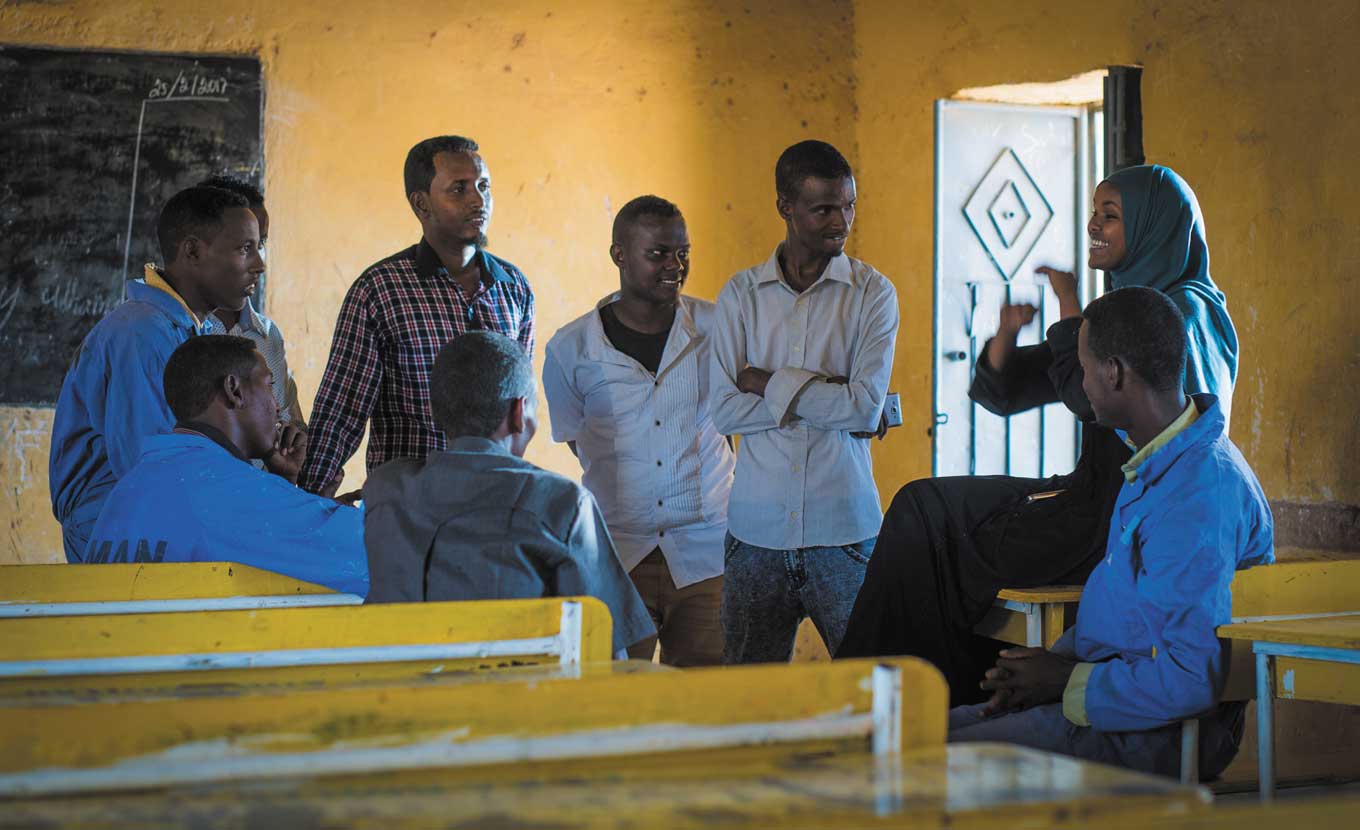
The conflict between al-Shabab and the Somali government and peacekeeping forces still rages on today. We see it on the news: terrorism, child soldiers, and war zones, among other things.
In 2017 a truck bombing blamed on al-Shabab resulted in more than 500 casualties in the capital.
Although the country still faces a difficult road ahead, the first permanent central government since the war founded in 2012 and is making progress toward stability, thanks in huge part to the positive peacemaking work people like Ilwad are leading.
So many people, from child soldiers to community members who have lost loved ones in the war, have experienced conflict. But now many have an outlet for their trauma and are on a path toward healing.
Ilwad is exploring the effectiveness in treating symptoms of trauma through alternative health techniques for people who live in conflict zones, such as yoga, painting, or music therapy.
They’ve even seen success in taking children to the beach to sit and talk in the sand, to float and learn to feel safe in the water, and to go surfing.
“Children can be children again as long as they’re just taken out of this context of violence,” Ilwad says.
“We always try to ask the question: How do you teach or empower a child that’s been stripped of his childhood to be a child again? And sometimes it’s as easy as just having beach days.”
No matter what she’s working on, Ilwad remembers her father and the honor it is to carry the torch to create a better future in the country where she was born and now calls home.
“I learned so much about myself being here,” Ilwad says.
“I learned about patience. I learned about community. All of these very important things that surely I could learn anywhere in the world, but really being here [in Somalia] I feel that everyday I have an opportunity to live with purpose. Everyday I have an opportunity to live intentionally and to serve, and I just feel so grateful for that opportunity. It was scary to make that leap, but anything worth doing takes risks.”
A version of this article was originally published in the Goodnewspaper in 2018. Since its original publication, Ilwad was nominated for the Nobel Peace Prize.
As the Tokyo 2020 Olympics drew to a close, LGBTQ+ athletes celebrated success both at the Games and the wider world
LONDON, Aug 9 (Openly) - There have been tears. There has been controversy. But for LGBTQ+ people, the Tokyo 2020 Olympics marked a highpoint for visibility, acceptance and medals, with a record number of gay, lesbian, bisexual and transgender competitors.
Over the past two weeks, more than 180 openly LGBTQ+ athletes have taken to the tracks, pools and fields in Japan's capital, according to the website Outsports, triple that of Rio in 2016, illustrating a surge in confidence among LGBTQ+ sportspeople.
If Team LGBTQ+ had competed as a country, its haul of 32 medals - 11 golds, 12 silvers and nine bronze - would have ranked seventh, above the Netherlands and below Australia, according to an analysis by the Thomson Reuters Foundation.
As the Olympics drew to a close on Sunday, with attention shifting to the start of the Paralympics on August 24, many have praised the Games for raising the profile, and acceptance, of LGBTQ+ people globally.
"Having that sort of representation is so important," said professional swimmer Michael Gunning, who narrowly missed out on competing for Jamaica at Tokyo 2020.
"When I was growing up, I never really had those role models. I was never inspired by LGBT athletes; it was always people outside of the community," Gunning told the Thomson Reuters Foundation on Monday.
It was an Olympics of firsts in many ways - not just because more than 11,000 athletes competed in almost 350 events in near-empty venues to guard against COVID-19 infection.
New Zealand weightlifter Laurel Hubbard became the first openly transgender woman to compete at the Games, attracting both praise and criticism.
Canadian footballer Quinn, who uses only one name and is trans and non-binary - identifying as neither male or female – became the first trans athlete to win a gold medal as part of the national women's team.
And British diver Tom Daley caused waves both in the pool and out, talking to reporters after his gold medal win with his diving partner Matty Lee in the men's 10-meter synchronized platform event.
"I feel incredibly proud to say that I am a gay man and also an Olympic champion," Daley said.
"When I was younger, I didn't think I'd ever achieve anything because of who I was. To be an Olympic champion now just shows that you can achieve anything."
Despite the popularity of LGBTQ+ celebrities like Daley, Russian reporting of the Games showed that homophobia remains a reality in many parts of the world.
Russia's state-owned Rossiya 1 Network derided Daley as "a British homosexual", while Russian talk show participants called LGBTQ+ competitors "perverts" and "psychopaths".
The International Olympic Committee (IOC) said it would be investigating any abusive comments made on Russian channels that were official broadcasters of the Olympics.
"Discrimination has absolutely no place at the Olympic Games," the IOC said in a statement.
However, for Angus Malcolm, chair of LGBTQ+ charity Sport Allies, the backlash in countries like Russia did not detract from the inspiration that LGBTQ+ athletes at the Games have given the next generation.
"My hope would be that some kid in Moscow can see through the state news to recognize him or herself," Malcolm said.
Openly is an initiative of the Thomson Reuters Foundation dedicated to impartial coverage of LGBTQ+ issues from around the world.
Originally published on August 9th, 2021. Reporting by Hugo Greenhalgh @hugo_greenhalgh; Editing by Katy Migiro. This story was published with permission from the Thomson Reuters Foundation, the charitable arm of Thomson Reuters, that covers the lives of people around the world who struggle to live freely or fairly. Visit news.trust.org
From picturesque Mediterranean isles to New York’s bustling harbor, strategically placed oyster colonies are depolluting the sea with ease.
Along the edge of Bastia’s colorful, seafood restaurant-lined port, a wetsuit-clad diver plunges beneath the surface with a large black cage full of oysters in hand and carefully attaches it to an underwater hook on the boardwalk. Resurfacing a few seconds later, the French diver takes another cage to fit alongside the dozens of others already in place.
“The oysters are ready,” he gasps, slowly clambering back on board the small boat laden with ropes, diving gear and empty cages. “Now we just have to let them do their magic.”
In a reversal of norms, instead of extracting this delicacy to serve up at the nearby waterfront eateries, the team from Corsica University’s marine research institute Stella Mare is depositing the oysters into the sea — and instead of cleansing the palates of hungry diners, these industrious mollusks are being used to clean up the water.
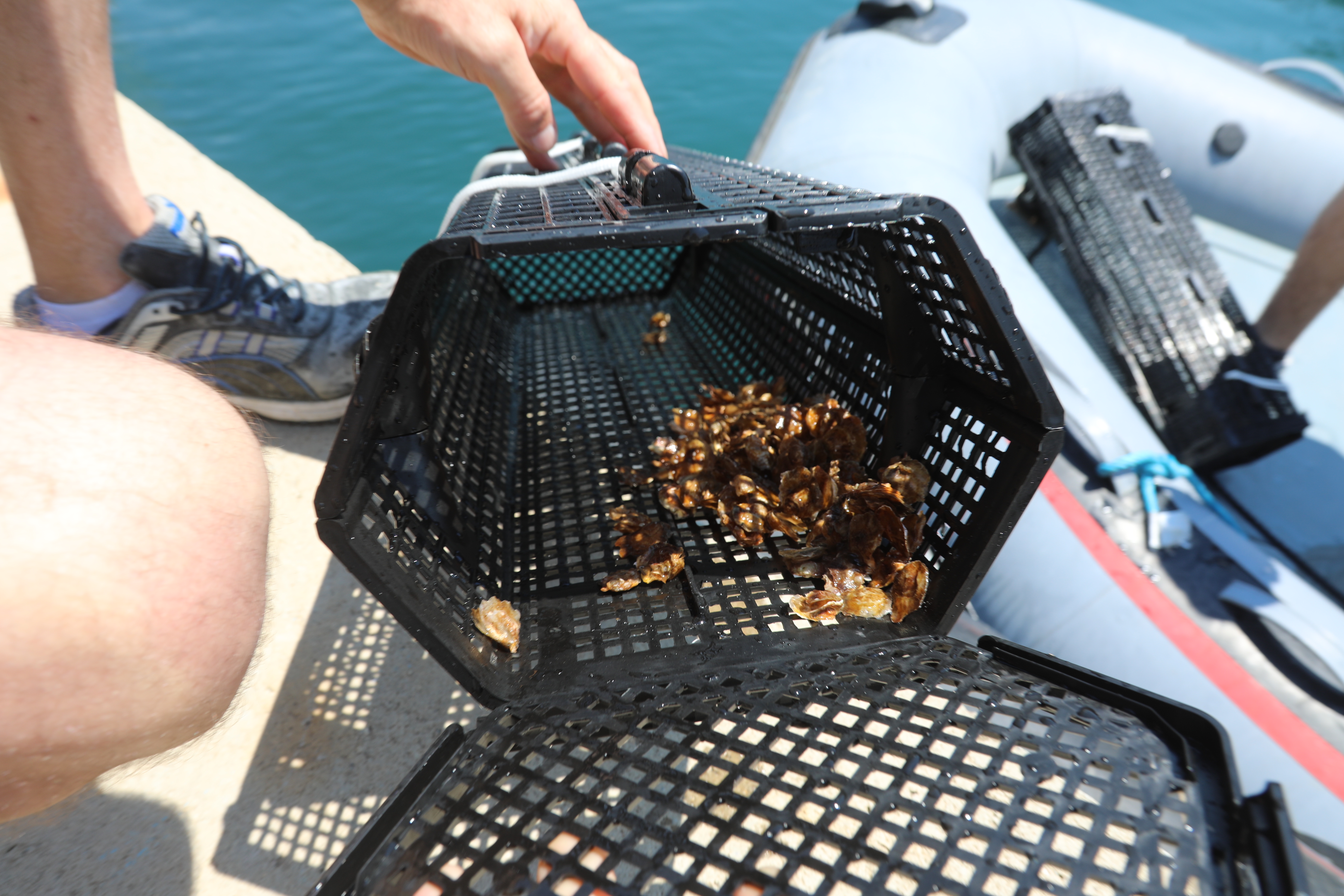
The project, which launched in the Corsican city Bastia last September and is now in the second of three phases, will see a total of around 150,000 juvenile Ostrea edulis, commonly known as the European flat oyster, deployed to help depollute the port.
“We wanted to see what would happen if we introduced oysters, what pollution would be cleaned from the water and what would remain in the oysters’ shells,” says Sylvia Agostini, lead of the project for Stella Mare. “Normally, you can’t treat PCBs [an industrial chemical known as polychlorinated biphenyls]. But it’s proven to be a revolutionary method.”
Agostini’s team initially tested the impact of both oysters and sea anemones on pollution levels in the 260,000 cubic meter port. But while the latter struggled to survive and few were left after a year, around 80 percent of the oysters survived — those that didn’t largely suffered due to boat traffic rather than pollution — and water quality has already improved. Monthly checks and quarterly in-depth analyses of water samples for contaminants will be carried out in Bastia’s port for three years. Leftover oyster shells will then be upcycled as construction materials such as roof tiles.
The species naturally filters water in order to absorb nutrients and grow their shells. But scientists have discovered that a byproduct of this oyster growth process is that harmful pollutants such as phosphorus, pesticides, pharmaceuticals and nitrogen from fertilizers, which are difficult to remove from water and can persist for decades if left alone, are also extracted from the sea.
Overfishing, disease, pollution, poor water quality and dredging have dramatically altered oceans over the past century, pushing some species to the brink of extinction. But proponents believe Stella Mare’s method could be a low-cost, relatively simple solution to improve the health of our oceans.
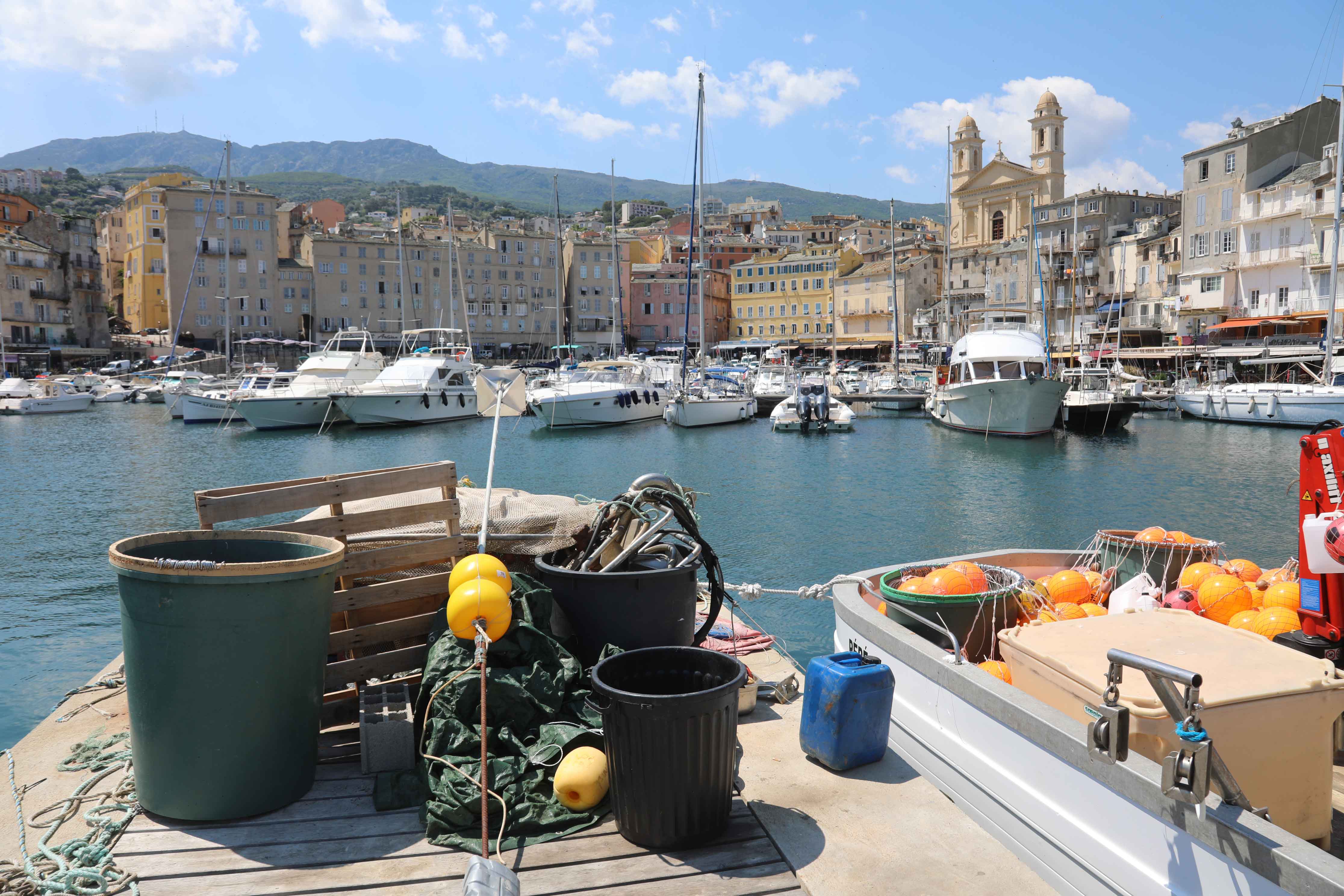
The Corsican city of Bastia. / Photo Credit: Peter Yeung
Oyster habitats are crucial for marine ecosystems, and biodiversity levels are known to increase dramatically around reefs, which also act as barriers against storms and sea tides, mitigating erosion and flooding, according to Boze Hancock, senior marine habitat restoration scientist at The Nature Conservancy, a global environmental organization.
“The decline of global oyster reefs has been enormous,” says Hancock. “Oyster habitats clean the water for seagrass, influence wave dynamics and improve shoreline protection. Restoring them has the potential to do a lot of good things.”
However, Hancock warns that oyster reefs can’t, as some have suggested, replace traditional waste water processing facilities. “These habitats are part of the solution, not all of it,” he explains. “You can’t put in enough oysters to process what a waste water plant would. We need to try to stop these pollutants from going into the water in the first place.”
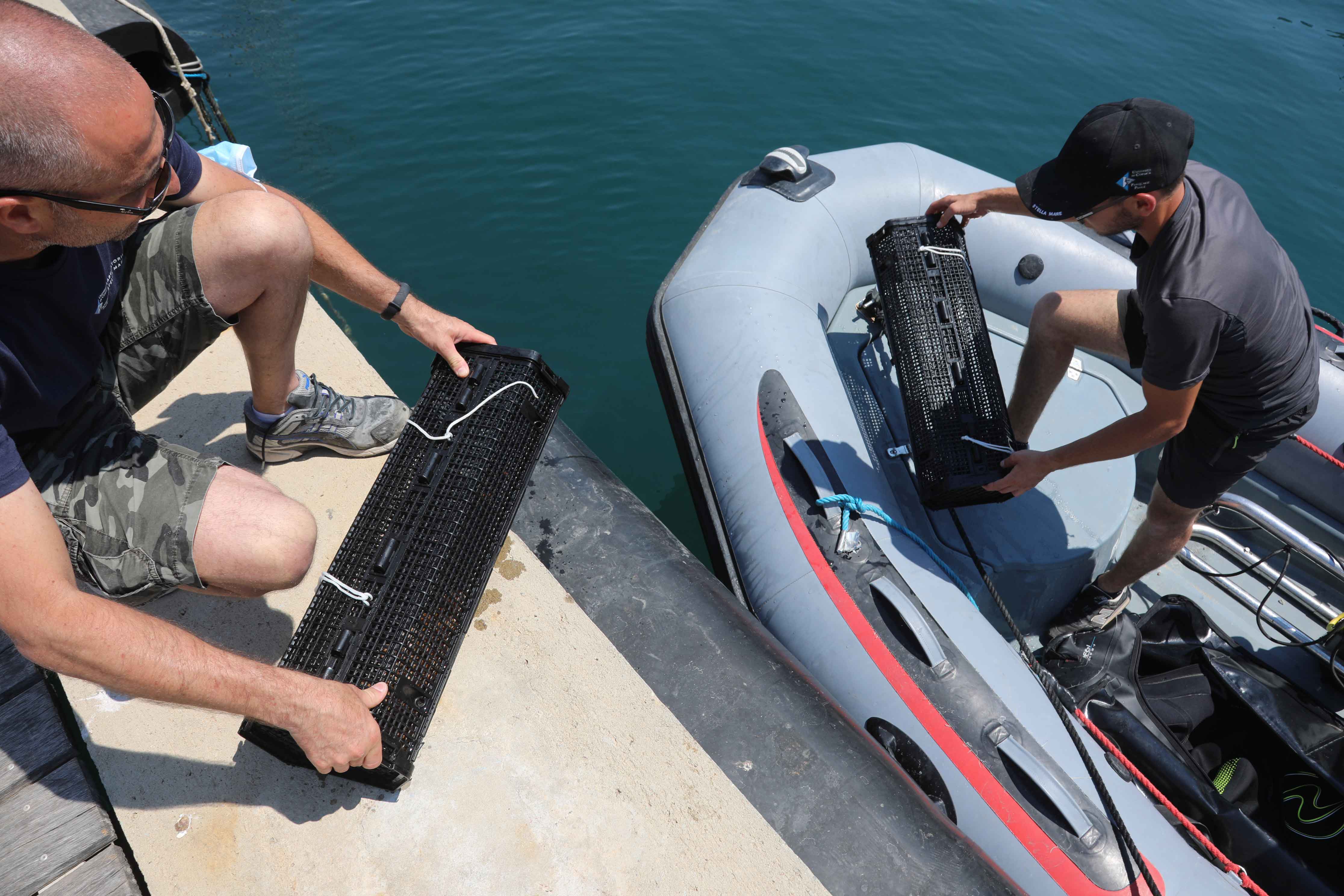
“Each place is slightly different, in relation to the quantity and variety of pollutants, and we need to adapt to that,” says Agostini. / Photo Credit: Peter Yeung
For the team at Stella Mare, while improvements in water quality have been made, there is also no guarantee that the model will be instantly replicable in other parts of the world — or even parts of Corsica.
“Each place is slightly different, in relation to the quantity and variety of pollutants, and we need to adapt to that,” says Agostini, who will be carrying out testing at several sites across Corsica. “Will some pollutants be toxic for the oysters? The water salinity, temperature and pH can vary too.”
Nonetheless, there is optimism that the project, which is being funded by the European Union, will stimulate other successful efforts across the continent. “The objective is to be able to use this method to purify polluted sites in a natural way,” she adds. “If it works, why not export that savoir-faire elsewhere?”
Other similar restoration efforts support the belief that it could be widely replicated. One project in the U.K. found 95 different species growing on reefs after oysters had been introduced, including European eels, which are classified by the IUCN as critically endangered. The Billion Oyster Project in New York Harbor, meanwhile, aims to distribute one billion live oysters by 2035 — enough to filter the entire harbor every three days.
“It could help protect and restore critical coastal habitats like saltmarsh, mangroves, coral reefs and seagrass, as well as the communities that live in these areas,” says Hancock, who is also a professor at the URI Graduate School of Oceanography. “The potential is huge.”
This story is part of the SoJo Exchange from the Solutions Journalism Network, a nonprofit organization dedicated to rigorous reporting about responses to social problems. It was originally published by Reasons to be Cheerful on August 6th, 2021.
Buses are the most common mode of public transport in Sri Lanka. But after thousands of trips, facilitating millions of commuter rides over their operating lifetime, the buses are decommissioned and sent to junkyards, where they decay and corrode under the elements.
Now, however, the Sri Lankan government is giving them a second lease on life by sinking them in the ocean to serve as fish-breeding sites.
The Sri Lankan Department of Fisheries and Aquatic Resources (DFAR), working with other government agencies, has so far sunk dozens of buses at three sites. It sank the first 20 buses off Trincomalee on the island’s northeastern coast in November last year. The buses were ferried on a navy ship to a spot about 5 kilometers (3 miles) offshore.
The DFAR selected Galle in southern Sri Lanka as the second site, where it dumped 25 buses, and dumped another 24 buses in the third site in Jaffna, in the island’s north.
“The results are encouraging as the buses we dumped at the first site have already attracted a lot of fish,” Susantha Kahawatta, director-general of the DFAR, told Mongabay.
Sri Lanka has a narrow continental shelf, so apart from a few coral reefs, there are very few sites around the island that facilitate fish breeding. “But knowing that structures like sunken ships become artificial coral reefs over time, becoming fish breeding sites, we wanted to try out providing more such places around Sri Lanka,” Kahawatta said.

Fish breeding sites
The structure of a bus body is ideal for fish to aggravate in and around, he added, noting that after some time on the seabed tit begins accumulating algae, barnacles and mollusks. The DFAR says it expects fast-growing corals too start sprouting on these structures soon.
The department obtained the buses for a token price from the Sri Lanka Transport Board (SLTB), which stores hundreds of decommissioned buses in its depots. “If we are to build a structure of this caliber, it would cost us more,” Kahawatta said.
Along with buses, the DFAR has also sunk a number of decommissioned fishing boats, and is also trying to get more substantial structures such as train cars for the project.
On land, these broken-down structures are an eyesore and take up space that could be used for other purposes. They also collect rainwater, becoming mosquito-breeding sites, contributing to the spread of diseases like malaria and dengue fever. Sinking them therefore has benefits beyond the ecological ones, Kahawatta said.
Selecting sites
The National Aquatic Resources Research and Development Agency (NARA) selected the sites for this project, looking for areas with a water depth of 10-15 meters (33-49 feet). It also considered the wave patterns in the particular area, said Prasada Punyadeva, head of NARA’s fishing technology division. Getting the depth right is important, he added, as they site need to get sufficient sunlight in order to promote the growth of marine life.
Terney Pradeep Kumara, general manager of the Marine Environment Protection Authority (MEPA), said his agency had checked the buses and other structures to ensure they were free of pollutants before being sunk.
Kumara, who is also a marine biologist and former head of the Marine Sciences & Technology Department at the University of Ruhuna, said it’s important to monitor the sites regularly and systematically to assess the program’s success.
Marine ecologist Arjan Rajasuriya welcomed the program’s intent, but said it would be more robust if it used metal structures purposely built for life at sea, like ships or barges, as they would last longer.
He noted there was a previous instance in which buses were dumped in the ocean for fish breeding. In that case, the buses had been damaged during communal riots in 1983, and NARA had sunk them off Bambalapitiya in Colombo, on the island’s west coast.
When Rajasuriya dived at the site the following year, he found only the chassis of the buses remaining, sticking up from the sand. He also warned against sinking fiberglass boat hulls, as they could later break up into microplastics.
Accumulated shipwrecks
Sri Lanka sits on an important maritime trading route in the Indian Ocean, and over time has accumulated plenty of large and medium-sized shipwrecks in its waters.
These include the world’s first purpose-built aircraft carrier, the HMS Hermes, which was sunk by Japanese war planes in 1942. In 2018, the Sri Lanka Navy lifted the wreck of another British ship, the SS Sagaing, also sunk by the Japanese in 1942, and moved it from the Trincomalee Harbor to a different location.
The new site has since been regularly monitored by the Navy to see how corals and other marine life have thrived in it. Similar monitoring should be applied to check on the progress of the sunken buses as well, said Rasika Muthucumarana of the Maritime Archaeology Unit (MAU) of the Central Cultural Fund (CCF).

A recently opened underwater “gallery” in southern Sri Lanka features statues and sunken structures to serve as fish breeding sites and diving attractions. / Image courtesy of the Sri Lanka Navy.
In another initiative, the Sri Lanka Navy has set up underwater “art galleries” at a number of sites in Trincomalee, Galle and in Nilwella in southern Sri Lanka.
These sites mainly consist of cement statues depicting different historical characters and are also tagged as underwater museums by the Navy. It expects the sites to be tourist attractions while also supporting fish breeding and marine biodiversity.
Sri Lanka’s oceans are not short on natural habitats for fish breeding, but many of these habitats have been lost to destructive fishing practices such as blast fishing.
That makes it critically important to protect such habitats and also stop illegal detrimental fishing methods, Rajasuriya said. “It is important to address the issue of overfishing in the long run to instigate revival of fish stocks in Sri Lanka,” Rajasuriya said.
This story is part of the SoJo Exchange from the Solutions Journalism Network, a nonprofit organization dedicated to rigorous reporting about responses to social problems. It was originally published by Mongabay on July 21st, 2021.
The United States government militarily occupied Afghanistan for the last 20 years, during which the Taliban — an insurgent group — has waged war against the Afghan government. Last week, the Biden administration pulled troops out of the country (after the U.S. had spent over a trillion dollars in the US military campaign in Afghanistan) leaving its people vulnerable to Taliban attacks.
Since then, the Taliban has taken control of the majority of Afghanistan's 34 provinces, indicating the country has fallen to the Taliban. Under the Taliban's regime, hundreds of thousands of Afghans were displaced from their homes with 80 percent of them being women and children. Countries like Canada have committed to welcome Afghan refugees and Americans are calling upon the Biden administration to do the same.
Over the past few days, we’ve seen harrowing footage of Afghan civilians getting caught in the crossfire. A number of nonprofit organizations and United States representatives have called for action to support the Afghan refugees. As of August 23rd, the United States has evacuated roughly 48,000 people from Afghanistan as conversation turns to how to help refugees from the country. Below is a list of ways to help the people of Afghanistan.
Are there people already making a difference in Afghanistan?
At Good Good Good, we highlight the stories of people making a difference in the midst of heartbreak, pain, and injustice. While nobody should diminish immense challenges the people of Afghanistan face, there are a few bright spots to be celebrated. Ultimately, when we see good news, it allows us to work towards creating even more good news.
Here's the good news we've found so far:
Canada announced it would accept and resettle 20,000 refugees from Afghanistan, specifically vulnerable groups like women leaders, human rights workers, and journalists. German Chancellor Angela Merkel called for an evacuation of up to 10,000 Afghans, including more than 2,500 Afghan support staff — plus human rights activists, lawyers, and others at-risk.
Brave women journalists are continuing to report on what’s happening in the country.
Instead of evacuating immediately, the UK’s ambassador to Afghanistan, Sir Laurie Bristow, stayed behind in Kabul to help process visas for Afghan nationals on their staff. The UK’s Foreign Office released a statement saying, “We have reduced our diplomatic presence in response to the situation on the ground, but our ambassador remains in Kabul and UK Government staff continue to work to provide assistance to British nationals and to our Afghan staff.”
The International Rescue Committee, International Committee of the Red Cross, and other organizations are committed to staying in communities to provide humanitarian relief to people in need.
Airbnb, the mega rental company, is planning on providing temporary housing to 20,000 Afghan refugees. The company will be shouldering 100% of the costs.
We're in touch with nonprofits, journalists, and leaders and will be updating this story as we find more good news worth celebrating.
How can we help the people of Afghanistan?
When we have the privilege of experiencing bad news through the news — we have an obligation to use that privilege for good.
Here are some action steps you can take to support Afghans who are currently in Afghanistan or who have already left Afghanistan:
How to talk about what's happening Afghanistan and learn more from experts:
First: How you talk about Afghanistan matters. If you’re not an expert, the internet probably doesn’t need your hot takes on who’s to blame or where the problems lie. You also don’t have to give air to tweets and posts that aren’t rooted in expertise on the subject.
Share things that are helpful. Ignore things that aren’t helpful.
We recommend you seek out Afghans to learn from and listen to. Check out local activists, journalists, educators, and leaders recommended here and scholars recommended here.
The best nonprofits you can donate to if you want to support the people of Afghanistan in this heartbreaking moment:
The quick transition of leadership in Afghanistan means that there are currently a lot of unknowns. Organizations that have been working in Afghanistan successfully for years may find significant challenges in continuing their work. With that being said, there are a number of vetted and trustworthy organizations that will be able to help people:
Women for Afghan Women is a local organization helping women in Afghanistan.
Women for Afghan Women is a “grassroots civil society organization dedicated to protecting and promoting the rights of disenfranchised Afghan women and girls in Afghanistan and New York.”
They’re a majority Afghan and Muslim organization and their work helps Afghan women and girls exercise their rights to pursue their individual potential to self-determination, and to representation in all areas of life—political, social, cultural, and economic. The coming weeks and months may look different for the organization, but your donation helps support their continued mission during especially challenging times.
Afghanaid is helping families who had to flee their homes.
Donations to Afghanaid support men, women, and children who have fled from their homes and from war or lost their livelihoods in the present upheaval.
In terms of how their work will be affected by the Taliban, they shared on their website: “Our ability to continue working is assisted by our strong local roots and our reputation for impartiality. The Taliban from Doha have been supportive of NGOs and we are finding that position is also being adopted by local commanders. In Kabul there is great uncertainty and we have temporarily closed our Kabul office and asked staff to remain at home. Our intention will be to re-open as soon as we feel it is safe to do so.”
Miles4Migrants helps people fly out of Afghanistan.
If you have extra airline miles or flight vouchers (perhaps from an airline you don’t fly often, or leftover from pre-pandemic) you can donate them to Miles4Migrants.
Miles4Migrants “uses donated frequent flyer miles, credit card points, and cash to help people impacted by war, persecution, or disaster reunite with loved ones and start new beginnings in safe homes.” Your donation will help those who have legal approval to travel out of Afghanistan but lack the money to afford the airfare.
GoFundMe has vetted a number of fundraisers to support Afghans.
GoFundMe’s Afghanistan Relief Fund supports a range of vital relief efforts. Your single donation can “provide short-term food relief, help displaced people and schools, support on-the-ground journalists, and more.” Your one donation can be spread out among a number of worthy causes, verified by GoFundMe.
Organizations are preparing to support Afghan refugees who resettle in the United States
We've compiled a list of the best nonprofit organizations that support refugees in all 50 states. Find your state, pick a local nonprofit, and find one way (big or small) to get involved.
How to make a difference for the people of Afghanistan by calling your elected officials
The best thing you can do right now is to call your elected officials and lobby for the U.S. to allow as many Afghan refugees into the U.S. as possible. We can rescue people now and figure out the logistics later.
The effort to help evacuate Afghan citizens is supported by 50 senators, including 2 republican senators, and supported by Former President Bush and Former President Trump. This doesn’t need to be controversial.
You can call your representative or senators by dialing 1-844-USA-0234. You'll be asked to input your zip code and the line will automatically connect you with your elected officials.
You can also use Resistbot, which allows you to send letters to your elected officials by sending a text message — just text RESIST to 50409.
For more details on calling your representatives, you can read our guide.
As a reminder, you’ll likely end up talking with a staffer. The usual process is: They'll take notes about your call, mark down that you're a constituent, and then they'll bring up the conversations they had in a meeting with your elected official.
More calls from constituents will mean more weight given to the request. Your call really matters.
Pro-tip: If you’re anxious about talking to someone on the phone, you can use Resistbot or you can call your elected officials after business hours and just leave a voicemail instead.
Here’s a script you can use when you call your elected representatives to advocate for Afghans:
Hi there —
My name is [name]. I’m a constituent living in [your location - including your zip code].
I’ve been absolutely heartbroken by what I’ve been seeing happen in Afghanistan. The United States spent 20 years in this country, and the people of Afghanistan have experienced a great deal of suffering.
The U.S has benefited from the support of local Afghans who are now at-risk — and we have an obligation to help these people in this moment.
Specifically, I want to see the United States quickly and significantly increase the number of Afghan refugees we allow into our country.
We especially have an obligation to help the Afghan translators and drivers who sacrificially helped U.S. troops — and their families. And I’d also like to see significant support for women activists, girls seeking education, and these women’s families.
At the very least, I want to see the U.S. government do everything in its power to temporarily relocate as many Afghan citizens as possible to a safe place as quickly as possible — including airlifting people to safety.
If you can pass that message along to the [senator/congresswoman/congressman] I’d really appreciate it.
And lastly, you can help make a difference by sharing this post and continuing to talk about the people of Afghanistan. This situation isn’t going to go away quickly - but the media attention might. So keeping the conversation going with your elected officials, in the media, and on social media will really matter.
We have power to help a lot of people — but only if we act boldly and quickly.
On Saturday, August 14, a magnitude 7.2 earthquake struck the western part of Haiti. At the time of publication, the death toll is over 1,400, with another 6,000 injured. Haiti’s hospitals are overwhelmed and patients were photographed being treated outdoors due to limited medical capacity.
The earthquake was reminiscent of the 7.0 magnitude earthquake that hit in January 2010, which killed an estimated 250,000 people and injured another 300,000, according to World Vision.
The country is also in the midst of political unrest following the assassination of former President Jovenel Moïse on July 7.
To complicate the situation and any relief efforts further, Haiti is in the midst of hurricane season and Tropical Storm Grace was forecasted to hit the country days after the earthquake. The storm brought about 10 inches of rain, which did slow relief efforts, but wasn’t as devastating as it could have been.
Between political unrest, the near-constant looming threat of hurricanes and tropical storms (Haiti regularly finds itself in the path of the storms that develop in the Atlantic), and the still-ongoing recovery and rebuilding after the 2010 earthquake makes this latest heartbreak even more devastating.
As first responders and medical teams continue their search efforts through the rubble, new needs will arise: treatment for those injured, access to food and shelter, rebuilding infrastructure, and more.
Here are some people and organizations working in Haiti, and how you can help, too:

Where are people already showing up to help in Haiti?
Fred Rogers once said:
When I was a boy and I would see scary things in the news, my mother would say to me, “Look for the helpers. You will always find people who are helping.”
At Good Good Good, that’s what we do.
We look for the helpers. And we always find them.
Right now, those on the ground in Haiti are spending most of their time and attention on responding to this tragedy — so they’re spending less time sharing about the good that they’re doing and seeing.
In the coming days, we expect to see lots more stories of helpers coming out of Haiti via local journalists, social media, and contacts on the ground — and when we do, we’ll update this story.
But until then, here’s the helpers we’ve already found:
- World Central Kitchen and Chef Jose Andres have organized a team of chefs to distribute food to people in need, shopping at local markets to support Haitian farmers and sellers when possible.
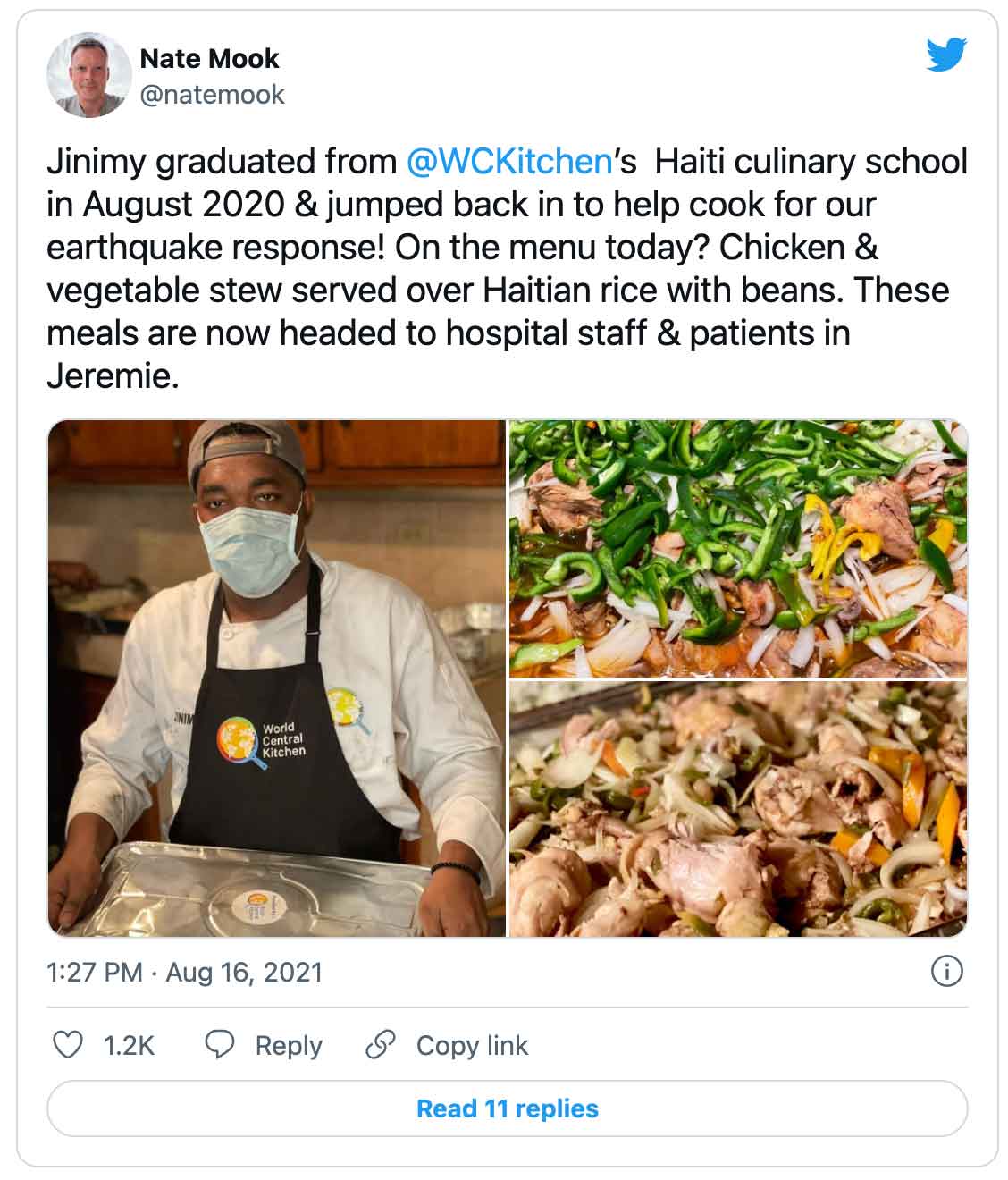
- Partners in Health is a global organization providing equitable health care to people around the world who need it most, and they’re currently working in Haiti to provide immediate medical supplies and care.
- Rescue teams and doctors jumped into action immediately to help rescue people from downed buildings and get them medical attention — including difficult-to-reach areas.
- Mercy Corps told Good Good Good they’re on the ground in Haiti (and in Afghanistan) working to provide hygiene supplies for families displaced by damage from the earthquake. They also used text messaging communications to keep Haitians up-to-date on Tropical Depression Grace and necessary preparations to take.
- The U.S. Coast Guard, USAID, and other rescue organizations are partnering with local first responders to airlift and get immediate medical attention to people injured in the earthquake.
- Naomi Osaka pledged any prize money she wins in her tournament this week to Haiti relief efforts.

- Catalina Lubin, a content creator and Haitian beauty blogger, shared that her aunt is cooking rice to feed people on the streets of Haiti. She said, "Even when she lost everything, she remains strong." Chef José Andrés, of World Central Kitchen, saw the tweet and offered support for her efforts.
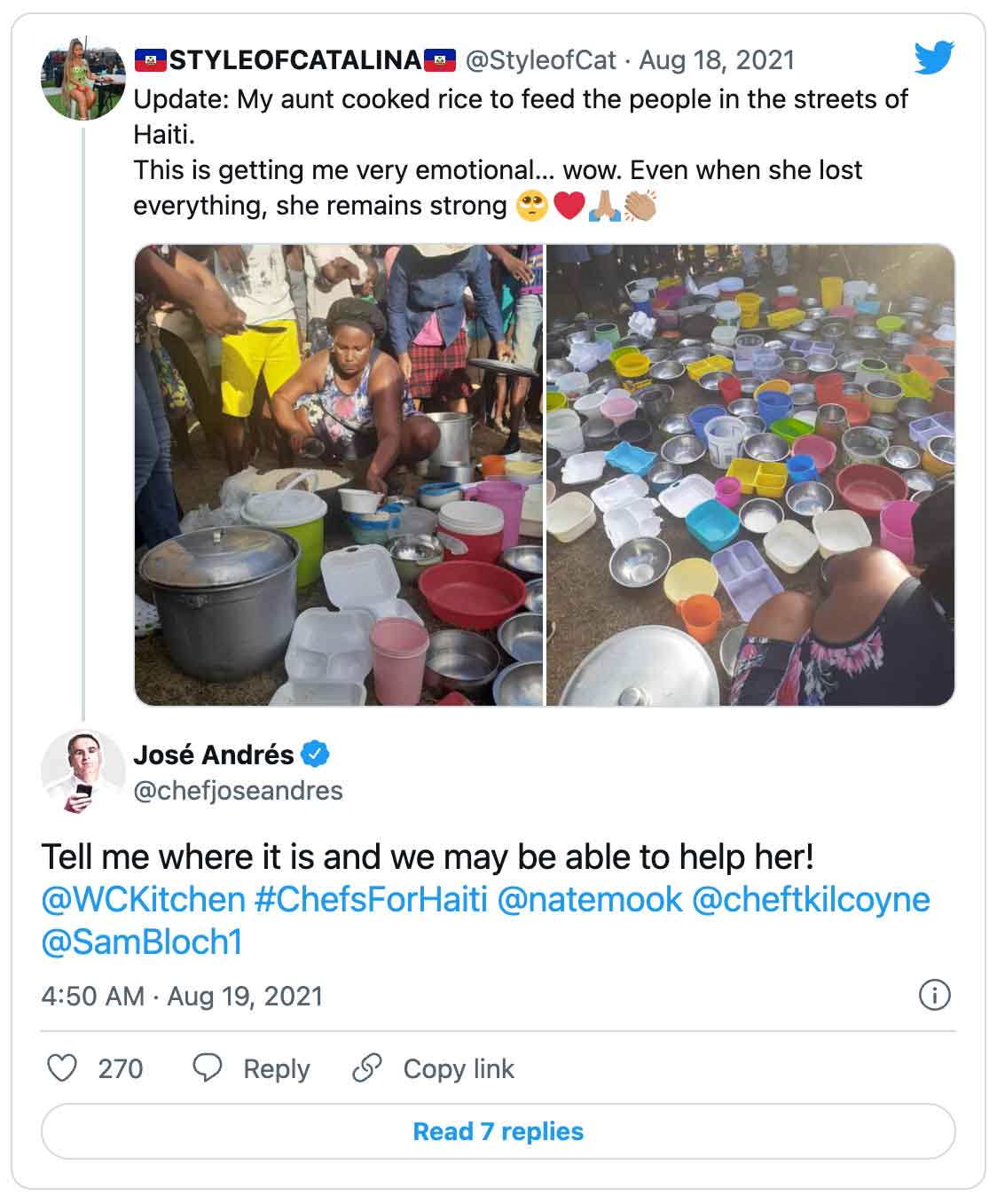
How can I help Haiti?
In order to make sure your financial support does the most good — rather than donating to large organizations (like the Red Cross, which has mishandled relief funds), we recommend supporting these organizations:
To support a local organization addressing poverty and empowering women in Haiti, donate to Fonkoze.
Fonkoze is working to break the cycle of poverty in Haiti by empowering Haitians, primarily women, with financial and development services to lift their families out of poverty. Your support helps them empower families throughout the country with life-changing tools, resources, and training needed to break the cycle of poverty — and prepare for unforeseen challenges such as pandemics, natural disasters, and more.
Make a donation here to support Fonkoze
To support an organization helping Haiti’s children, donate to Hope for Haiti.
Working in Haiti for over 30 years, Hope for Haiti’s mission is to improve the quality of life for Haitian people, particularly children. Through their work, they implement an integrated model for development that has been proven to reduce poverty by working with community leaders in rural areas in five key program areas: education, healthcare, infrastructure, access to clean water, and economic opportunity.
Donate to support earthquake relief efforts and ongoing efforts in Haiti.
To provide food to Haitians, make a donation to World Central Kitchen.
In addition to providing food to people in need in the wake of natural disasters wherever and whenever they hit around the world, including right now in Haiti, World Central Kitchen started a professional culinary arts training program in Haiti in 2015. The program offers a 5-month long curriculum that prepares young, aspiring chefs for their first job in the commercial kitchens of local restaurants, hotels, caterers, and other institutions like schools or hospitals. 100% of the program’s graduates in Haiti have received internship placements, and 60% received job placements after that.
In addition to meeting immediate needs in Haiti, a donation to World Central Kitchen will help educate Haiti’s aspiring culinary workers. Make a one-time or recurring donation here.
To meet basic needs like water, shelter, and medical attention, make a donation to MercyCorps.
All over the world, Mercy Corps works alongside communities to help families affected by disasters, conflict, and climate change. In Haiti alone, Mercy Corps has 70 dedicated team members ready to work when disaster strikes — and their teams have been activated now.
Donate to their Humanitarian Response Fund to meet the immediate needs of those facing crises like the earthquake, and build a future where everyone can prosper.
You can help the people of Haiti by using your voice and your platform.
Lastly, you can do good by talking about what’s happening in Haiti:
Contact your elected officials to let them know providing aid to Haiti right now is important to you.
You can also share this story on social media to help more people learn about what’s happening in Haiti and take action in support of the Haitian people.
By working together to do what we can and give what we have, we can make a really big difference.
How have women's lives in Afghanistan improved since 2001, from education and clothing to reproductive rights and political power?
Aug 17 (Thomson Reuters Foundation) - With the Taliban back in power, fears are escalating that Afghan women will lose many of the freedoms they have won since 2001.
Here are six ways life has got better for women since the last Taliban government fell - gains now feared at risk:
Education
When the Taliban ruled Afghanistan from 1996 to 2001, they banned girls above the age of eight from receiving education.
The number of girls enrolled in primary school in Afghanistan increased to 33% in 2017 from less than 10% in 2003, according to the World Bank, while their enrollment in secondary school was 39% in 2017, up from 6% in 2003.
Kabul University started teaching a master's degree in gender and women's studies in 2015.
Work
The number of Afghan women who work increased to 22% in 2019 from 15% in 2001, according to the World Bank, with women opening businesses in everything from fashion and beauty to accountancy and electrical engineering.
Women were increasingly visible in all sectors of society, including journalism, healthcare, and law enforcement.
Since the Taliban took over Kabul on Sunday, workers have removed images of women from the fronts of shops and salons. Under the last Taliban regime, women were banned from employment and thousands lost their jobs.
Taliban spokesperson Zabihullah Mujahid has said that women will be allowed to work "within the framework of Islam" under the new regime.
When the Taliban took over the southern city of Kandahar in July, fighters ordered nine women working in Azizi Bank to leave, telling them that male relatives could take their place, three of the women said.
Clothing
Under the first Taliban regime, women had to wear a burqa - a one-piece veil over the face and body with a mesh screen to see through - and be accompanied by a male relative outside their homes.
While the burqa was worn prior to the Taliban, it was not mandatory.
With the group seeking to present a more moderate face now that it is back in power, it has said that women will wear the hijab. Hijabs usually cover the head and hair but allow the face to be seen.
Legal Rights
In 2009, the Afghan government passed the Elimination of Violence against Women law, which outlawed 22 abuses against women, including rape, battery and forced marriage, and established special courts with female judges.
But its implementation has been patchy, often leaving rural Afghan girls and women behind.
Ireland's U.N. Ambassador Geraldine Byrne Nason this week warned of "multiple and credible reports of summary executions, forced marriage and of sexual and gender-based violence."
Reproductive Rights
In the first decade after the fall of the Taliban, the use of modern family planning methods doubled to 22% of couples, contributing to a fall in deaths in childbirth, according to the U.N. Population Fund (UNFPA).
Contraceptive use remains limited as many people prefer to have large families and women struggle to access basic health car, leading to one of the world's highest maternal mortality rates.
As more than 75% of Afghanistan's budget has been funded by international donors, according to Human Rights Watch, it is unclear what will happen to health services now.
Political Power
Since 2001, women have played key roles in politics, with surgeon Suhaila Siddiq serving as health minister in 2001, Habiba Sarabi becoming the first female governor in 2005 and Zarifa Ghafari becoming the first female mayor in 2018.
In 2018, a record 417 women candidates contested seats across the country, deadly suicide attacks on election rallies apparently aimed at deterring voters.
Before the Taliban took over on Sunday, women held 27% of seats in the lower house of parliament, because of a constitquota - exceeding the global average of 25%, according to the Inter-Parliamentary Union.
Enamullah Samangani, a member of the Taliban's cultural commission, on Tuesday urged women to join the new government.
"All sides should join," he said in a television interview.
Originally published on August 17th, 2021. Reporting by Sharon Kimathi Editing by Lyndsay Griffiths and Katy Migiro. This story was published with permission from the Thomson Reuters Foundation, the charitable arm of Thomson Reuters, that covers the lives of people around the world who struggle to live freely or fairly. Visit news.trust.org
With the launch of its sleek e-motorbikes, startup Yatri Motorcycles believes it can convert Nepalis to electric vehicles that can clean up the country's toxic air
— Motorbikes make up nearly 80% of Nepal's registered vehicles
— Nepal suffers from chronic air pollution and high petrol imports
— Critics point to high cost of e-bikes, lack of charging stations
KATHMANDU, Nepal, August 18 (Thomson Reuters Foundation) - An early entrant in the petrol-to-electric race, Nepal has tens of thousands of electrified cars, buses and rickshaws on its roads but few motorcycles - the most popular form of transport in the Himalayan nation.
With the launch of its sleek e-motorbikes, startup Yatri Motorcycles believes it can convert Nepalis to electric vehicles that can clean up the country's toxic air, save money, reduce petrol imports and help to achieve its climate goals.
"We need to switch to electric vehicles," said Ashim Pandey, founder of Yatri, which means traveller.
"It is only a matter of time when battery technology surpasses the energy density hurdle to make internal combustion engines obsolete."
Charged up and ready for the weekend ⚡️#SilentlyBold pic.twitter.com/Re1KIsB6Yu
— Yatri motorcycles (@YATRIdesign) June 4, 2021
Across the world, manufacturers are competing to develop affordable, low-emission vehicles as a growing number of countries have announced plans to ban the sale of new fossil fuel-powered cars in a bid to combat global warming.
At risk from glacier melt and torrential monsoon rains, Nepal pledged in the 2015 Paris Agreement on climate change that 20% of its vehicles would be electric by 2020, but this is currently 1%, according to the Climate Action Tracker website.
Nepal is a small emitter of carbon globally, with 40% of the country under forest cover and most of its electricity coming from hydropower. But emissions are rising, with a surge in petrol and diesel vehicle imports and fossil fuel consumption.
The government has set out ambitious plans to transition to e-vehicles through reduced taxes and customs duties on imports and the installation of more charging stations.
But implementation is slow, despite a pledge that e-vehicles will make up 90% of all private passenger vehicle sales by 2030.
The country currently has about 700 electric cars, 5,000 electric scooters, and 40,000 electric rickshaws, according to the Electric Vehicle Association of Nepal, a lobby group.
World-Class
Yatri Motorcycles was set up in 2017 with the dream of designing, engineering and manufacturing world-class electric vehicles from the ground up in Nepal.
"We are looking into markets beyond the borders of Nepal," said Pandey. "We have to start exporting cutting-edge technology and capital goods and not be limited to handicrafts and boutique items," he said, referring to Nepal's traditional exports.
Pandey, who moved to The Netherlands to train as an aerospace engineer in 2010 and designed hydrogen-powered race cars when he was a student at the Delft University of Technology, has an ambitious 10-year plan.
He kicked off in 2019 with Project Zero, a top-end motorbike with a digital dashboard, in-built 4G connectivity, a keyless start, a range of 240km and a maximum speed of 140km/ hour that recharges in two hours.
It easily outclasses most two-wheelers on the market, which are made in China and India and have a lower range and speed but costs almost 2,000,000 Nepalese rupees ($16,797) - almost seven times that of a petrol motorbike.
In April, Yatri launched a more affordable model, Project One, for 500,000 rupees and received 50 orders within a week.
"The initial price will come down once we start producing them on a larger scale," Pandey said. "We are well on track to meeting our 200 unit sales milestones for 2021."
Motorcycles are key to the switch to e-vehicles because they make up 80% of Nepal's registered vehicles, government data shows, providing commuters with an affordable alternative to Nepal's crowded, often chaotic, public buses.
With the advent of P-1, our mission to reinvent urban mobility landscape is truly underway. The most important goal with P-1 was to make it accessible to more and more people, unlike it's bigger sibling, and we are confident we're headed in the right direction with P-1. pic.twitter.com/9FIzGr44hS
— Yatri motorcycles (@YATRIdesign) April 16, 2021
But e-motorbikes alone cannot decarbonize Nepal's transport. The country's top three emitters are trucks at 29%, cars and vans at 26% and buses at 19%, with two-wheelers trailing behind at 8%, according to 2011 government figures.
With this in mind, Yatri's ultimate goal is to launch e-vans and e-buses for fleet operators by the end of the decade.
"To solve the problem of modern cities, you need to address the problem of space," he said.
"A safe, comfortable and pleasing public transportation system that is appealing to use is what will solve the problem of modern urban mobility."
Charging Stations
Nepal has a long history of experimenting with e-vehicles, from trolleybuses brought by China in the 1970s to three-wheeled minibuses, known as Safa Tempos, which were introduced in the 1990s by the United States Agency for International Development.
But the electric buses folded due to mismanagement and the Safa Tempos have been edged out by diesel vehicles because of their inefficient batteries.
The government is seeking to reintroduce electric vehicles by buying 300 electric buses.
One of the most urgent challenges in boosting e-vehicle sales is to provide more charging stations, said Manish Pandey, a popular YouTuber who travels the country by motorbike.
Six months ago, the 23-year-old planned to film himself making a long-distance trip using an e-scooter but ended up cancelling.
"There were no charging stations on the route and the range of electric vehicles is too low, so I couldn't complete the journey," he said.
"With the present availability of charging stations, I would definitely not choose to ride an electric motorbike."
He also pointed to the high cost of the vehicles as a major obstacle to convincing ordinary motorcyclists to go green.
"In a poor country like Nepal, with people having poor environmental awareness, almost every customer sees the price first, rather than whether the technology is environmentally friendly," he said.
($1 = 119.0700 Nepalese rupees)
Reporting by Aadesh Subedi, Editing by Jumana Farouky and Katy Migiro. This story was published with permission from the Thomson Reuters Foundation, the charitable arm of Thomson Reuters, that covers the lives of people around the world who struggle to live freely or fairly. Visit news.trust.org
Moving government support for environmentally damaging industries into green sectors like recycling and sustainable forest management could boost employment, report finds
KUALA LUMPUR, Aug 19 (Thomson Reuters Foundation) - Tens of millions of green jobs could be created if governments diverted one year's worth of the subsidies that are harming ecosystems and wildlife into spending that protects and restores nature, environmental group WWF said on Thursday.
In a report, WWF examined the potential impact on employment of channeling into greener activities the annual $500 billion governments now put into damaging subsidies that support things like fossil fuels, over-fishing and unsustainable agriculture.
"The transformation of these sectors that drive biodiversity loss can create opportunities," said Guido Broekhoven, WWF's head of policy, research and development.
"It can create opportunities for nature but also for people and our economy," he told the Thomson Reuters Foundation.
Better conservation and management of natural areas, such as parks, oceans, forests and wildernesses, are seen as vital to protect the natural systems on which humans depend and to meet targets for reducing planet-warming emissions.
A U.N.-backed report in May urged governments to fund biodiversity and climate measures from pandemic stimulus packages and to redirect subsidies for fossil fuels and agricultural chemicals into activities that nurture nature.
The WWF report found that redistributing the annual subsidy sum equitably between countries based on their population size would create 39 million new jobs in sectors that benefit nature, largely in east Asia-Pacific, South Asia and sub-Saharan Africa.
The jobs could include recycling, sustainable forestry management, small-scale farming and better food storage, said Broekhoven.
The COVID-19 pandemic has shown governments can act decisively to redirect finances when needed, he said.
Charles Barber, a biodiversity advisor at the U.S.-based World Resources Institute, said shifting vast sums away from the "short-term pillage of our forests and oceans" to bolster natural systems would create millions of jobs and a more sustainable future.
"The economics are clear. What we lack is the political will to take action," he said.
Global Nature Pact
About 195 countries are expected to agree the text of a new global pact to safeguard the planet's plants, animals and ecosystems - similar to the Paris climate accord - at a two-part U.N. conference that kicks off online in October.
The final session - postponed three times due to the COVID-19 pandemic - is now due to conclude at an in-person summit in China from April 25-May 8 next year.
Phasing out environmentally damaging subsidies is a "no-brainer" and should be the bare minimum countries sign up to at the talks, said Li Shuo, a policy advisor at Greenpeace China.
Rich nations should also provide more public finance to poorer countries to protect biodiversity, rather than claiming to have fulfilled their obligations simply by turning off the funding tap for polluting industries, he added.
With online discussions on the global nature accord due to resume next week, Broekhoven said the WWF report aimed to persuade governments that ditching harmful subsidies is necessary and possible, and can create opportunities.
"The current level of ambition we're seeing in those negotiations is far too low," he said.
Reporting by Michael Taylor @MickSTaylor; editing by Megan Rowling. This story was published with permission from the Thomson Reuters Foundation, the charitable arm of Thomson Reuters, that covers the lives of people around the world who struggle to live freely or fairly. Visit news.trust.org
After giving up skateboarding for almost two years due to family issues, Alana Smith said they were happy to have been themselves at the Olympics
LONDON, Aug 18, 2021 (Thomson Reuters Foundation) - Alana Smith’s teenage years were not the stuff of Olympic dreams, growing up with a backdrop of family issues and struggles with mental health.
Yet the 20-year-old skateboarder overcame it all to become one of the most talked-about stars of the Tokyo 2020 Games, despite not winning a medal.
For Smith, the real prize came in being "authentically myself" at an Olympics that had never seen so many openly lesbian, gay, bisexual or transgender competitors.
Pictures of the American carrying a board showing "they/them" pronouns went viral, as Smith became one of the first Olympians to come out as non-binary - neither male nor female, using neither "she" nor "he".
Alana Smith with They/Them on their board at the Olympics pic.twitter.com/a5FtWqME8g
— Jen J Walker (@MsJenJWalker) July 26, 2021
Though Smith came last in qualifying for women's park skateboarding - doing tricks on steps, rails and ramps - they had a good Games.
"There's nothing I regretted... even with getting last place," Smith said on a video call from their home in Texas.
"I was happy coming out of the contest. And I... didn't hold anything back or try to hide and be the picture that everybody wanted me to be. That was myself. And that was all that I wanted."
Smith took up skateboarding aged eight, after seeing it on TV, and won a silver medal in 2013 at their first international competition in Barcelona, aged 12. But family issues led them to drop the sport for almost two years until early 2019.
"When my career kind of set off and I started making money... I was still at the time with my biological mom who suffered from substance abuse," said Smith. "Skating... became a job because it was the only way that I could keep her around."
"I also kind of had to... re-find my love for skating," they said. "Because it was so hard to get it out of my head, just the amount of trauma that I had been through."
Contacted by email, Ryonna Smith did not comment directly on substance abuse and the other allegations leveled.
"I'm sorry they feel this way, I love them with all my heart and wish them the very very best," she wrote.
"I pray they have a strong support system and are surrounded by those who love and cherish them."
@openlynews Inspired by Alana? 🛹 Tell us who your #LGBT sporting role model is! 🙌 #nb #enby #nonbinary #alanasmith
♬ Celebrate the Good Times - Mason
Happiness
In early 2019, Smith attempted suicide multiple times, struggling to process what they had been through with their mother. This time, their skateboard brought comfort instead of painful memories.
"(It) helped me realize that skating isn't just about the contests or making money," Smith said. "Maybe it's just the love that I have for it and that, no matter what I was going through in life, I had a safe space to be in."
Athletes' mental health came to the fore this year when 24-year-old tennis champion Naomi Osaka withdrew from the French Open after boycotting post-match press duties, saying media questions affected her mental wellbeing.
Then gymnast Simone Biles sat out most Olympic events to focus on her mental health, citing "the twisties" - a rush of disorientation mid-air that made landing hazardous.
Athletes can now talk about mental health, Smith said, rather than having to bury it, "dig deep and push through". And the bravery of both superstars in prioritizing their wellbeing was an inspiration.
"Being somebody who struggled taking a step back, to choose my mental health over my profession, it's really amazing to see people that are also doing it."
Tokyo was also a landmark for having a record number of openly LGBTQ+ athletes, with website Outsports counting more than 180, including the first openly trans and non-binary medal winner, Quinn, who won gold with Canada's women's football team.
Coming out as non-binary on the global Olympic stage was the medal that Smith took home.
"I think just finally getting that weight off my chest, I felt so much happier," they said.
Reporting by Rachel Savage @rachelmsavage; Editing by Lyndsay Griffiths and Hugo Greenhalgh. This story was published with permission from the Thomson Reuters Foundation, the charitable arm of Thomson Reuters, that covers the lives of people around the world who struggle to live freely or fairly. Visit news.trust.org
Researchers say investing federal money in projects to tackle climate change in rural areas will help create jobs, economic value and a 'just transition' outside cities
— New climate cash could create nearly 260,000 rural jobs a year
— Some conservatives are wary of quick green energy shift
— Rising recognition of need for 'just transition' across communities
WASHINGTON, July 21 (Thomson Reuters Foundation) - Steering billions of dollars in climate-related federal spending to rural parts of the United States would generate a substantial return on investment, researchers said Wednesday, urging policy-makers to seek regional equity in the clean energy transition.
Spending nearly $15 billion annually over five years on measures like renewable energy, protection against extreme weather and wildfire management could create nearly 260,000 jobs each year in rural U.S. counties, according to estimates by the World Resources Institute (WRI), a Washington-based think-tank.
The new investments would help generate economic benefits of roughly $1.5 million in rural areas for every $1 million in federal money spent, a WRI report found.
Policy-makers should understand that rural communities across the United States are "indispensable" to achieving the country's climate goals, said Devashree Saha, a senior associate at WRI and co-author of the report, pointing to the growing prevalence of wind turbines and solar projects in those areas.
"We have to make sure that as Congress and the Biden administration talk about infrastructure investment, the needs of rural communities are prioritized," Saha told the Thomson Reuters Foundation, adding that those needs included roads, bridges, hospitals and other emergency services.
The WRI projections come amid a broader debate over how to secure a "just transition" to mitigate the economic fallout from moving away from fossil fuel-heavy energy sources like coal and oil and towards renewables such as solar and wind power.
The report assumed that a limited set of policies selected by researchers would require a total of $55 billion in annual federal spending over five years.
Some measures, like extensions of existing tax credits and incentives for renewable energy and efficiency upgrades, have a good chance of getting congressional approval.
But it may be harder to push through substantial new spending for items such as repurposing abandoned coal mine sites, another top priority for the U.S. president and Democrats.
Wildfire Prevention
Based on existing funding rules, the WRI researchers estimated that roughly $15 billion of the total spending would flow to rural counties.
But they acknowledged that additional state and local policies, like using geographic equity as a benchmark for allocations, may be required to hit that projected rural share.
Of the estimated 260,000 jobs the spending would create annually in rural locations, nearly 45% would go to economically disadvantaged counties based on factors such as poverty and education levels, they said.
Top states for projected job creation include California, Texas, Missouri, Ohio, and Pennsylvania - none of which fit neatly into a clear political or geographical box.
A chunk of the spending - $1.5 billion per year - would go toward managing wildfire risk through measures like controlled burns and tree thinning in forests, WRI said.
Wildfires, fueled in part by heat and drought, are an immediate climate-related concern as they burn through large swaths of forest in states like Oregon and California.
The researchers projected that more than 70% of wildfire management funds would flow to rural communities, generating $3.3 billion in economic impacts through, for example, manufacturing new products from felled trees.
The tailored set of policies - which did not include some major federal climate priorities such as electric vehicles - could help bridge the "rural-urban divide" by tying decarbonization efforts to economic opportunities outside cities, the report said.
Doing so could help convince more people to embrace aggressive climate action in a country where views are often defined by political ideology and, in turn, geographic region.
Many conservatives, notably those from fossil fuel states like West Virginia and Kentucky, argue that a green transition away from coal, oil and gas will kill jobs and hike energy prices at the expense of middle America.
Myron Ebell, director of the Center for Energy and Environment at the Competitive Enterprise Institute, a free market-oriented think tank, said some climate hawks expected rural America to "put up hideous and environmentally destructive windmills and solar panels everywhere".
But some Republican-leaning regions have actually encouraged farm owners to let companies install wind turbines on their land in exchange for royalties, noted Jeremy Richardson, a senior energy analyst at the Union of Concerned Scientists.
"That's been a real boon to a lot of rural communities – particularly in the plains," he said. "I think people have to be able to see themselves as part of the clean energy economy."
Reporting by David Sherfinski; editing by Megan Rowling. This story was published with permission from the Thomson Reuters Foundation, the charitable arm of Thomson Reuters, that covers the lives of people around the world who struggle to live freely or fairly. Visit news.trust.org
Yasmin Diab shuttles daily between self-quarantine at her home in the Arab village of Tamra and 24-hour shifts at Rambam Hospital in Haifa – the largest in northern Israel – where she was the first doctor on the coronavirus ward when it opened in March.
Because of her work with coronavirus patients, Dr. Diab cannot have physical contact with her family – her birthday recently came and went without a hug from her parents. The stresses of work make it harder to sleep.
Still, the internal medicine resident doesn’t regret the decision to volunteer for a job that puts her and her family at risk. “I believe this is a mission,” she says. “We are on the front line of this war.”
With a stethoscope draped around her neck, Dr. Diab delivered a round of poised interviews to several Israeli news shows in the early weeks of the crisis. But she is just one of the tens of thousands of Arab health care professionals putting themselves on the line in Israel’s battle against COVID-19.
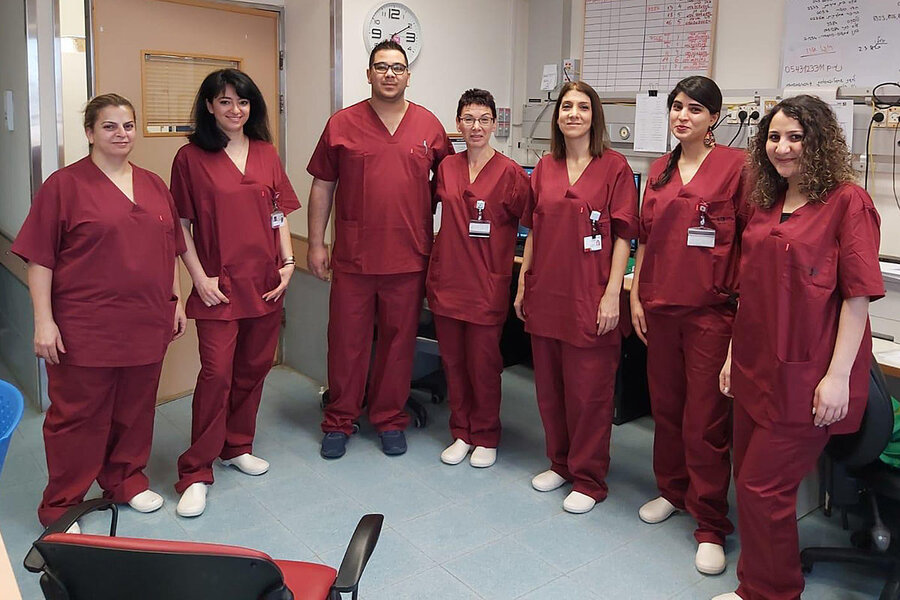
Though Arab doctors, nurses, and pharmacists have over the past decade become a more familiar presence at Israeli hospitals and state-supported HMO clinics, the pandemic has shown Arab Israeli citizens in a new light: as essential foot soldiers and field commanders in the country’s struggle against the virus.
That elevated stature comes, ironically, at a particularly fraught moment in Arab-Jewish political relations.
Even as Arab Israelis, one-fifth of the population, have strengthened their parliamentary representation via a new alliance, the Joint List, they repeatedly have been the objects of hostile campaign rhetoric from Prime Minister Benjamin Netanyahu. Leading up to the March 2 election, Mr. Netanyahu’s Likud party sponsored billboards that warned Israeli voters against an alternative government that would include or rely on the Joint List, which the prime minister and his allies portrayed as “terrorism supporters.”
In an effort to push back on that sentiment, a new television commercial sponsored by Arab health care workers features a montage of portraits of Arab doctors and nurses. “It’s about time to acknowledge: Arabs are also partners in the country. Partners in destiny, partners in governance,” the commercial concludes.
Jewish Israeli attitudes may be evolving. Increasingly, there are calls in Israel to shift budgets from military interests to the public health battle. And there are calls to recognize the Arab Israeli contribution.
“This is the first time that Israel is conducting a war and [that] the Arab citizens have been recruited,” says Eran Singer, Arab affairs reporter for Kan, Israel’s public broadcasting company, alluding to the fact that most Arab citizens aren’t obliged to serve in the army. “It’s quite amazing that it happened so soon after the elections.”
The prominence of Arabs in Israel’s health system reflects an effort by many to move into the mainstream, despite decades of discrimination and marginalization. Over the past two decades, as rising numbers of Arab youth have pursued higher education and sought to integrate among Israel’s middle class, many have chosen to become health professionals.
According to official government data published in the daily Haaretz newspaper, Arabs now make up 17% of the country’s doctors, 24% of the nurses, and 48% of the pharmacists.
“The system would collapse without the decisive contribution of Arab medical staff,” said Raphael Walden, deputy director of Sheba Medical Center, the country’s largest hospital, in an interview with Israel’s Channel 12 television news.
Opportunity “not to be missed”
The pandemic has broadened recognition of the Arab Israeli health care contribution to national security experts.
Noting that the fight to save lives would be “fatally compromised” without Arab professionals, a recent policy brief by the Institute for National Security Studies (INSS), a Tel Aviv University think tank led by former military top brass, urged the government to create a “positive basis” for “full integration” of Arabs in Israeli society and for “an end to exclusionary and racist discourse and statements that call into question Arab loyalty.”
“This is really an opportunity that’s not to be missed,” says Meir Elran, an INSS fellow and former general who co-wrote the paper. “It’s very difficult to find a light in this tunnel. But there’s more than a chance that this can make a difference.”
Still, for all the progress achieved by Arab medical professionals, Israel’s health services are harder to access for the Arab population. Arab towns are located, on average, nearly twice as far from hospitals as Jewish towns, according to the Taub Center for Social Policy Studies.
Early on in the pandemic, it became apparent that fewer coronavirus tests were being administered among Arabs, and that informational material about COVID-19 wasn’t even available in Arabic. As of April 16, the Health Ministry reports that only about 459 of Israel’s some 12,591 COVID-19 cases, or 3.6%, come from Arab towns. The Palestinian Authority reports another 81 cases in East Jerusalem.
The underrepresentation stems from the initial emergence of the virus here among Jews who have limited interaction with Arabs, says Dr. Mohammed Khatib, databank director of the Galilee Society, a center focusing on health policy among Arabs. Israeli coronavirus policy needs to be better fine-tuned to Arab communities and lacks input from Arab public health professionals, he says.
Dr. Diab, who dons bordeaux-colored scrubs worn by the staff on the Rambam coronavirus ward, estimates that about two-thirds of the doctors on the ward are Arab. She says she considers the staff – whether Arab or Jew – like a second family. Her parents, religious Muslims, worried about the risk of infection but ultimately supported her decision to volunteer.
“They believe that God will do what is necessary,” she says. “In the end, they trust me.”
As for her Jewish patients, “I always get smiles from them. They aren’t insulted or surprised to have an Arab opposite them. I’ve never felt anyone treat me differently because I’m an Arab.” While not unheard of, she says, that’s a rare phenomenon at the hospital.
Dr. Diab says she has kept in touch with Ariel Grabois, a ballroom dance instructor, who was one of the first patients on the ward. Released after recovering from the virus, Mr. Grabois describes the medical staff on the ward as “dedicated” and “top notch,” and says he hopes the pandemic prompts Israelis to look beyond identity politics.
“You have to put those things aside,” he says. “The virus doesn’t distinguish between Arab and Jew. I hope this will make people look at things differently – less in terms of [demographic] sectors.”
“We’re all in the same boat”
Indeed, inside Rambam Hospital, the collegiality and collaboration among the Arab and Jewish staff is a marked contrast to the public atmosphere elsewhere in Israel, says Mogher Khamaisi, the hospital’s Arab Israeli director of internal medicine, who oversees a ward of patients with COVID-19 symptoms.
Arabs, who make up much of the senior staff, volunteered for the coronavirus work out of a sense of professional duty. “They want to take an active role in the effort,” says Dr. Khamaisi.
“It’s true that [Israeli politicians] ignore us ... and the prime minister speaks against us. On the other hand, the doctors here do our work regardless, without expecting any favors. People should see that we’re all in the same boat and that our contribution is critical,” he says. “But I fear that in another half year, everyone will forget, and we will return to being second- and third-class citizens.”
Dr. Diab sounds a more hopeful note. Lately, more individual Israelis have reached out to her on social media to thank her for her work. “They think that what I’m doing shouldn’t be taken for granted.”
She says she’s always tried to rise above the national differences in Israel, and focus on individuals as humans instead of Arab or Jew. And while she says she isn’t particularly interested in politics, it bothers her when she hears some insist that Israel is only a Jewish state. Maybe dealing with the coronavirus will change that.
“Ultimately we live in the same country, and we all need to be equal,” she says. “The fact is that we are now more equal, because we are on the front lines of the corona battle, and people are looking at us differently. I hope this isn’t temporary. I hope it’s the beginning and there will be equality between us.”
This story is part of the SoJo Exchange from the Solutions Journalism Network, a nonprofit organization dedicated to rigorous reporting about responses to social problems. It was originally published by The Christian Science Monitor on April 16, 2020.
They turn out at the polls, and turn into lifelong voters. City by city, young activists are working the grassroots to make their voices count.
Memo to the U.S. Electorate: Ready or not, it’s time to make room.
A legion of 16- and 17-year-olds vies for a place at your nearby polling station. In several cities around the country, they’re already voting in local elections.
A wealth of data supports the wisdom of enfranchising young voters — turnout is high in this age group, and neuroscience suggests their brains are primed for calculated decision-making.
Countries that have implemented age-16 voting before now have found that cultivating good civic behaviors early leads to long-term engagement, both for young voters and for those around them.
These young voters might also hold the remedy to ailments that beset U.S. democracy, among them disillusionment, apathy, partisanship, and cynical frustration with government.
What’s more, lowering the voting age may be the key to a smoother transition, as U.S. demographics shift and society becomes both older and more diverse at a time when we face a future when hot-button issues such as climate change, racial justice and economic inequality dominate civic life and debate.
Additionally, enfranchising young votes gives them a direct sense of how they can participate in the system; in fact, the track record so far shows that 16- and 17-year-olds take the right to vote seriously and are willing to work to get it.
Already, the age-16 suffrage movement has support in national circles, from House Speaker Nancy Pelosi to members of Congress, newspaper editorial boards and local officials. Still, It remains very much a grassroots campaign aiming to change voting laws city by city and town by town with the support of activist teen groups and national nonprofits such as Generation Citizen and the National Youth Rights Association.
The young would-be voters who have joined the cause are persistent, resourceful, and patient as they work to shake up the system from within. Obstacles including bureaucratic labyrinths, an unprecedented pandemic, and even trenchant partisanship have slowed them, but not for long.
Take Caleb Deberry. A 17-year-old high school senior from Chicago, Deberry heads an Illinois chapter of Vote16USA, a nationwide advocacy initiative organized by Generation Citizen that promotes age-16 suffrage across the country. Deberry’s group faces steep trekking in its effort to lower the age requirement for voting in Chicago, and ultimately the rest of Illinois. State law prohibits the city from making changes to its charter — either by referendum or by city council vote — that would make lowering the voting age possible.
Working from his family’s apartment in the North Side neighborhood of Rogers Park, Deberry spends on average 20 hours a week on a variety of tasks.
He regularly works the phones to recruit members for chapters downstate in Rockford, Bloomington-Normal, and Carbondale. He has spoken with elected officials such as Representative Jan Schakowsky, Illinois Representative Kelly Cassidy and the policy advisor to Representative Ayanna Pressley. (In 2019, Pressley introduced a measure in the House that would have lowered the federal voting age to 16.) Deberry has met with former Illinois governor Pat Quinn to elicit his support, and participated in a forum in September 2019 where high school students questioned Democratic Party presidential candidates.
Deberry credits his poise and enthusiasm to working with his mother, Ebony, an organizer with a branch of the group People’s Action, a political group that has stumped for housing, economic justice, environmental issues, and more equitable distribution of Chicago education funding. During a phone interview with Deberry, in fact, his mom can be heard working the phones in the background.
“She always took me to meetings when I was 11 or 12,” he says. “I was always interested in going, taking notes, canvassing, or helping at the phone bank.” Deberry says he, too, is passionate about the same causes and can now draw from his experience in public speaking and even setting budgets that he learned alongside his mother.
The ideal Deberry envisions is more than wishful thinking. Age-16 suffrage has gained grassroots momentum in recent years, and as the country has witnessed with the ongoing racial justice marches of 2020. The deep engagement of young people persists in spite of the social distancing and challenges to community organizing that the pandemic has demanded.
“In the past three or four years, we’ve seen a groundswell in the level of attention the issue is getting,” says Brandon Klugman, campaign manager for Vote16USA. “That goes along with an increase in youth activism among 15-, 16- and 17-year-olds who are making clear that they not only have a stake in politics, but that they’re equally reading, willing and able to take part in choosing government officials.”
At the same time, there’s a sense that the teens who have gravitated to the cause feel they have to earn the privilege of voting and to prove to older voters that they, too, deserve a turn at the ballot box. “Within the movement, there’s the feeling that we have to persuade the public with a positive view of young people’s capacity and worth,” says Brian Conner, the president of the National Youth Rights Association, another group that pushes for age-16 voting eligibility.
In the history of voting, age ain't nothin' but a number
Although white males spent the first 150 years of this country’s history endeavoring to limit voting based on land ownership, sex and race, a minimum age for casting a ballot did not emerge as a point of contention until nearly the mid-20th century.
The voting age had been set at 21 for reasons of convenience, to keep to a precedent originally set by British law during the colonial era, says University of Kentucky law professor Joseph Douglas. In England, 21 had been the age of majority since the time of Chivalry; at that age young men became eligible for their first suit of armor and could, as a result, qualify for knighthood.
Talk of lowering the voting age in the U.S. began around the time of the Second World War, when, in 1942, the federal government lowered the draft age from 21 to 18 to build up the armed services at a time of escalating global conflict. After the war, Kentucky and Georgia changed the voting age for their state elections to 18.
The movement picked up real steam in the 1960s, as increasing numbers of young people protested the Vietnam War. Citizens who were old enough to risk their lives on the battlefield, the argument went, deserved a say in how the government was run.
The slogan “Old Enough to Die, Old Enough to Vote” became a popular rallying cry. By March 1971, both the House and Senate overwhelmingly approved a constitutional amendment to lower the voting age to 18 and sent the amendment to the states for ratification.
Just 100 days later, the required three-fourths of all states ratified the amendment, and in July 1971, vote-18 became the 26th Amendment to the Constitution.
Today’s age-16 suffrage movement has interesting parallels with the successful 26th Amendment campaign. Many of the original arguments against allowing 18-year-olds to vote — that they’re too immature, they don’t understand the issues — are wielded today to stymie efforts to lower the voting age further.
It’s important to note that the 26th Amendment does not expressly prohibit states or local governments from setting a lower voting age.
In fact, its main proviso states, “The right of citizens of the United States, who are 18 years of age or older, to vote, shall not be denied or abridged by the United States or any state on account of age.”
So why grant 16- and 17-year-olds the right to vote?
Let’s run down the reasons:
Because they can work, drive, and pay taxes like adults
Any argument in favor of lowering the voting age starts with the fact that 16- and 17-year-olds are already seen as adults in several official ways. Currently 14 states and the District of Columbia let teens pre-register to vote at 16, while an additional nine states have opened pre-registration to 17-year-olds. By age 16, teens have the right to drive in every state of the union and can secure a license everywhere but in New Jersey, where they must wait until 17.
Then there’s the matter of taxation without direct representation for the sizable number of 16- and 17-year-olds who work. The Bureau of Labor Statistics reports that 229,000 youths between the ages of 16 and 17 work full-time, and another 1.46 million work part-time. Minors now must file tax returns if they earn more than the standard deduction.
Within the criminal justice system, the law frequently treats mid-teens as adults, too. The legal age of sexual consent is 16 in 31 states, and age 17 in another six states. And according to the Juvenile Law Center, every year 250,000 youth are tried and sentenced as adults in the U.S.
Because young brains are optimized to make voting decisions
For those who question whether 16- and 17-year-olds are mature enough to assume the responsibility of casting a ballot, psychological studies seem to support the premise that teens of this age have the capacity to mull over the issues and scrutinize candidates on the way to making a decision. And they perform those functions as well as 20, 40, or 60 year-olds.
The basis lies in cognitive studies that examine our abilities to gather and process information depending on our environment and prevailing factors. So far, results show that 16-year-olds have fully formed peak abilities of “cold cognition” — the power to reach deliberate, measured decisions in which humans take time to weigh information.
In other words, the very skills required to decide on a candidate and cast a vote. The argument is that the cognitive powers required in knowing when and where to vote, and taking the time to read up on issues and learn about candidates, falls well within the skills that 16- and 17-year-olds have developed.
Arguably, teens get a bad rap for more impetuous thinking, or “hot cognition” skills, that shape impulsive, spur-of-the-moment decision-making under pressure. Those abilities don’t fully mature on average until age 21. And while that’s a drawback during emotional or stressful times, this type of thinking doesn’t factor into ballot-box choices.
Research backs the fact that mid-teens can think over their preferences, analyze self-interest, and ultimately come to sensible conclusions about voting. A 2012 study in Austria, where 16- and 17-year-olds have had the vote since 2007, found that that voters in this age group were just as likely to be able to describe their ideological leanings and to select candidates that reflected those inclinations as older voters.
What’s more, surveys there have shown a marked increase in the number of 16- and 17-year-olds who described themselves as interested or very interested in politics; those numbers doubled from 31 percent in 2004 to 62 percent in 2008.
Because voter turnout is higher for this age group
Beyond Austria, a handful of other democracies around the globe have already lowered the voting age to 16 over the last three decades. In Brazil and Argentina, 16-year-olds can choose to vote in elections at all levels, while everyone from 18 to 70 is required to do so. Several states in Germany have permitted 16-year-olds to vote in local elections since the 1990s. The Scottish parliament, meanwhile, unanimously decided to lower the region’s voting age to 16 on the eve of its 2014 independence referendum. Seventeen year-olds can vote in Greece and participate in local elections in Israel. Croatia, Ecuador, Estonia, Hungary and Slovenia allow 16-year-olds to cast ballots in elections at various levels, although in some places enfranchisement is conditional on being married or employed.
Austria was the first European Union nation to set a voting age of 16 for most of its sovereign elections, and as such, has more than 10 years of election data to analyze. Research from 2014 shows that, in Vienna specifically, turnout for 16- and 17-year-old first-time voters was 64 percent, significantly higher than the 56 percent turnout for 18- to 20-year-old first-time voters.
More encouraging data comes from Takoma Park, one of four Maryland suburbs outside Washington, D.C., to open voting to 16-year-olds. A 2013 city council vote made Takoma Park the first U.S. city to lower the voting age. Credit goes to Timothy Male and his council colleagues. He says constituents had asked him to work up an activity to interest teens on voting, civic responsibility, and the workings of local government.
The idea was to boost participation in local elections, where turnout figures had been mired in the teens for a decade, crossing the 20 percent mark just once. The low figures were something of an embarrassment given Takoma’s proximity to the capitol and the fact that so many residents worked in government.
Male says he took up a Google search to brainstorm and landed immediately on Scotland and its decision to open voting to 16-year-olds in 2011. He and a colleague researched the issue and a similar move in Vienna during the naughts. The research led to a charter amendment Male proposed to the council in 2013, which won approval. Maryland’s government allows localities the leeway to make voting decisions autonomously; once Takoma Park approved age-16 voting, nearby Hyattsville quickly followed suit.
Targeting the city council for approval seemed an expedient way for Male to make the change at the time, but Male’s tactic has become something of a blueprint for age-16 suffrage proponents.
Proposals to win by referendum have stalled a number of times across the country, often owing to the reluctance of a wide swath of older voters to expand the rolls to teens. Male says targeting city councils give teens time to prove their worthiness, by boosting turnout and getting involved in council or school board meetings.
And young Takoma Park voters have proven themselves. In the years following the amendment, 16- and 17-year-olds participated in municipal elections in numbers that far surpassed overall turnout, although the numbers themselves were less than overwhelming. In 2013, 44 percent of 16- and 17-year-olds voted, compared to 10 percent of overall registered voters. In 2015, 45 percent of the teens cast a vote, compared to 21 percent overall.
The decidedly lackluster voting record that 18- to 20-year-olds have displayed in recent years can be attributed to any number of factors — they’re possibly attending school out of town and didn’t make absentee arrangements, or they are simply caught up with working, bill paying and other newfound responsibilities.
Rutgers University psychology professor Daniel Hart argues the reverse: that 16- and 17-year-olds are more deeply rooted in their communities, typically where they live with parents or immediate family. And they are likely to associate that sense of community belonging with a personal obligation to participate.
Make the voting ritual habitual: Young voters practice lifelong civic engagement
Ask any parent nagging kids to floss daily or pick up dirty laundry, and they’ll tell you that instilling good habits early makes those habits more likely to stick. The same goes for voting.
Most citizens are habitual voters or habitual nonvoters, and the reasoning goes that the earlier you instill an ethos to vote in young people, the more likely they are to continue that pattern as they age.
Beyond young voters practicing good civic habits, Assistant Professor of Political Science Jens Olav Dahlgaard, of Copenhagen Business School, analyzed Denmark election data and, in 2018, identified a bonus “trickle up” phenomenon — families that had young, committed voters living at home saw a boost in turnout among the parents as well.
Hart and others recommend steps to expand civics education as a way to promote a lifelong sense of voting as a societal duty.
Look to Culver City, California, a suburb of Los Angeles, for evidence of this. Piper Samuels, Vivien Adler and Marley Leonard have lobbied the local city council to put a measure to lower the voting age on the ballot. The group has canvassed the school, sought the endorsement of clubs at Culver City High and joined a protest of 2,500 students that marched in support of racial justice.
The three students, now seniors and juniors, say their high school’s curriculum includes classes such as civics, government, and American history, but that their organizing work adds a real-life component that makes what they have learned that much more meaningful.
“If we succeed, we could see expanding civics education in our school,” says Samuels. “One way might be linking what we study to civic engagement somehow.”
Indeed, it’s the mechanics of securing the right to vote that also catalyzes engagement. Working with city governments to implement these measures gives mid-teens a front-row seat to the inner workings of local democracy that no civics class could hope to replicate.
Sadie Fleig is a recent high school graduate in Berkeley who, at 16, started working in political groups pushing to lower the voting age. Fleig, now 18, is eligible to vote under current law, but she still works for the cause as the head of a local chapter of Vote16USA.
In 2016, thanks in part to a lobbying push by Vote16USA, the Berkeley city council approved a measure to allow 16- and 17-year-old citizens to join the existing electorate at the polls and vote in local school board elections.
But four years after the measure passed, a series of administrative snags has since prevented 16- and 17-year-olds from casting ballots. For example, the Alameda County Board of Elections needs updated software to track registrations for a wave of about 2,000 voters that this expansion will add to the rolls. Will that update happen in time for November 2020, in the middle of a pandemic that, at this writing, has resurged in California? New poll watchers may have to be hired, and the city would need to compose and print new mail-in ballots for 16- and 17-year-olds who request them. Among other logistic questions are how to set up polling booths specifically for the younger citizens who can only vote in one election out of many happening on the same day.
Fleig and her fellow activists have not shied away from what amounts to a crash course in practical politics. Last year, they petitioned the Berkeley Unified School District take a more active role in resolving the matter by retaining a lawyer to press their case. Although hearings and meetings continue, progress has stalled, given the COVID-19 crisis and an upcoming election season that will have to make allowances for social distancing.
“It is very frustrating for them,” says Margaret Prinzing, the counsel the school board has retained. “I’m still very impressed how committed and motivated the students have been — they have had a presence at the meetings and I plan on making more of an effort to involve them going forward.”
Far from losing hope, teens like Fleig see the struggle to win the vote as an all-too-real, hands-on experience in government that American high schools could never match: How to square up ideals, civic action, and finally agency.
“There really haven’t been any groups pushing back against this, but in many ways since there really isn’t a basic framework before us,” Fleig says. “We’ve had to try to figure out the process of getting this implemented by ourselves.” In the meantime, Fleig and other members of the local Vote 16 USA chapter have created a non-partisan primary guide for voters.
The best prospects are local, rather than national
Developments on the national stage show the push for age-16 suffrage is gaining slow traction across the country.
The movement has a few high-profile supporters aside from Pelosi, including Oregon Governor Kate Brown and Democratic primary candidates Andrew Yang and Senator Bernie Sanders.
Even the editorial boards of the Washington Post and Boston Globe have declared their support.
A sweeping, constitutional change affecting elections from presidential ballots down to local school boards seems a ways off for now. Pressley’s 2019 amendment to lower the federal voting age to 16 was defeated in the House with 126 yes votes (125 Democrats and 1 Republican), and 305 no votes.
Politicians, pundits, academicians and others both pro and con agree that securing the support of two-thirds of Congress and three-fourths of state legislatures is unlikely in the near future.
What lies ahead this fall?
A San Francisco referendum comes before voters again this November proposing 16 as the voting age in municipal elections. (A similar proposal on the 2016 ballot, called Proposition F, narrowly lost with a 48 percent “yes” vote.) Across the East Bay, Oakland voters will decide whether residents 16 and older can participate in school-board elections. Nine towns in Massachusetts have recommended allowing 16-year-olds the vote in local elections, and have now pressed the state legislature to make constitutional modifications that would allow that to happen without requiring approval of the assembly and the governor. And 17 states, including Illinois, Virginia, Ohio, Indiana, North Carolina, Maryland, Connecticut and the District of Columbia, already let 17-year-olds vote in presidential or congressional primaries, provided they will have turned 18 on or before the next general election.
Most activists believe that change will have the greatest momentum locally. Male says aiming for smaller gains — town by town, with city councils as a primary target — is the more practical approach, based on numbers and time.
A vote-16 city council campaign typically would require a simple majority of councilmembers to vote in favor — usually five, six or seven total. These are officials with more time to devote to, and ruminate over, policy matters.
Even city-wide referenda often run into obstacles of scale; it’s harder to win over thousands or tens of thousand of voters, each of whom may spend a minimum amount of time absorbing any one issue out of potentially 10 or more ballot questions.
See the aforementioned Prop F in San Francisco; and a similar ballot measure was defeated in Golden, Colorado, in 2018.
Another potentially limiting factor is the balance between state and local power, as codified in each state’s law. To date, the vote-16 campaign has logged its greatest successes in Maryland and California, where municipalities have the leeway to approve local election laws — what Joshua Douglas calls “home rule.”
Those two states’ constitutions make it possible for cities or local jurisdictions to amend their charters in order to accommodate 16- and 17-year-olds at the ballot box.
Even so, bringing that about is accomplished in different ways according to local laws. In some cases, all that’s required is a majority of the city council to vote in favor. In others, a charter amendment must first be passed by the city council, then brought before voters for approval in an election.
Other states show promise, too. According to Vote16USA, laws in Colorado, New Jersey, New Mexico, Oklahoma, and Washington, D.C., also grant localities the autonomy to institute age-16 voting.
Another nine states offer similar opportunities, but the paths aren’t so clear-cut: while states do offer municipalities some latitude to modify charters and set their own voting age, there is precedent that would require additional research to determine how age-16 suffrage could most effectively move forward.
Ultimately, lowering the voting age is good for representative democracy
Supporters of a lower voting age say there may be longer-term societal benefits to opening the ballot to mid-teens.
These include training the government’s ears to a wider range of constituents and viewpoints, particularly at a time when the country not only faces significant demographic shifts, but reckons with critical existential issues of racial justice, climate change and deepening economic inequality.
Two U.S. population trends underscore this. Americans are getting older, and more ethnically diverse.
A gap has opened between young and old at the ballot box. Over the last 50 years the country’s population has skewed older. In 1960, 36 percent of the country was under 18; that number dropped to roughly 25 percent by 2010.
And the data shows that younger and older voters have differing preferences; 2016 exit polls showed that those 45 and older preferred Donald Trump by 8 percentage points, while those 44 and younger chose Hillary Clinton by 14 percentage points.
Younger voters may also feel disaffected. By some estimates, the median age of voters who participated in 2016 elections was 52, and as high as 57 for participants in the 2014 midterms.
A 2016 study of mayoral election turnout in 50 U.S. cities found that the median age of residents in the average large city is 42. But the median voting age in city mayoral elections was 57. In the likes of Dallas, Las Vegas, and Miami it can range from 62 to 68.
Hart says as the balance between young and old citizens has shifted both in society and in the electorate, the divergence of their respective priorities has become starker. He points to data collected by American National Election Studies (ANES) that shows that younger constituents tend to favor federal spending on education more so than voters between ages 65 and 74, while those older citizens are more likely to support Social Security spending. Some balance between spending priorities, notes Hart, would be the preferable outcome — for example, government spending that enabled younger members of society to boost their education and earning power, which in turn would situate them to contribute more to Social Security coffers.
Ongoing demographic shifts will have an equally profound effect on the electorate. Generation Z is far more racially and ethnically diverse than either Millennials or Boomers. By current projections, white Americans will become an ethnic minority in the 2040s, while Latino, Black, and Asian Americans will make up 45 percent or more of the population.
Hart argues that one way to bring greater balance between different groups and generations is to include younger voters, who are more likely to keep active at the ballot and as a result more engaged in political processes.
“There is a sociological balance to be struck,” says Hart. “We have big issues, among them the biggest wealth transfer of the last 50 years to older people, or the frustration that younger citizens have about environmental issues.” Inviting 16- and 17-year-olds to vote, he reasons, will give them a way to express their wishes and to underscore concerns.
“At the moment, we feel hopeful, especially to see young people so active in social movements,” says Hart. “The bottom line is that we must see 16- and 17-year-olds as people who have grown up with us and likely share our basic values. Essentially they are us. And because they have all the requisite capacities to be citizens, it’s unfair to disenfranchise them.”
This story was produced with support from the Solutions Journalism Network’s Renewing Democracy initiative.
This story is part of the SoJo Exchange from the Solutions Journalism Network, a nonprofit organization dedicated to rigorous reporting about responses to social problems. It was originally published by Next City on July 20, 2020.