This story was originally published by Grist. Sign up for Grist’s weekly newsletter here.
In 2019, Australia was on the cusp of approving a new coal mine on traditional Wirdi land in Queensland that would have extracted approximately 40 million tons of coal each year for 35 years. The Waratah coal mine would have destroyed a nature refuge and emitted 1.58 billion tons of carbon dioxide.
But that didn’t happen, thanks to the advocacy of Murrawah Maroochy Johnson, a 29-year-old Wirdi woman of the Birri Gubba Nation, who led a lawsuit against the coal company in 2021, and won.
The case was groundbreaking in many ways, but perhaps most strikingly, Johnson’s work helped set a new legal precedent that pushed members of the court to travel to where First Nations people lived in order hear their testimonies and perspectives, instead of expecting Indigenous people to travel long distances to settler courts.
The lawsuit was also the first to successfully use Queensland’s new human rights law to challenge coal mining, arguing that greenhouse gas emissions from the Waratah coal mine would harm Indigenous peoples and their cultural traditions.
Because of the litigation, the mine’s permit was denied in 2022, and its appeal failed last year.
Because of her work, Johnson is now among several of this year’s winners of the prestigious Goldman Environmental Prize honoring global grassroots environmental activism.
The last few years have been transformative for Johnson, who is the mother of a toddler and expecting her second baby in a few weeks.
Our partners at Grist spoke with her to learn about what motivates her, how she views the climate crisis, and what other young Indigenous activists can learn from her work.
This interview has been edited for length and clarity.
Q. You have been working on behalf of your people since you were 19 years old. What drives you to do this work?
A. It’s definitely not a choice. First contact here was just 235 years ago. At that point, terra nullius was declared, which said that the land belonged to nobody, which essentially means that the first interaction with colonizing invading powers was one of dehumanization.
They saw us here, but to say that the land belonged to no one really says that we are subhuman. They deemed us of a status where we couldn’t own our own land even though they saw us here inhabiting our own lands, living and thriving.
And so there’s a long legacy of resistance in first contact frontier wars but also through advocacy over the generations. I’m just a young person who gets to inherit that great legacy.
I was raised by very strong parents. My father, my grandfather, my great grandparents, were all resistance fighters. There’s a lot of responsibility that comes with inheriting that legacy and feeling like you need to do your part.
But also, I feel like it’s not a choice because at the end of the day, what’s real is our people, our law, our custom — no matter the colonial apparatus attempts to disappear us, dilute us, absorb us into homogenous Australian mainstream and complete the assimilation process.
To me, that’s continued injustice that our people face. And every First Nations person, I feel, every Indigenous person, has an obligation to resist that as well.
Because at the end of the day, we First Nations people here in Australia, we are the oldest continuous living culture on the planet, and what comes with that is the fact that we have the oldest living creation stories, we have the oldest living law and custom.
That in and of itself is so significant that we can’t just allow it to be washed away. I think that there has to be a continued active effort, by my generation and all future generations, to maintain our ways.
For us, colonial, Western, white contact is just such a small blip in time for how long our people have been here and how long we’ve maintained our ways and law and custom and culture.
We have to collectively acknowledge that we have a duty of care and responsibility to maintain the way of our people. I’m really proud of being able to inherit that and also having a responsibility to protect and maintain it.
Q. Can you tell me about your perspective on climate change?
A. It’s always called human-induced climate change, but I think that that term doesn’t allow for colonial powers to be held accountable, or big polluters.
I think it’s actually more accurate to say that it’s colonial-induced climate change, because it’s actually the process of colonization violently extracting and exploiting the resources of Indigenous nations, peoples’ land, especially in the Global South, that’s resulted in the crisis of climate change that we face today.
I see climate change not just as a crisis, but also an opportunity. In one sense, if what remains of our cultural knowledge is so intimately dependent on our land, and having access to our lands and waters, then climate change is a huge threat.
For example, in the Torres Strait and throughout the Pacific, what do you actually do when your country, your homelands, your territory disappears because of the impacts of climate change? What does that mean for our identity that actually derives from being the people of that unique country and that unique place?
Climate change could really signal finality of our diverse and distinct and unique cultural identities as Indigenous and First Nations people in the sense that land may become so changed or so disappeared that our people are no longer able to resonate or recognize or identify with it anymore or learn from it anymore. So that’s really scary.
But I think the other side is an opportunity because climate change creates a sense of urgency.
It’s that sense of urgency that is going to be pushing our peoples to work collectively as Indigenous and First Nations people around the world, to highlight the importance of the shift required to address climate change, but also to recenter our traditional systems of caring for country and sustainability and living in harmony with the land as a solution to climate change — really combat this normalization of colonial history and the global system and power systems as unquestionable.
Q. That reminds me of how, on the video announcing your Goldman Prize, you mentioned that “there’s a lot to be learned from our ways of being.” Can you expand on that idea?
A. We’re at this moment where we can really take the best of our traditional ways of being and really use that to influence the decisions that we make about our future.
What real climate justice is, to me, is really drawing on the greatest strengths that we have in terms of our traditional law and custom, using that as a guidance system in terms of the decisions we make about what the future looks like.
If you’re going to shift the entire global economy and global structure of how business is done, then you want to be talking to the experts. So you want to be talking to First Nations people and knowledge holders.
I think climate change will ultimately lead those who are committed to the current system to be forced to be exposed to the reality that a lot of First Nations people have been living with for a long time: that this current global system doesn’t work for us. In the context of capitalism, it’s designed to work against us and facilitate outcomes for very few.
Climate change is here because of the current global systems, and that means that, eventually, the system will become obsolete. It already is when it comes to the survival of humanity. I think that ultimately people will come to see that the system doesn’t work for them. It’s never been designed to work for the masses.
So, I really see a huge shift toward leadership from First Nations people. Indigenous or non-Indigenous, people — this is my hope here in Australia — start to act in accordance with traditional principles of caring for country law and custom and really reestablishing old ways, governing ways, of these lands. I think that’s the only way to really address climate change.
And maybe I’ve got a huge imagination, but I see it as part of my responsibility to work as hard as I can toward that goal of creating that reality, one in which a modern society essentially adheres to First Nations law and custom in a modern context.
Q. You’ve talked a lot about the importance of drawing from traditional knowledge. When I think about what it means to be Indigenous, I think about both the knowledge we have and also the challenge in bringing that forward because of how colonialism has eroded our ties to both culture and land.
What would you say to Indigenous people who care about land and culture, but are feeling disconnected from both? How do they find their way back?
A. This is one that I actually really struggle with sometimes because in the Australian context here, we had the Stolen Generation, when Indigenous children were forcibly removed from their parents and indoctrinated. So you have whole generations that have been dispossessed of their cultural inheritance, of their families, and also their peoples have been dispossessed of future generations as well.
The colonial process was a finely tuned machine by the time it came through the South Pacific and Australia.
In one sense, we’re fortunate that it was only just over 230 years ago first contact happened, but at the same time, this colonial apparatus was so finely tuned that they didn’t need as long to do as much damage as they’ve been able to do.
Being in a settler colony, we’re dealing with mass incarceration, mass suicide rates, and the disappearing of our people. It feels like it’s hard to catch up. We can’t take a break or catch our breath because we’re dealing with the very real, frontier issues of losing our people.
But at the same time, what’s required for healing and to actually rebuild our cultural strength is time. And actually being able to take the time to be on country, to sit with country, to learn, and to reconnect.
It’s this really delicate tug of war that all First Peoples who have been subject to colonialism have to face, and we have to sort of grapple with on a daily basis, what do we put our energy into?
Am I fighting forced child removals and assimilation on the daily? Am I fighting the education system? Am I doing land and country work and going through the legal system?
Or am I just sort of operating as an individual, sovereign person, under our own law and custom and that’s how I resist and maintain my strength?
It’s so vast in terms of how we have to split ourselves up in a way to deal with the issues at hand, which essentially is the disappearance of our people, but also our way of life and custom.
At the end of the day, for me, I just have to take heed from my ancestors and my own people that we’ve seen the end of the world before.
My great grandparents and their generation saw the end of their world already, and they’ve been fighting. They were in the physical frontier on the front line, and survived that, and saw everything that they knew to be ripped away from them.
So I have to just acknowledge that I’m very lucky to be born in the generation I’m born in, with so much more opportunity. But at the same time, there is that huge gap in familiarity with culture and our ways.
Q. Before your successful litigation against the Warratah mine, you fought against the Carmichael mine, filing lawsuit after lawsuit. But the mine still opened in 2021 and is now in operation. How do you handle such setbacks, and the grief of climate trauma and colonialism? What would you say to other Indigenous activists who are dealing with similar challenges?
A. Being a young person, going through that, it’s really hard. You’re up against the actual powers that be of the colonial apparatus: the state government, the federal government, the mining lobby itself, and this idea that our traditional lands should be destroyed for extraction and exploitation for the benefit of everybody else.
For the benefit of the state in terms of royalties, and for the benefit of the rest of settler Australia, where we, the people and our lands, are the collateral damage. And so for a long time I was very heartbroken, very depressed. For a long time I didn’t know what my next steps were.
But the reality is that I feel very much so guarded by my ancestors and all our people. I had time to mourn and get back on my feet before the opportunity to join the Youth Verdict case against the Waratah coal mine came along.
All I can say is we kept going. We’re fighting for our people, every single day. And something that I was always reminded of along the way was that even though it might not be the silver bullet that makes significant change, it’s still important that we create our own legacy of resistance and that we do our best every day to maintain what we hold dear.
We’ve got to do the work because we’ve got to do the work. It stands on its own and it’s our obligation as traditional custodians every day to do the work of maintaining and protecting country.
We put on the record that we don’t consent, this isn’t free, prior, and informed consent as we are entitled under the United Nations Declaration of the Rights of Indigenous Peoples.
And every step of the way, just maintaining that resistance, even if it’s just telling our story and challenging the prevailing, dominant, colonial narrative, I think is important to do every single day.
So in terms of advice, I think it’s to keep going. Take a break when you need to. And have a cry, because I cried for like eight years straight, but I think just knowing what some of my own people have been through and the horrors that they had to deal with, it’s the responsibility that we inherit to maintain the fight and continue on as best we can.
We might not be able to solve everything in one or two generations. But again, we’re the oldest living culture on the face of the earth.
So, in that respect, we’ve been here the longest and, as long as my generation and our future generations maintain our own identities, cultural identities, and resistance as best as we can, we’ll be here long into the future as well.
Header Image from Goldman Environmental Prize
This story was originally published by Grist. Sign up for Grist’s weekly newsletter here.
International climate negotiations have long been haunted by a broken promise.
In the wake of collapsed negotiations at the United Nations climate conference in Copenhagen in 2009, wealthy nations, led by the United States, pledged to provide developing countries with $100 billion in climate-related aid annually by 2020.
The money was meant in part to ease tensions between the rich countries that had contributed the most to climate change historically and the poorer nations that disproportionately suffer the effects of a warming planet.
But rich countries fell short of the target in both 2020 and 2021, deepening mistrust and stymying progress during the annual United Nations climate conferences, which are known by the abbreviation COP.
A new report from the Organization for Economic Cooperation and Development, or OECD, confirms what the international organization began to suspect just before last year’s COP28: that wealthy nations finally surpassed the $100 billion goal in 2022.
And while they were two years late delivering on their promise, rich countries partially compensated for their earlier shortfalls, contributing nearly $116 billion in climate aid to developing countries in 2022, according to the latest data available.
That additional funding helps fill the roughly $27 billion gap resulting from rich countries’ failure to meet the $100 billion threshold in each of the two years prior.
“If you underachieved in the first two years, overachieving in the rest of the period is a good way to make up for that, to make amends,” said Joe Thwaites, a climate finance expert at the Natural Resources Defense Council, a U.S.-based environmental nonprofit.
Even $100 billion, however, is far lower than the developing world’s estimated need. United Nations-backed research projects that developing countries (excluding China) will need an eye-popping $2.4 trillion per year by 2030 to transition away from fossil fuels and adapt to climate change.
Serious questions also remain about the quality and accounting of the existing funding. According to the OECD report, more than two-thirds of the public finance in 2022 was provided in the form of loans rather than no-strings-attached grants.
That means developing countries are required to pay the money back, often with interest at market rates.
A recent Reuters investigation also found that some aid providers required recipients to work with companies based in donor countries, meaning that much of the aid money ultimately found its way back to wealthy nations.
Such findings are likely to inform talks next week, as climate negotiators meet in Bonn, Germany, in preparation for COP29 in Baku, Azerbaijan, at the end of the year. Negotiators need to agree on a new collective goal for climate aid to developing countries this year.
So far, different countries have submitted a range of proposals, with some nations floating $1 trillion annually as an appropriate number. Wealthy countries also want to expand their ranks so that some relatively rich countries that are technically classified as “developing,” like the oil-rich states of the Persian Gulf, can contribute funds toward the goal. Historically, only countries that the United Nations designated as “developed” in the 1990s have been on the hook.
The new OECD report’s findings may be advantageous to wealthy nations as they negotiate these thorny issues, according to Thwaites. “Developed countries were not necessarily arguing from a position of strength or moral high ground, having failed to meet the $100 billion on time,” he said.
If countries continue to provide a similar level of funding for the next few years, they could make up for the shortfall. “Making up for 2020 and 2021, meeting the goal in those two years, could help rebuild a bit of trust,” Thwaites added.
The OECD report found that funding from all types of sources — multilateral development banks, the private sector, and public finance from governments — grew across the board in 2022. The increase in private-sector funding was particularly notable, jumping by more than 50 percent to a total of $21.9 billion.
The report indicated specific progress on funding for adaptation measures like sea walls and disaster-resilient infrastructure, an oft-overlooked area of climate finance. In 2021, countries pledged to double adaptation finance from the $19 billion provided in 2019 to $38 billion by 2025. According to the OECD report, adaptation funding had already risen to $32.4 billion one year after the pledge.
As in past years, loans continued to make up the majority of funding. While developing countries have called on wealthy nations to move away from loans as the primary form of aid, all parties seem to agree that loans can be appropriate in some circumstances.
For projects that generate revenue — such as investments in renewable energy — loans tend not to have a detrimental effect because they pay for themselves.
But for measures that don’t generate revenue — in particular, adaptation measures like sea walls — loans can trap countries in cycles of debt. As a result, the call for increasing grant-based funding has grown louder in recent years.
“A lot of countries are in debt distress,” said Thwaites. “And if they take on more loans for adaptation, where it doesn’t necessarily generate a return on the investment, that’s a challenge.”
Header image by Beata Zawrzel/NurPhoto via Getty Images
Driving north on state Highway 66 through the Fort Belknap Indian Reservation in central Montana, it’s easy to miss a small herd of bison lounging just off the road behind an 8-foot fence.
Each winter, heavy snows drive bison out of Wyoming’s Yellowstone National Park – the only place in the U.S. where they have lived continuously since prehistoric times – and into Montana, where they are either killed or shipped off to tribal lands to avoid conflict with cattle ranchers.
In the winter of 2022-2023 alone, over 1,500 bison have been “removed,” about 25% of Yellowstone’s entire population.
The bison at Fort Belknap are refugees that have been trucked 300 miles to the reservation from past Yellowstone winter culls.

Although bison are the U.S. national mammal, they exist in small and fragmented populations across the West.
The federal government is working to restore healthy wild bison populations, relying heavily on sovereign tribal lands to house them.
Indeed, tribal lands are the great wildlife refuges of the prairie. Fort Belknap is the only place in Montana where bison, critically endangered black-footed ferrets and swift foxes, which occupy about 40% of their historic range, all have been restored.

But Indigenous communities can’t and shouldn’t be solely responsible for restoring wildlife.
As an ecologist who studies prairie ecosystems, I believe that conserving grassland wildlife in the U.S. Great Plains and elsewhere will require public and private organizations to work together to create new, larger protected areas where these species can roam.
Rethinking how protected areas are made
At a global scale, conservationists have done a remarkable job of conserving land, creating over 6,000 terrestrial protected areas per year over the past decade. But small has become the norm.
The average size of newly created protected areas over that time frame is 23 square miles (60 square kilometers), down from 119 square miles (308 square kilometers) during the 1970s.

Creating large new protected areas is hard. As the human population grows, fewer and fewer places are available to be set aside for conservation. But conserving large areas is important because it makes it possible to restore critical ecological processes like migration and to sustain populations of endangered wildlife like bison that need room to roam.
Creating an extensive protected area in the Great Plains is particularly difficult because this area was largely passed over when the U.S. national park system was created. But it’s becoming clear that it is possible to create large protected areas through nontraditional methods.
Consider American Prairie, a nonprofit that is working to stitch together public and tribal lands to create a Connecticut-sized protected area for grassland wildlife in Montana. Since 2004, American Prairie has made 37 land purchases and amassed a habitat base of 460,000 acres (about 720 square miles, or 1,865 square kilometers).
The American Prairie initiative is working to create a protected zone of prairie grassland the size of Connecticut by knitting together public and private lands where ranchers and others are still working.
Similarly, in Australia, nonprofits are making staggering progress in conserving land while government agencies struggle with funding cuts and bureaucratic hurdles. Today, Australia is second only to the U.S. in its amount of land managed privately for conservation.
Big ideas make room for smaller actions
Having worked to conserve wildlife in this region for over 20 years, I have seen firsthand that by setting a sweeping goal of connecting 3.2 million acres (5,000 square miles, or 13,000 square kilometers), American Prairie has reframed the scale at which conservation success is measured in the Great Plains.
By raising the bar for land protection, they have made other conservation organizations seem more moderate and created new opportunities for those groups.
One leading beneficiary is The Nature Conservancy, which owns the 60,000-acre Matador Ranch within the American Prairie focal area. When the conservancy first purchased the property, local ranchers were skeptical. But that skepticism has turned to support because the conservancy isn’t trying to create a protected area.
Instead, it uses the ranch as a grassbank – a place where ranchers can graze cattle at a low cost, and in return, pledge to follow wildlife-friendly practices on their own land, such as altering fences to allow migratory pronghorn to slip underneath.
Via the grassbank, ranchers are now using these wildlife conservation techniques on an additional 240,000 acres of private property.
Using smooth wire instead of barbed wire for prairie fences enables pronghorn to cross under them with less chance of injury.
Other moderate conservation organizations are also working with ranchers. For example, this year the Bezos Earth Fund has contributed heavily to the National Fish and Wildlife Foundation’s annual grants program, helping to make a record $US16 million available to reward ranchers for taking wildlife-friendly actions.
A collective model for achieving a large-scale protected area in the region has taken shape.
American Prairie provides the vision and acts to link large tracts of protected land for restoring wildlife.
Other organizations work with surrounding landowners to increase tolerance toward wildlife so those animals can move about more freely.
Instead of aiming to create a single polygon of protected land on a map, this new approach seeks to assemble a large protected area with diverse owners who all benefit from participating.
Rather than excluding people, it integrates local communities to achieve large-scale conservation.
A global pathway to 30x30
This Montana example is not unique. In a recent study, colleagues and I found that when conservationists propose creating very large protected areas, they transform conservation discussions and draw in other organizations that together can achieve big results.
Many recent successes started with a single actor leading the charge.
Perhaps the most notable example is the recently created Cook Islands Marine Park, also known as Marae Moana, which covers 735,000 square miles (1.9 million square kilometers) in the South Pacific.
The reserve’s origin can be traced back to Kevin Iro, an outspoken former professional rugby player and member of the islands’ tourism board.
While some individual conservation organizations have found that this strategy works, global, national and local policymakers are not setting comparable large-scale targets as they discuss how to meet an ambitious worldwide goal of protecting 30% of the planet for wildlife by 2030.
The 30x30 target was adopted by 190 countries at an international conference in 2022 on saving biodiversity.
Critics argue that large protected areas are too complicated to create and too expensive to maintain, or that they exclude local communities. However, new models show that there is a sustainable and inclusive way to move forward.
In my view, 30x30 policymakers should act boldly and include large protected area targets in current policies.
Past experience shows that failing to do so will mean that future protected areas become smaller and smaller and ultimately fail to address Earth’s biodiversity crisis.
This article by David Jachowski from Clemson University was originally published by The Conversation.

LGBTQ+ workers who are misgendered by their employers or blocked from accessing restrooms consistent with their gender identity will now get additional workplace protections as a result of new guidance issued April 29 by the Equal Employment Opportunity Commission.
It's the first time in 25 years that the EEOC has issued new rules on workplace discrimination — a change precipitated in part by the 2020 Supreme Court case Bostock v. Clayton County, the landmark decision that found that LGBTQ+ workers are protected from workplace discrimination.
"We are really pleased to be issuing this guidance today to reflect our commitment to protecting everyone, and particularly those really vulnerable persons from underserved communities, from harassment in the workplace," said Charlotte Burrows, the chair of the EEOC, during a call with reporters announcing the changes.
As reported in an article by The 19th, under the new guidance, employers who consistently call workers by the wrong pronouns or name could be found to be creating a hostile work environment.
Similarly, denying an employee access to a bathroom, or other sex-segregated facility such as a lactation or changing room, appropriate with their gender identity could be committing workplace harassment. The guidance goes into effect immediately.
The EEOC's guidance is not law, but it does indicate how the commission will interpret harassment cases that are brought to the agency, which is responsible for enforcing civil rights workplace protections.
This year, for example, the commission settled a case with several trucking companies that allegedly harassed and then fired two gay mechanics because of their sexual orientation. The companies had to pay $460,000 "and furnish significant equitable relief" as part of the settlement.
Burrows said the new guidance was necessary because harassment is pervasive in American workplaces. Employer bias on the basis of race, sex, disability or another characteristic made up more than a third of the cases the EEOC reviewed between fiscal years 2016 and 2023.
But the agency had not issued new guidance on the matter since 1999, so, in October, the EEOC began to take public comments as it prepared to make updates.
Staff reviewed about 38,000 comments to arrive at the new guidance, which consolidated and replaced five separate guidance documents issued by the EEOC between 1987 and 1999.
The new guidance also details protections that extend to remote workers and pregnant workers.

"We really talk about the proliferation of virtual work environments … online harassment does occur," Burrows said. "The bottom line is: If the conduct is sufficiently tied to the workplace, has consequences in the workplace, and contributes to an employee's hostile work environment, then that legal analysis as to whether or not it violates our civil rights laws is really going to be the same."
For LGBTQ+ workers, the EEOC's guidance strengthens the impact of the 2020 Bostock decision, affecting an estimated 3.6 million employees. It also clarifies the requirements for employers.
Emily Martin, the chief program officer for the National Women's Law Center, said in a statement that the guidance "makes clear that federal law does not allow workplaces to be in the business of using harassment to enforce sex stereotypes about how employees should live, present, or identify. This is illegal discrimination, plain and simple."
The guidelines were approved by a 3-2 vote in the five-member commission, including by Commissioner Kalpana Kotagal.
"The guidance reflects important developments affirming that individuals are protected against harassment on the basis of sexual orientation and gender identity," Kotagal said in a statement, adding that it also "answers the call of the #MeToo movement, which shined a bright light on the ripple effects of harassment and the need for urgent cultural and legal change."
But Commissioner Andrea Lucas, who opposed the new guidance, said it "effectively eliminates single-sex workplace facilities" and impinges on women's rights in the workplace, a controversial conservative talking point that many LGBTQ+ advocates say unnecessarily pits transgender people's rights and women's rights against each other.
Lucas, who was appointed by former President Donald Trump, said in a statement that "women's sex-based rights in the workplace are under attack."
"There is no conflict between demanding rights for women and for all transgender people," said Ria Tabacco Mar, director of the ACLU's Women's Rights Project, in a statement.
"Attacking trans people does nothing to address the real problems women face. As feminists, we reject efforts to appropriate the rhetoric of 'women's rights' to inflict harm on trans people, men or women."
Instead, the move by the EEOC is a recognition of the challenges in modern workplaces, wrote ACLU senior staff attorney Gillian Thomas, "where the #MeToo movement, overdue reckoning with our nation's violent racist history, and recognition of LGBTQ people's right to be free from workplace discrimination, among other developments, have brought harassment's perniciousness into sharp relief."
This article was originally published by Stacker and was republished with permission.
An insult comic par excellence — and one of the the brightest superstars to emerge from all 16 glittering seasons of "RuPaul's Drag Race" — Bianca Del Rio has one of the sharpest tongues in all of dragdom and an ever-growing legion of fans who snap up tickets to hear her shish kebab her fellow queens, pop culture icons, politicians, and, if they're lucky, they themselves.
The alter ego of Roy Haylock, a transplanted Louisianan who quickly made a name for themselves in New York City in the late '90s and now calls Palm Springs, California, home, Del Rio has performed to sold-out audiences around the globe.
Taking a moment from their new "Dead Inside" comedy world tour, they offer expert advice on authenticity, confidence, and managing life onstage and off.
"It's important to stay in school and get a real job," they advise. "This is not what you want to do."

What a drag queen can teach you about self-confidence
Find your authentic voice
"Most people find their authentic voice after they've been shot down a couple of times. I've been doing drag for 28 or 29 years, and it's through the hard times that you find your voice. You start to figure out the things that work best for you."
Follow your gut
"My natural instincts made me different. A lot of my friends were creative and funny and smart, but they were concerned with fitting a mold. I was definitely not one of those people. There was no mold for me."
Find your inspiration
"Growing up, there were a few people I thought, 'Ooh, there's something about them.' Liberace was one of them. Madame, the puppet, was another. The glitz, the glamour, the sarcasm, the showmanship—that's what I gravitated to."
Practice. Repeat. Practice. Repeat.
"When I'm doing a solo tour, I'm my own writer, director, producer, and star, so I don't get stage fright. But when I'm working with groups of people and we're dealing with a script, that's hard for me. I'm always paranoid that I'm going to forget my lines. For me, repetition is really the best way to get over being nervous. Once it's ingrained in your body, you may still think you don't know it backstage, but once you get out there it clicks.
Don't worry about the hecklers
"In real life, we don't have those situations anymore. It's all on social media. I go back to a time when if someone hated you, they had to tell you to your face. Now it's a phantom person you've never met putting out some horrible statement. They'll never say it to your face. So unless they're your mother or your politician, you shouldn't be concerned."
Surround yourself with people who know you and what it's all about—not yes-people
"My assistant has been my friend for over 25 years, and he still makes me carry my own luggage. He doesn't tell me I'm pretty; he doesn't think I'm talented; he doesn't think I'm smart. That's what keeps you humble and grounded. When I'm doing a tour like I'm doing right now, I always say, 'No one should be making more money than me, but no one should be working harder than me.'"
It's never too late to …
"Some of the best things that have happened in my life happened much later. Something that shifted my life was "RuPaul's Drag Race," and I was 38 at the time. The things that got me through it were the experiences that I had. All those years working in some shitty bar with no dressing room paid off in the end."
You have to toot your own horn
"You've got to know your own self-worth. It's important to be honest with yourself. If there's something about yourself that you don't like, you've got to work on it. Achieving self-love is very, very important. You know, there's a drag queen somewhere who says, 'If you can't love yourself, how are you going to love anybody else?' I can't remember her name. But sometimes we do need to apply that."
Have your own maxim
"No matter what anybody says or tries to do to you, never get angry, never get upset. Always remember that one day they're gonna die. That always makes me feel better."
This article was originally published by Stacker and was republished with permission.
Extinction is part of life on Earth. Through much of our planet’s history, species have been forming, evolving and eventually disappearing.
Today, however, human activities have dramatically sped up the process.
The Earth is losing animals, birds, reptiles and other living things so fast that some scientists believe the planet is entering the sixth mass extinction in its history.
There’s broad agreement that there is a biodiversity crisis, but there are many different views about why protecting it is important.
Some people, cultures and nations believe biodiversity is worth conserving because ecosystems provide many services that support human prosperity, health and well-being.
Others assert that all living things have a right to exist, regardless of their usefulness to humans.
Today, there’s also growing understanding that nature enriches our lives by providing opportunities for us to connect with each other and the places we care about.
As a conservation biologist, I’ve been part of the effort to value biodiversity for years.
Here’s how thinking in this field has evolved, and why I’ve come to believe that there are many equally valid reasons for protecting nature.
Defending every species
Conservation biology is a scientific field with a mission: protecting and restoring biodiversity around the world. It came of age in the 1980s, as humans’ impact on the Earth was becoming alarmingly clear.
In a 1985 essay, Michael Soulé, one of the field’s founders, described what he saw as the core principles of conservation biology. Soulé argued that biological diversity is inherently good and should be conserved because it has intrinsic value.
He also proposed that conservation biologists should act to save biodiversity even if sound science isn’t available to inform decisions.
To critics, Soulé’s principles sounded more like environmental activism than science. What’s more, not everyone agreed then or now that biodiversity is inherently good.
After all, wild animals can destroy crops and endanger human lives. Contact with nature can lead to disease. And some conservation initiatives have displaced people from their land or prevented development that might otherwise improve people’s lives.
#Climatechange and severe weather are listed as threats to over 11,000 animals, fungi and plants across every region of the world, according to the IUCN Red List of Threatened Species™https://t.co/m8A7lCgWaT #COP27 @IUCNssc @theoceanagency pic.twitter.com/XxfQ10zvp8
— IUCN Red List (@IUCNRedList) November 15, 2022
Valuing nature’s services
Soulé’s essay spurred many researchers to push for a more science-driven approach to conservation. They sought to directly quantify the value of ecosystems and the roles species played in them. Some scholars focused on calculating the value of ecosystems to humans.
They reached a preliminary conclusion that the total economic value of the world’s ecosystems was worth an average US$33 trillion per year in 1997 dollars. At the time, this was nearly twice the global value of the entire world’s financial markets.
This estimate included services such as predators controlling pests that would otherwise ruin crops; pollinators helping to produce fruits and vegetables; wetlands, mangroves and other natural systems buffering coasts against storms and flooding; oceans providing fish for food; and forests providing lumber and other building materials.
Researchers have refined their estimates of what these benefits are worth, but their central conclusion remains the same: Nature has shockingly high economic value that existing financial markets don’t account for.
A second group began to quantify the nonmonetary value of nature for human health, happiness and well-being. Studies typically had people take part in outdoor activities, such as strolling through a green space, hiking in the woods or canoeing on a lake. Later, they measured the subjects’ physical or emotional health.
This research found that spending time in nature tended to reduce blood pressure, lower hormones related to stress and anxiety, decrease the probability of depression and improve cognitive function and certain immune functions. People exposed to nature fared better than others who took part in similar activities in nonnatural settings, such as walking through a city.
Losing species weakens ecosystems
A third line of research asked a different question: When ecosystems lose species, can they still function and provide services? This work was driven mainly by experiments where researchers directly manipulated the diversity of different types of organisms in settings ranging from laboratory cultures to greenhouses, plots in fields, forests and coastal areas.
By 2010, scientists had published more than 600 experiments, manipulating over 500 groups of organisms in freshwater, marine and land ecosystems.
In a 2012 review of these experiments, colleagues and I found unequivocal evidence that when ecosystems lose biodiversity, they become less efficient, less productive and less stable. And they are less able to deliver many of the services that underlie human well-being.
For example, we found strong evidence that loss of genetic diversity reduced crop yields, and loss of tree diversity reduced the amount of wood that forests produced. We also found evidence that oceans with fewer fish species produced less-reliable catches, and that ecosystems with lower plant diversity were more prone to invasive pests and diseases.

We also showed that it was possible to develop robust mathematical models that could predict reasonably well how biodiversity loss would affect certain types of valuable services from ecosystems.
Many motives for protecting nature
For years, I believed that this work had established the value of ecosystems and quantified how biodiversity provided ecosystem services. But I’ve come to realize that other arguments for protecting nature are just as valid, and often more convincing for many people.
I have worked with many people who donate money or land to support conservation. But I’ve never heard anyone say they were doing it because of the economic value of biodiversity or its role in sustaining ecosystem services.
Instead, they’ve shared stories about how they grew up fishing with their father, held family gatherings at a cabin or canoed with someone who was important to them. They wanted to pass on those experiences to their children and grandchildren to preserve familial relationships.
Researchers increasingly recognize that such relational values — connections to communities and to specific places — are one of the most common reasons why people choose to conserve nature.
I also know many people who hold deep religious beliefs and are rarely swayed by scientific arguments for conservation. But when Pope Francis published his 2015 encyclical Laudato si’: On Care for Our Common Home and said God’s followers had a moral responsibility to care for his creation, my religious relatives, friends and colleagues suddenly wanted to know about biodiversity loss and what they might do about it.
On this second Sunday of #Advent, we pray to our God of the wilderness.
— Catholic Climate (@CatholicClimate) December 4, 2022
This Advent season, may our hearts be big and our footprints upon the earth small and light. #LaudatoSi #EcoCatholic
Prayer inspired by @webofcreation pic.twitter.com/ndJguVpaxv
Surveys show that 85% of the world’s population identifies with a major religion.
Leaders of every major religion have published declarations similar to Pope Francis’ encyclical, calling on their followers to be better stewards of Earth.
Undoubtedly, a large portion of humanity assigns moral value to nature.
Research clearly shows that nature provides humanity with enormous value. But some people simply believe that other species have a right to exist, or that their religion tells them to be good stewards of Earth.
As I see it, embracing these diverse perspectives is the best way to get global buy-in for conserving Earth’s ecosystems and living creatures for the good of all.
This article by Bradley J. Cardinale, from Penn State, was originally published by The Conversation.

Our species is in a race with climate change, and a lot of people want to know, “Can I really make a difference?”
The question concerns what’s known as agency. Its meaning is complex, but in a nutshell it means being able to do what you set out to do and believing you can succeed.
How well people exercise their agency will determine the severity of global warming — and its consequences.
The evidence is clear that people are changing the climate dramatically. But human actions can also affect the climate for the better by reducing fossil fuel burning and carbon emissions. It’s not too late to avert the worst effects of climate change, but time is running out.
Despite abundant technical agency, humanity is alarmingly short of psychological agency: belief in one’s personal ability to help. A 10-country survey study in the Lancet, a British medical journal, found that more than half of young people ages 16-25 feel afraid, sad, anxious, angry, powerless and helpless about climate change.
As professors, we bring complementary perspectives to the challenges of taking action on climate change. Tom Bateman studies psychology and leadership, and Michael Mann is a climate scientist and author of the recent book “The New Climate War.”
Believing "I can do this"
Human activities — particularly relying on coal, oil and natural gas for energy — have dramatically affected the climate, with dire consequences.
As greenhouse gases from burning fossil fuel use accumulate in the atmosphere, they warm the planet. Rising global temperatures have fueled worsening heat waves, rising sea levels and more intense storms that become increasingly harder to adapt to. A new report from the Intergovernmental Panel on Climate Change describes some of the dangerous disruptions already underway, and how they are putting people and the environment at risk.
Just like humans can choose to drive gas-guzzlers, they can also choose to act in ways that influence the climate, air quality and public health for the better. Scientific knowledge and countless opportunities for action make that agency possible.
A key part of agency is one’s belief, when faced with a task to perform, a situation to manage, or a long-term goal like protecting the climate, that “I can do this.” It’s known as self-efficacy.
This may be the most important psychological factor in predicting how well people will cope with both climate change and COVID-19, recent online survey data from Europe indicate. People feeling adequate agency are more likely to persevere, rebound from setbacks and perform at high levels.
With climate change, a high sense of self-efficacy strengthens a person’s willingness to reduce carbon emissions (mitigation) and prepare for climate-related disasters (adaptation). Studies confirm this for actions including volunteering, donating, contacting elected officials, saving energy, conserving water during extreme weather, and more.

How to boost your sense of agency
To build agency for something that can feel as daunting as climate change, focus first on the facts. In the case of climate change: Greenhouse gas emissions cause the most harm, and people can help far more than they realize.
Successful agency has four psychological drivers, all of which can be strengthened with practice:
1. Intentionality
“I choose my climate goals and actions for high impact.”
Deciding to act with purpose — knowing what you intend to do–is far more effective than thinking “My heart’s in the right place, I just have to find the time.”
In the big picture, one’s highest climate efficacy is in participating in larger efforts to stop fossil fuel use. People can set specific ambitious goals for reducing personal and household energy use and join others in collective actions.
2. Forethought
“I am looking ahead and thinking strategically about how to proceed.”
Knowing your goals, you can think strategically and develop an action plan. Some plans support relatively simple goals involving individual lifestyle changes, such as adjusting consumption and travel patterns. Wider reaching actions can help change systems – such as long-term activities that advocate for climate-friendly policies and politicians, or against policies that are harmful. These include demonstrations and voter campaigns.
3. Self-regulation
“I can manage myself over time to optimize my efforts and effectiveness.”
Worrying about the future is becoming a lifelong task — off and on for some, constant for others. Climate change will cause disasters and scarcities, disrupt lives and careers, heighten stress and harm public health. Seeing progress and working with others can help relieve stress.
4. Self-reflection
“I will periodically assess my effectiveness, rethink strategies and tactics, and make necessary adjustments.”
It’s difficult to imagine a greater need for lifelong learning than as we navigate decades of climate change, its many harms and efforts by fossil fuel companies to obscure the facts. Reflection — or, more precisely, keeping up with the latest science, learning and adapting — is vital as the future keeps presenting new challenges.
Personal agency is only the first step
Even seemingly minor first steps can help reduce carbon emissions and lead to paths of greater action, but individual actions are only part of the solution. Big polluters often urge consumers to take small personal actions, which can deflect attention from the need for large-scale policy interventions.
Individual agency should be seen as a gateway for group efforts that can more quickly and effectively change the trajectory of climate change.
“Collective agency” is another form of agency. A critical mass of people can create societal [tipping points] that pressure industry and policymakers to move more quickly, safely and equitably to implement policies that reduce greenhouse gas emissions.
Helping to elect local, state and national officials who support protecting the climate, and influencing investors and leaders of corporations and associations, can also create a sense of agency, known as “proxy agency.”
Together, these efforts can rapidly improve humanity’s capacity to solve problems and head off disasters. Fixing the world’s climate mess requires both urgency and a sense of agency to create the best possible future.
This article by Thomas S. Bateman, from University of Virginia, and Michael E Mann, from Penn State, was originally published by The Conversation.

Nervous. Concerned. Worried. Wary. Unprepared.
This is how middle and high school teachers have told me they have felt over the past few years when it comes to teaching the troublesome topic of slavery.
Although I work with teachers in Massachusetts, their reaction to teaching about slavery is common among teachers throughout the U.S.
Fortunately, in recent years there have been a growing number of individuals who have weighed in with useful advice.
Some, such as history professors Hasan Kwame Jeffries and Kenneth Greenberg, have advocated for helping students see the ways in which enslaved people fought back against the brutality of slavery.
Whether through a focus on the fight to maintain family and culture, resistance at work, running away, physical confrontation or revolt, students get a deeper understanding of slavery when the lessons include the various ways that enslaved people courageously fought against their bondage.
Others, like James W. Loewen, the author of the popular book “Lies My Teacher Told Me,” have argued for a focus on how slavery has deeply influenced our popular culture through movies, television series, historical fiction and music.
There are also those who recommend the use of specific resources and curriculum materials, like the Harriet Jacobs Papers Project, the four-part documentary series “Africans in America” and the Freedom on the Move database, which features thousands of runaway slave advertisements.
Heeding some of these recommendations, in my work with teachers we have sought to come up with lessons that students like Ailany Rivas, a junior at Claremont Academy in Worcester, Massachusetts, say have helped them to become “more informed and educated about the brutal history of slavery and its legacy.”
These lessons that I have developed take a variety of approaches but are all rooted in taking a look at the realities of slavery using historical evidence.
Many students have echoed Ailany in feedback that I have collected from nine different classes where I have helped design lessons about slavery.
And the teachers whom I have worked with have all shared informally that they are now confident in taking on the challenge of teaching the complex history of slavery.
Much of this confidence, in my opinion, is due to four things that I believe are mandatory for any teacher who plans to deal with slavery.

Here’s what I tell teachers about how to teach young students about slavery:
1. Explore actual records
Few things shine the light on the harsh realities of slavery like historical documents. I’m talking about things such as plantation records, slave diaries and letters penned by plantation owners and their mistresses.
It also pays to examine wanted advertisements for runaway slaves. These ads provided details about those who managed to escape slavery. In some cases, the ads contain drawings of slaves.
These materials can help teachers guide students to better understand the historical context in which slavery existed. Educators may also wish to look at how people such as historian Cynthia Lynn Lyerly, who wrote a chapter in “Understanding and Teaching American Slavery,” have used historical documents to teach about slavery.
2. Examine historical arguments
In order to better understand different perspectives on slavery, it pays to examine historical arguments about how slavery developed, expanded and ended.
Students can read texts that were written by abolitionists like Frederick Douglass and pro-slavery advocates like George Fitzhugh.
They should wade through the newspaper advertisements that provided details about those who managed to escape slavery.
Looking at these different arguments will show students that history is filled with disagreement, debate and interpretations based on different goals.
For instance, in examining arguments about slavery, teachers can show students how early 20th-century historians like Ulrich Bonnell Phillips sought to put forth ideas about kind masters and contented slaves, while others from the 1990s, such as John Hope Franklin, co-author of “Runaway Slaves: Rebels on the Plantation,” focused on how Black people resisted slavery.
Seeing these starkly different portrayals of slavery gives students a chance to examine how things such as choice, context, racism and bias might affect the way slavery is seen or viewed.
3. Highlight lived experiences
In my 11 years of teaching history, many students entered my classes with a great deal of misinformation about what life was like for those who lived under slavery. In pre-unit surveys, some stated that the enslaved worked only in the cotton fields and were not treated that badly. We know the historical records tell a different story. While many worked as field hands, there were others who were put into service as blacksmiths, carpenters, gunsmiths, maids and tailors.
To combat misconceptions like this, I advise teachers to use historical sources that feature details about the lived experiences of enslaved people.
For instance, teachers should have students read Harriet Jacobs’ memoir – “Incidents in the Life of a Slave Girl” — alongside diaries written by white plantation owners.
Scrutinize photographs of slave quarters and excerpts from the Born in Slavery: Slave Narratives from the Federal Writers’ Project, which contains more than 2,300 first-person accounts of slavery.
Ask students to examine various historical sources to gain a better understanding of how people lived through their bondage over time.
4. Consider the relevance
It is also crucial for teachers to consider the various ways in which slavery is relevant to the present with their students. I advise them to ask questions like: How has the history of slavery influenced the status of Black people in the United States today? Why are there so many movies about slavery?
In Ailany’s class, we ended our unit by providing students with a chance to read and think about the relevance of recent picture books about slavery like Patricia Polacco’s “January’s Sparrow,” Ann Turner and James Ransome’s “My Name Is Truth: The Life of Sojourner Truth” and Frye Gallard, Marti Rosner and Jordana Haggard’s “The Slave Who Went to Congress.”
We asked students to draw on what they had learned about slavery to consider and then share their perspectives about the historical accuracy, classroom appropriateness and relevance of a selected picture book. Students always have much to say about all three.
Teaching slavery has been and will continue to be challenging. To teachers who are asked or required to take on this challenge, the four things discussed above can serve as strong guideposts for creating lessons that should make the challenge easier to navigate.
This article by Raphael E. Rogers, from Clark University, was originally published by The Conversation.

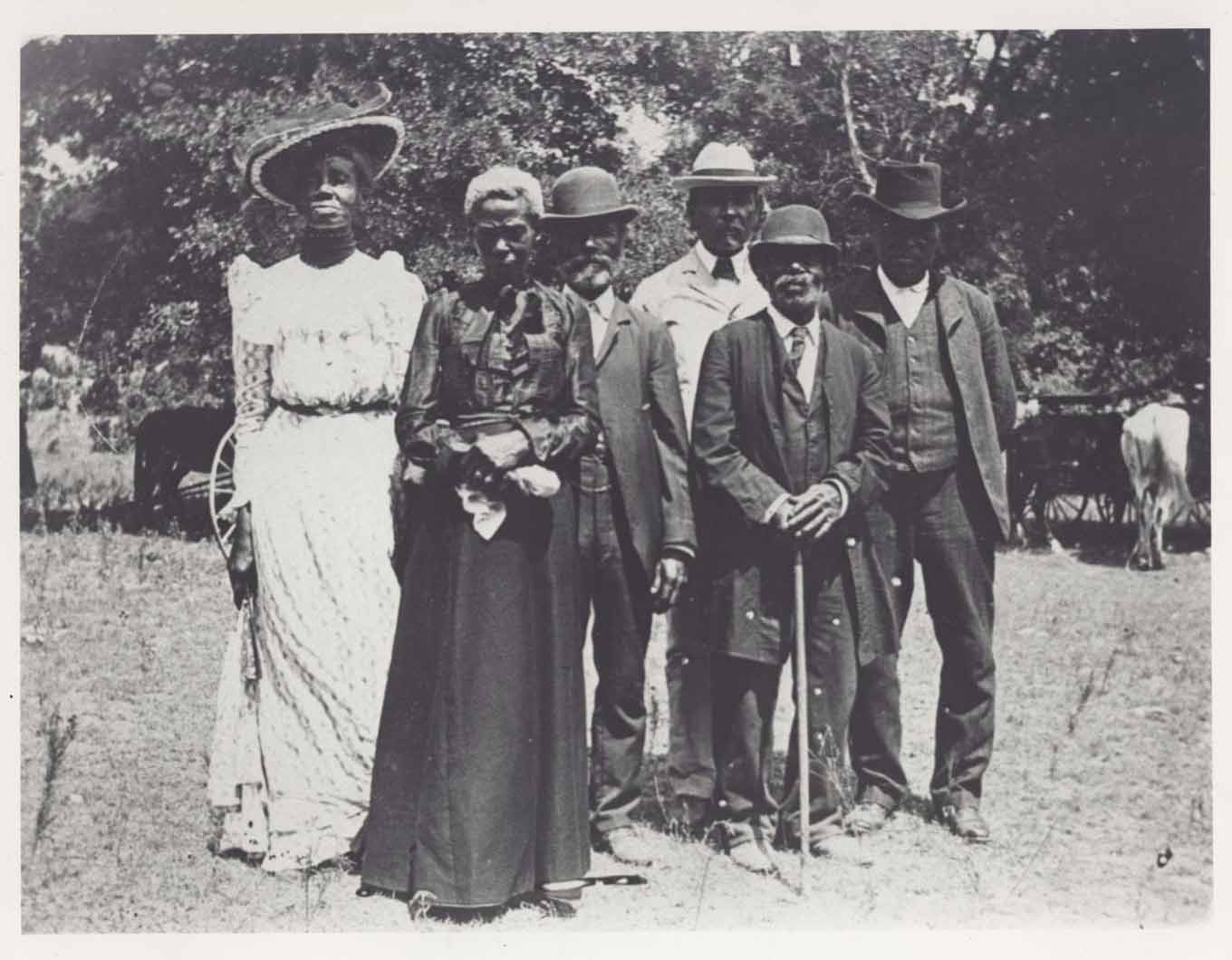
The actual day was June 19, 1865, and it was the Black dockworkers in Galveston, Texas, who first heard the word that freedom for the enslaved had come. There were speeches, sermons and shared meals, mostly held at Black churches, the safest places to have such celebrations.
The perils of unjust laws and racist social customs were still great in Texas for the 250,000 enslaved Black people there, but the celebrations known as Juneteenth were said to have gone on for seven straight days.
The spontaneous jubilation was partly over Gen. Gordon Granger’s General Order No. 3. It read in part, “The people of Texas are informed that, in accordance with a proclamation from the Executive of the United States, all slaves are free.”
But the emancipation that took place in Texas that day in 1865 was just the latest in a series of emancipations that had been unfolding since the 1770s, most notably the Emancipation Proclamation signed by President Abraham Lincoln two years earlier on Jan. 1, 1863.
As I explore in my book “Black Ghost of Empire,” between the 1780s and 1930s, during the era of liberal empire and the rise of modern humanitarianism, over 80 emancipations from slavery occurred, from Pennsylvania in 1780 to Sierra Leone in 1936.
There were, in fact, 20 separate emancipations in the United States alone, from 1780 to 1865, across the U.S. North and South.
In my view as a scholar of race and colonialism, Emancipation Days — Juneteenth in Texas — are not what many people think, because emancipation did not do what most of us think it did.
As historians have long documented, emancipations did not remove all the shackles that prevented Black people from obtaining full citizenship rights. Nor did emancipations prevent states from enacting their own laws that prohibited Black people from voting or living in white neighborhoods.
In fact, based on my research, emancipations were actually designed to force Blacks and the federal government to pay reparations to slave owners — not to the enslaved — thus ensuring white people maintained advantages in accruing and passing down wealth across generations.
Reparations to slave owners
The emancipations shared three common features that, when added together, merely freed the enslaved in one sense, but reenslaved them in another sense.
The first, arguably the most important, was the ideology of gradualism, which said that atrocities against Black people would be ended slowly, over a long and open-ended period.
The second feature was state legislators who held fast to the racist principle that emancipated people were units of slave owner property — not captives who had been subjected to crimes against humanity.
The third was the insistence that Black people had to take on various forms of debt in order to exit slavery. This included economic debt, exacted by the ongoing forced and underpaid work that freed people had to pay to slave owners.
In essence, freed people had to pay for their freedom, while enslavers had to be paid to allow them to be free.
Emancipation myths and realities
On March 1, 1780, for instance, Pennsylvania’s state Legislature set a global precedent for how emancipations would pay reparations to slave owners and buttress the system of white property rule.
The Pennsylvania Act for the Gradual Abolition of Slavery stipulated “that all persons, as well negroes, and mulattos, as others, who shall be born within this State, from and after the Passing of this Act, shall not be deemed and considered as Servants for Life or Slaves.”
At the same time, the legislation prescribed “that every negroe and mulatto child born within this State” could be held in servitude “unto the age of twenty eight Years” and “liable to like correction and punishment” as enslaved people.
After that first Emancipation Day in Pennsylvania, enslaved people still remained in bondage for the rest of their lives, unless voluntarily freed by slave owners.
Only the newborn children of enslaved women were nominally free after Emancipation Day. Even then, these children were forced to serve as bonded laborers from childhood until their 28th birthday.
All future emancipations shared the Pennsylvania DNA.
Emancipation Day came to Connecticut and Rhode Island on March 1, 1784. On July 4, 1799, it dawned in New York, and on July 4, 1804, in New Jersey. After 1838, West Indian people in the United States began commemorating the British Empire’s Emancipation Day of Aug. 1.
The District of Columbia’s day came on April 16, 1862.
Eight months later, on Jan. 1, 1863, President Lincoln signed the Emancipation Proclamation that freed the enslaved only in Confederate states – not in the states loyal to the Union, such as New Jersey, Maryland, Delaware, Kentucky and Missouri.
Emancipation Day dawned in Maryland on Nov. 1, 1864. In the following year, emancipation was granted on April 3 in Virginia, on May 8 in Mississippi, on May 20 in Florida, on May 29 in Georgia, on June 19 in Texas and on Aug. 8 in Tennessee and Kentucky.
Slavery by another name
After the Civil War, the three Reconstruction Amendments to the U.S. Constitution each contained loopholes that aided the ongoing oppression of Black communities.
The Thirteenth Amendment of 1865 allowed for the enslavement of incarcerated people through convict leasing.
The Fourteenth Amendment of 1868 permitted incarcerated people to be denied the right to vote.
And the Fifteenth Amendment of 1870 failed to explicitly ban forms of voter suppression that targeted Black voters and would intensify during the coming Jim Crow era.
In fact, Granger’s Order No. 3, on June 19, 1865, spelled it out.
Freeing the slaves, the order read, “involves an absolute equality of personal rights and rights of property, between former masters and slaves, and the connection heretofore existing between them, become that between employer and hired labor.”
Yet, the order further states: “The freed are advised to remain at their present homes, and work for wages. They are informed that they will not be allowed to collect at military posts; and that they will not be supported in idleness either there or elsewhere.”
The meaning of Juneteenth
Since the moment emancipation celebrations started on March 1, 1780, all the way up to June 19, 1865, Black crowds gathered to seek redress for slavery.
On that first Juneteenth in Texas, and increasingly so during the ones that followed, free people celebrated their resilience amid the failure of emancipation to bring full freedom.
They stood for the end of debt bondage, racial policing and discriminatory laws that unjustly harmed Black communities. They elevated their collective imagination from out of the spiritual sinkhole of white property rule.
Over the decades, the traditions of Juneteenth ripened into larger gatherings in public parks, with barbecue picnics and firecrackers and street parades with brass bands.
At the end of his 1999 posthumously published novel, “Juneteenth,” noted Black author Ralph Ellison called for a poignant question to be asked on Emancipation Day: “How the hell do we get love into politics or compassion into history?”
The question calls for a pause as much today as ever before.
This article by Kris Manjapra, from Tufts University, was originally published by The Conversation.

An entire neighborhood in Framingham, Massachusetts is being retrofitted for a first-of-its-kind geothermal heating and cooling network.
Geothermal energy uses water, gravity, and pressure to harness heat below the Earth's surface and warm and cool buildings.
The process itself is nothing new — civilizations have used hot springs and water reservoirs to bathe, cook, and heat for centuries.
But this mile-long project, led by the energy provider Eversource, marks the first time that geothermal energy has been used to heat and cool a shared network of buildings on this scale.
Eric and Jennifer Mauchan told Canary Media that they felt like they “won the house lottery” when their community was handpicked for the project.
“Everyone knows that our neighborhood has been chosen,” Jennifer Mauchan said, expressing gratitude for their situation.
Previously, the Mauchans used gas and oil to heat their home, and electricity to cool it.
Eversource expects the new geothermal network will reduce the residents’ greenhouse gas emissions by 60% — and cut their average utility costs by 20%.
Ania Camargo Cortés is the senior manager of thermal networks at the Building Decarbonization Coalition, a nonprofit that aims to replace fossil fuels with clean energy by supporting Eversource and other companies invested in renewable resources.
In regards to how the families and business owners were selected for this particular project, Camargo Cortés noted that green energy upgrades are typically only affordable to wealthier residents.
So when it came to considering candidates in Framingham, the Building Decarbonization Coalition wanted to center low-income residents. The neighborhood they chose is classified by the state of Massachusetts as an “environmental justice” population.
To meet this qualification, a community must meet one or both of the following criteria: minorities make up 40 percent or more of the population, and the annual median household income is 65 percent or less of the statewide annual median household income.
Camargo Cortés went on to explain the unique dynamics behind geothermal networks.
In this mixed-use community filled with both small businesses and residences, for example, the network can pump cold air into the town’s grocery store while redirecting heat to neighboring houses.
“The reason why it's so efficient is because we’re transferring energy,” Camargo Cortés told Canary Media. “We are not creating new energy. We’re just literally transferring it.”
As of early June, the new geothermal system is officially up and running, while Eversource continues working to install and extend ground source heat pumps to over a dozen residential buildings and an apartment complex.
According to Nikki Bruno, Eversource’s vice president of clean technologies, there are plans to expand the network even further in the coming years.
Camargo Cortés and her colleagues believe that geothermal energy has a bright future in the U.S., but only if everyone has a seat at the table.
“I think the biggest thing is how do we create the possibility for whole-system scale transition, where we can really map out transitioning entire communities off gas and into comfortable, affordable, equitable heating for everybody,” Camargo Cortés said.
“As long as this is done equitably and everyone is allowed to participate, it can be done fairly,” she continued. “Where it becomes a problem is when some people are excluded.”
And that’s exactly why they chose to bring the benefits of geothermal energy to those often overlooked for these kinds of projects.
Header photo courtesy of Eversource/YouTube
In 2022, seven mountain lions were killed in Los Angeles area traffic, including the famous P-22, whose death became a catalyst for animal lovers to act.
Wildlife activists, government agencies, and private donors came together to finally create a solution to urban wildlife deaths: The Wallis Annenberg Wildlife Crossing.
The crossing is slated to be the world’s largest wildlife crossing, spanning the busy 101 freeway in Agoura Hills.
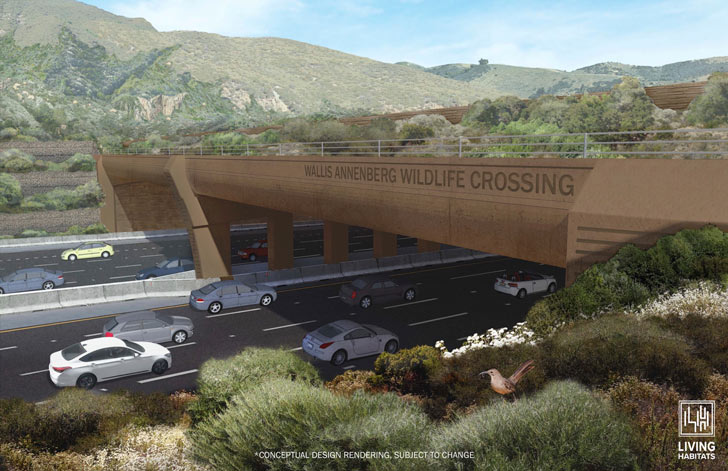
Crews broke ground on the crossing on Earth Day two years ago, and last month, California Governor Gavin Newsom announced that the crossing is on track to open by early 2026. Construction crews are more than halfway through installing the enormous bridge’s beams — of which there will be 82.
Additionally, the final horizontal girders of the crossing were added into place last month, completing an important phase in construction, and making the crossing look even more like a bridge.
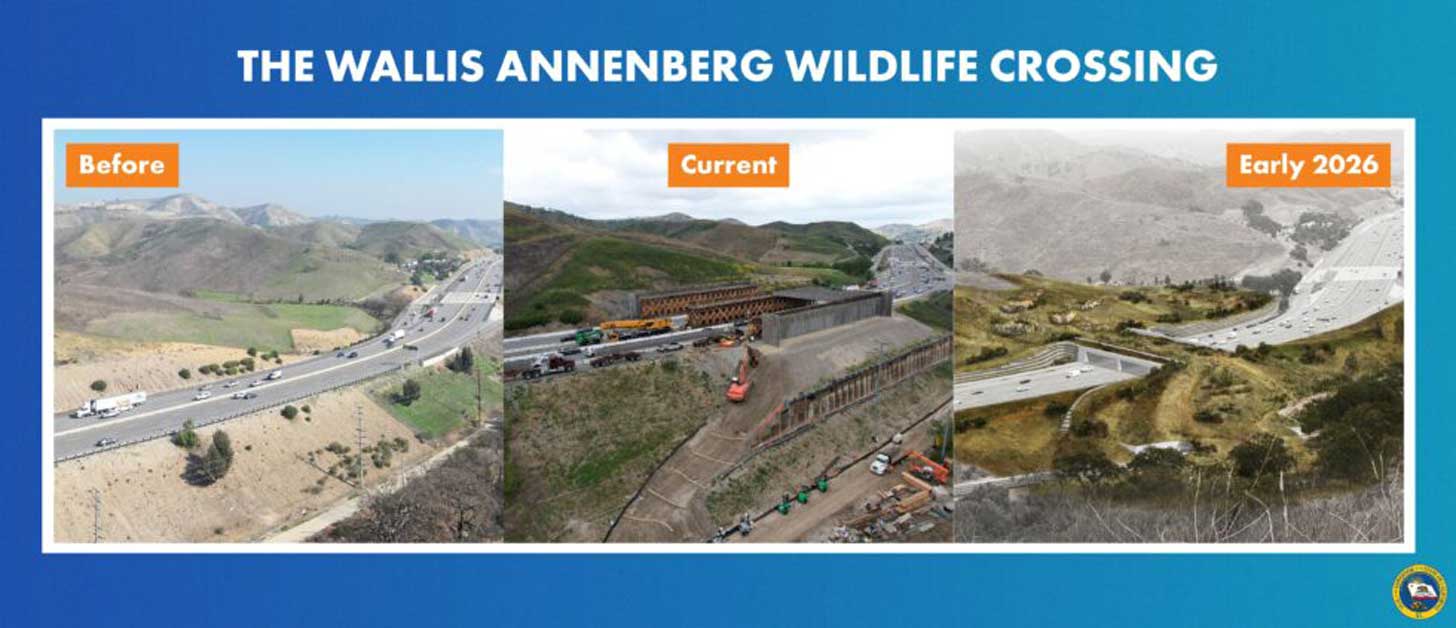
“Our work to build more, faster is already paying dividends across our state. This wildlife crossing is just one example of how California is building infrastructure that connects rather than divides,” Gov. Newsom said in a statement in May.
“With projects like this, we’re reconnecting and restoring habitats so future generations can continue to enjoy California’s unmatched natural beauty.”

While construction seems to be fast-moving, it took decades of advocacy by wildlife groups to finally bring the bridge to fruition. It has a $90+ million price tag, covered by $34 million in private funding, and $58.1 million from the state.
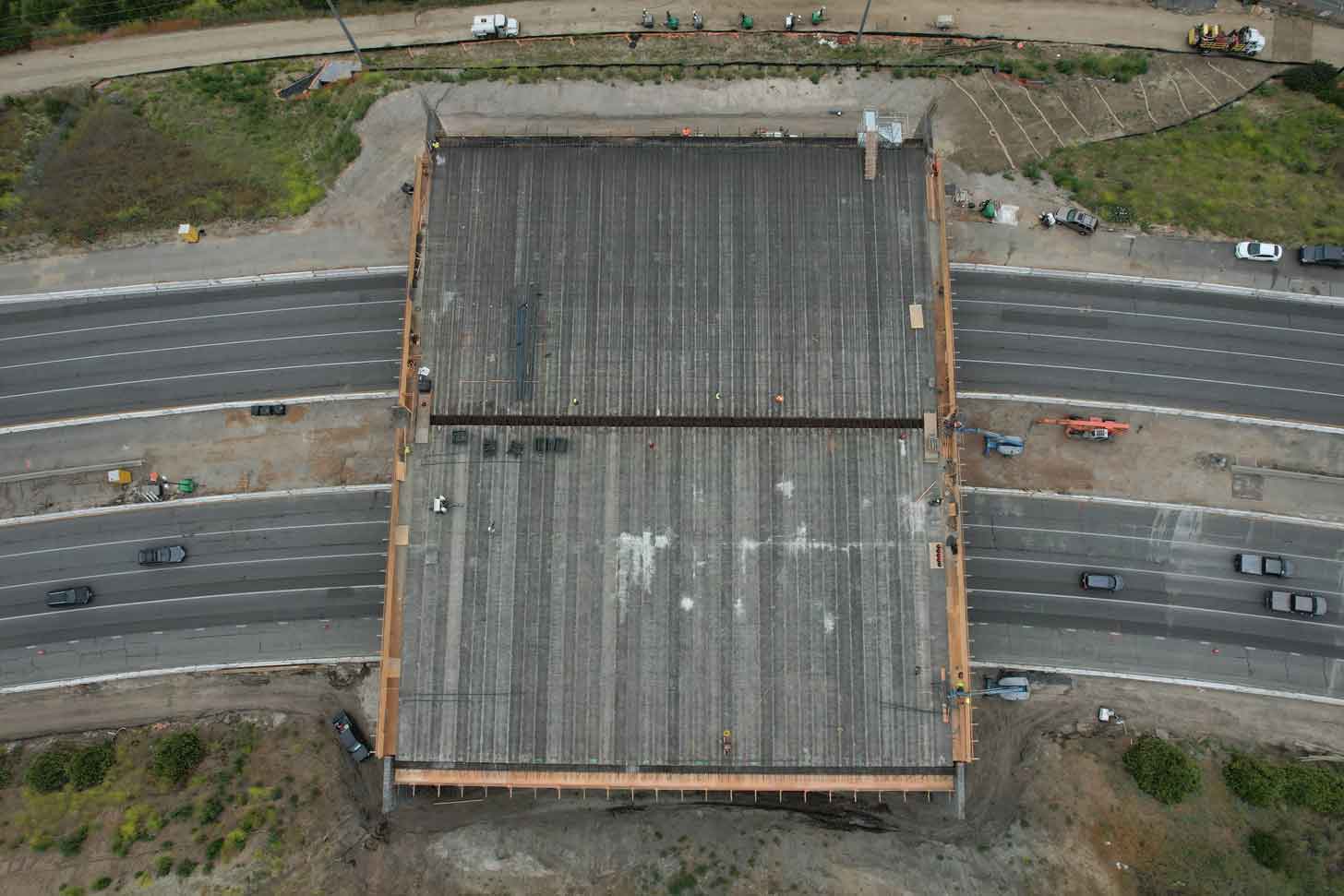
Long-time advocates spent years convincing decision-makers that this was a small price to pay to protect wildlife.
“Let’s use this opportunity to congratulate the many advocates and environmental leaders, past and present, who spent years working with local, state, and federal officials to protect and preserve the Santa Monica Mountains and Simi Hills for future generations of people and wildlife,” said retired California State Senator Fran Pavley, following years of advocacy for the area’s wildlife.
“Reconnecting these large islands of habitat on both sides of the busy 101 freeway is an almost unbelievable story, especially in the most populated county in the U.S.”
Like other wildlife crossings, the Wallis Annenberg will provide a safe passage for wild animals to move across the freeway without the threat of being hit by oncoming traffic.
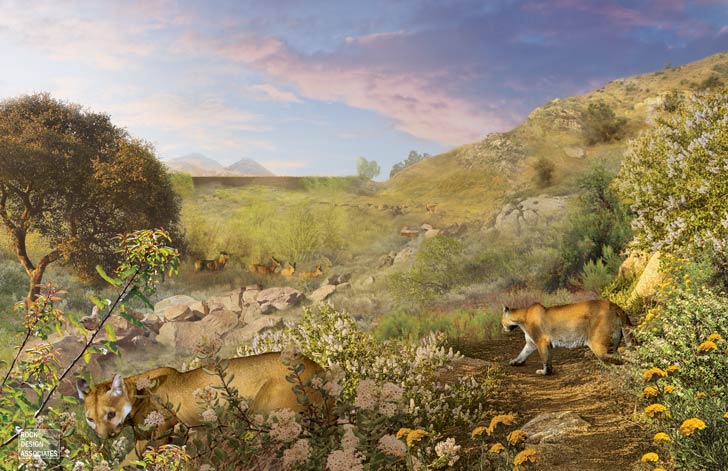
The National Parks Service has spent over 20 years studying the impact of freeways and traffic on the area’s mountain lions, concluding that without safe passage options, mountain lions could vanish from the area within our lifetimes.
Fortunately, studies show that other wildlife crossing structures throughout North America have led to a 86-97% decrease in wildlife-vehicle collisions.
Wildlife crossings don’t just reduce car crashes. By allowing for safe passage, animals — like mountain lions — can find food, shelter, and mates, necessities that have become harder to obtain amid climate change and human development.

As the Wallis Annenberg nears completion of Stage 1 of construction, it’s becoming even more apparent just how impactful this structure has the potential to be. The bridge is planned to be 210 feet long and 174 feet wide, long enough to accommodate about five to six lanes in each direction if the bridge were designed to carry traffic.
“This visionary structure will preserve biodiversity across the region by connecting an integral wildlife corridor, and most immediately critical, help save a threatened local population of mountain lions from extinction,” the crossing’s website explained.
“When complete, the crossing will be the largest in the world, the first of its kind in California, and it will serve as a global model for urban wildlife conservation.”
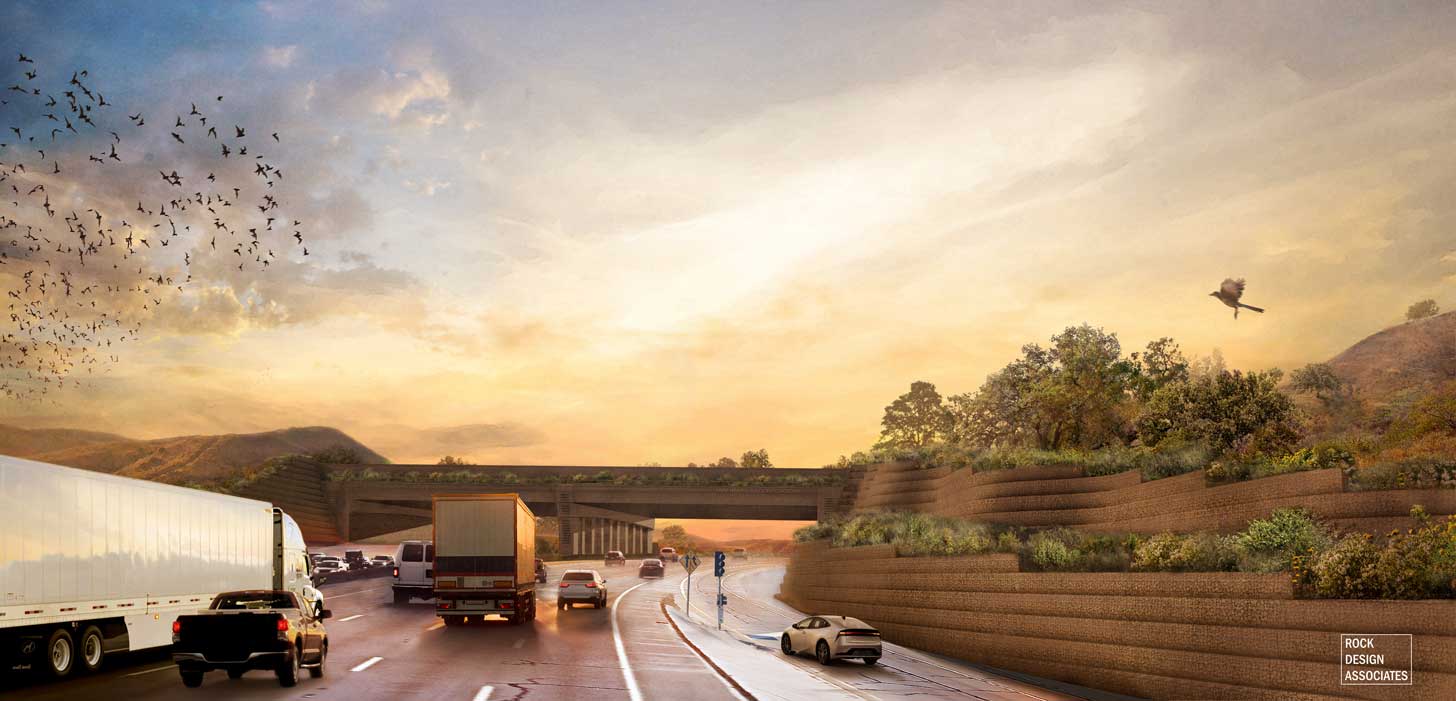
Drivers on the 101 will likely experience the crossing as if they were driving through a tunnel, but for local species, it will appear like a natural hillside covered with native vegetation. The crossing is planned to be built like a habitat itself, rather than a mere path connecting the two natural areas, according to SFGate.
With 30 years of conservation work fueling the design of the crossing, stakeholders are hopeful that it will make an impact on the future of urban wildlife solutions.
In fact, the Save LA Cougars campaign recently launched a new fundraising effort for additional crossings in Southern California.
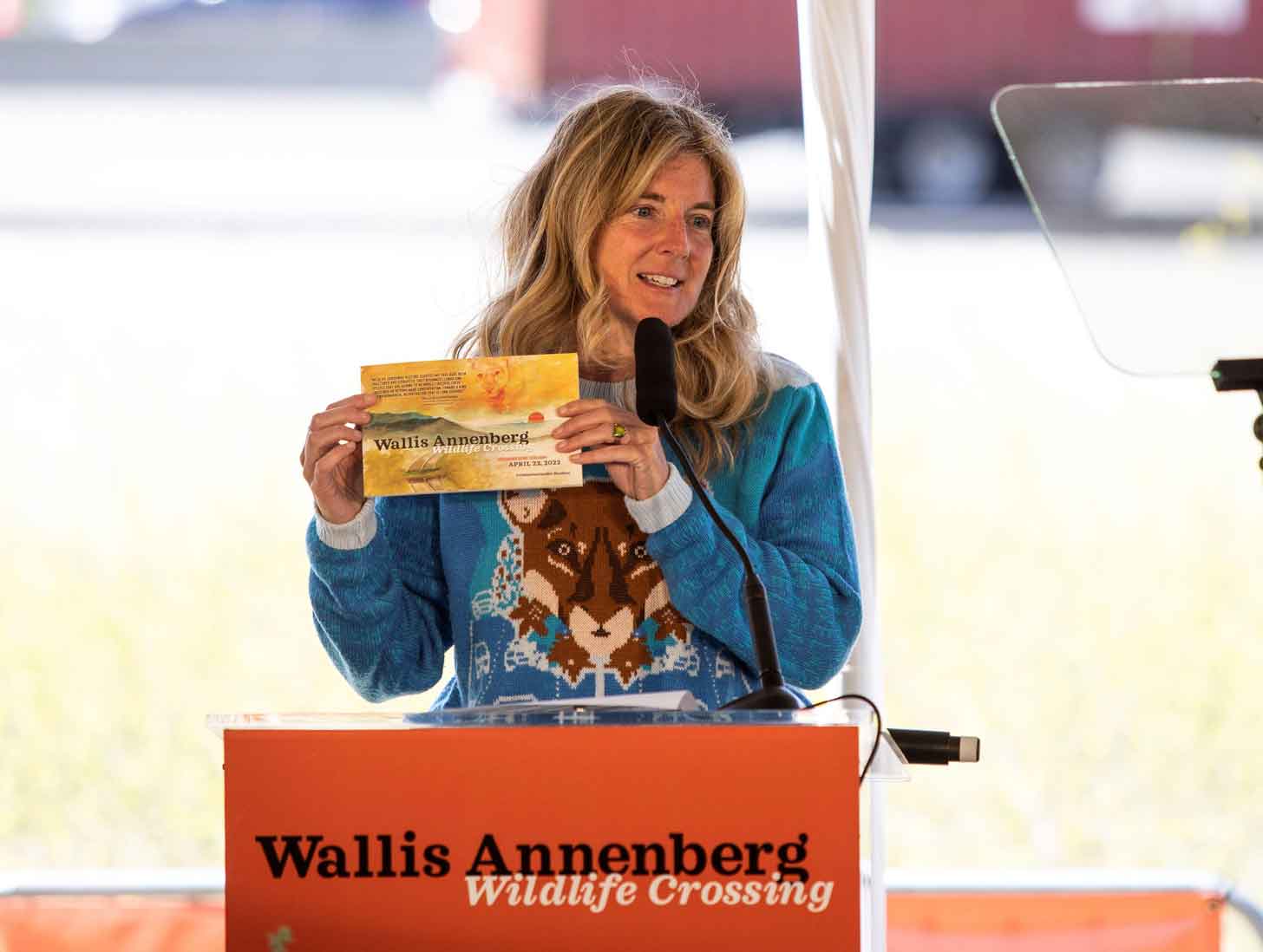
And for those who have spent years working toward this major victory, it is simply one (giant) pathway to a more wildlife-friendly future.
“You’re going to see this ecological transformation… over one of the busiest freeways in the world,” said Beth Pratt, a regional executive director for the National Wildlife Federation in California, who spent over 10 years advocating for the crossing.
“That, to me, is just such a hopeful statement for what’s possible. We can redeem a freeway.”
Header image courtesy of Rock Design Associates and the National Wildlife Federation
Google and Global Fishing Watch have announced a first-of-its-kind global map that shows ocean infrastructure around the planet, to better understand the full scope of human activity at sea.
This interactive map, powered by Google AI, shows things like wind turbines, fish farms, and more, which updates daily to depict real-time human activity at sea.
GFW has been working toward this milestone for years. The organization used similar technology to create the world’s first livestream map monitoring the global fishing fleet and made it public and freely available to the entire world.
With the specific aim of reducing overfishing by tracking harmful fishing activities — especially from hidden vessels that don’t broadcast their positions publicly — researchers showed that it was possible to track human activity at sea to help confront major threats to the ocean’s environment.
But fishing isn’t the only human activity that takes place on this blue planet.
So researchers used Google Earth Engine to analyze satellite radar and imagery across six continents.
Similar to how AI can detect sidewalks, street signs, and road names in Google Maps, researchers used AI to identify ocean infrastructure that, until now, has been nearly impossible to analyze, such as oil rigs, fish farms, and more.
The map shows 28,000 offshore structures around the world in 2024, including 10,000 oil and gas drilling platforms, over 14,000 wind turbines, 4,000 structures across aquaculture (fish farms), and ship navigation aids (like buoys and towers).
“Historically, vessel activity has been poorly documented, limiting our understanding of how the ocean — the world’s largest public resource — is being used,” Fernando Paolo, research lead and senior machine learning engineer at GFW, said in a statement.
“By combining satellite technology and AI models, we now have eyes on the sea in a way we’ve never had before.”
While developing this dataset, researchers found that global oil platforms have increased by approximately 10% since 2017 (but are now slowly declining). Meanwhile, they discovered wind turbines have nearly tripled around the world, now outnumbering oil platforms.
The development of offshore renewable energy comes with concerns about negative impacts to fishing, shipping, and biodiversity. Having data about the ocean’s infrastructure mitigates those human harms and provides a clearer, safer future for renewable energy development.
“Commercial wind developer Ocean Winds is using the datasets to identify the best locations for wind installations and show how they would affect the surrounding areas,” a blog post from Google explained.
As clean energy grows on the map, researchers are still tracking carbon emissions — now with even more accuracy.
GFW has joined Climate TRACE and WattTime to measure and attribute sea emissions by country. In fact, by using the existing data, researchers found that more than 300 megatons of carbon emissions may come from bottom trawling, a fishing method that releases carbon when nets are dragged over the sea floor.
“This research has in turn informed targeted policy campaigns to restrict this practice,” Google’s blog post said.
Similar policies are sure to make waves in other countries, as more and more data is unveiled about the deep blue sea.
In West Africa, for instance, governments now have a more comprehensive picture of the number of fishing vessels in their waters, allowing them to better patrol high-pressure areas and restore fish populations in overfished regions.
Additionally, GFW has become an official partner of the High Ambition Coalition for Nature and People, a group of 118 countries working to protect 30% of the planet’s land and ocean by 2030.
But high-level government officials are not the only stakeholders in the health of the planet.
Everyone can now access Google and GFW maps and datasets, which are available to the public for analysis and download, and will soon be available in Google Earth Engine, as well.
“To collectively meet these ambitious goals, we will need the data to manage multiple industrial uses of the ocean, which covers 70% of the planet,” Google’s blog post stated.
“We’re proud to provide tools that will help make this possible.”
Header image courtesy of Global Fishing Watch
Despite the grim news that scientists on Wednesday reported last month as the hottest May on record globally, marking 12 straight months with record-breaking heat, climate advocates expressed optimism after United Nations Secretary-General António Guterres signaled what one called a "game-changing intervention," urging governments to ban advertisements by fossil fuel firms.
The demand is in line with prohibitions on advertising for other "products that harm human health — like tobacco," said Guterres.
"Some are now doing the same with fossil fuels," he added. "I urge every country to ban advertising from fossil fuel companies."
The secretary-general directly appealed to advertising and public relations companies and urged them to stop helping the fossil fuel industry in its quest to "shamelessly" greenwash their climate records and the harm their products do to the planet as well as to human health, with 1 in 5 deaths worldwide caused by air pollution.
"I call on these companies to stop acting as enablers to planetary destruction. Stop taking on new fossil fuel clients, from today, and set out plans to drop your existing ones," said Guterres. "Fossil fuels are not only poisoning our planet — they're toxic for your brand. Your sector is full of creative minds who are already mobilizing around this cause. They are gravitating towards companies that are fighting for our planet — not trashing it."
The secretary-general's comments called to mind the work of Clean Creatives, a project of Fossil Free Media, which calls on public relations, branding, and advertising agencies to sign a pledge stating that they will no longer work with the fossil fuel industry. More than 1,000 agencies have signed the pledge.
🔥🗣️ Today, the Secretary General of the @UN @antonioguterres called on ad and PR agencies to cut ties with the fossil fuel industry. There is no longer any cover for agencies to say that they are doing the right thing when working with polluters. pic.twitter.com/mJ5j2esZ2v
— Clean Creatives (@cleancreatives) June 5, 2024
"U.N. Secretary-General António Guterres deserves recognition for saying so clearly that advertising and PR agencies should be cutting ties with fossil fuel polluters," said Duncan Meisel, executive director of Clean Creatives. "This is a turning point in the advertising and PR industry's relationship with climate change and fossil fuels. There is no longer any cover for agencies to say that they are doing the right thing when working with polluters. Everyone knows this is wrong, and everyone needs to act.
"We are living through the hottest years in human history, and Secretary Guterres' statements today show what a safe climate future could look like for the creative and PR industry," said Meisel.
The Global Strategic Communications Council pointed to several examples of high-profile advertisements that have promoted the notion that fossil fuel energy is not endangering the planet and that the industry is committed to protecting the planet from catastrophic heating.
The American Petroleum Institute launched an eight-figure ad blitz earlier this year, aiming to "dismantle policy threats," and in April, energy company Aramco was announced as a sponsor of the 2026 men's World Cup and the 2027 women's World Cup.
"Fossil money is everywhere making the ambitious action on climate that the science says we need difficult or impossible — social scientists have shown this pattern — it's ubiquitous and it's devastating," said Timmons Roberts, executive director of the Climate Social Science Network.
"The 'enablers' are a key part of this blockage — PR firms, social and legacy media, consultancies, law firms, and financial actors all play roles in the obstruction of our building a livable future, which soon has to be without fossil fuels.”
Guterres said that in addition to bans on fossil fuel advertising — which have been embraced in France and the Dutch city of Amsterdam, and proposed in Canada, Ireland, and Scotland — news media and tech companies should stop displaying the industry's ads.
"All of us can make a difference, by embracing clean technologies, phasing down fossil fuels in our own lives, and using our power as citizens to push for systemic change," said Guterres.
Jake Dubbins, co-chair of the Conscious Advertising Network, called the secretary-general's speech "a huge signal to the advertising industry."
"As the misinformation tactics of the tobacco industry and the threat of its products to human health became clear, advertising was restricted and then banned," said Dubbins. "The same will happen for fossil fuel advertising. The industry should see this as a tipping point, but one of opportunity."
"Will the industry fully embrace the opportunities of the transition and secure a livable future or will it risk the maintenance of the status quo at the cost to its people, its non-fossil fuel clients, and its reputation?" he said. "The time to lead is now."
This article was originally published by Common Dreams and was republished with permission.
Header image by Markus Spiske on Unsplash
Preparing for Atlantic hurricane season is always a priority in the Caribbean, especially when forecasts project high numbers of storms, as they do for 2024. The region’s most devastating storm in recent years, Hurricane Maria, struck in September 2017 and inflicted unprecedented destruction on Puerto Rico, Dominica, St. Croix and other islands.
Maria killed more than 3,000 people and caused about US$96 billion in damage. It devastated Puerto Rico’s electric power system, leaving 1.5 million customers in the dark for up to 328 days — the longest blackout in U.S. history. These outages had cascading impacts on other infrastructure, such as water and communications systems.
Today, the Caribbean region is experiencing new climate-related challenges. Prolonged extreme heat and humid days are increasing because of the accelerated warming of ocean waters.
In response to these increasingly frequent and extreme weather events, I teamed up with a dozen other researchers in 2023 to form the Caribbean Climate Adaptation Network. Our goal is to connect scientists with communities and government agencies in the U.S. Virgin Islands and Puerto Rico and to provide scientific information that can help them prepare for and respond to these emerging climate extremes.
I am a coastal-urban climatologist and a Puerto Rico native. Launching this network has been extremely important personally for me. I hope it will solidify our current partnerships for longer-term collaboration among leading academic researchers, vulnerable communities, government agencies and utility companies in the islands and serve as a platform to reach the entire Caribbean.
Our mission is to develop new ways of representing the coastal-urban environment as a unified system — one that places people at the center and integrates human-made systems, such as buildings and infrastructure, with natural systems, such as the atmosphere, ecosystems and oceans. All of these elements face the challenge of a changing climate.
We want to support vulnerable communities by providing research that can make them more resilient against climate change and to bring them to the table so that we can create better solutions together.
The National Oceanic and Atmospheric Administration is predicting a record number of Atlantic hurricanes and tropical storms in 2024.
Learning from Puerto Rico’s recovery
Puerto Rico has made its power grid more resilient in the years since Maria struck, but challenges remain. Over 1 million customers on the island have experienced intermittent outages since the Hurricane. In September 2022, Hurricane Fiona — a much weaker Category 1 storm — made landfall in Puerto Rico and caused an island-wide blackout.
Puerto Rico’s power system is fragile mainly because its infrastructure is aging and the island is naturally exposed to recurrent extreme events fueled by global warming. Nonetheless, local utilities have made significant progress in hardening a very complex power system at all points, from generation to distribution.
Solar power generation — particularly small-scale rooftop installations that can power individual homes and businesses during grid outages — is playing a major role in making the system more resilient.

In 2023, I led a group of researchers in reconstructing the impacts of Hurricane Maria on Puerto Rico. We used a combination of geophysical models, engineering models of the power and water grids, reviews of damage reports and socioeconomic information to show how proposed hurricane preparedness strategies would affect low-income communities.
We learned that the most effective strategy to protect all community members was to harden the transmission system to handle impacts from Hurricane Maria-like events in the future.
This will likely require new transmission towers capable of withstanding extremely high winds and soil saturation. It also could include limiting exposure through measures such as burying power lines.
We did not research the costs of these solutions, but presumably they would be steep.
We’ve since joined again to reconstruct other major past weather events in Puerto Rico and gather new data, with a focus on resilient power infrastructure and adapting to a changing climate. For this work, we’re installing unique sensors on electricity transmission towers and wires, while observing the natural conditions around these transmission assets.
These devices continuously measure mechanical stresses on the towers and the transmission lines’ capacity to manage power loads under varied weather and demand conditions, including extreme weather events.
By reconstructing past storms, collecting new data on the health of Puerto Rico’s infrastructure and using machine learning algorithms, we plan to develop new predictive modeling frameworks that can anticipate risks of disruption to the electric transmission system during extreme weather events.
Informing regional action
In recent years, our research group has used satellite observations to detect that Caribbean sea surface temperatures are increasing by nearly 0.9 degrees Fahrenheit (0.5 Celsius) per decade — some of the fastest ocean warming on Earth. This trend has direct implications for the risk of frequent and intense hurricanes.
It also affects ambient temperatures on land, including driving extreme heat conditions. In summer 2023, the city of San Juan experienced a prolonged heat wave, with heat indices above 100 F (38 C). This level is considered unhealthy for most people.
Heat advisories and record-breaking temperatures forced government officials to scramble to protect students. Public schools took the unprecedented step of canceling classes across the island. This event showed the importance of monitoring Caribbean ocean conditions and anticipating their effects on people, infrastructure and ecosystems.
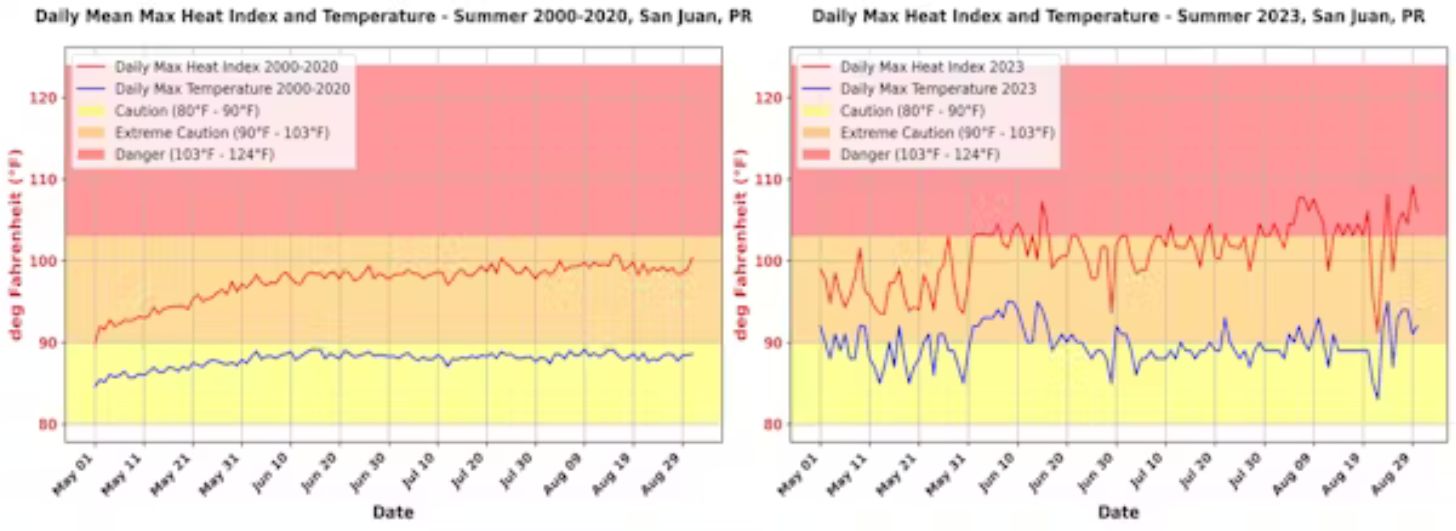
My colleagues in the Caribbean Climate Adaptation Network and I believe that our findings will be transferable to other Caribbean communities.
Our work also can inform coastal areas in the continental U.S. where critical infrastructure is heavily exposed and storms often hit the most vulnerable people hardest.
We hope that our work with communities will lead to broader education and new actionable science that can guide climate adaptation decisions and investments that reduce risks.
Specifically, we aim to produce strategies for making island infrastructure far more resilient and adaptable, as well as safeguards to protect communities and maintain a sense of normality in a hotter climate.
This article by Jorge González-Cruz from University at Albany, State University of New York was originally published by The Conversation.
Header Image by Spc. Samuel D. Keenan found on the Defense Visual Information Distribution Service

After decades of being celebrated at mostly the local level, Juneteenth — the long-standing holiday that commemorates the arrival of news of emancipation and freedom to enslaved Black people in Galveston, Texas, in 1865 — became a federal holiday in 2021.
In honor of this year’s Juneteenth, The Conversation reached out to Wake Forest University humanities professor Corey D. B. Walker for a list of readings that can help people better understand the history and meaning of the observance.
Below, Walker recommends six books.
‘On Juneteenth’
Combining history and memoir, Annette Gordon-Reed’s “On Juneteenth” offers a moving history of African American life and culture through the prism of Juneteenth.
The award-winning Harvard historian presents an intimate portrait of the experiences of her family and her memories of life as an African American girl growing up in segregated Texas. The essays in her book invite readers to enter a world shaped by the forces of freedom and slavery.
Reed’s exploration of the history and legacy of Juneteenth is a poignant reminder of the hard history all Americans face.
‘O Freedom! Afro-American Emancipation Celebrations’
William H. Wiggins Jr.’s “O Freedom! Afro-American Emancipation Celebrations” is the historical standard for African American emancipation celebrations. It offers an accessible and well-researched account of the emergence and evolution of Juneteenth.
Wiggins brings together oral history with archival research to share the stories of how African Americans celebrated emancipation. It explains how Juneteenth is part of the tapestry of emancipation celebrations.
These celebrations included such dates as January 1, in North Carolina, April 3, in Richmond, Virginia, and April 16, in Washington, D.C.
What began as a local holiday has evolved into a national celebration.
Juneteenth celebrations are known for the variety of programs and events that highlight African American history and culture. In the 1960s, students at Prairie View A&M University in Prairie View, Texas, informed faculty that classes would not be held on Juneteenth.
In Milwaukee, the local Juneteenth parade includes a group known as the Black Cowboys riding their horses along Dr. Martin Luther King Jr. Drive.
Juneteenth celebrations also feature cultural fairs and exhibitions, artistic performances and historical reenactments. Lectures and public conversations, community feasts and religious services are also part of the celebrations.
‘Juneteenth’
Ralph Ellison, perhaps best known for his novel “Invisible Man,” offers multiple meanings of Juneteenth in African American and American life in his posthumously published novel “Juneteenth.”
The ambivalence of Juneteenth is of a freedom delayed but not denied. Ellison’s spiraling novel captures this in the entangled and tragic lives of the racist Senator Sunraider — previously known as Bliss — and the minister who raised him, the Reverend A. Z. Hickman.
For Ellison, Juneteenth represents more than just a celebration of emancipation. It also represents the shared fate of white Americans and African Americans in the quest to create a just and equal society.
The promise and peril of Juneteenth is elegantly captured in Hickman’s words, “There’s been a heap of Juneteenths before this one and I tell you there’ll be a heap more before we’re truly free!”
‘Festivals of Freedom: Memory and Meaning in African American Emancipation Celebrations, 1808-1915’
Mitch Kachun’s book, “Festivals of Freedom: Memory and Meaning in African American Emancipation Celebrations, 1808-1915,” traces the history of emancipation celebrations and their influence on African American identity and community.
Juneteenth joined a longer tradition of emancipation celebrations. Those celebrations included ones at the end of the trans-Atlantic slave trade in the United States on Jan. 1, 1808.
They also included the August First Day/West India Day celebrations that marked the abolition of slavery throughout the British Empire on Aug. 1, 1834.
With an eye for historical detail, Kachun narrates a complex history of how Juneteenth and other freedom festivals shaped African American identity and political culture. The celebrations also displayed competing meanings of African American identity.
In Washington, D.C. in the late 19th century, different groups of African Americans held distinct celebrations.
These variations underscored tensions around political ideals, status and identity. Kachun’s book reminds us that Juneteenth served as a crucible for forging a collective and contested sense of African American community.

‘Rites of August First: Emancipation Day in the Black Atlantic World’
Similar to Kachun’s book, Howard University historian Jeffrey R. Kerr-Ritchie’s “Rites of August First: Emancipation Day in the Black Atlantic World” reminds readers of a broader history and geography of emancipation celebrations.
Kerr-Ritchie focuses on how various African American communities adopted and adapted West India Day celebrations. He also explores how they created meaning and culture in celebrating the abolition of slavery in the British West Indies.
Kerr-Ritchie’s book details how these celebrations moved across political borders and boundaries.
‘Juneteenth: The Story Behind the Celebration’
Contemporary invocations of Juneteenth often overlook its military history.
Edward T. Cotham, Jr.’s “Juneteenth: The Story Behind the Celebration” fills the void by exploring the Civil War origins of Juneteenth.
Cotham renders explicit the military context leading up to the events on June 19, 1865, in Galveston.
This is when enslaved Black people there finally got word that they had been freed more than two years prior.
Cotham reminds readers that the history of Juneteenth involves ordinary actions of many individual people whose names may not be widely known.
Collectively, these books about Juneteenth offer fresh perspectives on the history and culture of African Americans on a quest to fully express their freedom.
Juneteenth is also an invitation for all Americans to continue to learn about and strive for freedom for all people.
This article by Corey D.B. Walker from Wake Forest University was originally published by The Conversation.
Header Image by Leslie Cross via Unsplash

Whenever I tell high school students in classes I visit that I appreciated learning about slavery as a child growing up in the Caribbean, they often look confused.
Why, they ask, did I like learning about slavery given that it was so horrible and harsh? How could I value being taught about something that caused so much hurt and harm?
That’s when I tell them that my teachers in St. Thomas — and my fourth grade history textbook — didn’t focus just on the harsh conditions of slavery.
Rather, they also focused on Black freedom fighters, such as Moses Gottlieb, perhaps better known as General Buddhoe, who is credited with leading a nonviolent revolt that led to the abolishment of slavery in the Danish-ruled West Indies on July 3, 1848.
The historic date is now observed and celebrated in the United States Virgin Islands as Emancipation Day.
The holiday — and the lessons I learned about it — instilled in me a sense of cultural pride and gave me a better appreciation for the sacrifices that Black people made for freedom. It also encouraged me to always push on when faced with challenges.
The reason I bring this up is because I believe Juneteenth — which commemorates the date in 1865 when Union troops notified the last remaining slaves in Texas that they were free — holds similar promise for Black students throughout the United States.
Students often tell me that they’re not learning much about slavery beyond the suffering and harsh conditions that it involved.
As a historian who specializes in how slavery is taught in K-12 classrooms, I believe there are several ways educators can incorporate Juneteenth into their instruction that will give students a broader understanding of how Black people resisted slavery and persevered in spite of it. Below are just a few.
Start early, but keep it positive
As early childhood experts assembled by the National Museum of African American History point out in a guide they created to help develop lessons about Juneteenth, children in the U.S. will probably hear about slavery by age 5.
But lessons about slavery at that age should avoid the pain and trauma of slavery. Instead, the lessons should celebrate and teach stories of Black culture, leadership, inventions, beauty and accomplishments.
This, the authors of the guide say, will better equip children to later hear about, understand and emotionally process the terrible truths about slavery.
“Juneteenth events can be wonderful opportunities to introduce the concepts of slavery with a focus on resilience and within an environment of love, trust, and joy,” the guide states.
Focus on Black resistance
Many Juneteenth celebrations not only commemorate the end of slavery, but they also honor the generations of Black men and women who have fought to end slavery and for racial justice.
As Black history education professor LaGarett King puts it, Black people have always “acted, made their own decisions based on their interests, and fought back against oppressive structures.” Stressing this can help students to see that although Black people were victimized by slavery, they were not just helpless victims.
Juneteenth provides opportunities to acknowledge and examine the legacies of Black freedom fighters during the time of slavery. These freedom fighters include — but are not necessarily limited to — Frederick Douglass, Gabriel Prosser, Denmark Vesey, Harriet Tubman, Nat Turner and Sojourner Truth.
Connect Juneteenth to current events
Juneteenth can also be a way for educators to help students better understand contemporary demands for racial justice.
That’s what George Patterson, a former Brooklyn middle school principal, did a few years back at the height of protests that took place under the mantra of Black Lives Matter.
Patterson has said he believes that when students study Juneteenth, they are “better equipped to understand the historical underpinnings of what’s going on in the streets and to put the demands being made in context.”
Teachers need not wait for Juneteenth to be included in textbooks in order to draw lessons from the holiday.
“If it’s not in the textbook, then we need to introduce it, we need to teach it,” Odessa Pickett, a teacher at the Barack Obama Learning Academy in Markham, Illinois, stated during an interview about teachers infusing Juneteenth into their lessons. “We need to bring it to the forefront.”
Educators can make Juneteenth about so much more than the end of slavery. Teaching lessons about the holiday offers an abundance of opportunities about what it means to fight for freedom and maintain a sense of self-determination in the face of oppression.
This article by Raphael E. Rogers from Clark University was originally published by The Conversation.
Header Image by by Aaron Hines (Public Domain)

The news was startling.
On June 19, 1865, two months after the U.S. Civil War ended, Union Gen. Gordon Granger walked onto the balcony at Ashton Villa in Galveston, Texas, and announced to the people of the state that “all slaves are free.”
As local plantation owners lamented the loss of their most valuable property, Black Texans celebrated Granger’s Juneteenth announcement with singing, dancing and feasting. The 182,566 enslaved African Americans in Texas had finally won their freedom.
One of them was Joshua Houston.
He had long served as the enslaved servant of Gen. Sam Houston, the most well-known military and political leader in Texas.
Joshua Houston lived about 120 miles north of Galveston when he learned of Granger’s proclamation.
It was read aloud at the local Methodist Church in Huntsville, Texas, by Union Gen. Edgar M. Gregory, the assistant commissioner for the Freedmen’s Bureau in Texas.
If Juneteenth meant anything, it meant at least that Joshua Houston and his family were free.

But there was more too.
The promise of freedom meant that more work needed to be done. Families needed to be reunited. Land needed to be secured. Children needed to be educated.
Indeed, the radical promise of Juneteenth is embodied in the community activism of Joshua Houston and the educational career of his son Samuel Walker Houston.
The violent white reaction to Black political power
Within a year of Granger’s proclamation, Houston had established a blacksmith shop near the Huntsville town square and moved his family into a two-story house on the adjoining lot.
He helped found the Union Church, the first Black-owned institution in the city, as well as a freedmen’s school to begin educating African American children.
In 1878 and 1882, a Republican coalition of Black and white voters opposed to conservative Democratic rule elected Houston as the county’s first Black county commissioner, a powerful position in local governance.
Despite this dramatic turn of events, Houston’s political story was hardly unique.
In the two decades following emancipation, 52 Black men served in the state Legislature or the state’s constitutional conventions.
But that number had fallen to two by 1882.
Opposition to Black freedom had been a powerful force in the state’s political culture since emancipation.
Armstead Barrett, a former slave in Huntsville, recalled in 1937 that an enraged white man had reacted to Granger’s Juneteenth order by riding past a celebrating Black woman and murdering her with his sword.
In 1871, the violence continued when the white citizens of Huntsville stormed the county courthouse and aided the escape of three men who had lynched freedman Sam Jenkins.
Later, in the 1880s, attacks on Black elected officials, their white political allies and Black voters escalated dramatically.
In the early 1900s, changes in state election laws, including the introduction of the poll tax, effectively disenfranchised most Black voters and many poor whites as well. Voter participation dropped from roughly 85% at the high tide of Texas populism in 1896 to roughly 35% when the poll tax became effective in 1904.
As a result, Robert Lloyd Smith was the last Black legislator for nearly 70 years when he finished his term in 1897.
That wall of white supremacy at the state Capitol would not crack again until 1966, when federal voting rights legislation and Supreme Court rulings nullified schemes to deny African Americans the ballot.
These changes enabled the election of Black officials such as Barbara Jordan, the first African American woman to serve in the Texas Senate.
Like father, like son
On an unknown date, a few years after Juneteenth, Joshua Houston’s son Samuel Walker Houston was born free in the bright light of Reconstruction.
Although he spent his adulthood in some of the darkest years of Jim Crow, he continued his father’s work as an educator and community leader. Following a short stint at Atlanta University in Georgia and Howard University in Washington, D.C., Samuel Walker Houston returned to Huntsville and founded a school in the nearby Galilee community.
Houston’s school was named for him and served as one of the first county training schools for African Americans in Texas. It enrolled students at every level, from first grade through high school, and provided a curriculum based on Booker T. Washington’s Tuskegee model of vocational training.
Young women at Houston’s school received training in homemaking, sewing and cooking, while young men learned carpentry, woodworking and mathematics.
By 1922, enrollment at the school had grown to 400 students, and it was recognized by contemporaries as the leading school of East Texas. In the 1930s, Houston’s school was absorbed into Huntsville’s school district, and he became the director of Black education in the county.

Houston encouraged a practical education for Black Texans, but he also believed that young Texans of all races needed to learn an account of history that differed from the white supremacist narrative that dominated Southern history.
Toward this end, he joined with Joseph Clark and Ramsey Woods, two white professors who pioneered race relations courses at Sam Houston State Teachers College. Together, the group led the Texas Commission on Interracial Cooperation’s effort to evaluate Texas public school textbooks during the 1930s.
In an analysis of racial attitudes in state-endorsed textbooks, they found that 74% of books presented a racist view of the past and of Black Americans. Most excluded the scientific, literary and civic contributions of Black people, while mentioning their economic contributions only in the period of slavery before the Civil War.
Instead, the group argued, books designed for both Black and white Texans needed to take the “opportunity … to do simple justice” by including Black history and the “struggle for the exercise” of equal civil, political and legal rights.
White Texans refused to adopt a textbook in the 1930s that taught the fundamental equality of the races, or portrayed Reconstruction, as it is now widely understood, as a missed opportunity to establish a more just and egalitarian Texas.
But Houston and his white counterparts were motivated by the conviction that progress, both for African Americans and for Texas, required a more honest and progressive account of the state and its history.

An ongoing battle for equality
Today’s legislative efforts in Texas and elsewhere to restrict the teaching of systemic racism in public schools ignore the lessons and realities represented by Joshua and Samuel Walker Houston’s lives.
The argument used for supporting such restrictions is that “divisive concepts” like the history of racism may make some students feel uncomfortable or guilty.
That sort of thinking echoes the same justification provided by Texas lawmakers in 1873, when many argued that the state’s schools must be segregated to ensure “the peace, harmony and success of the schools and the good of the whole.”
But the opposite is true.
In reality, the prohibition on teaching the darker chapters of our past creates a segregated history.
Instead, as Samuel Walker Houston recognized, young Texans must have a more honest account of the past and of one another to progress into a unified and egalitarian society.
Texas history is both the story of people who dedicated their lives to the work of advancing freedom and the story of powerful people and forces that stood against it.
One cannot be understood without the other.
Americans cannot appreciate the accomplishments of Joshua and Samuel Walker Houston without examining the vicious realities of Jim Crow society.
The lesson of their lives, and of the Juneteenth holiday, is that freedom is a precious thing that requires constant work to make real.
This article by Jeffrey L. Littlejohn and Zachary Montz from Sam Houston State University was originally published by The Conversation.
Header Image: Joshua Houston leads a Juneteenth Parade in Huntsville, Texas, in a photo circa 1900. Photo by Sam Houston Memorial Museum and Republic of Texas Presidential Library

- For the first time in Brazil, a traditional community has been awarded the concession to manage and operate visitor facilities inside a state conservation unit.
- The Caiçaras, a traditional fishing peoples, of Cardoso Island have lived in what is today Ilha do Cardoso State Park since the 19th century, and for decades faced pressure to leave the area.
- A year ago, when the concession for visitor facilities at the park went up for tender, they won a landmark court decision that found it was unconstitutional to bar them from bidding, given that it was on their territory.
- That led to the signing of a public-community partnership with the São Paulo state government, and in July 2023 the community formally took over managing accommodation services for visitors, cafeterias, education trails, a crafts shop and a visitors’ center.
It’s 1983 in Ilha do Cardoso State Park, at the southernmost tip of São Paulo state in Brazil. Within a year the country’s military dictatorship will be gone, though no one knows it yet. For now, it sends low-flying warplanes roaring over the sleepy fishing community here.
On the ground, the terror is amplified by the arrival of Navy personnel threatening to arrest residents who own small farms and giving everyone 24 hours to leave the 13,600-hectare (33,600-acre) conservation area.
The military’s actions four decades ago were on behalf of the Forest Institute, a government agency that no longer exists but whose environmental policy was based on removing all human occupants from state parks.
Between the creation of Ilha do Cardoso State Park, in 1962, and the end of the military regime, in 1984, the 400 families living on the island faced constant intimidation to leave. Yet many from this community of Caiçaras, a traditional fishing peoples, could trace their family lines here back to the 19th century.
The process of clearing the park was finally blocked in court thanks to the actions of Dutch clergyman João Verbeek, also known as João Trinta, from the Cananeia parish and a member of the Catholic Church’s Pastoral Land Commission. Ultimately, it was the fierce resistance of the Caiçara community of Cardoso Island that allowed them to remain on their ancestral territory.

Four decades later, on Jan. 27, 2023, the Association of Residents of the Communities of Itacuruçá and Pereirinha (Amoip), with support from the Coordination of Traditional Communities of Cardoso Island, celebrated another victory: an unprecedented agreement that created Brazil’s first public-community conservation partnership.
The agreement, signed by Amoip with the São Paulo State Forest Foundation (FF), delegated to the Caiçaras the management and operation of visitation in one of the two visitors’ areas of the state park, the Perequê, for five years, with the possibility of an extension.
This includes managing accommodation services for public and private school students, as well as cafeterias, education trails, a crafts shop and a visitors’ center, in addition to providing support to technical and scientific events held in the park.
“We’ve been wanting to work with community-based tourism and receive students for a long time,” says Amoip president Sergio Carlos Neves. “The Forest Foundation managed visitation until 2008, when accommodation and food services for groups were suspended for major renovation works. They didn’t reopen until 15 years later, in 2023, when we took over.”
Located in the estuary zone that straddles the municipalities of Iguape and Cananeia in São Paulo and Paranaguá in neighboring Paraná state, Ilha do Cardoso State Park is part of Brazil’s largest continuous areas of Atlantic Forest.
All it takes to understand its importance is a careful look: rocky shores, beaches, inlets, estuaries, harbors, lagoons, marshes, mangroves and rivers serve as habitats for several threatened species such as the red-tailed parrot (Amazona brasiliensis).
The conservation unit is also home to the intriguing middens known as sambaquis: heaps made of shells, sand, plant remains, and animal and human bones. Built between 10,000 and 2,000 years ago by the sambaquieiros, peoples who occupied the coast at the time, the sambaquis were used as territorial markers, homes and cemeteries.

Saving the park from private enterprise
The two decades of military intimidation are a thing of the past, but residents of the Ilha do Cardoso State Park still face major restrictions. Farming of crops must be authorized by the forest foundation, and logging certain types of trees for wood to make fishing gear is banned.
With their traditional way of life constrained, the Caiçaras have turned to tourism as their main source of income. When visitation services were interrupted, they feared that, after the works were completed, the job of managing visitors to the island would go to a private company. Community members’ concern was justified by the state’s concessions law, which prevents residents’ associations such as Amoip from participating in public bidding processes.
That fear deepened in 2016 when they learned of the enactment of a new law that listed 26 conservation units in the state to be managed by private companies.
Working with officials from the Federal Prosecution Service, the São Paulo Public Defender’s Office, and the Linha D’Água Institute, which works on coastal and marine sociobiodiversity, the residents of Cardoso Island had another opportunity to turn the tide.
The first step was to file a lawsuit together with representatives of the traditional peoples of the Ribeira Valley, challenging the concession law.
In 2023, Brazil’s Supreme Federal Court (STF) partially overturned the 2016 law by ruling that the state government’s partnership with private companies in conservation units overlapping traditional territories was unconstitutional.
That decision paved the way for the unprecedented agreement between the state forest foundation and the Caiçara community.

Henrique Kefalás, executive coordinator of the Linha D’Água Institute, was a crucial player in designing the agreement’s conceptual basis, which allowed a partnership between the state and a residents’ association. He recalls how, in 2016, a conversation with his academic adviser, sociologist Antonio Carlos Diegues, inspired him to set out the premise for the innovative instrument.
“Professor Diegues provoked me by saying that the communities had to play a leading role and manage the visitation area,” Kefalás says. “Instead of proposing a public-private partnership, we’d have to suggest a public-community partnership. I took up the idea and thought to myself, ‘Let’s do this.’”
The following year, the Linha D’Água Institute produced an assessment of local arrangements for public visitation in coastal and marine protected areas along the entire Brazilian coast.
One of the cases revealed by the document was that of Cardoso Island, which already had a history of tourist visitation managed by local communities; in this case, the Itacuruçá and Pereirinha communities located within the Perequê area, in addition to the Marujá area in the southern part of the island.
The study culminated in the booklet Navigating the Paths of Public Use, which the Linha D’Água Institute presented to Amoip and the management of Ilha do Cardoso State Park.
“We showed them partnership options that could be used by the state but depended on an understanding of the needs of the territory. The aim of the agreement is to create quality of life for the community. They are not merely service providers,” Kefalás says.
The right to consultation
Michel Souza Razera, 28, is taking a course in community-based management thanks to a scholarship from the Linha D’Água Institute. He’s an example of the intergenerational coordination of activists that was created on Cardoso Island over time.
“We built this unprecedented partnership based on a lot of determination and struggle by the entire community. We didn’t give up. We gradually created agreements and principles, and during this process of building dialogue, the forest foundation began to respect our values a lot,” he says.
Razera highlights an important moment when the community could see the maturity of the association’s political awareness.
In 2021, when the forest foundation, faced with well-structured resistance from Amoip, pointed out the possibility of an agreement based on a new type of public-community partnership, the association celebrated. However, it had to assert its legal right to take part in the consultation process so that it could be carried out under democratic, horizontal dialogue, and within their reality.
“We know that this partnership is a test, but we also know our potential. Cooperation needs to be done gradually and proportionally, respecting our culture and each person’s moment for it to work. That’s a work in progress. And we also want to integrate other communities. It’s the idea of common interest,” Razera says.

Activist Michel Razera, a resident of Cardoso Island, who’s taking a course on community-based management. Image by Luís Patriani.
The visitation operation run by the Caiçaras opened on July 27, 2023, when the keys to the Perequê area were handed over to Amoip representatives. Emily Coutinho, the new manager of Ilha do Cardoso State Park, recalls greeting the moment with enthusiasm.
“Much of the understanding of the partnership came from the consultation process conducted by the island’s communities. Once the forest foundation opened up to dialogue, we were able to advance in many participatory points in the agreement’s document, whose writing was fully participatory. And now the partnership is starting to take hold, with school groups making appointments,” she says.
In addition to carrying out activities aimed at public use in the Perequê area of the park, another important point of the agreement provides for socioeconomic development and increases the quality of life of traditional resident families, Coutinho says.
“We only achieved this result because of this joint, open and transparent construction process,” she says. “A traditional community operating a state park is something new, and with each new demand that arises, we are learning with them. And we hope that this model continues to work well and serves as an example for other places, for other regions that have this same context.”

This article was originally published on Mongabay.
Banner image: Sérgio Carlos Neves, president of the Association of Residents of the Itacuruçá and Pereirinha Communities (Amoip), one of the organizers of the new partnership. Image by Luís Patriani.
Ocean City, Maryland plays host to the familiar sights, smells, and sounds of a coastal beach town: the blinking neon lights of arcade games, fresh boardwalk fries, and the calls of seagulls.
But Ocean City is also known for a fourth element: trash.
For years it was hard to walk two steps without spotting discarded food, cigarette butts, and plastic waste in the sand. Over time, locals and summer tourists alike began calling it by another name: “Ocean Shitty.”
Josh Chamberlain, who grew up in Ocean City in the late 1980s, is no doubt familiar with the town’s reputation. But it doesn’t hold him back — instead, it became the driving force behind the environmental nonprofit Go Green OC.
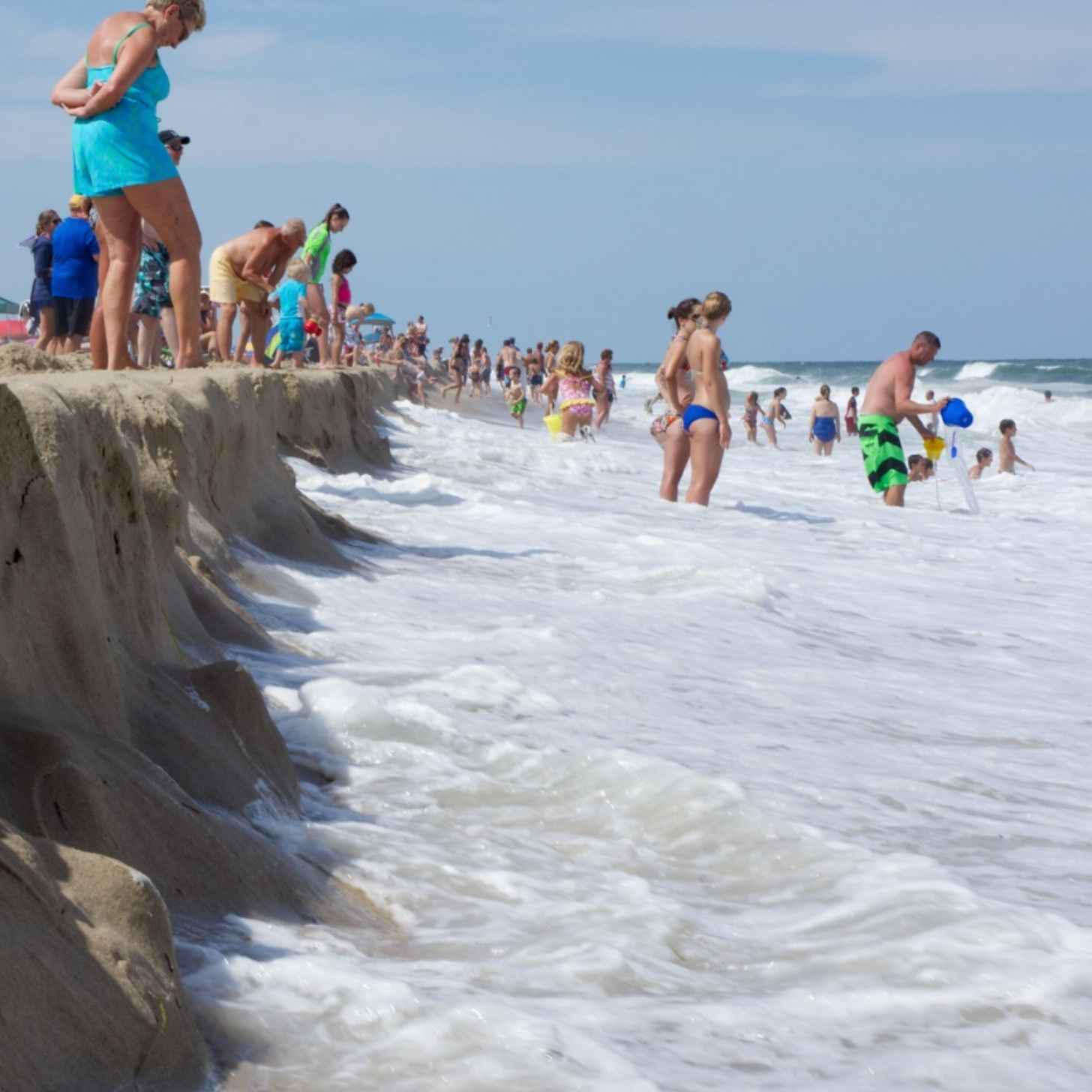
Immediately after founding the organization in 2018, Chamberlain began spearheading a citywide compost program. So far his team has diverted over 650,000 pounds of food waste.
“As humans, we all share one thing…we all live on the planet together and we should leave it better than we found it,” Chamberlain told WMDT.
In early June, students from Wicomico County Public School joined Chamberlain in a composting demonstration. For many teens, it was their first time learning how to compost.
“It’s important for us to reach them at a young age,” Chamberlain said. “This is getting people hands-on, in the dirt, seeing our sustainability efforts, it’s one of our top goals for sure.”
During the field trip, the Ocean City chapter of the Surfrider foundation dropped by to donate to Go Green OC. The funds will go towards upscaling composting efforts in the city.
“We just work together, we have a similar mission and goal of protecting the environment and protecting our oceans, our beaches, and we just love to see him working towards that zero waste goal in Ocean City,” said Marina Feeser, Chair of the OC Surfrider Foundation.
Chamberlain is grateful for the nonprofit’s growth as they enter their seventh season. Go Green OC started out with just a single truck and a small band of volunteers, and now they’re starting to see some “serious change” in the city.
“We’re becoming a voice in the zero-waste space,” Chamberlain told the Ocean City Today-Dispatch. “We’re becoming a model.”
On their website, Go Green OC outlines their strategy for becoming the first zero waste resort town in the United States: removing 30% of organic waste through composting, introducing dual-stream recycling programs, and replacing plastics with compostable products on a town-wide scale.
In 2023, Go Green OC also partnered with Oceans Calling, a three-day music festival on the Ocean City Boardwalk, to make it as eco-friendly as possible.
As headliners like Alanis Morissette, Noah Kahan, and The Lumineers played, fans could use refillable water stations and compost their food waste in bins along the boardwalk.
“The volunteers collected 5,300 pounds of food waste and compostable products like forks, napkins, plates and bowls,” Chamberlain told the Ocean City Today-Dispatch.
At the festival, Surfrider’s Ocean City chapter also hosted a Rock and Recycle station, which encouraged festival goers to collect recyclable cans on the beach in exchange for free merch.
“Festival attendees could grab a bag full of cans to recycle and in return receive a free t-shirt,” Chamberlain said. “They ran out of bags and shirts by day two because of the popularity of the program.
This year’s Oceans Calling festival is on September 27 through September 29. The lineup includes headliners like The Killers, Blink 182, and The Dave Matthews Band.
As the concert approaches, Chamberlain and his team of volunteers set an ambitious goal: triple their compost numbers from last year.
Overall, Go Green OC wants to change the way their community views waste — and maybe even discard it’s trashy nickname once and for all.
“Ocean City is doing some incredible green efforts and [no] one is hearing about them,” reads a statement on Go Green OC’s website. “We need to be shouting them from the rooftop.”
Header Image via Wikimedia Commons / Dough4872 (CC BY-SA 3.0)
It’s an “idea so ‘elementary’ it just might work,” according to Cameron Katz, the head of content and partnerships at Made By Us.
That idea? Pizza parties in cities across the United States, all with the same goal: To connect Gen Z voters over pizza and learn about American history.
Made By Us is a nationwide network of over 400 museums and historic sites that serve as civic hubs for young adults. In 2021, the organization created its flagship program, Civic Season, an annual tradition led by a group of Gen Z fellows that spans from Juneteenth to July 4th to help inspire young people to get involved in democracy.

The season includes a myriad of activations, like quiz bowls, socratic dialogues, and yes — pizza parties.
They are formally called “Slice of History” pizza parties, and they are being hosted by local organizations in over 30 locations across the country this summer.
“We all know it’s important to understand power, how our country works, and how it was shaped. But so much of civics education — especially for young adults — is either nonexistent, is too ‘eat your vegetables,’ or leaves young people out of decision making,” Nia Mosby, head of programs at Civic Season, told Good Good Good.
“We think people are more likely to learn and act when they feel a sense of belonging and empowerment, so we create opportunities for young people to lead.”
To make civic engagement a little more mouth-watering, the group of young people teamed up with Pizza to the Polls to entice those who are hungry for change. Partnering host sites have also been invited to put their own spin on the event, zeroing in on different issues and subjects.

For instance, the White House Historical Association in DC is hosting a party that features trivia. The University of Michigan Museum of art is incorporating bingo with their pizza party. And the USS Constitution Museum in Boston is even creating a themed mini golf course to attract attendees.
With many members of Gen Z feeling disillusioned about the democratic process, playful events and educational concepts aren’t frivolous — they are a strategy to capture the energy needed to organize for a brighter future.
“For Gen Z to take the reins of adult citizenship, they need credible and nonpartisan resources — like those provided by history museums and civics organizations — to be able to make up their own minds amid all the noise that exists online,” Katz said.
“Civic Season is one of the few places you can find credible information, about relevant topics, in appealing formats that are designed by and for younger people’s civic journey.”
Mosby said the “national program with local impact” is designed to work “for communities of all shapes and sizes, no matter what or how they’re celebrating.”
After all, celebrating American history is not one-size-fits-all.
“Civic Season unites our oldest federal holiday, July 4th, and our newest federal holiday, Juneteenth, for a reason. July 4th represents the creation of our nation’s ideals: freedom, equality, justice, and opportunity, while Juneteenth reminds us of our ongoing journey to bring those ideals to life,” Katz explained.
“Though we are optimistic about our democracy, we also recognize that our American story is more complex than fireworks and hot dogs.”
By making the nuanced conversations about politics more approachable, organizers hope that Gen Z — a group that now boasts 41 million eligible voters — feels compelled to act this election cycle.

In addition to IRL activations, Civic Season has a “Know Your Superpower” quiz that helps interested young voters “create an itinerary” of events and tap into their organizing skills.
On the organization’s website, folks can also find a virtual exhibit about a Japanese American family’s experience when they were incarcerated during World War II or a conversation at Thomas Jefferson’s Monticello about today’s struggle for racial equality.
“As we were developing Civic Season, we definitely did not want to shy away from the challenges our country has faced in the past and the new challenges that the next generation is facing now,” Katz said.
“It’s all about making space for difficult conversations and navigating the complexity of pride, aspiration, and reckoning all together — so we can build a better future. In other words, we can’t hate our country into being better. Urgent times like this call for urgent, inspiring action; not doom-scrolling and inattention.”
Header image courtesy of Made By Us