Every day the Good Good Good team collects the best good news in the world and shares it with our community. Here are the highlights for this week!
If you want to get good news in your inbox every day, join the Goodnewsletter — the free daily newsletter designed to leave you feeling hopeful.
The Best Positive News We’re Celebrating This Week —
A British town’s first-ever Pride celebration will celebrate “inclusion” in hopes of building a lasting legacy
Wotton-under-Edge in Gloucestershire, England prides itself on being a “very inclusive place” — but there’s just been one thing missing: a Pride celebration.
That all changes this year, as the town is set to stage its first Pride celebration ever, complete with a parade, family disco, drag takeover, and local businesses participating in their own unique ways.
Wotton Pride’s director said she hopes the celebration will create a lasting legacy for the town — and more personally, show her own children that “growing up in a same-sex family is just the same and just as legitimate as everybody else.”
Why is this good news? Everyone deserves to feel welcomed, celebrated, and safe in their community — during Pride and all year long. Pride celebrations in communities large and small do so much good to set the tone for inclusivity all year long.
A “stand-in dad” created an entire movement of “stand-in parents” for LGBTQ+ folks in need of support
Dan Blevins first went viral in January 2021 when he put out a bat signal to LGBTQ+ folks who needed a stand-in parent at their weddings.
After walking his own daughter down the aisle, Blevins was heartbroken at “the thought of someone not having that parent at their wedding or in their life.”
Since then, his network of loving parents has grown exponentially. Stand In Pride’s international Facebook group started small and has now reached nearly 50,000 members in over 60 countries.
He was inspired by Sarah Cunningham, the founder of Free Mom Hugs, an organization with a similar approach to connecting affirming volunteer “parents” with members of the LGBTQ+ community.
The impact is immeasurable. In addition to being flooded with support just in Facebook group comments, folks stand in at weddings, graduations, and beyond — opening up their dining tables on holidays, swapping life advice, and providing simple care and consideration in a non-traditional way.
→ Read more
National parks just got $700 million in federal funds to fight climate change — and it’s already making a difference
As part of the Inflation Reduction Act, the National Park Service was given $700 million to make its land more protected and resilient to inevitable climate change — and conservation and restoration projects are already underway across the country.
In Yellowstone and Yosemite National Parks, for example, efforts are underway to preserve and protect whitebark pine trees, which are now a threatened species on the Endangered Species list.
While their goals are wide-ranging — from protecting coral reefs to studying fish in warming streams — all the projects underway will help federal lands weather the climate-changed future.
What’s the nuance? While the IRA funds are a welcomed and much-needed boost to these resiliency efforts — they’re mostly helping in the short term, and more support will be needed to help the parks prepare for the impacts of climate change.
→ Read more
Demand for hybrid vehicles is surging — and carmakers are making more of them than ever before
In model year 2023, sales of hybrid vehicles hit a new high, comprising 13.6% of all production.
The rise continued in 2024, with sales of gas-electric hybrid vehicles in the United States increasing five times faster than that of fully electric automobiles in February.
In 2023, 29% of Toyota’s sales were hybrid vehicles and it’s expected to reach closer to 45% by the end of this year. Sales of the Jeep Wrangler plug-in hybrid increased from 37% of total Wrangler sales in the first half of 2023 to 50% in the second half of last year.
Toyota’s production of hybrid electric vehicles sits at 31.8%, it’s second only to Mercedes, which leads the way with 43.1% production.
Growing steadily since 2017, the hybrid electric vehicle market in the U.S. is expected to be worth over $55 billion by 2032.
While hybrids are more environmentally friendly (and better for human health) than gas-powered vehicles, they emit significantly more emissions than fully electric vehicles, which produce zero emissions.
Paris is turning an industrial neighborhood into Olympic Village — it will become permanent housing post-Games
Potentially the first to take this kind of approach to its Olympics buildout, Paris is keeping the city’s future in mind as it creates the 2024 Summer Games’ Olympic Village.
Rather than the usual approach — figuring out what to do with Olympics-specific buildouts as an afterthought — Paris is building a new low-carbon, mixed-use neighborhood in a part of the city that needs more housing. Olympic athletes will just be its first residents.
Once the 2024 Games — historic already as the first to achieve gender parity — are over, the neighborhood will resume “normal” operations with rental housing, apartments for sale, offices, and more. Paris is also adding bus stations, bike paths, a park (where the athlete bus areas will be), and retail space (the athletes’ medical facilities).
Why is this good news? The essentially single-use construction of the traveling Olympics is a notoriously wasteful aspect of the Games.
Aside from an incredibly sustainable and innovative way to approach construction (not the first time Paris has led the way in that regard!), the neighborhood they chose needed to be revitalized in this way. It’s so thoughtful of the city to build for its needs outside of hosting the Olympics.
→ Read more
A neighborhood in Massachusetts is now home to the first-ever geothermal heating and cooling network
A neighborhood in Framingham, Massachusetts is being retrofitted for a first-of-its-kind geothermal heating and cooling network — and the project is now officially up and running.
The process itself is nothing new, but this mile-long project marks the first time that geothermal energy has been used to heat and cool a shared network of buildings on this scale. (Boise, Idaho has a similar setup in place for its downtown buildings!)
Residents in the neighborhood say they feel like they “won the house lottery” when their community was handpicked for the project. It’s expected to reduce the residents’ greenhouse gas emissions by 60% — and cut their average utility costs by 20%.
Why is this good news? Typically, green energy upgrades are only affordable to wealthier residents, but when it came to considering candidates in Framingham, the group behind this landmark project made sure to prioritize low-income residents — making it good news for environmental justice, too.
A group of eight Alaskans is suing the state to block construction of a massive gas pipeline over climate concerns
A group of young Alaskans is suing the state of Alaska and the state-owned Alaska Gasline Development Corp. to block construction of the corporation’s long-planned trans-Alaska natural gas pipeline.
Ranging in age from 11 to 22, the group argues that the corporation’s founding laws are unconstitutional because the gas pipeline would result in so much climate-altering greenhouse gas that it would endanger their constitutionally guaranteed ability to access Alaska’s fish, wildlife, and other natural resources.
[Related: Indigenous activists have long been fighting against pipelines for their damaging environmental impacts.]
They’re being supported by Our Children’s Trust, a nonprofit that’s supported similar climate-related lawsuits in state and federal courts around the U.S.
While a similar case was brought to the court just a few years ago, the new lawsuit contends that the Alaska Constitution contains an implicit right to a livable climate.
If they’re successful, the ruling could have ripple effects both in courts and for climate action around the country.
→ Read more
The Biden administration just announced a first-of-its-kind ocean conservation plan that prioritizes Indigenous knowledge
The Smithsonian and the National Oceanic and Atmospheric Administration just announced the rollout of a first-of-its-kind National Ocean Biodiversity Strategy. It’s the first nationwide strategy aimed at taking action to save marine life (and, subsequently, all life).
The new strategy calls for a “stronger, more unified and inclusive approach to ocean conservation.”
Importantly, the first step in the strategy brings together federal agencies, states, Tribes, and local communities to document the economic and cultural values of the ocean, ensuring all costs of a degrading ocean ecosystem are understood and included in decision-making.
Why is this good news? The total ocean territory under U.S. management covers an area larger than all 50 states combined. While protections for marine life have increased in recent years (globally, too!), much of it remains unprotected or misunderstood.
The new strategy aims to close those gaps by working alongside local and Indigenous stakeholders.
More good news of the week —
Last year, drag queen Pattie Gonia hosted her third-consecutive Pride with Yosemite Park Rangers — and it was fabulous. Every year, Pattie hosts a summer Pride tour with partnering organizations to host drag events and environmental stewardship outings across the U.S.
Dylan Mulvaney says her first Pride as a trans woman “felt honest and free.” Dylan writes how even prior Pride celebrations, though they looked different, helped bring her “closer to my truth and gender identity.”
During Pride Month, queer activists host a multi-faith “day of prayer” for the “safety, well-being, and flourishing” of LGBTQ+ youth. Queer Youth of Faith Day was created by Beloved Arise, the first national organization for queer youth of faith.
A transphobic politician made Dylan Mulvaney the butt of a joke on Cameo — now she's saving lives on the same platform. Mulvaney is donating Cameo profits made over the next month to Save The Children, which is bringing humanitarian relief to children in Gaza, Sudan, Ukraine, and more.
[That’s not all: Dylan is also giving back to The Trevor Project through the end of the month via streams of her new single, “Days of Girlhood.”]
A teen created an app to help give people a safe, convenient way to explore their gender identity. Josh Tint got advice from Apple’s Tim Cook in creating the Discover Me app, which launched in 2022 and has been downloaded by over 2,000 people.
A speech clinic in Northeast Ohio provides free voice therapy to trans individuals. Voice therapy is a life-changing and potentially life-saving service for the trans community, who are at higher risk of experiencing violence, homelessness, and abuse.
A transgender TikTok creator is responding to his hate comments with a joyful approach. Ernie Thompson started off ignoring hate comments, then decided he could use them to do some good: and he started responding by doing the macarena.
A Fort Worth, Texas salon provides free and sliding-scale gender-affirming haircuts for the queer community. Acute Salon has a number of initiatives to make hair care more inclusive since the beauty industry can be intimidating for those in marginalized communities.
LGBTQ+ Swifties raised money for the trans community by throwing a ‘Tortured Poets’- themed listening party. The Denver Gaylors raised over $1,300 for femme, trans and nonbinary folks facing homelessness in the Denver area.
Mercury Stardust and friends raised millions to fund gender-affirming care for trans folks. Even though transphobic trolls threatened to derail their annual fundraiser, Stardust remained committed to getting care to people in need.
A new Netflix committee is awarding $50,000 grants to trans, nonbinary, and female filmmakers. Industry giants like Greta Gerwig and Lily Gladstone joined the committee to distribute the life-changing grant money.
The newly launched American Climate Corps is placing around 20,000 young people in jobs in its first year. They’ll be working on projects like restoring land, improving natural disaster resiliency, deploying clean energy, and more.
By removing dams, communities are adapting to intensifying extreme weather and protecting the health and safety people. Many dams were built when the water-related weather landscape looked completely different, and do more harm in intense climate change-related weather.
Painting streets and buildings white and planting more trees is helping keep people and communities cooler. Climate change is causing more frequent and intense heat waves, sending more people in communities to the hospital.
Philadelphia kicked off Pride Month by setting a Guinness World Record for the world’s largest drag story time. An “important statement” as states try to ban drag story hours, 263 people attended the event to kick off Pride Month.
In response to firefighters continuing to die of cancer, San Francisco is now going completely PFAS-free. Research suggests that firefighters have higher rates of cancer than the general population, including a 26% higher risk for brain cancer.
An innovative “sign language ambulance” service is helping reduce barriers to care and save more lives. The implementation of this technology will make emergency services more accessible for deaf and hard of hearing patients.
A company just became the first to install wood-based wind turbines. While others are working on solutions to recycle turbine blades more efficiently, this solution helps address this specific clean energy source’s waste issue.
A new study found that the increase in sustainable energy in the U.S. has resulted in $249 billion of climate and health benefits. From 2019 to 2022, the country’s increasing use of wind and solar power cut emissions by 900 million metric tons — the equivalent of taking 71 million cars off the road every year.
New research shows birdwatching can improve your mental health and foster a sense of well-being. The mental health benefits of being in nature have long been acknowledged, whether through activities like listening to birdsong or taking a walk in the park.
An innovative aluminum plant can reduce carbon emissions by 75% — it just got federal funding to expand production. Aluminum is a crucial raw ingredient in the fight against climate change, but the industry needs a makeover to ensure the transition off fossil fuels is a clean one.
[Related good news: People are working on cleaning up another carbon-intensive industry.]
Dr. Martin Luther King Jr.'s estate just announced a new media partnership to protect his legacy. P3 Media will now help ensure Dr. King’s life, writings, and history-making speeches serve as catalysts for advancing his ideals of nonviolence, racial justice and equality for all.
The first statewide program of its kind, Colorado will offer in-person voting for eligible voters who are incarcerated. The state’s governor signed a bill that aims to make it easier to vote for incarcerated people awaiting trial or serving time for misdemeanors.
Google and Global Fishing Watch just announced an AI oceans project to track and mitigate human harm at sea. This first-of-its-kind interactive map, years in the making from GFW, updates daily and shows wind turbines, fish farms, and more.
Ten Indian Ocean nations are creating a network of marine conservation areas called the “Great Blue Wall.” It’s part of a larger global effort to protect 30% of the world’s oceans by 2030 — currently only around 5-8% of the marine area in the Indian Ocean is under some form of legal protection.
Old buses and decommissioned fishing boats are being turned into new homes for marine life in Sri Lanka. Since Sri Lanka has a narrow continental shelf, apart from a few coral reefs, there are very few sites around the island that facilitate fish breeding.
A group of YouTubers raised $30 million to remove 30 million pounds of trash from the ocean. #TeamSeas partnered with the Ocean Conservancy to organize beach cleanups and an in-ocean cleanup, and The Ocean Cleanup to focus on trash in rivers.
Scientists are developing innovative artificial reefs to help restore corals and protect coastal communities. Coral reefs support vibrant marine ecosystems, stimulate tourism and fishing industries, and protect shorelines from tropical storms and erosion.
Combat diving veterans are using their unique underwater skills to help restore ocean health. Force Blue is a nonprofit that unites military veterans with the world of coral reef conservation for the betterment of both.
Long-time TV lovers may be familiar with Jim Henson as the creator of “The Muppets” and hits like “Fraggle Rock,” but the entertainment company founded in his name is pivoting to a different kind of storytelling.
The Jim Henson Company has partnered with Paramount’s Ananey Studios to create a new animated kids’ series targeted to youth ages six to 12 — and it’s all about “climate hope.”

The show, called “The Season Keepers,” follows twins Lia and Ben on a journey that teaches them about the importance of harmony between humans and nature.
The modern-day fairy tale is inspired by Vivaldi’s “The Four Seasons” and features lots of fantastical themes and imagery for audiences of all backgrounds to enjoy.
The plot goes a little something like this: When Lia and Ben’s parents divorce, they visit their grandmother's small village, which neither of them are very enthused about.
As it turns out, however, they have actually stumbled upon an “epic battle between the seasons,” where Lia uncovers her powers to mediate between humans and “The Nature Makers,” which a press release calls “a realm of magical creatures who are the guardians of nature itself.”
The show builds on the siblings’ relationship, as Lia attempts to mend her family’s rifts, all while trying to keep the Nature Makers from “plunging the world into a perpetual winter.”
While Henson, the late puppeteer, is not the mastermind behind the series (that would be Bosmat Agayoff, the show’s creator and designer), a frequent collaborator of the Jim Henson Company will take the show into his hands.
Craig Bartlett, who has written for kids’ shows like “Dinosaur Train” and “Sid the Science Kid” is billed as a writer behind the development of the series.
Halle Stanford, who is the president of television at the Jim Henson Company, said “handing the story reins over to Craig Bartlett ensures this adventure will captivate kids for generations.”

“From the minute [Ananey Studios] shared with us Bosmat Agayoff's gorgeous designs for her creation ‘The Season Keepers,’ we knew this was the next fantasy world we wanted to explore at The Jim Henson Company,” Stanford continued.
With themes of family, nature, and empowerment, creators are hopeful that Lia and Ben’s stories will impact young viewers for the better.
“At its heart, ‘The Season Keepers’ is about the healing of a family and of the natural world around them. And this series about climate hope is wrapped in a luxurious whimsical world filled with magical and never-before-seen creatures.”
While it’s not yet clear when the show will premiere, it’s apparent that the need for climate optimism is urgent, as today’s youth deal with unprecedented rates of anxiety about the environment.
Similar shows have also emerged across the globe, like Canada’s “Future Chicken,” the UK’s “Octonauts,” and “Molly of Denali,” which airs on PBS in the U.S.
“The Season Keepers” may just be the next go-to in the lineup of climate-centric shows for young people — and attaching it to the Henson name may preemptively launch it into the mainstream cosmos.
“We couldn’t be more excited about joining forces with the legendary Jim Henson Company, responsible for some of the most loved and known kids shows,” said Orly Atlas-Katz, the CEO of Ananey Paramount, in a statement.
“In this modern-day animated fairytale, a breathtaking journey will intertwine magic, adventure, and heart to inspire young viewers everywhere.”
Header image courtesy of the Jim Henson Company
This story was originally published by Grist. Sign up for Grist’s weekly newsletter here.
For nearly a century, a substantial portion of America’s iconic yellow school buses have been manufactured at a factory in Fort Valley, a town of 9,000 people surrounded by peach and pecan orchards in central Georgia.
Carolyn Allen has worked at Blue Bird for 13 years, and she talks about this fact almost as though it’s a surprise to her. “I live about 15 miles away and I never thought I’d be here,” she told Grist. “I never wanted to work here, because people were always being laid off all the time.” But life’s contingencies brought her to the company anyway: “I got to where I was looking for a job, and this is the one that came open.”
Even though she stayed, Allen wasn’t happy working at Blue Bird. “There was so many things in here that was not right. There was unfairness, favoritism, workload,” she said. “Lord, we worked sometimes six and seven days a week, and people needed to go home and see their families sometimes. And unfair wages.”
So a few years ago, when she got a call inviting her to a union organizing meeting, Allen didn’t need much persuading to get involved. After a long organizing drive, the effort paid off in May 2023, when the factory’s 1,400 employees voted to affiliate with the United Steelworkers.
The new union made national headlines and was congratulated by President Biden, who later hosted one of the organizers at a White House event. The national attention was partly a reflection of the scale of the workers’ achievement: The Deep South is a notoriously difficult place to unionize an auto plant.
But the other reason for the national spotlight was that the factory was set to receive up to $1 billion over five years from the federal government in contracts to build electric school buses for districts across the country.
After the vote, Allen put herself forward as a candidate to be elected to the union’s 10-member bargaining committee, and was elected to represent her fellow workers in the quality department.
The contract negotiations lasted for a year — and during that period, Allen says she and her fellow workers did not immediately see the benefits of their historic union vote.
In fact, she and others said conditions inside the plant initially changed for the worse. Management curtailed lunch breaks and cracked down on worker discipline.
But last month, the workers announced their efforts had paid off in the form of a first contract that guaranteed raises to every factory employee, new retirement benefits, and a profit-sharing agreement with the company.
Allen says she was “amazed at the things that we got.” With this contract, she says, she can finally see the bigger purpose of her taking the job she’d never really wanted. ”It took a long time, but I believe that’s why I am here now,” she said.
Blue Bird’s union contract sheds light on the bigger question of what the green manufacturing boom the Biden administration has sought to spark means for the nation’s resurgent labor movement. Soon after the passage of the Bipartisan Infrastructure Law and the Inflation Reduction Act, a tension between Biden’s climate and labor goals became apparent.
The new green jobs in sectors like electric vehicle and battery manufacturing were overwhelmingly going to Republican states where unions have a small presence and so-called “right-to-work” laws hinder union organizing.
Concerns that workers would be left behind in the EV transition led the United Auto Workers to briefly withhold its endorsement for Biden’s reelection. But unions have also seen the growth of green industry in the South as an opportunity for new organizing, not just a hurdle.
The union vote at Blue Bird was one example; another was the UAW’s landslide victory in April at a Volkswagen plant in Chattanooga whose primary product is the ID.4, Volkswagen’s flagship electric car.
This was part of an ongoing push by the UAW to organize nonunion auto and battery plants. In May, the union lost a vote at a Mercedes-Benz plant in Alabama, but has petitioned the National Labor Relations Board for a new election, alleging illegal union-busting tactics by management.
Blue Bird’s union vote and its new contract, which is in place for three years, might seem to demonstrate that Biden’s strategic vision of economic renewal designed to counteract what the administration views as a host of overlapping problems — in particular, global warming, Chinese global power, and the blighted wake of deindustrialization — can also create favorable conditions for organized labor.
As a political matter, this narrative is favorable to a president who has frequently boasted of his aspiration to be the most pro-union president in history. But practically speaking, it’s difficult for the federal government to directly intervene in support of unions, even at factories it subsidizes. “What the Biden administration has used is the tools they have at their disposal, to attach labor standards to federal loan and grant programs,” Jason Walsh, executive director of the Bluegreen Alliance, a coalition of labor unions and environmental organizations, told Grist.
For example, he said, some of the federal grant programs include a requirement “that applicants should be submitting community benefit plans as part of their applications that include language like, for example, a clear demonstration that you’re going to respect the bargaining rights and the rights of workers at this facility to organize into unions.
Those are powerful hooks but it’s not the same as pegging federal funding to unionization. We don’t have that statutory authority.”
At the Tennessee facility, the union vote was arguably assisted by a different Biden policy: the recently finalized tailpipe emissions standards, which encourage electric vehicle production. In light of this policy, Volkswagen could not credibly threaten closure of its sole American EV plant in the event of unionization (a standard union-busting tactic).
In the case of Blue Bird, the grants to build electric school buses — disbursed through the EPA’s Clean School Bus Program, funded by the Bipartisan Infrastructure Law — included a “union neutrality” provision prohibiting grant recipients from using the funding to sway workers against joining a union.
But the provision is hard to enforce — and at Blue Bird, according to many workers, it was at times openly flouted: The union accused management of retaliatory firings during the union drive (although they later withdrew their NLRB complaints, so the matter was never officially adjudicated, and the fired workers were later reinstated).
The contract negotiations certainly could have gone worse. In right-to-work states where unions can’t force workers to pay dues, companies often drag out negotiations. “What is quite common is for workers to successfully unionize and then a company draws out bargaining of the first contract as long as possible, trying to frustrate workers and frankly disillusion them, and then try to get them to decertify,” said Walsh.
“That is a very common union-busting tactic. It’s notable that that did not happen with Blue Bird.”
Alex Perkins, a longtime Steelworkers staffer who played a leading role in organizing workers at the plant, said the contract that Blue Bird workers won was among the strongest he has negotiated.
Every worker will receive at least a 12 percent raise, and the lowest paid workers will see a raise of 40 percent.
Perhaps more remarkable is the profit-sharing agreement. The contract includes a trigger in which net company profits of over $30 million entitle workers to a 4 percent share of those profits. Perkins said he represents workers at 20 companies across Georgia and Alabama, none of whom have such an agreement.
Perkins said the profit-sharing proposal was suggested by members of the bargaining committee, not Steelworkers staff, and reflected workers’ awareness of the government funding for electric buses. “The employees felt that with them making record profits, they should have a share in that,” said Perkins.
More broadly, he thinks government subsidies for EV production helped them achieve a strong contract simply because the extra cash gave extra space for the company to be generous with workers. “Quite honestly, if you look back four years ago, Blue Bird was really struggling, so they have rebounded really well since they started producing EV buses,” Perkins said. “Had it not been for the EV buses I don’t think they would have financially been in a position to give the employees the contract.”
Workers and union organizers said the national spotlight may also have compelled the company to bargain in good faith. “The company was a little slow with us,” Allen said, “and I think that once they found out that they were part of things I think they changed their minds.”
That spotlight was awkwardly apparent in January, when, with contract negotiations still ongoing, Michael Regan, the head of the EPA, visited Georgia to announce a new round of $1 billion in electric school bus grants to be awarded across the country. (Another tranche of $900 million was issued last week.) The press conference took place in a school gym in the Atlanta suburbs, and speakers included Georgia Democratic congressmen Hank Johnson and Raphael Warnock, as well as Blue Bird’s CEO, Phil Horlock, and a member of the bargaining committee, Craig Corbin.
The event was held at Stone Mountain Middle School, which was set to receive some of the new buses, and featured marching bands and cheer squads from around the school district. Scattered among the students in the bleachers were a few factory workers and union representatives. After the conference, the politicians piled into a Blue Bird electric bus for a short ride and an explanation of its benefits from a company engineer. (“All right, y’all, we’re headed to homeroom,” Warnock said.)
The pageantry demonstrated that this wasn’t ordinary bureaucratic grantmaking but retail politicking in a swing state. Large banners reading “President Joe Biden: Investing in America” adorned the gym and the school bus.
While the school bus grants are just a small portion of the administration’s suite of climate investments, their political importance stems from their visibility in communities.
Unlike the tax credits for planned factories or subsidies for clean energy, their impact is already being felt by families (and voters) nationwide. In addition to reducing fossil fuel consumption, electric school buses have strong health benefits for children when compared with traditional diesel buses, whose harmful exhaust is linked to higher asthma rates. Some studies show upgrading to cleaner buses even increases school attendance.
Later that day, Regan drove to Fort Valley to tour the Blue Bird factory itself and address the workers. There, asked by a reporter to comment on speculation that the labor protections in the EPA grants had helped the workers unionize, he said, “Those labor protections were built in for a reason, and as far as we can tell, those labor protections have been respected for all of those who are applying for these grants, so we’re excited about moving forward.”
Four months later, contract negotiations concluded — and set an example for workers elsewhere.
“The Blue Bird contract, like the contracts won by UAW members with the Big Three, should send a signal in flashing red lights to every non-union worker at vehicle manufacturing plants across the country, but particularly in the South, that the pathway to better wages and benefits on the job runs through a yes vote for unionization,” said Walsh.
Carolyn Allen, who had never been in a union before Blue Bird, is closely watching union drives at other auto plants. “We was excited for the ones that made it, disappointed at the ones that didn’t come through,” she said. “I was happy that at least they were trying to get through, because everyone needs a union.”
Whether organized labor can use the energy transition to make inroads remains an open question — but the contract in Fort Valley suggests that the urgent demands of decarbonizing America’s economy can be accomplished by a revival, not a weakening, of worker power.
Header photo courtesy of Blue Bird, modified by Good Good Good
— Cancer is one of the world’s biggest killers, with around 10 million deaths per year due to the disease.
— Scientists are using artificial intelligence, DNA sequencing, precision oncology and other technologies to improve treatment and diagnosis.
— The Centre for the Fourth Industrial Revolution India, a collaboration with the World Economic Forum, hopes to accelerate 18 cancer interventions.
Cancer kills around 10 million people a year and is a leading cause of death globally, according to the World Health Organization.
Breast, lung and colon cancer are among the most common. Death rates from cancer were falling before the pandemic. But COVID-19 caused a big backlog in diagnosis and treatment.
There is some good news, however. Medical advances are accelerating the battle against cancer.
Here are 11 recent developments in the fight against cancer:
Personalized cancer vaccines
Thousands of NHS cancer patients in England could soon access trials of a new vaccine treatment. It's designed to prime the immune system to target cancer cells and reduce recurrence risk. These vaccines are also hoped to produce fewer side effects than conventional chemotherapy.
Thirty hospitals have joined the Cancer Vaccine Launch Pad, which matches patients with upcoming trials using the same mRNA technology found in current COVID-19 jabs.
Over 200 patients from the UK, Germany, Belgium, Spain and Sweden will receive up to 15 doses of the personalized vaccine, with the study expected to complete by 2027.
Test to identify 18 early-stage cancers
Researchers in the US have developed a test they say can identify 18 early-stage cancers. Instead of the usual invasive and costly methods, Novelna's test works by analyzing a patient's blood protein.
In a screening of 440 people already diagnosed with cancer, the test correctly identified 93% of stage 1 cancers in men and 84% in women.
The researchers believe the findings "pave the way for a cost-effective, highly accurate, multi-cancer screening test that can be implemented on a population-wide scale". It's early days, however.
With such a small sample screening and a lack of information on co-existing conditions, the test is currently more of "a starting point for developing a new generation of screening tests for the early detection of cancer".
Seven-minute cancer treatment jab
England's National Health Service (NHS) is to be the first in the world to make use of a cancer treatment injection, which takes just seven minutes to administer, rather than the current time of up to an hour to have the same drug via intravenous infusion.
This will not only speed up the treatment process for patients, but also free up time for medical professionals. The drug, Atezolizumab or Tecentriq, treats cancers including lung and breast, and it's expected most of the 3,600 NHS patients in England currently receiving it intravenously will now switch to the jab.
Precision oncology
Precision oncology is the “best new weapon to defeat cancer”, the chief executive of Genetron Health, Sizhen Wang, says in a blog for the World Economic Forum. This involves studying the genetic makeup and molecular characteristics of cancer tumors in individual patients.
The precision oncology approach identifies changes in cells that might be causing the cancer to grow and spread. Personalized treatments can then be developed.
The 100,000 Genomes Project, a National Health Service initiative, studied more than 13,000 tumour samples from UK cancer patients, successfully integrating genomic data to more accurately pin-point effective treatment.
Because precision oncology treatments are targeted – as opposed to general treatments like chemotherapy – it can mean less harm to healthy cells and fewer side effects as a result.
Artificial intelligence fights cancer
In India, World Economic Forum partners are using emerging technologies like artificial intelligence and machine learning to transform cancer care. For example, AI-based risk profiling can help screen for common cancers like breast cancer, leading to early diagnosis.
AI technology can also be used to analyze X-rays to identify cancers in places where imaging experts might not be available.
These are two of 18 cancer interventions that The Centre for the Fourth Industrial Revolution India, a collaboration with the Forum, hopes to accelerate.

Greater prediction capabilities
Lung cancer kills more people in the US yearly than the next three deadliest cancers combined. It's notoriously hard to detect the early stages of the disease with X-rays and scans alone.
However, MIT scientists have developed an AI learning model to predict a person's likelihood of developing lung cancer up to six years in advance via a low-dose CT scan. Trained using complex imaging data, 'Sybil' can forecast both short- and long-term lung cancer risk, according to a recent study.
"We found that while we as humans couldn't quite see where the cancer was, the model could still have some predictive power as to which lung would eventually develop cancer," said co-author Jeremy Wohlwend.
Clues in the DNA of cancer
At Cambridge University Hospitals in England, the DNA of cancer tumours from 12,000 patients is revealing new clues about the causes of cancer, scientists say.
By analyzing genomic data, oncologists are identifying different mutations that have contributed to each person’s cancer. For example, exposure to smoking or UV light, or internal malfunctions in cells.
These are like “fingerprints in a crime scene”, the scientists say – and more of them are being found.
“We uncovered 58 new mutational signatures and broadened our knowledge of cancer,” says study author Dr Andrea Degasperi, from Cambridge’s Department of Oncology.
Liquid and synthetic biopsies
Biopsies are the main way doctors diagnose cancer – but the process is invasive and involves removing a section of tissue from the body, sometimes surgically, so it can be examined in a laboratory.
Liquid biopsies are an easier and less invasive solution where blood samples can be tested for signs of cancer.
Synthetic biopsies are another innovation that can force cancer cells to reveal themselves during the earliest stages of the disease.
CAR-T-cell therapy
A treatment that makes immune cells hunt down and kill cancer cells was declared a success for leukaemia patients in 2022. Known as CAR-T-cell therapy, it involves removing and genetically altering immune cells, called T cells, from cancer patients.
The altered cells then produce proteins called chimeric antigen receptors (CARs), which can recognize and destroy cancer cells. In the journal Nature, scientists at the University of Pennsylvania announced that two of the first people treated with CAR-T-cell therapy were still in remission 12 years on.
However, the US Food and Drug Administration is currently investigating whether the process can in fact cause cancer, after 33 cases of secondary cancer were observed in patients receiving CAR-T therapies.
The jury is still out as to whether the therapy is to blame but, as a precaution, the drug packaging now carries a warning.
Fighting pancreatic cancer
Pancreatic cancer is one of the deadliest cancers. It is rarely diagnosed before it starts to spread and has a survival rate of less than 5% over five years. At the University of California San Diego School of Medicine, scientists developed a test that identified 95% of early pancreatic cancers in a study.
The research, published in Nature Communications Medicine, explains how biomarkers in extracellular vesicles – particles that regulate communication between cells – were used to detect pancreatic, ovarian and bladder cancer at stages I and II.
A tablet to cut breast cancer risk
A drug that could halve the chance of women developing breast cancer is being tested out by England's National Health Service (NHS). It will be made available to almost 300,000 women seen as being at most risk of developing breast cancer, which is the most common type of cancer in the UK.
The drug, named anastrozole, cuts the level of oestrogen women produce by blocking the enzyme aromatase. It has already been used for many years as a breast cancer treatment but has now been repurposed as a preventive medicine.
“This is the first drug to be repurposed through a world-leading new programme to help us realize the full potential of existing medicines in new uses to save and improve more lives on the NHS," says NHS Chief Executive Amanda Pritchard.
This article was originally published by the World Economic Forum.
Header image by the National Cancer Institute
As Taylor Swift sang on the third night of her record-breaking Eras Tour in Edinburgh’s BT Murrayfield Stadium: “It’s nice to have a friend.”
Swift brought these lyrics to life in the Scottish capital earlier this week, continuing her streak of charitable giving alongside the Eras Tour.
According to the Edinburgh Food Project, the megastar made a sizable donation while she was in town.
While the organization — which manages eight food banks in the area — has not revealed the value of the donation, they said it would make a major impact on the 6,000+ people they serve annually.
“We are thrilled that Taylor has decided to support the food banks and leave a lasting impact on Edinburgh,” the Food Project’s director Bethany Biggar, told The Herald.
“Things are really tough for a lot of people right now, so it is lovely to see someone like Taylor spreading such positivity.”
Edinburgh Food Project tried to amplify Swift’s donation by recruiting her enormous fanbase of Swifties on X (formerly Twitter).
“As fans gathered at Murrayfield Stadium on Friday for the first of three record-breaking gigs, we found out that Taylor Swift would be making a donation to support food banks across the city,” the organization wrote. “Want to help? Donate £13.”
As fans gathered at @MurrayfieldStad on Friday for the first of three record-breaking gigs, we found out that @taylorswift13 would be making a donation to support foodbanks across the city 🪩Thank you so much Taylor 🫶
— EdinburghFoodProject (@EdinFoodProject) June 10, 2024
Want to help? Donate £13 (#IYKYK): https://t.co/itIShHqprD pic.twitter.com/zVh2zfbZ42
They shared a cheeky hashtag (#IYKYK) with a link to donate, hoping to garner some additional support by encouraging folks to donate in increments mirroring the singer’s lucky number.
Of course, the Swifties love to follow in the generous footsteps of their idol.
“I make this donation in honor of Taylor Swift's efforts against extreme poverty and hunger,” one fan, Luis Enrique Quiñones-Ramírez, wrote alongside a £13 donation. “I count myself as her fan, and I'm proud of her donations during the course of her current world tour.”
This is far from the first time Swifties have done good in the name of their fav. Along Eras Tour stops last year, Brazilian Swifties helped raise funds for community members in need as a way to welcome Swift, for example.
Meanwhile, a group of LGBTQ+ Swifties held a “Tortured Poets Department” listening party to raise funds for unhoused transgender neighbors this spring.
Swift herself seems to have stuck to food banks as her charitable giving lane. To kick off the 2023 leg of the Eras Tour, the singer made sizable gifts to food banks in Glendale, Arizona, and Las Vegas, Nevada.
She also made headlines when she gave her tour truck drivers an enormous bonus in August 2023, reportedly adding $100,000 to their checks, adding up to about $5 million divided among 50 drivers.
According to CNN, Swift insisted on writing a handwritten note to each driver, topped off with a wax seal on the envelope with her monogram. Each envelope stated the amount of the bonus.
“The drivers didn’t want to be overly rude and look at it,” said Michael Scherkenbach, founder and CEO of Shomotion, the truck driving company Swift uses.
“But one looked and thought it said $1,000, another driver saw it as $10,000 and then the third said ‘Well this has to be a joke!’” he continued to CNN.
Regardless of the disbelief surrounding Swift’s many generous donations, they are certain to be put to good use — and suggest that this poet might not be so tortured after all.
Header photo courtesy of Ronald Woan (CC BY-SA 2.0) and Arran Bee (CC BY 2.0)
The Kazakh Steppe, also known as the Great Dala, is a great expanse of land that stretches from northern Kazakhstan to Central Asia.
A patchwork of grasslands, savannas, and shrublands, the Kazakh Steppe is home to Saiga antelope, Siberian deer, foxes, badgers, Mongolian gerbils, Russian steppe tortoises — and a growing herd of wild Przewalski’s horses.
Last week, three Przewalski’s horses (named Zorro, Zeta II, and Ypsilon) traveled 3,000 miles — by truck and plane — from the Prague Zoo in Czechia to the Altyn Dala reserve in the The Kazakh Steppe.
They are the first of 40 horses that will join them in the next five years, in an attempt to rewild the species.
“We have been waiting for this moment for a very long time,” Albert Salemgareyev from the Association for the Conservation of Biodiversity in Kazakhstan told AFP. “A lot of work has been carried out in recent months in order for the Przewalski horses to come to Kazakhstan.”

Przewalski’s horses were once native to Kazakhstan, Mongolia, and China, but due to human interference, they disappeared from the wild completely in the 1960s.
Remarkably, all living Przewalski’s horses are descended from just 12 horses — all caught in the wild from 1910 to 1960. Through decades of conservation efforts led by a network of zoos and nature reserves, the species has been pulled back from the brink of extinction.
There are now 1,900 Przewalski's horses left on the planet. They are still listed as endangered, but their numbers are slowly growing. Rewilding efforts like these could ensure the continued survival of the species, which is widely regarded as the last “truly wild” horse species in the world.
Pavol Šepel’ák, an ambassador of the Czech Republic, said that the project has moved swiftly from its first conception in April 2023.
“I am very happy that we can return this beautiful animal to the land of its habitat,” Šepel’ák said in a press statement. “The project itself, which the Prague Zoo called the Return of Wild Horses 2024, has already had great success. … I am very glad that the first stage was accomplished in such a short period of time.”
The Altyn Dala reserve spans over 1.2 million acres, but the three horses will live in a center within the larger reserve for the first year of rehabilitation for their own protection.
“There, they will be monitored and the work will be carried out by veterinarians and scientific workers,” Vera Voronova, an executive director of the Altyn Dala Conservation Initiative, told The Astana Times.
As more horses arrive over the next few years, the veterinarians and conservation workers will have to gradually adjust their operations, but the team welcomes the challenge.
“Of course, we will consider how to form groups among these horses,” Voronova explained. “They will continue to be monitored even after their release.”
Header image via Petr Jan Juračka / Wikimedia Commons (CC BY-SA 3.0)
In the past couple of years, unsettling details about where merchandise goes after it’s returned have surfaced, causing many consumers to think twice about their purchases.
In fact, returns have a major impact on the planet; up to 24 million metric tons of carbon emissions are attributed to e-commerce returns each year.
But sometimes, you really do need to return something because it doesn’t fit your needs, or might even be damaged or out of order.
For some companies — especially those who sell large products or appliances — there must be a different way.

Whirlpool has been testing the waters with its Feel Good Fridge program since 2021, which takes damaged or returned fridges, refurbishes them, and provides them to food banks and agencies in need of storing perishable goods.
According to Whirlpool, the fridge units in the Feel Good Fridge program are sourced from customers who return a refrigerator to a store, or from warehouses where an appliance may have been damaged in transit or at another point in its early life cycle.
These fridges undergo testing, minor repairs, and cleaning, and are then distributed to area food bank programs. Sometimes, parts will be taken from a damaged unit for future use.
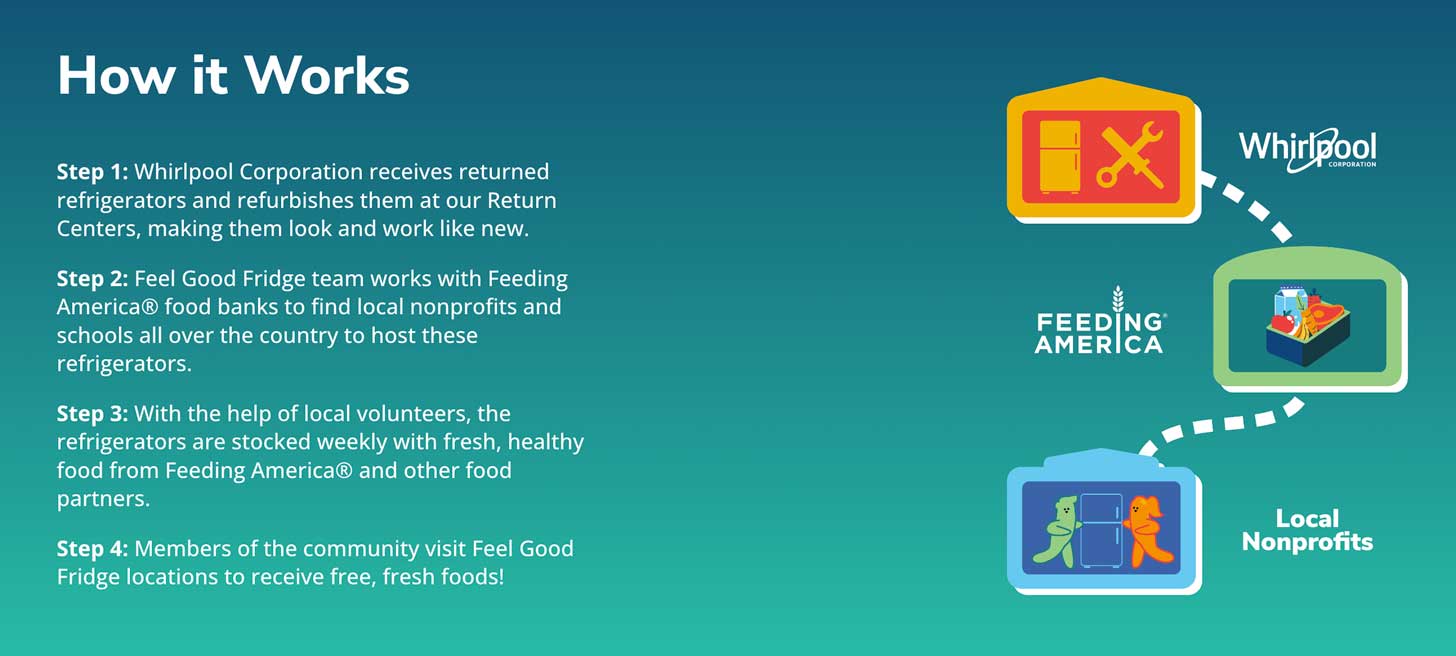
Since the program launched, it has donated more than 900 refurbished refrigerators and delivered more than 250,000 pounds of food to partner agencies, reaching more than 25,000 families.
Feel Good Fridge started as a local initiative in Dallas, Texas, but in a new partnership with HelloFresh and Total Quality Logistics (TQL), the program will expand into more cities across the country: Atlanta, Chicago, Dallas, Detroit, Houston, Los Angeles, Minneapolis, Orlando, Phoenix, and West Michigan.
“Across the U.S., 44 million people, and one in five children, face hunger,” said Pam Klyn, Whirlpool’s executive vice president of corporate relations and sustainability.
“We launched Feel Good Fridge to fight food insecurity in a sustainable way, and collaborating with HelloFresh and TQL allows us to expand our impact in the communities that need it most.”
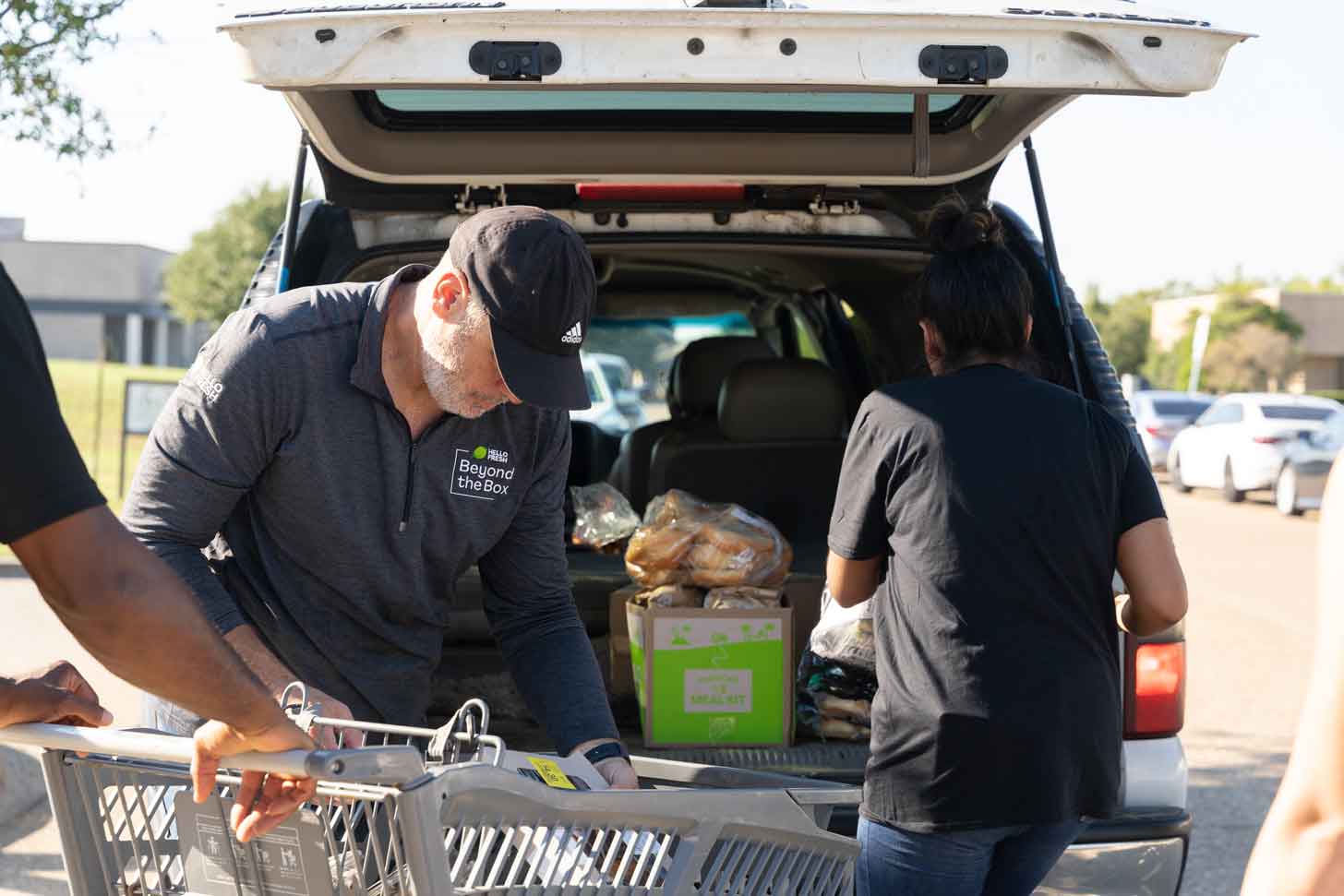
Together, they have a goal of placing 3,000 refrigerators in the aforementioned cities by 2030. These locations are chosen by prioritizing food-insecure areas with a high concentration of needs.
“Increasing the availability and accessibility of fresh produce and ingredients is a key part of HelloFresh’s mission to fight food insecurity,” said Jeff Yorzyk, the senior director of sustainability at HelloFresh, in a statement.
“We’re proud to partner with Whirlpool and TQL to help alleviate food insecurity by meeting communities in need where they are.”
TQL will transport the appliances, while HelloFresh will join Feeding America to help fill them with fresh ingredients.
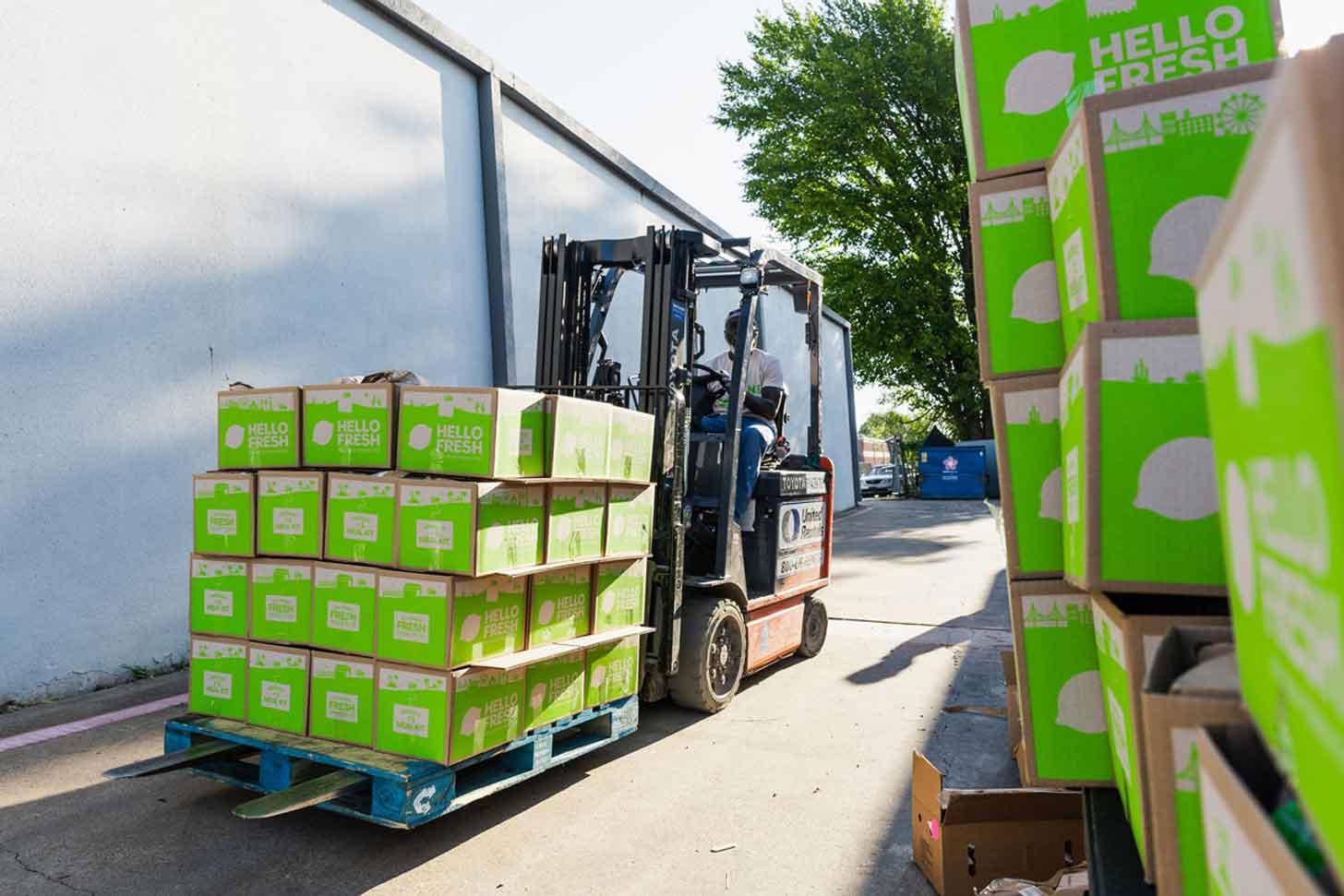
“We started Moves that Matter with the goal of aiding nonprofits by taking the complexity and expense of logistics off of their plate,” TQL president Kerry Byrne said in a statement.
“It is an honor to be a part of this collaborative effort… to bring more fresh, nutritious food to communities struggling with food insecurity.”
Aside from the helpful donations, Whirlpool also provides service calls to these food bank locations free of charge, or will replace any units that have seen too much wear or damage.
Very few units in the program have been used in a home or have seen regular usage, though some “factory-blemished models” may be delivered to partnering food banks, according to Whirlpool.
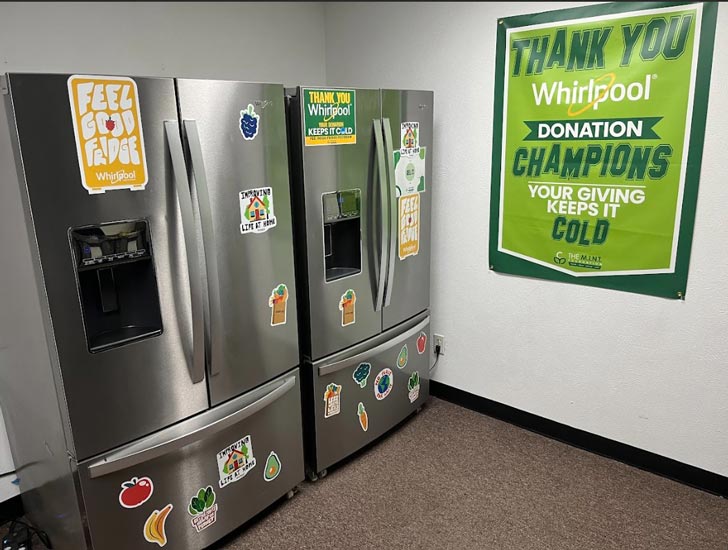
But the aesthetics don’t matter nearly as much as the impact.
“I cannot emphasize the great impact the donation of the refrigerators have made,” a statement from Stone Mountain Seventh-day Adventist Church reads on the Whirlpool website.
“Our agency is increasingly serving more people and the addition of these refrigerators have enabled us to meet the increasing needs. It truly is a blessing to have them.”
Header image by Kevin Malik/Pexels
Sea cucumbers, scavengers of the seafloor that resemble the cylindrical vegetable, have been consumed as a delicacy in Asia for centuries.
But in recent decades, they’ve been severely overharvested to a point that they are now quite rare.
New research I helped conduct suggests their repopulation could play an important role in protecting and revitalizing another type of endangered marine organism: corals.
Coral reefs are in decline around the world partly due to diseases, some of which are associated with sediment on the seafloor.
In several field experiments involving corals in Moorea, French Polynesia, and around Palmyra Atoll, research scientist Cody Clements and I, along with two other colleagues working on marine microbes, found that sea cucumbers grazed and consumed bacteria in the sediment, and that sea cucumber presence prevented pathogens from sickening co-occurring corals.
We learned this by either removing sea cucumbers from certain sand patches, while leaving them in others, or by caging corals with and without sea cucumbers inside the cages. In both experiments, corals near sea cucumbers were strikingly less likely to become diseased and die.
Sea cucumbers are the janitors of tropical seas. Just as a vacuum cleaner consumes dirt and fills up its bag, sea cucumbers consume bacteria and decaying organics from the seafloor and convert this into sea cucumber body mass, reducing the “food” available to support growth of microbial pathogens.

Overharvesting of sea cucumbers over the past few hundred years, but especially in recent decades, may have contributed to the dire state of today’s coral reefs.
Imagine if you stop vacuuming a teenager’s room. It gets cluttered and dirty very quickly and eventually becomes unhealthy.
That is what has been happening to coral reefs, especially as humans warm oceans and add organics and nutrients that facilitate microbial growth and pathogenicity.
And these changes are happening against a background of additional stresses, such as ocean warming and overharvesting of fish species important to coral health and survival.
The population of sea cucumbers is so low, in fact, that my team and I had been trying for years to find a location where there were enough of them to study in terms of their effects on the larger community.
Coral reefs are declining at dramatic rates, especially as temperatures rise and humans continue to pollute the ocean.
Coral reefs support about 25% of marine biodiversity, and hundreds of millions of humans depend on reefs for food security, tourism and protection from storm waves.
While repopulating sea cucumbers is unlikely to save coral reefs without also taking other actions, doing so could help slow reef losses, buying nations more time to reduce ocean warming, overfishing and pollution, and eventually stabilize the critical ecosystem services that corals sustain.
This article by Mark Hay, from Georgia Institute of Technology, was originally published by The Conversation.

Reasons to Be Cheerful turns its eye to Massachusetts, the onetime cranberry capital of the world, where former bogs are transforming into thriving, carbon-storing swamps.
When Glorianna Davenport and her husband, Evan Schulman, decided in the early 2000s to stop growing cranberries after two decades in the business, they were left with a difficult choice. They could sell their land, parts of which had been farmed for well over a century, to a developer and watch it be "chopped up into small lots," as Davenport puts it. Or they could fight to keep it whole.
Cranberry bogs — naturally swampy areas infused with sand to create the ideal growing conditions for the iconic North American fruit — have been a staple of the Massachusetts landscape and economy for centuries. At the turn of the new millennium, the industry was in a tough spot.
An overabundance of cranberries on the market from higher-yielding new cultivars in Wisconsin and Quebec had caused prices to crash and then swing wildly, even after the federal government started paying growers for surplus production.
Some Massachusetts cranberry bogs no longer made financial sense, and for farmers who had exhausted every option to stay in operation, development was the only reliable way out. But it wasn't a fate those farmers wanted for the land they loved.
"Many of the smaller farmers are like fifth-generation," Davenport says. "And their property is what they have to pass on to their children."
Though she and Schulman were only first-generation, they'd envisioned keeping the roughly 600 acres of legacy farmland pieced together into Tidmarsh Farms in their own family for many years to come. That looked unlikely if they kept growing cranberries — and impossible if the land wound up in the hands of a developer.
So in 2008, Davenport retired from the media research lab she'd founded at MIT and went all in on conservation. It was the beginning of a multi-year effort to revive vanished wetlands that would bring new life not only to her property, but to an entire industry increasingly burdened by climate change, while doing some good for the climate in the process.
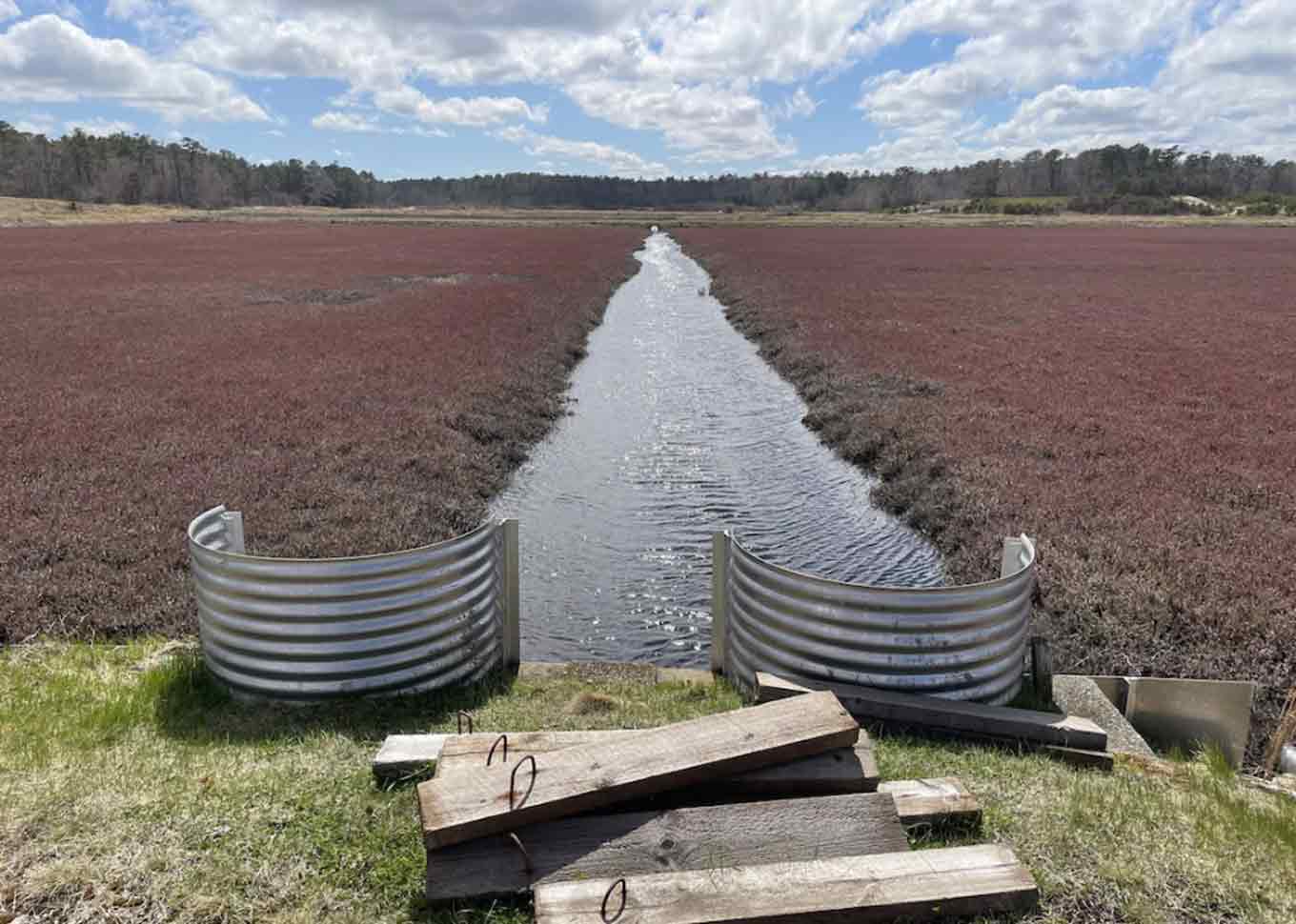
A mission to revive local wetlands
As Davenport began her campaign to save Tidmarsh, she discovered that there wasn't much of a history of bog restoration for her to build upon.
It was well understood at the time that most cranberry bogs in Massachusetts were situated within natural wetlands but had been made more hospitable for cranberries — and stripped of other, undesirable plants — by putting down a fresh layer of sand every few years.
Researchers already suspected that many of those wetlands were originally Atlantic white cedar swamps, an ecosystem that's rare today. Yet evidence was mounting that cranberry bogs that were taken out of production grew into sandy pine and maple forests instead of reverting to the wetlands they were before.
Aside from a multi-decade, volunteer-led effort to return native brook trout to a river devastated by cranberry production, however, the idea of transforming former bogs back into true wetlands hadn't been tested yet. The first project in the state to dig the sand out of an old cranberry bog and see what grew in its absence was just getting underway.
"It wasn't absolutely clear-cut what was going to happen," says Christopher Neill, a senior scientist at Falmouth's Woodwell Climate Research Center who studies the effects of cranberry bog restoration. The hope was that stripping some of the sand from a bog at the headwaters of Plymouth's Eel River would cause something more closely resembling a wetland to emerge in its place.
Wetlands are effective at storing carbon and filtering overabundant nutrients like nitrogen out of water. They provide good fish habitat and are rife with opportunities for recreation. And they can serve as buffers that shield nearby communities from flooding and sea-level rise.
Protecting and restoring wetlands has been a recent priority among conservationists in part because it's hard to replicate them in places they don't naturally occur.
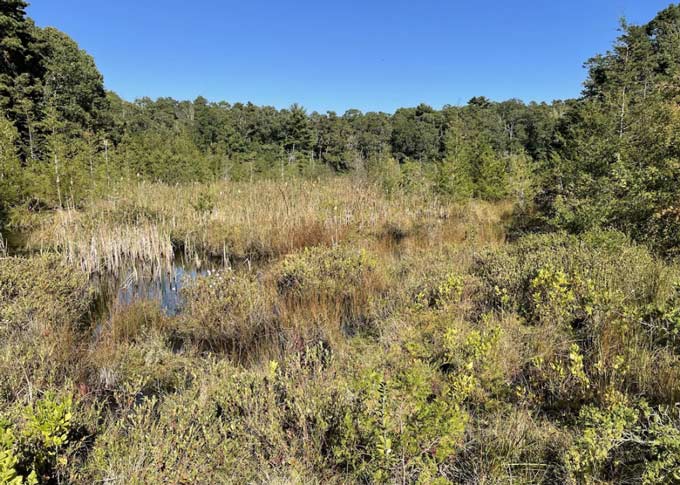
The Eel River project is an exemplar of how a former cranberry bog can be made to thrive as wetlands
The Eel River Preserve (seen here), the first cranberry bog officially restored in Massachusetts, has grown into a lush ecosystem of native wetland plants, crowned by the 20-foot-tall Atlantic white cedar trees planted there over a decade ago.
The Eel River project razed about 60 acres at a cost of roughly $2 million — and revealed, to researchers' delight, that the seeds left by those bygone swamps were still alive beneath the cranberry bogs. The researchers planted thousands of white cedar saplings in the seemingly lifeless piles of mud the project left in its wake.
It wasn't long before a thick carpet of native mosses, rushes, sedges, and wildflowers sprouted around the young trees.
"All you have to do is dig them up and expose them to light and give them a moist soil surface, and they germinate," Neill says. "And they germinate in profusion and in great diversity."
Eel River laid the groundwork for growers like Davenport to leave the cranberry industry without signing away the future of their land. It proved restoration was possible. Next, though, someone would need to replicate it.
In 2010, the year the Eel River project was completed, the eastern portion of Tidmarsh Farms went out of production. Davenport had made a little headway toward the long-term conservation of the property, but it'd been slow going. "We had to be very patient," she says. "Evan and I had a real vision, and that vision changed over time and grew over time."
Tidmarsh's big break arrived in 2011, when the Massachusetts Division of Ecological Restoration (DER) made the couple's newly idle bogs a high-priority project.
Gutting a cranberry bog requires a lot of miscellaneous permits and approvals, and the farm's new status came with the state support required to jump through those hoops, secure millions of dollars in funding — which would typically come from multiple sources — and find a buyer who would keep the land protected in perpetuity.
"We brought 20 organizations together, and it was a five-year adventure then, from start to finish, to get that project built," says Alex Hackman, a restoration ecologist who worked for DER at the time and oversaw the evisceration and resurfacing of Tidmarsh's larger eastern farm.
Its size — several times that of Eel River — added to the complexity, but the experience he and others brought from the previous restoration helped.
In 2016, eastern Tidmarsh became the second cranberry farm in Massachusetts to be converted back into a self-sustaining wetland.
Mass Audubon, the state's largest conservation group, bought the land the following year and opened it to the public as the 481-acre Tidmarsh Wildlife Sanctuary.
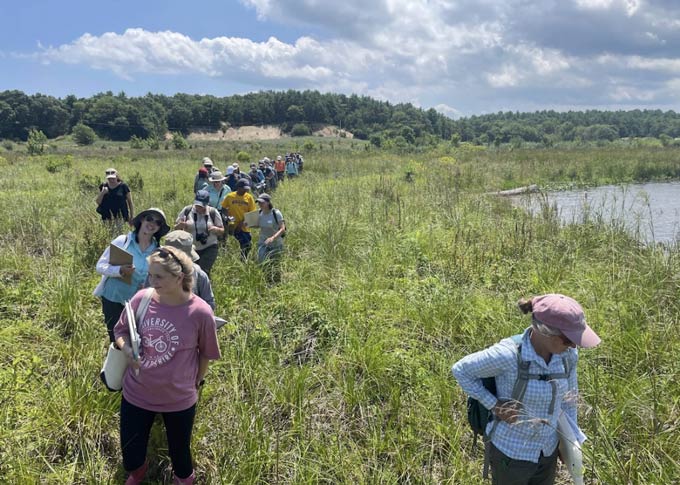
Restoration expands in the wake of the Eel River and Tidmarsh successes
Encouraged by the early successes and conscious of the expanding list of growers hoping to restore some or all of their land, Hackman — who is now Mass Audubon's director of ecological restoration — spearheaded the launch of DER's Cranberry Bog Program in 2018 to provide interested growers with the same state resources that helped Tidmarsh across the finish line.
Four more retired cranberry operations have been restored since then, including Tidmarsh's smaller western farm — now the Foothills Preserve — in early 2021.
Today, there are 15 DER priority projects moving toward restoration, plus a handful of others led by different agencies or private organizations, according to Bill Giuliano, the current director of the DER bog restoration program.
Those numbers are expected to climb as climate change makes it more expensive than ever to grow cranberries in Massachusetts.
Already, says Brian Wick, executive director of the Cape Cod Cranberry Growers' Association, the state is experiencing warmer winters that disrupt the vines' dormancy, cooler springs that force growers to irrigate overnight more often to protect their vines from frost, summers that are often too wet or too dry for proper growth and warm autumns that keep the cranberries from turning red until they've ripened too much on the vine.
The increasingly volatile weather is hiking operating costs and cutting into growers' profits.
Cranberry growers used to drive small tractors out onto their bogs in the winter to spread sand over the ice. These days, Wick says, they haul the sand out in boats. Climate change is "definitely top of mind for the growers," he says. "They're adaptable. They take whatever nature throws out of it and try to counter that. But it's just difficult."
When Tidmarsh became a high-priority project more than a decade ago, Davenport and Hackman co-founded a research collaborative called Living Observatory to refine their restoration techniques, monitor past projects, and make new ones easier to execute.
Despite their many breakthroughs since then — or, perhaps, because of them — that work is more needed than ever.
"This is such a slam-dunk in terms of restoration," says Christine Hatch, an associate extension professor at the University of Massachusetts Amherst and a member of Living Observatory's board of directors.
"We're never going to get rid of cranberries. They're always going to be here. They're an iconic state crop. However, some of these lands just aren't going to turn a profit."
The estimated 375 active cranberry farms in Massachusetts span over 20 square miles. One-fifth of those bogs are "highly likely" to be retired this decade, a 2020 analysis by the Woodwell Climate Research Center found.
Many will be strong candidates for restoration if the right programs are in place by then to guide them through the process.
Living Observatory is trying to advance new solutions — including paying growers to excavate the bogs themselves — that can stretch the limited available resources to help as many people as possible.
In the meantime, the pioneers of cranberry bog restoration are celebrating every milestone they've reached so far, like the first Tidmarsh site's recent seven-year anniversary, the imminent groundbreakings at several more DER priority projects, and the $1.6 million state grant awarded to a local environmental group in September for the purchase and restoration of yet another former cranberry bog.
"It's still early," Hackman says. "We're still early into this practice. But so far, the message is, it works. You can make these dry sites wet again. And then they just explode to life."
This article was originally published by Stacker and was republished with permission.
Natalie Small looks at the ocean as if she's looking into a mirror.
"How high are the waves today –– the ones out there on the water and the emotional ones within me? Do I feel like jumping into the tide or rather just wetting my toes? What do I want to discover in the ocean today? And what do I want to leave behind?"
These are questions she likes to ask at the start of every group therapy session on Ocean Beach in San Diego, California.
Together, we eight participants sit in a circle and write down our answers in our notebooks. Some scribble their ideas with a colorful sharpie on the white blanket spread out on the sand: "Strength." "Joy." "Fun."
As a reporter for Reasons to Be Cheerful, there to examine how surf therapy is being employed as a treatment for depression, anxiety, and trauma, I write "curiosity," because I'm curious how this session of surf therapy will differ from a conventional surf course.
Then all of us women jump up to embody how we feel today.
Some step into a warrior stance, another one is crying. One of the women has never been to the ocean before.
Small, 38, is a licensed marriage and family therapist as well as a surf coach.
For the last ten years, she has been combining both professions: She takes her patients to the sea. She is part of a burgeoning niche of psychotherapy that blends traditional therapy with a sport proven to build resilience, confidence, and well-being.
More than a hippie wellness novelty or New Age fad, surf therapy is being embraced by psychologists and government agencies alike as a way to increase access to mental health care while delivering evidence-based, lasting results.
Some differences between this and a conventional surf course are obvious from the start.
"When we teach surfing, we don't just teach the physical know-how, but we connect every movement to the breath and mindfulness," Small says. "When we talk about navigating the waves, we connect it to how we navigate the emotional ups and downs within us."
During the two-hour sessions, each participant is paired with a trained volunteer for maximum safety and support, with whom they share fears and hopes they might not be comfortable sharing in the group.
When we first wade into the cool water, we all hold hands.

'Swapping the couch for the surfboard'
Small initially started inviting clients who had experienced trauma to the beach, and immediately noticed changes.
"Already at the first beach session, the shift was phenomenal. The women's body language changed; they relaxed, became more open and connected to their bodies."
At first, she simply transferred her art and somatic therapy sessions to the beach. Then, slowly, Small started taking her clients into the water with body boards and surfboards. Many are anxious about navigating the waves.
"Every participant decides herself how far she wants to go out. Maybe she just wants to lie on her stomach and catch a few waves," Small explains. "It doesn't matter. After each wave we check in with each other: How did this feel?"
Riding a wave of research pointing to its benefits, surf therapy has come to be seen by the psychological community as a legitimate and effective form of mental health care. In 2020, the British National Health Service (NHS) officially recognized it as therapy, and British doctors prescribe it, for instance, for depression and post-traumatic stress. The US Navy has been offering surf therapy since 2008 as standard medical care for active personnel and veterans.
More than 130 organizations are members of the International Surf Therapy Organization (ISTO), offering this unique mental health treatment in 30 countries on six continents, from Scotland to South Africa, New Zealand to Mexico.
ISTO director Kris Primacio defines surf therapy as "a method of intervention, combining surfing and structured individual or group activities that promote psychological, physical, and psychosocial well-being."
Or, as she likes to put it, "We're swapping the couch for the surfboard."
That's not just a clever catchphrase. In Primacio's experience, moving therapy from an office to the ocean makes it more accessible to groups that might otherwise miss out.
"Psychotherapy still carries a stigma," Primacio says. "If you tell inner-city kids or tough guys to go to therapy, they'll often recoil. But invite them to go surfing? Everybody thinks surfing is cool!"
In addition to persuading skeptics, she finds people open up more easily in the natural, relaxed environment of surf and sand.
"What brings you out today?" is an easy conversation starter on the beach, "but asking that question in a therapist's waiting room could come across as intrusive."
Primacio, pictured here helping a young girl on a bodyboard, views the sea as "the big equalizer. In the unending vastness of the ocean, one's own problems automatically become smaller, given that there is so much depth and expanse out there. The ocean is healing," she says. "
On the water, you learn to be present in the moment."
Primacio's observations are backed by a growing body of research. Kristen Walter, a clinical psychologist at the Naval Health Research Center and San Diego State University, received a $1 million grant from the Navy to research surf therapy for military personnel. "We see immediate benefits," Walter confirms. "Post-traumatic stress, depression, and anxiety decrease significantly."
Walter emphasizes that the effect on positive emotions is particularly noteworthy. "With depression and post-traumatic stress, people often are unable to feel joy. The fact that the participants feel more positive emotions is a unique aspect of surf therapy we don't usually observe with other forms of therapy."
What's more, Walter's research has shown that the effects of surf therapy are lasting: When she randomly assigned 96 military participants with mental health diagnoses to either hiking or surf therapy, both groups spent three to four hours per week in nature. After six weeks, both groups showed improvements — 55 percent of the surfers and 46 percent of the hikers were no longer considered clinically ill.
"But when we checked again three months later, the improvements in the surfer group lasted significantly longer," Walter says. "74 percent of the surfers were considered healed versus only 47 percent of the hikers."
Some of the instructions at Ocean Beach resemble any other surf course. We practice paddling out into the surf and jumping up onto the board from a prone position.
But many aspects are different: The course is accompanied by an online community where we can share confidential questions and insights. And while we celebrate every wave we catch with cheers and claps, at the end of the day, it's not important how many waves we rode, but how we feel.
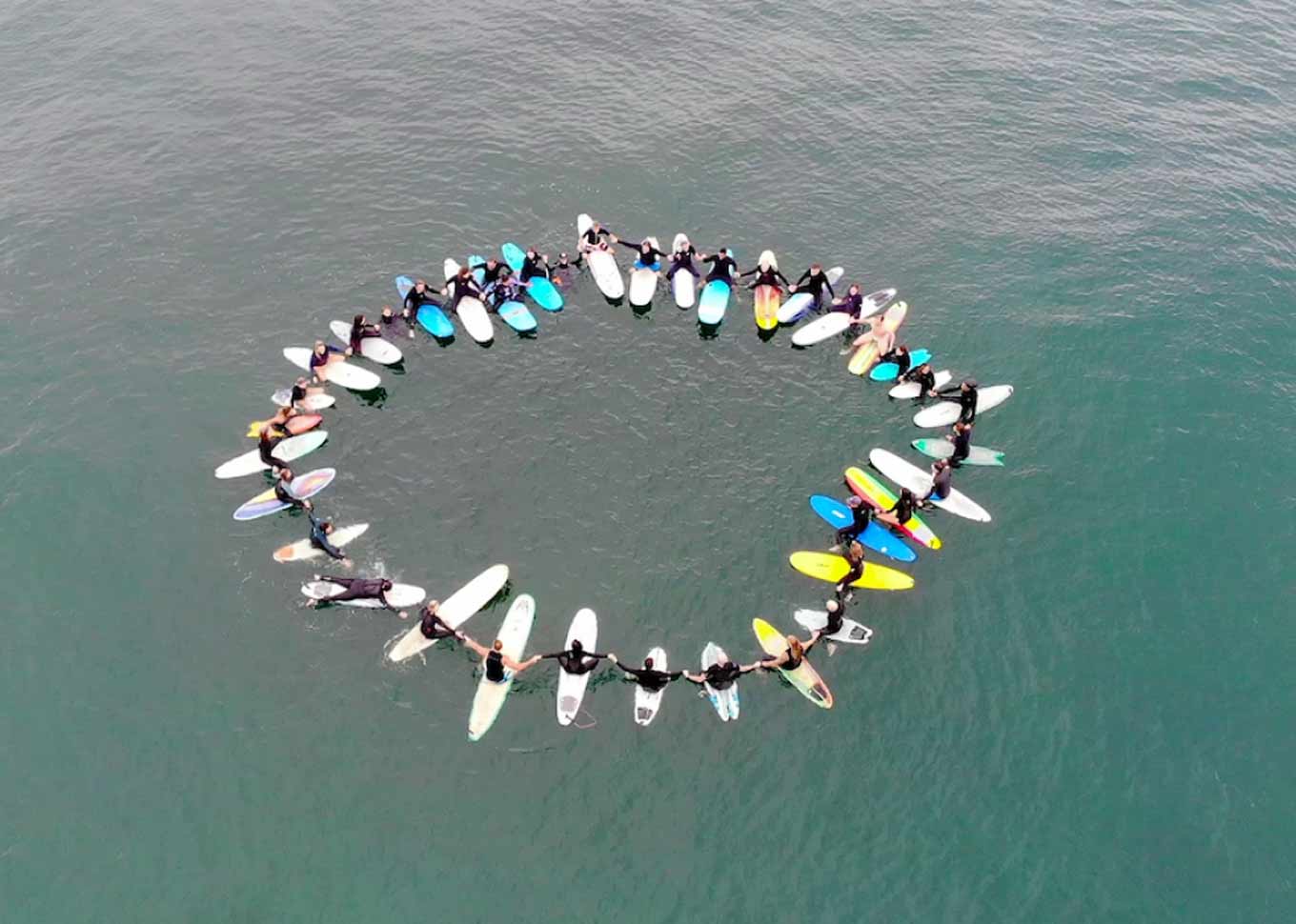
The safe space created by surf therapy benefits patients and therapists alike
About 15,000 people undergo surf therapy every year worldwide, according to ISTO. "We see positive changes that reach far beyond surfing," Primacio says. "Like other physical activity, the sport improves cardiovascular health but also self-confidence, self-efficacy, and social competence. We find that participants become more engaged in school, work, and with their families. They sleep better and feel better."
Primacio discovered surfing comparatively late in her life. Though her parents are Hawaiian, she grew up in Seattle. When she moved to California in 2010 at 41 years old, neighbors convinced her to join them surfing. "It sounds cheesy," she says, "but when I caught my first wave, I knew my life would never be the same."
Her dad had just been diagnosed with terminal cancer. "I simply ran to the ocean every day, really every day. There I could take a break from thinking about white blood cell counts and how chemotherapy was slowly taking away the most important person in my life."
Primacio now lives 20 steps from the shore in Manhattan Beach, California, and surfs 350 days a year. She has always been athletic and used to love hiking, but surfing became a passion she turned into a profession.
"I believe it has to do with the fact that you are completely immersed in water when you surf." Because surfing improved her own mental and emotional well-being so dramatically, the businesswoman began to volunteer at surf therapy events. She got a degree in psychology and became ISTO's director in 2018.
Part of ISTO's mission is to continue expanding the scientific research around surf therapy. All 130 ISTO organizations participate in studies and collect data from their clients. So far, there is no standardized therapy plan, but participants and researchers notice that certain principles have proven to be particularly effective.
The most important is to create a safe space, according to Primacio. During the first three sessions at Ocean Beach, we spend most of our time on the sand, sharing our hopes and fears, and then we initially catch our first waves with body boards before graduating to longboards in the third session.
We practice jumping into the "surf stance" on the sand, and visualize which water animal we want to embody before entering the whitewater. "Are you a dolphin, too?" another participant yells excitedly as we both dive in and out of the surf.
Frankly, the initial exercises seem a bit goofy until the instructor explains that silliness is part of the therapy. "Many people are unable to have fun after a trauma," she says. "Reclaiming our body and silliness are part of the healing."
Jamie Marshall at Edinburgh Napier University in Scotland was the first researcher to complete a PhD in surf therapy in 2019. "Doctor Surf," as Primacio likes to call him, had led surf therapy sessions in Scotland with at-risk youths who struggled with depression, self-harming, and anxiety.
Marshall wanted to understand how exactly surf therapy was able to improve their confidence and well-being.
He found that aside from the physical activity, the support of the group and the mastering of new challenges were deciding factors. "I went surfing and I did it. If I can do that then, chances are I can do this thing that's scary," one girl from Marshall's group said.
Another noted, "I just felt loved again. I felt there was nothing ever going to bring me down anymore because I found loads of new friends who cared."
Some surf therapists emphasize the physical aspects of the sport, others the group support and the conversations on the beach. Natalie Small, for instance, thinks the group support is particularly important, and each two-hour session begins and ends with the group circle, people sharing how they feel and what they hope to gain and leave at the ocean.
"Before I started surf therapy, clients often focused on me as the therapist," she says. "After the course, the participants not only have more tools for improving their mental health, but they also have a community with which they can continue to meet on the beach."
About half of the 130 ISTO surf therapy organizations serve a particular clientele — for instance, abused women, neurodiverse kids, cancer survivors, veterans, traumatized youth, refugees, or people with eating disorders.
When asked for whom surf therapy is particularly beneficial, both Kris Primacio and Natalie Small respond, "Everybody."
"I can't imagine anybody who wouldn't benefit from surfing," Primacio says. "Every month, I hear from participants things like, 'Before surf therapy, I was planning my suicide. Now all I plan is my next surf session.' Or I meet parents whose neurodiverse kids talk for the first time to thank their surf trainer. If that's not effective therapy, what is?"
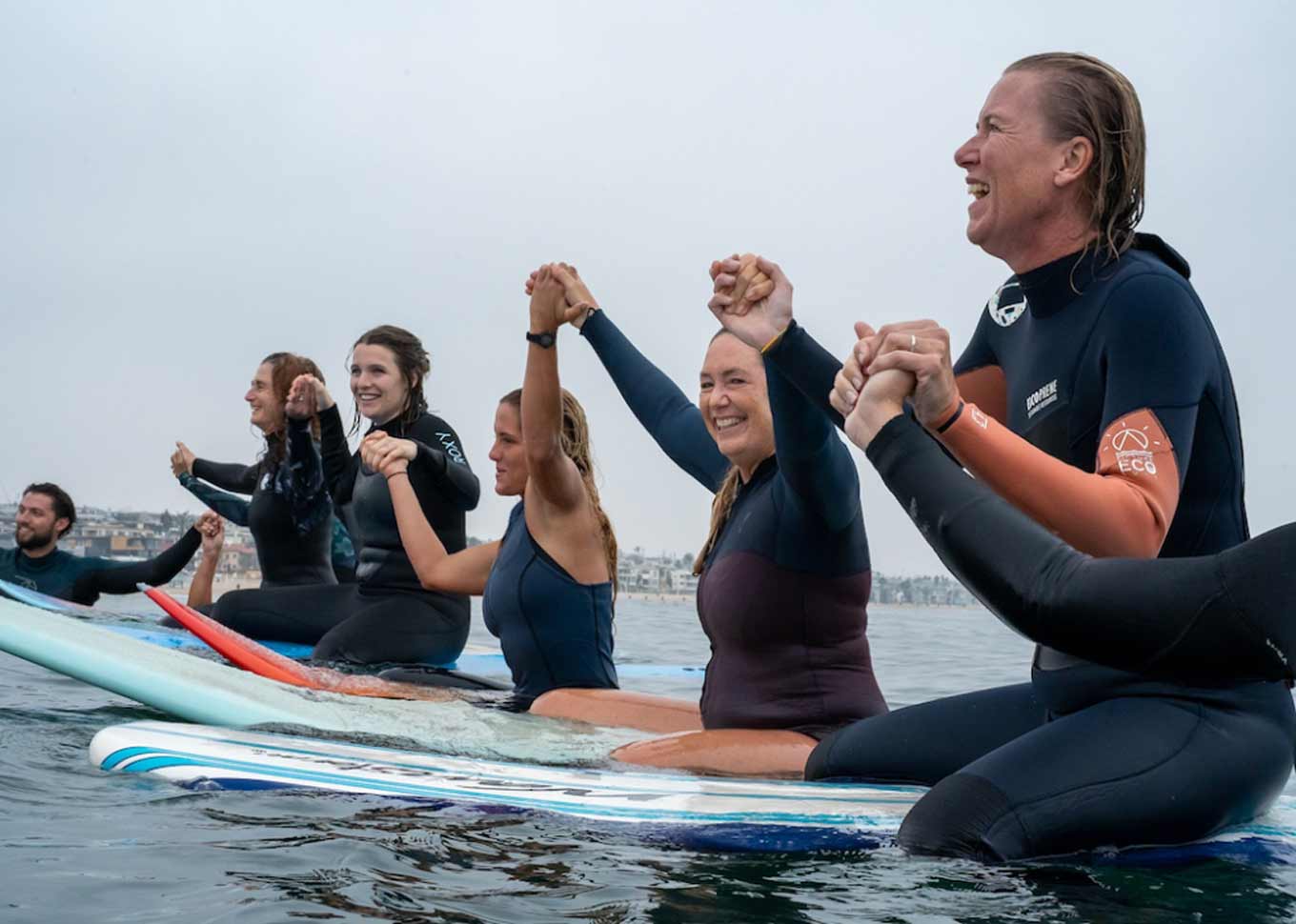
The ocean as church: Surf therapy is, for many, a form of spiritual healing
Natalie Small founded her nonprofit Groundswell Community Project in 2016 specifically to empower women. Like many surf therapists, Small discovered surfing when she needed an outlet for her own frustration and loneliness.
Though she looks every inch the quintessential blonde California surfer girl, she grew up in North Carolina.
When she was 18, she moved to Los Angeles and "hated the city" until she started surfing. "When I felt uprooted, the ocean helped me find myself, find a home."
To her, the ocean means freedom and independence, time for herself, time in nature, and healing, a place to reconnect with joy, play, and community. "The ocean has become my church," says Small.
Small is not the only one who expresses her love for the ocean in religious terms. Groundswell is participating in a study by the University of California San Diego, USC, Burrell University, and Queen Margaret University in Scotland.
Participants fill out questionnaires before, during, and after each session. The results are still being evaluated but Small can already reveal some preliminary results: In addition to the proven benefits of physical movement and being outdoors, surf therapy has shown measurable improvements in building resilience, emotional regulation, interpersonal skills, and a decrease in depression and anxiety.
A European study with the Scottish branch of Groundswell confirmed that transgender youth found improved well-being and a new will to live. Many therapists, too, find surf therapy beneficial for their own approach to therapy or burnout.
"At the beginning, it was a challenge for me as a therapist," Small admits. "You don't sit safely in your chair anymore; you show your body, squeeze it into a neoprene suit and you go into the ocean with your client. Yet at the end of a day in the office with talk therapy, I feel wiped and burnt out, while after surf therapy, I feel alive and connected."
At the same time, Small points out, surf therapy isn't fundamentally new. "Indigenous people have always known that the ocean is healing." The Western medical establishment has known it for decades, too –– The Journal of the American Medical Association was touting the benefits of the sea and the sun for a range of illnesses as early as the 1940s.
Surprisingly, sometimes participants don't even need a surfboard to experience the healing. Small remembers a woman who did the eight-week Groundswell course three times because she loved it so much.
The single mom had never been to the ocean before and couldn't even swim when she started.
Over the course of her participation, she learned to swim without a life vest, founded a company, and she repeated the course with her eight-year-old daughter. But she never stood up on the board.
"During her sixth session, I took her hand and we went into the ocean together," Small remembers. "When the waves came, she said, 'I think I'll be brave enough to dunk for the first time.' When she came up again, tears were streaming over her face."
Small says she simply held the woman. "She said she understood now how to find calm in the chaos. She was able to focus on her breath and trust herself."
In the ocean and in life.
This article was originally published by Stacker and was republished with permission.
Despite celebrating her 88th birthday last August, Sylvia Earle seems to whirl around the globe faster than a hurricane gathering strength.
She still travels about 300 days of the year and just returned from the Cayman Islands, Brazil, Mozambique, Mexico, Antarctica and Europe.
"I feel like an octopus with all arms fully engaged," she told Reasons to Be Cheerful about her workload. "If a child is about to fall off a 10-story building and you are in a position to catch it, you'll do everything in your power to be positioned just so you can save it. You don't look away and have a cup of tea in the meantime."
Earle's sense of urgency is due to her unique position in history.
The first woman to dive with scuba gear in the early 1950s, the first person to walk on the ocean floor 1250 feet under the surface in 1979, the first female chief scientist of the US National Oceanic and Atmospheric Administration (NOAA) in 1990, she has explored the oceans deeper and longer than any other woman on the planet.
This gave her a front-row seat to the changes occurring below the surface, long before women were welcomed in marine sciences.
Now, when she returns to spots that once brimmed with fish and vibrant corals, she often only finds a gray underwater desert. While about 12 percent of the land around the world is under some form of protection, less than three percent of the ocean is protected.
"Which means 97 percent are open for exploitation," she says. "We have lost about 90 percent of sharks, tuna, and other fish, and 50 percent of coral." "Her Deepness," as the world's most renowned marine scientist is lovingly called by friends and fans, has been working to change that. In 2009, she started the nonprofit Mission Blue with 19 Hope Spots, defined as "areas critical to ocean health in that they have a significant amount of biodiversity."
There are now 158 Hope Spots, "and counting," Shannon Rake, Mission Blue's Hope Spot Manager, emphasizes.
Hope Spots can be as large as the coral triangle in the Eastern Tropical Pacific Sea and as well-known as the Galapagos Islands, or small and quite unknown, like a dozen seamounts off California's coast. No matter how tiny, Earle is convinced every Spot counts.
"Every place, even the small places, makes a difference," she insists. "But we need to scale up. We need to get big. Take care of the ocean as if your life depends on it because it does."
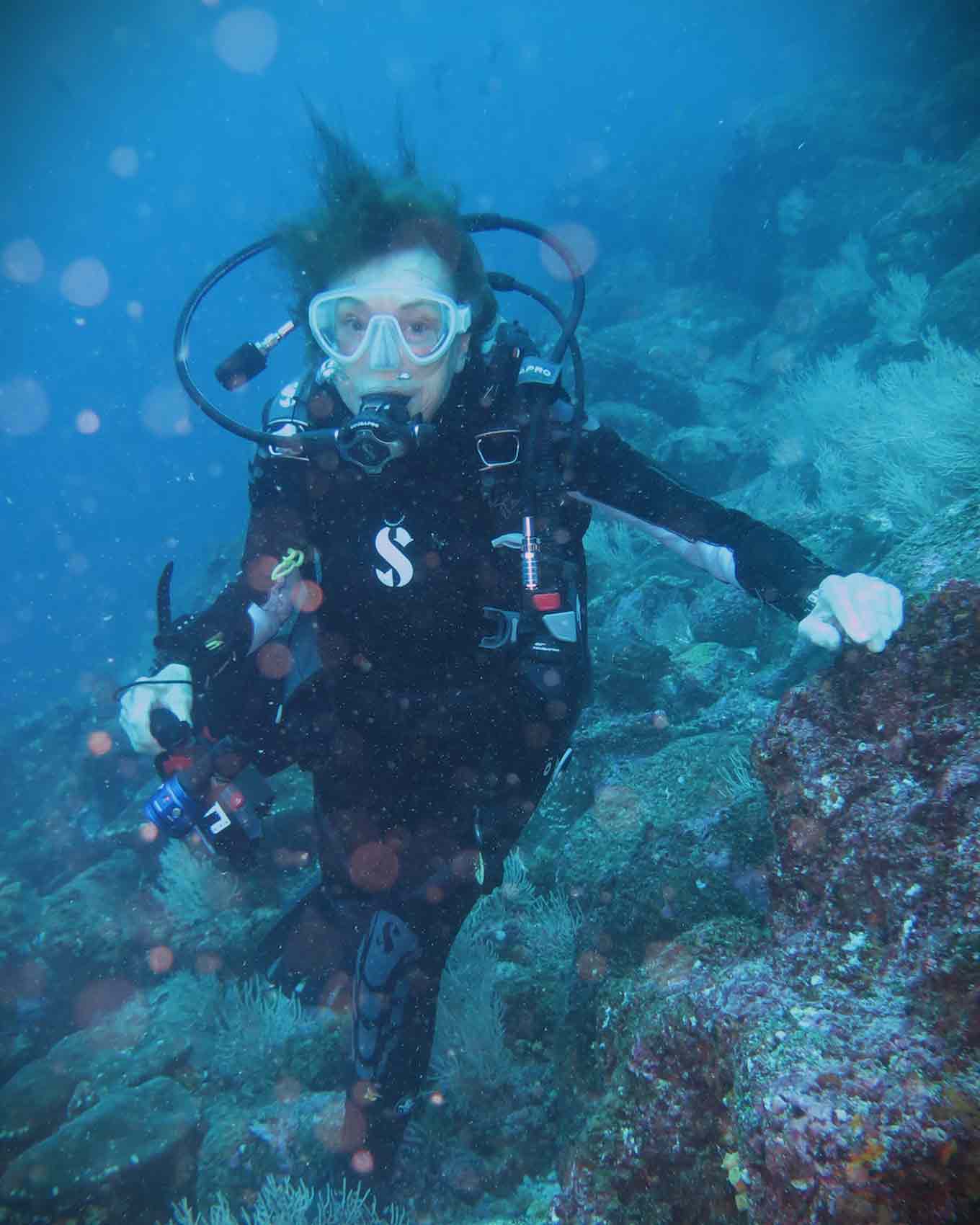
The Harvard-trained marine scientist with a PhD from Duke University has made it her mission to advocate for the ocean
Earle compares the ocean to our heart. "You wouldn't say you need to protect just three percent or even 30 percent of your heart," she says. "The oceans are the heart of the planet. Without it, life is not possible."
Initially, Hope Spots were identified by renowned scientists. But after the 2014 Netflix documentary Mission Blue made her idea popular and people started reaching out to the nonprofit, Earle opened the process up to the public.
"We're overwhelmed by nominations from the public," Rake admits before she adds, "in a good way!" She receives up to 100 nomination requests per year that are reviewed by a committee.
While Earle is petite in stature, she maintains a vigorous and outsized optimism. "I think you could get really depressed looking at headlines if you wished to focus on the bad news; there's plenty of it," she admits.
"If we wait much longer to act on those opportunities we will lose the chance. So this is literally the best time that I can think of in all of history to be alive because just in my lifetime, I've witnessed greater insight, greater knowledge, about the fabric of life."
One Hope Spot is literally just outside the windows of her Alameda, CA, office — the San Francisco Bay. "Admittedly, it's not exactly pristine," Earle comments, "but better than it has been in the past because people are coming together to take action and restore its health."
When she started exploring the seas decades ago, humankind thought the oceans were so vast they could handle any amount of trash, toxic pollutants and fishing boats. Earle was among the first to sound the alarm.
She was also the one who pointed out that Google Maps should be called "Google Dirt" because it didn't map the oceans, only the land. Google promptly expanded its program to map the blue.
Some Hope Spots are already fully protected marine areas, and the designation is meant to help keep the protections in place when governments change or funds dry up. At other times, the nomination process for a Hope Spot can help galvanize the support of local governments and environmentalists to put legal protections in place.
"Mission Blue is trying to help the local communities and ocean champions to move the needle," Rake says. "Then we're trying to maintain that status because as we know, administrations change and can roll back policies. We're using our collective power and community activism to let elected officials know how important this place is. No, you really shouldn't build a timber port right here in the migratory pathway of endangered southern right whales. This allows the elected officials to learn more about what's at stake and what the community wants."
For instance, Cabo Pulmo in Mexico was so badly overfished that fishermen kept pulling empty nets from the sea. In the late 1990s, the fishing cooperatives joined forces with scientists, implemented fishing regulations and replaced income from fishing with ecotourism.
Through Global Fishing Watch, Mission Blue observed fishing ships leaving the area after protections were put in place.
"The tuna industry was very against [the no-take designation] because they thought their catch would decline but it ended up being the reverse," Rake remembers. "They now see a 25 percent increase in their yield near the protected areas because of the spillover effect when you protect an area."
The Palmahim Slide in Israel is another example of a Hope Spot that didn't have any protection before it was nominated. The rare geological formation deep in the Mediterranean Sea, about 20 miles off the Coast of Tel Aviv, is a biodiversity hotspot where catsharks breed and bluefin tuna spawn.
"We helped the marine conservationists with letters of support, scientific advisory and communication, and they were able to create a protected area approved by government officials," Rake explains. "We're using our international spotlight to really push for protection in these areas."
"Every Hope Spot is on a different journey," Rake says, referring to widely varying local regulations. She mentions Shinnecock Bay on Long Island's South Shore as another example where the Hope Spot designation had a measurable impact.
"It was severely degraded, was having red and brown tides," Rake says. "There has been an absolute incredible change, doing restoration work with clams and oysters."

Earle's affinity with the ocean began at a young age, as did her understanding of the danger nature faces
Earle's favorite Hope Spot might be the Gulf of Mexico. Earle was 12 when her parents moved the family from New Jersey to a beach house in Florida. The ocean became her playground.
"It's where I first took the plunge as a kid and saw what life is like underwater." It was also in Florida that she first became aware that nature was being destroyed for human consumption.
Mission Blue cooperates with more than 200 ocean conservation groups worldwide, aiming to galvanize local, regional, national, and international protection.
Some are well known, such as the Ocean Elders, ambassadors for the oceans that include primatologist Jane Goodall, filmmaker James Cameron, mogul Richard Branson, and musician Neil Young. Earle speaks of "creating a network of hope.
The idea is to get people who can weigh in at a level that transcends political boundaries."
While being fully aware of the damage done, Earle keeps coming back to the positive changes. "This past year, some tangible actions have been taken that are cause for optimism," she says, referring to the UN Ocean Treaty that aims to protect 30 percent of the oceans by 2030 and the Biodiversity Treaty.
"The Biodiversity Treaty recognizes that we're on a downhill slide to lose at least a million species by the end of this century if we keep doing what we're doing."
Earle acknowledges, "We are not currently behaving with that kind of intelligence. We're using the old model of consuming nature without being concerned about the impact on the next 10 years, the next hundred years, the next thousand years."
However, she points out that the numbers of the California condor and other species, including some whales, who were on the brink of extinction have been successfully restored: "We've helped get them back to certainly a better place not where they were 500 years ago, but certainly better than they were 50 years ago."
When people ask her what they can do to help, the mother of three and grandmother of four tells them to focus on what they love. "You know, we're causing the problems," she says.
"So we can also cause solutions. You can make change right now, at home. You can make change every day with what you eat, what you wear, with how you vote, with what you plant in your garden if you have access to a yard, with the organizations you join. Would you like to be part of the generation that safeguards our species, safeguards the future of life on earth?"
And of course, anybody can nominate a Hope Spot.
"We should look at this as the best time ever to do something," Earle insists. "It's just getting to the point where people realize the urgency. We have to change if we are to survive. It has taken us a very short period of time to begin to seriously unravel the stability of the systems that we absolutely require for our existence. Now imagine if we didn't know that. That would be a real problem. But we do know now and we know what to do."
Earle is relentlessly positive when it comes to the future, and the opportunity we have right now to shape it.
"That is a reason to be cheerful," she says. "We know more than ever before at any time in history, and here's the opportunity to really size up. Where do we want to go? Because we do have choices."
This article was originally published by Stacker and was republished with permission.
— The critically endangered Devils Hole pupfish population has reached a 25-year high of 191 fish, offering hope for the species that lives in the smallest known habitat of any vertebrate.
— Above water and SCUBA surveys conducted by scientists twice a year carefully monitor the pupfish population in Death Valley, Nevada, which has fluctuated dangerously in the past, dropping as low as 35 individuals in 2013.
— A landmark 1976 Supreme Court decision, informed by environmental science, protected the pupfish by limiting groundwater pumping that threatened its habitat, setting a precedent for science-based conservation policy.
— Despite recent success, the pupfish remains threatened by climate change impacts on the delicate desert ecosystem, as well as growing human demand for water resources in the region.
In a glimmer of hope for one of the world’s rarest fish, scientists have counted 191 Devils Hole pupfish this spring in their tiny desert habitat. This number marks the highest spring count for the critically endangered species in more than two decades.
The Devils Hole pupfish (Cyprinodon diabolis) is found only in the upper reaches of a single deep limestone cave in the Mojave Desert in the western U.S. state of Nevada. The entire species lives on a shallow rock shelf measuring 3.3 by 4.8 meters (11 by 16 feet), making this the smallest known range of any vertebrate species on the planet.
Twice a year, biologists from the National Park Service, U.S. Fish and Wildlife Service, and Nevada Department of Wildlife peer from scaffolding above the pond and then enter the water with scuba gear to count pupfish in Devils Hole.
They methodically comb the entire habitat, from the sunny shallows to depths of more than 30 m (100 ft), looking for the iridescent blue desert dwellers.
“It was really encouraging to see such a large number of young fish during these spring dives,” said Brandon Senger, supervising fisheries biologist for the Nevada Department of Wildlife, who has been conducting scuba counts at Devils Hole since 2014.
“Conditions within Devils Hole looked healthy, so we have hopes of high recruitment over the coming months that will lead to a large population in the fall.”
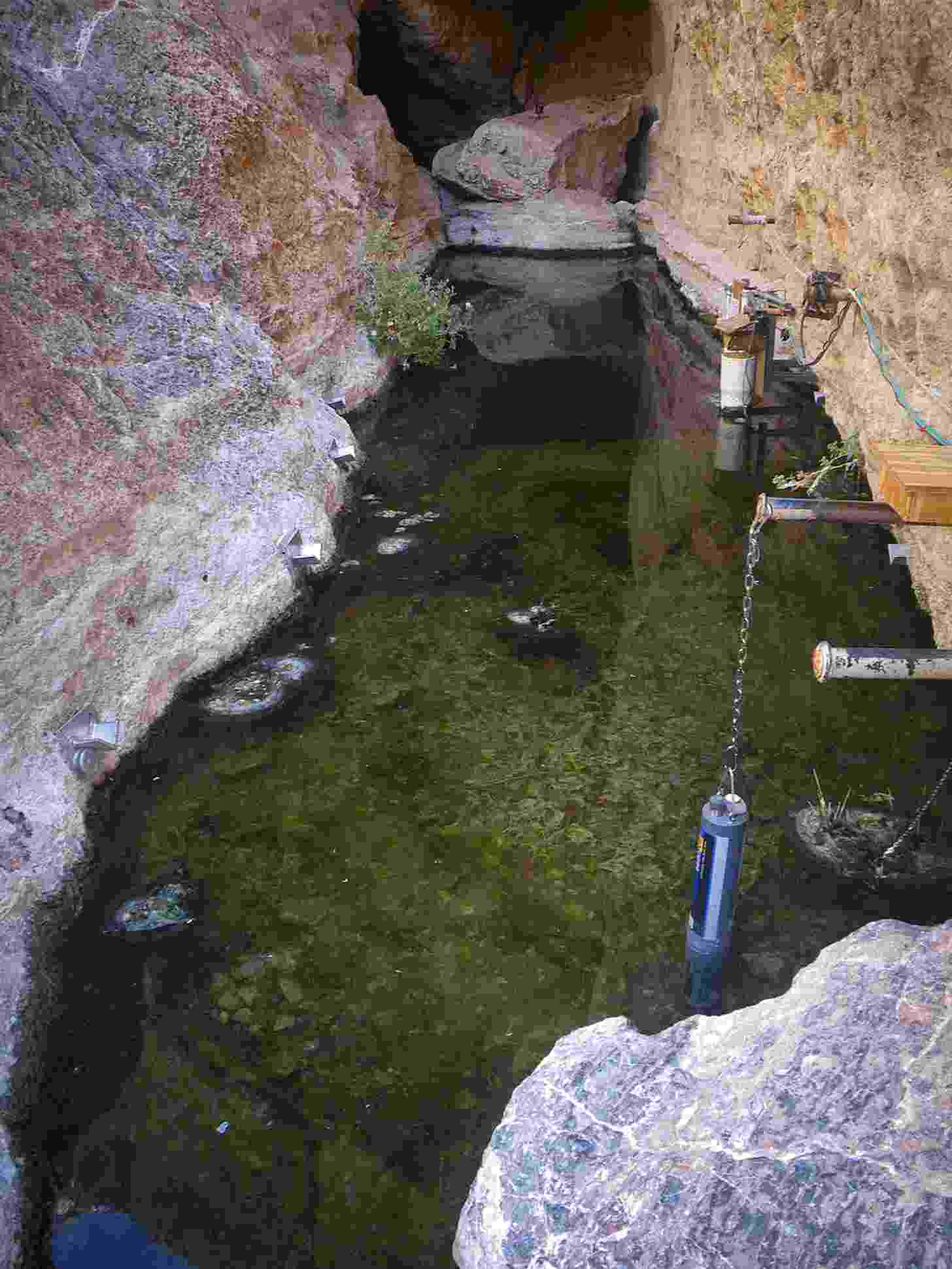
The Devils Hole pupfish is a marvel of adaptation. It has evolved to withstand the harsh conditions of its desert habitat, including water temperatures that can reach 34° Celsius (93° Fahrenheit) and extremely low oxygen levels.
The pupfish has a unique metabolic rate that allows it to survive on minimal food resources, primarily feeding on the algae that grow on the shallow rock shelf. Its small size and rapid life cycle of just 12 to 14 months enable the species to maintain a population in the confines of its tiny habitat.
Despite these remarkable adaptations, the pupfish has faced numerous threats over the years.
The history of conservation efforts for the Devils Hole pupfish is a case study in the interplay between environmental science and policy. In 1952, then-president Harry Truman added Devils Hole to Death Valley National Monument.
In the late 1960s, the pupfish faced its first major threat when groundwater pumping by local farms began to lower the water level in Devils Hole, exposing the critical shallow shelf.
In 1976, the Supreme Court ruled that the federal government had a right to protect the water level in Devils Hole, limiting groundwater pumping in the region.
The ruling was based on the scientific understanding that the pupfish depended on a stable water level to survive.
This case set a precedent for using environmental science to guide policy and legal decisions.
Despite this victory, the pupfish population continued to fluctuate dangerously. In 2013, scientists counted just 35 pupfish, leading to fears that the species could wink out of existence. Careful conservation efforts, including supplemental feedings with special food pellets, have helped bolster their numbers.
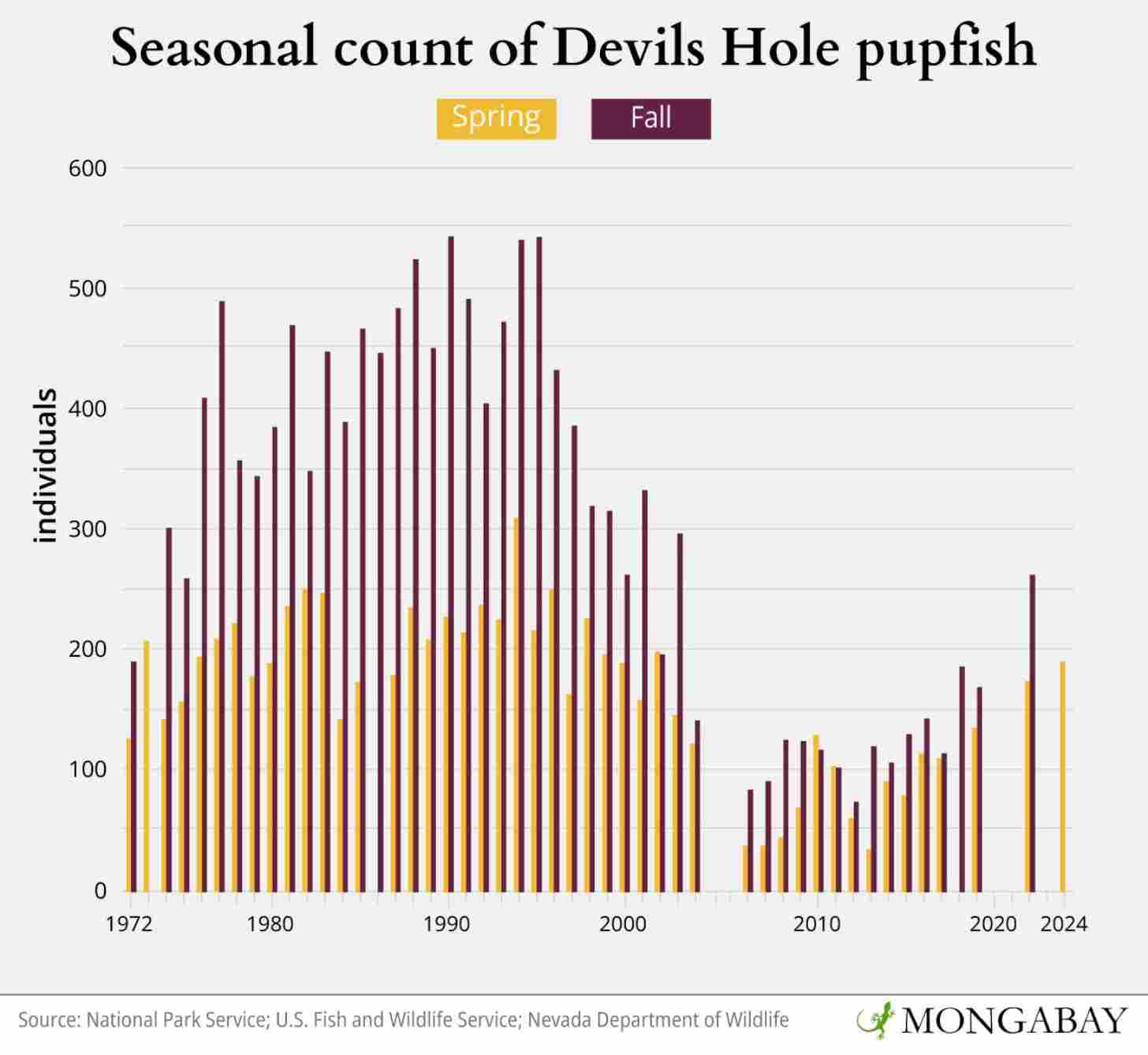
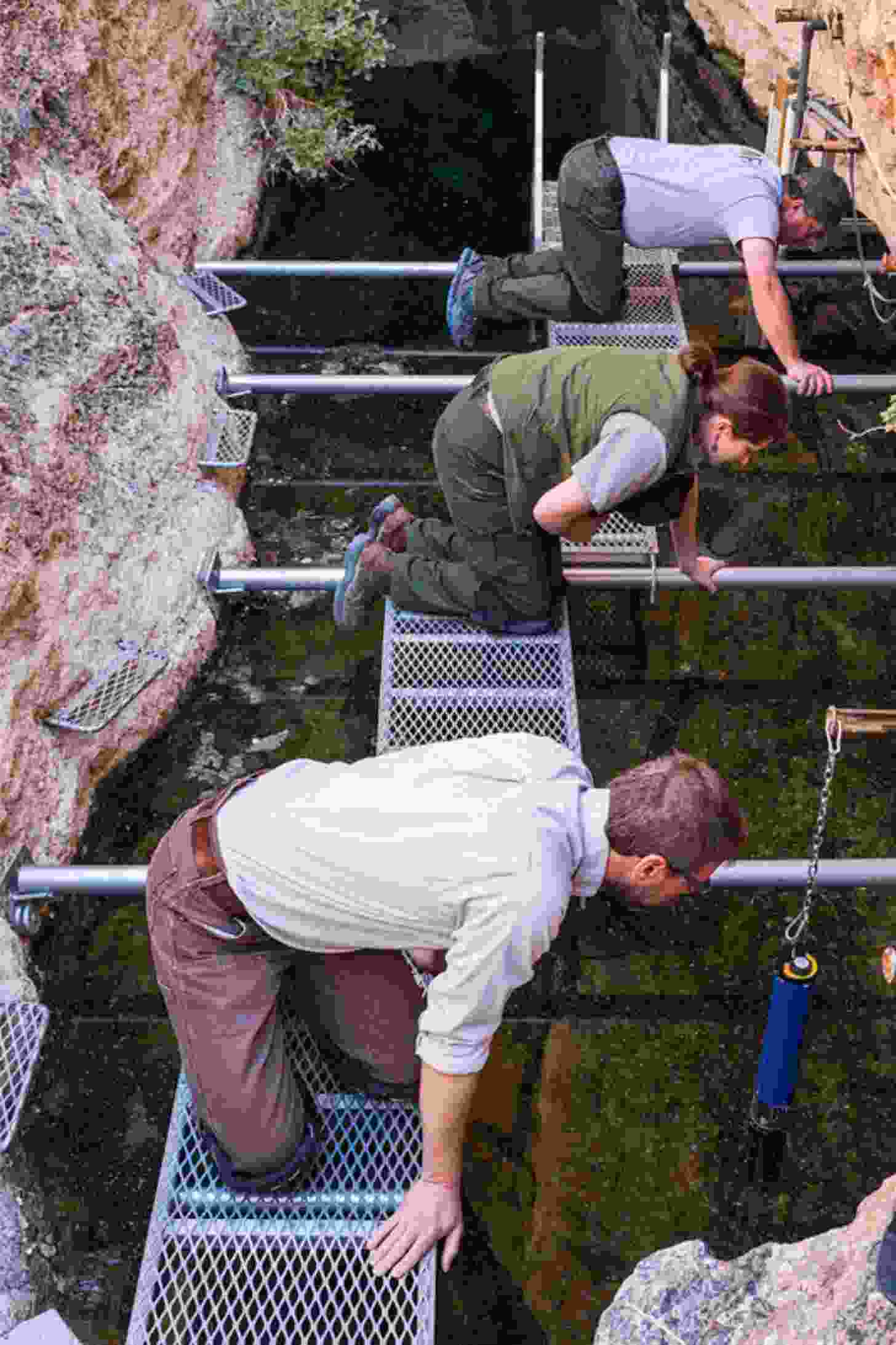
A natural disaster may have also contributed to the recent population rebound. Last summer, the remnants of Hurricane Hilary inundated Death Valley National Park, damaging roads and infrastructure. But the silt and clay swept into Devil’s Hole by the floodwaters benefited the pupfish by providing nutrients for algae growth.
“It’s exciting to see an increasing trend, especially in this highly variable population,” said Michael Schwemm, senior fish biologist for the U.S. Fish and Wildlife Service.
However, the future of the Devils Hole pupfish remains uncertain. Climate change is disrupting the delicate desert ecosystem with increasing temperatures and erratic weather events.
In recent years, Death Valley has experienced record-breaking heat waves and intense flash flooding.
“As the climate changes, as world temperatures get hotter, Death Valley will get hotter,” Nichole Andler, chief of interpretation for Death Valley National Park, said in an interview.
She pointed out that seven of the park’s hottest summers have occurred in the last decade.
Increasing urbanization, recreational use and industrial activities like mining also place greater demands on the aquifer that feeds Devils Hole.
Even minor changes in water level can expose critical habitat, imperiling the fish.
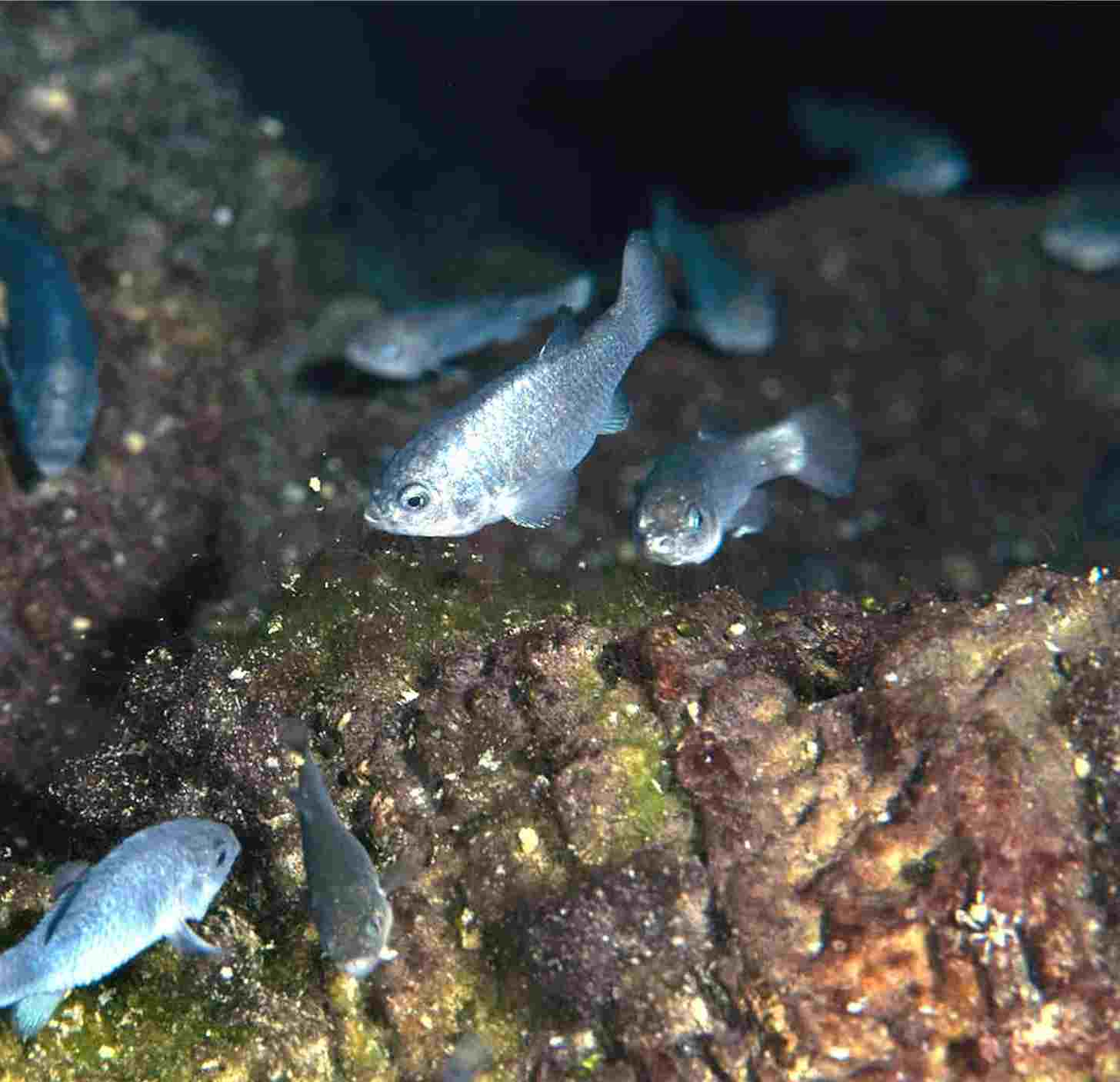
Further complicating conservation efforts, the Devil’s Hole pupfish population is highly inbred due to its isolation and small population size, which has led to reduced genetic diversity.
Low genetic variation can make the species more vulnerable to disease, environmental changes and developmental abnormalities, posing significant challenges for the pupfish’s long-term survival and recovery.
To safeguard the species, captive-breeding programs are underway to establish a backup population in case of a catastrophic event in the wild. But ultimately, the fate of the Devils Hole pupfish is tied to the health of its unique desert habitat.
“The pupfish is an indicator of the health of the larger ecosystem,” Kevin Wilson, an ecologist with the National Park Service, said in an interview.
“By protecting this tiny fish, we’re protecting the aquifer and the entire web of life that depends on it.”
Header image: Two male specimen of the Devils Hole pupfish (Cyprinodon diabolis) photographed in the Devil’s Hole, Nevada. Photo courtesy of Olin Feuerbacher/ USFWS (CC BY 2.0)
This article was originally published by Mongabay.
— In 1987, UNESCO declared the Xochimilco wetland area in southern Mexico City a World Heritage Site, recognizing in particular its chinampas, an ancient agricultural system in use since the time of the Aztecs.
— In the past few decades, Xochimilco’s levels of production and of biodiversity have shifted: people have changed the purpose of many chinampas, and the population of axolotl salamanders, an iconic species endemic to the area, has decreased drastically.
— Scientists from the Ecological Restoration Laboratory at the National Autonomous University of Mexico and farmers from the area are promoting a comprehensive restoration program to conserve this group of chinampas and all the living things that depend on it.
It was the 1980s, and before sunrise, Basilio Rodríguez was ready to work. He was still young, and he’d already helped to prepare the land for crops, gathered harvests, pulled weeds and took care of the plants.
In late October, when he spent his nights cutting Aztec marigolds for the Day of the Dead, he would sleep on chinampas, or small artificial islands for developing agricultural systems.
These were created by the Aztecs and are a large part of the identity of Xochimilco, a lake-filled area that has managed to survive in southern Mexico City.
It’s now a hot morning in September 2023. Rodríguez — slender, with an easy smile and soft voice — is 54 years old. It’s his day off from work, but he doesn’t spend it relaxing at home. Instead, he’s set out to work on his chinampa, a floating piece of land measuring less than a quarter hectare, or half an acre, on which crops can be cultivated.
These include everything from epazote, a Mexican tea, to mint, parsley, radishes and onions to pumpkins, chamomile, rosemary and Aztec marigolds. The harvest depends on the season.
Right now, this land, located in the Xochimilco wetlands, is plastered green with rows and rows of lettuce, ready to be cut and sold at market. Rodríguez plans to sow 10,000 additional lettuce plants in the space he’s prepared.
His chinampa, reachable only by canoe, is now unconventional in the area.
In the past, these pieces of land were only used to cultivate vegetables and leafy greens, as Aztec farmers did in the second decade of the 16th century.
For several decades now, the purpose of chinampas has started to change: some are now soccer fields, restaurants, speakeasies, party rooms, sweat lodges, or domed steam baths made of adobe. Others have been abandoned. It’s a very different picture from 1987, when UNESCO granted World Heritage Site status to Lake Xochimilco and its chinampas for their role as a unique agricultural production system.
When he was a child, Basilio Rodríguez recalls “a huge number” of chinampas being used for agriculture.
“I knew so many farmers and they didn’t sow small [amounts] like I did; they planted between 7 and 8 hectares [17-20 acres],” Rodríguez says as he leans on his garden hoe, his hands caked with black dirt.
As the years went by, the landscape changed and caused concern.
In 2018, data from the United Nations’ Food and Agriculture Organization (FAO) revealed how much Xochimilco and the four other areas of Mexico City with chinampas — San Gregorio Atlapulco, San Luis Tlaxialtemalco, San Pedro Tláhuac and San Andrés Mixquic — had changed. Of 20,922 chinampas, only 17% were still being cultivated in an open-air environment or with greenhouses, shade nets or macro tunnels. The vast majority had been abandoned.
Yet despite its transformation, Xochimilco maintains its status as a World Heritage Site.

By changing local agricultural practices, the transformation of the chinampas also drove changes in the region’s biodiversity. This is because, in this area filled with lakes, everything is linked like a large chain, according to Carlos Sumano, a member of the Ecological Restoration Laboratory within the Institute of Biology at the National Autonomous University of Mexico (UNAM). If chinamperos, the people who work the chinampas, are in danger of disappearing, then so is the axolotl (Ambystoma mexicanum), the iconic species of Xochimilco.
For 15 years, researchers from the Ecological Restoration Laboratory and local farmers have worked to restore the area where the chinampas are. Their plan involves reducing the number of carp and tilapia (which are introduced species), promoting environmental monitoring, and creating “chinampa refuges” to reverse the transformation.
Giving a future to a species and an ecosystem
The axolotl is “an aquatic monster.” At least, that’s its name in the Nahuatl language: atl means “water,” and xólotl means “monster.” Its external gills, its smooth, scaleless skin, its crests, its fins, its ability to regenerate parts of its body, and its small eyes are part of one interpretation of the Fifth Sun myth, written by Bernardino de Sahagún, a Franciscan friar, in 1577. It said that in order to make the sun and the moon move in the sky, a god needed to be sacrificed; but one deity, Xólotl, Quetzalcoatl’s twin, tried to escape death by turning into a cornstalk, then into an agave plant, and, finally, into an axolotl. In the end, he was killed.
The axolotl is one of 16 species of salamanders in the genus Ambystoma that’s native to Mexico. The axolotl itself is found only in Xochimilco and the other chinampa areas around Mexico City; it’s listed domestically as endangered, and globally as critically endangered.

When the Aztecs designed this area’s system of canals and wetlands, axolotls grew and reproduced successfully in these habitats. A 2015 study noted it was common to see axolotls moving around in the water or being used as a source of food in communities. After the fall of the Aztec Empire in 1521, these aquatic ecosystems began to deteriorate.
“The pace of deterioration was gradual and subtle until the middle of the 20th century,” the study noted. “At this time, axolotls seemed to be sufficiently numerous to support a fishery for local consumption. However, the rate of deterioration increased precipitously as Mexico City more than tripled in size between 1950 and 1975.”
The destruction of the area around the lakes has advanced quickly, and the causes behind it have only diversified. In addition to the growth of the urban area, other factors include the introduction of exotic species — particularly fish like carp and tilapia — in the 1970s; the application of agrochemicals in some chinampas; wastewater discharge from nearby homes; changes in land use; the quantity and quality of the available water; and the use of motorboats for transportation.
“A progressing trend started to be seen in the decrease in the number of axolotls per square kilometer in the Xochimilco area and, overall, in the remainder of the basin,” Sumano said.

The density of axolotls dropped from 6,000 per square kilometer (15,500 per square mile) in 1998 to only 100/km2 (260/mi2) in 2008, according to the 2015 study. This represents a decrease of 98% in 10 years, and that decline has only continued.
Luis Zambrano González, director of the Ecological Restoration Laboratory at UNAM, led the most recent census of axolotls. In 2014, together with his team, he set out to count how many of the salamanders there were in the Xochimilco ecosystem.
Sitting in a boat, with an axolotl expert in the front, the team shot a net into the canals to determine how many axolotls were in the area. They found less than 35/km2 (91/mi2). This is a drastic decrease that was confirmed by nearby residents, who say they fear that when the next census is conducted, there won’t even be 10/km2 (26/mi2). “Yes, yes, yes, that scenario is very possible,” Zambrano says.
To prevent this scenario from worsening, a team of researchers and farmers is working on a restoration project to create chinampa refuges.
Water: The focus of the rehabilitation efforts
Carlos Sumano bikes to his workplace, Cuemanco dock in Xochimilco, one of the points of departure for the area’s traditional trajineras, or wooden boats decorated with flowers and colored paper. As soon as he arrives, the 39-year-old takes a hat, puts on some rubber boots and steps into a canoe.
Using his sense of balance, good rowing technique and a clear route, he gets to work managing the restoration project: resolving pending matters, talking with chinamperos, and visiting the refuges where the ongoing work to recover the axolotl population is taking place.

For the last 15 years, the Ecological Restoration Laboratory at UNAM’s Institute of Biology, coordinated by Zambrano, has had an ambitious goal: the long-term restoration of the chinampas in Xochimilco. This will be done by applying an intensive fishing program to reduce the number of carp and tilapia, with an environmental monitoring system and with the rehabilitation of chinampas and secondary canals, used for irrigation, to create refuges to strengthen the conservation of the axolotl and other native species.
“The first three or four years, we were dedicated to trying to understand the fundamental causes of why the axolotl was headed toward extinction,” Zambrano says. Later, in collaboration with people who own the chinampas, they finished developing the comprehensive plan. “The time spent, and the constant work with chinamperos, resulted in a robust plan. These are two things in restoration ecology which do not always work; people do restoration dynamics and leave. Then the locals say, ‘This doesn’t help me at all.’ What I’ve learned is that if one wants to do a restoration project, it has to be long term.”
What the laboratory wants is not only to have more axolotls, but also to restore their entire habitat.
“We can have a billion axolotls in fish tanks. It’s nothing more than a matter of having the fish tanks; it is possible, and many [people] do this. But that is not useful,” Zambrano says. “If we wipe out the axolotl in Xochimilco and there are many in Germany, the species no longer exists, because the species is an evolutionary product of its interaction with its own ecosystem; it is a fundamental part. In another way, it is a combination of DNA that survives but is not a species as we know it, because it also modifies its habits, its behavior, its physiology. So restoring the species essentially involves restoring its habitat.”
The project addresses the crux of several problems, including the quantity and quality of the water, according to biologist Miguel Rivas, a member of the laboratory. “There was a negative feedback loop: bad harvests, little monetary income [for farmers], land abandonment, and so the quality of water and the biodiversity were dropping,” Rivas says in an interview at his lab a 30-minute drive from Xochimilco.
Improving the area’s water quality also increases the agricultural yields of the chinampas, protects the lives of native species — such as axolotls, mesa silverside fish (Menidia jordani) and acocile shrimp (Cambarellus montezumae) — and reduces the presence of exotic species. This positive cycle aims to counteract the negative loop that the researchers have identified.
Rivas adds that wetlands like Xochimilco are strategic ecosystems for mitigating the effects of climate change. This is primarily due to the important role they play in terms of carbon capture and storage. This is also because they act as shock absorbers for extreme changes in the climate, and even more so if they’re located in a city.
“If at any moment the Xochimilco wetland were to disappear, it would immediately have several impacts, as if they were billiard balls: it would affect the temperature, flooding and carbon capture. It would change the environment much more,” Rivas says.

Chinampas: The center of the action
The chinampa refuges are the protagonists of this story. In 2008, the UNAM laboratory began to foster the transformation of these floating pieces of land with rehabilitated canals to improve the lives of axolotls and other native species. These are special sites to promote the restoration of axolotl habitat and allow the amphibians to complete the three stages of their life cycle: embryonic, larval and adult (when the process of reproduction usually occurs). These sites are far from the threat of their predators and far from poor-quality water.
“The approach consisted of considering the chinampa and the secondary canals, or trenches, as environmental units whose interaction is very dependent on each other,” according to the master plan for the project. “In other words, the activities that are developed on a chinampa directly influence the quality of the secondary canals, and this, in turn, influences the conservation of the agricultural capacity of the chinampas.”
These types of chinampa refuges have two main characteristics. The first is that the secondary canals that surround the pieces of land have a gate at the front to prevent carp and tilapia from entering. This structure, made from a wooden frame and a plastic net, guarantees that the water from the main canal, or acalote, mixes with the water from the secondary canal, but without providing access to invasive species. The second characteristic is that, on the shores of the land, Bonpland willow trees (Salix bonplandiana) are planted and stakes are installed to stabilize the land and prevent it from breaking into fragments. Technical protocols are the basis for these actions.
Once the land is in place and the canals are rehabilitated, plants are brought in to act as biofilters. This technique involves using aquatic plants like bulrush (Schoenoplectus americanus) and broadleaf cattail (Typha latifolia) to clean the water. As the plants’ roots grow, they serve as natural barriers, in addition to the gates, to help keep out invasive species.
“The result is clean water, of very high quality, where axolotls, frogs and other very small animals — very sensitive to pollutants — live,” says Felipe Barrera, a chinampero. “This is our indicator that we are doing things well.”

Not just any chinampa can function as a refuge. The minimum requirements to achieve this status are sufficient water quality and level, agrochemical-free farming, agriculture-based land use, and a committed chinampero. “Here, planting is an art,” says Basilio Rodríguez.
During the first stage of the project, from January to May 2012, a quarter hectare of chinampas was rehabilitated. The impact? Parts of the area around the lake at Xochimilco improved, food production increased, certain canals and trenches recovered, habitats were rehabilitated, and the water condition in some areas improved.
In 2014, the lab conducted a workshop with farmers to teach them the chinampa refuge model and the production of organic fertilizers, biofertilizers and pest control substances. As a result, many of the farmers went on to dig trenches that ended up serving as refuges for axolotls.
The goal: To transform 400 chinampas
Fifteen years since the launch of this project, the results have been encouraging: 40 rehabilitated chinampas, 36 refuges, 71 biofilters built, 12 hectares (30 acres) of land planted, 228 direct beneficiaries (chinamperos and their families), and 912 indirect beneficiaries (day laborers who work on chinampas). The researchers say they’re determined to improve even more.
“What we would like is to have about 400 chinampas in the next 15 years,” Zambrano says. “There is space for this, [and there are] also possibilities and economic abilities to do this. The only things left are a little [bit of] political will and some work with the government.”
Each refuge is in a different stage, according to Sumano. Some are in the chinampa rehabilitation phase, and others already have some axolotl populations. The time it takes to transform the spaces varies, since each chinampero has different economic resources and available time.

Basilio Rodríguez harks back to four years ago, when his chinampa was level with the water and looked like a pond. Together with the researchers, he reconstructed the patch of land, removed the sediment, aligned some stakes and filled in the holes. “Now the land looks beautiful,” he says.
There’s no uniform design for the refuges. Since the sizes of each plot of land and their distributions vary, some people focus only on the canals that surround the land, while others put small refuges above the chinampas as if they were small ponds.
Sumano, who manages the initiative in the field, knows by heart the status of each chinampa refuge, its location, and even its owners’ lunch schedules.
“We are working with Basilio; his refuge is in an intermediate stage. He is working a lot on the agricultural part, but the refuge is still lacking. We are hoping to finish consolidating it this year,” he says, dressed in a white shirt and denim jeans as he zips through the canals of Xochimilco on his canoe.
“This is Mr. Felipe’s refuge; it was one of the first ones. How old is it? About seven years. He wanted to make his refuge above the chinampa,” Sumano says as he tethers his canoe to a tree.
Recovering chinampas; recovering the ecosystem
Older locals say the chinampas in Xochimilco used to measure 10 by 100 meters (33 by 330 feet). This was the most common configuration, about one-seventh the size of a professional soccer field. Felipe Barrera’s chinampa refuge is exactly this size. Here, he grows corn, Aztec marigolds, mint and much more. There’s diversity among the plants, insects and even the water quality. For a chinampero, it’s paradise. “When we talk about a healthy ecosystem, it is this way, just like this: diverse,” Sumano says.
The plan to restore his chinampa began seven years ago, after Barrera returned to Xochimilco to restart his family’s tradition of working with chinampas. The first step was to find a way to gather clean water. “I began to collect rainwater in tanks that, [although] they are not exactly a secondary canal, they can serve as storage,” the 47-year-old says in a vibrant voice.
He later joined forces with the team from the UNAM laboratory and Pedro Méndez, another chinampero, to work on the restoration of the secondary canals, known as apantles, which provide water for the crops. The premise of this scientific project is that nothing can be achieved without the participation of local farmers and residents. It’s a project by everyone, for everyone.
The impact of the chinampa refuges on the area directly translates into better water quality, superior crops, a more bountiful harvest, wider economic benefits, and, as a result, a greater appreciation for the land, according to Rivas from UNAM. Having better water quality also fosters greater diversity and a healthier ecosystem, which can act as a buffer zone against climate change.
Sumano dips his hand into one of the secondary canals at Barrera’s chinampa refuge, in which he estimates that about 500,000 pesos ($30,000) has been invested. The water looks different: crystalline, clear and see-through. There’s a smell of vegetation, and the plants’ roots are white. There’s a variety of aquatic fauna, such as water bugs and small crustaceans.
This image is very different from the green-blue water in the main canal of Xochimilco, where the roots are dark from the dissolved solids and pollutants contaminating the water.

“Once we see insects present on the plants, especially on the root area, we can begin to have small fish, acociles [and] larger fauna. And in the end, if everything is restored, we can have axolotls, because the ecosystem is working,” Sumano says.
This is what many of the farmers also want. They share the dream that their ecosystems will succeed. However, their work isn’t over with the launch of a refuge. Monitoring, evaluation, maintenance, the use of biofertilizers and organic fertilizers, and the use of mud to germinate seeds are some of the tasks that they must continue to carry out to be part of this network. These tasks can also result in the produce harvested from their chinampas being granted an ecological distinction called a “Chinampera Label.” It’s not a formal certification, but it recognizes their agroecological quality.
This distinction can only be obtained by chinamperos whose harvests have earned a total score of 53 points in terms of the quality of their water, their chinampas’ production and their refuges. There are three levels that define the progress of their refuges. Claudia Medina, Cassandra Garduño, Basilio Rodríguez and Felipe Barrera are some of the 18 farmers who now hold this title and can sell their produce at Tienda UNAM, the supermarket at the National Autonomous University of Mexico.
“More marketing spaces are opening for consumers who want these types of products. And the chinamperos themselves have marketing strategies [and] their own clients, and this distinction allows them to have security,” Sumano says. In addition, this distinction is a source of economic strength for a project that, year after year, has sought funding from governments, companies, organizations and initiatives to continue.
After 15 years of this work, the laboratory is clear that the most significant achievement is that there’s now a model for restoration with evident benefits in bodies of water.
“It is a living example of how humanity can coexist in an ecosystem, producing food, meeting its needs, and, at the same time, conserving and respecting the environment,” Sumano says with excitement. “It is possible to do so; the chinampa is an example of [the idea] that this is real, that it is possible, that it can be done, that it works.”
This article was originally published by Mongabay.
Header image: Basilio Rodríguez has been a chinampero since childhood. His current work is the building of a refuge to help conserve the axolotl. Image by Aminetth Sánchez.
When you imagine a 3D-printed home, you probably picture a boxy concrete structure.
As 3D printing's popularity has grown in the construction industry — thanks to its efficiency when it comes to time, energy and cost — carbon-intensive concrete has become the go-to building material.
But a project in Maine has set its sights on something different: a neighborhood of 600-square-foot, 3D-printed, bio-based houses crafted from materials like wood fibers and bioresins.
The aim: a complex of 100-percent recyclable buildings that will provide homes to those experiencing houselessness.
In late 2022, an initiative between the University of Maine and local nonprofit Penquis unveiled its prototype — BioHome3D, the first 100-percent recyclable house. Now, the pioneering project is working toward completing its first livable housing complex.
It will be fully bio-based, meaning all materials will be derived from living organisms such as plants and other renewable agricultural, marine and forestry materials.
Reasons to Be Cheerful takes a closer look at the science and innovation behind the 3D printer creating these innovative buildings.
Bio-based materials are designed to produce homes at scale

As the materials are all 100-percent recyclable, so become the buildings.
The materials are also all renewable.
And thanks to its natural composition, the home acts as a carbon sink, sequestering 46 tons of carbon dioxide per 600-square-foot unit.
The materials for this project will mainly come from wood left over by local mills. "The wood fiber material that's used in the mix is essentially waste wood here in Maine," says Jason Bird, director of housing development for Penquis.
Bird is referring to what's known as wood residuals: materials that, he explains, "pulp mills or other sawmills either landfill, discard or set off to the side and rot."
According to the University of Maine, the state's sawmills produce nearly one million tons of wood residuals every year.
Since each 600-square-foot unit requires approximately 10 tons of wood residuals, 100,000 housing units could theoretically be produced every year using just sawmill residuals.
The University of Maine's Advanced Structures and Composites Center received $3.3 million in funding for this project last year, and its collaboration with Penquis has set out to build a ready-to-live neighborhood with nine 3D-printed homes for people experiencing houselessness.
As the team undergoes the final regulatory hurdles, Bird anticipates that houses could be ready to live in as early as this spring.

Once this pilot project is completed and the team at the University of Maine reaches full commercial capacity, Bird says the team will be able to print a home in as little as two days.
"That would include the shell of the house — the roof, walls, floors system," Bird explains. "Long-term [infrastructure projects] could include cabinets, countertops, bath fixtures. And what gets me so excited about this project is that the technology isn't just solving a local problem, it could be replicated around the world."
Dr. Habib Dagher, executive director of the Advanced Structures and Composites Center, confirms that the technology is intended to be widely replicated.
"The goal of this research is to create a system for constructing homes that alleviates strains on the supply chain and addresses labor shortages, while providing economical and sustainable housing," says Dr. Dagher.
"This technology can be used anywhere in the world that has access to bio-based raw materials. We are focused on scaling up production technology to drive down costs and increase availability."
And after enduring a year of extreme weather in Maine, with sensors reporting temperatures ranging from 1 degree to 105 degrees Fahrenheit, BioHome3D met all sustainability, strength, and durability requirements for US building codes, as well as the design requirements of the International Code Council code.
"Doing this project in a place like Maine, which has some of the most extreme temperatures in the continental US, is vital because it can prove that this material can endure huge temperature swings," says Sarah Goehrke, founder of Additive Integrity, a consulting service that focuses on the examination and sustainable acceleration of industrial 3D printing.
"The fact that BioHome3D survived for a year is very important proof going forward."
An answer to a global housing crisis?

Initial printing speeds of 20 pounds per hour have since ramped up to nearly 500 pounds per hour, significantly reducing construction costs.
This efficiency, combined with local materials, makes the process more sustainable and resilient to global supply chain disruptions.
The project is a timely response to an already pressing and worsening global housing crisis. UN-Habitat predicts that by 2030, three billion people will require improved housing.
And with traditional construction contributing a staggering 27 percent of global greenhouse emissions, less-polluting alternatives will need to rise to the occasion.
In Maine, the need is clear: the state is already experiencing a shortage of 20,000 affordable housing units.
"What's more innovative about this project [than other 3D housing initiatives] is both that it's bio-based, and that it's geared fully toward addressing the housing crisis," says Goerhke.
3D-printed houses produce significantly less waste than conventional construction, as builders are able to print exactly the amount of material they need for a given project, and minimal space is needed for storage materials.
And with the ability to store all materials in the same space, the energy otherwise required to transport materials between sites is eradicated.
One forecast projects that the global 3D construction market will soar by 91 percent from 2021 to 2028.
"Building many smaller structures in a short amount of time is what the housing crisis needs to address unhoused people and help to create larger communities quite quickly," says Goerhke.
Header image by the University of Maine Advanced Structures and Composites Center
This article was originally published by Stacker and was republished with permission.
Disability activists have long fought for the right to exist with ease in public spaces. Although the Americans with Disabilities Act has certainly improved universal access since it was passed in the 1990s, disabled Americans of all backgrounds still require improved support in all areas of public life.
Fortunately, accessibility is becoming more and more… well, accessible. From retail stores to national parks, measures are slowly but surely being implemented to make spaces safer and more welcoming to all kinds of visitors.
One new accessibility development has arrived for blind and low vision visitors of Colorado’s 42 state parks: The Aira app.
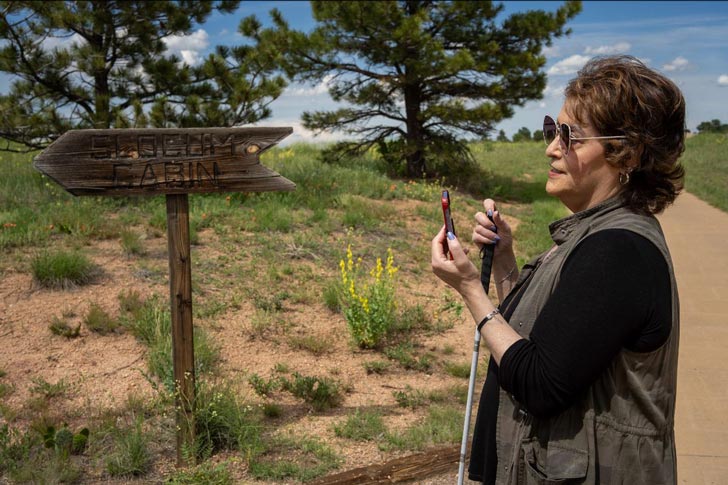
The app is an accessibility-assist tool, which uses the camera on a smartphone to connect users to a live, professionally-trained agent. This agent uses their video feed to visually interpret what is being shown on screen.
In a state park, for instance, that might sound like the agent describing a beautiful view, or helping a user navigate through terrain, read signs and brochures, or find their way to a landmark.
Earlier this month, Colorado Parks and Wildlife (CPW) announced the expansion of this tool, which has already been used to provide interpretation services for folks navigating state-operated locations or online services. Now, those locations include the state’s gorgeous parks.
Aira provides park visitors a free 30-minute session, which is paid for through the Governor’s Office of Information Technology’s Accessibility Program. If users need more time, they can connect for further complimentary help, as the service is available to use 24 hours a day, seven days a week, 365 days a year.

For app users who want to use Aira on their own, it costs about $50 for 30 minutes of assistance per month, with the first five-minute call offered for free. But the partnership with the state of Colorado makes this assistive technology financially accessible to all.
“All of us at Colorado Parks and Wildlife support working toward the important goals of a Colorado for All,” said CPW director Jeff Davis.
“All of our park visitors, including blind or lower vision visitors, deserve access to our services. We’re incredibly fortunate to be included in the expansion of Aira, helping ensure everyone feels welcome at our parks, and know that our programs and locations aim to be equitable and inclusive.”
So far, the reviews have been great.
“For me, it was, you know what, I could go for a walk on this path, and I could feel completely safe, and I would enjoy a nice walk and get some exercise, in an unfamiliar area,” Aira user Sue Shusterman told the Colorado Sun. “It’s definitely a real confidence boost for me.”
But adapting to new technology is not without — pardon the pun — rocky terrain.
A solid cellular connection is required for Aira’s services to work at state parks — and Colorado’s stunning vistas often make for weak cellular service in some areas.
Officials recommend that visitors call the park or visit the CPW website for a better idea of a certain park’s connectivity before visiting. Users are also encouraged to fully charge their devices or consider bringing a backup power source to ensure they can remain connected to Aira.
While Aira has a long list of private and government partners, venturing into a park setting is a unique approach that may come with unexpected challenges.

But for users — and those behind the implementation of the program — the benefits of this technology certainly outweigh potential hurdles.
“The partnership between Colorado Parks and Wildlife, OIT and Aira helps ensure accessibility for all in Colorado's great outdoors,” said OIT executive director and CIO David Edinger, in a statement.
“Together, we are not only transforming the way people who are blind or low-vision enjoy our state's natural beauty but also setting an example of how public-private collaborations can create meaningful impact.”
As accessibility initiatives become more mainstream in all areas of life, seeing the success of programs like this set a precedent for other government agencies, companies, and more.
And just like all diversity and inclusion efforts, it’s a net good for organizations, too. In Colorado, not only does Aira make for a better state park experience, but it helps all visitors gain a deeper appreciation — and responsibility — for the natural world.
“A tool like Aira helps us fulfill our mission of providing a quality state parks system for all Coloradans,” Davis, CPW’s director continued, “and helps us create more current and future stewards of Colorado’s natural resources.”
Header image by Ryan Jones/Colorado Parks and Wildlife
Pangolins are the only mammals in the world that are fully covered in armor-like scales. The cute, snouted creatures roll up into a ball to protect themselves and prefer hunting at night, rooting around in the soil for ants and termites to eat.
They range in size, with some the size of a small housecat, while others — the giant pangolin — can grow as big as a Galapagos tortoise.
They are also, sadly, the most trafficked wild mammal in the world.
Although pangolin poaching is illegal, their trademark scales sell for over $3,500 on the black market. Due to habitat loss, deforestation, and poaching, all eight species of pangolins have been struggling for survival across Asia and Africa and are listed on the IUCN Red List as either vulnerable, endangered, or critically endangered.
In fact, giant pangolins were thought extinct in Senegal altogether, until a trail camera spotted the creature in Niokolo-Koba National Park last year. The last time the species had been recorded in the West African country was 1999.
Mouhamadou Mody Ndiaye, who works at the wildlife monitoring organization Panthera, told New Scientist that his team was stunned when they rewound the trail camera footage.
They had photographic proof that the giant pangolins had survived 24 years longer than anyone anticipated.

“Nobody suspected that the pangolin is still alive in [this park],” said Ndiaye, who also published the discovery in the African Journal of Ecology this past May.
“Such rediscoveries not only underscore the importance of systematic biodiversity inventories, but also the critical value of West Africa’s large protected areas,” Ndiaye and his team of researchers observed in their study.

For half a century, the giant pangolin was also considered extinct in Kenya.
Between 1971 and 2018, no one saw hide nor hair (or rather, scale or snout) of the species. After a string of sightings in 2018, local conservationists began tagging the pangolins and monitoring their movements. In 2023, they estimated that 30-80 giant pangolins were still alive.
Beryl Makori, the project manager of the Pangolin Project, has been working with local farmers of the Nyakweri Forest and advocating for the pangolin’s preservation.
“I feel we are protecting the last of the pangolins,” Makori told The Guardian. “We will give all it takes for a protected habitat with a viable population.”
Cameroon is also a key habitat for three pangolins: the giant pangolin, the white-bellied pangolin and the black-bellied pangolin. In 2022, Cameroon launched a nationwide pangolin conservation campaign.

WildAid president Peter Knights, who helped launch the initiative, emphasized the dangers of the illegal bushmeat trade, as the consumption of pangolin meat could result in zoonotic and parasite-borne diseases.
“Illegal commercial bushmeat trade use can quickly reduce their number and threaten them with extinction,” Knights said in a press release. “Traders note the animals are getting harder to find.”
The campaign also aimed to inform people of the vital role the mammals play in maintaining a healthy biome.
“In addition to being a beautiful and intriguing animal, the pangolin has a distinct ecological role,” said Jules Doret Ndongo, Cameroon’s minister for forests and wildlife, going on to explain how pangolins naturally aid in their environment’s decomposition cycle as they dig for ants and termites.
“[We need] to change the vast majority of the population from the status of consumer of the pangolin, to that of protector.”
Header image via David Brossard / Flickr (CC BY-SA 2.0)
Ten years ago, when Michael Hall retired as dean of students at the Pacific Northwest College of Art and began to spend more time at home, he noticed an ear-splitting noise — something he'd never been around during the day to hear.
"The neighbor's contractor was rattling my windows and assaulting my ears!" Hall told Reasons to Be Cheerful.
One day, he went out and met the contractor at the curb and said, "Can you dial back on the leaf blower? There's only 10 feet between our houses and it's really a nuisance."
The contractor responded, "If you kept better care of that side of your house, I wouldn't have to do that."
That launched Hall on a mission that he's still leading to this day.
"At first I started out as Don Quixote out there, tilting at windmills," says Hall, who describes himself as an old Berkeley hippie.
Today he's not only a co-chair of Quiet Clean PDX, a grassroots organization that's pushing to ban the use of gas-powered leaf blowers city-wide, but part of a growing national movement.
More than 100 US cities have banned gas-powered leaf blowers and over 45 different organizations across the country are part of the Quiet Clean Alliance, from Quiet Clean Philly to Quiet Clean Seattle.
Not only do gas-powered leaf blowers create extreme noise pollution — the most powerful can produce sounds of up to 100 decibels of low-frequency noise, around the same as a Boeing 737 taking off — they are also an environmental menace and a threat to human health.
Most have what's called a "two-stroke engine," an outmoded design that burns a mix of gas and oil (for lubrication). It's been shown that because this type of equipment doesn't have catalytic converters, only two-thirds of the gas and oil mix is burned as fuel.
The rest is emitted as toxic fumes of nitrogen oxides and volatile organic compounds (VOCs), two of the main ingredients in ground-level ozone, which both trigger asthma attacks and contribute to premature death.
In fact, according to the California Air Resources Board, a single operator using a gas leaf blower for one hour generates the same smog-forming emissions as one car driving 1,100 miles.
These small devices also leak formaldehyde and benzene, both of which are known carcinogens.
And the people who are most impacted by these toxic fumes? The lawn care workers who use them, many of whom are from lower socio-economic backgrounds.
After that, children, the elderly, and anyone who is ill are the most impacted — and unlike landscapers, they aren't wearing protective gear.
Finally, these relatively small devices also emit tons (literally) of carbon dioxide, the leading cause of global warming.
According to the latest data from the EPA, fossil fuel-powered lawn equipment (including not just leaf blowers but trimmers, mowers, weed whackers, etc.) emits 30 million tons of carbon dioxide in the US each year — more than the amount of greenhouse gases that Los Angeles produced in 2021.
The high-decibel noise pollution of a gas-powered leaf blower is not just obnoxious and disruptive; it can actually cause tinnitus and hearing loss for the workers who use them (or anyone who is close to one for a full hour).
In an article in The Atlantic about his antipathy to gas-powered leaf blowers, journalist (and former Jimmy Carter speechwriter) James Fallows explained why the low-frequency buzz of these devices is especially insidious. "Low-frequency noise has a great penetrating power: It goes through walls, cement barriers, and many kinds of hearing-protection devices," writes Fallows.
The upshot is that even if crews are wearing ear protection, they'll likely suffer hearing loss after long-term repeated use.
When it comes to changing the status quo, California is in the lead, as usual, being the first state to require manufacturers to make zero-emission lawn equipment including leaf blowers, lawn mowers and other small off-road lawn equipment. (The law went into effect as of Jan 1, 2024). Though the law doesn't ban existing gas-powered leaf blowers or lawnmowers, the California legislature has also allocated $30 million in incentives for individuals and landscaping businesses to make the switch to zero-emission lawn equipment.
Cities from Burlington, Vermont to Evanston, Illinois, have banned the sale and use of gas-powered leaf blowers along with one county: Montgomery County, Maryland. At least 25 cities across California have enacted legislation to regulate or ban gas-powered leaf blowers including Oakland, Beverly Hills, and Santa Barbara.
But the gold standard, according to Hall from Quiet Clean PDX, is Quiet Clean D.C. James Fallows and Chuck Elkins, former director of the Noise Control Program at the EPA, led the charge years ago and after a three-year phase-in, the ban finally went into effect in 2022.
By all accounts, it has been successful.
What sets Washington, D.C.'s ban apart is its broad prohibition of gas-powered blowers (it is both illegal to use them and illegal to sell them in District stores); a three-year ramp-up that allowed for education and compliance; and no-nonsense enforcement.
According to Hall, "They've got it set up where a citizen affidavit can be filed to the Department of Licensing and Consumer Protection and then the Department sends, at first, a warning.
They didn't want it to be punitive, they wanted it to be an educational issue for the mow and blow guys," he says.
After that first warning, fines of up to $500 are issued.
There are many arguments against the bans. Some landscapers argue that the electric blowers aren't as powerful. Others complain about the expense of buying all new equipment. Hall from Quiet Clean PDX understands that people have a deep relationship with their tools and may be reluctant to part with them.
But he points out that there's also an economic benefit to converting. It costs about $2,000 to get a top-of-the-line electric leaf blower (including charger and batteries), but the return on investment is only a year or two at most. After that, you never have to buy gasoline or oil again.
The Santa Cruz Coalition for a Healthy & Safe Environment recently published a study on the economics of switching and found that even in the most expensive scenario, for a high-performance Stihl battery blower, the savings are significant.
Though the up-front cost of this device is $2,261 (including tax), the coalition found, a positive return on investment is seen in just 10.5 months. By the end of the second year, using the electric blower would already have saved $2,904.
Nick Seagraves, who runs Seagraves Landscaping in West Linn, Oregon, has been a landscaper for 40 years. He only started using electric devices a few years ago, mostly because Lake Oswego's Department of Parks & Recreation (a client) required it. He has a crew of 14 and says that his guys like the electric blowers.
"They actually prefer them," he admits.
That said, he says that even the Husqvarna electric models he purchased don't put out quite as much energy as the gas blowers. But now that he has them, he says homeowner associations that have long been clients really appreciate them.
"It gives us an edge," he says.
Many cities (including D.C. and Dallas) are offering rebates or trade-in programs for quieter and less polluting electric blowers, which helps lessen the initial cost of switching over. On January 1 of this year, a new law went into effect in Colorado giving residents a 30 percent discount on all electric lawnmowers, leaf blowers, trimmers, and snow blowers.
Back in Portland, Quiet Clean PDX is working to get the Portland City Council to vote on the issue this year. Does Hall hope that Quiet Clean PDX will eventually take up the crusade against electric leaf blowers, too?
Even though they don't emit benzene or VOCs, they still generate propulsive wind speeds of up to 200 miles per hour, stirring up ultrafine particles of demolition debris, fecal matter, pollens, pesticides, dirt and debris, and industrial pollutants.
Hall is philosophical. "Yes, it would be great to Make America Rake Again," he says. He is a proponent of Leave the Leaves, a campaign initiated by the Xerces Society, a nonprofit committed to protecting pollinators and other invertebrates.
Pollinators, it turns out, find their homes in leaves that are a few inches thick. "We've had a tremendous uptick in birds since we started leaving the leaves," Hall says.
But Hall's main focus is eliminating gas-powered blowers. Though he started out most offended by the devices' noise pollution, he's now more panicked about the carbon dioxide they emit. "It's an existential issue right now," Hall says.
"I've become oddly more incremental in my thinking," he says. He points to a quote by Martin Luther King, Jr.: "If I cannot do great things, I can do small things in a great way."
"If my contribution can be getting off the polluting, death-creating bottom line with lawn equipment," Hall says, "that's what I'd like to do with the remainder of my life."
This article was originally published by Reasons To Be Cheerful (via Stacker) and was republished with permission.
Header image by Calum Hill on Unsplash
When passengers pass through the newly remodeled Portland International Airport in spring 2024, they'll be able to point up to specific Douglas fir beams around the oval skylights and know that they came from the ancestral lands of the Coquille Indian Tribe in Southwestern Oregon.
This will be the first major US airport to have a mass timber roof, and all the timber for the project came from sustainably managed forests that are located less than 300 miles away.
The soaring, nine-acre ceiling — which will have lots of natural sunlight streaming in through the skylights and windows — will feel a bit like a forest.
(The renovation will also include the addition of 70 or so living trees that will be growing in recessed and above-ground planters.)
The process of sourcing the wood took six years of planning, research, forest visits and many, many phone calls between the Port of Portland, Portland-based ZGF Architects, regional tribes, family-run forests, mill owners, and brokers.
When ZGF principal Jacob Dunn joined the firm in 2017, his colleagues were already considering going with an all-wood roof. The Port of Portland, the public authority that oversees the airport and marine terminals in Portland, loved the idea.
"The Port's mandate was: We want it to be a mass timber roof. We're the front door to the region, we really want to showcase this industry that is critical to managing and stewarding one of our region's most precious natural resources," Dunn, who is ZGF's sustainability lead for the PDX airport project, told Reasons to Be Cheerful.
All the wood for the nine-acre ceiling came from within 300 miles of the airport

The Port of Portland also wanted the roof to be the most sustainable version of a mass timber roof that it could possibly be — which meant traceability. "Most of the voices in the room said, 'That can't be done, that's not the way the industry works,'" Ryan Temple, founder and owner of Sustainable Northwest Wood recalls.
He was one of a handful of people who said that not only was it possible, it might even help redefine the timber industry — by making timber more traceable. He saw the project as a chance to identify and celebrate the people who are sustainably managing their forestland.
This ambitious goal meant that Dunn's first task was to figure out the answer to a big question: "What is sustainable forestry?"
He knew that the supply chains that come with concrete and steel are resource- and energy-intensive. (Steel relies on either mining or melting down existing steel; concrete is made of cement, water, sand, and gravel.
Cement comes from mining and heating limestone, iron ore, and other materials to high temperatures, which releases large amounts of CO2 into the atmosphere.)
With wood, there was an opportunity to find regional landowners who practice regenerative and restorative forestry.
ZGF had been wanting to focus on regenerative forestry, or as Dunn puts it, the kind of forestry "that's actually helping the landscape while supporting economic markets that our buildings use."
Thus began a six-year journey of research and education about sustainable forestry and the value of biodiverse forests.
A forest's 'superpower': Geometric diversity

A natural forest is non-uniform — it contains all kinds of different species and age classes of trees. It has geometric diversity, understory, and a variety of species.
"So it's just a very vibrant, ecologically diverse forest. And that unlocks all the superpowers of a forest's ability to clean air, clean water, provide habitat, provide carbon sequestration, fire resilience. It all comes down to diversity," Dunn says.
What Dunn learned during that time boiled down to three main tenets for maintaining the diversity of natural forests: Make smaller harvests, cut down older trees, and leave more trees behind.
In Oregon, the legal maximum for a clearcut is 120 acres. (In Washington, the maximum is double that in most cases.) If you cut, say, 30 acres, you're leaving a patchier forest, which has more diversity.
And while cutting older trees might sound counterintuitive, Dunn notes that this doesn't mean true old growth — which generally refers to trees over 150 years old — but rather trees that are "slightly older": Typically, Douglas firs are cut down at 40 years old.
"We want it to be more like 60 years," Dunn says, "which would actually make a big difference in terms of the maturity of that forest, the complexity of that stand." Anything beyond 80 years, Dunn says, sustainable foresters will conserve.
Leaving more trees behind, known as "wildlife tree retention," means there's more continuity in the environment as the next stand grows up, from the soil biota to the overall functioning of the ecosystem.
In Oregon, on any clearcut over 25 acres, foresters are required by law to leave two live trees or two standing dead trees (known as "snags") on average per acre, which means less than one percent.
(The trees or snags must be at least 30 feet tall and 11 inches in diameter.)
Snags, even though they are dead, provide important habitat for owls, woodpeckers, bats, squirrels, raccoons, and other wildlife.
Ecological forestry standards, on the other hand, leave behind 30 percent of the living trees, says Dunn.
Of course, many of the tribes, family-run forests, and community forests that supplied wood to this project went beyond these three tenets.
For example, the Coquille Tribe in southwestern Oregon, which provided the wood that surrounds six giant oval skylights, harvested Douglas fir from a 30-acre opening.
That clearcut produced 40,000 board feet per acre, which is 30 to 50 percent higher than what a typically managed forest would yield. "Not only is this higher ecological functioning," says Dunn. "But they are getting more wood out of that because that's how the tribe has been managing it for a long time. It's the best of both worlds."
The Skokomish tribe also went well beyond these tenets. When ZGF and the Port of Portland's teams went out to the forest, they met with CEO Thomas Strong who showed them how the tribe does low-impact forest restoration.
"They were looking at almost single tree removal and restoration, which was still producing a fair amount of wood that could go into something like the airport," Dunn says. When he says "almost," what Dunn means is that the tribe never cuts down two trees right next to each other. So even if they cut down, say 20 trees per acre, it still looks like a forest.
The Oregon white oak being used on the concession pavilion walls came from a small family forest called Elkton Reserve. This was a case where the wood required no cutting at all: "They had a bunch of blow-down trees," says Temple of Sustainable Northwest Wood, referring to trees that blew down in a windstorm. "It's being cut into quarter-inch strips and pressed onto the cross-laminated plywood, which is being used for the airport roof."
Even the white oak flooring in this new wing of the airport will be from local regeneratively managed forests: Zena Forest, 70 miles away, west of Salem, and a handful of neighboring forests that are also carefully managed.
For over three decades, Zena Forest's 1,300 acres have been cared for by the Deumling family, who believes that a mixed-species and mixed-age forest creates greater resilience.
The roof project created an opportunity to identify and celebrate the people who are sustainably managing their forestland

Ecological forestry almost always privileges the landscape over financial gain. But buying wood from local, regeneratively managed forests tells a story about landowners who want to make a living and preserve forest ecology at the same time.
Was Port of Portland able to pay a premium for wood that came from these forests? Because wood is a commodity, it is indexed at a certain price. That means if you're a landowner who practices ecological forestry, you're selling the wood into the market at the same price as an industrial landowner who is doing the maximum acres of clearcut allowed by law.
"It's all blended, so there's no way for us to get the premium to them," says Dunn. But ZGF was able to buck that trend in at least one instance. Sometimes timber goes through a silent auction. "We talked to the mill that was going after the Skokomish wood and we said, 'We know they're doing fantastic forestry, we love their equity story, we want to incorporate more tribal wood. Please go bid on the timber sale. And please be competitive."
Tacoma-based Manke Lumber did — and they upped the bid at the last minute so they ended up getting the sale.
This Skokomish timber went into the airport's stunning lattice ceiling, which contains 600,000 board feet of wood. (A board foot is equivalent to a piece of wood that's 12 inches long, 12 inches wide and one inch thick.)
Because of the transparent way in which ZGF sourced and purchased the wood, Dunn can tell you the names of all 11 landowners that it came from.
In addition to the Skokomish Indian Tribe, the wood came from Hyla Woods, Hanschu Family Forest, Camp Namanu, Camp Adams, Camp Bishop, Roslyn City Forest, Cle Elem Forest, The Nature Conservancy, Chimacum Community Forest and the Joint Base Lewis-McChord.
"We know everything about how that wood was harvested," Dunn says.
The Yakama Nation, which is a confederation of 14 bands and tribes, has 600,000 acres of forest in the Eastern Cascades, of which 450,000 is used for commercial forest activities.
For Steve Rigdon, general manager of Yakama Forest Products (a chartered Yakama Nation enterprise) this project was an opportunity to tell the story of his people's tribal land, which is managed to mimic the natural disturbances and tribal practices that have historically occurred there.
"We are part of an ecosystem that is very fire intensive," Rigdon says. "If there were fires that came in more frequently and spaced the trees out more, we'll thin it heavily there. If we're on a north-faced slope with more shade and moisture, we won't thin it as heavily there."
(The Yakama Nation Tribal Forestry and Bureau of Indian Affairs Forestry staff do the forestry work, but Yakama Forest Products oversees the loggers who harvest the trees.)
Similarly, the crew will leave some of the biggest and most genetically superior trees for natural regeneration, instead thinning the "undesirable trees" from below.
"We have these large legacy trees and then you open it up around them so you have 30 to 40 feet spacing between it and the smaller trees," Rigdon says.
They also try to mimic the forest ecology practiced by their ancestors for travel, grazing, foods, and medicine.
For example, the tribes on this land have historically orchestrated controlled burns to enhance the growth of huckleberries, which are both a sacred food and medicine.
So today, in addition to controlled burns, tribal foresters will cut back the trees near huckleberry fields.
The same thing happens when trees encroach into their meadows, sucking up the water and sunlight that they rely on for their wild onions, wild carrots, and bitterroot.
"So we're taking that life of the tree and honoring it and making it a product," Rigdon says. "And those products pay for our jobs." Yakama Forest Products' mill provides nearly 200 jobs in the White Swan, Washington community.
Yakama Forest Products provided 370,000 board feet for PDX's Glulam beams — a glued laminated timber material that's said to be stronger than steel. This was the largest fiber contribution of any of the landowners involved.
The process of engaging the timber supply chain in a unique way was a revelation for Dunn and for ZGF. "It really made us understand the impact of our procurement decisions. Connecting back to the land that created it. Understanding social histories, the economic histories of the timber industry in the Pacific Northwest, which is very rich, colorful and controversial in some cases," Dunn says.
He says one of his greatest fears in life, now that the airport is done, is that it will be a "monument to the unattainable": "Everyone will be like, 'What the airport did was great, but we can't do that for this office building project.'"
To encourage more locally sourced timber buildings, Dunn has taken on a new role at ZGF to integrate a similar approach with future projects.
Already, two new clients — well-known tech companies — are trying to do direct sourcing to make sure all of their wood comes from tribal lands or other regeneratively managed forests.
"We're also working across the industry to where every project could ask for the tracking and transparency data," Dunn says. "So we're all asking the supply chain for: we want to know where our wood comes from. That's the level of market transformation we want to get to."
This article was originally published by Stacker and was republished with permission.
Header image by the Port of Portland
The U.S. Postal Service wants to save the turtles.
Announced this week, the USPS unveiled a new Forever Stamp design, dedicated to the awareness of endangered sea turtles — and the work to protect them.
“Sea turtles are majestic creatures who play an important role in marine ecosystems,” David Camp, the USPS Texas 2 District manager, said in a statement.
“As you send letters to your friends and family using these stamps, we hope they will serve as a reminder that we can all do our part to help save these incredible ancient mariners.”

A dedication ceremony was held at the Texas State Aquarium, where one of the stamp’s stars was present: Daisy, a Kemp’s ridley sea turtle who resides at the aquarium.
“We are especially humbled and proud that one of our residents, Daisy… has been immortalized as an honoree in this new stamp series,” the aquarium shared on social media. “Special thanks to the United States Postal Service for highlighting this significant effort in sea turtle conservation nationwide.”
The book of stamps includes six different designs, featuring different species that are dependent on U.S. coastal waters for their habitat and survival.

Aside from Daisy, the Kemp’s ridley turtle, they include: a black and white leatherback, an olive ridley, a green sea turtle, a mottled orange-brown loggerhead, and a brownish-yellow hawksbill.
All six of these turtle species are listed and protected under the Endangered Species Act.
The stamps are available in post offices or online and cost $12.24 for a book of 18 stamps. For collectors, the post office also offers collectable postcards and pins, and commemorative “First Day of Issue” books, featuring the collection’s June 11, 2024 release date.

Beyond adorning one’s snail mail with these regal reptilians, the USPS is sharing more about the plight these creatures face — and what we can all do about it.
Sea turtles face numerous threats across the globe, including accidentally being captured in fishing nets, habitat loss, artificial lighting on beaches, boat strikes, and illegal harvesting.
That’s not to mention the evolving threats of climate change, like warming sands that harm nesting beaches and alter conditions for hatchlings.
“All sea turtle species in the U.S. are listed as endangered or threatened under the Endangered Species Act,” said Dr. Shannon Bettridge, chief of the Marine Mammal and Sea Turtle Division of NOAA Fisheries’ Office of Protected Resources.
“These species face multiple human threats, and their recovery is further challenged by climate change impacts.”
While federal, state, and nonprofit agencies are dedicated to the conservation efforts of sea turtles, the USPS suggests a few tips and precautions for turtle lovers — especially those who live on the country’s coasts:
- Choose ethical seafood that is caught in ways that do not harm or kill turtles
- Minimize beachfront lighting during nesting season
- Do not disturb nesting sites
- Boat at safe speeds to help reduce the likelihood of striking a sea turtle
Sticking a postage stamp on an envelope won’t eliminate the threats sea turtles face on U.S. shores, but the idea is that it will help generate an added layer of appreciation for a species that needs it now more than ever.
Bettridge continued: “The Protect Sea Turtles stamps are a long-lasting symbol to raise awareness of the species’ plight and engage the public in their conservation.”
And it doesn’t hurt that they’re adorable.
Header image courtesy of the U.S. National Park Service
In the Pixar sequel “Inside Out 2,” teenage Riley and her emotions (Joy, Sadness, Anger, Fear, Disgust) are thrown for a loop when puberty causes a new lineup of feelings to come running through her brain.
In the animated film, “Stranger Things” star Maya Hawke voices one of the newest emotions: Anxiety.
Anxiety is something Hawke is all too familiar with. And ironically, she is currently living through what she considers the most anxiety-inducing part of working in film — press coverage.
“This part makes me the most anxious,” Hawke said, gesturing around the press room as she and co-star Amy Poehler were interviewed by The Wrap.
She went on to clarify that promoting “Inside Out 2” has been unique because it’s “so wonderful” to talk about the film and meet her fellow co-stars outside of the recording booth. But the stress still lingers.
“Most of the time, the part that makes me nervous is the putting stuff out, promoting stuff part,” Hawke continued. “Like, the getting dressed up, trying to look good, I hope people like me, I hope people like it, bahhhhh!”
This past month — in a variety of television appearances and press interviews — Hawke has opened up more and more about her own experiences with anxiety, and the stressful, jittery thought spirals that accompany it.
“I think that I’m really lucky in my own life, in that I don’t have any emotions that are ‘full time’ out of control,” the 25-year-old actress said in an interview with eTalk. “But if I have an emotion that gets out of control, it probably is anxiety.”
Hawke explained that one of the ways her anxiety surfaces is through hypochondria, when the “little voice in her head” spirals out of control.
“It’ll be like: ‘Hey, so what do you think? I have a little bit of pain in my tooth, do you think that I’m going to have a root canal that’s gonna turn into a brain tumor and a heart attack?” Hawke recalled in an interview with CBS Mornings. “‘Do you think that my heart’s going to explode because of the pain in my tooth? Do you think?’”
Overtime, Hawke said that she started to use that “little voice” as a coping mechanism, and tries to laugh at herself when her anxiety gets caught in a catastrophic loop.
“One way that I learned to deal with my own anxiety was to create a little voice for her, in my own head,” Hawke said. “I transformed that character I use for myself in my own life into this character.”
One highlight? Her anxiety helped her get the part in the Pixar film, which she considers “the honor of a lifetime.”
“I actually saw the drawing of Anxiety while I was in the audition process and I just thought, ‘I have to play this part,’” Hawke said in a Disney exclusive.
“And it was incredibly rewarding to see the end result. In fact, some of the hand gestures and little movements that I did during the voice recording made it into the way the character was animated, which was just the coolest thing to see.”
Overall, Hawke hopes that her film helps people know that they are not alone in their anxiety, no matter how isolating it can feel.
“This movie is just a force for good. It’s like a double rainbow,” Hawke told Disney. “It takes so many tough emotions that everyone experiences — not just teenagers — and actualizes those emotions in a way that makes them feel less alienating or stressful.”
Header photos via Disney Pixar/YouTube