Jam-packed parking lots, gridlocked roads, bustling crosswalks — these aren't scenes from New York City or Los Angeles but from some of the country's most popular national parks.
According to reports from the National Park Service, destinations like Arches and Rocky Mountain National Parks have seen record visitation numbers in recent years, resulting in unprecedented overcrowding.
Fortunately, the National Park Service is already taking steps to save our national parks from being visited to death. Most notably, several of the nation's most-visited parks have implemented permit systems, which require visitors to make advance reservations to enter. This helps park officials manage traffic flow and prevents parks from becoming overwhelmed by numbers they can't accommodate.
These permit systems aren't without their critics, as some have said this measure can make it much more difficult for visitors to experience the national parks. But it's important to note that most of these permit systems only apply during peak visitation season (namely, the summer months), so you can still enjoy a spontaneous national park trip during much of the rest of the year — at least for now.
Using information from Outside and the National Park Service, Stacker compiled a list of six national parks that will require entry permits in 2024, excluding parks that only require permits for specific landmarks. Don't forget that permit reservation fees won't cover national park entrance fees, typically charged when you enter the park.
Read on to learn where you'll need a permit — and how to get one — this year.
The US national parks requiring an entry permit this year
Yosemite National Park
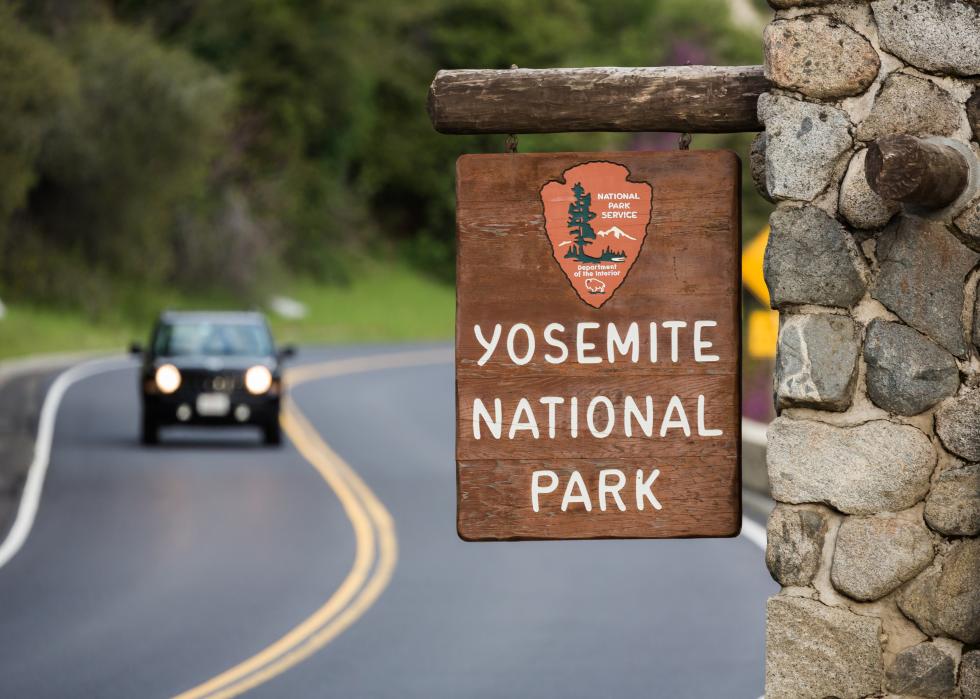
Yosemite first instituted its timed entry system in 2020 to limit visitor numbers during the COVID-19 pandemic, but even when cases began to subside, Yosemite kept the permit system around to alleviate longstanding overcrowding issues. After removing the system for one year in 2023, the park has brought back the entry permit requirement for 2024.
Permits have been required to enter the park on weekends and holidays since April 13 and will be required every day from July 1 through Aug. 16. From Aug. 17 through Oct. 27, permits will only be required on weekends and holidays again. Most permits were released on Jan. 5 this year, but for last-minute trip planners, further permits can be reserved seven days before your expected arrival date.
Inside Yosemite, you can marvel at the views of El Capitan and Half Dome or hike one of the park's many scenic trails, all while enjoying the benefits of fewer crowds.
Mount Rainier National Park

Mount Rainier National Park has seen a 40% uptick in visitor numbers over the past 10 years. To preserve the park's delicate environment and offer an improved visitor experience, Mount Rainier will require permits to enter both the Paradise and Sunrise Corridors during peak visitation days in 2024.
Reservations are needed for Paradise Corridor from May 24 to Sept. 2, while Sunrise Corridor requires entry permits from July 4 to Sept. 2. Both the Sunrise and Paradise areas offer their own unique attractions — Sunrise features stunning views of Mount Rainier and the Cascade Range, while Paradise hosts the park's main visitor center and abundant wildflower meadows.
You'll need to reserve two separate permits if you want to visit both spots this summer, but if the timed entry system works according to plan, you hopefully won't have to share the park with too many other tourists.
Arches National Park

Anyone who's visited Arches National Park in recent years won't be surprised to find it on this list. After experiencing significant overcrowding for more than a decade, Arches implemented a timed entry program in 2022. Now in its third year, the system continues to evolve to accommodate visitors and provide the best experience possible.
Entry permits are released in monthly blocks three months before each month (for example, permits for September visits are released on June 1). A small number of additional permits are released one day ahead of time, which allows for a certain degree of spontaneity in planning your trip, though these permits may get snapped up quickly.
Explore the park's namesake sandstone foundations and learn more about the unique combination of elements that led to their creation, keeping an eye out for wildlife like bighorn sheep that have made a home in this desert landscape.
Rocky Mountain National Park

From May 24 through Oct. 20, every vehicle that enters Rocky Mountain National Park will need a timed entry permit. There are two different types of permits: Timed Entry+, which includes popular destinations along Bear Lake Road, and the regular Timed Entry option, which excludes Bear Lake access. You'll have to pay close attention as you reserve your permit.
It might seem onerous to plan your trip activities so far in advance. But considering you're helping preserve the park's gorgeous, one-of-a-kind alpine landscapes using the timed entry system, a little extra legwork doesn't seem so bad. When hiking to Lake Haiyaha or soaking up the sights at Moraine Park, your permit will be all the more worth it.
Carlsbad Caverns National Park

As most of its attractions are deep underground, Carlsbad Caverns is slightly different from the other parks on this list. Carlsbad requires timed entry permits 362 days a year, from January through December. The only exceptions are Thanksgiving, Christmas, and New Year's, when the park is closed to the public.
But park officials have long restricted entry to Carlsbad Caverns, reducing strain on the sprawling cave system and karst formations. You can view the caves on ranger-guided tours, which depart from the visitor center several times a day, or you can hike down alone.
Glacier National Park

In the summer of 2024, Glacier National Park will require visitors to have a vehicle reservation to access Going-to-the-Sun Road, the North Fork area, and Many Glacier valley. Entry to these areas will be restricted between 6 a.m. and 3 p.m. from May 24 through Sept. 8, exact start dates vary with each location.
If you have your trip dates set ahead of time, try to snag one of the reservations available 120 days (four months) before your trip. If you're unsure, log in to recreation.gov early the day before your arrival to book a permit.
Those reservations will grant you access to some of the most spectacular natural landscapes in the western U.S. Going-to-the-Sun Road winds past snowy Rocky Mountain peaks, while Many Glacier valley features dramatic alpine scenery that draws hikers from all over the world.
Story editing by Carren Jao. Copy editing by Paris Close. Photo selection by Clarese Moller. Header image by BipinJ // Shutterstock.
This article was originally published by Stacker and was republished with permission.
A group of young Alaskans, backed by an out-of-state nonprofit legal firm, is suing the state of Alaska and the state-owned Alaska Gasline Development Corp. in an attempt to block construction of the corporation’s long-planned trans-Alaska natural gas pipeline.
In a complaint filed in May in Anchorage Superior Court, the eight plaintiffs argue that the corporation’s founding laws are unconstitutional because the gas pipeline would result in so much climate-altering greenhouse gas that it would endanger their constitutionally guaranteed ability to access Alaska’s fish, wildlife and other natural resources.
The plaintiffs, who range in age from 11 to 22, are being supported by Our Children’s Trust, a nonprofit that has supported climate-related lawsuits in state and federal courts across the country.

The decision in the prior case was 3-2 against the plaintiffs, and two of the judges who ruled in favor of the state have since retired.
Two years ago, the Alaska Supreme Court ruled against plaintiffs in a broader but similar lawsuit supported by the group. That suit, filed by 16 youth plaintiffs, argued that the state’s policy on fossil fuels violates their constitutional rights. Some of the plaintiffs in that case are parties to the new one.
The decision in the prior case was 3-2 against the plaintiffs, and two of the judges who ruled in favor of the state have since retired.
Last year, the Montana Supreme Court ruled in favor of youth plaintiffs in a similar lawsuit filed in that state.
In the new Alaska lawsuit, plaintiffs contend that the Alaska Constitution contains an implicit right to a livable climate. That issue was raised as a hypothetical in 2022 by the two Alaska Supreme Court justices who dissented from the prior climate lawsuit.
“The right to a climate system that sustains human life, liberty, and dignity is both necessary for and foundational to the explicitly enumerated rights reserved by the Alaska Constitution,” the lawsuit says in part.
“Without a climate system that sustains human life, liberty, and dignity, Youth Plaintiffs cannot grow to adulthood in safety, live long healthy lives, provide for their basic human needs, safely raise families, learn and practice their religious and spiritual beliefs, learn and transmit their cultural traditions and practices, maintain their personal security and bodily integrity, or lead lives with sufficient access to clean air, water, shelter, and food.”
Tim Fitzpatrick, a spokesperson for AGDC, said by email that the corporation will review the claim and respond accordingly.
“AGDC is directed by Alaska statute to commercialize North Slope natural gas because of the substantial environmental, economic, and energy security benefits it unlocks for our state. Alaska LNG has withstood intensive environmental scrutiny by two successive administrations because of its obvious and abundant benefits, which include reducing global emissions by up to 2.3 billion tons and finally ending longstanding air quality problems plaguing Interior Alaska villages and communities,” he said.
Attorney General Treg Taylor, by email, said that the state Department of Law had just received the lawsuit and will be reviewing it carefully.
“On its face, we can see that it is an attempt to block the development of Alaska’s natural gas reserves based on a purported environmental safety rationale. It is a misguided effort,” he wrote.
Taylor said that AKLNG, the pipeline project, is one of several similar projects being considered globally, and shutting down the project here means development in other places with lighter environmental regulation.
“This challenge to the project also comes when there’s a supply shortage for Alaska, and importing natural gas is now a consideration, he wrote. “We are confident that the courts will uphold the Alaska Legislature’s laws providing for the development of an LNG project in Alaska.”
The lawsuit arrives at a key moment for the natural gas pipeline project. State legislators have become increasingly skeptical of AGDC’s plans for a large pipeline that ends in an export terminal, and a plan to defund AGDC was narrowly defeated in this year’s state budget process.
AGDC now appears to be pivoting toward a plan that would involve construction of a smaller gas pipeline for in-state use, with a larger pipeline and export terminal to come later.
Either idea would be dependent upon the availability of construction funding, and to date, neither the state nor any private-sector funders have said they are willing to pay for construction.
This article was originally published by the Alaska Beacon.
Conservation and restoration projects are happening across the country to help protect national parks, historic sites, and seashores.
These projects focus on wide-ranging goals, including managing feral pig populations, reseeding grasslands, and cleaning up abandoned mines.
The projects are possible due to the Inflation Reduction Act. The law passed in August 2022 and funds the National Park Service with $700 million to make its land more protected and resilient to inevitable climate change.
Our partners at Stacker reviewed an NPS database of all the projects underway to highlight a few that will help our federal lands weather the climate-changed future.
"Visitors see what's happening now in parks," according to Chad Lord, senior director for the National Parks Conservation Association.
"So if you go to parks in the inner mountain west, for example, you're going to see a lot of dead trees because of drought or invasive pests. If you go to the forests in the north, you're going to begin to see that there are fewer species of trees that are traditional. The landscapes are changing."
The NPCA is a nonprofit organization that works with local national park staff to create consensus about how to protect parks from the worst effects of climate change.
He says the Inflation Reduction Act is just scratching the conservation surface.
"It's doing a lot of good work in the short term in a lot of places across the country. And so, there'll be a lot of activity that will be undertaken if it hasn't already begun in parks all over the country to get ready," Lord said.
"The Inflation Reduction Act does not meet the entire need of how much the parks need to prepare. So we still know there's quite a bit of work left."
Here are four conservation projects and how they're being implemented at national parks, historic sites, and national seashores across the country:
Whitebark pine protection and restoration

The whitebark pine tree is a slow-growing pine with scraggly branches that grows natively in the mountain regions of Yellowstone National Park, Yosemite National Park, and other federally protected parks and land.
Climate change increases the daily average temperatures of these cool-weather parks, making these trees more susceptible to bugs such as the pine beetle.
The whitebark pine is now a threatened species on the Endangered Species list.
The $2.25 million from the Inflation Reduction Act will protect existing trees and restore whitebark pines where they once grew.
This includes a seed-keeping project to plant more species resistant to blister rust disease.
Protecting coral from disease

A significant issue found at Dry Tortugas National Park, the Virgin Islands National Park, and four other national parks that manage coral reefs is stony coral tissue loss disease.
This disease can infect and kill an entire colony of coral in just three weeks.
A $5.3 million project funded through the Inflation Reduction Act mitigates the loss of coral infected by the disease.
The treatment is a paste full of amoxicillin — the same antibiotic humans use to treat pneumonia.
This amoxicillin paste stops the disease from spreading and can save up to 85% of an infected coral.
Some national parks have created programs that allow volunteers to give infected coral this life-saving application.
Studying fish in warming streams

Driving on the Great Smoky Mountains Expressway gives riders a parallel view of the nearly 2,900 miles of clear water streams that flow through the Great Smoky Mountains National Park.
Many people also visit the country's most visited national park to fish for wild trout, but climate change is warming the temperatures of the streams, which alters the species of fish that can survive in the water over time, according to Lord.
These changes affect not only the natural environment but also the outdoor recreation economy built around cold-water fishing in the area.
The Inflation Reduction Act includes a $1.84 million project to study the effects of warming streams in the Smoky Mountains and three other parks.
Cultural resource management

"Unlike wildlife or a tree species which can move over time, cultural resources, whether or not that's a lighthouse or a home or an important structure, they are locked on the landscape," Lord said.
He notes that NPS is working to figure out what to do about the increased risk of flooding along rivers or increased sea levels near the shores in places with buildings of national importance.
A total of $21.6 million is earmarked for projects that would help make these places of cultural importance more resilient.
One $2.5 million project provides care to Alaskan communities and parks. According to the NPS, Alaska has seven out of the 10 largest parks in the system, including Wrangell-St. Elias National Park and Gates of the Arctic.
Parks in Alaska altogether make up 65% of all national parkland.
At the same time, Alaska is home to hundreds of Indigenous communities caring for an environment that is warming twice as fast as the global average, making these funds critical for the future.
This article was originally published by Stacker and was republished with permission.
Header image by Chip Somodevilla on Getty Images
Hours before Maggie Rogers took the stage to perform at Red Rocks Amphitheatre in Colorado, she hopped on Instagram to fill her fans in on a new tour promotion — a ticket upgrade that doubles as a win for protecting reproductive rights.
“Giving away seat upgrades both nights at Red Rocks through donations to independent, local abortion clinics,” Rogers wrote in an Instagram story.
“In addition to Planned Parenthood of the Rocky Mountains, the independent abortion clinics in Denver are: Comprehensive Women’s Health Services, Partners in Women’s Health, [and] Healthy Futures for Women.”
Rogers also tagged the Colorado-based abortion fund Cobalt Advocates and the non-profit Noise For Now.
Rogers is running the fundraiser through Propeller, a site that incentivizes activism through online contests and concert promotions that champion LGBTQ+ rights, reproductive freedom, gun safety reform, suicide awareness, and more.
Just a few weeks ago, Chappell Roan promised two free Bonnaroo tickets to fans who supported the Human Rights Campaign through a Propeller contest ahead of Pride Month.
And last year, Noah Kahan teamed up with Propeller to create the Busyhead Project — a mental health initiative that raised over $1.9 million for crisis shelters and mental health services across the US.
Annie Flook, Propeller’s director of artist partnerships and business development, told Good Good Good that reproductive justice is something that Rogers has “supported for years.”
According to Flook, Planned Parenthood “will be tabling and providing resources at each tour stop” along Roger’s route, everywhere from the Bonnaroo Music and Arts Festival in Manchester, TN to her last summer stop in Miami, FL — a state where reproductive freedom is more vital than ever due to its recent six-week abortion ban.
“This campaign came together through Propeller and Mick Management collaborating on how we could better engage fans in-venue to connect them with this issue that is extremely important to Maggie,” Flook said.
In order to participate, Flook said attending fans can text “MAGGIE” to 99126 to win a chance to upgrade their ticket or win a signed setlist, after donating to their local abortion clinics and funds through Noise For Now.
“This link is updated each night on tour…we choose a winner at random and facilitate the ticket upgrade remotely via text,” Flook explained.
Flook said that Propeller is “one of many partners on the tour” supporting Roger’s initiative and that they are simply serving as the “digital marketing platform running the campaign each night” as they spotlight Noise For Now’s work.
“Noise For Now is a national initiative that enables artists and entertainers to connect with and financially support grassroots organizations that work in the field of reproductive justice, including abortion access,” Flook said.
“Reproductive health care services, including access to legal abortion, are under attack,” she continued. “By organizing benefit events and campaigns, Noise For Now provides opportunities for artists and entertainers to use their talent to raise money and send a clear message that reproductive rights are human rights.”
Header image courtesy of Maggie Rogers/Facebook
In recent weeks, college campuses across the U.S. have been roiled by pro-Palestinian protests, with the police called in to arrest demonstrators and students threatened with expulsion.
But there’s nothing unusual about the protesters’ tactics of taking over university buildings and erecting tent encampments on college lawns and quads.
These students, whose actions build on years of organizing spearheaded by the Students for Justice in Palestine, are part of a long history of radical student organizing.
There are echoes of both the protests against the Vietnam War in the 1960s and 1970s and, more recently, of South African apartheid in the 1980s.
In the 1980s, U.S. student activists worked to make higher education “South Africa Free.” They urged institutions of higher learning to commit to divest all assets held in endowments that were tied to doing business in or with South Africa.
Over the past 10 years, I’ve researched and written about these Black-led anti-apartheid movements, with a particular focus on student campaigns.
A movement decades in the making
Apartheid was a racist and exploitative project that white South African officials had developed over decades.
Segregationist laws and land seizure policies created a captive, impoverished Black population, whose exploitation and disenfranchisement supported the economic prosperity of the governing white minority.
Originally, the idea to push for the sale of assets tied to corporations doing business in South Africa stemmed from the directives of the South African liberation movements, which called for a total economic, cultural and diplomatic boycott of the country’s white minority government.
The foremost South African liberation movements were the African National Congress, formed in 1912, and the Pan Africanist Congress, established in 1959. The South African government banned both organizations in 1960, forcing organizers to build their movements in exile.
In response, anti-apartheid organizers around the world developed creative ways to heed the call.
In the late 1960s, for example, U.S. students targeted U.S. banks that lent to the South African government, calling them “partner[s] in apartheid.”
And the Students for a Democratic Society and the Student Nonviolent Coordinating Committee coordinated a sit-in at Chase Manhattan Bank in New York City in 1965.
Following the 1976 Soweto uprising, in which South African police massacred at least 150 children, some U.S. workers began to demand that their pension funds be “South Africa Free,” and students at U.S. colleges and universities organized some of the first protests calling for the divestment of their schools’ endowments.
The 1977 formation of the Committee to Oppose Bank Loans to South Africa made economic withdrawal a centerpiece of the U.S. anti-apartheid movement, one that grew stronger both on and off campus in the decade that followed.
Calls for divestment grow
At its climax in 1985 and 1986, protests for total economic isolation of South Africa surfaced at more than 200 colleges and universities across the U.S.
Whether they were enrolled at historically Black colleges and universities, liberal arts colleges, Ivy League schools or public universities, students coordinated a national divestment movement, pushing the issue of U.S. investment in South Africa to the center of American intellectual and civic life.
Student organizing formed the militant grassroots basis for the U.S. anti-apartheid movement and contributed to the economic, political and cultural isolation of South Africa’s violent and repressive white minority regime.
Students assembled blockades, organized “sit-outs,” occupied buildings and built “shantytowns” — made to resemble the makeshift dwellings in which many Black South Africans lived under apartheid — at more than 100 universities.
These shantytown protests marked the culmination of nearly a decade of campus anti-apartheid organizing. Thousands of students at hundreds of campuses erected encampments to try to “stop business as usual,” as student groups put it.
Persistence pays off
At schools across the country, university administrators ordered police to dismantle the shantytowns.
University backlash ended up only amplifying support for the movement as media flocked to the shantytowns, while faculty, parents and alumni rallied around the students.
Students, in turn, rebuilt their encampments. Joining them were supporters from beyond the university: musicians, politicians, and New Left and Black Power activists. The presence of feminist political activist Angela Davis, counterculture activist Mario Savio, poet June Jordan, writer Amiri Baraka and Pan-Africanism organizer Kwame Ture helped draw further national attention to student demands.
The highly publicized determination of the students helped turn the tide of public opinion. Founded by Black organizers Randall Robinson, Mary Frances Berry, Eleanor Holmes Norton and Walter Fauntroy, the Free South Africa Movement — working closely with the foreign policy advocacy organization TransAfrica — led hundreds of students and everyday people in a picket outside the South African Embassy in Washington, D.C.
Many of the activists and student protesters were arrested. But by calling out specific corporations doing business in South Africa and popularizing corporate ties to anti-Black violence, oppression and massacres in a foreign country, students succeeded in making investments in those stocks riskier and unattractive.
After two years of sustained militant organizing and demonstrations, the student anti-apartheid movement claimed to have gotten colleges and universities to divest about US$3.6 billion — or $10.3 billion in today’s dollars — from their endowments.
Revisionist history
In 1990, after 27 years of imprisonment, African National Congress leader Nelson Mandela was released from prison.
By then, South Africa’s system of apartheid was crumbling. The reinstatement of the liberation movements in 1990, the repeal of segregationist laws in 1991 and the first democratic election of 1994 signaled the official end of apartheid, though discrimination and inequality persist in South Africa to this day.
In the collective memory of the U.S., anti-Vietnam and anti-apartheid movements are generally seen as righteous struggles that U.S. institutions couldn’t help but get behind.
Perhaps that’s why, after the death of Mandela in 2013, the University of California, Berkeley, administration claimed to be at the forefront of student divestment protests for South Africa.
This was revisionist history.
In fact, at Berkeley and across many campuses, administrators called the police on protesters, threatened to revoke their scholarships, took others to court and ordered custodial staff to demolish the shanties.
Past as present
Activists, scholars and even former U.S. President Jimmy Carter have drawn comparisons between South African apartheid and Israel’s occupation of the Palestinian territories. Many Palestinians refer to the 440-mile (708 km) separation barrier that Israel erected along the Gaza Strip as the “Wall of Apartheid.”
Still, there are some notable differences between the two movements.
Divestment is trickier today because financial instruments are more complex than they were in the 1980s, in part due to the outsourcing of their management to investment firms and hedge funds. The size of many university endowments have also grown exponentially since then.
Nonetheless, I believe divestment from companies doing business with Israel is still possible — and can be an effective demand. Several college administrations have agreed to consider divestment, including Brown University, Northwestern University, Evergreen State College and the University of Minnesota.
The U.S. anti-apartheid movement of the 1980s helped topple South Africa’s apartheid government. Back then, campus anti-apartheid occupations placed students at the forefront of changing the national consensus on U.S. complicity with injustice in South Africa.
Time will tell whether today’s students can do the same with regards to Israel’s systematic oppression of the Palestinian people.
This article by Amanda Joyce Hall, from the University of California, was originally published by The Conversation.

Of all the monkey species around the world, one stands out with its large, bizarre nose. In male proboscis monkeys, their bulbous noses will often hang past their mouths.
But why evolve such a strange feature? Are they a visual sign of health and status to potential female mates, and to other males? Or did they evolve to help the monkeys make honks and other loud sounds?
In our new study, published in Scientific Reports, we have deepened our understanding of these enlarged nasal structures by investigating what lies beneath: the structures in the skull.
Our findings help to explain how these noses function as visual and acoustic signals of health and status. They also add to a growing body of evidence that shows researchers can use close examinations of skulls to glean information about primate social behavior.
A battle of noses
One of the largest monkey species in Asia, proboscis monkeys (Nasalis larvatus) are endemic to the island of Borneo. They live in coastal mangroves, peat swamps and riverine forests, and have an unusual diet made up mostly of leaves.
They can swim quite well and have webbed fingers and toes. They typically live in harem groups, made up of a single adult male (who tends to have a large, bulbous nose), some adult females and their offspring.
Males don’t often get the opportunity to attract a harem until they reach middle age. These older, dominant and large-nosed males don’t easily tolerate other large-nosed males, often trying to ward them off aggressively with deep honks and “nasal roars” — loud calls they make using their noses.
Young adult males with smaller noses often live in all-male bachelor groups, and don’t tend to fight aggressively with each other. When these bachelor males get older and become large (and large-nosed) enough to compete with males that are part of a breeding group, they are in a position to overthrow the tenured male. Females then often choose to form a harem group with this new, high-status male.

What’s behind the nose?
We investigated the size and shape of the proboscis monkey nasal cavity. That’s the bony chamber of the skull that sits behind the fleshy nose. Our goal was to find out if the size and shape of the nasal aperture — the front part of the cavity, where the fleshy nose tissue attaches — can tell us more about why these peculiar appendages evolved.
Previous research that looked at the bulbous nose in males suggests it evolved to advertise status. In our new research, we wanted to better understand how this could be the case, this time using data taken from the skull.
We used 3D surface models, downloaded from a public repository, to take size and shape measurements from 33 adult proboscis monkey skulls. We compared these with the adult skulls of king colobus monkeys, blue monkeys and crab-eating macaques, three old world monkey species.
We chose some measurements to quantify the nasal cavity, and others to quantify the nasal aperture in all the species. We also looked at tooth wear, since older adult monkeys have more worn teeth than younger adults. That would allow us to find out if older adult males had a larger nasal aperture than younger adult males.
Better honks
If male proboscis monkeys have a different nasal cavity shape to females, and a unique shape compared to the other monkey species, it would support the idea these enhanced nasal structures — both the fleshy nose and the cavity behind it — evolved to allow for more effective honks and nasal roars.
That was indeed what we found. The shape of the male nasal cavity was low and long compared to females. This allows males to build up resonance (sound vibration) in their nasal cavities, allowing them to emit deeper and louder calls through their noses.
The nasal aperture shape was also different between the sexes. In males, it looks a bit like an eggplant, while in females it looks more like an upside-down pear. This unique opening shape in males allows for higher intensity sounds to be emitted through the nose.
The sex differences in cavity shape were also larger than what we found in other old world monkey species. This further supports the idea that the nasal cavity of male proboscis monkeys underwent an evolutionary change for the purpose of making certain sounds.

Lastly, the age. Older proboscis monkey males really do have larger nasal apertures than younger adult males, but the cavity itself didn’t increase with age. This supports the idea that the large noses act as a visual signal. It’s also consistent with the fleshy nose size increasing in middle-aged or older adult males, which we know from behavioral studies in the wild.
Our evidence from the skull allows us to better understand how nasal structures in male proboscis monkeys evolved for both acoustic and visual signaling.
The more we know about how regions of the skull function as social signals, the better chance we have of reconstructing extinct primate social behavior using fossilized skull remains.
This article by Katharine Balolia, from Australian National University, was originally published by The Conversation.

Veterans who die alone, without connections to friends and family, have piled up on the shelves of county morgues and funeral homes for decades.
The Department of Veterans Affairs estimates about 21,000 veterans are awaiting burials, some dating back to the Civil War. A nonprofit group that works on behalf of these so-called unclaimed veterans believes that number falls short by tens of thousands.
Since 2007, the Missing in America Project has provided thousands of dignified burials.
Rich Gough, a volunteer in New Jersey, says there are “100 different reasons” why a veteran might linger on a shelf, unburied — the family may not have been able to afford a burial, for instance.
A lot of the nonprofit group’s work involves combing through lists of unclaimed remains at funeral homes and morgues, and then spending years trying to verify veteran status of those who they suspect might have served in the military. When a veteran is found, volunteers begin the search for family.
“We give them the opportunity to either claim the veteran or give us permission to provide military honors,” says Don Gerspach, director of Missing in America Project.
Often, though, family is not found, and the full story of how veterans wind up in limbo for decades remains a mystery.
Below are the stories of five unclaimed veterans the Missing in America Project recently located. All will be honored with a ceremony on June 11 and eventually buried at BG William C. Doyle Veterans Cemetery in Wrightstown, New Jersey.
HARRY JAMES LYONS—US NAVY—WWII
Harry James Lyons was born in the seaside town of Rumson, New Jersey, on June 8, 1914. He enlisted in the Navy on Jan. 25, 1945, and by October of that year he was promoted to seaman first class while serving aboard a warship in the Marshall Islands. On Jan. 15, 1946, he was honorably discharged.
After the war, Lyons married twice and fathered four children. He worked as a machinist for 25 years and died of natural causes on March 3, 1991, at the age of 76.
Though Lyons left a family behind, he sat on a shelf at the funeral home for 32 years. Gough, with Missing in America Project, says he hasn’t pieced together why Lyons’ family didn’t bury him. But in the 30 years after his death, his wife and three of his children passed away. Missing in America Project volunteers could not find his remaining son, Harry Lyons, Jr., whose last known address was in Mississippi.
ROBERT W MILLER—US NAVY—VIETNAM
Robert Walter Miller was born in Brooklyn, New York, on Sept. 16, 1945, but spent most of his childhood in Belford, New Jersey. He enlisted in the Navy on Jan. 29, 1963, and served during the Vietnam War.
Upon his discharge, he married his hometown girlfriend, Margaret. Over the decades he worked as a heavy equipment operator, bought a home, and had a family. Miller died on March 5, 2013, at the age of 67.
Gough sent a certified letter to Miller’s son, explaining his cremated remains were unclaimed, but never got a response. Gough, who grew up near Miller in New Jersey, happened to know and live near Miller’s wife, and stopped at her house to drop off his business card. But she had recently moved.
Miller’s cremated remains were left on the shelf at the local funeral home until 2017. That’s when the Vietnam Veterans of America and Missing in America Project identified him as a veteran. Because of Miller’s common name, though, the National Cemetery Administration required his service number to determine whether he had earned burial benefits.
Various newspaper articles tracked his Navy career as a fireman on the USS Simon Lake Sub Tender from 1964 in Charleston, South Carolina, to 1966 in Holy Loch, Scotland.
For seven years, Missing in America Project volunteers relentlessly investigated his military career.
Finally, through a Freedom of Information Act request, volunteers identified 1966 ship logs for the USS Simon Lake. A review of its quarterly roster revealed Robert W. Miller’s name and service number.
CHARLES BAME—US ARMY—WWI
Charles Bame was born in Philadelphia on Dec. 18, 1894. He joined the Army on Aug. 7,1918, in New York and was sent to the 311th Motor Transport Corps for a few months.
He was then reassigned to the Services of Supply 324th Repair Unit in support of the American Expeditionary Forces in France, England, Italy, and the Netherlands until his discharge on April 18, 1919.
He married and settled in New Jersey with his wife and daughter. Bame died on Dec. 16, 1973, of a colon obstruction at the age of 78.
His wife, Paula, died just a few months after on March 7, 1974. A half-century later, both Bame and his wife were found still unclaimed at a funeral home.
HENRY J. DANNA—US ARMY—WWI
Henry J. Danna was born in Angrogna, Italy, on May 14, 1893. He enlisted in the Army after arriving in the United States in about 1914.
Danna was assigned to the 152nd Depot Brigade for training until May 19, 1918. At that point he was transferred to Company K, 303rd Infantry until his discharge on Dec. 2, 1918.
Danna’s life then pivoted drastically. He trained as a pastry chef and worked at the famed Drake Hotel on Park Avenue in New York for many years, moving on to other New York-area restaurants over time. Gough says Danna was married twice, but they couldn’t find his first wife. His second wife passed away in 1995, and he believes Gough’s stepdaughter from his first marriage passed away in 2001.
After his retirement, Danna relocated to Asbury Park, New Jersey, passing away on May 30, 1984, of liver cancer.
Danna stayed on a shelf at a funeral home in Asbury Park for 39 years.
ARTHUR SINCLAIR VON ROHL—US ARMY—WWI
Arthur Sinclair Von Rohl was born in Jersey City, New Jersey, on Feb. 20, 1894. He entered the US Army on June 8, 1918.
By fall of 1918, Pvt. Von Rohl joined the 13th Company, 4th Battalion, 153rd Depot Brigade, Camp Dix, New Jersey.
He was reassigned to the 8th Infantry and was discharged on Nov. 23, 1918.
Von Rohl never married. He spent his adult life at the Sun Oil Company, retiring as a marketing representative. At the age of 81, he died of congestive heart failure on Aug. 19, 1975.
There was no next of kin on his death certificate, and no family came forward. His cremains were placed on the shelf of a funeral home and didn’t move for 48 years until the Missing in America Project located him.
This article first appeared on The War Horse, an award-winning nonprofit news organization educating the public on military service.
Header image: Members of the Connecticut Army National Guard Funeral Honors Team, and a veterans service organization member prepare to inter the cremated remains of eight unclaimed veterans at State Veterans Cemetery in Middletown, Connecticut, on Oct. 1, 2021. (Connecticut National Guard photo by Maj. David Pytlik)

May has been quite the month for Amari Shepherd, 17.
With a GPA of 4.86, she gave the valedictory speech at KIPP New Orleans’s Frederick A. Douglass High School’s graduation ceremony May 17.
A few days before that, she had picked up an associate degree from Bard Early College.
And she has racked up a potentially record-setting $9.2 million in scholarship offers, as well as acceptances from 162 colleges.
As she prepares to enroll at Spelman College in Atlanta, here are five things to know about Shepherd:
How she did it: Shepherd sent her bona fides — which include the publication of a book titled “Thirteen,” seats on the New Orleans mayor’s and superintendent’s youth advisory councils, and extensive community service — to every college or university she could find that waived the application fee. She also submitted her application to Niche, an online portal that offers direct admissions to colleges whose criteria students meet.

About those scholarships: KIPP New Orleans leaders believe Shepherd has received more scholarship offers, or nearly so, than any graduate, ever. Because of unprecedented delays caused by problems with this year’s FAFSA, her total tally is likely to keep rising as colleges and philanthropies continue processing awards. All told, so far her senior class has earned $26 million in scholarships.
Where she’s headed: Shepherd is waitlisted at an Ivy she’d prefer not to name, but it wasn’t her first choice. She’s had her eyes on Spelman College for years — even if it wasn’t always clear how she’d get there: “My mom always told me to play my role and everything else would fall into place, and that’s exactly what happened. (They did also give me a full ride .)” Shepherd texted in response to The 74’s questions. “So I’ll be going to my dream school for free!”
After that: Shepherd plans to follow a political science degree with law school, after which the two-time winner of KIPP New Orleans’s Black Lives Matter writing contest plans to tackle some societal issues. “I want to be on the Supreme Court because I want to be a part of change to make a more fair, just and equitable society, and what better way to do that than from inside.”
Her inspiration: Shepherd was in kindergarten when her father died. More recently, she lost both of her maternal grandparents to COVID. “Education meant everything to them, so I didn’t really have a choice but to do well in school,” she says. When her grandmother passed, Shepherd channeled her grief into making her proud. “It made me feel like everything I do moving forward is bigger than just me.”
This story was produced by The 74, a non-profit, independent news organization focused on education in America.
In model year 2023, sales of hybrid vehicles hit a new high, comprising 13.6% of all production. The rise continued in 2024, with sales of gas-electric hybrid vehicles in the United States increasing five times faster than that of fully electric automobiles in February, according to financial services firm Morgan Stanley. Meanwhile, the demand for fully electric cars has cooled.
The General examined data collected from the Environmental Protection Agency to see which car manufacturers produced the most hybrid vehicles in 2023 and how their output changed over time.
As demand for gas-hybrid vehicles surges, manufacturers like Ford and Toyota and car manufacturer and supplier Schaeffler are expanding their production capacity. In 2023, 29% of Toyota's sales were hybrid vehicles. The figure is expected to reach closer to 45% by the end of this year. Sales of the Jeep Wrangler plug-in hybrid increased from 37% of total Wrangler sales in the first half of 2023 to 50% in the second half of last year, according to Reuters.
Drivers are hot for hybrids in part because they strike a balance between their fully gas-powered and fully electric-powered counterparts. Drivers who prefer hybrid vehicles get the best of both worlds: the longer driving range of gas-powered vehicles and the fuel efficiency of electric vehicles.
Hybrid vehicles differ from purely electric vehicles in that they are powered by both fossil fuels and electricity, whereas purely electric vehicles rely on high-power battery packs to power the electric motors propelling the vehicle. Fuel-cell vehicles, on the other hand, are powered by hydrogen gas stored in tanks. The fuel cells in the vehicles convert hydrogen gas into electricity, leaving behind water vapor as emissions. Like regular EVs, they do not rely on gasoline or diesel.
The benefits of hybrids include better fuel economy than traditional gas-powered cars, thanks to their electric motors. And because drivers also have a longer driving range, they tend to have less anxiety about plugging in or staying in proximity to a charging station.
That said, there's an environmental trade-off. While hybrids are more environmentally friendly than gas-powered vehicles, they emit significantly more emissions than fully electric vehicles, which produce zero emissions.
Both types of hybrid vehicles — hybrids and plug-in-hybrids — combine gasoline engines with electric motors. Hybrids use a small battery charged by the gas-powered engine itself, while plug-ins have larger batteries that need electric charging, but also allow for fully electric driving up to a point. Both types of hybrid vehicles revert to gas power once the electricity stored is depleted.
In the following analysis, companies are ranked by the percentage of their 2023 models that were hybrid cars. Also included is the share of electric vehicles and plug-in hybrids. Data is preliminary and based on data provided by automakers.

How the hybrid vehicle market has grown
Technological advancements, such as improved battery technology, power electronics, motor drives, and additive manufacturing, have enabled manufacturers to produce more hybrid vehicles.
These technological improvements coincide with the growth in demand for hybrid vehicles, which has been propelled by stricter emission standards, the falling price of electric batteries, rising fuel prices and concerns over fuel efficiency, and government incentives.
In March 2024, the EPA finalized rules that would ensure that electric vehicles comprise 56% of new passenger vehicles sold in the market from model years 2030 through 2032. The EPA expects light-duty vehicles to emit 85 grams of carbon dioxide per mile, almost 50% less than the standard for vehicles of model year 2026. CO2 emissions for medium-duty vehicles are expected to decrease by 44% on average under the new rules.
To incentivize drivers to switch to electric vehicles, the federal government also offers tax credits of up to $7,500 for the purchase of new plug-in electric vehicles and fuel-cell electric vehicles.
The hybrid electric vehicle market in the U.S. is expected to be worth over $55 billion by 2032, growing steadily since 2017, according to the market research firm Fact.MR. Passenger cars are the most commonly sold hybrid vehicles, with the Southwest being the biggest U.S. market segment, followed closely by the West Coast.
Hybrids are better suited for rural areas than purely electric vehicles because they are able to run on fossil fuels should electric power run out. This proves useful in areas with limited electric vehicle charging infrastructure, where drivers also need to make longer trips. Hybrids help mitigate some of the range anxiety that EV owners may have, particularly in remote areas.
These are the carmakers dominating the hybrid market:
#9. Ford
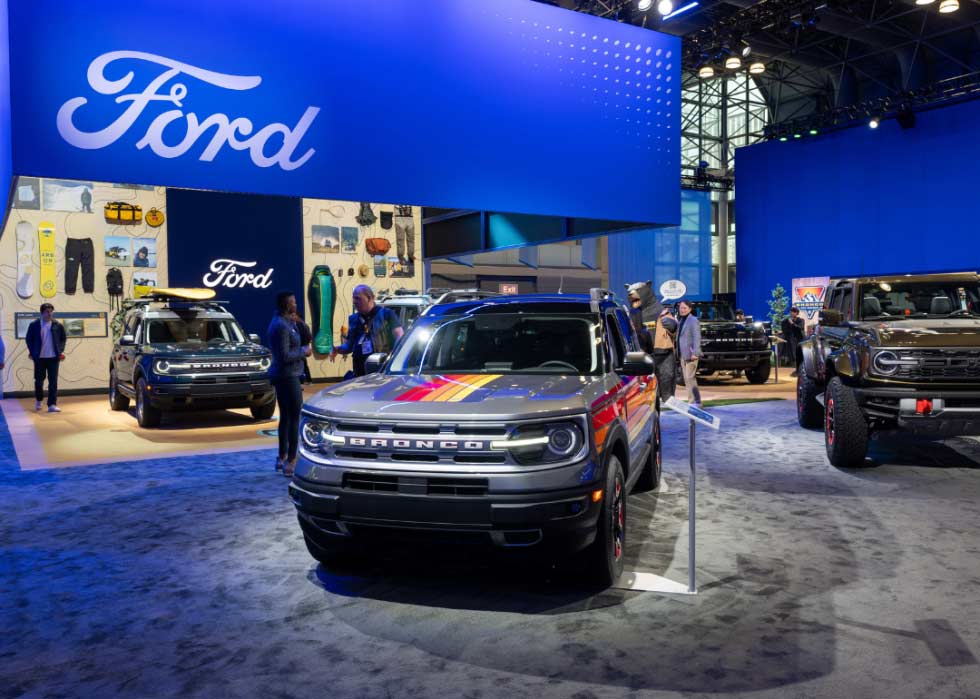
- Production of hybrid vehicles: 6.9%
- Electric vehicles: 7.5%
- Plug-in hybrid vehicles: 0.5%
#8. Kia
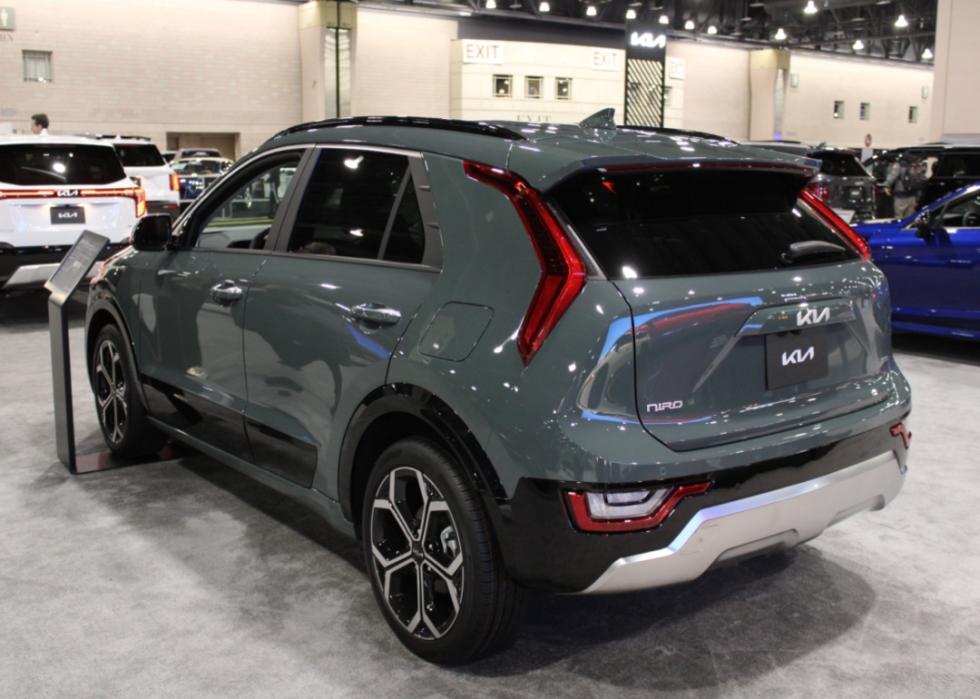
- Production of hybrid vehicles: 9.2%
- Electric vehicles: 4.5%
- Plug-in hybrid vehicles: 4.0%
#7. Hyundai
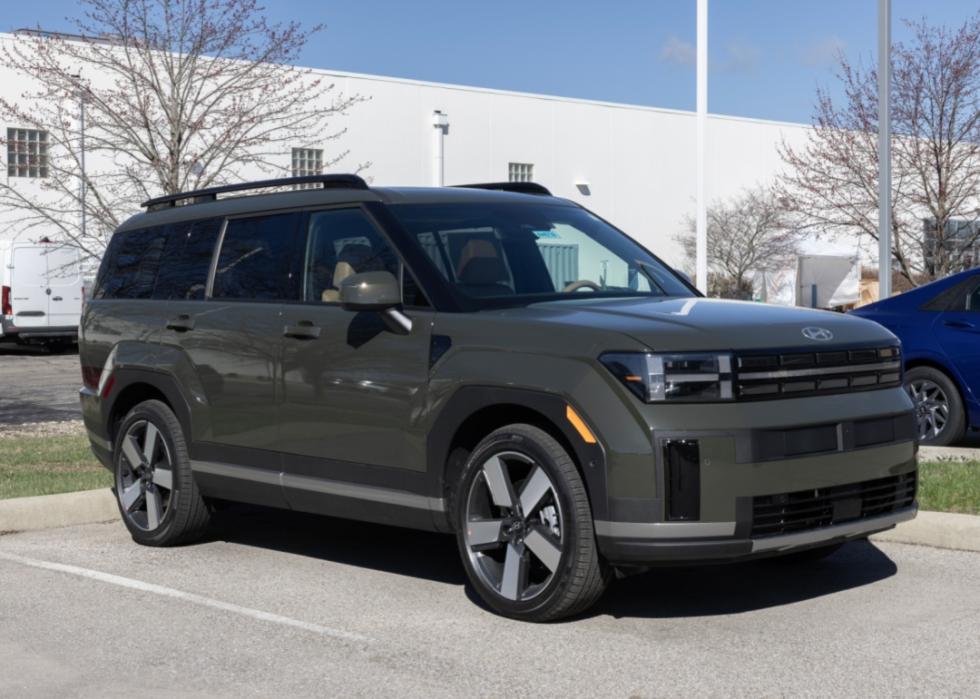
- Production of hybrid vehicles: 10.2%
- Electric vehicles: 5.8%
- Plug-in hybrid vehicles: 2.0%
#6. Honda
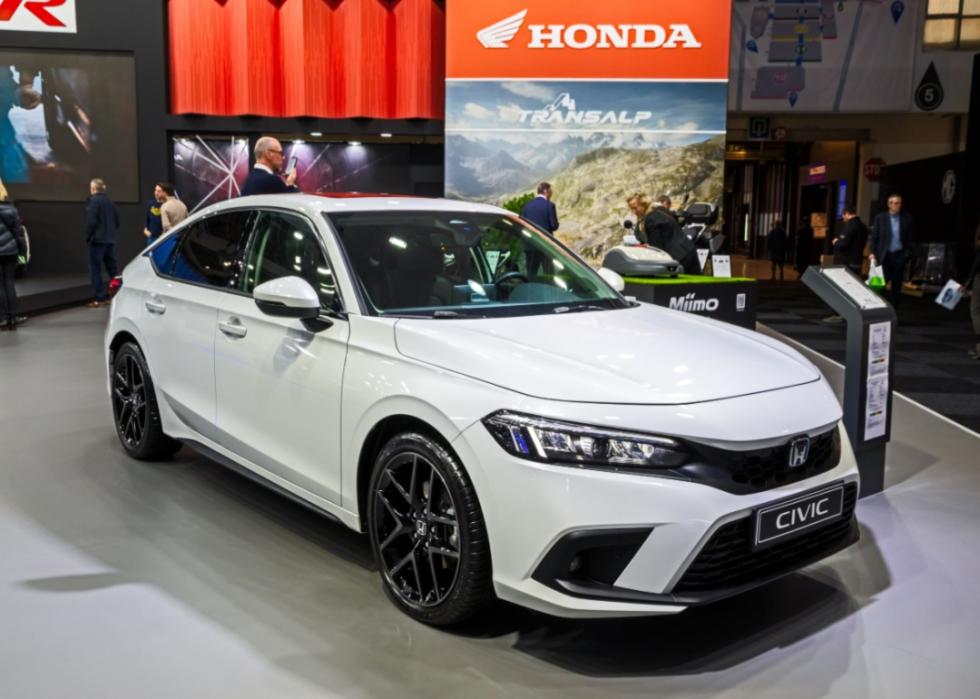
- Production of hybrid vehicles: 18.8%
- Electric vehicles: 0%
- Plug-in hybrid vehicles: 0%
#5. Stellantis
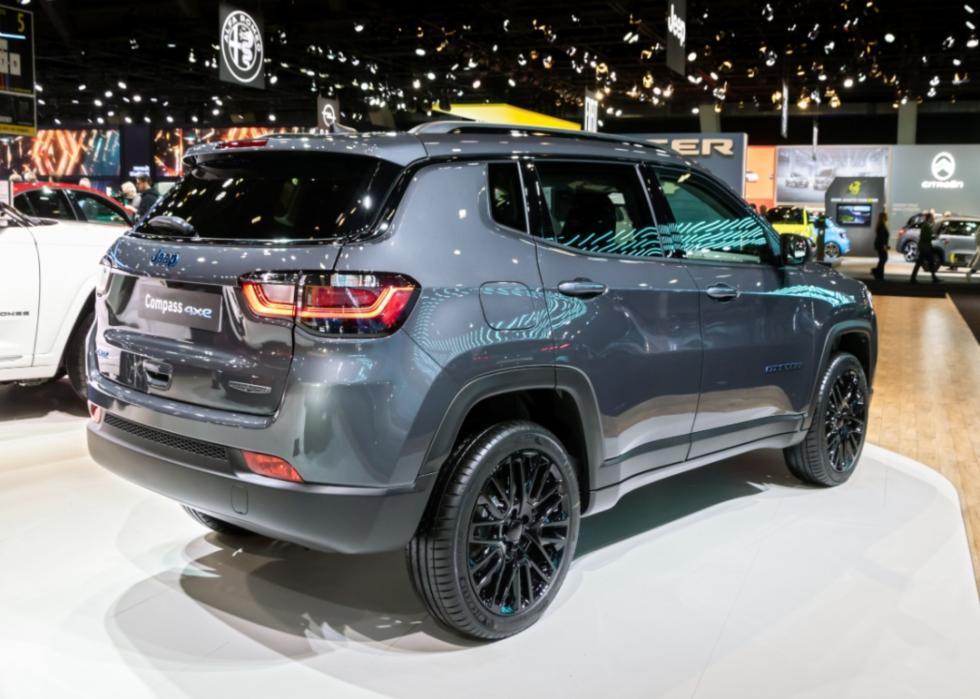
- Production of hybrid vehicles: 20.0%
- Electric vehicles: 0%
- Plug-in hybrid vehicles: 11.1%
#4. Volkswagen

- Production of hybrid vehicles: 21.7%
- Electric vehicles: 15.8%
- Plug-in hybrid vehicles: 1.2%
#3. BMW
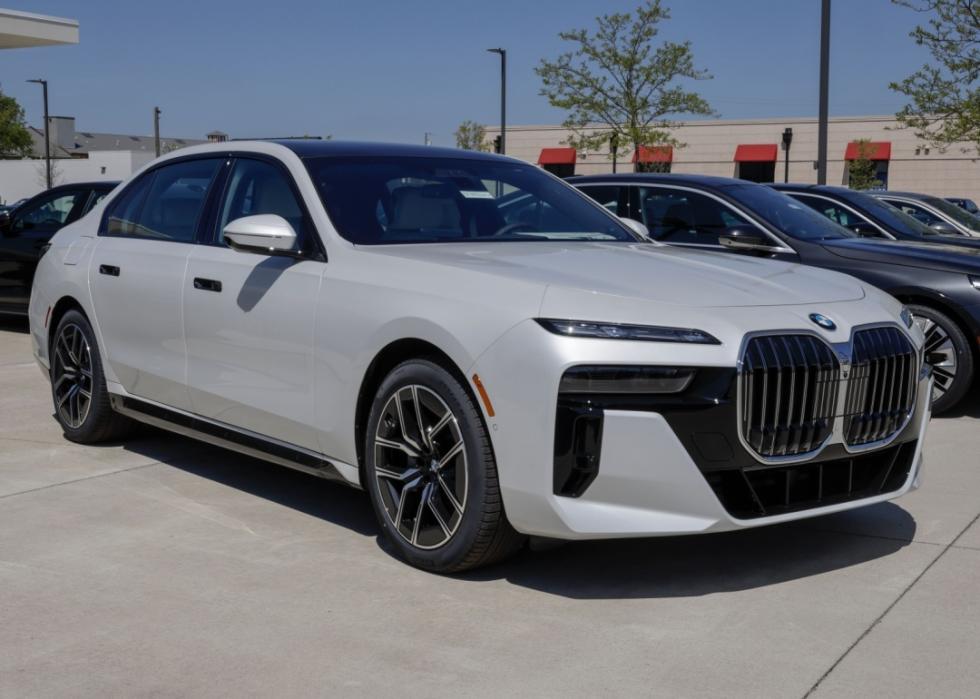
- Production of hybrid vehicles: 23.9%
- Electric vehicles: 11.5%
- Plug-in hybrid vehicles: 3.8%
#2. Toyota
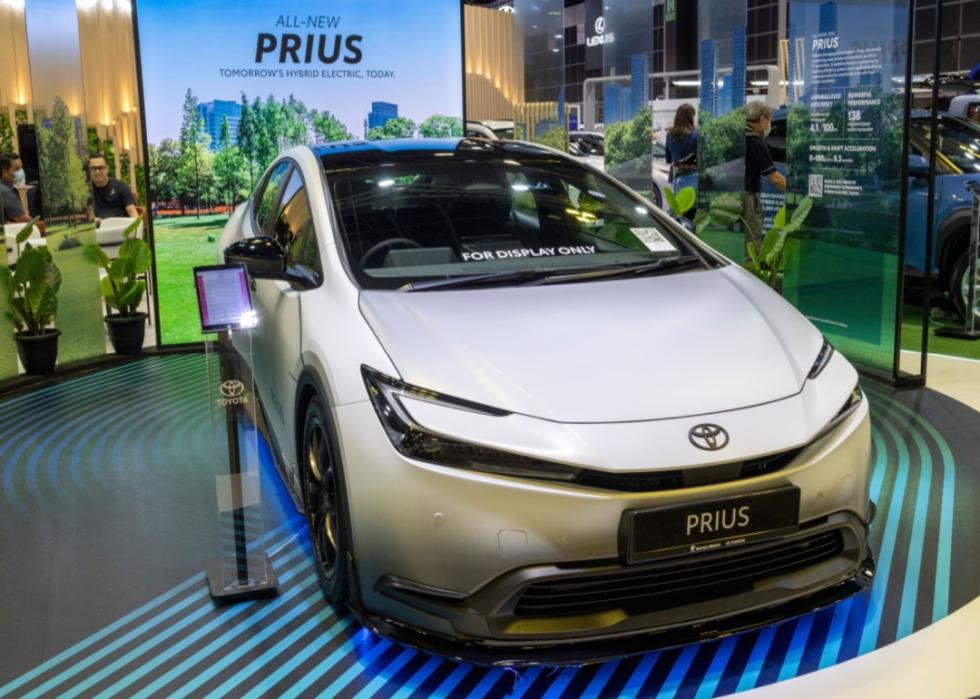
- Production of hybrid vehicles: 31.8%
- Electric vehicles: 0.6%
- Plug-in hybrid vehicles: 1.7%
#1. Mercedes

- Production of hybrid vehicles: 43.1%
- Electric vehicles: 19.6%
- Plug-in hybrid vehicles: 0%
This article was originally published by Stacker and was republished with permission.
What makes a city a good place to live? Practical features are important, such as well-maintained streets, good public transit and reliable trash collection. So are amenities that make cities attractive and interesting, such as museums and public parks. Access to green space is especially valuable for residents who may not be able to travel easily beyond city limits.
On May 22, 2024, the nonprofit Trust for Public Land released its annual ParkScore report which ranks U.S. cities based on the quality of their parks. Beyond tallying how many parks a city has, the rankings also consider the share of residents who live within 10 minutes’ walk of a park. This recognizes that in the U.S. and other wealthy countries, affluent white neighborhoods often have more parks than low-income areas and communities of color.
Access is important, but I believe making people feel included and welcome is equally important. If parks do this well, people will be more willing to use them.
I am an urban geographer and study how parks affect social interaction in diverse communities. My students and I are examining how people interact with the built environment of Phalen Regional Park in St. Paul, Minnesota, to understand what leads people to experience this park as a welcoming and inclusive space. I believe Phalen Park offers useful strategies that other cities can emulate.
Something for everyone
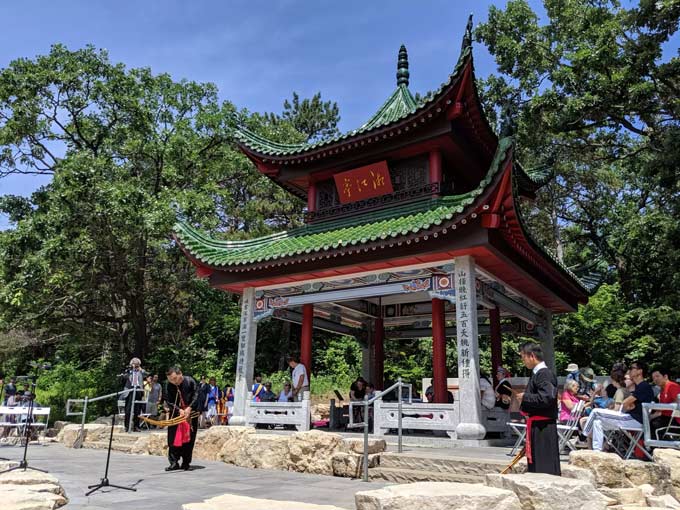
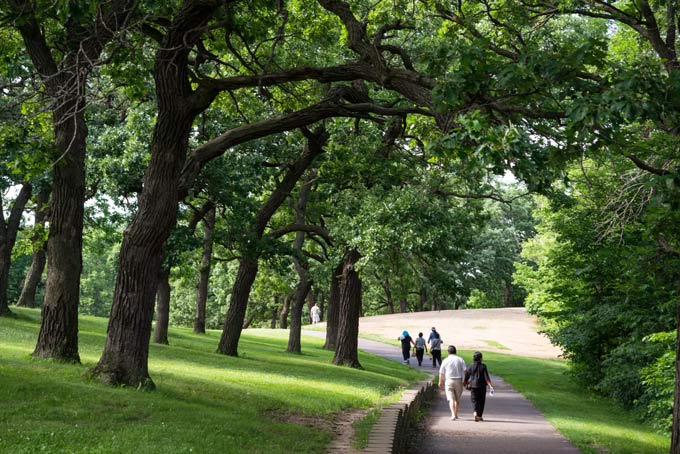
Phalen Park is among St. Paul’s largest parks, covering 494 acres (2 square kilometers) — three times the size of Disneyland. It includes a 198-acre lake encircled by a trail, watercraft rentals, scenic views, a golf course, an amphitheater, sculptures, a playground and two pavilions for picnics, performances and other gatherings.
One important feature is St. Paul’s sole public beach with lifeguard services. Many low-income households around the park don’t have access to places where they can swim for free. Providing a safe place to swim helps reduce this inequity.
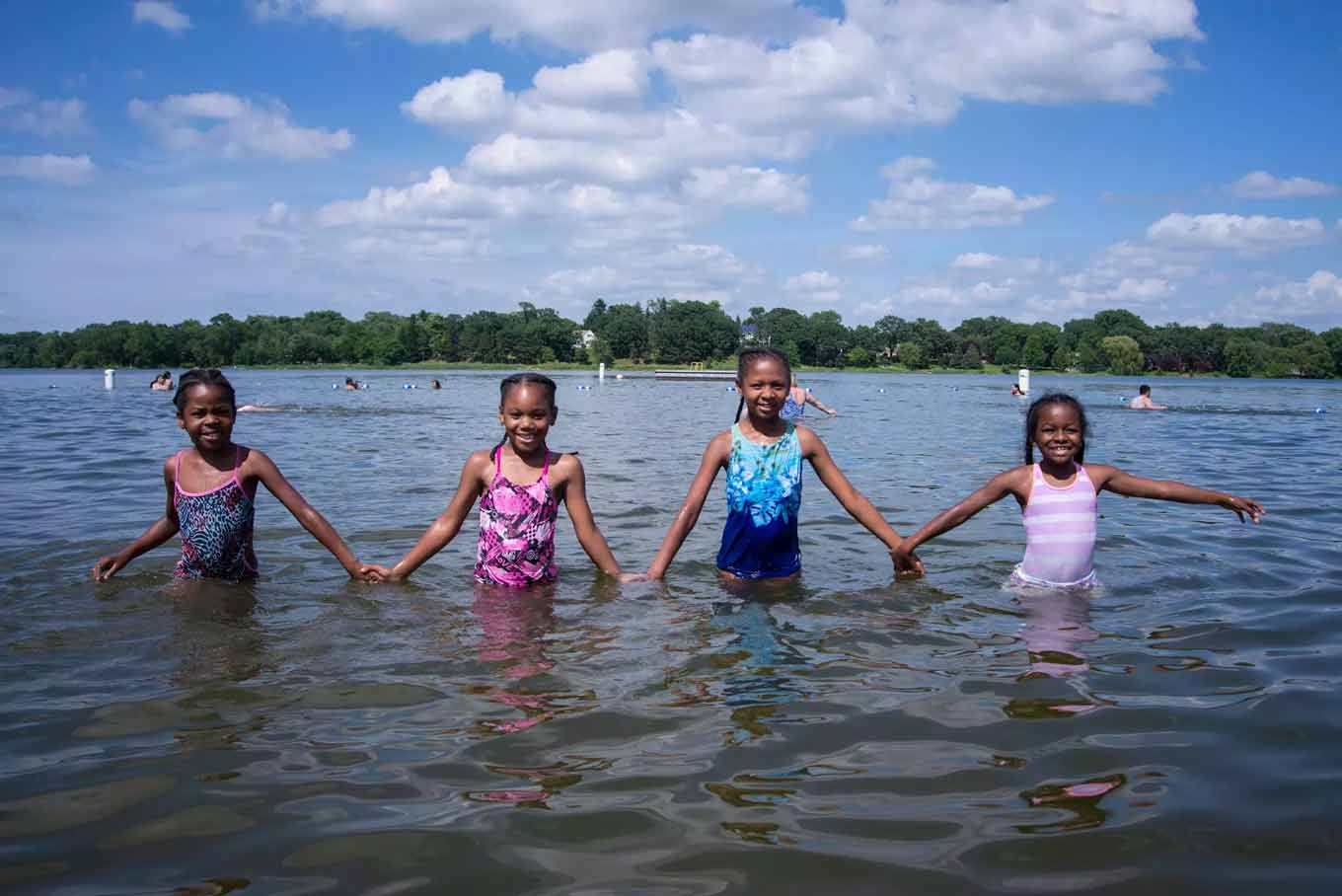
People in the Twin Cities use parks in a variety of ways. For example, Asian American park visitors are 2.5 times more likely than others to attend family events in parks, while Black park visitors are 1.75 times more likely than others to go fishing there. In surveys and interviews I have conducted, people from many social groups report that they use Phalen Park because there are so many things to do there and there are diverse groups of people in the park.
Community organizations use the park’s green spaces and shoreline for year-round public events and festivals. The park hosts cultural performances, community gatherings such as movie screenings, and regional events such as freshwater stewardship activities and dragon boat races.
These free events cater to many different age groups, attract diverse crowds and promote cultural learning and positive interracial encounters. Phalen Park is one of the most-visited parks in the Twin Cities, with an estimated 1.1 million visits in 2021.
Investing in parks is good for cities
There are many practical reasons for cities to invest in public parks. Studies have found that visiting green spaces reduces stress and that people who live within half a mile of a public park tend to get more exercise than those who lack access to safe places for walking, biking and recreation. Public parks provide spaces where people can gather for free, or sometimes for a nominal permit fee.
However, it’s important for visitors to feel safe and welcome. Due to a legacy of racial segregation, and to uneven investment in parks, that doesn’t always happen.
In Chicago, for example, white and Hispanic groups have clashed over using certain segments of The 606, an elevated park that follows the path of an old rail line. These encounters have led some Hispanic visitors to avoid using parts of the park. In turn, white visitors say this distancing makes them feel suspicious of groups of Hispanic people in the park.
A visitor mix that looks like St. Paul
The Twin Cities typically perform well in ParkScore ratings — for 2024, Minneapolis ranks second among U.S. cities, followed by Saint Paul – but there’s still room to improve. The Trust for Public Land has identified significant differences in park access between people of color and white residents in Minneapolis and St. Paul. Neighborhoods in St. Paul where people of color are the predominant group have access to 24% less park space per person than the city’s average neighborhood.
St. Paul has a diverse population that measures 54.3% white, 18.3% Asian, 15.6% Black and 8.6% Hispanic, according to 2023 census estimates. Neighborhoods within a mile of Lake Phalen Park are comparably mixed, with 34.8% white residents, 34.4% Asian residents, 14% Black residents and 11.2% identifying as Hispanic.
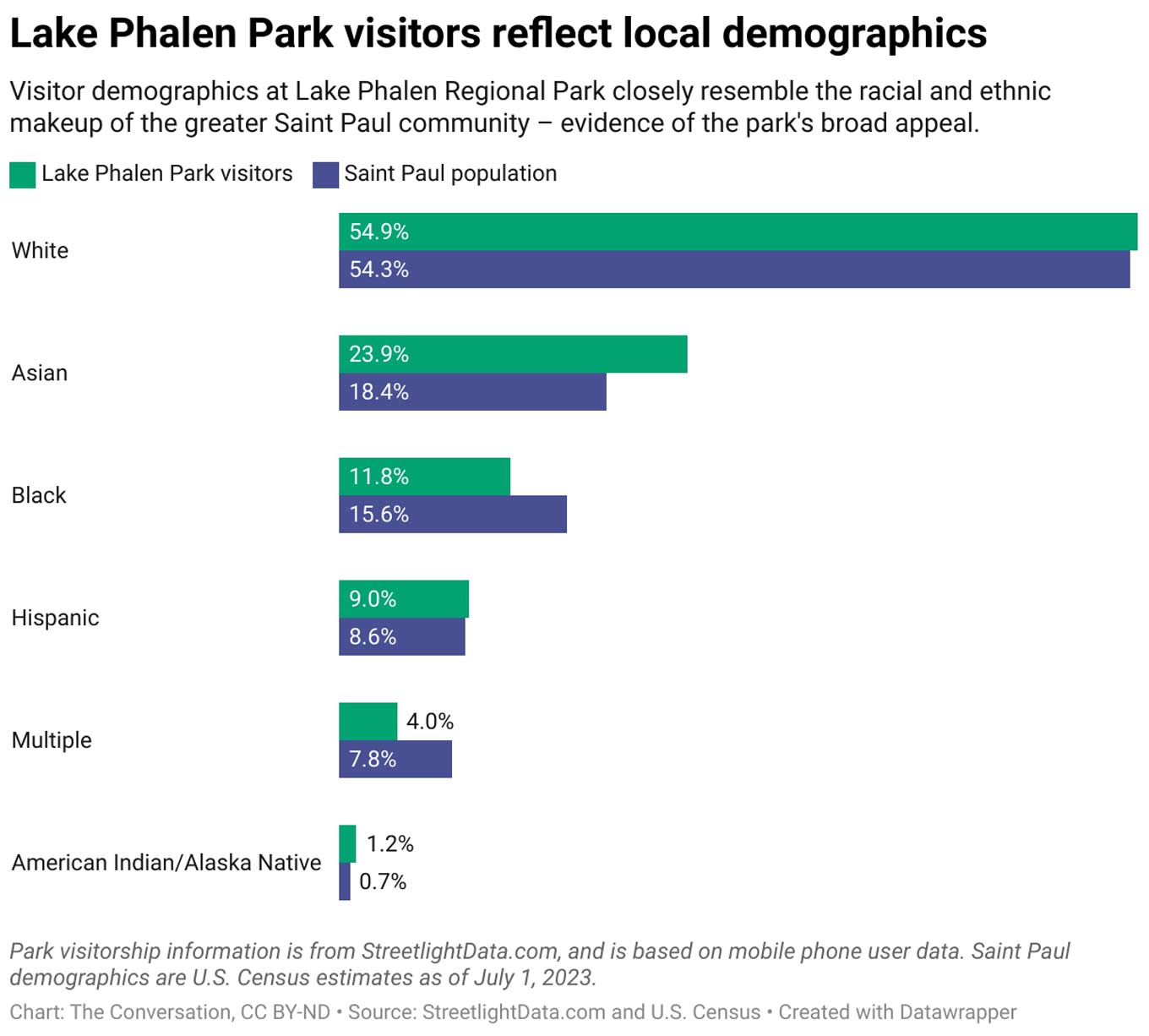
I analyzed data from StreetLightData.com, which gathers mobile phone user data, to study visitor demographics at Phalen Park from 2019 to 2021. During that time, 54.8% of visitors were white, 23.9% were Asian, 11.8% were Black and 8.9% identified as Hispanic. These findings show that the park attracts a mix of people that mirrors St. Paul’s demographics.
What else would increase the park’s appeal as a place for diverse communities to gather? Visitors say they want more restroom facilities in the park and want them to be cleaner. Restroom availability affects how long people will stay at a park or whether they will even come. Perceptions that a park’s restrooms are dirty threaten visitors’ sense of safety and welcome.
People also want clearer guidance about park amenities, such as signs explaining public art and offering multilingual directions for using the beach, boat ramps and trails. Addressing these concerns can help reduce uncertainty and foster a sense of safety and belonging.
Expanding or improving paved trails can reduce conflicts over common spaces, such as clashes between cyclists and pedestrians. The master plan for Phalen Regional Park calls for widening the park’s trails and separating walking from biking. These changes have occurred in a few locations but not throughout the park.
Parks are like a city’s living room. Designing, building and managing them well makes people more likely to go there and stay a while. Investing resources to make parks attractive to different groups and inviting for everyone is a sure way to boost inclusion. As city leaders digest this year’s ParkScore ratings, Phalen Park offers a model for other diverse urban communities.
This article by Dan Trudeau, from Macalester College, was originally published by The Conversation.

Students at all-girls’ schools do slightly better in their exams than girls at co-educational schools, according to new research from the United Kingdom.
This goes against previous studies that suggest it does not matter if students attend single-sex or co-ed schools.
What is the study?
This research was done by FFT Education Datalab. This is an independent research team specializing in education policy and statistics.
Using the United Kingdom’s National Pupil Database, the study looked at more than 580,000 students who attended more than 3,200 schools. All schools were government-funded (so were “public schools” in Australian terminology) and were either single sex or co-ed.
Students exam results were examined at the end of Year 11 and the study controlled for differences in schools and pupil characteristics, such as socioeconomic disadvantage or high levels of students who learned English as a second language.
What did the research find?
The research found girls who went to all-girls’ schools recorded a small improvement in their exam results compared to their peers in co-educational schools.
This is after adjusting their results to account for factors such as disadvantage.
The gap is small — around one month’s progress for each of the students. But it is noticeable.
Yet for boys’ schools, there wasn’t any difference in results between single sex and co-ed schools.
Why is this important?
While the UK study was not peer-reviewed, this finding is important because it contradicts other recent large-scale research, which has found no statistically significant academic advantage to single-sex schooling.
For example, a 2022 analysis of Irish students found no significant performance gaps between co-educational and single-sex schools.
A 2014 meta-analysis (an overview of many studies) across 21 countries also found no high-quality evidence of benefits to single-sex schooling.

What about Australia?
This new research plays into the renewed debate over single sex schooling in Australia in recent months.
This follows some prestigious all boys’ schools announcing moves to co-education (and some former students crying about the change). It also follows multiple examples of sexism and misogyny by male students at both all-boys and co-ed schools.
There is also a growing body of Australian research examining toxic behavior of boys towards their female teachers and peers.
So the UK research could further entrench a perception girls are better off in single-sex schools.
This perception has a long history. Many girls schools were set up in the 1800s by pioneering headmistresses such as English educator Frances Buss, who believed in girls’ equal rights to education and girls’ schools were the best places to provide this.
Girls’ schools today retain an image of feminist progressivism, promoting the idea that “girls can achieve anything”. The perception is supported by some research evidence that girls in single-sex schools are more likely to feel confident in traditionally male-dominated subjects such as STEM.
What needs to be done?
This UK study raises many questions. Are girls indeed better off on their own? Are there aspects of single-sex education that could be applied in co-ed environments? How do we ensure that all schools are schools of choice for girls, including coeducational schools?
We can investigate these questions further by doing research with families to better understand their perceptions and experiences of single-sex schools today. We can also do more research into the impact of programs such as Respectful Relationships, which have been introduced to build positive gender cultures in schools.
This article by Claire Charles, from Deakin University, and Lucinda McKnight, from Deakin University, was originally published by The Conversation.

Every day the Good Good Good team collects the best good news in the world and shares it with our community. Here are the highlights for this week!
If you want to get good news in your inbox every day, join the Goodnewsletter — the free daily newsletter designed to leave you feeling hopeful.
The Best Positive News We’re Celebrating This Week —
Two simple measures are helping cut hospitalizations from heat waves in half
From 2008 to 2020, there was an increase in heat-related emergency room visits in every single region of the US.
While higher-tech, more complex solutions are in the works to mitigate higher temperatures — for years, Los Angeles has been adopting an approach that relies on two more simplistic measures: painting rooftops and streets with white, reflective paint and planting more trees and vegetation.
And it could be saving lives. A recent study estimated that these efforts could significantly reduce ER visits by up to 50% during heatwaves.
Why is this good news? As the world keeps getting hotter (at least for a little while), we need accessible, affordable, uncomplicated solutions that work quickly to mitigate the impacts of heat waves and save lives. Painting and planting check all of those boxes.
→ Read more
The inaugural class of doctors just graduated a first-of-its-kind medical school in Cherokee Nation
The first physician training program on a Native American reservation and affiliated with a tribal government just graduated its inaugural class of doctors.
Nine Native people just graduated from Oklahoma State University’s College of Osteopathic Medicine at the Cherokee Nation, making up over 20% of the 46 total students.
Another 15 Native students are graduating from the university’s campus in Tulsa. Together, the graduates represent 14 different tribes, including Cherokee Choctaw, Alaska Native, and Seminole.
Why is this good news? These new doctors will help address the nationwide shortage of Indigenous doctors. Of the approximately 841,000 active physicians in the U.S., nearly 2,500 are Native American — just 0.3%. That shortage currently leads to a lack of “quality and timely care” at Indian Health Service clinics.
With a campus right in Cherokee Nation, students also get real-life experience caring for Indigenous patients.
The number of polio cases has dropped to 4,000 globally — a 100-fold decrease from 400,000 in the 1980s
Thanks to effective vaccination campaigns using two types of vaccines as well as improved access to clean water and sanitation — the number of annual cases of polio has dropped dramatically in recent decades.
In the 1980s, there were as many as 400,000 cases of polio globally — that number has declined to 4,000 in the last few years. That improvement has meant millions of children won’t experience lifelong paralysis.
Globally, we are close to eradicating all three types of wild poliovirus, with wild poliovirus serotypes 2 and 3 eliminated and only six reported cases of serotype 1 reported globally.
New vaccines are being administered to address the remaining cases, and eradicate the last stubborn cases — closing the chapter on polio globally once and for all.
→ Read more
New requirements are protecting national parks — and making them both easier and less crowded to visit
National parks around the country have seen record visitation numbers in recent years, resulting in unprecedented overcrowding (which puts an added strain on the parks).
In response, the National Park Service is taking steps to protect the parks, manage traffic flow, and prevent them from being overwhelmed by numbers they can’t accommodate.
Most notably, several of the most-visited parks have implemented permit systems, which require visitors to make advance reservations to enter. While some critics argue that the permit system will make it more difficult for visitors to experience the parks, most permit requirements only apply during peak visitation season.
→ Read more
More national park good news:
- Great Smoky Mountains National Park just expanded its adaptive excursions, allowing disabled visitors to bike, camp, and kayak in the park.
- The newest national park in the U.S., Amache National Historic Site honors a painful chapter in American history.
- Last year for Pride Month, drag queen Pattie Gonia celebrated Pride with Yosemite National Park rangers.
To help alleviate their water crisis, a rail worker coordinated sending thousands of gallons of drinking water to the Navajo Nation by train every month
After getting laid off from his “dream job” of 25 years in the railroad industry, Andrew Halter pivoted to act on another dream of his alongside his brother, who runs a school on the Navajo Nation reservation.
After witnessing the ongoing water crisis on the reservation — nearly one-third of Navajo Nation residents don’t have access to reliable, clean drinking water — Halter and his brother envisioned using rail to shuttle in clean water for the people living there.
Trucks had already been delivering water to a small portion of the families in need, and they each received about 40 gallons per day (the average American family uses 300 gallons per day).
Halter knew operations needed to scale up — and now his company, Jacob’s Well delivers thousands of gallons of water every month from the Mississippi via the BNSF Railway.
Halter is now working to bring more water to more reservations where reservoirs and water supplies are drying up.
After incorporating Negro Leagues statistics, Josh Gibson became Major League Baseball’s all-time batting leader
In 2020, Major League Baseball officially recognized that the Negro Leagues, which operated from 1920 to 1948, were major leagues. And after a three-year research project, league statistics were officially incorporated into the MLB record books.
With the incorporation, Josh Gibson became MLB’s all-time batting leader with a .372 batting average. Alongside other legendary Black players, Gibson also topped the leaderboard for a single-season batting average of .466 in 1963.
While the process to incorporate the Negro Leagues statistics has been intensive and thorough, MLB’s historian estimated that about 75% of the league’s box scores have been documented — and they’ll continue to make updates to official records.
Why is this good news? While true justice would look like segregation in MLB never happening, incorporating the statistics of players who were systematically excluded from the league is an important step in righting that historical wrong. And Gibson’s position atop that leaderboard is a long-overdue recognition in sports history.
More good news of the week —
One state in India is using AI to monitor elephant movements on train tracks to prevent further deaths. Elephant deaths on and near Tamil Nadu’s railway tracks are rising, with 36 fatalities recorded from train collisions in the past decade.
Under a new veterans law, more than 1 million claims related to toxic burn pit exposure have been granted. Representing around 888,000 veterans and survivors in all 50 states, about $5.7 billion in disability benefits have been distributed.
Wind power overtook gas as the UK’s largest source of electricity in 2023. Wind made up 32% of output in Britain for the first time, overtaking gas, which had held the top spot for nearly three decades.
Indian Railways is about to be 100% electric, making it the largest green railway in the world. Electrification is happening over nine times faster than what it was a decade ago, from 1.42 km per day in 2014-15 to about 19.6 km per day in 2023-24.
The Central African Republic just became the first country to receive thousands of doses of a new malaria vaccine. Recommended by the WHO last October, a total of 43,000 doses arrived by air today from UNICEF, and another 120,000 are scheduled to show up in the coming days.
Scientists just achieved a new breakthrough in a non-hormonal, reversible, non-toxic male birth control. They were successfully ablet o target a protein crucial to making fertile sperm, giving men control over their protection window.
To address the environmental impacts of toilet paper, major companies are rolling out more eco-friendly alternatives. Making TP is an energy- and water-intensive process that requires toxic PFAS and other chemicals, and can be an insoluble pollutant that resists wastewater treatment.
New EPA regulations close loopholes that have allowed coal-fired power plants to pollute the air and water for decades. While clean energy alternatives are rapidly growing, fossil fuel plants still generate 60% of the U.S. electricity supply — the new rules will help address the pollutants they produce.
The first of its kind in the U.S., Vermont just passed a bill requiring fossil fuel companies to help pay for destruction caused by climate-fueled extreme weather. The money will go toward modernizing infrastructure, cleaning up after storms, addressing public health costs of climate change, and more.
Renewable sources made up nearly 30% of electricity generation in the U.S. in March. Solar, wind, hydropower, biomass, and geothermal provided 29.2% of electricity, the second-highest source behind natural gas, at 39.4%.
A “gamechanging” breakthrough in breast cancer research, scientists discovered how to preserve breast tissue outside the body for at least a week. They found tissue could be preserved in a special gel solution, which will help scientists identify the most effective drug treatments for patients.
California’s first Black land trust is making the outdoors more inclusive — and fighting climate change. The 40 Acres Conservation League is creating outdoor space where Black Californians and other people of color can feel at home in nature.
A new woman-owned sports bar in Minnesota caters exclusively to women’s sports and its fans. A Bar of Their Own is similar in concept to Portland’s The Sports Bra, which just announced plans to franchise and expand.
Thanks to new “vibrating” jerseys, soccer fans who are deaf or hard of hearing can better experience the atmosphere of a match. Newcastle United just introduced the “haptic” shirts for fans, which use sensors that vibrate when action takes place on the field.
Mattel recently announced a series of nine, one-of-a-kind Barbies honoring trailblazing women athletes. The dolls are part of a larger initiative and partnership with VOICEINSPORT to fight stereotypes that keep girls from achieving their dreams.
New “game-changing” research found even more evidence for preventing peanut allergies in children through early introduction. The research demonstrates children can build protection from peanut allergy if they consume peanut products from 4 to 6 months through age 5.
Billionaire philanthropist Melinda French Gates announced a $1 billion donation to support women’s rights. About $200 million will go to organizations fighting for gender and reproductive rights in the United States.
The NOAA confirmed a critically endangered whale was just spotted off a California coast. Researchers spotted the North Pacific right whale, the rarest whale in the world with likely fewer than 500 remaining globally.
This story was originally published by High Country News.
On the day after Christmas in 2020, San Francisco firefighter Matt Alba had a seizure. At the hospital, doctors discovered a tumor the size of a pear: It was brain cancer.
It’s a diagnosis that, in Alba’s line of work, is tragically common. Research suggests that firefighters have higher rates of cancer than the general population, including a 26% higher risk for brain cancer. In 2023, nearly three-quarters of active firefighter deaths were due to cancer, the leading cause of death in the profession nationwide.
Though it’s hard to determine a single reason for their elevated cancer risk — firefighters are exposed to a range of toxins in their everyday duties — one obvious point of contact is their gear, known as turnouts. Perfluoroalkyl and polyfluoroalkyl substances, or PFAS — a group of chemicals known for their waterproofing qualities — have been added to firefighter turnouts since the 1970s, years after chemical companies first realized that the compounds were hazardous to human health.
Alba, a battalion chief in the San Francisco Fire Department and head of its health and safety program, has been sounding the alarm for a decade, long before his own diagnosis. And last week, the department he works for took an important step toward addressing the issue — one he hopes will have ripple effects on firefighters across the country.
On May 14, San Francisco became the first major American city to ban PFAS from its firefighters’ protective gear. The ordinance, which was passed by the city’s board of supervisors and now heads to Mayor London Breed for her signature, requires the city’s fire department to provide PFAS-free gear to its nearly 1,500 firefighters by June 30, 2026, at an estimated cost of $10.1 million. The decision joins a statewide ban on PFAS in firefighting foam, which went into effect in 2022.
While everyone comes into contact with PFAS in one way or another — the chemicals are found in everything from rain jackets to drinking water — firefighters have particularly high levels of exposure. Knowing this, they have been leading a cross–country, grassroots effort to make their turnouts safer.
“We have this unique risk in our occupation that is really hard to mitigate sometimes,” said Russell F. Osgood, vice president of education, research and outreach at the nonprofit Firefighter Cancer Support Network. “So removing compounds from things that protect us — to make it less risky for us as far as getting cancer — is a good step.”
Until recently, that has been a challenge, as effective PFAS-free gear has not been readily available. But earlier this year, five fire departments, including San Francisco and Denver, began testing PFAS-free turnouts.
The reception has been positive, said Neil McMillan, director of science and research at the International Association of Fire Fighters, a labor union for firefighters in the U.S. and Canada. Though official results won’t be available until summer, McMillan said that, so far, firefighters have reported “no differences or trade-offs in performance.”
“It used to be that it was a badge of honor to wear a dirty coat — that’s no longer the situation.”
San Francisco’s decision to purchase PFAS-free turnouts comes on the heels of similar announcements in Vancouver, British Columbia, and Concord, New Hampshire. Because of its size, what happens in San Francisco could influence other cities to replace their gear, too, if they can scrape together the funds.
PFAS-free turnouts cost $4,000-$6,000 each, around 30% more than the alternatives. Departments typically provide two sets to each firefighter and must replace them every five to 10 years.
Alba worries that, because of the cost, the transition won’t happen quickly enough, and PFAS-free gear will continue to pose a funding challenge far into the future. “You can see how this will be, for firefighters, a generational problem,” he said.
So Alba is also teaching firefighters how to minimize their contact with PFAS: wearing turnouts only when absolutely necessary, bagging and washing their gear after fires and showering after they return to the station.
“It used to be that it was a badge of honor to wear a dirty coat — that’s no longer the situation,” said Alba, who’s been in the fire service for 26 years. “So I’m grateful for how far we’ve come.”
“But there is so much more that needs to be done to fully eradicate this known carcinogen from our quote-unquote safety equipment,” he added.
High Country News is an independent magazine dedicated to coverage of the Western U.S. Subscribe, get the newsletter, and follow HCN on Facebook and Twitter.

In mid-May, congressional hopeful Rick Becker commissioned a personalized Cameo from influencer Dylan Mulvaney in a video that stealthily took aim at their candidate Julie Fedorchak, their political rival in the Republican race for North Dakota’s seat in U.S. Congress.
He asked Mulvaney to congratulate Fedorchak on her new job “working with rhinos” at a zoo in D.C., a sneaky reference to the political term R.I.N.O. — “Republicans in Name Only.”
On May 21, Becker took to X (formerly Twitter) to share the video that he made at Mulvaney’s expense, misgendering her and saying it was “well worth” the $50 Cameo fee “for the laugh.”
The media at large had a field day with the story, and as Mulvaney’s name cropped up in headline after headline, she decided to wield the attention and turn heads towards a good cause.

In a TikTok video posted on May 30, Mulvaney began her video by acknowledging the Cameo she made for Becker.
“I had absolutely no idea the intent behind it, so I made the video, and it turns out it was a conservative politician using the video to bully his opponent,” Mulvaney explained.

“I wish I could say that this was the first time that this has happened, but I am — in fact — the most gullible person in the world,” Mulvaney continued with a self-deprecating smile.
“So I would like to use their hate and ignorance to do something of better use, by using my Cameo to raise money for Save The Children, which is an organization that currently has operations set up in Gaza to help provide emergency services to innocent lives.”

Mulvaney promised that “100%” of her Cameo profits made over the next month would be donated to Save The Children, a humanitarian relief organization that currently has boots on the ground in Gaza, Sudan, Ukraine, and other “hard-to-reach places, where it’s toughest to be a child.”
Mulvaney wrapped her video by calling for a permanent ceasefire, and admitted that she “should have said this sooner.”

Mulvaney joins a long list of other influencers, artists, and content creators who have called for a ceasefire in the Israel-Palestine conflict and highlighted grassroots fundraisers like Operation Olive Branch, which help raise funds for refugees fleeing Palestine.
In early May, beloved children’s entertainer and educator Ms. Rachel (Rachel Accurso) raised $50,000 for Save The Children when she used Cameo as a fundraising tool — and sold out of Cameo requests in mere hours.
This is also not the first time that Mulvaney has “uno reversed” negative attention and spun it into support for a good cause.
In March, Mulvaney released her first single “Days of Girlhood,” and pledged to donate all streaming profits raised from March through the end of June to The Trevor Project, a nonprofit suicide prevention and LGBTQ+ youth advocacy group.
The video went viral online — for better or worse.
Transgender fans connected with Mulvaney’s song, making loving homages to their moms, sisters, and friends set to the song’s lyrics shouting out the “girls who helped show [them] the way.”
But it also gained attention from critics who picked apart Mulvaney’s hyper-feminine lyrics and bubble gum pink music video aesthetic, and from trolls who were flagrantly transphobic in their response videos.
Mulvaney hopped on TikTok to address the backlash to the song, noting that it was “going viral for most of the wrong reasons,” but she was grateful for the streams.
“Whether you love or hate the song, all of my profits from this music will be donated to the Trevor Project, now through Pride Month, which is an incredible organization that provides crisis services to queer youth,” Mulvaney explained.
“So even when the transphobes stream the song, that money goes to queer kids,” she said proudly. “That’s a win.”
Header images courtesy of Dylan Mulvaney/TikTok
For victims of mass violence around the world, attracting foreign media attention can be a matter of life and death.
Right now, Palestinian reporters are risking their lives on a daily basis to keep the world’s eyes on the suffering in Gaza, and international coverage has been crucial to receiving humanitarian aid, mobilizing widespread protest movements, and exerting political pressure on Israel and its allies.
The Israeli government is also clearly aware of the power of local reporting in swaying public opinion: it continues to obstruct on-the-ground coverage of the war, and has even allegedly targeted journalists. Simultaneously, it has made great efforts to remind the world of the horrifying details of 7 October in order to counter Hamas’s denial of massacring civilians and generate sympathy for its retaliation.
New research reveals that this struggle for international attention and compassion has a surprisingly long history.
Already in the 17th century, oppressed minorities in Europe found the printing press to be a powerful ally in putting the spotlight on their agony.
To bring foreign audiences to their aid, they faced a difficult question, one that we still grapple with today: how do you make people care about distant suffering?
In my new book, I show that in their attempts to answer this question, early modern refugees helped lay the foundations of modern humanitarian culture.
Lobbying for compassion
European societies first developed a tradition of engaging with distant people’s misery after the Reformation, a time of extreme religious polarisation between, primarily, Catholic and Protestant believers.
To combat this fragmentation, many states violently persecuted religious dissidents, causing the displacement of hundreds of thousands of Protestants, Catholics, Anabaptists, Jews, and Muslims.
Centuries before the 1951 UN Refugee Convention, these refugees had next to no rights. To survive, they depended on the charity and hospitality of religious kin in other parts of Europe.
Uprooted minorities often sent delegates with written testimonies to raise awareness of their plight among potential allies.
Initially, this lobbying for support leveraged the established, hostile religious divisions to rally fellow believers.
Refugees therefore tended to mix their stories of violence with militant religious rhetoric.
Generating outrage
Practices such as these gradually changed with the rise of news media in the 17th century. As consuming news became commonplace for many Europeans, some persecuted groups realized that they could scale up their campaigns for solidarity by publishing their accounts as pamphlets.
Moving to print required displaced people to reassess their strategies, as they now had to think more carefully about the diverse audiences they would inevitably reach.
In a tempestuous political landscape marked by religious tension, volatile alliances, and incessant war, the safest and most far-reaching way to attract support was to highlight one’s suffering without alienating other religious groups in the process.
Abused minorities and their advocates therefore increasingly avoided framing their hardship in religiously polarising terms. Instead, they adopted a more universal rhetoric of compassion, appealing to the rule of law and a sense of shared humanity.
This shift in rhetoric would ultimately allow humanitarian engagement to transcend the religious divisions from which it had emerged.
Our shared humanity
Some of these publicity campaigns had sweeping political effects. Take the Waldensians, a Protestant minority in Savoy who suffered a religiously motivated massacre in 1655 at the hands of their sovereign, the Duke of Savoy.
After the slaughter – which left some two thousand men, women, and children dead – the survivors fled to France and wrote up eyewitness accounts, which they managed to publish and distribute with the help of the Dutch ambassador in Paris.
The Waldensians provided appallingly detailed reports of rape, torture, and infanticide, and insisted that only people who had “discarded all sentiments of humanity” could “bear to hear this without trembling”.
Their story sent shock waves throughout Europe, and successfully mobilised its main Protestant powers. The Dutch Republic, English Commonwealth, and Swiss Reformed Cantons organised large scale charity campaigns to aid the survivors, sent letters of protest to the Duke of Savoy, and dispatched special envoys to Turin to broker a peace deal.
Then as now, compassion could also lapse into intolerance. Some Dutch Protestants saw the mass killing as proof of the fundamental inhumanity of Catholics, and used it to propose anti-Catholic legislation. In Leiden, an altercation about the Waldensians even ended in violence.
But by foregrounding human (rather than religious) suffering, the Waldensians successfully brought people on side, and retained vital cross-faith support. Catholic France, most notably, offered them asylum and served as mediator during the peace talks.
Moreover, this strategy pressured persecuting governments to respond: the Savoyard authorities grudgingly issued a public statement denying the massacre, implicitly recognising foreign audiences as moral arbiters.
New allies
By appealing to humanity in the press, victims of violence did not completely knock down the religious walls separating solidarity networks, but they certainly created cracks.

In 1745, the Jewish community in Prague managed to cause serious international outrage through reporting about their expulsion at the hands of their queen, Maria Theresia. The queen received a flood of protests from foreign authorities and interest groups, including the Ottoman Sultan, the Pope, the Venetian Senate, the kings of Great Britain, Denmark, and Poland, as well as the merchant guilds of London, Amsterdam, and Hamburg.
They urged her, in the words of one observer, to uphold the virtues of “humanity, commiseration, love for one’s neighbour, wherever he may be.”
Silence of the press
Today things move faster, as much of the clamour for international attention has moved online: Palestinian journalists like Motaz Azaiza and Bisan Owda have garnered millions of followers on social media, playing a huge role in keeping the ongoing humanitarian crisis in Gaza in the public eye and providing crucial evidence against any efforts to whitewash war crimes and crimes against humanity.
While it cannot solve a crisis on its own, public attention can be instrumental in highlighting, challenging, and preventing atrocities. As early modern Europeans already realized, mass violence thrives on the silence of the press.
This article by David de Boer from Radboud University was originally published by The Conversation.

It has been an emotional month for Ms Rachel, to say the least.
To her young fans, Ms Rachel (Rachel Accurso) is the next generation’s Mister Rogers. With her sing-songy voice and sunny smile, Accurso has spent the last five years accruing 10 million followers on her Song’s For Littles YouTube Channel.
On June 1, Accurso swapped out her trademark pink-shirt-and-overalls combo for a rainbow top, and hopped on TikTok to celebrate Pride Month.
“Happy Pride to all of our wonderful families and friends,” Accurso said. “This month and every month I celebrate you! I’m so glad you’re here, I’m so glad you’re exactly who you are.”
Accurso was aware of the waves her video might create online, even as she was making it.
“To those who are going to comment they can’t watch the show anymore because of this support, no worries and much love your way, God bless,” Accurso continued in the same video. “I am not chasing fame or views, I’m standing strong in love.”
Many parents — regardless of sexual orientation or religious affiliation — replied positively and thanked her for sending out love.
“This two dad family loves you!” commented one TikTok user.
“My wife and I got married today and my parents weren’t there,” a commenter replied. “I needed to see your kindness today, thank you.”
“Catholic mama here and we just adore you,” another user chimed in.
But the video also received the very backlash Accurso anticipated. Daily Wire host Matt Walsh took to X, formerly Twitter, to voice his disapproval.
“This is a message to conservatives [sic] parents. She doesn’t want your business. You should respond accordingly,” Walsh told his base. Some X users in turn said they would boycott Ms Rachel’s content in their household.
On June 3, Accurso doubled down on her initial Pride Month post with a follow up video, this time referencing her faith.
“I’ve shared prayers on here before and said, ‘God bless, and that’s because my faith is really important to me. And it’s also one reason why I love every neighbor,” Accurso explained, going on to cite a passage from the New Testament of the Bible.
“In Matthew 22, a religious teacher asked Jesus, ‘what’s the most important commandment?’” Accurso said. “And Jesus says, ‘To love God and to love your neighbor as yourself. All the law and the prophets hang on these two commandments, there’s no greater commandments than these.’”
Accurso went on to emphasize that the refrain “love your neighbor” is mentioned “eight times” throughout the Bible.
“So, yes, everyone belongs, everyone is welcome, everyone is treated with empathy and respect. It doesn’t say love every neighbor ‘except,’” Accurso said.
“There are so many reasons I stand strong in love. I stand with everyone, that’s who I am. And the love back, and ‘God bless’ if you disagree, is genuine.”
@msrachelforlittles I love my lgbtq+ neighbors and stand strong in love 💓
♬ original sound - Ms Rachel
Accurso has made headlines multiple times in the last month, as she’s used her platform to speak out about causes close to her heart.
On Mother’s Day — May 12 — Accurso launched a fundraising campaign “to children, for children” in which she pledged to film Cameos for children and donate all proceeds to Save The Children, a humanitarian relief organization aiding children in Gaza, Sudan, the Democratic Republic of Congo, and Ukraine.
Within mere hours, she raised $50,000.
Amidst praise and support, Accurso’s Save The Children fundraiser also provoked a flood of death threats and vitriol. On May 16, Accurso posted an incredibly vulnerable video on TikTok when she was in the throes of the backlash.
“The bullying is so bad, it’s so bad,” Accurso said through tears. “But I can handle this.”
That very same week, Accurso received the 2024 Dorothy Height Distinguished Alumni Award from NYU Steinhardt.
In an emotional speech, she encouraged the most recent class of NYU graduates to “keep showing up” and “taking action” in the world, even when they face obstacles.
“Believe that it’s possible to build something beautiful, where there has been destruction,” Accurso urged. “Believe that you can help where it seems hopeless, know that love is a transformative force that is stronger than any hate, fear, or injustice.”
Header photo courtesy of Ms Rachel/Facebook, Modified by Good Good Good
Last week, the North East Ambulance Service in England announced an innovative new approach to helping disabled community members in the event of an emergency: A British Sign Language Relay Service.
Starting in May, all ambulances in the area have been equipped with an iPad, which hosts the SignVideo app, allowing first responders to speak to Deaf and BSL patients more effectively. The result? Better communication in emergency situations, and ultimately, more lives saved.
Ambulance crews will be able to use the app 24/7, reaching a video interpreter who can help first responders assess a patient’s condition and understand the next steps of their treatment.
The on-demand service will provide support to BSL users and improve communication from first responders in emergency situations, like asking life-saving questions, and communicating care with patients.
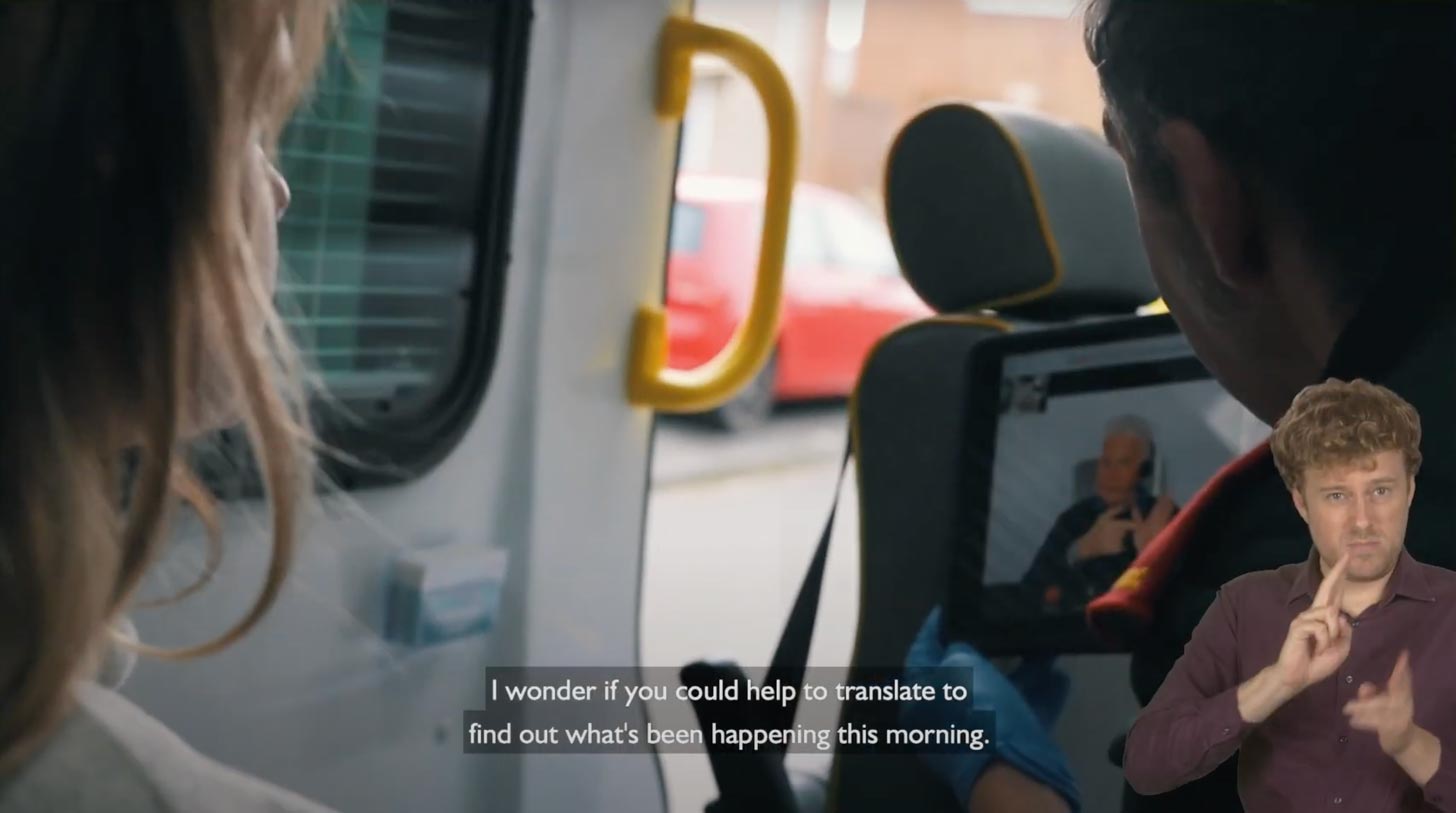
“As an emergency service, we are committed to delivering high quality patient care and making sure all patients receive prompt and effective communication during emergency situations,” Mark Johns, the NEAS’ engagement, diversity, and inclusion manager, said in a press release.
“Although our health advisors have access to BSL relay to support patients over the phone, we know our crews and Deaf/BSL patients sometimes face communication barriers. This partnership with SignVideo means that when a patient who is Deaf or uses BSL, we are able to triage and communicate more easily.”
A video demonstrating the service shows a paramedic interfacing with a patient, first writing on a pad to tell the patient that they will be calling an interpreter through the SignVideo app.
In seconds, the paramedic team has added a new member: a translator who acts as a liaison, virtually asking follow-up questions and giving the patient autonomy to explain their symptoms without miscommunication.
After gathering this information, the first responders also have the translator get the patient’s consent before taking vital signs and beginning care.
As of 2022, the UK government estimates that there are about 151,000 people in England, Scotland, and Wales who use BSL, 87,000 of whom are Deaf. Implementing this service is one small step towards achieving equity for folks who have long faced barriers to care.
“Deaf BSL users struggle to access the ambulance service and many other services because of the communication barriers and the lack of support and assistance that is available,” Rachel Austin, coordinator from Hartlepool Deaf Centre said in a statement.
“It’s great to see this new service being introduced by NEAS.”

SignVideo was created in 2004 by a Deaf entrepreneur — Jeff McWhitney — who wanted to make it possible for people to access instant BSL translation services. Since then, the technology has been employed in the UK’s public and private sectors in government, NHS, councils, banks, telecommunications providers, helplines, and more.
This includes the 999 BSL service, which allows Deaf and hard of hearing BSL users to call for emergency help through a video hotline.
SignVideo conducts over 100,000 BSL video calls a year, answering, on average, in less than 45 seconds, according to its website.
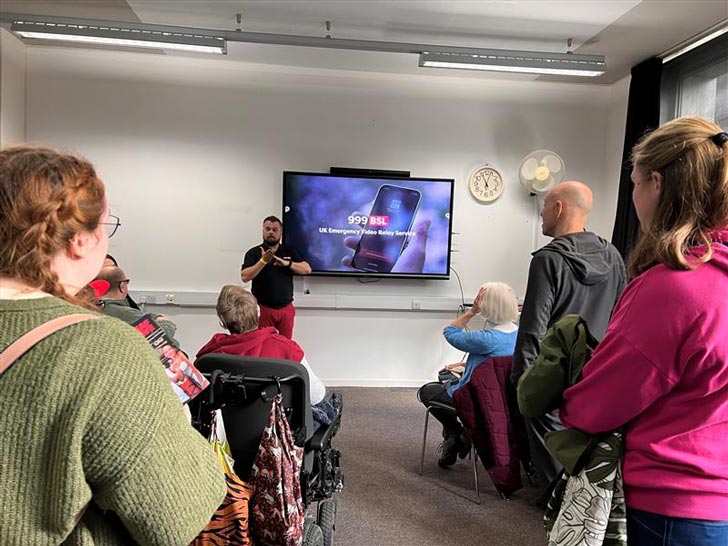
Though the timeliness is necessary for first responders, the tool can also be employed in non-emergency situations, like community engagement teams providing advice and training for NEAS staff.
Training for frontline staff will take place over the next year and will be complete by the Spring of 2025.
These updates are exclusive to North England, but advocates around the world have been working on ways to improve emergency communications for Deaf community members.
As this service rolls out, leaders in the community are eager it will make a massive impact.
“It will hopefully remove a barrier that people experience and provide a useful tool to support Deaf BSL users and paramedics to communicate with each other in challenging and difficult circumstances,” Austin continued.
“It will help to save more lives, ensure people get the best outcome and help achieve equality between Deaf and hearing people.”
Header image courtesy of North East Ambulance Service
This year, the leaders of the G7 declared their commitment to achieving net zero emissions by 2050 at the latest. Then, the Albanese government recently introduced legislation to establish a Net Zero Economy Authority, promising it will catalyze investment in clean energy technologies in the push to reach net zero.
Pledges to achieve net zero emissions over the coming decades have proliferated since the United Nation’s 2021 Glasgow climate summit, as governments declare their commitments to meeting the Paris Agreement goal of holding global warming under 1.5°C.
But what exactly is “net zero”, and where did this concept come from?
Stabilising greenhouse gases
In the early 1990s, scientists and governments were negotiating the key article of the UN’s 1992 climate change framework: “the stabilization of greenhouse gas concentrations in the atmosphere at a level that would prevent dangerous anthropogenic [human-caused] interference with the climate system”.
How to achieve that stabilization – let alone define “dangerous” climate change – has occupied climate scientists and negotiators ever since.
From the outset, scientists and governments recognized reducing greenhouse gas emissions was only one side of the equation. Finding ways to compensate or offset emissions would also be necessary.
The subsequent negotiation of the Kyoto Protocol backed the role of forests in the global carbon cycle as carbon sinks.
It also provided the means for well-forested developing countries to participate in the emerging carbon offset market, and to play their part in reaching the carbon accounting goal of “carbon neutrality”. Under those terms, the industrialized countries subject to the Kyoto Protocol could pay developing countries to offset their own emissions as a form of low-cost mitigation.
The Kyoto Protocol was unable to curtail soaring global greenhouse gas emissions, and a successor agreement appeared uncertain. As a result, interest turned in the late 2000s to the possibility of using highly controversial geoengineering techniques to remove greenhouse gas emissions.
These proposals included sucking carbon dioxide out of the sky so the atmosphere would trap less heat, or reflecting sunlight away from the planet to reduce heat absorption. The focus on carbon sinks, whether through forests or direct air capture, would appear again in the idea of net zero.
Temperature targets
By this point, policymakers and advocates were shifting away from emissions reductions goals (such as Australia’s unusual first Kyoto target to limit emissions to 108% of 1990 emissions by 2012).
Instead, temperature targets became more popular, such as limiting warming to no more than two degrees above pre-industrial levels. The European Union had already adopted the 2°C threshold in 1996 and argued successfully for its relevance as a long-term objective for climate action.
What changed was scientists now had better ways of tracking how long carbon dioxide emissions would stay in the atmosphere, allowing better projections of our carbon budget.
These findings allowed the IPCC’s 2014 report to clearly state limiting warming to below 2°C would require “near zero emissions of carbon dioxide and other long-lived greenhouse gases by the end of the century”.
In the 1990s scientists and governments sought the stabilization of greenhouse gas concentrations in the atmosphere at levels that would prevent climate change.
By this time, London-based environmental lawyer and climate negotiator Farhana Yamin had also set her sights on net zero by 2050. For Yamin, translating the 1.5°C ambition into climate negotiations meant focusing on net zero: “In your lifetime, emissions have to go to zero. That’s a message people understand.”
The concept of net zero offered a simple metric to assess mitigation efforts and hold parties legally accountable – an instrument she and colleagues proposed for the negotiation of a new legally binding agreement to succeed the Kyoto Protocol.
By late 2014, net zero had gained traction, appearing for the first time at a UN climate conference, the UN’s Emissions Gap Report, and in a speech by World Bank Group President Jim Yong Kim that stressed “we must achieve zero net emissions of greenhouse gases before 2100”.
Zero in Paris
These efforts culminated in the 2015 Paris Agreement, which in addition to its well-known temperature targets of 1.5°C and 2°C, also added a complementary goal:
To undertake rapid [emissions] reductions … so as to achieve a balance between anthropogenic emissions by sources and removal by sinks of greenhouse gases in the second half of this century.
This is what “net zero” means – a “balance” between carbon emissions and carbon sinks. It was subsequently enshrined in the IPCC’s Special Report on the importance of keeping warming under 1.5°C, in which 195 member states agreed to get to net zero emissions by 2050.
Slogan for greenwashing?
So, what’s next for net zero? Countries such as India have questioned what it means for fairness and equity between developing and developed nations, Instead, they favour the well-established approach of “common but differentiated responsibility” to mitigation. This justifies India’s aim to reach net zero emissions by 2070, as developed nations should lead the way and provide developing countries with funds and technologies necessary to support their mitigation ambitions.
The UN, by contrast, has warned the flexibility of net zero as a concept could make it a mere slogan for greenwashing by corporations and other non-state entities rather than a concrete objective.
As the chair of the UN’s High Level Experts group put it:
It’s not just advertising, bogus net-zero claims drive up the cost that ultimately everyone would pay. Including people not in this room, through huge impacts, climate migration and their very lives.
Given the chasm between pledges and practice documented in the 2023 UN Emissions Gap Report, there is a very real likelihood we will shoot past the temperature limits of the Paris Agreement.
The concept of net zero offered a simple metric to assess mitigation efforts and hold parties legally accountable.
Fossil fuel treaty
Net zero isn’t the only approach to tackle climate change. Other concepts are growing in popularity.
For instance, optimists say the temperature “overshoot” we’re on track for could be tackled with a “drawdown” of carbon emissions if we use “carbon dioxide removal” or “negative emissions technologies” such as carbon capture and storage, soil carbon sequestration, and mass tree planting and reforestation.
But beware: the IPCC’s Special Report cautioned that while some of these options might be technologically possible, they have not been tested on a large scale.
Can these untested technologies be relied on to halt and reverse the chaos likely to be unleashed by dangerous levels of global heating?
What does overshoot mean for the low-lying island nations who rallied around “1.5°C to stay alive”?
Momentum has been building for a Fossil Fuel Non-Proliferation Treaty since 2022, when Vanuatu called on the UN General Assembly to phase out the use of fossil fuels.
Such a treaty, Vanuatu President Nikenike Vurobaravu said, would “enable a global just transition for every worker, community and nation with fossil fuel dependence”.
At the Dubai climate conference late last year, held in the wake of the International Energy Agency’s revised Net Zero Roadmap, the negotiations culminated in a first for the UNFCCC – an explicit statement endorsing:
transitioning away from fossil fuels in energy systems, in a just, orderly and equitable manner, accelerating action in this critical decade, so as to achieve net zero by 2050 in keeping with the science.
Will net zero become more than hot air? That remains to be seen. While the science behind the concept is broadly sound, the politics of achieving net zero are a work in progress.
Reducing greenhouse gas emissions to the point where they are zeroed out by carbon sinks by 2050 requires just and credible planning. We must prioritise the phase-out of fossil fuels sooner rather than later.
This article by Ruth Morgan from the Australian National History was originally published by The Conversation.
Header image by NASA

On Memorial Day weekend, a tornado spanning 36.1 miles devastated parts of northern Arkansas. With up to 140 mph winds, homes and businesses were damaged or leveled, thousands were without power, and heartbreakingly, at least eight people were confirmed dead.
These were the state’s first tornado-related deaths in 16 years.
Now, the community is attempting to rebuild.
Quickly, the areas most impacted — Rogers, Bentonville, and Decatur — received assistance from emergency responders.
The Metroplex event center in Rogers was converted into shelter space, a local electric company enacted its Emergency Restoration Plan to restore power for over 40,000, and countless nonprofit recovery efforts have set up teams in the area.
But amid heartbreak and resilience, the community still finds joy.
Indie rocker Maggie Rogers’ scheduled tour stop at the Arkansas Music Pavilion at the Walton Arts Center went on as planned on June 3, but she made a point to help out the community, too.
In tandem with a pre-show gathering at Onyx Coffee Lab, Rogers posted on Instagram, asking for fans to bring donations for community members in need.

“We will be gathering donated relief items for the downtown Rogers neighbors,” Rogers shared in an Instagram story. “Basic first aid, toiletries, and supplies may be brought to be donated to individuals and families impacted by the tornado.”
This was followed by a list of requested supplies, such as Band-Aids, towels, baby formula, feminine hygiene products, coolers, flashlights, and more.
While it’s unclear how many donations were collected, it wasn’t the end to Rogers’ do-good efforts in the Natural State.
She also continued her advocacy efforts for reproductive rights, offering seat upgrades to fans who donate to local abortion clinics and nonprofits, through a partnership with Propeller.
Tuesday morning, the musician posted again on Instagram, with ethereal photographs from the evening’s performance.
“Rogers in Rogers, Arkansas,” she wrote.
“So happy you came to Rogers,” one fan commented. “Thank you for sharing your light with us.”
Header photos courtesy of KY3, Maggie Rogers/Facebook
If you’ve ever found yourself asking if the United States government “has a plan” for something you care about, we’ve got good news for ocean lovers.
To kick off June, the Smithsonian and the National Oceanic and Atmospheric Administration (NOAA) announced the rollout of a first-of-its-kind National Ocean Biodiversity Strategy.
This strategy — an approximately 18-page document written by the aforementioned organizations — calls for a “stronger, more unified and inclusive approach to ocean conservation,” per a press release from the Smithsonian.
Announced by the White House Office of Science and Technology Policy earlier this week, it represents the first nationwide strategy aimed at taking action to save marine life — and, subsequently, all life.
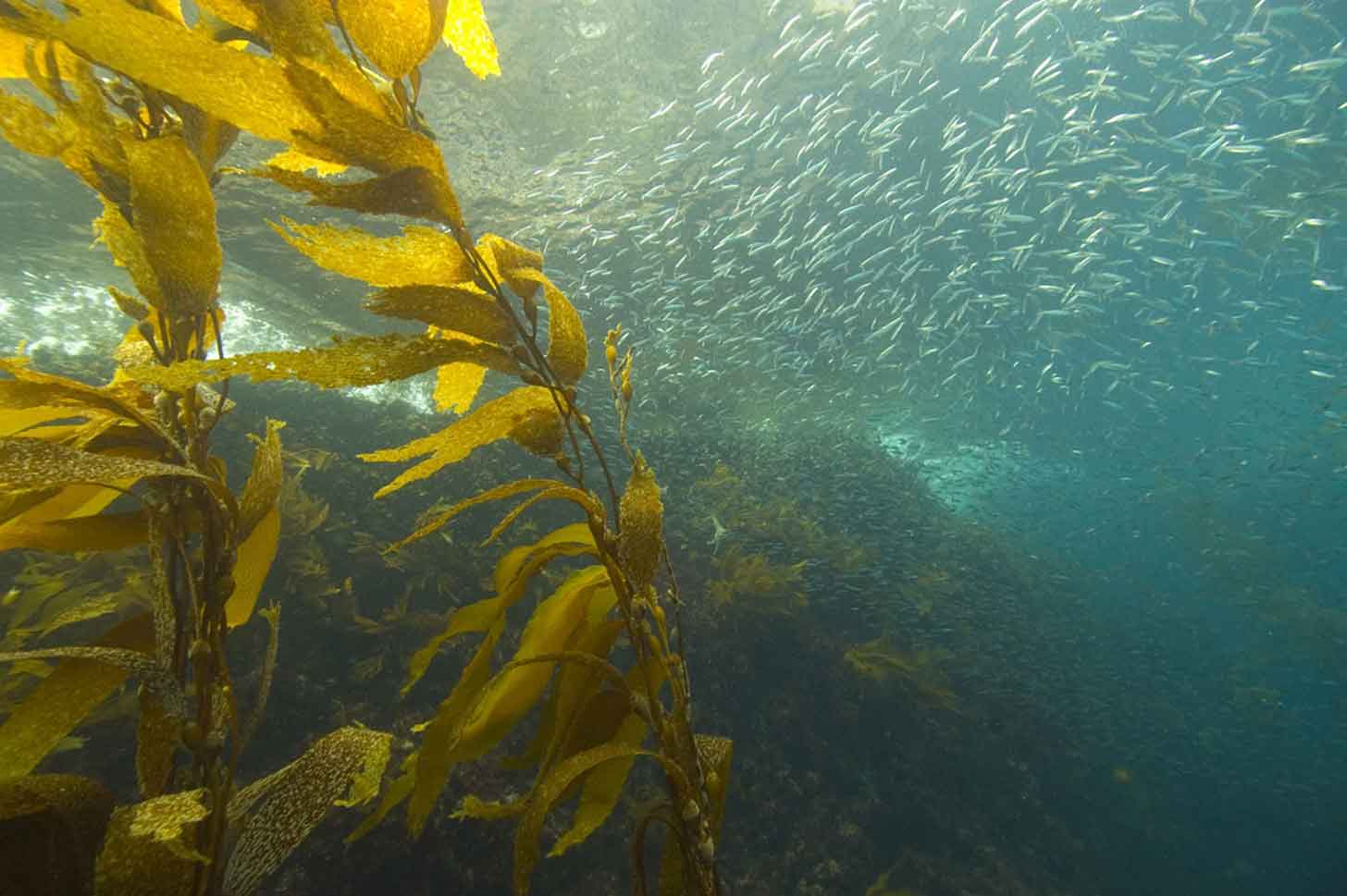
“Life in the ocean touches everyone,” said Gabrielle Canonico, leader of the U.S. Marine Biodiversity Observation Network at NOAA and co-chair of the team that wrote the strategy.
“Every other breath we take comes from the oxygen produced by microscopic ocean plants, and more than a billion people worldwide rely on food from the ocean as their primary source of protein. But these and other benefits will degrade with biodiversity loss, with dire consequences especially for frontline communities.”
According to the Smithsonian, the ocean contributes nearly $400 billion to the U.S. economy every year, providing 2.4 million jobs in fishing, shipping, tourism, and energy.
Plus, the total ocean territory under U.S. management covers an area larger than all 50 states combined. While protections for marine life have increased in recent years, there is a huge chunk of U.S. marine ecosystems and diverse species that remain unprotected or misunderstood.
The strategy hopes to close those gaps by working alongside local and Indigenous stakeholders.

“We are confronting biodiversity loss and its implications for human well-being, alongside the challenges posed by climate change and social inequity,” said Ellen Stofan, Under Secretary for Science and Research at the Smithsonian.
“We hold the power to overcome these obstacles with a united, society-wide effort to preserve nature and its benefits.”
The strategy outlines a threefold plan to overcome these obstacles and create a more inclusive, evidence-based network of protection in U.S. ocean waters (and the Great Lakes).
As a first step, stakeholders will coordinate ocean research and conservation across the U.S. by bringing together federal agencies, states, Tribes, and local communities.
This process will prioritize the documentation of the economic and cultural values of the ocean to ensure that all costs of a degrading ocean ecosystem are understood and included in decision-making.
“There is a special need for focus on the many audiences, including underserved and inland communities and decision-makers who lack opportunities to explore the benefits of healthy ocean biodiversity and ecosystems,” the strategy explained.
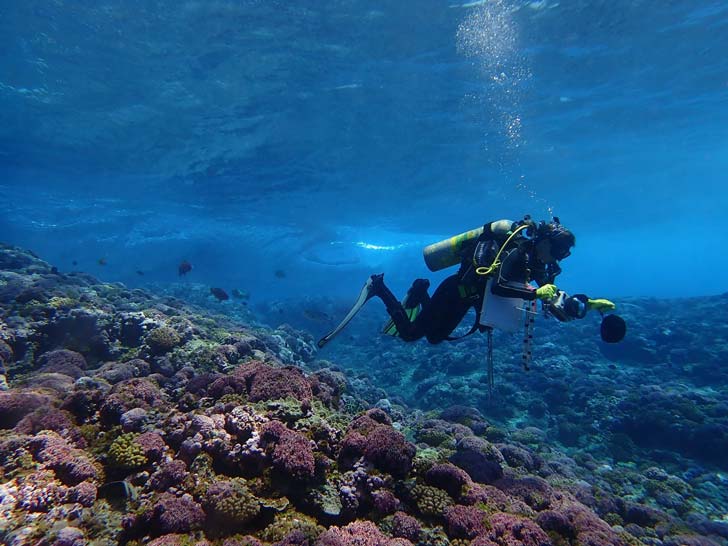
Following this robust research process, NOAA and the Smithsonian will “strengthen the information pipeline” and provide accessible, open-source databases and educational materials for anyone who has a stake in the ocean’s health.
“Efforts to connect people of all ages and backgrounds firsthand to the often hidden and inaccessible life of the ocean through storytelling and other forms of communication will align with and amplify existing local, territorial, state, and Tribal efforts in ocean education,” the strategy stated.
This process will also include revamping taxonomy and using new technologies like eDNA satellites and artificial intelligence.
Lastly, once data is gathered and shared, the strategy calls for the protection, conservation, restoration, and sustainable use of ocean biodiversity. This will be done through the co-management and co-stewardship of marine protected areas.
“The strategy’s success hinges on partnerships with all key stakeholders — states, Tribes, local communications, NGOs, and the private sector, including commercial and recreational fishers,” a press release shared.
This includes listening sessions and ongoing collaborations, so all stakeholders can better understand each other’s needs and contributions to create long-term protection measures for the ocean.
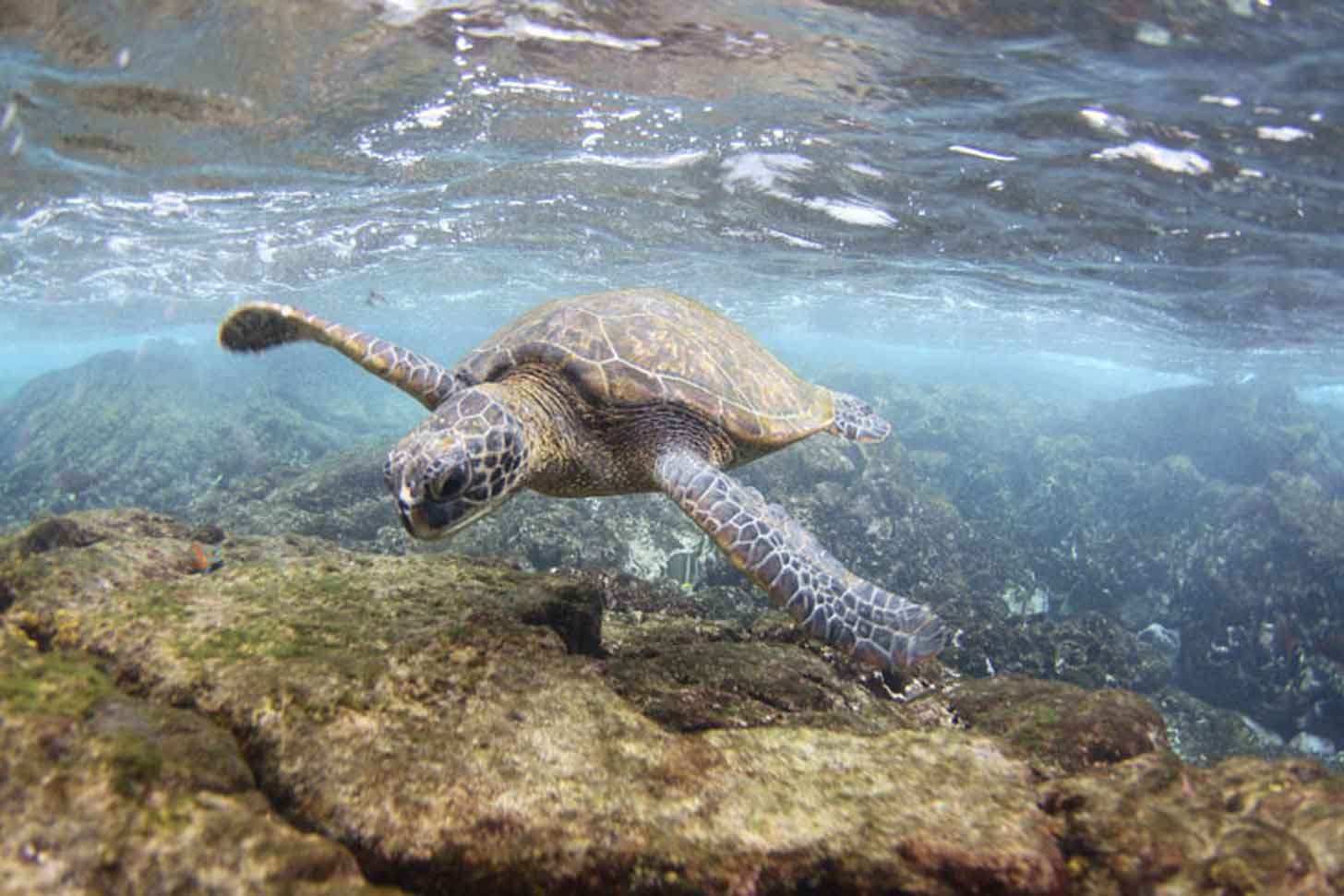
“We are advancing frontier technologies for biodiversity science and understanding,” said Sarah Kapnick, NOAA chief scientist, in a statement.
“But it is critical that we come together around the use of evidence-based metrics and indicators for decision making in ocean spaces, and for monitoring, reporting and verification to ensure that investments in conservation or development deliver the desired outcomes while minimizing negative impacts to ocean life.”
As exciting as it is that the U.S. finally has its own plan for ocean biodiversity and conservation, the plan’s authors have made it clear that this strategy is a first step on the journey to a more sustainable and equitable ocean.
An implementation plan — which will more clearly outline the allocation of funds for these efforts — will soon follow.
“This strategy is our best chance yet to turn the tide,” said Emmett Duffy, the strategy’s other co-chair and chief scientist of MarineGEO at the Smithsonian Environmental Research Center.
“We need to implement it to reach a future where people and the rest of nature thrive together by joining forces and leveraging the power of people and technology to understand the living ocean ecosystem.
Header image courtesy of NOAA