Election day is swiftly approaching, and the race for president is nail bitingly close. As November 5 nears, all eyes are on six swing states: Georgia, Nevada, Michigan, Arizona, Pennsylvania, and Wisconsin.
These states have surprised pollsters in recent years, like when Georgia (typically a red state) swung left for President Joe Biden in 2020. A few swing states also hold a great deal of influence on the outcome of the election, like Pennsylvania, which boasts 19 electoral votes.
On National Voter Registration Day, celebrated September 17, Vote.org teamed up with celebrities like Olivia Rodrigo, Maggie Rogers, Stephen Curry, Hank Green, and Tara and Hunter Davis Woodhall to encourage voters to check their registration status.
Propeller — a company that links fans to their artist’s favorite social justice causes through exclusive rewards — celebrated the holiday in their own fashion by debuting a “Vote Club” campaign.
According to Propeller’s website, the campaign offers voters free concert tickets in states “where every vote counts this election season.”
The bands involved in the promotion include Taking Back Sunday, The Used, Mother Mother, The Front Bottoms, Dayglow, COIN, Two Door Cinema Club, Victoria Canal, Brittney Spencer, and many more.

To enter, fans can visit the Vote Club website and click on a show in their home state. The link will prompt users to redeem 100 “points” for a pair of free tickets.
How do you get 100 points? By simply checking your vote registration through HeadCount.
There are a few caveats to the promotion: there’s a limit of one pair of tickets per Propeller account and tickets are non-transferrable. Even so, it’s one of the most generous contests that has debuted on the Propeller website — because anyone who redeems their 100 points automatically receives tickets (while supplies last).
“It only takes a minute, but it ensures you're ready to vote,” reads a statement for Propeller’s Vote Club campaign. “Whether you're registering for the first time, updating your information, or confirming your registration, you're making sure your voice can be heard.”
In 2020, Vote Club worked with voter registration efforts alongside dozens of artists. This time around, the strategy focuses on shows happening in key states, according to Annie Flook, Propeller’s director of artist partnerships and business development.
“We are about civic engagement everywhere but wanted to put our efforts in the states that are likely to make the most impact on the election results,” Flook told Good Good Good.
“It’s our goal to make sure as many people as possible are registered, informed, and ready to vote — regardless of political affiliation.”
Alongside HeadCount, Flook said, Propeller has already helped 200,000 fans check their voter registration status.

Plus, it’s a great way for artists to connect with their audiences.
Brooks Dawson, the director of tour marketing for Foundations Artist Management, also spoke to Good Good Good about the promotion.
His clients include many of the artists at the heart of the Vote Club campaign, like Zolita, NEEDTOBREATHE, DISPATCH, Dayglow, and COIN. (He also works with Noah Kahan, who teamed up with Propeller to raise over $2 million for mental health initiatives.)
“As we approach this election, it’s more important than ever to ensure every voice is heard,” Dawson told Good Good Good.
“By partnering with Propeller, our artists are making it easy for fans to support the Get Out The Vote cause — not only by amplifying their voices but also encouraging our community to participate in the electoral process.”
Header image via Element5 Digital / Pexels
Every year, the United States Postal Service dedicates a new Hanukkah stamp to honor the holiday celebrated by Jewish people around the world.
Also called the Festival of Lights, Hanukkah spans eight days and nights, originating from the struggle for religious liberty and human rights among Jewish individuals everywhere.
Today, the 2024 stamp design was unveiled at a dedication ceremony at the Lillian and Albert Small Capital Jewish Museum in Washington, D.C.
“This stamp, with its festive Hanukkah candles, warm our hearts and their intimate glow rekindles the family bonds that comfort and sustain us throughout the year. It also reminds us — as Americans — that we are joined in our diversity,” said Michael Gordon, the Postal Service’s government liaison director.
He added, “Starting today, this beautiful image of remembrance, light, and love will travel on letters and packages to millions of households and businesses throughout America and around the world.”
Gordon also served as the dedicating official of the stamp and was joined by the museum’s executive director, Bea Gurwitz; the museum’s incoming board chairman, Chris Wolf; and the stamp’s art director, Antonio Alcalá.
“The Lillian and Albert Small Capital Jewish Museum is honored to be part of the 2024 Hanukkah stamp unveiling ceremony,” said Gurwitz.
“The museum tells the story of a community that is decidedly local but has a national impact, seeking to inspire all who visit to take action on behalf of their community values, and this stamp ceremony fits perfectly with that mission. Thank you to the U.S. Postal Service for creating this impressive stamp.”
At the ceremony, the officials shared the origin story of Hanukkah and explained its significance.

Hanukkah is the Hebrew word for “dedication,” and refers to the miracle experienced by the Maccabees, a small army of Jewish warriors, who fought for religious freedom in ancient times.
Though Jews were persecuted by oppressive laws, the Maccabees revolted and prevailed against the emperor Antiochus IV. Tradition shares that when they reclaimed their Temple in Jerusalem, Jews discovered that only one small jar of oil remained — only enough to provide one day of light.
But when they lit the Temple menorah, it miraculously burned for eight days. The miracle of this oil — and the enduring spirit of the Jewish people — is celebrated during Hanukkah, marked by a ceremonial lighting of the menorah.
This tradition is depicted on the stamp.
“Designing the 2024 Hanukkah stamp is an honor and privilege,” said Alcalá.
“The imperfect ink-drawn lines of the artwork are to lend a human presence to the image. The flames are shown, but the candles themselves are not present. They’re implied, and to me, that alludes to an aspect of faith that’s both tied to this ceremony and to the larger religious experience.”
The Hanukkah stamps are issued as a pane of 20 Forever stamps and are now available for purchase online, via mail, or at USPS locations nationwide for $14.60.
In 2024, Hanukkah begins at sundown on December 25.
Header image courtesy of Robert Couse-Baker
If there’s one thing “Abbott Elementary” viewers know about main character Janine Teagues, it’s that she’ll do anything to make sure her students have access to the exciting learning experiences they deserve.
It’s only fitting, then, that ABC’s hit show has partnered with leading technology company MilliporeSigma to bring a mobile STEM lab to students across the country.
Meet the Curiosity Cube, a solar-powered shipping container turned mobile science lab. With promotional help from “Abbott,” this traveling classroom is raising awareness around STEM education and increasing access to high-quality, hands-on learning in some of the biggest cities in the country.
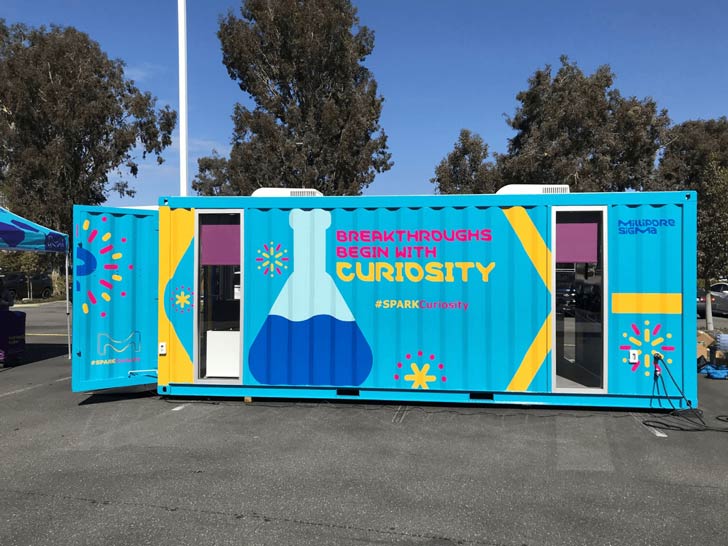
Leading up to the fourth season of the show — which premiers on October 9 — the Curiosity Cube is meeting students in spots like Boston, Houston, New York City, Washington D.C., and the show’s home city of Philadelphia.
“Working with Abbott Elementary, we are raising the visibility of STEM to inspire and empower students and teachers with ‘aha’ moments from hands-on learning experiences, which is critical to sparking interest in science,” said Tim M. Jaeger, chief strategy and transformation officer of Merck KGaA, Darmstadt, Germany, the parent company of MilliporeSigma.
“We hope visiting the Curiosity Cube will spark students’ scientific curiosity with a fun experience that helps lead to a future career in STEM.”

This year, all Curiosity Cube visitors will explore the sustainability and lifecycle of a T-shirt through three interactive experiments. They will utilize tools like modular electronics, digital microscopes, and other scientific instruments, all led by local MilliporeSigma experts.
While the main takeaway for most students is that science can be fun and interesting, the facilitators behind the Curiosity Cube hope to inspire underrepresented populations in STEM — like young women and students of color — to truly consider a career in the field.
(Something Mr. Jacob Hill would likely be very enthusiastic about.)
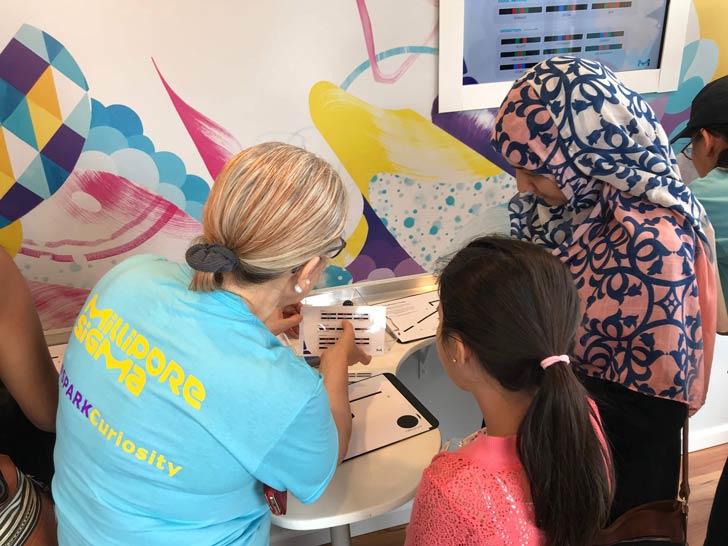
“Science industry experts agree that these hands-on experiences are critical to sparking student interest in STEM careers,” a webpage for the Curiosity Cube explains.
“Our science education outreach programs are modeled on the principles of inclusion and equity… We model this behavior as diverse leaders, and volunteers work directly with students in their own communities.”
In fact, the Curiosity Cube has been meeting students where they are since 2017, reaching over 200,000 students, ages 8-13, in 14 countries.
“For 2024, the goal is to impact 45,000 students or more, prioritizing those in underserved and under-resourced communities,” the program’s website says. “In 2023, 95% of the schools that the Curiosity Cube visited identified as Title 1 schools, highlighting this commitment.”
The mobile lab just made a stop in Philadelphia earlier this week, engaging fourth graders at James Rhodes Elementary.
“It’s something we couldn’t afford,” principal Megan Wapner told ABC 6 Philadelphia. “We couldn’t do it without the support of this community and organizations like this.”

The students, who were eager to partake in the day’s experiments, left with some scientific souvenirs, like a pair of goggles, and a gardening kit, complete with a pot emblazoned with the “Abbott Elementary” logo.
Even at this one stop, it was clear that off-screen educators are as eager to reach their students as America’s beloved “Abbott” teachers, encouraging them to dream big.
“When visitors enter the Curiosity Cube, they are scientists for the day, participating in hands-on science experiments and learning about new technologies,” the program’s website says.
“We want to inspire young students by showing them that scientists all over the world, who look just like them, are working to create a better tomorrow.”
Header images courtesy of Disney and MilliporeSigma
Every day the Good Good Good team collects the best good news in the world and shares it with our community. Here are the highlights for this week!
If you want to get good news in your inbox every day, join the Goodnewsletter — the free daily newsletter designed to leave you feeling hopeful.
The Best Positive News We’re Celebrating This Week —
To help fight world hunger, scientists created a new protein product using easy-to-source ingredients
A research team at Germany’s University of Tübingen recently created a new protein product using some easy-to-source ingredients — a few you can even get from thin air.
Using just carbon dioxide, hydrogen, oxygen, and a little electricity, added to microbes and some baker’s yeast, the team created a sustainable, nutrient-rich protein substitute full of vitamin B9.
And the protein content in their yeast product not only met that of sources like beef, pork, fish, or lentils — but surpassed it (by a lot).
Why is this good news? The bacterium deployed in this research could lead food scientists to create a vegan meat substitute, or even offer a long-term, climate-friendly solution to ending the global hunger crisis.
As part of a project to increase forest cover in northern England, more than 1.9 million trees were planted in 2023
In 2023 alone, more than 1.9 million trees were planted across northern England — the most in a single year as part of a reforestation project to boost woodland cover in the region.
When complete, the Northern Forest project will have planted 50 million trees from coast to coast. Since 2018, nearly 8 million trees total have been planted.
At the time the project started tree cover was just 7.6% — much lower than the 13% national average. In all of England, tree-planting rates grew by 52% in the past year, with 5,529 hectares of new forest planted.
One of the project’s leaders reiterated the benefits of more tree cover, including improving air quality, reducing flooding, and creating green jobs.
Residents of Springfield, Ohio packed a Haitian restaurant to show their support
After a (debunked) rumor that Haitian immigrants who have relocated to Springfield, Ohio, are stealing and eating local pets was put in the national spotlight, the community has navigated bomb threats, school and city building closures, and more.
Romane Pierre, a Haitian immigrant living in Dayton, Ohio, is the manager of Rose Goute Creole Restaurant, where he has been fielding prank calls. Fortunately, his neighbors responded very differently and weren’t dissuaded by the claims.
Quite the opposite: they showed up to the restaurant in droves over the weekend, with social media posts documenting lines out the door.
→ Read more
More people helping support immigrants:
- A doctor and a former patient are working together to provide care at an immigration shelter in Arizona.
- A teacher in New Orleans created a special school to help meet the particular needs of newly arrived immigrant youth.
- A Czech city is modeling for the world how a community can support migrant populations.
- A mother-daughter duo is helping Indigenous migrants by providing translation services, meeting cultural needs, and more.
The World Health Organization just approved the first mpox vaccine for adults
Helping ramp up disease response, the World Health Organization just gave authorization for the first mpox vaccine to be used in adults. It’s also working on an “access and allocation” method to respond to outbreaks and get the limited vaccines where they’re most needed.
The WHO director called it an “important step” in the fight against the disease — both for current outbreaks and in the future.
Right now, over 120 countries have confirmed more than 103,000 cases since the mpox outbreak began two years ago, and heartbreakingly, 723 people have died — primarily children.
→ Read more
More good global health news:
- Responding to pressure from activists, Danaher announced it would reduce the cost of its tuberculosis testing materials, the most helpful diagnostic resource for TB.
- Authors, YouTubers, and global health advocates Hank and John Green launched a charity store to help build a maternal health hospital in Sierra Leone (which has the highest maternal mortality rate in the world).
- Playing a key role in preventing future outbreaks, Ebola survivors in the Democratic Republic of Congo are uniting to combat stigma and misinformation surrounding the deadly disease.
Chile produced 9.4% of its primary energy from solar in 2023 — more than any other country in the world
Last year, Chile led the world in solar energy production: 9.4% of its primary energy production came from solar sources. For electricity alone, it produced 20% of the total.
This progress is remarkable considering that just a decade ago, Chile generated nearly no electricity from solar — but has seen steady growth in the years since.
And it’s largely due to the country being home to the region with the highest level of sunlight exposure in the world: the Atacama Desert. The desert is also home to Latin America’s first solar thermal plant.
For the first time in decades, data shows a sharp decline in the number of drug overdose deaths across the U.S.
Preliminary data collected is showing an unprecedented decline in drug overdose deaths in the U.S. — by roughly 10.6%. It’s a sharp turn from recent years when fatal overdoses had been increasing by double-digit percentages.
In some states, early data is showing declines by as much as 30%. Experts estimate this national decline could mean as many as 20,000 fewer fatalities per year.
While there is still a heartbreakingly high number of deaths annually, experts believe the devastating increases in overdose deaths that the U.S. saw beginning in 2019 are over, at least for now.
What’s the nuance? While the data isn’t clear what exactly has caused the drop, experts point to the availability and affordability of fentanyl addiction treatment, as well as of naloxone to quickly reverse overdoses. And more resources are needed in Black and Native American communities where overdose deaths are still disproportionately high.
In honor of International Day of Peace, 2,500 olive trees were planted in the West Bank
Since 2020, an estimated 4,000 olive trees have been uprooted from the West Bank by Israeli officials, which adds to the 800,000 total olive trees that have been uprooted since 1967 — equivalent to razing all the trees in New York’s Central Park 33 times.
For this year’s International Day of Peace — in accordance with the theme “Cultivating a Culture of Peace” — Treedom for Palestine is planting its tenth Freedom Farm, adding 2,500 olive trees to the West Bank.
Each Freedom Farm is planted with the support of the Palestinian Farmers Union — a collective of about 20,000 small-scale farmers — and gives families the means to sustain themselves and their land.
Why is this good news? Olive trees play a prominent role in Palestinian culture, symbolizing the attachment Palestinians have to their land. The area is home to some of the world’s oldest olive trees, some dating back as far as 4,000 years. They are also a source of income for thousands of Palestinian families and are excellent at sequestering carbon.
→ Read more
After a career-ending car crash, a former MLB player dedicated his life to helping athletes with disabilities
Tony Vlahovic was hit by a drunk driver traveling at 60 mph, leaving him with serious injuries that ended his Major League Baseball career.
Devastated to see his lifelong dream come to an end, he spent the next 18 months learning to walk. It wasn’t until his son turned seven that he picked up baseball again.
He started coaching, and today is a 5-time Coach of the Year, the Special Olympics North American Coach of the Year, and co-founder of BaseABLE, a nonprofit giving disabled athletes the “coaching, equipment, and opportunities to play and meet other athletes with disabilities.”
→ Read more
More good news of the week —
Chemists developed a simple way to recycle a common type of plastic back into virgin material using iron and alcohol. PET is a common polyester plastic, used widely in textiles and drink containers, but current methods can only recycle it into a lower-quality plastic.
Taiwan banned performances by wild animals held in captivity, like dolphins and tigers. The country’s revised “Animal Performance Management Measures” forbids companies from forcing wild animals to perform or interact with people.
With more than 40 underpasses and three overpasses already built, Colorado is leading the way in wildlife crossing construction. Those crossings, paired with long stretches of wildlife fencing to funnel the animals to the safe passageway have reduced wildlife-involved crashes by around 90%.
New data shows that food banks provided 1.7 billion meals to more than 40 million people in 2023. And since much of the food was recovered from farms or wholesale produce markets, an estimated 1.8 million metric tons of carbon dioxide were prevented.
Raising hopes for the endangered species, a pair of rare Amur tiger cubs just made their debut at the Minnesota Zoo. Near the brink of extinction in the 1930s and 1940s, scientists now estimate the Amur tiger population is just around 400 to 500 in the wild.
To honor the Indigenous Arapaho and Cheyenne tribes, a federal board just voted to rename a mountain in Colorado. The mountain had been named after former territorial governor John Evans, who authorized the Sand Creek Massacre in 1864 that killed over 200 noncombatant Cheyenne and Arapaho people.
New data shows the ozone layer is still well on its way to making a full recovery. If current policies hold, it could recover by 2066 over the Antarctic, 2045 over the Arctic, and 2040 over the rest of the world.
One of the world’s largest exporters of oil, Norway now has more electric than petrol cars on its roads. It’s aiming to become the first nation to end the sale of new petrol and diesel cars by 2025 — currently, 9 out of 10 cars sold are electric.
Scientists just rediscovered an Ecuadorian frog that had been lost for 100 years. Scientists believe the frog’s rediscovery will be vital to protect the country’s most degraded ecosystem, the southern Andes mountains.
Scientists are saving endangered sea snails by setting them up on “speed dates.” High sea temperatures have kept endangered queen conch sea snails from (literally) coming out of their shells to find mates, so scientists stepped in to help.
To protest their “worst in Europe” parental leave, UK dads tied baby slings to iconic male statues across London. Activists from the Dad Shift tied model babies to statues in an attempt to focus attention on the importance of father-baby bonding.
Patagonia’s nonprofit arm just gave $1 million to help revolutionize California’s farms. The funding will help farmers in Ventura County transition away from conventional agriculture toward regenerative, organic practices.
Kentucky just banned the use of “conversion therapy” on LGBTQ+ minors. The governor said his executive order was a necessary step to protect children from a widely discredited practice that tries to change a person’s sexual orientation or gender identity through counseling.
Manchester wants to be the first region in the UK to adopt a “housing first” approach to eradicate homelessness. Inspired by the success seen in Finland after taking a trip to see it first-hand, the city’s mayor said the policy also “saves public money.”
The highest peak in Great Smoky Mountains National Park will officially revert to its Cherokee name. Responding to a request from the Eastern Band of Cherokee Indians, the U.S. Board of Geographic Names voted to change the name to Kuwohi, after it’d been named after a Confederate general for over 150 years.
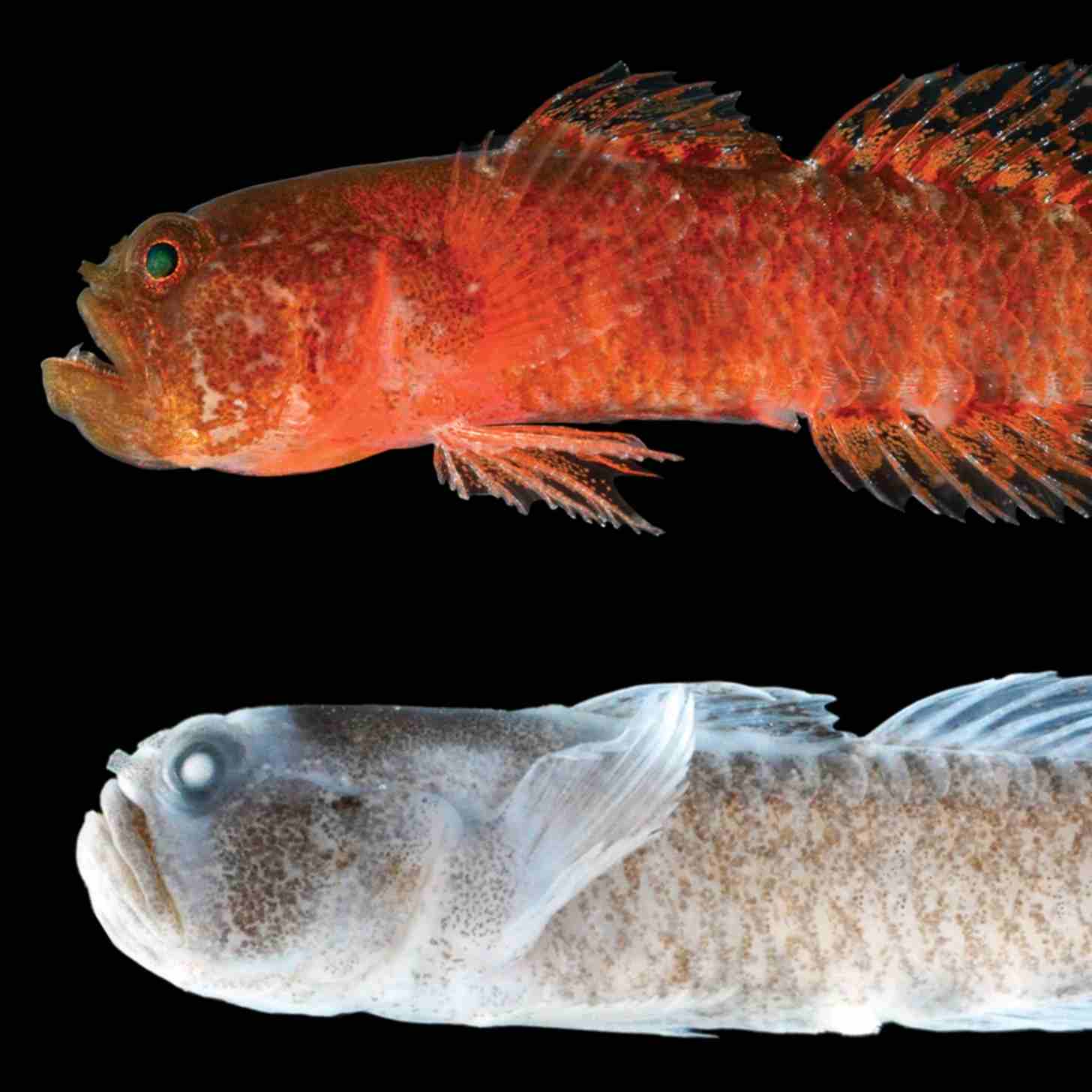
A bright red fish with huge eyes and drooping lips surprised a team of research scientists as they were exploring the Farasan Banks in the Red Sea of Saudi Arabia.
The discovery, published in early September, was led by marine scientist Viktor Nunes Peinemann and a global team of researchers from the University of Washington and King Abdullah University of Science and Technology of Saudi Arabia.
Incidentally, Peinemann came across the specimen while exploring coral reef fish diversity on a diving expedition in the Red Sea.
At first glance, Peinemann and his team thought it might be a rare fiery dwarfgoby fish (Sueviota pyrios), which hadn’t been spotted since 1972.
Upon further examination, they realized that the “tiny horror” they had discovered was an entirely new species.
Its scientific name is Sueviota aethon, but its common name — the “grumpy” dwarfgoby — was given with the fish’s distinctive, frowning maw in mind.
“Grumpy dwarfgoby refers to the fish’s apparent grumpy and rather unhappy appearance, primarily due to the extremely upturned mouth position,” the researchers wrote in their research article.
In a press release, researcher Lucía Pombo-Ayora said he found the name to be fitting for the fish, which only measures up to two centimeters in length.
“I imagine in its own tiny world, it is a fearsome predator,” Pombo-Ayora said. “Its grumpy expression and large canines certainly make it look the part, despite its small size.”
Why is this good news?
From the Gongga Mountains of China to the seafloor in the Gulf of Alaska, scientists are constantly discovering new species and expanding knowledge of the animal kingdom and its importance in the natural world.
For Peinemann and his research team, their latest discovery sheds light on how much is still left to learn — especially in the Red Sea, which extends 190 miles.
“The ongoing discovery of distinctive new species like this grumpy dwarfgoby shows how much biodiversity remains undiscovered in the Red Sea,” Viktor Nunes Peinemann explained in the press release.
“This is concerning given the recent environmental changes in the region. In some cases, species could go extinct before we even describe them.”
Recent, rapidly rising water temperatures and mass coral bleaching events have had a dramatic impact on fish populations around the globe — particularly in the Red Sea, which already contains some of the hottest and saltiest seawater on the planet.
But, hopefully, meme-worthy animals like the grumpy gobyfish might drive higher interest in climate justice and marine conservation.
According to the press release, the entire team agrees that “the fact that new species are still being discovered in this rapidly changing environment highlights the urgency of continued research and conservation efforts.”
Header image via Dereck Keats (CC BY-SA 2.0)
As stars gathered on the red carpet for the premiere of the much-anticipated “Will & Harper” documentary (coming to Netflix on September 27), there was one unexpected guest who turned heads: Dylan Mulvaney’s dad.
Mulvaney, who has become a pop culture icon for her transparent and joyful look into her journey as a transgender woman, brought her dad, James, as a plus-one to the screening, both as guests of The Trevor Project.
Dylan shared a TikTok vlog of the pair attending the premiere this weekend.
“We’re going with the Trevor Project, which is an amazing organization,” Dylan said.
“Oh good,” James chimed in, enthusiastically. “They’re good people.”
The film chronicles Will Ferrell’s evolving relationship with his longtime friend, Harper Steele, who after 30 years of friendship, has come out as a trans woman.

Together, they embark on a cross-country road trip to process this new era of their lives, at a time when transgender rights are top of mind for many Americans.
It’s only fitting that Mulvaney brought someone who has been so supportive of her transition, too.
“I feel really lucky to have a family that supports me, like my dad,” she said, before immediately pivoting to a “fit check” in the video.
Once they arrived at the event, James quickly became a scene-stealer, offering homemade cookies to staff and members of the press. According to Dylan, James makes 500 of his “world-famous” cookies every week and hands them out to strangers regularly.

One of those strangers also happened to be Steele, who also enveloped Dylan for a photo.
While this short video is only a small look into the Mulvaneys’ experience, it provides a blueprint for supportive parenthood, especially among the LGBTQ+ community.
According to a 2024 national survey from The Trevor Project, LGBTQ+ young people who reported living in “very accepting communities” attempted suicide at less than half the rate of those who reported living in “very unaccepting communities.”
Having accepting — and to that end, joyful — examples of familial and non-familial relationships shows LGTBQ+ people that a loving community is within reach.
@dylanmulvaney Taking my dad to his first movie premiere ❤️ @netflix @TrevorProject #willandharper ♬ original sound - Dylan Mulvaney
And it’s an extension of the core message of “Will & Harper,” too.
“What Harper did — coming out and transitioning at 61, reaching out to her friends, agreeing to go on this cross-country road trip with Will, with me, and the cameras — was all incredibly brave,” the film’s director, Josh Greenbaum, said in a statement.
“What Will did is incredibly brave as well. He was willing to ask the sensitive questions. He was willing to potentially lose fans who don’t agree with his support of his best friend living her authentic life. He did all that because he knew Harper needed him, and that beyond Harper, Will knows that other people in the trans community who feel othered can use an ally,” Greenbaum continued.

As for the Mulvaneys’ review of the film?
“Unbelievable,” James said.
“Ten out of ten,” Dylan added. “The Mulvaneys loved it.”
Header images courtesy of Dylan Mulvaney and Netflix
The largest solar manufacturer in Turkey is giving a whole new meaning to the phrase “walking on sunshine.”
The company — Ankara Solar — recently introduced a line of ‘walkable’ solar panels to European and U.S. markets.
Although the promise of solar ‘roadways’ all but vanished in recent years (due to high costs, safety concerns, and low durability), Ankara Solar believes there’s still endless potential for a more attainable option: solar flooring.
“At Ankara Solar, we are pioneering the future of sustainable building solutions with our cutting-edge PV floor technology,” explained an official product release on the company website.
“Our photovoltaic (PV) floor systems seamlessly integrate solar energy generation into the very fabric of your living and working spaces, transforming ordinary floors into extraordinary energy producers.”
As solar technology has evolved in the last decade, the main concern with solar roadways has been their inability to withstand pressure under enormous weight. This low performance caused the failure of the Waterway Solar Highway in Normandy, which debuted in 2016 and was demolished by 2020 due to unfixable cracks.
But Ankara Solar pledges that their technology is durable. Today’s highest-performing solar panels don’t need to withstand the rolling pressure of an 18-wheeler — but they can withstand the weight of human beings.
“With advanced materials and engineering, our PV floors are built to withstand heavy foot traffic, impacts, and abrasions, ensuring long-lasting performance and reliability,” the press release continued.
Currently, Ankara Solar offers two standardized sizes of flooring: a 30-watt panel measuring 420 mm and a 120-watt panel measuring 820 mm. They are designed to be used for indoor and outdoor spaces, with a non-slip surface that resists “even heavy rains.”
“In an era where sustainability is paramount, our PV floors offer an elegant solution to reducing carbon footprints and promoting energy efficiency,” The company pledges.
“By integrating solar technology into your floors, you can maximize the use of available space while minimizing the environmental impact.”
The manufacturer imagines a future where their solar flooring may be integrated into “shopping centers, office buildings, homes, parks, and more.”
Although Ankara Solar’s focus is on residential and commercial flooring, solar-paneled public walkways have slowly become more common around the world, from Tampa, Florida to Barcelona, Spain.
In high-traffic areas, solar-powered sidewalks light up at night — even through power outages — to guide people home, all while powering the city at large.
Last year, the Dutch city of Groningen installed one of the largest solar footpaths in the world, one that stretched over 1,312 feet. The company that installed it — Platio — said that even bicyclists could ride across it.
“Platio solar pavers are doubly sustainable because they not only provide green energy but are made of recycled plastic,” Philip Broeksma, from council of energy from the municipality of Groningen, told PV magazine.
“And it makes double use of space: the solar footpath generates electricity, while people can simply and safely walk on it,” Broeksma continued. “It is an example of how to use space in the city in a smart and sustainable way.”
It's not currently clear how much this solar flooring will cost, but as Ankara Solar ramps up production, time will tell if solar flooring becomes the norm for architects and home owners alike.
Header image via PV Floor / Ankara Solar
Researchers at Princeton University’s Department of Civil and Environmental Engineering have created a new type of concrete that’s 560% stronger, simply by using less materials.
The new concrete, which is full of hollowed-out shapes, was inspired by the cortical bone structure of the human femur.
“To date, a few studies have only explored the design of composites inspired by cortical bone architecture…to improve energy absorption (toughness), fracture toughness, and flexural strength,” wrote Shashank Gupta and Reza Moini, the authors of the study.
Cortical bone (also known as compact bone) is dense, strong bone tissue that makes up the majority of the human skeleton.
It is made up of tiny, tube-like structures called osteons, which are surrounded by softer material. Ironically, the area between these tubes, which are weaker, are scientifically referred to as “cement lines.”
When a crack happens in the human bone — like the femur, which inspired this study — the cracks follow the cement lines and stop at the osteons, preventing the whole bone from breaking.

Inspired by how our bones handle stress, Gupta and Moini replicated the formation of cortical bone by making concrete through a “hybrid 3D-printing/casting process” and engineering “tubular cement-based materials” that resembled the honeycomb-like structure of the femur.
By repeating the study and testing different sizes of tube structures, they toughened the resiliency of the material.
“The bone-inspired composites exhibited limited improvement of up to 26% in fracture toughness and 30% in flexural strength compared to conventionally laminated counterparts,” wrote the researchers.
“Conventional cement-based materials exhibit brittle failure under fracture due to limited toughening mechanisms such as uncracked ligament bridging and microcracking,” they concluded.
Gupta and Moini’s new study shows that when it comes to environmental design, “more” doesn’t always mean “better.”

Unlike traditional concrete that often requires additional fibers or plastics for strength, this new variant relies solely on its geometric design. This simple new method not only makes the material more environmentally friendly, but it also reduces overall production costs.
Although the production of this concrete is still in its infancy at Princeton University’s labs, Gupta and Moini’s bio-inspired design holds a great deal of potential for the future of infrastructure.
In their conclusion, Gupta and Moini invited other scientists to revisit their analysis “from a statistical mechanics approach” to discover and develop “new mechanisms, principles, and insights beyond bio-inspired schemes.”
Image via RobbieWi / Pixabay (Public Domain)
Just as individual humans handle stress differently, so do corals. Even coral colonies of the same species, growing side by side, vary in their tolerance to pressures such as heatwaves.
In research published today, we discovered surprising new evidence of variable heat tolerance in corals. As the world’s oceans warm, these differences are important.
Earlier this year, the world’s fourth global mass bleaching event was declared. The Great Barrier Reef has suffered five mass bleachings since 2016 – most recently this past summer. The declarations followed the world’s warmest year on record.
To keep the world’s coral reefs healthy and functioning, global carbon emissions must be dramatically curbed to reduce the rate of ocean warming. As humanity works towards that goal, interventions may buy time for corals to survive in their warming environments.
What we did
The heat tolerance of corals can be measured by analysing their responses to elevated water temperatures. Our research involved measuring the bleaching thresholds of more than 500 colonies of the tabular coral, Acropora hyacinthus.
Acropora hyacinthus is a common coral that forms “tables” of tiny branchlets. This species is both ecologically important and highly vulnerable to heat waves, making it a prime candidate for conservation.
The characteristic colour of coral is provided by algae living inside its tissue. The algae also provide most of the coral’s nutrition. When water temperatures get too high for too long, the coral expels the algae, causing it to bleach and starve.
While at sea, we visited 17 reefs to scuba dive and search for Acropora hyacinthus. We then brought samples of these corals on board a research vessel to conduct experiments
Our specially designed portable experiment system contained 12 tanks set to four different temperatures. Coral fragments were placed in each tank and subjected to short-term heat stress at different temperatures.
Afterwards, we measured the amount of pigment left in the coral fragments, which directly aligns with the amount of algae left in the coral’s cells.

We then determined each coral’s bleaching thresholds - in other words, the temperature at which the coral’s pigmentation drops to 50% of its healthy level. This allowed us to understand how much variation exists and where the most heat-tolerant colonies live.
So what did we find? Under our experiments, the amount of pigment retained under high temperatures varied from 3% to 95%. This means at high temperatures, some coral colonies completely bleached while others seemed barely affected.
Of the 17 reefs we studied, 12 contained colonies with bleaching thresholds in the top 25%. This means heat-tolerant corals could be found at most of the reefs we sampled.
Nature versus nurture
Corals handle stress differently for two reasons: nature and nurture.
Each coral has a unique “nature” or genetic makeup that can affect its heat tolerance. Our results suggest corals found across the entire Great Barrier Reef may hold unique genetic resources that are important for recovery and adaptation.
However, aspects of the marine environment may nurture, or hinder, a coral’s heat stress response. These include water temperatures, nutrient conditions, and the symbiotic algae living inside coral tissue.
We found corals living in warmer regions, such as the northern Great Barrier Reef, can handle higher water temperatures. However, because the water is so warm in these areas, the corals are already pushed close to their temperature limits.
Corals in the southern Great Barrier Reef cannot handle temperatures as high as their northern neighbours. Our findings suggest these corals can tolerate more warming above their local temperatures than corals to the north.
These tolerance patterns may affect which corals survive marine heatwaves.

Giving our reefs a future
Our findings have potentially important implications for the ability of corals to adapt to warmer seas under climate change.
The results may also inform reef restoration and conservation efforts. For example, heat-tolerant parent corals could be selectively bred to produce offspring better suited to warmer waters.
The success of such programs depends on the extent to which a coral’s genetic makeup controls its tolerance to heat. So, the next step in this research is investigating these genetic differences.
Selective breeding trials are already underway, using the most heat-tolerant corals identified in this study.
When it comes to protecting our coral reefs, reducing greenhouse gas emissions is imperative. However, interventions such as selective breeding may be useful supplements to give coral reefs the best future possible.
This article was written by Melissa Naugle and Emily Howells from Southern Cross University and Dr. Line K. Bay from the Australian Institute of Marine Science, and was originally published by The Conversation.
Header image courtesy of Wikimedia, CC BY 4.0

Microplastics have been found in every marine habitat where scientists have looked, according to a fact sheet from Ocean Conservancy.
With countless marine animals — and us humans — ingesting these tiny particles regularly, the scientific community has forged ahead to create solutions. And according to researchers from George Mason University, one such solution could be found right in our kitchens.
At least 6 million tons of spent coffee grounds — or, the byproduct that comes from brewing coffee — are produced annually, but they don’t have to go to waste.

In fact, we already know that coffee grounds are capable of removing toxins from the environment, having been used to curb pollutants from agriculture and clean up oil spills.
But a trio of scientists — including GMU assistant professor Jeff Moran, post-doctoral researcher Amit Kumar Singh, and high school lab assistant Tarini Basireddy — have mobilized the power of coffee grounds to create “CoffeeBots,” an invention that can remove oil, microplastics, and methylene blue from seawater.
Coffee grounds work to clean up pollution because they have a “porous, irregular surface,” allowing pollutants to bind to the surface area. But Moran posited that this could be even more effective if the coffee grounds were coated with much smaller iron oxide nanoparticles.
So, the researchers made their coffee byproduct “rusty” by adding those iron oxide particles. This also made the substance magnetic, allowing a simple handheld magnet to drive the CoffeeBots through polluted water.

“While using coffee grounds to clean up oil spills is not entirely new, this team is the first to show that moving CoffeeBots outperform stationary ones at removing pollutants, since moving CoffeeBots encounter pollutant molecules more often than stationary coffee grounds do,” a press release from GMU explained.
“Making the coffee grounds magnetic has another benefit: Once the CoffeeBots are recovered, they can be reused several times with little loss in water-cleaning efficacy.”
The team’s research, recently published in Nanoscale, concluded that this approach was effective in removing methylene blue — a dye commonly used in textile production — from water.
Methylene blue is a carcinogen that can have adverse effects on both humans and marine life.
“It can cause skin irritation, if there’s too much in the water,” Basireddy said. “It can cause a lot of digestive problems… nausea, fever, lots of symptoms.”
The CoffeeBots cleaned the dye from the water samples and were especially effective when loaded with ascorbic acid, which helps break down the dye. Basireddy was especially eager about these findings, considering the implications of the invention in practical use.

“It’s cool because the countries that are big textile producers also happen to be the countries that are big in coffee production,” she said, pointing to Brazil, Colombia, Ethiopia, India, Peru, and Vietnam as countries that produce both dyed textiles and coffee and struggle with water pollution.
Most excitingly, however, is the CoffeeBots’ ability to clean oil and microplastics from water samples. Just like oil clings to coffee grounds, so do microplastics.
“One reason why microplastics and nanoplastics are such a tricky environmental problem is that they’re so small, and that makes it difficult to locate them just to remove them,” said Moran.
“By driving the CoffeeBots through the water, the hydrophobic interactions cause the microplastic particles to build up and accumulate on the surface of the coffee grounds.”
Certainly, there are other techniques to confront oil spills and clean microplastics from water, but using a byproduct from something as ubiquitous as coffee offers a more affordable and sustainable solution.
For now, the team has applied to patent their CoffeeBots technology. As Basireddy now studies at John Hopkins University, Singh and Moran will further explore this research.
Their future plans include attempting to make the CoffeeBots solar powered, further investigating the range of pollutants that can be removed by this technology, and characterizing the efficacy of different types of coffee grounds.
Ultimately, they want to make the simplest procedure to help the most people access clean water.
“Growing up, I always thought science was complicated,” Basireddy told WUSA9 News.
“But here we have coffee grounds with rust on them and we're able to remove a whole slick of oil. You can do science with very simple starting materials, and you can do some amazing things with it.”
This story was originally published by Grist. Sign up for Grist’s weekly newsletter here.
Restricting the volume of high-emitting vehicles roaming city streets carries many benefits, from clearing the air to quieting the urban din and beyond.
Recognition of this simple fact has led to the proliferation of clean air zones, designated regions within a city where vehicles must meet strict pollution standards or pay a fee to operate within it.
At last count, over 300 such areas had been established across Europe.
In London, which boasts the largest ultra-low emissions zone in the world, a study has found a secondary benefit: Kids started walking and biking to school more.
In 2018 — the year before London’s rule took effect in the center of the city, and five years before the zone encompassed its entirety — researchers at the University of Cambridge and Queen Mary University saw in the impending policy an opportunity to conduct a natural experiment.
They recruited children aged 6 to 9 and their families in central London and in Luton, a small city to the north, for a multi-year study to investigate how the program might affect a child’s health.
Though research focused on understanding how lightening a city’s pollution load shaped the way young lungs develop, participants completed questionnaires alongside their annual health assessments.
The responses allowed researchers to glean insights into their subjects’ activity levels, mental health, and other ancillary outcomes.
In the first of many papers expected from the study, the researchers found that, a year after the ultra-low emissions zone took effect, 2 out of every 5 London students in the study had switched from “passive” to “active” ways of getting to school.
So instead of being chauffeured to school by their parents, the students started walking, biking, scootering, or taking public transit.
On the other hand, in Luton, which acted as a control group, 1 in 5 made the same switch to modes that got them up and active, but an equal proportion switched to passive travel.
But in London’s ultra-low emissions zone, shifting to driving was rare.
The implications of getting kids active, even if it’s just for their pre-class commute, are intuitive but important.
“Walking and biking and scootering to school is better for the child, better for the family, and better for the environment,” said Alison Macpherson, an epidemiologist at York University in Toronto who researches ways to protect and promote the health and safety of children. (She was not involved in the London study.)
“It’s a great way for children to start their day,” she said. “You can imagine just being thrown in a car and thrown out of a car is not the most calming way.” Walking or biking to school, on the other hand, can be calming and conducive to concentration, Macpherson said, potentially even improving academic performance.
But perhaps most importantly, at a time when an epidemic of childhood obesity is on the rise worldwide, walking or wheeling to and from school can get kids more active.
“Physical activity in general is vital for preventing obesity,” said Christina Xiao, an epidemiologist affiliated with Cambridge University and lead author of the paper. “There’s strong evidence that shows that it prevents weight gain, and also has benefits in terms of children’s physical development and mental health as well.”
What exact health outcomes manifest among the cubs involved in the study will be a subject of forthcoming studies. One will attempt to tease apart what prompted parents to stop driving their kids to school. Xiao’s results demonstrate that the change took place, exploring why was beyond the scope of her study.
So, whether the parents stopped driving because the daily fee of $16.50 (12.50 British pounds) made it cost prohibitive or because, with fewer cars on the roadways, parents felt safer letting their kids make the stroll to campus (or some combination of the two) remains to be seen.
Despite the benefits that stem from emissions-control zones like this, the legal environment in the United States has erected immense obstacles to replicating something like London’s ultra-low emissions zone.
The closest anyone’s come was a voluntary and short-lived zero emissions delivery zone pilot in Santa Monica, California. And then there was New York City’s ill-fated congestion pricing zone, which Governor Kathy Hochul axed before it had a chance to woo the opposition.
While the legislative gordian knot tied by federal laws that preempt cities from establishing low emissions zones waits to be unwound, cities across the country can improve the infrastructure that enables people to embrace walking, biking, or busing, said David Reichmuth, a senior engineer with the Union of Concerned Scientists’ clean transportation program.
“We are on the way in making this switch from gasoline and diesel to electric vehicles, which is great,” Reichmuth said. “But really to meet our climate goals, we also just need to reduce the amount of driving. And these things that encourage or enable the ability for people to use active transportation are super important.”
While developing pedestrian-friendly infrastructure and building out protected bike lanes can encourage a shift in how people travel, Xiao found as she assembled a review of research investigating how to promote shifts to healthier transit, people preferred the stick to the carrot. In other words, discouraging car travel was often more effective than just building infrastructure conducive to active travel.
But whether it takes carrots or sticks to drive the shift, Xiao’s work adds yet more evidence to the argument that what is best for the health of the children benefits the health of communities and that of the planet as well.
And, in the minds of those doing similar work, it underscores the urgency of getting fewer cars and more feet on city streets.
“Active transportation is sustainable transportation,” Macpherson said, “and we have to not lose sight of all of the benefits that come with making the commute to school easier to do in an active and sustainable way.”
Header image by Jahi Chikwendiu / The Washington Post via Getty Images
The Federal Emergency Management Agency has just scored with the National Football League.
On Tuesday, FEMA solidified a new partnership with the NFL that will designate a number of football stadiums as shelters for future emergencies.
The partnership results from three years of planning, after the NFL first approached FEMA with the idea in 2021. Seeing New York City use stadiums as temporary hospitals and vaccination sites during COVID-19, they realized the venues could do even more good.

The initiative also takes inspiration from disaster response (or lack thereof) during Hurricane Katrina in Louisiana in 2005, as an estimated 25,000 people created a makeshift shelter in the Superdome in New Orleans.
Unfortunately, without advance planning, those seeking refuge in the Superdome found themselves short of food, water, and other supplies.
“The biggest difference between this and Hurricane Katrina is we’re doing this in advance,” FEMA administrator Deanna Criswell told The Washington Post.
“We will know what the capabilities of each specific stadium are, and we will work with them on the threats in the cities that they’re in.”
By preparing ahead of time, FEMA experts hope that this NFL partnership can offer a safe haven in climate or health emergencies.

The chief security officer for the NFL, Cathy L. Lanier called the partnership “an obvious fit,” following a formal agreement between the two organizations on Tuesday at the NFL headquarters.
“Stadiums are valuable community assets that are often used in times of disasters,” Lanier said in a statement. “This designation reflects the role that many stadiums play, not only on Sundays, but especially in times of need.”
According to The Washington Post’s reporting, the stadiums would be available all year long, with operation costs of temporary shelters negotiated among local, state, and federal government officials in the event of a federally declared disaster.
FEMA director of public affairs Jaclyn Rothenberg also added that the venues could be used for “staging generators or for command-and-control centers.”

To start, there are four venues that have signed on to the partnership. They include:
- MetLife Stadium, home of the Jets and the Giants in East Rutherford, New Jersey
- Lumen Field, home of the Seahawks in Seattle, Washington
- Acrisure Stadium, home of the Steelers in Pittsburgh, Pennsylvania
- Raymond James Stadium, home of the Buccaneers in Tampa, Florida
SoFi Stadium — home of the Rams and the Chargers — in Los Angeles, California is also expected to join the initiative in the near future.
To receive an official “Mission Ready Venue” designation from FEMA, the venues have to undergo a comprehensive safety assessment to see what capabilities the space has to support emergency and disaster response efforts.
Venues will be measured by their ability to provide safety and security, accessibility, and reliable social resilience in times of crisis.
With climate change continuing to rear its head through intensified disasters like hurricanes, wildfires, and floods, large-scale solutions like these could be instrumental in saving lives.
Even with designations and funding, emergency management in these spaces will require ongoing coordination to safely house thousands — sometimes for weeks.

“If you just line up cots along the football field and you have thousands of people, that’s okay for a couple of days,” Make Sage, an emergency preparedness expert at the Public Health Institute told The Washington Post.
He argued that providing privacy for people could be hard, suggesting individual tents as a way to get the most out of the space.
“If it will be long term, you need to make it more comfortable,” he said.
Sage also added that testing these stadiums’ capacity to operate during these disasters is also vital, ensuring they are prepared to “provide electricity when all the electricity is down.”
While details and planning continue, FEMA officials are eager to see this partnership come to fruition, adding that other sports organizations and leagues are encouraged to follow in the footsteps of the NFL.
“It just made perfect sense,” Criswell told The Washington Post. “We have all of these existing venues. How do we better coordinate during these blue sky days to better understand what they bring to the table and what we can use them for in the future?”
Header image courtesy of Anthony Quintano (CC BY 2.0)
This story was originally published by Grist. Sign up for Grist’s weekly newsletter here.
Most of the passengers emerging from the station in Bellvitge, a working-class neighborhood outside Barcelona, have no idea just how innovative the city’s subway system is. Using technology not unlike the regenerative braking found in hybrids and electric vehicles, the trains they rode generated some of the power flowing to the EV chargers in the nearby parking lot, the lights illuminating the station, and the escalators taking them to the platforms.
Every time a train rumbles to a stop, the energy generated by all that friction is converted to electricity, which is fed through inverters and distributed throughout the subway system. One-third of that powers the trains; the rest provides juice to station amenities and a growing network of EV chargers.
The ultra-fast charger outside the Bellvitge station is among four electrolineras — Spanish for “electric gas stations” — that went up in July. The city’s main transit operator, Transports Metropolitans de Barcelona, or TMB, plans to add three more as the project, called MetroCHARGE, expands. “We’re trying to take advantage of the power that’s already in the metro system and use that spare energy to feed EV chargers on the street,” said Marc Iglesias, head of sustainable mobility at Àrea Metropolitana de Barcelona, a regional agency working with TMB on the project.
Each year, residents and tourists take 440 million trips on Barcelona’s subway system, which includes 165 stations linked by 78 miles of track. The transit agency has installed three inverters so far; 13 more are in progress. Once they’re all in place by the end of September, it expects regenerative braking to provide 41 percent of the energy needed to power the trains, a renewable source of energy it says will save about 3,885 metric tons of CO2 emissions annually.
Although many cities, including Vienna, Philadelphia, and São Paulo, use regenerative braking to some degree, Barcelona is among the few to use it so extensively and the first to tap it for electric vehicle charging infrastructure. Utilizing energy that is otherwise lost as heat when a train slows can significantly reduce a transit system’s energy consumption. (Other efforts, such as optimizing the settings for Barcelona’s semi-autonomous trains and using AI to optimize the ventilation in each car, have further reduced energy needs by double-digit margins.)
With the adoption of MetroCHARGE, 33 percent of the energy used by the trains comes from regenerative braking, or enough to power 25 subway stations, said Jordi Picas, who leads the project and is director of metro systems at TMB. In subway systems that don’t deploy regenerative braking, “there’s so much energy that’s not being used, and not only is it lost, it also generates heat that spreads inside the tunnels and increases the temperature,” he said. Since implementing regenerative braking, the temperature in Barcelona’s subway system has decreased by 1.8 degrees Fahrenheit.
Last year, transportation electrification surpassed renewable energy as the world’s largest category of energy transition investment, receiving about $634 billion globally. Although implementing MetroCHARGE has cost about $8.6 million (7.8 million euros), TMB expects to recoup that in four to five years through energy savings and revenue from the charging stations, where drivers pay about 33 cents per kilowatt-hour that flows into their cars.
Metro systems worldwide already have the electric infrastructure needed to adopt this approach, but not all of them use trains outfitted with regenerative braking — and retrofitting it is expensive, Picas said. All of Barcelona’s trains have featured the technology since the 1980s. Given that a single train costs about $6.6 million and has an average lifespan of 35 to 45 years, it’s essential that transit operators include them in medium- and long-term planning, he said.
There are other challenges beyond cost, like finding optimal spots for the inverters and charging stations in a dense metropolitan area. “The hardest challenge was reaching an agreement with the various city halls to get access to the public space to set up the chargers,” said Picas.
Other cities have expressed an interest in replicating MetroCHARGE, and TMB recently met a delegation from New Delhi. It has also shared information with officials from Vienna and an international consortium of 45 transit systems called The Community of Metros Benchmarking Group. Cities like New York — which has the world’s fifth-largest metro system, with 472 stations and 665 miles of track — could see significant energy savings from regenerative braking due to the sheer scale of its subway network, said Ahmed Mohamed, director of graduate studies at the Department of Electrical Engineering at the City College of New York.
In a 2018 study, Mohamed and his team found that the Metropolitan Transit Authority, or MTA, which runs New York’s subways, could cut its energy consumption by 35 percent if it adopted regenerative braking system-wide and used the electricity it generates to power trains and station amenities. As of 2022, just half of the city’s trains use the technology, according to the New York State Energy Research and Development Authority, although any new trains are required to have it. However, “there’s not necessarily a strategic plan for how they can be used for energy saving,” Mohamed said, adding that the MTA, which would not make anyone available to comment, favors regenerative braking because it requires less maintenance than conventional friction brakes.
One of the main barriers to implementing regenerative braking is the lack of data outlining just how much energy, and money, might be saved with its adoption, Mohamed said. “When you’re not quite sure about the savings, it’s hard to run a cost-benefit analysis, so decision-making is not very easy,” he said. “It’s important to fund pilot projects to get the real numbers.”
Learning from projects like MetroCHARGE could help other cities understand the benefits of regenerative braking, Mohamed said. Improved modeling and encouraging transit systems to share the details of their systems so others may learn from them would help, too.
Another challenge is the number of stakeholders involved — including technology and electricity companies — makes determining things like who should pay for the project difficult. “Who’s running it? Who’s controlling it? And what’s the role of different stakeholders?” Mohamed said. He’d like to see the MTA take the lead in adopting this energy-saving technology so the trains rumbling into its stations might one day power cars on the busy New York city streets above.
Header image by Ed Lallo via Getty Images
The United States Postal Service is ready for the holiday season.
Today in Pittsburgh, Pennsylvania, the USPS unveiled the design for its tenth Kwanzaa stamp, which honors the Pan-African American holiday celebrated from Dec. 26 to Jan. 1 every year.
Kwanzaa originates from ancient and modern first-harvest celebrations occurring across the African continent, and continues to inform and affirm the contemporary cultures of African Americans.
“The Postal Service’s goal is to create stamps that resonate with people from all walks of life,” said Roderick Sallay, USPS director of legislative policy and strategy development.
“The issuance of this Kwanzaa stamp is a powerful symbol of the enduring principles of the holiday. It recognizes Kwanzaa’s ability to inspire and unite people through its emphasis on community, self-determination and collective responsibility. By placing these values on a stamp, we affirm their universal relevance and their potential to enrich our daily lives.”

During Kwanzaa every year, millions of African Americans gather with loved ones to honor the holiday’s seven founding principles: Unity (umoja), self-determination (kujichagulia), collective work and responsibility (ujima), cooperative economics (ujamaa), purpose (nia), creativity (kuumba), and faith (imani).
Partaking in long-held cultural traditions, those who celebrate Kwanzaa often see it as a time to rejoice in health, prosperity, and good luck in the coming year. It also makes space to contemplate past hardships and all the ways history can inform and impact the future.
And this year’s stamp — the tenth Kwanzaa stamp issued by the USPS since 1997 — is just one small way to add to that celebration.
The stamp was dedicated at a ceremony today at the Heinz History Center in Pittsburgh, in partnership with the Association for the Study of African American Life and History.
“The Association for the Study of African American Life and History commends the United States Postal Service for its recognition of the extreme cultural significance of Kwanzaa and its seven foundational principles,” said William M. Dulaney, the president of ASALH, at the ceremony.
“By its issuance of a holiday stamp that honors Pan-African family and culture, the USPS affirms its belief that diversity is America’s strength, and thereby invites all Americans to celebrate with us in late December.”

The ceremony also included the reveal of the stamp’s design, which features original artwork by Ekua Holmes.
Holmes was inspired by a live dance performance that she witnessed at a Kwanzaa event at the OrigiNation Cultural Arts Center. The stamp depicts three young performers who wear culturally significant clothing, including a colorful kufi and geometric pants with a cloth-like pattern.
The drummer, who takes center stage in the design, also plays a djembe drum, as two dancers complement the frame.
“The composition highlights the colors of the Pan-African flag — black, red, and green,” a press release from the USPS describes, “and West African designs on the floor, background, and the drummer’s pants.”
The Kwanzaa stamps are issued as a pane of 20 Forever stamps and are now available for purchase online, via mail, or at USPS locations nationwide for $14.60.
Header image courtesy of Askar Abayev/Pexels
On September 24, the agriculture startup Plenty Unlimited opened the world’s first scalable, vertical strawberry farm in the U.S.
The indoor farm — which is based in Richmond, Virginia — marks a new chapter for vertical farming, which was first proposed by Columbia professor Dr. Dickson Despommier in 1999 and has been on the rise ever since.
The technique, which grows crops in vertical stacks rather than horizontal rows, is meant to maximize space, yield better crops, and allow production all year round.
“The Plenty Richmond Farm is designed to produce more than 4 million pounds of strawberries annually in less than 40,000 square feet by growing vertically on 30-foot-tall towers,” noted an official Plenty press release.
Arama Kukutai, Plenty CEO, explained how Plenty’s vertical, scalable strawberry farm uses advanced software to control temperature, light, and humidity to create the ideal environment for strawberry plants.
With the help of AI, Plenty researchers analyze over 10 million data points daily to optimize growth. They also developed a unique pollination method that relies on controlled airflow, not bees, to improve the strawberries size and uniformity.
“The Plenty Richmond Farm is the culmination of 200 research trials over the past six years to perfect growing strawberries with consistent peak-season flavor indoors year-round,” Kukutai stated.
According to the latest statistics from the Virginia Farm Bureau, strawberries are one of the state’s leading fruit exports, behind cherries, grapes, peaches, and apples.
In the press release, Virginia Governor Glenn Youngkin celebrated Plenty’s vertical strawberry farm debut, stating that “Plenty’s success will be Virginia’s success.”
“Plenty choosing Virginia for the world’s first farm to grow indoor, vertically farmed berries at scale reinforces Virginia’s leading role in the controlled environment agriculture industry,” said Governor Glenn Youngkin.
He added: “Plenty’s farm will boost local agriculture production and drive economic development, all while diversifying against risks and protecting the environment.”
Yougnkin was right to point out farming’s role in the climate crisis. The agriculture sector is a major contributor to greenhouse gas emissions, all while guzzling up two quadrillion gallons of water annually.
The climate crisis, in turn, has heavily impacted food systems all over the world. In the past few decades, extreme weather changes have led to uneven rainfall patterns, devastating winter storms, and extensive drought.
The driving force for recent innovations in farming — like “climate blend” resilient grain and gel-infused “smart soil” that helps plants water themselves — is directly correlated to the mass crop death and heavy financial losses spurred by climate-related disasters.
For many agricultural companies around the globe, vertical farming is not always a choice, but a necessity.
As scientists and agricultural experts work together to envision a new future for farming, there is hope for a solution that protects food systems from climate change issues while also protecting the environment from the harmful impacts of mass agriculture.
“We need agriculture, but the future of humanity also requires that we reduce agriculture’s environmental harms,” biology professor David Tilman told University of Minnesota in early September.
“Fifty years ago the impacts of agriculture were trivial, but today they are not.”
Header images courtesy of Plenty
Two years ago, Pennsylvania State University gathered 26 volunteers for a unique bee monitoring program in Pennsylvania, and the results of the program are finally available to the public.
The study, which was published in the Annals of the Entomological Society of America, evaluated the program from August 2021 to December 2022 — and it led to a surprising discovery.
Across the 16-month span, trained participants — many of them Master Gardeners — collected 9,062 bees and categorized them into 235 different bee species.
To the researchers’ delight, six of the bee species that were monitored were entered into public record for the first time.
The new bee species discovered in Pennsylvania include: a large ground-nesting bee (Andrena duplicata), a honeybee (Nomada banksia), two “sweat” bees (Sphecodes davisiia, Sphecodes johnsoniia), and two leaf-cutting bees (Chelostoma campanularumb, Heriades truncorumb).
Nash Turley, a postdoctoral scholar at Penn State and lead author on the study, celebrated the discovery while championing the collaborative nature of the bee monitoring program.
“This project showcases how Pennsylvanians are engaging in community science to serve their communities and the commonwealth,” Turley told the Reading Eagle, a local Pennsylvania news outlet.
“The effectiveness of this collaboration suggests it could serve as a model for other programs to further develop volunteer-based opportunities,” he added, “and contribute to future efforts to better understand and protect our state’s biodiversity.”
In a public statement, Pennsylvania Agriculture Secretary Russell Redding said that “more than 80% of flowering plants” in the state rely on pollinators — and that many Pennsylvania locals, in turn, rely on the health and wellbeing of bees for their livelihood.
“Apples, peaches, berries, pumpkins, grapes and many other high-value Pennsylvania crops depend on bees,” Redding explained. “As does our $4.1 billion nursery and landscaping industry.”
“The data in this report illustrate the value of citizen science in making sure we can protect pollinators and produce food in the future,” he added.

For over four decades, bees have been a central concern for environmentalists and agriculture experts alike, as habitat loss, pesticide use, disease, and extreme weather conditions put one in four native bee species at risk of extinction.
The “Save the Bees” campaign first began in the 1990s but gained traction in the early 2000s when it attracted the attention of the greater public.
Since then, the “Save the Bees” movement has led to legislation like the GSA’s Pollinator Protection Initiative, which places beehives in critical locations across the country, and the USDA’s Farm Service Agency’s Pollinator Habitat Initiative, which aims to establish 100,000 acres of native wildflowers to support pollinators and other wildlife.

As programs expand for beekeeping and wildlife monitoring — and great strides are made in conservation — new bee species have been discovered around the world.
In 2023, researchers discovered three bee species in California and Arizona that had luminescent bodies and “unusual metallic reflections.”
A year prior, a new species of sweat bee was found in Canada while half a world away a scientist in Western Australia discovered a new type of bee with a “protruding snout” — and fittingly named the species (Leioproctus zephyr) after her dog Zepher.
For Turley, the Penn State monitoring program continues that trend of discovery and shows that we still have a lot to learn about our buzzing insect friends.
In his paper, Turley wrote, “This study demonstrates the value of highly trained community scientists for collections-based research that aims to document patterns of bee biodiversity over space and time.”
Header image via PickPik (Public Domain)
This week, the United States Department of the Interior announced the single largest grant investment made from the Outdoor Recreation Legacy Partnership Program.
Overseen by the Land and Water Conservation Fund and the National Park Service, ORLP will invest $254 million into 54 projects in 24 states for the redevelopment or creation of new local parks.
A major component of the ORLP is to provide safe outdoor spaces for historically marginalized communities. It is part of the Biden Administration’s Justice40 Initiative, which aims to have 40% of the benefits of all federal funding flow to “disadvantaged communities.”

In the U.S., park inequity — or the lack of access to recreational outdoor spaces — predominantly impacts people of color.
According to The Trust for Public Land, neighborhoods where residents predominantly identify as people of color have access to an average of 44% less park acreage than predominantly white neighborhoods, and low-income neighborhoods with 42% less park acreage, compared to areas boasting high-income residents.
This historic investment aims to change that.

“Everyone deserves to experience the restorative power of nature, but increasing access to public outdoor spaces has not always received the investment and drive needed to make an impact,” Secretary Deb Haaland said in a statement.
“Supporting the communities that benefit from the Outdoor Recreation Legacy Partnership program has been a top priority for our Administration, and a critical step to bringing more green spaces to urban and disadvantaged communities.”
She added that this program makes history with the largest investment “since its inception.”
In addition to facilitating park growth in underserved areas, the ORLP program also aims to address the nature and climate crises and strengthen the economy. This year’s major investment follows a $22 million slew of grants in 2023, which also went towards increasing outdoor access in urban areas.

With the program first established in 2014, its massive growth in subsequent years indicates a need from local stakeholders. Grant applications were open to community-sponsored park projects where the population is greater than 30,000 residents.
This year’s funds will go towards 54 projects in 24 states, matching up to 50% of total project costs.
The announcement also follows a nationwide tour by Assistant Secretary for Fish and Wildlife and Parks Shannon Estenoz, who traveled the country to hear from community members to learn how to best connect people with access to the outdoors.
Secretary Haaland and Assistant Secretary Estenoz also toured in-progress ORLP projects in the Raleigh, North Carolina area, where they saw the construction of new park infrastructure, upgraded trails, and expanded play and picnic areas, according to the Department.

This round of funding aims to make those kinds of projects the norm in communities across the country.
“The enthusiasm for this program is wonderful, with the highest number of applications we’ve ever seen,” said Assistant Secretary Estenoz. “After traveling across the United States to increase awareness of the Outdoor Recreation Legacy Program, I’m thrilled to see so many cities receive grants for the first time.”
See a full list of the newly funded park projects below.
| State | Park Name | City/County | Grant Amount |
|---|---|---|---|
| AL | Downtown Gadsden Greenway | City of Gadsden | $2,996,000.00 |
| CA | La Palma Park | City of Anaheim | $6,000,000.00 |
| CA | Martin Luther King Jr. Park | City of Bakersfield | $11,909,000.00 |
| CA | Bryte Park | City of West Sacramento | $15,000,000.00 |
| CA | Spartan-Keyes Park | City of San Jose | $4,500,000.00 |
| CA | Central Park | City of Glendale | $5,950,000.00 |
| CA | Roadside Park | City of Baldwin Park | $2,109,000.00 |
| CA | Jordan Downs Central Park | County of Los Angeles | $10,999,000.00 |
| CA | Panorama Park | City of Redding | $4,000,000.00 |
| CA | Van Buskirk Revitalization Park | City of Stockton | $7,017,000.00 |
| CA | Puente Hills Landfill Park | County of Los Angeles | $15,000,000.00 |
| CA | Stewart Park | City of Beaumont | $3,100,000.00 |
| CA | Quail Valley Nature Park | City of Menifee | $750,000.00 |
| CA | Bellflower Park | City of Adelanto | $1,000,000.00 |
| CA | Veterans Memorial Park | City of La Puente | $1,000,000.00 |
| CO | La Alma-Lincoln Park | Denver Parks and Recreation | $8,400,000.00 |
| CO | Gold Strike Park | Colorado Parks and Wildlife | $7,329,000.00 |
| CT | Cummings Park/West Beach | City of Stamford | $5,000,000.00 |
| CT | Rockwell Park | City of Bristol | $1,930,000.00 |
| DC | 11th Street Bridge Park | City of Washington D.C. | $15,000,000.00 |
| FL | Carter Park | City of Fort Lauderdale | $2,181,000.00 |
| FL | Sunset Park | City of Hollywood | $7,581,000.00 |
| FL | Marva Bannerman Park | Miami-Dade County | $2,518,000.00 |
| FL | City Park | City of Oakland Park | $2,500,000.00 |
| GA | Burdett Park Natural Area | City of South Fulton | $1,081,000.00 |
| IA | Comiskey Park | City of Dubuque | $1,974,000.00 |
| KY | Riverfront Park, Barren River | City of Bowling Green | $3,640,000.00 |
| MD | Baltimore Greenway Trail Network | Mayor and City Council of Baltimore City | $1,375,000.00 |
| MD | Hill Street Park | City of Frederick | $1,000,000.00 |
| MI | Flint Riverbank Park | Genesee County | $5,000,000.00 |
| MN | Dr Martin Luther King JR (MLK) Park | City of Rochester | $1,522,000.00 |
| MO | Parr Hill Park | City of Joplin | $485,000.00 |
| NC | Deaverview Mountain Acquisition | Buncombe County | $4,475,000.00 |
| ND | Downtown Gateway and Greenway | City of Grand Forks | $3,490,000.00 |
| ND | Turtle Mountain Family Recreation Areas | Turtle Mountain | $1,000,000.00 |
| NM | Mesa Verde Park | City of Albuquerque | $1,350,000.00 |
| NY | Payne Park | City of North Tonawanda | $4,084,000.00 |
| OH | Reverend H.V. Savage Park | City of Toledo | $1,151,000.00 |
| OH | Irishtown Bend | Cleveland Metroparks | $10,813,000.00 |
| OH | Cuyahoga Riverfront Property | Cleveland Metroparks | $2,950,000.00 |
| OH | Cain Park | City of Cleveland Heights | $390,000.00 |
| OK | Dream Keepers Park | City of Tulsa | $3,612,000.00 |
| PA | Hillside Pool | City of Reading | $672,000.00 |
| PA | Weston Field | City of Scranton | $672,000.00 |
| SC | Regional Park | City of Rock Hill | $15,000,000.00 |
| TN | Gooch Park | Memphis Parks | $3,339,000.00 |
| TX | Community Park | City of Dallas | $8,663,000.00 |
| TX | Woodlawn Lake Park | City of San Antonio | $3,250,000.00 |
| TX | Burnett Bayland Park | City of Houston | $11,353,000.00 |
| TX | Teague Park | City of Longview | $1,318,000.00 |
| TX | John Trevino Jr. Metropolitan Park | City of Austin | $4,000,000.00 |
| VA | Patton Park | City of Petersburg | $3,407,000.00 |
| WA | Uplands Park | City of Kent | $3,150,000.00 |
Header image courtesy of Joplin Parks & Recreation
While the splendor of fall colors — reds, yellows, greens, and oranges — is something many look forward to every year, people who are affected by colorblindness may find it difficult to distinguish between colors among the trees.
With leaf-peeping season around the corner — or already in full swing — across the country, one state has made the beauty of autumn more accessible to its visitors.
Virginia State Parks has installed EnChroma-adapted viewfinders in each of its 43 parks, giving colorblind guests the chance to experience the stunning fall foliage in its full spectrum.

The viewfinders are made by SeeCoast Manufacturing and are equipped with special lenses from EnChroma that help those with red-green color vision deficiency experience an expanded range of colors.
Lenses are engineered with a special optical filter, and although they are not a cure for colorblindness, work for roughly 80% of red-green colorblind people, according to Virginia State Parks.
Natural Tunnel State Park was the first to introduce these viewfinders in June 2023, an initiative led by Chief Ranger Ethan Howes, who is colorblind.
“This viewer will allow park visitors with red-green colorblindness to more fully experience the splendors nature has to offer,” Howes said. “Being colorblind, I am looking forward to seeing the colorful fall foliage this year.”

The remaining 42 locations were rolled out this year, now all functional in time for Virginia’s dazzling fall vistas.
“Seeing the world in vibrant color is a gift many of us take for granted,” said Virginia State Parks director Dr. Melissa Baker, in a statement.
“The EnChroma viewfinders help us create a one-of-a-kind experience for our red-green colorblind visitors and allow them to better enjoy the breathtaking beauty of our state parks.”
According to a press release, an estimated 8% of men and 0.5% of women are colorblind. In the United States alone, 13 million people live with colorblindness, and with over 8 million people visiting Virginia State Parks every year, an estimated 341,000 of them are colorblind.

“I guess there’s a lot out there that I don’t see,” Zach E., of Hampton, Virginia said while using the viewfinder for the first time. “How strange. Now I am wondering what a lot of the different colors look like. It just looks so cool.”
Another guest, Jillian S., of Henrico, Virginia, said that what she saw in the viewfinder were the same colors she could “see relatively well normally,” but they were sharper.
“They’re more distinct,” she said. “I’m seeing more variation in the greens. That’s really kind of cool. It’s exciting.”
The cost of each viewfinder is not immediately clear. However, the expansion across Virginia’s sites came from donations to the park system through the Round-Up for Parks program, which people can contribute to when making purchases online or in stores.
Since 2018, people have donated nearly $300,000 to the program, which has been invested in improving offerings and activities across Virginia’s state park sites.
This small act of accessibility is not unique to Virginia, either. The state joins over 400 organizations worldwide that have installed the EnChroma viewfinders, including nearly 100 state and national parks across 25 states.

It also aligns with a myriad of efforts across the country, in which state and national parks have begun to roll out other accommodations for disabled visitors, including adaptive cycling and kayaking, a way-finding app that helps blind explorers navigate through parks, and more.
“This initiative underscores Virginia’s commitment to enhancing outdoor experiences for all visitors and sets a new standard for state parks nationwide,” said Matt Wells, director of the Virginia Department of Conservation and Recreation.
“We’re proud to play a role in opening up a world of vibrant color for colorblind individuals to experience nature like never before.”
Header image courtesy of Virginia State Parks/EnChroma
On September 27, Dame Maggie Smith passed away at the age of 89.
The prolific British actress was a force both on stage and on screen, earning the Academy Award for Best Actress at 35 for her titular role in “The Prime of Miss Jean Brodie” (1969).
In the twilight of her career, Smith was perhaps best known for her role as Professor Minerva McGonagall in the “Harry Potter” franchise and as the bitingly sharp dowager countess Violet Crawley in “Downton Abbey.”
After her passing, Hugh Bonneville — who played Violet’s son Robert Crawley — said “anyone who ever shared a scene with Maggie will attest to her sharp eye, sharp wit and formidable talent.”
“She was a true legend of her generation and thankfully will live on in so many magnificent screen performances,” Bonneville said in a statement.
As co-stars, directors, and fellow friends memorialize Smith’s career, Good Good Good looked back on her most underrated role yet: as a long-standing charitable figure.
From disaster relief efforts to her devotion for the theater community, here are a few of the organizations that Smith supported throughout her life.
The actress provided disaster relief in New Zealand.
On February 22, 2011, an earthquake rocked the South Island of New Zealand, causing extensive damage and resulting in the deaths of 185 people.
In the aftermath, the Court Theatre – the largest theater company in the country – was damaged beyond repair and subsequently shuttered.
On September 15, 2011 local news station 3 News reported that Smith had become a patron of the theater, and was going to help raise “the $4.6 million needed to get the theater up and running again before the end of the year.”
When it came to rebuilding the theater community of Christchurch, Smith was joined by acting peer Sir Ian McKellan, who raised funds for another theater institution — Isaac Theatre Royal — through his one-man show: “Shakespeare, Tolkien and You!”
Smith was a key member of the Royal Theatrical Fund.
Until her passing, Smith was a long-standing member of the Royal Theatrical Fund board, and served as a vice-president alongside fellow actors Bill Nighy and Leslie Phillips.
The Royal Theatrical Fund is a charitable organization that was first founded under Charles Dickens in 1839 as a way for the acting community to support one another during times of strife. Today, the organization continues to raise funds for actors who are injured, ailing, or experiencing a mental health crisis.
“I am proud to have witnessed first-hand how the fund has come to the aid of so many ailing members of what we already knew was an insecure profession,” The Royal Theatrical Fund president Robert Lindsay recently said in a statement.
“Since our humble beginnings in 1839, the fund has assisted countless individuals and families, bringing hope in the darkest of times.”
Smith remained an active member of The Royal Theatrical Fund until the end. In April 2021, Smith starred in a streaming event with fellow actress Kathleen Turner, with all ticket proceeds going to the organization.

Smith was a patron of glaucoma research.
Throughout her life, Smith grappled with several health scares; she was diagnosed with Grave’s disease in 1988 and battled breast cancer from 2007 until 2009.
In 2012, at the age of 77, Smith announced that she was suffering from glaucoma the same year that she became a patron for the International Glaucoma Association — now known as Glaucoma UK.
According to their official website, the charity funds “sight-saving research” and campaigns to “end preventable sight loss” through early disease detection.
In a 2016 interview with The Telegraph, she confirmed that glaucoma had caused her to go blind in one eye when she said: “Forgive me for looking at you like this. It's because I'm blind in one eye, not being furtive.”
Smith joined a celebrity auction for Cats Protection.
In 2012, Smith joined “Downton Abbey” co-stars Bonneville and Phyllis Logan in tracing “paw prints” of their hands to auction off for Cats Protection, the largest cat welfare charity in the United Kingdom which rescues and rehomes shelter pets.
“Cats Protection’s Celebrity Paws Auction raises much needed funds for the charity, which helps over 235,000 cats and kittens a year,” the charity said in a press release.
But, Smith was not just a cat lover. For many fans, she was synonymous with cats.
In the “Harry Potter” films, Smith’s character Professor McGonagall had the ability to transform into a tabby cat, and the magical moment stuck out to young fans.
In 2016, during an appearance on The Graham Norton Show, the actress said that a small child had once come up to ask her: “Were you really a cat?”
“And I heard myself say, ‘Just pull yourself together!’” Smith recalled, laughing. “‘How could I have been?’”
Smith joined Ian McKellan, Judi Dench, and more for a charity event on Zoom during COVID-19 lockdown.
In November 2020, Smith joined McKellen, Kenneth Branagh, Dame Judi Dench, and Sir Derek Jacobi for a conversation on Zoom.
The online event, titled “For One Knight Only,” raised funds for the charity Acting for Others, a partner organization of The Royal Theatrical Fund.
In the streaming event, the actors — who Branagh described the group as “the greatest quartet of Shakespearean actors on the planet” — traded advice for aspiring thespians and took a stroll down memory lane.
Surrounded by her peers — and friends — Smith shared her humble origins as a theater usher, balancing hot teapots “and dreary biscuits” on trays, and reminisced about how far her acting career had taken her.
Header image via Wikipedia / Public Domain
For the last 21 years, the Yosemite Climbing Association has led an annual cleanup effort in the beloved national park, known as the Yosemite Facelift.
But the iconic park site isn’t the only one in for some TLC.
Rush Creek Lodge & Spa, a nearby resort, has been running its “Trade Trash for Spa Treatments” campaign for four years now, offering free spa treatments to volunteers who collect trash in the park.

The lodge, which is a certified founding B-Corp establishment, is passionate about sustainability and social responsibility, “making it the perfect base for those who want to give back to the communities and the environment in which they visit,” Rush Creek said in a statement.
Until the end of this month, Yosemite volunteers are invited to unwind in the lodge’s spa, enjoying amenities like a granite waterfall mineral hot tub and aromatherapy steam room. Volunteers will also receive their complimentary magnesium foot soak after turning in their collected cleanup items.
“This unique program allows volunteers to exchange the trash they collect for complimentary spa services, creating a self-indulgent twist on voluntourism and environmental stewardship,” the company told Good Good Good.
“[We are] committed to elevating this year’s event and continuing to build greater awareness in the hopes of cleaning up more trash from this beloved national park.”

Last year, Rush Creek’s luxurious spa saw 55 volunteers who collected 899 pounds of trash in Groveland, a town close to the northwest entrance of Yosemite. This is only a small fraction of the 1,000+ participants who gathered 10,432 pounds of trash within the park itself in 2023.
The cleanup event runs alongside National Public Lands Day, which is on September 28 this year. Organizers, however, dedicate the whole week to caring for Yosemite.
Volunteers are required to sign up to participate ahead of time (and book a room at Rush Creek), meaning it might be a bit too late to snag that foot soak this year, but it’s worth following along with the Facelift event calendar, as the cleanup efforts have expanded to other locales.

Plus, you can certainly find plenty of other do-good events near you just in time for National Public Lands Day.
“Over the years, tens of thousands of volunteers have removed over 1,200,000 pounds of trash and debris from Yosemite and other public land areas, as well as undertaken hundreds of special resource and high angle cleanup projects,” the YCA website said.
Along with Rush Creek Lodge, the event is sponsored by a myriad of sustainable and outdoor brands, like Patagonia, Clif Bar, The North Face, and Rivian.
YCA also partners with the National Park Service and its climbing rangers to ensure a safe and seamless event.

For those who care for the park year-round, the Facelift — no matter what volunteer perks come with it — makes a world of difference.
“We certainly don’t have the staff. You know, we don’t have people that can go out and pick up the litter,” Yosemite Park Ranger Scott Gediman told Your Central Valley.
“We’re just really grateful and thankful for people taking time out of their lives to come up and help clean up Yosemite National Park.”
Header images courtesy of Rush Creek Lodge & Spa