Every day the Good Good Good team collects the best good news in the world and shares it with our community. Here are the highlights for this week!
If you want to get good news in your inbox every day, join the Goodnewsletter — the free daily newsletter designed to leave you feeling hopeful.
The Best Positive News We’re Celebrating This Week —
A needle-free alternative to the shot, the FDA approved a nasal spray vaccine against the flu
Providing an alternative for those who are afraid of needles, the FDA just authorized at-home use of a nasal spray vaccine for the flu. It’s been found to be just as effective as the shot.
The first alternative to the annual flu shot, FluMist can be self-administered outside of a healthcare setting, giving people “greater convenience, flexibility, and accessibility.”
While it still requires a prescription, the out-of-pocket cost will be about $35 to $45, and potentially less depending on insurance coverage. It’s expected to be available next fall.
Why is this good news? From 2010 through 2023, hospitalizations for the flu have ranged from 100,000 to 700,000 each year, and from about 4,900 to 51,000 people have died. Providing greater convenience and access to a safe and effective prevention tool will help save lives.
→ Read more
California just sued ExxonMobil for its alleged role in deceiving the public about the plastic pollution crisis
In a first-of-its-kind lawsuit, California alleges ExxonMobil deceived the public into thinking “that plastic recycling could solve the plastic waste and pollution crisis when they clearly knew this wasn’t possible.”
In a report from earlier this year, the Center for Climate Integrity found that plastic producers knew for decades that recycling was too difficult and expensive, but promoted it as a “solution” anyway.
CCI’s president called California’s lawsuit the “most important legal action to date in the global fight against plastic pollution.”
Why is this good news? While the lawsuit will still have to play out in court, it’s encouraging news that states are working to hold companies like ExxonMobil accountable for their actions in exacerbating public health and environmental crises like plastic pollution and ultimately, climate change.
Global emissions have likely reached a critical tipping point thanks to rapid solar growth and EV adoption
According to leading climate scientists, global fossil fuel emissions must peak before 2025 to avoid some of the worst impacts of the climate crisis. And experts think we may meet that mark.
Two major international climate agencies are predicting global emissions have reached a tipping point, and could start declining this year.
Driving this critical inflection are fossil fuels being replaced with renewable energy sources at an increasingly faster pace, and more people are driving electric vehicles. Additionally, the world’s largest emitter of greenhouse gas emissions, China, is leading the way in both of those key areas.
A hospital company in North Carolina forgave the medical debt of 11,500 patients
Following a news report on the nationwide medical debt crisis and a North Carolina hospital system’s aggressive pursuit of medical debts — that hospital system reversed course, canceling those debts instead.
With some dating back 20 years or more, Atrium Health would place liens on patients’ homes to collect on their overdue bills. That decision impacted around 11,500 patients — all of whom have now had the liens removed and their debt forgiven.
Earlier this year, the state also started a medical debt relief program — which all state hospitals participate in — but some patients who had longtime debts were left out of the program.
→ Read more
More good news for medical debt forgiveness:
- An Instagram fundraiser helped forgive the medical debt of over 140,000 families.
- A local government in Ohio used $1.6 million in federal funding to cancel $240 million of residents’ medical debt.
- Congregants at a church in Nebraska are forgiving the medical debt of their neighbors, one at a time.
- A woman’s dying wish was to forgive the medical debt of others — and her viral fundraiser has raised over $1 million.
Moms across the U.S. are putting cash and gift cards in diaper boxes to recognize and support other moms
In a now-viral post on TikTok, a Nashville mom shared an image of a handbag sitting next to baby items on a Target store shelf — along with a reflection that it illustrated the sacrifices parents make to care for their children.
That post has been viewed by 20 million people, and has inspired many to hide money or gift cards in diaper boxes and formula containers for an unsuspecting parent to find and treat themself to something just for them.
The #shedeservedthepurse hashtag has been flooded with videos of moms sharing their personal stories of hardship, and going into stores to “pay it forward” and do the same.
“I was a struggling mum of 4. I’m in a better position to pay it forward now. Doing this Thursday on my day off!” one person commented.
While it’s important that parents have all they need without “challenges” like this — from essentials like diapers and formula, to postpartum mental health support — it’s inspiring to see strangers caring for and meeting the real needs of their neighbors.
→ Read more
Covering 40,000 square feet, the world’s first vertical strawberry farm just opened in Virginia
A startup just opened the world’s first scalable, indoor vertical strawberry farm in Richmond, Virginia. The farm is designed to produce over 4 million pounds of strawberries every year.
The strawberries grow in a facility that uses advanced software to control temperature, light, and humidity — creating the ideal growing environment for the planet.
And that’s more important than ever, as not only is the agriculture sector a major contributor to greenhouse gas emissions that exacerbate the climate crisis (and uses a ton of water) — the climate crisis itself has heavily impacted food systems globally.
Why is this good news? The driving force for recent innovations in farming is directly correlated to the mass crop death and heavy financial losses spurred by climate-related disasters. This solution protects food systems from climate change issues while also protecting the environment from the harmful impacts of mass agriculture.
Local parks in the U.S. just got a record $254 million investment from the Interior Department
Overseen by the Land and Water Conservation Fund and the National Park Service, the Interior Department announced a record $254 million investment into 54 projects in 24 states for the redevelopment or creation of new local parks.
It’s the single-largest grant investment made from the department’s Outdoor Recreation Legacy Partnership Program.
A major component of the ORLP is to provide safe outdoor spaces for historically marginalized communities — and it’s part of the Biden Administration’s Justice40 Initiative, which aims to have 40% of the benefits of all federal funding flow to “disadvantaged communities.”
Why is this good news? Neighborhoods where residents predominantly identify as people of color have access to an average of 44% less park acreage than predominantly white neighborhoods — and it’s similar for low- vs. high-income neighborhoods. This historic investment aims to change inequity — and is especially good news ahead of National Public Lands Day (tomorrow!).
More good news of the week —
Louisville residents in newly “greened” neighborhoods had 13% to 20% lower levels of a blood marker of general inflammation. Once the fastest-growing heat island in the country, Louisville’s “trees as medicine” program is part of a new study to determine the connection between green space and human health.
The elusive, endangered black-footed ferrets released in Colorado are showing signs of successful reintroduction. Despite rarely being seen once they’re released, new evidence shows black-footed ferrets released into the wild have both survived and produced new offspring.
Thanks to incentive programs, school districts are starting to swap out old diesel buses for new, zero-emissions electric models. About 20 million students in the United States ride to school on school buses, the majority of which are still powered by diesel engines, which release harmful pollutants into the air.
Researchers found a blood test that can predict cardiovascular disease in women decades early. Every year, more than 800,000 people in the U.S. die of diseases like coronary heart disease, heart attacks, and stroke — this test could help with early detection and treatment.
Combining architecture and green technology, inventors created durable “walkable solar panels.” Though the company’s focus is on residential and commercial flooring, solar-paneled public walkways have slowly become more common around the world, from Tampa, Florida to Barcelona, Spain.
Helping more women run for office, Arizona and Oklahoma just approved the use of campaign funds for child care. Bringing the total to 35 states and Washington D.C., Oklahoma’s Ethics Commission ruled that dependent care falls under what state law considers an “ordinary and necessary expense.”
Scientists just discovered heat-tolerant coral in the Great Barrier Reef, offering hope for the reef’s future. As humanity works to dramatically reduce emissions to prevent further ocean warming, this research will help with interventions to buy time for corals to survive.
Scientists invented “coffee robots” to clean oil and microplastics from water using would-be wasted coffee grounds. At least 6 million tons of coffee grounds are created annually — but rather than being wasted, they could remove harmful pollution from water.
A hair-saving helmet that prevents hair loss in chemo patients is about to be available. By applying even pressure across the entire scalp, the helmet blocks off capillaries and prevents the chemo cocktail from reaching a patient’s hair follicles.
A judge rejected plans for the first new coal mine to be proposed in the U.K. in three decades. The ruling was a victory for climate groups who challenged the project’s claim it would have zero impact on global emissions.
In 100 days, Minnesota will be free of “forever chemicals” — banning the sale of products that contain PFAS statewide. It’s the most restrictive ban on these harmful chemicals in the nation and experts say local companies are already starting to get into compliance.
As ice sheets continue to melt at an increasingly faster pace, scientists have figured out how to thicken Arctic sea ice. Last week, scientists revealed concerning findings about the colossal Thwaites Glacier in Antarctica — if it were to melt, sea level rise would impact hundreds of millions of people.
Just in time for autumn leaves, Virginia’s 43 state parks all now feature special viewfinders for colorblind visitors. The viewfinders are equipped with special lenses from EnChroma that help those with red-green color vision deficiency experience an expanded range of colors.
After the city’s clean air zone went into effect, 4 in 10 kids started walking to school in London. When London restricted the volume of high-emitting vehicles roaming city streets, it knew it would bring quieter streets and cleaner air — but this benefit was a surprise.
Barcelona is converting its subway trains into power stations to fuel electric vehicles. Four electrolineras — Spanish for “electric gas stations” — went up in July whose powers are generated by the city’s trains.
All major supermarkets and retailers that sell groceries, such as Kroger, Walmart and Costco, give large amounts of food to food banks and pantries. In 2022, retailers donated close to 2 billion pounds of food across the United States, which amounted to US$3.5 billion that year. The estimated value of donated food was a little less than $2 per pound in 2022.
Retailers donate products that are typically packaged, palatable and safe for consumption, yet unsuitable for sale due to quality concerns, such as minor blemishes. Since these items can go a long way to feeding hungry people, donations represent one of the best uses of leftover or surplus food.
Donations are also technically acts of charity, and the companies responsible for them get tax breaks. This means that donations boost profits by lowering costs. There’s a second effect of donations on a store’s bottom line: They improve the quality of food on the store’s shelves and increase revenue from food sales.
As a supply chain scholar who studies food banks, I worked with a team of economists to estimate the effects of retail food donations. We used sales data for five perishable food categories sold by two competing retail chains, with stores located in a large, Midwestern metropolitan area. We found that stores that remove items on the brink of expiration, donate them to food banks and fill up the emptied shelf space with fresher inventory get more revenue from sales and earn higher profits.
Retailers donate 30% of what food banks give their clients
U.S. food banks, which have been operating for more than 50 years, give away over 6 billion pounds of food annually.
They get about 30% of that food for free from supermarkets and big-box retailers that sell groceries. Prior to the start of the COVID-19 pandemic, retailers supplied more than twice as much food to food banks than the federal government did. The volume of food supplied by federal programs administered by the United States Department of Agriculture, such as the Emergency Food Assistance Program, have steadily increased since 2020, to now almost match the volume of food donated by retailers.
In 2022, for example, the network of more than 200 Feeding America member food banks procured about 2 billion pounds from retailers and almost 1.5 billion pounds from government programs.
The remaining 2.88 billion pounds of food were either purchased directly, provided by farmers, donated by food processing companies or donated by people and organizations in local communities.
Despite several federal programs that help low-income people get food and the nation’s robust network of food banks and food pantries, nearly 50 million Americans are experiencing food insecurity. That means they can’t get enough nutritious food to eat at least some of the time.
Retail donation routines are established but inconsistent
When food on a store’s shelves is on the verge of expiration, store managers have three options. They can donate or discard it, or sell it at a discount.
Stores that regularly donate food have established routines for when they set aside about-to-expire food to give away. However, these routines are often inconsistent.
Many stores donate only on a seasonal basis or just give away certain kinds of food. For example, they might donate only meat, baked goods or fruits and vegetables. In many cases, donations take a backseat to more immediate priorities, such as customer service.
Those realities can increase the likelihood that food will land at the dump instead of on somebody’s table.
Although millions of Americans struggle to find their next meal, close to 40% of food gets thrown out along the supply chain, as food moves between agricultural producers, factories, retailers and consumers. This is largely due to logistical challenges: It’s hard to transport and distribute highly perishable food.
Discounts on food can undercut sales
Stores often prefer to sell food on the brink of expiration at a discount rather than donate it or throw it out due to the money they recoup that way. This option, however, also keeps the discounted food on the shelf, where it takes up valuable space that could otherwise hold fresher inventory.
Shelf space dedicated to the sale and promotion of full-priced products competes with that for price-discounted food. Stocking perishable foods that are starting to look iffy – such as bananas with brown spots sold alongside unblemished yellow bananas – could harm a retailer’s image if shoppers start to question the store’s quality.
In other words, if consumers make judgments based on all the produce that’s on display, then it may be better for stores if they don’t sell sad-looking bananas and instead just give them away.
My research team calls this practice “preemptive removal.” Increasing the average quality level of food on display does more than improve a store’s appearance. We used panel data with over 20,000 observations, and we included 21 retail stores that compete in a similar market geography. The five fresh food categories were bakery, dairy, deli, meat and produce.
Stores that donated food, instead of discounting it, may have made better use of the limited room to display fresher inventory. My research team found that food donations can increase average food prices by up to 1%, which corresponds to a 33% increase in profit margins. Profit margins for supermarkets and other food retailers are quite low and typically hover below 3%.
That means even a small increment in food prices, even a 1% bump up, can translate into significantly higher profits for retailers. At the same time, increasing the volume of retail food donations would get more food to people who need it, limit hunger and reduce food insecurity.
This article by John Lowrey, from Northeastern University, was originally published by The Conversation.

On September 30, Chef José Andrés was somewhere many Americans have found themselves at 12:55 a.m. — a Waffle House.
Andrés, the founder of the nonprofit World Central Kitchen, was on his way to meet his team in Asheville, North Carolina and provide much-needed food relief to people displaced by Hurricane Helene.
But first, he made a pit stop at a Waffle House in Abingdon, Virginia, where he picked up sandwiches for “any first responders” he may find along the way.
“I stopped to buy some ‘mom and dad’ cooking and I’m thinking we need 20 or 30 sandwiches, and I’m sure there’s going to be firefighters, or police, or others who will appreciate the hot sandwich,” Andrés said in a video that he posted to X, formerly known as Twitter.
In the video, Andrés marveled at the resilience of Waffle House locations across the country, and of the cooks and employees that keep them open.
“In many emergencies, it’s sometimes the only open place, so I always give big kudos to Waffle House anywhere — even this one is fine, again, there’s flooding everywhere,” Andrés explained.
Quick report on my way to Ashville to join @WCKitchen teams, from a @WaffleHouse in Abingdon, picking up sandwiches for any hungry first responder I may find in the way! Proud of the teams responding in many states from Florida to North Carolina plus our response in Acapulco..🫶🏻 pic.twitter.com/toGiNcdOQ4
— Chef José Andrés 🕊️🥘🍳 (@chefjoseandres) September 30, 2024
In the comments section beneath Andrés’ video, others echoed their support.
“[God] bless those Waffle House employees,” one X user wrote. “I’m sure they and their families were also impacted yet they showed up for work. That’s dedication; that’s community.”
“Seeing world-class chef & humanitarian Chef Andrés singing the praises of Waffle House, on the way to helping first responders & disaster victims, is a reminder of the hope that food brings to a devastated community,” wrote another.
After Hurricane Helene tore through the east coast, critical dam breeches and massive floods devastated western North Carolina, leaving the city of Asheville underwater and the town of Chimney Rock completely destroyed.
As of right now, over 120 people have been reported dead, with even more reported missing.
Due to extensive road closures, World Central Kitchen is reaching isolated communities by helicopter and airboat to drop off food to those in need.
Before signing off from Waffle House, Andrés expressed gratitude in the ongoing relief efforts.
“It’s good to see the best people pulling together, not only World Central Kitchen,” Andrés said. “There’s many people and organizations doing God’s work.”
Header image via Chef José Andrés / X and Jon Champaigne / Pexels
As communities across Florida, Georgia, North Carolina, South Carolina, and Tennessee reel from the devastation of Hurricane Helene, federal agencies, aid organizations, and everyday volunteers have stepped up to help provide urgent relief.
But with unfathomable loss — including a rising death toll — rebuilding includes more than providing food, shelter, and power.
It also includes confronting the toll these disasters take on survivors’ mental health.
“It’s normal for hurricanes to cause people to experience emotional distress,” the Substance Abuse & Mental Health Services Administration explains on its website.
“Feelings such as overwhelming anxiety, constant worrying, trouble sleeping, and other depression-like symptoms are common responses before, during, and after these types of storms.”
That’s why SAMHSA created the Disaster Distress Helpline.
The DDH is the first national hotline dedicated to providing 24/7 disaster crisis counseling to all residents in the U.S. and its territories.

It is toll-free and offers multilingual support in over 100 languages, as well as services for Deaf or Hard of Hearing callers.
“The helpline puts people in need of counseling on the path to recovery. When you call or text, crisis counselors listen to what’s on your mind with patience and without judgment,” a DDH web page explains.
“DDH is staffed by trained counselors from a network of crisis call centers located across the United States.”
Callers can find crisis counseling related to any natural or human-caused disaster, information on how to recognize distress, referrals to local crisis centers for additional follow-up care, and healthy coping tips.
Many in regions like Western North Carolina and Eastern Tennessee still lack access to cell service, power, or Wi-Fi. Anyone impacted by the storm and in need of counseling is encouraged to call or text 1-800-985-5990 whenever they are able.
“The helpline is open to anyone experiencing emotional distress related to disasters,” the DDH web page continues. “This includes survivors of disasters; loved ones of victims; first responders; rescue, recovery, and relief workers; clergy; and parents and caregivers. You may call for yourself or on behalf of someone else.”
Crisis counselors do not require any identifying information from callers, though counselors may ask a few general questions at the end of their session to help improve the helpline’s services.
“If you or someone you know is struggling to cope emotionally with the effects of Hurricane Helene, you're not alone,” DDH posted on X (formerly known as Twitter). “Help is just a call or text away.”
Those who are seeking more information about disaster-related evacuations, shelters, relief distribution, volunteer opportunities, and more are encouraged to call 211 for more information.
Header image courtesy of North Carolina Department of Transportation
At 7 years old, I entered one of the most artistic sports in the world: pairs figure skating. My next 13 years focused on telling a story with my movements on the ice while competing for Team USA.
When my career abruptly ended because of a dislocated shoulder, I filled my time creating art, and, eventually, one piece went viral on social media.
Soon after, I was struck by a powerful mural created by Brittany Wilder called “(Today Is).” The ongoing series includes Wilder creating a daily painting, in which she writes the date, followed by “and it never will be again.” For instance: Today is January 25, 2024, and it never will be again.
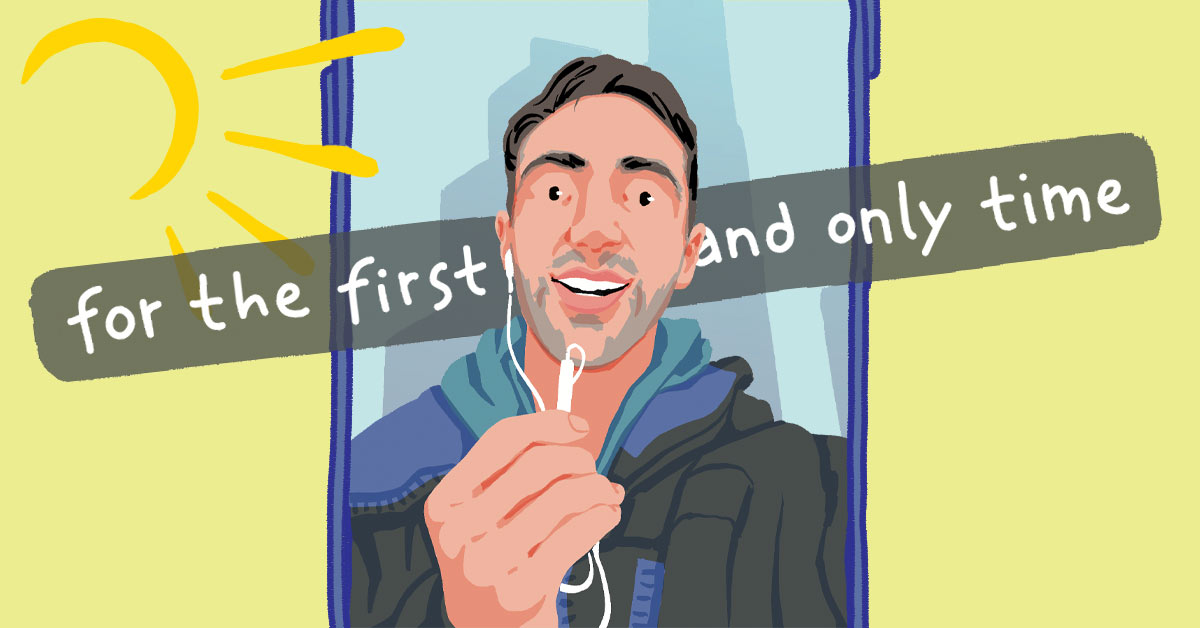
This work helped me develop my catchphrase — “For The First And Only Time” — which I went on to use in hundreds of educational videos seen by millions of people.
If art influenced me to become an environmental content creator focused on positivity and progress, could it also help the rapid cultural shift toward a fossil fuel-free society that studies say we need?
To find out, I talked to artists focused on environmental “artivism”— where art meets activism — to see if art can save our planet from the worst ramifications of the climate crisis. Our conversations revealed four major problems that art can solve.
Art simplifies complex data or boring science in a visually appealing way that brings people together.
“Art has been critically important to a number of activist movements throughout centuries,” explained Maya Penn, an award-winning environmentalist and animator. “You can use abstraction and imagination to tackle complex subjects, and create more accessible information on these topics for all people.”

Most people are not activists or scientists but still care about important issues. If you can’t understand a research paper, perhaps you can appreciate a painting about it.
“Environmental and climate issues can often be dry and difficult to grasp,” adds Jocelyn Salim, an illustrator and preschool art teacher from Singapore. “I use my art to create a bridge, making these important topics more accessible and engaging.”
A fantastic example comes from Kaanchi Chopra, an Indian artist, designer, and photojournalist, who created “At a Floral Pace,” a series of nature-inspired tapestries hung in urban areas devoid of greenery. She told me that in major cities, “trees are indicators of wealth disparity with affluent neighborhoods significantly greener than areas with marginalized communities.”

U.S. communities of color have an average of 33% less tree canopy coverage, according to a report from Scientific American, a fact widely unknown. Unless you’re traveling through neighborhoods counting trees, you wouldn’t know there’s a better way.
Chopra’s work addresses these inequalities, which in turn, she hopes will “challenge the intentional neglect of natural spaces by our city planners … [igniting] a movement for urban rewilding.”
Art makes the same information accessible across ages, education levels, languages, and cultures.
Issues like the climate crisis are complicated, yet most reports are in English and full of technical industry language, making information hard to understand across cultures, languages, and education levels.

In one of the most famous climate-inspired art pieces, “Climate Stripes”, Professor Ed Hawkins took average yearly temperatures since 1850 and represented them through stripes ranging from dark blue (coldest years) to deep red (hottest years). These attention-driving stripes have appeared on everything from face masks to bicycle paths. It’s hard to conceptualize 150 years of temperature data, but it’s a lot easier to connect with his color-filled visual representation.
Art enables us all — from the amateur to the expert — to convey our thoughts in the real world.
Amanda Wu, a Queens, New York-based artist said she knows “art can start important conversations which lead to more people learning about what’s happening to our planet.” If openly sharing our feelings is challenging, then creating and appreciating art can fill that void.
Climate topics are hard to bring up in normal conversation out of fear of an argument, lack of knowledge, or not wanting to be a “buzzkill.”

Yet Tolmeia Gregory, a UK-based artist and activist who started creating climate GIF stickers to use across social media, points out that one of art’s biggest strengths is turning our emotions into tangible change.
“The climate crisis is the most important issue of our lives,” Gregory said, “and so I believe it needs to be raised at every possible opportunity.”
Art validates our experiences and supercharges us into making the world a better place.
While camping, Addison Mehr unzipped his tent to find smoke-filled skies from a wildfire that he narrowly survived. His brush with a climate catastrophe inspired him to “transform the conversation around climate.”
Mehr is the executive producer of Projecting Change, a photographic drone and light show that displays compelling visuals illustrating loss of biodiversity caused by climate change.

“My hope is where words fail, art can prevail,” Mehr said about his initiative, which shines impactful art pieces onto prominent walls to create shareable cultural moments.
Artist and climate justice advocate Francesca Willow is no stranger to big performances either, training as a dancer before merging her skills into the climate space. She feels that, “To create a new world we must be able to dream and imagine better, then work to make it reality.”
The world’s next chapter depends on better policies, actions, and imagination. Willow adds that art across all mediums, “invites us to dream bigger about the kind of future we could build.”
A version of this article was originally published in The 2024 Art Edition of the Goodnewspaper. Get your own Goodnewspaper by becoming a good news subscriber today.
On Thursday, September 26, Hurricane Helene made landfall in Florida as a Category 4 storm, devastating communities along the state’s Gulf Coast before making its way inland across Georgia, South Carolina, North Carolina, and Tennessee.
At the time of this post, at least 110 people have died as a result of the storm across six states. Roadways, homes, and businesses have been completely wiped out.
Helene was particularly devastating in communities like Asheville, North Carolina, and Eastern Tennessee and left many people stranded without food, power, internet, or cell service.

The loss of life and impact on the communities in Helene’s path is unfathomable — and both the immediate and long-term needs are vast.
If you’re reading this, it’s likely because you want to help and care about making a difference for those who’ve been impacted by Hurricane Helene.
You’re in the right place. When we see tragedy like this happen in the news, it’s important to not tune it out. Instead, pay attention and truly feel the heartbreak of it — then, look for and be inspired by the people stepping in to help, and use that energy to make a difference ourselves.
Looking for the helpers
Instead of turning away from tragic events like the devastation from Hurricane Helene — we look closer for people stepping in using what they have, where they are, to make a difference for others.
Inspired by Mister Rogers’ famous quote, we call them the “helpers,” — and they’re usually found wherever there’s bad news in the world. Hurricane Helene is no different. Here are some people, businesses, and organizations helping right now:
- Chef José Andrés and World Central Kitchen teams are serving thousands of meals to communities in need — from Mexico, and the Big Bend of Florida, and into Appalachia.
- Volunteer pilots with the Port City Aviators Flying Club are flying supplies to storm victims in western North Carolina.
- The national Disaster Distress Helpline is providing free multilingual crisis counseling to those in need.
- Southern Smoke Foundation, an organization that supports food & beverage workers in crisis, is providing financial support for groceries, medical bills, lost wages, and more.
- Volunteers with veteran-led disaster response organization Team Rubicon are on the ground in Greenwood, South Carolina clearing roads of trees and debris.
- A local library branch in Asheville, North Carolina served as a hub for community members in need of internet service.
- Workers at Waffle House were “unlikely heroes” providing food to people in need.
- A local Fox News correspondent stopped his live broadcast to help rescue a woman trapped in her car in rising floodwaters.
- Emergency response teams rescued more than 50 staff, patients, and caregivers from the roof of a hospital in Erwin, Tennessee.
- The SPCA of Brevard rescued 20 animals from Hurricane Helene’s path — and it’s now helping them get adopted.
How to make a difference
After we’ve allowed ourselves to feel the weight of the pain and heartbreak associated with bad news, and look for hope and helpers in the midst of it — we always have the opportunity to join in and make a difference, too.
Here are some ways to help — whether you’re local or far away:
Donate to national organizations
Here are just a few large-scale organizations that have helpers on the ground in the region.
Donate to local organizations
Local organizations, recovery funds, and mutual aid groups have been deployed across the states impacted by Helene. Find donation links and updates below:
All States:
- GoFundMe Hub for Hurricane Helene Relief
- Mutual Aid Disaster Relief
- Southeast Climate & Energy Network
- Convoy of Hope
- Appalachia Funders Network
- Americares
- Organizing Resilience
- The National Voluntary Organizations Active in Disaster
Tennessee:
- East Tennessee Foundation
- First Aid Collective Knoxville
- RISE Erwin
- Second Harvest Food Bank of East Tennessee
North Carolina:
- North Carolina Community Foundation
- Hearts With Hands
- Manna Foodbank
- BeLoved Asheville
- Foothills Food Hub
- Haywood Christian Ministry
- Samaritan’s Purse
- Forsyth Humane Society
- Hope Mill
Volunteer locally
Organizations in the affected area are seeking volunteers to help distribute resources and support crucial aid efforts. While many of us are not local to the region, those who are nearby are encouraged to join in a myriad of volunteer opportunities.
(Note: If you aren't in the area, the best way you can help is by supporting local efforts with a donation. Keeping roads clear for rescue crews and local relief agents is vital in maintaining safety in these already devastated regions).
For local volunteers, check out:
Contact your elected officials and ask them to take climate action
Climate scientists agree, the intensity and extent of the devastation brought by Hurricane Helene was made worse by climate change.
While we can’t go back in time and burn less fossil fuels — we can make a difference now to secure a safer future and prevent future climate disasters.
In addition to talking about how this disaster is connected to climate change in our own conversations and holding media outlets accountable for how they talk about climate change — this is a great time to tell your elected officials that you want them to take meaningful climate action.
We’re making incredible progress in the U.S. and globally in reducing emissions, but we need to work even faster — and incorporate climate mitigation efforts into our plans — to limit the most severe impacts of global warming.
Happiness may be reshaping America’s political landscape.
Since the 1960s and the election of President John F. Kennedy, younger voters have supported Democratic candidates, while older voters leaned Republican. But that dynamic has been evolving, and now, in 2024, large numbers in both groups are bucking traditional assumptions about their political affiliation.
This shift challenges the age-old political adage that youthful idealism gives way to conservative pragmatism with age. As pollsters and pundits scramble to explain the phenomenon, one intriguing theory emerges: It may come down to happiness.
The unhappy vote for change
I am an interpersonal communication researcher and the co-founder and co-director of the Florida Atlantic University Mainstreet Political Communication Lab. Our lab investigates and analyzes public opinion and political trends nationwide. With the upcoming election, I’ve been specifically examining the potential influence of happiness on voting patterns.
Research worldwide indicates that happy people prefer keeping things the same, and they tend to vote for the incumbent in political elections. Voters who aren’t as happy are more open to anti-establishment candidates, seeing the government as a source of their discontent.
These findings may help to explain the Democratic Party’s waning support among young people.
This group is still reliably blue. Vice President Kamala Harris has an edge among voters under 30, with 50% favoring her over former President Donald Trump’s 34%. U.S. voters ages 18 to 35 mainly prefer Democratic views on issues like abortion and LGBTQ+ rights. Yet they are more likely to vote Republican than they have been in the past, especially young men.

Youth are no longer carefree
Declining life satisfaction and happiness levels among young Americans may help to explain their changing political preferences.
Our March 2024 poll found that 55% of respondents ages 18 to 34 reported dissatisfaction with their lives, compared with 65% of the general population.
These findings, as well as other national polls, challenge the common belief that young adulthood is one of life’s happiest periods.
Happiness has traditionally been seen as a U-shaped curve, with the youngest and oldest voters reporting greatest levels of happiness. Young adults worldwide reported being carefree and happy, enjoying their newfound independence and opportunities. Older folks, meanwhile, were finally past the stresses of juggling work, family and relationships, and beginning to enjoy retirement.
Today’s young Americans are unhappier than past generations. That’s true worldwide, according to the 2024 World Happiness Report, but the drop is particularly drastic in the U.S., where suicide rates among young people rose over 60% between 2007 and 2021.
Experts attribute the unhappiness of young Americans today to myriad factors, including a childhood interrupted by the pandemic, the dramatic increase in school shootings and rising costs of living. Young people are also stressed by political polarization, distrust in the media and two wars raging abroad, in Ukraine and the Gaza Strip.
Social media exacerbates these anxieties, encouraging young people to compare themselves with others in unhealthy ways and exposing them to a lot of negative news, which can make reality seem worse than it is.
All these happiness-dampening concerns may be shaping political preferences. Some unhappy young voters are drawn to candidates who promise economic stability and growth. Other young adults, unhappy with the political system, want radical change — any change.
Seniors for Harris
The changing political preferences of unhappy young Americans are particularly revealing when compared with those of older Americans, who have been getting happier in recent years.
Recent polling data suggests that older voters, long a Republican base, are trending blue in 2024. As of September 2024, Harris leads among older voters, with somewhere between 51% to 55% favoring her over Trump.
These happy seniors appear to be concerned about sweeping changes that could occur under another Trump administration, like ending even more abortion rights. The Supreme Court’s overturning of Roe v. Wade in 2022 erased what was seen as a major milestone and accomplishment for that generation.
Older Americans are also focused on retaining Social Security benefits, a Democratic priority that Trump has wavered on, and maintaining lower prescription drug costs. Both of these programs help keep older Americans happy and healthy. They barely register for young people.
Polls are notoriously slippery, and they’ll keep changing. But, increasingly, age is no longer a very good indicator of party affiliation.
Happiness matters at the ballot box
I am not suggesting that happiness drives all voting behavior or explains changing political preferences in the United States. But I am saying that it should not be ignored.
My research indicates that to understand why people vote the way they do, it’s essential to examine happiness alongside other key factors like the economy and personal experiences. By studying how happiness connects with age, life experiences and engagement with social media, researchers can gain clearer insights into the changing voting behavior of both young and old voters.
The 2024 presidential candidates seem to have intuited this. The Harris campaign is all about “joy” and celebrating happiness and community. The Trump campaign adopts an angrier tone and a grievance-filled approach.
Ultimately, happiness is more than just a mood. Just as much as ideology, the literal pursuit of happiness may be shaping decisions at the ballot box.
This article by Carol Bishop Mills, from Florida Atlantic University, was originally published by The Conversation.

“I am a farmer, an engineer, a businessman, a planner, a scientist, a governor, and a Christian,” Jimmy Carter said while introducing himself to national political reporters when he announced his campaign to be the 39th president of the United States in December 1974.
On Carter’s 100th birthday, as journalists and historians consider his legacy, this prelude to Carter’s campaign offers insight into how he wanted to be known and how he might like to be remembered.
After studying Carter’s presidential campaign, presidency and post-presidency for years, which included examining more than 25,000 archival documents, media sources, oral histories and interviews, I wrote “Jimmy Carter and the Birth of the Marathon Media Campaign.” Along the way, I had the opportunity to interview former President Carter in October 2014, when we discussed his life, his presidency and his legacy.
Based upon this experience, one observation is certain — Carter was a man of faith committed to a vision of the nation that aligned with his views of Jesus’ teachings.
A campaign cloaked in a message of love and justice
In the fall of 1975, after his initial announcement failed to elicit much national attention for his candidacy, the still relatively unknown Georgia governor published the campaign biography, “Why Not the Best?”
Within the book, he told the story of his wholesome childhood on his family’s peanut farm in Archery, Georgia, and of achieving his childhood dream through his appointment to the Naval Academy in 1943.
He wrote of his dedication to his family as a loyal son, husband and father and his duty-bound career transition to manage his family-owned peanut farm, warehouse and store after his father Earl Carter’s premature death from pancreatic cancer in 1953. He also shared his lifelong commitment to community and public service.
Moreover, he offered himself as a public servant who could bridge the chasm between the American people and the government that had emerged after the revelations of presidential corruption amid Vietnam and Watergate.
“Our government can and must represent the best and the highest ideals of those of us who voluntarily submit to its authority. In our third century, we must meet these simple, but crucial standards,” he wrote in the campaign biography.
Though Carter cloaked his campaign in Jesus’ teachings about love and justice, most national reporters did not give Carter’s faith much attention until he became the Democratic Party’s front-runner in advance of the North Carolina primary in 1976.
‘Lust in my heart’
When national reporters finally turned their attention to his faith, what campaign director Hamilton Jordan referred to as Carter’s “weirdo factor,” the evangelical politician acknowledged that he had “spent more time on my knees in the four years I was governor … than I did in all the rest of my life.”
Carter continued to share his understanding of the gospel with journalists and their audiences in a plain-spoken manner, even though it was not always advantageous to his political fortunes. For instance, after continued probes about his faith that summer from Playboy Magazine correspondent Robert Scheer, Carter launched into a sermon on pride, lust and lying that would haunt him later.
“I try not to commit a deliberate sin. I recognize that I’m going to do it anyhow, because I’m human and I’m tempted … I’ve looked on a lot of women with lust,” Carter, believing he was off the record, said in attempting to clarify his religious views. “I’ve committed adultery in my heart many times.”

Carter referred to Matthew 5:28, the biblical passage in which Jesus shares this interpretation of the Seventh Commandment, with the words: “But I say unto you, That whosoever looketh on a woman to lust after her hath committed adultery with her already in his heart.”
Uninterrupted, Carter continued his salty explanation of the verse: “Christ says don’t consider yourself better than someone else because one guy screws a whole bunch of women while the other guy is loyal to his wife.”
“We have heard Jesus’ words all our lives ever since we were 3, 4 years old, and we knew what it meant,” Carter later explained to me. “But, obviously, the general public, when I said, ‘lust in my heart,’ that was a top headline, it looked like I was — like I spent my time trying to seduce other women. Rosa(lynn) knew that wasn’t true.”
Though Carter’s comments were “on solid theological ground,” according to many people of faith, up-and-coming leaders of the religious right, such as televangelist Jerry Falwell, castigated Carter. And, in the end, many folks agreed with well-regarded columnist Mary McGrory — the interview “should have been an off-the-record conversation with God, not one taped by Playboy.”
Crisis of confidence
Despite the erosion of support among the emerging religious right after the Playboy gaffe, Carter remained steadfast in his commitment to his Christian values and a faith-inspired vision for the nation that advanced human rights at home and abroad. He called it a “new beginning.”
Carter beseeched his American brethren to chart a new course during his inaugural address in January 1977: “Our commitment to human rights must be absolute, our laws fair, our natural beauty preserved; the powerful must not persecute the weak, and human dignity must be enhanced.”
Carter had achieved what Time magazine hailed as one of the most astonishing “political miracles” in the nation’s history because of his rapid ascension from a virtual unknown politician to the presidency. But many citizens, suffering from an emerging crisis of confidence in the American dream and faith in its institutions and leaders, had already begun to tune out Carter’s political sermons about the looming energy crisis, stagflation and international conflicts.
Moreover, in the coming years, they would become indignant toward the man who had condemned the corruption of his predecessors and promised to never tell a lie on the campaign trail, yet remained loyal to one of his oldest advisers, the Office of Management and Budget Director Bert Lance, who was accused of unethical banking practices.
Long-lasting commitment to public service
In the end, Carter stood accused of failing to live up to his campaign promises from the vantage point of many American citizens amid domestic crises and foreign conflicts.
Amid news coverage of these events and his dwindling public support, Carter lost his reelection campaign, and his administration was hailed by many journalists, political insiders and average Americans alike as a “failed presidency.”
Nevertheless, Carter remained committed to his religious convictions. “I have spoken many times of love, but love must be aggressively translated into simple justice,” he invoked his audience when he accepted the Democratic nomination in July 1976.
For the remainder of his life, he attempted to model the translation of Jesus’ love into action through his life of public service. His post-presidential commitments involved The Carter Center’s initiatives of fighting disease and seeking international peace and his private efforts of building homes for Habitat for Humanity and teaching Sunday school.
In the end, Carter will leave this world with only one acknowledged regret: “I wish I’d sent one more helicopter to get the hostages and we would have rescued them and I would have been re-elected,” he said referring to the April 1980 military rescue attempt of the 53 U.S. hostages held by Iranian revolutionaries.
In Carter’s final days, his words from his presidential farewell address, which remain true today, are worth remembering:
“The battle for human rights — at home and abroad — is far from over. … If we are to serve as a beacon for human rights, we must continue to perfect here at home the rights and values which we espouse around the world: A decent education for our children, adequate medical care for all Americans, an end to discrimination against minorities and women, a job for all those able to work, and freedom from injustice and religious intolerance.”
This article by Lori Amber Roessner, from University of Tennessee, was originally published by The Conversation.

Vice Presidential candidate Tim Walz is a fan of dog-mocracy.
At least, that’s what he made clear in a 17-minute long interview with Matt Nelson of the popular social media account WeRateDogs.
Nelson and Walz were joined by scene-stealer Scout, Walz’s rescue dog hailing from Minnesota shelter Midwest Animal Rescue & Services.
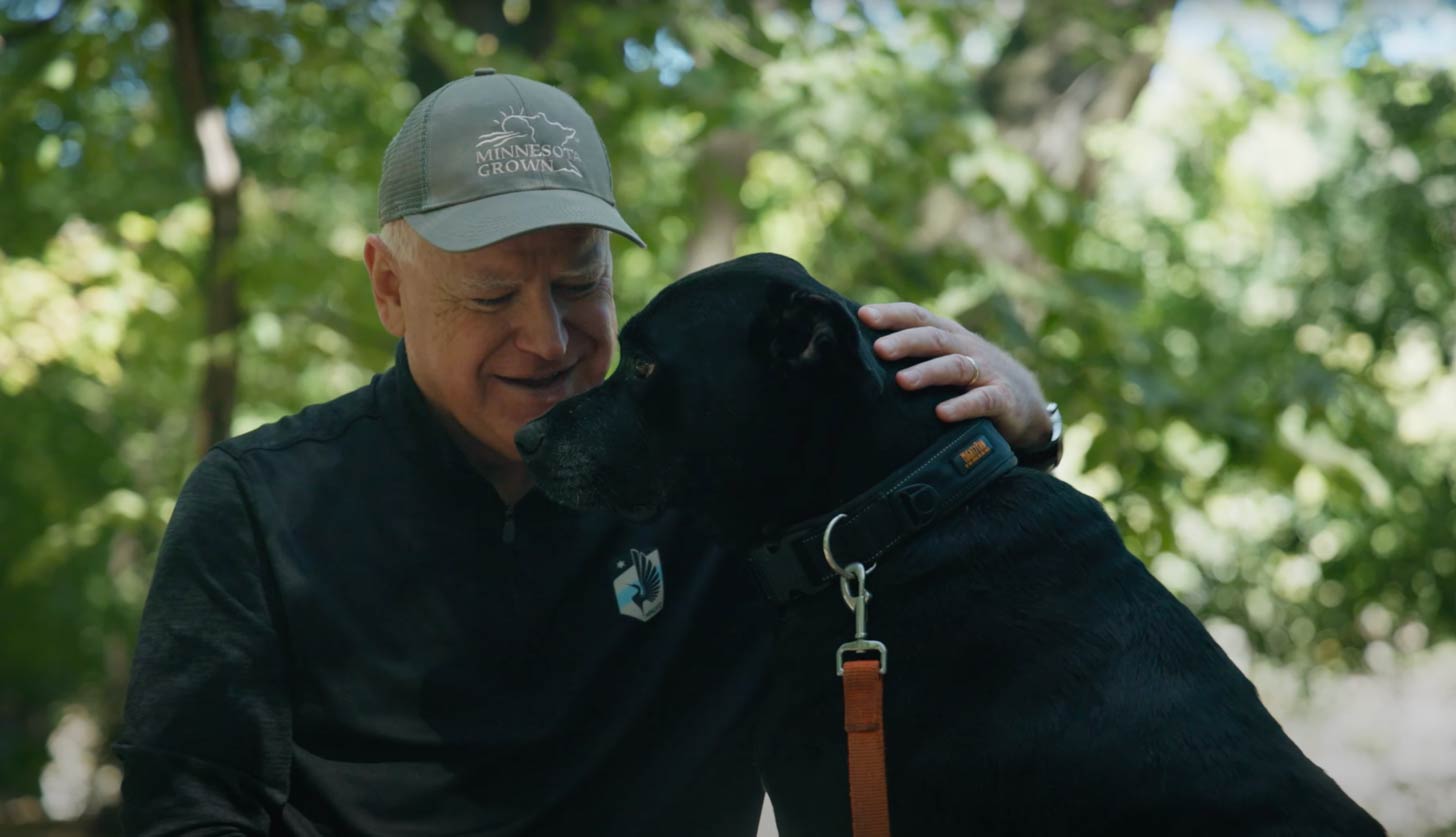
Among many heartwarming anecdotes, including the story of Scout’s adoption (heavily influenced by Walz’s son, Gus), as well as the joy of visiting Minnesota’s dog parks, the governor shared how dogs indeed have an influence on politics.
“Do you think having Scout has made you a better leader, in some ways?” Nelson posed to the former football coach on their walk.
“Well, I think having a dog or pets makes you a better human,” Walz started in his response.
He then began to list out the traits of a good leader that are often naturally brought out in dog owners.
“He counts on me,” Walz said of Scout. “He’s loyal, he gives unconditional love. I think because of that sense of empathy you’d like to see in all leaders, you hope you have it already, but it certainly gets magnified [when you have a dog].”
Scout is a former shelter dog, whom Walz calls a “lab mix,” as the dog is a cross between a Labrador Retriever, Boxer, and Chow-Chow. WeRateDogs fundraises with its merchandise sales to cover the costs of medical care for rescues — a cause highlighted during the video.
Continuing on their walk, Walz also shook hands with a number of other dog park visitors, telling Nelson he might be biased as the state’s governor, but that Minnesota has “great dog parks.”
“It’s Disney World for dogs!” Walz exclaimed at one point. “Just look at ‘em.”
One of the other reasons he loves these canine companions?
“I do think they bring out the best in us,” Walz said. “I think our politics can sometimes bring out the worst. I see it at a dog park, that rarely will people talk politics; they talk dogs, and they talk about the weather. They talk about how lucky we are to be here, and I think that’s their great gift that they [give] to us.”
That said, Scout has been used to peddle a bit of a political agenda — but one that nearly everyone can agree on.
“I’d make the plug: Get yourself a dog if you don’t already have one,” Walz said. “And get out there and vote this fall. Make your voice heard and be part of the system.”
Header image courtesy of WeRateDogs
“Story time!” TikTok creator Madi Hart exclaims in a recent video.
“I used my Hinge profile to get a bunch of people registered to vote in Pennsylvania.”
Hart lives in Los Angeles, where she works on the creative team for a nonpartisan organization called FutureVoice, aiming to improve civic engagement among Gen Z.
“I’ve been trying to figure out how to get involved, like I’ve been wanting to do something like phone banking, but… nobody answers the phone anymore,” she continued in her video. “So what is the freaking Gen Z equivalent to phone banking? Using your dating apps to talk to people about voting.”
Hart went on to share some examples of her dating app escapades.

First, she set her location to a swing state (in this case, Pennsylvania), and answered some of Hinge’s profile prompts with voter-specific responses, like “This year I want to… convince someone to register to vote — and then fall in love.”
From there, she lured her matches in with “thirst traps,” (it should be noted that she used real images of herself, as well as her real name), and then had a number of insightful conversations about voter registration.
As it turns out, it’s all part of a bigger strategy.
Hart, alongside another content creator, Georgia Bridgers, hosted an event in Los Angeles called “Make Dating Apps Useful Again,” where they trained other volunteers to do the same thing — all while sipping drinks and streaming the vice presidential debate Tuesday night.
“We’re trying something a little differently,” the digital invite for the event read. “We’re tapping into your peer-to-peer conversations on dating apps to include discussions on civic engagement and documenting our process on TikTok.”
While it’s not clear how many attended the event, both creators have gotten a warm response on their respective TikTok videos.
Bridgers, who is a lesbian in a committed relationship, started her video by saying that “Hinge has been the last thing on my mind for quite some time now.”

But then, she introduced herself as “straight Georgia,” whose Hinge prompts include “I’m convinced that… the sexiest thing you can do is vote.”
She went on to share that she was pleasantly surprised that most of her matches already had voting plans, so she decided to only match with men who had the label “not political” in their bios.
Quickly, her work took on a new energy, with messages telling suitors “I think it’s super important to vote. If not for us, then for the safety of future generations.”
One by one, they got on board, some even sending proof of registration in messages.
“I didn’t know it takes literally three minutes online,” one of her matches said, accompanied by a laughing emoji.
The creators did not share whether they revealed their true intentions or identities to their matches after confirming their voting plans, though this did not seem to deter their viewers.
Comments poured in, calling Bridgers “iconic,” and some organizing plans to re-download the apps for this same mission.
@georgialynnrose straight and lesbian Georgia say VOTE!! loved working with @futurevoice (non-profit dedicated to increasing civic engagement among Gen-Z) on this 🫶🏻 let me know if you go undercover ;) #lgbtq #wlw #vote ♬ original sound - georgia bridgers
Bridgers and Hart were not in the business of telling their romantic interests how to vote, but rather, just wanted to make sure that they did. This is aligned with FutureVoice’s stated mission: “Addressing attitudinal barriers and galvanizing young Americans to be protagonists in civic life.”
“Research shows that Gen Z and young millennials share a common and unique set of values that transcend partisanship,” the organization’s website reads.
“A significant majority believe that [the] government must do more to protect the vulnerable, invest in children and families, and fight climate change. Their resolve to address these issues has only strengthened in recent years. And without them, we wouldn’t have had the major policy wins America’s seen over the last century.”
To keep up that momentum, leaders like Bridgers and Hart get to have a little fun, spreading the call to action among their peers.
“This is the only time I’ve had fun and been fulfilled by using a dating app in the last three years. I highly recommend doing this,” Hart ended her video.
“Voting is not perfect at all, of course. But it’s one thing that you can do, and I think it’s worthwhile. And this was really entertaining.”
Header images courtesy of Madi Hart/TikTok
When Hurricane Helene tore through the southeast, it left a 500-mile path of devastation in its wake, from the Florida Gulf all the way to the mountains of Asheville, North Carolina.
In Florida, the National Weather service reported that the storm surge climbed to 15 feet above ground level. The force of the water lifted boats into front yards, destroyed businesses, and washed away entire homes.
“I’ve got a boat sitting in the road in front of me right now and fish in our yard,” Steinhatchee resident Jules Carl told CNN.
The natural disaster also took a toll on Florida’s beloved “sea cows,” leaving countless manatees stranded throughout the state in city streets, fields, and ponds.
Fortunately, the Florida Fish and Wildlife Conservation Commission immediately launched into action to save them.
“In collaboration with the public and a network of partners, our biologists have been responding to reports of stranded manatees caused by Helene,” the FWC posted on their official Facebook page.
In their post, the organization included photos of a manatee rescue on September 30, when the 1,000-pound mammal had to be lifted off of the MacDill Air Force Base in Tampa.

“While our top priority has been to help residents and visitors of Florida recover from the impacts of Helene, we are also working swiftly to rehabilitate and conserve these gentle giants,” the FWC wrote in their post.
Manatees are listed as a threatened species in Florida. Outside of severe weather events, the major threats to manatees include accidental boat deaths, red tide algae blooms, and the shrinking size of their natural habitat.
In the wake of Helene, it may take months — or years — to restore the waterways that manatees call home back to what they once were.
But right now the focus is just on keeping them alive.
As the FWC conducted rescue operations throughout Florida, they encouraged locals to report any sightings of injured and stranded manatees to their Wildlife Alert Hotline at 888-404-3922.
Beneath the FWC’s post, Facebook users also used the social media site to report manatee sightings up and down the coast, from Bayport and Gulfport, to the aptly named Manatee County.
The tips were mixed with words of praise from Florida locals, who thanked the FWC rescue team for “helping the sea potatoes.”
“We appreciate everyone’s dedication and hard work rescuing and rehabbing our wildlife,” one local commented.
“Thank you for helping those amazing creatures,” another user chimed in.
One Florida resident wrote: “Seeing this after seeing so much damage and destruction really warms my heart.”
Header images via the Florida Fish and Wildlife Conservation Commission
Following the unprecedented devastation brought by Hurricane Helene in the southeast United States, the Associated Press reports that at least 1.1 million people are still without power in North Carolina and Georgia days after the storm.
Reports from Duke Energy indicate that western North Carolina residents may not see services restored for days or weeks.
While emergency responders and local officials work to help as many as possible, other helpers have stepped in to do what they can.
One such helper is Duane Swenk, the owner of Sparta Candle Company.
“The devastation is so immense that we have no clue of the depth yet,” Swenk said in a TikTok video about the hurricane. “What we do know is that hundreds of thousands of homes are still without power and likely will be for days or weeks to come.”

So, the Sparta-based business is giving away its inventory to those in need.
“We gave hundreds of candles away to people in our community without power,” he continued.
The 70-year-old business owner has become an unlikely hero on TikTok over the years, sharing his love of Taylor Swift, and his viral soap-cutting videos, delightfully called “Cuttin’ Up With Duane.”
Swenk’s nearly 900,000 TikTok followers wanted to help, too.
“Many of you reached out asking how to purchase additional candles for us to give away,” he said in the video. “It’s something we wanted to do on our own in service to our community, but we’ve realized the need is much higher than we anticipated.”
To continue serving the thousands without power in the region, shoppers can now purchase a $10 candle donation on the shop’s online store.
@spartacandleco All photos and videos courtesy of our team members and local customers. #hurricanehelene ♬ Sad and lonely - MoppySound
“Your donation will put a candle directly in the hands of a family without power,” the shop’s listing reads, “providing 65 hours of light and immeasurable comfort during these difficult times.”
Swenk said the company has already donated hundreds of candles, and with a demand so great, it seems like the numbers will only continue to grow.
He ended the TikTok by offering another buoy for members of the North Carolina community.
“If anyone watching is currently without power and you can make it to our store in Sparta, come on by. Charge your devices, grab something to eat at one of the many locations serving free hot meals, and we’ll make sure you leave with plenty of candles to get you through,” he said.
“Together, we can make it through anything.”
Header images courtesy of Sparta Candle Company
For Heidi Klum, life — especially on October 31 — is a runway.
The model and former “Project Runway” host is well-known for her blowout Halloween parties, which she has hosted since 2000.
Sporting iconic — and often absurd — costumes, like a ringworm, flesh-eating alien, or ape, the star will go all-out, using prosthetics and professional costume makeup to make a splash.
While it’s not clear what her costume will be this year, she has revealed at least one accessory that might make an appearance at the bash: UNICEF’s famous “little orange box.”

“YIPPPPIIIII!! Just in time for Halloween, the box is back!” Klum wrote in an Instagram caption yesterday. “Thank you, UNICEF USA, for all you do to support children around the world.”
“The box” in question is a 75-year-old tradition for UNICEF, which encourages advocates to “Trick-or-Treat for UNICEF,” going door-to-door soliciting donations with the organization’s signature orange collection boxes.
This year’s box has a refreshed design, hoping to build on the annual campaign’s nearly $200 million fundraising total as “the longest running youth engagement campaign in the United States,” per a press release from the nonprofit.

“The Trick-or-Treat for UNICEF box is a nostalgic emblem for children and families – mine included – representing a time when they meaningfully engaged in Halloween traditions and we couldn't be more excited to reintroduce it to U.S. audiences,” said Shelley Diamond, chief marketing officer at UNICEF USA.
“UNICEF's work is limitless, and Trick-or-Treat for UNICEF is an invitation to all supporters to join in our mission and do good along the way to support the world's most vulnerable children.”
Klum has long been a supporter of the organization and has endorsed UNICEF at earlier Halloween parties, similarly acting as a spokesperson for the Trick-or-Treat for UNICEF program in 2011.
With her mounting reputation as the “Queen of Halloween,” Klum’s dedication to the cause is making a comeback, as she once again promotes the fundraiser.
This year’s box will feature a QR code to UNICEF’s website, where participants can donate $5 through a “click-or-treat” online donation. From there, they can also learn more about UNICEF’s work in 190 countries and read stories from children around the world.
Anyone can order free donation boxes from UNICEF leading up to the big night. Large groups or organizations are also encouraged to host their own parties and fundraisers — though, it’s hard to imagine an event more extravagant than Klum’s.
“I am so thrilled to be a part of Trick-or-Treat for UNICEF and to officially announce, ‘The Box is Back!’” Klum said in a statement.

In a PSA video, she was joined by fellow “Project Runway” designers Erin Robertson and Kentaro Kameyama, as well as Ciara Chyanne and Jonny Cota from “Making the Cut.”
“[It] was so much fun, and now everyone can ‘add some meaning to their Halloweening’ and support UNICEF USA,” Klum added, “so that every child is healthy, educated, protected and respected.”
Header image courtesy of UNICEF USA
Amid record-high temperatures, devastating disasters, and the resulting climate anxiety that comes with them, it can be easy to give in to despair.
The resounding question of “does this even matter?” likely echoes on a loop, every time you toss an item in the recycling bin, or call your elected officials for the umpteenth time.
But according to research from the University of California San Diego’s School of Global Policy and Strategy, public outcry can indeed lead to significant environmental action — even when public officials are openly hostile to climate-forward policies.

Their paper, titled “Going Viral: Public Attention and Environmental Action in the Amazon,” will soon be published in the Journal of the Association of Environmental and Resource Economists. It focuses on the “unprecedented” public scrutiny following forest fires in the Brazilian Amazon in August of 2019.
These fires occurred soon after Jair Bolsonaro became Brazil’s president, after a staunchly anti-environmental campaign.
But after analyzing both media coverage and international pressure towards Brazil’s federal government, the researchers found that the increased public attention resulted in a 22% decrease in fires in the country’s Amazon Rainforest.
This, in turn, translated into the avoidance of an estimated 24.8 million tons of CO2 emissions.
“Our research underscores the significant role that public attention and media coverage can play in influencing local environmental policies and actions,” the study’s coauthor Teevrat Garg, said in a statement.
Garg is an associate professor of economics at the School of Global Policy and Strategy at UC San Diego.
“The 2019 surge in attention led to immediate governmental responses, which contributed to the notable decrease in fires,” he added.
To come to these conclusions, the researchers compared fire activity in Brazil with that in Peru and Bolivia, countries that did not receive the same amount of public pressure, though typically still have the same level of fire activity per square kilometer.

While naturally occurring forest fires do happen in the Amazon, others are often started to clear land for agriculture. Some spread as catastrophic wildfires.
The spike in media attention in August 2019 was also spurred by dramatic visual disturbances, like a “black sky” phenomenon in São Paulo, which led to international criticism of Brazil’s environmental policies.
This surge of attention led the Brazilian government to deploy fire brigades to halt the fires, as well as an increase of Brazilian congresspeople addressing the fires.
From there, the country saw subsequent governmental measures to prevent fires, including temporary fire bans, though Bolsonaro’s stance on climate policy did not entirely change. In 2023, Brazilians ushered in the election of pro-environment President Luiz Inácio Lula da Silva.
“What this tells us is that this kind of international outcry and international pressure does, in fact, have the potential to have tangible, real-world impacts on environmental policy and environmental outcomes,” Garg said.
It’s important to note that the effects of this progress were short-lived. As media attention and public pressure dwindled, fire activity returned to previous levels the following year.
It is for this reason that Garg and his fellow researchers emphasize that, yes, while this level of criticism and attention is effective in enacting policy changes, a prolonged commitment to moving the needle is necessary.
“Our study is a powerful example of how media and public pressure can drive significant environmental action, even in the face of ongoing challenges,” the authors concluded.
“It also illustrates the importance of sustained public engagement to achieve long-term environmental goals.”
Header image courtesy of Ivan Radic (CC BY 2.0)
When Moo Deng — a feisty, adorable pygmy hippopotamus — and Pesto — a massive, waddling King penguin chick — both became famous overnight, social media users immediately began pitting the two against each other.
The fights bordered on silly (“Is one overshadowing the other?”) and impossible to parse (“Who is cuter?”), but where others saw competition, one TikTok user saw an opportunity.
“Many people do not know this,” said TikTok creator @indipine. “But when Moo Deng arrived onto the scene, alongside hot new bombshell Prince Pesto the Penguin — who also waddled into the villa around the same time — something incredibly powerful began to form.”
These animals are not enemies, Indy explained, they are “colleagues.”
“Yes, it’s what you’re all thinking,” Indy said. “The Knights of the Rotund Table.”
Indy said that “the prophecy of this cross cultural cutie committee” was born “many moons ago” when a third viral baby animal — Indy's personal favorite, the giant panda Hua Hua — sat at a round table in her pen at the Chengdu Research Base with three “bamboo swords” before her.
Now, Indy said, an “elite” team is taking shape, à la “King Arthur And His Knights of the Round Table.”
“Personally, I would say Hua Hua is the leader, due to her years of experience and just general commitment to her craft of being a professional baby,” Indy said. “So she is the ‘King Art-Hua’ in this story.
“Pesto is definitely Merlin and I think Moo Deng is Lancelot,” she added. “That’s just the vibes I get here.”

At the end of the video, Indy asked viewers to stay tuned for more famous baby animals to join “the Rotund Table,” as King Arthur had 25 Knights by his side — and “Fat Bear” week was fast approaching.
Overnight, Indy’s video skyrocketed to over 2 million views and 500,000 likes as her “Knights of the Rotund Table” meme took the internet by storm, spilling over from TikTok onto Threads and X, formerly known as Twitter.
Indy has long been an “accidental Panda TikToker,” through sharing her love for Hua Hua, who she calls “the ‘It Girl’ of the panda-verse.” But she has been blown away by the remarkable response to the “Knights of the Rotund Table.”
@indipine update: YOU CAN NOW VOTE FOR THE NEXT KNIGHT OF THE ROTUND TABLE! LINK IN BIO! 🫡 i will now be accepting nominees for more members of this elite team 🫡 #moodeng #huahua #pestothepenguin #pesto #hehua #pandas #hippo #cute #thailand #australia #china #pandalore #hehua ♬ original sound - -`ˏ indy ˎ´-
“Things are very stressful in the world news cycle right now, and I think appreciating the beauty and cuteness of animals and nature can be a welcome break and very therapeutic for a lot of people,” Indy told Good Good Good.
“It’s also just a lot of fun to imagine all these animals, from all over the globe, coming together to sit at the medieval table dressed as Knights.”
Every day, the “Rotund Table” makes way for new knights from around the world, like Luna the sea otter, Molé the sloth, and Tehya the black bear. And Indy always has a comparative Arthurian legend on hand for each of them (Tehya is Sir Gawain, obviously, due to her “honorable” and “loyal” nature) and personally draws them in regal attire.
Each time voting opens the online poll receives more and more engagement, with some contenders — like last minute addition, Biscuits the seal — getting upwards of 21,000 votes on Day 3.

Now, it’s at a point where the entire poll receives over 250,000 votes in a single day.
“I was so shocked!” Indy said. “I have been so excited about I’ve barely slept this week because I just want to keep checking what everyone is saying.”
It does not escape Indy that all of the baby animals that have joined the “Rotund Table” are endangered, threatened, or vulnerable species on the decline. That’s why she started featuring wildlife sanctuaries, rescues, and nonprofits in her daily poll.
“A lot of these sanctuaries rely on donations and fundraising, so even just pushing people their way towards their accounts can be helpful because then it allows people to meet the specific animals at different centers and get to know their personalities more, which can help people turn into life long donators,” Indy said.
“And I think making the animals into little characters in a story makes people so much more attached to them,” she added.
@indipine TODAY’S KNIGHT REVEAL IS A BIG ONE AND WITH ANOTHER TWIST! #huahua #moodeng #pesto #knightsoftherotundtable #biscuitstheseal #babyanimals #marinerescue #neiltheseal #alaska #walrus ♬ original sound - -`ˏ indy ˎ´-
So far, all of the Knights at the “Rotund Table” are animals that live in zoos, wildlife centers, and rescue societies around the globe. When it comes to the role that zoos play in conservation, Indy admits that it’s “quite a complex conversation.”
“Although many zoos can be underfunded and clear cash grabs that do not benefit the animals, many sanctuaries and conservation programs can also be lumped in with them and labeled ‘bad’ just because the animals are in captivity,” Indy said.
“The reality is, quite a few species, particularly endangered and protected ones, require human intervention and care in order to keep the species thriving, and often a commercial element (e.g. visitors) is needed to fund such programs.”
“So I think the main thing I want people to take away is to support people and organizations that love and care for animals, encourage others to appreciate and protect nature and it’s wildlife,” Indy continued. “And to indulge in joyful, cute things like the idea of a bunch of baby animals around a round table dressed as Knights.”
As for the size of the “Rotund Table”? Indy isn’t sure if she can bring herself to stop at 25.
“I actually think I’ll have to make the table bigger because there’s too many animals to pick from,” Indy joked. “Thankfully in literature, Arthur’s Knights actually range from around 25 to 3,000 so I guess I can be quite lenient with it!”

Below are all of the Knights’ wildlife sanctuaries, fundraisers, and nonprofits that Indy is currently promoting through the online “Knights of the Rotund Table” poll:
- The Marine Mammal Rescue Society
- KSTR Wildlife Rescue
- Busch Wildlife Sanctuary
- Alaska Sealife Center
- Wild Wildlife Rehabilitation Center
- The San Francisco Zoo
- The Edinburgh Zoo
- The Heal Bay Aquarium
- Como Park Conservancy
- The Go Fund Me for Possum the Pig's recovery
Here is a list of Knights of the Rotund Table (Good Good Good will update as it grows!)
- King Arthur: Hua Hua the giant panda
- Merlin: Pesto the King penguin
- Sir Lancelot: Moo Deng the pygmy hippopotamus
- Sir Bors the Younger: Baby white rhino from Dubai
- Sir Percival: Biscuits the seal (and his “emotional support” sea otter Luna from the same rescue: The Marine Mammal Rescue Society)
- Sir Gareth: Molé the two-toed sloth (and his protector, Sir Gawain: Tehya the black bear)
- Sir Kay: Neil the Seal (and "his child" Sir Tristan: Uki the oprhan walrus from Alaska)
- Sir Bedivere: Cinder the Porcupine, who was rescued by the Oregon Foresty Service
- Sir Dagonet the court jester: Mebo, the red panda from the San Francisco Zoo (and her "Scottish baby apprentice:" the baby red panda from the Edinburgh zoo)
- The Lady of the Lake: Gordita the giant sea bass at the Heal Bay Aquarium
- Sir Galahad: Willow the blind snow leopard of the Como Park Conservancy
- Willow's cat battallon, or "cattalion:" Seattle's snow leopard triplets Lenny, Phyllis, and Raya, Fort Worth's Moja the African lion, Cleveland's tiger twins Millie and Sergei and their "Welsh foreign exchange student" Zaza, Yorkshire's cheetah twins Kendi and Tafari, and London's asiatic lion cubs Mali, Syanii, and Shanti
- Guinevre: Corra, the baby elephant born at Disney's Animal Kingdom (and therefore, technically a Disney Princess)
- Sir Geraint: Hubert the bear (and his companion Sir Lamorak: baby Biggie, son of the winner of the 2024 Fat Bear Week Queen Grazer)
- Sir Percival in his early days: Panini the giant anteater and her protector Sir Pelleas: Possum the Pig
Header images via Indy @indipine / TikTok
“Subway Takes” is a TikTok series, hosted by artist and comedian Kareem Rahma, in which he asks fellow New Yorkers what their “hot takes” are while riding on the subway.
The things he’s heard run the gambit: Comedians advocating for the retirement of group chats, popular politicians espousing tips for homeowners, and even beloved celebrities calling for the end to self-checkouts.
But today, he welcomed an unlikely guest to join him on the train: Animal researcher and climate activist Jane Goodall.

And the 90-year-old icon came prepared.
“What’s your take?” Rahma asked, as he always does at the top of his videos.
Goodall delivers a zinger: “Young people have such an important role, and they don’t know how to play it.”
“100% agree,” Rahma responds, hands in the air in an amen gesture.
He went on to add that a lot of young people seem to feel “helpless and hopeless” amid the current state of the world.
“They’re depressed, they’re fed up, they’re angry,” Goodall continued, with compassion, “so they don’t want to vote.”
Goodall joined this under two-minute episode of the video series to advocate on behalf of her organization, The Jane Goodall Institute, and her new campaign: Vote For Nature.
“What I’m trying to say to them is, you know, ‘you do care about your future,’” Goodall added, before revealing a sign she kept next to her on the subway, which directs viewers to the landing page for the Vote for Nature initiative.
@subwaytakes Episode 198: Young people have such an important role to play but they don’t know how to play it!! Feat @Dr. Jane Goodall & JGI & @votefornature 🚋🚋🚋🚋🚋 Hosted by @KAREEM RAHMA Shot by @Willem Holzer @Anthony DiMieri Edited by Tyler Christie Associate producer @Ramy #podcast #subway #hottakes #subwaytakes #interview #nyc #janegoodall #genz #voting #nature #vote #conservation #climate ♬ original sound - Subway Takes
On the website, Goodall continues her call to action.
“As I enter my 90th year, one thing is clear: we are the stewards of our planet, and we haven’t done enough. Elections around the world are not just about policies — they’re about our survival,” she writes.
“The leaders we choose will shape the future of our planet. My birthday wish is simple: VOTE! Vote for leaders who protect our natural world, fight for clean air, water, and a stable climate.”
In the “Subway Takes” video, Rahma asks Goodall how young people can use all of their (valid, passionate) energy to mobilize.
In addition to the voting initiative, she promoted her project Roots & Shoots, which enables young people to take on projects to help people, animals, and the planet.
She jokes: “Maybe it’s cleaning up the subway. This looks very clean to me, by the way,” pointing to the floor beneath her.
After a brief lesson on New York’s subway rats, she made it clear: Even the smallest actions can make a noticeable difference.
“Vote like our planet’s future depends on it,” Goodall’s outreach website states, “because it does.”
Header image by Jordan Quellman
Every day the Good Good Good team collects the best good news in the world and shares it with our community. Here are the highlights for this week!
If you want to get good news in your inbox every day, join the Goodnewsletter — the free daily newsletter designed to leave you feeling hopeful.
The Best Positive News We’re Celebrating This Week —
Ending the country’s 140-year reliance on coal, the last coal plant in the UK is set to close today
After receiving its final delivery of coal earlier this summer, the last coal power plant in the UK is scheduled to close its doors today – making it the first G7 country to remove coal from its grid entirely.
The closure of the Ratcliffe-on-Soar power station marks the end of a 142-year history of coal in the country – with its first coal-fired power plant opening in 1882. The UK’s transition away from the dirty fuel source has been rapid thanks to the growth of renewables as well as natural gas.
The site will be transformed into a zero-carbon technology and energy hub once it’s decommissioned. It’s a major step as the UK government ends coal generation by 2024.
→ Read more
More good climate news:
- An Australian Aboriginal woman fought a coal mine that would have destroyed a nature refuge and emitted 1.58 billion tons of carbon dioxide… and she won.
- Following a K-pop protest over climate concerns, Hyundai ended its aluminum deal with a company whose coal plants would emit 5.2 million metric tons of CO2 equivalent per year.
- Thanks to their “imaginative” nonviolent action, climate activists brought about the “end of coal” in New England, when a power company announced it would voluntarily stop burning coal.
A new report found that the Global Fund partnership has saved 65 million lives since 2002
After a “significant year” of progress in the fight against AIDS, tuberculosis, and malaria, newly released data found that the Global Fund partnership has saved 65 million lives and reduced the combined death rate by 61% since 2002.
In 2023 alone, 25 million people were on antiretroviral therapy for HIV, 7.1 million people were treated for TB, and 227 million mosquito nets were distributed globally.
In countries where the Global Fund works, AIDS-related deaths have decreased by 73% since 2002 and new infections have reduced by 61%. At the end of last year, 84% of people living with HIV knew their status. There’s also notably been a reduced HIV incidence in girls and young women.
Last year, more people with TB were found and treated than ever before. And the Global Fund dramatically improved access to life-saving tools to prevent and treat malaria.
In the aftermath of Hurricane Helene, a national helpline is providing free disaster crisis counseling to those in need
As communities across Florida, Georgia, North Carolina, South Carolina, and Tennessee reel from the devastation of Hurricane Helene, federal agencies, aid organizations, and everyday volunteers have stepped up to help provide urgent relief.
But with unfathomable loss — including a rising death toll — rebuilding also includes confronting the toll these disasters take on survivors’ mental health.
It’s why the Substance Abuse & Mental Health Services Administration created the Disaster Distress Helpline — the first national hotline dedicated to providing free disaster crisis counseling 24/7 in more than 100 languages.
Why is this good news? As SAMHSA explains, it’s normal for people to experience feelings like “overwhelming anxiety, constant worrying, trouble sleeping, and other depression-like symptoms” before, during, and after hurricanes. And people should never be left to navigate those feelings on their own.
From his early climate action to near-eradication of Guinea worm disease, Jimmy Carter has had a remarkable impact on the world
Today is President Jimmy Carter’s 100th birthday. Carter is one of the most remarkable and impactful leaders of the last 50 years of American history — both in and out of office.
While his time in the White House was short-lived, he made an impact with his early adoption of climate action and profound focus on human rights in foreign policy. Carter was also the only modern U.S. president who didn’t wage war.
After losing re-election, Carter graciously accepted defeat and quickly got to work establishing The Carter Center, a nonprofit organization with the mission to wage peace, fight disease, and build hope.
Perhaps most notably, under his watch, Guinea worm disease has dropped from 3.5 million annual cases to only 15 total cases in 2021 — and we’ve seen significant progress in the fight against other potentially eradicable diseases like mumps, rubella, lymphatic filariasis, poliomyelitis, and cysticercosis.
Colorado is launching a first-of-its-kind methane monitoring program at its 80 landfills
As part of a large-scale initiative to reduce greenhouse gas emissions, Colorado is implementing cutting-edge technologies to monitor methane emissions at its 80 landfills across the state.
With the help of a $129 million grant, the program is the first of its kind and could help set a new standard for other states.
The state has already been using the technologies — which include drones, aircraft, and satellites — to help it spot leaks in oil and gas infrastructure, too.
Why is this good news? Methane traps 80 times more heat than carbon dioxide over 20 years — and landfills are the third-largest source of methane. While there are caps on emissions from landfills, it’s largely based on an honor system — an analysis found that 90% of landfills across eight states had at least one violation of those caps.
→ Read more
Volunteer pilots with the Port City Aviators Flying Club are collecting and flying supplies to Hurricane Helene victims
After hearing about the devastating impact Hurricane Helene had in western North Carolina, a local group of pilots came together to help.
Volunteers with the Port City Aviators Flying Club set up to accept donations starting at 9:30 in the morning and within an hour, cars were lined up to drop off essential items like food, water, and pet supplies.
They received ten times more than they were expecting and then flew them to Asheville over several trips. With more supplies continuing to be donated, the pilots planned to keep making trips.
Knowing that so many roads are impassable, the pilots knew they had a unique opportunity to bring much-needed supplies into the area by air — and took swift action to make it happen.
After over a decade of work, a project to protect both a New York City coastline and marine life is now complete
In response to Hurricane-turned-Superstorm Sandy that made landfall in New Jersey in 2012, neighboring New York got to work on a climate resiliency project to protect both its coastline and marine ecosystems.
Now officially complete after a decade of work, the Living Breakwaters will protect the Staten Island shoreline, homes, and businesses from future extreme weather events.
Eight partially submerged structures will break up storm waves, decrease erosion, and serve as critical habitats for marine life. It’s also part of the state’s larger climate resiliency efforts.
→ Read more
More good climate change mitigation and resiliency news:
- Biochar is a carbon-rich material made from organic waste that is used to help plants grow — and it has huge potential for mitigating climate change.
- U.S. national parks have earmarked $21.6 million for projects dedicated to helping make places of cultural importance more resilient to climate change.
- To help combat extreme heat and record-high temperatures, Los Angeles is painting streets with a special reflective coating that sends heat back up into space.
After Helene left manatees stranded, rescue crews quickly jumped in to save them
When Hurricane Helene tore through the southeast, it left a 500-mile path of devastation in its wake — including from a 15-foot storm surge in Florida.
That impacted the state’s beloved “sea cows,” leaving countless manatees stranded throughout the state in city streets, fields, and ponds.
Biologists with the Florida Fish and Wildlife Conservation Commission immediately jumped into action to save them. In one instance, rescuers lifted a 1,000-pound manatee off the MacDill Air Force Base in Tampa.
Manatees are listed as a threatened species in Florida. And while it may take months — or years — to restore the waterways that manatees call home back to what they once were before Helene, the quick work from these rescue teams is helping to first keep them alive.
→ Read more
A new California law stops public libraries from banning books based on their “views, ideas, or opinions”
Amidst an increase in book bans around the country, California is setting a new standard at its public libraries.
Under the newly signed law, libraries must ensure “diverse points of view” in their book collection and include a “range of social, political, aesthetic, moral, and other ideas and experiences.”
By law, libraries cannot exclude or limit access to materials based on “the race, nationality, gender identity, sexual orientation, religion, disability, political affiliation, or any other characteristic… or the socioeconomic status” of a subject, author, source or perceived or intended audience.
Why is this good news? From July 2021 to the end of the 2023 school year, PEN America recorded nearly 10,000 instances of book bans across the U.S. — 37% directly addressed issues of race and racism, while 36% included LGBTQ+ characters or themes. Book bans erase history and silence those most underrepresented in literature.
Heidi Klum is supporting the return of UNICEF’s “Trick-or-Treat for UNICEF” program in its 75th year
Heidi Klum is well-known for her blowout Halloween parties, which she has hosted since 2000. The “Queen of Halloween” has a new cause she’s championing this year, and it comes in a “little orange box.”
The box is a 75-year-old tradition for UNICEF, which encourages people to “Trick-or-Treat for UNICEF,” going door-to-door soliciting donations with the organization’s signature orange collection boxes.
Klum has long been an ambassador for the organization and also acted as spokesperson for the Trick-or-Treat for UNICEF program in 2011.
And with Klum’s support, the organization hopes to build on the annual campaign’s nearly $200 million fundraising total as “the longest running youth engagement campaign in the United States.”
→ Read more
More good news of the week —
For the fourth year in a row, a resort near Yosemite gave free spa treatments to volunteers who collect trash in the park. Last year, the Rush Creek Lodge & Spa saw 55 volunteers who collected 899 pounds of trash in Groveland, a town close to the northwest entrance of Yosemite.
The U.S. government is giving West Coast states $100 million to create a zero-emission truck fueling network. Oregon, Washington, and California are aiming to build at least 34 medium and heavy-duty electric vehicle charging stations and five hydrogen fueling stations primarily along 1,400 miles of I-5.
London Marathon runners raised a world record £73.5 million for charity at this year’s race. They surpassed the previous world record of £66.4 million set in 2019 and brought the cumulative total raised to more than £1.3 billion since the first event in 1981.
Improving air quality, cutting emissions, and reducing road casualties, city centers are using cargo bikes instead of vans to transport goods. Currently, 90% of all goods in London are transported by road, replacing them with cargo bikes would remove 30,000 metric tons of carbon emissions annually.
To protect beachgoers and aid conservation efforts, scientists are using drones to track and study white sharks. Their goal is to develop forecasting tools that can help predict what times of year, what times of day, or what ocean conditions are likely to be more or less sharky.
After clearing around 30,000 tests, Washington state’s crime lab says its rape kit backlog is “essentially eliminated.” One survivor said the moment is meaningful, and that getting kits tested and cases prosecuted makes the entire community safer.
To honor Jimmy Carter’s 100th birthday, Habitat for Humanity volunteers are building 30 new homes this week. The Carters have worked with the organization for 40 years, building homes around the country every year.
With poaching down 86%, an Indian state’s one-horned rhino population has grown from 600 to 3,000 since 2016. Assam attributes its success to various conservation initiatives — but despite this progress, the rhinos still remain vulnerable due to poaching and habitat loss.
For the first time in history, a woman’s diabetes was reversed using a stem cell transplant. A 25-year-old woman in China with type 1 diabetes started producing her own insulin less than three months after receiving a transplant of reprogrammed stem cells.
Experts say the supply of deadly fentanyl is drying up in many parts of the U.S. and fatal overdoses are dropping. There was a sudden national decline in fentanyl-related deaths last year, dropping by 10% — and it’s falling even faster in places like Ohio, by around one-third so far this year.
Amtrak train options will now show up when customers use Google to search for flights. It’s part of a new integration to support more sustainable travel and will pull up-to-date Amtrak data so people can easily compare departure times, trip lengths, and fares.
Helping counter a rise in diabetes, researchers developed a “healthier” rice with a lower glycaemic index and more protein. Research shows a link between substantial consumption of rice and non-communicable diseases such as type 2 diabetes and heart disease, and this new grain “could have a big impact in Asia and Africa.”
The World Health Organization just confirmed the elimination of trachoma as a public health problem in Pakistan. Trachoma is a disease caused by infection by the Chlamydia trachomatis bacterium and can result in irreversible blindness if left untreated.
The Sports Bra and an LA women’s soccer club just partnered to create a streaming channel designed for sports bars. The app will broadcast United City FC Women's games live and be tested at Sports Bra locations in Spring 2025 and is designed to maximize the sports bar viewing experience.
Scientists are using tiny “backpacks” on turtle hatchlings to observe their movements between hatching and emerging above the sand. Their findings have important implications for conserving a declining turtle population globally.
Chappell Roan sure has had a busy year. Along with selling out whirlwind tour dates, breaking festival records, and speaking out about causes she cares about, it’s never been more important for the “Pink Pony Club” singer to de-stress.
This became even more evident in recent weeks, when she had to back out of a recent festival performance, citing the need to prioritize her health.
The star has been very vocal about her mental health, including sharing details about her experience being diagnosed with bipolar II disorder, per a recent interview with Rolling Stone.
Living in the spotlight has proven difficult, but she has found ways to manage. Like… snuggling up with rescue animals.

Prior to a show in Council Bluffs, Iowa last week, the singer spent some time with a handful of local animal rescue organizations — and their adoptable furry friends.
Jayna Sanders runs a small rescue nonprofit called No Dog Cleft Behind, which helps cleft puppies get adopted in the Midwest.
“Chappell requested a rescue bring in puppies and kittens before the show, as she feels it’s therapeutic for her and the band to snuggle pets while they are on the road,” Sanders told Good Good Good.
“Chappell and her crew were absolutely amazing. Very normal and down to earth. We were there for two hours and they were so grateful for the snuggles. The entire crew spent time with the puppies and kittens and inquired about adopting.”

Another small rescue, Corbin’s Cathouse, supports exotic cat breeds, and also joined in on the cuddle party.
“It was so touching, I definitely teared up,” founder Jessi Corbin told Good Good Good. “She seemed so comfortable and relaxed while holding the cats and was truly interested in the issues exotic cats (especially Sphynx and Sphynx mixes) are having.”
Roan’s mom is a veterinarian, according to both Sanders and Corbin, so it’s only natural that the “Good Luck, Babe!” songstress is passionate about animals, too.
Despite some rumors circulating online, Roan did not adopt a new pet during this visit with the animals, according to Corbin.
But she was interested in bringing home a Sphynx cat of her own.

“She did talk about it and was definitely interested in the future,” Corbin said. “She talked about possibly reaching out to learn more about some that are available, but I'm sure that's not a definite thing.”
The group was also joined by folks — and animals — from the American Rescue League of Iowa.
“We had a great time hanging out with Chappell and her team and talking about our mission, and the kittens had so much fun that they didn’t want to leave,” ARL shared in a Facebook post. “We loved being able to bring smiles to everyone’s faces.”
This is far from the first time Roan has invited animal rescue organizations backstage before her shows. In May, she cozied up to some adoptable animals from Richmond Animal Care and Control in Virginia, and Corbin reiterated that Roan seems to support a myriad of animal rescue organizations.
And while the cuddle time seems to benefit Roan (the singer even snagged a kitten to join her on a conference call, according to Sanders, who added, “she said it helps calm her”), her role is influential for the animal rescue crews, too.
“Honestly, just getting the word out helps so much,” Corbin said, adding that people don’t always know how much work it takes to own an exotic cat.
“The bigger of an outreach we have, the more we can educate and hopefully find these cats wonderful homes,” Corbin added. “Even if 10 more people know about us, that is 10 more people we can help. So, her just giving us the time of day has already impacted us. We’ve had an increase in applications!”
Header image courtesy of Jessi Corbin
Just 11 days after Hurricane Helene slammed into Florida’s Gulf coast — and caused deadly flooding throughout Georgia, Tennessee, Virginia, Kentucky, and both Carolinas — Florida residents are bracing again for a new storm: Hurricane Milton.
Ahead of Milton, which strengthened to a Category 5 storm on the morning of October 7, Florida Governor Ron DeSantis issued evacuation orders for counties across Southwest Florida.
In a race against time, staff from the Humane Society of Broward County headed out to assist their sister branch in Manatee County, which is preparing for a “direct hit.”
“They’re taking enough crates to rescue eight dogs and 29 cats,” reported WSVN news anchor Jack Royer. “The pets will be brought to the Humane Society’s facility in Fort Lauderdale and will all need loving homes.”
The country is still reeling from the devastation of Helene, as rescue and recovery efforts for people — and animals — continue primarily in Florida and western North Carolina.

In Asheville, NC Brother Wolf Animal Rescue has been working “nonstop” to make sure every animal gets safely out of the disaster zone.
“We’re working around the clock. This is what we do,” Brother Wolf executive director Leah Craig Chumbley told a local FOX Weather station on October 4.
“Although we’re in very different conditions than normal, we care more than ever.”
As rescue animals continue to be evacuated from states impacted by Helene, northern shelters and rescues have been stepping up to help.
Last week, Providence Animal Center in Media, Pennsylvania received 21 dogs from shelters across southern Georgia.
“These dogs were already homeless before the hurricane,” PAC's chief operating officer Victoria Kinden told CBS News.
“What we did was open spaces for them to help in the areas that are having issues, so that they have open kennels to help those displaced dogs, so that someone can come find their pet while down there.”
In D.C. and Northern Virginia, a nonprofit and a kennel — Homeward Trails Animal Rescue and District Dogs — teamed up to take in over 100 animals.
In a statement, executive director of Homeward Trails Sue Bell said: “As shelters across the country are filled to capacity, having safe, healthy space for our rescued animals to thrive while awaiting adoption is truly lifesaving.”
At both PAC and Homeward Trails, staff urged locals in the area to consider adopting the evacuated animals, or even temporarily foster them, as the Southeast prepares for another hurricane.
“The more space we can make through foster and adoption, the more we can help,” Kinden said. “We help locally all the time, but during these big needs and these hurricanes, we want to do what we can to help all our partners.”
Header image via Brother Wolf Animal Rescue in Asheville North Carolina
Despite polls connecting evangelical Christians to climate denialism, and often, political conservatism, there is a growing bloc of evangelicals who are also environmentalists.
As part of the national movement Evangelical Environmental Network, students and volunteers are ramping up their canvassing and outreach efforts in the weeks leading up to the election, calling their fellow believers to consider climate policy when they cast their votes.
Young Evangelicals for Climate Action is a student-led ministry under EEN and has organized on Christian college campuses since 2012.

“I think young people just want the issues that we care about, like our communities, our economy and jobs and God’s creation, to be taken seriously,” Tori Goebel, a former spokesperson for YECA (and now the chief operating officer of EEN), told Earthbeat last month.
“We just want young people to be informed and to make meaningful decisions for the sake of God’s creation.”
YECA activists provide nonpartisan voter registration tools for interested individuals, as well as guides to help evangelical environmentalists send letters to editors, share their climate testimonies, and take a “faithful action pledge” to care for the planet.

While the advocates of YECA and EEN don’t explicitly tell their communities who to vote for, they provide more information for the curious community members who believe in God — and in a better future.
In the wake of worsening climate disasters, leaders at EEN have seen an uptick in interest from their evangelical peers, especially those who have experienced extreme weather themselves.
Jessica Moerman, CEO of EEN, told NBC News that the group is starting to focus more on making connections between climate change and increasingly powerful storms, wildfires, and the like.
“As evangelicals, we have this biblical mandate to care for God’s creation,” Moerman, who is also a pastor and a climate scientist, told NBC. “And in the 21st century, that means taking action on climate.”

In addition to student canvassing, EEN hosts webinars, welcoming newcomers into the fold to teach them about the science of climate change and how faith plays a role in taking action. The organization’s website also has a number of opportunities to speak up for or against certain climate legislation.
The group also runs faith-based nature camps for children, facilitates listening sessions in Christian communities impacted by climate-related disasters, and even corners the market on pro-life environmentalists by connecting their belief in the value of life to climate change.
Their Pro-Life Clean Energy Campaign includes a push for reducing air pollution that intersects with a desire to “protect unborn children,” according to NBC News. This is based on research that such pollution can raise the risk of preterm birth and low birth weights.
A petition for this campaign has collected more than 3 million signatures online.
For Katharine Hayhoe, an evangelical Christian, scientist, author, and board member for EEN, there is power in connecting climate across theological and ideological differences, claiming that caring about the planet is indeed a bipartisan issue.
She told Earthbeat that the majority of Americans support action to address climate change.
“That is really something that we should always highlight and point out,” she said. “It’s almost like a public service to all of us who are concerned: There’s actually more of you than you think there are.”
To bring those people who are concerned out of the shadows — and perhaps convert the others — EEN also helps pastors and preachers to incorporate climate discussions into sermons.
“It’s 2024, and Christians aren’t the only ones talking about apocalyptic times,” Caleb Haynes, a pastor at a small church in Nashville, Tennessee, told his congregation at a Sunday morning service this summer, per NBC.

“As glaciers melt and sea levels rise, and greed wants to run the show, the people of God must show up!”
He focuses on the links between Christian teachings and caring for the planet, ultimately believing it’s the Christian duty to “consider climate while voting.”
Of course, learning more about climate-forward candidates — in all levels of government — is important in the weeks leading up to the election. But advocates also say this time to build energy is crucial for developing long-term engagement with elected officials.
Hayhoe told Earthbeat, “Our elected officials, at the city level, at the state level, at the county level, and, of course, at the national level, need to hear from their constituents about how they care about this issue and how they support action on this issue.”
Mobilizing congregations is the first step.

“Some pastors get kind of hung up talking about climate change, but to me, it’s biblical faithfulness 101,” Haynes told NBC. “Our original sin here was assuming that we consume, any way we want, whatever we want, from whatever tree in the garden we want, and that there wouldn’t be consequences.”
Certainly, balancing the scales of climate action and religious belief can be tricky amid today’s political landscape, but starting small — in the churches people have faithfully attended for years, on their city and county ballots — encourages evangelicals to confront all of the nuance with grace.
Even Karenna Gore — daughter of Al Gore and founder of the Center for Earth Ethics — is optimistic about the power of judgment-free, science-backed conversations in trusting communities.
“I have been in church spaces in the past year where I have been moved to tears by the integrity and the depth that people are bringing to this exact conversation, sitting with the uncertainty,” she told Earthbeat.
“Instead of approaching dialogue with a strident self-confidence, they are saying, ‘I can’t do this all alone. I want to hear what other people have to say, so that we can actually pull it together.’”
Header image courtesy of Young Evangelicals for Climate Action