In the town of Bishop’s Castle, England, a peculiar shop called the Poetry Pharmacy is taking walk-ins and giving consultations — but in lieu of prescribing medication, the “pharmacists” offer hand-rolled lines of poetry.
“In each of the pill capsules that you can see, there are extracts from poems,” shop owner Deborah Alma told NBC News anchor Kelly Cobiella.
“By turns, a stone is grown in you, and then a star,” Cobiella read aloud.
“Oh,” she paused, turning to Alma. “That just gave me chills.”
Alma has spent the majority of her life finding ways to use poetry as a tool for good — traveling around Shropshire as an “Emergency Poet” and reading poetry to neighbors, strangers, and everyone in between.
“I was working with people with dementia, actually, using poetry to assist communication, and saw how poetry could change someone’s mood,” Alma said.
“People just need some help to find the poem that they will respond to.”

The Poetry Pharmacy, which recently opened a second location on Oxford Street in London, offers personalized consultations to walk-in clients.
But they also have walls of pre-made pill capsules — that are also available online — that offer balms for “broken hearts,” “existential angst,” “empty nest syndrome,” and are “not to be swallowed (except metaphorically).”
A poetry prescription for “comfort” pills, for instance, is intended for “Times of Great Need; to Counteract Sorrow.”
The bottle includes a line of poetry from Galway Kinnell who wrote: “The bud stands for all things, even for those things that don’t flower, for everything flowers, from within, of self-blessing.”
For Alma, the dream of The Poetry Pharmacy sprang from a desire to prove how poetry could be a cathartic way to ease stress, anxiety, and grief.
“We offer a therapy in slowness and a nostalgia for something lost: old fashioned service, friendliness, even listening,” Alma told If Lost Start Here, a mental health blog.
“People can come in feeling miserable and we give them a free ‘pill’ as well as the chance to talk about what they need. Then we prescribe a poem.”

Alma also wants poetry to be accessible — and she says that many customers are surprised by how affected they are by the tiny snippets of prose.
“I wanted to stop poetry from being intimidating and I wanted to show that it can literally be a vehicle for talking to people,” Alma emphasized.
When she first started opened her business in 2019, Alma was met with a wall of skepticism.
“People said, ‘you know why there is no other Poetry Pharmacy in the world? Because no one wants it,’” Alma recalled. “But we’re finding differently; the idea of it even existing in the world seems to be a nice thing in the middle of all this darkness.”
“It’s a piece of optimism and faith in something,” she continued. “It’s a positive thing, and light-hearted in lots of ways.”
Header images via The Poetry Pharmacy
Every day the Good Good Good team collects the best good news in the world and shares it with our community. Here are the highlights for this week!
If you want to get good news in your inbox every day, join the Goodnewsletter — the free daily newsletter designed to leave you feeling hopeful.
The Best Positive News We’re Celebrating This Week —
In an anti-trafficking landmark, nearly 1,000 endangered animals were repatriated to Madagascar
The largest repatriation between Thailand and Madagascar is now underway, with Thai officials sending nearly 1,000 highly endangered tortoises and lemurs home to Madagascar.
It’s part of a landmark victory against animal trafficking, in which Thai police recovered 1,117 animals during an anti-trafficking operation earlier this year.
Among the animals recovered were spider tortoises and ring-tailed lemurs, which are all listed among the world’s “most endangered” animals.
Why is this good news? These animals are highly sought-after in Asia as exotic pets, but replicating their habitats is difficult, and puts their lives at risk. Some of them died due to a lack of food and water when they were first smuggled, so it’s very good news that almost all of them will be returned to their home habitats to thrive again.
→ Read more
The number of people volunteering in the U.S. is increasing again, especially in states like Colorado
While volunteering rates saw a dip at the start of the pandemic, a biennial AmeriCorps report found that both organized volunteering and informal helping are rising.
Overall, 28.3% of people in the U.S. say they volunteered at least once in the last year, which is up five percentage points from 2021.
Some states saw higher increases, too. In Colorado, 34.7% of people reported volunteering through a formal organization at least once — an 8.5-point increase between 2021 and 2023.
While that rate is still lower than the 2019 rate of 42.2%, it’s really good progress to celebrate — and a trend in the right direction.
Improving access to care for low-income patients, a telehealth abortion service just became the first to accept Medicaid
Hey Jane, a United States-based virtual clinic that provides reproductive and sexual healthcare — including abortion care — announced today that it is now accepting Illinois Medicaid for medication abortion services.
Nationally, 45% of abortion patients are enrolled in Medicaid, with Illinois Medicaid covering over 3.4 million residents, many of whom face barriers to health care.
Last year, Hey Jane also became the first clinic to accept private insurance for telemedicine abortion care. And now, it’s working to expand this access in even more states.
Why is this good news? As extreme restrictions to accessing life-saving reproductive health care take effect in more states around the country, “sanctuary states” for reproductive health care like Illinois have experienced strains on their system.
Hey Jane offers an alternative to in-person clinics, and this expanded access will help people regardless of income level get the care they need.
Jane Fonda (and research) says one lifestyle change can help you live 7.5 years longer — more than quitting smoking or exercising more
→ Read more
The first of the “big four” to do so, London Fashion Week announced it will ban exotic animal skins from shows
Officially the largest industry event to do so, London Fashion Week will officially be exotic animal skin-free.
Starting with its next event in 2025, all its participating designers must eliminate skins from animals like crocodiles, alligators, and snakes from their collections.
This follows the event’s ban on fur, which was officially enforced starting in December 2023. London is following in the footsteps of smaller influential events like Melbourne Fashion Week and Copenhagen Fashion Week.
Why is this good news? While there’s still some work to do to make these events entirely wildlife-free, animal rights campaigners agreed it’s “important progress” and that it sends an “important message throughout the global fashion industry that exploiting animals for their skins is both unethical and unnecessary.”
There was an over 60% decrease in cervical cancer deaths among U.S. women from 2016-2021
The first vaccine for human papillomavirus, or HPV was introduced in 2006. Now, a new study shows a steep decline in cervical cancer deaths among the group of women first eligible for the vaccine in the U.S.
Researchers looked at the number of cervical cancer deaths from 1992 to 2021. They found that the number of deaths among women under 25 years old due to cervical cancer declined steadily by about 4% from 1992 to 2015.
Then, things changed dramatically. From 2016 to 2021, mortality rates dropped by just over 60% — from about 0.02 deaths per 100,000 people between 2010 and 2015 to about 0.007 deaths per 100,000 people.
Experts are hopeful this data is an indication of even more good progress to come if HPV vaccination rates improve.
During a 14-week applied science program for underrepresented students, a middle schooler found a cancer-fighting compound in goose poop
The World Wildlife Fund just released a decade-long report on the Congo Basin, revealing the discovery of 742 new species
Reminding us all just how much of the world is yet to be explored, a new study from the World Wildlife Fund breaks down the discoveries of 742 new species in the Congo Basin, the second-largest rainforest and river basin in the world.
Assembled from data collected from 2013 to 2023 the report catalogs the existence of new plants, spiders, fish, amphibians, reptiles, birds, and mammals.
The researchers discovered one new mammal species a year on average, including a new monkey species, three mice, and two bats. They also recorded 25 new snakes, 101 fish, 121 insects, and more.
An important note: Although many of these “new species” were unfamiliar to researchers, and previously unrecorded in taxonomy records, they were known by Indigenous communities in the basin — like a blue-bottomed monkey species with a “booming” call is known by natives of the Lomami Basin as the “lesula.”
→ Read more (and see more photos!)
More than three-quarters of UK universities have joined the pledge to divest from fossil fuels
Following years of activism from students and staff, more than three-quarters of universities in the UK have now publicly committed to divesting from fossil fuels.
The 115 out of 149 universities pledging to exclude fossil fuel companies from their investment portfolios represent £17.7 billion worth of endowments that will now be inaccessible to the polluting industry.
One activist said this kind of progress would have been “unthinkable” even a decade ago, and it’s thanks to “the generations of students and staff that have fought for justice in solidarity with impacted communities.”
While we still need to see these kinds of commitments at more universities around the world, this kind of progress only makes divestment more appealing for others to do so, too.
With millions turning out to help, the number of Giving Tuesday volunteers increased by 4% in 2024
The results are in: This year, $3.6 billion total was donated on Giving Tuesday, an increase of 16% from last year, with 36.1 million people in total participating — either by giving money or donating goods.
Just as notably, 9.2 million people donated their time through volunteering, a 4% increase from last year. One provider of corporate social responsibility solutions reported a 17% increase in volunteering on its platform from 637 participating companies.
This evens out to about 260,000 volunteer hours logged by more than 21,000 individuals from these companies, showing that Giving Tuesday goes beyond employee-matched donations, too.
Why is this good news? When people show up to collect trash in their communities, serve meals at a food bank, or lead read-alongs at their local libraries, they commit to improving the environment and social landscape of the places in which they live — which is especially important right now.
Noah Kahan celebrated Small Business Saturday at a coffee shop staffed by workers with disabilities
Bitty & Beau’s calls itself “a human rights movement disguised as a coffee shop.” At its 20 locations across the country, it employs people with intellectual and developmental disabilities and has an incredibly inspiring backstory.
Ahead of a Small Business Saturday concert in Charleston, South Carolina, folk singer Noah Kahan paid a visit to the local business to “fuel up” before his show.
“Nice to meet you,” Kahan said, giving a hug to the famous Bitty as he walked into the shop. “Thanks for having me in to your spot!”
He went on to greet every employee, having learned their names ahead of time, ordered a seasonal frappuccino, posed for photos, and spent time after chatting with workers.
More good news of the week —
An “exciting” new treatment for lupus could end the need for lifelong medication. With symptoms including joint pain and major organ inflammation, lupus patients with mild or severe cases often have to take drugs their whole lives, ranging from ibuprofen to steroid tablets and injections.
A drugmaker announced its twice-yearly shot that prevents HIV infections will be available in 120 poor countries. The closest the world has ever come to a vaccine against AIDS, Gilead announced it will allow cheap, generic versions to be sold in countries with high HIV rates, helping improve access where it’s most needed.
Libraries across the U.S. are offering free health and wellness classes. Helping provide greater access to health information for communities, they offer fitness and cooking classes, conversations about loneliness and mental health, and blood pressure monitors that can be checked out like books.
Giving hope to more terminal brain cancer patients, a UK man’s deadly brain tumor shrank in half after a new treatment. Scientists are trialing new studies into the aggressive brain cancer glioblastoma, which normally kills patients within 18 months.
Researchers used Fitbit data to accurately predict mood episodes associated with bipolar disorder. The new machine learning algorithm’s predictions open the door to further research into using a personalized algorithm to drive treatment of the life-impacting condition.
Under a new rule, people with HIV who need a kidney or liver transplant will be able to receive an organ from a donor with HIV. The rule change is expected to shorten the wait time for organs for all, as before such transplants could only be done as part of research.
A Taylor Swift commemorative street sign auction raised more than $200,000 for a Toronto food bank. Fans bid more than $100,000 and the venue that hosted Swift’s six Eras Tour dates donated $113,000 to double their impact.
Alex Consani made history as the first openly transgender person to win Model of the Year. With a massive, dedicated social media following, Consani has walked the runway for brands including Chanel, Diesel, and Stella McCartney.
Researchers found the first new treatment for asthma attacks in more than 50 years. Their findings stem from the realization that not all asthma or COPD attacks are the same, but different parts of the immune system are overreacting in different patients.
A new Roblox game donates a real-life meal to someone in need for each one served in a “virtual community kitchen.” This holiday season, one in five children in the U.S. will face hunger, and nearly half of all kids play Roblox every day — those overlapping statistics presented an opportunity to do good.
A new study shows that cancer-sniffing dogs and artificial intelligence successfully detected disease with a simple breath test. The largest clinical trial to date for cancer detection using both AI and trained canines, the test demonstrated remarkable accuracy, with up to 97% sensitivity for certain cancers.
Thanks to a “remarkable” rewilding project, Scotland’s bumblebee population grew by 116 times what it was two years ago. A 90-acre project has been working to restore nature to green spaces in an increasingly built-up area, and bumblebee populations surged from just 35 counted in 2021 to more than 4,000 in 2023.
Spain introduced paid climate leave for people impacted by deadly flooding in the country. The leave will give workers up to four days off so they don’t have to travel during climate events like the recent flooding catastrophe in October that killed at least 224 people.
Sierra Leone just began a nationwide rollout of the Ebola vaccine a decade after it saw a deadly outbreak. The 2014 Ebola outbreak was the deadliest in history and nearly 4,000 deaths out of the more than 11,000 recorded globally were in Sierra Leone, which lost 7% of its healthcare workforce to the outbreak.
A once-endangered species is going to roam free at a California national park. Native to the state, the tule elk neared extinction due to hunting and habitat loss in the 1800s from European settlement, and the herd that was reintroduced 50 years ago has been restricted by a fence that will soon be removed.
The “cat distribution system” has claimed a new member: The Oregon Zoo.
After wandering in southwest Washington last month, two cougar cub littermates — a male and female — were scooped up by the state’s Department of Fish and Wildlife.
Staff determined the pair would not have survived on their own in the wild, having been presumably orphaned by their mom. They were rescued and have now found a new home at the Oregon Zoo in Portland.

“We’re so happy we can provide a home for these cubs,” Jen Osburn Eliot, who oversees the zoo’s Great Northwest area, said in a statement.
“We wish they could’ve grown up with their mom, but since that’s not possible we’ll be doing everything we can for them. They’re still shy with people, so we’re giving them time to adjust and explore their new home.”
The zoo’s veterinary medical center estimates that the siblings are about four months old, both weighing in at about 20 pounds, though the male is slightly larger.
After settling in and continuing to be monitored by the care team at the zoo, the pair will eventually move into the cougar habitat in the zoo’s Great Northwest area.

In fact, the last resident of the zoo’s cougar habitat was also orphaned in the wild, Paiute, who was re-homed there in 2010. According to the zoo, he lived a “long life in Oregon,” and passed away earlier this year at the age of 15.
Cougars are also referred to as mountain lions, pumas, catamounts, and panthers. While the big cats are not listed as endangered (with the exception of Florida’s panthers), they do face many risks as a result of human behavior and habitat destruction.
For instance, one of the most famous cases of this is P-22, a beloved mountain lion who was killed in the Los Angeles area in a traffic collision.
His death, along with many others in the area, sparked wildlife activists, private donors, and government agencies to take action, leading to the construction of the world’s largest wildlife crossing, slated to be completed by early 2026.
Though it is not clear how the new residents at the Oregon Zoo were orphaned, human encroachment on wildlife impacts big cats in a myriad of ways, from habitat loss and competition for limited resources, and injury and death to wild animals.
This leaves cubs in need of rescue.
Fortunately, the Oregon Zoo is home to many animals found orphaned or injured in the wild, dubbed “second chance” residents. From sea otters to black bears, they serve as ambassadors for their species, educating visitors and raising awareness on behalf of their wildlife counterparts.
But for now, the new cubs aren’t on the PR circuit, but rather getting acquainted with their adoptive home.
“The cubs aren’t ready to venture out yet, but we’re getting the habitat prepared for a lot of activity once they are,” Osburn Eliot said.
“In the wild, cougar cubs stay with their moms for at least a year, so we’re giving these two all the time they need to feel safe and comfortable in their new home.”
Based on their social media launch, the brother and sister cubs will have no trouble fitting in. Under a video of the pair exploring their new habitat, comments poured in, offering a warm welcome of “pspspsps” from all their new fans watching from home.
Header image courtesy of the Oregon Zoo
In 2021, scientists in Guelph, Ontario set out to accomplish something that had never been done before: open a lab specifically designed for raising bumble bees in captivity.
Now, three years later, the scientists at the Bumble Bee Conservation Lab are celebrating a huge milestone. Over the course of 2024, they successfully pulled off what was once deemed impossible and raised a generation of yellow-banded bumble bees.
The Bumble Bee Conservation Lab, which operates under the nonprofit Wildlife Preservation Canada, is the culmination of a decade-long mission to save the bee species, which is listed as endangered under the Xerces Society for Invertebrate Conservation.

“WPC began working with endangered bumble bees in 2013,” Lance Woolaver, executive director of Wildlife Preservation Canada, told Cottage Life. “As such, we now have more experience working with bumble bee conservation than most other organizations in Canada.”
Although the efforts have been in motion for over a decade, the lab itself is a recent development that has rapidly accelerated conservation efforts.
For bee scientists, the urgency was necessary.
“We could see the major declines happening rapidly in Canada’s native bumble bees and knew we had to act, not just talk about the problem, but do something practical and immediate,” Woolaver said.
Yellow-banded bumble bees, which live in southern Canada and across a huge swatch of the United States, were once a common species.
However, like many other bee species, their populations declined sharply in the mid-1990s from a litany of threats, including pathogens, pesticides, and dramatic habitat loss.
Since the turn of the century, scientists have plunged in to give bees a helping hand. But it was only in the last decade that Woolaver and his team “identified a major gap” in bumble bee conservation and set out to solve it.

“No one knew how to breed threatened species in captivity,” he explained. “This is critically important if assurance populations are needed to keep a species from going extinct and to assist with future reintroductions.”
To start their experiment, scientists hand-selected wild queen bees throughout Ontario and brought them to the temperature-controlled lab, where they were “treated like queens” and fed tiny balls of nectar and pollen.
Then, with the help of Ontario’s African Lion Safari theme park, the queens were brought out to small, outdoor enclosures and paired with other bees with the hope that mating would occur.

For some pairs, they had to play around with different environments to “set the mood,” swapping out spacious flight cages for cozier colony boxes.
And it worked.
“The two biggest success stories of 2024 were that we successfully bred our focal species, yellow-banded bumble bees, through their entire lifecycle for the first time,” Woolaver said.
“[And] the first successful overwintering of yellow-banded bumble bees last winter allowed us to establish our first lab generation, doubling our mating successes and significantly increasing the number of young queens for overwintering to wake early spring and start their own colonies for future generations and future reintroductions.”

Although the first-of-its-kind experiment required careful planning, consideration, resources, and a decade of research, Woolaver hopes that their efforts inspire others to help bees in backyards across North America.
“Be aware that our native bumble bees really are in serious decline,” Woolaver noted, “so when cottagers see bumble bees pollinating plants in their gardens, they really are seeing something special.”
Header images courtesy of Tiffani Harrison and E. Richard/Wildlife Preservation Canada
Yellowstone National Park has a rich history — one scientists are still digging up.
In fact, this October, researchers from Oklahoma State University published new findings that examine ancient fecal records to better understand the past — and future — of the hallowed grounds.
That’s right — ancient poop holds invaluable clues to one of America’s most beloved national parks.
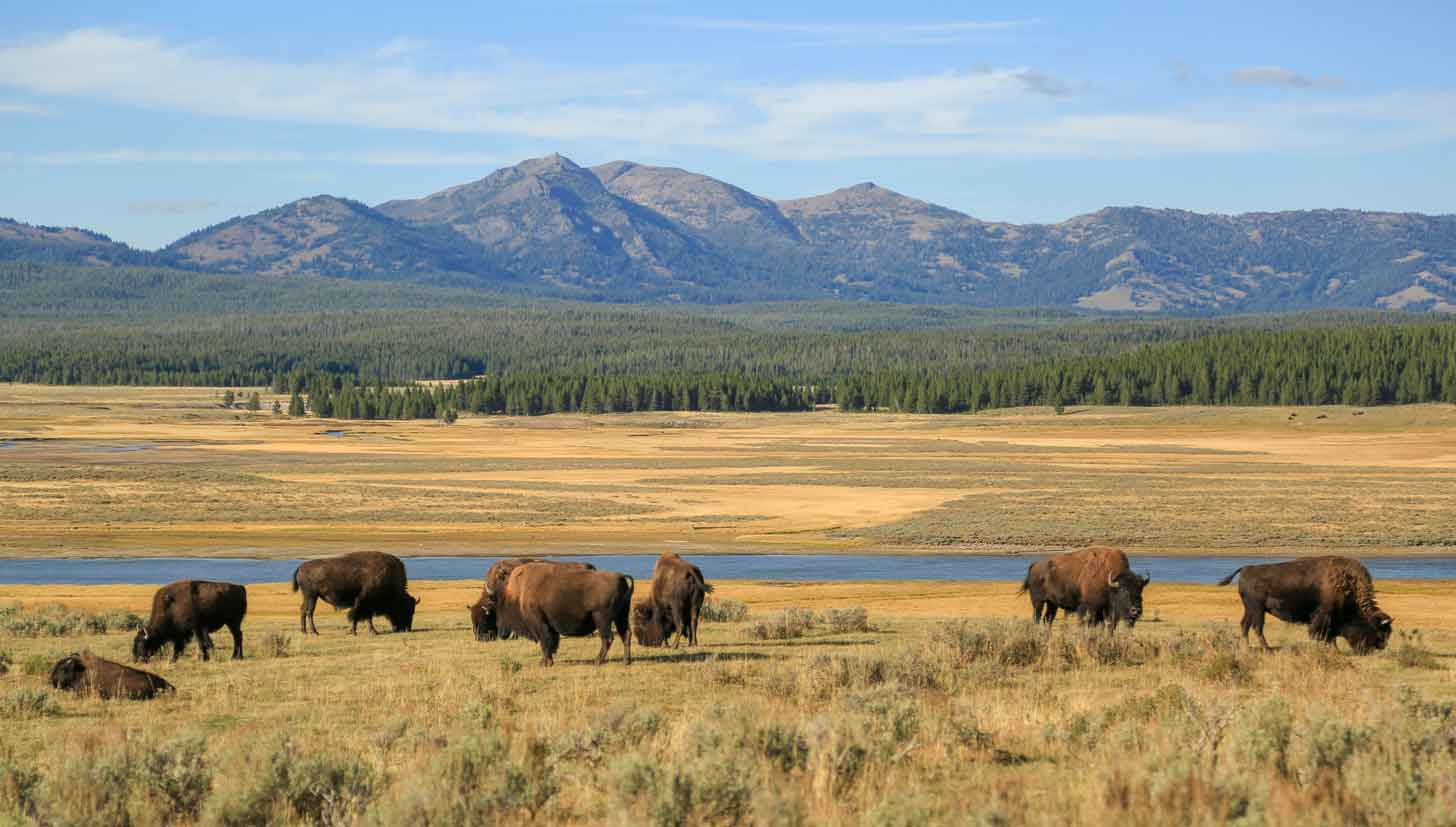
By analyzing steroids from animal dung in lake sediments dating from about 238 B.C. to the present time, John Wendt and his research team were able to confirm that large herbivores like bison and elk have continuously lived in the Yellowstone region for about 2,300 years.
The layers of sediment studied by the researchers showed history in action.
The top layer, which contains mud closest to the water found in the area, reflects a recent rise in bison use of the area. In the samples, researchers could also see the historic fires of the 1980s, which burned thousands of acres.
And 2,000 years ago, they noted a period of ecological stability, in which samples reflected very few changes in vegetation or the animals who existed in that time.
But why does this record matter?
“We developed a 2,300-year record of wild herbivore activity in northern Yellowstone National Park with fossil biomarkers found in lake sediments,” the researchers said in a statement.
“This information is critical for understanding long-term dynamics of ecologically and culturally important herbivores such as bison and elk.”

Wendt told Wyofile that this record provides a baseline for a small system within the region and fills in knowledge gaps of the park’s history.
“If park managers are interested in understanding the baseline of large herbivore use, they could now compare modern levels to the long-term average and variability,” Wendt said. “As in, is what we’re doing now outside of some historic range of variability?”
A more expansive and scientific account of history also corroborates human accounts from Indigenous peoples, while also pointing to the plants and animals that thrived in various climate scenarios.
This could, in theory, provide more insights about how plants and animals in Yellowstone may react as our climate continues to change.
It all started five years ago, when Wendt and his colleagues gathered samples from the deepest part of Yellowstone River (referred to as Buffalo Ford Lake), digging about five feet down, and pulling up layers of history.

The researchers had previously analyzed steroids found in bison, elk, pronghorn, mule deer, and moose feces, isolating unique compounds in each. Using the new sediment samples, they compared what they found to the existing samples.
“Because Yellowstone has such a well-documented history, we were able to compare the management practices and some of what is known about where animals were distributed at different points over the past 150 years to our observations,” Wendt explained. “That gave us a lot more confidence in interpreting the record further down.”
The fecal samples gathered from Buffalo Ford Lake likely came from the animals congregating on the frozen lake during the winter, or from the shore, where snowmelt would wash their waste into the lake, eventually settling to the bottom.
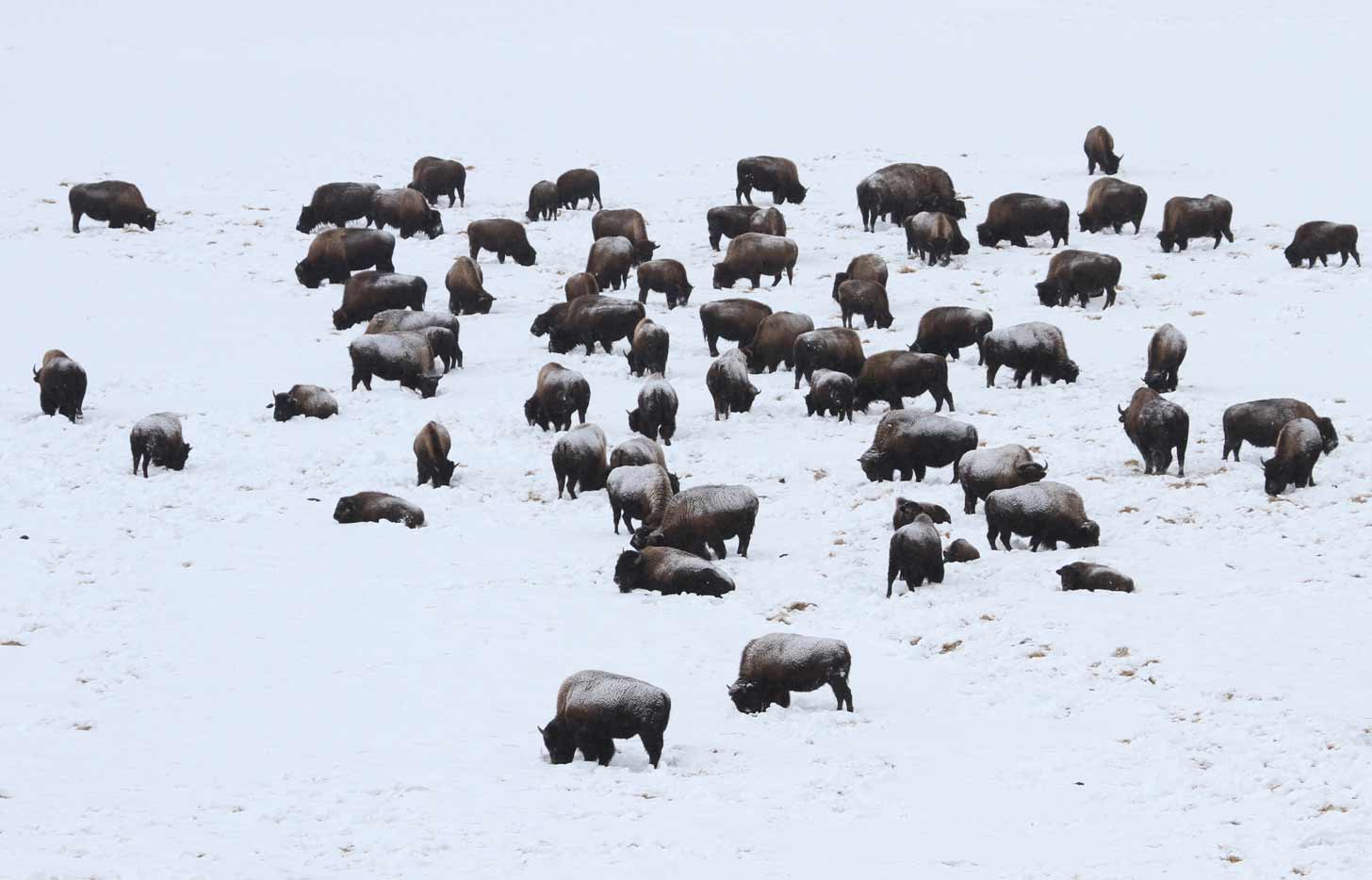
Their findings — that bison and elk were in healthy supply in the region for thousands of years — tell a story of colonization. It’s a story that is well known, Rick Wallen, a former bison manager at Yellowstone (who was not involved in the study), told Wyofile.
But it’s one that must be studied.
“Everyone acknowledges there were a lot more animals in the lower country and as the colonization of the West occurred, they retreated back up into wherever they could get away from development and conflicts,” Wallen said. “But bottom line, this shows bison and elk had been in that area of the high country for at least 2,300 years.”
This study plays a significant role in setting the historic record straight. But ongoing studies of various samples in the region could also inform the future.

A lone study will not likely change current wildlife management strategies. But as more information becomes available, Cathy Whitlock, a co-author of the study and Montana State University professor, believes more decisions about how the region should be utilized can be made, based on how it best thrived in the past.
“Our lake studies are not like finding a bone in a cave,” Whitlock told Wyofile. “Sure, you can get a radiocarbon date and show how old the bone is, but that doesn’t indicate sustained presence, it’s a one off.”
These lake studies hold a greater depth of understanding — literally and figuratively.
As the researchers write in the conclusion of their study: “Continued development of fecal steroid records can address critical questions about the historic role of bison, elk, and other ungulates in Yellowstone National Park and other grazed ecosystems.”
Header image courtesy of NPS
It is well documented that microplastics are a hazard impacting nearly every part of our environment.
Found across the planet and even inside our bodies, these tiny plastics are released by many of our consumer products, like tires, clothing, and plastic packaging.
Unfortunately, those consumer products also include the personal care items we use on our bodies: Cleansers, cosmetics, and other beauty products. Ever seen those tiny beads added to microbial face washes or hand soaps? Microplastics.
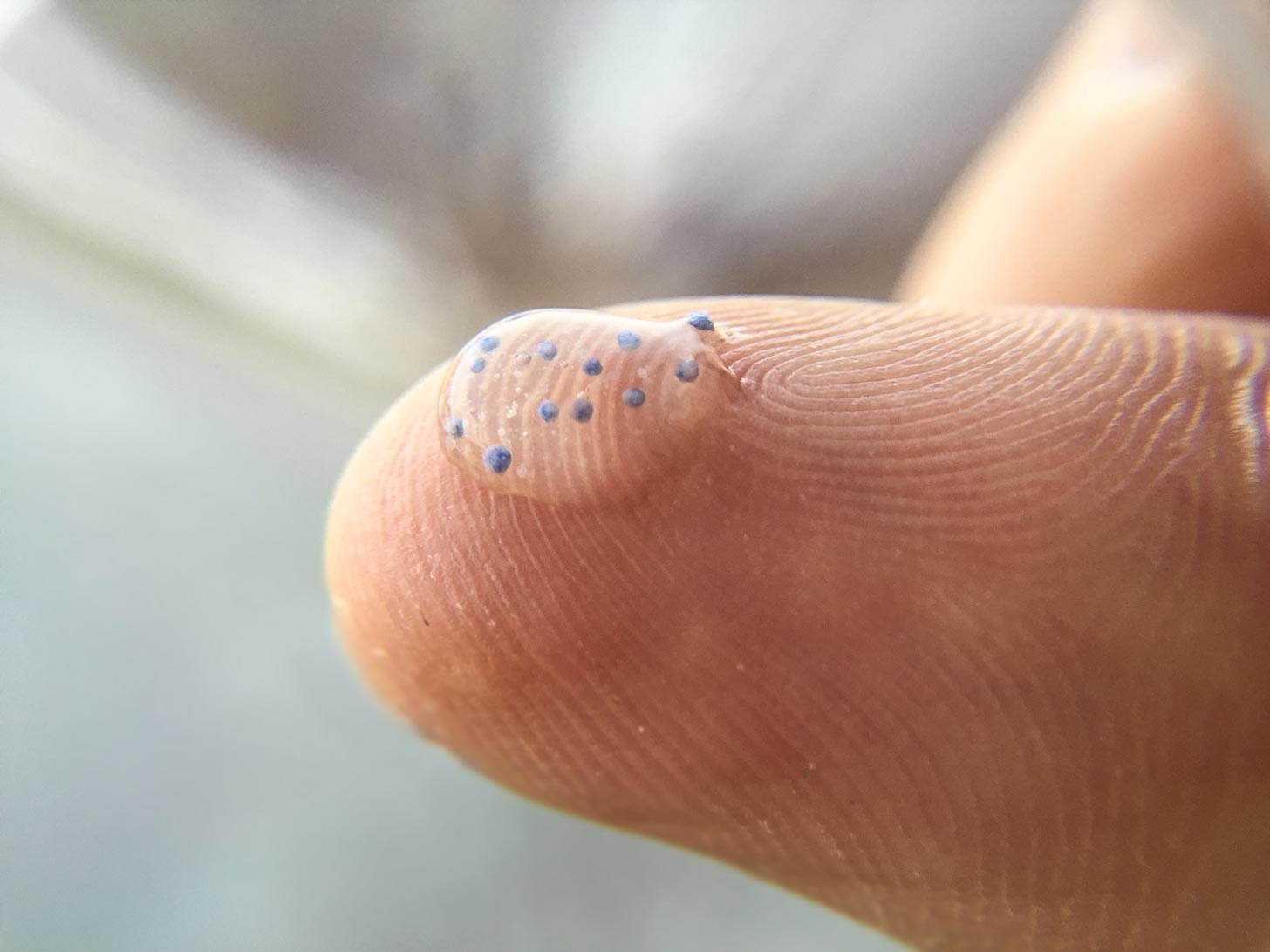
Fortunately, environmental scientists and chemical engineers are working on solutions to environmental health hazards like microplastics and “forever chemicals” every day.
“One way to mitigate the microplastics problem is to figure out how to clean up existing pollution,” said MIT’s Ana Jacklenec, a principal investigator at the Koch Institute for Integrative Cancer Research.
“But it’s equally important to look ahead and focus on creating materials that won’t generate microplastics in the first place.”
In an effort to address the source of microplastics, Jacklenec joined a team of other MIT researchers to develop a class of biodegradable materials that could replace those plastic beads currently used in beauty products.
It stems from their work to replace microplastics in another sector: Nutrient-fortified food and vitamin supplements.
In 2019, the researchers reported a polymer material that could be used to encapsulate vitamin A and other nutrients. Unfortunately, that polymer was classified as a microplastic by the European Union and was included in a ban that went into effect in 2023.
This spurred Jacklenec and colleagues, with the support of the Bill and Melinda Gates Foundation, to design an alternative that was better for humans and the planet.
Jacklenec joined Professor Robert Langer and Linzixuan (Rhoda) Zhang, an MIT graduate student in chemical engineering, to take on the challenge. They turned to a polymer already created by Langer’s lab: poly(beta-amino esters).

These polymers are biodegradable, break down into sugars and amino acids, and have the potential to be used in medical scenarios like gene delivery.
The researchers changed the composition of the material’s building blocks to create five different candidate materials, zooming in on one that appeared to have the optimal characteristics to use in place of microplastics, especially to encapsulate vitamins A, D, E, C, zinc, and iron.
“Many of these nutrients are susceptible to heat and light degradation, but when encased in the particles, the researchers found that the nutrients could withstand exposure to boiling water for two hours,” a statement from MIT explained.
And even after being stored for six months at high temperatures and humidities, more than half of the encapsulated vitamins were undamaged.
So, how do the beauty products come into play?
In testing the new material for vitamin delivery, the researchers also explored other applications, including fortifying food with additional nutrients (and seeing success in bouillon cubes), and as a replacement for microbeads in beauty cleansers and soaps.
They mixed the particles with soap foam and found the combination could remove permanent marker and waterproof eyeliner from skin “much more effectively” than soap alone.
The polymer was also more effective than cleansers that use polyethylene beads.
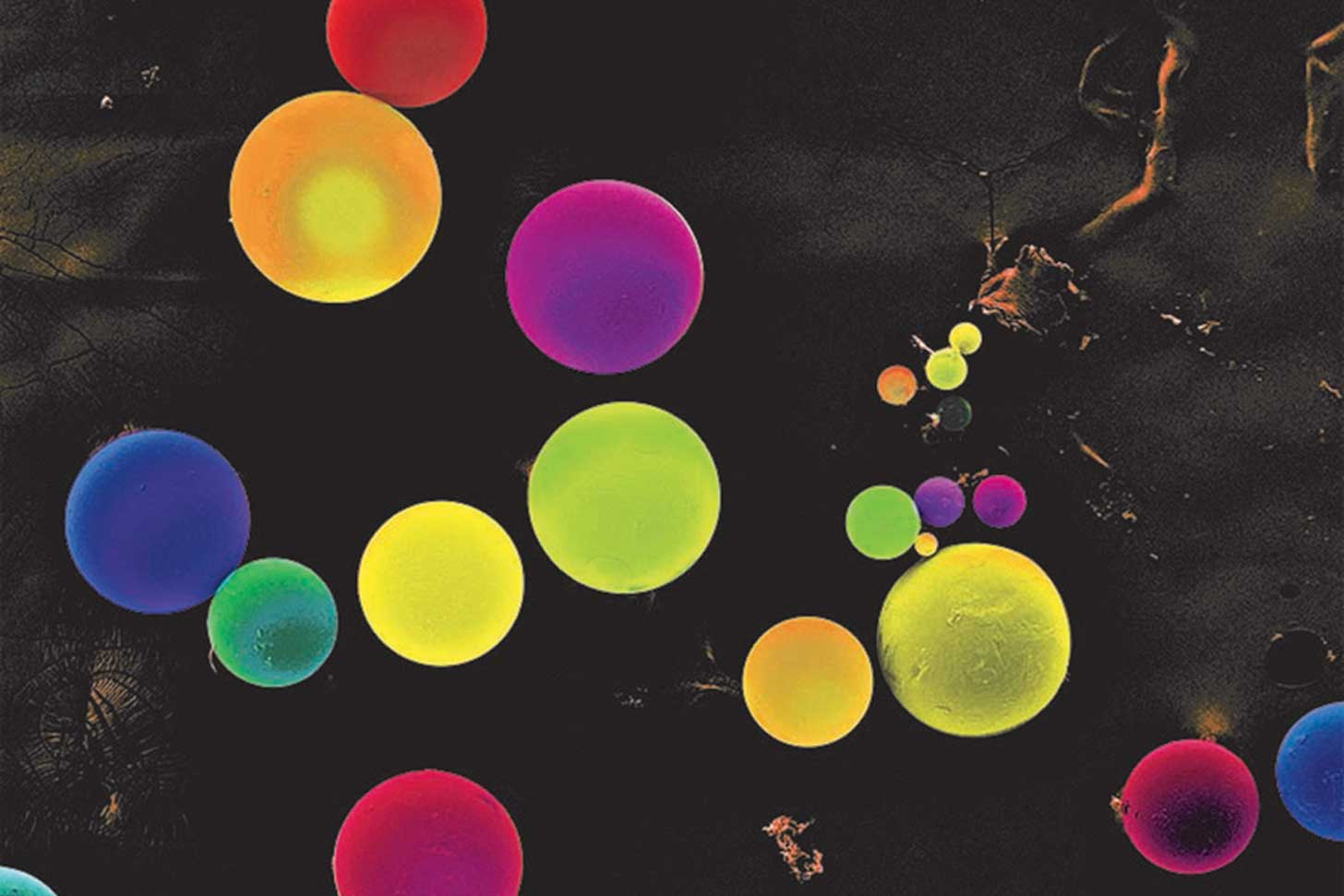
“We wanted to use this as a first step to demonstrate how it’s possible to develop a new class of materials, to expand from existing material categories, and then to apply it to different applications,” Zhang said.
The soap mixed with the new biodegradable polymer also did a better job of absorbing potentially toxic elements, such as heavy metals.
These findings make for a promising vision of a world without microplastics.
Now working on further testing for the new, microplastic-less version of microbeads, the researchers will be supported with a grant from Estée Lauder. Their goal is to refine their microbead research and look into other potential applications, with plans to run a small human trial later this year.
The team is also gathering safety data to apply for a GRAS (generally regarded as safe) classification from the U.S. Food and Drug Administration, with another planned clinical trial of foods fortified with the nutrient-dense polymer particles.
“This is just one small part of the broader microplastics issue, but as a society, we’re beginning to acknowledge the seriousness of the problem. This work offers a step forward in addressing it,” Jaklenec said.
“Polymers are incredibly useful and essential in countless applications in our daily lives, but they come with downsides. This is an example of how we can reduce some of those negative aspects.”
Header image courtesy of Minnesota Pollution Control Agency (CC BY-NC 2.0)
Discovered by Charles Darwin in the 1800s on a journey through Argentina and Chile, the aptly named Darwin’s frog is one of the most unique amphibian species in the world.
Unfortunately, the tiny, bright green frogs (that weigh less than 2 grams and are under 3 centimeters in size) are now endangered and were recently the catalyst behind a global effort to save them from extinction.
Though their native habitat of the Parque Tantauco forests in southern Chile were once a sanctuary for the species, 2023 surveys of the region confirmed a deadly threat: Amphibian chytridiomycosis. The devastating fungus led to a 90% decline in monitored populations of the frog species.

Acting quickly, conservationists at the Zoological Society of London organized a rescue mission to bring as many frogs as they could to the London Zoo.
During a five-day expedition, ZSL teams located the frogs in a group believed to be free of chytrid. They set up a temporary bio-secure facility to conduct health checks, monitor and care for the frogs, and prepare them for a journey to their new home in London.
Ultimately, 53 frogs were designated for the relocation, under the care of amphibian experts from ZSL and “on loan” from Chilean authorities.
Once the dozens of frogs cleared their health checks (including some males who were carrying developing tadpoles in their vocal sacs, a markedly unique characteristic of this particular species), they embarked on their journey.

Conservationists accompanied them on the long voyage, including a 6-hour boat ride, a 15-hour drive to Santiago, and a final flight to Heathrow International Airport, packed in specially designed, climate-controlled transport boxes. (Talk about precious cargo!)
This special journey was orchestrated among numerous stakeholders: Ranita de Darwin NGO, Zoo Leipzig, Parque Tantauco, Universidad Andrés Bello, Universidad de Concepción, and the Chilean National Zoo, along with the support of the Government of Chile.
“Moving 53 Chilean frogs to London was no small feat — it took meticulous planning and more than a few sleepless nights,” Andres Valenzuela-Sanchez, the ZSL project lead said in a statement.
Fortunately, it seems like all 53 frogs are settling in well. Upon their arrival at the London Zoo, they were moved to a quarantine facility crafted by amphibian and habitat design specialists.

According to a news release from the zoo, each frog was checked for signs of disease as it was introduced on arrival, and soon enough, some began making their signature whistling calls, indicating that they were acclimated to the new space.
“The frogs are settling in fantastically well in their new home, and we’re hopeful that this rescued population will thrive,” Valenzuela-Sanchez continued.
“Over time, we aim for their offspring to play a crucial role, both as candidates for wild reintroductions and to enrich our understanding of the species and chytrid’s impact in Chile.”
By taking these tiny creatures on such a whirlwind journey, conservationists hope to protect the species from extinction, as they temporarily find sanctuary across the Atlantic.

“These frogs represent a critical piece of Chile’s biodiversity and natural heritage, and their survival hinges on our ability to protect them from chytrid fungus,” Ben Tapley, London Zoo’s curator of amphibians, said.
“By establishing a population here at London Zoo, we not only safeguard their survival but can also raise awareness of the urgent conservation challenges they face.”
According to ZSL, scientists will continue working to understand the devastating chytrid fungus. Meanwhile, this colony of Darwin’s frogs will be kept safe in London, with the eventual goal of supporting reintroduction efforts back in a fungus-free home in Chile.
Tapley added: “Projects like these underline the importance of conservation zoos in conserving endangered species, like the Southern Darwin’s frogs, for generations to come.”
Header image courtesy of Flavio Camus (CC BY-NC 2.0)
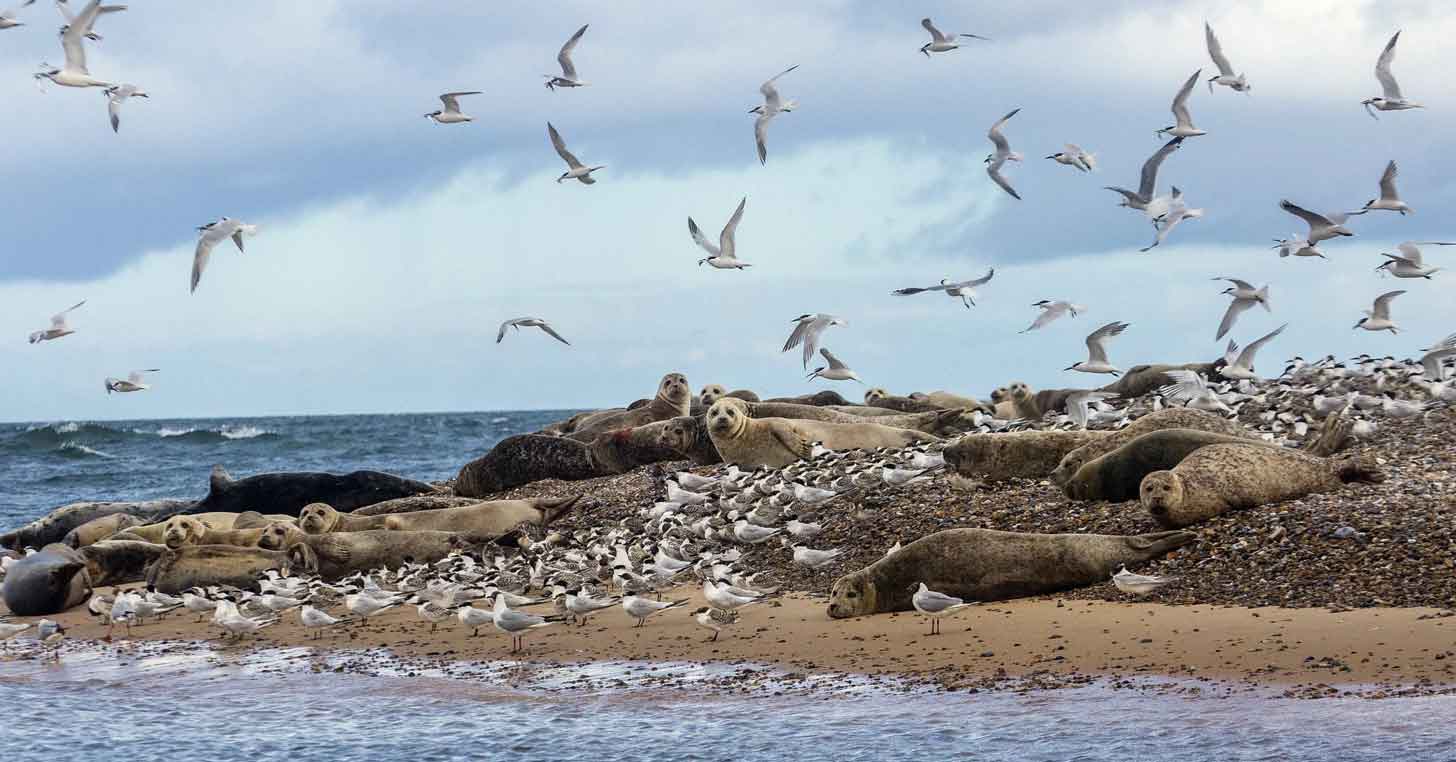
While COVID-19 lockdown will go down in history as a time devoid of in-person gatherings across the globe, in the United Kingdom, one quiet area on the coast of Suffolk became the hot spot for gray seals.
Orford Ness, a spit off of Great Britain that serves as a coastal nature reserve, has become the home of Suffolk’s first breeding colony of grey seals, according to the National Trust.
It is believed that these seals traveled from well-populated colonies in Norfolk and are now the first breeding colony to arrive in Suffolk — likely thanks to its remote location and very limited disturbance from humans.

The first 200 adult seals arrived at Orford Ness in 2021 when visitor access was significantly reduced in an extended period of COVID-19 closures.
As it turns out, simply being left alone was all they needed to thrive.
Just last month, the first gray seal pup of the 2024 season was born, and this winter’s breeding season has already seen 80 pups on the scene, with many more expected. The site is now home to about 400 seals, up from about 200 just three years ago.
“We’re really happy to see new pups being born here at Orford Ness for the fourth consecutive year,” said Glen Pearce, Orford Ness’ property operations manager, in a statement.
“Despite the seals’ arrival in 2021, we held off talking about them until earlier this year because we wanted to give them the best chance of survival. Being able to talk about them this year, in real time, is a great opportunity to share more about the species and to help people understand how their own actions and behaviours can impact them.”

Human disturbance, which can include any human activity in the vicinity of the seals, is one of the biggest threats to the species, as it can cause them to change their natural behavior.
Gray seals are not listed as endangered and are protected under U.K. law, but they certainly face threats — mostly from humankind — including fishing nets, boat strikes, marine debris, pollution, or disturbance from fishermen and tourists.
Globally, the gray seal is also one of the rarest seal species, with about 50% of the world’s population dwelling in British and Irish waters. That makes this baby boom on Orford Ness that much more spectacular.
“We’re really lucky,” Matt Wilson, the trust’s countryside manager for the Suffolk and Essex coast, told the BBC.
“They’ve formed a breakaway group, found this site and moved into the space we’ve got here. It's a real privilege to have them on this site and a responsibility, too, for the team here.”
National Trust rangers have been closely monitoring the shores from a safe distance and performing regular counts of the adult seals, Wilson added, sharing that in the 2023-2024 breeding season, they saw 130 pups born at the site.

The first pup of the new breeding season arrived a week earlier than last year, Wilson said, which is a phenomenon that has also been observed in other locations in the U.K.
“Understandably, this is a crucial stage of the seals’ development. To give them the best chance of survival, we limit access to the colony and monitor them only from a safe distance,” Wilson said in a press release.
“While the rangers on Orford Ness have undertaken specialist training for monitoring seal health, welfare and even rescue, we still take the lead from the experts, such as the Royal Society for the Prevention of Cruelty to Animals and British Divers Marine Life Rescue, and won’t get closer than a couple of hundred meters.”
It’s a tough job, to see the darling faces of newborn pups — who weigh around 13 kilograms at birth and are covered in a thick, white coat — only from a distance.
But pups born in the winter face even more risk.
Unlike their common seal cousins, which can swim within just a few hours of arriving earth-side, gray seal pups’ coats keep them warm but aren't waterproof, putting them at risk of drowning.
They also feed six times a day for up to 10 minutes at a time, drinking milk from their mothers for about three to four weeks, and at that time they also begin moulting their thick coats. Any disturbance or behavior change could impact their ability to survive in those first precious weeks.
Still, National Trust rangers will continue sharing photos and videos of the colony taken from a distance as they continue their regular counts and observations.
“In the meantime, we’re asking people to refrain from visiting out of season and to avoid using drones or other aerial equipment in the area,” Wilson advised.
“It’s important people remember that unauthorized access, by foot, boat or drone, is not only illegal, but also dangerous because of the unique and remote nature of the former military site.”
Although members of the public are welcome to visit Orford Ness in the summer, they are not allowed to get close to the seals.
“Even during our open season for visitors, the public aren’t allowed on to this section because the seals are still here through the summer,” Wilson explained to the BBC. “It’s a great factor for them, this lack of human disturbance, for what is a really amazing occurrence on this site.”
The success of the colony indicates the health of both the species and the marine environment, Wilson said, because they would not choose to reside on Orford Ness unless there was a good food source for them.
“It is such an enormous potential; it is a great environment for them,” Wilson said.
“We really hope visitors will continue to work with us to help protect the colony, which is such a brilliant wildlife success story for Suffolk.”
Header image courtesy of Hanne Siebers/National Trust
On Monday, December 9, the Wildlife Crime Control Unit of the Forest Department of Bangladesh responded to an anonymous tip in the village of Chandpur.
The call took them to a warehouse in Shahrashti, where they found nearly 1,000 endangered turtles at the center of an abandoned smuggling den.
According to Wildlife Crime Control Unit inspector Asim Mallik, it was the largest-ever rescue of endangered freshwater turtles in the history of the unit.
“Local residents and traders informed us that an illegal syndicate had been operating this business under the guise of fish trading for a long time,” Mallik told The Business Standard, a Bangladeshi newspaper.
“The turtles were being stored at the warehouse to be smuggled to India through the Benapole border.”
At the time of publication, no arrests had been made — but the turtles were in safe hands.
“Legal action is underway, and a case will be filed to bring those responsible to justice,” Mallik pledged.
The staggering amount of turtles, which weighed approximately 800 kilograms (approximately 1763 pounds) altogether, was comprised of three endangered species: the Indian roofed turtle (Sundhi Kachim), the brown roofed turtle (Kori Kaitta), and the yellow pond turtle (Holud Kachhap).
The operation was conducted from the night of December 9 into the morning of December 10.
Fortunately, Mallik said, the team responded just in time.
“All the rescued turtles were alive,” he reassured.

Mallik also went on to note that all of the rescued turtles are protected under the Wildlife (Conservation and Security) Act, which was added to the Constitution of the People’s Republic of Bangladesh in 2012. The act forbids the captivity, transportation, and sale of the endangered species.
In Bangladesh and India, rare turtles and tortoises are smuggled across the border for a multitude of reasons: food, medicine, and even “good luck charms.”
But tortoises and freshwater turtles are both vital when it comes to helping their natural environments and keeping waterways clean.
For instance, they graze on algae and algae-eating organisms and disperse the seeds of crucial plants, trees, and fungi as they forage and burrow.
They also are one of few aquatic animals that enjoy snacking on carrion like dead fish — a trait that keeps their habitats healthy for an entire web of animals.
For Mallik and his team, it was clear that the rescue operation was unlike anything they had encountered before.
He is hopeful that the sheer scale of the operation brings more attention to the endangered turtles and the invaluable benefits they bring to the environment.
“This is the largest seizure of turtles ever recorded in Bangladesh,” he said, in recognition of the efforts by the Forest Department officials.
“The rescued turtles are currently under the care of the Forest Department and will soon be released into natural water bodies.”

Header images via Wildlife Crime Control Unit Forest Department and Zoo Praha (CC BY-SA 3.0)
In Littleton, Colorado, just south of Denver, 1,200 new employees have shown up to work along 98 acres of open space.
After a 580-acre Quarry fire in the area this summer, the nearby Waterton Campus of Lockheed Martin turned to a new form of fire mitigation: Over a thousand grazing goats.
The fire got within a mile of the company’s campus, proving to fire mitigation experts that more needed to be done to protect the area. However, the terrain is steep, hard to access, and poses hazards to human teams.
So, they called in reinforcements.

Beginning this month, 1,200 goats from an organization called Goat Green, were brought to the property to graze on vegetation, mitigating the spread of future fires.
“Faster containment is going to be safer for not only for the employees of Lockheed Martin here but really all of the neighboring communities around us as well,” explained Sean Vogel, the VP safety and quality assurance Lockheed Martin, in a statement.
“As you know, fire doesn’t really care about property lines, so we wanted to make sure we’re doing our part to take care of those areas.”
Lockheed Martin is a defense and aerospace contractor that has faced many controversies in its history, especially as it pertains to human rights due diligence and bribery, according to a report filed with the Securities and Exchange Commission in 2021.
However, with a location in a residential area prone to fires, Jefferson County stakeholders welcome the support in reducing harm from fires for all parts of the community.
“We’re really proud of Lockheed for taking these steps that are so important in the resiliency and the fire resistance that is so badly needed,” Selena Silvas, of South Metro Fire Rescue’s community risk reduction team, said in a statement.

But… how do goats make a difference?
“They eat [the vegetation], recycle it through their gut, and put it back on the hillside,” Goat Green herder Lani Malmberg told Colorado Public Radio.
By keeping vegetation from overgrowing near powerlines, this helps reduce the potential for the risk of wildfires, year-round. It also helps clear a path for firefighters in the event of a blaze.
Plus, the goats act as a weed-control management method totally free of pesticides.
“In the face of climate change with less available water and more deadly wildfires, managed goat herds are an effective wildfire prevention tool with a comparably tiny footprint,” Goat Green’s website shares.
“States from Colorado to California are wisely turning to hungry goats to reduce hazardous fuels to prevent forest fires. Goats have a diverse diet and appetite for all vegetation that makes up the fire fuel ladder. The goats eat and recycle flammable materials in situ to organic matter — or what we like to call ‘pure gold’ that feeds the soil.”

While goats are a great asset to help mitigate future fires, climate change is still a pressing concern. Part of the reason for increased wildfire risks in the Denver area is due to the region’s below-normal rainfall in 2024, which local weather teams recorded as the driest summer in 77 years.
The year prior, however, was an unusually wet season. The combination of the two meant high-growth grasses and brush became dry and easy to ignite, according to CPR.
Vogel said the Littleton area saw “well over a dozen fires in just the last 10 years.”
In a social media post, South Metro Fire Rescue shared that its firefighters have responded to a few small vegetation fires on the company’s campus over the years, as well.
“We have to take fire risks seriously. We should always survey our property — whether it’s this property here, as large as vast and impressive as it is — or it’s your small condo at home,” Silvas added.
“Being a good neighbor is actually an essential part of fire mitigation, so these goats are a wonderful partner to us. They are a tiny part in that continuous mitigation plan.”
The goats are what Goat Green calls “high-tech recycle machines,” providing a number of benefits at once.
In addition to clearing vegetation, their hooves help create healthy soil, aerating the ground and helping to break down nutrients in the soil, which also improves its potential for water retention. Additionally, when goats lay down to sleep or chew, their body heat warms the soil and helps seeds germinate.
While there isn’t a magic wand that can be waved to “fix” the climate crisis, these goats come pretty close to divine intervention.
“I don’t think anything can compare to the efficiency of what a herd of goats does,” Malmberg said in a video for South Metro Fire Rescue. “1,200 goats is 4,800 hooves trampling… and stabilizing the hillside.”
“We’ve been doing this for 30 years,” she added. “We don’t sell for slaughter. These goats have been working for us their entire lives.”
Header image courtesy of South Metro Fire Rescue
In 2018, only five numbats were surveyed living in Dryandra Woodlands National Park — signaling that the Australian marsupials bordered on extinction.
But in early December, regional conservationists celebrated a huge win for the species when they spotted baby numbats (or “numbubs”) running wild in the park for the first time in years. They estimated that the population had grown to 25.
“Last time there was a peak, it dropped off very quickly,” wildlife official Tony Friend told ABC News Australia. “This time it seems to be sustained, which is really good news.”
A numbat is a critically endangered marsupial that looks like a cross between a chipmunk, a quoll, and an anteater.
Although largely reddish brown, the small mammal has black-and-white raccoon-like stripes across its hindquarters, and a bushy, bottle-brush tail.
Down under, they are often called “banded anteaters” — a fitting nickname, given their long, sticky tongues, which are typically about 10–11 centimeters long (nearly a quarter of their entire body length).
Their long tongues help them lick up termites — and a lot of them. In the dry woodlands where they live, numbats can eat up to 20,000 termites a day.
Numbats once thrived throughout Australia, but their species took a sharp decline approximately 60 years ago due to wildfires, widespread habitat loss, and predation by foxes and feral cats.
By the 1970s, their population had shrunk by 99%.
Fortunately, conservationists haven’t given up on the critically endangered species.
The marsupials have been able to hold on due to hard fought efforts to protect natural woodlands, curb the feral cat population, and rewild numbats raised in captivity.
Even beyond the numbubs spotted running wild in the national park, 2024 has been a record year for the species.
On December 10, the Perth Zoo — the only zoological institution in the world that breeds numbats — released 13 numbats into a “predator-free, protected sanctuary” in South Australia after handraising them in captivity for a solid year.
“[We have released] more than 300 of these precious marsupials back into protected wild habitat throughout Western Australia, New South Wales and South Australia since 1993,” read a statement on Perth Zoo’s official website.
“While farewells can be bittersweet,” they added, “the Perth Zoo Science team dedicate their lives to species survival and know these Zoo-born numbats will play a vital role in restoring their species!”

For years, the Perth Zoo has been cooperating with University of New South Wales (UNSW) researcher Courtney Adams, Ph.D, to track recovering numbat populations throughout Australia.
“These tiny accelerometer collars, much like a fitness tracker for humans, record detailed data on the Numbats’ movements in different temperatures,” the Perth Zoo reported on their website.
The conservation efforts in Dryandra Woodlands National Park involve a similar collaring program with the Numbat Taskforce, a conservation group funded by the Foundation for Australia's Most Endangered Species (FAME).
Numbat Taskforce volunteer Rob McClean said that they fitted several numbubs – Nickeli, Wee Pet, and Hollow Beach — with collars earlier this year. Tracking the tiny creatures has given the researchers valuable insights into the marsupials’ habitat range, behavioral patterns, and breeding habits.
December — which is summertime in Australia — has been a crucial time for conducting research, as the juvenile numbats leave their mother’s territory.
“The young females, they will generally take up the next patch,” McClean told ABC News Australia. “The young males, they might wander up to a couple of kilometers away.”
“They've got to establish themselves and find their own little patch of paradise,” he added, “and hopefully [procreate] more numbers next year.”
Watch the video below to see numbats in their natural habitat:
Header image via Dilettantiquity / Flickr (CC BY-SA 2.0)
Every day the Good Good Good team collects the best good news in the world and shares it with our community. Here are the highlights for this week!
If you want to get good news in your inbox every day, join the Goodnewsletter — the free daily newsletter designed to leave you feeling hopeful.
The Best Positive News We’re Celebrating This Week —
This year’s Glastonbury Festival in England raised £5.9 million for charity
The final numbers are in and the UK’s annual Glastonbury Festival raised £5.9 million — over $7.5 million — for charity, and those funds have been distributed to local and international organizations.
In addition to its continued support of charities like WaterAid and Greenpeace, this year’s festival made notably additional donations to War Child, UNHCR, and other charities working in conflict zones and “some of the world’s most challenging places.”
Locally, the money also supported projects at primary schools, community food banks, wildlife and the environment, and a local project that works with landowners to grow accessible produce.
Why is this good news? Massive music festivals like Glastonbury certainly don’t need to add a charitable element to the event — but it’s an incredible opportunity to gather lots of people together to make a really big difference. The festival also matched some donations, adding an extra incentive to invite people to give back and do good.
Nine countries in Africa have seen average incomes double in the last generation
For the world’s poorest people, economic growth is of critical importance. Greater economic security opens the door to essentials like good health, shelter, access to education, nutrition, and so much more.
Most of the world’s poorest people live on the African continent. While heartbreakingly, many of these countries have seen their average incomes decline — a number of them have seen remarkable improvements.
In nine countries, including Egypt, Ghana, Rwanda, and Uganda, average incomes have more than doubled since 1990.
This positive progress has made a huge difference for improvements in living standards, the share of people living in extreme poverty and child mortality rates have also declined.
In just 3 years, AI monitoring has helped reduce neonatal and infant mortalities by 82% in Malawi
A new fetal monitoring program has been life-saving for deliveries at Area 25 health center in Malawi — the only one in the country to use it.
Donated through a partnership by childbirth safety technology company PeriGen, the software tracks a baby’s vital signs during labor and gives doctors early warnings about abnormalities. It needs less time, equipment, and skilled staff than other monitoring methods — critical in low-income countries like Malawi that face severe health worker shortages.
Since they started using it three years ago, the number of stillbirths and neonatal deaths at the hospital has dropped by 82%.
Why is this good news? In Malawi, about 19 out of 1,000 babies die during delivery or in the first month of life. Birth asphyxia is a leading cause of neonatal mortality in the country, and can mean newborns suffer brain damage and long-term effects like developmental delays and cerebral palsy. This technology is helping massively improve outcomes.
The 2024 CNN Hero of the Year provides foster homes for dogs while their owners seek addiction treatment
After recovering from addiction himself, Stephen Knight realized through a friend that others often delay or forgo seeking treatment because they can’t find safe housing for their pets.
So, in 2015, he officially started Dogs Matter, a nonprofit that saves lives by providing foster care for dogs while their owners focus on addiction recovery.
Today, the organization has helped more than 1,200 dogs and their owners. Knight has a goal to make it a national model program to give more animals and humans a second chance at life.
And he just got a step closer to that goal: Knight was just named the 2024 CNN Hero of the Year and will receive more than $160,000 as well as organizational and capacity-building support to expand his work.
Solving a major conservation gap, a revolutionary lab is breeding bumble bee babies to save them from extinction
Years in the making, scientists at the Bumble Bee Conservation Lab are now celebrating a huge milestone. Over the course of 2024, they successfully pulled off what was once deemed impossible and raised a generation of yellow-banded bumble bees.
Yellow-banded bumble bees, which live in southern Canada and much of the United States, were once a common species. Like other bee species, their populations declined sharply in the mid-1990s from threats including pathogens, pesticides, and habitat loss.
Since then, scientists have been working to give bees a helping hand. But it was only in the last decade that Woolaver and his team discovered this gap in bumble bee conservation and set out to solve it.
Why is this good news? Bees are critical to not only the survival of plants and animals — but of humans, too. They’re a key part of healthy ecosystems which sustain life, and pollinate the food you eat! While larger factors are at play in threatening bees, it’s very good news that scientists are finding a solution for this conservation gap, too.
2,000-year-old poop samples from Yellowstone offer clues to climate change and wildlife management
In a historic rescue mission, 1,000 endangered turtles were just saved from smugglers in Bangladesh
On Monday, December 9, the Wildlife Crime Control Unit of the Forest Department of Bangladesh responded to an anonymous tip that took them to a warehouse where they found nearly 1,000 endangered turtles at the center of an abandoned smuggling den.
It was the largest-ever rescue of endangered freshwater turtles in the history of the unit — and they arrived just in time. Amazingly, all the turtles were still alive.
All of the rescued turtles are protected under the 2012 Wildlife (Conservation and Security) Act, which forbids the captivity, transportation, and sale of the endangered species.
Why is this good news? In addition to being great news for protecting endangered wildlife, tortoises and freshwater turtles are vital when it comes to helping their natural environments and keeping waterways clean, which benefits their entire ecosystem.
Two Australian chefs turned down top restaurant jobs to serve premium meals in nursing homes
Wanting to “break the stereotype that aged care food is just a lump of food on a plate,” two chefs who’d been burned out by working in the restaurant industry brought their skills to a new endeavor.
While the nursing home where David Martin and Harry Shen work is more upscale than other offerings in Australia, it’s still a far cry from the fine dining environments they’d spent most of their time in.
Still, they wanted to use their skills to offer residents a better dining experience — and they’re no less challenged by it. The chefs have to take into consideration conditions like dysphagia, a geriatric syndrome that affects swallowing and impacts 10% to 33% of older adults.
While they realize not all facilities have the kind of staff and budget, they hope their efforts will help raise the standard of care overall.
After years of warnings from environmentalists, the U.S. is extending threatened species protections to monarch butterflies
For years, environmentalists have been warning that monarch butterfly populations are shrinking due to warming temperatures, the use of herbicides that hinder milkweed growth, and more — and they may not survive climate change.
In response, the U.S. Fish and Wildlife Service announced its plans to add the butterfly to the threatened species list, giving it extensive protection. Notably, people would be prohibited from making changes to a landscape that render it permanently unusable for the species.
It will also designate 4,395 acres in seven California counties as critical monarch habitats, as it’s where they migrate for the winter.
Why is this good news? More than an iconic butterfly species, monarch butterflies are critical pollinators in the U.S. These protections will ensure that no changes to land or a landscape can occur without first considering and minimizing the impact on a key part of the ecosystems that plant, animal, and human life depend on.
A Ukrainian woman is helping amputees rehab and rebuild their lives — and normalize disability in the country
In the nearly three years of war with Russia, at least 50,000 Ukrainians — civilians and members of the military — have lost limbs. And with more than one million people still on the front line of the war, countless more amputees are expected as the war rages on.
This reality led Olga Rudneiva to found the Superhumans Center, which has raised funds from all over the world to provide high-quality prosthetics and reconstructive surgery for amputees.
In addition to these services, the center also works to empower amputees through their injuries and traumas, amid a larger mission to normalize disability in Ukraine — because it’s simply “how the country is going to look.”
Offering supplemental support to the country’s military hospitals, it has attracted celebrity supporters and has treated more than 1,000 patients — soldiers and civilians, young and old.
→ Read more
More good news of the week —
Brown University transferred ownership of a portion of its land in Rhode Island back to a Native tribe. The move ensures that access to the land and waters extends to tribes and Native peoples of the region for whom the land has significance, as it’s the ancestral home of the leader of the Pokanoket people.
Offering an alternative form of mental health care, the world’s first “poetry pharmacy” prescribes poems instead of pills. Customers suffering from “broken hearts” and “existential angst” are given poems by Mary Oliver and Derek Walcott in lieu of traditional prescriptions at the first-of-its-kind UK pharmacy.
A Hawaiian crow that went locally extinct decades ago was just reintroduced on Maui. Conservationists released five of the last survivors of all the Hawaiian crow species for the first time as part of an ongoing effort to return the species to its home.
A pair of orphaned cougar cubs were rescued and re-homed at the Oregon Zoo. The zoo is home to many animals found orphaned or injured in the wild, dubbed “second chance” residents like sea otters to black bears that serve as ambassadors for their species.
Scientists found a trove of rare metals needed for clean energy hidden inside toxic coal waste. Scientists analyzed coal ash from power plants and found it could contain up to 11 million tons of rare earth elements, offering a huge potential source of domestic rare earth elements without the need for new mining.
A breakthrough approach to desalination technology could benefit billions of people worldwide. Up to 36% of the world’s eight billion people currently suffer from severe freshwater shortages for at least four months of the year, and this could potentially increase to 75% by 2050.
MIT engineers developed a biodegradable alternative to microplastics found in countless beauty products. Found across the planet and even inside our bodies, it is well documented that microplastics are a hazard impacting nearly every part of our environment — and countless consumer products.
In a milestone for animal rights, Mexico just added animal welfare into its constitution. For years, animal rights campaigners have been drawing attention to pervasive animal cruelty and extreme confinement in the country’s growing meat industry.
A North Carolina town just launched the country’s first climate accountability lawsuit against a utility company. It claims Duke Energy waged a “deception campaign” in order to obscure the climate hazards of fossil fuels, which led to delayed action in curbing planet-warming emissions and caused the costs of climate action to increase.
Thanks to a lack of human activity, the gray seal population at a remote UK coastline has doubled in three years. Orford Ness, a coastal nature reserve, is now home to Suffolk’s first breeding colony of grey seals after the first 200 came in in 2021 when visitor access was significantly reduced following COVID-19 closures.
A report found that flood protection from mangrove forests saves $885 billion in damages globally. It also found that even with declining mangrove cover in the face of coastal development and agriculture, the economic value of mangroves has continued to increase since 1996.
Saudi Arabia is turning degraded desert sand into lush, thriving soil using an abundant local resource. It plans to plant 10 billion trees and rehabilitate over 74 million hectares of land, which requires water and soil management — which they plan to achieve through a carbon-enriched compost derived from chicken manure.
In “a monumental win for animal rights,” New Zealand announced it will ban greyhound racing. The industry has long been criticized, had an “unacceptably high” rate of injuries, and breeders have been accused of mistreatment.
Scotland will introduce a first-of-its-kind bill to impose harsh penalties, including jail time, for executives of major polluters. The Ecocide Prevention Bill would bring accountability for ecocide, including oil spills, mass deforestation, air or ocean pollution, mining damage, and carbon emissions.
Relieving bottlenecks to getting solar panels installed, robots are saving time and money in the clean energy transition. Though the world almost doubled the amount of capacity installed from 2022 to 2023, it’s still too slow to keep the climate within liveable limits — solar installation must continue to grow at a record pace.
Before she was the iconic Barbara Howard on “Abbott Elementary,” Sheryl Lee Ralph was a Broadway star, originating the role of Deena Jones in “Dreamgirls” in 1981.
Her longtime career in showbiz dawned at the same time as the onset of the AIDS crisis in the early 1980s. And as Ralph lost friends and colleagues to the disease, she knew she had to do something about it.
In 1990, she founded the DIVA Foundation, a nonprofit that raises funds for HIV causes, especially those focused on the lives of women, children, and marginalized groups within the Black community.

“The DIVA Foundation is committed to achieving better health outcomes for all people through innovative programming using the transformative power of the arts,” the organization’s website states.
“The foundation structures its programming under five pillars: Health Awareness, Women and Girls, LGBTQ+, Social Justice & Racial Equity, and Food & Housing Insecurity. The DIVA Foundation believes we can help others realize healthier and enriched lives if we ‘dare to care about humanity.’”
Over the past three decades, the DIVA Foundation has raised over $3.5 million for organizations like Women Alive, Minority AIDS Project, AIDS Healthcare Foundation, the Black AIDS Institute, and more. And in 2022, Ralph co-produced a documentary that tells the stories of young Black women impacted by HIV.
But her commitment to marginalized communities also zooms in on other topical issues, like “schooling” her peers on respecting a person’s pronouns after posting a video earlier this year helping those “of a certain age” learn why it’s important to call someone by the correct name and pronouns.
It is this activism that earned her the title of Advocate of the Year, an honor bestowed by LGBTQ+ media organization The Advocate.

She was honored with a cover story in The Advocate’s magazine, as well as graced with the award at an Out100 event earlier this month.
“To be named Advocate of the Year is an honor I carry on behalf of every individual who has fought for love, for identity, for visibility, and for freedom,” Ralph said.
Fellow “Abbott Elementary” stars Chris Perfetti and Lisa Ann Walter presented her with the award, which she accepted by singing a verse from Diana Reeves’ “Endangered Species,” the same song she sang when she won her Emmy.
She also went on to honor all the change-makers in her midst.
“Advocacy is not a solo journey — it is a collective movement. It is the bravery of those who came before us, the courage of those who stand with us, and the hope of those who will follow,” Ralph said.
“I have been inspired over the years by so many in this community — by those who refuse to stay silent in the face of injustice, by those who live their truth unapologetically, and by those who show us that joy is also an act of resistance.”
At the event, co-star Walter spoke highly of Ralph’s decades of activism.
“She is a long-time activist for people in this particular community — before it was accepted, before it was cool,” Walter said to a Red Carpet interviewer.
“When she was a very young Broadway star… she saw the need of the people around her who were dying. She created a foundation, and she got loud about it. And that’s a brave thing to do.”

Walter — and The Advocate — were not the only ones to recognize this in Ralph. In October, she was also honored with GLSEN’s Champion Award for her years of allyship.
“Ralph’s leadership serves as a beacon of hope for LGBTQ+ youth facing harmful discrimination and legislation across the country now more than ever,” GLSEN stated in a press release.
These days, Ralph continues to be a vocal supporter of the LGBTQ+ community, while also working to unite others in a shared vision of a brighter, safer future for all.
“I am a believer in the power of unity,” Ralph said in her acceptance speech.
“The world may try to divide us, but our strength has always been in our ability to stand together, to lift one another, and to remind each other that love — at its core — is unstoppable.”
Header image by Anthony Acero
After Charlotte the green sea turtle was struck by a boat in 2008, Connecticut’s Mystic Aquarium quickly became home sweet home.
The incident caused Charlotte to have what marine biologists call Positive Buoyancy Syndrome — or “bubble butt syndrome” — a condition that traps air in the back of the turtle’s shell and tilts its rear end up at a 45-degree angle — an unnatural position for turtles to swim.
“Bubble butt syndrome” is increasing, as more sea turtles — which are already endangered — face injuries from human causes. This condition can not only cause paralysis for sea turtles, but it can make it difficult for them to feed or avoid predators, due to limited mobility.

“When turtles get hit by boats, their shells can deform slightly and that deformity causes air to get trapped in the back of their shells,” Claire Bolster, an aquarist at Mystic Aquarium, said in a video.
“Instead of sitting neutrally buoyant like turtles do, they sit with their butts up in the ocean. That can cause some pressure on their organs, it can cause some damage to their GI tracks, and, in general, that air in the track doesn’t allow them to function as a normal sea turtle.”
While some veterinarians have tried to attach weights to the shells of turtles suffering from this condition, a new effort might just make a breakthrough accessibility device the new norm for turtles like Charlotte.
Mystic Aquarium reached out to 3D printing solutions company Adia, which collaborated with experts from New Balance’s computational design team, and 3D printing group Formlabs, to create a weighted harness that would allow Charlotte to swim more easily.

“The problem we have been trying to solve is essentially putting weights on the back of Charlotte, which sounds very simple but ended up being a very challenging process,” Nick Gondek, Adia’s director of additive manufacturing, said in a video.
“The only way to really get something to stick to Charlotte was to build a custom device to help create a customized harness that would fit comfortably and snugly to Charlotte’s unique geometry.”
Solving this problem required a five-year design process, with multiple creative minds. First, 3D scanning experts created high-resolution 3D images of Charlotte to create the foundation for the rest of the design project.

Then, engineers designed multiple prototypes for the right fit, comfort, and functionality, as well as a weight system that handlers can adjust as the air bubble under Charlotte’s shell shifts and tilts.
New Balance Athletics helped by bringing in computational design experts, who, after a few iterations, created a nimble, lightweight, adjustable harness that wraps around the edge of Charlotte’s shell that can be easily removed.
Computational design refers to a method that uses pre-set algorithms and parameters to generate digital designs that can be altered to solve problems, running simulations to give feedback and refine designs.

“To help solve Charlotte’s swimming issues, digital technology has been a great help,” senior creative lead, Chris Wawrousek, said in a statement.
“Computational design really kind of comes into play where you obviously don’t really want to be designing one-for-one manually because it would take a very time-consuming process. So, being able to create a workflow that allows for a custom-generated harness is really powerful.”
After finalizing their best prototype, designers used a Formlabs Fuse Series 3D printer to fabricate the harness. They utilized a special nylon carbon-fiber material to bring the harness to life, ensuring it has the right rigidity and weight for Charlotte.
Finally, Charlotte has been able to take his harness on a test drive.
So far, things have been looking good.
“It’s looking like a very positive interaction,” Bolster said. “As we’re getting him to wear it more and be more consistent, we’ll be able to add the weights back in and just see how he tolerates it. But for now, it’s a really positive sign that he’s doing well with it right off the bat.”

As he becomes accustomed to wearing the harness and building strength in his rear flippers, Bolster and team will gradually add weights to the harness to counteract Charlotte’s “bubble butt.”
And more sea turtles could follow in his path.
“The ideal outcome of this project would be to make the technology accessible to other aquariums,” Gondek said.
In fact, Adia and New Balance are now requesting volunteers with 3D printing materials and computational science expertise to help scale this project.
“Our hope is an aquarium could upload a scan of a turtle, have access to an online design tool, which would allow them to make a few design decisions, and export a file, which would allow them to build a harness on a Fuse [printer],” Gondek said, “to, again, help better the quality of life of their turtle.”
Header image courtesy of Formlabs
Sea otters are making great strides toward recovery in California, and new research shows that their growing numbers are directly correlated with the decline of one of the most invasive species in the marine world: the dreaded green crab.
“I’ve studied green crabs in estuaries on three coasts and two continents for decades, and this is one of the first pieces of good news we’ve gotten,” estuarine ecologist and lead author Rikke Jeppesen said in a statement.
The study, which was published in the scientific journal Biological Invasions, was conducted at Elkhorn Slough National Estuarine Research Reserve — a coastal estuary also known as a “cradle of biodiversity” in Monterey Bay.
The research team estimated that sea otters local to the region eat 120,000 green crabs a year.
It’s an essential job, given that green crabs are aggressive predators that habitually outcompete native species and decimate fields of seagrass.
“We set traps and are delighted that we no longer catch large green crabs,” Jeppesen said. “This is one more great reason to support recovery of top predators in coastal habitats.”
To stay warm and well-fed in freezing waters, sea otters eat nearly a quarter of their body weight in food every day — and their diet is not just limited to crabs. Sea otters also snack on sea snails, clams, mussels, fish, and sea urchins.
The last item on the menu is especially important, as sea urchins are densely overpopulated and capable of destroying entire kelp forests — carbon-capturing canopies that are vital to ocean health.
So in addition to keeping the green crab population down, sea otters also play a crucial role as a top predator by cracking down on kelp-munching sea urchins.
And it doesn’t stop there.
In the stretch between Monterey and San Francisco, recent studies show that sea otters feed on destructive shellfish like the striped shore crab.
For decades, the crustaceous species has been slowly increasing the risk of coastal flooding by decimating shorelines with their feeding habits.
“[Otters] don’t completely reverse erosion but slow it down to natural levels,” Marine ecologist Brent Hughes told VOA News.

In the grand scheme of things, sea otters have had quite the comeback story.
In the early 20th century, sea otters were almost driven extinct by poaching and harvesting.
After government protections were put in place in 1911, they slowly began to make strides towards recovery — but they are still listed as an endangered species under the International Union for Conservation of Nature.
Today, modern threats include oil pollution, orca predation, and habitat loss.
But sea otters have also increasingly become subject to research in the marine science community in recent decades — often with the intention of sourcing further evidence for their conservation.
And the correlation between green crabs and sea otters adds even more credibility to those conservation efforts.
In their paper, the Elkhorn Slough research team argued that when sea otters thrive, the ocean thrives too.
Jeppesen and his colleagues wrote: “Our investigation highlights that investment in recovery of top predators [like sea otters] can increase beneficial food web interactions and resilience of the entire ecosystem.”
Header image via Lilian Carwell/USFWS
Dylan Mulvaney is many things: Broadway star, TikTok creator, trans rights advocate — and now — the leader of a virtual book club.
Launched in partnership with Allstora, RuPaul’s book marketplace, the Dylan Mulvaney Book Club will launch on January 1 of 2025 and will feature a selection of books including “fierce female leads, steamy rom-coms, empowering self-help, and amazing LGBTQIA+ reads,” per an Allstora web page.

The book club will also support the distribution of banned books to LGBTQ+ organizations across the country through RuPaul’s charity, The Rainbow Book Bus.
“Having a book club was on my vision board for 2024, and I’m so excited to be able to fulfill this dream with a company like Allstora, which champions all voices,” Mulaney said in a statement.
She will be publishing her debut memoir, “Paper Doll: Notes From a Late Bloomer” in 2025, as well.
“The Dylan Mulvaney Book Club is for the girls, the gays, and the theys like me, who don’t have a ton of time to read,” Mulvaney said in a video promoting the new venture. “So, when we do, we want to know it’s going to be a sure-fire good time.”
Folks who want to join the book club through Allstora can sign up for monthly or quarterly subscriptions, which includes a book delivered through the company as well as access to a subscribers-only portal, which will presumably include updates and content from Mulvaney.
“We are gonna keep each other in check,” Mulvaney continued in the video. “12 books in 12 months feels doable. All of the picks will be an extension of me, and what I’m craving in my life that month.”
The first title is Amanda Montell’s “The Age of Magical Overthinking: Notes on Modern Irrationality,” which Mulvaney said is an opportunity to “examine our shared human quirks while holding space for growth, vulnerability, and yes, maybe even a little magical thinking.”
Allstora has also partnered with Olympic medalist Gus Kenworthy to launch another book club focused on a collection of coffee table books.
Together, Mulvaney and Kenworthy’s book clubs will distribute 2,500 banned books through the Rainbow Book Bus, which is on track to donate 10,000 banned books to communities impacted by restrictions by the end of 2024.
“I love what The Rainbow Book Bus is doing, and would have loved to have these books when I was going up,” Kenworthy said in a statement. “Everyone should have access to books that make them feel seen, loved, and supported.”
Their virtual communities join a handful of other Allstora book clubs, all of which help bring inclusive reads to members and supporters of the LGBTQ+ community.
“We’re not just connecting readers to books; we're fighting for the right to read them,” Allstora CEO Eric Cervini said in a statement.
“With the help of these incredible hosts, we’re shining a spotlight on vital stories while standing up to censorship.”
Header image courtesy of Dylan Mulvaney/TikTok
Just a day before Santa makes his way around the globe, over 300 dentists have their own whirlwind day of giving.
Every year on December 23, Comfort Dental’s 180 locations offer free dental care to anyone needing care in their community. With locations in 10 states, Comfort Dental offices saw over 3,500 patients in 2023, totaling in over $1.4 million in dental services — all given away for free.
The tradition started in 1984 and now includes more than 300 dentists and 1,300 team members giving away their services for free on the “eve of Christmas Eve.”
Over the past 40 years, Care Day has provided over $22.8 million in dental services at no cost.

“Care Day began as a way to give those without access to dental care a chance to love their smile again,” Comfort Dental’s website explains.
“On Care Day, all services are free to anyone, with all patients served on a first-come-first-served basis. Services include anything from simple cleanings to extractions, with more serious problems evaluated on a case-by-base basis.”
According to an analysis in Health Affairs, cost was the most common reason cited by U.S. adults for avoiding dental care, even though one in three young adults reported having oral health issues so severe they affected their ability to interview for a job.
It’s estimated that about 74 million Americans have no dental coverage — about 23% of the population.
In addition to this, a lack of access to dental care can adversely affect health outcomes outside of the mouth, including heart disease, poor nutrition, and even an increased risk of Alzheimer’s and dementia.
Dr. Rick Kushner founded Comfort Dental in 1977 and pioneered the concept of fair pricing dentistry, according to the company’s website.
Its franchise locations are independently owned and operated by individual dentists, though they all offer $19 new patient visits (including exams and x-rays) and accept Medicaid.
And, of course, on December 23, they all participate in Care Day.
“This is a day we look forward to all year,” Comfort Dental dentist Dr. Jeffrey Crane said in a video. “We get to do a free treatment for people who don’t have dental health, who need care. It’s the right time of year to be giving people treatment for free.”
On December 23, all Comfort Dental locations will be open from 7:30 a.m. to noon for patients in need of free care.
“We provide free dental care to help people,” Dr. Kushner said in a statement. “If someone has a bad tooth, hopefully we make them feel better. For some people, including kids, Care Day might be the only time they see a dentist all year.”
“We’re dentists,” Kushner added, “so we give away dental services for the holidays.”
Header image courtesy of Polina Zimmerman/Pexels
For many, spreading the “holiday spirit” means more than simply stringing up twinkling lights, baking cookies, and meeting mall Santas — it’s also a time for generosity.
In 2023, 75.7 million people — more than one in four Americans — volunteered their time through a formal organization or nonprofit, with September, October, November and December being the most popular months to volunteer.
And 2024 might be on course to rival those numbers.
According to Google, searches for “places to volunteer on Christmas day” doubled this December.
For those looking to volunteer this holiday season, Nathan Dietz, research director at the Do Good Institute at the University of Maryland School of Public Policy, said that the best way to get involved is to do it in your community — and in-person.
“Don’t get me wrong: I think if you go someplace by yourself, you’re going to be able to provide some value and you’re almost bound to have a great, fulfilling experience,” Dietz acknowledged in an interview with PBS.
“[But] I think a lot of people have kind of fallen out of the habit of doing things together in-person,” he added.
“I strongly believe that the more we take advantage of the opportunity to do that with people, the better everything is going to be.”
Fortunately, Points of Light — an independent nonprofit that doubles as the world’s largest volunteer network — makes it easier than ever to connect people with opportunities in their communities.
“Through work with nonprofits, companies and social impact leaders, the organization galvanizes volunteers to meet critical needs for healthier and more equitable communities,” reads a mission statement on the Points of Light website.
“As the world’s largest organization dedicated to increasing volunteer service, Points of Light engages more than 3.8 million volunteers across 38 countries.”
Those hoping to donate their time this holiday season can visit the organization’s website to see over 39,000 active volunteer opportunities in Points of Light’s network.
The organization couples intention with impact, breaking volunteer opportunities down by “issue areas” including food insecurity, senior care, disaster response and recovery, disability advocacy, homelessness, and more.
And those searching for organizations that match a particular skill set can simply tick work experience boxes that include everything from firefighting and EMT work to public speaking and marketing.
Prospective volunteers can also search with family members in mind, with an accessibility search feature that includes categories like “good for seniors,” “good for kids,” and opportunities that involve “physical labor.”

“Volunteering with your family is a great way to teach your kids about empathy and responsibility and how they can make an impact on our world, even if it’s something small,” Points of Light volunteer Michelle Musslewhite shared in a recent Instagram post.
This past November, actor Patrick Dempsey spoke to the character of the nonprofit and the work they do, when his cancer-fighting foundation — The Dempsey Center — was honored at an awards gala.
“Points of Light uplifts and inspires people to make the world a better place,” Dempsey said.
“We’re not waiting for something that’s going to happen 10 years down the road, we can change someone’s life right now, today, in this moment.”
Header image via Points of Light
The Denver Zoo Conservation Alliance just announced the birth of a new fluffy member of its flock: A baby African penguin.
According to a statement from the zoo, the chick was hatched to parents Guja and Keni on October 15 of this year. But early on, something was amiss.

The chick faced a serious respiratory ailment and was placed in the zoo’s Small Animal Intensive Care Unit, receiving “treatment, supplemental oxygen, and devoted round-the-clock care.”
African penguins were reclassified earlier this year from Endangered to Critically Endangered by the International Union for Conservation of Nature, meaning any new arrivals for the species are especially precious.
In the wild, these penguins face threats including climate change and severe weather, pollution, invasive species, viral disease, hunting and trapping, human disturbance, and impacts from mining and quarrying, according to the IUCN.
African penguins are different from their Antarctic counterparts, swimming exclusively in the warm waters of Southern Africa, near countries like Namibia, Port Elizabeth, and other surrounding islands.

Over the past 100 years, however, wild African penguin populations have declined more than 98%, dwindling from a population of over a million to just 19,800.
With systematic monitoring, action recovery plans, and conservation programs — like those at DZCA — animal experts hope to help rebound the species.
Every year, zoo experts visit Cape Town to work with the Southern African Foundation for the Conservation of Coastal Birds to rehabilitate and release penguin chicks.

And in 2021, DZCA unveiled its new penguin habitat — Pinnacol African Penguin Point — a 10,000-gallon swimming pool “surrounded by heated rockwork and fitted with cozy burrows,” similar to the topography of the native waters the species is used to.
Now, one little miracle will soon make a splash.
The recovery of DZCA’s new chick — whose sex remains undetermined at this time — is “nothing short of remarkable,” as zoo officials told The Denver Post.
“This fluff ball graduated from the ICU and is back behind the scenes at Pinnacol African Penguin Point,” DZCA shared on social media.
“It’s growing well, chowing down on fish, and showing a calm, curious personality.”
Zoo officials are not rushing the chick’s introduction to the rest of the flock, however. As they continue to monitor its health, veterinarians will soon run a DNA test to determine the sex of the chick, as male and female African penguins look nearly identical.
But in just a few short weeks, officials are hopeful the baby will be ready to meet its other family members and venture into an outdoor habitat.
“All Zoo babies are precious, but it’s even more special when we have a success with a Critically Endangered species,” DZCA shared online. “We’re especially grateful for this win… Join us in celebrating the newest member of our flock.”
Header image courtesy of Denver Zoo Conservation Alliance
Every day the Good Good Good team collects the best good news in the world and shares it with our community. Here are the highlights for this week!
If you want to get good news in your inbox every day, join the Goodnewsletter — the free daily newsletter designed to leave you feeling hopeful.
The Best Positive News We’re Celebrating This Week —
In a historic milestone for the UK, renewable energy generation will overtake fossil fuels for the first time
Low-carbon renewable energy sources are on track to generate 37% of electricity in the U.K. in 2024 — the first time in history that wind, solar, and hydropower together will overtake fossil fuels, which are set to generate 35%.
This milestone is significant, given that in 2021 fossil fuels generated 45% of electricity, and renewables only 27% — a 10% shift in just a few years thanks to the rapid rise of wind and solar in the UK.
Wind power is also set to make history on its own as it closes in on overtaking gas power as the largest source of electricity in 2024 — wind is forecast at 29% and gas at 30%. But “a mild, windy December” could push it over.
Why is this good news? The UK keeps making remarkable progress toward reaching its goal of an entirely “clean” energy grid by 2030 — earlier this year it closed its final coal power plant, and with this progress, sets its sights on doing the same for gas. These milestones are exactly what climate experts say we need to achieve to have the best possible climate outcomes.
The largest recorded reduction in U.S. history, overdose deaths fell 17% in the past year
From July 2023 to July 2024, the number of overdose deaths in the U.S. fell 16.9%. That marks the largest reduction in recorded overdose deaths in U.S. history.
Officials point to extensive efforts, investments, and policies put in place that have contributed to this significant decline — including making the drug overdose treatment naloxone more widely available. The FDA recently made it available over the counter.
Additionally, more medical providers are now able to prescribe medications for opioid use disorder, and the U.S. has invested more in stopping the flow of fentanyl by cutting production and trafficking off, and stopping the production of precursor chemicals.
While there is still more to do to address overdose deaths, these targeted investments appear to have made an incredible, historic difference so far.
→ Read more
Volunteers in Finland are building giant snow piles to help endangered Saimaa ringed seals raise their young
Once widespread across Finland, the Saimaa ringed seal’s numbers and habitat are dwindling, with fewer than 495 remaining.
The seals make “snow caves” inside snow drifts to raise their young and protect them from the elements and predators. But as climate change brings warmer winters, this shelter is disappearing.
To help them survive, a team of 300 volunteers spends days shoveling snow into massive snow banks around the edge of a frozen lake. Last winter, they made 200 piles, and thanks to their efforts, the country’s seal population is growing.
Why is this good news? While we generally follow the rule that we should protect natural spaces and habitats, not disturb them — the reality is that human activity has already disturbed them. As we continue to work quickly to reverse these climate impacts, we can do our part to help endangered species survive, too.
Finland just became the first country in the world to ban cargo ships from dumping wastewater in its coastal waters
In a “major environmental victory” the Finnish Parliament just passed legistation to ban cargo ships from dumping wastewater into its coastal waters. Finland is now the first country in the world to implement this kind of ban, which will go into effect in July.
While passenger ships have been prohibited from discharging wastewater, it’s the first time cargo ships will be banned from the practice, too.
And while the ships can still technically dump their wastewater in international waters, this is a major victory for protecting Finland’s coastlines and coastal ecosystems.
Why is this good news? Currently, only 20% of ships that operate in the Baltic Sea offload their sewage at ports. The wastewater discharged at sea contains large amounts of nutrient-rich fecal bacteria and solid waste, which causes toxic algea blooms in the summer.
→ Read more
Endangered sea otters have a highly underrated job: eating 120,000 invasive underwater creatures a year
→ Read more
Medical students at the University of Texas are helping their unhoused neighbors access essential medical care
Once a week, a group of medical students from the University of Texas gather at the C.D. Doyle Clinic to treat patients who are experiencing homelessness or uninsured.
The clinic is operated entirely by students to provide care “to the underserved population, regardless of their background or insurance status.”
For people experiencing homelessness or working to get into stable housing, a lack of insurance and high out-of-pocket costs are major barriers to accessing essential medical care. The clinic is located at a community center that provides transitional housing.
The U.S. Department of Transportation just announced “unprecedented” new protections for disabled passengers
Requiring airlines to meet more rigorous standards for “safe and dignified” assistance for its passengers with disabilities, especially those using wheelchairs.
Among other things, the new rule mandates annual training for employees and contractors who physically assist passengers and handle wheelchairs. It also puts more clear requirements around promptness when helping disabled passengers enplane, deplane, and make connections. Airlines must also provide loaner wheelchairs and scooters when they’re damaged.
While many airlines already offer assistance for disabled passengers, many travelers have reported delays, poor treatment, and mishandled wheelchairs to the DOT.
Why is this good news? Every passenger and customer of an airline deserves to have a safe travel experience and have their basic needs met, regardless of ability. Previous regulations weren’t strong enough to deliver that experience for disabled passengers, and these more rigorous standards will help provide more equitable care and attention.
For the second year in a row, Boston is on track to see its fewest homicides and shootings in a single year
In 2023, Boston broke its record for the fewest homicides and shootings in the city’s history. This year, it’s on track to break the record again.
There were 37 homicides reported in 2023, the lowest since the city began counting. As of December 10 of this year, Boston has seen 22 homicides — breaking that record, and nearly halving it from the 40 reported just two years ago.
The city started the year out strong, with an 82% reduction in the first quarter compared to the prior year. It was the largest drop in homicides among all large U.S. cities — the second best was Philadelphia with 37%.
Experts point to a “renewed effort to include the community in the process of public safety” as a big reason for the decline. This includes a network of neighborhood associations and community-based organizations focusing on young people at risk for violence.
→ Read more
China just completed its 3,046-kilometer “Great Green Wall” along its biggest desert
China just completed one part of its massive initiative to use reforestation to hold back the expansion of the Gobi Desert and other arid areas: a 3,046-kilometer “Great Green Wall.”
Red willows, sacsaoul, and other tree species are expected to act like a “security wall” to stop the flow of desert winds and sandstorms, which have a damaging impact on agriculture. Desertification like this is a massive global issue, too.
Launched in 1978, the Three-North Shelterbelt Forest Program is slated to be finished by 2050, could involve as many as 100 billion trees, and will be the world’s largest ecological engineering project.
What’s the nuance? Some experts worry the project isn’t sustainable and won’t have the desired outcome — arguing that planting trees where they are not native could have larger negative implications for the ecosystem. Still, desertification is a massive issue, and the project shows China’s efforts to address it — and the benefits and importance of tree cover is well-documented.
Author James Patterson gave hundreds of independent bookstore employees a holiday bonus
Since 2015, bestselling novelist James Patterson has been awarding holiday bonuses to independent bookstore employees — and this year, he continued that tradition.
Chosen from thousands of applicants, 600 booksellers received $500 holiday bonuses this year — working at bookstores across the country, like Thank You Books in Birmingham, City Lights Books in San Francisco, and The Nook in Cedar Falls, Iowa.
The winners were nominated for the bonus by coworkers and customers.
In addition to these annual bonuses, Patterson has also given millions of dollars to schools, libraries, and literacy programs.
More good news of the week —
Long-targeted by activists, the U.S. EPA banned two cancer-causing chemicals found in homes and workplaces. The ban involves trichloroethylene, common in manufacturing, and all consumer uses and many commercial uses of perchloroethylene, used in dry cleaning, manufacturing, automobile repair, and more.
Thanks to widespread conservation efforts, an Australian endangered species has returned to a national park. A huge win for numbats, conservationists spotted baby numbats running wild in Dryandra Woodlands National Park for the first time in years and estimated that the population had grown from 5 to 25.
Zimbabwe’s senate approved legislation to abolish the death penalty, and its president is expected to sign it into law. Zimbabwe hasn’t utilized the death penalty in nearly 20 years, largely due to a lack of people willing to serve as executioners, and there are currently more than 60 people on death row.
Promoted by NFL player Damar Hamlin, the U.S. Senate passed the HEARTS Act to fund AEDs and CPR training in schools. Hamlin’s life was saved by trained medical staff and an AED device after he went into cardiac arrest on-field, and President Biden is expected to sign the bill into law.
In an effort to be “even more inclusive,” 85% of British pubs now offer no- and low-alcohol beer. A record 140 million pints of no or low-alcohol beer are expected to be sold this year, up 12% from 2023, reflecting a steady rise in the popularity of non-alcoholic drinks.
Long-time activist Sheryl Lee Ralph was just honored as the LGBTQ+ Advocate of the Year. The Broadway-turned-TV star was honored for over 30 years of efforts to fight the AIDS epidemic and uplift marginalized communities through her nonprofit, the DIVA Foundation.
Alongside the launch of her new virtual book club, Dylan Mulvaney donated thousands of banned books. In partnership with RuPaul’s book marketplace, the book club will feature a selection of books including “fierce female leads, steamy rom-coms, empowering self-help, and amazing LGBTQIA+ reads.”
Thanks to newly accessible land, local scientists in Colombia are reviving the country’s biodiversity. Colombia is known as one of 33 global plant biodiversity ‘dark spots’ – regions of the world that are teeming with plants, thousands of which are still unknown to us.
After being struck by a boat, a paralyzed sea turtle can now swim again thanks to an innovative 3D-printed harness. A condition that can cause paralysis and make it hard to feed and avoid predators, cases of “bubble butt syndrome” are increasing, as more already-endangered sea turtles face injuries from human causes.
Thanks to a “generous” gift, a New Hampshire ski area is offering free lift tickets and trail access all season. The donation from the Jack and Dorothy Byrne Foundation will help improve access to the ski area, so more winter sports enthusiasts can enjoy the slopes.
New Mexico voted unanimously to place the strongest water quality protections on 250 miles of rivers and streams. These areas are now designated as Outstanding National Resource Waters, outlawing degradation including quality harms such as pollution, heavy metals, increased temperature, or clouding.
A new AI image tool could help analyze wildlife images to learn about how climate change is impacting species around the world. The tool would help scientists analyze millions of images, revealing key insights into the impacts of climate change, pollution, habitat loss, and other pressures on animal and plant species.
A groundbreaking public health report details ways to prevent deaths from drowning. More than 300,000 people globally die from drowning every year and nearly all are preventable — the new report’s simple, low-tech techniques helped reduce drownings by 38% since 2000.
A massive solar and storage facility is now online in California, with the second phase set to be completed in 2025. Eland 1’s construction supported 325 jobs and pumped money into local businesses. Over its lifetime, the project will generate more than $18 million, providing revenue for schools, first responders, and other local needs.
A world-first AI camera is helping spot and catch people driving under the influence of drugs and alcohol. The state-of-the-art Heads-Up machine can detect road use and behavior consistent with drivers who may be impaired by alcohol or drugs, catching them before an accident can occur.