Christmastime is especially magical for Alex Morgan, creator of Good Boy Ollie, a social media account dedicated to the shenanigans of her two labrador retrievers.
On Christmas in 2022, Morgan’s chocolate lab (and TikTok icon) Ollie gained a little brother, a yellow lab named Tato (short for Potato, of course). In 2023, with the help of their audience of millions, the trio donated 2,000 gifts to shelter animals at the National Animal Welfare Trust Berkshire.
And this year, they’ve outdone themselves once again.

With the generosity of their 2.4 million Instagram followers and 7 million TikTok followers, Ollie and Tato once again hosted a holiday toy and supply drive, but they also raised more than £13,000 — or over $16,288 USD — for NAWT Berkshire.
“Not only have you helped deliver thousands of toys, beds, important supplies, and food to NAWT Berkshire, but you have also raised almost £14,000 with Gift Aid for NAWT Berkshire for Tato’s Christmas run,” Morgan wrote on the dogs’ Instagram page.
While Ollie played the role of “Santa Paws” in this do-good endeavor, Tato and Morgan will be taking part in a race dressed as an elf, all with the motivation of raising funds for the shelter.
“Tato (with his mum!) will be taking part in a winter canicross race dressed as Santa’s elf,” a fundraising page explained. “Any donations will be greatly appreciated. We have witnessed firsthand what wonderful care everybody at NAWT takes of their animals. They truly deserve the best Christmas ever!”

It has also been an especially difficult year for the shelter, which experienced flooding and has been repairing its facilities over the past few months, in addition to supporting the needs of countless animals.
“This year especially has been incredibly tough financially for the charity,” Morgan shared on Instagram. “With rising bills, so many animals needing complex medical care, and never ending flood damage, this money will help them more than we could have possibly imagined.”
NAWT Berkshire’s recent fundraising efforts have been devoted to “keeping the lights on,” to ensure all its facilities have their energy and heating needs met, as bills rise and more floods are predicted in the coming year.
The support from Ollie and Tato’s loyal followers has certainly made a difference.
“We cannot begin to express how grateful we are,” NAWT Berkshire commented on the dogs’ Instagram page. “Ending a rather tough year on an incredible high thanks to everyone’s support.”
With the influx of supply donations, too, all the animals — including donkeys, sheep, and of course, dogs and cats — will have access to the essentials (and some fun toys) through the holidays.
“I keep forgetting the toys aren’t for me,” a playful voiceover acts as Ollie’s inner monologue in a video posted from the account. “But I know the rescue doggies need them so much more.”
In the same video, Morgan and the dogs highlighted some animals in need of loving homes, as well, encouraging followers to adopt and “help them find their forever homes soon.”
With wagging tails and festive crocheted hats, the dogs had one final message for everyone watching at home.
“We can’t thank you all enough for helping us deliver the best Christmas ever,” the Ollie-specific voiceover said in the video.
And in the caption, Morgan added: “The kindness of this community never fails to amaze us.”
Header images courtesy of Good Boy Ollie/TikTok
According to the World Health Organization (WHO), an estimated 2.2 billion people worldwide are blind or visually impaired.
That’s 28% of the global population.
Emerging apps — and walking canes — can provide aid to those with vision loss, but unexpected factors (like cracked asphalt, street trash and furniture, and construction hazards) can make a simple city walk incredibly dangerous.
And although guide dogs provide an invaluable service to people who experience blindness, they can be expensive, with some costing upwards of $50,000.
Fortunately, Orlando Science School high schooler Tiffani Gay invented a solution that could dramatically improve the lives of people with vision loss.
Her innovative headset sends vibrational warnings to the users to communicate obstacles — and she’s setting the price tag at $200.
In an interview with Florida’s Fourth Estate, Gay talked about her invention, as well as the inspiration behind her groundbreaking design.
“What I developed was a LiDAR [Light Detection and Ranging] navigational system to help people who are visually impaired,” Gay explained to podcast hosts Ginger Gadsden and Matt Austin.
“This idea stemmed from experience with a family friend who had a visual impairment, and I watched as her vision degenerated over time,” she continued.
“I wanted to develop a device that was able to help people with visual impairments adapt to their environment through a way that was really comfortable to me: electronics.”
Gay’s invention uses LiDAR sensors — laser-based technology implemented in most modern cars — to topographically detect, identify, and categorize objects in its environment.
“Those sensors are replicating human vision,” she said.
Using haptic feedback, the sensors on the brim of the visor vibrate according to how close the user is to an oncoming obstacle.
“So if someone is getting close to an obstacle, it will start to vibrate in that region of their head,” Gay explained.
In total, Gay created 25 iterations of her model before she submitted her latest product to multiple STEM competitions around the world.
The last year has served as a victory lap for Gay, who finished fourth at the Regeneron International Science and Engineering Fair and took home the gold at the Taiwan International Science Fair.

The sky’s the limit for the 16-year-old, who says she’s in constant communication with potential investors and engineers.
“I’m getting replies from inventors in Switzerland, and inventors here locally, asking to collaborate on a host of different projects,” Gay said in a follow-up interview for Florida’s Fourth Estate.
And she’s already made huge progress on her next big project: a way to protect animals from oil spills.
That latest invention — an electromagnetic system capable of separating oil from water — scored her another award at the Regeneron ISEF this year.
“Crude oil spills destroy shorelines, imbalance ecosystems, and have detrimental economic impacts,” The Regeneron ISEF judges wrote.
“The device successfully met engineering goals by introducing a novel method of oil spill removal using electromagnetics.”
When it comes to her academic future, Gay is teetering between Harvard University and Massachusetts Institute of Technology — but she’s in no rush to speed up the clock and hurry to college.
In fact, in spite of her busy schedule and phone calls from Switzerland, she’s taken on a new role as a mentor at her local elementary school working with Girls Who Code, a nonprofit program that teaches STEM skills to young girls.
Most of her students — who range from second to fourth grade — were shy at first. But as Gay kept returning, with assorted robots in tow, she saw them light up with excitement.
“As the months passed, I watched them become more interactive with the classroom,” Gay said with pride.
Header images via Tiffani Gay / Anna Gay
According to National Coalition for the Homeless, 40% of the country’s homeless youth population is comprised of LGTBQ+ teens.
When New York native Austin Rivers took up knitting during the COVID-19 pandemic, it was this staggering figure that drove him towards action.
“I don’t have the capacity to build a shelter, the network or the connections to help in that way, but what I can do is knit,” Rivers told NBC News.
“And I know that New York City is cold, so I decided I would start knitting and create this nonprofit.”
That’s when he founded Knit the Rainbow, an organization that distributes free handmade garments to those in need.
And nearly five years after it was first created, Rivers’ knitting collective isn’t just serving the queer community in New York City.
Their nationwide network links local yarn stores and local nonprofits with over 550 volunteers from 45 states.
As of 2024, they have collected and distributed over 25,000 winter garments — including sweaters, hats, gloves, scarves, and socks — throughout homeless communities in New Jersey, Chicago, Detroit, and beyond.
Once clothing items are shipped to Rivers’ apartment, he works with volunteers to unpack boxes, tag and sort donations, and pack and deliver them to local shelters that provide housing to LGBTQ+ and HIV+ homeless youth.

Although the organization’s impact is wider, and the piles of mail have grown higher, Rivers still has a hand in day-to-day deliveries.
“We’re going to do it whether it’s rain, or snow, or shine,” Rivers said in his NBC News interview, pulling a handcart topped with boxes.
Those clothes could be the difference between frostbite and hospitalization, especially in cities that often drop below freezing in the wintertime.
But Rivers also noted that every handmade item — knitted, crocheted, or stitched — has a dual impact, because every piece of clothing is made with love.
“A lot of the times, the reason that they’re unhoused is because they were kicked out by their families,” Rivers said.
“We’re not just providing warmth, but we’re also providing that love and that compassion that they so often don’t have.”
To the members of the community Knit The Rainbow served, he had a clear message.
“There are thousands of people out here that are constantly thinking of you and using their hands to make things for you,” Rivers emphasized. “So don’t give up. Keep going.”
To download free knitting patterns, donate a garment, or sign up to volunteer, you can visit the organization's website to get started.
Header images via Knit the Rainbow Facebook page
In early 2024, the Minnesota House of Representatives passed a law requiring all school districts and charter schools to ban cellphone use in classrooms by March 2025.
But a lot of students have already begun feeling the affects of the policy restrictions, when schools across the state became early adopters in September.
Even outside of Minnesota, a resounding majority of policymakers, parents, and teachers approve of the new law.
According to a recent Pew Research Center poll, 68% of U.S. adults support a classroom ban on cellphones for middle and high school students.
When asked why respondents supported the ban, 70% believed that students would “develop better social skills,” 50% thought students would “be less likely to cheat,” and 39% hoped that it would “reduce bullying in schools.”
For child and adolescent psychiatrist Josh Stein, excessive phone use leads to poor mental health.
“Social media — when it starts to pass four hours and five hours — we see that symptoms of mental illness start to really increase,” Stein said on behalf of PrairieCare, a treatment organization in Minnesota.
“There’s no safe place anymore, and especially [with] teenagers,” Stein added, “it’s a 24-hour cycle of using a phone.”
Across the state, the ban is taking shape in different ways.
In Edina, CBS News journalist Susan-Elizabeth Littlefield reported that phones must be out of view completely. But 11 minutes away in Minnetonka, phones are only banned when educators are teaching.
Select schools only allow phones during bell breaks and lunch periods. While some students welcomed the respite from their phones, others said that it would be too hard to enforce.
“I feel like it’s just too late,” a high school student in St. Paul told the Star Tribune.
“I’m still going to keep my phone,” another student said. “Our generation needs our phones.”
As March 2025 approaches and policies take hold, one nonprofit — LiveMore, ScreenLess — is stepping up to help students ease into the transition.
This fall, the nonprofit partnered with Two Rivers High School in Mendota Heights to start the school’s first digital wellbeing club.
“Our mission is to continue to bring digital wellbeing forward, and then our vision is young people thriving in a digital age,” Katherine Meyers — founder of LiveMore ScreenLess and former teacher of 25 years — told CBS News Chicago.
The “phone free” club meets twice, sometimes three times, a month to facilitate discussions on screen use, accountability, and mental health.
Club members said that they felt more focused and less stressed — and they even began turning their phone off outside of the classroom too.
“[A phone] is a really great piece of communication,” high school junior Olivia Kanavati told CBS News Chicago. “At the same time it’s draining hours and wasting away time that I could be spending with family, or on school, or with friends.”
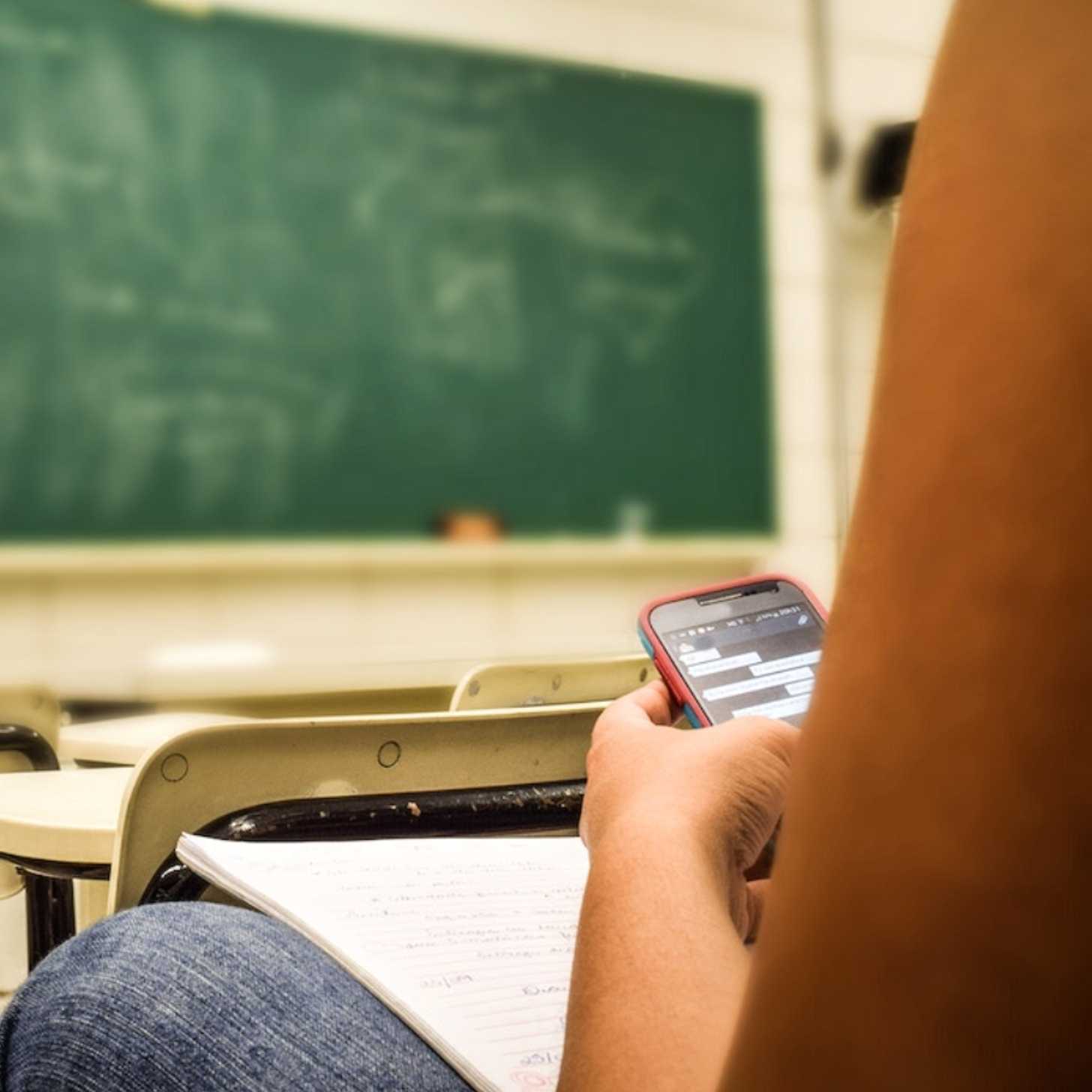
Which U.S. states have cellphone bans in schools?
As of December 2024, Florida, Indiana, Louisiana, South Carolina, California, Ohio, and Virginia have passed similar legislation restricting phones in classrooms.
As school phone ban proposals continue to sweep the country, Eric Alcera — the chief medical officer of a behavioral health hospital in New Jersey — told Newsweek that the policies warrant a nuanced approach.
Namely due to questions regarding safety.
“Safety is paramount for parents and kids, and our current climate of gun violence, war and political divide further increases family anxiety, and parental ‘safetyism’ becomes challenging for school officials to develop policies that some may perceive as favoring education over safety,” Alcera added.
Alcera is not alone. A top concern for students — and their parents — is the use of phones in the event of an emergency.
And it is a concern worth serious consideration.
A recent study by the American College of Surgeons found that school shootings in America more than quadrupled over the past 53 years.
And Alcera reasoned that emergencies are not always necessitated by violence.
“Children now can use phones for health-related reasons, such as apps for monitoring common pediatric medical conditions like asthma, diabetes, migraines and obesity,” Alcera said.
With redirection and reframing, Alcera believes that phones can be retooled as a classroom resource — not as a distraction.
Smartphones, Alcera said, allow students “access to educational resources” and help "increase digital literacy, which is relevant as global dependence on technology increases."
“Children need to be taught responsible cellphone and social media usage, preferably before they get to high school,” Alcera emphasized.
“Technology can be positive if children develop an informed and healthy understanding and perspective of it.”
Header image via Daniel Diaz Guerrero/Envato Elements
Every day the Good Good Good team collects the best good news in the world and shares it with our community. Here are the highlights for this week!
If you want to get good news in your inbox every day, join the Goodnewsletter — the free daily newsletter designed to leave you feeling hopeful.
The Best Positive News We’re Celebrating This Week —
Today, hundreds of dentists around the U.S. are providing free dental care to people in need
Every year on December 23, Comfort Dental’s 180 locations offer free dental care to anyone in need in their community. With locations in 10 states, Comfort Dental offices saw over 3,500 patients in 2023, totaling in over $1.4 million in dental services — all given away for free.
The tradition started in 1984 and now includes more than 300 dentists and 1,300 team members giving away their services for free on the “eve of Christmas Eve.”
Over the past 39 years, Care Day has provided over $22.8 million in dental services at no cost.
Why is this good news? Cost is the most common reason cited by U.S. adults for avoiding dental care, and it’s estimated that about 74 million Americans have no dental coverage — about 23% of the population. While this day of giving back may seem small compared to this massive issue — it matters, and it’s thousands more people receiving dental care than had before.
→ Read more
In a trend that started with the COVID-19 pandemic, an “unprecedented” decline in teen drug use continues
The number of teens using alcohol, marijuana, or nicotine hit a record low in the U.S. — continuing a dramatic decline that initially began at the start of the COVID-19 pandemic.
Additionally, the use of illicit drugs declined as well as non-heroin narcotics, like Vicodin, OxyContin, and Percocet hit an all-time low.
This positive trend has stunned experts, who anticipated that once pandemic restrictions were lifted, the numbers would trend upward again. Conversely, they’ve declined even further.
The survey results were collected from more than 24,000 students at over 270 public and private schools.
The world’s largest volunteer network is connecting people with more than 39,000 ways to volunteer their time this holiday season
An independent nonprofit, Points of Light is also the world’s largest volunteer network — and it’s making it easier than ever to connect people with opportunities to give back in their communities.
Engaging “more than 3.8 million volunteers across 38 countries,” this year alone, the organization has collected over 39,000 volunteer opportunities during the holiday season in its network.
It even helps people search for opportunities by “issue areas” like food insecurity, disaster response, homelessness, and more; by skillset, from firefighting to public speaking; and with family members in mind, like opportunities that are good for kids, too.
Why is this good news? Heartwarmingly, Google searches for “places to volunteer on Christmas Day” doubled this December. With so many people looking for ways to volunteer their time and skill set, Point of Light helps remove a major barrier to actually taking action — finding the right opportunity.
A small business owner in Scotland stays open on Christmas for anyone feeling lonely to have a place to go
Jordan Trainer owns Plantique, a plant and vintage shop in Glasgow, Scotland. The 25-year-old has spent almost the entire month of December sharing his space as a pop-up for other small businesses to offer their products during the holiday shopping season.
And he’s not done giving back to his community yet: Trainer announced he would open the shop for a few hours on Christmas Day for anyone spending the holiday alone to enjoy some company.
Providing snacks and drinks, it’s the second year Trainer has opened his doors on Christmas in an effort to help make the day “a bit more special” for those spending it alone.
→ Read more
More good news of the week —
To help relieve the financial load for families, Tokyo announced it will provide free daycare for all preschool-aged children. It expands free daycare benefits, currently provided to second-born and subsequent children, to include first-born children in an effort to also help address its declining birth rate.
After years of advocacy, a child abuse bill backed by Paris Hilton passed in Congress and is expected to be signed into law. The Stop Institutionalized Child Abuse bill will provide more federal oversight of facilities and residential treatment programs for “troubled” minors, one of which is where Hilton had her own traumatizing experience.
New, customized CRISPR treatments could provide hope for children with incredibly rare genetic disorders. CRISPR is more often researched and used for conditions that impact large numbers of people, but the technology offers a lot of hope for disorders that impact just a handful of people, too.
A knitting collective is providing life-saving winter wear to homeless LGBTQ+ youth across the country. After Austin Rivers took knitting up as a hobby during the pandemic, the New Yorker soon launched a knitting collective for vulnerable community members.
Taking the “adopt-a-family” approach, Trans Santa safely and anonymously provides holiday gifts to transgender youth in need. Providing both gifts and affirmation, Trans Santa connects “Santas” everywhere with trans and non-binary youth who are houseless, in foster care, or otherwise without vital support.
After a flight was delayed over an hour, an Army veteran got his saxophone out of the overhead bin to play Christmas songs. Initially looking to help a family with young children getting restless while they sat on the tarmac, Wayne Hoey got approval from the cockpit to share “a few tunes,” fielding requests from fellow passengers.
With cards, gift wrap, and decor, a Black-women-owned business is making the holidays more inclusive for all. Holiday wrapping paper comes in a range of styles and patterns, but it can be hard to find diversity among the depictions of Santas, elves, angels, and more — a trio of Black women decided to change that.
A bestselling author gave holiday bonuses to hundreds of independent bookstore workers. James Patterson has been awarding the bonuses to booksellers since 2015, and this year gave $500 bonuses to 600 workers.
Thanks to a “generous” gift, a New Hampshire ski area is offering free lift tickets and trail access all season. The donation from the Jack and Dorothy Byrne Foundation will help improve access to the ski area, so more winter sports enthusiasts can enjoy the slopes.
People donated enough toys for all the dogs at a Washington shelter to pick a new Christmas gift. The donations rolled in after a volunteer at the shelter posted a wish list ahead of the holidays — this week, the dogs got to pick out their new toy.
Braving sub-zero temperatures, hundreds of students formed a human chain to donate thousands of pounds of food to a food bank. The 25th year the school donated food to the Salvation Army food bank, this year the students delivered 4,000 to 5,000 pounds of food in -30 degrees Celsius temperatures.
On December 16, 2024 the World Wildlife Fund released a 74-page report on 234 new species discoveries in the Greater Mekong region.
The vast, water-rich swath of land spans six countries: Cambodia, Laos, Myanmar, Thailand, and Vietnam.
The diverse region is a hotspot for some of the world’s most endangered animals, including tigers, Asian elephants, long-horned saolas, Mekong dolphins, and many more.
And this new report — which is a culmination of hundreds of scientific studies — sheds light on even more vulnerable creatures, that were only just gifted their scientific name.
Among the 173 species of vascular plants, 26 reptiles, 17 amphibians, 15 fishes, and three mammals noted in the research, one five-inch animal stood out among the rest, namely because the “new species” had already been discovered — and sat in a dusty archive drawer for 83 years.
The story of the vampire hedgehog
The vampire hedgehog (or Hylomys macarong) is from the gymnure family, which are also known as “moonrats” or “soft-furred hedgehogs.”
Its species name “macarong” comes from the Vietnamese word for vampire, due to its long fangs.
The vampire hedgehog has bristly fur in lieu of spikes and looks like a cross between a shrew and a rat — despite being more closely related to hedgehogs than rodents.
The solitary creature keeps its local ecosystem in check by foraging at twilight for worms, mollusks, pests, and small reptiles.
Ironically — given its namesake — gymnures like the vampire hedgehog are known to emit a very strong scent, typically described as rancid garlic, which they produce when marking their territory.
Although the vampire hedgehog was recently discovered in the southern Annamites of Vietnam, a specimen of the same animal has been housed in a collection at the Smithsonian National Museum of Natural History since 1961.

Thanks to “an international effort to revise the taxonomy of lesser gymnures,” six countries took a look back at museum collections dating back to the 1930s.
That’s when researchers at the Smithsonian uncovered an animal thought lost to time.
“The specimens that led to the description of Hylomys macarong had been housed in the Smithsonian since the 1960s, highlighting the potential of ‘mining’ museums for new species,” Arlo Hinckley — a postdoctoral fellow at the Smithsonian — explained in the report.
“The advent of museum genomics in Greater Mekong countries will speed up species discoveries, particularly in Thailand and Viet Nam that already have major natural history collections with large historical specimen series.”
“Similarly,” he continued, “we must keep collecting specimens in poorly sampled regions for the next generations – they will surely also discover new species that we overlooked.”
Perhaps even more astounding, the vampire hedgehog was discovered again in southern Vietnam during a 2009 expedition.
However the process of examining the collected specimens and catologing it as a new species was exhaustive, and it took more than a decade for the animal to join other species on the scientific record.
“We found this distinct species in Vietnam more than 10 years ago, but we took too long to describe it and were too late,” Alexei V. Abramov, a doctor at the Zoological Institute of the Russian Academy of Sciences, said in the report.
Despite the slow page turns of scientific progress, gymnure researchers celebrated as dots were connected across time — and as the creature finally received much-deserved recognition.
“Identifying a new mammal species that is just known from the southern Annamites and that is the result of millions of years of evolution is a bit like the inclusion of a Picasso in an art gallery or the discovery of an archaeological site in a city,” Hinckley said.
“It gives these places additional value, and hopefully funding to protect such an important heritage.”
Header image via Richard Mortel / Wikimedia Commons
In the last decade, the “angel shot” is a drink order that has been gaining prominence in bars around the world.
But the “angel shot” isn’t a drink you can pour into a glass — it’s a life-saving phrase that secretly lets bar staff know that a patron is experiencing sexual harassment or assault.
It’s the same phrase that inspired Long Island bartenders Stephen Brennan and Jimmy LaSalle to create a new “Angel Shot” app — that allows men and women to “order” an angel shot with the click of a button.
“Sometimes it looks like a normal conversation, and then you don't know, so I wanted a way that customers can get in touch with me,” Brennan told Fox 5 New York.
The app implements common “variations” of the angel shot that quickly give bar staff added information.
For instance, if a patron taps the button to order their angel shot “on the rocks” the bar staff can order a taxi or rideshare service — through Uber or Lyft — on their behalf.
Likewise, if they order it “neat,” the bar is notified that the patron needs help getting escorted to their car and if they order an angel shot “with a lime,” the bar knows to immediately call the police.
What’s more, when users first download the app and create an account, they are immediately prompted to put in their vehicle information so that bar staff can ensure that they are safely escorted to the correct car if help is requested.
“You can write a message to the bartender with what you want done, how you want the situation handled,” Brennan said. “And then once you send that, your picture will show up on our device so we know what you look like.”
“You’re also able to put in your emergency contact so that if it is serious, you can put in the alert and everyone knows where you are and what happened,” LaSalle added.
So far, 50 bar owners local to the northeastern U.S. have added their venues to the Angel Shot app.
The co-developers hope to expand the app — which is available on Apple’s app store and Google Play — to more bars across the country in the coming year.
“Safety is at the heart of everything we do,” LaSalle told PIX11 journalist Matthew Euzarraga.
“Our app provides a simple yet powerful tool to ensure that everyone can enjoy their time out without compromising their well-being.”

Where does the phrase ‘angel shot’ come from?
“Angel shot” is a shorthand phrase for “Ask for Angela” — a sexual violence prevention initiative that was introduced in Lincolnshire, England in 2016.
The campaign — spearheaded by police inspector Hayley Crawford — was launched in the wake of the tragic death of local woman Angela Crompton, who was a victim of domestic violence.
The idea of the campaign was that if bar patrons felt uncomfortable or unsafe at a bar, they could go up to a bartender and ask for “Angela” to covertly signal that they needed assistance.
Over time, the “Ask for Angela” and “angel shot” safety measures have been widely adopted in bars around the world.
In many bathroom stalls it’s now common to see posters advertising “angel shots” and clueing customers into the initiative.
Six years after the campaign was launched, Crawford received a National Pubwatch Award in recognition of her efforts.
In her speech, she said that she was “extremely proud” that the initiative is being used in other parts of the world.
“I'm really pleased that people have taken it up,” she noted, “and it's just nice to know that this scheme is in place.”
Header image via Yan Krukau / Pexels
Since the “Save the Bees” campaign gained national traction in the 1990s, scientists have made significant strides in conserving vulnerable bee species — and cataloged startling new discoveries along the way.
Among new species of honeybees, leaf-cutting bees, and ground-nesting bees, one peculiar species from the miner bee family stands apart from the rest: the Andrena androfovea.
And that’s because the name of this sparkly, metallic blue-green bee species essentially boils down to the nickname “eyeliner boy.”
In a paper for Ecology and Evolution, researchers at the University of Oklahoma identified the bee, breaking down everything from the bee’s genome sequencing to its favorite flowers.
In a new interview with the Texas Standard, paper co-author James Hung said that the bee was first sighted years ago.
Still, it took over three decades to collect data and “formally introduce” the species to scientific record.
“Our senior author on this study, Dr. Jack Neff, has been the Texas bee guru for decades now, and he was the first one to have observed it many, many years ago, back before the turn of the millennium, actually,” Hung explained.
“But it wasn’t until more recently that we put all the pieces together to give a more comprehensive picture of where this species fits in the general genealogy of the genus Andrena and how it lives its life.”
Hung, who is an assistant professor of biology at the University of Oklahoma, said that the new “little blue bee” — which is native to Texas and Oklahoma — has two “special characteristics.”
“First is that the males have a fovea, or rather a pair of fovea, one inside each eye. And the fovea is a fuzzy structure that you can almost think of as eyeliners,” Hung noted.
“They seem to serve presumably similar functions as human eyeliners do: to signal our attractiveness to the opposite gender.”
So what sets this new bee apart from the rest? Male Andrena very rarely have foveas like their female counterparts.
“And that’s why we named this bee androfovea as its species name, with ‘andro’ meaning ‘male’ in Greek,” Hung reasoned.
“So if you were to colloquialise its name into modern-day slang, it might be, you know, ‘eyeliner boy.’”
Another notable characteristic of the Andrena androfovea, Hung pointed out, was their peculiar pollen-collecting behavior.
“[They] only collect pollen from a couple of members of the nightshade family,” he said.
Most animals, like deer and sheep, typically avoid nightshade flowers, which contain a toxic principle called solanine which can compromise an animal's gastrointestinal and nervous systems — but select bees and butterflies have been documented pollinating them to no ill effect.
And when it comes to pollinating nightshade, the “eyeliner boy” bees are the “black sheep” of their family.
“And as far as we know, out of the, I think, something like 1,500 or 1,700 species of Andrena in the world … we know of no other Andrena that is a picky pollen eater of members of the nightshade family,” Hung said.
“So that’s a pretty special and unique evolutionary innovation that this species has decided to take on for itself.”

Bee species discoveries highlight the numerous ways that bees better our planet — and the Andrena androfovea is no exception.
For instance, miner bees are smaller than bumblebees by a matter of milimeters, but despite their small stature, they have a huge impact on the environment.
As both pollinators and burrowers, the Andrena androfovea are pivotal to cross pollination and soil aeration, maintaining good soil health and helping local habitats bloom.
In his interview, Hung celebrated the little blue bee species for joining the annals of scientific history — and said that there was still so much left to discover.
Evoking the words of Senegalese engineer and forest scientist Baba Dioum, Hung said: “In the end, we only protect what we love, and we only love what we know.”
“There are so many species out there that still remain completely unknown,” Hung said. “So there’s still so much to know about the natural world.”
“And it is only by going out and documenting these new species can we have a better and more comprehensive understanding of how nature works to sustain all the life that we know on Earth.”
Header image via Professor James Hung
The Primary Engineer MacRobert Medal competition asks UK students: “If you were an engineer, what would you do?”
And 12-year-old Rebecca Young had her answer right away.
The young Scottish student wanted to help members of her community facing homelessness.
“Unfortunately, you see so many people sleeping rough on the streets of Glasgow and I always felt bad seeing how cold they were,” Young told The Times.
So, the Kelvinside Academy student invented a solar-powered heated blanket with the goal of helping unhoused people keep warm.
“It was obvious to me that this could help,” she added.

Young started by researching sleeping bags and backpacks, curious as to how they could be designed to offer even more warmth.
Of course, heated blankets do exist, though they must be plugged into a wall to function to their full potential — a luxury homeless individuals often do not have.
Young entered the Primary Engineer MacRobert competition as one of 70,000 engineering designs and won the Commendation Medal, an award determined by public vote. She also won a silver medal in the main competition.
Now, she has also been named one of TIME Magazine's inaugural “Girls of the Year.”

With assistance from engineering firm Thales, Young presented a prototype for the heated blanket. The design is integrated into a backpack and powered by the sun, allowing for easy on-the-go use.
While simplistic in application, the Young’s design is thorough.
Using the average human sleep time of eight hours as a required run time, she conducted in-depth research on the most suitable batteries and solar panels to use in the prototype.
The invention also includes a control circuit that automatically alternates the blanket between on/off states based on temperature readings to conserve battery life. The blanket itself is also designed similarly to a sleeping bag to allow for heat retention and to keep users warm amid any shifts or movements.
The outer frame of the blanket’s backpack also offers more storage space to the user.
“The engineering firm Thales, which sponsored the competition, subsequently manufactured 30 of the blankets which were distributed to a homeless shelter in Glasgow earlier this year,” TIME reports. There are plans to make 120 more.

“To think something I’ve designed could one day help somebody on the streets is amazing,” Young told The Times.
“It felt amazing to see my drawing turn into something real. I never thought that could happen. Homelessness is a big problem that needs fixing and if you see a homeless person, help in any way you can.”
While the design and prototype are exciting, Young’s mentors were most compelled by her empathy and concern for others.
“The remarkable concept, a Solar Powered Heated Blanket, was the brilliant idea of a young student, who aspires to be an engineer,” a blog post from Thales reads. “What made it so special? It came from a place of empathy and a genuine desire to make a difference for the homeless community.”
Leigh Goldie, Young’s teacher, echoed these sentiments.
“Rebecca’s success feels incredible. It’s so unusual to see this level of awareness and creativity at such a young age, and to apply that to a real-world issue is truly special,” Goldie told The Times.
“Rebecca’s story shows how creativity and compassion can lead to meaningful innovation, even at this stage of life. If she decides to pursue STEM further, who knows how far she could go?”
“I’m very proud,” Young’s mother, Louise, also shared with TIME.
As for Young, it’s just the start of her career in engineering.
“It helped me see a different aspect of engineering, and how it could actually help people” she told TIME. “That definitely helped inspire me.”
This article was originally published on January 3, 2025, and has been updated to include news about TIME Girls Of The Year.
Header images courtesy of Primary Engineer and TIME Magazine
Every day the Good Good Good team collects the best good news in the world and shares it with our community. Here are the highlights for this week!
If you want to get good news in your inbox every day, join the Goodnewsletter — the free daily newsletter designed to leave you feeling hopeful.
The Best Positive News We’re Celebrating This Week —
Students in Florida are spending their Saturdays learning Black history lessons they don’t get in school
Students across the state of Florida are attending Black history lessons on Saturdays as a part of programs organized and hosted at community centers to teach important history lessons that students aren’t getting in schools.
The programs are largely supported by Black churches, with more than 400 congregations pledging to teach lessons developed by Faith in Florida as part of its Black history toolkit.
The lessons cover South Florida’s Caribbean roots, the state’s history of lynchings, the ways segregation still shapes communities, and grassroots activists in the Civil Rights Movement.
Why is this good news? While Florida has required public schools to teach African American history for the past 30 years, the state’s own metrics show only a dozen school districts demonstrate excellence at teaching it.
Only by learning the critical details of Black history can we chart a better, justice-oriented, equitable path forward for all. Until that happens in schools, people are taking proactive action to learn (and teach!) these lessons.
→ Read more
Minnesota is banning phones in classrooms, and this club is helping teens with the transition
→ Read more
A Florida teen invented a vibrating headset to help visually impaired people navigate their surroundings
An estimated 2.2 billion people worldwide are blind or visually impaired — 28% of the global population.
Emerging apps — and walking canes — can help, but unexpected factors (like cracked asphalt and construction hazards) can make a simple city walk incredibly dangerous.
And while guide dogs provide an invaluable service, they can be expensive, with some costing upwards of $50,000.
Fortunately, Orlando Science School high schooler Tiffani Gay invented a solution that could dramatically improve the lives of people with vision loss.
Her innovative headset sends vibrational warnings to the users to communicate obstacles — and she’s setting the price tag at $200.
So few babies are contracting the virus through their mothers, a camp for kids with HIV/AIDS is now closing
For more than 30 years, One Heartland in northern Minnesota welcomed young campers living with or affected by HIV/AIDS. The camp is now closing and the 80-acre site is going up for sale.
While former campers were saddened by the closing of the camp, ultimately, they said, it’s for the best possible reason.
HIV treatment has improved so significantly, the number of babies contracting the virus through their mothers through pregnancy, birth, or breastfeeding has declined so much that the camp no longer needs to exist — there aren’t enough kids in need anymore.
Good progress: In the U.S., the perinatal HIV transmission rate is now less than 1% thanks to antiretroviral medications. And the news is good globally too: New HIV infections among children up to age 14 has declined by 38% since 2015 and AIDS-related deaths by 43%.
Joining a crowdfunding campaign, Kristen Bell donated $100,000 to pay off strangers’ medical bills
Teaming up with influencer Quentin Quarantino, Kristin Bell just donated $100,000 to help strangers pay off their medical bills.
With the issues surrounding the U.S. healthcare system in the spotlight, Quarantino saw an opportunity to help people in need — and reached out to Bell with a “no pressure” ask to get involved, too.
Bell generously agreed, offering up $100,000 of her own funds to the cause, too. The pair shared medical bill-related GoFundMe campaigns, and once the fundraiser reached half its goal from the public — Bell covered the second half.
Her donations included $20,932 to third grader Mia and $24,182 to Murilo — both of whom are battling leukemia.
Quarantino acknowledged that “we should not have to raise and give money in order for Americans to receive life-saving medical treatment,” but “until we can change the system, this is the reality. And we can be the helpers.”
More good news of the week —
A new ‘angel shot’ app helps bartenders hail Ubers and call the police with the tap of a button to help customers in need. The discreet code phrase has taken on a new life with an app that immediately alerts bar staff to instances of dangerous behavior, unwanted advances, and sexual harassment.
A village of tiny homes in Australia is supporting young people transitioning out of the child and family protection system. Ten self-contained “pod-style” homes were built on a once-empty suburban lot, helping foster community, provide support, and ease stress for teens leaving the system.
A lab in Colorado is helping restore the breadfruit tree lost in the Lahaina wildfire. On a larger scale, their efforts are intended to also undo the ecological damage done that made Maui so susceptible to wildfire.
A new, first-of-its-kind tongue-stimulating implant offers a new treatment option for people with sleep apnea. Sleep apnea causes breathing to stop repeatedly during sleep and is thought to affect about 8 million people in the UK.
Tens of thousands of volunteers planted 750,000 trees to help save a native Australian bird’s habitat. The Regent Honeyeater Project started in the 1990s and is “working wonders” both for the species and for other wildlife.
Quebec adopted a new law that will ban gas-powered vehicle sales by 2035. It’s part of the Canadian province’s larger plan to reduce climate-warming greenhouse gas emissions, and it could go into effect even sooner if EV production can keep up with demand.
Usually, donating blood comes with two souvenirs: A sense of pride for helping others, and a cookie (or juice box).
This month, however, the American Red Cross has partnered with the National Football League to give away something a little more exciting: Tickets to Super Bowl LIX.
This is the sixth year the NFL has partnered up with the American Red Cross, in the name of National Blood Donor Month. And this strategic move means you could score big.

Between January 1 and 26, anyone who gives blood through the American Red Cross will automatically be entered for a chance to win a Super Bowl LIX giveaway. It includes exclusive in-stadium pre-game activities, tickets to the big game itself, round-trip airfare, three-night hotel accommodations, and $1,000 for additional expenses.
“Health emergencies don’t pause for holidays or game day,” the American Red Cross says on its website. “Donors are needed now: Step off the sidelines and roll up a sleeve to help patients in need.”
This call to action comes on the heels of a surge of holiday donors — but a dip in resources after the new year. According to the American Red Cross, the start of the new year is one of the most challenging times for blood collection, as folks face winter weather and seasonal illness.
“Severe winter weather is one of the biggest threats to maintaining a stable blood supply,” said Paul Sullivan, senior vice president of Donor Services for the American Red Cross, in a statement.
“Snow and ice caused about 16,000 blood and platelet donations to go uncollected last winter. In addition, hazardous weather conditions can make it tougher to move vital blood products across the Red Cross network, potentially affecting deliveries to hospitals in some locations.”
As meteorologists predict dramatically colder and snowier days in January, donors who can share blood or platelets provide a beacon of hope during the rough season.
Red Cross leaders also want potential donors to know that vaccines for common illnesses like COVID-19 and RSV do not require wait times for donations.
“The Red Cross encourages individuals to protect their own health this cold season,” a press release states. “Receiving any of these vaccines causes no wait period to donate and does not affect donation eligibility, if you are healthy, feeling well and symptom-free at the time of donation.”
Last year’s Super Bowl giveaway winner, David Suggs, didn’t let the cold season hold him back from donating.
“I’m not a firefighter, I’m not a first responder, but donating blood is something I can do to help others,” Suggs said in a statement. He and his wife, Christine, called the sweepstakes “a once in a lifetime experience.”

“We’re just so grateful,” he added.
Donors of all blood types — particularly type O negative and those giving platelets — are needed this season. Interested individuals can sign up to donate online or by downloading the Red Cross Blood Donor App.
All donors will need to fill out a pre-donation health questionnaire and must bring a blood donor card or driver’s license (or two other forms of identification) at check-in. Donors can also prepare these requirements ahead of time by creating a Rapid Pass online.
“Without the dedication of blood and platelet donors, the lifesaving mission of the Red Cross would not be possible,” the organization shared in a statement.
“Unlike other medical treatments, blood cannot be manufactured in a laboratory or stockpiled. It must constantly be replenished to help meet the transfusion needs of patients across the country.”
Header image courtesy of the American Red Cross
When 8-year-old Zoeya Khan was tasked with engineering a project that brings a creative solution to the world, she designed something to help her neurodivergent peers.
As part of the Primary Engineer MacRobert Medal competition — which asks UK students: “If you were an engineer, what would you do?” — Khan developed a design for an invention called The Self Regulation Bracelet.

The Year 3 student studies at Bridgewater Primary School in Newcastle Upon Tyne and partnered with the University of Sunderland to bring her prototype to life for the competition.
The bracelet is designed to improve communication in classrooms for neurodivergent students — including young people who have conditions like autism, ADHD, dyslexia, and more.
Khan’s design looks like a simplified smartwatch, with a round white face that contains a button-activated system. That system then provides visual responses through colored lights, which can enable communication solutions between students, peers, and teachers.
While the lights may be a fun feature, they do indeed offer a discrete option for students to communicate in schools when they may otherwise face hurdles like language processing, verbal and non-verbal communication skills, understanding social cues, managing sensory sensitivities, and more.

Khan said she observed some of her peers struggling to express their emotions and wanted to create something that made this easier.
The wearable device allows an individual to signal their emotions using a color-coded system, manually selecting light and color settings to clearly communicate without drawing too much attention.
“The problems that the young engineers solve often relate to real-world ecological problems and ways we can look after our planet or help people overcome challenges in their day-to-day lives,” Dave Knapton, associate head of the School of Engineering at the University of Sunderland, said in a statement.
“The Self Regulation bracelet certainly fits into this category to help neurodivergent pupils and teachers communicate in the classroom,” Knapton added. “Zoeya has come up with a novel idea, it is always a highlight for the team to unveil the prototype and see the reaction from the inventor.”

Khan was awarded a Bronze Medal at the 2024 Primary Engineer MacRobert Medal competition, in which she competed against 71,000 other students from across the UK.
Each year, university and industry partners select an idea to turn into a working prototype, which was revealed to Khan for the first time at the award ceremony.
“Over 71,000 pupils took part in the competition this year, so to be able to celebrate so many in a region we have worked in for many years felt like a real triumph,” Scott Dalgleish, the head of marketing and communications at Primary Engineer, said.
“And the look on Zoeya’s face when the prototype was unveiled will not be forgotten soon.”
While this milestone is surely exciting for Khan as a budding engineer, her design also signals hope for her peers.
“The Self Regulation Bracelet was warmly received by teachers and staff, who saw its potential to transform communication in learning environments,” a competition program explains.
“While future versions might include more advanced features, the current prototype stands as a unique and meaningful step towards helping neurodivergent students express themselves with dignity and ease.”
Header image courtesy of Primary Engineer
Growing up, Ella Casano was no stranger to hospital rooms.
At 7 years old, she was diagnosed with Idiopathic Thrombocytopenia Purpura, a chronic disorder that destroys the platelets in her blood, leaving her at risk for injury and internal bleeding.
Every six to eight weeks — for seven years — Casano was in and out of her local outpatient clinic so she could receive life-saving transfusions.
For Casano, it was rarely a comforting experience.
So at 13, she invented something to help sick kids like her face medical care with less fear: the Medi Teddy.
“From the front, the patient sees a friendly stuffed animal, rather than a bag of medicine,” Casano told Kidskind in 2020, holding up a specially-made teddy bear to the camera and showing how IV bags and blood bags can be slipped inside.
“Through the mesh back, the doctor or nurse can check to see how much medicine is left,” she explained.
In the last five years, Casano’s invention has evolved into Medi Teddy Inc., a fully fledged nonprofit.
Thanks to charities and sponsors, the organization has sent thousands of Medi Teddy IV covers to young patients all over the world.
Today, the Medi Teddy comes in two models: a personalized, washable “Bailey” plush with a stretchy mesh rear pouch and a silicone “Hope” bear designed for hospitals to reuse with multiple patients.
The latter model comes with a washable tummy so that hospital staff can personalize the silicone teddy with patient names and encouraging messages. It can also be sanitized with ease.
Casano came up with the remodel in the early days of Covid-19 lockdown.

“During the pandemic, hospitals didn’t really want to take plush products,” Casano told WTNH, a television station based in New Haven, Connecticut.
In addition to her releasing the new “Hope” silicone Medi Teddy, Casano has had her hands full spearheading a fundraising mission so she can provide the Medi Teddys to families in need for free.
“I’m just happy to be able to continue to send Medi Teddys to patients who are going through so much and I do hope they provide them with comfort and a smile, things like that,” she said.
In addition to managing the nonprofit, Casano is currently preparing for freshman year at Stanford University. At 18, she still has ITP and manages her condition through medication.
And although she no longer requires transfusions, those early days continue to stick with her.
On her nonprofit’s official website, Casano wrote: “I never forgot how scary those early days of infusions were for me and I wanted to help other kids who felt like I did.”
Header image via Medi Teddy Inc.
At 2 a.m. on December 4, a wildfire sparked in Black Star Canyon, Southern California.
Under the cover of night, as the people of Irvine Lake slept in their homes, the brush fire was primed to roar into a full-on blaze.
That’s when a nearby AI-powered ALERTCalifornia camera flagged the fire and sent an emergency ping to the Orange County Fire Authority.
“While the agency has been utilizing AI in tandem with 911 calls to detect wildfires for some time, this is the first fire that was located exclusively by AI,” the OCFA said in a social media post on Instagram and X, formerly known as Twitter.
“This location is not heavily trafficked at night,” the caption added, “which likely contributed to the fact that zero reports of smoke or fire came in from the public.”
After being alerted by AI, fire crews were able to contain the blaze to less than a quarter of an acre and keep homes and people safe.
California’s dry, arid climate and wealth of non-native grasses makes it especially vulnerable to wildfires.
According to CAL FIRE, over 6,500 wildfires burned more than 1,001,993 acres in California in 2024 alone.
“This is one example of how we are leveraging emerging technology and strategic partnerships to combat wildfires,” OCFA fire chief Brian Fennessy said in a statement.
“With wildfire hazards now a year-round challenge, early detection and collaboration are crucial to protect lives and property.”
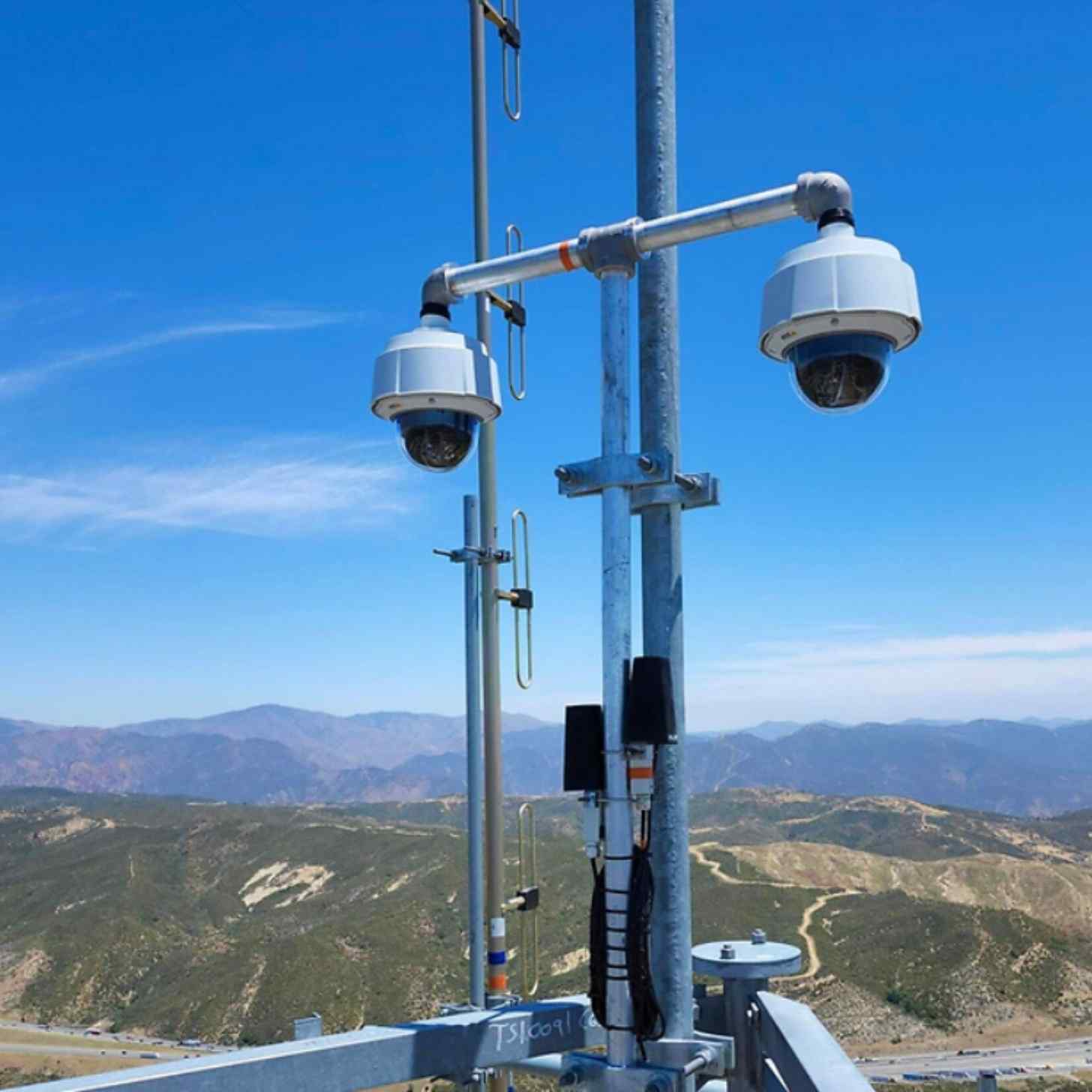
Based at the University of California San Diego, ALERTCalifornia is a state-focused safety program that has installed 1,080 monitoring cameras and sensor arrays throughout the state.
In 2023, ALERTCalifornia collaborated with CAL FIRE and DigitalPath, to develop a cutting-edge AI system that provides early wildfire detection and dispatches real-time data to local firefighting crews.
“Our partnership with ALERTCalifornia reflects our shared commitment to utilizing the latest advancements in technology and data-driven insights,” CAL FIRE Director and fire chief Joe Tyler said in a statement.
“Together, we strive to make California more resilient to the wildfire threat, protect our communities, preserve our forest lands, and ensure the well-being of our firefighters.”
Header image via Erik Jepson / UC San Diego
For Jake Harvath, 2024 was the Year of the Mustang.
The Utah man devoted his entire year to advocating for the United States’ wild horses, completing a 6,000-mile journey across 25 states to raise awareness about a crisis plaguing these majestic creatures.
He began his journey in September of 2023 and just returned to a spirited welcome and police escort into his hometown of Herber City, Utah before the turn of the new year.
With him were his three trusty steeds: Denver, Eddy, and Bella. (Though Bella did take a detour for her health amid the journey.)

Throughout the expedition — which Harvath documented on YouTube, Instagram, and TikTok — he lived with only what little he could pack on two mustangs (he reserved his mare, Bella, for riding), traversing east and turning back around after reaching the Atlantic Ocean.
“My goal is to bring awareness to the plight of the American mustang, wild horses that were once a symbol of an untamed country but now struggle to keep their place in it,” he wrote on a GoFundMe page at the top of his journey — a fundraiser that has since collected over $38,000.
“I'll be crossing this country’s diverse terrain and unpredictable climates, relying on those skills and the natural hardiness of the mustang to succeed in my goal,” he continued. “I know my mustangs will be great ambassadors, helping me spread awareness of the BLM's wild horse adoption program.”
The program he spoke of is the United States Bureau of Land Management’s Adoption Program, which oversees the placement of wild horses and burros into qualified farms and rangelands.
These animals are federally protected, but since they lack natural predators, the federal government — namely the BLM — must manage their populations to ensure they are healthy and able to thrive on public lands.
All three of Harvath’s horses are adoptees from the program, and he hoped to inspire other outdoorsy farmhand folks like himself to consider adopting their own horses, too.

In 2023, the bureau spent nearly $159 million on population control efforts for wild horses and burros across the U.S., but they continue to outnumber what the BLM deems sustainable, clocking in at a population of more than 73,000 as of March 2024.
And allowing them to exist on their own in the wild simply isn’t a solution, either.
“As wonderful as that would be, we live in a country, in a modern society, that doesn’t allow that to happen,” Harvath told Deseret News in 2023.
Grazing offerings on public lands are limited, especially while rising populations force horses to compete for scarce resources. Besides, human development makes it much harder for wild horses to truly be wild.
“Many of these horses out there are starving,” Harvath added. “At least in BLM holding (they) get enough food to eat and regular water, compared to ... competing with other species, mostly us, to survive. It’s because of that, them just being wild, turning them all loose, isn’t really a solution.”
Over the years, BLM has implemented measures of fertility control, but gaining access to wild horses can be costly and challenging. Therefore, the adoption program provides these horses a safe place to land — and lessens the weight on the BLM’s shoulders.
Since 1971, the BLM has facilitated the adoption of more than 270,000 wild horses, according to Deseret News. Adoptions increased over the years but dipped again in 2022, making Harvath’s project that much more vital to the care of these creatures.
On his journey, Harvath said he was “able to help loads of people start the adoption process to adopt their first wild horses,” according to the Nebraska Examiner, as well as provide “some people’s first experience with horses.”
“These horses are absolutely worth adopting, they’re very trainable, and they are incredible partners,” Harvath said in one of his YouTube videos. “What better way to showcase that than on a journey like this?”
On his return home, his success was palpable. He also believes he set a new record for the longest continuous horse pack ride in the U.S. within a single year, riding 4,570 miles between September 2023 and 2024. The closest before him was a man who rode 3,000 in a year back in 1989.
Harvath told the Nebraska Examiner he plans to submit an application to The Long Riders Guild and Guinness World Records, though that’s not what he cares about most.
“These horses have suffered, bled, worked, and sweat to no end to get us here to the end, through storms, rivers, over hundreds and hundreds of mountains,” Jake told his supporters upon his homecoming.
“They’ve proven their worth again and again. I owe my very life to them.”
And for leaders at the BLM, Harvath has proven his worth, too.
“The mustang is another horse. It’s another member of people’s family that can do anything a domestic horse can do,” Gus Warr, wild horse and burro manager for the BLM’s Utah office said.
“We have animals we need to find homes for. And [Jake’s] been a banner for that.”
Header image courtesy of Jake Harvath/Instagram
As a student at the University of Minnesota, Max Minakov’s entrepreneurial career blossomed when he invented something his younger self would appreciate: A snow-shoveling robot.
“I really, really hated shoveling snow,” he said in a blog post for the university. “As a kid, you’re either doing it after school or you’re getting up at 5 a.m. to do it, which I had a hard time doing. I knew there had to be something easier.”
During his educational career, Minakov founded a startup called Nivoso, which means “snowy” in Latin. The company touts its game-changing product: a self-activating snow-clearing robot for driveways and sidewalks.

Minakov calls it a “Roomba for snow.”
The robot is completely autonomous and keeps surfaces safe and accessible without human intervention — well, except for the monitoring of the job from inside the comfort and warmth of one’s home.
It’s the kind of futuristic product Midwesterners dream of — especially as heavy snowfall sweeps the nation.
So it’s no surprise that Minakov’s invention was met with praise. In 2023, he was named the winner of the Student Division in the Minnesota Cup, a startup competition that earned him $26,000 in seed funding.
And this cold weather season, the product is finally available for residential use.

The device itself comes with a hefty $12,000 price tag, but Nivoso is targeting large snow-clearing companies that could use the robot as a supplement to their main operations.
According to Nivoso’s website, the base model comes with a monitor that can be mounted into a truck cabin, with a long-range remote controller to be manually operated and monitored through a live stream in a snow plow truck.
Minakov also noted that he was working with large senior living facilities to pilot the product, as his invention is not just for convenience but for the safety and well-being of people who cannot physically clear their area.
“I hope every nursing home and other zero-tolerance facility in the country will have their sidewalks consistently cleared by Nivoso robots during every snowstorm,” he told the University of Minnesota in December of 2023.

But ultimately, he hopes that these first steps into commercial success will bring this tool to more people who could use the assist.
“I want people to see Nivoso robots at the hardware store right next to a snow blower,” he added.
In the meantime, anyone in the Twin Cities can tap Nivoso in for their snow removal needs this winter by leasing the device during inclement weather.
“By using advanced GPS and an array of sensors, Nivoso is capable of keeping sidewalks safe and accessible via teleoperated or autonomous robots (BETA) at hospitals, senior living facilities, universities, and more,” the company’s website shares.
For residential and commercial property owners who are unable to shovel, Nivoso’s services might give them ease, accessibility, and freedom this season.
“Having something like this offered for them [those unable to shovel] could save not only just a lot of time,” Minakov told CBS News, “but also just a lot of hassle and concerns that people have going into the winter season.”
Header image courtesy of Nivoso
Karen Grant and fellow school librarians throughout New Jersey have heard an increasingly loud chorus of parents and conservative activists demanding that certain books — often about race, gender and sexuality — be removed from the shelves.
In the past year, Grant and her colleagues in the Ewing Public Schools just north of Trenton updated a 3-decade-old policy on reviewing parents’ challenges to books they see as pornographic or inappropriate. Grant’s team feared that without a new policy, the district would immediately bend to someone who wanted certain books banned.
Around the same time, state lawmakers in Trenton were readying legislation to set a book challenge policy for the entire state, preventing book bans based solely on the subject of a book or the author’s background or views, while also protecting public and school librarians from legal or civil liabilities from people upset by the reading materials they offer.
When Democratic Gov. Phil Murphy signed that measure into law last month, Grant breathed a little easier.
“We just hear so many stories of our librarians feeling threatened and targeted,” said Grant, who works at Parkway Elementary School and serves as president of the New Jersey Association of School Librarians. “This has been a wrong, an injustice that needs to be made right.”
Amid a national rise in book bans in school libraries and new laws in some red states that threaten criminal penalties against librarians, a growing number of blue states are taking the opposite approach.
New Jersey joined at least five other states — California, Illinois, Maryland, Minnesota and Washington — that have passed legislation within the past two years that aims to preserve access to reading materials that deal with racial and sexual themes, including those about the LGBTQ+ community.
Conservative groups have led the effort to ban materials to shield children from what they deem as harmful content. In the 2023-24 school year, there were 10,000 instances of book bans across the U.S. — nearly three times as many as the year before, according to a recent report by PEN America, a nonprofit that advocates for literary freedom.
“Certain books are harmful to children — just like drugs, alcohol, Rated R movies and tattoos are harmful to them,” Kit Hart, chair of the Carroll County, Maryland, chapter of Moms for Liberty, a national organization leading the book banning effort, wrote in an email.
But some states are now safeguarding librarians and the books they offer.
“State leaders are demonstrating that censorship has no place in their state and that the freedom to read is a principle that is supported and protected,” said Kasey Meehan, director of the Freedom to Read program at PEN America, which has been tracking book bans since 2021.
The drive to ban certain books is not waning, however. While a handful of states fight censorship in school libraries, some communities within those states are attempting to retake local control and continuing to remove materials that conservative local officials regard as lurid and harmful to children.
‘Lives are in the balance’
The New Jersey measure not only sets minimum standards for localities when they adopt a policy on how books are curated or can be challenged but also prevents school districts from removing material based on “the origin, background, or views of the library material or those contributing to its creation.”
The law also gives librarians immunity from civil and criminal liability for “good faith actions.”
New Jersey state Sen. Andrew Zwicker, a Democrat who introduced the legislation, said until recently he thought that book bans were a disturbing trend, but one limited to other states. But early last year, he went to a brunch event and met a school librarian who told him she faced a torrent of verbal and online abuse for refusing to remove a handful of books with LGBTQ+ themes from her library’s shelves.
“That’s when I realized that I was so horribly mistaken, that these attacks on librarians and on the freedom to read were happening everywhere,” Zwicker told Stateline. “I went up to her and asked, ‘What can I do?’”
He said he’s already heard from lawmakers in Rhode Island who are considering introducing a similar measure this year.
A child who identifies with the LGBTQ+ community can read a memoir like “Gender Queer” by Maia Kobabe and feel seen for the first time in their lives, he said.
“I do not think it’s an overstatement to say that lives are in the balance here, that these books are that important to people, and that librarians are trusted gatekeepers to ensure that what’s on the shelf of a library has been curated and is appropriate,” Zwicker said.
These new state laws, several of which are titled the “Freedom to Read Act,” passed almost entirely along party lines, with unanimous Democratic support.
In New Jersey, Republican state Assemblywoman Dawn Fantasia, who has worked in schools for the past 18 years, including as an English teacher, vehemently opposed the measure. She did not respond to an interview request.
“This isn’t puritanical parents saying, ‘Oh, I don’t want my child to learn how babies are made,’” she said during a September committee hearing. “That’s ridiculous, and we all know it.”
She added, “What I do want is for us to be able to have an honest conversation about some of what is in these texts that is extraordinarily inappropriate for that grade level.”
Enforcement and penalties
Legislation differs by state, including in enforcement and how to penalize noncompliant localities.
In Illinois, for example, school districts risk losing thousands of dollars in state grant funding if they violate the state’s new law discouraging book bans. But as the Chicago Tribune reported last month, that financial penalty was not enough to persuade many school districts throughout the state to comply, with administrators saying they are concerned about giving up local control on school decisions.
Several school districts in other states have similarly rebelled.
North of Minneapolis, St. Francis Area Schools’ board last month decided it would consult with conservative group BookLooks to determine which books it will buy for its school libraries. BookLooks uses a 0-through-5 rating system that flags books for violent and sexual content.
Under its rating system, books that have long had a place in school libraries — such as the Holocaust memoir “Night” by Elie Wiesel or “I Know Why the Caged Bird Sings” by Maya Angelou — would require parental consent to read.
Asked about the school district potentially violating state law, school board member Amy Kelly, who led the drive to use BookLooks, declined to be interviewed. Karsten Anderson, superintendent of St. Francis Area Schools, also declined an interview request.
In Maryland, Carroll County schools led the state in banning books in recent years, removing in the 2023-2024 school year at least 59 titles that were “sexually explicit,” according to a tally by PEN America.
Schools should not allow children to see “kink and porn,” wrote Hart, of Moms for Liberty. She got involved in the effort more than three years ago, saying she wanted to protect her five children and parents’ rights to make educational decisions.
She pointed to one book to make her point: “Let’s Talk About It: The Teen’s Guide to Sex, Relationships, and Being a Human,” a nonfiction book in graphic novel form by Erika Moen and Matthew Nolan that seeks to educate teenagers about anatomy and consensual and safe sex. The book explores other issues of gender and sexuality, as well. Hart likened the book’s illustrations showing different ways of having sex to “erotica.”
“Parents who provide their children with alcohol or drugs, or to give them a tattoo would rightly be charged with crimes,” she wrote Stateline in an email. “Schools that provide children with sexually explicit content are negligent at best.”
The future of book bans
Around 8,000 of the more than 10,000 instances of banned books during the 2023-24 school year were in Florida and Iowa schools, according to PEN America. Lawmakers in those states enacted legislation in 2023 that created processes for school districts to remove books that have sexual content.
Iowa now requires that reading materials offered in schools be “age-appropriate,” while the Florida law ensures that books challenged for depicting or describing “sexual conduct” be removed from shelves while the challenge is processed by the district.
Some of those banned books included classics, such as “Roots” by Alex Haley and “A Tree Grows in Brooklyn” by Betty Smith.
Over the past year, lawmakers in Idaho, Tennessee and Utah passed measures that ban certain reading materials that deal with sex or are otherwise deemed inappropriate, according to a December report from EveryLibrary, an Illinois-based organization that advocates against book bans. Arizona Democratic Gov. Katie Hobbs vetoed similar legislation in June.
Laws that allow for book bans have been the subject of several lawsuits in recent years, as plaintiffs argue those measures violate constitutional protections of free expression.
Late last month, a federal judge struck down parts of a 2023 Arkansas law that threatened prison time for librarians who distribute “harmful” material to minors. Arkansas Attorney General Tim Griffin, a Republican, announced the state would appeal the decision.
EveryLibrary is tracking 26 bills in five states that lawmakers will consider this year that would target books with sexual and racial themes.
The organized effort to remove books because of LGBTQ+ or racial themes will continue, said Deborah Caldwell-Stone, director of the American Library Association’s Office for Intellectual Freedom.
The association, which tracks book bans as part of its mission to support libraries and information science, found that most of the top banned books around the country had LGBTQ+ protagonists.
“Librarians have always been all about providing individuals with access to the information they need, whether it’s for education, for enrichment, for understanding,” she said in an interview. “Censorship is diametrically opposed to that mission.”
This article was originally published by Stateline.
Header image by Paul Schafer via Unsplash
It’s clear there is a housing crisis in the United States; in 2024, it was reported by the U.S. Department of Housing and Urban Development that homelessness rose by a staggering 18%.
Of course, systemic solutions must be implemented to ensure that unhoused individuals have access to safe and affordable housing, but their immediate needs must also be addressed.
That is what Nicky Crawford of Atlanta, Georgia set out to do.
Crawford is the founder of Flowing with Blessings, Inc. a nonprofit that provides essential services like showers and clean clothing to people experiencing homelessness.
But he wanted to take his offerings a step further.

With the help of students at Georgia Institute of Technology, the nonprofit introduced its innovative Mobile Laundry Bus in 2024.
Steve Chininis, a professor at the university’s School of Industrial Design, oversaw the design and development process of the mobile laundromat.
Industrial design students Zaria Hardnett, David Hounyo, Lily Liang, Claudia Ross, and Anushka Vaidya all took part in the project, converting an old school bus that Crawford had purchased into a laundromat on wheels.

“What we’re trying to do is get them clothes they can have for the week so they can change clothes because a lot of times it’s not them that smell, it’s the clothes,” Crawford told 11 Alive News last summer.
Indeed, hygiene poverty plays a huge role in the lives and well-being of people without permanent housing. In the past, Crawford has installed pop-up shower stalls and partnered with volunteer barbers to provide opportunities for unhoused community members to freshen up.
He also makes sure they have everything they need to do so, including toiletries, towels, detergent, and more.
“At Flowing with Blessings, we believe that every person deserves to feel clean, comfortable, and valued,” the nonprofit’s website explains. “With our services, we aim to empower those facing homelessness and help them rebuild their lives with dignity.”

But with rising needs, Crawford can’t do this work alone.
The Georgia Tech students — all juniors and seniors — used their design and engineering skills at every step of the Mobile Laundry Bus development process.
From brainstorming and sketching concepts to developing 3D models and overseeing the build of the bus, the final design had to be practical and user-centered.
One of the big challenges students faced was figuring out how to supply clean water at various locations, given the portable design of the bus. But they soon crunched the numbers to add the right amount of large tanks of clean water, installing them alongside washers and dryers.
As of the fall of 2024, the Mobile Laundry Bus has served over 4,500 individuals and assisted an estimated 60 people on each day of operation.
“It was so exciting to be able to have our students work on this amazing project,” Chininis said in a statement for Georgia Tech. “It allowed students to make an immediate and direct impact in our community! They were instantly engaged because they were working with an amazing client who was helping real people.”
As for Crawford, he will continue to be steadfast in his mission — and inspire others to do the same.
For Georgia Tech, he said: “We urge everyone to be the change they wish to see in the world.”
Header images courtesy of Georgia Tech
The National Highway Traffic Safety Administration estimates that at any given time, around 660,000 drivers are using their phones while behind the wheel.
For a lot of drivers, shooting off a quick text might just take five seconds. But for people going 55 miles per hour, that’s enough time to travel the length of a football field.
“There is no safe way to text while driving,” Jay Callaghan, a police chief at the Colorado Department of Transportation, said in a statement.
“Taking your eyes off the road to send a text or check a social media feed — even for just a second — puts people at risk,” he stressed. “The best idea is to take care of potential distractions before even starting your vehicle.”
It’s something that nearly everyone can agree is wrong. And yet it remains a consistent problem.
According to a survey conducted by the AAA Foundation for Traffic Safety, roughly 93% of drivers consider hand-held cell phone use as dangerous.
Even so, 38% admitted to reading a text or email while driving, and another 27% reported sending a text or email from behind the wheel.
Those actions have real-world consequences.
The NHTSA reports that driving while texting is six times more dangerous than driving drunk — and 3,308 people were killed by distracted driving in 2022.
Although Tori Merrill — a mom based in Pleasant Grove, Utah — has never lost a loved one in a car crash, it’s a worry that weighs on her mind.
“I have teenage drivers and so it’s important to me that they’re safe and that they’re being safe,” Merrill said in an interview with KSL News Radio.
Merrill and her son Logan, a former Eagle Scout, first came up with the idea for focus bags five years ago, but it wasn’t until last year that their design fully came to fruition.
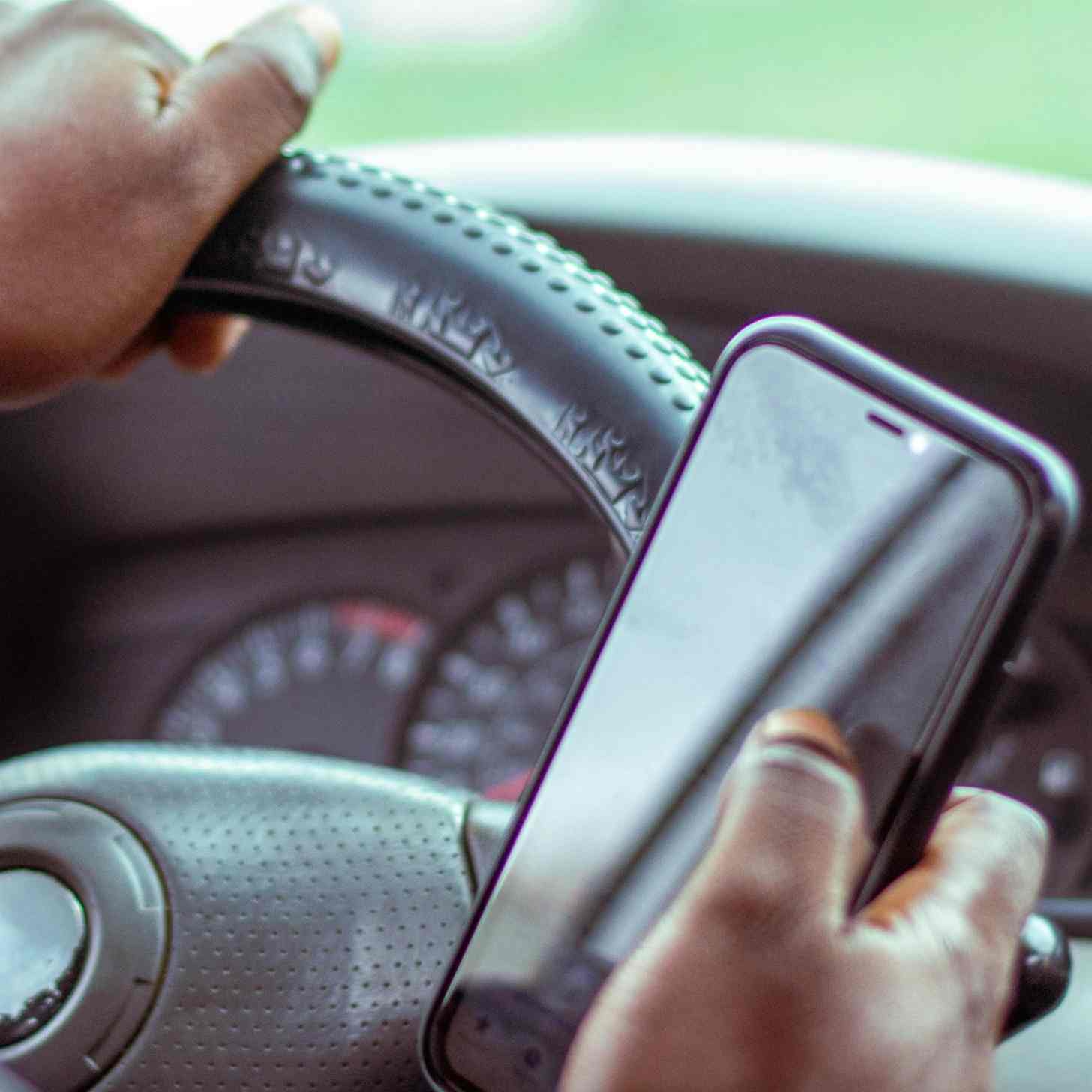
Although the name has switched — from the “just don’t bag” to the “focus bag” — the design has stayed consistent.
Each colorful, phone-sized bag comes with a drawstring top that cinches with a small toggle. It’s designed to keep people’s phones out of their hands, and out of sight, during the entirety of their drive.
“That way, you have to think twice if you really want to answer that text,” Merrill said.
To date, Merrill, her son, and local volunteers have handsewn over 4,000 focus bags.
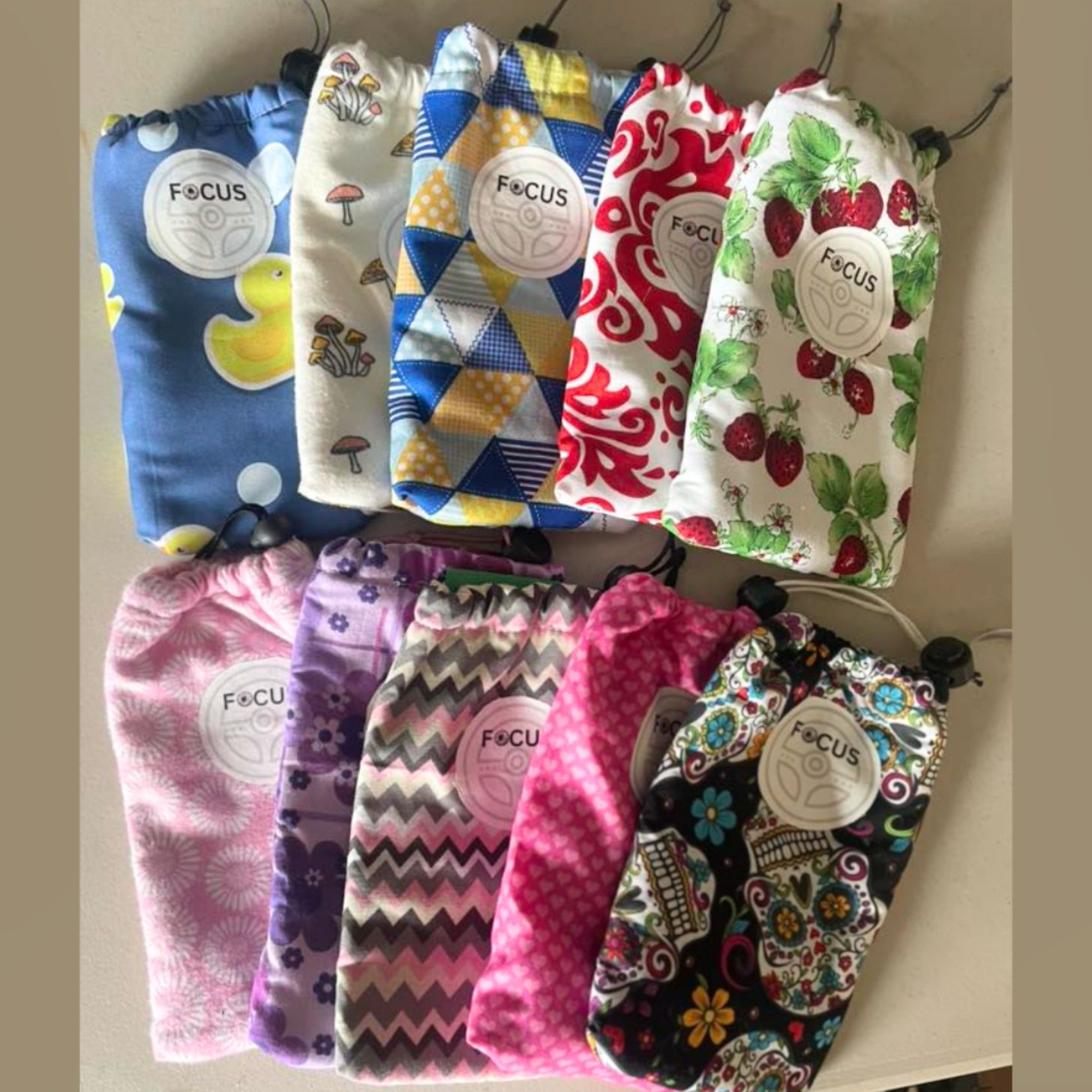
In November, Merrill even teamed up with Zero Fatalities — a public safety program funded by the Utah Department of Transportation — to distribute over 1,000 bags to young drivers.
“I had an amazing time at the UDOT conference doing a service project with Zero Fatalities!!” Merrill shared on the “Focus Bags” Facebook page.
“Half [of the bags] we gave out at the conference,” she wrote, “and half we are using to give out at the Zero Fatalities parent meetings each new driver has to attend in order to obtain their license.”
“I love being a part of something that makes a difference!”
Zero Fatalities offers resources to keep roadways safe through parent-teen seminars, safety seminars, and local PSAs.
Their name doubles as a mission, with the goal of achieving zero roadway fatalities in Utah.
“Some people may think zero is an impossible goal, but when it comes to the lives of your friends and family, would any other number be acceptable to you?” the program’s website asks.
“Reaching this goal starts with you.”
Merrill’s happy to have a part in that mission, and she won’t be stopping anytime soon.
“It’s just something in my gut that says I need to keep doing this,” she said, “just keep giving these out, just keep protecting people.”
Header image via Jonathan Chukwudifu / Pexels
In December 2024, a team of researchers and activists released a startling report: excessive water usage and megadrought are slowly killing the Great Salt Lake.
And if no one intervenes, wrote lead author Ben Abbott, then the lake will completely “disappear in the next five years.”
“It is our responsibility as people who study the lake to tell the public,” said microbiologist Bonnie Baxter, a co-author of the report, in an interview with UPR.
“It would not be ethical for us to not disclose that we were seeing that crisis in real time.”
As scientists raised alarm bells about the disappearing lake, Utah Governor Spencer Cox noted heightened concern from the community as locals realized how dire the crisis had become.
“Now that people are realizing there's a potential that it might not always be here, that's gotten people's attention in a positive way,” Cox told NPR in 2024.
As the researchers noted in their report, one of the biggest threats to the Great Salt Lake is excessive water diversion.
For decades, a significant portion of water that would naturally flow into the Great Salt Lake has been diverted for agricultural purposes — particularly for growing crops like hay and alfalfa to feed the state’s beef and dairy production.
In fact, it takes a whopping 450,000 gallons to produce a single ton of alfalfa — which is nearly as much water as two Utah homes typically use in a year.
“The key question is how do we save the Great Salt Lake?” one Farm Bureau official told the Great Salt Lake Collaborative. “And all the darts and arrows point back to agriculture.”
That’s the same conclusion that 14-year-old Sophia Zhang came to when she was dreaming up ways to save her shrinking lake.
The Utah native wants to pursue a degree in minerals science, but she’s already put her brain to the test with a landmark project: seeing if biodegradable hydrogels could effectively be used to conserve water in irrigation systems.
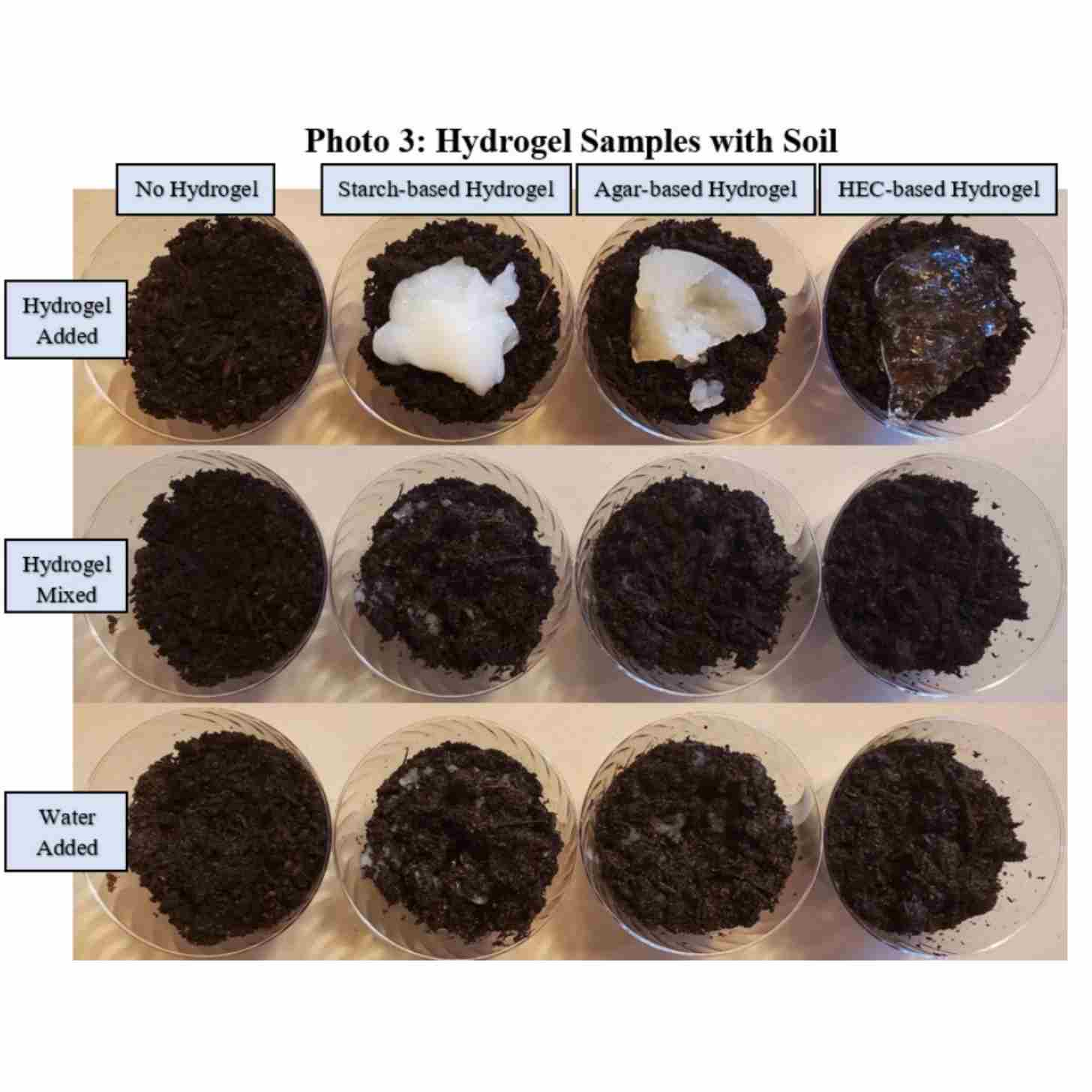
“Plagued by excessive water use compounded by climate warming, the Lake had precipitously declined since the 1990s and hit historic lows for two consecutive years in 2021 and 2022,” Zhang said in her video proposal for Society for Science — a nonprofit that hosts global science competitions for students.
Fundamentally, Zhang explained, the Great Salt Lake crisis comes down to a problem with “water management.”
“Hydrogels — or 3-D polymer networks capable of slowing and absorbing large amounts of water — provide a promising measure to reduce water evaporation and runoff, while slowly releasing water to soil,” said Zhang.
To test her hypothesis, Zhang made three types of hydrogels out of starch, agar, and hydroxyethyl cellulose (HEC).
Her HEC-based gel performed best at a range of temperatures, but all of her gels helped the soils retain water.
Her favorite part of the project was making and sampling the hydrogels and seeing the “Jello-like substance” appear before her eyes.
“I realized how obsessed I am with getting my hands dirty and wet in the experimental process,” she told Science News Explores. “It was just like cooking.”
In the past few years, hydrogels have been slowly integrated into farming practices but the process is still very new.

Zhang’s project adds further evidence for the burgeoning farming technique while utilizing soil samples in her own backyard — with the Great Salt Lake as her muse.
Her project may not singlehandedly save her lake, but it does highlight a pathway forward.
Due to the success of her project, Zhang won second place in the Technology category for the 2024 Thermo Fisher Scientific Junior Innovators Challenge.
But her passion for water conservation doesn’t start and stop with her hydrogel project. The eighth grader has also interviewed scientists and government officials on a local and national level and recently spoke about the water crisis at the United Nations.
This month, when asked if she had any advice for any “science fair newbies,” Zhang said: “Curiously observe, carefully think, and courageously act.”
“Exploring the frontier of the unknown is risky. Sometimes we get lost. Sometimes we have to go back to zero,” she continued. “I encountered a few roadblocks in my research, but overcoming [those] roadblocks is also the most rewarding.”
Header image via Brigitte Werner / Wikimedia Commons