Australian philanthropist Tony Clark is on a mission to provide a bed for every Chicagoan without shelter.
While the ideal solution would be to offer affordable housing to all, Clark has come up with a temporary solution that could keep an estimated 1,600 unsheltered individuals warm — wherever they are.
He calls it the Backpack Bed.

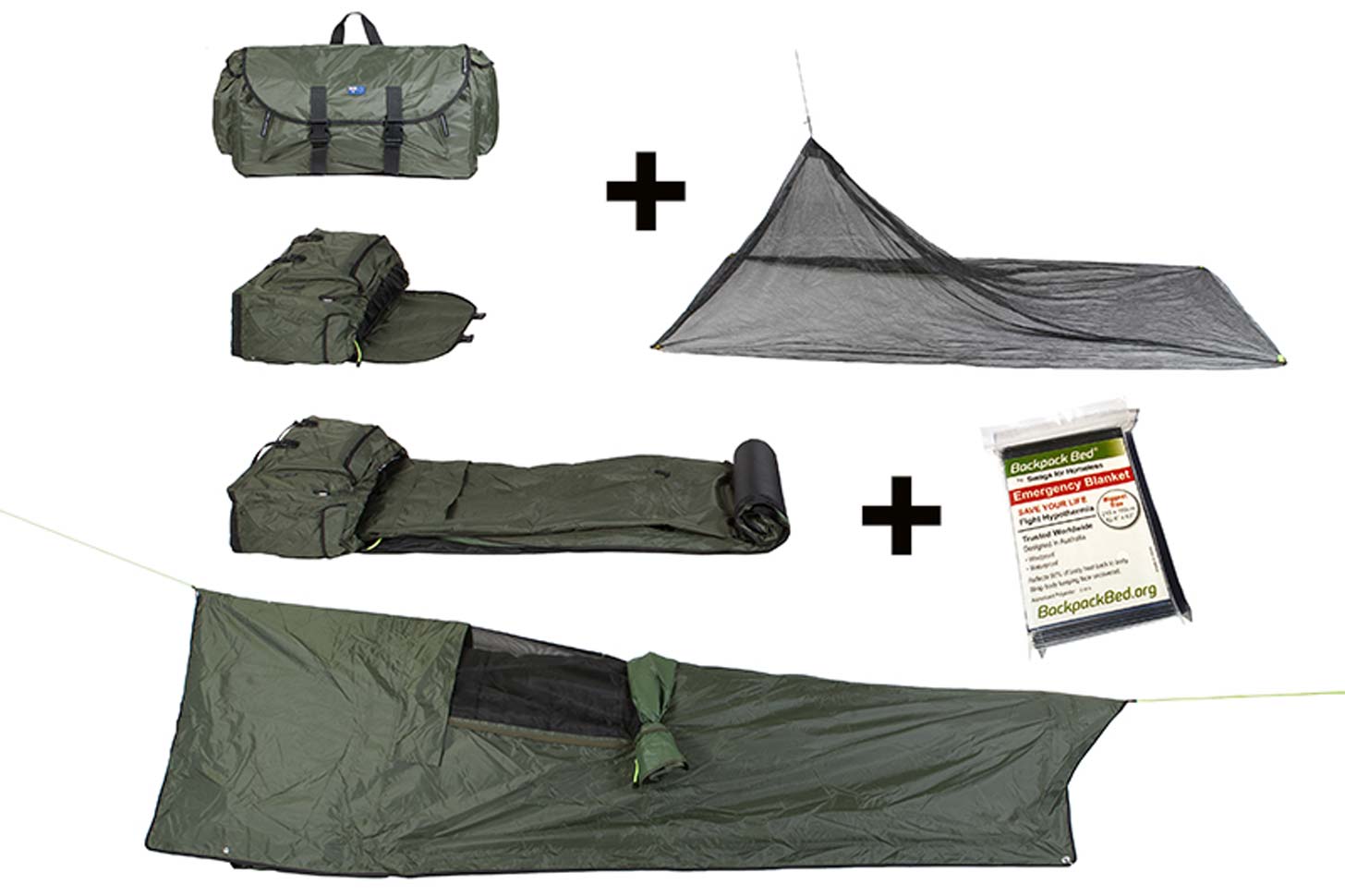
“The backpack bed is a 6.6 pound ergonomic backpack that you can put belongings in, but it rolls out into a shelter that has a built-in mattress, which is insulated,” Clark told WBBM News Radio.
“You can survive the freezing cold temperatures. You have the ability to sleep on ice, sleep on concrete, and it’ll keep you alive.”
The portable shelter easily rolls up and can be transported anywhere, helping people experiencing homelessness relocate as needed.
Other features also include storage and lockable pockets, a full-body mosquito net, and adjustable backpack straps.
The fabric itself is also military-grade, according to Clark.
“It’s waterproof. It’s fire retardant,” he said. “And the mattress that comes built in has a silver insulation on the base.”
This means that even in the coldest temperatures, the bed is meant to help people not only survive the cold but actually feel warmth.
It’s a solution that is especially necessary during the frigid winter months.
“I’ve been horrified to hear that Chicago hospitals are being inundated by folks trying to keep warm and stay alive, which is increasing hospital’s wait times, which is also increasing cost for the community," Clark told CBS News Chicago.
Each Backpack Bed costs about $124, but a 2018 impact study for the invention found that each one provides $3,319 in community savings in health, justice, and employment.
Now, Clark’s goal is to raise enough money to supply the approximately 1,600 Chicagoans who sleep on the street every night with one of their own. Through the nonprofit GoodNight Chicago, enough has been raised to supply over 25% of this population with a backpack.
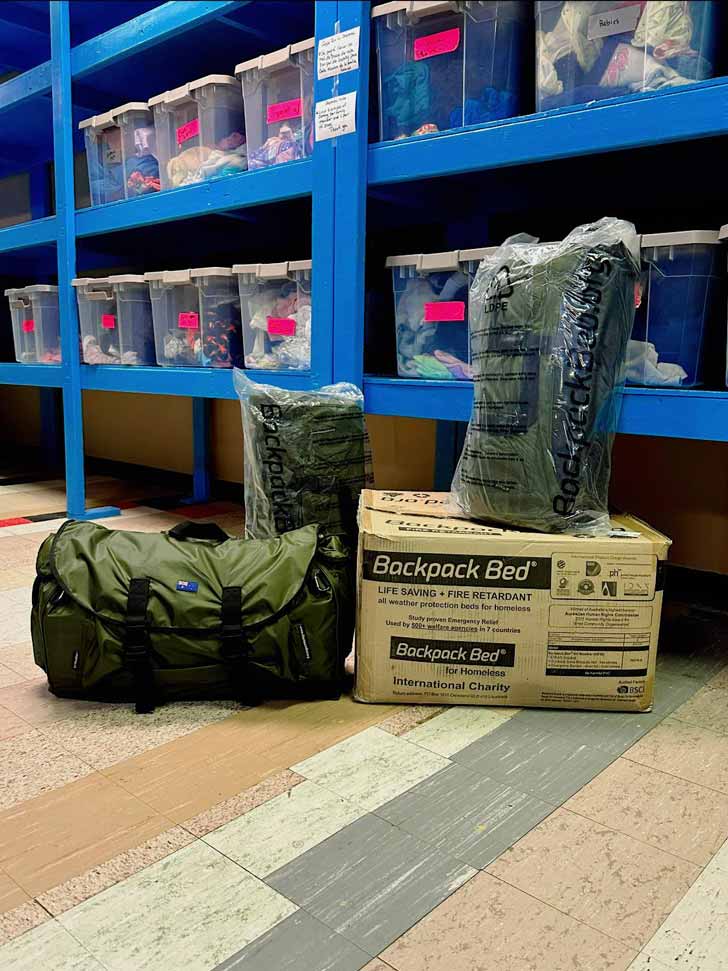
So far, 412 have been distributed.
According to the U.S. Department of Housing and Urban Development’s 2024 Point-in-Time counts, 5,157 people were experiencing homelessness in Chicago, with 1,632 going totally unsheltered.
On a larger scale, 2024 counts estimate that about 35.5% of people experiencing homelessness in the U.S. are unsheltered, meaning they do not have a place to sleep safely off of the streets — whether it’s a home of their own, a homeless shelter, or other sheltered space.
“Homelessness can affect anyone at any time. The tiniest life change can cause someone to lose everything they have in a blink of an eye,” GoodNight Chicago’s website reads.
“It’s a terrible place for anyone to be in as you will never know what will happen to you on the streets. Whatever the reason, people are sleeping on our streets and need immediate shelter to survive.”
Those who have already been given a Backpack Bed say it has made a real impact.
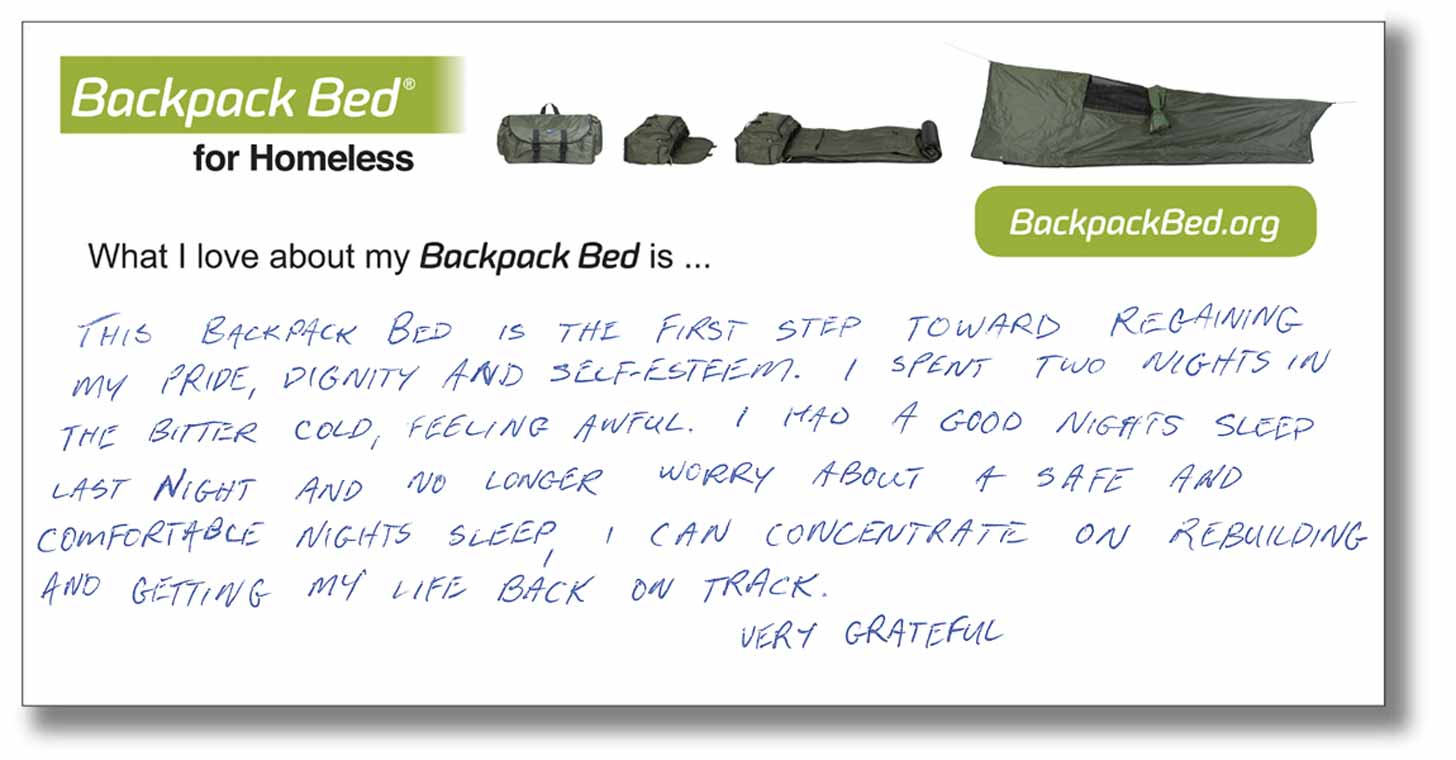
“This Backpack Bed is the first step toward regaining my pride, dignity, and self-esteem,” one user shared in an anonymous testimony. “I spent two nights in the bitter cold, feeling awful. I had a good night’s sleep last night and no longer worry about a safe and comfortable night’s sleep, [so] I can concentrate on rebuilding and getting my life back on track.”
“It’s the things like this that keep us alive,” another shared. “The small things that make us homeless people feel like real people again.”
Header image courtesy of GoodNight Chicago
Diagnosed with stage four endometriosis after misdiagnoses, dismissals, and ineffective treatments, Juliet Oliver knows the realities of living with chronic pain.
When she turned 30, her health took a nosedive.
“My body waged war on itself — nutrient deficiencies, adrenal fatigue, chronic gut dysbiosis, inflammation, and estrogen dominance,” she writes, “all painting a picture of a body and spirit on the brink.”
But as an engineer, her career also came knocking, and in the midst of burnout and at the height of her endometriosis journey, she knew she had to do something.

Endometriosis is a condition that affects up to 10% of women between the ages of 15 and 44, according to John Hopkins Medicine.
The uterus is lined with endometrial tissue called the endometrium. Every time a person with a uterus menstruates, they grow a new endometrium — and endometriosis occurs when endometrial tissue grows outside of the uterus.
In addition to causing debilitating periods, increased risk of infertility, and a wide range of symptoms that impact one’s quality of life, endometriosis also has a reputation for being misdiagnosed or not taken seriously in the medical community.
“It is too often misunderstood, misdiagnosed, and mistreated,” Oliver said in a statement. “This leaves millions trapped in debilitating pain, facing long wait times or no help at all.”
Oliver’s pain wasn’t just her own; it was something she shared with countless others.
“As an engineer, I was built to solve problems,” she said.
And that’s when she embarked on creating her app: Endo45.
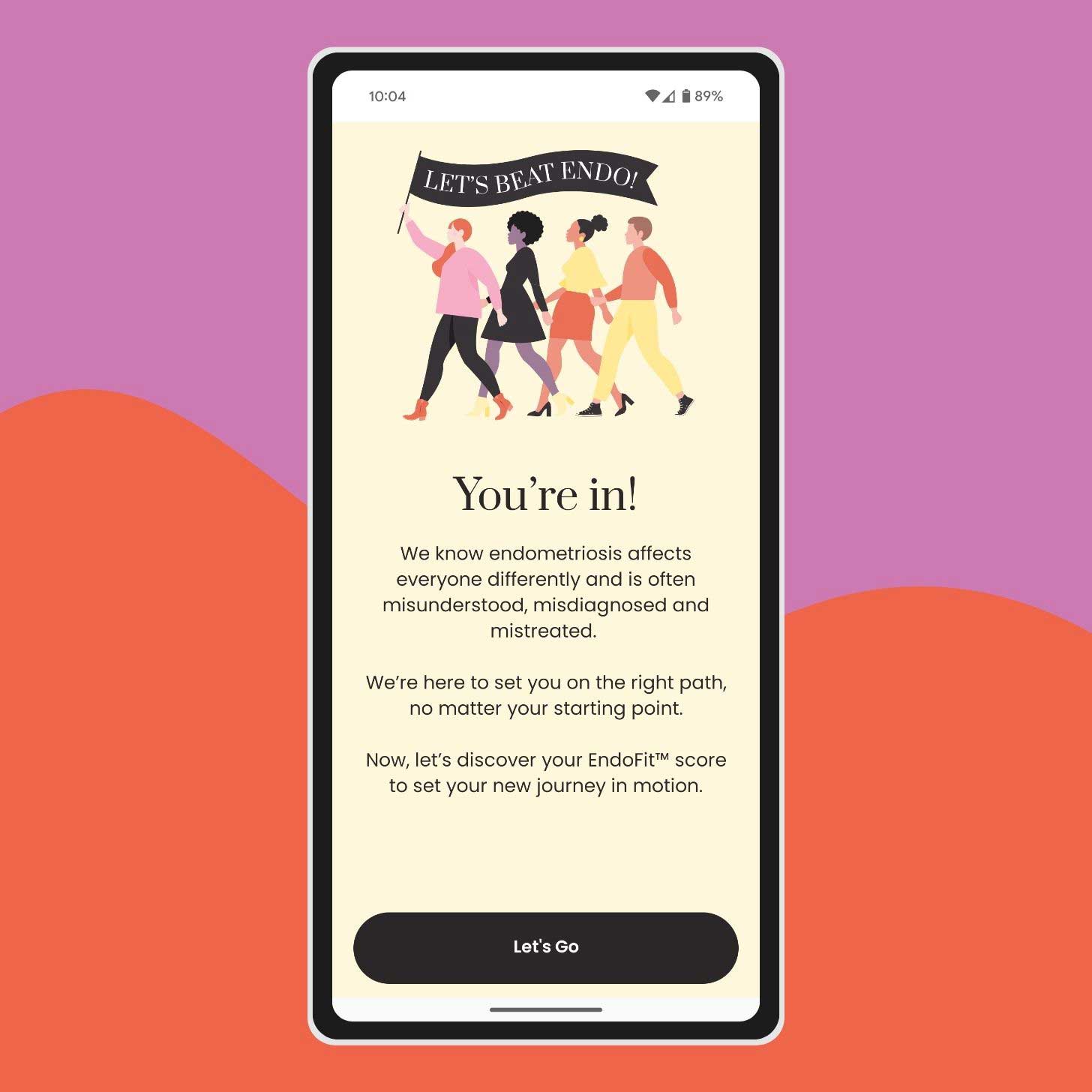
The app was developed to help “endometriosis warriors,” as community members refer to themselves, through practical support, symptom tracking, and evidence-based features.
It offers tailored action plans to users, focusing on four main pain points: Immune, gut, nervous, and hepatic system dysfunction.
Endo45 includes features to track one’s care, build habits, and offer proven methods to reduce symptoms. The information shared on the app is backed by professionals including a gynecologist, clinical neuropathologist, and fertility specialist.
“I refused to accept that living in pain was my only option,” Oliver said in a statement. “I wanted to create something practical, evidence-based, and accessible for everyone facing this disease.”

While Oliver is from New Zealand, the app has made its international debut, helping people across the world navigate their endometriosis journey with a little more support.
“We’re not just tracking symptoms, we’re laying out a comprehensive roadmap to navigate the complex terrains of endometriosis, both physically, mentally, and spiritually,” Oliver told Women’s Agenda. “Our mission is simple: Create a world where endometriosis is understood, managed, and doesn’t hold you back.”
Another main feature on the app is an “EndoFit” score that helps users understand and follow their progress, giving them data to be empowered in their self-care. According to the app’s website, “EndoFit,” is defined as “a state where endometriosis no longer dictates your life’s narrative.”
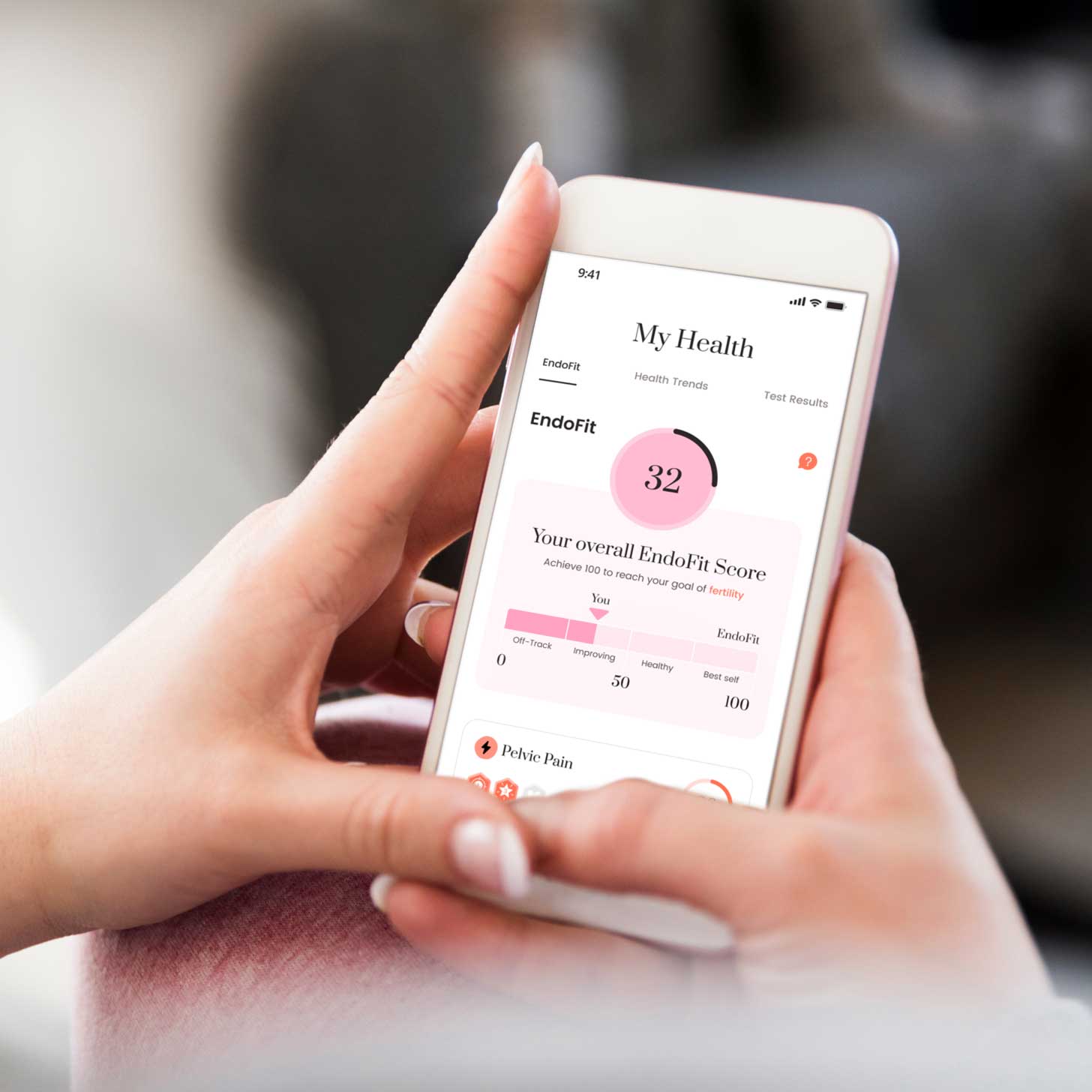
Treatment for the condition varies, though some scientific breakthroughs provide hope for the future. Oliver said she believes remission is possible, especially when people are given the tools and resources they need to thrive in the face of endometriosis.
“I want people to know that they can feel better than they do today,” she said. “With the right tools and mindset, we can outsmart this disease.”
Endo45 is available to use with a free trial in the App Store and Google Play.
Header images courtesy of Endo45
Dinner and a show? Chocolates and a stuffed animal? A romantic night on the town? It all pales in comparison to the unconditional love that bonds humans to their furry friends.
That’s why Best Friends Animal Society is offering folks an alternative to a traditional Valentine’s Day date this year. On February 14, a number of partner shelter locations will welcome animal lovers to have a one-of-a-kind “sleepover” with adoptable dogs and cats.

“Single” dogs and cats in six cities will be paired up with folks who will then get to take home their temporary friend “for just one night to see if there is a love connection,” according to a press release from the organization.
It’s a fancy way of fostering, giving a furry friend an opportunity to cozy up in a warm and loving environment for an evening, which could then lead to a lifetime of love.
“We’re excited to give more people the chance to experience the joy of fostering, even if it’s just for a day, and to help these wonderful pets find the love and care they deserve,” Julie Castle, the CEO of Best Friends Animal Society, told Good Good Good.
“This initiative is a fun and heartfelt way to introduce people to the idea of fostering and adoption while also giving pets the chance to experience a warm, loving environment, even if it’s just for one night. We hope it leads to lasting connections between pets and their potential adoptive families.”

Fostering can also provide helpful personality information on a pet to the animal shelter or rescue group, which can help make better adoption matches for adoptable dogs and cats.
But for those of us who can’t say no to puppy dog eyes or immediately succumb to the power of a purring cat, Valentine’s daters can “make it official” by continuing to foster an animal for a longer period of time, or even adopt them.
“By spending just one night with a dog or cat in need, individuals can get a true sense of what it might be like to welcome a pet into their lives permanently,” Castle added.
“This experience helps people see how their lifestyles and a pet’s needs might align, offering them an opportunity to form a deeper connection. It’s a no-pressure way to explore fostering, which is a critical part of the lifesaving process.”

If interested, all folks need to do is stop by the Best Friends Livesaving Center in the following areas on Feb. 14:
- Houston, Texas
- Los Angeles, California
- New York City, New York
- Bentonville, Arkansas
- Salt Lake City, Utah
- Kanab, Utah
Shelters will provide food and supplies to any Valentine’s date who needs them, so all participants need to do is offer up their loving arms — and a cozy home to rest in.
Castle said that there are dogs and cats of all ages, sizes, and personalities waiting for their perfect match.
“We know that pets at Best Friends Animal Society are just waiting for the right person to discover them,” Castle said. “Sometimes all it takes is a little Cupid’s touch to turn a temporary sleepover into a lasting love story.”
Header image courtesy of Best Friends Animal Society
As 3D-printing methods continue to evolve, it’s not uncommon to see this method employed for various engineering projects, especially in the construction of affordable housing, structures, and schools.
In Ireland, a first-of-its-kind social housing project has been built from the ground up, using 3D printing as a time and money-saving solution.
In fact, it’s Europe’s first 3D-printed social housing project, fully compliant with international standards. In Grange Close, Dundalk, the three-unit terraced build is now a milestone achievement in eastern Ireland. It was created by Harcourt Technologies Ltd (HTL.tech) and assembled using COBOD’s BOD2 3D construction printer.
The unit is 3,550 square feet and is divided into three separate homes, each measuring 1,184 square feet.

The use of this technology allowed for a 35% faster construction process, which took 132 days from start to finish. During that time, the 3D-printed superstructure itself was completed in just 12 printing days.
Conventional construction methods usually require more than 200 days, according to COBOD, meaning this method could be transformative in quickly scaling affordable housing options.
“Ireland’s housing crisis, driven by a decade of under-construction and rising demand, has reached critical levels, leading to widespread protests and influencing national elections,” HTL.tech shared in a press release.
“The rapid construction made possible by 3D printing offers a promising solution. The homes in Dundalk demonstrate how this technology can address housing shortages by dramatically reducing construction time and costs.”

In the 132 days it took to go from initial site preparation to handing over keys to the client, builders say approximately half of the time savings came directly from 3D printing.
Additionally, during the project, COBOD upgraded the concrete hose of its printer, which increased its output by 40% and significantly increased the printing speed. With this upgrade, the company estimates that printing times for similar structures would be reduced to nine days instead of 12.
“We continue to improve our technology,” Henrik Lund-Nielsen, general manager and founder of COBOD International, said in a statement, “and although a hose update can be seen as a small step, the numbers from HTL.tech proves that it is not.”
Now, the client — a local housing council — will finish furnishing the homes and will rent them to social housing tenants at an affordable price.

It’s a success that will surely have ripple effects.
“As the first 3D-printed social housing project in Europe, the Grange Close development sets a precedent for future housing solutions,” a press release from HTL.tech explained. “With countries like Sweden and Germany also experimenting with 3D-printed homes, this technology is poised to become a standard approach for addressing housing shortages.”
The statement also added that governments across Europe may increasingly adopt 3D printing to “deliver faster, more cost-effective housing solutions for low-income residents.”
“This project not only showcases the potential for rapid, sustainable construction but also serves as a blueprint for other nations facing similar challenges,” the statement concluded. “As 3D printing technology evolves, its role in shaping the future of housing construction looks increasingly promising.”
Header image courtesy of COBOD
Sundance Film Festival kicks off on January 23 and runs through February 2 with a lineup of highly anticipated dramas, thrillers, comedies, animated films, and shorts programs.
The festival also plays host to a long list of documentaries, many of which are making their world premiere — and this year over 60% of the film’s programming is available online to stream.
As a long-time attendee of Sundance, I've curated a list of this year’s top Sundance documentaries, with topics ranging from racial justice, disability advocacy, Indigenous rights, and the exhaustive fight for peace during wartime.
To learn more about streaming Sundance films online, you can visit the “How to Fest” section of the Sundance Festival website.
Sundance Documentaries To Watch
“How to Build a Library”
In Nairobi, two women — Shiro and Wachuka — turn a former “whites-only” library into a vibrant cultural hub and grapple with Kenya’s troubled political history in the process.
Directors Maia Lekow and Christopher King capture the heartbreak of looking back, and the strength of moving forward.
“As the library team sifts through archival images, they face conflicting emotions of anger and appreciation, grappling with what aspects of this colonial history should be remembered and what can be left behind,” noted programmer Stephanie Owens.
“When are compromises justified in the larger conversation about decolonization? The result is a nuanced exploration of legacy and reclamation that extends beyond the library’s walls.”
“Cutting Through Rocks (یولالر اوزاک)”
In this international documentary, viewers are introduced to Sara Shahverdi, the first elected councilwoman of her Iranian village.
Pushing back against generations of sexism, Shahverdi hopes to break cycles of violence and suppression by teaching young girls how to ride motorcycles — and ending child marriages.
“In their insightful debut feature documentary, co-directors Sara Khaki and Mohammadreza Eyni shine a light through simple observation on an extraordinarily tenacious individual,” wrote Sundance programmer Ania Trzebiatowska.
“We witness Sara’s many wins and joys, as well as her struggles and heartbreaking setbacks. Her greatest goal, which feels so basic yet radical in this context, is to give women the option to choose their path — or at a minimum, have a say in it.”
“Endless Cookie”
Two half-brothers Seth and Peter Scriver revisit their upbringing in an animated documentary that puts a surreal, dream-like twist on the difference between growing up white and growing up Indigenous.
Filled with humor and sincerity, this documentary covers the politics of the 1980s and today from the remote region of Shamattawa to bustling Toronto, Canada.
“Sharply observed and rooted in an Indigenous resistance to colonialism, ‘Endless Cookie’ is a smart, fun-to-watch documentary that sits gentle in its own skin,” observed programmer Shari Frilot. “Pete and Seth offer an oral history and a cosmic vision as they unravel their bittersweet testimonials of life under the Cacanada sun.”
“Seeds”
Director Brittany Shyne looks at Southern agriculture through a Black lens, exploring the cultural significance of owning land and driving home sobering statistics (Black farmers owned 16 million acres in 1910, but own just a fraction of that today).
“In her stunning directorial debut, Brittany Shyne crafts a poetic and poignant portrait of Black farmers in the American South,” praised Owens.
“With an intimate lens, Shyne immerses us in the rhythms of everyday life…wind through hair, candy from grandma’s purse, conversations through car windows — turning them into striking vignettes that honor the families’ connection to the land and each other.”
“Third Act”
Director Tadashi Nakamura captures the messy realities of grief in a loving ode to his father Robert A. Nakamura, who is also known as “the godfather of Asian American media” — after his dad is diagnosed with Parkinson’s disease.
“With Robert in the last stage of his life and Tad a father himself, Tad looks to the past and the future with a searching curiosity of what legacy means and how it can be lived,” wrote programmer Sudeep Sharma.
“With a poignant relevancy to this moment in American history, Third Act is an intimate and emotional story of the Asian American experience in its political, historic, personal, and artistic fullness.”
“Life After”
In 1983, a disabled woman named Elizabeth Bouvia sought the “right to die” in California — and then disappeared from the public eye.
In “Life After,” director Reid Davenport — who is disabled himself — digs into the history of Bouvia, who was quadriplegic, and explores a complex topic with sensitivity and poise.
“‘Life After’ looks closely and critically at where progressive values of bodily autonomy and individual choice collide with latent fears of disability and an unequal value of the lives of disabled people,” observed programmer Ash Hoyle.
“In doing so, Reid untangles an issue at the heart of our moral societal standing.”
“André Is an Idiot”
After putting off a colonoscopy for too long, André is handed a sobering diagnosis.
As he lives out the remainder of his life, director Tony Benna explores the temporal nature of life and the importance of living with urgency and passion.
“Creative, funny, and inappropriate, [André] approaches the story of what it feels like to know he will die with the same passion and excitement his loved ones know him for and expect,” wrote Sharma.
“‘André is an Idiot’ is a hilarious portrait of a unique human being who goes on the journey we all must go on and learns that endings, while heart-wrenching and final, can be an opportunity for gratitude and joy for the path taken.”

“Marlee Matlin: Not Alone Anymore”
When Marlee Matlin became the first Deaf actor to win an Oscar, she was only 21.
In this documentary, Shoshannah Stern — a Deaf director and actress — captures the legacy and life of Matlin in an intimate portrait that is largely communicated in American Sign Language.
“Matlin and the filmmaker’s genuine understanding allows them to explore the good, the bad, and the traumatic throughout Matlin’s career,” programmer Ania Trzebiatowska expressed in their review.
“From the early days and major successes to her famously tumultuous high-profile relationship, to the years of being ignored and patronized by Hollywood, and on to getting sober and repeatedly changing the game for her community — with and without their approval.”
“Coexistence, My Ass!”
Israeli comedian Noam Shuster Eliassi grew up in Neve Shalom Wahat Al Salam ("Oasis of Peace"): a community where Jews and Palestinians live together by choice.
This documentary from director Amber Fares follows Eliassi as she tours her one-woman show and advocates for peace and equality in Israel and Palestine.
“The film documents not only the shifting perspective of Eliassi — a UN diplomat turned comedian — but also the unfolding realities in the region and the resulting seismically dynamic discourse surrounding it,” observed Hoyle.
“Audiences will come away with a laugh, a tear, and an openness that feels all together like both a salve and a kick in the ass.”
Image via 2025 Sundance Institute | photo by George Pimentel/Shutterstock for Sundance Film Festival
On Friday, YouTube stars The Try Guys hosted a fundraising livestream to support five organizations on the ground helping people impacted by the Los Angeles wildfires.
Before the event even aired, fundraising totals reached over $1 million, with $10,000 more donated within the first 15 minutes of the stream.
With a goal of $2 million, hosts Zach Kornfeld, Keith Habersberger (of Try Guys fame) and Ethan Nestor (a gaming YouTuber) opened the livestream encouraging viewers to donate — even just a dollar.

“Every little bit helps,” Habersberger said at the top of the stream. “If you can donate a lot, if you can donate a little; a lot of people donating a little actually does a lot.”
Funds raised will be divided among five charities, including World Central Kitchen, Community Organized Relief Effort, California Fire Foundation, the LA Fire Department Wildfire Emergency Fund, and Baby2Baby.
Guests included in the livestream include creators and celebrities such as Ben Schwartz, Jason Segel, Jean Smart, Ke Huy Quan, Rob Reiner, Josh Brolin, Rhett & Link, Markiplier, Josh Gad, Alyssa Milano, and many more.
“We’ve got tons of incredible creators coming through, tons of celeb-os who want to come to hang out with us,” Kornfeld said. “This began as a bunch of different creators talking about doing their own livestreams. We got connected to this team who said ‘maybe we could do something bigger,’ and we’ve decided to pool our efforts together.”
Ultimately, the creators came together with the fundraising platform Tiltify to bring the event to life.
The hosts also shared at the top of the show that the Josh Brolin Family Foundation would match donations up to $500,000. Other top donors included Youtuber Sean ‘Jacksepticeye’ McLoughlin, who donated $100,000, as well as The Yard, a popular YouTube channel and podcast, which donated $50,000.
Along with direct donations, viewers could bid on auction items, as well as shop merchandise that benefits the on-the-ground organizations.

“The wildfires in California have left Los Angeles devastated, with over 180,000 people displaced, tens of thousands of acres burned, and countless families left without homes, businesses, or communities to return to,” a description of the livestream shared.
“Everyone involved today wants to support each other,” Kornfeld added. “We all love this city. We love the people in this city. This is about helping people in need.”
The livestream will run until 7 p.m. Pacific Standard Time on Friday, January 24.
This story will be edited to share updated donation totals as the livestream concludes.
Header image courtesy of The Try Guys/Instagram
In Sacramento, California, an estimated 6,615 people are experiencing homelessness, a number that — while still heartbreakingly high — has declined 29% since 2023, according to the latest Point In Time counts.
But a new project, which has been in the works since 2022, might bring that number down even lower.
A new 13-acre property purchased by Sacramento County will soon be home to the Watt Service Center and Safe Stay.

The county broke ground on the mixed-use service center this week, which will provide shelter, emergency respite, safe parking, health services, and more to community members who are unsheltered — meaning they don’t have a place to safely sleep at night.
“We wanted to do something that is not only larger, but a large-scale campus to provide more than just the shelter,” Janna Haynes, of the county’s Department of Homeless Services and Housing, told KCRA3 News.
The Watt Service Center will have amenities to help meet the needs of anyone staying there, including bathrooms, showers, laundry, and food, as well as mental health, treatment, and employment services.
“You can also meet with your case manager, get behavior health services, look for a job, get rehousing services, a place for your dog,” Jaynes added. “It’s really everything you need, not only for your day-to-day life, but to hopefully end your homelessness.”
While the center is a costly offering, the city explained that it is ultimately less expensive than allowing the homelessness crisis to go unmitigated.
The land was purchased for $22 million and will cost an estimated $42 million to construct the center. According to ABC10 News it will be mostly funded by the American Rescue Plan Act.
While the center will have the capacity to host 225 beds in Safe Stay cabins, 50-person capacity in Safe Parking, and 75-person capacity for emergency/weather respite beds, it will serve countless others outside of the 350 total people it can house at any given time.

According to a press release from the county, “conservative estimates” have found that over the course of 15 years, the center will serve 18,000 people.
In 2017, the city found that the average cost for an “unsheltered individual” was about $45,000 a year, considering public systems like county jail, shelters, behavioral health, and more.
With the projected impact of the shelter, that cost lowers to less than $3,600 per person.
“If you break down the funding, it’s actually not that expensive,” Rich Desmond, county supervisor for District 3, told ABC10.
“It’s a heck of a lot cheaper than letting someone stay out in the community, unsheltered where they are extremely expensive in terms of the emergency response from fire, our emergency rooms, our law enforcement response.”
Providing what the county calls “wraparound services” not only brings down costs but truly helps people meet their basic needs.
“The really great thing about this site in particular, that we don't have at any other shelters, is the sheer size and the ability to really wrap everything people need,” Emily Halcon, director of the Department of Homeless Services and Housing with Sacramento County, told ABC10.
One notable feature is the center’s Safe Parking spaces, which are the first of their kind in the city. People living in their cars will now have a safe place to park, monitored by security.
“We know a lot of people who are unsheltered actually are living out of their cars,” Desmond said, “maybe a family that’s barely hanging on but they still need that vital transportation to get their kids to school or get to work.”
This support is especially helpful for those who are newly homeless, Halcon added, building on the amenities provided in the county’s two other “safe stay” facilities.
While Sacramento County just broke ground on the Watt Service Center, officials say they hope to begin moving people into the facility in January 2026.
“Our staff is putting in extra time and attention to this campus, ensuring that it houses everything we need to end homelessness for people,” Desmond said in a statement.
Once it’s up and running, Jaynes told KCRA3, they plan to onboard formerly unhoused community members as part of the staff at the facility.
“When you have a conversation with someone who understands where you’ve been, and you see the success they’re having now,” Jaynes said, “it really does give you hope something could be different.”
Header image courtesy of Sacramento County Department of Homeless Services and Housing
Every day the Good Good Good team collects the best good news in the world and shares it with our community. Here are the highlights for this week!
If you want to get good news in your inbox every day, join the Goodnewsletter — the free daily newsletter designed to leave you feeling hopeful.
The Best Positive News We’re Celebrating This Week —
Today, Marcus Freeman will become the first Black head coach in the college football national championship
Notre Dame head coach Marcus Freeman will make history today as the first Black head coach to make it to the college football national championship as his team takes on Ohio State.
Freeman acknowledged the historic moment, but said the attention was misplaced: “... to me the attention should be on MLK Day and what he did for our country and the progress he made for equal rights and progress for all people, the courage he had as an individual to stand for what he believes in.”
And Freeman feels that way when it comes to football too, wanting his ascension to the biggest game in college football to do nothing else but blaze a trail for others.
Why is this good news? Ultimately, what Freeman is saying is exactly what Martin Luther King, Jr. Day is all about: progress in creating a world of equal opportunity, freedom, and justice for all. While his milestone is significant, Freeman also demonstrates a commitment to continuing King’s legacy on MLK Day and beyond.
Japan just rolled out the world’s first toilet paper made from used disposable diapers
The Shibushi Osaki Roll is the world’s first toilet paper made from recycled diapers — and it’s available to purchase at seven stores in southwest Japan’s Kyushu.
Spearheaded by two municipalities that share a waste management system, they collected 98 tons of diapers and other used hygiene products to be transformed into rolls of toilet paper.
Why is this good news? The environmental impact of both cutting down trees for toilet paper and disposable diaper waste is significant. Around 712 million trees are felled yearly to produce virgin pulp toilet paper. Meanwhile, disposable diapers are the third-largest single consumer item in landfills, taking an estimated 500 years to decompose.
This is a new frontier for a toilet paper alternative and could prove viability on a much larger, global scale.
→ Read more
Hope Walz shares how she spent Inauguration Day, her favorite nonprofits, what she’s up to next — and the three things giving her hope right now
In the last 30 years, nearly everyone in Bangladesh has gained access to basic electricity
In 1991, less than 15% of people in Bangladesh had access to electricity — now, almost everyone does.
In the past 30 years, more than 100 million Bangladeshi people have gained access to electricity, allowing them to light their homes, use appliances, and use phones and the internet.
While the milestone has been reached for basic lighting and charging a phone for at least four hours a day, more than half also have a higher tier of access.
This is good progress towards reaching the UN’s goal of universal access to at least basic electricity globally by 2030 — which about 9 in 10 people worldwide now have.
→ Read more
In 2024, France’s power grid was 95% fossil-free for the first time — driven primarily by nuclear and renewables
Low-carbon sources made up more than 95% of France’s annual power production for the first time in 2024. Record output from renewable sources alongside rising nuclear power drove the surge.
The country’s nuclear production grew 13% to a five-year high, making up 67% of its total energy generation. Renewables followed, with a record 28% of the total, driven largely by hydropower, which reached its highest levels since 2013.
While solar only accounted for 4.3% of the total, it was still more than natural gas. And gas, coal, and fuel oil reached its lowest level since the early 1950s.
Why is this good news? The impacts of global warming caused by the burning of fossil fuels are apparent — in unprecedented wildfires, ecosystem degradation, and more. And climate scientists agree: every bit of warming we can prevent will stop even more catastrophic impacts from happening.
While we need to see this kind of news on a global scale — it’s proof that fossil-free energy is achievable.
As the LA wildfires continue to burn, people are still coming together to help victims — with immediate and long-term relief
With high winds and low humidity set to hit LA again this week, fire crews are working tirelessly to contain the blazes. The Palisades fire currently sits at around 63% containment, and the Eaton fire around 89% — and people in the area have been warned to be ready to evacuate at a moment’s notice.
The need for relief — both immediate and long-term — is still vast. Thankfully, people — from middle schoolers to celebrities, millionaires to vice presidents — are coming together to provide it:
- Offering Cameos in “any language,” Tony Hawk has raised thousands to support World Central Kitchen’s wildfire relief efforts.
- One day after she left office, former Vice President Kamala Harris arrived in Los Angeles to thank fire crews and volunteer with World Central Kitchen.
- Vanessa Bryant is leading an effort to donate thousands of articles of clothing and sneakers — and prepare for ongoing recovery efforts.
- The owner of the LA Clippers and his wife made a $15 million donation toward addressing immediate needs like food and shelter, particularly for the Altadena community.
- They’re also organizing FireAid, a benefit concert on January 30 with a lineup that will include Billie Eilish, Lady Gaga, Olivia Rodrigo, Jelly Roll, and more.
- The Weeknd announced a $1 million donation to various organizations including the LAFD Foundation, GoFundMe’s Wildfire Relief Fund, and LA Regional Bank.
- Riot Games provided a generator to a fire station that lost power and donated meals from its employee cafeteria to firefighters.
- A $12 million LA Arts Community Fire Relief Fund opened applications to provide emergency relief to artists and arts workers impacted by the fires.
- With nothing more than a desire to help victims of the LA fires, a high school student in California started a fundraiser that’s raised thousands of dollars.
- Partnering with GoFundMe and the Black Music Action Coalition, Flavor Flav launched a fundraiser to help Black families displaced by the fires.
A Danish city paid residents to return their to-go coffee cups — and collected 735,000 in a single year
To reduce the amount of disposable coffee cup waste, the Danish city of Aarhus launched a three-year trial project in January 2024 to get people to return them instead — and it paid them to.
Initially introduced through partnerships with local cafes that began offering returnable, reusable cups, the largest consumer behavior change came during a week-long local festival where more people were exposed — and a new habit was born.
Far exceeding its goal of 500,000 in the first year, 735,000 cups were returned last year, preventing 14 tonnes of single-use plastic from incineration and CO2 emissions. This year, it wants to double that and collect 1.5 million cups.
Why is this good news? The program had an 88% return rate, which means each cup would be reused 44 times.
While initially tested on a small scale, these kinds of programs provide proof of concept that initiatives like this are genuinely popular and adoptable — and it could be coming to more cities in Europe.
→ Read more
☕️ Related good news: Another alternative, a foldable to-go coffee cup is helping get rid of plastic lids for good.
In a record-breaking year, global electric vehicle sales were up 25% in 2024
Sales of fully electric and plug-in hybrid electric vehicles rose by 25% globally to over 17 million cars.
December was China’s fourth consecutive month of record EV sales. Thanks to incentives and emissions targets, Britain became Europe’s largest battery-electric market in 2024, overtaking Germany.
The record year was driven largely by China, which sold 11 million total EVs in 2024, as well as Europe, the U.S., and Canada.
Why is this good news? We now know that once EVs become common on our roadways, they will quickly start to cut emissions and improve air quality in our cities — good news for people and the planet.
→ Read more
The first 3D-printed affordable housing project in Europe was just completed — and it only took 12 days
In Ireland, a first-of-its-kind social housing project has been built from the ground up, using 3D printing to save both time and money. It’s the first 3D-printed social housing project in all of Europe.
The 3D printing part of the building process took just 12 days, and the company behind the build said it could be completed even faster by simply swapping the printing hose.
Conventional construction methods usually require more than 200 days, according to COBOD, meaning this method could be transformative in quickly scaling affordable housing options.
Why is this good news? As cities and countries all over the world face housing crises, the need for affordable housing options is urgent. Countries like Sweden and Germany are also experimenting with the benefits of 3D-printed solutions, and it could become the standard for building quality affordable housing to address shortages in a cost- and time-efficient way.
→ Read more
✏️ Related good news: Faster, cheaper, and greener than regular construction, 3D printing could help African countries close their education gaps.
A woman in North Carolina is using social media to reunite victims of Hurricane Helene with their lost photographs
After Hurricane Helene devastated communities throughout North Carolina, one woman was digging through the debris at her friend’s destroyed home and found a handful of photographs.
Heartbroken that these memories were now lost to their owners, Taylor Schenker decided to create a virtual lost-and-found on Instagram to reconnect the photos she’d collected with their owners.
She collected around one hundred photos herself and got another one hundred from others, including search and rescue teams.
With new photos added daily, the page is filled with school portraits, holiday cards, family vacations, and more — and comments from people claiming their photos.
→ Read more
More good news of the week —
Ahead of MLK Day, King’s daughter called on people to “do more than quote King.” CEO of The King Center, Bernice King said that so often, people tell her they’re doing something to further or honor her father’s dream and work, but their actions or motivations don’t always reflect his message.
A city in Arkansas just voted to honor Martin Luther King Jr. by renaming a bridge in his honor (video). Presented by Springdale’s mayor, Doug Sprouse, the resolution was met with support from community leaders and local residents — and was celebrated by the Northwest Arkansas chapter of the NAACP.
More than 50 new United States citizens were welcomed in Atlanta in honor of Martin Luther King Jr. Hailing from 27 different countries, the naturalization ceremony happened the day before King’s birthday at the Martin Luther King Jr. National Historical Park.
A city bus in Atlanta unveiled a commemorative bus honoring Martin Luther King Jr. and Coretta Scott King. King famously called urban public transportation “a genuine civil rights issue,” underscoring its importance in providing access to opportunities.
A new AI tool that analyzes the placenta after birth could help reduce infections, improving neonatal and maternal care. The tool could be particularly helpful in home care and in remote regions where hospitals and clinics don’t have the diagnostic resources to detect infections early.
Ecuador’s Constitutional Court ruled that coastal marine ecosystems have rights of nature, including the right to restoration. The law establishes that nature has the right to restoration and that the government will take precautions and restrictions against people harming or destroying ecosystems.
A Massachusetts community threw a free group wedding for queer couples, organized by more than 100 local vendors. Following the November election, the vendors noticed many couples were moving up their weddings out of fear that gay marriage would be overturned — and the Queerly Beloved Ball came together.
A Chicago man invented “backpack beds” — and is on a mission to give one to every unhoused person in his city. Each Backpack Bed costs about $124, but a 2018 impact study for the invention found that each one provides $3,319 in community savings in health, justice, and employment.
A group of trained foster parents are helping make Rwanda an orphanage-free country. The Malayika Murinzi, or “Guardian Angels” are transforming the lives of hundreds of children who cannot be reunited with their biological parents.
After two therapy dogs were introduced to help students learn, first-grade reading scores improved. Providing a calming presence for students or support for readers nervous to read aloud, the dogs visit classes, small group lessons, and counseling sessions — and teachers report better focus and behavior among students.
After enduring years of endometriosis pain, an engineer developed an app to people manage pain and find support. Endometriosis causes debilitating periods, increased risk of infertility, a wide range of symptoms that impact quality of life, and has a reputation for being misdiagnosed or not taken seriously in the medical community.
With no age limit, a program in Virginia is helping former foster youth get a degree. Great Expectations is in every community college in Virginia and has spent the last 15 years providing financial and emotional support for students, no matter how long they’ve been out of the system.
In a “glimmer of hope,” a surge in sexually transmitted infections is slowing for the first time in decades. Experts credit expanded testing in nontraditional settings like ERs and churches, funding for a workforce of disease intervention specialists, changes in sexual behavior, as well as a new treatment.
Brazil appointed a veteran climate diplomat with no direct ties to the fossil fuel industry to be the next COP president. COP30, the UN’s annual climate change conference, will be hosted in the Amazon, and for the first time in 3 years, its president (who plays a crucial role in shaping the agenda and brokering deals) will not hail from the fossil fuel sector.
A pioneering new treatment can treat more types of cancer, has fewer side effects, and takes less than a second. The treatment could replace conventional radiotherapy methods, which can treat tumors with increasing precision, but still can have damaging and even deadly side effects.
Palisades Fire firefighters are taking part in a first-of-its-kind cancer study. Firefighting was officially classified as a carcinogenic profession, and this new study will track how the extreme conditions currently happening in the Los Angeles area increase firefighters’ risk of cancer.
When Dutch designer Bas Timmer was still in fashion school, he found out the heartbreaking news that a friend’s father died from hypothermia while sleeping outside.
At the time, Timmer was designing luxury outerwear as part of his studies and immediately felt a disconnect between his work and the reality so many people face. According to the National Coalition for the Homeless, around 700 people experiencing homelessness die from hypothermia in the United States each year. And that’s not factoring in the estimated 100 million people who face homelessness around the world.
Timmer knew he had to do something.

Instead of scrapping his designs, he pulled together the jackets he was already working on — and an old sleeping bag and tent — and in five hours, made the first prototype of what became the Sheltersuit.
Now, over a decade later, The Sheltersuit Foundation provides vital warming supplies to people experiencing homelessness across Europe, the United Kingdom, South Africa, and the United States.
“I decided I could use my skills better if they were redirected to help people who need warmth and shelter the most,” Timmer said in a blog post for his nonprofit.
The Sheltersuit is a sleek design that is part tent and part parka, a jacket that can be worn as usual throughout the day and expanded into a sleeping bag at night.

With a large hood and collar that can be pulled up to protect the face and neck, the design offers warmth and safety without giving unsheltered community members another large item to lug around. Additionally, the sleeping bag includes Velcro closures at the base, so that wearers can easily get up and move on their feet without exposing themselves to the cold.
“We believe everyone deserves warmth, protection, and dignity,” the foundation’s website reads. “These products are not meant to be a replacement for finding a home but a supplement to when you have no other choice.”
In addition to helping those facing homelessness, the foundation also distributes Sheltersuits to refugees and survivors of disasters and conflict.

“Many families have lost their homes,” Paul Zurnick, the foundation’s head of distribution, said on its website. “We strive to alleviate their pain by providing as much assistance as possible to those most affected.”
What’s more, Sheltersuits are all made with upcycled materials, including sleeping bags abandoned at music festivals. Since its inception, the foundation has upcycled over 168,000 kilograms of waste.
“I really want this to be the future,” Timmer told Vogue in 2020.
Over the years, he has also collaborated with outdoor gear brands and aid partners to expand the reach of his work. He said he hopes to offer other streetwear designs, turning a profit to help fund the distribution of more Sheltersuits.

“I always find it very interesting to use materials that you normally don’t see as valuable: Make them, sell them as limited editions for a bit higher price, and get those revenues making Sheltersuits and Shelterbags,” Timmer told Vogue.
Timmer has also designed Shelterbags, sleeping bags with extra protection designed for warmer climates, ensuring that the people his nonprofit serves have what they need in the most dire moments. These waterproof designs come with a built-in pillow and a thin mattress.
Right now, people can donate to the organization to help fund the distribution of these items, or even shop tote bags made from recycled materials — aptly called “Totes of Hope” — to fund this work.
Timmer has also made a point to hire the people he helps. His community workshop in the Netherlands is staffed by refugees and people who were previously homeless, creating 232 jobs since 2014.

“We can bring much more if we involve the consumer, involve homeless people,” he told Vogue, “all in the process of helping one another.”
While Timmer and his foundation have distributed more than 33,600 items in the past decade, he acknowledges that what he offers is still just a temporary solution to the homelessness crisis.
Still, as he told TIME Magazine in 2020, it’s better than the alternative.
“It’s a band-aid, but it’s a good band-aid,” he said. “People want a house; they want a job. Until they have that, let’s at least protect them while they are on the streets.”
Header image courtesy of The Sheltersuit Foundation
Animal Planet’s crowd-favorite Puppy Bowl is right around the corner, airing on Sunday, February 9 — just before another big sporting event.
The big game between Team Ruff and Team Fluff will include 142 rescue puppies from 80 shelters across 40 states and two countries, showing dog lovers across the country the joy and delight that come from pet adoption.
To celebrate — and to encourage responsible animal lovers to adopt a new furry friend of their own — Lyft will offer discounted Pet Rides between February 2 and February 9.

“Designed with animal lovers in mind, Lyft’s Pet Rides allows riders to match with drivers who are pet-friendly and ready to welcome furry friends into their vehicles,” a press release from the company shares.
For a $4 (plus tax) fee, riders can opt for a driver who is open to accommodating pets. According to the company, this fee “goes entirely to the driver.”
During Puppy Bowl season, however, the rideshare app is offering 50% off two Pet Rides (up to $20 per ride) with the mission of getting folks to and from animal shelters with a new adoptee or foster in tow.

All riders have to do is use code PUPPYBOWL to access the discount in the app.
Pet Rides are a newer offering from Lyft that debuted in August of 2024. While reports from the company show that most of Pet Rides are taken to pet stores, vets, or on vacation or camping trips, they hope this offering helps encourage riders to choose a local shelter as their destination.
"At Lyft, we know how important furry friends are to our riders," Audrey Liu, Lyft's executive vice president and head of rider and community safety, told Good Good Good. "Our goal is to make it easier than ever to not only find your new best friend, but bring them along for the ride with our Pet Rides feature, espeically during the weekend of the Big Game."
The week of the Super Bowl, pet riders in New Orleans may also be surprised with a Pupmobile as their ride, which will be filled with Puppy Bowl swag and toys for furry friends.

While it’s a fun marketing feature, the ultimate goal of this partnership — and the Puppy Bowl — is to help more animals find “furever” homes.
During the Puppy Bowl broadcast, viewers can expect “inspiring adoption stories … as the adorable pups race and chase their way to the end zone, all in hopes of winning the ‘Lombarky’ trophy and finding their fur-ever homes,” according to Animal Planet.
Need to brush up on the highlights before the big game? Meet all of the Puppy Bowl athletes — who are available for adoption.
Header image courtesy of Lyft
Like many cities across the United States, Portland, Oregon faces a homelessness crisis.
According to the city’s 2023 Point in Time Count, overall homelessness in Portland increased by 65% from 2015 to 2023, with people living unsheltered in the streets jumping to an estimated 6,297 individuals, compared to 1,887 eight years prior.
This mounting problem requires plenty of creative solutions.
Waste management workers with Ground Score have found that solution through trash.

Ground Score is a Portland nonprofit created by — and for — people who are experiencing or have experienced homelessness. The group is fiscally supported by Trash For Peace and manages an association of recyclers, waste pickers, and other environmental workers who create and fill waste management jobs in the city.
In 2021, the association scored a contract with the city government and now operates under a project called GLITTER (Ground Score Leading Inclusively Together Through Environmental Recovery).
The initiative hires people with a history of homelessness to pick up waste alongside designated routes, provide tent-side trash collection to people living outside, and more.
Workers are paid between $20 and $29 per hour by the city of Portland, Multnomah County, and the Lloyd Enhanced Services District. Despite impending budget cuts across the city, officials say the initiative is valuable.

“We value this highly effective program and have no plans to make any cuts to GLITTER,” city spokesperson Laura Rude told The Oregonian.
Katie Lindsay, a program analyst for Portland who oversees Ground Score’s contract, also added: “You’re going to get significant outcomes for the lowest of dollars. There are increasingly shrinking resources in an unending vat of need. This goes so far. Why wouldn’t you (fund it)?”
According to Ground Score’s website, the program has directly hired 55 members of the community, over 95% of whom were formerly or currently are houseless. Since having started working for Ground Score, over 70% of those workers have become housed.
Co-founded by Barbra Weber, Ground Score came into existence when she was living in a tent encampment a few years back. Many of her neighbors earned cash from collecting cans and bottles, but she knew they needed more funding and organization to really see a difference.

“Why don’t they pay us to pick up the trash?” Weber told The Oregonian she remembers thinking.
Now, Ground Score not only has a contract with the city, but it also provides supportive social benefits to its employees, like healthcare, support for addiction treatment, mental health services, and acquiring housing and legal identification.
According to The Oregonian, 59% of GLITTER workers reported decreased substance use, per a program evaluation conducted by the city last year.
Workers do not have to be sober to be employed by the program, but they are required to refrain from substances while working. One worker, George Hayes, was given a second chance after he had an instance of drug use on the job.
“I wouldn’t give it up for nothing,” Hayes told The Oregonian recently, while he was on the job, now sober. “I work my tail off.”
The underlying belief of this program, according to both Weber and Lindsay, is that people must be “radically included” in improving their circumstances. They also simply believe that “basic sanitation — including waste collection — is an essential service and a human right.”
Anyone who wants to be a part of the program can simply show up to the organization’s warehouse, starting with pick-up shifts as an independent contractor. Gear is provided for everyone — though in 2024, Ground Score began piloting bagless waste collection to prevent further contributions to landfills.

“We’ve created an incredibly safe space for people to be,” Weber told The Oregonian. “This gives people joy. This gives people purpose. And sometimes, when people have talents, it wakes that up.”
Their work also has a major impact on the city. In 2022 alone, they picked up 1 million pounds of trash. In 2023, they removed 691,706 pounds of trash from the city’s streets, nearly 85,000 pounds of which were diverted from landfills.
In addition to clean-up, Weber — and the organization — lead reuse and repair programs, as well as advocacy initiatives for state and city-wide waste reform, as well as international protections for waste pickers.

In November of 2023, Weber and other collaborators from the International Alliance of Waste Pickers contributed to a report to include protections for waste employees under the UN Plastics Treaty.
Her contributions on a global scale echo the work she hopes to do right in her own community.
“I dream of a world without plastic or other harmful pollution,” Weber wrote, per the City of Portland.
“I dream of a world where human life is valued above profits. I dream of a world without poverty. I dream of a world without racism or stereotypes, where all communities and individuals contribute to wellbeing.”
Header image courtesy of Ground Score Association
For years, a vacant lot in downtown Los Angeles sat empty. It was once a parking lot and was slated to become a staging area for the construction of a new jail.
But in 2019, county officials began considering the space to shelter homeless residents. And when the COVID-19 pandemic hit, they forged ahead on the project.
Now it’s home to The Hilda L. Solis Care First Village, a hybrid facility that offers both permanent and temporary housing to people experiencing homelessness.

Built by NAC Architecture and Bernards in 2021, the facility uses shipping containers to create private apartments for residents. The two main buildings contain 132 units of permanent housing, with trailers divided into five units that are utilized for interim housing.
The community also hosts an administrative building that includes dining facilities, laundry, and support services available to both temporary and permanent dwellers.
“The goal is house people as quickly as you can,” Sarah Dusseault, a commissioner with the Los Angeles Homeless Services Authority who advised on the project, told The Los Angeles Times. “Get people into housing right away, even if it’s going to be operated as temporary.”

With a time crunch during the height of the pandemic, the 64,000-square-foot facility was completed in just six months, encompassing a total of 232 housing units, as well as a commercial kitchen, landscaped courtyards, a dog park, and parking spots.
Each building is three stories and formed by steel shipping crates, stacked on top of one another.
According to NAC Architecture, the containers are fixed in place and use an attached structure of balcony corridors and stairs to make each unit accessible — and conducive to communal gathering.

Windows are also cut into every unit and the walls and ceilings of all of the shipping containers are fully insulated. Each container holds two living units, which come equipped with a bed, microwave, mini-fridge, television, and private bathroom.
L.A. County Supervisor Hilda Solis was the one who initiated the project — and the person it is now named after. At first, she was skeptical about using shipping containers but was won over by the contractors.
“The environment is quite impressive,” she told The Los Angeles Times. “It’s just like being at a Best Western, only smaller.”
“That’s going to be the biggest eye-opener for other public officials,” Solis added. “Treating homelessness can be done with dignity and respect.”

She was also impressed by the speed at which the project came to fruition, speed-running COVID-19 dollars from the federal government’s Coronavirus Aid, Relief, and Economic Security (CARES) Act, as well as funding from the city budget.
“The NAC design team is proud of remaining committed to the individual and collective needs of the residents throughout the development process, ultimately providing an innovative, respectful housing solution,” the architecture firm shared in a statement.
“The project provides safe, secure shelter, meals, and case management on a 24-hour basis for adults experiencing homelessness.”
The facility is now operated by the Weingart Foundation, a grant-making organization in Southern California, and welcomed its first residents in the spring of 2021. It reached full occupancy within one month.

“What once was supposed to be a staging area to build a new Men’s Central Jail will now serve as a safe space to address the housing, mental and behavioral health needs of our residents experiencing homelessness,” Solis said in a statement when the facility was opened.
“We’ve been open for three years, and currently, we have served close to 800 clients,” Chris Castaneda, a program manager with the Weingart Foundation, said in a video update in 2024.
“This was originally supposed to be part of a jail… and Supervisor Solis took the initiative to turn it into an interim housing site, which provides safe space and resources for our clients.”
While the Care First Village represents a step in the right direction for L.A. residents facing homelessness, it also stands as a blueprint for the kind of progress that can be made when local leaders take swift action to meet immediate needs.
“We’re so delighted to be part of the solution for homelessness,” Mark Pestrella, director of public works, told The Los Angeles Times in 2021.
“Public servants are all so excited to be given the opportunity to make a difference. People just dig in when they need to.”
Header image courtesy of NAC Architecture
With the homelessness crisis mounting across the United States, California is in a particularly challenging uphill battle, with the state comprising nearly 30% of America’s homeless population.
This massive need, DignityMoves founder and CEO Elizabeth Funk said, requires creative solutions.
Funk’s nonprofit focuses on providing interim housing for homeless California residents, calling its efforts “a stop-over between the streets and permanent housing.”
These supportive housing communities consist of prefabricated, relocatable “tiny homes” that are 3D printed using cost-effective and upcycled polymer waste. Each “tiny home” structure provides individuals with their own room and a door that locks.

The homes are placed on temporarily vacant land, where residents can access service providers as needed for case management and transitional support.
“As a new model, interim supportive housing is proving to be a lynchpin solution to homelessness,” Funk wrote recently for Fast Company.
Of the 610 formerly homeless individuals DignityMoves has housed in its first four communities, 307 have transitioned to more permanent housing. The organization’s website shares that it now has seven interim housing communities with 496 total beds.

Each community also includes a dining building and multi-purpose space, a computer lab for residents, pet relief areas, decks and outdoor gathering areas, and, when space allows, community gardens.
For an initiative that was born out of the COVID-19 pandemic in 2020, the speed at which it has come to fruition is impressive — and strategic.
Part of the innovation, Funk said, is that DignityMoves identifies “vacant or underutilized land that we can borrow for a few years, rather than purchasing permanent property for the communities.”

The organization relies on FEMA building codes that are utilized in times of disaster relief — and the loan of an unused piece of land (maybe an odd-sized parcel or parking lot) — to build swiftly to meet an urgent need.
“Using emergency building codes to cut through red tape and modular materials to build quickly and at scale,” Funk wrote, “our communities are designed to be temporary and transportable; they can be moved to a new neighborhood in need when the time is right.”
Interim housing like this is on the rise in California. In September 2024, the state signed into law an Interim Housing Act, which aims to streamline the approval process for projects like these to more urgently address the state’s housing shortage.

DignityMoves helped sponsor the legislation, not to seek funding, but to offer proof of concept and help make it easier for organizations like theirs to get small dwellings built more efficiently.
“It does a lot of things that make it a cost-benefit payoff in spades,” Funk told Capital & Main in 2024. “The cost of leaving someone on the street is twice what it is to get them indoors in treatment and perhaps returning to self-sufficiency. That seems very logical, and yet it has been contrary to policy.”
According to a 2022 report, a single “affordable apartment unit” in California costs between $800,000 and $1 million to build. For that money, Funk said, DignityMoves can build between 16 and 20 units of housing quickly, with an estimated cost of $50,000 per unit.

DignityMoves’ website posits that delivering outreach services to people still unsheltered and living on the street has a “very low return on investment.”
Offer them stability through interim housing, on the other hand, and “the vast majority of them will be able to find their own paths out of homelessness.”
The DignityMoves model has been proven in its existing locations, and Funk is working with leaders in nearly a dozen other cities and counties in California to bring more to life.
“Imagine the possibilities this model can create,” Funk wrote for Fast Company. “By combining technological advancements, supportive legislation, thoughtful partnerships, and dedicated funding, we have the power to make significant strides in reducing homelessness.”
Header image courtesy of DignityMoves
Amid extreme cold temperatures and rising rates of homelessness across the United States, countless organizations work to respond to the needs of people without shelter.
Detroit-based Empowerment Plan is a nonprofit that helps people facing poverty and homelessness through a circular approach: They hire them to manufacture transformative coats that double as sleeping bags.

The organization’s EMPWR Coat is an innovative design that doubles as a sleeping bag or over-the-shoulder bag for homeless community members. Made to last for multiple seasons, the coat is made from water-resistant Cordura fabric donated from workwear company Carhartt, as well as upcycled automotive insulation from General Motors.
It provides warmth and shelter in one — as well as job opportunities for members of the community who are most impacted by homelessness.

According to the organization’s website, its full-time employees are also paired with supportive services to help them achieve financial stability and independence.
“Our approach addresses everything from housing and childcare to transportation, education, and more,” Empowerment Plan’s website shares. “We have created an ecosystem of support through our community of partners to address the ever changing needs of our team.”
Roughly 60% of Empowerment Plan’s paid 40-hour work week is dedicated to coat production, with the remaining 40% focusing on programming and supportive services.

“This is the first job that has given me a sense of self-worth and value,” Sherika Lane, a program graduate, said in a testimonial. “I feel like I am part of something bigger and feel a sense of support and community when I come to work.”
When founder Veronika Scott started the initiative as a college project, she spoke to locals who were experiencing homelessness. When one woman approached her and said “I don’t need a jacket; I need a job,” it opened Scott’s eyes.
“When she said that, I was like, you’re absolutely right,” Scott told The Guardian. “The coat on its own serves an immediate need. But what would really have the impact is hiring the people who would need it in the first place. And that was kind of the first step.”

Since the organization’s inception in 2012, Empowerment Plan has created 150 jobs and distributed over 85,000 coats across all 50 states, 11 provinces and territories, and 21 other countries.
People interested in getting coats in the hands of people who need them can “sponsor” one for $150 online, donate any amount, or purchase merchandise that supports the Empowerment Plan’s operations.

And if someone is in need of a coat, they can reach out and request one, too.
“In the world we see, women, children, and families living in poverty are no longer victims,” the organization’s website shares. “Instead, they are architects of their own future. They are educated. They are employed. And they are empowered.”
Header image courtesy of Empowerment Plan
Veteran homelessness is a serious crisis plaguing those who have served in the military. On a single night in January 2024, over 32,000 veterans were experiencing homelessness in the United States.
This isn’t only an issue in the U.S. Estimates show that more than 10,000 veterans experience homelessness in Canada, as well.
But a new initiative across Canada hopes to decrease those numbers and end veteran homelessness for good.

The Homes For Heroes Foundation has been building tiny home “Veteran Villages” since 2019, with locations in Calgary, Edmonton, Kingston, and soon, Winnipeg.
These villages are built with a mindfulness of the veteran experience, with 15-20 accessible tiny homes arranged in an inward-facing, “barracks-style” layout, which helps facilitate connection and support among residents.
Each home is about 300 square feet in size. It comes with a fully supplied small kitchen, a three-piece bathroom, and a living area with a Murphy bed and storage. Each unit is provided with basic cable, internet, and a telephone.

Communal areas also include indoor and outdoor gathering spaces, case worker offices and a therapy room, computer stations, a community kitchen, a laundry room, community gardens, a recreation court, waste and recycling facilities, and commemoration plaques on each home.
“Tiny homes are the perfect platform for someone transitioning from living rough: a safe, private, self-contained space in which to keep their belongings, attend to their needs, and start on the path to recovery within a community of their peers,” the Homes For Heroes Foundation website says.
“The goal is for our Veterans’ Villages to make a positive contribution to the host community while instilling a sense of pride, identity, and ownership among the residents.”

According to Brian Harris from the Royal Canadian Legion Ontario, many veterans struggle with challenges that compound homelessness and make it difficult to adjust to civilian life.
“There’s a number of different things that can occur — financial difficulties, family situations, and Occupational Stress Injuries such as PTSD,” Harris told local radio station 1069: The Hex.
“Addictions and other challenges in our community can also have a snowball effect, increasing the risk of homelessness.”

Not only do the Veteran Villages include architecture and design that aims to help veterans in crisis, but the Homes For Heroes Foundation provides personalized support services for its residents.
“Even before I moved in here, the staff helped me get in touch with Veterans Affairs, get some stuff sorted out, and start the claims that I never even considered applying for,” Jeremy, a veteran who lived in one of the villages, shared on the organization’s website. “They saved my life.”
Staff and case workers surely help these veterans get back on their feet, but many have found unparalleled support in one another.
“There’s no other place like this for veterans,” Joel, another former resident shared in a testimonial. “Let’s say one of us is having a bad day, you go over to another guy’s house and he’s right next door, like ‘Hey buddy I need to talk.’ It’s just not there anywhere else.”
Harris, who is a leader in veteran homelessness, says that this communal aspect is what makes the Veteran Villages so impactful.
“The key aspect is that it’s a village, a community,” Harris told 1069. “You’re with others who share the same experiences and struggles. That peer support among comrades can make a huge difference in improving their living situation.”

There is no deadline for “graduating” from the program, but the foundation’s ultimate goal is to help each veteran regain control of their lives, secure permanent housing, and obtain financial security or employment.
With three operating villages, one under construction, and four sites actively under review, the number of veterans the organization helps will continue to scale.
And Harris hopes this program is just one step of many in the right direction.
“One homeless veteran is too many,” he told 1069. “This is just one approach … it must be complemented by continuous efforts from veteran support organizations, all three levels of government, and the broader community.”
Header image courtesy of Homes For Heroes Foundation
It’s no secret that rent prices are on the rise all across the United States. According to reports from Zillow, rent prices in the U.S. are 33.1% higher than they were before the pandemic.
This financial strain has become extremely common. A 2024 report from the Harvard Joint Center for Housing Studies found that half of renters in the U.S. are “cost-burdened” by rent, meaning they spend more than 30% of their income on rent and utilities.
As costs continue to rise, so too do rates of homelessness. Affordable housing solutions are needed — and fast.
One family business in East Texas — Hank Properties — has attempted to provide just that. Like other speedy housing solutions, they’re utilizing recycled shipping containers.

The homes they offer Texas renters start at $700 per month, with utility fees included, and come in four different floor plans: A duplex, luxury duplex, one-bedroom, and two-bedroom.
A 40-foot container provides 320 square feet of living space.
“At some point when you’re first starting out, you don’t have $1,200 or $1,500 a month or more to try to rent something to have a place to lay your head at night,” the company’s co-owner Dee Hanks told CBS19.
“The tenants either have to sell an arm or a leg to be able to afford it, and it puts them in a position where they’re one paycheck away from the house of cards folding,” added Collin Hanks, the company’s other co-owner.

The container homes, of course, require living more minimally, but still offer the same comforts of any other home — just on a smaller scale. The costs are lower than the average rental prices across the country, though some may find the smaller space to be a steep compromise.
Still, Collin said, it’s better than the alternative.
“Tiny homes and minimal living, that’s kind of the trendy thing now,” he told CBS19. “And I think it’s trendy out of necessity.”

The container homes are move-in ready within five days of building, making these spaces ideal for people in immediate need of affordable housing.
Collin said that the factory Hanks Properties uses makes almost one complete house per day. And instead of enforcing long-term lease agreements, the Hanks family offers month-to-month leasing.
“[We’re] putting together a new management model for these container homes because we noticed the traditional credit check applications, background checks, eliminates who needs this the most,” Collin said. “I’d love to scale it nationwide.”
For the thousands of low-income Texans who need a place like this to stay, Prentice Butler, the neighborhood services housing manager for the city of Tyler, Texas, said container homes make a great transitional arrangement.

“It’s smaller,” she told CBS19. “But … it’s not something you’re looking at permanently, especially if your family expands, it’s something you definitely want to look at transitioning from. In the meantime, it kind of stops the bleed.”
For the Hanks family, it’s just smart. Their approach has garnered interest from similar companies in California, Maine, and Florida, and according to Dee, the nature of the containers makes for very little repair or upkeep.
“This is just a great, cost-efficient solution to lower rent that’s just not possible with conventional construction,” Dee said. “I can’t think of a place in America that doesn’t need something like this.”
Header image courtesy of Hanks Properties
Veteran homelessness is pervasive in America; On a single night in January 2024, over 32,000 veterans were experiencing homelessness across the country.
But one major city has reached an exciting milestone.
As of December 19, 2024, Denver, Colorado ended “street homelessness” among veterans, according to Mayor Mike Johnston’s office.
Street homelessness refers to when someone lives on the streets or in other places not intended for human habitation, with no safe or sheltered place to go at night.

Homeless Veterans Stand Down event at the VA Community Resource and Referral Center in Denver, Colorado. Photo courtesy of Community Solutions
The goal is to get to “functional zero,” a number that represents the fact that every veteran in the city has access to a safe, stable, and private place to sleep at night.
This reduction in veteran homelessness came on the heels of Mayor Johnston’s All In Mile High initiative, a program to reduce all homelessness in the city.
On his first day in office, Johnston signed an emergency declaration to help 1,000 unhoused people get indoors by “connecting them to housing and wraparound support services like mental health care, substance misuse treatment, and workforce training.”
That initial goal was met by the end of 2023, which led Johnston to up his goal to moving 2,000 people indoors by the end of 2024. Since the start of the program, more than 2,200 people experiencing homelessness have been brought inside, with 857 having secured permanent housing.
Another priority of this program was ending unsheltered veteran homelessness within 2024.
“We are incredibly proud to announce that Denver has ended the cycle of street homelessness for our veterans,” Mayor Johnston said in a press conference in December.
“That means for the first time ever no veteran has to sleep on the streets in Denver. It is because of our shared commitment with partners across the city that today we can promise every single Denverite who served our country a warm bed and room of their own.”

The way this was executed was through a system that quickly identifies veterans experiencing homelessness, connects them to services, and helps them get housed. Since the summer of 2024, more than 100 veterans have been identified and brought inside.
Of the 18 veterans that were still outdoors in December, 12 had been connected with services and were on the path to housing, and six were situated with a warm place indoors to move to when they were ready.
Sometimes veterans experiencing homelessness are reluctant to accept support, according to Missy Mish, the section chief for the VA of Eastern Colorado’s homeless programs.
“We are seeing more and more veterans who are willing to accept support and come inside because of the quality of the services being offered,” she said. “The All In Mile High initiative has proven to be a game-changer for veterans in the Denver area.”
A major component of this program was coordinating service providers across the city to share information on veterans entering into homelessness, then working with permanent housing partners to help veterans get on the right track to thrive.
“As a result of extensive outreach, expanded transitional housing capacity, and improved facilities, veterans living in Denver are choosing to come off the streets and take advantage of available services,” a press release from the mayor’s office said.

According to the city, prioritizing these services has allowed homelessness among veterans to be resolved within the same day they seek assistance.
Funding for this work was accomplished through a number of offices, including Denver’s Department of Housing Stability, U.S. Department of Veteran Affairs, United States Interagency Council on Homelessness, Denver Housing Authority, Volunteers of America Colorado, Community Solutions, and Metro Denver Homeless Initiative.
“Nobody who fought to protect our country should have to come back home and fight to survive again on the streets of our city,” Johnston said.
While the homelessness crisis as a whole is far from eradicated in Denver, this milestone represents significant progress.
“Denver is proving that homelessness is solvable,” said Melanie Lewis Dickerson, with nonprofit Community Solutions, which aims to transform homeless response systems in cities nationwide.
“We work with nearly 150 communities across the country and the Metro Denver region is a bright spot of what is possible when you have a collaborative, cross-functional homeless response system that is using real-time, person-centered data to drive reductions in veteran homelessness.”
While the city celebrates major strides, individuals, too, are grateful for their own progress.
“For years, I struggled with homelessness. In 2021, I arrived in Denver looking for a fresh start, but quickly found myself living out of my vehicle,” said Brian Asbeck, a local Navy veteran.
“After months of hardship, I turned to the VA for help and was introduced to transformative programs. Thanks to these life-changing resources, I’ve not only escaped homelessness, but rebuilt my life.”
Photo courtesy of Mayor Mike Johnston's office
Every day the Good Good Good team collects the best good news in the world and shares it with our community. Here are the highlights for this week!
If you want to get good news in your inbox every day, join the Goodnewsletter — the free daily newsletter designed to leave you feeling hopeful.
The Best Positive News We’re Celebrating This Week —
The Democratic Republic of Congo is creating the Earth’s largest protected tropical forest reserve
Stretching across six countries, the Congo Basin is the largest and healthiest tropical forest carbon sink in the world — around 60% of it is located in the Democratic Republic of Congo.
Along with partners, the DRC government announced a new model of “green” economic development, conservation, and peacebuilding through a new “green corridor.”
The new model will protect an area the size of France from growing threats to the basin like monocrop plantations, industrial meat farming, deforestation, and the impacts of the climate crisis.
Why is this good news? Home to 10,000 unique species (a third found nowhere else on the planet) and providing livelihoods to 60 million people, the Congo Basin also sequesters 1.5 billion tonnes of CO2 annually and its peat swamp stores 29 billion tons of carbon — about three years worth of global greenhouse gas emissions.
This move in the DRC preserves the Congo Basin’s functionality as a carbon sink — benefiting both locals and the whole world.
California is building a ‘one-of-a-kind’ homeless campus: It’s costly, but a ‘heck of a lot cheaper than letting someone stay unsheltered’
YouTube creators and celebrities raised over $1 million for LA wildfire relief
On Friday, YouTube stars The Try Guys hosted a fundraising livestream to support five organizations on the ground helping people impacted by the Los Angeles wildfires.
Before the event even aired, fundraising totals reached over $1 million, with $10,000 more donated within the first 15 minutes of the stream.
Funds raised will be divided among five charities and guests included in the livestream include creators and celebrities such as Ben Schwartz, Jason Segel, Jean Smart, Ke Huy Quan, Alyssa Milano, and many more.
Along with direct donations, viewers could bid on auction items, as well as shop merchandise that benefits the on-the-ground organizations.
Organ donations are at a record high in New England — and one of them saved an 8-year-old’s life
With an 80% increase since 2020, the number of people donating organs in New England is at a record high. With 648 donors, there were a total of 1,570 transplants across the region in 2024.
One transplant in Maine was for an 8-year-old girl, Emily, whose lungs were failing. She and her family waited for seven months for another family “to make the hardest decision on their darkest day.”
Emily got her transplant and is one beneficiary of the generosity of New Englanders who choose to become organ donors — and the skill of doctors who perform the life-saving procedures.
Be the good: Encouraging others to become organ donors, Emily’s mom said, “If you have the opportunity where your loved one or you're making the decision for your loved one, to be that for somebody else, it is the best gift you could give anybody.”
A Dutch fashion designer invented a snowsuit-turned-sleeping bag to help homeless folks keep warm
Dutch fashion designer Bas Timmer was designing luxury outerwear when he learned a friend’s father had died from hypothermia while sleeping outside, he immediately felt a disconnect between his work and the reality so many people face.
And he wanted to help. Pulling together the jackets he was already working on — and an old sleeping bag and tent — in five hours, he made the first prototype of what became the Sheltersuit.
Now, over a decade later, The Sheltersuit Foundation provides vital warming supplies to people experiencing homelessness across Europe, the United Kingdom, South Africa, and the United States.
They’re not “a replacement for finding a home but a supplement to when you have no other choice,” Timmer says.
→ Read more
Researchers at Stanford developed a molecule that tricks cancer cells into self-destructing through genetic editing
Overcoming a major challenge with existing cancer treatments, researchers at Stanford just developed a new technique that uses a cancer tumor’s ability to rapidly evolve against it.
Instead of introducing new drugs or targets, their technique involves “switches” which enable engineered cells to outnumber cancer cells and then release a toxin that kills both the engineered and existing cancer cells.
So far, they’ve tested it with the most common form of lung cancer and are working to test it with other types of cancer.
Why is this good news? Currently, to overcome the resistance some cancer cells develop to survive treatments, doctors will use a combination of drugs to attack the cells in different ways. This kind of approach is especially limited for hard-to-treat cancers — so this new breakthrough is critical.
Instead of a new jail, Los Angeles built a shipping container housing complex for homeless residents
→ Read more
New technology is helping volunteers in Denver who shovel snow for their neighbors in need
For years, volunteers with the Denver Snow Angels Program have anonymously shoveled sidewalks for their neighbors in need who are physically unable to.
Now, their efforts are getting a boost thanks to new technology that automatically pairs people in need with a volunteer who lives close by.
The automated process allows volunteers to view a list of addresses in need, mark them as “in progress” when they get started, as well as note when the shoveling job is done.
The new technology is helping streamline the help — allowing more volunteers and people in need to connect.
→ Read more
After securing $950 million in funding, New York is getting its largest solar farm — and it’s set to come online next year
A clean energy investment company secured $950 million to build New York’s largest solar farm, which will sit on 2,500 acres east of Buffalo.
Construction has already begun on the massive project, and when completed and online in 2026, it’s expected to generate enough energy to power around 120,000 households in the state every year.
It’s part of a larger statewide goal of sourcing at least 70% of all its energy from renewable sources by 2030. This project is one of 23 larger clean energy projects approved by the state. Currently, it has enough solar capacity to power more than 1 million homes in the state.
Why is this good news? This is another massive step the state is taking to not only reach its clean energy goals — but to do its part to move the country toward an emissions-free future, which will ultimately help limit global warming, save lives, and result in cleaner air and healthier communities.
Solar and wind capacity are being installed five times faster than all other new electricity sources combined
The “fastest energy change in history,” new solar power generation capacity around the world was installed 100 times faster than nuclear capacity — new wind, 25 times faster.
That’s from a new report from the International Solar Energy Society, which also detailed how electricity generation from coal and gas has not only been stagnant since 2001, it likely peaked in 2023.
If current growth rates continue, it predicts that by 2032, there will be more global solar and wind generation than coal and gas — combined.
It found that “almost all growth in electricity demand is being met by solar and wind” — and the two are being installed five times faster than all other new electricity sources combined.
→ Read more
Startups are turning empty office buildings into vertical farms in cities around the world
Canada’s iconic Calgary Tower is now home to a 65,000-square-foot vertical indoor farm, producing crops like strawberries, kale, and cucumber. Similar farms have popped up in Japan, Singapore, and Dubai.
On vertical indoor farms, foods can grow in climate-controlled environments, which is doubly important in light of severe weather events intensified by climate change impacting weather patterns and crop yields.
In places like the U.S., where the office vacancy rate is more than 20%, farms are a solution for landlords who need to fill space. One is in the works in Texas, another opened in Ohio, and there’s now a 200,000-square-foot farm inside a former commercial building in Kentucky.
Why is this good news? The indoor farming movement has been (pardon the pun) growing for years, but when the pandemic disrupted global supply chains, it heightened the need for new, local solutions. And now, the pandemic has also resulted in as many as one in four office spaces left vacant in some cities. Indoor farming offers a solution to both problems.
Using upcycled Carhartt fabric and car insulation, water-resistant coats transform into sleeping bags for homeless folks (and they’re manufactured by formerly homeless folks, too)
→ Read more
More good news of the week —
Outperforming expectations, solar provided more power than coal to EU countries for the first time in 2024. Moving “faster than anyone could have hoped for” solar generated 11% of EU electricity in 2024, overtaking the dirtiest fossil fuel.
After three decades of wrongful conviction, Scott Minton was exonerated in Tennessee. Despite there being no physical evidence as well as 18 alibi witnesses and time-stamped receipts from multiple stores putting him in a different county, Minton spent over 30 years in prison for a crime he did not commit.
A court in Spain just ruled that single parents should get as much paid leave as couples. The decision is the first to stem from a November ruling by Spain’s constitutional court that barred discrimination against children born into single-parent families.
A bipartisan coalition of 24 U.S. governors pledged to continue the country’s work toward achieving Paris Agreement goals. Representing nearly 60% of the U.S. economy and 55% of the nation’s population, Alliance members pledged to reduce collective greenhouse gas emissions by 26% below 2005 levels by 2025, a target it is on track to achieve.
Trained dogs are working in hospitals to help healthcare staff struggling with burnout. Sometimes spending entire shifts with doctors and nurses, the dogs are kept away from allergic patients and washed regularly to prevent germs from spreading, and people must wash their hands before and after petting them.
A new rideshare service exclusively for women is now available in Las Vegas. After having negative experiences of her own with rideshares, founder Megan Hjelle founded Alegna to provide a friendly, secure, and affordable option for women who need to get around.
To help bring greater transparency for victims, statewide tracking of rape kits is now required by law in New Jersey. The measure passed unanimously and requires the state attorney general to create an online system where victims, law enforcement, and health care and laboratory workers can track the kits through the chain of custody, from collection to results.
Breakthrough drugs are bringing in a “new era” of treatment for dementia and Alzheimer’s. An estimated 50 million people live with dementia globally, more than two-thirds of them in low- and middle-income countries, so it’s essential the new treatment options are equitably accessible throughout the world, too.
The European Union is sending €60 million in humanitarian aid to the Democratic Republic of Congo. As the crisis has escalated around Goma, with 800,000 people internally displaced, the assistance will cover shelter, clean water systems, food rations or cash transfers, and educational support for vulnerable children.
Collaborations between nonprofits, police departments, and local governments, cities across the U.S. are experimenting with ID programs to help residents access basic services. For immigrants, the unhoused, and others, not having an ID means you can’t open a bank account, you can’t drive, and you may hesitate to report crimes to law enforcement.
Researchers at Washington State University created a plant-based substitute made from pine for plastic foams. The innovation could lead to more environmentally friendly versions of foams used ubiquitously in products such as kitchen sponges, foam cushions, coatings, adhesives, packaging, and insulation.
Experts are celebrating the revival of a rare butterfly species 50 years after it disappeared. In England, chequered skippers died out in 1976 because of changes in woodland management — now, they’re thriving thanks to a successful breeding and reintroduction program.
The U.K. and Scottish governments launched a “skills passport” to help fossil fuel workers transition to clean energy jobs. Research has found that around 90 percent of these workers have skills relevant to the clean energy transition, and ensuring they aren’t left behind is critical.
A kabaddi club is helping Indian girls find new opportunities and become financially independent as they get older. An Indian contact sport, kabaddi is now played in more than 50 countries across the world and is offering young girls in India the opportunity to escape a restricted, rural life.
A new study found a critical ocean current that helps regulate the Earth’s climate and weather has not declined in the last 60 years. Scientists have feared that as the climate continuously changes and the atmosphere warms, fresh water from melting polar ice sheets could significantly disrupt — or collapse — the Atlantic Meridional Overturning Circulation — it hasn’t yet.
It was a big weekend for music in Los Angeles. Between the major FireAid benefit concert and the Grammy Awards, the stars were out in full force supporting wildfire recovery efforts.
But that wasn’t all.
Country star Jelly Roll partnered with Live Nation to host a benefit concert of his own on Saturday, February 1, at the Rose Bowl.

There were about 16,000 people in attendance, all of whom were emergency personnel, including more than 1,000 incarcerated firefighters from across the state.
Live Nation covered the costs of the show and helped ensure that all of the emergency responders could enjoy a night of entertainment and gratitude, as the fires were finally contained just last week.
“I want you to know that you are here tonight because you are a hero or you are a loved one of a hero,” Jelly Roll shared from the stage.

“I knew the moment I was watching this go down all the way in Tennessee, in my house, I thought if I got a chance to go to California, I was gonna play music to everyone who worked their ass off for the last two months trying to keep the rest of this place safe,” he continued.
“Thank y’all for having me tonight — this is awesome!”
The 30-song show lasted over two hours, with a lineup of special guests, including Nate Smith, Lainey Wilson, Shinedown, Marshmello, and Public Enemy.
Among the audience were members from California Professional Fire Fighters, the National Guard, California Conservation Corps, CDCR (incarcerated firefighters and staff), the L.A. Police Department, the L.A. Sheriff’s Department, the Pasadena Police Department, the Sierra Madre Police Department, the Arcadia Police Department, Angels National Forest, Ventura Training Center, and FirstTix members and their families.

Jelly Roll sang hits like “Liar,” “Son of a Sinner,” “I Am Not Okay,” and “Need A Favor.” He also joined in on duets with Shinedown to sing “Second Chance,” and Nate Smith’s “Whiskey on You.”
The show culminated in a duet performance from Jelly Roll and Lainey Wilson performing their Grammy-nominated hit “Save Me.”
“Music has the power to bring joy and healing,” Geni Lincoln, president of California, Live Nation Concerts, said in a statement.
“We’re honored to partner with Jelly Roll to offer that to those who’ve served the Los Angeles community during the devastating wildfires and the rebuilding process.”

The singer’s work to support incarcerated firefighters stands out in the advocacy efforts in the area, as he, too, has a history of incarceration.
The singer had been arrested multiple times in his earlier years on drug-related offenses. In prison, he said he wrote countless songs, and in addition to getting his GED and becoming a father, got on a path of recovery.
Now, he uses his platform to uplift other incarcerated people. Last year, he even included incarcerated performers on stage with him after volunteering at a program that teaches music therapy to folks recovering from substance use disorders.
He has also testified before Congress to help pass fentanyl reforms and donated $250,000 to finance the construction of a recording studio within the Davidson County Juvenile Detention Center in Nashville, where he had spent time in his teenage years.

Recognizing the hard work of the incarcerated firefighters in L.A. was just one more step in Jelly Roll’s commitment to providing joy and dignity to people impacted by the justice system.
“Get rid of stuff that makes you feel like a caged animal,” Jelly Roll said at the opening of the youth center in Nashville last year.
“Make these kids feel loved and give them a chance in life. A lot of these kids are victims of their circumstances. This is a really great chance to change things.”
Header image courtesy of Getty Images
Homelessness is on the rise across the United States.
According to the National Alliance to End Homelessness, more than 50% of individuals experiencing homelessness were unsheltered, meaning they didn’t have a safe place to sleep at night.
To help people get back on their feet, the first thing they need is that: A safe, dignified place to call their own — even if it’s only temporary.
Shipping container housing has been a strategy employed across various cities, allowing developers to build more efficiently and sustainability, cutting red tape, so people can have a place to stay immediately.

One of the latest cities to use this tactic is Glendale, Arizona. Family Promise of Greater Phoenix, a nonprofit that supports unhoused Arizonans, is currently constructing a new transitional housing project called Legacy Village.
The small neighborhood will consist of six units that will be fully furnished and assembled from shipping containers brought from overseas. It sits on land donated by a local congregation, First Christian Church.
“We’re using shipping containers because it’s a cheap and easy way to throw up homes for people in need to live in as quickly as possible,” the nonprofit’s CEO, Ted Taylor, told KTAR News. “Not only do we pay less for the containers, but they’re manufactured in a factory environment.”

The simplicity of shipping containers allows developers to build on a speedier schedule compared to traditional construction. The container units are assembled onsite, saving time and money.
The homes themselves cost “just barely over $100,000,” Taylor said.
Each unit, built by the RPM Team, will consist of two shipping containers, totaling about 650 square feet. The interiors of the containers are stripped and refurbished and then fully furnished with furniture and appliances. The units also have windows and ventilation for airflow, as well as solar panels for electricity.
Once assembled, the village will serve as a transitional housing option, which provides unsheltered residents a place to get back on their feet before finding something more permanent.
“We are in the highest eviction zip code in the state of Arizona. 85301 in Glendale,” Taylor told FOX10 News. “We chose that zip code because we want to prove it’s going to work there.”

Nine families can live in the village at a given time.
“The waiting list, right now for families here in the Valley, is over 360 families. 360 families,” Taylor told FOX10. “This is crazy. I have never seen a number this high.”
While it seems like an uphill challenge to house that many families, the process is designed to equip people with the tools they need to find a more sustainable, long-term situation, and give the next family in need housing as soon as possible.
All residents will need to be employed and will undergo financial literacy education, according to Taylor. Staff members will support residents in ensuring they can save money to “graduate” into permanent housing.

Legacy Village tenants will still pay rent, but through a “sliding scale” system, according to Taylor.
“Most families, when they come out of shelter, have very limited resources, so we limit the cost of the units to them,” Taylor told KTAR. “They’ve got to save as much money as possible.”
“By teaching people how to manage cash in the future, we teach them how to manage life,” he added, to FOX10. “That’s how we keep these families out of trouble.”
Legacy Village is still in construction stages — including a communal gathering space shaded by a pergola — Family Promise hopes to be complete with the project any day now. In November 2024, Phoenix New Times reported that the project was 85% complete.
“Even though it’s made out of containers that some people may think are rough, it’s going to be a beautiful space with a beautiful turf,” Taylor told KTAR.
“It’s going to be a place where children can run and play and not worry. That’s a part of why we do this. We want the families to not only be together; we want them to feel safe.”
Header image courtesy of RPM Team