This story was originally published by Grist. Sign up for Grist’s weekly newsletter here.
In early 2024, Michael Fedoroff trekked out to Tuckabum Creek in York County, Alabama. The environmental anthropologist was there to help plant 300 stalks of rivercane, a bamboo plant native to North America, on an eroded, degraded strip of wetland: a “gnarly” and “wicked” area, according to Fedoroff.
If successful, this planting would be the largest cane restoration project in Alabama history. He and his team got the stalks into the ground, buttressed them with hay, left, and hoped for the best.
A few days later, rains swept through the area and the river rose by 9 feet. “We were terrified,” said Fedoroff. He and his team raced back to the site, expecting to find bare dirt. Instead, they found that the rivercane had survived — and so, crucially, had the stream bank.
Rivercane used to line the streams, rivers, and bogs of the Southeast from the Blue Ridge Mountains down to the Mississippi Delta. Thick yellow stalks and feathery leaves reached as high as 20 feet into the sky, so dense that riders on horseback would travel around rather than venturing through. In the ground underneath cane stands, rhizomes — gnarled stems just below the soil surface — extended out to cover acres.
When Europeans settled the land that would become North Carolina, Virginia, Georgia, and Alabama, they ripped up trees and vegetation to make way for agriculture and development. Pigs ate rivercane rhizomes, and cows munched on developing shoots.
Now, thanks to this dramatic upheaval in the landscape, more than 98% of rivercane is gone. Of those plentiful dense stands, called canebrakes, only about 12 are left in the whole nation, according to Fedoroff.
But as the Tuckabum Creek project demonstrated, rivercane was an essential bulwark against the ravages of floods. That vast network of tough underground stems kept soil and stream banks in place more effectively than other vegetation, even when rivers ran high.
And as the South faces mounting climate-fueled disasters, like Hurricane Helene last year, a small and dedicated network of scientists, volunteers, Native stakeholders, and landowners is working to bring this plant back.
During Helene, the few waterways that were lined by rivercane fared much better than those that weren’t, said Adam Griffith, a rivercane expert at an NC Cooperative Extension outpost in Cherokee.
“I saw the devastation of the rivers,” said Griffith. He had considered stepping back from his involvement in rivercane restoration, but recommitted himself after the hurricane. “If the native vegetation had been there, the stream bank would have been in much better shape,” he said.

These enthusiasts are ushering in a “cane renaissance,” according to Fedoroff, who directs the University of Alabama program that hosts the Rivercane Restoration Alliance, or RRA, a network of pro-rivercane groups.
The RRA and its allies are replanting rivercane where it once flourished, maintaining existing canebrakes and stands, and educating landowners and the general public on cane’s benefits. In addition to those rhizomes saving waterways from devastating erosion, rivercane also provides crucial habitat to native species, such as cane-feeding moths, and filters nitrate and other pollutants from water.
“When people grow to accept cane into their hearts, beautiful things happen,” said Fedoroff, whose team now has a $3.8 million grant from the National Fish and Wildlife Foundation to work on rivercane projects in 12 states throughout the Southeast.
Large restoration projects like this often involve collaboration with many major stakeholders: The Tuckabum Creek project, for example, looped in the RRA, the lumber and land management company Westervelt, the U.S. Army Corps of Engineers, and the Choctaw Nation of Oklahoma.
Rivercane enthusiasts stressed that consulting with and including tribes is essential in returning this plant to the landscape. Not only does rivercane bring ecological benefits, it also holds a cultural role for tribes — one that’s been lost as the plant declined.
Historically, Native peoples in the Southeast used rivercane to make things like baskets, blow guns, and arrows, but nowadays, many artisans have turned to synthetic materials for these crafts, said Ryan Spring, a historian and a member of the Choctaw Nation of Oklahoma.
When Spring started his job at the tribe 14 years ago, no one knew much about rivercane ecology, he said. Now, Spring is actively involved in recentering rivercane in the cultural and ecological landscape.
“We’re building up community, taking them out, teaching them ecology,” Spring said. “A lot are basket makers, and now they’re using rivercane to make baskets for the first time.”

There are challenges to the dream of returning rivercane to its former prolific glory in the Southeast. One is education: For example, rivercane is often confused for invasive Chinese bamboo, which means that landowners and managers generally don’t think twice before removing it.
Another barrier to restoration efforts is the cost and availability of rivercane plants. They’re not easy to find in nurseries, and can run between $50 and $60 per plant or more, according to Laura Young of the Virginia Department of Conservation and Recreation.
But Young has found a way around this problem. She does habitat and riverbank restoration in southeastern Virginia, and six years ago, she wanted to plant a canebrake along a river near the tiny town of Jonesville. The cost was prohibitive, and so Young pioneered a method now known colloquially as the “cane train.”
She gathered pieces of cane rhizome, planted them in soil-filled sandwich bags, then started a canebrake with the propagated cuttings — all for $6.
Fedoroff pointed out that the cane train method has one major drawback: Different varieties of rivercane are better suited for, say, wet spots or sunny spots, so transplanting cuttings that thrived in one area could result in a bunch of dead plants in another.
At his lab, researchers are working on sequencing rivercane genomes so they can compare different plants’ traits and choose the best varieties for different locations. But, Young added, while the propagation method is imperfect, it’s cheap, easy, and better than nothing. Out of the 200 plants in her initial project, 60 took off.
“Rivercane is kind of like investing,” she said. “It’s not get-rich-quick. You just need to invest time and money every year, and then it exponentially pays off.”
The cane train also offers a low-investment way for volunteers and private landowners to get involved in stabilizing stream banks. Yancey County, North Carolina, is home to numerous streams and creeks that suffered major erosion damage during Hurricane Helene.
This spring, the county government, in partnership with several state and local groups, led a cadre of volunteers in a rivercane restoration project. They harvested thousands of rhizomes, contacted landowners along the county’s devastated waterways, and planted almost 700 shoots, a process they’ll repeat in 2026.
“The county really showed up,” said Keira Albert, a restoration coordinator at The Beacon Network, a disaster recovery organization that helped lead the project.
That’s part of the power of a solution like planting rivercane: It’s an actionable, easy way for ordinary landowners and volunteers to heal the landscape around them.
“There’s a lot of doom and gloom when we think about climate change,” Fedoroff said. “We become paralyzed. But we’re trying to take a different approach. We can’t get back to that pristine past state, but we can envision a future ecology that’s better.”
Header Image by EBCI Cooperative Extension
Boredom is a common part of life, across time and around the world. That’s because boredom serves a useful purpose: It motivates people to pursue new goals and challenges.
I’m a professor who studies communication and culture. I am currently writing a book about modern parenting, and I’ve noticed that many parents try to help their kids avoid boredom. They might see it as a negative emotion that they don’t want their children to experience. Or they might steer them into doing something that they see as more productive.
There are various reasons they want to prevent their children from being bored.
Many parents are busy with work. They’re stressed about money, child care responsibilities, and managing other parts of daily life. Making sure a child is occupied with a game, a TV show, or an arts and crafts project at home can help parents work uninterrupted or make dinner without their children complaining that they are bored.
Parents may also feel pressure for their children to succeed, whether that means getting admitted to a selective school, or becoming a good athlete or an accomplished musician.
Children also spend less time playing freely outside and more time participating in structured activities than they did a few decades ago. Easy access to screens has made it possible to avoid boredom more than ever before.
Many parents needed to put their children in front of screens throughout the pandemic to keep them occupied during work hours. More recently, some parents have reported feeling social pressure to use screens to keep children quiet in public spaces.
That is to say, there are various reasons why parents shy away from their kids being bored. But before striving to eliminate boredom completely, it’s important to know the benefits of boredom.
Benefits of boredom
Although boredom feels bad to experience in the moment, it offers real benefits for personal growth.
Boredom is a signal that a change is needed, whether it be a change in scenery, activity, or company. Psychologists have found that the experience of boredom can lead to discovering new goals and trying new activities.
Harvard public and nonprofit leadership professor Arthur Brooks has found that boredom is necessary for reflection. Downtime leaves room to ask the big questions in life and find meaning.
Children who are rarely bored could become adults who cannot cope with boredom. Boredom also offers a brain boost that can cultivate a child’s innate curiosity and creativity.
Learning to manage boredom and other negative emotions is an important life skill. When children manage their own time, it can help them develop executive function, which includes the ability to set goals and make plans.
The benefits of boredom make sense from an evolutionary perspective. Boredom is extremely common. It affects all ages, genders, and cultures, and teens are especially prone to boredom. Natural selection favors traits that offer a leg up, so it is unlikely that boredom would be so prevalent if it did not deliver some advantages.
Parents should be wary of treating boredom as a problem they must solve for their children. Psychologists have found that college students with overly involved parents suffer from more depression.
Other research shows that young children who were given screens to help them calm down were less equipped to regulate their emotions as they got older.
Boredom is uncomfortable
Tolerating boredom is a skill that many children resist learning or do not have the opportunity to develop. Even many adults would rather shock themselves with electricity than experience boredom.
It takes practice to learn how to handle boredom.
Start with small doses of boredom and work up to longer stretches of unstructured time. Tips for parents include getting kids outside, suggesting a new game or recipe, or simply resting. Creating space for boredom means that there will be some stretches of time when nothing in particular is happening.
Younger children might need ideas for what they could do when bored. Parents do not need to play with them every time they are bored, but offering suggestions is helpful. Even five minutes of boredom is a good start for the youngest children.
Encouraging older children to solve the problem of boredom themselves is especially empowering. Let them know that boredom is a normal part of life even though it might feel unpleasant.
It gets easier
Children are adaptable.
As children get used to occasional boredom, it will take them longer to become bored in the future. People find life less boring once they regularly experience boredom.
Letting go of the obligation to keep children entertained could also help parents feel less stressed. Approximately 41% of parents in the U.S. said they “are so stressed they cannot function,” and 48% reported that “most days their stress is completely overwhelming,” according to a report from the U.S. surgeon general in 2024.
So the next time a kid complains, “I’m bored!” don’t feel guilty or frustrated. Boredom is a healthy part of life. It prompts us to be self-directed, find new hobbies and take on new challenges.
Let children know that a little boredom isn’t just OK – in fact, it’s good for them.
This article was written by Margaret Murray from the University of Michigan-Dearborn, and was originally published on The Conversation.
Header image by Anastasia Shuraeva via Pexels

Imagine you’re at a dinner party organized by an ecologist who wants to help you understand how the food you’re eating is connected to the larger world. That’s the experience of reading “The Blue Plate: A Food Lover’s Guide to Climate Chaos,” by ecologist Mark Easter.
Easter has written more than 50 scientific papers and reports related to carbon cycling and the carbon footprint of agriculture, forestry, and other land uses.
Now, after a long career with the Natural Resources Ecology Laboratory at Colorado State University, Mark works independently as a greenhouse gas accountant and writer.

This interview caps a three-part Yale Climate Connections series on food, agriculture, and climate change. The two previous interviews, with Michael Grunwald (“We Are Eating the Earth”) and Kelsey Timmerman (“Regenerating Earth”), can be found here and here.
This interview has been edited and condensed.
Yale Climate Connections: Let me begin by complimenting you and Patagonia on one of the most beautiful covers I’ve seen in years–and on a thought-provoking title. “The Blue Plate” was your idea?
Easter: It was.
YCC: So the blue marble in space is the plate on which we’re eating?
Easter: Basically. The premise behind the book is trying to understand what the greenhouse gas emissions from the food system are. Michael Grunwald has framed it as we’re eating the planet. The blue plate is my notion that we can eat from the planet without consuming the plate itself.
YCC: We’ll come back to Grunwald later.
Your book is described in the blurb as follows: “Ecologist Mark Easter offers a detailed picture of the impact the foods you love have on the earth, organized by the ingredients of the typical dinner party, including seafood, salad, bread, chicken, steak, potatoes, and fruit pie with ice cream. Each chapter examines the food through the lens of the climate crisis.”
I can certainly see that you organized the book by different types of foods: bread, salad greens, seafood (especially salmon), corn, meats (especially beef), dairy, and tree fruits. But are we meant to imagine a series of courses? An extended dinner?

Easter: Yes. The idea was to use a plate of food from a dinner party as the framework for the book so that as you go through the different courses, you examine how those foods are produced and what the greenhouse gas emissions associated with each of one are. Because as it turns out, there is an important emission that is unique to each one of those courses on the plate.
So, for example, the story behind bread is very intimately tied to carbon in the soil because wheat and the other grains that are used to make different breads are some of the most widely grown crops in the world. The tillage of the soil wherever these grains are grown has a huge impact on the organic carbon in the soil. Also, there is an important story to tell around how we can grow those grains differently and how people already are doing that on millions of acres around the world. Because the soils on which grains have been grown historically often are so degraded, that’s where we have the greatest opportunities to draw carbon from the atmosphere back into that soil as organic matter and rebuild the carbon in the soil and the fertility that goes with it.

YCC: What food surprised you most when you investigated its climate impacts?
Easter: Shrimp. I was most surprised when I started to dive into the carbon emissions that come from building the shrimp farms. Shrimp are generally farmed in the tropics, and they’re grown in areas that used to be mangrove wetlands. The process of clearing those wetlands in order to create the ponds where the shrimp can be farmed creates enormous carbon emissions.
I worked as a greenhouse gas accountant for 25 years at Colorado State University and in private industry. And I was astonished to see the carbon stocks that mangrove forests hold, and thus what the consequences of clearing those forests really are for the climate. The total carbon consequences of shrimp are much greater than chicken, much greater than pork, and approaching the carbon footprint of beef from dairy, which is about half of beef just raised as a beef animal. It was really astonishing to me.
YCC: For each type of food, you then compare standard practices with regenerative practices. With what food did regenerative practices have the most impact?
Easter: I’d say there’s two.
Mussels and clams have a very low carbon footprint, among the lowest of any animal-based protein. It’s because they’re taking carbon dioxide that’s absorbed from the atmosphere and into seawater, and they’re converting that into their shells, which are functionally limestone, rock.
Another is tree-based crops, and in particular nuts. So much carbon is built up and stored in the trees as an orchard grows and develops that it provides an effective carbon offset for the other emissions associated with growing the crops.
YCC: You seem to take a great delight in describing the process of gathering all this data. That seems to be part of the message you deliver. You do express alarm at many points. But I think you also deliver a message of calm reassurance that food grown well is part of a life well lived, and we should strive for that. Is that just who you are, or is that a deliberate rhetorical choice you made in writing the book?
Easter: That is such an interesting question. I made a deliberate choice to let my love for food come through in the writing of the book. I think food can be one of the most personal connections we have to the world around us, and in particular to the climate crisis, because it’s something that we experience several times a day.
I also decided that I did not want to come across as trying to judge other people’s food choices.
I made that decision after talking with a number of physicians. I asked them, How do you deal with patients who are suffering from a chronic disease that may be related to their lifestyle, whether it’s diet or lack of exercise or some other thing? They told me that the least effective way to try to bring about change was to shame or judge them. The most effective way was to offer information in the best possible light with love and intention. This is the approach that Katharine Hayhoe, a scientist I admire, takes with climate communication. So it was very much a deliberate choice.
YCC: You are also doing things with people. You take pleasure in the friendships and partnerships that form. Many of your meetings end with meals, with food eaten together with good conversation. Your book depicts a practice that is very attractive.
Easter: Well, I’m lucky to be able to study food for a living. I was also really lucky to be able to work with farmers, not just here in the U.S., but around the world, farmers, and pastoralists, and ranchers through my work at Colorado State University as a greenhouse gas accountant. And I can’t think of a single meeting with a grower on their farm that didn’t lead to some interesting revelation. There’s just so much to learn from how food is grown and how these different practitioners adjust to whatever it is, the crop that they’re growing, the livestock they’re raising, the markets that they’re growing it for, how they deal with the particular challenges that their land presents to them. And I was really grateful that so many of them invited me and my colleagues to talk with them and learn from them. I’m especially grateful to the growers who lent their stories to this book.
YCC: Yes, the book includes pictures of their settings, their crops, their workplaces. Any Patagonia book is well illustrated, well laid out, very smartly designed. That, I think, contributes to the message you’re trying to deliver.
Easter: I’m glad to hear you think so.
YCC: We’ve already alluded to a major book out there this year, “We Are Eating the Earth” by Michael Grunwald. Have you had a chance to read it?
Easter: I have, yes.
YCC: Grunwald seems very skeptical about claims about regenerative agriculture. What, in your view, does he get right? What does he get wrong?
Easter: I think Mike got a lot right in that book, and I think it’s a really important story to tell. Elevating Tim Searchinger and the impact that he’s had is also really important. He’s absolutely spot-on, I think, about biofuels and about the carbon footprint of harvested wood products and on other issues where he’s been a major critic of certain aspects of greenhouse gas accounting.
I also appreciated how Mike tells the story about meat and the critical tie back to deforestation, how meat consumption, and land use, and deforestation are joined at the hip. That’s critically important.
Also, how Mike presented Tim’s arguments on the importance of intensification. We need to produce more food from the existing agricultural land base rather than clearing additional forests or plowing grasslands in order to create more cropland. I thought he did an effective and masterful job with that.
Finally, I appreciated the discussion of food alternatives. It’s important for people to see the role of venture capital in the development of these different food systems and food products, and some of the reasons why they succeed and why they fail.
YCC: But?
Easter: But I don’t agree with the way Grunwald and Searchinger express their concerns about soil carbon. I felt like they presented a straw man.
The notion that soil organic carbon could completely offset fossil fuel emissions from humans worldwide is not the scientific consensus. There are a few scientists and a few growers who are advocating this idea, but it’s not the scientific consensus, and it’s not what I present in my book.
But if the majority of agricultural acreage and grazed lands around the world pivoted to a regenerative model that increased organic carbon in the soil, it could potentially offset 15 to 20% of fossil fuel emissions. Regenerative agriculture can be a part of the solution to keeping the climate from warming to extreme levels, but it is not the whole solution.
YCC: What about the question of yields? Grunwald and Searchinger argue that shifting to regenerative practices generally results in lower yields.
Easter: That does not correspond to what I’ve seen in the data. There’s a widely held belief that organic agriculture has, on average, a lower yield than conventional agriculture. But in my own experience with the data, it’s not actually true to say that, across the board, organic agriculture and regenerative agriculture have lower yields than conventional agriculture. There are certainly cases where that happens, but that is not representative of the entire system.
In fact, regenerative agriculture is often adopted by growers who, as one of the growers that I profile in my book, Curtis Sayles, says, my soils had hit rock-bottom. The principal marker he uses to assess the success of his practices now is the carbon in the soil and the microbial and the insect community that he’s fostering within his fields. And that’s what I’ve seen in my own work. There’s no amount of fertilizer or inputs that farmers can throw at their fields in order to increase yields when the soils reach a certain point. But when they start to tackle their fields and pastures as ecosystems, as opposed to merely a substrate for growing crops, the yields increase, and their fields become more resilient.
YCC: So you’re saying regenerative agriculture is often dealing with land that was no longer yielding or was barely yielding, and more of the usual inputs were not going to change that fact. But regenerative agriculture can change the equation.
In these cases, new farmland isn’t being taken from forests or grasslands or wetlands. It’s degraded farmland that’s being brought back into production. Regenerative agriculture can be additive, rather than subtractive.
Easter: Exactly. In the book, I talk about a family in Indiana, the Rulon family, and they make increasing the organic matter in the soil the principal driver of their enterprise. And what they found is that degraded soil can’t produce more than maybe 90, 100 bushels of corn per acre or maybe 30 or so bushels of soybeans per acre. And that is soil that’s about 1% organic matter. Whereas if they spend 10, 15, 20 years increasing the organic matter up to 3%, they can more than double the yields: over 200 bushels an acre per corn, 60 bushels or more for soybeans. And they do this with significantly less fertilizer, less inputs. They’re making more money doing this.
That is the promise of regenerative agriculture. Besides being a [partial] climate solution, it offers economic and ecological resilience to the growers who are practicing it.
YCC: What message would you like the readers of this interview to take away about your work on food, agriculture, and climate?
Easter: Food and agriculture contribute between a quarter and a third of the total human-caused greenhouse gas emissions. We can reduce that substantially, and we can actually reverse some of those emissions in a way that can help create a safer climate future. But we must still stop burning fossil fuels as quickly as possible and transform our energy, our transportation, our heating and cooling, the way we manage our buildings, everything, to zero carbon just as soon as we can.
At the end of my book, I offer a list of things individuals and society can do beyond eliminating fossil fuels. Michael Pollan, in his book “In Defense of Food,” offers this wonderful dictum: Eat food, not too much, mostly plants.
So pivoting to a plant-based diet is probably the most impactful decision any one person can make.
In terms of the meat that we eat, consider pastured poultry as a low-carbon alternative to ruminants like beef and lamb. Seafood eaters can find low-carbon sources of animal protein in farmed mollusks like mussels, oysters, clams, and scallops. Keeping our food and yard waste out of landfills is another impactful choice; by composting that food directly or getting food waste into a composting system, you’re reducing methane emissions. Search for food that carries a carbon farming or regenerative farming label. Finally, avoid foods that travel by air.

YCC: So eat more plants and eat more seasonally. I would note that your book is heavily documented, but that documentation is only available online. There’s a QR code at the end of the book that leads to those notes and references, which probably saved 100, 150, 200 pages?
Easter: It saved a lot. Patagonia reduced the carbon footprint of the book by about a quarter by putting that online. I really appreciate you noting that.
YCC: It’s good when a book about reducing emissions follows emissions-reducing practices. Mark, thank you again. Your book was a pleasure to read, a pleasure to look at, and it has been a real pleasure speaking with you.
This article was originally published by Yale Climate Connections.
Header Image by Greg Balkin / Patagonia Books
This article first appeared on Yale Climate Connections and is republished here under a Creative Commons Attribution-NonCommercial-NoDerivatives 4.0 International License.
Cutting food waste is a huge potential climate win. Why are we ignoring it?
In the United States, climate change is polarizing, but one environmental challenge draws rare bipartisan agreement: food waste.
Even as the Trump administration rolls back key climate and environmental protections, in July, senators from both parties reintroduced legislation to simplify food expiration labels — one longtime driver of unnecessary waste. In September, the U.S. Environmental Protection Agency launched a national initiative to connect food donors with communities and keep edible food out of landfills. Under the Biden administration, the U.S. unveiled a national strategy to reduce food waste and expand recycling of organic waste.
Despite this rare consensus, progress has been slow, Floodlight and Sentient report.
In 2023, the U.S. still squandered roughly a third of its food supply, according to the food waste nonprofit ReFED. Food waste is responsible for 8-10% of all global emissions — about five times the emissions from the entire aviation industry. The United Nations’ Food and Agriculture Organization estimates that if food waste were a country, it would be the world’s third-largest emitter of greenhouse gases, after China and the U.S.
Experts tell Sentient that the problem persists because political follow-through is limited, climate action still focuses heavily on energy and transportation, and ultimately, food waste itself is difficult to tackle. It occurs at every stage of the supply chain, from farms to fridges, making comprehensive action essential.
It’s also a missed opportunity, especially since wasting food is widely seen as wrong.
“Nobody wakes up wanting to waste food,” said Dana Gunders, president of ReFED, during a summit at New York City Climate Week in September 2025.
Many people don’t realize that food waste reduction is a crucial and often overlooked climate strategy. Addressing food loss and waste has enormous climate potential, “but it’s still an underexplored area,” says Brian Lipinski, head researcher on food loss and waste at the environmental research nonprofit World Resources Institute.
The climate cost of wasted food
Most food waste happens in homes, restaurants, and retailers, but nearly all of its climate impact is already baked in by the time the food is thrown away. Every piece of wasted food squanders all the emissions that went into producing and transporting that food.
About 92% of food waste emissions happen during food production — when land is converted from forests or grassland to farmland, when resources are used to grow crops or raise livestock, during transport, in which most vehicles run on diesel or gasoline, and during cold storage. Once that food is tossed, those emissions are wasted. Only 8% of food waste emissions come from the disposal process.
When people are wasting food, “in many ways, we are throwing out a lot of water, a lot of land, a lot of fertilizer, natural habitat, a lot of things,” Paul West, a senior scientist at the climate nonprofit Project Drawdown, tells Sentient.
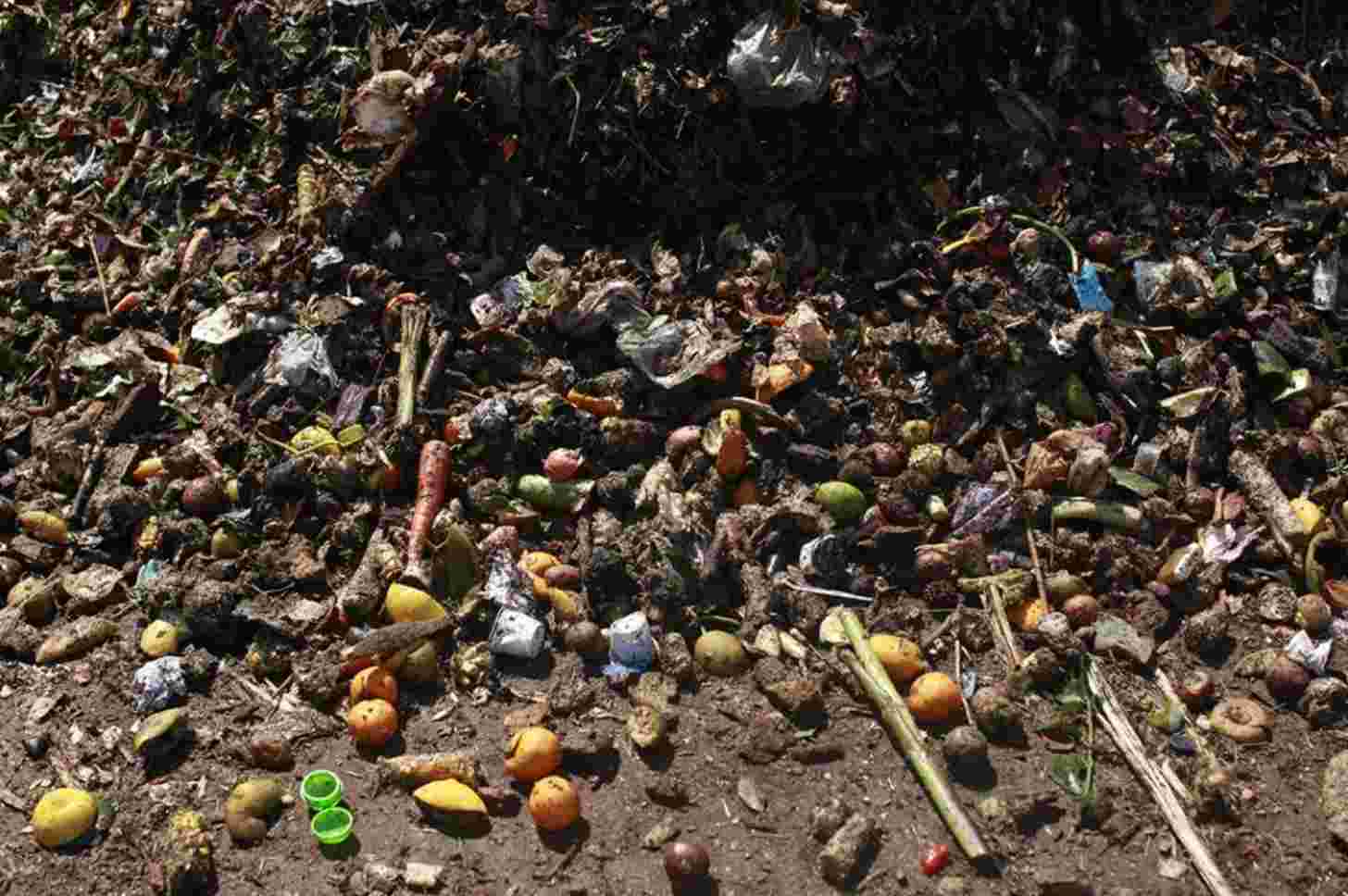
Fruits and vegetables make up almost half — 44% — of all U.S. food waste, according to ReFED. Meat and seafood, though also quick to spoil, are wasted less often because they are more expensive.
But wasting even a small portion of a burger has far greater environmental impact than wasting the same amount of fruits, vegetables, or chicken, says West. That’s because producing beef requires vast amounts of land, water, and fertilizer; and cattle also release methane — a short-lived but powerful greenhouse gas — with each cow burping about 220 pounds annually.
“If we are going to eat beef and dairy, make sure not to waste it,” says West.
Why prevention matters most
Experts see reducing food loss and waste as one of the most impactful and practical ways to slow the warming of the planet. Project Drawdown calls it an “emergency brake” solution — a measure that can rapidly slash emissions using tools we already have, without waiting for new technologies or nature-based fixes. Other such measures include halting deforestation and shifting away from meat and dairy.
“Preventing food from becoming waste is really the most effective solution, not only from an emissions perspective,” says Minerva Ringland, senior manager of the climate and insights team at ReFED, “but it’s also saving the most money and keeping everyone fed as much as possible.”
In the United States, 35% of food waste comes from households, while 18% comes from manufacturing, 17% from food service, and 24% happens on farms. Household waste is high because people often buy more than what they need, especially in bulk, misinterpret date labels, prepare too much food, and may not know how to store or repurpose ingredients. Limited access to composting programs also makes it harder for consumers to avoid landfills.
Experts suggest households can curb waste by planning meals, buying only what’s needed, using smaller portions, and repurposing leftovers.
Emily Broad Leib, director of the Harvard Food Law and Policy Clinic, says the U.S. needs a national consumer awareness campaign, similar to the United Kingdom’s Love Food, Hate Waste campaign. She notes that the Biden administration set aside funding to develop such a campaign, but it has since stalled. Many people don’t realize how significant the issue of food waste is, she says — not just for the environment but for their own finances.

But reducing food waste at home is not just about telling people to be more careful or intentional about their purchases. After all, food waste is rarely intentional. Maybe you buy an ingredient for one recipe and never use the rest, or forget the leftovers in your fridge and they go bad. Lipinski says that retailers and food service providers can help consumers avoid waste by offering smaller portions, clearer guidance, and smarter packaging.
Government agencies can lead by example in reducing food waste in their dining halls, federal buildings, schools, and military bases by requiring vendors to donate surplus food, Broad Leib suggests.
These strategies are worth the effort because preventing food waste at its source offers climate benefits about 10 times higher than other strategies since it reduces the need for producing additional food.
Beyond prevention, the EPA identifies donation and upcycling — turning food into new products — as the most preferred approaches. However, 40% of donated food still goes to waste, and both strategies require energy for transport, storage, and processing.
According to the EPA, using wasted food as animal feed, leaving crops unharvested, composting, and anaerobic digestion do much less to offset the environmental impacts of food production than preventing food waste in the first place.
Where most wasted food ends up
Most of the country’s surplus food still ends up in landfills, compost facilities, incinerators, or anaerobic digesters, according to ReFED. Only about 2% is donated. Food makes up nearly a quarter of combusted municipal solid waste that ends up in landfills.
In landfills, food waste decays and releases methane, a gas 80 times more potent than carbon dioxide at trapping heat over a 20-year period. Landfills produce 17% of human-related methane emissions in the U.S., after oil and gas and livestock digestion. A majority of the methane released from landfills in the U.S. comes from food waste, according to the EPA. A separate analysis by ReFED estimates that surplus food generates nearly 3 million metric tons of methane each year.
Improving landfill management is one of Project Drawdown’s highly recommended climate solutions. To capture or reduce methane emissions, some landfills install systems that divert landfill gas so that it can be burned for energy and sold to industries or utilities, helping replace fossil fuels. Methane that cannot be used for energy is typically burned off using flares.
Another approach uses biocovers — layers of organic material that foster bacteria that convert methane into carbon dioxide and water. Leak detection and repair programs can monitor methane leaks using drones, satellites, or on-site sensors, which helps operators spot and fix leaks.
Encouraging composting instead of putting food scraps in landfills also helps. But West says that while composting and landfill management matter, “you’ll have many times more impact if you stop the waste in the first place.”
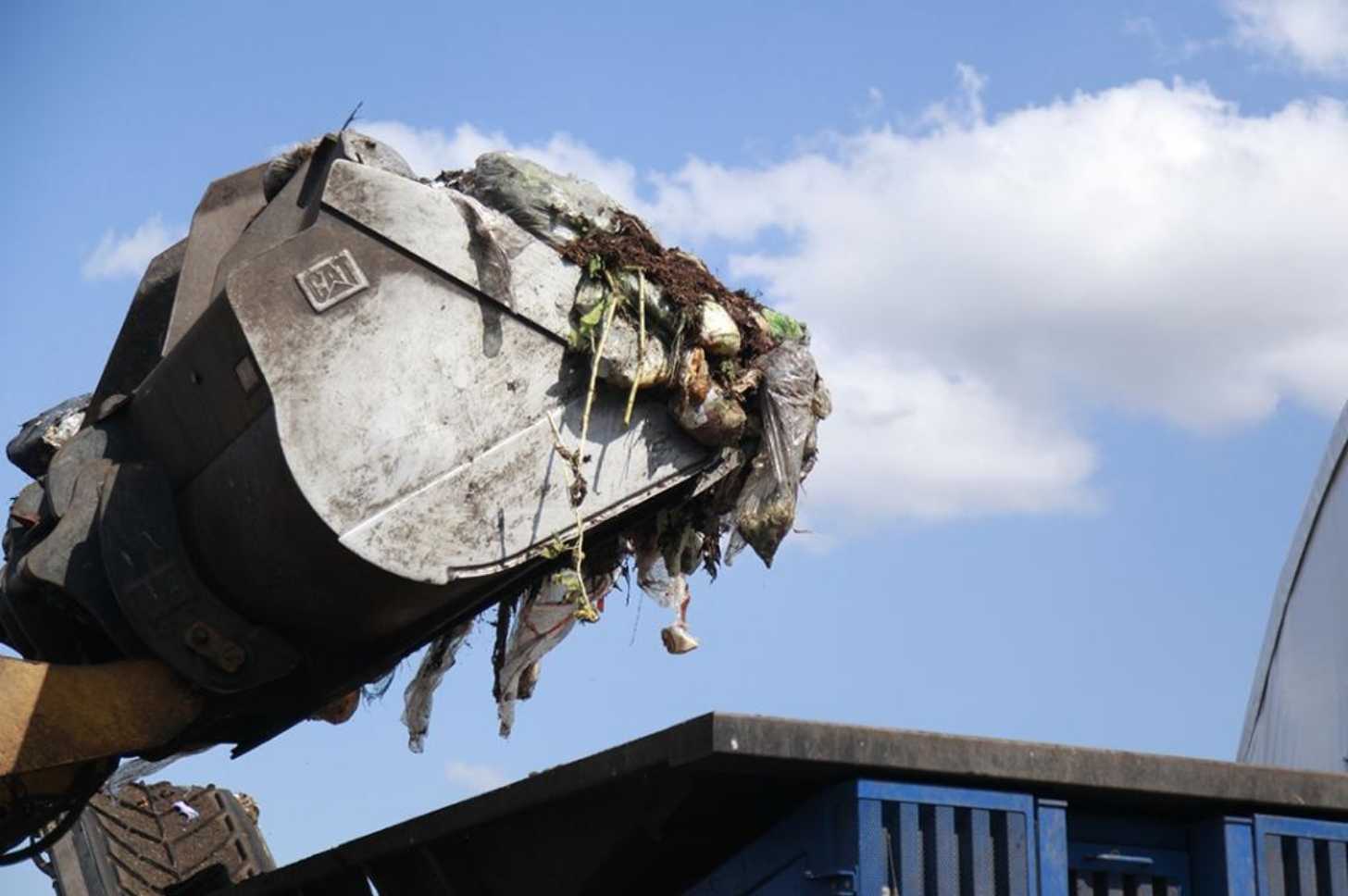
A change to these policies could help curb food waste
For something so uncontroversial, food waste has proven remarkably hard to fix.
In 2015, the U.S. set an ambitious goal of halving food loss and waste by 2030 — a target experts say is quickly becoming out of reach. No state is on track to meet the target, researchers from ReFED and University of California Davis found in an analysis published in January.
They warned that food waste levels are unlikely to fall without stronger state and federal action focused on prevention measures such as standardized date labeling, food rescue, and repurposing. Current policies, they noted, focus too narrowly on recycling methods like composting rather than addressing the problem across the entire food system.
Standardized date labeling is one of the most cost-effective fixes, ReFED argues. In the U.S., 6% of all food waste is due to confusion over date labels. Many U.S. consumers don’t know the specifics, but there is no national standard for date labels. Some products have “Sell by” dates, others have “Best before” dates, and still others have “Use by” dates — and they often mean different things in different states. The dates on packaging are “not designed for consumers to understand clearly,” Ringwald says.
As a result, many people toss food after the printed date, assuming it is unsafe to eat. This confusion leads Americans to discard about 3 billion pounds of perfectly fine food worth $7 billion each year. “Sell by,” “Best before,” and “Use by” dates usually indicate how long a product will stay at peak quality, not whether it is still safe to eat.
According to the USDA, the “Best if used by” or “Best before” date shows when the product will taste or look its best. “Sell by” indicates how long a store should keep a product on the shelf, and is meant for communication between manufacturers and retailers, but is often mistaken by consumers for an expiration date.“Use by” is the last date the product is at its best quality.
If you have a can of beans in your cupboard with a “Sell by,” “Use by,” or “Best before” date, it does not necessarily mean you should throw it out once that date passes. ReFED says that many foods, such as canned goods, nuts, and dry packaged goods can remain edible past the printed date.
To address this, ReFED advocates for a two-label system: “Best if used by” and “Use by.” “Best if used by” indicates product quality: it may not taste its best, but it is still safe to consume. This label is recommended for use for canned goods, bread, raw meats, frozen foods, and pasteurized products.
Meanwhile, “Use by” would apply to highly perishable items or those that pose a risk to safety over time, like deli meats, unpasteurized milk and soft cheeses, and smoked seafood. These products should be eaten by the date on the package and tossed afterward.
If passed, the bill reintroduced in the Senate would make that standard nationwide. Similar measures have been introduced in the past, but have not advanced. ReFED estimates that standardizing labels could keep at least 425,000 tons of food — or 708 million meals — out of landfills each year.
“Even though the issue is something that both Republican and Democratic administrations have cared about and worked on, there’s a lot of momentum that gets lost in between administrations,” Broad Leib says. The lack of sustained policies, she adds, has prevented the U.S. from making meaningful progress in reducing food waste.
‘Pockets of progress’
Still, there are signs of progress, especially at the state level. That’s probably where we’ll see more momentum under the Trump administration, says Lipinski.
In 2024, California signed the country’s first legislation to adopt a clear two-label system on food products. Starting July 1, 2026, the law will also ban the use of “Sell by” dates.
Another is the implementation of state-level mandates that prohibit sending commercial food waste to landfills. States including California, Connecticut, Rhode Island, Vermont, and Massachusetts have enacted such bans.
However, a study published last year found these policies have largely fallen short — except in Massachusetts, which succeeded in reducing the amount of food waste sent to landfills by 13%. Researchers found that Massachusetts has the country’s most extensive food waste composting network, making it easy and low-cost for businesses and households to follow the ban. The state’s rules are straightforward, with no exemptions, and authorities conduct far more inspections and issue more fines for violations than in other states. These differences point the way toward better implementation in other states.
Experts say that stronger incentives for grocers and restaurants to donate food could also make a significant difference. Some states, like California, now require some commercial establishments to donate edible food that they would otherwise throw out.
“We’re seeing pockets of progress everywhere,” says Ringwald. Because food waste is a complex problem, she adds, “We’re going to need a lot of solutions.” The key is turning these scattered successes into coordinated and sustained action across the supply chain, which can save money, slash emissions, and put food on tables.
This article was produced by Floodlight in partnership with Sentient, reviewed and distributed by Stacker Media, and republished with permission.
Header Image by Gamma-Rapho via Getty Images
Shootings have killed more than 800,000 people and injured over 2 million others in the United States since the start of this century. In March, dozens of violence prevention leaders convened in Chicago at the JAMA Summit on Reducing Firearm Violence and Harms to discuss steps to reduce gun violence, according to a new report in the Journal of the American Medical Association.
The report, published on Nov. 3, shows that the 60 leaders who attended the summit represented multiple disciplines. They included emergency physicians, public health scholars, psychiatrists, historians, and social workers.
The summit was the first of its kind presented by the medical journal. Its purpose: to develop a roadmap for substantially curtailing the number of shooting deaths and injuries over the next 15 years.
“We’ve gained a lot of knowledge and can point to a variety of things that seem to reduce gun violence, but still, there’s a lot we don’t know, and there’s still a lot of challenges,” Daniel Webster, a public health scholar at Johns Hopkins University who has studied gun violence for over 30 years, told The Trace.
Gun violence as a major public health issue has received more attention and federal funding in recent years. In 2024, then-U.S. Surgeon General Dr. Vivek Murthy issued his office’s first-ever warning about gun violence’s far-reaching effects, reinvigorating prevention efforts.
But since President Donald Trump returned to the White House, his administration has rolled back much of that progress.
Layoffs at the Centers for Disease Control and Prevention have decimated the unit responsible for studying and helping to prevent shootings, and federal funding for research and community programs has dwindled.
During the summit, leaders called for a “research revolution” on preventing gun-related harms as one of the five steps needed to improve public safety by 2040, according to the report.
The other steps emphasized strengthening communities, reframing gun injury as a preventable issue, taking a whole-of-government and society approach to addressing violence, and harnessing regulatory and technological opportunities responsibly.
Dr. Stephen Hargarten, an emergency physician and professor at the Medical College of Wisconsin, has spent his career studying how regulatory and technological innovation can help reduce firearm deaths. He spoke about the firearm lethality index, a new metric to measure the deadliness of different guns and bullets, something that could help policymakers better decide how to respond to varying levels of harm.
“We wanted to look at how technologies and innovation affect things like suicide rates, homicides, and firearm thefts,” and whether something like a smart gun could play a role in reducing gun-related harms, Hargarten told The Trace.
He also explained to the other leaders how Congress could empower federal regulators to require certain safety features in firearms. “As it stands, they don’t have oversight, and we feel that that’s something for us to be looking at.”
The report on the summit lays out several approaches that research has shown reduce firearm deaths, many of which The Trace has covered over the past 10 years. They included firearm policies, community violence intervention programs, environmental changes, alcohol policies, socioeconomic policies, and policing interventions.
The report also noted that, even though homicide rates have declined over the past two years, more people believe that crime is increasing. More effective research and communication are needed to combat these misconceptions, the report argues.
It is a dark and challenging time for Americans “who care about public health and reducing gun violence,” Nick Wilson, a summit participant and the senior director for gun violence prevention at the Center for American Progress, said in an email.
“The summit reaffirmed my optimism that we will get through this and rebuild our institutions stronger than ever,” Wilson said. “It will help build support for future federal action by demonstrating what works.”
This article was produced by The Trace, reviewed and distributed by Stacker Media, and republished with permission.
Header Image by Spencer Platt via Getty Images
Tuesday morning — just two days before Christmas, and upon the release of the final episodes of Taylor Swift’s “The End of an Era” docuseries — Feeding America took to social media to announce a generous donation from the superstar.
“We are incredibly grateful for Taylor Swift’s $1 million donation to Feeding America,” Feeding America CEO Claire Babineaux-Fontenot said in a statement.
“This holiday season, her continued support is a powerful reminder of what’s possible when we unite to end hunger.”
Feeding America is a nationwide nonprofit dedicated to ending hunger. It’s part of a network of over 200 food banks and 60,000 meal programs that help U.S. residents access food without judgment.
Its work has been especially prominent in recent months, as federal Supplemental Nutrition Assistance Benefits funding remains precarious for millions of Americans.
In fact, some of the pop star’s most dedicated fans organized their own fundraisers for Feeding America earlier this year, when, during the federal government shutdown, the Trump administration withheld monthly funds to the estimated 42 million Americans who rely on SNAP.
Swifties for Hope, a fan account on social media site X, shared an announcement on October 31, encouraging followers to make donations of $13 (Swift’s favorite number) to Feeding America.
“We protect the family,” the announcement read, referencing lyrics in Swift’s song, “Father Figure.”
“Swifties for Hope is fundraising for Feeding America to help support food banks nationwide.”
While SNAP benefits have become more accessible following the government shutdown’s end, 2026 will bring stricter rules on what can be purchased with food stamps, as well as funding cuts that threaten operating costs for states nationwide.
Before Swift or her fans made their donations this quarter, support for the organization was still high. Earlier this December, the organization topped Forbes’ annual list of the Top 100 Charities for the fourth consecutive year.
“This recognition also underscores a sobering reality that so many resources are still required to help meet the nutritional needs of nearly 50 million people who, in the last year, turned to the Feeding America network of food banks, statewide food bank associations, food pantries and meal programs serving communities across the entire country,” a press release for the organization said.
“Since the pandemic, the number of people facing hunger has continued to rise. Millions of hardworking families are forced to make impossible choices among food, housing, health care, and other essentials. These are avoidable choices that no one should have to face.”
Swift has also donated to Feeding America and other local food banks numerous times throughout her record-shattering Eras Tour, and in the wake of natural disasters like Hurricanes Helene and Milton in the fall of 2024.
This latest installment of charitable giving, according to Babineaux-Fontenot, represents something even larger than Swift and her fanbase.
“When we join together alongside people facing hunger, we can make sure families have a full table this holiday season and beyond,” she concluded in her recent statement.
In the meantime, the organization will continue to support the nationwide efforts to eradicate hunger, while advocating for policies that improve food security for everyone.
“We know better solutions exist,” Feeding America shared in a statement following the Forbes Top 100 Charities recognition.
“While we must continue to address the immediate needs of people facing hunger, it is imperative that more people have clear pathways to self-sufficiency, supported by policies and systems that work for them.”
You may also like: Monterey Bay Aquarium offers 'otter date' to Taylor Swift and Travis Kelce ahead of Sea Otter Awareness Week
Header images courtesy of Paolo V (CC BY 2.0) and Feeding America
When East Texas’s Higginbotham family decided to give back this holiday season, they didn’t think much of it.
The family — consisting of mom Ariel, dad Jared, and their six kids: Sophia, Amira, Zeke, Cami, Jaise, and Ezra — started “Operation Christmas Tree” with the intention of bringing the Christmas spirit to local nursing home residents in their community of Nacogdoches, Texas.
But after they delivered some mini trees, blankets, and other holiday decorations to their elderly neighbors, the give-back spark grew into a flame.
“Some of them are in their room quite a bit throughout the day, it’s just the same thing each day, and just maybe having that tree just bringing that light and uplifting the Christmas spirit in the room is really important,” Ariel told ABC 9 News.
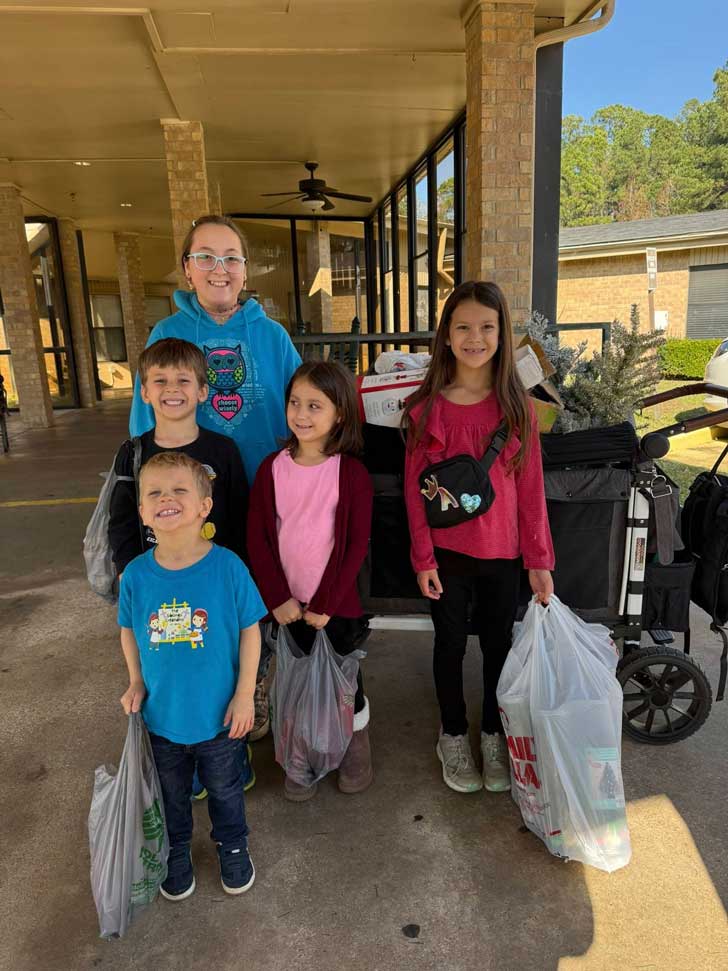
After seeing the impact of even just one small Christmas tree, they came back to the nursing home, bringing painted canvases, candy canes, cookies, stuffed animals, and grippy socks to spread even more cheer.
The items were collected from others in the community after the family shared their project on social media.
“As Christmas gets closer, we’re getting ready to bring a little extra light, love, and Jesus to residents at a local nursing home, reminding them they’re seen, valued, and deeply cared for this season,” they shared online in a call for donations.
“Our top priorities are blankets and grippy socks, but snacks and basic bathroom essentials are also appreciated.”
The Higginbothams did the heavy lifting, coordinating item pick-ups, and going out to buy supplies with monetary donations.
“Every share, prayer, and contribution truly matters,” the family shared on Facebook. “Thank you for helping us love others well this Christmas.”
Seeing how the nursing home residents lit up, the Higginbothams realized this could be something even bigger than their grassroots effort, and the Timeless Compassion Project was born.
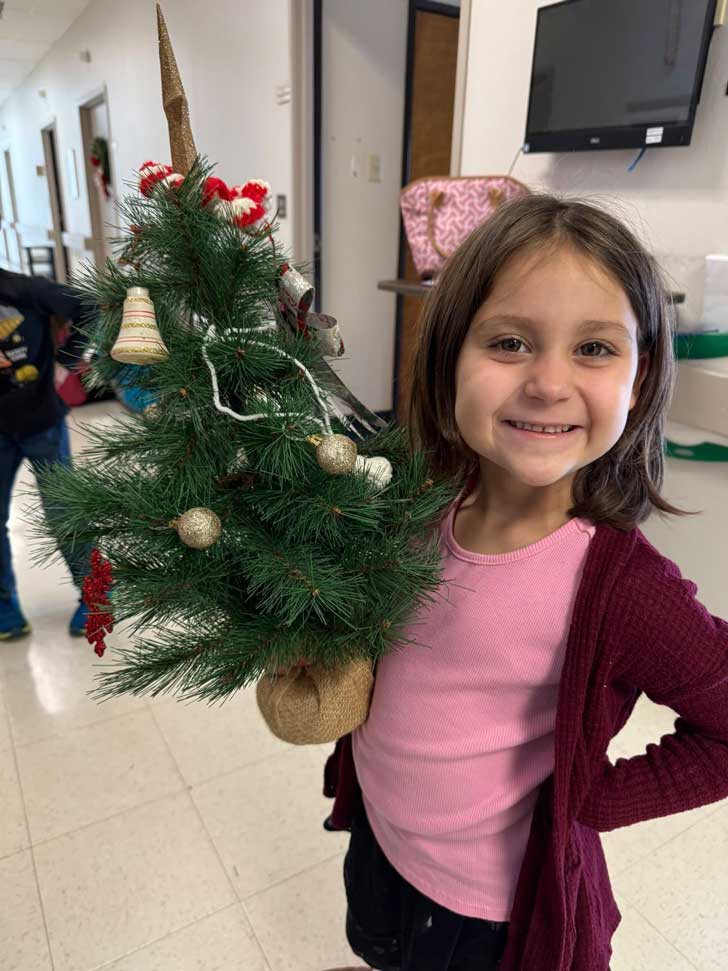
A representation of the community’s interest in donating, combined with the desire to do even more good for community elders, the family plans to apply for a 501c3 after the holidays so they can “continue blessing the seniors in Nacogdoches all year long,” as well as branch further into East Texas.
“I feel like a lot of time … they typically go to the homeless, they go to the children, and the nursing home typically get forgotten,” Ariel told ABC 9, of the ways people typically give back during the holidays.
“And some of them don’t have any family in the area,” Jared added, “They don’t ever get any visitors, so it's nice to have a face to talk to, as well.”
While this year’s endeavors were dedicated just to Willowbrook Nursing Home, the Higginbothams saw an outpouring of support from local community donors and hope that next year will be even bigger.
“Thank you so much for partnering with us this Christmas season to bless a local nursing home,” the family shared on Facebook.
“Every resident was so surprised and so very thankful. Be on the lookout for next year's schedule after the new year. We are working on new ways to help the residents and would love to have each and everyone of you involved. Every piece of help you give is noticed and so appreciated.”
You may also like: 10K strangers respond to woman's request for Christmas cards after announcing she has terminal cancer
Header image by Hannah Barata via Pexels
Residents of Pueblo, Colorado, Cora and Stan Krol found themselves twiddling their thumbs after their children had grown up and turned them into empty-nesters in 1989.
“I told my husband, ‘It’s too quiet,’ and I said, ‘I wonder about foster care,’” Cora recalled to The Pueblo Chieftain.

Almost immediately after this revelation, Cora saw an ad in her newspaper asking for help at a local group home with adolescents.
Over 34 years later, the Krols have helped raise more than 130 foster children in their home, many of them young men. And of those young men, many have been in trouble with the law, come from homes of abuse and neglect, and struggle in school.
“You take these kids in because you know they’re hurting inside,” Stan told The Colorado Springs Gazette, “and you kind of try to get past that and give them the love they need. It’s hard.”
It’s also certainly possible — even with up to 11 children in their home at any given time.
“Every time you're ready to start pulling back, there's this little boy that needs you, and how do you say no?” Cora told The Pueblo Chieftain.
“Pueblo County right now is down foster homes, it’s unbelievable. I just wish people would see what it does for you and what it does for the children.”
The positive impact the pair has had on so many also inspired their biological daughter, Tammy Walton, to become a foster parent herself.
Now old enough, too, Tammy’s daughter, Sloan, also chips in to help. It’s a family affair, and they all continue to love and care for children in need when they need it most.
Stan told The Gazette that the pair often receive calls from their former fosters.
“Calls that say, ‘I want to thank you for what you taught me, and the principles and stuff like that stayed with me,’” Stan shared. “[They tell me], I was in a lot of pain when I was there, but now I’ve got a good job and a wife and kids, and I want to thank you.’”
The Colorado Department of Human Services has recognized the Krols for their work, honoring them for “doing something extraordinary,” as “ordinary Coloradans,” even and especially into their golden years.
“The reason we feel so good is because of what we do,” Cora told The Gazette.
“You have to have a purpose,” Stan added.
You may also like: After his wife died, he raised $1M to honor her dying wish: Clearing the medical debt of strangers
A version of this article was originally published in The 2025 Relationships Edition of the Goodnewspaper.
Header image courtesy of Colorado Department of Human Services
Marion and Sandy Ironside of Gamrie, Scotland celebrated 50 years happily married in October 2024, boogeying with their family members in the same venue they wed decades prior.
But it wasn’t just a party to mark this significant milestone; the pair decided to turn it into a charitable event.
In lieu of gifts, the Ironsides asked their family and friends to donate to Alzheimer Scotland, a dementia support organization with Dementia Resource Centers in 25 locations across Scotland.

With about 75 guests, they raised a total of £1,005 for the organization — which was unveiled with a large, ceremonial check.
“It was an amazing night, and it was made even better when we realized how much we had raised,” the couple told Grampian Online.
“We are grateful to everyone who came and donated on the night and for helping us celebrate our 50 years together.”
Laura Crockatt, Alzheimer Scotland’s local dementia advisor for north Aberdeenshire, collected the donation.
“What a massive amount to have raised, so generous and very much needed,” Crockatt told Grampian Online. “Thank you Marion, Sandy, and to all who donated.”
You may also like: After his wife died, he raised $1M to honor her dying wish: Clearing the medical debt of strangers
A version of this article was originally published in The 2025 Relationships Edition of the Goodnewspaper.
Header image courtesy of Alzheimer Scotland
In 1998, award-winning photojournalist Sebastião Salgado and his wife, Lélia Deluiz Wanick Salgado, founded their nonprofit nature preserve, Instituto Terra.
Over the course of 20 years, the pair was responsible for planting over 2.5 million trees.
It all started when Salgado returned from an assignment covering the Rwandan genocide. He and Lélia inherited his father’s cattle ranch, which was extremely degraded.
“The land was as sick as I was — everything was destroyed,” Salgado said at a Paris climate change meeting in 2015, according to The Guardian.
“Then my wife had a fabulous idea to replant this forest. And when we began to do that, then all the insects and birds and fish returned and, thanks to this increase of the trees I, too, was reborn – this was the most important moment.”
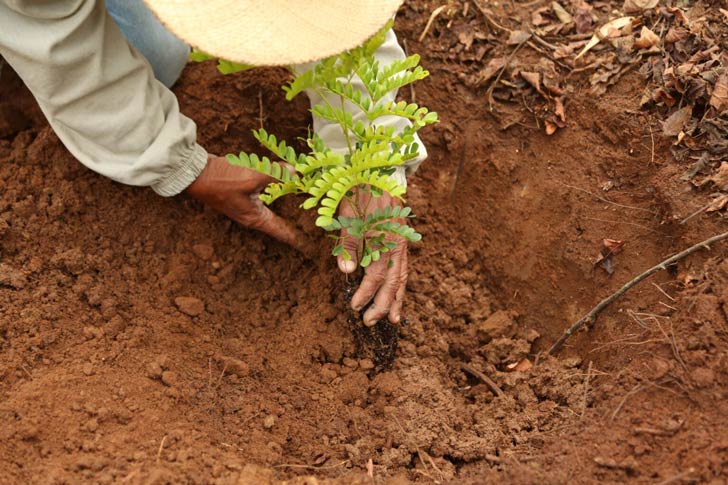
Starting with an initial donation of 100,000 seedlings from a local mining company, they began the first steps of rebuilding.
Now, the 1,750-acre property in the Doce River Valley region in Southeast Brazil is so covered in trees that it can be seen from space.
It was a work of community, love, and dedication.
“Like to grow a baby, you need to teach it to walk, to speak, and then they can go to school on their own,” Salgado told Smithsonian Magazine in 2015. “Trees are the same. You need to hold them close for a while.”
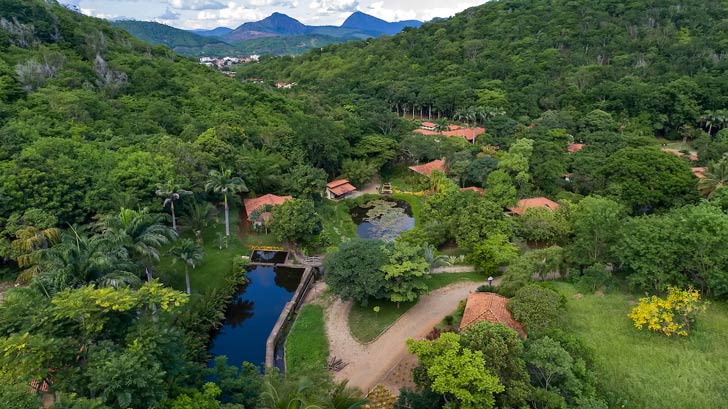
In 2025, Sebastião Salgado passed away, but Lélia and a large team of committed ecologists continue to run Instituto Terra, which now serves as a hub for environmental education, seedling cultivation, and ecological research.
“In 2025, we bid farewell to Sebastião Salgado, our founder, mentor, and inspiration. His legacy lives on in the land he helped restore, in the people he touched with his vision, and in the seeds of the future we continue to plant,” a statement on the organization’s website reads.
“Amidst the pain of loss, we renew our commitment to the values he taught us: caring for nature, believing in people, and dreaming of a more just and sustainable world. We will move forward, together, with gratitude and purpose.”
But none of it would be what it is without the love the Salgados share — and the leap of faith they took together.
As Sebastião told Smithsonian Magazine a decade before his death: “It’s very hard to know where she ends and I begin.”
You may also like: This retired couple has raised 130+ children in foster care over the last 35 years: 'How do you say no?'
A version of this article was originally published in The 2025 Relationships Edition of the Goodnewspaper.
Header image by Luiz Maximiano / Instituto Terra
Vladimir Kara-Murza is a Pulitzer Prize-winning columnist. The Russian-British activist was jailed in 2022 for criticizing Russia’s invasion of Ukraine.
Before he was released in a historic prisoner exchange in early August 2024, Kara-Murza was serving a 25-year sentence for treason.
When Alexei Navalny’s death was announced in February 2024, Kara-Murza did not abandon hope, even while he sat in prison wrestling with an unknown future.
In a message to reporter Sarah Rainsford, he urged fellow activists to “work even harder” to achieve what Navalny — and his mentor Boris Nemtsov — had fought for: freedom.
“The price of speaking out is high,” Kara-Murza said in 2022, soon after his arrest. “But the price of silence is unacceptable.”
Even as Kara-Murza returned to his family and was granted asylum, he immediately started looking for a way to return to his home country.
After everything he had been through — including a targeted poisoning in 2015 which led to organ failure — he still carried optimism for a freer, more peaceful Russia. So he went back.
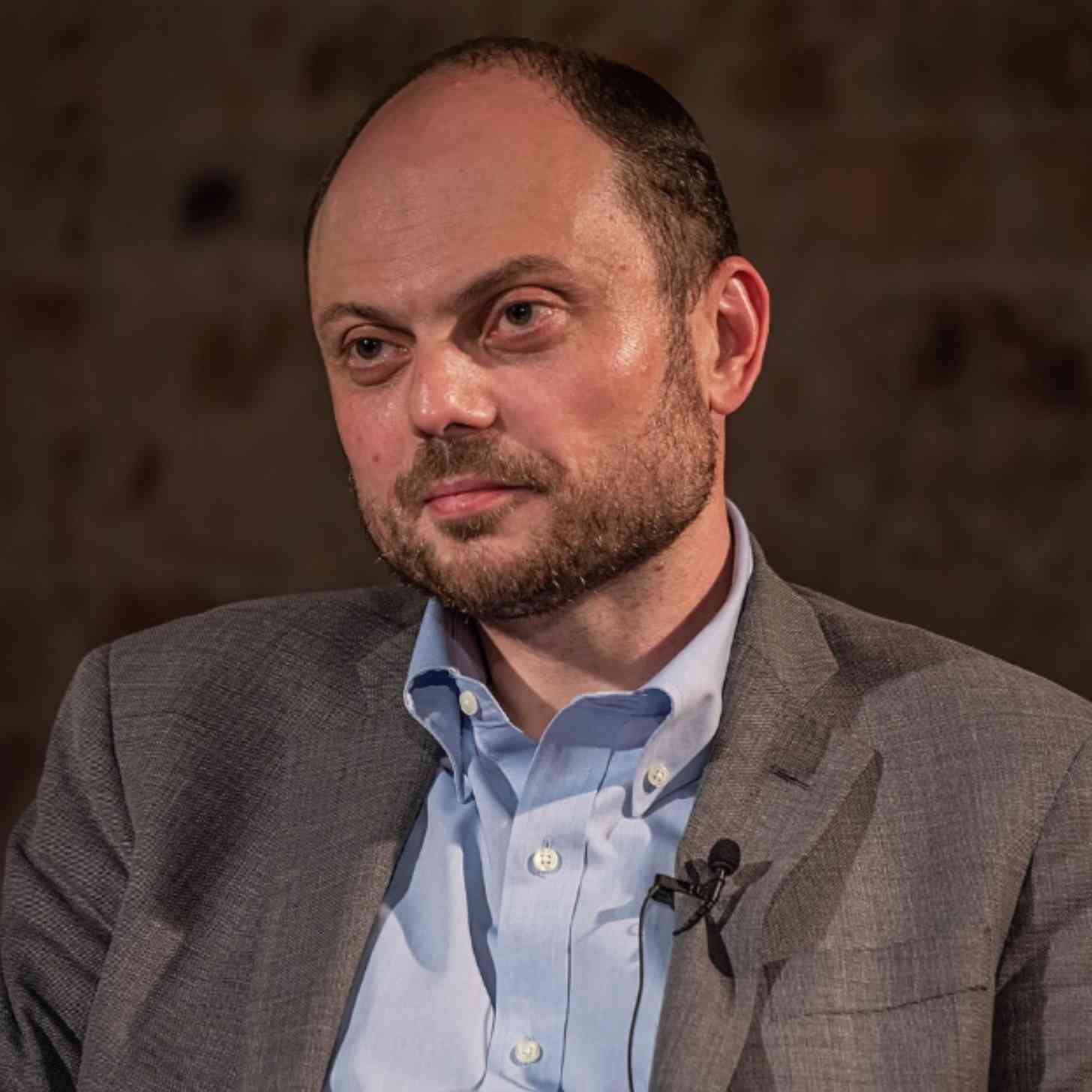
This past December, Monocle Radio’s Andrew Mueller asked Kara-Murza why he returned.
“Russia is my country, my home,” he said. “I love Russia. It’s a beautiful nation with a lot of talented people. It just happens to be ruled by a criminal, murderous, kleptocratic, KGB-led dictatorship. I want my country to be better than it is today. And unless we do something to bring about change, it won’t happen.”
“I’ve always believed that the only way politicians can truly lead is by personal example,” he continued. “What right would I have to tell my fellow citizens to stand up to the Putin dictatorship if I were too scared to do it myself?”
Remembering Navalny’s legacy
Navalny was 47 years old when he died in an Arctic prison under shadowy circumstances. The activist had been a vocal opponent of Vladimir Putin during his decade-long career as a politician, wielding social media as a tool after Russian outlets blacklisted him.
The Oscar-winning documentary Navalny profiled Navalny’s unrelenting determination to expose corruption. He even proved — on camera — that he had been poisoned with the chemical weapon Novichok by the shadowy organization he fought to oppose.
At the end of the documentary, director Daniel Roher asked Navalny what message he wanted to relay to the people of Russia, in the event that he was captured or killed.
“Very simple, do not give up,” he responded.
Roher prompted again, asking him to answer this time in Russian.
Navalny paused, then looked down the barrel of the camera.
“Listen, I’ve got something very obvious to tell you,” he said. “You’re not allowed to give up. If they decide to kill me, it means that we are incredibly strong. We need to utilize this power to not give up. … We don’t realize how strong we actually are. The only thing necessary for the triumph of evil, is for good people to do nothing.”
In the wake of his death, outcry cascaded through the world. In Russia alone, 32 cities lit up with memorials and chants: “One for all, and all for one.”
A version of this article originally appeared in the 2024 Courage Edition of the Goodnewspaper
Header image via Mitya Aleshkovskiy (CC BY-SA 4.0)
Every year, Kristina Ulmer gives each of her ninth-grade students a $20 bill. They can spend it however they choose, with just a single stipulation: Spend it on an act of kindness.
It’s a tradition that the Pennsylvania English teacher has been keeping for nearly a decade, after she lost her 29-year-old sister Katie in a car accident. Katie had left behind a $100 waitressing tip in her wallet, and Ulmer wanted to use it for something special in her sister’s honor.
So she matched the money with her own savings and distributed it to her students, challenging them to use it for good.
"I want them to make connections to the people around them,” Ulmer told CBC News. “I wanted them to notice that, you know, people around them could possibly be struggling.”
The annual project, which is now funded by Horsham High School, has been a huge success. Through the years, students have used the money to bake cookies for first responders, donate food to local food banks, and buy yarn to crochet tiny hats for premature babies at the local hospital.
"A lot of people stereotype that age, and they say they're self-centered or, you know, they don't see outside of themselves,” Ulmer said of her rising teens. “And I just don't see that.”
Today, the project is not just limited to Ulmer’s ninth graders. Former student Sydney Cassel told the Washington Post that she and several other classmates have continued doing the “$20 Kindness Challenge” every year, even though they have long since left Ulmer’s classroom.
“You don’t have to have millions,” Cassel said. “Anyone can make a difference.”
A version of this article originally appeared in the 2025 Education Edition of the Goodnewspaper
Header image via Tima Miroshnichenko
Every day the Good Good Good team collects the best good news in the world and shares it with our community. Here are the highlights for this week!
If you want to get good news in your inbox every day, join the Goodnewsletter — the free daily newsletter designed to leave you feeling hopeful.
The Best Positive News We’re Celebrating This Week —
Religious leaders run powerful ‘Choose love, not ICE’ ad during holy season — including on Fox News at Mar-a-Lago
The multi-faith group Interfaith Alliance just released a 30-second video ad that contrasts ICE’s violent raids against “the holy season’s religious calling to ‘love thy neighbor.’”
In the ad, viewers see images of ICE raids interspersed with clips of families joyfully gathering for Christmas. In the background, “O Holy Night” plays, with simple text on-screen: “In America, we love one another. Choose love, not ICE.”
The ads will appear across digital, broadcast television, and streaming services, particularly targeting media markets that have seen intense crackdowns from federal immigration agents, as well as on Fox News in the West Palm Beach, Florida area, where Mar-a-Lago is located.
Even better: The ad also urges supporters to sign a petition to amplifying this message: “This holy season, ICE cruelty is threatening our religious calling to love our neighbors … As faithful Americans, as an expression of our values, we demand that the federal government stop the attacks on our neighbors and we call on our political and religious leaders to stand in solidarity against their cruelty.”
→ Read more
Florida removed colorful sidewalks in the name of ‘safety.’ This city in Greece proves that painted roads save lives
→ Read more
Hundreds of surfers paddle out to honor and remember victims of Bondi Beach terrorist attack
Since the terrorist attack on a Hanukkah celebration that claimed the lives of 15 people, Bondi Beach has become a large vigil site to honor and remember those killed.
On Friday morning, hundreds of surfers and swimmers in the community joined in a “paddle out” to “spread light, love, compassion, and unity” and to honor the lives lost. Hundreds more gathered on shore for a memorial.
In the surfing community, a “paddle out” is a way surfers honor a loved one who has passed away.
→ Read more
Atlanta opened a first-of-its-kind modular rapid-housing project for residents experiencing homelessness
Atlanta just opened a 100-unit housing development called Waterworks Village that will provide a permanent place to live for residents experiencing homelessness.
As part of a larger effort to address homelessness across the city, it’s the third rapid housing development the city has opened in just under two years, and the first modular multifamily development.
Thirty of the Waterworks units will be dedicated to people receiving on-site medical and mental health care offered through Project HEAL, which is being supported by six area hospitals.
What’s the nuance: Atlanta’s efforts to “create pathways out of homelessness” come as the federal government is planning to end financial support for permanent supportive housing, which threatens to derail the city’s goal to build 20,000 affordable housing units by 2030.
19 Buddhist monks (and a rescue dog) are walking 2,300 miles across the US. This is their message
Thanks to Dolly Parton, 1 in 7 US children under the age of 5 receive free books every month
According to Dolly Parton’s father, the singer’s biggest, “most important” accomplishment has been the Imagination Library. And according to Parton, her father’s “inability to read probably kept him from fulfilling all of his dreams.”
Now 30 years since its inception, the Imagination Library has grown enormously. Every month, approximately 3 million children across the United States and Canada, Australia, and the United Kingdom receive a free book in the mail — so far, it’s delivered over 270 million books.
The Imagination Library also works with local governments, libraries, and schools to implement its programming and reach as many children as possible.
A 16-year-old just donated 800 Christmas presents to the hospital where she spent her childhood in
Lydia Brown spent the majority of her childhood on the pediatric floor at Northern Light Eastern Maine Medical Center in Bangor, Maine — so the 16-year-old knows what it’s like to spend Christmas in a hospital bed.
That’s why, for four years straight, Brown has donated Christmas presents to kids on the pediatric floor. She calls it the Lydia Project.
This year, she donated over 800 presents, making it her “most successful year” yet. Most of the gifts are donated by neighbors in her community — and she and her mom do the rest, making sure no children go without a gift.
→ Read more
This family’s holiday tradition of donating Christmas trees to nursing homes has grown into a full nonprofit
10K strangers respond to woman’s request for Christmas cards after announcing she has terminal cancer
Based in Wales, United Kingdom, Clare Jones was diagnosed with bowel cancer in 2022. While she underwent treatment for a while, she was recently told her chemotherapy was no longer responding and was given about 10 months to live.
Jones loves the holidays and wrote on Facebook, “After finding out last week that this is probably going to be my last Christmas, I am looking for ways to make it super special.” Her request: Send her a Christmas card.
She expected to get 10 or 15 extra cards from friends and community members. But her post went viral, and over 10,000 people shared it. Thousands of cards have arrived, as well as flowers, chocolates, personalized gifts, and theater tickets.
More good news of the week —
An engineer is powering his entire home with the batteries from 500 discarded vapes. Single-use vapes, or e-cigarettes, contain lithium batteries and liquids, encased in plastic, that when discarded, can leach chemicals into the environment or even explode and cause fires at waste plants.
Canada announced long-anticipated new rules to dramatically reduce oil and gas methane emissions. (May require login) The new regulations lay out a path for the world’s fourth-largest oil producer to cut its overall emissions of the highly potent greenhouse gas by 75% by 2035.
Scientists in South Korea are fighting to give dolphins the same legal rights as people to help save them. For years, Indo-Pacific bottlenose dolphin populations have been declining due to runoff from fish farms, coastal erosion, noise pollution from construction sites, and entanglements from abandoned fishing gear.
In a win for animal rights activists, a major Indonesian city banned the sale and consumption of dog and cat meat. In one of the country’s most sweeping measures yet to curb rabies and regulate its controversial meat trade, Jakarta’s new regulation bars the sale of any rabies-transmitting animals for food – a category that includes dogs, cats, monkeys, bats, civets, and similar species.
Gracie Abrams released a new song about mass shootings, and all proceeds support reducing gun violence. She wrote the single “Sold Out” with producer Aaron Dessner and Bon Iver frontman Justin Vernon. Its lyrics speak to rage and despair in the face of seemingly unending gun violence, and all proceeds from the song will go to Everytown for Gun Safety.
Two dozen endangered sea turtles are recovering in Florida after being cold-stunned off Cape Cod. The 24 Kemp’s ridley sea turtles are expected to remain at the facility until spring, when they'll be released into the Atlantic Ocean to make their way back to New England.
Researchers in Canada witnessed a rare polar bear adoption, capturing a female caring for a cub that was not her own. While they currently have no information as to what happened to the adopted cub’s biological mother, the researchers said having a maternal figure increases the chances of the cub’s survival into adulthood.
Michaela Benthaus just made history as the first wheelchair user to travel to space. The 33-year-old German aerospace and mechatronics engineer at the European Space Agency was aboard a Blue Origin New Shepard capsule that lifted off from Texas over the weekend.
For 40 years, a dental franchise has offered free care to anyone in need for the holidays. Comfort Dental’s tradition started in 1984 and now includes more than 300 dentists and 1,300 team members giving away their services for free on December 23. In 2023, it saw over 3,500 patients.
Pet owners can donate a pound of food to a shelter animal just by writing a letter to “Chewy Claus.” Pets (and their paw-rents) are encouraged to submit their wishlists to Chewy Claus up until December 24 this year. For every letter submitted, Chewy will donate one pound of food to its nonprofit partners — up to 600,000 pounds.
Strippers are now the No. 1 donor of toys to a Portland children’s hospital — this year, they broke their own record. Over the past 14 years, Portland, Oregon-area strippers have donated $183,000 worth of toys to Doernbecher Children’s Hospital during their annual holiday fundraiser: Tatas for Toys.
FedEx has delivered 325K free Christmas trees to military families as part of the annual “Trees for Troops” program. The program started in 2005 by a nonprofit called Christmas Spirit Foundation, and it’s been growing with the support of Christmas tree farmers across the country.
With thousands of national park workers still without jobs, people are “adopting” a park ranger this holiday season. A grassroots “Adopt-A-Ranger” program has been connecting donors with rangers in need of support during the holiday season — within a few days of launching, over 500 people had signed up.
When you “pet” dogs in this mobile game, you provide food and vet care to real-life shelter animals this holiday season. From December 15 through December 24, “Hay Day” players can build farms and barns, fish, and raise crops — while also finding and petting virtual huskies and Alaskan Malamutes to support real-world rescue animals.
Giant holiday “giving machines” in over 100 cities around the world $50 million for charity even before the holiday season began. Light the World Giving Machines, giant vending machine-style kiosks found in 126 cities across 21 countries and on six continents, make giving back easy by letting users pick a specific dollar amount or item to contribute to a specific charity.
Scientists uncovered thousands of new species in 2025, from deep-sea oddities to rare mountain dwellers. As the butterflies, frogs, and sea creatures made headlines, they spurred new action for conservation efforts the world over.
The "aquamarine" poison dart frog of the Amazon
In 2023, amongst the Juruá River basin forests of Brazil, scientists found a new type of poison dart frog with copper metallic legs.
In May, they finally published their discovery in the scientific journal PLOS One, introducing it as Ranitomeya aquamarina in honor of its striking blue color.
“The specific epithet ‘aquamarina’ is a Latin adjective that means ‘pale blue-green’, referring to the coloration of the dorsal-lateral stripes of the new species,” wrote Evan Koch, a postdoctoral researcher at the National Museum of the Czech Republic who led the research team.
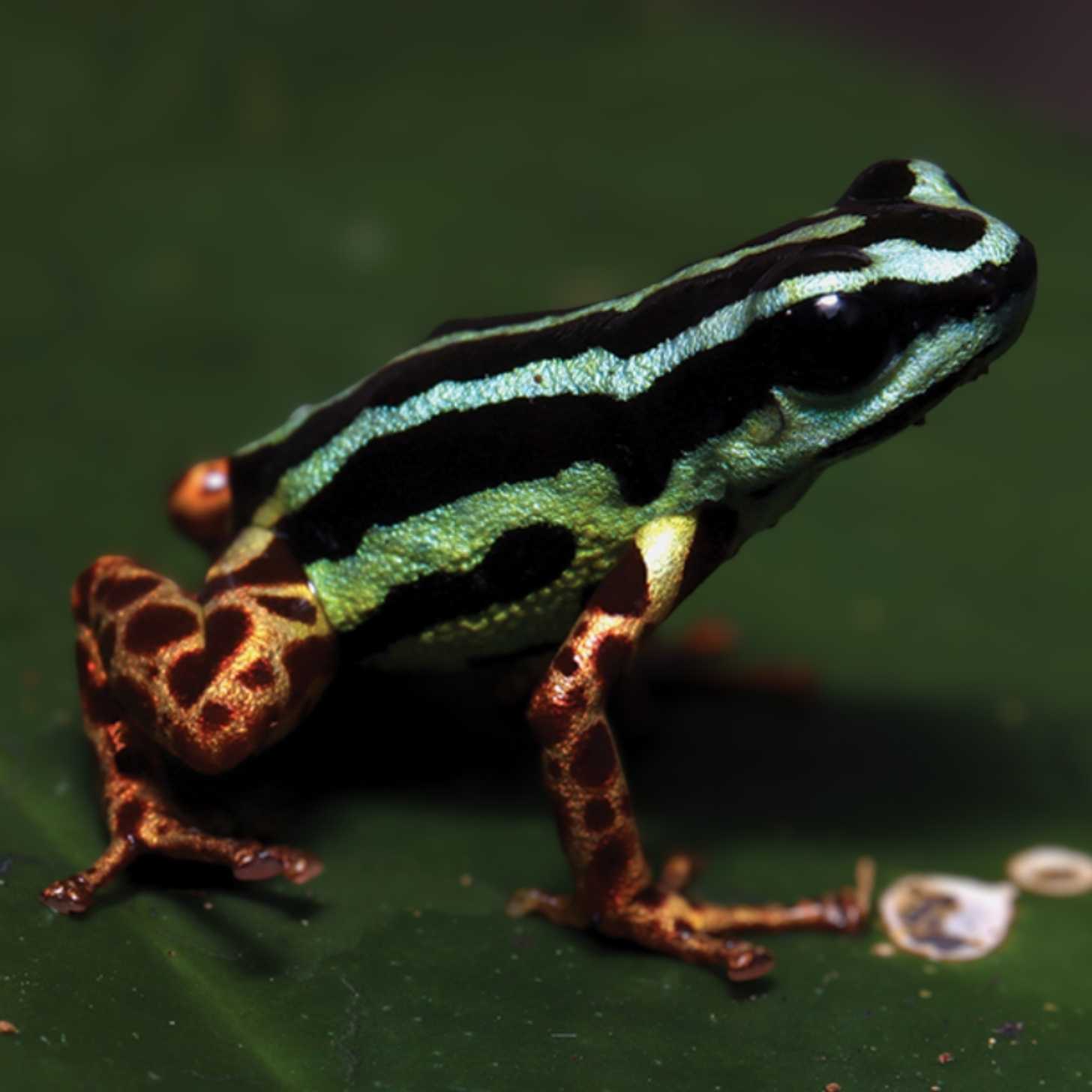
“Another aspect that led us to use this epithet was the metallic blue and greenish tones of the stripes, which resemble seawater,” he explained. “Additionally, aquamarine is a gemstone, which philosophically conveys the value of this discovery.”
The “curiously isolated hairstreak” butterfly
Scientists identified a new butterfly species in Canada that had gone unnoticed for centuries, despite living in the well-studied region of the Blakiston Fan landform of Waterton Lakes National Park.
The butterfly, now named Satyrium curiosolus, was long believed to be a subpopulation of the half-moon hairstreak — until researchers realized there was no evidence of gene flow between the two.
“We propose ‘curiously isolated hairstreak’ as the common name due to its disjunct and unusual distribution,” wrote Zachary G. MacDonald, lead study author and postdoctoral fellow at the University of California.
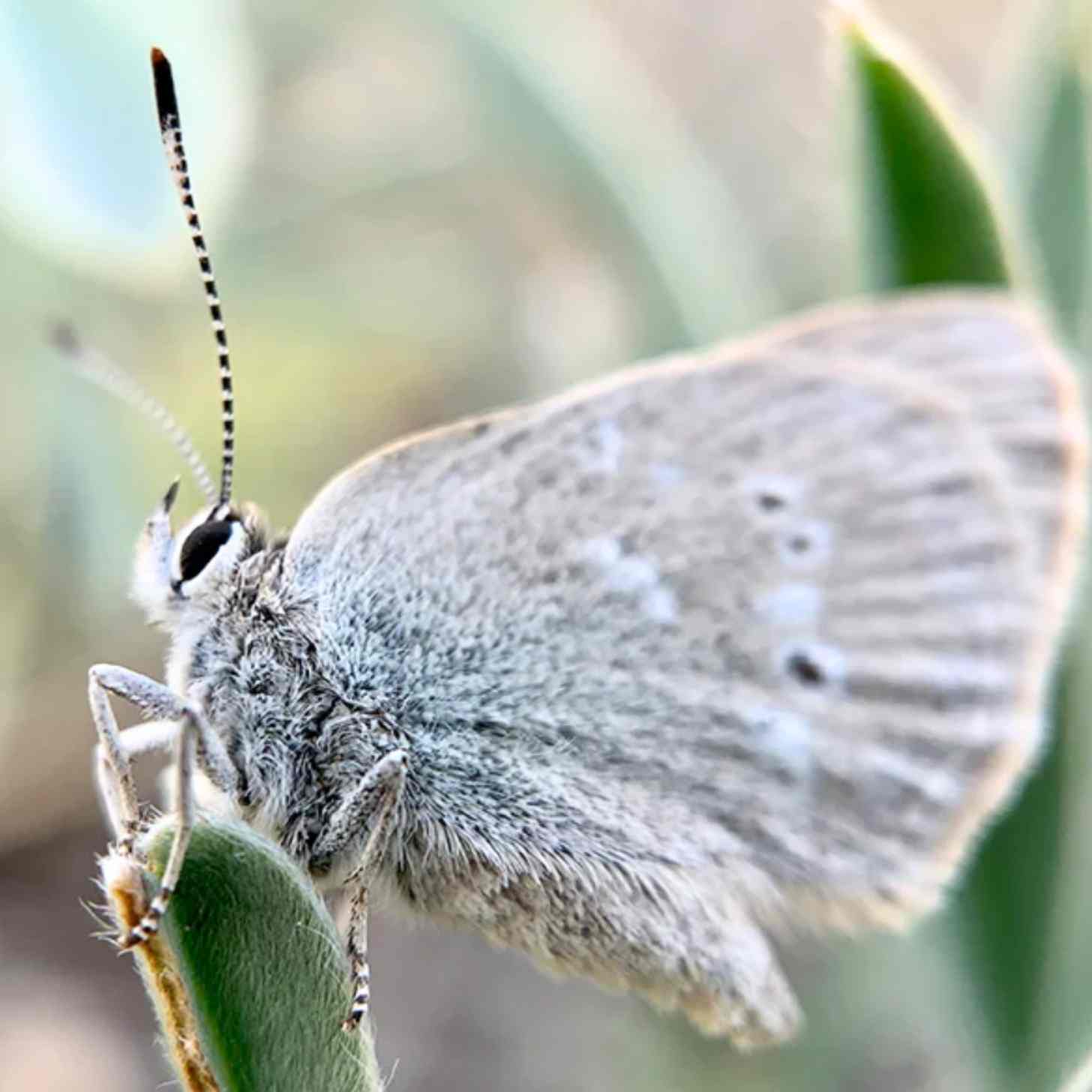
“Far more than a taxonomic update, this discovery reveals a lineage shaped by 40,000 years of evolutionary solitude,” stated the Wilder Institute, which supported the research. “An ancient survivor tucked away in one of Canada’s most iconic and ecologically rich landscapes.”
The trash-eating sea cucumber with more than 200 legs
In June, professors at the Institute of Ocean Sciences and Limnology in Mexico released a study on a new type of sea cucumber.
In the Biodiversity Data Journal, the scientists — Francisco A Solís Marín, Andrea A Caballero Ochoa, Carlos A Conejeros-Vargas — described the McDaniel sea cucumber as a “pale pink violet” creature with zig-zagging rows of 214 tube-like feet.
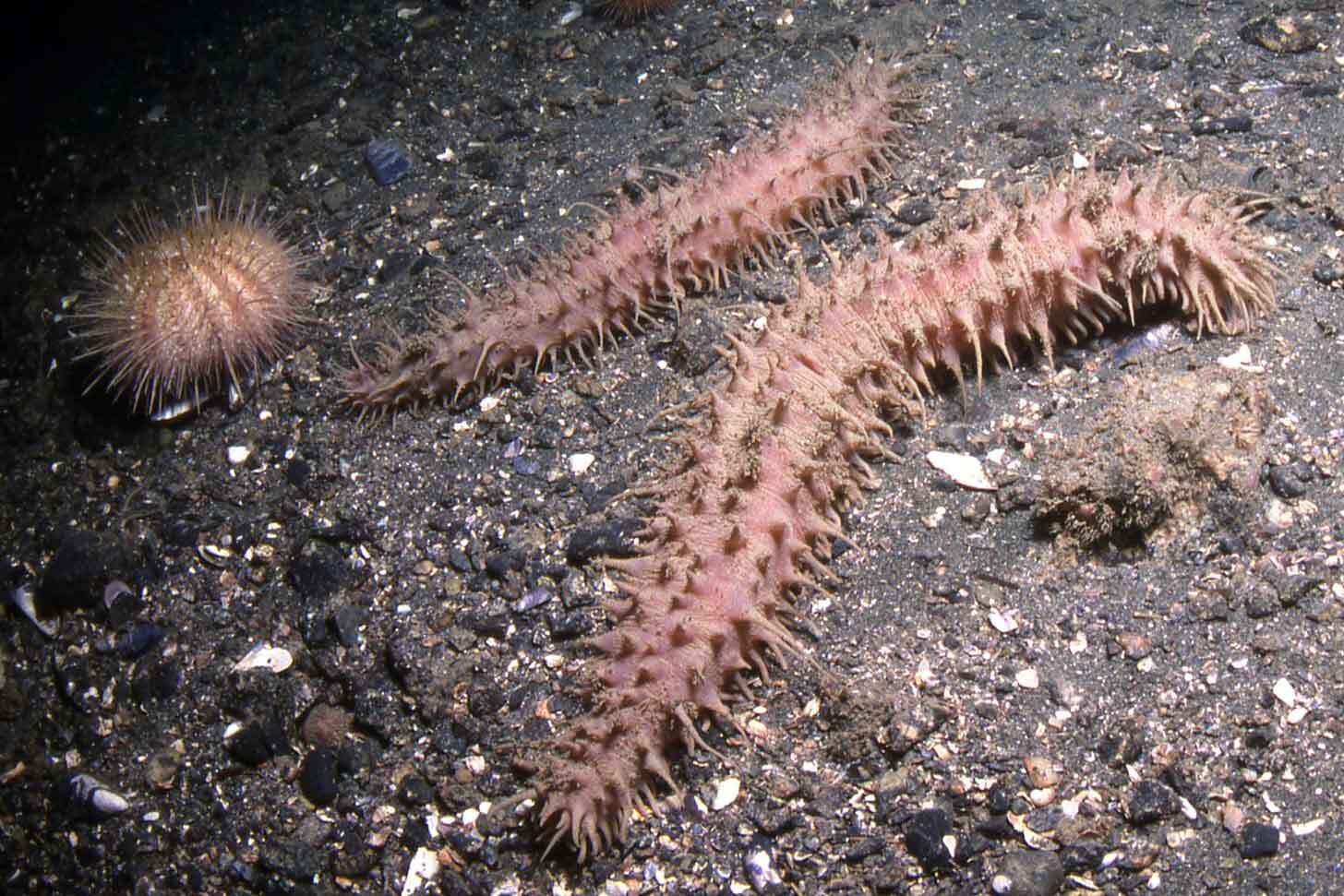
They can be found at sea depths ranging from 70 feet to 1,400 feet — hungrily roaming for “bottom sediments with its peltate tentacles.”
The behavior has earned sea cucumbers the nickname “janitors of the sea.”
The deep-sea dumbo “flapjack” octopus
In 2022, researchers discovered over 1,000 new species in and around Carnarvon Canyon and Gascoyne Marine Parks in Western Australia.
In 2025, they confirmed that one of those creatures was the Carnarvon flapjack octopus, a rare and unusual species of dumbo octopus characterized by ear-like fins. Its name came from its ability to flatten down like a pancake to escape ocean predators.
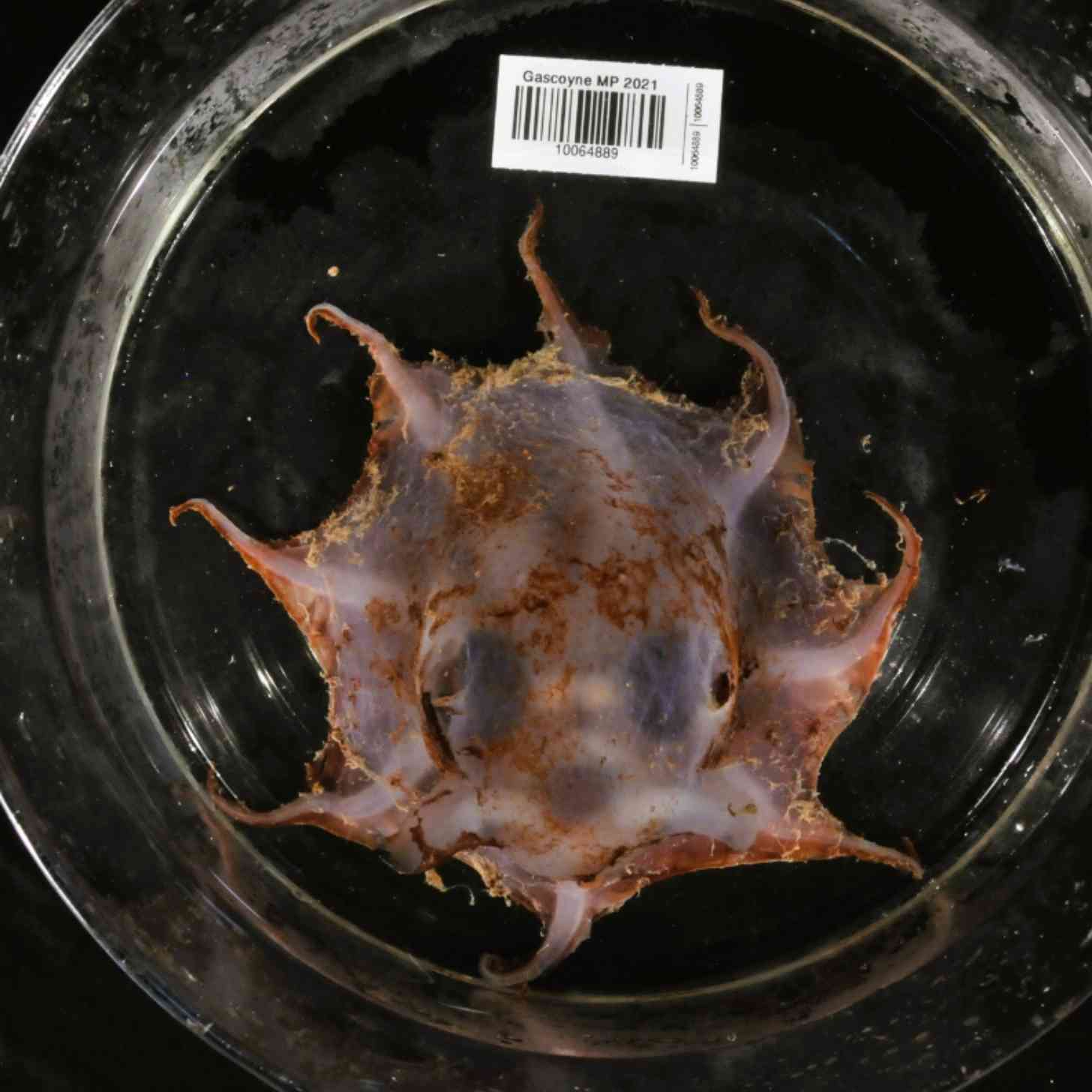
“This species discovery increases our understanding of Australia’s deep-sea ecology and biodiversity,” Tristan Verhoeff, a doctor and volunteer systematic taxonomist at the Tasmanian Museum and Art Gallery, said in a press release.
“Describing new species is also essential for future work on their ecology, and assessing populations for conservation.”
The “diamond-eyed” toad found in a tropical paradise
In the mountain streams of subtropical Yunnan, herpetologists recently uncovered a new species of Xenophrys tongbiguanensis, or Tongbiguanen horned toad.
Although it looks similar to India’s Xenophrys ancrae, the Tongbiguan horned toad has vertically oriented, diamond-shaped pupils rather than horizontal ones.
Its copper-brown iris, encircled by a golden ring, also sets it apart from other Asia-Pacific amphibians, including species like the orange-eyed Giant Himalayan Horned Frog.
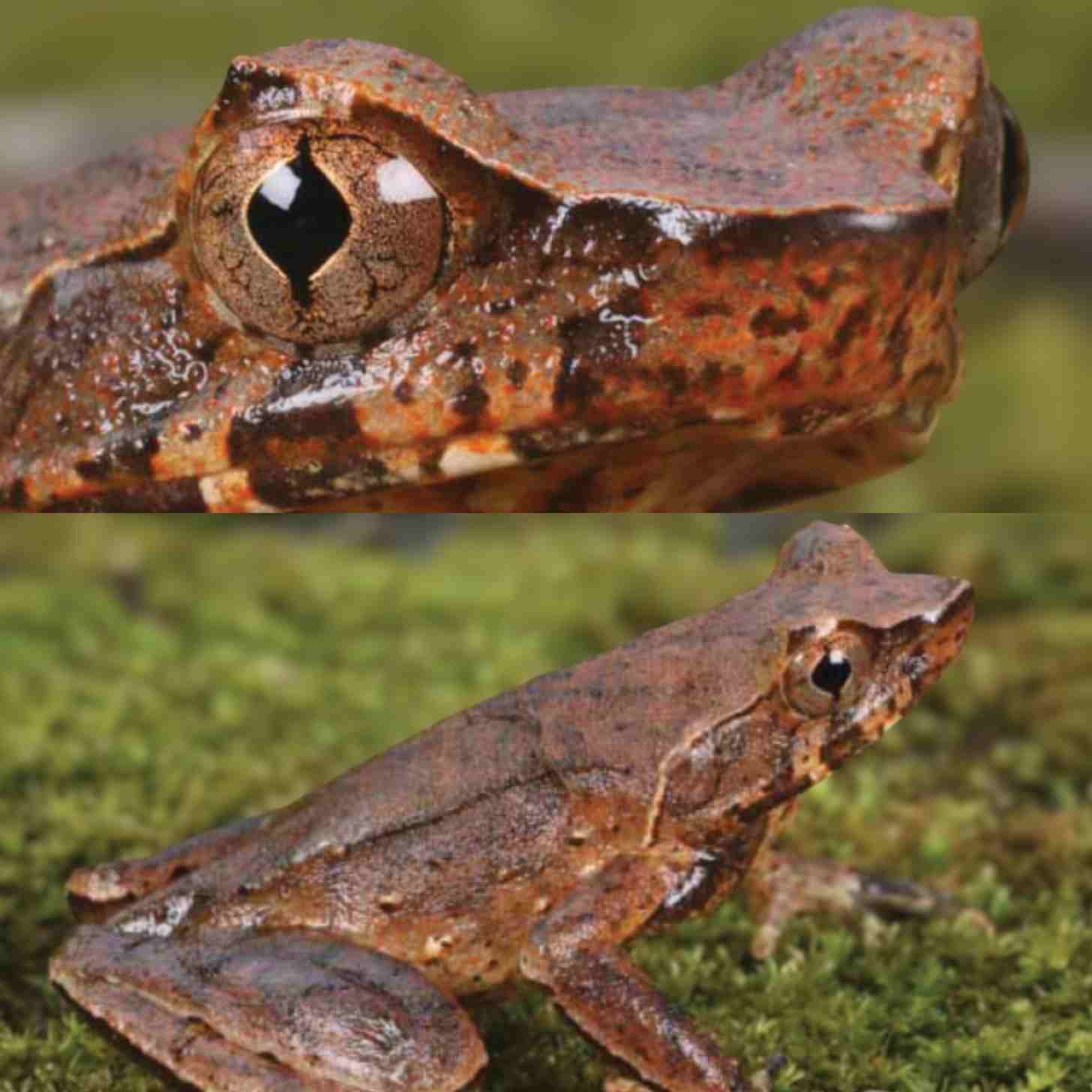
“The Tongbiguan Provincial Nature Reserve may harbor more hidden herpetological diversity than previously postulated,” lead researcher Yun-He Wu wrote for Zoosystematics and Evolution. “It is one of the richest regions in Yunnan for amphibians and reptiles.”
The blue “eyeliner boy” bees were found in Texas and Oklahoma
A new species of mining bee recently surprised scientists in Texas and Oklahoma with its physical appearance.
The males of the newly discovered Andrena androfovea boasted a facial feature typically only found in female bees — a fuzzy structure called fovea on the inside of each eye.
The structures' resemblance to eyeliner led to their nickname: “Eyeliner boys.”
The bee is also unusual for its penchant for collecting pollen from flowers of the nightshade variety.

“And as far as we know, out of the, I think, something like 1,500 or 1,700 species of Andrena in the world … we know of no other Andrena that is a picky pollen eater of members of the nightshade family,” said James Hung, an assistant professor of biology at the University of Oklahoma and co-author of the study, published in Ecology and Evolution.
“So that’s a pretty special and unique evolutionary innovation that this species has decided to take on for itself.”
New species of half male, half female spider named after a “One Piece” character
In 2025, researchers at the Chulalongkorn University Museum of Natural History discovered a new type of burrowing spider in the forests of Kanchanaburi, Thailand.
Spectacularly, one of the specimens had orange coloring on its left side and blue-gray on its right side, exhibiting a rare condition known as bilateral gynandromorphism.
“The species is named [Damarchus inazuma] after Inazuma, a character from the Japanese manga ‘One Piece,’ known for the ability to change sex between male and female,” the researchers wrote in the scientific journal “Zootaxa, in regards to the long-running manga of the same name.
“This color arrangement closely mirrors the sexual dimorphism observed in this species, with males exhibiting white coloration and females displaying orange,” they continued.
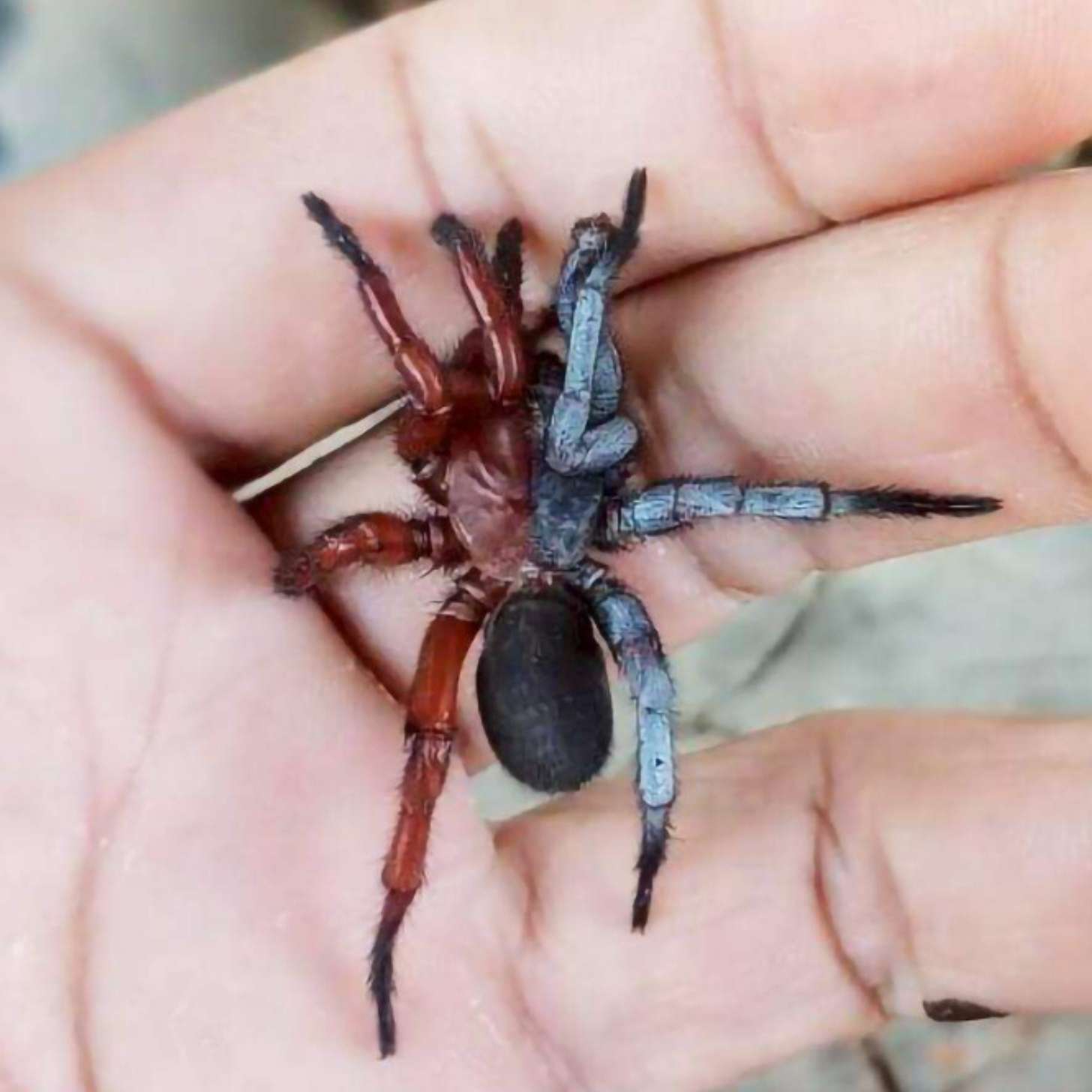
“The Inazuma style is characterized by bilateral asymmetry, presenting distinct coloration with orange on the left side and white on the right side.”
Surprisingly, it’s not the only new species to be named after a “One Piece” character in 2025. A deep-sea limpet, or sea snail, found 5,922 meters below sea level, was given the name B. Wadatsumi — after the fish-man Large Monk Wadatsumi — in July.
New species of crocodile newt with 'orange and black' coloring
At the highest peak of Doi Soi Malai mountain in northwestern Thailand, scientists scooped up a new species: the Tylototriton soimalai, or Doi Soi Malai crocodile newt.
With black-and-orange coloring, V-shaped heads, and “knob-like warts,” the new kind of crocodile newt joined a colorful array of aquatic salamanders that are threatened by extinction.
In his research, lead author Porrawee urged local governance to embrace better conservation practices for the species’ sake.
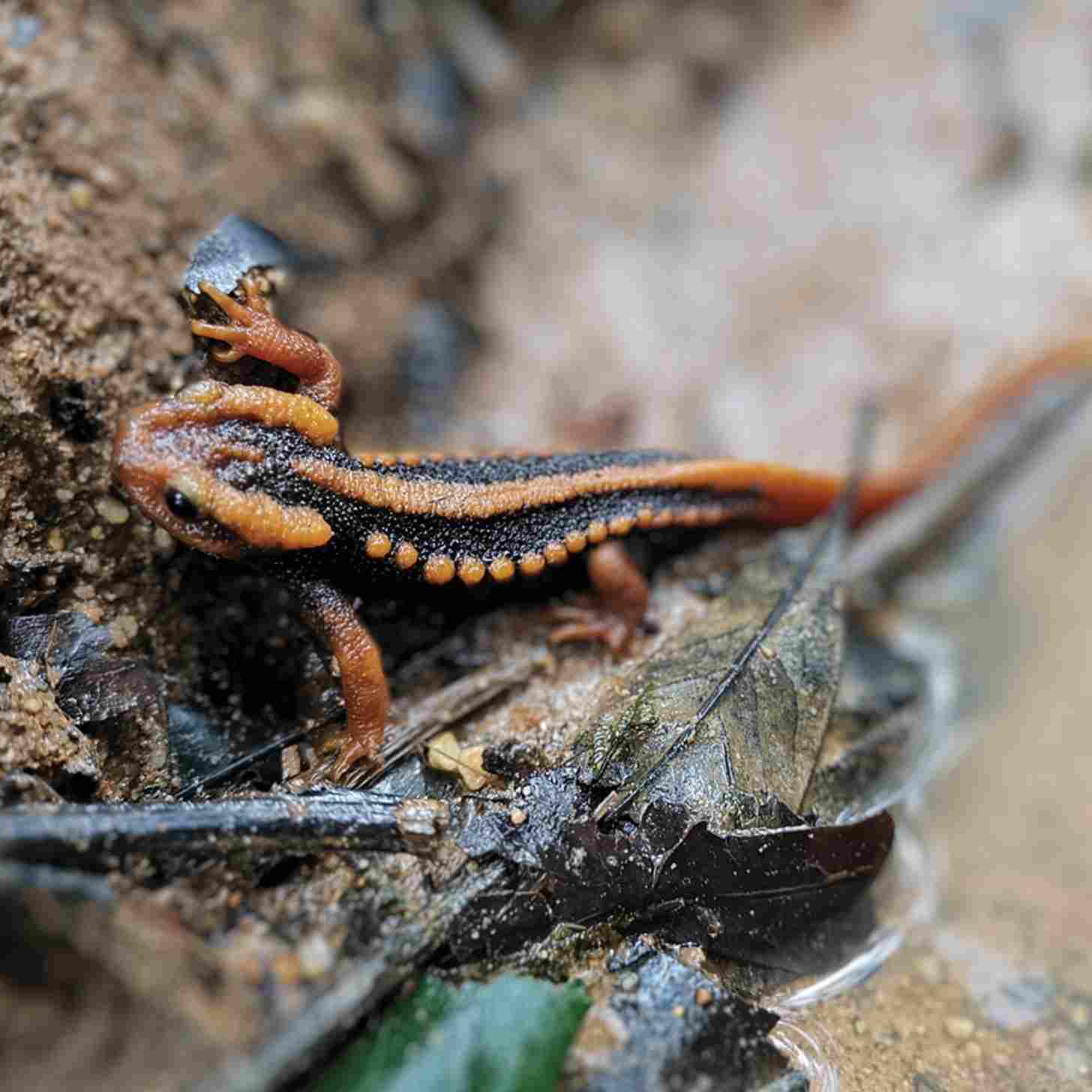
“In addition to the road disturbances mentioned earlier, both the areas surrounding and within Mae Tuen Wildlife Sanctuary have been heavily impacted by habitat alteration and deforestation, leading to forest fragmentation,” Pomchote, a professor at Chulalongkorn University, Thailand, explained in his study.
“A conservation plan is urgently needed for this new species.”
New species of pika found in the Himalayas after 20 years of research
After more than two decades of research, scientists at the Sichuan Academy of Forestry have confirmed the existence of two new pika species in the Himalayas.
Using data collected in 2003, 2023, and 2024, researchers identified the mountain-dwelling species as Ochotona galunglaensis and O. legbona.
“Our findings highlight the previously underestimated diversity within Conothoa and contribute to a more comprehensive understanding of pika diversity in the Himalayan region,” Pan Xuan and Wang Xuming observed in their study, which was published in Ecology and Evolution.
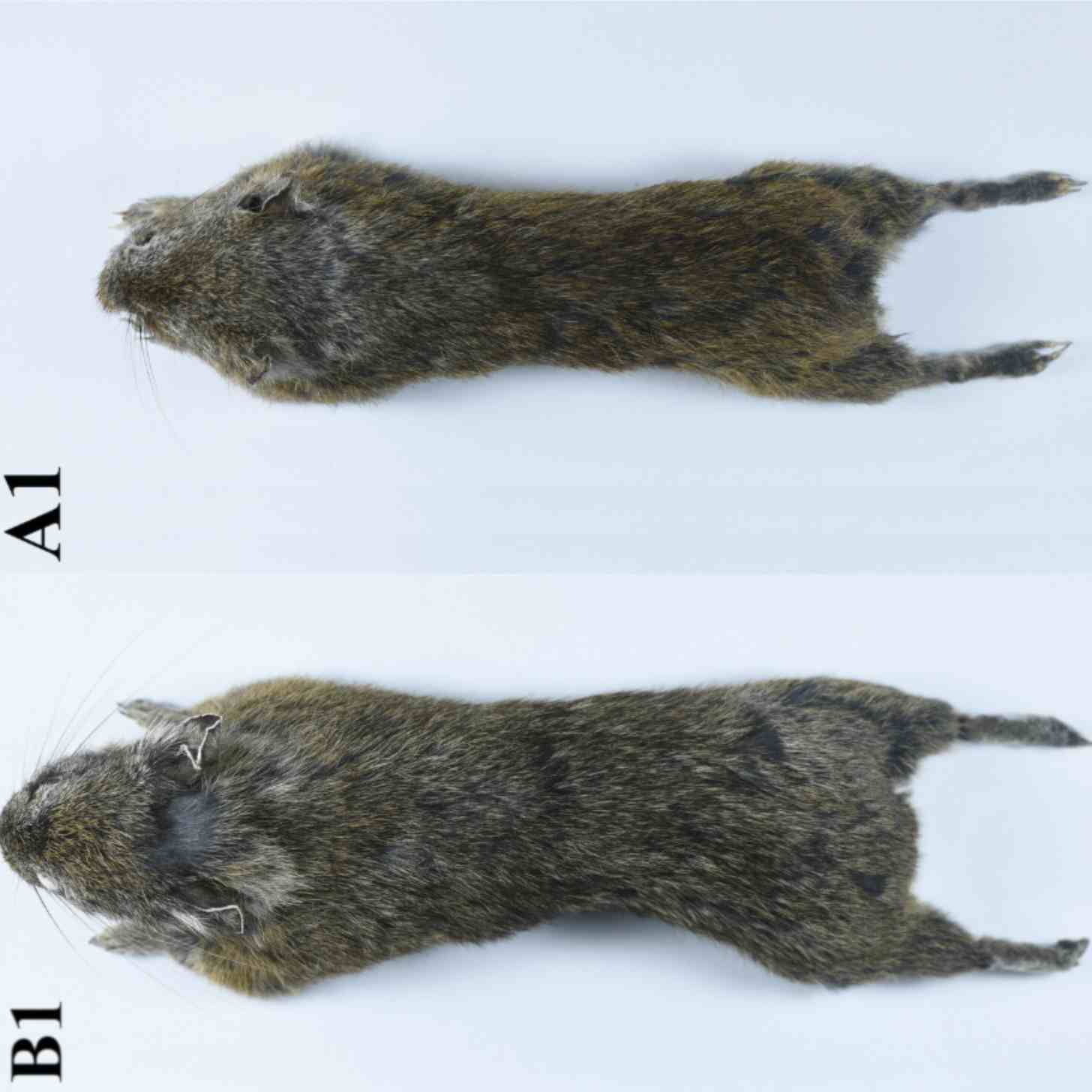
Pikas are hamster-sized lagomorphs related to rabbits and hares, known for their high-pitched calls used to communicate and deter predators.
The two newly identified species join about 30 known pika species found across Asia, North America, and Eastern Europe.
Header images via NOAA Ocean Exploration & Research (CC BY-SA 2.0) and Rick Cameron / Flickr (CC BY-NC-ND 2.0) and Koch et al., 2025, PLOS One (CC-BY 4.0)
These niche classes may not be available in every college classroom across the country, but they do add weight to the argument that learning should be fun.
From scaling redwoods, analyzing Starfleet ethics, or sewing couture for canines, these courses invite students to dive deep into their favorite hobbies — and the singers they know all too well.
If these classes sound intriguing to you, it might be time to start one at your local community arts center yourself.
Pennsylvania State University: Cow to Cone Ice Cream Making Class
In this weeklong workshop, students work hands-on with the university’s herd of dairy cows, harvesting milk, whipping up custom mixes, and freezing, flavoring, and hardening treats into ice cream, frozen yogurt, and other frozen concoctions.
“By 1925, ice cream had become so popular that a separate course devoted exclusively to the subject was established,” the course description reads. “Today, the College of Agricultural Sciences still offers the course in January, which is normally the slowest time for the ice cream industry. The Department of Food Science sponsors this program.”
Michigan State University: Surviving the Coming Zombie Apocalypse
A seven-week class that invites students to study past catastrophes and theorize how people, families, governments, civilizations, and “the Earth itself” would react in the event of a hypothetical zombie apocalypse.
“This game has two main roles: humans and zombies,” the course description reads. “The human groups must follow a set of rules to accomplish the goal and to survive. Each group should be given 5 minutes to strategize once their leader has returned from receiving their secret assignment.”
Cornell University: Tree Climbing
This outdoor class teaches students how to use ropes and climbing gear to scale forest canopies and swing from tree to tree. Extracurricular expeditions include school field trips to the Redwoods and the Costa Rican rainforest.
“Whether you are a rain forest canopy researcher, an arborist, or just a kid at heart, everyone loves to climb trees,” the course description reads.
“Recall the excitement and sense of adventure when you first crawled into the branches to look inside a bird's nest. Then you swung from limb to limb without a thought of ropes and harnesses.”
University of California, Irvine: The Science of Superheroes
Have you ever wondered how Wonder Woman’s invisible jet would actually work? This class applies physics and scientific principles to superheroes, asking students to create case studies pulled straight from comic book pages.
“Explore how science works and what constitutes ‘good’ science through case studies drawn from a wide spectrum of people's experience, for example superheros, movies, and real world issues such as global warming,” the course description reads. “The case studies will provide the change to act as science critics as the students develop a better appreciation for science and the scientific method.”
Georgetown University: Star Trek and Philosophy
This course swaps out dry philosophy textbooks for stories told from the command deck of the U.S.S. Enterprise.
Using episodes from the beloved 1960s science fiction series, students ponder complex questions like “Is time travel possible? Could you go back and kill your grandmother? What is time?” and “What is a person? Must you have the same body to be you? Same memories?”
University of California, Berkeley: Arguing with Judge Judy
A deep dive into the rhetoric of courtroom shows like “Judge Judy” and “The People’s Court” and the oft-used logical fallacies that lead to weak legal arguments. Like when Judy asks, “Tell me the name of the friend and the phone number of the friend?” And a defendant responds, “I don’t have that on me.”
“Students who are interested in logic, argument, TV, and American popular culture will probably be interested in this course,” the course description reads. “I emphasize that it is NOT about the application of law or the operations of the court system in general.”
Fashion Institute of Technology: Making Garments for Dogs
A semester-long course that teaches students how to make garments for their “favorite four-legged family members.” Lesson plans include pattern laying, professional sewing techniques, and sourcing environmentally friendly fabrics.
“At New York’s Fashion Institute of Technology (FIT), fashion has officially gone to the dogs—and cats, and even the occasional iguana,” Jackson College Counseling wrote in an Instagram post. “FIT offers the world’s only higher education program dedicated entirely to pet fashion, where students learn how to design, brand, and market clothing for our furry (and not-so-furry) friends.”

Harvard University: Taylor Swift and Her World
Swiftie students are tasked with reading the works of Willa Cather, James Weldon Johnson, William Wordsworth — and, of course, Taylor Swift — as they explore the lyricism and literary influences found within the musician’s vast discography.
“We will move through Swift's own catalogue, including hits, deep cuts, outtakes, re-recordings, considering songwriting as its own art, distinct from poems recited or silently read,” the course description reads.
“We will learn how to study fan culture, celebrity culture, adolescence, adulthood, and appropriation; how to think about white texts, Southern texts, transatlantic texts, and queer subtexts. We will learn how to think about illicit affairs, and hoaxes, champagne problems, and incomplete closure.”
A version of this article originally appeared in the 2025 Education Edition of the Goodnewspaper
Header image via Yan Krukau
Zoe Thorogood is a British graphic novelist who gained a massive following with the release of her breakthrough work, “It’s Lonely at the Centre of the Earth.”
The semi-autobiographical story uses an array of illustrative styles and color swatches to communicate her struggles with depression — including her confronting literal demons.
“Thorogood elevates the dark material with her expressive use of the comics medium and the urgency of her voice,” Forbes wrote when the book was released. “One to watch for the 2020s.”
“‘It’s Lonely at the Centre of the Earth’ is, quite simply, a comics masterpiece,” Broken Frontier praised. “If you are ever looking for a book that serves as the ultimate example of comics that do things that only comics can then this should be your go-to tome. It’s that significant.”
But Thorogood’s meta fable took on a different connotation for her in the wake of a family tragedy. In October 2024, her younger brother James died by suicide at 23 years old.
In the wake of his death, she decided to donate all profits from her graphic novel to mental health charities — including Mindcharity, a nonprofit that supports housing, crisis helplines, and drop-in centers in England and Wales.
According to The Guardian, the publishers of the Italian, French, and Spanish editions of her work pledged to match the donations.
“Mental health is so underfunded and misunderstood, and I’m not going to pretend this will make much of a difference, but while I am still in deep grief and pain it is a start,” Thorogood wrote in an Instagram announcement.

Thorogood added that James was featured in a section of her graphic novel, and his memory lives on in her work — as well as in her and her family’s grief.
“I don’t have any answers right now, I can’t bring my brother back or fix the system,” Thorogood admitted in the same post. “I am — as they say — just a girl, but now more than ever I know how strongly I feel about this. Once again, James, I love you, you frustrate me as a little brother should, but I miss you.”
In 2025, Thorogood donated $40,119 to mental health charities across the UK.
“I’m proud of myself,” she wrote in the update post on December 15. “But I can’t pretend it hasn’t come from a place of deep personal regret and sadness.”
“The world lost a lot more than it realised when it lost James. He was the most considerate person I knew. He’d help anyone with anything. A gentle and caring soul in a cruel world that didn’t care for him. I know there’s many James’ out there, and the world needs as many James’ as it can get.”
“I think you have to have a bit of a mean streak to survive in this world,” she wrote. “But I wish we could all be more like James. I know I’m trying.”
A version of this article originally appeared in the 2025 Edition of the Goodnewspaper
Header image via Zoe Thorogood / Instagram
Fifteen years ago, celebrated Australian ecologist Robert May posed a fantastical question to the scientific community.
“If some alien version of the Starship Enterprise visited Earth, what might be the visitors’ first question?” May wrote in an issue of Science. “I think it would be: ‘How many distinct life forms — species — does your planet have?’”
“Embarrassingly,” he continued, “our best guess answer would be in the range of 5 to 10 million eukaryotes (never mind the viruses and bacteria), but we could defend numbers exceeding 100 million, or as low as 3 million.”
It’s a passage that John Wiens, a professor in the University of Arizona Department of Ecology and Evolutionary Biology, returned to when he explored the rate of species discovery in a new paper.
“Right now, we know of about 2.5 million species, but the true number may be in the tens or hundreds of millions or even the low billions,” Wiens told the University of Arizona.
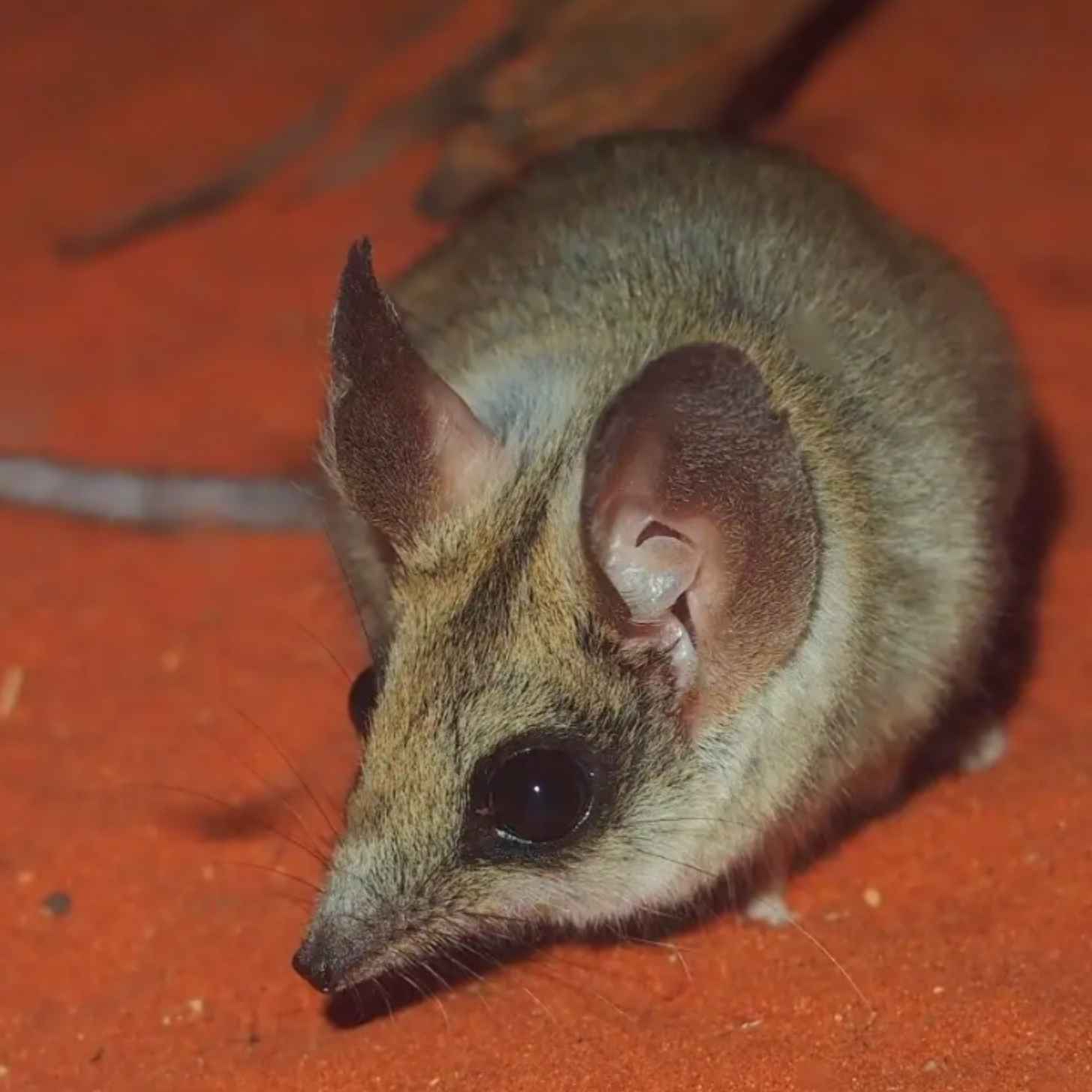
“Some scientists have suggested that the pace of new species descriptions has slowed down and that this indicates that we are running out of new species to discover, but our results show the opposite,” Wiens said. “In fact, we’re finding new species at a faster rate than ever before.”
Together with his co-authors, Xin Li, Ding Yang, and Liang Wang, Wiens analyzed the taxonomic histories of roughly 2 million species.
They found that — from 2015 to 2020 — researchers introduced an average of more than 16,000 new species to the taxonomic record per year.
“These thousands of newly found species each year are not just microscopic organisms, but include insects, plants, fungi, and even hundreds of new vertebrates,” Wiens explained.
In October, Wiens and his colleague Kristen Saban released a separate study on the slowing extinction rates of many plant and animal groups.
“Our good news is that this rate of new species discovery far outpaces the rate of species extinctions, which we calculated to about 10 per year,” Wiens said, in reference to the extinction study.
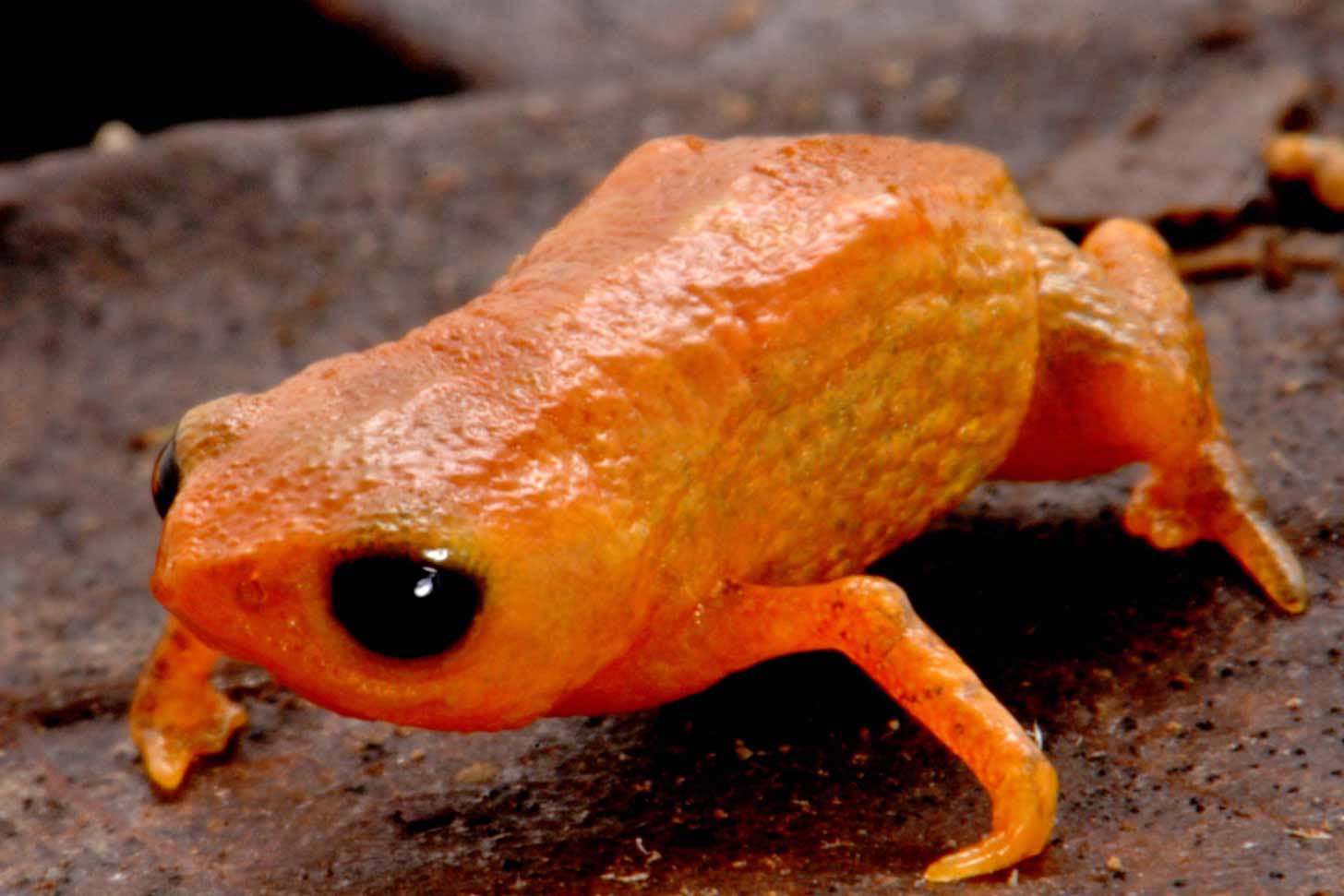
Wiens also emphasized that their new evidence does not mean that conservationists should abandon modern protection efforts or roll back climate change research.
In fact, he said, it means the opposite.
“Discovering new species is important because these species can’t be protected until they’re scientifically described,” Wiens said. “Documentation is the first step in conservation – we can’t safeguard a species from extinction if we don’t know it exists.”
As new species are decoded and analyzed for taxonomic records, their natural substances have also helped the medical community connect the dots on human research.
For example, spider and snake venoms, as well as many plants and fungi, contain substances that could be used to treat pain and cancer.
"We're still just scratching the surface of what these species can do for humanity," Wiens said.
You may also like: Scientists discovered thousands of new species in 2025. See 9 that wowed them, from the 'curiously isolated' butterfly to the screaming pika
Header images: A kultarr. Image via Mark Marathon / Wikimedia Commons (CC BY-SA 3.0) The Indo-Burmese pangolin (Manis indoburmanica). Image via the Zoological Survey of India. Telescope octopus. Image via ROV SuBastian / Schmidt Ocean Institute (Attribution-NonCommercial-ShareAlike CC BY-NC-SA)
Psychosis is a symptom shared by a number of mental health diagnoses, including schizophrenia, stroke, bipolar disorder, and depression. Psychosis causes people to experience hallucinations and hear voices — and oftentimes, those imagined voices are highly abusive.
But burgeoning technology from the Institute of Psychiatry, Psychology & Neuroscience at King’s College London is helping patients confront those voices in a digital landscape.
Built on more than a decade of research, the technology is a three-way conversation between the patient, their therapist, and a digital avatar on screen.
After the patient provides a likeness and voice description to the trial, an avatar is rendered and the therapist takes on a dual role, speaking as themselves and voicing the avatar through voice conversion software.
Then, the patient is able to talk back to those voices on their terms and reclaim their power.
“To our knowledge, this is the first therapeutic intervention that has a direct and sustained impact upon the frequency with which people hear voices,” Philippa Garety, a clinical psychology professor at IoPPN told The Guardian.
“This is an extremely important finding, as it is a clear priority for voice-hearers, and hearing fewer voices, less often, or voices going away altogether can have a hugely positive impact on their day-to-day lives.”
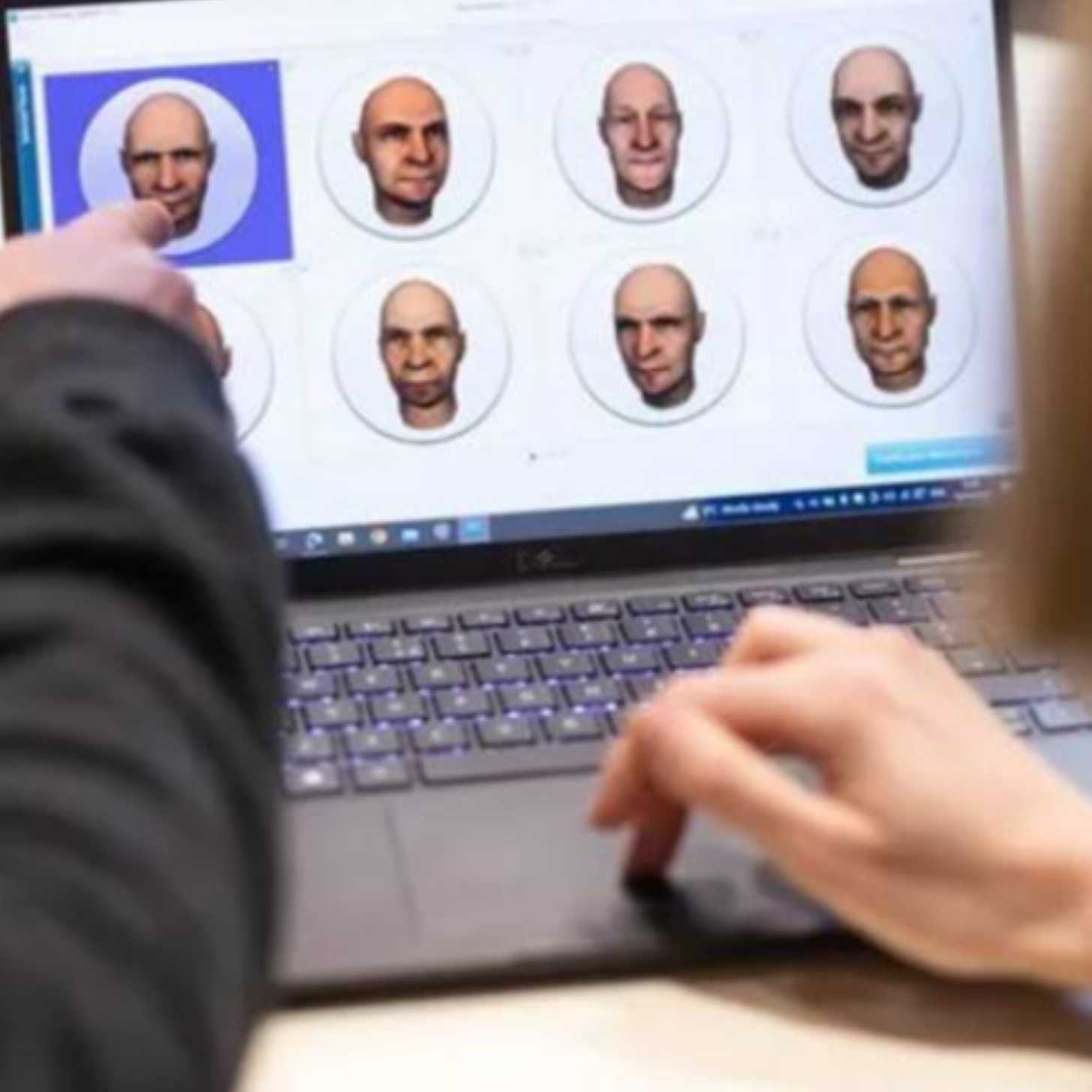
Nick, a patient from the study, said that he was hearing up to 30 or 40 abusive voices a day before he sought help through the trial in 2015.
“It brought it down to about four or five,” Nick said. “I felt like I was taking back control of my life again.”
A version of this article originally appeared in the 2025 Mental Health Edition of the Goodnewspaper
Header image via Timur Weber
In Gaithersburg, Maryland, art curator Sandra Davis set 14 chairs on display in the Arts Barn’s professional art gallery in 2024. Each chair, handmade by a different artist, evoked a mental health issue that the artist had grappled with.
Courtney Mohring’s chair, “Buttoned Up,” was a black, high-backed chair coated in buttons and bunched fabric that communicated discomfort. Molly McCracken’s bright, tentacled “Panic” chair looked akin to the character “Anxiety” in Pixar’s “Inside Out 2” — an uncanny coincidence, given that the piece was designed prior to the film’s release.
And Davis herself had a piece in the exhibit — a plush, rainbow concoction titled “Color Me Manic.”
“My spouse has dealt with some mental health issues throughout the 42 years we’ve been married,” Davis told WTOP News. “And I can remember episodes when he would go through a manic state — that particular chair is a description of that sort of garish, loud, extreme feeling that a person may go through.”
For many of the artists, it was an opportunity to try a medium that they had never attempted before.
“It was nice to have something to ground myself to, and it was a near and dear to me topic, exploring mental health,” Mohring said in a video for the gallery. “And then also just the chair — it was kind of a way to get off of a canvas and onto something different.”
The exhibit — titled “Pull Up a Chair 2.0” — was a kind of “sequel” installment to a similar showcase that Davis curated in 2022, which also featured handmade chairs.
At the gallery, the artists came in to talk about their art, but the night soon transformed into a deeper conversation about the feelings of anxiety, loss, and isolation that Davis and her fellow artists had experienced at the beginning of the COVID-19 pandemic.

“We had what we call an ‘artist roundtable,’ where each of the artists came to talk about what their inspiration was, what they were feeling when they were creating the chair, and it ended up feeling very much like a group therapy session,” Davis said.
This time, Davis wanted to replicate that experience on a grander scale, by opening it up to the public and inviting guests to pull up a chair and talk about the art — and how it relates to their own mental health journeys.
“We know the mental health conversation is top of mind,” Davis said. “We hear it in the news, we’re reading about it. They’re talking about it at school. But we haven’t really necessarily [felt] like it’s still a welcoming conversation.”
But Davis believes we can slowly change those conversations for the better — and it starts with making space for them.
See the artists and their work below:
A version of this article originally appeared in the 2025 Mental Health Edition of the Goodnewspaper
Header images via Aaron Davis
In late November, trail cameras in southeastern Arizona captured images of a male jaguar, the fifth jaguar documented in the state since 2011.
Footage of the big cat, nicknamed Cinco, was shared by the University of Arizona’s Wild Cat Research and Conservation Center. The center has been monitoring jaguar appearances and tracking their movements in the state for nearly 15 years.
“We’re very excited,” Susan Malusa, director of the center’s jaguar and ocelot project, told the Associated Press. “It signifies this edge population of jaguars continues to come here because they’re finding what they need.”
Researchers identified Cinco by comparing the distinct black patterns on their coats, called rosettes, to those of previously recorded jaguars.
“They are unique like a fingerprint,” Malusa said. “There are no two alike.”
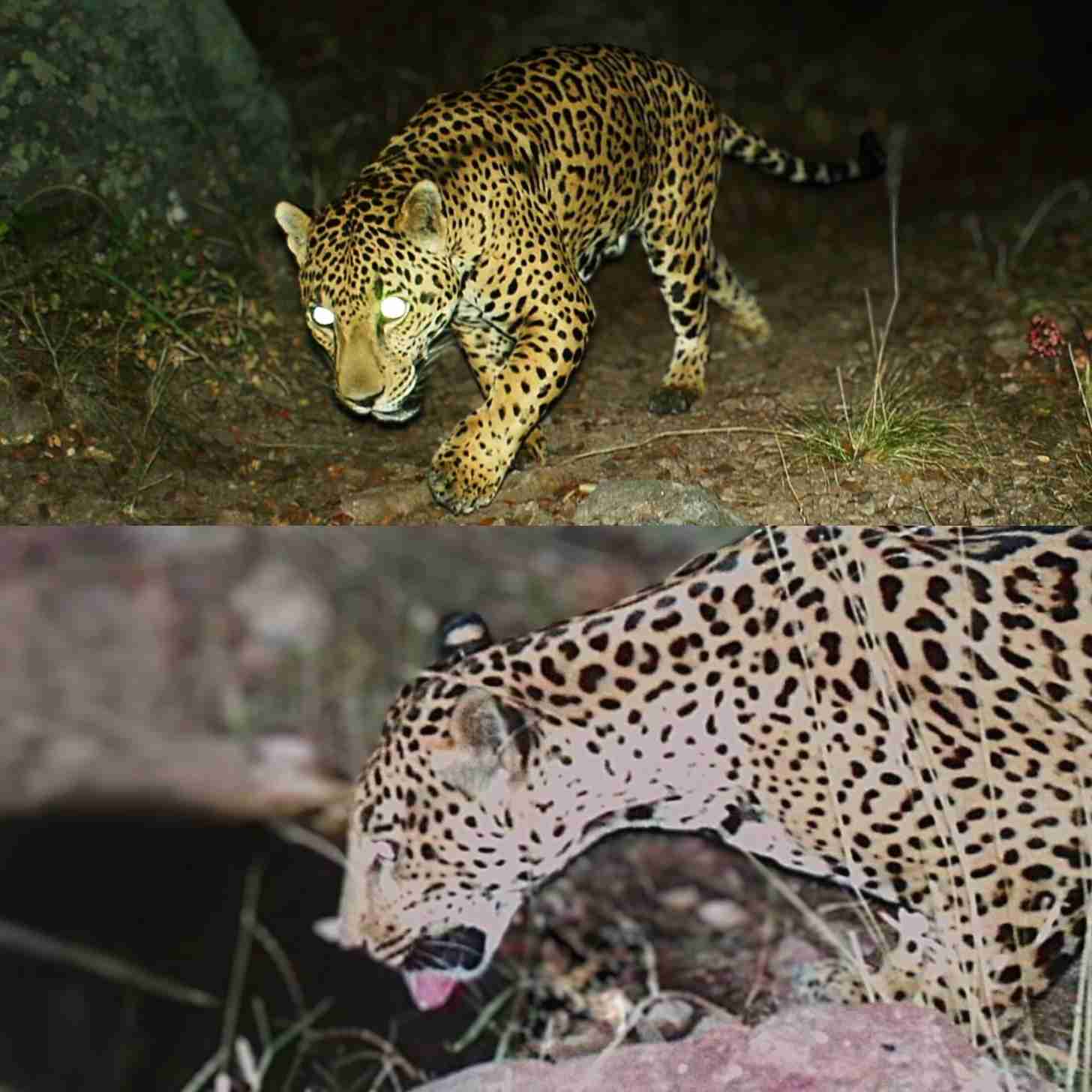
To date, they’ve logged 230 jaguar detections. The latest jaguar sighting is just one point of data in a much bigger story — and the mysteries they present.
“ Are populations are increasing, are they stable, declining?” Malusa posed. “What does long-term recovery look like?”
In the early and mid-1900s, jaguars and ocelots faced a series of mounting threats, from poachers to government-sanctioned predator programs.
Even after jaguars were listed as endangered in 1997, they continued to face widespread habitat loss due to deforestation, draining wetlands, and border wall construction along the U.S.-Mexico border.
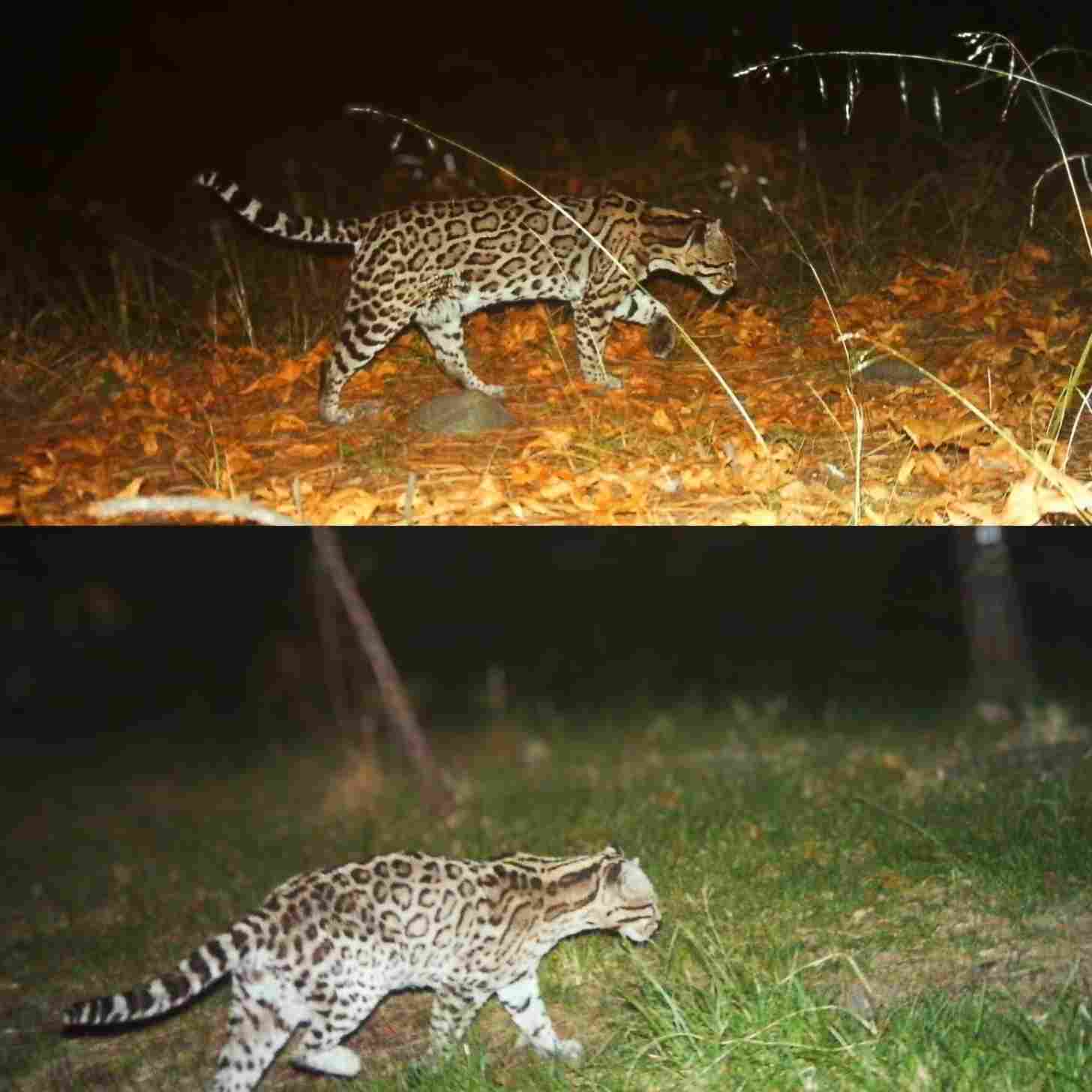
Although the core population of jaguars lives in Mexico, scientists believe drought and declining prey may be pushing them northward.
Conservationists warn that continued border wall construction could block vital wildlife corridors and threaten jaguars’ ability to move, survive, and recover in the region. Fringe populations, which have wandered into Arizona, are considered crucial signs of the species’ resilience and adaptation.
Which is why sightings of big cats like Cinco give Malusa hope.
“That’s the message — that this species is recovering,” Malusa said. “We want people to know that and that we still do have a chance to get it right and keep these corridors open.”
You may also like: Pocket-sized owl babies mark first sighting for rare species in over 100 years
Header image via Haim Charbit / Pexels