Whales eat a lot of food. In recent years, experts have estimated that the world’s biggest whales eat between 10 and 20 tons of food a day: the caloric equivalent of 70 to 80 thousand “Big Macs.”
“Decades of our eating is one day for them,” marine ecologist Matthew Savoca told NPR.
And all that food — fish, squid, krill, and zooplankton — has to go somewhere.
Luckily, Savoca said, tons and tons of whale poop isn’t harmful to the environment: It actually helps bloom phytoplankton. Those phytoplankton go on to feed krill, which feed countless marine animals, including penguins, seals — and again, whales.

But those millions of tiny phytoplankton also serve a crucial role in climate change by absorbing carbon dioxide from the atmosphere.
“Whale poo has massive value,” CNN's chief climate correspondent Bill Weir said. “There’s a little over a million whales now, of all species, so the economists say if we get four million on the planet, we can really draw down as much as four Amazon rainforests [worth of carbon].”
A version of this article originally appeared in the 2024 Animals Edition of the Goodnewspaper.
Header image via DINOE XU / Pexels
According to the Xerces Society for Invertebrate Conservation, the circle of life also seemingly extends to the housing market of the animal kingdom.
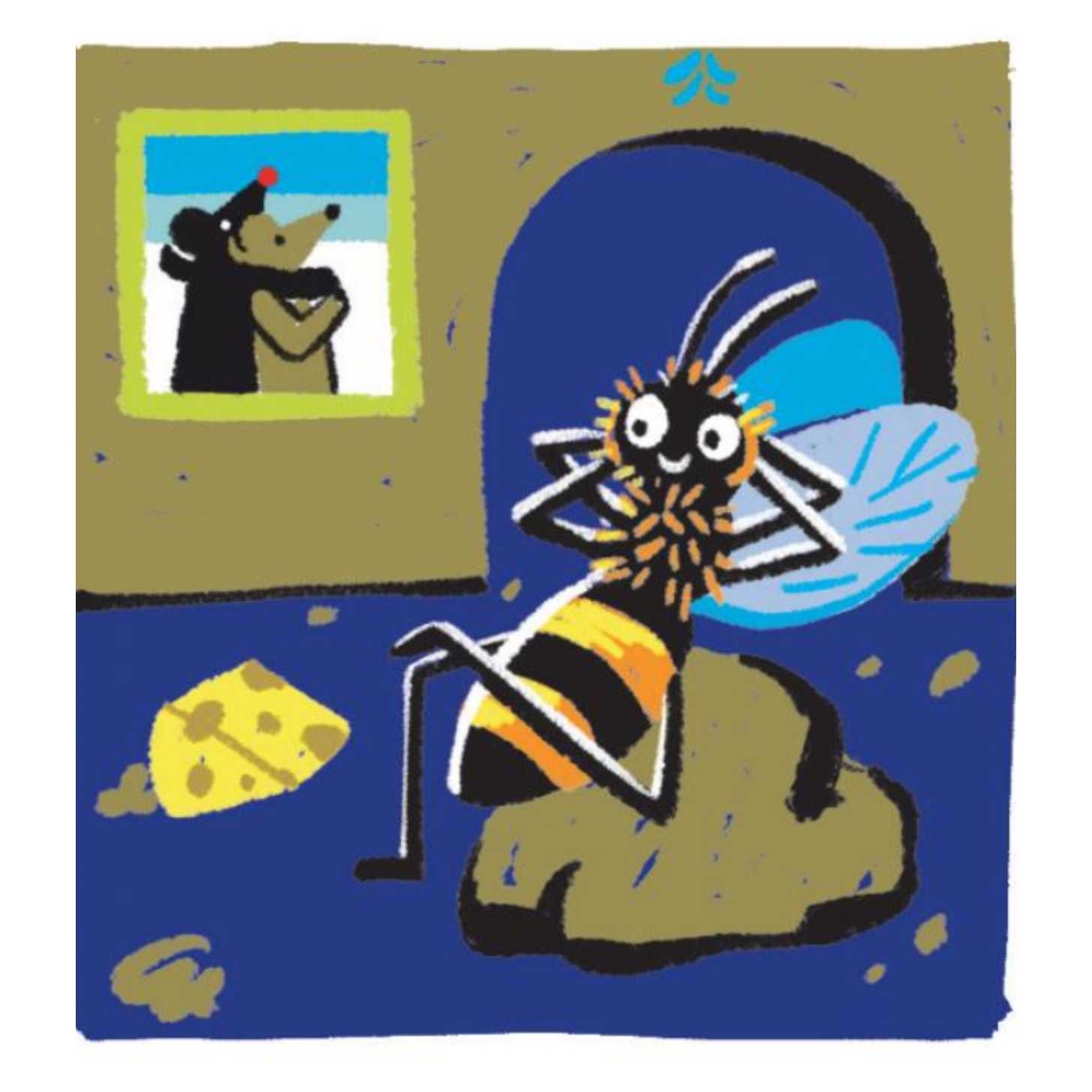
Recent studies show that when native bees across North America are on the lookout for a new home, they prefer something that’s well-loved, recently vacated — and preferably dug by a rodent.
“For queen bumblebees, who seek pre-made spots to start colonies, there’s nothing cozier than an abandoned mouse or squirrel nest or a burrow dug by a chipmunk,” wrote Nancy Lawson, a staff writer for the Humane Society of the U.S.
Unlike wasps and carpenter bees, bumblebees don’t eat or chew wood, so they rely on native wildlife to construct — and eventually abandon — the cavities they’ll move into.
Lawson also noted that small mammals such as squirrels, mice, and chipmunks play a dual role in safeguarding biodiversity by dispersing seed trees and fungi every time they dig.
“Making room for these rodents not only helps important pollinators, but it also nurtures the plants they depend on,” Lawson explained.
A version of this article originally appeared in the 2024 Animals Edition of the Goodnewspaper.
Header image via Free Nature Stock / Pexels
Over the past 14 years, Portland, Oregon area strippers have donated $183,000 worth of toys to Doernbecher Children’s Hospital during their annual holiday fundraiser: Tatas for Toys.
This makes them the top donor to the hospital.
And the 15th annual event, held Tuesday night at the Alberta Rose Theatre, broke previous records — making it rain with $60,000 in donations.
A tradition started by comedian Aaron Ross, the very first Tatas for Toys raised $500, enough to fill a small wagon with toys. But now, the “North Pole Dancers” have even more to show off.

“Portland showed the f—k up for kids at Tatas for Toys,” one attendee, Ryan Castro, posted in an Instagram Story. “They raised more tonight than the whole first 10 years combined!”
The money raised at each annual event is used to buy toys from local Portland businesses, stocking the hospital’s Child Life Therapy Program.
And this year’s event kicked off with a chant led by Ross and co-host and dancer ToX!c. “We’re number one!” the audience and performers cheered, as the group celebrated their donation milestone with the hospital.

“Nobody donates more toys to Doernbecher Children’s Hospital than us,” Ross said to a cheering crowd.
A dancer from the show, Carlee Murrell, also shared a video from the evening’s festivities, which included sexy variety acts, live music, auctions, drinks, and all-around merriment.
“Honestly speechless,” Murell, who works as a personal trainer by day, shared in an Instagram Story. “I feel so lucky and so grateful to be a part of such an amazing event and watch it grow over the years.”

For Ross and ToX!c, this year’s achievement reflects 15 years of dedication to the cause — and a future of good waiting to be done.
"Everybody put so much hard work into this show, volunteering their time, going shopping, sharing their stories and their vulnerability with us,” co-host ToX!c told The Oregonian.
“Honestly, it’s all in a day’s work. It’s what we do. And everything we’ve done over the years has led to this awesome achievement,” Ross added to Good Good Good.
“Many more milestones to come … because we believe in ourselves, each other, and the good people of Portland.”
For those who couldn’t get tickets to the sold-out show, the evening was streamed live on Twitch and is available to watch back now. And those who want to further the cause can donate directly to Doernbecher Children’s Hospital's Child Life Program.
You may also like: Become a 'Trans Santa' and support trans youth in need during the holidays
Header image courtesy of Thomas Chamberlain/Tatas for Toys
In Colorado’s mountain towns — where wealthy visitors flock to ski, snowboard, and après the day away — workers face a severe housing shortage.
Booming demand for high-income homebuyers, limited supply of places to live, high construction costs, and stagnant wages put a strain on everyday workers who are unable to afford or find housing. This has led to increased commutes, homelessness, and even people camping in the parking lots of their workplaces to get by.
To alleviate the burden on one of these mountain towns, Steamboat Springs resident and billionaire venture capitalist Mark Stevens has purchased a vacant apartment complex that he is now offering to renters at below-market rates.

Stevens has purchased the 104-unit Riverview apartment complex for $95.3 million, which shakes out to be more than $916,000 per unit, according to The Colorado Sun.
Two buildings now make up the property, which sits on the banks of the Yampa River. It was first envisioned to be a luxury development when a developer planned a condo-style village in 2004, including a hotel, commercial space, and underground parking.
The recession left the parcel of land dormant until about 2018, when it was sold off piece by piece, breaking off into single-family duplexes, a grocery store, and local restaurants, reports The Sun’s Jason Blevins.
Then, last year, developer Gorman and Company built the Riverview apartment complexes, agreeing with the city to include 11 workforce housing units. But in September of this year, Stevens’ company — 970 Steamboat LLC, which was created just a month prior — purchased the whole complex.
The company announced the building would be available to working locals for reduced rates, and leases opened up last month.
The area’s average rent is $4,500, but the apartments at Riverview are listed at $925/month for a studio, $1,600/month for a two-bedroom, and $2,125/month for a three-bedroom.

Anna Allsberry, a school counselor at Steamboat Springs High School, told Realtor.com she would not be able to afford living in her hometown if it weren’t for this development.
“The housing in Steamboat is for sure an issue. It's gotten out of hand just since I moved back after college. It's been a struggle to find anything appropriately priced,” Allsberry told Realtor.com.
“It’s not just low-income folks that are struggling with housing. It’s professionals like doctors and teachers, too.”
At the new development, qualifications for reduced-rate housing are not tied to area median income charts. Those 11 units set aside by the city for specific workforce housing remain, but none of the other units rely on public subsidies. The only requirement to live there is that at least one member of the household works a minimum of 30 hours a week in Steamboat Springs.
“Riverview serves the heart of the Steamboat community by providing true affordability for local workers. This is more than just a place to live in Steamboat, Riverview is about maintaining Steamboat’s culture, community, and connection [with] affordable housing for the neighbors who keep our town strong,” Kimball Crangle, the president of Gorman and Company’s Colorado operations, told The Colorado Sun.
“The people who power this community deserve to live where they work and continue to make Steamboat thrive.”
Stevens is making that possible.

An early investor in companies like Nvidia, Google, and YouTube, Stevens began at Intel during the PC boom and now owns S-Cubed Capital, which has offices in California and Colorado.
In 2013, he and his wife, Mary Stevens, joined “The Giving Pledge,” a philanthropic project led by the likes of Bill Gates and Warren Buffett. This pledge represents a promise by some of the world’s richest people to give away the majority of their wealth.
“My wife, Mary, and I feel very fortunate and blessed that we find ourselves, at a relatively young age, to be able to give our time, treasure, and talent to a variety of philanthropic organizations in a substantial manner,” Stevens wrote in a letter upon joining The Giving Pledge.
“We look forward to joining all of the other Giving Pledge families to foster a world that is a much better place in the coming decades.”
And at least for a few dozen families, making the world a better place starts in Steamboat Springs.
“We are pretty much saving a grand a month and living in town now,” Landin Hutchinson, a construction worker who recently moved into Riverview with his wife and 2-year-old son, told The Colorado Sun.
“We feel very, very fortunate. There are a lot of people here who are super appreciative of this opportunity.”
You may also like: Tech millionaire builds village of 99 tiny houses for homeless neighbors in Canada
Header images courtesy of markstevens.com and Jacob/Adobe Stock
Interfaith Alliance, a national advocacy group dedicated to religious freedom and civil rights, has launched a new campaign to freeze out Immigration and Customs Enforcement, just in time for the holidays.
The multi-faith group has released a 30-second video ad that contrasts ICE’s violent raids against “the holy season’s religious calling to ‘love thy neighbor,” according to a press release from the organization.
Interfaith Alliance pledged a $300,000 ad spend across digital, broadcast television, and streaming services, particularly targeting media markets that have seen intense crackdowns from federal immigration agents, including Charlotte, North Carolina, and New Orleans, Louisiana.
The campaign also includes targeted ad buys on Fox News in the West Palm Beach area, which is intended to reach Mar-a-Lago airwaves. The ad will also run on channels nationwide through Christmas.
In the ad, viewers see images of ICE raids interspersed with clips of families joyfully gathering for Christmas. In the background, “O Holy Night” plays, with simple text on-screen: “In America, we love one another. Choose love, not ICE.”
“The holiday season reminds us that religion can be a force for compassion, solidarity and love — and that religious Americans can and must speak out about the cruelty we see against immigrants and other vulnerable communities all around us,” Reverend Paul Brandeis Raushenbush, president and CEO of Interfaith Alliance, said in a statement.
“As the ‘Choose Love Not ICE’ campaign makes clear, people of faith in this country have a huge role to play in supporting democratic, non-violent efforts to help immigrant families, challenge ICE, and to oppose authoritarianism in all its forms.”
The ad also urges supporters, specifically religious Americans, to sign a petition online, amplifying the following message:
“This holy season, ICE cruelty is threatening our religious calling to love our neighbors — in our houses of worship and in our communities. As faithful Americans, as an expression of our values, we demand that the federal government stop the attacks on our neighbors and we call on our political and religious leaders to stand in solidarity against their cruelty.”
As everyday shoppers, cyclists, childcare providers, and grocery store chains have stepped in to support immigrant communities this year, faith leaders have also taken a stand.
This holiday campaign is another effort by faith leaders who are standing in opposition against ICE and the Trump administration’s crackdown on immigrant families.
In North Carolina earlier this year, church organizers held educational seminars for residents to lawfully and effectively report ICE activity in their community, for instance.
The US Conference of Catholic Bishops also released a special video message recognizing the fundamental dignity and rights of immigrants. Additionally, religious leaders and groups including Interfaith Alliance have helped spearhead major faith group participation in anti-authoritarian “No Kings” protests this year.
And leading up to the holidays, several churches nationwide have recreated nativity scenes that depict Jesus and family facing ICE harassment.
“While we see the Trump Administration trying to use religion as a tool to justify repression, the majority of religious Americans see welcoming and caring for those in need a core part of our values,” said Rev. Raushenbush.
“When we see heavily armed federal agents seizing families, hurting protesters, and in some cases even invading sacred religious spaces and arresting faith leaders, we feel outraged and alarmed. That’s why people of faith have such an important role to play in defending democracy, diversity, and dignity for all Americans.”
You may also like: Hundreds of anti-ICE protestors brought their Home Depot to a halt just by buying and returning 17-cent ice scrapers
When mushrooms make the news, it’s often for grim reasons: a mysterious poisoning, toxic species in the bush, or high-profile court cases.
But the mushroom itself is only the fruit body. Beneath every cap lies the real organism: a hidden network of white threads weaving through soil and wood.
And that underground network, called mycelium, may help solve some of our biggest climate and waste problems.
In my research on building materials, I focus on improving the durability of mycelium-based materials for construction purposes. So what exactly is mycelium, and how can we harness it for various materials?
Mycelium is everywhere
Mycelium is the living body of a fungus. It grows as thin, branching filaments known as hyphae, which spread out in all directions in search of food.
In a forest, these threads help break down leaves, logs, and other organic matter, known as biomass. This turns waste into nutrients that trees and plants can use again. A single mycelial network can spread across meters of soil, and sometimes much farther.
Importantly, mycelium is everywhere. It thrives in leaf litter, compost piles, mulch, crops after harvest, and even in the dead wood under our feet. We usually never see it, yet it’s one of nature’s most powerful recyclers.

A living glue
We can also use its unique features in the lab to create composite materials. Because mycelium grows by binding itself to whatever it feeds on, it naturally forms a kind of living glue. As the fibers spread, they wrap around particles of sawdust, straw, or other agricultural and industrial biomass waste, locking them together.
After a few days, this mixture becomes a lightweight but solid block. If we then stop the growth and eventually “kill” the fungi with heat, the block still holds its shape — no machinery, no plastics, and very little energy required.
All this makes mycelium very appealing in materials science. It grows at room temperature. It is shaped inside a mould. And it produces structures that are breathable, biodegradable, and fire-resistant.

For designers, architects, and engineers, mycelium offers a rare combination: organic material that can be grown to order.
Although the field is still young, mycelium-based materials are emerging in several areas, such as alternatives to polystyrene in packaging, alternatives to synthetic insulation panels, acoustic panels for reducing echo in noisy spaces, and even leather-like materials.
Mycelium has also been used in construction prototypes where architects have built temporary structures using blocks grown from plant waste, highlighting how construction might one day include “grown” components.
More work to be done
These examples show the versatility of mycelium, but also its limits. Mycelium-based composites — often called MBCs — are not yet strong enough to replace bricks or most plastic parts. They absorb humidity unless they are treated. They decay outdoors without protective coatings. Growth time and organic characteristics also make large-scale, uniform production difficult.
My research group focuses on improving the durability of mycelium-based composites for building applications — predominantly for passive cooling — while maintaining their environmental benefits.
To improve the durability of a mycelium composite block, we’re exploring several routes.
First, there’s natural reinforcement — mixing fibers such as hemp, flax, or other agricultural, industrial and construction byproducts to improve strength while keeping the material biodegradable.


Adding a protective coating is another option. If we can add natural waxes, oils, or mineral layers, the materials could resist moisture without making the material toxic or non-compostable.
We’re also harnessing artificial intelligence to adjust temperature, humidity, and nutrient sources for growing the blocks, to see if we can grow materials that are more uniformly dense and have better passive cooling and structural performance.
Not every method works. Some coatings trap moisture, which can weaken the material. Some fibers have slow growth. In other cases, the material becomes too brittle or too spongy.
But each trial teaches us more about how fungi build their networks — and how we might guide them to build stronger ones.
Our broader goal is to create bio-based materials that can withstand real-world conditions: weather, load, and time. If we can do that, mycelium-based composites could reduce the amount of plastic in packaging, offer low-carbon alternatives in construction, and push designers, architects, and builders to think beyond what can be machined or moulded towards what can be grown.
A future for fungi
For now, mycelium-based materials aren’t a magic solution. They can’t yet replace most metals, concrete, or high-performance plastics, and outdoor durability is still a significant hurdle.
Uniformity is challenging to achieve because mycelium is a living organism rather than an industrial polymer. And, as with any new material, standards and regulations take time to develop.
Still, the pace of discovery is fast.
Researchers are exploring ways to tailor mycelium by feeding it different types of waste or combining it with plant fibres. Others study how living mycelium might one day repair cracks on its own or cool down buildings without using extra energy.
In the long term, we may see hybrid building components — part grown, part engineered — where mycelium-based composites provide insulation or acoustic performance inside a stronger outer shell.
The mushroom may be the part we recognize, but it’s the hidden fungal network underground that could shape the next generation of sustainable materials.
This article was written by Kumar Biswajit Debnath from University of Technology Sydney, and was originally published on The Conversation.
Header Image by Kumar Biswajit Debnath/UTS

The idea began in California’s Sierra Nevada, a towering spine of rock and ice where rising temperatures and the decline of snowpack are transforming ecosystems, sometimes with catastrophic consequences for wildlife.
The prairie-doglike Belding’s ground squirrel (Urocitellus beldingi) had been struggling there as the mountain meadows it relies on dry out in years with less snowmelt and more unpredictable weather.
At lower elevations, the foothill yellow-legged frog (Rana boylii) was also being hit hard by rising temperatures, because it needs cool, shaded streams to breed and survive.
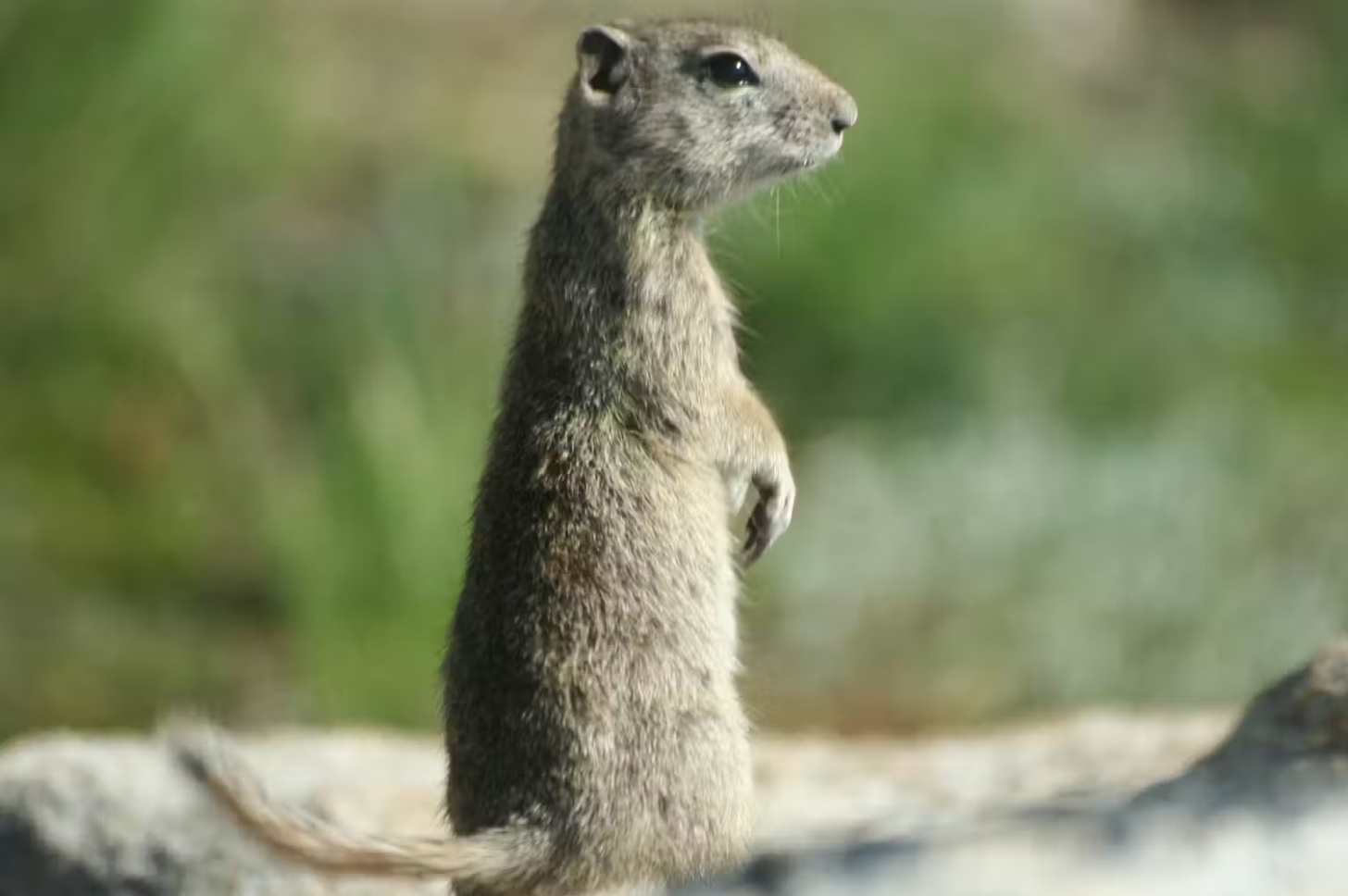
As we studied these and other species in the Sierra Nevada, we discovered a ray of hope: The effects of warming weren’t uniform.
We were able to locate meadows that are less vulnerable to climate change, where the squirrels would have a better chance of thriving. We also identified streams that would stay cool for the frogs even as the climate heats up. Some are shaded by tree canopy. Others are in valleys with cool air or near deep lakes or springs.
These special areas are what we call climate change refugia.
Identifying these pockets of resilient habitat — a field of research that was inspired by our work with natural resource managers in the Sierra Nevada — is now helping national parks and other public and private land managers to take action to protect these refugia from other threats, including fighting invasive species and pollution and connecting landscapes, giving threatened species their best chance for survival in a changing climate.
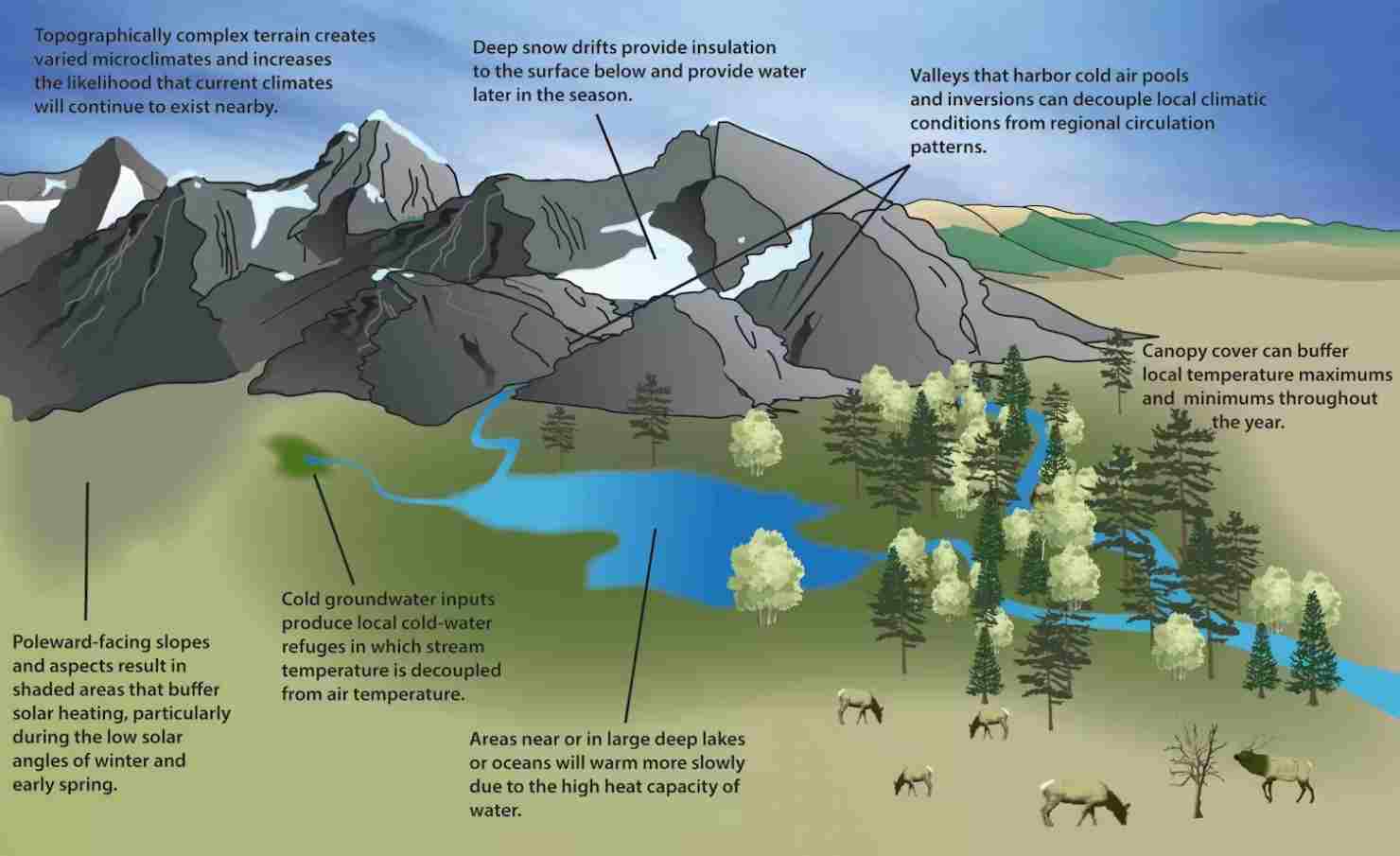
Across the world — from the increasingly fire-prone landscapes of Australia to the glacial ecosystems at the southern tip of Chile — researchers, managers, and local communities are working together to find and protect similar climate change refugia that can provide pockets of stability for local species as the planet warms.
A new collection of scientific papers examines some of the most promising examples of climate change refugia conservation.
In that collection, over 100 scientists from four continents explain how frogs, trees, ducks, and lions stand to benefit when refugia in their habitats are identified and safeguarded.

Saving songbirds in New England
The study of climate change refugia — places that are buffered from the worst effects of global warming — has grown rapidly in recent years.
In New England, managers at national parks and other protected areas were worried about how species are being affected by changes in climate and habitat. For example, the grasshopper sparrow (Ammodramus savannarum), a little grassland songbird that nests in the open fields in the eastern U.S. and southern Canada, appears to be in trouble.
We studied its habitats and projected that less than 6% of its summer northeastern U.S. range will have the right temperature and precipitation conditions by 2080.
The loss of songbirds is not only a loss of beauty and music. These birds eat insects and are important to the balance of the ecosystem.
The sand plain grasslands that the grasshopper sparrow relies on in the northeastern U.S. are under threat not only from changes in climate but also changes in how people use the land. Public land managers in Montague, Massachusetts, have used burning and mowing to maintain habitat for nesting grasshopper sparrows. That effort also brought back the rare frosted elfin butterfly for the first time in decades.
Protecting Canada’s vast forest ecosystems
In Canada, the climate is warming at about twice the global average, posing a threat to its vast forested landscapes, which face intensifying drought, insect outbreaks, and destructive wildfires.
We have been actively mapping refugia in British Columbia, looking for shadier, wetter, or more sheltered places that naturally resist the worst effects of climate change.
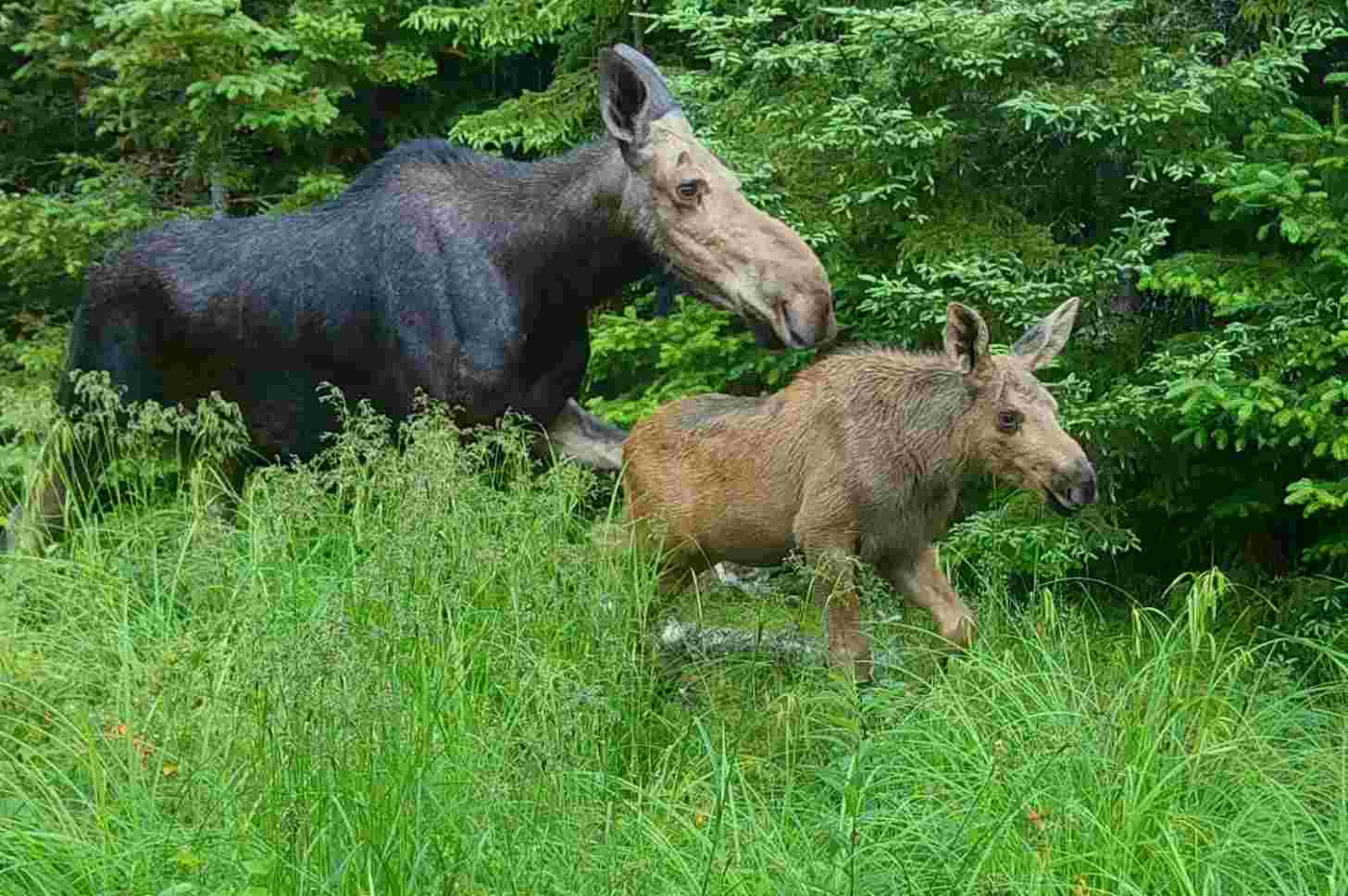
The mapping project will help to identify important habitat for wildlife such as moose and caribou. Knowing where these climate change refugia are allows land-use planners and Indigenous communities to protect the most promising habitats from development, resource extraction, and other stressors.
British Columbia is undertaking major changes to forest landscape planning in partnership with First Nations and communities.
Lions, giraffes, and elephants (oh, my!)
On the sweeping vistas of East Africa, dozens of species interact in hot spots of global biodiversity. Unfortunately, rising temperatures, prolonged drought, and shifting seasons are threatening their very existence.
In Tanzania, working with government agencies and conservation groups through past USAID funding, we mapped potential refugia for iconic savanna species including lions, giraffes, and elephants.
These areas include places that will hold water in drought and remain cooler during heat waves. The iconic Serengeti National Park, home to some of the world’s most famous wildlife, emerged as a key location for climate change refugia.
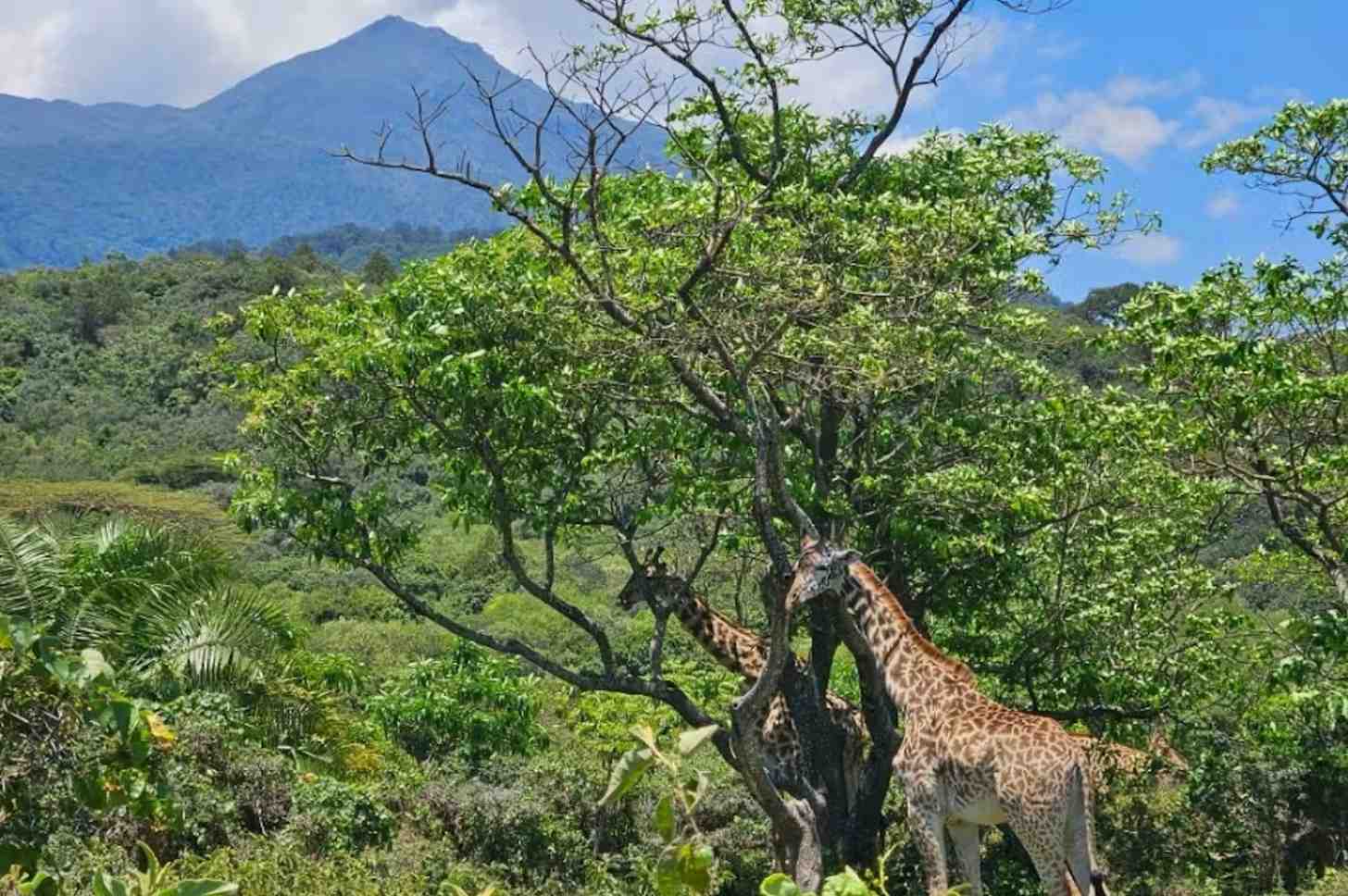
Combining local knowledge with spatial analysis is helping prioritize areas where big cats, antelope, elephants, and the other great beasts of the Serengeti ecosystem can continue to thrive — provided other, non-climate threats such as habitat loss and overharvesting are kept at bay.
The Tanzanian government has already been working with U.S.-funded partners to identify corridors that can help connect biodiversity hot spots.
Hope for the future
By identifying and protecting the places where species can survive the longest, we can buy crucial decades for ecosystems while conservation efforts are underway and the world takes steps to slow climate change.
Across continents and climates, the message is the same: Amid our rapidly warming world, pockets of resilience remain for now. With careful science and strong partnerships, we can find climate change refugia, protect them ,and help the wild things continue to thrive.
This article was written by Toni Lyn Morelli from University of Massachusetts Amherst and Diana Stralberg from University of Alberta, and was originally published on The Conversation.
Header Image by Erin Minuskin on Unsplash

Single-use vapes, or e-cigarettes, contain lithium batteries and liquids, encased in plastic, that when discarded, can leach chemicals into the environment or even explode and cause fires at waste plants.
In the United Kingdom, these single-use devices have been banned. Beginning in June 2025, it became illegal for businesses to sell or supply “disposable” vapes, as a means to reduce harm to the environment and curb a rise in youth vaping.
But that doesn’t mean the threat is gone.
Chris Doel, a 26-year-old electronics engineer, set out to demonstrate how much power is wasted when these e-cigarettes are discarded.
“This whole vape collection thing has gotten completely out of hand,” he began a now-viral video shared on his YouTube channel. “Let’s see if we can power a house of these things.”
What stood out to Doel in particular is that these single-use vapes were marketed as disposable, even though they contained a lithium-ion battery, which can be charged again and again.
“These are the exact same batteries that we use in our phones and in our laptops. But these vapes have been designed to be thrown away after just a single use, which is just completely insane to me,” he said in the video.
“So, I’ve been on a bit of a mission to expose this by building a fully rechargeable power bank and e-bike battery out of them. And now I think I'm going to dial it up a couple of notches.”
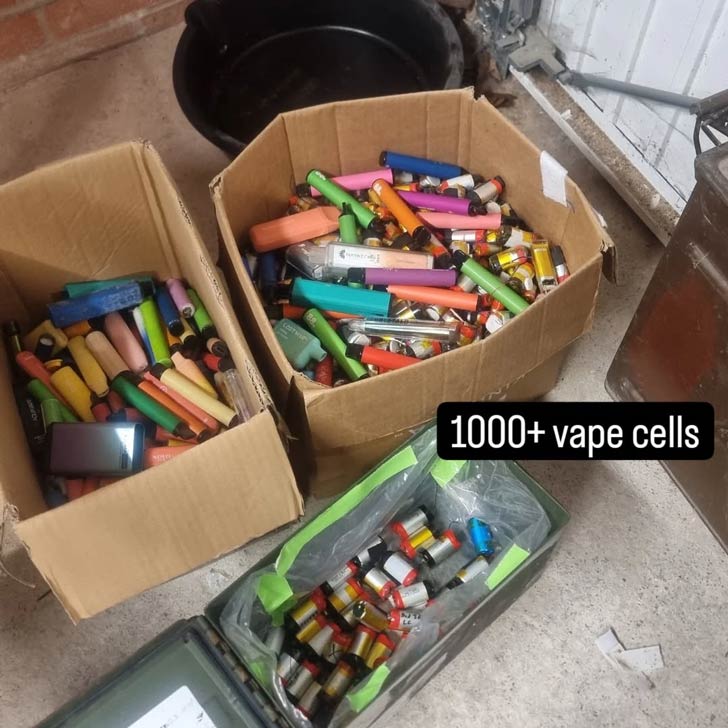
With 500 vapes that he either collected or received from a local shop, he stripped the batteries and created a power reserve large enough to power his entire home for eight hours — or power only his DIY workshop for several days.
Of course, he said at the top of his video, “Do not attempt to replicate anything I do in this video. It covers some pretty dangerous stuff.”
But his experiment does pose a meaningful question: Could these wasted batteries really be put to use in a better way?
“This is a massive power wall, so it’s powering the laptop that I’m speaking to you on,” Doel told NBC News in a video interview. “It’s powering the Wi-Fi up there, all the lights. I’m completely off-grid right now.”
He continued.
“I’ve been able to boil water with the kettle, flip on the microwave, turn on my oven,” Doel said. “I pretty much could power everything in my house.”
It was not a particularly easy effort, though. In total, building the 2.5 kWh power wall from discarded batteries took about seven months, constructed during any free time Doel had away from his day job as an engineer.
But imagining the scale of the waste kept his eyes on the prize.
“At their peak in the U.K. alone, over a million of these are being tossed away every single day,” Doel said in his video. “And while some places are finally banning them … this is still happening at a mind-boggling scale.”
The 500 vape batteries he used don’t even make a dent in the global issue at hand. Recent data from Public Interest Research Group suggests that Americans threw away an estimated 500,000 disposable vapes every day in 2023. In just one year, that equates to enough lithium for over 3,000 massive electric vehicle batteries.
“All of them have got incredibly rare earth minerals inside of them,” Doel told NBC News.
Nathan Proctor, the senior director of the Public Interest Research Group, added that it’s not easy to recycle these batteries, either.
“It’s expensive and challenging because you have to both interact with something that’s a hazardous chemical and is electronic waste,” Proctor told NBC News.
With the U.K. ban, the sale of these items is decreasing, but Doel said consumers are still incentivized to buy and discard items and contribute to the same waste cycle, even if they are not marketed as single-use items.
“I’m still able to get hundreds and hundreds of these things,” Doel said.
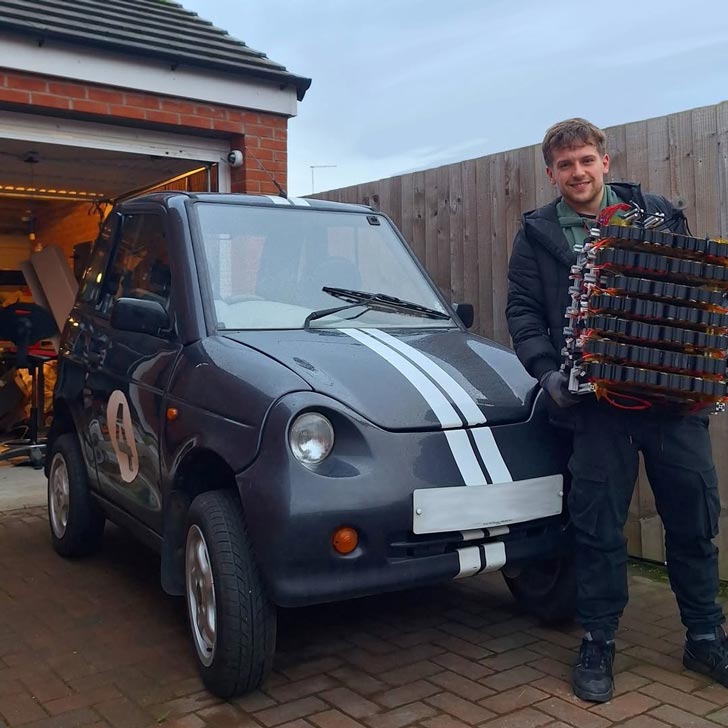
While regulatory bodies continue to figure out the best way to curb the environmental and public health impacts of vaping, he’ll keep plugging away.
“I’ve just bought a … small electric vehicle, and I think I’m going to install this into the electric vehicle and have a car powered by disposable vapes,” he told NBC News. “That is definitely next on the list.”
You may also like: Man invents solar-powered backpack that turns into a bed and a generator for homeless people
Header image courtesy of Chris Doel/Instagram
Since 2023, South Korea’s largest island — Jeju Island — has been developing legislation to grant constitutional rights to approximately 120 Indo-Pacific bottlenose dolphins in their coastal waters.
It would be a first for the country in granting animals “legal personhood.”
Indo-Pacific bottlenose dolphins are listed as “near threatened” on the International Union for Conservation of Nature (IUCN)’s Red List of Threatened Species.
For years, their populations have been declining due to runoff from fish farms, coastal erosion, noise pollution from construction sites, and entanglements from abandoned fishing gear.
“Because the dolphins cannot cut the fishing lines themselves, we decided to cut them for them,” Jeongjoon Lee, a Korean director known as “Dolphin Man,” told The Guardian.
“In one case, we had to cut wire from two different places, one was going in through the dolphin’s face to its body, and another from around its tail where it had become tangled.”
As a filmmaker, Lee has been documenting the mounting threats against Jeju Island’s dolphins and has been at the forefront of granting them legal protection.
Currently, Jeju Island’s Indo-Pacific bottlenose dolphins have some protective measures in place, including regulations which prevent more than two recreation boats from approaching within 100 meters of dolphins.
But Lee doesn’t think it’s enough.
“It is good that we now have a small space to begin to protect them more, but really we need to designate that whole side of the island as a protected area in order to keep them safe for the future,” he reasoned.
Miyeon Kim, who works at Marine Animal Research and Conservation, agrees. His nonprofit is responsible for identifying and naming the local dolphins, and he has also been leading the campaign to grant dolphins legal protection.
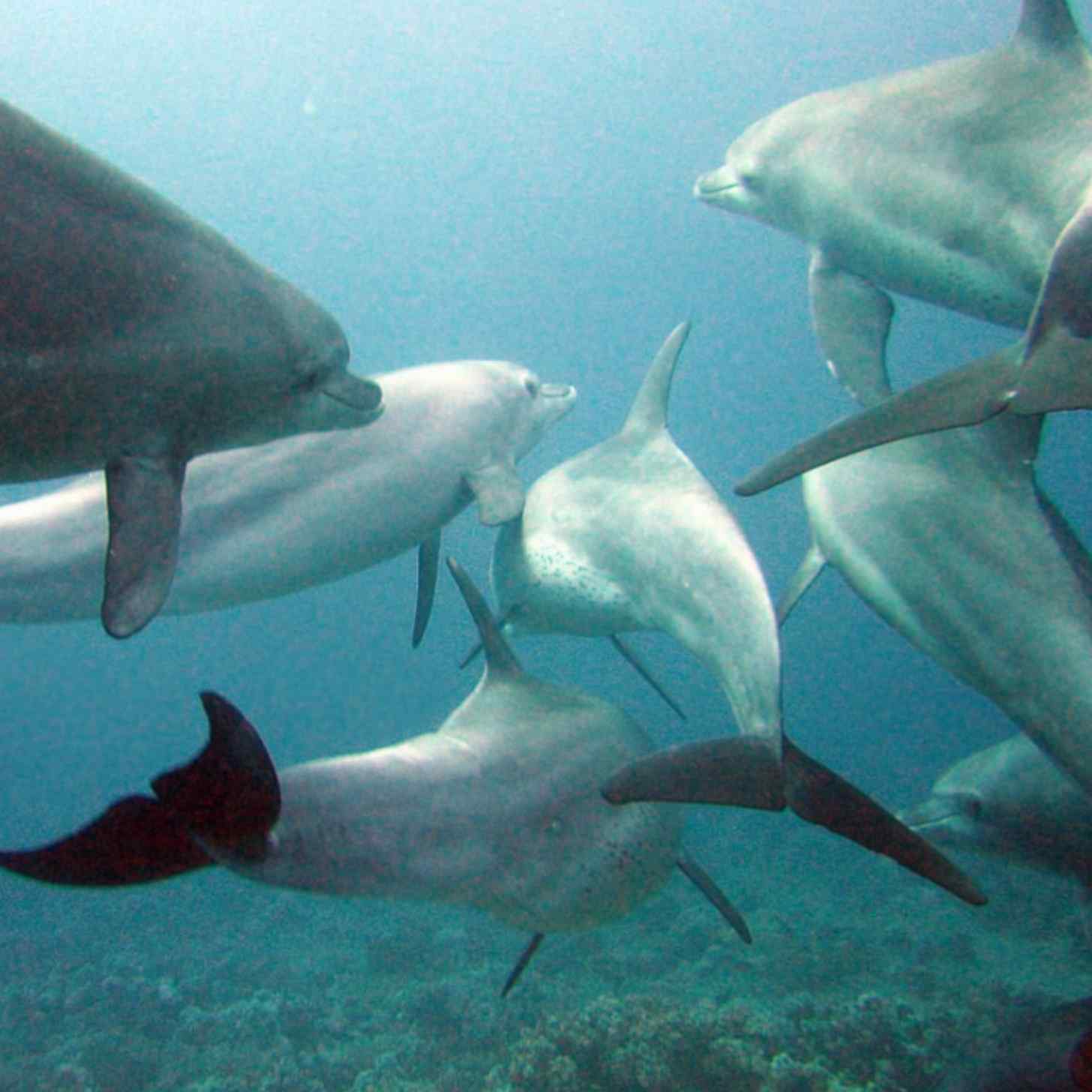
“The idea is that if an individual or a company threatens their livelihood, then we could act on behalf of the dolphins to sue them or to take action in another way,” Kim said.
“It’s important for us to be able to identify individual dolphins to be able to record scientific facts but it’s also important for the islanders,” he added. “People have to understand and really relate to endangered species in order for these [kinds] of things [establishing legal personhood] to work.”
If the measure goes through, it would also establish funding support for the pod of dolphins, which would go towards habitat preservation, population monitoring, and emergency aid for injured dolphins.
If the measure passes, South Korea would join several other countries, including Ecuador and Argentina, in granting legal protection to wild animals.
In 2024, Indigenous leaders of New Zealand, Tahiti and the Cook Islands also signed a treaty that recognized whales — which are considered sacred beings — as legal persons.
The proposal in South Korea currently awaits review by the National Assembly’s Public Administration and Security Committee. Fortunately, the bill has gotten a promising surge of support from government leaders in the past year.
“The endangered Indo-Pacific bottlenose dolphin, which has lived harmoniously with the haenyeo (female sea divers) in Jeju waters, is an important species that requires protection,” said Governor of Jeju Oh Young-hoon in the press release from the ministry.
“With supporters, the Jeju government will do its best to pass a revision to the Special Act on the Establishment of Jeju Special Self-Governing Province and the Development of the Free International City to designate Korea’s first eco-legal person.”
You may also like: Sea cows have been protecting oceans for 'tens of millions of years' — and these newly uncovered fossils prove it
Header image via julie burgher (CC BY-NC 2.0)
Since 1995, the U.S. Department of Agriculture has embarked on a unique yearly mission: dropping millions of edible rabies vaccines — by plane, helicopter, and car — across the eastern seaboard.
And every year, they get gobbled up by millions of hungry raccoons roaming below.
Due in large part to public health programs (like this one), rabies cases have dropped dramatically in the last century. Since 1900, the rate of rabies-related deaths in the U.S. went from 100 people per year down to fewer than 10, according to the Centers for Disease Control.
Jordona Kirby, a USDA wildlife biologist and field coordinator for the National Rabies Management Program, told NPR that the hope is to one day eradicate rabies in raccoons completely.
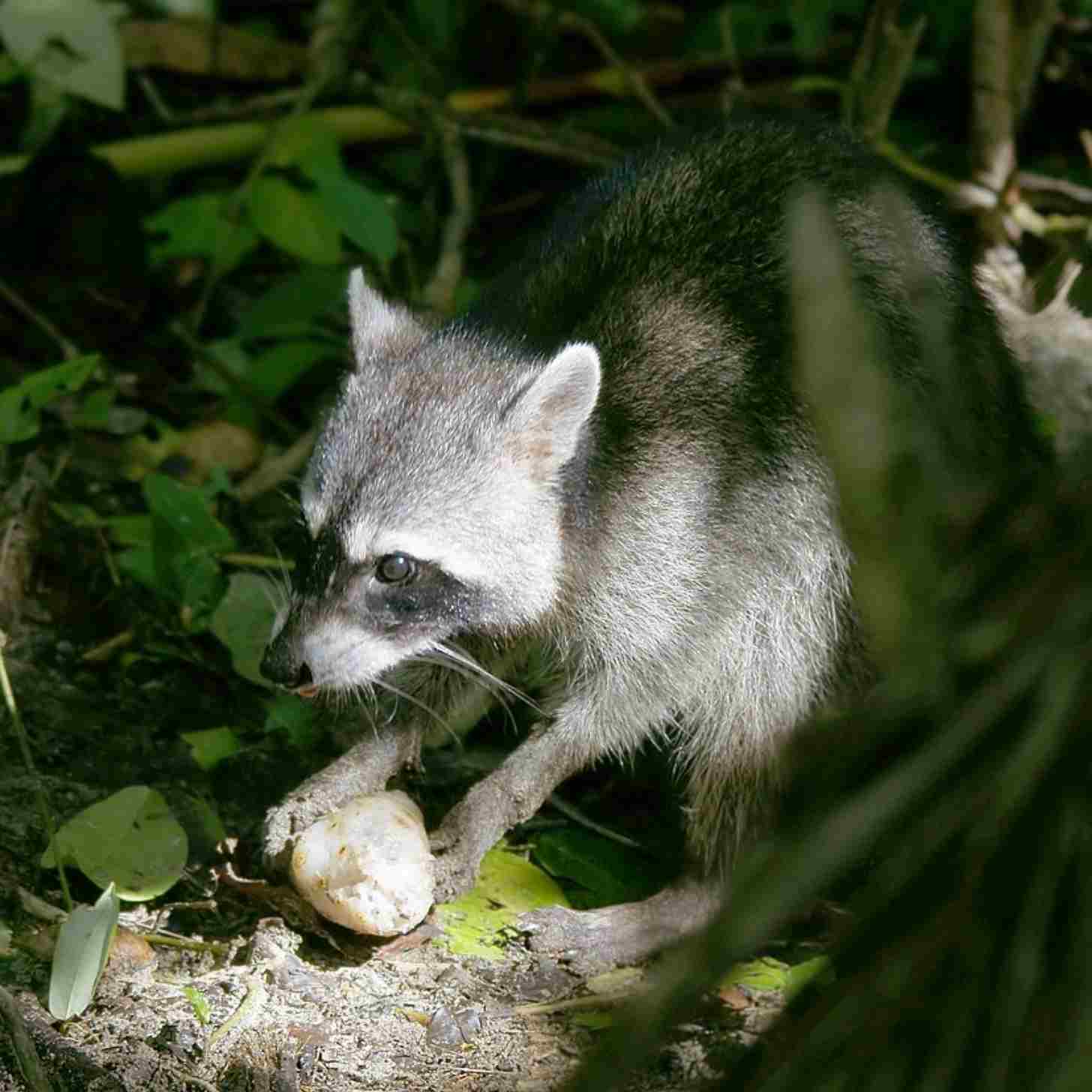
“[It would mean] marching it from its current extent, which is essentially along the Appalachian Mountains running from Maine to Alabama all the way back to the ocean,” Kirby explained. “That is our long term vision.”
Kirby said the rabies treats, which come in “fish” and “vanilla” flavors, are well-loved by raccoons. And although raccoons are the main “super spreaders” of rabies — Kirby doesn’t mind if other animals indulge in the treats dropped from the heavens, too.
“Our feelings are absolutely not hurt if skunks, foxes or coyotes pick them up. And they do,” Kirby said. “So, although raccoons are the reservoir and spread rabies primarily in the east, those other animals, just like any mammal, can contract rabies.”
You may also like: The viral 'drunk raccoon' now has a merch line. So far, it's raised $250K for a local animal shelter
A version of this article originally appeared in the 2024 Animals Edition of the Goodnewspaper
Header image via Pixabay
Traipsing through entire clearings of trees may sound like it does more harm than good, but every time elephants pluck their favorite fruit and trample trees, they’re contributing to a cleaner environment.
In a Saint Louis University study, Stephen Blake — an assistant professor of biology at SLU — collected data on the ecological impacts of megaherbivores and found that “the role of forest elephants in our global environment is too important to ignore.”
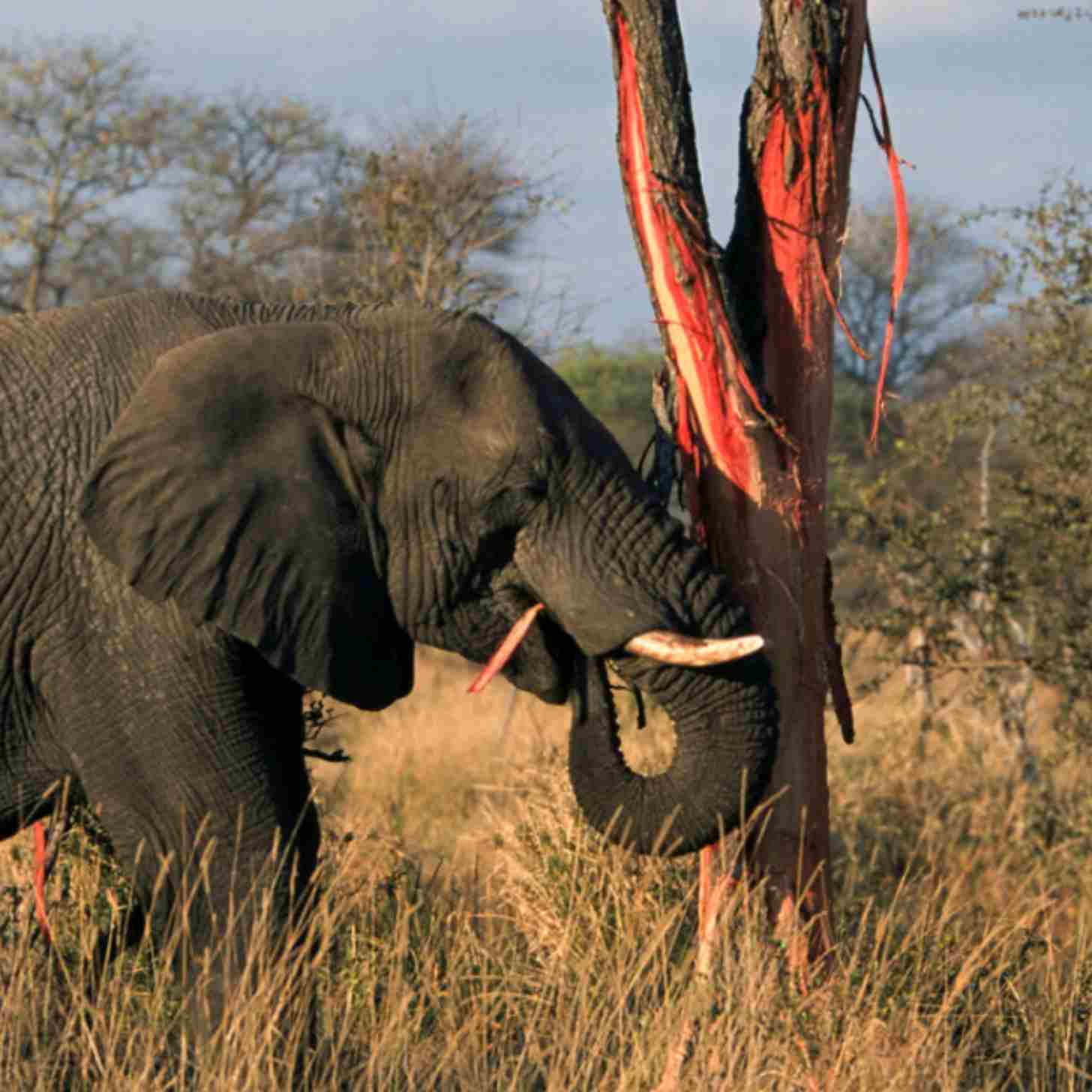
“Elephants are the gardeners of the forest,” Blake wrote, explaining that when elephants eat the fruit from high carbon density trees, they then disperse the seeds of new trees through their dung.
And they do this all while trampling lower density trees, and thinning forests for the better.
“They plant the forest with high carbon density trees and they get rid of the ‘weeds,’ which are the low carbon density trees. They do a tremendous amount of work maintaining the diversity of the forest.”
And Blake said the implications of the study extend far beyond the forest elephants of Africa.
“Those findings imply that other large herbivores, such as primates or the Asian elephant, could also contribute to the growth of high carbon density trees in other tropical forests. Our aim is to expand on this by investigating those other species and regions.”
A version of this article originally appeared in the 2024 Animals Edition of the Goodnewspaper
Header image via Pixabay
In late October, a group of 19 Buddhist monks set off for a 2,300-mile trek across the United States, beginning in Fort Worth Texas, with a final destination of Washington, D.C.
Their mission? To spread a message of peace, unity, and healing.
The journey, or “Peace Walk,” as the monks call it, is expected to span about 120 days, concluding in February, where they plan to host a gathering at the United States Capitol, sharing remarks about healing and unity with the public.
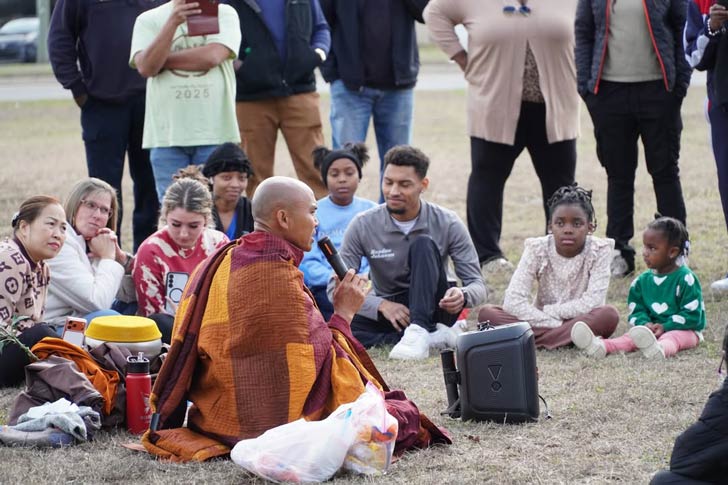
“With hearts anchored in calmness and minds set firmly on their purpose, the monks move forward — step by step — embodying peace, resilience, and unwavering determination on their sacred path toward the White House,” a social media post read after the first day of the pilgrimage.
During the trek, the monks will be walking through at least 10 states, making stops at state government buildings and communing with locals, sharing reflections on compassion and unity amid social and political division.
Supporters can track the journey online, and social media posts share updates from each stop. Many posts show local gatherings where people feed the travelers, provide medical care (many of the monks are walking barefoot), and share water and other essentials with the group.
“I ask for your permission to lead this journey,” Bhikkhu Pannakara, vice president of the Huong Dao Vipassana Bhavana Center and spiritual leader of the walk, said as he sat before a statue of Lord Buddha before the group set off in October.
“In this journey, we have two senior monks — one from Laos who is 70 years old — and monks from Taiwan and Vietnam. Wherever we go, monks from that location will join us for two to three days,” he said, according to the Star-Telegram.

The monks walk with minimal possessions, clad in orange robes and carrying walking sticks. But one member of the group stands out among the rest: A rescue dog named Aloka.
On a similar peace walk in India, Pannakara found Aloka (who does have his own social media accounts, @alokathepeacedog).
“We found him in India when we walk 112 days in India. He follow us the whole time. He’s a true hero,” Pannakara said in a video.
During this time, Aloka fell sick and was even hit by a car.
“But he still stand up and walk,” Pannakara said.
Even when the monks tried to put him on a truck and let him go to safety, the dog refused.
“He jump off, he wanted to walk. That inspires a lot.”
@walkforpeaceusa A dog who survived the streets, sickness, and even a car accident… but refused to give up. This is Aloka — the Peace Dog 🐾💛 A huge thank you to @1851 Properties for capturing this moment on Day 16 of the Walk for Peace in Bellville, TX 🙏✨ #WalkForPeace #AlokaThePeaceDog #CompassionInAction #BuddhistMonks #Inspiration ♬ original sound - Walk for Peace Official
Now, Aloka is with the group as they journey across the U.S., walking every day and resting in tents or on sleeping mats every night.
“I brought him here and he’s a U.S. citizen now,” Pannakara joked. “Every one of us love him so much.”

Some days, Aloka wears a bandana or coat. Strangers give him bowls of water. The monks, referred to as The Sangha, take turns holding his leash. They have even stopped for a pup cup.
“Aloka has found peace. He began as a stray in India, alone, wandering, searching. But when he saw the venerable monks on a similar journey years ago, something stirred in his heart. He chose to follow them. And they welcomed him,” a social media post about the dog shared.
“Today, Aloka walks beside Venerable Bhikkhu Pannakara and the Venerable Monks across America, no longer lost, no longer alone. He has found his home. He has found his purpose. He has found peace.”
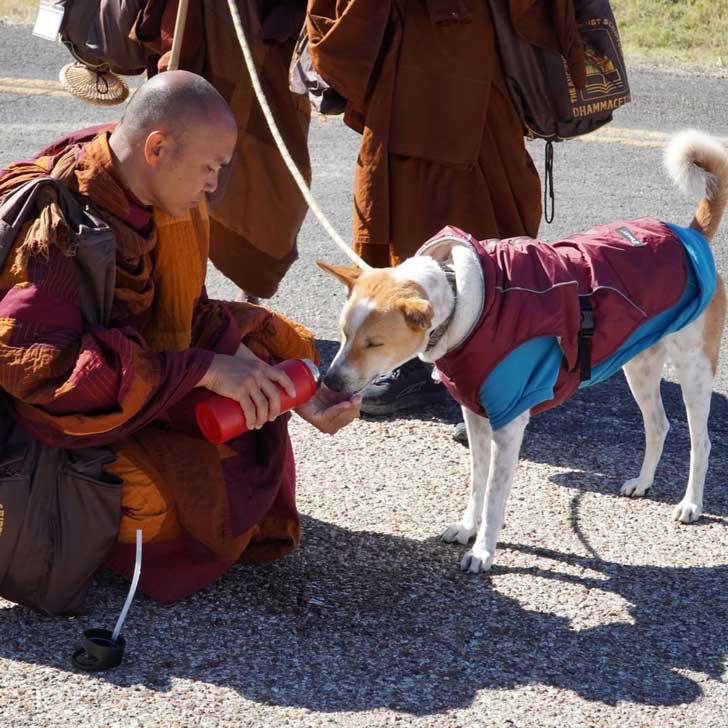
Aloka — whose name means “light” in Sanskrit — also takes breaks, pausing when the monks do for brief showers, meals, and meditation with locals.
“We are happy to share that our brave little friend is safe, sound, and fully focused on doggie peace,” an update from the group shared when supporters were worried about the dog’s wellbeing. “He is a true symbol of resilience.”
And as the dog walks humbly alongside his 19 family members, their mission rings truer than ever.
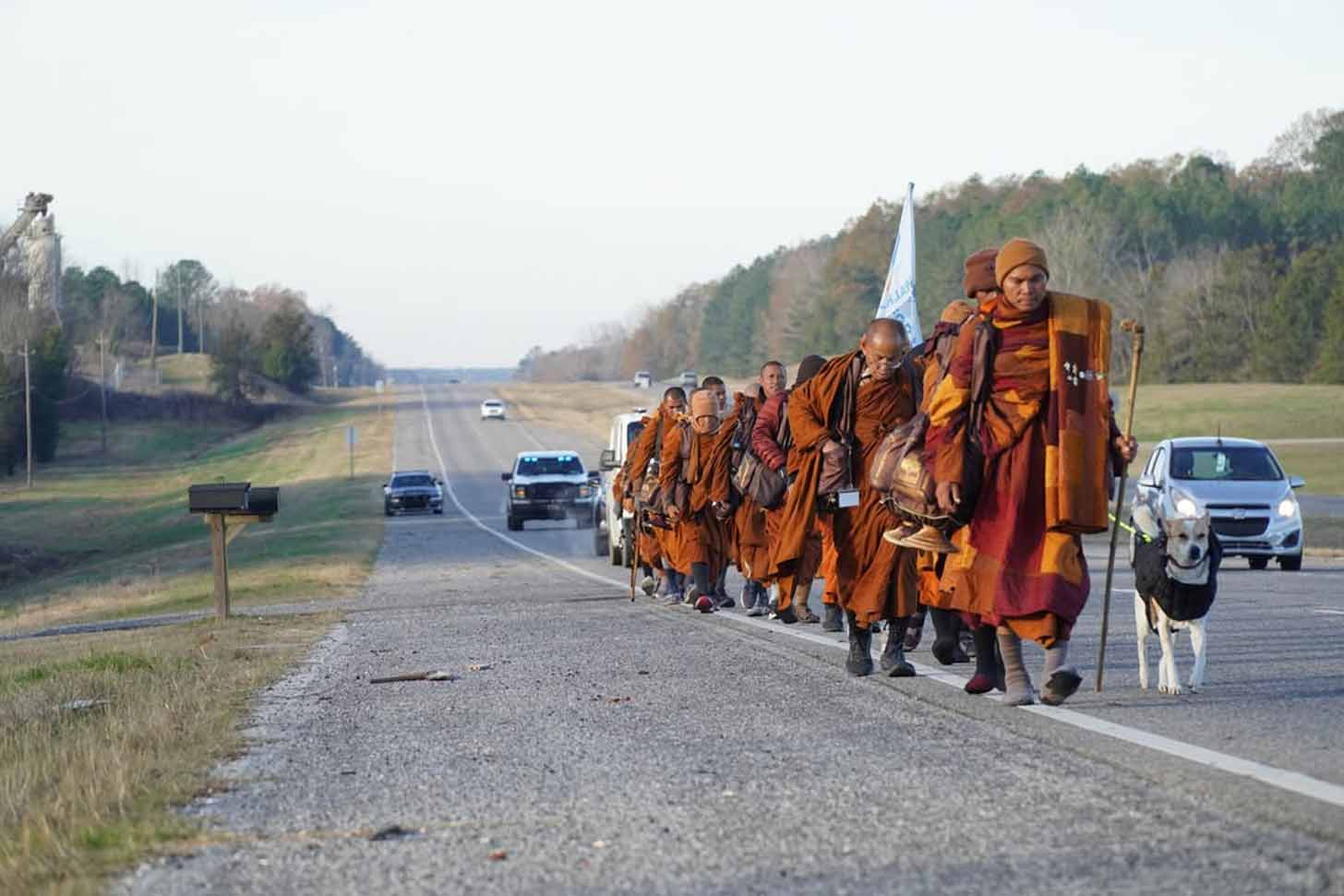
“We walk not to protest, but to awaken the peace that already lives within each of us,” Pannakara said in a statement.
“The Walk for Peace is a simple yet meaningful reminder that unity and kindness begin within each of us and can radiate outward to families, communities, and society as a whole.”
You may also like: At this 'cuddle club,' senior dogs and senior citizens find companionship in each other
Header image courtesy of Peace Walk
The woylie, also known as the brush-tailed bettong, once roamed across much of Western Australia.
Like kangaroos, the hopping marsupial raises its young in a pouch on its belly. However, they differ drastically from their relative when it comes to size. The woylie is so small that it can fit in the palm of a person’s hand.
Despite their small size, woylies have been indispensable to their native habitat. As “ecosystem engineers,” woylies improve soil health and plant growth by digging for fungi and tubers in the outback.
Unfortunately, due to habitat loss and predation from feral cats and foxes, woylie populations have been in rapid decline since 1996.
“Woylies are critically endangered marsupials that have been the focus of conservation efforts for decades,” Jake Newman-Martin, a Ph.D. student in Curtin's School of Molecular and Life Sciences, told ScienceDaily.
In September, Newman-Martin published a new study in Zootaxa, which shed new light on the species diversity of woylies.
By analyzing ancient fossils from caves across Western Australia, Newman-Martin and his peers discovered a new species — and two new subspecies — of woylie. The proposed scientific name for the new Nullarbor species is Bettongia haoucharae. The team will collaborate with Indigenous groups on an appropriate name, noting that “woylie” is a Noongar word.
For Newman-Martin, the findings were bittersweet.
“In this new research, we've named a completely new species based on fossil material, and two new subspecies of woylies for the first time,” he said, describing them as a “ghost marsupial.”
“Sadly,” he said, “many of them have become extinct before we've even been aware of them.”
In taxonomy, a “ghost” species refers to an organism that is newly described but thought extinct — often found through DNA research, fossils, or sometimes even rare sightings.

Dr. Kenny Travouillon, a co-author of the study and curator of terrestrial zoology at the Western Australian Museum, said that their discoveries came from studying bone measurements with painstaking detail.
“This research confirmed several distinct species and expanded the known diversity of woylies by measuring skull and body fossil material that had previously not been looked at in detail,” Dr. Travouillon said.
“What we've found through this research tells us that examining fossils alongside genetic tools could offer significant insights that may help conservation efforts of this critically endangered native species.”
Newman-Martin and Travouillon said that their research, although bleak at first glance, offered a glimmer of hope for the future of the woylies.
“Our results split the critically endangered woylie into two living subspecies, which is very important for conservation when we're considering breeding and translocation initiatives to increase the size and fitness of populations,” Newman-Martin said.
You may also like: Scientists discover 'pumpkin toadlet' in Brazil’s misty cloud forests. It's a new species
Header image via Maclearite (CC BY-SA 4.0)
Every day the Good Good Good team collects the best good news in the world and shares it with our community. Here are the highlights for this week!
If you want to get good news in your inbox every day, join the Goodnewsletter — the free daily newsletter designed to leave you feeling hopeful.
The Best Positive News We’re Celebrating This Week —
Florida banned Pride crosswalks — so St. Pete installed rainbow bike racks instead
Earlier this year, Florida Governor Ron DeSantis ordered the removal of about 400 “non-standard” pieces of street art — most of them rainbow, Pride-themed crosswalks and murals.
Expressing its disapproval at the removal of the artwork, the city of St. Petersburg ultimately complied, promising that it was not a reflection of the city’s commitment to inclusion.
Now, it’s demonstrating that commitment in a new, creative, and clever way: The city debuted a series of rainbow-colored bike racks in place of a former Pride crosswalk “to honor the Pride street murals that were removed earlier this year due to state requirements.”
Even better: Earlier this year, St. Petersburg was given a perfect score on the 2025 Human Rights Campaign’s annual Municipal Equality Index. This is the only nationwide assessment of LGBTQ+ inclusion in municipal law, policy, and services.
Here’s what happened to the border wall between the US and Mexico — and the art that stretched miles across it
→ Read more
A Kentucky teacher 3D printed a functional, prosthetic hand for a 4th grader right in the school’s lab
Jackson Farmer was born without a right hand and would sometimes wear a rubber hand to school. While it didn’t give him any functionality, it did provide the appearance of having a hand.
He formed a bond with Scott Johnson, a science, technology, engineering, art, and mathematics educator at the school, who decided to research how to 3D print a prosthetic hand for Farmer.
For about a year, he went through trial-and-error to create the right thing, even consulting with an engineer from Denmark to perfect the design files. The final product moves by the power of Jackson’s wrist.
Thousands of GoFundMe donors raised $1.5 million for the hero who disarmed a Bondi Beach attacker
Over the weekend, attackers opened fire at a Jewish celebration at Sydney, Australia’s Bondi Beach, killing 15 people. Police say they may have caused much more devastation had Ahmed el Ahmed not intervened.
El Ahmed is an Australian citizen, a fruit vendor, and a father who immigrated from Syria in 2006. He had been drinking coffee with a friend near the beach when he heard gunshots and leapt into action, running toward the gunman and disarming him, sustaining gunshot wounds himself in the process.
He’s being praised as a hero for helping bring an end to the country’s worst terrorist attack in decades, and over $1.5 million has been raised by more than 27,000 donors to honor his bravery and support his recovery.
Why is this good news? At great personal risk, el Ahmed prevented countless more people from being killed or injured at Bondi Beach. He’s also notably a Muslim man, who “wasn’t thinking about the background of the people he’s saving … He doesn’t discriminate between one nationality and another.”
→ Read more
Giant animal puppets journey from the Congo Basin to a melting glacier in the Arctic with an important message
In a major milestone, Los Angeles has officially stopped receiving coal-powered electricity
The entire city of Los Angeles is now completely coal-free, as the city officially stopped receiving coal-powered electricity from its last remaining coal source. It’s a major milestone as the city aims to reach 100% clean energy by 2035.
More than 60% of the city’s energy supply is now coming from renewable sources, including from one of the largest solar-plus-battery power plants in the nation.
It’s a significant transformation from just two decades ago, when renewables provided about 3% of the city’s energy, and more than 50% came from coal.
A new statue honoring a Black teen who fought segregation was unveiled in the U.S. Capitol
In 1951, when she was 16 years old, Barbara Rose Johns led hundreds of students in a walkout from her Virginia high school to protest overcrowded conditions and inferior facilities compared to the town’s white high school.
Johns and her classmates’ fight became one of the five cases reviewed by the U.S. Supreme Court in the Brown v. Board of Education ruling that declared school segregation unconstitutional.
Now, a statue has been unveiled in her honor at the U.S. Capitol in Emancipation Hall representing Virginia, notably replacing one of Confederate Gen. Robert E. Lee that was removed in 2020.
Why is this good news? For over a century, Virginia had been represented in the hall by George Washington and Lee. The same month that Lee’s statue was ordered to be removed, a commission voted unanimously to put a statue of Johns in its place — honoring a true hero in the fight for freedom and equality.
Strangers seeking life advice find it at the Grandma Stand, a rotating pop-up staffed by 15 NYC grandmas
COVID-19 vaccines reduced the risk of emergency room or urgent care visits by 76% in children
A new study found that the COVID-19 vaccines reduced the risk of emergency room or urgent care visits by 76% in children between the ages of nine months and four years, and by 56% in ages five through 17 compared to children who didn’t receive a vaccine.
The new data show that the vaccines were safe and incredibly effective at preventing severe illness in children.
The findings also offer a stark contrast to recent statements made by HHS Secretary Robert F. Kennedy, who has called the COVID vaccine, without evidence, “the deadliest vaccine ever made.”
A massive solar farm committed to recycle and reuse its nearly 1 million panels at their end-of-life
Nearly one million solar panels comprise the 400-megawatt Stubbo solar farm in New South Wales, Australia. The project hasn’t reached full commercial operations — but the panels are already set to be recycled when they reach the end of their life.
The company behind the project says that embedding “circularity” from the start is about both setting a “new standard” for large-scale solar and helping build a supply and demand chain for solar recycling.
It also makes Stubbo Solar the first large-scale project to meet independent standards that make circularity commercially viable in the industry, going beyond “baseline” requirements to set materials up to be reused, not become more waste.
Why is this good news? What happens to things like solar panels and wind turbines when they reach their end-of-life is a valid concern surrounding the clean energy transition. Recycling technology is improving, and it’s important that commitments to recycling are built into a clean energy project’s plan from the start.
You may also like: Global efforts to repurpose wind turbine blades lead to innovative designs
The viral ‘drunk raccoon’ now has a merch line. So far, it’s raised over $250K for a local animal shelter
→ Read more
Colorado just completed construction on North America’s ‘largest wildlife overpass’
Every day, more than 100,000 vehicles travel up and down a six-lane stretch of Interstate 25 in Colorado. It’s also a crucial migration zone for elk, mule deer, mountain lions, black bears, and more.
Now, everyone will travel more safely. Colorado has completed construction on the Greenland wildlife overpass, the largest in North America and one of the largest in the world.
It’s expected to reduce wildlife-vehicle crashes by 90%.
→ Read more
Billionaire buys $95M apartments to slash rents and ease housing shortage for Colorado mountain town workers
In Colorado’s mountain towns, between demand for high-income homebuyers, limited supply, and stagnant wages, local workers — who keep the town running — face a severe housing shortage.
To alleviate the burden in Steamboat Springs, resident and billionaire venture capitalist Mark Stevens has purchased a vacant apartment complex that he is now offering to renters at below-market rates.
The only requirement to rent at Riverview Apartments: The tenant must work at least 30 hours per week in Steamboat.
Why is this good news? Because housing costs are so inaccessible for workers, there’s been an increase in commutes, homelessness, and even people camping in the parking lots of their workplaces to get by. As the apartment complex’s builder said, “The people who power this community deserve to live where they work and continue to make Steamboat thrive.”
This woman conquered 100 fears in 100 days. Now she’s helping others do the same
→ Read more
A record-low 54% of Americans say they drink alcohol as health concerns reach new high
The percentage of adults in the U.S. who say they consume alcohol fell to a record-low 54%, the lowest in nearly 90 years.
Prior to this most recent poll, the rate dipped below 60% less than 10 times, including 58% in the initial 1939 poll and the previous record-low of 55% in 1958.
The drop coincides with a growing belief among 53% of Americans that even moderate alcohol consumption is bad for your health — now the majority view for the first time ever.
More good news of the week —
FedEx has delivered 325K free Christmas trees to military families as part of an annual “Trees for Troops” program. The program started in 2005 by a nonprofit called Christmas Spirit Foundation, and it’s been growing with the support of Christmas tree farmers across the country.
To curb plastic pollution, a startup is making clothes from kelp, one of the most regenerative materials on the planet. Approximately 60% of all materials used by the fashion industry are made from plastic, and can take up to 200 years to naturally decompose, the same as a plastic straw.
The Philippines is testing a new type of carbon credit to encourage companies to cut their emissions. Called transition credits, they are meant to help pay for phasing out coal use by creating value out of the emissions that would be prevented. The funds would then be used to replace fossil fuel equipment with clean energy gear.
North Dakota is on track to be the first U.S. state to provide high-speed internet access to the entire state. The state will receive $6 million from the Broadband Equity, Access, and Deployment program, included in the infrastructure bill passed under the Biden administration.
Michigan is raising its minimum wage by 10% starting January 1, including a raise for tipped workers. The increases stem from Michigan’s Improved Workforce Opportunity Wage Act, which was enacted earlier this year and will see the minimum wage reach $15 an hour in 2027 and then increase each year after based on inflation.
Norway has stopped issuing controversial deep-sea mining licenses through at least 2029. The country had originally become the first in the world to greenlight deep-sea mining practices to aid the clean energy transition, but new research shows the practice, which could cause irreversible environmental damage, isn’t necessary.
Washington Spirit owner Michele Kang launched an institute with U.S. Soccer to advance women’s sports research. Kang said her time with the Spirit opened her eyes to the existing limitations on women’s professional soccer teams in the United States, inspiring her to kickstart a journey that has seen her invest roughly $55 million into the betterment of the women’s game over the last two years.
Around 30,000 animals were rescued from illegal captivity in the largest wildlife trafficking raid in history. Operation Thunder took place over one month and included law enforcement agencies like national police, customs, border security, and forestry and wildlife authorities. Encouragingly, just 7 rhino horns were recovered, signaling successful poaching control.
A Michigan city is putting new cameras on all its school buses to improve student safety. The first citywide school bus stop-arm safety program of its kind in Michigan, the stop-arm enforcement cameras are designed to deter drivers from illegally passing stopped school buses.
A site in Georgia with 12,000 years of Indigenous history may become the newest national park. Called the Ocmulgee Mounds, the 3,000-acre park protects land and features important to the Mississippian culture, which built the mounds there starting roughly 3,000 years ago.
When you “pet” dogs in this mobile game, you provide food and vet care to real-life shelter animals this holiday season. From December 15 through December 24, “Hay Day” players can build farms and barns, fish, and raise crops — while also finding and petting virtual huskies and Alaskan Malamutes to support real-world rescue animals.
An “amazing” gene therapy gives hope to a three-year-old with a devastating childhood disease. Oliver Chu has made astonishing progress after becoming the first person in the world to receive pioneering gene therapy for Hunter syndrome, a rare inherited disorder that gradually robs children of their physical and cognitive abilities.
For the first time in several years, every Salvation Army “Angel Tree” child was adopted in North Texas. Thanks to the generosity of community members, more than 35,000 children, older adults, and adults with disabilities will receive gifts this holiday season.
A grassroots group of women mapped air pollution in their Indian village, and their findings forced coal companies to act. Within three to four months of publishing their findings, the researchers said coal companies immediately took action to reduce air pollution.
The family of an enslaved potter reclaimed two stoneware jars he created in South Carolina before the Civil War. They’re two of hundreds of surviving works by “Dave the Potter,” who signed many of his jars, some with couplets, a powerful assertion of identity and authorship during a time when literacy for enslaved people was criminalized.
Thanks to effective conservation measures or reduced threats, 30 animal species are on the road to recovery. Twelve of the species downlisted on the IUCN Red List are birds, and notably, the green sea turtle was reclassified from endangered to least concern.
Strippers are now the No. 1 donor of toys to a Portland children’s hospital — this year, they broke their own record. Over the past 14 years, Portland, Oregon-area strippers have donated $183,000 worth of toys to Doernbecher Children’s Hospital during their annual holiday fundraiser: Tatas for Toys.
Colorado is the first U.S. state to offer additional paid neonatal care leave for families. Families in the state already receive 12 weeks of paid bonding leave, and starting Jan. 1, Colorado parents with a child in the NICU can get an additional 12 weeks of paid time off.
Researchers created a plant-based plastic that’s fully saltwater degradable and leaves behind zero microplastics. Made from plant cellulose, the new plastic is strong, flexible, and capable of rapid decomposition in natural environments, setting it apart from other plastics marketed as biodegradable.
A Pennsylvania college student is giving away thousands of books to childhood cancer patients for the holidays. With the help of everyday donors, Emily Bhatnagar’s nonprofit has gifted more than 25,000 books to kids across the country.
In 1977, NASA launched identical Golden Records into the far reaches of space aboard two Voyager spacecraft. The phonographic recording was a cosmic time capsule, carrying images and sounds of everything from human greetings, to songbirds, and even Chuck Berry’s single "Johnny B. Goode.”
Five years later, in 1984, conservationists began storing frozen seeds on the Norwegian island of Spitsbergen in a facility that would later be known as the Svalbard Global Seed Vault. Today, that vault holds duplicates of over 1.3 million seed samples from every nation around the globe — as a safeguard against famine, war, and disaster.
Now, it appears Smithsonian scientists are borrowing inspiration from both the Golden Records and the Global Seed Vault, as they prepare for perhaps humanity’s most ambitious group project: a “Noah’s Ark” in space.
Mary Hagedorn — a research cryobiologist at the Smithsonian’s National Zoo and Conservation Biology Institute — is one of 11 scientists who have been coordinating a decades-long plan to build a “lunar biorepository” of animal cells on the moon.
Last summer, Hagedorn and her colleagues published their findings in an August issue of BioScience.
“Initially, a lunar biorepository would target the most at-risk species on Earth today, but our ultimate goal would be to cryopreserve most species on Earth,” Hagedorn told the Smithsonian.
“We hope that by sharing our vision, our group can find additional partners to expand the conversation, discuss threats and opportunities and conduct the necessary research and testing to make this biorepository a reality.”
To test their hypotheses, the scientists successfully cryopreserved skin samples of a marine reef fish called a Starry Goby — which are now safely stored at the National Museum of Natural History.
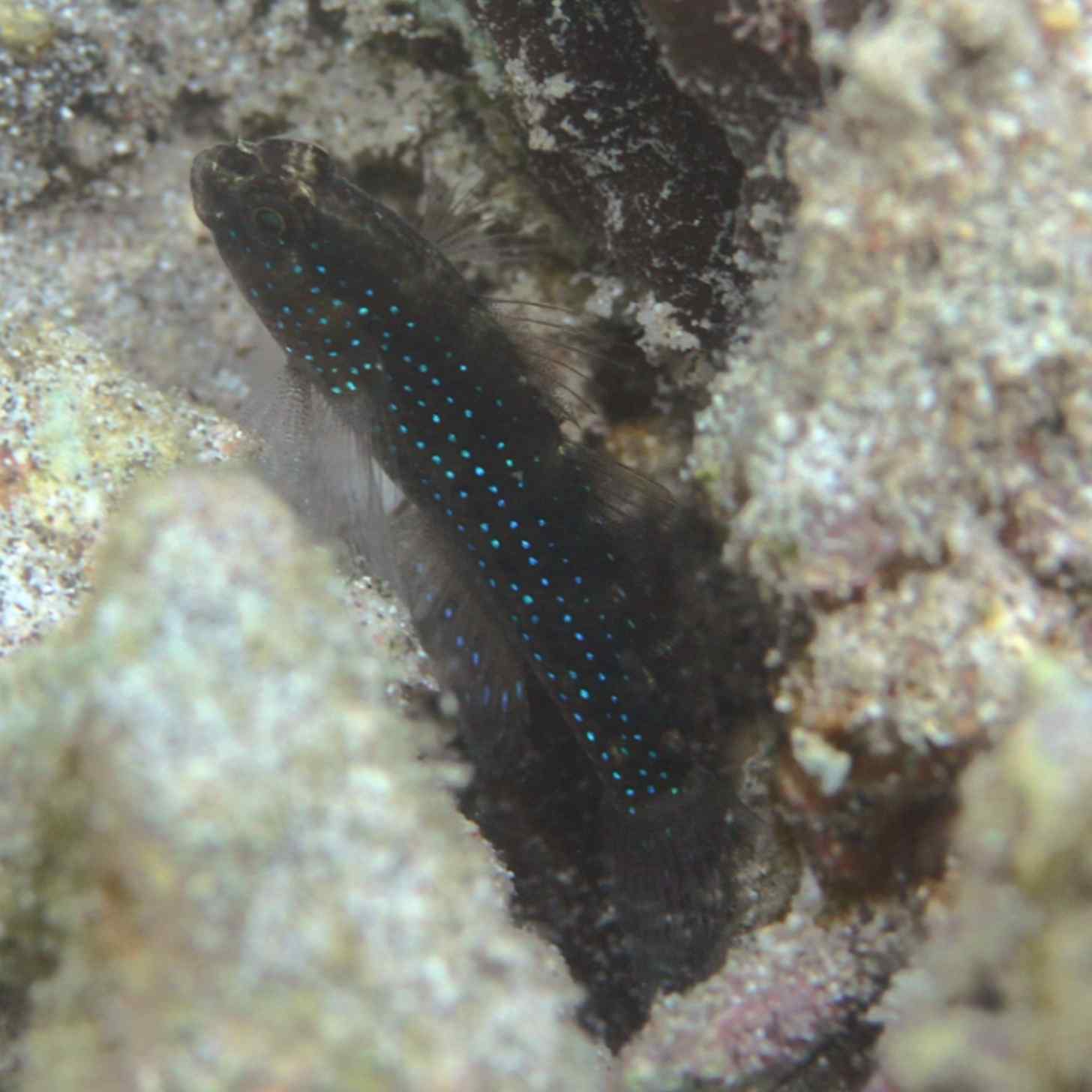
When it comes to getting animal samples on the moon, however, the research team knows that many challenges lie ahead. Their plan requires strong packaging, radiation-proof materials, and extreme care from rovers and astronauts when transporting samples, due to the moon’s dramatic fluctuations in temperature.
Another massive hurdle is the unknown. Scientists are unsure how long-term exposure to microgravity — the low gravity in space — will affect the preserved animal cells.
“Microgravity testing was performed on cryopreserved cardiac cells for only months on Earth,” Hagedorn observed in the paper. “When these cryopreserved cells were launched into space and cultured on the ISS, they lived and expanded.”
“Still,” the scientist admitted, “the long-term effect of microgravity on cryopreserved samples is not known.”
Before the samples even get to the moon, they must first be acquired — and that means navigating the political measures necessary to encourage international cooperation from scientists around the globe.
“Planning and operating a lunar biorepository will require careful consideration of ownership and long-term governance issues,” Hagedorn and her team explained.
So they decided to take a note out of the Svalbard Global Seed Vault’s handbook.
“For the lunar biorepository, we recommend a governance process that mirrors Svalbard's,” Hagedorn continued. “The establishment of a collaborative planning process involving key stakeholders who will include public and private funders, scientific partners, countries, others providing samples, and public representatives.”
For Hagedorn, the biorepository is not fantastical. Unlike the Golden Records, it’s not an attempt to reach potential extraterrestrial life, or repopulate animal species on another planet.
In reality, the project is indeed reminiscent of the biblical Noah’s ark, a grand menagerie of diverse animals — and one that all nations should be able to access, especially as climate change threatens vulnerable species on Earth.
“Life is precious and, as far as we know, rare in the universe,” Hagedorn said. “This biorepository provides another, parallel approach to conserving Earth’s precious biodiversity.”
A version of this article originally appeared in the 2024 Animals Edition of the Goodnewspaper
Header image via Dave Young / dcysurfer (CC BY 2.0)
About four years ago, at the age of 100, Betty Reid Soskin retired from the National Park Service as the oldest serving ranger in park history.
And on December 21, 2025, Soskin died at the age of 104.
After a lifetime of community activism, Soskin served as a ranger at the Rosie the Riveter World War II Home Front National Historical Park in Richmond, California — the same park that she helped create in 2000.

As a frequent collaborator and consultant on park orientation videos geared toward visitors, Soskin was a staunch proponent of including conflicting, intersectional perspectives that make up “real” national park history: the “heroic places, the contemplative places, the scenic wonders, the shameful places, and the painful places.”
She began her career with the National Park Service at 85. Soskin became a park ranger to share with visitors the diverse experiences of women during wartime, ensuring that the unique, tumultuous history of Black women was not erased in the singular story of Rosie the Riveter.

“If we go back and revisit that era, in truth, as it was lived by those of us who lived it, only then can we get a baseline against which to measure how far we've come,” Soksin said in a speech at the Rosie the Riveter Visitor Education Center.
“If we don't know where we started, we have no conception of where we are or how we got here. Only if we go back and retrace our steps. And that's what the park became for me.”
In addition to her legacy within the National Parks Service, Soskin and her first husband opened Reid’s Records — one of the first Black-owned record stores in the California Bay Area — in 1945.
Throughout her life, she was an accomplished songwriter, organized and fundraised with the Black Panthers, and was honored with the presidential coin from President Barack Obama in 2015.

Her memoir, “Sign My Name to Freedom,” explores the longevity, art, and activism she is best known for. The book has been transformed into an in-progress documentary and musical about Soskin’s life.
In 2022, Soskin spoke with Good Good Good for the Generations Edition of the Goodnewspaper.
She said her great-grandmother was the first person who inspired her to make a difference in the world.
“She was born in 1846, into slavery, and she was freed at age 19. I knew her because our lives connected. She was born in 1846, and died in 1948. My mother was born in 1884 and died in 1995. I was born in 1921, and my life has continued until now,” Soskin told us.
“The three of us have bridged lots and lots of history.”
She said it was “hard to zero in” on the entirety of her legacy, but that she was inspired by future generations who also want to make the world a better place.

“I think that knowing that there are people who want to make a difference, maybe in itself, is as much as we need to know. I think we all make a difference just because we want to,” Soskin said.
“Concentrate on the questions, rather than the answers. Because the questions always change. Find more questions to ask, because I don’t think that we’re ever going to find them all.”
Amid her diverse and vast career in social justice and music, she said her four children represent her most important legacy.
“I think that my children are probably my greatest attribute, and I appreciate them more now than I ever did. I think maybe that's what we all give, that we live our lives for our children,” Soskin said in 2022.
“They are so much a part of me, and I'm so aware of it. I'm so aware that I'm leaving behind a part of myself.”
Header image by NPS Photo/Luther Bailey
Brown University. Bondi Beach. Bekkersdal, South Africa. All three have been the sites for horrific mass shootings in the past week.
As people push for actionable change from lawmakers and leaders, many have been turning to Everytown for Gun Safety, a nonprofit dedicated to reducing gun violence by promoting stronger gun laws and holding gun lobbyists accountable.
On December 22, Gracie Abrams took to Instagram to announce the release of a new single, “Sold Out,” which she wrote with producer Aaron Dessner and Bon Iver frontman Justin Vernon.
The lyrics of the song speak to rage and despair in the face of seemingly unending gun violence. And all proceeds from the song will go to Everytown.
“We made this song last year in the wake of a school shooting,” Abrams wrote on social media. “I was reminded of it this week as our hearts were broken yet again. It’s a sad one to share during the holidays, but the world is hurting and we shouldn’t look away.”
“We are proud to support @everytown, an organization dedicated to ending gun violence in America,” she continued. “We are releasing this song to raise awareness of their mission of reducing gun violence. Please visit their website for more information on the unbelievable work they do.”
“Sending so much love to you all.”
Abrams’ song release comes after an emotional Instagram story she posted on December 17, in which she said she was “heartbroken” for the people killed at a Hanukkah celebration in Bondi Beach, and “devastated for their families during the holiday, a time meant for gathering and for light.”
The lyrics of “Sold Out” speak to that heartbreak, detailing school shootings in painstaking detail, as well as the politicians who fail to act.
“All the men in suit and ties and their empty words,” she sings, “in their thoughts and prayers tonight.”
“What are we doing here?” she asks in the chorus. “Think we got sold out / Looks like another year / Without a way out / What are we doing here? / Aren't you tired? / Pain is a souvenir / It's a reminder.”
The song is available to purchase for $5 on Bandcamp.
Header image via Justin Higuchi - Gracie Abrams @ El Rey Theatre 03/05/2022 (CC BY 2.0) / Gracie Abrams / Instagram
Clare Jones, a 47-year-old mother of three based in Wales, United Kingdom, was diagnosed with bowel cancer in 2022. While she underwent treatment for a while, she was recently told her chemotherapy was no longer responding.
Jones was given about 10 months to live.
As a lover of holidays, one of her first thoughts was to make a Facebook post.
“After finding out last week that this is probably going to be my last Christmas, I am looking for ways to make it super special,” she wrote.
“I’m a simple person who likes simple things. I love Christmas cards!!! I would love to have lots of cards this year!!! So I’m asking you kindly, when you are doing your cards could you pop an extra one in the post for me?”

Initially, she told the BBC, she expected to get 10 or 15 extra cards from friends and community members. But her post went viral, and over 10,000 people shared it. Thousands of cards have arrived in the post since, as well as flowers, chocolates, personalized gifts, and theater tickets.
“Someone even offered me a night with them,” she laughed. “I said ‘that’s very kind of you but no thank you.’”
Comments of support also poured in on Facebook.
“We’ve always known you’re a simple person,” one person, presumably a friend, joked. “You’re also very brave, kind, and very loved. I don’t do Xmas cards, but for you I’ll make an exception.”
It seems that person wasn’t the only one.

Jones and her family have been sorting through the messages sent via snail mail, both laughing and crying at all of the notes. They range the gamut: Poems and letters, children’s handmade cards, and holiday goodies have arrived from across the globe. She has received cards from the United States, Greece, Holland, Spain, Germany, France, and New Zealand.
“A simple card with a simple message has really made our Christmas, all of us,” she told the BBC.
It’s been a special reprieve for her three children, ages 16, 20, and 22, as well. All of them live at home with their mother, who has raised them independently for the last decade.
“I remember when my children were leaving primary school, I would think, ‘It’s their last concert at primary school…’ you go through the stages of last, last,” Jones told the BBC.
“But when you're talking about yourself, it’s the last time you’re ever going to see Christmas, you know, Halloween is gone and you didn't realise that was your last Halloween, last Christmas, last birthday. Your mind runs away with you … when you’re told ten months.”

Jones’s first tumor was removed in 2022, but a year later, the cancer had spread to her lymph nodes and lungs, developing to stage four. In November, she received the news that the treatment was no longer working, and the doctors said a 10-month prognosis was average for someone in her position.
“But am I average? I’ve never been average,” Clare told the BBC.
She remains realistic about her circumstances, while still holding out for a “Christmas miracle.”
The holiday cards have certainly boosted morale at home, and she said she hopes to respond to each and every person who sent her mail individually.
“I want to respond to everybody, everyone has been so kind,” she said. “I have many people around me who care for me. If love could cure cancer, I would be cured.”
You may also like: Buying a gift for a loved one with cancer? Skip the care package and help with meals and laundry instead
Header images courtesy of Clare Jones and Annie Spratt via Unsplash
Steve Greig is no stranger to pet loss. In 2012, the Denver retiree was devastated when his 12-year-old dog Wolfgang was hit by a car and killed.
After months had passed, Greig found he still had profound grief from Wolfgang’s death, so he channeled that grief into action. He went to the shelter and adopted the oldest dog they had, knowing it might not otherwise find a home.
Over a decade later, Greig has taken in close to 40 senior dogs — and a few non-dog companions, including Bikini the pig, Betty the chicken, and Cranberry the turkey. The majority of his adopted pets have passed away, from illness or age, but he prides himself in making their “twilight years” comfortable.
“I did it originally, because I was in pain from a dog that had passed away,” Greig told Good Morning America earlier this year. “So I did it to kind of relieve that pain and to give the dog that had passed away to give his life … a meaning.”
Greig is just one of an estimated 86 million pet owners in the U.S. And for many people, their cats and dogs extend far beyond just “pets;” they’re a constant companion in their lives, a source of comfort and joy.
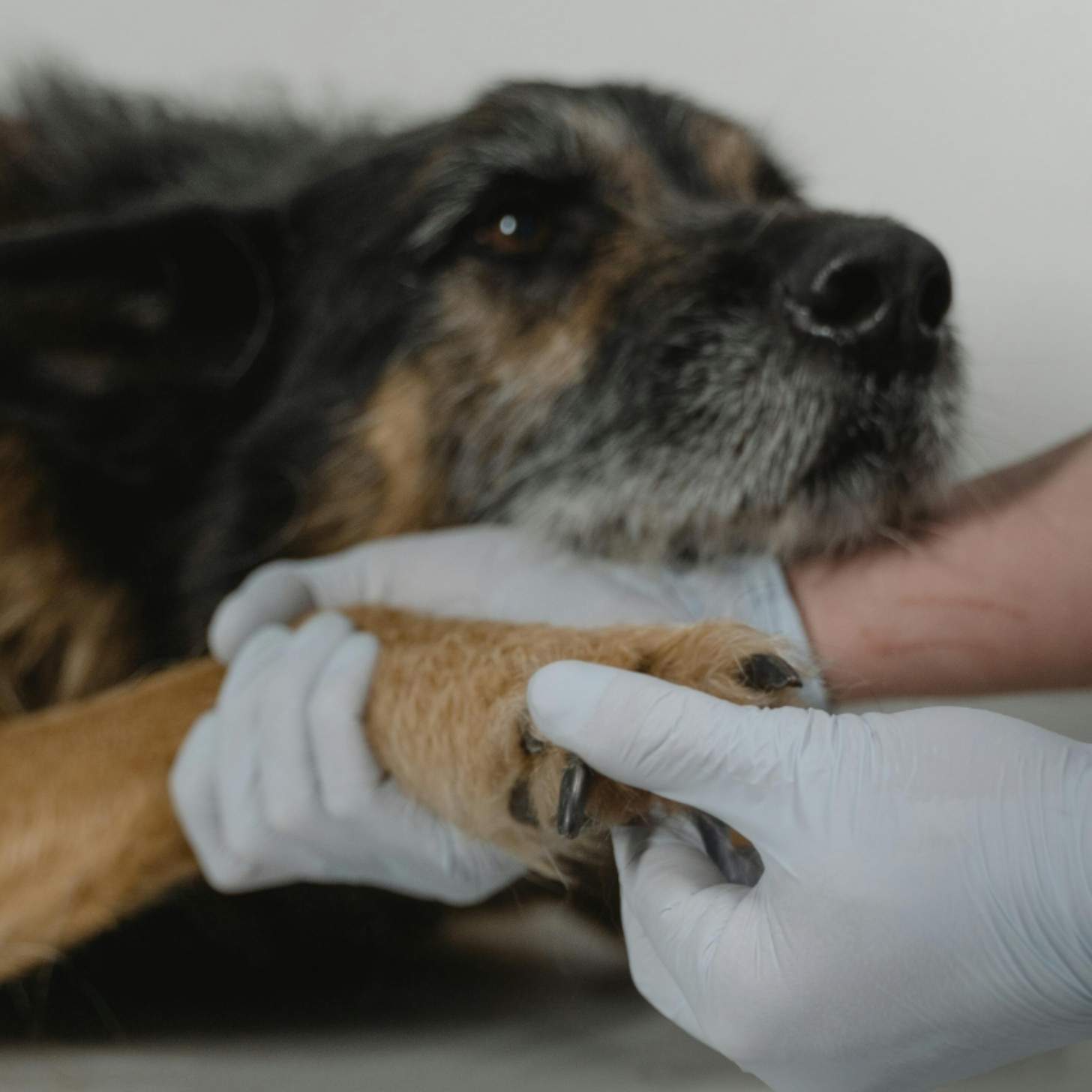
And when they pass — young or old, suddenly or slowly — the impacts can be devastating. According to Heathline, people who have recently lost a pet are three times more likely to report depressive symptoms compared to the general population.
Fortunately, a new field is emerging in healthcare, a career that bridges the gap between social worker and vet tech: veterinary social workers. Their job involves helping pet owners as they await news after surgery, consider euthanasia, and navigate loss in real time.
“I used to go home and genuinely wonder what happened to a client,” Dr. Amy Heuberger, the head of MedVet’s Chicago emergency department, told the New York Times. “[Now] I can take care of more animals in a shift, because I know that the clients are still getting taken care of.”
Today, over 175 people have earned a certification in veterinary social work from the University of Tennessee, Knoxville. IndeVets estimates that roughly 200 people in the United States have the unique role of easing stress and grief within the walls of animal clinics across the country.
In time, some owners may be ready to adopt another pet — or 40, in Greig’s case — to lessen the sting of the loss.
But on that one, awful day, as people sit by their pet under the fluorescent lights of the animal hospital and pet their fur, giving one last “good boy,” more and more veterinary social workers will be there, making sure that the people are good, too.
A version of this article originally appeared in the 2024 Animals Edition of the Goodnewspaper
Header image via Tima Miroshnichenko / Pexels
Due to Ehlers-Danlos Syndrome, Dysautonomia, MCAS, and a host of other medical issues, Lydia Brown knows what it's like to spend Christmas in a hospital bed.
The 16-year-old spent the majority of her childhood on the pediatric floor at Northern Light Eastern Maine Medical Center in Bangor, Maine.
That's why, for four years straight, Brown has donated Christmas presents to kids on the pediatric floor. She calls it the Lydia Project.
In an interview with local television outlet WABI TV, Brown said that she donated over 800 presents this Christmas, making it her “most successful year” yet.
“Every year, I try to make it as big as I can,” she said. “I donate almost anything you can think of, whether it’s needed, not needed, for fun, not for fun, anything that a family member might need or a patient, I try to donate it.”
Brown said that most of the gifts come from neighbors in her community, and she and her mom take care of the rest. The goal is to make sure no children go without a gift on Christmas Day.
“I’ve spent almost my entire life in and out of the hospital for many different medical reasons, and so was my younger brother,” Brown said.
“And whenever I was in the hospital, it was really nice to have a nurse come and be like, we have this craft for you, or you want some comfy PJs, or, you know, we have this cute water bottle, you know, you can take it home with you.”
“And I think about that a lot because, I mean, I still have some of that stuff from when I was like nine,” Brown said.

Although Brown can’t be there in person to give the gifts herself, she said that it’s enough to know that she’s making a positive impact.
“Coming from a person that was in that situation, it makes me happy,” she said.
To support the Lydia Project and follow future updates, you can visit her Facebook page.
You may also like: For premature babies, hand-knit clothes may be all that fits them. One woman has made and donated thousands
Header image via Pix4free / Lydia Brown / Facebook