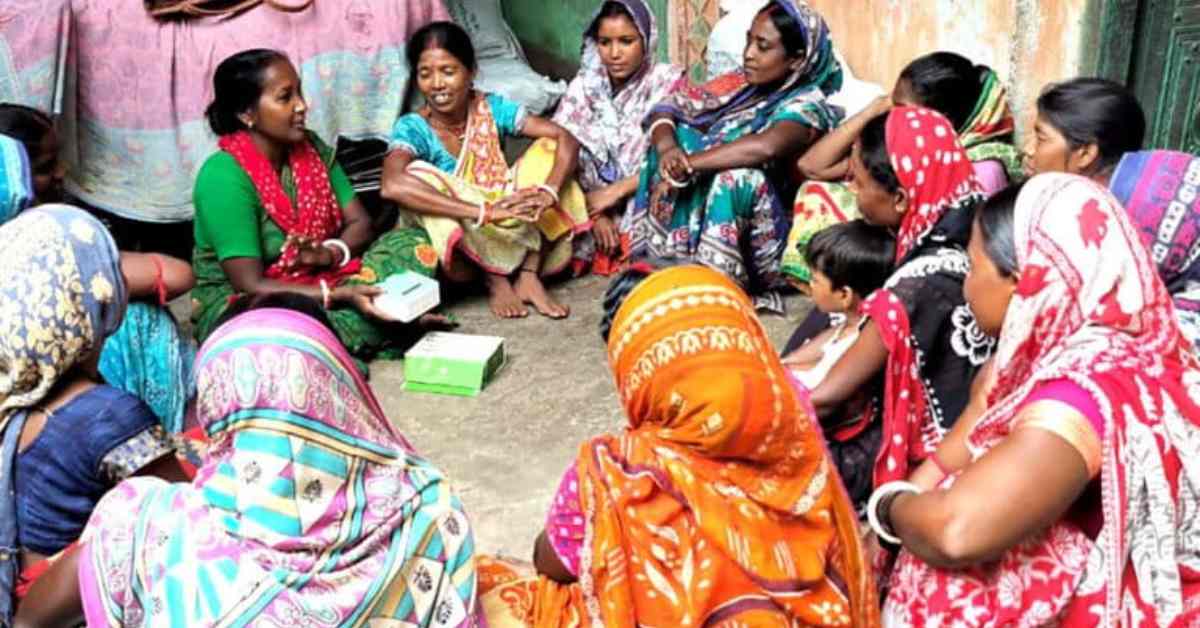
- Trained in air quality mapping, grassroots women leaders monitored air quality across 69 sites in rural areas of Bokaro and Dhanbad in Jharkhand, identifying 26 pollution hotspots.
- Despite the awareness about air pollution’s health impacts, the study found that the public health system is unresponsive and inadequate.
- The research prompted immediate action with the coal company installing water sprinklers, covering coal loads during transport, and setting up air quality monitors in public places.
As coal mine workers begin their day in the village of Jarangdih, the first sound they hear is the whirring of heavy machines. Soon, trucks loaded with coal from the local mines rumble down the roads.
“By afternoon, the air gets bad. Courtyards swept clean in the morning are covered in dust again,” said Rekha Devi, a resident of the village in Jharkhand’s Bokaro district. “And it gets worse in the winter.”
Devi is a paryavaran sakhi (a friend of the environment) and one of the grassroots women leaders, who co-led a recent community-participatory research study published in the Canadian Journal of Action Research in March 2025. The study throws light on the impact of air pollution on public health in rural neighborhoods in Dhanbad and Bokaro, Jharkhand’s two prominent coal-mining districts.
The research was jointly conducted by Neha Saigal and Saumya Shrivastava, who lead the gender and climate change program at Asar Social Impact Advisors and ten paryavaran sakhis, who work with Deshaj Abhikram, a local community organization. Paryavaran sakhi is a model where the women lead environmental efforts in their areas.
The women, trained in air quality mapping, monitored 69 sites for air quality in rural Dhanbad and Bokaro, out of which they identified 26 as air pollution hotspots. Apart from air quality monitoring, the study involved 200 participants in a survey, focus group discussions, and health system mapping, with data collected over nine months in 2022 and 2023.
Today, many states in India are exposed to unhealthy air quality levels. Air pollution causes 2.18 million deaths annually in the country. Jharkhand has a third of India’s coal reserves, with Dhanbad and Bokaro being major mining districts. The level of PM2.5, a type of fine inhalable particles that can only be seen through a microscope, is almost seven to nine times above the WHO limit in Dhanbad and Bokaro.
“This study is very critical because it isn’t a top-down study, which most air pollution studies are. This is a community-led study in places where the government doesn’t even think you need to install air quality monitors,” said Saigal, adding that localized studies can push local governments to find solutions.
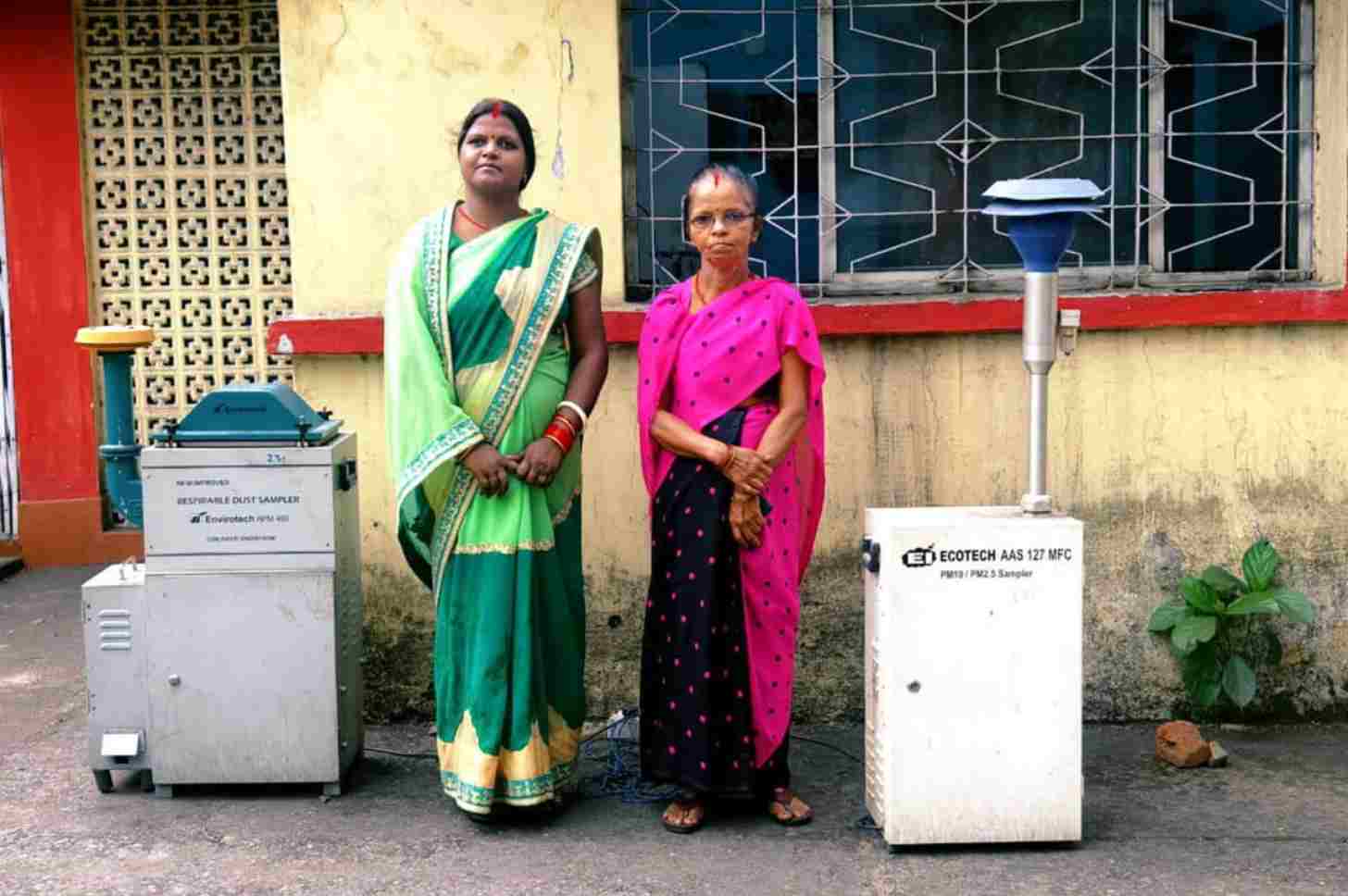
The study found air pollution hotspots in unexpected places. Out of 69 sites, 26 emerged as hotspots with PM2.5 levels in poor (91-120 micrograms per cubic meter air or μg/m³), very poor (121-250 μg/m³), or severe (above 250 μg/m³) categories.
Some locations recorded particularly alarming levels, such as a marketplace, which reached 252 μg/m³, and a main road hit 261 μg/m³ (both in Bokaro), more than 50 times the World Health Organization’s recommended limit of 5 μg/m³.
Other air pollution hotspots included not just mining areas but also anganwadis, hospitals, schools, and ponds, frequented by vulnerable populations such as women, children, and the elderly.
“I was surprised to see that places such as the market, which we thought had no pollution, had very high air pollution,” said Devi. This surprised the researchers too, who did not expect such pollution in villages that are more spread out than cities, which tend to be congested, Saigal told Mongabay-India.
Health impacts of toxic air
The study found high awareness of pollution among respondents but also severe health impacts. More than 80% of the participants said they had health ailments associated with air pollution, with all agreeing that their air is polluted.
The local residents reported several short-term health impacts, including cold and cough, breathing difficulties, headaches, and watery eyes. A majority of those with colds and breathlessness were women.
Pregnant women reported feeling sick while cooking on chulhas (stoves that use wood or coal as fuel) or when stepping out in the pollution. According to a study published in July 2025, when pregnant women are exposed to air pollution, they are much more likely to have babies born underweight or premature.
Children and the elderly are disproportionately impacted by air pollution for different reasons, explained Dr. Sumit Ray, who heads critical care medicine at Holy Family Hospital in Delhi. He was not involved in the study.
“The elderly have several years of exposure to air pollution because of their age, and they also have declining organs, which makes them vulnerable to polluted air. Children play and run around a lot, breathing faster and deeper, and air pollution impacts their lung capacity and immunity, which is still developing. If women have added exposure to indoor pollution from cooking on a chulha, it can lead to chronic lung damage,” he told Mongabay-India.

As part of the study by Asar and the paryavaran sakhis, people also reported long-term ailments such as asthma, Chronic Obstructive Pulmonary Disease (COPD), bronchitis, and lung cancer. Community members also reported that children had poorer growth, weakened memory and eyesight, and that life expectancy had reduced among older people.
However, the researchers found that this awareness of air pollution and its health impacts comes with a paradox — the unresponsiveness of the public health system. The study found that the village sub-centers were not equipped for serious ailments, and doctors are frequently absent at health facilities.
It also found that locals often travel up to 45 km to district hospitals for such health issues, which makes treatment expensive. Even at the Community Health Centre (CHC), there aren’t enough people trained to treat serious pulmonary disorders or heart-related issues from air pollution, Saigal told Mongabay-India.
Co-creating research methods with grassroots leaders
The study was conducted in three phases, Shrivastava explained. The first phase was air quality monitoring, where the trained women — paryavaran sakhis — identified sites across neighborhoods and monitored each site three times daily for one month. To conduct this, they received training on using portable AQI monitors. The data they collected was stored on an online dashboard.
“When I went to the open cast mines with the AQI monitor, workers said this would take away their jobs. After I showed them the pollution levels on the monitor, they began to gain awareness about how bad the air is,” said Devi.
The second phase of the study aimed at understanding the community’s perception of air pollution through a survey and focus group discussions around identified hotspots. These discussions involved women and men across castes, occupations, age groups, and economic backgrounds, also ensuring the involvement of marginalized groups.
The third and final phase was health system mapping, in which the women tried to understand whether the public healthcare facilities near the hotspots were accessible. This was achieved through public data, visits to facilities, and interactions with health workers.

On-ground impact of community-led research
Once the study’s results were out, the local women who co-led it took ownership of the data to drive action. They approached stakeholders including the coal company Central Coalfields Limited (CCL), coal unions, district and block officials, and had dialogues with them.
Devi talked about the changes that have happened in her area due to these efforts: The coal company began covering coal with tarpaulin during transportation. They installed water sprinklers at multiple points on roads where coal trucks travel, spraying thrice daily.
They also installed AQI monitors at three public places in Bokaro — at the post office, quarry, and hospital for locals to monitor air quality first-hand. Initially, they installed green netting around mining areas to contain dust. When the netting wore out, they replaced it with a metal sheet on Devi’s insistence. The roads are now swept regularly and the dust collected and removed.
“All this work happened in three to four months because the locals supported us in a big way,” said Devi. She feels now that the dust has visibly reduced.
“These might be very small actions, but they were entirely possible because of the dialogue the sakhis had with different stakeholders. After any research, it’s very difficult and rare to see that kind of impact immediately. This was a win for the study,” said Shrivastava.
According to the researchers, the study’s methodology can be replicated in any part of the country where people want to understand air quality from a hyperlocal perspective and get local decision-makers to take action.

Saumya Singh, who researches urban and rural air quality in India and teaches at the Indian Institute of Forest Management in Bhopal, said in an email interview, “Air pollution is not a big city problem anymore — recent studies, including my work (under publication), show smaller settlements like towns, villages, and neighborhoods experience similar or worse pollution. This study strengthens that evidence from mining belts, which are often overlooked.”
She also praised the study for giving communities evidence to demand changes from coal companies and officials.
However, Singh also noted the study’s limitations: It lacks technical information on the equipment specifications or quality assurance protocols, how a month of monitoring does not capture seasonal variation, and how self-reported health data without medical examinations can’t objectively confirm health impacts.
“The study attributes all health problems to outdoor air pollution, but residents also face indoor smoke from coal cooking, occupational exposure in mines, and pre-existing conditions like anaemia. We can’t separate how much each factor contributes,” said Singh, while adding that the reduction in life expectancy claimed by the respondents needs verification with actual demographic data.
Scaling the model for bigger impact
Going forward, the researchers plan to convert data from the study into action at the state level and test the methodology in other regions where they work on air quality. The local women involved in the research also want to continue using the data to bring more changes on the ground.
Singh said that the next step could be systematically scaling the study’s model to create Paryavaran Vigyan Kendras, district-level centers that train community researchers.
“These centers could provide equipment and technical support whilst local researchers, who understand contexts, do the monitoring. This could train paryavaran sakhis across mining districts, brick kiln zones, and industrial areas, creating district-level environmental health databases linked to government systems.”
Meanwhile, Devi is pleased that her efforts have borne fruit, not just in her neighborhood, but also in people’s homes.
Many families she knows have switched to cooking gas and induction stoves after learning about household air pollution from coal-fuelled chulhas. People have also stopped burning waste in the open and have started taking it to the public bins in the village, she notes.
This article was originally published on Mongabay.
Header Image courtesy of Deshaj Abhikram