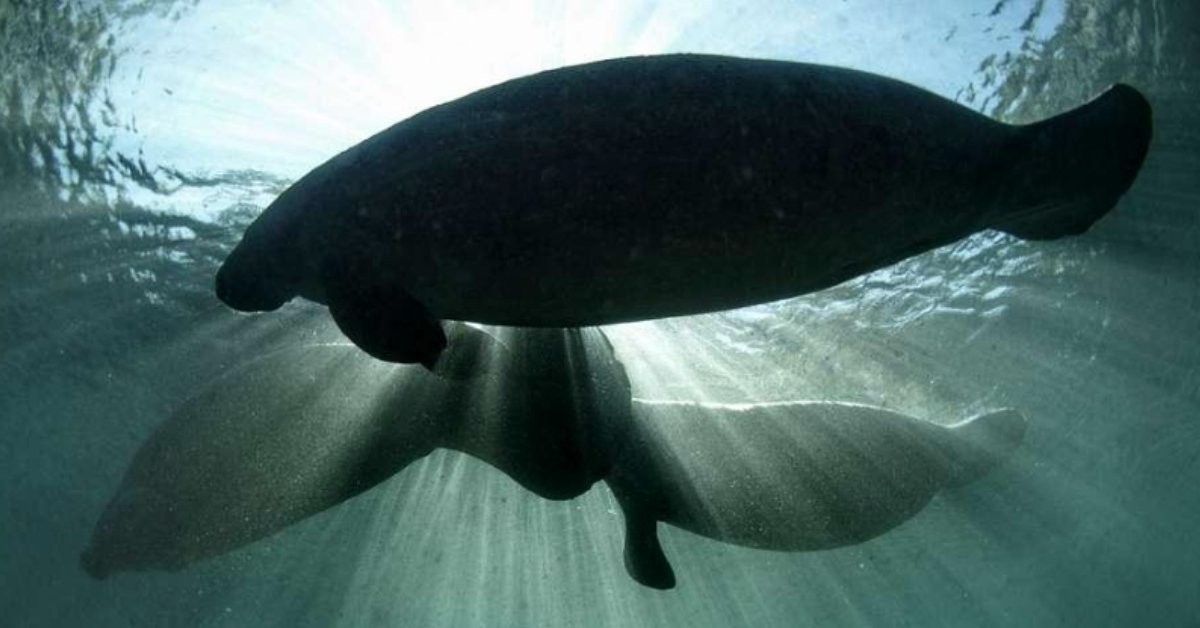
As gentle giants who both graze in the tranquil coastal shade of seagrass meadows, manatees and dugongs share the cheeky nickname: “sea cows.”
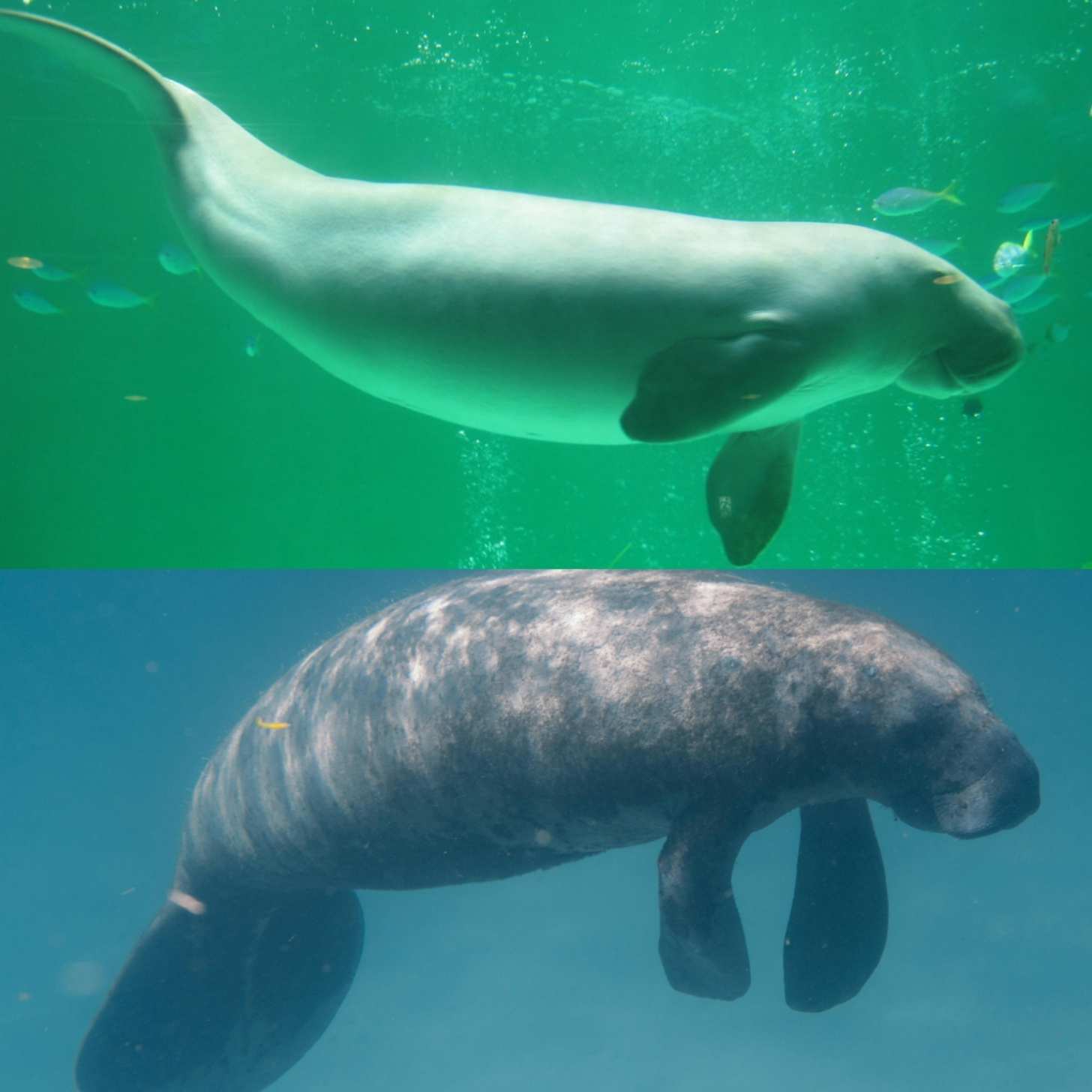
Dugongs and manatees, who are close relatives, both share a downturned snout, sensitive bristles, and a large, torpedo-shaped body.
The one key difference between the two is their tails. The dugong's tail flukes and flippers look more akin to a dolphin’s, while a manatee’s tail is rounded like a paddle.
Still, despite that physical likeness, manatees and dugongs are more closely related to elephants, aardvarks, and rodent-like hyraxes than they are to other ocean animals.
And now a new study is further illuminating the ancestry of the dugongs, thanks to a treasure trove of fossils uncovered in southwestern Qatar.
The research was co-authored by Nicholas Pyenson, the curator of fossil marine mammals at the National Museum of Natural History.
“We discovered a distant relative of dugongs in rocks less than 10 miles away from a bay with seagrass meadows that make up their prime habitat today,” said Pyenson, whose research was published in PeerJ on December 10.
“This part of the world has been prime sea cow habitat for the past 21 million years — it’s just that the sea cow role has been occupied by different species over time.”
By eating roughly 10% of their body weight in seagrass each day, manatees and dugongs help maintain the health of sea grass beds — which in turn capture carbon and house vulnerable marine life.
They also help the environment by pooping in these underwater habitats, a natural fertilizer that recycles nutrients back into the ocean.
“We know today that many marine mammals can have a disproportionate impact on ocean ecosystems. [But] we don’t know how long that’s been going on,” Pyenson told Smithsonian magazine.
“So, this is one of the first times, I think, we can point and say, ‘Gosh, this has probably been going on for tens of millions of years.’”
As a co-author of the new paper, Ferhan Sakal said that the fate of the ancient manatee’s relatives are “preserved in the region’s rocks.”
“The area was called ‘dugong cemetery’ among the members of our authority,” said Sakal, who works as head of excavation and site management at Qatar Museums. “But at the time, we had no idea just how rich and vast the bonebed actually was.”
Sakal said that by studying the past, archaeologists and marine biologists can better predict — and prevent — climate-related problems of the future.
They can also better understand the important role that vulnerable populations of dugongs and manatees still play today.
“If we can learn from past records how the seagrass communities survived climate stress or other major disturbances like sea-level changes and salinity shifts, we might set goals for a better future of the Arabian Gulf,” said Sakal.
You may also like: After a hurricane left countless manatees stranded, rescue crews jumped in to save the 'gentle giants'
Header image via David Hinkel