On Dec. 26, 1926, 16,000 hockey fans packed Madison Square Garden to witness the birth of a rivalry between the New York Americans and the brand-new New York Rangers. The game would later be remembered for establishing a foundation of popularity for the sport in New York City.
The only American playing for the Rangers that night also happened to be the largest player in the history of the NHL up to that point, defenseman Clarence “Taffy” Abel.
Standing over 6 feet tall and weighing 225 pounds, Abel was a brutal behemoth on the ice. Yet off the ice, he was a quiet, personable man who charmed sportswriters.
Despite being a foundational figure in American hockey — an Olympic silver medalist, and a two-time Stanley Cup champion — Abel has been largely erased from the national memory.
His story is not just one of athletic prowess, but of a secret identity maintained for survival and a career ended by a league that turned against him. As a scholar of Olympic media history, I recognize Abel’s story as an important but overlooked example of how race and labor issues can influence public memory.
Passing as white: Abel’s secret identity
Taffy Abel, who earned his lifelong nickname from his childhood love of candy, was half-Ojibwe, born in 1900 in Sault Ste. Marie, Michigan. One of Abel’s few surviving relatives, George Jones, a nephew by marriage, recalled that his mother, Charlotte, an Ojibwe woman, encouraged Taffy and his sister to “pass” as white to protect them from the era’s rampant racism and the threat of being sent to an Indian boarding school.
Though his heritage remained an open secret in his hometown, Abel maintained his whiteness throughout his hockey career.

His mother died in 1939, and it was only after her death — and years after his retirement — that Abel began to speak openly and proudly of his Indigenous roots. This forced silence is a primary reason his legacy remained obscured; for decades, he was categorized simply as a white American athlete, masking his status as a racial trailblazer.
Pioneer on the ice
Abel’s hockey journey was historic. At the 1924 Chamonix Games — the first official Winter Olympics — he was chosen to carry the U.S. flag during the opening ceremony. He led the American team to a silver medal before being recruited by Conn Smythe for the inaugural New York Rangers roster.
Because of his size, and perhaps also because of his biracial identity, which was likely known to many players in the NHL, Abel was forced to fight often in his rookie year. He led the Rangers with 78 penalty minutes, and soon became famous around the league for his jarring and ferocious checking.
In Abel’s second season playing for the Rangers, the team won the Stanley Cup.
He became the first American player to win a medal at the Olympic Games and the Stanley Cup, cementing his legacy as one of the finest hockey players in the world. In 1929, he was traded to the Chicago Black Hawks, where he anchored the defense on a team that won the Stanley Cup in 1934.

Hits the wall
The end of Abel’s career was not dictated by age or injury, but by a stand for labor dignity. After the 1934 championship, he held out for a salary that reflected his value as a star attraction. Black Hawks management responded by insulting him in the press, portraying Abel as an ungrateful prima donna.
Around the league, executives mocked Abel’s weight, telling newspapers that Abel walked out because he wouldn’t respect a team-mandated diet. Abel believed a team would sign him for 1935, but it soon became clear he had become effectively banned from the league due to his advocacy for equitable pay.
He had been a star attraction for the Black Hawks, and despite leading the team to the Stanley Cup in his final game, Abel never played another game in the NHL. At age 34, he returned to Sault Ste. Marie, operated a café and coached youth hockey, quietly fading from the national spotlight.
Only recently has the NHL acknowledged Abel’s Native American heritage. However, his story presents a challenge to the league’s historical narrative. To celebrate Abel as a pioneering person of color requires the NHL to confront its own role in the systemic racism that forced him to hide his identity.
Only recently has the league’s long-time, historical ban on nonwhite players — dating from its founding in 1917 — been an open and popular subject of public discussion.
Furthermore, the history is messy. Because Abel passed as white during his playing days, some modern observers find it difficult to reconcile his achievements with those of later pioneers who broke the color barrier more overtly.
Ultimately, Clarence “Taffy” Abel was a resilient path-breaker who navigated artificial borders — between the U.S. and Canada, and between white and Indigenous identities. He was a charter member of the U.S. Hockey Hall of Fame in 1973, and his memory inspired future Indigenous stars like T.J. Oshie.
Yet his name remains largely unknown because, I believe, his life forces a reckoning with a society that dehumanized him. Even Abel’s U.S. Hockey Hall of Fame biography minimizes his heritage, noting, “Thought by some to be the first Native American to play in the NHL.”
Abel fought for fair pay, against racism, and through physical pain. He died in 1964, but the issues he grappled with — labor exploitation and racial identity — remain at the forefront of the American story today.
This article was written by Michael J. Socolow from the University of Maine, and was originally published on The Conversation.
Header Image by The Jones Family Collection

In late 2025, Interpol coordinated a global operation across 134 nations, seizing roughly 30,000 live animals, confiscating illegal plant and timber products, and identifying about 1,100 suspected wildlife traffickers for national police to investigate.
Wildlife trafficking is one of the most lucrative illicit industries worldwide. It nets between US$7 billion and $23 billion per year, according to the Global Environment Facility, a group of nearly 200 nations, as well as businesses and nonprofits that fund environmental improvement and protection projects.
People buy and sell a wide range of items, including live animals, plant powders and oils, ivory carvings, and musical instruments.
Historically, enforcement has been largely reactive. There is so much global trade that fewer than 1 in 10 international cargo shipments of any kind are physically inspected. Traffickers also avoid detection by using false or generic names instead of proper species identification, employing coded language in online listings, rerouting shipments, and shifting to different messaging platforms when enforcement pressure increases.
Emerging digital tools are helping authorities link online monitoring, legal reference tools, and on-the-ground investigations.
As a researcher at the University of Florida working at the intersection of conservation science and applied technology, I observed these advancements firsthand at an international meeting of governments and partner organizations under the Convention on International Trade in Endangered Species of Wild Fauna and Flora, often known by its acronym, CITES.
This treaty — the cornerstone for international regulation of trade in endangered plants and animals — is enforced by national customs and wildlife agencies.
AI and digital tools for inspection
A huge challenge for officials seeking to prevent wildlife trafficking is knowing where to look — and then figuring out what they’ve found.
Cargo screening
Advanced X-ray screeners, similar to those used in airport security but designed for cargo, are being paired with software that helps spot unusual shapes or materials inside packages.
Trials conducted at major ports and mail processing centers in Australia have detected animals concealed in various kinds of shipments. The software does not identify species but highlights anomalies, helping inspectors decide which packages deserve closer inspection.
Assisted identification
A software program supported by the Chinese Academy of Sciences uses artificial intelligence to help identify the species of animals or animal parts found in shipments. Inspectors can use chatbot-style interfaces to describe what they have found to a system trained on technical documents with detailed descriptions of a wide range of species.
This type of work can help inspectors tell the difference between closely related species whose legal protections differ. For example, trade of African grey parrots (Psittacus erithacus) is strictly regulated. There are different, often less stringent protections for similar-looking species, such as the Timneh parrot (Psittacus timneh) and the brown-necked parrot (Poicephalus fuscicollis).
Portable DNA testing
Enforcement efforts don’t always happen in offices and labs. One company aims to provide small, handheld kits that can detect up to five species in about 20 or 30 minutes without needing traditional lab equipment.
The kits show their results on a simple strip that changes color when the DNA of a particular species appears in a sample. Conceptually, it’s similar to a pregnancy test, which changes color when a hormone is detected.
Timber identification
Handheld scanners use software to quickly identify timber species by examining the internal cellular structure of the wood. This can help to distinguish protected hardwoods from legal alternatives in regions where illegal logging is widespread, such as South America, Southeast Asia, and Africa.
Background research and risk profiling
Even before wildlife-related items appear at national borders, there can be signs of illegal trafficking that technology can help identify.
Monitoring online trade
Large volumes of wildlife trafficking now occur through online transactions. To avoid detection, sellers often use vague descriptions or coded language, such as listings that omit species names entirely or use emojis instead of words. Others hide key details in images or brief text that say little about what is being sold, even just showing a photo with no description.
Anti-trafficking organizations such as the World Wildlife Fund collaborate with tech companies to scan online listings using AI and content moderation tools.
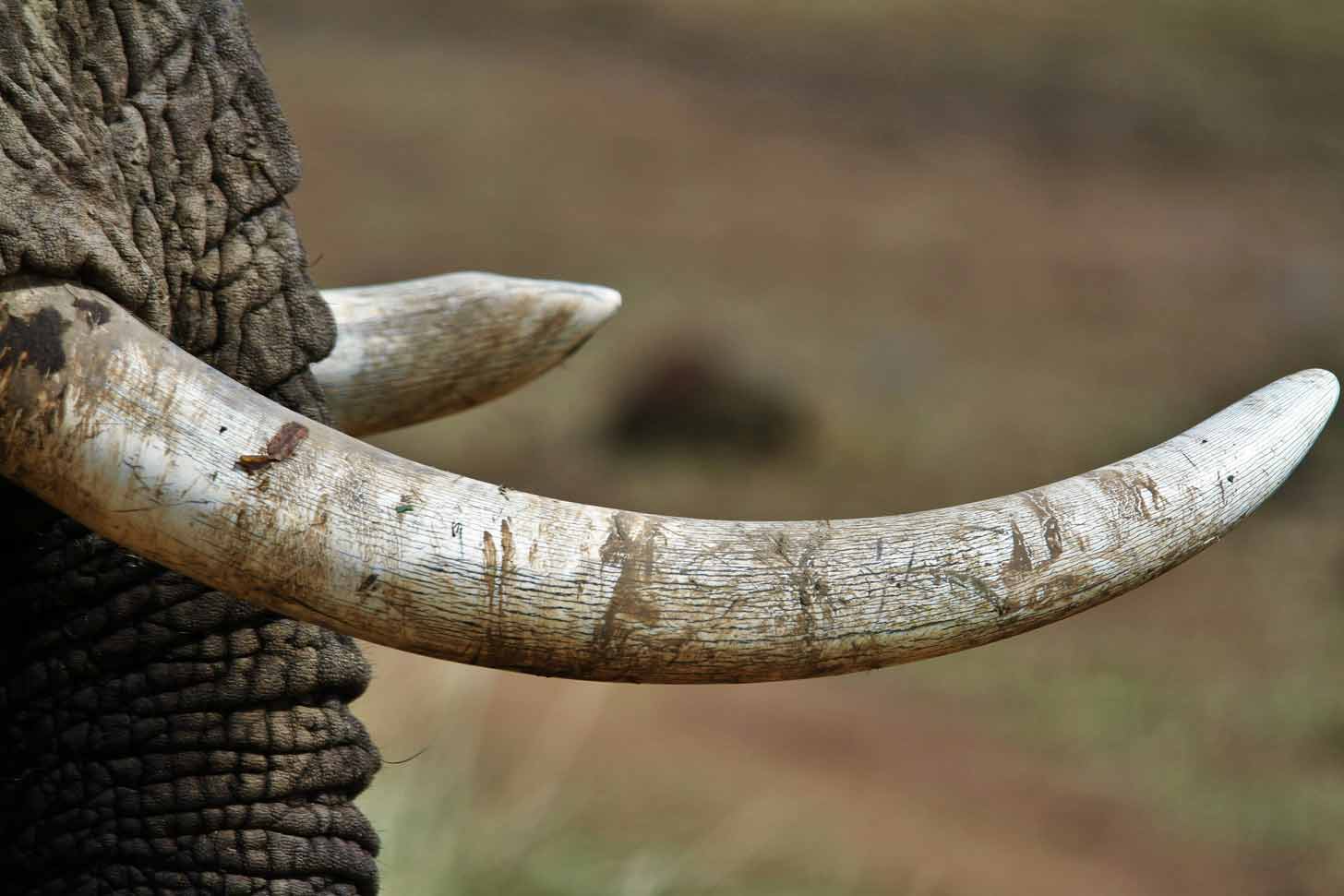
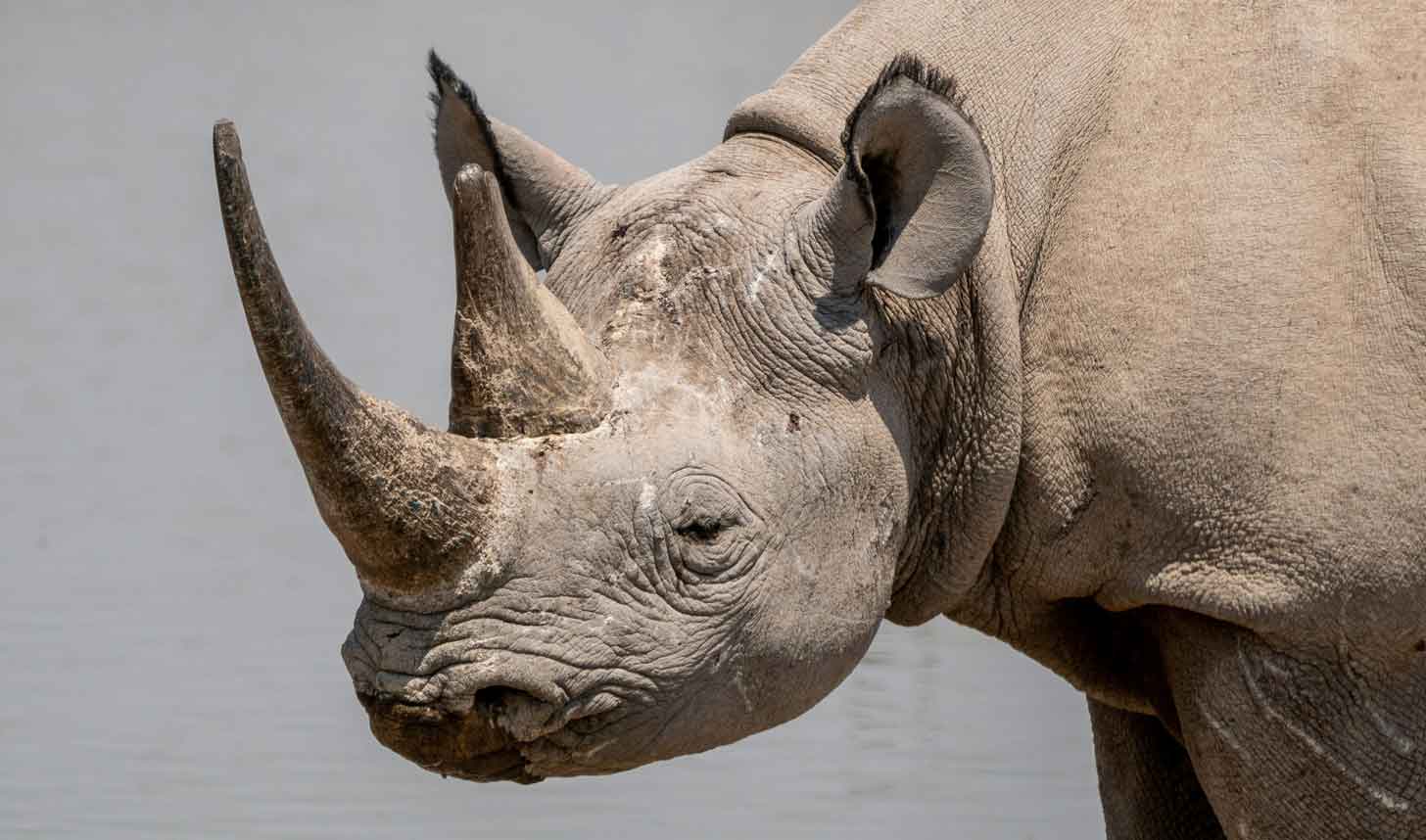
Between 2018 and 2023, the tech companies blocked or removed more than 23 million listings and accounts related to protected species, including live reptiles, birds, primates, and elephant products.
Early warnings from paperwork
Shipping documents often provide early warning signs of illegal trade.
Wildlife enforcement officers, transport sector personnel, government tax officers, and others are using new software tools to analyze millions of manifests and permits, looking for species names that aren’t usually traded on particular routes; shipments that are unusually heavy or underpriced; and complex routing through multiple transit countries.
Instead of inspecting shipments at random, these systems help enforcement agencies identify the consignments most likely to contain illegal materials.
Navigating wildlife trade laws
Enforcement officers have to navigate vast legal complexity. New tools seek to compile laws from multiple countries, helping inspectors understand regulations across export, transit, and destination nations.
Using trade data to identify other species to monitor
Researchers at the University of Oxford have developed a method that uses wildlife trade records to identify thousands of highly vulnerable endangered species that could benefit from stricter international trade protections and stronger law enforcement to limit exploitation.
Taken together, these devices and systems extend — but do not replace — human expertise. They help officers decide which shipments or sites to focus on, identify what they find, and share information internationally.
No single technology will end wildlife trafficking, but these digital tools can enable a shift from reactive enforcement toward proactive, coordinated action, helping authorities keep pace with adaptive criminal networks.
This article was written by Eve Bohnett from the University of Florida, and was originally published on The Conversation.
Header image by Shiku Wangombe on Unsplash

What do collecting old editions of Dungeons & Dragons monster manuals, securing the same tailgate spot for over 20 years, and mastering yoga postures have in common? They are all forms of “serious leisure.”
These pursuits are different from casual hobbies in several ways. They require participation over longer periods, which makes people who practice them more skilled and more connected with the activity over time.
The driving force for casual leisure is having fun; when a participant becomes more focused on accomplishment and improving their skills, the pursuit can gradually become more serious.
I direct the Rehabilitation and Recreational Therapy Program at Florida International University. In my research, I study leisure pursuits and various contexts for serious leisure, with a focus on the tabletop role-playing game Dungeons & Dragons.
I also work in recreational therapy, which helps people recover and return to their pursuits after injury or illness. The approach we use can work as well for someone starting out with a new hobby.
The idea of serious leisure was coined in 1982 by sociologist Robert Stebbins, who described the unique characteristics of more structured leisure pursuits. The more we understand about why people do the things they do, the more they can benefit from their pursuits.
Even fringe or supposedly nerdy activities like D&D offer insight into the connections people form when they delve into a non-work activity.
Why so serious?
People often associate leisure with ease and freedom. In contrast, serious leisure involves pursuing something for a long time and gradually developing the skills and knowledge required to excel at it. People have to push through barriers or setbacks to stay engaged and make progress.
Over time, participants come to identify with the activity and feel included in a subculture that has its own norms and values. In my work, that sometimes means developing elaborate characters who can battle beasts, dragons, and giants.
Dungeons & Dragons, which was developed in 1974, is a long-form game that takes place in multiple sessions that can last weeks, months or years. A Dungeon Master moderates the game and assumes the role of all monsters and non-player characters.
The Dungeon Master narrates an adventure, aided by a Dungeon Master’s Guide and Monster Manual. Players create characters that possess certain traits and qualities. The outcomes of battles, decisions, and interactions are determined by dice rolls.
My study included convening focus groups with regular D&D players to determine whether their experiences playing the game represented serious leisure, as opposed to casual leisure associated with traditional board games.
Players described developing their characters for years and acquiring knowledge and skills. They learned how magical items and weapons worked, made calculations, and researched their character sheets. All of these practices are attributes of a uniquely D&D subculture.
Participants also described the benefits they received from playing the game. For many of them, D&D offered a sense of community. It also was a safe space and a welcoming activity for those who might feel excluded by traditional leisure pursuits, such as sports and competitive games.
From yoga to tailgating
Prior studies have identified many other activities that can qualify as serious leisure, depending on the level of engagement.
Some are in-person physical activities like yoga, sport clubs, and rock climbing. Others include online pursuits like multiplayer online games and a virtual Harry Potter running club where members share running stories and experiences keyed to Harry Potter-themed discussion topics, such as logging miles in virtual races for their specific Hogwarts houses.
Studies have explored game-based pursuits like tournament bridge, and even the social art of tailgating among serious football fans.
In each case, researchers found that participants experienced hallmarks of serious leisure. For example, participants in multiplayer online games describe prolonged immersion in the activity. Yoga students pursued systematic training and skill development. And maniacally devoted Florida Gators fans scheduled family events around football season.
In all cases, participants became increasingly involved over time, acquired knowledge and skills, and often forged shared identities and social connections.
Are you serious?
How do you know if your favorite leisure pursuit has gotten serious?
One indication could be spending a lot of time on it and expanding your related knowledge or skills. You may also personally identify with the activity and its associated norms or subculture. Perhaps you’re increasingly spending time with other participants, and even using shared lingo.
Ideally, your serious leisure pursuit will give you pride and a sense of accomplishment. Belonging to a shared subculture can make it easier to express yourself, which promotes social interaction and a feeling of belonging.
These benefits aren’t trivial.
Studies show that Americans’ social networks are getting smaller and that people are spending more time alone. These trends are associated with increased risks for premature death, heart disease and stroke, anxiety and depression, and dementia.
In 2023, U.S. Surgeon General Vivek Murthy issued an advisory on the loneliness epidemic that called for a national strategy to advance social connection.
Leisure pursuits are a way to develop shared interests and social contacts.
For example, dedicated bridge players describe a social world unique to champion-level players that involves hierarchies and relationships spanning decades. Serious participants in multiplayer online games describe feeling like part of a team and working together to share materials, skills, and knowledge to help win challenges and battles. And serious football fans describe rites of passage associated with fandom, such as a solo performance of the team fight song on the tailgate of a truck.
How to start
Serious leisure doesn’t happen instantly, and not every practice needs to reach this level of commitment. Casual leisure has benefits too, so there is value in just getting started. But when a beginner gets obsessed with a new pursuit, it may start to take on the qualities of serious leisure over time.
Starting a new hobby can be nerve-racking, especially when it takes place outside of our familiar home environments. Start small, go easy, and match the level of challenge with your skill. You just may find yourself getting serious about it.
This article was written by Emily Messina from Florida International University, and was originally published on The Conversation.
Header Image by Dylan Gillis on Unsplash

Since October 2025, a group of 19 Buddhist monks — and their beloved canine companion, Aloka — have been on a 2,300-mile trek across the United States, calling for peace.
They began their “Walk for Peace” in Fort Worth, Texas, with a final destination of Washington, D.C. They are expected to arrive in D.C. on February 10, where they will host a gathering at the United States Capitol to share remarks about healing and unity with the public.
They have just crossed over into Alexandria, Virginia.
During their now 107-day journey, the monks have faced injuries, paused for Aloka to receive an orthopedic surgery, and have traversed inclement weather.
This weekend, the winter weather was at their heels again. Though, it does not seem like it deterred the 19 venerable monks — or the growing supporters who wish to pay their respects.

“In our extreme cold and strong wind walk this morning, even in very harsh weather with temperatures around 20°F (-7°C), we still saw hundreds of people who braved the cold to welcome us on the road,” the monks shared in a social media post recapping their 105th day on the walk.
“Your presence is so precious to us in this harsh weather,” they continued. “To know that you came out in such difficult conditions, that you stood in the freezing wind just to greet us, that you chose to be there despite the cold — this moves us beyond words.”
Video footage shows the wind nearly knocking the monks over in the harsh winds, as well as hundreds of supporters welcoming them to Virginia.
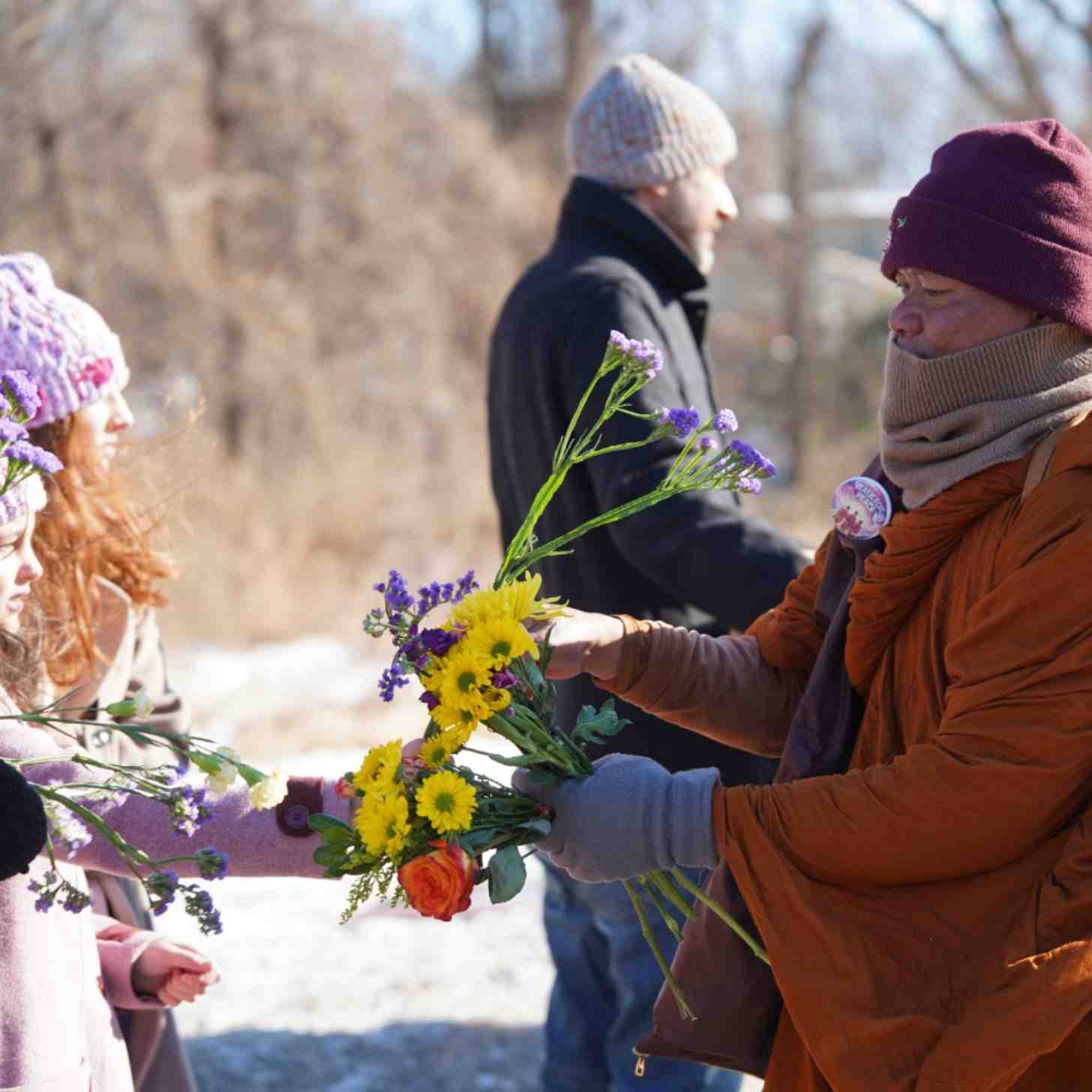
Over the last 100+ days, countless videos online have shown thousands of supporters greeting the monks with flowers, food, and reverent bows. Many posts show local gatherings where people feed the travelers, provide medical care, and share water and other essentials with the group.
Though the monks walk with minimal possessions, photos and videos show them in hats, scarves, and boots — not currently barefoot, as some have been in the past.
Their “peace dog,” Aloka, who has been recovering from surgery, also had limited exposure to the elements, and the group of monks stayed in churches and found indoor accommodations amid ongoing winter weather.
Like their previous journeys through snowy conditions, the monks seem, fittingly, at peace with the weather.
“The wind was strong, the cold was harsh, but we did our best to continue walking forward,” the group shared.
“This is the nature of our journey — not just walking when conditions are comfortable, but continuing with humility and mindfulness when challenges arise. We don't always know how far we'll make it on difficult days, but we try our best, we take it step by step, and we trust in what each moment allows.”

They seem especially buoyed by a myriad of supporters in tow.
“Seeing you, we don't see just the physical appearance. We see the shining peace and love glowing brightly inside everyone. Your hearts radiated such warmth that we forgot about the cold. Your spirits shone so beautifully that the harsh wind felt gentle,” the group shared on social media.
“We are in deep gratitude for each and every one of you who came out today. You showed us that peace is stronger than any weather, that love is more powerful than any wind, that the human heart can warm even the coldest morning.”
As they approach their final destination in Washington, D.C. the group will visit local sites, and later, on February 11, have scheduled remarks planned at the Lincoln Memorial.
After spending two days in D.C., the group is expected to take a bus back to Fort Worth, Texas, where they will walk six miles back to their temple. All are invited to join them on their final walk home.
You may also like: Buddhist monks are walking 2,300 miles across America to inspire peace. This is the '90s walk that inspired them
Header image courtesy of Walk for Peace
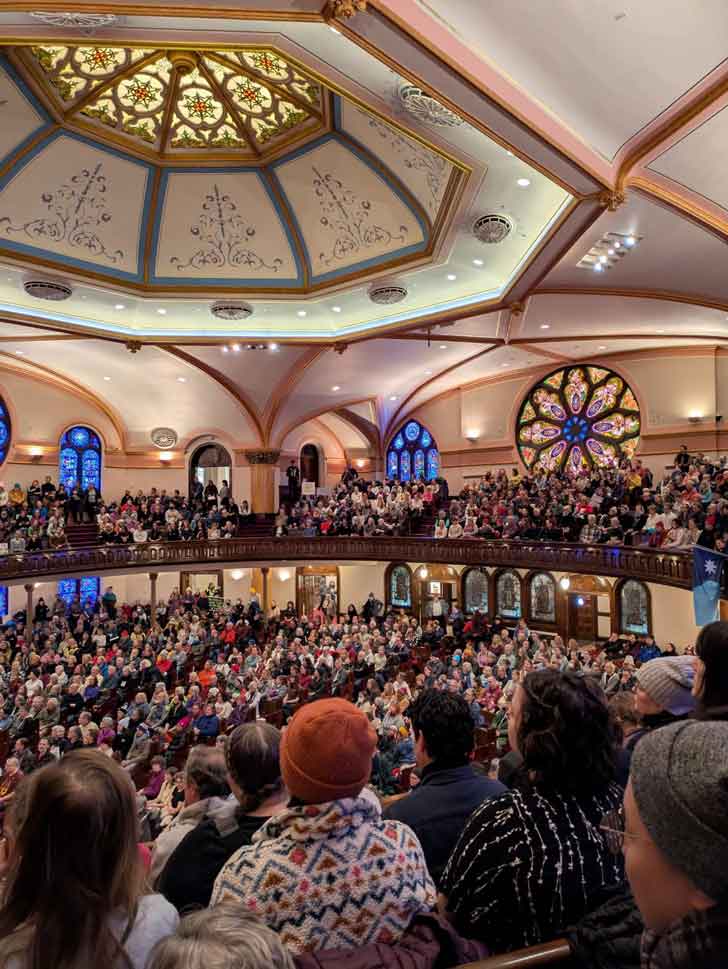
Last week, a video of 2,000 bundled-up Minnesotans singing in the streets of Minneapolis went viral.
“It’s okay to change your mind / Show us your courage / Leave this behind,” they sang. “It’s okay to change your mind / And you can join us / Join us here anytime.”
The group sang to ICE agents inside a Residence Inn, with what they said was one message: “Quit your job.”
“Under federal occupation, Minneapolis has been going through immense pain, rage, and grief. But when they come at us with violence, we fight back with love,” organizers shared on social media.
“We still have space in our hearts for ICE agents who are willing to walk away from the path of violence and take accountability for harm they’ve caused. We paid ICE agents a visit today to call them home.”
The group calls itself Singing Resistance, and according to social media, they were inspired by “Otpor!,” a Serbian civil resistance movement that overthrew a dictatorship in 2000.
And their efforts are only getting started.
After distributing a digital songbook of their most common refrains, the group is now calling for a “nationwide day of action.”
While it’s not yet clear to the public when they plan to schedule this activation, organizers say they hope to mobilize supporters by hosting in-person and virtual training sessions so they can learn popular protest songs, along with protest safety and legal rights.
One online training session took place on Sunday, Feb. 8, and another is scheduled for Thursday, Feb. 12. Anyone interested in joining can register for free online.
“Singing Resistance is building a mass movement of singers to protect and care for our communities in the face of rising authoritarianism,” the group shared in a social media post.
“We are grounded in love, nonviolence, and solidarity. We sing publicly in the streets for the sake of solace, strength, solidarity, to voice our dissent, and to refuse cooperation with oppressive and autocratic forces.”
In regard to the virtual training sessions, they added: “Together, we’ll learn how to take coordinated action.”
Interfaith groups and churches across the country have already hosted some in-person sing-alongs.
“We were grateful to be able to host Singing Resistance Twin Cities yesterday,” Westminster Presbyterian Church in Minneapolis shared on Facebook earlier this month. “They first lifted their voices in our sanctuary and then took to Nicollet Mall. Beautiful!”
Another group, hosted by nonprofit Interfaith Alliance, shared a video of hundreds of New Yorkers gathered in a church to sing the group’s now-hit, “It’s Okay To Change Your Mind.”
“Hundreds of New Yorkers across faith traditions and ages just packed an NYC church for an ICE OUT resistance song training,” the video’s caption read. “We choose love, not ICE!”
You may also like: Thousands sing in the streets of Minneapolis to protest ICE. They have a songbook you can follow, too
Header image courtesy of Westminster Presbyterian Church/Facebook
In October 2025, nineteen Buddhist monks — and their cherished dog Aloka — set out on a 2,300-mile journey on foot across the United States to promote peace.
Their “Walk for Peace” started in Fort Worth, Texas, and is scheduled to reach the nation’s capital on February 10, where they will convene in Washington D.C. to offer reflections on healing, unity, and compassion to the public.
“The weather was harsh, the wind was fierce, but we were warmed up completely by the peaceful energy from hundreds of people who lined up on the roads to welcome us,” the monks shared on Instagram as they arrived in Alexandria, Virginia.
In addition to reaching 107 days on their penultimate pitstop, the Buddhist monks also welcomed back venerable monk Maha Dam Phommasan.
“Due to an accident we had before, Venerable Maha Dam Phommasan could not physically walk with us since then,” the official Walk for Peace Instagram account shared on February 9, referring to a traffic incident that injured two monks in early December.
“However, we are happy to share that he will reunite with the venerable monks today … and for the coming days in Washington, DC.”
“We are deeply honored and grateful to have Venerable Maha Dam Phommasan walking with us on this peaceful journey for peace,” the post continued. “His presence, wisdom, and dedication enrich this mission profoundly.”
The account also promised to introduce each “venerable monk on this journey” in the coming days as their trek reached its conclusion.
As the monks journeyed into Alexandria, onlookers watched in awe. One woman, Usa Bunak, was overwhelmed with emotion.
“This is so important for me to be here,” Bunak told WUSA9, adding that she traveled from Kensington, Maryland to greet the monks in the streets.
“I'm Buddhist and I grew up in Thailand … One of the monks is from my hometown in Ubon Ratchatai,” Bunak said. “And being part of this, this is the most important moment as a Buddhist — to be witnessing the monks do the walking meditation.”
Bunak also traveled to Alexandria on behalf of her husband.
“My husband is in hospice and he's dying at home. It’s so important for me to be here to bring the memory back to him and back to my family.”
“Just being here, and being here in America, meeting the monks that have been walking for 107 days — I've been following them since they started out in Texas — and I just thought, ‘When they are in D.C., I want to be here.’ I wanna be part of this, and it will just be a blessing for me and for my family.”
You may also like: Man returns from world's longest horseback ride across US, raises awareness for wild mustang crisis
Header image via Walk for Peace / Instagram
With the 2026 Milan Cortina Winter Olympics well underway, LGBTQ+ athletes are celebrating a record 47 out Olympic competitors in this year’s Games.
But even in this milestone, LGBTQ+ folks — especially those who are trans or non-binary — continue to hear the refrain of critics who want to exclude them from community (and competitive) athletics.
There is, however, one place they can go where their identities are fully celebrated: The Gay Games.
With a tagline promoting “participation, inclusion, and personal best,” the 10-day spectacle of the Gay Games is hosted every four years, just like the Olympics.
Combining athletics, art, culture, and community, it’s an event that is always open to everyone, regardless of gender, sexuality, or any other factor.

In 1982, Olympic decathlete Tom Waddell founded the Federation of Gay Games to create a major sports competition that intentionally carved out a space for athletes of all sexual orientations.
“Athletically speaking, the Games are not about competition alone, they never were. They are about participation and self-fulfillment,” Waddell said in 1983.
“They are not just a one-week event, they are a continuous process. They're symbolic in the Gay movement in a way that is assertively free of discrimination. They're symbolic of friendship and fun, and they are for everyone.”
Just like Waddell’s original vision, the current iteration of the Gay Games is part-competition, part-community fun.
Participants can compete in a number of tournaments in sports such as aquatics, track and field, bowling, cycling, dance, and much more.
But attendees can also join in for the International Rainbow Memorial Run, partake in workshops, or take a dip in the pool.
Both traditional and participation medals are awarded, and the Federation offers a wide range of binary and mix-gender category options for participants.
This encourages all participants to take part in the gender category they feel most accurately reflects their identities.

The next Games are scheduled for the summer of 2026, taking place in València, Spain. The host city for 2030 will be Perth, Australia, though Denver, Colorado was the runner-up, out of 25 cities that put in their bids to host.
“Colorado is a state where athletes can thrive no matter who they love or how they identify,” Governor Jared Polis said in 2024. “I hope to welcome the Gay Games to Colorado in 2030 — and maybe I’ll even try out for the baseball team.”
Ultimately, the honor went to Perth after a thorough site selection process by the Gay Games team.
“Each city has worked incredibly hard to present themselves as a potential host, and has firmly stamped their local culture and uniqueness onto their proposals,” Austin Manning, the officer of site selection for the Gay Games said in a statement.
“This milestone is not just about choosing a city; it's about envisioning a future where LGBTQ+ sports and culture, and the values we have in common, shine brighter than ever.”
Those who would like to attend or compete in the 2026 games in Spain can still register online, with registration fees starting at $195.
You may also like: This NHL team is selling 'Heated Rivalry' jerseys. The proceeds will be donated to a queer and trans hockey league
A version of this article was originally published in The 2024 Pride Edition of the Goodnewspaper.
Header image courtesy of The Gay Games/Facebook
Dolly, a 7-year-old black Labrador, is a regular at the DoveLewis blood bank in Portland, Oregon. In fact, she’s one of 94 dogs — and 48 cats — that regularly donate blood to the DoveLewis veterinary hospital.
“[She’s] not crazy about the actual donation, but she gets a treat of baby food after and a toy, so that’s what she’s looking forward to,” dog owner Denise Duncan told Oregon Live, pointing to Dolly’s wagging tail.
Kelsey Reinauer, the DoveLewis blood bank manager, said that donations play a critical role in stabilizing dogs and cats during life-threatening emergencies.
But they could always use more.
“There’s a very large deficit between the need and the supply in veterinary medicine for blood right now,” Reinauer explained. “There’s maybe just a handful of blood banks our size in the United States.”

Reinauer provided a demonstration, drawing a pint of blood from a 2-year-old golden and lab mix named Rocket in less than 10 minutes.
“What I tell owners is, it’s a relationship that we’re going [to] build here,” she said. “I will tell you what I see, if I see stress or nervousness in them, and you tell me how you think they feel, and then we’ll just go from there. More often than not, they keep coming back. They don’t mind it.”
Soon, the donation is done, and Rocket and Dolly both leap off the table, eager for their reward. Kim Laird, Rocket’s owner, recognizes how important this monthly visit has become.
“As people, we don’t necessarily think that animals need blood transfusions, but with critical care for your pet, it’s very important,” Laird said. “This is one way we can give to help dogs across the country.”
If you are interested in signing up your own pet as a blood donor, you can visit We Are The Cure.
A version of this article originally appeared in the 2025 Dogs Edition of the Goodnewspaper.
Header image via Sueda Güzeldere / Pexels
For years, neighbors Mauren Castro and Marta Sosa stayed home to care for their children as their husbands fished for the household in Costa de Pajaros, a small village in Costa Rica. Then, in 2022, they took on new roles and joined Piel Marina, a cooperative of women who turn fish skins into sustainable fashion.
At first, Castro was skeptical.
“We said, ‘How can a skin, which is something that gets smelly, which is waste, be the raw material for women to be able to get ahead?’” Castro told Agence France-Presse.
But after three years at Piel Marina, Castro knows just how far fish skin can go when it's not destined for the trash can. Sporting rubber gloves, she and Sosa led a demonstration, gently rubbing the scales and flesh off a filleted sea bass.
“Then we take it and wash it with soap, as if we were washing clothes,” Sosa explained. “Then we dye it with glycerin and alcohol and natural dye, and then we dry it.”
After four days of dyeing and four days of drying, the fish skin transforms into soft, pliable leather, which is then used to handmake handbags, earrings, and necklaces.
Through their work at Piel Marina, Sosa and Castro have continued a fish tanning tradition that traces back thousands of years to the Indigenous people of Scandinavia, Alaska, and Asia.
As they join a global practice, they dream of someday seeing their work on a global stage.
Castro said, “I would like it to be seen in Hollywood, in Canada, or on the great catwalks in Paris!”
A version of this article originally appeared in the 2025 Fashion Edition of the Goodnewspaper.
Header image via Ivan S / Pexels
Fur, once considered “soft gold” at the turn of the 19th century, has lost its shine in the last decade — largely thanks to animal welfare activists.
According to Humane World for Animals, formerly known as the Humane Society, the number of animals farmed and killed for fur production plummeted from 140 million in 2014 to just 20.5 million in 2024.
Tracking the use of animals — including minks, foxes, chinchillas, and the raccoon dogs of East Asia — the data revealed dramatic drops in fur production across China, Russia, North America, and the European Union, all traditionally leaders in the industry.
According to PJ Smith, the director of fashion policy at Humane World For Animals, the downward trend reflects a larger history of anti-fur activism that began in the 1980s. He attributes the last decade of decline to continued pushback from consumers, which led to decisions by big brands like Versace, Burberry, Prada, Chanel, and Michael Kors to end their use of fur. In 2019, calls to go fur-free gained legislative influence, as California banned fur sales statewide.
“The hardest part is going to be closing out an industry for good,” Smith told Vox. “It’s going to be convincing those final fashion brands and retailers to move away from fur.
“And it’s going to be the case that we need to make to legislators and policymakers that we need to implement policy change,” he said, to “ensure the future is fur-free once and for all.”
A version of this article originally appeared in the 2025 Fashion Edition of the Goodnewspaper.
Header image via Alexander Mass
Last week, a video of 2,000 bundled-up Minnesotans singing in the streets of Minneapolis went viral.
They stood outside of a hotel where Immigration and Customs Enforcement officers were reportedly staying, holding heart-shaped protest signs and playing tambourines.
“It’s okay to change your mind / Show us your courage / Leave this behind,” they sang.
“It’s okay to change your mind / And you can join us / Join us here anytime.”
Their goal was to unite in song and extend a forgiving hand to agents who have been carrying out violent and often illegal raids against both undocumented immigrants and United States citizens.
“Under federal occupation, Minneapolis has been going through immense pain, rage, and grief. But when they come at us with violence, we fight back with love,” organizers shared on social media.
“We still have space in our hearts for ICE agents who are willing to walk away from the path of violence and take accountability for harm they’ve caused. We paid ICE agents a visit today to call them home.”

The song, directed by activist group Singing Resistance, has since become an earworm for those who have seen the viral clip. It has also inspired other anti-ICE protesters to join in, with virtual and in-person singing circles sweeping the nation, a digital songbook shared by organizers, and a nationwide day of song scheduled for the weekend of February 28 and March 1.
But the song has humble beginnings.
“It’s Okay to Change Your Mind” is one of about a dozen songs the group has been singing in the streets of Minneapolis, and it was written by a local, Annie Schlaefer.
According to a Patreon bio, Schlaefer has been leading community singing circles for 13 years in northern Minnesota, Maine, and Wisconsin. For the past four years, she has hosted similar gatherings with a friend in Minneapolis.
On her Patreon, she has a handful of brief recordings of these protest songs, so people can access them for free, listen, and learn the words themselves.
“I am planning to post songs that I catch/make for the community singing movement,” she wrote in her bio. “Songs will be fairly simple and fairly easy to teach and learn.”
“It’s Okay to Change Your Mind” is one of those simple tunes. The full lyrics are as follows:
“Ooh, it’s okay to change your mind / Show us your courage / Leave this behind
“Ooh, it’s okay to change your mind / And you can join us / Join us here any time”
According to Interfaith Alliance, a nonprofit that has been teaching these protest songs to groups of all faith backgrounds, Schlaefer wrote the song “in response to escalating ICE raids and authoritarian violence in the Twin Cities.”
The song, and many others like it, are also inspired by similar protest messages from history.
“It is inspired by Otpor!, the Serbian civil resistance movement who overthrew dictator Slobodan Milošević in 2000. Otpor! members were regularly arrested and beaten by police. Afterward, they would show up to police stations and officers’ houses chanting ‘You may not join us today, but you can join us tomorrow,’” Interfaith Alliance explained.
“In the final hours of their revolution, hundreds of thousands of people from across Serbia marched on Belgrade. Milosevic ordered the police and military to fire on massive crowds of protestors, and they refused. They were done being on the wrong side of history.”
Other songs in the Singing Resistance catalogue share similar sentiments.
Another written by Schlaefer is “We Walk the Same Ground,” and its lyrics contain a short but powerful refrain:
“We walk the same ground / But we’ve been torn apart / Put down your weapons / Come sing your part.”
Some other songs in the public songbook are credited to The Peace Poets, other local musicians like Sarina Partridge, and longtime musical organizers like Joshua Blaine. Songs are divided into various categories, like “walking vigils in response to ICE activity,” “grief vigils,” or — in the case of “It’s Okay to Change Your Mind” — “songs to encourage defections.”
Thousands have turned out to sing these songs in the streets of Minneapolis, and training continues in preparation for an upcoming “nationwide day of action” on a to-be announced date.
“We are grounded in love, nonviolence, and solidarity. In the context of intense and escalating violence towards our communities and federal invasions of our cities and towns, we sing because song is an antidote to fear, song helps us connect to each other, and through song we can name and protect what we hold sacred,” a toolkit by Singing Resistance stated.
“Through song, we can refuse to obey what authoritarianism wants us to do — get small, numb out, and forget. Instead, we will mobilize our communities in public, we will feel, and we will tell the truth of the violence and of the resistance.”
You may also like: How historic protest music has inspired anti-ICE resistance in Minnesota
Header images courtesy of @dougpagitt/Instagram
A study published by the American Sociological Association in December of 2023 found that aunts are crucial to the well-being of LGBTQ+ youth — particularly BIPOC youth.
The paper is part of a larger two-year longitudinal study documenting the impact of supportive family members who aren’t parents.
Researchers interviewed 83 LGBTQ+ youth in South Texas and the Inland Empire of California. They all reported ambivalence or low support from their parents regarding their identity, and over 80% of those interviewed were Latino, Hispanic, Black, Asian, or Indigenous.
Additionally, nearly 70% were trans, non-binary, or gender nonconforming.
A majority of respondents identified their aunts — or someone who played an aunt-like role but who they were not biologically related to — as a source of emotional support and housing stability.
“For the LGBTQ+ youth in this study, aunts provided gender-affirming and queer and trans support, along with anticipatory support for housing and actual housing support for their niblings,” the authors wrote.
According to research in the Journal of Social and Personal Relationships, queer youth make up 40% of young people ages 18 to 25 who face housing instability in the U.S. every year, with Black and Latino trans kids most affected.
But aunties and tías, according to research participants, are often on the front lines to support their LGBTQ+ extended family.
One person who was involved in the study, Stacey Monroe, told NBC News that her tía — which means “aunt” in Spanish — has been supportive since Monroe came out as gay at 13, adding that her Tía Mary “led with curiosity, versus rejection.”
To this day, Monroe can rely on her aunt to intervene with others when they misgender Monroe.
The paper builds on research from Patricia Hill Collins’s book “Black Feminist Thought,” which explores the role of maternal figures — or “othermothers” — who are a non-parental source of housing stability and safety in queer communities.
“Like Black other-mothers, aunts of all racial backgrounds brought an ethic of care and social responsibility toward the well-being of their LGBTQ+ niblings,” the researchers explained. “Aunts acted as a buffer between the youth and other family members, especially parents, and provided consistent loving and affirming support.”
The feedback from research participants affirmed the theory that aunts, and aunt-adjacent figures, are especially critical in the lives of BIPOC LGBTQ+ young people.
“You could just tell how much it meant to them to have this adult family member, this aunt, who just saw them for who they are, loved them for who they are and who will do anything for them,” the paper’s lead author, Brandon Robinson, said.
“I think oftentimes we miss this, because so much research focuses on the parent-child dynamic or parents rejecting their child, and we’re missing that there are actually adult family members such as aunts who are deeply loving and supportive.”
You may also like: To help other survivors of religious trauma, this ex-Mormon rebranded himself as 'Sparkly Gay Jesus'
A version of this article was originally published in The 2024 Pride Edition of the Goodnewspaper.
Header image by RDNE Stock project via Pexels
In 2017, Los Angeles artist Jayna Zweiman started Welcome Blanket as a response to the first Trump administration's proposed border wall between Mexico and the United States.
Instead of a 2,000-mile concrete wall, Zweiman wanted to knit that length in skeins of yarn, creating blankets and accompanying notes to give to refugee and immigrant neighbors.

With an onslaught of donors who wanted to contribute to the project, she quickly hit her goal of gathering 6,000 Welcome Blanket packages.
So, she upped the ante.
Now, the goal is to cover the circumference of the earth — 24,901 miles “that connect us all,” she writes — in welcome blankets.
It will take 36,521 hand-knit or quilted pieces to do this. So far, she has collected 8,000.

“Taking part in Welcome Blanket is a tangible way to recognize and celebrate our global humanity and to uphold a foundational premise that immigration is vital for the continuing vibrancy of our society and growth of our nation,” Zweiman shares on the project’s website.
“My hope is for Welcome Blanket to become a new American tradition and for every refugee family to receive this symbolic and practical gesture.”
Crafters who take part in the project are instructed to make 40-inch by 40-inch lap blankets using their preferred method: Knitting, crocheting, sewing, or quilting.
Some projects are displayed in galleries or exhibitions before being distributed through local resettlement agencies, while others can be sent to a P.O. Box and are added to an on-call list for distribution.

Donors are also asked to log their blankets in an online form to keep track of that planet-sized goal.
They are also asked to write a welcome letter to whoever their recipient may be, which is tied carefully to the final blanket. Some crafters even stitch notes into their blankets, like quilt squares spelling out, “you belong here,” or hand-sewn tags that read, “welcome home.”
Zweiman is also a co-founder of Pussyhat Project, an international network of crafters and women’s rights supporters, who banded together to create pink “pussy hats” at the start of Trump’s first term. The project gained worldwide momentum and remains one of the largest crowd-sourced art advocacy projects in history.
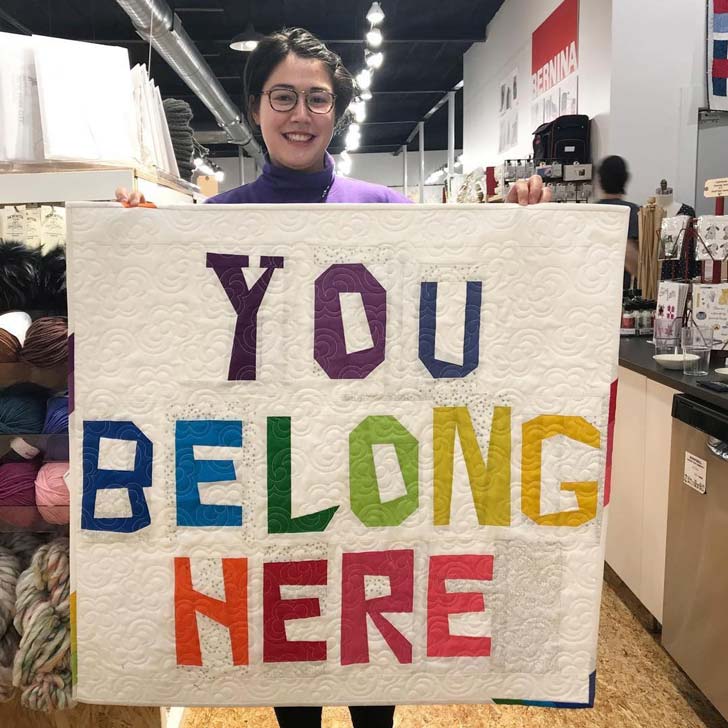
Zweiman said her “innovations in craftivism have been rooted in design strategies to make spaces and systems for people to connect through craft.”
And it seems Welcome Blanket has become a much-needed extension of this work, especially as activists wield their knitting needles and crochet hooks in the fight against U.S. Immigration and Customs Enforcement.
As big as the project has gotten, it all still stems from Zweiman’s curious and compassionate notion: “Instead of keeping people out, what would it be like to think about how to welcome them in?”
You may also like: 'Melt the ICE' hats are so popular among knitters, shops are selling out of red yarn nationwide
A version of this article was originally published in The 2026 Home Edition of the Goodnewspaper.
Header image courtesy of Welcome Blanket/Instagram
Since October 2025, a group of 19 Buddhist monks — and their beloved canine companion, Aloka — have been on a 2,300-mile trek across the United States, calling for peace.
They began their “Walk for Peace” in Fort Worth, Texas, with a final destination of Washington, D.C. After 109 days, they have arrived at the nation’s capital, where they will soon share an address to the nation about peace and unity.
During their journey, the monks have faced injuries, paused for Aloka to receive an orthopedic surgery, and have traversed inclement weather.
But it all culminates today in a reverent celebration of their efforts, which anyone can stream from home.
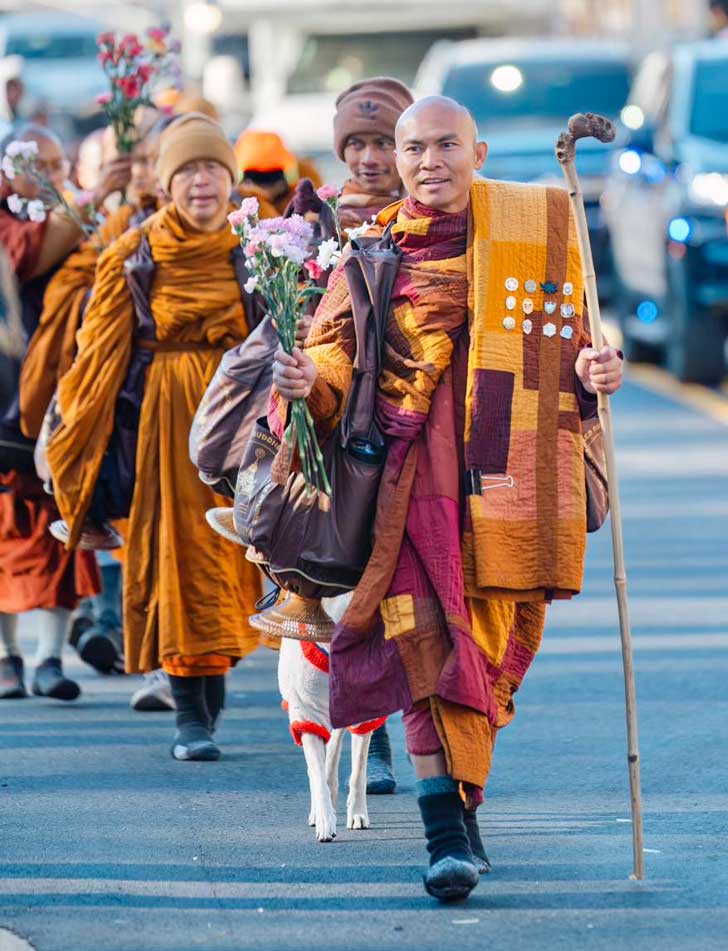
According to the Walk for Peace social media pages, the afternoon’s remarks will be held at the Lincoln Memorial at 2:30 to 4 p.m. EST. Following this, the group’s leader, Venerable Bhikkhu Pannakara, will lead a “global loving-kindness meditation” from 4:30-7:30 p.m. EST.
There are three places people can stream the afternoon’s events:
“We warmly invite you to be part of these moments, whether you join us in person or online from anywhere in the world,” the group shared. “Your presence and your meditation are a vital part of this collective energy for peace.”
After spending one day in D.C., the group has already held an interfaith prayer service at the Washington National Cathedral, led a unity walk with countless supporters on Embassy Row, and are about to begin their walk on Capitol Hill toward the Lincoln Memorial.
“Our hearts are overflowing with a quiet, profound gratitude … To be welcomed by thousands of souls in our nation’s capital was a gift beyond measure,” the group reflected on their first day in D.C.
“As we moved through the streets, we looked out and saw a beautiful river of peace — thousands of hearts walking side by side. People from every culture, tradition, faith, and walk of life moved together as one. In those gentle steps, we saw what unity truly looks like; we felt what peace truly is.”
After spending two days in D.C., the group is expected to take a bus back to Fort Worth, Texas, where they will walk six miles back to their temple. All are invited to join them on their final walk home.
“We felt supported by your hope and strengthened by your shared belief that a more peaceful world is possible,” they concluded in a recent update, “one step at a time.”
You may also like: Buddhist monks announce spiritual journey will continue after DC: 'The Walk for Peace will not end'
Header image courtesy of Walk for Peace
On July 27, 2025, Kyle the cat was fighting off a coyote four times his size in Escondido, California. Fortunately, an eyewitness intervened and took him straight to San Diego Humane Society’s Escondido Campus. He had wounds to his neck and chest, but luckily, he survived.
However, that was only the start of his journey.
In California, a pet bitten by a potential rabies carrier must be kept in quarantine for six months to prevent the spread to humans and other pets.
So Rebecca Smith of the San Diego Humane Society set up a space for Kyle in her office. For the next six months, she — and a few other rabies-vaccinated staff members — kept a close eye on Kyle, helping him heal from his injuries and monitoring him for rabies symptoms.
“Kyle’s resilience has been remarkable,” said Smith, the organization’s associate director of guest relations and animal placement. “From learning to play with enrichment toys, to enjoying window time and treats, he’s shown us he’s a fighter.”
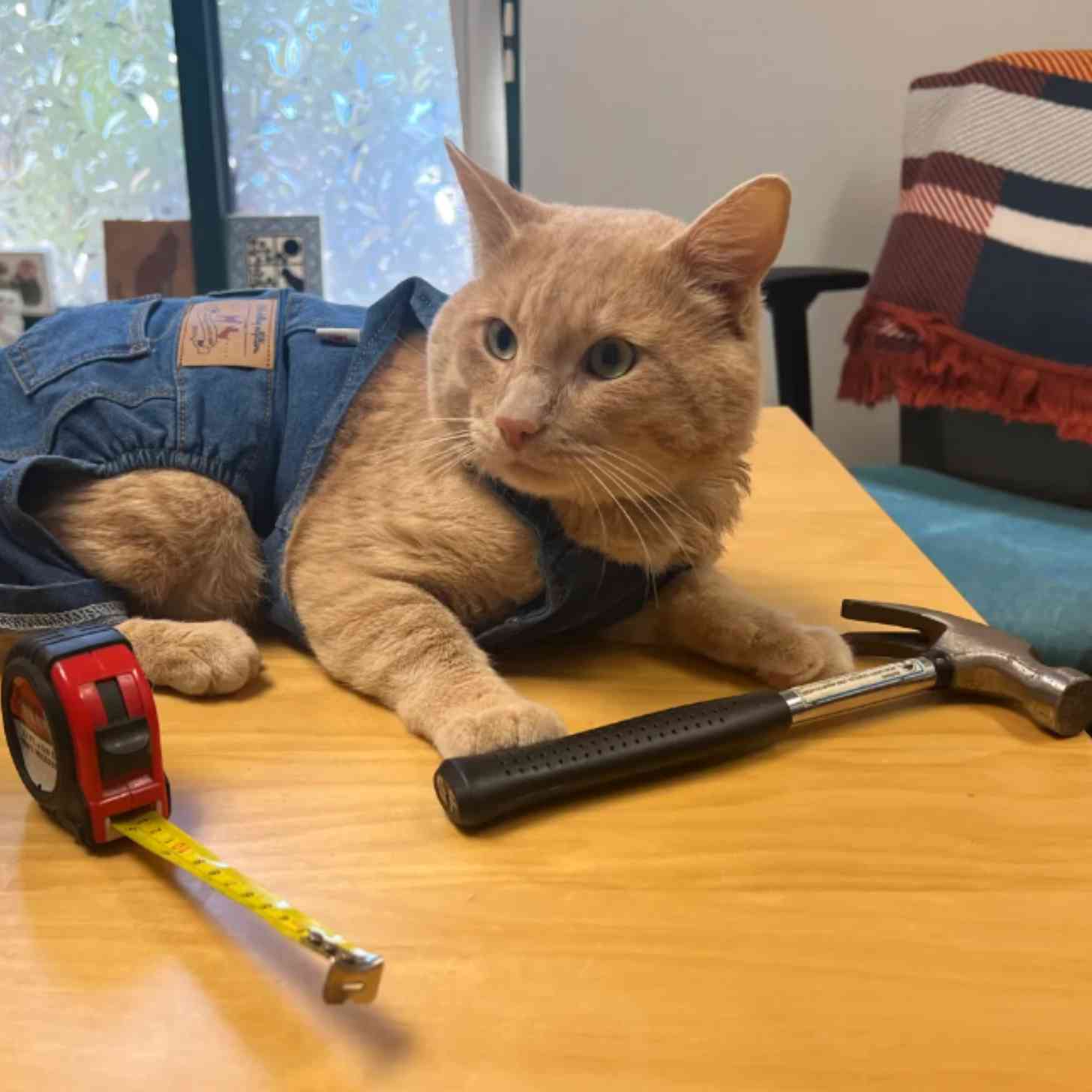
Smith said Kyle’s primary caretaker was Dani Strickert, an admissions specialist at San Diego Humane Society.
“Dani has been instrumental in his recovery and has become his biggest advocate,” said Smith.
Every week, Strickert offered him cuddles and Churru treats, and — on occasion — would take him for “indoor strolls” in an enclosed baby stroller.
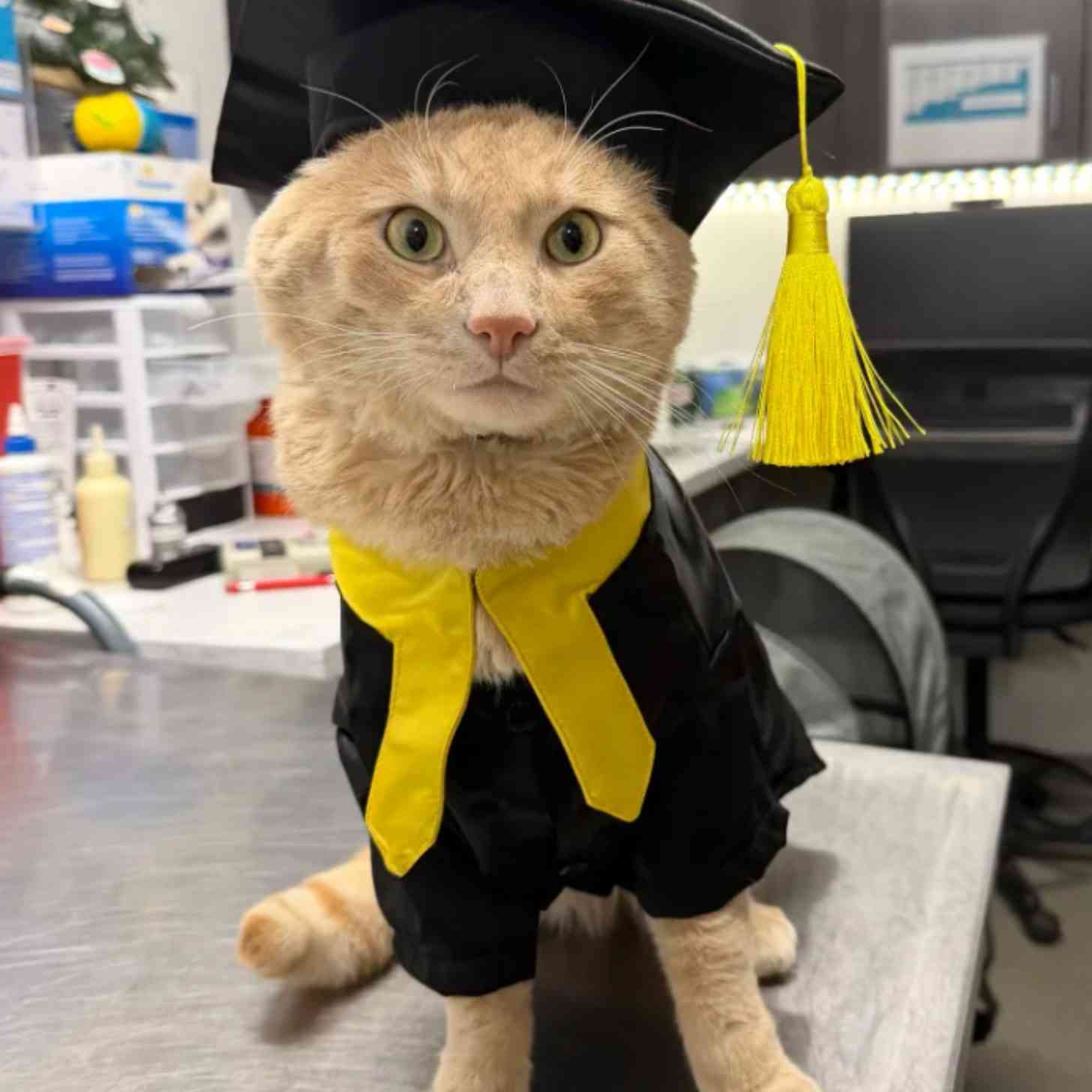
On January 28, after six months of quarantine, Kyle was finally able to meet the rest of the staff. To celebrate the occasion, the animal shelter threw him a graduation ceremony, complete with a cat-sized cap and gown, Kyle cupcakes, and “Kyle-trivia.”
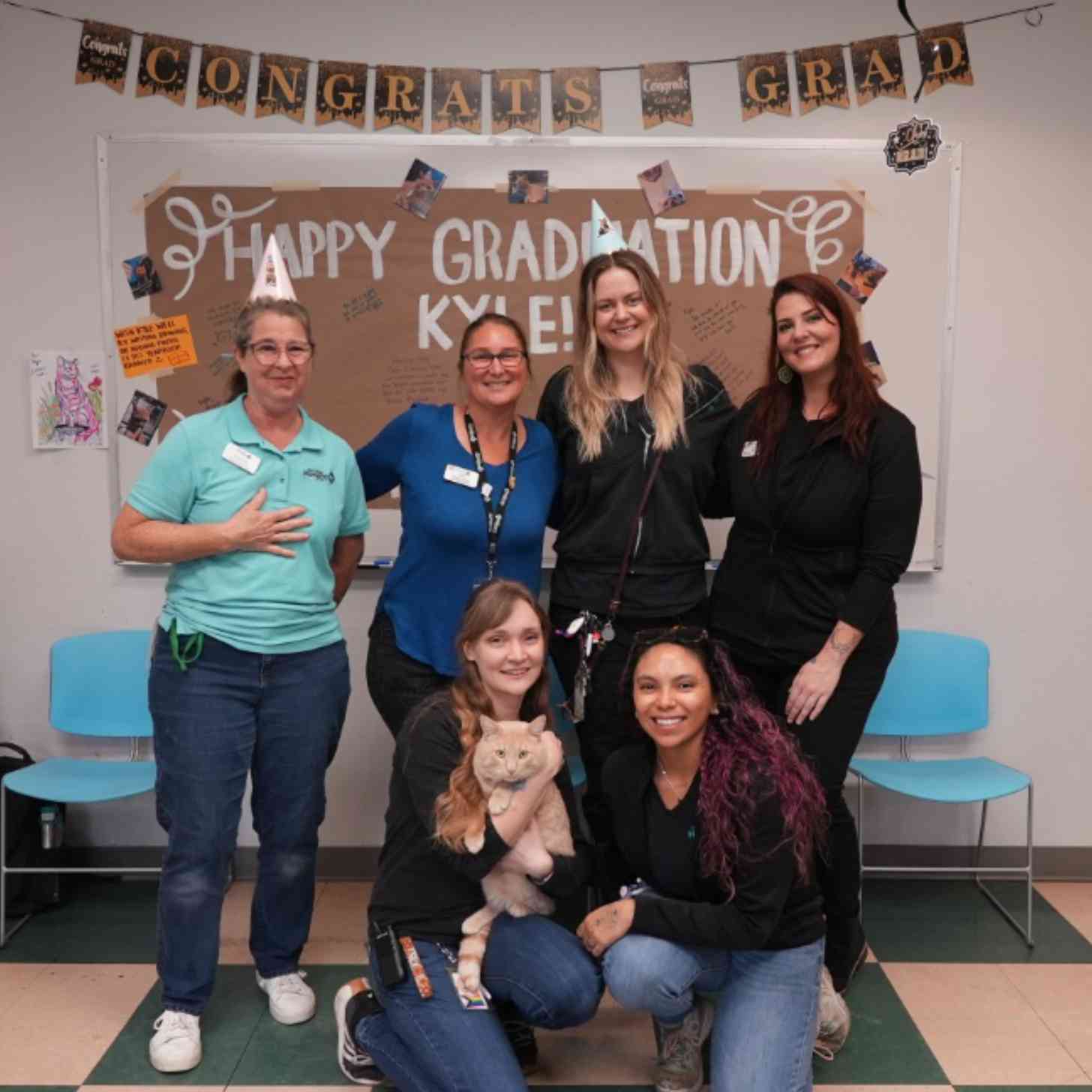
“Everyone finally gets to give him all the love and pets that he deserves,” Strickert said. “And I think everyone is as excited about it as Kyle is.”
“We love him so much. He’s such a sweet cat and he deserves the world,” she added. “Look at those cheeks! Everyone wants to squish those. Who wouldn’t?”
When the San Diego Humane Society shared footage of the graduation party online, people fell head over heels for the orange domestic shorthair.
“Happy graduation Kyle!” one person wrote on Instagram.
“You did such a good job healing and being patient!” another comment read. “Proud of you!”
“I would die for Kyle,” someone else chimed in.
The comments section was also flooded with people eager to bring Kyle home, now that he was cleared for adoption. But the staff members that saved his life had first dibs.
“He was adopted by one of our staff members!” The San Diego Humane Society shared on February 9.
You may also like: Found stranded and starving, these endangered fur seal cubs weighed less than a terrier. See their dramatic transformation
Header image via The San Diego Humane Society
Since October 2025, a group of 19 Buddhist monks — and their beloved canine companion, Aloka — have been on a 2,300-mile trek across the United States, calling for peace.
They began their “Walk for Peace” in Fort Worth, Texas, with a final destination of Washington, D.C. After 109 days, they arrived at the nation’s capital.
Shortly after crossing the bridge into D.C., the monks made their way to the Washington National Cathedral for an interfaith service led by Rt. Rev. Mariann Edgar Budde and The Very Rev. Randolph Marshall Hollerith.
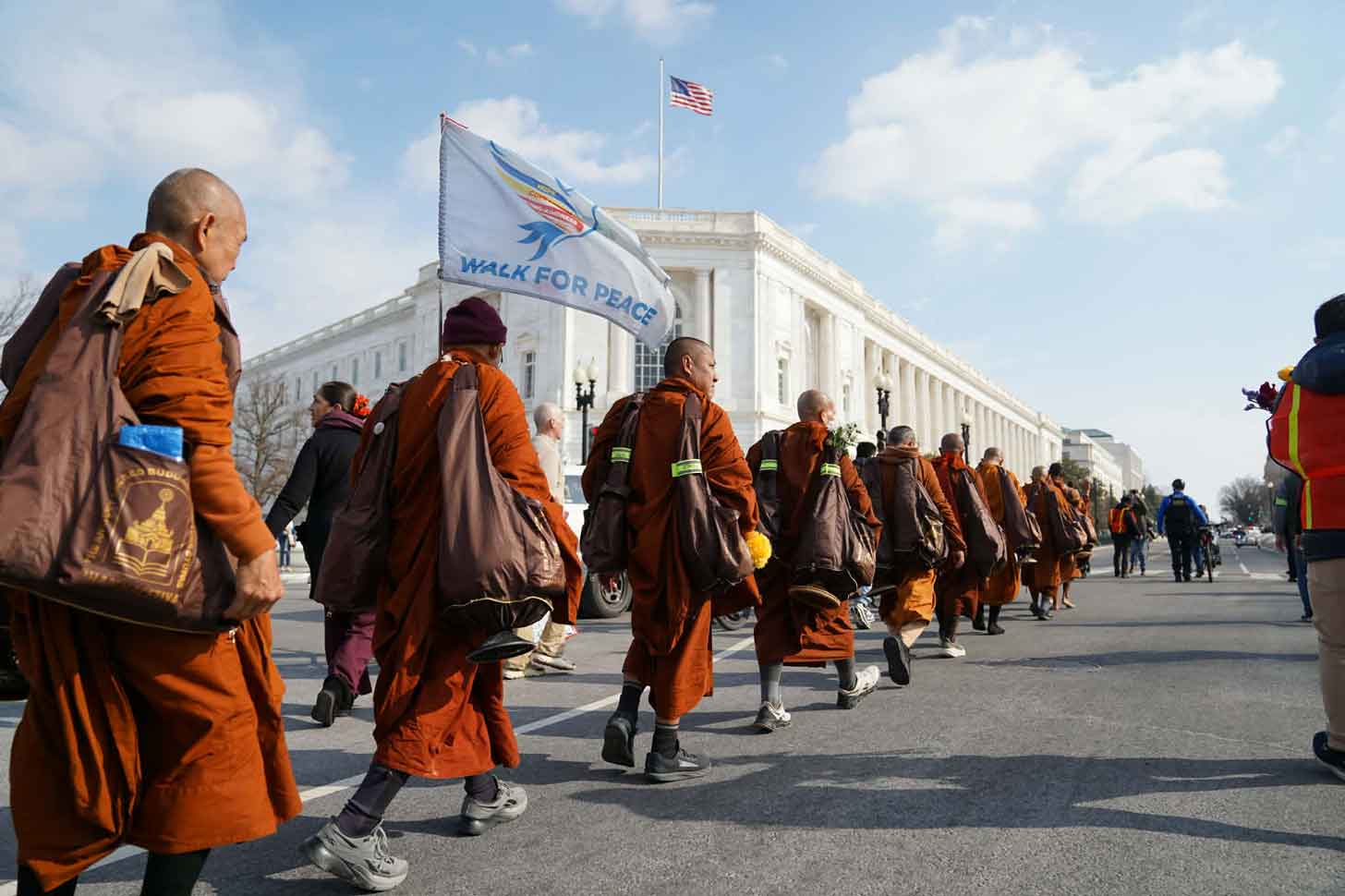
The cathedral live-streamed the event and called it “A Sacred Stop on the Walk for Peace.”
“We are honored to welcome these ambassadors for peace who have traveled so far to be with us,” Hollerith began the service. “I want to welcome, as well, so many of the interfaith leaders from all the religions in the Washington D.C. area who have gathered together … for the sake and in the name of peace.”
In addition to the local interfaith service, the monks also invited all venerable monks and nuns of various faiths to make their own pilgrimage to D.C. to conclude the Walk for Peace.

After a brief moment of silence and ringing the cathedral bell, Rev. Budde stepped up to lead a prayer.
“Lord, make us instruments of your peace,” she began. “Where there is hatred, let us love. Where there is injury, pardon. Where there is discord, union. Where there is despair, hope. Where there is darkness, light. Where there is sadness, joy.”
“Grant that we may not so much seek to be consoled as to console, to be understood as to understand, to be loved as to love. For it is in giving that we receive, it is in pardoning that we are pardoned, and it is in dying that we are born to eternal.”
Rev. Budde is an Episcopal prelate who has served as Bishop of Washington since 2011. She is the first female bishop of the diocese and has been a vocal supporter of peace and human rights throughout her leadership.
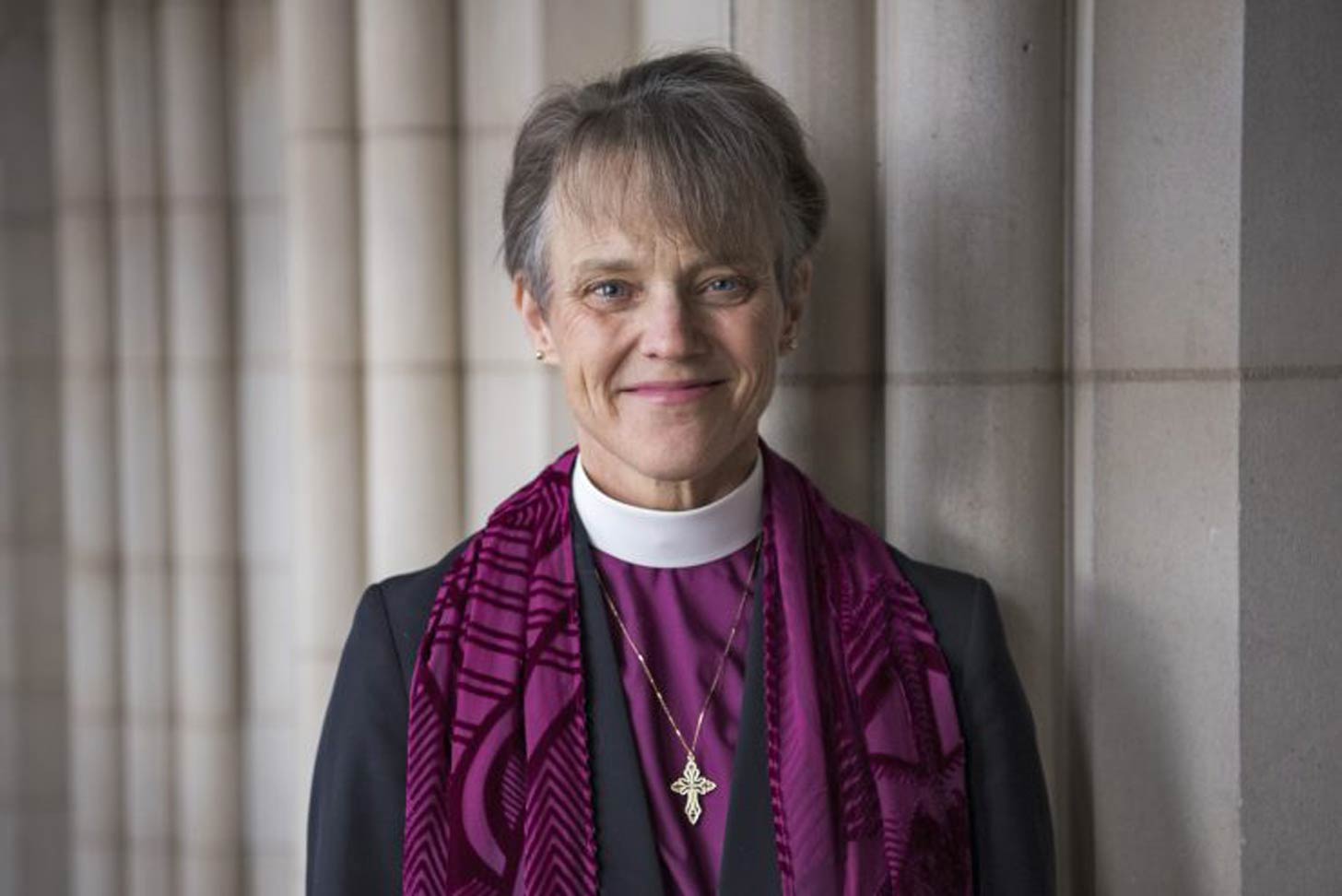
Last year, she made headlines when she delivered a sermon during President Donald J. Trump’s inaugural service, making a plea for the newly-sworn-in president to “have mercy” on immigrants and the LGBTQ+ community.
“Let me make one final plea, Mr. President,” she said in a clip, which quickly went viral following the inauguration. “Millions have put their trust in you. And as you told the nation yesterday, you have felt the providential hand of a loving God. In the name of our God, I ask you to have mercy upon the people in our country who are scared now.”
In her full sermon, she went into greater detail.
“There are gay, lesbian, and transgender children in Democratic, Republican, and Independent families, some who fear for their lives. And the people who pick our crops and clean our office buildings, who labor in poultry farms and meat-packing plants, who wash the dishes after we eat in restaurants, and work the night shifts in hospitals — they may not be citizens or have the proper documentation, but the vast majority of immigrants are not criminals,” she said.
“I ask you, Mr. President, to have mercy on those in our communities whose children fear that their parents will be taken away; and that to help those fleeing war zones and persecution in their own lands to find compassion and welcome here.”
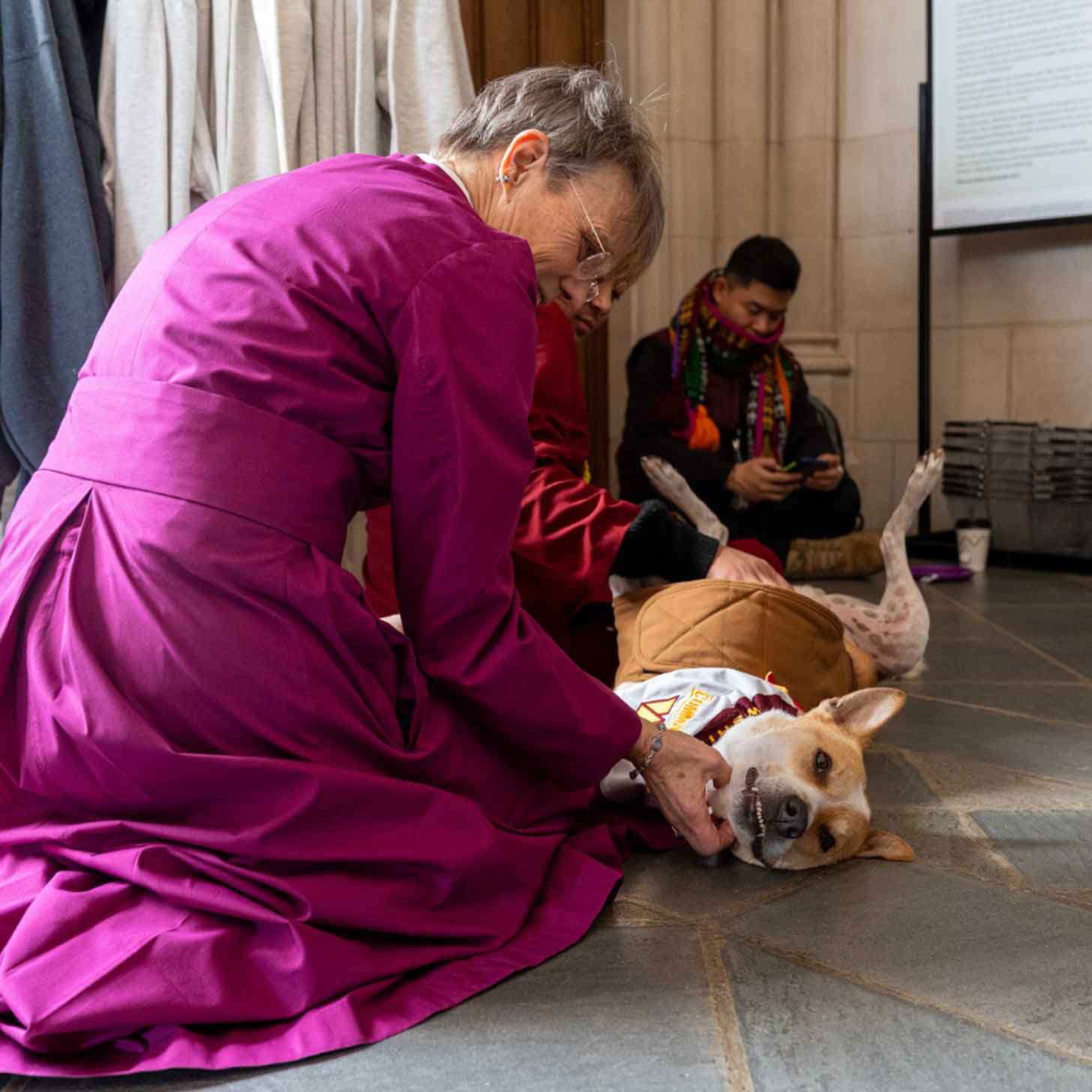
It’s poetic, then, that Rev. Budde joined the 19 venerable monks as they called for peace, just over a year after Trump began his second term, one categorized by violent immigration raids and ongoing threats to the rights of LGBTQ+ Americans.
But Venerable Bhikkhu Pannakara, the leader of the Walk for Peace, believes that healing can be found within all people, especially during a time of division and hardship.
“Peace is something that we've been looking for for so long. Peace is something that we are seeking for so many years, and yet we still not find it. We cannot find it,” he said in a brief address outside the cathedral on Tuesday.
“It's been with us. It never left us. It's just that we cannot see it. You have locked it and put them in the box and you have left it somewhere. You forgotten it.”
He added that the Walk for Peace was not about bringing that peace to people across the country, but inviting them to find it within themselves.
“We are not walking from Fort Worth, Texas to Washington D.C. to bring you any peace, but to raise the awareness of peace so that you can unlock that box and free it. Let peace bloom and flourish among all of us, throughout this nation and the world, so that this world can become a better place for all beings to live.”
He then led the attendees in a moment of mindfulness, asking them to place a hand on their hearts and take a few deep breaths.
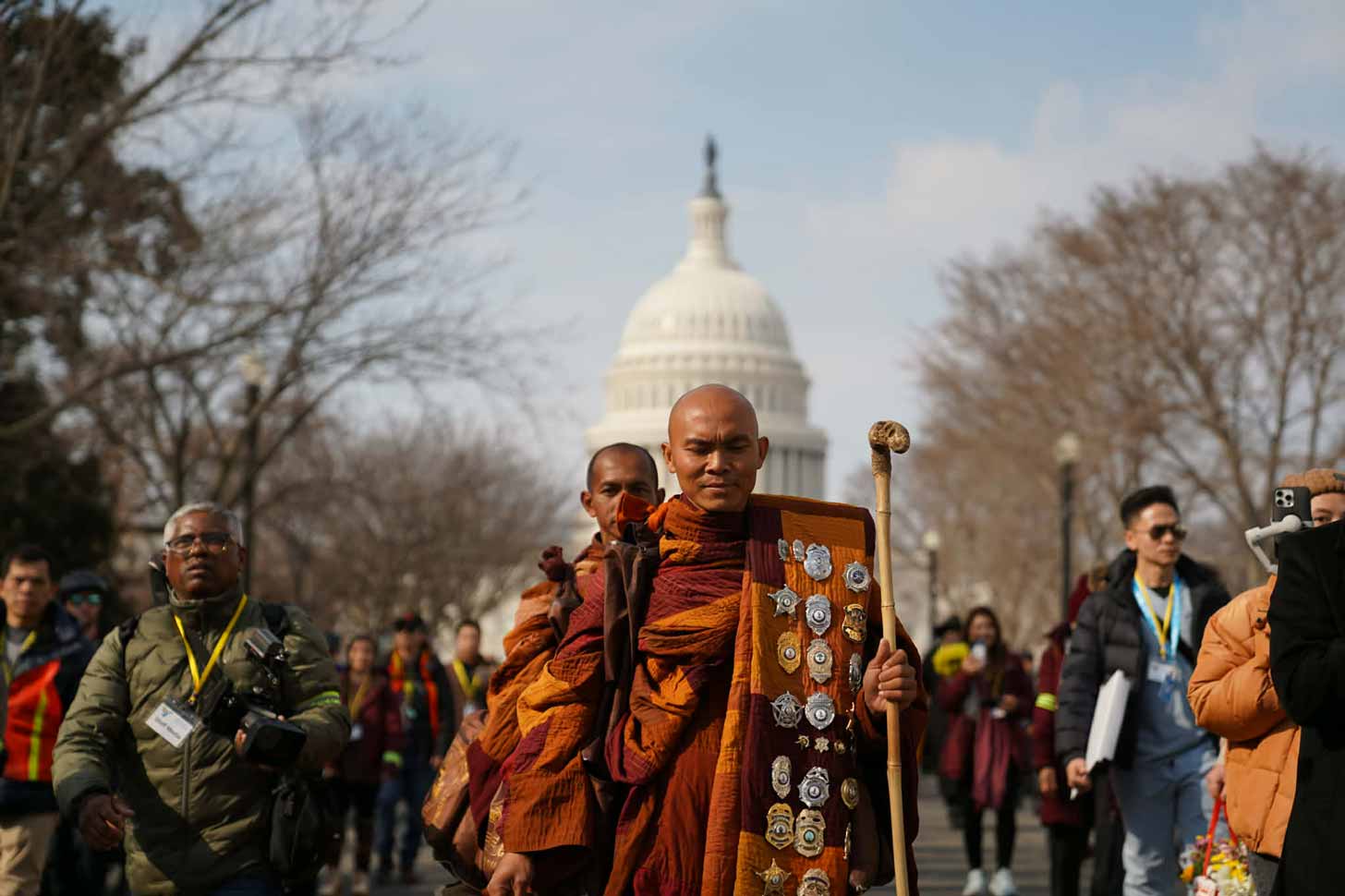
After another speech from another monk in the group, and a musical performance, some interfaith attendees headed inside for a short Q&A session with the monks.
“It is such a privilege for us to gather in a spirit of humility and the opportunity to learn from one another,” Rev. Budde said. “Thank you for gracing us with the power of your message and your teachings.”
After the gathering, the monks shared their own reflections on social media, too.
“To be received with such grace, generosity, and open hearts in this sacred space meant everything to us. Thousands gathered together — in person and in spirit — united in the spirit of peace across all traditions and backgrounds,” they wrote.
“Thank you to the Rt. Rev. Mariann Edgar Budde and the Very Rev. Randolph Marshall Hollerith for your leadership, your vision, and your commitment to bringing people together for peace. Thank you to Washington National Cathedral for opening your doors and your hearts to this mission. This was a moment we will carry in our hearts forever.”
The venerable monks will soon deliver their final address to the nation during their last day in D.C., which is available to stream online beginning at 2:30 p.m. EST on February 11, 2026.
You may also like: Buddhist monks announce spiritual journey will continue after DC: 'The Walk for Peace will not end'
Header images courtesy of Walk for Peace and Washington National Cathedral
109 days ago, 19 Buddhist monks set out from Fort Worth, Texas, towards the nation’s capital with one goal in mind: spread a message of peace and unity.
Their “ Walk of Peace” spanned 2,300 miles and countless cities throughout Louisiana, Mississippi, Alabama, Georgia, the Carolinas, and Virginia.
Although they were met by throngs of supporters along the way, their journey was full of highs and lows.
Three of the monks, including the head monk Venerable Bhikkhu Paññākāra, elected to walk barefoot for a large part of the journey — but as winter storms struck and temperatures plunged, they relented and joined their peers in wearing shoes.
On November 19, a truck struck the group's escort vehicle as they traveled near Daytona, Texas, injuring two of the monks. One of them, Wat Lao Buddha Khanti, later reunited with the group in January.
In early January, Aloka — a stray dog from India who had joined the monks on a prior peace walk — was offered surgery free of charge for a chronic leg issue. Afterwards, he rejoined the monks on their walk from the safety of a warm van.
Throughout it all, the monks have remained steadfast in their pilgrimage and thankful to everyone they have met along the way.
“We are so deeply grateful to be with each of you on this path,” the group shared on their official Instagram account. “To see so many hearts walking together, standing together, and sharing this sacred journey — it fills us with profound joy and gratitude.”
“Your presence, your love, and your dedication to peace have made these final days in Washington, D.C. truly unforgettable,” they continued. “Thank you for walking with us and for being the peace we seek in this world.”
On February 11, the monks shared their final address to the nation in front of the Lincoln Memorial from 2:30 to 4 p.m. EST, which was streamed on Walk for Peace Facebook Live, Walk for Peace Website, and Walk for Peace YouTube.
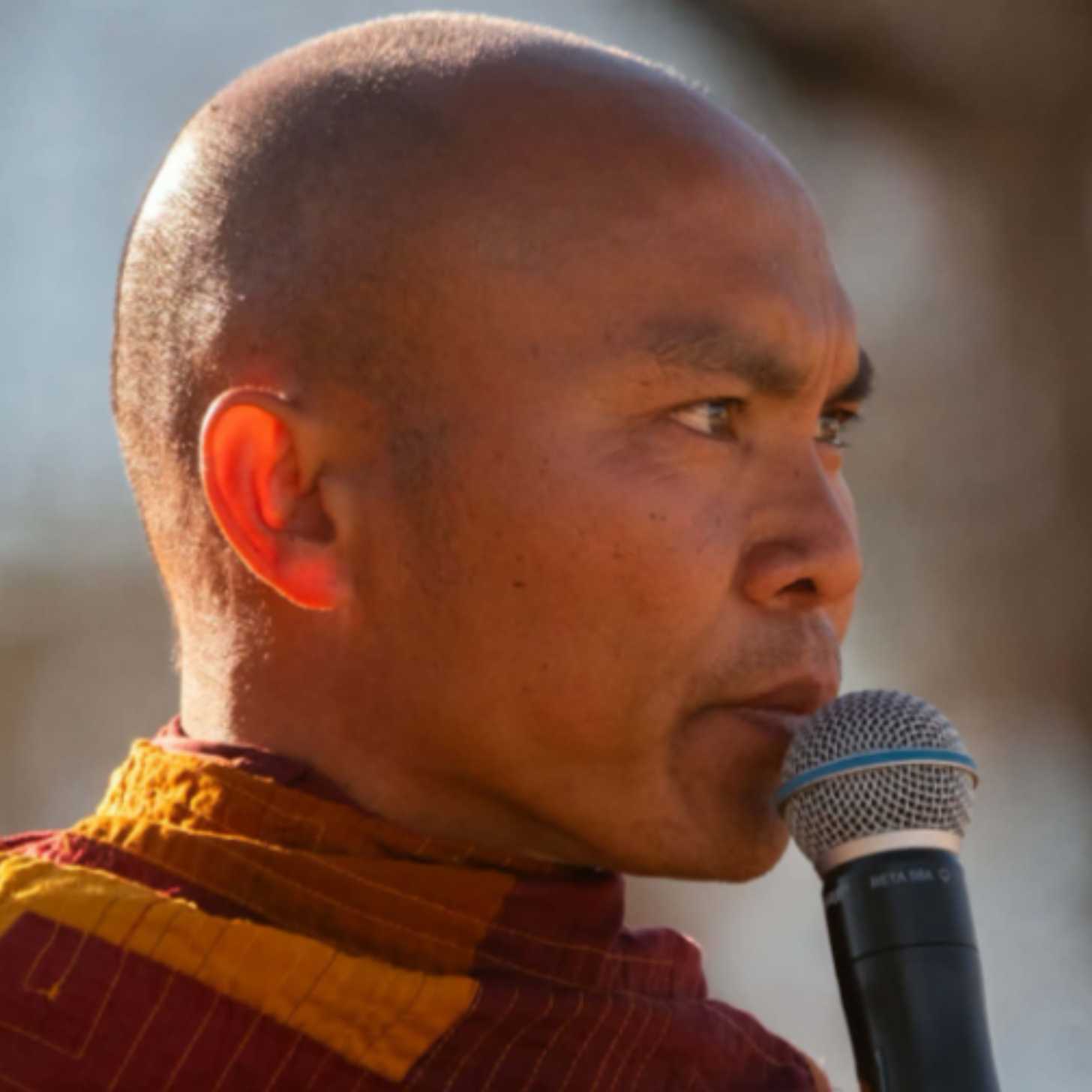
The livestreams proved so popular that they crashed multiple times throughout the afternoon.
“Today, here at the Lincoln Memorial, I would like to express my heartfelt joy and deep gratitude to be standing in this place before all of you, an exceptionally special assembly, perhaps, the largest and most diverse gathering I have ever encountered in my life,” said Venerable Ratanaguṇa, a teacher of Venerable Bhikkhu Pannakara.
“This is an assembly made up of people of all races and cultures without distinctions of faith or religion,” he continued. “People from all walks of life coming together here in the spirit of unity, love, empathy, and understanding.”
Ratanaguṇa also emphasized how special it was to finish their journey in Washington, D.C., which he called “the heart of a democratic, multicultural nation with some of the most advanced science and technology in the world.”
Ratanaguṇa thanked all of the people who fed him and his peers along the way, “both spiritually and materially.”
The Buddhist monks also pledged to continue their Walk for Peace long after they depart from D.C.
Tencho Gyatso, President of the International Campaign for Tibet and niece of the 14th Dalai Lama, also joined the stage for the proceedings to read a message from the Dalai Lama.
“Their initiative illustrates how religious practices can contribute to a practical and constructive way to social harmony and public dialogue. May their walk help sow the seeds of greater peace, understanding, and compassion in the United States and beyond,” Gyatso read on behalf of her uncle. “With my prayers and good wishes, the Dalai Lama.”
Following their speech, the group’s leader, Venerable Bhikkhu Pannakara, promised to lead a “global loving-kindness meditation” from 4:30-7:30 p.m. EST.
You may also like: Buddhist monks on Peace Walk join interfaith prayer with Rev. Mariann Budde, the bishop who stood up to Trump
Header image via Waruna Premathilake / Walk for Peace Facebook
Water shortages, rising temperatures, and droughts caused by climate change have an immense impact on agriculture — and today’s farmers are desperate to find solutions.
In the western United States, some are turning to dry-farming, a form of agriculture that doesn’t require irrigation.
Here’s how it works: Dry-farmed plants take moisture stored in the ground, rather than sprinkled from above.
All farmers need is a wet, rainy season, followed by a dry growing season, as well as some methods like insulating a layer of mulch on top of soil to retain moisture, spacing plants more widely, and planting earlier in the season.
According to the Dry Farming Institute, “dry-farming is a low-input, place-based approach to producing crops within the constraints of your climate.” As the institute defines it, “a dry-farmed crop is irrigated once or not at all.”
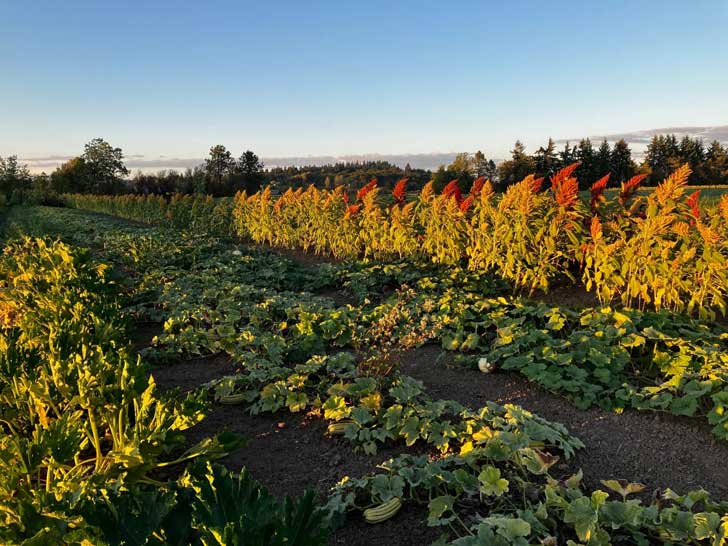
Dry-farming is not a one-size-fits-all solution, but it can save farmers thousands of liters in water every season — and help maintain a climate-resilient business.
And the best part? Dry-farmed produce notoriously tastes better than irrigated crops, and produce such as tomatoes, potatoes, squash, corn, watermelon, and even grapevines, are excellent candidates for dry-farming.
In fact, dry-farming is so game-changing for vineyards that some areas in Europe forbid irrigating wine grapes, in order to maintain their rich flavor.
It’s not a new concept.
Dry-farming is a long-held standard practice, from olive groves in the Mediterranean to melon fields in Botswana.
In the U.S., it dates back thousands of years among Indigenous peoples — proving once again that Indigenous knowledge is the key to protecting the planet.
“Dry farming is just farming — it’s our way of life,” Michael Kotutwa Johnson, an Indigenous resiliency specialist at the University of Arizona and member of the Hopi Tribe, told Science News.
“You get to really learn what the environment gives you, and you learn to reciprocate. It’s a beautiful thing, and it’s something that needs to be cherished.”
You may also like: This giant garden used to be a coal mine. Now, it feeds thousands every year
A version of this article was originally published in The 2024 Plants Edition of the Goodnewspaper.
Header image by Veronica White on Unsplash
There’s a phrase — typically attributed to Greek poet Dinos Christianopoulos — that many of us may be familiar with: “They tried to bury us. They didn’t know we were seeds.”
It has taken root in a number of social justice movements and might be displayed on protest signs — but the cultural significance of seeds, agriculture, and land isn’t always taken so literally.
No place is this truer than in Palestine.
Home to deeply important crops like olive trees, grapevines, fig and citrus trees, Palestine’s loss of agriculture through decades of political violence is an especially salient experience of grief and displacement for Vivien Sansour.
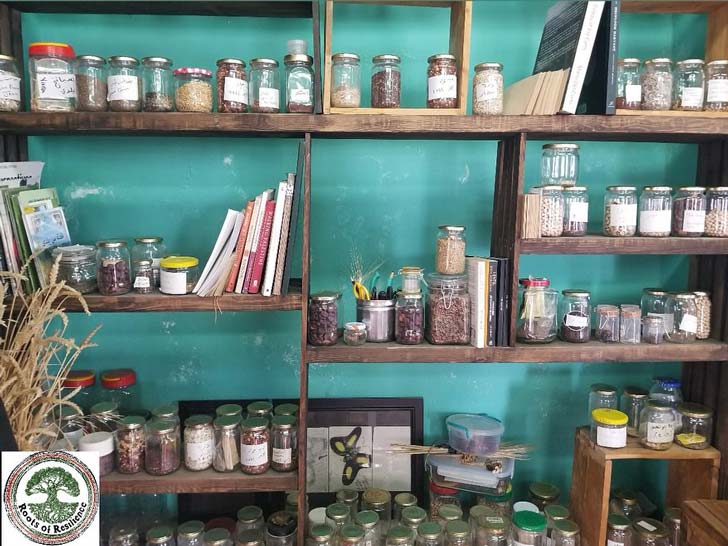
The Palestinian artist, writer, and founder of the Palestine Heirloom Seed Library works to safeguard the seeds and knowledge of her people through a Traveling Kitchen project, which aims to educate people on heritage and threatened seed varieties, traditional Palestinian farming practices, and the cultural stories and identities associated with them.
Born near Bethlehem, Sansour started PHSL in 2014 in the village of Battir, a UNESCO World Heritage site.
While she has since moved to New York as part of a growing Palestinian diaspora, the PHSL remains in Bethlehem, where local farmers can retrieve seeds to plant on their lands, or locals can find a small library of instructional books.

“These seeds that have been passed down to us over the centuries carry in their genes the stories and the spirits of the Palestinian Indigenous ancestors,” Sansour writes on her website.
“Aside from their cultural significance, these seeds carry options for our future survival as we face climate change and the erosion of agrobiodiversity worldwide. As such, it is urgent that we save and propagate them.”
These days, she sees her work as more important than ever, to retain the stories of those lost to violence, and to promote food sovereignty on Palestinian lands.
Some Palestinian immigrants have also taken some of these seeds to their new residences; Professor Riad Bahhur at Sacramento City College, for instance, has long-necked gourds known as yaqteen, white cucumbers, and Battiri eggplants growing in his home.
“These ancestral practices cannot bring back the people who have been killed,” Bahhur told Atmos. “But they do embody for us that our ancestral heritage in the land is a long and rooted one.”
You may also like: 2,500 olive trees planted in the West Bank for International Day of Peace
A version of this article was originally published in The 2024 Plants Edition of the Goodnewspaper.
Header image courtesy of Vivien Sansour
In January 1985, more than three dozen musicians gathered at a recording studio in Los Angeles, California to sing “We Are the World” — a song penned by Michael Jackson and Lionel Richie with the intention of raising money for famine relief in Ethiopia.
There was a novelty to the medley of musicians who gathered to record that night: Paul Simon, Billy Joel, Diana Ross, Dionne Warwick, Huey Lewis, Bruce Springsteen, Cyndi Lauper — the list goes on and on.
Before recording began, producer Quincy Jones scribbled out a sign at the entrance of the studio that said “Leave your egos at the door,” highlighting the gravity of the task at hand.
According to the Netflix documentary “The Greatest Night in Pop,” the song debuted at number one on the Billboard Hot 100 chart, and the record sold 1 million copies in its first weekend alone.
“Since the release, ‘We Are the World’ has raised over $80 million — equivalent to approximately $160 million in 2024 — for humanitarian causes in Africa and continues to raise money to this day,” the documentary explained through text on screen.
“I think every individual in the world wants to contribute and they don’t know how,” Diana Ross said in 1985, in an archival clip from the documentary. “I got a feeling that we’re creating a shift in what’s going on in the world today, about helping other people. It’s [about] compassion.”
You may also like: Minneapolis protesters have been singing 'It's Okay to Change Your Mind' to ICE agents. This is the song's backstory
A version of this article originally appeared in the 2024 Music Edition of the Goodnewspaper.
Header image via Netflix / The Greatest Night In Pop