In late January, a Minneapolis-based animal shelter, The Bond Between, shared a photo of a large, wrinkly-faced gray dog named Chapo.
“This is Chapo. His whole world was changed in an instant. Recently, his dad was deported by ICE, leaving Chapo confused, scared, and displaced. There was no time to prepare. No chance to explain. Just absence,” the organization wrote.
Chapo’s story is unfortunately not unique. As thousands of United States Immigration and Customs Enforcement agents who are part of “Operation Metro Surge” continue to sweep across Minnesota and detain thousands, the beloved pets of countless people have been left confused and alone.

The Bond Between has long offered a unique model, including respite fostering and no-judgement surrenders, which allows people in crisis to either give up their furry friends for adoption, or place them in a temporary foster home until they are able to be reunited.
Chapo stayed with his owner’s friend and is now in a foster home where he can adjust to his new circumstances. But, as The Bond Between shared, “he’s one of the lucky ones.”
They have reported a serious uptick in people seeking the nonprofit’s services, and they have also been helping people proactively set up emergency plans for what to do in the event their family is impacted by ICE.
“We know that behind every request for help is love, fear, and someone doing the best they can in an impossible moment. We will keep showing up to protect those bonds, to offer safe landing places, and to stand with our community when it matters most,” the organization shared on social media this week.
“The goal, if possible, is always reunification because no one should have to choose between their own safety and the animal they love.”
The organization recommends that people who are concerned they might be arrested or detained by ICE identify a trusted loved one or community member who could temporarily care for a pet if something unexpected happens. This also includes sharing important information and resources, like feeding routines, veterinary needs, and other emergency contact information.
And then, The Bond Between can step in when local animal welfare support is needed, like setting up a longer-term respite foster, or surrendering a pet altogether.
In addition to supporting these emergency plans, the organization has been packing and distributing care kits for pets of people who are too afraid to leave home amid ICE’s occupation of the area.
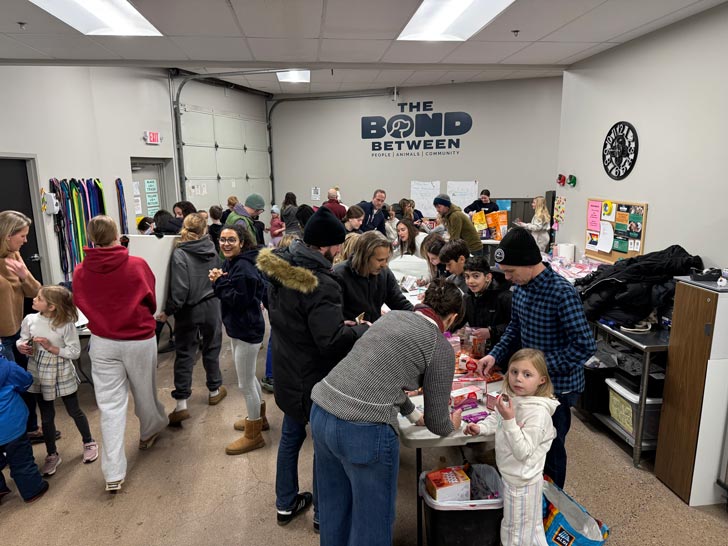
Volunteers, including young students, have shown up in spades to help package these kits for their vulnerable neighbors.
“What is happening to our community is horrific and tragic. There aren’t words to describe what is going on. Throughout all the suffering and tragedy, there have been moments of beauty. Moments of good,” the organization shared after students came to pack emergency kits.
“These kids spent their afternoon putting together packets of food, treats, and toys which will be available for pick up and distribution from our Minneapolis location. There are around 150 dog packets and over 60 cat packets. Just from one afternoon of teens coming together for their community,” The Bond Between shared on social media.
“Our community is suffering... but it’s not broken. Our community is strong,” they continued. “We are continuing to look out for one another. Looking out for our neighbors. Protecting our neighbors.”
And people across the country have also been stepping up to support The Bond Between financially. In late January, the organization shared on social media that it had received monetary and supply donations from 11 countries and all 50 states.
“This is a worldwide movement. A movement sparked by the unthinkable. A movement powered by love. A movement sustained by everyday people that want the same thing: to help. To help keep our neighbors safe and cared for,” the organization wrote.
“Because of you animals will receive care, families will receive supplies, and more pets will get to stay with their humans.”
And as for the animals who are currently separated from their loved ones? They’re in good hands, too.
“The silver lining is that [the] community really does seem to be stepping up for these animals and for the people that have had their rights stripped away from them,” Rachel Mairose, executive director of The Bond Between, told MPR News.
“I just want to make the point that the animals we’re seeing have been very well cared for and loved. They are family members. Nobody meant to abandon them; It’s the situation that’s causing them to be displaced.”
You may also like: Spanish-speaking foster dog warms the hearts of millions: 'So many pets separated from families in ICE raids'
Header image courtesy of The Bond Between
When it comes to national politics, Americans are fiercely divided across a range of issues, including gun control, election security, and vaccines. It’s not new for Republicans and Democrats to be at odds over issues, but things have reached a point where even the idea of compromising appears to be anathema, making it more difficult to solve thorny problems.
But things are much less heated at the local level.
A survey of more than 1,400 local officials by the Carnegie Corporation and CivicPulse found that local governments are “largely insulated from the harshest effects of polarization.” Communities with fewer than 50,000 residents proved especially resilient to partisan dysfunction.
Why this difference? As a political scientist, I believe that lessons from the local level not only open a window onto how polarization works but also the dynamics and tools that can help reduce it.
Problems are more concrete
Local governments deal with concrete issues — sometimes literally, when it comes to paving roads and fixing potholes. In general, cities and counties handle day-to-day functions, such as garbage pickup, running schools, and enforcing zoning rules. Addressing tangible needs keeps local leaders’ attention fixed on specific problems that call out for specific solutions, not lengthy ideological debates.
By contrast, a lot of national political conflict in the U.S. involves symbolic issues, such as debates about identity and values on topics such as race, abortion, and transgender rights.
These battles are often divisive, even more so than purely ideological disagreements, because they can activate tribal differences and prove more resistant to compromise.
Such arguments at the national level, or on social media, can lead to wildly inaccurate stereotypes about people with opposing views. Today’s partisans often perceive their opponents as far more extreme than they actually are, or they may stereotype them — imagining that all Republicans are wealthy, evangelical culture warriors, for instance, or conversely being convinced that all Democrats are radical urban activists.
In terms of ideology, the median members of both parties, in fact, look similar.
These kinds of misperceptions can fuel hostility.
Local officials, however, live among the human beings they represent, whose complexity defies caricature. Living and interacting in the same communities leads to greater recognition of shared interests and values, according to the Carnegie/CivicPulse survey.
Meaningful interaction with others, including partisans of the opposing party, reduces prejudice about them. Local government provides a natural space where identities overlap.
People are complicated
In national U.S. politics today, large groups of individuals are divided not only by party but by a variety of other factors, including race, religion, geography, and social networks. When these differences align with ideology, political disagreement can feel like an existential threat.
Such differences are not always as pronounced at the local level. A neighbor who disagrees about property taxes could be the coach of your child’s soccer team. Your fellow school board member might share your concerns about curriculum, but vote differently in presidential elections.
These cross-cutting connections remind us that political opponents are not a monolithic enemy but complex individuals. When people discover they have commonalities outside of politics with others holding opposing views, polarization can decrease significantly.
Finally, most local elections are technically nonpartisan. Keeping party labels off ballots allows voters to judge candidates as individuals and not merely as Republicans or Democrats.
National implications
None of this means local politics are utopian.
Like water, polarization tends to run downhill, from the national level to local contests, particularly in major cities where candidates for mayor and other office are more likely to run as partisans. Local governments also see culture war debates, notably in the area of public school instruction.
Nevertheless, the relative partisan calm of local governance suggests that polarization is not inevitable. It emerges from specific conditions that can be altered.
Polarization might be reduced by creating more opportunities for cross-partisan collaboration around concrete problems. Philanthropists and even states might invest in local journalism that covers pragmatic governance rather than partisan conflict. More cities and counties could adopt changes in election law that would de-emphasize party labels where they add little information for voters.
Aside from structural changes, individual Americans can strive to recognize that their neighbors are not the cardboard cutouts they might imagine when thinking about “the other side.”
Instead, Americans can recognize that even political opponents are navigating similar landscapes of community, personal challenges, and time constraints, with often similar desires to see their roads paved and their children well educated.
The conditions shaping our interactions matter enormously. If conditions change, perhaps less partisan rancor will be the result.
This article was written by Lauren Hall from Rochester Institute of Technology, and was originally published on The Conversation.
Header Image by Katie Moum on Unsplash

Every day the Good Good Good team collects the best good news in the world and shares it with our community. Here are the highlights for this week!
If you want to get good news in your inbox every day, join the Goodnewsletter — the free daily newsletter designed to leave you feeling hopeful.
The Best Positive News We’re Celebrating This Week —
San Francisco is making childcare free for families earning less than $230,000 a year
In an effort to make one of the world’s most expensive cities more affordable for families, the city of San Francisco announced an initiative to offer free childcare to families earning less than $230,000 a year. Families earning up to $310,000 will receive a 50% subsidy.
It’s part of a larger “Family Opportunity Agenda” from the city’s mayor that includes affordability programs focused on housing, education, food, healthcare, transportation, and more.
The city joins New York City, which most recently announced a program to provide free childcare for all 2-year-olds, and New Mexico, which became the first state to provide free childcare for every child in the state.
Why is this good news? The average cost of childcare in San Francisco is estimated to be between $20,000 and $30,000 per child annually, and the state of California is in the top five most expensive states for infant care. This program will ease a huge financial burden for families who live, work, and are vital in their communities.
Latinas are wearing colorful ribbon braids in their hair in protest against ICE: ‘Fashion has always been political’
New report: Homicide rates declined dramatically in dozens of U.S. cities last year
Data collected from 35 U.S. cities showed a 21% decrease in the homicide rate from 2024 to 2025, translating to about 922 fewer homicides.
The report showed a decrease in 31 of the 35 cities, including a 40% or higher decrease in Denver, Omaha, and Washington. Additionally, the overall homicide rate dropped to its lowest in decades.
Democrats and Republicans were quick to claim credit, but experts assert a multitude of factors typically contribute to historic drops like this, and it’s too soon to say what those factors are.
→ Read more
In a first-of-its-kind complaint, Michigan accused big oil of being a ‘cartel’ fueling the climate crisis and high energy costs
Michigan has filed a “groundbreaking” lawsuit against four major fossil fuel companies and the top U.S. oil lobbying group for its role in fueling both the climate crisis and rising energy costs.
The state says they’ve acted as a “cartel” to both stifle the growth of renewable energy sources and electric vehicles and suppress information about the dangers of the climate crisis, which it alleges violates state and federal antitrust laws.
This “collusion” has both driven up utility costs and slowed the transition to EVs in the state, it says in the lawsuit.
Why is this good news? Like other parts of the U.S., Michigan has seen a surge in electricity costs: average residential rates have risen by nearly 120% in the last two decades. And the climate crisis is already at our doorsteps. It’s important that any entities who knowingly got us here are held accountable.
How historic protest music, including old bible hymns, has inspired anti-ICE resistance in Minnesota
→ Read more
A woman founded a nonprofit to give widows and widowers free flowers on Valentine’s Day
After Catherine Szabad lost her child, her grief made her “very aware of how isolating loss can be,” and she became painfully aware of how hard holidays can be for those who have lost a loved one.
So she started Hearts in Bloom, a nonprofit that delivers free bouquets and gifts to widows and widowers every year on Valentine’s Day. In its second year, it had over 300 volunteers — enough to triple the number of people who received gifts.
And in 2025, Hearts in Bloom delivered 135 gift baskets and bouquets. This year, they’ll do it again.
Over 99% of new U.S. generating capacity will come from solar, wind, and batteries in 2026
Solar and battery storage dominated new energy capacity in the U.S. in 2025, and a new report shows that trend is projected to continue and accelerate in 2026.
Utility-scale renewables and battery storage are projected to increase by 69,579.1 megawatts and will make up 99.2% of net new capacity this year — and that figure could be even higher if it included small-scale solar.
Natural gas capacity is projected to increase by just 3,960.7 megawatts and be almost completely offset by coal capacity’s projected decrease of 3,387 megawatts.
Why is this good news? Despite the federal government’s best efforts to stop the growth of renewables, reports and on-the-ground projects continue to reaffirm their “unstoppable” growth. As one expert said, they should “get with the program or else just get out of the way.”
Minneapolis protesters have been singing ‘It’s Okay to Change Your Mind’ to ICE agents. This is the song’s backstory
→ Read more
The world just set a new record for the longest stretch of time with no nuclear tests
A scientist with the Union of Concerned Scientists confirmed that the “world has gone eight years, four months, and 11 days without a nuclear test.” And every day that passes without one will set a new record.
The milestone means the planet has experienced its longest stretch of time without a nuclear explosion since July 16, 1945, when the U.S. started the nuclear era with an explosion in New Mexico.
The previous record happened between May 1998 and October 2006.
Hundreds of protesters gathered at Stonewall National Monument to show their support for the LGBTQ+ community
In response to the Trump administration’s removal of a pride flag at Stonewall National Monument, around 200 protesters gathered at the site to both support the LGBTQ+ community and demand history not be erased.
Named for the site of the historic 1969 Stonewall riots, a pivotal turning point in the fight for LGBTQ+ rights. The Stonewall monument became a national monument in 2016 and is considered the first one dedicated to the LGBTQ+ community and to honoring that history.
Why is this good news? As New York City Mayor Zohran Mamdani said, “New York is the birthplace of the modern LGBTQ+ rights movement, and no act of erasure will ever change, or silence, that history.” These protesters, and the entire LGBTQ+ community, are making sure history is preserved.
→ Read more
You may also like: 50+ years of modern LGBTQ+ history since Stonewall
This year’s Olympics include a record number of LGBTQ+ athletes, but the real Gay Games are right around the corner
→ Read more
Lead pollution has dropped 100-fold in the U.S. over the last century
New research analyzing hair samples shows a dramatic reduction in lead levels since 1916, before and after regulations were established by the Environmental Protection Agency.
The study showed that after lead was banned in gasoline in the 1970s, despite fuel consumption rising, concentrations of lead in the hair samples plummeted from as high as 100 parts per million to 10 ppm by 1990. It was less than one ppm in 2024.
Before the Environmental Protection Agency was established in 1970, lead was all over the U.S., from smokestacks and paint to pipes and car exhaust emissions.
Developers in Kansas City canceled the sale of a warehouse that was going to be made into an ICE detention center
After federal officials were confirmed to have toured a massive warehouse outside of Kansas City in mid-January, the political and public backlash was swift.
The city council passed a ban on permits or approvals for nonmunicipal detention facilities, and people held rallies and protests, calling on the company that owned the building not to sell it to the federal government.
That company, Platform Ventures, confirmed to a local news station that it was “not actively engaged with the U.S. Government or any other prospective purchaser” over the warehouse.
Why is this good news? Numerous reports have confirmed the dire, inhumane, and horrific conditions in detention centers that already exist. Not only do we not need more of these spaces — it’s a reminder that we have the power to stop it when attempts to expand ICE’s efforts come to our communities.
Knitters create ‘welcome blankets’ for immigrants in project spanning the circumference of Earth
→ Read more
New study found that China’s emissions have been flat or falling for two years
Carbon dioxide emissions fell by 1% in the last quarter of 2025, solidifying an overall decline of 0.3% for the full year, and extending a “flat or falling” trend in the country’s emissions since March 2024.
Part of a new analysis, it also found that emissions year-over-year in almost all major sectors last year, including transportation, power, and building materials.
Additionally, solar power generation increased by 43% and energy storage grew by a record 75 gigawatts, outpacing its rise in peak demand of 55 gigawatts.
More good news of the week —
Colorado is the first state to give cash back to renters, in a program designed to put home ownership in reach. The program is a first-in-the-nation effort to reward low-income tenants for paying rent on time.
A division of USAID relaunched as a nonprofit with $48 million in philanthropic backing. Two private donors helped launch the new DIV Fund in a rare instance of continuation after the Trump administration froze all foreign funding last year and DOGE tore down the agency that delivered U.S. foreign aid for 60 years.
A former Texas coal mine was transformed into a giant garden that feeds thousands every year. The NRG Dewey Prairie Garden has yielded about 10,000 pounds of produce for six food pantries since it began harvesting in April 2022.
A study found that Denmark’s child care and parental leave policies are saving working moms thousands. Raising children tends to lead to lower wages and fewer work hours for mothers — but not fathers — in the United States and around the world.
Singapore and the UAE are testing new AI-powered robots to clean polluted waters. The autonomous water robots use real-time data to detect, treat, and prevent urban water contamination.
Minneapolis “Singing Resistance” organizers are calling for a nationwide day of song, training protesters across the country. While the date hasn’t been set, the group is hosting another training on Thursday, Feb. 12, and anyone interested in joining can register for free online.
Scientists created a filter inspired by a fish’s mouth that removes 99% of microplastics from laundry wastewater. The research team has already filed a patent in Germany, and in the future, they hope their creation will help curb a ubiquitous form of plastic pollution that many are unaware of.
The Smithsonian’s National Museum of Asian Art is returning three stolen bronzes to the Indian government. Extensive research indicated that the objects were removed from their original sites illegally.
A Ukrainian Olympic skeleton racer is wearing a helmet with images of people killed in the war in his home country. Vladyslav Heraskevych said the IOC banned him from wearing it during official training and competition, though the committee has yet to confirm or deny that.
A record harvest has sparked a mass giveaway of free potatoes across Berlin. Soup kitchens, homeless shelters, kindergartens, schools, churches, nonprofits organisations have gotten extra potatoes, and even Berlin zoo has participated in the “rescue mission” to feed its animals.
New York passed a law requiring every child entering foster care in the state to receive proper luggage or a duffel bag. Previously, many children entering the foster care system would carry all of their belongings in black plastic trash bags — this new law treats them with dignity, care, and respect from day one.
You may also like: Man who lived ‘live in trash bag’ donates backpacks to foster youth
A prison training program for guide dogs was so successful that it inspired 11 more across the country. Dogs trained within Canine Companions’ programs have a 10% higher success rate at becoming service dogs than their counterparts, and estimates that it is because of the “time and care” incarcerated trainers invest in their students.
A UK dairy delivery business is collecting unwanted toys and electronics to help reduce waste. Modern Milkman delivers groceries to more than 100,000 households across the UK, and will start collecting the other items to give to recycling specialist EMR Group, which will repurpose or recycle the items.
The largest organ procurement organization in the country facilitated a record number of organ donations in 2025. The Philadelphia-based Gift of Life Donor Program announced that it coordinated a record 1,955 organ transplants in 2025 across the United States, including 984 kidney transplants.
A French-American chemist made a major breakthrough in the recycling of rare earth elements. Rare earth elements are crucial for the automotive, electronic, and other industries, and they’ve become a source of massive geopolitical importance and conflict — this discovery could pave the way for recycling them.
Artificial intelligence is aiding in efforts to end the illegal wildlife trade. Wildlife trafficking is one of the most lucrative illicit industries worldwide, collecting between $7 billion and $23 billion per year.
World Central Kitchen announced it’s now serving 1 million meals a day in Gaza. The milestone was possible thanks to the tireless efforts of staff at six WCK Field Kitchens, three mobile bakeries, a growing network of more than 60 community kitchens, and four local restaurant partners working together to deliver meals.
Two entrepreneurs are building an “anti-Amazon” website to connect shoppers with local small businesses. Giftphoria connects shoppers with small businesses in the Los Angeles area.
Pope Leo sent 80 electric generators and thousands of medical supplies to Ukraine. The aid was arranged in response to appeals from bishops who warned of mounting difficulties caused by Russia’s attacks on energy infrastructure and subzero temperatures across the country.
A Venezuelan migrant was released from ICE detention after seven months, and around 2,000 people protested. Joswar Torres was granted humanitarian parole in the United States and had an asylum application pending, but was detained in June 2025 after a routine check-in at a Department of Homeland Security office.
A Minneapolis pet shelter is caring for animals whose owners have been detained or deported by ICE. The Bond Between has been a safe haven for pets left to fend for themselves after their owners were detained, and has provided resources for those afraid to leave their homes.
In a landmark decision, the Philippines Supreme Court ruled that same-sex couples can co-own property. Same-sex unions are outlawed in the Philippines, and it is the only country in the world, outside of the Vatican, that does not allow divorce, leaving LGBTQ+ couples without legal protections in a variety of areas.
After 40 years of conservation and protection efforts, wood storks are being taken off the endangered species list. The only native storks in the country were decimated by developers and agriculture operations that eventually compromised around 35% of South Florida’s wetlands, where most of the storks nested.
A Fort Worth English teacher is keeping AI out of her classroom by going fully analog. Each of Chanea Bond’s classes starts with several minutes of students journaling in notebooks, and nearly all assignments must be handwritten and physically turned in.
Vienna is leading the way in turning parking areas into green spaces instead. The Austrian capital’s goal is to break up concrete, to both cool things off in summer and to encourage alternative transit options.
Your Voice is Power is a Canadian education program and creative music competition that challenges teens to use coding basics to separate, edit, and remix tracks. In 2024, the celebration came with an added focus: Indigenous music.
“I think it's really a unique experience,” Marika Schalla, an Indigenous educator behind the program, told CTV News Calgary.
In addition to teaching computer science skills, the program also welcomes nuanced conversations on the socioeconomic and environmental hardships faced by First Nations, Inuit, and Métis people.
For Indigenous students, it’s an invitation to swirl their lived experiences into their art. For their classmates, it's an opportunity to listen as they learn beside them.
“You wouldn't think that coding music and social justice would go so beautifully together, but they create a meaningful message,” Schalla said. “They're going to be going out into the community prepared and know that it is possible to have a job in computer science or STEM, even if you're an Indigenous kid from the reserve.”
Using EarSketch — a free online coding editor available in English, French, Ojibwe, and Inuktitut — teens will remix the works of Indigenous artists, including Dakota Bear, Jayli Wolf, Samian, Twin Flames, and Aysanabee.
The program ends in a music competition, and the two winners — one Indigenous, one a non-Indigenous ally — will receive $5,000 scholarships.
“Music is a universal language,” Dakota Bear said. “It's a vibrational frequency. It's that feeling it evokes, that emotion. So music, being that universal language, also connects us on a different level as human beings. When you have music and use that with the message, it just becomes so much more impactful.”
A version of this article originally appeared in the 2024 Music Edition of the Goodnewspaper.
Header image via Hitesh Choudhary
Over 300 million people worldwide can’t afford shoes — and yet, over 300 million shoes are thrown away each year in the United States alone.
For 30 to 40 years, those shoes slowly leach dyes and adhesives into soil and groundwater as they sit in overcrowded landfills.
“Most people throw away their athletic shoes and sneakers after 8-12 months of wear without ever considering recycling them,” Sneakers4Good, a global recycling program, wrote in a mission statement. “Since sneakers are not biodegradable, this can have drastic consequences for the environment.”
Looking to meet a need — and counter environmental waste at the same time — Sneakers4Good began a national program to recycle gently used shoes to people in need.
“Our Sneakers4Good program was built for the running community with sustainability in mind,” the company stated. “It’s a way for runners to give their sneakers a second life and give back to their community. We work specifically with marathons like St. Jude & Boston Marathon, running clubs, gyms, tennis and pickleball facilities, and run specialty stores across the country.”
In the last decade, the social enterprise has gradually expanded its influence to help underserved communities outside of the U.S.
Working with small businesses in over 20 developing countries, shoes recycled through Sneakers4Good have been sold in shacks, stalls, and shops owned and operated by over 4,000 families across Haiti, Cambodia, Guatemala, and more.
Luba Designs Tech, a business that has been working with Sneakers4Good since 2018, praised the program’s reach: “As a small store, [we] welcome the opportunity to put back into our local community … as well as feeling we are part of a bigger world mission of lifting up individuals in other countries.”
A version of this article originally appeared in the 2025 Fashion Edition of the Goodnewspaper.
Header image via Samuel Devantier
Hank and John Green’s annual charity livestream, Project for Awesome, is a beacon of hope and engagement for the duo’s dedicated online community: The Nerdfighters.
This year, the event raised over $4,133,000 in a single weekend — its largest sum of all time.
Hank and John — who are known for projects ranging from authoring best-selling books and creating educational YouTube videos to launching VidCon and selling socks, soap, and coffee for charity — have been leading Project For Awesome since 2007.
During the annual 48-hour livestream, the pair collaborates with influencers, scientists, philanthropists, and more to entertain viewers, and most importantly, raise money for a wide range of charitable organizations.

How Project For Awesome Works
Before the livestream begins, community members can submit videos nominating a nonprofit of their choice to receive a portion of the proceeds from the fundraiser.
Viewers can watch and vote for videos and nonprofits that resonate with them. Then, the organizations that receive the most votes will receive a portion of the funds raised throughout the livestream.
Donations are gathered from supporters who can select from a range of “perks” in exchange for donations. These perks include physical keepsakes, like T-shirts and limited edition art, as well as digital downloads like exclusive podcast episodes or sneak peeks of projects discussed by creators involved with Project For Awesome.
2026 perks were hosted by fundraising platform Tiltify and included items like signed art prints, apparel, the first two chapters of Hank Green’s next book, exclusive access to podcast episodes, and commemorative coins and pressed pennies.
Project For Awesome’s 2026 Impact
As of the writing of this article, the 2026 Project for Awesome, which took place from Feb. 13-15, has raised $4,133,229.
Half of all of the money raised will be split among charities voted on by Nerdfighters through the video voting process. The rest of the funds will be split between Save the Children and Partners in Health, two long-term charitable partners of the Green brothers.
Both organizations focus on bringing health solutions to areas where it is needed most. This year, all of the Project For Awesome funds contributed to Partners in Health will benefit their ongoing efforts to end tuberculosis worldwide.
Save the Children, which has been in partnership with Hank and John for 19 years, seeks to provide humanitarian aid in areas of crisis.
Project For Awesome is a project of the Foundation to Decrease World Suck, a nonprofit that fundraises for the benefit of other nonprofits and awards grants to classified charities.
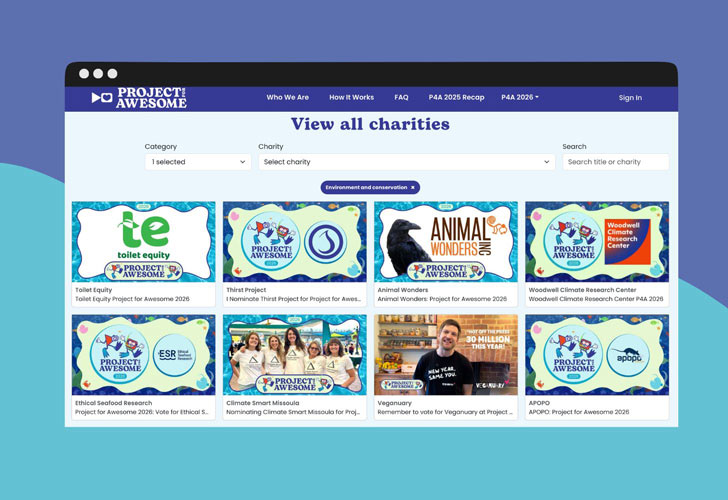
This year, over $1.8 million in direct donations were made through Tiltify, while a number of matching funds through FTDWS, Partners in Health, and Save the Children added up to reach the grand total of over $4.1 million.
In 2025, the livestream raised over $3.7 million which was split among 30 viewer-selected charities, as well as Partners in Health and Save the Children.
Highlights from the 2026 Project For Awesome
While the underlying work of the Project For Awesome is to make a tangible difference in the face of real problems, both John and Hank are known to bring a hefty dose of humor to the livestream.
Joined by guests like Tyler Thrasher, Travis McElroy, Tess Violet, Alexis Nikole Nelson, and more, the livestream featured its usual goofy shenanigans — all in the name of doing good.
One highlight included a cameo by John’s son, Henry, a boxer, who was promised the opportunity to punch his father after the livestream raised $1 million (and did). Other standout moments included a classic game of “Banana Loca,” appearances by alter egos like “Silly Ray Cyrus,” and Batman Hank, and guest Demi Adejuyigbe singing a capella.
Nerdfighters watching along at home even broke out some 2026 P4A bingo cards.
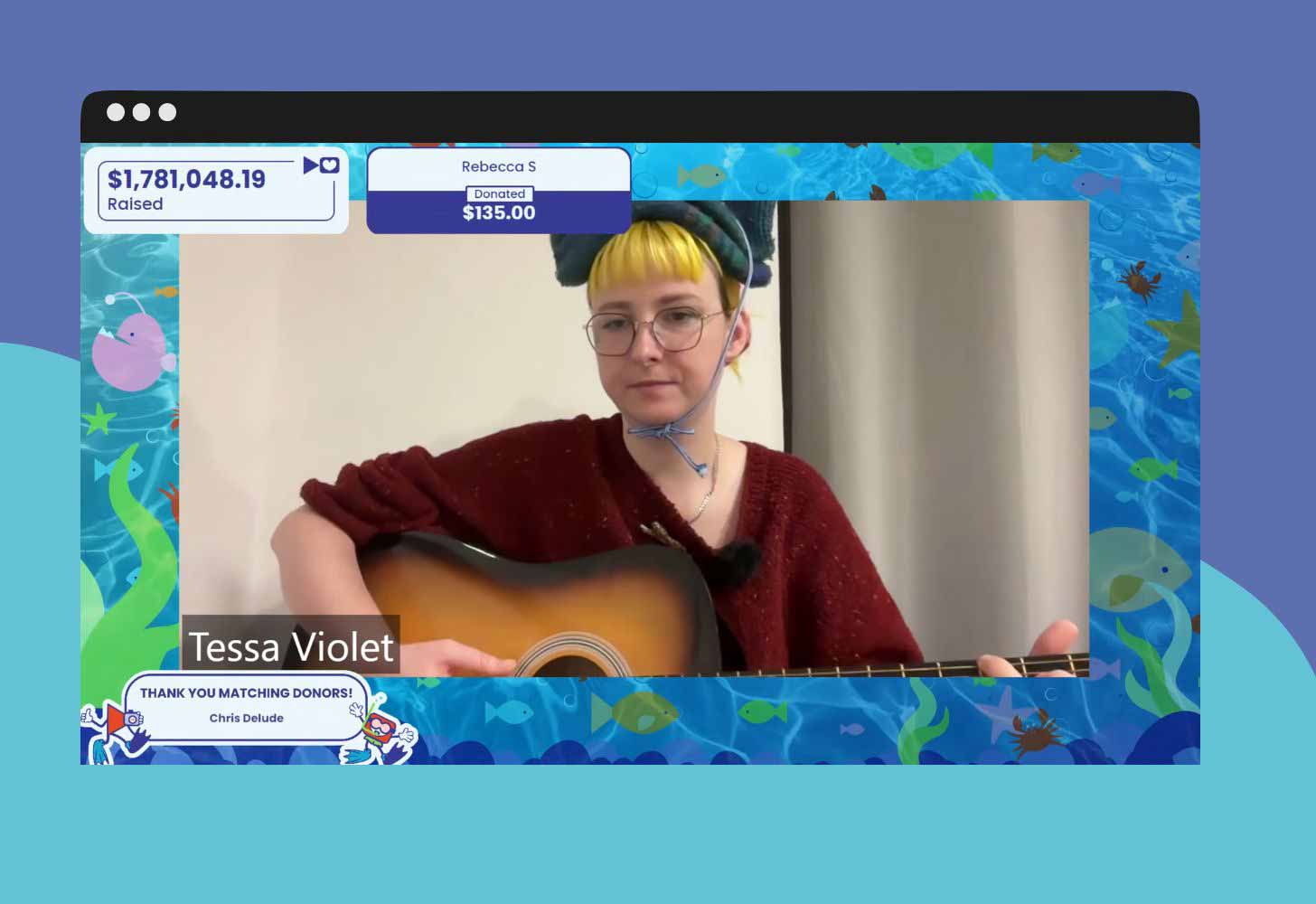
In between the silliness, the livestream also featured conversations with Dr. Joia Mukherjee from Partners In Health, and Gary Shaye from Save the Children to help spread the word about the important work the livestream supports.
“We are still caring for millions of people in beautiful fashion,” Dr. Mukherjee said, adding that the Paul E. Farmer Maternal Center of Excellence opened its doors on February 14.
The maternal center is the first-ever neonatal intensive care unit in the country of Sierra Leone and was partially funded with the support of the Green brothers and Nerdfighteria over the last nine years. Together, the online community raised over $50 million to drastically expand maternal services in Sierra Leone.
John and Dr. Mukherjee also spoke about the growing support for advocacy to end tuberculosis, especially on the heels of John’s own advocacy and his latest nonfiction book, “Everything is Tuberculosis.”
“I’m so grateful to everyone who has become part of the movement against tuberculosis. It is really overwhelming to me. We can accomplish so much more together than we can accomplish alone, and Project For Awesome is always a reminder of that for me.”
Hank spoke with Shaye of Save the Children, as well, specifically discussing the organization’s humanitarian efforts in Gaza and Sudan.
Shaye said the organization has been working in Gaza since 1953 and that aid delivery in the region has gotten “a little bit easier” since last year.
“If there’s any good news, I would say it’s a little easier to get the services we need into the territories and have a little greater access than we did before,” Shaye said.
“We focus heavily on health; we have two health clinics [in Gaza], and in the last 4 months of 2025, we screened over 14,000 children monthly for malnutrition … and screened 1,400 babies and mothers, who are in acute malnutrition stage.”
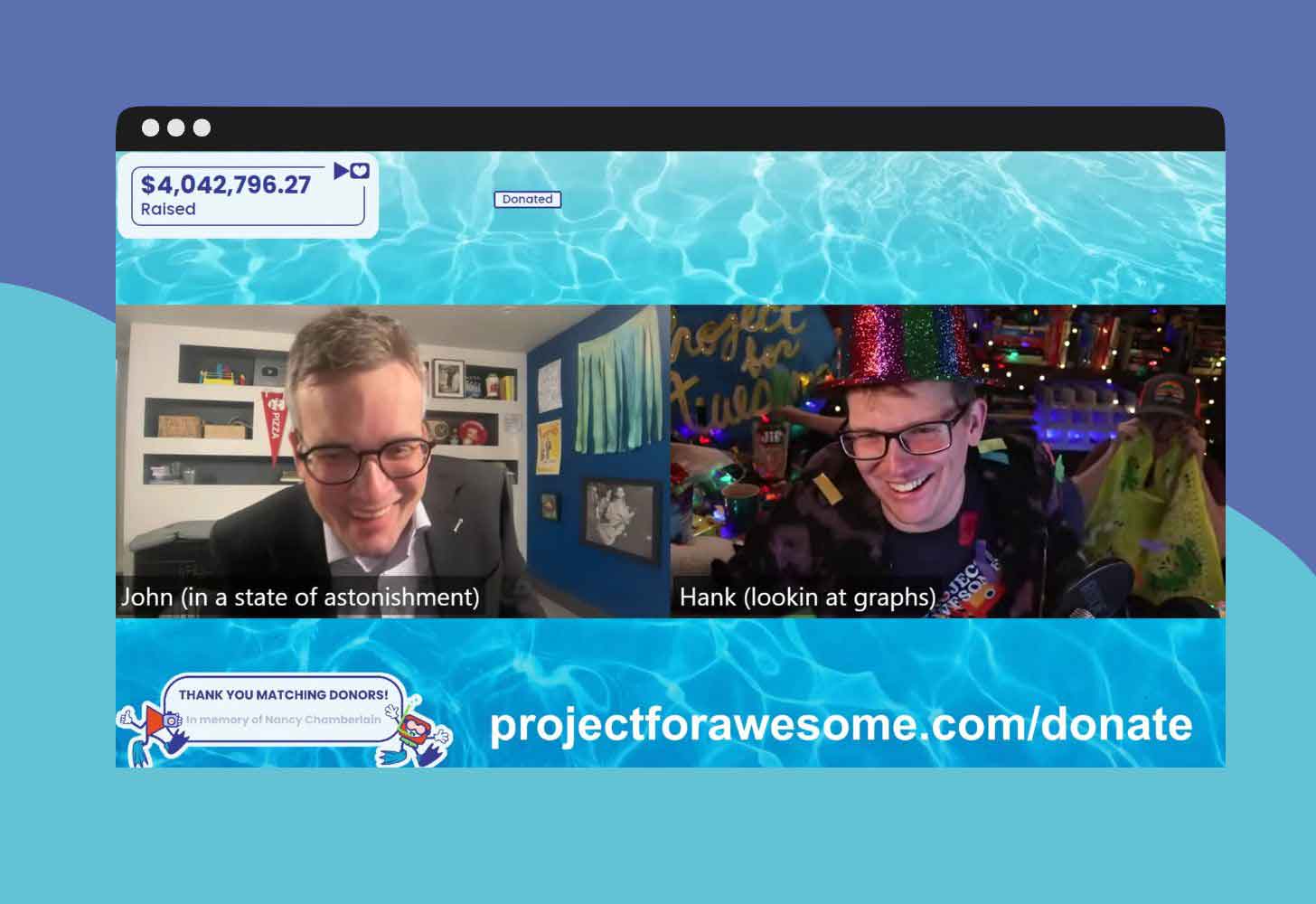
The support that will be provided to the organization through Project For Awesome will help continue these efforts — something John and Hank have uplifted for nearly 20 years.
“The thing that I always feel coming out of these conversations is just how many people are out there doing good in the world,” Hank said after speaking with Shaye.
“Whatever work this community does to turn people’s attention to that instead of whatever nightmare-of-the-day we’ve got going on in the news … it’s really valuable.”
Header image courtesy of vlogbrothers/YouTube
Sierra Leone, a country on the southwest coast of West Africa, has ranked as one of the worst in the world for maternal mortality rates for many years.
Due to the aftermath of an 11-year civil war and ongoing health injustice, Sierra Leone’s maternal mortality rate in 2020 was 1 in 52 women dying in pregnancy or childbirth. At the same time, the United States had a maternal mortality rate of 1 in 3,800, and the United Kingdom had a rate of 1 in 5,200, according to Partners in Health Sierra Leone.
Significant improvements have been made in recent years, but a groundbreaking milestone is sure to expand maternal and infant care drastically in the region: The grand opening of the Paul E. Farmer Maternal Center of Excellence.

Since 2014, global health nonprofit Partners in Health has been working with local health officials to improve maternal health care in the area, including adding a blood bank and pharmacy next to an existing maternal ward, training nursing and midwifery staff, and improving access to family planning.
But the demand required a more audacious plan: Opening a maternal health hospital specifically designed to provide the critical care at-risk mothers and their newborns need.
The MCOE just opened its doors on Saturday, February 14, 2026 — Valentine’s Day — with 166 beds and high-quality care for women and children.
This is a massive expansion of the area’s existing 48-bed maternal ward. And it’s the first time the country of Sierra Leone has had its own neonatal intensive care unit.

Much of the nearly decade-long effort to build the MCOE was the work of Partners in Health and local ministries of health. But two funding partners were key to bringing this hospital to life: Hank and John Green.
Best-selling authors, internet personalities, educators, and entrepreneurs, the Green brothers first set out to raise millions to fund the MCOE in 2019 by starting Awesome Socks Club, a sock-selling platform that donates all of its profits to Partners in Health.
This platform has since evolved into Good Store, a larger online shop that sells everyday products like coffee, tea, soap, sustainable home-cleaning products, in addition to those fun socks. All profits are donated to charity, with over $12 million given so far.

The Greens have also given generously out of their own pockets and have raised millions through their annual Project For Awesome charity livestream.
All in all, they have contributed $50 million to build the MCOE in Sierra Leone.
And this weekend, during their 2026 Project For Awesome, the maternal center opened its doors — and began treating its first patients.
“We just delivered the first baby of the Maternal Center of Excellence,” Vicky Reed, PIH Sierra Leone’s executive director, said in a video. “A baby girl!”
The MCOE broke ground in 2021, and now, it is achieving what it set out to do.

“This has been a six-year journey for our community, raising $50 million, working with the Sierra Leonean government and Partners in Health Sierra Leone to build the staff, stuff, space, and systems necessary to provide good, dignified care,” John Green said in an announcement video mid-Project For Awesome.
During the construction of the facility, Partners in Health also hired a majority-women crew to build the hospital. They also trained approximately 200 clinical staff, including 51 midwives, to staff the MCOE, in partnership with the country’s Ministry of Health.

“I’d love to present us as the heroes of this story, but the truth is, the folks in Sierra Leone who actually built the hospital, who actually provide the care, who do the training for the nurses and midwives and traditional birth attendants, those are the people who really made this possible,” John said.
Still, Nerdfighteria — John and Hank’s dedicated online community — played a major role in this milestone.
One such Nerdfighter, Gab Rima, has been a follower since 2009, when they were just 11 years old.
“As I got older, I read all of John’s books in middle and high school, and I always watched the Project For Awesome livestream every year,” Rima told Good Good Good. “When I got my first job when I was 16, I was really excited to be able to finally contribute. I think the first year I only gave $5, but I was happy to be able to do that.”
Now age 27, Rima has been along every step of the way, as the Green brothers’ reach — and the efforts of Partners in Health — have grown.
“I’ve been so impressed with the work this community has done to support the MCOE so far,” Rima said. “I’m so proud that the people I decided to be a fan of at 11 years old continue to prove themselves to be kind and worthy of their audience.”
That pride has been echoed back to Nerdfighters, too.
“I am so, so grateful to everyone who participated in this project. If you are a member of the Awesome Socks Club or you contribute directly to Partners in Health … you are also part of this story,” John Green said over the weekend.
“And it’s a really good news story,” he continued. “I mean, there’s never been a NICU in the country of Sierra Leone, and now, as of today, there is one.”

For Rima — and countless other Nerdfighters who have contributed to bringing this milestone to life — it’s a story of what is possible when people work together.
“There’s so much bad news in the world these days, and as much as I try to take action, it often feels like nothing I do matters,” Rima said. “So this news was such a bright spot for me and made me feel like some of the small actions I’ve taken over the years — like buying soap and coffee from the Good Store — have amounted to something that is making a difference in people’s lives.”
And not only does the existence of this hospital make a difference in people’s lives — it makes their lives possible.

That first baby delivered at the MCOE — a baby girl who arrived on Valentine’s Day at 2:13 p.m., weighing just 1.72 kilograms (or 3.79 pounds) — will get the specialized care she needs.
“This moment marks a profound transition from years of planning, collaboration, and construction to the active delivery of lifesaving care for women and newborns in Kono District and beyond,” a statement from the Directorate of Hospital and Ambulance Services of Sierra Leone’s Ministry of Health shared.
“The Ministry of Health and Partners In Health proudly celebrate this remarkable milestone and look forward to many more successes as we continue strengthening healthcare delivery across Sierra Leone. Together, we are advancing safer motherhood and giving every newborn a stronger start to life.”
You may also like: John Green announces $1M annual donation to fight his (least) favorite disease
Header images courtesy of Good Store and Partners in Health Sierra Leone
The Prionailurus genus comprises five species of small Asian wild cats: the fishing cat, leopard cat, rusty-spotted cat, Iriomote cat, and flat-headed cat.
While all of these cats face threats due to shrinking ecosystems, the flat-headed cat is one of the world’s most elusive felines.
For decades, the cat could be found throughout the lowland tropical rainforests and swamp forests of Thailand, Peninsular Malaysia, Sumatra, and Borneo.
But after a sighting in 1995, the flat-headed cat disappeared from Thailand altogether. For nearly three decades, it was considered locally extinct.
Finally, in 2024, Thailand’s Department of National Parks, Wildlife and Plant Conservation and Panthera Thailand released new images of the cat traipsing through the country’s southern forests.
It was the first confirmation that flat-headed cats had returned to the region in 29 years.

“After nearly three decades, this rediscovery shows what’s possible when science and strong protection come together,” Kritsana Kaewplang, Panthera Thailand’s country director, said in a press release.
“These habitats are among the most biodiverse and threatened in the country, yet they continue to surprise us with their resilience,” she continued. “We’re eager to expand this research and strengthen conservation measures in these vital habitats.”
Named for its distinctly flat skull shape, the small striped cat boasts round ears, close-set eyes, and a stubby tail. Its webbed, otter-like feet help it navigate wetland and peat swamp ecosystems, where it preys on fish, frogs, and crustaceans.
Conservationists attribute the endangered cat’s absence in the country to human-induced habitat loss and the pollution of local waterways. They attribute its return to better management of water levels and forest fire prevention.

“This is a landmark moment for Thailand and a powerful reflection of our long-standing commitment to conservation,” said Athapol Charoenshunsa, the director general of the Department of National Parks, Wildlife and Plant Conservation.
“Rediscovery of the flat-headed cat in southern Thailand is a significant win for conservation in Thailand and the broader Southeast Asia region where the species is still found,” he continued.
“Uncovering the existence of a species once thought lost in the region highlights the dedication and effectiveness of DNP officials in protecting border forests and preserving rare wildlife populations despite challenging political and social circumstances that make conservation work difficult.”

According to Panthera Thailand, their trail camera recorded 13 sightings in 2024 and 16 more in 2025 — amounting to the largest flat-headed cat survey ever conducted.
One of the images included a female flat-headed cat and her cub, signaling not just the species’ return but its ongoing reproduction in the region.
“Even species thought to be lost can be rebuilt if we invest in protecting the habitats they depend on,” said Panthera’s small cat conservation science director, Dr. Wai Ming Wong.
“Flat-headed cats’ persistence in Thailand suggests that these ecosystems still hold remarkable biodiversity but also underscores how urgently we must conserve and restore them before they vanish entirely.”

You may also like: Mammal returns to Romania for the first time in centuries
Header image via Michael Cory (CC BY 2.0)
A new ocean expedition along the coast of Argentina has unveiled 28 species that are completely new to the scientific record.
“We were not expecting to see this level of biodiversity in the Argentine deep sea, and are so excited to see it teeming with life,” said the expedition’s chief scientist, Dr. María Emilia Bravo of the University of Buenos Aires and Argentina’s National Scientific and Technical Research Council.
“Seeing all the biodiversity, ecosystem functions, and connectivity unfolding together was incredible,” she continued. “We opened a window into our country’s biodiversity only to find there are so many more windows left to be opened.”
During the voyage, which explored the waters between Buenos Aires and Tierra del Fuego, the Schmidt Ocean Institute’s remotely operated vehicle SuBastian explored the largest known Bathelia candida coral reef in the global ocean.
The stony cold-water coral reef, which is roughly the size of Vatican City, is a vital habitat for countless fish, crustaceans, octopuses, and new species.
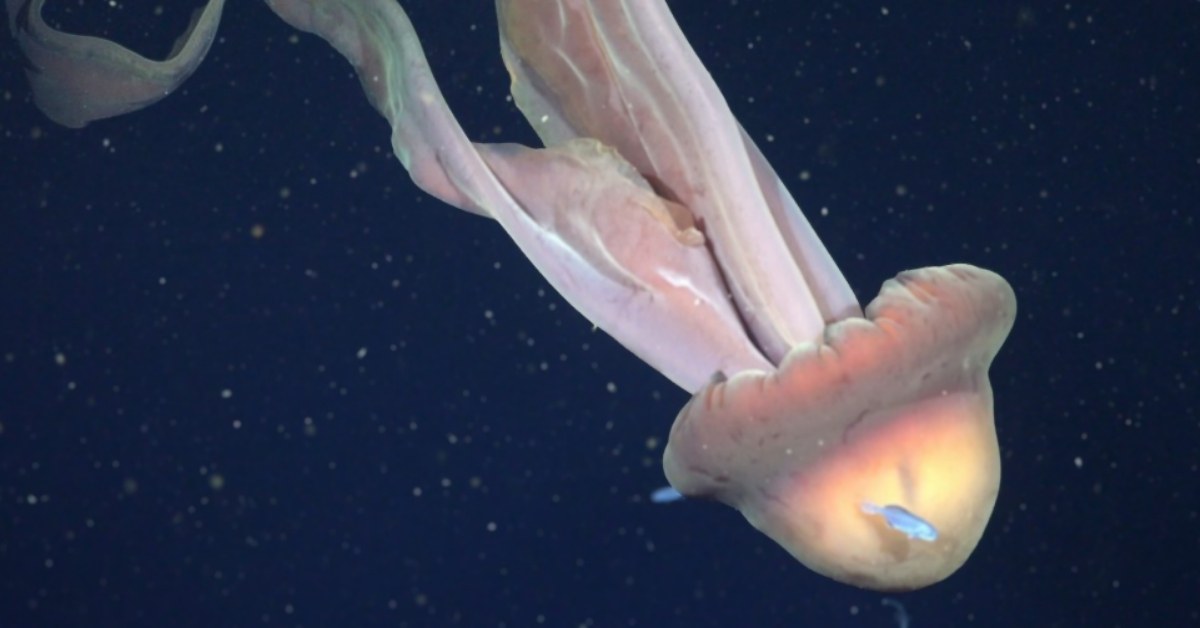
The operation also documented Argentina’s first deep-water whale fall and the extremely rare giant phantom jellyfish — a deep-sea jelly that can grow as long as a school bus, with arms that can reach up to 33 feet long.
Despite their massive size, the jellyfish is incredibly difficult to record. First collected in 1899, they were not officially recognized as a species until 60 years later.
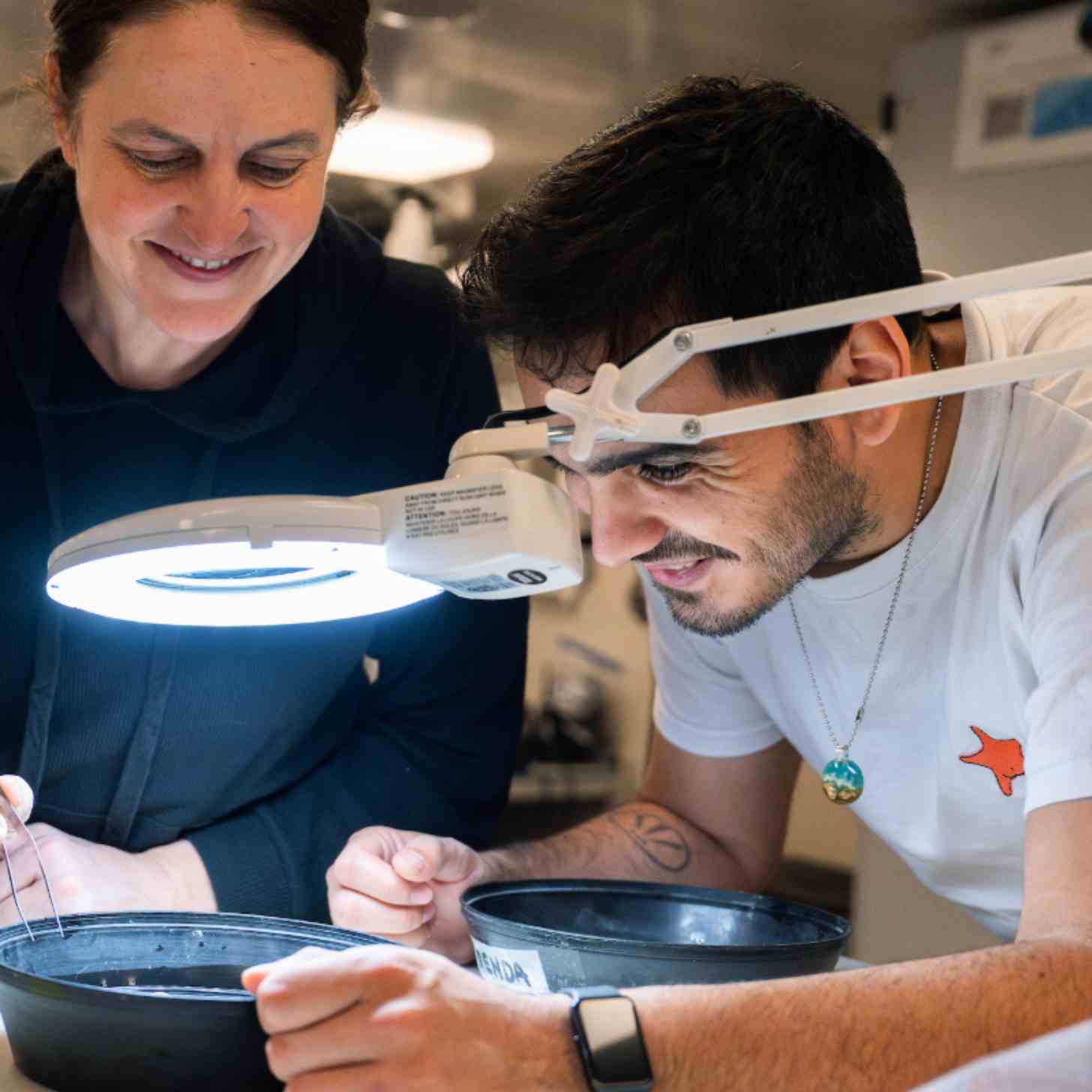
Since that first collection, they have been spotted roughly 120 times (amounting to less than one sighting a year around the globe).
Bravo said that the control room of the research vessel fell completely silent when the bus-sized jellyfish graced their screens.
“There was a mixture of excitement and disbelief,” Bravo told The New York Times. “Its ethereal and delicate presence in such an extreme environment was deeply surprising.”
Bravo added that the jellyfish’s arms, which are longer than a camper van, made it difficult to maneuver SuBastian, but they proceeded with the utmost caution.
“We were curious about getting to know it better and documenting it well,” she said.
For years, Schmidt Ocean Institute’s deep-sea expeditions have been broadening the scientific community’s understanding of the ocean and the countless species that await discovery in the watery depths below.
In August 2025, they garnered global attention when a livestream of their three-week expedition of Argentina’s Mar del Plata Canyon went viral and amassed over 17.5 million views.
During that expedition, they discovered 40 creatures that were completely new to science, including never-before-seen “sea anemones, sea cucumbers, sea urchins, snails, corals, and crinoids.”
Just two months later, the Schmidt Ocean Institute released findings of their 100th expedition, which yielded 30 new species — and hundreds of other species that had never been recorded off the coast of Uruguay.

By Halloween, the Universidad de Magallanes’ Southern Ocean Species Discovery Workshop in Punta Arenas, Chile, published detailed findings on the institute’s biggest discoveries of the year, including new black corals, armored and iridescent scale worms, sea stars, and a “death ball sponge.”
“With every expedition to the deep sea, we find the ocean is full of life — as much as we see on land, and perhaps more because the Ocean contains 98% of the living space on this planet,” Schmidt Ocean Institute’s executive director, Dr. Jyotika Virmani, said after their latest expedition.
She added: “We have been privileged to work with outstanding scientists across three expeditions in Argentinian waters, and look forward to seeing their research continue to unfold, unlocking new understanding and inspiration.”
You may also like: Science students find new species of 'goth ladybug' living on their campus: 'There are unknown species living right beside us'
Header image via ROV SuBastian / Schmidt Ocean Institute
A popular screening method for movies, the Bechdel Test, is getting a climate-focused facelift.
The Bechdel Test was first coined in 1985 when cartoonist Alison Bechdel created a comic strip that proposed new film criteria: A movie should have at least two women in it who talk to each other about something other than a man.
Now the nonprofit Good Energy has created a similar test to evaluate whether the reality of climate change is being reflected in films and television.
A story passes Good Energy’s Climate Reality Check if two conditions are met: Climate change exists in the world and at least one character acknowledges it.
It seems easy, but a lot of films fail. Even in films where the first box is checked — like the disaster flick “2012” — climate change is never mentioned.
To test their theory, Good Energy conducted a study with the Buck Lab for Climate and Environment at Colby College in Maine. They applied the Climate Reality Check to 250 blockbusters released from 2013 to 2022 and found that less than 10% of the films analyzed passed.
The hope is that simple measures like the Climate Reality Check encourage screenwriters to look at their stories through an added lens.
“If more films meet the Climate Reality Check, it would expand our capacity to respond to the climate crisis,” Schneider-Mayerson, the study’s lead author, told Yale Climate Connections.
And this latest entertainment checklist doesn’t have to come at the expense of good storytelling.
“We are very story-first at Good Energy,” said Carmiel Banasky, Good Energy’s editor-in-chief. “The writer is the expert; climate needs to bubble up in an organic way to that story, no matter what kind of amazing messages we think should be put out there.”
Three Movies That Pass The Climate Reality Check
- Nyad: Diana Nyad’s (Annette Bening) history-making swim from Cuba to Florida is interrupted by a box jellyfish, which is miles offshore from its normal habitat. “Global warming,” surmises Bonnie Stoll (Jodie Foster).
- Mission Impossible: Dead Reckoning Part One: Ethan Hunt (Tom Cruise) talks climate change with Eugene Kittridge (Henry Czerny), who says the next world war will be over “drinkable water” and “breathable air.”
- Don’t Look Up: This satirical climate allegory centers on two scientists (Leonardo DiCaprio) and (Jennifer Lawrence) as they desperately try to warn the world about an extinction-level event. In an interview with director Adam McKay, critic Nathan J. Robinson called it a film that managed to “reach people…entertain people and educate people at the same time.”
A version of this article originally appeared in the 2025 Environment Edition of the Goodnewspaper.
Header image via Don’t Look Up / Netflix
Climate change has entered everyday conversation with greater urgency in the last decade. And although it's a sobering topic, it’s become increasingly present in the comedy scene, too from stand-up specials to “Late Night” monologues.
It’s not that climate change itself is inherently funny — headlines about endangered animals and flooded cities don’t inspire laughs. But the heart of comedy lies in relatability, and as climate concerns become more ever-present, jokes about recycling, water usage, and overpopulation are popping up more and more.
In “The Tennessee Kid” special, between punchlines about football games and dog bakeries, Nate Bergatze seamlessly slips in jokes about climate change.
“I looked up a list: ‘All right, what are you supposed to do for global warming, as an individual?’” Bergatze tells the crowd. “And it was a big, long list, but the first thing on the list was my favorite. It just said, ‘Just talk to your friends and family about it.’”
Bergatze points out that those conversations are more difficult with distant relatives.
“I had a great aunt and uncle fist fight each other at a wedding,” he laughs. “Let me get in the middle. ‘Any chance this fight was about global warming? Because I just would love to get that conversation rolling, you know?’”
Jokes like Bergatze’s help alleviate climate anxiety. But Adam McKay, a producer-director known for projects like “Step Brothers,” “Anchorman,” and “Succession,” thinks that humor isn’t just something we should use to cope with climate woes — it should also be a tool for climate justice.
“I think laughter is absolutely key,” McKay told The Carbon Brief. “We’ve been doing these shows through Yellow Dot Studios with stand-up comics, the idea being: ‘Let’s find a way to laugh around these subjects.’”
Through Yellow Dot Studios, McKay has spent the last year producing sketch comedy videos and live comedy events headlined by stars like Nick Kroll, John Mulaney, and Nikki Glaser.
And every cent it brings in goes to spreading climate change awareness.
“Overall, I’ve been very happy with how it’s gone,” McKay said. “We can be silly. We can be angry. And it’s just a language that we’re trying to use that can lead to change, or be a part of a larger change.”
Climate change jokes that recently made their way into top comics’ sets:
- “[Overpopulation] is sort of like when you’re at a party that you know is dying down and then you get a text from a friend and they’re like, ‘Hey should I still come to the party?’ and you’re like, ‘Yeah! Jump in that Uber, girl.’” - Joel Kim Booster
- “I’ve been sending thoughts and prayers to the globe. I think it’s gotten worse, I don’t think it’s done anything.” - Eric J. Freedman
- “[People in 2284 will ask:] ‘Why did you travel in airplanes when you knew the pollution was irreversibly heating up the planet?’ [And we’d say:] ‘Oh my god, this is going to sound bad … to go somewhere hotter?” - Simon Brodkin
- “Is animal print fashion still cool?” - Taylor Tomlinson. “Yes, because with climate change, it will be good to remember what they looked like.” - Aparna Nancherla
- “It seems like we get fallout from the climate crisis everyday here in California: wildfires, floods, landslides — which are all amazing things to hear Stevie Nicks sing about, but not something you want to experience in life.” - Jimmy Kimmel
- “Evil gasses literally exploding out of the ground in Siberia, I’m no David Attenborough, but that s—t’s not right, is it?” - Kiri Pritchard-McLean
A version of this article originally appeared in the 2025 Environment Edition of the Goodnewspaper.
Header image via Netflix / The Tennessee Kid
Hudson Williams, one of the breakout stars of the Canadian LGBTQ+ hockey drama “Heated Rivalry,” just celebrated his 25th birthday on February 13.
And fans of the show wanted to do something special to commemorate the actor’s special day.
In a fundraiser created by Threads user Gianna Christine, or @gigi_champagne, fans came together to raise over $63,000 for BC Children’s Hospital Foundation, a charity that funds research and programming for the BC Children’s Hospital in Vancouver, British Columbia.
It’s a cause close to Williams’ heart.
On the red carpet of this year’s Golden Globes, he toasted to the charity.
“The BC Children’s Hospital kind of saved my life when I was a little baby,” the actor said at the awards show. “So, selfishly, if we could save some more babies over there, that’d be cool.”

For Gigi, it was a challenge easily accepted.
In late January, she posted to Threads saying she got a fundraising page approved by the hospital and had a meager goal of just $1,000. She shared that the donation link would be live until Williams’ birthday on February 13.
“No amount is too small,” she wrote on the social media platform. “The money goes directly to the hospital foundation, this is not a third party platform so they'll receive the maximum benefit of your generosity.”
In less than 18 hours, the community had raised over $3,000. In just a day, $4,000.
“I need a new phrase,” Gigi wrote within the first day of fundraising. “‘I'm blown away’ no longer fits.”
Some fans began donating in $24 increments in honor of Williams’ character, Shane Hollander. In “Heated Rivalry,” 24 is Hollander’s hockey jersey number.
After reaching a $10,000 milestone, Gigi told followers, “y’all are the most generous fandom on the internet.”
At $11,000, she shared some more details.
“As a parent whose child has needed such a facility, I couldn't be more grateful and proud of this community of weirdos,” Gigi wrote.
“When Hudson said the BCCH saved his life, my heart stopped for a moment. I was transported back to when our doctor said the words ‘pediatric neurosurgeon,’” she added later in the fundraiser. “I immediately identified with how terrified his mother must have been, because I was in the same position once.”
Gigi’s own daughter celebrated her birthday just two days before Williams’.
“In a half hour, it will be Feb. 11, my baby's birthday,” Gigi wrote on Threads after the fundraiser reached $25,000 in donations.
“The one who needed brain surgery at six months old. The reason Hudson's comment touched my heart so deeply. It feels right to reach this incredible milestone just before the birthdate of my beautiful girl. This means more to me than I can say.”
By Williams’ birthday, the fundraiser had reached over $32,000, which he shared on his Instagram story with the caption, “best bday present ever.”
And still, the fans continued donating. Coordinators at the foundation encouraged organizers to leave the link up until February 16 to catch any other donations from fans following Williams’ birthday.
After Williams shared on his social media, the fundraiser saw an additional 760 donors, according to Gigi.

And as of the morning of February 17, the total had surpassed $63,415.
“You all are continuing to demonstrate kindness and generosity on a scale I couldn't have ever expected. There have been multiple donations of over $100, but the ones that really grab my heart when I see them come through are the $5, the $10,” Gigi wrote.
“People say 'it's not much but…’ No buts. Don't do that. Every penny raised will be put to work saving children's lives. Who knows what research breakthrough might be possible because people watched [‘Heated Rivalry’].”
While it’s unclear how long this specific fundraiser will be live, Gigi has also plugged similar efforts cropping up in honor of Williams’ “Heated Rivalry” co-star, Connor Storrie, whose birthday is on February 22.
So far, a fundraiser in Storrie’s name supporting the National Center for LGBTQ+ Rights has raised over $10,000. Another, made for both actors’ birthdays, has raised over $4,000 for Rainbow Railroad, an organization that supports LGTBQ+ refugees.
“If you're new to fandoms, this is what it can be,” Gigi summarized.
“It can be fun; it can be a community — it doesn't have to become toxic … Be freaks, but respectful freaks.”
You may also like: This NHL team is selling 'Heated Rivalry' jerseys. The proceeds will be donated to a queer and trans hockey league
Header image by Sabrina Lantos/HBO Max
Eating a vegan diet has the power to positively impact animals, our planet, and even our health. But switching to a plant-based diet — even just once a week — can feel intimidating.
How will I get all of my protein? Does cutting out meat really make that much of a difference for my carbon footprint? Will I ever eat cheese again?
Learning more about vegan diets, food science, and your own personal nutrition is paramount to an easy transition to more plant-based eating.
Of course, every person — and every body — is different, so going into a dietary change equipped with knowledge is key to finding what works best for you.
Whether you’re just testing the waters on going vegan, or you’re a beans and nutritional yeast fanatic trying to expand your recipe repertoire, we’ve got some resources for you.
By the way, some of the links in this article (like books!) are affiliate links, which means if you make a purchase after clicking a link, we may earn a commission at no extra cost to you. Thank you!
Cookbooks for entry-level vegans
“The Weekday Vegetarians” by Jenny Rosenstrach
“The Weekday Vegetarians” shows readers how to adopt a weekday plant-based mentality, laying out a plan for home cooks to create delicious meat-free meals.
Discover over 100 recipes for comforting, family-friendly, plant-based bites!
“How To Be Vegan & Keep Your Friends” by Annie Nichols
“How To Be Vegan & Keep Your Friends” is a guide for how to “cook, eat, and socialize” as a vegan in a world of meat-eaters.
The book contains more than 50 recipes to help impress friends and loved ones and help the reader feel like a more easy-going herbivore.
Shop: Amazon
“Seed To Plate, Soil To Sky” by Lois Ellen Frank & Walter Whitewater
“Seed To Plate, Soil To Sky” is a cookbook full of plant-based recipes using Native American ingredients.
With 100+ nutritious recipes organized by foundational ingredients in Native American cuisine, readers will walk away with a full belly and a deep reverence for Indigenous history.
Influencers who make the plant-based switch easier
@queerbrownvegan
Isaias Hernandez of @queerbrownvegan uses his Instagram platform to improve environmental literacy, teaching over 120,000 followers about food sovereignty, intersectional environmentalism, urban ecology, and more.
@iamtabithabrown
Tabitha Brown of @iamtabithabrown on Instagram and TikTok has taken over the feeds of over 13 million followers with her soothing voice and wholesome approach to veganism.
She was the host of the Food Network’s first-ever vegan cooking competition show and also has her own cookbook!
@bodegacatx
Bringing her audience along on her NYC vegan eating adventures, Rebecca Doudak, known as @bodegacatx on both Instagram and TikTok, combines her love of food and mutual aid to share community resources, vegan recipes, and local restaurants to connect others.
Newsletters & media for a vegan lifestyle
Vox’s “Meat/Less”
Vox’s “Meat/Less” newsletter course is a great companion for going vegan.
Subscribers will get five emails — once per week for five weeks — filled with tips for incorporating more plant-based foods into your diet, learn how to make new habits last, and get some “food for thought” about how your choices make a difference.
Nourish Magazine
Though based in Australia, Nourish has become a global companion for those who want to adopt a plant-based lifestyle.
Its regular newsletter includes vegan recipes, tips for health and wellbeing, mindfulness, and cruelty-free fashion, beauty, and more.
The Washington Post’s “Voraciously: Plant Powered”
Another great tool for new vegans is Washington Post’s “Voraciously: Plant Powered” newsletter.
For 12 weeks, subscribers will receive a weekly email full of recipes, techniques, and tips to put more vegetables on their plates.
You may also like: Researchers ranked the carbon footprint of six types of diets. Here’s how vegans and vegetarians ranked
A version of this article was originally published in The 2024 Plants Edition of the Goodnewspaper.
Header image by Alesia Kozik via Pexels
Starting in the 2026-2027 school year, a new state law in Illinois will require every public high school to include instruction on climate change and the impacts and causes of climate change for grades nine through 12.
The law was written by two area students, alongside State Representative Janet Yang Rohr.
“The legislation makes sure that people know that it’s happening, how it’s happened and, most importantly, what they can do to make a change,” Rep. Yang Rohr told NBC Chicago in 2024.
The law’s journey began when Iris Shadis-Greengas, a senior at Naperville Central High School submitted a proposal to Rep. Yang Rohr as part of a capstone course.
Then, her state representative decided to sponsor it.
“I was really happy,” Shadis-Greengas told NBC. “A bill that was written by a high schooler, I thought that was really cool a legislator would actually do that.”
Another student at Neuqua Valley High School, then-senior Grace Brady, was working on a similar project.
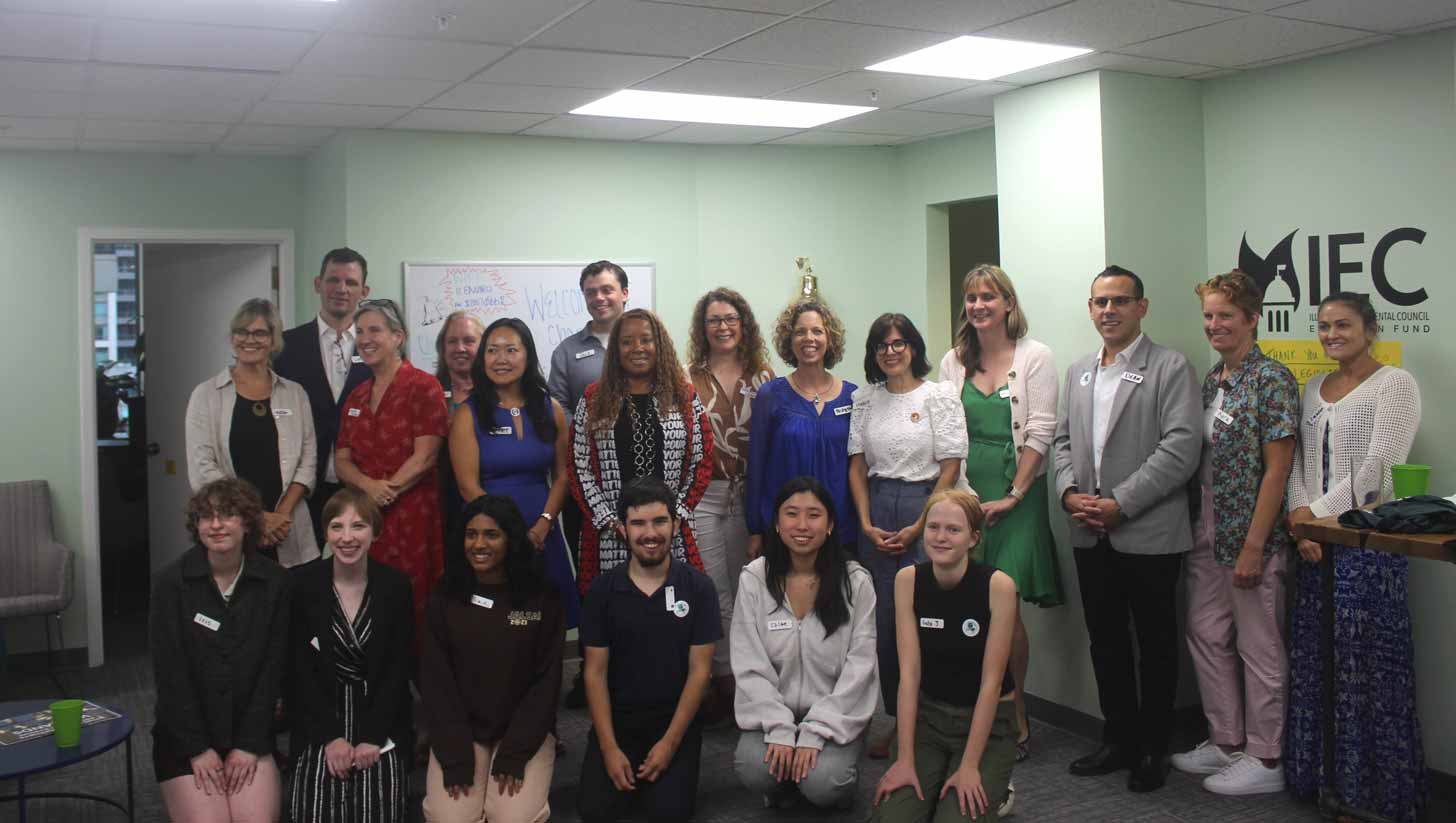
The duo teamed up with Rep. Yang Rohr, and despite some debate on the House floor, it passed. The state’s Board of Education and Environmental Protection Agency are creating the curriculum now, with a rollout planned for the upcoming school year.
“There's so much misinformation everywhere,” Brady, who is now studying climate policy at the University of Illinois-Urbana Champaign, said.
“I really want people, when they encounter these things, to say, ‘Oh, well, in school I learned that this is the science. This is what’s correct.’ They’ll be able to be mindful of the content they see and know that science is real.”
State Senator Adriane Johnson also championed the bill, which makes Illinois the fifth state to require this kind of curriculum in schools.
“Students need and are calling for a comprehensive education curriculum that addresses the science behind climate change,” State Senator Johnson said in a statement.
“Young people are eager to learn about real, meaningful, and equitable solutions to the impacts of the climate crisis, and this law affords them that opportunity.”
You may also like: These movies pass the 'Bechdel Test' for climate change
A version of this article was originally published in The 2025 Environment Edition of the Goodnewspaper.
Header image by Artem Podrez via Pexels
In the town of New Braunfels, Texas — just a short drive from San Antonio — rapid population growth has made it difficult for people to find affordable housing, or any housing at all.
So, when Eric Cooper, president and CEO of the San Antonio Food Bank, realized there was a vacant lot next to the New Braunfels branch of the food bank, a lightbulb went off.
“What we know about a food-insecure household is that rent eats first in every household budget,” Cooper told Fast Company.
“If we can provide food, that in some ways allows a family to cost-shift their dollars to stay housed.”

The McKenna Foundation and NB Housing Partners have supported the purchase of the land, turning to the food bank to oversee the new apartments, which are now being constructed. The apartment building, called Appleseed Apartments, has 51 units that will be rented to families with children for 24 to 36 months.
They are designed for people in transitional phases, to help them get on their feet and find stability within a short time, so others who need help can move in next.
The price of rent in these affordable units has not yet been announced, but they are reserved for families earning 80% or less of the area’s median income.
Cooper said residents will have access to financial literacy classes and will receive a stipend to help support them when it’s time to move out.
“In some ways, there was this thought that … we don’t do housing; we do food. But after the journey, we were like, what do we do? We do people,” Cooper said. “We know neighbors, and we help neighbors.”
The Appleseed build is not quite complete, but Woolsey Design Build gets closer to finishing the project every day.
“By pairing safe, high-quality homes with job training, nutrition programs, and financial-literacy resources, Appleseed helps neighbors stay rooted in the city they work in and love, instead of being priced out,” Woolsey said in a social media post.
“Woolsey Design Build is honored to turn this vision into reality. From framing to final finishes, our team is pouring decades of craft and community pride into every square foot so that future residents have a place to live, connect, and thrive.”
You may also like: Colorado is the first state to give cash back to renters, in a program designed to put home ownership in reach
A version of this article was originally published in The 2026 Home Edition of the Goodnewspaper.
Header image courtesy of San Antonio Food Bank
According to the American Tinnitus Association, more than 25 million adults in the United States have tinnitus, a condition that includes phantom sounds like ringing and buzzing in the ears, and may even lead to hearing loss.
There is no cure.
However, with the help of tools like hearing aids, mindfulness therapies, or even acupuncture, many are able to reduce their symptoms.
But a new device called the Lenire, which was recently approved by the FDA, is introducing the use of electrical stimulation of the tongue to help treat tinnitus.

The device includes a plastic mouthpiece with stainless steel electrodes that stimulate the tongue during hour-long sessions. The device is also paired with a set of headphones that play a series of tones and ocean-wave sounds.
By shifting the brain’s attention away from the buzzing or “phantom sounds,” Lenire re-trains the brain to understand that those sounds are not important information that requires the user to pay attention.
“It's kind of like if I lived near a waterfall and the waterfall was constantly going," singer-songwriter Victoria Banks, told NPR. After using Lenire treatments, the Nashville musician began experiencing relief.
“My brain is now focusing on other things,” like listening to, writing, and performing music, she said.

While the device is not a cure-all and comes with a steep $4,000 out-of-pocket cost for non-insured users, it boasts impressive clinical trial results, with 91% of users experiencing a significant reduction in tinnitus symptoms.
A recent paper published by The American Journal of Audiology is the second to affirm that thousands of U.S. tinnitus patients have been “successfully treated with Lenire,” according to a statement from the company.
The study found that, after six weeks of treatment with Lenire, 72.6% of patients with bothersome tinnitus had a clinically meaningful reduction in tinnitus. After 12-weeks, 81.8% of patients saw a clinically meaningful reduction in symptoms.
“Lenire was nothing less than a game-changer in my life. I went from debilitating, almost catastrophic tinnitus, that required medication to treat the depression and anxiety, to being able to enjoy life again after four months of Lenire,” Richard Bistrong, a tinnitus patient at New York Hearing Doctors, said in a statement.
“Three years later, I can enjoy my life and not worry about my tinnitus.”
You may also like: This high-tech shirt enables deaf concert-goers feel the music on their bodies
A version of this article was originally published in The 2024 Music Edition of the Goodnewspaper.
Header image courtesy of Lenire
In 2024, a study by scientists at Washington University School of Medicine tapped into the regenerative capabilities of zebrafish, a species of minnow with the extraordinary ability to fully regenerate its spinal cord after serious damage.
Until the publication of this study, the “how” behind this ability has been a mystery. But researchers have found hope in understanding the natural healing process.
“We found that most, if not all, aspects of neural repair that we’re trying to achieve in people occur naturally in zebrafish,” the study’s lead author, Mayssa Mokalled, said in a press release.
“Our study has identified genetic targets that will help us promote this type of plasticity in the cells of people and other mammals.”
When a human spinal cord is injured, the damage is often irreversible, but zebrafish’s damaged neurons undergo a dramatic transformation by altering cellular functions.
This offers a protective mechanism, which buys the neurons time to survive an injury — and eventually, to adopt a sort of flexibility to function in new ways.
In humans, spinal cord injuries usually kill neurons, offering little to no hope for recovery. But Mokalled believes the same genetic markers in zebrafish may lie dormant in mammals.
“We are hopeful that identifying the genes that orchestrate this protective process in zebrafish — versions of which also are present in the human genome — will help us find ways to protect neurons in people from the waves of cell death that we see following spinal cord injuries,” she said.
This discovery indicates that future therapeutic approaches in humans should focus on preventing the destruction of spinal cord neurons, potentially giving them the ability to regenerate and adapt, just like zebrafish do.
More recently, a study out of Vanderbilt University, by professor of pharmacology Valentine Cigliola, analyzed how spinal cord regeneration manifests in both zebrafish and neonatal mice and how it could potentially be “awakened” in adult mammals, too.
The paper is the first comparison between zebrafish and neonatal mice, which further offers data on the epigenetic mechanisms that promote this kind of regeneration.
The study “provides a valuable foundation for advancing regenerative medicine strategies aimed at restoring function after central nervous system injury,” a statement from Vanderbilt University shared.
“Understanding these innate regenerative mechanisms could inform strategies for treating a range of neurodegenerative diseases, including amyotrophic lateral sclerosis, multiple sclerosis, and spinal muscular atrophy.”
You may also like: How the Dog Aging Project is working to extend your dog’s life — and yours too
A version of this article was originally published in The 2024 Animals Edition of the Goodnewspaper.
Header image by Oregon State University (CC BY-SA 2.0)
Since 2023, World Central Kitchen’s teams in Gaza have served more than 272 million meals, 73 million loaves of bread, and 6.4 million gallons of water.
Recent ceasefire agreements have made it easier for aid organizations like World Central Kitchen to operate with “fewer interruptions” and “greater consistency.” Although the nonprofit states that violence, displacement, and food insecurity persist, World Central Kitchen is now able to provide 1 million hot meals per day in Gaza.
They are now able to serve more daily meals than ever.
“Thanks to our network of Field Kitchens, community kitchens, bakeries, and partners, more families — close to half of the total population — can count on a reliable meal each day,” World Central Kitchen shared in a recent announcement.
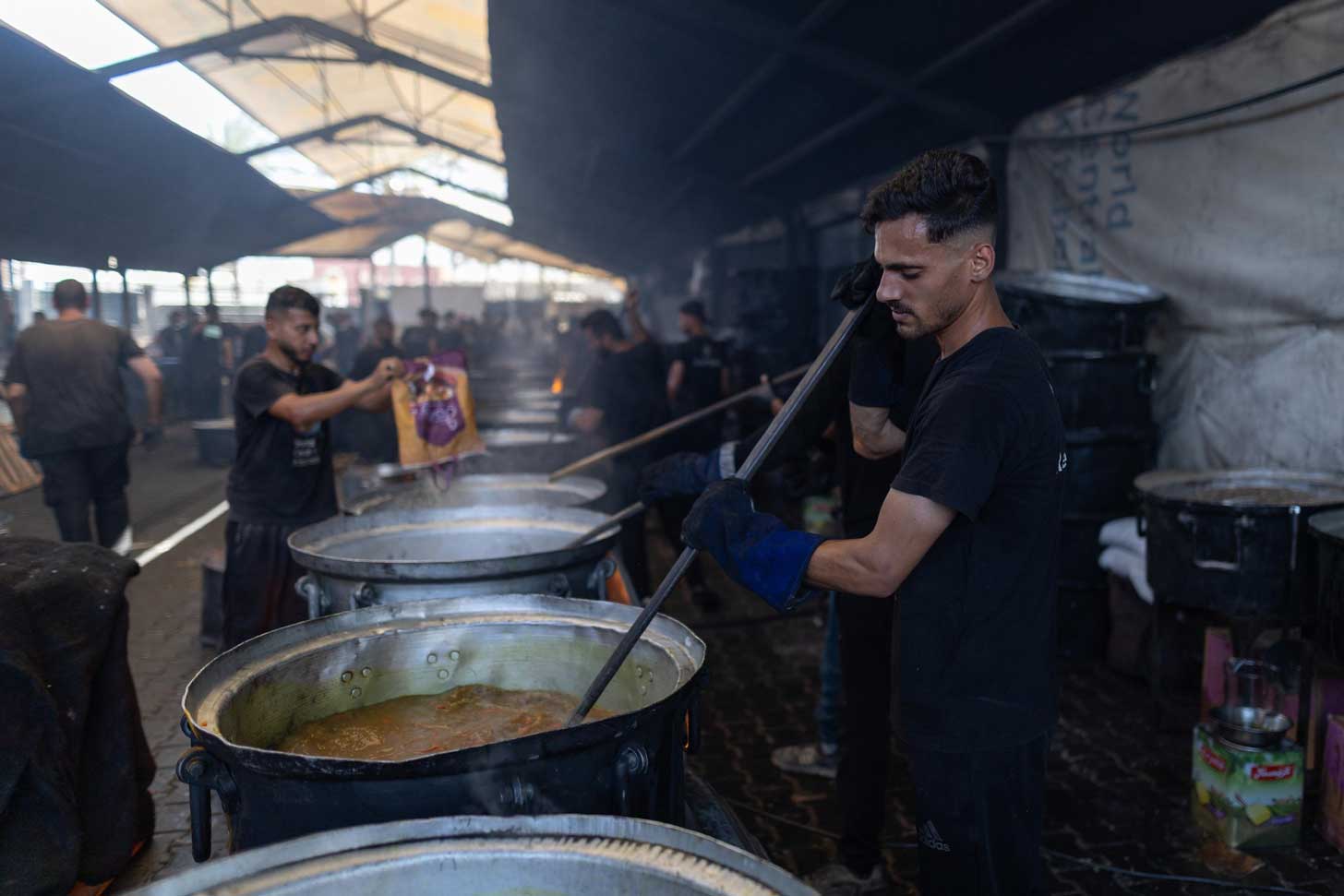
Humanitarian needs can intensify in areas of displacement and violence as people attempt to rebuild, and it’s clear World Central Kitchen has no intention to leave while the need remains “intense.”
“One million hot meals a day in Gaza. It’s not a statistic,” Chef José Andrés, the founder of World Central Kitchen, said in a statement.
“It’s Palestinians feeding Palestinians, cooking with dignity under impossible conditions. It’s communities refusing to give up on one another.”
While hunger is still an extreme concern for Palestinians, famine is not as dire as it was mere months ago.
“Famine has been pushed back. Far more people are able to access the food they need to survive,” United Nations Secretary-General António Guterres said in December 2025.
He added, however, that 1.6 million people in Gaza — more than 75% of the population — “are projected to face extreme levels of acute food insecurity and critical malnutrition risks.”
World Central Kitchen’s service remains vital. But as Ramadan begins, their operations will shift slightly to accommodate practicing Muslims who will fast for the next month.
Fasting, or sawm, is one of the Five Pillars of Islam, and is carried out every Ramadan. During this time, Muslims will refrain from eating and drinking (except for water) between dawn and dusk. They typically eat during pre-dawn hours for suhoor and will break their fast after sundown at iftar.
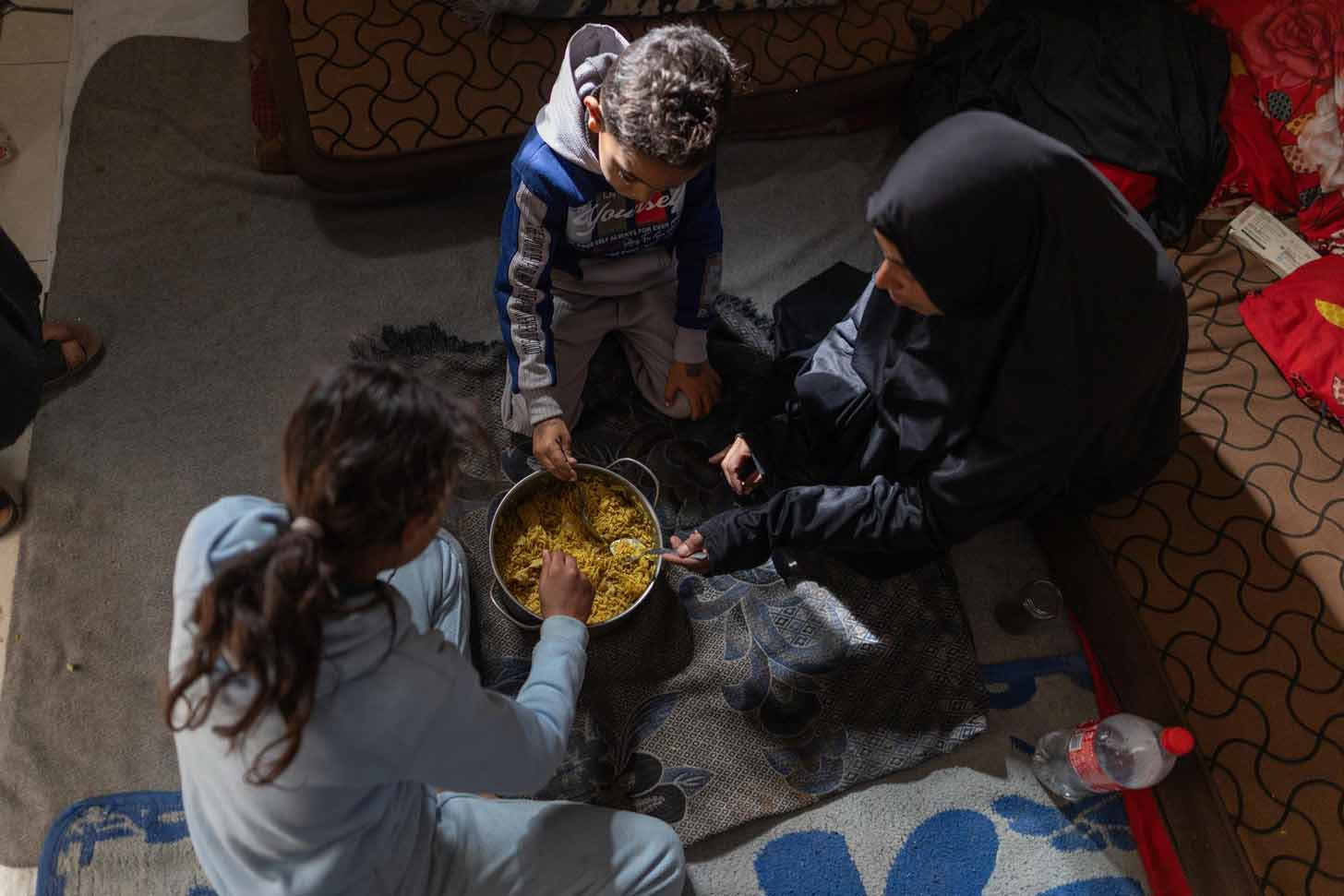
Despite ongoing food insecurity in Gaza, this practice is of great importance to many in the area, and World Central Kitchen has adapted its services during Ramadan since 2023.
This year is no different.
“Ramadan is a month when the rhythms of daily life shift around food. Families fast from dawn to sunset, making suhoor and iftar essential moments of nourishment, stability, and dignity,” a statement from the organization said.
“In Gaza, where hunger is already a daily reality, those moments carry even greater weight.”
The nonprofit’s six field kitchens in Gaza are led by Palestinian chefs, cooks, and volunteers from the community, who are supported by World Central Kitchen teams and partners. By working in these community-led operations, adapting to relevant cultural norms is natural, but still requires planning.
“It requires consistency, planning, and the ability to cook and distribute food at scale, every single day,” the organization stated.
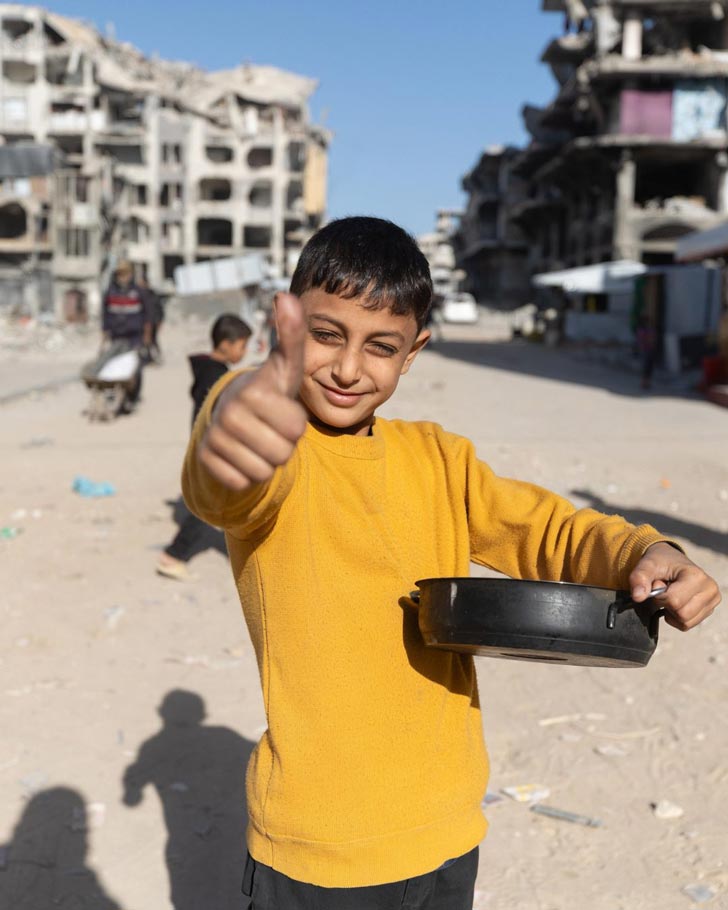
During Ramadan, World Central Kitchen will ensure that meals are available early for suhoor and in the evening when people convene for iftar.
“Ramadan also places a collective focus on feeding others and caring for the most vulnerable. The need does not pause during the month. In many cases, it intensifies,” a statement from the organization continued.
“Through our Ramadan efforts, WCK helps ensure families can observe the month with sustenance and dignity, while maintaining the daily food support that has remained active since 2023.”
In addition to its field kitchen services, which continue to distribute daily hot meals, bread, and clean water, World Central Kitchen plans to deliver 100,000 additional Ramadan food kits this year. These kits are given to families so they can eat at the necessary times without having to be immediately present at a kitchen site.
These 100,000 kits will amount to 7 million additional meals served to Palestinians during Ramadan.
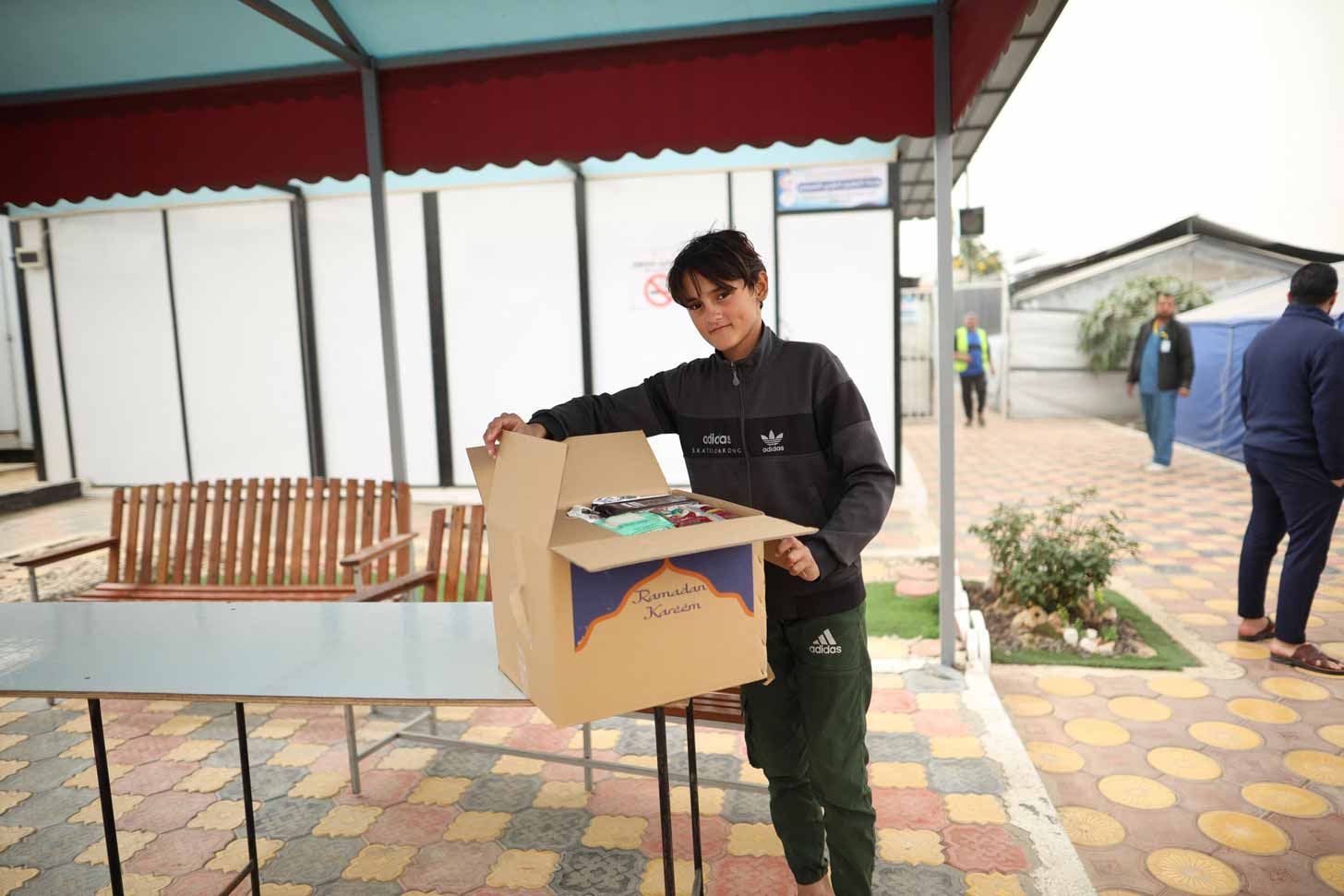
“Each kit is thoughtfully assembled with halal, culturally appropriate pantry staples, proteins, grains, oils, and traditional ingredients families use every day, from rice, lentils, freekeh, and pasta to olive oil, chickpeas, tahini, tomato paste, tea, and coffee,” the organization stated.
“Alongside these kits, iftar boxes include dates, dried fruits, nuts, milk, juice, and familiar Ramadan sweets to help families break their fast with dignity.”
Although access, operations, and needs shift in Gaza from day to day, World Central Kitchen remains committed to providing consistent support.
“Ramadan reminds us that feeding people is not optional or conditional. It is a shared responsibility,” the nonprofit said.
“World Central Kitchen does not ask who you are, where you stand, or what you believe before serving a meal. We cook. We deliver. We return the next day and do it again.”
You may also like: In the shadow of 70+ art and history sites destroyed in Gaza, Europe opens its first Palestinian art museum
Header image courtesy of World Central Kitchen
Since the United States Immigration and Customs Enforcement’s “Operation Metro Surge” began in December, the Muslim community in Minneapolis has been on high alert.
“It’s been a very difficult time,” Khalid Omar, a community organizer and a leader at Dar Al-Farooq Islamic Center, told CNN. “You can only imagine the weight of the full government being utilized in the state, going against and going after the Somali and Muslim community.”
At the peak of the Department of Homeland Security’s operations, 3,000 immigration officers descended on the state. For many, the announcement of their withdrawal has come as a relief — especially as Ramadan begins.
“This is the time when we need to lean into our faith more,” said Omar. “Make dua (prayer) for the people that are suffering, the people that felt this atrocity.”
Minnesota is home to more than 100,000 Somali residents — most of whom are U.S. citizens or naturalized — and many responded to heightened ICE enforcement with peaceful protests, potlucks, and visible solidarity.
In January, Somali American lawmaker Zaynab Mohamed began mobilizing her community to make sure people were safe — and fed. As crowds gathered in peaceful protest against ICE, Mohamed and her friends handed out foil trays full of food.

“I just got some sambusas because people are out here, community is out here, passing food to each other,” Mohamed shared live from a potluck on Instagram. “It’s pretty peaceful out here.”
Since December, Mohamed and other community leaders — like the local nonprofit Somali Neighbors — have stressed that visibility, connection, and collective action are essential tools for protecting and supporting their neighbors during a time of fear and political tension.
And when the Muslim community needed their neighbors most, they showed up in droves.
“I’m a very proud Muslim … and extremely proud to be a Minnesotan,” Basim Sabri, a Palestinian American, told CNN. “We’re very fortunate to be in Minnesota, and very fortunate to be in America, and Trump is trying to make it difficult for people to even think that they are American.”
On Tuesday, February 17, Somali Neighbors marked the start of Ramadan with a community announcement.
“Ramadan Kareem,” the nonprofit posted on social media, framing the blessing with a crescent moon and a star. “For the next 30 days, our Muslim neighbors will fast from sunrise to sunset. They’ll pray more. Give more. Gather more.”
“Minnesota is stronger because of every community that calls it home,” Somali neighbors emphasized. “Standing with you this Ramadan.”
You may also like: Minneapolis church delivers groceries to 24K families amid ICE occupation: 'They don't have to go out if they're scared'
Header image via Fibonacci Blue / Wikimedia Commons (CC BY 2.0)
Emily Jean typically uses her TikTok to share hand-crafted creations and sewing tutorials.
But on February 17, when her neighbors left her an unexpected present on her doorstep, she decided to do an unboxing video on camera.
“I'm literally crying right now because there’s this elderly couple two blocks away from me that have a concrete porch goose, and I've been dropping them off porch goose outfits,” Jean said, already breaking down into tears.
“I feel so silly for crying,” she added, “but I've been writing them little notes, like: ‘Love your friends with Melody Lane,’ and they found my house by finding my porch goose — 'cause I told them I had a porch goose. I've never met these people, and they just dropped me off something and just drove away, and I’m about to open it.”
Nothing could have prepared Jean for what the card said inside.
“Oh, my God! Oh, my God! They died, Joseph!” she said, calling off camera to her partner.
“What do you mean they died?” he asked, joining her in the kitchen.
“I think that was their daughter,” Jean said through tears as she opened the card fully.

“Dear Goose Friend,” she read, “we wanted to let you know that the goose owner passed away earlier this month. Dad was so tickled by your gesture to clothe the goose. You brought joy to the last couple of months of his life. He asked the grandkids to dress the goose after you made each delivery and he would check the goose each time he left the house, making sure it had not blown away.”
The neighbor’s daughter went on to explain that the porch goose had belonged to her mom.
“She requested it for her Mother's Day gift in the early ‘90s. She kept the goose well clothed until her death in 2018 — I can't read this,” Jean said, taking a moment to pause and wipe her tears.
“Many of the outfits were handmade,” she said, reading on. “We even had a couple of photo shoots, as you can see. The goose even had a special outfit for weddings and first communions. Soon, the goose will be returning to its original home in Waldo.”
The neighbor’s daughter wrapped up her card by saying that her mom was an avid cookbook collector.
“We are sending along a gooseberry cookbook from mom’s collection. Enjoy. Thank you, The Goose Family.”
Jean took the cookbook out of the bag, showing it to the camera.
“Look, she has notes in here. This is so sweet,” she said, wiping her tears away with the front of her shirt and holding up an old picture of the porch goose taken on a disposable camera.
She then gasped as she realized that her neighbor’s father had passed away on the same day as her own grandma.
“I think this is your sign that acts of kindness probably mean more than you think,” Jean said, as she wrapped up the video in tears.
Within 24 hours, Jean’s story had reached 1.1 million views on TikTok, and the comment section was flooded with emotional words from viewers.
“I did not think I’d be finding out what a porch goose is and crying over one in the same day,” one person wrote.
“I love that they took a moment in their own grief to share that with you,” read another comment. “Signed, your sobbing friend on the internet.”
“I absolutely love how the daughter made sure the goose didn't just disappear and leave you wondering,” a viewer said. “She gave you a gift of love and closure.”
You may also like: 102 Best Random Acts of Kindness Ideas
Header images via Emily Jean / Tiktok