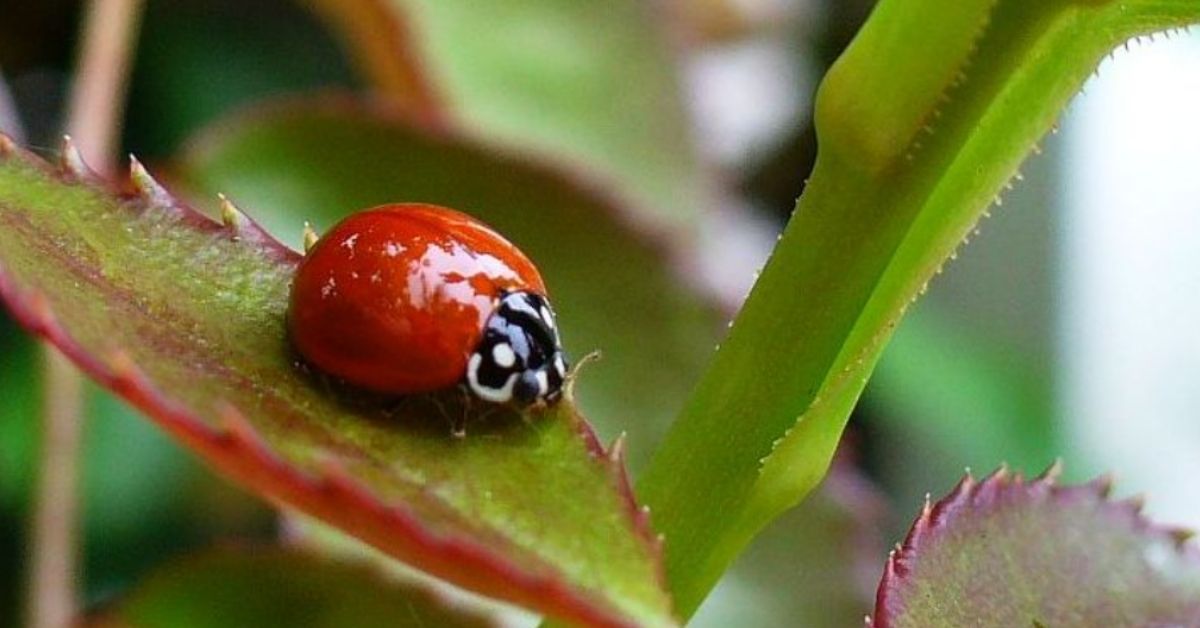
Ryōta Seki, a Ph.D. student at Kyushu University, followed a hunch. As an avid insect enthusiast, he decided to take a closer look at the pine trees on campus one day.
That hunch led him to the discovery of a new species of ladybug (also known as ladybirds outside of the United States).
And this one — the Parastethorus pinicola, or pine dweller — was black.
“Small black ladybirds like these have not been studied much because they are incredibly difficult to identify,” Seki said in a press release from Kyushu University. “They are barely larger than a grain of sand, and they all look identical.”
“You cannot tell the species apart without dissecting them and examining their reproductive organs under a microscope,” he continued. “Because of this difficulty, there were many misidentifications in past records.”
To verify that the black ladybug was in fact a new species, Seki and his university peers examined an estimated 1,700 specimens.
In doing so, they not only verified the discovery of the P. pinicola but also verified the existence of a second new species from Hokkaido. Seki named the new beetle Stethorus takakoae in honor of his grandmother Takako Ōtsuki.
“Standardizing these names is important because it allows us to share data and research with other countries in Asia,” Seki said. “It clarifies that this is a widespread species found from the tropics to temperate Japan.”
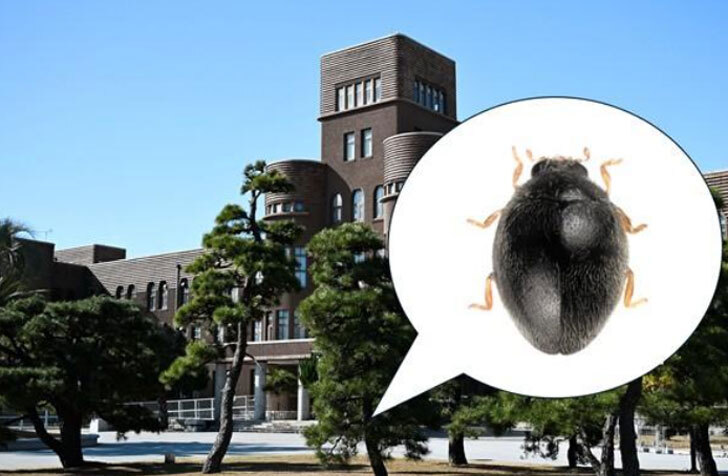
Munetoshi Maruyama, an associate professor at the Kyushu University Museum, spoke on the importance of the ladybug discovery.
“People rarely notice such small insects. But as our study showed, even in a city or on a university campus, there are unknown species living right beside us,” said Maruyama.
“These ‘minor’ insects support our ecosystems. I hope this discovery makes people interested in the diverse and fascinating world that exists unnoticed at our feet.”
Surprisingly, this marks the second time in the past year that university students in Japan stumbled upon a new species by chance.
On October 30, a group of student researchers from Tohoku University shared findings of a large Portuguese man o’ war with an unusually vivid cobalt-blue hue.
Coincidentally, the new species was found when student researcher Yoshiki Ochiai was surveying Sendai Bay for an unrelated project.
Spotting a jellyfish he did not recognize, he collected it and transported it back to the laboratory for further study.
Under the guidance of faculty advisors, the team confirmed that the organism belonged to the genus Physalia but differed significantly from known species. It was eventually named Physalia mikazuki, or the “crescent helmet man-o-war,” in reference to the crescent moon helmet worn by the famed samurai Date Masamune.
“These jellyfish are dangerous and perhaps a bit scary to some,” student researcher Ayane Totsu told Tohoku University. “But [they’re] also beautiful creatures that are deserving of continued research and classification efforts.”
You may also like: Deep-sea submersible stumbles upon 'unusually large' sea creature nearly 6,000 meters below the surface
Header image via Richard Manriquez (Creative Commons Attribution 2.5)