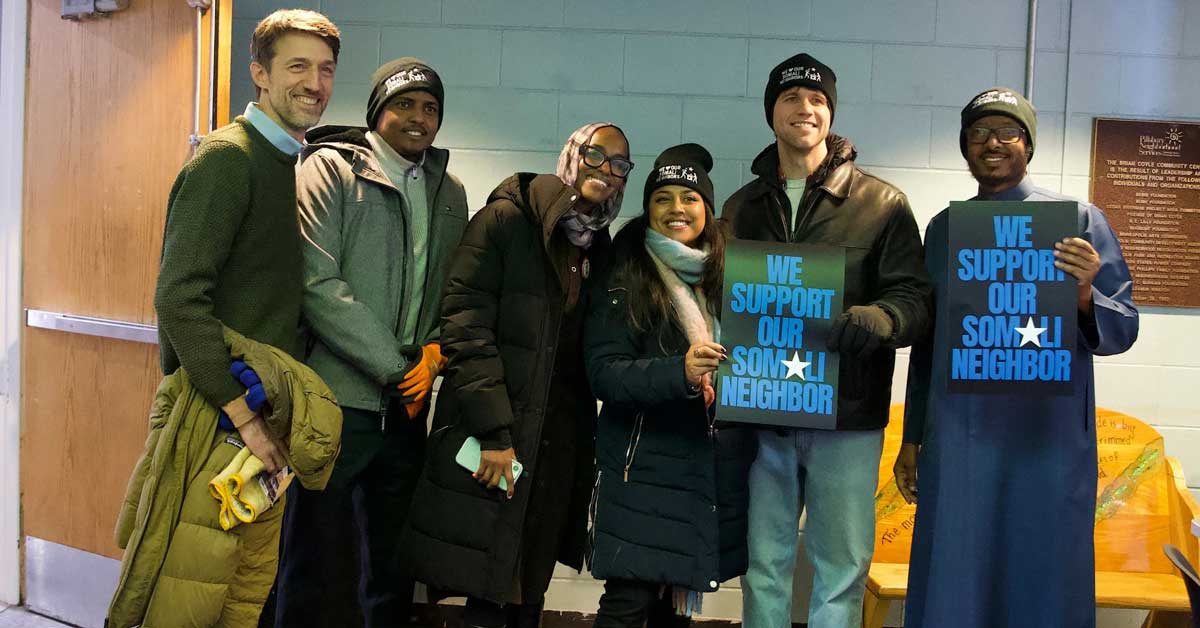
At least once a day for the last week, Minnesota State Senator Zaynab Mohamed, a 28-year-old Somali woman, has posted a video on Instagram.
“What’s up everyone,” she said in a recent post. “It is 12:38 p.m. and here is your update of the day.”
Her updates, if not dispatches from the frontlines of protests against Immigration and Customs Enforcement or coverage of school walk-outs, are a series of action items for community members to do their part to protect those most vulnerable amid ongoing ICE raids.
In one video, she wears a beanie that reads “We Love Our Somali Neighbors.” In another, her headline reads: “I want to show you what it means to be a Minnesotan.”

“For the last few weeks, at least multiple times a day, people ask me, ‘Zaynab, how are you doing? How are you taking care of yourself? How are you even standing?” she reflected in a recent video.
“When people ask me that … I think a lot about this African proverb that says, ‘When you pray, move your feet.’ I’m moving my feet. I’m doing what I can, one day at a time, one food drive at a time, one conversation at a time.”
In addition to being an elected official, Mohamed is part of a local community group called Somali Neighbors, which was formed in response to targeted immigration crackdowns against the demographic.
There are more than 100,000 Somali people living in Minnesota, and 95% of them are either naturalized citizens or born in the United States, according to the Post-Bulletin. Those who immigrated to the U.S. fled brutal civil war. And now, ICE has a target on their backs.
While major news outlets like CBS News report that the current ICE operations in Minnesota have led Somali community members to stay home out of fear, the footage on the ground shows a more nuanced picture.
For instance, a video circulating widely on social media shows Somali neighbors in the crowds of a peaceful protest, carrying foil trays of samosas to share with their neighbors.
“Thank you so much,” protesters cheered, as they walked by bundled in coats. “Stay safe. This is what we need.”
On the evening of January 7, after an ICE agent shot and killed local woman Renee Nicole Good, Mohamed and countless other community members gathered for a potluck.
“I just got some sambusas because people are out here, community is out here, passing food to each other,” Mohamed shared live from a potluck. “It’s pretty peaceful out here.”
Other Somali community leaders, like artist Ayub HajiOmar, haven’t been deterred by the growing ICE presence in Minnesota’s cities, telling the Post-Bulletin that a group of people who fled civil war aren’t “easily intimidated.”
“If you’re able to bounce your way back from that and make your way to one of the most prosperous areas in the world and become lawmakers, and become mayors, that shows just how resilient we are as a community,” he said.
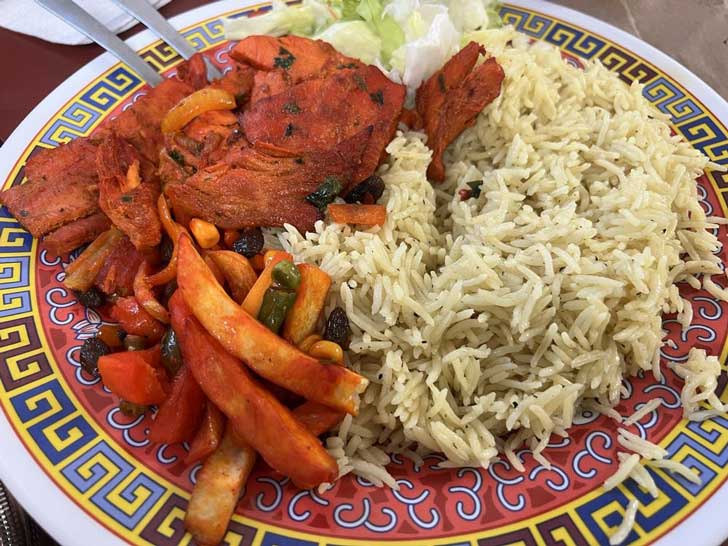
HajiOmar has been able to continue visiting some small Somali restaurants, even with ICE in the area. At Muna Halal in Rochester, Minnesota, Somali customers dined as usual, telling the Post-Bulletin they know their rights.
“When you look at the numbers, when you look at the facts, there’s nothing to be afraid of,” HajiOmar said.
Considering that the majority of the Somali population is in the country legally, he added, “It looks like it’s politically motivated.”
Still, there is a risk to being in public with some 2,000 agents dispersed across the state. The fear many may feel is not unfounded.

But leaders like Mohamed, HajiOmar, and the members and volunteers of Somali Neighbors seem to believe that the work they must do for their community outweighs any anxiety that comes with it.
“Our work is grounded in a simple belief: showing up for neighbors in everyday life matters, especially during moments of heightened fear, misinformation, or division,” the Somali Neighbors website shares.
“Visibility, calm presence, and connection are powerful tools for building trust and reducing harm.”
You may also like: For Minnesotans afraid to leave home during ICE crackdown, this pizza joint delivers free food across the city
Header image courtesy of Somali Neighbors