Ten years ago, eco-activist Wendy Ward purchased a bedsheet from Sainsbury’s, the second largest retailer in the United Kingdom.
After a decade of use, it presented a problem for Ward: it was too damaged to donate, it was not compost-friendly, and it wasn’t absorbent enough to re-purpose as cleaning cloths.
“The only action I can personally take,” Ward wrote in a letter, which was mailed with the bedsheet to Sainsbury’s CEO Simon Roberts. “Is to put it into my general waste bin. I don’t want to do this, as in Sheffield all general waste is incinerated as ‘energy recovery.’”
“So,” she continued, “as Sainsbury’s is responsible for designing and manufacturing this product, making decisions to use polycotton with no consideration for what could be done once it reaches the end of its life, I have decided to return it to you.”
Although Ward said her letter of “protest” prompted a dismissive response from Sainsbury’s, she spurred a larger “Take It Back” movement across the U.K., in which consumers began mailing back textiles, fabrics, and clothing items to the companies that manufactured them.
Ward even wrote up a template for protestors to follow, to help hold industry giants accountable for the part they play in contributing to fast fashion.
If companies responded with automated responses — or attempted to mail the items back — Ward encouraged her 20,000 followers on social media to push back with thoughtful questions like, “What would you suggest I do with this item?” and “What are you actually doing about this problem?”
“It’s an empowering action,” she told The Guardian. “I was wrestling back a bit of control as a consumer.”
A version of this article originally appeared in the 2025 Fashion Edition of the Goodnewspaper.
Header image via Liza Summer / Pexels
Billie Eilish is well aware of the toll that the music industry has on the environment.
For years, the Grammy Award-winning musician and her mother, Maggie Baird, have found innovative ways to reduce the carbon footprint that inevitably comes with world tours and best-selling albums, from creating vinyls out of recycled plastics to performing on solar-powered stages.
In July, Eilish and Baird turned their attention to another facet of waste in the music industry: unsold concert merch.
Together with Universal Music Group’s merchandise arm, Bravado, they spearheaded an initiative to take a decade’s worth of “deadstock” — roughly 400,000 T-shirts — and transform them into something new.
In an interview with Fast Company, Bravado president Matt Young said that, until recently, the merch had gone “forgotten,” gathering dust in a Nashville facility that he likened to the warehouse at the end of Indiana Jones’ “Raiders of the Lost Ark.”
But thanks to Eilish and Baird’s endeavor, the shirts were shipped off to Hallotex, a Spanish manufacturer in Morocco. There, they are being turned back into cotton yarn and spun into an estimated 280,000 new, 100% recycled cotton shirts. Any shirts that cannot be recycled will become housing insulation.
“We are drowning in clothes on this planet, much of which is in landfills, much of which is shipped to other countries to pollute their waters and their land,” Baird said. “I think we have to be extremely thoughtful about what merch gets put out in the world — why does it exist, how is it made, and what happens to it in its second life?”

How To Get The Longest Lifespan out of Your Clothes
- Good: Shop thoughtfully. Resist fast fashion items, which are made from synthetic materials like polyester, nylon, and acrylic. Not only are they prone to damage, but they are often not biodegradable.
- Better: Read “Visible Mending” by Arounna Khounnoraj to learn how to mend glaring holes, tame unraveling threads, and affix missing buttons. Simple stitches can lengthen the life of your clothes considerably.
- Best: Learn how to repurpose your wardrobe. When damage goes beyond repair, give the garment a second life by turning old t-shirts and toeless socks into cleaning rags, quilts, stuffing, and more. allfreesewing.com
You may also like: Billie Eilish covers public transit costs for LA fans, bolstering 'sustainable pop star' cred
A version of this article originally appeared in 2025 Fashion Edition of the Goodnewspaper.
Header image via Raph_PH / Flickr (CC BY 4.0)
Brooks Bell and Sarah Beran’s fashion brand Worldclass bears a rather cheeky slogan: “A great ass is a terrible thing to waste.”
At first glance, it’s merely a humorous tagline, but it holds an important double meaning for Bell and Beran.
Despite hailing from different corners of the country — Bell from North Carolina and Beran from California — the founders met and bonded over a shared diagnosis of late-stage colon cancer. Both of them were in their 30s when they started registering symptoms, and despite skepticism from their doctors, both women advocated for themselves and pushed for colonoscopies.
It was a measure that ultimately saved their lives, and Bell and Beran wanted to spread that message loud and clear.
“The stigma is ridiculous,” Beran told Raleigh Magazine. “I want it to feel like just another part of your wellness routine.”
Their branding isn’t just about spreading awareness for colorectal cancer. With every sale, Beran and Bell also champion accessible healthcare.

When customers purchase a Worldclass sweatshirt or a “Colonoscopy Enthusiast” tee, they’re directly supporting the UNC Lineberger Comprehensive Cancer Center and ensuring that underinsured patients in Western North Carolina have access to colonoscopies, which can detect precancerous polyps before they develop.
“It’s not just looking for precancer,” Bell said. “It gets rid of it.”
A version of this article originally appeared in the 2025 Fashion Edition of the Goodnewspaper.
Header image via Worldclass
Grammy-Award winning artist, producer, and technologist Imogen Heap has just released a new song — and it’s a collaboration with drag queen and environmental activist Pattie Gonia.
The tune, “Have You Considered?” is attached to a cinematic film designed to “channel climate grief into collective creative action.”
The film, which doubles as a music video for “Have You Considered?," opens to a sweeping black and white expanse, which was shot in California’s High Sierra near Mono Lake. The artists are joined by dancing rock climbers, attached to large boulders on wires and wearing solemn, black clothing.

Shots of Pattie Gonia and Heap show the pair in matching black gowns, adorned with feathers.
The lyrics paint an aggrieved, disconnected picture of the state of the world, with a refrain of: “Have you considered if you couldn’t have it?” and “no more excuses.”
Later in the film, their costumes become white, and the scene is filled with light.
“At its core, the song asks: 'Have you considered if you couldn’t have it?' The question is directed at the planet, at one another, and at the systems we take for granted,” a press release stated.
“It arrives as extreme weather moves from abstract headline to lived experience for millions across the United States, and as political division threatens the collective action climate change demands.”
However, through their creative collaboration, Pattie and Heap urge listeners not to despair, but to use their grief as a catalyst for action.
According to a press release, the song came into being after the duo had a live-streamed conversation about climate anxiety and the role of art in uncertain times.
“When Pattie shared field recordings of glacial ice collapsing into the Arctic Sea, Heap immediately heard music in the destruction — finding rhythm in the cracking and crashing, building an early chorus in real time as viewers watched,” the press release stated.
“What began as dialogue became composition. What felt like grief became momentum.”

From there, the artists continued working across continents, trading verses and melodies online before coming together in Los Angeles to finish the song.
“This was one of those collaborations that just whizzed along,” Heap said in a statement. “A song was forming while a small audience continued to watch, and it all came together really quickly. Everyone was absolutely loving the project.”
The short film released with the song was produced by Wondercamp and features choreography from BANDALOOP, a dance company that often performs on cliffs, buildings, and natural landmarks around the world.
While perhaps one of the more vast projects of Pattie Gonia’s career, the drag performer and activist is no stranger to grand creative gestures. In late 2025, she raised over $1 million for inclusive outdoor organizations by hiking 100 miles in full drag.
She has also released music with Yo-Yo Ma — and on her own — and was part of a coalition that unfurled the largest-ever transgender Pride flag at Yosemite in the spring of 2025.
“The opposite of doom isn’t hope — it’s action. It’s art. It’s collaboration. We must work together to fight for people and the planet and build the world we need. I hope this song can be a piece of that,” Pattie Gonia said in a statement.
“If drag has taught me anything, it’s that you can fight for something seriously without taking yourself too seriously. Joy and art are strategies for culture change.”

Below are the full lyrics of “Have You Considered?” by Imogen Heap and Pattie Gonia:
At the edge of the trees,
Clear as the sky with the stream at our feet
You and I, at the peak
Watching the shadows fall over the leaves
Where’d you go?
Where’d you go?
Did they carry you into confusion?
Disconnected by design
Have you considered if you couldn’t have it?
Have you considered if you couldn’t have it?
Have you considered if you couldn’t have it?
Have you considered if you couldn’t have it?
No more, no more excuses
Gonna try
No more, no more excuses
Not the whole, just a piece
Fight for breath in the darkness
To crawl from the deep
When it changes, you won't see
Til you get off get off your mad sad screens
Where’d you go?
There they go
Cosy comatose in the confusion
Disconnected, disconnected,
Wake up, wake up
Have you considered if you couldn’t have it?
Have you considered if you couldn’t have it?
Have you considered if you couldn’t have it?
Have you considered if you couldn’t have it?
No more
No more
No more excuses
No more excuses
Try
No More excuses
No More excuses
Have you considered if you couldn’t have it?
Have you considered if you couldn’t have it?
Have you considered if you couldn’t have it?
Have you considered?
You may also like: A drag queen named Pattie Gonia just raised $1M for charity by hiking 100 miles in full drag
Header image by Wondercamp
In December 2025, a handful of similar viral videos made their rounds on the internet. In them, a sign to a large room reads, “Here, the dogs choose the humans.”
What followed was a heartwarming scene of crowds of people sitting in a gymnasium, dogs of all breeds and sizes sniffing at their feet and eventually “picking” one person to kiss — the person who would then become their owner.
But none of it was real.
Jeremy Carrasco, an artificial intelligence literacy educator and co-founder of Riddance.AI, debunked the video on his own social media channels, pointing out deformed humans in the background, random and indecipherable items in plain view, and odd human behavior.
In addition to more obvious AI tells, like too many hands and legs or oddly timed expressions, Carrasco reminded viewers to think about the logistics and feasibility of what was depicted in the video in the first place.
Most shelters, for instance, don’t let just anyone go home with an adoptable dog — even if they have a great connection. Pet adoption requires vetting to make sure the animal is a good fit for their future home, and that their potential owners have everything they need to care for a new pet.
“Look for too-staged situations,” Carrasco warned. “Look for real humane societies, rather than AI slop pages like ‘Babies, Dogs, Cats.’ Their videos are made from stolen videos from real humane societies, who deserve your views and donations.”
A real animal shelter, Animal Care Centers of New York, was inspired by this viral pet adoption content and wanted to figure out a way to make it a reality.
Enter: “Love At First Wag.”
NYCACC has coordinated a meet-and-greet similar to what was depicted in the AI videos, but with real planning and logistics to make things go smoothly.
A handful of these meet-and-greets are scheduled for February 21 and 22, 2026 at the shelter’s Queens location.
Interested adopters must first fill out a thorough interest form online, which includes questions about where they live, size and age preferences for a potential match, activities they’d want to do with their dog, behavioral challenges they’d be comfortable caring for, the person’s experience with pet ownership, and more.
“This is your chance to let the dogs choose you,” the shelter shared in a social media video recreating the premise of the original AI content.
“If you’re the one they run to, and you feel that spark, you could be heading home with your new best friend that very same day.”
Compared to the AI alternative, the shelter has the event set up for a limited number of guests, so as not to overwhelm the animals.

“During each session, we will have up to ten adopters in a room, and we'll bring in a couple of medium-large adult dogs one by one to pick their new family themselves,” the NYCACC form reads.
“Leave your adoption up to the tastes of our shelter dogs, or just come in to see if you click with anyone! If you don't find anyone that you're a match with during the group session, our counselors will be thrilled to help pick out some other options.”
Each participant must also contribute a $25 donation, which can be applied to the adoption fee if they meet their perfect match, held on file for a future adoption, or gifted to the shelter.
Adoption fees include spaying and neutering, microchipping, and vaccinations. Those who choose to pay it forward will help someone else who wants to adopt a dog and can enjoy the experience to “give love to our shelter pups,” NYCACC shared on social media.
Those who adopt a dog during the Love At First Wag event will also get a themed toy and a discount at a local pet store to buy all the supplies they might need.
Just a few days leading up to the event, spots were still available for participants to sign up, though social media comments indicate that thousands are excited to see the NYCACC make this concept their own.
“Finally, something good that came from AI,” one person wrote on TikTok. “I hope the event is a success.”
“I wish more shelters did this,” another added. “I would 100% donate money just to cuddle dogs.”
Another joked, with a clever strategy to win it all: “Me, a vegetarian, rubbing bacon grease on my hands so I get to take them all.”
You may also like: After ICE took these pets' owners, this Minneapolis shelter is keeping them safe: 'The goal is always reunification'
Header images courtesy of Animal Care Centers of New York/Instagram
This story was originally published by Grist. Sign up for Grist’s weekly newsletter here.
Picture the bucolic little town of a fairy tale. At its core stand medieval buildings, a square where folks hawk their goods, and perhaps a well to provide water. Beyond the defensive wall radiate agricultural fields, where people toil to bring grains, fruits, and vegetables to market.
Invert that for modern times and you’ve got the idea behind “agrihoods,” communities designed around a central farm.
Like a garden in a big city, agrihoods promise to boost food security, reduce temperatures, capture rainwater, and increase biodiversity. As climate change intensifies heat, flooding, and pressure on food systems, agrihoods could be a way to make urban living more resilient — not just more picturesque.
“Developers have a hard time offering open space, because they would like to build more housing,” said Vincent Mudd, a partner at the architectural firm Steinberg Hart, which designs agrihoods. “One of the few ways to kind of bridge that gap is to be able to use active open space that actually generates commerce.”
On paper, an agrihood is a simple concept: a working farm surrounded by single- or multifamily housing.
Steinberg Hart recently finished two of them in California — one in Santa Clara and another, called Fox Point Farms, in Encinitas. The former, south of San Francisco, features townhouses, market-rate units, and affordable housing, plus a community center and retail shops. The latter, north of San Diego, adds a farm-to-table restaurant, an event venue, and a grocery store, but its housing is primarily for sale instead of rent.
“Two different housing programs for two different communities, but built around the sustainability of urban farming,” Mudd said.

While these projects are in relatively affluent areas, Mudd said agrihoods can be built nearly anywhere — though it might require tweaks to zoning rules.
“Almost every city has the ability to make that zoning change,” Mudd said, “because it retains commerce, preserves jobs, generates sales tax income from retail, and provides mixed-income, attainable housing.”
(Last year, residents of the agrihood development in Santa Clara alleged that management failures have left them living in unsafe and unhealthy conditions, with delayed repairs, poor air quality, and other issues. The building’s manager, the John Stewart Co., and owner, Core Affordable, did not respond to a request for comment.)
Where it gets more complicated is the logistics of the farm. Water is the big one: Ideally a farm captures enough rainwater to keep crops hydrated. Because Northern California enjoys a Mediterranean climate of rainy winters and warm, dry summers, the Santa Clara agrihood gathers precipitation and stores it in a tower.
“It auto-refills with city water once it gets to a certain point, but we can get two-thirds, or sometimes all the way through the summer without having to do that,” said Lara Hermanson, co-founder of Farmscape, which helped design, install, and maintain the community’s farm.
A rainwater-capture system, though, comes with an upfront cost that a community garden in a lower-income neighborhood might not be able to afford. If one year the rains stop and drought takes hold, it will have to pay for more water.

“Perhaps people with the biggest need for food or nutrition security are also sort of disproportionately facing greater water expenses,” said Lucy Diekmann, an urban agriculture and food systems advisor at University of California Agriculture and Natural Resources.
Even so, one of the many charms of any urban farm or garden is that greenery, and even bare dirt, breaks up the concrete landscape. Historically, cities have been designed to whisk water through gutters and sewers as quickly as possible before it can pool and cause flooding. This strategy struggles to keep up as climate change supercharges rainstorms, making them dump more water. Green spaces let all that liquid soak into the ground, mitigating flooding even without deliberate catchment systems.
Still, an agrihood’s farm isn’t going to run itself. From the very beginning of planning, Hermanson said, a community must decide what it’s going to grow. The general idea is to get as much yield as possible because space is constrained compared to an industrial farm. So pumpkins probably aren’t a great idea, because those plants take up so much room.
Instead, in Santa Clara, Hermanson grows Persian cucumbers, cherry tomatoes, and hot peppers because they’re small.
While an agrihood can’t feasibly provide all the calories residents need, it’s an especially powerful system because the produce that it does produce is highly nutritious.
Scale that food production up across a city, and the impact could be huge: One study found that Los Angeles could meet a third of its need for vegetables by converting vacant lots into gardens.
“It’s incredible what we could do with what we have, and what we could do even more with intentional planning,” said Catherine Brinkley, a social scientist who studies urban agriculture at the University of California, Davis.
Header Image by Greta Hoffman via Pexels
Social media promised interpersonal connections that were free from the constraints of time and physical distance. Then why are so many people feeling lonely?
A 2024 Harvard study found that 21% of Americans live with serious loneliness, and 73% of respondents think technology is one of the reasons.
To fight this, many people are logging off social media and seeking connections in the physical world. Drawing on research and pop culture, Spokeo outlined eight ways Americans are finding friendship away from social media platforms.
1. Running clubs are the new social network
Running clubs are a new, popular way of socializing and meeting like-minded, active people. Over the past five years, Google searches for “run club” have tripled. Strava’s 2024 Year in Sport: Trend Report found that run club membership grew by 59% across the globe.
This increase is largely driven by Gen Zers and millennials, according to a 2024 LADNation survey. They also found that 72% of Gen Zers who attend running clubs do so to meet new people. As Forbes suggests, running clubs create “incidental intimacy” and a sense of community.
2. Friendship apps for quick connection
As TechCrunch describes, the stigma of using apps to meet people is largely gone (Thank you, dating apps). Friendship apps generated $16 million in consumer spending in 2025 and had 4.3 million downloads.
Examples include Bumble BFF and 222. 222 groups people based on personality test results, suggests a local community event where people can gather, and allows people to bring a plus-one to reduce any social awkwardness.
3. Dinner apps are the new go-to
Timeleft is a novel approach to friendship. This app organizes dinner outings for groups of strangers who match based on algorithmic variables like gender, age, and personality test results.
It makes a reservation for a Wednesday night, provides an icebreaker, and suggests a post-dinner outing for people who hit it off.
One user’s review on Delish said, “It was refreshing to chat with people outside their usual circle.”
4. Phone-free events are sparking conversation
A 2025 study by Researchscape International and LifeStance Health found that most Americans would consider a digital detox. Some are ditching their smartphones entirely.
In November 2025, Vox reported on a social club that uses a Washington D.C. bar as a home base for phone-free socializing. Another club, Offline Club, has chapters across Europe where people come together at venues, lock their smartphones in a box, and enjoy the event.
People are embracing phone-free events to live in the moment, engage in conversation, and meet new friends.
5. Connecting over a good book: Reading clubs are booming
Reading might seem like a solitary activity, but many people enjoy reading clubs as a way to meet others who share their love of books. Book club event listings are on the rise, according to CNN, based on 2023Eventbrite data. Those listings saw a 24% year-over-year increase in listings.
Book-themed getaways are also used to connect with current friends. Vrbo’s Unpack 2026 report found that 9 in 10 travelers are seeking vacations focused on “reading, relaxation, and quality time with loved ones.”
6. Local community meetups are becoming common
Meetup groups, such as those on the website Meetup, are used to find friends who share common interests. Its 2023 State of Friendships report found that nearly 3 in 5 members sign up for a single activity interest. It can be difficult for people to find friends with similar niche interests, but apps like this help make it easier.
Additionally, Meetup found that 7 in 10 of its app’s events were conducted in person, suggesting that people prefer to connect in the real world over digital platforms.
As more friendships begin offline — whether at a running club, book group, or local meetup — people are also thinking more intentionally about who they’re meeting.
Beyond apps and event listings, tools like a people search can provide additional context about someone’s background, helping individuals feel more informed and confident as they form new in-person connections.
7. Are dating apps dead? Singles look for love IRL
Many people are burned out from constant scrolling on dating apps. The Pew Research Center found in 2023 that people are conflicted over whether dating apps help them find a relationship. About 22% said it made the search for a long-term relationship more difficult.
As a result, they’re pursuing real-life connections.
In partnership with YouGov, the Institute for Family Studies reported that people are more likely to be happy with their relationship if they met their partner through in-person activities. Eventbrite’s 2025 Niche to Meet You report saw an increase in singles events on its platform. It also found that nearly 7 in 10 millennials prefer in-person dating.
8. College campuses are embracing phone-free social hours
Across the country, college campuses have embraced the “reconnect movement." This phenomenon features on-campus events that restrict phone use, encouraging students to connect in person. It promotes conversation and prevents people from resorting to their devices to escape social awkwardness.
The Texas Press Association noticed that people from all walks of life are embracing this change as well. The TPA reported that many friend groups and families have informal pacts to restrict phone use during meals and conversations.
“It’s about reclaiming balance,” the TPA said.
In-person connection is the new norm
Making friends has never been easy, but research suggests that people are finding it harder than they used to. As a result, many are ditching social media in an effort to make lasting connections.
From running clubs and friendship apps to phone-free events, people are looking for authentic ways to meet new friends. The surface-level interactions on social media are no longer enough to satisfy the need for connection that so many Americans face.
This article was produced by Spokeo, reviewed and distributed by Stacker Media, and republished with permission.
Header Image by hurricanehank on Shutterstock
Immigration to the United States is often framed as a problem to be managed, controlled, or punished. Immigrants are often derided for crossing the border without authorization or “taking jobs” from U.S. citizens.
This rhetoric has intensified when Donald Trump has been in the White House. Trump and officials in his administrations have repeatedly characterized immigrants as a drain on national resources.
But research on immigrants tells a different story.
I’m a historian of business and culture who examines how enterprises shape and are shaped by the societies and historical contexts in which they operate. Since 2021, I have led the Gainesville Business History Project, a research initiative at the University of Florida that studies the long-term patterns of the town’s business history.
Nearby history
Our project takes a nearby history approach that recognizes that businesses around us, even small ones, are part of the historical record that we consumers also actively shape. Our team of 10 researchers has conducted in-depth interviews with more than 40 business owners and entrepreneurs in Florida.
About 22% to 23% of the state’s residents — roughly 5 million people — are foreign-born. This is much higher than the nationwide average of 14%.
In 2023, foreign-born Florida residents made up almost 50% of the workforce employed in pillars of the state’s economy, including agriculture, tourism, and construction.
In 2025, one study found that 267,700 of these Florida immigrants — about 5% — were entrepreneurs.
Our interviews uncovered many stories that show how immigrant-founded businesses can grow into familiar institutions that define a place’s identity. These stories illustrate some of the ways immigrants contribute to their communities.
La Aurora Latin Market
The story of La Aurora, a Latin grocery store that has operated for nearly 25 years in Gainesville, demonstrates how businesses are culturally embedded within the community and how immigrant-owned businesses often are tied to long-term local networks.
Aurora Ynigo crossed the Mexico-U.S. border in the early 1990s. She went straight to Miami, where she met her husband, Peter. In the late 1990s they moved from Miami to Gainesville for Peter’s job.
At the time, there was limited access to Hispanic products in the university town with about 180,000 residents. So in 1999, the family decided to open a Latin store that Aurora would manage.
For years, the couple and their parents would create a weekly shopping list, which included many items requested by clients and friends who had immigrated to Gainesville from Peru, Cuba, or Colombia. Then they would drive 400 miles to Miami, where they would look for the items all over the city, especially in supermarkets there such as Sedano’s and Presidente. They would then drive back to Gainesville with fresh food in big coolers to fill the racks at their location on University Avenue.
After 27 years in business, La Aurora Latin Market on University Avenue has its own butcher counter, fresh produce, and other items from across Latin America and the Caribbean. It also makes fresh-baked Latin American breads, pastries, and cakes.
And it has become a place where the Spanish-speaking community — a demographic that has grown considerably in the past 10 years — can reliably find familiar products.
Mary’s Cafe & Coin Laundry
For more than four decades, Mary’s Café and Laundry has operated along Miami’s now-central and busy 27th Avenue.
The business has remained in the same family across three generations. It traces back to Eumelia Morales Fernández, who immigrated to Miami from the town of Santa Clara, Cuba, in 1970.
Like many immigrant women, she first worked as a seamstress. She then got a job in a shoe factory before buying a small supermarket with her husband on 32nd Avenue in Miami in 1988.
After purchasing the building where the cafe and laundromat still stand, they installed washing machines and dryers and opened a small cafeteria alongside the laundromat. They named the business Mary’s Cafe, after Eumelia’s daughter, who later ran the business before passing it on to her own daughter, Vicky, who currently manages it.

Mary created the menu, which has changed little since the cafe first opened. The cafe has its own kitchen for tostadas and pastelitos, serving coladas and cortaditos daily at this central Miami location. Everything continues to be made in-house.
The building also houses another small retail space, which is currently a watch repair business run by another member of the family. Before that, the space was home to a Chinese takeout owned by another Cuban family.
I was able to interview both Eumelia and Vicky. Vicky told me she has not changed much in the way she coordinates work and supplies at Mary’s. The biggest change she’s had to make is learning to use social media to promote the business.
16th Avenue Diner
Gilberto Argoytia Miranda owns the 16th Avenue Diner. The diner is an icon of Gainesville’s southern cuisine and has been in operation for more than 50 years.
Argoytia Miranda is the diner’s eighth owner — he purchased it in 2021. He had experience in the sector from when he lived in Mexico City, where he had operated food trucks since 2010.
He knew he wanted to be in the restaurant industry, but he didn’t immediately open a Mexican restaurant, despite the limited number of them in Gainesville. Instead, he studied the local market by working for various restaurants, including delivering food via DoorDash. This experience allowed him and his family to gain a deeper understanding of the Gainesville food scene.
The diner had to maintain its soul, as Argoytia Miranda calls it, for the regular clientele to keep coming. He and his family didn’t want to replace an eatery that carried local meaning and tradition. In fact, he recognizes this continuity as an asset because the place remains recognizable.

Argoytia Miranda rarely changes the menu, because he understands that’s what people have liked for years. He does not see the need to reinvent the core of the restaurant, its Southern-style cooking, and the Americana atmosphere.
Little by little, he told me in 2025, he intends to experiment with adding more Latino flavor to the menu. But new dishes will become part of the official offering only if customers enjoy them.
Read more stories from The Conversation about Florida.
This article was written by Paula de la Cruz-Fernández from the University of Florida, and was originally published on The Conversation.
Header Image by Tim Mossholder on Unsplash

- Bolivia has created four new protected areas covering 907,244 hectares (2.2 million acres) of Amazon lowlands and Andean highlands, creating corridors intended to improve wildlife migration and maintain forest-based economies for local families.
- Because the creation of nationally protected areas has slowed in Bolivia in recent years, conservation groups have looked to departmental and local governments for help protecting the rainforest.
- The new protected areas help strengthen wildlife corridors between larger national parks.
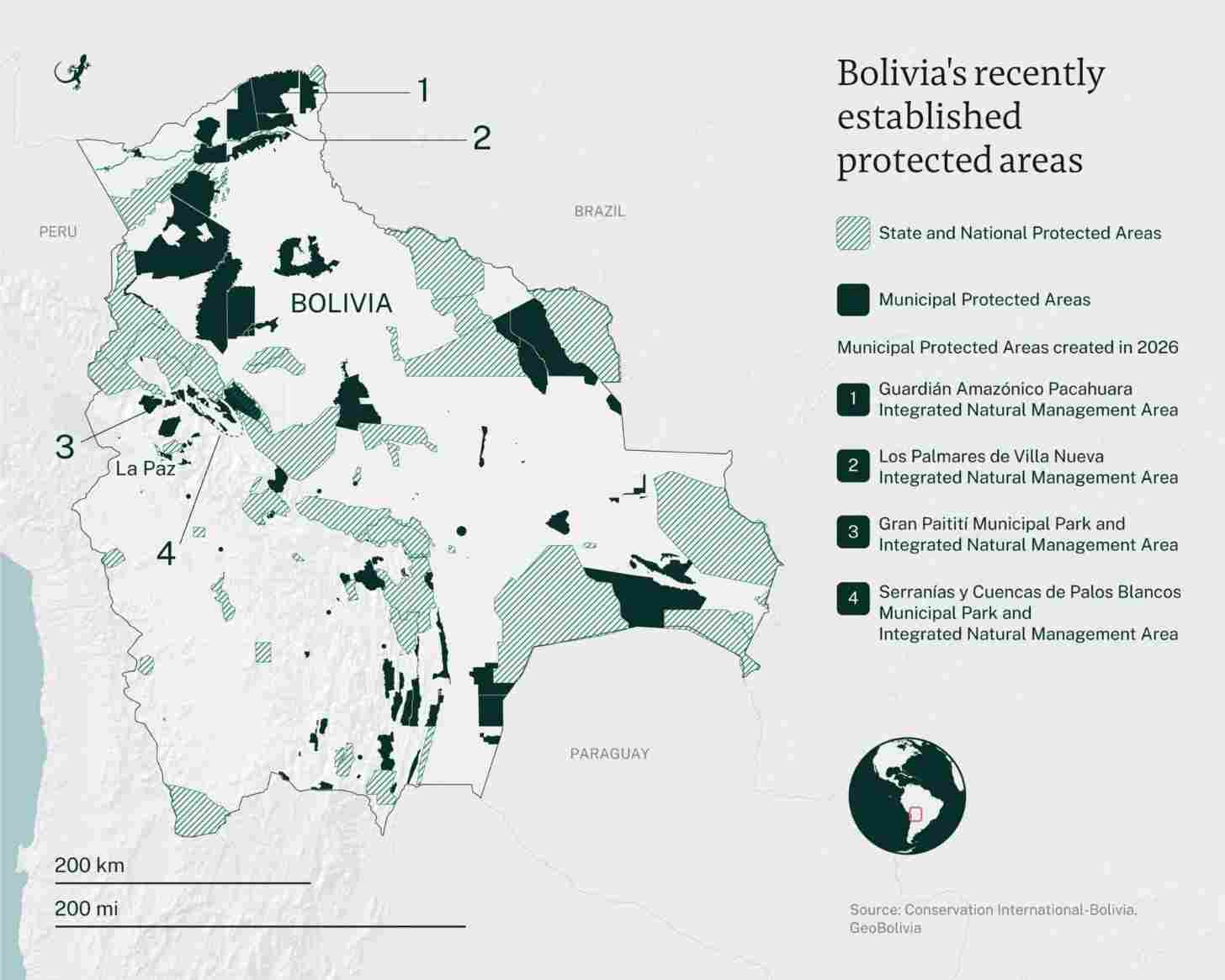
Bolivia has added nearly a million hectares to its protected areas over the last several months, an effort by local governments to link Indigenous territories with nearby national parks and strengthen ecological connectivity.
The four new protected areas cover 907,244 hectares (2.2 million acres) of Amazon lowlands and Andean highlands, creating corridors intended to improve wildlife migration and maintain forest-based economies for local families. The effort was led by local officials and Indigenous communities, who planned and approved the protections.
“In many cases, the municipalities have now protected more than half their territories, a remarkable commitment that shows how local leadership can deliver durable conservation that strengthens communities and outlasts political cycles,” Eduardo Forno, vice president of Conservation International-Bolivia, which supported the projects, said in a statement.
The initiative was also backed by the Andes Amazon Fund, Rainforest Trust, Conservación Amazónica, the Swedish Embassy, and EU.
In recent years, Bolivia has had some of the highest deforestation rates in the world, driven by agribusiness, cattle ranching, and fires, among other factors. In 2025, it lost 1.8 million hectares (4.4 million acres), according to Global Forest Watch, a satellite monitoring initiative. The year before that, it lost around 490,000 hectares (1.2 million acres).
In the early 2000s, Bolivia made a push to expand nationally protected areas. But since then, efforts have tapered off. In the last five years, only two nationally protected areas have been created or upgraded: El Choré National Park in Santa Cruz department and El Cardón Natural Park, an Integrated Management Area in Tarija.
As a result, many conservation groups started looking to local and departmental governments to expand protected areas and meet Bolivia’s goals toward the global 30×30 initiative, in which 30% of the land and water are protected by 2030.
Local and Indigenous communities were on board with the idea.
Residents in the municipality of Santos Mercado, in the Pando department on the northern border with Brazil, were concerned about deforestation from mining and logging. It was starting to create water scarcity and impact Brazil nut (Bertholletia excelsa) harvests, a staple of the local economy.
They created the Guardián Amazónico Pacahuara Integrated Natural Management Area in October 2025, protecting 544,103 hectares (1.3 million acres) of the Amazon.
With the designation, the municipality has now protected around 82% of its territory, Conservation International reported.
The new management area will help protect the endangered Bolivian river dolphin (Inia boliviensis) and vulnerable harpy eagle (Harpia harpyja), among other species.
“That’s where the initiative was born,” Ericka Cortez, president of the Santos Mercado Municipal Council, told Mongabay. “The concern to conserve the environment, to conserve our Amazon, our forest and more than anything: the beauty of our Brazil nut.”
There were similar needs in the Mosetén Indigenous Territory, where communities grow cacao, coffee, plantains, and other agricultural products but were also feeling pressure from unplanned settlements and the encroaching agricultural frontier. The 73 communities, located in La Paz department, helped create the Serranías y Cuencas de Palos Blancos Municipal Park and Integrated Natural Management Area, spanning 88,006 hectares (217,467 acres).
The management area, officially established in January, sits next to the Indigenous territory and is designed to help protect freshwater sources like rivers and streams needed for agriculture, which can only survive if the forest remains standing.
In October, local officials also established the 191,310-hectare (472,737-acre) Los Palmares de Villa Nueva Integrated Natural Management Area in Pando department, home to the endangered giant otter (Pteronura brasiliensis). The area was similarly under threat from settlements and agribusiness.
And that same month, local communities established the 83,825-hectare (207,136-acre) Gran Paitití Municipal Park and Integrated Natural Management Area in the municipality of Mapiri in La Paz department. The area is known for illegal gold mining that has occasionally led to violent clashes with authorities. Deforestation and pollution from mercury are common in the municipality, Mongabay has previously reported.
With the creation of the management area, around 56% of the municipality is now protected, Conservation International said.
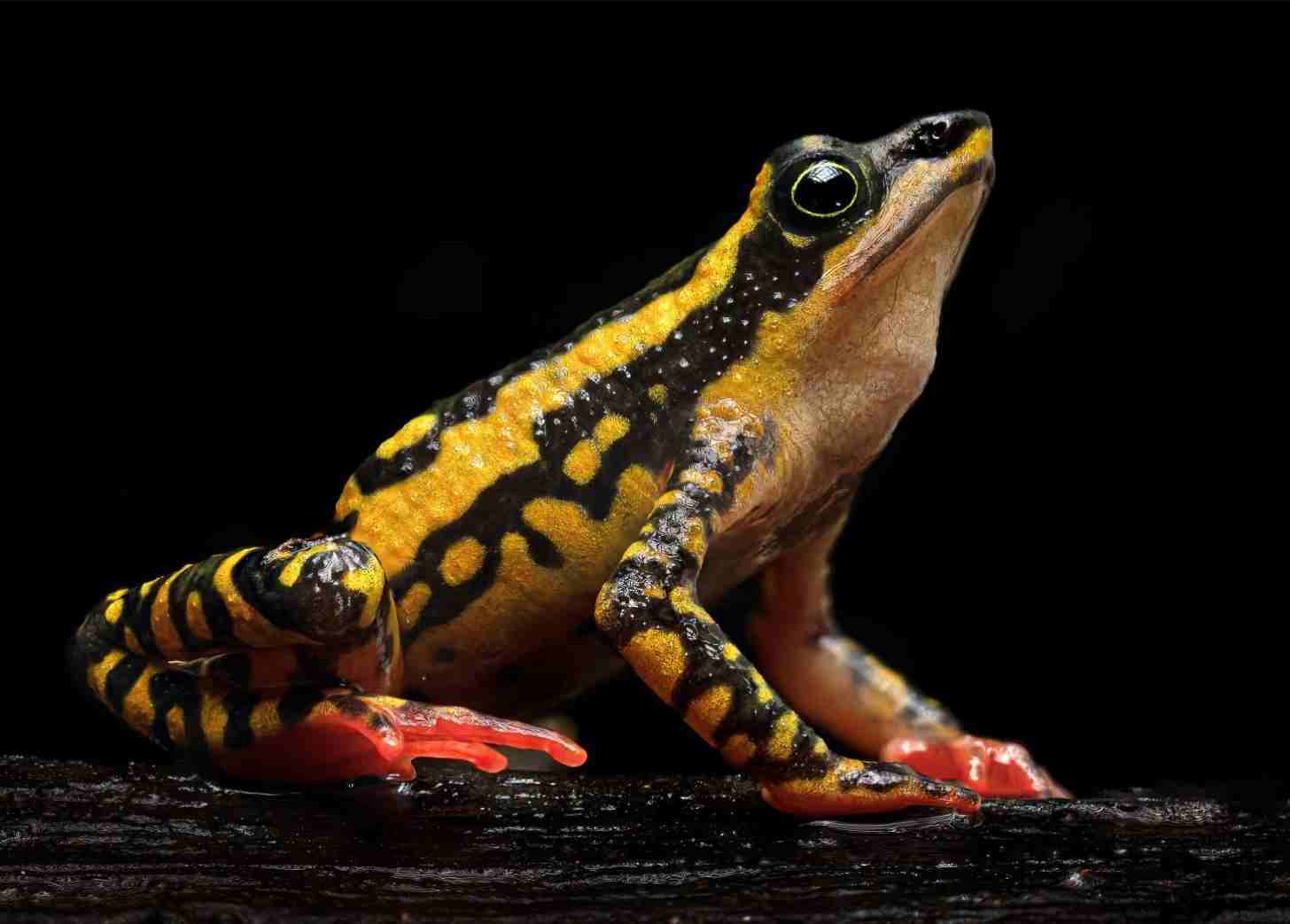
The area is also designed to act as a migration corridor between Madidi National Park and Cotapata National Park. It’s home to critically endangered endemic frogs like the Telmatobius verrucosus and Allobates mcdiarmidi and endangered glass frogs like the Nymphargus bejaranoi and N. pluvialis.
Forno explained to Mongabay that the goal is to create a conservation “mosaic,” connecting multiple protected areas where human population density is low and biodiversity rates are high.
“There are large areas that aren’t very populated,” Forno said. “Those areas have normally been linked to high biodiversity, especially in the northwest Bolivian Amazon, on the border with Peru and Brazil.”
Moving forward, Forno said local jurisdictions have very limited resources and will need to look for long-term financing to ensure the integrity of the new protected areas, possibly through debt-for-nature swaps and protected area permanence programs.
The protected areas will also rely on the revenue generated from sustainable development projects for Brazil nuts, açaí, fishing, and other commodities.
For the Guardián Amazónico Pacahuara Integrated Natural Management Area, Cruz told Mongabay that a management committee made up of government officials, the private sector, and civil society groups is being developed. The committee is also developing a reforestation plan.
“[The goal] is to have sustainable management within these places, and thus conserve our Amazon,” she said.
Header image: The rainforest in Santos Mercado, in Pando department on the northern border with Brazil. Image by Gabriela Villanueva/Conservation International-Bolivia.
This article was originally published on Mongabay.
Every day the Good Good Good team collects the best good news in the world and shares it with our community. Here are the highlights for this week!
If you want to get good news in your inbox every day, join the Goodnewsletter — the free daily newsletter designed to leave you feeling hopeful.
The Best Positive News We’re Celebrating This Week —
The European Union banned the destruction of unsold clothing and shoes
To fight overproduction and make the fashion industry more sustainable, the European Union introduced new rules that prohibit companies from destroying unsold textiles and footwear.
The new rules are part of a larger regulation to aid the EU’s transition toward a circular economy by improving the durability, reusability, and repairability of products, as well as more efficiently using resources.
Aside from circumstances like product safety, businesses will be encouraged to “manage their stock more effectively” and use alternatives like “resale, remanufacturing, donations, or reuse.”
Why is this good news? Globally, 92 million tonnes of textiles end up in landfills every year. In Europe alone, destroyed textiles generate around 5.6 million tons of carbon dioxide emissions. These regulations are expected to help cut down on that waste
It’s important to note that simply donating textile waste can do immense environmental damage on its own, without addressing the root problem of overproduction.
You may also like: Woman transforms clothing waste into building materials to solve ‘global south housing crisis’
This approach to farming is better for the planet — and makes vegetables taste better
New data shows a dramatic drop in fur production in the last decade
According to Humane World for Animals, the number of animals farmed and killed for fur production plummeted from 140 million in 2014 to just 20.5 million in 2024.
Tracking the use of animals — including minks, foxes, chinchillas, and the raccoon dogs of East Asia — the data revealed declining rates of fur production across China, Russia, North America, and the European Union, all traditionally leaders in the industry.
Experts say the downward trend was first sparked by anti-fur activism in the 1980s.
→ Read more
John and Hank Green donated $50m to open the first-ever NICU in Sierra Leone — the hospital’s first baby was just born
In 2019, John and Hank Green set out to raise money to build the first maternal health hospital in Sierra Leone, a country whose maternal mortality rate consistently ranks among the highest in the world.
Through massive annual fundraisers, an online shop filled with products that give back, and personal donations, they contributed $50 million to the project. And the Paul E. Farmer Maternal Center of Excellence just opened its doors on Valentine’s Day.
And not only that, the first baby — a girl — was born at the hospital.
Why is this good news? In 2020, 1 in 52 women in Sierra Leone died during pregnancy or childbirth — in the U.S., it was 1 in 3,800, and in the U.K., 1 in 5,200. This historic milestone will bring critical care and be lifesaving for people in Sierra Leone who previously lacked the infrastructure to get the care they needed.
→ Read more (+ photos!)
These Palestinians protect their homeland’s native plants from the other side of the world
In January, only seven new petrol-powered cars were sold in Norway
A report from the Norwegian Road Traffic Information Council found that only seven petrol, 29 hybrid, and 98 diesel cars were registered during the month of January, while more than 2,000 battery electric vehicles were sold.
sGlobally, Norway has emerged as a frontrunner in the uptake of electric vehicles.
The council’s director said that trend is happening in the used car market, too, making “the electric car a more accessible alternative for far more buyers than before.”
“Electrification is now clearly taking hold in the used car market as well,” said the council’s director. “This makes the electric car a more accessible alternative for far more buyers than before.”
Team USA bobsledder Elana Meyers Taylor made history as the oldest individual to win gold at the Winter Olympics
Elana Meyers Taylor arrived at the 2026 Winter Olympics with three silver medals and two bronze, and finally won gold in the women’s monobob event, making history at 41 years old as the oldest individual to win gold at the Winter Olympics.
She’s also the most decorated women’s bobsledder in Olympic history and the most decorated Black Winter Olympian in any sport. She also tied retired U.S. speed skater Bonnie Blair for the most medals by a U.S. woman in the Winter Olympics.
Her teammate and fellow mom, 40-year-old Kaillie Armbruster Humphries won bronze in the event, marking the first time two women over 40 reached a Winter Olympic podium.
Even better: Meyers Taylor is also a disability advocate. Her two sons are both deaf, and her oldest son has Down syndrome. She said, “I've had so many people from around the world reaching out and telling me their stories and how they have a kid with down syndrome or a kid who is deaf and they believe in me.”
→ Read more
Researchers find most local governments are ‘insulated’ from political polarization
→ Read more
A Minnesota tow truck driver returns abandoned vehicles to families after ICE arrests
Juan Leon had only been running his tow truck business, Leo’s Towing, for a few months when he began noticing abandoned cars throughout the Twin Cities.
After realizing they belonged to those who had been arrested by the U.S. Immigration and Customs Enforcement, Leon began asking for help online. Once he linked them to the right owner, he returned them to the families for free.
“Seeing there was a need for someone to help out, help clear the streets and get the people back their vehicles. So we stepped up and started doing it,” Leon told CBS News.
→ Read more
A new report found that immigrants have saved U.S. taxpayers more than $14 trillion
A new analysis of U.S. taxpayer data shows that immigrants to the U.S. saved the government $14.5 trillion over 30 years and prevented a financial crisis.
The Cato Institute analysis found that without immigrants, both naturalized citizens and non-citizens, public debt in the U.S. would be at least 205% of GDP. This figure alone demonstrates how reliant the U.S. is on the contributions of immigrants.
It also found that immigrants generate more in taxes than they receive in benefits.
Why is this good news? While a person’s inherent worth and value isn’t determined by any dollar amount or economic figure that they contribute to a society, this research does refute a common, already debunked claim that immigrants are a drain on society and take resources away from people who need them. On the contrary, they've been instrumental in preventing larger financial crises.
Ramadan holds new meaning in Minneapolis this year: ‘I’m extremely proud to be a Minnesotan’
→ Read more
This retired Indian factory worker built a library of two million books
Over the past 50 years, Anke Gowda, a retired sugar factory worker from Karnataka, India, has built a vast library of two million books that anyone can borrow for free.
His massive collection includes books on every subject imaginable, and even some rare editions of the Bible. He wanted to give others access to books that he didn’t have growing up in a village where he was “always curious” about them.
Book lovers and students travel to Pandavapura to visit his ever-expanding library, which is open every day of the week.
After hundreds protested, the New Brunswick City Council killed plans to build a data center in the New Jersey city
Hundreds of people showed up to protest a data center scheduled to be built in New Brunswick, New Jersey. While it was a relatively small data center, about 400% smaller than the average data center in the state, residents were concerned about the impact on utility bills.
And their voices were heard, and the city council announced that it would not approve the construction of the data center, which was welcomed with cheers by those in attendance.
Instead, the city plans to redevelop the site to include 600 new apartments, 10% allocated as affordable housing, small warehouses for small businesses and start-ups, and now, a public park, too.
Why is this good news? In addition to other environmental impacts, data centers suck up a lot of electricity and have been found responsible for rising electric and water bills, due to the large amounts of water required to keep the servers cool, too. There have been protests and pushback in cities across the country as the impacts of the data centers become increasingly clear.
Plus, people should have a say in how their communities grow and expand.
This food bank is building an affordable housing complex right next door, because too often, ‘rent eats first’
The world is one step closer to eradicating human Guinea worm cases, with just 10 last year
According to the Carter Center, there were only 10 reported cases of Guinea worm infections — confined to three countries — in 2025, a historic low.
It’s been just over a year since President Jimmy Carter passed, and his legacy lives on in the fight to eradicate the guinea worm. Since the Carter Center launched eradication efforts in 1986, the incidence of Guinea worm has fallen by more than 99.99%.
In the last 40 years, the center estimates that it has helped avert more than 100 million cases of the disease.
More good news of the week —
A teacher in India who created hundreds of learning centers received a $1 million global teaching prize. Rouble Nagi’s teaching centers aim to introduce children who never attended school to structured learning, as well as those already in school. She also paints educational murals about literacy, math, science, and history.
Governor Gavin Newsom signed a bill to give millions of dollars in emergency funding to Planned Parenthood. The one-time grant, which comes from the state’s general fund, will guarantee that STD services, cancer screenings, abortions, and other essential healthcare for women will continue.
President Volodymyr Zelensky recognized the Ukrainian athlete disqualified over his “memorial helmet” at the Olympics. Vladyslav Heraskevych was given the Order of Freedom, one of the country’s highest civilian honors, after the skeleton racer was disqualified for using a custom helmet depicting Ukrainian athletes killed during Russia's full-scale war.
Saying it would not be the world’s “dumping ground,” Malaysia announced a full ban on imports of electronic waste. E-waste — discarded electronic products such as computers, phones, and appliances — can contain toxic substances and heavy metals, including lead, mercury, and cadmium, that pollute soil and water resources if improperly processed or dumped.
The UN approved a 40-member scientific panel on the impact of artificial intelligence, despite U.S. objections. U.N. Secretary-General Antonio Guterres, who established the panel, called the adoption “a foundational step toward global scientific understanding of AI.”
Hank and John Green’s annual charity livestream raised a record $4.1 million in just 48 hours. Half of the money raised will go to charities voted on by viewers, and the other half to two long-term partners of the Green brothers, Partners in Health and Save the Children.
In January, more than 80% of Portugal’s electricity came from renewables, the most in the EU. Portugal’s electricity production was led by hydropower, which accounted for 36.8% of its overall mix, closely followed by wind, 35.2%, and solar at just 4.4%.
After going extinct nearly 30 years ago, a cat with “otter-like feet” just resurfaced in Thailand. While all five species of small Asian wild cats face threats due to shrinking ecosystems, the flat-headed cat is one of the world’s most elusive felines.
The AI firm Anthropic says it will donate $20m to political groups and candidates supporting AI regulation policies. Anthropic’s donation puts it in opposition to the ChatGPT maker OpenAI, which has advocated for less stringent regulation of AI.
The 2026 Winter Olympics are the first to use non-PFAS waxes on skis and snowboards. After years of mounting concern over human exposure and environmental contamination, the International Ski and Snowboard Federation banned the use of “fluoros” — lubricants that contain PFAS — in 2023.
“Heated Rivalry” fans raised over $63k for a Canadian children’s hospital in honor of Hudson Williams’ birthday. The show’s star had given a shoutout to the hospital at the Golden Globes, saying, “The BC Children’s Hospital kind of saved my life when I was a little baby.”
For the first time, five Black surgeons are leading the trauma team at John Hopkins Hospital. It’s the first time in the institution’s history that an all-Black surgical team will be at the helm of the clinical service, and it is being hailed as a symbol of overdue representation at one of the country’s top trauma centers.
A national recycling program is reducing waste and connecting gently used sneakers with people in need. Over 300 million shoes are thrown away each year in the United States alone, and beyond the toxic chemicals they leech when sitting in a landfill, more than 300 million people in the world can’t afford shoes.
France’s largest rewilding project will start this summer in the Dauphiné Alps. The region was once home to thriving populations of wild horses, bison, roe deer, gray wolves, Eurasian lynx, and four species of vultures.
With free screenings and treatment, awareness initiatives, and more, Burkina Faso is leading the way in eliminating cervical cancer. Mobile clinics in particular have become a symbol of health equity, traveling to villages, farms, markets, and even family courtyards so women no longer need to leave their agricultural or domestic activities to get screened.
As hungry Palestinians observe Ramadan fasts, World Central Kitchen is making sure millions are still fed. As Ramadan begins, the organization’s operations will shift slightly to accommodate practicing Muslims who will fast for the next month.
The European Parliament approved a resolution stating that trans women are women. The resolution was made to set recommendations for the European Union’s priorities ahead of the upcoming U.N. Commission on the Status of Women, which works to promote gender equality globally.
Two Illinois teens wrote a new law that requires high schoolers to learn about climate change. Starting in the 2026-2027 school year, the law will require every public high school to include instruction on climate change and the impacts and causes of climate change for grades nine through 12.
New York City Mayor Zohran Mamdani announced new bus lane projects that had previously been canceled in “backroom deals.” (Gifted link) One of the projects will include offset bus lanes on the busiest bus route in the Bronx, the city’s poorest and most bus-reliant borough, years after former Mayor Eric Adams nixed an ambitious street redesign there.
A 7-year-old in England collected over 11k empty candy tubs to “stop plastic pollution.” After collecting 2,500 last year, Teddy’s more than doubled his goal of collecting 5,000 empty confectionery tubs, and urged the companies that produce them to switch to cardboard packaging instead.
Planned Parenthood locations across Massachusetts are now offering vasectomies, too. The nonprofit said it moved to offer the surgeries that sterilize male reproductive organs after it saw a jump in requests for them after President Trump’s election in 2024.
Imogen Heap and activist drag queen Pattie Gonia just released a new song about climate anxiety. Paired with a cinematic short film, the new song “Have You Considered?” urges listeners not to despair, but to use their grief as a catalyst for action.
A startup invented an electrode mouthpiece to treat tinnitus, and 91% of people saw improvement in symptoms. More than 25 million adults in the United States have tinnitus, a condition that includes phantom sounds like ringing and buzzing in the ears, and may even lead to hearing loss.
The 2025 Winter Olympics are being hailed as the greenest, most sustainable Games yet. Climate change continues to drastically impact winter sports in particular, and the Milan Cortina Games follow the lead of the Paris Summer Games, which used 95% existing or temporary venues to minimize new construction.
A quiet, comfortable, “flying” electric ferry in Sweden’s capital reduces emissions by up to 94%. Stockholm is built across 14 islands and is suited for water-based transit, but diesel-run ferries account for nearly half of the region’s total public transportation emissions.
Sustainability is a hot topic in the music industry today, as more and more fans call for accountability from their favorite artists. From the methods of manufacturing and producing merch to the electricity used to power entire venues, nearly every facet of the industry carries an environmental cost.
REVERB, a nonprofit spearheading the sustainability movement in music, is all too aware of those impacts. Since 2004, they’ve been tackling them head-on, “greening” tours and venues, neutralizing carbon emissions, and fundraising over $16 million for various environmental causes.
Chris Spinato, the director of communications at REVERB, has been with the company for nearly 10 years. And although the organization has been adding new musicians to their long-standing roster — which includes Billie Eilish, Dave Matthews Band, John Mayer, and Jack Johnson — and expanding their festival reach, Spinato said their “core work remains unchanged.”
“We help partners identify their sustainability goals and then create custom programs to meet and usually exceed what they’re hoping to achieve,” Spinato told the Goodnewspaper.
On most tours, that means sending an on-site sustainability coordinator on the road with the respective bands.
“They’re sort of like a guitar tech, but instead of restringing and adjusting guitars, they’re making sure that sustainability efforts are happening,” Spinato explained. “Those efforts include steps to reduce single-use plastic waste, divert landfill waste, and lower carbon emissions, among much else. The same is true at festivals and venues.”
Spinato has seen the landscape of the live music world change over the last decade. In the past, their team used to fight tooth and nail to get venues to allow entry of reusable water bottles, offer recycling bins, and install refillable water stations — now they’ve become the new norm.
But the majority of festivals are still immensely wasteful, and it largely comes down to landfill waste and carbon costs.
According to Musicians for Sustainability, concerts annually produce more than 116 million pounds of waste each year and emit 400,000 tons of carbon emissions; and that’s just in the U.S.
When it comes to fossil fuels, Spinato said REVERB is making efforts to divert carbon emissions through the organization's Music Decarbonization Project.

“This effort has been entirely funded by artists and industry partners and is helping to rapidly decrease or eliminate carbon emissions and accelerate the shift away from fossil fuels,” Spinato said. “In 2023, the program helped to decarbonize Billie Eilish’s headline set at Lollapalooza and Willie Nelson’s Luck Reunion by powering stages with solar-charged intelligent battery systems rather than highly-polluting diesel generators. “
Spinato is not starry-eyed when it comes to climate justice — but he is motivated.
“Despite the challenges that still remain both in music and generally as we all face the worsening climate crisis, we have hope,” Spinato said. “It’s not hope in the sense that we hope things get better. It’s a hope gained through taking action and seeing the millions of people that are working to create a better future for people and the planet.”
Climate doom wins when people feel defeated by climate change, but it can be combated by the knowledge that no one is alone in it. Spinato points out that REVERB does not exist in a vacuum; it relies on countless employees, volunteers, nonprofit organizations, and artists leading the charge for change — and the teeming crowds of fans that support them.
“It may be a little cliché, but music really is a universal language. It connects people in a way that really nothing else can,” Spinato said.
“Music creates community, built around a shared love of and connection to an artist, which comes to life at concerts. Concerts are incredibly positive, energetic events. So you have people coming together around a shared love, in a great mood, filled with energy. … What better place to talk to people about taking action for people and the planet!?”
A version of this article originally appeared in the 2024 Music Edition of the Goodnewspaper.
You may also like: Half a million unsold concert t-shirts sat in a warehouse for years. Billie Eilish gave them a second life
Header image via Raph_PH / Flickr
When Brandi Carlile announced her “Human Tour” dates, with Minneapolis, Minnesota slotted for February 21, 2026, she didn’t know she would be arriving in the state amid an aggressive — and often illegal — United States Immigration and Customs Enforcement operation.
But, with her pre-scheduled date on the calendar, she made it a priority to support Minnesotans.
For the Saturday evening show, she offered digital streaming access, with all proceeds of the stream being donated to The Advocates For Human Rights, a nonprofit in Minneapolis that provides legal aid to local residents seeking asylum and detained by ICE.
She renamed the show: “Be Human: A Concert for Minneapolis.”

“Last night was something I’ll never forget,” Carlile shared on Instagram the day after the show.
“Minnesota is so deeply inspiring to me and the whole country. I can’t believe I got to sing for you and WITH you last night. So many people came together to celebrate your strength and conviction.”
In addition to raising over $600,000 for the nonprofit through her own Looking Out Foundation, Carlile invited local activist group Singing Resistance on stage to perform their now-viral protest anthem: “It’s Okay To Change Your Mind.”
The group has been gathering in the thousands through the streets of Minneapolis, singing short tunes that encourage defection among ICE agents, fortify community bonds, and grieve the losses of community members like Renee Good and Alex Pretti.
In the Target Center, as Carlile deferred to Singing Resistance leader Annie Schlaefer to teach the audience, 15,000 people joined in song calling for change.
“We made a joyful and powerful noise! Extra special thanks to Singing Resistance Twin Cities and songwriter Annie Schlaefer for their incredible voices, their leadership, and the song that meets the moment,” Carlile reflected.
“‘It’s ok to change your mind,’” she quoted the song. “‘You can join us here anytime.’ We hope you know how loved you are, Minnesota!”
Singing Resistance is planning a nationwide “day of action” on February 28 and March 1, inviting groups across the country to take to the streets in song.
“Singing with Brandi Carlile was awesome, but what we’re really about is taking it to the streets,” the group shared on social media.
“We sing to protect and care for our communities in the face of rising authoritarianism.”
Those interested in joining a local Singing Resistance action can find a group in an online database.
Carlile’s “Be Human: A Concert For Minneapolis” is available to purchase and watch via Veeps for $29.99 until 11:59 p.m. Pacific Time on February 23, 2026. All proceeds will be donated.
You may also like: Red knitted 'Melt the ICE' hats raise $650K for Minnesota
Header image by Skyler Barberio for Brandi Carlile
Brandi Carlile’s “Human Tour” was always slotted to perform in Minneapolis, Minnesota on February 21, 2026.
But with an aggressive — and often illegal — United States Immigration and Customs Enforcement operation continuing across the state, the show became something even bigger.
To support Minnesotans and those most affected by ICE, Carlile offered digital streaming access, with all proceeds of the stream being donated to The Advocates For Human Rights, a nonprofit in Minneapolis that provides legal aid to local residents seeking asylum and detained by ICE.
She renamed the show: “Be Human: A Concert for Minneapolis,” and also invited local activist group Singing Resistance to perform on stage during the show.
“I couldn’t bring myself to get onstage in Minneapolis in front of 12,000 plus people without recognizing what Minnesotans have been going through,” Carlile announced a couple of days before the scheduled concert.
“So I wanted to take this opportunity to harness the power of music and raise funds for The Advocates for Human Rights.”

In addition to allowing streaming access online for 48 hours, the concert was also broadcast live on The Current at 89.3 FM in Minneapolis and St. Paul.
In just one evening, fans raised over $600,000 through livestream tickets.
“Last night, our community came together to stand with Minnesota. Through music and joy, we have already raised over $600,000 for The Advocates for Human Rights,” a post from Carlile’s Looking Out Foundation shared the morning after the concert.
“Your amazing generosity will fuel their work fighting for the rights of immigrants and displaced people and will grant needed access to free legal representation for those in detention.”
Carlile’s foundation continues to accept donations for the organization a few days following the concert, and those interested in watching the whole event are able to purchase and watch the concert via Veeps for $29.99 until 11:59 p.m. Pacific Time on February 23, 2026.
“Let’s keep it going! This amount is a testament to the level of impact we can create when we work together to Make Music Mean More,” the foundation continued on social media.
Prior to the concert, Carlile had made her own $25,000 donation to The Advocates For Human Rights in late January.
“I am so heartbroken and angry for Minnesota. Over the past month, the community there has continued to set an incredible example for the rest of us, demonstrating the power of uniting to protect our neighbors and defend what is right,” she wrote in a statement with the donation.
“Now, more than ever, it is vital that we continue to hold each other and take action to stop the hate that is spreading through our country,” she continued. “What affects one of us, affects all of us, and we need to continue to look out for each other.”

Along with opening act The Head And The Heart, Carlile’s community of artists, musicians, and activists have cheered on her efforts in Minnesota and beyond.
“‘The role of the artist is to make the revolution irresistible,’” author and longtime friend Glennon Doyle commented on Carlile’s Instagram post about the concert, quoting Toni Cade Bambara.
“Thank you for being the irresistible revolution, Brandi,” she concluded. “Thank you for being the irresistible revolution, Minnesota.”
You may also like: Brandi Carlile performs 'It's Okay To Change Your Mind' with Singing Resistance in Minnesota
Header image by Skyler Barberio for Brandi Carlile
Since 2018, The Audacious Project — an initiative of TED — has distributed over $4.6 billion to 70 projects that confront some of the world’s largest and most pressing challenges.
This year, a new cohort of grantees has been announced, with a total of $1.03 billion catalyzed to 10 nonprofits working across sectors, including medicine, climate action, economic development, and education.
The Audacious Project’s goal is to support bold ideas brought to the forefront by TED and is powered by a collaborative of donors, including MacKenzie Scott, Pivotal Ventures, ELMA Philanthropies, Reed Hastings and Patty Quillin, Skoll Foundation, Emerson Collective, Valhalla Foundation, and more.
This year’s $1.03 billion investment is the largest to date.
“Daring ideas matter most when they become achievable,” Chris Anderson, founder of The Audacious Project and TED chairman, said in a statement.
“These grantees prove what’s possible when we come together to dream big, take risks, and build a more hopeful future.”
These are the newest grantees of The Audacious Project, along with the aims of their respective projects:
- Arc Institute, led by Silvana Konermann: Creating the world's first high-utility virtual cell, an AI model accelerating medical breakthroughs toward cures for intractable diseases
- Braven, led by Aimée Eubanks Davis: Closing the college-to-career gap for low-income and first-generation college students in the United States by partnering with higher education and employers to prepare students for the workforce
- Imagine Worldwide, led by Rapelang Rabana: Scaling solar-powered, offline ed-tech learning solutions to reach students across Malawi, Sierra Leone, and Tanzania
- Ipas, led by Anu Kumar & Jean-Claude Mulunda: Preventing unsafe abortion in Sub-Saharan Africa, Latin America, and South Asia by removing systemic, legal, and social barriers to care
- Plastic Solutions Fund, led by Nicky Davies: Reducing plastic production and fostering a reuse-based, circular economy in partnership with the #BreakFreeFromPlastic movement
- Pure Earth, led by Drew McCartor: Protecting children from lead poisoning by helping 22 low- and middle-income countries implement proven approaches to prevent exposure and reduce health risks
- Destination: Home’s “Right at Home,” led by Jennifer Loving: Stopping homelessness before it starts by scaling a proven prevention model across the country, redefining how the United States responds to the housing affordability crisis
- Solutions for Our Climate, led by Joojin Kim: Transforming maritime trade into an industry that drives global decarbonization
- The Ocean Cleanup, led by Boyan Slat: Stopping plastic from flowing into our oceans by intercepting and removing the waste accumulating in rivers
- Tiko, led by Serah Malaba: Empowering and protecting girls across Kenya, Uganda, Ethiopia, Nigeria, South Africa, and Burkina Faso from HIV, unintended pregnancy, and sexual violence by connecting them to free care
“This year’s cohort represents what happens when humanity’s toughest problems are met with courage. At such a time as this, it is also a declaration of what they imagine is still entirely possible,” Anna Verghese, the executive director of The Audacious Project, said in a statement.
“Whether they are charting paths to plastic‑free oceans, unlocking access to life-saving health services for women and girls globally, or harnessing AI to prevent disease, the breadth and depth of these interventions is awe-inducing. We’re humbled yet again by what the Audacious community makes possible.”
In addition to these 10 grantees, The Audacious Project is piloting a new Reinvestment program, which provides a secondary funding round to previous grantees that “demonstrated significant results” after their initial five-year funding period.
Three organizations will receive nearly $50 million from the Audacious donor community to continue scaling their work and sustaining their impact.
They include:
- Humanitarian OpenStreetMap Team, led by Rebecca Firth: Establishing an Open Mapping Marketplace that connects trained and certified local mappers with decision-makers needing high-quality geospatial data to strengthen livelihoods and planning
- Last Mile Health, led by Lisha McCormick: Saving the lives of women and children across the African continent by partnering with governments to train community health workers to deliver cost-effective primary care and transform health financing
- Thorn, led by Julie Cordua: Hardwiring child safety into the fabric of the internet by equipping technology companies and law enforcement with AI-driven tools to combat child sexual abuse, protect children at scale, and outpace emerging threats
While the funding that comes directly from The Audacious Project is staggering, Audacious grantees have also leveraged an additional $3 billion from other funding sources, making the total investment in these projects $7.6 billion.
“Over the course of The Audacious Project, grantees have transformed educational systems worldwide, enrolling millions of girls in school, and have helped millions of people lift themselves out of ultra-poverty,” a press release about the latest cohort said.
“With support from The Audacious Project, projects have driven medical breakthroughs — developing the world's first computer-generated protein medicine, revolutionizing COVID-19 surveillance and response systems, and repurposing medicines to cure rare diseases,” the release continued.
“From developing the first whale language model to transforming how we track methane emissions, year after year, these projects redefine what is achievable in our world.”
You may also like: Ocean Cleanup founder in new TED Talk: 'We can clean up the Great Pacific Garbage Patch in 5 years' time'
Header image by Jasmina Tomic / TED
Good Good Good has been covering TED's annual conference and spinoff events — like TED Women, TED Next, and TED Countdown — as press since 2023. Our journalists watch TED Talks live and interview speakers after they get off stage, giving Good Good Good the opportunity to share stories like this before TED Talks are released online.
On February 1, Billie Eilish won the 2026 Grammy award for song of the year for her track “Wildflower.”
“I feel so honored every time I get to be in this room,” Eilish said in her acceptance speech, standing beside her brother — and collaborator — Finneas O’Connell.
“And, as grateful as I feel, I honestly don’t feel like I need to say anything, but that no one is illegal on stolen land … It’s just really hard to know what to say and what to do right now, and I feel really hopeful in this room.”
“Our voices really do matter and the people matter,” she continued, capping off her speech with two words that were bleeped from the CBS telecast: “F—k ICE.”
In the days that followed, Eilish received a rush of support from her peers. However, she also drew criticism from conservative figureheads, with Kevin O’Leary suggesting she “shut [her] mouth” and “just entertain.”
But anyone who has followed the “bad guy” and “Birds Of A Feather” star for years knows that Eilish refuses to shy away from political advocacy. In fact, she’s made it the centerpiece of her career.
Eilish donated $11.5 million from her “Hit Me Hard And Soft” Tour to food equity and climate justice
In October, Eilish received the Music Innovator Award at The Wall Street Journal Magazine’s 2025 Innovator Awards. Stephen Colbert, who presented her with the award, preceded her win with an announcement.
“This is extraordinary,” the “Late Show” host said. “Billie Eilish will be donating proceeds from her “Hit Me Hard and Soft” tour to support organizations, projects, and voices dedicated to food equity, climate justice, reducing carbon pollution, and combating the climate crisis. That donation, ladies and gentleman, is $11.5 million.”
“That’s wonderful,” Colbert added. “Billie, on behalf of humans, thank you very much.”
Eilish called on billionaires to redistribute their wealth
After giving away roughly 20% of her net worth, Eilish used her brief mic time at the 2025 Innovator Awards to address wealth inequality.
In her acceptance speech, she called out billionaires like Mark Zuckerberg and George Lucas — both of whom were in attendance — to do more.
“We’re in a time right now where the world is really, really bad and really dark and people need empathy and help more than, kind of, ever, especially in our country,” Eilish said. “I’d say if you have money, it would be great to use it for good things, maybe give it to some people that need it.”
“Love you all,” she added, “but there’s a few people in here that have a lot more money than me. If you’re a billionaire, why are you a billionaire? No hate, but yeah — give your money away, shorties.”
Two weeks after her speech, Eilish followed up her comments by sharing a series of Instagram posts from My Voice, My Choice — a reproductive justice organization.
The infographics theorized how Elon Musk, who was approaching trillionaire status, could end world hunger within five years, rebuild Gaza, and save all 10,443 critically endangered species.
Although Musk criticized her reposted content on X, My Voice, My Choice applauded Eilish for amplifying their message.
Eilish has highlighted the humanitarian crisis in Palestine
On the 2024 Oscars red carpet, Eilish sported an Artists4Ceasefire pin alongside other celebrities, including Mark Ruffalo, Bo Burnham, and the members of Boygenius.
According to the organization, the pin “symbolizes collective support for an immediate and permanent ceasefire, the release of all of the hostages, and for the urgent delivery of humanitarian aid to civilians in Gaza.”
In July 2025, Eilish used her Instagram platform to highlight various human rights violations in Palestine. She shared BBC news coverage, which outlined Israeli Defense Minister Israel Katz’s plan to displace all 2.1 million Palestinians in Gaza and move them to Rafah, which was reportedly in ruins.
Reposting the clip to her story, Eilish simply wrote: “Horrifying.”
She also shared a video from Hamada Sho, an activist who cooks for Gazan children in refugee camps.
“It’s been almost impossible for me to cook for the kids lately, so I’m doing my best to deliver clean water every day instead to areas that most aid groups cannot reach especially along the coast of Gaza,” Sho said in the video.
“These places are often forgotten while most relief efforts focus on the big camps. But people here are in danger,” Sho continued. “The water is unsanitary and unsafe. Kids are getting sick. Pregnant women have no access to clean drinking water.”
When she posted it to her Instagram story, Eilish wrote, “Thank you to all the heroes out there.”
The musician has long-supported healthcare workers
In April 2020, early on in the COVID-19 pandemic, Eilish showed her support for frontline healthcare workers by participating in “One World: Together At Home,” a concert benefit spearheaded by Lady Gaga to support the World Health Organization.
As her brother Finneas accompanied her on the piano, Eilish performed a cover of “Sunny” by Bobby Hebb.
“I chose to sing Sunny by Bobby Hebb. I love this song, it's always warmed my heart and I want to make you guys feel good,” she said before performing.
She wrapped up her performance by saying, “Sending my love to you, and I want to thank all the healthcare workers risking their lives to save ours. Thank you guys so much.”
That same spring, Eilish visited the Martin Luther King Community Hospital and the Downtown Women’s Center in Los Angeles on Mother’s Day to drop off vegan burritos and flowers to healthcare workers.
She was joined by Finneas and their mother, Maggie Baird, on the holiday — which coincided with National Nurses Week — and the family’s nonprofit: Support + Feed, an organization that combats food insecurity while addressing the ongoing climate crisis.

Eilish regularly champions reproductive rights
Eilish has long prioritized reproductive healthcare access as one of her primary social justice causes.
In 2019, she joined 140 artists — including Ariana Grande and Miley Cyrus — for the “Band Together, Bans Off” campaign. The same year, she donated a portion of her earnings from her performance at Atlanta’s Music Midtown Festival to Planned Parenthood Southeast to protest the state’s six-week abortion ban.
During her 2021 Austin City Limits performance, she strongly criticized the “Texas Heartbeat Act” and called for bodily autonomy as “Bans Off Our Bodies” flashed on the jumbotrons behind her.
With a middle finger in the air, she shouted “My body, my f—king choice!” and invited the crowd to do the same.
The following summer, after Roe v. Wade was overturned, Eilish expressed a similar fury at the Glastonbury Festival, calling it a “dark day for women” and dedicating her song, “Your Power,” to women everywhere.
Environmental justice is often the center of Eilish’s platform
Eilish has done extensive work to spearhead environmental justice efforts and reduce her carbon footprint as a performer. In 2022, she launched “Overheated,” a climate conference that emphasizes environmental protection and political action.
In 2023, she partnered with the nonprofit REVERB to make sure that her headlining act at Lollapalooza was solar-powered.
On her “Happier Than Ever” tour, the singer also raised more than $990,000 for climate projects and saved 8.8 million gallons of water by catering plant-based meals.
In 2024, Eilish broached the subject of sustainability in record production, criticizing other titans in the industry for making “40” variants of the same vinyl records, which she called immensely "wasteful.”
According to Billboard, Elish used 100% recycled black vinyl and recycled scraps for colored variants of her “Happier Than Ever” album, as well as shrink-wrap made from sugar cane.
In 2025, Eilish and her mother joined Universal Music Group’s merchandise arm, Bravado, in taking a decade’s worth of “deadstock” — roughly 400,000 T-shirts — and upcycling them into new merch.
“We are drowning in clothes on this planet, much of which is in landfills, much of which is shipped to other countries to pollute their waters and their land,” Baird said. “I think we have to be extremely thoughtful about what merch gets put out in the world — why does it exist, how is it made, and what happens to it in its second life?”
You may also like: This is how Billie Eilish, Dave Matthews Band, and Jack Johnson have been 'greening' their concert tours
Header image via Billie Eilish / Instagram
For three nights of Winter Pride St. Pete — a February event celebrating LGBTQ+ pride in St. Petersburg, Florida — residents could look up and see rainbow lasers dancing across the sky.
It was a display of color visible for 60 miles.
And it’s just one way LGBTQ+ and allied residents are pushing back against what they call an effort to erase cultural art installations.

It all started in August 2025, when Florida Governor Ron DeSantis ordered the removal of about 400 “non-standard” pieces of street art — most of them rainbow, Pride-themed crosswalks and murals — even though they all received state approval when they were initially installed.
This order was accompanied by the DeSantis administration painting over a rainbow-colored crosswalk outside of what used to be Orlando’s Pulse nightclub, where 49 people were killed in a 2016 shooting.
In response, community members repainted the tribute themselves, and many other municipalities around the state resisted the removal of colorful crosswalks and other street installations.
Still, some cities complied with removal orders so as not to lose state funding, but have fought back in their own, creative ways. In December, St. Petersburg debuted a row of Pride-colored bike racks.
“These murals are more than art — they reflect the soul of our community. That message can't be erased. This is our city, our voice, and our story,” the city shared in a social media post before a number of Pride and Black Lives Matter murals and crosswalks were removed.
“Together, we’ll continue building a community that is resilient, inclusive, and united.”
Some cities, like Fort Lauderdale, Key West, Orlando, Miami Beach, and West Palm Beach, voted to defy the ban and are challenging the mandate through legal action and ongoing protests.
But St. Pete is continuing its creative acts of resistance, most recently with the rainbow laser display, which was visible over the weekend for Winter Pride St. Pete.
The laser installation is called “Global Rainbow” and was designed by laser artist Yvette Mattern, who first debuted the light show in New York in 2009. Bringing it to St. Pete, she worked with certified technicians and received FAA clearance to broadcast the colorful beams towards the city’s beaches.
“I am so proud to be able to do this where that rainbow crosswalk was taken away,” Mattern told Fox 13 News.
“It’s a remarkable moment, we have an opportunity to bring this rainbow to the skies of St. Pete,” Winter Pride St. Pete executive director Rob Hall added to Fox 13.
Hall moved to St. Pete as an adult, after just coming out, and he knew the city would be safe and accepting. (In 2025, St. Petersburg was given a perfect score on the 2025 Human Rights Campaign's annual Municipal Equality Index. This is the only nationwide assessment of LGBTQ+ inclusion in municipal law, policy, and services.)
“When I got to St. Pete, seeing that crosswalk, it was life-changing,” he said. “When it was removed, it had a significant impact on my heart.”
While the light display was only a temporary installation, it represented something special to residents still grieving the removal of other public art pieces.
“Now we need to find things and ways to show our community, no matter who you are … visiting, local, where you’re from, that this is a safe space,” Hall told Bay News 9.
“The rainbow is like sacred geometry … it just works together,” Mattern added to the local outlet. “That’s why it’s such a powerful symbol.”
You may also like: How people are preserving LGBTQ+ history — despite the Trump administration’s efforts to erase it
Header image by Todd J. Burgess
In a now-viral video of Federal Bureau of Investigation director Kash Patel celebrating the Olympic victory of the United States men’s hockey team over the weekend, President Donald Trump makes a cameo over the phone.
He invites the players to the White House for a visit.
“I must tell you, I’m going to have to bring the women’s team too, you know,” the president is heard on speaker phone, in a mocking tone.
The gold-medal-winning team breaks out in hysterics, their laughter bouncing against the walls of a locker room.
“If I don’t, they might impeach me,” Trump quips.
About a day later, headlines broke that the women's hockey team declined the president’s invitation.
But the women’s hockey team — which also won gold in Milan — deserves to be celebrated.
In addition to Olympic hype man and rapper Flavor Flav, who invited the women’s team to “a real celebration,” a new Olympic figure has extended the team an invitation of his own.

Richard Kiley, a 60-year-old dad from Ohio, traveled to Italy for the 2026 Winter Olympics. He shared updates with his child, Beks, a content creator who relayed his Olympic commentary to followers.
Following a handful of viral — and incredibly wholesome — updates from Richard, Beks took to TikTok and asked if any media organizations were looking for a “dad correspondent” to cover the Olympics.
The Gist, a women-led sports media brand, answered the call.
Soon, Kiley was named “The Official Dad of the Olympics,” providing a “Dad View” camera angle on a number of events. His favorite? The U.S. women’s hockey team.
“I took my daughters to a women’s hockey game at Ohio State University, and they were playing in this old arena … We showed up, and there were more players and coaches in that place than there were fans,” Kiley reflected in a video about the growth of women’s hockey.
“Now it’s 2026, and you saw the excitement tonight and the support for women’s hockey,” he said after the team’s quarterfinal match against Italy. “After this Olympics, I hope it doesn’t fizzle, this excitement.”
While it seems their male peers might not take them as seriously as Kiley, he’s determined to make sure the U.S. women’s hockey team feels celebrated.
Beks posted a video Monday afternoon, with their dad on speaker phone.
“Congratulations on your gold medal win, U.S.A. women’s hockey team,” he said. “Since you’re not going to the White House, you’re welcome to come to my house here in Ohio.”
Beks laughed and said his house probably couldn’t accommodate the whole team. He stayed persistent and offered up his sister’s place instead.
“Kathy … she has a huge, beautiful property,” he trailed off. “I’ll find out when she’s out of town.”
@how_did_this_get_here If I am being honest, he is probably already out getting decorations for it because of how this all how panned out last time with my "connections"... @Hilary Knight @The PWHL @Welcome to the Party Show @Team USA @The GIST @Togethxr #dadview #womenssports @Jocks In Jills ♬ original sound - Beks
While it might seem like a joke, Beks affirmed that “he’s probably already getting out decorations.”
The hockey team hasn't RSVP'ed to Kiley’s invitation, but during the Games, U.S. women’s hockey captain Hilary Knight shared a personal message, thanking him for his support.
“Hey Richard, congratulations for being the official dad of the Olympics — that’s pretty epic,” Knight said in the video. “Thank you so much for supporting us and championing women’s sports.”
For Beks, it’s a treat to see their dad on the world stage, but he’s still the same loving, accepting father he’s always been.
“This story just proves that the world needs to see kindness right now, and that people want to be kinder to one another,” Beks told People Magazine.
“It means so much that people get to see my dad for the guy I've always known him to be. He’s seeing the dreams he instilled in my sister and me as kids come true — watching women’s sports on the biggest stage, getting the attention and crowds they deserve.”
You may also like: This figure skating-STEM school hybrid breaks barriers for girls of color: 'They are changemakers'
Header image courtesy of Richard Kiley/Instagram
In 2021, Igor Efimov, a professor of biomedical engineering and cardiology at Chicago’s Northwestern University, developed the first dissolvable pacemaker with his colleagues.
“We were motivated by an unmet need: children born with congenital heart defects,” Efimov told IEEE Spectrum.
So, he and his team further miniaturized their original design and created the world’s tiniest known pacemaker.
It’s smaller than a grain of rice, can be implanted with a minimally invasive injection, and dissolves when it is no longer needed.
Pacemakers electrically stimulate cardiac muscles to control heart rates, with many patients only requiring them for short-term heart problems following surgery.
For babies born with congenital heart defects, Efimov’s goal was to make a temporary pacemaker that was as small and fragile as its patient.
“About 1% of children are born with congenital heart defects,” Efimov said in a statement for Northwestern University. “The good news is that these children only need temporary pacing after a surgery. In about seven days or so, most patients’ hearts will self-repair. But those seven days are absolutely critical.”
“Now, we can place this tiny pacemaker on a child’s heart and stimulate it with a soft, gentle, wearable device. And no additional surgery is necessary to remove it.”
That additional surgery can be fatal to any patient with a pacemaker — not just infants.
“Wires literally protrude from the body, attached to a pacemaker outside the body. When the pacemaker is no longer needed, a physician pulls it out. The wires can become enveloped in scar tissue. So, when the wires are pulled out, that can potentially damage the heart muscle,” Efimov said.
“That’s actually how Neil Armstrong died. He had a temporary pacemaker after a bypass surgery. When the wires were removed, he experienced internal bleeding.”
Those wires are also no longer an issue.
Efimov’s team also paired the tiny pacemaker with a small, flexible patch that sits on the patient’s chest and detects an irregular heartbeat.
When this happens, it automatically emits pulses of near-infrared light to wirelessly control the pacemaker and get the patient back to their ideal heart rate.
The researchers found that the design was effective in small and large animals, as well as hearts from organ donors. And despite its miniscule size, it delivered as much stimulation as a full-size pacemaker.
Efimov and team also hope that their research will enhance other traditional implants in future studies.
You may also like: This minnow can regenerate its spinal cord after injury. Scientists want to replicate its abilities in humans
A version of this article was originally published in The 2025 Technology Edition of the Goodnewspaper.
Header image courtesy of Northwestern University
Eco-anxiety, climate doom, bad vibes … Whatever you call it, the climate crisis has a real impact on our mental health. And it’s not unfounded!
This crisis infiltrates so much of our individual lives, shapes our communities, threatens our very existence, and asks us to look directly at some really painful truths about our world.
And as urgent as the climate crisis is, we still have to show up every day to work, be able to take care of our communities, and even just remember to bring our reusable bags to the grocery store.
The push and pull of this experience is confusing and often isolating.
And when we feel hopeless about the planet, we don’t take action. But it’s the collective wisdom and determined belief that a better world is possible that keeps us motivated to create it.
Plus, there’s a whole lot of good news out there — especially good climate news.
Here are some of our favorite resources to help you find and celebrate the solutions our planet so desperately needs.
By the way, some of the links in this article (like books!) are affiliate links, which means if you make a purchase after clicking a link, we may earn a commission at no extra cost to you. Thank you!
Climate optimists to follow on social media
@itsthegarbagequeen
Alaina Wood of @itsthegarbagequeen is a professional climate communicator who uses her platforms on Instagram and TikTok to share regular good climate news updates, helpful information break-downs, and action steps to do your part and save the planet.
She also has a newsletter, Good Climate News, full of science-backed climate solutions to celebrate.
@istherehopein
Is There Hope In (@istherehopein) is a data-driven Instagram account that shares “Weekly Earth Wins,” to help prioritize solutions — and not fear — in the face of climate change.
The page also has an accompanying newsletter.
@jacobsimonsays
Jacob Simon of @jacobsimonsays uses his TikTok and Instagram profiles to elevate his work as an environmental communicator, sharing solutions and updates, as well as action steps — all with the goal of tackling the climate crisis.
Positive books about climate change
“It's Not Just You: How to Navigate Eco-Anxiety and the Climate Crisis” by Tori Tsui
“It’s Not Just You” reframes eco-anxiety as the urgent mental health crisis it is and draws upon the wisdom of environmental advocates around the globe to better understand and confront the matter.
Shop: Bookshop | Amazon | Libro.fm
“Climate Optimism: Celebrating Systemic Change Around the World” by Zahra Biabani
“Climate Optimism” celebrates major climate wins from recent history and provides a framework for climate optimism that invites readers to do more good.
Plus, the author, Zahra Biabani, is the brains behind @istherehopein, meaning the milestones in this book are only the beginning.
Shop: Bookshop | Amazon | Libro.fm
“The Future We Choose: A Stubborn Optimist’s Guide to the Climate Crisis” by Christiana Figueres and Tom Rivett-Carnac
“The Future We Choose” paints a cautionary and optimistic picture of what life on Earth could look like if we do — or do not — take action. The book contains action steps for individuals, as well as governments and corporations.
Shop: Bookshop | Amazon | Libro.fm
Where to read good climate news
Good Good Good
Good Good Good (hey, that’s us!) provides regular climate good news stories in the form of journalistic web articles, daily newsletters, social media posts, and print newspapers.
Grist
Grist is a nonprofit independent media organization focused on telling the stories of climate solutions for a more just future, illuminating the way toward a better world.
Project Drawdown
Project Drawdown is a nonprofit that provides science-based resources for climate solutions, informing leaders and philanthropists — as well as everyday helpers — how to shift the conversation toward possibility and opportunity.
You may also like: A new law requires Illinois high schoolers to learn about climate change. It was written by two local teens
A version of this article was originally published in The 2024 Environment Edition of the Goodnewspaper.
Header image by Katrin Bolovstova via Pexels
The rules of Scream Club are simple: Show up and let it out.
It all started in Chicago when a couple, Manny Hernandez and Elena Soboleva, had a tough week. Hernandez, a coach and breathwork expert, suggested they let out their feelings. The pair headed to Lake Michigan, where they screamed into the abyss.
Then, people around them began to join in.

Now, they host a weekly meetup where people are invited to write down what’s bothering them (on biodegradable paper), drop it in the water, and scream to their hearts’ content.
Scream Club is now a movement, with several U.S. cities starting their own chapters. While people could scream into a pillow on their own, doing it together is what its founders believe is key.
“Being able to have that with other people is more powerful,” Hernandez told People Magazine.
“Strangers turn to each other, hugging and crying together, and that’s amazing to witness,” added Soboleva. “Especially with the state of the world, a lot of people need that release.”
Scream Club isn’t therapy, but it is therapeutic. And in the political upheaval of the past year, it seems to be just what people need.
“Obviously we have demonstrations and protests,” John Hueste, a co-leader of the D.C. chapter of Scream Club, told the Washington Post. “But there’s not really a way to just, like, let out your anger or frustrations or whatever it is for just anything, even if it’s personal.”
“It’s such a taboo to do something like that — to scream, especially in public,” Soboleva added. “For me personally, it’s a form of liberation.”
According to Sobovela and Hernandez, “season one” of Scream Club has come to a close after 20 weeks of lakeside gatherings. But the duo has begun hosting indoor experiences, teaching breathwork and still allowing a safe place for people to scream — even amid winter weather.
“This was never about the scream,” they wrote on Instagram as their first season wound down.
“It was about people — showing up, letting go, and realizing we’re all carrying something.”
Those interested in joining a Scream Club of their own can find existing chapters via an online “Scream Map” or apply to lead a new chapter.
You may also like: At the Portland airport, find an alpaca to ease your flight anxiety
A version of this article was originally published in The 2026 Mental Health Edition of the Goodnewspaper.
Header image by Edmond Dantès via Pexels