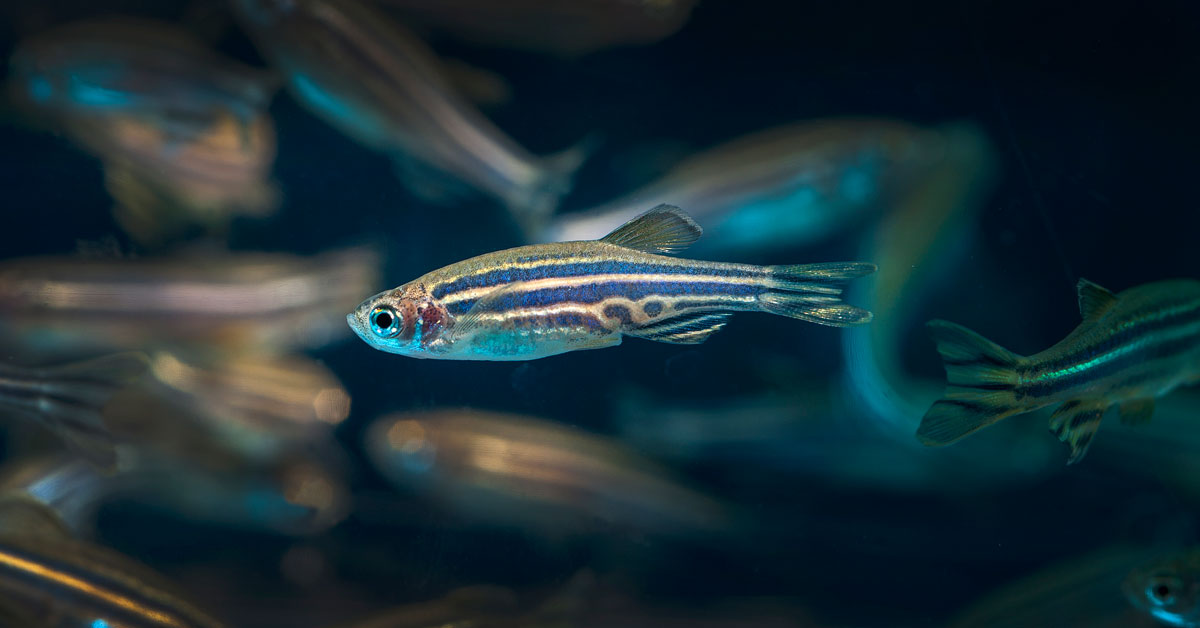
In 2024, a study by scientists at Washington University School of Medicine tapped into the regenerative capabilities of zebrafish, a species of minnow with the extraordinary ability to fully regenerate its spinal cord after serious damage.
Until the publication of this study, the “how” behind this ability has been a mystery. But researchers have found hope in understanding the natural healing process.
“We found that most, if not all, aspects of neural repair that we’re trying to achieve in people occur naturally in zebrafish,” the study’s lead author, Mayssa Mokalled, said in a press release.
“Our study has identified genetic targets that will help us promote this type of plasticity in the cells of people and other mammals.”
When a human spinal cord is injured, the damage is often irreversible, but zebrafish’s damaged neurons undergo a dramatic transformation by altering cellular functions.
This offers a protective mechanism, which buys the neurons time to survive an injury — and eventually, to adopt a sort of flexibility to function in new ways.
In humans, spinal cord injuries usually kill neurons, offering little to no hope for recovery. But Mokalled believes the same genetic markers in zebrafish may lie dormant in mammals.
“We are hopeful that identifying the genes that orchestrate this protective process in zebrafish — versions of which also are present in the human genome — will help us find ways to protect neurons in people from the waves of cell death that we see following spinal cord injuries,” she said.
This discovery indicates that future therapeutic approaches in humans should focus on preventing the destruction of spinal cord neurons, potentially giving them the ability to regenerate and adapt, just like zebrafish do.
More recently, a study out of Vanderbilt University, by professor of pharmacology Valentine Cigliola, analyzed how spinal cord regeneration manifests in both zebrafish and neonatal mice and how it could potentially be “awakened” in adult mammals, too.
The paper is the first comparison between zebrafish and neonatal mice, which further offers data on the epigenetic mechanisms that promote this kind of regeneration.
The study “provides a valuable foundation for advancing regenerative medicine strategies aimed at restoring function after central nervous system injury,” a statement from Vanderbilt University shared.
“Understanding these innate regenerative mechanisms could inform strategies for treating a range of neurodegenerative diseases, including amyotrophic lateral sclerosis, multiple sclerosis, and spinal muscular atrophy.”
You may also like: How the Dog Aging Project is working to extend your dog’s life — and yours too
A version of this article was originally published in The 2024 Animals Edition of the Goodnewspaper.
Header image by Oregon State University (CC BY-SA 2.0)