There’s a phrase — typically attributed to Greek poet Dinos Christianopoulos — that many of us may be familiar with: “They tried to bury us. They didn’t know we were seeds.”
It has taken root in a number of social justice movements and might be displayed on protest signs — but the cultural significance of seeds, agriculture, and land isn’t always taken so literally.
No place is this truer than in Palestine.
Home to deeply important crops like olive trees, grapevines, fig and citrus trees, Palestine’s loss of agriculture through decades of political violence is an especially salient experience of grief and displacement for Vivien Sansour.
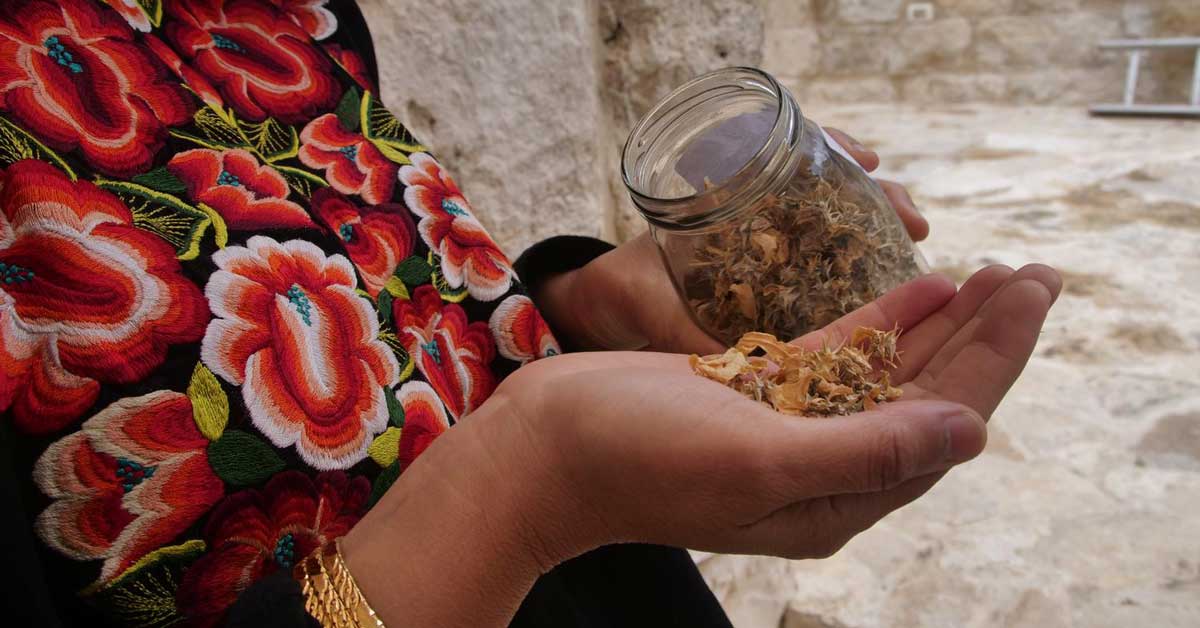
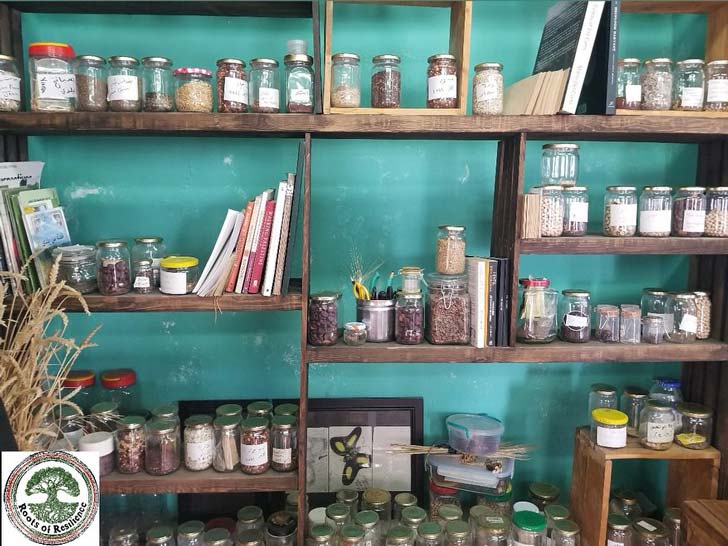
The Palestinian artist, writer, and founder of the Palestine Heirloom Seed Library works to safeguard the seeds and knowledge of her people through a Traveling Kitchen project, which aims to educate people on heritage and threatened seed varieties, traditional Palestinian farming practices, and the cultural stories and identities associated with them.
Born near Bethlehem, Sansour started PHSL in 2014 in the village of Battir, a UNESCO World Heritage site.
While she has since moved to New York as part of a growing Palestinian diaspora, the PHSL remains in Bethlehem, where local farmers can retrieve seeds to plant on their lands, or locals can find a small library of instructional books.
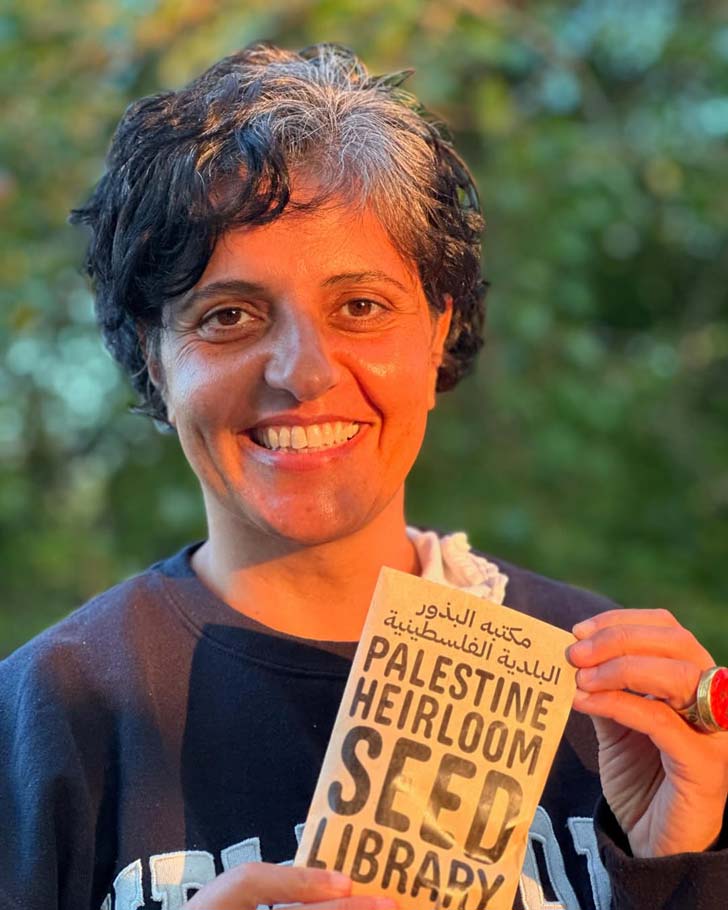
“These seeds that have been passed down to us over the centuries carry in their genes the stories and the spirits of the Palestinian Indigenous ancestors,” Sansour writes on her website.
“Aside from their cultural significance, these seeds carry options for our future survival as we face climate change and the erosion of agrobiodiversity worldwide. As such, it is urgent that we save and propagate them.”
These days, she sees her work as more important than ever, to retain the stories of those lost to violence, and to promote food sovereignty on Palestinian lands.
Some Palestinian immigrants have also taken some of these seeds to their new residences; Professor Riad Bahhur at Sacramento City College, for instance, has long-necked gourds known as yaqteen, white cucumbers, and Battiri eggplants growing in his home.
“These ancestral practices cannot bring back the people who have been killed,” Bahhur told Atmos. “But they do embody for us that our ancestral heritage in the land is a long and rooted one.”
You may also like: 2,500 olive trees planted in the West Bank for International Day of Peace
A version of this article was originally published in The 2024 Plants Edition of the Goodnewspaper.
Header image courtesy of Vivien Sansour