After Roswell, New Mexico resident Nicole Scarpa experienced her own cycle of homelessness, she vowed to give back to her community and help people avoid the evictions she came to know all too well.
While researching in her community, she noticed a swath of dilapidated and boarded-up homes. Alongside her friend, Jeneva Martinez, founder of the nonprofit Roswell Homeless Coalition, Scarpa came up with an idea.
“Bringing in new development could take years,” Martinez told Shelterforce. “But if we could do home rehabilitation, if we could work with property owners to bring them up to HUD standards, we could get some people housed.”
With a small grant, Scarpa and Martinez identified the homeowners and offered them a loan to bring the houses out of disrepair.
Sometimes, all a property needed was a new roof or an HVAC system. Then, if the owners rented the refurbished units to voucher-holders in need of housing, the loans would be fully forgiven.
Thus was born Rehab-2-Rental.
Now a statewide program, New Mexico invests $650,000 a year in offering these loans to property owners, giving them up to $25,000 per unit.
As long as a landlord rents to a housing voucher-holder for five years over a six-year period, their loan is forgiven. And, in the meantime, someone in desperate need of housing has a safe place to live.

Landlords are also given the option to pay back the loan and rent their property out at market rates, but so far, no one has gone that direction.
Dan Jennings, executive director of the nonprofit HagermanForward, which manages the funding logistics for Rehab-2-Rental, told Shelterforce that it solves two problems in the housing market.
“There are a lot of property owners that can’t access traditional finance methods, can’t just go to the bank and get a loan against a property, because it’s not in great shape,” Jennings said.
“And there’s a lot of aging housing stock. So, it’s amazing seeing a landlord say, ‘I’m going to do this,’ and soon have a beautiful home ready for someone who may otherwise have soon been homeless.”
As the program expands, New Mexico leaders are eager to see how it can benefit both tenants and business owners while confronting the ongoing housing crisis.
“Whether it’s single-family homes or rental properties, New Mexico is in great need of affordable housing for its residents,” Housing New Mexico Executive Director and CEO Isidoro Hernandez said in a statement.
“This program is a win-win in that it will help landlords with funding to bring rentals up to standards and will provide more opportunities for affordable housing in the state.”
You may also like: Colorado is the first state to give cash back to renters, in a program designed to put home ownership in reach
A version of this article was originally published in The 2026 Home Edition of the Goodnewspaper.
Header image by Anderson Schmig on Unsplash
Scout is a black Labrador-Bloodhound mix based in Minneapolis who takes her new job — and her new uniform — very seriously.
She is the state’s first dog-scenting dog, trained to find lost pets and bring them home.
Donning a vest with a patch that reads “Come Back Home, Puppies,” Scout represents an all-volunteer group called The Retrievers, who do exactly that.
“People call us when their dog goes missing, and we throw out the forces, so to speak,” Scout’s trainer, Miki Carlson, told MPR News.
“Last year, we had about 960 cases of lost dogs. This year, we’re on track for about 1,000. We basically get the case and then just take it ’til the end, ’til we find their dog.”
And Scout is training to be the newest member of the search team.
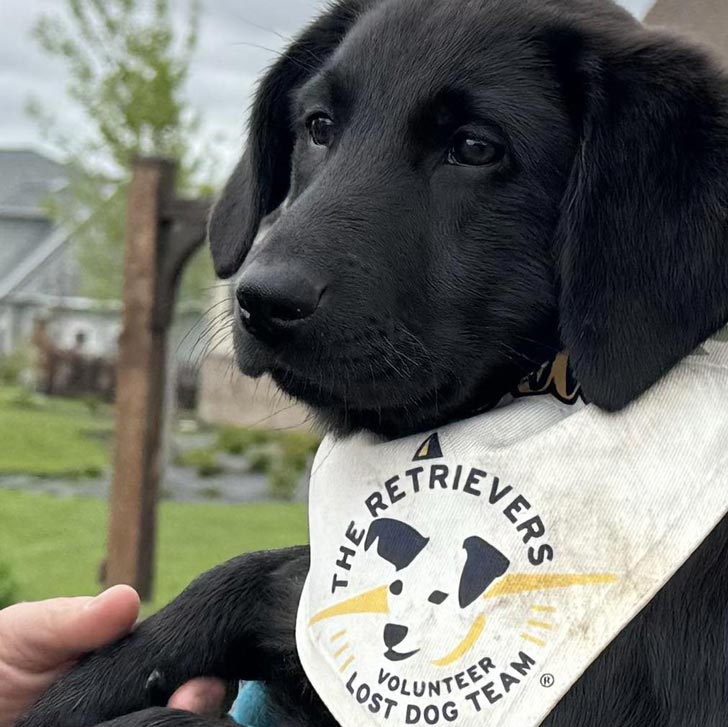
A lot of times, people won’t call The Retrievers until their pet has been missing for a while, after unsuccessfully trying to locate the dog on their own.
But once Scout is fully trained, she’ll be able to go from the lost dog’s last sighting and track its scent, ideally leading the search team to their target.
According to a GoFundMe for Scout’s training, the dog will learn commands like “take scent,” “search,” and “which way?” so she can help lead search teams to runaway dogs.
Carlson said that Scout will be able to follow a scent trail of about 13 days, meaning she could sniff out a lost pet who has been on the lam for about two weeks.
“We have needed a trailing dog so many times on Retrievers cases,” Carlson wrote on GoFundMe. “With your help, we will finally be able to use the genius of a dog's nose to help bring more lost dogs home.”
To MPR, she added: “It's just going to be a game changer for us.”
You may also like: After ICE took these pets' owners, this Minneapolis shelter is keeping them safe: 'The goal is always reunification'
A version of this article was originally published in The 2024 Animals Edition of the Goodnewspaper.
Header image courtesy of Miki Carlson/The Retrievers
By now, you’ve certainly seen videos circulating of protesters in the streets of Minnesota, holding up protest signs, bundled in warm winter gear — not shouting, but singing.
The group is led by an organization called Singing Resistance and has gained popularity after clips of their protest tune “It’s Okay To Change Your Mind” have gone viral, with lyrics urging United States Immigration and Customs Enforcement officers to quit their jobs.
In addition to singing on stage with Brandi Carlile at a recent concert, and sharing a digital songbook of protest hymns that are being practiced in churches and community centers in cities across the country, Singing Resistance has taken this opportunity to mobilize other anti-authoritarian protesters to action.
The group is hosting a nationwide day of song this weekend.
On Saturday, February 28 and Sunday, March 1, the group is hosting sing-in protests across the country. While it’s unclear how many separate events will be held, there are now 95 city chapters of Singing Resistance in the U.S. — and one in Canada.
More of a “weekend of action” than just a single day, the group states its goals are to “further spread and deepen the practice of singing throughout U.S. social movements.”
It appears most events are being coordinated around what the group calls “sites of ICE-related violence,” such as Dilley Detention Center in Texas, or in corporate locations that have contracts with ICE.

According to a toolkit from the group, Singing Resistance also hopes to bring large numbers of people into their movement, and like all of their demonstrations, encourage “healing from the impacts of living in an oppressive society.”
“Singing Resistance is building a mass movement of singers to protect and care for our communities in the face of rising authoritarianism. We are grounded in love, nonviolence, and solidarity,” the group shared in a social media post.
“We sing publicly in the streets for the sake of solace, strength, solidarity, to voice our dissent, and to refuse cooperation with oppressive and autocratic forces.”
While the group has grown to prominence in the face of ICE operations in Minnesota, its efforts stem from long-held singing practices in the Civil Rights Movement, Indigenous resistance movements, and Otpor!, a Serbian resistance movement that urged defection among officers carrying out authoritarian orders.
To prepare for the weekend of action, hosts are convening for song training and practices, and a detailed toolkit is being disseminated among organizers and participants.
Inside the toolkit, Singing Resistance clearly outlines its core messages.
First, they say to the forces they are protesting: “We are loving people, and we are here to bear witness to the violence that has occurred or is occurring at this site. We won't be silent while this violence occurs.”
And to their communities of singers, they proclaim: “We belong to each other. We stand in solidarity with every one of our family members, community members, neighbors who is targeted by the authoritarian state. If you come for one of us, you come for all of us.”
Those interested in joining in a Weekend of Song action can learn more by following Singing Resistance on social media or connecting with a local chapter.
You may also like: Brandi Carlile performs 'It's Okay To Change Your Mind' with Singing Resistance in Minnesota
Header image courtesy of Steve Olsen/Facebook
In September, comedian Drew Lynch was in the middle of a stand-up routine in Spokane, Washington when an audience member suddenly collapsed from a heart attack. Within seconds, Lynch called for a medic from the stage, as a woman shouted that she was already dialing 911.
Lynch said what happened next “was one of the most powerful examples of community and human connection I’ve ever seen.”
Mr. Wende, the audience member who collapsed, went without a pulse for over five minutes. But the strangers around him didn’t give up.
“Without hesitation, people in the audience began taking turns performing CPR, clearing space for paramedics, and monitoring his vitals,” Lynch recounted in the caption of a TikTok video.
According to the American Heart Association, an estimated 436,000 Americans die from cardiac arrest each year. However, immediate CPR can double or triple the chances of survival.
“With the combined efforts of total strangers, and honestly, by what felt like a miracle that night, he was revived right there in the room,” recalled Lynch, who was driven to tears by the experience. “The entire audience came together in that moment — no egos, no identities, no division — just one goal: saving a life.”
The next day, Lynch visited Wende in the hospital so that he could “finish the show for him.”
“Getting to laugh and share stories with his family for hours in the hospital was the reminder I needed of why comedy is so needed — especially in times when the world feels so torn apart,” Lynch wrote.

Before he moved on to the next leg of his comedy tour, Lynch thanked “the people of Spokane, the brave medical professionals, and the Wende family for bringing this man into my life and reminding me just how special community can be.”
Roughly four months later, on January 9, Lynch posted an emotional update to Wende’s story on TikTok.
@thedrewlynch At a show this past weekend in Spokane, something happened that I will never forget. In the middle of my set, a man in the audience collapsed from a heart attack. What happened next was one of the most powerful examples of community and human connection I’ve ever seen. Without hesitation, people in the audience began taking turns performing CPR, clearing space for paramedics, and monitoring his vitals. He had no pulse for over 5 minutes. With the combined efforts of total strangers, and honestly, by what felt like a miracle that night, he was revived right there in the room. The entire audience came together in that moment—no egos, no identities, no division—just one goal: saving a life. The next day my funny friends Akeem , Rachel and I visited Mr. Wende in the hospital to finish the show for him. Getting to laugh and share stories with his family for hours in the hospital was the reminder I needed of why comedy is so needed- especially in times when the world feels so torn apart. HUGE thank you to the people of Spokane, the brave medical professionals, and the Wende family for bringing this man into my life and reminding me just how special community can be. #spokane ♬ original sound - Drew Lynch
“This one is tough,” he wrote. “As some of you know, a man survived a heart attack at one of my shows a few months ago. That man was Mr. Wende.”
“I got to know Mr. Wende and his family after his incident, and he was truly one of the most gentle, humble, and honorable human beings I’ve ever met,” Lynch continued in the post. “A speech therapist for over 50 years. A father and grandfather. A widower still committed to his wife. His faith and his family meant the world to him. But he never prioritized one person over another.”
According to his family, “everybody is a friend he hasn’t met yet.”
“He was a Labrador Retriever in every sense of the word. I got to visit him in Spokane with some of my closest friends last week — one final time. And we all found it remarkable the look of pure joy he always had at the simplest of things — a stranger, a hand tattoo, Gonzaga basketball — and it makes you wonder how someone with such a beautiful heart could have ever experienced it being attacked in the first place.”
“A man who couldn’t walk was showing us the path. Even in pain, there was love. I will miss our text updates. I will miss our silly banter. I will miss our friendship.”
“Rest easy FGF,” he signed, “Your foster grandson, Drew.”
A version of this article originally appeared in the 2025 Helpers Edition of the Goodnewspaper.
Header image via Drew Lynch
In the online game Roblox, players can customize their avatars with an array of outfits and accessories.
And now, they can add a real-world element to their accessorizing by thrift shopping at a digitized Salvation Army.
“Thrifting has always been about more than price — it’s about creativity, individuality and purpose,” Lt. Colonel Mark Nelson, ARC Commander at The Salvation Army, said in a press release.
“By bringing our thrift store into Roblox, we’’re introducing a new generation to the spirit of thrifting at Salvation Army in a way that feels natural to how they explore, play, and express themselves today.”
Players can find the playfully titled “Thrift Score” in explorable environments like Seaboard City and Daycare Party.
According to Roblox, proceeds from the digital Salvation Army will go to the real-world Salvation Army, a religiously affiliated organization that provides community support, social services, and disaster relief.
“In 2024, The Salvation Army helped nearly 28 million in the U.S. overcome poverty, addiction, and economic hardships through a range of social services,” the organization announced last year.

“By providing food, emergency disaster relief, rehabilitation services, clothing, and shelter, The Salvation Army is meeting human needs without discrimination more than 7,400 centers of operation across the country.”
A few of Roblox’s most popular creators, including @PrestonPlayz, @BriannaPlayz, and @RussoPlays, also helped design shoppable clothes for the launch.
“For me, everything starts with play,” said Preston Arsement of @PrestonPlayz. “Play is how we connect, how we create, and how we open the door to something bigger. But if you lead with play, heart follows.”
“Partnering with The Salvation Army is a perfect example of that,” he continued. “Players get to have fun, express themselves, and then realize they’re part of something meaningful. When you combine play with heart, you can make a real impact.”
To download Roblox and go thrift shopping in the 3D-realm, visit their website.
You may also like: This cozy game replaces doom-scrolling with ocean exploring. Every creature you spot trains underwater robots in real time
Header image via Roblox
It’s nearly impossible to scroll on social media today without being fed AI-generated content. So when Dobby the four-eared cat made the rounds on Reddit, a lot of people weren’t sure if they could believe their eyes.
“Dobby has continued to win hearts right and left, although we did have to clarify that he’s not AI, amusingly,” Dobby’s foster mom, Stephanie Brown, told Newsweek.
“Many people have humorously noted that his double ears mean that he can ignore you twice as much,” she joked. “True to the cat community I’ve come to know and love, Dobby has been welcomed and adored.”
Brown, a board member of Kitty Kat Haven & Rescue in Hoover, Alabama, first spotted Dobby in a Facebook post from a local cat owner who was looking to rehome him.
“They had tried for months, and it wasn't a right match,” Brown told People Magazine. “Of course, I jumped at the opportunity to foster him.”
Due to a rare genetic mutation, the 7-month-old kitten has a pronounced underbite, a stubby, curled tail, and — most notably — an extra set of ears.
Through Kitty Kat Haven & Rescue, Brown once adopted another cat, Phoebe, who has cerebellar hypoplasia, also known as “Wobbly Cat Syndrome.”
Brown told People that animals with different needs are “completely beautiful” and worthy of the same love as any other pet.
“I think it's a matter of embracing all of those differences and understanding, just like people, every creature, every animal, is going to have their own unique personality, presentation, conditions, appearance, everything like that,” she said.
Although his mom says his ears and tail are features — not bugs — his underbite needs to be repaired.
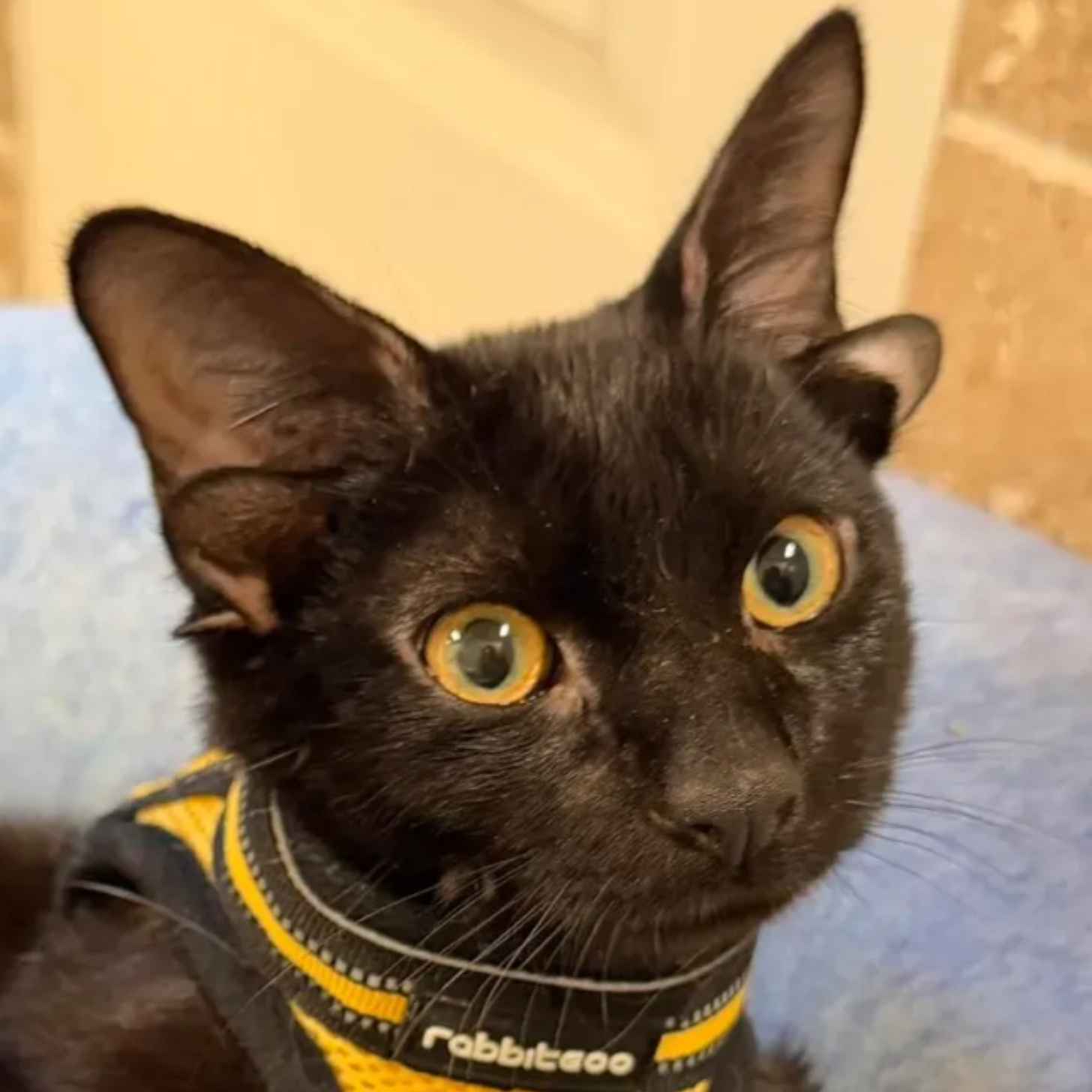
“Dobby’s double ears are beyond perfect, but his teeth (unfortunately) are not,” Brown wrote on GoFundMe. “We met with a dental specialist last week, who determined that Dobby needs his lower canines shortened so that they don’t protrude into his upper palate.”
Fortunately, Brown was told by vets that they don’t expect any “complications from his overbite and narrow lower jaw” once his procedure is complete.
In an Instagram video, Brown added some additional context to Dobby’s surgery, saying that they need to wait until he’s about 10-months-old to perform the procedure.
“We certainly don't mind the extra time with him,” she said, holding him close to her chest, “and it will give us a moment to do some fundraising because we're gonna need to raise about $3,000.”
“If you have any kind of out-of-the-box ideas for fundraisers for Dobby, I'm all ears,” she joked. “Something beyond just your regular GoFundMe, maybe we need some Dobby merch to be able to fundraise, or ‘painting with Dobby.’”
As Brown held him, he began making “air biscuits” and purring.
“You're making some biscuits, yeah?” Brown laughed.
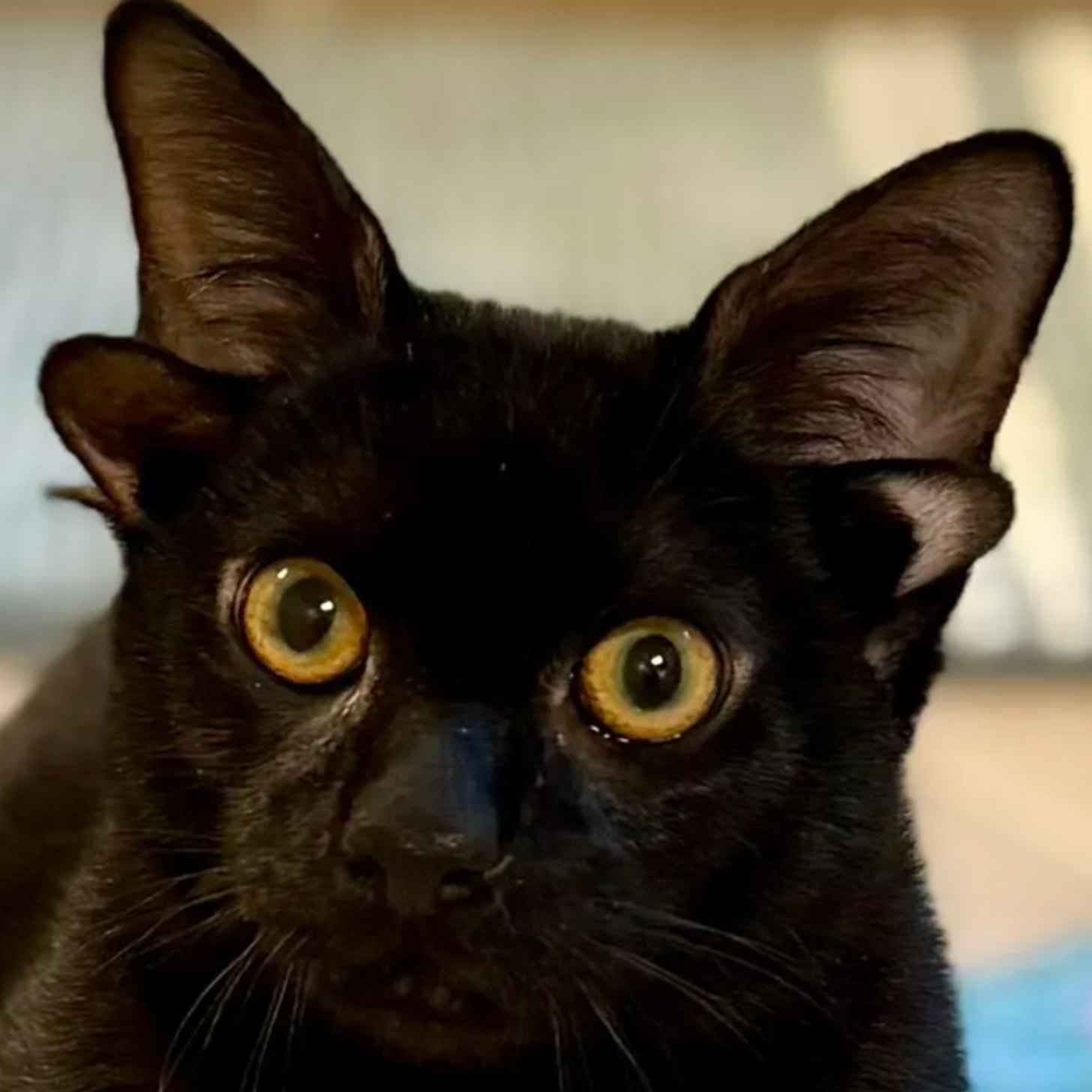
“We are so grateful for all the love that y'all have poured out for him,” she said, pivoting back to the camera. “He is not yet adoptable. We're gonna get in through his surgery [and then] will need to be adopted locally in Hoover, Alabama.”
Brown said that Dobby’s surgery is currently scheduled for April 20, and then he will be adoptable after a short recovery window.
As of February 25, Dobby’s GoFundMe was 60% towards its $3,000 goal.
“Thank you so much for supporting Dobby!” Brown said in a donation update.
“Donated for sweet Dobby!” one of Brown’s followers replied.
One cat lover said, “I wanna rub all those ears.”
“With everything going on in the world, it's Dobby who I want to see!” another Instagram user chimed in.
You may also like: This cat was rescued from a brutal coyote attack. Six months later, he finally had his 'rabies graduation'
Header image via Stephanie Brown
Back in 1999, Leonardo DiCaprio was already a breakout star, thanks to the 1997 release of the smash hit, “Titanic.”
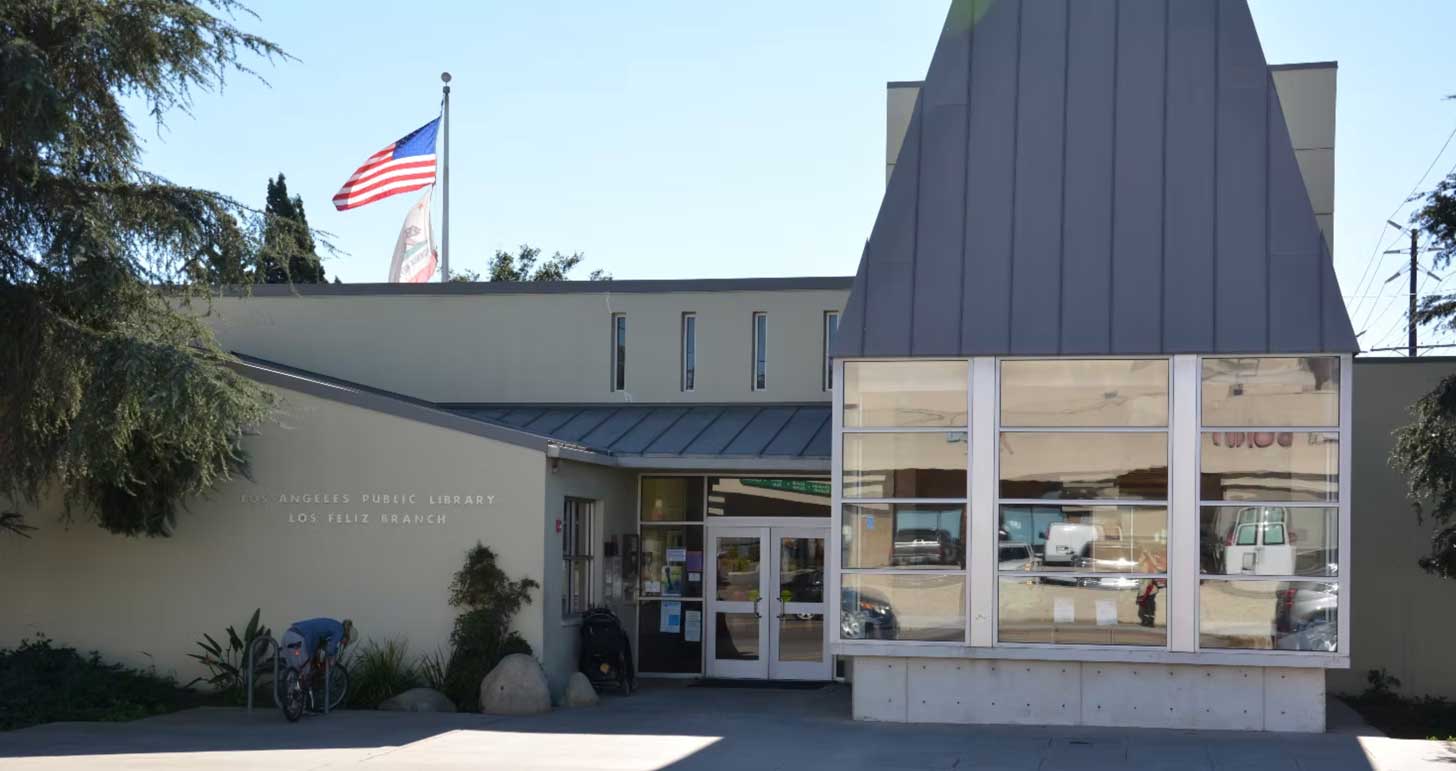
But at home, the Los Angeles Library was putting the finishing touches on its Los Feliz Branch, a new library built where DiCaprio’s childhood home once stood.
When the new branch opened its doors in 1999, DiCaprio and his family donated $35,000 to fund the library’s computer center, which was aptly named the Leonardo DiCaprio Computer Center.
To this day, the small computer lab is filled with autographed movie posters of the star’s greatest hits, personal momentos, and even a photo of him standing outside of his childhood home.
According to SF Gate, the computer lab is located where DiCaprio’s childhood bedroom once stood.
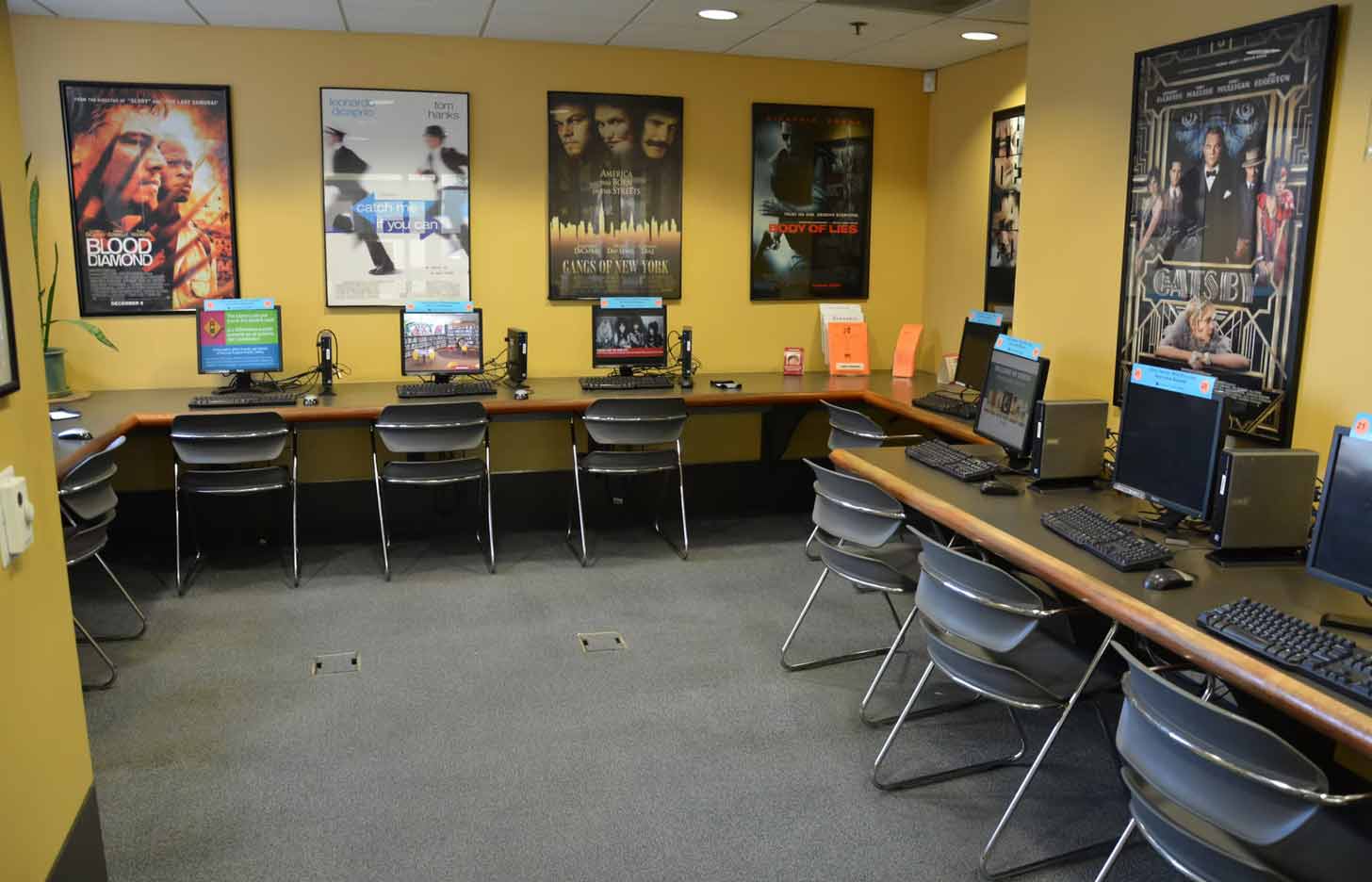
“The Leonardo DiCaprio Computer Center contains seven terminals with software to help students with math, language, and study skills,” People Magazine reported in 1999.
Not too much has changed, the current senior librarian Pearl Yonezawa told SF Gate, but DiCaprio has remained a loyal supporter of the facility in the nearly 30 years since.
According to Yonezawa, the actor’s foundation will occasionally write to the library and ask if any needs can be filled. In the late-2000s recession, she said, residents were coming to the library to see if they could read a copy of The New York Times.
“We sent word on up that that was an issue we were having, and so we asked [DiCaprio] for a year subscription so that we could see if it was worth the library subscribing to it,” she told SF Gate. “And he bought us a five-year subscription.”
While DiCaprio doesn’t live in the area, he will make the occasional secret visit. Yonezawa said she first saw him at the library in the early 2000s, shrouded in a baseball cap.
But even if he isn’t present, fans from all over the world will flock to see the DiCaprio computer lab. Yonezawa said she has received visitors from Lithuania, Japan, and Germany who are interested in seeing the computer lab.
Before the library even opened, she added, a fan flew from Wisconsin to ask if she could scoop some dirt from the construction site. Yonezawa let her take “a reasonable amount” so she could bring it “home to her friends so they could touch the sacred, sacred dirt.”

In addition to DiCaprio’s contributions over the years, the library is supported by a separate nonprofit arm, Friends of Los Feliz Library.
Formed in 1993, the group is made up of locals who act as an independent body to advocate for the library and its services.
“Through memberships, donations, and fundraising, FOLFL provides supplemental funding for the necessities that help to keep the Los Feliz Branch library a relevant and vibrant cornerstone of the Los Feliz community,” the organization’s website shares.
“With the major support of FOLFL, Los Feliz Branch Library continues to meet the needs of local library-goers by providing free and equitable access to information and knowledge through programming, education, technology, or the printed page.”
You may also like: Half a million unsold concert t-shirts sat in a warehouse for years. Billie Eilish gave them a second life
Header image: State Department Photo/ Public Domain
For people with sensory issues — often those who are neurodivergent and have autism or attention deficit and hyperactivity disorder — wearing the wrong clothes can be a recipe for disaster.
Whether it’s itchy tags, uncomfortable fibers, or just the wrong fit, these hurdles can lead people to feel overstimulated and have trouble navigating daily life.
Olivia Drewery experienced these challenges. The 27-year-old based in the United Kingdom was diagnosed with autism and ADHD in her early twenties.
“I spent most of my life feeling chronically overwhelmed, masking constantly, wondering why everyday things felt so f—ing difficult,” Drewery said in a recent TikTok video. “Then I got diagnosed with ADHD and autism, and I was like, ‘OK, that makes a lot of sense.’”
But that diagnosis also came with a whole new way to view the world and the accommodations it was lacking.

“Why were there no lifestyle brands for people with brains like mine?” Drewery posed. “Not just merch or slogans, but clothing that actually works with our nervous systems and not against them.”
That’s when she had the idea to create a clothing label that made it easier for people with ADHD, anxiety, and autism to stim.
“Stim” is short for “self-stimulatory behavior,” and refers to the ways neurodivergent people manage sensory input.
“For a lot of us with ADHD and autism, stimming is how we regulate. It helps us focus, calm our nervous system. It helps us stay present,” Drewery explained in her video. “But the reality is that stimming openly isn’t always safe. People stare, judge, and comment — so we mask it.”
That masking, or suppressing natural autistic traits to fit into social situations or avoid stigma, is partially what kept Drewery in the dark for so long and made her own experience more difficult.
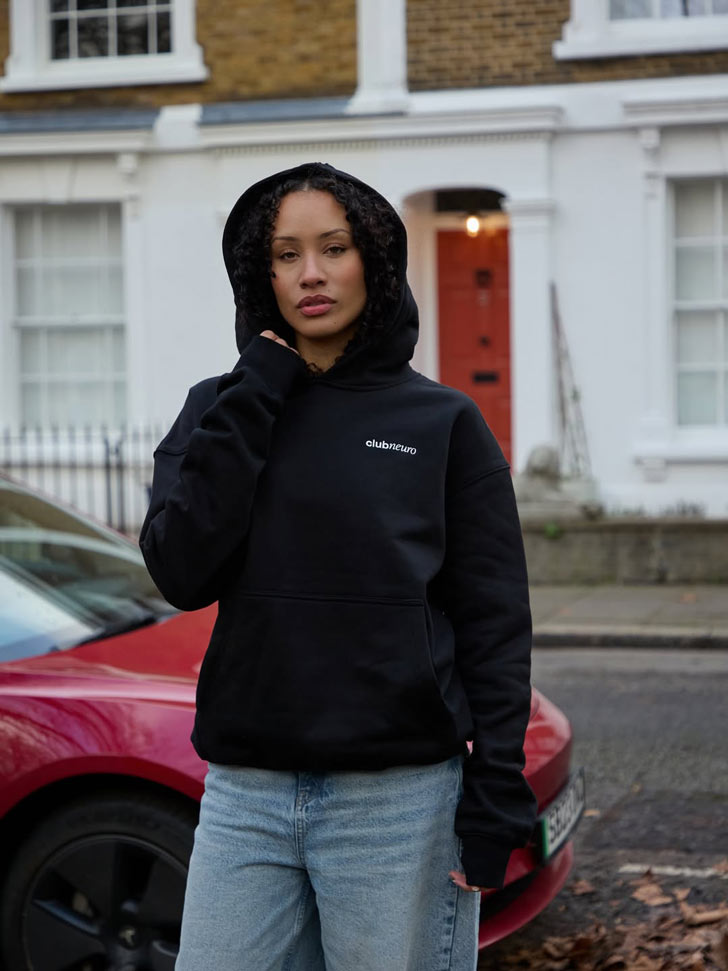
Her solution is the Stim Hoodie, a product she just released from her brand Club Neuro.

It all came after Drewery built a platform on social media (@neurodiversing on both Instagram and TikTok), where she shared her “autistic ADHD diaries” with thousands of followers. After sharing about her need to be comfortable in her clothes, she connected with Club Neuro co-founders Loukas Hambi and Sam Wright.
From there, they spent 10 months perfecting their design.
The hoodie looks like any other, but it has a number of discreet features, including removable stress balls built into the cuffs, attached stim toys hidden in the front pockets, a weighted fabric, no tags, a large hood designed to encase noise-cancelling headphones, and thumbholes.
“Some of us fidget. Some of us pick. Some of us can't sit still in meetings or on flights or anywhere, really,” Club Neuro’s website reads.
“We believe your clothes should work with your brain — not against it. That’s why we created the world's first functional fashion brand for people who need a little help staying grounded.”
The design process enlisted the help of about 4,000 survey respondents from Drewery’s community of neurodivergent followers, expressing what they wanted from a clothing product like this.
“This hoodie was shaped by thousands of neurodivergent voices,” Drewery said in her video. “People telling us again and again that clothing can be overwhelming, distracting, uncomfortable — and that it doesn’t have to be.”
The hoodie is on sale now, available in five colors, sizes XS-XXL, and with a price tag of $103 USD.
And it’s backed by experts from the Global ADHD Clinicians Network.
“Club Neuro … reflects what I see every day in my work with ADHD and autistic people. There’s a real gap between awareness and the kind of practical support that actually helps people get through daily life,” Dr. Pav Kooner, founder of the Global ADHD Clinicians Network, said.
“As someone with ADHD myself, that gap matters to me. Club Neuro is focused on the everyday realities people are living with, not just the conversation around them, and that’s why this feels important.”
@neurodiversing THE TIME HAS COME AFTER WHAT FEELS LIKE 89 YEARS the Stim Hoodie is a real physical thing and we’ve finally launched it so ppl can have their very own stimmy fashion fits 🥹🧠 over 10 months of dedication have gone into this hoodie, and just so much love (and so many tears)!!!! we can’t believe how many orders we’ve had so far, it doesn’t feel real!! We’re honestly so overwhelmingly happy right now and so excited for people to get their Stim Hoodies ✨💕 #adhd #autism #audhd #neurodivergent #stimming ♬ original sound - Olivia
And for Drewery, it’s a dream come true. She quit her full-time office job to follow her dream and make the Stim Hoodie a reality.
Now, she’s hoping to see it pay off.
“Because I’ve struggled so much in school settings, in university, in the workplace, in friendships, and social settings, I want to make sure that I’m raising awareness of ADHD and autism so people can see it themselves or recognize it in others, and so we can get the support we need,” she told the Yorkshire Evening Post.
“I feel like I’m doing the right thing in my life.”
You may also like: Mattel unveils first autistic Barbie, complete with 'stimming hands' and noise-cancelling headphones
Header image courtesy of Club Neuro
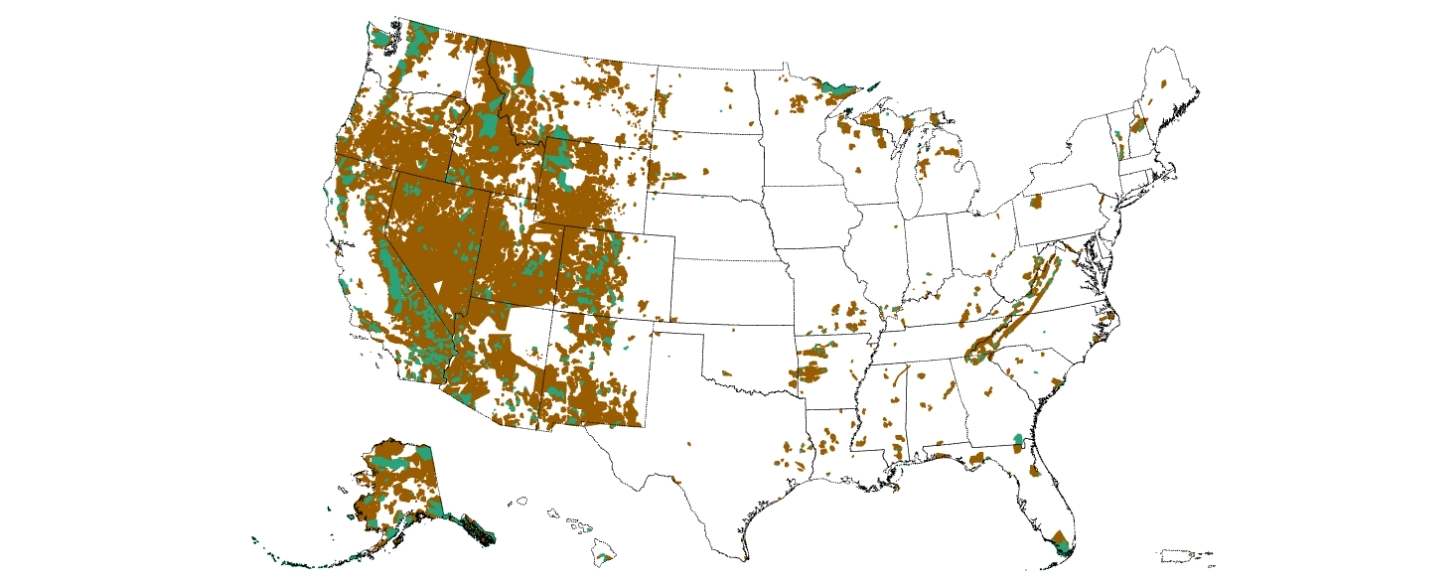
More than 110 million acres of land across the U.S. are protected in 806 federally designated wilderness areas — together an area slightly larger than the state of California. For the most part, these places have been left alone for decades, in keeping with the 1964 Wilderness Act’s directive that they be “untrammeled by man.”
But in a time when lands are experiencing the effects of climate change, and people are renewing their understanding of Indigenous knowledge and stewardship practices, protecting these places may require action, not inaction.
New Mexico’s Gila Wilderness, where the Chihuahuan Desert converges with the Rocky Mountains, was the first to receive a formal wilderness designation in 1924. Now, all but six U.S. states contain wilderness. In Minnesota, the Boundary Waters Canoe Area Wilderness protects more than a thousand lakes and several hundred miles of streams. In Florida, the marshes and saltwater bays of the Marjory Stoneman Douglas Wilderness are home to flamingos, manatees, and alligators.
These diverse ecosystems are the country’s most protected lands, where human activity is severely restricted.
Federal regulations exclude resource extraction such as logging and mining; developments such as the building of roads and structures; low-level overflights by planes and helicopters; and mechanized equipment such as chain saws. People can walk, ride horses, canoe, fish, and camp temporarily in these areas, but that’s about it.
Millions of protected wilderness acres span US
There are 110 million acres of designated wilderness in the United States. That terrain exists within the 640 million acres of federally owned lands — nearly 30% of the country's whole area.
Wilderness areas are contained within or sit alongside 85 million acres of national parks, 35 million acres of conservation land overseen by the U.S. Bureau of Land Management, 193 million acres of national forests, and 95 million acres of land in U.S. Fish and Wildlife Refuges.
Yet, research my colleagues and I have conducted indicates that this approach can make it difficult to address two of the biggest challenges facing wilderness.
First, the dominant American ideal of wilderness — as wildlands that flourish best in the absence of human management — conflicts with the growing understanding that many wilderness areas were and remain part of the ancestral homelands of Indigenous peoples, who in fact tended those lands for thousands of years.
And second, as climate change and other ecological stressors affect wilderness, some forms of human intervention could help sustain the very ecological qualities that led to these areas being so strictly protected.
Indigenous influence on landscapes
Many wilderness areas have long histories as homelands where Indigenous peoples lived, hunted, and gathered.
In Alaska, the Inland Dena’ina people marked vast trail networks by physically modifying trees, including by scarring bark and cutting limbs. Many of these marked trees can be found within Lake Clark National Park, two-thirds of which is designated wilderness.
In Washington’s Indian Heaven Wilderness, Northwest tribes gathered to pick and then burn the area’s huckleberry fields, a practice that increased the abundance of both plants and berries.
In the Southwest, Indigenous peoples bred six species of agave plants to be more palatable than wild agaves; researchers have found four of these domesticated species in six wilderness areas.
These lands may seem wild to some, but as Indigenous ecologists Robin Wall Kimmerer and Frank Kanawha Lake observed in 2001, “Every landscape reflects the history and culture of the people who inhabit it.”

Ecological stressors intensify
The Wilderness Act’s strict rules are not able to protect wilderness areas in the U.S. from new and unprecedented ecological stressors.
For instance, many wilderness areas are experiencing uncharacteristically severe wildfires. These events are a result of climate change, fire suppression, and the prevention of traditional Indigenous forest management practices, including burning.
Together, those forces have resulted in large-scale disruptions of historical cycles of fire, in which wildfires were often more frequent but less severe.
Scholars recognize prescribed burning as an effective strategy to protect forests from catastrophic fires, though it remains controversial in wilderness as human intervention. Government policy allows lightning-ignited wildfires to burn in federal wilderness areas in certain circumstances, but most of these fires are still suppressed — a human intervention that is widely accepted.
In California’s Sequoia-Kings Canyon and John Krebs wilderness areas, recent intense wildfires have killed unprecedented numbers of giant sequoias, a species that historically thrived because of more frequent, less-intense fires.
The 2020 Castle Fire is estimated to have killed between 7,500 and 10,600 large sequoias — or 10% to 14% of all sequoias in the Sierra Nevada — many of them in wilderness.
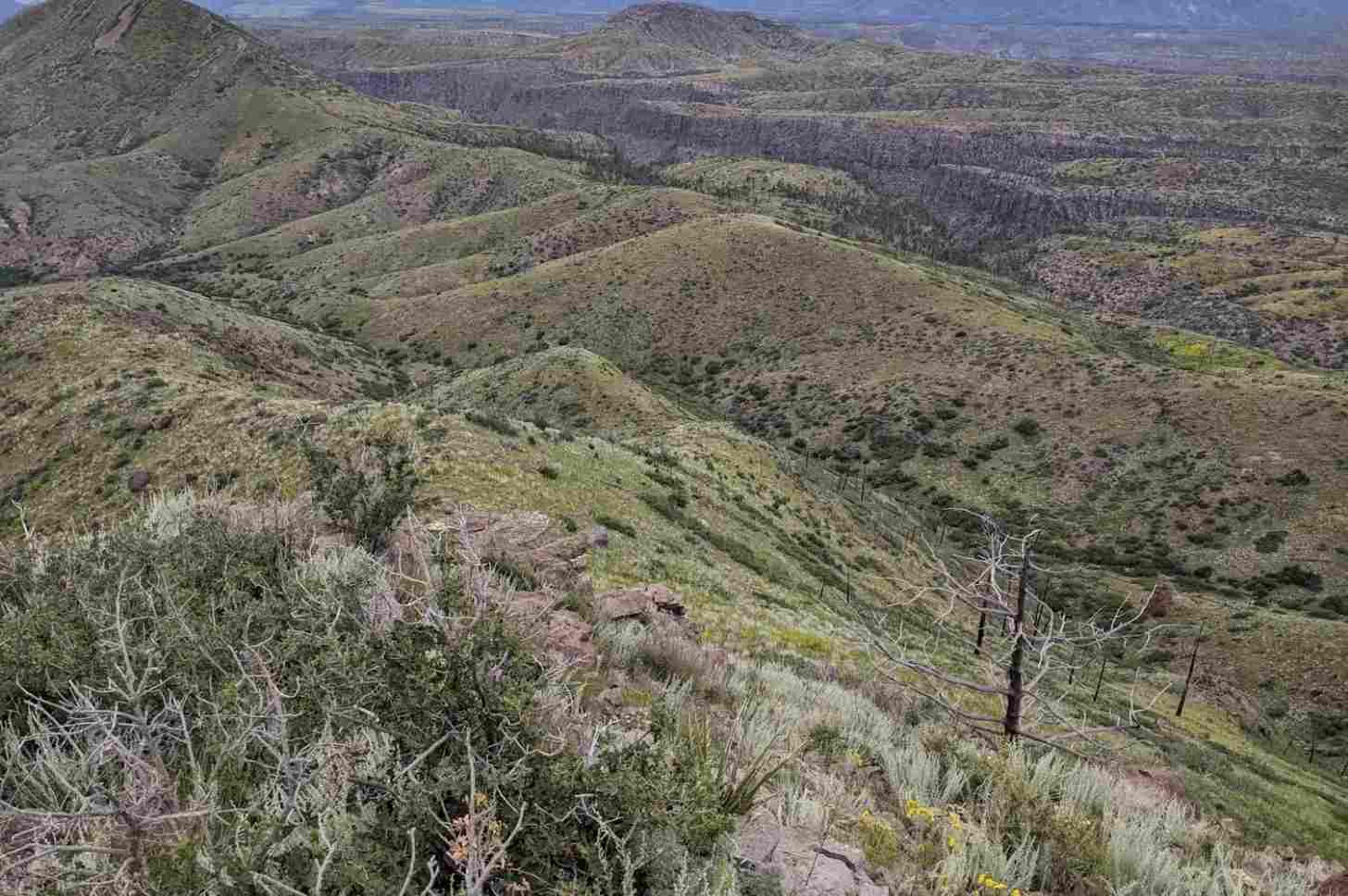
In New Mexico’s Dome Wilderness, repeated intense fires have killed entire forests, transforming these lands into shrub lands. Models indicate that up to 30% of forested landscapes in the Southwest are vulnerable to this type of change.
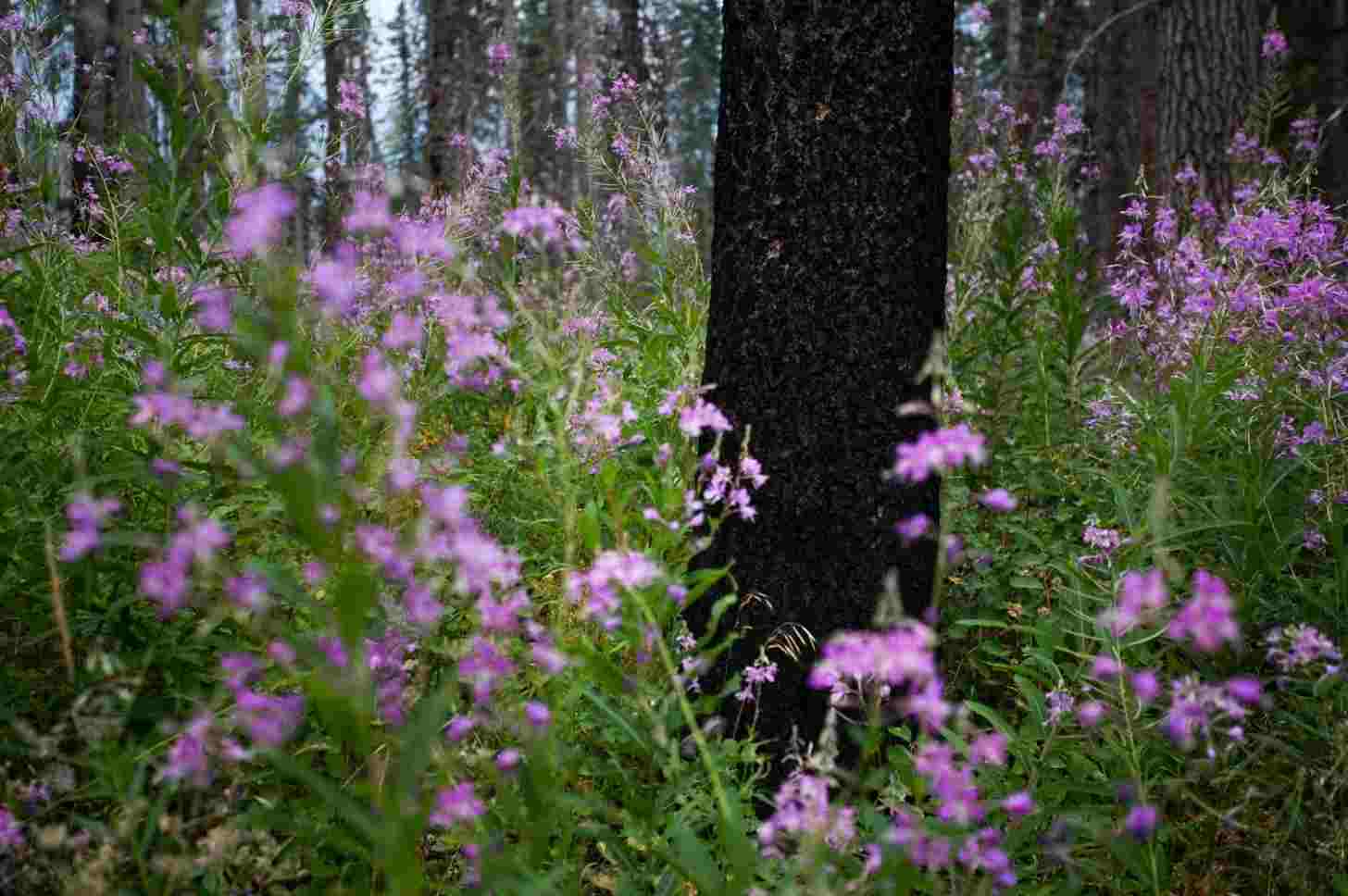
The absence of fire can also be a problem for wilderness ecosystems. In the Boundary Waters Canoe Area Wilderness, researchers anticipate a significant decline in the area’s pine-dominated forests unless fire is reintroduced — with the potential for these forests to disappear within 150 years.
Helping fire resume its natural role on the landscape — through prescribed burning or letting natural fires burn, overseen by firefighters and land managers — isn’t easy.
Tree-ring histories and archaeological, paleoecological, and ethnographic records show that frequent burning of resting areas and campsites by the Anishinaabe people along commonly traveled waterways helped create the Boundary Waters’ open red pine forests. But the wilderness-protection group Wilderness Watch says that prescribed burning by federal land managers today constitutes “a prime example of humans imposing their will on Wilderness to try to create managers’ desired conditions rather than allowing nature to shape the area.”
And fire isn’t the only concern. A combination of climate change, invasions by a nonnative fungus called white pine blister rust, and outbreaks of mountain pine beetles have led to whitebark pines’ listing as a threatened species.
An iconic tree that can live between 500 and 1,000 years, whitebark pines are common in high-elevation wilderness areas in the West, where they provide key habitat and food for wildlife, help regulate snowmelt, and reduce soil erosion.
For the Confederated Salish and Kootenai Tribes, whitebark pines are culturally significant, with their seeds serving as an important traditional food. The tribes have declared they feel a responsibility “to do all that we can to ensure the survival of this beautiful and ancient tree,” and developed a restoration plan for the Flathead Reservation in Montana, which includes the Mission Mountains Tribal Wilderness.
But in federal wilderness, their approach — active tending through prescribed fire and replanting — would likely not be allowed.

Reimagining federal wilderness management
Within tribal wildernesses, Indigenous nations honor spiritual connections between people and the land through relationships of reciprocity, as seen in the Mission Mountains Tribal Wilderness. There, members of the Confederated Salish and Kootenai Tribes are guaranteed the right not only to use the resources by hunting and fishing but also to connect with the landscape through cultural, spiritual, and religious practices.
In recent years, managers at several federal wilderness areas have worked to include tribes in decisions about how these lands are stewarded.
In California, a 2021 agreement gives the Federated Indians of Graton Rancheria a voice in the management of native tule elk at Tomales Point, most of which is part of the Phillip Burton Wilderness.
In 2024, after pressure from the tribal community and others, the National Park Service began removing a 2-mile-long fence that prevented the tule elk from roaming freely and introduced new signs and interpretive programs that incorporated traditional ecological knowledge.
The long-debated question of how to best steward wilderness is increasingly urgent. In addition to its “untrammeled by man” provision, the Wilderness Act also says wilderness areas should be “protected and managed so as to preserve (their) natural conditions.”
So the question remains whether people should leave small slices of nature entirely alone, even as humans alter the conditions of the planet, or whether some careful actions could help protect these precious places for generations to come.
Sean Parks, Jonathan Long, Jonathan Coop, Serra Hoagland, Melanie Armstrong, and Don Hankins contributed to this article.
This article was written by Clare E. Boerigter from the United States Forest Service, and was originally published on The Conversation.
Header Image by Sara Cottle on Unsplash

President Donald Trump in his State of the Union address on Feb. 24, 2026, doubled down on his false claims that the U.S. elections system is compromised. He asserted that “the cheating is rampant in our elections. It’s rampant.”
These pronouncements follow the January 2026 FBI seizure of 2020 ballots from Fulton County, Georgia, and the president’s recent call for the Republican Party to nationalize elections. The Trump administration is also suing 24 states and Washington, D.C., for voter lists to monitor voter registrations.
In his speech, Trump asked Republicans to pass the SAVE America Act. Approved by the House on Feb. 11, 2026, the measure would require that voters provide documentary proof of U.S. citizenship, effectively ending all online voter registration.
“They want to cheat. They have cheated,” he said of Democrats.
These calls spread distrust in the U.S. electoral process, despite extensive evidence showing that voter fraud is rare, especially by noncitizens.
All this has led to speculation about how much further the Trump administration and Republican Party might go to tilt the 2026 midterm and 2028 presidential elections in their favor.
After decades of working internationally on democracy and peace-building, I know that efforts to undermine elections are not uncommon. Citizens of many affected countries have learned various techniques to help protect the integrity of their elections and democracy that may be helpful to Americans today.
International electoral assistance
Leaders, even in established democracies such as India, have used increasingly sophisticated and wide-ranging means to manipulate elections in their favor. Those means vary from legal changes that suppress votes to harassment and prosecution of the opposition, to promoting widespread disinformation campaigns.
These methods have evolved despite international efforts to counter rigged elections and improve election integrity. These countering efforts are called electoral assistance, and they support societies to develop electoral systems that reflect the will of the people and adhere to democratic principles.
Electoral assistance has been shown to strengthen transparency and election administration in countries such as Armenia and Mexico. It has also improved voter registration and education in countries such as Ghana and Colombia.
It’s mostly provided by international nonprofits, such as the National Democratic Institute and The Carter Center in the U.S. Multilateral organizations such as the United Nations also provide electoral assistance.
Five international responses to electoral manipulation
Here are five areas of electoral assistance that have shown some success internationally.
Early warning and community resilience
Early warning efforts track threats of violence and intimidation against election officials, candidates, and voters. They seek to mitigate risks and prepare for crises. This happens from the early stages of an election through election day in countries such as Sri Lanka and Liberia.
Law enforcement, civic groups, and election officials usually undertake these efforts together. But where such direct cooperation with government authorities is not feasible, civic groups can help by undertaking risk assessments and tracking coercion and threats. They can also raise alarms with officials and the media.
Indicators, or established metrics, can track sophisticated coercion tactics such as the misuse of government funds for campaign purposes. They also can track vote buying, like civic groups in North Macedonia did during 2024 parliamentary and 2025 local elections.
For these efforts to be successful, it’s critical that networks of trusted leaders urge early action to put in place greater safeguards long before election day. Raising alarms and urging action was done successfully by religious leaders in Kenya during general elections in 2022.
Real-time disinformation and local media reaction
Real-time fact-checking and debunking of false or manipulative information has proven critical to election integrity in countries such as Mexico and South Africa.
A highly organized and fast-moving approach involving media, technology companies, and authorities successfully countered disinformation to ensure a competitive democratic election in Brazil in 2022. A coalition of Brazilian media outlets, for example, fact-checked political claims and viral rumors during the election period, using innovative tools such as online apps.
Robust local media play a particularly important role. In the 2024 presidential election of Maia Sandu in Moldova, a new investigative newspaper uncovered a Russia-backed network that paid people to attend anti-Sandu rallies and to vote against the president.
That outlet had received training by an expert nonprofit group. It also received free legal advice and human resource management that were critical to its effectiveness.
Neutrality, transparency, and systems reform
Amid efforts to sow doubt in elections, increasing transparency and ethical standards can help build awareness and deepen trust.
Various tools, such as codes of conduct that detail ethical standards, can be formulated for candidates, media, and businesses. This has been done in Nigeria and the Philippines.
International groups, including the the International Foundation for Electoral Systems, published model commitments for advancing genuine and credible elections in 2024, which have been used for pre-election assessments in Bangladesh.
Additionally, major technology companies such as Google and Meta in 2024 helped draft the international Voluntary Election Guidelines for Technology Companies. Meta also helped target false content and deepfakes during Australia’s 2025 election.
The neutrality of election officials is critical to tackle distrust.
In New Zealand, high levels of public trust in elections align with robust neutrality rules for public officials. The key is to develop public awareness of such commitments and how they can be useful to hold election officials, media, and businesses accountable.
More profoundly, the design of the electoral system can also be linked to levels of public trust and polarization. New Zealand, South Africa and Northern Ireland, for example, reformed from winner-take-all elections to proportional representation elections to address deep internal divisions and dissatisfaction with unrepresentative results.
Broad-based mobilization and civic campaigns
Significant voter turnout that delivers large winning margins make efforts to manipulate results more difficult.
In Zambia, for example, a landslide victory for the opposition candidate in the 2021 presidential elections was driven by high youth turnout and people switching parties in urban areas.
Mobilization efforts can span from public campaigns to digital tools and voter registration and education. These efforts can motivate key groups, such as youth, minority, or overseas voters. Participation of diaspora groups in Poland’s 2023 parliamentary elections was a key factor in the opposition’s win.
Proactively building public awareness of election security measures, called prebunking campaigns, has demonstrated results in increasing trust in elections in Brazil and the U.S. Additionally, civic education has shown to have positive impact on voter choice of pro-democracy candidates over their preferred party.
Strategic coalitions and nonpartisan monitoring
Nonpartisan monitoring and observation of an electoral process is a key tool in the electoral assistance tool kit.
Effective monitoring often involves coalitions of nonpartisan civic groups, which Senegal has used, and faith-based organizations, as in the Philippines, to ensure adequate coverage of polling stations and consistent application of standards.
Key tools, such as parallel vote tabulation, or “quick counts,” which provide independent and statistically accurate reports on the quality of voting and counting process, have helped verify official election results in Ukraine, Ghana, and Paraguay.
International observation by entities such as the Organization for Security and Cooperation in Europe assesses whether elections meet global standards. Where it identifies serious flaws or fraud, such scrutiny can help justify mass protests or mobilization, such as in Serbia’s parliamentary and local elections in 2023, trigger new elections, such as in Bolivia’s general elections in 2019, or support international condemnation, such as in Georgia’s 2024 parliamentary elections.
They also make recommendations on reforms, such as changes to elections laws and systems, to strengthen integrity and align with democratic principles.
This article was written by Shelley Inglis from Rutgers University, and was originally published on The Conversation.
Header Image by Element5 Digital on Unsplash

In Colorado, from 2016 to 2020, 33 women who were pregnant or had recently given birth died from accidental overdoses. That’s more than died from traditional obstetric complications like infection, high blood pressure, or bleeding combined.
More recent data shows an encouraging turnaround. The number of maternal overdose deaths dropped 60%, from 20 in 2022 to eight in 2023. I think one contributing factor might be increased access to naloxone for moms and families across the state.
As a perinatal addiction medicine physician, I specialize in taking care of pregnant people and families impacted by substance use disorder. Part of the care I provide is prescribing or distributing naloxone directly to patients and their family members. Naloxone is an over-the-counter medication that reverses the effects of opioid overdose.
I served as a member and then co-chair of the Colorado Maternal Mortality Review Committee from 2017 to 2023. The committee reviews every death of a person in Colorado that occurs during a pregnancy or within 12 months of the end of a pregnancy. I personally reviewed the records of Colorado mothers who died from overdoses.
In Colorado, unintentional overdose and suicide have been the top two causes of maternal mortality each year since 2016. Nationally, the leading cause of maternal mortality is overdose, followed by homicide and then suicide.
Almost all overdose deaths occur in the community, outside of a medical center: in homes, cars, and public places. In almost all circumstances, the review committee determined that if naloxone had been present, there was a good chance the mother would have survived.
Giving naloxone directly to patients and families
In 2023, The Naloxone Project, a nonprofit, started distributing naloxone directly to pregnant and postpartum moms and their families before leaving one of the 48 birthing hospitals in Colorado. The distribution is through a program called the Maternal Overdose Matters Initiative, also known as MOMs. The initiative was in direct response to the number of women dying from overdose during pregnancy or within a year after pregnancy.
The Naloxone Project was started in Colorado in 2021 by an emergency and addiction medicine physician. The project distributes naloxone directly to patients in Colorado hospital emergency rooms at risk for opioid overdose.
To date, The Naloxone Project has distributed more than 2,500 naloxone kits to 107 hospitals to give to patients across the state. The project also works to normalize the conversation about opioid overdose and prevention in health care settings. It’s grown, and now it has chapters in 16 states.
Naloxone can make recovery possible
The American Society of Addiction Medicine defines substance use disorder as “a treatable, chronic medical disease involving complex interactions among brain circuits, genetics, the environment, and an individual’s life experiences.”
People with the disease of addiction can, and do, recover — but only if they can stay alive to receive the support and treatment they need.
Research shows direct distribution of naloxone to people, families, and communities saves lives. Access to naloxone gives people, including Colorado moms, a literal second chance at life.
Naloxone for more than substance use disorder
While people with substance use disorder are at the highest risk for overdose, they’re not the only ones. In 2024 alone, 1,603 people died of accidental opioid overdoses in Colorado.
Prescription opioids, such as oxycodone, hydrocodone, and morphine, are commonly prescribed after a surgery, including C-sections. Opioids like these taken at home, even with a prescription, can be a source of accidental overdose. For example, a person prescribed these medicines may take too much at once or have an unexpected interaction with other medications or alcohol.
Accidental overdose also occurs in people the prescription was not intended for. That includes children who find medications in their homes. In Colorado, 17 children died from opioid overdoses in 2024.
Today, parents leaving the hospital with their new baby are given naloxone and education. They learn about safe storage and disposal of medications, how to recognize an opioid overdose, and how to give naloxone in case of emergency. Nasal-spray naloxone, the most common form provided by The Naloxone Project, is safe for all ages, including infants and toddlers.
Naloxone as a standard of care
Caring for people impacted by substance use disorder has convinced me that naloxone has a place in every home, school, and workplace in our community.
Recognizing and responding to opioid overdose, including giving naloxone, is now a standard part of Basic Life Support training. Opioid overdose reversal is now seen as a critical, lifesaving skill comparable to CPR. Including this skill in training empowers bystanders to intervene.
For some of my patients, receiving naloxone during an overdose event gave them a chance to seek treatment and enter long-term recovery from substance use. Opioid use disorder treatment includes evidence-based medication for opioid use disorder, such as methadone, buprenorphine, or naltrexone, residential or intensive outpatient treatment, individual therapy, and peer support services, especially programs designed for pregnant and parenting moms.
How these facets of treatment come together in an individual person’s journey is unique.
As much as I seek to individualize treatment plans, naloxone is for everyone. It can build a bridge between despair and hope — life and death — and as the data shows, it might be a part of saving Colorado moms’ lives.
This article was written by Kaylin Klie from the University of Colorado Anschutz Medical Campus, and was originally published on The Conversation.
Header Image by Craig Adderley via Pexels

The same year she won an Academy Award, Lupita Nyong’o was in debilitating pelvic pain.
In 2014, she was regularly fatigued, pre-anemic, and felt immense pain during her periods. She said her traditional upbringing enabled the pain to continue.
“When we hit puberty, we are taught that periods mean pain; cramping, clotting, discomfort are all ‘normal,’” she said. “So when my periods became more painful, I didn't question it. When they doubled in length in my twenties, I accepted it. When severe clotting began, I still didn't sound the alarm. I had been taught that pain was simply part of being a woman.”
As it turned out, she had more than 30 uterine fibroids — noncancerous growths that line the walls of her uterus that can cause symptoms like heavy bleeding during and between periods, lower back pain, frequent urination, pelvic pain, and more, according to the Mayo Clinic.
Although many women experience these growths — they affect up to 80% of women by age 50 — many also go without relief, as fibroid treatment is limited to invasive surgeries.
Black women are also disproportionately affected and experience fibroids earlier and with more severe symptoms. And fibroids are also the leading cause of hysterectomies in the United States, which can have “profound consequences for a woman’s body, identity, and reproductive future,” Nyong’o said.
Nyong’o explained that fibroids were never brought up during her annual gynecological exams, but once she was faced with constant pain, she insisted her doctor listen, and she finally received an ultrasound.
Once the fibroids were discovered 12 years ago, she opted for a fibroid removal surgery and asked her doctor what she could do to prevent them in the future.
“Her response was devastating,” Nyong’o shared, “‘You can’t. It’s only a matter of time until they grow again.’”
Unless the uterus is completely removed, surgery doesn’t guarantee fibroids won't come back, according to the Cleveland Clinic.
Unfortunately, Nyong’o’s fibroids have returned. Now, she revealed, she has more than 50 fibroids, the largest as big as an orange.
“And I’m being faced with the same options,” she told TODAY. “Surgery or live with the pain.”

The 42-year-old will make her own medical decisions with her care team, but this second round of fibroids has spurred her to action to help give others more options to treat this condition, besides invasive surgeries.
Nyong’o has partnered with the Foundation for Women’s Health and GoFundMe to launch a fundraiser and pave the way for a research grant that supports the development of minimally invasive and non-invasive fibroid treatments.
“It’s very empowering to play a role in solving your own problem,” she said.
The fundraising campaign is called #MakeFibroidsCount, calling for donations to the research fund and encouraging others to share their own lived experiences with the condition on social media.
“When something affects 8 out of 10 women (with Black women impacted at higher rates) and we’re still caught off guard by it, that’s not individual bad luck — that is systemic failure,” Nyong’o wrote for the campaign.
“There’s something deeply wrong when a serious, mysterious health problem is so common that it’s treated as casual, as inevitable. We must reject the normalization of female pain.”
According to Katy Brodsky Falco, founder and executive director of the Foundation of Women’s Health, the organization plans to select “innovative proposals” for minimally invasive treatments for fibroids.
“If we look forward to the next generation of women, doctors will not be uneducated about the symptoms of fibroids and then provide organ removal as a line of first offense against this,” Brodsky Falco told TODAY.
The fundraising campaign includes images of Nyong’o in a Renaissance-style portrait, holding a basket of fruit. This isn’t just for aesthetics; “Doctors use fruit to describe fibroids because it is the easiest way to convey their size,” the campaign explains.
“The comparison is convenient but the consequences of these growths can be very severe. These aren't fruits we chose to harvest; they’re unwanted growths that can cause debilitating pain, heavy bleeding, infertility, and a profound loss of control over our own bodies,” the campaign continues.
“By reclaiming the fruit metaphor, we’re making visible what has been invisible, transforming medical jargon into a symbol of resistance and solidarity.”
So far, the fundraiser has raised over $35,000 of its $200,000 goal, with Nyong’o bringing in over $22,000 of those donations.
In addition to these efforts, Nyong’o has also taken her fight to Congress. In July 2025, she joined four Congresswomen and two Senators in Washington, D.C. to introduce a package of uterine fibroid bills, designed to expand research funding, increase early detection and interventions, study the causes of uterine cancer, and increase public awareness, the actress shared in an Instagram post.
“I’m speaking up because silence serves no one. The presence of pain is a signal that something must change. Let's hear that signal. Let's amplify it,” Nyong’o wrote for the campaign.
“And let’s work together to eradicate the pain. We deserve better. It’s time to demand it.”
You may also like: Mae Whitman on endometriosis: The worst part 'isn't the gunshot-wound pain,' it's medical gaslighting
Header image by Gage Skidmore (CC BY-SA 2.0)
In 2012, Paul Rudd held his first all-star bowling tournament to raise money for The Stuttering Association for the Young (formerly known as Our Time).
The experience proved so rewarding that the “Ant Man” and “Anaconda” star has hosted the event annually for 12 years straight.
“I got to know the kids, and I came to some of their meetings and learned about the foundation,” Rudd told Vanity Fair at the first event at Manhattan’s Lucky Strike.
Proceeds from the events fund vital programs such as free and sliding-scale speech therapy programs, the creative arts program Confident Voices, and Camp SAY — the largest summer camp in the world for kids and teens who stutter.
Rudd’s advocacy first began after he portrayed a character with a stutter in the 2006 Broadway play “Three Days of Rain.”
“I think playing a character who had a really bad stutter, I kind of — for the first time — really approached this affliction from the point of view of somebody who suffers from it,” he said.
Rudd himself didn’t grow up with a stutter, but he told Vanity Fair that he was often bullied.

“I started thinking how hard it is to be a kid anyway, how hard it is to kind of talk with anybody — regardless of how old you are — but then to have a stutter, and have to contend with bullies, and just general confidence and security, that is also shaky when you’re growing up,” Rudd explained.
“I just really was blown away by these kids and was awed by them, really. So much so that I’m now on the board, and the [Broadway] play ended, but I’m still involved with the group.”
Every year since, Rudd has assembled an annual all-star team — a rotating cast of comedians, actors, musicians, and more — to play alongside kids in the SAY program.
Past participants include Lin-Manuel Miranda, Anthony Rapp, Michael Shannon, Alex Brightman, Mariska Hargitay, and more.
But the spotlight is really on the kids.
“You’re in a group of people with the same issues and that gives you confidence,” 14-year-old Andrew Carlins told the Wall Street Journal at one of the events.
“I used to be shy to speak in front of my classmates and now I do it all the time,” added 11-year-old Klanell Lee.
For Rudd, who has over 70 acting credits in film and television, the SAY bowling benefit has become his longest-running project.
“I always think back to the very first SAY event that I hosted, a gala that they did,” Rudd told People Magazine in 2024. “A 7-year-old boy introduced me in front of hundreds of people onstage and he had a pretty intense stutter, and I was so knocked out by his courage and how amazing he was, I burst into tears within 10 seconds.”
“It was one of the most powerful things I've ever seen,” he added, “especially because this is not the kind of thing people think about very often.”
You may also like: Half a million unsold concert t-shirts sat in a warehouse for years. Billie Eilish gave them a second life
Header image via 2024 Mikiodo / The Stuttering Association for the Young
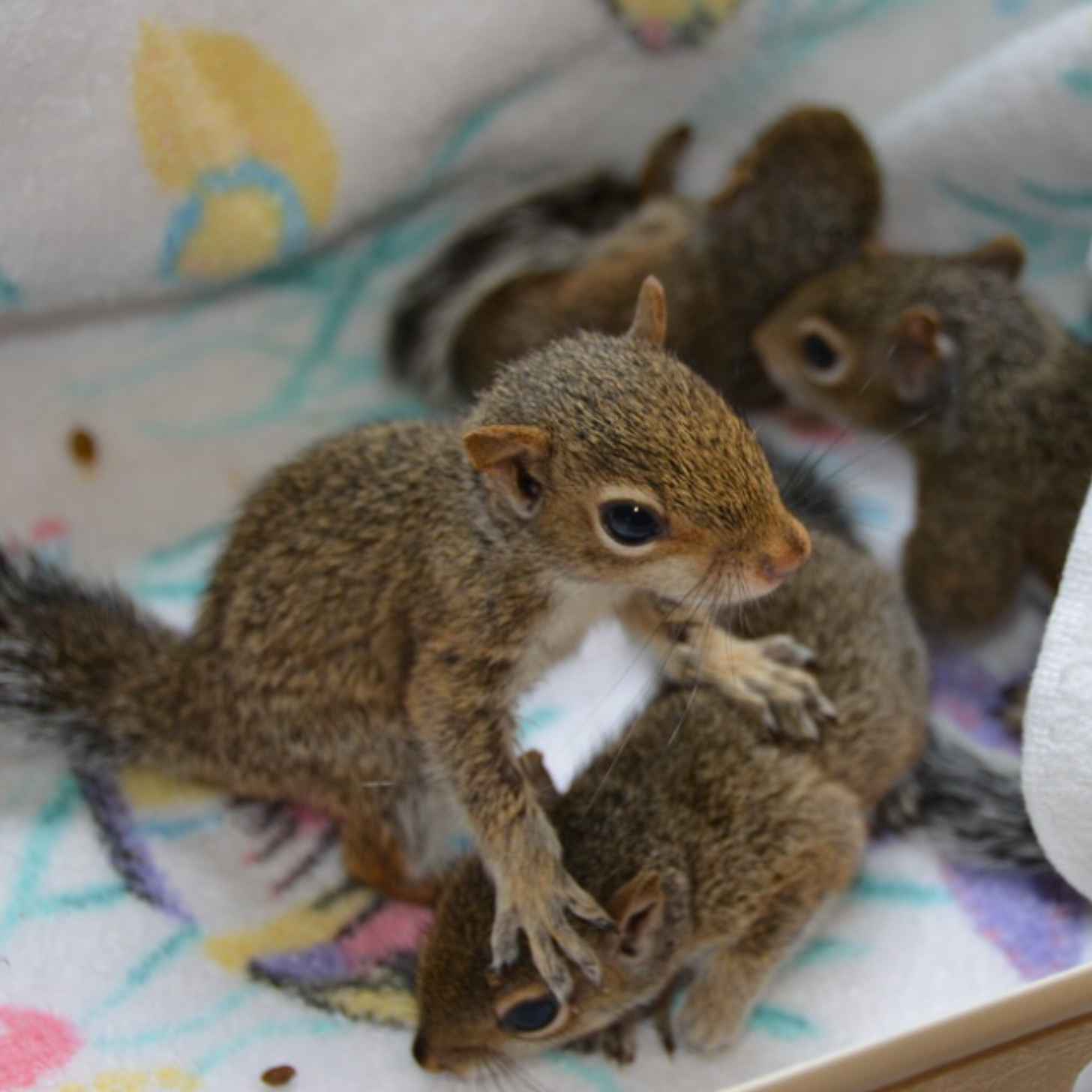
Within the gray walls and barbed wire surrounding Richland Correctional Institution in Mansfield, Ohio, there’s a room roped off for all but a small group of incarcerated men, who tend to the orphaned opossums and injured squirrels inside.
The Richland Correctional Institution is one of five across the state that have been participating in the wildlife rehabilitation program since 2019. Every year, hundreds of animals pass from the Ohio Wildlife Center’s hospital to more than 60 incarcerated volunteers.
Brittany Jordan, the center’s wildlife rehabilitation operational director, said that prison facilities are uniquely positioned to house orphaned and injured animals as they recover from abandonment, car accidents, and window strikes.
Free from domesticated animals and young children, the ducklings, songbirds, rabbits, and more have the safety of recovering in a quiet space with a small group of trusted volunteers.
“And, most importantly,” Jordan told Smithsonian Magazine, “they need time.”
Mel H., who has been working in a wildlife rehabilitation program in partnership with the Ohio Wildlife Center for nearly two years, says it has brought him newfound peace.
“I’ve been here almost 24 years, so I have dark days and the animals pull me right out of that because no matter how bad I’m feeling, I gotta come in here … I’d be on schedule, take care of the squirrels and feed opossums,” Mel told the Knox Pages. “Once I get to a routine, whatever was bothering me, I couldn’t tell you what it was.”
A version of this article originally appeared in the 2025 Helpers Edition of the Goodnewspaper.
Header image via Alexas Fotos / Pexels
Every day the Good Good Good team collects the best good news in the world and shares it with our community. Here are the highlights for this week!
If you want to get good news in your inbox every day, join the Goodnewsletter — the free daily newsletter designed to leave you feeling hopeful.
The Best Positive News We’re Celebrating This Week —
After a viral video of adoptable dogs choosing their owners was debunked as AI, a New York shelter made it a reality
In December 2025, viral videos made their rounds in which a sign reads, “Here, the dogs choose the humans,” followed by heartwarming scenes of crowds sitting in a gymnasium with dogs of all breeds and sizes sniffing and “picking” a person to kiss — that person would become their owner. It was all AI-generated.
A real animal shelter, Animal Care Centers of New York, was inspired by this viral pet adoption content and wanted to figure out a way to make it a reality.
So, they coordinated a similar meet-and-greet, but with real planning and logistics to make things go smoothly. There was a thorough interest form, limited capacity, a fee to participate, and more.
Why is this good news? The real-life effort also served as an educational opportunity for the public. While the AI-generated video had more common “tells” like odd human behavior and indecipherable objects, the overall concept was unrealistic, given the lengths shelters typically go to in matching dogs with a forever home.
The New York shelter not only showed how careful and thorough dog adoption is, but also highlighted new kinds of AI pitfalls to watch out for.
These consumers are mailing worn-out clothes back to the shops that first sold them: ‘Take It back’
→ Read more
US life expectancy broke records in 2024, and could still be climbing
A new report from the Centers for Disease Control and Prevention’s National Center for Health Statistics found that the U.S. life expectancy rose to 79 years in 2024 — the highest mark in American history.
For decades, U.S. life expectancy rose marginally every year before plateauing in the 2010s at 78 years. In 2021, during the COVID-19 pandemic, life expectancy in the U.S. plunged dramatically to 76.5 years.
In conjunction with COVID vaccinations and waning death rates from heart disease, cancer, and drug overdoses, life expectancy has risen considerably in recent years and continues to trend upward.
Based on current data, a spokesperson for the CDC expects 2025 to have a slight improvement over 2024, calling it “good news all the way around.”
Giant tortoises returned to a Galápagos island for the first time in over 180 years
In a “hugely significant milestone,” 158 captive-bred juvenile giant tortoises were released on the Galápagos island of Floreana, making their return after over 180 years of absence.
It’s part of the Floreana Ecolocical Restoration Project, and their reintroduction comes after scientists discovered tortoises carrying ancestry of the Floreana giant tortoise on a nearby island, and launched a “back-breeding” program in 2017.
The species went extinct in the 1840s after sailors took thousands from the islands for food during long voyages.
Why is this good news? Scientists behind the project say the giant tortoises are “ecosystem managers” and play an “outsized role in restoring degraded ecosystems” — and their reintroduction is giving conservationists hope for the future of the island, “and of islands around the world.”
This is how Billie Eilish, Dave Matthews Band, and Jack Johnson have been ‘greening’ their concert tours
Stomach cancer rates have declined by more than 70% in Japan since 1980
In 1980, stomach cancer deaths in Japan were more than twice as high as those from lung cancer. New data from the Institute for Health Metrics and Evaluation shows that death rates have fallen by over 70%, placing stomach cancer below several other diseases like lung and colorectal cancer.
While other cancers have seen smaller declines or even increases, stomach cancer’s drop in Japan reflects broader global trends, with many countries experiencing significant reductions in stomach cancer mortality from 1980 to 2021.
Experts attribute the decline to better hygiene, improved food safety protocols, and early screening and detection for infections.
→ Read more
After Florida’s rainbow crosswalk ban, St. Pete lit up its sky with rainbow lasers for Winter Pride
In response to an order removing about 400 “non-standard” previously approved pieces of street art — mostly rainbow, Pride-themed crosswalks and murals — across the state, cities have been finding ways to resist.
In December, the city of St. Petersburg debuted a row of Pride-colored bike racks. And the city just continued its creative acts of resistance, with a 60-mile rainbow laser installation during its Winter Pride St. Pete event.
Called “Global Rainbow,” it was designed by laser artist Yvette Mattern, who first debuted the light show in New York in 2009. Bringing it to St. Pete, she worked with certified technicians and received FAA clearance to broadcast the colorful beams towards the city’s beaches.
Why is this good news? While public, Pride-themed art might seem trivial, those displays can send a powerful message that a community is inclusive, welcoming, and united in support of a community that’s too often the target of hate and discrimination. This latest installation is St. Pete’s brightest message yet.
8 ways to make friends in 2026 — without using social media
Indonesia’s shift to cleaner cooking fuels has dramatically improved air quality and health
In 2000, fewer than 10 % of people in Indonesia had access to clean cooking fuels. That number has now risen to over 90% — largely thanks to a national program in 2007 that replaced kerosene with cleaner options like liquefied petroleum gas.
In low-income households around the world, indoor air pollution is a leading cause of death. Clean cooking fuels emit much lower levels of harmful air pollutants, and their widespread adoption has sharply reduced indoor air pollution — and deaths associated with it.
Indonesia’s upward trend in clean cooking fuel access is on par with improvements throughout all of Asia.
For the first time in league history, the WNBA generated enough revenue to trigger revenue sharing with players
Union leadership confirmed that the WNBA notified them that in 2025, the league generated enough revenue to trigger revenue sharing with the players for the first time in history.
While the dollar amount to trigger revenue sharing has not been made public, the milestone means the 13 teams will receive a total of $8 million from the league to disperse among players.
The milestone comes amid contentious negotiations between the players and the league over a new collective bargaining agreement, with salary and revenue sharing as key sticking points. WNBPA treasure Brianna Turner said the moment “shows our value and how what we're fighting for makes sense and how we should keep fighting.”
Why is this good news? This milestone for the WNBA comes amid growing support for and investment in women’s sports across the board, from women’s sports-focused bars to massive media shifts — support and investment that’s always been deserved by these athletes, but is finally catching up to be a reality.
You may also like: Minnesota’s new woman-owned bar exclusively caters to women’s sports — and its fans
‘Scream clubs’ are making it socially acceptable to shout into the void
→ Read more (and find one near you!)
South Africa reported a 16 % national drop in rhino poaching in 2025
South Africa has the world’s largest rhino population, with over 14,300 white and black rhinos. Together with Namibia, the countries hold 70% of all remaining rhinos in the world.
Due to recent conservation efforts, 66 fewer rhinos were killed in 2025 compared to 2024. The decline reflects the combined impact of law enforcement operations, improved surveillance, and collaboration between national and provincial authorities to protect rhinos across key conservation areas.
Last year, South Africa’s efforts to reduce rhino poaching were recognized with the Asia Environmental Enforcement Award, which “celebrates excellence” in enforcement by government officials against illegal wildlife trade.
Thanks to Indigenous protesters, Brazil revoked a waterway decree in the Amazon
After thousands of Indigenous people protested for 33 days — inspiring solidarity demonstrations across the country — Brazil’s government said it would revoke a decree that allowed private concessions for waterways in the world’s largest rainforest.
The Indigenous activists said the waterway projects threatened the Tapajos River, Indigenous territories, and ultimately the ecological balance of the entire Amazon rainforest.
Plans to dredge the river were tied to other infrastructure projects in the Amazon, including a railway that was proposed due to demand from the agriculture industry.
Why is this good news? Protecting the Amazon is, of course, critical for Indigenous communities — but there are global implications. It regulates the climate far beyond South America, and threats could accelerate global warming and disrupt agriculture as far as parts of Europe.
Leonardo DiCaprio has been secretly funding an LA library. The computer lab is filled with posters of him
Bogotá, Colombia launched its first ‘clean air zone’ in one of its poorest districts
A decade ago, Bogotá was one of Latin America’s most polluted cities, with pollutant concentration levels that were seven times worse than the World Health Organization’s limits.
Between 2018 and 2024, the city reduced air pollution by 24%. Now the country of Colombia has officially debuted its first “clean air zone” thanks to more than 350 miles of cycle lanes, 1,400 electric buses, and three new cable car lines.
By embracing clean transportation, creating more green spaces in the city, and redirecting freight travel, Bogotá has dramatically improved public health for its 8 million residents.
→ Read more
More good news of the week —
A new fashion brand helps fund colon cancer research and fight stigma around colonoscopies. The brand’s two women founders met and bonded over a shared diagnosis of late-stage colon cancer, and were both in their 30s when they started registering symptoms. They advocated for themselves and pushed for colonoscopies, which ultimately saved their lives.
A hospital in Cleveland, Ohio offered free medication reviews to the public to reduce harmful drug interactions. At the event, doctors offered free medical advice to people taking multiple prescription drugs at the same time, which can have unexpected side effects.
A U.K. cafe dedicated to ending homelessness just opened a second location and a drop-in center. Café 16:15 in Rushden, Northamptonshire was started by Stan Robertson, who once experienced homelessness himself, and runs entirely on volunteers.
South Korea officially ended the controversial practice of breeding bears and extracting their bile. The new law protects bears, primarily moon bears, from being farmed for food and medicinal purposes.
Scientists found a way to transform cotton fabric into a self-sustaining power source. Harvesting electricity from humidity, it operates day and night by drawing energy from moisture in the air, relying on carefully engineered polymer coatings that maintain a continuous flow of ions, enabling stable electrical output without batteries or external power sources.
Brandi Carlile raises $600K for immigrant legal aid in Minnesota with livestream concert fundraiser. The singer’s “Be Human: A Concert for Minnesota” event benefited The Advocates For Human Rights, a nonprofit in Minneapolis that provides legal aid to people detained by ICE.
Officials in Denver announced a moratorium on the construction of new data centers. The moratorium is expected to last several months and allow the city to review and strengthen regulations around the sites, and even existing or in-progress data centers could be expected to follow any new guidelines.
A California environmental nonprofit bought 2,284 acres in southern Santa Clara to protect the land from development. The land was purchased after a 10-year litigation battle with developers who wanted to turn it into a sand-and-gravel quarry. It’s now a protected area for mountain lions, bald eagles, steelhead trout, and more.
A record number of rare butterflies were spotted in Wales thanks to backyard conservation efforts. After landowners were encouraged to cut back on trimming their hedges, more than 3,000 rare brown hairstreak butterflies were spotted in an egg count.
Robotic spine surgery is making back operations faster and safer. A team of doctors in Phoenix, Arizona said the robot’s added ability to do X-rays during surgery increases precision and decreases radiation exposure for patients.
The “Official Dad of the Olympics” invited the U.S. women’s hockey team to celebrate at his house in Ohio. After sharing updates from Italy with his content creator child, Richard Kiley — an avid women’s hockey fan — went viral for his wholesome videos, even working as an official correspondent for a women-led sports media brand at the Games.
England is banning vaping in cars carrying children, amid rising evidence that secondhand vapor poses health risks. The move is included in the tobacco and vapes bill, which will also outlaw smoking, vaping, and using heated tobacco in playgrounds and outside schools and hospitals.
Finland is now using hot sand to produce “fossil-free” steam. The new form of renewable energy generation solves a blind spot in industrial heat production — one of the largest sources of carbon emissions.
The Bermuda snail, once feared extinct, is thriving again thanks to a decade of conservation efforts. After raising them in captivity, British scientists introduced more than 100,000 of the button-sized snails back to Bermuda.
TED is giving $1B to 10 nonprofits working to solve “humanity's biggest problems.” From cleaning up ocean plastic to preventing homelessness, TED just announced its new cohort of fellows that will receive the funding necessary to execute their world-changing work.
A stunning new 42-foot “Latin American Mona Lisa” mural is made out of 100,000 recycled plastic bottle caps. Installed by Venezuelan artist Óscar Olivares, the mural in El Salvador was made with trash collected by local recyclers and is the largest artwork of its kind.
The U.S. Forest Service is no longer issuing firefighters gear that contains PFAS. The move followed a ProPublica article revealing that the U.S. Forest Service had for years issued clothing to wildland firefighters that it knew contained potentially dangerous “forever chemicals.”
Citizen scientists discovered what they believe is one of the largest coral colonies ever documented on the Great Barrier Reef. The coral looks “like a rolling meadow” and spans approximately 111 meters in maximum length and covers an estimated area of 3,973 square meters — about half the size of a soccer field.
Scientists are celebrating the James Webb Telescope’s mapping of auroras on Uranus for the first time in 3D. “By revealing Uranus’s vertical structure in such detail, Webb is helping us understand the energy balance of the ice giants. This is a crucial step towards characterizing giant planets beyond our solar system.”
Under a new law, millions of New York City workers will now get more time off. In the city, most employees are already required to have 40-56 hours of paid time off. But starting Sunday, employers must provide an additional 32 hours of unpaid protected leave per year.
The oldest state park in the U.S. is adding more than 150 acres and new hiking trails. When the project is complete, Niagara Falls State Park will feature nearly five miles of continuous shoreline along the Niagara River, from the Niagara Scenic Parkway to the Niagara Power Vista Visitor’s Center.
A Welsh charity purchased more than 405 hectares of land to make it the country’s largest rewilding project. The £2.2 million purchase is an effort to help the country catch up with large-scale nature recovery projects underway elsewhere in the UK.
A children’s hospital in East Tennessee was just renamed to honor Dolly Parton. In a video announcement, Parton said every child “deserves a fair chance to grow up healthy, hopeful, and surrounded with love.”
Researchers in Malaysia found that planting multiple types of seagrass significantly boosts restoration success. The decade-long project revealed that planting a combination of fast-growing seagrass seedlings helped revive diverse marine life in damaged meadows.
Healthcare workers are braving heat, dust, and elephants to deliver HPV vaccines to girls in rural Zimbabwe. Traveling by bike, these doctors have immunised more than 22,000 girls in some of the country’s most remote villages.
In January, as tensions in Minneapolis mounted amidst increased raids from the U.S. Immigration and Customs Enforcement, some of Hollywood’s most famous figures gathered at the Golden Globes dressed to the nines to promote their latest projects.
But in one red-carpet interview with Kevin Ortega-Rojas, actor Mark Ruffalo said that he found it difficult to “pretend anymore” when it comes to political violence.
“I’m not feeling so great. We have a woman, Renee Good, who was murdered last week,” he told Ortega-Rojas. He then derided ICE agents, or “literal stormtroopers,” as he called them, for “running around terrorizing people.”
On February 22, Ruffalo shared a Guardian article on X titled: “DoJ cases against protesters keep collapsing as officers’ lies are exposed in court.”
“Abolish ICE and start over,” he said. “They are polluted culture of lies, violence and impunity. Rotten to the very core and HUGE WASTE OF MONEY. Tear it down and start again.”
As an actor, Ruffalo has never shied away from using his platform to amplify causes closest to him, from social justice movements and reproductive rights to the threats of Big Oil and climate change.
Even as he juggles an ever-evolving film and television career — most recently in “Poor Things,” “Mickey 17,” and HBO’s “Task” — Ruffalo has always ensured that his activism is at the forefront of his work.
This year, he attended “No Kings” protests in the face of authoritarian threats, campaigned for clean water rights in small towns across America, and continually called attention to the humanitarian crisis in Gaza.
In September, Ruffalo joined Javier Bardem as an executive producer on the film, “All That’s Left of You,” which follows a Palestinian teen as they are displaced in 1948.
“’All That’s Left of You’ is an epic, deeply human film that spans decades … it reminds us that even in the face of unimaginable loss, our way forward lies in empathy, in finding meaning in grief and in choosing humanity over vengeance,” Ruffalo said in a statement.
The drama is Jordan's official selection for the 98th Academy Awards and made the shortlist for the Best International Feature Film category.
“Cherien Dabis and her remarkable cast have created something timeless and essential, telling not only the story of the Palestinian people, but the universal story of all who have endured oppression, displacement and violence,” Ruffalo said.
“This film offers another possibility: the chance to move toward collective healing and a more just and peaceful future. I’m honored to join as an executive producer at such a vital time.”
A version of this article originally appeared in the 2025 Helpers Edition of the Goodnewspaper.
Header image via Gage Skidmore.
When Rachel Griffin Accurso realized that her 2-year-old son had a speech delay, she took speech therapy lessons to learn how to help him reach crucial milestones.
She adapted those language strategies into songs and uploaded them to YouTube in 2019 as “Ms. Rachel,” laying the first brick for an online platform that would soon screen in millions of households around the world.
In a recent interview with Democracy Now!, broadcaster Juan González drew comparisons between Accurso and Mister Rogers, linking Rogers’ fight for racial justice to Accurso’s tireless dedication to platform Palestinian children during the war in Gaza.
“People say, you know, [Rogers] wasn't political. And he was political,” Accurso noted. “He had such deep care for children and he took media so seriously, that it should really serve children and that it's a big responsibility. I think about that responsibility all the time.”
"I see all children as precious and equal,” Accurso, who has raised over $1,050,000 for various aid efforts benefiting children in Sudan, Gaza, and Ukraine. “My deep care for children doesn't stop at any border.”
On February 28, the US-Israeli war with Iran resulted in civilian casualties when missiles reportedly destroyed a girl’s primary school in Minab, southern Iran, killing around 150 and wounding almost 100.

Hours later, Accurso took to Instagram to ask, “Can’t we all agree in this life not to kill children?”
“I HAVE said the Iranian government needs to stop killing children, too - everyone, everywhere — stop killing, starving, bombing, taking kids hostage & violating children’s human rights,” she wrote beneath a picture of text on a white background that read: “Stop killing children.”
“Give them school,” she continued. “Give them medical care, give them safe, warm homes, give them everything they need to thrive.”
A version of this article originally appeared in the 2025 Helpers Edition of the Goodnewspaper.
Header image via Ms. Rachel / Instagram
Last week, The Audacious Project, an initiative of TED, announced it would be investing $1.03 billion in a new cohort of grantees.
Among the 13 funding recipients is Ipas, an international reproductive justice organization that has worked with partners across Africa, Asia, and the Americas for over 50 years to bring safe and legal abortion and contraception to all.
While it’s currently unclear exactly how much funding Ipas will receive from The Audacious Project, a representative from the organization said it will be in the “multi-millions.”
Through its unique model, The Audacious Project brings together dedicated philanthropists to give in community with one another, allowing funders to connect with groundbreaking projects that aim to solve humanity’s biggest challenges.
This is the first time The Audacious Project has funded an organization that works specifically in abortion access and care since the initiative was developed in 2018.
“We are honored to be part of the Audacious Project 2025 cohort and the first organization recognized that works specifically in abortion care/access. The Audacious Project has given Ipas an incredible platform to center abortion and, in particular, medication abortion,” Anu Kumar, CEO and President of Ipas, told Good Good Good.
“Abortion with pills is revolutionary and, with these funds, more people will know about them and have access to them. At a time when abortion care, human rights, and democracy are under attack, this is urgent. We hope this recognition encourages others, partners, and donors, to join us in this work.”
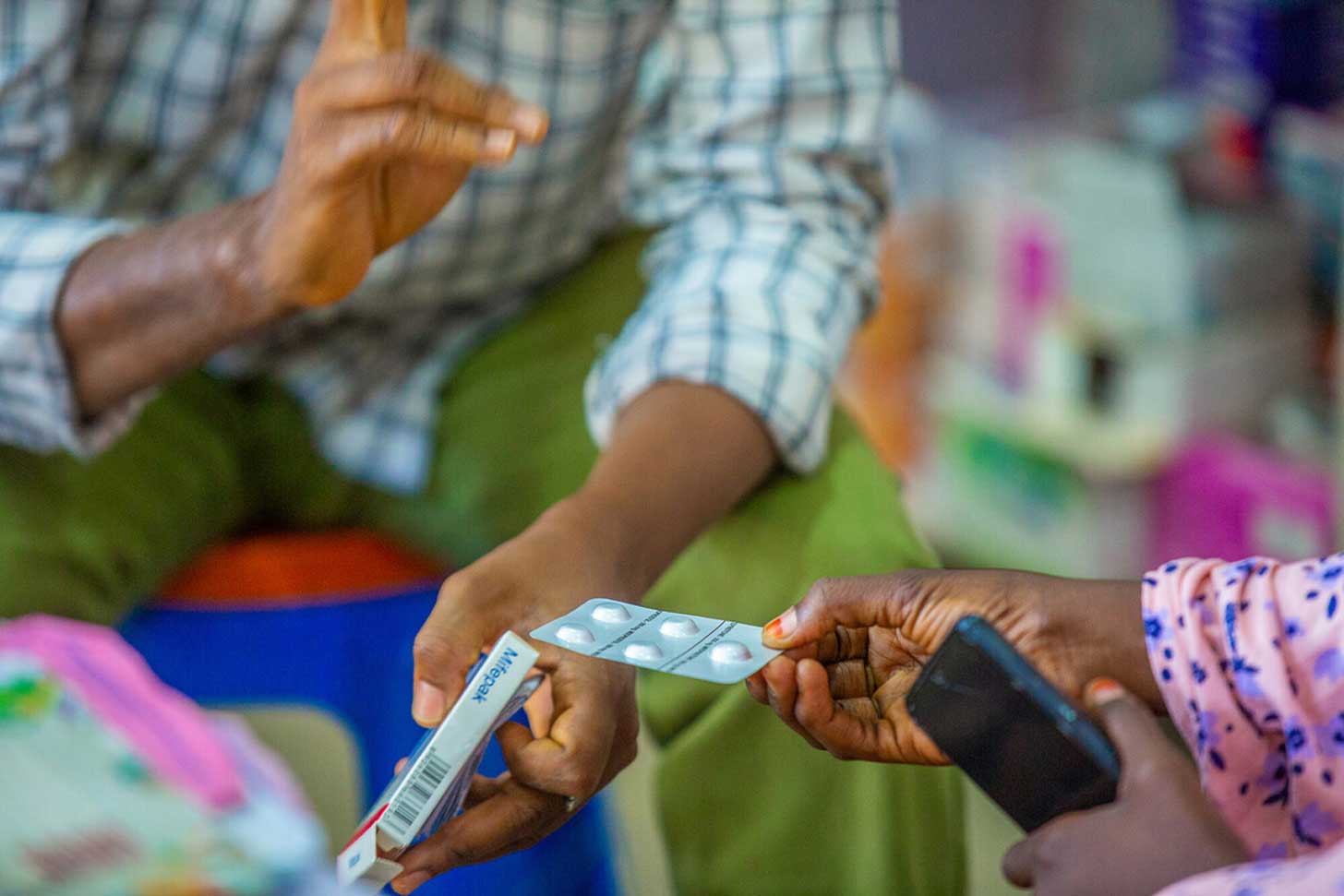
With support from TED and The Audacious Project, Ipas plans to expand access to abortion and contraception globally.
“Our vision is to prevent 16.3 million unsafe abortions and 22.6 million unintended pregnancies and to avert 39,000 maternal deaths by 2032, reducing unsafe abortion by 30 percent in 10 high need countries across Sub-Saharan Africa, Asia and Latin America by 2040,” a statement from the organization shared.
Funding from The Audacious Project is restricted to particular countries and strategies but remains flexible, as long as funds are used for the project Ipas has proposed and builds on the organization’s existing work.
The organization says it will focus these newly awarded funds in 10 “high-need countries” in Africa, Asia, and Latin America, including: Côte d’Ivoire, Democratic Republic of Congo, Ethiopia, Kenya, Nigeria, Zambia, Bangladesh, India, Pakistan, and Mexico, “with plans for broader expansion.”
In addition to saving the lives of millions of people who end pregnancies using unsafe methods, this funding supports Ipas’s work to “advance global gender equality goals by ensuring women and girls can control their own bodies and futures, remain in school, and participate fully in economic and civic life.”
Kumar told Good Good Good that every single year, there are 121 million unintended pregnancies around the world — nearly half of all pregnancies. Of those 121 million, she added, 61% end in abortion, with nearly half of those abortions being unsafe.
“That’s 35 million people ending pregnancies every year using unsafe methods, amounting to one unsafe abortion every second of every day and potentially fatal consequences. These outcomes are not inevitable — we know how to prevent unsafe abortion,” Kumar said.
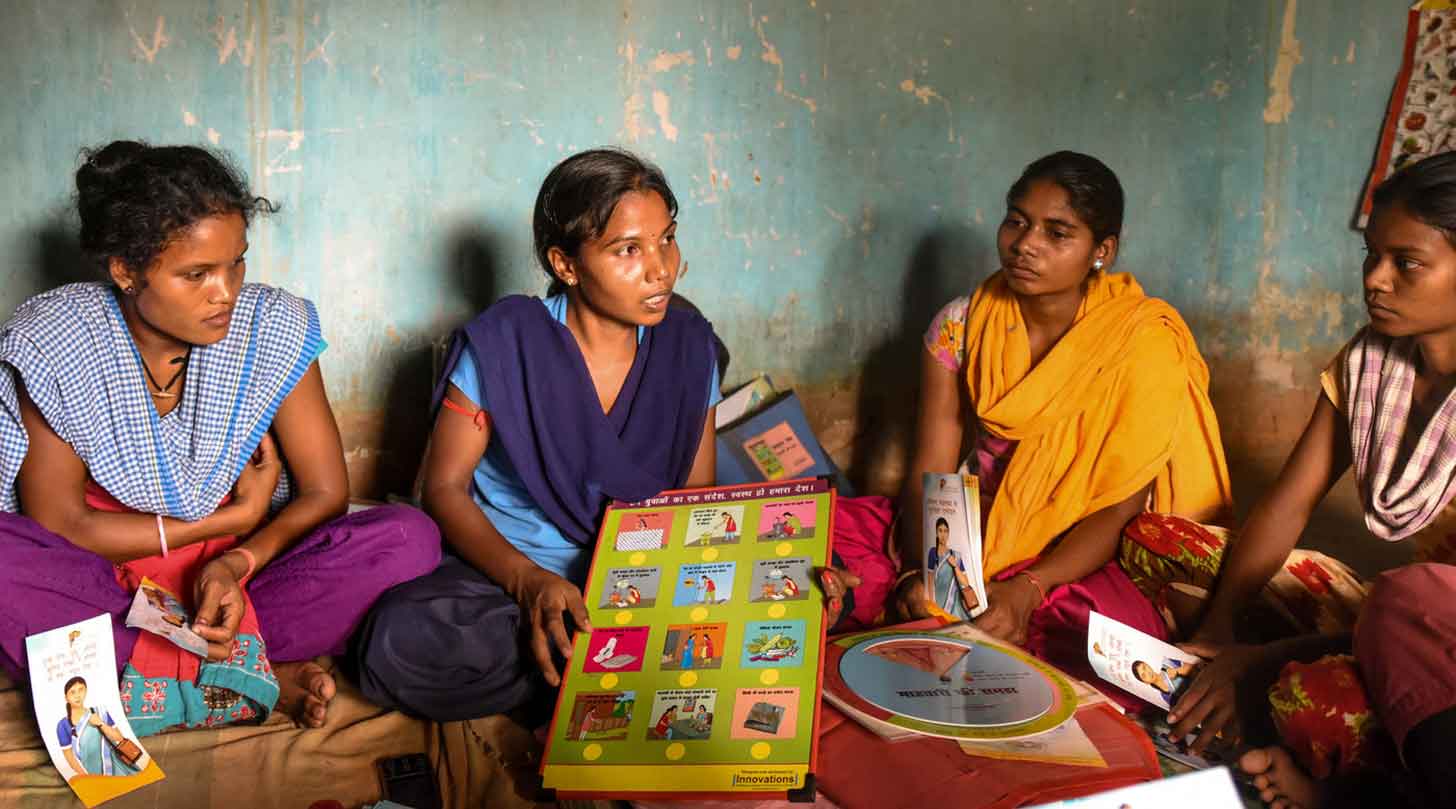
Ipas ensures people have access to safe medical abortions, distributes contraception, works to end stigmas around abortion, and specifically supports communities that face intersectional issues, like climate injustice, gender-based violence, war and conflict, and more.
“Ipas’s approach breaks down the systemic, legal and social barriers that make access to safe abortion care out of reach for women and girls around the globe. Our solutions are systems-based and locally rooted,” Kumar added.
“We focus on creating pathways to quality abortion and contraceptive care, advocating for policy that expands reproductive rights, and working with communities to challenge stigma and shift social norms so that sexual and reproductive rights are ingrained into the daily fabric of people’s lives.”
While Ipas itself does not receive funding from the United States government, aid funding tied to contraception has been especially precarious under the second Trump administration. As the international development landscape evolves, philanthropic investment like this is crucial for this work to continue across the globe.
“Ipas works to make sustainable, systemic change in the world. We know access to abortion and contraception leads to immense benefits to individuals, families, communities, and even countries,” Kumar said in a statement for the Audacious Project.
“We want every woman and girl, no matter where they live, to have healthy, prosperous lives.”
You may also like: With student clubs and scholarships, Girls Who Code is on track to close the tech gender gap by 2030
Header image by Jasmina Tomic / TED
Good Good Good has been covering TED's annual conference and spinoff events — like TED Women, TED Next, and TED Countdown — as press since 2023. Our journalists watch TED Talks live and interview speakers after they get off stage, giving Good Good Good the opportunity to share stories like this before TED Talks are released online.
Catherine O’Hara passed away on January 30, 2026, at the age of 71, leaving behind a storied career in film and television that spanned decades and delighted audiences worldwide.
From classic roles in “Home Alone,” “Beetlejuice,” and “Best in Show” to her acclaimed work in “Schitt’s Creek” and “The Studio,” her quick wit and warmth made her one of comedy’s most cherished figures.
On March 1, O’Hara posthumously won the Actor Award for Outstanding Performance by a Female Actor in a Comedy Series.
Seth Rogen, the co-creator of “The Studio” and O’Hara’s co-star on the show, took the stage to accept the award as the crowd leapt to their feet for a standing ovation.
“I was asked to assume the very sad honor of accepting this award on O’Hara’s behalf,” Rogen started.
“I know she would have been honored to receive this award from her fellow performers, who I know she respected so much. She was such big fans of all of yours,” he said as the camera panned to fellow nominees Kathryn Hahn, Kristen Wiig, Jenna Ortega, and Jean Smart — all of whom were teary-eyed.
“I, obviously, have been reflecting on the time I was fortunate enough to spend with her and working with her, and something that I’ve just been marveling at over the last few weeks was really her ability to be generous and kind and gracious, while never, ever minimizing her own talents and her own ability to contribute to the work that we were doing. She knew she could destroy, and she wanted to destroy every day on set.”
Rogen then referenced the countless times O’Hara had sent him and “The Studio” co-creator Evan Goldberg new ideas for the show.
“And literally, 100% of the time, it made not just her character better, but it made the scene better and the entire show better as a whole,” Rogen said. “And she really showed that you can be a genius and be kind, and one of those things does not have to come at the expense of the other in any way, shape, or form.”
Beyond her onscreen success, O’Hara was deeply committed to giving back. She was a longstanding supporter of the Terry Fox Foundation, helping raise awareness and funds for cancer research tied to the iconic Canadian athlete who ran 3,338 miles across Canada in 1980 with a prosthetic leg to spread cancer awareness.
Her charitable spirit also led her to donate the $250,000 she won on a celebrity episode of “Who Wants To Be A Millionaire” to Upward Bound House, a nonprofit assisting families facing homelessness in Los Angeles.
In November 2024, O’Hara partnered with the University Health Network of Canada to raise funds for the hospital’s advanced Parkinson’s research.
“University Health Network is Canada’s number one hospital,” she said in a Facebook video. “They are world-class, thanks to their life-changing innovations like implanting devices that stimulate the brain and reduce symptoms of Parkinson’s.”
You can still donate to the cause at the university’s website.
You may also like: Robin Williams passed away 10 years ago. Here are 7 ways he changed the world for the better
Header image via Apple TV+
In 2008, Mike Schultz lost his leg in a snowmobiling accident, after a youth full of intense motorsports like BMX riding and snowmobile racing, a sport he competed in since 2002.
Despite the life-changing injury at 27, doctors said the only way he would survive was by amputating his left leg above the knee.
“To hear that as a top-level athlete is something you’re not really prepared for,” Schultz told NBC Sports in October 2025.
He wasn’t ready to call it quits on his athletic career. Just weeks after his surgery, he was sneaking away for short joyrides on his snowmobile and knew he had to find a way to return to sports.
“It was just like, I can’t give it up. I just need to find a way. And that’s when I started thinking about developing my own prosthetic leg to get back into riding,” he told NBC Sports.
His first prosthetic was designed for everyday use and walking, but it was not made to withstand the impact and movement of intense athletics and motorsports.
So, Schultz — without any technical engineering training — started to build his own prosthetic.

“I’m Mr. Fix it,” he said. “I just look at something, and I want to make it better in some way or another. That’s just how my mind works.”
After five weeks of tinkering in his garage workstation, Schultz made the Moto Knee, which used a mountain bike shock absorber, among other creative details. Not even a year later, he was placing second at the ESPN Summer X Games Adaptive Super-X with his own prosthetic invention.
In 2010, he founded his company, BioDapt, to design and make lower limb prosthetic components for amputees looking to participate in high-intensity sports and activities. His first customer was Walter Reed Medical Center, where he fitted veterans with combat injuries for their own Moto Knees.
“The goal originally was to create something to get back on my motocross bike and my snowmobile,” he told NBC Sports. “And about a year later, [I realized] that there were so many other adaptive athletes that could utilize the equipment I was developing.”
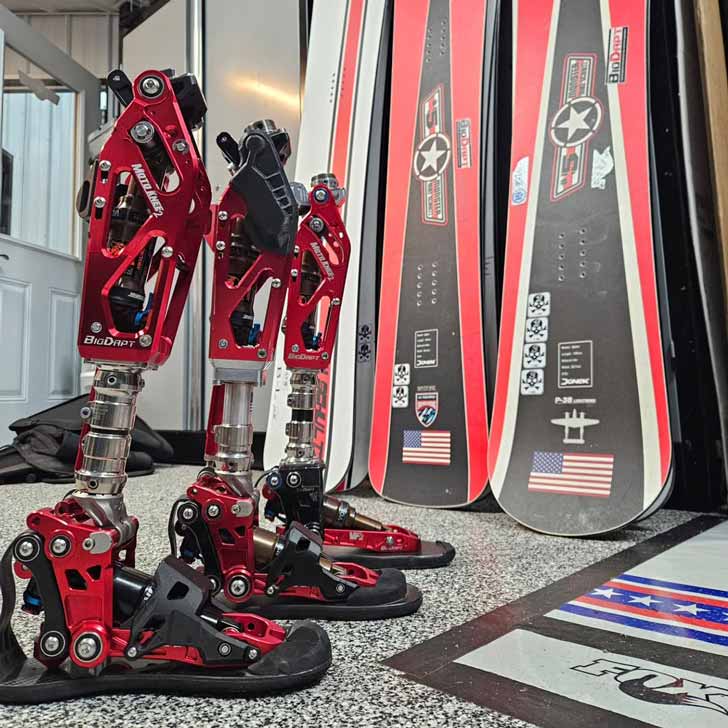
BioDapt’s products differ from standard prosthetics due to their ability to adjust and attune to different scenarios. For instance, depending on whether a para snowboarder rides with their prosthetic in the front or back of their board, BioDapt can change the alignment.
In the front, the prosthetic stands more upright, whereas those whose prosthetic is on the back leg have theirs flexed a bit more.
The legs are also adapted to accommodate an athlete’s knee flexion range, with hydraulic and pneumatic shock systems built in.
Schultz pivoted to snowboarding after working with clients who suggested he take to the board. He discovered he was good at it — and became a two-time Paralympian, riding with his prosthesis as his forward leg.
“I feel it gives me more power to generate speed through the rollers and features on the race course,” he told Paralympic.org. “Exiting a turn, I can use my strong leg or my real leg to absorb and extend to try and accelerate quicker.”

Schultz will return to the Paralympics for a third time at age 44, already with one gold and two silver medals in his back pocket.
And the entire U.S. Paralympic snowboarding team will be wearing his prosthetics.
BioDapt now supports about 90% of lower-limb athletes globally competing in para snowboarding competitions, with about 25 athletes expected to compete in Italy wearing equipment Schultz developed.
After competing in Milan-Cortina, Schultz will retire from competitive para snowboarding and will devote all of his time to BioDapt, especially helping other paralympians prepare to compete in Los Angeles in 2028.
Just weeks before his final Paralympic run, BioDapt shared the news that it would be building on its existing work and partnering with Autodesk, an AI-powered manufacturing company that will help BioDapt refine its products and scale to serve even more people.
The company’s focus remains on winter and summer para sports, but hopes that its next era will help “build complex, high-performing products that are durable, repeatable, and scalable for more people.”
By tapping into advancing technology, BioDapt hopes to “optimize prosthetic equipment” both for elite competition and for improved prosthetic performance for travel and changing conditions.
Beyond the medals and the Olympic glory, this will be Schultz’s legacy.
“I’ve always had two sides to my career — competing and building,” Schultz said in a statement for BioDapt.
“For years, I’ve pushed myself to be the best athlete I could be, while spending countless hours refining the gear that makes that performance possible. As I step away from competition, I'm excited to take everything I've learned and apply it to helping the next generation of athletes go even further.”
You may also like: Official 'Olympics Dad' invites US women's hockey team to his house to celebrate after White House drama
Header image courtesy of Mike Schultz/Instagram