At 18 years old, Kerwin Pittman was sent to prison to serve his time for conspiracy to commit murder. He spent 11 and a half years incarcerated, with over a year of that time in solitary confinement.
It has been eight years since his release.
Now, he says he’s the first former inmate to purchase a prison in United States history.
After his release, Pittman turned to social justice advocacy work, founding his nonprofit Recidivism Reduction Educational Program Services, Inc., or RREPS. Serving the Goldsboro, North Carolina community, RREPS supports formerly incarcerated individuals to lower re-offending rates.
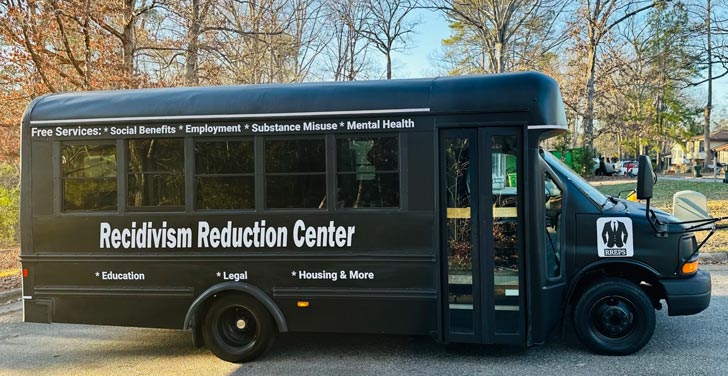
Over the years, Pittman has built a robust slate of offerings, including an anti-recidivism hotline, mentorship programming, and a mobile recidivism reduction center: A revamped bus that travels to people in need and provides an array of resources to help them find housing, jobs, mental health care, and more.
Now, he is working to build the Recidivism Reduction Campus, a housing and job training facility for formerly incarcerated folks on the grounds of the former Wayne County Correctional Center.
Closed since 2013, the former jail has sat vacant for over a decade. Pittman purchased the property for $275,000 in November 2025. It will take about $2 million to refurbish the space, Pittman said, and the project will rely heavily on private donations, though local, state, or federal funding avenues may also be pursued.
“This effort is not about continuing incarceration,” Pittman told WRAL News. “It is a blueprint for transformation, led by those who have lived it. It represents a powerful redefinition of justice in America, from incarceration to ownership, from punishment to purpose.”
According to reporting from North Carolina Health News, of the 13,000 people released from North Carolina state prisons in 2021, 44% were re-arrested within two years. Stopping that cycle is what motivates Pittman.

The campus is not yet under construction, and Pittman estimates it will take about two years to get the whole operation up and running.
Once complete, the center will include transitional housing, mental health support, workforce training, life skills resources, case management, and more.
“The campus would be like a stabilization phase for guys coming out of jail or prison, to give them a six-month pause so they can get their life back on track,” Pittman told NC Newsline.
After his own release, Pittman said he had family support. However, many of his friends didn’t have a place to go — or found themselves faced with a time limit on where they could stay.
The Recidivism Reduction Campus aims to house as many as 300 residents at a time, where they would complete a six-month program, including industry certifications for trade jobs in high demand.
While job-training programs for inmates and justice-impacted populations aren’t a new concept, building a dedicated operation on the grounds of a former correctional facility is.

“Once a site of confinement, the former Wayne Correctional Prison is now being transformed into … the first campus in the United States purchased and repurposed by a formerly incarcerated person to serve as a hub for reentry, healing, and opportunity,” the RREPS website stated.
To transform the facility, RREPS will make intentional redesigns, starting with the removal of barbed-wire fences, prison bars, and signs that say things like, “No inmates allowed past this point.” Instead of open dormitories, residents will have private rooms, and windows into bathrooms will be covered.
The space will be more like a college dorm, he said, rather than the cells he himself knows too well.
“Me going into the system young, getting in trouble and being able to come out on the other side of that — and to be honest, just following my spirit and God leading the way,” Pittman told North Carolina Health News, “it made me want to be able to help other people.”
Beyond his own motivations, the Recidivism Reduction Center represents a poetic new era for people who have been caught in the offender cycle without a hand to offer them a way out.
“This moment isn’t just about me. It’s about every person who has been counted out, every family waiting for their loved one to come home whole, and every community that deserves healing,” Pittman shared on Facebook upon announcing the new project.
“It’s about showing this country that when we invest in people, especially those closest to the pain, real change happens.”
You may also like: Instead of a new jail, LA built a shipping container housing complex for homeless residents
Header image courtesy of Kerwin Pittman/RREPS
After Dr. Jane Goodall, the beloved primatologist and conservationist, died on October 1, 2025, the world mourned her loss and celebrated the 91 years she spent making the world a better place.
Now, months after her passing, the Jane Goodall Institute — a nonprofit that continues to support conservation, youth education, advocacy, and research initiatives — has announced that April 3 will officially be Jane Goodall Day.
“April 3 … is Jane's birthday. And this year, we are officially marking April 3 as Jane Goodall Day,” the organization wrote in an email announcement.
“This first annual day of action will celebrate how Jane’s ideas live on through the people, communities, and work advancing her vision.”
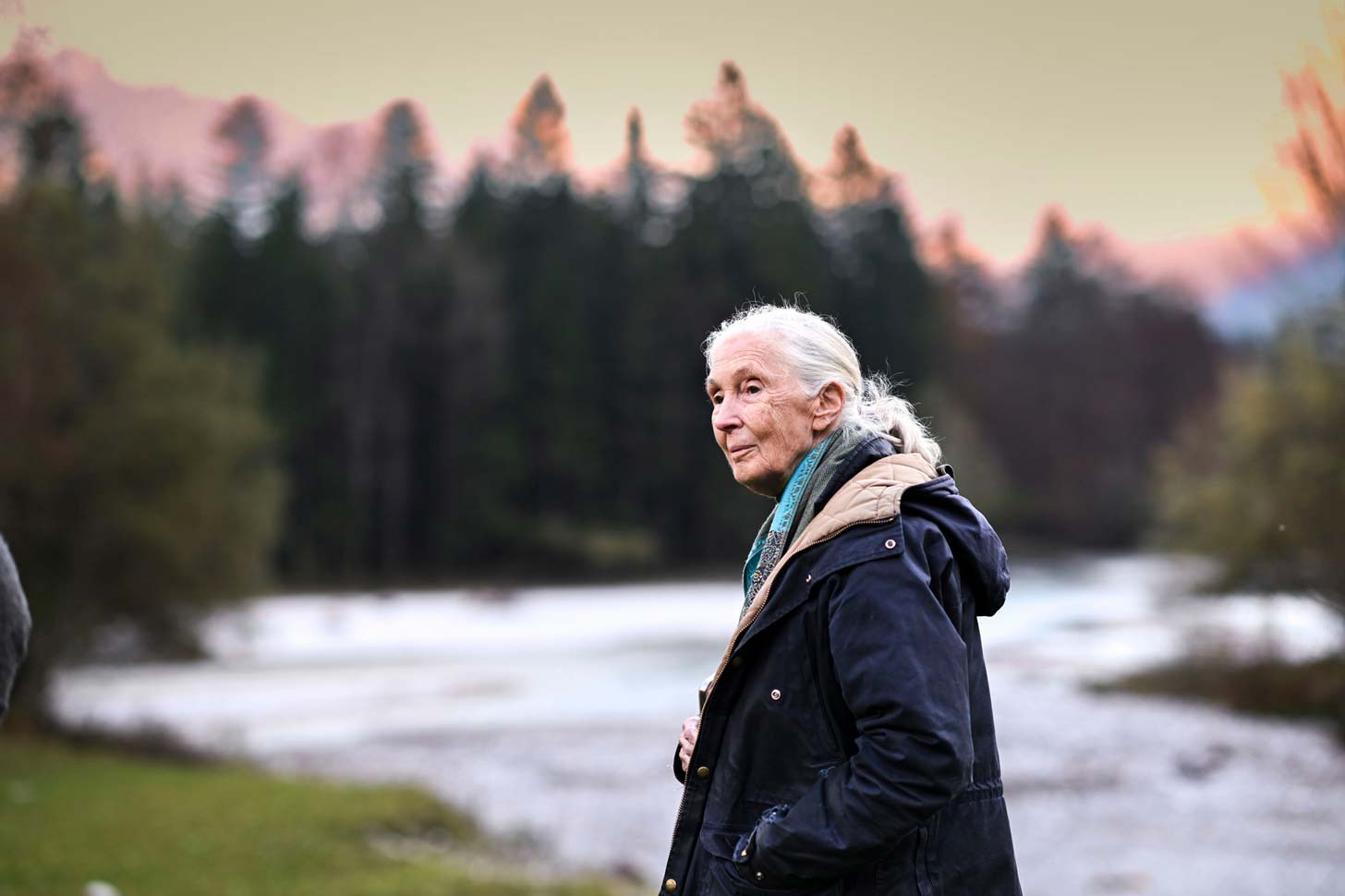
While many people similarly celebrated Goodall’s birthday while she was still alive, this new holiday will have a special meaning for all who want to follow in her footsteps.
“Dr. Jane Goodall dedicated her life to showing that people create meaningful change when they come together with purpose. She led a global movement dedicated to protecting our natural world and the human and wildlife communities that call this planet home,” JGI continued.
“From her groundbreaking scientific discoveries to her global advocacy for wildlife, communities, and the planet, Jane reshaped how the world understands conservation and our shared responsibility. Now, that responsibility lives with all of us.”
This year, the institute is asking people to use April 3 as an opportunity to financially support its work, while also taking action on behalf of the natural world.
In the past, this has looked like planting trees, picking up trash, or supporting a youth Roots & Shoots project to take action for the planet.

The Institute currently has an interactive digital experience for people to learn more about Goodall and the other change-makers who have supported her legacy over the years.
“Dr. Jane Goodall often reminded us that there is hope for a brighter future when people take action together. That belief inspired Jane Goodall Day — which we will celebrate on Jane's birthday, April 3,” the organization said.
“Together, let’s ensure Jane’s work lives on for generations to come.”
You may also like: Because of Jane Goodall, I became a primatologist
Header image by Roy Borghouts for the Jane Goodall Institute
The “Zero Suicide Model” is an approach developed in 2001, in which hospitals and health systems work with people contemplating suicide to reduce their access to lethal means, such as firearms, before following up with mental health treatment.
The first hospital system that implemented the model, Henry Ford Health in Detroit, Michigan, saw no suicides for an entire year.
In a different hospital system, three of four locations saw suicides and suicide attempts fall up to 25%, according to a study from April 2025.
The fourth location maintained low rates of suicides and attempts.
“Over the course of the year, that’s up to 165 to 170 suicide attempts that were prevented at these participating health care systems,” the study’s lead author, Brian Ahmedani, of Henry Ford Health, told The Associated Press.
The model involves a screening at any standard medical visit, designed to be “completed in 15 minutes,” according to the American Medical Association.
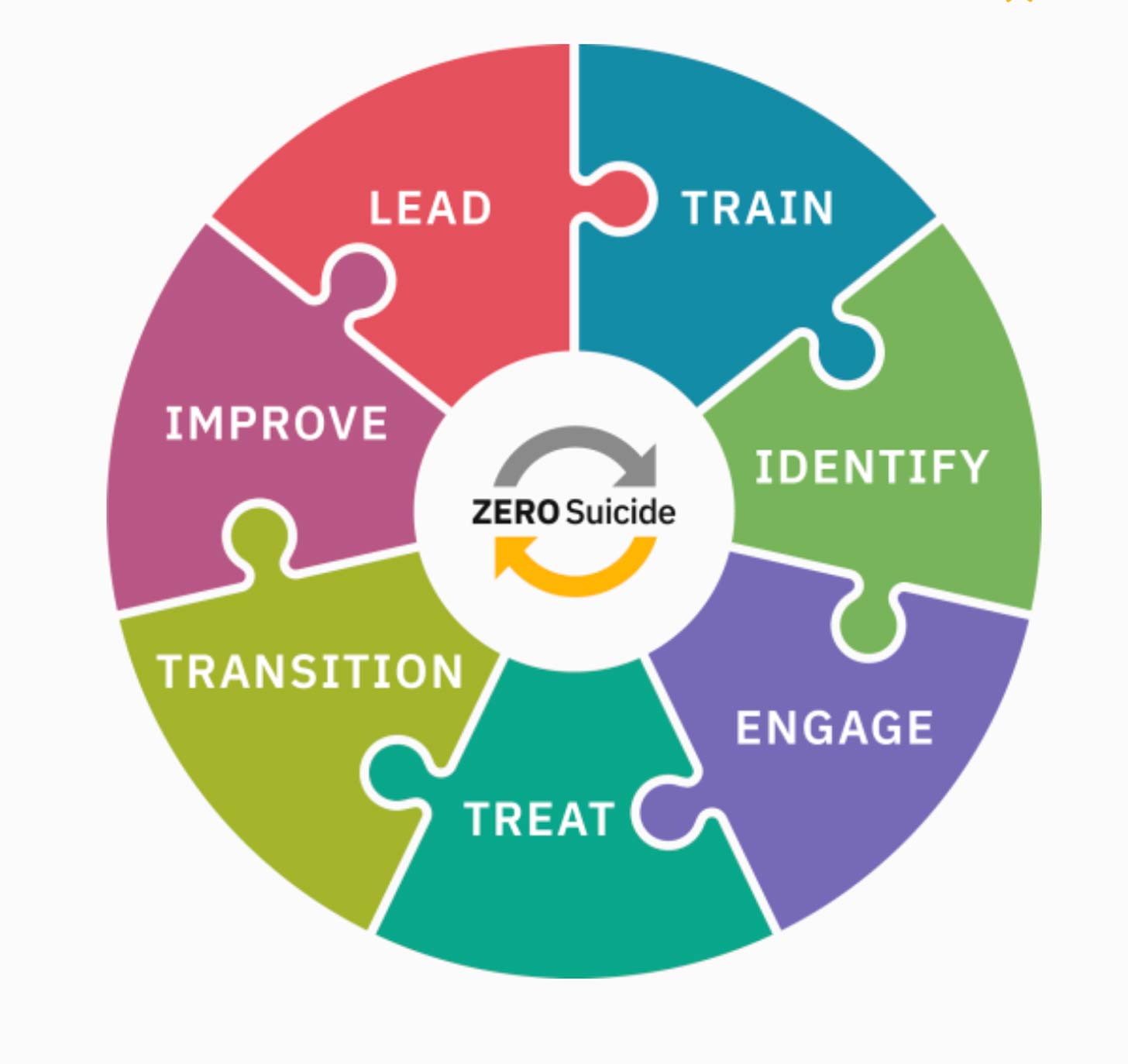
Patients determined to be at risk for suicide see a psychiatrist for a full evaluation, and a social worker or a nurse-practitioner care coordinator completes a safety plan.
At Doernbecher Children’s Hospital in Oregon, for example, the injury prevention program connected to the pediatric hospital’s psychiatric crisis center began providing consultation for patients seen for mental health crises as part of implementing Zero Suicide training.
Among the eligible patients who received tools like medication lockboxes or safe firearm storage devices, 98% said they felt their child was safer at home as a result.
“Getting the medication lockbox helped me feel like I was doing something to keep my child safe,” one participant said in a case study.
“I wish all families had access to these safety resources,” another added.
Since its development, the Zero Suicide Model has been adopted in over 25 other countries.
“People are struggling all across America, and now we have an option that’s feasible, practical, and with plenty of data to show that it works,” Ahmedani told the AMA. “We are working every day to refine this model, bring it to more places, and save even more lives.”
You may also like: England's new '10-minute clinics' treat emergency mental health crises and ease burden on hospitals
A version of this article was originally published in The 2026 Mental Health Edition of the Goodnewspaper.
Header image by Mikhail Nilov via Pexels
In 2025, the National Alliance to End Homelessness found that homelessness in the United States increased 18% from the year prior, with an estimated 771,480 people living on the streets.
And in the first year of his second presidency, Donald Trump introduced an executive order called “Ending Crime and Disorder on America’s Streets.” It aims to increase the punishment of people living on the street through heavy policing and institutionalization.
Issued on the heels of a Supreme Court ruling that makes it legal for cities and states to ban people from sleeping and camping in public places — even when they have nowhere else to go — this move pressures local governments to enforce punishments that are proven to be ineffective in actually reducing homelessness.
A recent study out of the Institute of Urban Studies at the University of Texas at Arlington found that there was actually a 2.2% average increase in unsheltered homelessness in cities that implemented criminalization ordinances, compared to those that didn’t.
Homelessness prevention, advocacy, and legal groups have challenged Trump’s executive order in court, though it is unclear what will come of it. And localized criminalization ordinances are increasing in cities across the country.
Homelessness requires swift and strategic action to confront, but leaders in the space urge those in power to lean into proven methods of success — not “cruel and unusual punishments” that “rely on the false idea that poverty is synonymous with criminality,” as Southern Poverty Law Center CEO Margaret Huang puts it.
As advocates continue their fight, here’s a refresher on the solutions that we know are effective in preventing and reducing homelessness.
3 Proven Solutions to Reduce Homelessness
Housing First
“Housing First” is an approach that addresses homelessness by providing permanent and stable housing to people experiencing homelessness before anything else, removing sobriety mandates and employment barriers.
It’s guided by the idea that having somewhere to live is a basic necessity, and once that need is met, people are more likely to find success and stability in other areas, especially when they are given supportive services like counseling, job training, and healthcare.
Evidence from a systematic review of 26 studies shared by the National Low Income Housing Coalition indicates that Housing First programs decreased homelessness by 88% and improved housing stability by 41%, compared to Treatment First programs.
“We can end homelessness. This is an amazing, complicated, difficult problem, but I want people to know we can actually solve it,” said Tom Litwicki, CEO of Old Pueblo Community Services, a Housing First nonprofit in Arizona.
“We don't have to live with this. This is not normal, and we can fix it.”
Economic Stability
In a number of cities and states across the U.S., pilot programs providing direct cash transfers to populations at risk of homelessness have categorically kept them from living on the streets.
In Oregon, for example, a state program gave youth transitioning out of foster care and experiencing homelessness $1,000 every month for two years.
At the end of the project’s first phase, 91% of participants reported living in stable housing, according to Street Roots.
In addition to supporting vulnerable groups, these preventative programs have been proven to be a more cost-effective measure for local governments.
“Intervening before somebody experiences homelessness by paying for their rent or covering whatever cost they need to stay housed … is cheaper than it is to address homelessness once it occurs,” Daniel Soucy, a research analyst at the National Alliance to End Homelessness, told Johns Hopkins University.
Removing Barriers to Housing
According to the National Low Income Housing Coalition, the country has a shortage of about 7.1 million homes that are affordable and available to renters with extremely low incomes.
To build more affordable housing units, states and municipalities must reduce barriers, like restrictive zoning, that keep them from being built.
But barriers must also be removed for renters. According to the Legal Defense Fund, housing discrimination continues to keep people from finding a place to live, with the federal government receiving over 8,000 complaints of discrimination based on race, disability, sex, religion, and more between 2023 and 2024 alone.
As solutions, experts suggest funding fair housing enforcement and removing restrictions placed on those with criminal backgrounds, a history of chronic homelessness, or low incomes.
“The saddest part of all is that [discrimination] is an unnecessary barrier that people transitioning out of homelessness are facing,” John Paul Marosy of the Denver Metro Fair Housing Center told Colorado Public Media.
“Just imagine you're out on the street, you waited, you finally get your housing voucher, now you're in the housing market, and the door is closed in your face by a landlord who is unlawfully refusing to accept your housing voucher. That's why we need to end unlawful discrimination.”
You may also like: Former inmate buys prison to create housing and job training for other ex-convicts: 'From prison to purpose'
A version of this article was originally published in The 2026 Home Edition of the Goodnewspaper.
Header image by Brett Sayles via Pexels
Dog owners know that the bond they share with their pets is far more complex than possession, but in the eyes of the law, dogs have historically been treated like personal property.
Trevor DeBlase, whose beloved dachshund, Duke, was struck and killed by a car in Brooklyn, wanted him to be legally recognized as more than just property, both for legal recourse and his own mourning.
So, he decided to challenge the legal status of pets in wrongful death and emotional distress cases. Brooklyn Supreme Court Justice Aaron Maslow agreed, ruling that dogs are now considered “immediate family” in New York.
“This Court fails to see why a beloved companion pet could not be considered ‘immediate family,’” the judge wrote.
His ruling now allows DeBlase to seek compensation typically reserved for those who witness a close relative’s injury or death. For now, the legal decision is limited to cases where a dog is killed while being walked on a leash, but animal rights groups are still celebrating the progress.
“The legal status of animals is currently undergoing a really important transformation, and this is part of a larger shift in how the law sees and treats animals,” Christopher Berry of the Nonhuman Rights Project told Gothamist.
“It’s an incremental but important step in recognizing that pets aren’t just property — they’re individuals who matter.”
DeBlase, too, is celebrating the bittersweet victory of Duke’s impact from beyond Rainbow Bridge.
“This is a monumental win for families of N.Y.C. and long overdue,” he wrote in an Instagram post. “The emotional heartache my family has collectively felt … cannot be quantified with a dollar amount, but knowing that something good has come out of this tragedy brings me some kind of solace.”
While this case was the first in the country to rule that canine companions can be considered immediate family, this distinction is growing in popularity.
In 2025, Spain enacted a landmark law that recognizes pets as “sentient beings” rather than property. And in Alaska, California, Illinois, Maine, New Hampshire, and New York, various laws have been enacted requiring courts to consider the “best interests” of pets in divorce or separation cases.
Other states, like Colorado and Pennsylvania, have also considered similar legislation.
Regardless of what lawmakers and judges say, the belief that pets are a part of the family is already socially acceptable. A 2023 Pew Research Center poll found that 97% of Americans consider their pets part of the family — and a majority said their pets were on the same level as other humans in their family.
You may also like: 'Dog-sniffing dog' helps volunteers rescue lost pets: 'A game-changer'
A version of this article was originally published in The 2025 Dogs Edition of the Goodnewspaper.
Header image by Helena Lopes via Pexels
In season 48 of “Survivor,” Eva Erickson made television history as the first openly autistic contestant to make it all the way to the finale.
In episode one, she confided in her castmate Joe Hunter, who looked out for her “as he would his own daughter.” Later, when a challenge rattled her, Hunter comforted Erickson despite being on separate teams. Overwhelmed by his support, she opened up to the rest of her contestants.
“Please let’s take a step away from the game and understand that this is what I deal with, with my autism,” she said. “And everyone who has autism should not be ashamed to ask for help and ashamed to receive it.”
Since the show has wrapped, Erickson has continued to use her platform to raise autism awareness.
In April, after Health Secretary Robert F. Kennedy Jr. made unsubstantiated claims about the “tragedy” of autism, she took to Instagram to celebrate the many milestones in her life, from graduating from Brown University with a Ph.D. in engineering to her “Survivor” days.
“People with autism are stronger than he believes,” she said, “and I'm proud to represent this community."
How To Combat Misinformation About Autism
- Good: Stay informed and ahead of the curve on common misconceptions by reading “Vaccines Did Not Cause Rachel's Autism: My Journey as a Vaccine Scientist, Pediatrician, and Autism Dad” by Peter J. Hotez.
- Better: Donate to the Autistic Self Advocacy Network, a nonprofit that ensures the voices of autistic people are heard in policy debates and halls of power across the United States. Visit autisticadvocacy.org/donate.
- Best: Listen to, and amplify, autistic voices. Follow autistic creators like Louise Chandler (@neurodivergent_lou), James Ward-Sinclair (@autisticandunapologetic), and Amythest Schaber (@neurowonderful).
A version of this article originally appeared in the 2025 Helpers Edition of the Goodnewspaper.
Header image via Robert Voets/CBS
On July 14, amidst Bastille Day celebrations, Gisèle Pelicot was awarded France's highest civilian honor when she was named a knight of the Legion of Honor.
The occasion marked one year since Pelicot had been catapulted into the public eye after testifying in a landmark sexual assault case. The trial revealed a shocking truth: For over a decade, she had been drugged and raped by her husband and more than 50 other men.
After a three-month trial, the men were sentenced to a total of 428 years in prison.
“I wanted all women victims of rape — not just when they have been drugged, rape exists at all levels — I want those women to say, ‘Madame Pelicot did it, we can do it too,” she told the court. “I say it is not bravery, it is will and determination to change society.”
Her testimony has resulted in accolades, waving banners, and fireworks in her honor. But defense attorney Anne Bouillon — who specializes in representing survivors of abuse — said it means little to Pelicot, who continues fighting for reproductive rights and gender violence reform.
“She does not want medals pinned on her jacket,” Bouillon told Time magazine in February. “She wants things to change.”

On February 11, Pelicot sat down with France 5 for her first televised interview since the trial.
In it, Pelicot talked about “red flags” that surfaced later as she gained clarity and talked about the importance of a woman’s intuition.
She also expressed that she intends to visit her ex-husband in prison one day as part of her “healing process.”
Pelicot recalled that during the trial itself, she never addressed him directly. Now, she wants “to look him directly in the eye and ask him, ‘Why did you do that?’”
A version of this article originally appeared in the 2025 Helpers Edition of the Goodnewspaper.
Header image via Amrei-Marie (CC BY-SA 4.0)
Four years ago, Sam Balto — or as he’s known to his students and followers, Coach Balto — started a “Bike Bus” for the students he was teaching as a physical education teacher in Northeast Portland.
His goal with the Bike Bus was to give children a safe, engaging way to get to school by riding together along a predetermined route. This allows them to have safety and numbers and raise awareness of safe cycling routes around schools.
Now, Balto leads a pack of hundreds of kids through the school’s neighborhood on their morning commute at least once weekly. They all ride bikes as Balto plays tunes from his Bluetooth speaker. It even inspired a global movement, with more than 520 Bike Bus groups around the world.
It’s also inspired celebrities to get in on the fun.
Balto and his group of students have welcomed artists like Justin Timberlake and Benson Boone into the fold, the singers riding along the neighborhood route while dozens of young people sing along to their favorite hits.
Last week, Balto posted a clip of his students biking in the rain, with Swedish pop star Zara Larsson’s song “Lush Life” blasting in the background.

“This weekend you start your tour in Portland,” Balto wrote to Larsson. “Zara Larsson, want to ride in the Bike Bus with us? The kids would go absolutely crazy with excitement!!”
Larsson commented on his video: “Oh I’ll be there! Check DM.”
And there she was.
Before taking the stage at the Crystal Ballroom on Saturday, February 28, Larsson and Balto organized a weekend ride with the students on their usual route.
Since the ride happened over the weekend, children from about 10 Portland schools were able to participate, Balto told Willamette Week.
And the singer’s appearance did not disappoint.

“Our ride with Zara Larsson felt like a Bike Bus music video,” Balto wrote on social media after the fact. “Smiles everywhere, joy nonstop, singing and dancing the whole way.”
Larsson herself seemed genuinely thrilled to be included, posting her own video from the scene, where she smiled at the camera while riding an e-bike, singing along to her new single, “Midnight Sun.”
Text over the video reads: “Portland Bike Bus I love youuuuu.”
According to another update from Balto, Larsson also took photos, signed autographs, and did a TikTok-viral “Lush Life” dance with students.
“I still can’t believe she said yes, and we pulled this off in three days,” Balto wrote on social media. “Zara Larsson is the kindest individual I’ve ever met.”
According to Balto, every time a public figure joins a ride, he notices a spike in interest, receiving messages about how to start new routes in new locations.
“Celebrity participation is a big accelerator,” Balto told Willamette Week. “It puts Bike Bus in front of people who would never see it otherwise because it breaks out of the usual algorithm bubbles.”
And Larsson just seemed happy to be along for the ride.
“Weeee!” she exclaimed in her TikTok.
“Thank you so much for having [me],” she wrote in the caption. “This was a big moment for me!!!”
You may also like: 'Earn-a-bike' program gives San Diego's homeless their own ride after 100 miles
Header image by Ready Go Pictures for Bike Bus
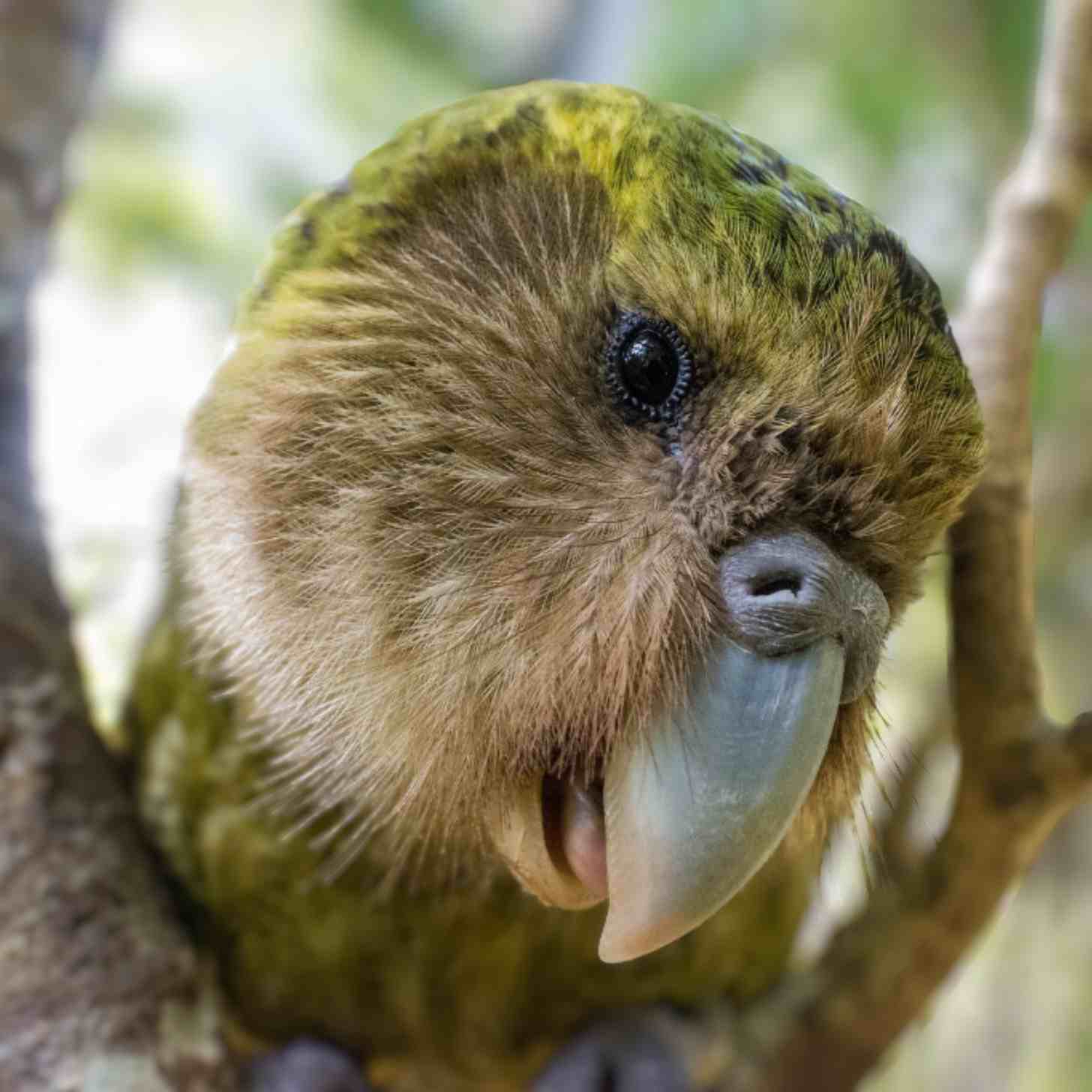
The kākāpō is an oddity in the animal kingdom. It is both the world’s only flightless parrot and the world’s heaviest parrot — and it’s reasonable to add “the world’s clumsiest parrot” to that list.
In the book “Last Chance To See,” British author Douglas Adams aptly described the species’ buffoonery.
“Its wings are just about good for waggling a bit if it thinks it’s about to trip over something — but flying is out of the question. Sadly, however, it seems that not only has the kākāpō forgotten how to fly, but it has forgotten that it has forgotten how to fly,” Adams quipped.
“Apparently,” he continued, “a seriously worried kākāpō will sometimes run up a tree and jump out of it, whereupon it flies like a brick and lands in a graceless heap on the ground.”
The parrot — which is roughly the size of a house cat — has been a subject of concern for New Zealanders for some time. By 1974, kākāpōs were thought to be extinct. In 1995, only 51 kākāpōs existed in the wild.
Today, that number is at 236.
Their continued conservation is thanks to joint efforts from Kiwi scientists and the native Ngāi Tahu tribespeople.
In the last decade, as scientists administered “doctor’s visits” and released hand-reared chicks to the wild, the Ngāi Tahu removed invasive predators and restored the “mauri,” or life force, of the habitat.
“It’s a taonga species, a treasure to us,” Tāne Davis, Ngāi Tahu’s representative of kākāpō conservation, told Scientific American.
Deidre Vercoe, the operations manager for the Department of Conservation’s kākāpō program, said that they’ve also had to play matchmaker when it comes to the bird’s romantic entanglements.
“We do what we can to make sure we don’t lose any further genetic diversity,” Vercoe told the Associated Press. “We manage that carefully through having the best matches possible on each island.”

That means that kākāpō “superbreeders” are discreetly moved to a neighboring island — cheekily called “Bachelor Island” — out of fears that they’ll flood the gene pool. That includes male kākāpō like Blades, who has fathered 22 chicks since 1982.
“He was a victim of his own success,” said Andrew Digby, science adviser for the kākāpō team at the New Zealand Department of Conservation. “He was too popular.”
To the chagrin of Ngāi Tahu tribespeople and local conservationists, the critically endangered birds largely take a “relaxed approach” to mating.
They typically only “get in the mood” when the rimu tree — an evergreen tree that can reach up to 190 feet tall — produces an abundant harvest of bright red rimu berries.
And this year has been a banner year for the rimu berries, leading to a certified kākāpō baby boom.
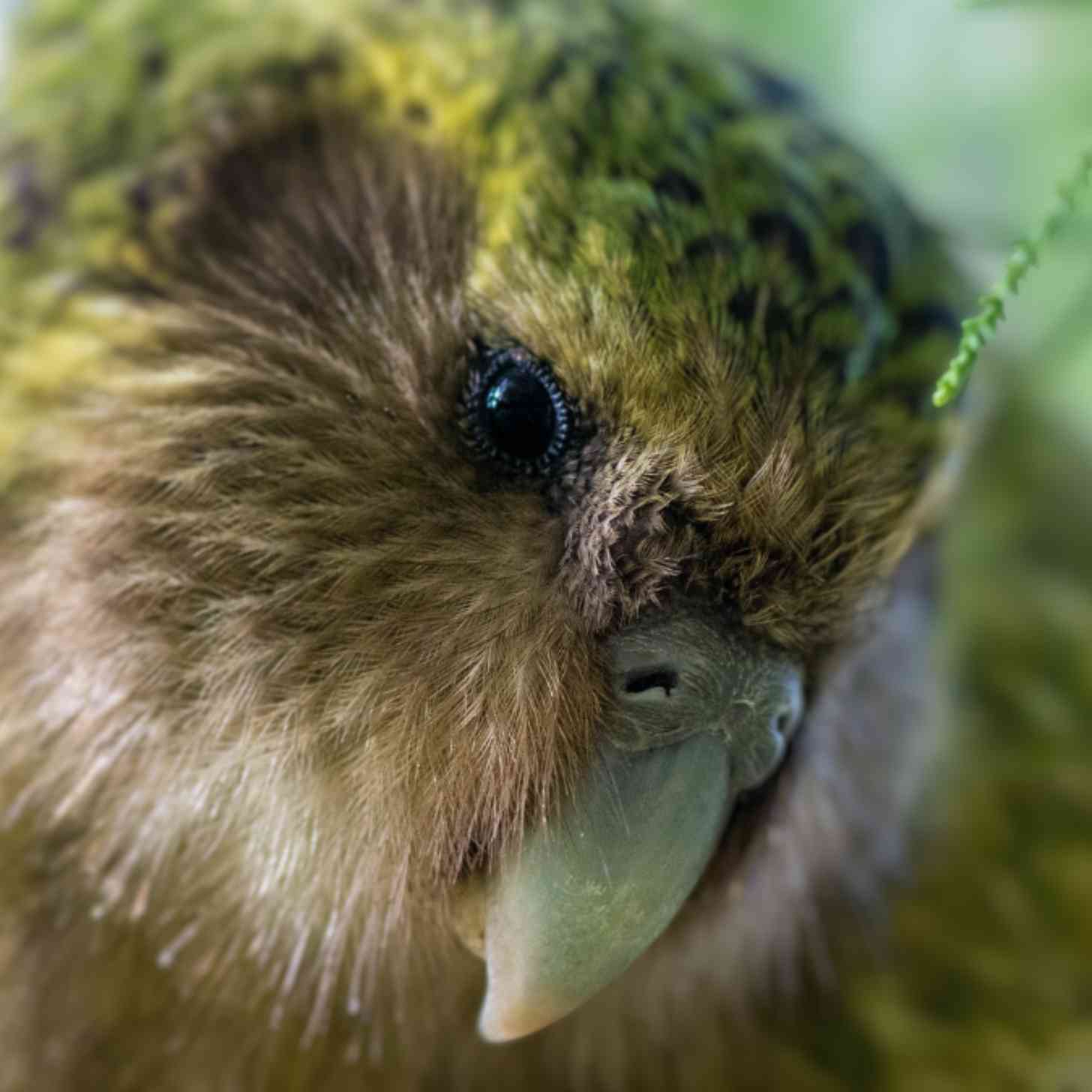
According to Digby, nearly all reproductive-age female kākāpōs have bred this year, laying an impressive 240 eggs so far. Roughly half are expected to be fertile, with progressively fewer hatching and surviving to fledge.
As of March 3, scientists have recorded 26 living chicks. Right now, most of them are balls of fluff, but within a few weeks, Digby says they’ll become “weird little dinosaurs with these huge, oversized feet.”
For New Zealanders like Vercoe, the parrot is not just a beautiful species worth saving — it’s a national symbol of resilience.
“We don’t have the Eiffel Tower or the pyramids, but we do have kākāpō and kiwi,” Vercoe said. “It’s a real New Zealand duty to save these birds.”
You may also like: Bandicoot 'baby boom' gives conservationists hope for endangered species after 150-year absence
Header image via Jake Osborne / Flickr (CC BY-NC-SA 2.0)
At the dawn of Trump’s second presidency, as United States Immigration and Customs Enforcement officers began ramping up efforts to target and deport migrant communities, Texas eighth grader Alexa Jaramillo was scrolling on social media.
Here, she saw something that caught her attention: small red cards being shared in person and online.
The cards are a free downloadable resource from the Immigrant Legal Resource Center providing legal information for people who might be stopped or questioned by ICE.
They outline constitutional rights, in both English and Spanish — something her school community, with an 83% Hispanic population, would benefit from.
Jaramillo asked her principal to print the cards out on red paper to distribute to parents in the pickup line at school. She cut out 500 cards by herself and enlisted other student volunteers to help distribute them.

Parents nodded wordlessly or took the cards and put them in their wallets, grateful.
Trinity Basin Preparatory, the school district Jaramillo attends, applauded the middle schooler’s efforts.
“Alexa Jaramillo, an 8th grader at TBP’s Bolt campus, is leading the way in educating immigrant families about their rights,” a Facebook post praising the student said.
“At TBP, we are proud of her and all our students who seek to do more, expect more, and be more.”
Jaramillo said she planned to continue the effort, hoping to instill confidence in her community.
“Don’t be afraid,” she told the Fort Worth Report. “Just because you’re not from here doesn’t make you any less than anyone else.”
You may also like: Knitters create 'welcome blankets' for immigrants in project spanning the circumference of Earth
A version of this article was originally published in The 2025 Helpers Edition of the Goodnewspaper.
Header image courtesy of Trinity Basin Preparatory/Facebook
Iranian women had more rights half a century ago than they do now.
Before Ayatollah Ruhollah Khomeini established the Islamic Republic of Iran in 1979, Iranian women could seek divorce, obtain primary custody of their children, and travel freely without their husband’s written consent.
Then, overnight, the former Supreme Leader of Iran stripped women of these rights in a political overturn that still affects women today.
For decades, Iranian women have raised their voices in a demand for equality. In September 2022, the movement gained global recognition when 22-year-old Mahsa Jina Amini was beaten to death in police custody following arrest for “improper” attire.
Years later, her loss continues to ripple through the Iranian women’s movement as the Kurdish chant “Woman, Life, Freedom” echoes through the streets in protest.
Protests against human rights abuses and restricted freedoms have continued since. In January of 2026, the Iranian government imposed a near-total internet shutdown to reduce protests, as part of a larger crackdown that resulted in the deaths of tens of thousands of people and the arrests of thousands more.
Now, U.S.-Israeli strikes against Iran have plunged its people into a new chapter of uncertainty, and Ayatollah Ali Khamenei’s death has left a vacuum of power in the regime.
Iranians tell the BBC that Tehran “feels empty” and that they “deserve a normal life.”
Despite the many variables at play in Iran, here are five organizations that have been defending women’s rights — and human rights — in the region long before protestors were massacred and missile strikes began.
Five organizations that have dedicated their mission to the equality, empowerment, and safety of women in Iran
The Iranian American Women Foundation
The Iranian American Women Foundation leads annual Women’s Leadership Conferences in chapters across the U.S. Each conference features guest speakers, leadership seminars, and educational opportunities for teen girls and college-age women.
Human rights activist Mariam Khosravani founded the organization in 2012 and continues to serve as the foundation’s president. In the last two years, the conferences have taken on a greater urgency as speakers share testimonials and spread awareness of the plight of Iranian women.
“We need to take our emotions and turn it into action,” Khosravani said at a memorial service for Amini in 2022. “We need to help our brave and courageous sisters in Iran. We want to let them know that they are not alone.”
The Center for Human Rights
The Center for Human Rights in Iran is an independent nonprofit that partners with activists around the world to seek accountability for human rights violations and bring attention to the abductions and deaths of journalists, teachers, and human rights leaders.
One of their largest campaigns called for the release of unjustly imprisoned Nobel Laureate Narges Mohammadi, a peace advocate who has been jailed on manufactured charges and denied medical care.
“Narges’ continued imprisonment is not just a violation of her rights but a stark reminder of the extent of the brutal persecution still faced by political dissidents and human rights defenders in Iran and around the world today,” reads a joint letter endorsed by the CHRI.
United for Iran
United for Iran is a nonprofit operated by Iranian activists and former political prisoners. To highlight systematic abuse by the government, they created the Iran Prison Atlas: a comprehensive database of Iran’s prisoners, prisons, and judges.
They have also been instrumental to the launch of subversive apps like Gershad — which tracks the movements of Iran’s morality police — and the period tracking app Hamdam, which covertly helps women navigate discriminatory laws centered on marriage, employment, and education.
“It’s reaching out to women – and men – not familiar with their rights, empowering women to take control over their own bodies and breaking taboos around women’s bodies and rights,” said Hamdam creator Soudeh Rad.
Iran Human Rights Documentation Center
The Iran Human Rights Documentation Center is an independent nonprofit founded by human rights scholars and lawyers in 2004. They conduct fact-finding missions, provide Iranians with data on human rights violations, and orchestrate public advocacy campaigns aimed at the United Nations.
Recently, the IHRDC has put public pressure on the UN to recognize “gender apartheid” as a crime against humanity. Its implementation into international law could strengthen the UN’s ability to interfere in Iran.
“Under international law, the crime of apartheid only applies to racial hierarchies, not hierarchies based on gender,” IHRDC chief director Gissou Nia told the Guardian.
“This campaign will seek to expand the set of moral, political, and legal tools available to mobilize international action against and ultimately end systems of gender apartheid.”
The Iranian Diaspora Collective
The Iranian Diaspora Collective is a non-partisan, queer-led, multi-faith group of first- and second-generation Iranians working in the media to amplify coverage of the “Woman, Life, Freedom” movement. The grassroots group was formed in direct response to Amini’s death and the protests that followed.
In addition to engineering global billboard campaigns that raised awareness for the protests, the IDC once launched a fundraiser for “Keep Iran Online.” The project aims to provide internet access to Iranians as the Islamic Republic of Iran censors websites and social media platforms.
The IDC has been crucial to amplifying the voices of on-the-ground activists and citizen journalists as their government tries to silence them.
“This is the first revolution in modern times led by women and girls,” IDC cofounder Moj Mahdara told Forbes. “They want an end to the Islamic Republic of Iran. They do not want to live in a theocratic government. They want the chance at a democracy.”
A version of this article originally appeared in the 2024 Gender Edition of the Goodnewspaper.
Header image via C.Suthorn (CC BY-SA 4.0)
Jane Ferguson spent 15 years as a correspondent for PBS NewsHour and The New Yorker, contributing award-winning journalism from the Middle East, Africa, and South Asia.
But no matter how accomplished of a war reporter she is, her most frequently asked question was “How do you cope in such a male-dominated industry?” to which she replies: “Women have been doing this work for over a century.”
While Ferguson hasn’t “done a scientific study,” she said she has definitely seen an uptick in women war reporters, likely due to an increased demand for constant news, the normalization of freelance work in the industry, and improved gender equality across the world.
But it’s not just the much-needed camaraderie of women in the field that stands out, but rather how women have shaped the field of war reporting as a whole.
While Ferguson said many reporters are still focused on the “bang bang” of war reporting, she, and many of her female colleagues, are most interested in communities — not just soldiers — impacted by war.
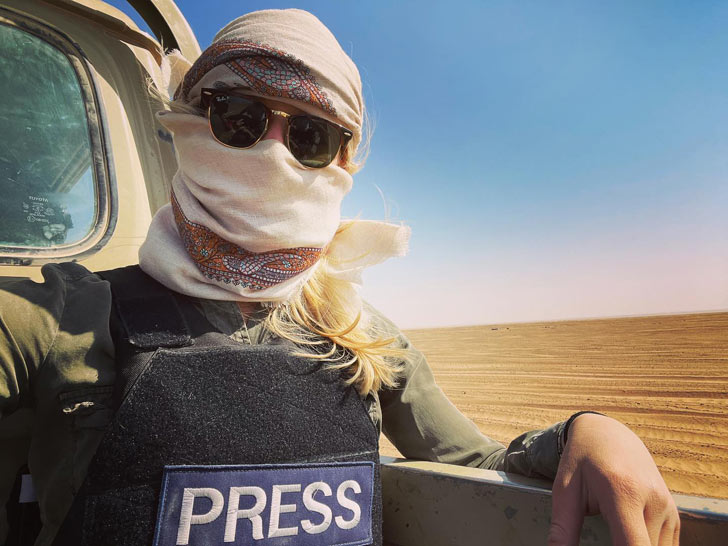
“We get so much rich imagery and storytelling now,” she told Good Good Good in 2023, following the release of her book “No Ordinary Assignment.”
“I really believe that this acceleration of women into the field has been the leading contributor to enriching what the public gets to see. What do they see from war? They see children with their pets. They see families saying goodbye. I just think there's much more nuanced, imaginative thinking about how to tell these stories.”
This increased empathy and humanity, she believes, is a direct result of diverse reporting.
“It’s important for me to celebrate the additive qualities of female reporting beyond just having women out there because it’s the right thing to do,” she said. “[Journalism] organically begins to reflect who we are.”
Now, she has created Noosphere, an app designed for on-the-ground journalists like herself. After years of field reporting, Ferguson found herself frustrated with the news environment back home.
“While she was reporting on crises overseas, the news industry stumbled from one financial and credibility crisis to another. The institutions that once brought the best reporting to people were foundering,” a description on the Noosphere website reads.
Ferguson would be tweeting and posting updates on Instagram, where she didn’t earn a dime. But the news organizations that employed her as a freelancer were benefitting from it all.
“The answer, she realized, was in disintermediation,” Noosphere’s website continues. “The world's best journalists could reach people, together, without a news organization. They could build a real community around them, fund their work, and keep telling stories that connect people around the world to our shared humanity.”
Noosphere is a video-first platform where people can subscribe to their favorite reporters, not a publication. They get updates directly from on-the-ground reporters, and those reporters can practice journalism under their own editorial guidelines. They have the freedom to follow the story without the control of a board or corporate owner.
Introductory subscriptions for news consumers start at $15-20, according to Columbia Journalism Review.
While the platform is still getting off the ground, a handful of veteran reporters have already joined, like Hind Hassan, Matthew Cassel, and Joyce Koh. For every new subscription reporters bring in, they get half.
“My whole career, I had needed either a network or a newspaper to have a career and reach an audience. If that’s what it was like for me — an incredibly privileged, white, Western reporter — the gatekeeping was even worse for all the local reporters, producers, and fixers I worked with all over the world,” Ferguson told the NiemanLab in March 2025.
“It occurred to me that, actually, technology is going to allow us to solve for a number of issues here. When we build the new iteration of distribution of news, we’ll build it better and way more equitable.”
You may also like: Meet the Documenters: The people who actually attend — and keep a record of — your city's meetings
A version of this article was originally published in The 2024 Gender Edition of the Goodnewspaper.
Header image courtesy of Jane Ferguson
In 2017, a group of divers returned from a dive off the coast of Kumejima, Japan with pictures of a unique sea squirt with peculiar markings.
The sea creature, which measured up to 2 centimeters (0.78 inches), immediately caught the eye of Japanese researchers like Naohiro Hasegawa of Hokkaido University. He first saw images of the “skeleton panda sea squirt” while browsing then-Twitter in 2018.
“It was at that point that I realized it was probably quite rare because it looks different to the other sea squirts,” he said.
In 2024, after gathering more research, the species was officially added to the scientific record when researchers published their findings in the Species Diversity journal.
Its scientific name Clavelina ossipandae roughly means “little bottle” for its shape and “bone panda” for its likeness. Likewise, its Japanese nickname — gaikotsu-panda-hoya — translates to “skeleton panda ascidian.”
“The white parts that look like bones are the blood vessels that run horizontally through the sea squirts’ gills,” Hasegawa wrote. “The black parts on the head that look like a panda’s eyes and nose are just a pattern, and we don’t really know why the pattern is there.”
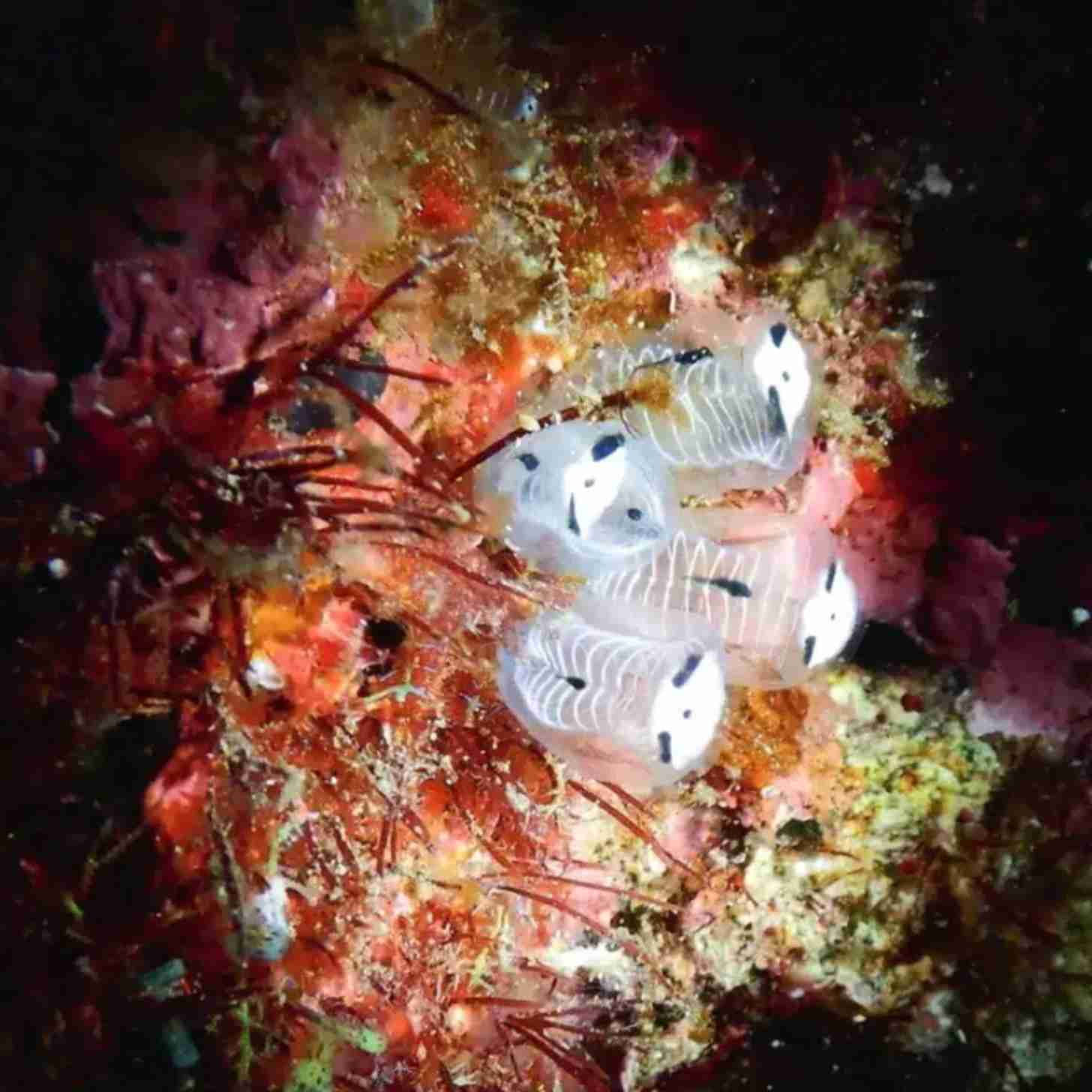
Like other sea squirts, this species feeds on plankton and other small organic materials. By taking in water through their “siphons,” sea squirts help fight ocean pollution and eliminate microplastics by ingesting and breaking down waste.
“Sea squirts are fantastic,” marine biologist Giorgia Carnovale told Science Norway. “[They’re] shaped like a tube and function as a cleaning pump. And then they have a mucus-covered filter that catches tiny particles in the water. That's how it gets its food.”
Carnovale believes sea squirts could turn the tide on ocean degradation.
“Growing and planting sea squirts is a great way to clean seawater,” she said.
Header image via Leonardo Lamas / Pexels
Sydney Peterson has felt at home on the slopes since she was five years old, cross-country skiing since her early childhood.
But when she was 13, she started experiencing symptoms of what would eventually be diagnosed as dystonia, a condition that caused involuntary muscle contractions in Peterson’s left arm and leg due to faulty signals sent from the brain.
But that didn’t stop her from skiing.
She competed on her high school team, training intensively and participating in national competitions. But when she was formally diagnosed with dystonia at 19, she turned to Paralympic competition instead.
“I never started skiing because I wanted to become an Olympian,” she told the NCAA. “I just started skiing because I loved to ski. … Each thing gradually led me there, which is really cool.”

Now, she skis with one pole and a custom left ankle brace to help her glide across the snow. Her left arm and leg are partially paralyzed, though a brain surgery in her undergraduate years has helped slow down the progression of her condition.
In 2022, Peterson won three medals at the World Para Snow Sports Championships and made her Paralympic debut just two months later, bringing home three medals from Beijing, including silver, bronze, and a gold as a member of the United States mixed relay team.
She’s back to compete again in Milan Cortina, but winning another medal isn’t the only thing on her mind.
Aside from being a Nordic skier on the U.S. Paralympic team, Peterson is working towards her PhD at the University of Utah, where she studies neuroscience — specifically movement disorders similar to her own condition.
Working in a rare disease lab, Peterson and her fellow researchers are testing the effectiveness of different drugs on certain genetic movement disorders. The medications the lab is testing are already approved by the Food and Drug Administration, and they are testing them on fruit flies to see which drugs might apply to certain movement disorders.
They aren’t specifically investigating Peterson’s condition, but there is overlap in the research.
“A lot of the drugs we test here, I've taken them before,” Peterson told NPR.
The 24-year-old found that learning more about her own condition made her interested in diving deeper into neuroscience.
“Once you start learning more about the brain, it's really hard to not want to go deeper. I don't study my exact disease. I wouldn't want to do that. That would be too deep,” she told NCAA. “But I think I’ve seen how beneficial research can be.”
According to NPR, Peterson’s disorder can’t be cured, though treatments and interventions like brain surgery have helped her manage her condition. Her goal now is to help others, too.
“It definitely all fueled my interest in science,” she told Team USA, of her condition. “I wanted to learn about what was happening to myself, and I wanted to try and see if I could help other people.”
And while she’s at the top of her game as a para athlete, her academic career provides another path — one she can pursue alongside her elite athletic dreams, and one that will give her a future outside of sports, too.
“I entered college with four functioning limbs. And then throughout my sophomore year, now my arm and leg are slowly losing function,” Peterson recalled to the NCAA.
“[Living with dystonia] can feel like your body’s just constantly betraying you, and it feels like you can never put a plan in place because then you have to constantly change that plan, which is tough.”
But for now, she has her eyes on the next race.
“If you’re passionate about something, don’t avoid it just because it seems challenging,” she told Team USA.
“Anything you want to pursue — whether you have a disability or not — is going to be challenging. You might as well go for it. If you do what you think will be worthwhile and surround yourself with people you enjoy being around, it will pay off.”
You may also like: A Paralympic snowboarder made his own prosthetic leg. Now, 25 of his competitors will wear his designs in Italy
Header image courtesy of Sydney Peterson/Instagram
Wildlife trafficking is a global crisis impacting at least 4,000 species of plants and animals, including mammals, reptiles, birds, corals and rare plants.
A shocking case from 2025 involved the seizure of 3.7 tonnes of pangolin scales in Nigeria. These scales were believed to be sourced from more than 1,900 individual pangolins.
While this case was uncovered, many more remain undetected. These crimes aren’t just pushing species toward extinction; they’re also putting people at risk. Hunting, trafficking, and handling wild animals create opportunities for diseases to jump from animals to humans.
Wildlife trafficking is therefore not just a conservation crisis, but a serious threat to public health.
In our recent paper published in Conservation Biology, we present a new method for tackling this global crime. It uses a tiny sample of air extracted from a shipping container – and the incredible power of a dog’s nose.
Traffickers exploit shipping routes
People buy and sell a wide range of wild animals and their parts for many reasons, such as pangolin scales for traditional medicines, monkeys for exotic pets, or even porcupines for bushmeat.
Traffickers exploit global transport routes to move their products, with shipping containers in particular being ideal targets.
Containers carry up to 90% of the world’s cargo, meaning products can be easily concealed and blend into the high volume of container traffic moving through ports.
Despite this, on average, only about 2% of containers are physically inspected due to resource limitations.
There are few wildlife specific detection tools, and wildlife crime is often considered a low priority. Combined, this means most trafficking slips through undetected.
Bringing the scent to the dog
To bridge this gap, we investigated air sampling as a way to screen containers for wildlife without opening them, damaging cargo, or disrupting port operations.
This work was part of a four-year project, undertaken in collaboration with the world’s third-largest shipping company, CMA CGM.
We designed a portable air extraction device that fits onto a standard container vent and draws air through a filter to collect a sample. The sample is then presented to a trained detection dog, which can indicate whether the scent of specific wildlife products is present.
In our study, we concealed pelts from five big cat species — lion, tiger, leopard, snow leopard, and cheetah — inside standard-sized shipping containers. The pelts were arranged to simulate smuggling scenarios, including being hidden inside cardboard boxes to increase concealment.
Our detection dog successfully detected the pelts with almost 98% accuracy when air was extracted from the shipping container. They did so even when the pelts were concealed, demonstrating that the scent can escape into the container airspace and be reliably captured.
Detection dogs are already widely used by customs and border agencies around the world, but their ability to screen sealed containers at scale is limited. Containers are often inaccessible, stacked high, or in environments that are unsafe for dogs.
Our approach brings the scent to the dog, allowing many more containers to be screened efficiently and safely.
While the study was conducted under controlled conditions, these early results are encouraging. Pairing detection dogs with air-sampling could dramatically improve the detection of illegally trafficked wildlife hidden inside shipping containers.
The air extraction device is low-cost, portable, and scalable, making it well-suited for use in high-risk ports and border crossings worldwide. The method could also be readily adapted for detecting other forms of trafficking, such as drugs, increasing its appeal to border agencies.
Disrupting criminal networks
Further trials are planned to validate the effectiveness of this approach in operational port environments across a broader range of wildlife products.
We are also exploring machine-based detectors to analyze samples and support the future development of this project.
However, initial findings show the dogs still outperform these technologies, which currently remain our most effective approach.
Our goal is to give frontline agencies practical tools to fight wildlife trafficking.
Through applying science-based research in the field, we can bridge enforcement gaps and detect trafficked wildlife faster, allowing us to better protect threatened species and disrupt the criminal networks behind this devastating trade.
This article was written by Georgia Moloney and Anne-Lise Chaber from Adelaide University, and was originally published on The Conversation.
Header Image by Erik S. Lesser/EPA

According to the United Nations, about “2.2 billion people still lack safely managed drinking water.”
Fortunately, Nobel Prize-winning professor Omar Yaghi has created a groundbreaking device that pulls moisture from the air to harvest water. The device is functional even in deserts and extremely arid conditions — as evidenced when Yaghi recently tested his device’s mettle in the scorching heat of Death Valley.
Yaghi, who won the 2025 Nobel Prize in chemistry, said the new invention could “change the world” for people who live perpetually in drought, and also help those who are left without drinking water in the aftermath of natural disasters.
“Hurricanes such as Melissa or Beryl unleashed heavy flooding, destroying homes and crops and impacting thousands of lives in the Caribbean,” Yaghi told the Guardian.
“This devastation is a stark reminder of the urgent need for enhanced water supply resilience in vulnerable areas, particularly small island nations susceptible to extreme weather events.”
The device uses metal-organic frameworks (MOFs), highly porous materials that capture water vapour from even extremely dry air. Once collected, the moisture is condensed into clean drinking water, allowing the system to function in desert environments where traditional water sources are scarce.
According to Atoco, the technology company that Yaghi founded, its units are powered entirely by ultra-low-grade thermal energy. Comparable in size to a 20-foot shipping container, the units can generate up to 1,000 liters of clean water a day.

Thanks to its sustainable power source, the machine can operate off-grid, making it suitable for remote villages, disaster zones, and drought-stricken regions lacking water infrastructure. Its design aims to provide a decentralized solution where transporting water or building pipelines is difficult.
Yaghi’s inspiration was born out of hardship. As a child, he grew up in a refugee community in Jordan, often without running water or electricity. Clean water was a luxury that he and his neighbors were only afforded every other week or so.
“I remember the whisper through our neighborhood, ‘the water is coming,’ and the urgency as I rushed to fill every container I could find before the flow stopped,” Yaghi recalled in his Nobel Prize banquet speech.
Heralding his invention as a science that is “capable of reimagining matter,” he urged leaders to “remove barriers” and “protect academic freedom” to make room for more inventions that could benefit the planet.
“On climate, the hour for collective action has already arrived. The science is here,” he emphasized. “What we need now is courage — courage scaled to the enormity of the task — so we may gift the next generation not only carbon capture, but a planet worthy of their hopes.”

You may also like: New invention uses animal bones to filter water, promising a nearly 'zero cost' solution to water filtration
Header image via Atoco
On February 27, Texas Attorney General Ken Paxton issued a legal opinion saying that a 2023 state law banning gender-transition medical care for minors also applies to state-licensed mental health providers.
The opinion interprets the law to prohibit providers from offering services intended to help minors socially transition, arguing that such care could violate the statute.
LGBTQ advocates and some medical professionals say the move expands restrictions on transgender youth and could further limit access to mental health support in Texas.
This new restriction comes months after Texas Governor Greg Abbott signed the SB 8 “Bathroom Bill” into effect, which restricts bathroom use by one’s assigned sex at birth.
In addition to targeting transgender Texans, activist Elva Mendoza with the Texas Freedom Network said that the bill doesn’t leave room for intersex people, or for anyone who doesn’t fit into culturally accepted gender stereotypes.
“It uses a definition [of biological sex] that is very black and white and doesn’t reflect the actual biology of many people,” Mendoza told The Texas Newsroom in September. “Not all women have ovaries, not all women have a uterus.”
Needless to say, it has been a harrowing year for being transgender in the state, or having a family member who is trans.
That’s why the video game “Portrait of a Texas Family” was created.
It's a game with an emotional hook: Players take on the role of a parent raising a trans teenager in Texas.

The video game was created by the independent studio Lookout Drive Games by a team of trans, non-binary, and gender nonconforming game designers. Released in 2022, the game has been making the rounds again online as the Texas legislature debates gender-affirming care for trans youth.
"People seem to have really responded to what our team made and come away feeling what we wanted them to feel, which is the love, care, anxiety, and ultimately, hope, that this family is feeling about navigating society while raising a trans child,” said game director Robert Pigott in an interview with Them.
The visual novel game — which is currently free to download on Itch.io — was inspired by a Twitter thread by mother and activist Amber Briggle.
In the thread, Briggle explained the importance of a “safe folder,” which is a collection of photos, drawings, and letters that prove that a trans child is raised in a happy home. In some court cases, safe folders can be the defining factor on whether parents can keep custody of their child.
In the game, players build a safe folder of their own as they find a picture drawn by their daughter Sofia. Other slice-of-life scenes include a shopping errand, a family trip to the beach, and a tense encounter with a state senator.
“You have to be interactive and choose to play it, to navigate through the concept of the safe folder, the everyday life of a typical family, and how these systems [are] affected by the oppression and anxiety of raising [a] trans child,” Pigott told the Houston Chronicle.
A version of this article originally appeared in the 2024 Gender Edition of the Goodnewspaper.
Header image via Yan Krukau / Pexels
Seventy-eight percent of people in England and Wales think that crime has gone up in the last few years, according to the latest survey. But the data on actual crime shows the exact opposite.
As of 2024, violence, burglary, and car crime have been declining for 30 years and by close to 90%, according to the Crime Survey for England and Wales (CSEW) — our best indicator of true crime levels. Unlike police data, the CSEW is not subject to variations in reporting and recording.
The drop in violence includes domestic violence and other violence against women. Anti-social behavior has similarly declined. While increased fraud and computer misuse now make up half of crime, this mainly reflects how far the rates of other crimes have fallen.
All high-income countries have experienced similar trends, and there is scientific consensus that the decline in crime is a real phenomenon.

There is strong research evidence that security improvements were responsible for the drop.
This is most obvious with vehicle electronic immobilizers and door deadlocks, and better household security — stronger door frames, double glazed windows, and security fittings — along with an avalanche of security in shopping centers, sports stadiums, schools, businesses, and elsewhere.
Quite simply, it became more difficult to commit crimes.
Decreases in crimes often committed by teenagers, such as joyriding or burglary, had a multiplying effect: When teenagers could no longer commit these easy “debut crimes,” they did not progress to longer criminal careers.
There are, of course, exceptions. Some places, times, and crime types had a less pronounced decline or even an increase. For many years, phone theft was an exception to the general decline in theft. Cybercrime, measured by the CSEW as fraud and computer misuse, has increased and is the most prominent exception.
But this increase was not due to thwarted burglars and car thieves switching targets: the skillset, resources, and rewards for cybercrime are very different.
Rather, it reflects new crime opportunities facilitated by the internet. Preventive policy and practice are slowly getting better at closing off opportunities for computer misuse, but work is needed to accelerate those prevention efforts.
The perception gap
So why is there such a gulf between public perception and the reality of crime trends?
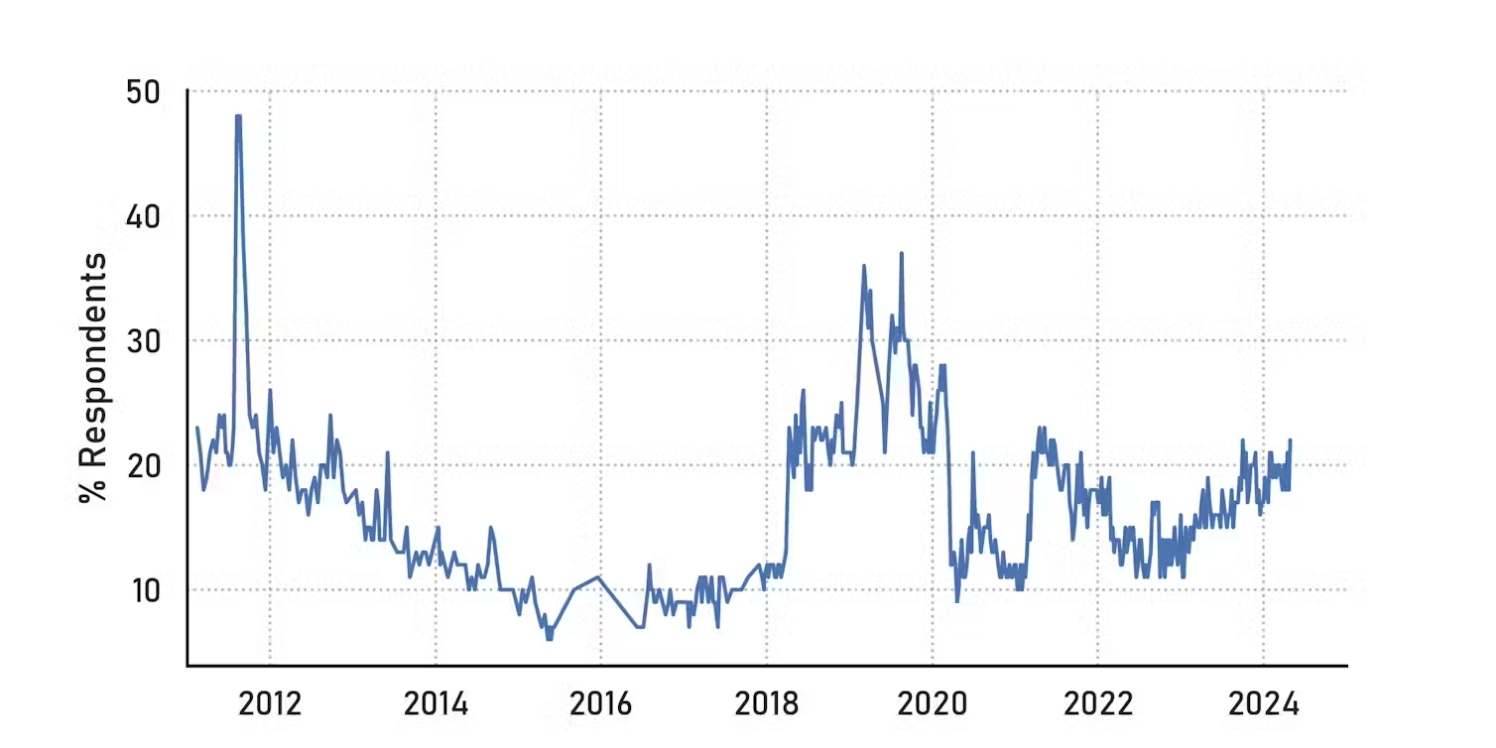
A regular YouGov poll asks respondents for their top three concerns from a broad set of issues. Concern about crime went from a low in 2016 (when people were more concerned with Brexit), quadrupled by 2019, and plummeted during the pandemic when people had other worries.
But in the last year, the public’s concern about crime has risen again.
Proportion of people naming crime as a top three issue facing the country:
There are many possible explanations for this, of which the first is poor information. A study published in 1998 found that “people who watch a lot of television or who read a lot of newspapers will be exposed to a steady diet of crime stories” that does not reflect official statistics.
The old news media adage “if it bleeds, it leads” reflects how violent news stories, including crime increases and serious crimes, capture public attention.
Knife crime grabs headlines in the U.K., but our shock at individual incidents is testament to their rarity and our relative success in controlling violence — many gun crimes do not make the news in the U.S.
Most recent terrorist attacks in the U.K. have featured knives (plus a thwarted Liverpool bomber), but there is little discussion of how this indicates that measures to restrict guns and bomb-making resources are effective.
Political rhetoric can also skew perceptions, particularly in the run-up to elections. During the recent local elections, the Conservatives were widely criticized for an advert portraying London as “a crime capital of the world” (using a video of New York), while Labour has also made reference to high levels of crime under the current government.
There are also some “crime drop deniers”, who have vested interests in crime not declining due to, for example, fear of budget cuts. One of us (Graham) worked with a former police chief who routinely denied the existence of declining crime.
Despite the evidence of crime rates dropping, some concerns are justified. Victims, along with their families and friends, have legitimate concerns, particularly as crime is more likely to recur against the same people and at the same places.
And, while the trend is clear, there are nevertheless localized increases in some types of offending. When these relate to harmful and emotive issues like knife crime in London, for example, it is natural that this might have a substantial influence.
We are unlikely to be able to change political agendas or journalists’ approach to reporting. But governments should be taking a more rational approach to crime that is based on evidence, not public perception.
Local governments need to keep on top of their local crime hotspots: problem bars and clubs where crime occurs, shops where shoplifting is concentrated, local road traffic offense hotspots, and so on. The common theme here is how crime concentrates.
National government, meanwhile, should lead on reducing crime opportunities via national-level levers. Only national government can influence social media platforms and websites that host online crime and encourage larger businesses to improve manufacturing, retailing, and service industry practices.
The positive story around crime rarely makes headlines, but this should not put us off from learning the lessons borne out in the data. We know this can work from past success, but it took decades to get car makers to improve vehicle security and to get secure-by-design ideas in building regulations. Society needs to move more quickly.
This article was written by Toby Davies and Graham Farrell from the University of Leeds, and was originally published on The Conversation.
Header Image by Ethan Wilkinson on Unsplash

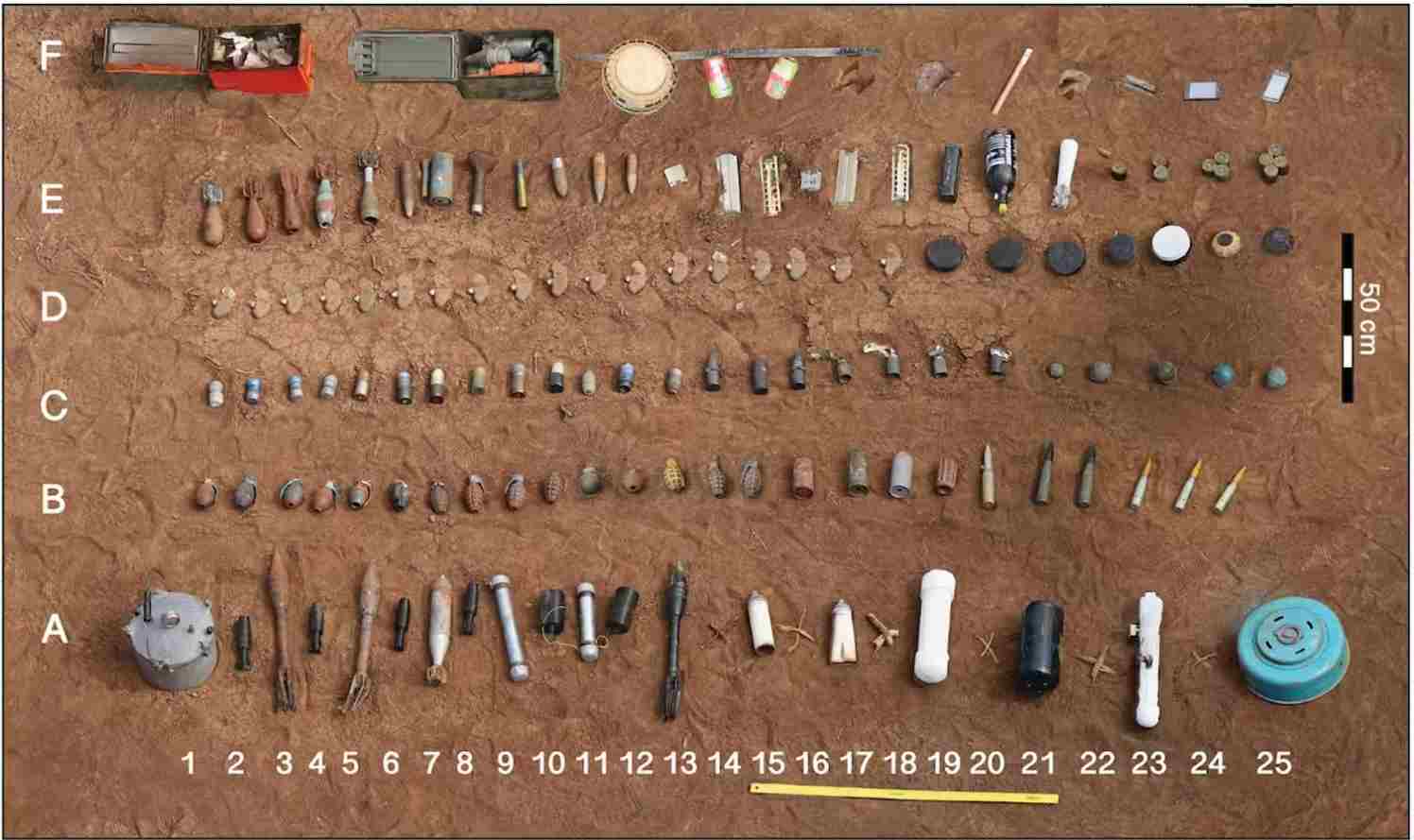
At least 57 nations have live antipersonnel land mines in their territories. In 2024 alone, 1,945 people were killed by mines, and 4,325 were injured — 90% of whom were civilians. Nearly half of those were children. De-mining operations removed 105,640 mines in the same year.
With new conflicts, the number of mines continues to grow. For farmers, children, and others returning to areas after a conflict, a single step can mean permanent injury or death.
I am a Ph.D. student in the Imaging Science Department at Rochester Institute of Technology, working with Emmett Ientilucci. My research focuses on using drone-based, multi-sensor imagery and artificial intelligence to improve the speed, accuracy, and reliability of land mine and unexploded ordnance detection.
Our research aims to do this in three ways: developing techniques for combining data from multiple types of sensors, building benchmark datasets for developing and evaluating detection systems, and improving the reliability of AI detection methods by incorporating estimates of uncertainty.
Multiple sensors from above
Land mine detection still relies heavily on ground-based methods, each with serious limitations.
Handheld metal detectors often struggle in mineral-rich soils and have difficulty reliably detecting low-metal or predominantly plastic mines. Ground-penetrating radar can detect nonmetallic objects but performs poorly in wet or uneven terrain, or ground covered by vegetation, and often generates high false-alarm rates. Manual probing and trained detection animals remain effective methods for locating land mines, but the process is slow, resource-intensive, and exposes de-miners to considerable risk.
At the scale of land mine deployment seen in Ukraine and other conflict and post-conflict regions, ground surveys alone cannot keep pace.
De-mining operations are increasingly using drone-based aerial imagery to accelerate land mine surveys, particularly for mines laid on the surface of the ground. However, camouflage, vegetation, and changing lighting conditions often make these mines nearly invisible in conventional images.
Earlier research my colleagues and I conducted examined whether aerial sensing can realistically replace or support traditional ground-based surveys. We evaluated the viability of substituting an airborne metal-detection system for handheld metal detectors for detecting land mines and unexploded ordnance.
The results showed that drone-mounted magnetic sensing can detect metallic targets with accuracy comparable to ground-based methods in a controlled test site, while reducing human risk and increasing survey speed approximately tenfold.
Our heat map, generated by an airborne electromagnetic-induction metal detector over a test site, highlights likely locations of buried land mine and unexploded ordnance targets, illustrating how drone-based sensing can safely and efficiently survey areas where land mines have been deployed.
Aerial detection benefits from complementary sensors. RGB cameras, which detect visible light images in color, capture visual features of land mines. Thermal sensors reveal temperature differences between mines and the ground around them. Multispectral and hyperspectral sensors identify signatures of different materials. Synthetic-aperture radar detects changes in land surfaces. LiDAR maps subtle surface disturbances. And magnetometers detect underground metallic components.
Together, these sensors can address the variety of mine types and deployment conditions found in real-world environments.
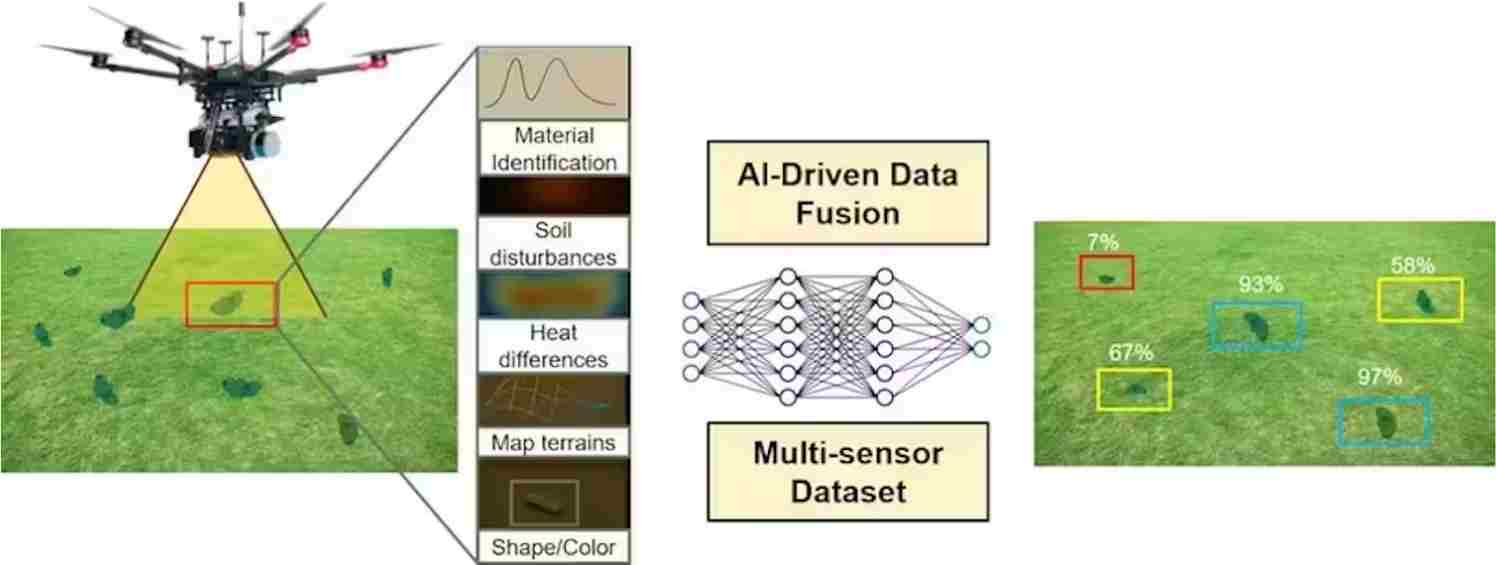
Despite their potential, multi-sensor, drone-based land mine detection systems remain underexplored. Progress is limited by the lack of publicly available benchmark datasets with data captured from multiple types of sensors using realistic mine deployments and precise ground truth, meaning the actual positions and depths of the target mines.
Without such datasets, researchers cannot accurately compare algorithms, validate test results, or develop AI models that work well outside of test environments.
Building mine-detection datasets
To address this challenge, our team, along with several other researchers, collaborated with the nonprofit Demining Research Community to collect a comprehensive dataset. We used the Demining Research Community’s controlled test field in Oklahoma, which included over 140 inert land mine and unexploded ordnance targets.
We collected a large, geo-referenced, multi-sensor dataset using both ground-based and drone-based platforms at multiple altitudes. We used hyperspectral, multispectral, thermal, RGB, LiDAR, synthetic-aperture radar, ground-penetrating radar, electromagnetic induction metal detectors and magnetometers.
This dataset will be released through a journal paper that is currently under review. We have released a portion of this collection — specifically a visible and near-infrared hyperspectral dataset acquired at an altitude of 20 meters — through a conference publication.
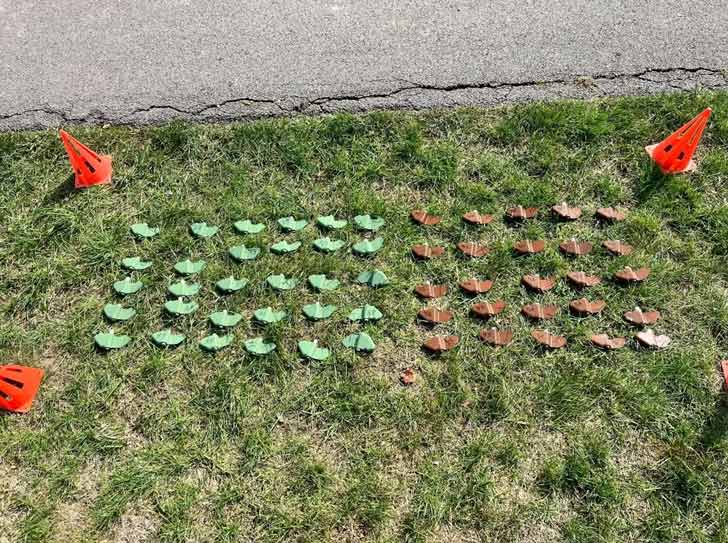
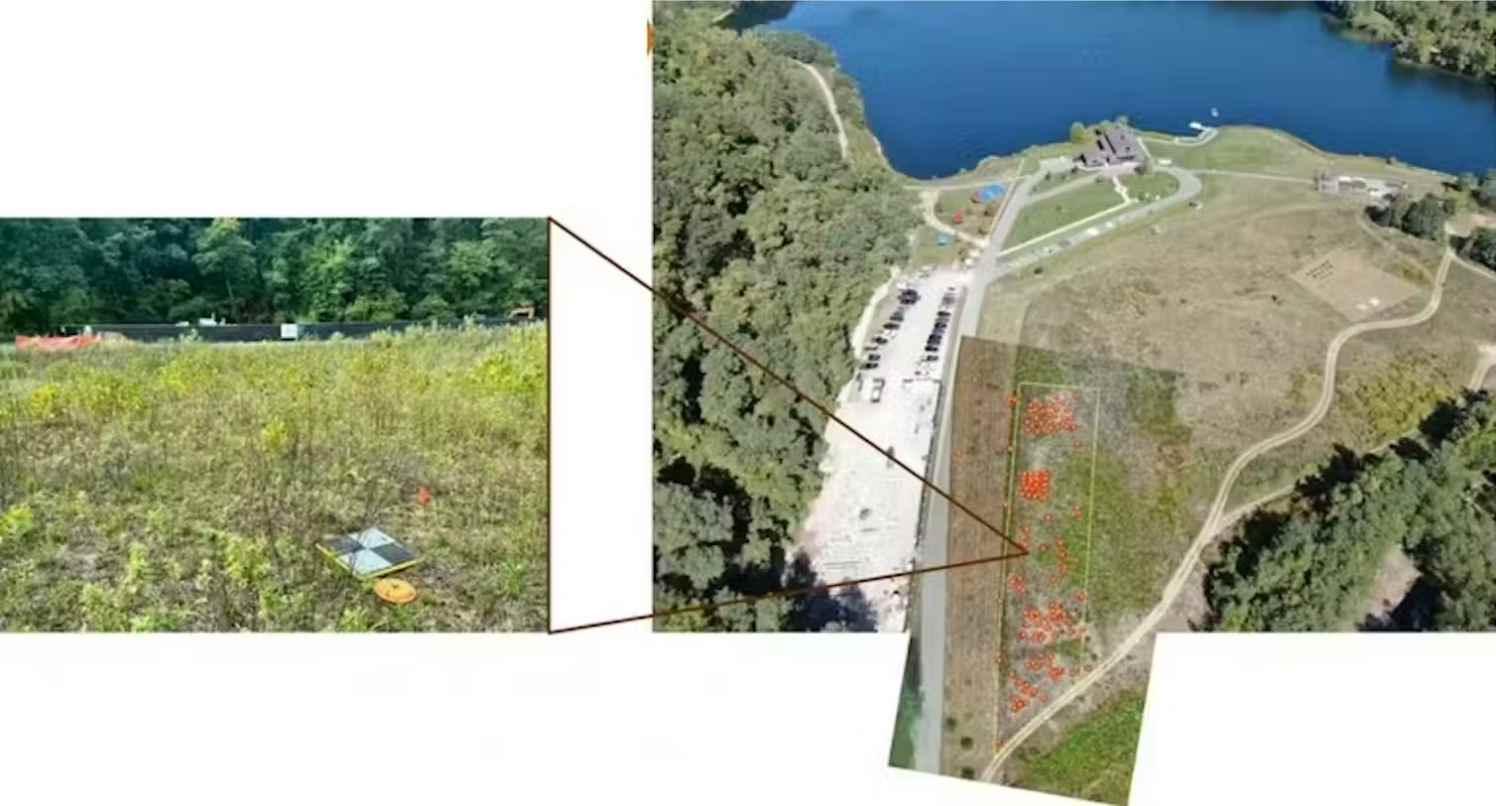
We expanded this effort internationally through a collaboration with the Royal Military Academy of Belgium during a large data-collection campaign. Together, we deployed over 110 replicas of PFM-1 mines across varied terrains and vegetation conditions.
To simulate realistic minefields, we scattered the inert mines to approximate aerial dispersal. We precisely surveyed and geolocated each mine using GPS base stations. We then collected data at multiple altitudes using drones outfitted with hyperspectral, multispectral, thermal, RGB, LiDAR, and polarization sensors that reduce glare.
Other research groups, participants, and industry partners, including sensor manufacturers, collected additional datasets over the same test field. These datasets are currently being processed and will be released as open-access in the near future.
To our knowledge, these will be the first publicly available datasets of their kind, opening new opportunities not only for land mine detection research but also for the broader AI and remote sensing community. By making these datasets openly available, we aim to accelerate research on multi-sensor data fusion, improve the reliability of AI-based detection systems, and help bridge the gap between academic research and the needs of industry developers and humanitarian organizations.
Measuring reliability
But even if you carefully calibrate your sensors using our dataset, you still need to recognize the limitations of the technology. In applications like land mine detection, a single mistake can be fatal. A major part of my research focuses on AI reliability and uncertainty estimation. In a recent study, we developed a measure of an AI model’s uncertainty about its predictions.
Rather than forcing models to produce confident predictions at all times, we are developing methods that allow systems to say, “I’m not sure.” Our goal is to provide an uncertainty metric alongside predictions: The noisier or more ambiguous the input, the higher the uncertainty score. This information can help de-mining operators make safer and more informed decisions, particularly in challenging or uncertain conditions.
With the release of these datasets, we believe new opportunities will emerge for researchers in AI and remote sensing to explore multi-sensor data fusion.
The datasets include a wide variety of targets in terms of size, shape, and orientation, with all data fully georeferenced and with precise ground truth. Because each target was observed by multiple sensors at multiple altitudes, researchers will be able to conduct comparative analyses of individual sensors versus combined sensing approaches. This will support the development of more reliable, safer, and faster detection algorithms tailored to real-world de-mining needs.
At its core, this research is not about algorithms or drones; it is about people.
It is about farmers reclaiming their land, children walking safely to school, and communities rebuilding without fear. By combining AI, drones, and open science, we aim to transform land mine detection from a slow and dangerous practice into a safer, smarter, and more scalable process, one that helps turn post-conflict landscapes back into places where life can grow again.
This article was written by Sagar Lekhak from Rochester Institute of Technology, and was originally published on The Conversation.
Header Image by Dmitry Shamis on Unsplash

Every day the Good Good Good team collects the best good news in the world and shares it with our community. Here are the highlights for this week!
If you want to get good news in your inbox every day, join the Goodnewsletter — the free daily newsletter designed to leave you feeling hopeful.
The Best Positive News We’re Celebrating This Week —
Lupita Nyong’o launched a GoFundMe for women’s health research after discovering she has 50 uterine fibroids
In 2014, Lupita Nyong’o was regularly fatigued, pre-anemic, and felt immense pain during her periods — and as most women are taught, “pain was simply part of being a woman,” so she “didn’t question it.”
As it turned out, she had more than 30 uterine fibroids — noncancerous growths that line the walls of her uterus that can cause a number of debilitating symptoms. She got them surgically removed, and then learned that there was nothing she could do to prevent them from returning. They did — and this time, there were 50.
Refusing to accept this reality, she partnered with the Foundation for Women’s Health and GoFundMe to launch a fundraiser and pave the way for a research grant that supports the development of minimally invasive and non-invasive fibroid treatments.
Why is this good news? Fibroids affect up to 80% of women by age 50, and many go without relief, as fibroid treatment is currently limited to invasive surgeries. Black women are also disproportionately affected and experience fibroids earlier and with more severe symptoms.
This fundraiser will help support critical research into other treatment and prevention options.
Could ‘agrihoods’ — neighborhoods built around gardens — be the future of housing?
A city in Spain is reviving a 3,000-year-old solution to combat extreme heat
As one of the hottest cities in Europe, Seville, Spain finds itself at the frontlines of the climate crisis. Blending modern science with ancient technology, the city is installing underground aqueducts to help keep itself cool.
Funded by the EU, the CartujaQanat project’s “quanats” work by cooling water underground in naturally low temperatures that occur at night. When temperatures peak outdoors during the day, the cool water is sent up into the ceiling to counteract the heat.
The system also sends water into subterranean pipes that cool air, which will be released via ducts in public spaces. Outdoors, mist is sprayed to lower the temperature through evaporation.
Why is this good news? While we need to invest as much as possible into preventing further warming, the climate crisis is already bringing extreme weather to places all over the world. Adaptation is a critical part of combating climate change — and solutions like this will save lives when extreme heat reaches our communities.
→ Read more
Maternal overdose deaths are decreasing in Colorado. Experts think naloxone is why
→ Read more
More than 81% of rural households in India now have tap water
Out of 193.6 million rural households in the country, more than 157.9 million have tap water as of January 26, according to the Jal Shakti Minister.
The milestone is thanks to the efforts of Jal Jeevan Mission, a Government program first launched in 2019 with the hopes of providing piped drinking water to every rural household in the country.
Since 1990, India has greatly reduced the deaths from unsafe drinking water by over 80%. To further improve public health and reduce waterborne illnesses, the JJM also launched a “Citizen Corner,” which makes village-level water quality test results available to the public.
→ Read more
A Paralympic snowboarder made his own prosthetic leg, and 25 competitors will wear his designs in Italy
Mike Schultz is about to make his third and final appearance at the Paralympics in para snowboarding — and he, along with 25 of his competitors, will be wearing a prosthetic he designed himself.
In 2008, Schultz lost his leg in a snowmobiling accident. His first prosthetic couldn’t withstand the impact and intensity of the sports he’d loved all his life, so — despite having no technical engineering training — he built his own.
Initially just setting out to “get back on my motocross bike and my snowmobile,” he realized he could have a much bigger impact. In 2010, he founded BioDapt to design and make lower limb prosthetic components for other para athletes, and now, the entire U.S. Paralympic snowboarding team will be wearing his prosthetics.
Even better: BioDapt just announced that it would be building on its existing work and partnering with Autodesk, an AI-powered manufacturing company that will help it refine its products and scale to serve even more people.
How to prevent elections from being stolen, according to a human rights expert
→ Read more
A record share of U.S. workers now have access to paid leave
While the U.S. is one of only a handful of countries that don’t offer a federal paid leave policy, a third of U.S. workers now have access to some form of government-issued paid leave thanks to state-level action.
States have passed 14 paid leave policies since 2002, 10 in the last decade, alongside rising support for paid leave. And some of these policies even go further than providing paid time off to care for a new baby or get medical treatment, including for domestic violence survivors and organ donors.
These laws now cover 32% of private-sector workers, or an estimated 46 million people. And of those covered, a third are women, a third are men, and another third are parents.
Bolivia’s Indigenous communities created 2.2 million acres of newly protected area in the Amazon rainforest
Over the past several months, Bolivia has created four new protected areas covering 907,244 hectares, or 2.2 million acres, of Amazon lowlands and Andean highlands.
The new areas create corridors to improve wildlife migration and maintain forest-based economies for locals and is part of an effort by local governments to link Indigenous territories with nearby national parks and strengthen ecological connectivity.
The new management area will help protect the endangered Bolivian river dolphin and vulnerable harpy eagle, among other species.
Why is this good news? In recent years, Bolivia has had some of the highest deforestation rates in the world, driven by agribusiness, cattle ranching, and fires, among other factors. In 2025, it lost 1.8 million hectares (4.4 million acres), and the year before that, it lost around 490,000 hectares (1.2 million acres).
These organizations have been fighting for democracy and equality in Iran for years
→ Read more
New data shows that EVs are already making the air cleaner
Researchers from the University of Southern California analyzed air quality from 2019 to 2023 in California and found that for every 200 electric vehicles added in a ZIP code, nitrogen dioxide levels dropped by about 1.1%.
Projection models have long predicted the benefits of EVs, but this study is the first of its kind to collect EV data via satellite. The study used satellite measurements to capture trends across nearly 1,700 areas.
The researchers say the results indicate that even incremental shifts toward electric vehicles can deliver tangible air quality improvements, and suggest that similar methods could track other pollutants in the future.
When she’s not skiing, a US Paralympian is a researcher working to treat neurological conditions like hers
After years of symptoms, at 19 years old, Sydney Peterson was diagnosed with dystonia, a condition that caused involuntary muscle contractions in Peterson’s left arm and leg due to faulty signals sent from the brain. A lifelong skier, she turned to the Paralympics.
Peterson skis with one pole and a custom left ankle brace to help her glide across the snow, and she brought home three medals (a bronze, silver, and gold) from the 2022 Beijing Games.
Aside from being a Nordic skier on the U.S. Paralympic team in Milan Cortina, Peterson is working towards her PhD at the University of Utah in neuroscience — specifically movement disorders similar to her own.
Why is this good news? While treatments and interventions like brain surgery can help her manage her condition, Peterson knows dystonia cannot be cured — but it can fuel her “interest in science.” In learning about her own condition, she’s now trying to “see if I could help other people.”
Criminalizing homelessness doesn’t actually work. These 3 interventions do
→ Read more
Almost 40 countries have now legalized same-sex marriage
Since the Netherlands first legalized same-sex marriage in 2001, 38 more countries have joined it, reflecting global progress in marriage equality.
The pace and geographic reach of legalization vary widely, influenced by cultural, political, and legal factors in each country.
Two countries added the legislation in 2025: Weeks after a same-sex marriage bill took effect in Liechtenstein, Thailand became the first country in Southeast Asia to legalize same-sex marriage.
→ Read more
More good news of the week —
A U.K. woman invented a “stim hoodie” with six hidden features designed for people with autism and ADHD. The design process enlisted the help of about 4,000 survey respondents from Olivia Drewery’s community of neurodivergent followers, expressing what they wanted from a clothing product like this.
Scientists say a universal vaccine for cold, flu, COVID, and allergies is a step closer to reality. The vaccine could be given as a nasal spray and may protect against a wide range of respiratory viruses, bacteria and allergy triggers.
“This Is Endometriosis” wins BAFTA for Best British Short Film, bringing awareness to a highly misunderstood chronic condition. An estimated 1 in 10 women experience endometriosis, an “invisible” illness that can take up to 11 years to diagnose.
Canada provides $50 million for the country’s first Inuit-led university. Inuit Nunangat University, which will be built in the northern region of Nunavut, aims to strengthen Inuit language, culture, and economic opportunities.
Ireland makes Basic Income for the Arts permanent after a highly successful three-year pilot program. The government program will provide 20,000 artists with €325 ($383 USD) a week for their creative pursuits.
Incarcerated men are rehabilitating squirrels, possums, and more in prison. Five prisons across Ohio have been participating in the wildlife rehabilitation program since 2019, and every year, hundreds of animals pass from the Ohio Wildlife Center’s hospital to more than 60 incarcerated volunteers.
TED made a multi-million-dollar investment to boost safe abortion in 10 countries, prevent 22.6M unintended pregnancies. This is the first time TED’s Audacious Project has invested in an organization specifically focused on abortion access and care.
A bike repair shop in Northern Ireland teaches teens practical skills as they receive help from social services. The four-week program has empowered more than 100 young people across Londonderry.
A school in Kenya is using visual, auditory, and tactile learning — rather than traditional lectures — to support dyslexic students. Dyslexia affects about one in ten learners and is often overlooked in public education.
Researchers developed an AI tool that uses past, present, and future data to make solar energy more efficient. The tool combines meteorological data dating back to 1980 and simulated weather through 2099 to build better solar installations.
A former inmate just became the first in U.S. history to buy a prison. Kerwin Pittman is making history by turning an abandoned North Carolina correctional facility into a transitional housing development for other formerly incarcerated community members.
The Philadelphia Eagles Autism Foundation raised a record $10.8 million last year. The funding will support 54 research and community projects specializing in autism research and care, and is the largest amount raised to date by the foundation.
A Chicago Girl Scout troop needed to sell 2,100 cookie boxes by March 11 to stay active — they’ve sold over 25,000. The girls have struggled to sell cookies this year because neighbors — already facing financial barriers — couldn’t afford to fit the orders within their budgets.
High school classes on clean energy are expanding across the U.S. More teenagers are now learning about solar and wind technology, sustainability, and green job skills before graduation in states like South Carolina, Delaware, and Illinois.
Kansas animal shelter rescues pets surrendered by owners fearing deportation and detainment. Lawrence Humane Society is urging people to support people — and their pets — as immigration enforcement affects families across the country.
Hours before her Portland concert, Swedish pop star Zara Larsson led a “Bike Bus” of students on a ride around the city. The “Lush Life” singer also signed autographs, took photos, and did TikTok-viral dances with the students.
Hospitals that implemented a “zero suicide model” have seen a drastic decrease in both attempts and deaths. The model was first developed in 2001 and has been implemented in 25 countries around the world since.
A new justice program in Canada dramatically reduces repeat offenses by having offenders talk it out with their victims. The guided therapy program, largely focused on youths, emphasizes community building and accountability over punishment.
A family in Ecuador has spent years building a seed bank and “living laboratory” to save endangered plant species. Their efforts stand against decades of logging to preserve essential plant species for future generations.
Coral reefs around the world are showing signs of recovery thanks to restoration efforts. “Coral outplanting,” where small fragments are grown in nurseries and attached to dead reef skeletons, is showing high success rates globally.
Sports officials and athletes in France are pushing for the Paralympics to include intellectual disabilities, too. After a cheating scandal, intellectually disabled athletes were banned from the Paralympics, but France wants to become the nation that welcomes them back when it hosts the 2030 Games in the Alps.
Novartis settled with Henrietta Lacks’ estate for “unjustly profiting” off of her cancer cells. The lawsuit alleged the pharmaceutical giant unjustly profited off her cells, which were taken from her tumor without her knowledge in 1951 and reproduced in labs to enable major medical advancements, including the polio vaccine.
In response to surging demand, StubHub launched a dedicated platform just for women’s sports tickets. The company’s internal data shows a 38% year-over-year increase in demand for tickets to Professional Women’s Hockey League games for the first eight weeks of 2026, and demand for PWHL tickets is up nearly 60% compared to pre-Olympic levels.
A mystery donor gave a Japanese city $3.6m in gold bars to fix its water system. Officials said the “staggering” donation will be used to repair corroded pipes throughout Osaka that have long exceeded their 40-year service life.
iPhone’s “Emergency SOS via satellite” feature saved the lives of six skiers caught in the deadly Lake Tahoe avalanche. Using satellite communication, the Nevada County Sheriff’s Office coordinated with search and rescue teams to save the skiers.