Paris Hilton just announced a national grant fund for women-owned small businesses rebuilding after natural disasters.
The Back in Business Recovery Fund is a collaboration between Hilton’s social impact organization, 11:11 Media Impact, and GoFundMe’s nonprofit arm and aims to raise and deploy over $1 million to women entrepreneurs.
Hilton will back the fundraiser as the lead investor, contributing $350,000 through 11:11 Media Impact, and GoFundMe.org will also contribute an additional $100,000, all with the goal of providing direct, flexible “recovery capital” to women who own small businesses and have been impacted by future disasters.
This isn’t the first time Hilton has done this.

In fact, the Back in Business Recovery Fund is built on a proven model, which Hilton and her impact partners coordinated after the 2025 Los Angeles wildfires.
During this time, over $1 million in cash grants was distributed to 50 women-owned small businesses.
These grants addressed essential recovery needs, like rent, payroll, equipment replacement, and rebuilding costs that women entrepreneurs faced. Hundreds of applicants also received free mentorship and technical assistance through the Pasadena Women’s Business Center.
Of all of the businesses assisted through this program, 92% of them are back in operation a year later.
It’s shown that direct capital really does make a difference — and that Hilton and her partners can scale the plan nationwide.
“When the wildfires devastated Los Angeles, being able to support the women in my community inspired me to think bigger,” Hilton said in a statement.
“Their strength and determination reminded me why women-owned businesses matter so much. They are the heart of our communities and oftentimes have the hardest time recovering.”
The Back in Business Recovery Fund has also been highlighted through Hilton’s storytelling initiatives, which spotlight businesses that were supported in L.A. and will continue to do so each time grants are issued in response to a disaster. Hilton shares them with the hashtag #SlivingForSmallBiz.
The series, which is available to watch on YouTube, follows founders across industries as they share their recovery journeys. From an early childhood education center to food trucks, florists, and an artisan card company, the series shows a tangible impact of the grant funding.
“The Back in Business Recovery Fund is about giving women entrepreneurs the resources they need when an unexpected disaster strikes,” Hilton said.
“When women are funded, they outperform, so I am proud to help women-owned small businesses across the country rebuild, thrive, and continue leading in their communities.”
The newest Back in Business grant fundraiser was launched the morning of March 9, with over $480,000 already raised between 11:11 Media Impact, GoFundMe, and other charitable partners.
According to a press release, the money that is raised through this fund will be deployed through “rapid-response partnerships with local women’s business centers” following federally or state-declared disasters.

The goal is to help stabilize communities and help business owners rebuild in times of strife, all while retaining employees and continuing to support their local economies.
“When women entrepreneurs lose their businesses to disaster, they risk losing their livelihoods, their independence, and years of hard work,” Amanda Brown Lierman, GoFundMe.org executive director, said in a statement.
“Through our partnership with 11:11 Media Impact and the Pasadena Women’s Business Center, we were able to quickly deliver meaningful grants to women devastated by the LA wildfires so they could reopen their doors and rebuild. The model we built proved both effective and scalable, and we are committed to expanding it to support women entrepreneurs facing future disasters.”
To celebrate Back in Business — and spotlight women-led economic recovery nationwide, Hilton will be in New York City to ring the New York Stock Exchange Closing Bell on March 9, alongside Gloria Steinem, Ursula Burns, Amanda Nguyen, and women-owned small businesses that were supported after the 2025 wildfires.
“As an entrepreneur, I know how much it takes to build something from the ground up. Real recovery doesn't happen in a news cycle. It happens day by day, brick by brick, heart to heart,” Hilton said in a trailer for the Back in Business series.
“That’s why I’m committed to this journey with you for the long haul.”
You may also like: This Altadena teen raised millions for wildfire relief. A year later, she opened a community center for girls like her
Header image courtesy of 11:11 Media Impact
Tal Anderson is a filmmaker and children’s book author, but she is best known for her acting roles in Netflix’s “Atypical” and HBO’s “The Pitt.”
In the latter, she currently has a recurring role as Becca King, the sister of second-year resident Mel King, played by Taylor Dearden.
“At her core, Becca is fiercely loyal, and she's a protector,” Anderson said on Fox LA’s The Sit. “She has limited resources, but she has a huge heart, and she wants her sister to be happy.”
Like her character, Anderson herself has autism. In the interview, she praised the medical drama’s representation.
“They show the diversity of autism in an authentic way by introducing characters in their everyday life,” she said. “They don't focus on the stereotypes … [And] autistic representation, especially for girls, is rare. So I'm grateful to be part of providing that to my community.”
Ahead of World Autism Day (April 2) and Autism Awareness Month — which was recently re-branded as Autism Acceptance Month — Anderson was asked what conversations the month should spark.
“First of all, there are so many better words to use, and I think the best one is ‘action,’” Anderson emphasized. “April can be the month where we take concrete steps to empower and include autistic people in all areas of life. Awareness is not enough. [I’m motivated by] empathy, decency, and the truth.”
When it comes to collective action, she urged people to debunk myths, like the idea that “autism can be cured.”
“Autism is not a disease. It's a neodivergence,” she said. “And vaccines do not cause them, and neither does Tylenol.”

Anderson is not alone. In the last year, other prominent celebrities with autism have used their platforms to speak out against the proliferation of misinformation that has been spreading online.
In April 2025, after Robert F. Kennedy Jr., the Secretary of Health and Human Services, made unsubstantiated claims about the “tragedy” of autism, former “Survivor” contestant Eva Erickson took to Instagram to denounce his speech.
“Autism destroys families,” he had said. “More importantly, it destroys our greatest resource with our children. They'll never hold a job. They'll never play baseball. They'll never write a poem. They'll never go out on a date.”
“Let me show you how wrong RFK Jr. is about what someone with autism can achieve in their life,” Erickson said in response, before sharing a montage of photos of her growing up, playing sports, going on dates with her boyfriend, and graduating from college.
“RFK Jr. can kick rocks,” she added. “I know what I'm capable of. People with autism are stronger than he believes, and I'm proud to represent this community.”
At the end of her interview with FOX LA, Anderson echoed the same sentiment.
“Never let anyone tell you you can't make your dreams come true,” she said. “If you stay true to yourself and work toward a goal, you may surprise yourself.”
You may also like: Viral 'Assume That I Can' Down syndrome PSA fiercely punches back against harmful misconceptions
Header image via Warrick Page/HBO Max
It would be an understatement to say that Kameron and Khalen Saunders have been busy the last few years. As Khalen Saunders played defensive tackle for the New Orleans Saints (and later for the New York Jets) in the NFL, his brother Kameron Saunders spent 630-plus days dancing on stage alongside Taylor Swift on the Eras Tour.
And in June, Khalen and Kameron teamed up to create the first football camp geared towards LGBTQ+ youth.
On the Today Show, the brothers said they have always been close. Khalen was 7 years old when Kameron, 11, came out to their family — and he felt protective of his older brother even then.
“I hope this camp can accomplish teaching the younger generation how to be accepting and loving and empathetic of others,” Khalen said. “Because at the end of the day, loving one another is the most important thing. I feel like my No. 1 rule that I’ve always went by is, treat others as you want to be treated.”
Kameron spoke about the significance of giving kids a safe space to learn and play, “without judgment, without ridicule.”
“This camp will be the catalyst for how future generations navigate spaces — particularly male-dominated spaces — in a more loving, nurturing, caring way.”

How to Be A Safe Adult for LGBTQ+ Youth
- Good: Use a young person’s chosen name and pronouns, and normalize pronouns by offering your own in new conversations. Creating a space where they feel seen and respected helps build a sense of trust.
- Better: Create visible safety by wearing inclusive symbols like pride flag pins and supportive T-shirts. The Trevor Project donates profits from its merchandise sales to suicide prevention. Visit thetrevorproject.org.
- Best: Volunteer with “Free Mom Hugs,” a nonprofit that supports people in the LGBTQ+ community on important occasions like pride parades, marathons, and weddings. (Dads are welcome too.) Visit freemomhugs.org.
A version of this article originally appeared in the 2025 Helpers Edition of the Goodnewspaper.
Header image via The New Orleans Saints
Five years ago, a group of patients with clinical depression participated in a therapy trial for psilocybin, the psychedelic substance produced by over 200 species of mushrooms.
The study, published by the Journal of the American Medical Association, involved two participant groups, with one receiving treatment immediately and the other receiving it after a short waiting period. Ultimately, both groups took two doses of psilocybin alongside 13 hours of psychotherapy.
In 2025, the majority of participants did a follow-up study, and the results were overwhelmingly positive: Two-thirds of trial participants were in “complete remission” from depression.
“We found that 67% were in remission at five years, compared to 58% at one year,” the study’s lead author, Professor Alan Davis, told Ohio State News.
Davis, who serves as the director at The Ohio State University’s Center for Psychedelic Drug Research and Education, also said that the majority of patients also saw reduced anxiety and improved well-being “across the board.”
There was good news even for patients who weren’t entirely “symptom-free.” Select patients struggling with “debilitating” depression reported that their depression felt “more situational and manageable” — even years later.
“Five years later, most people continued to view this treatment as safe, meaningful, important, and something that catalyzed an ongoing betterment of their life,” Davis emphasized. “I think this is a sign that regardless of what the outcomes are, their lives were improved because they participated in something like this.”
A version of this article originally appeared in the 2026 Mental Health Edition of the Goodnewspaper.
Header image via PickPik
A new video is taking the internet by storm.
On March 8, the TikTok account Secret Life of Dads posted a video captioned: “35 dads in a pub, learning to braid their daughters hair.”
In the video, roughly three dozen fathers sit around at a long table at the Lucky Saints Pub in London, England for a “Pints and Ponytails” event. With beers in hand and a mannequin heads in front of them, a hairstylist from Braid Maidens leads them all in a hairbraiding tutorial for their daughters.
“Less than three weeks ago we sat in this very space at the Lucky Saint Beer pub with 10 other dads and last night 35 dads walked through the door!!” The Secret Life of Dads posted on Instagram.
“Most of them came alone but were all there for the same reason … to learn how to do their daughters’ hair. What followed was one of the most special evenings we've ever been part of!”
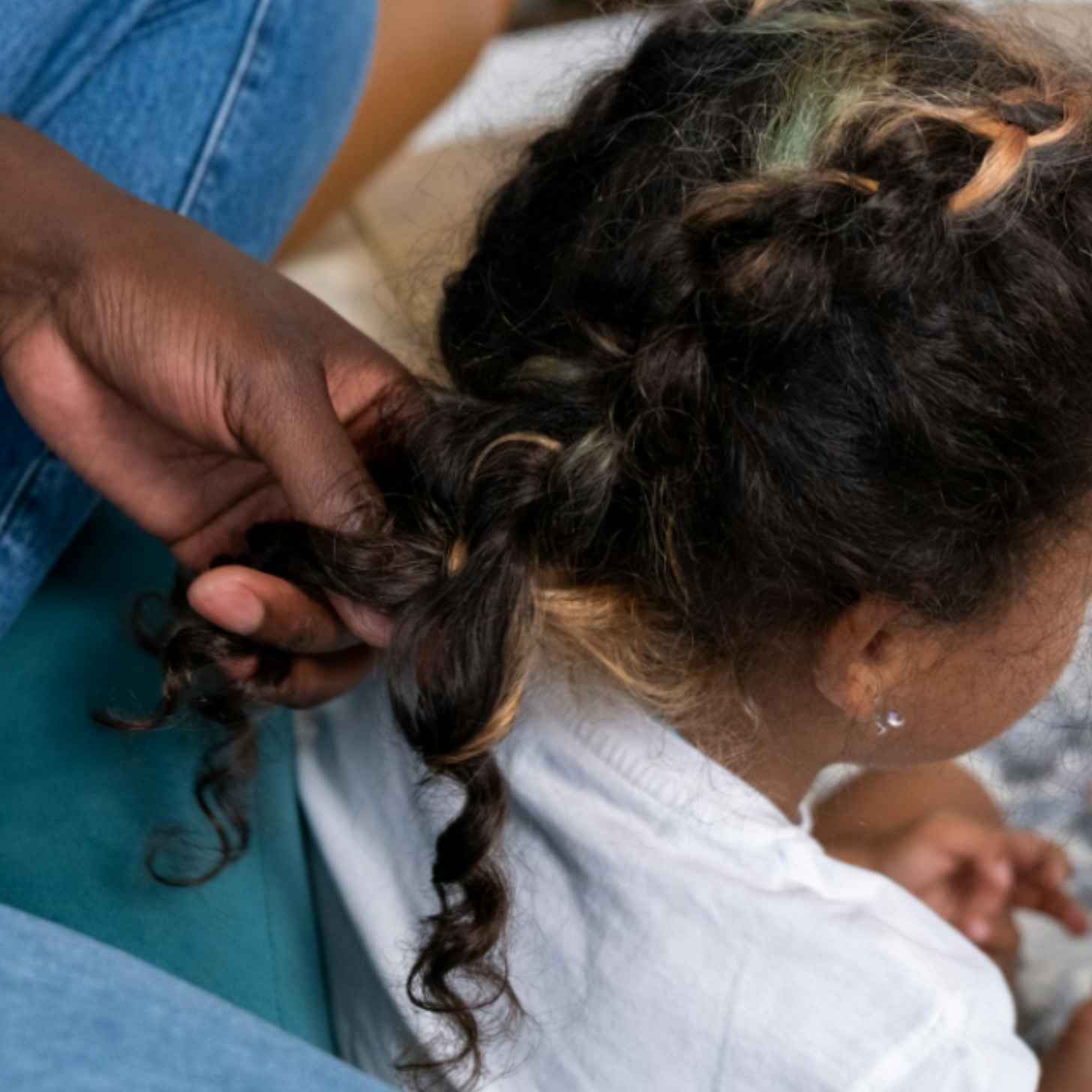
In less than 24 hours, the video went viral on Instagram Reels and TikTok, accruing over 15 million views between the two platforms.
“Crying because I just saw this TikTok,” a user posted on Threads.
“Love this,” a TikTok user said. “This needs to be nationwide.”
“This is what generational healing looks like,” a person commented on Instagram.
Another user called it “a room full of green flags.”
The event was hosted by Secret Life of Dads podcasters Mathew Lewis-Carter and Lawrence Price.
“This is only the second time that we’ve hosted this event, and a lot of you doing it alone as well, not knowing who you’d be meeting, it takes a lot of guts and courage,” Price said to the group of dads.
“So it’s a testament to you as dads for wanting to be here to learn a new skill, to create a deeper connection with your daughter,” Lewis-Carter added.
Header image via OPPO Find X5 Pro
With popular shows like "The Pitt," "Adolescence," and "Shrinking" continually putting mental health at the forefront of their storytelling, it appears as though the television industry has taken a turn for the better when it comes to properly depicting mental health on screen.
And experts agree.
According to a study by the University of Southern California’s Norman Lear Center, there’s been a substantial increase in positive portrayals of mental health in television since 2021.
By examining programs produced by Showtime, MTV Entertainment, and the Paramount Media Network, the center conducted an audience impact study on 13 television storylines that emphasized mental health.
Overall, the research team identified an industry-wide shift toward more inclusive and responsible portrayals of mental health, as well as a 15% drop in derogatory language.
In audience surveys, viewers also indicated a greater willingness to seek help after watching TV shows that had been informed by experts and creators with lived experiences.
“This research validates what we as storytellers have always known: authentic and nuanced storytelling has the power to drive meaningful societal change,” said Nina L. Diaz, the chief creative officer of Showtime and MTV Entertainment Studios.
Erica Rosenthal, the director of research at the USC Norman Lear Center, noted that the study has broader implications for the film and television industry.
“This research highlights a dramatic shift in mental health storytelling, away from stigmatizing language and toward more nuanced discussions of specific conditions and treatment options,” Rosenthal said. “When viewers see their favorite TV characters seeking help or supporting friends who are struggling, we find they are more likely to take these steps themselves.”
You may also like: Ahead of Autism 'Awareness' Day, 'The Pitt' star recommends using this word instead
A version of this article originally appeared in the 2026 Mental Health Edition of the Goodnewspaper.
Header image via Warrick Page/Courtesy of HBO Max
On a brisk October morning, two miniature horses, Pearl and Aiden, clambered into a minivan from a riding center in Long Island.
When they emerged again, they were on the busy streets of Manhattan — greeted with warm smiles and cheers from a group of seniors living at Sunrise at East 56th, an assisted living facility on the Upper East Side.
For more than a decade, the equine therapy program, HorseAbility, has been bringing Pearl and Aiden to seniors to combat loneliness, depression, and even dementia.
“Animal therapy helps bring something out of the residents,” Alyssa Friedman, a program director with Sunrise East 56th, told the New York Post. “It’s so important for their mental health. It opens up their world.”
One resident, Joann Girsh, said she experienced that firsthand when Pearl kept circling back through the crowd and placing her head in Girsh’s lap.

“It made me cry. I felt like I had a friend,” Girsh said. “She had unconditional love for me — you don’t have to be smart or pretty. You don’t find that in people anymore. I love that animal.”
“They really are special animals,” added volunteer Denise Ryder. “Horses can sense a person’s warm energy; they just gravitate toward it.”
A version of this article originally appeared in the 2026 Mental Health Edition of the Goodnewspaper.
Header images via Optimist Consulting
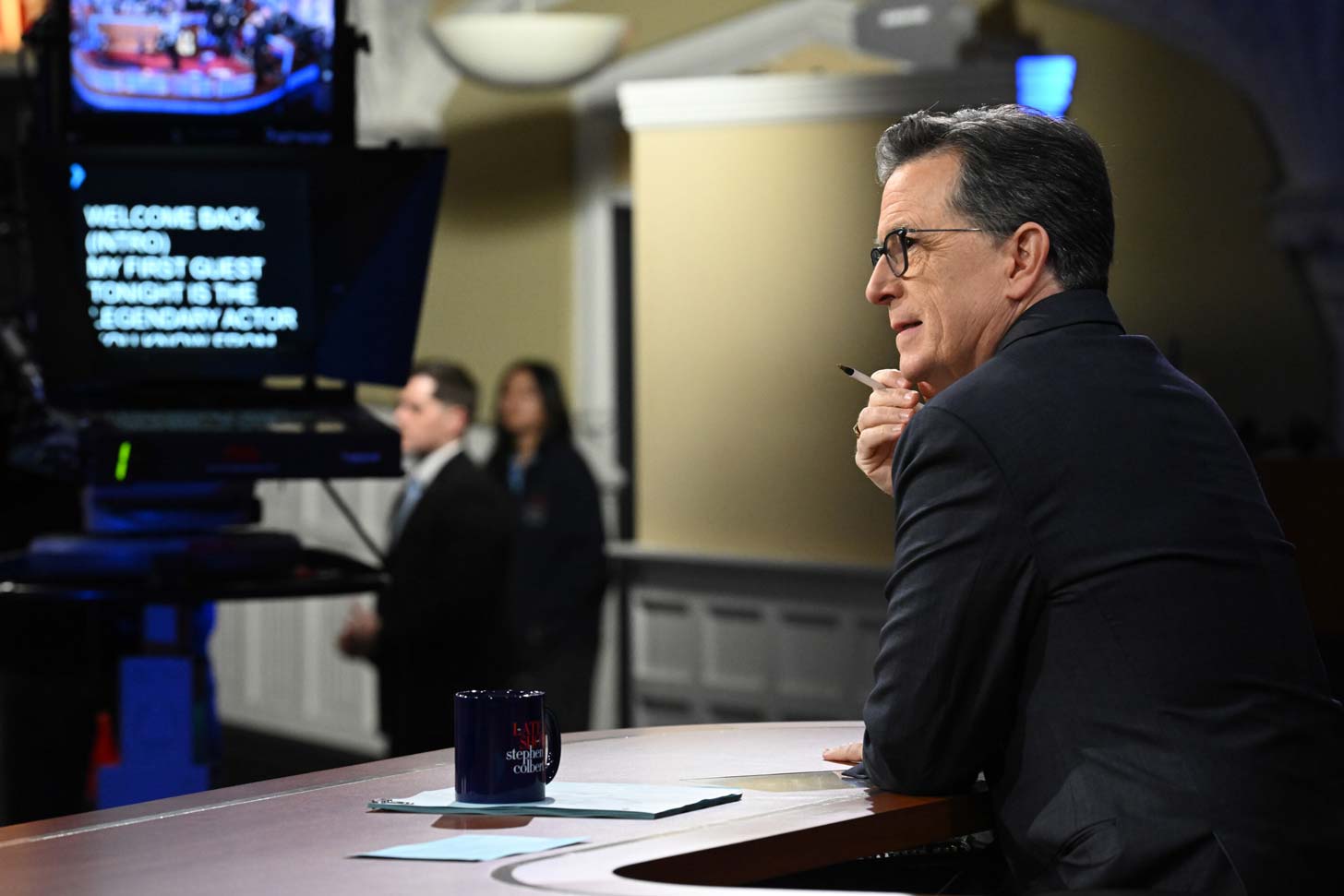
“Stephen Colbert would have no idea that one of his jokes would stop me from suicide one night,” Ron Blake said in a recent TikTok video.
The Arizona man has shared his story countless times before.
In 2011, he was sexually assaulted when three men came into his home in downtown Phoenix and attacked him. He went on to live with dissociative amnesia and post-traumatic stress disorder. About four years later, he was prepared to end his life.
But in the background, the television was on and “The Late Show with Stephen Colbert” was playing.
“On there, this comedy show, something made me laugh,” Blake told WSBT News. “It was … just that moment at 10:44 that night I paused the TV and I just thought, ‘I can't do this. There's still something good left in me.’”
The joke — “that spark of hope,” Blake calls it — would be what shaped his life for the next 11 years.
In the years since, he has become a public speaker, traveling across the country — over 103,000 miles — as he talks about the power of comedy to save lives, and about his own experiences with PTSD and sexual trauma.
Everywhere he goes, people sign messages of support on a poster board, encouraging Blake to reach his goal of being a guest on “The Late Show” himself.
“I’ve gone all over the United States and Mexico. I walk up to total strangers each of those days, and I tell them, “I’m Blake. I’m trying to get on ‘The Late Show.’ Can I tell you my story?”
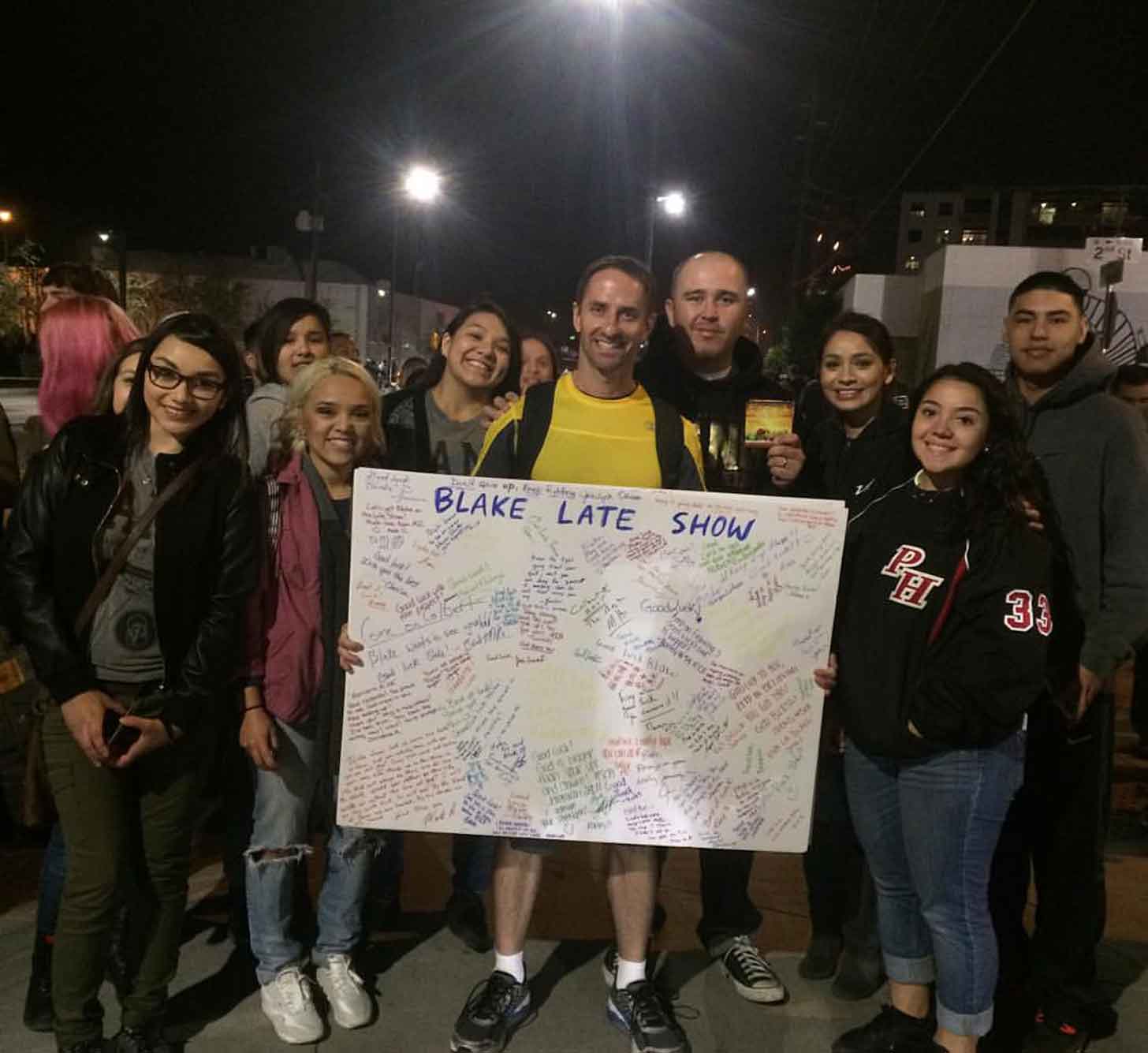
He says tens of thousands of these strangers have written stories of support across 524 poster boards.
And while his ultimate goal is to appear on the show with Colbert, telling his story has been a key part of his healing journey.
“I always tell people, it’s so much more than ‘The Late Show,’ because for me, it’s about what it represented that night,” Blake said in a 2017 TEDx Talk.
“It was so profound for me that night when I sat there and I paused the TV show because I kept looking for what I told everybody was the miracle … to save me from severe PTSD. It was laughter … but it could have been food. It could have been a pet, a spouse.”
He has spent every day since discovering what that spark of hope is for other people. It has given him a purpose.
“Every day, I’m going out … telling my story to people. I’m connecting with them, they’re connecting with me, and I’m finding out what issues that they’re dealing with,” Blake said in the TEDx Talk. “And I don’t feel alone.”
@blakelateshow Stephen Colbert would've had no idea that one of his jokes would stop me from suicide one night. #colbertlateshow #determination #inspirational #nevergiveup #overcome @Entertainment Tonight @E! News @TMZ @Rolling Stone @Inside Edition ♬ original sound - Blake
His dream has not faltered over the last decade, but it has reached its final chapter.
“The Late Show with Stephen Colbert” will air its final-ever episode on May 21, 2026.
“We’re in a bit of a race against time,” Blake said in a recent video. “So, I’m looking to you guys to please share this story, so that somehow, we can get the attention of Stephen Colbert — and fingers crossed — I will finally be invited to be a guest on ‘The Late Show.’”
He said he hopes to take his massive collection of poster boards with him.
“I’d like to take with me this massive collective story of love and hope and support,” he said. “And to share with everybody how powerful comedy and laughter can be in transforming lives.”
You may also like: New study reveals shift towards better mental health representation on screen
Header images: Scott Kowalchyk/CBS ©2022 CBS Broadcasting Inc. All Rights Reserved. Ron Blake/Facebook
“God knows your life is on the brink, and your therapist's well-fed,” Harry Styles sings on his new song, “Are You Listening Yet?”
The song is part of a larger introspective journey across Styles’ fourth solo studio album, “Kiss All The Time. Disco, Occasionally.”
And it also suggests he knows a thing or two about the cost of therapy.
Elena Kilgore, founder of Other People Fund, a nonprofit that provides funding for people to access therapy by selling mental health merchandise, says that Styles has been a supporter of therapy for years.
“If you love Harry Styles, and you think he’s a good person, trust your instinct because you’re right,” she said in a new TikTok video.
She goes on to recount a story of how, over four years ago, she reached out to Styles’ stylist, Harry Lambert, to gift the singer a shirt or tote bag from her nonprofit.
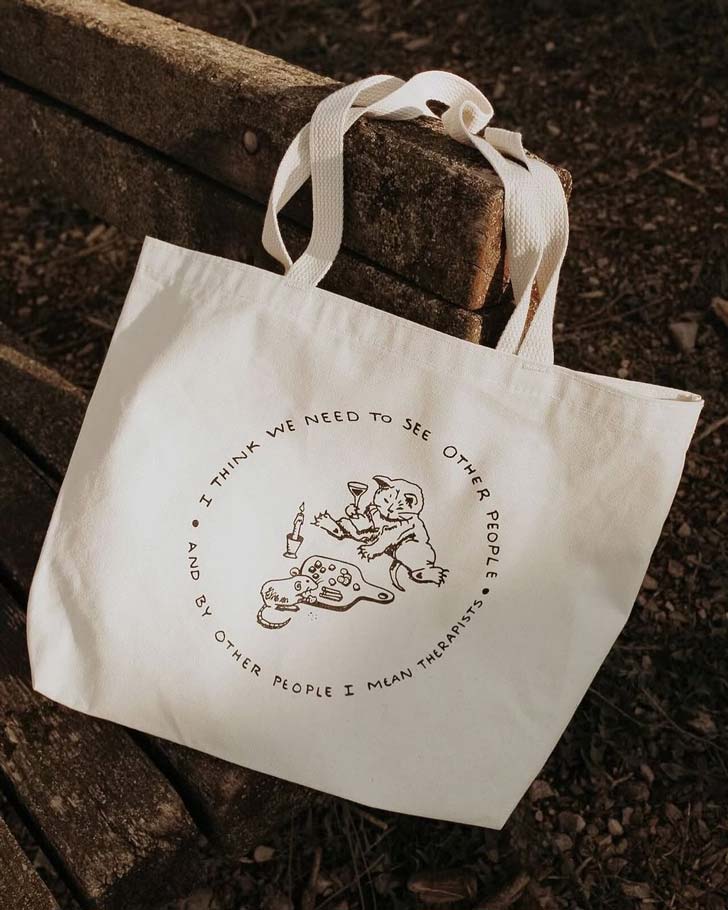
The tote bag in question reads: “I think we need to see other people. And by other people, I mean therapists.”
Lambert, and by extension, Styles, were eager to support Other People Fund — and according to Kilgore, insisted on paying for the apparel items, even though she was happy to give them away.
“To this day, Harry Styles is the only major celebrity who has ever learned about my nonprofit clothing brand that helps people pay for therapy and then insisted on buying merch from it,” Kilgore said.
“It’s a gifting campaign. I don’t expect people or celebrities to pay because I’m hoping that they wear it, and it brings attention to the brand.”
But Styles’ team did.
And once he received the items, Styles wore the tote bag in public, where he was photographed with his then-girlfriend Olivia Wilde.
“Harry wore it out in public,” Kilgore said. “And it led to tens of thousands of people learning about the brand and supporting it — and hundreds of people getting free therapy.”
Interest in the brand, and specifically the “Other People” tote bag, skyrocketed after Styles sported it out and about. In fact, he wore it right after Other People Fund launched, allowing Kilgore to support the first 100 people through her nonprofit.
It’s unclear exactly how many people were supported thanks to Styles, but as of April 2025, Other People Fund reports that it has donated 1,100 free therapy sessions in total.
When people purchase merch items from Other People Fund, 100% of its proceeds are directed to a nonprofit called Support for the Psyche, which accepts applications for therapy aid. From there, the organization works directly with applicants and therapy providers to cover the cost of sessions.
@polkadothead I love Harry Styles and Harry Styles loves Other People Fund
♬ original sound - polkadothead
And it seems like, even years later, the Styles effect has made these efforts possible.
“I’ve given my merch to so many celebrities, who have then ghosted me. Which, I get it. They’re busy people. You know who else is busy? Harry Styles,” Kilgore said in her video.
“So, yeah, you can feel good about this one,” she joked about the singer. “And he’s so good at music. And wearing little, little shorts.”
You may also like: Harry Styles' new tour, 'Together, Together' will support 3 charity partners across the globe
Header images courtesy of Anthony Pham for Harry Styles and Other People Fund
We already know there’s an app for everything: A portal to message your doctor, a Bluetooth app to issue touchless payments to the washing machine at your laundromat, and yes, even a dashboard to pay your monthly rent.
While landlords can issue bills at the click of a button — and, up until a recent lawsuit ruled otherwise, use algorithms to jack up prices — technology designed for tenants lags.
But things are changing.
In New York City, two teen boys realized the country’s largest city didn’t have an easy-to-use portal for prospective tenants to find affordable housing.
So, they launched Realer Estate, a website that combines public data and real estate listings so users can search for below-market or rent-stabilized apartments.
Beckett Zahedi’s algorithm scans and cross-references information online to calculate affordability, factoring in preferences like amenities, price per square foot, and more.
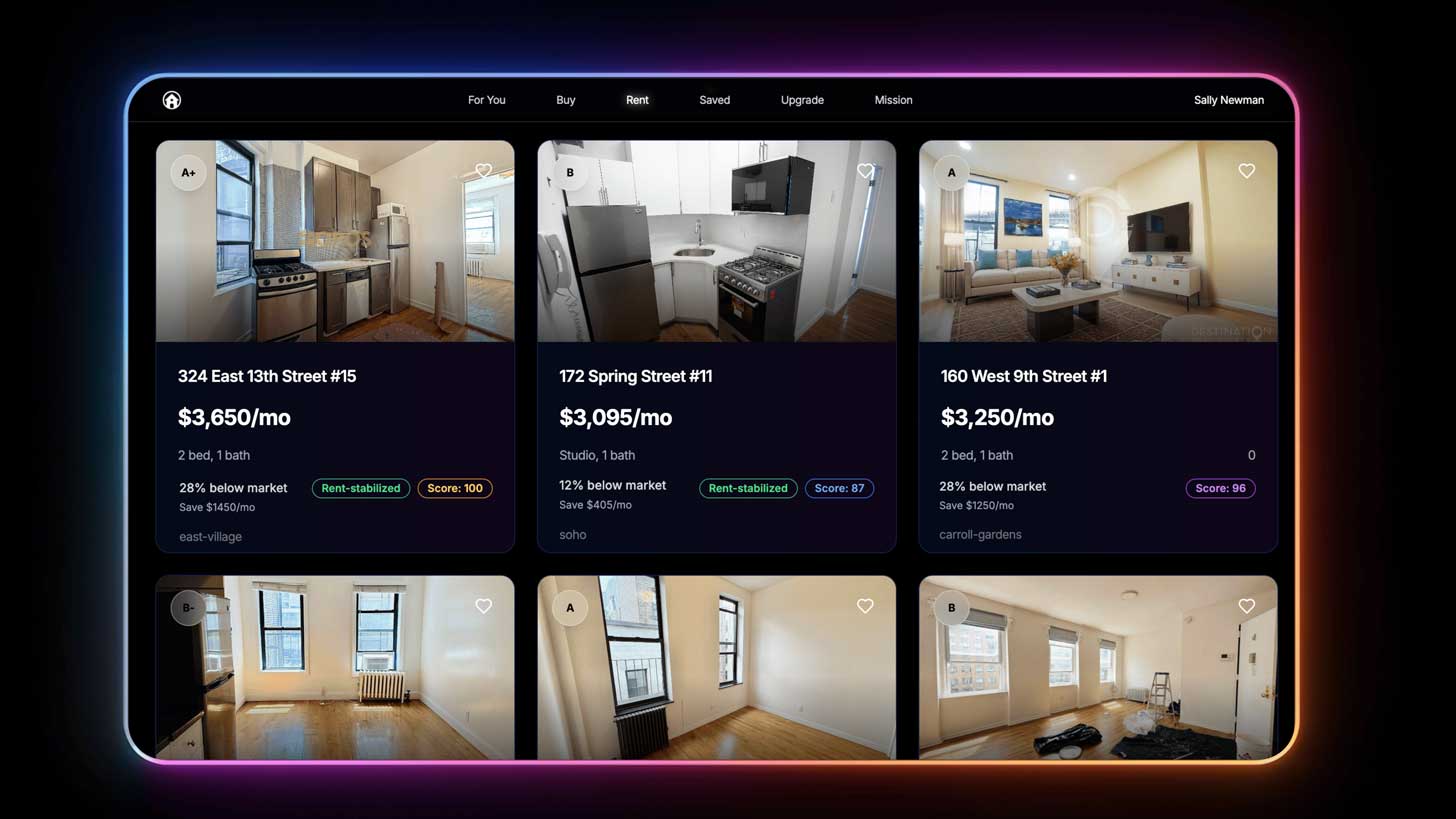
His co-founder, Derrick Webster Jr., codes email alerts for users to know when the algorithm finds them a good fit.
“This is basically the tool that my family needed,” 17-year-old Beckett told The New York Times. “We’d just see, like, one good apartment a month that we can afford. I thought it might be faster, instead of wasting more years, to just create an algorithm that would do that for me.”
Even places where rent is regulated still help.
My Old Apartment is a tenants-helping-tenants initiative on Canada’s Prince Edward Island, where landlords are subject to regulated rent increases. This means that charging above a certain rate is illegal and must be refunded to tenants.
But for people moving into new apartments, there was no way to find out what the previous tenant was paying, and therefore, no way for new residents to know if they were being duped.
So, My Old Apartment created a rental registry.
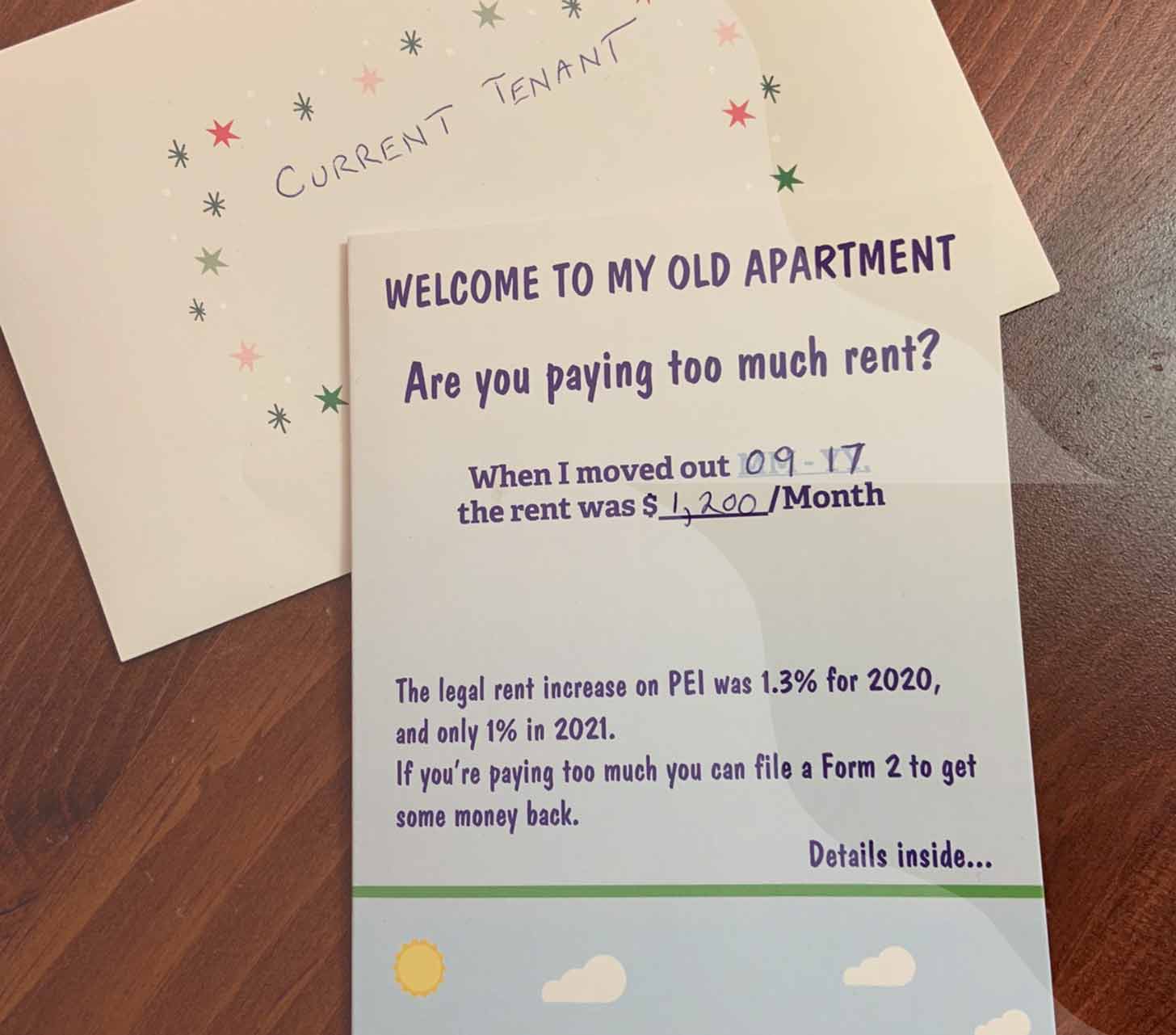
People fill out an online form about any old property they used to live in, sharing what their rent was during a specific time. Once they contribute to the registry, they fill out a card and mail it to their previous apartment’s address.
“Welcome to my old apartment,” the cards say. “Are you paying too much rent?”
From there, those new residents are given clear instructions on how to file an appeal and get refunded if they have been paying too much.
“[We] have created our own rental registry, and 10% of all properties on the Island now have a listing,” the project’s founder, Darcie Lanthier, wrote.
“Numerous hearings have been held thanks to the cards, and in every instance thus far, the tenants have won. More than $100,000 in repayments have already been made to tenants.”
You may also like: New Mexico pays landlords to refurbish abandoned homes and rent to people experiencing homelessness
A version of this article was originally published in The 2026 Home Edition of the Goodnewspaper.
Header image by Jakub Żerdzicki on Unsplash
Dr. Nour and Dr. Nagham are sisters and physicians working on the ground in Gaza, where they founded Pal Humanity, an organization that provides urgent humanitarian aid.
Together, they distribute diapers, menstrual and hygiene kits, baby formula, desalination stations, food, and educational resources.
In addition to their work distributing essentials to people in need, the sisters and their team of doctors and nurses have also set up makeshift medical and dental schools to teach even more people how they can take care of their neighbors, too.
With nearly all hospitals, universities, and formal education systems destroyed in the area, Pal Humanity is where future health care providers can be trained and provide their services.

“For over two years, Gaza’s medical and dental students have been unable to complete their training due to destroyed clinics and a lack of supplies. Pal Humanity is working to change that — rebuilding clinic spaces, providing vital resources, and ensuring students can finish their education,” the organization’s website reads.
“These are not ordinary students. They study medicine under siege, with limited resources, and in a state of constant uncertainty. Yet each day, they rise with determination to learn, to heal, and to serve. Their resilience is extraordinary and profoundly moving.”
In addition to primary care, Pal Humanity has helped dental students realize their dreams, even under occupation. The organization renovated the halls of Al-Azhar University in Northern Gaza into fully-equipped dental clinics.
“This project does more than graduate dentists,” Pal Humanity said. “It gives thousands of patients free access to urgent dental care, from treating cavities to restoring smiles.”
What started as a small effort between two sisters now nears a fundraising goal of $1 million to help their community in a time of unimaginable loss and crisis.
“Many of us have lost everything, yet we continue to bring life-saving aid and hope where it is needed most,” the duo shared on the Pal Humanity website.
“While the world watches the atrocities in Gaza, we live them — and we act.”
You may also like: 'Hacks' star Hannah Einbinder raises $60K for Gaza doctors on Instagram
A version of this article was originally published in The 2025 Helpers Edition of the Goodnewspaper.
Header image courtesy of Pal Humanity
In the fall of 2025, the Al-Mujadilah Center and Mosque for Women opened its doors in Doha, Qatar.
It is the first known mosque specifically designed for women anywhere in the world and was inspired by a figure in the Quran, Surat Al-Mujadilah, which means “She Who Discourses.”
The space will offer a women-focused worship space, and host a variety of programs centered around dialogue, prayer, and study, even including an annual summit for international Muslim voices to come together and discuss the role of Muslim women in public life.
“In these challenging times, communities of faith are essential to fostering cohesion between societies and helping individuals navigate increasingly complex social questions. To do so, however, requires the creation of new frameworks and brave spaces where these conversations can unfold in a meaningful and religiously informed way,” the center’s executive director, Dr. Sohaira Siddiqui, a scholar of Islamic Studies at Georgetown University, said in a statement.
“Through our research, programming and outreach initiatives, we seek to foster a Muslim society where all women are engaged, their participation and contributions acknowledged and recognized, and their concerns and perspectives shape contemporary Muslim thought and open public discourse.”
The design of the mosque itself is a fresh re-envisioning of “what a woman experiences when she walks into a mosque,” Siddiqui said in a video.
@sheengurrib On my last trip to Qatar I had the chance to visit the Al-Mujadilah Center and Mosque for Women. It’s the first purpose-built contemporary mosque for women in the Middle East, and being there was an incredible experience. Walking through those doors, I felt the energy, the focus, and the calm. Al-Mujadilah Center & Mosque for Women is a space where women can come together, reflect, and feel supported. Being there reminded me how important it is to have spaces where women can connect, recharge, and grow. I left feeling inspired and grateful to witness something truly historic.
♬ original sound - Dr Sheen Gurrib
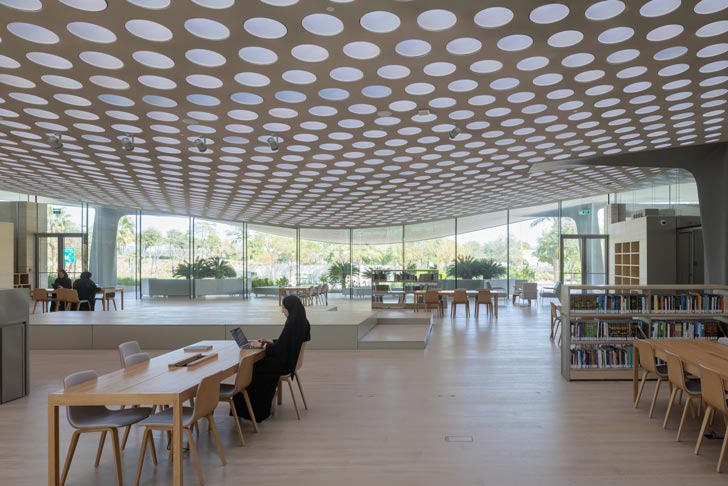
Designed by New York-based firm DS+R, a large flowing roof covers the building, perforated with 5,500 small openings to diffuse natural light throughout the prayer hall and education space.
Inside the open and sprawling building, visitors can see two olive trees intentionally planted to symbolize a connection to knowledge and nature.
The design team behind the building conducted extensive surveys among Muslim women to best confront the challenges and needs they have in a space like this. The women wanted it to build community and be welcoming.

For instance, in most mosques, women enter through a separate entrance or side door, but at Al-Mujadilah, Siddiqui said, “you come in, and you’re in the space.”
And in the Al-Mujadilah worship space, instead of having separate prayer mats that Siddiqui said “felt divisive,” there is one giant, traditional red prayer mat, for everyone to join in together.
“It’s powerful to be in a space that was designed for you,” Siddiqui said.
You may also like: Every year, a neighboring church and mosque join forces for a blood drive in remembrance of 9/11
A version of this article was originally published in The 2026 Feminist Edition of the Goodnewspaper.
Header image by Iwan Baan for DS+R
In October 2025, following pressure from United States Transportation Secretary Sean Duffy, Texas Governor Greg Abbott ordered cities across the state to remove LGBTQ+ Pride crosswalks and other road markings that “advance political agendas” and “ideologies.”
Abbott cited safety concerns and violation of state and federal guidelines as reasons to invoke the measure, which required cities to comply within 30 days or risk losing transportation funding.
Most Texas cities complied quickly, though San Antonio and Austin attempted to receive exemptions from the removal, but both were unsuccessful, according to The Texas Tribune.
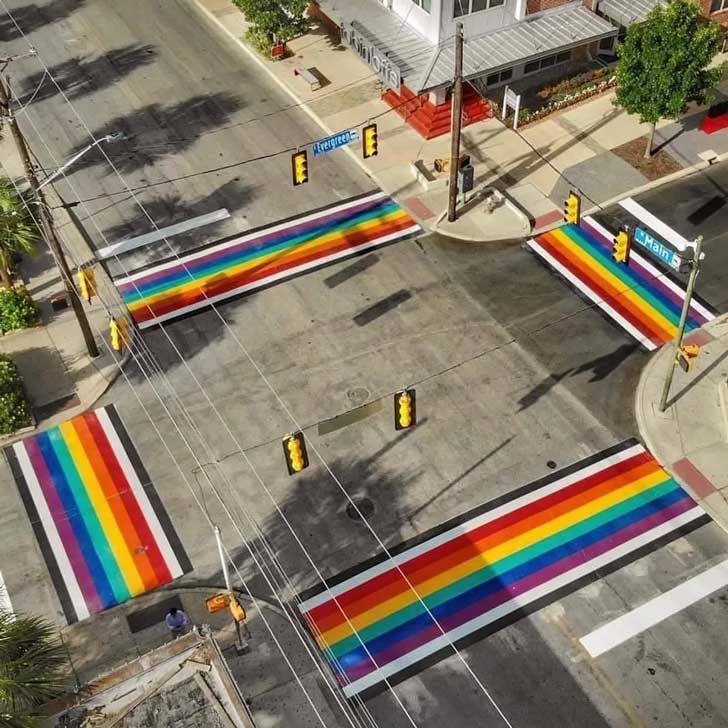
So, like other cities across the country, local officials in San Antonio have come up with a creative solution: Moving displays from roadway crosswalks to sidewalks instead.
In January, San Antonio road crews removed the original rainbow crosswalks, which sat at an intersection on North Main Avenue and Evergreen Street and had been in place since 2017.
But San Antonio District 1 City Council member Sukh Kaur helped propose a new sidewalk plan with the city’s LGBTQ+ Advisory Board, and it was painted on just a few days later.
“Though we’re sad to see the removal of the Rainbow Crosswalk, we’re excited to show y’all what’s coming next for Main Street,” Kaur wrote in a statement. “This design included input from the LGBTQ+ Advisory Board, which will help ensure that the Pride Cultural Heritage District is still a vital and inclusive space in our city.”
The sidewalk displays were able to be installed without a City Council vote due to the area’s cultural heritage district designation, according to The Texas Tribune.
“We want to make sure that our community knows, while our asphalt may be regulated by the state, our sidewalks are not, and so the sidewalks are under city purview, and we want them to represent our city’s values,” Kaur told the Texas Tribune.
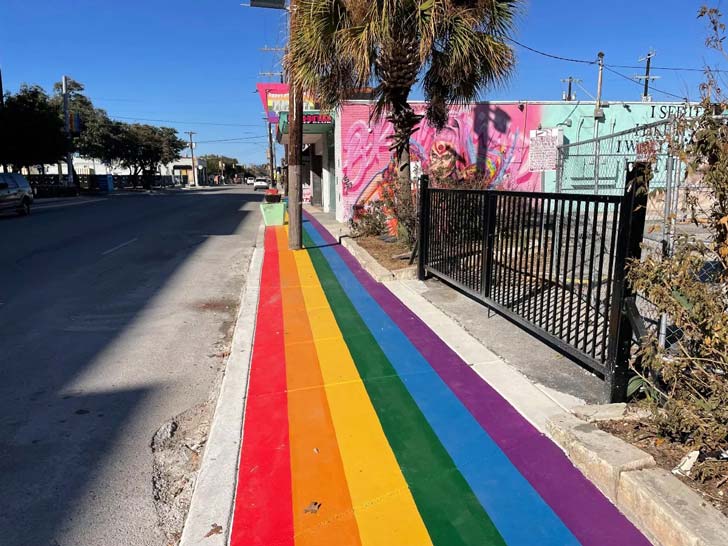
Some other City Council members disagreed with the sidewalk painting, objecting to the use of Public Works funds for the project. District 10 Council member Marc Whyte and District 9 Council member Misty Spears released a joint statement claiming the project would cost about $170,000 in taxpayer dollars and that it should be used on other infrastructure needs instead.
Other local officials have noted that the former rainbow crosswalks were a community-driven project, with volunteers and area businesses managing the maintenance, so as not to put a burden on city taxpayers.
Spears argued that the removal of the crosswalks was purely a matter of safety and “not intended to target San Antonio or the LGBTQ community,” according to the San Antonio Report.
Still, proponents of the new sidewalk display say the “majority of San Antonians” want to see public displays that support LGBTQ+ community members.
District 2 Council member Jalen McKee-Rodriguez responded to his colleagues’ statement.
“As a starting point, I join the majority of San Antonians who do not care what the D9 and D10 Council members have to say about the sidewalks,” McKee-Rodriguez said.
“From the beginning, this was never about traffic safety. Data shows that this intersection was safer after the installation of the crosswalks. This has always been about bigotry and the state choosing time and time again to attack the LGBTQ+ community. They hoped to make the city complicit in it.”
McKee-Rodriguez added that taxpayer funds were used to remove the original crosswalks, which, again, had no tax burden on city residents until Gov. Abbott called for their removal.
“Taxpayers wouldn’t be paying anything if Greg Abbott didn’t force us to rip up and replace a perfectly good intersection,” McKee-Rodriguez said. “Misty and Marc can direct their frustrations to his office, if they’re so concerned.”
But, in the meantime, the new, colorful sidewalks do not violate any local regulations, and Kaur and McKee-Rodriguez hope they signal an ongoing commitment to LGBTQ+ Pride in San Antonio.

“By installing rainbows on the sidewalk, we are abiding by all regulations while demonstrating even greater, more permanent visible support to the LGBTQ+ community,” McKee-Rodriguez said. “And I appreciate the majority of my colleagues’ support in this effort.”
James Poindexter, secretary and parade director for Pride San Antonio, was hoping the city would have been more committed to keeping the original crosswalks, but told KSAT that the sidewalk alternative is “great.”
“We’re all for enhancements to the neighborhood,” Poindexter said. “That’s what the dream was all along. But, you know, I just — I think that this is a time for this city to show what they have and to really stand up and fight for this.”
You may also like: Florida banned Pride crosswalks — so St. Pete lit up the sky with rainbow lasers instead
Header image courtesy of VisitSanAntonio.com
Studies from RAND show that individuals who participate in educational programs while incarcerated are 48% less likely to return to prison than those who did not have access to these opportunities.
That’s why, in 2016, the state of California partnered with California State University, Los Angeles to help incarcerated individuals earn a degree.

And in October 2025, the first graduating class of the California Institution for Women earned a Bachelor of Arts in Liberal Studies.
This cohort of 20 women represents a major milestone in the program and contributes to the growing statistic of more than 13.5% of California’s entire incarcerated population enrolled in college courses.
“Higher education is key to the transformation and growth that we see today from many of the students graduating,” California Governor Gavin Newsom said at the commencement ceremony.
“I’m proud to see them taking a step in the right direction to contribute positively to our society.”
According to the California Department of Corrections, this education program is seen as “a positive shift in correctional policy,” as it emphasizes support for both correctional staff and victims of crime while prioritizing rehabilitative opportunities for those who are incarcerated.
“I am proud to be a part of a rehabilitative program that appreciates me for the woman I am today, and the value of my thoughts and inspiration of my voice,” Jennifer Henderson, one of the graduates, said in a statement.
“I chose to grow and develop my mind and spirit and empower others to live beyond any label.”
You may also like: Former inmate buys prison to create housing and job training for other ex-convicts: 'From prison to purpose'
A version of this article was originally published in The 2026 Feminist Edition of the Goodnewspaper.
Header image courtesy of California Department of Corrections
A lot goes on behind the scenes in a restaurant kitchen, as a sort of shared tango takes hold between cooks, servers, dishwashers, and managers, preparing delicious meals for their visitors.
However, an element that often stands in the way is the language barrier between team members (up to 40% of employees in the restaurant industry are undocumented workers, according to Civil Eats).
Casa Bonita in Denver, Colorado faced that hurdle head-on. In 2022, 29 Casa Bonita staff members received language certifications while the restaurant was undergoing renovations after being purchased by “South Park” creators Trey Parker and Matt Stone.
Spanish-speaking staff members took English classes, and English-speaking staffers took Spanish classes over a 16-week period.
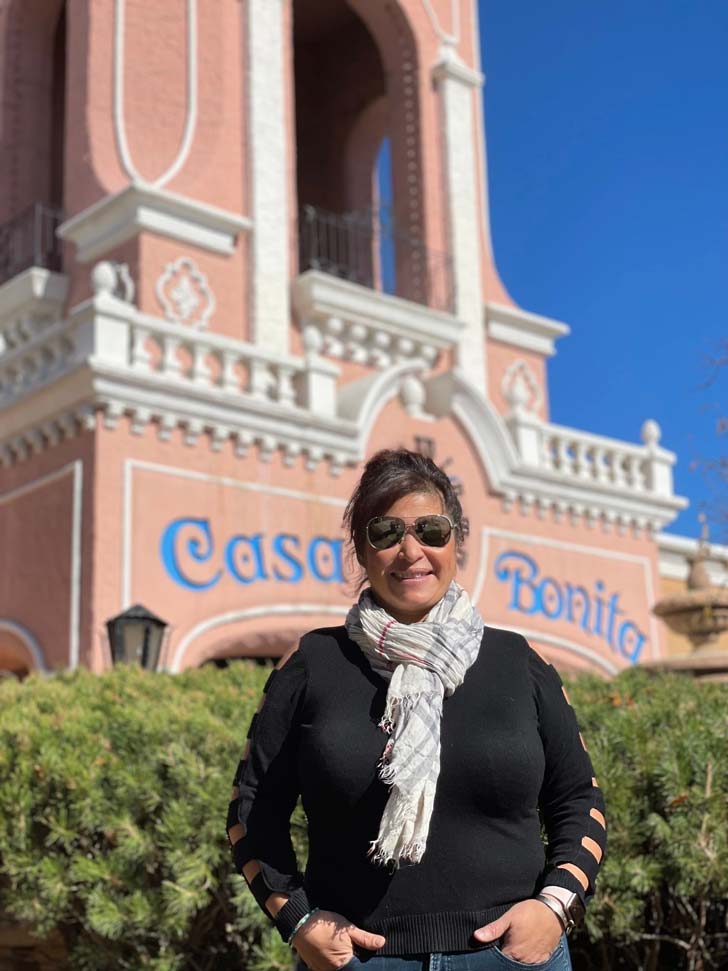
The program lead and executive chef, Dana Rodriguez has truly learned the value of inclusive communication in the kitchen, since she first moved to the U.S. from Mexico in 1998.
“Even being a dishwasher, to be able to communicate with the line cooks, with the chef… you learn eventually,” she told The Denverite. “But you have to try really hard.”
Rodriguez said she hoped classes like this make that process a bit more seamless — and that other restaurants and associations invest in their employees, too.
In Denver, the Colorado Restaurant Association supports area restaurants that want to provide second language learning for workers, and the Hispanic Restaurant Association offers similar programming for over 400 restaurants nationwide.
Alex Perez, a Casa Bonita team member who has worked at the restaurant for nearly 30 years, and Beau Gentry, a newer Casa Bonita staffer, both told the Denverite that they feel more confident about their relationships after taking the language classes.
“I try to have better communication with my bosses, my coworkers, and customers,” Perez said. “That’s what I do. I try to be better.”
“There was a little bit of a disconnect,” Gentry added, alluding to the language barrier between team members. “But, now we’re all connected more as a family.”
You may also like: Language barriers make it hard for immigrants to navigate the US healthcare system. This comic book is a lifeline
A version of this article was originally published in The 2023 Food Edition of the Goodnewspaper.
Header image courtesy of Casa Bonita
Twice in 2025 — first on June 14, and again on October 18, millions of Americans gathered for nationwide protests under the banner of “No Kings.”
The first event saw an estimated 5 million people in attendance, and another 7 million in October, as people congregated in nonviolent protest to “oppose the growing authoritarian actions of the Trump administration and affirm that this nation belongs to its people, not to kings,” organizers said.
A third nationwide protest is now planned for March 28, 2026, with over 1,000 locally organized events already confirmed.
Organizers told Politico they are aiming for nearly 9 million people to turn out in March.

And this upcoming event focuses specifically on speaking out against Immigration and Customs Enforcement, with a flagship gathering planned in Minnesota’s Twin Cities.
“The Trump regime is doubling down on fear and force to intimidate communities and silence dissent. What we are seeing in Minnesota is a tragic example of that, with immigrant families and Black and brown communities being terrorized,” Ezra Levin, co-executive director of Indivisible, a lead organization behind the No Kings protests, said in a statement.
“From Alex Pretti to Renee Good to the tens of thousands showing up in subzero weather, we are also seeing a massive movement of brave people standing up for their neighbors and against this regime.”
Indivisible joins a large slate of partners in organizing “No Kings” 3.o, including activist organizations like 50501, Vote Save America, the American Civil Liberties Movement, Human Rights Campaign, and more.
“Now, it’s on all of us to show up and to stay nimble to meet the threats of this regime in real time,” Levin added. “‘No Kings’ is not just a slogan or a single day of action. It’s a principle we carry every day as we stand in solidarity with communities being harmed and confront authoritarianism wherever it shows up — from Los Angeles to Minneapolis.”
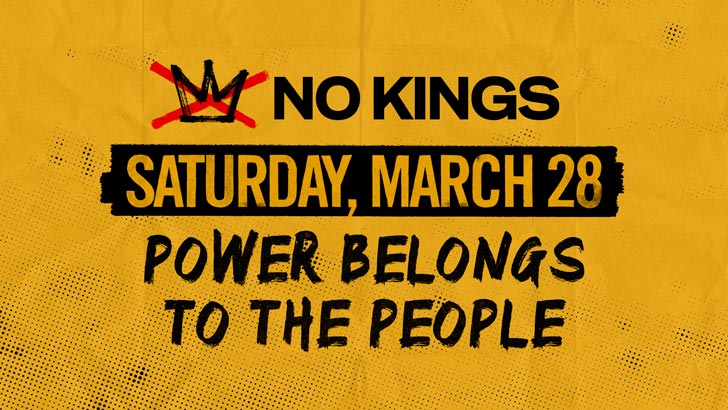
An interactive map on the No Kings website shows registered events taking place across the country — with some planned in Europe, Australia, and Canada, too.
Local events vary in time, but many are slotted to take place in the early afternoon.
To help protest leaders, organizers, and attendees prepare, No Kings has been hosting training sessions on topics like de-escalation, non-violent documentation techniques, and other safety precautions.
Levin told Politico that Indivisible has also trained thousands of volunteer marshals, who are in charge of maintaining non-violent principles in the streets.
In late January, No Kings also launched an “Eyes on ICE” training program, which is “designed to equip Americans with tools to exercise their rights and safely monitor federal enforcement actions.” The first training drew a turnout of more than 200,000 viewers (and is still available to watch online).
“Peaceful, people-led movements have always led the way for real change,” Deirdre Schifeling, chief political and advocacy officer for the ACLU, said in a statement.
“Last year, millions joined us to send a resounding message that we, the people, will not be intimidated by President Trump’s fear tactics. We are at a dangerous moment for our democracy — it’s time to come together again and fight to stay free.”
You may also like:
- No Kings protest sign ideas
- Anti-ICE protest sign ideas
- No Kings protest sign ideas for kids
- Funny No Kings protest sign ideas
Header image by Brendenmrogers (CC BY-SA 4.0)
For those with autism, eating out at a restaurant can be an overwhelming experience. At peak hours, the clanging of silverware, the clamor of table conversations, and bright lights can be a hailstorm of sensory overload.
But in Cornelius, North Carolina, Peninsula Prime steakhouse owner Jim Gordon has made a point of offering an autism-friendly dining experience.
He told Queen City News that he and his staff began making sensory bags available to guests, filling them with stress balls, fidget spinners, pop-it toys, and earplugs.
“It’s all about sensory, so sound, lighting, touch are vitally important,” said Gordon, whose daughter is autistic. He also recently added an illustrated menu with pictures of food items, so that guests who are non-speaking can order with autonomy.
“It means a ton to our families to know that this is another place that cares about us,” said Nancy Popkin, a resource specialist with the Autism Society of North Carolina. After her adult son was diagnosed with autism, they avoided eating out at restaurants for five years.
“A sit-down restaurant is saying ‘Please come have dinner at our restaurant because we’re going to meet your needs … and have a less stressful experience’,” she said. “That’s a gift.”
Gordon encouraged other restaurant owners to join him in making their dining rooms more accommodating, saying that a few extra steps make a world of difference.
“This is something we’re doing to help this specific community,” he said. “If other restaurants could participate and do it in their own community, that would be a win for us.”
Peninsula Prime is located at 19918 N Cove Rd, Cornelius, NC 28031.
You may also like: Every smash burger at this NC restaurant goes toward fighting childhood cancer
A version of this article originally appeared in the 2026 Mental Health Edition of the Goodnewspaper.
Header image via Matheus Bertelli/Pexels
There’s a popular TikTok video trend called “Get Ready With Me,” where users walk viewers through their morning routines before work or school.
In one “GRWM” video, Tyler Kidd (@itstylerkidd) — a young adult — looks the part, with a towel wrapped around her head as she stirs her morning coffee. But her opening line deviates from the typical script of skincare routines or makeup steps.
“I’ve decided that I’m going to quit vaping,” Kidd said. “I want to quit for good.”
It’s one of many videos that popular content creators posted across TikTok and Instagram throughout 2025. And they did it all in partnership with Truth Initiative, the nation’s largest public health nonprofit dedicated to ending nicotine addiction.
By and large, “influencer content” is typically devoted to promoting the latest trends in food, fashion, beauty, and more — often with a price tag attached. But the Truth Initiative campaign is grounded in free, evidence-based tools like the EX Program, which helps people quit nicotine through personalized text support.
“The EX program helps your odds of quitting by up to 40%. I’m like, ‘Ooh, sign me up,’” Kidd said in her video, which has over 119 million views.

According to Truth Initiative, nearly 60% of young adults ages 18-24 who vape say they want to quit, and 76% have already tried in the past year. To encourage more teens to make that leap, they employed the help of young adults across the digital landscape — many of whom have hundreds of millions of followers.
Every creator had their own take on the campaign. Quenlin Blackwell (@quenblackwell) turned her journey of quitting vaping into a full-on comedy set. Gabi Hartman (@umgabi) did an “unboxing video” of Ex Program’s Quit Starter Kit. And Jesse Sulli (@jessesulli) did a daily check-in, celebrating 548 days free from smoking cigarettes and vapes.
“I love programs that help bring positivity and light into people’s lives, and that’s why I have promoted this program so much,” Sulli said. “They really are helping people change their lives.”
A version of this article originally appeared in the 2026 Mental Health Edition of the Goodnewspaper.
Header image via Renz Macorol
It might be time to fix up your rusty old bike.
Gasoline prices are already spiking in what The Wall Street Journal calls “the most severe energy crisis since the 1970s.”
In response to bombing by the U.S. and Israel, Iran attacked vessels in the Strait of Hormuz, a chokepoint through which roughly 20% of the world’s oil normally flows. As a result, most shipping traffic in the strait has halted.
“We are looking at what is by far the biggest disruption in world history in terms of daily oil production,” energy historian Daniel Yergin told The Wall Street Journal. “If it goes on for weeks, it will reverberate across the global economy.”
Here’s a guide, drawn from the Yale Climate Connections archives, to what you can do to get through the immediate crisis — and help wean your community off oil in the long term.
I also want to hear from you: How are rising gas prices affecting your community? What are your strategies for reducing how often you need to fill up? Let me know here.
5 ways to cut back on gas
Drive more efficiently.
This is the simplest strategy to implement. You can start today:
- Maintain a proper tire pressure
- Keep your engine in good condition
- Use cruise control on the highway
- Avoid high speeds (cars are most efficient at about 60 mph and under)
- Accelerate slowly from a stop (if it’s safe to do so)
Switch some trips to a bike or e-bike.
My e-bike has replaced virtually all of my in-town trips, saving me money on fuel and parking — and since I’m exercising during my commute, I don’t need a gym membership, either. A few notes:
- E-bike libraries are growing in popularity. These libraries typically let you borrow an e-bike for free for a few days to try it out.
- Other communities are helping residents pay for e-bikes. Does yours? If not, could your community start an e-bike fund?
- Kids at an elementary school in Portland, Oregon, ride in a bike bus to school: “This parade of bicycles has a set route, and kids and parents join the growing caravan along the way,” our radio team reported in 2024.
Consider the bus.
Many communities have made improvements to their bus systems recently, upgrading stops and making the rides fare-free: “Far beyond just saving riders money, free buses deliver a cascade of benefits, from easing traffic to promoting public safety. Just look at Boston; Chapel Hill, N.C.; Richmond, Va.; Kansas City, Mo.; and even New York itself, all of which have tried it to excellent effect,” Emily Galvin Almanza wrote in an op-ed for The New York Times.
Get an electric vehicle.
This is a more expensive option than biking or taking the bus, but think of an EV purchase as a divorce from oil geopolitics.
If you’re a renter, don’t miss this guide to charging up. Live in a rural area? Read this.
What about road trips? David Carlson drove 6,000 miles in an EV and wrote about what he learned. (Bottom line: Road-tripping is doable if you plan ahead.)
Dig deeper on EVs:
- Electric vehicles use half the energy of gas-powered vehicles
- A roundup of common myths about EVs
- Why electric cars might save you money in the future
Help build the walkable, bikeable community of your dreams.
Your elected officials may be unusually receptive right now to reducing car-dependency. Here’s some inspiration for getting started:
- Want to reduce your neighborhood’s pollution? Try a ‘walk audit’
- These key strategies could help Americans get rid of their cars
- In an Ohio suburb, sprawl is being transformed into walkable neighborhoods
This article was originally published by Yale Climate Connections.

Header image by Engin Akyurt via Pexels
Olivia Rodrigo’s latest music video is a sharp departure from the pop-punk angst of projects past.
Created for her cover of The Magnetic Fields’ song, “The Book of Love,” the music video is a beautiful yet sobering journey of childhood under conflict, with clips filmed by children in Gaza, Ukraine, Sudan, and Yemen.
Rodrigo recorded the song for War Child Records’ new charity album, “Help(2),” which supports global nonprofit War Child and its efforts to “protect, educate, and stand up for the rights of children living through conflict around the world.”
War Child Records released its first “Help” album in 1995, which was created by Paul McCartney, Sinéad O’Connor, Radiohead, and more, to raise money for the Bosnia conflict in the 1990s.
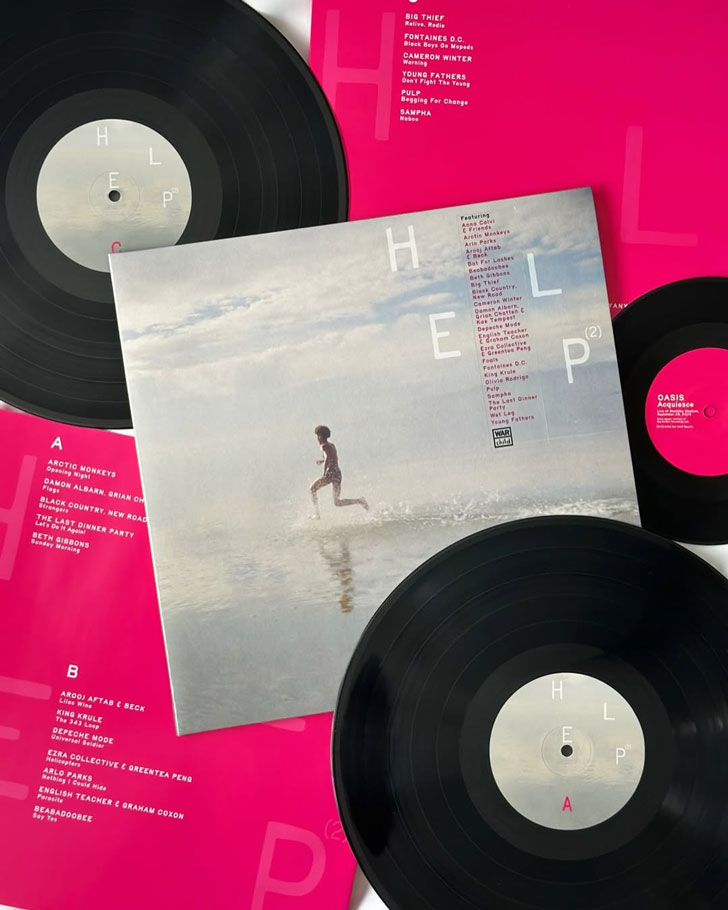
“The album is still hailed as one of the greatest charity albums of all time and helped set War Child on the proud course it now follows,” a statement from War Child Records reads.
Other charity albums have been released in the years since, but “Help(2)” is especially dedicated to the world’s most pressing conflicts around the globe today. In addition to Rodrigo, artists on the album include Arctic Monkeys, Arlo Parks, Beabadoobee, Big Thief, Fontaines D.C., Wet Leg, and more.
Rodrigo’s cover of “The Book of Love” makes the perfect soundtrack for War Child Records’ new video, which was released a week ago.
In it, children from conflict areas show clips of their everyday lives, running around and laughing in areas strewn with rubble, playing in open fields, and capturing sounds of planes overhead.
Rodrigo sings a soft ballad in the background, with strings echoing in harmony with the children' s b-roll.
“The book of love is long and boring / And written very long ago,” she croons. “It's full of flowers and heart-shaped boxes / And things we're all too young to know.”
Rodrigo herself does not appear in the music video at all, instead providing the backing vocals as children tell their own stories from a first-person lens.
“She was such a pro and was happy to take a gung-ho approach to it,” James Ford, the producer of the “Help(2)” record told Billboard. “She just walked into the studio and nailed it.”
In addition to giving it her all on the song, Rodrigo has been outspoken about her support for the people of Palestine, writing a statement Instagram in July of 2025.
“There are no words to describe the heartbreak I feel witnessing the devastation that is being inflicted upon innocent people,” she shared on her Stories. “It is horrific and completely unacceptable. To give up on them is to give up on our shared humanity.”
Watch War Child Records’ video for Olivia Rodrigo’s song, “The Book of Love:”
You may also like: Olivia Rodrigo launches reproductive rights initiative alongside Guts World Tour
Header image by Justin Higuchi (CC BY 2.0)