Minnesota experiences some of the coldest temperatures in the United States every winter. In the Twin Cities, temperatures have dropped below -30 degrees Fahrenheit on 12 occasions since 1891.
Considering people can suffer from hypothermia in any temperature below 35 degrees, this harsh weather can be a death sentence for Minnesotans experiencing homelessness.
So, in Minneapolis, housing advocates opened Avivo Village, an indoor community of 100 secure, private tiny houses for people who are otherwise at risk of sleeping on the streets.
Inside the village, which is located in a warehouse, 100 individual units give people their own place to call home — and the freedom to come and go as they please.
Since opening in December 2020, the shelter has supported over 800 people through temporary housing, placed 340 people in permanent housing, and have even reversed nearly 250 overdoses.

In addition to an individual 8-by-8-foot unit, the village provides “wraparound services” to people experiencing homelessness, meaning they have access to essential services like substance use disorder treatment, mental health therapy, medical care, and social work support.
Operating under a “harm reduction model,” the shelter is considered “low-barrier,” meaning people who stay there are welcome regardless of their sobriety. Even dogs and cats are welcome to stay with their humans, too.
“The winters are harsh here. Living on the streets here is harsh. And there hasn't been a safe space for people to be. And the traditional shelter model hasn't always worked for everybody,” David Jeffries, Avivo’s program director, said in a video.
“When they first come in … some of the residents are just exhausted. Saying they feel helpless, they’re very emotional, they don’t really know how to feel because they’ve been out on the streets for so long … When they finally come here, they just kind of take a breath, like, ‘Oh, I’m okay now.’”
Although some colorful artificial intelligence-generated images have circulated on social media, the space is simple. Residences are placed in a grid, and walls are painted in simple, plain colors. Volunteers regularly spruce up the community, and additional furniture like picnic tables and gathering spaces are available inside, too.

While residents live in the individual units on a temporary basis, there is no limit to how long they can stay. Experts are also there to help people find permanent, supportive housing, obtain employment, and more. Staff and security are on-site for 24 hours a day, seven days a week.
“Avivo Village is a tremendous example of what can happen when the community rallies together to address the issue of unsheltered homelessness,” Avivo president & CEO Kelly Matter said in a statement.
“It offers stability and security first. A safe place out of the elements to take personal steps to permanent housing … The indoor community is surrounded by trained staff who walk alongside each person, connecting them to just the right services that help them find permanent, safe places to live. It’s one of the things Avivo does best.”
Plus, residents take part in making the village work for them.
“The village is set up in a way that it really creates community, and a lot of people take on different roles,” Heather Day, another program manager for Avivo, said in the video.
“We have a resident who is a barber, and he cuts people's hair. We have a resident who is very personable, so if somebody is feeling down, they’re always the one that comes in. Everyone takes a part, just like our regular community would do.”
Avivo Village began as a two-year pilot project and has since grown to support people for over five years. Funding from the state, county, and city — along with private donors — make it possible for the program to stay operational.
“It’s not an inexpensive intervention,” Emily Bastian, vice president of ending homelessness at Avivo, told MPR News.
“But when we do the math, we identify that a night in Avivo Village is no more expensive than a night in a correctional facility in our community.”
You may also like: High school students build tiny house village for homeless veterans states away: 'A great civics lesson'
Header image courtesy of Avivo
We will almost certainly hear about ICE and Trump and his oil wars in Conan O’Brien’s running commentary or in the acceptance speeches during Sunday night’s Academy Awards ceremony. But will anyone talk about climate change?
An analysis by Good Energy, a story consultancy, points to a good chance that someone will. In advance of the awards ceremony on March 15, the group conducted a “climate reality check” (sometimes referred to as the Bechdel-Wallace test for climate fiction) on the films that received nominations for Academy Awards.
In what it describes as “a defining year for climate at the Oscars,” the team found that 31% of the eligible nominees, a record high, acknowledged climate change.
To be eligible, a film has to be set on Earth in the very recent past, present, or future. To be judged as acknowledging climate change, the story world of the film must depict climate change in some way, and a character in the story must recognize it.
The team that conducted the research on this year’s Oscar nominees concluded that five films met these criteria: “Arco,” “Bugonia,” “Jurassic World Rebirth,” “The Lost Bus,” and “Sirat.”
Because two of these films involve climate-intensified wildfires, if one of them wins the Oscar for its category, then the presenters or accepters may well speak the words “climate change.”
And that, Good Energy argues, is important for all of us. The filmmakers would have broken the climate silence, our reluctance to talk about climate change, in two ways: first, by incorporating climate change into their story, and second, by talking about that choice in public.
Fingers crossed. Let’s take a closer look at the five films Good Energy highlighted.
These five Oscar-nominated films pass the 'Climate Bechdel Test'
In its reports, Good Energy cautions that “climate isn’t a genre”; our “one climate reality” can inspire many distinctly different stories. The five that passed this year’s climate reality check evidence these points, but they also call attention to the vagaries of the test, to the enormous qualitative and quantitative differences in how films engage climate change.
“Arco” tells the story of a young and misbehaving time traveler who leaves his sustainability community in the clouds and falls/flies into a suburban community serviced by robots and about to be razed by wildfires.
“Sirat” depicts “a crew of desert ravers” touring on the edges of a world descending into climate dystopia.
In “The Lost Bus,” a bus driver and an elementary school teacher endure a harrowing five hours of climate-stoked wildfires. In these three films, the connections with climate change are clear and substantial.
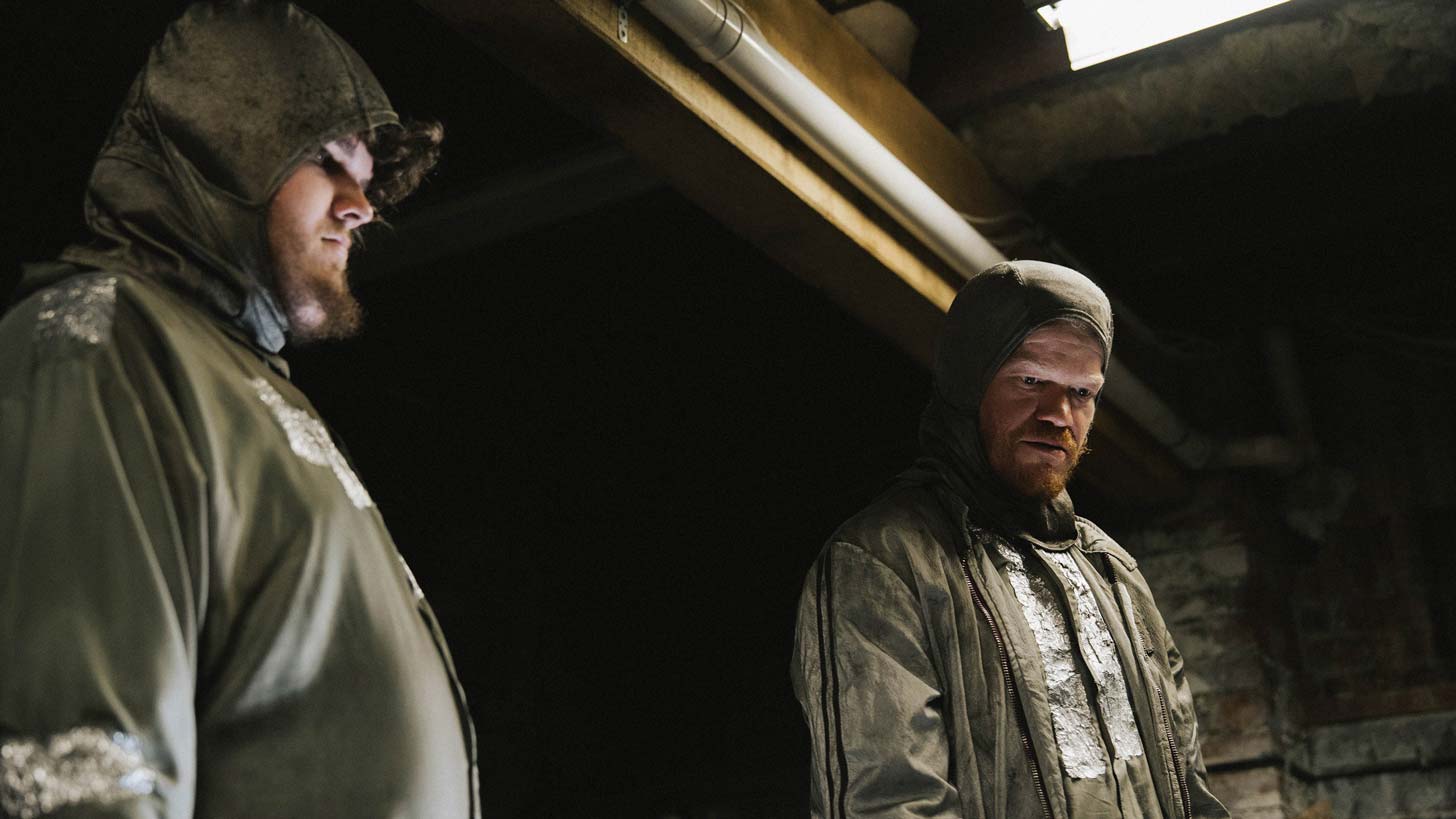
But in “Bugonia” and “Jurassic World Rebirth,” the climate connections are confused and incidental. Most of “Bugonia” is spent in the claustrophobic tension of the basement, where Emma Stone’s CEO character is held by her seemingly deluded abductors. Only in the closing minutes, in a loopy rendition of a tired trope, do viewers learn that Stone is the leader of aliens who have come to Earth to teach humans an environmental lesson.
“Jurassic World Rebirth” offers a passing nod to climate change on its pseudo-genetic journey, but the problem has been reversed. In the film, the climate has not changed enough. Dinosaurs are migrating to the equator because the north is still too cold and won’t support the global expansion of dinosaurs depicted in the previous trilogy.
Climate change is not the point of these two films, and neither takes it seriously.
Other highlights from 2025
Films nominated for Oscars represent, by definition, only the most distinguished fraction of the films produced that year.
In the final pages of its report for 2026, Good Energy applauds the strong environmental messages in “Avatar: Fire and Ash,” “Hamnet,” and “Train Dreams.” The report also notes the passing references to climate change in “One Battle After Another.” (I would argue that the film passes the climate reality test.)
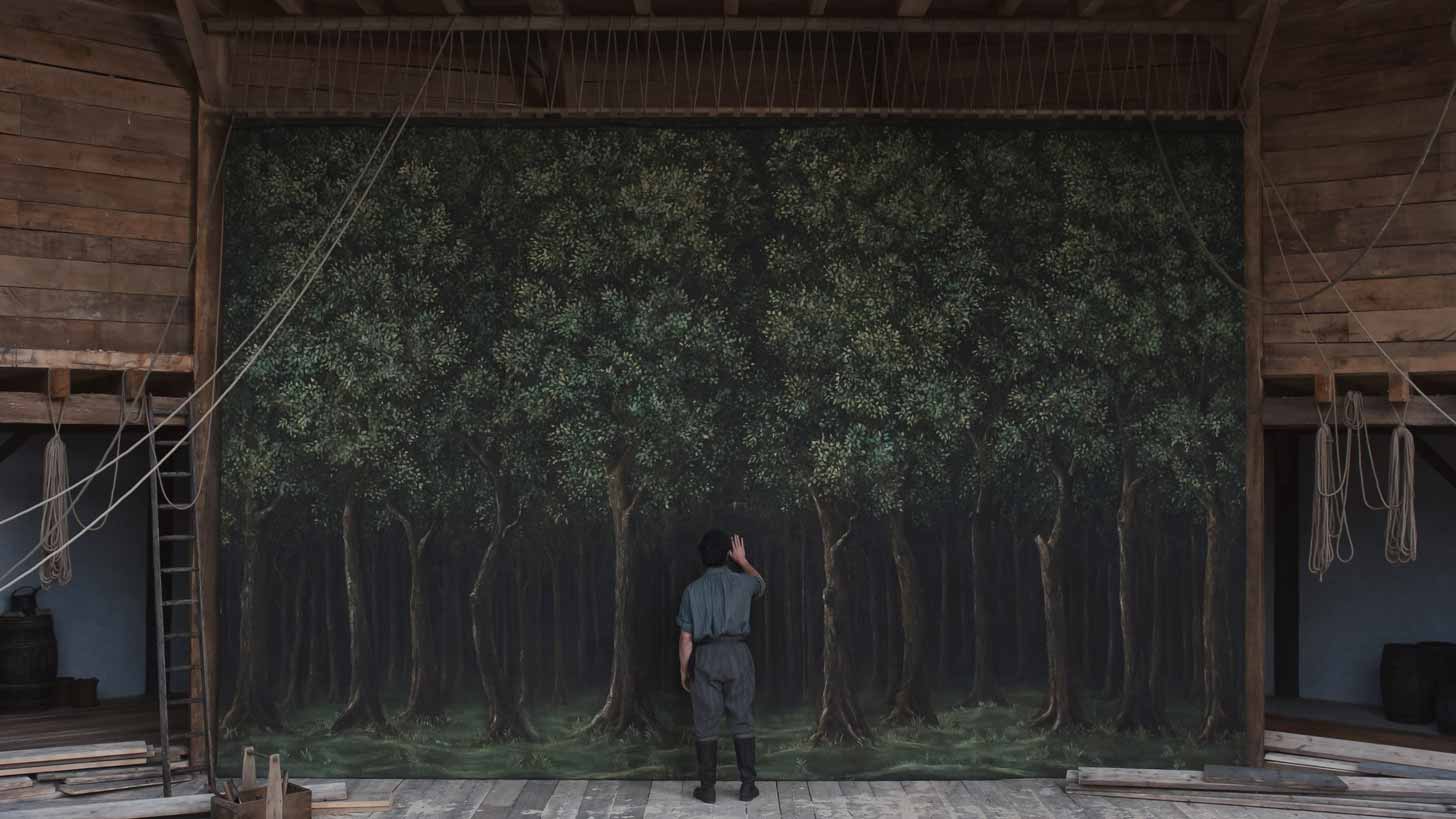
To Good Energy’s list of noteworthies, I would add two other lists: films with glancing but undeveloped references to climate change, and films that could easily have incorporated climate change and passed the climate reality check but didn’t.
First, however, I want to call attention to a 2025 film that very directly addressed climate change and should have been nominated for an Oscar but wasn’t: “The Prime Minister.” This documentary about Jacinda Ardern’s six years as Prime Minister of New Zealand is an inspiring study in climate action, courage, and compassion. It deserves a wider audience.
The following films made glancing references to climate change. But these were usually lost in the melodrama or mayhem of their genres:
- “40 Acres” – Climate change contributed to the food-deprived dystopia depicted.
- “Life of Chuck” – Climate change is but one of many disasters ending this world.
- “Mickey 17” – Climate change, it’s implied, contributed to the decision to leave Earth.
- “Thunderbolts” – Like many MCU films, it offers a sardonic nod to climate change.
Other films, also of varying commercial success, missed manifest opportunities to include a nod to climate change.
- “Eddington” – A film about COVID and culture wars never mentions climate change
- “House of Dynamite” – Global nuclear watchdogs never think about climate change
- “Is This Thing On?” – Life and love in New York City, and no mention of Hurricane Sandy
- “Materialists” – Life, love, and condos in New York City, and no mention of Hurricane Sandy
- “Sorry, Baby” – Climate change is not part of this smart woman’s take on the world
'A defining year for climate change'
Has Hollywood turned a corner on the representation of climate change in film? Are we looking at “a defining year for climate change” in 2026? The results of previous studies are ambiguous.
Over the years, successive Good Energy research teams, originally organized and led by Matthew Schneider-Mayerson, now an associate professor of English and co-director of the Program in Environmental Studies at Rice University in Houston, have conducted four different climate reality checks.
- In the first, a study of the 250 most popular films produced between 2013 and 2022, the team found that only 9.6% of the eligible films passed the two-part test.
- In the second, a study of nominees for the 2024 Academy Awards, the researchers found that 23% of the films passed, a significant improvement over the historic average.
- But in 2025, in the third application of the test, only 10% of the eligible films passed, a reversion to the mean.
So what can we see in the movies on the screen or announced for 2026?
The prospects for cli-fi movies in 2026
At the cinema, 2026 is rolling out in reverse alphabetical order: zombies at the start, aliens at the end.
Renewable energy got a mention in “We Bury The Dead,” the zombie little sister to “The Bone Temple,” but no more. (When you’re battling zombies, it’s hard to focus on the climate.) Even the excitedly environmental “Hoppers” avoids climate change.
Much of the program for the 2027 Academy Awards will be set by the spring, summer, and fall holiday blockbusters: “Project Hail Mary” (dying sun), “Disclosure Day” (aliens among us), and “Avengers: Doomsday” (the MCU endures).
Many of the other Oscar likelies — Nolan’s “The Odyssey,” the Hunger Games prequel, the next installment of the Star Wars franchise, the “Dune” finale — will not be eligible for Good Energy’s annual review. (Likewise with two movies still in theaters now: “Wuthering Heights” and “The Bride!”)
Thus, while there’s a chance that more than 31% of the eligible Oscar winners will pass the climate reality check in 2027, it seems equally likely that the tally will fall back to 2025’s 10%.
I see nothing in the FirstShowing.net schedule for 2026 that might offer an extended engagement with climate change. Just more aliens, zombies, races/hunts/competitions to the death, and the psychopathic killers of horror films. Oh, and AI!
It’s been more than 20 years since Roland Emmerich released “The Day After Tomorrow.” The film was a box office success in 2004. I would love to see another major motion picture tackle climate change head-on and at length — but without the misdirection of the Atlantic Meridian Overturning Circulation, and without the bells and whistles of time travel or invading aliens. But that’s not what my climate fiction models are forecasting.
This article was originally published by Yale Climate Connections.

Header image: ©2026 Focus Features
Every day the Good Good Good team collects the best good news in the world and shares it with our community. Here are the highlights for this week!
If you want to get good news in your inbox every day, join the Goodnewsletter — the free daily newsletter designed to leave you feeling hopeful.
The Best Positive News We’re Celebrating This Week —
Researchers are combining drones and AI to make removing land mines faster and safer
Detecting land mines relies heavily on limited ground-based methods like handheld metal detectors, which struggle in mineral-rich soils and can’t detect low-metal mines, and ground-penetrating radar, which performs poorly in wet, uneven, or plant-covered terrain.
Other methods, like manual probing and trained detection animals, are effective, but slow, resource-intensive, and come with significant risk. And the use of drones alone is limited, too.
So, a group of researchers is creating what they say is the first public dataset to train AI algorithms to help drones detect land mines, transforming it from a slow, dangerous practice “into a safer, smarter, and more scalable process” that can “turn post-conflict landscapes back into places where life can grow again.”
Why is this good news? At least 57 countries have live land mines in their territories. In 2024 alone, 1,945 people were killed by these mines, and 4,325 were injured — 90% of them were civilians and nearly half of those were children. Demining operations are life-saving, and need to happen as quickly and safely as possible.
Leaving wilderness alone isn’t always the best way to protect it, experts say. Here’s what they suggest instead
After it replaced roads with parks and bike lanes, air pollution in Paris fell dramatically
Over the past two decades, Paris has eliminated 50,000 parking spaces and traded streets for bike lanes and green spaces. And now, an independent analysis found that levels of fine particulate matter have decreased 55% since 2005, and nitrogen dioxide levels by 50%.
The dramatic decline is attributed to “regulations and public policies” that limited traffic and banned the most polluting vehicles.
Heat maps of pollution levels 20 years ago reveal almost every neighborhood in the city was above the EU’s limit for nitrogen dioxide, showing how progressive, proactive policies can directly improve health in major urban areas.
→ Read more (Gifted link)
Paris Hilton is raising $1M to give grants to women who lost their businesses due to natural disasters
Paris Hilton just announced the Back in Business Recovery Fund, a collaboration between her social impact organization, 11:11 Media Impact, and GoFundMe’s nonprofit arm to raise and deploy over $1 million to women-owned small businesses rebuilding after natural disasters.
Hilton will back the fundraiser as the lead investor, contributing $350,000 through 11:11 Media Impact, and GoFundMe.org will also contribute an additional $100,000, all with the goal of providing direct, flexible “recovery capital” to women who own small businesses and have been impacted by future disasters.
The fund is built on a proven model, which Hilton and her impact partners coordinated after the 2025 Los Angeles wildfires. At that time, they gave over $1 million in cash grants to 50 women-owned small businesses.
Why is this good news? Hilton said it best: “When women are funded, they outperform, so I am proud to help women-owned small businesses across the country rebuild, thrive, and continue leading in their communities.”
→ Read more
‘Pints and Ponytails’ teaches dads how to braid their daughter’s hair over beers at the pub — and it’s going viral online
Olivia Rodrigo wins Amplifier Award for championing reproductive justice and girls' education
At the “Music Is Universal” event, Olivia Rodrigo received the Universal Music Group x REVERB Amplifier Award, which celebrates artists for their activism beyond music.
Central to her impact is Fund 4 Good, launched during her Guts World Tour, which donated a portion of ticket sales to nonprofits that champion reproductive health freedom, girls’ education, and gender‑based violence prevention globally.
Rodrigo said the honor underscores her belief that artists can be a force for lasting impact beyond entertainment, with music serving as a tool for connection and activism. Previous winners include Billie Eilish and boygenius members Phoebe Bridgers, Lucy Dacus, and Julien Baker.
UK greenhouse gas emissions fell to the lowest level in over 150 years, as coal hit a 400-year low
A new analysis found that in 2025, greenhouse gas emissions in the U.K. fell to 364 million tonnes of carbon dioxide equivalent — the lowest since 1872. Emissions have now fallen in 27 of the 36 years since 1990.
Coal use in the country was cut in half, dropping to levels last seen in 1600, thanks to the end of coal power, closures, and industry issues. Gas use fell to the lowest level since 1992.
Notably, oil use also fell by 0.9%, despite a rise in car traffic, thanks to more than 700,000 new electric vehicles, electric vans, and plug-in hybrids.
Why is this good news? Emissions in the U.K. are now 54% below 1990 levels, all while its GDP has nearly doubled — proving that the clean energy transition is not just good for the planet, it’s good economically for communities and entire countries.
She spent 15 years as a war correspondent. Now, she's changing the way journalists report on crisis
→ Read more
Teacher wins $1M for turning India’s slums into open-air classrooms
Rouble Nagi, a 45-year-old artist and founder of the Rouble Nagi Art Foundation, has established over 800 learning centers across India, bringing education to underserved communities and villages.
Many centres operate in open spaces within slums, with students seated on mats. Teachers often act as counselors, and volunteers visit children’s homes to ensure continued attendance and parental involvement.
With her $1 million prize, Nagi plans to expand to Jammu and Kashmir, creating skill-and-learning centres with technology access.
In ‘one of the most successful wildlife comeback stories,’ bearded vultures have now returned to the French Alps
After a decades-long conservation effort that involved releasing a total of over 260 bearded vultures back into the wild, the species has soared back from local extinction in the French Alps.
Bearded vultures are believed to be the only animal that is ossivorous — they feed mainly on bones, scavenging them from carcasses and dropping them onto rocks to smash them into smaller pieces.
Wildlife experts just discovered the oldest bearded vulture ever recorded in the wild, named Balthazar, who was released in 1988 but had vanished from observations and was presumed dead.
Why is this good news? The bone-smashing birds were hunted to extinction in the Alps and last seen in the early 1900s, and their recovery is hailed as a “huge success” and proof that intention, funding, and support can reverse biodiversity loss.
A man says a Stephen Colbert joke saved his life. He wants to appear on ‘The Late Show’ before it's too late
People in England and Wales are now much less likely to be victims of theft than they were in the 1990s
Based on data gathered from face-to-face interviews, experts found that overall theft trends in England and Wales have declined sharply since the 1990s.
Vehicle-related thefts, which reached their highest levels around 1995, have fallen sharply, and burglaries have seen a similar decline, with both dropping by more than 80% from their peak rates.
The long‑term trend suggests that, despite ongoing challenges in specific theft categories, the typical resident today faces a much lower risk of being a victim of many common theft crimes than people did in the late 20th century.
→ Read more
Texas banned Pride crosswalks, so San Antonio painted sidewalks rainbow instead
In October 2025, Texas Governor Greg Abbott ordered cities across the state to remove LGBTQ+ Pride crosswalks and other road markings that “advance political agendas” and “ideologies.”
After it was denied an exemption from the removal, local officials in San Antonio found a creative solution: Moving displays to sidewalks instead. The city’s LGBTQ+ Advisory Board helped with the design.
The city was able to install the sidewalks within days of the initial proposal and said it was “abiding by all regulations while demonstrating even greater, more permanent visible support to the LGBTQ+ community.”
Good to know: Governor Abbott said the ban on Pride crosswalks was also a matter of public safety, but it’s important to note that the intersection was safer after the rainbow crosswalks were installed — and painted streets have been proven to be safer than traditional crosswalks.
→ Read more
The world’s first women-only mosque opens its doors — and all guests can enter through the front
→ Read more
Indonesia becomes the first Asian country to ban elephant rides
Under the Indonesian Ministry of Forestry’s new directive, riding captive elephants is formally prohibited, and authorities have warned that facilities that fail to comply risk losing their permits.
The once common practice can cause physical and psychological harm to elephants kept in captivity for entertainment. Animal welfare organisations praised the ban as a significant advance, with officials calling it a “world-leading step to safeguarding the dignity of wild animals.”
All three wild elephant species are considered endangered or critically endangered. The ban aligns Indonesia with growing global efforts to reduce exploitative wildlife tourism and improve conditions for the threatened species.
More good news of the week —
Boulder, Colorado celebrated the success of its two-year guaranteed income program with a “resilience” art exhibit. The program provided 200 residents with $500 a month in unrestricted, unconditional payments from fall 2023 to fall 2025.
A new report found that solar farms can be havens for rare plants like the threecorner milkvetch. Researchers believe that the shaded microclimate created by panels slows evaporation, helping seedlings thrive.
Forests surrounding China’s Taklamakan Desert now absorb more carbon dioxide than they release. Since 1978, China has been planting billions of trees to combat desertification in one of the world’s largest and driest deserts.
Kenya now offers free six-month HIV prevention care. The injection’s rollout is a huge milestone for the country, where 1.4 million Kenyans live with the virus.
Detection dogs can now detect trafficked wildlife hidden in shipping containers from tiny air samples. Thanks to a new portable device that captures the samples, trained dogs were able to detect trafficked animals with 98% accuray.
Tens of thousands of women marched through Mexico City for International Women’s Day. It’s being reported as the biggest political protest event in a country where studies show about seven out of every 10 women have experienced physical, sexual, emotional, or economic violence.
Researchers are celebrating the “stunning” results of a new prostate cancer treatment. Prostate cancer is the most common cancer among men in many countries, including the U.S. and the U.K., with about 1.5 million men diagnosed worldwide each year.
A new wristwatch concept lets blind and visually impaired people tell time by touch. The watch integrates subtly raised numerals and gently ridged hands into a dial that can be felt with a fingertip.
The NFL delivered a net-zero Super Bowl through large-scale recycling, material reuse, and carbon offsets. Roughly 250 tons of materials were recovered during sustainability efforts — about five times more than the previous Super Bowl.
Twenty-nine banks refuse to back major fossil fuel development in Papua New Guinea. The institutions cited climate, environmental, and human rights concerns over the liquefied natural gas project.
A photo of Harry Styles carrying a tote bag paid for hundreds of people’s therapy. The founder of Other People Fund offered to send Styles some merchandise for free, but he insisted on paying for it — and it led to a surge in purchases after he was photographed carrying it.
A new study reveals a shift towards better mental health representation in films and on television. The research team identified an industry-wide shift toward more inclusive and responsible portrayals of mental health, as well as a 15% drop in derogatory language.
Senegal is using electric buses to cut traffic in half and create hundreds of new jobs. The solar-powered fleet has already created 750 permanent jobs in the capital city of Dakar.
A Nobel Prize winner invented a device that pulls drinking water from the desert air. Comparable in size to a 20-foot shipping container, the units can generate up to 1,000 liters of clean water a day.
Researchers successfully test the world’s first-ever in-utero stem cell therapy for fetal spina bifida repair. The pioneering treatment combines fetal surgery with stem cell therapy to repair spina bifida before birth.
Jake Adicoff became the first openly gay man to win an individual gold medal at the Paralympics. Adicoff actually won back-to-back golds in his first two Paralympic Cross-Country Skiing events, the sprint and 10km classic.
Texas banned Pride crosswalks — so San Antonio painted the sidewalks rainbow instead. In response to Governor Greg Abbott’s directive to remove roadway markings that “advance political agendas,” local City Council members came up with a creative solution.
Before reintroducing tigers to the wild for the first time in 70 years, Kazakhstan planted tens of thousands of trees to restore their habitat. The willow, oleaster, and poplar trees will provide shelter and support prey animals such as deer and wild boar.
Artificial reef structures made from concrete blocks are restoring marine life in Cambodia’s coastal waters. The artificial reefs were built to repair severe damage caused by bottom trawling along the country’s coast.
Zimbabwe joins Zambia, Kenya, and Eswatini in rolling out twice-yearly HIV-prevention injections. The treatment will slow the spread of HIV in a country where about 1.3 million people are living with the virus.
Nearly all hospitals have been destroyed in Gaza, so two sisters set up a makeshift medical school. Dr. Nour and Dr. Nagham are sisters and physicians working on the ground in Gaza, and together, they founded Pal Humanity.
A Denver-based company created AI that can detect premature births based on ultrasounds. Delivery Date AI received federal approval to market an artificial intelligence program it says can predict when babies will arrive based on their ultrasounds, raising the possibility of flagging premature births.
Polar bears in Svalbard have grown fatter over the past two decades despite rapid sea-ice loss. As their habitat changed, polar bears on the Norwegian archipelago adapted by eating other land-based animals like walrus and reindeer.
An Indianapolis engineer launched a free rocket boot camp for kids. The program is offered for free through the Minority Engineering Program of Indianapolis.
Northwestern University researchers found that an anti-seizure drug prevents Alzheimer’s plaques from forming. The decades‑old drug, called levetiracetam, is already FDA-approved and inexpensive to buy.
Only three of the 14 counties in north-central Florida provide full access to obstetric care. Six have low access to care — meaning there are fewer than two hospitals offering obstetric care or birth centers per 10,000 births, and fewer than 60 obstetric providers.
The remaining five counties are maternity care deserts. Approximately 3,400 women of childbearing age live in those deserts.
In 2024, a report found that hospitals across Florida were discontinuing obstetric care due to lack of funding. Eighteen of the state’s 21 rural hospitals no longer provide obstetric care.
To address this gap in care, in February 2025, the University of Florida established the OB/GYN Mobile Outreach Clinic. The mobile clinic provides comprehensive maternal health services, including prenatal and postpartum care, breastfeeding support, family planning, annual gynecological exams, and preventive health screenings. The only services not offered on-site are deliveries.
We are the director and assistant director of the clinic and a medical student at the University of Florida. Outside of our work with the mobile clinic, we also research interventions to improve maternal health in low-resource settings.
We launched the clinic in February 2025. By the end of 2025, we had provided care to 194 women in 616 visits.
Based on our experience, we believe that mobile clinics focused on maternal health could be an effective way to reach more rural and low-income communities.

Maternity deserts across the US
Two and a half million American women of childbearing age — nearly 4% — live in a maternity care desert: a county without a single hospital, birthing center, or obstetric health care professional.
Over the past decade, the closure of hundreds of obstetric units has exacerbated this problem, particularly in rural regions. Women in maternity care deserts travel an average of 35 miles to reach a birthing hospital, compared to an average of 9 miles for women in full-access counties.
The maternal mortality rate in the U.S., which peaked during COVID, remains higher than that of most other high-income nations. Access to timely prenatal and postpartum care is crucial to preventing pregnancy-related deaths.
Studies have shown that traveling longer distances for obstetric care is associated with worse infant and maternal health outcomes.
Our mobile model
Mobile health clinics are vehicles, such as buses or vans, equipped with medical tools and supplies to deliver health care services.
The University of Florida OB/GYN Mobile Outreach Clinic is a retrofitted bus with two exam rooms, an ultrasound machine, and supplies for serum and urine testing for prenatal labs.
A small dispensary allows providers to give prenatal vitamins and medications for common conditions, such as vaginitis or urinary tract infections. This reduces the need for patients to make additional pharmacy or lab visits or pay for medication.
Care provided at the mobile clinic is free to the patient. If patients are eligible for Medicaid or other health insurance, our team assists them in applying for benefits. In 2023, about 1 in 7 women of childbearing age in Florida were uninsured.
Operating on a different model
The Mobile Outreach Clinic operates twice weekly in consistent, rotating locations, including northeast Gainesville in Alachua County, Lake City in Columbia County, Bronson in Levy County, and Trenton in Gilchrist County.
Of these locations, only Levy County is a maternity care desert, but all of these locations were selected to care for patients of low socioeconomic status and limited access to care.
We set up the clinic at sites that are already trusted or frequently visited by our target population. This includes family resource centers, churches, and public libraries. Patients and families know they can expect us on a consistent day of the week. A core principle of our program is that we show up, no matter what. This ethos has helped us establish and maintain trust with our patients.
Appointments are walk-in or scheduled, with wait times significantly shorter than traditional clinics. Patients are scheduled within a week, generally through referrals from trusted partner agencies or from other patients.
Unlike traditional clinics, which schedule for 15- to 20-minute appointments, the mobile clinic allots 30-60 minutes for patient visits. This allows time to address social needs, transportation barriers, food insecurity, or housing needs.
The clinical care team is led by nurse midwives and includes a physician assistant, certified nurse-midwives, nurses, a nurse practitioner and lactation consultant, medical assistants, and promotoras, community health workers who act as peer educators and patient liaisons in Hispanic communities. Maternal-fetal medicine physicians review ultrasound images remotely.
Operating outside a traditional clinical setting sometimes requires our staff to be flexible and creative to meet the needs of our patients.
For instance, the week before Thanksgiving, our clinic was at capacity while parked in a church lot in Trenton. One of our patients needed a nonstress test, and with space limited, the nurse and health educator interpreter worked together to complete the test in a quiet area within the church. The patient received timely care despite the full schedule and space constraints.
Taking health care to the streets
Currently, there are approximately 3,600 mobile health clinics in the United States, with 1,319 tracked through the Mobile Health Map.
These clinics can provide a wide range of services, from disaster relief and mental health care to mammography and dental care, to primary and preventive care. They particularly target low-income and uninsured populations.
A study of 811 mobile clinics found that among patients treated between 2007 and 2017, 36% were from rural areas, 38% were homeless, 55% were low income, and 56% were uninsured.
Mobile health clinics have been shown to improve health by delivering regular care directly to populations that would not have access otherwise.
In a survey of mobile clinic users, patients reported receiving holistic care, feeling safer than they’d felt in other health care settings, and interacting with staff who were mindful of health care costs.
Regardless of insurance status, patients said they were able to maintain continuity of care, meaning the mobile clinic managed their care consistently and was able to share their records with new providers to ensure they received appropriate care.
Expanding mobile health to pregnant patients
Unfortunately, only 128 of the 1,319 mobile clinics tracked in the mobile health map provide maternal and infant health services, and the services they offer pregnant, postpartum, and newborn patients are generally quite limited. As maternity care deserts expand, mobile health clinics could offer a practical solution for meeting prenatal and postpartum care needs.
We believe our model could be replicated elsewhere, and other similar clinics are already up and running, such as the University of Arizona Mobile Health Program.
The primary challenge for mobile clinics is funding, as they are typically free to patients and supported through grants. With projected recent changes to Medicaid and ACA marketplace coverage, even more patients may face limited access to prenatal and postpartum health care.
Studies on mobile health clinics have identified several additional challenges associated with this model of care. Mobile clinics are not equipped to manage emergent complications, complex medical procedures, or labor and delivery.
They also face staffing limitations, particularly in finding health care professionals who understand and enjoy the unique opportunities and challenges inherent in providing care on a mobile clinic, in addition to their scheduled clinic or hospital shifts.
But our hope is that as our clinic and others like it demonstrate an improvement in health care in maternal care deserts, increased awareness and support may help expand this model to more communities.
Read more stories from The Conversation about Florida.
This article was written by Adetola F. Louis-Jacques, Arielle Ayotte, and Michelle Nall from the University of Florida, and was originally published on The Conversation.
Header Image by the University of Florida OB / GYN Mobile Outreach Clinic

Plastic is one of the most durable materials humans have ever made. That durability has made it indispensable in medicine, food packaging, and transport. But it’s also created one of the defining environmental problems we have faced.
Hundreds of millions of tons of plastic are produced globally every year. Much of it ends up in landfills, incinerators, or the natural environment, where it can persist for centuries.
The methods we have for getting rid of plastic pollution have their downsides. Putting it in landfills means chemicals and microplastics can seep into the surrounding environment.
Burning it releases harmful fumes and toxins. Mechanical recycling often downgrades plastics into lower-value products, while chemical recycling typically requires high temperatures, high pressures, and large amounts of energy.
Colleagues and I recently published research that explores a very different possibility: Using sunlight and an iron-based catalyst to convert common plastic waste directly into acetic acid — the key component of vinegar and an important industrial chemical.
Instead of treating plastic purely as waste, our research shows that it can be transformed into something useful under mild conditions.
Learning from a wood-rotting fungus

The inspiration for our research came from nature. The white-rot fungus (Phanerochaete chrysosporium) is famous for its ability to break down lignin, one of the toughest polymers found in wood. It does this using enzymes that generate highly reactive chemical species capable of dismantling complex carbon structures.
We wondered whether a synthetic material could mimic this strategy.
The catalyst we designed is iron-doped carbon nitride, a semiconductor that absorbs visible light. We then anchored individual iron atoms, creating what scientists call a single-atom catalyst.
Rather than forming nanoparticles, each iron atom is isolated and embedded within the carbon nitride structure. This atomic precision is crucial. Each iron atom behaves like an active site in a natural enzyme, maximizing efficiency while maintaining stability.
A two-step reaction powered by light
The system works through a cascade of light-driven reactions.
Under sunlight and in the presence of hydrogen peroxide, the iron sites activate the peroxide to generate highly reactive hydroxyl radicals. A radical is an atom, molecule, or ion that has at least one unpaired electron. This makes them highly chemically reactive.
These radicals attack the long carbon chains that make up plastics, like polyethylene (used in plastic bags), polypropylene (food containers), PET (drink bottles), and even PVC (pipes and packaging).
The polymers are progressively oxidized and broken down into smaller molecules, eventually forming carbon dioxide (CO₂).
Rather than allowing this CO₂ to escape, the same catalyst then performs a second job: it uses sunlight to reduce the CO₂ into acetic acid. In other words, the carbon in plastic waste is first oxidized and then reassembled into a new, valuable molecule.
Essentially, this approach breaks down plastic and converts the resulting carbon into a commodity chemical in a single system. This distinguishes it from most existing recycling technologies.
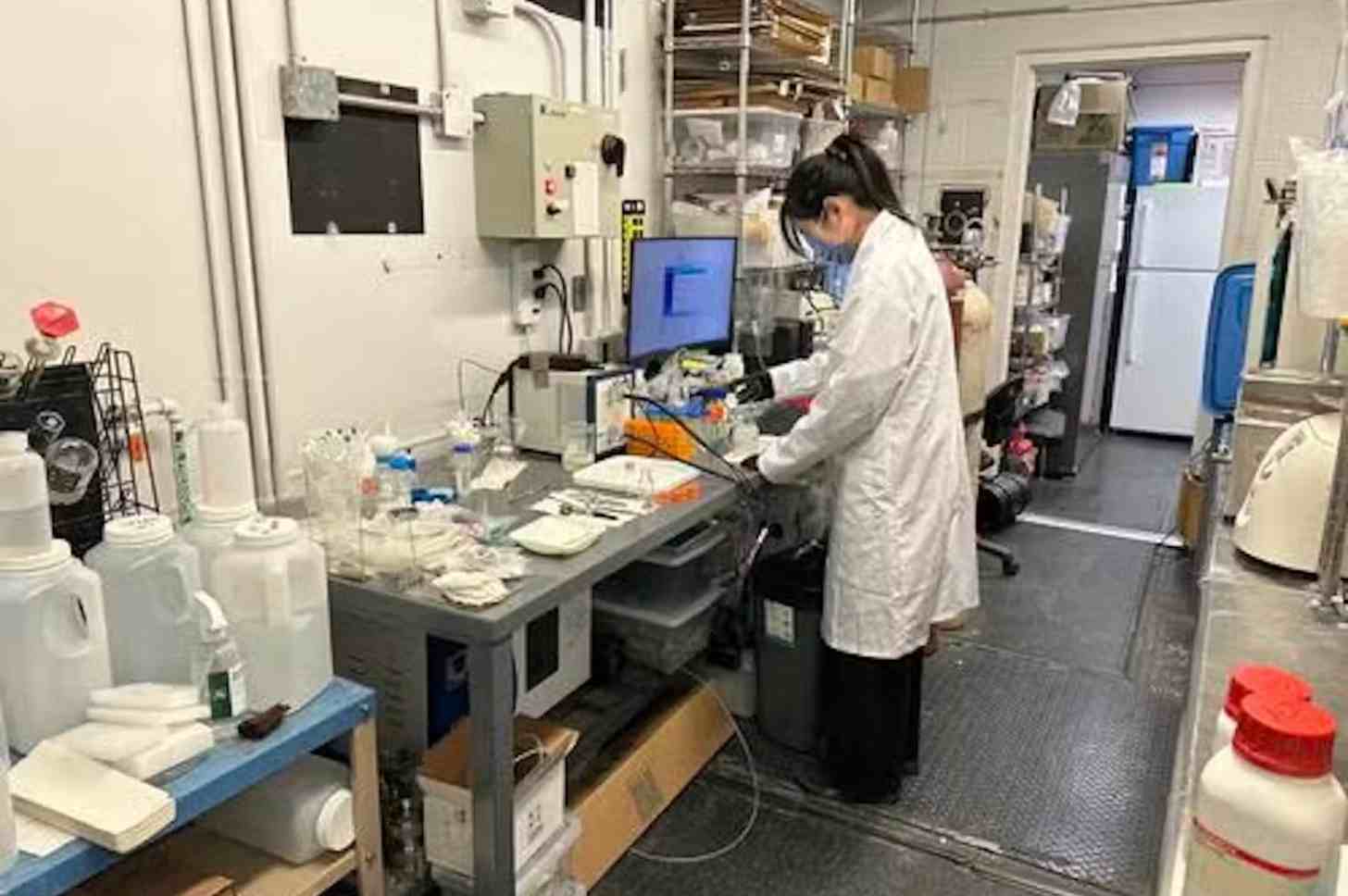
Acetic acid is best known as the sour component of vinegar, but it is also a major industrial feedstock. It is used to produce adhesives, coatings, solvents, synthetic fibers, and pharmaceuticals.
Global demand runs into the millions of tons each year, representing a multi-billion-dollar market.
Currently, most acetic acid is produced through an energy-intensive process called methanol carbonylation, whereby methanol is reacted with carbon monoxide at high temperatures.
Converting waste plastic into acetic acid offers a potential circular pathway: instead of extracting new carbon, we reuse carbon already present in discarded materials.
In our experiments, the system produced acetic acid at rates comparably favorable with other reported light-driven plastic conversion methods. When we enhanced light utilization inside the reactor, the production rate increased substantially.
Importantly, the reaction operated at room temperature and normal atmospheric pressure. That contrasts with many chemical recycling methods that require heating plastics to several hundred degrees Celsius.
Handling real-world plastic
Laboratory studies often focus on pure, single plastic types. But real waste streams are mixed and contaminated. We therefore tested different common plastics individually, as well as mixtures.
Our catalyst was able to convert several major commodity plastics. Interestingly, PVC showed particularly strong performance. We believe chlorine released during its breakdown may generate additional reactive radicals, accelerating degradation.
The iron atoms remained atomically dispersed after repeated use, indicating good stability. This matters because catalyst degradation or metal leaching can undermine both performance and environmental safety.
The system does rely on added hydrogen peroxide, which is consumed during the reaction. While hydrogen peroxide decomposes into water and oxygen and is considered relatively benign, future work will need to address how it can be supplied sustainably at scale.
From concept to practice
Scaling up any new chemical process presents challenges. Light penetration, reactor design, and the variability of waste plastic feedstocks all affect efficiency. Additives in commercial plastics — such as stabilizers, pigments, and plasticizers — can also influence reaction outcomes.
To explore feasibility, we conducted a preliminary techno-economic assessment. This is a way of analyzing the potential economic benefits of an industrial process or product.
While further optimization is required, our analysis suggests that coupling waste cleanup with the production of a valuable chemical could help offset costs — particularly when environmental benefits are taken into account.
More broadly, this work illustrates the power of single-atom catalysts and bio-inspired design. By mimicking the way enzymes control reactivity at precise metal centers, we can achieve complex chemical transformations under mild conditions using sunlight as the energy source.
Rethinking plastic’s life cycle
The problem of plastic pollution will not be solved by a single technology. Reducing unnecessary plastic use, improving product design, and strengthening recycling systems are all essential.
Transforming plastic waste into useful chemicals offers a complementary strategy. It reframes plastic not only as an environmental burden but also as a carbon resource.
If we can harness sunlight to drive these transformations efficiently and at scale, yesterday’s discarded packaging could become tomorrow’s industrial feedstock.
The challenge now is to translate our laboratory advances into robust, scalable systems. If successful, it would mark a step toward a more circular economy — one where waste is not the end of the story, but the beginning of a new one.
This article was written by Yimin Wu from the University of Waterloo, and was originally published on The Conversation.
Header Image by Nick Fewings on Unsplash

“Stick Season” superstar Noah Kahan has just announced a streaming date for his Netflix documentary: “Noah Kahan: Out of Body.”
Premiering at SXSW this week, the singer spoke about the feature-length film in a new Instagram Reel this morning, announcing it would be available to stream on Netflix starting April 13, 2026 — just over a week before his next album “Great Divide” is released.
“I’m really excited about it,” he said. “It kind of captured, like, a year and a half of my life being on the tour for ‘Stick Season’ and just how ‘Stick Season’ affected my life, my family’s life.”
“But it also gets into some really, like, personal stuff,” he added.
He then went on to say that he wanted to tell his fans what would be in the documentary, as they begin hearing more about it in the media.
“I wanted to make sure you guys knew, coming from me, about some of the stuff that’s in the documentary, so you understand the context,” he said.
He noted that his music is already full of themes about his family, his self-image, body dysmorphia, and mental health struggles.
“But it’s definitely very much, like, front and center during this documentary,” he said.
He said there will be a lot of material about his family — his dad specifically — and noted that his wife, “the lovely Brenna,” will also be included.
“But it really does touch a lot on me and a lot of personal things I’ve gone through,” he said. “It’ll be the first time I’ve really talked about it in a way that wasn’t through music, so I’m obviously a little nervous about … bearing my soul in that way.”
Kahan went on to say that the film is “very vulnerable,” and hard for him to watch, though “really important to share.”
The “Porch Light” singer has been very open about his mental health struggles in the past and has made it a cornerstone of his music career. He launched The Busyhead Project to raise funds and awareness for rural mental health care, raising millions for the initiative during his last tour.
To end his video, Kahan told fans he loved them and said “I appreciate you giving me the space to talk about these things.”
You may also like: Spotify partners with Noah Kahan, Chappell Roan to provide free therapy to small artists
Header image courtesy of Netflix
- A new study found that 727 professional sports teams across 50 countries use wild animals in their branding. The most popular species (lions, tigers, and wolves) face threats in the wild.
- The lead author has launched The Wild League, a framework to engage sports clubs, sponsors and fans in conserving the species represented in their mascots.
- Clemson University’s Tigers United program offers a working model, using the school’s tiger mascot to fund tiger conservation in India.
- The authors argue that with more than a billion people following wildlife-branded teams on social media, sports offer an unrivaled platform for education and fundraising.
Lions, tigers, and bears aren’t just among the world’s most iconic wildlife. They’re also among the most popular mascots in professional sports.
A new study published in BioScience finds that across 50 countries and 10 team sports, 727 professional organizations use wild animals in their names, logos, or fan nicknames. The most frequently represented species — lions, tigers, grey wolves, leopards, and brown bears — are all threatened in the wild.
The research, led by Ugo Arbieu, a postdoctoral researcher at Paris-Saclay University in France, identified 161 distinct animal taxa represented across those teams, spanning mammals, birds, insects, sharks, and more. Threatened species and those with declining populations were selected as mascots significantly more than other animals or symbols.

With these clubs' social media followers totaling more than a billion combined, the authors argue that there’s an enormous untapped opportunity to channel the emotional bond between fans and mascots into real conservation action.
“Animal imagery is everywhere,” Arbieu told Mongabay. “Across the five continents and across all sports, and both for men and women teams.”
Beyond the big cats and wolves, he said, there is a long tail of unique species represented.
“There is so much potential to communicate, educate about biodiversity and what it is, but also to engage people in a different way of looking at nature.”
The idea came to Arbieu while playing the video game Madden, which simulates American football. He was struck by the paradox that animal imagery saturated team branding, on jerseys, tattoos, and banners, while those same species were declining in the wild.
That observation launched years of research and ultimately a new initiative: The Wild League.
Launched alongside the study, The Wild League is a framework designed to rally sports clubs, sponsors, and fans around biodiversity conservation. The concept is straightforward. Teams that profit from wildlife imagery should also invest in protecting the species they represent. Arbieu envisions a coalition where clubs compete not just on the field, but in their contributions to conservation.
“If each of these clubs would contribute 0.01% of what they earn on their match days at home, it would be so significant for conservation,” he said.
The Wild League is currently in its pilot phase, with Arbieu and his team reaching out to clubs across Europe and beyond. His task now is to convince clubs that joining a coalition benefits everyone, as well as their brand.

While The Wild League is still building its roster, one U.S. initiative already demonstrates what the model might look like in practice. At Clemson University in South Carolina, the Tigers United program has spent years turning the school’s tiger mascot into a vehicle for real-world conservation.
Tigers United is a consortium of universities linked by their tiger mascots and a shared commitment to tiger conservation. The program grew out of a 2017 visit by representatives from Clemson and Auburn universities to New Delhi, where they connected with conservation leaders and the Global Tiger Forum, an intergovernmental body monitoring tiger conservation across 13 range countries.
“We are using athletics as the megaphone for conservation,” Greg Yarrow, a wildlife ecology faculty member at Clemson and the director of Tigers United told Mongabay.
He pointed to the sheer scale of the audience. “If you have close to 90,000 individuals in a football stadium, and each contributes $1 to tiger conservation, that’s significant.”
Hrishita Negi, associate director of Tigers United, grew up near Kanha Tiger Reserve in central India, where her father served as director, igniting her passion for tiger conservation. She said Tigers United program has purchased and deployed AI-powered camera traps that can identify tigers and alert wildlife managers in less than 30 seconds, helping prevent human-wildlife conflict before it escalates.
The program also runs education initiatives connecting rural schools in India with schools in South Carolina.

Negi said the program’s strength lies in its unusual position: a university with both a beloved tiger mascot and established partnerships with conservation agencies in tiger range countries.
“A lot of our traditional conservation approaches have truly struggled to mobilize that public support or a sustained kind of support that’s needed for any transformative changes,” Negi told Mongabay. This is why, she said, they “reimagine organized sports as a vehicle for conservation impact.”
The study’s authors note that connections between sports and conservation remain rare and largely ad hoc. The Wild League aims to change that by providing a framework that any team, in any sport, in any country could join.
“I really, sincerely believe that the community of fans around professional sports clubs, their identity is developed through attachment to these symbols,” Arbieu said. “And these symbols are the colors, the jersey, and the emblem, and the mascot. It’s really a rallying point.”
This article was originally published on Mongabay.
Header Image by Matthew Blouir (CC BY 2.0)
On Ash Wednesday, 2026, two Roman Catholic priests and a religious sister entered an Immigration and Customs Enforcement facility in Broadview, Illinois, to celebrate Mass with detainees inside.
It might seem like a simple, routine event: a religious service to mark the start of Lent. But the Mass represented a legal win for the Coalition for Spiritual and Public Leadership, based in Chicago. Among its founders are Michael N. Okińczyc-Cruz and Joanna Arellano-Gonzalez, a young married couple dedicated to advocacy for migrant rights.
The coalition and other Catholic leaders sued the Trump administration after attempts to bring spiritual care to detainees in 2025 were blocked. On Feb. 18, 2026, a federal judge ordered authorities to allow clergy inside for Ash Wednesday.
That same day, Catholics in Communion, a new coalition of ministry organizations, religious orders, academic leaders, and parish partners, launched its Season of Faithful Witness campaign. Spearheaded by faith-based community organizers such as Joseph Tomás McKellar and Sergio Lopez, the initiative invites Catholics to practice solidarity by praying and advocating on behalf of migrants.
And two weeks earlier, dozens of students at Juan Diego Catholic High School in Draper, Utah, many of them Latino, participated in a walkout to support migrants, although the school did not sanction the event.
What do these leaders have in common? They are young, Latino, and Catholic. Most were born in the United States. Many of the migrants they advocate for are their relatives, friends, and neighbors.
About 4 in 10 Catholics in the United States identify as Hispanic or Latino. Among young Catholics born after 1982, that rises to 5 in 10.
As Catholic theologians who have researched Latino Catholics for several decades, we believe they are redefining U.S. Catholicism. Young Latinos’ faith-based advocacy has put a spotlight on this group that will shape the future of the church.
Beyond stereotypes
Young people constitute the largest portion of the more than 68 million Latinos in the United States. Despite their diversity, though, their experiences tend to be lumped together, and often treated as the same as migrants’.
Most young Hispanics in the U.S., in fact, are not immigrants. Ninety-four percent of Latinos under age 18 were born in the U.S, as were 65% of millennial Latinos.
The vast majority of Latinos under age 35 are English speakers. Around 40% say they are bilingual, while around 20% say they are dominant in Spanish.
An estimated 30% of Latinos between 18-29, and 42% between 30-49, identify as Catholic — a decrease from older generations.
Overall, 43% of Latino adults in the U.S. are Catholic, compared to 67% in 2010. Among ages 18-29, 15% are Protestant, and 49% are unaffiliated. Among ages 30-49, 23% are Protestant, and 29% are religiously unaffiliated.
Regardless of how Latinos identify, however, many of them grew up deeply influenced by a Catholic spirituality that permeates Latino culture, with traditions such as small altars in homes and businesses; “posadas,” a popular nine-day period of prayer leading up to Christmas that remembers Mary and Joseph’s search for a a place to rest before Jesus’ birth; and “quinceañeras,” a rite of passage when young women turn 15.
The lives of young Latinos often unfold in between cultural worlds. This can be simultaneously a source of strength or confusion. Young Latinos often feel they don’t fully belong anywhere: that they are “too Latino for the U.S. Americans” but also “too North American for Latinos.”
Bridging faith and activism
Yet many of these young people, whether they are Catholic or not, are increasingly embracing their two or more cultures. They see that inheritance as a gift — and often as inspiration to advocate for social justice.
Leaders we have interviewed see themselves as “gente puente,” or “bridge builders,” who can find fresh ways of being Catholic and American, grounded in faith-inspired commitments to justice.
In another recent study from Boston College, one of us, Hosffman Ospino, looked closely at 12 national organizations serving young Hispanic Catholics. The report concludes that initiatives that invite young Latinos to get involved with faith-based social justice are one of the most important ways to keep them engaged with their Catholic identity.
When serving in their parishes, young Latinos are often involved with efforts to teach English to migrants, denounce racism, bring food to the hungry, protect life from “womb to tomb,” and care for the environment, among others.
Many young Latino Catholics balance faith and public engagement through social justice immersion trips, visiting the U.S.-Mexico border, starting social ministries in their parishes, or collecting food for families of migrants who have been detained. Others write letters to elected officials about immigration reform and just treatment of migrants and refugees, or help migrants file their taxes.
Present and future of the church
As the percentage of U.S. Catholics who are Latino rises, the country’s bishops have repeatedly asserted the importance of listening to young Latinos.
In 2018, for example, the bishops' conference convened a gathering of 3,000 delegates as part of the Fifth National Encuentro for Hispanic/Latino Ministry. This multi-year process consulted nearly 300,000 Catholics, mostly Hispanic, about their faith and priorities.
The “Encuentro” — or “Encounter” — highlighted the need to empower Latinos to participate in church and society.
In 2023, the bishops approved the National Pastoral Plan for Hispanic/Latino Ministry, which proposed 10 priorities to accompany Latino Catholics. Supporting Latino youth and strengthening young adult ministries were among the top four.
Pope Francis, too, emphasized the need to listen to young Catholics, and Latinos in particular.
His 2019 apostolic exhortation “Christus Vivit” — “Christ is alive” — insisted that all in the church “need to make [more] room for the voices of young people to be heard.” Visiting Philadelphia in 2015, he told Hispanic Catholics, “By contributing your gifts, you will not only find your place here, you will help to renew society from within.”
It’s the kind of message that resonates with young Catholic Latino community organizers like Joseph Tomás McKellar, one of the leaders behind the Season of Faithful Witness campaign. Born in California to a Mexican mother and a Scottish father, he wrote in the book we edited that “bridge-building and kinship are at the heart of my family’s origin story.”
McKellar recalled speaking with a border patrol agent who, seeing his brown skin and name, accused him of lying about U.S. citizenship.
Instead of making him resentful, the experience deepened his commitment to be a bridge builder. It galvanized his “sense of vocation,” renewing a commitment to “create a society where all people can belong and thrive.”
This article was written by Hosffman Ospino from Boston College and Timothy Matovina from University of Notre Dame, and was originally published on The Conversation.
Header image by Julia Michelle on Unsplash

Anyone who has received a hand-drawn picture from a young child knows that it really is worth a thousand words.
But a new art project — managed by Students Rebuild, a project of Creative Visions — actually turns those artworks into real money for people in need.
Students Rebuild is a global program that encourages students in classrooms around the world to create something — a song, dance, poem, digital design, or a STEM build — specific to a certain theme.
From there, students can submit their works to the organization, and every submission unlocks a $5 donation — up to $1 million.
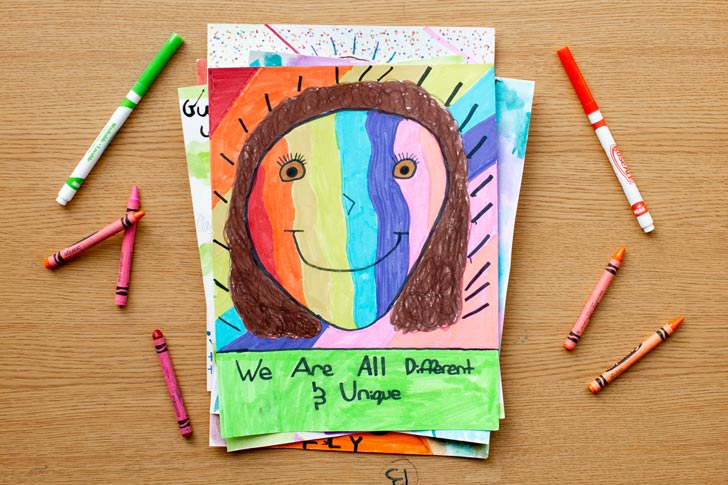
The donations are then distributed to “frontline organizations building belonging.”
This year, the program’s theme is “Unique and United,” which aims to explore identities and differences through creative expression in an effort to build empathy and unity.
The organizations supported with this year’s campaign include:
- Choose Love reaches children and young people living through conflict and war in Ukraine and Greece
- WelcomingAmerica builds and strengthens leadership in rural and under-resourced communities, shifting how neighbors talk about immigration, belonging, and democracy
- Narrative 4 grows its story-exchange model in Kenya, expanding to new schools and facilitators and helping young people tell nuanced African stories through art and shared experiences
- Homeboy Art Academy provides free, culturally competent, trauma-informed arts education for formerly gang-involved or incarcerated youth and adults in Los Angeles
Aside from the tangible impact on immigrant, refugee, and other marginalized communities, the Unique and United project teaches young people that their “bold ideas” are “capable of making a positive impact on our communities and the world,” Students Rebuild explained.
“The world can feel overwhelming for a lot of young people right now, but creating is one of the most powerful ways to change that. When students create something and share it with us through our “Unique and United” project, they’re becoming philanthropists with the resources they already have: their ideas and their voices,” Sarah Fanslau, the director of program impact and evaluation at Creative Visions, told Good Good Good.

“Because we’re completely removing the financial barrier to giving, we’re proving that change doesn’t have to just belong to the wealthy or the powerful,” she added. “Seeing young people discover how they can make a difference right now is extraordinary, and something I never get tired of.”
Typically, teachers and librarians facilitate the program for a team of students, and Students Rebuild provides resources like lesson plans, art guides, and videos to help them along.
According to the organization, these materials help students “explore who they are,” by learning about traits, experiences, and stories. Then, they are encouraged to “reflect on the shared humanity” between individuals, cultures, and communities.
As of the publication of this article, $768,205 has been raised of the program’s $1 million goal, with over 66,000 students creating more than 55,000 “creative expressions.”
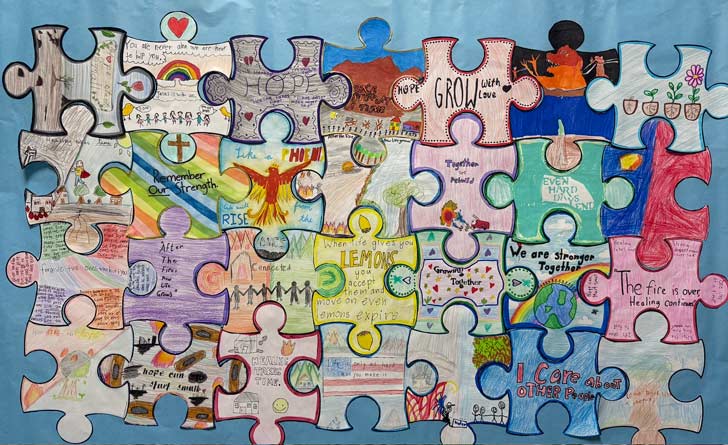
Cheryl Rizzo, a librarian and ambassador for Students Rebuild, said this program is a big reason why she is still working in education, after considering a change in the wake of the COVID-19 pandemic.
“This program reminded me why I do this work. Now, as a librarian, I get to watch it ripple across our whole school. Teachers are on board, and kids are pitching their own ideas. It’s totally changed the culture,” Rizzo, who is based in Queens, New York, said. “This year alone, our students raised over $24,000 with their creative projects.”
Rizzo’s 15-year-old daughter, Brianna, was actually the one who introduced her mom to the program about four years ago.
“I found out about Students Rebuild on Instagram when I was 11 and immediately brought it to [the] student council because I just knew other kids needed this,” Brianna said.
She later brought the program into her high school and now supports other groups who want to get involved.

“I know firsthand how good it feels when young people realize we can make a difference just by being creative,” she added.
For those who want to participate in “Unique and United,” there’s still time. Students Rebuild is accepting submissions until June 1, 2026.
To get involved, people just have to make an account on the Students Rebuild website and start thinking about their medium. Submissions can include literary, performing, media, or visual arts, or STEM creations.
“Through this project and the conversations they start, I’ve gotten to watch students wake up to the idea that they belong to something larger than their corner of the world,” Cheryl Rizzo said.
“Imagine the world we’d live in if everyone was having these types of conversations.”
You may also like: High school students build tiny houses for homeless neighbors in construction class
Header image courtesy of Students Rebuild
Manchester, a city in the northwest of England, may have made headlines recently for Harry Styles’ “One Night in Manchester” Netflix concert special, or even for its devout Manchester United and Manchester City rival football fandoms.
But the city is also a major metropolitan area, with over 2.7 million residents and roughly one in 61 people experiencing homelessness, as of late 2025.
Embassy, a Greater Manchester-based charity that helps people break the cycle of homelessness, is trying a new approach.
The organization’s new Embassy Village has just opened its doors, a housing development constructed under 22 railway arches in Castlefield.

Altogether, there are 40 fully-furnished, private units for residents to transition out of homelessness, wraparound support services, and community spaces for socializing, dining, and wellness.
“We’re not just housing people. We are offering the chance for them to rebuild their lives,” Sid Williams, co-founder of Embassy, told Manchester Evening News. “The goal is always to help them break the cycle of homelessness.”
The village’s communal spaces include a multi-use sports area, outdoor gardens where each resident can grow their own produce, and a dedicated space for mentoring and socializing.
Once they move in, each resident will receive six hours of one-on-one support every week, including sessions on cooking, budgeting, job interview prep, and more. According to Manchester Evening News, over 20 local companies have signed on to be partners for employment pipelines for residents.

Construction has just been completed, with more than 130 businesses providing pro-bono materials, labor, or expertise to bring the village to life. Vermont Construction Group even built the facility at no profit.
Mark Connor, CEO of Vermont Construction Group, said the project goes beyond simply building homes.
“Homelessness is a huge issue in Manchester as the city has some of the highest numbers of rough sleepers in the country,” Connor said in a statement.
“This project isn’t just about bricks and mortar. It’s about creating a community and support system for people who need it.”
Outside of the in-kind support, Embassy Village was made through a £3.5 million donation from The Moulding Foundation and £1.7 million in Brownfield Development Funding from the Greater Manchester Combined Authority. Other private foundations also financed the development.
Embassy was founded in 2019 and originally used a repurposed luxury tour bus to provide emergency shelter to homeless neighbors. Williams said this experience highlighted the need for more robust transitional housing. That’s when the idea for Embassy Village emerged.
Development group Peel Waters helped bring it all to life, over about six years. Now, it’s a whole neighborhood, hidden right beneath the surface of the city.

“Buying an A-lister tour bus to house homeless people seemed a big vision when we started, and yet here we are not so long later building an entire village,” Williams said at the celebration of the project’s completion.
“We couldn’t have done this without the incredible companies, individuals, and trusts who have given their support and believed in the vision.”
It seems to be an achievement for all involved.
“Watching Embassy Village reach completion is one of the proudest moments of my career. Walking through the finished homes and seeing this once‑forgotten space transformed into a place of safety, dignity and hope is incredibly moving,” James Whittaker, managing director of Peel Waters, said in a statement.
“What makes it even more special is knowing that this wasn’t achieved by one organization alone, but by an entire city coming together with compassion, generosity and belief in what’s possible.”

City officials are also eager to see how the project makes an impact.
“Initiatives such as this show how big things can happen when the people and businesses of Greater Manchester come together,” Tim Heatley, Chair of the Greater Manchester Mayor’s Charity, said in a statement.
“A city is judged on how it looks after its most vulnerable residents, and once again, our city region is leading the way.”
You may also like: Instead of leaving people in the cold, Minneapolis opens warehouse of indoor tiny homes for homeless
Header image courtesy of Peel Waters
For the fourth time in under a week, President Donald Trump has taken aim at California Governor Gavin Newsom and his dyslexia, a learning disorder that Newsom has been public about for years.
“[Newsom] has learning disabilities,” Trump told reporters in the Oval Office on Monday, March 16. “Honestly, I’m all for people with learning disabilities, but not for my president. I think the president should not have learning disabilities, okay, and I know it’s highly controversial to say such a horrible thing.”
Several hours after Trump’s words went viral, Newsom shared his response on X.
“To every kid with a learning disability: don’t let anyone — not even the President of the United States — bully you,” he wrote. “Dyslexia isn’t a weakness. It’s your strength.”
His words echoed a similar sentiment that “Pirates of the Caribbean” star Orlando Bloom expressed in 2010.
In a resurfaced interview with leading child psychiatrist Dr. Harold Koplewicz, Bloom — who has dyslexia himself — talked about the stigma surrounding the learning disorder.
“I’d say just hold on to your dreams and never ever think that you’re not good enough or that you’re stupid,” Bloom said at the Adam Katz Memorial Lecture — an annual event designed to raise awareness of dyslexia and Attention-Deficit/Hyperactivity Disorder.
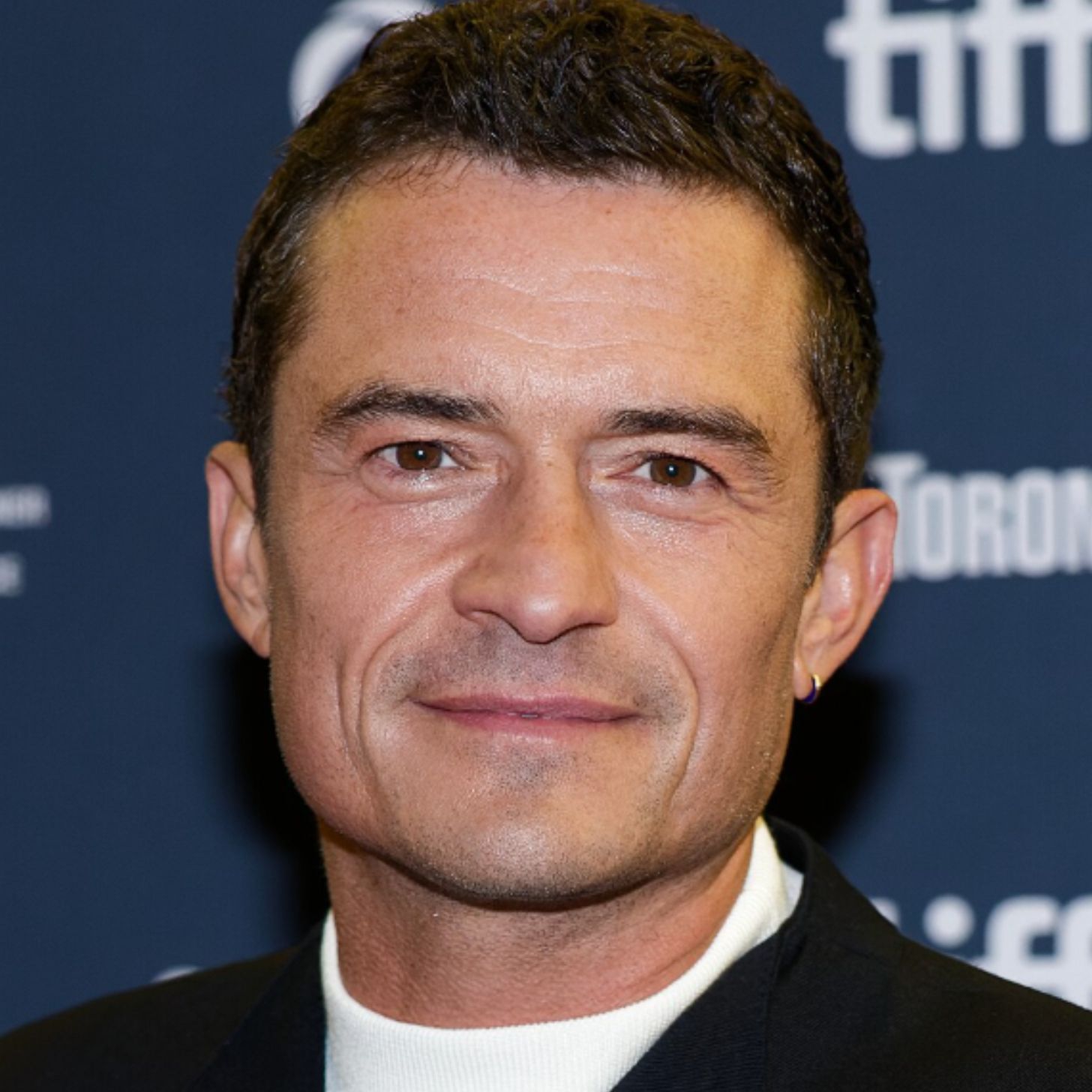
“Never let anyone tell you that you’re not capable. We’re all the same, we’re all equal, and we all deserve a shot. Take this obstacle and make it the reason to have a big life, because if you can overcome this obstacle, you are going to be that much further ahead than anyone else.”
“It takes having obstacles to learn and grow and be better,” he continued. “The challenge of dyslexia — the challenge of climbing that mountain — is something that you can make your own and make it a reason to be a winner in life.”
Bloom added that dyslexia has made him a better actor in the long run.
“I think creativity is the key to any child who has dyslexia,” he said. “When I was on stage performing, creating — that was really what got me through.”
“With dyslexia comes a very great gift, which is the way that your mind can think creatively,” he added. “If your kids can be given the opportunity to find that way of thinking, what works for them, they will be very happy and successful in whatever field they choose to go into. That I think is what my life has been.”
You may also like: 29 Famous People with Dyslexia
Header image via Pirates of the Caribbean: Dead Man's Chest/Disney
In 1998, Keanu Reeves was filming “The Matrix,” a sci-fi action film that would go on to become one of the most celebrated movies of his career.
At the same time, he had a lesser-known role as a caretaker for his younger sister Kim, who had been diagnosed with leukemia in 1991. As soon as she was diagnosed, Reeves dropped everything to help and even moved closer to her so she had familial support.
“My brother is my prince,” Kim told PEOPLE in 1995. “He listens to every word, to every comma after every word, that you are saying.”
In 1999, Kim spoke to the Australian magazine Woman’s Day, saying that Reeves had stepped in when she needed him most.
“Keanu helped me so much through my illness,” she said. “When the pain got really bad, he would sit with me and hold my hand, and keep the ‘bad man’ from making me dance.”
“He was supporting me and comforting me all the time, even when he was away,” she added.
Years after he played Neo, it came to light that Reeves — inspired by his sister — had given away 70% of his earnings from “The Matrix” (approximately $31.5 million) to support cancer research in the early aughts.
In 2001, Kim finally went into remission after a decade-long struggle, but Reeves’ interest in cancer research never dwindled.

In 2008, Reeves supported Stand Up To Cancer by taking calls during their televised fundraiser. Years later, when he auctioned a 15-minute Zoom date to raise funds for Camp Rainbow Gold, an Idaho-based children's cancer charity, bidding shot up to $16,600.
And in 2023, he auctioned off a signed “John Wick 4” training uniform to raise funds for St. Jude Children’s Research Hospital.
But his biggest impact has been happening for over 20 years, all behind closed doors.
“I have a private foundation that’s been running for five or six years, and it helps aid a couple of children’s hospitals and cancer research,” Reeves told Ladies Home Journal in 2009.
“I don’t like to attach my name to it,” he said. “I just let the foundation do what it does.”
You may also like: Every smash burger at this NC restaurant goes toward fighting childhood cancer
Header image via Governo do Estado de São Paulo
In 2021, in the wake of the COVID-19 pandemic, a number of Indian states enacted a policy that would assign value to women’s traditionally unpaid housework.
Now, 118 million adult women in 12 states across India receive unconditional cash transfers from their governments.
The cash transfers aren’t wages. They also aren’t a lot of money, ranging from 1,000-2,500 rupees ($12-$30 USD) a month. This is worth roughly 5-12% of a household’s income.
But for many women, they say it helps cover the cost of medicines, food, school fees for their children, and the rare personal item. And with 300 million Indian women now holding bank accounts, the transfers are simple to carry out from an administrative standpoint.
In much of India, domestic care is considered to be a familial and female responsibility and is one of the main reasons why India has a low and declining female labor force, which is an obstacle to the country’s economic growth overall.
"The unconditional cash transfers signal a significant expansion of Indian states' welfare regimes in favor of women," Prabha Kotiswaran, a professor of law and social justice at King's College London, told the BBC.
While other countries have cash-transfer programs, India’s is notably free of conditions. Those who are eligible to receive the money will, regardless of whether a child attends school or a household falls below the poverty line.
Critics of the program accuse politicians of “buying votes” from women who are hoping to see it implemented for their households, but others simply acknowledge the political power women gain when they can meet more of their economic needs.
Early surveys conclude that many women appreciate the cash transfers but would still prefer to hold their own jobs. That said, none of the surveys found evidence that the money discourages women from seeking paid work.
The cash transfers also haven’t reduced women’s unpaid labor, but they provide a modest improvement in well-being. Some survey respondents said the money provided “peace of mind, reduced marital conflict, and newfound confidence."
It also changed the way households operated. According to another study from the Harvard Kennedy School, the share of decisions made by men alone was lower after the cash transfer program was implemented.
“Prior to the intervention, 28.4% of men reported decisions alone, while only 18.8% of men reported doing so after the intervention,” findings stated.
“Prior to the intervention, 14.5% of women reported that the men in their household made decisions alone, while only 7.1% of women reported this after the intervention.”
Most researchers agree that while the cash transfers do not make a massive impact on local economies, they are a tool for improving women’s agency.
"The evidence shows that the cash transfers are tremendously useful for women to meet their own immediate needs and those of their households,” Kotiswaran said.
“They also restore dignity to women who are otherwise financially dependent on their husbands for every minor expense.”
You may also like: The world's first women-only mosque opens its doors — and all guests can enter through the front
A version of this article was originally published in The 2026 Feminist Edition of the Goodnewspaper.
Jaden Smith has long used his privilege and platform to give back.
In 2015, he and his father, Will Smith, founded JUST Water, a bottled water brand with sustainable packaging, designed to combat plastic pollution. The brand’s foundation then installed a clean water filtration system for residents of Flint, Michigan.
But the do-good spirit was just awakening in Smith. For his 21st birthday in 2019, he launched I Love You Restaurant, a vegan food truck aiming to combat food insecurity for homeless residents in Los Angeles.
“I Love You is a global community of people like you who care about homelessness and food insecurity,” the operation’s website reads.
“Our founder, Jaden Smith, believes everyone deserves access to the healthiest food options, no matter their financial situation. So, the menu was created with our world-class chef and co-founder, Tabitha Leeper, to bring that vision to life.”

The food truck appears to primarily serve folks on Skid Row in L.A., but it has also traveled across the country, supporting areas with high levels of housing and food insecurity.
A map on the I Love You website shows activations in Harlem, New York, other Southern California locations, and more.
In addition to sharing food, I Love You also distributes clothes and other essentials. During the COVID-19 pandemic, Smith ensured people also had access to masks and hand sanitizer.
“Every activation, we serve up to 500 hot meals and bottles of JUST Water, and an assortment of donated clothes,” the I Love You website explains. “These items are supported by our corporate partnerships and most engaged community members.”
To support the endeavor, people can buy their own food from I Love You — and occasionally purchase merchandise in occasional drops online.
“It’s for homeless people to get free food,” Smith told Variety. “But if you’re not homeless, not only do you have to pay, but you have to pay for more than the food’s worth so that you can pay for the person behind you.”
Smith says he eventually hopes to open a brick-and-mortar location for I Love You to provide more resources for people in need.
“I Love You is for the people, not funded by the people,” Smith said in a recent TikTok. “But if you want some swag, that’s the best way to support.”
It’s unclear exactly when and where people can expect to find the food truck, but the I Love You website encourages people to follow along on social media and come out to volunteer, if possible.
Most of all, Smith seems to want people to spread his message of love and care for others.
“[Japanese author] Dr. Emoto demonstrated that putting the words ‘I Love You’ onto organic matter makes a positive change in the molecules. Psychologists have proven hearing the words ‘I Love You’ has a positive impact on the brain,” the restaurant’s website reads.
“Our founder learned this and decided to call the company I Love You to spread peace, happiness, and food to the community of Skid Row.”
You may also like: Keanu Reeves has been secretly donating money to cancer research for over 20 years
Header images courtesy of I Love You Restaurant/Instagram
It’s been a year since John Green’s latest nonfiction book, “Everything Is Tuberculosis,” hit shelves, but the best-selling author has been a vocal supporter of global efforts to eradicate the disease for years.
With World Tuberculosis Day right around the corner on March 24, Green is offering a special gift to people who support the mission to get tuberculosis testing and treatment to the people who need it most.
Green’s online shop, Good Store, which he runs with his brother, Hank, sells everyday goods like coffee, tea, socks and underwear, eco-friendly cleaning products, and soap, with all proceeds going to charities like Partners in Health.

“I work in an unpaid capacity for the world’s best coffee and tea company, Keats & Co, which makes amazing coffee and tea, sends it to your home, and then donates 100% of the profit to fight tuberculosis in impoverished communities,” Green said in a recent Instagram video.
Keats & Co, Good Store’s coffee and tea line is named after romantic poet John Keats, who died of tuberculosis at 25, “back when we didn’t know how to cure it,” Green said.
“But now we do know how to cure it, it’s just that we don’t do a good job of getting the cure to people who need it.”
All of this is to say, Green went on to add, those who subscribe to Keats & Co ahead of World Tuberculosis Day will be sent an exclusive video reading of Keats’ poem “Ode on a Grecian Urn,” along with some more information about why it’s Green’s favorite.
Along with this campaign, Green has committed millions of his own money to fund solutions for the world’s deadliest infectious disease, has educated thousands on the subject, and has even worked with his fan community — Nerdfighteria — to demand change from corporate health giants like Danaher and Johnson & Johnson.
World Tuberculosis Day is just one opportunity for his work to continue. And, as Green will often say, the real heroes of this story are the people on the ground supporting low-income communities fighting tuberculosis.
Partners In Health, the organization supported by Good Store, is part of leading the charge.
“PIH has battled this inequity for more than two decades, by treating and preventing TB, its more severe, drug-resistant variants, and co-infections of HIV and TB in some of the poorest and most vulnerable communities in the world,” the nonprofit’s website shares.
“Our community-based approach to care has resulted in some of the highest cure rates and lowest treatment default rates ever recorded.”
And when people shop for tea and coffee through Good Store, they’ll play a poetic part in getting people the care they deserve.
“Check out Keats & Co and get yourself a little John Keats in the process,” Green said.
You may also like: The first-ever NICU in Sierra Leone just opened its doors — with the help of Hank & John Green
Header image by Marina Waters for John Green
Every year, eastern monarch butterflies travel nearly 3,000 miles from Canada and the United States to a forest reserve 62 miles north of Mexico City.
For two decades, the World Wildlife Fund of Mexico has been tracking data on the generations of butterflies that have wintered in Mexico’s Monarch Butterfly Biosphere Reserve — the only place where they congregate by the millions.
And experts noticed a worrying trend: Migratory monarchs have declined by more than 80% since the 1990s.
“Monarchs need our help, and we need monarchs because they are spectacular and irreplaceable,” Tierra Curry, the endangered species co-director at the Center for Biological Diversity, said in a recent press release.
Decades ago, monarch butterflies began facing mounting threats on multiple fronts, including mass deforestation and the widespread loss of their only food source — milkweed — due to glyphosate use in farming. Additionally, flowering plants that adult butterflies rely on for nectar have been greatly reduced by the use of pesticides.
Climate change has only exacerbated these challenges, as extreme weather increasingly disrupts their breeding and migration patterns.
However, WWF-Mexico recently shared two new reports that offer a glimmer of hope for the monarchs. One, there’s been a significant reduction in forest degradation within their critical winter habitat.
And two, their population has increased by a staggering 64%.
“Despite environmental challenges, today’s announcement shows promising signs of recovery for the migratory eastern monarch butterfly population,” said Maria Jose Villanueva, the director general of WWF-Mexico. “These reports indicate conservation measures are going in the right direction.”
“We also need to remain vigilant and not forget that this unique migration continues to face many challenges. WWF will continue to work together with local partners, the Mexican government, and especially with the local communities who are most critical to this success.”
The news isn’t just good for the monarch butterflies — it’s good for the planet. As a keystone species, they act as a “canary in the coal mine” when it comes to environmental decline. Falling monarch populations indicate broader issues affecting pollinators and ecosystems overall.
And because pollinators are crucial to food production and biodiversity, monarch declines highlight risks to both natural systems and human food supplies.
When it comes to WWF-Mexico’s latest data, Karen Oberhauser — one of the nation’s leading monarch experts — told Vox that entomologists should celebrate the win while still acknowledging that there’s a lot of work to be done.
“We are in a period of relative stability where the population has stopped declining,” said Oberhauser, a professor emeritus at the University of Wisconsin-Madison. “Our efforts can make a difference.”
You may also like: This critically endangered parrot is making a comeback. Experts think berries are the reason for the baby boom
Header image via U.S. Fish and Wildlife Service
Living with cerebral palsy, Elliot Caswell has often found it difficult to shop for clothes that are easy to put on with his disability.
“It’s been a struggle,” Caswell told the BBC. “I would need my parents, friends and family, and my carers to help me out to put clothes on.”
But when United Kingdom-based department store Primark released a clothing line with adaptive features for adults with disabilities, well, “it’s life-changing stuff,” he told the BBC.
It helps that Caswell is a model for the new line, too.
“He was fantastic on the campaign shoot,” the collection’s designer, Victoria Jenkins, said. “We’re going to see more and more of Elliot, and I have every intention of sending him down the runway for London Fashion Week.”
The new items from Primark include features like magnetic zippers and buttons, loops that are easy to hold, pants with adjustable zips on the legs, a pouch for stoma bags, and more.
“A lot of it centers around dignity and modesty,” Jenkins added, sharing that she has a number of gastrointestinal conditions herself. This, in particular, helped her design around what she and other disabled shoppers might want to see, like stretchier clothes that are easier to put on or take off when pain or mobility are top concerns.
“Everyone needs choice, everyone dresses differently, and everyone has the right to self expression,” she said, adding that she hopes collections like this are the norm in the coming years. “That’s been denied to far too many of us for too long.”
Jenkins is an award-winning adaptive designer and leads her own adaptive clothing brand, Unhidden. Primark brought her on board to help accelerate the brand’s efforts in adaptive fashion.
“I didn’t think we’d see adapted fashion on the high street in my lifetime,” Jenkins told The Guardian.
“Primark recognizing the needs of disabled and [the] chronic sick community, and acting upon it in such a meaningful way, is going to be life-changing for millions of people,” she added in a statement for the brand.
It’s already changed Caswell’s life, as well as all the other disabled models sporting the adaptive fashions in Primark storefronts across the U.K.
“It doesn’t feel real,” Caswell said. “But I know it’s real when I see the pictures.”
You may also like: Woman invents 'stim hoodie' with built-in fidget toys for people with autism and ADHD
A version of this article was originally published in The 2025 Fashion Edition of the Goodnewspaper.
Header images courtesy of Primark
Henry “Tribes” Amoloja runs a sensory-friendly barbershop called The Weighted Cape that specializes in haircuts for neurodivergent children. And when it comes to making kids feel comfortable, he’s got a few tricks up his sleeve.
“Oh, you’re a touchy guy, you’re going to love this spiky thing,” Amoloja said as he handed 4-year-old Jai a studded fidget toy that helps relieve pressure.
He then showed CBS News his full arsenal: a big box of fidget spinners and play toys, a weighted stuffed animal named Trimmy, quiet clippers, talcum powder to prevent hair from sticking to skin, and his trademark weighted capes.
"Everyone isn't attuned to the needs of kids with autism and their sensory needs,” said Lauren Quinn, Jai's mother, adding that Amoloja has been flexible from the start.
“He can take 30 minutes or he can take an hour,” said Jai’s father, Dr. Lamar Quinn. “He builds that in, and that’s how he’s allowed to meet the child where he’s at. We love that about the experience, because our Jai is able to be himself.”
Amoloja, who lives in downtown Dallas, believes that every child deserves a great haircut without fear. All it takes is a little patience.
“It’s easily become the most fulfilling thing I’m doing in my career,” he said. “I’m hoping that what we’re doing in the hair industry can translate into other industries.”
You may also like: Ahead of Autism 'Awareness' Day, 'The Pitt' star recommends using this word instead
A version of this article originally appeared in the 2026 Mental Health Edition of the Goodnewspaper.
Header image via The Weighted Cape
Growing up, conversations about mental health were off-limits in Pastor Michael A. Walrond, Jr.’s West Indian Caribbean household. In fact, it took over three decades for Walrond to heed his calling in the field of mental healthcare, and it came after a distressing revelation.
“Out of nowhere, I had a suicidal ideation,” Walrond told NPR. His first instinct was to keep his thoughts to himself — but instead, he found the strength to reach out to a therapist. He said it was a decision that ultimately saved his life.
“ I think in the African American community, historically, there’s been the normalization of trauma,” he says. “You don’t really see the mental health impact.”
That’s when the pastor started a new initiative within his congregation at First Corinthian Baptist Church.
Over 20 years, he turned a small corner office into the H.O.P.E. Center, the first faith-based mental health facility in Harlem.
“We currently have seven clinicians on staff: three doctors, one psychiatrist, three social workers, one psychologist,” said Lena Green, the executive director of the center.

Green has seen firsthand how Walrond has transformed First Corinthian Baptist into a safe space for churchgoers to open up.
In addition to connecting community members with essential services, Walrond chips away at stigmas surrounding mental illness by seamlessly working messages of well-being, mindfulness, and compassion into his services.
“Part of the responsibility,” Walrond said, “is to treat the needs of the people as holy.”
A version of this article originally appeared in the 2026 Mental Health Edition of the Goodnewspaper.
Header image via MART PRODUCTION
In September of 2024, the city of Linhares, Brazil granted legal rights to the waves at the mouth of the Doce River, which runs into the country’s Atlantic coast, giving the area the “intrinsic right to existence, regeneration, and restoration,” according to Hakai Magazine.
This means that the waves should continue to form naturally, and the water must be clean.
The move comes after the 2015 collapse of the Fundão dam, which resulted in gallons of waste from an iron mine being poured into the Doce River. The toxic sludge polluted the water supply for over 1 million people across 35 cities, decimated entire populations of fish, destroyed native vegetation, killed all kinds of animal species, and flattened the homes of nearly 600 people.
The sludge also built up at the mouth of the waterway, weakening its waves. Restoration only began in 2022 after a flood cleared the buildup.

This new law will require Linhares to protect the physical shape of the river, as well as the ecological cycles that make its waves unique.
The water’s finely balanced chemical makeup also must be protected through public policies and funding.
In addition to protecting the area in general, the Doce River is also home to an active surf and tourism scene, meaning its safety has economic ripple effects.
Hauley Silva Valim is a surfer and anthropologist who was one of the architects behind the law to protect the Regencia wave.
“The wave brings to us this kind of request for listening, to listen to the language of nature — to understand the language of nature, which is enabled by the silencing of the human mind,” Valim told Nautilus.
He added that granting rights to the wave is as spiritual as it is rooted in practical policy, stemming from a “philosophy of regeneration, a principle of liberation.”
To Nautilus, he added, “Water should run free.”
This is the first instance in which a government has given rights to part of the ocean, though Latin America has been a leader in the global movement to grant legal rights to nature.
In 2008, Ecuador was the first country to recognize the rights of nature in its national constitution, and in Colombia, the rights of rivers, a lake, and a national park have been legally recognized.
Vanessa Hasson is an environmental lawyer and executive director of the Brazilian NGO Mapas, which advocates for the country’s rights-of-nature movement.
She told Hakai Magazine that the law’s main goal is to change mindsets and shift public policies connected to water quality and resource extraction.
“When you recognize a little bit of space of the ocean, like these waves,” Hasson said, “you are reaching the whole ocean.”
You may also like: Leaving wilderness alone isn't always the best way to protect it, experts say. Here's what they suggest instead
A version of this article was originally published in The 2025 Environment Edition of the Goodnewspaper.
Header image by Bruno Thethe on Unsplash