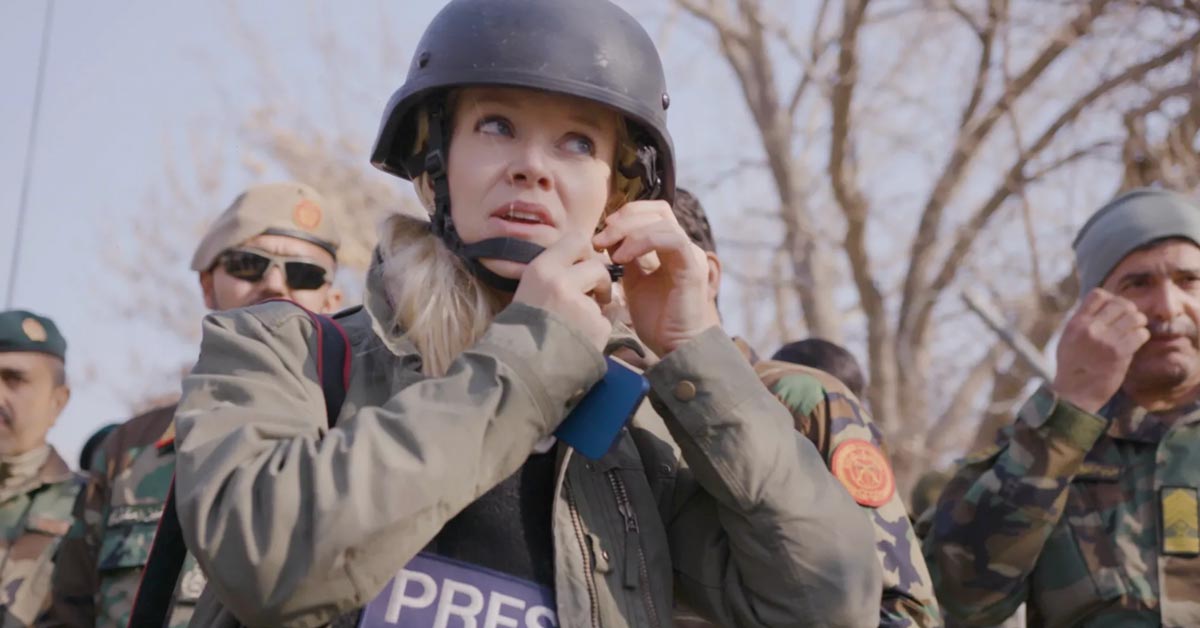
Jane Ferguson spent 15 years as a correspondent for PBS NewsHour and The New Yorker, contributing award-winning journalism from the Middle East, Africa, and South Asia.
But no matter how accomplished of a war reporter she is, her most frequently asked question was “How do you cope in such a male-dominated industry?” to which she replies: “Women have been doing this work for over a century.”
While Ferguson hasn’t “done a scientific study,” she said she has definitely seen an uptick in women war reporters, likely due to an increased demand for constant news, the normalization of freelance work in the industry, and improved gender equality across the world.
But it’s not just the much-needed camaraderie of women in the field that stands out, but rather how women have shaped the field of war reporting as a whole.
While Ferguson said many reporters are still focused on the “bang bang” of war reporting, she, and many of her female colleagues, are most interested in communities — not just soldiers — impacted by war.
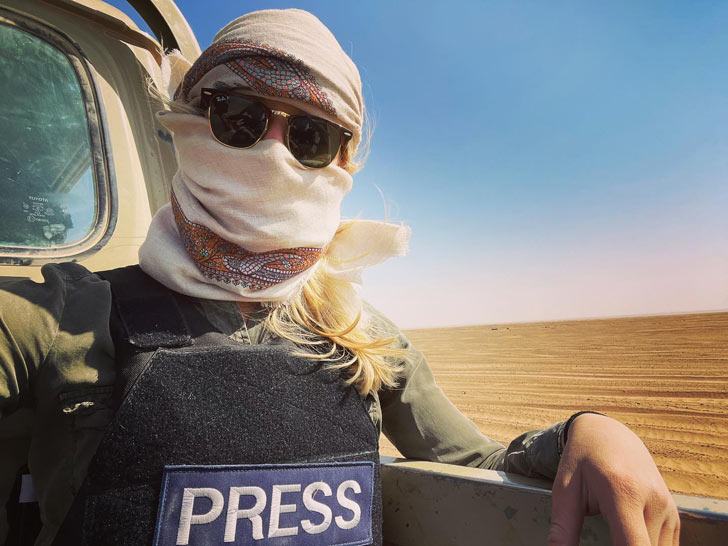
“We get so much rich imagery and storytelling now,” she told Good Good Good in 2023, following the release of her book “No Ordinary Assignment.”
“I really believe that this acceleration of women into the field has been the leading contributor to enriching what the public gets to see. What do they see from war? They see children with their pets. They see families saying goodbye. I just think there's much more nuanced, imaginative thinking about how to tell these stories.”
This increased empathy and humanity, she believes, is a direct result of diverse reporting.
“It’s important for me to celebrate the additive qualities of female reporting beyond just having women out there because it’s the right thing to do,” she said. “[Journalism] organically begins to reflect who we are.”
Now, she has created Noosphere, an app designed for on-the-ground journalists like herself. After years of field reporting, Ferguson found herself frustrated with the news environment back home.
“While she was reporting on crises overseas, the news industry stumbled from one financial and credibility crisis to another. The institutions that once brought the best reporting to people were foundering,” a description on the Noosphere website reads.
Ferguson would be tweeting and posting updates on Instagram, where she didn’t earn a dime. But the news organizations that employed her as a freelancer were benefitting from it all.
“The answer, she realized, was in disintermediation,” Noosphere’s website continues. “The world's best journalists could reach people, together, without a news organization. They could build a real community around them, fund their work, and keep telling stories that connect people around the world to our shared humanity.”
Noosphere is a video-first platform where people can subscribe to their favorite reporters, not a publication. They get updates directly from on-the-ground reporters, and those reporters can practice journalism under their own editorial guidelines. They have the freedom to follow the story without the control of a board or corporate owner.
Introductory subscriptions for news consumers start at $15-20, according to Columbia Journalism Review.
While the platform is still getting off the ground, a handful of veteran reporters have already joined, like Hind Hassan, Matthew Cassel, and Joyce Koh. For every new subscription reporters bring in, they get half.
“My whole career, I had needed either a network or a newspaper to have a career and reach an audience. If that’s what it was like for me — an incredibly privileged, white, Western reporter — the gatekeeping was even worse for all the local reporters, producers, and fixers I worked with all over the world,” Ferguson told the NiemanLab in March 2025.
“It occurred to me that, actually, technology is going to allow us to solve for a number of issues here. When we build the new iteration of distribution of news, we’ll build it better and way more equitable.”
You may also like: Meet the Documenters: The people who actually attend — and keep a record of — your city's meetings
A version of this article was originally published in The 2024 Gender Edition of the Goodnewspaper.
Header image courtesy of Jane Ferguson