Earlier this month, public health nonprofit Anxious Generation Movement released a Childhood Index rating, evaluating all 50 states on their laws regarding childhood independence, social media age limits, technology regulation, and more.
New York and Utah were the only states classified as “national leaders.”
New York Governor Kathy Hochul says it’s a milestone New Yorkers should be proud of — one she has spent much of her time in office working towards.

“I’m using my perspective as New York's first mom Governor,” Hochul told Good Good Good in a phone interview.
“This … makes me feel compelled to act because I look at the entire state as one part of my large family. I have those natural protective instincts, especially when it comes to our children. And I took about a year to go around the state and listen, after the pandemic and the years afterward, [to] what is actually happening to our teenagers.”
This spurred her to support a myriad of child safety initiatives statewide.
These include mental health first aid training for all New York high schoolers, “unplug and play” initiatives for childhood independence, a law that requires social media platforms that offer addictive feeds or infinite scroll features to put warning labels on their apps, legislation to restrict those addictive social media features for users under 18, and “distraction-free schools,” or bell-to-bell phone bans that took effect in the 2025-2026 school year.
“We passed nation-leading laws taking on big tech, saying, ‘No, our kids are more important than your bottom line,’” Hochul said.
“Every time we did it, the tech company said they can't do it. And guess what? When we mandated it, they were able to figure out a way to do it.”
Hochul said these new laws include default privacy settings for kids “at the highest level,” as well as the disabling of artificial intelligence features for kids.
Mental health first aid training has also been made available to all 10th graders in the state of New York — more than 180,000 young people.
“Every teenager is going to be trained in not just helping themselves cope, but how to identify the warning signs in some of their friends and classmates,” Hochul said.

But the star policy, Hochul said, has been the phone-free schools effort, which went into effect this past September.
“This cell phone distraction-free zone for schools … is absolutely the biggest game changer in our children's lives. It has been liberating for our children,” Hochul said.
“They're finally acting like kids again,” she added. “They’re at lunch and study hall, playing cards. They’re playing Jenga, they’re playing bingo, they’re bringing in old transistor radios.”
The cell phone ban didn’t come without a fight, she added. Parents were worried they wouldn’t be able to reach their children, school administrators were worried about the hassle, and of course, she said, the students were not particularly interested in the new policy.
But she believes the outcome was worth the battle.
In a survey conducted by the governor’s office, with 350 responses from schools across the state that implemented the bell-to-bell smartphone restrictions, 92% reported a smooth transition to distraction-free learning, 83% reported more positive classrooms and better student engagement, and 75% of teachers reported improvement in their ability to teach effectively.

“Just after talking about it for a year, implementing a law, giving lots of time to roll it out, I would say this is one of the most successful societal changes in such a short time that you could have envisioned in a place like New York,” Hochul concluded.
“I want to see this nationwide. I think every governor should enact the same.”
New York is not the only state that has adopted phone-free rules for students. According to the Childhood Index, over 40 states now have some kind of screen-free policy in place, with many showing success. In one Kentucky school district, preliminary results showed students checking out more library books, and other states are also seeing modest improvements in test scores.
For Hochul, the phone-free zones are a milestone achievement — and a proof of concept for the $1 billion catalyzed to confront the youth mental health crisis in New York.
“I’m really proud that we are named top of the nation with Utah in terms of focusing on kids’ mental health,” Hochul said. “But I also want us to tell other states that it can be done. If New York can do it, you can do it.”
You may also like: This 'screen-free smartphone' lets kids communicate safely: 'Inspired by a walkie-talkie'
Header image by Mike Groll/Office of Governor Kathy Hochul
Shula Kitkowska, 42, and Louis Peralta, 56, are two Rhode Islanders who became friends when they met in a local supportive housing program.
Kitkowska was living in her car, and Peralta found himself needing housing after he was discharged from cancer treatment. Once they were in a shelter, the two lived next to each other.
During this time, as they were both working to get back on their feet, Kitkowska learned of Peralta’s penchant for buying discounted storage lockers — the kind you might see on the A&E Network show “Storage Wars.”
He would buy the abandoned storage units at a steep discount, pick through them for items he could sell at a high price, and throw the rest away. It was a hobby he had been doing for 25 years.
“By becoming neighbors, she could see what I was doing … so she asked me what was going on, and I told her to subsidize myself, I would buy storage lockers, but I would throw away 80-90% of what I got because you just can't accumulate too much,” Peralta told WJAR News.
“And she got upset because she knew she could do a lot with it to give back.”

Now that the two have secured their own permanent housing, they use Peralta’s longtime hobby to give back to others like them.
“When I saw him doing that, I thought, ‘I can do something with this. I can redistribute it so it doesn't end up at the landfill,’” Kitkowska told WJAR.
“When I came out of homelessness I had nothing. I didn't have furniture, I didn't have any of that, so what I can do for people today is give what I can.”
Now, they strategically shop the storage units, with Kitkowska keeping household items, shoes, and other valuable essentials in her own home to share with others who have very little.
The first time the pair put out a call on social media, several people reached out. Now, they’ve helped hundreds in need, and they call their effort Up 2 Us Neighbors.
“I take in the requests and then if I have the stuff, whoever needs a coffee table or size 12 clothes or children's clothes or anything, then I give it to them,” Kitkowska said. “I’ll deliver it or they’ll come and pick it up.”
Their policy is simple, the pair writes on a GoFundMe page: “Upon request. No questions asked.”
From nursery furniture to new clothes, the goal is to get people connected to the things they need to rebuild their lives.
The mission has grown in recent months, and the duo now has three of their own storage lockers where they keep items to donate. However, demand is growing, and they are fundraising to expand to a box truck or cargo van to support their efforts.
People across the state have come to Up 2 Us Neighbors for support, and they’ve created a community of at least 30 to 40 volunteers, Kitkowska said.
“I have over 100 requests right now and I can only do a couple a day. Just yesterday, I received over 100 requests,” she said. “I mean, everything is up, you can’t buy clothes, everything is expensive. You’re a family with multiple kids, how do you do it?”
She reportedly spends about 10 hours a day working to fulfill requests, and she doesn’t receive any money of her own to make it happen.
“I do it because it makes me feel good,” she told WJAR. “That’s all.”
A sign of growth from their own rock bottom, Kitkowska and Peralta are turning their struggles into a new beginning for others, too.
“From a homeless shelter to a new apartment, my journey has taught me one thing,” Kitkowska wrote on Facebook.
“We are stronger when we look out for each other.”
You may also like: Jaden Smith's vegan restaurant feeds homeless people on Skid Row for free
Header image by Meathead Movers (CC BY-SA 2.0)
When it comes to mental health support, kids around the world are taking steps to ensure that they have each other’s backs.
In Karnataka, India, the state’s first Child Rights Club started a “beacon buddies” program, where classmates can learn to detect early signs of distress in their peers and extend words of support.
In Australia, the Peers for Teens and Young Adults program pairs young adults with autism together for four months to help them build confidence and develop their social skills.
And every night in Los Angeles, from 6 p.m. to 10 p.m., a revolving group of teenagers provides vital support to people their age — just by picking up the phone.
“A lot of people, when they hear Teen Line, or ‘Hotline,’ they think, ‘suicide call, crisis call,’” Brooke, a 16-year-old Teen Line volunteer, told NBC News. “But so many of my calls have been about relationship issues, school stress, anxiety, maybe a fight with their parents.”
“For a lot of teens, I know that they had a hard time during the pandemic, which is also what drew me to Teen Line,” she added. “So I thought that, if there’s some way that I could help teens not feel that way, then I want to do it.”
Before they can answer a call or reply to a text, each volunteer completes 65 hours of training with a professional counselor, who walks them through the core tenets of crisis management and active listening.

“We don't really solve that person's problems,” 15-year-old volunteer Max said in an interview with NPR. “But, what we can do is listen to them, validate them, make them feel really heard, like, in a moment that they might really need it.”
In 2024, Teen Line helped nearly 9,000 people, with some calls coming as far away as Japan and Tanzania. Cheryl Eskin, Teen Line's senior director, estimates that they brought in more than 10,000 calls in 2025. As the calls gradually increase, Eskin said she’s seen an uptick in teens worried about AI encroaching on the helpline.
“Almost every night, we probably get asked, ‘Are you AI? Are you a bot?’ And they don't want it to be,” Eskin said.
It’s that human element that keeps volunteers like Brooke and Max coming back, despite busy school schedules and social lives of their own.
“You come out on the other side of that call, and that person's still with you, realized there was something worth living for and something that they cared enough to stick around to see happen,” Max said. “And I think that resiliency of humans is what I like to try to take away, instead of just the fact that we struggle. It's the fact that we persevere through it.”
You may also like: Influencers have a new internet challenge for Gen Z: 'Quit vaping'
A version of this article originally appeared in the 2026 Mental Health Edition of the Goodnewspaper.
Header image via Teenline
Whether you attend a No Kings protest or show up in the streets of your community to speak out against inhumane actions by United States Immigration and Customs Enforcement, you’ll need a sign.
For instance, the third No Kings protest, which took place on March 28, 2026, saw nearly 9 million people in attendance across the U.S. and other international cities. Many of them carried their own signs to echo their chants even wider.
This most recent event focused specifically on speaking out against ICE.
“The Trump regime is doubling down on fear and force to intimidate communities and silence dissent. What we are seeing in Minnesota is a tragic example of that, with immigrant families and Black and brown communities being terrorized,” Ezra Levin, co-executive director of Indivisible, a lead organization behind the No Kings protests, said in a statement.
“From Alex Pretti to Renee Good to the tens of thousands showing up in subzero weather, we are also seeing a massive movement of brave people standing up for their neighbors and against this regime.”
If you’re planning to join an upcoming No Kings protest, we’ve gathered some sign ideas below:
Other protest sign ideas:
No Kings Protest Sign Ideas
No Kings-Specific Protest Sign Ideas
- No Kings
- No Dictators
- No Kings Since 1776
- No Crowns, No Thrones, No Kings
- No Coronas, No Tronos, No Reyes
- No One Is Above The Law
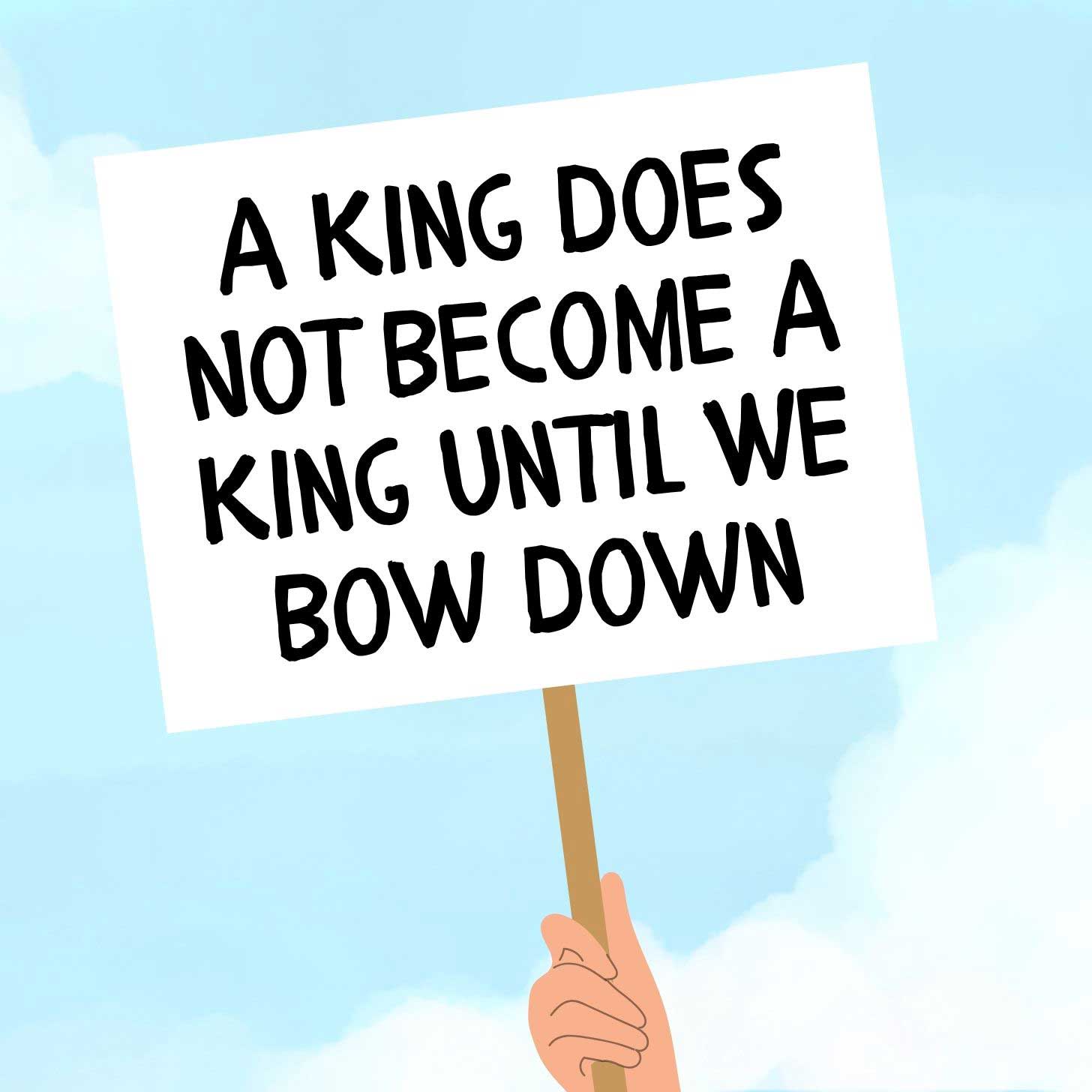
- A King Does Not Become A King Until We Bow Down
- Only The Statue Of Liberty Gets To Wear A Crown
Funny No Kings Protest Sign Ideas

- Clean Up On Aisle 47
- Sorry For Being Weird, This Is My First Dictatorship
- We Dumped Tea For Less
- No Crown For A Clown
- No Faux-King Way
- America, Leave Your Abusive Ex
- “Don’t Make Me Repeat Myself.” —History
- I’ve Seen Better Cabinets At Ikea
- Get The Hell Out Of Our House
- Strop Truth Decay
- Elect A Clown, Expect A Circus
- I’d Like That Taco To Go, Please
→ Check out more funny protest sign ideas
No Kings Protest Sign Ideas For Kids

- Hands Off My Future
- It’s Time To Use Our Outside Voices
- I Will Not Learn Your Hate
- History Has Its Eyes On Me
- Fighting For My Future
- If You Won’t Act Like Adults, We Will
- When Leaders Act Like Kids, The Kids Become The Leaders
- Only The Statue Of Liberty Gets To Wear A Crown
- Only Butterflies Should Be Monarchs
→ Check out more protest sign ideas for kids
Anti-ICE Protest Sign Ideas
- ICE Out Of [Insert City Here]
- ICE Out For Good
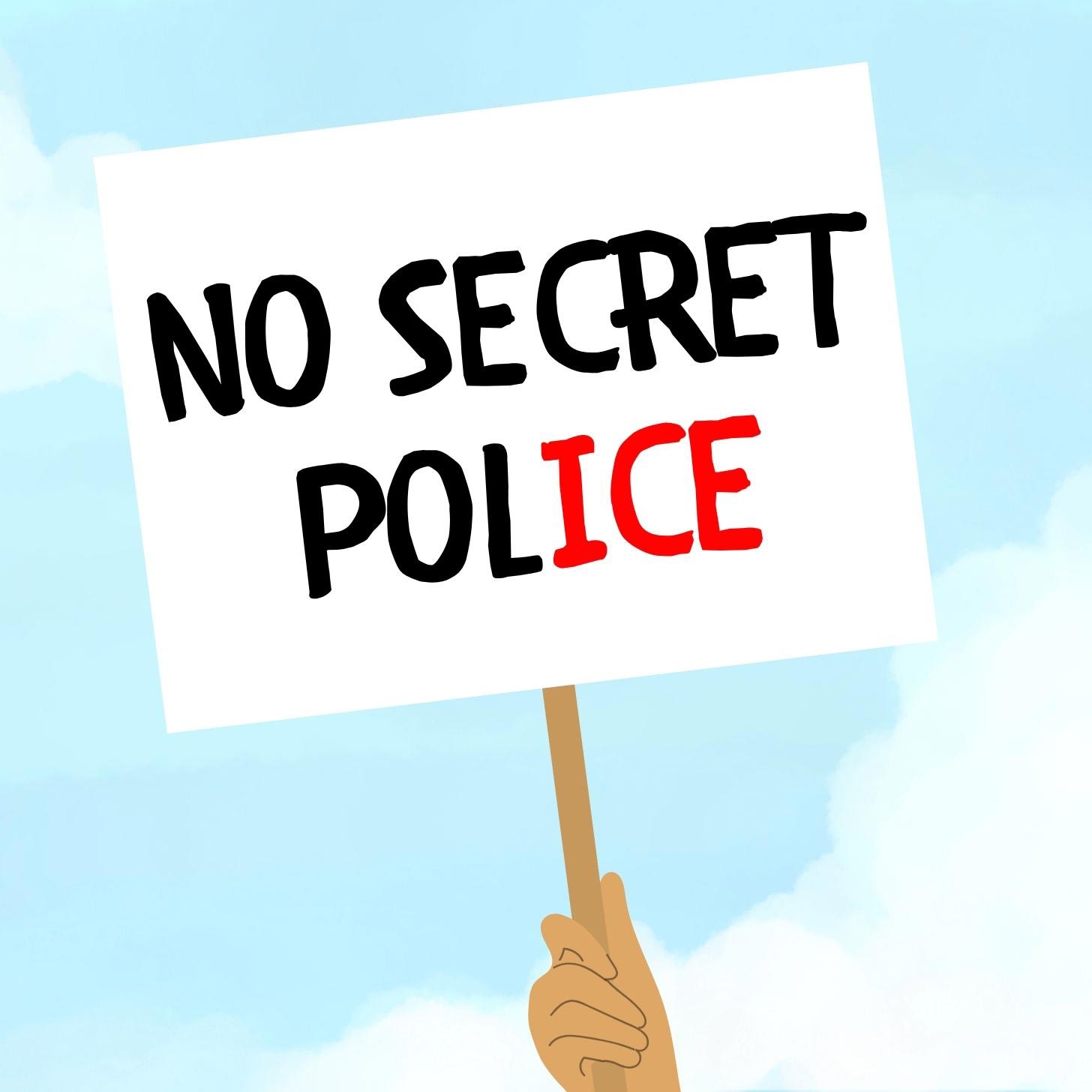
- No Secret Pol[ICE]
- Brown Skin Is Not Probable Cause
- It’s Okay To Change Your Mind
- We Love Our Immigrant Neighbors
- Fight Ignorance, Not Immigrants
- Lay Down Your Arms
- No One Is Illegal On Stolen Land
→ Check out more Anti-ICE Protest sign ideas
Pro-Democracy Protest Sign Ideas

- Nothing Is More American Than Opposing Tyranny
- Power Belongs To The People
- Democracy Needs Your Courage
- The People United Will Never Be Defeated
- The Power Of The People Is Stronger Than The People In Power
- ‘We The People’ Means Everyone
- “With Fear For Our Democracy, I Dissent.” —Justice Sotomayor
- This Is What Democracy Looks Like
Inspiring Protest Sign Ideas
- We’re Not Here Because There’s Hope. There’s Hope Because We’re Here.
- We Are All Neighbors
- Rebellions Are Built On Hope
- Choose Peace
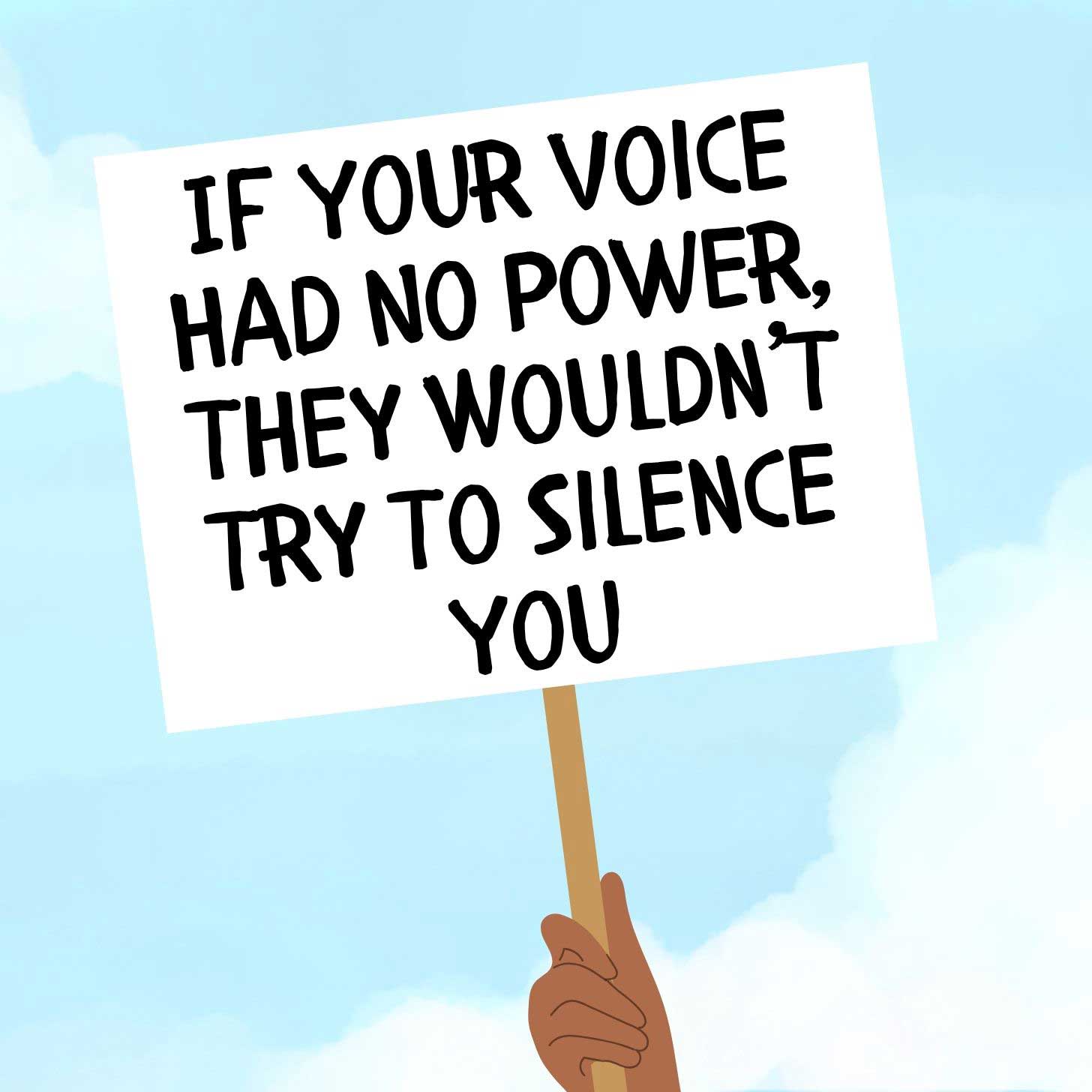
- If Your Voice Had No Power, They Wouldn’t Try To Silence You
- History Has Its Eyes On You
- Dictators Fall When People Rise
- This Land Is Your Land, This Land Is My Land
General Protest Sign Ideas
- No Sign Is Big Enough To List All The Reasons Why I’m Here
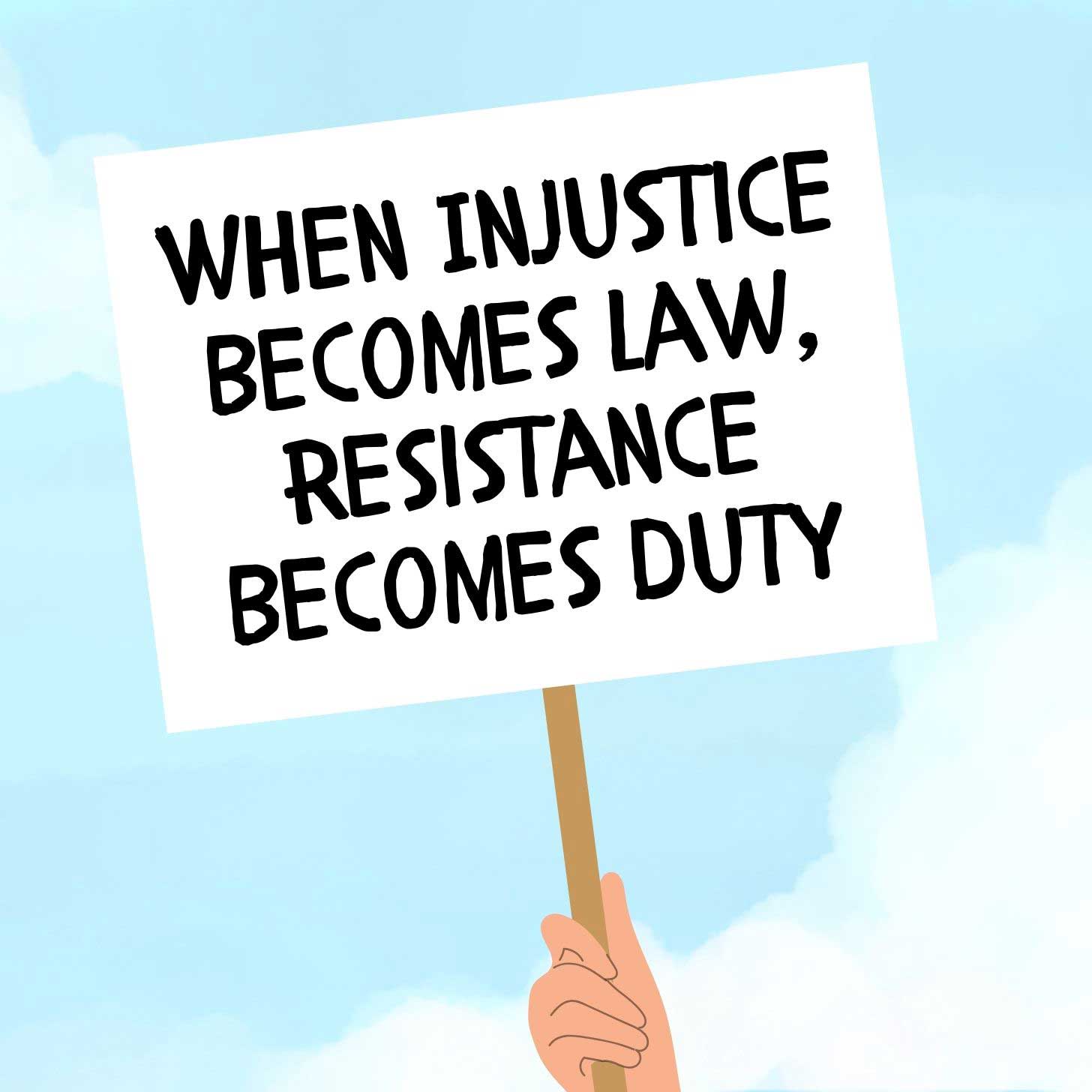
- When Injustice Becomes Law, Resistance Becomes Duty
- Hate Has Never Made America Great
- Hate Has No Home Here
- Empathy Over Empire
Ultimate list of protest sign ideas:
- Anti-ICE protest sign ideas
- Funny protest sign ideas
- Protest sign ideas — for kids
- Black Lives Matter posters
- Pro-abortion posters
Header image by Larissa Puro (CC BY-NC 2.0)
One of the most common pieces of advice people are given when it comes to taking better care of the planet is to clean up trash in their natural areas.
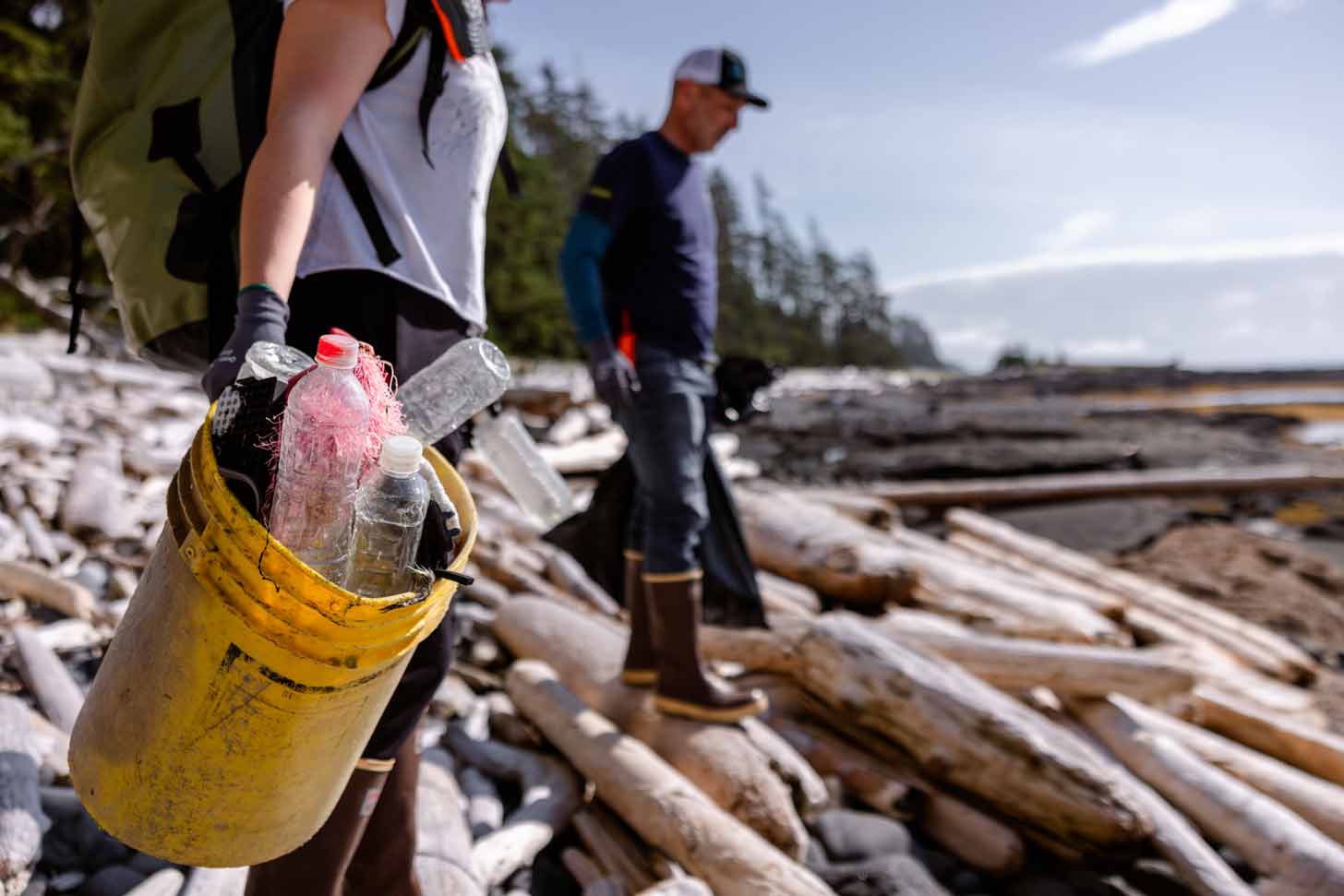
Beach cleanups and trash pickup events are held nationwide all the time, gathering climate-conscious volunteers to tackle plastic pollution in waterways and parks. While many of these events measure waste picked up by the pound, and it’s easy to see a visible difference to the areas around us, it can be hard to understand the full extent of this kind of activity.
A new tool from nonprofit Ocean Conservancy aims to change that.
In November of 2025, Ocean Conservancy scientists published a new peer-reviewed study that quantified the “deadly dose” of macroplastics — or pieces of plastic larger than 5 millimeters — ingested by seabirds, sea turtles, and marine mammals.
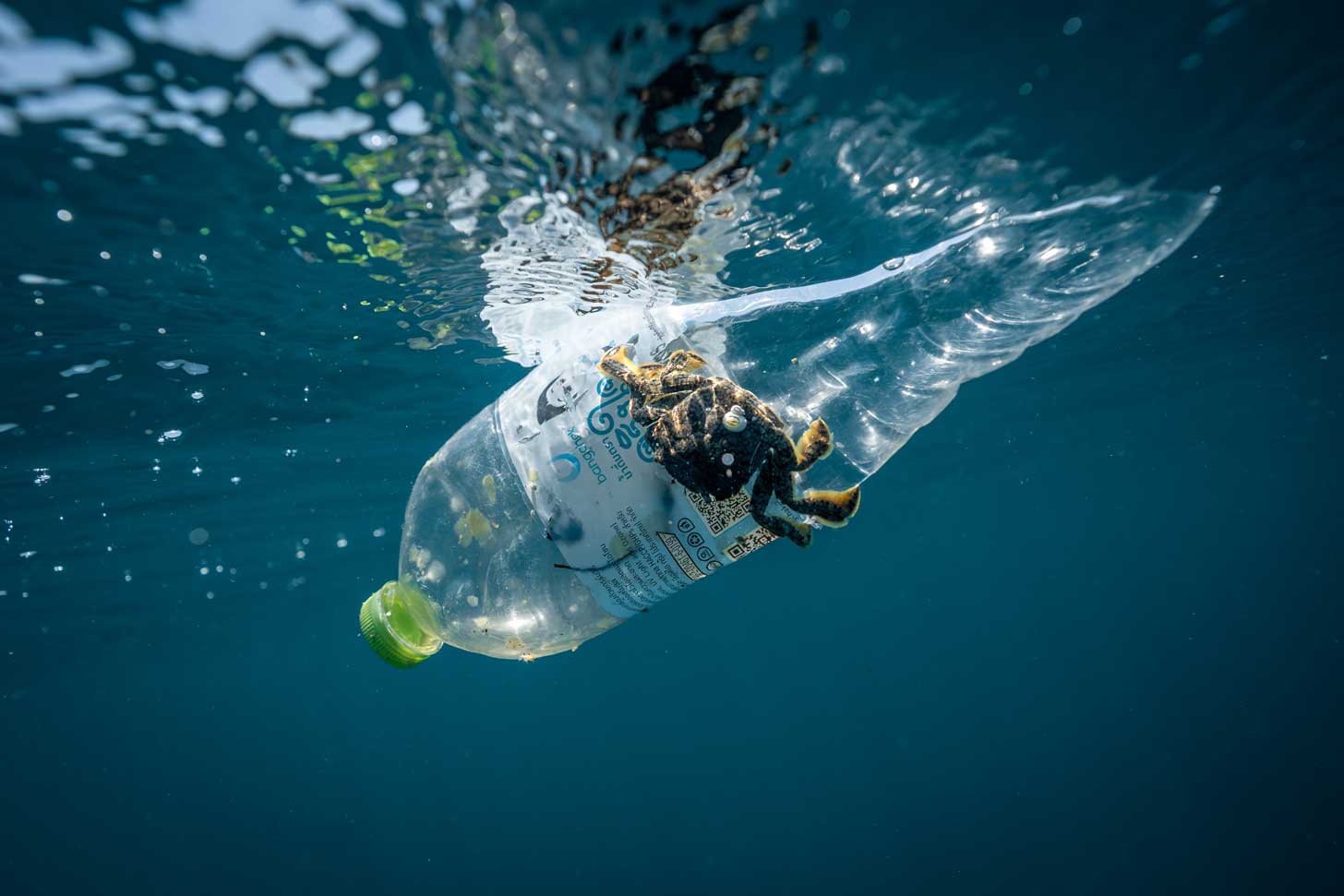
The researchers analyzed the results of over 10,000 necropsies (or animal autopsies) in which the cause of death and plastic ingestion were known. Then, they modeled the relationship between the plastics in the gut and the likelihood of death for each species group to come to their conclusive numbers.
The findings suggest that even small amounts of plastic can have deadly impacts on marine life. For instance, less than three sugar cubes of plastic can kill a seabird, according to the new research.
While sobering, the information also revealed an opportunity: If scientists can quantify how much plastic can kill marine life, they can also calculate how many lives are saved in relation to how much trash is cleaned up from beaches and waterways.
This led to the creation of a new digital tool: Wildlife Impact Calculator.
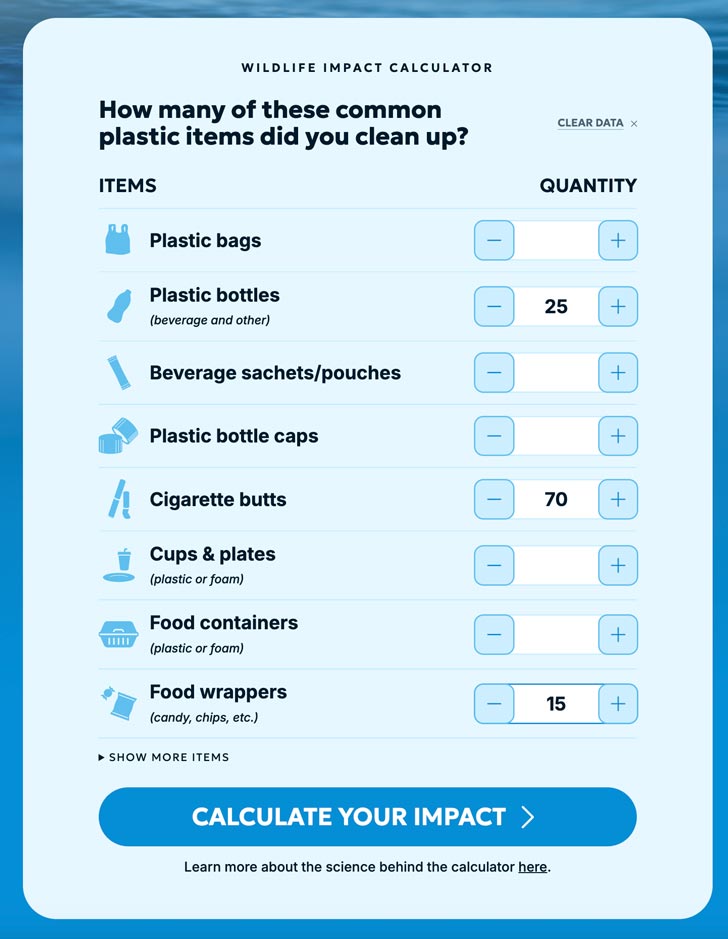
Here, litter-picker-uppers can enter how many items they picked up on a cleanup, including plastic bags, plastic bottles, cigarette butts, food containers, and more.
Then, the website calculates the life-saving impact on a given marine animal.
“We wanted to make the science as easy to understand as possible and give people the ability to measure the difference they can make,” said Dr. Erin Murphy, Ocean Conservancy’s manager of ocean plastics research and lead co-author of the November 2025 study.
“The models informing the calculator look at amounts of plastic in terms of pieces, but how does that relate to items that people are picking up off of beaches? That’s what we wanted to show.”
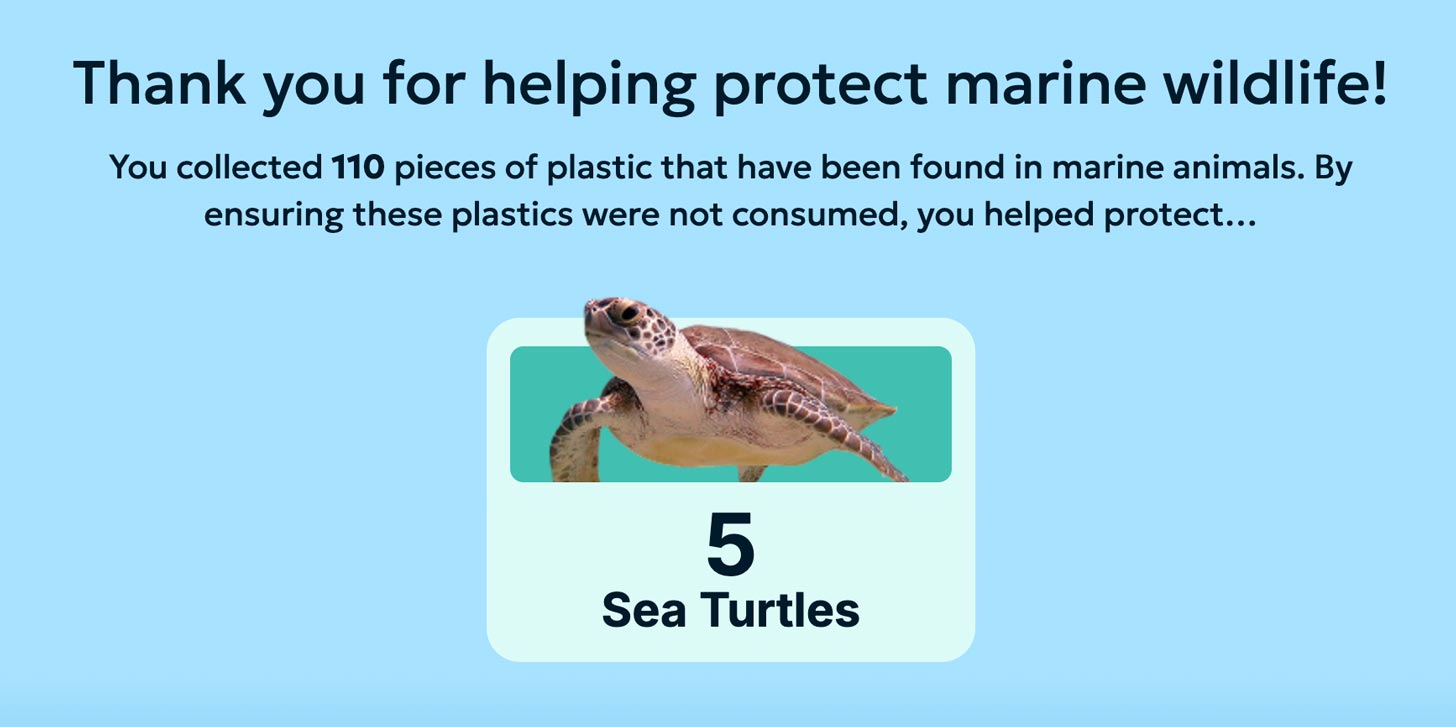
For instance, if a person logged that they cleaned up 25 plastic bottles, 70 cigarette butts, and 15 food wrappers, the calculator concludes that five sea turtles were protected.
The Wildlife Impact Calculator incorporates over 20 types of plastic pollution that have been found inside marine animals, and were the most commonly found items polluting beaches and waterways by millions of Ocean Conservancy volunteers over 40 years.
Using the digital calculator, there is a cap of 9,999 pieces of plastic people can enter for each type of item, but even a small amount can translate into real impact.
On the results page for the calculator, users can also learn more about various species of marine life (Hawksbill and Loggerhead turtles, for example), and get more detailed information about the most harmful types of plastic pollution.
“Every piece of plastic cleaned up from our beaches and waterways is one less threat to the life of a marine animal,” Ocean Conservancy’s senior director of conservation cleanups, Allison Schutes, said in a statement. “Our calculator shows just how much of a difference a cleanup can make for these amazing creatures.”
The Wildlife Impact Calculator is now available to use online. Those interested in joining a beach cleanup can find a local event through Ocean Conservancy’s interactive map.
“We hope that the Wildlife Impact Calculator will inspire people to take action not only by joining their local cleanup efforts,” Dr. Britta Baechler, Ocean Conservancy’s director of ocean plastics research, said, “but by supporting work to prevent plastic from becoming pollution in the first place.”
You may also like: Ocean Cleanup in new TED Talk: 'We can clean up the Great Pacific Garbage Patch in 5 years' time'
Header image by Troy Mayne/Ocean Conservancy
President Trump has repeatedly made claims that California Governor Gavin Newsom is incapable of being president because of his dyslexia, calling him “dumb” and lacking “mental ability.”
“[Newsom] has learning disabilities,” Trump told reporters in the Oval Office on Monday, March 16. “Honestly, I’m all for people with learning disabilities, but not for my president. I think the president should not have learning disabilities, okay, and I know it’s highly controversial to say such a horrible thing.”
Dyslexia is a language-based learning disability that the California Governor has been open about in the past, and even taken pride in.
“To every kid with a learning disability: don’t let anyone — not even the President of the United States — bully you,” he wrote on X. “Dyslexia isn’t a weakness. It’s your strength.”
After the president’s words made headlines in mid-March, communications consultant and author Michael Brodkorb pointed out that history contradicts Trump’s claims.
“Woodrow Wilson could barely read by age ten,” wrote Brodkorb, who has dyslexia himself. “As the 28th president of the United States, he led the country through World War I and won the Nobel Peace Prize.”
For decades, historians have widely agreed that Wilson had all the signs of dyslexia, on top of his early struggles with literacy.
William H. Calvin — a professor at the University of Washington in Seattle — once detailed his upbringing in his essay, “The Woodrow Wilson Story.”
“Wilson had dyslexia in childhood,” Calvin wrote back in 1983. “Imagine not learning your letters until age 9, not reading until age 12, being a slow reader all your life.”
“Rather than being a prescription for a life as a nonintellectual ditchdigger,” he continued, “this was part of the background of a man who became a professor at Princeton University and the author of a popularly acclaimed book on George Washington.”

In addition to dyslexia, Wilson battled neurological conditions throughout his life. At 39, he suffered his first minor stroke, one that “left him with weakness of the right arm and hand, sensory disturbances in the tips of several fingers.”
He would go on to suffer mild strokes and cerebral vascular disease throughout his career, but remained undeterred and ran a successful campaign for the presidency. On March 4, 1913, at the age of 56, Wilson was inaugurated. He would go on to serve two terms as president, presiding over the country during World War I.
According to Calvin, Wilson was “an inspiration to the 2.5 million stroke victims in the U.S. who must cope with their assorted disabilities.”
However, Wilson should not be sanctified as a historical figure. In 1913, Wilson’s administration re-segregated federal government offices, reversing progress made after the Civil War. Black employees were demoted or pushed out, and segregated workspaces were introduced.
On February 18, 1915, Wilson screened the film “The Birth of a Nation” at the White House — the first movie ever shown there. The film glorified the Ku Klux Klan and promoted racist stereotypes, and while there’s debate over how strongly he endorsed it, the association has caused lasting criticism.
But when it comes to Wilson’s flaws worth rebuke or derision, his dyslexia is not one of them.
“The National Center for Learning Disabilities put it plainly: Dyslexia affects how the brain processes information,” Brodkorb wrote in his Substack. “It has no connection to intelligence, judgment, or the ability to lead.”
“The list of people who share your experience and went on to do extraordinary things is long. It includes some of the most consequential leaders this country has ever produced. Dyslexia is not a ceiling. It never was.”
You may also like: 'Pirates of the Caribbean' star calls dyslexia a 'great gift' in message to kids: 'Never ever think that you're not good enough'
Header image via the Wellcome Collection (CC BY 4.0)
In a recent Stanford University study, nine adults with diagnosed hoarding disorders were asked to create 3D VR versions of their most cluttered rooms.
With the guidance of a clinician, the patients — all of whom were over age 55 — then spent weeks navigating the space, handling virtual versions of their belongings, and throwing them away.
Carolyn Rodriguez, a professor of psychiatry and behavioral sciences and senior author of the study, said the virtual experience can serve as “a kind of stepping stone,” or a less intense version of real-life discarding.
“It's nice to be able to [practice] in a virtual space for people who experience considerable distress even attempting to part with possessions,” she said.
The first-of-its-kind study took place over 16 weeks. In the first six weeks, each patient attended an online support group to gain the skills needed to tackle their hoarding through cognitive behavioral therapy.
In weeks seven through 14, they practiced decluttering in their virtual room.
By the end of the study, the majority of participants were able to part with the items in real life, too.
“People tend to have a lot of biases against hoarding disorder and see it as a personal limitation instead of a neurobiological entity,” Rodriguez said. “We just really want to get the word out that there's hope and treatment for people who suffer from this. They don't have to go it alone.”
You may also like: Interactive video game shows everyday reality of raising a trans teen in Texas
A version of this article originally appeared in the 2026 Mental Health Edition of the Goodnewspaper
Header image via Platinum (CC BY-NC 4.0)
For the American Ornithological Society, it’s time to say bye-bye to bias.
In the fall of 2023, the group announced its English Common Names Project, which will rename all American birds named after people.
While it might seem harmless for animals to be named after people of historic significance, as it turns out, many of those names carry fraught — and often oppressive — legacies.
For instance, the Audubon’s shearwater is a bird named after John James Audubon, a famous bird illustrator … who was also a slave owner who opposed abolition. Or take Scott’s oriole, a species connected to U.S. Civil War general Winfield Scott, who oversaw the forced displacement of Indigenous peoples in what became the Trail of Tears.
“There has been historic bias in how birds are named, and who might have a bird named in their honor,” AOS executive director and CEO Judith Scarl said in a statement.
“Exclusionary naming conventions developed in the 1800s, clouded by racism and misogyny, don’t work for us today, and the time has come for us to transform the process and redirect the focus to the birds, where it belongs.”

This decision follows pressure from birders and nature lovers to reconcile with this problematic past. In fact, in 2020, a movement was by two ornithologists called “Bird Names For Birds,” stressing that “birds don’t need eponymous or honorific common names.”
The founder of Bird Names For Birds, Jordan Rutter, said the petition came to be after an infamous news story gained traction in 2020. In June of that year, a Black man named Christian Cooper, was in Central Park birdwatching, as he often did.
A white woman, Amy Cooper, was also in the park, taking her dog on a walk. The dog startled Christian, and he asked the woman to leash her dog, per park rules. Amy then called the police, falsely claiming “an African-American man is threatening my life.”
A video of the incident went viral, and it spurred a racial reckoning in the birding community.
It wasn’t a wake-up call,” Rutter told The New York Times, but brought “long-known but not highlighted issues to the forefront of the bird community.”
Following the incident, bird lovers responded by creating Black Birders Week, and groups like the Bird Union and Chicago Bird Alliance changed their names, so as not to be affiliated with the aforementioned Audubon.
Then, finally, combined with the pressure of Rutter’s campaign and ongoing anti-racist efforts in the birding world, the American Ornithological Society announced the formation of an ad hoc committee to figure out the best way to proceed with controversial bird names.
Now, we’re here.
The new renaming process will focus on more descriptive names about the birds’ habitats or physical features and will be led by a new committee of the AOS, which, according to a statement, promises to “broaden participation by including a diverse representation of individuals with expertise in the social sciences, communications, ornithology, and taxonomy.”
“There is power in a name, and some English bird names have associations with the past that continue to be exclusionary and harmful today. We need a much more inclusive and engaging scientific process that focuses attention on the unique features and beauty of the birds themselves,” AOS President Colleen Handel, Ph.D., said in a statement.
“Everyone who loves and cares about birds should be able to enjoy and study them freely — and birds need our help now more than ever.”
You may also like: The joy of birdwatching: Research shows it can improve mental health and foster a sense of wellbeing
A version of this article was originally published in The 2024 Animals Edition of the Goodnewspaper.
Header image by Andy Reago & Chrissy McClarren (CC BY 2.0)
The housing crisis is a global conundrum of modern life, as nearly every country in the world faces a shortage of affordable housing, drastically rising costs of living, and surging rates of homelessness.
Climate change and wealth inequality exacerbate the issue, and housing continues to be seen as a commodity rather than a basic human right.
Most everyday people barely have the capacity to take a break, let alone spend time digging into the complexities that shaped how we arrived in today’s economic reality, and find themselves at the mercy of it all instead.
But knowledge is power, and understanding the housing crisis — and all of the factors that contribute to it — is vital in being a part of the solution.
Whether you want to understand the economics of the housing market inside and out of the United States, are curious about the social implications of homelessness, or you’re seeking an accessible entry point into understanding housing at all, these recommendations are a great place to start.
By the way, some of the links in this article (like books!) are affiliate links, which means if you make a purchase after clicking a link, we may earn a commission at no extra cost to you. Thank you!
3 Books That Make the Housing Crisis Easier to Understand
“And Housing for All: The Fight to End Homelessness in America” by Maria Foscarinis
“And Housing for All” is a concise yet comprehensive nonfiction book by the founding director of the National Homelessness Law Center.
In the pages of this book, Foscarinis explores the origin of the housing crisis, shares intimate stories of people who found themselves homeless, and explains how to move forward.
“Dwelling” by Emily Hunt Kivel
“Dwelling” is a newly released novel that projects a fictional character’s story onto the very real problem of the American housing crisis.
When the protagonist is part of a sudden mass eviction in New York City, a goofy — yet somehow totally relatable — fairy tale ensues. Spoiler alert: The lead ends up living in a giant cowboy boot in Texas, since it’s the only place she can actually afford.
“In Defense of Housing: The Politics of Crisis” by Peter Marcuse and David Madden
“In Defense of Housing” dives into the inequalities created by the commodification of housing.
Written by an urban planner and a sociologist, the book examines the causes and effects of the global housing crisis, including displacement and gentrification, and offers alternative solutions that go beyond tiny policy tweaks to push the world toward real change.
Podcasts About The Housing Crisis
“Sold Out: Rethinking Housing in America”
“Sold Out” by KQED is a podcast that explores the complexities of housing in America, especially in California. In its first two seasons, the show explored rental inequalities, evictions, and affordability.
Now, “Sold Out” is investigating the intersection of climate change and housing, while sharing the solutions that will help us protect communities and overcome the systemic barriers that keep us from thriving.
Listen: KQED
“A Tiny Plot”
“A Tiny Plot,” produced by Snap Judgment, is an award-winning, five-part podcast series that tells the stories of a group of homeless people in Oakland, California as they build their own encampment community.
The show investigates the city’s attempts to improve housing, while spotlighting the power and dignity in building a life while homeless.
Listen: Snap Judgment
“Beyond Four Walls: Conversations on Affordable Housing”
“Beyond Four Walls” by the National Housing Conference is a podcast led and created by America’s broadest and oldest coalition of affordable housing leaders.
The show explores topics surrounding affordable housing, including policy, creative solutions to homelessness, and even how to strengthen communities.
Listeners will better understand the future of homebuying — and all of the hurdles and potential solutions that mark the way.
Listen: National Housing Conference
Movies About Housing & Homelessness
“Slumlord Millionaire”
“Slumlord Millionaire” is a PBS documentary that exposes New York City’s corrupt landlords, gentrification, and hostile rental market.
Amid the mounting housing crisis, the documentary follows a group of residents, activists, and nonprofit attorneys as they fight corruption and organize for the basic human right to a home.
Watch: slumlordmillionairefilm.com
“Forced to Move: A Climate Story”
“Forced to Move” is a short documentary film that delves into the reality of climate refugees, people forced to evacuate their communities in the wake of a climate disaster, often leaving them with no home to return to.
The film sheds light on the intersection of climate change and housing that will reorient us all in the fight for a better future for all.
Watch: Climate Refugees
“The Last Black Man in San Francisco”
“The Last Black Man in San Francisco” is not a documentary, but a fictional feature film by A24 that is loosely based on co-writer and lead actor Jimmie Fails’s real story.
The movie follows a young Black man’s efforts to reclaim his childhood home and keep his history and experiences from being erased as gentrification displaces his community.
Watch: A24
You may also like: Criminalizing homelessness isn't the answer. But these 3 proven interventions are
A version of this article was originally published in The 2026 Home Edition of the Goodnewspaper.
Header image by Simon Brandintel via Pexels
Every day the Good Good Good team collects the best good news in the world and shares it with our community. Here are the highlights for this week!
If you want to get good news in your inbox every day, join the Goodnewsletter — the free daily newsletter designed to leave you feeling hopeful.
The Best Positive News We’re Celebrating This Week —
Minneapolis opened a warehouse of 100 indoor tiny homes to keep the homeless out of the cold
In December 2020, housing advocates in Minneapolis opened Avivo Village, an indoor community of 100 secure, private tiny houses for people who are otherwise at risk of sleeping on the streets.
Inside the village, which is located in a warehouse, 100 individual units give people their own place to call home — and the freedom to come and go as they please.
Since opening, the shelter has supported over 800 people through temporary housing, placed 340 people in permanent housing, and has even reversed nearly 250 overdoses.
Why is this good news? Minnesota experiences some of the coldest temperatures in the United States every winter. People can suffer from hypothermia in any temperature below 35 degrees, so this harsh weather can be a death sentence for Minnesotans experiencing homelessness.
Olivia Rodrigo’s new music video was filmed by children in Gaza and Ukraine — and funds aid for kids affected by war
→ Read more
Electrifying Caltrain — the commuter rail line linking San Francisco to Silicon Valley — has made trains faster and cleaner
Caltrain completed a $2.4 billion project in 2024 to electrify 51 miles of track between San Francisco and San Jose, replacing diesel trains with electric ones that accelerate faster and cut travel times by as much as 23 minutes.
The upgrade added more trains — and stops — to the rail line as well, causing weekday station service to rise by 20%.
Cleaner technology is another major benefit: electric trains reduced riders’ exposure to carcinogenic black carbon by about 89 percent and could cut roughly 250,000 metric tons of carbon emissions each year.
An offshore wind project targeted by the Trump administration is now online and sending energy to New England’s grid
Rhode Island’s first utility-scale offshore wind farm, Revolution Wind, has officially come online and started delivering power to the electric grid, despite repeated efforts by the Trump administration to shut it down.
The wind farm will supply electricity for more than 350,000 homes across Rhode Island and Connecticut, and is expected to save customers an estimated $500 million annually by displacing more expensive power.
The project is now 93% complete and is set to be fully operational before the end of this year.
Why is this good news? Officials say the project will provide the region with clean energy that will both help it meet its climate goals and offer an alternative power source to ease prices, especially in winter, and especially considering the current rising fuel costs due to the war in Iran.
Noah Kahan documentary gets streaming date: ‘This is the first time I've talked about this personal stuff’
→ Read more
New York and Utah lead the nation in protecting children’s mental well-being in a new index
A leading public-health nonprofit — the Anxious Generation Movement — recently released a “Childhood Index” ranking, which evaluated all 50 states on state laws regarding childhood independence, social media age limits, and tech regulation.
New York and Utah, which recently instituted “bell-to-bell” bans on phone use, were the only states classified as “national leaders” on the index.
However, six states — Arkansas, Florida, Georgia, Nebraska, Texas, and Vermont — were labeled “rising stars” for making progress on at least two policy priorities.
Bicycle lanes, electric cars, and other interventions have helped cities around the world slash air pollutants
A new analysis found that 19 global cities, including London, San Francisco, and Beijing, have seen “remarkable reductions” in air pollution — slashing two pollutants by more than 20% since 2010.
The analysis credits interventions like bike lanes, more electric cars, and restrictions on polluting vehicles for the improved air quality.
Beijing and Warsaw reduced fine particulate pollution by more than 40%, and Amsterdam and Rotterdam reduced nitrogen dioxide levels by more than 40%. In the U.S., San Francisco was the only city to cut both pollutants by more than 20%.
Why is this good news? Burning fossil fuels releases toxic, harmful particles that are a great hazard to human health, and have been linked to conditions like asthma, respiratory illness, and even cancer. This analysis proves that, no matter where in the world you are, “we have the tools to solve this crisis right now.”
You may also like: A new study found the shift to EVs could prevent millions of childhood asthma attacks
A new program in American schools asks kids to make art to ‘fight division.’ It’s already raised $750K for immigrants
Shootings in Sweden halved in 2025 as police tackled gun violence and gang-related crimes
In 2025, shooting incidents in Sweden fell to 147. According to Reuters, that accounts for a 63% decrease from 2022, when there were 390 shootings, and a 49% decrease from 2024.
The decline indicates authorities may be starting to make progress after years of rising gang-related violence. The improvement follows the introduction of new policing strategies by the government elected in 2022.
These measures include expanded electronic surveillance, the use of anonymous witnesses in court, tougher sentencing, and “safety zones” that allow officers to conduct searches without suspicion. Police have also stepped up efforts to seize gang assets and disrupt planned attacks.
→ Read more
A mobile maternity clinic is providing vital OB-GYN care in Florida’s ‘care deserts’
Only three of the 14 counties in north-central Florida provide full access to obstetric care. Six have low access to care — fewer than two hospitals offer obstetric care or birth centers per 10,000 births, and fewer than 60 obstetric providers. The remaining five are “care deserts,” and around 3,400 women of childbearing age live there.
To address this gap in care, in February 2025, UF Health established the OB/GYN Mobile Outreach Clinic to provide free, comprehensive maternal health services, including prenatal and postpartum care, breastfeeding support, family planning, and more.
In its first year alone, the mobile clinic served nearly 200 women in four counties.
Why is this good news? Studies have shown that traveling longer distances for obstetric care is associated with worse infant and maternal health outcomes. Mobile clinics can be a critical solution for the two and a half million American women of childbearing age who live in a maternity care desert.
→ Read more
‘Pirates of the Caribbean’ star calls dyslexia a ‘great gift’ in message to kids: ‘Never ever think that you’re not good enough’
→ Read more
Five years after taking psychedelic mushrooms in a clinical trial, depression patients were still ‘symptom-free’
A long-term clinical study found that many people with major depression remained symptom-free for years after receiving psilocybin therapy using psychedelic mushrooms.
Unlike traditional antidepressants, which typically require daily medication, psilocybin therapy involves only one or a few guided sessions combined with psychological support. Researchers believe the experience may help patients shift deeply rooted patterns of thought linked to depression.
Even the patients who weren’t entirely “symptom-free” saw progress, too. Select patients struggling with “debilitating” depression reported that their depression felt “more situational and manageable” — even years later.
→ Read more
Two best friends used to be homeless, now they buy abandoned storage units to help people still on the streets
Shula Kitkowska and Louis Peralta became friends when they met in a local supportive housing program in Rhode Island. While they were neighbors, Kitkowska learned about Peralta’s penchant for buying discounted storage units.
For 25 years, Peralta had picked through them for items he could sell at a high price to earn some money, and throw the rest away. Kitkowska, though, knew many of those discarded items could help people in need.
So, they teamed up to create Up 2 Us Neighbors, and now field around 100 requests for items every day: clothing, cribs, household items, shoes, and more.
Why is this good news? Having experienced homelessness themselves, the duo is in a unique position to know what items are the most helpful and requested for people working to rebuild their lives. Not to mention, it allows perfectly good, usable items to meet a need for someone, rather than ending up in a landfill.
→ Read more
New York leads the nation in youth mental health. Hochul says it’s thanks to this one policy ‘every governor should enact’
Chile just became the first country in the Americas to eliminate leprosy
In early March, the World Health Organization officially verified that Chile is the first country in the Americas – and the second country globally – to eliminate leprosy disease.
The verification followed a thorough assessment by an independent expert panel, which confirmed that Chile has not had any locally acquired cases for over 30 years and has strong systems in place to monitor and respond to any future cases.
This milestone reflects decades of sustained public health action, including ongoing surveillance, early diagnosis, effective treatment with multidrug therapy, and inclusive health services.
→ Read more
More good news of the week —
California’s first graduating class of incarcerated women earned bachelor’s degrees from Cal State. The 20 women represent a major milestone in a decade-long partnership between the state’s Department of Corrections and California State University.
A recent assessment found that next-generation flu vaccines could save millions of lives. The vaccines provide broader and longer-lasting protection than existing seasonal vaccines and could play a vital role in reducing the global burden of influenza.
For the first time in a decade, Death Valley is in the midst of a superbloom event. After a winter of record rainfall, the famously arid desert is covered in a blanket of vibrant pink, purple, and yellow flowers.
A long-planned project to revive Detroit’s Chinatown is moving toward construction. The design plan calls for public art and cultural elements, public space for markets and events, native landscaping, lantern-inspired light fixtures, and improved walkability and accessibility.
A guide dog school dropout found a new purpose — comforting cancer patients as a therapy dog. Marcus, a black Lab, now pays daily visits to an oncology clinic in Australia to comfort people in treatment.
While a Denver restaurant was being renovated, workers learned Spanish to support Hispanic cooks. Up to 40% of employees in the restaurant industry are undocumented workers, and removing language barriers can mean everything.
New York City Mayor Zohran Mamdani announced the city's first office of LGBTQIA Affairs will be led by a trans woman. According to the mayor’s office, Taylor Brown will be the first trans person to head a city agency, and her appointment comes at a time when transgender rights are under attack nationwide.
A landfill in the U.K. is using methane from decomposing waste to power a giant greenhouse dome that grows fruits and vegetables year-round. The developers hope to install 100 more domes on the site, creating jobs and diverting thousands of tons of carbon emissions.
The School District of Philadelphia has adopted a new wellness policy guaranteeing students daily recess, regular movement breaks, and better access to bathrooms and water fountains. Considered one of the district’s most comprehensive efforts to support student well-being, this policy impacts roughly 115,000 students.
Researchers at the University of Oulu in Finland have developed a new wood-based resin that beats fossil resin strength by 76%. Unlike traditional plastics, the materials — derived from forestry waste like sawdust and straw — can be easily broken down into a closed-loop recycling system.
MacKenzie Scott donated a record-setting gift of $42 million to Elizabeth City State University. The gift represents the largest dollar per student enrolled gift of any HBCU among Scott’s recent gifts and is almost triple the $15 million that Scott donated to ECSU in 2020.
Meryl Streep made a “landmark” seven-figure donation to the National Women's History Museum. The museum said her generous gift will help ensure women’s contributions are recognized, taught, and remembered.
A new study found that audiences prefer films with diverse casts. Films with casts that were 41–50% people of color performed the best across several categories, including the highest median global and domestic box office receipts, the largest average theater releases, the highest average opening-weekend rank, and more.
Deaf West Theatre partnered with Disney to translate popular songs into American Sign Language. The “Songs in Sign Language” animated film will debut on April 27 during National Deaf History Month.
The Museum of Kansas City returned cultural artifacts to the Osage Nation. According to the National Park Service, the artifacts include an ancient pipe fragment, a woven yarn bag, a pipe bowl, and two horns.
A first-of-its-kind homeless village built under a bridge opened 40 fully-furnished units to people experiencing homelessness. With all units built pro bono, Embassy Village is a new housing concept constructed beneath 22 railway arches in Manchester, England.
Keanu Reeves has been secretly donating money to cancer research for over 20 years. After his younger sister was diagnosed with leukemia, Keanu Reeves has made cancer research one of the defining philanthropic endeavors of his career.
Inspired by mushrooms, scientists discovered how to turn plastic waste into vinegar. Hundreds of millions of tons of plastic are produced globally every year, and this new research shows how that waste can be turned into something useful.
In a major policy breakthrough, the EU is ending animal testing for everyday cleaning products. The new rules are effective mid-2029 and specify that only scientifically validated non-animal methods can be used to assess the safety of detergents for human health and the environment.
Villagers on the “African Galápagos” will be paid to protect the ecosystem. A billionaire is funding a sustainable development project on the west African island of Príncipe that makes the local population stewards of its future.
In a world-first program, millions of Indian women receive “unconditional” cash transfers for unpaid domestic labor. While it’s not a lot of money, many women say it helps cover the cost of medicines, food, school fees for their children, and the rare personal item — and it’s changed the way their households operate.
A Filipino scientist nicknamed “Cockroach Lord” has discovered 15 new species and hopes to discover 200 more. Despite their bad reputation, cockroaches are important decomposers, breaking down dead organic matter and recycling nutrients into the soil.
Bay Area high school students developed an AI wildfire suppression system for a global science competition. The system uses artificial intelligence and drones to identify fires and suppress them within 10 minutes.
Dorothy Butler Gilliam, the first Black woman hired at “The Washington Post,” donated $10K to fired workers. The retired journalist criticized the Post’s mass firings and said access to information has never been more vital.
A Stone Age woman was given a burial traditionally reserved for men, revealing flexible gender roles 7,000 years ago in Hungary. Anthropologists on site said she was the only female skeleton buried with polished stone tools and positioned in a kneeling pattern like that of the males in the same cemetery.
A new study from researchers at the Hong Kong University of Science and Technology found that virtual reality gaming can reduce social isolation in seniors and boost their mental fitness.
With input from 18 older adults, the researchers created a virtual space modeled after a public park where those adults would play Xiangqi, or Chinese Chess, and mingle in a “Cultural Corridor” to chat post-game.
Overall, users felt more connected after playing, with many noting that having the option to be a player or a spectator made the experience more engaging.
“In China, Chinese chess is a highly popular form of social entertainment among older adults, as it offers a familiar and intellectually stimulating pastime. In order to win or play well in the game, players need to coordinate and work with various abilities such as attention, memory, logical thinking, and decision-making,” wrote lead author Qianjie Wei, who is now enrolled as a PhD student in Computer Science at the University of Rochester.

“Repeated use of these abilities during gameplay can help maintain and improve cognitive functioning in older adults. Moreover, the social aspect of the game is equally significant; Chinese chess facilitates social interaction, providing a platform for emotional support and community bonding among seniors.”
When it came to long-term use, Wei and her peers recommended that researchers continue branching out to even more social games and hobbies.
“Future work could explore a wider variety of cultural activities, such as music, calligraphy, or other highly interactive cultural projects,” Wei said, who has also studied how virtual shuttlecock games can help improve balance in older adults. “This would help cater to the interests of older adults from different backgrounds and provide a richer social experience.”
You may also like: They throw it away virtually, then they toss it in real life. How VR is helping people with hoarding disorders declutter
A version of this article originally appeared in the 2026 Mental Health Edition of the Goodnewspaper.
Header image via Kampus Production
“It’s cruelty, it’s child abuse, and neglect.”
That’s how Rachel Accurso — better known as beloved children’s entertainer Ms. Rachel — described conditions at the Dilley Immigration Processing Center in South Texas after video chatting with 9-year-old detainee Deiver Henao Jimenez.
In the call, Deiver said he wished he could leave the United States Immigration and Customs Enforcement facility so he could simply attend his school’s spelling bee.
“It was unbelievably surreal to see this sweet little face and feel like I was on a call with somebody who’s in jail,” Accurso told NBC News on March 21. “It broke me, and it was something I never thought I’d encounter in life.”
In the days since, Accurso has been detailing her conversations with Deiver and exposing the conditions of the facility, which include medical negligence, lights that never shut off, and moldy food.
“I can’t express how it felt to talk to a 9-year-old who is in an immigration detention center,” Accurso posted on Instagram. “It was devastating. Please let Deiver Henao out now so he can go to his spelling bee. Let his family back into their community. This is cruelty.”
When Accurso first launched her social media platforms, her content on Instagram and TikTok mirrored the same content on her famous YouTube channel. She largely posted children’s content that emphasized learning fundamentals, speech development techniques, and toddler milestones.
Outside of her official YouTube channel, Accurso has slowly shed her apolitical nature as she continually spoke out against violence, war, and systemic abuse.
“I am political,” Accurso told NBC News. “It’s political to believe that children are worthy of love and care, and that every child is equal, and that our care shouldn’t stop at what we look like, our family, at our religion, at a border.”
For several years, Accurso has been using her social media platforms to raise awareness concerning atrocities against children.
In May 2024, she launched a fundraiser called “Messages for Littles to Help Littles,” and offered personalized Cameo videos to children. All proceeds went to the Save the Children Emergency Fund to support children affected by war and crises in places like Gaza, Sudan, Ukraine, and the Democratic Republic of the Congo.
“Children should never experience the horrors of war; these are grave violations of their human rights,” Accurso emphasized in a TikTok last May. “Children should be protected, children should have healthy food, clean water, protection from violence, a safe place to live.”
In April 2025, she and her husband donated $1 million to the United Nations World Food Program USA, enabling the organization to provide about 2 million lifesaving meals to people facing extreme hunger around the world.
On February 28, the U.S.-Israel war with Iran resulted in civilian casualties when missiles destroyed a girl’s primary school in Minab, southern Iran, killing upwards of 175 people, the majority of them children.
On the same day of the missile strikes, Accurso took to Instagram to ask, “Can’t we all agree in this life not to kill children?”
“I HAVE said the Iranian government needs to stop killing children, too — everyone, everywhere — stop killing, starving, bombing, taking kids hostage & violating children’s human rights,” she wrote beneath a picture of text on a white background that read: “Stop killing kids.”
“Give them school,” she continued. “Give them medical care, give them safe, warm homes, give them everything they need to thrive.”
You may also like: Ms. Rachel named a Glamour 'Woman of the Year'
Header image via Ms. Rachel
Whether you attend a No Kings protest, show up in the streets of your community to speak out against inhumane actions by United States Immigration and Customs Enforcement, you’ll likely want to bring a sign.
For instance, the third No Kings protest, which took place on March 28, 2026, saw nearly 9 million people in attendance across the U.S. and other international cities. Many of them carried their own signs to echo their chants even wider.
“Peaceful, people-led movements have always led the way for real change,” Deirdre Schifeling, chief political and advocacy officer for the ACLU, said in a statement prior to the event.
“Last year, millions joined us to send a resounding message that we, the people, will not be intimidated by President Trump’s fear tactics. We are at a dangerous moment for our democracy — it’s time to come together again and fight to stay free.”
If you’re planning to join an upcoming protest, especially in the face of growing ICE presence in cities across the U.S., we’ve gathered some sign ideas below.
Other protest sign ideas:
Anti-ICE Protest Sign Ideas
General Anti-ICE Protest Sign Ideas
- ICE Out Of [Insert City Here]
- No Secret Pol[ICE]
- ICE Off Our Streets
- Prosecute ICE
- Abolish ICE
- Stop Disappearing Our Neighbors
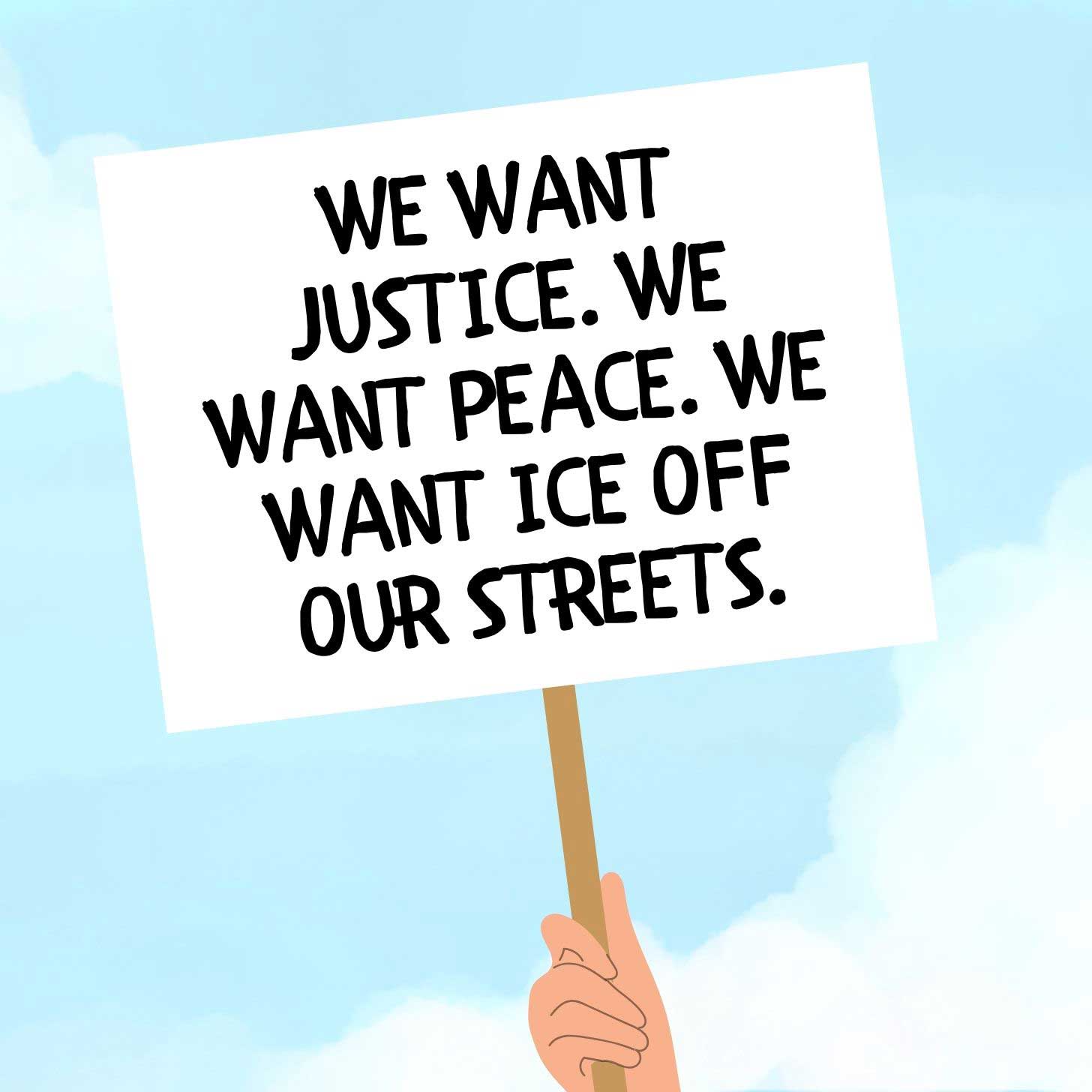
- We Want Justice. We Want Peace. We Want ICE Off Our Streets.
- End The ICE Age
Pro-Immigration Protest Sign Ideas
- We Are All Neighbors
- We Love Our Immigrant Neighbors
- Fight Ignorance, Not Immigrants
- This Land Is Your Land, This Land Is My Land
- No One Is Illegal On Stolen Land
- Migration Is Not A Crime
- Migration Is Natural
- Hate Has No Home Here
- Families Belong Together
- We Belong To Each Other
- The Only Orange Monarch We Want Is A Butterfly
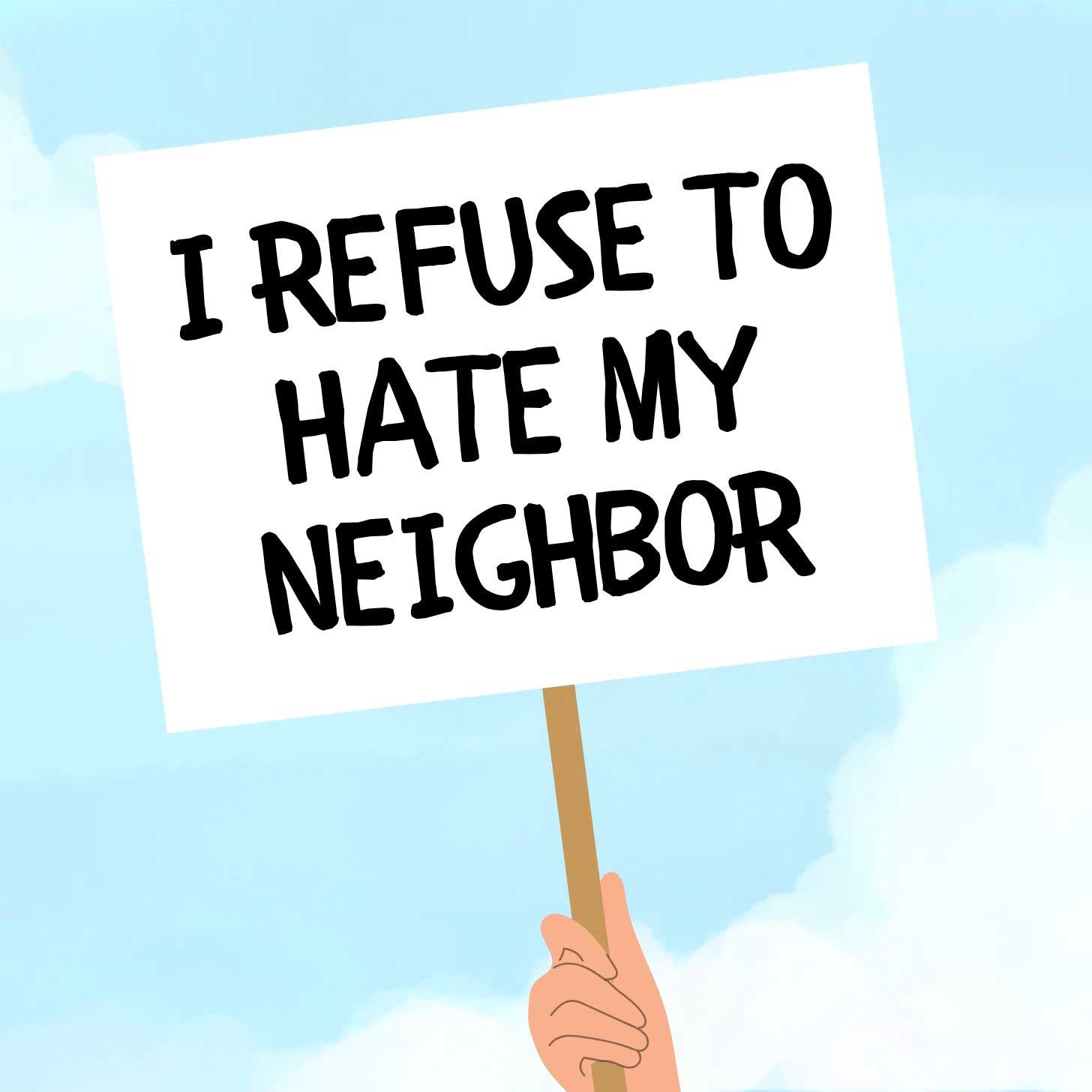
- I Refuse To Hate My Neighbor
- Immigrants Built America
→ Check out some No Kings protest sign ideas
Renee Good & Alex Pretti Anti-ICE Protest Sign Ideas
- ICE Out For Good
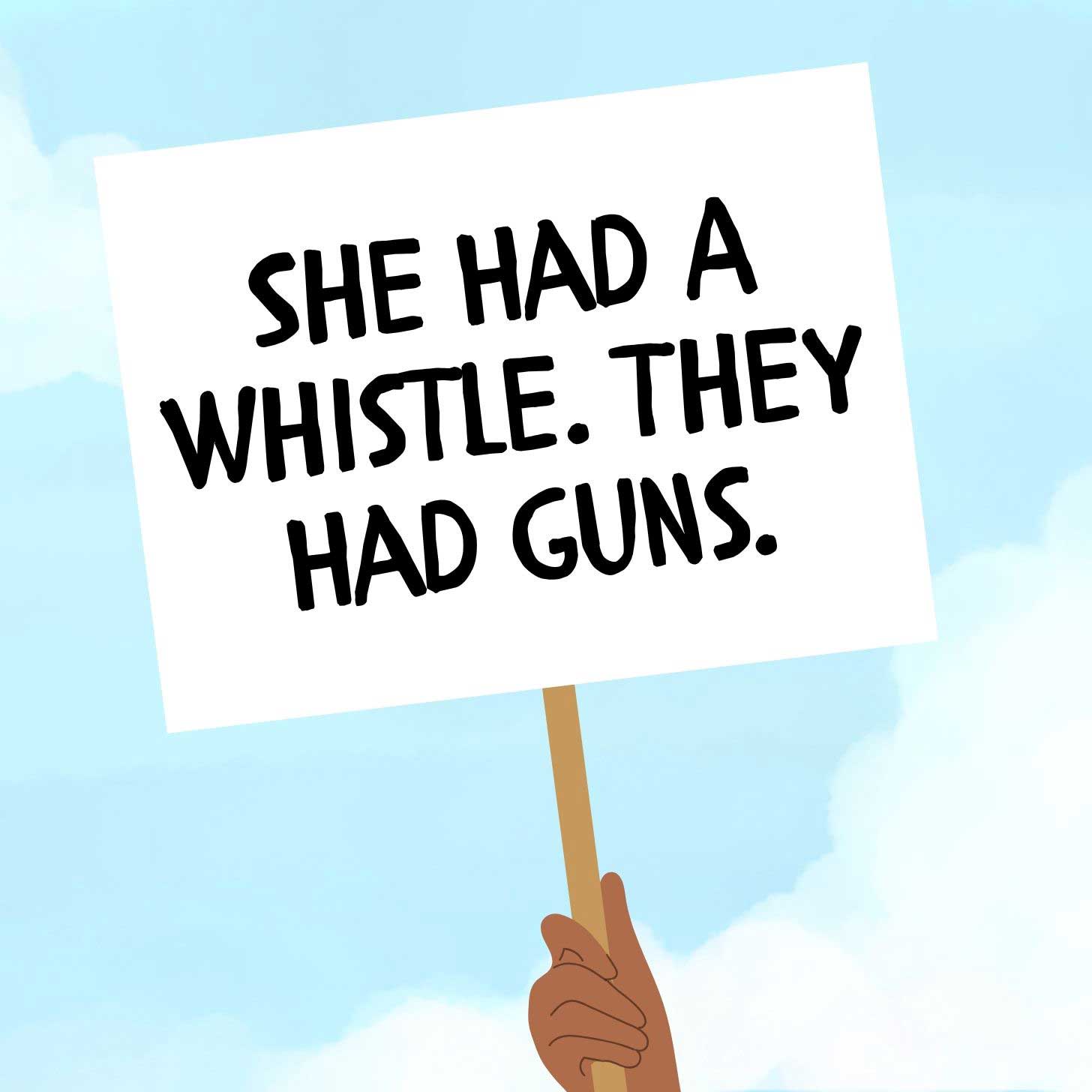
- She Had A Whistle. They Had Guns.
- He Was Holding A Cell Phone
- “That’s Fine, Dude. I’m Not Mad At You.”
- Justice For Renee Good
- Justice For Alex Pretti
Inspiring Anti-ICE Protest Sign Ideas
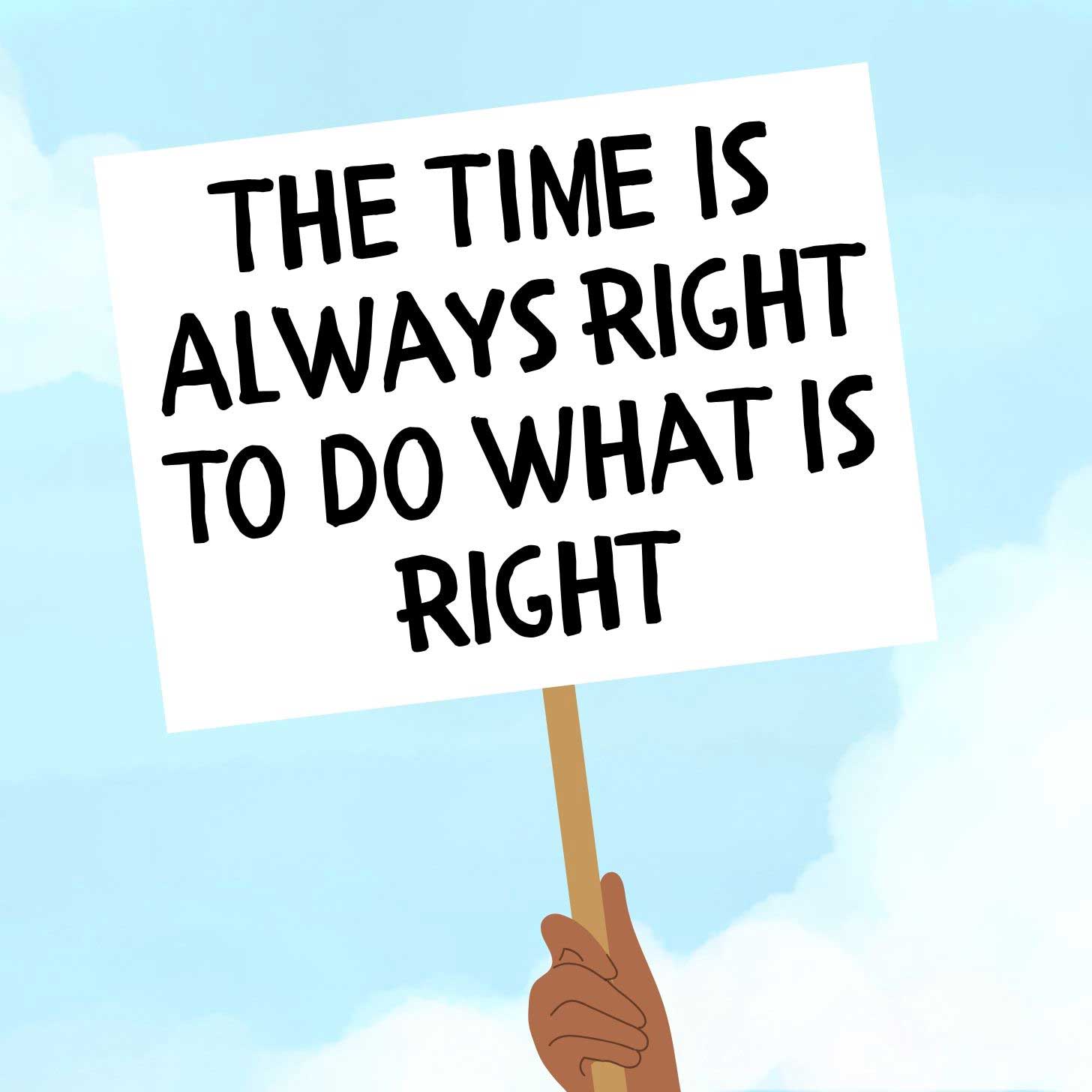
- It’s Okay To Change Your Mind
- Lay Down Your Arms
- Choose Peace
- History Has Its Eyes On You
- Democracy Needs Your Courage
- We Keep Us Safe
- The Time Is Always Right To Do What Is Right
‘Spicy’ Anti-ICE Protest Sign Ideas
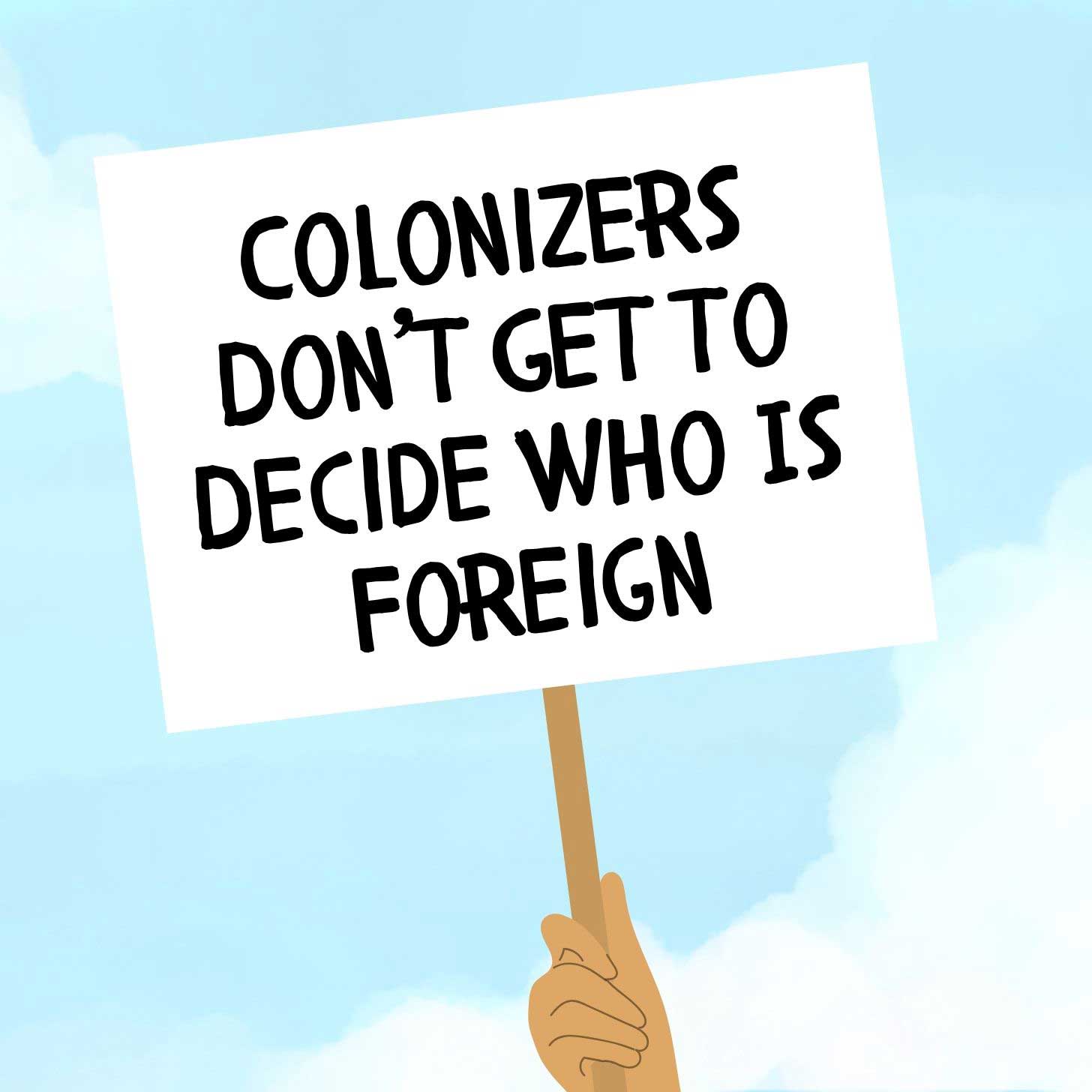
- Chinga La Migra
- Stop Killing Us
- Prison Without Due Process Is A Concentration Camp
- No Decent Human Has A Heart Made Of ICE
- Colonizers Don’t Get To Decide Who Is Foreign
- ICE Is Not Going After The Worst; They’re Hiring Them
- They Blame Immigrants So You Won’t Blame Billionaires
Funny Anti-ICE Protest Sign Ideas
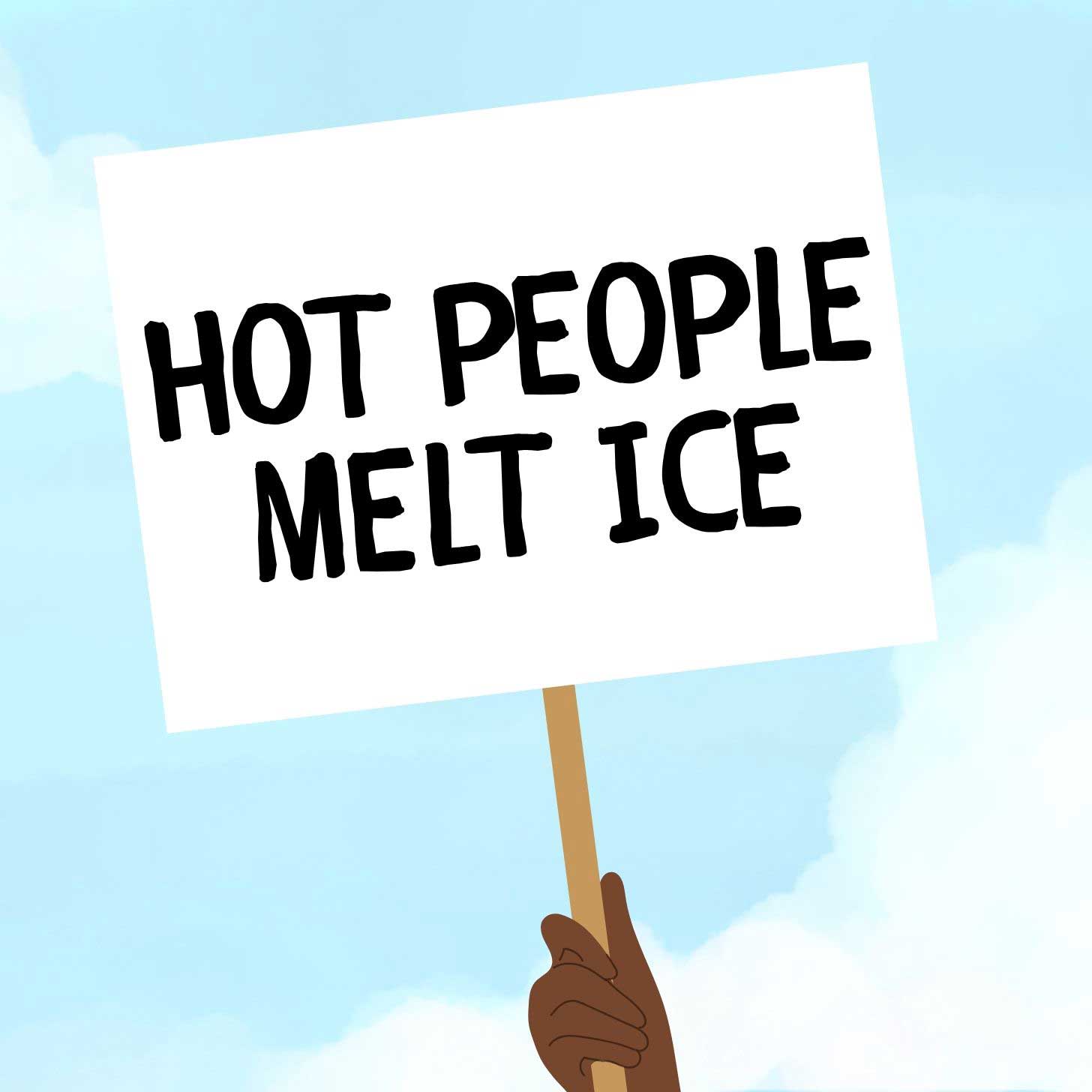
- No Sign Is Big Enough To List All The Reasons Why I’m Here
- I Like My ICE Crushed (next to a drawing of an iced coffee)
- The Only Leader Who Can Spread ICE Across A Nation Is Elsa (accompanied by the Disney princess)
- The Wrong ICE Is Melting
- I’ll Take My Horchata Warm Because ICE Sucks
- Hot People Melt ICE
- ICE Should Be In My Drinks; Not My City
- Proud Parent Of A Kid Who Did Not Grow Up To Be An ICE Agent
- Stay Salty. Melt ICE.
→ Check out more funny protest sign ideas
Ultimate list of protest sign ideas:
- No Kings protest sign ideas
- Protest sign ideas — for kids
- Funny protest sign ideas
- Black Lives Matter posters
- Pro-abortion posters
Header image by Lorie Shaull (CC BY 4.0)
In August 2025, Florida Governor Ron DeSantis ordered the removal of about 400 “non-standard” pieces of street art — most of them rainbow, Pride-themed crosswalks and murals — even though they all received state approval when they were installed.
The new policy came to an inflection point when the DeSantis administration painted over a rainbow-colored crosswalk outside of what used to be Orlando’s Pulse nightclub, where 49 people were killed in a 2016 shooting.
In response, community members repainted the tribute themselves, and many other municipalities attempted to stand their ground and resist the removal of colorful crosswalks and other street installations. But with the threat of removing state funding, most cities have complied in the months following.
But that does not mean communities have accepted the erasure.
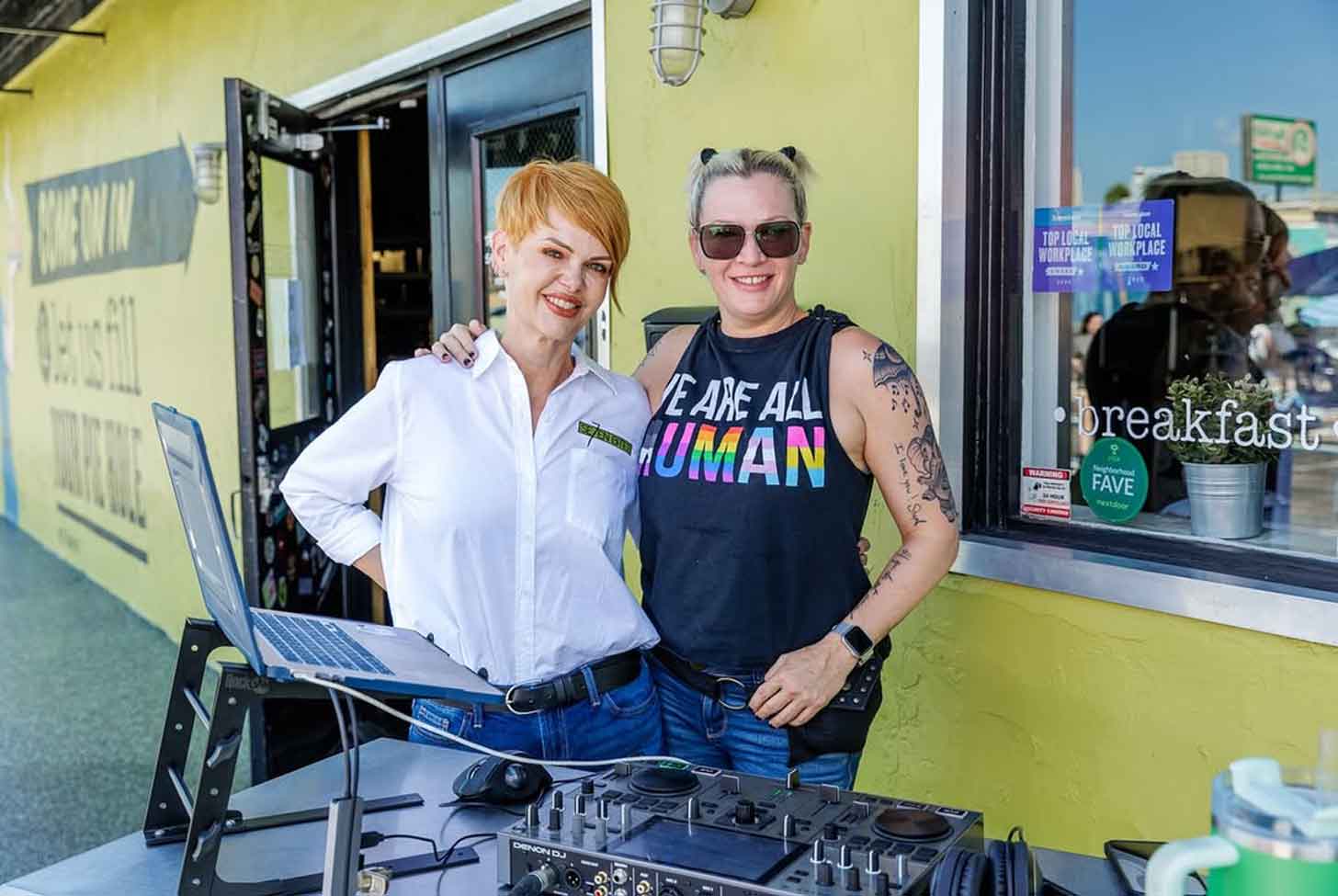
One resister leading the charge is Trina Gregory, owner of Orlando restaurant Se7enbites.
When the mandate came from DeSantis’s office, Gregory put out a call for an event called “Parking Spaces for Pride: A Rainbow Connection.”
“Life is so fleeting and too beautiful to let bad moments ruin our joy,” Gregory wrote on social media. “So we are celebrating community instead!”
The sentiment came with an invitation for people to use the Se7enbites parking lot — a private property — to paint affirming LGBTQ+ themed murals that will cycle out each year moving forward.

“Art has always been a form of resistance and healing,” Gregory told the Associated Press in September. ”If they want to erase symbols of pride and acceptance, then we’ll create even more of them. This isn’t just about paint; it’s about community, visibility, and love.”
Over 1,000 people expressed interest in Parking Spaces for Pride, and it turned into a lively event with music, food trucks, donations for locals in need of essentials, and volunteers helping to bring murals to life. While there were 49 parking spaces painted, a number that symbolizes each life lost in the Pulse Night Club shooting, Gregory said it is more than a memorial.
“It was and is most certainly a remembrance of the things that happened,” Gregory told the Orlando Sentinel, “but I was thinking beyond that. I was thinking about joy, about bringing joy back.”

She added that she did not want to downplay the loss of the original crosswalk but instead wanted to give people an alternative, or a way to alchemize their feelings in a new, joyful tradition.
“Being out in my community and pulling art straight from our hearts to share with each other was such a wonderful and very special moment to be a part of,” one artist, who goes by Tiger Eggs, shared on social media.
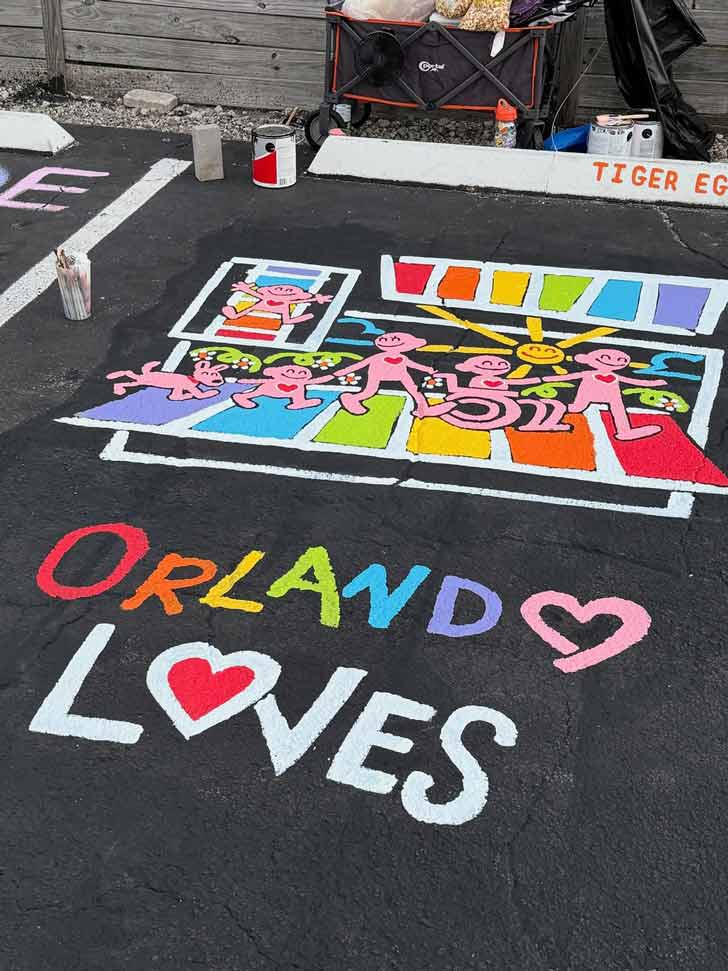
Other cities have also come up with creative solutions to the Pride crosswalk bans, including painting sidewalks, adding rainbow-colored bike racks to city corners, and even shining rainbow lasers in the sky.
Because these new artworks are located on private property, Gregory said, they should not be threatened by any Department of Transportation mandates. She hopes to make Parking Spaces for Pride into an annual event.
For now, Gregory is soaking in the afterglow of the 2025 gathering. She said she has received messages and postcards of thanks from people all over the world, which now hang on a bulletin board inside the restaurant.
Her efforts also led her to be named a finalist for the Orlando Sentinel’s Central Floridian of the Year award.
“Trina responded [to the crosswalk removal] not with silence, but with creation…” Evan Coutts, Gregory’s now-fiancé, wrote upon her nomination for the award, “an initiative that received national attention for transforming private parking spaces into a public statement of belonging.”
You may also like: Florida banned Pride crosswalks — so St. Pete lit up the sky with rainbow lasers instead
Header image by Steven Miller Photography
As it drives an almost unlimited marketplace of ultra-cheap, low-grade garments, Amazon has quietly become the biggest titan in the fast fashion industry.
And with millions of third-party sellers and very little supply chain transparency, it’s nearly impossible for shoppers to know how their clothes were made — and under what conditions.
On top of questionable working conditions and labor exploitation, fast fashion overall has a massive environmental cost.
The global fashion industry already produces tens of billions of garments each year, with huge portions going unsold or barely worn, and Amazon accelerates that cycle by making clothing more accessible — and disposable — than ever.
Add in the environmental cost of shipping and returns, and that carbon footprint grows even larger.
At the same time, affordability matters. And oftentimes, fast fashion can feel like the most accessible option. So if you’re looking for more ethical and sustainable options out there for a range of prices, we’ve got your back.
And if you’re looking to learn more about why Amazon is problematic and what other alternatives you can shop, we’ve got you covered there, too.
Our Criteria
Below, we’ve outlined our favorite Amazon alternatives for buying clothes online. But first, here is the criteria we followed in recommending these brands and marketplaces to you:
- Sustainability & Ethics: The brands on this list have made clear their commitment both to the environment and to fair labor practices. Many have third-party certifications to back up these commitments.
- Accessibility & Experience: We know that many use Amazon for its delivery speed, product range, accessibility in rural communities, and lower prices. We looked for alternatives that offer at least some comparable benefits to help consumers who must prioritize affordability and accessibility.
Reminder: It’s still progress if you’re able to switch away from Amazon for some of your purchases, if not all of them.
By the way, some of the products and links in this article are partners and affiliates, which means if you make a purchase after clicking a link, we may earn a commission at no extra cost to you. Everything in this article was independently and honestly written by the Good Good Good team. Thank you!
The Best Ethical Places To Shop For Clothes Online (That Aren’t Amazon)
Men’s & Women’s Clothing
Toad&Co
Why It’s Better Than Amazon: Since 1996, Toad&Co has been crafting high-quality, durable clothes with low environmental impact.
With punchy patterns and colorful outfits, Toad&Co is transparent about the material it uses, from dresses made from hemp and plant-based fibers to shirts woven from recycled fabrics and organic cotton.
As a 1% for the Planet member, it also gives 1% of all sales to environmental nonprofits. Its latest impacts centered on coral reef conservation, habitat restoration, wildfire relief, and outdoor education opportunities for children in low-income and marginalized communities.
Shop: Toad&Co
Bombas

Why It’s Better Than Amazon: After learning that socks are the #1 most requested clothing item in U.S. homeless shelters, David Heath and Randy Goldberg founded Bombas in 2013. Famously, their “buy-one-give-one” model ensured that new, clean socks were given to those in need every time a pair was purchased by a customer.
Bombas has since expanded beyond socks to shirts, underwear, bralettes, and more. And its one-for-one model expanded with it: For every clothing item purchased, an item of the same kind is donated to someone experiencing homelessness.
As a B Corp-certified business, Bombas has been actively lowering its environmental impact in the last decade by using more recycled fabrics and engaging in circular fashion systems. It currently has a B Impact Score of 103.1 (compared to a B Corp industry-wide average of 50).
Shop: Bombas
Outerknown
Why It’s Better Than Amazon: Outerknown has the “California casual” aesthetic down — and it does it sustainably, using materials like recycled wool and cashmere, organic cotton, reclaimed nets, and seaweed.
To keep its clothes in circulation, Outerknown takes previously used garments and sells them again through its pre-owned platform: Outerworn.
Through its peer-to-peer marketplace, its “Second Spin” collection made from discarded scraps, and its easy process for repairing select garments, Outerknown has pledged to go fully circular by 2030. Thanks to its secondhand shop, Outerknown estimates that it’s kept more than 1,800 garments out of landfills.
Shop: Outerknown | Outerworn
Pact
Why It’s Better Than Amazon: Pact is a clothing retailer that emphasizes comfort in everyday wear. In addition to swapping plastic packaging for paper, Pact primarily uses cotton that is Global Organic Textile Standard-certified — a fabric alternative that has saved 1.3 billion gallons of water.
Pact also works with Fair Trade-Certified factories to ensure that workers are paid fair wages and provided with safe working conditions, with every purchase going to fair trade premiums that put money back into the same communities that manufactured them.
Additionally, in partnership with ThredUp, Pact encourages consumers to mail back items when they’re done wearing them, so Pact can resell them secondhand.
Shop: Pact
Sézane

Why It’s Better Than Amazon: Founded in 2013 by Morgane Sezalory, Sézane was the first French fashion brand born online. As part of its mission to “cut out the middleman,” the women’s clothing brand set out to focus on zero-waste production as much as possible.
Releasing its archives twice a year helps ensure that nothing goes unworn, which means there’s no overproduction, no sales, and no unsold stock.
A portion of purchases also goes to Sézane’s philanthropic initiative, DEMAIN, which helps expand access to children’s education around the world. To date, it has given over 4.5 million euros (roughly 5.1 million USD) to its flagship charities.
Shop: Sézane
Children’s Clothing
Sustain by Kat

Why It’s Better Than Amazon: Sustain by Kat offers playful designs, earthy tones, and soft fabrics for babies and toddlers, from tees and pants to onesies and dresses.
Sustain's clothing is made with natural fibers, like cotton and linen, and dyed with plants. Even better, those plants remove more carbon from the air than is released during the manufacturing process, giving Sustain’s clothing a negative carbon footprint — even before it's shipped in recyclable packaging.
Sustain also prioritizes human health and ethical production. By eliminating toxic dyes and chemicals, workers aren’t exposed to harmful substances, and every partner in the supply chain is held to standards around fair wages and safe working conditions. Pieces are often made in small batches using traditional, low-impact techniques, reinforcing a slower, more intentional approach to fashion.
Shop: Sustain by Kat
Mightly
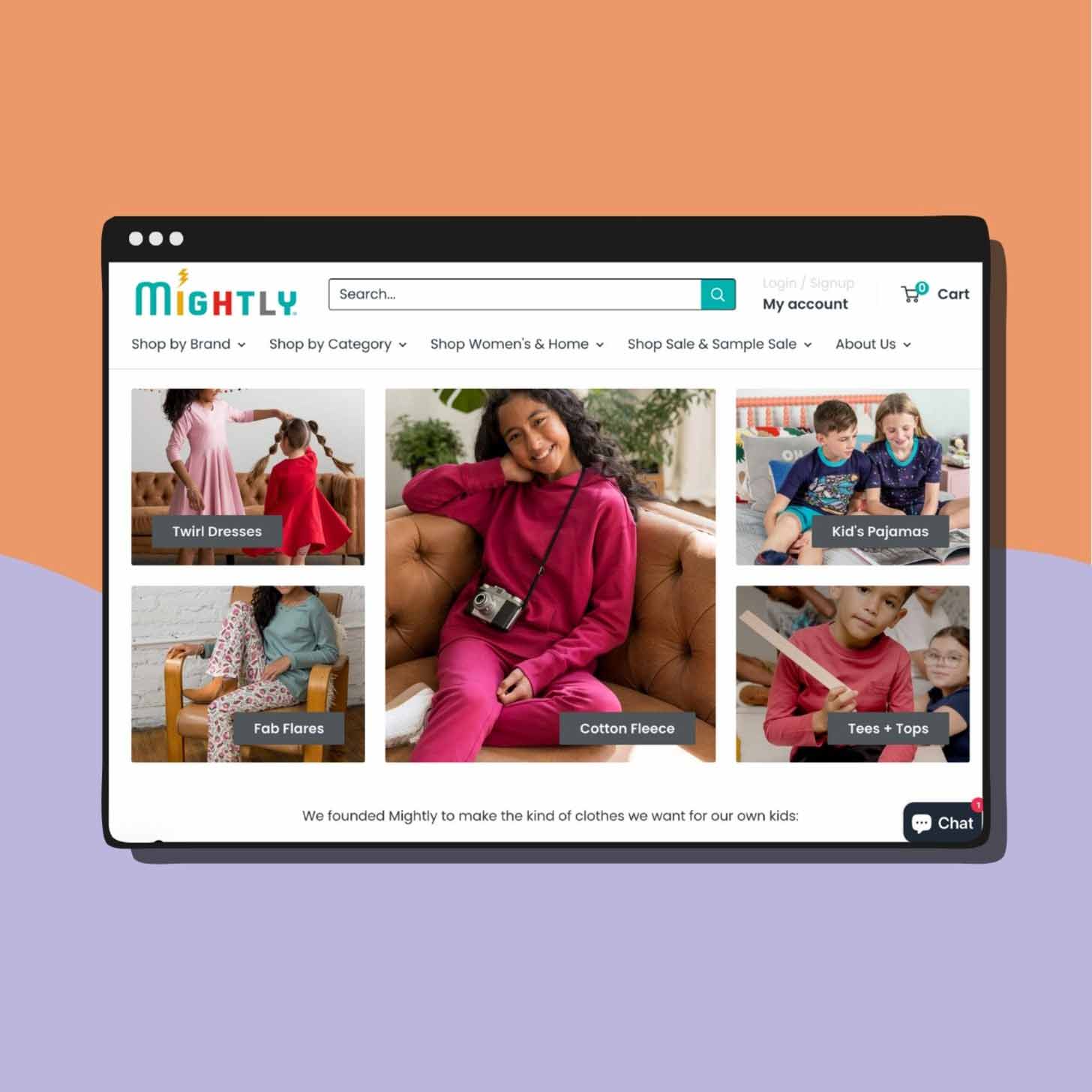
Why It’s Better Than Amazon: Mightly offers a wide range of options for babies, girls, boys, and pre-teens (and their maternity brand, Of an Origin, has nursing-friendly dresses, tops, and bras.)
As a Certified Fair Trade brand, Mightly sells sweatshop-free garments made from organic cotton and mails them in zero-waste shipping bags. Compared to many mainstream and even “eco-friendly” fashion brands, Mightly stands out by combining ethical production, durability, and secondhand options — all designed specifically for families.
Founded by three moms, Mightly is made to be durable enough for kids without showing too much wear and tear over time. It also provides pre-owned options for those who prefer shopping secondhand.
Shop: Mightly | Of an Origin
Colored Organics

Why It’s Better Than Amazon: Colored Organics has an array of baby and toddler clothing that it describes as “honest, ethical, and absolutely adorable.”
Its organic cotton is grown naturally and sustainably, without herbicides, pesticides, or any other harmful chemicals, which provides a safer working environment for farmers and reduces environmental harm. Its fabrics also use water-based dyes, making them safer for babies’ sensitive skin.
And with each purchase, Colored Organics supports organizations that help improve children’s lives. Past partners include the Boys & Girls Club of America, Moms for Moms, Sharebaby, Room to Grow, Safe Haven Foster Shoppe, and more.
Shop: Colored Organics
Secondhand Clothing
ThredUp

Why It’s Better Than Amazon: ThredUp is one of the world’s largest online secondhand clothing platforms and estimates that it’s given 76 million garments a second life.
In addition to direct listing, ThredUp makes circularity even easier for shoppers through its Clean Out program, where people can send in unwanted clothes to the company for cash. Once it receives the clothes, ThreadUp puts 90% back into the platform and recycles everything else.
ThredUp also tracks and publishes its impact data — offering transparency that many fast‑fashion retailers and “sustainable” brands lack. According to its latest impact report, it has diverted 1.1 billion pounds of carbon emissions, saved 11.5 billion gallons of water, and saved 2.1 billion kilowatt-hours of energy.
Shop: ThredUp
Depop
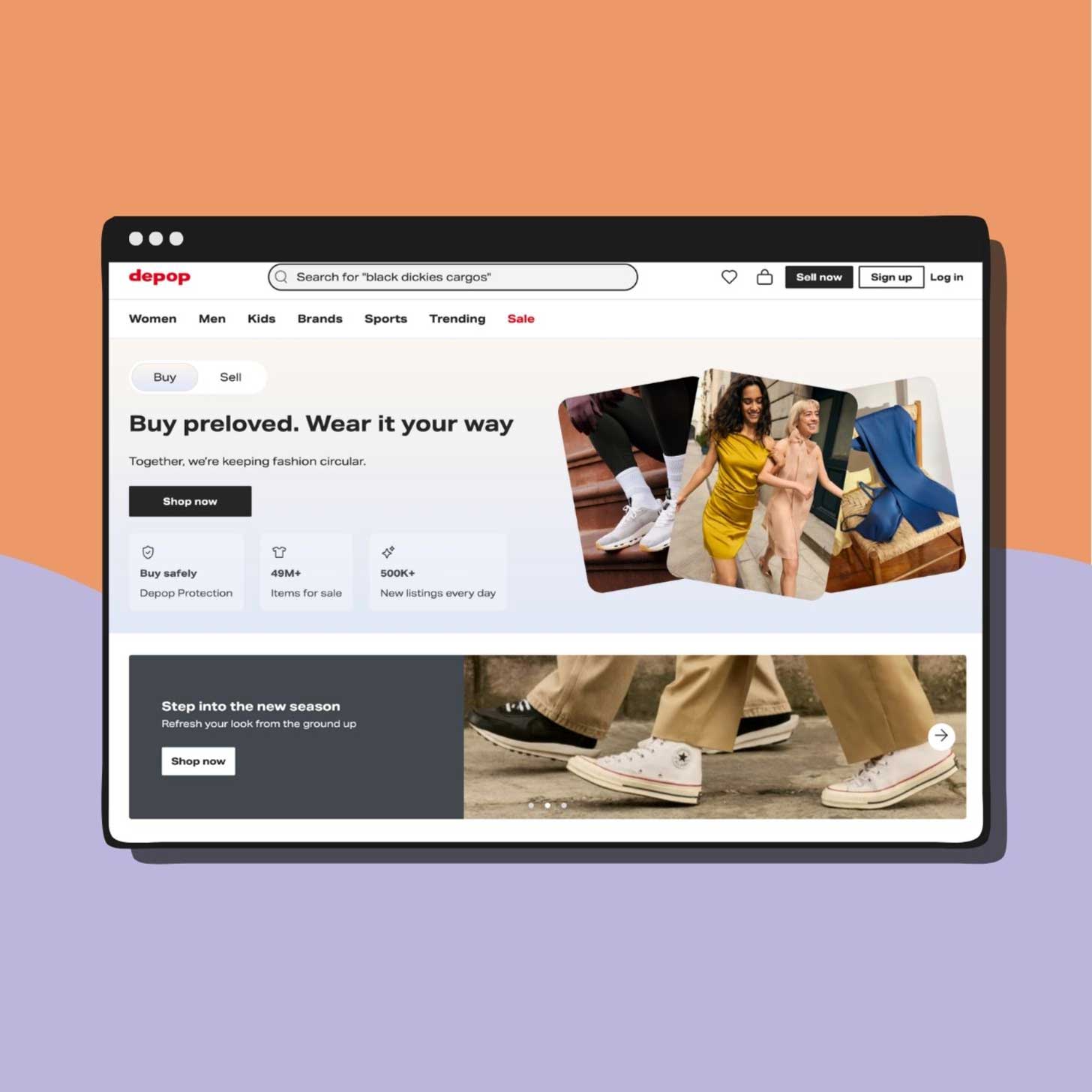
Why It’s Better Than Amazon: Depop’s mission is to make fashion circular by keeping existing items in use longer and inspiring millions to choose secondhand over new, helping reduce waste and the environmental footprint of fashion.
The community‑powered fashion marketplace has helped shoppers give more than 25 million items a second life, and more than three in five purchases on Depop prevent buying brand‑new items elsewhere.
In addition to promoting a circular fashion economy, Depop is a leader in sustainable fashion. It sources 100% of its electricity from renewable sources and offsets 100% of its measured greenhouse gas emissions. It also offers affordable packaging to sellers made from 100% recycled paper that buyers can recycle easily at home.
Shop: Depop
Poshmark
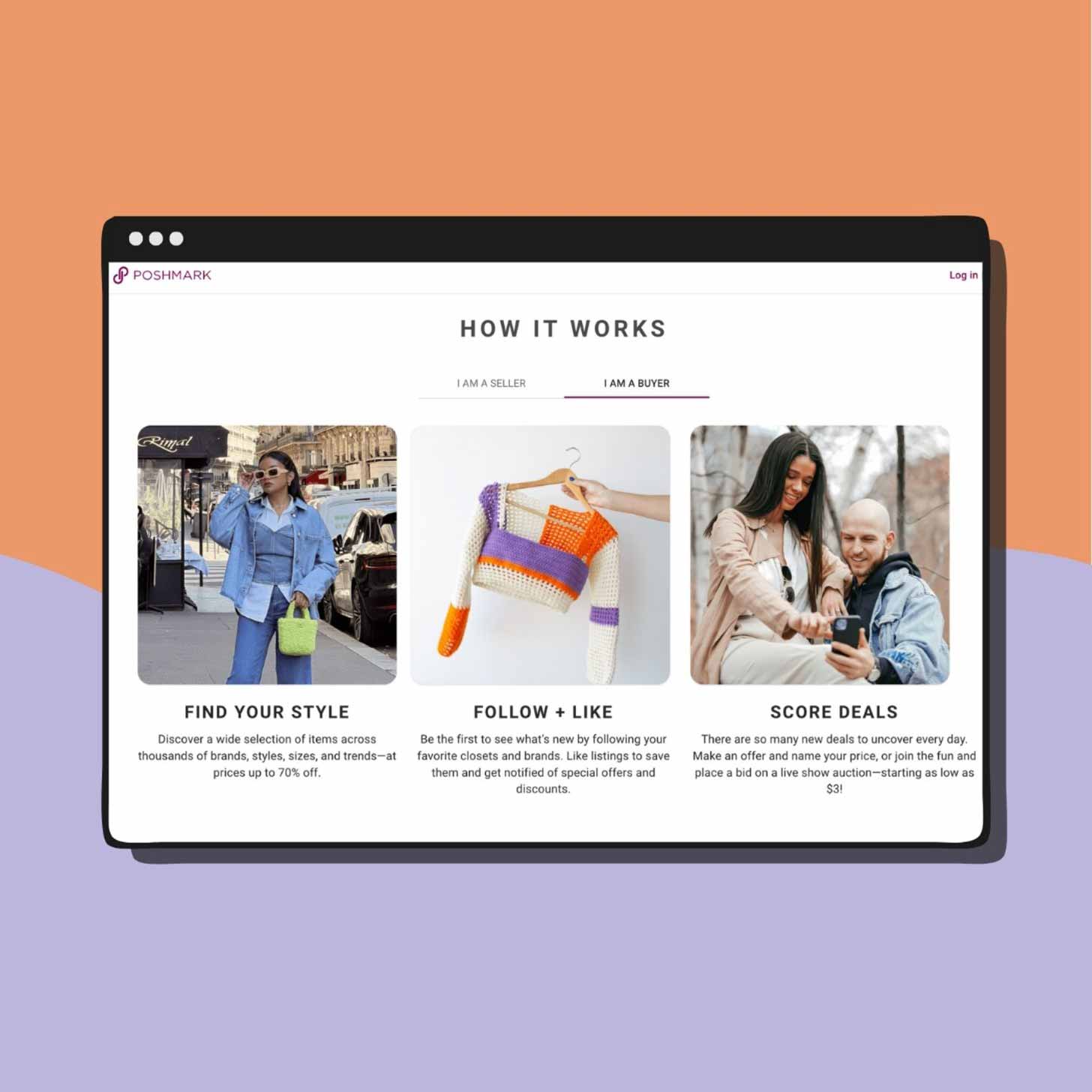
Why It’s Better Than Amazon: Like other online thrift stores, Poshmark makes it easy for people to buy and sell secondhand clothes, home decor, and beauty products online — sending millions of items back into the marketplace instead of off to the landfill.
In 2020, Poshmark also launched Reposh, a website tool that makes it easy for shoppers to sell back items bought on Poshmark. To date, Poshmark says that shoppers have “reposhed” 3.7 million items.
Poshmark offers an online alternative to thrifting at a time when secondhand is “in vogue.” The brand also shared that interest in vintage items has soared in the last two years, with vintage sales on its platform increasing by 85%.
Shop: Poshmark
Business Casual Clothing
Everlane
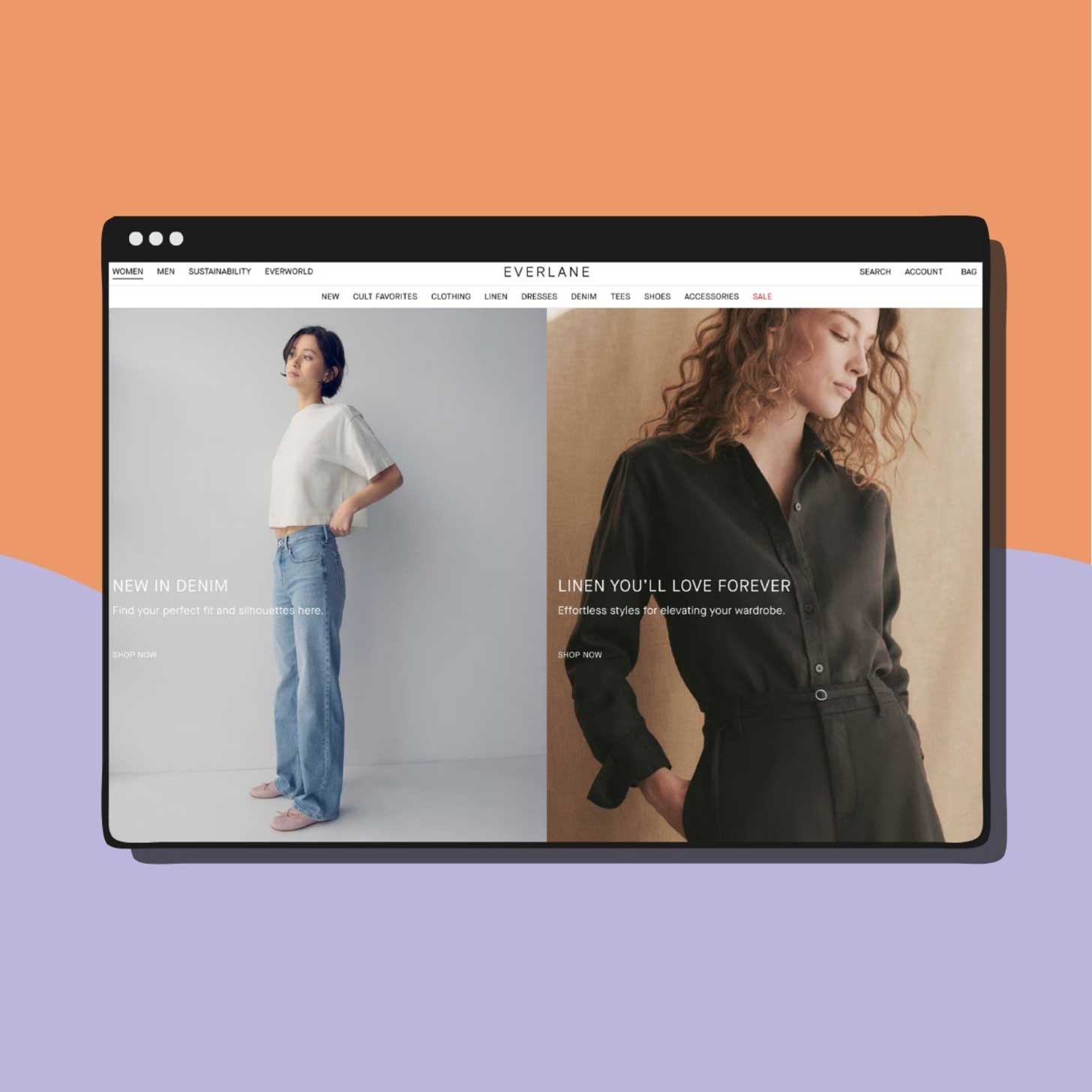
Why It’s Better Than Amazon: Everlane has a soft-toned, minimalist aesthetic to its business-casual attire, professional footwear, and handbags.
A direct-to-consumer retail brand formed in 2011, Everlane prioritizes transparency and sustainability, breaking down the material, labor, and transportation costs for customers.
The retailer plans to cut its product carbon footprint in half by 2030 and reach net zero by 2050. Its denim factory alone is a prime example of its sustainability goals in action, as it recycles 98% of water and uses renewable energy.
Shop: Everlane
Buck Mason
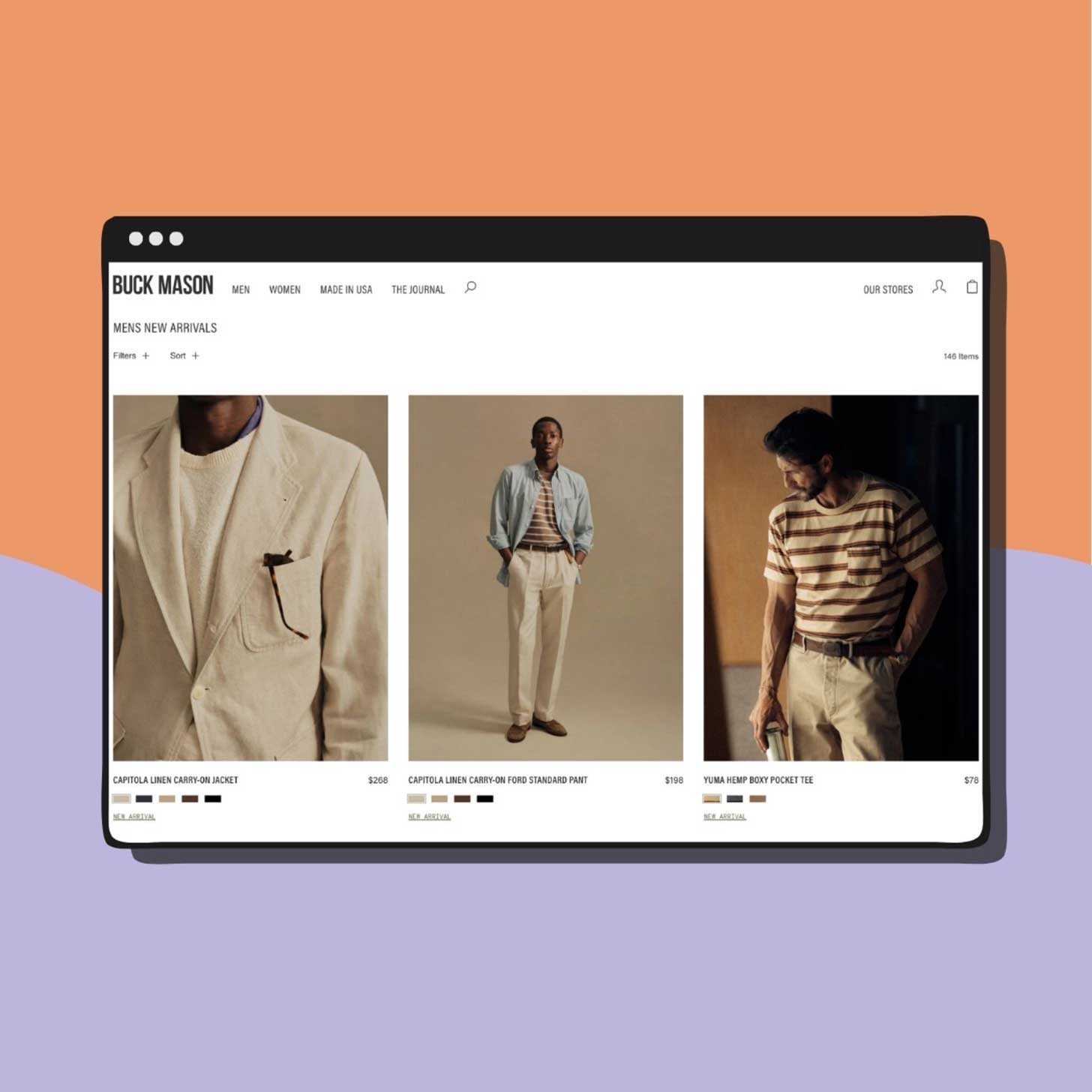
Why It’s Better Than Amazon: Buck Mason is an American-made, sustainable menswear brand that uses natural and some recycled fabrics. Each garment is made in Buck Mason’s knitting mills in Mohnton, Pennsylvania, and spun with American-grown cotton.
In 2022, the Mohnton Knitting Mill shut down after 150 years of operation. Within a year, Buck Mason brought it back to life under fair working conditions, reviving what had long been the economic backbone of the small Pennsylvania town.
It’s led to better working environments for employees, while still offering fair prices to shoppers.
Shop: Buck Mason
Grey State
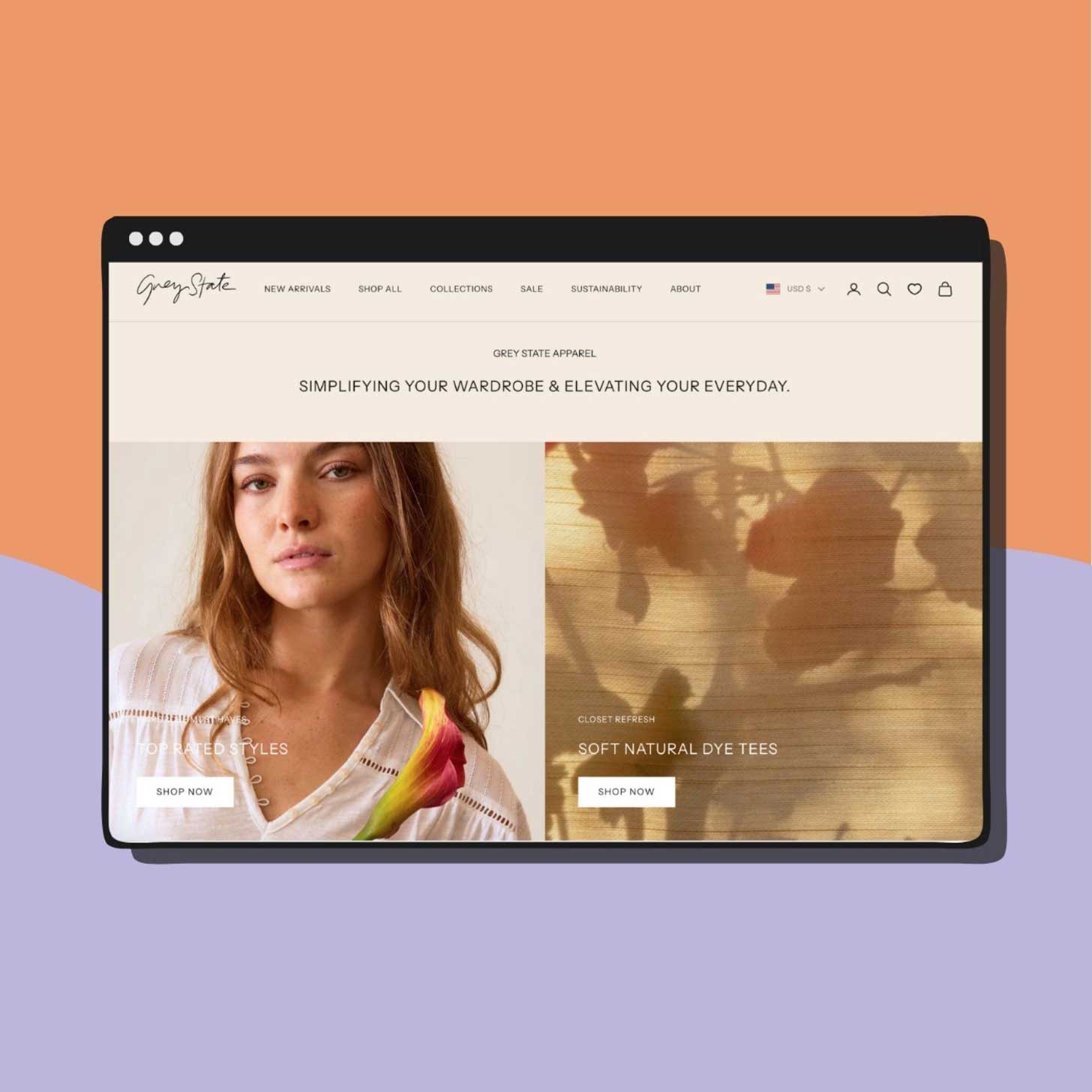
Why It’s Better Than Amazon: Grey State offers high-end business clothing that’s better for people and the planet. Every piece is made with traceable, eco‑friendly materials like organic and regenerative fibers, recycled textiles, and low‑impact dyes.
Compared to other fashion brands that label themselves “sustainable” without clear evidence, Grey State’s supply chain is fully transparent and backs up its claims with visible standards and verifiable sourcing.
The brand also invests in worker wellbeing and gender equity. Grey State provides childcare for parents at its production facilities and works with the GEAR (Gender Equality and Returns) initiative, which identifies female floor workers with leadership potential and promotes them to supervisory roles to help correct gender imbalances in the garment industry.
Shop: Grey State
Outdoor Gear & Clothing
Patagonia

Why It’s Better Than Amazon: While its humble origins as a climbing gear company go back to 1957, Patagonia officially formed in 1973.
Today, the retailer specializes as a premier designer for outdoor clothing and gear needed for climbing, surfing, skiing and snowboarding, fly fishing, trail running, and outdoor adventuring.
Patagonia proudly states that “Earth is their only shareholder,” and it regularly donates to grassroots environmental organizations. Additionally, 95% of their products are made in Fair Trade Certified factories.
Patagonia also makes it easy for customers to trade in worn clothing and gear to give it a second life in its “Worn Wear” section, diverting it from landfills and giving customers store credit in exchange.
Shop: Patagonia
Tentree

Why It’s Better Than Amazon: Tentree started in 2012 with the idea that online shopping could drive large-scale environmental action. Its titular commitment? Plant 10 trees for every item sold.
Over the last decade, the outdoor clothing brand and its customers have helped plant over 110 million trees across global ecosystems, with a promise to plant 1 billion trees by 2030. Its reforestation projects aim to capture carbon, restore habitats, improve soil health, and create jobs in communities around the world.
Beyond tree planting, Tentree weaves sustainability into every part of its operations, using materials like organic cotton, recycled fibers, and lyocell.
It’s also launched initiatives like Circularity by Tentree, a take‑back and recycling program that keeps garments — even those from other brands — out of landfills and in use longer. In 2024, Tentree shoppers returned over 16,400 items.
Shop: Tentree
Huckberry
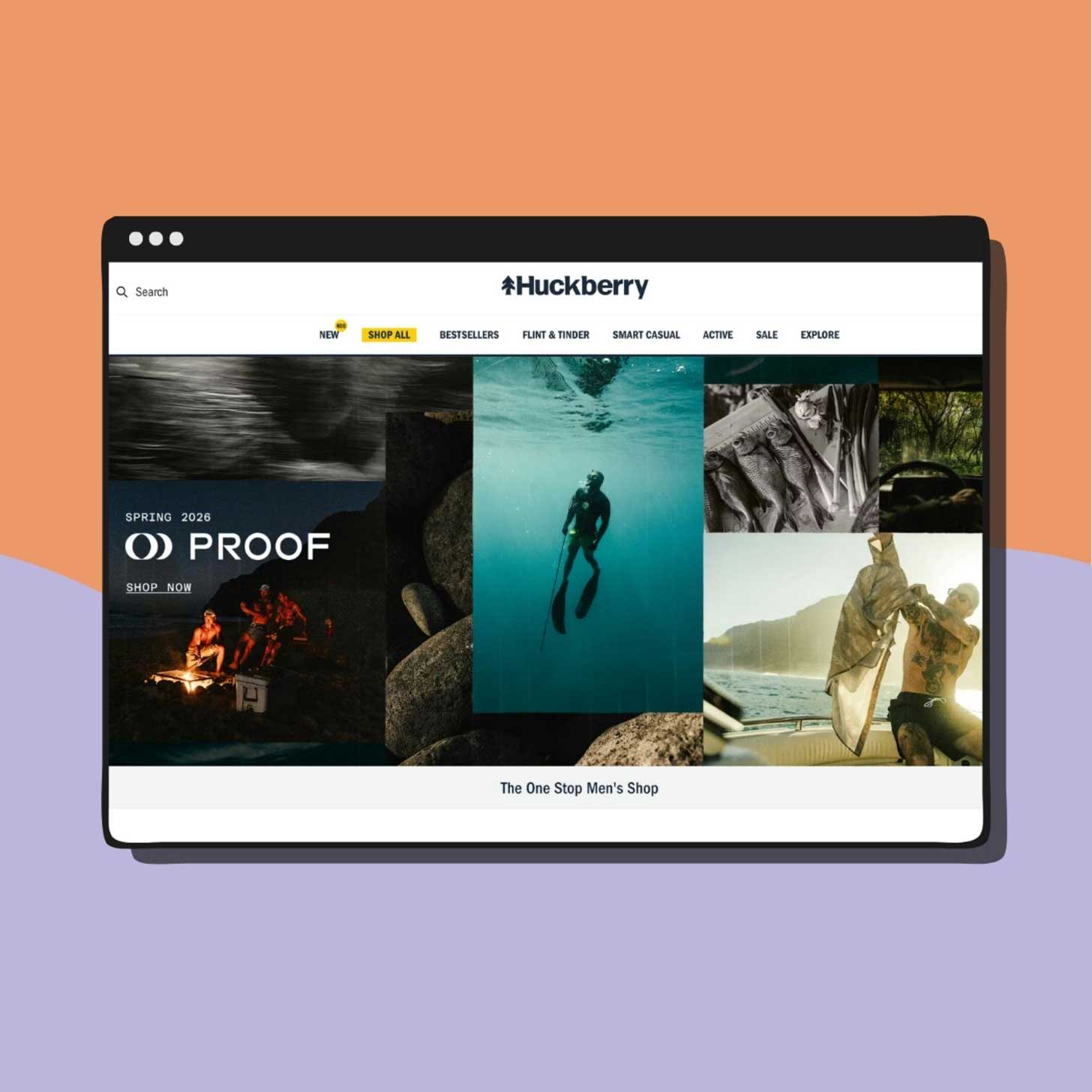
Why It’s Better Than Amazon: Although it dubs itself the “one stop men’s shop,” the woodsy and smart-casual clothing retailer Huckberry also boasts a substantial women’s wear section.
Huckberry emphasizes sustainable, high‑quality materials that are designed to last longer and reduce waste. Their Proof 72-Hour line uses merino wool, a breathable fiber that’s resistant to odor and wrinkles — leading to more wears between washes.
Beyond merino, it also often uses hemp, a plant that uses significantly less water to grow than conventional fibers and is fully biodegradable at the end of its life. Huckberry also routinely posts informative articles on how consumers can care for their clothing and gear to get the longest-possible use out of a product.
Shop: Huckberry
Size-Inclusive Clothing
SeamsFriendly
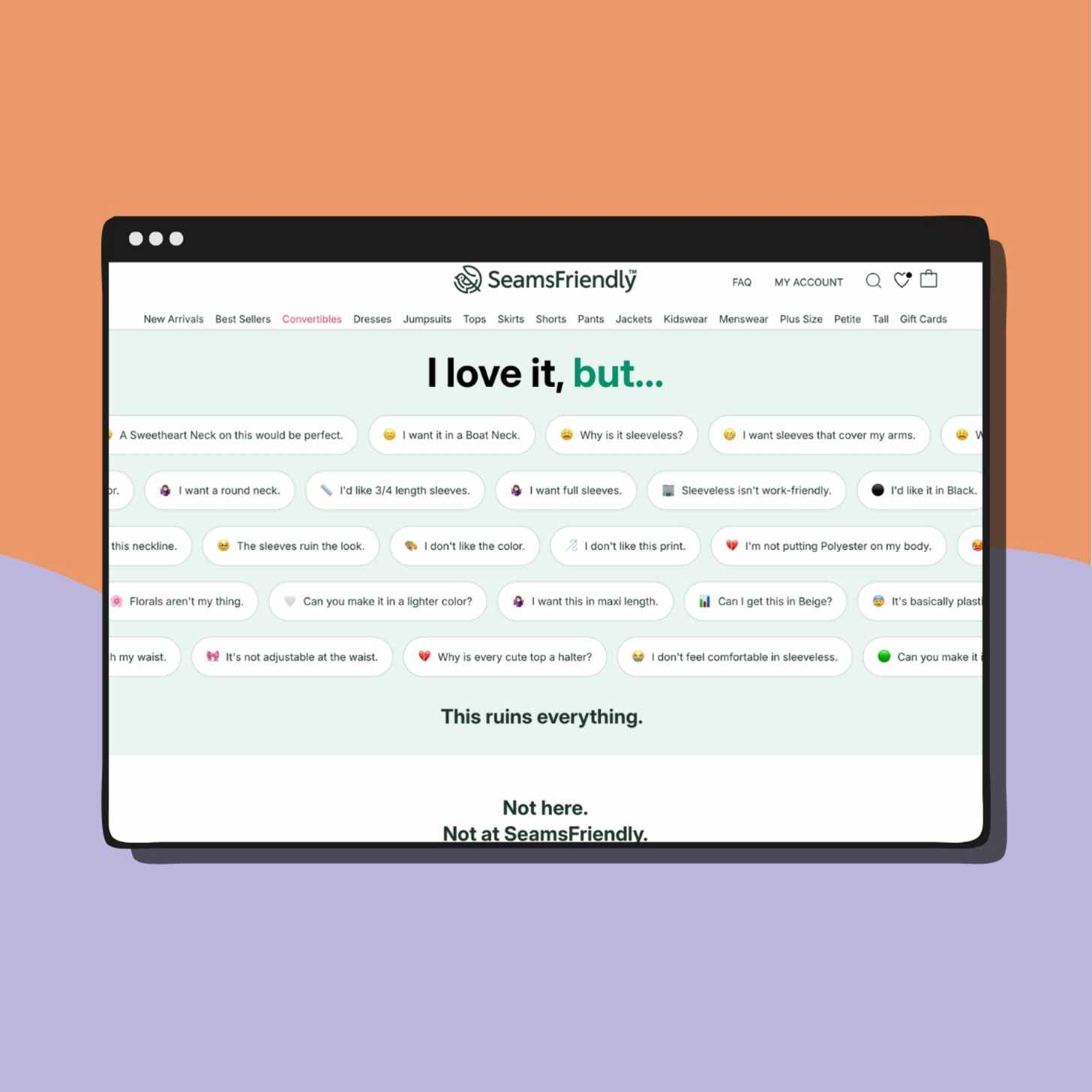
Why It’s Better Than Amazon: Thanks to its “made-to-order” model, SeamsFriendly offers more than 1,700 styles for “all body types.”
With SeamsFriendly, shoppers can choose jumpers, rompers, dresses, and more that are handcrafted to their exact measurements, with sizing that ranges from 4XS through 16XL and beyond at no extra cost.
After shoppers select the neckline, sleeves, and length of their dreams, SeamsFriendly creates tailored outfits from low-impact materials like organic cotton and linen. Also, its entire product range is vegan, ensuring that no animals were harmed for production.
Shop: SeamsFriendly
The Standard Stitch

Why It’s Better Than Amazon: The Standard Stitch is a size-inclusive loungewear brand made from sustainably sourced materials, including harvested wood pulp — like eucalyptus, beech, and spruce — and recycled cotton from cutting waste and leftover fabrics.
The Los Angeles-based brand also ships its clothing in compostable and recycled packaging and has a carbon offset program with the environmental solutions organization Native Energy to counteract its net emissions.
And when shoppers want to upcycle their old clothes after wear and tear, they can do so through The Standard Stitch’s Re-stitch x Retold program and get a $15 credit in exchange for reducing textile waste.
Shop: The Standard Stitch
Girlfriend Collective

Why It’s Better Than Amazon: In 2016, Girlfriend Collective became one of the first brands to make activewear from recycled materials. In addition to being more size inclusive than traditional brands (offering 2XS to 6XL), the brand uses lower-impact materials and is fully OEKO-TEX Standard 100 certified, which means it's free from heavy metals, toxic dyes, and carcinogens.
Today, all five of its fabrics — Compressive, FLOAT, Reset, Luxe, and SuperTrack — are made from post-consumer plastic waste and shipped in recycled packaging.
Girlfriend Collective also donates 1% of every order to a nonprofit chosen by the customer. Options include social justice initiatives like the NAACP Legal & Defense Fund and humanitarian relief efforts through Doctors Without Borders.
Shop: Girlfriend Collective
Luxury Brands
Stella McCartney
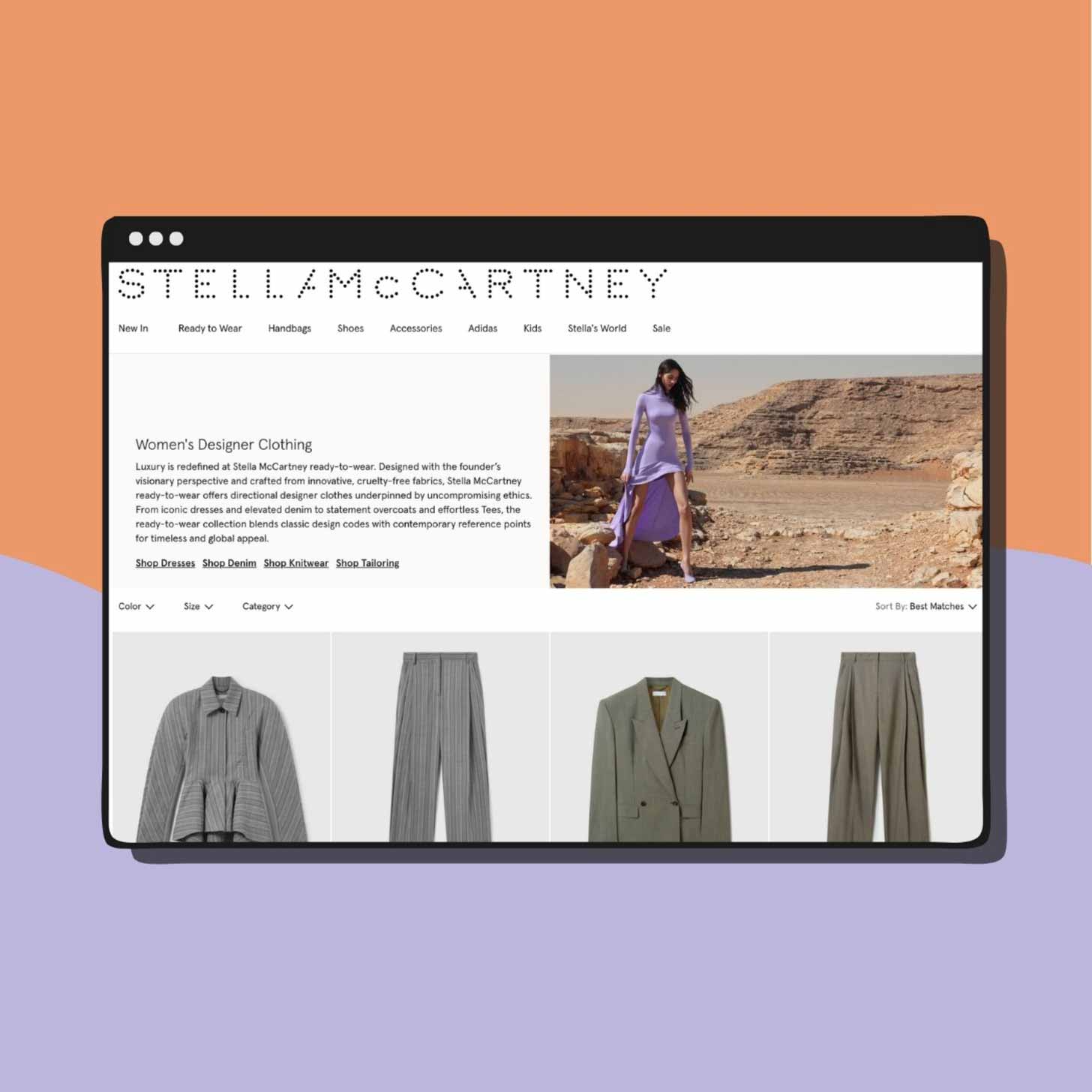
Why It’s Better Than Amazon: Since its founding in 2001, British luxury fashion brand Stella McCartney has maintained a strict cruelty-free policy, never using leather, fur, feathers, or skins, and instead prioritizing ethical alternatives.
After switching to “forest-friendly” viscose in 2017 in place of cashmere, Stella McCartney officially became a zero-deforestation brand.
Stella McCartney was also an early adopter of low-impact, bio-based or recycled materials — such as plant-based textiles, fungi leather alternatives, recycled cashmere, and regenerated nylon.
Shop: Stella McCartney
Jenni Kayne

Why It’s Better Than Amazon: Offering a “timeless California style,” Jenni Kayne’s collections are made from recycled or undyed materials and shipped in recycled packaging.
Jenni Kayne emphasizes ethical sourcing by working with trusted factories and artisan groups like a women’s cooperative in Peru, and producing some goods locally in Los Angeles.
The luxury brand also prides itself on fair labor practices and exercises transparency through factory audits, promotes circular fashion through repair events, and plants one tree for every eco-friendly garment sold.
Shop: Jenni Kayne
Sleeper
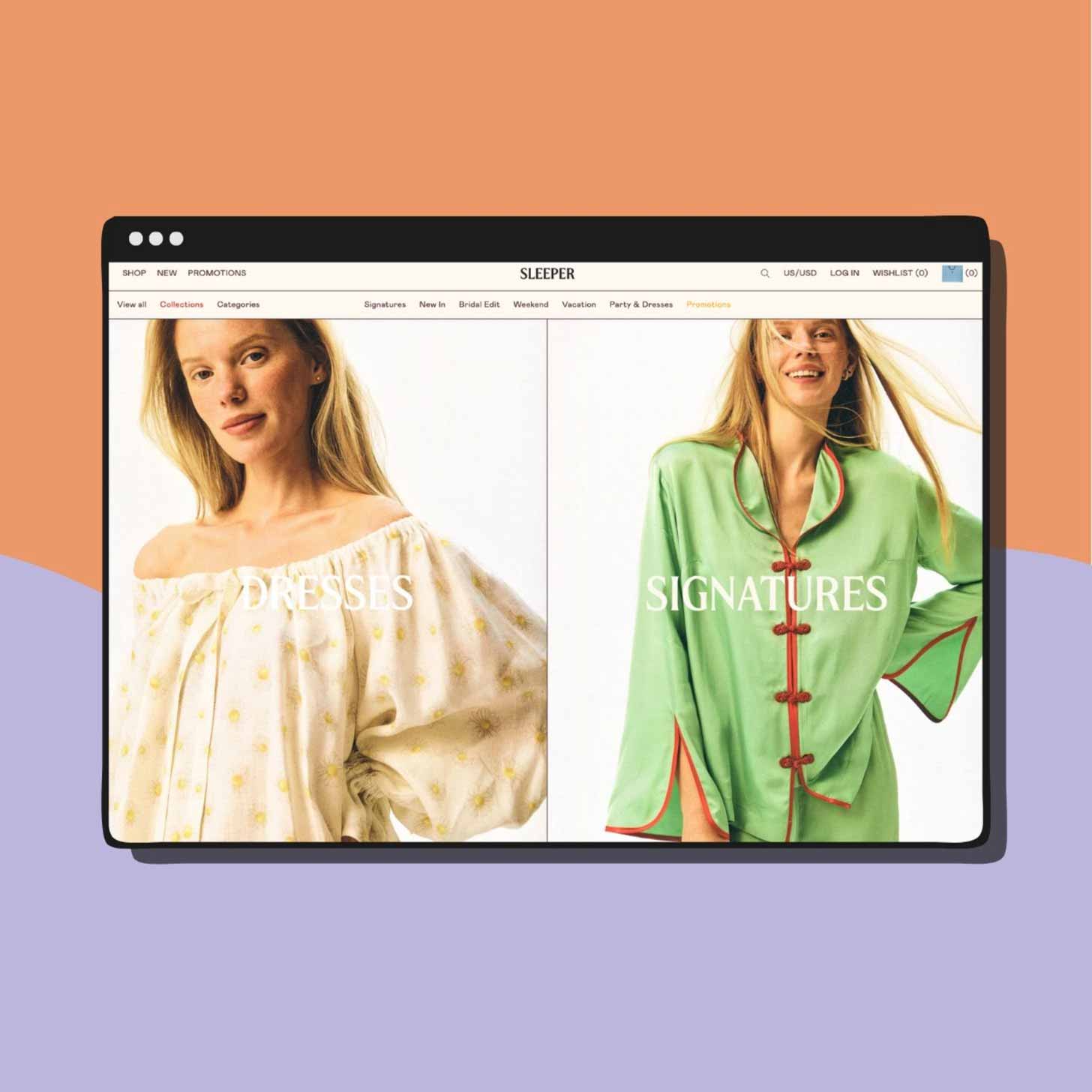
Why It’s Better Than Amazon: Sleeper is more than pajamas; it’s high-quality loungewear. Using responsible suppliers and zero-waste production, each Sleeper garment is locally handmade in safe and fair working conditions and shipped in recyclable packaging.
Throughout its history, Sleeper has raised more than $56,000 to support women with cancer. As a Ukrainian fashion brand, it has also donated 1 million Ukrainian hryvnia (roughly 22,000 USD) to the Armed Forces of Ukraine, and in April 2023, they donated an additional $12,920 for prosthetics for Ukrainian war veterans.
Shop: Sleeper
In a new cumulative study, researchers at Johns Hopkins’ Department of Psychiatry and Behavioral Sciences found that video games that have therapy-informed concepts baked into their gameplay can be an effective tool for patients with ADHD and depression.
But the study comes with an important distinction: it focused on clinically designed games that have therapy-informed concepts baked into their gameplay, not commercial games like Fortnite or Minecraft.
Some therapy-informed games are even prescribed or FDA-reviewed in certain contexts (like EndeavorRx, an alien-themed computer game designed to improve attention function).
To reach their conclusion, resident physician Barry Bryant and adolescent psychologist Joseph McGuire analyzed 27 trials from around the world, which included 2,911 participants between the ages of 6 and 17 years old.
Overall, their study, published in the American Medical Association’s pediatric journal, found that video games designed specifically for young adults with ADHD and depression provided a “modest reduction” in symptoms.
Post-trial, participants and their family members both reported more sustained attention and decreased sadness.
By contrast, video games designed for patients with anxiety did not show “meaningful benefits.”
“While the benefits are still modest, our research shows that we have some novel tools to help improve children’s mental health, particularly for ADHD and depression, that can be relatively accessible to families,” McGuire explained.
McGuire added that these game-based interventions can be delivered at home, making them a potentially scalable solution for families facing long wait times or limited access to care.
“So if you are a pediatrician and you’re having trouble getting your pediatric patient into individual mental health care, there could be some gamified mental health interventions that could be nice first steps for children while waiting to start individual therapy.”
You may also like: Virtual reality gaming is reducing social isolation among older adults
A version of this article originally appeared in the 2026 Mental Health Edition of the Goodnewspaper.
Header image via Alena Darmel
The fashion world is often built around flash-in-the-pan trends. But today, a growing number of designers, models, and activists are hoping to create longer-lasting movements by using the runway to elevate marginalized models, showcase sustainability, and even bedazzle a few adoptable dogs in the process.
Five ways people are transforming the fashion industry for the better
Vietnam Hosts Country’s First Fashion Show For Disabled Models
In August, Vietnam hosted its first Disability Fashion Show. The inaugural event, held at the National Fine Arts Museum in Hanoi, was part of a larger nationwide project titled “Wardrobe of Kindness” and featured over 50 models from across the country with an range of disabilities.
One model, Le Thi Dien, told Nhân Dân Newspaper that she had never expected it would be possible to participate in a fashion show where she could wear custom-designed clothes and bring her wheelchair on stage.
“This program has helped me, and many fellow people with disabilities, gain confidence and motivation to continue pursuing what we love and live meaningfully,” she said.
Disabled& Founder Puts Limb Differences On Display
April Lockhart wants to see brands work with disabled models and creators year-round, “not just once.” That’s why the 30-year-old, who has a limb difference as a result of amniotic band syndrome, created Disabled& — a creative community that platforms people with disabilities at fashion events and runways across the industry.
“I've been doing events for the disabled community over the last few years,” Lockhart told Who What Wear. “The first time I was ever in a room with more than two other disabled people at a time was September 2023, and I didn't realize how much that would change things for me. I couldn't get the itch out of my head. I needed to bring people together.”
Adoptable Dogs Strut The Catwalk In Fashion Student’s Fundraiser
Before graduating from Virginia Polytechnic Institute and State University in May, Karlee Angel was already putting her fashion merchandising and design degree to good use.
To support the Montgomery County Animal Care and Adoption Center, Angel galvanized her fashion-forward classmates to design “adopt me” vests for dog models at her annual The Struttin' for PAWS adoption fashion show.
“Animals have always offered me a sense of purpose and comfort, and I thought this would be the perfect opportunity for me to give back to them and help them find their purpose,” Angel told Virginia Tech News.
Model-Turned-Paralympian No Longer Covers Up On The Runway
Jack Eyers has been breaking records for a decade straight. In 2015, he made history as the first disabled man to walk in New York Fashion Week. Three years later, Eyers became the first amputee to be crowned in the Mr. England beauty pageant. And in 2024, the model-turned-athlete won a silver medal for paracanoeing in his first Paralympic Games.
Eyers, who had an above-the-knee amputation at 16 years old due to proximal femoral focal deficiency, said he’s come a long way from the kid who used to cover up his disability on the catwalk out of embarrassment.
“It made me think about why I was really doing it,” he told The New York Times. “To inspire others to like who you are, regardless of how you look or sound.”
Art School Students Make The Grade With Cardboard Couture
At Willamette University’s Pacific Northwest College of Art, incoming freshmen are required to take a 3D design course. And for 15 years, Professor David Eckard has been challenging his students to create “Cardboard Couture” for an end-of-semester runway show.
In addition to being sustainable, Eckard told Oregon Live that the assignment — which inspires cardboard-cut skirts, wings, boots, vests, and head-to-toe attire — “came out of a kind of respect for freshman budgets.”
“There’s no risk, no commitment. We aren’t carving with ebony wood,” he said. “If it doesn’t work out, no problem. We just go to the dumpster and find more cardboard.”
A version of this article originally appeared in the 2025 Fashion Edition of the Goodnewspaper.
Header image via Disabled&/Jessica Steddom
Bruce Springsteen will be performing at the March 28 No Kings rally in St. Paul, Minnesota this weekend.
The rocker will kick off his Land of Hope and Dreams American Tour on Tuesday in Minneapolis, but he’s arriving in the area a bit early to perform at the Minnesota State Capitol.
“You want to try to meet the moment,” Springsteen told the Minnesota Star Tribune. “The No Kings movement is of great import right now.”
Springsteen confirmed that he will sing his new song, “Streets of Minneapolis,” which he wrote and released on January 30, “in response to the state terror being visited on the city of Minneapolis,” he said.
“It’s dedicated to the people of Minneapolis, our innocent immigrant neighbors, and in memory of Alex Pretti and Renee Good,” Springsteen said in a statement upon the song’s release.
Within just two days of being released, the song debuted as the highest-selling track in the United States for the week, topping Billboard’s charts as the most-downloaded song.
Now, he’ll be bringing it to the very communities it was written for.
“When you have the opportunity to sing something where the timing is essential, and if you have something powerful to sing, it elevates the moment, it elevates your job to another level,” he told the Star-Tribune. “And I’m always in search of that.”
Springsteen has also just made headlines for his support of a recent ad campaign by the American Civil Liberties Union, which was released ahead of the ACLU’s April 1 arguments before the U.S. Supreme Court on a landmark case challenging America’s constitutional right to birthright citizenship.
The campaign features Springsteen’s “Born in the U.S.A.,” which the singer authorized the use of for the ACLU’s purposes.
“Born in the U.S.A.” is the perfect song to capture what’s at stake in this Supreme Court case and how birthright citizenship is integral to America,” ACLU executive director Anthony D. Romero told Rolling Stone.
“It’s a song that tells the story of a Vietnam veteran returning home to an America he knew was neglecting its people. The song calls on our nation to live up to its ideals. And when you listen to it, it makes you feel proud to be an American.”
Springsteen will join what organizers anticipate to be at least 9 million people participating in No Kings events across the country. The St. Paul rally will also feature appearances from Sen. Bernie Sanders, Jane Fonda, and singers Joan Baez and Maggie Rogers.
You may also like: 50 anti-ICE sign ideas for the March 28 No Kings nationwide protest
Header image by Pam Springsteen
Whether you attend a No Kings protest or show up in the streets of your community for any other reason, you’ll probably want to bring a sign.
And if you’re a parent, you’ll probably have some kids tagging along with you. They should be able to participate fully, too.
After all, young people were definitely part of the total 9 million people in attendance at the third No Kings protest, which took place on March 28, 2026.
“The Trump regime is doubling down on fear and force to intimidate communities and silence dissent,” Ezra Levin, co-executive director of Indivisible, a lead organization behind the No Kings protests, said in a statement. “We are also seeing a massive movement of brave people standing up for their neighbors and against this regime.”
Young or old, there’s a place for everyone in the movement for liberty and justice for all. If you’re planning to bring your kids to an upcoming protest, we’ve gathered some sign ideas below:
Other protest sign ideas:
The Best Protest Sign Ideas For Kids
Protest Sign Ideas For Kids

- We Need A Kinder World
- I May Be Small, But My Voice Is Loud
- Speaking Up For The Kids Who Can’t
- It’s Time To Use Our Outside Voices
- Hands Off My Future
- Little Girls With Dreams Become Women With Vision
- I Will Not Learn Your Hate
- ‘We The People’ Means Everyone
- History Has Its Eyes On Me
- Fear Less, Love More
- Protect Me
- Be The Change You Want To See In The World
- We Just Want To Live Through High School
- Your Children Are Watching
- Why Should We Go To School When You Won’t Listen To The Educated?
- I Was Taught That Kindness Matters
- Won’t You Be My Neighbor?
- Mister Rogers Taught Me To Love My Neighbor
- “Stop Killing Kids” —Ms. Rachel
No Kings Protest Sign Ideas For Kids

- No Kings
- No Kings, But Ms. Rachel Is My Queen
- The Only King I Know Is Mister Rogers
- Only Butterflies Should Be Monarchs
- Only The Statue Of Liberty Gets To Wear A Crown
→ Check out more No Kings protest sign ideas
Kid-Friendly Anti-ICE Protest Sign Ideas
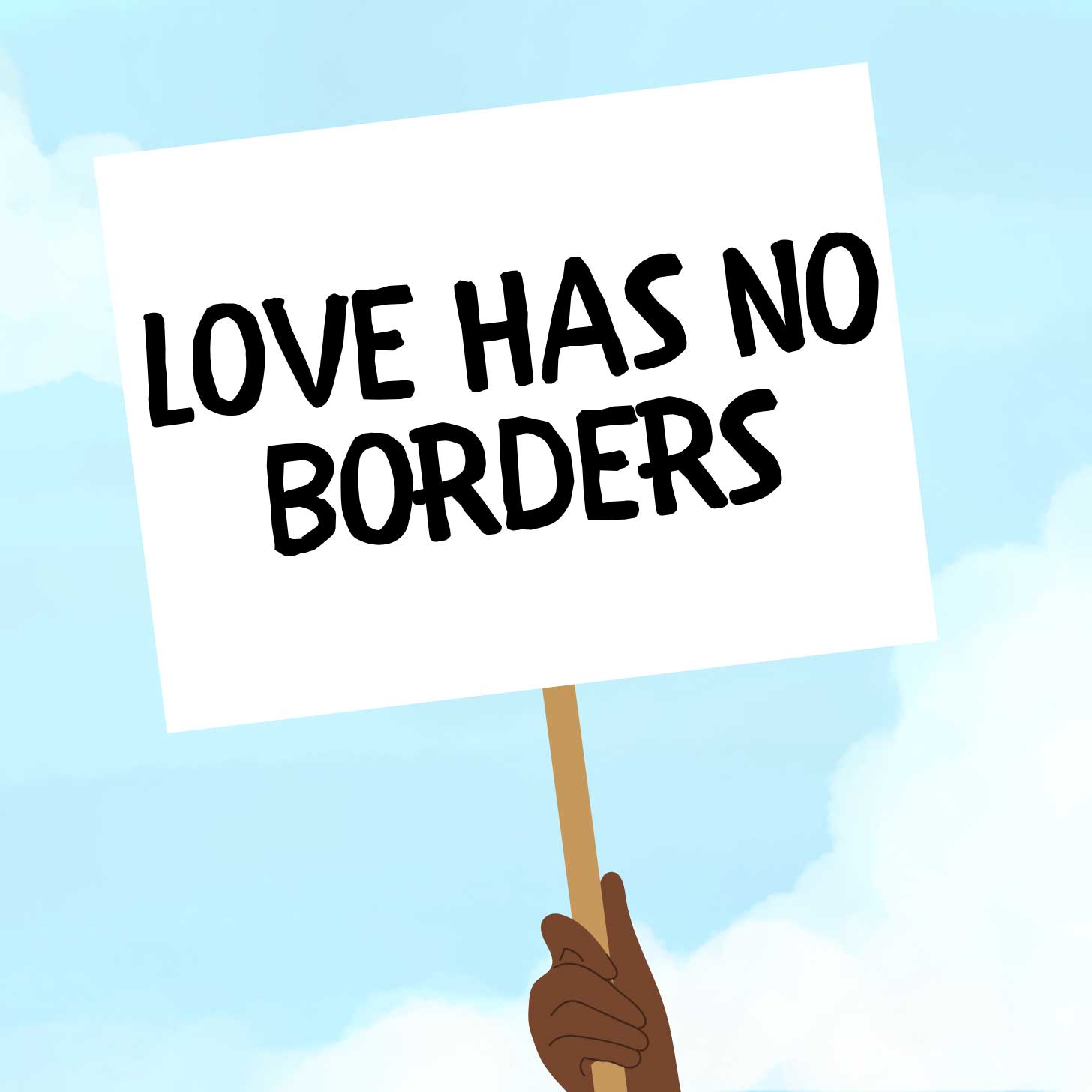
- ICE Out Of [Insert City Here]
- ICE Out For Good
- It’s Okay To Change Your Mind
- We Love Our Immigrant Neighbors
- Fight Ignorance, Not Immigrants
- Families Belong Together
- This Land Is Your Land, This Land Is My Land
- Love Has No Borders
- Build Bridges, Not Walls
- Build A Wall, And My Generation Will Tear It Down
→ Check out more anti-ICE protest sign ideas
Funny Protest Sign Ideas For Kids

- When Leaders Act Like Kids, The Kids Become The Leaders
- I’m Not Even Allowed To Act Like The President
- I Love Naps, But I Stay Woke
- I’d Make A Better President (And I’m 3)
- I’m 6, And I Know Better
- If You Won’t Act Like Adults, We Will
- My Grandparents Fought Nazis, So I Will, Too
- Don’t You Watch Sesame Street?
→ Check out more funny protest sign ideas
Climate Protest Sign Ideas For Kids

- Cool Kids Don’t Want A Hot Planet
- Save Our Future
- Fighting For My Future
- You Decide If I Have A Future
- I Am The Future
- Your Now, Our Future
- I Want My Future Back
- Clean Up Your Mess
Gun Violence Protest Sign Ideas For Kids

- I Want To Read Books; Not Eulogies
- School Should Teach Me How To Read & Write, Not Run & Hide
- Enough Is Enough
- Marching For My Life
- Protect Kids, Not Guns
- Guns Don’t Die; Kids Do
- Am I Next?
- Arms Are For Hugging
Ultimate list of protest sign ideas:
- Anti-ICE protest sign ideas
- Funny protest sign ideas
- No Kings protest sign ideas
- Black Lives Matter posters
- Pro-abortion posters
Header image by Minnesota Senate DFL (Public Domain)
Protest is a key part of creating change.
Whether you attend a No Kings protest, show up in the streets of your community to speak out against inhumane actions by United States Immigration and Customs Enforcement, or exercise your First Amendment rights any old day of the week, you’ll usually be carrying a picket sign with you.
According to PBS, the history of protest posters dates back to the 16th century when Martin Luther and members of the Protestant Reformation posted Luther’s 95 Theses on the church doors. Now, for many of us, they are an integral part of modern American life.
For instance, the third No Kings protest, which took place on March 28, 2026, saw nearly 9 million people in attendance across the U.S. and other international cities. Many of them carried their own signs to echo their chants even wider.
“Peaceful, people-led movements have always led the way for real change,” Deirdre Schifeling, chief political and advocacy officer for the ACLU, said in a statement prior to the event.
“Last year, millions joined us to send a resounding message that we, the people, will not be intimidated by President Trump’s fear tactics. We are at a dangerous moment for our democracy — it’s time to come together again and fight to stay free.”
If you’re planning to join an upcoming protest, we’ve gathered some sign ideas below:
Other protest sign ideas:
Funny Protest Sign Ideas
General Funny Protest Sign Ideas
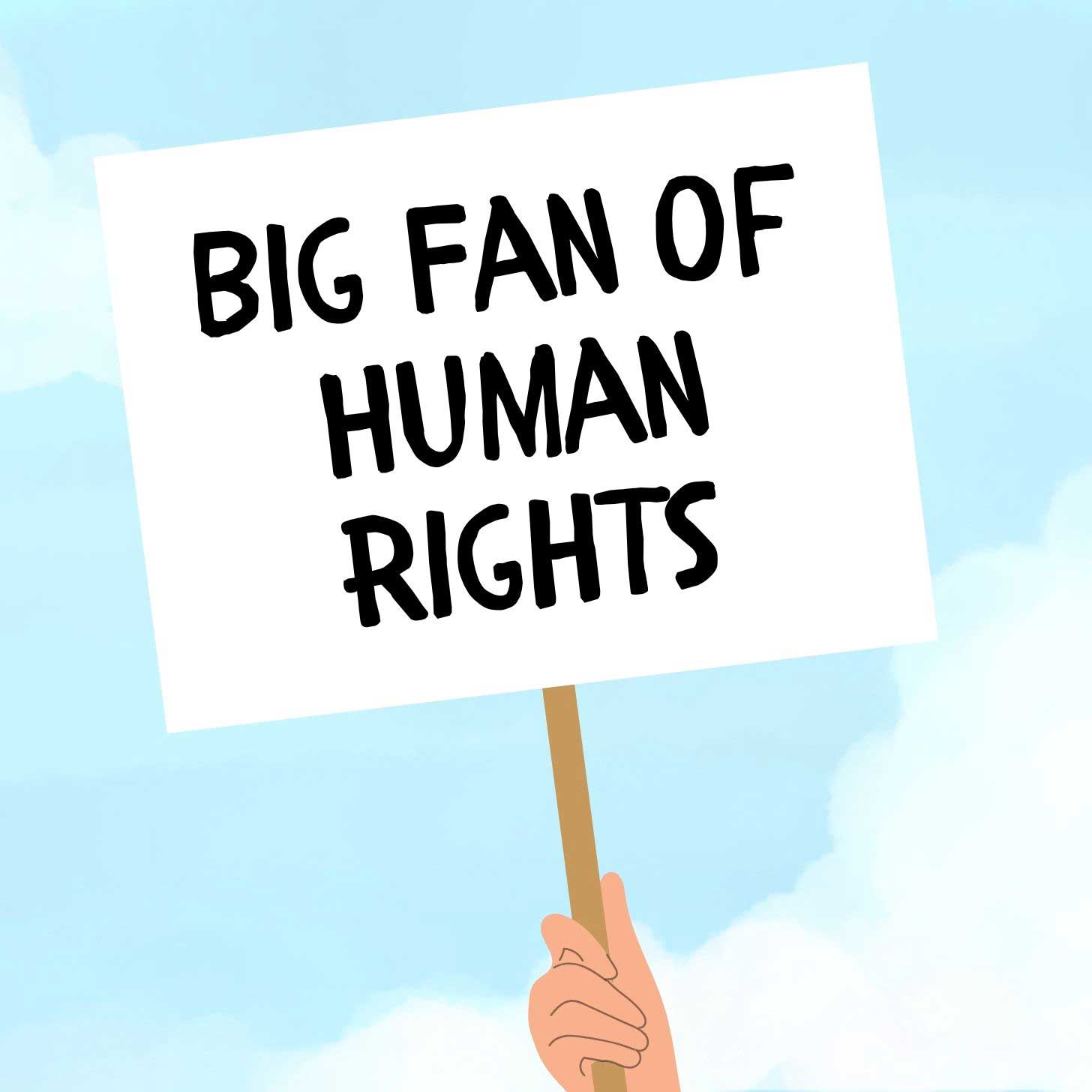
- Not Usually A Sign Guy But Geez
- No Sign Is Big Enough To List All The Reasons I’m Here
- I Know Signs. I Make The Best Signs. Everyone Agrees.
- Things Are So Bad The Introverts Are Here
- Big Fan Of Human Rights
- So Tired Of Living In An Onion Article
- Unpaid Local Protester
- God Forbid A Girl Wants Liberty & Justice For All
Funny No Kings Protest Sign Ideas
- Sorry For Being Weird, This Is My First Dictatorship
- We Dumped Tea For Less
- No Crown For A Clown
- No Faux-King Way
- America, Leave Your Abusive Ex
- “Don’t Make Me Repeat Myself.” —History
- I’ve Seen Better Cabinets At Ikea
- Get The Hell Out Of Our House
- Strop Truth Decay
- Elect A Clown, Expect A Circus
- I’d Like That Taco To Go, Please
- It’s Actually Super Cool To Care About Other People
- If There’s Money For War, There’s Money For Medicaid
- Only You Can Prevent Fascism (with a photo of Smokey the Bear)
- Eggs Are Expensive Because All The Chickens Are In Congress
- Willing To Lend Congress A Spine (with a photo of a skeleton)
- Clean Up On Aisle 47
Funny No Kings Protest Sign Ideas For Kids

- When Leaders Act Like Kids, The Kids Become The Leaders
- I’m Not Even Allowed To Act Like The President
- I Love Naps, But I Stay Woke
- I’d Make A Better President (And I’m 3)
- I’m 6, And I Know Better
- No Kings, But Ms. Rachel Is My Queen
- The Only King I Know Is Mister Rogers
→ Check out more protest sign ideas for kids
Funny Pop Culture No Kings Sign Ideas

- You Sucked In Home Alone 2
- The Smallest Man Who Ever Lived
- The Only King I Recognize (with a photo of King Julian from “Madagascar”)
- There Is Only One King In This Country, And His Name Is Lebron
- It Does Not Say RSVP On The Statue Of Liberty (with a photo of Cher from “Clueless”)
- If Taylor Swift Got Her Masters Back, We Can Take Our Country Back
- So Fascism. Wow. Much Coup. Big illegal. (with a photo of the original doge)
- Maybe This Thing Was A Masterpiece, Til You Tore It All Up (with a photo of the constitution)
- No Kings, But Maybe A Few Queens (with a photo of the cast of Rupaul’s Drag Race)
- Please Please Please Don’t Take My Rights (with a photo of Sabrina Carpenter)
Funny Anti-ICE Protest Sign Ideas

- I Like My ICE Crushed (next to a drawing of an iced coffee)
- The Only Leader Who Can Spread ICE Across A Nation Is Elsa (accompanied by the Disney princess)
- The Wrong ICE Is Melting
- I’ll Take My Horchata Warm Because ICE Sucks
- Hot People Melt ICE
- Proud Parent Of A Kid Who Did Not Grow Up To Be An ICE Agent
- Stay Salty. Melt ICE.
- The Only Good ICE Is From Sonic
- The Only ICE I Like Is The Ice My Two Gay Boyfriends Skate Around On (with a Heated Rivalry photo)
→ Check out more anti-ICE protest sign ideas
Funny Pro-Abortion Protest Signs
- We Need To Talk About The Elephant In The Womb
- Why Are You So Obsessed With Me? (with a photo of a uterus)
- If I Make My Uterus A Corporation, Will Y’all Stop Regulating It?
- If Men Got Pregnant, They Could Get An Abortion At An ATM
- We’re Not Ovary-Acting
- This Episode Of “The Handmaid’s Tale” Sucks
Funny Climate Protest Signs
- I’m Sure The Dinosaurs Thought They Had Time Too
- This Is Not What We Meant By “Hot Girl Summer”
- You’ll Die Of Old Age; I’ll Die Of Climate Change
- Nooo Don’t Kill The Earth, It’s So Sexy Ahaha
- Act Now Or Swim Later
- I Want A Hot Boyfriend, Not A Hot Planet
Ultimate list of protest sign ideas:
- Anti-ICE protest sign ideas
- No Kings protest sign ideas
- Protest sign ideas — for kids
- Black Lives Matter posters
- Pro-abortion posters
Header image by Fibonacci Blue (CC BY 4.0)