According to the most recent estimates from the National Alliance to End Homelessness, only 35 affordable rental homes are available in the United States for every 100 “extremely low-income” renters.
But when we look around, most of us could easily identify buildings that could provide real shelter. When cities and organizations develop old malls or office buildings into housing, it’s called “adaptive reuse,” and it could be one of the best solutions to the housing shortage.

One example is an old rice cracker factory in California.
In Los Angeles, situated between Little Tokyo and Skid Row, is a new affordable, supportive housing complex that has a crunchy history.
For nearly a century, the lot housed a factory where Japanese rice crackers called Umeya were made until the production company shut down operations in 2017.

The soy sauce-glazed crackers, shaped like small cherry blossoms, were a staple in many Asian American homes, but now, the place where they were made has become a home itself to nearly 200 residents.
“Our family business has been a part of the Little Tokyo neighborhood since 1918. Given Umeya’s history and the community who supported us for nearly 100 years, the two are forever inseparable,” Rex Hamano, a family representative, said in a statement.
“We are truly excited to see the fruits of Little Tokyo Service Center advancing their proud mission towards community revitalization and cultural preservation for generations to come.”

Where the factory once stood is now The Umeya, a 175-unit affordable and permanent supportive housing complex that, when fully occupied, houses 250 to 300 people.
The residents are a mix of working adults, retirees, and families who pay no more than 30% of their income on rent.
“It’s definitely a busy time for us,” said Takao Suzuki, co-executive director of the Little Tokyo Service Center, a nonprofit that provides social services in the area and originally bought the factory.
“Housing is harder and harder to build, but projects like Umeya show what’s possible when community and legacy come together.”
You may also like: First-of-its-kind homeless village built under a bridge opens 40 fully-furnished units to unhoused
A version of this article was originally published in The 2026 Home Edition of the Goodnewspaper.
Header images courtesy of Little Tokyo Service Center and Japanese American National Museum
Across the country, more and more places of worship are using their tax benefits to build housing on their property.
From tiny homes in parking lots to full-on apartment complexes, congregations are stepping up to help those in their time of need, even leading to legislation and social movements called “Yes In God’s Backyard.”
To make these efforts easier, there’s the Interfaith Affordable Housing Collaborative. It’s a New York-based nonprofit that helps faith-based organizations figure out how to build affordable housing on their property.
The group is made up of experts in the housing industry who guide faith leaders through technical and logistical challenges, support them in acquiring loans, and ensure their interests are protected throughout the pre-development process.
The goal is to reach the hundreds of congregations with space to share, and make it accessible for them to turn those ideas into reality.
“Faith communities are really the perfect entities to do housing,” Rashida Tyler of the Interfaith Affordable Housing Collaborative told Shelterforce.
“Churches and faith-based organizations are best positioned to act as a model for how real estate actually should be, which is centering people.”
First, representatives of the initiative support faith-based groups to figure out if they even have the resources and capacity to develop a housing project. From there, they help develop a “scope of work” for these organizations, which leads to applications for forgivable pre-development loans of up to $30,000.
The collaborative also works to secure development partners, negotiate contracts, and more.
“It was really in response to seeing a lot of churches, particularly in New York City, [being] exploited by developers who basically came in and said, ‘Sign here, I’ll build what you want,’” Rev. Peter Cook, the collaborative’s vice president, told Shelterforce.
“We just felt like faith-based institutions needed to have a structured process on their side to know how to work with developers.”

The group has already had its share of success stories, but one stand-out case study is the “Tree of Life” housing development in the Jamaica neighborhood of Queens, New York.
Construction has begun on a mixed use project that will include commercial and worship spaces — as well as the neighborhood’s largest affordable housing complex to date.
“Once complete, the Tree of Life building will be worthy of its name, giving families of low and moderate incomes the opportunity they need to live the quality of life they deserve,” City Councilman I. Daneek Miller, said at the groundbreaking ceremony of the new development.
You may also like: 'Sacred settlements' give homeless neighbors a house on church property
A version of this article was originally published in The 2026 Home Edition of the Goodnewspaper.
According to the Department of Housing and Urban Development, more than 146,000 Americans over the age of 55 experienced homelessness in 2024.
Finding affordable senior housing has become increasingly difficult, but in Los Angeles, a new development on what was once called “Mortuary Row” has opened up new possibilities.
The 16-block square in Los Angeles used to be home to countless funeral homes.
One of the largest — Pierce Brothers Mortuary — closed a few years ago. It was briefly a church, but attendance dropped during the pandemic, and now, it’s become an affordable housing complex for area seniors.

Called Washington View Apartments, the building — and its former hearse garage — is now home to 100 elderly neighbors who have their pick of 122 units that cost 30-60% of the area median income. The developer has also designated 91 of the units to formerly homeless residents.
In addition to a $33 million construction loan from a private bank, the Los Angeles city government lended an additional $12 million to revitalize the building, which was once the first full-service funeral home in Los Angeles.
The former Pierce Brothers Chapel had a storied history before its pivot to senior housing. Over the years, the chapel suffered two fires and withstood long-term damage. The adaptive reuse project has rehabilitated the front of the building and its chapel, its historic bell tower, and red tile roof.
The chapel was listed as a cultural-historic landmark by the city of Los Angeles, and developers worked to ensure this new development would not infringe on the building’s preservation. In fact, the Washington View Apartments were named a winner of the city’s 2023 Preservation Design Award for Reconstruction.

“When the project began, the Spanish Colonial revival-style mortuary was a partial ruin,” a web page for the awards summarized, adding that the small chapel is now its own studio apartment, and the large gathering space is a community area for residents.
“The stained-glass windows were repaired, restored, or reconstructed,” the summary concluded. “The mortuary and converted garage received a seismic upgrade and, with the courtyard, are ADA-compliant.”
All of this work has resulted in everyday people moving in and making themselves at home. In addition to apartments, the community includes three recreation rooms, open community spaces, and offices where residents can access case management and adult education classes.
“It’s a one-stop shop,” Louis Juarez, a resident of the complex, joked to The New York Times about living so close to the area’s remaining funeral homes.
But then he got serious: “I love it here,” Juarez, who before this spent a year living in a homeless shelter, said. “Every morning I wake up and it relieves all the stress from my life.”
You may also like: NY churches and developers work together to build affordable housing: 'A model of how real estate should be'
A version of this article was originally published in The 2026 Home Edition of the Goodnewspaper.
Header image courtesy of Washington View Apartments
The worst flooding to hit Hawaii in two decades has local residents desperate for relief.
The floods have swept homes from their foundations, littered beaches with debris, and covered entire neighborhoods in a thick, volcanic mud.
Although no deaths have been reported, hundreds of people across Oahu and Maui have been rescued from their now-destroyed homes, and the National Weather Service now has The Big Island under flash flood watches. Governor Josh Green has formally asked the Trump administration to deploy federal disaster aid assistance, and he estimates the cost of the storm could top $1 billion in damages.
In the meantime, everyday people are stepping in to keep one another safe.
In a video shared by Mark W. Talaei, a local content creator who goes by “Mean Hawaii” on Instagram, a group of men creatively rescued a local elderly neighbor from her flooding home.
Talaei said he was walking through the Mokuleia neighborhood in Oahu, “looking to see who needed help.” He came across a family who was trying to evacuate a 98-year-old elder from her home, and Talaei went off to find some assistance.
“All these braddahs came to the rescue of this 98-year-old woman,” he wrote in a caption. “This rescue was very emotional for me. It was beautiful seeing all da braddahs get together as one big strong Ohana.”
In the video, a group of strong, burly men wades through muddy waters, with much of the flooding up to their knees. The video zooms in on the woman’s porch, which is quickly being consumed by the brown sludge.
Rescue crews — some who seem to be official first responders, and some locals wearing wetsuits — initially attempted to pull the woman out of the home and carry her to safety.
But then, they had another idea.
A group of neighbors came rolling in on a front-loading tractor, four men valiantly arriving in the bucket of the truck.
“There’s a 98-year-old woman in there in a wheelchair,” Talaei calls out to the men in the video.
They quickly got to work, helping the woman comfortably prepare to load into the bucket of the tractor with them, still in her wheelchair, her legs wrapped in a trash bag to keep dry, as she prayed.

Soon, she was evacuated to safety, and the men were off to their next job.
But Talalei’s video of the rescue has stopped thousands in their tracks, overcome by the pride they have in the Hawaiian community.
“So grateful,” the woman’s granddaughter wrote. “This is my nana and couldn’t be more emotional than seeing the community come together to help in this time of need. God bless you.”
“This is what happens when people move with heart. No waiting, no division, no ego; just love in action. Just people choosing to stand up for one another,” another person commented.
“You don’t need any system to show strength like this. This is true mana. This is a community lifting each other, protecting their kūpuna, moving as one,” they continued. “In a world that feels so broken sometimes … this reminded me of who we really are. I’m proud to be from Hawaiʻi. This is aloha. Real aloha.”
You may also like: Two years since Maui fires, 900 Hawaii residents move into historic tiny home village: 'Second largest in the nation'
Header image courtesy of Mark W. Talaei/Instagram
The worst flooding to hit Hawaii in two decades has rocked homes from their foundations, littered beaches with debris, and covered entire neighborhoods in a thick, volcanic mud.
Local residents are desperate for relief, but they aren’t waiting on the government to provide it.
Although no deaths have been reported, hundreds of people across Oahu and Maui have been rescued from their now-destroyed homes, and the National Weather Service now has The Big Island under flash flood watches.
Governor Josh Green has formally asked the Trump administration to deploy federal disaster aid assistance, and he estimates the cost of the storm could top $1 billion in damages.
“The scale of damage we are seeing — from washed-out highways to overwhelmed water systems — makes clear that federal partnership is essential,” Green said in a statement. “We are doing everything we can at the state and county level, but this is exactly the type of event where FEMA support is critical.”
In the meantime, everyday people are stepping in to help evacuate their neighbors, save animals, and even begin recovery efforts as best they can.
One example is the folks at One Ocean Diving, a popular shark diving destination in Oahu. They have been conducting beach cleanups with fellow diving company Hawaii Eco Divers, as locals congregate to get rid of trash and debris that has washed up on the island’s shores.

Just yesterday, volunteers took to Kaiaka Bay, which teams at One Ocean Diving said “looks so much better” already.
“We got hit so hard by this. People lost everything,” Sky Petrilla of One Ocean Diving told KOHN News. “It’s really heartwarming to see everyone come together.”
The team at One Ocean Diving had been working in surrounding neighborhoods to help residents clean up debris around their homes before they moved over to the beach.
In homes, volunteers are ripping up drywall and removing any safety hazards to prevent mold growth and keep people safe. One leader in these efforts is J4 Removal, a professional decluttering service that is providing its labor to anyone who needs it.
In a video showing catastrophic damage to homes, with muddy furniture piled high, the J4 team writes: “When the government won’t care for our people, we the people will take care of each other! Hawai’i forever.”
“Hawai’i will always continue to stand together, and that’s just what makes us who WE are as a people and culture, that nowhere in the world can take from us,” the caption of the video continues.
“Being in this field of work, we’re exposed to this type of environment, but most people aren’t. So all we can do is be there for one another in our time of need. It’s painful to see people lose everything, but together we can rebuild.”
Part of that rebuilding includes taking care of the natural environment surrounding these communities and ensuring that waste does not further pollute the waters.
“Kahana Bay is incredibly beautiful, but it’s also prone to a buildup of microplastics, especially after the recent storms,” One Ocean Diving shared in a recent social media post about another local spot. “These small pieces can have a huge impact on marine life. Let’s come together, give back, and protect the ocean that gives us so much. Every piece we pick up makes a difference.”
But the work is difficult, and according to KOHN, some volunteers are getting sick.
“With the cleanup, some people might be exposed to mold, so that might bring up some respiratory concerns,” Dr. Jill Omori, director of the office of medical education at the John A. Burns School of Medicine, told KOHN. “We worry about leptospirosis.”
Fortunately, volunteers from the medical school have also been standing by at cleanup events to treat anyone who may be in need of medical care — free of charge.
While leaders make it clear that federal assistance would provide vital support to these efforts, locals don’t seem to be slowing down any time soon.
“This is a marathon, not a sprint,” One Ocean Diving shared on social media. “Any day you can, please come down here to lend a helping hand to a family impacted by these floods.”
You may also like: Neighbors use a tractor to lift a 98-year-old Hawaiian woman out of her flooding home
Header images courtesy of One Ocean Diving/Instagram
Rescue Kitties of Hawaii is a nonprofit run by a small group of volunteers dedicated to rescuing and rehabilitating sick, injured, and displaced cats across the Hawaiian Islands.
And when the islands began experiencing the largest flooding they’ve had in 20 years, those volunteers didn’t hesitate to go straight to the most devastated areas in search of cats to help.
“When it rains, it pours … and it’s pouring cats and water buckets!” One Rescue Kitties of Hawaii volunteer posted to Instagram on March 24.
“I made it into town,” she continued. “The roads were still muddy with water running through them, but I could feel the aloha everywhere, so many smiles, waves, and people lending a helping hand. Roads were cleared quickly, and everywhere I looked, there were people helping each other dig out homes buried in mud and debris from the flash floods.”
According to the volunteer, there is no veterinary office on Molokai and no spay and neuter options.
“Leaving pregnant cats outside right now is extremely dangerous,” she cautioned. “If we can make space, we have to bring them in so their babies don’t drown or get washed away in these conditions.”
Over the last 48 hours, Rescue Kitties of Hawaii volunteers have been taking in as many cats as they can find. They currently have four pregnant cats in their Molokai foster program and a slew of kittens.
Thanks to a fundraising campaign, the volunteers were able to purchase “much-needed cat and dog food and supplies” — not just for their rescues, but for stranded pet owners as well.
“Thank you to everyone who donated so quickly,” a volunteer wrote on Instagram. “I delivered large bags to local families who truly needed it.”

This isn’t the first time Hawaiians have worked together to save animals from disaster. When wildfires spread across Maui in August 2023, the island’s only open-admission animal shelter was overflowing with strays and pets displaced from their families.
“We know that there are animals in the burn zone that need help,” Katie Shannon, director of marketing at Maui Humane Society, told Today after the fires erupted. “We are prioritizing lifesaving and reunification between a pet and their owner.”
While the fires were still ongoing, veterinarians and shelter volunteers banded together to clear injured animals and fly them off the island in an emergency airlift. In total, 33 dogs and 103 cats were flown from Maui to Portland, Oregon, to get aid from the Oregon Humane Society.
“The people of Hawaii are amazing and so resilient,” she said. “They love their pets.”
In September, after the wildfires subsided, the Maui Humane Society reported that they had reunited 104 pets with their owners, in addition to treating and housing 219 cats, 88 dogs, and 43 other animals, including rabbits, guinea pigs, birds, tortoises, and a pet pig.
“Our staff — I can’t say enough about how dedicated, resilient, passionate, and hard-working they are — has come together like never before to care for the animals and serve the Maui community,” Lisa Labrecque, the CEO of the Maui Humane Society, wrote in an open letter. “I am so thankful for every single member of our team; they are truly the best of the best.”
You may also like: Neighbors use a tractor to lift a 98-year-old Hawaiian woman out of her flooding home
Header images via Rescue Kitties of Hawaii
Three years ago, a team of researchers from Flora & Fauna, a global conservation charity, set out to explore the Battambang Province of western Cambodia and get a head count on the animals that lived there.
Before they set out, the researchers were hoping to spot threatened species like the Sunda pangolin, the Indochinese silvered langur, and the green peafowl, all of which are known to live amongst the region’s 60 karst caves (rock formations made from limestone, dolomite, and rain).
But nothing could have prepared them for what they were about to discover: A “treasure trove” of 11 new species, including three new gecko species, two species of millipedes, two micro-snails, and a stunning turquoise pit viper.
The researchers conducted their animal survey from November 2023 through July 2025, using cameras throughout the cave systems to collect images and information on an array of bird, mammal, and reptile species.
Seven species — including some of the geckos, millipedes, and snails — have already been formally described. As for the striking blue-and-green pit viper? It’s still undergoing the process of being officially recognized as a new species.
While its scientific name awaits consideration, the term “pit” refers to the heat-sensitive organ on its head that it uses to detect prey.
Despite the survey’s success, the researchers were excited to learn more in the coming years.

“Cambodia’s karst areas are a treasure trove of scientific secrets waiting to be uncovered,” Sothearen Thi, the Karst Biodiversity Coordinator, told IFLScience. “From undiscovered reptiles and snails, to hidden caves — there is still so much we do not know about these unique ecosystems and the diversity of creatures living within them.”
Although the new species discoveries are exciting, they are also critical to adjusting conservation strategies and efforts around the globe.
And according to evolutionary biologist Lee Grismer, who supported the survey team, they are still unpacking what they’ve learned.

After Flora & Fauna researchers identified a striped Kamping Poi bent-toed gecko species (Cyrtodactylus kampingpoiensis) in 2024, they soon realized that the region’s four distinct populations appeared to be evolving along different paths.
“If we are truly going to conserve the biodiversity on this planet, we need to understand what is there,” Grismer said in a statement. “We can’t protect something if we don’t know it exists.”
You may also like: Divers shared photos of an 'underwater panda.' It turned out to be a new species
Header image via Tan Danh/Pexels
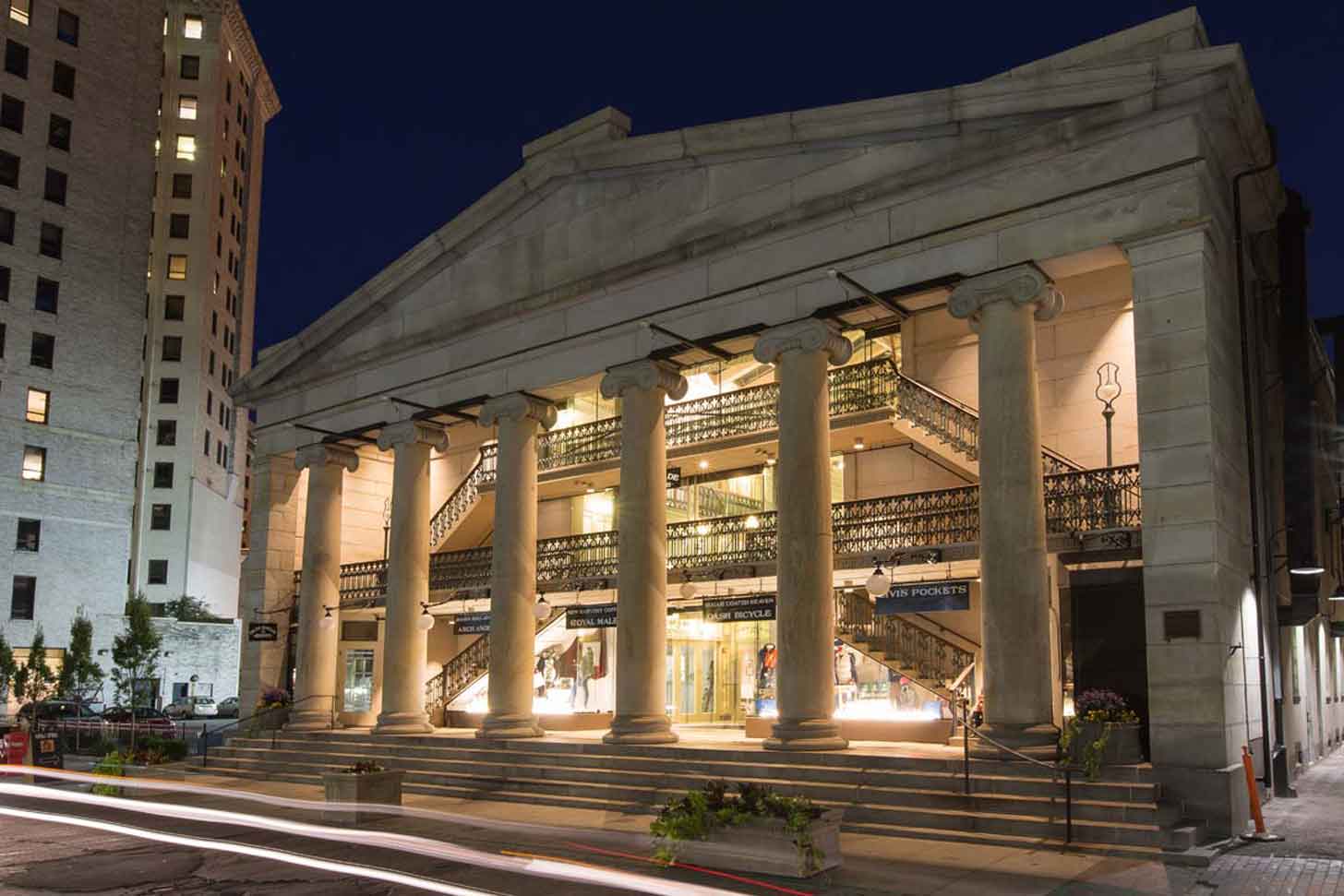
Providence, Rhode Island’s The Arcade was 188 years old when it ended its run as America’s oldest shopping mall. Instead of letting the classical Greek structure (surprisingly beautiful for a mall) fall into disarray, developers turned it into 48 micro-apartments.
“It’s cool to be part of such a historic building and knowing that every single one of these units used to be a shop of some kind,” resident Amy Henion told CNBC.
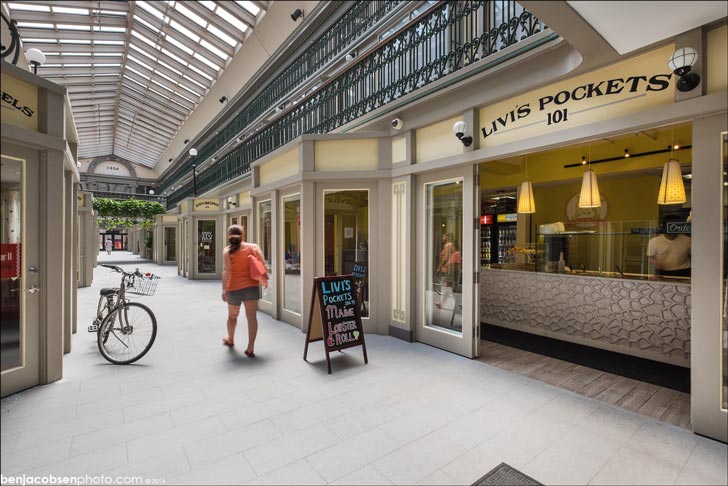
On the bottom floor, there are offices and retail spaces that both offer built-in amenities for residents and boost the small business economy.
“I get my hair cut in the salon downstairs, and there's little lunch spots, so you don't even have to leave the building,” Henion said. “There's a bookstore downstairs and they'll do author talks in the private lounge area.”
The lofts are definitely “micro,” but it’s a workable option for young adults living on their own — and rent costs about $550 a month.
“When residents need more space than their cozy individual units offer, they can take advantage of a game room, TV room, and porches,” Northeast Collaborative Architects, the designers of the development, said in a statement.

“The Arcade has other common amenities including on-site laundry, bike storage, locked basement storage units, and a parking garage across the street.”
For Providence’s Gen-Z and millennial population, the development serves as an affordable housing option as they jumpstart their careers.
“Many tenants are artisans, and the project functions as an incubator for young professionals,” Northeast Collaborative Architects added.
In a time where affordable housing is scarce, The Micro-Lofts at the Arcade make a positive case study for creative reuse.
“Providence has shown that bold vision and creative planning can be an economic boon to a city,” former Mayor Jorge Elorza said when the development opened.
“From creating more downtown housing to providing retail space for local entrepreneurs, to rehabilitating a beautiful and historic building — the project is a great example of economic development that just works.”
You may also like: This building used to be a Japanese rice cracker factory. Now, it's home to 200 people
A version of this article was originally published in The 2026 Home Edition of the Goodnewspaper.
Header image by Ben Jacobsen for Northeast Collaborative Architects
The site of William Barton Rogers Middle School in Boston’s Hyde Park neighborhood is now an independent senior living space designed specifically for members of the LGBTQ+ community.
It’s called The Pryde, and it’s open to any community members over 62 who qualify for affordable housing — though, right now, it’s 100% occupied.
The community was a nine-and-a-half-year project created by Boston’s LGBTQ Senior Housing Inc. and Pennrose Management, which worked on renovations to make the space fully accessible to seniors, while also retaining the building’s historic charm, like original chalkboards and bell systems.

Seniors live in rent-restricted studio, one- and two-bedroom apartments at various income tiers, and amenities include a landscaped courtyard, walking track, fitness center, laundry facilities, sunroom, gallery spaces, classrooms, and even a resident cinema.
“In regular senior housing, there’s a lot of hate. There's a lot of bias. Older LGBT people, seniors, a lot of 'em have to go back in the closet,” resident Eddie Whitman told GBH News. “This is a safe environment to be who you are. It was literally like hitting the lottery.”
In addition to a rainbow-striped gymnasium floor, The Pryde’s pride is on display in every corner. It includes an adult learning library and art classroom, which hosts exhibitions curated with the Boston LGBTQ Museum of Art, History, and Culture. There is also a “Portraits of Pride” photography project that celebrates LGBTQ+ leaders on display throughout the facilities.
On-site supportive services also include LGBTQ+ programming and events, with offices for LGBTQ Senior Housing and the 54th Regiment on location.

“Together, these spaces create a vibrant hub for both residents and the broader community — a place to learn, celebrate, and belong,” LGBTQ Senior Housing writes on its website.
For Pennrose, building LGBTQ+-affirming housing is not a one-off endeavor. The firm’s CEO Timothy Henkel said the company owns and operates other senior housing communities for LGBTQ+ seniors in Cincinnati and proposed a similar project in Denver.
“It will always be our belief that every person, regardless of how they identify, deserves a safe living environment where they can be their most authentic self,” he told Multi-Housing News.
Inclusivity is simply a core value of his company’s portfolio.
“Shifts in the national political landscape and social issues don’t impact the type of housing we develop,” Henkel added. “We look to our local partners and communities to tell us where there is a need and who we can serve with high-quality housing.”

For residents at The Pryde, their needs have finally been met. In addition to providing much-needed housing support, the community offers safety some have never experienced until now.
“I’m a long-term HIV-AIDS survivor, and by the time I was not quite 40, I had to stop working. So I never had the opportunity to save for retirement. I didn't think I'd ever live to see retirement. From my generation, we lost so many people. I don't know why I’m still here. My mother used to say that God had plans for me,” Whitman told GBH News.
“I think on some level, if there’s a higher power, I believe that he did put me here to be with people,” he added. “That’s one of the reasons I live at Pryde … is when the day comes, I hope to be here and to know that I’m safe and that I’m loved.”
You may also like: 'Gayborhood' of affordable homes built for LGBTQ+ elders in Texas
A version of this article was originally published in The 2026 Home Edition of the Goodnewspaper.
Header images courtesy of LGBTQ Senior Housing/Facebook
When homeless shelters allow people to stay with their dogs and other pets, more unhoused people become more willing to stay in a shelter.
That’s what my team at the University of Southern California’s Homelessness Policy Research Institute learned when we evaluated California’s Pet Assistance and Support Program.
California’s Department of Housing and Community Development established this pilot program in 2019. Its goals were straightforward: to make homeless shelters more accommodating to people with pets — mostly dogs — so that people living on the streets don’t have to choose between staying in shelters or abandoning their pets.
The program disbursed $15.75 million between 2020 and 2024 to 37 organizations across the state. The funding allowed shelters to build kennels or other pet-friendly spaces, provide pet food and supplies, and offer basic veterinary care. It also covered the costs of staffing and maintaining insurance required to operate pet-friendly shelters.

Evaluating the program
We did this evaluation in collaboration with My Dog Is My Home, a nonprofit that supports pet-inclusive housing and services for the homeless, and the American Society for the Prevention of Cruelty to Animals.
By all accounts, the program was a success.
We found that the program helped 4,407 people experiencing homelessness keep their pets while getting support. Many were able to enter shelters, and their animals received needed veterinary care. A total of 886 people ultimately moved into permanent housing with their pets — a higher success rate than the statewide average for homeless people in California.
Theoretically, this funding should have reduced the number of pet owners living on the streets. Yet since 2019, the year the program began, the number of homeless people in Los Angeles with dogs and other pets has increased.
I’ve seen this change firsthand.
Since 2017, I’ve led the USC research team that produces the annual homeless count estimates for Los Angeles. The U.S. Department of Housing and Urban Development requires this exercise for any city seeking federal funding for homelessness services.
One of the questions my team asks when interviewing thousands of homeless people each year is whether they have any pets.
Before the pandemic, we generally found that roughly 1 in 8 people did. We also found that nearly half of homeless pet owners had been turned away from a homeless shelter because it couldn’t accommodate their animal.
Despite programs like California’s Pet Assistance and Support program, my research team has found that the share of people living on the streets of Los Angeles who say they have a pet increased to roughly 1 in 5 by 2025.

Need for more pet-friendly programs
We still don’t know why the share of homeless people with pets has gotten so much larger.
It could be that rising housing costs, which is the main driver of homelessness, is pushing more pet owners into homelessness. Or, perhaps more homeless are adopting pets to deal with their social isolation and loneliness, two common conditions for people with nowhere to go.
Either way, proposed cuts by the federal government to affordable housing and homeless services will only make matters worse.
The number of homeless people in Los Angeles has fallen by more than 4% since 2023 to just over 72,000 people in 2025. But based on my research findings, I would expect the number of people living on the city’s streets — with and without pets — to rise over time unless more affordable housing becomes available.
And growth in the homeless population may be hard to avoid without more efforts like California’s Pet Assistance and Support Program — on a larger scale than the pilot we studied.
This article was written by Benjamin F. Henwood from the University of Southern California, and was originally published on The Conversation.
Header image by Olah Renáta Adrienn on Unsplash

Across Europe, many banks alongside motorways are planted with grass to stabilize soil and keep roadside landscapes tidy.
But there may be a better solution. Already, some countries are experimenting with using moss in built-up areas to absorb air pollution. As countries search for nature-based solutions to climate and environmental challenges, roadside moss is starting to attract attention. So could mossy motorway banks work?
Moss could offer environmental benefits over grass, from trapping air pollution to slowing rainwater runoff during heavy storms.
Mosses are small plants that grow without roots or flowers. Instead of drawing nutrients from soil like most plants do, they absorb water and minerals directly from the air. They can grow in thin soils, shaded areas, and exposed surfaces where grass often struggles.
Once established, moss also requires very little maintenance. Unlike grass, moss grows slowly and stays low to the ground. This means roadside moss would require far less mowing, potentially reducing labor and maintenance costs along thousands of kilometers of roads.
Moss and air pollution
One of moss’s most fascinating features is its ability to absorb substances from the atmosphere. It can accumulate pollutants such as heavy metals.
Scientists have used moss for decades as a bioindicator — a living organism used to monitor environmental pollution. Experimental observations have shown that moss can also exhibit visible physical responses to air pollution. For example, moss exposed to highly polluted environments has been observed to change color from fresh green to brownish.
Across Europe, the European Moss Survey uses moss samples to track air pollution levels in dozens of countries.
Research shows moss can capture pollutants, including nitrogen compounds and particulate matter, both of which are produced by traffic emissions. If moss grows beside busy roads, it may therefore help capture some airborne pollution before it spreads into surrounding ecosystems or nearby communities.
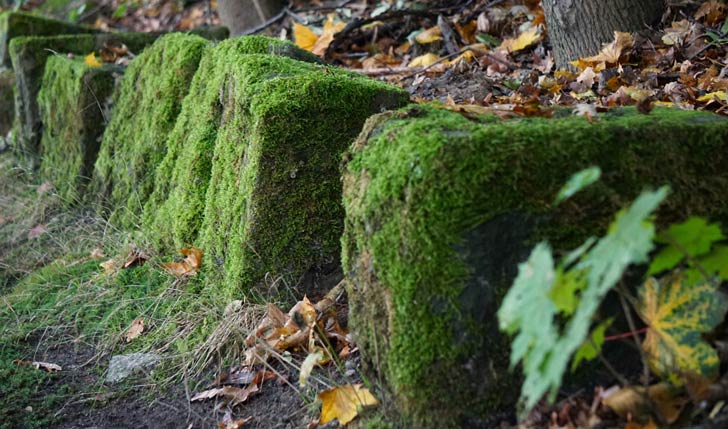
Another potential benefit involves water. Many moss species act like natural sponges. They can absorb several times their own weight in water and release it slowly over time.
On roadside slopes, this property could help slow down rainwater runoff during heavy storms. Fast runoff from roads and embankments can overwhelm drainage systems and contribute to flash flooding.
By temporarily storing water, moss could reduce the speed at which rainwater flows into roadside drains. The United Kingdom, for instance, has one of the densest road networks in Europe, and many major roads run close to towns and residential areas. Vegetation that can reduce pollution and water runoff could therefore provide environmental benefits.
Roadside vegetation can also play an important role in biodiversity. Road verges and embankments form long, connected strips of habitat that can support insects, mosses, lichens, and other small organisms. In landscapes heavily shaped by agriculture or urban development, these narrow corridors can help species move between fragmented habitats.
Moss-dominated banks may provide microhabitats for invertebrates and microorganisms that depend on moist, shaded environments. Although research on mossy roadside systems is still limited, increasing structural diversity along road verges could enhance ecological connectivity and contribute to wider efforts to support biodiversity in managed landscapes.
Moss thrives in cool, damp climates with frequent rainfall, conditions common across much of the U.K., for instance. Shaded roadside slopes, especially where roads cut through hillsides or woodland, also favor moss growth. In such places, grass often struggles because soils are thin and sunlight is limited.
Best in shade
Despite its potential advantages, moss would not be a universal solution.
One problem is it grows slowly. Establishing a stable moss cover on new embankments could take several years. Also, roadside environments can be harsh. Salt used for winter road de-icing can damage many moss species, and prolonged dry conditions may limit growth on exposed slopes.
Another issue is pollutant accumulation. Moss can absorb airborne pollutants, but these substances remain stored within the plant material. Over time this may require monitoring or periodic removal. Finally, moss generally prefers shaded and moist environments. On sunny or dry motorway banks, other vegetation may still be more suitable.
Road networks occupy vast areas of land, yet roadside vegetation is often managed simply to keep it short and tidy. Instead of treating roadside land as space that just needs mowing, it could be designed to capture pollution, manage water, and support biodiversity.
Moss will not transform highways overnight. But small ecological changes along thousands of kilometers of roads could add up to meaningful environmental benefits. Sometimes, even plants at the edges of our motorways may help tackle pollution, flooding, and climate change.
This article was written by Pedram Vousoughi from the University of Limerick, and was originally published by The Conversation.
Header Image by Stepan Konev on Unsplash

While most detection dogs are known for their ability to sniff out drugs and other illegal substances for law enforcement, these skilled canines are a growing resource in a variety of industries.
From sniffing out illegally trafficked wildlife and endangered or invasive species to helping find lost family pets, the dog job market is one to keep an eye on.
In Saskatoon, a city in Saskatchewan, Canada, nearly 3-year-old golden retriever Taffy is paving the way for her species as an electronic storage detection dog, or ESD, for the Saskatchewan police.
Taffy’s job, as part of the force’s Internet Child Exploitation unit, is to locate hidden electronic storage devices, specifically in searches for evidence in child exploitation cases.

“Digital evidence plays a significant role in internet child exploitation investigations,” Staff Sergeant Tim Failler, coordinator of the Saskatoon Internet Child Exploitation Unit, said in a statement.
“Even the smallest device can hold thousands of images, videos, and messages. The introduction of Taffy as a resource for investigators greatly increases our ability to locate those devices and hold offenders accountable.”
According to a spokesperson for the Saskatoon police, ESD’s are trained to detect the chemical compounds commonly found in electronics like cell phones, USBs, hard drives, SD cards, laptops, and other digital media.
Taffy came to the Saskatoon police by way of the nonprofit OUR Rescue, a group that works with law enforcement to combat human trafficking and child exploitation through the use of dogs like her.
The group helps train ESD dogs and donates them to law enforcement agencies, and covers the costs of annual recertifications, further training, and more. According to CBC, the group also pays for Taffy’s treats.

OUR Rescue has sponsored 142 ESD placements in seven countries, including 38 states in the U.S.
Taffy’s handler, Saskatoon police Detective Bryon Sommacal, said dogs like her play an important role in finding evidence humans may not see, and help speed along the process in large search areas.
“Their noses are extraordinary parts of their anatomy,” he told CBC.
“All these dogs are used, basically, to make sure we don’t miss anything,” he continued in a video.
In addition to her primary work to locate electronic devices, Taffy also serves as a deep therapy support dog for victims of crime and members of the police force.
“Since beginning her work, Taffy has fulfilled each function of her role,” a statement from the Saskatoon police said. “Locating hidden electronic devices during the execution of search warrants, providing comfort to a child victim of a sex crime, and, most recently, supporting members of the SPS following the sudden loss of a colleague.”
Even though she’s on the prowl for evidence of a crime, Taffy remains a very good girl.
"You can see her demeanor [is] so calm … she’s just so nice to be around,” Failler told CBC. “It helps people be more comfortable in an uncomfortable situation.”
You may also like: Shelter dog makes history as first-ever 'morale dog' stationed on a US Navy ship
Header images courtesy of Saskatoon Police
Imagine you’re a server at a busy restaurant that requires you to wear a form-fitting, polyester shirt as part of the uniform. When a hot flash hits, you are a sweaty mess. You really wish your employer would let you wear a cotton T-shirt instead.
If you live in Philadelphia, relief is on the way.
Beginning Jan. 1, 2027, the city of Philadelphia will prohibit discrimination on the basis of menstruation, perimenopause, and menopause, and it will require employers to provide reasonable accommodations to employees for needs related to these conditions.
Perimenopause is the transitional period before menopause, marked by fluctuations in the hormones estrogen and progesterone. Menopause marks the end of the reproductive years, defined by not having a period for 12 consecutive months.
Both life stages are having a moment.
Social media is rife with influencers and life coaches selling supplements to relieve night sweats, clear brain fog, and sustain libido. Many encourage strength training, walking with weighted vests, hormone replacement therapy, and creatine, a compound that works to add muscle mass.
As a law professor at Villanova University, I teach and write about employment law and gender discrimination. I often focus on solutions to real-world problems for women and girls in the workplace.
Recently, I’ve taken up strength training, protein shakes, and needlepoint. I’m clearly leaning into my identity as a woman over 50.
I believe the Philadelphia ordinance is a model for other cities and states to provide relief for workers suffering from symptoms of hormonal cycles and changes while balancing the needs of employers.
Following Rhode Island’s lead
Women’s health advocates have brought attention to the lack of training for medical professionals on the issues girls and women face resulting from menstruation, perimenopause, and menopause.
In 2022, for example, a national survey of 145 OB-GYN residency program directors found that fewer than one-third of programs included curriculum on menopause. This is despite the fact that every single woman, if she lives long enough, will go through it.
While some progress has been made in the medical field, there has been even less when it comes to workplace protections.
To address this gap, in July 2025, Rhode Island became the first state to prohibit discrimination on the basis of menopause. Rhode Island also requires employers to provide reasonable accommodations to employees experiencing menopause-related symptoms.
The Philadelphia City Council said: “Hold my weighted vest.”
In December 2025, the council amended the Philadelphia Code to prohibit discrimination on the basis of menstruation, perimenopause, and menopause. For example, if an employer fires an employee because of heavy menstrual bleeding resulting in leaking, that would violate the new law.
In addition, the City Council amended Section 9-1128, which requires employers to provide reasonable accommodations for needs related to pregnancy, childbirth, or a related medical condition. That list now also includes “symptoms of menstruation, perimenopause, or menopause” — provided the employee requests the accommodation, and it does not cause an undue hardship for the employer.
Experts in medicine and public health testified before the Philadelphia City Council and described the physical and emotional symptoms women and girls may face during these life stages. These symptoms include abdominal or pelvic cramping, fatigue, mood changes, headaches, irregular menstrual cycles, hot flashes, sleep disturbances, and cognitive changes.

One expert noted that 23% of women who are experiencing perimenopause have symptoms severe enough to “interfere with their daily functioning and work performance.”
Employers will not have to accommodate every symptom, only those that “substantially interfere with an employee’s ability to perform one or more job functions.” Although the new ordinance does not define “substantially interfere,” the intent is to require accommodations when a worker cannot perform some part of her job — for instance, if period pain is so high that a retail worker cannot stand for their shift, or if hot flashes prevent a food service worker from staying in the kitchen.
Clear and explicit protections
In light of existing anti-discrimination laws, why is such a targeted law necessary?
Federal, state, and local laws already prohibit employers in Philadelphia from discriminating because of sex. They also require employers with 15 or more employees to provide reasonable accommodations for pregnancy, childbirth, and related medical conditions.
Federal, state, and local laws also prohibit employers from discriminating against people with disabilities and require reasonable accommodations to allow them to perform the essential functions of the job.
But menopause and menstruation protections do not clearly fall within these protections.
There are a few cases across the country in which an employee successfully challenged their firing for a condition related to menstruation. But other employees have lost cases under federal law when courts ruled that menstruation is not covered by the Pregnancy Discrimination Act or Pregnant Workers Fairness Act.
Further, people seeking protection under the Americans with Disabilities Act for menstruation complications such as endometriosis, which occurs when tissue grows outside of the uterus and often causes severe pain during menstrual cycles, face an uphill battle.
Instead of requiring employees who experience these sorts of symptoms to fit their cases into other statutes, Philadelphia’s new ordinance makes protection clear and explicit.
Reasonable accommodations
During a hearing on the proposed legislation, council member Nina Ahmad, who introduced the bill, noted that the accommodations envisioned are not costly. She and other council members gave specific examples: Access to bathrooms and drinking water, brief flexible breaks, breathable uniforms, temperature control to manage hot flashes, fans or ventilation, ability to layer clothing, stocked period products, and brief scheduling flexibility.
The type of accommodations necessary will change depending on the employee’s industry. Many women who experience symptoms can already decide what they wear to work, when they take a bathroom break, and maybe even whether to work remotely.
However, for workers in retail and service, or other workplaces with strict break policies, the ability to request a bathroom break or to drink water during a shift could significantly ease symptoms.
Just as the accommodations required will differ by job and industry, the employer’s ability to demonstrate undue hardship will also differ. Under the Philadelphia Code, undue hardship is an individualized assessment that considers such factors as the cost of the accommodations, the size of the workforce, and the employer’s financial resources.
The devil is in the details, of course, but come January 2027, relief should be on the way for workers who are just trying to do their jobs while suffering from symptoms caused by menstruation, perimenopause, and menopause.
This article was originally published by Ann Juliano from Villanova University, and was originally published on The Conversation.
Header Image by Sora Shimazaki via Pexels

Fred Rogers’ legacy continues to live on.
About 25 years after the final episode of “Mister Rogers’ Neighborhood” aired, and 23 years since Rogers himself passed away, his iconic show is getting a new home.
Fred Rogers Productions and Little Dot Studios are bringing “Mister Rogers’ Neighborhood” to a dedicated YouTube channel this summer.
While the show has been available to watch via cable reruns on PBS, Pluto TV, and a selection of episodes on PBS Kids and Amazon Prime Video, this is the first time the show will have its own dedicated home on YouTube. Here, viewers can watch select episodes — and new, original shorts, clips, and compilations — for free.
Fred Rogers Productions and Little Dot Studios hope it will make Rogers’ mission of kindness more accessible for adults and children alike.

“Mister Rogers’ Neighborhood continues to inspire viewers young and old across four generations,” Paul Siefken, president and CEO of Fred Rogers Productions, said in a statement.
“We’re excited to partner with Little Dot Studios on this new YouTube Channel that will make the wonder, kindness, and human connection of the series more discoverable and accessible than ever.”
“Mister Rogers’ Neighborhood” aired from 1968 through 2001 with 895 episodes across 31 seasons. The show is unavailable in its entirety anywhere, and it’s unclear how many episodes will be added to the new YouTube channel, but viewers can expect to see a rollout in summer 2026.
“Built on the legacy of Fred Rogers, Fred Rogers Productions continues to set the standard for thoughtful, values-driven children’s media,” Ben Arnold, co-managing director of Little Dot Studios U.S., told Deadline.
“As huge fans of Mister Rogers’ Neighborhood, we’re honored to bring our digital distribution experience to this partnership, building an intentional, audience-first presence on YouTube where these iconic stories can reach the next generation.”
You may also like: 18 Best Books By (and About) Fred Rogers
Header image courtesy of Fred Rogers Productions
Tony Stephens was just 15 years old when he went blind, but as a lifelong reader, he didn’t let the experience deter him.
“[I had] a hard time learning braille, but I had my big, bulky talking book playing machine from the National Library Service,” Stephens told PBS.
“They would send out a cassette of all the new books that were being released, and it was kind of an allegory of the cave,” he said. “Your mind just exploded with all the information that was suddenly not at your fingertips, with the struggling braille skills that I had, but at my ears. And I could just whisk away the night, falling asleep, listening to all kinds of fiction and nonfiction.”
Today, Stephens works as the assistant vice president for communications at the American Foundation for the Blind, the same organization that created the first audiobook.
In 1932, Frank L. Dyer of the AFB created the “talking machine record” with the explicit purpose of recording readings of books for the blind. That technology later became the first modern LP.
“I think they would be excited to know that this thing they created is still not just alive, but it's on everybody's phone. Everybody on their commute listens to audiobooks.”
For Stephens, the history of the audiobook is a perfect example of the “curb cut” effect, where innovations designed for people with disabilities ultimately benefit everyone.
Over the last 10 years, the share of US adults who listen to audiobooks has grown by more than 100%.
“I think the audiobooks really represent not just a sense of equality or access, but really just a door, a door of opportunity,” Stephens said. “The opportunity to learn. The opportunity to dream, the opportunity to grow, all with your eyes closed in the comfort of your own room, just listening, listening to the world around you.”
Header image via EGO AGENCY
Every day the Good Good Good team collects the best good news in the world and shares it with our community. Here are the highlights for this week!
If you want to get good news in your inbox every day, join the Goodnewsletter — the free daily newsletter designed to leave you feeling hopeful.
The Best Positive News We’re Celebrating This Week —
Wales became the first part of the United Kingdom to mandate solar panels on new buildings
When new building regulations come into effect in March 2027, Wales will officially be the first part of the United Kingdom to mandate solar on new buildings.
The new regulations don’t explicitly mandate solar panels, but require “a system for renewable energy generation” to be onsite, and experts believe it will lead to rooftop solar “in virtually every circumstance,” given that it’s the most functional and affordable option.
There are also exceptions to prevent uneconomical and impractical systems from being installed just to be in compliance — for example, systems must be able to generate at least 720 kWh per year, and if that’s not possible, the requirement won’t apply.
Why is this good news? So many buildings being constructed have unused space on top of them that could serve a functional purpose: generating clean energy and helping expedite the clean energy transition. Utilizing clean energy comes with a myriad of benefits.
→ Read more
Trump suggested dyslexic people can’t lead. This famous president contradicts that claim
→ Read more
Inspired by her three autistic siblings, an occupational therapist created a sensory-friendly hijab
When Najma Omar was attending the University of Minnesota to pursue a career in occupational therapy, her professor asked her to imagine tools that hadn’t yet been invented to help people, but should exist.
That’s when Najma thought of her own family. Among the 10 children, three are autistic, and all of them have different sensory and communication needs. In particular, she thought of her younger sister Nasteho, 17, who struggled with wearing her hijab.
So she invented a better one. Designed with lightweight, stretchy fabric and subtle ear padding, Najma’s SereniHijab helps reduce overwhelming sounds while remaining breathable and wearable for everyday use.
→ Read more
To celebrate World Tuberculosis Day, John Green is sending exclusive poetry readings to people
It’s been a year since John Green’s latest nonfiction book, “Everything Is Tuberculosis,” hit shelves, but he’s been a vocal supporter of global efforts to eradicate the disease for years.
Green’s online shop, Good Store, which he runs with his brother, Hank, sells everyday goods, including Keats & Co coffee and tea, which “donates 100% of the profit to fight tuberculosis in impoverished communities.”
In honor of World Tuberculosis Day, Green is sweetening the deal even more by sending anyone who subscribes to Keats & Co ahead of World Tuberculosis Day an exclusive video reading of Green’s favorite Keats poem, “Ode on a Grecian Urn,” and why he likes it so much.
Why is this good news? Tuberculosis is entirely curable; we just, as Green says, “don’t do a good job of getting the cure to people who need it.” Keats & Co and Good Store are changing that, and giving fans and supporters a chance to participate in this life-saving work.
You may also like: John Green announces $1M annual donation to fight his (least) favorite disease
For the first time ever, part of the ocean now has legal personhood. What does it mean for waves to have rights?
→ Read more
Ocean Cleanup has removed 110 million pounds of plastic from the world’s oceans
When he was just 16, Dutch teenager Boyan Slat was scuba diving in Greece and noticed more plastic in the water than fish. Within two years, the Slat founded Ocean Cleanup, a nonprofit dedicated to removing plastic waste from the world’s oceans.
Using massive U-shaped floating barriers and autonomous drones, Ocean Cleanup has collected a record 110 million pounds of plastic from the world’s oceans since 2013, marking a major milestone in efforts to combat marine pollution.
The Ocean Cleanup’s achievement highlights rapid progress driven by improved technology and more strategic deployment in high-density pollution zones. Much of this success stems from better data identifying key sources of ocean plastic, including rivers responsible for the majority of waste entering seas.
→ Read more
Mexico’s monarch butterfly population has increased by 64%
Every fall, millions of monarchs migrate nearly 3,000 miles from Canada, across the U.S., to the forests of western Mexico. Now, new figures from the World Wildlife Fund show that the area occupied by monarchs grew to 7.24 acres of forest, a 64% increase from the 4.42 acres the previous winter and the most extensive coverage since 2018.
Scientists say the remarkable increase offers a glimmer of hope for the insect, which has been considered at risk of extinction. It’s also proof that conservation efforts have been working.
There’s also been a significant reduction in forest degradation within their critical winter habitat.
Why is this good news? Habitat loss from deforestation, the climate crisis, and the use of herbicides have disrupted the monarchs’ breeding and migratory patterns, and led their numbers to plummet in the past three decades, declining by more than 80% since the 1990s. This is a sign that things are headed in a better direction.
The best books, podcasts, and movies that will help you understand the global housing crisis
→ Read more
11-year-old designs color-changing glasses to help others with dyslexia
Millie, an 11-year-old girl from Greater Manchester, has long struggled with dyslexia, a learning disorder that gives her headaches and causes words to move on the page as she reads.
Inspired by her own experience, she created new color-changing glasses designed to help people read more comfortably and reduce visual stress.
Her idea, first imagined at age eight, recently stood out among more than 70,000 entries to win a major engineering competition. Millie hopes to secure enough funding to bring the glasses to market one day.
→ Read more
Neighbors used a tractor to save a 98-year-old Hawaiian woman from her flooding home
The floods have swept homes from their foundations, littered beaches with debris, and covered entire neighborhoods in a thick, volcanic mud. No deaths have been reported, but hundreds have been rescued from their homes.
That includes a 98-year-old woman, who neighbors carefully loaded into the bucket of a tractor as her home was flooding around her.
The rescue was captured in a now-viral video that stopped thousands in their tracks, with comments saying things like, “This is what happens when people move with heart. No waiting, no division, no ego; just love in action.”
Why is this good news? The worst flooding to hit Hawaii in two decades has swept homes from their foundations, littered beaches with debris, covered entire neighborhoods in thick mud, forced thousands to leave their homes, and knocked out power across the islands. So many people need help and relief — and everyday helpers are stepping up to take care of each other.
→ Read more
Local Hawaii divers clean up flood debris on beaches: ‘When the government won’t care for our people, we will’
→ Read more
Cigarette smoking among U.S. adults has dropped to a record low 9.9%
In 2024, the U.S. adult smoking rate fell below 10%. In 1964, smoking in adults hovered at 42% and then began declining after major public health campaigns discouraged the habit.
The steady reduction of smoking is considered one of the most significant public health successes in recent history, marking a historic low once thought impossible.
That decline has also accelerated in recent years, largely driven by younger generations who are less likely to start smoking, and it comes with major health gains. A 2025 report from the American Cancer Society estimated that reduced smoking resulted in nearly four million averted deaths from lung cancer between 1970 and 2022.
Nearly one million square kilometers of ocean are now fully protected in Chile
In a landmark moment for ocean conservation, Chilean President Gabriel Boric signed a decree granting full protection to 360,000 square kilometers of water surrounding the Juan Fernández Archipelago — bringing the total fully protected area in the region to 946,571 square kilometers.
It is now the third-largest fully protected marine area in the world, and means Chile has surpassed 50% protection of its exclusive economic zone.
The new designation came about after residents submitted a proposal to expand conservation areas around the archipelagos, which support an expansive array of marine life.
Why is this good news? As other countries around the world, like the U.S., move to remove protections from its oceans and waterways, Chile is positioning itself as a global leader and example to follow. The new protections will safeguard habitat for whales, dolphins, seabirds, seals, octopus fish species, and so much more.
These boundary-pushing runways show what the fashion industry can achieve when it stops chasing perfection
→ Read more
After a woman realized her DoorDash driver was a senior, she raised $510K to help him retire
When Brittany Smith ordered Starbucks through DoorDash, she wasn’t expecting to see doorbell footage of an elderly driver struggling to climb stairs while delivering her order. Upon seeing the recording, the Tennessee local soon tracked him down to give him a $200 tip in person.
That was when Richard, who is 78 years old, told her he had previously been retired, but was forced to sign up as a delivery driver after the price of his wife’s medication ballooned out of control.
Soon, Smith launched a fundraiser to help ease his financial burden. The campaign quickly gained traction, drawing more than 12,000 donations and surpassing $500,000 in a matter of days.
→ Read more
More good news of the week —
Greece launched an animal airlift program to rescue pets and their owners from the war in Iran and surrounding areas. The government-organized Aegean flight from Abu Dhabi in the United Arab Emirates carried 45 pets and 101 people.
Activists are using sports mascots to fund conservation of real animals. A new study found that 727 professional sports teams across 50 countries use wild animals in their branding. The most popular species — lions, tigers, and wolves — face threats in the wild.
A state-funded program is reducing homelessness in California by allowing people to bring their pets to shelters. The program helped over 4,400 people get off the street — while also offering free veterinary care to their pets.
MIT researchers discovered that communities of ocean bacteria work together to consume biodegradable plastic. The study gives researchers a new understanding of environmental pollutants and the ways we can break them down.
A church in Colorado runs a monthly potluck where immigrant families can share traditional dishes with their neighbors. The “Charlas en la Cocina,” or chats in the kitchen, spotlight different cultures from Latin America and beyond, using food as a bridge between communities.
As ICE tensions rise, young Latinos are bringing social justice to the Catholic Church. New initiatives invite Catholics to practice solidarity by praying and advocating on behalf of migrants.
A new website calculates how many marine animals are saved every time you pick up trash. New research reveals what a “lethal dose” of plastic is for various marine animals, and now can help us better understand the impact of beach cleanup efforts.
A UK-based department store unveiled its adaptive clothing line designed by and for disabled people. The new items from Primark include features like magnetic zippers and buttons, loops that are easy to hold, pants with adjustable zips on the legs, a pouch for stoma bags, and more.
New study reveals that restoring mangroves could remove almost triple the amount of CO2 produced by cars in the U.S. every year. The restoration would also save $800 million in storm damage and protect 140,000 people from flooding.
A slave ship artifact will be returned to South Africa by the Smithsonian. The 33-pound timber piece was from a ship that is among the first known wreckage of such a ship that was recovered, in which enslaved Africans died.
Bruce Springsteen will perform 'Streets of Minneapolis' at St. Paul No Kings protest this weekend. Coming off a campaign with the ACLU in support of birthright citizenship, the rock icon will perform his latest resistance tune in Minnesota on March 28.
Pakistan’s people-led solar energy boom is easing the impact of the global energy crisis. Energy analysts say the country’s solar expansion has so far insulated the power sector from the worst of the energy market disruptions caused by the war in Iran.
A seven-year-old boy with cerebral palsy has become the first in the U.K. to trial a “bionic exoskeleton.” For the first time in his life, Asger was able to walk to school thanks to the wearable, adaptive technology.
Scientists discover hidden water beneath Mars that could have supported life. After analyzing preserved sand dunes on the red planet, researchers found signs that they formed in the presence of water.
The Quapaw Nation brought tribal land back to life in Oklahoma after mining operations turned it into a toxic wasteland. The 40-year effort was led by more than 6,000 tribal members and will likely continue for decades to come.
On a small Hawaiian island with no vet clinic, locals are stepping in to save pregnant cats and kittens from floodwaters. As devastating floods sweep across Hawaii, one small but determined nonprofit is stepping up for the islands’ most vulnerable animals.
Palestinian and Israeli mothers led dozens in a barefoot march for peace in the center of Rome. The mothers called for an end to violence and greater protection for children affected by the Israeli‑Palestinian conflict.
Florida banned Pride crosswalks, so a local chef filled her restaurant’s parking lot with rainbows instead. An Orlando restaurateur is being honored for her efforts to revive Pride-themed street art in honor of the victims of the Pulse nightclub shooting.
A tech entrepreneur used AI and RNA technology to create a personalized cancer vaccine for his dog. Although the vaccine was not a cure, it reduced his dog’s cancer by 75%.
The large tortoiseshell butterfly, once declared extinct, has made a comeback across southern England. Frequent sightings suggest that the species is re-establishing itself as a stable breeding population.
A hero detection dog just joined a police force to sniff out the hard drives of child abusers. Taffy is an electronic storage detection dog trained to detect the chemical compounds commonly found in electronics like cell phones, USBs, hard drives, SD cards, laptops, and other digital media.
An old Los Angeles funeral home was transformed into an apartment complex for homeless seniors. The chapel was listed as a cultural-historic landmark by the city of Los Angeles, and developers worked to ensure the new development would not infringe on the building’s preservation.
A new study suggests routine mammograms could be a tool to protect against a different silent killer. (Gifted link) According to the European Heart Journal, screenings for breast cancer can also flag the risk of heart disease, the leading cause of death in women.
Researchers developed new techniques to recover rare earth elements from mining waste and polluted water. These materials are essential for clean energy technologies such as electric vehicles and wind turbines.
Historical figures like Winston Churchill will be replaced by native wildlife on U.K. currency. Conservationists hope the change will bring attention to Britain’s “least-loved” wildlife – such as pigeons, gulls, and foxes.
It all started nearly four years ago when Michigan artist Andrea Zelenak had the idea to turn an old bait and tackle vending machine into something a little more meaningful.
In 2022, the artist, who is from the Detroit area, set up a refurbished, brightly colored vending machine on Monroe Avenue in Grand Rapids. She called it The Kindness Challenge.
Inside the machine were three different kinds of challenges that encourage people to extend kindness: Green is an easy challenge; yellow is a medium one; pink ones are the more difficult ones to execute.

Zelenak first received a grant to create the project from an organization in Grand Rapids. As the owner of what she calls “an encouragement shop” called Inkcourage, she knew she wanted to make doing good accessible to everyone.
“The idea is that one act of kindness can create a wave of kindness in a community,” she told ABC 13 News, “so I’m really just challenging people to do one small act of kindness in order to create this bigger wave.”
In 2026, the vending machine is still alive and well. Over the years, it’s traveled around Michigan, at art festivals and various retail and arts districts. Right now, it’s located in Detroit, right outside of Zelenak’s store.

“You can come up — it’s open 24/7 — so you can come any time you want, and grab a mystery item from the machine,” Zelenak said in a recent social media video. “It’s inspired by the butterfly effect, so the idea is that when you do one random act of kindness for somebody, it creates a ripple of kindness in your community.”
The machine works like any other vending machine, accepting cash, coins, and even tap to pay options. According to FOX17 in 2022, each item costs $3, with the funds all going back to create more kindness challenges.
What gets dispensed is an envelope filled with everything someone might need to execute an act of kindness.

Challenges might include giving someone in need a warm hat, sharing a stick of gum, writing a thank you note, or posting encouraging words in public.
In the years since the machine has been operational, thousands of people have participated. In a recent installation at an event called ArtPrize, Zelenak shared that over 3,000 acts of kindness had been dispensed, and she ran out of challenges during the event.
The machine gives out assignments, but Zelenak hopes it also inspires a bit of individual creativity.
“If somebody says something kind to you, you will remember that for maybe a week, or five years, or the rest of your life,” she told ABC 13. “So I really feel like these words are really powerful no matter what you do with it.”
Although these actions may seem small, Zelenak said, the scale of their impact may never be understood.
“The story goes, when a butterfly flaps its wings in Texas, it can set off a hurricane in Japan. One small action can create a ripple and lead to bigger, unpredictable things,” she writes on her website.
“A simple act of kindness can make a huge difference and create a wave of kindness. Kindness is magic. Don’t underestimate it.”
You may also like: NYC's first 'free food vending machine' offers eggs, meat, and fresh produce to people in need
Header images courtesy of InkCourage/Instagram
A new playground in Busan, South Korea is made from trash.
Seriously — Concrete Utopia, a play space and public art installation outside of the Museum of Contemporary Art Busan, was created by designer Hyuje Joo out of abandoned concrete tubes.

Joo’s project was designed to examine the environmental impact of concrete, a widely used construction material that is responsible for between 4-8% of global carbon dioxide emissions. The cement industry remains one of the most carbon-producing industries, producing more emissions than even the aviation industry.
So, using discarded concrete construction materials for a creative reuse project is a poetic way to depict this challenge.

“In response to the climate crisis and the material dominance of contemporary cities, the project addresses the condition of the ‘concrete city’ through the adaptive reuse of abandoned infrastructure,” designboom explains.
“Rather than introducing new materials, the installation reclaims discarded concrete pipes found in urban environments and reorganizes them into inhabitable play structures.”
Concrete Utopia contains rock-climbing walls, tunnels, slides, and other play structures that are stacked and positioned at varying angles, showing off an intentional spatial arrangement for the project.

The idea is that the play pavilion serves as a practical space for children — and adults — to enjoy, while also serving as a metaphor that invites visitors to imagine different ways to use construction waste to build cities and communities.
Joo’s work has long grappled with how to reimagine spaces and materials for a better future.

“The studio operates at the boundary of architecture, exploring new perspectives on everyday materials, objects, and spatial practices,” Joo’s website explains.
“Through installations, pavilions, and architectural projects, the work investigates material experimentation, sensory space, recycling, adaptive reuse, and architectural regeneration.”
Concrete Utopia achieves this mission well; inviting play and curiosity by way of materials that usually represent unyielding structure. By breathing new life into the cement pipes, Joo imagines something different.

“The studio treats architecture not only as building, but as a cultural and experiential medium, reinterpreting existing environments and revealing new meanings in ordinary elements of the built environment,” Joo’s website continues.
“By working across architecture, art, and research, the practice develops a distinct architectural language that merges concept, material, and spatial experience.”
You may also like: 'Smart building' inspired by endangered species cools and warms itself with 'flapping wings'
Header image courtesy of Hyuje Joo
Beloved PBS characters like Clifford the Big Red Dog and Arthur the Aardvark recently welcomed a new friend on their network: Carl the Collector. The fuzzy raccoon is the first autistic lead character in a PBS children’s series — and he’s voiced by Kai Barham, a 10-year-old autistic actor.
“It makes me happy that I am finally being represented in a show,” Barham told The New York Times. “I hope that people who are not on the spectrum will learn that autism is not like the stereotypes.”
The show, which is geared towards ages 4 to 8, is staffed by voice actors, writers, and directors who are autistic or have autistic family members. That first-hand experience guides the heart of the show, which tackles the idea that everyone on the spectrum behaves the same way.
“The stories overall are just human experience, stories for everybody,” said Zachariah OHora, who penned the children’s books that the series is based on.
“So much of the strategies and techniques that are used to support and help autistic individuals are really just extensions of good practice,” said Stephen Shore, an autistic professor of special education at Adelphi University who works as an advisor for the show.
He said that the show was created with autistic and nonautistic viewers in mind.

“I hope they learn more about each other, and that people from all parts of humanity, neurodivergent, neurotypical, neuro-some-other-category-that-we-haven’t-thought-of-yet, understand that we’re more similar than we’re different.”
On March 1, the National Academy of Television Arts & Sciences presented “Carl the Collector” with the Emmy Award for “Outstanding Public Service Initiative” at the 4th Annual Children’s & Family Emmy Awards in New York.
The show won the national award for its “excellence in public service efforts to raise awareness and/or marshal support for one or more worthy community causes.”
“‘Carl the Collector’ spotlights neurodiverse characters while exploring and celebrating the entire spectrum of humanity,” OHora said. “The world of Fuzzytown is designed to be a place where all viewers will see themselves or someone they know in it. We hope Carl and his friends will encourage empathy and understanding, and ultimately show that everyone benefits when we recognize and embrace our differences.”
A version of this article originally appeared in the 2026 Mental Health Edition of the Goodnewspaper.
Header image via Fuzzytown Productions
In the semi-autobiographical video game “Consume Me,” players step into the shoes of a cartoon heroine named Jenny.
But in this game, there is no dragon to slay or enemy to shoot. As players juggle schoolwork and chores, a more troubling challenge presents itself in the form of obsessive calorie counting.
The game was born from creator Jiao Hsia’s difficult transition from pre-med studies to game design at NYU, and her struggles with restrictive eating as a young teen.
Too often in media storylines, Hsia said, disordered eating is shown only in extremes. She hopes to detangle those myths and show the reality behind the situation.
“I feel eating disorders should not only be depicted in that degree of severity,” Jiao Hsia said. “Our aim was to depict how it’s not black and white. You don’t have to end up being rail thin to qualify as having an eating disorder.”

Due to its playful appearance, Hsia says the game is often dismissed because some assume a soft aesthetic translates to shallow gameplay, adding that it’s a meaningful game that mimics real life and brings trauma-informed interventions for users who may be struggling with disordered eating alongside its gameplay.
Instead of romanticizing dieting in a “cutesy” way, Consume Me highlights how these dangerous habits can quietly shape a young person’s daily life — and informs players on how they can seek care.
Kishonna Gray, a University of Michigan professor of technology, said that the game speaks to a struggle that many people might find hard to vocalize.
“We feel seen and connected when we play games like this,” Gray said. “No, we aren’t shooting anyone. It’s actually a part of the healing arsenal, and this is where games like this add so much value to human life.”
A version of this article originally appeared in the 2026 Mental Health Edition of the Goodnewspaper.
Header image via Jenny Jiao Hsia