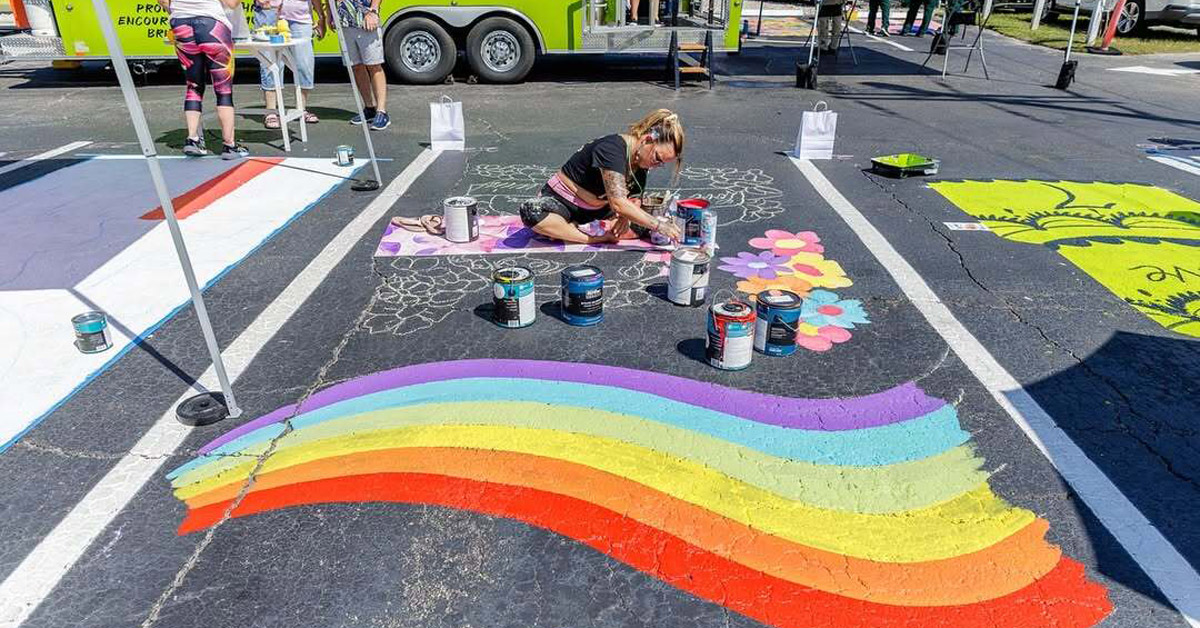
In August 2025, Florida Governor Ron DeSantis ordered the removal of about 400 “non-standard” pieces of street art — most of them rainbow, Pride-themed crosswalks and murals — even though they all received state approval when they were installed.
The new policy came to an inflection point when the DeSantis administration painted over a rainbow-colored crosswalk outside of what used to be Orlando’s Pulse nightclub, where 49 people were killed in a 2016 shooting.
In response, community members repainted the tribute themselves, and many other municipalities attempted to stand their ground and resist the removal of colorful crosswalks and other street installations. But with the threat of removing state funding, most cities have complied in the months following.
But that does not mean communities have accepted the erasure.
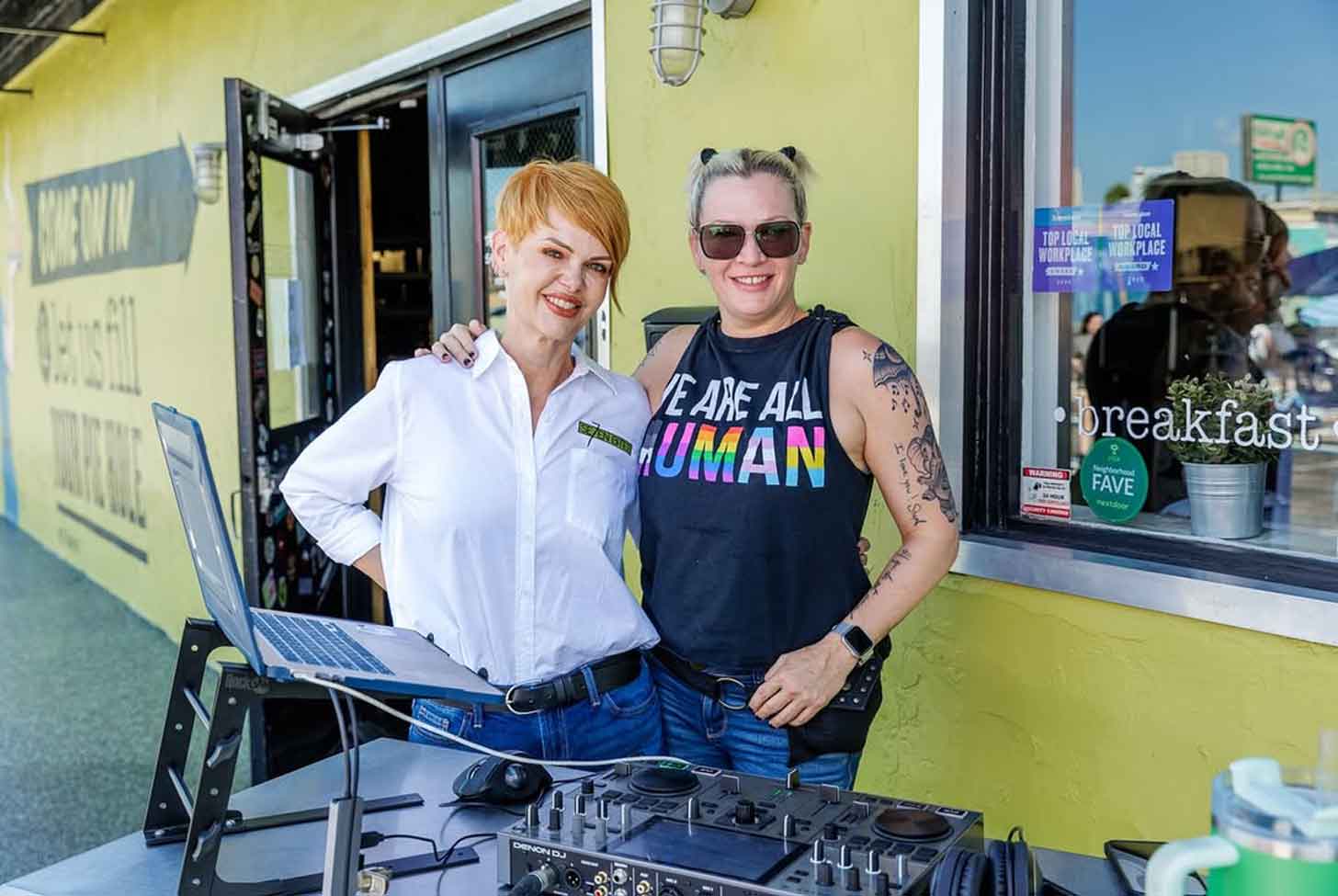
One resister leading the charge is Trina Gregory, owner of Orlando restaurant Se7enbites.
When the mandate came from DeSantis’s office, Gregory put out a call for an event called “Parking Spaces for Pride: A Rainbow Connection.”
“Life is so fleeting and too beautiful to let bad moments ruin our joy,” Gregory wrote on social media. “So we are celebrating community instead!”
The sentiment came with an invitation for people to use the Se7enbites parking lot — a private property — to paint affirming LGBTQ+ themed murals that will cycle out each year moving forward.
“Art has always been a form of resistance and healing,” Gregory told the Associated Press in September. ”If they want to erase symbols of pride and acceptance, then we’ll create even more of them. This isn’t just about paint; it’s about community, visibility, and love.”
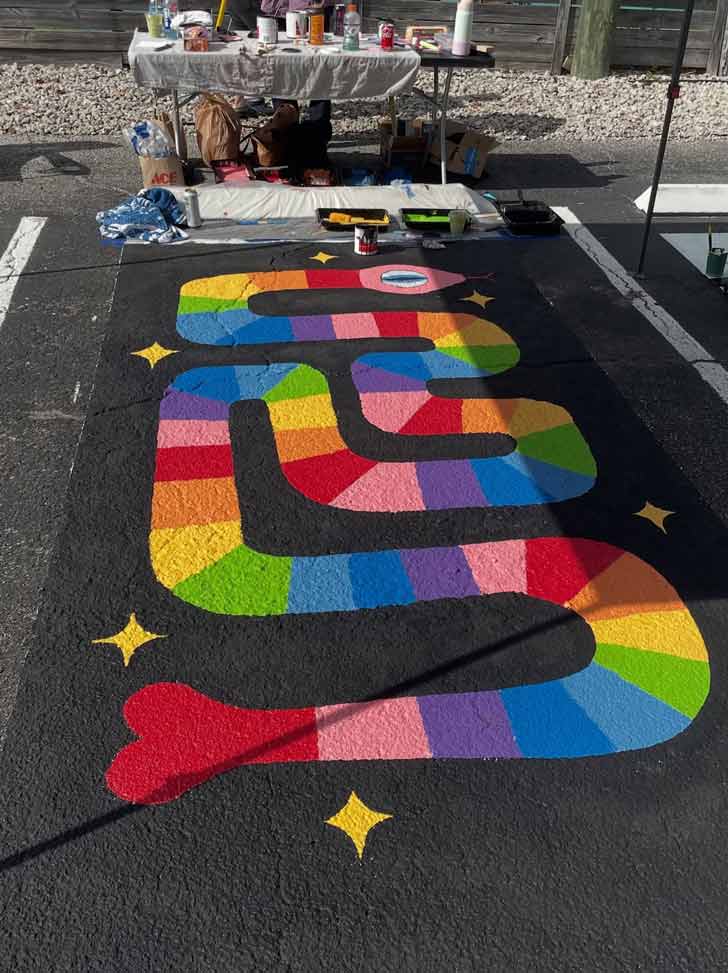
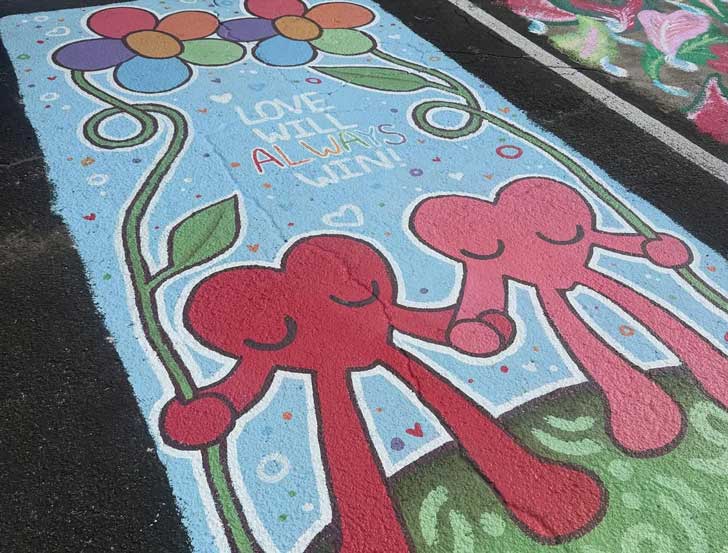
Over 1,000 people expressed interest in Parking Spaces for Pride, and it turned into a lively event with music, food trucks, donations for locals in need of essentials, and volunteers helping to bring murals to life. While there were 49 parking spaces painted, a number that symbolizes each life lost in the Pulse Night Club shooting, Gregory said it is more than a memorial.
“It was and is most certainly a remembrance of the things that happened,” Gregory told the Orlando Sentinel, “but I was thinking beyond that. I was thinking about joy, about bringing joy back.”
She added that she did not want to downplay the loss of the original crosswalk but instead wanted to give people an alternative, or a way to alchemize their feelings in a new, joyful tradition.
“Being out in my community and pulling art straight from our hearts to share with each other was such a wonderful and very special moment to be a part of,” one artist, who goes by Tiger Eggs, shared on social media.
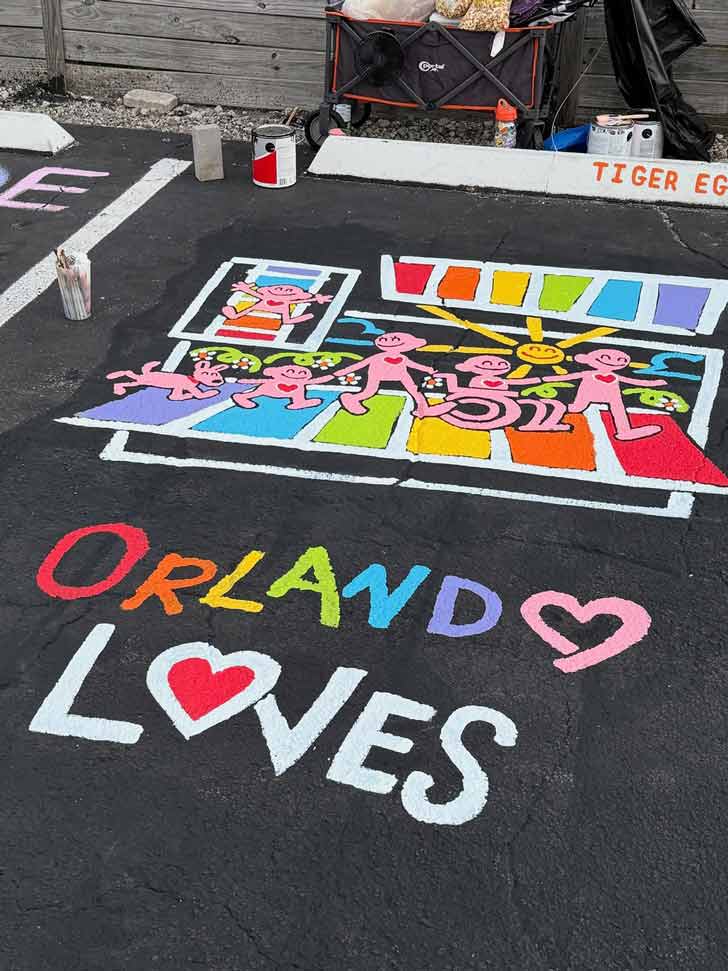
Other cities have also come up with creative solutions to the Pride crosswalk bans, including painting sidewalks, adding rainbow-colored bike racks to city corners, and even shining rainbow lasers in the sky.
Because these new artworks are located on private property, Gregory said, they should not be threatened by any Department of Transportation mandates. She hopes to make Parking Spaces for Pride into an annual event.
For now, Gregory is soaking in the afterglow of the 2025 gathering. She said she has received messages and postcards of thanks from people all over the world, which now hang on a bulletin board inside the restaurant.
Her efforts also led her to be named a finalist for the Orlando Sentinel’s Central Floridian of the Year award.
“Trina responded [to the crosswalk removal] not with silence, but with creation…” Evan Coutts, Gregory’s now-fiancé, wrote upon her nomination for the award, “an initiative that received national attention for transforming private parking spaces into a public statement of belonging.”
You may also like: Florida banned Pride crosswalks — so St. Pete lit up the sky with rainbow lasers instead
Header image by Steven Miller Photography