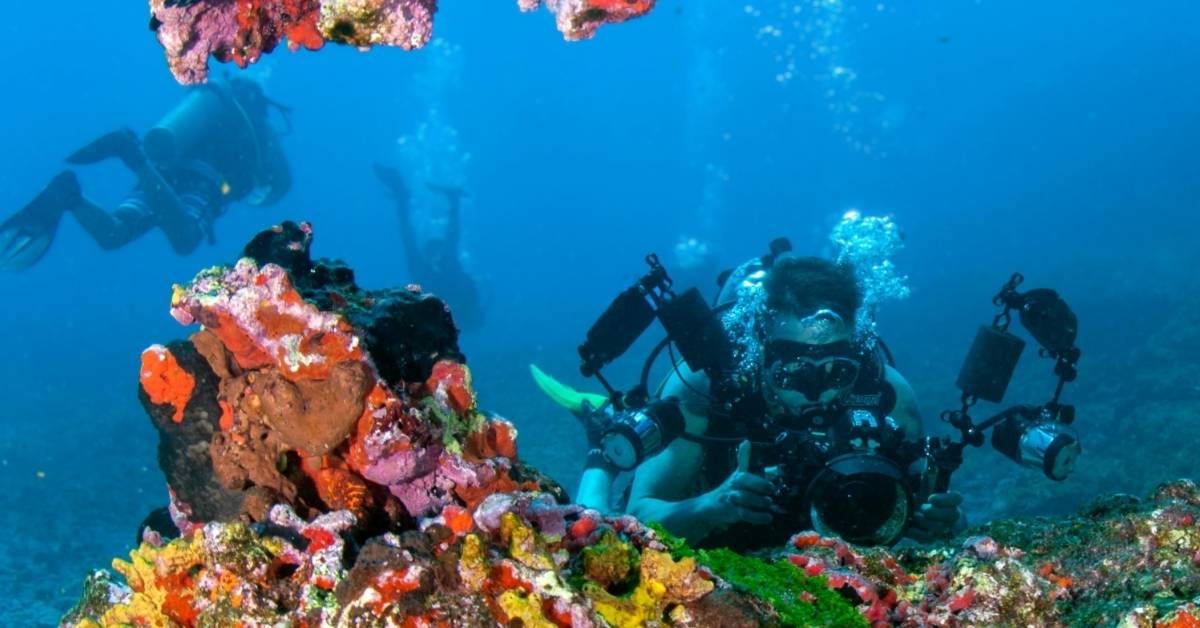
In 2017, a group of divers returned from a dive off the coast of Kumejima, Japan with pictures of a unique sea squirt with peculiar markings.
The sea creature, which measured up to 2 centimeters (0.78 inches), immediately caught the eye of Japanese researchers like Naohiro Hasegawa of Hokkaido University. He first saw images of the “skeleton panda sea squirt” while browsing then-Twitter in 2018.
“It was at that point that I realized it was probably quite rare because it looks different to the other sea squirts,” he said.
In 2024, after gathering more research, the species was officially added to the scientific record when researchers published their findings in the Species Diversity journal.
Its scientific name Clavelina ossipandae roughly means “little bottle” for its shape and “bone panda” for its likeness. Likewise, its Japanese nickname — gaikotsu-panda-hoya — translates to “skeleton panda ascidian.”
“The white parts that look like bones are the blood vessels that run horizontally through the sea squirts’ gills,” Hasegawa wrote. “The black parts on the head that look like a panda’s eyes and nose are just a pattern, and we don’t really know why the pattern is there.”

Like other sea squirts, this species feeds on plankton and other small organic materials. By taking in water through their “siphons,” sea squirts help fight ocean pollution and eliminate microplastics by ingesting and breaking down waste.
“Sea squirts are fantastic,” marine biologist Giorgia Carnovale told Science Norway. “[They’re] shaped like a tube and function as a cleaning pump. And then they have a mucus-covered filter that catches tiny particles in the water. That's how it gets its food.”
Carnovale believes sea squirts could turn the tide on ocean degradation.
“Growing and planting sea squirts is a great way to clean seawater,” she said.
Header image via Leonardo Lamas / Pexels