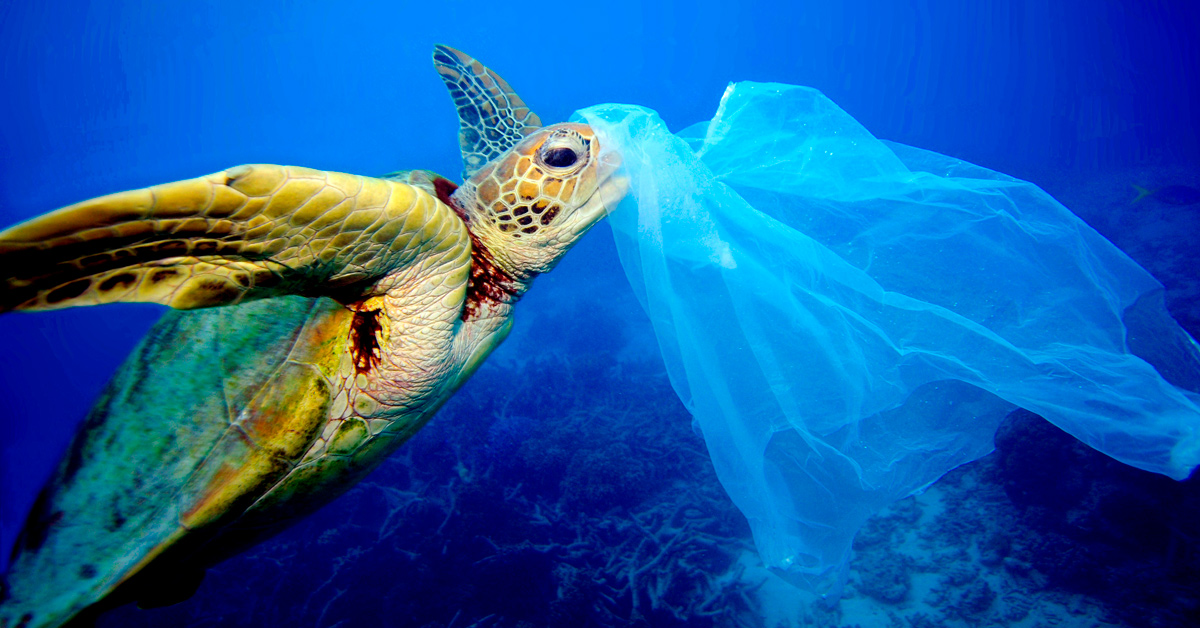
One of the most common pieces of advice people are given when it comes to taking better care of the planet is to clean up trash in their natural areas.
Beach cleanups and trash pickup events are held nationwide all the time, gathering climate-conscious volunteers to tackle plastic pollution in waterways and parks. While many of these events measure waste picked up by the pound, and it’s easy to see a visible difference to the areas around us, it can be hard to understand the full extent of this kind of activity.
A new tool from nonprofit Ocean Conservancy aims to change that.
In November of 2025, Ocean Conservancy scientists published a new peer-reviewed study that quantified the “deadly dose” of macroplastics — or pieces of plastic larger than 5 millimeters — ingested by seabirds, sea turtles, and marine mammals.
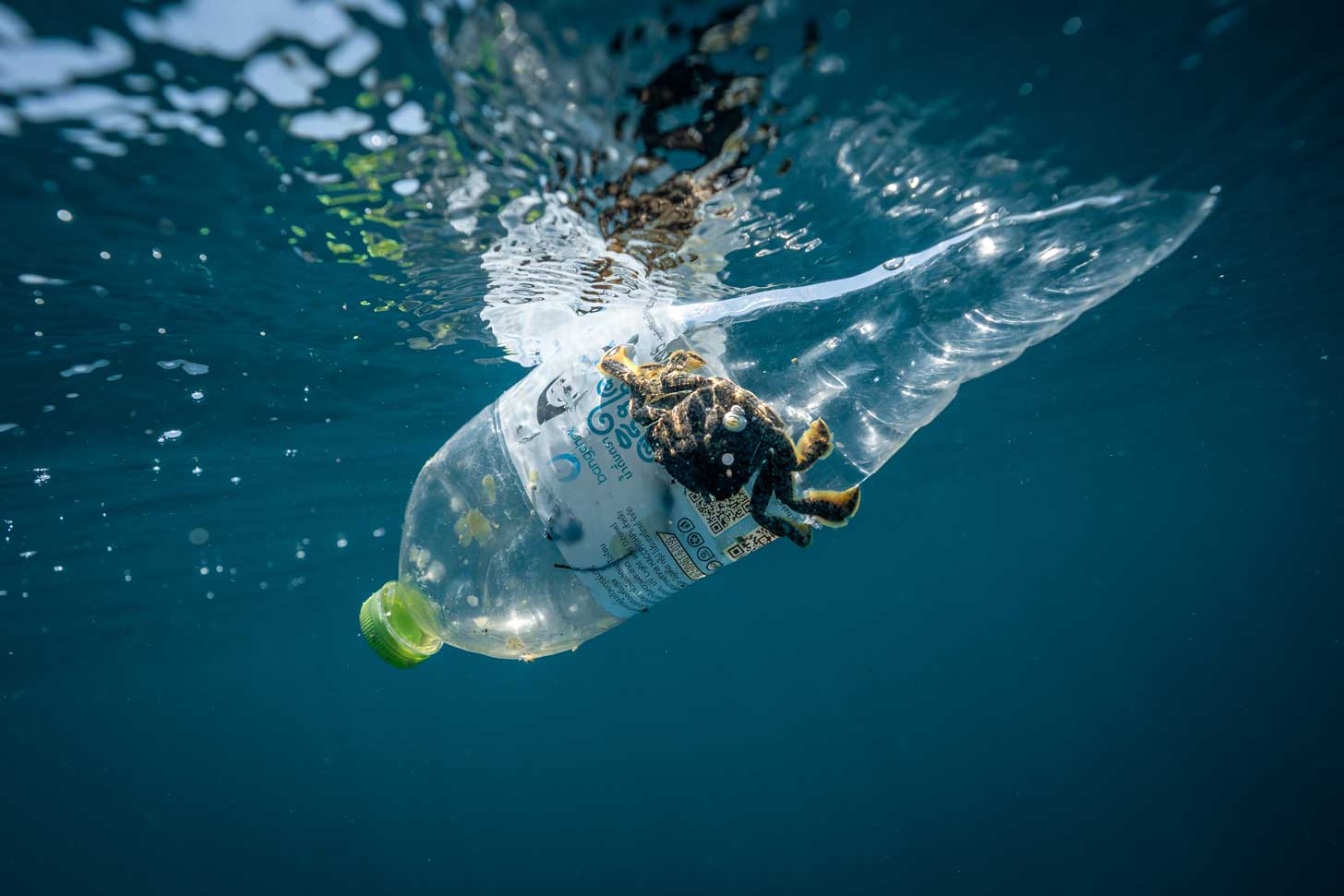
The researchers analyzed the results of over 10,000 necropsies (or animal autopsies) in which the cause of death and plastic ingestion were known. Then, they modeled the relationship between the plastics in the gut and the likelihood of death for each species group to come to their conclusive numbers.
The findings suggest that even small amounts of plastic can have deadly impacts on marine life. For instance, less than three sugar cubes of plastic can kill a seabird, according to the new research.
While sobering, the information also revealed an opportunity: If scientists can quantify how much plastic can kill marine life, they can also calculate how many lives are saved in relation to how much trash is cleaned up from beaches and waterways.
This led to the creation of a new digital tool: Wildlife Impact Calculator.

Here, litter-picker-uppers can enter how many items they picked up on a cleanup, including plastic bags, plastic bottles, cigarette butts, food containers, and more.
Then, the website calculates the life-saving impact on a given marine animal.
“We wanted to make the science as easy to understand as possible and give people the ability to measure the difference they can make,” said Dr. Erin Murphy, Ocean Conservancy’s manager of ocean plastics research and lead co-author of the November 2025 study.
“The models informing the calculator look at amounts of plastic in terms of pieces, but how does that relate to items that people are picking up off of beaches? That’s what we wanted to show.”
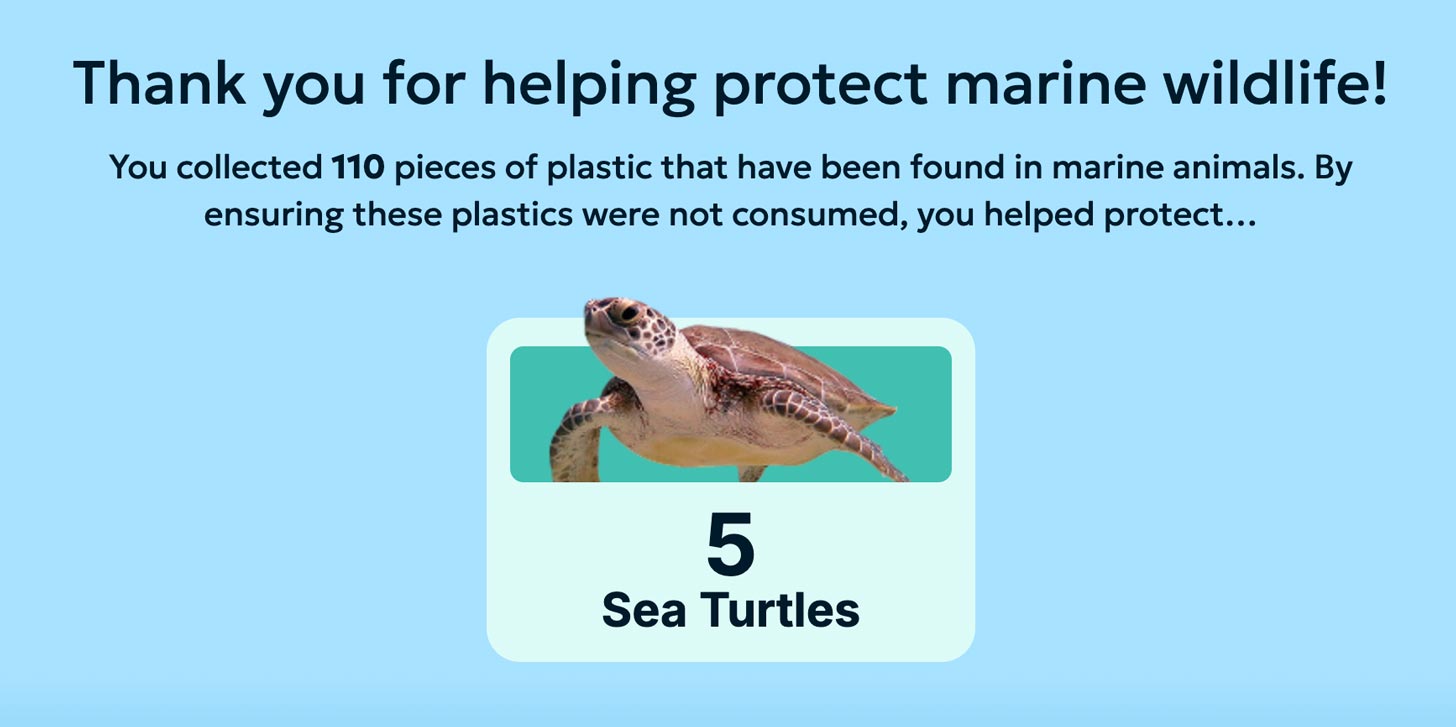
For instance, if a person logged that they cleaned up 25 plastic bottles, 70 cigarette butts, and 15 food wrappers, the calculator concludes that five sea turtles were protected.
The Wildlife Impact Calculator incorporates over 20 types of plastic pollution that have been found inside marine animals, and were the most commonly found items polluting beaches and waterways by millions of Ocean Conservancy volunteers over 40 years.
Using the digital calculator, there is a cap of 9,999 pieces of plastic people can enter for each type of item, but even a small amount can translate into real impact.

On the results page for the calculator, users can also learn more about various species of marine life (Hawksbill and Loggerhead turtles, for example), and get more detailed information about the most harmful types of plastic pollution.
“Every piece of plastic cleaned up from our beaches and waterways is one less threat to the life of a marine animal,” Ocean Conservancy’s senior director of conservation cleanups, Allison Schutes, said in a statement. “Our calculator shows just how much of a difference a cleanup can make for these amazing creatures.”
The Wildlife Impact Calculator is now available to use online. Those interested in joining a beach cleanup can find a local event through Ocean Conservancy’s interactive map.
“We hope that the Wildlife Impact Calculator will inspire people to take action not only by joining their local cleanup efforts,” Dr. Britta Baechler, Ocean Conservancy’s director of ocean plastics research, said, “but by supporting work to prevent plastic from becoming pollution in the first place.”
You may also like: Ocean Cleanup in new TED Talk: 'We can clean up the Great Pacific Garbage Patch in 5 years' time'
Header image by Troy Mayne/Ocean Conservancy