For people with sensory issues — often those who are neurodivergent and have autism or attention deficit and hyperactivity disorder — wearing the wrong clothes can be a recipe for disaster.
Whether it’s itchy tags, uncomfortable fibers, or just the wrong fit, these hurdles can lead people to feel overstimulated and have trouble navigating daily life.
Olivia Drewery experienced these challenges. The 27-year-old based in the United Kingdom was diagnosed with autism and ADHD in her early twenties.
“I spent most of my life feeling chronically overwhelmed, masking constantly, wondering why everyday things felt so f—ing difficult,” Drewery said in a recent TikTok video. “Then I got diagnosed with ADHD and autism, and I was like, ‘OK, that makes a lot of sense.’”
But that diagnosis also came with a whole new way to view the world and the accommodations it was lacking.

“Why were there no lifestyle brands for people with brains like mine?” Drewery posed. “Not just merch or slogans, but clothing that actually works with our nervous systems and not against them.”
That’s when she had the idea to create a clothing label that made it easier for people with ADHD, anxiety, and autism to stim.
“Stim” is short for “self-stimulatory behavior,” and refers to the ways neurodivergent people manage sensory input.
“For a lot of us with ADHD and autism, stimming is how we regulate. It helps us focus, calm our nervous system. It helps us stay present,” Drewery explained in her video. “But the reality is that stimming openly isn’t always safe. People stare, judge, and comment — so we mask it.”
That masking, or suppressing natural autistic traits to fit into social situations or avoid stigma, is partially what kept Drewery in the dark for so long and made her own experience more difficult.
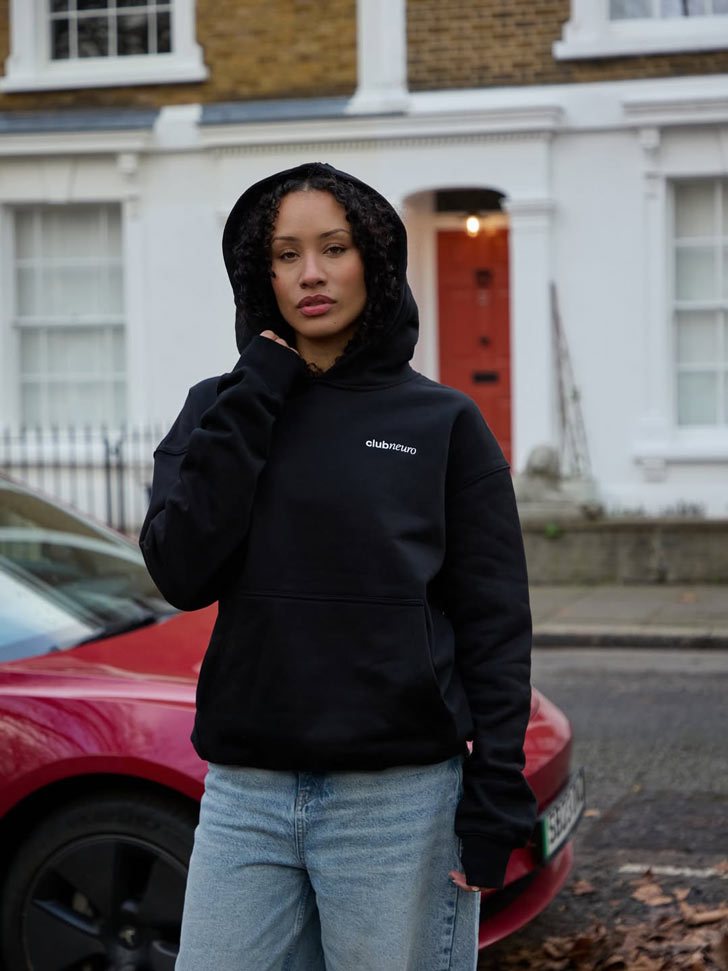
Her solution is the Stim Hoodie, a product she just released from her brand Club Neuro.

It all came after Drewery built a platform on social media (@neurodiversing on both Instagram and TikTok), where she shared her “autistic ADHD diaries” with thousands of followers. After sharing about her need to be comfortable in her clothes, she connected with Club Neuro co-founders Loukas Hambi and Sam Wright.
From there, they spent 10 months perfecting their design.
The hoodie looks like any other, but it has a number of discreet features, including removable stress balls built into the cuffs, attached stim toys hidden in the front pockets, a weighted fabric, no tags, a large hood designed to encase noise-cancelling headphones, and thumbholes.
“Some of us fidget. Some of us pick. Some of us can't sit still in meetings or on flights or anywhere, really,” Club Neuro’s website reads.
“We believe your clothes should work with your brain — not against it. That’s why we created the world's first functional fashion brand for people who need a little help staying grounded.”
The design process enlisted the help of about 4,000 survey respondents from Drewery’s community of neurodivergent followers, expressing what they wanted from a clothing product like this.
“This hoodie was shaped by thousands of neurodivergent voices,” Drewery said in her video. “People telling us again and again that clothing can be overwhelming, distracting, uncomfortable — and that it doesn’t have to be.”
The hoodie is on sale now, available in five colors, sizes XS-XXL, and with a price tag of $103 USD.
And it’s backed by experts from the Global ADHD Clinicians Network.
“Club Neuro … reflects what I see every day in my work with ADHD and autistic people. There’s a real gap between awareness and the kind of practical support that actually helps people get through daily life,” Dr. Pav Kooner, founder of the Global ADHD Clinicians Network, said.
“As someone with ADHD myself, that gap matters to me. Club Neuro is focused on the everyday realities people are living with, not just the conversation around them, and that’s why this feels important.”
And for Drewery, it’s a dream come true. She quit her full-time office job to follow her dream and make the Stim Hoodie a reality.
Now, she’s hoping to see it pay off.
“Because I’ve struggled so much in school settings, in university, in the workplace, in friendships, and social settings, I want to make sure that I’m raising awareness of ADHD and autism so people can see it themselves or recognize it in others, and so we can get the support we need,” she told the Yorkshire Evening Post.
“I feel like I’m doing the right thing in my life.”
You may also like: Mattel unveils first autistic Barbie, complete with 'stimming hands' and noise-cancelling headphones
Header image courtesy of Club Neuro