According to the United Nations, about “2.2 billion people still lack safely managed drinking water.”
Fortunately, Nobel Prize-winning professor Omar Yaghi has created a groundbreaking device that pulls moisture from the air to harvest water. The device is functional even in deserts and extremely arid conditions — as evidenced when Yaghi recently tested his device’s mettle in the scorching heat of Death Valley.
Yaghi, who won the 2025 Nobel Prize in chemistry, said the new invention could “change the world” for people who live perpetually in drought, and also help those who are left without drinking water in the aftermath of natural disasters.
“Hurricanes such as Melissa or Beryl unleashed heavy flooding, destroying homes and crops and impacting thousands of lives in the Caribbean,” Yaghi told the Guardian.
“This devastation is a stark reminder of the urgent need for enhanced water supply resilience in vulnerable areas, particularly small island nations susceptible to extreme weather events.”
The device uses metal-organic frameworks (MOFs), highly porous materials that capture water vapour from even extremely dry air. Once collected, the moisture is condensed into clean drinking water, allowing the system to function in desert environments where traditional water sources are scarce.
According to Atoco, the technology company that Yaghi founded, its units are powered entirely by ultra-low-grade thermal energy. Comparable in size to a 20-foot shipping container, the units can generate up to 1,000 liters of clean water a day.
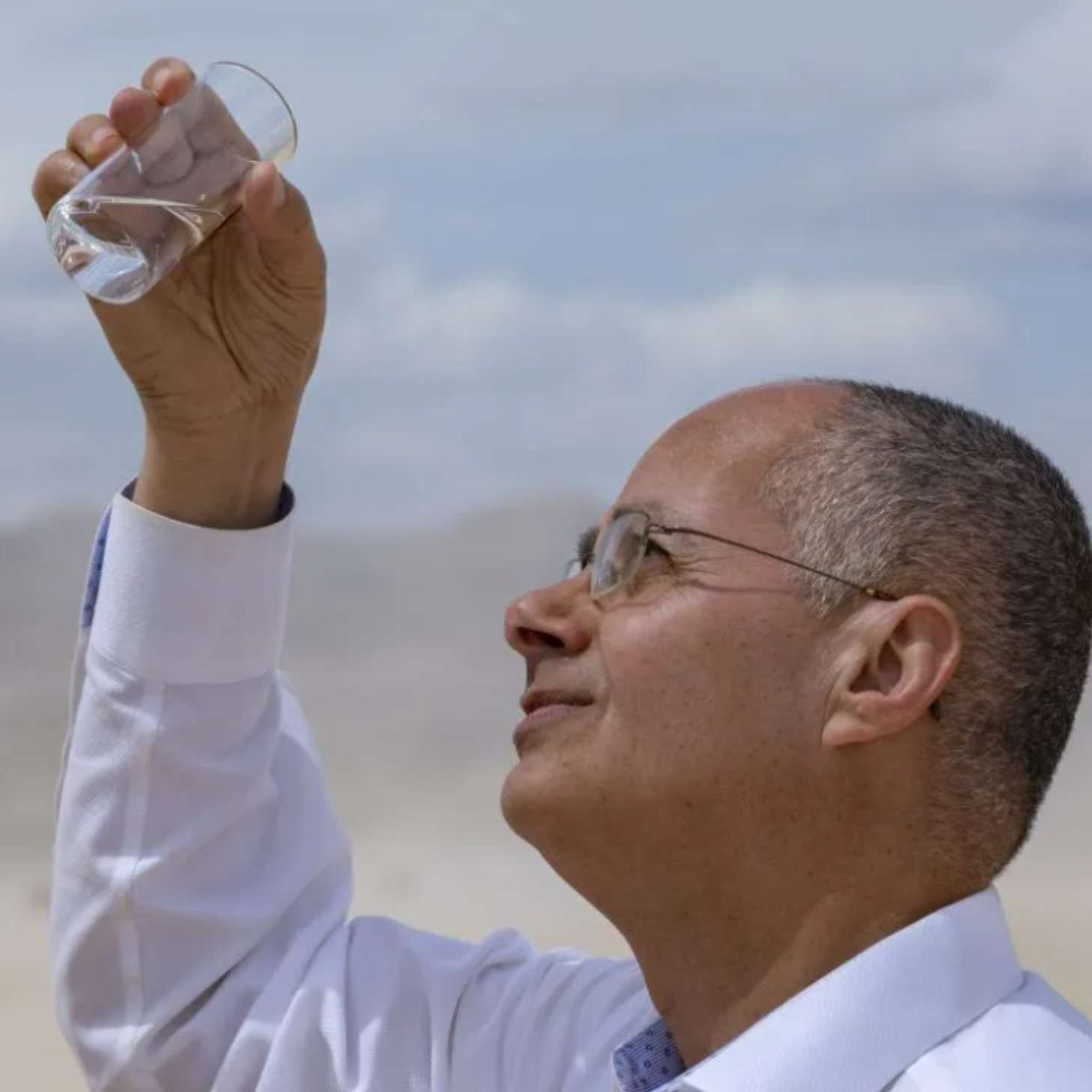
Thanks to its sustainable power source, the machine can operate off-grid, making it suitable for remote villages, disaster zones, and drought-stricken regions lacking water infrastructure. Its design aims to provide a decentralized solution where transporting water or building pipelines is difficult.
Yaghi’s inspiration was born out of hardship. As a child, he grew up in a refugee community in Jordan, often without running water or electricity. Clean water was a luxury that he and his neighbors were only afforded every other week or so.
“I remember the whisper through our neighborhood, ‘the water is coming,’ and the urgency as I rushed to fill every container I could find before the flow stopped,” Yaghi recalled in his Nobel Prize banquet speech.
Heralding his invention as a science that is “capable of reimagining matter,” he urged leaders to “remove barriers” and “protect academic freedom” to make room for more inventions that could benefit the planet.
“On climate, the hour for collective action has already arrived. The science is here,” he emphasized. “What we need now is courage — courage scaled to the enormity of the task — so we may gift the next generation not only carbon capture, but a planet worthy of their hopes.”

You may also like: New invention uses animal bones to filter water, promising a nearly 'zero cost' solution to water filtration
Header image via Atoco