
In 2008, Mike Schultz lost his leg in a snowmobiling accident, after a youth full of intense motorsports like BMX riding and snowmobile racing, a sport he competed in since 2002.
Despite the life-changing injury at 27, doctors said the only way he would survive was by amputating his left leg above the knee.
“To hear that as a top-level athlete is something you’re not really prepared for,” Schultz told NBC Sports in October 2025.
He wasn’t ready to call it quits on his athletic career. Just weeks after his surgery, he was sneaking away for short joyrides on his snowmobile and knew he had to find a way to return to sports.
“It was just like, I can’t give it up. I just need to find a way. And that’s when I started thinking about developing my own prosthetic leg to get back into riding,” he told NBC Sports.
His first prosthetic was designed for everyday use and walking, but it was not made to withstand the impact and movement of intense athletics and motorsports.
So, Schultz — without any technical engineering training — started to build his own prosthetic.

“I’m Mr. Fix it,” he said. “I just look at something, and I want to make it better in some way or another. That’s just how my mind works.”
After five weeks of tinkering in his garage workstation, Schultz made the Moto Knee, which used a mountain bike shock absorber, among other creative details. Not even a year later, he was placing second at the ESPN Summer X Games Adaptive Super-X with his own prosthetic invention.
In 2010, he founded his company, BioDapt, to design and make lower limb prosthetic components for amputees looking to participate in high-intensity sports and activities. His first customer was Walter Reed Medical Center, where he fitted veterans with combat injuries for their own Moto Knees.
“The goal originally was to create something to get back on my motocross bike and my snowmobile,” he told NBC Sports. “And about a year later, [I realized] that there were so many other adaptive athletes that could utilize the equipment I was developing.”
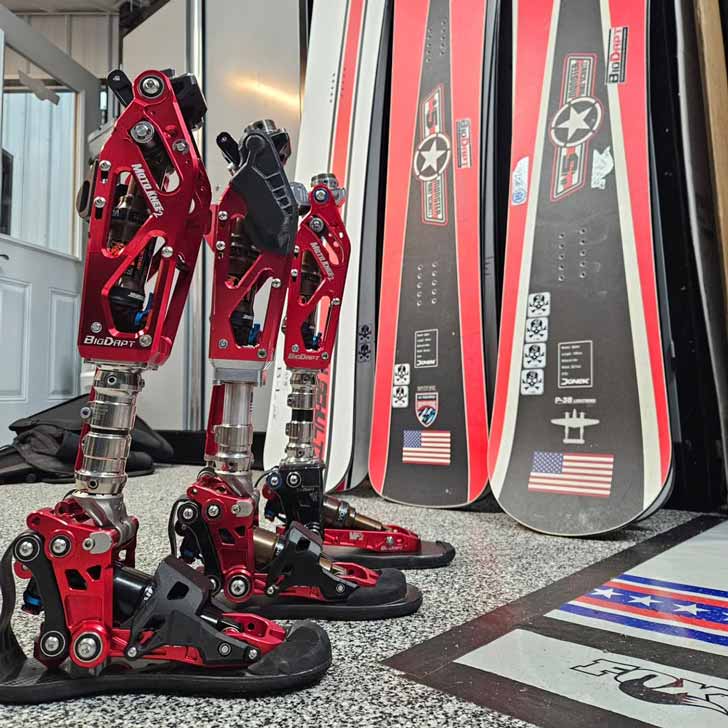
BioDapt’s products differ from standard prosthetics due to their ability to adjust and attune to different scenarios. For instance, depending on whether a para snowboarder rides with their prosthetic in the front or back of their board, BioDapt can change the alignment.
In the front, the prosthetic stands more upright, whereas those whose prosthetic is on the back leg have theirs flexed a bit more.
The legs are also adapted to accommodate an athlete’s knee flexion range, with hydraulic and pneumatic shock systems built in.
Schultz pivoted to snowboarding after working with clients who suggested he take to the board. He discovered he was good at it — and became a two-time Paralympian, riding with his prosthesis as his forward leg.
“I feel it gives me more power to generate speed through the rollers and features on the race course,” he told Paralympic.org. “Exiting a turn, I can use my strong leg or my real leg to absorb and extend to try and accelerate quicker.”
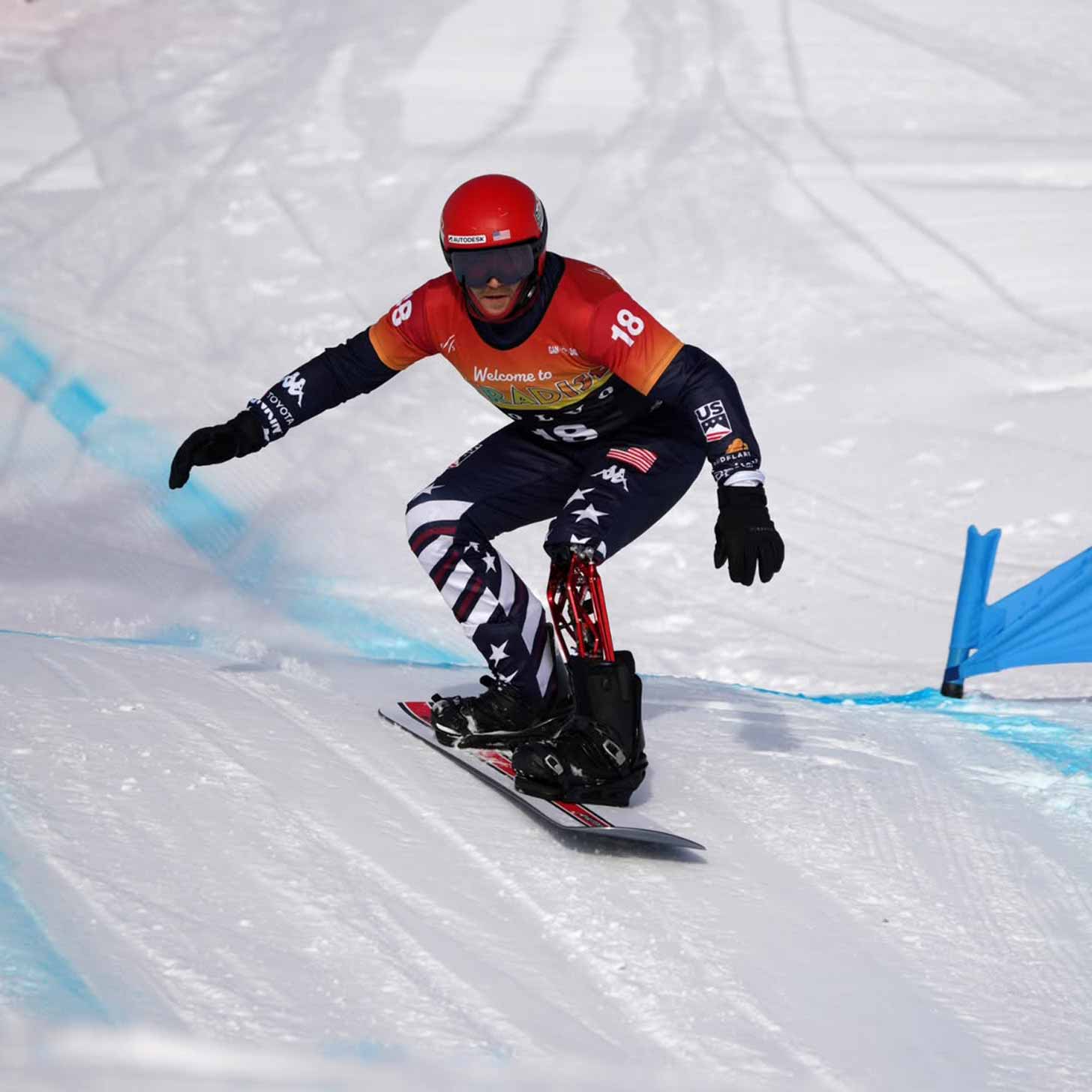
Schultz will return to the Paralympics for a third time at age 44, already with one gold and two silver medals in his back pocket.
And the entire U.S. Paralympic snowboarding team will be wearing his prosthetics.
BioDapt now supports about 90% of lower-limb athletes globally competing in para snowboarding competitions, with about 25 athletes expected to compete in Italy wearing equipment Schultz developed.
After competing in Milan-Cortina, Schultz will retire from competitive para snowboarding and will devote all of his time to BioDapt, especially helping other paralympians prepare to compete in Los Angeles in 2028.
Just weeks before his final Paralympic run, BioDapt shared the news that it would be building on its existing work and partnering with Autodesk, an AI-powered manufacturing company that will help BioDapt refine its products and scale to serve even more people.
The company’s focus remains on winter and summer para sports, but hopes that its next era will help “build complex, high-performing products that are durable, repeatable, and scalable for more people.”
By tapping into advancing technology, BioDapt hopes to “optimize prosthetic equipment” both for elite competition and for improved prosthetic performance for travel and changing conditions.
Beyond the medals and the Olympic glory, this will be Schultz’s legacy.
“I’ve always had two sides to my career — competing and building,” Schultz said in a statement for BioDapt.
“For years, I’ve pushed myself to be the best athlete I could be, while spending countless hours refining the gear that makes that performance possible. As I step away from competition, I'm excited to take everything I've learned and apply it to helping the next generation of athletes go even further.”
You may also like: Official 'Olympics Dad' invites US women's hockey team to his house to celebrate after White House drama
Header image courtesy of Mike Schultz/Instagram