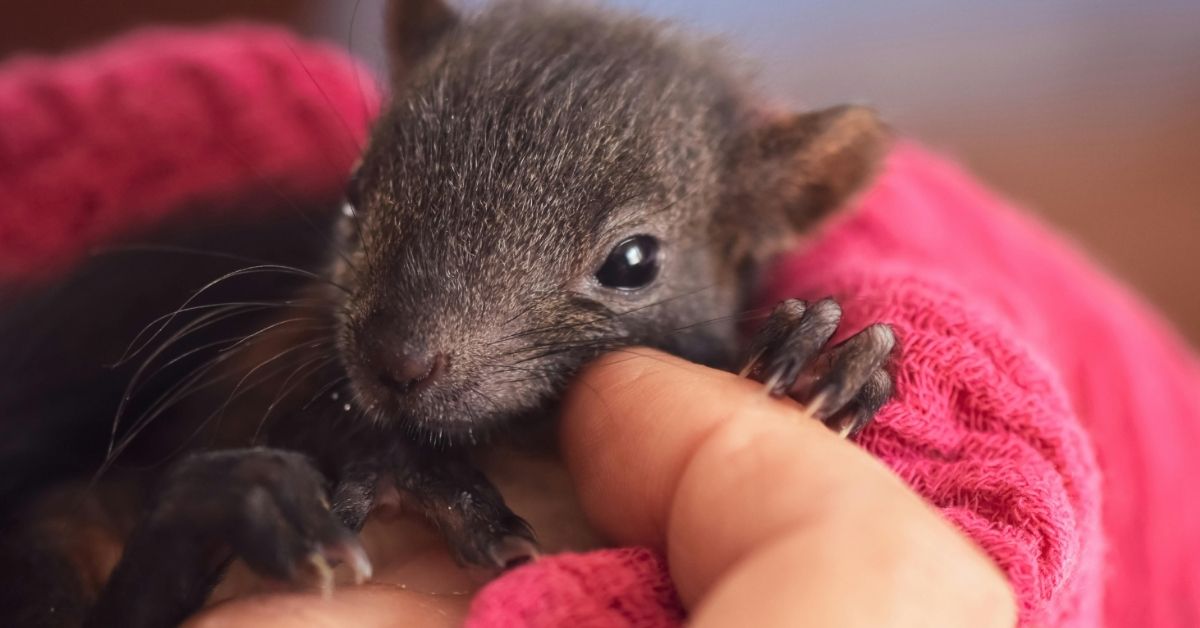
Within the gray walls and barbed wire surrounding Richland Correctional Institution in Mansfield, Ohio, there’s a room roped off for all but a small group of incarcerated men, who tend to the orphaned opossums and injured squirrels inside.
The Richland Correctional Institution is one of five across the state that have been participating in the wildlife rehabilitation program since 2019. Every year, hundreds of animals pass from the Ohio Wildlife Center’s hospital to more than 60 incarcerated volunteers.
Brittany Jordan, the center’s wildlife rehabilitation operational director, said that prison facilities are uniquely positioned to house orphaned and injured animals as they recover from abandonment, car accidents, and window strikes.
Free from domesticated animals and young children, the ducklings, songbirds, rabbits, and more have the safety of recovering in a quiet space with a small group of trusted volunteers.
“And, most importantly,” Jordan told Smithsonian Magazine, “they need time.”
Mel H., who has been working in a wildlife rehabilitation program in partnership with the Ohio Wildlife Center for nearly two years, says it has brought him newfound peace.
“I’ve been here almost 24 years, so I have dark days and the animals pull me right out of that because no matter how bad I’m feeling, I gotta come in here … I’d be on schedule, take care of the squirrels and feed opossums,” Mel told the Knox Pages. “Once I get to a routine, whatever was bothering me, I couldn’t tell you what it was.”

A version of this article originally appeared in the 2025 Helpers Edition of the Goodnewspaper.
Header image via Alexas Fotos / Pexels