Snorkelers playing saxophones? Stranger things have happened.
Every year at the Lower Keys Underwater Music Festival, local musicians and divers gather for a “subaquatic sound experience.”
When Bill Becker — the news director of local radio station WWUS 104.1 — founded the festival in 1985, his goal was to raise awareness for coral preservation.
The annual event brings people to Looe Key Reef, part of the only living coral barrier reef in North America, to learn more about coral reefs and enjoy them in a whole new light.

Attendees can engage with a pre-selected radio playlist, which is streamed live from underwater speakers and includes hits like “Yellow Submarine” or Jimmy Buffett’s “Fins.”
Musician-divers and “mermaids” also play whimsical instruments created by a local artist that create an ethereal sound experience for underwater participants.
And of course, Becker’s dream is at the center of it all: protecting reefs. The event brings some much-appreciated traffic to the Florida Keys National Marine Sanctuary, and attendees get to learn more about responsible diving, as well as ways to protect the reef.
“We have the largest living coral reef in the Northern Hemisphere, and we want to bring attention to it and some of the stresses that it faces and just to point out that it's there and needs our care,” Steve Miller, executive director of the Lower Keys Chamber of Commerce, told CBS News.
The music festival also includes free tours of Mote Marine Laboratory's Coral Reef Research Center, where ocean lovers saw the work being done to protect and rebuild the Florida Keys coral reef ecosystem.
“The underwater music festival is a way to celebrate the coral reef, and we celebrate it by looking for a balance between protection of the reef and public enjoyment,” Becker told ABC-7 News.
“The more people realize what's down there and enjoy it, the more likely they are to protect it.”
You may also like: Dave Matthews Band pledges to plant 1 million trees on newly-announced summer tour
A version of this article was originally published in The 2024 Music Edition of the Goodnewspaper.
Header image courtesy of Visit Florida Keys
This story was originally published by The 19th and was republished with permission.
A newborn in Minneapolis hadn’t eaten for a day and a half.
Her mother had risked going into work to get just enough money for more diapers when Immigration and Customs Enforcement (ICE) agents stopped her car and took her away. At home waiting for her were her 16-year-old daughter and the baby — just barely 3 months old.
With their mother gone, the teenager tried to feed the baby, who was exclusively breastfed, formula to no avail. So they called Bri.
For over a month and a half now, Bri, a mother of two in Minneapolis, has run an expansive donation network in the city, most of it to help other moms and families with children. Bri, who is breastfeeding her own infant, posted on her social media that in addition to groceries and diapers and wipes, she could also donate breastmilk to anyone who needed it.
Bri is an overproducer — in one morning, she might pump 45 ounces alone. When the call came on January 17, Bri had pumped about a thousand ounces of extra breastmilk, which was stored in her freezer. She knew it was likely a matter of time before she’d hear of a baby in need.
An hour and a half after she received the call, Bri was at the family’s doorstep with 350 ounces of milk in a cooler, along with a care package that included instructions on how to safely thaw the milk, a bottle warmer, bottles, and some extra clothes that no longer fit her then-6-month-old.
Inside, the baby was screaming.
They quickly put together a bottle and watched as the child’s body relaxed. The baby drank the whole bottle and fell asleep.
Bri wept.
Then the rage set in.
“I felt very angry — very, very, angry, and I couldn’t imagine what the 16-year-old was feeling because she felt broken. Her mom was her world … and now they’re separated,’” Bri said. “There are moms that are literally being torn apart from their kids.”
In Minneapolis, for every story detailing the fallout of the federal crackdown, there are as many stories of people like Bri. Neighbors are putting their trust in total strangers. Moms are helping children who are not their own, who they’ve never met.
For almost two months now, Bri has spent her mornings and afternoons, before and after work, picking up donations for immigrant families in hiding from ICE. Bri requested that The 19th only share her first name and omit the names of the children out of concern for her safety and that of the families she aids.
At night, after her baby is down to sleep and under the care of Bri’s 18-year-old daughter, she delivers supplies until about 10 p.m. What started as a couple donations has quickly swelled into a network, with donations flooding in every week.
Most of it is moms talking to one another and putting together packages, while Bri manages what comes in and posts about it on her social media, trying to match donations with families’ needs. Professionally, Bri’s job also involves connecting people with resources, so the community already knows to come to her.
Much of her focus in recent weeks has been putting together donations of diapers, wipes, and formula for mothers who are staying home to avoid ICE.
“The first line that a lot of these moms say when they call is, ‘I’ve never asked for help, and the only reason why I’m asking for help is because I love my kids,’” Bri said. In response she’ll tell them in Spanish: Vergüenza robar — no pedir. Or roughly, ”Shame on those who steal, not those who ask for help.”
So far, Bri and her network have helped more than 500 families with grocery deliveries and more than 300 with diapers and wipes.
“It fills my heart, and it brings me hope that it’s not all bad and that if this is going to go on longer, that we have the help. If one mom can’t do it, another one can do it, and we are acting in community,” Bri said. “When one mom hurts, we are all hurting.”
Breastmilk donations are also coming in. An additional six moms have reached out offering to donate, Bri said. She has to be careful about it, only taking their milk if the moms are currently donating to local hospitals and have a certificate proving they’ve been cleared to do it (Bri herself has been screened and has a certificate).
Hospitals and milk banks typically have a rigorous screening process that tests for microbes and screens donors for alcohol, drug, and medication use. They also pasteurize the milk to eliminate pathogens.
Because the families she’s helping don’t want to risk going to a hospital or milk bank, Bri tries to handle the milk and donations carefully to reduce the risks. The breastmilk is frozen and transported in an insulated cooler with ice packs, though “since it’s freezing here, I don’t worry about it thawing,” Bri said.
In the requests for aid she receives, Bri gets a window into the conditions other families are living in. They’ll ask for things like children’s medications because they’re too afraid to take their kids to hospitals. Some may ask for menstrual hygiene products, like pads and tampons. A mom asked for one box of diapers because she had been washing and reusing the diapers she had left. Bri brought her two.
As Minneapolis enters its third month of what ICE has called an immigration enforcement crackdown, the asks have shifted to help support long-term needs or people’s mental health. As part of a care package Bri put together for the teenage sister of the baby she helped, for example, she included colored pencils and a sketchbook.
With the help of community donations through a GoFundMe, Bri’s been able to cover four months of the girls’ rent while their mom remains in detention in Texas pending a bond hearing.
And the deliveries haven’t slowed down. Most nights still, Bri is on the freezing roads in Minneapolis with a trunk full of groceries or diapers. She did two deliveries after work recently while on the phone with a reporter.
The streets are empty these days, Bri said. A route that in the past might have taken her an hour now takes under 30 minutes. Our people are literally in hiding, she thinks.
The work is all-consuming and difficult. On breaks at work, she’s often checking if anyone is asking for deliveries or offering donations. There are days when she’s driving home through tears.
Bri is a single mom.
“What are you going to do if you bump into an ICE agent who is not having a good day and decides to profile you?” her parents ask her.
“You need to also think about your kids,” they tell her.
But Bri is thinking about her kids.
“I am doing this,” she told them, “because I would hope, God forbid, anything happens to me, that my community steps up to help my kids.”
Header Image by Jaye Haych on Unsplash
For many women in the U.S. and around the world, motherhood comes with career costs.
Raising children tends to lead to lower wages and fewer work hours for mothers — but not fathers — in the United States and around the world.
As a sociologist, I study how family relationships can shape your economic circumstances. In the past, I’ve studied how motherhood tends to depress women’s wages, something social scientists call the “motherhood penalty.”
I wondered: Can government programs that provide financial support to parents offset the motherhood penalty in earnings?
A ‘motherhood penalty’
I set out with Therese Christensen, a Danish sociologist, to answer this question for moms in Denmark — a Scandinavian country with one of the world’s strongest safety nets.
Several Danish policies are intended to help mothers stay employed.
For example, subsidized child care is available for all children from 6 months of age until they can attend elementary school. Parents pay no more than 25% of its cost.
But even Danish moms see their earnings fall precipitously, partly because they work fewer hours.
Losing $9,000 in the first year
In an article to be published in an upcoming issue of European Sociological Review, Christensen and I showed that mothers’ increased income from the state — such as from child benefits and paid parental leave — offset about 80% of Danish moms’ average earnings losses.
Using administrative data from Statistics Denmark, a government agency that collects and compiles national statistics, we studied the long-term effects of motherhood on income for 104,361 Danish women. They were born in the early 1960s and became mothers for the first time when they were 20-35 years old.
They all became mothers by 2000, making it possible to observe how their earnings unfolded for decades after their first child was born. While the Danish government’s policies changed over those years, paid parental leave, child allowances, and other benefits were in place throughout. The women were, on average, age 26 when they became mothers for the first time, and 85% had more than one child.
We estimated that motherhood led to a loss of about the equivalent of US$9,000 in women’s earnings — which we measured in inflation-adjusted 2022 U.S. dollars — in the year they gave birth to or adopted their first child, compared with what we would expect if they had remained childless.
While the motherhood penalty got smaller as their children got older, it was long-lasting.
The penalty only fully disappeared 19 years after the women became moms. Motherhood also led to a long-term decrease in the number of the hours they worked.
Studying whether government can fix it
These annual penalties add up.
We estimated that motherhood cost the average Danish woman a total of about $120,000 in earnings over the first 20 years after they first had children — about 12% of the money they would have earned over those two decades had they remained childless.
Most of the mothers in our study who were employed before giving birth were eligible for four weeks of paid leave before giving birth and 24 weeks afterward. They could share up to 10 weeks of their paid leave with the baby’s father. The length and size of this benefit has changed over the years.
The Danish government also offers child benefits — payments made to parents of children under 18. These benefits are sometimes called a “child allowance.”
Denmark has other policies, like housing allowances, that are available to all Danes, but are more generous for parents with children living at home.
Using the same data, Christensen and I next estimated how motherhood affects how much money Danish moms receive from the government. We wanted to know whether they get enough income from the government to compensate for their loss of income from their paid work.

We found that motherhood leads to immediate increases in Danish moms’ government benefits. In the year they first gave birth to or adopted a child, women received over $7,000 more from the government than if they had remained childless. That money didn’t fully offset their lost earnings, but it made a substantial dent.
The gap between the money that mothers received from the government, compared with what they would have received if they remained childless, faded in the years following their first birth or adoption. But we detected a long-term bump in income from government benefits for mothers — even 20 years after they first became mothers.
Cumulatively, we determined that the Danish government offset about 80% of the motherhood earnings penalty for the women we studied.
While mothers lost about $120,000 in earnings compared with childless women over the two decades after becoming a mother, they gained about $100,000 in government benefits, so their total income loss was only about $20,000.
Benefits for parents of older kids
Our findings show that government benefits do not fully offset earnings losses for Danish moms. But they help a lot.
Because most countries provide less generous parental benefits, Denmark is not a representative case. It is instead a test case that shows what’s possible when governments make financially supporting parents a high priority.
That is, strong financial support for mothers from the government can make motherhood more affordable and promote gender equality in economic resources.
Because the motherhood penalty is largest at the beginning, government benefits targeted to moms with infants, such as paid parental leave, may be especially valuable.
Child care subsidies can also help mothers return to work faster.
The motherhood penalty’s long-term nature, however, indicates that these short-term benefits are not enough to get rid of it altogether. Benefits that are available to all mothers of children under 18, such as child allowances, can help offset the long-term motherhood penalty for mothers of older children.
This article was written by Alexandra Killewald from the University of Michigan, and was originally published on The Conversation.
Header Image by Ketut Subiyanto via Pexels

On Jan. 28, 2026, Bruce Springsteen released “Streets of Minneapolis,” a hard-hitting protest against the immigration enforcement surge in the city, including the killings of Renee Good and Alex Pretti. The song is all over social media, and the official video has already been streamed more than 5 million times.
It’s hard to remember a time when a major artist has released a song in the midst of a specific political crisis.
Yet some of the most powerful music coming out of Minneapolis is of a much older vintage.
Hundreds of clergy from around the country converged on the city in late January to take part in faith-based protests. Many were arrested while blocking a road near the airport. And they have been singing easily recognizable religious songs used during the Civil Rights movement of the 1950s and ‘60s, like “Amazing Grace,” “We Shall Overcome, and ”This Little Light of Mine.“
I have been studying the politics of music and religion for more than 25 years, and I wrote about songs I called "secular spirituals” in my 2004 book, “How Sweet the Sound: Music in the Spiritual Lives of Americans.” Sometimes called “freedom songs,” they were galvanizing more than 60 years ago, and are still in use today.
But why these older songs, and why do they usually come out of the church? There have been many protest movements since the mid-20th century, and they have all produced new music.
The freedom songs, though, have a unique staying power in American culture — partly because of their historical associations and partly because of the songs themselves.
Stronger together
Some of protest music’s power has to do with singing itself. Making music in a group creates a tangible sense of community and collective purpose. Singing is a physical activity; it comes out of our core and helps foster solidarity with fellow singers.
Young activists working in the Deep South during the most violent years of the Civil Rights Movement spoke of the courage that came from singing freedom songs like “We Shall Overcome” in moments of physical danger. In addition to helping quell fear, the songs were unnerving to authorities trying to maintain segregation.
“If you have to sing, do you have to sing so loud?” one activist recalled an armed deputy saying.
And when locked up for days in a foul jail, there wasn’t much else to do but sing. When a Birmingham, Alabama, police commissioner released young demonstrators he’d arrested, they recalled him complaining that their singing “made him sick.”
Test of time
Sometimes I ask students if they can think of more recent protest songs that occupy the same place as the freedom songs of the 1960s. There are some well-known candidates: Bob Marley’s “Get Up, Stand Up,” Green Day’s “American Idiot” and Public Enemy’s “Fight the Power,” to name a few.
The Black Lives Matter movement alone helped produce several notable songs, including Beyonce’s “Freedom,” Kendrick Lamar’s “Alright," and Childish Gambino’s ”This Is America.“
But the older religious songs have advantages for on-the-ground protests. They have been around for a long time, meaning that more people have had more chances to learn them. Protesters typically don’t struggle to learn or remember the tune.
As iconic church songs that have crossed over into secular spirituals, they were written to be memorable and singable, crowd-tested for at least a couple of generations. They are easily adaptable, so protesters can craft new verses for their cause — as when civil rights activists added "We are not afraid” to the lyrics of “We shall overcome.”
And freedom songs link the current protesters to one of the best-known — and by some measures, most successful — protest movements of the past century. They create bonds of solidarity not just among those singing them in Minneapolis, but with protesters and activists of generations past.
These religious songs are associated with nonviolence, an important value in a citizen movement protesting violence committed by federal law enforcement. And for many activists, including the clergy who poured into Minneapolis, religious values are central to their willingness to stand up for citizens targeted by ICE.
Deep roots
The best-known secular spirituals actually predate the Civil Rights Movement. “We Shall Overcome” first appeared in written form in 1900 as “I’ll Overcome Some Day,” by the Methodist minister Charles Tindley, though the words and tunes are different.
It was sung by striking Black tobacco workers in South Carolina in 1945 and made its way to the Highlander Folk School in Tennessee, an integrated training center for labor organizers and social justice activists.
It then came to the attention of iconic folk singer Pete Seeger, who changed some words and gave it wide exposure. “We Shall Overcome” has been sung everywhere from the 1963 March on Washington and anti-apartheid rallies in South Africa to South Korea, Lebanon, and Northern Ireland.
“Amazing Grace” has an even longer history, dating back to a hymn written by John Newton: an 18th-century ship captain in the slave trade who later became an Anglican clergyman and penned an essay against slavery. Pioneering American gospel singer Mahalia Jackson recorded it in 1947 and sang it regularly during the 1960s.
Firmly rooted in Protestant Christian theology, the song crossed over into a more secular audience through a 1970 cover version by folk singer Judy Collins, which reached No. 15 on the Billboard charts. During Mississippi Freedom Summer of 1964, an initiative to register Black voters, Collins heard the legendary organizer Fannie Lou Hamer singing “Amazing Grace,” a song she remembered from her Methodist childhood.
Opera star Jessye Norman sang it at Nelson Mandela’s 70th birthday tribute in London, and bagpipers played it at a 2002 interfaith service near Ground Zero to commemorate victims of 9/11.
‘This little light’
Another gospel song used in protests against ICE — “This little light of mine, I’m gonna let it shine” — has similarly murky historical origins and also passed through the Highlander Folk School into the Civil Rights Movement.
It expresses the impulse to be seen and heard, standing up for human rights and contributing to a movement much larger than each individual. But it could also mean letting a light shine on the truth — for example, demonstrators’ phones documenting what happened in the two killings in Minneapolis, contradicting some officials’ claims.
Like the Civil Rights Movement, the protests in Minneapolis involve protecting people of color from violence — as well as, more broadly, protecting immigrants’ and refugees’ legal right to due process.
A big difference is that in the 1950s and 1960s, the federal government sometimes intervened to protect people subjected to violence by states and localities. Now, many Minnesotans are trying to protect people in their communities from agents of the federal government.
This article was written by David W. Stowe from the University of Michigan, and was originally published on The Conversation.
Photo by Nico Smit on Unsplash

On Monday, a video of bundled-up Minnesotans carrying protest signs and walking slowly through the streets of downtown Minneapolis began to circulate online.
But it was different from previous protest videos, of which there are countless, as Minnesotans mobilize to protest U.S. Immigration and Customs Enforcement in spades.
In this video, they are singing in unison.
“It’s okay to change your mind / Show us your courage / Leave this behind,” they croon.
“It’s okay to change your mind / And you can join us / Join us here anytime.”
The group, consisting of at least 2,000 people, sang to ICE agents inside a Residence Inn, with what they said was one message: “Quit your job.”
“Under federal occupation, Minneapolis has been going through immense pain, rage, and grief. But when they come at us with violence, we fight back with love,” organizers shared on social media.
“We still have space in our hearts for ICE agents who are willing to walk away from the path of violence and take accountability for harm they’ve caused. We paid ICE agents a visit today to call them home.”
This is not the first song-fueled protest the group has conducted.
They call themselves Singing Resistance, and according to social media, they were inspired by “Otpor!,” a Serbian civil resistance movement that overthrew a dictatorship in 2000.

“Otpor! members were regularly arrested and beaten by police, after which, they would show up to police stations and officers’ houses chanting, ‘You may not join us today, but you can join us tomorrow,’” Singing Resistance shared.
“In the final hours of their revolution, hundreds of thousands of people from across Serbia marched on Belgrade. Milosevic ordered the police and military to fire on massive crowds of protestors, and they refused. They were done being on the wrong side of history.”
This effort to breed defection among ICE agents is just one component of the group’s efforts.
Prior to ICE’s occupation of Minnesota, many organizers were part of a coalition of “Ceasefire Choirs” calling for peace in Palestine.
Now, they are also calling on Marriott hotels to stop housing the federal agents, and they have performed protest concerts outside of Enterprise, encouraging the car rental company to break ties with border patrol agencies.
Other singing opportunities in Minnesota have taken place inside churches and at vigils for Renee Good and Alex Pretti. Sometimes they sing in neighborhoods to lift the spirits of those afraid to leave home.
According to CNN, the Twin Cities chapter of Singing Resistance — which is a larger nationwide movement — began its street-level performances four days after Good was killed. In less than a week, 600 people came out to sing with them.
“I am not afraid / I am not afraid / I will live for liberation / ‘cause I know why I was made,” one anonymous organizer sang to Anderson Cooper in a CNN broadcast, adding that the group has been singing it in English and Spanish.
“Song is a vehicle for us to grieve. It’s a vehicle for us to feel rage. It’s a vehicle for us to strengthen ourselves,” she added. “That song, ‘I Am Not Afraid,’ that I sang, we’re not singing it because we’re actually not afraid … it is terrifying, what is happening. It’s a way to gather our courage.”
With an outpouring of support in Minnesota — and in other cities nationwide — Singing Resistance has released a free digital songbook for other people across the country to sing along.
They will also be holding virtual trainings to help people organize their own coalition of resistance singers.
“Are you ready to build a mass movement with us across the U.S. in song?” the group shared on social media. “Gather your friends, family, and foes (!!) and warm up those vocal cords. May we bring the masses out into the streets in song and solidarity.”
The group also shared a robust toolkit, describing the history and inspiration behind Singing Resistance, and equipping supporters with tools to prioritize safety, prepare for protests, and spread awareness on social media.
“Singing Resistance is building a mass movement of singers to protect and care for our communities in the face of rising authoritarianism,” the toolkit proclaims.
“We are grounded in love, nonviolence, and solidarity. In the context of intense and escalating violence towards our communities and federal invasions of our cities and towns, we sing because song is an antidote to fear, song helps us connect to each other, and through song we can name and protect what we hold sacred.”
If their welcoming beckon to ICE agents wasn’t clear enough: The group seems rooted entirely in love and acceptance — not hate or contempt. While anger is present in their songs, the driving force behind each tune is love.
“Through song, we can refuse to obey what authoritarianism wants us to do — get small, numb out, and forget. Instead, we will mobilize our communities in public, we will feel, and we will tell the truth of the violence and of the resistance,” the toolkit stated.
“Through our actions we seek to embody and represent that which we are fighting for: beloved communities of strong ties, coming together in defense of life, where all are loved and cared for.”
The group is now organizing a nationwide weekend of song in cities across the country.
You may also like: 'Melt the ICE' hats are so popular among knitters, shops are selling out of red yarn nationwide
Header image by Lorie Shaull (CC BY 4.0)
Since it began in 2018, the Dog Aging Project has gathered data on more than 50,000 dogs in the effort to better understand how quickly they age and, potentially, prolong their lives.
In the study, researchers made a distinction between a dog’s life span — the total number of years lived — and a dog’s healthspan — the total number of years lived in good health. Their goal was to maximize the quality of a dog’s health, not just simply extend their lifespan.
The research, which is still ongoing, could also serve as a promising model for humans, too.
“Given that dogs share the human environment and have a sophisticated health care system but are much shorter-lived than people, they offer a unique opportunity to identify the genetic, environmental and lifestyle factors associated with healthy lifespan,” Dr. Daniel Promislow, a principal researcher for the National Institute on Aging grant that funds the project, told Vet Med.
The project’s headline trial continues to examine whether the compound rapamycin — which has been known to extend the lifespan of mice — could be used to benefit dogs as well.
“My team has done two previous smaller, shorter studies to make sure that the dogs would tolerate it, we didn’t see side effects, and that we could design it,” lead researcher Kate Creevy told the American Animal Hospital Association.

“TRIAD now is a nationwide study with a plan to enroll 580 dogs. The dogs go into specific clinical trial sites, [and] there are about 20 of [the sites] right now around the country.”
Scientists have been testing the viability of rapamycin, commonly known as sirolimus, in people for years, and have found evidence that the medication can improve the immune, cardiovascular, and integumentary (skin, hair, and nails) systems of people with age-related diseases.
“Aging is an immensely complicated and complex biological process, and we still have far to go before we can claim to understand aging at either a molecular or biochemical level,” observed Creevy’s colleague, Matt Kaeberlein.
“Despite this, great strides have been made, and we now have multiple interventions that could significantly delay aging and age-related disease in both dogs and people.”
A version of this article originally appeared in the 2025 Dogs Edition of the Goodnewspaper.
Header image via Needpix (Public Domain)
Before Russia invaded in 2022, Ukraine was already grappling with a high stray animal population. When 6.8 million people were forced to leave the country, over one million pets were left behind, and that population ballooned.
By the time veterinarian Colleen Lambo traveled to Ukraine in 2024, animal shelters across the country were overflowing, and Europe was on the brink of a rabies epidemic. But she took a note from the locals leading animal welfare efforts in the face of war.
“The Ukrainians we met were carrying on with their lives despite the war,” Lambo told Roo, the veterinary relief platform in the U.S. connecting clinics with trusted veterinary professionals. “They were considerate, generous, and tolerant.”

In the city of Brody, Lambo grew particularly close to a family who ran an animal shelter out of their house. As a married couple, Oleg and Oksana, welcomed her in and fed her “endless pots of borscht and bread,” Lambo and her peers sterilized over 600 stray animals and tended to sick pets in the community.
Lambo estimates that she has helped over 1,000 animals amid the war in Ukraine — and she says that ongoing animal welfare efforts are a testament to local animal lovers like Oleg and Oksana.
“The most meaningful aspect of my work in Ukraine has been the gratitude we feel from the community,” Lambo told Nice News. “It feels like we’ve accomplished so little … but every person we’ve met has been so kind and so generous. Our work is a drop in a bucket, but no one has treated it as such.”
A version of this article originally appeared in the 2025 Dogs Edition of the Goodnewspaper.
Header image via Adam Cohn (CC BY-NC-ND 2.0)
This April marked one year since Chase Benoit, a man incarcerated at California’s San Quentin Rehabilitation Center, had laid eyes on Wendel, the guide dog he had once trained in prison.
But when black retriever locked eyes with Benoit, it was like no time had passed between them.
“He remembers me, for sure, I could tell when he came in,” Benoit told Wendel’s owner, Robert Quigley, through an American Sign Language interpreter. “I’m so happy that you love him, and that you have a bond.”
James Dern is the national director of puppy programs for Canine Companions, the nonprofit that coordinates the prison program.
He told the Associated Press that dogs trained within their programs have a 10% higher success rate at becoming service dogs than their counterparts, and estimates that it is because of the “time and care” incarcerated trainers invest in their students.
In April 2023, Benoit became one of four incarcerated men who welcomed 4-month-old puppies into their respective cells.
Over the course of a year, the men shared the responsibility of raising the dogs and teaching them 20 skills. Every three months, the puppies were taken out for socialization field trips in grocery stores and public parks. Between 16 and 17 months old, the dogs completed their training with professional dog trainers before being paired with their current owners.
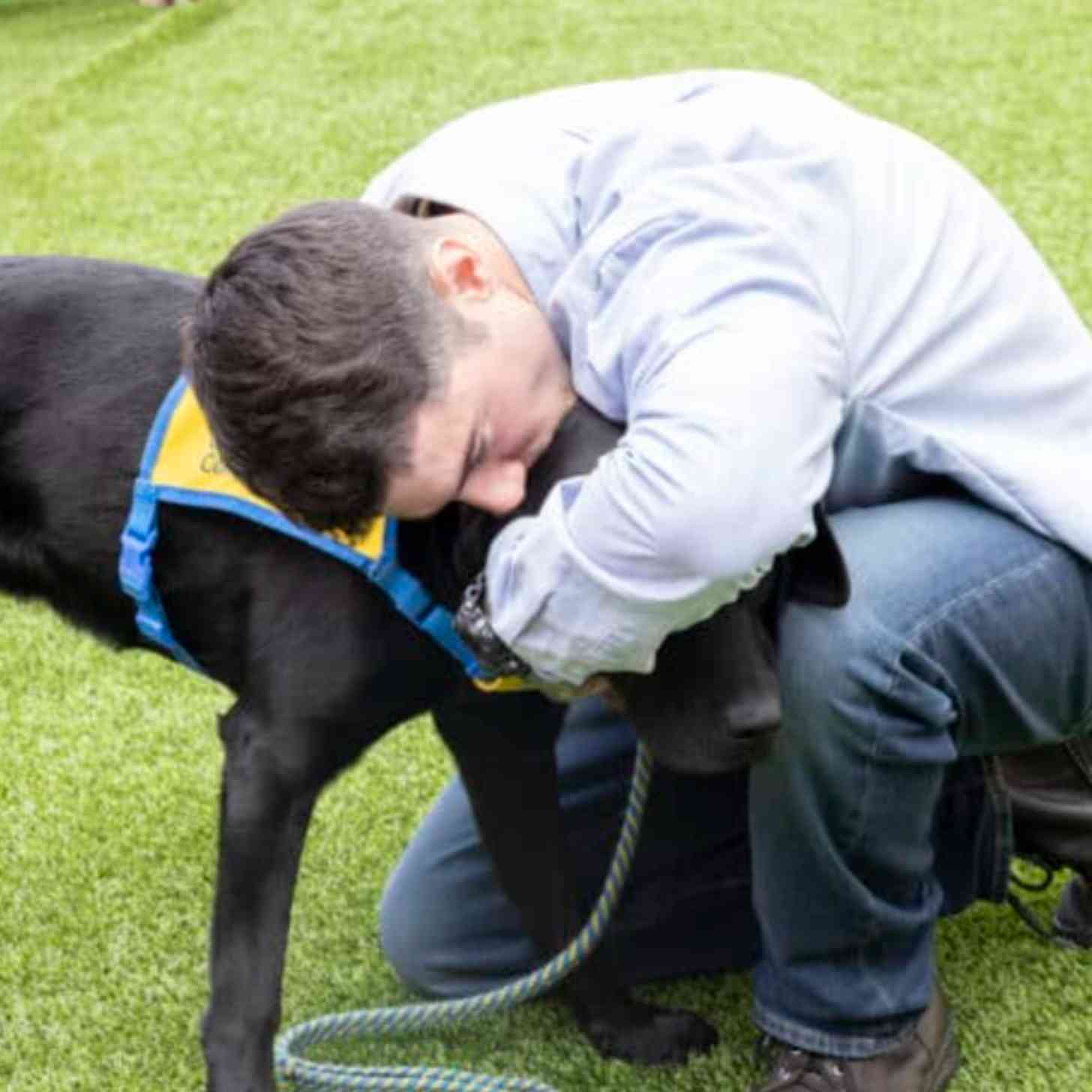
Owners like Benjamin Carter, who received his service dog, Artemis, from the program at no cost.
“He is responsive when he’s working. He is cuddly when he is off the clock. He’s an amazing companion,” Carter told the Associated Press. “And all that structure and love and trust was built from these guys here, so I’m just super grateful to them.”
Today, the San Quentin program has quadrupled in size, with 16 trainers currently raising eight puppies. Since San Quentin joined Canine Companions in 2023, 11 more correctional facilities have followed suit.
“Being in this program, it’s given me something that I think I’ve searched for my whole life,” Benoit said. “And that was meaningful purpose, doing something that’s good, better, bigger than myself and feeling like I’m part of something great.”
A version of this article originally appeared in the 2025 Dogs Edition of the Goodnewspaper.
Header image via Canine Companions
Just over 100 days ago, a group of 19 Buddhist monks set off for a 2,300-mile “Peace Walk” across the United States, calling for unity, peace, and compassion.
They began in Fort Worth, Texas, with a final destination of Washington, D.C. They have just finished their stop in Richmond, Virginia, where they celebrated 100 days of the journey, with their sights now set on the final stop in D.C.
They will end their arduous journey with a gathering at the United States Capitol, where they will address the public.
Over the past few months, monks have traversed inclement weather and faced injuries. While they were joined with their canine companion, Aloka, at the start of the trek, the dog has been on a bit of a hiatus, healing after a surgery.

Aloka, who indeed has his own Instagram and has gained immense popularity as the group’s Peace Dog, has been in the care of all 19 monks since they first found and rescued him during a different peace walk.
“We found him in India when we walk 112 days in India. He follow us the whole time. He’s a true hero,” Bhikkhu Pannakara, spiritual leader of the walk, said in a video.
During this time, Aloka fell sick and was even hit by a car.
“But he still stand up and walk,” Pannakara said.
Even when the monks tried to put him on a truck and let him go to safety, the dog refused.
“He jump off, he wanted to walk. That inspires a lot.”
Now, Aloka comes with the monks on all of their journeys.
“I brought him here and he’s a U.S. citizen now,” Pannakara joked. “Every one of us love him so much.”

That love is evident in the care Aloka receives.
Although the dog loves to walk alongside his human counterparts, Aloka needed surgery to heal a leg injury earlier this year. He was taken off of the trail and brought to a clinic, where veterinarians provided the care free of charge.
Since then, regular updates have been shared on Aloka’s social media accounts as he healed from the procedure and began joining the monks again in short walking stints.

As winter weather has made the walk more arduous, Aloka’s safety remains a priority. While he can often be seen in a Snoopy-adorned puffer coat, dog booties, and sweaters of all styles, when he needs a break, he has his very own van that travels in tandem with the 19 men.
“Since the snow began falling at noon today, our Aloka has been keeping a very patient watch from the escort car. He sat so calmly, guarding the venerable monks from his seat as he followed them through the beautiful white snow,” an update from the dog’s page shared three days ago.
“Even from inside the car, Aloka takes his job seriously! He stayed focused and alert, making sure the venerable monks were safe on the road. It is a very peaceful and polite way for him to participate in the Walk for Peace during this wintry weather.”
One team member, Nghia, is the driver of the group’s RV and has followed them since the start of the journey, always having resources on hand for the group’s safety. Now, he spends a lot of time caring for Aloka.
“These acts of kindness from the team help him so much with his recovery as we continue our path alongside the venerable monks,” an update shared. “We are so grateful to have such a supportive crew looking after our furry friend.”
Other updates show Aloka sitting in the driver’s seat of the parked vehicle, wearing red pajamas. At the end of each day, he is reunited with the monks, where they often sleep together on mats or cots in churches or community centers in that day’s city.

“Even though he hasn't been walking on the road today, he has been very busy guarding the venerable monks from the escort car, keeping a watchful eye on everything,” a caption on a video of Aloka snuggling up in a pile of blankets explained.
“After a long day of ‘patrolling’ through the windows and meeting so many new friends, he certainly deserves this quiet time to recharge.”
You may also like: How the Dog Aging Project is working to extend your dog’s life — and yours too
Header image courtesy of Aloka the Peace Dog/Facebook
When we want to purchase a bouquet of flowers, most of us probably find ourselves shelling out a few bucks for a plastic-wrapped arrangement at our nearby grocery store (which might rhyme with Shrader Shmoe’s).
But as convenient as this is, the mainstream flowering world isn’t so pretty.
While the global floriculture industry is worth over $36 billion a year, the United States is the largest consumer of cut flowers, with a not-so-rosy penchant for importing flowers from other countries.
Most flowers in the U.S. are flown from Colombia and Ecuador, and the ideal goal of getting a bloom from the farm to your kitchen centerpiece within five days means that the environmental footprint of your bouquet might look a little like Taylor Swift’s private jet tracker.
Plus, flowers that are grown with the intention to be cut, shipped, and sold rapidly require a lot of water and may even lead to chemical runoff — not to mention all of the refrigeration involved in long-haul transport, or the gas used in floral delivery.
The problem actually stems from a War On Drugs-era law in which the U.S. government gave tax incentives to South American farmers to grow plants and flowers other than coca, the plant from which cocaine is derived.
This led to a massive reliance on foreign flowers in the U.S. — and the systemic mistreatment of farm workers in low-income countries.
We know: It’s a lot to take in. How can something as sweet as a handful of gerbera daisies from the grocery store be so insidious?
The good news is that sustainable florists across the globe do not want to accept this reality. Enter: The Slow Flowers Movement.
It’s simple: The Slow Flowers Movement encourages people to embrace local, seasonal, and sustainable flowers.
“It is a movement to know where your flowers are grown, your farmer’s name, the ethical conditions of the workers, and types of chemicals used (if any) to grow your flowers,” sustainable florist Holly Łukasiewicz of District 2 Floral Studio, wrote in an Instagram post.
Florists who are part of this movement (they’re usually members of the Slow Flowers Society) are dedicated to things like working with flowers during their natural blooming seasons, sourcing from small and local farmers, reducing their transportation footprint, eliminating waste and chemicals, prioritizing BIPOC growers, and more.
When shopping for flowers, everyday consumers can also choose to support small and local farms, or floral artists like Łukasiewicz who are transparent in their efforts to flower with care.
To find local growers, start by perusing the Slow Flowers listing directory.
“The Slow Flowers Movement recognizes that there is a disconnect that has disengaged humans from small-scale flower farming. It aspires to take back the act of flower growing and recognize it as a relevant and respected branch of agriculture in the U.S.,” Debra Prinzing, the author of the 2013 book “Slow Flowers,” writes.
“As a Slow Food chef cooks with what is seasonally available, a Slow Flowers florist designs with what is seasonally available. In a way, this also means that we redefine beauty.”
You may also like: Dave Matthews Band pledges to plant 1 million trees on newly-announced summer tour
A version of this article was originally published in The 2024 Plants Edition of the Goodnewspaper.
Header image by Oxana Melis on Unsplash
On October 26, 19 Buddhist monks from the Huong Dao Vipassana Bhavana Center set off from Fort Worth, Texas to walk 2,300 miles to Washington, D.C.
Along the way, they’ve stopped at state capitols and historic landmarks to call for peace and reflection.
“We walk not to protest, but to awaken the peace that already lives within each of us,” spiritual leader Bhikkhu Pannakara expressed in a written statement.
“The Walk for Peace is a simple yet meaningful reminder that unity and kindness begin within each of us and can radiate outward to families, communities, and society as a whole.”
As their walk nears its end, temperatures have plunged, and wintry conditions have taken hold.
But on Day 100, as snow blanketed the ground, thousands still gathered in the streets of Richmond, Virginia, to support them — and their beloved rescue dog Aloka.
“The temperature was low, but the warmth in every heart was overwhelming,” Walk for Peace wrote in an Instagram caption on February 1. “It felt deeply touching that so many souls chose to come out in the cold evening to be together, to listen, and to share in the spirit of peace and mindfulness.”
“That willingness to brave the weather and the dedication to being present moved the venerable monks profoundly,” they continued, adding that the crowd's support warmed their hearts “more than any fire could.”
Buddhist monks have led peace walks for thousands of years, but this iteration was first inspired by a march that originated in Cambodia in 1992. After four Cambodian factions signed the region’s Peace Accords, refugees were repatriated to Thai border camps.
It was at that time that spiritual leader Maha Ghosananda led a movement of “socially engaged Buddhism.”
“Peace is growing in Cambodia, slowly, step by step .... Each step is a meditation. Each step is a prayer,” Ghosananda expressed.

According to Kathryn Poethig, a professor of global studies at California State University, Monterey Bay, the walk would go on to inspire Cambodia’s annual Peace Walk Dhammayietra, or pilgrimage of truth.
“Maha Ghosananda’s instruction to move ‘step by step’ toward peace reappropriates dangerous mobility — the massive relocation during the KhmerRouge era, refugee flight, the danger of treading on land fed with mines — and turns walking into a mindful act,” Poethig wrote in a paper published in the Journal for the Scientific Study of Religion.
Every year, the Buddhist monks are greeted by villagers along the route. Even in war-torn regions, the monks have been given clemency to pass.
In August 2025, Cambodian Buddhist monks marched from Wat Phnom to the Independence Monument in central Phnom Penh to call for a ceasefire between Cambodia and Thailand, as well as the release of 18 detained Cambodian soldiers.
Although that particular walk was only a mile long, it was the sheer number of participants— 2,569 monks — that drew global attention.
On December 30, Thailand released the prisoners of war after 155 days in captivity.
“The repatriation of the 18 Cambodian soldiers was undertaken as a demonstration of goodwill and confidence-building, as well as in adherence to international humanitarian principles,” Thailand’s Foreign Ministry said in a statement.
At the time of publication, the ceasefire between Cambodia and Thailand still held.

And in the United States, the Walk for Peace marches on.
“Our suffering mostly comes from our wandering minds,” Walk for Peace shared in a statement. “With our chasing thoughts, we get lost elsewhere —in the past we cannot change, in the future we cannot control — drifting so far from the peace of this present moment.”
“And we ache,” they continued. “We feel lost. We wonder why peace seems so hard to find.”
“But dear hearts, this here and now, this present moment, is our home … Peace is right here. It has always been right here, waiting for us like a warm home with the door open. We can come back to it simply by returning to our breath — breathing in, breathing out, feeling the gentle rhythm that has been quietly holding us this whole time.”
To track the Buddhist monks on their Peace Walk, you can follow their progress on their map.
You may also like: As Buddhist monks walk across the country in winter weather, Peace Dog Aloka hitches a ride in a warm van
Header image via Peace Walk / Instagram
In Jewett, Texas — about 60 miles east of Waco — you’ll find an acreage called the NRG Dewey Prairie Garden. While the garden has yielded about 10,000 pounds of produce for six food pantries since it began harvesting in April 2022, the land hasn’t always been this fruitful.
In fact, it used to be part of a coal mine that fueled an NRG-run 1,688-megawatt power plant.
The Dewey Prairie Garden is part of a massive effort to restore a 35,000-acre coal mine, parts of which still stretch into the town of Jewett — a town the United States Department of Agriculture and Feeding America call a food desert.
Many residents live over 10 miles from the nearest grocery store, and food insecurity rates are 51% higher than the national average.
The garden is managed by nonprofit Texan by Nature and supplies healthy, fresh produce for an estimated 3,000 people in the area every year.

“You wouldn’t think that this could happen,” Debbie Glaze, a lead gardener on the project, told The Texas Tribune. “I think it’s amazing that the ground is actually growing all these vegetables after all that mine digging.”
With plans to expand the garden another nine acres, even more nearby residents can look forward to “shopping” free produce from their local food pantries.
“Most of our clients are unable to regularly buy fresh fruits and vegetables, due to the cost,” Kathleen Buchanan of The Lord’s Pantry of Leon County, told Texan By Nature. “The garden will be a true blessing for all of us.”
The garden also provides healthier alternatives for area residents.
“This project … will be one that impacts not just our clients but families across a three-county area. Statistics show that Leon, Limestone, and Freestone Counties are three of the least healthy counties in the state, with high obesity and diabetes numbers,” Kristy Vandegriff of Leon Community Food Pantry and Clothes Closet said.
“Being able to offer fresh fruits and vegetables on a regular basis will help our clients make choices for better health.”
You may also like: Instead of conflict mining, this startup extracts nickel from daisies
A version of this article was originally published in The 2024 Plants Edition of the Goodnewspaper.
Header image courtesy of Texan By Nature
You and your overflowing inbox are not alone; 70,000 trees in Melbourne, Australia also have their own email accounts.
The city’s Urban Forest and Ecology team created these emails to connect to an interactive digital map called the Urban Forest Visual, allowing passersby to click on any tree in Melbourne to find information about its genus and age.

Each tree’s accompanying email address encourages members of the public to easily inform the city’s experts of any trees that need attention or are visibly declining in health.
A great way to get the community involved, many have also begun to send the trees fan mail.
“Hi Tree,” one emailer wrote. “Keep growing and keep on treeing!”
The interactive trend started as part of the city’s Urban Forest Strategy, aimed at adapting the city to climate change, lowering city temperatures, creating healthier ecosystems, and engaging community members.
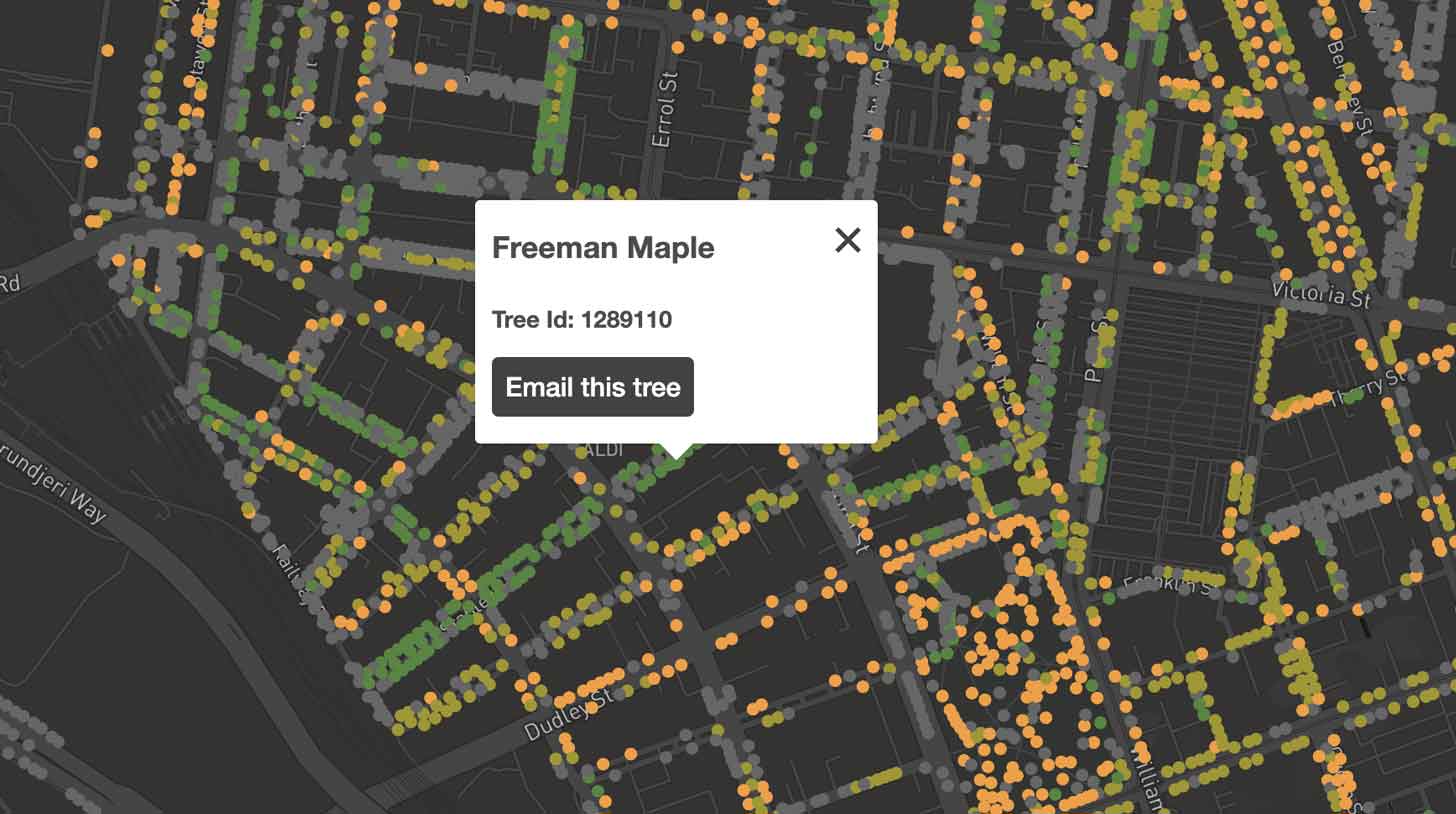
And folks will have plenty more new tree friends to email in the coming years; the city’s plan outlines a strategy to increase canopy cover from 22% to 40% by 2040.
It is estimated over 10,000 emails have been sent since the project’s inception. They range from complimentary and brief, to personal and poetic.
“Over the past year I have cycled by you each day and want you to know how much joy you give me,” one message, to a large Rose Gum, says.
“No matter the weather or what is happening around you, you are strong, elegant and beautiful. I wanted you to know.”
You may also like: Monarch butterflies could be wiped out by 2090. To save them, scientists are relocating an entire forest
A version of this article was originally published in The 2024 Plants Edition of the Goodnewspaper.
Header image by Jeremy Gunawan on Unsplash
Since 2000, Texas has voted red in the presidential election 100% of the time. And Abilene, Texas, is one of the most conservative cities in the state.
It was a title that inspired the startup Matter Neuroscience to fly to Texas and install a refurbished payphone on a street corner in the heart of Abilene.
A sign on the top of the blue payphone reads “Call a Democrat,” and it only leads to one line: a red payphone 1,500 miles away in San Francisco that says “Call a Republican.”
It’s part of a new payphone experiment that Matter Neuroscience debuted in mid-January.
“The goal for this project is for people from different places to have a meaningful conversation and enjoy common humanity,” a sign on the San Francisco payphone reads. “Research shows that the core molecules associated with happiness are the same in all human brains, regardless of political identity.”
“Political disagreements are natural, but hostile discourse often increases our brains’ cortisol levels (stress) and suppresses our happiness,” it continues. “Positive conversations do the opposite, they lower cortisol and boost our feelgood neurotransmitters like dopamine and cannabinoids. In short, more cannabinoids and less cortisol equals more happiness for all.”
So far, the startup has released five recorded conversations from the experiment. Topics include everything from cybertrucks and annoying coworkers to classic novels and the huge 4-million-square-foot AI data center that’s coming to Abilene.
But more often than not, the callers return to two tenets of small talk that are undeniably human: Good weather and bad traffic.
Despite hailing from “the most liberal and most conservative cities in America,” callers were reluctant to identify as a full-throated Republican or Democrat in several of the recorded conversations that have been released so far.

“I’m not a Democrat per se, but I am a resident of San Francisco,” one caller explained in a recording. “I kind of abandoned the Democratic Party. Are you a Republican?”
“I’m not necessarily a Republican, but I’m not a Democrat either,” an Abilene local replied. “I just feel like there’s so many good points on both sides. It’s really hard for me to make a decision, especially because there’s so much propaganda out there.”
It’s a reminder that nobody comes from a monolith. In fact, despite Abilene’s conservative fame, roughly 500 people gathered outside of Abilene's City Hall on October 18 to participate in the nationwide No King’s Protest.
On that day, organizers like Melissa Weaver were impressed by the modest turnout in a county that’s known for being red.
“It just means to me that people feel the same way I do,” Weaver told FOX West Texas. “We're normal everyday people, like, I grew up in Abilene, she was raised in Abilene. We are not bused in, we're not paid by anybody. Any of those things. We're just normal everyday people, but we want better for our country.”
Those political nuances and complexities are what the Matter Neuroscience project is all about.
When asked if she was a Republican, one Abilene caller said she’s become more of an Independent as she gets older.
“I’m pretty liberal,” the San Francisco caller responded. “Do you see the world [as being] as crazy as I do?”
“Yes, I do,” the Abilene caller responded with a laugh. “It’s getting worse everyday.”
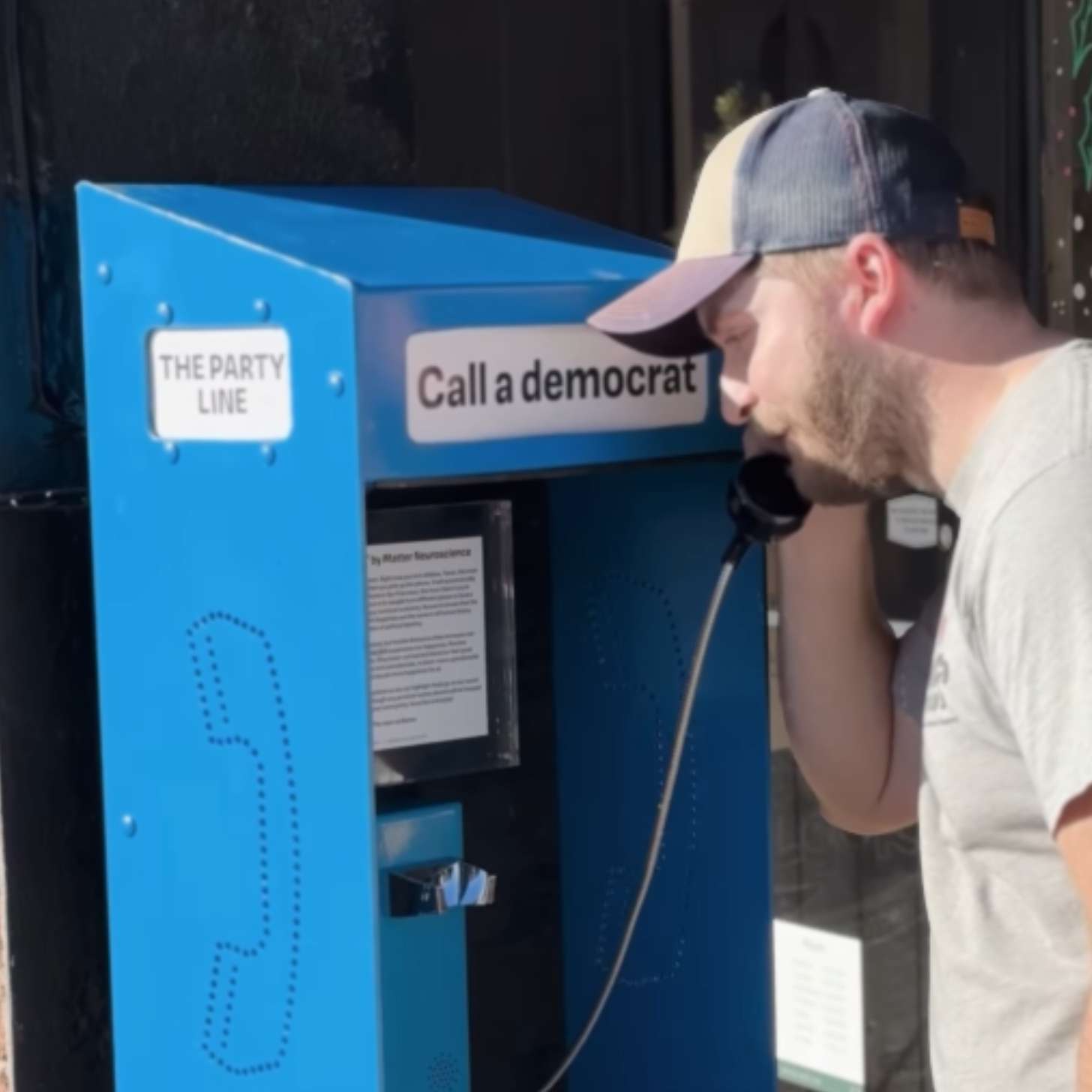
As the payphone conversations have gone viral online, people have been encouraged by the compassion and civility demonstrated by the cross-country callers.
“A conversation,” one person replied in the comments section. “No yelling, no screaming, no shouting — just plain conversation between two individuals. Love this experience.”
“I could feel the happiness in their voices, and that made me happy too,” another person wrote under one video, in which a Texas caller and a California caller kept dissolving into giggles.
“I love these videos!” Another commenter chimed in. “Is there a plan in the works to put more of these phones around in different cities or states?”
“We are working on what’s next,” Matter Neuroscience replied, with a teasing eye emoji.
In an interview with ABC7 San Francisco, Matter Neuroscience’s co-founder Ben Goldhirsh said that he hopes that the experiment will bridge the yawning gap between voters — and hopefully put a smile on people’s faces.
“I think our thesis is that humans are pretty awesome and – if given the opportunity – will really look to find common ground because biologically that actually gives us a lot more happiness,” he said.
You may also like: Art exhibit invites people to talk politics at the dinner table: 'If we can’t speak to each other, I don’t know how we have a democracy'
Header image via Nina zeynep güler / Pexels
When United States Immigration and Customs Enforcement officers descended upon Southern California last summer, Dulce Flores and Angie Portillio started Ponte Your Moños, a project to adorn their fellow Latinas with traditional ribbon braids and raise money to support their vulnerable neighbors.
Ponte Your Moños, or “put on your bow,” gets its name from the Spanish phrase “ponte chingona,” which essentially means “be a badass,” according to CALÓ News.
And for many people with Mexican and Central American roots, lace and ribbon braids are integral to their heritage. Stemming from Indigenous cultural celebrations in Oaxaca, these accessories are now often worn in braids as a part of Quinceañeras, Sunday mass, or even in wedding ceremonies.

Since June, Flores and Portillio, along with a growing roster of volunteers, have braided the hair of more than 1,000 people at pop-up events across the Santa Ana and Los Angeles areas, with the cost of every service going back to provide relief for immigrant neighbors in their community.
Their donation system is simple. According to Ponte Your Moños, people pay what they can (and are not turned away if they don’t have the money), and then Flores and Portillio distribute funds to community members impacted by ICE raids.
Other times, they will buy out street vendors so they can go home and be safe with their families.
It’s not clear how much they have raised in total. At one event outside of the Otay Mesa Detention Center in San Diego, the group reportdly helped raise $5,000 for detainees to make phone calls to their families, get legal support, and cover their commissary fees.
“Showing support to the detainees from outside the facility was such a heavy moment but definitely inspired me to keep going and do more,” one volunteer from the event, Karent, shared on Instagram.
Along with their fundraising efforts, the emotional and cultural element of building a small army of Latina women adorned with ribbons and lace also has a positive impact.

The braid styles, called trenzas, are easily identifiable among Latinas, and represent a “beautiful way to protest,” Portillio told the Washington Post last fall.
At their braiding events, the group shows up in a small tent with a bright pink banner that reads: “Make braids, no raids.” By showing up in the world, wearing a traditional piece of their heritage, they say, “our braids become a form of protection.”
“I know many of us are feeling it, the anxiety and uncertainty of this moment. In times like these, community matters more than ever,” a recent Instagram post from Ponte Your Moños shared.
“When we come together, even small acts like braiding hair become reminders of care, connection, and shared strength. These moments ground us, affirm who we are, and show the power of showing up for one another. Together, we move forward with resilience, compassion, and hope.”

The act of braiding itself provides an outlet to process the crisis of the moment and connect with other women, according to those involved.
“Having girl time was so healing,” one volunteer, Ashley, shared in a Reel about working with Ponte Your Moños.
“One thing that really stuck with me is that mostly every girl that sat in the chair, they said that it reminded them, took them back to their childhood, when their mom used to do their trenzas.”
“It’s in our roots,” Portillio added to CALÓ News. “It’s a tribute, or homage, to them.”
“Fashion has always been political,” Flores affirmed.
As the trend takes shape, other chapters of Ponte Your Moños are being created in cities across the country. Flores told FOX 11 News in Los Angeles that she is getting inquiries from people in other places, asking for guidance on how to replicate this type of resistance.
“Ponte Your Moños Minnesota — can you imagine?” Flores excitedly told FOX 11. “The whole point is for young people to embrace their culture while standing up in protest to what’s happening in our nation.”
And for those who want to learn how to do their own trenzas, Ponte Your Moños believes the style is “a way to take up space with intention and pride.”
“At a time when ICE enforcement and immigration policies create fear and uncertainty, this initiative affirms visibility, dignity, and belonging,” the group shared on Instagram.
“Through culture and community, we send a clear message: We are here, we matter, and we are not going anywhere.”
You may also like: Red knitted 'Melt the ICE' hats raise $650K for Minnesota
Header image courtesy of Samirah Serrano/Instagram
Catherine Szabad knows how hard holidays can be for those who have lost a loved one.
“After losing my child, I experienced a silence I never expected — the world didn’t seem to notice that everything had changed,” Szabad wrote. “That grief made me very aware of how isolating loss can be, especially when there’s little space for others to recognize it.”
That became the mission behind Szabad’s company. Hearts in Bloom, in Buffalo, New York, which delivers free bouquets and gifts to widows and widowers on Valentine’s Day. In its second year, Hearts in Bloom had over 300 volunteers — enough to triple the number of people who received gifts.
This year, volunteer Morgan Cabana dropped off flowers for Rita Costantino, who lost her husband of 51 years in May 2024.
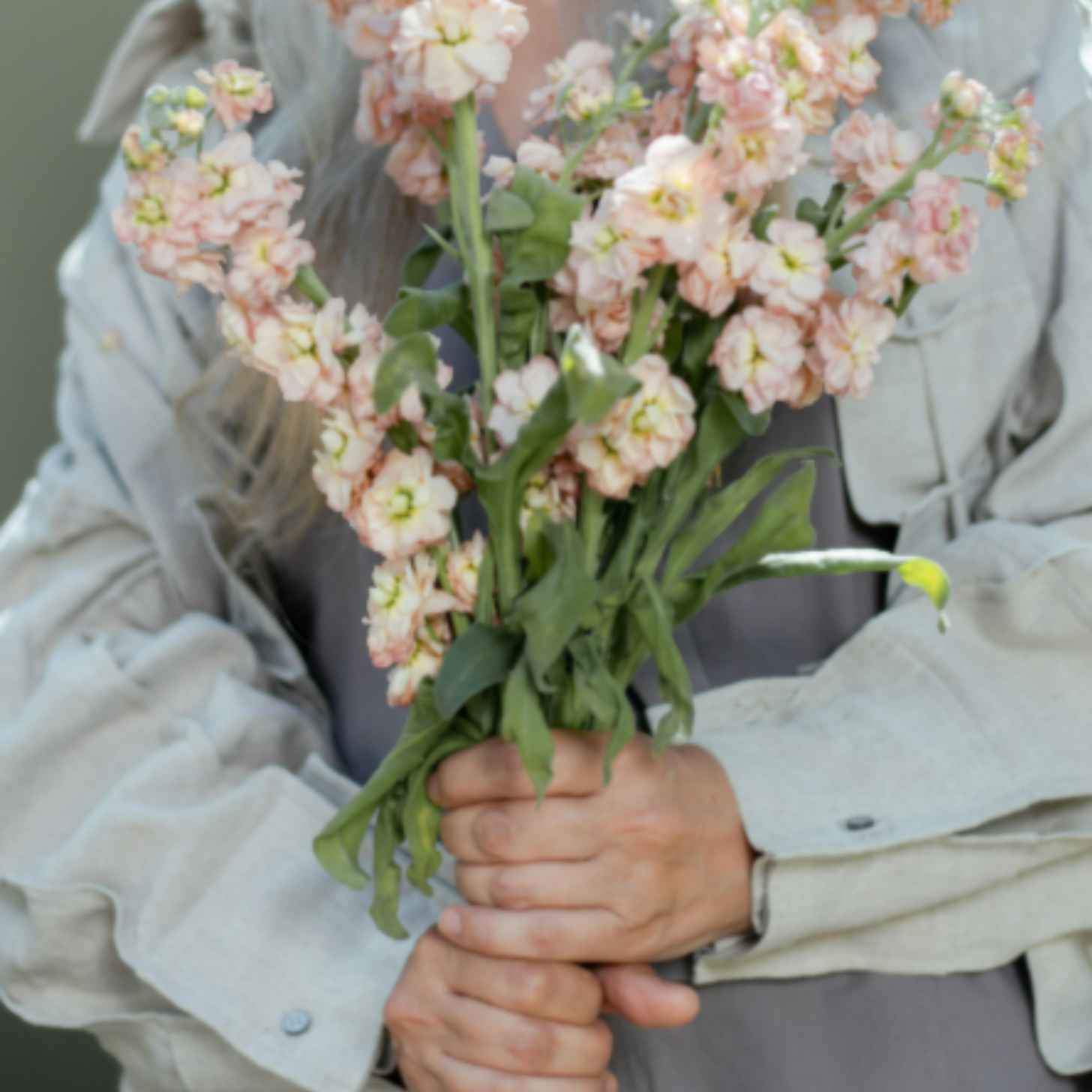
“Today is Valentine’s Day, my husband's birthday is February 20th, so I’m dealing with a couple of things in February,” Costantino told WGRZ, a local television station.
Cabana said that she couldn’t think of a better way to spend her day.
“[There’s] a sense of community and being able to bring a smile to those where this day may not be just passing by like the rest of us,” Cabana said.
In 2025, Hearts in Bloom delivered 135 gift baskets and bouquets to widows and widowers on Valentine’s Day.
“People ask me why I do this,” Szabad said. “I answer that it’s really a kind thing to do — but quietly, I know I’m really doing it for my son and to help those who have a sense of loss and missing someone they loved dearly.”
A version of this article originally appeared in the 2025 Helpers Edition of the Goodnewspaper.
Header image via cottonbro studio.
Paying rent on time might finally pay off for tenants in Colorado.
Earlier this week, Colorado Governor Jared Polis announced a program for select renters across the state: Colorado Renter Rewards. The initiative allows renters to earn cash back for on-time rent payments, sharing in a property’s equity as it grows over time.
The program is limited to renters living in properties financed by the Proposition 123 Equity Fund, which provides investments to construct and preserve low- and middle-income rental developments.
A ballot initiative approved by voters in 2022, Proposition 123 transfers one-tenth of 1% of taxable income every year to an affordable housing fund, bringing in an estimated $290 million to support low-income housing annually.
And now, that support will further uplift low-income renters, so they can ideally save up to put a down payment on a home one day, build long-term savings, or have a safety net for unforeseen expenses.
“By helping renters save the money needed to make a down payment on a home, more Colorado families will be able to build wealth and security,” Gov. Polis said in a statement. “Home ownership is a major pathway to financial security, and now more Coloradans will be able to realize the dream of owning a home.”
For each on-time monthly rent payment, eligible participants will receive 2% cash back. This will be delivered via a digital wallet on the platform Stake and can be saved, transferred to 13,000 banking and financial institutions, or used for other deals for renters inside the digital wallet platform.
While the program does not have stipulations for what that money can be spent on, those who decide to save their cash back for 12 months will receive a match of what they have saved, up to an additional 2% of their rent.

Residents who remain in an eligible property for more than one year will also be included in annual equity distributions, based on returns from their housing units.
Known as a Tenant Equity Vehicle, the renter rewards program is the first approach in the nation that puts property equity back into the pockets of tenants.
“The Proposition 123 Colorado Renter Rewards initiative is the first statewide tenant equity strategy in the nation, helping create more opportunities for Coloradans to live close to jobs, schools, and in the communities we love while saving money and helping renters build equity,” Gov. Polis added.
Right now, the program is only operational in one Proposition 123 property — Fall River Village in Estes Park, just outside of Rocky Mountain National Park.
The property joined the program this month, with 66 individual and family renters eligible to earn cash back by paying their rent on time.
The Colorado program is being implemented through the Business & Funding Incentives division of the Colorado Office of Economic Development and International Trade and Colorado Housing and Finance Authority.
“The Colorado Renter Rewards program is a powerful example of how we are helping Coloradans build economic stability and opportunity. By pairing affordable housing with cash back and equity payments for renters, we are helping more people love where they live and save money,” Eve Lieberman, the OEDIT executive director, said in a statement.
“This is a smart investment in our workforce and families, supporting long-term economic growth and a Colorado economy that works for everyone.”
You may also like: New study: Surprising mental health benefits came from Biden-era rental assistance
In late October 2025, a group of 19 Buddhist monks — and their beloved canine companion, Aloka — set off for a 2,300-mile trek across the United States, calling for peace.
They began their “Walk for Peace” in Fort Worth, Texas, with a final destination of Washington, D.C. They are expected to arrive in D.C. soon, where they will host a gathering at the United States Capitol to share remarks about healing and unity with the public.
The monks have traversed inclement weather, faced injuries, and even paused for Aloka to receive an orthopedic surgery, but nothing has deterred them from the matter at hand.
And in a recent update, they shared that their journey, though soon coming to a close, will never truly end.
“As we draw closer to Washington, DC, we sense that many people are worried that this journey is coming to an end — that once we reach our destination, the Walk for Peace will be over,” the monks shared on social media.
“Please be assured: while this physical journey will conclude, the Walk for Peace will not end.”

They reiterated that their 2,300-mile journey will soon meet its final destination, but that peace itself is “not a destination we reach and then leave behind.”
Their message of peace itself is something that has no finality.
“Peace is a path we walk together every single day — in every choice made, every kind word spoken, and every compassionate action taken,” they wrote.
“The miles may end, but the journey for peace continues. The road may conclude, but the spirit of peace nurtured together will keep growing, blooming, and spreading through each and every one of us.”
The monks encouraged followers to “stay tuned” on their page, as they plan to share more updates, continue to “nurture” peace, and foster community, compassion, and unity long after the physical walk ends.

In fact, they affirmed that most of the growing support of their movement has been a fully spiritual experience, with people following along, not only in-person, but in their own individual lives.
“Everyone has walked with us in spirit. Everyone has welcomed us with open hearts and shown us that peace is alive and possible,” the monks concluded.
“Now, together, we will continue this walk —not just for a season, but for a lifetime.”
After a large greeting of an estimated 10,000 people in Richmond, Virginia last weekend, and completing their 103rd day of walking on Thursday, the group estimates they will arrive in Washington, D.C. on February 10.
They have also called for other venerable monks and nuns to meet them there.
“With deep respect and warm hearts, we extend a sincere invitation to all venerable monks and nuns from all traditions to join us at our peace gathering and events in Washington, DC, on February 10 and 11, 2026,” the group shared in a blog post.
“As we approach the destination of this 2,300-mile journey for peace, we would be profoundly honored to welcome monastics from all Buddhist traditions to walk and gather with us in our nation’s capital. This is a precious opportunity for everyone to come together in the spirit of unity, compassion, and shared purpose.”
After spending two days in D.C., the group is expected to take a bus back to Fort Worth, Texas, where they will walk six miles back to their temple. All are invited to join them on their final walk home.
“With deep gratitude and endless hope,” they concluded in an Instagram post, “we walk forward together.”
You may also like: Buddhist monks are walking 2,300 miles across America to inspire peace. This is the '90s walk that inspired them
Header image courtesy of Walk for Peace
Two researchers at Johns Hopkins University recently invited a special guest to a pretend tea party: a 43-year-old bonobo named Kanzi.
Bonobos are close relatives of humans, similar to chimpanzees, but with slender, longer limbs. For decades, their population in the Democratic Republic of Congo — the only place they are found in the wild — has been on the decline due to habitat loss and poaching.
Like other primates, bonobos are also highly intelligent. At times, they have been seen engaging in various levels of play, moving “imaginary” blocks after playing with wooden blocks, or carrying sticks as though a mother would hold their infant.
To test the capacity of their ability to “play pretend,” two researchers at Johns Hopkins University developed a controlled experiment in which they tested Kanzi’s ability to play “make believe.”
In each test, Kanzi sat across from an experimenter at a table arranged like a child’s tea party, with empty pitchers and cups or bowls and jars.
At first, the experimenter pretended to pour juice into two transparent cups, then acted out dumping the juice from one of them before asking, “Where’s the juice?”
Kanzi usually pointed to the correct cup that still supposedly held juice, even when the experimenter switched its position.
In another experiment, the experimenter pretended to take a grape from an empty container, put it into one of two jars, then acted as if one container were emptied and asked, “Where’s the grape?”
Although he didn’t answer “perfectly” every time, Kanzi was consistently correct.

“As such, our findings suggest that the capacity for representing pretend objects is not uniquely human,” they wrote in their study, which was published in Science on February 5.
“It’s extremely striking and very exciting that the data seem to suggest that apes, in their minds, can conceive of things that are not there,” Dr. Amalia Bastos, first author of the research from the University of St. Andrews, said in a press release. “Kanzi is able to generate an idea of this pretend object and at the same time know it’s not real.”
Her co-author, Christopher Krupenye, a Johns Hopkins assistant professor in the Department of Psychological and Brain Sciences, agreed.
“Before this, there had been no experimental studies of pretend play in animals, and so our biggest challenge was thinking about how best to study this capacity in an animal,” Krupenye told ZME Science.
“What kind of controlled experiment could show that animals can follow along [with] a pretend scenario and track objects that are not actually in front of them?”
“It really is game-changing that their mental lives go beyond the here and now,” Krupenye said. “Imagination has long been seen as a critical element of what it is to be human, but the idea that it may not be exclusive to our species is really transformative.”
Bastos said that because we share this ability with bonobos, they could reasonably expect that this behavior dates back to a shared ancestor “somewhere between 6 to 9 million years ago.”
Both researchers called the study a monumental discovery in the field of animal behavior.
“Jane Goodall discovered that chimps make tools, and that led to a change in the definition of what it means to be human,” Krupenye noted. “And this, too, really invites us to reconsider what makes us special and what mental life is out there among other creatures.”
You may also like: A baby tree kangaroo was just born — and its 'pouch cam' gives rare insight into one of the world's most endangered species
Header image via Becker1999 / Flickr (CC BY 2.0)
Every day the Good Good Good team collects the best good news in the world and shares it with our community. Here are the highlights for this week!
If you want to get good news in your inbox every day, join the Goodnewsletter — the free daily newsletter designed to leave you feeling hopeful.
The Best Positive News We’re Celebrating This Week —
Cyclists around the world participated in memorial rides for Alex Pretti, who was also an avid cyclist
A Minneapolis cycling community, of which Alex Pretti was a part of, organized a memorial ride in his honor — and thousands of local cyclists joined. It was one of more than 200 memorial rides organized worldwide.
The ride began at a local park, where organizers handed out yellow safety vests that said “peaceful observer, don’t shoot” on the back to “send a message” and let people know “that what the rhetoric they’re hearing that ‘we’re domestic terrorists.’ We’re not. We have a very peaceful message to protect our own neighbors.”
The cyclists rode past the memorials of Pretti and Renee Good, and ended at the VA hospital where Pretti had worked as ICU nurse.
Why is this good news? People in Minneapolis and around the country continue to challenge the narrative that they are violent agitators, and large, nonviolent, public displays of care and solidarity like this — in response to an act of violence from federal officials — futher that message, and bring people together.
Experts say nonviolent anti-ICE protesters in MN have a shot at ‘outlasting their oppressors’
U.S. forests are storing more carbon than they have in decades
A new analysis shows that for the past two decades, U.S. forests have been absorbing carbon dioxide at a historic rate, increasing storage by about 66 million metric tons per year from 2005 to 2022.
Rather than being driven by a single cause, a mix of shifting climate conditions and human decisions about forest management helped contribute to the increase.
One of the most significant factors, though, was forest age: as forests got older, they entered peak growth stages and stored enormous amounts of carbon.
Why is this good news? Forests are critical climate partners because both trees and soil store carbon that would otherwise be in the atmosphere, acting as “passive” carbon sinks and absorbing more carbon than they release without intervention. This new data will help the U.S., and likely other countries around the world, make decisions about forest management and conservation.
As ICE continues its crackdown in Minnesota, legal education is a form of self-defense
→ Read more
Travel Channel star Andrew Zimmern is feeding his Minnesota neighbors amid the ICE occupation
Chef Andrew Zimmern, known for hosting “Bizarre Foods” for 22 seasons on the Travel Channel, understands the power of food as a way to bring people together — and in his home state of Minnesota, bringing people together has never been more vital.
And amid ICE’s occupation of Minnesota, he continues to be an advocate for local restaurants, taking his staff to dine at local restaurants, and volunteering, making and serving meals to people in need.
He’s also been outspoken in calling for an end to ICE’s operation in Minneapolis, and shared how pivotal the state has been in his sobriety journey since he moved there about 34 years ago.
→ Read more
University students in California have made 300,000 Wikipedia edits to preserve LGBTQ+ history
Amid ongoing efforts to erase LGBTQ+ history from the Trump administration, students at the University of California Berkeley are fighting to preserve it.
For the past decade, students in Professor María Rodríguez’s classes covering ethnic studies, gender and women’s studies, and performance studies have edited and created Wikipedia articles about LGBTQ+ history, with a focus on queer and trans people of color.
In partnership with Wiki Education, the students have contributed over 300,000 edits and 3,000 citations to Wikipedia, and garnered more than 96 million views.
Why is this good news? There have long been attempts to erase or dampen the contributions of LGBTQ+ people in history, and this effort addresses the disparities in what information is available about who, especially when it comes to white LGBTQ+ populations and LGBTQ+ people of color.
You may also like: How people are preserving LGBTQ+ history — despite the Trump administration’s efforts to erase it
These beagles were slated for euthanasia. Now they’re living their best life beside pigs, goats, and sheep on a farm in Wyoming
→ Read more
A Maryland man spends every day before work walking shelter dogs — even on holidays
Since 2018, Darren Genson has volunteered with Ann Arundel County Animal Services every single morning — “Unless I’m sick or … an obligation I can’t avoid” — before he goes to work as a full-time insurance agent.
Genson adopted his own dog, Charli, at the shelter, and wanted to continue volunteering to help the dogs who “don’t get a break.”
Genson grew more drawn to the “difficult” dogs who were skittish around humans, and the ones who were “high risk,” considered “not adoptable,” and were never able to go on walks with volunteers. He slowly got them to warm up — and now spends every day with them, walking about four to six dogs per shift.
→ Read more (Gifted link)
A new study found that solar panels last a lot longer than was once believed
Currently, solar panels come with a 25- to 30-year performance promise, and while a manufacturer’s warranty might have expired at that point, the panels may still be working extremely well.
A new analysis out of Switzerland looked at six solar arrays that have been running since between 1987 and 1993 and found that most of the panels were still producing more than 80% of their power — even after three decades.
The analysts looked at the “performance loss rate” of the panels, and found that the average annual loss was about a quarter of a percent — significantly lower than what’s been cited in previous studies.
What’s the nuance? The researchers found that temperature had a lot to do with how the performance of the panels fared over time, with those installed at lower altitudes facing higher temperatures, and they tended to degrade faster.
Even this knowledge is good news, though, as it helps us better, more strategically plan solar installations around the world.
Minnesota anti-ICE protest goes viral as thousands sing in the streets. They have a songbook you can follow, too
→ Read more
Homicides in England and Wales are at their lowest rate since record-keeping began
Contradicting claims that crime has risen, the total number of homicides in England and Wales fell to its lowest since record-keeping began, driven by a dramatic decline in killings with a knife or sharp object.
The latest data shows 499 homicides recorded by police from September 2024 to 2025, a drop of 7% over the same period the year prior and the lowest since 2003. Homicide involving a knife or sharp object, specifically, fell by 23% to 174 over that time period.
Notably, London also saw homicides drop to the lowest level in more than a decade, with 97 total recorded in 2025, down 11%.
A player on Italy’s Olympic women’s hockey team is also a climate scientist — and is using her platform to raise awareness about the impacts of climate change
Jacquie Pierri is a climate scientist with a master’s degree in sustainable engineering. She’s also competing in this year’s Olympic Games on Italy’s women’s hockey team — a sport whose arenas are no friend to the climate crisis.
The refrigeration systems needed to keep ice rinks both cold enough to not melt the ice and warm enough to be comfortable for spectators do a lot of environmental damage.
So, while she’s competing on the sport’s biggest stage, Pierri will also be raising awareness about the impacts of climate change alongside a coalition of her peers called EcoAthletes.
Why is this good news? Athletes have incredible influence and have long lent their voices and platforms to important causes — but as EcoAthletes shares, climate hasn’t really been one of them. Pierri and EcoAthletes have the opportunity to change that.
After all, there’s no hockey on a planet that can’t sustain it.
→ Read more
As ICE detains mothers in Minnesota, neighboring moms create a makeshift breastmilk bank for their babies
→ Read more
Nearly 30,000 Minnesotans have now been trained as constitutional observers
Two months ago, the federal government began “Operation Metro Surge” in Minneapolis. In that time, the Immigrant Defense Network has gathered more than 100 organizations to support vulnerable families and defend human rights.
In January alone, it trained an average of 2,000 volunteers a week to be constitutional observers — members of the community who observe and document federal law enforcement activity. In total, they’ve trained nearly 30,000 people in 77 of Minnesota’s 87 counties — an “unimaginable” scale.
Another 6,000 volunteers are registered to help deliver food, give at-risk families rides, go to court hearings, translate documents, and more. The volunteers are helping “around the clock, seven days a week,” responding to cases “every six minutes.”
More good news of the week —
In a breakthrough study, scientists from Spain eliminated pancreatic tumours in mice and prevented them from recurring. Pancreatic cancer is one of the most aggressive tumours with the worst prognosis, partly because of the rapid emergence of resistance to treatment.
A record 41 out LGBTQ+ athletes will participate in this year’s Winter Olympics. Eight of the out LGBTQ+ athletes are on Team USA, and there are a total of 22 out ice hockey players, all women, making it by far the sport with the most LGBTQ+ athletes.
Transgender Girl Scouts have sold over 71,000 boxes of cookies with the help of an independent journalist. Erin Reed was first motivated to create the list simply because she wanted to buy some cookies, and wanted to uplift trans kids by “trying to just make their days a little bit better, because god knows they've got enough to deal with.”
Churches in Springfield, Ohio are preparing to care for their immigrant neighbors losing legal status. Temporary Protected Status, or TPS, ends for Haitians on February 3 and there are as many as 15,000 immigrants in the Springfield area, many of them Haitian, and the city of about 60,000 is ramping up efforts to try to protect their community.
A California aquarium doubled the capacity of its sea turtle rehabilitation center. The Aquarium of the Pacific added a 4,000-gallon tank that will help it care for more injured sea turtles and give visitors a view of the process through a newly opened exhibit.
A high-tech “sound shirt” helps deaf and hard-of-hearing concertgoers feel the music on their bodies. A new innovation for the performing arts, the device is worn as a jacket and is equipped with 16 haptic actuators that transmit sound from the stage into pulses, vibrations, and other sensations.
For the first time in history, the number of middle-class Mexicans outnumbers the number in poverty. The Mexican government also said that, based on World Bank data, the Mexican middle class grew by more than 12 percentage points between 2018 and 2024.
Crocheters join knitting protest with red ‘Melt the ICE’ hats, raising thousands for Minnesota. Sales of the “Melt The ICE” crochet patterns have now raised $400,000 for local organizations supporting immigrants.
Amid ICE crackdowns, activists created a directory of over 470 Latino businesses to support on Super Bowl Sunday. The list includes bars and restaurants across 13 major U.S. cities, encouraging fans to exclusively support Latino establishments for the big game.
An Altadena bakery's anti-ICE cookies sold out in minutes, with proceeds benefiting Minnesotans. Altadena Cookie Company announced on Instagram that 100% of proceeds from the cookie designs would go to the Women’s Foundation of Minnesota’s Immigrant Rapid Response Fund, which provides support in Minneapolis.
Conservationists saved and rehabilitated two endangered seal pups found off the West Coast. Guadalupe fur seals are largely found living on Guadalupe Island, off the Pacific coast of Mexico, and the islands of the San Benito Archipelago, but they’ve been increasingly found stranded off the coast of California.
The Hague court ordered the Dutch government to protect residents on an island that’s sinking due to climate change. The Hague District Court also ruled that the government discriminated against Bonaire’s 20,000 inhabitants by not taking “timely and appropriate measures” to protect them from climate change before it’s too late.
Crocheters are making blue bunny hats inspired by the five-year-old detained by ICE. A crocheter created a free pattern for other stitchers to follow along, and they’re all wearing and sharing them under the hashtag #HatsForLiam on social media.
Lorde donated $204,000 from merchandise sales to a fund supporting immigrants in Minnesota. The New Zealand native announced that she’s contributing the money she made from merch sales from two Minneapolis shows she played about three months ago.
Germany unveiled the world’s first vertical solar plant built on water. Aligned to not just catch midday sun, but early morning and evening light — on both sides — the innovative installation saves space, reduces costs, and sends energy right where it’s needed — in this case, powering an entire gravel plant.
Male birth control is getting closer to reality, and men are lining up for clinical trials. It was long believed that men wouldn't reliably use birth control, but many are signing up for clinical trials of experimental male contraceptives.
“Melt the ICE” hats are so popular that yarn shops nationwide are selling out of red yarn. Inspired by a Norwegian design made in opposition to Nazi Germany in the 1940s, the $5 patterns have raised over $588,000 — and even yarn manufacturers are struggling to keep up with the demand for red yarn.
Kristen Stewart bought a historic Los Angeles movie theater to make it “something for the community.” Stewart said she intends to make the theater, which requires extensive renovation, into a space for the whole community, “It’s not just for pretentious Hollywood cinephiles.”
Researchers identified a new molecule that could drive patient survival in certain blood cancers. The molecule could be used as a biomarker to guide cancer treatment decisions, or even serve as targets for future therapies, opening the door to a whole new field of possible anti-cancer medications.
More than 170 countries, including the U.S., agreed to phase out major climate change-causing gases. (Gifted link) Countries and companies are phasing out hydrofluorocarbons, a group of gases used in refrigerators, air conditioners, and other cooling systems that heat the atmosphere more than almost any other pollutant on Earth.
Bruce Springsteen’s anti-ICE protest song “Streets of Minneapolis” was the most-sold song of the week. The song was the most-downloaded in the U.S. despite only being available for two days during the tracking week.
Levi’s is teaching high schoolers how to mend their clothes. Today, the average American throws away 81.5 pounds of clothing every year, resulting in 2,100 pounds of textile waste entering U.S. landfills every second.