Singapore, one of the most water-stressed countries globally, has long grappled with water scarcity.
In the 1990s, the Public Utilities Board (PUB) implemented a three-pronged strategy: harvesting rainwater, desalinating seawater, and reclaiming wastewater.
This led to the creation of NEWater, a high-grade treated wastewater that has become a cornerstone of Singapore's water sustainability efforts — and in 2018, the Singaporean brewery Brewerkz launched NEWBrew, a craft beer brewed with that very wastewater.
At the 2024 United Nations Climate Change Conference in Baku, Azerbaijan, Brewerkz gave away cans of NEWBrew, and attendees were shocked by the contents of their cans.
"I didn’t know. I was really surprised,” Ignace Urchil Lokouako Mbouamboua, a student from Congo, told the Associated Press. “I can even suggest that they make more and more of this kind of beer.”
Mbouamboua’s wish has already been granted. Sustainable beer made from recycled wastewater has surged in popularity in recent years, from San Francisco’s Epic OneWater Brew to the Czech Republic’s ERKO beer.
Jessica Popadynetz, a public health inspector based in Alberta, Canada, has seen the growth of “sewage” beer in real-time — and expects it to only trend upward in coming years.

“With the right measures in place alternative water sources, such as wastewater, greywater, rooftop collected rainwater, and stormwater, can be made safe for many potable and non-potable end uses,” Popadynetz told Aquatech.
Jeremy McLaughlin, head brewer at Alberta’s Village Brewery, recently debuted a blonde ale made from recycled wastewater. He has full confidence in his beer — and completely understands why some customers balk at it.
"There's a mental hurdle to get over of how inherently gross this could be,” McLaughlin admitted. “But we know that this water is safe, we know that this beer is safe, and we stand by our process.”
A version of this article originally appeared in the 2025 Food Edition of the Goodnewspaper.
Header image via Pressmaster
As United States Immigration and Customs Enforcement continues its siege of Minnesota — and especially in the wake of the killings of Renee Good and Alex Pretti — individuals near and far are looking for ways to make a difference.
A call to action from Minnesota yarn shop Needle & Skein encouraged knitters and crocheters across the country to take part in a project inspired by resistance to Nazi Germany in the 1940s.
“In the 1940s, Norwegians made and wore red pointed hats with a tassel as a form of protest against Nazi occupation of their country. Within two years, the Nazis made these protest hats illegal and punishable by law to wear, make, or distribute,” a social media post from the yarn shop explained.
“As purveyors of traditional craft, we felt it appropriate to revisit this design. Our city and many others are currently being swept door to door by a federally funded and supported organization. Sound familiar?”
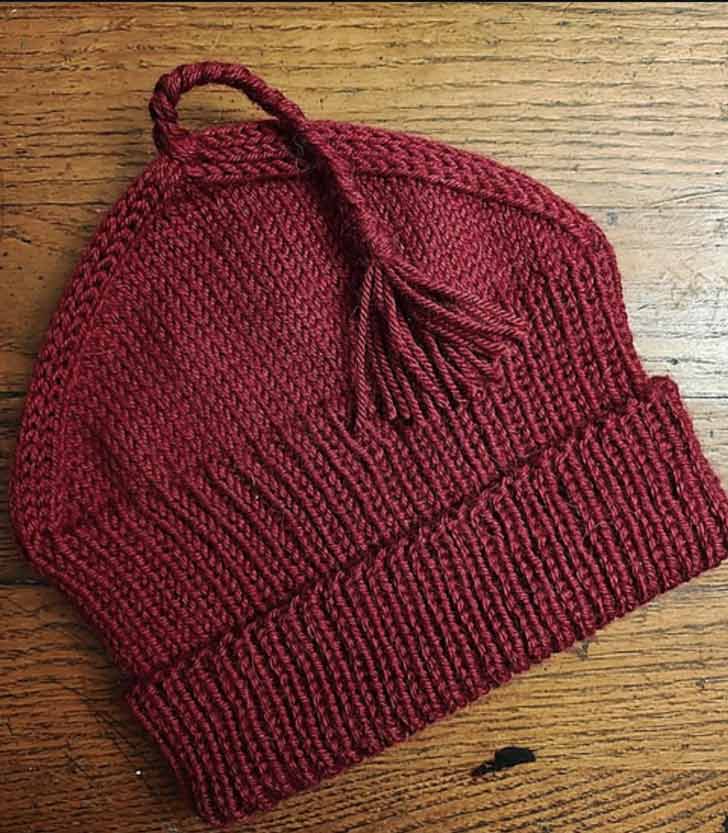
They’re calling them “Melt the ICE” hats, and the shop is selling digital patterns for both knitters and crocheters to make their own. Each pattern is $5, and all funds raised will be donated to Minnesota-based immigration aid organizations, which will distribute the money to those impacted by the actions of ICE, according to the shop.
Needle & Skein first posted about the hats on January 15. Since then, they have raised over $650,000 through the sale of the patterns.
“Funds last week were donated to STEP, St. Louis Park Emergency Assistance for rent and other aid, and the Immigrant Rapid Response Fund,” a recent update from the yarn shop shared.
“We are working on donations to other local organizations,” they continued. “Stay tuned for more info.”
STEP Emergency Assistance provides legal aid and rent assistance to those in St. Louis Park, a suburb outside of Minneapolis. The Immigrant Rapid Response Fund is described as “a coalition of 32 philanthropic leaders rooted in communities most impacted by immigration-related harm.”
Those who don’t knit or crochet can also make a donation online to support the efforts. Supporters can also sign up to purchase a donated hat by the most prolific stitchers via a form created by Needle & Skein.
“We are speechless. We are overwhelmed with the generosity of the fiber community and beyond. This outpouring of love and support is felt around the state,” Needle & Skein shared. “Because of you, we can help so many people who need it.”
Countless crafters have posted their projects online and have directed followers to buy red yarn from Minnesota-based shops or other independent businesses that are using the surge of shoppers to donate a percentage of sales to Minnesota organizations, too.
In fact, the project has gained so much traction that red yarn is selling out in stores across the country (and even beyond the U.S.).

Others, including Needle & Skein, are hosting virtual and in-person knit-ins and stitch-alongs for people to make their hats together.
“If you’re a stitcher on the Internet, then you likely know about the Melt the Ice Hat,” one yarn shop, Gather, in Massachusetts, shared on Instagram. “We’ll be gathering in community … to stitch red hats together, because getting through this national hellscape feels a little more gentle when surrounded by empathetic, caring humans.”
And for those with disdain for this act of “craftivism,” calling it “performative,” or insinuating that it doesn’t actually help people on the ground, the knitting community has something to say about that, too.
Crafty content creator Louise (known as @lou.dangit on social media) gave followers a list of ways that crafting can make a real difference.
These included fundraisers like “Melt the ICE,” as well as crochet drives that provide warm winter wear for people in need, “stitch and learn” events where people bring their projects and get educated on social issues, creating objects infused with political messages, and even demonstrations (like those seen in Portland, Oregon) where crafters teach skills while carrying out civil disobedience.
“We have to recognize our own power and strength in the fiber arts community. “We are a strong and powerful network. Let us treat it as such,” Louise said.
“Let’s share information, let’s share organizing, let’s share those protest patterns, let’s share those fundraisers, let’s share those podcasts, lectures, and audiobooks that taught us how to fight fascism in our own communities. Crafting has historically been a form of resistance and will continue to be because we will make sure it continues to be.”
They also provided a “beginner’s guide” to getting involved in activism after knitting the Melt the ICE hat.
“The Melt the ICE hat pattern has raised tons of money to fund the work and is a symbol of resistance,” Louise wrote in an Instagram post. “But maybe you’re ready for more! Glad to have you!”
Other crafters have also been inspired to create a version of Liam Conejo Ramos’s blue bunny hat to honor the 5-year-old who was detained by ICE in late January.
Regardless of how fiber artists show up, the folks at Needle & Skein have a simple word of advice.
“Keep knitting. Keep resisting. Keep showing up for your neighbors,” they wrote on Instagram. “Melt. The. Ice.”
An earlier version of this article was published on January 29, 2026.
You may also like: Minneapolis cafe vows to be 100% free to 'everyone except ICE' as long as agents are in MN
Header image courtesy of Gather/Instagram
From coast to coast, groups of people are springing up to protect members of their communities as Immigration and Customs Enforcement and Border Patrol agents threaten them with violent enforcement.
In Portland, Oregon, community volunteers have delivered food boxes to migrant families scared to leave their homes. In Portland, Maine, nearly a thousand people turned out for a virtual American Civil Liberties Union “Know Your Rights” training event. And in Minneapolis and St. Paul, volunteers have formed networks to give warning with whistles and phone apps when ICE is prowling the streets.
As someone who for two decades has studied nonviolent movements in war zones, I see many parallels between these movements abroad and those that have been organized recently across the U.S.
The communities I have studied — from Colombia to the Philippines to Syria — teach lessons about surviving in the midst of danger that Americans have been discovering instinctively over the past year.
These experiences show that protection of their neighbors is possible. Violence can bring feelings of fear, isolation, and powerlessness, but unity can overcome fear, and nonviolence and discipline are key for denying the powerful pretexts for further escalation and harm.
But at the same time, the deaths of Americans Renée Good and Alex Pretti, who were part of a nonviolent movement and were killed by immigration agents in Minneapolis, make it clear that acting to protect neighbors requires courage, and prospects are not always certain.
Here are the core lessons I have learned from the people and the groups I have researched.
1. Organizing is the first step
Community organizing is the act of building social ties, setting decision-making procedures, sharing information, and coordinating activities.
In Colombia, I found that it was the more organized communities with vibrant local councils that were better able to protect themselves by avoiding or opposing violence when caught between heavily armed insurgents, paramilitaries, and state forces.
These organizations provide reassurance to the more hesitant and encourage more people to join in.
America has a strong civic culture and history of organizing, dating back to the Civil Rights Movement and long before, and Minnesota is known for its strong social cohesion. It’s no wonder so many Minnesotans, as well as Chicagoans, Angelenos, and other Americans have organized to aid their neighbors and press for justice.
Make no mistake, the act of organizing itself is powerful. I found that insights from the combatants of armed conflicts shed light on this. A former insurgent I interviewed in Colombia quoted to me an adage of Aristotle and Shakespeare: “A single swallow doesn’t make a summer” — meaning there’s safety in numbers.
A mass of people on its own can shift the calculus and behavior of those with weapons and deter them. It’s why there are now many visuals of ICE agents leaving the scene when outnumbered by community members.
2. Adopting nonviolent strategies
Organizing also enables communities to adopt nonviolent methods for accountability and protection without ratcheting up conflict.
These strategies are less political or partisan, since there is usually consensus around promoting safety, which makes it difficult for political figures to oppose. While recent polling on presidential approval and immigration policy still shows a partisan split, ICE is widely unpopular, and a large majority opposes its aggressive tactics.
Americans have taken up many of these nonviolent strategies. They have established early warning networks just as communities did in the Democratic Republic of Congo to guard against attacks by the Lord’s Resistance Army rebel group.
Whether with whistles or WhatsApp, such networks of protectors are sharing information with each other to identify threats and come to each other’s aid.

3. Setting up safe zones
Communities in places such as the Philippines have also set up safe zones or “peace zones” to publicize their desire to keep violence away from their residents. This is akin to the declaration of “sanctuary cities” in the U.S. for the issue of immigration.
Communities may also apply different kinds of pressure on armed aggressors. While protest is the most visible approach, dialogue is also possible. Pressure can take the form of persuasion, as well as shaming, to make trigger-happy agents think twice about what they’re doing and use restraint.
In the U.S., protectors have shown great creativity when it comes to exerting pressure. Grandmas and priests are visible symbols who have influence through their moral and spiritual status. The use of humor and farce — such as protesters dressed in frog suits — can help to de-escalate tensions.
It may not always seem like it, but reputations and concerns about accountability matter, even to bullies. That’s why ICE agents don’t want to be seen enacting violence. Hence the face masks, the snatching of protesters’ phones, and the misleading statements by officials about violent encounters.
4. Finding the facts
In the “fog of war,” the powerful may try to twist the facts and mislead and stigmatize communities and individuals to create pretexts for even greater uses of force.
In Colombia and Afghanistan, armed groups falsely accused individuals of being enemy collaborators. Communities addressed this by conducting their own investigations of those accused, after which community elders could vouch for them.
In the U.S., Americans are recording cell phone videos and collecting community evidence to counter official lies, such as accusations of domestic terrorism — and for future efforts to pursue accountability.
Standing up for others
Finally, what’s known as “accompaniment” is also important.
For example, international humanitarian staff and volunteers have gone to communities in places such as Colombia, Guatemala, and South Sudan to let armed groups know that outsiders are watching them and acting as unarmed bodyguards for human rights defenders.
In the U.S., volunteers, citizens, and religious leaders have used their less vulnerable social statuses to stand up for noncitizens who are under threat, even positioning themselves between immigration agents and those who may be at risk.
People from around the country have also sent messages and traveled in solidarity to the cities and states where operations have been carried out.
Yet that can have consequences even for those who believe themselves less likely to be attacked. An ICE agent on Sept. 19, 2025, shot a clergyman in the head with a pepper ball while he was protesting at an ICE detention facility in Chicago.
Acting to protect oneself, other people, and communities can involve risks.
But civil society has power, too, and many communities in war zones in other countries have outlasted their oppressors. Americans are learning and doing what civilians in war zones worldwide have done for decades, while also writing their own story in the process.
This article by Oliver Kaplan from the University of Denver was originally published by The Conversation.
Header image by Myotus (CC BY 4.0)

The smash-hit LGBTQ+ hockey romance “Heated Rivalry” has captivated audiences all over the world — and now, they’ll finally have the merch to fully represent their adoration.
In Episode 2 of the Crave and HBO Max show — based on a book series by author Rachel Reid — the lead characters, Shane Hollander (played by Hudson Williams) and Ilya Rozanov (played by Connor Storrie) find themselves at the 2014 Sochi Olympics.
In a handful of scenes, Shane is seen wearing a cozy Team Canada fleece jacket. Although it isn’t an official jacket for any official Olympic teams, fans took to social media to express how they wished it was available for purchase.

A petition online even garnered over 6,000 signatures requesting the jacket be produced.
Well, soon it finally will be.
Canada-based company Province of Canada announced a simple statement on social media: “We’re releasing the fleece.”
While it’s not available to purchase quite yet — those interested in buying it can sign up for updates on the release of the jacket — the brand conveyed that it will share design updates with audiences on social media.

“What started as an Instagram post and a message to Hanna, Heated Rivalry’s costume designer, quickly turned into a creative conversation with the show’s producers about bringing The Fleece to life,” Province of Canada shared on its website.
Indeed, Hanna Puley is the show’s costume designer, and the brains behind the Team Canada fleece.
“I really wanted to make Olympic gear that actually felt wearable and cozy. The idea of approachability and comfort was really important for me here,” Puley wrote in an Instagram post breaking down some of the pieces from Episode 2.
“As well as showcasing Canadian identity — which to me feels like quiet confidence. Tough, self-aware, and a little understated. But, ultimately COZY. I love how much everyone seems to like this piece. It was an earlier choice I made, it's really amazing to see so many people resonate with it!”
The show’s executive producers and and co-presidents of Accent Aigu Entertainment are also excited by fans’ response — and now, the real-life iteration of the jacket.

“We’re so excited to partner with Province of Canada. As a Canadian-based, independent apparel brand that does amazing work sourcing and manufacturing high-quality clothing, we share a common ethos,” Jacob Tiereny and Brendan Brady said in a statement.
“We look forward to bringing it to life with the creativity and care fans expect.”
Province of Canada touts plastic-free packaging, carbon neutral shipping, and a sock donation program with every purchase. All of its apparel items are also cut and sewn in Canada, though the brand has expressed it hopes to make international shipping available to as many countries as possible for fans looking to get their hands on the fleece.
In addition to this, Province of Canada will be giving back to charity with each fleece purchased.
In an FAQ response, the company shared: “10% of all proceeds from The Fleece jacket’s sales will be donated to a charitable organization, to be announced at a later date.”
This echoes an initiative of the Ottawa Senators, an NHL team currently selling “Hollander” and “Rozanov” hockey jerseys, with all profits going toward Ottawa Pride Hockey, an LGBTQ+ hockey league in Ontario.
Tierney and Brady made it clear that the success of the show — and now, its official merchandise — are all because of the passion of the people who champion it.
In a statement, they said: “Fans are the heart of ‘Heated Rivalry,’ and this is entirely because of them.”
You may also like: Youth soccer club forms teams based on skill level – not sex or gender: 'The kids let go of the binary'
Header image courtesy of HBO Max
Chef Andrew Zimmern, known for hosting “Bizarre Foods” for 22 seasons on the Travel Channel, understands the power of food as a way to bring people together — perhaps better than anyone.
And in his home state of Minnesota, bringing people together has never been more vital.
In a recent video, Zimmern shared that he was volunteering at Soup for You Cafe, serving meals to people in need.
As intense, violent Immigration and Customs Enforcement raids have multiplied across the state, vulnerable communities are left feeling afraid to leave the house, which in turn, leaves them food insecure.
“Food has always been my way in. It brings us together, but it also reminds us of our responsibility to one another,” Zimmern shared on Instagram.
“Moments like this reinforce how powerful small, local efforts really are. If you have the time, the resources, or even just your voice, find an organization in your own community and lend a hand. It matters. Every single time.”
Zimmern has long been a champion of human rights and fights to reduce food insecurity at home and abroad. He is a vocal supporter of organizations like the World Food Programme, Independent Restaurant Coalition, World Central Kitchen, No Kid Hungry, and more.
And amid ICE’s occupation of Minnesota, he continues to be an advocate for local restaurants.
On Thursday he shared that his entire office of over 20 people dined out at Quang Restaurant on Eat Street, about a block from where Alex Pretti was shot and killed by federal agents over the weekend.

“Our city restaurants are safe, and they need our support now more than ever … the reason, amongst many, to prioritize the restaurant community is because they are the ones that are feeding and taking care of thousands, many thousands who have been traumatized, abused, detained, had families torn apart, and so on,” Zimmern wrote.
“Restaurants are our cultural hubs. They need to thrive and be safe spaces to gather.”
In addition to uplifting efforts to support restaurants and feed neighbors, Zimmern has also shared his feelings about the ICE crackdown in his home state.
In a recent video, he opened up about moving to Minnesota about 34 years ago and how it was pivotal in his sobriety journey.
“I owe this state a debt I can never repay,” Zimmern said. “Which is why I’m even more outraged than most at the events of the last six [to] seven weeks. The presence of thousands of ICE agents has brought chaos and violence to the communities here in Minnesota that have left a growing number of my neighbors, including U.S. citizens, afraid to leave their homes. People are stranded and hungry. This cannot be allowed to go on.”
He urged followers to visit Stand With Minnesota, a directory with hundreds of organizations accepting donations to protect vulnerable communities in the area. He also called for an end to “Operation Metro Surge,” which is what the Trump administration has called ICE’s occupation of Minnesota.
“Minnesota is fortunate to have a strong and resilient hunger relief network, especially in times of crises such as this,” Zimmern continued. “However, with so many Minnesotans staying home for fear of being racially profiled, unlawfully detained, separated from their families, or worse, we’ve had to scramble to find new ways to get emergency food to where it’s needed most.”
He added that while community members are showing up to help one another, “ICE has made it harder to get food to hungry neighbors,” noting that the federal agents have reportedly followed volunteers doing food deliveries and blocking entrances to food shelters.
“Let me be very clear about this: every Minnesotan, every human being deserves to eat,” Zimmern concluded. “That should not be a controversial statement, and it certainly is not a political one.”

Ultimately, he urged his followers — of which he has over a million on Instagram alone — to “do something today to help.”
“To be honest, I am hopeful,” Zimmern wrote in a post over the weekend.
“Life is an action step. Do something — anything — because it lifts the feelings of powerlessness and hopelessness. It is the light we need in the darkness.”
You may also like: Minneapolis cafe vows to be 100% free to 'everyone except ICE' as long as agents are in MN
Header images courtesy of Andrew Zimmern/Instagram
There’s been a rise of know-your-rights training sessions in response to the Trump administration’s aggressive immigration enforcement tactics. This has included local public officials and organizations sharing online information over the past few months about what to do if Immigration and Customs Enforcement or other federal agents knock on your door, among other scenarios that involve immigration law enforcement.
Knowledge is power, the adage goes.
But learning the letter of the law has its limits, legal rights experts have noted, if law enforcement officers do not follow the law. The Associated Press reported on Jan. 21, 2026, that ICE distributed an internal memo authorizing ICE officers to forcibly enter someone’s private home with only an administrative warrant — not one signed by a judge, as the Fourth Amendment requires.
Amy Lieberman, education editor for The Conversation U.S., spoke with Heidi Reynolds-Stenson, a scholar of social movements and protest policing, to understand the role education can play in Minnesota’s ongoing anti-ICE protests and how legal training’s limits are becoming clear.
What role is education playing in fueling Minnesota’s anti-ICE protests?
I think it is a really unique moment. There is discussion in the news nationwide about legal observing and know-your-rights training sessions. This kind of legal support and education has been part of social movements for a long time, but has never, perhaps, been in the spotlight on the level that they are right now after the January killings of ICE observers Renee Nicole Good and Alex Pretti.
A coordinated way of offering legal support to protesters grew out of 1960s and ‘70s civil rights protests. Legal support for protesters became even more organized during the student-led anti-Vietnam War movement around this same time.
The first time there was an organized, mass legal defense of protesters was for the Stop the Draft Week in 1967, when a group of lawyers and law students began working in coordination with activists.
Since then, community organizers, lawyers, law students, and others have developed strategies for offering legal support to protesters. That includes legal observers.
Legal observers can be lawyers, law students, or others trained not to protest, but to independently observe, take notes on, and photograph or video incidents at protests, like law enforcement arresting or assaulting someone.
We see, over time, that the way people organize and offer legal support to protesters has become more and more sophisticated. More and more people have knowledge about their civic and legal rights. Other forms of legal support, such as jail and court solidarity, in which individual people who are arrested make collective decisions to support one another, have become more common.
Now, people are also learning about more than their First Amendment rights — they are learning about the rights of immigrants and of anyone who is interacting with ICE and Border Patrol officers. That intensifies the complexity of what people need to know.
Altogether, there is a complex system of legal support in place that has been shown to be very effective at preventing activists from disengaging after experiences of state repression.
What does your own research show regarding how education can shape protests?
In my own research, when activists had experiences of repression — when they were arrested at protests, as has happened in Minneapolis, or experienced police violence, like being sprayed with chemical irritants — legal education was a major determining factor on whether they continued to be involved in the protest movement.
Another deciding issue was whether or not protesters were being helped by pro bono lawyers, or [whether] there were legal observers present to make protesters feel more confident going into a certain situation.
As people become more educated about their rights and more prepared for the potential risks of protesting, that can make them more confident about going to a protest in the first place and more likely to continue in that work.
We know that, in reality, the rights people learn about are not always respected, at protests or in other situations.
So, it is one thing to say that you have a right to do something, like to protest, or not let ICE or Border Patrol agents into your home without a judicial warrant.
It is another thing in practice, especially in the current moment that we are in, in which immigration enforcement officers have increasingly shown disregard for people’s rights. But it is still important for people to be aware that those rights exist.
What role do legal observers play in influencing protest movements?
Legal observers can play a critical role in collecting independent, neutral information about law enforcement actions at protests that can be used if there is a civil suit or a criminal case coming out of a protest.
Legal observing can also, in theory, deter officers who are policing protests, since they know they are being watched and data is being collected on their actions, including potential rights violations.
How can education serve as a means of self-defense at protests?
Education is the most powerful weapon for people involved in protest movements — that is, knowledge and understanding of what their rights are as well as the risks.
Equally important is collecting bail fund money before someone is actually arrested, having a network of people ready to do the work after a protest to defend arrested activists, and holding law enforcement officers accountable for violating people’s rights.
Protesters or observers can then know that if they are arrested or injured by law enforcement officers, that people are already there ready to help them.
In my view, the level of disrespect that federal immigration officers are currently showing to people exercising their rights to protest and to film and otherwise monitor public officials is unprecedented. But it has always been the case that just because a legal right exists, it does not mean that it is followed by law enforcement or the government more broadly.
Then, and now, it has always been organized groups of individuals who make those rights real through exercising them and working to hold those accountable who violate them.
This article was written by Heidi Reynolds-Stenson from Colorado State University Pueblo, and was originally published on The Conversation.
Header Image by Gaétan Marceau Caron on Unsplash

Whether you call him groundhog, woodchuck, whistle-pig or use the full genus and species name, Marmota monax, the nation’s premiere animal weather forecaster has been making headlines as Punxsutawney Phil for decades.
The largest ground squirrel in its range, groundhogs like Phil are found throughout the midwestern United States, most of Canada, and into southern Alaska.
M. monax is the most widespread marmot, while the Vancouver Island marmot (M. vancouverensis) is found only on one island in British Columbia.
In total, there are 15 species in the genus Marmota, found around the world from as far south as the Jemez Mountains of New Mexico and the Pyrenees Mountains of Spain, north to regions of Siberia and Alaska, so dark and cold that the marmots must hibernate for up to nine months of the year.
Hibernating to escape tough times
Marmots, including all the actors who have played Phil over the years, are the largest “true” hibernators: animals that enter a torpor that reduces their biological functions to a level closer to dead than alive.
Because this phenomenon is so interesting, scientists pay attention to all aspects of marmot anatomy and physiology. Basic observational science like this is important to advance our understanding of the world, and it sometimes leads to discoveries that improve human lives.
Marmot studies are the foundation for experiments to address obesity, cardiovascular disease, mpox, stress, hepatitis, and liver cancer, and they may inform work on osteoporosis and organ transplantation.
Aging seems to nearly stop during hibernation, as the marmot heart rate drops from nearly 200 beats per minute when active to about nine during hibernation. Similarly, their active body temperature can be 104 degrees Fahrenheit (40 degrees Celsius) — about the same as a dog or cat — but plummets to 41 F (5 C) when hibernating.
Humans, in comparison, become hypothermic at a core temperature of 95 F (35 C).
Fueling feast and famine
Marmots’ only source of energy during the hibernation period is stored fat, which they may metabolize as slowly as 1 gram per day. But even that is a large amount when it must suffice for more than half a year.
So, marmots need to double their weight during the summer, even in places where the season is only a few months long. To do so, they double the size of their hibernation-state gastrointestinal tract and liver, and then carefully select the most nutritious plants, including legumes, flowers, grains and grasses.
Despite their corpulence, they can also climb trees to eat buds and fruit.
Gardener, architect, and menu item
The digging and seed dispersal that accompany foraging create flower-filled meadows. Some marmots, like Mongolia’s Tarbagan marmot (M. siberica), are keystone species whose presence is associated with increased diversity of plants and predators.
Marmot burrows are a key architectural component of many other animals’ habitats. Abandoned marmot excavations can provide temperature- and humidity-controlled housing for dozens of species, from frogs to foxes and snakes to owls.
The same activities can make groundhogs a pest to people.

In most of the Midwest, groundhog predators were largely eliminated at the same time that agricultural fields became vast marmot buffets. Today, many groundhog populations are tightly controlled by invasive coyotes, as well as recovering populations of bobcats.
Because they are such a high-quality meal, marmots are an important conduit of energy from plants to carnivores. Everything from hawks to eagles, weasels to wolves may eat them.
And, like most native birds and mammals, marmots are on the menu of house cats, too. Humans also have long exploited marmots for meat and fur. As a result, once-common marmot species are rare in many places.
But marmots breed like the proverbial bunnies and so have the potential to come back quickly from population declines. They can be reintroduced to former haunts, benefiting the ecosystem.
Hibernation must end at the right time
Shortly after waking from hibernation, marmots mate, giving birth about 4.5 weeks later to half a dozen or more offspring. Ideally, pups are born just as the first plants peak through the snowmelt — maximizing the time available to pack on fat for the coming hibernation season.
Given the food needs of these big ground squirrels, and the fact they may be seen poking their heads above the snow before any food is available, it seems reasonable to assume that they have some power of weather prediction.
Indeed, people celebrate scores of individual groundhogs across the U.S. and Canada for their ability to anticipate weather six weeks hence.
This American groundhog tradition apparently started with German immigrants recalling the spring emergence of badgers and hedgehogs in the old country. Brown bears have a similar spring schedule and are still celebrated in Romania and Serbia.
People ascribe weather-predicting abilities to other species, too, including woolly bear caterpillars, sheep, cats, and dormice.
One tradition holds that tree squirrel nests, called dreys, can predict the severity of the coming winter. Leafy dreys are well ventilated and private — good choices if you need less protection during a warm winter. More insulated hollow trees are cozy in the cold but communal, and so come with the risk of sharing parasites.
As a squirrel researcher, I’ve noted the location, number, and size of nests for years but seen no discernible patterns related to weather.
Weather responders, not weather predictors
Despite traditional claims, you’ve probably already guessed that Phil and his friends are about as good at predicting the coming weather as that kid who answers “C” for every multiple-choice question.
A 2021 study on the subject reported that groundhogs’ “predictions of spring onset (are) no better than chance.” That’s right, groundhogs are correct 50% of the time.

One big problem with relying on any species on a specific calendar day is that seasons follow latitude and altitude. Anyone who has hiked the Appalachian Trail can tell you that trekking from south to north maximizes your time in cool spring weather. Similarly, if you venture to the peaks of the Rockies in August, you’ll find spring wildflowers.
For this reason, groundhogs in Alabama emerge from their dens much earlier than those in Wisconsin. As one Canadian newspaper put it in 1939, “Here in Manitoba, no woodchuck in his senses would voluntarily emerge into the cold on February 2.”
Animals’ senses are tools for survival
Modern technology can accurately predict the average weather — that is, climate — far into the future, and the precise weather five days in advance. But the accuracy of a forecast at a given point on Earth 10 days in the future is only about 50% — as good as a groundhog.
However, many animals are sensitive to phenomena that humans need tools to even notice.
Flocks of warblers, sparrows, and other birds sometimes seem to appear out of nowhere before a storm. These species often migrate at night, navigating across land and sea by the stars and Earth’s magnetic fields. To avoid getting lost in fog or blown off course, they’ll “fall out” of the sky at good resting spots when bad weather is building. At such times, take the warbler’s advice and don’t venture out on the water.
Frogs chirping in spring indicate that water temperatures are warm enough for eggs, while air temperatures influence caterpillar hatching and activity. Farmers over the centuries have recorded the blooming dates of flowers over the years as a way to predict when to plant and harvest.
Noticing and tracking the timing of annual events
Phenology is the study of these natural phenomena and their annual cycles, from the first springtime peek of a groundhog to the last autumn honk of a goose. When does the first flower bloom in your neighborhood, the first thunder clap rumble, or the last cricket chirp?
No individual observation, even Phil’s, has the power to predict the weather.
But in aggregate, these observations can tell us a lot about what the world is doing and predict how it will change. You can be like Phil and look for your shadow, or a nice legume to eat, and then contribute to science by adding your observations to the National Phenology Network.
Traditions don’t need to be factually true to be useful.
Groundhog shadows bring people together at a cold time of year to look at the clouds, notice buds on the trees, and track down the earliest green sprouts, such as skunk cabbage, which warms the snow around it.
This Groundhog Day, get out there and enjoy nature as you celebrate the lengthening days and increased activities of the organisms we share this planet with.
This article was written by Steven Sullivan from Miami University, and was originally published on The Conversation.
Header Image by Camerauthor Photos on Unsplash

On January 30, renowned actress and comedy legend Catherine O’Hara passed away at the age of 71.
Famously known for her roles in “Home Alone,” “Beetlejuice,” “Best in Show,” O’Hara also recently starred in critically acclaimed series like “Schitt’s Creek” and “The Studio.”
A Canadian star beloved by her Hollywood peers, O’Hara is now being remembered for her warmth, generosity, and quick wit.
“Oh, genius to be near you,” her “Last of Us” costar Pedro Pascal wrote on Instagram. “Eternally grateful. There is less light in my world, this lucky world that had you, will keep you, always. Always.”
Outside of acting, O’Hara did extensive philanthropic work.

For years, O’Hara supported the Terry Fox Foundation, a charity that has raised over $950 million for cancer research since 1981. The foundation is built in memory of Terry Fox, a young athlete who was diagnosed with osteogenic sarcoma at just 18.
After his right leg was amputated, he ran across Canada in 1980 with his prosthetic leg to spread cancer awareness. He covered 3,338 miles in 143 days before cancer spread to his lungs, and he was forced to stop. O’Hara, a long-time supporter, often partnered with the foundation as a spokesperson for their annual Terry Fox Run.
“Keep Terry’s dream alive,” O’Hara said in March 2024, while wearing a Terry Fox shirt with a slogan that read: “No Matter What.”
In May 2020, Catherine O'Hara competed in a celebrity episode of “Who Wants To Be A Millionaire” and won $250,000. She donated every cent to Upward Bound House, a nonprofit that provides housing assistance to families experiencing homelessness in Los Angeles.
“They stay in touch with other homeless shelters, organizations, and agencies in Los Angeles to find homeless families with children,” O’Hara explained backstage before the show. “So instead of separating children from their parents — as if they need that in those moments — they set them up in an apartment.”
“They provide them not only a home, but all of their specific needs for that family, for those children, work, school, any kind of counseling, and meals! And within a year, in most cases, they have moved the families out to their own permanent homes.”
In November 2024, O’Hara partnered with the University Health Network of Canada to raise funds for the hospital’s advanced Parkinson’s research.
“I’m Catherine O’Hara, a proud Canadian. I currently reside in the U.S., but that doesn’t stop me from bragging about Canada’s health care,” she joked in the video.
“University Health Network is Canada’s number one hospital,” she said. “They are world-class, thanks to their life-changing innovations like implanting devices that stimulate the brain and reduce symptoms of Parkinson’s.”
The procedures used at the University Health Network’s Krembil Brain Institute help minimize the symptoms and side effects of Parkinson’s disease.
You can still donate to the cause at the university’s website.
Header image via John Sears (CC BY-SA 4.0)
A new study from researchers at Chiang Mai University in Thailand reaffirmed what many dog owners already suspected: Spending just 15 minutes with a dog can significantly reduce a person’s stress.
"Even brief interactions with dogs can significantly reduce stress levels among university undergraduate students," wrote lead author Jaruwan Khonmee.
To conduct their study, which was published in the journal PLOS One, the researchers tested the blood pressure, pulse, and saliva of 122 students currently attending the university. Then, after 15 minutes of playing, petting, and hugging one of six dogs, the students were tested again.
“Compared to immediately before, students' self-reported stress levels decreased by 33.5% after interacting with the dog,” the researchers reported, adding that their pulse rate and cortisol levels had also improved.
The researchers also noted that the dogs — all of which were non-certified — participated in the study without their owners present to reduce the risk of distracting their test subjects.

Remarkably, the researchers found evidence that the “play dates” benefited the dogs as well as the humans, observing that all six dogs — five Chihuahuas and one Shetland sheepdog — still had lower cortisol levels in their fecal matter a week after they had spent time with the students.
“Overall, these findings contribute to our understanding of the beneficial impact of human-dog interactions on human stress levels and highlight the importance of addressing stress in both humans and animals during targeted interventions,” the researchers concluded.
Header image via Samson Katt / Pexels
A version of this article originally appeared in the 2025 Dogs Edition of the Goodnewspaper.
At Kindness Ranch Animal Sanctuary in Hartville, Wyoming, John Ramer tends to a farm of dogs, cats, pigs, horses, sheep, goats, cows, and llamas rescued from testing facilities. All of them were slated for euthanasia — until Ramer convinced the research laboratories to give them a second chance.
“It's so easy to be against something. I could tell everybody that I'm against euthanasia and that they need to change their ways to appease me, but that doesn't get anything done,” Ramer, the executive director of Kindness Ranch, told Cowboy State Daily. “But then I have to figure out what I'm in favor of.”
"I'm for building relationships with these facilities and informing them that there's alternatives to euthanasia,” he reasoned, “and we can do it while still objecting to the practice of animal testing, but finding the one thing we agree on, and that euthanasia isn't required.”
The Kindness Ranch was first founded by Denver psychologist Dr. David Groobman in 2007.

It was the first animal sanctuary of its kind to rehabilitate former research animals with the goal of eventually rehoming them.
“Since then, we've developed from rescuing 30 animals a year to recently surpassing 500 dogs and cats placed into private homes in a one-year period,” Ramer said.
As leading research animals, beagles are the ranch’s most common intake. When Cowboy State Daily visited the farm in early June, the team was preparing for the arrival of 47 more.
Farm supervisor Terri Brunner said, “We don't focus on their past. … What we're focusing on now is where their futures are, and we hope that we can provide them with a sound and comfortable and enriching life here at Kindness Ranch."
To support The Kindness Ranch Animal Sanctuary, you can fulfill their animal wishlists on their website.
A version of this article originally appeared in the 2025 Dogs Edition of the Goodnewspaper.
Header image via The Kindness Ranch / Instagram
Every day the Good Good Good team collects the best good news in the world and shares it with our community. Here are the highlights for this week!
If you want to get good news in your inbox every day, join the Goodnewsletter — the free daily newsletter designed to leave you feeling hopeful.
The Best Positive News We’re Celebrating This Week —
More than 1,000 people gathered at a vigil and rally to honor Alex Pretti, the 37-year-old man shot and killed by an ICE agent
All across the state of Minnesota, there were vigils organized to remember and honor the life of Alex Pretti, a 37-year-old ICU nurse who was killed by a Border Patrol agent.
In Minneapolis, more than 1,000 people gathered in Whittier Park, then marched to the site where he was killed. The site has transformed into a makeshift memorial filld with candles and flowers — and is les than two miles from Renee Good’s.
In subzero temperatures, neighbors were handing out warm food and drinks both homemade and from local restaurants, and local businesses stayed open to give people somewhere to warm up.
Why is this good news? Alex Pretti should still be alive. While the vigil filled with both his neighbors nearby and all across the state shouldn’t have had to happen at all — it’s a powerful display of unity, care, and community in the midst of unbelievable tragedy.
This state just made it easier to save endangered animals, simply by checking an extra box on your taxes
After a friend died in a preventable crash, this Montana man began his own 24/7 taxi service for the elderly
Daniel Foley’s friend, an elderly and disabled man, was on doctor’s orders not to drive. But he decided to go out on an errand anyway, and ended up in a head-on collision, losing his life, and killing a 32-year-old woman.
Foley — a former school bus driver, truck driver, and public bus driver, with over 12 years of professional experience in the Hamilton, Montana valley — wanted to prevent future tragedies like this.
What emerged was Giddy-Up Rides, Foley’s own 24/7 taxi service for disabled and elderly neighbors — or anyone else who needs a safe, reliable ride.
→ Read more
Knitters are protesting ICE presence in Minnesota with red hats, inspired by another historic act of resistance
Minnesota yarn shop Needle & Skein is encouraging knitters and crocheters near and far to take part in a project inspired by resistance to Nazi Germany in the 1940s, when “Norwegians made and wore red pointed hats with a tassel as a form of protest against Nazi occupation of their country.”
Within two years, the organizers wrote on social media, the Nazis had made the hats “illegal and punishable by law to wear, make, or distribute.”
The shop shared a $5 knitting or crochet pattern for their “Melt the ICE” hat, with all proceeds going to local immigration aid organizations to distribute the funds to those impacted by the actions of ICE.
Why is this good news? Whether attending protests or joining rapid response networks, Minnesotans are finding so many ways to resist the presence of ICE in the state — and this form of craftivism, or the act of using handicrafts, art, and textiles as a form of activism, is one of those ways.
→ Read more
‘Unwinding’ with screens might actually make you more stressed. Here are 4 things to try instead
A Vietnamese restaurant in Minneapolis sheltered protesters from tear gas — and fed them pho
When ICE agents shot and killed civilian Alex Pretti on January 24, Minneapolis’s Nicollet Avenue faced immediate chaos. A pair of news reporters and presumed protesters were ushered into a nearby restaurant by its owner, Tracy Wong, to escape tear gas and “less lethal” bullets.
In a video going viral on social media, Wong can be seen ushering people through the door, shouting, “Come in, come in. This is my home.”
Despite feeling “very scared” herself, Wong proceeded to care for her guests by making them pho and encouraging them to continue welcoming others into her space.
Spain approved a measure that gives undocumented migrants a legal way to stay in the country
Yesterday, Spain unexpectedly issued a decree giving hundreds of thousands of undocumented migrants a way to stay in the country legally.
It allows undocumented people already living in Spain to apply for temporary residency permits, a move which the government described as crucial for the country that would have an impact “on our social cohesion, well-being, and also on the economy.”
The move from Spain runs contrary to immigration crackdowns in other countries, like the United States, Britain, Greece, and Italy.
What’s the nuance? Activists say that while Spain has indeed been welcoming to immigrants, it’s been particular to Latin Americans who already share the country’s language, religion, and culture. They say that kind of warm welcome has not always extended to migrants from Africa.
→ Read more (Gifted link)
Language barriers make it hard for immigrants to navigate the US healthcare system. This comic book is a lifeline
→ Read more
Buddhist monks surpassed the halfway mark of their ‘peace walk’ despite the winter storm
In late October, a group of 19 Buddhist monks and their canine companion set off for a 2,300-mile trek across the United States, calling for peace. Their journey will end with a gathering at the United States Capitol, where they’ll share remarks about healing and unity with the public.
Soon after passing the halfway mark in North Carolina, they were hit with freezing temperatures and snow as a winter storm rolled through the Southeast U.S. But their mission and message were undeterred.
As they shared in an update, the winter weather in North Carolina was just one obstacle to overcome on their mission: “We cannot demand that life only bring us comfortable conditions.”
The United Kingdom and nine other European countries are building the world’s largest ‘clean energy reservoir’
In a landmark pact to turn the North Sea into a “clean energy reservoir,” a coalition of 10 European countries have agreed to accelerate the rollout of offshore windfarms that directly connect to their various countries through subsea cables.
The plans are expected to provide 100 gigawatts of offshore wind power, enough to power 143 million homes.
The plans involve collectively building 5 gigawatts of offshore wind capacity every year between 2031 and 2040. More than 100 companies have signed on to an industry declaration with a promise to reduce costs and create 91,000 jobs.
Why is this good news? While the U.S. is a powerful force in the clean energy transition, the rest of the world is proving it will move on regardless of its rollbacks on clean energy. Ten countries coming together to build a powerful network of clean energy supply sets a remarkable precedent for the industry — it’s expected to attract €1 trillion in investments.
Minnesota has one of the highest concentrations of Korean adoptees in the United States. Here’s how they’re protecting each other during ICE raids
→ Read more
Minneapolis cafe vows to be 100% free to ‘everyone except ICE’ as long as agents are in MN
Modern Times Cafe is located six blocks from where George Floyd was killed in 2020, three blocks from where Renee Good was killed earlier this month, and just a neighborhood away from where Alex Pretti was killed on Saturday, January 24.
And while U.S. Immigration and Customs Enforcement continues what local officials call an “occupation” in the city, owner Dylan Alverson decided to do what he can in support of his community.
Beginning January 26, “until the occupation of Minneapolis is over,” the cafe is operating as a free, donation-based restaurant: “I am sick of generating money for the soldiers in our streets and for a government that won't protect us — a government who is actively inflicting daily harm on its citizens.”
→ Read more
The knitting pattern for ‘Melt the ICE’ hats has raised $250k for Minnesotans
On January 15, Minnesota yarn shop Needle & Skein encouraged knitters and crocheters across the country to take part in a project inspired by resistance to Nazi Germany in the 1940s.
They’re calling them “Melt the ICE” hats, and the shop is selling digital patterns for $5 for both knitters and crocheters to make their own, and since launching the project, they have raised over $250,000 through the sale of the patterns.
All of the funds are being donated to STEP Emergency Assistance, which provides legal aid and rent assistance to those in a suburb of Minneapolis, and the Immigrant Rapid Response Fund, “a coalition of 32 philanthropic leaders rooted in communities most impacted by immigration-related harm.”
Even better: Countless crafters have posted their projects online and have directed followers to buy red yarn from Minnesota-based shops or other independent businesses that are using the surge of shoppers to donate a percentage of sales to Minnesota organizations, too.
Experts say 2026 is the year of ‘in-person’ gossip: ‘Our caveman brains are unprepared for the speed of social media’
→ Read more
New study: No-alcohol and low-alcohol beers — and dry pubs — are on the rise
As people look to drink less alcohol or cut it out of their routine completely, interest in low-alcohol and non-alcoholic beers has grown significantly over the last decade.
In fact, a new survey from the British Beer and Pub Association shows that 86% of pubs across England now serve no- and low-alcohol beer.
And as the demand grows, so does the market. Mainstream companies like Heineken and Guinness have offered up “zero point zero” alternatives to popular brews, and breweries like Athletic Brewing Company and BERO have devoted their entire line-up to non-alcoholic craft brews.
More good news of the week —
Faith leaders traveled from across the country to Minnesota to urge ICE to “go in peace.” Where faith leaders could not travel to Minnesota, they are carrying out their own forms of resistance, including fasting in solidarity.
Former professional basketball star Andrew Ogilvy came out as gay. In an interview as part of the NBL's fourth annual pride round, Ogilvy shared that he had been married to his long-time partner for 18 months after the pair met while the center was playing for the Sydney Kings in the 2013/14 season.
A new hepatitis B drug could help functionally cure some patients. It could become the first treatment that can help “functionally cure” patients chronically infected with hepatitis B, meaning they can stop taking daily pills — a goal that so far has been elusive.
Tafadzwa Mandiwanza just made history as the first female paediatric neurosurgeon in Ireland. Mandiwanza grew up in Harare, the capital city of Zimbabwe and always wanted to be a doctor.
A baby tree kangaroo was just born and its “pouch cam” is offering insights for one of the world’s most endangered species. In the wild, Goodfellow’s tree kangaroos can only be found in the dense tropical rainforests and deciduous forests of Papua New Guinea, where their survival has been threatened by widespread deforestation due to logging, mining, and palm oil plantations.
After vanishing for more than a century, an ancient species is thriving again at Cape Cod National Seashore. Horseshoe crabs are 445-million-year-old arthropods that serve as a vital food source for countless turtles, birds, and fish on the Atlantic Coast, and the seashore has been hard at work bringing them back from the brink.
The “grandmother” of Juneteenth was just honored with a new Barbie doll. Opal Lee, now 99, famously completed a long-distance walk at the age of 89 from her home in Fort Worth, Texas, to Washington, D.C., in order to raise awareness about Juneteenth.
A new combination drug is raising hopes for survival for patients with a stubborn cancer. (Gifted link) More than 80% of patients who got the therapy were still alive without their cancer spreading after nearly three years, compared with 30% of patients in a control group who received a standard treatment, the clinical trial found.
A judge ruled a wind farm off Martha’s Vineyard can continue construction. (Gifted link) Construction was already 95% complete when the Trump administration ordered it to stop, and this ruling is now the fourth legal setback that the administration has suffered in its quest to slow the country’s offshore wind industry.
Dave Matthews Band announced a pledge to plant 1 million trees on its newly announced summer tour. The band is continuing its partnership with the Nature Conservancy, which will result in a total of 7 million trees planted since 2020.
California is now the first state to join the WHO’s disease network after the U.S. withdrew. The announcement came just one day after the U.S.’s withdrawal from the WHO became official after nearly 80 years of membership, having been a founding member of the organization.
The Mayor of Milan said ICE agents were “not welcome” at the Winter Olympics. Thousands of Italians signed petitions demanding the agency be barred from entry after the Trump administration announced plans to give Immigration and Customs Enforcement agents a security role at the 2026 Milano Cortina Games.
An NHL team is selling “Heated Rivalry” jerseys and donating the proceeds to an LGBTQ+ hockey league. “You can go into any store and get any name you want printed on a jersey. … So, we just did what our fans were doing anyway and just made it a little bit easier for them.”
Hundreds of Target employees signed a letter urging the company to bar ICE from its stores. More than 275 employees signed a letter to Target leadership telling it to “do the right thing” and outlining four steps they say the company should take in response to ICE.
Researchers developed a new blood test that could help lead to early diagnosis and prevention of Crohn’s disease. Crohn’s disease is a chronic inflammatory condition of the gastrointestinal tract that causes persistent digestive symptoms, pain, and fatigue, significantly affecting quality of life. Its incidence among children has doubled since 1995, and rates continue to rise.
California advanced legislation that would allow for lawsuits against federal agents. The legislation creates a clearer pathway for residents to take legal action against federal agents for excessive use of force, unlawful home searches, interfering with a right to protest, and other violations.
Yale is waiving all costs for undergraduates from families earning less than $100k. The new policy also promises to waive tuition — but not all costs — for those with annual incomes under $200,000.
At a new North Carolina restaurant, every smash burger sold goes toward fighting childhood cancer. Zeke Smash was inspired to give back by its namesake, a six-year-old who was diagnosed at three months old with Juvenile Myelomonocytic Leukemia, a rare, aggressive blood cancer in which bone marrow produces too many abnormal white blood cells.
Three Bob Ross paintings sold for over $1.2 million in support of public television following funding cuts. It was the second sale of the artists’ works, and the first in this set sold for $787,900 — 13 times more than the high-end estimate for the piece, which was done live on air during a 1990 episode of “Joy of Painting.”
Shane Hollander’s Team Canada fleece from “Heated Rivalry” is being released in real life — and it gives back to charity. Fans were desperate to buy the jacket worn at the fictional Olympic Games in the series, and now, it’s being made by a Canada-based, independent clothing brand, which will donate 10% of the proceeds to a charitable organization.
United States Immigration and Customs Enforcement agents are not letting up on Minnesota, but neither are those who stand in opposition to their ongoing crackdown.
Especially in the wake of the killings of Renee Good and Alex Pretti — individuals inside and out of Minnesota are looking for ways to make an impact for those most vulnerable to ICE.
So, Minnesota yarn shop Needle & Skein has encouraged knitters and crocheters across the country to take part in a project inspired by resistance to Nazi Germany in the 1940s.
They’re calling them “Melt the ICE” hats, and the shop is selling digital patterns for both knitters and crocheters (and Tunisian crocheters!) to make their own. Each pattern is $5, and all funds raised will be donated to Minnesota-based immigration aid organizations.

Needle & Skein first posted about the hats on January 15. As of last week, they have raised over $250,000 through the sale of the patterns, but fundraising totals continue to skyrocket. NPR reported that the shop has now raised over $400,000 since releasing the pattern.
“Funds will be donated to STEP St. Louis Park emergency assistance for rent and other aid and the Immigrant Rapid Response Fund,” the shop shared in a recent update.
STEP Emergency Assistance provides legal aid and rent assistance to those in St. Louis Park, a suburb outside of Minneapolis, where Needle & Skein is located. The Immigrant Rapid Response Fund, on the other hand, is described as “a coalition of 32 philanthropic leaders rooted in communities most impacted by immigration-related harm.
Knitters seem to be in the limelight for the hats, but crocheters have also led the charge, with the r/crochet Subreddit (which has over a million members) reporting that “Minneapolis yarn shops are basically out of red yarn from so many people making resistance hats.”
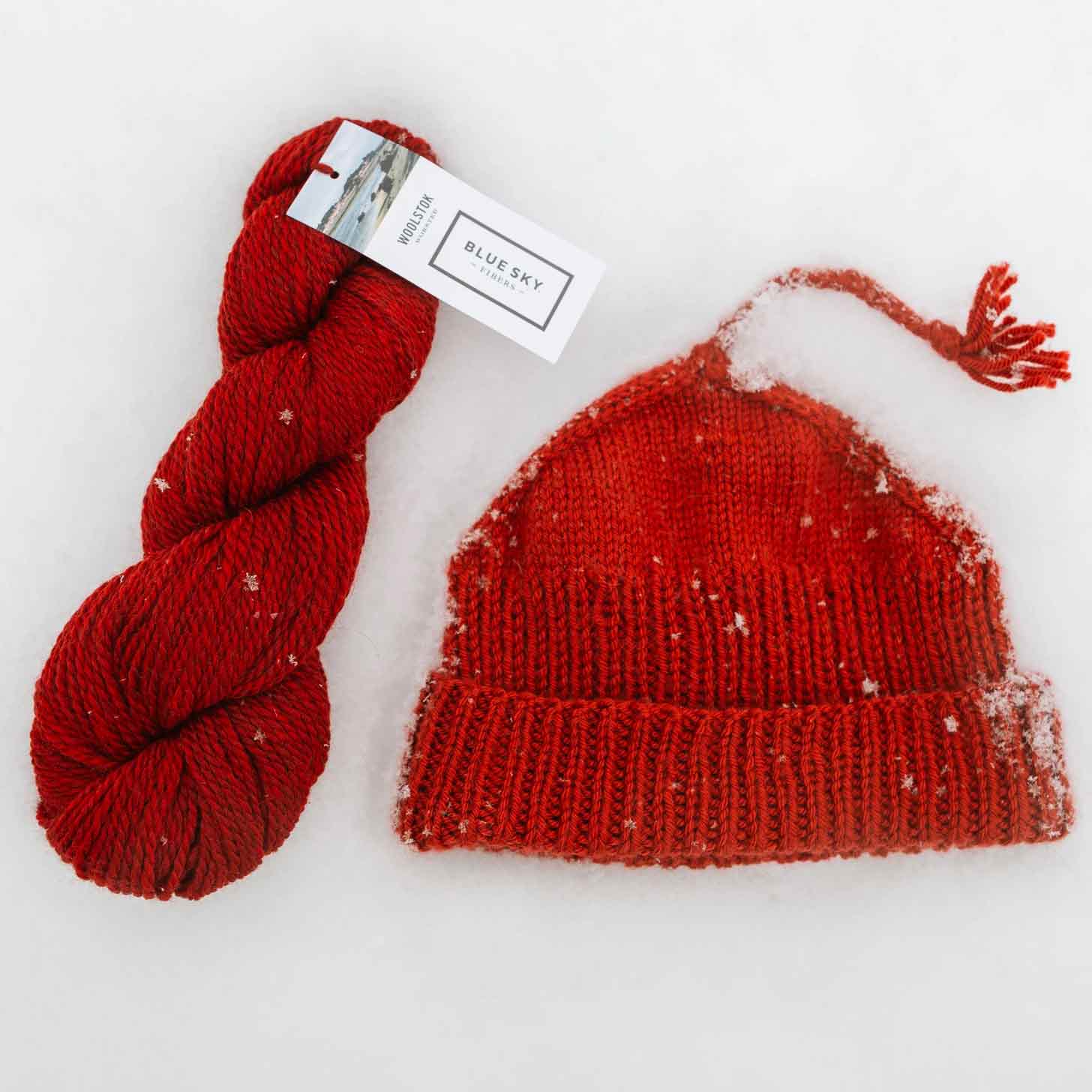
Megan Boesen, the owner of Knit & Bolt in Minneapolis told The New York Times that locating red yarn had become like “finding toilet paper at the beginning of the pandemic.”
Shops across the country have also been selling out of their red yarn rapidly, with some donating their own percentage of yarn sales to Minnesota organizations. Folks have also resorted to maroon and pink colors with red yarn becoming ever-scarce as the project gains popularity.
“Join us in solidarity against the hateful crimes being committed by ICE around the country,” Peninsula Flock Knits in San Francisco shared on social media, adding that they would donate 100% of proceeds from all red yarn sales to mutual aid organizations in Minnesota.
The crochet pattern differs slightly from the knitting one, though both result in a pointed beanie with a tassel on the end, just like the original version that originated in Norway in the 1940s, which was later made illegal by the Nazi regime.
Those participating have shared progress photos and completed projects online. Crocheters on the subreddit have also shared that this might be their first-ever crochet hat, giving them a reason to get involved in the hobby.
“I finished my Melt the Ice hat today,” one user wrote. “It's far from perfect as I've never crocheted anything this complex. It's huge, but cozy … I learned a lot.”
To help beginners, or just give people a place to come together, shops (including Needle & Skein) have also been hosting virtual and in-person stitch-alongs for people to make their hats together.
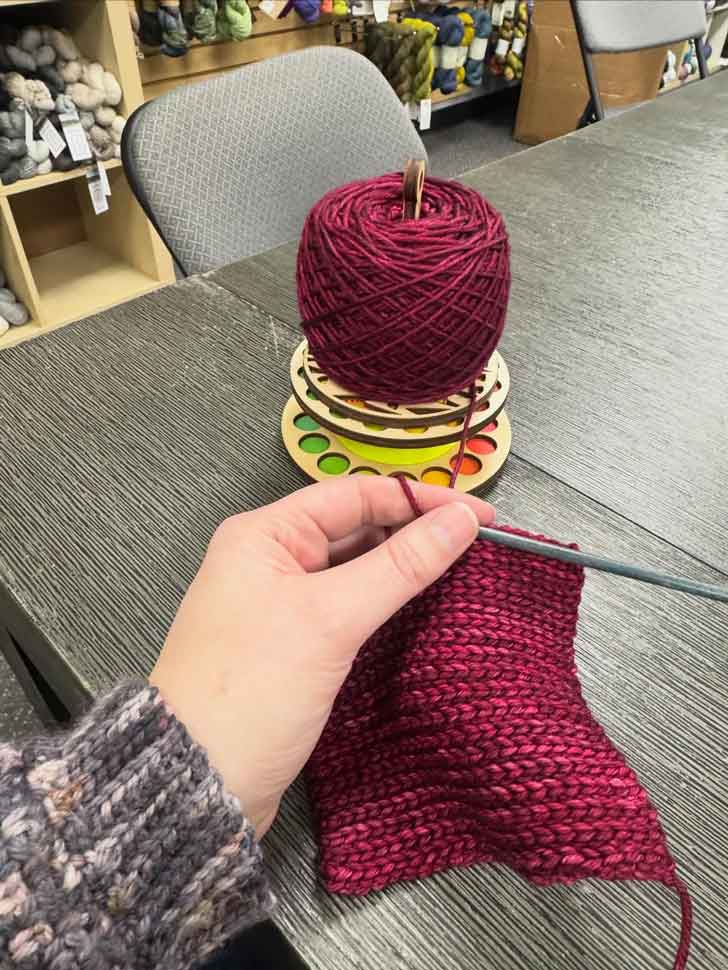
“If you’re a stitcher on the Internet, then you likely know about the Melt the Ice Hat,” one yarn shop, Gather, in Massachusetts, shared on Instagram. “We’ll be gathering in community … to stitch red hats together, because getting through this national hellscape feels a little more gentle when surrounded by empathetic, caring humans.”
Whether crafters use needles or a crochet hook, the impact is clear: People want to do something, no matter how small, to help.
“It’s been really hard for people to sit back and watch this, and people have kind of despaired as to what can we do,” Gilah Mashaal, the owner of Needle & Skein, told The New York Times.
“I think this gave people a purpose and a way to channel — honestly — their rage and anxiety into something that they could actually create.”
You may also like: Red knitted 'Melt the ICE' hats raise $250K for Minnesota
Header image courtesy of Gather/Instagram
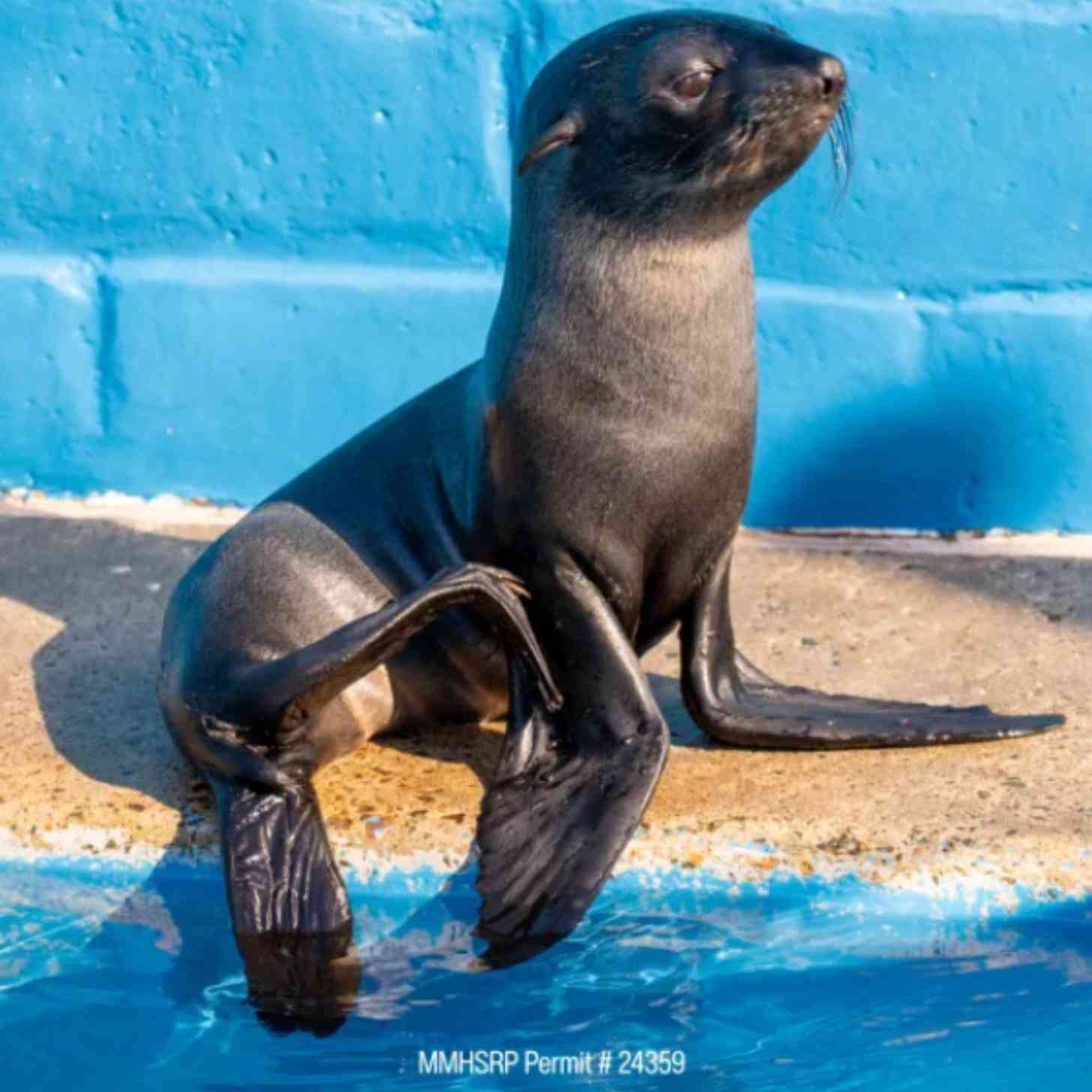
Guadalupe fur seals are largely found living on Guadalupe Island, off the Pacific coast of Mexico, and the islands of the San Benito Archipelago.
But more and more, a small number of Guadalupe fur seals have been found stranded off the coast of California.
And in early January, SeaWorld rescued not one, but two.
“Say hello to the first AND second rescues of the year,” SeaWorld San Diego wrote in a Facebook announcement. “On January 3, the SeaWorld Rescue Team responded to a call at Silver Strand Beach and discovered a young female Guadalupe fur seal in critical condition.”
“Lethargic, dehydrated, and severely underweight, she was transported to our Rescue Center, where she is now receiving multiple daily feedings and round‑the‑clock monitoring in a safe environment to rest, swim, and regain her strength.”
Then, on January 12, another call came in “second female Guadalupe fur seal of a similar age.”
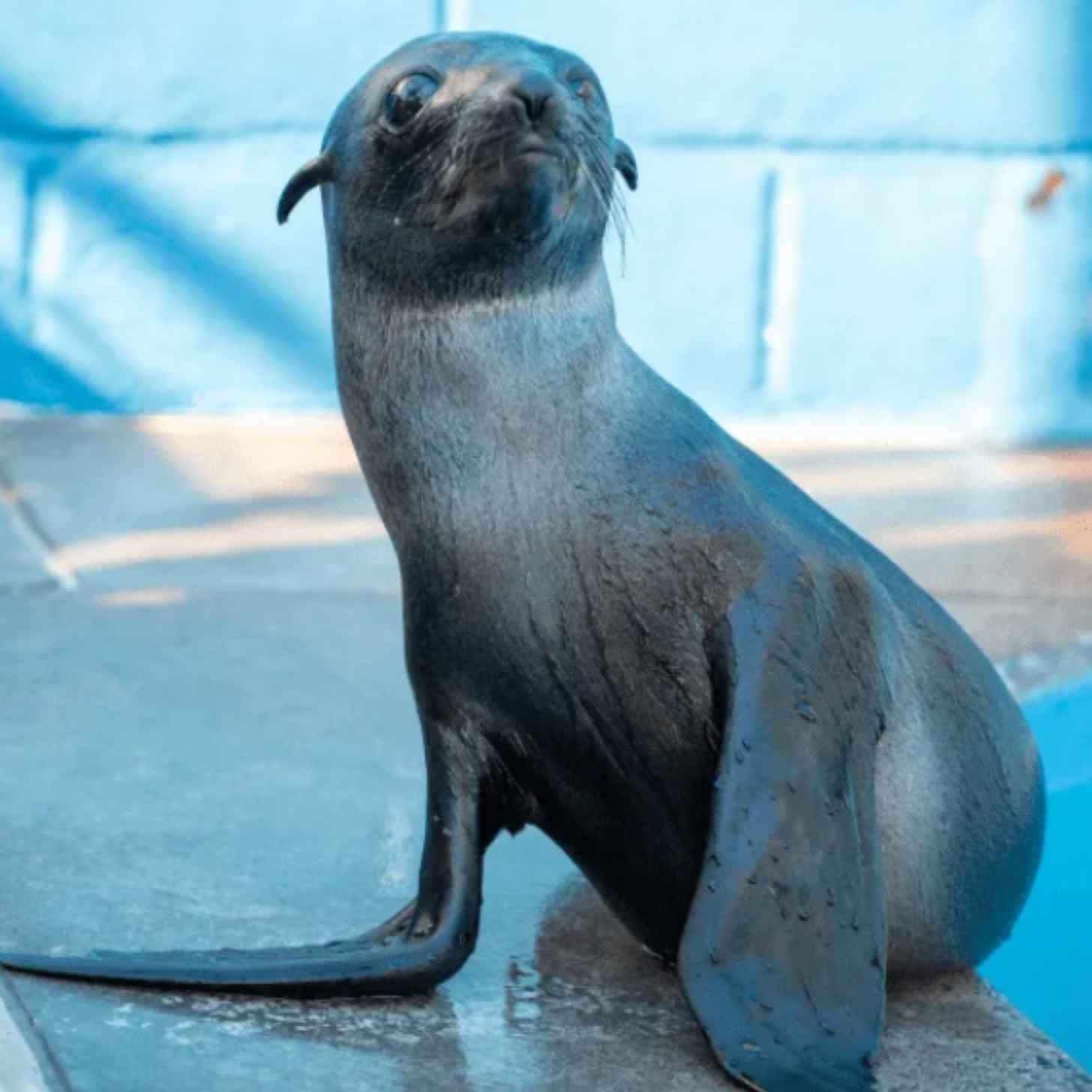
“Both animals are now receiving care together at SeaWorld Rescue,” the organization said, showing the remarkable before-and-after photos of the seal pups’ recovery. “As a threatened species, SeaWorld San Diego is one of two facilities that can provide rehabilitation to Guadalupe fur seals.”
In 2025, SeaWorld conservationists reported that they had rehabilitated a total of 567 animals, including 408 birds, 129 California sea lions, three Guadalupe fur seals, two sea turtles, and more.
The SeaWorld rescue comes just a few short months after two other Guadalupe fur seal pups, named Campanelli and Orecchiette, were rescued off the coast of Washington.
The pasta-named pups — one boy and one girl — were barely a year old when they were found, and like the pups found in San Diego, they were severely malnourished.
They were soon taken to the Des Moines-based marine wildlife hospital SR3: Sealife Response + Rehab + Research.
“They came in extremely emaciated and just very sick,” Casey Mclean, the executive director of SR3, told ABC News. “They had no energy and were just kind of lifeless. And it took a while and some pretty intensive care at first to get them back up to where they were gaining weight and acting like normal fur seals.”
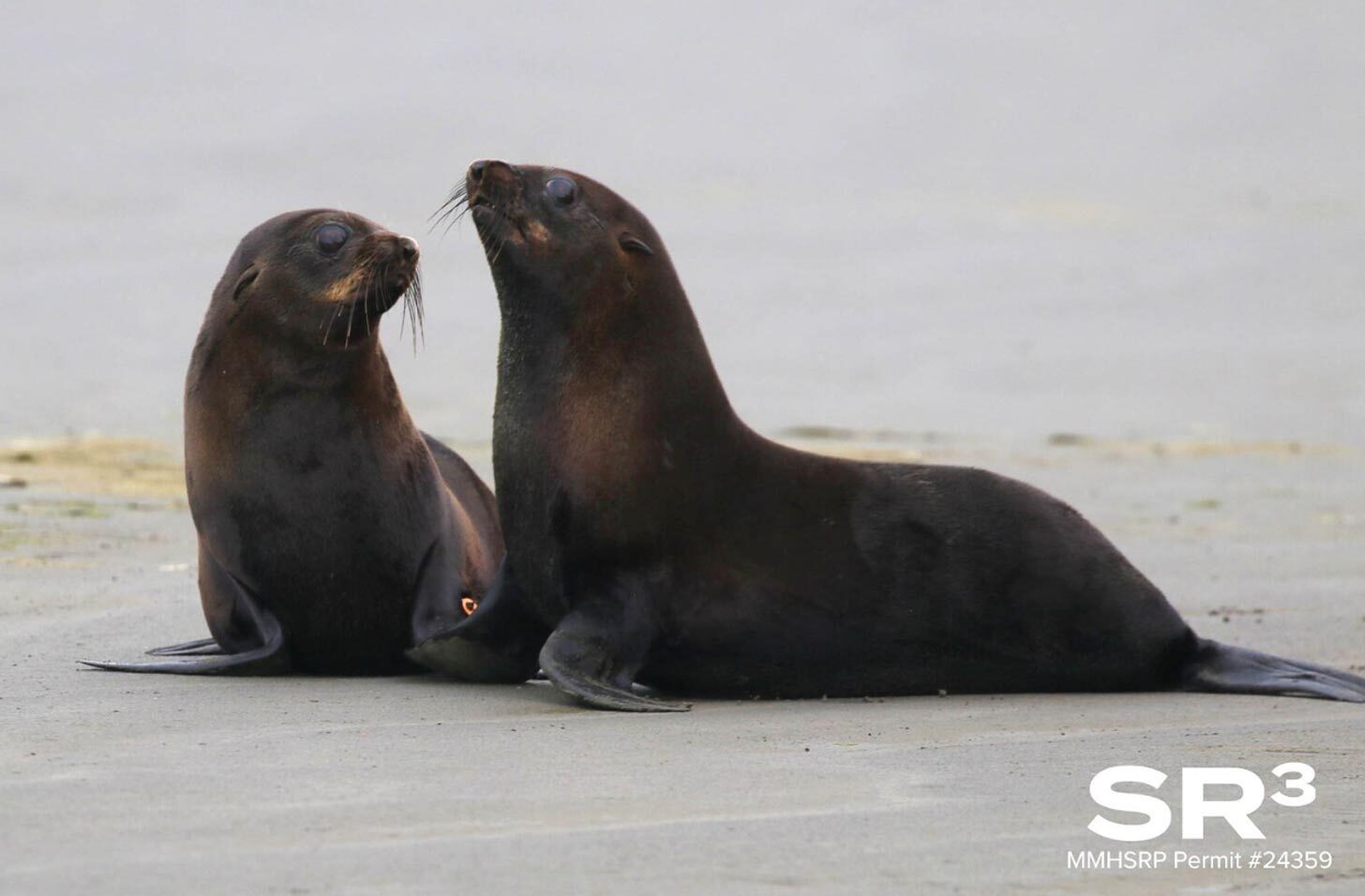
Mclean said their transformation was remarkable. When they were finally released back to the ocean, the whole staff was cheering them on.
“That's the best part of what we do … being able to watch them run free and just run back out into those waves, and they start jumping and diving,” Maclean said.
“It’s heartwarming to watch them go back out and be part of that ecosystem that we all really value.”
You may also like: A Kemp’s ridley sea turtle found stranded in the Netherlands is finally returning home
Header image via SeaWorld San Diego
With United States Immigration and Customs Enforcement carrying out aggressive raids nationwide — specifically in Minnesota, where citizen civilians Renee Good and Alex Pretti were killed by federal agents — anti-ICE activists have a call to action ahead of Sunday’s Super Bowl.
“Start with Latino-owned,” Maremoto, a nonprofit dedicated to “building civic, media, and cultural power” among the Latino community, shared on Instagram.
To make it easier for folks to support Latino-led businesses, Maremoto created a Latino business directory with over 470 bars and restaurants across 13 major cities and regions in the U.S.
It’s especially poignant, considering the Super Bowl’s halftime act: Bad Bunny.
Bad Bunny, whose full name is Benito Antonio Martínez Ocasio, just made history at the Grammy Awards, when his album “Debí Tirar Más Fotos” won Album of the Year. It’s the first fully Spanish album to win the award.
“I want to dedicate this award to all the people who had to leave their homeland, their country, to follow their dreams,” the Puerto Rican rapper said in his acceptance speech.
He also accepted an award for best música urbana album, making an even more pointed statement in response to ICE.
“Before I say thanks to God, I’m gonna say: ICE out,” Bad Bunny began his speech. “We’re not savage, we’re not animals, we’re not aliens. We are humans, and we are Americans.”
Going into Super Bowl LX, it seems the musician is not backing down — nor is the National Football League — even as conservatives launch an “alternative halftime show” and potential plans to deploy ICE agents near the stadium in Santa Clara.
Maremoto’s effort to further support Latino-owned businesses echoes this commitment to uplifting communities most impacted by ICE.
“Making plans for the Big Game and Benito’s performance? Start with Latino-owned. From taquerías to bars, our businesses are the heartbeat of our cities — and they need us now more than ever,” the organization shared on social media.
“Game day is about more than the halftime show — it’s about showing love where it counts. We’ve mapped 470+ spots across 13 cities and regions to help you find a Latino-owned place to order from or watch the game on Sunday, February 8th.”

The Latino business directory includes recommendations in the following areas: San Francisco Bay Area, California Central Valley, Atlanta, Denver, Chicago, Dallas-Fort Worth, Greater McAllen Area, Houston, Las Vegas, Los Angeles, New York City, Miami, and Phoenix.
Maremoto is also accepting additions via social media comments.
“ICE raids threaten important cultural institutions and establishments for Latinos,” content creator Josh Lora said in a recent video, directing followers to the business directory.
“These locations are where we gather, where we spend time together, where we come together as a community. With ICE directly targeting a lot of these businesses, so many of them are facing incredible uncertainty right now. They need our support.”
The Maremoto Latino Business Directory can be found online, and those interested in adding a business can submit a suggestion via a form from Maremoto.
You may also like: Minneapolis cafe vows to be 100% free to 'everyone except ICE' as long as agents are in MN
Header image by Los Muertos Crew via Pexels
Ryōta Seki, a Ph.D. student at Kyushu University, followed a hunch. As an avid insect enthusiast, he decided to take a closer look at the pine trees on campus one day.
That hunch led him to the discovery of a new species of ladybug (also known as ladybirds outside of the United States).
And this one — the Parastethorus pinicola, or pine dweller — was black.
“Small black ladybirds like these have not been studied much because they are incredibly difficult to identify,” Seki said in a press release from Kyushu University. “They are barely larger than a grain of sand, and they all look identical.”
“You cannot tell the species apart without dissecting them and examining their reproductive organs under a microscope,” he continued. “Because of this difficulty, there were many misidentifications in past records.”
To verify that the black ladybug was in fact a new species, Seki and his university peers examined an estimated 1,700 specimens.
In doing so, they not only verified the discovery of the P. pinicola but also verified the existence of a second new species from Hokkaido. Seki named the new beetle Stethorus takakoae in honor of his grandmother Takako Ōtsuki.
“Standardizing these names is important because it allows us to share data and research with other countries in Asia,” Seki said. “It clarifies that this is a widespread species found from the tropics to temperate Japan.”

Munetoshi Maruyama, an associate professor at the Kyushu University Museum, spoke on the importance of the ladybug discovery.
“People rarely notice such small insects. But as our study showed, even in a city or on a university campus, there are unknown species living right beside us,” said Maruyama.
“These ‘minor’ insects support our ecosystems. I hope this discovery makes people interested in the diverse and fascinating world that exists unnoticed at our feet.”
Surprisingly, this marks the second time in the past year that university students in Japan stumbled upon a new species by chance.
On October 30, a group of student researchers from Tohoku University shared findings of a large Portuguese man o’ war with an unusually vivid cobalt-blue hue.
Coincidentally, the new species was found when student researcher Yoshiki Ochiai was surveying Sendai Bay for an unrelated project.
Spotting a jellyfish he did not recognize, he collected it and transported it back to the laboratory for further study.
Under the guidance of faculty advisors, the team confirmed that the organism belonged to the genus Physalia but differed significantly from known species. It was eventually named Physalia mikazuki, or the “crescent helmet man-o-war,” in reference to the crescent moon helmet worn by the famed samurai Date Masamune.
“These jellyfish are dangerous and perhaps a bit scary to some,” student researcher Ayane Totsu told Tohoku University. “But [they’re] also beautiful creatures that are deserving of continued research and classification efforts.”
You may also like: Deep-sea submersible stumbles upon 'unusually large' sea creature nearly 6,000 meters below the surface
Header image via Richard Manriquez (Creative Commons Attribution 2.5)
Gilah Mashaal, the owner of Minnesota yarn shop Needle & Skein, has had a busy few weeks.
“It’s been insane,” she told Good Good Good. “It really has.”
Needle & Skein launched a call to action for the craft community amidst aggressive United States Immigration and Customs Enforcement raids across Minnesota in mid-January.
Their intention was to encourage knitters and crocheters to create a red winter hat with a tassel on the end — called the “Melt the ICE hat” — inspired by a Norwegian design made in opposition to Nazi Germany in the 1940s.
Needle & Skein made knitting and crochet patterns available online for anyone who wanted to make the hat — at just $5 a pop.
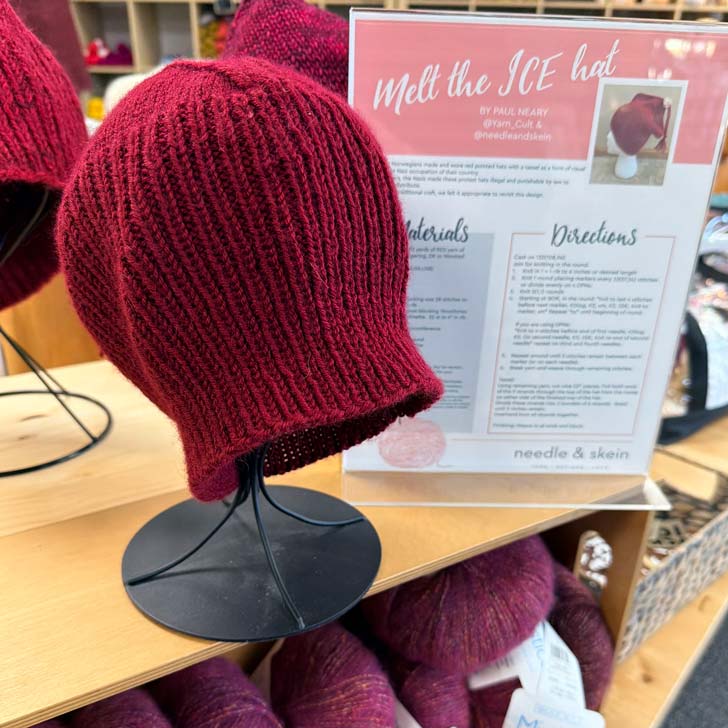
In the past few weeks, they have now raised over $588,000 by selling the patterns online, Marshall said, with $250,000 already distributed to two local organizations.
“For the first round of donations, $125,000 went to STEP, which is the St. Louis Park Emergency Program,” Mashaal said. “And the other $125,000 went to the Immigrant Aid Emergency Fund.”
Mashaal said she will now be coordinating with her team to figure out where the next round of donations should go.
“Now, we have to say, ‘Hey, should we donate to the same place, or where should we donate? Who needs the money?,’” she said.
The project got started on January 15, about a week after Renee Good was killed in Minneapolis. But after a second ICE shooting, which killed Alex Pretti, Mashaal said, that’s when she saw an uptick in interest.
“It was gaining a lot of momentum,” she said. “And then after the murder of Alex Pretti, it really exploded.”

Stitchers and yarn shops alike have reported that red yarn is flying off the shelves, but for those who aren’t quite craft-savvy, Mashaal said, Needle & Skein has just announced a way for people to get their own red hats if they can’t make their own.
Mashaal’s daughter created a form for those who might be interested in contributing a red hat, and for those who are looking to acquire one.
“You can put your name down if you're willing to donate hats, and you can put your name on a list to possibly get to buy a pre-made hat,” Mashaal said.
“And it’s 100% a donation. The people knitting the hats donate their materials and time, and the people who are going to buy a hat, it’s a donation to Minnesota organizations.”
Those who want to create hats for others can fill out a hat donation form, and those looking to buy one can express interest in a separate form, according to Mashaal.
Interest in pre-made hats does not guarantee that one will be available to purchase, but Mashaal said her team has been hard at work trying to figure out how to get hats on as many heads as possible.
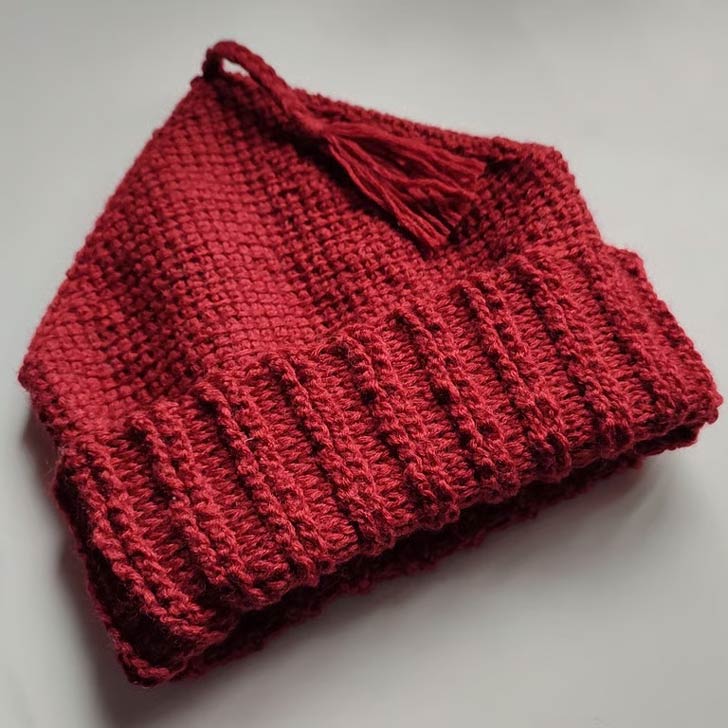
“It’s going to be first-come, first-served,” she explained. “When we get a hat, we’re just going to go down the list. I just think that's the most fair way to do it.”
The demand is certainly there.
“One of the greatest moments was that there was a woman who just walked into [the store] and very loudly proclaimed, ‘Is this the resistance headquarters?’” Mashaal reflected.
But the support isn’t contained to Minnesota.
“We’ve just had so many positive comments and emails and phone calls from people all over the world saying how much they’ve got Minnesota and the United States in their hearts,” she said. “And they're supporting us.”
You may also like: Andrew Zimmern feeds Minnesota neighbors amid ICE occupation: 'Please do something today to help'
Header image by Yelena via Pexels
When an image of 5-year-old Liam Conejo Ramos in Immigration and Customs Enforcement custody circulated online in mid-January, it sparked nationwide outrage.
In the photo, Liam wears a blue winter hat with bunny ears and a backpack nearly half the size of his small frame. An ICE agent’s hand holds the backpack.
The photo quickly became attached to headlines that the child was used to lure his family members out of their home to be detained by federal agents.
A lawyer for the family previously said in court filings that Liam’s father, Adrian Conejo Arias, who is from Ecuador, had legally entered the country under American guidelines for asylum, according to reporting from The New York Times. The Department of Homeland Security, however, had charged that Conejo Arias had entered the country illegally in December 2024.
Both Liam and his father were detained and taken to the South Texas Family Residential Center in Dilley, Texas, where they remained for over a week. A judge ordered their release on Saturday, January 31, and by Sunday, the pair was escorted back home to Minnesota, with the support of Texas Congressman Joaquin Castro.
“Yesterday, five-year-old Liam and his dad Adrian were released from Dilley detention center. I picked them up last night and escorted them back to Minnesota this morning,” Rep. Castro shared in a social media post.
“Liam is now home. With his hat and his backpack. Thank you to everyone who demanded freedom for Liam. We won’t stop until all children and families are home.”
Still, the Trump administration continues its aggressive immigration operations in Minnesota and across the country. And Deputy Attorney General Todd Blanche said the Trump administration will appeal a federal judge’s decision to release Liam and his father from the ICE detention facility in Texas.
So, in an act of resistance against ICE and the detention of children like Liam, activists have taken to crocheting their own blue bunny hats in solidarity. They are wearing and sharing them under the hashtag #HatsForLiam on social media.
A crocheter known as The Laughing Lamb has created a free pattern for other stitchers to follow along.
“[Liam] is one of many, but his sweet bunny hat has become an enduring symbol for those of us who oppose the cruelty of this administration and the unchecked violence being perpetrated against our neighbors. There are a lot of tears woven into this silly bunny hat,” the crocheter wrote on social media.
“If you want to make your own hat, I think that would be amazing. I would love to see a line of protesters wearing bunny hats, or like-minded individuals putting love out into the world.”

The Laughing Lamb added that this is the first time they have ever written a pattern, but that they wanted to try their best to document the process so that others can follow along.
The “Liam’s hat” pattern is available to download for free on Ravelry.
Some commenters asked if The Laughing Lamb would charge for the pattern and donate proceeds to immigrant charities — similar to the red trending “Melt the ICE” hats, which have raised over $580,000 by selling knitting and crochet patterns for $5 a pop.
The creator responded by saying it is intended to act as a symbolic protest that they will not profit from.
“For those of you wanting to do something, but don't know what, grab some yarn! I am making my boys and some friends' kids blue bunny hats like Liam Ramos's,” one person who shared their creation under the #HatsForLiam hashtag wrote on Instagram.
“This may not seem like much, but my hope is that when people see the hats, they think of Liam and all the kids like him. When I see Liam, I see my boys. I wish we could all see him in our kids, too.”
You may also like: Knitters protest ICE presence in Minnesota with red hats, inspired by another historic act of resistance
Header images courtesy of The Laughing Lamb and Rep. Joaquin Castro via Instagram
Just over 100 days ago, in October 2025, a group of 19 Buddhist monks set off for a 2,300-mile trek across the United States, calling for peace.
They began in Fort Worth, Texas, with a final destination of Washington, D.C. They have just finished their stop in Richmond, Virginia, where they celebrated 100 days of the journey, with their sights now set on the final stop in D.C.

The journey, or “Peace Walk,” as the monks call it, will end with a gathering at the United States Capitol, where they’ll share remarks about healing and unity with the public.
The monks have traversed inclement weather and faced injuries, but nothing has deterred them from the matter at hand.
“I know that this journey is difficult, but I truly believe every single one of us can do this,” Venerable Monk Bhikku Pannakara, who is leading the journey, said in Richmond. “It’s not that hard as long as you believe in yourself. You can do it.”

As they entered Richmond this weekend, an estimated 10,000 people lined the streets to greet the monks. Some local police officers gave flowers to them as they walked past, and crowds chanted sentiments like “we love you,” or “thank you,” according to the Washington Post.
In aerial footage shared by the monks on social media, thousands are seen following in their footsteps — literally.
“From above, we can see the extraordinary sight — so many people walking together with us through the streets of Richmond. Many hearts moving as one, united in the spirit of compassion, mindfulness, and hope,” the monks wrote.
“We are so deeply grateful. Your presence, your steps, your willingness to walk for peace — it made this milestone day truly unforgettable.”
They were then honored in a gathering of state and local officials at Richmond’s City Hall, where newly-inaugurated Governor Abigail Spanberger made her first official proclamation as governor.
“As a new governor, this is the first proclamation that I have written,” she said, adding that it “recognizes the strength and the valor of these venerable monks … and the continued walk towards our nation’s capital.”
“They are serving as a powerful reminder to us that peace is a daily practice that begins within and radiates outward to families, communities, and nations,” Gov. Spanberger continued.

Spanberger took the opportunity to officially recognize Feb. 2, 2026, as Walk for Peace Day in the Commonwealth.
“I am so grateful and proud to present this proclamation to the venerable monks, thanking them for giving us the opportunity to come together, the opportunity for people of all faith backgrounds and beliefs, to join in a shared aspiration, to live with greater compassion, understanding, and goodwill.”
According to the group’s spokesman, Neeraj Bajracharya, the group has less than 200 miles until they reach their final destination in D.C. It looks like they will arrive in the nation’s capital on February 10, after crossing eight states since the start of their journey.

The immense showing in Virginia seems to have given the monks all the energy and inspiration they will need to make it to the finish line.
“To see thousands of people choosing to walk together for peace, to witness so many hearts unified in compassion and hope, to feel the power of that collective intention moving through the streets of Richmond — this was beyond anything we could have imagined,” they wrote in another Instagram post.
“You reminded us that peace is not just an idea — it is something we create together, step by step, heart by heart.”
You may also like: Buddhist monks surpass halfway mark of 'Peace Walk,' despite snow and freezing temps
Header image courtesy of Peace Walk
Gilah Mashaal, the owner of Minnesota yarn shop Needle & Skein, told Good Good Good, “We’ve had a terrible time keeping red yarn in stock.”
It’s a good problem to have.
In mid-January, Needle & Skein launched a call to action for the craft community amidst aggressive United States Immigration and Customs Enforcement raids across Minnesota.
Inspired by a Norwegian design made in opposition to Nazi Germany in the 1940s, Mashaal and her team encouraged knitters and crocheters to create a red winter hat with a tassel on the end — called the “Melt the ICE hat.”
They quickly made knitting and crochet patterns available online for anyone who wanted to make the hat for just $5 a pop. Since then, the patterns have raised over $588,000, Marshall said, with $250,000 already distributed to two local organizations.
“For the first round of donations, $125,000 went to STEP, which is the St. Louis Park Emergency Program,” Mashaal said. “And the other $125,000 went to the Immigrant Aid Emergency Fund.”
It’s not yet clear where future donation dollars will be funneled, but Mashaal said the next stage is in the works.
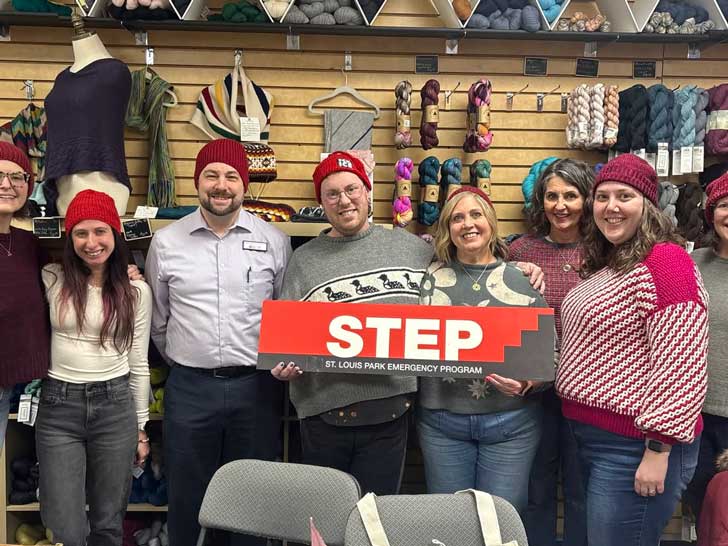
While the digital pattern can be purchased and downloaded endlessly, getting the supplies to make the Melt the ICE hat has become a bit of a challenge.
Megan Boesen, the owner of Minneapolis craft store Knit & Bolt, a Minneapolis craft store, told The New York Times that finding red yarn in Minneapolis has become like “finding toilet paper at the beginning of the pandemic.”
Crocheters have taken to Reddit to lament that shops in the Twin Cities are “basically out of red yarn.”
“While I was talking to the shop person about red yarn, at least three other people came over and said that they, too, were looking for red yarn,” one person wrote in r/crochet.
The problem isn’t exclusive to Minnesota.
In a Facebook group of stitchers, users offered up anecdotes from all over the country.

“I was in a small local neighborhood yarn shop in Seattle yesterday. It was like Christmas Eve day in a toy store! There were at least 20 people shopping and more coming as I left,” one person wrote. “Everyone was looking for red yarn.”
“Not just your country,” another person added, with a Canadian flag emoji.
The stock issue isn’t just impacting shoppers, but independent yarn shops, too.
“We just got a few boxes of red yarn,” Mashaal told Good Good Good, “but companies are now completely sold out of red yarn.”
“I did reorders with four different companies this past week and am only getting half of the red yarn requested, ” Elegant Ewe owner Kelly Bridges told the Concord Monitor, all the way in New Hampshire. “Everything else is now backordered.”
Yarn-makers themselves are working overtime to dye new batches of wool and wind more yarn to get on store shelves.
MUSE Fiber in Hastings, Minnesota, has been dyeing new batches of their “red cap yarn,” which reportedly gives back to the Immigrant Law Center of Minnesota with each online or in-person purchase.
“The majority of shops in the Twin Cities are out of red yarn … but you can still give to mutual aid, make warm wares for protest, and support small business,” MUSE reminded followers a couple of days ago.
And for those who can’t find red yarn anywhere, Mashaal said not to worry.
“Anything is allowed,” she told Good Good Good, as a response to people asking if they could use maroon or pink hues to make their “Melt the ICE” hats.
“I love it. They can knit it in any yarn.”
For those who can’t knit or crochet, Needle & Skein has also set up an exchange program for crafters to make hats in exchange for monetary donations funneled back into Minnesota.
And for those who already have their handmade protest accessory at the ready, the influx of support continues to provide hope.
“I LOVE hearing that,” one person shared in the knitting Facebook group, about the shortage of red yarn. “[It] means the resistance is growing.”
You may also like: Crocheters make blue bunny hats to honor Liam Conejo Ramos, the 5-year-old boy detained by ICE
Header image courtesy of ImagiKnit/Instagram
As the world continues to experience more frequent and impactful weather-related disasters — often caused and intensified by climate change — it’s clear we all need to be prepared for when our own realities may be affected.
However, it can be easy to descend into a spiral of hypervigilance and ultra-preparedness, or conversely, debilitating fear.
We’re here to tell you that there is indeed a balanced middle ground!
Being prepared is a gift to your future self, as well as a strategic action for your current self. Once you know you have what you need, you can both take solace in that small amount of personal agency — and have more energy to act when you really need it.
Plus, the better prepared you are, the more resources are available to others during a crisis. And if you do a really good job gathering everything you need, you’ll be confident in your own skills and can help others do the same.
Just like we’ve been instructed time and time again to put on our oxygen masks before helping others, fulfilling our own immediate safety in times of distress or evacuation makes us all that much more resilient in getting through a crisis together.
Here are a few ways to feel prepared, ideally without descending into a panic attack.
8 small ways to prepare for disaster
Prepare your home for extreme weather.
If you own your home, invest in upgraded insulation and energy efficiency, alternative energy sources like solar, and install impact-resistant doors, windows, and roofs.
A good place to get started is Energy Star’s home upgrade hub, where you can learn about alternative energy sources, find rebates to make changes to your home more affordable, and even access tax credits for energy efficiency.
Know your insurance policy’s disaster coverage.
Look into your home or renter’s insurance coverage for disaster-related claims. While it’s up to insurance companies to improve their offerings, you can still make informed decisions that will help you feel more protected.
Does your insurance policy feel like another language? Same.
Check out Insurance Information Institute’s guide to understanding policy types and trends to start understanding it all.
Make a home inventory.
Take photos and videos of your home and belongings before an emergency situation. Doing this prior to a disaster will make it exponentially easier to process insurance claims down the road.
Insurance Information Institute also has a resource to make the home inventory process easier.
Pack a go-bag or disaster pack.
Everyone should have an emergency kit ready for an unforeseen crisis. Online, you can find a list of emergency supplies to include in your pack, as well as suggestions for families with pets, babies, or seniors.
For an abbreviated list of supplies, you can also remember the “6 P’s of Evacuation:”
- People, pets, and papers
- Phone numbers and important documents
- Prescriptions, vitamins, and glasses
- Pictures and irreplaceable items
- Personal computer, hard drives
- “Plastic” (credit cards and cash)
Know how to read a map.
Have printed maps of your area for easy tech-free navigation, or download offline maps ahead of time.
You can find state maps available to purchase online, but if you’re not confident in your map-reading skills, we suggest starting at your local library!
Know who to contact.
Write down the phone numbers of people, agencies, or organizations you may need to contact in the event of an emergency.
A good way to know who you may need to reach out to is by doing a Pod-Mapping Exercise to define who your immediate support system is.
Take a first aid course.
Knowing basic first aid, like CPR or wound-dressing, is a vital life skill that can come in handy at any time. The Red Cross offers in-person, online, and hybrid first aid courses.
Download the FEMA app.
The Federal Emergency Management Agency has an app for both iPhone and Android that will help you if a disaster hits your area.
The agency will send location-specific weather warnings and other information in emergencies, like nearby shelters, disaster resources, evacuation notices, and more. It also includes handy checklists to prepare ahead of time.
You may also like: A practical guide to calming your climate anxiety
A version of this article was originally published in The 2025 Environment Edition of the Goodnewspaper.
Header image by Roger Brown via Pexels