Last year, Montana man Daniel Foley lost one of his friends in a car accident.
Foley’s friend, an elderly and disabled man, was on doctor’s orders not to drive. But he decided to go out on an errand anyway, and ended up in a head-on collision, losing his life, and killing a 32-year-old woman.
“My theory is that he was so desperate to get where he needed to go,” Foley told Good Good Good, “and he was so desperate for that freedom again.”
In the wake of his friend’s death, Foley — a former school bus driver, truck driver, and public bus driver, with over 12 years of professional experience in the Hamilton, Montana valley — started thinking about how to keep something like this from happening again.
“I was so frustrated because, heck, nobody is giving their time to other people. That's where it all started,” Foley said.
“I'm a Christian, and the church didn't help him. Other believers, friends didn't help him. Some did call him for moral support and stuff, and helped him move a little bit. But yeah, just nobody was giving any compassion to this poor guy, and I watched his whole life fall apart.”
So, Foley turned to God.
“I was like, God, how can I give compassion? How can I fix this? And then I just kept praying, and I was struggling really financially, and I got a few terrible bosses, and I said, ‘God, I want to work for you.’”
What emerged was Giddy-Up Rides, Foley’s own 24/7 taxi service for disabled and elderly neighbors — or anyone else who needs a safe, reliable ride.

“We’re a non-governmental service committed to fair pricing, ensuring no one is left stranded or priced out,” Foley writes on a GoFundMe campaign to build the initiative.
“This business isn't just a job for me — it's a heartfelt response to a devastating loss.”
For about a year now, Foley has been driving regular clients, with a need that seems to keep growing.
While taxis and ride share services aren’t exactly scarce in the area, Foley said “the reliability part” is the problem. He said he’s heard from other customers that they’ll call for a ride, only to be left stranded. One driver even reportedly showed up drunk to pick someone up.
“We don't have a transportation problem here,” Foley said. “We have a compassion problem.”
The people Foley serves are just looking to get around safely and feel like they have agency to go about their daily lives. Many of the clients he serves are veterans.
“It’s giving them their freedom back. They live in retirement homes, and some of them, it brings tears because they haven't been out in a long time — or at least had that choice for a long time,” Foley said. “But I'm trying to give that back.”
Right now, Foley is selling his own personal possessions to keep the operation afloat, though he recently launched his GoFundMe, with a goal of raising $10,000.
He hopes to hire some help and purchase a more accessible vehicle to better assist wheelchair users.
“I can give people rides on short notice, but it’s getting harder because more people want a ride,” he said. “But I’m only one man. That’s the whole reason why I started the GoFundMe; just so I can help grow it and spread the word that, ‘Hey, this is really good for the valley.’”
Those in need of a ride in Hamilton, Montana can call (406) 493-7779, and those who want to support Foley’s efforts can donate to his GoFundMe fundraiser.
You may also like: Strangers seeking life advice find it at the Grandma Stand, a rotating pop-up staffed by 15 NYC grandmas
Header image courtesy of Daniel Foley/GoFundMe
As one of the most endangered animals in the world, Kayjo the baby tree kangaroo is the newest member of a very small club.
And he’s pretty small himself — when he was born at Chester Zoo in England, he was no bigger than a jellybean.
“Every birth like this is incredibly important,” David White, a team manager at the Chester Zoo, told the BBC, adding that the Upton-by-Chester program was “securing a future for this magnificent species.”
Kayjo and his mom Kitawa are Goodfellow’s tree kangaroos — a marsupial listed as endangered by the International Union for Conservation of Nature.
In the wild, Goodfellow’s tree kangaroos can only be found in the dense tropical rainforests and deciduous forests of Papua New Guinea, where their survival has been threatened by widespread deforestation due to logging, mining, and palm oil plantations.
In the last three decades alone, their population has declined by at least 50%.
They also have historically slow breeding rates.
“Tree kangaroos don’t breed quickly — a joey is a huge energy investment for the mother,” White said in a press release from the Chester Zoo.
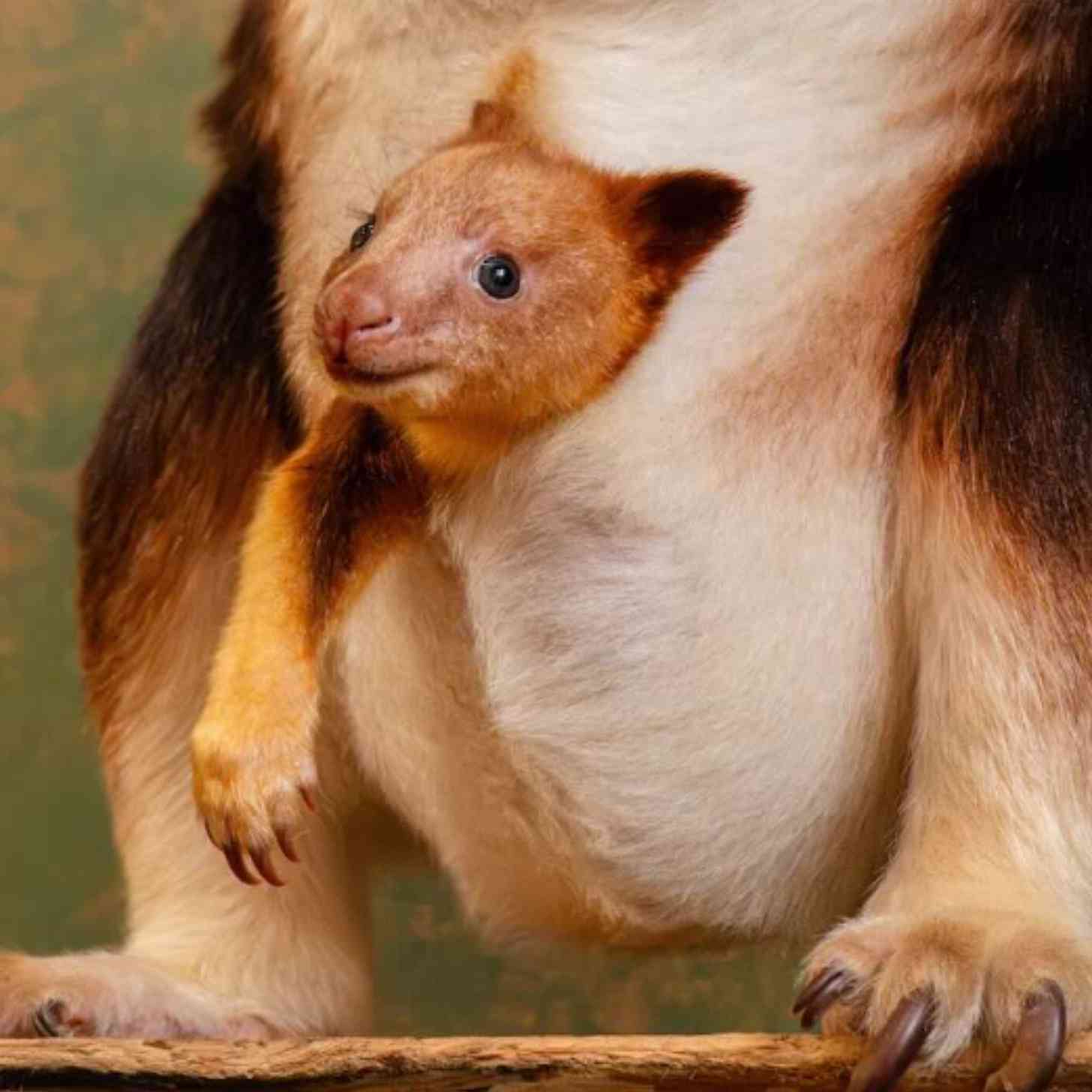
“That’s why this birth is such a significant moment,” he continued. “It’s taken a huge amount of work from keepers, vets and scientists, all collaborating to support the joey’s safe arrival. Everything we’ve learned is helping to protect this remarkable species.”
Unlike terrestrial kangaroos, Goofellow’s tree-kangaroo’s arms are disproportionately larger than its legs. That way, it can climb and swing from tree limbs with ease, all while using its long tail for balance.
“When people think of kangaroos, they rarely imagine small, fluffy animals living high in the treetops,” said Matthew Lloyd, the tree kangaroo expert at the zoo.
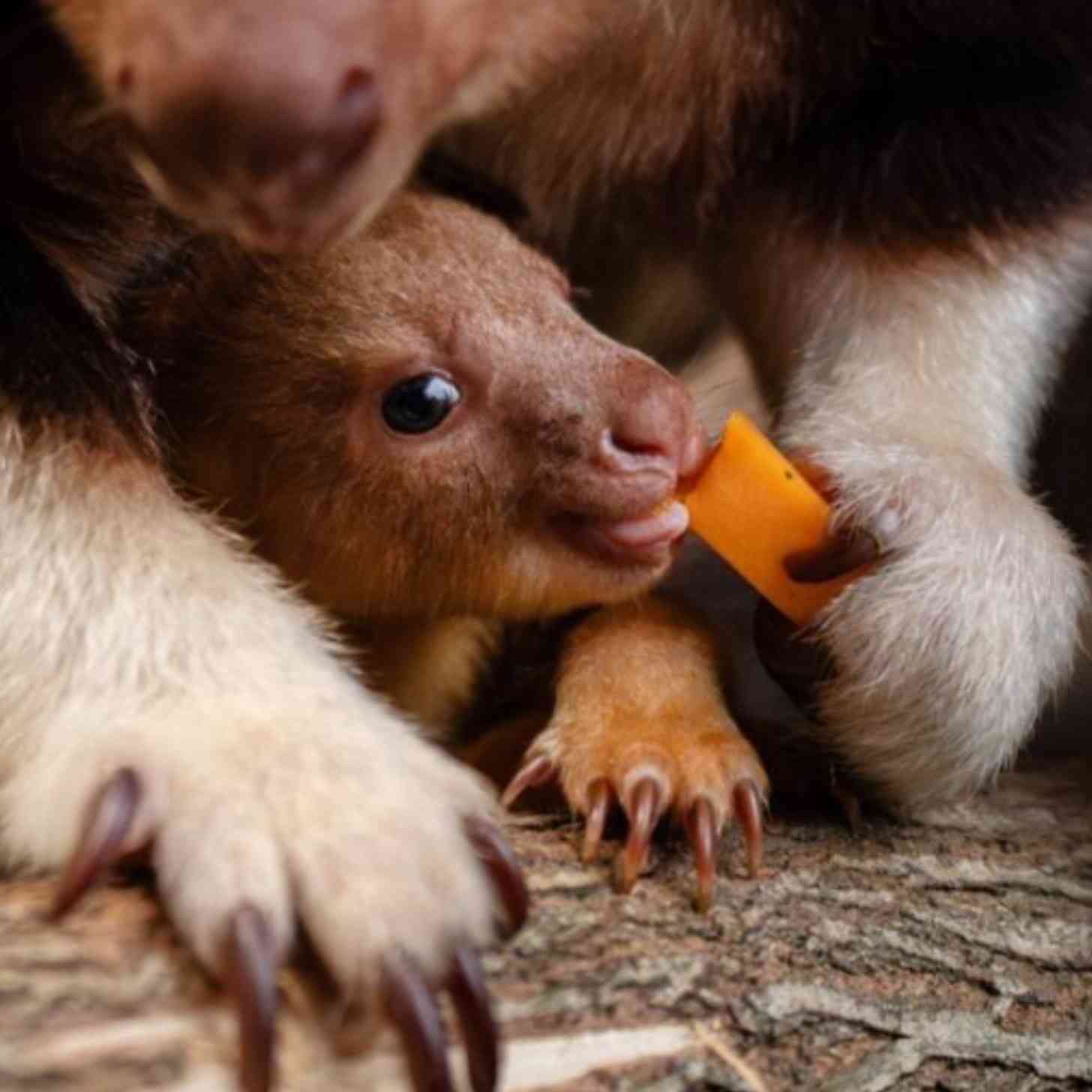
To track the joey’s progress, conservationists used tiny endoscopic cameras to follow along as he developed in Kitawa’s pouch.
“With so little known about tree kangaroos, Kitawa’s joey is a particularly special arrival, and represents a major step forward in understanding and protecting this remarkable species,” Lloyd said.
See the evolution of Kayjo’s growth in his mother’s pouch in the “pouch cam” footage from the Chester Zoo. [Warning: the video footage may be graphic to some viewers.]
You may also like: Bandicoot 'baby boom' gives conservationists hope for endangered species after 150-year absence
Header image via Chester Zoo / SWNS
Every day the Good Good Good team collects the best good news in the world and shares it with our community. Here are the highlights for this week!
If you want to get good news in your inbox every day, join the Goodnewsletter — the free daily newsletter designed to leave you feeling hopeful.
The Best Positive News We’re Celebrating This Week —
58 years after his assassination, MLK’s vision of ‘love as a moral imperative’ matters now more than ever
More than 50 years after the assassination of Martin Luther King Jr., the United States remains divided by issues of race and racism, economic inequality, and unequal access to justice.
For King, love was not sentimental, but rather a key part of creating communities that work for everyone and not just the few at the expense of the many. It also demanded that individuals tell their oppressors what they were doing was wrong.
King noted that all persons exist in an interrelated community, and all are dependent on each other. By connecting love to community, King argued there were opportunities to build a more just and economically sustainable society that respected difference.
MLK is often portrayed as a ‘civil saint,’ but his beliefs were truly radical. Here’s what he really thought
A Minneapolis brass band founded after the murder of George Floyd is helping its community heal again
In 2021, Minnesota brass band Brass Solidarity was formed in response to the murder of George Floyd to bring people together to promote social justice through music.
For more than four years, the diverse group of musicians has met weekly on Mondays, performing in George Floyd Square, and occasionally at rallies and protests for a myriad of causes, as well as picnics and parades.
On January 12, the Monday following the death of Renee Good, the group gathered at a memorial, with instruments accompanying the words, “Ain’t gonna let no ‘fraidy cat ICE agent turn me ‘round. I’m gonna keep on walkin,’ I’m gonna keep on talkin’ … until freedom rings.”
Why is this good news? Music and art have healing powers, and the work of Brass Solidarity is even more critical in times of grief and crisis — and people agreed, saying the “good trouble” and “good energy” of the band was “the antidote” to ICE’s occupation in the Twin Cities.
→ Read more
This man has spent over 500 nights in jail. His crime? Feeding homeless communities without a permit
For the third year in a row, college students report lower rates of depression and suicidal thoughts
Every year since 2007, researchers have conducted the Healthy Minds Study, gathering confidential data about the mental and behavioral health trends of college students.
For the third year in a row, respondents reported decreased rates of depression, anxiety, and suicidal thoughts.
The 2024-2025 study recorded responses from more than 84,000 students at 135 colleges and universities. Results showed continuing declines, including severe depression dropping to 18% in 2025, down from 23% in 2022, and suicidal thoughts decreased to 11% from 15%.
“These sustained reductions tell me this is not a blip,” said Justin Heinze, a co-principal investigator of the study.
→ Read more
A Minneapolis church has delivered free groceries to 24k families amid the ICE occupation
When Iglesia Dios Habla Hoy pastor Sergio Amezcua noticed members of his community in Minneapolis were growing especially vulnerable to an intense surge of ICE officers in the area, he knew he had to do something.
Starting in mid-December, the church organized hundreds of volunteers to pack non-perishable goods for the community and put out a call on Facebook for people in need of help. Within two days, 2,000 people signed up to help.
As ICE tensions have only continued to escalate, so have the church’s efforts. As of Martin Luther King Jr. Day, about 24,000 families have registered for help, and the church has delivered 12,000 boxes of groceries in about six weeks.
Why is this good news? As Amezcua puts it, “Our Immigrant community, and Latinos, especially Somalis, are going through hell.” This coming together of volunteers and community members also proves to him that there’s a better path forward, and its defined by love and goodwill.
→ Read more
You may also like: Amid ICE crackdown, this Minneapolis sex shop has transformed into a donation center for neighbors in need
Scientists gave endangered birds ‘insecticide-sprayed’ feathers to help them build new nests. It saved them from a deadly parasite
U.S. electricity demand surged last year — and solar covered 61% of it
In 2025, electricity demand in the U.S. jumped by 135 terawatt-hours, a 3.1% increase or the fourth-largest annual rise in the past decade.
In that same time period, solar generation grew by 83 TWh, a 27% increase over 2024 and the largest gain of any power source — and it covered 61% of all new electricity demand in the country.
When looking at just daytime hours between 10 a.m. and 6 p.m., the increase in solar generation met the entire rise in demand.
→ Read more
The U.K. announced a plan to give households £15 billion for solar panels and other green tech
Under a new “Warm Homes Plan,” households across the UK will be eligible to receive thousands of pounds’ worth of solar panels and green tech to help lower energy bills.
In total, £15 billion will be distributed over the next five years in an effort to create a “rooftop revolution” to both triple the number of homes with solar and lift one million people out of fuel poverty.
The plan has been years in the making, and will focus on funding solar panels, heat pumps, and batteries, which together could save households £500 annually on energy bills — though others estimate it could be over £1,000.
Why is this good news? While the cost associated with solar panels and other green tech is growing more competitive, it’s still prohibitive for the average household. This boost will help not only with the clean energy transition, but to ensure a warm home isn’t a privilege, but “a basic guarantee for every family in Britain.”
→ Read more
England’s new ‘10-minute clinics’ treat emergency mental health crises and ease the burden on hospitals
→ Read more
Portland coffee shop turns anti-immigrant comment into a fundraiser for neighbors amid ICE raids
As small businesses, churches, and entire communities speak out against the increased presence of ICE across the country, one coffee shop in Portland, Oregon drew a hard line on social media when it comes to protecting their immigrant neighbors.
“If I.C.E. shows up at our door, our baristas know how to properly refuse both entry and service,” Heretic Coffee posted.
Despite an outpouring of support in the comment section, the pledge prompted a reply from one individual who wrote: “It will be great when you get arrested for harboring hope they tape your perp walk.”
Inspired by one missing punctuation mark, Heretic partnered with Sticker Junkie to release “Harboring Hope” stickers (alongside “Everyone Is Worthy Of A Latte” stickers) — and 100% of the profits “will be used to feed our immigrant neighbors in Portland, OR.”
→ Read more
More than 500 people gathered at a Pittsburgh church to learn how to respond to ICE activity
On a Tuesday night at Shadyside Presbyterian Church in Pittsburgh, more than 500 people gathered to attend a training about how to respond to federal immigration enforcement.
Hosted by Frontline Dignity, the training taught participants about their rights and how to minimize escalation when dealing with law enforcement.
It particularly focused on rapid response, or coordinated civilian efforts to witness ICE activity and support those taken into custody, both of which are protected under the law. The event also opened with a moment of silence and time to meet new people.
Why is this good news? As ICE ramps up its activity in Minneapolis and other U.S. cities, and as officers have been recorded engaging in potentially unlawful activity themselves, people are understandably confused about what their own legal rights are. These trainings are critical for people who want to support their vulnerable neighbors — and they are (and have been) happening all over the country.
→ Read more
From Gaza to Uganda, skateboarding creates a safety net for young people in need
Protests in the U.S. have risen by 133% since Trump’s first term
In 2025, there were more than 10,700 protests, a 133% increase from the 4,588 recorded in 2017, the first year of Trump’s first term. An overwhelming majority of counties in the U.S. — including 42% that voted for Trump — have had at least one protest since he was re-inaugurated last year.
Historically, major protests have been consolidated in major cities or single, massive events — but that’s not what’s happening now. Instead, there’s been “very diffused protest mobilization all around the country.”
And researchers are seeing the trend of broadly dispersed, nonviolent protests continue into 2026, as anti-ICE mobilizations continue in cities across the US.
More good news of the week —
California is offering free entry to more than 200 state parks on Martin Luther King Jr. Day. (Gifted link) Governor Gavin Newsom framed the move was a rebuke to the Trump administration, which cut Dr. King’s birthday and Juneteenth, two holidays honoring Black history, from the list of free entry days at national parks this year.
An MLK Day concert is relocating from the Kennedy Center after 23 years. Georgetown University’s annual “Let Freedom Ring” event, headlined by actor and rapper Common this year, will instead be held at the Howard Theatre in Washington, D.C.
MLK’s belief in “religious pluralism” can help us navigate this age of polarization. King believed in pluralism, or the idea of multiple communities engaging one another, acknowledging their differences and shared bonds, and striving to create what King called a “Beloved Community.”
Houston is hosting a united MLK Day parade for the first time in 30 years. Previously, two organizations hosted competing MLK Day parades, but this year are bringing their events together for the 2026 MLK Unity Parade, which is expected to bring 400,000 participants.
A rare moose sighting in Romania is giving conservationists hope for biodiversity returning to the region. Moose can be highly influential on their surrounding habitat since they feed on young saplings like willows and birch, clearing the way for other plant species to grow and encouraging biodiversity.
The first solar power plant in Kyrgyzstan will prevent 120k tons of carbon emissions every year. The 100-megawatt installation will generate 210 million kWh of clean electricity annually, and represents one of the largest foreign investments into the Central Asian nation of any kind since independence.
A St. Paul high school student is helping give classmates fearful of ICE raids a ride to school. While there have been no instances of ICE agents on school grounds in St. Paul so far, students in the city are scared, and many are staying home. Schools in the area are transitioning to remote learning this week, too.
For the first time, the global population requiring interventions against trachoma fell below 100 million people. Trachoma is the world’s leading infectious cause of blindness, and there were 1.5 billion people estimated to be at risk in 2002, dropping to 97.1 million as of November 2025, a 94% reduction that reflects decades of sustained efforts by national health ministries, local communities, and international partners.
Ben Affleck and Matt Damon struck a deal with Netflix to offer performance-based bonuses for their whole film crew. The deal — which would provide bonuses to all crew members if their new film, “The Rip” does well — is a departure from how Netflix structures compensation, typically paying cast and crew an upfront fee determined in advance.
Facing reports of a planned ICE facility, Kansas City, Missouri passed a five-year ban on detention centers. The City Council quickly passed the resolution after a local official was told by the Department of Homeland Security about plans to build a 7,500-bed ICE facility.
Activists created a 12.5 million block digital library in “Minecraft” to bypass censorship laws. In many authoritarian countries where news sources and books are censored, the video game is not, leading a group of designers to make a library full of information that people in those countries, and anyone else in the world, can access.
Rare twin baby mountain gorillas were born in the DRC, giving conservationists new hope for the endangered species. The young males are healthy for now, rangers say, but the subspecies has high rates of infant mortality – with about a quarter falling victim to disease, trauma, or infanticide.
A team of “human beavers” is creating a network of dams across Rocky Mountain National Park. An overpopulation of overgrazing moose in Kawuneeche Valley has forced beavers out of their natural habitat, and the loss of natural beaver-built water systems has led to extensive degradation.
A Washington church is rebuilding after a fire and is including 22 units of affordable housing. Bethany Presbyterian Church in Spokane, Washington had already been considering utilizing a portion of its building as affordable housing for newly-arrived immigrants in the community.
Refuting claims about autism, another study demonstrated the safety of acetaminophen in pregnancy. Experts behind the new study say pregnant women “should feel reassured” by its findings that taking acetaminophen while pregnant is safe and there’s no evidence it raises the risk of autism, ADHD, and developmental issues in children.
New Orleans is bringing back “house calls,” sending nurses to visit newborns and moms. Louisiana has long struggled with maternal and infant mortality, so New Orleans is providing free home visits from nurses to help spot medical problems early as part of a reproductive health policy that has bipartisan support.
Nearly 400 millionaires and billionaires from 24 countries called on global leaders to increase taxes on the super-rich. In an open letter, Mark Ruffalo, Brian Eno, Abigail Disney, and hundreds of others shared their growing concern that the wealthiest in society are buying political influence and called on leaders to close the widening wealth gap.
Scientists found a safer alternative to BPA in thermal receipt paper coatings using wood-derived chemicals. Both bisphenol A and bisphenol S can affect living organisms by disrupting hormone signaling, and both are detected in the environment and in people who handle receipts frequently.
A new law in New York gives stronger protections for sexual assault survivors. In addition to requiring law enforcement and hospitals to follow specific timelines for processing rape kits, the measure aims to reduce the chances the kits are mishandled or misplaced by establishing clear responsibilities for all parties involved.
Pioneering “light boxes” are helping people in one of Scotland’s darkest communities fight seasonal depression. Residents of the Orkney Islands have been able to borrow a Wintering Well Box from their library since the clocks went back in October, with the kits already proving “super popular.”
When it comes to iconic animals that call the 63 national parks home, bison, black bears, and bald eagles probably come to mind first. But Cape Cod National Seashore has been hard at work restoring an underrated species in the National Park Service: the humble horseshoe crab.
Despite its name, horseshoe crabs are not crabs, but rather 445 million-year-old arthropods that serve as a vital food source for countless turtles, birds, and fish on the Atlantic Coast.
“They look like trouble, but they’re not,” Lawrence Niles, who co-founded the Horseshoe Crab Recovery Coalition, told the National Parks Conservation Association.
The coalition has tasked itself with saving the “living fossil” species, which has survived five of Earth’s extinction-level events. Its population has recently declined, though, because of overharvesting and overuse by pharmaceutical companies, which use the crab’s bright-blue blood to detect toxins in drugs and vaccines.
For the last 150 years, horseshoe crabs disappeared from Cape Cod National Seashore’s East Harbor, largely because it had been closed off for industrialization. In 2008, at the behest of the park, the town allowed seawater to flow back into the saltmarsh lagoon.
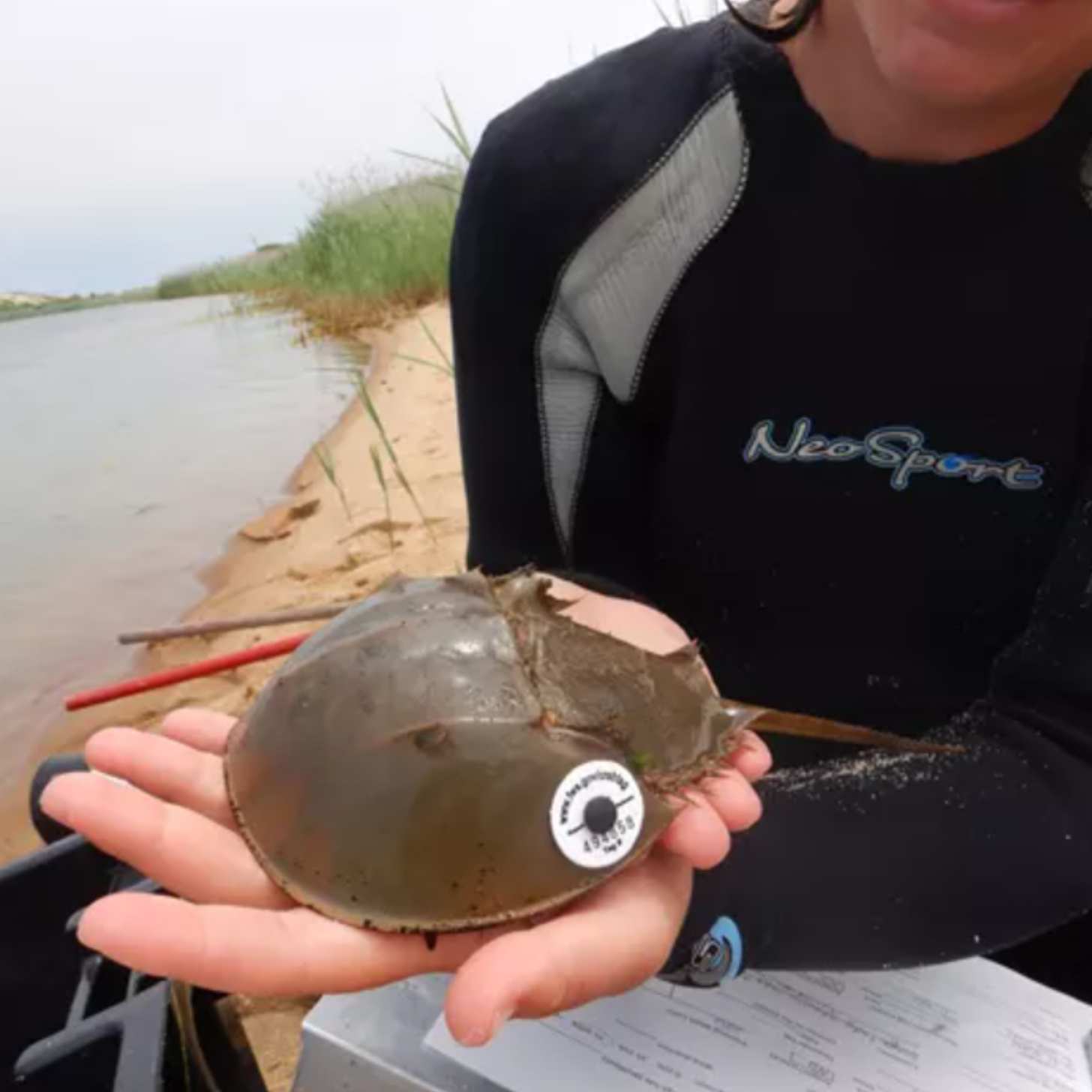
Today, horseshoe crabs — and clams, oysters, and quahogs — have rebounded in the thousands. Sophia Fox, an aquatic ecologist at Cape Cod National Seashore, estimated that many of the horseshoe crabs breeding today hatched in the same habitat over 12 years ago, making it a “true habitat.”
“This is what we call our happy story in the world of doom and gloom that we live in,” Fox said.
A version of this article originally appeared in the 2025 National Parks Edition of the Goodnewspaper.
Header image via the National Parks Conservation Association
Indigenous perspectives have long been taken for granted, if not altogether ignored or intentionally suppressed. In 2024, while running for a Senate seat representing Arizona, Rubén Gallego pointed out a disheartening trend — politicians only seemed to care about Native communities and their environmental campaigns in the last two weeks of election season.
“Far too often, politicians only visit Arizona's tribes in the run-up to an election,” Gallego told The Arizona Republic last year. “Their voices deserve to be heard.”
Last year, Gallego visited all of Arizona’s 22 federally recognized tribes, even hiking eight miles below the rim of the Grand Canyon to Supai village, which is widely considered the most remote community in the country.
Throughout Gallego’s campaign tour, issues like water rights, land stewardship, and protections against uranium mining continued to surface, giving him a more complete picture of the primary problems his Native constituents were facing.
“He's been here, he's seen it now, and he felt the land, you know,” Johnny Lehi, Jr. of the San Juan Southern Paiute tribe told NPR.
After winning his Senate seat in November 2024, Gallego kept his word, both defending the Baaj Nwaavjo I'tah Kukveni – Ancestral Footprints of the Grand Canyon National Monument — from the mounting threat of uranium mining and reintroducing the Northeastern Arizona Indian Water Rights Settlement Act.
While the fate of the latter is currently unknown, its introduction to Congress provides tribal members with a critical opportunity to address their legislators directly.
“This legislation establishes our homeland, ensures our water rights, and provides for secure infrastructure,” Lehi said in support of the bill, which seeks to restore the water rights of the Colorado River Basin to the Navajo Nation, the Hopi Tribe, and the San Juan Southern Paiute Tribe. “It has been a long time coming and we are excited about the new challenges and opportunities that will surely follow.”
This tireless fight for advocacy is one the people of the Southern Sierra Miwuk Nation are well acquainted with. In 1969, the National Park Service evicted the last tribal members from Yosemite National Park by destroying the village of Wahhoga.
“The Park Service came and burned the cabins out … everyone who was living there just dispersed and had to go out into the surrounding towns,” Deborah Tucker, a member of the American Indian Council of Mariposa County, told the National Parks Conservation Association.
In 2018, the NPS pledged to share co-stewardship with the AICMC and restore tribal control to Wahhoga Village. Today, after years of rebuilding, their influence can be seen throughout the park in acorn granaries, roundhouse ceremonies, and newly constructed traditional Miwuk dwellings.
Tucker said it’s “finally really flourishing.”
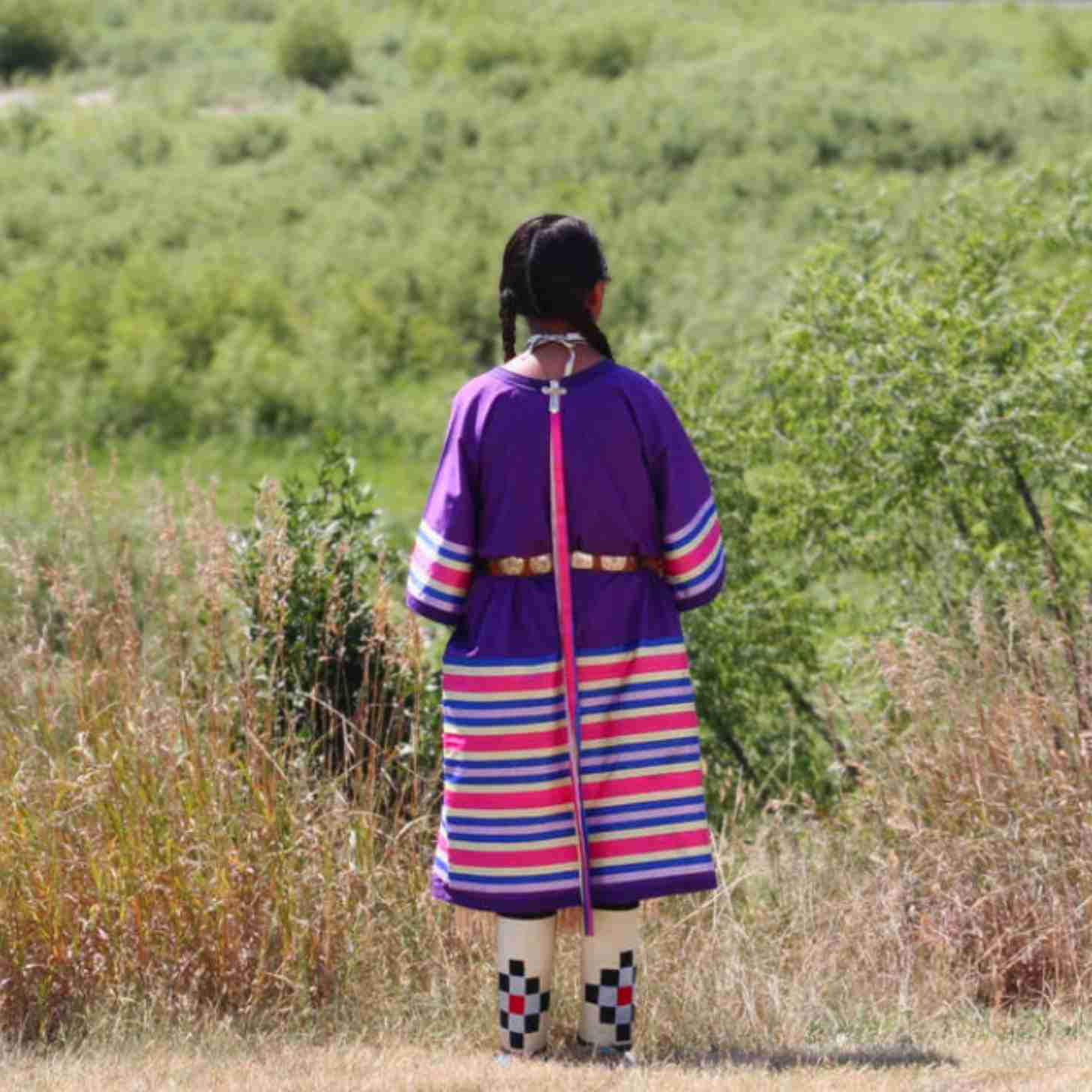
“This is their fight, their partnership, their passion,” Tucker said of her tribal elders and parents, who were displaced in 1969. “I’m just trying to do everything I can to see it come through in my dad’s lifetime.”
Wahhoga’s redemption is part of a new chapter of Indigenous stewardship — an era which demands that Native voices be prominently featured in the narrative of national parks and included in decisions that shape their ancestral land.
At Hawaiʻi Volcanoes National Park, visitors are now greeted with a short film series on kūpuna, or community elders, who teach hula, kālai kiʻi carving, and crop cultivation.
At Glacier National Park, tourists can travel through the scenic landscape by way of Backpacker’s Ferry, a Blackfeet-owned tour group that pairs breathtaking views with insight into the rich cultural history of the region.
And when people enter through any of Yellowstone National Park’s five entrances, they now pass by traditional teepees patterned with tribal stories.
“We’re hoping that guests use it as an opportunity to reflect and think about the 27 associated tribes of the lands that are now known as Yellowstone National Park,” Victoria Cheyenne, of the Northern Cheyenne and Aymara nations, told Wyoming Public Media.
As Native communities work to safeguard forgotten histories, they’re also protecting the land for future generations to come.
Since 2015, the Hoonah Native Forest Partnership has been working to revive the 17,000 salmon streams in Tongass National Forest in Southeast Alaska — the nation’s largest national forest.
Combining ancestral Tlingit knowledge with modern science, the partnership ensures that Alaska Native communities have a leadership role alongside the Alaska Department of Fish and Game Subsistence Division and the U.S. Forest Service to continue the stewardship work they have carried on for centuries.
It’s in line with the HNFP’s mission statement: “Ch’u tleix áwé kugaagastee” — a Tlingit phrase that means, “Let it exist forever.”
Most recently, the HNFP finished a 7-year stream restoration project, in which forest crews painstakingly used hand tools to reshape and restore 400 yards of fish habitat that had all but vanished because of erosion.
“These lands are the traditional territory of our people,” said Richard Chalyee Éesh Peterson, president of the Central Council Tlingit and Haida Indian Tribes of Alaska. “As a federally recognized tribe, it’s our responsibility to steward these lands on behalf of our people.”
A version of this article originally appeared in the 2025 National Parks Edition of the Goodnewspaper.
Header image via the National Park Service
There’s a role for everyone in the fight against tyranny. Yes, even the knitters and crocheters.
Craftivism, or the act of using handicrafts, art, and textiles as a form of activism, is just one way Minnesotans are resisting the presence of United States Immigration and Customs Enforcement across their state.
Especially in the wake of two fatal shootings, in which federal agents killed citizen civilians Renee Good and Alex Pretti, people are looking for ways to use their skills to support their neighbors.
A new call to action from Minnesota yarn shop Needle & Skein encourages knitters and crocheters near and far to take part in a project inspired by resistance to Nazi Germany in the 1940s.
“In the 1940s, Norwegians made and wore red pointed hats with a tassel as a form of protest against Nazi occupation of their country. Within two years, the Nazis made these protest hats illegal and punishable by law to wear, make, or distribute,” a social media post from the yarn shop explained.
“As purveyors of traditional craft, we felt it appropriate to revisit this design. Our city and many others are currently being swept door to door by a federally funded and supported organization. Sound familiar?”
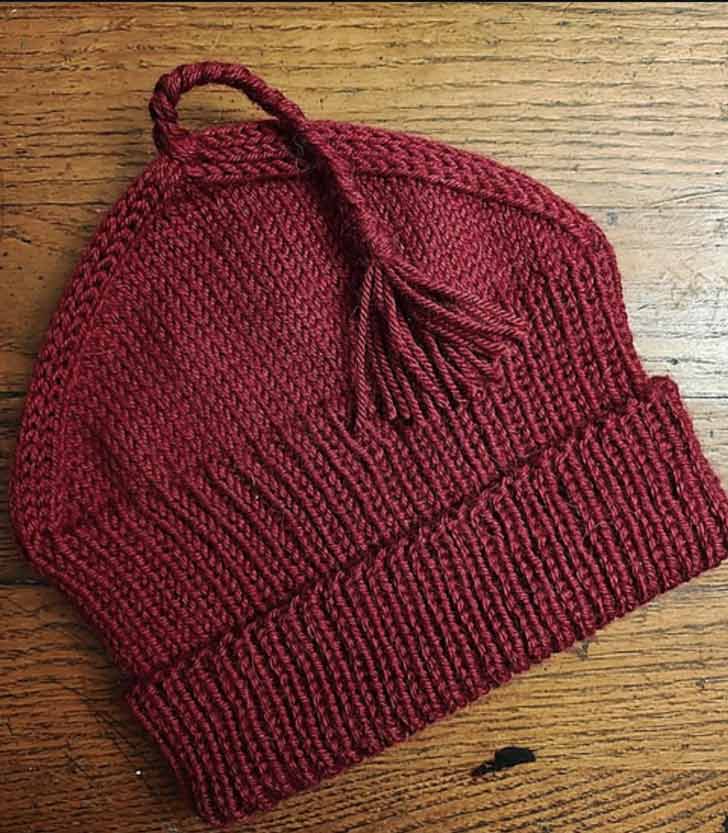
Needle & Skein shared a $5 knitting or crochet pattern of what they are calling the “Melt the ICE” hat, encouraging crafters from anywhere in the world to make their own version and wear in support of Minnesota.
All proceeds from the sale of the patterns will go to local immigration aid organizations, which will distribute the funds to those impacted by the actions of ICE, according to the shop.
In a post on r/knitting on Reddit, the daughter of the Needle & Skein owner shared that right now, proceeds will be donated to STEP Emergency Assistance to help vulnerable community members pay for rent and legal aid in St. Louis Park, a suburb outside of Minneapolis.
“We also plan to work with other businesses to identify where people most need funds,” she added. “We raised way more than anticipated.”
Those who don’t knit or crochet can also make a donation online to support the efforts.
The knitting community has rallied.
Online, crafters are posting their works-in-progress and finished products and directing followers to buy their red yarn from Minnesota-based shops, like The Yarnery, Dandelion Fiber Company, Knit & Bolt, and Harriet & Alice. All of these shops also participated in a recent statewide strike to protest ICE presence in Minnesota.
Other shops across the country are also promoting the purchase of red yarn and donating their own percentage of sales to Minnesota organizations.
“We’ve been uplifted to see the recent run on red yarn in the shop these past days! What’s everyone making, you ask? The Melt the ICE hat by the Needle & Skein Yarn Shop in the Twin Cities, MN,” a post from Oregon-based Fancywork Yarn Shop reads.
“While we’d rather see this design relegated to the history books, it is sadly relevant again today. We’re casting on ours alongside all of you, and standing beside everyone in Minnesota,” the shop continued.
In addition to encouraging shoppers to make their own hats, Needle & Skein has hosted virtual and in-person knit-ins and stitch-alongs for people to join in community, work on their projects together, and process the grief of the moment with one another.
“Your support is so beyond appreciated,” the Reddit post concluded. “Minnesota is hurting, but we know that we are not alone.”
You may also like: Faith leaders travel to Minnesota from across the country, urging ICE to retreat: 'You may go in peace'
Header image courtesy of Krista via Pexels
When United States Immigration and Customs Enforcement agents shot and killed civilian Alex Pretti on January 24, Minneapolis’s Nicollet Avenue faced immediate chaos.
Peaceful protesters — and members of the press — in the area were quickly subject to tear gas and “less lethal” bullets as federal agents attempted to get them to leave the scene.
Among the crowd was local journalist Samie Solina, who was on the scene for KARE 11 News, as well as her videographer, Mitchell Yehl.
Solina and Yehl quickly sought shelter in a nearby Vietnamese restaurant, My Huong Kitchen. Owner Tracy Wong immediately let them in.

In a video, Wong is seen ushering the duo in, saying “come, come,” and asking if they had any water.
As Solina repeatedly said thank you, Wong embraced her in a hug.
“I am so sorry,” Wong told the news team, tears in her eyes. “I am so sorry, guys.”
Soon, more people, presumably protesters and others caught in the scene, filed into the restaurant, Wong shouting, “Come in, come in. This is my home.”
A video of the interaction has gone viral on social media.
“I am so thankful for Tracy, who sheltered Mitchell and I as we were gagging on tear gas. She opened her doors for hours during the heated protests following the killing of a man by federal agents,” Solina wrote in the caption.
A commenter identified Tracy as Tracy Wong and encouraged locals to support the restaurant.
“Tracy has given me permission to post this video, and leave the comment section up,” Solina added later. “She wants folks to know her establishment is a safe place for everyone.”
As Solina gathered her bearings, she asked Wong how she’s been doing. Restaurant owners, and particularly immigrant- and BIPOC-owned establishments, have certainly been feeling the impact of ICE presence in Minnesota, with workers staying home and fearing for their safety.
“I’m feeling so bad, my God, I’m so nervous, scared — very scared, really scared,” Wong told Solina.
But immediately, she got to work for her guests.
“Come in,” she said again. “Let me make you a pho. Tell everyone to come in here and be safe.”
Once settled, Solina kept reporting, sending live dispatches back to KARE11 from My Huong. At this point, a small crowd seeking safety had formed inside the restaurant, and the reporters set up their camera in the window to maintain a view of ICE activity in the street outside.

In-studio journalists asked Solina if crowds in the street were dispersing. While many sheltered in nearby restaurants, she said, it did not seem like protesters were shrinking in size.
The camera then panned to Wong, who was looking outside the window, as well.
“This is Tracy, who I think a lot of people here feel like they owe her a debt of gratitude,” Solina said in the broadcast. “She’s just letting people in, and of course you can see that she’s just heartbroken.”
Solina asked her why she let people into the restaurant amid a chaotic and violent scene.
“Because I wanted everyone to be safe and get warm because it’s so cold out there,” Wong said. “I want everyone to come in here, get some hot tea, get some hot water, something to eat. It’s on me; it’s no problem.”
Wong went on to say that she had been in the restaurant’s location for 13 years.
“I’ve never seen this before,” Wong said, referring to the tear gas and screams she saw outside her window that day. “[It] makes my heart go beat-beat-beat-beat.”
On Monday, Wong shared a message on the restaurant’s Facebook page.
“Thank you from the bottom of my heart for all the love and kindness you’ve shown. I have always tried to help others without expecting anything in return, so I am truly overwhelmed by the support being shown to our business,” she wrote.
“Every message, share, and gesture means more than I can say. I love you all, and God bless you.”
You may also like: Knitters protest ICE presence in Minnesota with red hats, inspired by another historic act of resistance
Header image by Chad Davis (CC BY 4.0)
According to the USDA, between 2020 and 2022, approximately 68% of American farm workers were immigrants (7% had obtained U.S. citizenship, 19% were other authorized immigrants like green card holders, and 42% held no work authorization).
That huge majority of the agricultural workforce faces a number of challenges when it comes to their health, safety, and human rights.
Fortunately, organizations — like the Migrant Clinician Network — help folks navigate those challenges with creativity and compassion.
MCN has been in operation for 40 years, offering case management to migrant farm workers, training healthcare workers to support this community, and improving worker health outcomes through education and outreach.
One initiative includes creating educational materials that help workers know about occupational, climate, and health hazards, like heat, pesticides, wildfires, and infectious diseases like avian influenza.

With language and communication barriers, these materials also need to be delivered in an engaging, easy-to-translate method. So, MCN created a series of comic books.
Some titles include “Clear The Air! Protect Your Health From Bad Air,” or “Safety and Health on the Farm: It’s Your Right and It’s the Law.”
Presented in both English and Spanish, these comic books contain clear illustrations, facts, and protective measures to help farm workers prioritize their health and safety.
And they’re only one piece of the larger, holistic efforts of MCN.
“MCN has developed a number of patient education materials and training programs for community health workers to educate workers about their rights, workplace hazards, and ways to stay safe on the job,” the organization’s website shares.
“MCN also implements community health worker programs to train farmworkers about the risks from pesticide exposure and ways to protect themselves and their families. MCN distributes thousands of resources each year.”
You may also like: Amid ICE crackdown, this Minneapolis sex shop has transformed into a donation center for neighbors in need
A version of this article was originally published in The 2025 Food Edition of the Goodnewspaper.
Header image courtesy of Migrant Clinician Network
Unless you have a passion for cooking or an unlimited budget for dining out, putting food in your body can feel like a Herculean task.
With busy schedules, dietary restrictions, burnout, cost barriers, food insecurity, and all the varied, messy, personal relationships we each have with food, meal planning and prepping often take a backseat.
But our bodies need fuel! And food is too good to miss out on.
To make it a bit easier, we’ve compiled some of our favorite resources dedicated to removing some of the big hurdles surrounding mealtime.
By the way, some of the links in this article (like books!) are affiliate links, which means if you make a purchase after clicking a link, we may earn a commission at no extra cost to you. Thank you!
Influencers who make mealtime easier
@epicuriousexpeditions

Carolyn of @epicuriousexpeditions is an Instagram and YouTube content creator dedicated to celebrating food and culture.
But one special offering by Carolyn is her disability-friendly meal tutorials. These videos feature simplified prep steps and consider people who need to cook from a seated position, folks with limited time and energy, and a myriad of other accessibility solutions.
@dollartreedinners
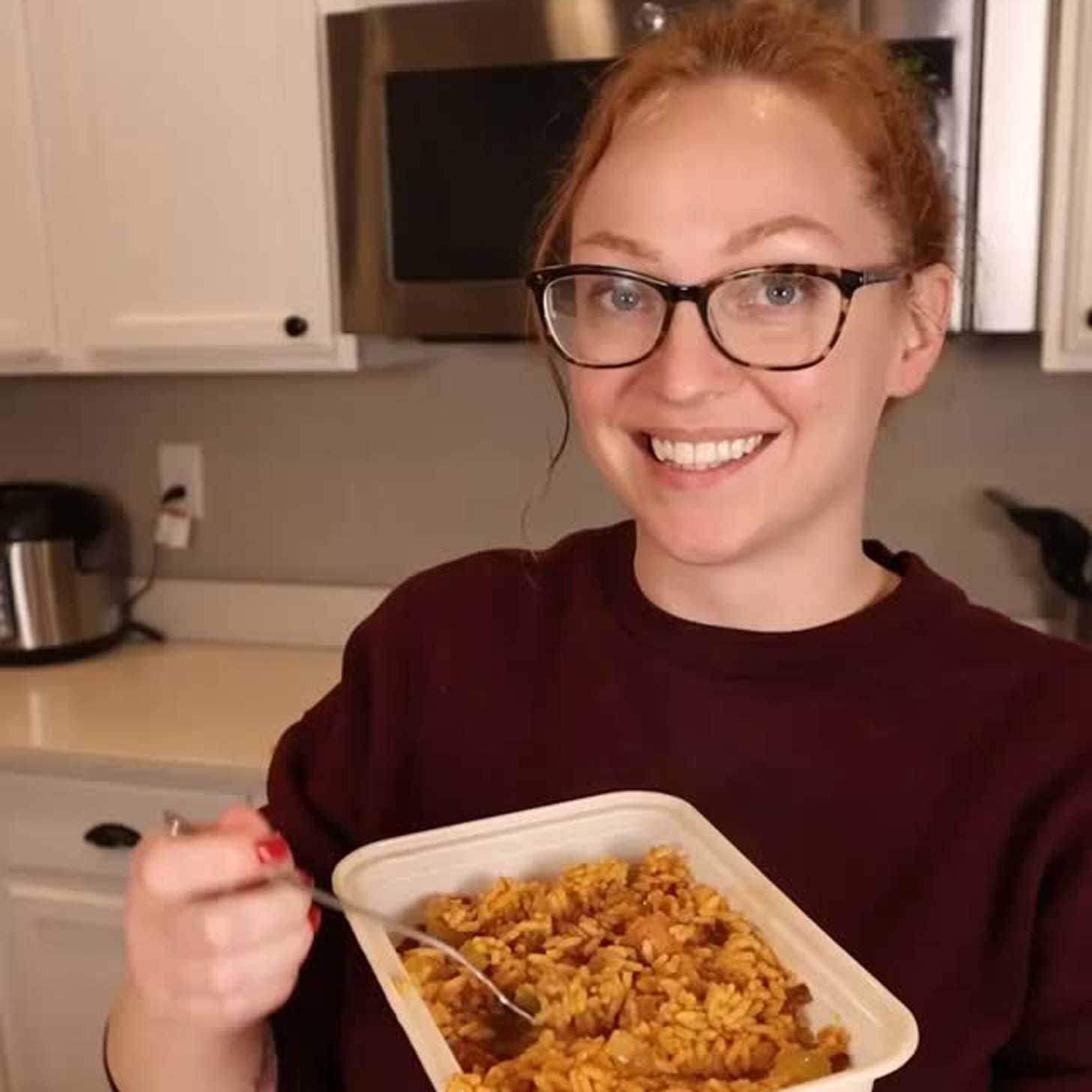
Dollar Tree Dinners (@dollartreedinners on TikTok and YouTube, @dtdinners on Instagram) by Rebecca Chobat is a platform that provides mouthwatering inspiration, tutorials, and shopping guidance for extremely affordable meals.
She gets a majority of her ingredients from Dollar Tree and even challenges herself to stretch a $100 budget across 20 days, showing millions of followers how to dine right without breaking the bank.
@yummytoddlerfood

Amy Palanjian, the brain behind @yummytoddlerfood, offers over 1 million Instagram followers tips, tricks, recipes, and compassion to help parents feed even the pickiest kiddos.
Her expertise, however, extends to anyone who finds the daily dining challenge, well, challenging. Thanks for teaching us how to hide veggies in pasta sauce, Amy!
Must-have cookbooks for easy and accessible meals
“Plant-Based on a Budget” by Toni Okamoto

“Plant-Based on a Budget” is a cookbook that offers delicious vegan recipes you can make for under $30 — and in under 30 minutes.
For anyone exploring a plant-based diet, or, frankly, anyone trying to reduce their grocery bills, this book offers sound, snackable wisdom.
“Crip Up the Kitchen: Tools, Tips, and Recipes for the Disabled Cook” by Jules Sherred

“Crip Up the Kitchen” is a cookbook that reclaims the kitchen for anyone with a disability.
It features 50 recipes that use three main cooking tools, as well as support for pantry prep, meal planning, shopping, organizing, and kitchen safety for all.
“The Ultimate Meal-Planning for One Cookbook” by Kelly Jaggers

“The Ultimate Meal-Planning for One Cookbook” helps solve the daunting issue of solo cooking. It offers 100+ affordable and low-waste recipes that are equally delicious and efficient.
With inspiration for one-to-two serving plates for all three meals of the day and tips for designing an enjoyable meal schedule, you’ll be glad you don’t have to share.
The best apps for easy meal planning
FIG

The Food Is Good (or FIG) app was created by people who have food intolerances and allergies and wanted to make finding safe foods easier.
Whether you’re gluten-free, have food intolerances, or simply want to cut out certain ingredients, the app allows you to scan any grocery product and compare it to your profile to ensure you’re good to go.
Download: foodisgood.com
Cozi
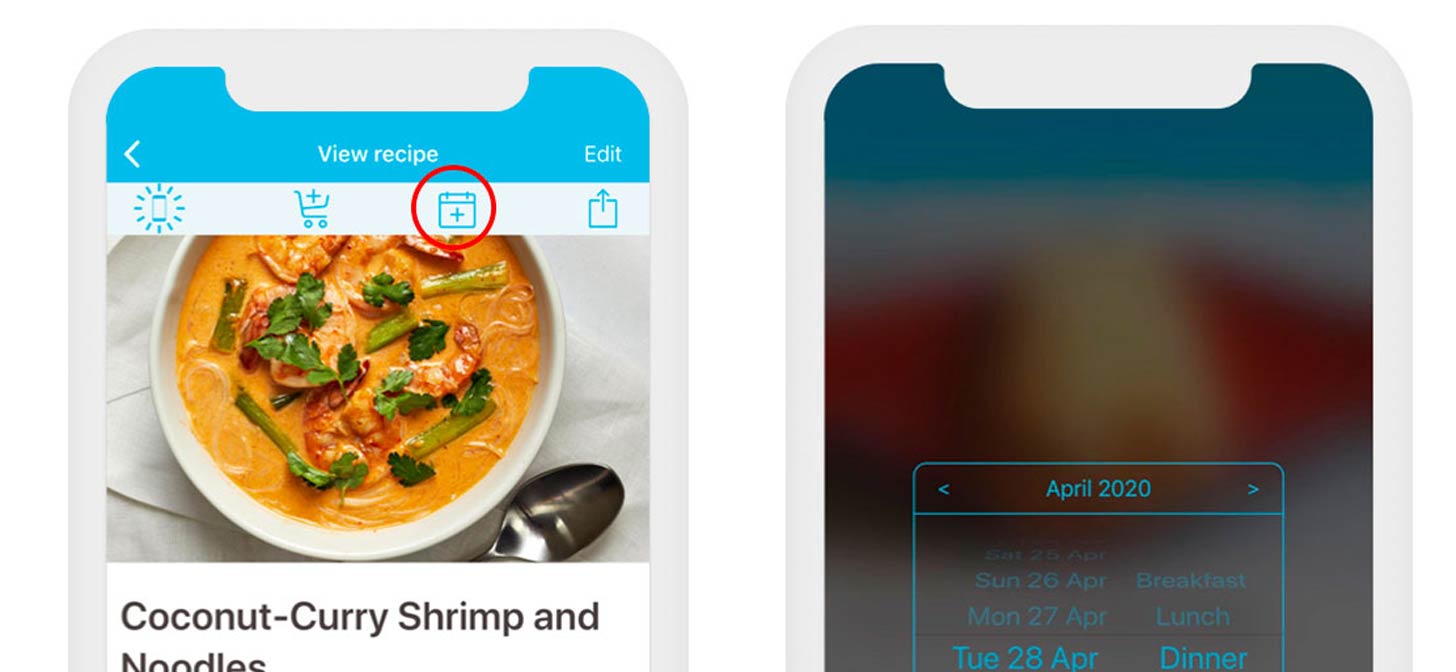
While Cozi is a complete life organization app, its recipe box feature is essential for meal planning. In the app, you can save recipes you and your family like, and ingredients are automatically added to your grocery list.
From there, you can schedule the meal in your shared calendar. Essentially, the only thing it won’t do is cook your dinner for you!
Download: cozi.com
SuperCook

Want to get more bang for your grocery buck? The SuperCook app will help you assemble recipes based on the ingredients you already have in your home.
Simply click through and select the ingredients (or leftovers!) you have on hand, and the app will outline zero-waste recipes that will leave you feeling satisfied.
Download: supercook.com
You may also like: This chef stretched $100 of groceries over 30 days to create affordable recipes: 'This is what accessibility looks like'
A version of this article was originally published in The 2025 Food Edition of the Goodnewspaper.
Header image by Katerina Holmes via Pexels
Tuesday morning, Dave Matthews Band announced its latest headline tour across the United States.
While fans in Texas, Michigan, Colorado, Washington, and more eagerly await the band’s performances this summer, the musicians will build on their ongoing advocacy efforts.
Most recently, the band announced a donation to the ACLU of Minnesota following the fatal shootings of Nicole Good and Alex Pretti. This donation has been made through the BAMA Works charity arm of the Dave Matthews Band.
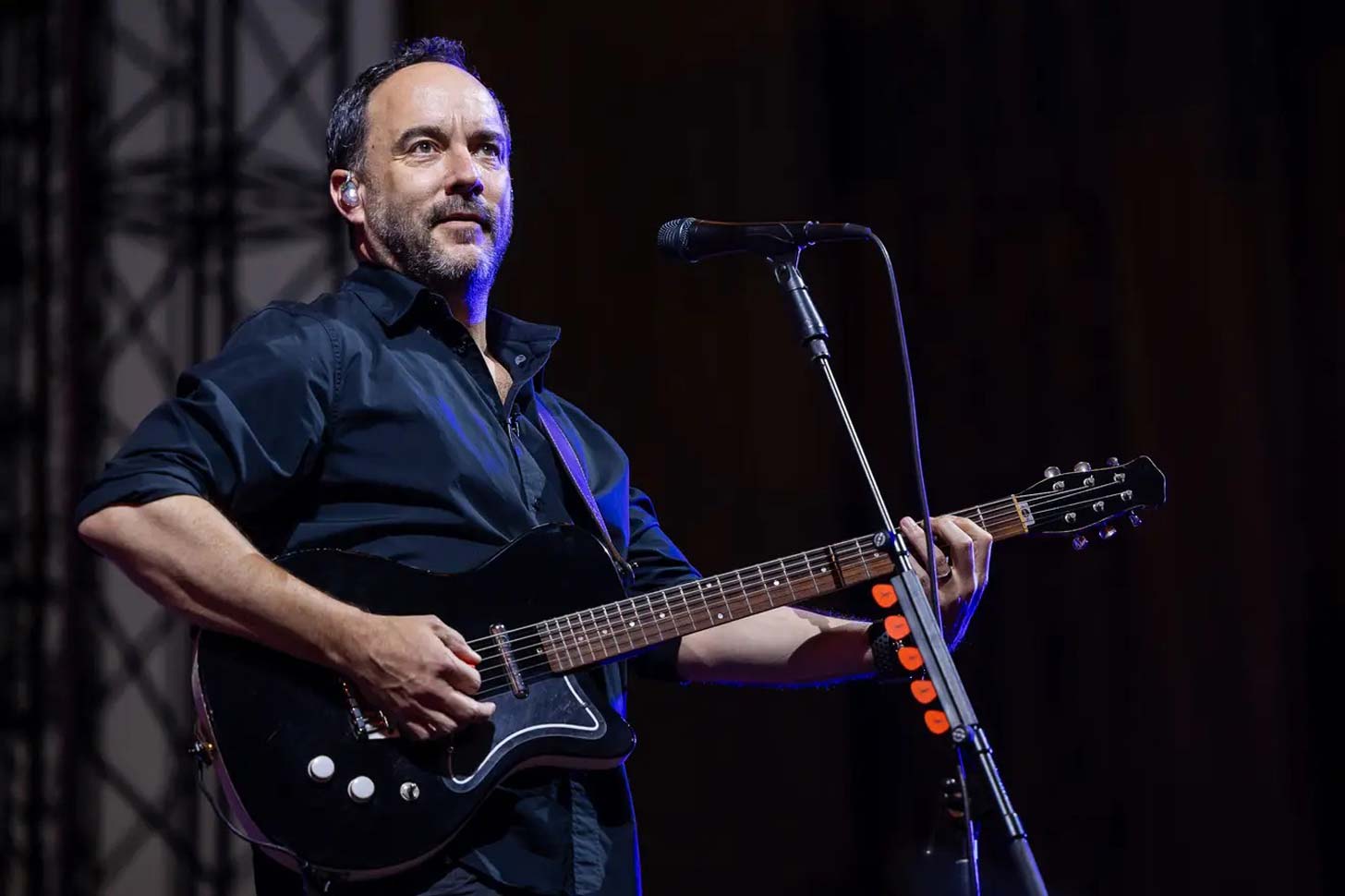
“We are horrified by the images coming out of Minneapolis. It’s hard to watch and hard to believe this is America,” the band wrote in a statement on Monday.
“There is so much shameful dishonesty coming out of Washington right now, but this much is true: If ICE wasn’t in Minneapolis, Renee Nicole Good and Alex Pretti would still be alive today. None of this makes sense, and it’s incredibly cruel. We must find a better way. To show our support, BAMA Works has made donations to the ACLU and the ACLU of Minnesota.”
In addition to this latest charitable effort, the Dave Matthews Band has worked to reduce its environmental footprint since it began touring in 1991, and in 2019, it was named a United Nations Environment Goodwill Ambassador.
For the past two years, the band has elevated its “On The Road To Zero Waste Tour,” which achieved a milestone of over 90% of fan-generated waste reused, composted, recycled, or donated. This effort will continue for its third year with the 2026 tour.
The band will also continue its longtime partnership with environmental nonprofit REVERB to make the music industry as a whole more sustainable.

And in 2020, Dave Matthews Band also kicked off a partnership with The Nature Conservancy to support its global reforestation efforts. Seven years in, the band has supported the planting of 6 million trees and has pledged another 1 million with their latest tour.
“DMB is committing to plant 1 million more this year, bringing the total to 7 million trees in 2026,” a press release from Live Nation shared. “These trees help rebuild critical forests that clean our air and water, provide habitat for wildlife, and support a more stable climate for future generations.”
The Nature Conservancy echoed these efforts.
“Thanks to DMB, its partners and fans, we're planting more trees in more places. Together, we are helping protect and restore forests around the world,” the nonprofit shares on its website.
Since the foundation of the partnership between the band and the organization, The Nature Conservancy has expanded its planting program to eight countries and has restored habitat for thousands of species, including the endangered Yunnan golden monkey.
Additionally, with the support of the band, over 1.5 million trees have been planted in the U.S. alone, strengthening forests in the Southeast Corridor, Central Appalachia, and the Upper Great Lakes.
“Nothing matters as much as the survival of the planet,” Matthews himself said in a video for The Nature Conservancy. “Planting a million trees is a small step toward a cooler planet, toward cleaner air, toward more wild places where plants and animals can thrive.”
Fans of the band can support these efforts by contributing $2 to plant a tree with every ticket sold for the 2026 tour (when purchased through Ticketmaster or Warehouse), or they can donate to plant more trees online.

For those interested in seeing Dave Matthews Band on tour this summer can learn more and sign up for presale by visiting the band’s website. Dates for the 2026 Dave Matthews Band tour are below:
- May 8 — The Woodlands, TX
- May 9 — Dallas, TX
- May 11 — Austin, TX
- May 15 — Alpharetta, GA
- May 16 — Charlotte, NC
- May 25 — Orange Beach, Alabama
- May 26 — Tampa, FL
- May 29 — West Palm Beach, FL
- May 30 — West Palm Beach, FL
- June 5 — Raleigh, NC
- June 6 — Virginia Beach, VA
- June 10 — Forest Hills, NY
- June 12 — Mansfield, MA
- June 13 — Bristow, VA
- June 23 — Shakopee, MN
- June 24 — Kansas City, MO
- June 26 — Noblesville, IN
- June 27 — Noblesville, IN
- July 7 — Grand Rapids, MI
- July 8 — Grand Rapids, MI
- July 10 — Camden, NJ
- July 11 — Camden, NJ
- July 14 — Gilford, NH
- July 15 — Gilford, NH
- July 17 — Saratoga Springs, NY
- July 18 — Saratoga Springs, NY
- July 21 — Wantagh, NY
- July 22 — Darien Center, NY
- July 24 — Burgettstown, PA
- July 25 — Hartford, CT
- August 28 — Greenwood Village, CO
- August 29 — Greenwood Village, CO
- September 4 — George, WA
- September 5 — George, WA
- September 6 — George, WA
You may also like: Harry Styles' new tour, 'Together, Together' will support 3 charity partners across the globe
Header image by Sanjay Suchak
In late October, a group of 19 Buddhist monks set off for a 2,300-mile trek across the United States, calling for peace.
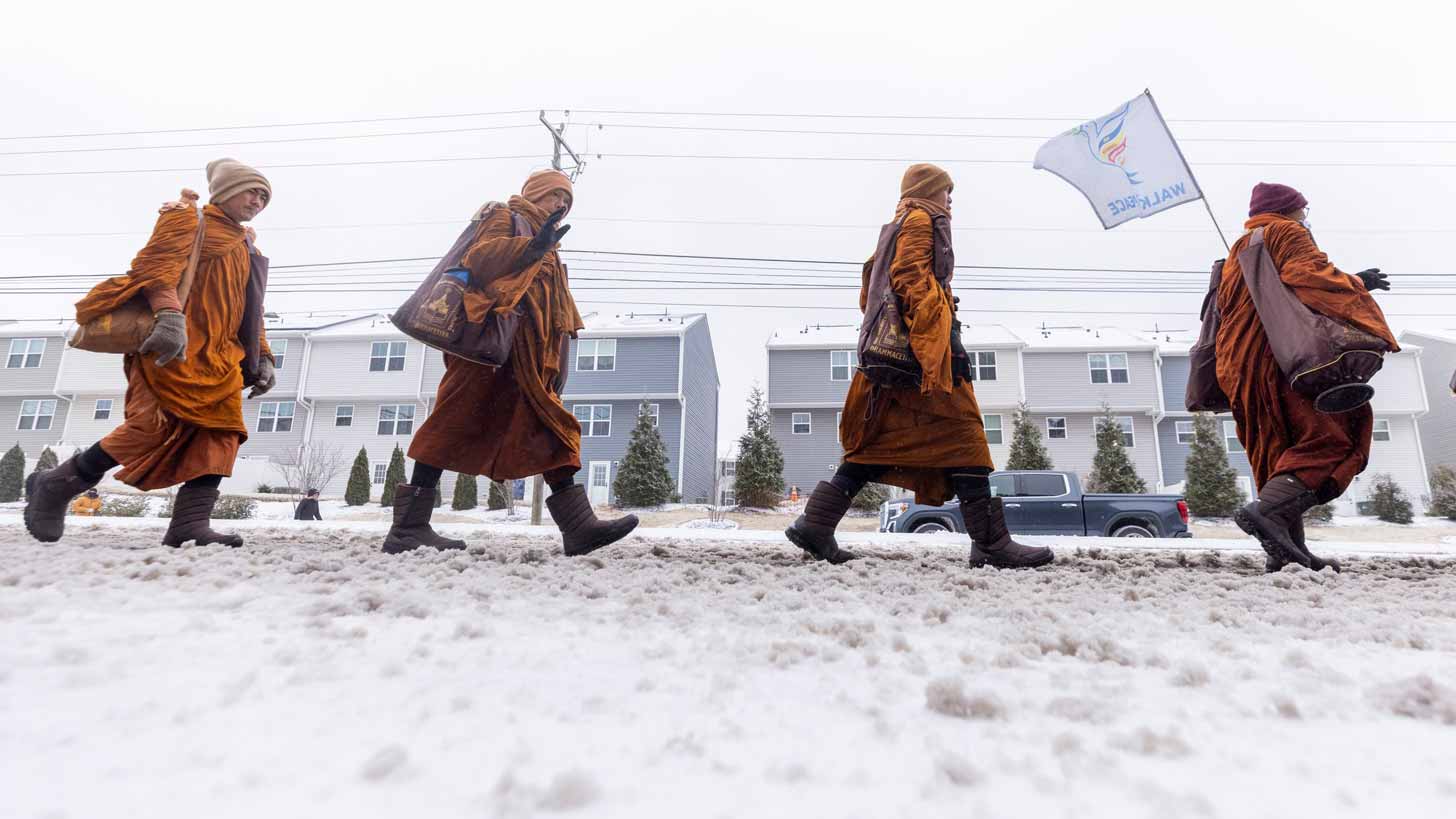
They began in Fort Worth, Texas, with a final destination of Washington, D.C. About ten days ago, they surpassed their halfway goal in North Carolina. But soon after, they were hit with freezing temperatures and snow as a winter storm rolled through the Southeast U.S.
Still, their mission to spread a message of peace, unity, and healing went undeterred.
The journey, or “Peace Walk,” as the monks call it, will end with a gathering at the United States Capitol, where they’ll share remarks about healing and unity with the public.
The winter weather in North Carolina is just one obstacle to overcome on their mission.
“Our walk takes us through sun and rain, dry roads and wet, through snow and heat, through noise and silence, through crowds and solitude. Some days are gentle. Some days test us. Some days surprise us with unexpected beauty or unexpected difficulty,” the group shared on social media, comparing it to other facets of life.
“There will be times when everything flows smoothly, when the path ahead is clear, and walking feels effortless. And there will be times when the road is rough, when obstacles appear, when we’re cold or tired or uncertain about the next step … We cannot demand that life only bring us comfortable conditions.”
With this in mind, they added, knowing that life will be uncertain is a path to peace itself.
“This is the peace that lives beneath all circumstances — steady, quiet, unshakeable. It doesn't depend on perfect weather or smooth roads. It doesn't require everything to go our way. It simply asks that we show up, breathe consciously, and meet whatever comes with full awareness instead of just reaction.”
During the trek, the monks — and their canine companion, Aloka — will walk through at least 10 states, making stops at state government buildings and communing with locals, sharing reflections on compassion and unity amid social and political division.
Videos online have already shown supporters greeting the monks with flowers, food, and reverent bows. Many posts show local gatherings where people feed the travelers, provide medical care (many of the monks are walking barefoot), and share water and other essentials with the group.

Amid harsh winter weather, the monks held off on visiting hours on their daily lunch breaks, though they still encouraged members of the public to track their journey online.
Additionally, though the monks walk with minimal possessions, photos and videos show them in hats, scarves, and boots — not currently barefoot.
Their “peace dog,” Aloka, who has been recovering from surgery, also had limited exposure to the elements, and the group of monks stayed in churches and found indoor accommodations during the storm.
All things considered, their spirits were just as high as they would be on a sunny day.
The monks still made a scheduled stop in Raleigh, North Carolina, where Governor Josh Stein declared January 24 “Walk For Peace Day.”
“We live in a time of partisan rancor and political discord,” Gov. Stein said on the steps of the state’s Capitol building. “In our heart of hearts, we don't want to feel on guard against our neighbors. We want to come together. Thank you for reminding us of that.”
The monks wrote their own account of the day on their blog.
“Today, in these harsh conditions, surrounded by white snow and biting cold, we saw something even more clearly: the warm faces of people who care. Their kindness stood out against the frozen landscape like light in the darkness, reminding us why we walk, why it matters, why we keep going,” they wrote.
“This journey began with hope, but you have given us something greater: The lived experience of human kindness, the proof that when people come together with shared intention, extraordinary things become possible.”
You may also like: Faith leaders travel to Minnesota from across the country, urging ICE to retreat: 'You may go in peace'
Header image by Travis Long/Peace Walk
An estimated 40% of the general population has at least some fear of flying, with 2.5% harboring a clinical phobia of getting on an airplane. However, travelers’ stress keeps Beni the llama and Captain Jack the alpaca busy.
The camel-adjacent cousins work at the Portland International Airport as part of the airport’s animal therapy program. Every few weeks, they venture from their full-time farm roles at Mountain Peaks Therapy to reduce stress levels in the busy airport.

Although still filled with the same bustling TSA checkpoints and chatty food courts, PDX has recently undergone a redesign that includes intentional ties to nature — Beni and Captain Jack among the attractions.
“Being in nature is a stress reliever,” Allison Ferre, a spokesperson for the Port of Portland told NPR. “The therapy animals that come in is just one way we kind of deliver on that for the traveler experience.”

Shannon Joy, co-owner of Mountain Peaks Therapy, told NPR that it’s rare for llamas and alpacas to have the level of confidence and autonomy that Beni and Captain Jack do. It makes them especially great candidates for this work.
Back in 2007, Shannon and her business partner, Lori began taking their llamas and alpacas to senior communities, disabled groups, and schools for therapeutic and educational visits. A few years later, they started getting inquiries for private parties and events. Now, their animal companions greet travelers from all over the world.
While the emotional impact of such animals has mostly been studied among dogs and horses, the proof is in the petting.

“I think dogs elicit the same emotion,” Lori Sackett, a traveler who was brought to tears by the animals, told NPR. “But isn’t this a million times more magnificent?”
Especially during busy seasons like the holidays, the camelids play a key role in reducing traveler tensions.
“My favorite response is when we are walking down to a concourse, and you have people with their blank stares just trying to make their way to luggage claim, and they turn around the corner and see a llama and their body just melts in excitement,” Joy told OPB.
Beni and Captain Jack each come with their own trading card, which includes details about their personality. Visitors are encouraged to collect the cards as they meet the animals — and yes, photos are also encouraged.
You may also like: Could otters slow climate change by munching on sea urchins? Scientists think so
A version of this article was originally published in The 2024 Mental Health Edition of the Goodnewspaper.
Header image courtesy of Mountain Peaks Therapy
Dylan Alverson has owned Modern Times Cafe in South Minneapolis for 15 years.
The spot, which serves breakfast and brunch favorites, is located six blocks from where George Floyd was murdered in 2020, three blocks from where Renee Good was killed earlier this month, and just a neighborhood away from where Alex Pretti was killed on Saturday, January 24.
And, while United States Immigration and Customs Enforcement continue what Minnesota officials call “an occupation” across the state, Alverson has decided to do what he can in support of his community.
“Starting today, January 26, and until the occupation of Minneapolis is over, we are a free restaurant,” he said in a video on Monday.

“We are entering yet another week of this occupation with a deep sense of dread and mourning. We absolutely cannot go on as we have. I am sick of generating money for the soldiers in our streets and for a government that won't protect us — a government who is actively inflicting daily harm on its citizens,” Alverson continued in a written statement.
“We are done making money for the fascists that occupy our city. We refuse to generate taxes under the guise of a functioning for-profit capitalist business aligned with government strategy.”
He said that the business has struggled since 2020, and now it simply just makes sense to operate as a free, donation-based restaurant.
“For restaurants, since the pandemic, I think everyone has been — or society in general — trying to cling to the idea that we would get back to some normalcy, and it hasn’t come,” Alverson told MPR News.
He’s given the restaurant a new tongue-in-cheek name: Post Modern Times.

It will operate from 9 a.m. to 3 p.m. every day, albeit with a bit of a smaller menu. Staff members have agreed to be present on a volunteer basis, working from shared tips and community donations.
“We’re relying on donations from across the country, across the world,” Alverson added in his social media video. “We are offering free food for anyone in the city, besides ICE. Come and join us.”
According to the restaurant's Instagram page, those who would like to donate can do so via @moderntimescafe on Venmo.
Plus, the customers who can pay for their meals have been doing so with added generosity.
“Ninety percent of people that came in here donated and donated more than what we would have been charging them before, just because they know that we are trying to do something good and trying to create change,” Alverson’s daughter and a server at the restaurant, Dakota Temte, told MPR News.
“And it was really beautiful.”
Alverson said he has visited the scenes of both Good and Pretti’s deaths, and earlier this month began a “People’s Price” initiative, inviting diners to pay what they can for meals. But now, he believes, it’s time to kick things up a notch.

“I’m just starting to think radically and say if the world is in chaos, then business owners have to adapt to that chaos,” he told MPR News.
His efforts come after a statewide “ICE Out” general strike last week and ahead calls for further strikes across the country.
Stopping business as usual is just one tool that has emerged as a resistance tactic against authoritarian forces like ICE.
“Post Modern Times is a small stance amidst a gigantic fight that may shape the future of this country,” Alverson wrote. “I am inspired by the ways our community has grown together, our hearts breaking open, to give and receive care in all the ways we can.”
Those interested in donating to Modern Times Cafe can do so via Venmo, according to Alverson.
You may also like: This Vietnamese restaurant sheltered protesters from tear gas (and fed them pho) following ICE shooting
Header images courtesy of Modern Times Cafe
As the steamy LGBTQ+ hockey romance “Heated Rivalry” continues to dominate streaming, real-life hockey teams are jumping on the opportunity presented by a newly passionate hockey fanbase.
From IRL athletes coming out publicly on the heels of the show, to a growing diversity of fans in the stands at National Hockey League games, the Crave and HBO Max drama has surely made its mark.

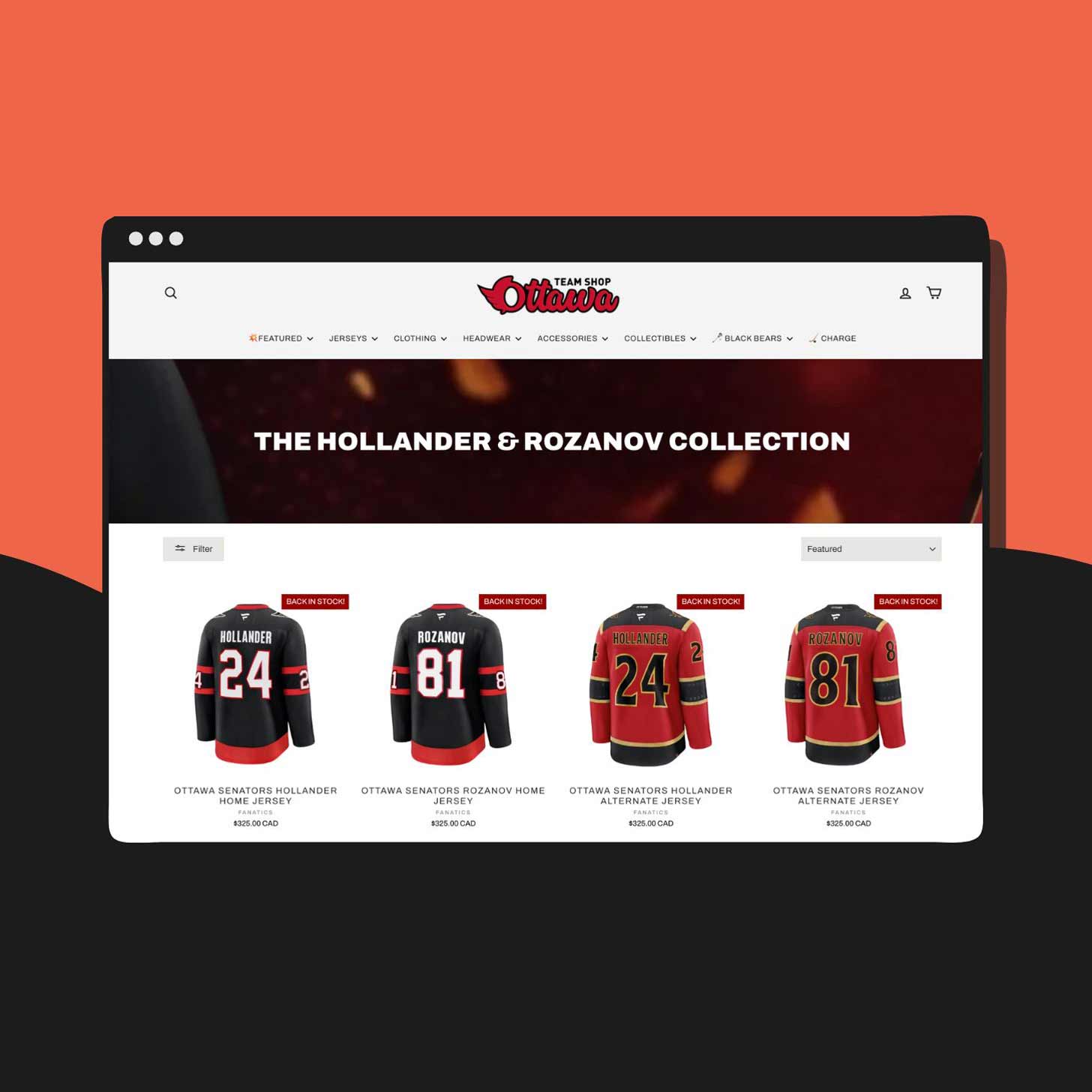
The Ottawa Senators have hopped on the trend and are now selling jerseys with the names of the show’s lead characters on the back. Fans can purchase a “Rozanov” jersey with Ilya Rozanov’s number, 81, or a “Hollander” jersey to represent Shane Hollander with the character’s number 24.
According to Senators vice president of marketing Peter Shier, there is no copyright concern for the NHL franchise, since the jerseys just use the characters’ names. Plus, in the show’s season one finale, Rozanov decides to join the fictional Ottawa team to be closer to Hollander, who plays in Montreal. This fact alone has made fans’ interest in jerseys skyrocket.
“You can go into any store and get any name you want printed on a jersey,” Shier told The Athletic. “… So, we just did what our fans were doing anyway and just made it a little bit easier for them.”

The jerseys have been in the Senators’ official store since mid-January, and having sold out twice, are back in stock for purchase online and at the Canadian Tire Centre in Kanata, Ontario.
Each jersey has a $325 CAD price tag. But for fans willing to pay the cost, the jerseys support a good cause.

Net profits from the “Heated Rivalry” jersey sales will go to Ottawa Pride Hockey, a local queer hockey team founded by queer and trans athletes in 2020.
The inclusive group organizes leagues and games for LGBTQ+ hockey players in Ottawa.
But the gesture of goodwill is not without nuance.
According to a representative from OPH, the organization only found out they were involved in the jersey sales through social media. They were also skeptical of the team’s support, given the fact that Senators goaltender James Reimer did not participate in a previous Pride night for the NHL, citing his faith as the reason.
“There’s also a lot of guarded feelings that I think a lot of queer people have,” the OPH representative, Jayce L., told The Athletic. “We do know that it maybe hasn’t been a space that we can be our full selves and then feel welcome in. And it’s not a diverse culture, hockey culture, in general. So, while there is excitement, there’s also a little bit of hesitation to feel that excitement as well. Because we know what people are coming into.”
This real discomfort plays out in the fictional “Heated Rivalry,” and the accompanying books written by author Rachel Reid, where characters grapple with their identities in both the hockey and queer communities.
“The buzz around ‘Heated Rivalry,’ and the positive response to the jerseys released by the Senators, prove there is value and demand to make hockey more inclusive. In doing so, we also commit to holding the Senators and NHL accountable when actions fall short of community expectations,” OPH shared in a statement.
“Moving forward, we hope to see the NHL embody change at the systemic level, to ensure that hockey is representative of the diversity of the entire community,” the group continued.
“We would also like to acknowledge the work of author Rachel Reid and director Jacob Tierney for creating the ‘Heated Rivalry’ world, which has become a catalyst in sparking conversations about creating actual change … For everyone participating in the efforts to make hockey a better place, you’re always welcome at our cottage.”
You may also like: Youth soccer club forms teams based on skill level – not sex or gender: 'The kids let go of the binary'
Header image courtesy of Ottawa Senators
Minnesota is home to one of the highest concentrations of Korean adoptees in the United States.
It’s also home to the Adoptee Hub, a volunteer-run nonprofit that teaches native language classes and offers birth family reunification support.
And in January, they issued a powerful statement as ICE continued to ramp up its presence in their state.
“In light of the recent act of violence we have witnessed in our city of Minneapolis, we feel compelled to pause and speak directly to the adoptee community both in Minneapolis and across the country,” the organization wrote on its website.
“Our community has always been rooted in resilience, connection and care for one another. As a small nonprofit serving Korean and transracial adoptees, we want to remind our community to remain vigilant, aware and mindful of personal safety.”
“Transracial adoptees often navigate the world at the intersection of race, identity and belonging,” they continued. “This reality can sometimes make us more visible or vulnerable. We encourage everyone to trust their instincts, look out for one another and prioritize their well-being. Staying informed, setting boundaries and seeking support when something feels off are acts of strength—not fear.”
The nonprofit also hosted local “Know Your Rights” training classes led by the American Civil Liberties Union.
“We remain committed to creating spaces that are affirming, safe and grounded in mutual respect,” the Adoptee Hub stated. “Let us continue to show up for one another by giving ourselves grace, compassion and solidarity.”
Their latest efforts have been focused on community safety in times of violence, but the Adoptee Hub is most widely known for its joyous annual Kimchi Festival.
Each year, the ever-expanding organization offers cooking classes through the Korean American Women’s Association, runs kimchi cook-offs, and hosts a lineup of local food trucks that serve up “Korean-style” snacks.
And every year, the crowd grows as people gather and bond over delicious, red-peppered cabbage.
“Kimchi is a staple food for the Korean community,” Adoptee Hub founder Ami Nafzger told the Sahan Journal, a nonprofit newsroom based in Minnesota.
“It’s what you eat every single day. With every single meal, three meals a day, you have kimchi with it. What better way of understanding the culture that you were born into, but not raised into, [than] through food?”
For local Korean adoptee Max Halverson, volunteering at the festival has been transformative.
“Growing up, my mom wasn’t into Korean culture,” Halverson said. “We didn’t really follow it that much [and] I haven’t been that knowledgeable. But as I’ve gotten older, I’ve grown more curious about Korean culture. … So when I met Ami, I thought it would just be a great opportunity for me to make connections within the Korean community.”
A version of this article originally appeared in the 2025 Food Edition of the Goodnewspaper.
Header image via Resilient Return Counseling Solutions (CC BY-NC 4.0)
In North Carolina, a new burger spot just popped up in the heart of downtown Wilmington. On its sign out front, a T. rex holds a smash burger in its clawed hand, roaring over the name “Zeke Smash.”
In addition to burgers, Zeke Smash serves up sandwiches, melty fried cheese curds, hot dogs, cheesecakes, and more.
And 5% of all profits go to various children’s cancer charities, including St. Baldrick’s Foundation.
The titular “Zeke” is the inspiration behind the new restaurant — and its charitable cause.
“Zeke is an energetic, fun, six-year-old. He’s the only child of my best friends,” Kyle Nelson, the owner of Zeke Smash and its attached bar Tide Taproom, told Good Good Good.
“We became fast friends and did everything together,” he continued. “Eventually Zeke comes along, and everyone’s happy. I’m happy for them, they’re happy. And then he’s born, and about 12 hours after he was born, he was taken into the NICU for a platelet transfusion.”
“And then,” Nelson said, “the whole world went to s—t.”

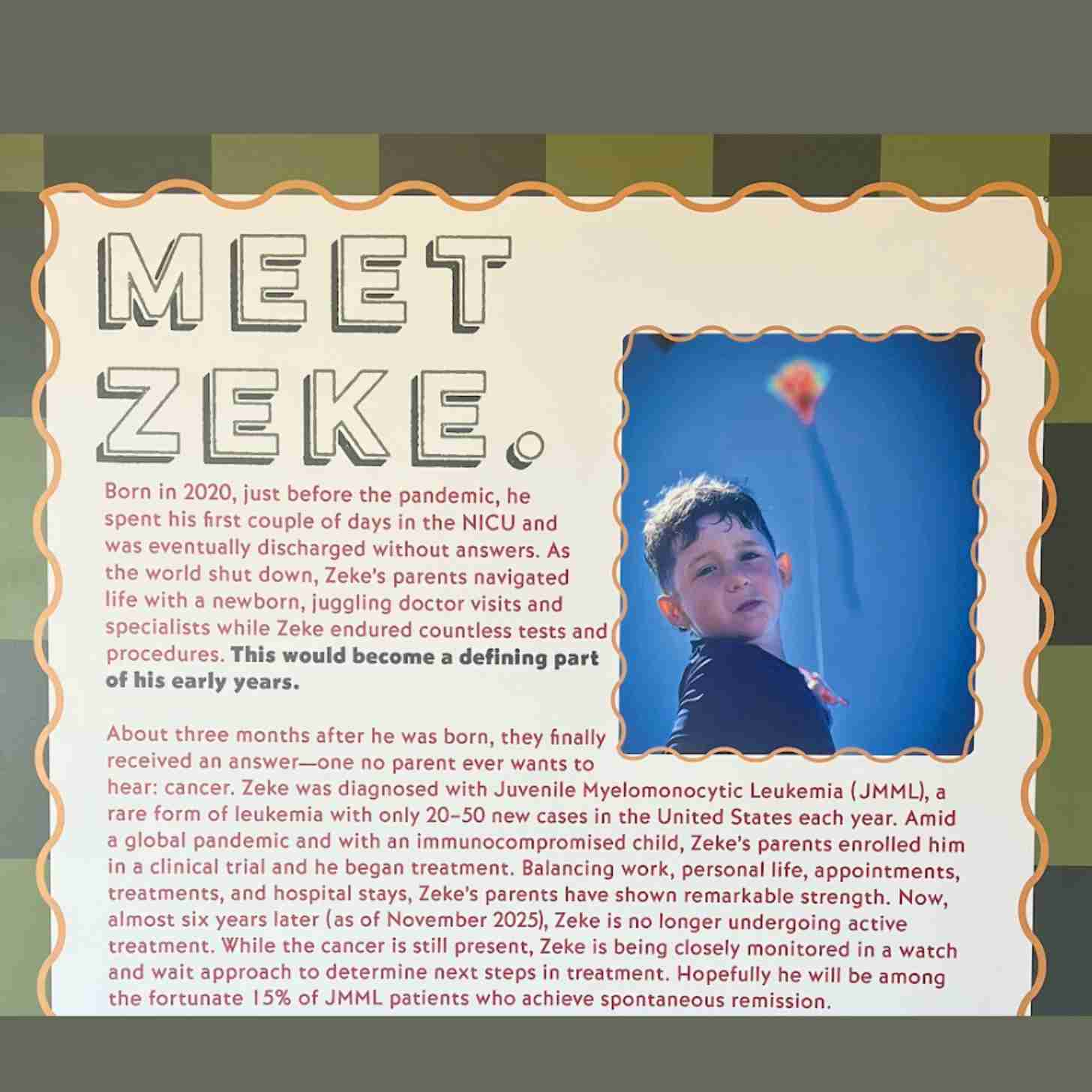
At just three months old, Zeke was diagnosed with Juvenile Myelomonocytic Leukemia (JMML) — a rare, aggressive blood cancer in which bone marrow produces too many abnormal white blood cells (monocytes and myelocytes). And his diagnosis came the same year that the COVID-19 pandemic hit.
“I watched them go through it all at once,” Nelson said. “They went through COVID, and they had a newborn who was sick. They were navigating chemotherapy, navigating ER trips.”
And soon, even with access to “really good health insurance,” the Ramsey family began racking up countless medical bills.
“I just personally found that reprehensible,” Nelson said.
On top of growing medical debt, Nelson said the Ramsey family entered a state of “constant vigilance.”
“It’s treatment, it’s off treatment, it’s okay, they’re sick; are they sick from the disease or is it just a cold? Is this fever going to potentially kill them?” Nelson posed. “And all the while, they’re trying to give him the best life possible.”
He also explained that fundraisers for fighting childhood cancer primarily focus on treatment and finding caretakers, but rarely focus on familial support and debt relief.
“You never hear about the potentially lifelong crippling medical debt that these families are going into to give their child a chance to survive — or making the choice to undergo treatment, to give them some more time,” Nelson said.
That’s when, in 2023, Nelson and his brother began tossing around the idea of a smash burger restaurant.
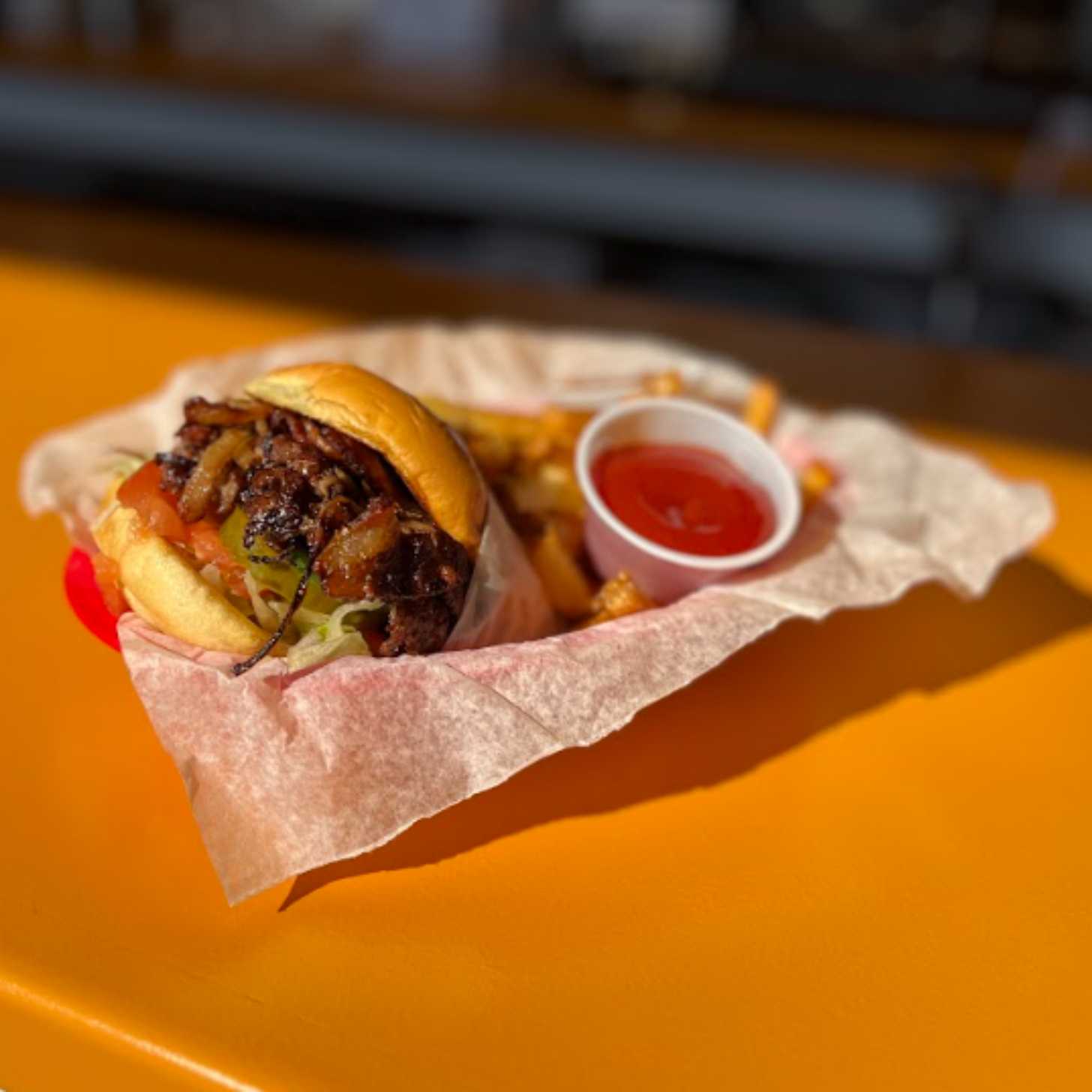
“We felt like there was a void in the market for a quality smash burger that comes out fast,” Nelson said. “Creating a place where people can pull off on the side of the road and just get something real quick and go.”
“We were banding around names and concepts and ideas, and it just kind of hit me: Zeke Smash,” he said. “And I thought, we can build out a charitable aspect of the business, building the restaurant around this idea of giving back to the community and highlighting a community that honestly doesn’t get enough support.”
“I just felt like, ‘I can do this,’” Nelson said. “I can make great food that people will enjoy, and I can use this platform to bring awareness and highlight an issue that isn’t really talked about a whole lot. And possibly do some good, too.”
When it comes to the Wilmington restaurant scene, Zeke Smash is still in its infancy, having just opened in the Cargo District in late October 2025.
As they grow, Nelson has big plans, including a huge St. Baldrick’s Foundation fundraiser tentatively scheduled for late spring, where locals can shave their heads and raise money for children’s cancer treatments.
He also wants to create a “family of the month” program where they spotlight local families and promote their GoFundMes on social media.
Beyond stopping by in person for a smash burger, Nelson said people can support their mission by visiting St. Baldrick’s website and giving a donation or nominating someone to be a person of honor. Or by starting a local fundraiser of their own.
And yes, Zeke himself has had a Zeke Smash burger. His review?
“It’s a thumbs up,” Nelson laughed. “He really enjoys the food; he’s a fan. And I don't think it's just because I’m Uncle Kyle.”
Zeke Smash is located at 619 S 17th St, Wilmington, NC 28401
Header image by Meghan Cook/Good Good Good
Frank McAndrew is an American social psychologist and the Cornelia H. Dudley Professor Emeritus of Psychology at Knox College. And he’s giving people permission to gossip in 2026.
“Gossiping is very much like scratching an itch,” McAndrew told Good Good Good. “We have been programmed through evolution to be fascinated with the behind-the-scenes activity of other people who are socially important to us, so we find it hard to walk away from a juicy story.”
In fact, he said, it’s baked into our DNA.
“In our prehistoric past, those who were clueless about the politics and trustworthiness of those around them were not very socially successful, so we are the descendants of the busybodies who were good at it,” he explained.
However, McAndrew has a few words of wisdom when it comes to gossipping in a healthy way.
“Gossip researchers often make the distinction between ‘good gossip,’ which serves the greater interest of the group (e.g., is one of your co-workers stealing from the company? Is there a sexual predator in our midst?), and ‘bad gossip’ (e.g., spreading lies about a romantic rival), which is transparently selfish and used to denigrate rivals so that the gossiper can get ahead.”
The concept of “healthy gossip” has been backed by multiple studies, including data from Stanford University and the University of California, Riverside.
McAndrew said it’s all about the way we do it.
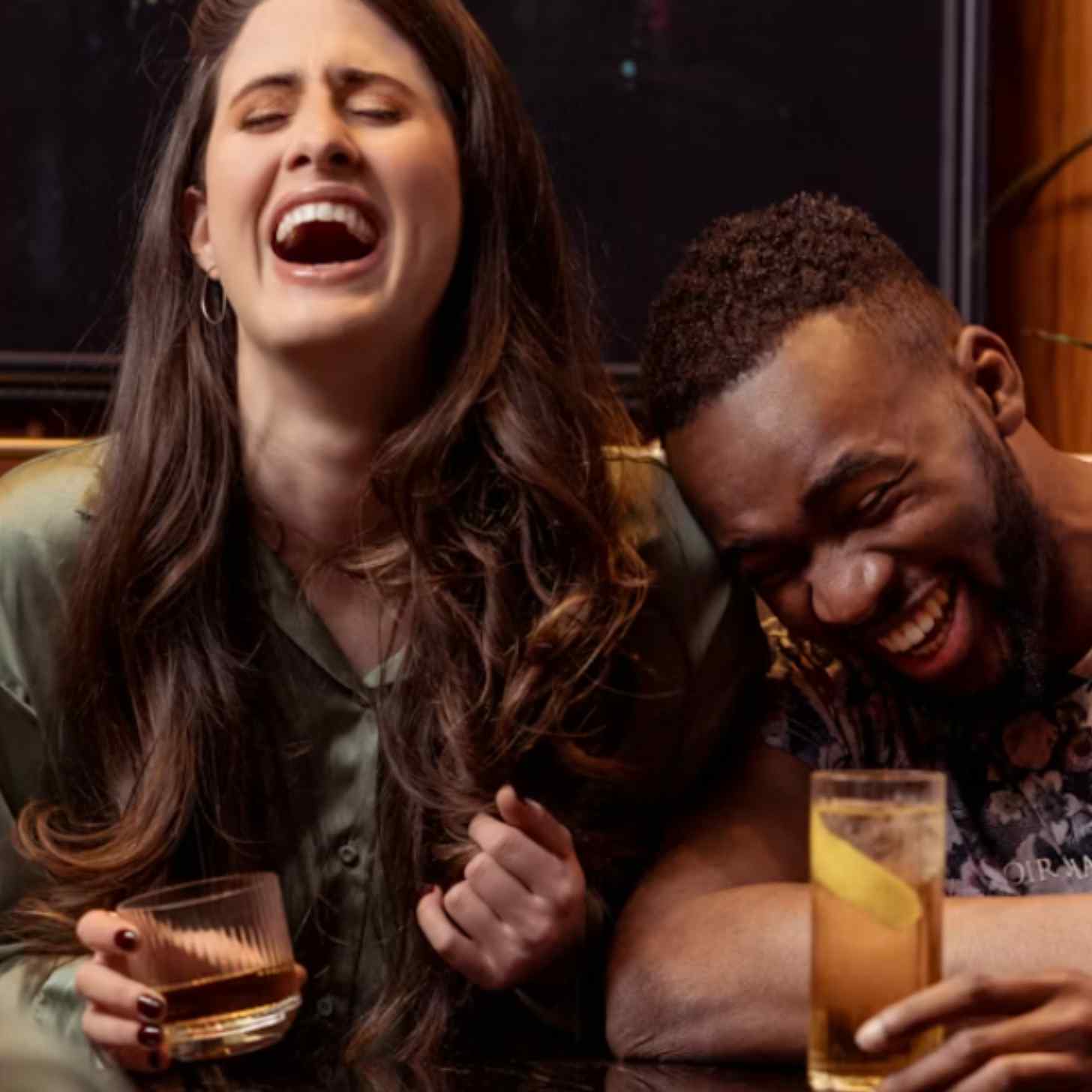
“Skillful gossipers do not ‘vent,’” McAndrew advised. “Venting implies a clueless blabbermouth who indiscriminately shares private information with anyone who will listen.”
McAndrew said the distinction comes down to who you’re talking to.
“Most of the time, gossip needs to be shared with the group or individuals who are most affected by it, and I believe that usually means people inside your social circle,” he said. “The gossip will not be nearly as interesting if it is about someone who does not matter much to the listener.”
Gossip also has the potential to strengthen bonds in those social circles.
“Sharing information with another person is a sign of trust, because it signals that you believe that that individual will not use the information in a harmful way,” McAndrew said. “And such trust creates bonds between individuals and increases the cohesiveness of groups.”
That said, McAndrew cautioned against people being tightlipped in every social circle, or else others might find it hard to be vulnerable with them in exchange.
“Becoming a holier-than-thou individual who refuses to participate in the sharing of social information tells others that you do not trust them and that you do not wish to be part of their social network. This will not help you win any popularity contests,” McAndrew said.
And when it comes to the method of gossipping, McAndrew said that keeping it offline is preferred.
“Gossiping in person is probably safer,” the professor noted. “Our caveman brains are unprepared for the speed at which information can travel over social media, and it is impossible to put the genie back in the bottle once the ‘send’ button is pushed.”
It’s advice backed by Christopher M. Elias, an assistant professor of history at the American University in Cairo.
“At its best, gossip helps us form essential social connections and strengthen those bonds,” Elias wrote for Psyche. “At its worst, it enables us to embrace a disconnected, self-involved worldview.”
“Social media is somewhat similar: We often marvel at its connective power, the way it allows us to build communities with those who are half a world away,” he added. “But it is also a medium that can just as easily promote distance.”
“The combination of the two – gossip and social media – is bringing out the worst elements in both,” he explained. “Good gossip still exists — but social media is not helping us participate in it. True community-building is best accomplished offline, even if the topic of conversation is idle talk.”
You may also like: 12 Best Conversation Cards For Deeper Relationships
Header image via OurWhisky Foundation / Unsplash
The opera just got a whole lot more inclusive for deaf and hard of hearing audience members at the Lyric Opera of Chicago.
This is thanks to a pilot program to bring the SoundShirt to opera lovers: a device worn as a jacket that’s equipped with 16 haptic actuators that transmit sound from the stage into pulses, vibrations, and other sensations.
While the Lyric has championed accessibility measures like performances with American Sign Language interpretation, projected subtitles, and assisted listening devices, as well as Braille and large-print programs, audio-described performances, and pre-performance “touch tours,” the SoundShirt brings a newfound innovation to the performing arts.

“The live opera performance is captured with microphones, with engineers mixing the music from each section of the orchestra and the singers. The sound is then transformed into touch data and the signal is wirelessly broadcast to the SoundShirt,” the Lyric’s website explained.
The shirt is embedded with haptic devices that then translate sound into dynamic vibrations across the wearer’s torso. They might feel the strings of a violin on their arms, and the beat of a drum on their back.
“When combined with the projected English titles or sign language interpretation, it’s the most fully experiential way for someone who is deaf or hard of hearing to experience live opera,” the Lyric continued.

“It doesn’t re-create the experience of listening to music,” Brad Dunn of the Lyric told the Washington Post. “It’s its own thing. It translates the music into a different sensory experience that can be felt by people. And what I’ve seen through all of the early testing that we did is that audiences who are deaf or hard of hearing have responded very viscerally to it.”
The SoundShirt pilot was launched with the support of Chicago’s Mayor’s Office for People with Disabilities, and there are currently 10 shirts available at the Lyric, with plans to invest in five more.
Created by London-based technology design firm CuteCircuit, each shirt retails for about $1,900. They are free for patrons to use at performances at the Lyric.
“That, to me, is what opera is all about,” Lyric’s general director, Anthony Freud, told the Washington Post. “This was an opportunity to have a physical relationship with the music being performed, and that gets to the very heart of opera.”
Beyond Lyric, SoundShirt has been integrated into a variety of live events, including sports, gaming, and even club DJ performances.
“What you can hear,” one person in the audience of a symphony shared via sign language, “I can feel.”
You may also like: Blind basketball fans can now watch the game 'through their fingers' — and 3 other ways sports became more accessible in 2025
A version of this article was originally published in The 2024 Music Edition of the Goodnewspaper.
Header image courtesy of CuteCurcuit
“The American healthcare system is broken,” the creators of the O+ Festival believe.
O+ (as in, O-Positive) is the brainchild of a group of local artists, doctors, and a dentist from Kingston, New York, who, in 2010, gathered around a simple idea: “Bring a band to town in exchange for dental work.”
In the 15 years since, the group has hosted an annual festival in the communal upstate city to support indie musicians, organize Narcan and CPR trainings, host local health expos, offer cycling events, and most importantly: provide no-cost medical care.

Because U.S. health care is so inaccessible — especially for self-employed touring musicians who have to pay for their own private insurance plans — the founders of O+ decided to try a different approach: a trade model.
In 2023, they founded a year-round, no-cost, exchange-based medical clinic for artists and musicians.
“Visiting and volunteer healthcare practitioners provide their skills because they believe in building an alternative model of preventative and wellness care for our community, one that values the individual and their contributions to the collective,” the organization’s website explains.
“In exchange for these services, artists provide free tickets to live performances, create new public artworks, offer free art or music classes, and contribute other valuable skills or services to the Kingston community.”

This approach places value on the labor and expertise of health care providers and artists alike, maintaining that everything from checkups and dentistry to massages and group therapy are free.
Well, they’re free from cash payments and medical debt. The O+ Exchange Clinic is built on the direct exchange of services.
“This goes back to, ‘Hey, doc, my tooth hurts; here’s a chicken,’” O+ executive director Joe Concra told the New York Times back in 2013.
From the start, Concra and his team have called this approach “an exchange of the art of medicine for the medicine of art,” sharing that they believe artists are “essential contributors to individual and collective wellness.”
“There’s just something being created here that makes me feel like we’re going to be OK,” Jesse Scherer, the O+ Kingston clinic coordinator, shares on the organization’s website. “We’re going to take care of each other.”
Per a recent O+ report, 47% of its alumni artists — whether musical acts, healing arts experts, or muralists that share their work at the annual festival — are underinsured or have no insurance at all.
That makes it all the more impressive that 6,135 clinic treatments and 1,554 dental treatments have been received by participating artists since 2010.
“The way you change a system nationally is you do thousands of local things, and eventually the system evolves,” Concra told the Guardian. “Every time I walk into the clinic, I think: ‘Oh yeah, it is possible to build a new system.’ I refuse to believe we can’t. So, we keep doing it.”
You may also like: This high-tech shirt enables deaf concert-goers feel the music on their bodies
A version of this article was originally published in The 2024 Music Edition of the Goodnewspaper.
Header image by Thirdman via Pexels
Low-alcohol beer may seem like a trendy beverage, but its origins date all the way back to Medieval Europe. At the time, drinking water was highly contaminated by poor plumbing and parasites, and — with just enough alcohol present to kill bacteria — low-alcohol brews were seen as a less risky alternative for the working class.
Five hundred years later, low-alcohol and non-alcoholic beers have come a long way. As people look to drink less alcohol or cut it out of their routine completely, interest in these alternative beers has grown significantly over the last decade.
In fact, a new survey from the British Beer and Pub Association shows that 86% of pubs across England now serve no- and low-alcohol beer.
"Whether someone is choosing moderation … or just doesn't drink alcohol, these sales show brewers and pubs are catering to all,” British Beer and Pub Association chief executive Emma McClarkin said in a statement.
And as the demand grows, so does the market. Mainstream companies like Heineken and Guinness have offered up “zero point zero” alternatives to popular brews, as breweries like Athletic Brewing Company and BERO devote their entire line-up to non-alcoholic craft brews.
The latter, BERO, is the brainchild of British actor Tom Holland, who began his sobriety journey in 2022 after a “Dry January” challenge revealed how dependent he had become on alcohol. Hoping to push himself farther, he tacked on a “Dry February.” Soon enough, he was taking a whole year off from drinking.
"When I got through to the other side and achieved that first year marker and I felt rid of the hooks that alcohol had in me, I felt so fantastic," he told Food & Wine in October 2024.
In the early days of his sobriety, Holland also felt a shift in his social life. Non-alcoholic beer formed a pathway back to his social circles, without testing his sobriety.
"I felt really passionate about being sober, promoting a healthier lifestyle, making a difference, and helping people,” he said. "One of the biggest inspirations for BERO was to help people like myself reintegrate into that social environment where they might feel like they're not necessarily welcome.”
A version of this article originally appeared in the 2025 Food Edition of the Goodnewspaper.
Header image via cottonbro studio