Widely regarded as one of the world’s most influential skateboarders, Tony Hawk paved the way for the sport to become what it is today. In his retirement, though, Hawk has pivoted to philanthropy.
Through his nonprofit, The Skatepark Project, Hawk has helped fund the construction of nearly 700 public skateparks across all 50 states. Since 2002, the organization has awarded $13 million to fund these parks, which are enjoyed by an estimated 17 million people annually.
But Hawk’s goal isn’t just to give people a safe place to access action sports like skateboarding. Part of the organization’s mission is to give young people the tools they need to create their own spaces.
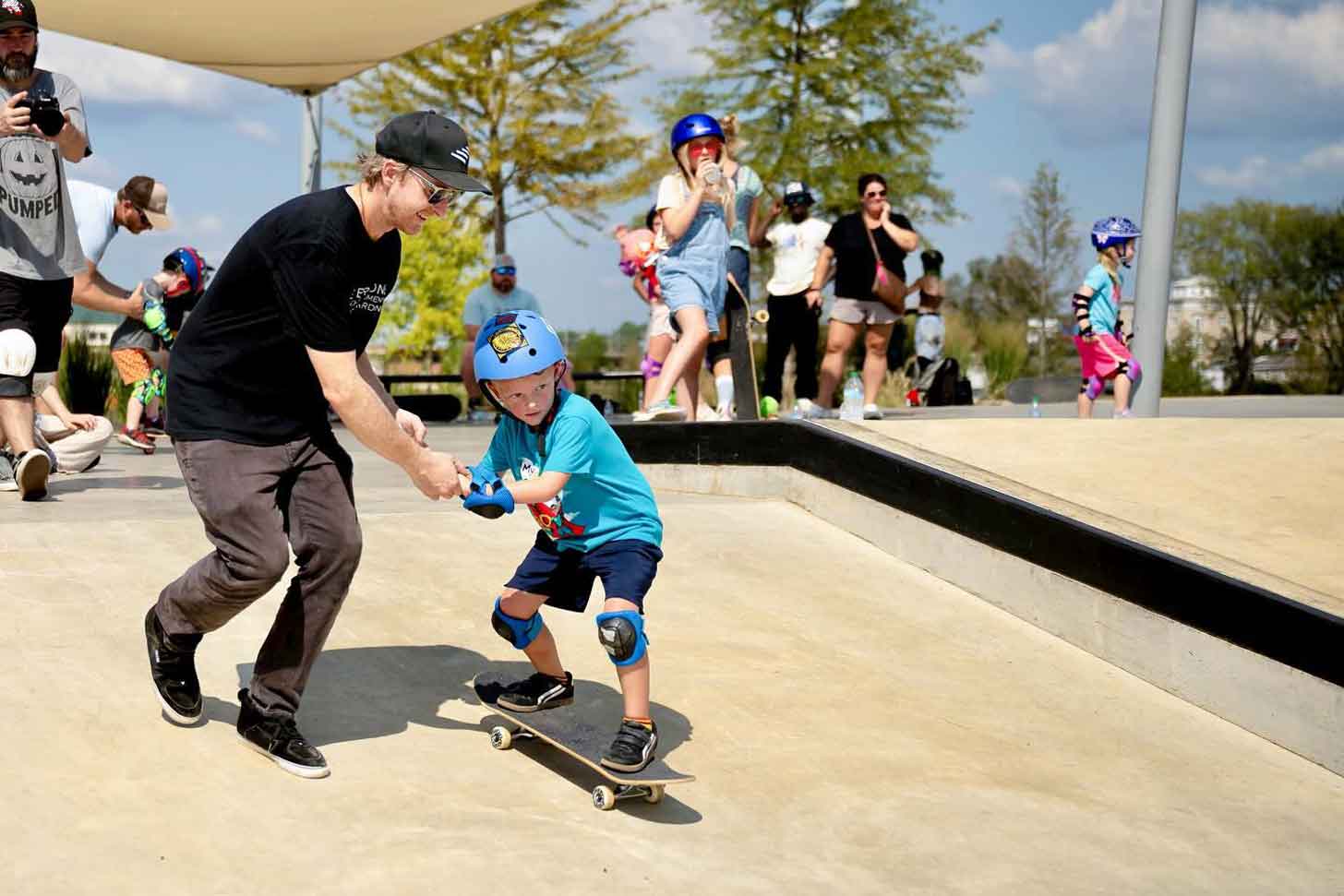
“We’re not just helping to build skateparks. We’re also working to build community in entirely new ways,” Hawk said in a video for the nonprofit.
“Through its fellowships and advocacy training programs, The Skatepark Project is empowering the next generation of diverse skate advocates and creating skateparks and skate spaces within their own communities.”
The connective tissue of skateparks is not isolated to the U.S. The nonprofit has also provided financial and educational support to skate programs in Afghanistan, Cambodia, and South Africa.
Over the years, other grassroots skate organizations in areas affected by war have emerged as well, providing young people with the space and guidance they need to “shred.”
In Gaza, the nonprofit SkatePal provides free programming and skate lessons to youth in Palestine, even amid occupation.
Over the last 11 years, SkatePal has built four skateparks in Palestine, run summer camps for young skaters, and even established programs for girls to encourage their involvement in the sport.
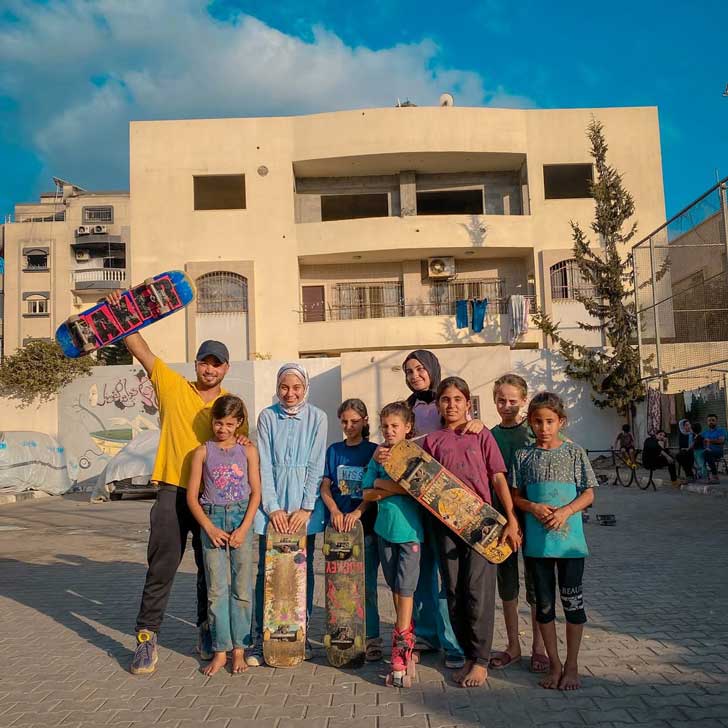
“Skateboarding is not for a specific type of person,” Malak, a local volunteer in Ramallah, shared on the organization's website. “Skateboarding is for everyone, no matter what religion, color, or place.”
In recent months, much of SkatePal’s funding has gone toward basic necessities for skaters and community members struggling to survive and rebuild amidst war. Aside from keeping people safe, they are gathering resources and distributing gear and equipment to partner organizations like skateboarding.ps and Gaza Skate Team.
Despite massive obstacles, SkatePal’s Instagram page is full of happy-faced kids and teens practicing kickflips on miraculously still-standing structures.
“It’s a tool to escape everything,” Mahmoud Kilani, the 23-year-old founder of skateboarding.ps, told DAZED Magazine.
“It’s the feeling of freedom, having this board under your feet that you can do whatever you want with. Because we don’t have freedom here. We are surrounded by walls. Sometimes we can’t go to the park because they say we can’t, so we take our boards and we go skate somewhere else. It’s just a break from the occupation.”
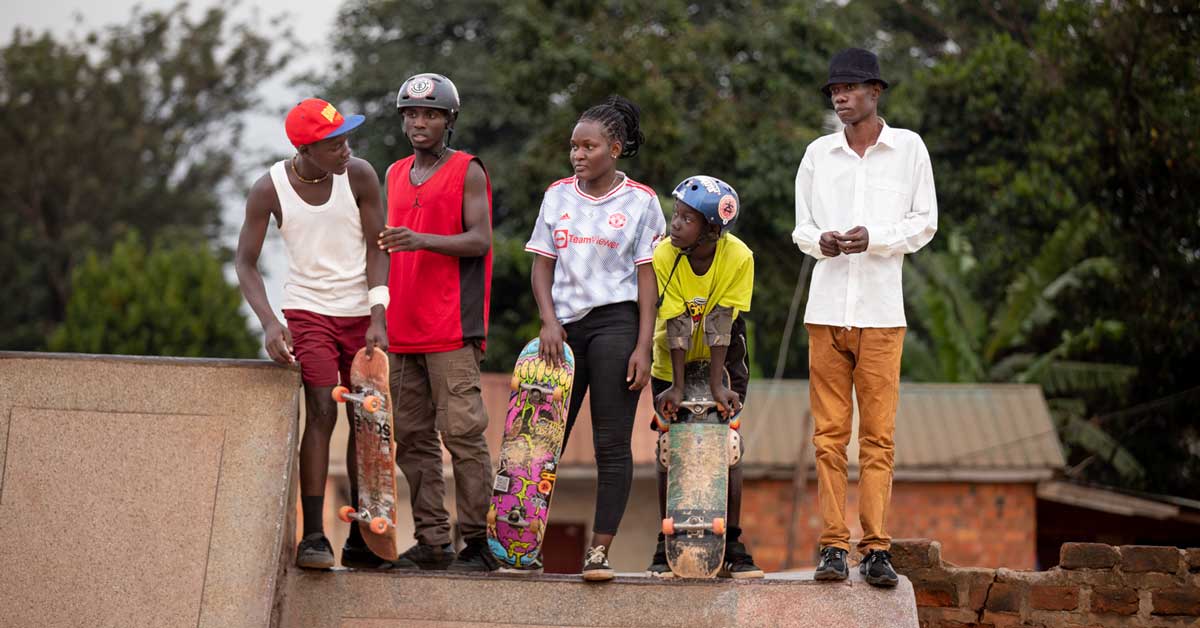
A similar grassroots skateboarding development has emerged in Mukono, Uganda.
There, a teenager founded the Uganda Skateboard Society to bring skateboarding to impoverished areas in his community by building skateparks and offering free lessons and gear to hundreds of youth.
“Skateboarding has existed … in Uganda, but no one was there to promote it and get companies or individuals to come on board to make the youth more interested,” co-founder Gerald Gose told Jenkem Magazine. “So we decided to make it the DIY way.”
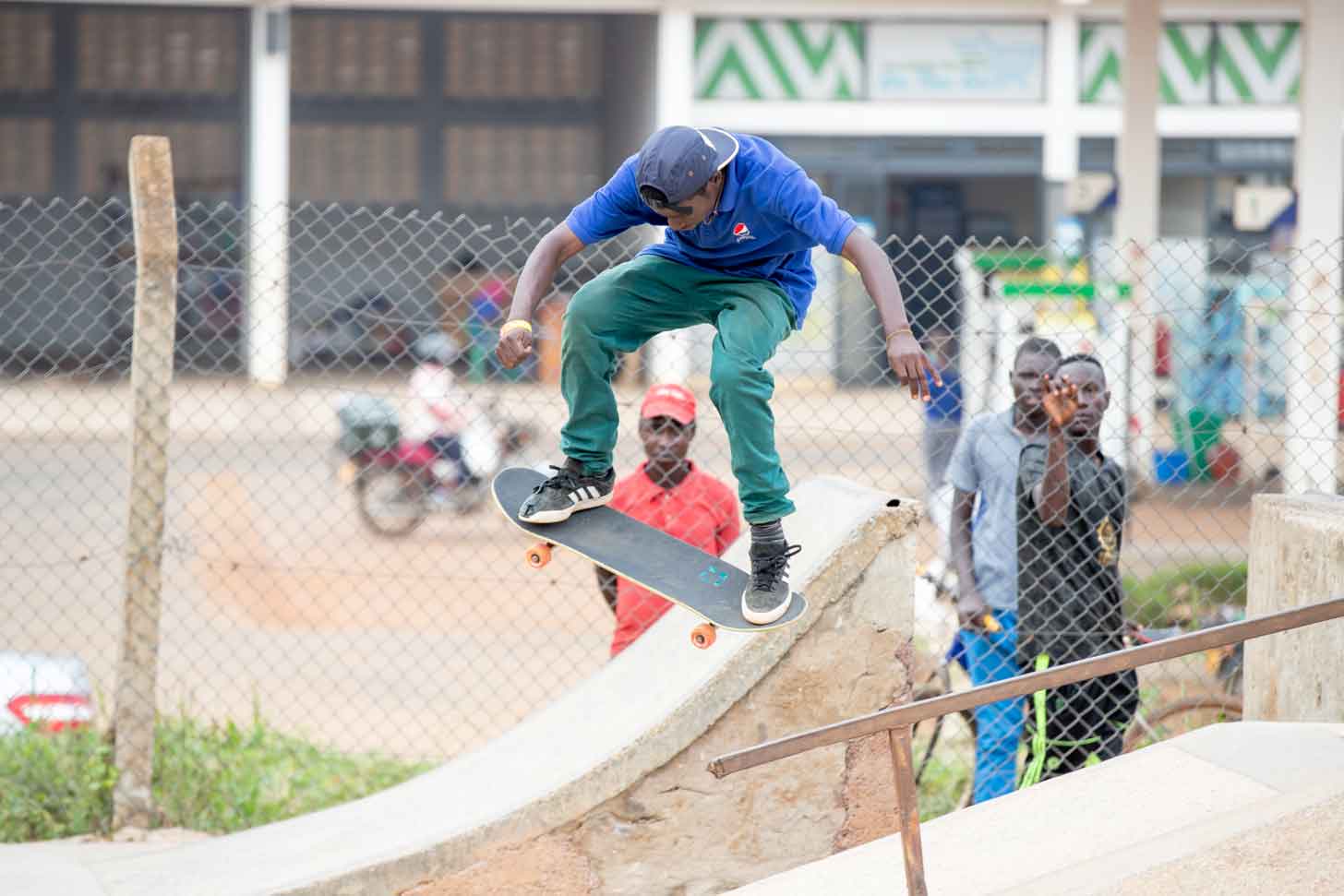
While giving youth a place to skate safely is a priority, Grose said the community-building aspect makes him most excited about the organization.
When one skater couldn’t pay his school fees, the community fundraised to get him an education. The USS skatepark, which resides in a low-income neighborhood, has also given youth an outlet to grow something they care about and avoid criminal activity.
“When I leave here, I hope to be able to look around and say we have done a good job and made a good foundation for the future,” Gose, who is now the head coach of Uganda’s Olympic skateboarding team, said in a statement.
“I believe Ugandan skateboarders have the potential, and we have set goals for what we intend to achieve.”
You may also like: Youth soccer club forms teams based on skill level – not sex or gender: 'The kids let go of the binary'
A version of this article was originally published in The 2025 Sports Edition of the Goodnewspaper.
Header image courtesy of Uganda Skateboard Society