Every day the Good Good Good team collects the best good news in the world and shares it with our community. Here are the highlights for this week!
If you want to get good news in your inbox every day, join the Goodnewsletter — the free daily newsletter designed to leave you feeling hopeful.
The Best Positive News We’re Celebrating This Week —
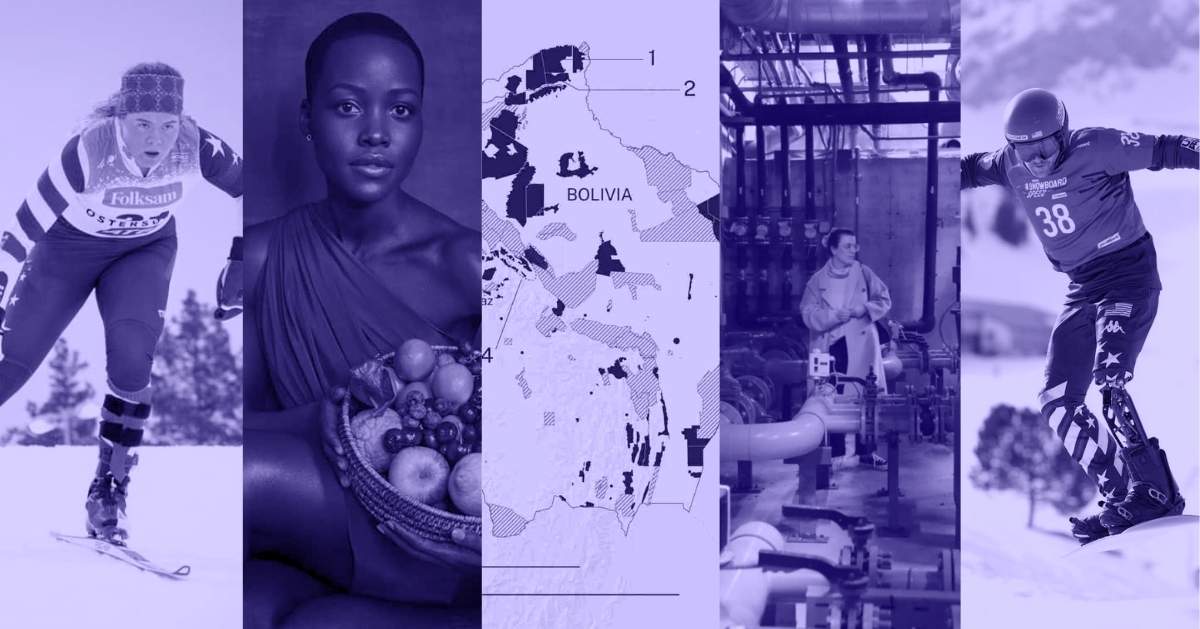
Lupita Nyong’o launched a GoFundMe for women’s health research after discovering she has 50 uterine fibroids
In 2014, Lupita Nyong’o was regularly fatigued, pre-anemic, and felt immense pain during her periods — and as most women are taught, “pain was simply part of being a woman,” so she “didn’t question it.”
As it turned out, she had more than 30 uterine fibroids — noncancerous growths that line the walls of her uterus that can cause a number of debilitating symptoms. She got them surgically removed, and then learned that there was nothing she could do to prevent them from returning. They did — and this time, there were 50.
Refusing to accept this reality, she partnered with the Foundation for Women’s Health and GoFundMe to launch a fundraiser and pave the way for a research grant that supports the development of minimally invasive and non-invasive fibroid treatments.
Why is this good news? Fibroids affect up to 80% of women by age 50, and many go without relief, as fibroid treatment is currently limited to invasive surgeries. Black women are also disproportionately affected and experience fibroids earlier and with more severe symptoms.
This fundraiser will help support critical research into other treatment and prevention options.
Could ‘agrihoods’ — neighborhoods built around gardens — be the future of housing?
A city in Spain is reviving a 3,000-year-old solution to combat extreme heat
As one of the hottest cities in Europe, Seville, Spain finds itself at the frontlines of the climate crisis. Blending modern science with ancient technology, the city is installing underground aqueducts to help keep itself cool.
Funded by the EU, the CartujaQanat project’s “quanats” work by cooling water underground in naturally low temperatures that occur at night. When temperatures peak outdoors during the day, the cool water is sent up into the ceiling to counteract the heat.
The system also sends water into subterranean pipes that cool air, which will be released via ducts in public spaces. Outdoors, mist is sprayed to lower the temperature through evaporation.
Why is this good news? While we need to invest as much as possible into preventing further warming, the climate crisis is already bringing extreme weather to places all over the world. Adaptation is a critical part of combating climate change — and solutions like this will save lives when extreme heat reaches our communities.
→ Read more
Maternal overdose deaths are decreasing in Colorado. Experts think naloxone is why
→ Read more
More than 81% of rural households in India now have tap water
Out of 193.6 million rural households in the country, more than 157.9 million have tap water as of January 26, according to the Jal Shakti Minister.
The milestone is thanks to the efforts of Jal Jeevan Mission, a Government program first launched in 2019 with the hopes of providing piped drinking water to every rural household in the country.
Since 1990, India has greatly reduced the deaths from unsafe drinking water by over 80%. To further improve public health and reduce waterborne illnesses, the JJM also launched a “Citizen Corner,” which makes village-level water quality test results available to the public.
→ Read more
A Paralympic snowboarder made his own prosthetic leg, and 25 competitors will wear his designs in Italy
Mike Schultz is about to make his third and final appearance at the Paralympics in para snowboarding — and he, along with 25 of his competitors, will be wearing a prosthetic he designed himself.
In 2008, Schultz lost his leg in a snowmobiling accident. His first prosthetic couldn’t withstand the impact and intensity of the sports he’d loved all his life, so — despite having no technical engineering training — he built his own.
Initially just setting out to “get back on my motocross bike and my snowmobile,” he realized he could have a much bigger impact. In 2010, he founded BioDapt to design and make lower limb prosthetic components for other para athletes, and now, the entire U.S. Paralympic snowboarding team will be wearing his prosthetics.
Even better: BioDapt just announced that it would be building on its existing work and partnering with Autodesk, an AI-powered manufacturing company that will help it refine its products and scale to serve even more people.
How to prevent elections from being stolen, according to a human rights expert
→ Read more
A record share of U.S. workers now have access to paid leave
While the U.S. is one of only a handful of countries that don’t offer a federal paid leave policy, a third of U.S. workers now have access to some form of government-issued paid leave thanks to state-level action.
States have passed 14 paid leave policies since 2002, 10 in the last decade, alongside rising support for paid leave. And some of these policies even go further than providing paid time off to care for a new baby or get medical treatment, including for domestic violence survivors and organ donors.
These laws now cover 32% of private-sector workers, or an estimated 46 million people. And of those covered, a third are women, a third are men, and another third are parents.
Bolivia’s Indigenous communities created 2.2 million acres of newly protected area in the Amazon rainforest
Over the past several months, Bolivia has created four new protected areas covering 907,244 hectares, or 2.2 million acres, of Amazon lowlands and Andean highlands.
The new areas create corridors to improve wildlife migration and maintain forest-based economies for locals and is part of an effort by local governments to link Indigenous territories with nearby national parks and strengthen ecological connectivity.
The new management area will help protect the endangered Bolivian river dolphin and vulnerable harpy eagle, among other species.
Why is this good news? In recent years, Bolivia has had some of the highest deforestation rates in the world, driven by agribusiness, cattle ranching, and fires, among other factors. In 2025, it lost 1.8 million hectares (4.4 million acres), and the year before that, it lost around 490,000 hectares (1.2 million acres).
These organizations have been fighting for democracy and equality in Iran for years
→ Read more
New data shows that EVs are already making the air cleaner
Researchers from the University of Southern California analyzed air quality from 2019 to 2023 in California and found that for every 200 electric vehicles added in a ZIP code, nitrogen dioxide levels dropped by about 1.1%.
Projection models have long predicted the benefits of EVs, but this study is the first of its kind to collect EV data via satellite. The study used satellite measurements to capture trends across nearly 1,700 areas.
The researchers say the results indicate that even incremental shifts toward electric vehicles can deliver tangible air quality improvements, and suggest that similar methods could track other pollutants in the future.
When she’s not skiing, a US Paralympian is a researcher working to treat neurological conditions like hers
After years of symptoms, at 19 years old, Sydney Peterson was diagnosed with dystonia, a condition that caused involuntary muscle contractions in Peterson’s left arm and leg due to faulty signals sent from the brain. A lifelong skier, she turned to the Paralympics.
Peterson skis with one pole and a custom left ankle brace to help her glide across the snow, and she brought home three medals (a bronze, silver, and gold) from the 2022 Beijing Games.
Aside from being a Nordic skier on the U.S. Paralympic team in Milan Cortina, Peterson is working towards her PhD at the University of Utah in neuroscience — specifically movement disorders similar to her own.
Why is this good news? While treatments and interventions like brain surgery can help her manage her condition, Peterson knows dystonia cannot be cured — but it can fuel her “interest in science.” In learning about her own condition, she’s now trying to “see if I could help other people.”
Criminalizing homelessness doesn’t actually work. These 3 interventions do
→ Read more
Almost 40 countries have now legalized same-sex marriage
Since the Netherlands first legalized same-sex marriage in 2001, 38 more countries have joined it, reflecting global progress in marriage equality.
The pace and geographic reach of legalization vary widely, influenced by cultural, political, and legal factors in each country.
Two countries added the legislation in 2025: Weeks after a same-sex marriage bill took effect in Liechtenstein, Thailand became the first country in Southeast Asia to legalize same-sex marriage.
→ Read more
More good news of the week —
A U.K. woman invented a “stim hoodie” with six hidden features designed for people with autism and ADHD. The design process enlisted the help of about 4,000 survey respondents from Olivia Drewery’s community of neurodivergent followers, expressing what they wanted from a clothing product like this.
Scientists say a universal vaccine for cold, flu, COVID, and allergies is a step closer to reality. The vaccine could be given as a nasal spray and may protect against a wide range of respiratory viruses, bacteria and allergy triggers.
“This Is Endometriosis” wins BAFTA for Best British Short Film, bringing awareness to a highly misunderstood chronic condition. An estimated 1 in 10 women experience endometriosis, an “invisible” illness that can take up to 11 years to diagnose.
Canada provides $50 million for the country’s first Inuit-led university. Inuit Nunangat University, which will be built in the northern region of Nunavut, aims to strengthen Inuit language, culture, and economic opportunities.
Ireland makes Basic Income for the Arts permanent after a highly successful three-year pilot program. The government program will provide 20,000 artists with €325 ($383 USD) a week for their creative pursuits.
Incarcerated men are rehabilitating squirrels, possums, and more in prison. Five prisons across Ohio have been participating in the wildlife rehabilitation program since 2019, and every year, hundreds of animals pass from the Ohio Wildlife Center’s hospital to more than 60 incarcerated volunteers.
TED made a multi-million-dollar investment to boost safe abortion in 10 countries, prevent 22.6M unintended pregnancies. This is the first time TED’s Audacious Project has invested in an organization specifically focused on abortion access and care.
A bike repair shop in Northern Ireland teaches teens practical skills as they receive help from social services. The four-week program has empowered more than 100 young people across Londonderry.
A school in Kenya is using visual, auditory, and tactile learning — rather than traditional lectures — to support dyslexic students. Dyslexia affects about one in ten learners and is often overlooked in public education.
Researchers developed an AI tool that uses past, present, and future data to make solar energy more efficient. The tool combines meteorological data dating back to 1980 and simulated weather through 2099 to build better solar installations.
A former inmate just became the first in U.S. history to buy a prison. Kerwin Pittman is making history by turning an abandoned North Carolina correctional facility into a transitional housing development for other formerly incarcerated community members.
The Philadelphia Eagles Autism Foundation raised a record $10.8 million last year. The funding will support 54 research and community projects specializing in autism research and care, and is the largest amount raised to date by the foundation.
A Chicago Girl Scout troop needed to sell 2,100 cookie boxes by March 11 to stay active — they’ve sold over 25,000. The girls have struggled to sell cookies this year because neighbors — already facing financial barriers — couldn’t afford to fit the orders within their budgets.
High school classes on clean energy are expanding across the U.S. More teenagers are now learning about solar and wind technology, sustainability, and green job skills before graduation in states like South Carolina, Delaware, and Illinois.
Kansas animal shelter rescues pets surrendered by owners fearing deportation and detainment. Lawrence Humane Society is urging people to support people — and their pets — as immigration enforcement affects families across the country.
Hours before her Portland concert, Swedish pop star Zara Larsson led a “Bike Bus” of students on a ride around the city. The “Lush Life” singer also signed autographs, took photos, and did TikTok-viral dances with the students.
Hospitals that implemented a “zero suicide model” have seen a drastic decrease in both attempts and deaths. The model was first developed in 2001 and has been implemented in 25 countries around the world since.
A new justice program in Canada dramatically reduces repeat offenses by having offenders talk it out with their victims. The guided therapy program, largely focused on youths, emphasizes community building and accountability over punishment.
A family in Ecuador has spent years building a seed bank and “living laboratory” to save endangered plant species. Their efforts stand against decades of logging to preserve essential plant species for future generations.
Coral reefs around the world are showing signs of recovery thanks to restoration efforts. “Coral outplanting,” where small fragments are grown in nurseries and attached to dead reef skeletons, is showing high success rates globally.
Sports officials and athletes in France are pushing for the Paralympics to include intellectual disabilities, too. After a cheating scandal, intellectually disabled athletes were banned from the Paralympics, but France wants to become the nation that welcomes them back when it hosts the 2030 Games in the Alps.
Novartis settled with Henrietta Lacks’ estate for “unjustly profiting” off of her cancer cells. The lawsuit alleged the pharmaceutical giant unjustly profited off her cells, which were taken from her tumor without her knowledge in 1951 and reproduced in labs to enable major medical advancements, including the polio vaccine.
In response to surging demand, StubHub launched a dedicated platform just for women’s sports tickets. The company’s internal data shows a 38% year-over-year increase in demand for tickets to Professional Women’s Hockey League games for the first eight weeks of 2026, and demand for PWHL tickets is up nearly 60% compared to pre-Olympic levels.
A mystery donor gave a Japanese city $3.6m in gold bars to fix its water system. Officials said the “staggering” donation will be used to repair corroded pipes throughout Osaka that have long exceeded their 40-year service life.
iPhone’s “Emergency SOS via satellite” feature saved the lives of six skiers caught in the deadly Lake Tahoe avalanche. Using satellite communication, the Nevada County Sheriff’s Office coordinated with search and rescue teams to save the skiers.