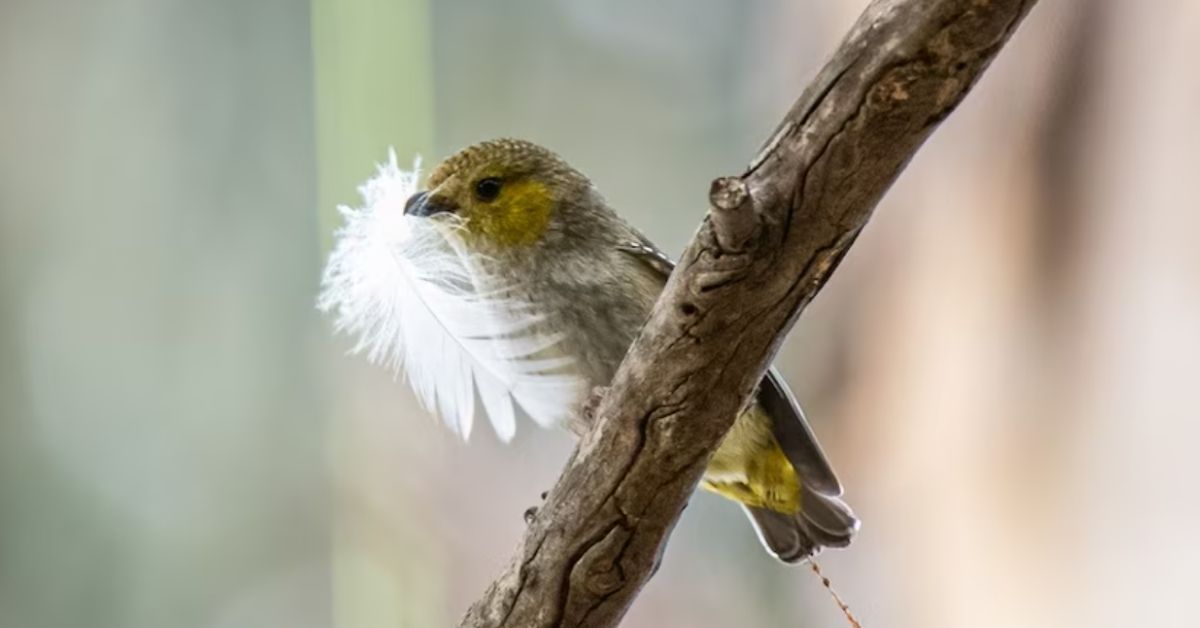
One of Australia’s rarest birds is the forty-spotted pardalote: a tiny, 4-inch bird with a yellow face, olive rump, and white-spotted feathers.
Although it was once a common find, the forty-spotted pardalote took a steep dive in the 1990s and was officially listed as endangered in Tasmania's Threatened Species Protection Act of 1995.
By 2010, its population had declined by 60%. Now found only on a smattering of Tasmanian islands, the petite bird has continued to face mounting threats in the years since, from habitat loss, bushfires, and predators like sugar gliders and laughing kookaburras.
Then, scientists uncovered yet another threat in the form of a deadly parasite: The screwworm fly (Passeromyia longicornis).
By laying eggs in the nests of forty-spotted pardalote nestlings, the emerging maggots can burrow into chicks, paralyzing them. Flystruck pardalote nestlings rarely survive.
Fortunately, people like Dr. Fernanda Alves exist.
And alongside scientists at the Australian National University's Difficult Bird Research Group, they are doing their best to help the endangered birds bounce back.
Together, Alves and her peers have taken a multi-pronged approach to aiding the species. One initiative involves restoring white gum trees throughout the region.
The forty-spotted pardalote is the only Australian bird known to feed on sap from the tree’s bark, which comes off in powdery white ribbons.
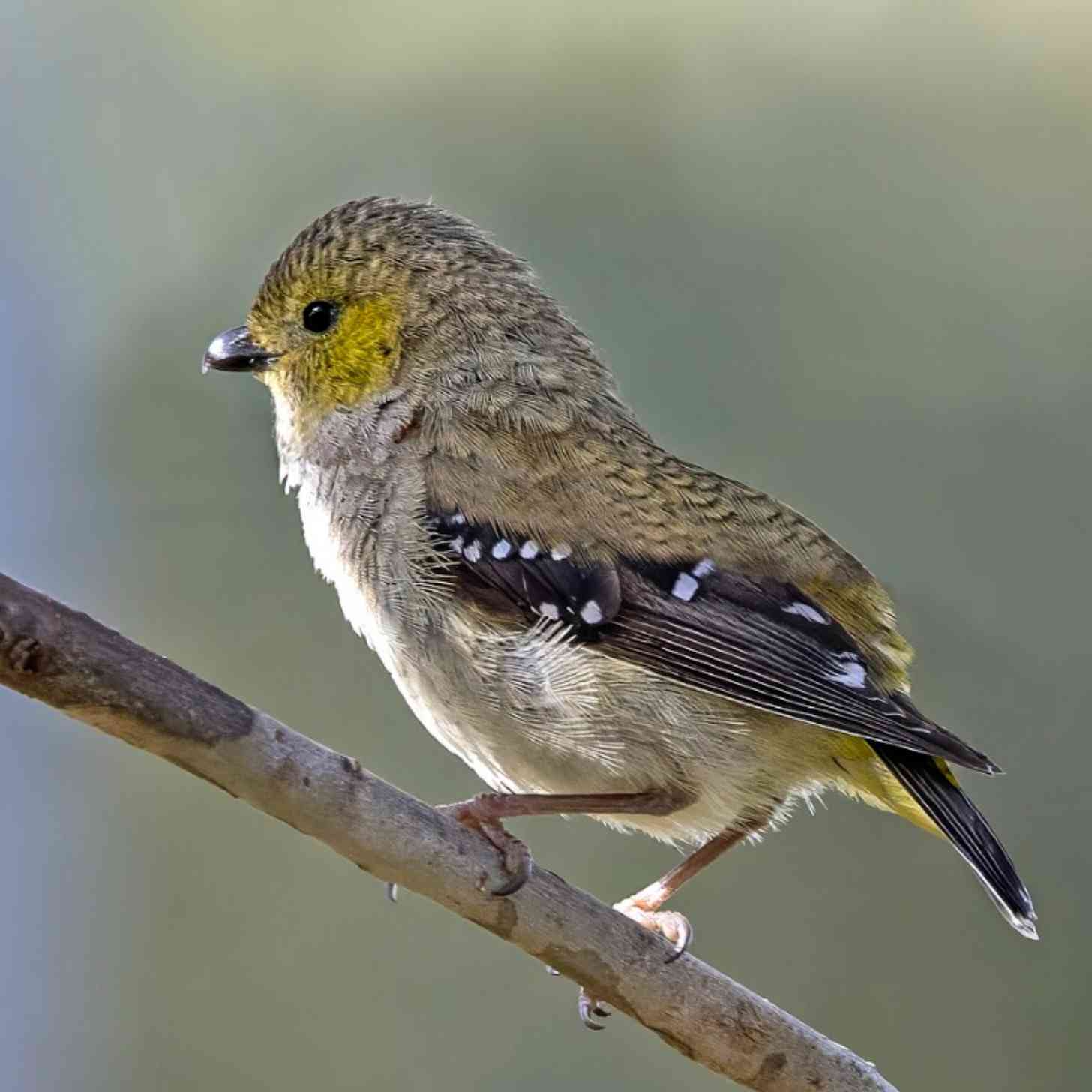
“They have a little hook on their beak,” Alves told the Australian Broadcasting Company.
“And they can make incisions on the leaves of white gums so the white gums will produce extra manna, which is like a sugary exudate that they use to feed themselves and feed the chicks.”
Alves said that the forty-spotted pardalote’s primary threat is “habitat clearing.” And as white gum forests have disappeared, so have the birds.
“Once that habitat is gone, then there's nothing you can do,” Dr Alves said.
Restoring the white gum forests is just one part of the country’s 10-year national recovery plan for the birds. The other step involves eliminating the screwworm flies.
“Infestation can be really bad, if it's in high numbers, the whole brood will die within three days,” Alves said.
At first, a former PhD student sprayed nests directly with a bird-safe insecticide to kill the native parasites — a method that proved effective.
“But when I started my PhD, we wanted to transfer some of the work to the birds because it's really hard to climb trees to get to some of the natural hollows,” Alves explained. “So, I had this idea to set up what we call a feather dispenser.”
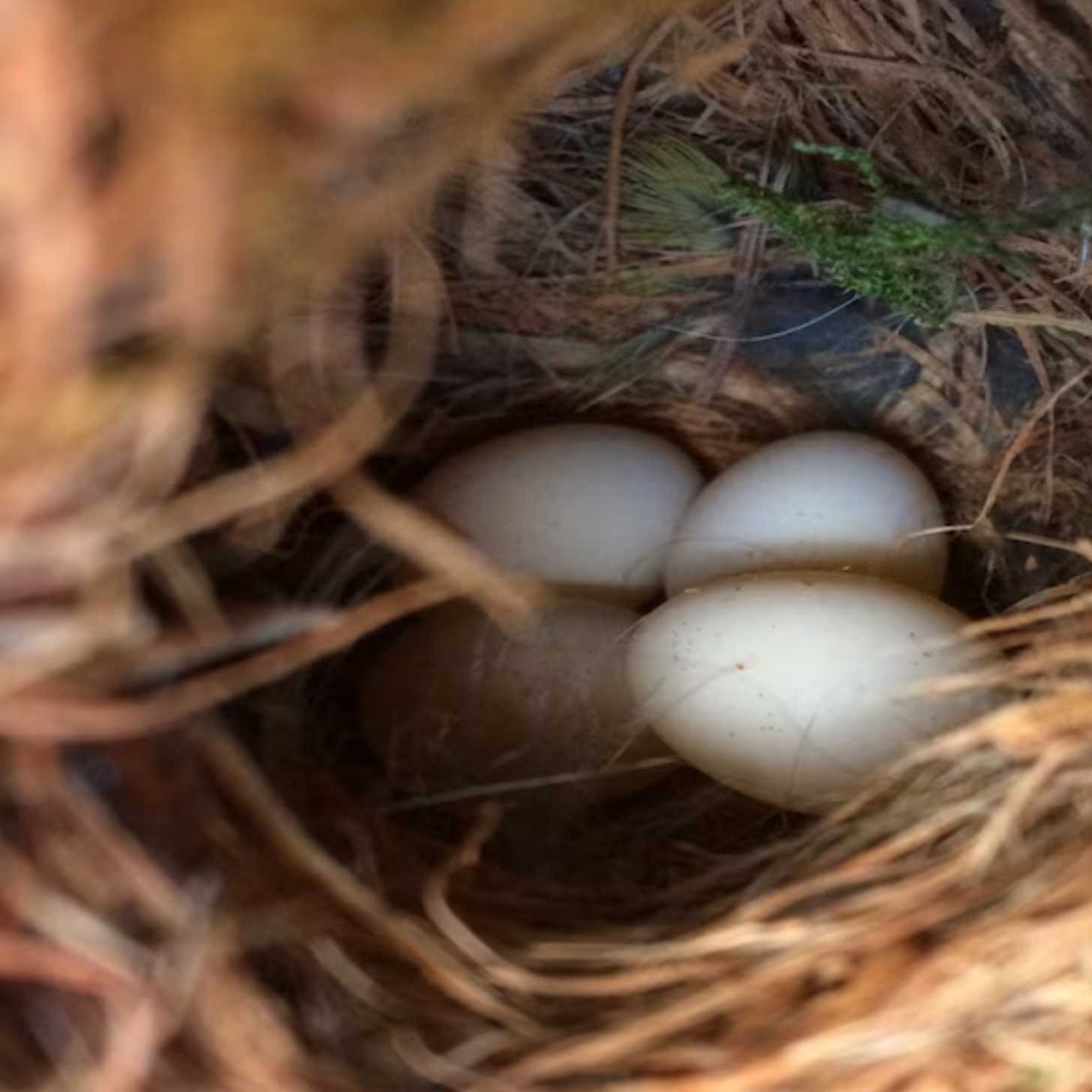
To dispense the feathers, Alves and her team filled specialized cages with sterilized chicken feathers — sprayed with insecticide — and left them under tree canopies where pardalotes were known to nest.
Now, instead of climbing in and out of tree hollows, the scientists have watched as the birds collect the feathers for nestbuilding.
And it worked.
“They had a 98% survival of the chicks,” Alves said.
She told the Australian Broadcasting Company that it’s not a perfect solution, but it has proved vital as they continue their life-saving research.
“It's a temporary way to mitigate the problem, to buy us time to learn more about the parasitic fly and maybe come up with other ideas to maybe help the pardalotes,” she said.
You may also like: A biologist successfully saved these endangered frogs from a deadly disease by building them tiny 'frog saunas'
Header image via Dean Hohn