After water, concrete is the second most widely used material on the planet. Modern concrete, called Portland cement, has been in use since the late 1890s, but it’s gone through many iterations to get to this point, from the hydraulic lime mixtures of Nabataea traders in 6500 BCE to the gypsum and lime mortars used to bind the Egyptian pyramids.
Now, engineers are finding inspiration by looking back at one of the most prolific eras in concrete’s long history: Ancient Roman architecture.
By mixing volcanic ash, lime, and seawater for their cement mixtures, the Romans created grand structures that have withstood centuries of earthquakes, fires, and floods.
On July 30, a team of international researchers explored the potential use cases of returning to Roman concrete for construction materials.
“The remarkable longevity of Roman concrete has long fascinated researchers and hinted at its potential as a sustainable alternative to modern concrete formulations,” observed lead author Daniela Martinez and her peers in the study, which was published in the journal iScience.
“However, rigorous assessment of its environmental impact — particularly in the context of modern production technologies — has been lacking.”
“Here, we follow the life cycle assessment methodology to systematically quantify the impacts of various Roman concrete formulations relative to modern technologies.”
In a statement, Martinez said that she and her colleagues were drawn to the subject as a way of weighing the environmental impact of modern concrete versus ancient concrete.
“Studying Roman concrete can teach us how to use materials in a way that can maximize the longevity of our structures, because sustainability goes [hand-in-hand] with durability,” said Martinez, who works as an engineer at the University of the North in Barranquilla, Colombia.
“We were interested in how we can draw lessons from their methods to inform some of the climate-mitigation challenges that we currently face in our built environment.”

Initially, the “ancient recipe” for concrete would require more energy and water to produce.
The trade-off, Martinez said, is longer durability.
“When we take concrete's service life into consideration, that's when we start seeing benefits,” Martinez said, pointing to high-use applications like roads and highways.
“In cases where prolonging the use of concrete can reduce the need to manufacture new materials, more durable concrete has the potential to reduce environmental impact,” agreed co-author and engineer Sabbie Miller of the University of California, Davis.
Modern concrete is often reinforced by steel, which is subject to rusting and expanding over time. With that expansion, cracks can form, causing significant deterioration in as little as 10 years.
Roman concrete, however, is “self-healing” — when cracks appear, the lime fragments within the concrete react with water, creating a natural glue that repairs damage over time.
Hence why the Colosseum and the Pantheon are still standing, nearly 2,000 years later.
In their conclusion, the researchers invited “continued research and innovation,” which are essential to “harness both the historical wisdom of the ancient Romans and contemporary solutions in creating a more sustainable built environment.”
“There's a lot of lessons that we can draw from the Romans,” Martinez said. “If we can incorporate their strategies with our modern innovative ideas, we can create a more sustainable built environment.”
You may also like: Giant, ancient crabs live beneath Rome, and conservationists have their backs: 'They deserve to be saved'
Header image via Diliff (CC BY-SA 2.5)
Despite the strength of the U.S. economy, the gap between rich and poor Americans is increasing.
The wealthiest 1% of Americans have more than five times as much wealth as the bottom 50%, according to the U.S. Federal Reserve. That’s up from four times as much in the year 2000. In 2024 alone, the wealthiest 19 families got a total of US$1 trillion richer — the largest one-year increase on record.
And yet 59% of Americans don’t have enough money saved up to cover an unexpected $1,000 expense.
We are political scientists who study human rights and political economy.
In a 2023 study, our team looked at 145 countries, including the U.S., to understand the link between labor rights and inequality. We found evidence that strengthening collective labor rights may reduce economic inequality.
Empowering workers
Collective labor rights include the rights to form and join a union, bargain collectively for higher pay and better working conditions, go on strike, and get justice if employers punish workers who exercise these rights.
In the U.S., where less than 10% of workers belong to unions, union members typically earn higher wages than their nonunion counterparts.
Through negotiations on behalf of their members, unions can pressure employers to provide fair wages and benefits. If negotiations break down, the union can call for a strike — sometimes winning better benefits and higher wages as a result.
Some U.S. unions don’t have the right to strike, including air traffic controllers, teachers, and those working on national security issues. But most unions have some ability to implement work stoppages and impose costs on employers to negotiate for raises, better benefits, and conditions.
Reducing inequality
For our study, we analyzed the human rights in the CIRIGHTS dataset, which uses human rights reports from the U.S. State Department, Amnesty International and other sources to measure government respect for 24 human rights, including the rights to unionize and bargain collectively.
The dataset is produced by the University of Rhode Island, Binghamton University, and the University of Connecticut. One of us, Skip Mark, serves as a co-director of the project.
Using a scoring guide, a team of researchers reads human rights reports and gives each country a score of zero if they have widespread violations, one point if they have some violations, or two if they have no evidence of violations. The team has assigned scores for all 24 rights from 1994 through 2022.
Using this data, we created a measure of collective labor rights by adding scores for the right to workplace association and the right to collective bargaining. The resulting collective labor rights score ranges from zero to four.
Countries where workers’ rights are routinely violated, such as Afghanistan, China, and Saudi Arabia, scored a zero.
The United States, Macedonia, and Zambia, three countries with little in common, were among those that tended to get two points, placing them in the middle.
Countries with no reported violations of the rights to workplace association and collective bargaining, including Canada, Sweden, and France, got four points.
According to the CIRIGHTS dataset, the strength of respect for collective labor rights around the world declined by 50%, from 2.06 in 1994 to 1.03 in 2022.

At the same time, according to the World Inequality Dataset, the share of income earned by the 1% with the biggest paychecks increased by 11%.
We used advanced statistical methods to figure out whether better worker protections actually reduce inequality or are just associated with it.

Gaps between individuals and ethnic groups
We also measured what’s been happening to economic inequality, using two common ways to track it.
One of them is vertical inequality, the gap between what people earn within a country — the rich versus the poor. The more unequal a society becomes, the higher its vertical inequality score gets.
We measured it using the disposable income measure from the Gini index, a commonly used indicator of economic inequality that captures how much money individuals have to spend after taxes and government transfers.
We found that a one-point increase in collective labor rights on our four-point scale reduces vertical inequality by 10 times the average change in inequality.
For the U.S., a one-point increase in collective labor rights would be about enough to undo the increase in inequality that occurred between 2008 and 2010 due to the Great Recession and its aftermath. It would also likely help stem the growing wealth gap between Black and white Americans. That’s because income disparities compound over time to create wealth gaps.
We also assessed the connection between horizontal inequality, which measures income inequality between ethnic or other groups, and collective labor rights.
Negative horizontal inequality measures the amount of a country’s income held by the poorest ethnic group. Higher scores for this metric indicate that the lowest-earning ethnic group has less income relative to the rest of society. Black Americans have the lowest median income of any racial or ethnic group, according to the U.S. Census Bureau.
Positive horizontal inequality measures the income earned by the richest ethnic group. When positive horizontal inequality rises, that means the richest ethnic group has more income relative to the rest of society. According to the same Census Bureau report, Asian Americans had the highest median earnings.
We found that stronger collective labor rights, both in law and in practice around the world, also reduce both types of horizontal inequality.
This means they raise the floor by helping to improve the income of the poorest ethnic groups in society. They also close the gap by limiting the incomes of the richest ethnic group, which can reduce the likelihood of conflicts.
That is, our findings suggest that when workers are free to advocate for higher wages and better benefits for themselves, it also benefits society as a whole.
This article was originally written by Skip Mark from the University of Rhode Island and Stephen Bagwell from University of Missouri-St. Louis, and was published on The Conversation.
Header Image by Ehimetalor Akhere Unuabona on Unsplash

Getting an annual flu or COVID-19 shot is never a particularly pleasant experience, especially for those who aren’t too keen on getting a jab in the arm.
While nasal spray vaccines have been added as an alternative, and scientists continue to study their efficacy, a new group of researchers is testing a new delivery method: Dental floss.
Scientists at North Carolina State University have demonstrated a novel vaccine delivery method in animal trials, wherein dental floss is used to introduce a vaccine through the tissue between the teeth and gums.

In a recent round of testing, researchers found that the new technique stimulates the production of antibodies in mucosal surfaces, like the lining of the nose and lungs.
“Mucosal surfaces are important, because they are a source of entry for pathogens, such as influenza and COVID,” Harvinder Singh Gill, corresponding author of a recent study about the dental floss method, said in a statement.
“However, if a vaccine is given by injection, antibodies are primarily produced in the bloodstream throughout the body, and relatively few antibodies are produced on mucosal surfaces.”
Gill explained that when a vaccine is given via a mucosal surface, antibodies are stimulated in both the bloodstream and mucosal surfaces.
“This improves the body’s ability to prevent infection, because there is an additional line of antibody defense before a pathogen enters the body,” he explained.
While most tissues that line the surface of a person’s organs, like the lungs, stomach, and intestines, have built-in barriers to keep viruses and dirt from entering the bloodstream, the tissue that lines the teeth and gums is different.
This tissue is called the “junctional epithelium,” and is located in the deepest part of the pocket between the tooth and gum. Since it doesn’t have that additional barrier other tissues have, the junctional epithelium releases immune cells to fight bacteria, found in saliva and between the teeth and gums.
“Because the junctional epithelium is more permeable than other epithelial tissues — and is a mucosal layer — it presents a unique opportunity for introducing vaccines to the body in a way that will stimulate enhanced antibody production across the body’s mucosal layers,” Gill said.

For the study, the researchers applied vaccine material to unwaxed dental floss and flossed the teeth of lab mice. From there, they compared antibody production in mice that got a flu shot via dental floss to mice that got a flu shot via nasal spray or under the tongue.
They found that applying the vaccine via dental floss provided a “far superior antibody response on mucosal surfaces” than “the current gold standard,” Rohan Ingrole, first author of the paper, who was a Ph.D. student under Gill at Texas Tech University, added.
The researchers call this discovery “extremely promising.”
“We expect the approach to work with COVID vaccine that uses mRNA; hepatitis and tetanus since they use subunit proteins as antigens; and other vaccines that use inactivated or attenuated viruses as antigens (such as MMR vaccine),” Gill told Newsweek.
“In essence, through proper formulation of the coating, the approach should work with any vaccine.”
Most vaccine formulations cannot be given via nasal spray because the barrier for the body to uptake the vaccine is too large. Additionally, “intranasal delivery” can pose safety concerns, such as the vaccine reaching the brain.
Vaccination via dental floss poses no such risk, Gill said.
Additionally, at least in animal testing, the scientists found that it did not matter whether food or water was consumed immediately after flossing with the vaccine; the immune response was the same.

While the dental floss method is not ready for human use, the researchers are already thinking about the best way to distribute it. For instance, instead of having people hold a vaccine-coated floss in their hands, they used a floss pick with a handle to make it easier to administer.
And to ensure that users get enough of the vaccine dose, researchers recruited 27 human participants to use a non-vaccinated floss pick covered in food dye to see how much of the dye was deposited into the gum pocket.
“We found that approximately 60% of the dye was deposited in the gum pocket, which suggests that floss picks may be a practical vaccine delivery method to the epithelial junction,” Ingrole said.
“We’re optimistic about that work and — depending on our findings — may then move toward clinical trials,” Gill added.
Although clinical trials have not yet begun, the researchers are motivated by the impact this breakthrough could have on vaccine delivery in the future.
“It would be easy to administer, and it addresses concerns many people have about being vaccinated with needles,” Gill said. “And we think this technique should be comparable in price to other vaccine delivery techniques.”
“In the long-term,” Gill added to Newsweek, “our vision is that this could be a kit either used in the comfort of home, or a dentist's office, or pharmacies.”
Header image by Sora Shimazaki/Pexels
Zikia, a 12th grader in Philadelphia, was stressing over where she would attend college in the fall. Her charter school’s college decision ceremony was the next day, and she was torn between her two top choices.
At a crossroads, she reached out to her favorite teacher, the only Black educator on her course schedule. “I texted him at nighttime,” she recalled. “I didn’t feel like I could do that with my other teachers.”

In my research on college and career readiness, I did not initially set out to study the impact of Black teachers, but students like Zikia readily brought up the topic.
In interviews, students insisted on the importance of having Black educators. They consistently named their Black teachers and counselors as the most influential adults in their planning for life after graduation.
Black educators, though, are severely underrepresented in the local teaching workforce. At Zikia’s school, over 75% of students are Black, compared to only about 15% of teachers.
The picture is just as striking in Pennsylvania as a whole. Statewide, the share of Black students is four times the share of Black teachers – 14.5% of students are Black, while only 3.7% of teachers are. A majority of public schools in Pennsylvania do not employ a single teacher of color despite serving racially diverse communities.
Understand how AI is changing society
These statistics are particularly concerning because strong evidence suggests that minority students benefit greatly from working with same-race teachers.
Over the past two decades, a wave of studies from economists and education scholars have documented that when Black students are assigned to Black teachers, their math and reading scores improve, their rates of absenteeism and suspensions drop, and over the long run, they are more likely to enroll in honors classes, complete high school and go to college.
This research is mostly quantitative and does more to establish that Black teachers are effective than explain why they are able to deliver such impressive results.
To answer this latter question, I went directly to the source.
I conducted interviews with roughly 100 Philadelphia 12th graders, asking them how they came to trust and depend on Black educators when weighing one of the most consequential decisions of their lives: whether and where to go to college.
I spoke with students at five city high schools, including district-run and charter schools, as well as some of the teachers and counselors involved in their college decisions.
Zikia and the other names used in this story are pseudonyms to protect the confidentiality of research participants.
Inspiration, empathy, and insight
The presence of Black educators mattered to students for several reasons.
Some of my respondents felt inspired by seeing Black people in school leadership positions. LaMont, for instance, said that taking classes from Black teachers motivated him: “Just to see success is achievable. A teacher is something in life. And it shows that people that look like me are able to overcome something. Having Black teachers gives you a sense of confidence.”
LaMont’s seeing his own identity and background reflected in his teachers is what sociologists and political scientists call descriptive representation. His classmates agreed that it was important to have teachers who looked like them. Their connection, they insisted, was more than skin deep.
Most of them gravitated to Black teachers because of how those teachers did their jobs and advocated for minority students, a concept called substantive representation.
For instance, many students felt most comfortable asking for help from Black teachers because they regarded them as more empathetic listeners and felt they were invested in their holistic well-being, not just in their grades or academic performance.
When I asked Ramir to tell me about the teachers he had strong relationships with, he offered a typical answer: “Most of them are African American,” he said. “But it’s not even just about that. I like a teacher who tries to understand you for who you are. Not look at you as a student but as a human being and build with you.”
Students also credited Black teachers with making them feel like they belonged at school.
They sought out advice from teachers who believed in their potential and held them to high academic and behavioral standards. These qualities were by no means unique to Black teachers, but white teachers sometimes found it difficult to balance authority with warmth in their relationships with students.
“There are some teachers that act like siblings and some that act like parents,” said Emily, a white social studies teacher. “And it’s very rare that a white teacher can act like a parent and have the kids still like them.”
Black educators also had culturally relevant insights into college that students valued highly. They often had deeper knowledge of local historically Black colleges and universities, or they could speak to the experience of being a racial minority at a predominantly white institution.
Students valued guidance more when it came from a source they felt was relatable.
These findings suggest that Black educators are effective not only because of shared identity or experiences, but also because of the skills and dispositions they bring into the classroom: proactively building relationships, coupling high expectations with high levels of support, and bringing schoolwork to life.
As a result, minority students held out hope not only for more representation in the classroom but also that all their teachers — regardless of race — would integrate these practices into their tool kits.
This article was written by Joseph Sageman from the University of Pennsylvania, and was originally published on The Conversation.
Header Image by Gustavo Fring/Pexels

We’ve all been there: Stomach cramping, struggling to use the bathroom, unsure of what could possibly be causing all this pain — only to realize it’s constipation.
It’s a tale 4-week-old puppy Tyler also knows a little too well.

Tyler — a Chihuahua mix that animal shelter Austin Pets Alive! described as “about the size of a large guac from Chipotle Mexican Grill” — was on the shelter’s veterinarian radar for not having much energy or appetite, something that is extremely unusual for a growing puppy.
Earlier in the week, he started struggling to go to the bathroom, even making sounds of pain when he tried.
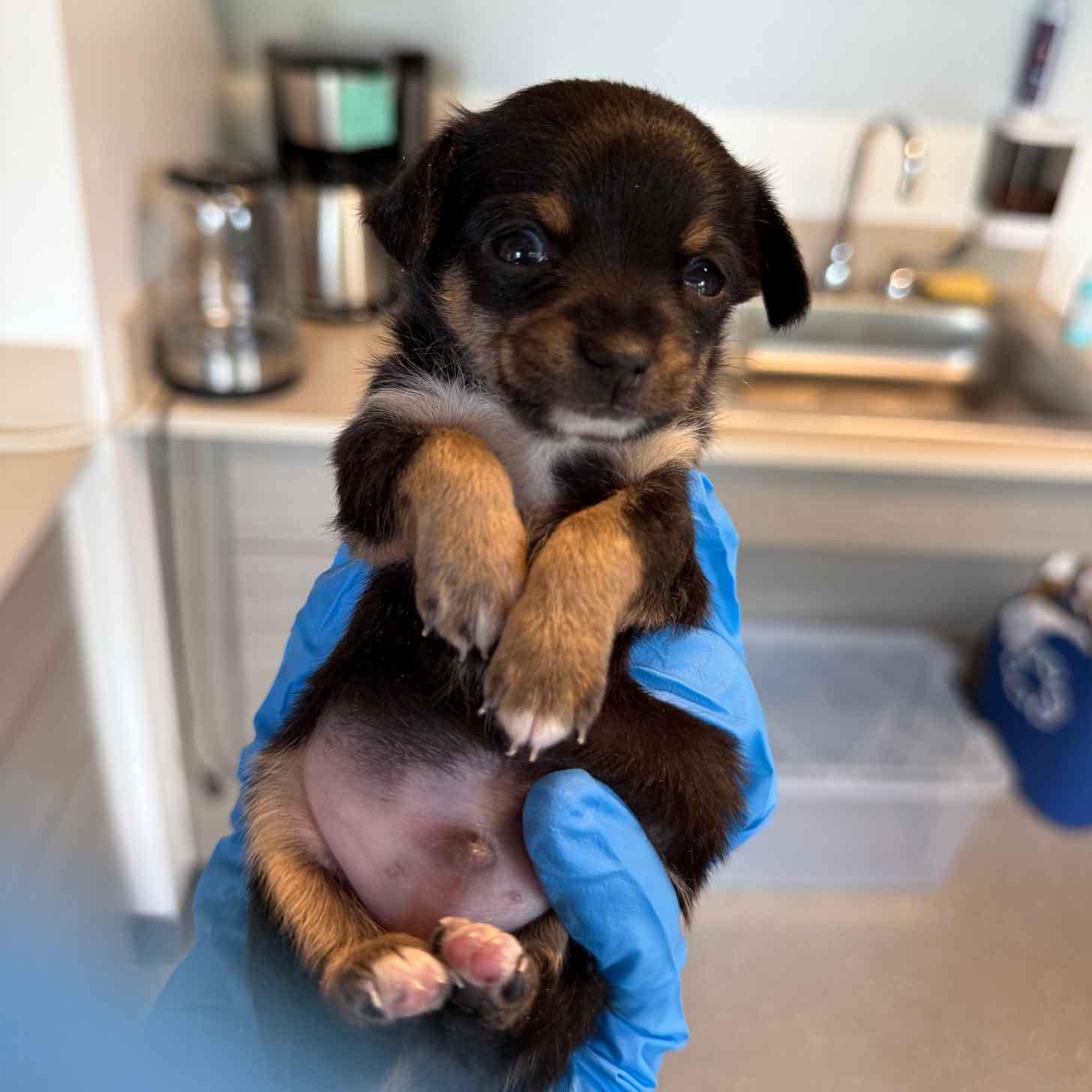
For a young male dog, this can be a sign of an emergency medical problem, so the little dog was rushed to APA!’s pet hospital for an urgent visit.
“Tyler got what must be the world’s tiniest X-ray to check his little body for signs of anything blocking his urinary tract or causing other internal problems,” a press release from APA! said.
“Turns out, he’s been extremely constipated.”
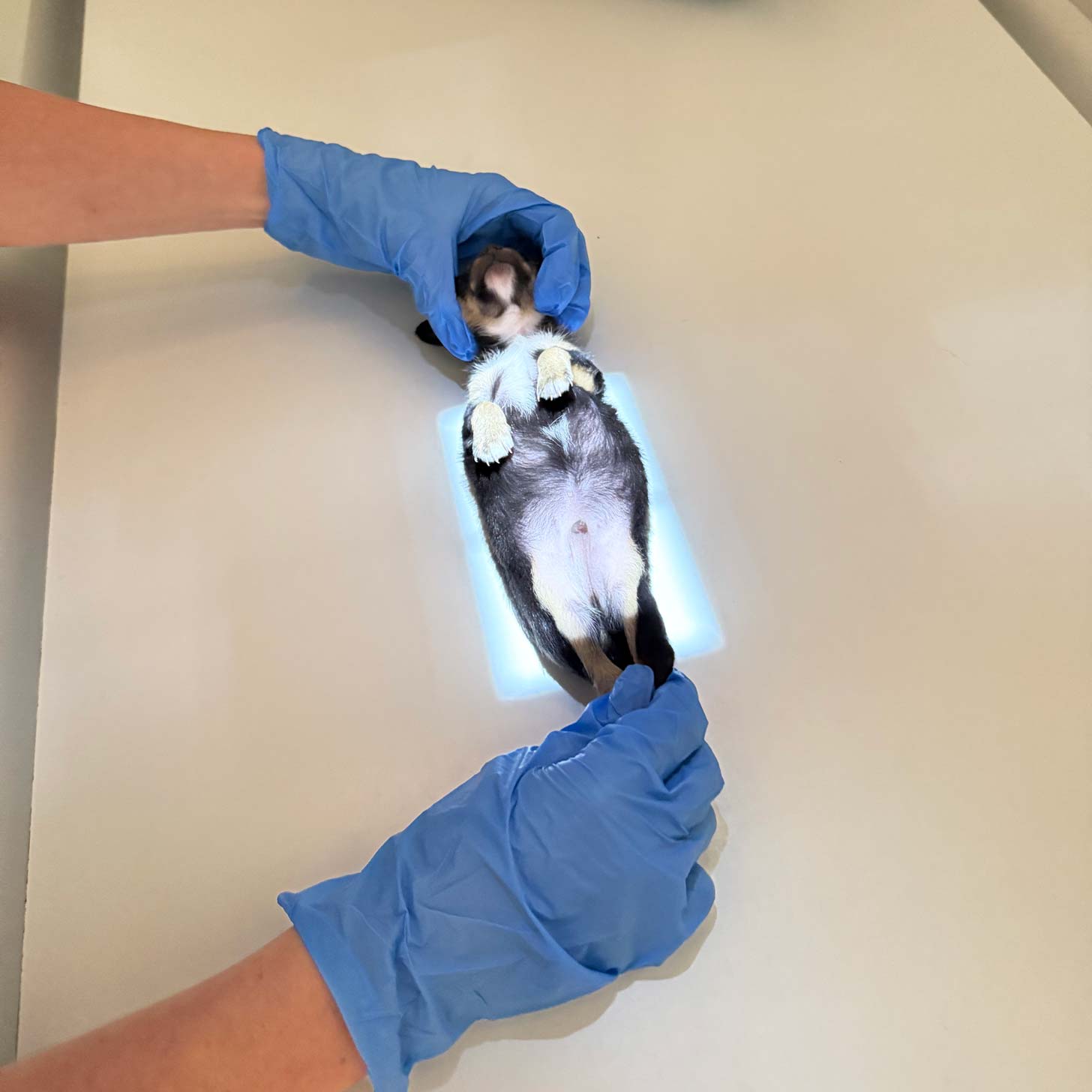
Tyler is now on medication to help, but medical teams are still monitoring his recovery because he is still significantly smaller than his siblings and has had trouble gaining weight.
“APA! will be keeping a close eye on him and doing all we can to help him recover and grow strong,” the statement concludes.

For now, Tyler is living with a foster family, his mom, and his four siblings, and will be ready for adoption in just a few weeks once he’s nursed back to health and old enough to find his forever home.
While Tyler’s story is as adorable as it is upsetting, it’s indicative of the kind of lengths APA! will travel to help an animal in need.
Earlier in the month, the organization was instrumental in saving the lives of over 600 pets displaced by devastating floods in Texas. With the help of donors and community volunteers stepping up to foster, the organization was able to support rescue and sheltering efforts in Kerr County and beyond.
“Among the darkness, Texans and people beyond have been beacons of light for each other. We’ll never be able to say it enough: YOU have made a difference for the pets and people who love them through this disaster,” a statement from the shelter said.
“We strive at APA! to be a gap filler where there aren't resources, like the immediate response to a disaster specifically for pets.”
In January of this year, the organization also founded Matilda Day, honoring the birthday of a beloved dog who was rescued from the shelter and later passed away. With community donors, APA! raised $20,000 to help senior dogs get adopted.
“[Matilda’s] legacy shows us what’s possible when a community comes together to care for the animals who need us most,” Dr. Ellen Jefferson, president and CEO of APA! said in a statement. “Let’s honor her memory by turning compassion into action for our companion animals.”
Header image courtesy of Austin Pets Alive!
For people experiencing homelessness, there are countless barriers to finding work, stability, or dignity. Many of these barriers come in the form of inadequate access to physical or behavioral healthcare, but one area that often goes overlooked is the need for dental care.
In fact, studies show that over half of adults experiencing homelessness are significantly more likely to have dental issues compared to the general population.
A 2020 study found that 57.4% of participants in a sample of adults experiencing homelessness were missing at least half their teeth. Half — 54.6% — of respondents also reported oral pain in the six months leading up to the study.

In addition to the pain and lack of confidence that comes from tooth loss, without access to dental care, people can also lose the ability to eat solid food, may suffer from pain and chronic disease caused by poor dental health, and others may struggle to find work.
To help bridge the gap in dental care for homeless individuals, Father Joe’s Villages in San Diego, California opened a dental clinic inside its Village Health Center in 1987, where an estimated 4,000 patients received help in 2024 alone, with over 800 accessing dental services.
Dentists at the health center “restore smiles, dignity and self-confidence through dental care, which gives folks the confidence to find employment, housing and self-sufficiency,” a press release from the organization states.
But now, they’ll be able to do even more.
Thanks to a $150,000 grant from the Delta Dental Community Care Foundation, Father Joe’s will be able to offer dental treatment to more low income and homeless individuals who would otherwise not have access to services.

“This grant represents an extraordinary step in our efforts to provide dental care for our most vulnerable communities,” said Dr. Megan Partch, Chief Health Officer at Father Joe’s Villages.
“Because of the support of organizations like Delta Dental, we can provide quality dental care for those who otherwise may not be able to afford it.”
The Delta Dental Community Care Foundation is the philanthropic arm of Delta Dental and its affiliated companies. Since 2011, the foundation has given more than $150 million in funding and support to increase access to dental care and improve oral health education across 15 states.
“The grant couldn’t come at a better time. With homelessness on the rise nationwide, many homeless service providers like Father Joe’s Villages are on the front lines of efforts to provide safe, affordable dental care,” a press release for the organization shared.
A spokesperson for Father Joe’s Villages said that, factoring in the new grant funding, the organization projects that 145 new community members will have access to the dental services, with at least 52 new patients receiving dentures.
This marks a 30% increase from the organization's annual goal of providing 40 people with the life-changing intervention of dentures. All in all, 203 free appointments will be provided to these denture patients to adequately assess, take impressions, and deploy dentures. This represents a 27% increase in annual visits at the dental clinic.
Additionally, the funds will help ensure that, of the approximately 4,000 people seen by the Village Health Center annually, 25% will benefit from at least one dental care visit.
The clinic will provide dental services like teeth cleanings, fillings, crowns, root canals, extractions, and partial or complete dentures, offering both walk-in appointments and same-day care for dental emergencies.
Father Joe’s Villages also provides health care, substance use disorder treatment, job training, community building, and housing for more than 2,500 people each night in San Diego.
For community members, the free services The Village provides really are priceless.
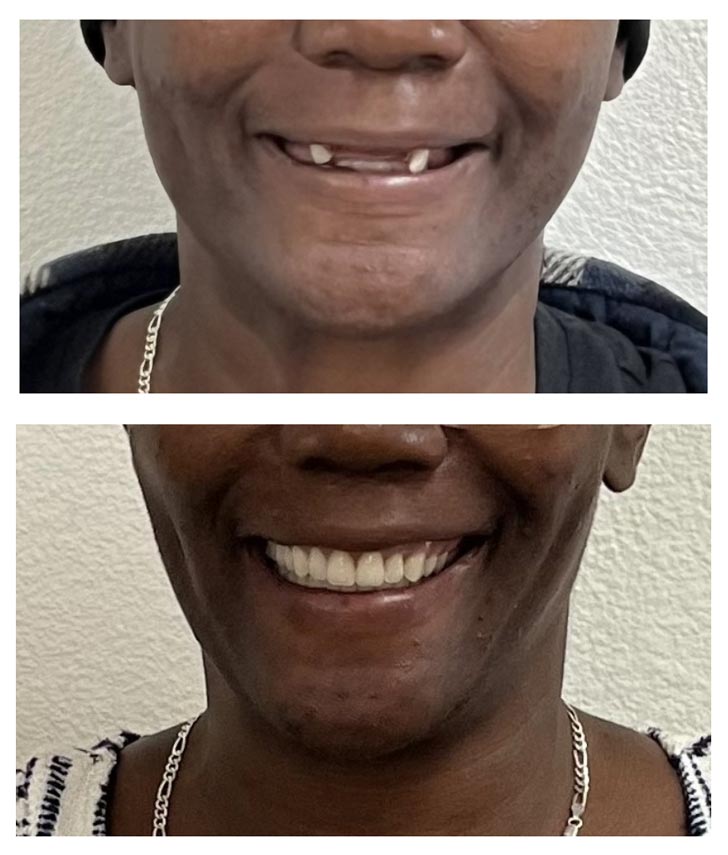
“One of the most remarkable events that we see in creating a beautiful smile for our patients is the production of hope. Hope that things will get better for them, hope that they now have a chance to do something with their life, hope that maybe their life can have meaning,” a dentist at the clinic shared in a statement.
“That’s the true miracle that occurs in the dental clinic.”
For patients who go from believing that dental care is a luxury to accessing the resources they need to thrive, a new smile can be the difference between homelessness and a brand new start.
“I am so grateful for the clinic,” one client shared in a testimonial.
“I don't feel self-conscious anymore, and I am excited to start my own business with a perfect smile.”
Header image courtesy of Father Joe's Villages
MrBeast (a.k.a. Jimmy Donaldson) and his friend, YouTuber and engineer Mark Rober, are back.
On the heels of two successful crowdfunding campaigns with other content creators — #TeamTrees, which raised $20 million to plant 20 million trees in 2019; and #TeamSeas, which raised $30 million to remove 30 million pounds of plastic waste from oceans in 2021 — Donaldson and Rober have taken on a new cause: access to clean water.
“Over 3,000 of your favorite creators are all coming together with over 3 billion followers combined,” MrBeast said in a video launching the campaign. “This could be one of the largest philanthropy projects in history: #TeamWater.”
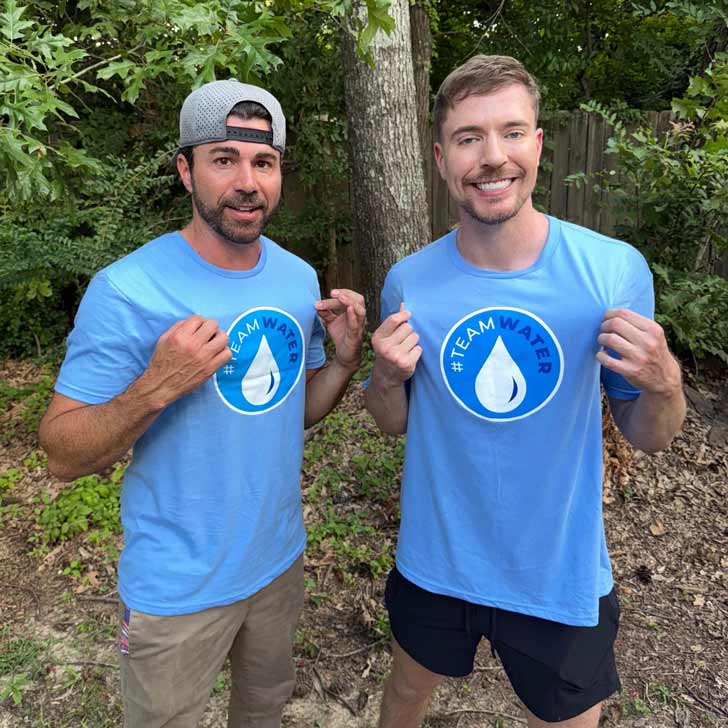
Creators on board the campaign include (but are not limited to): Hank Green, Kai Cenat, Michelle Khare, Zach King, Nick Digiovanni, FaZe Rug, Pierson Wodzynski, JerryRigEverything, Cleo Abram, Dude Perfect, Alan’s Universe, Stokes Twins, Chunkz, Ryan Trahan, Doctor Mike, Colin and Samir, Fede Vigevani, and even Gordon Ramsay.
Together, they will be supporting the nonprofit, WaterAid.
WaterAid provides clean water, hygiene systems, and dignified toilets to people in need across the globe, with programs in 22 countries.
“Water is critical to avoiding waterborne diseases, unlocking economic opportunity for everyone, and ensuring no one is left behind,” the fundraiser’s website states.
With the aforementioned creators already on board, combined with Rober and Donaldson’s subscriber bases — nearly 70 million and 418 million, respectively — they’ll reach more than an estimated three billion people during the campaign, which kicks off today — August 1 — and runs to the end of the month.
And a webpage for #TeamWater stresses the urgency of the issue — and the scale of its potential impact.
“Climate change is making clean water harder to access. Droughts are drying up water sources. Floods are contaminating pipes and wells,” an FAQ section shares.
“But here’s the good news: with smart systems and real support, we can get ahead of this.”

Raising $40 million, the webpage explains, would provide 2 million people with clean water for decades, a number that continues to grow as people donate.
“#TeamWater will be the biggest and most impactful campaign for clean water in history, the website reads. “With thousands of the world's top creators talking about water, we're changing the world, one drop at a time.”
Following the #TeamSeas campaign — which resulted in 34 million pounds of trash removed from beaches, oceans, and rivers — MrBeast has shown a growing interest in clean water initiatives.
In 2023, his organization, Beast Philanthropy, launched a “Water Is Life” campaign, which funded 109 freshwater wells across Kenya, Uganda, Cameroon, Somalia, and Zimbabwe.
“Today, we are proud to report that these wells are not only completed but are actively providing clean, life-changing water to over 250,000 people,” a June 2025 statement from Beast Philanthropy shared.
“The impact is real, and it’s profound — reducing illness, improving access to education (especially for girls), and empowering communities to build healthier, more sustainable futures.”
According to the same statement, the Water Is Life project raised over $1.4 million in donations from over 28,000 individual donors.
The #TeamWater project with WaterAid claims to make an even bigger impact, with partners working across five continents and more than 25 countries to bring clean water to people in need.
“Whether it's building networks of pipes, purifying salty water, or harvesting rainwater, #TeamWater will deliver proven, sustainable water solutions where they're needed most,” a website for the fundraiser shares. “All projects will be community-led and maintained and built to last.”
Although MrBeast has faced backlash — and a lawsuit — over conditions during the filming of his “Beast Games” competition show on Amazon, it seems he has not been deterred from new projects.
In his launch video, MrBeast travels the globe showing off projects that have already been started as part of the #TeamWater initiative, in Malawi, Ecuador, and even the United States.
“The projects you guys saw in this video are just a sample size of what we're gonna be doing with #TeamWater to give 2 million people clean water all around the world,” MrBeast said.
Additionally, he shared that the campaign does not start at $0, but rather $500,000, thanks to the support of Shopify. YouTube will also match the first $2 million raised in the fundraiser, he concluded.
And for viewers eager to support the #TeamWater fundraiser, YouTube will be filled with relevant videos throughout the month, which guides viewers to teamwater.org, where they can donate, support the campaign, buy merch, and make some waves of their own.
“On top of donating, I need you guys to go engage with all that content. I need you to share it. I need you to spread the word. And I need you to harass your favorite creators to support #TeamWater,” MrBeast concluded his video.
“Do your part to make this a success.”
Header image courtesy of MrBeast/YouTube
There’s a lot to learn from a single hair.
For decades, scientists have used animal hair samples to aid animal research — and in turn, boost conservation efforts for some of the planet's most vulnerable species.
By analyzing and comparing the DNA in hair samples, scientists can assess the diversity, size, density, and even health of a given population.
But collecting hair from a 200-pound jaguar is easier said than done.
That’s the challenge that Brazilian researchers at IMPACTO Institute, the Institute for Mitigation of Environmental Problems with Traditional Communities and Jaguars, took on in a recent study.
“Mammalian hair is a source of biological information and can be used in genetic, toxicological, hormonal, and ecological studies,” noted lead author Larissa Pereira Rodrigues and her peers in the paper, which was published in the scientific journal “Animals.”
“However,” the researchers wrote, “non-invasive collection methods are still little explored.”
“This study aimed to describe and validate a passive methodology for collecting hair from jaguars (Panthera onca) and evaluate its viability for different analyses.”
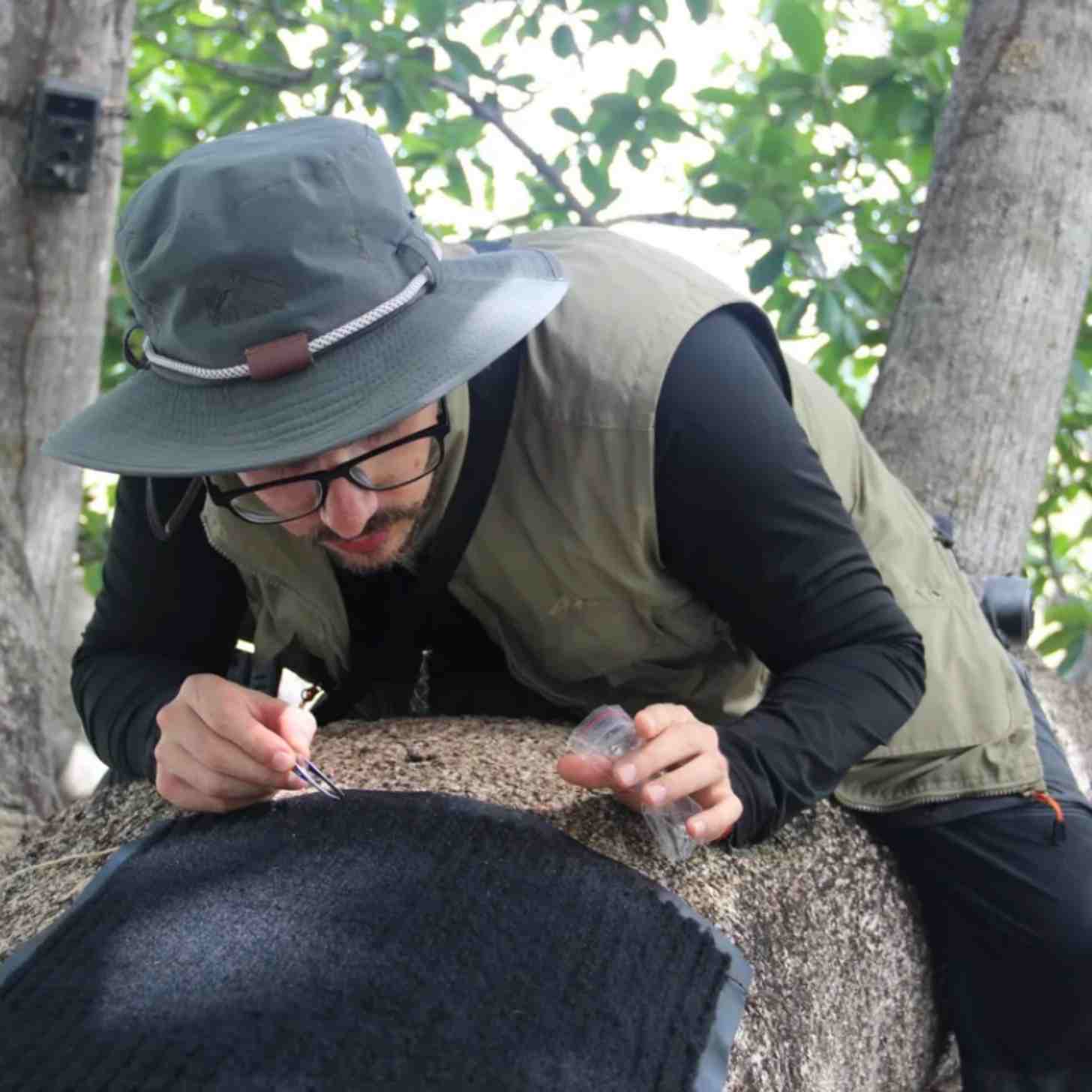
So Pereira Rodrigues and her colleagues turned to a slightly unconventional method of data collection — leaving mats out for them to roll around on.
“We already know their favourite trees and dens along roads where they tend to rest,” co-author Paul Raad, the founder of IMPACTO Institute, told BBC Wildlife Magazine. “As curious animals, much like domestic cats, they naturally rub against objects.”
At first, the researchers tried to gather hair samples from the jaguar’s favorite trees using “adhesive tape and Velcro.”
“But they didn’t like it and simply avoided touching it,” Raad reasoned. “These big cats are agile, intelligent, and sensitive; they’ll avoid anything they find unpleasant.”
Then one day, when Raad was climbing into the passenger seat of a friend’s car, inspiration struck.
“She apologized for the mess her dogs made, saying, ‘I can’t get their hair out of this floor mat, it’s stuck!’” Raad recalled. “That’s when the lightbulb went off: we needed mats made of that material.”
To conduct their study, the researchers left out an assortment of black “car floor-style” mats — 45 centimeters by 60 centimeters in length — in known jaguar dens.
They also set up trail cameras to capture their behavior.
In the camera footage, the jaguars can be seen lying, rolling around, and lazily stretching out on the mats in subtle movements that are awfully familiar to any house cat owner.

And as the jaguars got their “scritches,” the team got their samples.
“The collected hairs were analyzed for genetics, sex identification, heavy metals, and stable isotopes. The results confirmed that the samples were well preserved, allowing all tests to be conducted successfully without disturbing the animals,” the research concluded.
The researchers then worked with São Paulo State University in Botucatu, Brazil, to test the samples for mercury contamination.
Specifically, the researchers were looking for evidence of mercury poisoning in the near-threatened species, due to concerns of pollution from nearby mining operations.
“We had the opportunity to design, test, and validate a new non-invasive method for collecting biological samples, specifically hair, from wild felids such as jaguars,” said Lígia Souza Lima Silveira da Mota at the university’s department of genetics, microbiology, and immunology.
“This technique enables researchers to obtain valuable materials without direct contact with the animals,” Silveira expressed. “We are always proud to contribute in a meaningful way to the preservation of Brazilian biodiversity.”
Although evidence of mercury poisoning was ultimately inconclusive due to the limited number of samples collected, the scientists said that their methods held a great deal of promise for continued research on the matter.
For Raad, Pereira Rodrigues, and their peers, the study is just the beginning of a new chapter in jaguar conservation. It’s also a testament to the dedication of the teams at IMAPCTO and UNESP to study jaguars, without the benefit of deep pockets backing them.
“Until now, biological banks and sample access were usually restricted to large international NGOs with significant funding, often not local,” Raad said. “We wanted to change that.”
“[We] learned to work with limited resources but abundant creativity and determination,” said Raad. “To do science, sometimes all you need is ingenuity and dedication.”
You may also like: Rarest big cat in the world no longer endangered: 'The greatest recovery of a cat species ever achieved'
Header images via IMPACTO Institute / Cburnett (CC BY-SA 3.0)
In 2024, approximately 420 rhinos were poached in South Africa. And over the last decade, an estimated 8,000 rhinos have been lost to poaching in Africa as a whole.
Rhinos are critically endangered, and the sport of poaching them is part of an international web of criminal activity, in which poachers track and kill rhinos in protected areas and often smuggle their horns across borders to make money.

While poaching statistics have been down in recent years, wildlife and conservation experts are continuing their efforts to end poaching for good.
In Mokopane, South Africa, researchers at the University of Witwatersrand, Johannesburg have launched the Rhisotope Project, an initiative that aims to disrupt the illegal rhino horn trade by making rhino horns radioactive.
Don’t worry — this comes at no harm to the animals.

What scientists do is embed low-level radioactive isotopes into the horn of a rhino. These can be detected by radiation detection equipment at countries’ borders around the world, making it easier to intercept trafficked horns.
Six months ago, the project began, and radioactive materials were embedded into the horns of 20 rhinos at the Unesco Waterberg Biosphere. During this time, veterinary exams and blood testing confirmed that the rhinos were unharmed by the radioisotope levels used.
But the low levels can still be recognized by radiation detectors at airports and borders, and even inside full 40-foot shipping containers, the researchers concluded.

“We have demonstrated, beyond scientific doubt, that the process is completely safe for the animal and effective in making the horn detectable through international customs nuclear security systems,” says Wits University professor James Larkin, who is also the Chief Scientific Officer of the Rhisotope Project.
The researchers also tested the approach using 3D-printed rhino horns with identical shielding properties of real keratin, the organic material of which rhino horn is made.
“We simulated transport scenarios with the 3D-printed horns on carry-on luggage, air cargo shipments and priority parcel delivery systems and in each case, even a single horn with significantly lower levels of radioactivity than what will be used in practice successfully triggered alarms in radiation detectors,” Larkin explained.
After this testing of 20 rhinos and the 3D-printed models, the Rhisotope Project has officially been launched, with five rhinos injected earlier this week. It represents what scientists hope is the start of a “mass injection” of the declining rhino population, according to AP Africa.

“This project exemplifies how nuclear science can be applied in novel ways to address global challenges,” International Atomic Energy Agency Director General Rafael Mariano Grossi said in a statement.
“By leveraging existing nuclear security infrastructure, we can help protect one of the world’s most iconic and endangered species.”
The two rhino species targeted in this campaign include the White Rhino, which is classified as “near threatened,” and the “critically endangered” Black Rhino.
The Rhisotope Project, which operates as a registered nonprofit, encourages public and private rhino owners, NGOs, and conservation groups to contact them as soon as possible to get their rhinos treated with radioisotopes.
“Our goal is to deploy the Rhisotope technology at scale to help protect one of Africa’s most iconic and threatened species,” Jessica Babich, CEO of the Rhisotope Project, said.
“By doing so, we safeguard not just rhinos but a vital part of our natural heritage.”
Header image courtesy of University of Witwatersrand, Johannesburg
Every day the Good Good Good team collects the best good news in the world and shares it with our community. Here are the highlights for this week!
If you want to get good news in your inbox every day, join the Goodnewsletter — the free daily newsletter designed to leave you feeling hopeful.
The Best Positive News We’re Celebrating This Week —
More than 100 volunteers pulled 4,000 pounds of trash and 128 ‘ghost traps’ from Tampa Bay’s waters
Every two years since 2009, Florida wildlife officials implement a 10-day halt to blue crab season in an effort to combat its growing “ghost trap” problem — any crab trap found in open water over those ten days is fair game for cleanup.
This year, on the final day of the pause, a local nonprofit hosted a four-hour cleanup competition that involved 109 volunteers in boats, kayaks, wave runners, and on the beach looking for traps and other trash.
In total, they collected 4,000 pounds of trash and removed 128 “ghost traps” from Tampa Bay waters. Most of the traps had animals stuck inside, which the volunteers freed.
Why is this good news? If left alone and underwater, “ghost traps” contribute to a deadly cycle for marine life: Crabs, fish, and other species are drawn into the trap and, with no way out and no access to food, eventually die and start to decay. That lures in more animals, and the cycle continues.
A professional painter put up an ‘SOS’ on social media to help paint an autism center for free — 50 painters showed up to help
→ Read more (and see photos!)
A new report found solar power is now 41% cheaper than fossil fuels
Fifteen years ago, solar power was nearly four times the cost of fossil fuel alternatives. Now, according to two new United Nations reports, renewable energy has passed a “positive tipping point,” and solar power is now 41% cheaper than fossil fuels.
Alongside the release of the reports, UN Secretary-General Antonio Guterres said, “The fossil fuel age is flailing and failing.” In 2024 alone, green energy outpaced fossil fuel investments by $800 billion.
The reports also shared a 74% growth in electricity generated globally from wind, solar, and other green sources — just in the last year. In that same time frame, 92.5% of all new electricity capacity added to the grid worldwide came from renewables.
London’s iconic Kew Gardens opened a garden focused on the climate crisis and how nature can be used to fight it
In what it says was one of its most ambitious garden projects in recent years, the iconic Kew Gardens in London — which first opened in 1759 — unveiled a new attraction called the Carbon Garden featuring 6,500 new plants and 35 trees.
The garden shows visitors how carbon is crucial in sustaining life on Earth, the scale of the damage caused by the climate crisis and rising global carbon emissions, and how plants and fungi can be “natural allies” in helping restore a healthy balance.
Among other things, the installation includes a feature that displays layers of soil, demonstrating the “hidden world” of carbon underground, and how plants help keep carbon out of the atmosphere.
Why is this good news? While the climate crisis no doubt impacts humans, it also impacts nature — which visitors to the Kew Gardens no doubt care about. It’s been said that “we protect the things we care about,” and this new installation could help inspire more people to take action in their own lives to “ally” with nature and fight climate change.
Doggy-paddling for good: Conservation dogs play an important role in saving endangered platypuses
→ Read more
Thanks to the city’s massive investment, cycling doubled in Paris in just one year
In 2015, then-mayor of Paris Anne Hidalgo first started advancing the city’s cycling plan with a 150 million euro investment that would double the number of cycling lanes and dramatically build out infrastructure. Her vision was to make Paris a “100 percent cycling city.”
And that investment is paying off within a decade. Between October 2022 and October 2023, a study found that the number of people cycling in Paris doubled in a single year. Whether commuting to work or leisurely riding along the Seine, cycling is now a fundamental part of Parisian life.
It wasn’t even because there was necessarily demand for it: the supply of cycling infrastructure came first, and the people flocked to it. And the momentum isn’t slowing down — it’s expanding throughout France.
→ Read more
Scientists found a coral species they thought had gone extinct over two decades ago
Following the 1982-1983 El Niño warming event, a coral endemic to the Galápagos Islands saw sharp population declines and hasn’t been spotted in waters surrounding the islands in 24 years.
Now, a team of biologists has found more than 250 healthy colonies of the species of black stony coral, last officially documented in 2000.
The corals also had budding polyps, suggesting they’re actively reproducing. Thrilled that the species did not disappear entirely, scientists are now looking to understand how it survived.
Why is this good news? Healthy, thriving, growing coral reefs support entire marine ecosystems. Right now, the world is experiencing the fourth global coral bleaching event in recorded history — it’s also the largest, impacting 83.9% of the planet’s coral reefs. Coral surviving warming events is important news to celebrate.
→ Read more
This homeless shelter treats alcoholics with beer and wine — and it’s saving lives
→ Read more
A retired teacher is hiking a 567-mile trail to raise money and awareness for youth mental health
When Clint Hedges retired from teaching math two years ago, he noticed that many students were still struggling with the impacts of the COVID-19 pandemic and had difficulty working through math problems.
Knowing the gaps in mental health support for students, especially in rural communities like his, and that many challenges in life require perseverance, he decided to take on a challenge of his own to help raise money to support students in his former school community.
His challenge: hiking the entire Colorado Trail, a 567-mile route from Jefferson County to Durango, encompassing eight mountain ranges and six wilderness areas.
He set up a GoFundMe to raise money throughout his journey to open a coffee shop that would serve as a gathering place for students, with proceeds going to youth mental health support.
→ Read more
After gray wolves were reintroduced, aspen trees are flourishing in Yellowstone for the first time in 80 years
In January 1995, eight gray wolves were released in Yellowstone National Park, becoming the first wolves to set foot in Wyoming since they had been hunted to the brink of extinction in the 1930s.
In their absence, the area’s natural landscape was obliterated by overgrazing by Rocky Mountain elk. By the 1990s, not a single quaking aspen tree sapling could be found.
While their reintroduction was controversial, ecologists believed their return would restore balance to Yellowstone — and 30 years later, they proved correct. A new report shared evidence of the first new generation of overstory, or mature, aspen trees in Yellowstone’s northern range in 80 years.
Why is this good news? Aspen trees are “a key species for biodiversity,” and as they continue to flourish, the rest of the park benefits, too. They allow filtering light in that creates a habitat supporting a huge diversity of plants, and the larger ecosystem overall.
→ Read more
To keep your brain young, the largest-ever study on cognitive health suggests these 3 changes
→ Read more
Through an online platform, citizen scientists are helping inform real, published scientific research
The citizen science platform iNaturalist was founded in 2008, and as of 2024, it’s collected more than 200 million observations from 3.3 million users. Those submissions go through a “data quality review” to become “research grade” — and are increasingly being used in actual scientific research.
A new study found that since the platform’s founding, observations have been incorporated into more than 5,000 peer-reviewed papers — more than 1,400 in 2022 alone. That’s 10 times as many as five years earlier.
Thanks in large part to smartphones with higher and higher quality cameras, the iNaturalist data has helped scientists identify new species, track invasive species, pinpoint critical habitats, predict climate impacts, study animal behavior, and more.
→ Read more (Gifted link)
New York is the first U.S. state to commit to make new buildings all-electric
Taking a huge leap toward zero-emissions buildings, New York’s Fire Prevention and Building Code Council approved an all-electric building standard, making it the first U.S. state to prohibit gas and other fossil fuels in most new buildings.
The rules go into effect on December 31 of this year and apply to new buildings up to seven stories tall and, for commercial and industrial buildings, up to 100,000 square feet. They go into effect for buildings bigger than that starting in 2029. The council made some exceptions for new buildings that can prove the electric grid can’t accommodate their demand.
The change is likely to lead to a surge in electric heat pump and heat pump water heater installations, which are highly efficient, better for the planet, and easier on people’s pocketbooks.
Why is this good news? Buildings account for 31% of New York’s planet-warming pollution, so while the city also works to electrify existing buildings, keeping new ones fossil fuel-free is incredible progress.
New study: ‘Self-healing’ concrete from Ancient Rome could be the key to future buildings and roads
Solar and batteries make up the vast majority of new power plant installations in the U.S. — and will continue to through 2030
In the first half of 2025, the U.S. added 22,332 megawatts of power plant capacity, the overwhelming majority of which was utility-scale solar, batteries, and onshore wind.
More than half of that total was utility-scale solar with 12,034 megawatts added, battery systems made up 5,900 megawatts, onshore wind with 2,697 megawatts, and natural gas with 1,691 megawatts. The single-largest new addition was built in Texas, a 600-megawatt solar power plant that came online in April.
And while the current presidential administration is attempting to roll back this progress and boost fossil fuels, experts say the momentum we’re seeing now is too strong for major changes. Any renewable energy projects that the administration cancels will only slow things down — not reverse anything.
More good news of the week —
An Indigenous-designed mural doubles as a giant solar power generator, reducing 150 tons of CO2 emissions annually. The installation is retrofitted on an existing building, constructed in the 1970s, and rather than demolishing it, the building’s owner upgraded it entirely — and covered it in the world’s largest solar panel mural.
Denver is finishing construction on the world’s largest wildlife overpass — it’s expected to reduce collisions by 90%. Located at a hot spot for migrating elk, mule deer, and other large game, the overpass will span 209 feet across six lanes of traffic and measure 200 feet wide and connect 39,000 acres of big game habitat to more than 1 million acres of the Pike National Forest.
Country musician Tyler Childers was honored by Blackfeet Nation for quietly funding language, food, and youth programs. In addition to donating all royalties from his song “Feathered Indians” to support Indigenous communities, Childers put on a benefit concert for the Blackfeet reservation.
Libraries in Louisiana are spending $2 million to buy 65,000 more books to keep up with demand. There are nearly 700 digital titles available through the Louisville Free Public Library that have waitlists up to five months long, and LFPL leaders and supporters are hoping to improve wait times by expanding its collection.
Setting a regional precedent, Argentina passed a law criminalizing the creation of child abuse imagery using AI. The court ruling addresses the legal vacuum surrounding AI-generated illicit content, and supporters hope it will help fight online child exploitation and the misuse of AI tools, even when the content cannot be traced back to a “real” person.
New technology uses underwater sound waves to provide faster and more reliable tsunami warnings in real-time. Led by a team from Cardiff University, the technology has been made operational on a global scale and could help save lives by giving people more time to act and evacuate, and help reduce false alarms, which damage trust in warning systems.
A doctor in Florida used a robot to remotely perform surgery on a cancer patient thousands of miles away in Africa. In a milestone with “enormous” humanitarian implications, according to the doctor who performed the surgery, the patient was diagnosed with prostate cancer in March, and just months later, the surgeon was able to cut out the cancer.
After being decimated by disease, wildlife biologists are on a rescue mission to save Texas’s bighorn sheep population. About 50% of the state’s population had died due to disease spread from other animals brought by humans, so the biologists rescued some from the last known disease-free herd and relocated them to an isolated area 200 miles away.
MIT researchers developed a way to repair bridges by 3D printing steel onto corroded beams. More than half of the nation’s 623,218 bridges are experiencing significant deterioration, and the researchers just successfully demonstrated that 3D printing may provide a cost-effective, minimally disruptive solution.
From deli containers to Sharpies, an award-winning chef just built an entirely plastic-free restaurant. Not only is Chef Edward Lee’s latest venture in Washington, D.C. a fully functioning Korean fine-dining establishment, it’s an experiment in which Lee and his team are test-driving products to replace plastic ones commonly found in professional kitchens.
More than one million people in France signed a petition to stop the government from reintroducing a bee-killing pesticide. Acetamiprid has been banned in France since 2018, but remains legal within the European Union, and French scientists confirm it is toxic to bees — its impacts on humans haven’t been studied extensively.
Researchers in Canada created a safer nonstick surface to cut the use of “forever chemicals.” The new substance repels both water and grease about as well as standard nonstick coatings — but it contains much lower amounts of per- and polyfluoroalkyl substances, a family of chemicals that have raised environmental and health concerns.
A study found that food assistance benefits are tied to slower cognitive decline in older adults. Compared with eligible individuals who were not participating in the U.S. Supplemental Nutrition Assistance Program, SNAP participants showed a slower decline in cognitive function during a 10-year period, maintaining up to three additional years of cognitive health.
Contrary to the federal government’s criminalization of homelessness, a major U.S. city is pitching tents in parking lots. The City of Albuquerque opened its first “safe outdoor space,” where a location in the city provides dedicated spaces for tents, RVs, or other vehicles for temporary occupancy, as well as easier access to social services and support facilities.
A Boston-based company is building a 3,275°F brick battery to help decarbonize steel and cement plants. The company’s patented system uses renewable electricity to generate and store heat at temperatures reaching 3,275°F (1,800°C) — hot enough to drive energy-intensive processes like cement, steel, and glass manufacturing, which traditionally rely on fossil fuels.
Once extinct in the country, Denmark just recorded the highest number of white stork nestlings in decades. The white stork population, once thriving with some 4,000 nesting pairs in Denmark in the late 19th century, saw a sharp decline due to the expansion of agriculture and the loss of wetlands, leading to its local extinction in 2008.
Thousands of used oyster shells are being dumped off the coast of Connecticut to help restore a marine ecosystem. Oyster beds are critical to a healthy ocean, because they filter water, prevent erosion, and provide a home for an estimated 300 different species. Old shells also provide the ideal surface for baby oysters to latch on and grow — sometimes several to a shell.
Germany is providing Ukraine with over $47 million to support small- and medium-sized Ukrainian businesses. The grant agreement is intended to strengthen the country’s economic development, will be distributed through Ukrainian banks, and will primarily serve businesses in “de-occupied and war-affected territories.
Lead ammunition for hunting and shooting will be banned in England, Scotland, and Wales. Ammunition using lead has long been identified as a significant pollutant and a particular risk to waterbirds, and an estimated 100,000 waterbirds in the U.K. die every year from lead poisoning.
In an “amazing” conservation win, the Denver Zoo welcomed the newest member of its critically endangered Eastern bongo herd. Only found in the wild in a mountain forested region of central Kenya, the Eastern bongo is one of the largest forest antelopes. They are hunted by leopards, hyenas, and lions, “but humans are now the main predators.”
A small, family-owned bookstore — People’s Book — in Takoma Park, Maryland wants to live up to its name.
The independent bookstore has made waves recently, announcing that it would donate all proceeds from the sale of a United States Senator’s newest book to a nonprofit that supports immigrants.

Sen. David McCormick is a Republican senator representing Pennsylvania in Congress. Voting in alignment with many of his Republican peers, McCormick lists “securing the border” as one of his top issues on his campaign website.
“As Senator, Dave will fight to secure the border, put an end to drug and human trafficking, and support our border patrol agents with the resources they need to do their jobs,” his website outlines.
McCormick has indeed voted to provide more funding to Immigration and Customs Enforcement through what has been dubbed “The One Big Beautiful Bill Act.”
Passed in July, the bill allotted about $170 billion for immigration and border security enforcement, including $75 billion specifically for ICE. This makes ICE the highest-funded law enforcement agency in the federal government, according to CBS News.

Since Donald Trump took office in January of this year, ICE has detained and arrested an estimated 109,000 individuals, many of whom do not have criminal records. Many of these actions have been reportedly carried out without due process.
Acting against ICE’s tactics — and specifically McCormick’s legislative backing of the agency — People’s Book wanted to do something with the lawmaker’s latest book: “Who Believed In You.”
“Senator McCormick’s lobbyists asked us to buy 500 copies of his recently published book. While we don’t want to be in business with someone who is partially responsible for the current crisis, we also don’t support banning books,” the store’s co-owner, Matt Bormet, said.
“So we filled the request. But in order to live our values, we’re taking his money and giving it to folks who can do some good with it.”
One of my favorite bookstores in the DC area, People's Book, revealed the Republican lobbyists who bought bulk orders of GOP Sen. McCormick's dumb new book from the store to goose sales numbers. Then it gave all the profits from the sale to an immigrant charity. www.washingtonian.com/2025/08/01/d...
— Mark Joseph Stern (@mjsdc.bsky.social) August 1, 2025 at 11:59 AM
[image or embed]
So far, the bookstore reports that it has donated more than $7,000 from the sale of McCormick’s book to CASA, a nationwide organization that supports immigrant communities with a variety of legal and social services.
“Independent bookstores do not support breaking up immigrant families, violent secret police, or the attempts to erase trans people,” Bormet added. “This is a small way of pushing back on that agenda.”
This is not the first time the bookstore has aimed to help those impacted by the Trump administration and the politicians who support its agenda.
Earlier this year, when thousands of federal workers in the Maryland and D.C. area were laid off by the Trump administration, People’s Book began hosting “Fed Fridays.”
Here, they’d offer fired federal workers free coffee, a book, and a supportive place to go.

“I’m disappointed that our community has to face this challenge right now. It’s totally unnecessary and insulting to people who have put their lives into public service,” Bormet told DC News Now in March.
“It’s nice to be able to do a little bit of something for them.”
While the kind gestures don’t immediately remove the threat from the communities made most vulnerable by the Trump administration, they represent something that Ninfa Amador, a CASA policy manager, is grateful to see.
“The vision of a more just world lives on with brave acts like those by Megan and Batt Bormet and People’s Book,” Amador told WUSA 9 News.
For the Bormets, it’s as simple as sticking to their values.
On Bluesky, the bookstore shared one simple message about their efforts: “We stand with our community.”
Header image courtesy of People's Book
As homelessness rises, the amount of affordable housing stagnates, and climate disasters increasingly leave people displaced, the clock is ticking for cities across the United States to innovate their approach to housing.
The city of Los Angeles recently decided to turn to a larger pool of experts in its first-ever “Small Lots, Big Impacts” design competition. The objective was for architects, designers, and students to design multi-family housing concepts for vacant lots across the city.
With 356 entries from over 36 countries, the organizers of the competition — the City of Los Angeles, University of California Los Angeles’ research center City Lab, and nonprofit LA4LA — hoped to garner some fresh solutions, especially after fires earlier this year worsened the city’s housing crisis.

“Los Angeles has a rich history of housing innovation and of pioneering new housing models, but in recent years we have struggled to find a way forward,” a webpage for the contest explains. “This competition lays out a distinctly L.A. way of making homeownership more attainable from Angelenos across the city.”
The winning designs will act as blueprints for developers to build on small lots, Dana Cuff recently told The New York Times. Cuff is a professor at UCLA, the director of the university’s City Lab, and one of the organizers of the contest.
Designers were asked to develop their projects with the intent to build on roughly 4,000 “underutilized parcels of less than a quarter acre” across the city. The plan, she said, is to break ground on the winning concepts by next summer.
“We need to see what’s possible for L.A.’s near future,” Cuff said in a press release for UCLA.
“By bringing together the best architects, developers and builders, we can invent a new generation of ‘SoCal starter homes’ — compact, sharing land once occupied by a single house (and) giving dignity and joy to their residents while respecting Mother Nature.”
Of the myriad of submissions into the contest, a handful were selected as “winners.” The jury chose both student and professional applicant winners, awarding cash prizes to student submissions, with professional winners receiving the opportunity to further develop their ideas in place of a monetary prize.
On the contest website, all submissions are catalogued to “honor the work we received and to ensure that the public can be inspired by the myriad of great ideas about building housing on small lots.”
The types of lots were split into different categories for the competition: Gentle Density and Shared Future.
In the Gentle Density category, the projects utilize “infill sites” to create housing density. Essentially, these homes would be built on vacant or underutilized land within existing urban areas, filling in the gaps between buildings.

One award-winning project in this category is Shared Steps, by firms WORD and SSK, based in Berkeley and Los Angeles, respectively.
Shared Steps is created with a modular design, with a series of three separate “stepped” buildings that initially appear as one residential unit but actually contains three 3-story buildings, as well as three accessory dwelling units.
“Unlike typical duplexes or townhouses, the project’s unique architecture and thoughtful unit mix lend themselves to innovative ownership structures,” the designers say in a statement.

The designers envision that 25% of the units would be reserved for community housing providers, while the other ADUs and flexible units could be single-family housing or commercial spaces.
“The stepped, modular design creates distinctive living spaces. Designed to be easily split, the units are well suited to community land trusts and tenancy- in-common arrangements,” the designers added.
Another winning design in the Gentle Density category is the Accordian House, by firm SNDBOX, based in Kelowna, Canada. Designers here built around a “misfit” parcel of land, dividing a small, irregular lot into two separate pieces. Each section includes a primary unit, a junior accessory dwelling unit, and a detached dwelling unit.
The units step up or down on the terrain of the lot, thus giving the “accordian” name its meaning.

Additionally, the designers factored in enhanced fire protection, with each unit fully sprinklered, fire-rated construction, and non-combustible siding that meets or exceeds building code requirements.
“This strategy allows the buildings to be placed closer together than typical detached units,” the designers explain, “making the most of tight setbacks and height limitations without compromising life safety.”
The other competition category, Shared Future, focused on apartment or condo-style designs that would be ideal to build in narrow sites on Los Angeles boulevards.
One winner in this category, Common Grounds, by firm Austin Sandy Architects in Alamo, California, utilizes mass timber columns. The columns are spaced on a 30-by-15-foot grid, which can accommodate modular one- and two-bedroom units configured at a variety of sites, scales, and densities.

Mass timber is a lower-carbon building material and is also inherently fire-resistant. Additionally, all other components of the central core of the building, including wall panels, floors, and roofing, are designed around a prefabricated system for rapid on-site building, reducing labor costs and shortening timelines to get housing built even faster.
“The consistent grid provides both structural clarity and design flexibility, without sacrificing architectural quality,” the designers write. “Built for change, the system is both resilient and adaptable.”
One other selection in this category is Terrace Ways, designed by Jonah Coe-Scharff and Kaitlin Faherty from Boston and N.Y.C., respectively.

Terrace Ways uses an existing alleyway to create an extension of a building that “brings some elements of traditional single-family homes skyward.”
Essentially, on the first floor of the building, flats offer accessible homes with large balconies. Above these are duplex “maisonettes” that act as a starter home option.
Building upwards, on floors four through six, the building expands into “double decker” two-story homes, with flexible ADUs beneath them. This makes them ideal for multigenerational families, home businesses, or nontraditional financing.

Amid all of these designs are climate-conscious shared spaces, like a shared terrace, lawns, community project room, and green roofs that include stormwater capture, solar collectors, and composting.
“Terrace Ways are the future of dense climate-conscious living. Retooling the amenities of the single-family house, diverse unit types reflect the diversity of LA’s would-be homeowners,” the designers say.
“Organized as repeatable 15-foot bays between front and rear ‘bookends,’ Terrace Ways can adapt to narrow lots of varying lengths.”
While these are just four examples of the hundreds of project proposals in the contest, they represent the wealth of possibilities that exist when the best in the business join together with a shared mission.

“The winning architects and designers are showing us what multifamily, attainable homeownership looks like on small lots in contemporary, post-fire Los Angeles,” Cuff said in a statement when winners were announced.
L.A. mayor Karen Bass chimed in, as well.
“The City’s architectural community heard and responded to my call, as they came together to produce exciting, high-quality, and feasible design ideas for new first-time homes in Los Angeles,” Bass said.
“I’m deeply proud of the design ingenuity we have right here at home in Los Angeles.”
See all of the winning designs from the “Small Lots, Big Impacts” competition now.
Header image courtesy of Austin Sandy Architects
She’s six years old, lives in Brisbane, and might just be one of the best resilience coaches on television.
We’re talking about Bluey, the animated Aussie pup whose adventures have captured the hearts of families around the world.
But as our new study reveals, Bluey isn’t just entertaining kids, she’s modeling how to to deal with life’s ups and downs.
Why is resilience so important?
Resilience isn’t just about “toughing it out”. It’s the ability to cope with challenges, adapt to setbacks, and recover from difficulties. It’s a vital part of healthy child development.
Research shows resilience helps children manage stress, regulate their emotions, build better relationships, and even perform better at school. Without it, children may be more vulnerable to anxiety, depression, and poor coping skills later in life.
Children today face growing mental health challenges, including around anxiety and emotional dysregulation. For example, a 2023 national resilience survey of almost 140,000 students found more than one in four primary and one in three secondary students reported high levels of psychological distress.
Research shows the earlier we support resilience-building, the better. Early interventions help build healthy coping skills before negative patterns take hold.
How TV can help
Storytelling in films, books and TV can show children how to navigate challenges – not through lectures, but by modeling behaviors like emotional regulation, problem-solving, and empathy.
Animal characters in storytelling also offer valuable learning opportunities for children, who are naturally drawn to animals.
"Bluey" first aired in 2018. It has since become Australia’s most successful children’s program, with billions of views worldwide.
It is known for its realistic portrayal of young family life. Yet until now, no one had systematically examined how it — or any kid’s TV show — presents resilience on screen.
So we watched all 150 'Bluey' episodes
In our study, we analyzed every episode of "Bluey" from seasons one to three. The 150 episodes added up to 18 hours of Bluey, Bingo, Chilli, Bandit and their friends.
For each episode, we looked closely at the storyline, characters, and themes, identifying moments where a character faced a challenge and showed a resilient response.
To guide our analysis, we used the Grotberg Resilience Framework. This is a widely recognized model in psychology that breaks resilience into three key elements.
1. I have: involving the support systems around a child, such as family, friends, and community role models they can rely on.
2. I can: involving practical coping skills, like solving problems, managing emotions and asking for help when needed.
3. I am: involving a child’s inner strengths like confidence, optimism, emotional regulation and a sense of self worth.

‘It’s out of our hands’
Our research found nearly half of all episodes (73 out of 150) included a clear resilience message as either a primary or secondary theme.
Nearly two-thirds of the resilience moments were facilitated by a parent, most often Bluey’s mum. This fits with the “I have” category of resilience, which highlights how children draw strength from caring adults when things get tough.
For example in "The Show" (season two episode 19), Bingo accidentally drops a breakfast tray and bursts into tears. Mum gently models emotional coaching explaining her coping process: “I have a little cry, I pick myself up, dust myself off, and keep going.”
Research shows that when caregivers model how to acknowledge distress, express feelings, and then recover with calm, children gradually learn to manage negative emotions effectively.
Later in the episode, Bingo repeats those exact words when things go wrong again.
‘Well, that was fun’
Bluey and her sister also frequently demonstrate practical coping skills on their own.
In "Keepy Uppy" (season one, episode three), the final balloon in a game pops. The kids pause, take it in, and smile. “Well, that was fun,” they say.
In a single moment, we see disappointment, emotional regulation, and reframing — the core of the “I can” category.
Everyday moments, powerful messages
We also see characters overcoming challenges with their own inner strength. In "Seesaw" (season two, episode 26) Pom Pom shows determination and self-confidence to get to the top of the seesaw and save her friends, in an example of “I am”.
As she declares, “Pomeranians are a small but hardy breed”.
We found "Bluey" touches on almost all of the core elements of resilience: trusting relationships, emotional communication, problem-solving, self-regulation, empathy, and more.
In "Sheepdog" (season three, episode 11), mum Chilli tells her family she needs “20 minutes” of alone time. Bluey is worried she’s done something wrong. Later, during play, Bluey gently echoes her mum’s words to a toy: “It’s hard work looking after you. I just need 20 minutes.”
That simple moment models self-care and perspective-taking as well as empathy. For kids, learning that grown-ups need rest, too is a powerful message.
How to watch 'Bluey' with your kids
Of course, no screen can replace real relationships. But when parents watch shows like "Bluey" with their kids, they become powerful teaching tools.
So the next time your child wants to watch an episode for the tenth time, don’t feel guilty — join them.
When parents watch too, those moments become conversation starters. For example, “What do you think Bluey felt then?”, “Have you ever felt like that?” or “What would you do in that situation?”
Talking about what kids see on screen can help them reflect, process, and build the skills they need to cope, adapt, and grow.

This article was written by Bradley Smith from CQUniversity Australia, and was originally published on The Conversation.
Header Image courtesy of Ludo Studios
Twenty years ago, an office building sat above the Xixi Wetland, located just west of Hangzhou, the capital of Zhejiang Province in eastern China.
But now, after being left behind for two decades, the space has been reinvigorated as a luminous bookstore that any bibliophile could get lost in for hours: The Xixi Goldmye Bookstore.
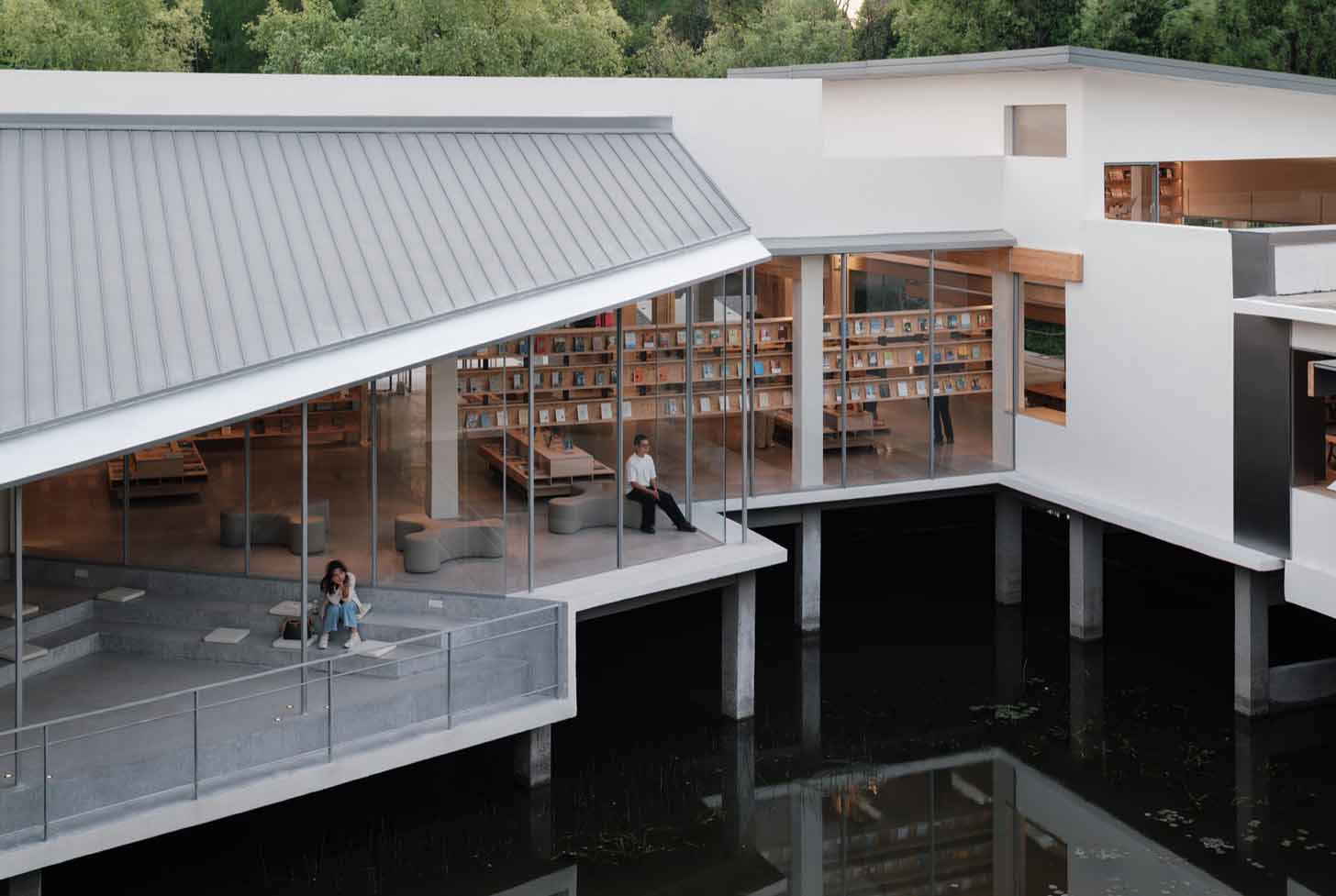
Architects at Atelier Wen’Arch took a minimalist approach to the space while working with the surrounding beauty of nature.
Once closed off and secluded, the 880-square-meter, U-shaped building now opens brightly to the Xixi National Wetland Park, complemented by three wings.
Visitors can enter the building at a horizontal entry point, lifted just above the wetlands, to shop and explore, or to simply sit and enjoy a closed water courtyard for gathering, relaxing, and taking in the scenery.

The main area contains the book display and sale area, but the north wing of the building opens up into a cafe and reading area.
The south wing is fully dedicated to a reading salon, which leads into a landscaped terrace on the second floor of the building, accessible by an outdoor staircase. Together, all of these components blend seamlessly into the natural environment, with no enclosing walls.

One of the standout features of the space is an elevated “Book Tower” that creates natural levels in the space, with sit-and-read spots available to visitors at varying heights. Large windows bring in ample light and artfully frame the outside greenery.

“This structural intervention aligns perfectly with the original grid while introducing warmth and human scale to what was once sterile office space,” Yanko Design describes the space. “The beams frame views of the wetland landscape, turning the surrounding nature into a living artwork visible from every reading nook.”

Originally, the building had an irregular glass wall facing the water, which has now been replaced with a single-sloped roof. The original flooring was also removed to create a sunken area closer to the water, utilizing the elevated beam structures to make the bookshop appear to be floating above the wetlands.
“The lowered roof and sunken floor work together to form a ‘waterside pavilion’ that integrates seamlessly with the wetland,” the architects shared in a statement.

“The recessed stepped seating offers a reading field facing the wetland, allowing people to sit on three sides. At the turning point of the U-shaped plan, the pavilion is ‘ceded’ to the water courtyard, which not only produces a horizontal directional twist in the interior space but also introduces a vertical force guiding toward the wetland's water surface, thereby enhancing the spatial impact of the wetland on the interior.”
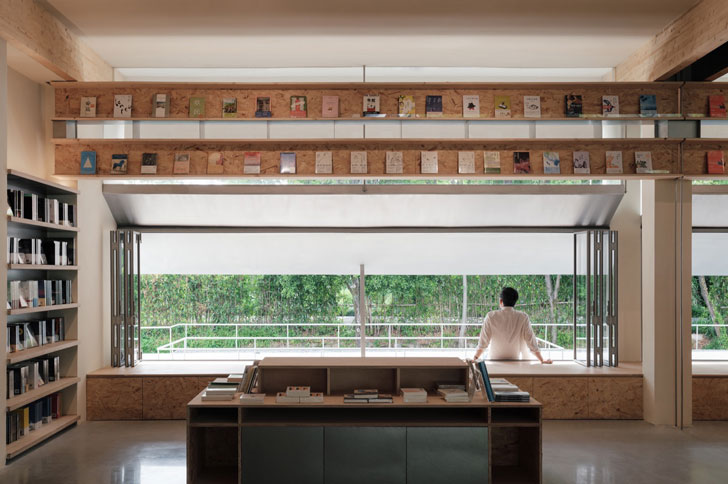
Another thoughtful detail is that the roof of the waterside pavilion is covered in titanium-zinc panels, with the interior ceiling covered in silver metallic paint. The combination creates a reflection effect on the ambient light of the building, and “each morning, the vast canopy of the waterside pavilion reflects shimmering water ripples, allowing the wetland to ‘enter’ the interior in this subtle and poetic way,” the designers write.
The goal was to create a “more comfortable indoor reading environment,” diffusing harsh light and providing a space free from major visual or environmental disturbances, so visitors can enjoy their books, the surrounding nature, or one another, in peace.
Even the bookshelves themselves were designed with this optimal experience in mind.

“The bookshelves are designed as specific structural elements that parasitize between the columns, transparent ‘book beams’ that allow readers to see both the books and the surrounding landscape,” the architects explain.
Created with structural engineer Zhang Zhun, the “book beams” are made from glued-laminated timber and layered with vertical stainless steel plates. They create a cross-section that maintains the necessary tension to keep the shelves suspended.
Six groups of the ‘book beams’ are staggered between columns, which float in white space to maintain a sense of openness and calm resonance with the rest of the structure’s design.
“Xixi Wetland serves as a daily place for walking and cycling among local residents. We have built a transparent and open bookstore within the wetland for people to read books and nature at the same time, becoming a public place embedded in the natural life of the city,” the designers share.

And they did it all by transforming an existing building, instead of demolishing and rebuilding something entirely new in its place.
A feat of architectural upcycling, the Xixi Goldmye Bookstore succeeds in spades and stands as a place people will want to visit — and linger in for hours on end.
“Lead architect Shen Wen’s team created something rare: A public space that serves the community while respecting its delicate wetland setting,” Yanko Design concludes.
“This bookstore is a fine specimen of how renovation can be more transformative than new construction when architects approach existing buildings with imagination, rather than demolition plans.”
Header image by Chen Hao©
Libraries really do have it all.
Specifically, at the Los Angeles Public Library’s Central Library, there’s Amanda Mellor.

Mellor is an adult librarian at LAPL, but she also doubles as Persons Experiencing Homelessness Outreach Librarian.
“What that means is I am a reference librarian, as well as someone that goes out into the nearby community and connects people who are experiencing homelessness, or other life instabilities, with library resources,” Mellor describes in a recent TikTok for the LAPL.
“I sign folks up for library cards, talk about all the wonderful free programs and services, and invite them to the Central Library,” she added.
By taking a mobile outreach approach, Mellor connects people on the streets to the library by bringing its offerings to them.
She specifically works within the Skid Row community by helping people learn more about what the library has to offer, while also developing library programs on-site for people who might be more hesitant to visit the public library.

“Knowing that you connected the right person with the right resource at the right time,” is one of the most rewarding aspects of this work, Mellor told Library Journal.
There is also another reward specific to Mellor’s work.
Earlier this year, she was named to the Library Journal’s 2025 “Movers & Shakers” list, which honors 50 librarians who serve as advocates, community builders, educators, and innovators across the country’s library systems.
“When I heard that I’d be receiving this Mover & Shaker award from Library Journal, I felt really glad because it means that this type of work, which library workers around the country are doing every day informally, is being formally recognized,” Mellor said in the TikTok video.
It’s true; libraries have long been on the frontlines of the housing crisis in the United States simply by being a free and public place where people can find refuge from living on the streets.
But libraries also offer a swath of supportive services, like help with job applications, mental health services, referrals to expert providers and local housing placements, and even enrollment in fresh food programs.

Recently, libraries across the country have worked to create specific staffing positions like the one Mellor has. Outside of her outreach role, LAPL has hired a team of social workers, therapists, and medical case workers to help lighten the load on other library staff.
In Utah, in-house social workers also support the Salt Lake City Public Library’s unhoused population.
“People experiencing life instabilities have unique service needs that the library is in a position to fulfill,” Mellor continued. “I’m glad that hopefully more positions like mine will pop up in library systems around the country.”
Part of the work Mellor does is also hosting The Source, a monthly resource fair with free health and homeless shelter services at the LAPL.

“The Source offers a one-stop-shop of resources and services to help homeless Angelenos transition to independent and supported living,” the library’s website shares. “Services are also available for eligible low-income residents. All services are free of charge.”
But Mellor’s everyday work usually comes down to ensuring that people in need just know that these library services exist.
“Simply getting the word out about what the public library offers is the main gap bridged with my outreach,” she told Library Journal.
“Bringing the library to organizations that serve people experiencing homelessness helps remove barriers to access for folks who may not be able to visit the library due to mobility issues or [because they] are participating in a recovery program.”
It’s not just about gaining access to life-saving resources; it’s also about reminding all community members that they deserve access to the enriching and educational materials at the local library.
Mellor shares e-media options for people to access books, magazines, movies, music, and even free museum passes.
@lapubliclibrary Library Journal released their annual list of Movers and Shakers, the people shaping the future of libraries, and recognized our very own Amanda Mellor as an advocate for her outreach work connecting with people experiencing life instabilities. To find more information and resources or to attend our monthly resource fair, The Source, visit us online at lapl.org/homeless-resources. #lapubliclibrary #librarytiktok #librarytok #lapl ♬ original sound - Los Angeles Public Library
And of course, she doesn’t do this work alone. Relationship building with individuals, as well as the other homeless shelters and social services the library partners with, is key to making a difference.
“When I’m at a single occupancy residence building in Skid Row or at a parole meeting at the probation office, the community sees that the public library is showing up for them,” Mellor said. “[And] that we want them to succeed.”
Header image courtesy of Kansas Sebastian (CC BY-NC-ND 2.0)
This story was originally published by Grist. Sign up for Grist’s weekly newsletter here.
What do an offshore wind farm in New York, a campaign to install 275,000 heat pumps in Maine, and the cancellation of the Keystone XL pipeline have in common? They were all the result of “community-based strategies” with involvement or leadership from local grassroots groups.
Advocates say this is a powerful and relatively cheap way of driving climate action, especially as the Trump administration rolls back as much progress as it can.
A new report is the first to put hard numbers to that effectiveness in the United States and Canada.
The analysis quantifies how much carbon a given law, protest movement, or clean energy project will keep out of the atmosphere. It also calculates the amount spent on the local efforts advancing each campaign to determine the cost of preventing each metric ton of CO2 equivalent from being released. (CO2 equivalent is a measurement that considers other greenhouse gases like methane.)
“The numbers really did show that these had meaningful impacts and a good return on investment,” said Sam Greenberg, a director at Redstone Strategy Group and a coauthor of the report. “The benefits are not limited just to the quantifiable carbon impact — even though that’s what we were focusing on — but also understanding the full picture of all the other co-benefits we saw coming out of this.”
That wind farm in New York, for instance, will keep 7.7 million metric tons of CO2 equivalent out of the atmosphere by 2030, at a philanthropic cost of just 3 cents per ton, the report notes.
A solar farm on the Moapa River Indian Reservation in Nevada will avoid 4.2 million metric tons in the same period, costing 12 cents per ton. Both are slowing climate change and reducing the air pollution that usually comes out of coal or natural gas power plants. That, in turn, brings the added benefit of improving human health.
The report considered the supply side of things, as well.
The Keystone XL pipeline would have ferried crude oil from Canada to refineries in the United States. But after 10 years of legal battles and fearsome opposition by environmentalists, Indigenous groups, and farmers along the route, the developer abandoned the project in 2021.
The victory means that between 52 million and 105 million metric tons won’t be released by 2030, the report finds. The local advocacy efforts cost $2.6 million, or 2 to 5 cents per ton.
“You can make a solid argument that both the supply-side efforts and the renewable energy development can both have a meaningful impact,” Greenberg said.
Community activism for state policies, too, are majorly slashing emissions.
In 2023, Maine blew past its goal of installing 100,000 heat pumps two years ahead of schedule. Now it wants to install another 175,000 by 2027. Because the devices run on electricity, the state can power them with renewable energy, avoiding 1.2 million metric tons of CO2 equivalent by 2030, according to the report.
Heat pumps are a good example of climate action not necessarily being branded as such. People might want to adopt the appliances because they’re more efficient, or to avoid burning toxic gas in a furnace. Advocates can also pitch renewable energy projects like wind and solar farms as job creators.
“The additional benefits of climate action, those are usually the motivating factors for people,” said Dan Jasper, senior policy advisor at Project Drawdown, a climate solutions group that wasn’t involved in the report.
“Things like employment, health, less pollution — these are the things that people most fundamentally agree on, and it helps to move conversations beyond the political deadlock.”
With a lack of sufficient leadership on climate even before Donald Trump took office again, it’s been up to states to set their own policies.
In 2019, New York passed the landmark Climate Leadership and Community Protection Act after years of organizing and campaigning by the coalition NY Renews. It commits the state to 100% clean electricity by 2040.
But even before that, the report notes, by 2030 the law will have canceled 58 million to 120 million metric tons of CO2 equivalent. With $10 million spent on local philanthropic efforts, the cost comes to between 8 and 17 cents per ton.
Cities, too, are crucibles for climate action. The report notes that in 2019, San Jose, California, became the biggest city in the U.S. to mandate that all new single-family homes, duplexes, and multifamily homes of three stories or less be built without natural gas hookups. That means occupants will be running conventional electric or induction stoves and heat pumps, all electrified with ever more renewable power on the grid. The philanthropic support for the effort cost $1 million, avoiding 887,000 metric tons of CO2 equivalent by 2030.
“It’s kind of remarkable how much mitigation you can get from community-based, grassroots-promoted activities,” said Rhea Suh, president and CEO of the Marin Community Foundation, which collaborates with donors and nonprofits. (Redstone prepared the report for them, as well as the MacArthur Foundation and Equation Campaign.)
“It is clear that policies that were created from the ground up tend to last longer than the top-down policies.”
That’s due to increased engagement, Suh adds. Whereas the federal government dictates broad policies across the whole country, mayors and governors are more in tune with what their people actually want. By working on a more granular level with communities, organizers and politicians can collaborate with residents, not dictate.
“The durability comes from just the equity sweat that is put into these things,” Suh said.
Header Image by Justin Sullivan/Getty Images via Grist
About 310 miles off the coast of Tokyo, Japan, a small team of researchers from the Japan Agency for Marine-Earth Science and Technology recently squeezed into a deep-sea submersible and dove deep below the ocean’s surface.
It was there, 5,922 meters below sea level, that the marine researchers zeroed in on a pale sea creature that had almost slipped past their vision completely.
It was a limpet, an aquatic sea snail.
It may look unassuming at first glance, but this sea snail was unusually large for its size, with a shell length of “40.5 mm.” By comparison, most limpets are roughly half that size.
“Our new species is most similar to B. linseae from the Weddell Sea, but can be distinguished by its much more developed second lateral and marginal teeth, as well as a larger size,” wrote lead author, Dr. Chong Chen, for the journal Zoosystematics and Evolution.
Previously, only two species of sea snails from that genus (Bathylepta) had been discovered, but they had been discovered thousands of miles away from Japan’s shores — in Antarctica and Chile, respectively.
The limpet had also ventured far deeper than scientists had thought possible, withstanding freezing deep-sea temperatures and a crushing pressure that was nearly 600 times greater than the pressure at sea level.
“Our finding not only extends the distribution of this enigmatic limpet genus to Japan but also marks the deepest bathymetric record for the entire [species family of] Patellogastropoda,” Chen and his colleagues noted.
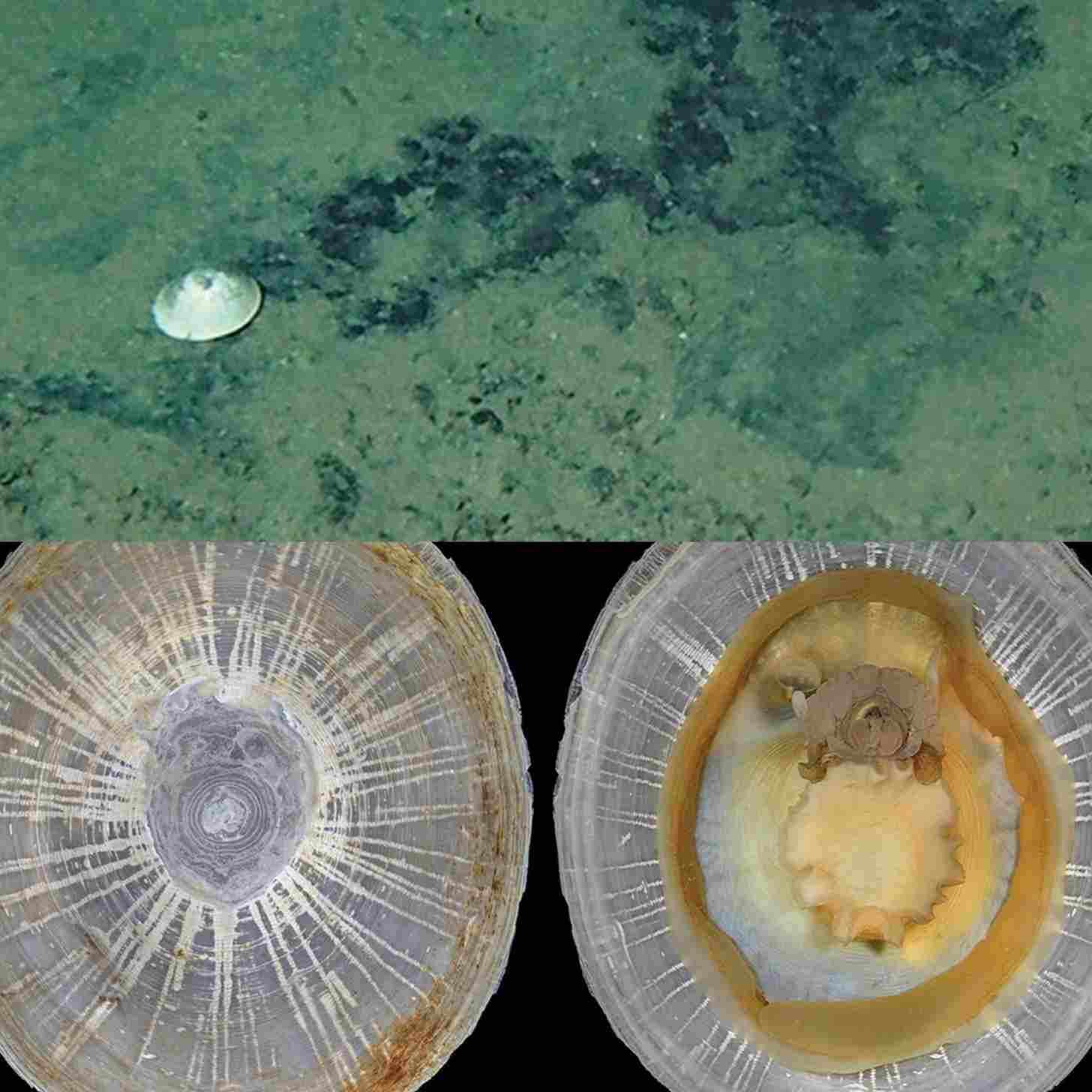
In a press release, Chen said that the new species may have been overlooked completely if the submersible had been operated remotely.
“Even in an age of sophisticated remotely operated vehicles, there’s often an edge to the human eye on the seafloor,” Chen explained.
“Crewed submersibles like Shinkai 6500 let us explore with intention and nuance — spotting lifeforms like Bathylepeta wadatsumi that might otherwise be missed entirely.”
Also known as “ecosystem engineers,” limpets are crucial to marine health. By grazing on algae, they prevent overgrowth and clear the way for smaller organisms like barnacles to thrive.
The researchers named the deep-sea limpet B. Wadatsumi, with two references in mind.
It’s both a nod to Wadatsumi, an ancient sea god of Japanese folklore, and Large Monk Wadatsumi, a “fish-man” character from the popular manga series “One Piece,” which has been running for 28 years.
After thanking the captain and crew of the SHINKAI 6500, which supported the deep-sea submersible “Yokosuka,” the researchers even made an official acknowledgement to the manga artist who inspired the namesake for the deep-sea species.
“We also take this opportunity to salute Eiichiro Oda for continuing to chart the epic voyage of ‘One Piece,’” Chen and his colleagues wrote, “which reminds us that the greatest voyages are driven by freedom, camaraderie, and an insatiable thirst for discovery.”
Header image: Credit: Luis Lamar/Woods Hole Oceanographic Institution
Each year, more than 12.7 million tons of plastic enter the globe’s waterways. From here, it endangers marine life, coral reefs, and the global food chain.
While impressive cleanup efforts are underway — experts say the Great Pacific Garbage Patch could be cleaned up in just five years’ time — the oceans need all the help they can get to tackle plastic pollution for good.

So, Rhinoshield, a Taiwanese phone accessory brand, has launched CircularBlue, a marine debris cleanup initiative that intervenes when plastic washes up on coastlines.
“We’re introducing a floating island, designed to intercept and process ocean waste along coastlines, the areas where 80% of this trash ends up,” a video introducing the initiative explains.
“CircularBlue operates like a robot vacuum for the ocean. Equipped with autonomous drones powered by AI, the system identifies and collects waste with precision. The island runs on solar energy and features an innovative seawater-driven system to minimize energy consumption while efficiently gathering trash for processing.”
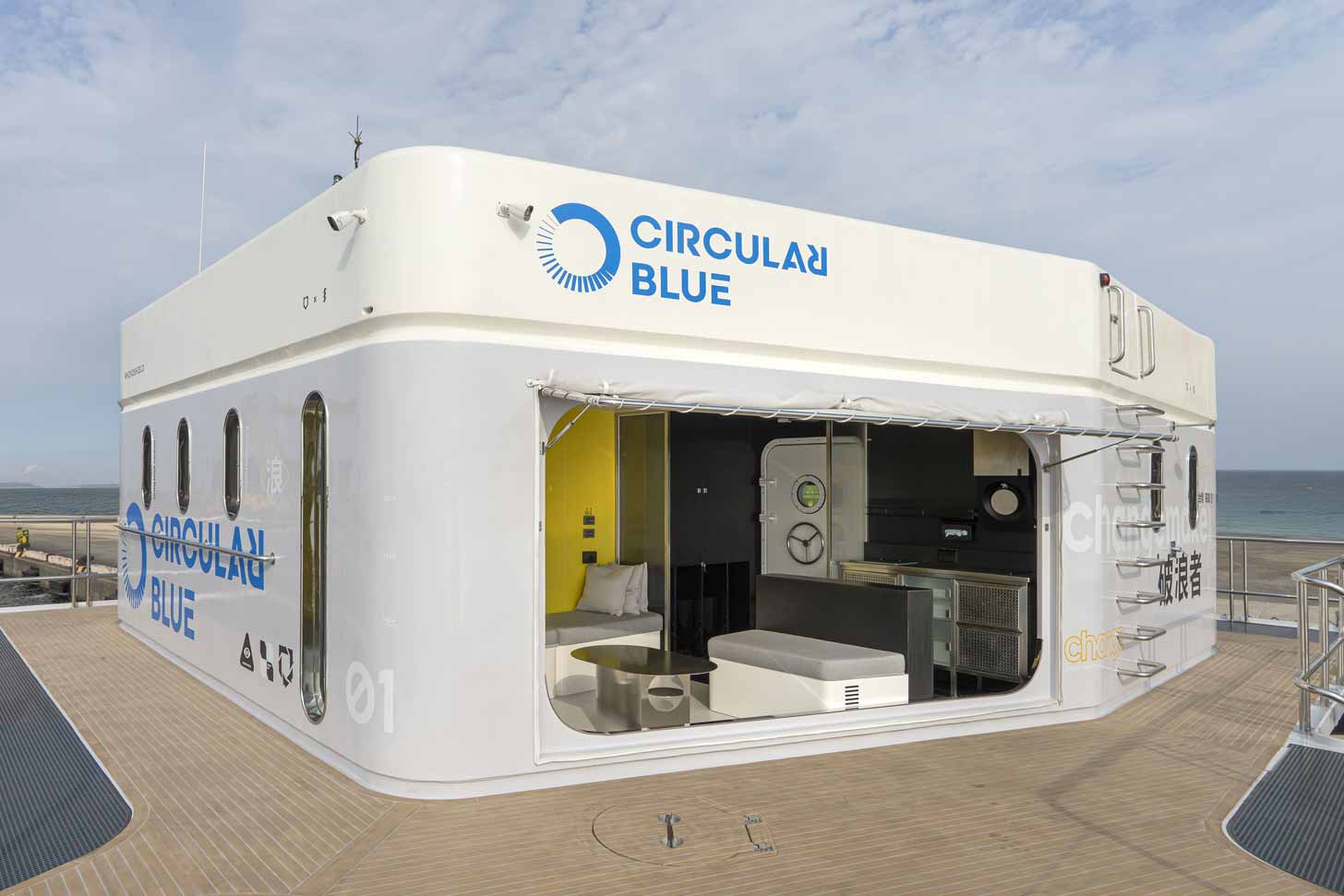
CircularBlue is a floating structure about half the size of a swimming pool, anchored about 1.86 miles offshore near Taipei. The island’s three-part system works together to collect and process trash that Rhinoshield will then use in its products.
One part of the system is a group of solar-powered floating platforms that passively collect trash using water jet propulsion. Another is a crew of “Scout Drones” that use artificial intelligence to detect and signal the location of the waste in the water. And lastly are GPS-guided “Surface Vessels” that retrieve that trash and collect it.
By developing a fully automated process, CircularBlue can work continuously in high-waste coastal zones without too much supervision.
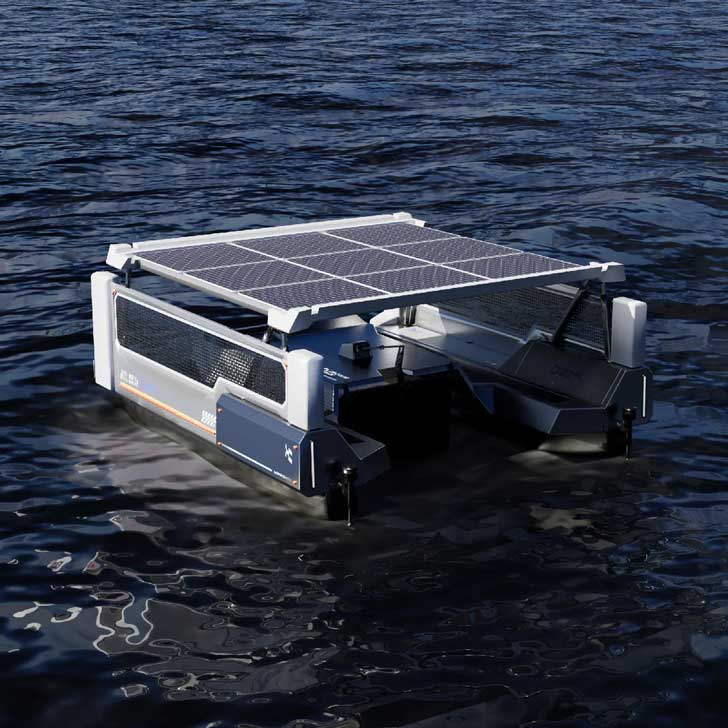
“Plastic pollution is the heavy legacy left by decades of human neglect and abuse,” Eric Wang, Rhinoshiled co-founder and CEO, said in a statement.
“Through CircularBlue, we are facing this challenge head-on — from coasts to rivers — using bold innovation and scalable solutions to clean up the past and protect the ocean's future.”
But you may be wondering: Why would a phone accessory company be behind this new initiative?
The brand has long promoted circular-design processes and now, they can better integrate the plastic collected through CircularBlue into their manufacturing.

“Our plastic-focused business is fundamentally about protection; protection not just for products, but also for the planet,” the video continued.
“Last year, we achieved the milestone of CircularNext, ensuring our products don’t become waste. Now, we’re turning waste into products. This is the reason behind CircularBlue.”
CircularNext was Taiwan’s first fully circular phone case. The brand also has an initiative called Rhinoloop, where customers can reuse and recycle Rhinoshield products.
Rhinoshield also uses FSC-certified paper and vegetable based inks for its packaging, which eliminates more than 56 tons of single-use plastic annually.
“As nature becomes a rare commodity, humanity understands that civilization and nature aren’t opposing forces but a shared entity requiring wholehearted protection,” Rhinoshield’s website states.
“This is our mission: leveraging material technology to bring artificial creations closer to nature's circular principles.”

But CircularBlue isn’t just about business. The structure also includes on-board labs for vital ocean research.
“CircularBlue doubles as a floating research hub, featuring lab space for water testing, ecological monitoring, and educational use,” Rhinoshield’s website explains.
“Its modular design allows for easy scaling and adaptation, making it a valuable tool for both cleanup and coastal ecosystem studies.”
Ultimately, Rhinoshield’s investment in CircularBlue speaks to a foundational belief that nature and business must go hand in hand.
“Like our journey over the past 12 years, CircularBlue is built on creativity, resilience and a belief that sustainability can be both bold and collaborative,” Wang said.
“Together with partners around the world, we can restore the ocean we all cherish.”
Right now, CircularBlue is in a prototype phase, ensuring it can be fully operational without relying on humans and avoiding obstacles, while developers analyze the cleaner’s cost.
If it works, Rhinoshield plans to scale up and make an even bigger impact cleaning trash from oceans and coastlines.
“Ultimately, my expectation for this project is to find a scalable way to clear all the waste from the ocean,” Wang concluded.
“CircularBlue is more than a project. It’s a movement.”
You may also like: Environmentalists want to turn ocean garbage into hydropower. They're building a ship that does
Header image courtesy of Rhinoshield
The most striking, colorful snails in the world are in danger — precisely because of their beauty.
Polymita tree snails (also known as Cuban painted snails) are highly prized in eastern Cuba. Beloved for their patterned hues and swirls, the six species of snails have become increasingly rare to find.
Their decline is due in part to deforestation and climate change, but it’s largely driven by humans. More and more, the snails are snatched from their native subtropical forests and harvested for jewelry and trinkets.
“One of the reasons I'm interested in these snails is because they're so beautiful,” Angus Davison, a professor and mollusk expert from the University of Nottingham, said in a press release.
“Their beauty attracts people who collect and trade shells. So the very thing that makes them different and interesting to me as a scientist is, unfortunately, what's endangering them as well.”
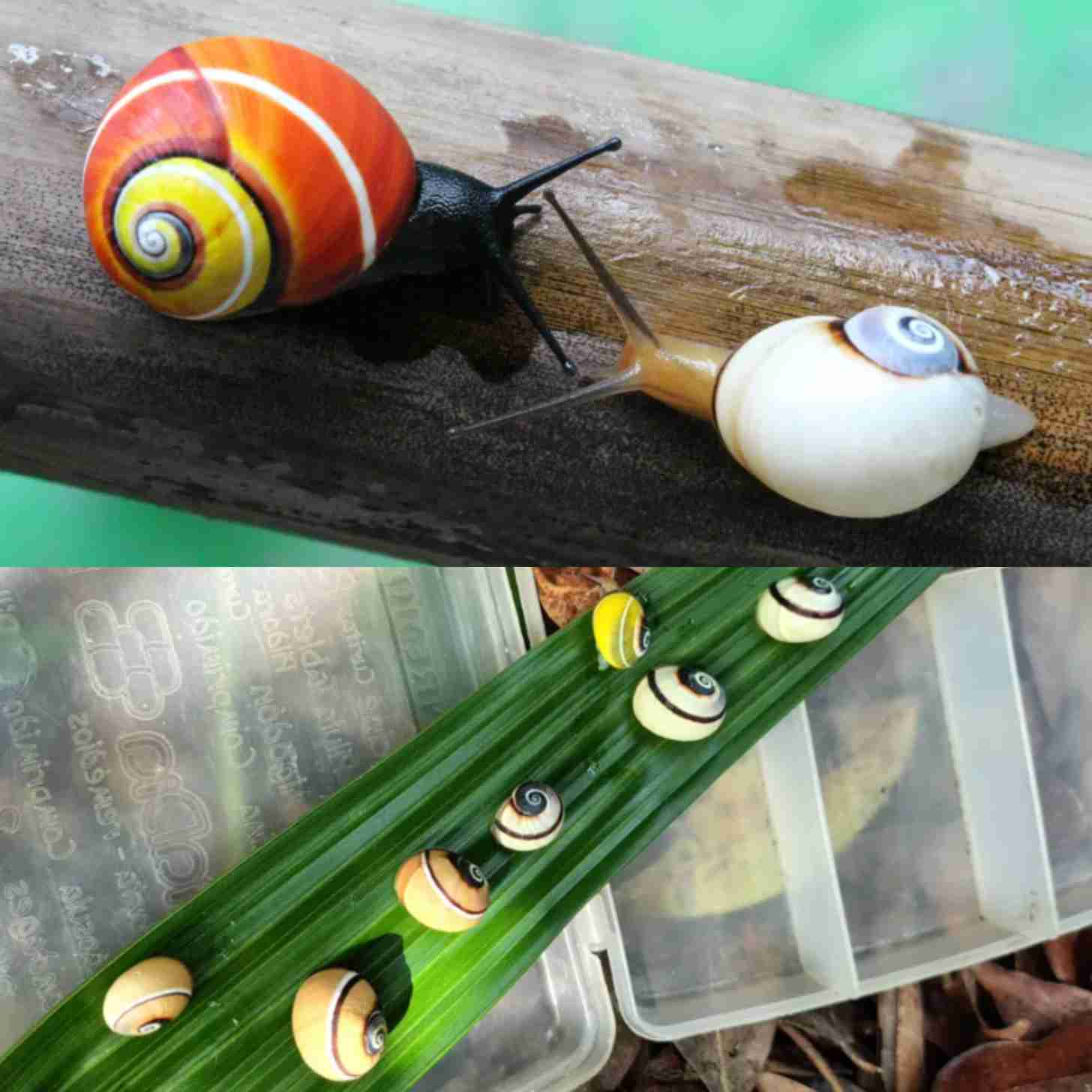
The illegal Polymita snail shell trade extends far beyond the coastlines of Cuba. Recently, Davison found a British listing offering seven Polymita snail shells for £160 ($213.73 in U.S. dollars).
“You can easily imagine where people collecting shells would tip a population over into local extinction,” Davison said.
That’s why Davison reached out to scientists at the Universidad de Oriente in Santiago, Cuba, to give a helping hand where it’s needed most.

Together with conservation biologist Bernardo Reyes-Tur, Davison is on a mission to save the six known species of Polymita before it’s too late: P. picta, P. venusta, P. versicolor, P. sulphurosa, P. brocheri, and P. muscarum.
P. sulphurosa, which is lime green with blue swirls, is at particular risk for extinction and is listed as critically endangered.
Their plan is two pronged: As Davison runs genetic testing in England to decode the snail’s genome and better understand the species, Reyes-Tur is actively raising the endangered snails in captivity.

Due to Cuba’s hot climate and unreliable power, Reyes-Tur’s hand-rearing has been challenging.
“They have not bred yet, but they're doing well,” he told BBC News on a video call. “It's challenging though — we have blackouts all the time.”
All of the Polymita tree snails are valuable to their native environment. Like all snails and slugs, they act as nature’s “clean-up crews” by eating moss and bark and circulating nutrients into the soil.
They’re also important food sources for other endangered animals native to the country, like the Cuban kite.

As they run their respective projects from half a world away, Davison and Reyes-Tur hope that their international efforts lead to heightened conservation awareness.
“Eastern Cuba is the only place in the world where these snails are found,” Davison said. “That's where the expertise is — where the people who know these snails, love them and understand them, live and work.”
“We hope we can use the genetic information that we can bring to contribute to their conservation.”
You may also like: Scientists are saving endangered sea snails… by setting them up on 'speed dates'
Header image via: Bernardo Reyes-Tur / lezumbalaberenjena (CC BY-NC-ND 2.0)
When people think of affordable or social housing, they might often picture dull, dilapidated buildings, or tiny homes with bare minimum essentials.
But a new social housing project in the city of Hilversum, located southeast of Amsterdam in the Netherlands, has some serious curb appeal.

Designed by Dutch architecture studio Monadnock, the project, named Volante, features up to seven stories of colorful, pastel perfection that appears to be “accidentally Wes Anderson.”
The new residential development takes the place of a former care facility, with an additional wing built on the deck of a new parking lot. It includes 108 “social rent” apartments, a term that refers to rent that is significantly lower than market rates, often set by a government formula tied to local incomes, which makes it easier for low-income residents to afford housing.

Of those 108 units, 22 are reserved for young people with disabilities, and 30 are care homes, or residential spaces that provide additional accommodation and support for older or disabled individuals.
Care will be available to residents 24 hours a day if they need it, but they are also given the space they need to grow individually.
Volante is the perfect setting for this kind of vibrant and encouraging community.

Monadnock describes Volante as “a garden building,” as it is positioned at the center of a communal green space, tucked away from any surrounding streets.
The exterior of the building is also finished with a multicolored glazed-brick treatment, with sage green, flamingo pink, and warm cream and orange accents.

It is meant to both complement the existing structures in the neighborhood, many of which were built in the 1950s, while also allowing the new, modernized space to stand out.
“The distinct palette of soft colors complements this, creating a contrast between the inner world of the development and its outer edges, with the four more restrained buildings,” Monadnock founder Sandor Naus told Dezeen.

On the inside of the building, a main entrance — framed by a trio of circle, square, and triangle windows — opens up into a double-height hallway with spherical light fixtures and bright yellow mailboxes surrounded by pastel tile.
The soul of the building is a circular “void” that connects the first five floors, drenching the space in yellows, greens, and pinks, with more spherical light fixtures and natural lighting dancing through the hallways.

“The compact flats are accessed by corridors that emerge from a common hall, with a circular void in the heart of the building,” the architects describe. “The longitudinal facades offer a rich layering with bright, optimistic colors and subtle plasticity.”
Each individual apartment offers about 50 square meters — or about 538 square feet — of space, with a living room, kitchen, and bedroom, as well as a large window with a French balcony.

The building is also free of gas hookups, instead using renewable energy for climate control and energy. As for common spaces, the lowest floor of the building serves as a parking garage, while the topmost floor, a green deck.
With its intentional symmetry and whimsical details, the building will surely attract Wes Anderson enthusiasts, but most importantly, it provides a joyful environment for low-income residents to thrive.
Along the same block, social housing provider Dudok Wonen has built other private and social homes, as well as a physical therapy practice, a childcare center, and a restaurant.
“Far from a conventional social housing scheme,” blog Design Indaba reviews, “Volante is a demonstration of how architecture can balance functionality with dignity, and density with delight.”

And the residents agree. Earlier this summer, the building filled up to capacity, with young adults from the Housing Initiative for Special Young People in Hilversum as its newest residents.
At a ceremonial key-granting ceremony, Fieke Kitslaar, the care and housing manager of an adjacent building, told the young new residents that she envisions the community as an “inclusive neighborhood where young and old live together, care for each other, and actively contribute to neighborhood life,” a press release from Dudok Wonen shared.
A new resident replied: “I think it’s cool that I’ll be living in the hallway with my best friends.”
And another, Vera, shared: “I love the yellow in the building, and I also have a sunny yellow wall because I’m a real Pokémon fan.”
You may also like: Architects transform 'oddly-shaped' parking lot into colorful tiny home village for homeless
Header image by Stjin Bollaert
This article was originally published on 08/07/2025